Colombia Birding Tour
Highlights
Highlights
- The richest area for birds on the planet!
- Diverse and exciting tour in a friendly and peaceful area
- Travel through several regions of the country
- Lodges set in beautiful surroundings
Map
Map
Overview
Tour Overview
Colombia! The richest area for birds on the planet! Close to 1900 species have been recorded in this amazing country, with no fewer than 73 endemics.
Our Colombia birding tour covers central and western Colombia, from Bogota and its high altitude specialties north through the Magdalena Valley and its very bird-rich reserves, to the western Andes near Manizales, Pueblo Rico/Montezuma and Cali. We will encounter a host of exciting species – trogons, tanagers, wrens, toucans, and more – the list seems endless.
Colombia has now opened her doors to tourists and naturalists alike; where we go is safe, somewhat rugged, but exciting. We stay primarily in or near reserves, where new accommodations facilitate birding groups, birding can be astounding, and the reserves often protect the last remaining habitats of several range-restricted, endangered birds.
We also offer a Colombia: Santa Marta birding tour. Save $225 USD ($300 CAD) when you book on both Colombia tours.
Dates & Prices
DATES & PRICES
What's Included
What's Included
Tour Price Includes
- All accommodations (Generally good and modern, some more simple and basic)
- All meals and soft drinks
- Ground transportation (bus or van with driver)
- EET guide and local guide with 4 - 11 participants
- Park entry / tour fees
- Gratuities to local guides and drivers
Tour Price Does Not Include
- Flights to and from start/end location
- Travel Insurance
- Items of a personal nature
- Alcoholic Beverages
Gallery
Gallery


Itinerary
Itinerary
Day 1: Arrival in Bogotá
Our Colombia birding tour starts with a welcome dinner at our hotel in Bogotá, the capital of Colombia. If you are joining from our Colombia: Santa Marta birding tour, welcome to Bogotá! If you are just arriving, welcome to Colombia! Night in Bogotá.

Day 2: Sumapaz National Natural Park
We will concentrate on the eastern Andes south of Bogotá today, departing before dawn so that we avoid the city’s heavy traffic. We will have breakfast en route and spend a full day birding the high elevation forests and paramo of Sumapaz National Natural Park.
This will be a fine introduction to the birds of the paramo. The spectacular Green-bearded Helmetcrest is a species we really hope find in this habitat. We may also encounter Andean Condor soaring over the peaks and the endangered Apolinar's Wren. We will also be looking for Bronze-tailed Thornbill, Black-chested Buzzard-Eagle, Boyaca Antpitta, among many other possibilities. Night in Bogotá.
Day 3: Birding from the Bogotá to Cantos del Rio
We depart in the morning and our first stop is in the outskirts of the city. La Florida park is an important wetland for resident and migratory birds, including Spot-flanked Gallinule, Yellow-hooded Blackbird, and the endemics Bogotá Rail and Silvery-throated Spinetail.
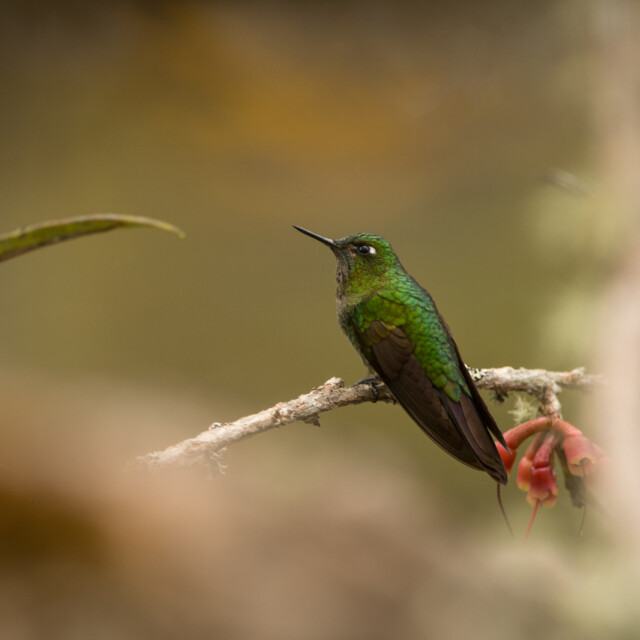
We then travel southwest to Campo Tangara, a site with feeders for hummingbirds and tanagers. There are a number of exciting hummingbirds that are possible here, including Tourmaline Sunangel, Collared Inca, Golden-bellied Starfrontlet, and Gorgeted Woodstar.
From there we cross the inter-Andean valley to the eastern slope of the central Andes for a whole new suite of birds. This drive will take most of the afternoon. Night at Cantos del Rio Ecologe.

Day 4: Around Cantos del Rio - Yellow-eared Parrot Reserve
Birding in the Tolima region near Cajamarca and Ibagué is one of Colombia’s most rewarding central Andean experiences, offering access to a mix of Magdalena Valley and montane forest species — including some highly sought-after and range-restricted birds. The area’s mosaic of humid foothill forests, river canyon edges, and regenerating woodlands provides habitat for a rich avifauna that reflects both highland and valley influences. In these habitats, we can expect to encounter an impressive suite of species, from hummingbirds and colorful tanagers to more elusive understory dwellers and parrots — all set against dramatic Andean scenery near the Anaime and Cocora river valleys. We will visit a local reserve for Yellow-eared Parrots, and a number of other species, including Tolima Dove, Tolima Blossomcrown, Yellow-headed Brushfinch and other localized specialties that make Tolima unique for birders willing to explore off-the-beaten-path terrain.
The Yellow-eared Parrot (Ognorhynchus icterotis), a vulnerable Andean endemic and conservation flagship species across the Central Andes, is among the most iconic birds you’ll hope to see in this region. This species is strongly associated with mature wax palms and montane cloud-forest slopes that are found at the elevations surrounding Cantos del Río and the broader Tolima highlands. Night at Cantos del Rio Ecologe.
Day 5: Retorno del Colibrí and transfer to Mandalay
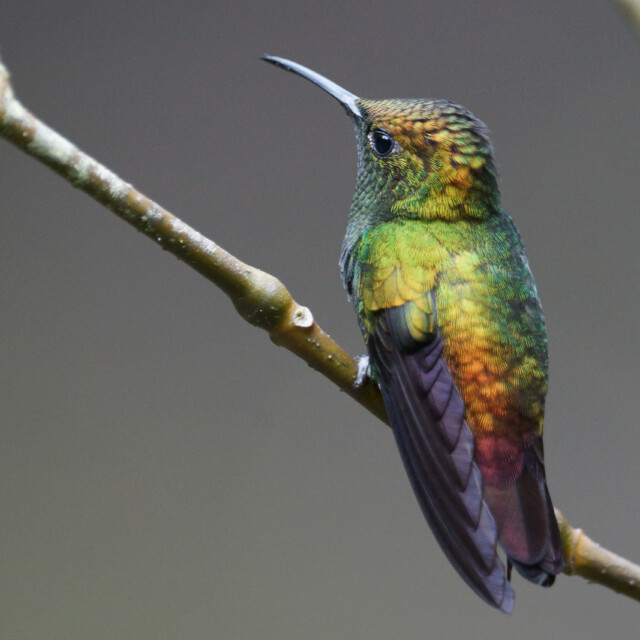
This morning we will visit the Reserva Natural Retorno del Colibrí. This reserve offers an intimate and highly rewarding experience in a restored landscape of flowering gardens, forest edge, and nearby cloud forest. The reserve is particularly well known for its hummingbird diversity, with excellent opportunities to observe species such as Indigo-capped Hummingbird, Lazuline Sabrewing, and other montane hummingbirds at close range. Beyond the gardens, birders encounter active mixed flocks moving through the forest edge, often featuring colorful tanagers, flycatchers, and woodcreepers, while the surrounding slopes provide chances for larger and more elusive species.
Afterward we continue to the western slope of the Central Andes crossing the height of land on the Alto de La Linea pass. This will give us a chance to see more high altitude species, including mountain-tanagers, raptors, hummingbirds, and more. Night near Pereira.

Day 6: Otún Quimbaya National Park to Hacienda el Bosque
This morning we travel uphill to Otún Quimbaya National Park in 4x4 vehicles. This offers access to lush cloud forest and is one of the top eBird sites in Colombia. This is a reliable site for the endangered Crested Ant-Tanager and Cauca Guan. Cauca Guan was long thought to be extinct until a healthy population was rediscovered here in 1989.
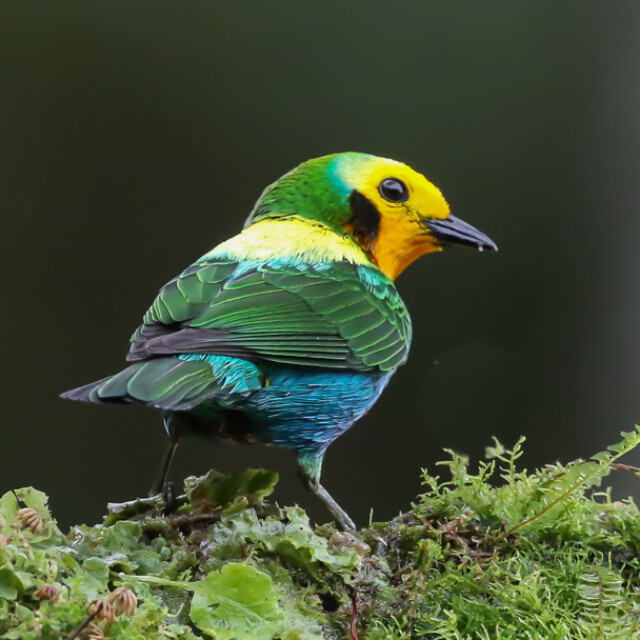
We are also likely to encounter a wide array of colourful tanagers, hummingbirds, and flycatchers. Well-maintained trails and a network of regenerating forests make birding both productive and scenic, with mixed flocks active throughout the day and frequent encounters at forest edges and clearings. Highlights could include Streak-capped Treehunter, Red-ruffed Fruitcrow, Rufous-breasted Flycatcher, Variegated and Marble-faced Bristle-Tyrants, Chestnut-breasted Wren, Crested Ant-Tanager and the breathtakingly gorgeous and aptly named Multicolored Tanager.
In the afternoon we we will travel to Hacienda el Bosque at 2800-3000 meter elevation. This site is a working cattle ranch but has left a portion of the property with its original cloud forest vegetation, and has recently began to double as a birding hotspot. It has wonderful hummingbird feeders, antpitta feeders and mountain-toucan feeders. Some of the species we will be looking for here are Crescent-faced Antpitta, Equatorial Antpitta, Gray-browed Brushfinch and Gray-breasted Mountain-Toucan. Night at Hacienda el Bosque.

Day 7: Hacienda el Bosque
We spend a full day birding around Hacienda del Bosque and nearby Termales del Ruiz and Los Nevados National Park. This park has páramo (alpine grassland) with martian-looking Espeletia plants similar to Chingaza— home to Buffy Helmetcrest, Viridian Metaltail, White-chinned Thistletail, Stout-billed Cinclodes, Plain-colored Seedeater, Plumbeous Sierra-Finch and Tawny Antpitta.
The stunted forest nearby is home to Rufous-fronted Parakeet, Páramo Tapaculo, White-banded Tyrannulet, Buff-breasted Mountain-Tanager and Black-backed Bush-Tanager. Nearby ponds will also give us a chance to look for Andean Duck and Andean Teal. Night at Hacienda el Bosque.
Day 8: Rio Blanco Reserve and transfer to Montezuma
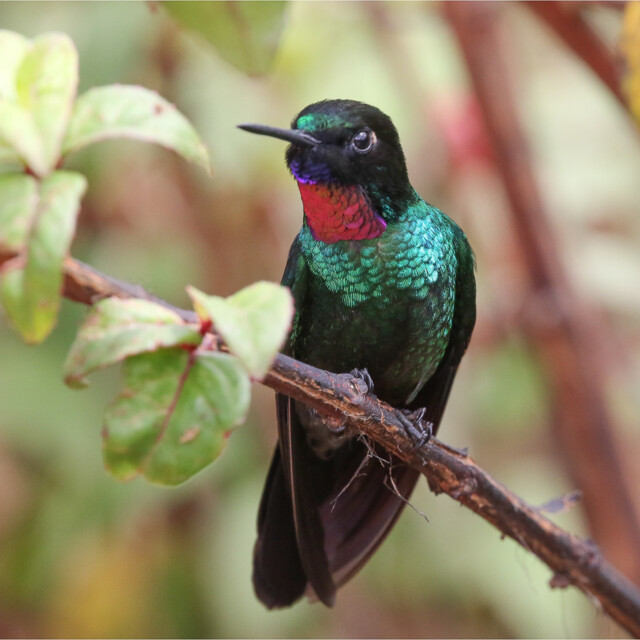
We will start the day driving to Río Blanco Reserve, which is habitat to many marvellous bird species that can be seen along gently sloping tracks through the cool cloudforest. Hummingbird feeders and flowering hedges attract Speckled Hummingbird, Fawn-breasted Brilliant, Buff-tailed Coronet, Bronzy and Collared Incas, Tourmaline Sunangel, Long-tailed Sylph, White-throated Daggerbill (formerly known as Wedge-billed Hummingbird) and White-bellied Woodstar.
We also have a chance to see Golden-plumed Parakeet, Crimson-mantled Woodpecker, Black-billed Mountain-Toucan, Rufous Spinetail, Montane Foliage-gleaner, Pearled Treerunner, Streaked Tuftedcheek, Flammulated Treehunter, and Blackish, Ash-colored and Spillman’s Tapaculos. But, Río Blanco is probably best known for its antpitta feeders. Up to 4 species of antpitta visit the different feeders: Bicolored, Chestnut-crowned, Slate-crowned and Brown-banded.
In the afternoon we will drive the 3.5 hours to Pueblo Rico, where we will transfer into 4-wheel drive vehicles to take us to Montezuma Rainforest Ecolodge, roughly 1 hour’s drive. These will be the same vehicles that will be transporting us during our stay at Montezuma. Night at Montezuma Rainforest Ecolodge.

Days 9 and 10: Montezuma Nature Reserve
The Montezuma Nature Reserve is part of the buffer zone of the Tatama National Park and consists mainly of a 14-kilometer road that goes from the lodge to a military base at the top of Cerro Tatamá. Many restricted and endemic bird species occur in this lush tropical rainforest and cloud forest.
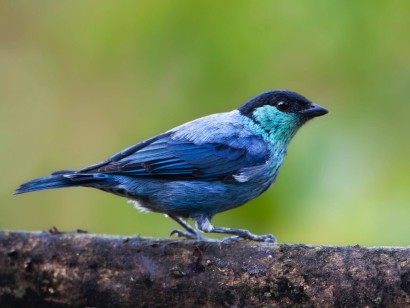
Montezuma is one of the best birdwatching sites in Colombia and is managed by the Tapasco family, headed by mother Leopoldina and 5 of her daughters. Bird species we will be particularly looking for include the endemic Black-and-gold and Gold-ringed Tanagers, Munchique Wood-Wren, Chestnut-bellied Flowerpiercer, Tatamá Tapaculo, and Crested Ant-Tanager, as well as Velvet-purple Coronet, Empress Brilliant, Western Emerald, Rufous-gaped Hillstar, Barred Hawk, Toucan Barbet, White-faced Nunbird, Lanceolated Monklet, and Golden-headed Quetzal.
The diversity here is staggering. We’ll likely find other exciting species such as Fulvous-dotted Treerunner, Yellow-breasted Antpitta, Chocó Tapaculo, Beautiful Jay, Nariño Tapaculo, Black Solitaire, Tanager Finch, Scaled and Orange-breasted Fruiteaters, Olivaceous Piha, Chestnut-breasted Chlorophonia and maybe Choco Vireo. The feeders at the lodge will keep us busy in the late afternoon. We’ll likely spend one day working the upper part of the road and the other on the lower stretches. Nights at the Montezuma Rainforest Ecolodge.
Day 11: Montezuma
We spend a final morning birding the lower part of the Montezuma road before driving the 3 - 3.5 hours to Hacienda el Diamante near Buga. We may have some time to look for birds on the hotel grounds. Night in Hacienda el Diamante.

Day 12: Laguna del Sonso and transfer to Araucana Lodge Buenaventura area and Chocó ecosystem
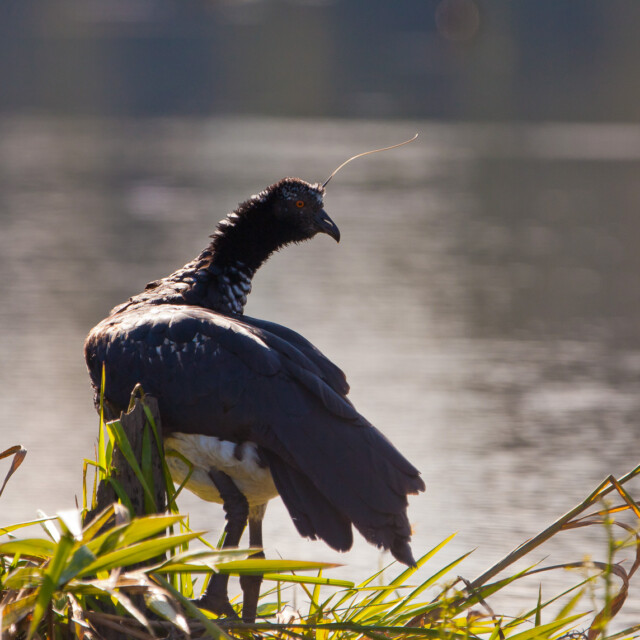
Our first stop this morning will be at the Laguna del Sonso wetland complex. We will walk a trail then board a boat to search for lowland species. Some of the target birds that we will be looking for in Laguna del Sonso and surrounding tropical dry forest are Apical Flycatcher, Grayish Piculet, Horned Screamer, Jet Antbird, Dwarf Cuckoo, Yellow Oriole and Snail Kite. We then drive about 2 hours to our lodge in the Western Andes. Night at Araucana Lodge.
Days 13 and 14: Cali area around Araucana Lodge
In the Cali area we should expect to find another different set of birds in pleasant to slightly warm temperatures. We will be spending the first morning birding in and near Doña Dora’s hummingbird-feeders and tanager-feeders in Queremal. This is closer to the Chocó biogeographic region on the western side of the western cordillera. Some of the birds we will be hoping to see are Empress Brilliant, White-whiskered Hermit, Green Thorntail, White-booted Racket-tail, Violet-tailed Sylph, Velvet-purple Coronet, Toucan Barbet, Red-headed Barbet, Silvery-throated, Rufous-throated, and Glistening-green Tanagers, and Blue-winged Mountain-Tanager.
On our final day in the area we will be spending time is the cloud forest and edge near “kilometer 18” and the nearby Finca Alejandría hummingbird garden, where some of the birds we will be looking for are Chestnut Wood-Quail, Multicolored tanager, Blue-winged Mountain-Tanager, Colombian Chachalaca, Golden-naped, Metallic-green and Saffron-crowned Tanager, and Blue-headed Sapphire.
In the afternoon of the second day we will fly to Bogotá and have our farewell dinner. Night 13 at Araucana Lodge. Final night in Bogotá.

Day 15: Departure
Our Colombia birding tour ends today. Participants can depart anytime.
What to Expect
What to Expect
Overview
The Colombia tour is a very fast paced birding tour, for the dedicated bider. We typically begin birding before breakfast, as everywhere in the tropics it is desirable to be in good habitat by daybreak when bird activity and song are at their peak. There will be long days out in the field, as we focus on finding a diversity of birds.
Food
Often we are out birding before breakfast and come back to eat. We take most of our meals at the various lodge’s dining facilities, but some days we will have a picnic lunch in the field, or visit a local eatery. Dinner is usually at the lodge or a nearby restaurant. Each evening after dinner we compile the day’s checklist, review the day’s activities, birds, mammals and other observations, and plan the next day’s activities.
Accommodation
Accommodations vary from basic lodges to modern hotels.
Walking
The walking on this tour is rated as moderate, with one particularly challenging hike. We generally do not walk for further than 5 km (3 miles) in length, at a slow pace, but the uneven terrain and humidity can make it harder work. Birding will mainly take place along quiet roads, with forest trails being on relatively wide and easy-to-follow trails. When traveling at the higher elevations, we will bird along the roadside just a short distance from the vehicle.
Driving
Most days have a small to moderate amount of driving, but there will be some longer drives of up to several hours, as we transfer from one destination to the next. Some locations will require 4WD vehicles and the roads can be very bumpy.
Climate
Weather varies greatly with elevation, and we should be prepared for a range of temperatures from cool 4°C (40°F) to 30°C (88°F). Sun, drizzle and rain are all likely. Packing layers and a windbreaker are the solution to the inconsistent mountain weather! At all altitudes, we should remember to have adequate protection from the sun. Mosquitoes and other biting insects should not be a problem on this tour; however, it is best to bring insect repellent regardless.
Featured Wildlife
Featured Wildlife
While we cannot guarantee sightings of the birds or mammals listed below, we believe that encountering these species is quite likely during this tour.
- Chestnut-bellied Flowerpiercer
- Munchique Wood-Wren
- Antioquia Bristle-Tyrant
- Brown-banded Antpitta
- Chestnut-crowned Antpitta
- Red-ruffed Fruitcrow
- Rufous-browed Conebill
- Velvet-purple Coronet
- Rufous-gaped Hillstar
- Gold-ringed Tanager
- Crested Ant-Tanager
Past Tour Checklists
Past Tour Checklists
View the list of birds and other wildlife we encountered on our past tours.