Spain Trip Report (Apr 20 – May 3, 2026)
DAY 1: MALAGA
At 6:30 p.m., I, the lead guide Pablo Perez, and the co-leader Sören Salvatore welcomed the international group from the United States, Canada, Ireland, and, for the first time, Singapore and Malaysia. A group of 10 participants eager to discover Spain.
After enjoying a warm welcome glass of wine in the hotel’s lovely garden, we walked to the nearby restaurant, where we savored a traditional and delicious black and white rice dish before walking back to the nearby hotel located at the mouth of the Guadalhorce River in Málaga.
DAY 2: GUADALORCE RIVER – FUENTE DE PIEDRA – CAMPILLO – RONDA
We began walking from near the hotel before dawn until we reached the bird observatory just as the sun was rising, and we were treated to an excellent sunrise while observing a large number of birds in excellent light. Along the way, we got a firsthand look at scientific bird banding, as the friendly bander showed us a Western Barn Owl before releasing it back into the wild.
We got off to a great start this morning with a fine sighting of the migratory Garganey, whose presence was further enhanced by the elegant Whiskered Terns and their graceful flights over the lagoon near the mouth of the Guadalhorce River, where we also enjoyed good views of the Kentish Plover and, of course, other shorebirds such as the Black-winged Stilt, Redshank, and our first Pied Avocets of the trip.
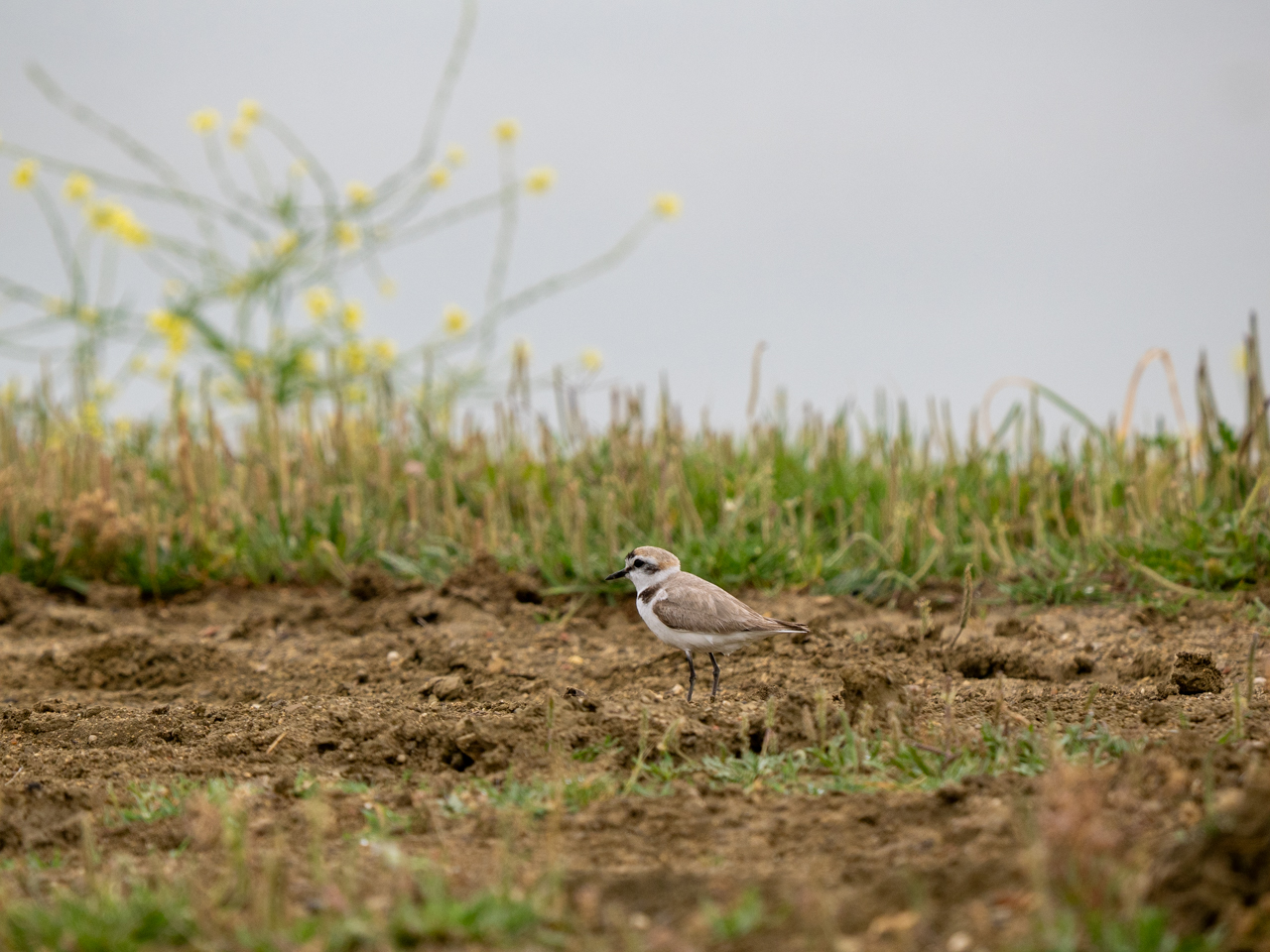
Kentish Plover © Pablo Perez
We visited another nearby lagoon where we had excellent views of the courtship of the White-headed Duck and Marbled Teal, two birds that are truly endangered in Europe and have one of their largest global populations in this wetland. To the group’s surprise, a Granada Hare—endemic to the region—suddenly appeared on the shore, delighting us with its playful movements.
On the way back to the hotel, we were able to hear and see our first Nightingale shortly before being surprised by the fleeting visit of another migrant, the Pied Flycatcher. Shortly after, we were able to enjoy a lovely pair of Woodchat Shrikes perched high in the trees, behaving similarly to Stonechats—other colorful birds that are easy to identify.
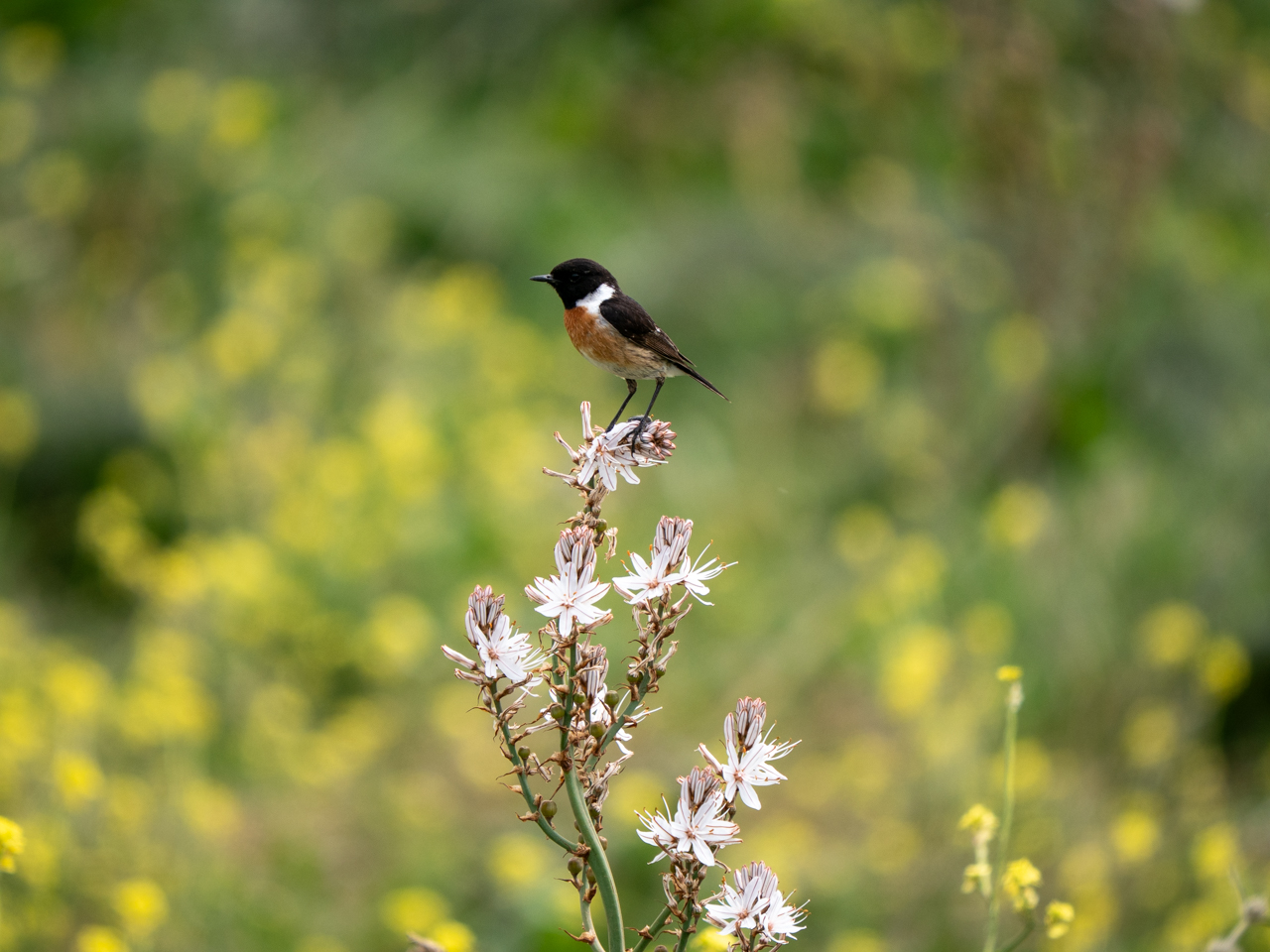
Stonechat © Pablo Perez
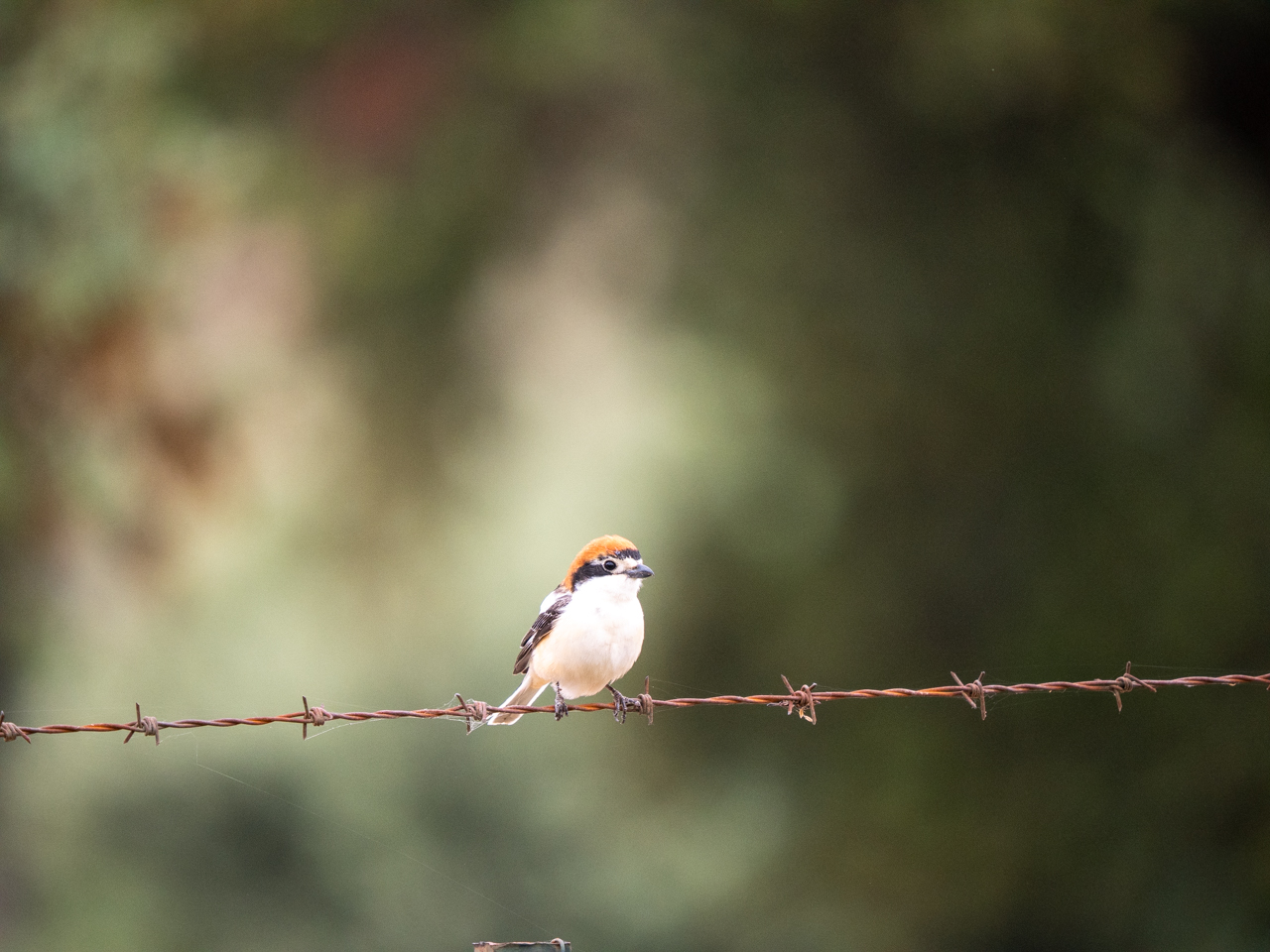
Woodchat © Pablo Perez
We had breakfast again and then set off on our journey to the Fuente de Piedra Lagoon, where we first enjoyed the small adjacent lagoons, which were full and offered excellent views of Greater Flamingos feeding, and we were able to admire their bright pink colors and their unique feeding style, rhythmically moving their long legs—a movement that undoubtedly resembles the traditional Spanish dance called Flamenco due to the rhythmic leg movements.
The large lagoon was heavily flooded, but due to the strong wind, there were even waves that forced the birds to remain sheltered on the shores. Another new bird we were able to spot in the lagoon near the visitor center was the Red-crested Pochard before heading to a local workers’ restaurant in the nearby town for lunch. It’s interesting to experience the atmosphere of the local surroundings.
We left Fuente de Piedra behind and headed toward Ronda, driving along a road through a vast sea of olive trees, where we made a stop—to our pleasant surprise—in a nearby village. There, to everyone’s delight, we were able to observe and, of course, photograph a beautiful Long-eared Owl that was resting in a nearby tree.
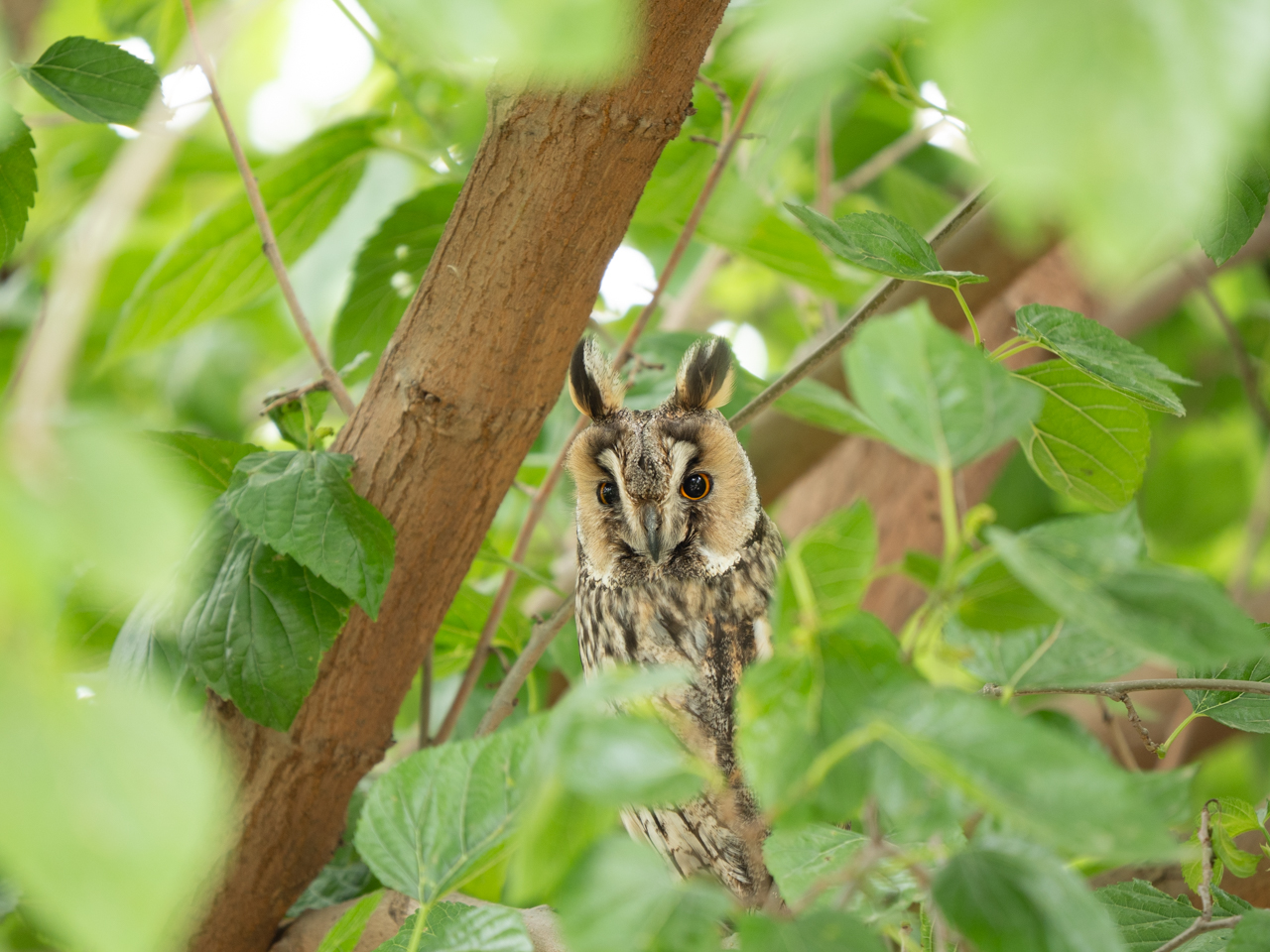
Long-eared Owl © Pablo Perez
Delighted with our discovery, we arrived at the hotel in Ronda, where we dropped off our bags and went for a cultural stroll to explore its dizzying cliffs and historic bridge. Some of the local birds we spotted included the acrobatic Red-billed Chough and Eurasian Kestrel.
We enjoyed some free time to explore the town before meeting up for dinner at a nearby tapas bar, where we sampled traditional Spanish cuisine and its delicious cheeses and cured meats.
Since it was a day full of surprises, we went to enjoy a well-deserved treat: the quintessential classic, a live flamenco dance show. It’s truly impressive how much emotion is conveyed through that dance and song. We then understood why the birds were feeding and why the dancers, dressed in red like the flamingos, were tapping their heels by the lagoon.
Without a doubt, an intense but excellent first day of the trip—this journey promises so much.
DAY 3: LLANOS DE LIBAR–GAUCIN–CASARES–ESTRECHO VIEWPOINT
On a pleasant, overcast morning, we began in the Llanos de Libar, observing one of the day’s star birds, the Black Wheatear. There, we also had excellent sightings of the Sardinian Warbler and the Melodious Warbler before continuing on to the holm oak pasture. We were delighted by the presence of the Black-eared Wheatear, and a little further away, our first Blue Rock-thrush and, of course, the elegant Rock Sparrow.
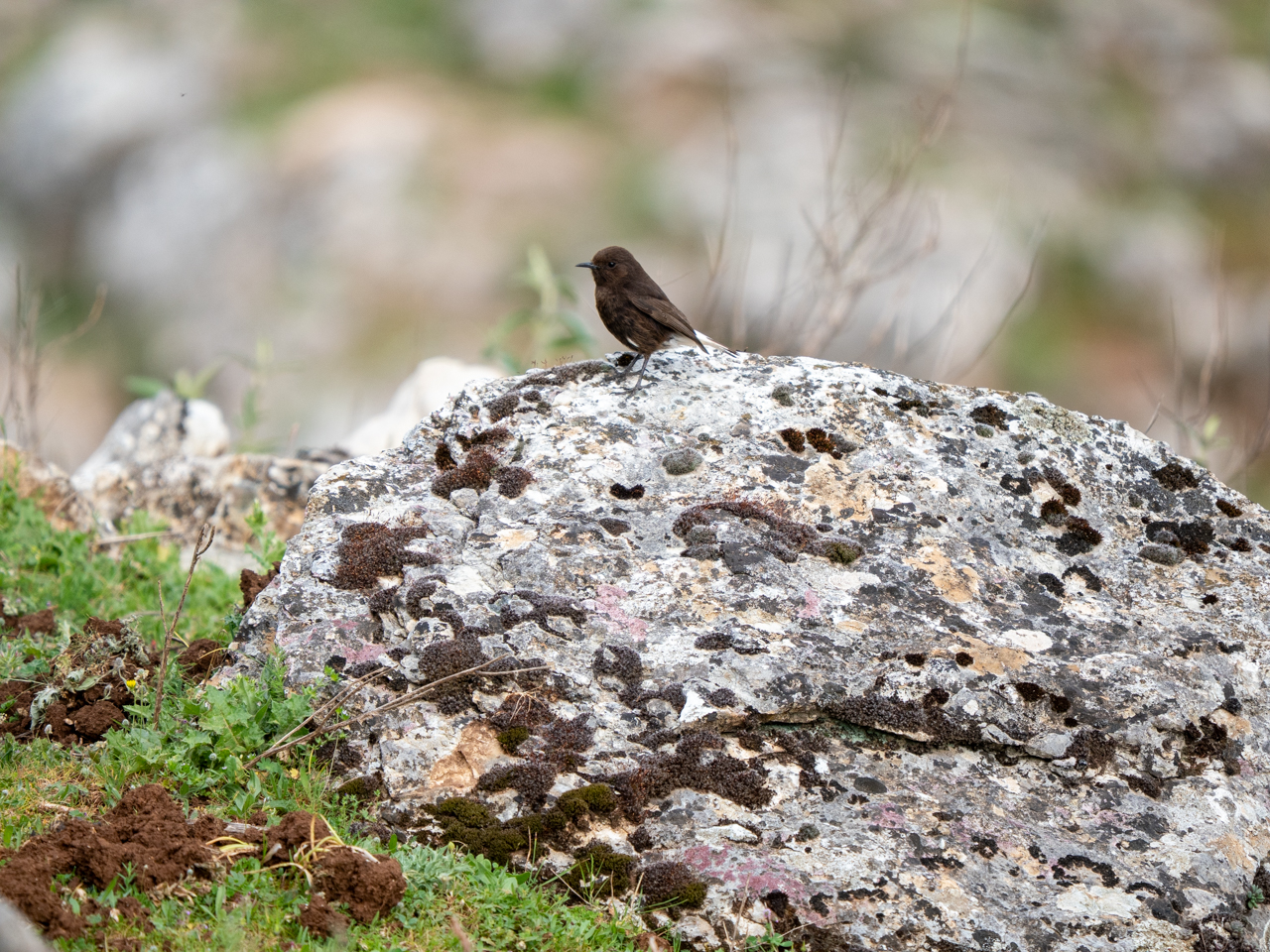
Black Wheatear © Pablo Perez
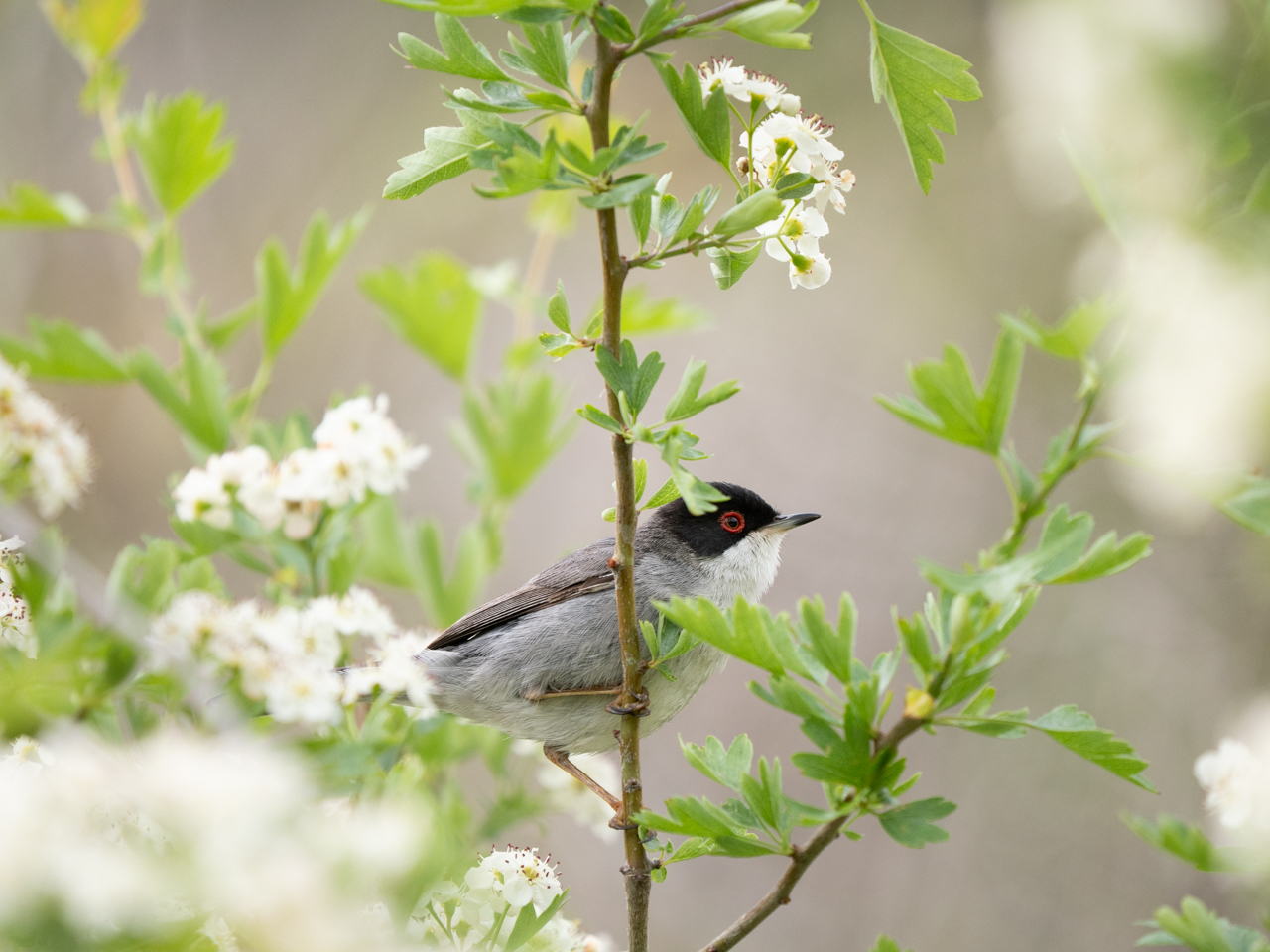
Sardinian Warbler © Pablo Perez
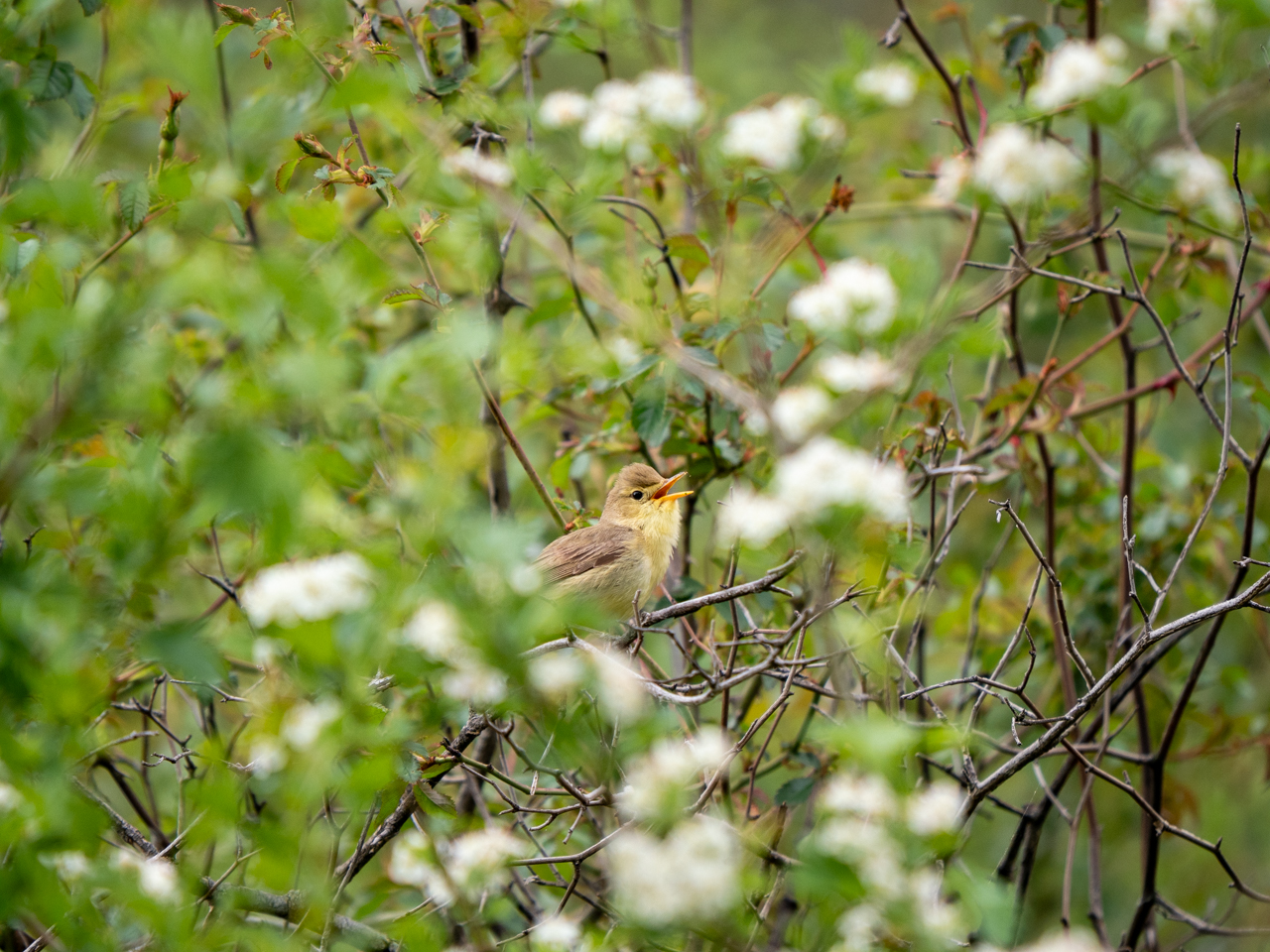
Melodious Warbler © Pablo Perez
As for birds of prey, I’d highlight an impressive adult Short-toed Snake Eagle and a more distant Booted Eagle, but without a doubt, our first encounter with the Griffon Vultures was the highlight—these large birds would accompany us throughout the trip.
We had a pleasant lunch in Benaojan before continuing on to Gaucin, the first typical white village we visited, and then followed the winding road through the Serrania de Ronda to Casares. We took the usual photos and continued on, with Gibraltar on our left, until we reached the Mirador del Estrecho.
After catching our first glimpses of Morocco—and, consequently, Africa—we continued on to the hotel, where we were treated like family.
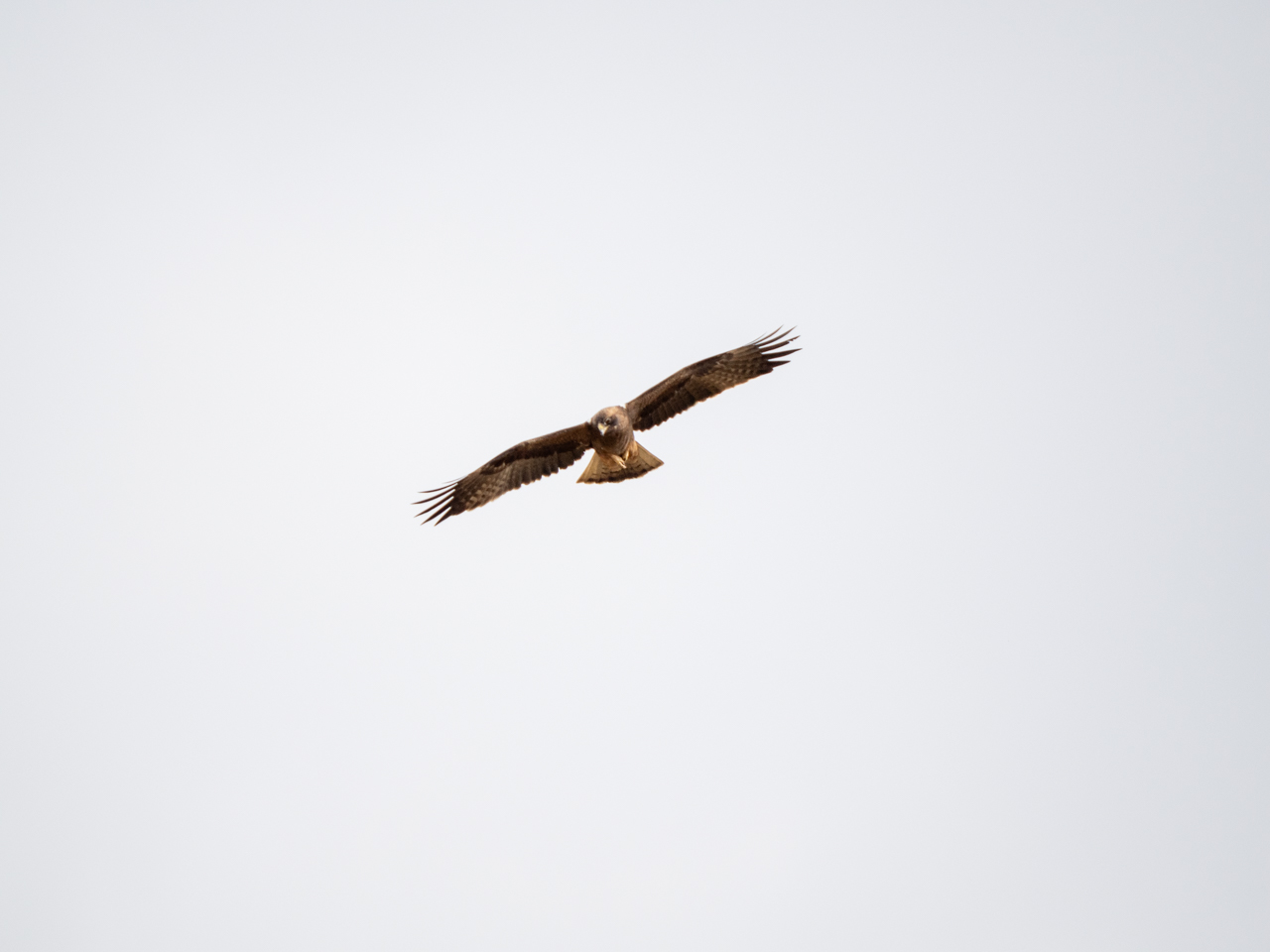
Booted Eagle © Pablo Perez
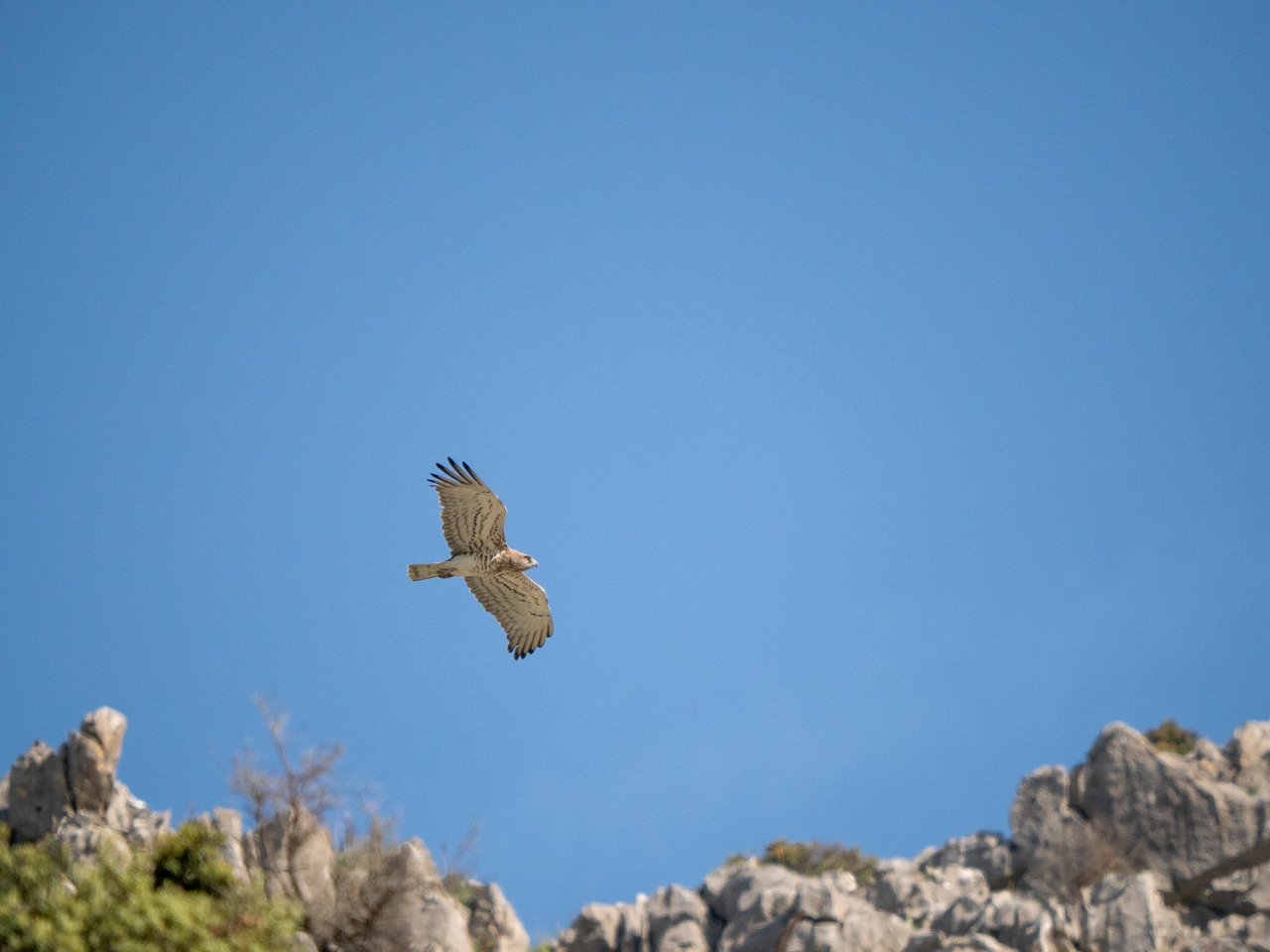
Short-toed Snake Eagle © Pablo Perez
DAY 4: LOS LANCES BEACH – MARINAS BOAT – TARIFA
A spectacular sunny morning allowed us to enjoy the courtship flight of the Greater Short-toed Lark at the pleasant and peaceful Los Lances Beach. Fortunately for us, it graced us with its presence, perched elegantly on a beach post, while the sun illuminated its ochre colors against the backdrop of the sea—a truly idyllic scene.
There were also some shorebirds on the shore where we could observe the difference between the winter and pre-breeding plumage of the Sanderling.
We then returned by van to Tarifa, where we parked comfortably in a lot to walk through the city walls to the Gothic church, which held a surprise for us with a close-up view of the Lesser Kestrel and the Pallid Swift.
We enjoyed a nice sandwich and a coffee before setting out at noon on our adventure to search for seabirds and marine mammals in the Strait of Gibraltar, which is 14 km wide and hundreds of meters deep.
We were very lucky—it turned out to be the best year yet, with three species of dolphins, pilot whales, and, to our delight, the first Fin Whale of the season. It was an impressive sight, and thanks to the calm waters and light winds that day, we were able to enjoy it immensely. We also spotted Gannets and a large flock of Scopoli’s shearwaters and Black Terns before heading back to shore.
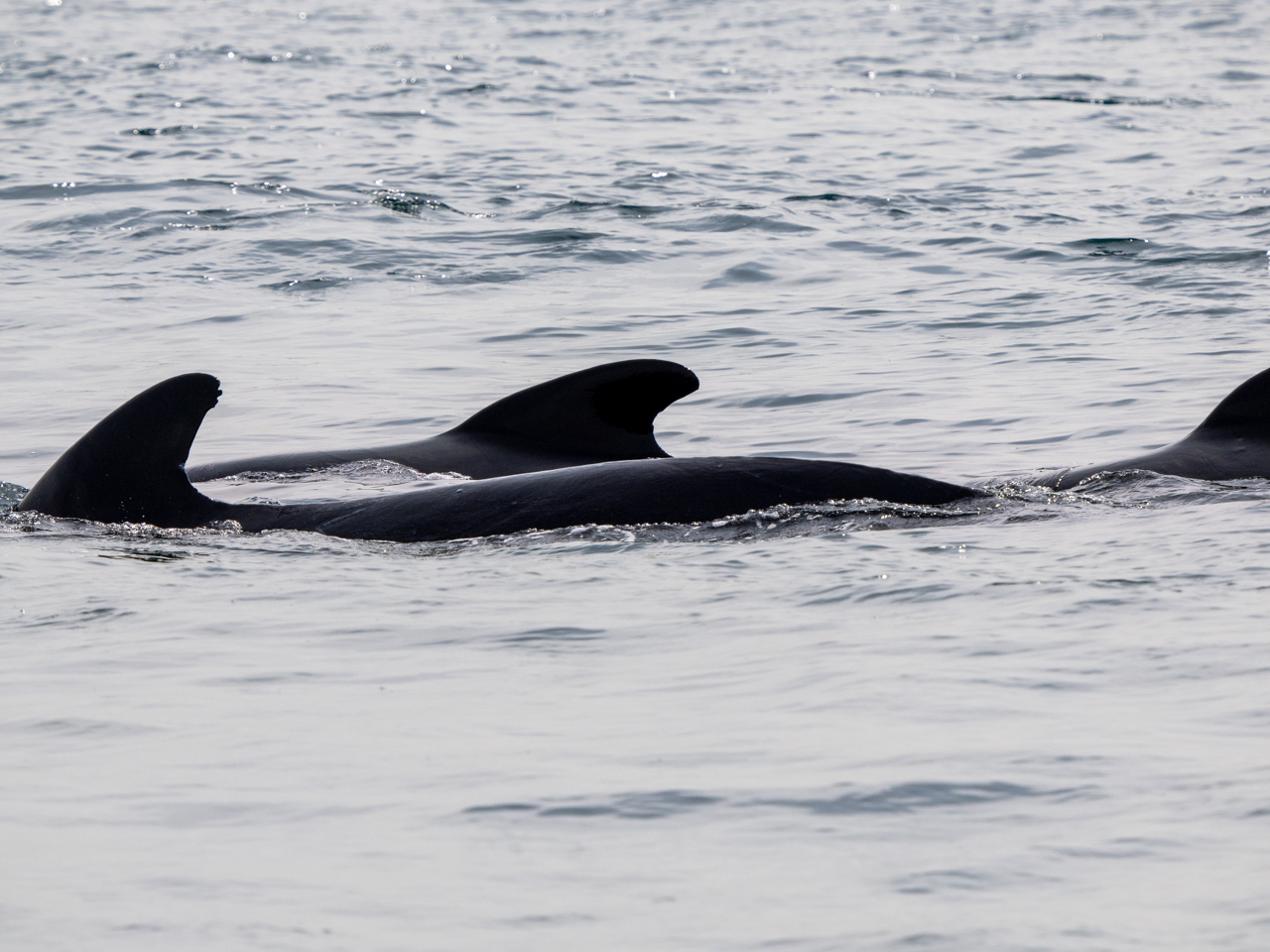
Pilot Whale © Pablo Perez
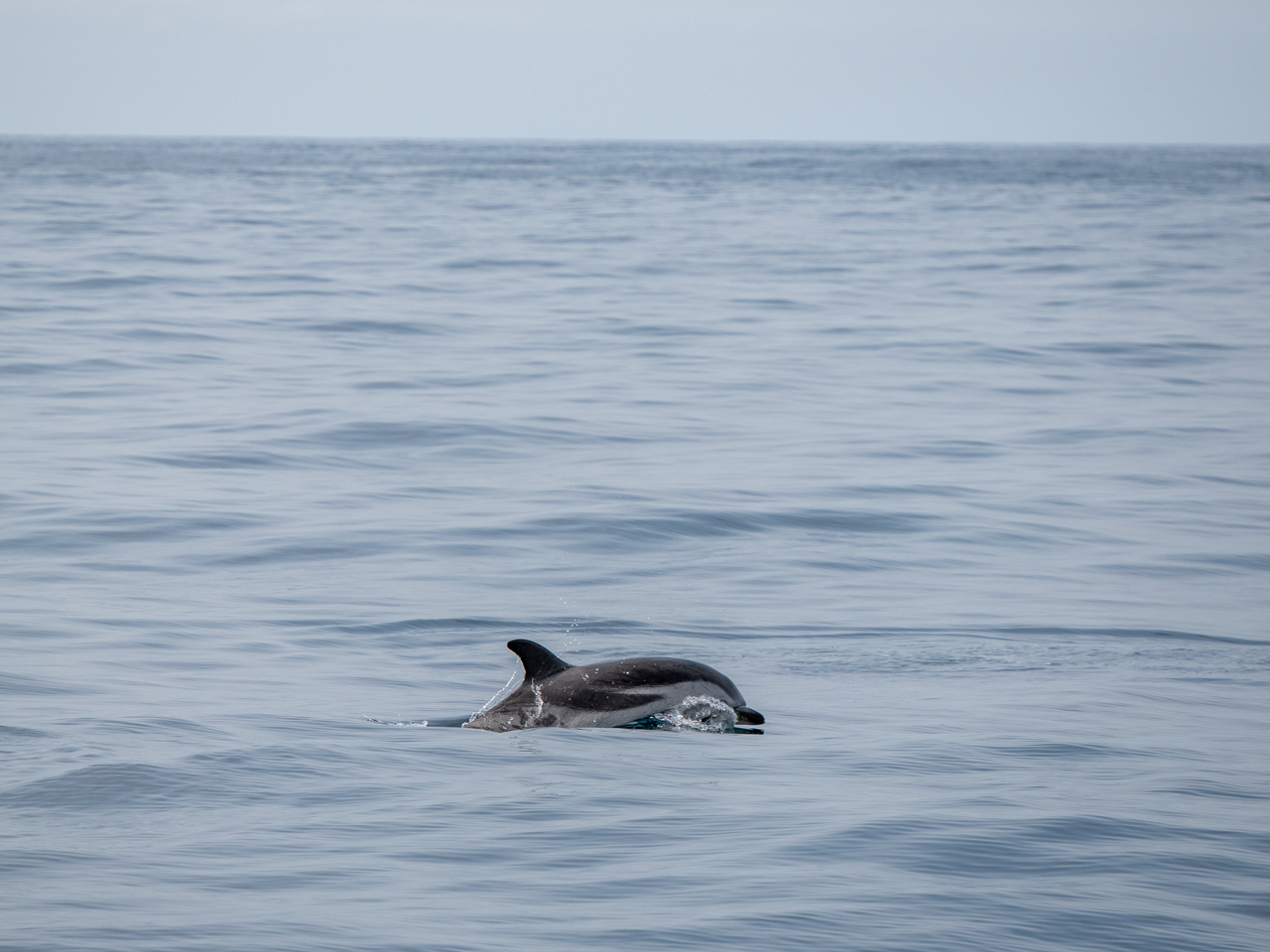
Striped Dolphin © Pablo Perez
After another delicious fruit smoothie and before heading back to the hotel, we stopped at the top of the hill again at the strait’s viewpoint to look for migration, but unfortunately it was very slow, with only a few groups of Griffon Vultures and Booted Eagles in the distance. Suddenly the wind shifted and clouds rolled in, which didn’t particularly favor the birds’ passage between the two continents. We therefore decided to return to the pleasant nearby hotel to enjoy its comfortable facilities and, of course, its delicious food.
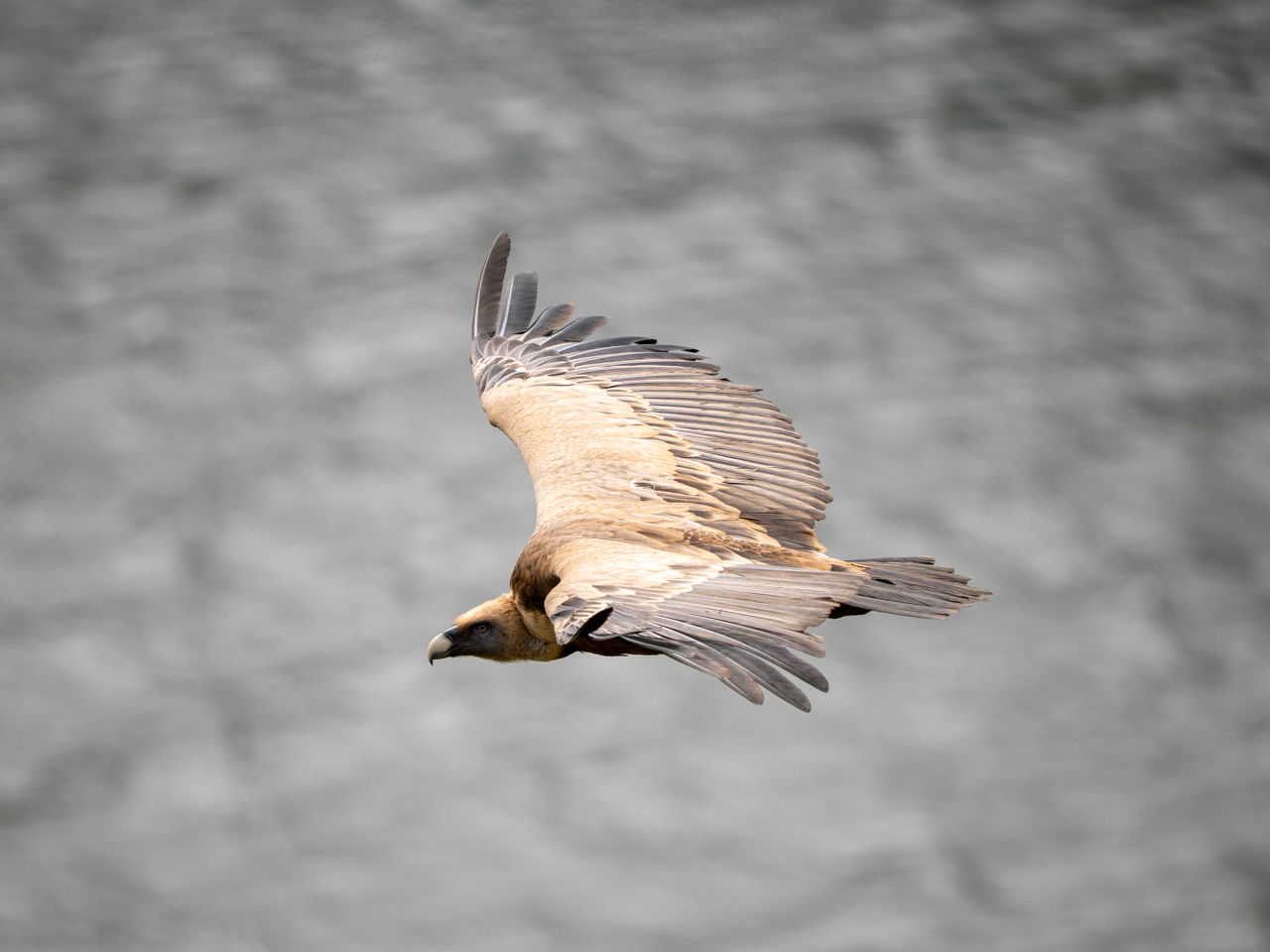
Griffon Vulture © Pablo Perez
DAY 5: BOLONIA–FACINAS–VEJER BOAT–BARBATE
We began a tough morning of constant rain that barely allowed us to visit the ruins of the Roman city of Bahelo Claudia on Bolonia Beach. We continued toward Vejer, making a few stops near Facinas where we spotted a pair of Montagu’s Harriers and the first Stone Curlews of the day. Birds we could barely make out in the vegetation due to their excellent camouflage. We continued battling the rain and mud, which caused us to lose some time on the road, until we stopped for lunch at a traditional bullfighting-themed restaurant in Facinas—an experience that lifted our spirits, helped along by the fact that the rain stopped for a moment.
We certainly made the most of that moment to visit a nearby spot where Pablo surprised the group with a sighting of the enigmatic Eurasian Eagle Owl, undoubtedly one of the most iconic birds of the European continent.
Thrilled by the excellent sighting and grateful that the rain had stopped, we continued on toward Barbate, making the obligatory stop at the largest breeding colony of Northern Bald Ibis on the European continent, at La Barca de Vejer. Those black birds leave no one indifferent, but what surprised us most was seeing how some adults seemed to be mistreating the chicks in neighboring nests; we struggled to understand what was happening in that large breeding colony, where Jackdaws were also sneaking among the Ibis nests.
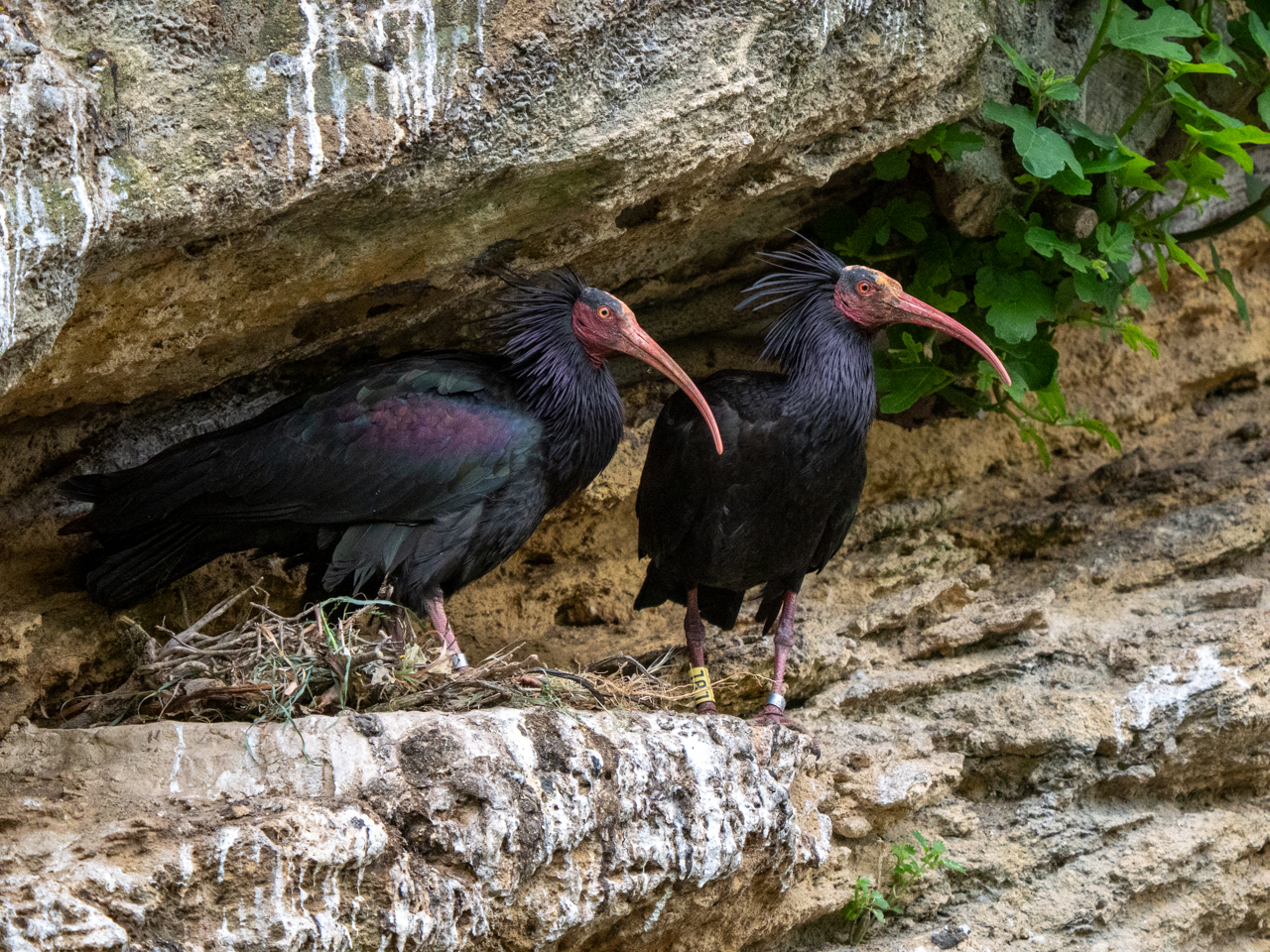
Northern Bald Ibis © Pablo Perez
The highlight of the day was still to come: the Barbate marsh, which, though muddy, was also teeming with birds. The Collared Pratincole undoubtedly stood out, followed by a large group of Stonecurlews and, of course, Kentish Plovers running with their chicks, as well as a pair of Curlew Sandpipers, one of which was already in advanced reddish breeding plumage, as opposed to their winter plumage.
We also said goodbye to the abundant flamingos and Sandwich Terns before heading home, tired but happy after an intense day not only of seeing many birds, but also of dealing with persistent rain and muddy roads.
DAY 6: PLAYA DE LA JARA – CHIPIONA – EL ROCÍO
We started the morning in heavy rain again, with heavy motorcycle traffic due to the Jerez circuit. We arrived just as the tide was beginning to go out on the left bank of the Guadalquivir River estuary, and as soon as we touched the sand, two Slender-billed Gulls appeared, followed by numerous groups of shorebirds rushing to rest in flocks. We saw numerous Sanderlings, Little Terns, and Little Ring Plovers, and to our pleasant surprise, three Bar-tailed Godwits arrived—two still in their winter plumage and another beginning to show its red breast, typical of the breeding plumage.
Before lunch, we headed out to see the first breeding colony of Little Swifts and were also able to enjoy a large number of gulls, mainly Yellow-legged Gulls and Lesser Black-backed Gulls, along with a large number of Ruddy Turnstones.
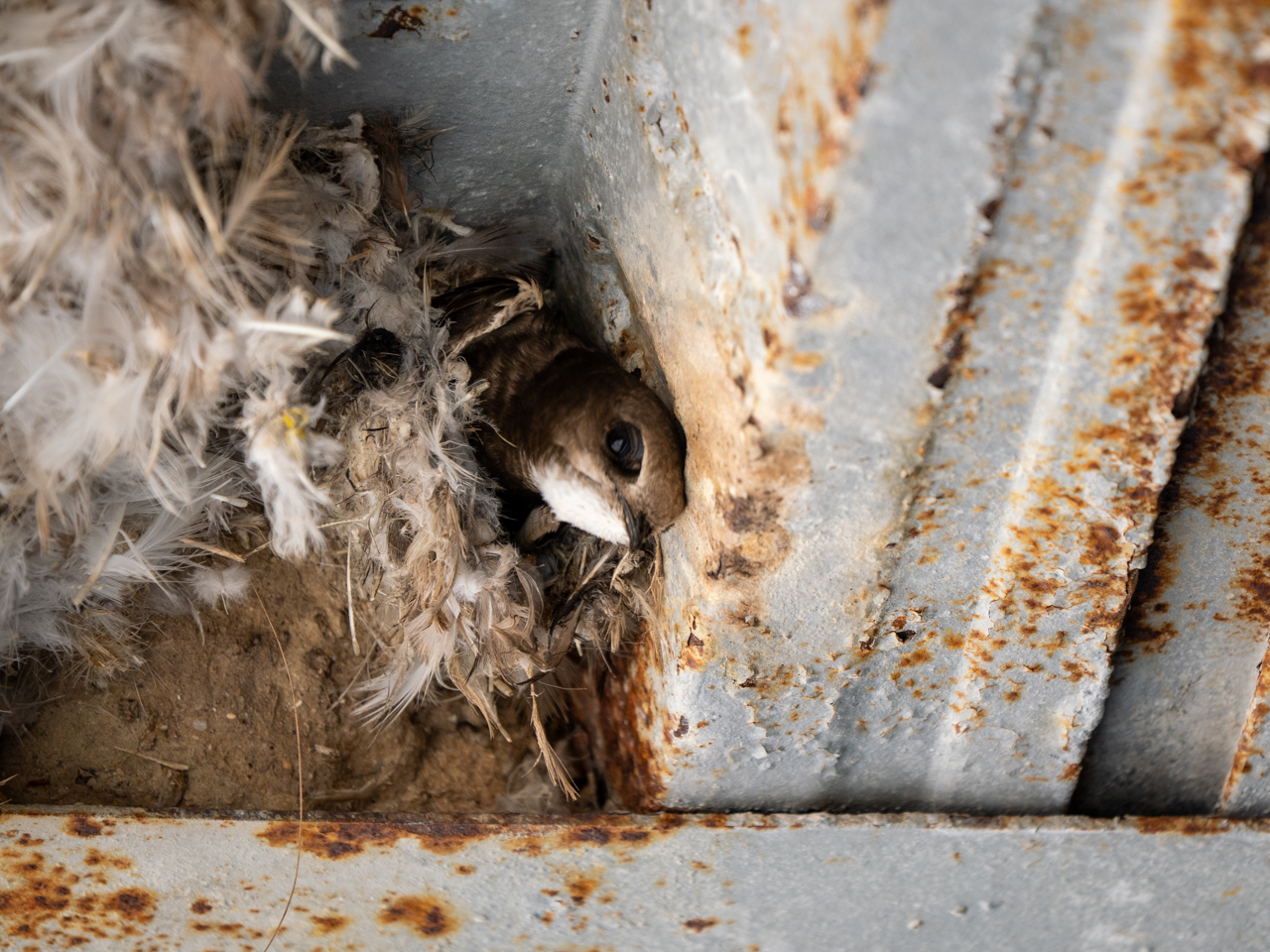
Little Swift © Pablo Perez
We then had an excellent traditional fish meal at the fish market before continuing on the road straight to the charming village of El Rocío.
As soon as we arrived, a fierce storm threatened us, but fortunately it subsided, allowing us to enjoy some great sightings of numerous Eurasian Spoonbills, Glossy Ibises, Gull-billed Terns, and Greylag Geese—and, to Pablo’s surprise, a beautiful Ruff in breeding plumage displaying its courtship ritual. The Marisma Madre de El Rocío was teeming with life, filled with large numbers of Greater Flamingos and, of course, many devout religious visitors from Andalusia who come on weekends to celebrate at El Rocío. We went to bed early, as Pablo predicted an intense day of birding for tomorrow.
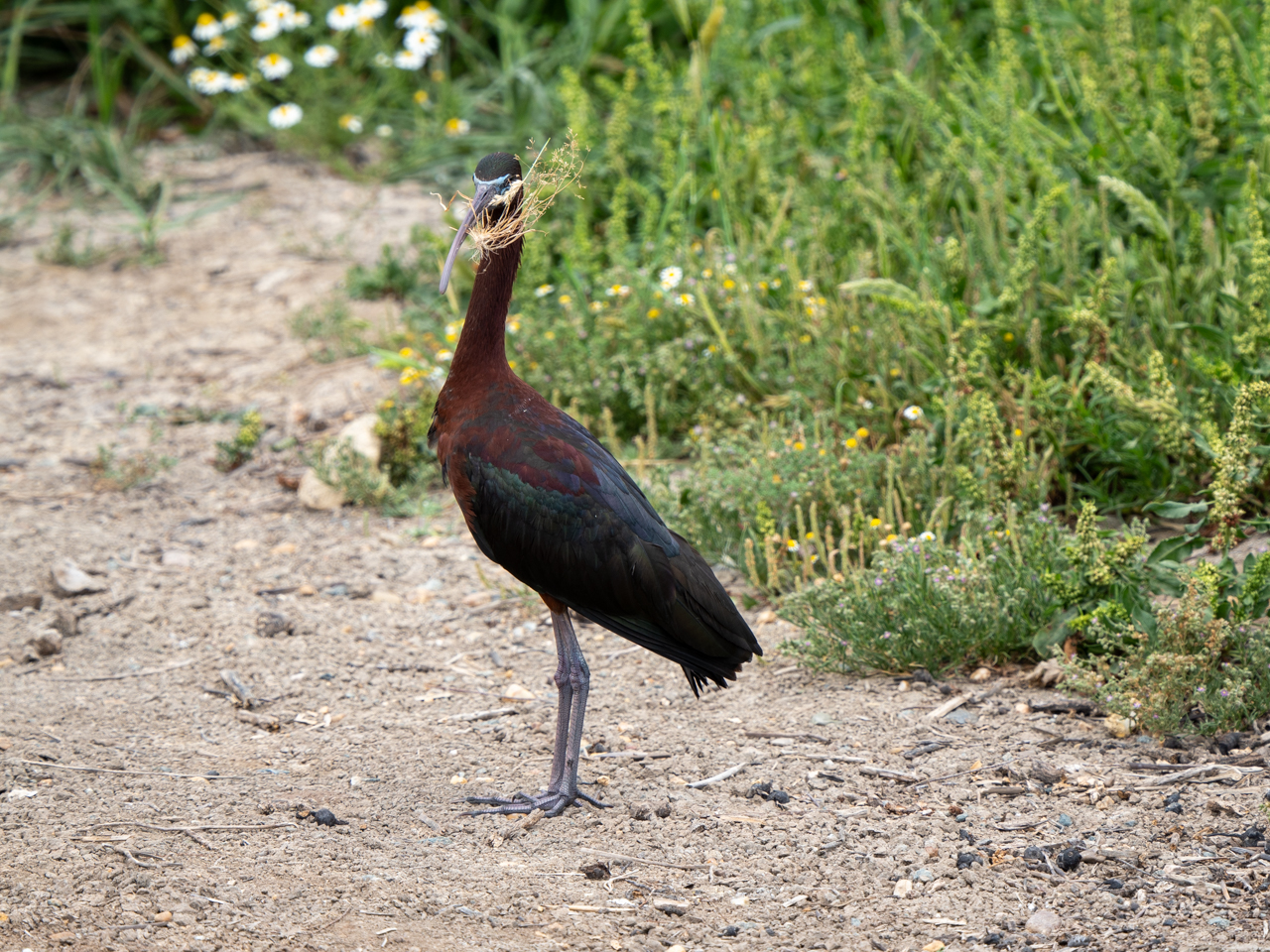
Glossy Ibis © Pablo Perez
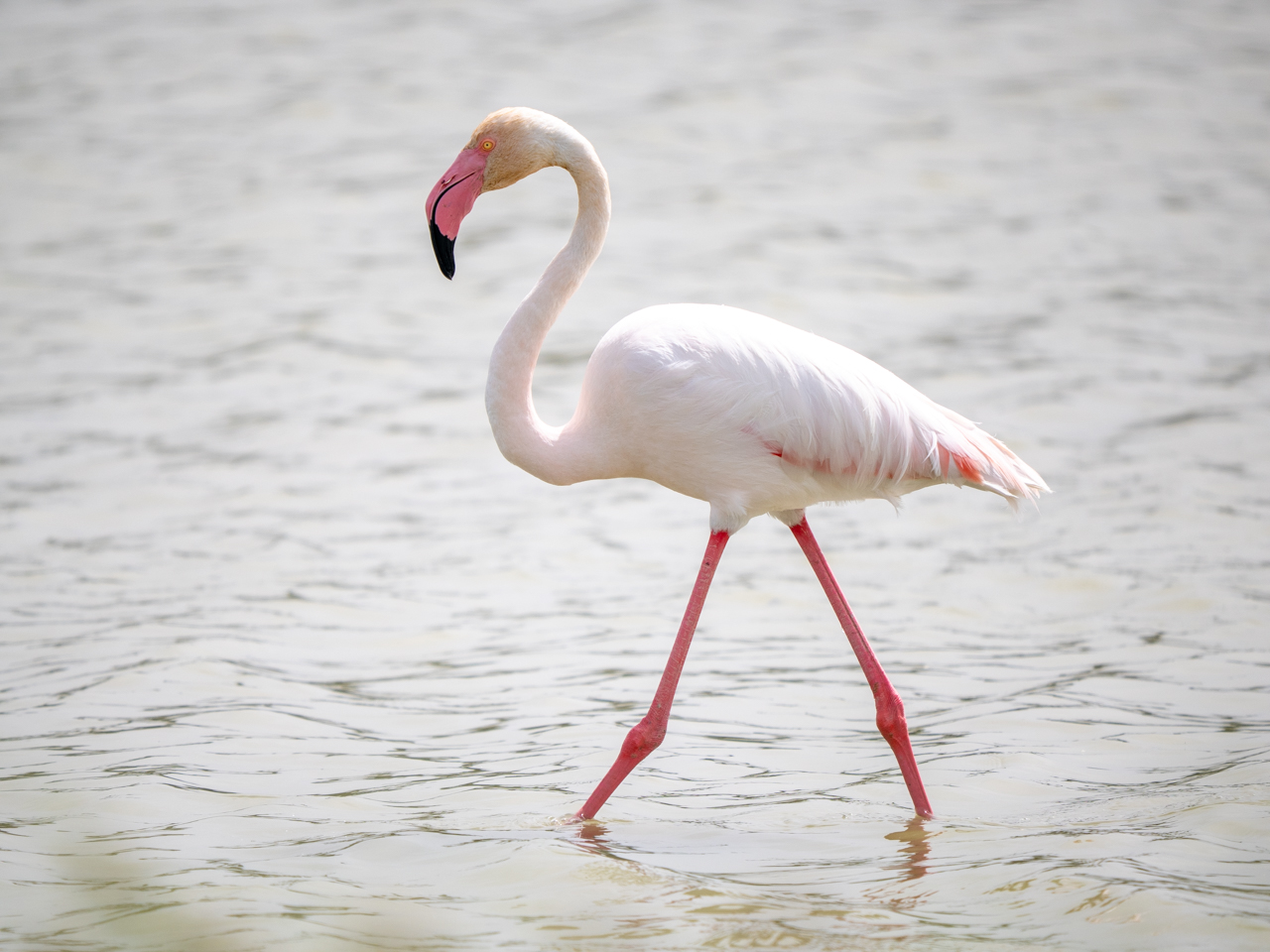
Greater Flamingo © Pablo Perez
DAY 7: DOÑANA–EL ROCIO
At eight in the morning, we set out on what promised to be a day full of adventure. After driving for a while through the fog, we arrived at the first breeding colony of spoonbills, gray herons, and white storks. Thanks to the heavy rains this winter and the abundance of food, these birds are having tremendous breeding success, and the marsh is teeming with life.
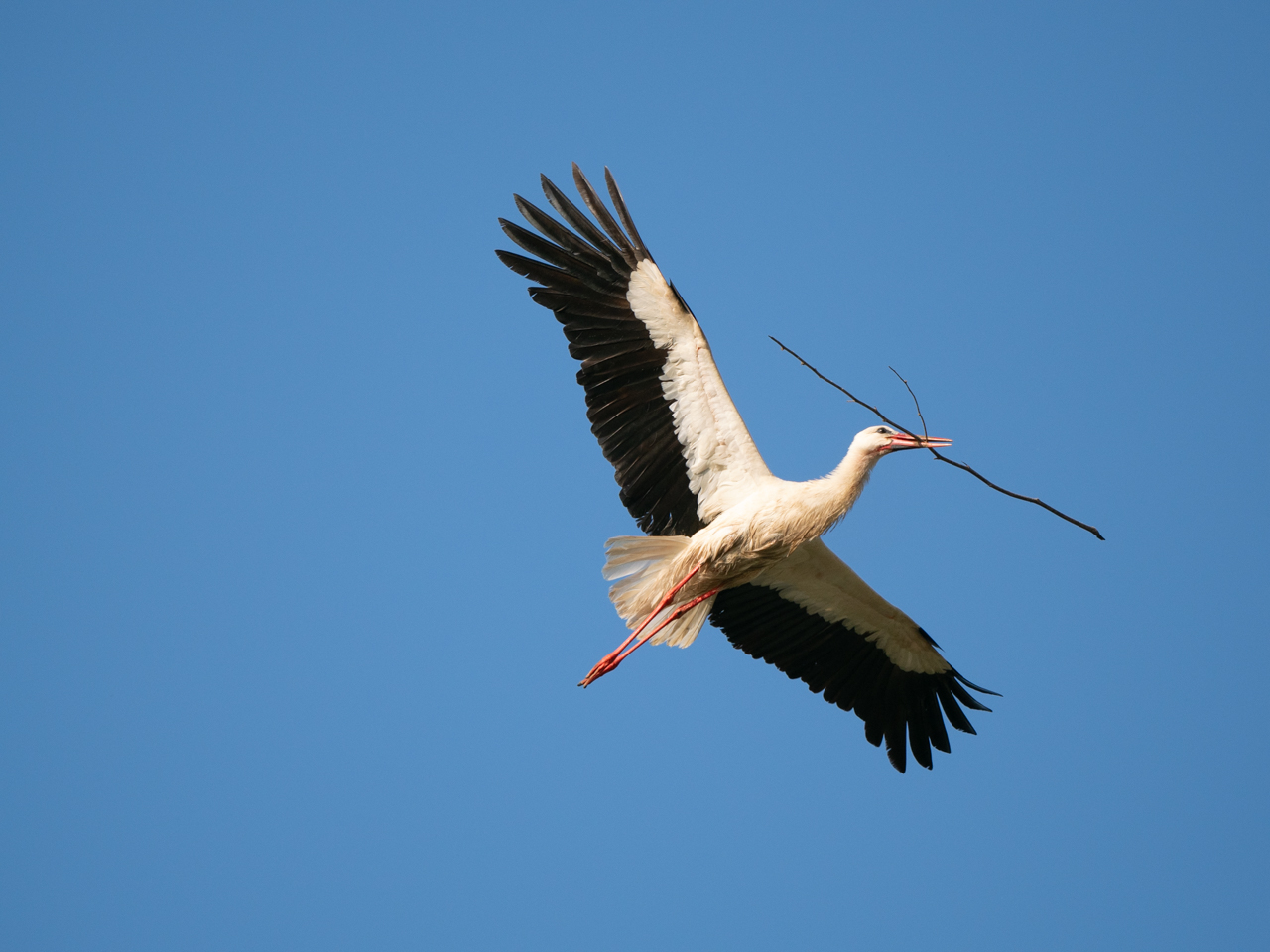
White Stork © Pablo Perez
We continued along the bumpy gravel road toward Valverde and, as we went, stopped at the various lagoons we came across, enjoying excellent views of hundreds and even thousands of birds. Among them, the Purple Heron, Black-crowned Night Heron, and, of course, the Squeacco Heron—with its elegant bluish bill in breeding plumage—stood out, delighting the visitors.
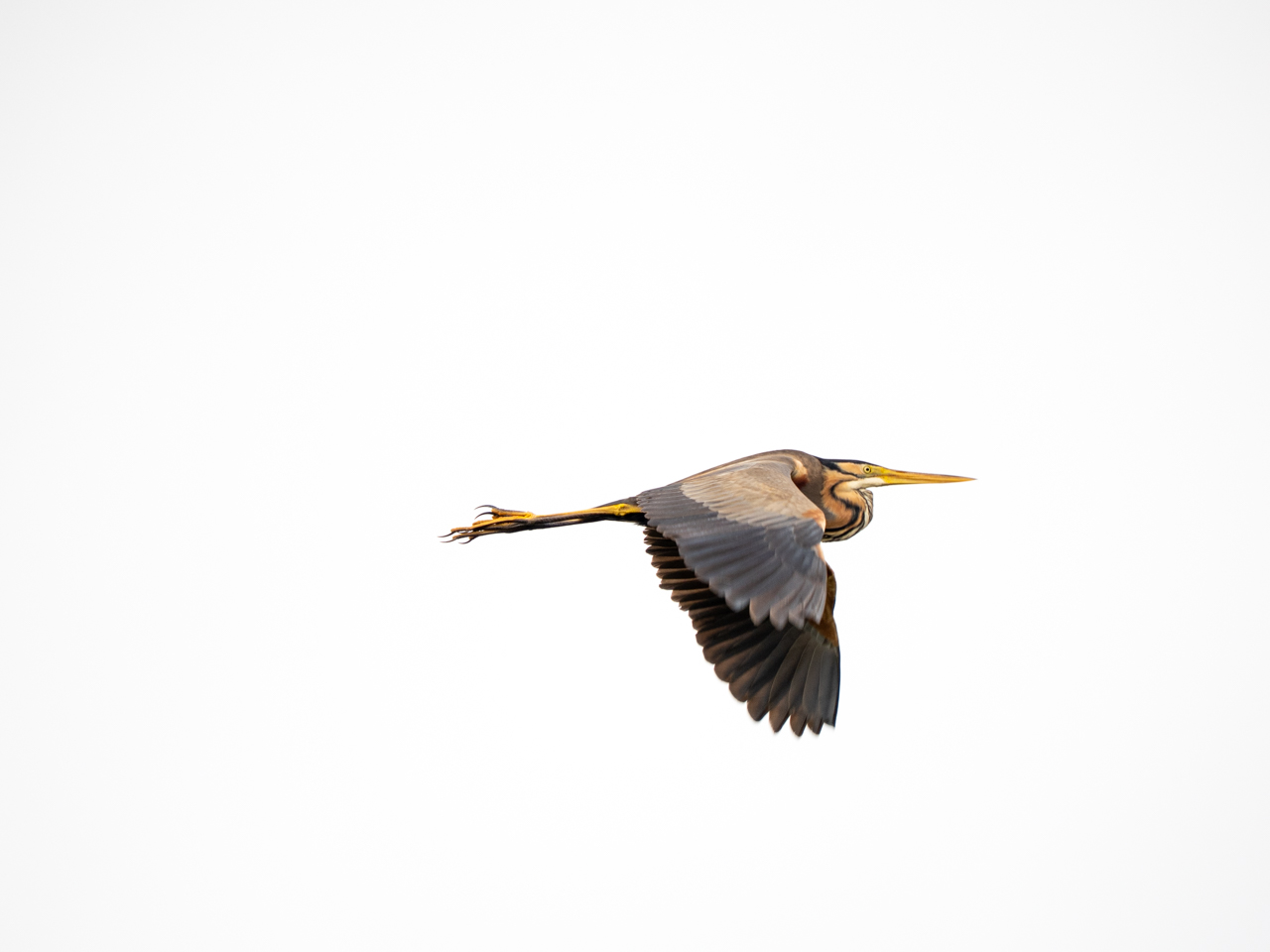
Purple Heron © Pablo Perez
We took a short break for lunch and continued searching for birds among the vegetation, spotting the Little Bittern in flight twice—it wouldn’t let us see it perched. Meanwhile, the elegant Whiskered Terns patrolled the marshes, fishing, and allowed us to compare their size to that of their larger cousins, the Caspian Terns, and another similar species with a darker head that we identified as the Black Tern.
We gradually began to head back, but remained persistent and diligent, searching among the multitude of Eurasian Coots for their relative, the Red-knobbed Coot, which, thanks to the group’s persistence, we were finally able to observe as it fed its chicks. Beside her was also an incredible pair of Great Crested Grebes with numerous pyjamaed-colored chicks carried on their backs. It’s a joy to see the marsh teeming with abundant life.
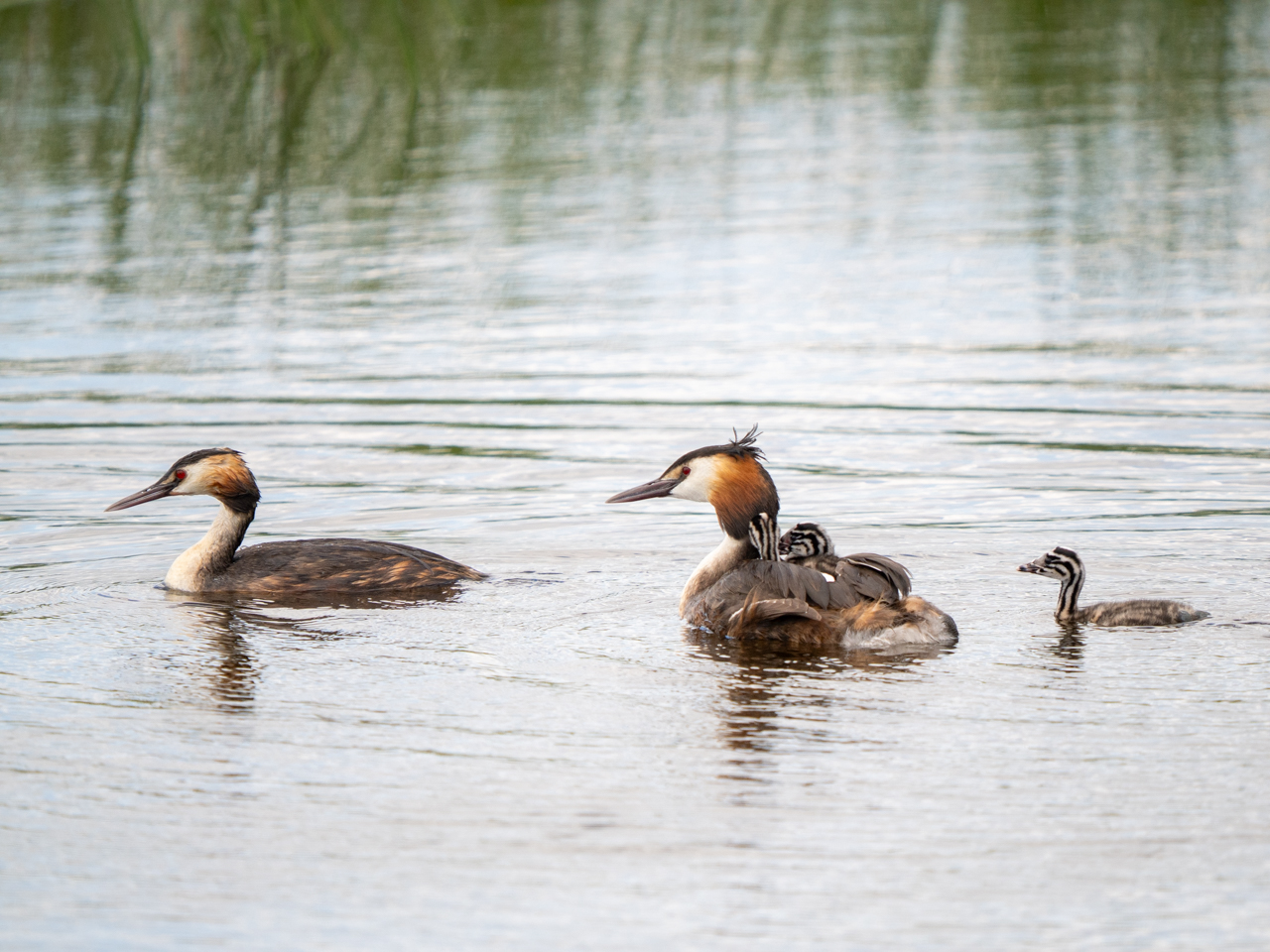
Great Crested Grebe © Pablo Perez
After resting at the hotel, we went for another walk at six in the evening to admire the charming white village of El Rocío and explore its stunning marshlands. I’d especially highlight a Common Reed Warbler and a captivating Penduline Tit. We were certainly having a fantastic day so far.
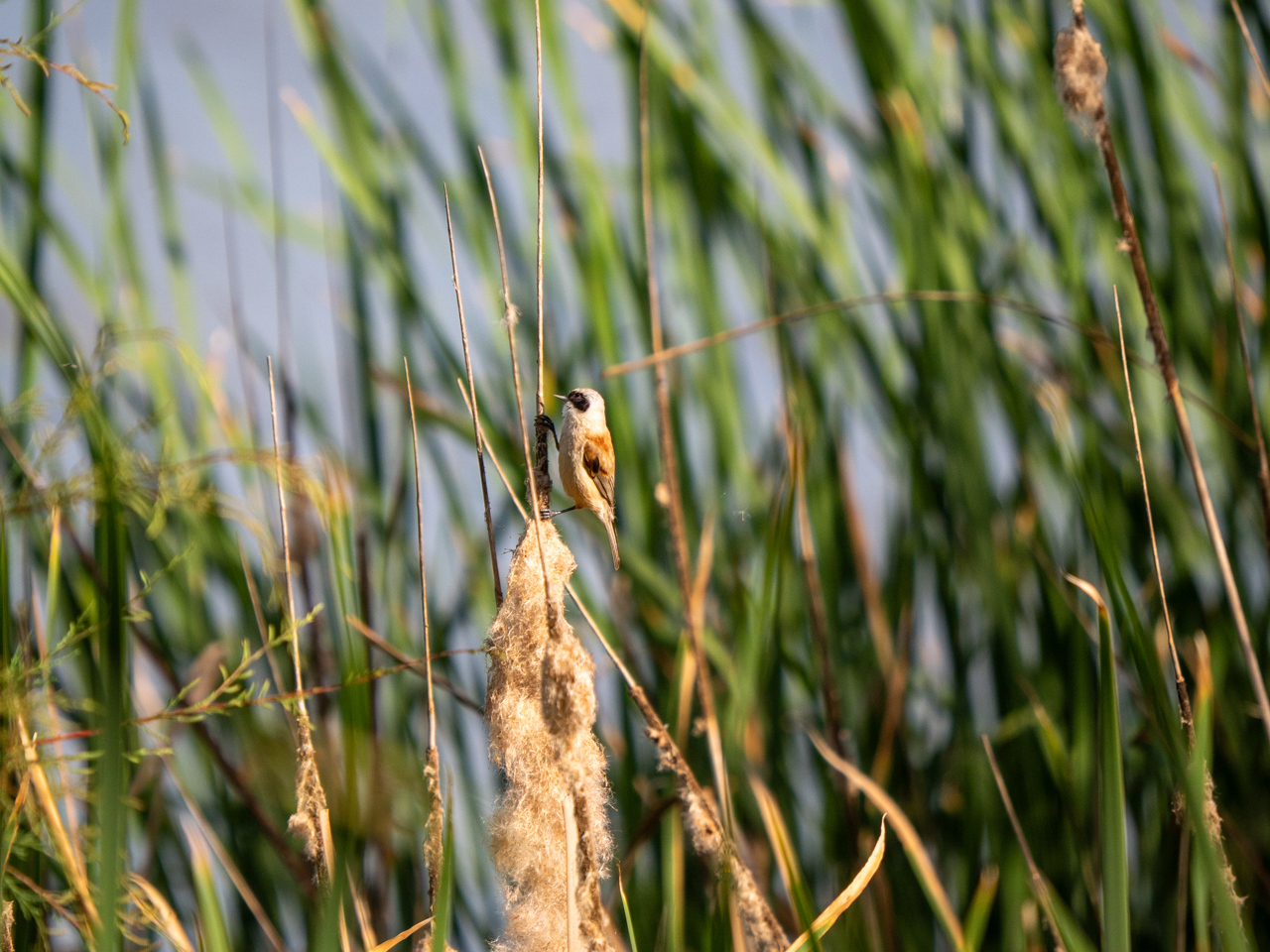
Penduline Tit © Pablo Perez
But it wasn’t over yet, because after a delicious dinner, we decided to go look for the Red-necked Nightjar perched on the road. We were really lucky, and both vans were able to hear the bird not only singing but also the sound of its frantic flapping as it showed itself to us near the car. Being able to see this migratory nocturnal bird is undoubtedly a true marvel, bringing our total to four species of nocturnal birds so far.
DAY 8: LA ROCINA – EL ACEBRON – EL ROCÍO – MONFRAGÜE
We started the morning on the La Rocina trail, where we spotted some excellent birds, including a singing Savi’s Warbler, our first Short-toed Treecreeper, and, of course, an interesting but fleeting glimpse of Europe’s smallest woodpecker, the Lesser Spotted Woodpecker, which showed us its nest in a dry tree by the path.
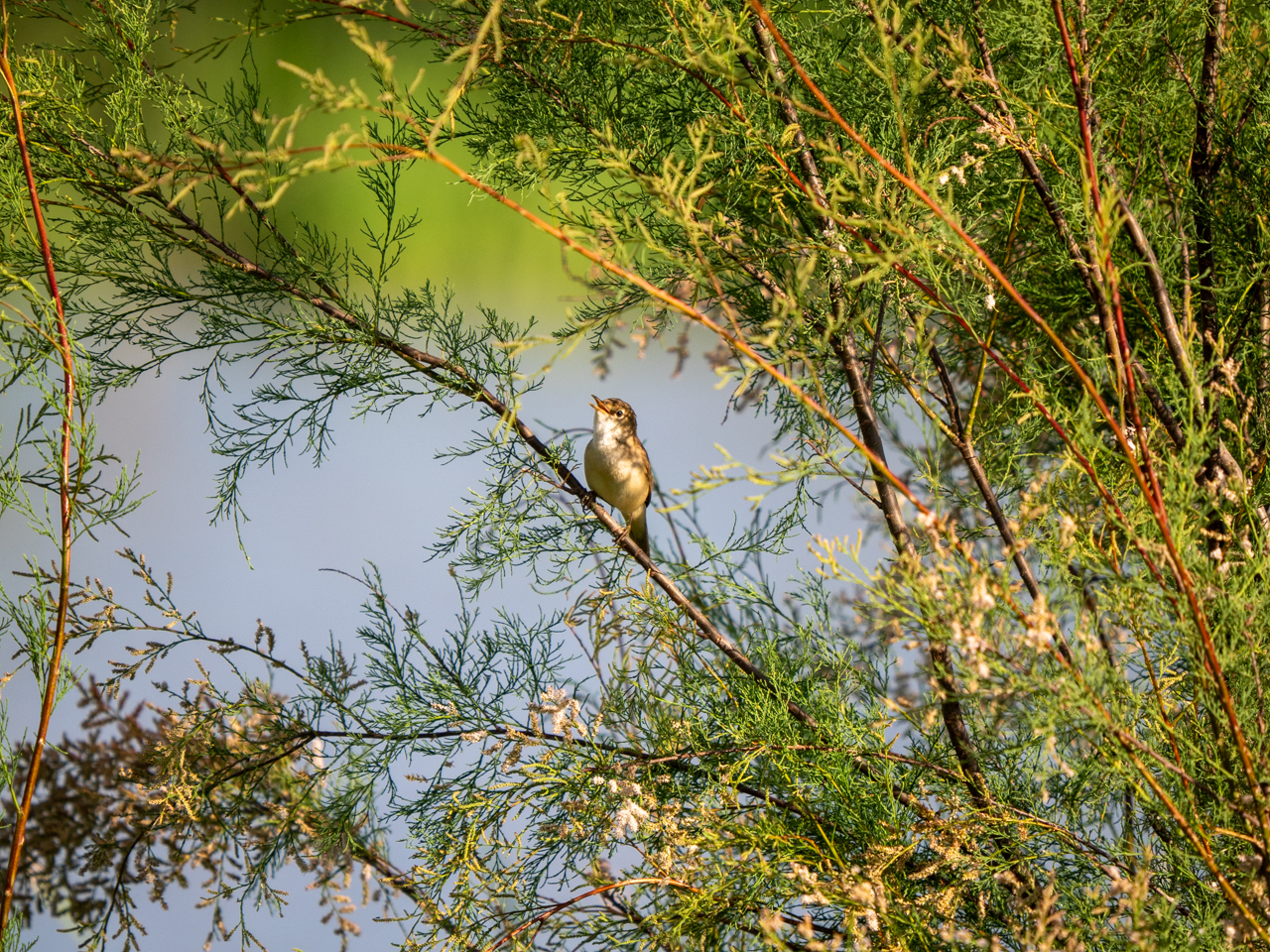
Savi’s Warbler © Pablo Perez
We continued the morning by visiting the Palacio del Acebrón, where we witnessed something that truly surprised us in the House Martin breeding colony: a bird went to feed a chick, and it appeared to us as though it killed the adult.
We returned to the main marsh of El Rocío to search for one of the most elegant birds, the master of the reeds—the Penduline Tit—which only two people had managed to see the previous afternoon and which still eluded us.
We once again enjoyed an excellent, varied meal the restaurant with stunning views over the marsh, and finally mustered the energy to tackle the four-hour drive to the hotel at the entrance to Monfragüe, where a cold beer awaited us to go over the day’s list and a delicious dinner.
DAY 9: LOS CERRALBOS– SANTA MARTA DE MAGASCA– SIERRA DE FUENTES– PRINCIPE PARK
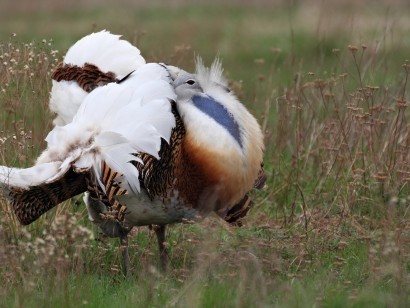
Before dawn, we began our journey by driving through the night and, fortunately, avoiding huge wild boars on the road, until we reached Los Cerralbos, one of the most important places in Spain for observing steppe birds. Honestly, it was magical, as in less than five minutes we were able to see excellent sightings of Little and Great Bustards performing their courtship displays. There were also large numbers of Calandra Larks and many other birds. We weren’t the only ones surprised by the spectacle—the cola man was too indeed!
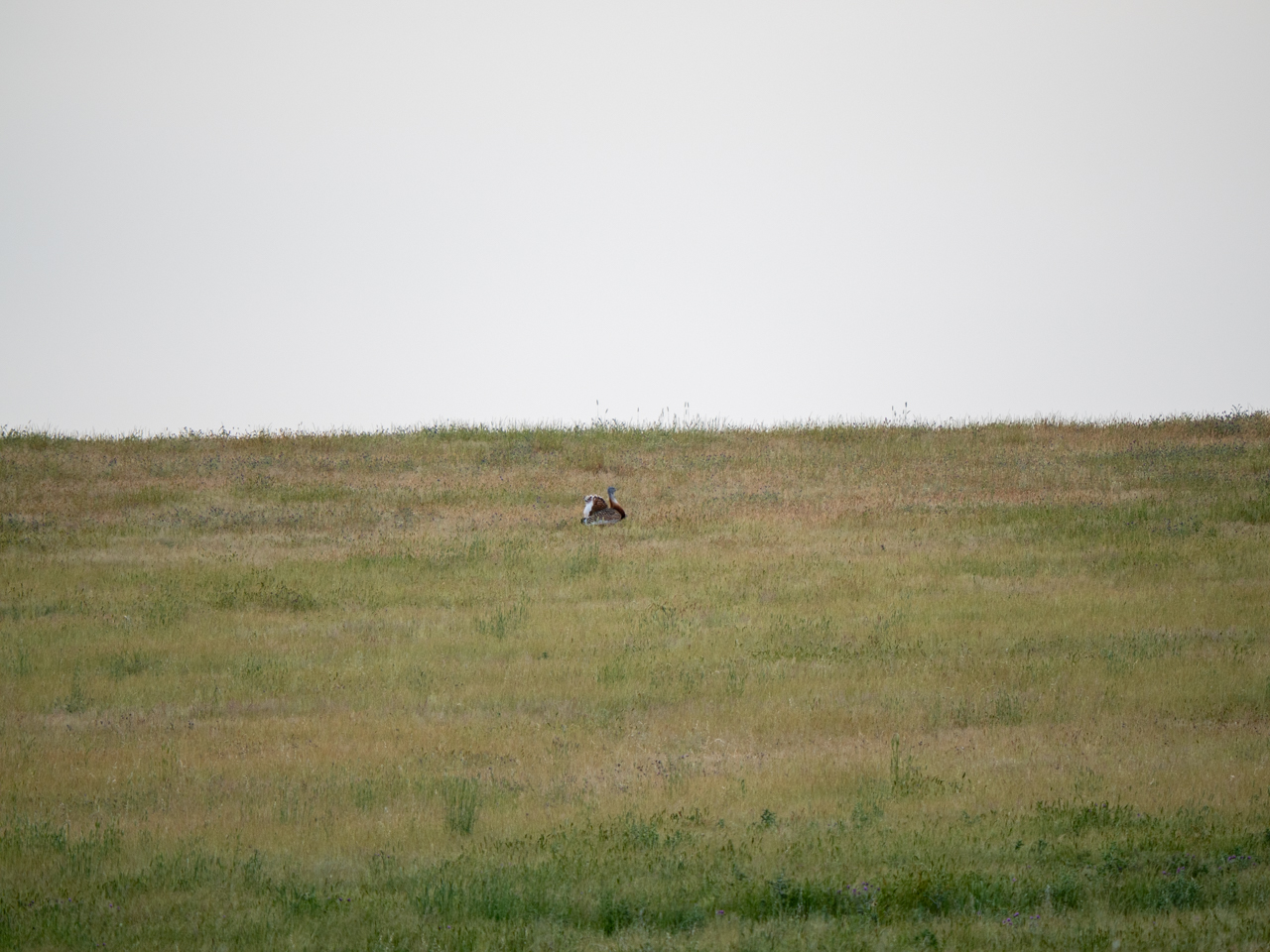
Great Bustard © Pablo Perez
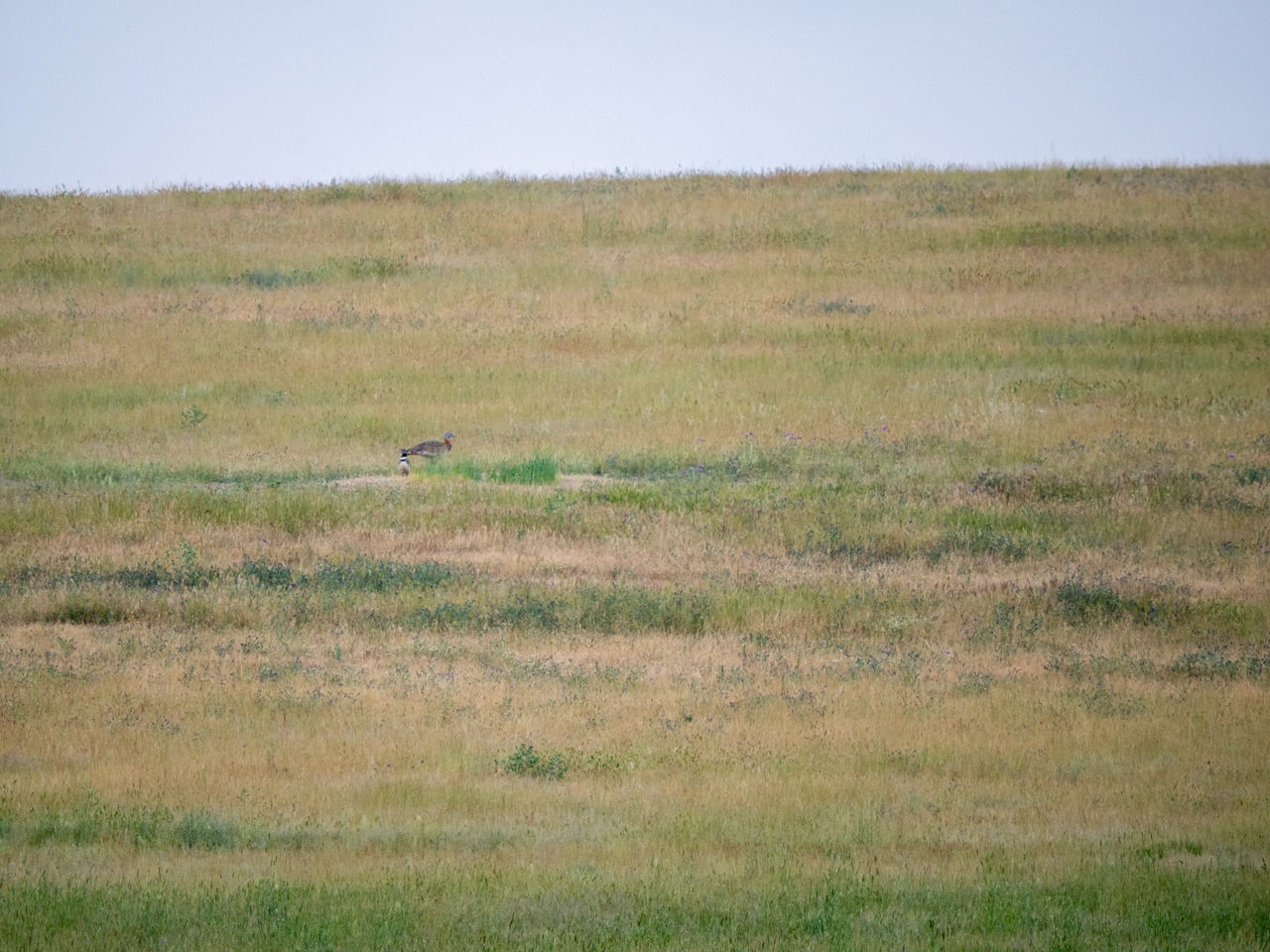
Little and Great Bustard © Pablo Perez
Without lingering too long, we stopped for a delicious coffee in Santa Marta de Magasca to recharge our energy and continue our route toward the row of nest boxes heading toward Cáceres.
We pulled over to the side of the road to look for the Rollers, and sure enough, there they were alongside numerous Hoopoes and, of course, Bee-eaters. Suddenly, we heard the high-pitched call of the Pin-tailed Sandgrouse, and we watched in detail as five of them flew and landed not far from the group, offering good views alongside some nearby Iberian Grey Shrikes and Woodchat Shrikes.
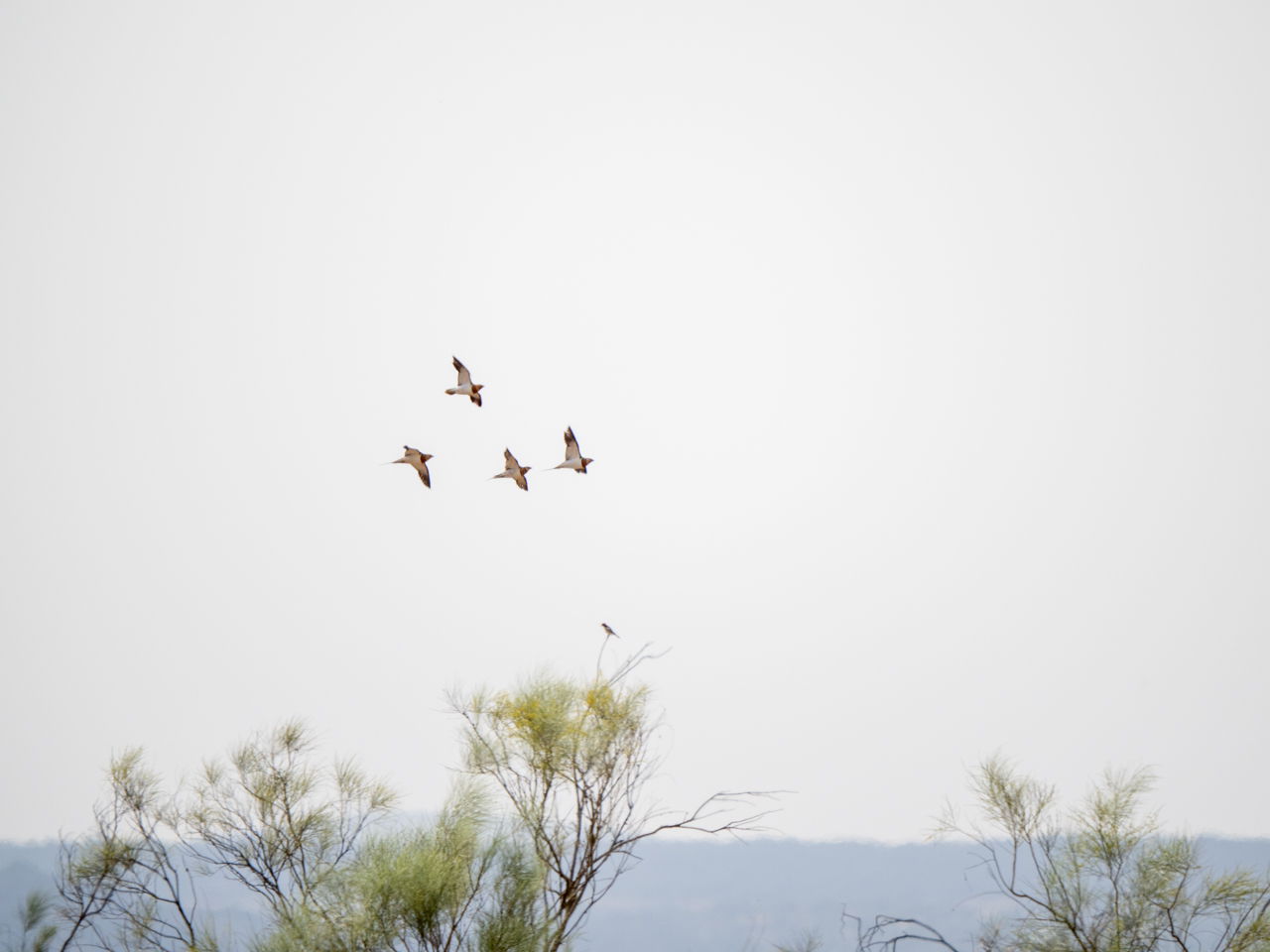
Pin-tailed Sandgrouse © Pablo Perez
The morning was full of energy, and we continued down the road until we could safely pull over to take some great photos of numerous European Rollers and the incredibly charming Little Owl—which would be our fifth owl of the trip.
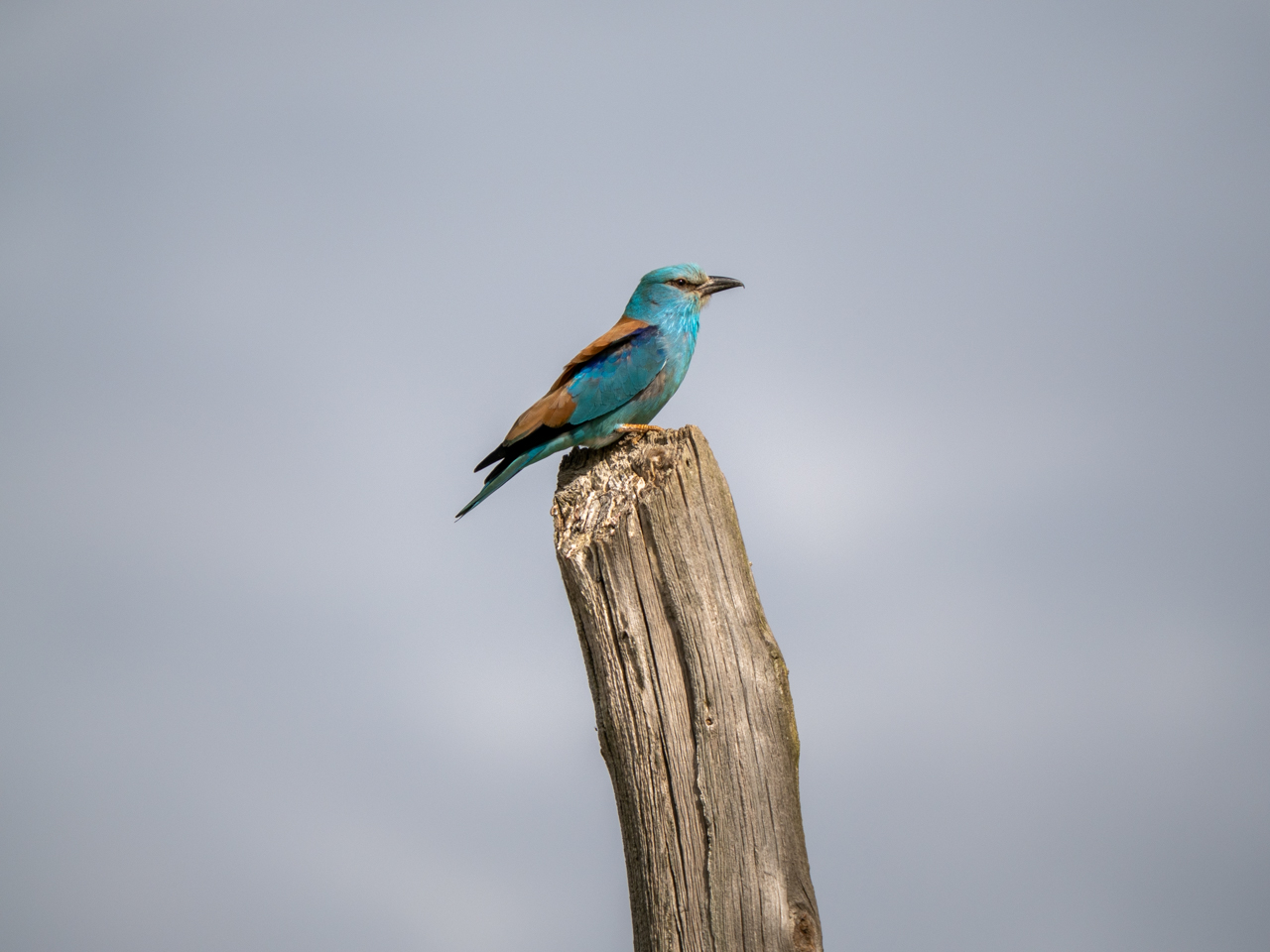
European Roller © Pablo Perez
We decided to stop for a break before reaching the summit of the Sierra de Fuentes, where we enjoyed excellent views of the Llanos de Cáceres. We then went to the Carrasco artisanal cheese shop, which primarily makes goat cheese using traditional methods. There, Toni showed us how the goats are cared for, and some volunteers even got to experience the process of milking one of the baby goats of the native breed called Florida.
After tasting some excellent cheese, “migas de pastor”, and of course a delicious coffee with goat’s milk, we headed to the nearby El Principe Park in the city of Cáceres. There, we managed to get some great photos of the endemic Iberian Magpie and had excellent sightings of the Wryneck and the Golden Oriole—which had been elusive until then—which the whole group was finally able to see.
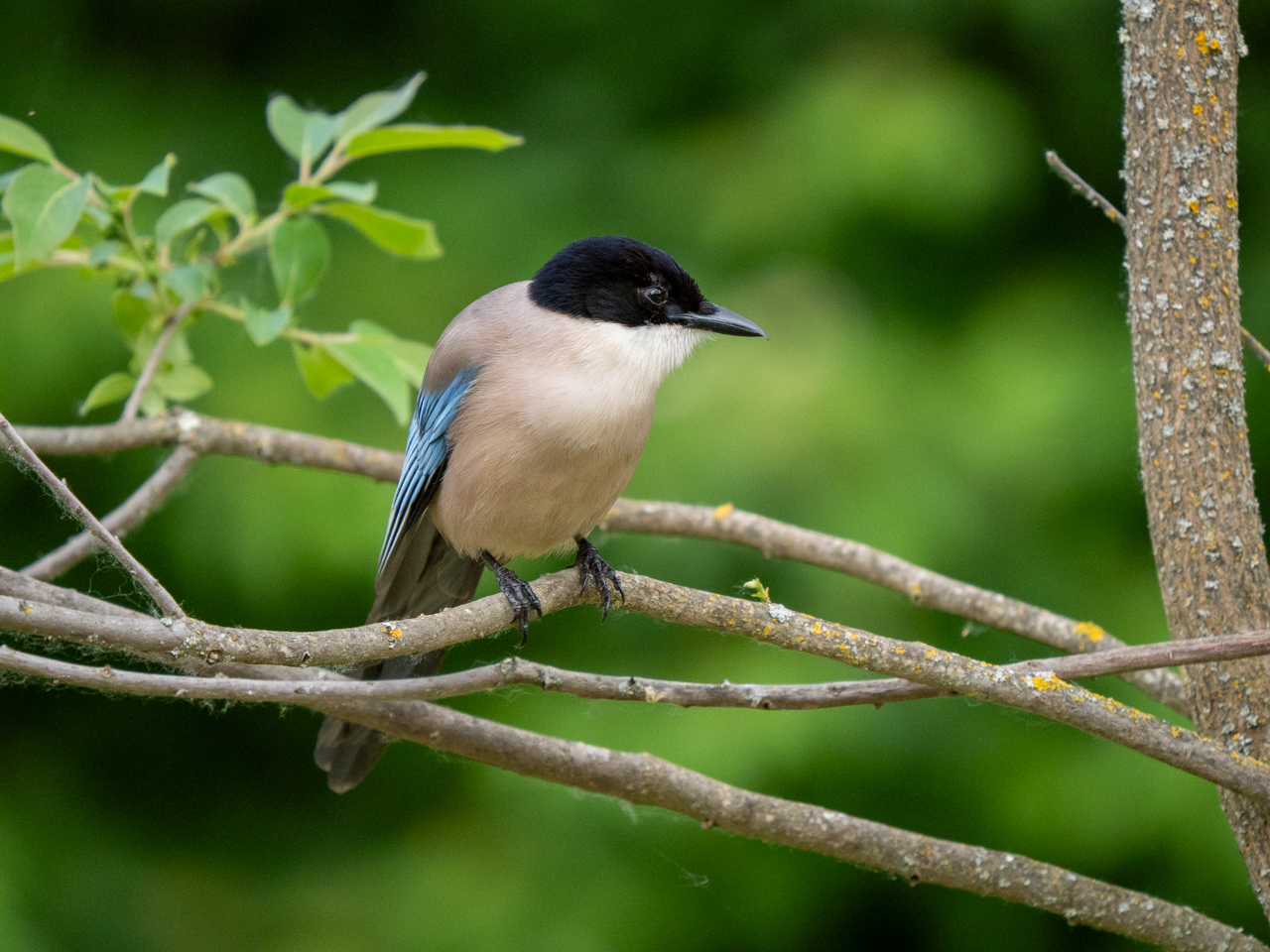
Iberian Magpie © Pablo Perez
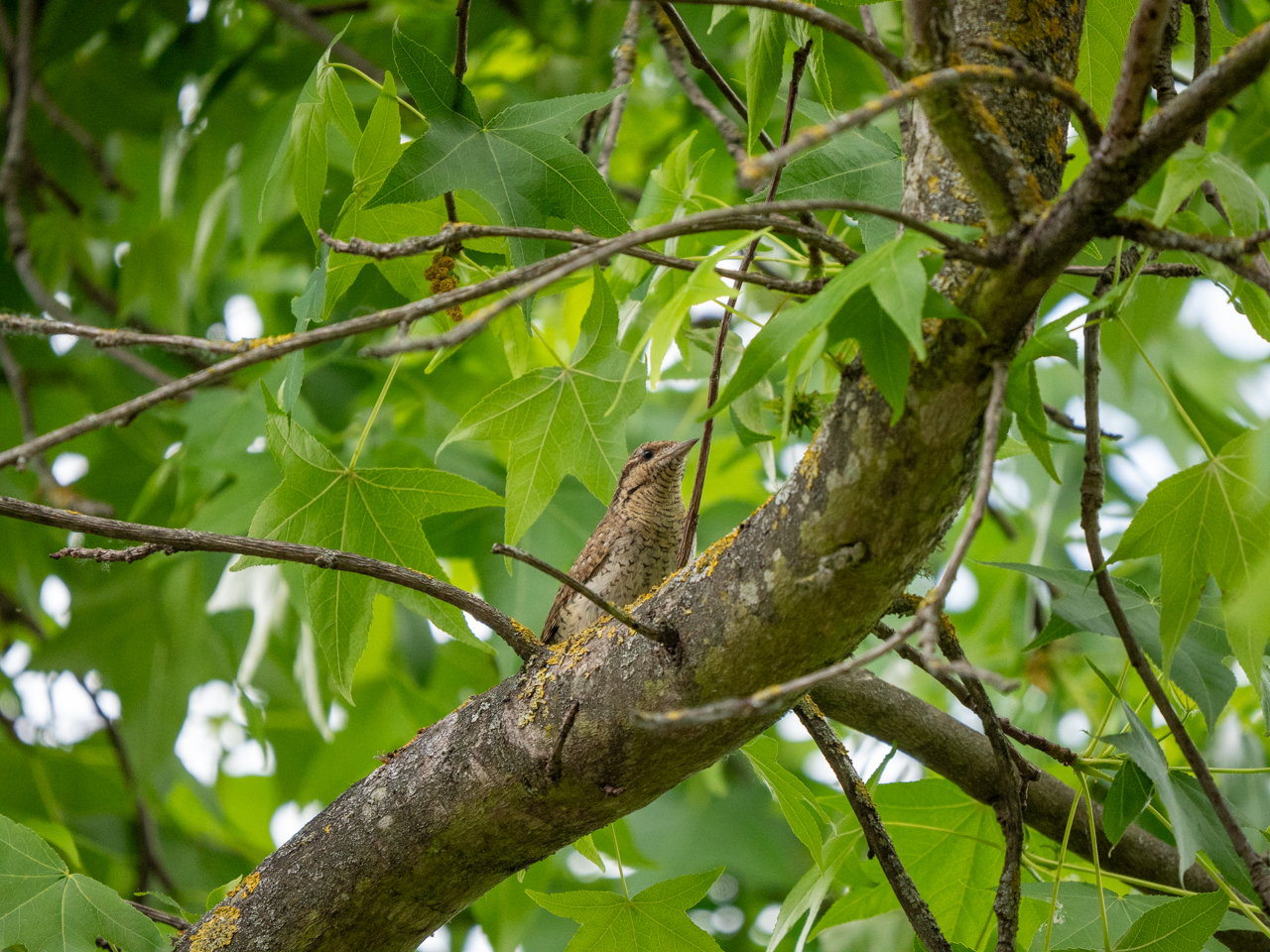
Wryneck © Pablo Perez
A storm was approaching, so we had to rush back, leaving with a great feeling that was only made better by a delicious dinner.
DAY 10: ARROCAMPO–PORTILLA DEL TIÉTAR–EL SALTO DEL GITANO
We started the morning birdwatching from the hotel, where there is a breeding colony of Spanish Sparrows. We continued the morning under threatening rain at the Arrocampo wetland, where we had good views of the Little Bittern and the Purple Swamphen, as well as the day’s most sought-after species, the Ferruginus duck, which flew past us. We continued on and made another stop at the nearby wetland, where we saw the Purple Swamphen again.
Another of the Arrocampo wetlands held a much-desired gem for us: the Black-winged Kite, which first appeared soaring and then perched on the irrigation system in the distance. The rain stopped and the day improved, looking very promising indeed.
We went to eat at La Vieja Escuela—a tasty salad complemented by other interesting dishes—and then headed straight to the heart of Monfragüe National Park, where we first made a stop at the Portilla del Tiétar. There were large numbers of griffon vultures flying around and, in their nests, as well as our first Egyptian vulture of the trip, which we first saw flying over the cliff and later incubating in its nest above the Tiétar River.
After a stop to use the restroom, we finally arrived at the most famous and sought-after birdwatching spot in Extremadura: El Salto del Gitano. Honestly, when you get there and see those massive rock formations with folds over the Tagus River, you’re already blown away, but when you realize you’re surrounded by hundreds of vultures, you understand why it’s perhaps the most famous spot in all of Europe for birdwatching. You feel surrounded by a vast number of birds—not just griffon vultures, but also blue rock thrushes, crested martins, and, of course, the incredible black stork nests.
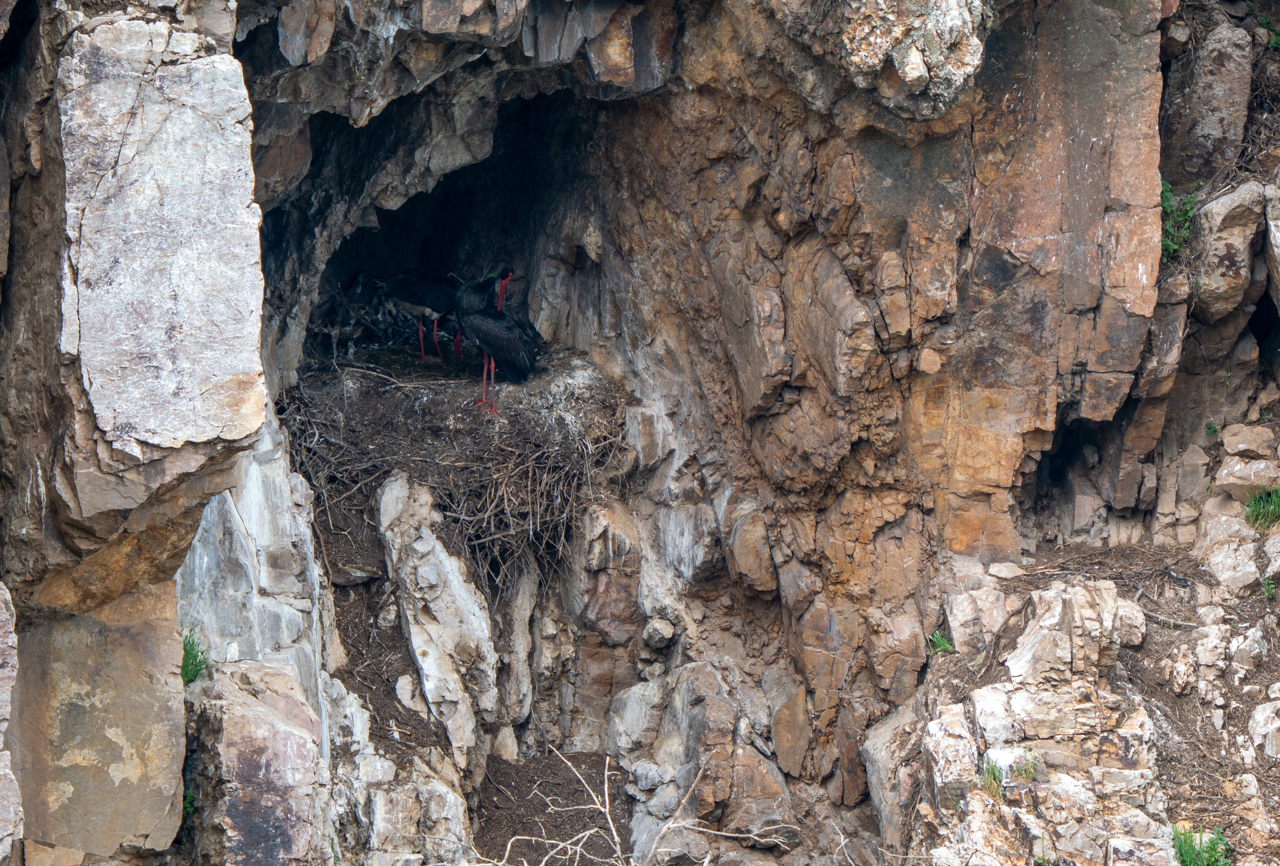
Black Stork © Pablo Perez
After enjoying such views for over an hour, we all headed out to savor a delicious dinner. After dinner, we were even able to spot a couple of red foxes playing in the woods near the hotel before nightfall.
DAY 11: CASTILLO MARIBEL – GREDOS – NAVARREDONDA DE GREDOS
After driving north for a while along scenic backroads, we reached the summit of Castillo de Maribel, where we stopped for a bit to birdwatch among the holm oaks. There, we were surprised by two beautiful golden orioles and an excellent great spotted woodpecker. We continued driving until we stopped in Sorihuela, a charming village typical of the Salamanca region, where we enjoyed a traditional meal in a setting dominated by granite houses.
We kept climbing up into the Sierra de Gredos mountains in Ávila, where we made a stop under excellent conditions—with no wind at all—to search for one of the tour’s star birds, the Bluethroat. This bird, which in Spain is characterized by having no white on its breast but rather ochre markings, perched right before our eyes—but it wasn’t alone. There was an incredible moment when a Booted Eagle, a Skylark, and a Northern Wheatear also appeared all at once; we couldn’t believe how amazing that moment was, thanks to the good weather.
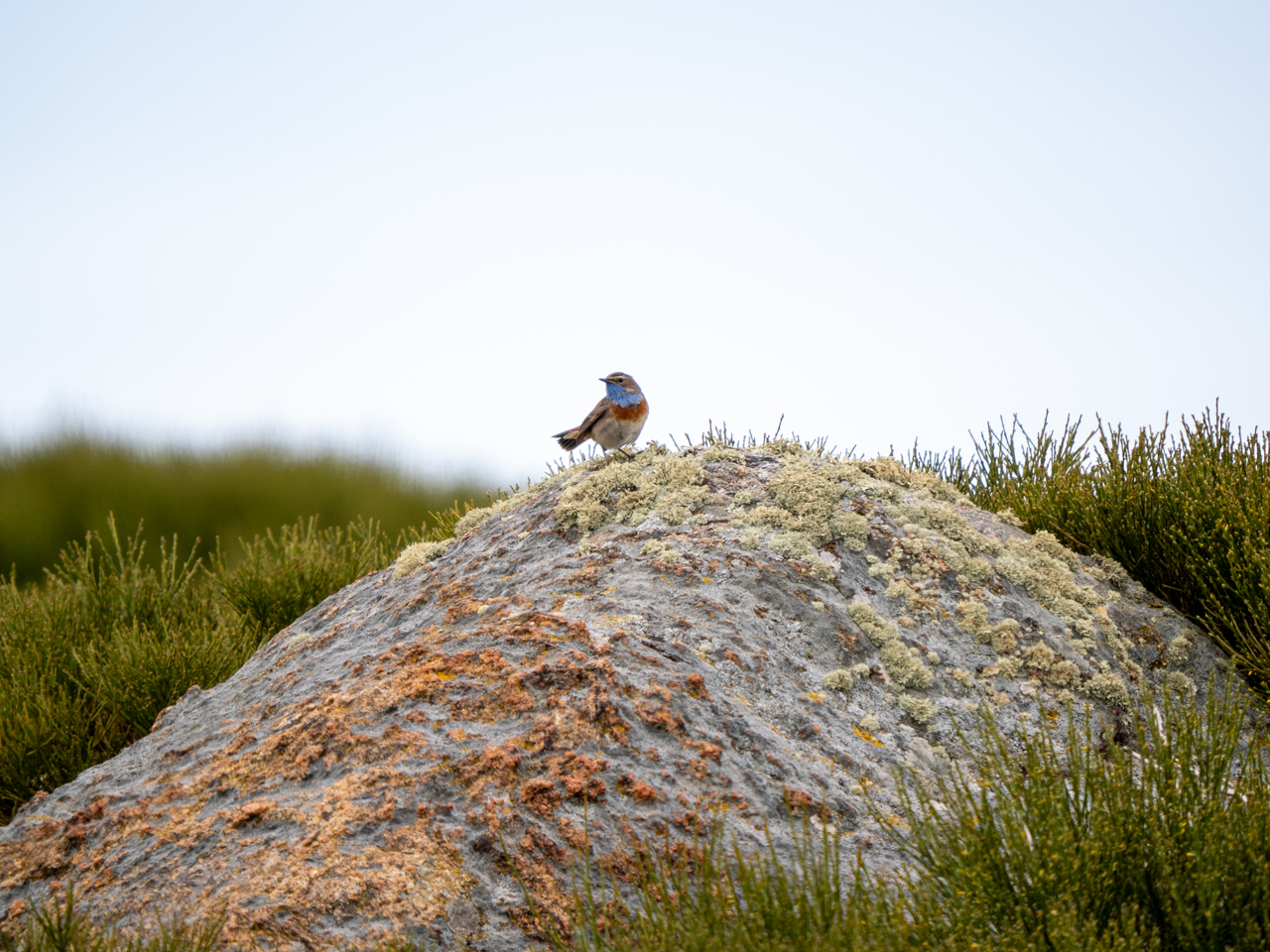
Bluethroat © Pablo Perez
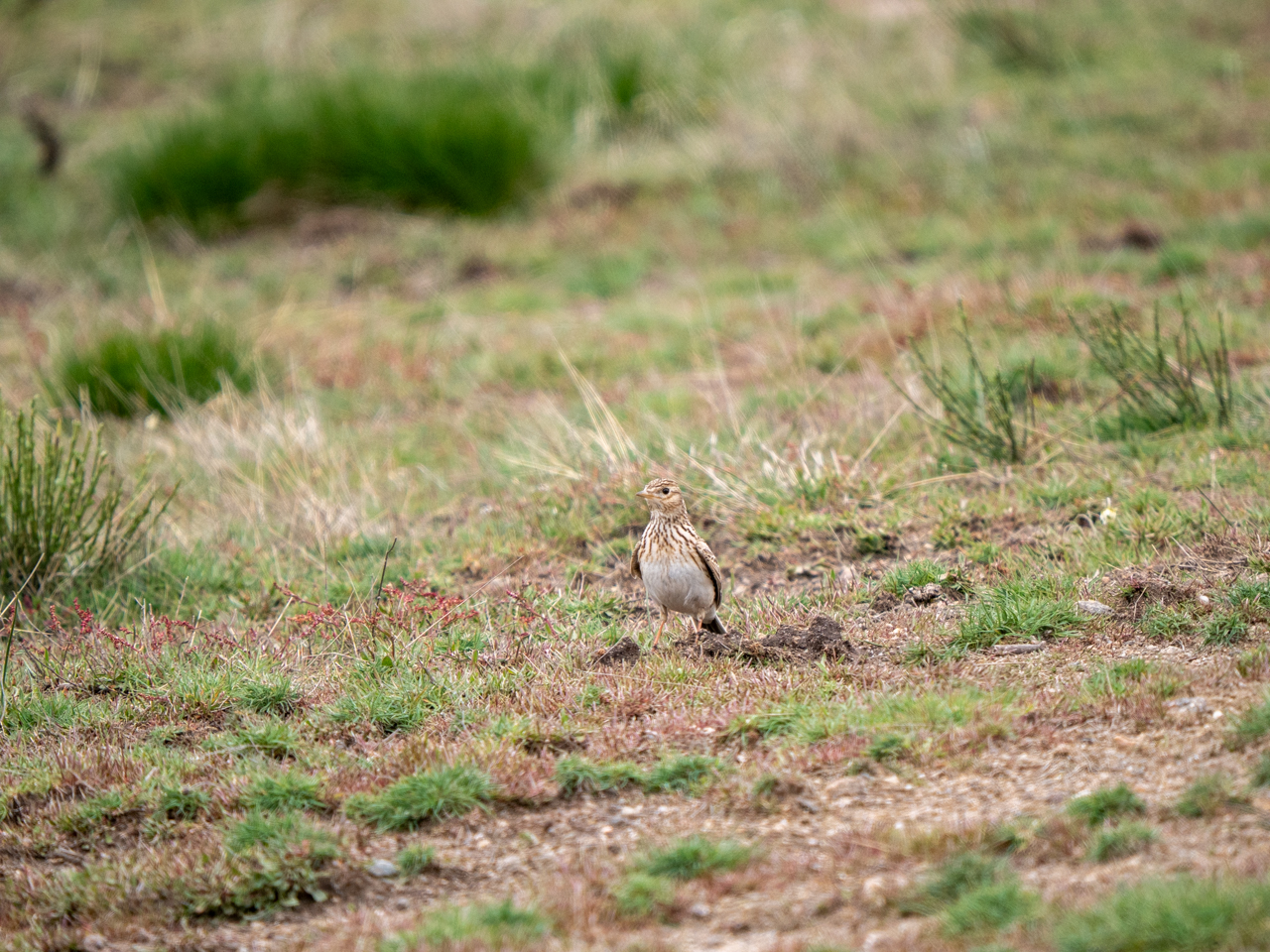
Skylark © Pablo Perez
We then made our way down the mountain, catching a brief glimpse of some Wild Boars and even a Roe Deer, until we reached the pine forest of native pine in Navarredonda de Gredos, where we briefly spotted the White-throated Dipper in the stream near the ruins of the watermill. We continued deeper into the pine forest and managed to get excellent views of the Coal Tit and the small but striking Firecrest.
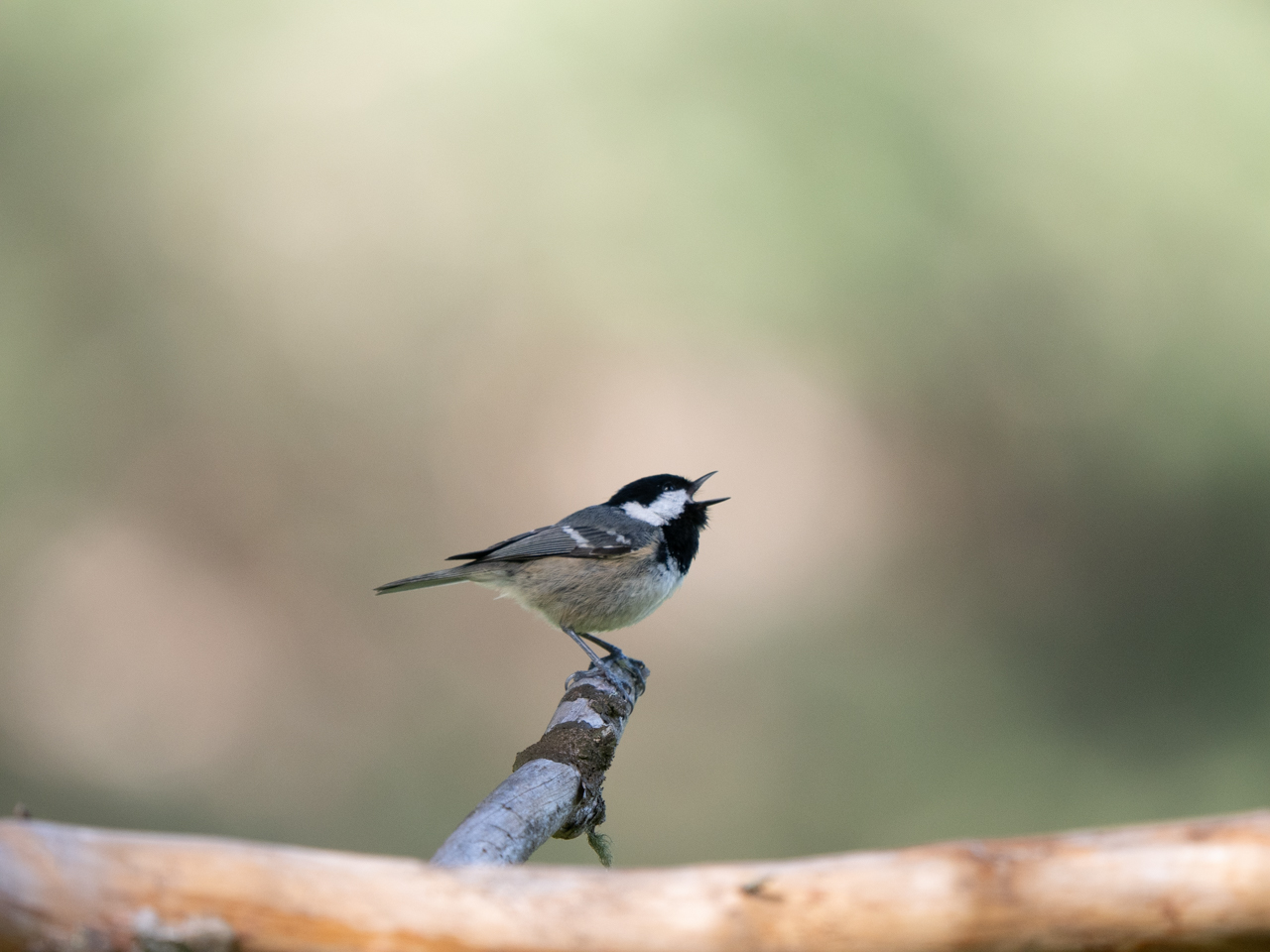
Coal Tit © Pablo Perez
We finally arrived at the long-awaited hotel, where an incredible surprise awaited us: we were able to enjoy the hotel’s private hide, where we had excellent sightings of the Eurasian Jay and one of Spain’s treasures, the Iberian Green Woodpecker, a species endemic to the Iberian Peninsula.
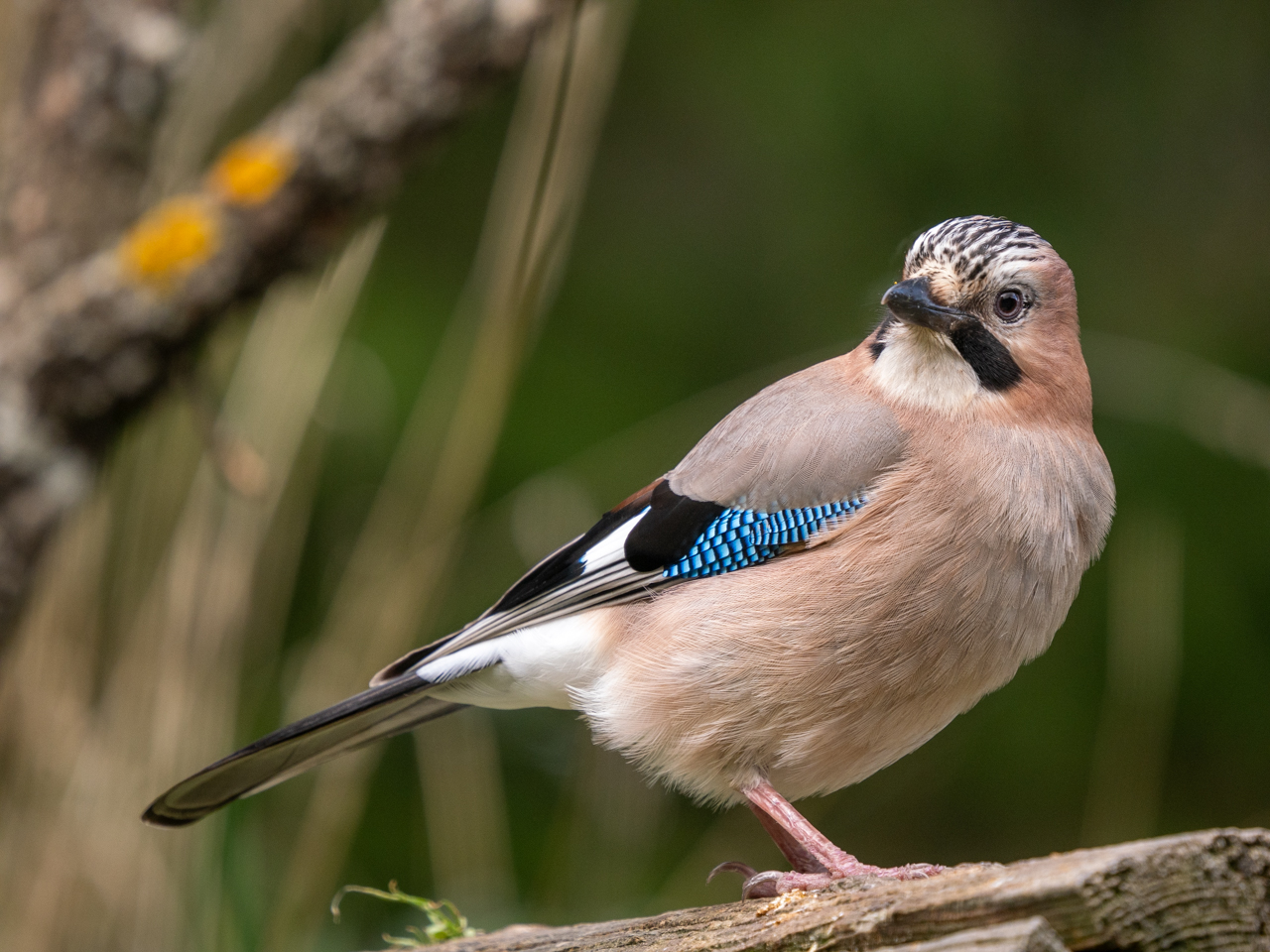
Eurasian Jay © Pablo Perez
DAY 12: THE GREDOS VIEWING PLATFORM – EL CASTAÑAR
We left the hotel early since today, May 1, is a national holiday in Spain, and we were concerned about the large crowds in the Sierra de Gredos mountains. Upon arriving at the viewing platform, we made our first stop to enjoy a good view of the Whitethroat and continued on to the parking lot at the end of the road. As soon as we arrived, we were surprised by a fleeting glimpse of a Common Rock Thrush, which was more than made up for by numerous sightings of the Ortolan Bunting and, of course, a pair of Spanish Ibex extremely close by, allowing us to clearly photograph their brilliant honey-colored eyes.
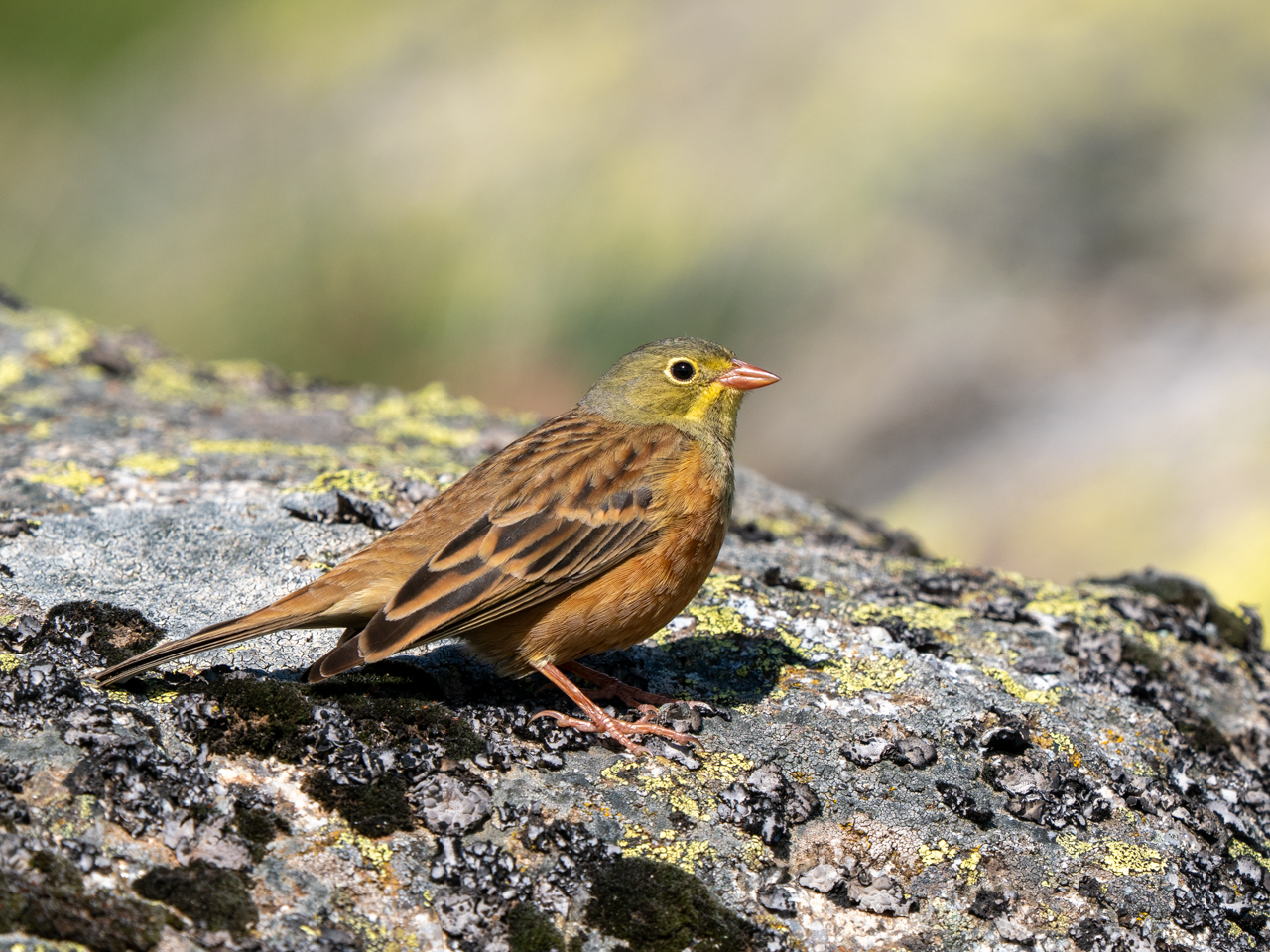
Ortolan Bunting © Pablo Perez
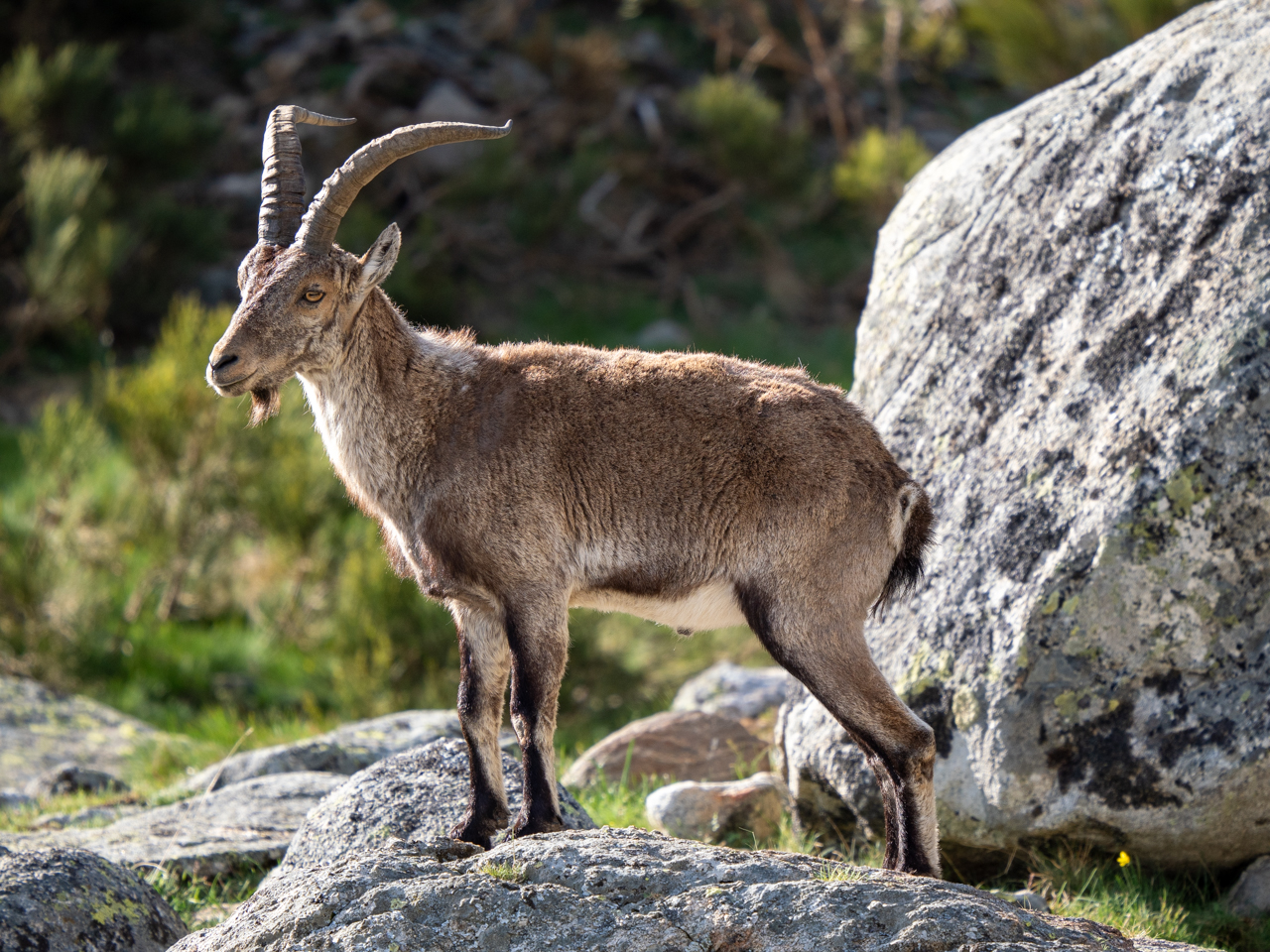
Spanish Ibex © Pablo Perez
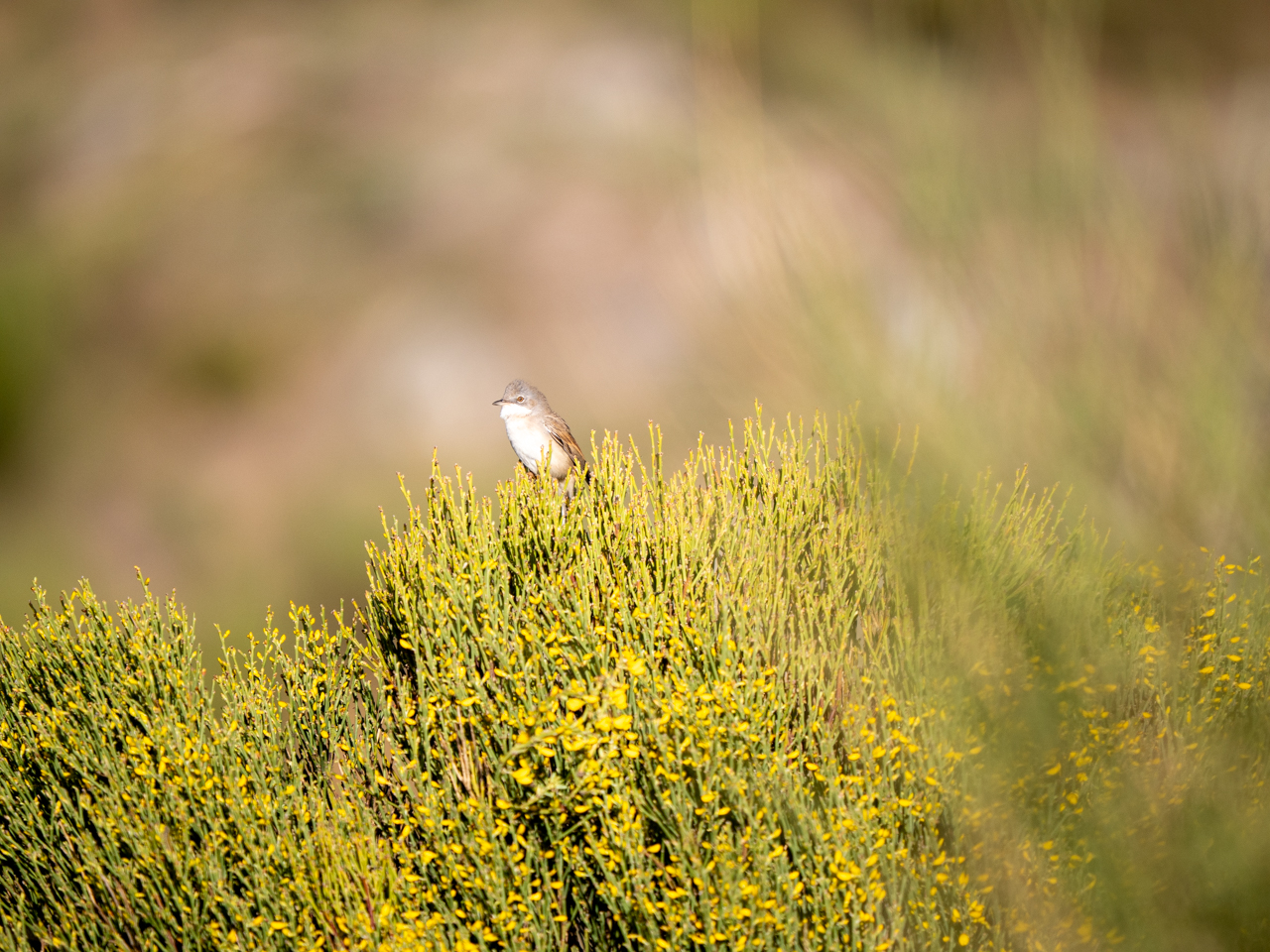
Whitethroat © Pablo Perez
We returned with enough time to enjoy the hotel, not only its incredible hide—where a Red Fox and a Black Kite also appeared—but also the nearby forest, which treated us to excellent sightings of the Pied Flycatcher and the jewel of the Gredos pine forests, the Crested Tit, which so many people wanted to photograph in high quality—just as we did.
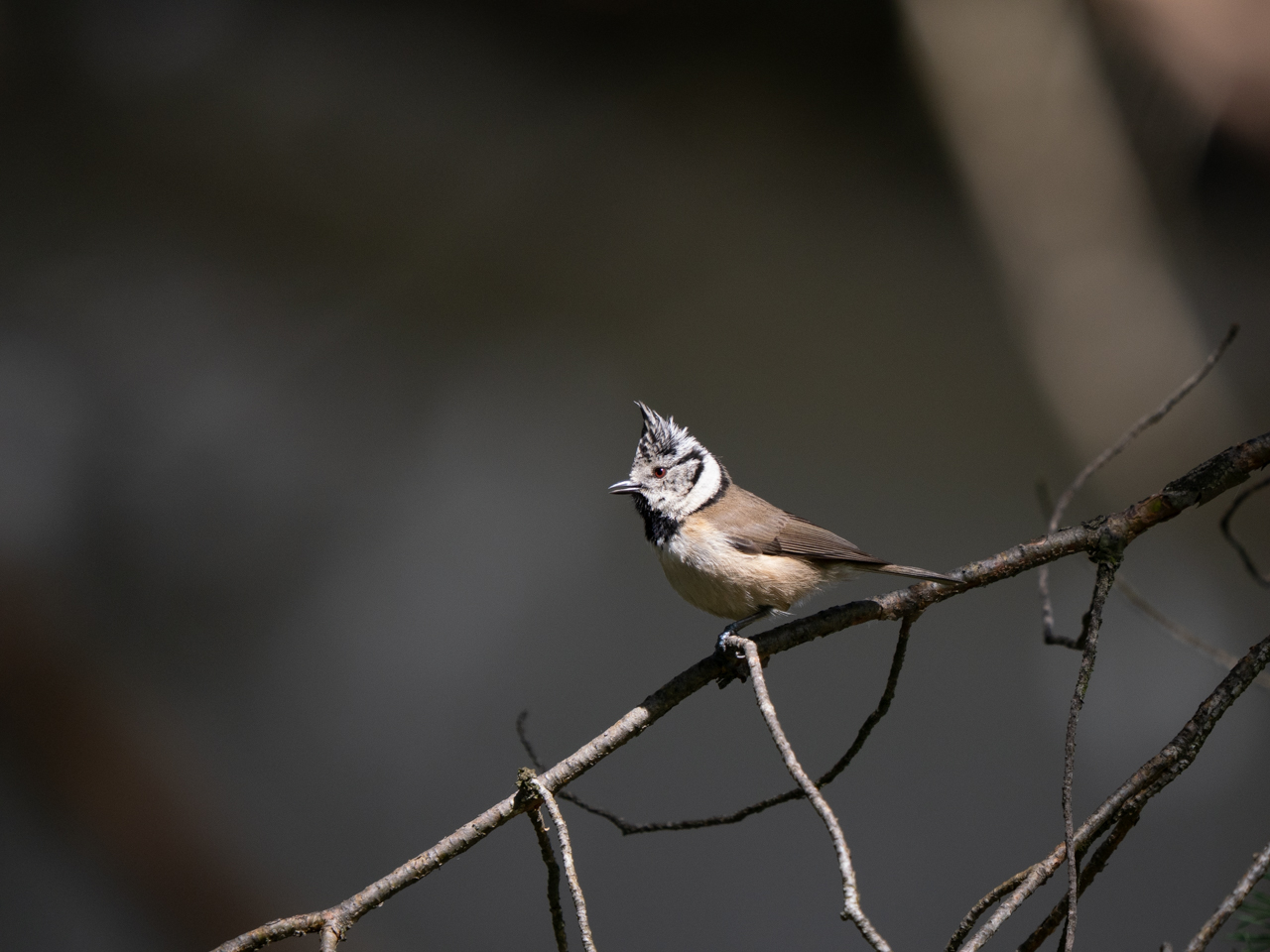
Crested Tit © Pablo Perez
We once again enjoyed the delicious meal at the inn and set off for Toledo to stay at the historic family estate, which opened its secret doors to us so we could enjoy the final leg of the tour from the heart of Toledo—a place where we could feel the passage of time and experience Spain’s most ancient traditions, all accompanied, of course, by an excellent meal.
So, after a brief rest, we drove through the lands near the Palace, searching for the two endemic gems of the Iberian Peninsula: Spanish Imperial Eagle and Iberian Lynx. Of course, the abundance of rabbits and Red-legged Partridges suggested we might spot these iconic wild animals in the Toledo pastures, and indeed, our hopes were fulfilled with a first distant sighting of the eagle and, of course, a brilliant sighting of an adult female Iberian Lynx beneath the holm oaks. We were able to gaze into those immense yellow eyes, adorned with the sharp tufts above the ears of this unique feline in the world.
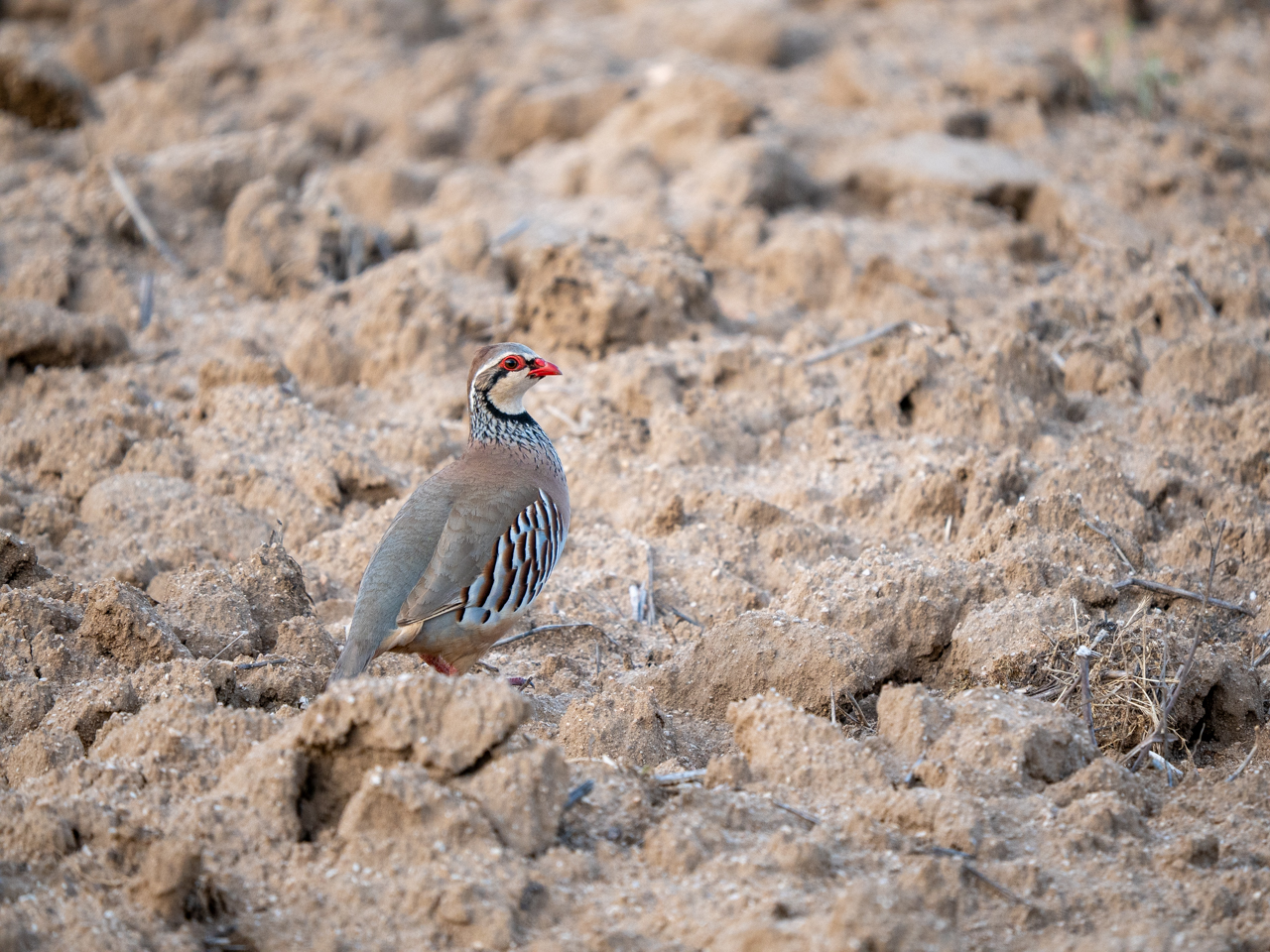
Red-legged Partridge © Pablo Perez
We had a traditional meal at the private estate while we reflected on the many excellent wildlife sightings from that very day.
At night, the orange full moon was accompanied by the songs of the Red-necked Nightjars and the distant bellowing of fighting bulls in the pasture. This is undoubtedly the experience everyone was seeking on this tour, now in its sixth edition, and it has established itself as one of the best tours for discovering not only the wildlife of central and southern Spain but also its authentic culture and traditions.
DAY 13: EL CASTAÑAR–MADRID
At dawn, the Red-necked Nightjars were still singing near the house as we enjoyed an excellent traditional breakfast, which gave us the perfect boost to head out in the vehicles and explore the area around the estate. There, the miracle happened again, and we spotted two Iberian lynxes—actually two-year-old siblings—who, as Samuel had told us, let themselves be seen clearly when you wait patiently in the car for them to approach. In fact, they came so close we couldn’t believe it; moreover, the contrast with the colorful flowers in the field created an idyllic scene.
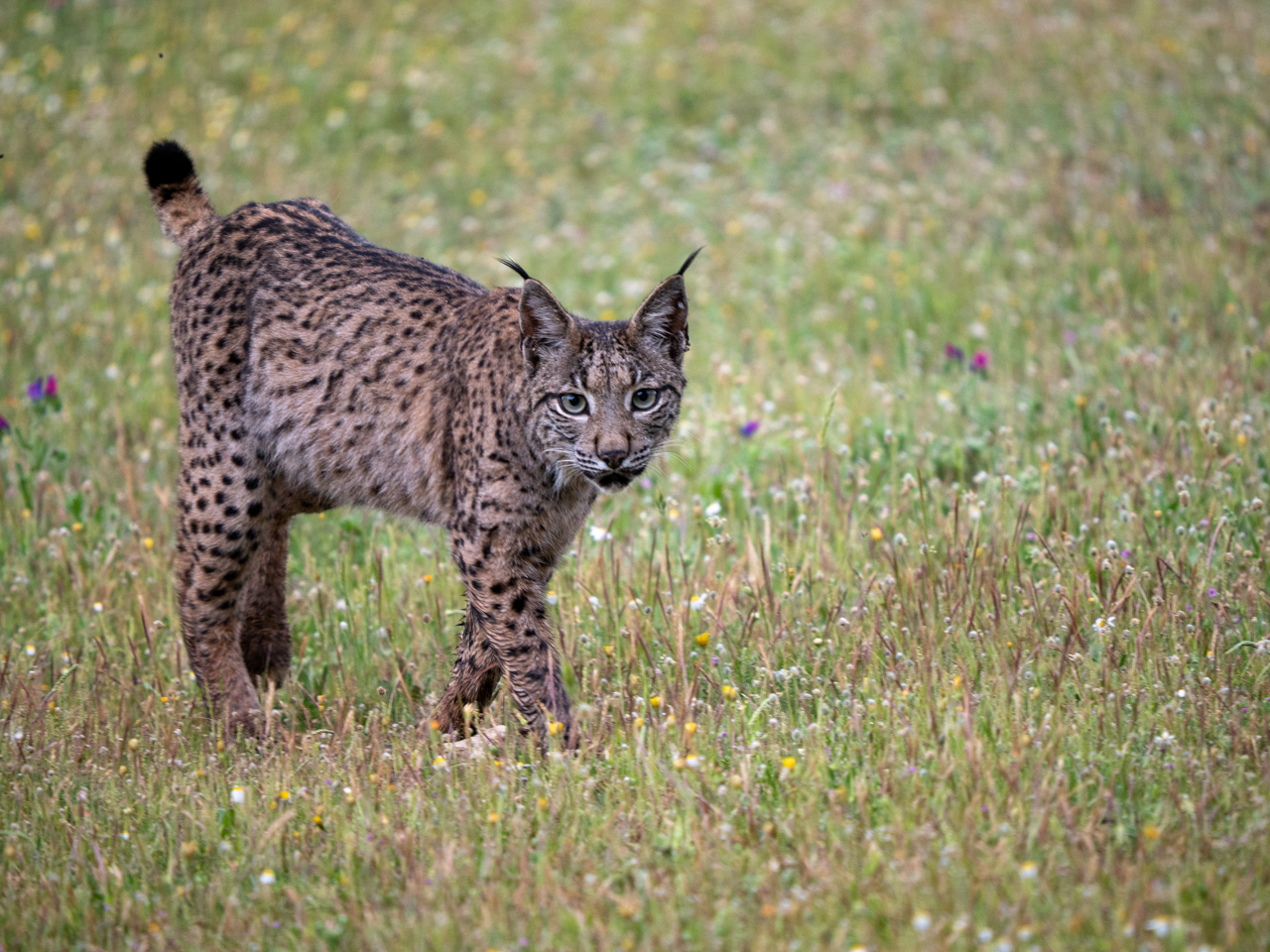
Iberian Lynx © Pablo Perez
We stopped to rest for a while at the house and continued the adventure in search of more birds, and luck was on our side with sightings of a Cirl Bunting, a Woodlark, and, surprisingly, a Western Orphean Warbler that came quite close to us while we were watching the Western Tree Sparrows.
Not only were we able to spot the Spanish Imperial Eagle again, but we also heard its call—from a pair nesting nearby—which reminded us a bit of a Mallard’s, but higher-pitched.
The end of the tour proved most rewarding, with excellent views of the massive Hawfinch and a distant Common Cuckoo, along with some elegant Bee-eaters and, of course, the numerous Eurasian Hoopoes.
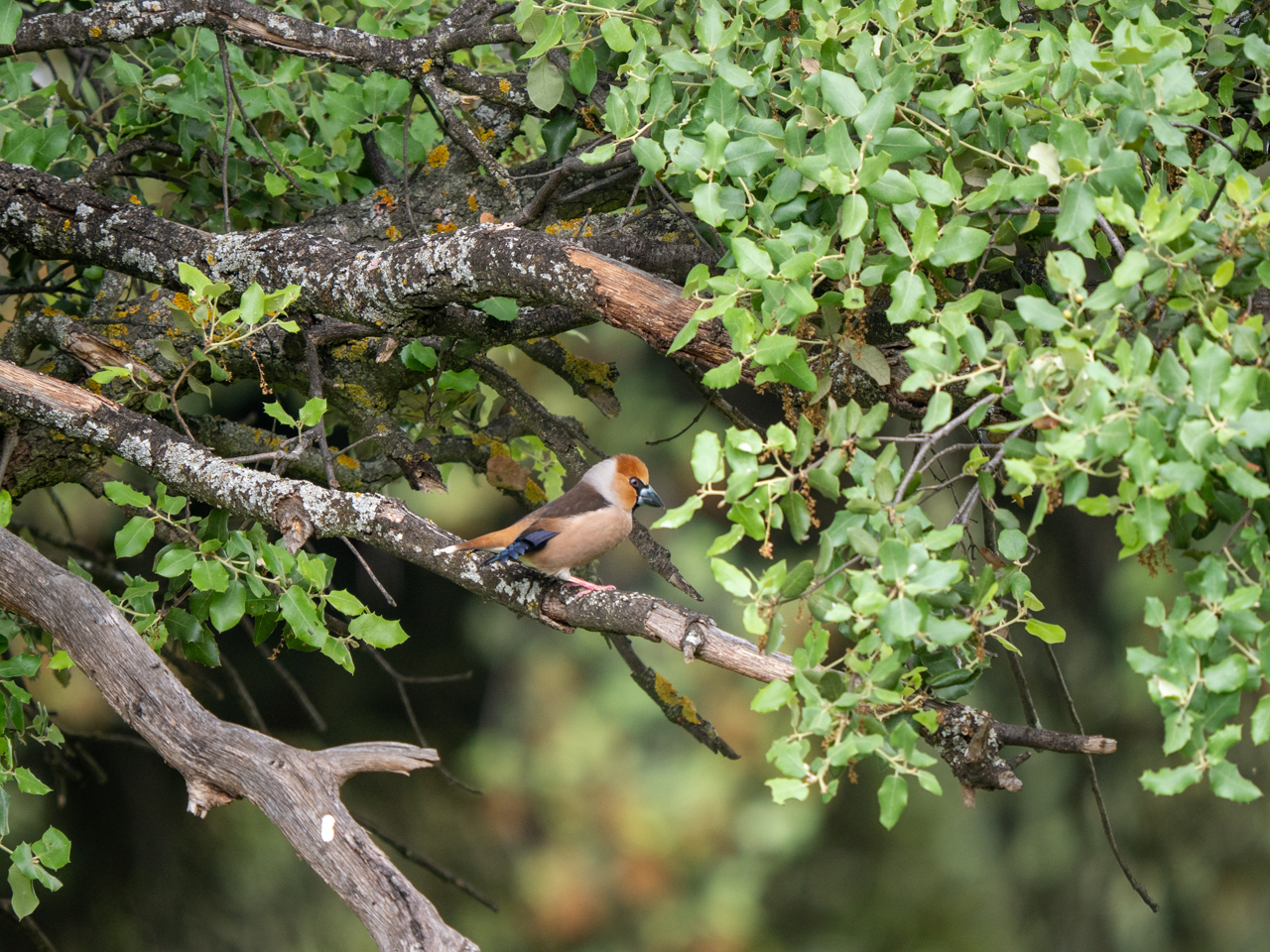
Hawfinch © Pablo Perez
We had lunch again at the pleasant country house before setting off with big smiles toward Madrid, the capital of Spain, to the welcoming hotel, which received us with open arms.
We enjoyed an excellent shared dinner featuring Spanish tapas nearby before wrapping up an outstanding tour of Spain, during which we observed 188 bird species, 5 marine mammals, and 9 terrestrial mammals, and where we gained an in-depth understanding of the traditions and atmosphere of central and southern Spain in the company of 10 international visitors, guided by local guide Pablo Pérez and our colleague Sören Salvatore.
DAY 14: FLY OUT
Some of the visitors remained in Madrid more visiting the city and the others took the plane on the afternoon back home after a wonderful time in Spain.
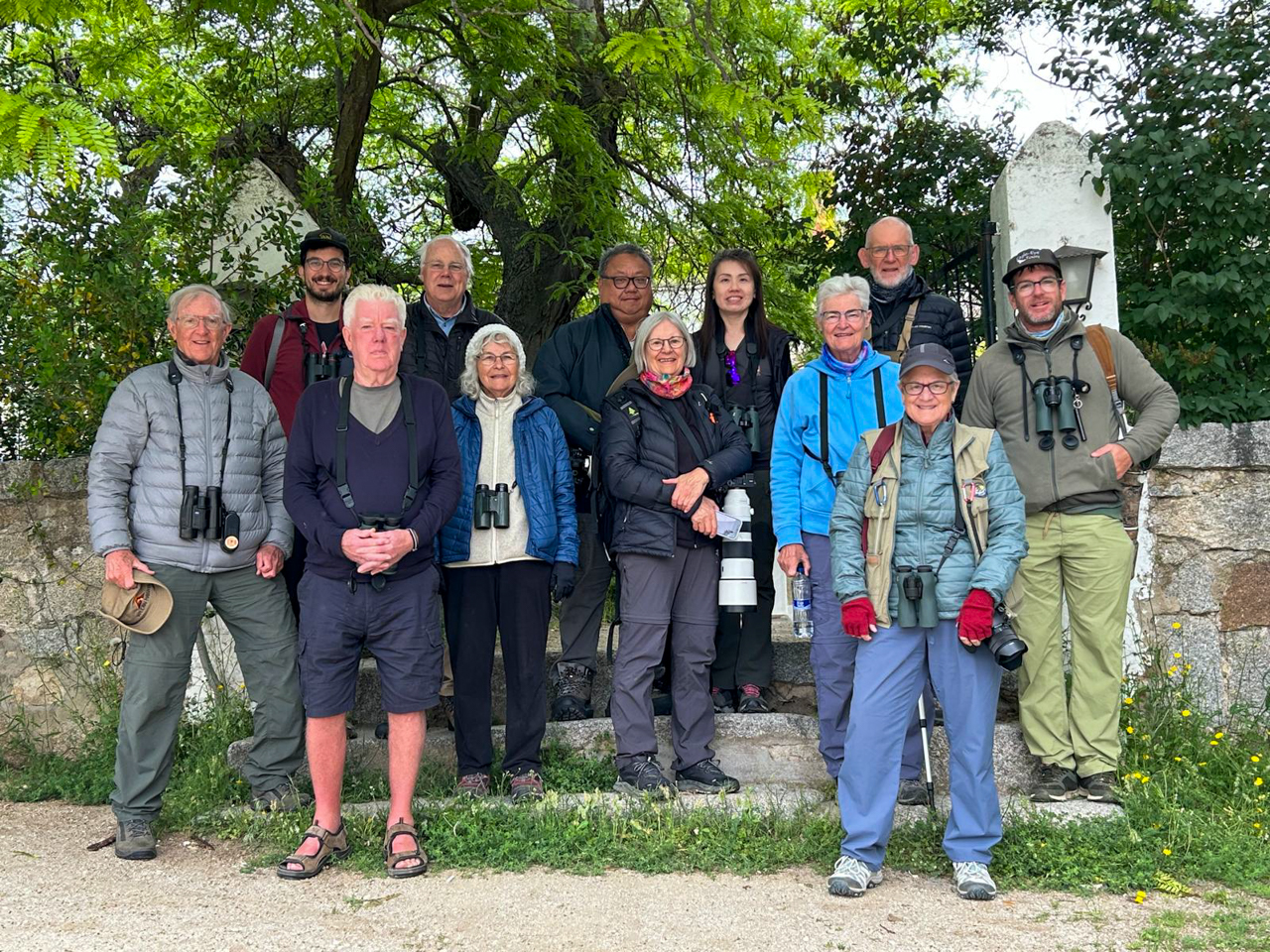
Group photo