Nova Scotia Trip Report (Aug 31 – Sep 9, 2026)
Fourteen keen bird-enjoyers and nature enthusiasts gathered for an epic birding trip across south Nova Scotia, seeing countless incredible natural sights, dining at some of the best restaurants in the province, and enjoying irreplaceable company. We did not want the birding to end as we arrived back at the hotel, and our goodbyes were ones of ‘see you later’ instead of farewell. We shared many moments with birds, mammals, scenery, and people that we shall always have in our minds.
We began our journey by heading to the east side of the Annapolis Valley, where we enjoyed the riches of migratory shorebirds along the Bay of Fundy, songbirds on the North Mountain, and a mix of waterbirds in the valley bottom. We then made our way to the west of the Valley, spending time with marshbirds before driving all the way down Digby Neck to Brier Island. We spent a few days in and around the island, where we observed the phenomenon of mass bird migration, which the area is known for.
An astounding boat trip out into the Bay of Fundy was also conducted, where we saw some of the largest numbers of pelagic birds seen in the Bay this year. We then migrated down to Yarmouth and Cape Sable Island where we continued to have success discovering diverse bird life and stunning seascapes. Heading back towards Halifax – to complete the loop from where we started – we witnessed the beautiful coastal headlands and white sand beaches towards the east end of the South Shore. Before we arrived back for good, we visited a variety of locations on our final day. First, we journeyed into higher elevation boreal forest and collected a few boreal specialty species before visiting the iconic Peggy’s Cove Lighthouse and Point Pleasant Park to cap off the trip.
Day 1. Halifax Arrival and First Dinner
Our scenic, unforgettable adventure began at the Holiday Inn by the Halifax Airport, where we got acquainted with each other and shared our first meal. We gelled immediately as a group and already began sharing our individual journeys with birds.
Day 2. Miner’s Marsh, Greenwich, Grand Pre
The next morning dawned, enrobed in the golden sun that we would be privy to for the coming days in the Annapolis Valley. Our group of 14 intrepid bird enthusiasts drove from Halifax to the Valley early in the morning, to catch some songbird action. The morning’s birding began at Miner’s Marsh. We were greeted very quickly by a large feeding flock of migratory birds right near the entrance, setting the tone for a very biodiverse trip. Birds from most songbird families made an appearance at this location as the sun warmed the foliage while rising. Highlights here included: wonderful looks at a male Northern Cardinal, a delight for the westerners in our group who don’t see them at home, a quartet of young Rose-breasted Grosbeaks gorging on berries together, several flycatcher species, Cape May and Bay-breasted Warblers, and several Ruby-throated Hummingbirds zipping between flowers. It was as if the feeding frenzy was sent here to welcome all our visiting birders to Nova Scotia, as so many species treated us to great looks without us having to move an inch.
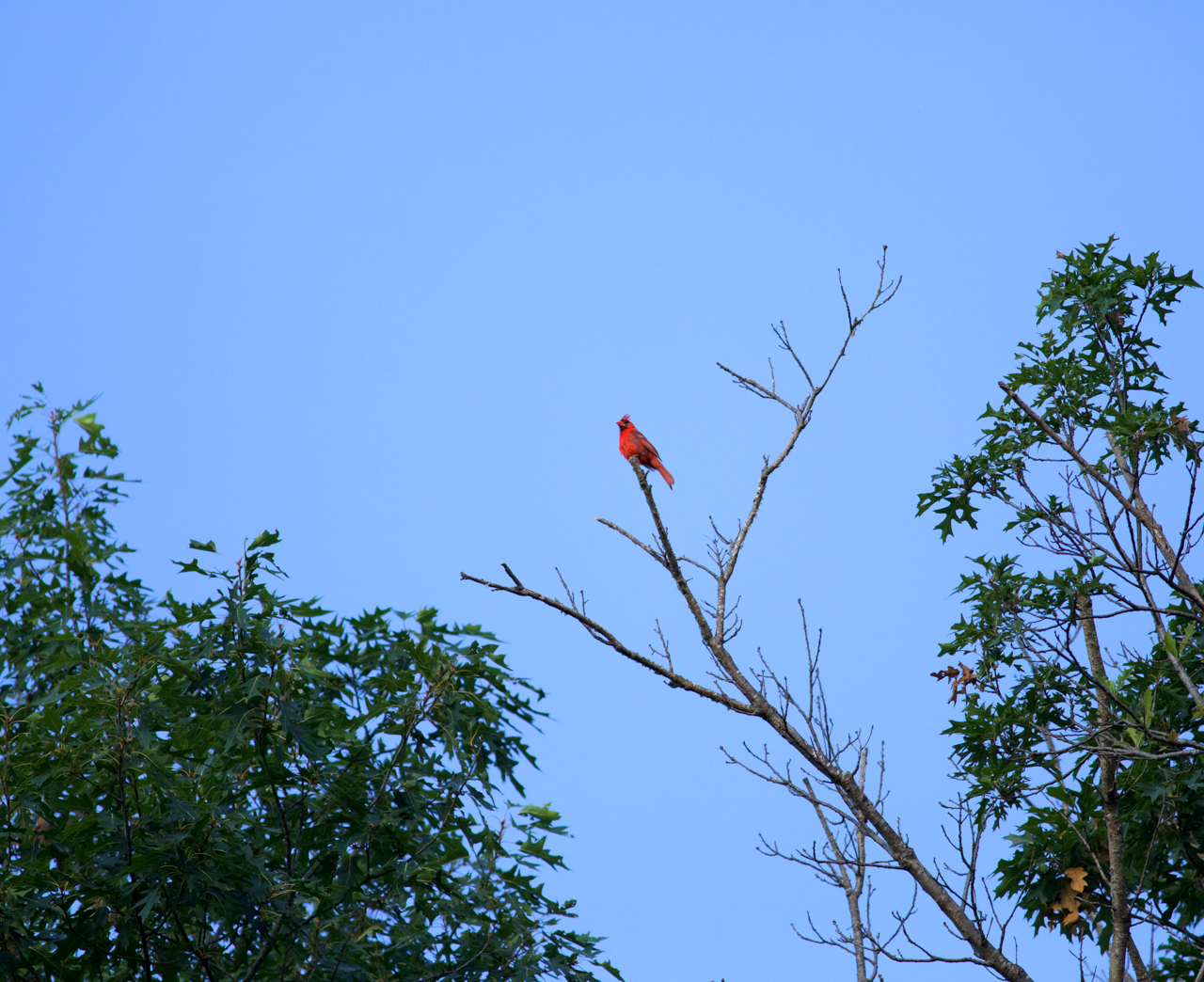
Northern Cardinal © Logan Lalonde
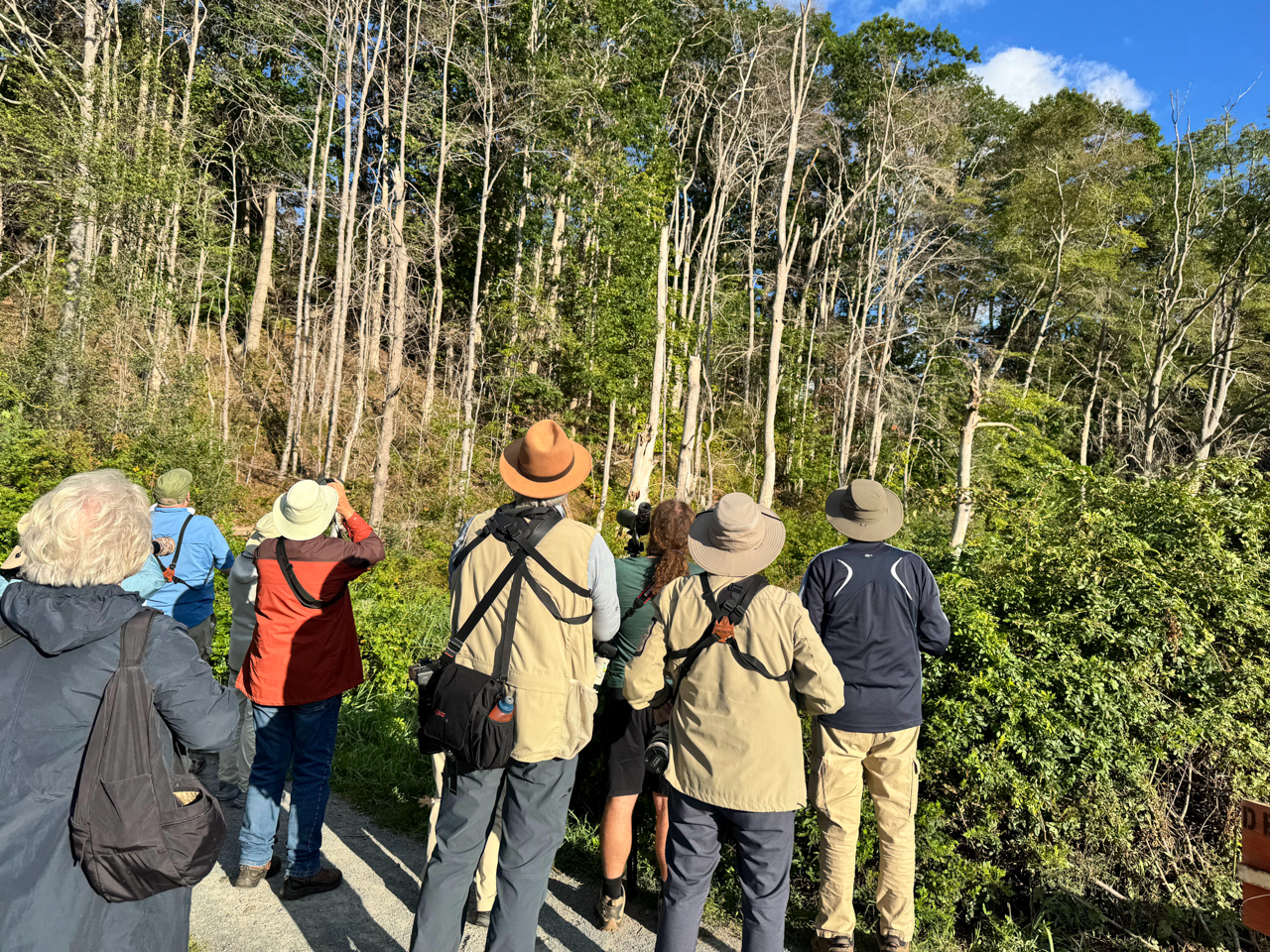
Watching songbird migrants © Yousif Attia
We then did the loop trail, enjoying the wetland sights and birds along the way. We also added our only Baltimore Oriole of the trip here and seven Bobolinks flying over. After being spoiled by the songbirds in Kentville, we made a lovely stop at the willow-adorned Tannery Pond Trail and its delightful farmer’s market on the way out, stocked full with local fruits, vegetables, and homemade treats. Tannery Pond itself was alive with birds, and on a little island in the middle contained several shorebird species, including our only looks at Killdeer of the trip, and some demure Wood Ducks.
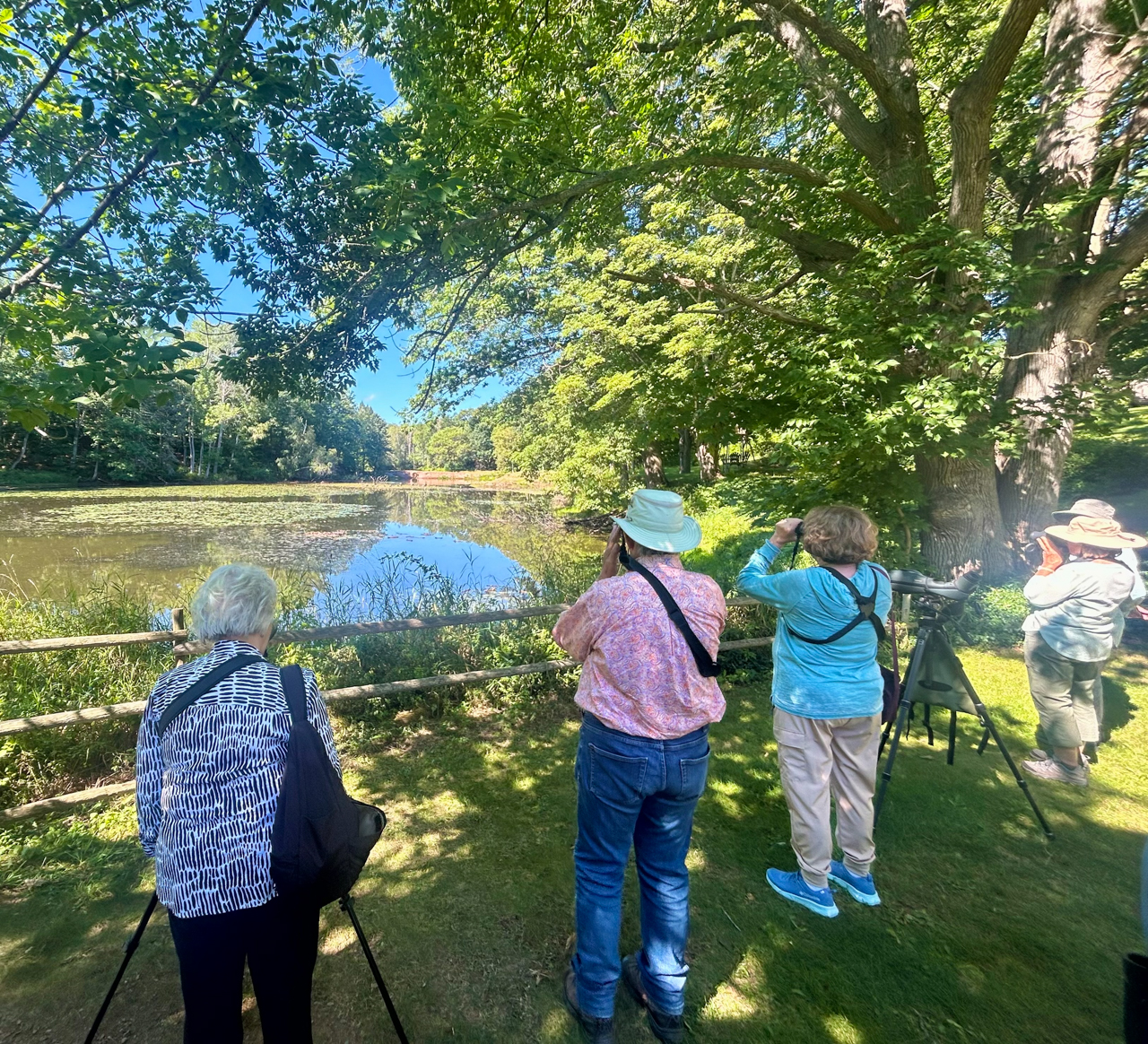
Tannery Pond © Logan Lalonde
Grand Pre was our next port of calling, and we drove the last ten minutes to the historic outcropping of farmland and shoreline in the middle of the Minas Basin. To witness the strength of the mighty Bay of Fundy tides, Evangeline Beach was paid two visits – one as soon as we arrived, at low tide, and a few hours later – when the tide had leapt up to peak height. It was lunchtime, so we cruised to the Grand Pre Historical Centre and set up our first of several iconic picnics of the trip. The posts and trees along the way treated us to beautiful looks at Red-tailed Hawk and Bald Eagle.
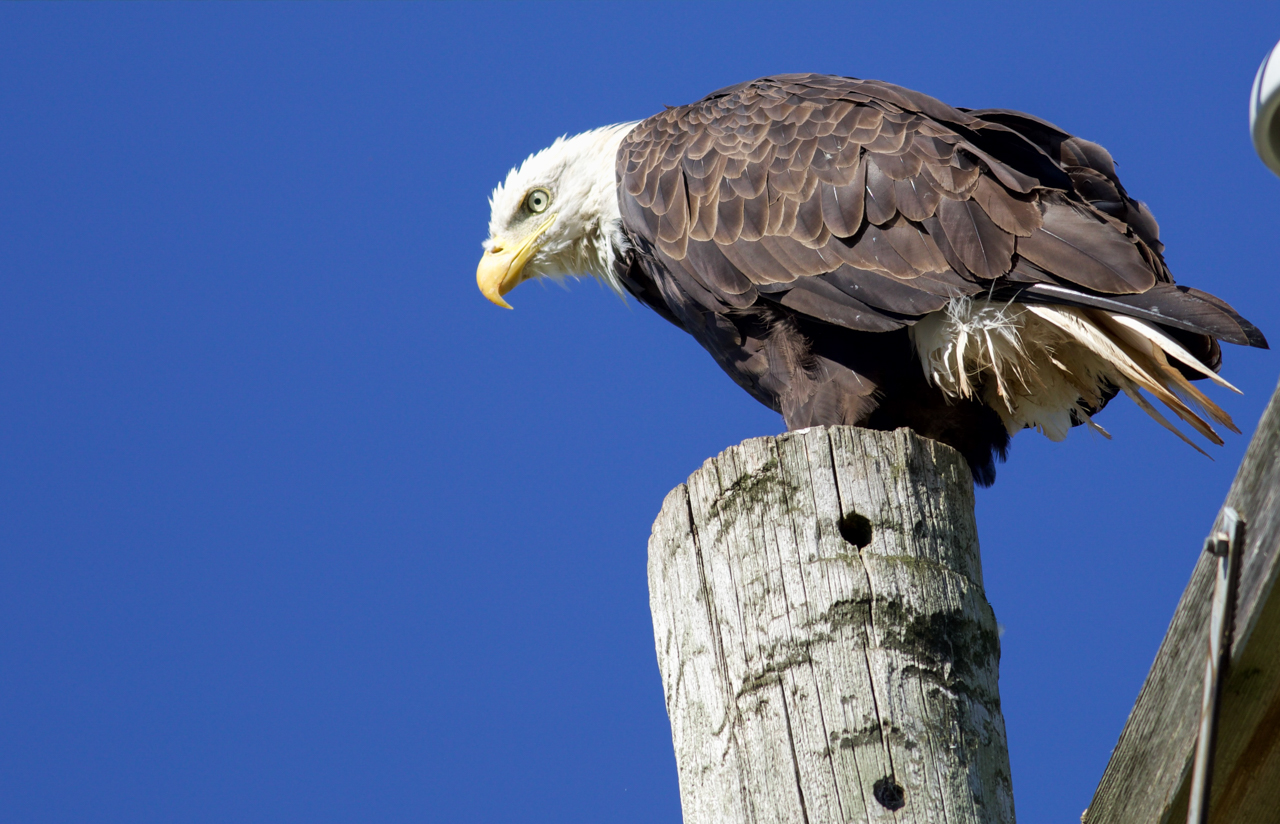
Bald Eagle © Logan Lalonde
Lunch was a recharging and enjoyable stop, and Barn Swallows decorated the wires nearby. Looking at the tide times, it was the key moment to dash to Horton Landing, where a mud island sat in the middle of the Gaspereau River. This exposed area is a famed buffet location for migrating shorebirds, and it did not disappoint today. The crown jewel were several Red Knots, a target bird of the trip. Many other larger shorebirds provided scope views, including Black-bellied Plovers, Short-billed Dowitchers, and both Pectoral and White-rumped Sandpipers. Like watching a cinematic art piece, as soon as we identified all of the shorebirds on the mudflat, the island began to rapidly shrink and then disappear completely under the strength of the tide. Oohs and aahs rang out from the group, and it was fun to see all of the shorebirds leaving one by one, flying up the river to their hidden roost spots.
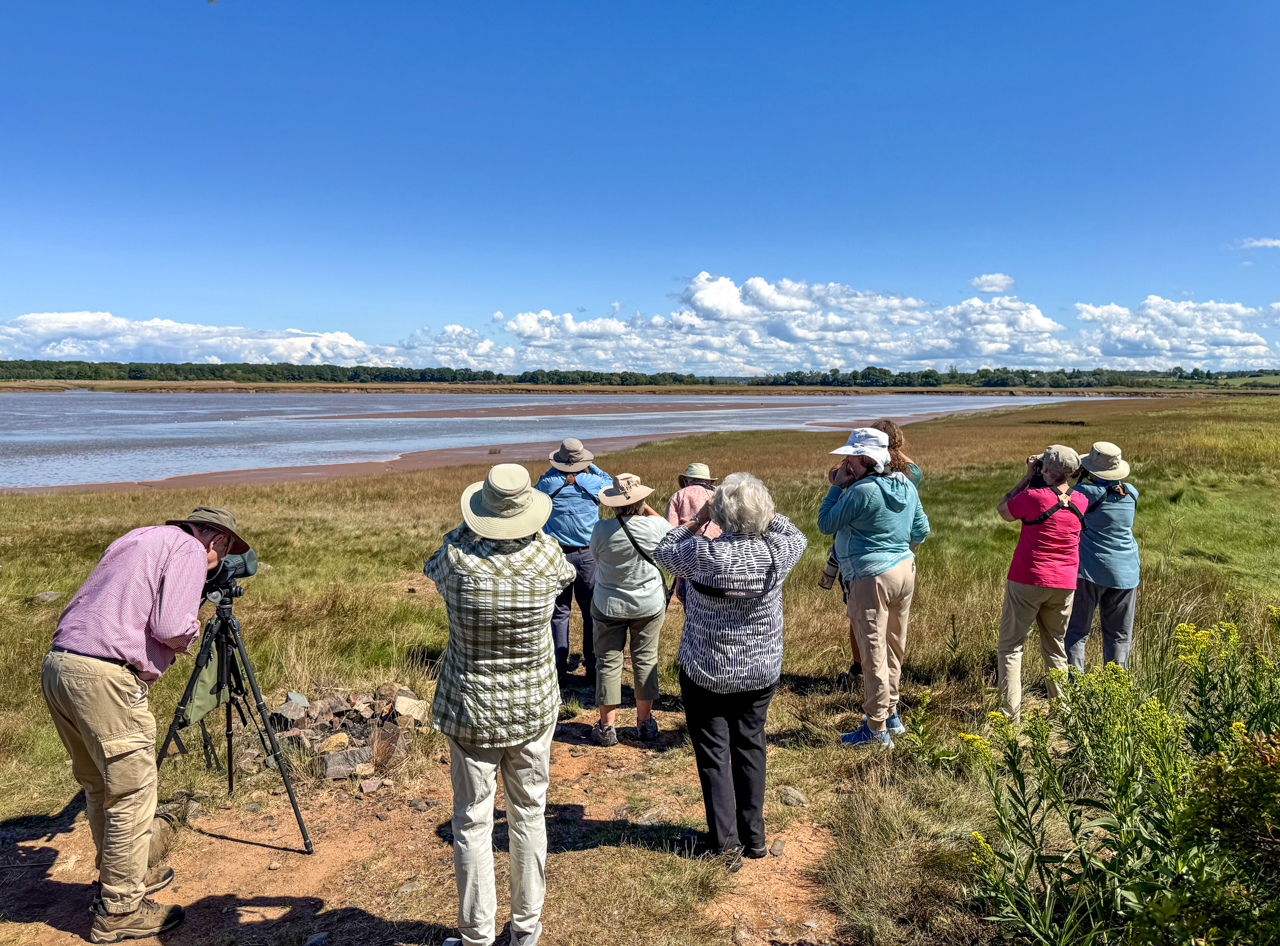
Birding ‘shorebird island’ at Horton Landing © Yousif Attia
We popped back to Evangeline Beach, and the tide had done its magic. Where before lay an endless expanse of shoreline, there now contained no shore at all. The Bay of Fundy has the highest tides in the world, and we were all witnesses of it that day. To cap off an extraordinary first day in Nova Scotia, The Guzzle was visited next. This enigmatically named piece of land sits at the convergence of the Gaspereau River and the Minas Basin, and is the last place in Grand Pre that sinks underwater at high tide. Therefore, it is a busy place for shorebirds, who feed to the very last moment here before the tide comes in completely. We added several more shorebird species here, including Semipalmated Plovers & Semipalmated Sandpipers (Semiplovs and Semisands), the cute, seagrass-loving Least Sandpiper, and the charismatic Ruddy Turnstone.
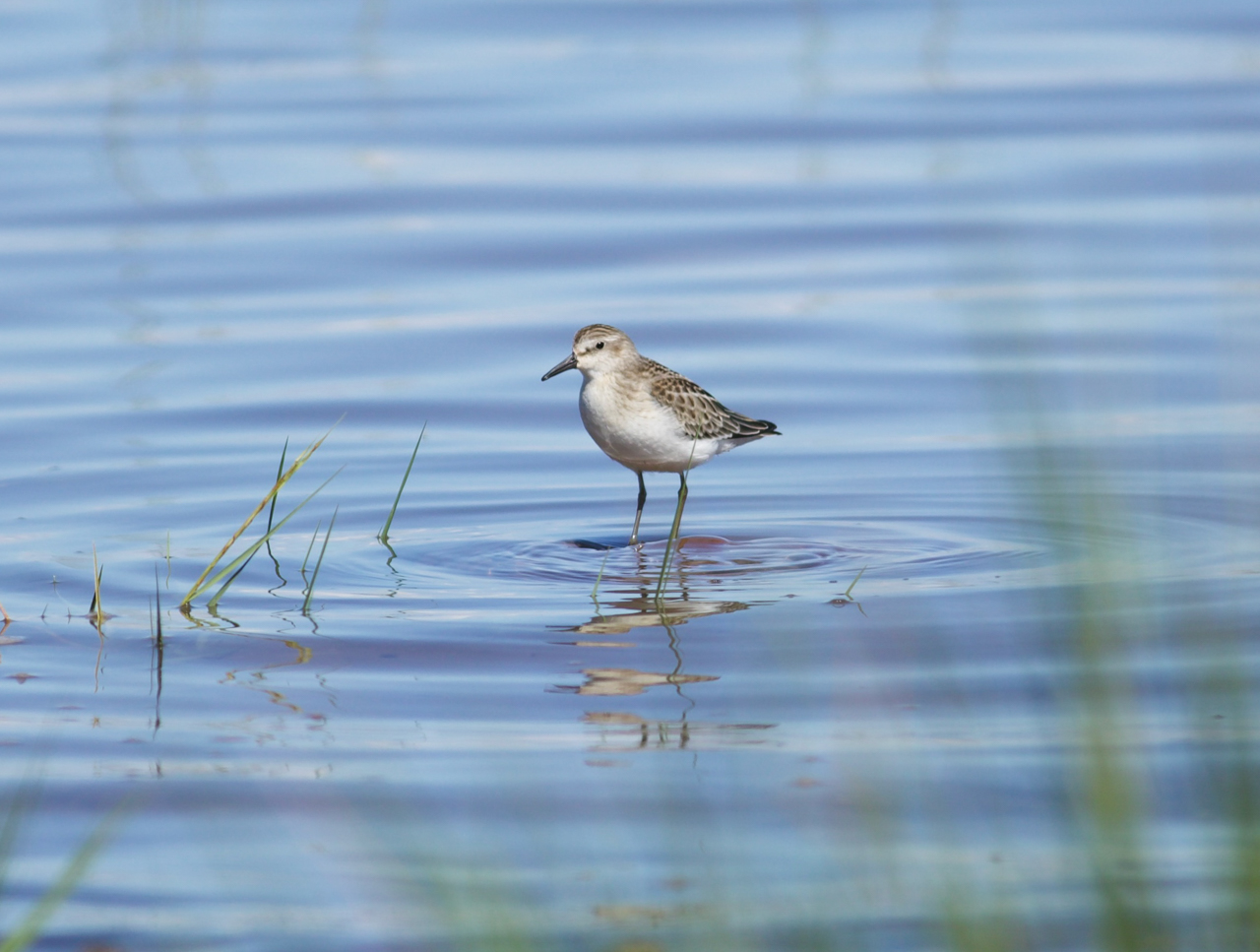
Semipalmated Sandpiper © Logan Lalonde
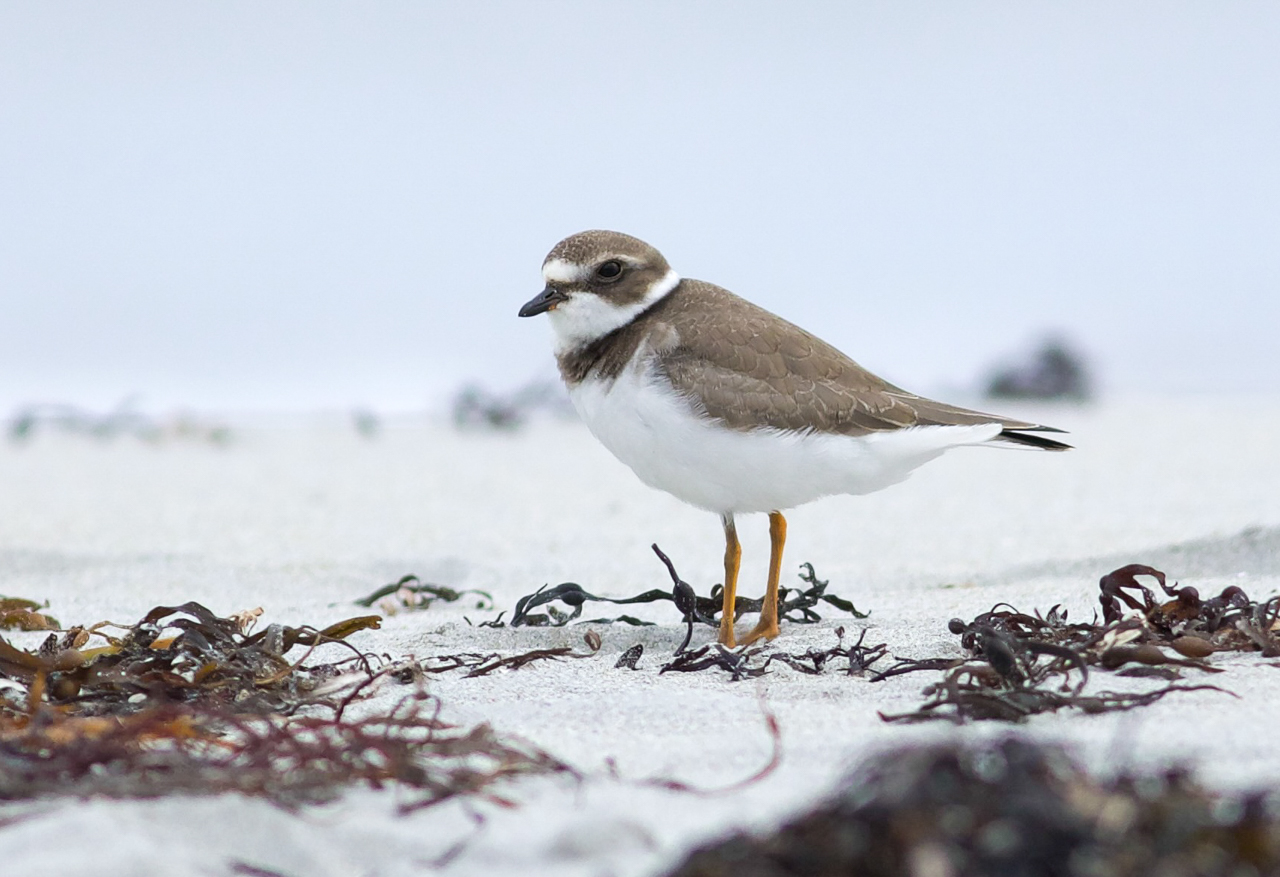
Semipalmated Plover © Logan Lalonde
With smiles on our faces, we had a relaxing drive through the classy downtown Wolfville and then to our accommodations for the night. Here, we enjoyed a very nice dinner in a gorgeous atmosphere, overlooking the orchards below. Day 2 was a resounding success, and our tally was over 80 species of bird for the day.
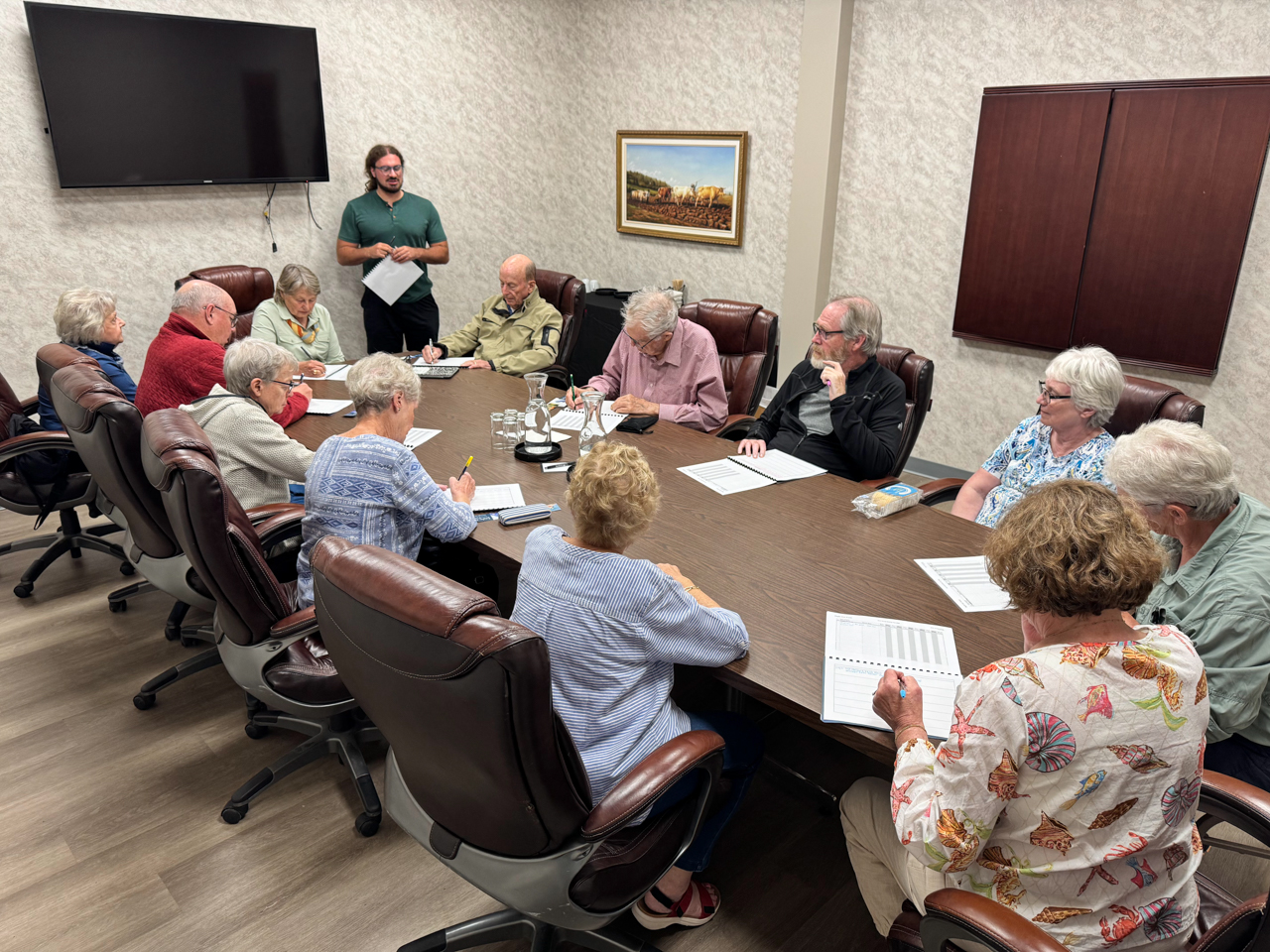
Our first birding count-up! © Yousif Attia
Day 3. Blomidon Provincial Park, Scot’s Bay
The next morning dawned, and with it came the summeriest of weather. After a hearty breakfast at the hotel, we headed over to the Blomidon Peninsula to experience some incredible scenery, birds, and some elite naturalism. Once we arrived at the carpark, birds were already gathering in the massive birches that lined it. Chestnut-sided and Blackburnian Warblers, Red-eyed Vireos, and Cedar Waxwings foraged in front of our eager eyes, among many others. From here, we birded along the steep, winding road to the top of the peninsula, entering Blomidon Provincial Park. We did several walks here at the top, including into a storybook-like mature hardwood forest called the Woodland Trail. This trail stopped us in our tracks upon approach, as there was an Ovenbird right in front of us on the path. It provided showstopping looks, walking towards us and was very curious. This incredible bird was many of our group member’s favourite moment of the trip. This individual was particularly green, further on the spectrum of Ovenbird than normal. This species can range from a woodsy brown to the shining light olive green of this bird.
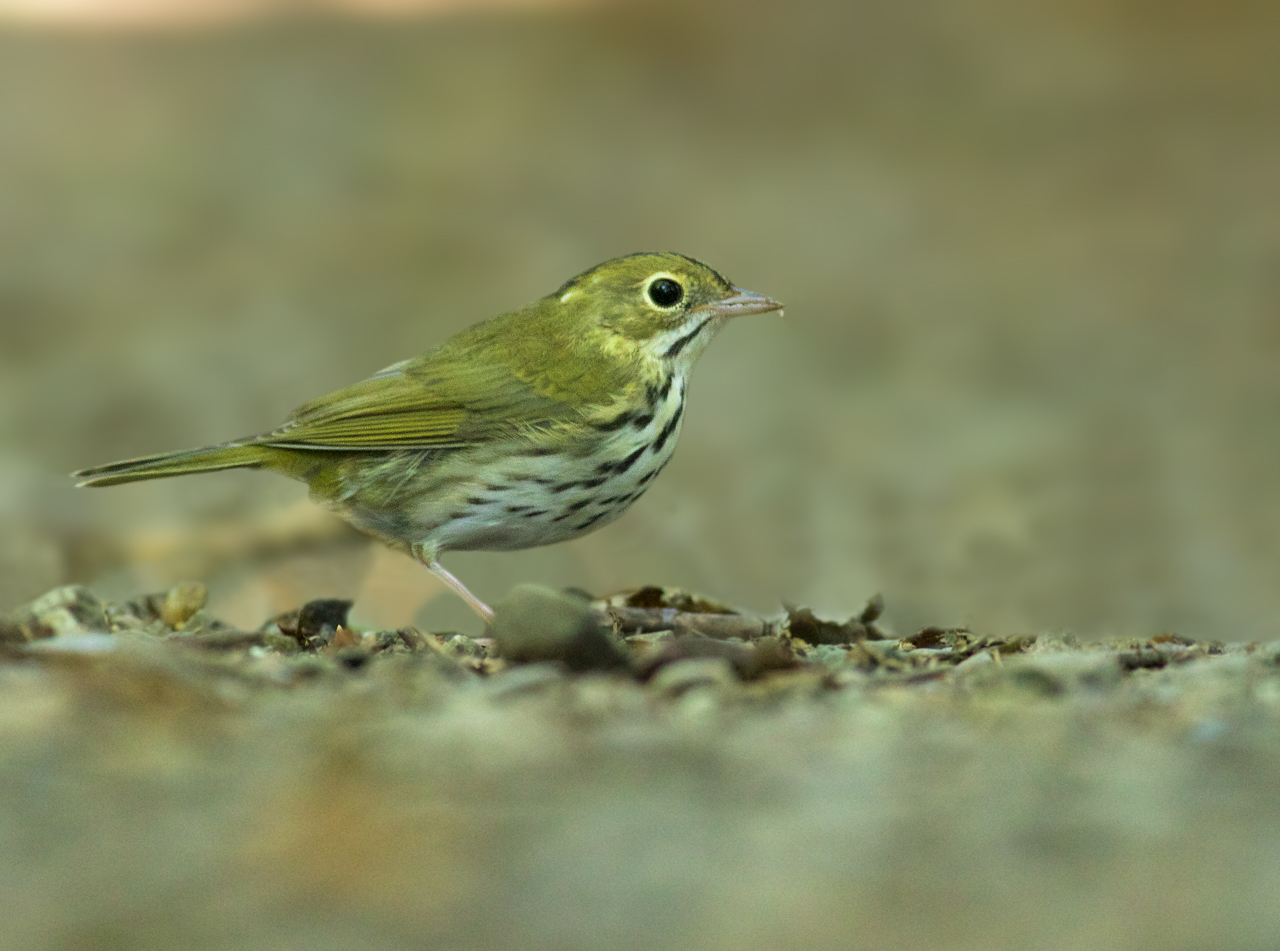
Ovenbird © Logan Lalonde
We explored the Woodland Trail and the group was avidly looking for all natural things. We identified many species of moss, fungi, lichen, and plant, and it kept us intrigued with every step. Some of us were lucky enough to see a Brown Creeper and some Blue-headed Vireos along the way, and various warbler species in the canopy kept our bird eyes busy.
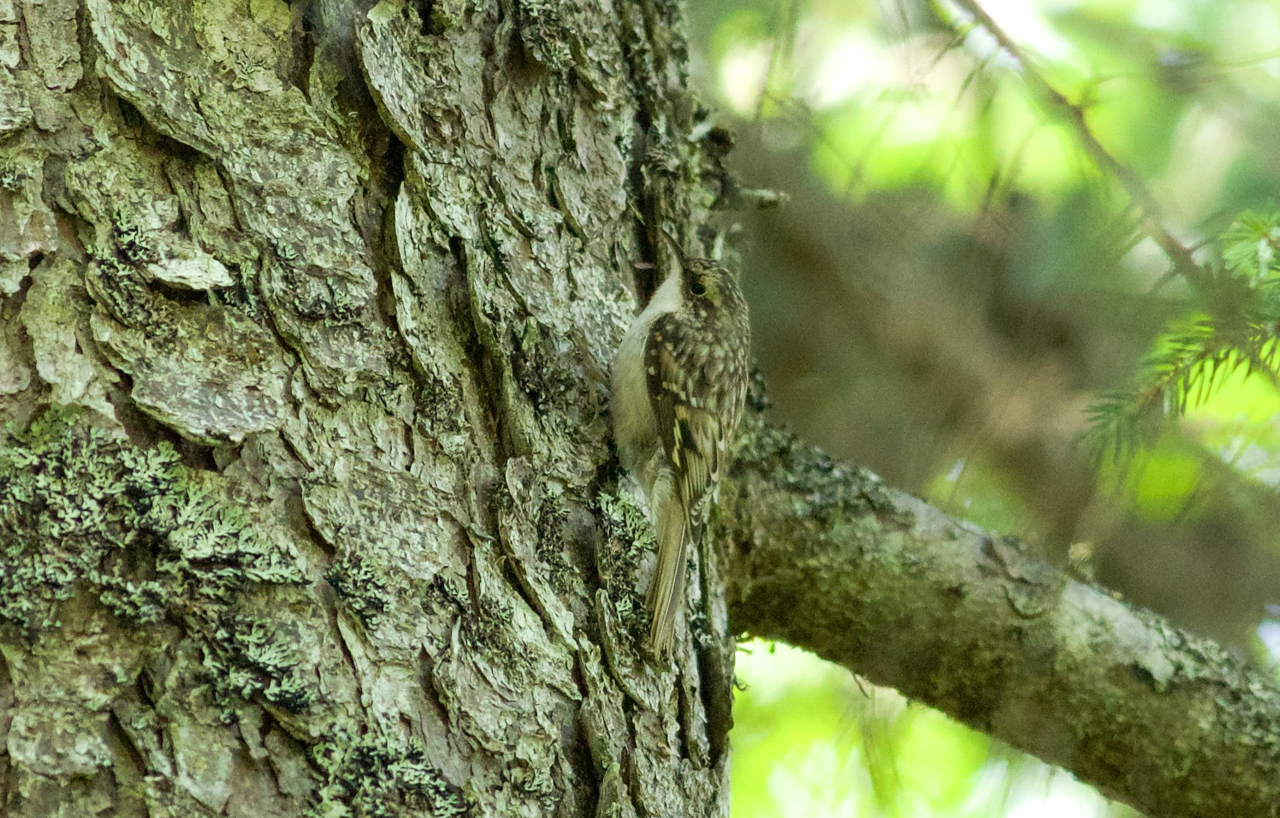
Brown Creeper © Logan Lalonde
A picnic was our next destination, and we set it up in a covered area overlooking an incredible vista of the Minas Basin. We were up high, and so were our spirits. A pair of young Pileated Woodpeckers also joined us at our picnic area briefly. After lunch, we drove down the mountain and curved around to the other side of the Peninsula, to the pebble beach of Scot’s Bay Provincial Park. The wind picked up considerably, and so did the raptors, taking advantage of the thermals. We watched a Peregrine Falcon, Sharp-shinned Hawk, and a Red-tailed Hawk swirl around together very high in the air, ready to migrate. In the wetland just below them beside the beach, there were some Solitary Sandpipers posing in the scopes.
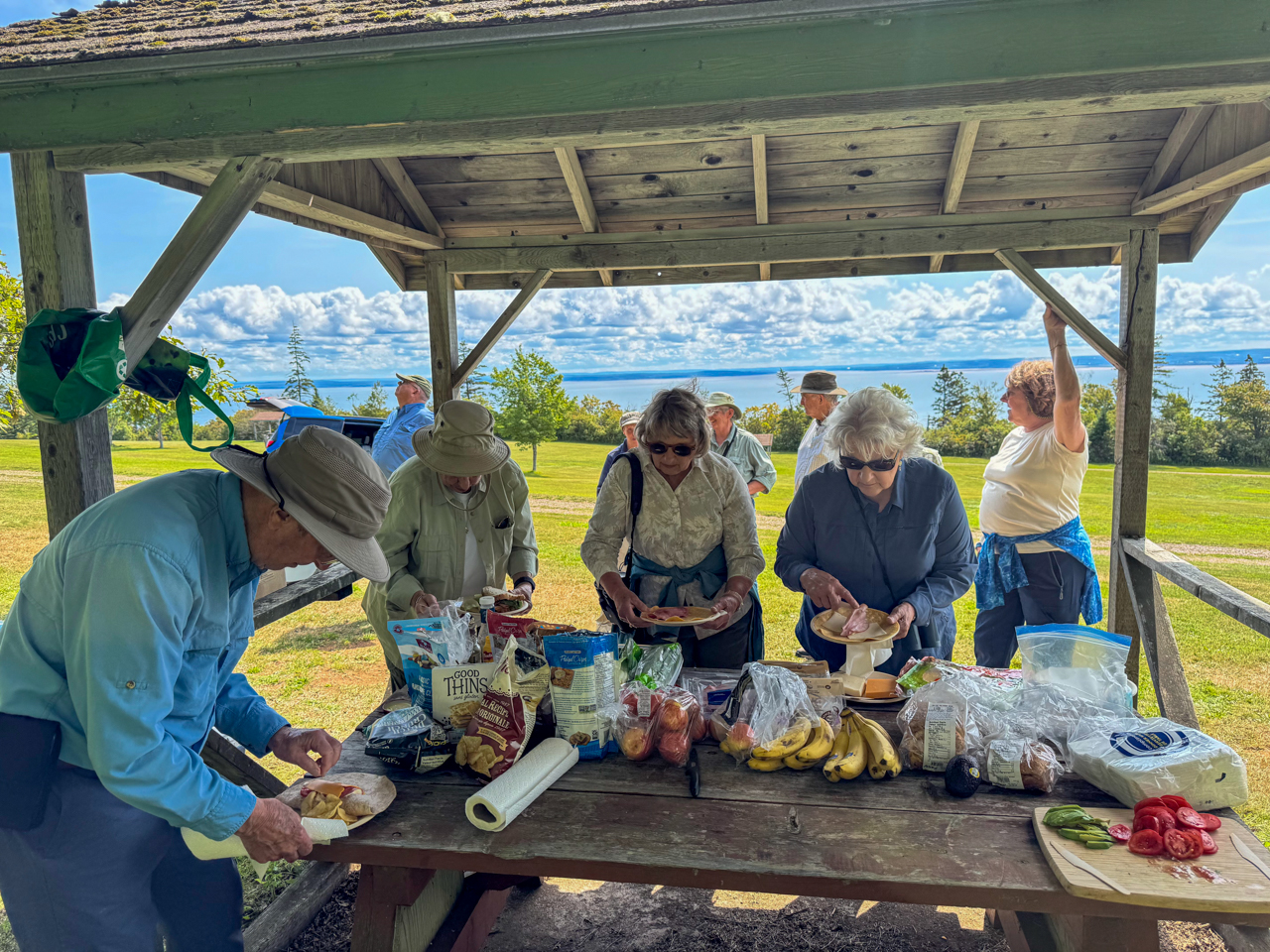
Blomidon Provincial Park Picnic © Yousif Attia
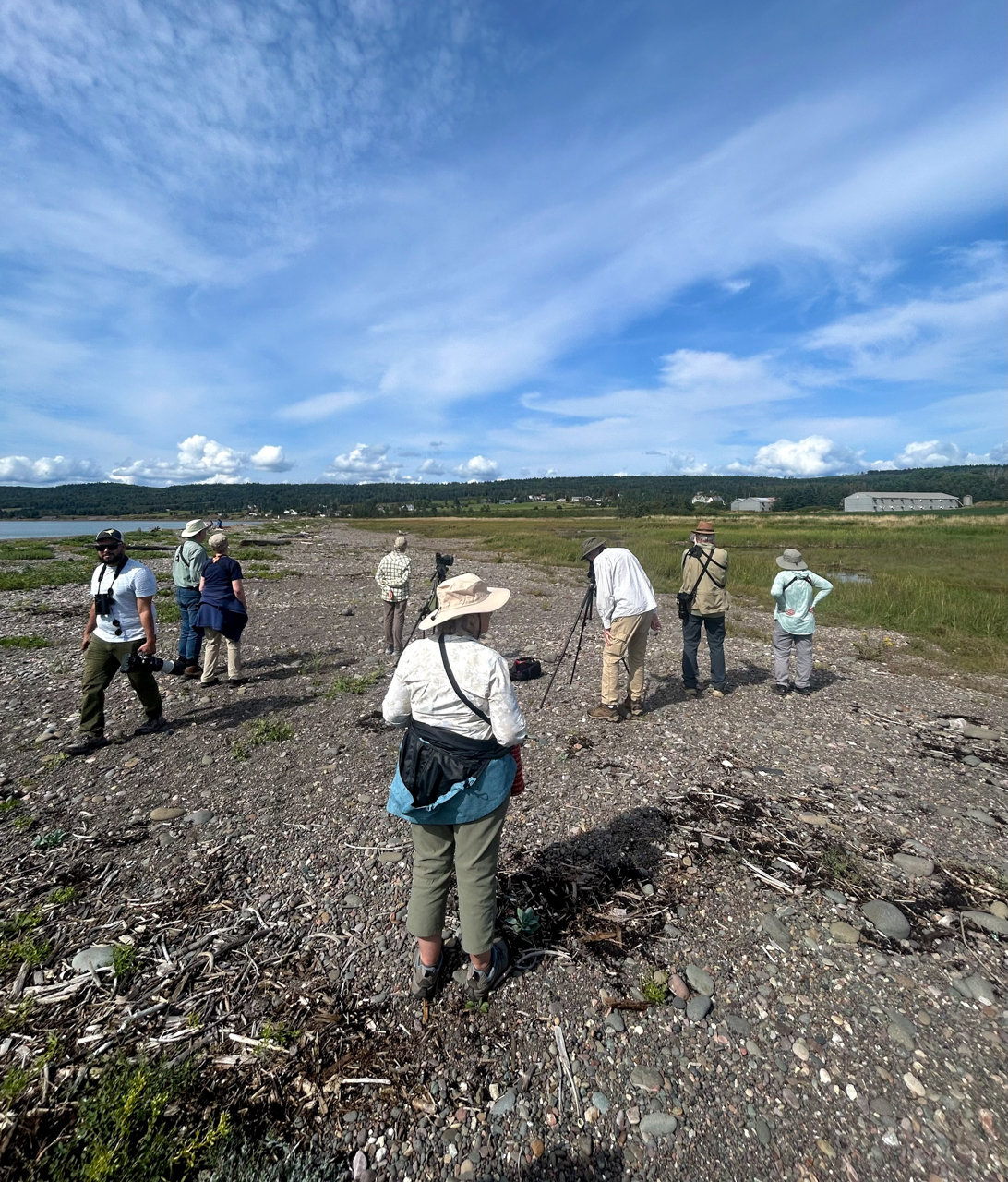
Scot’s Bay Pebble Beach © Logan Lalonde
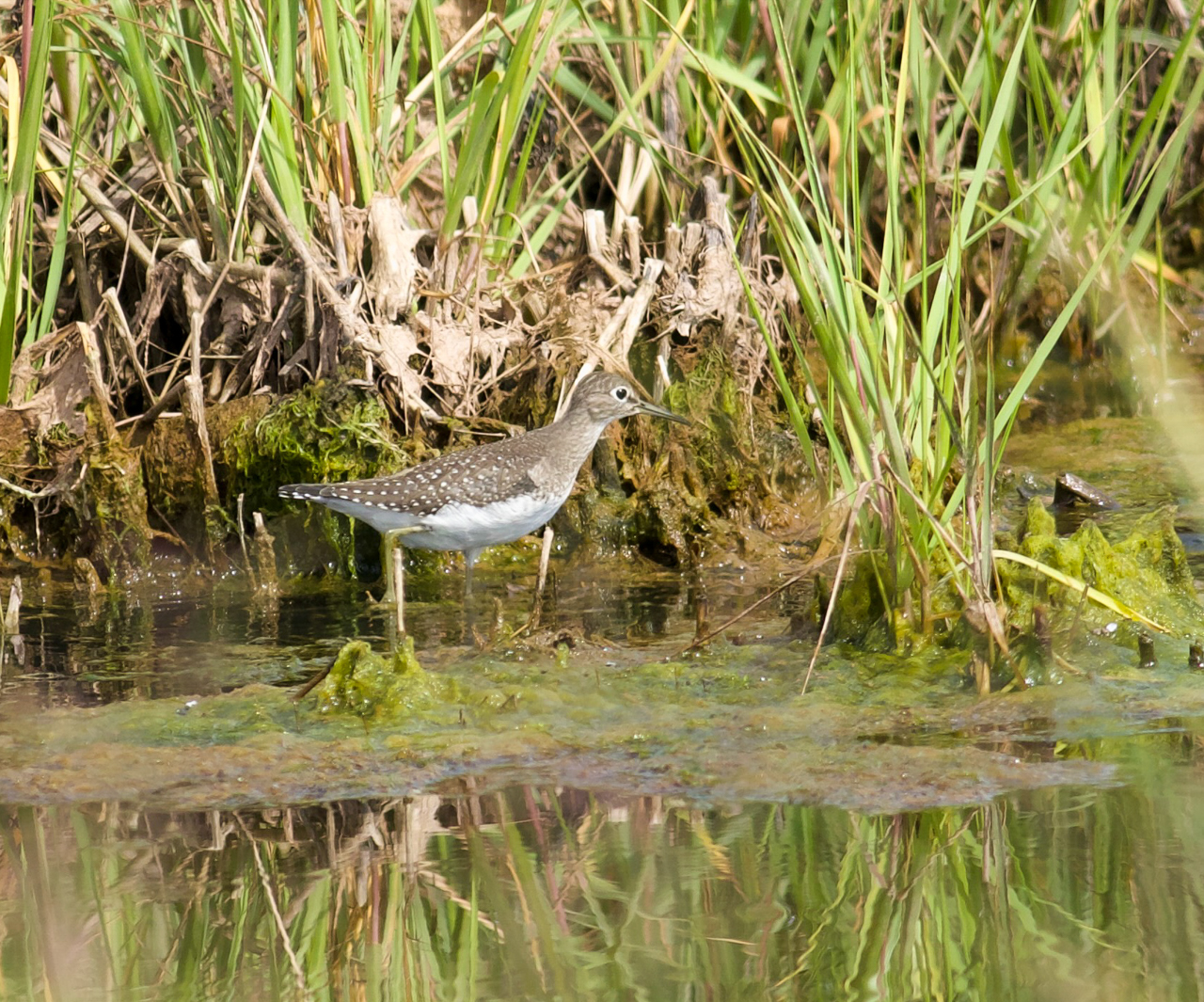
Solitary Sandpiper © Logan Lalonde
After strolling for a while and looking at some splendid rocks and driftwood, we took off back towards town. After an equally wonderful dinner in Wolfville, we tucked in for the last time in the warm and sunny Annapolis Valley.
Day 4. Annapolis Royal, Digby Neck, arrival in Westport
The timing was perfect on Day 4, because it was our travel day… and it was calling for rain! We left early, as the French Basin Trail in Annapolis Royal was eyed on our schedule before the rain was set to descend. An hour and a half of driving later, we arrived at the peaceful marsh at the trail. Our loop was kicked off with great looks at many waterfowl new for the trip in the vegetated corners, including: Green-winged Teal, American Wigeon, Gadwall, and an uncommon sight – a female Bufflehead. A Northern Pintail and a Northern Shoveler were lovely to see together further out on the water. The ring trail was increasingly peppered with warbler activity, certainly due to the storm about to hit. The birds were hectically feeding, and we were gobsmacked at the amount of diversity and great looks we had. Yellow-rumped Warblers led most of these groups, commanding the direction of the foraging. Northern Yellow Warbler, Northern Parula, Palm Warbler, and two highlights – stunning Black-throated Blue Warbler and Canada Warbler – posed briefly. An Eastern Wood-Pewee was being uncharacteristically cooperative as well.
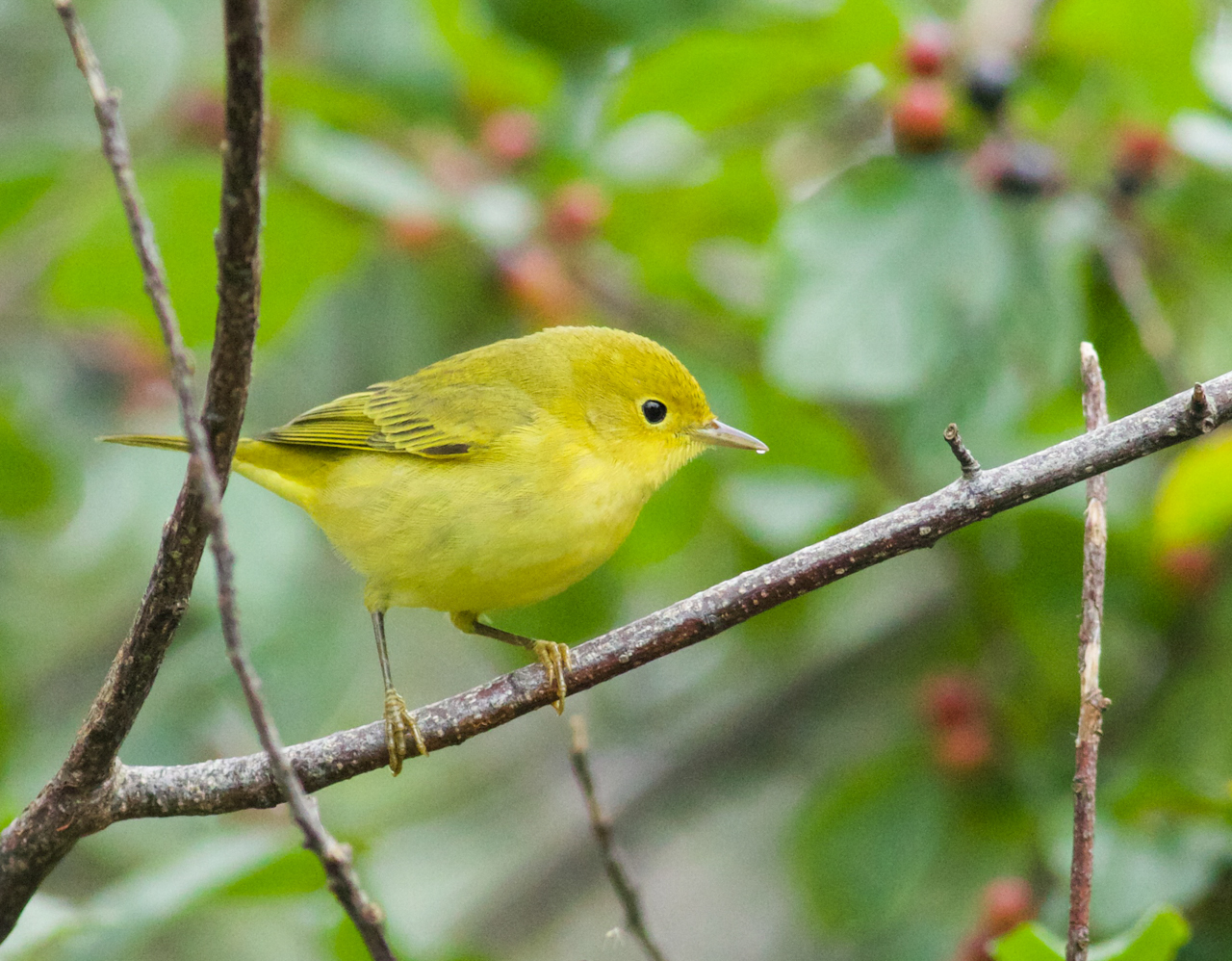
Northern Yellow Warbler © Logan Lalonde
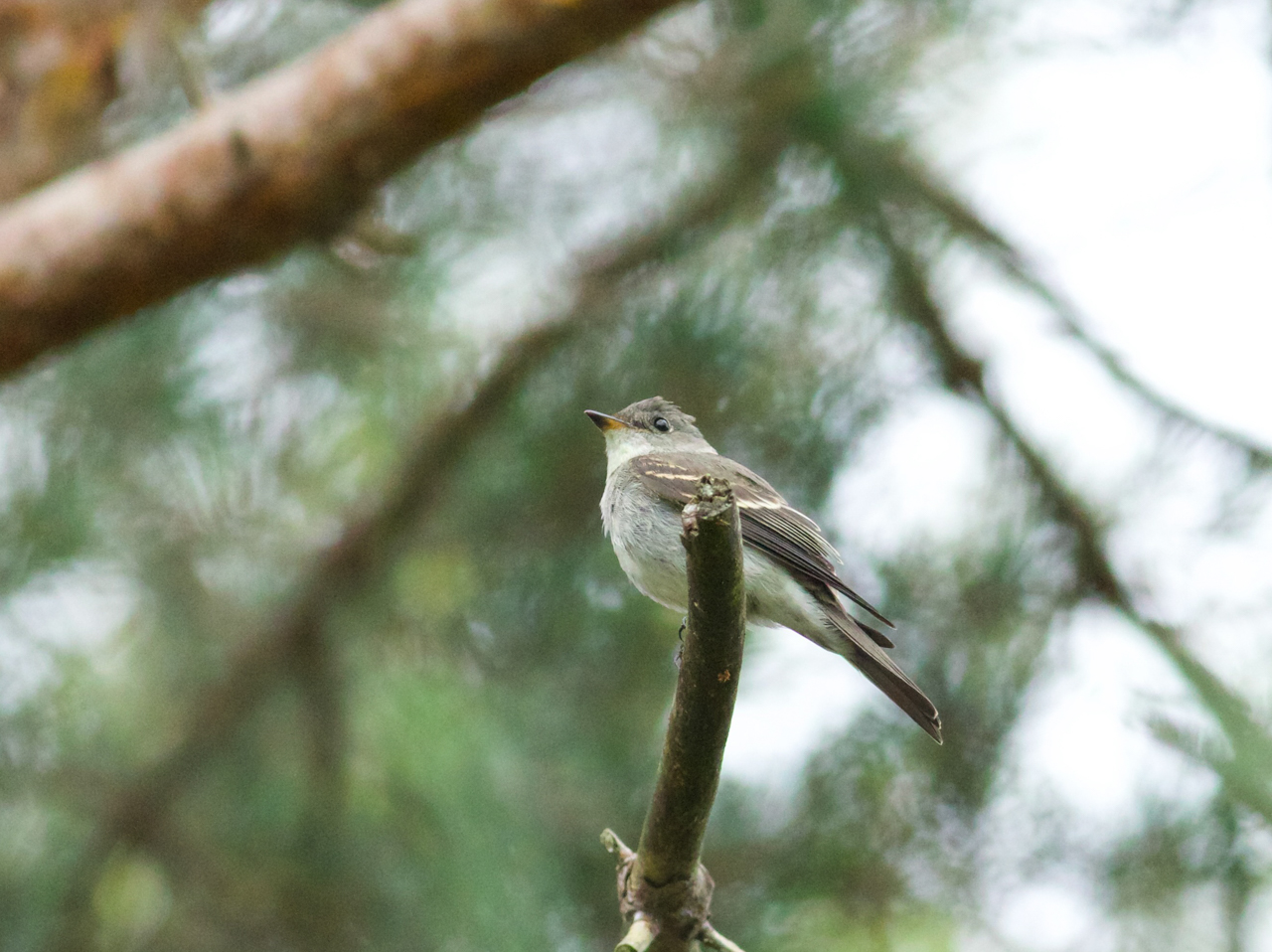
Eastern Wood-Pewee © Logan Lalonde
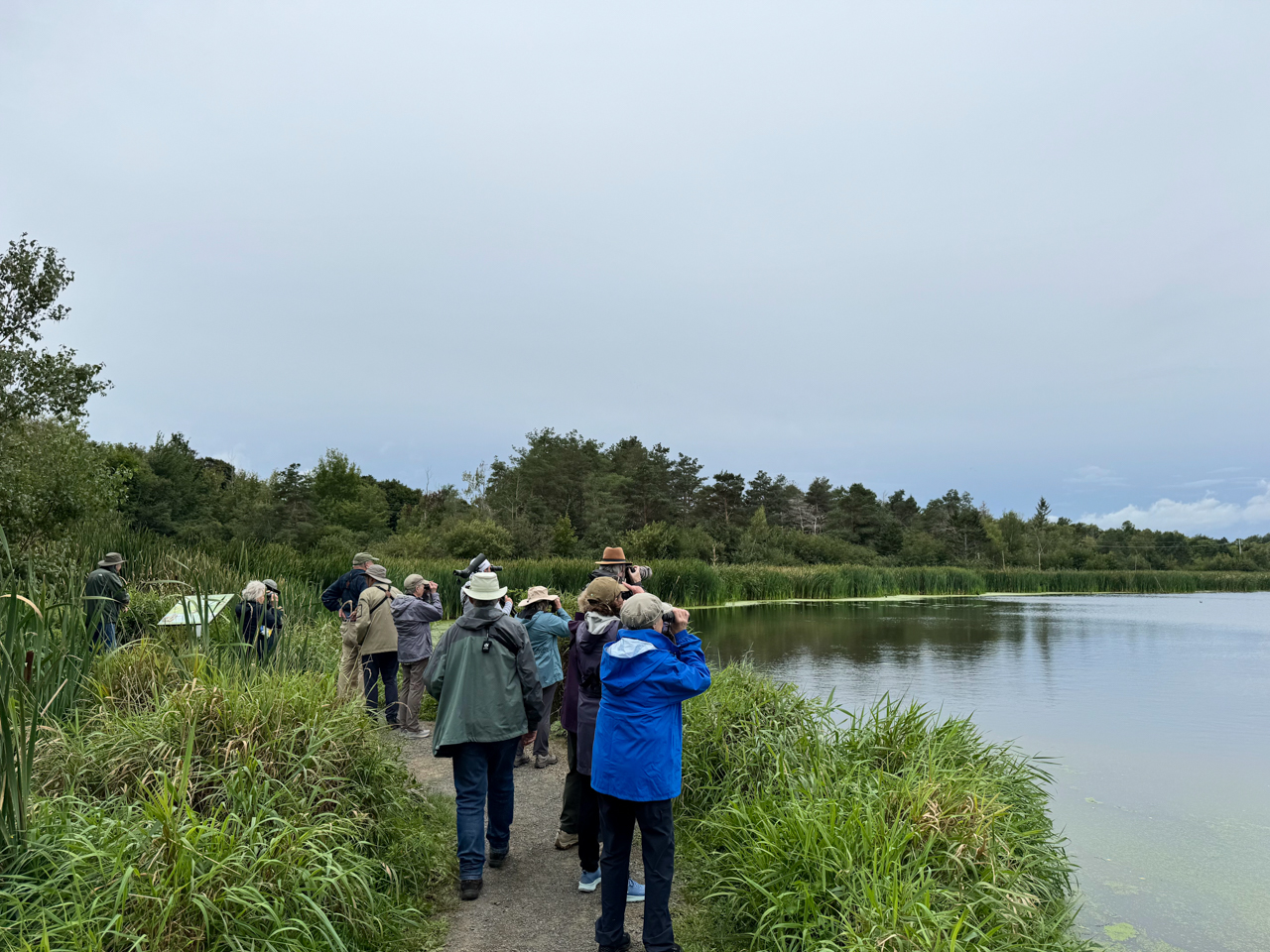
Marsh birding at French Basin Trail © Yousif Attia
Miraculously, it started to rain just as we made it back to the parking lot and to our sanctity of the vans. The walk exceeded our expectations, and the successful hard work searching for birds built up a strong appetite in the group. So, we high-tailed it for Digby, where a reservation at the Wheelhouse Seafood and Pasta restaurant was waiting for us. Up on the dining floor, we enjoyed an unforgettable meal.
All the food was simply delicious, and the views and decor of the traditional yet sophisticated restaurant captivated us. We could even see birds on the water from inside, and added Surf Scoters and Black Guillemot just outside to the day tally.
Stuffed and ready for the last stint of our drive, we hit the road, driving down the Digby Neck towards Brier Island. Already tuned into what this area is famous for, bird migrants were being seen from the vans on the way, including several raptors. The Digby Neck and its islands are home to hundreds of thousands of migrating birds each migration, and we were headed directly for the epicentre of this phenomenon – Brier Island. We boarded two quick ferries to get us to the end, and observed some amazing nature on the way. Some of us were lucky enough to see a Humpback Whale fully breaching out of the water at a distance in the Bay of Fundy, and some of us were treated to a Merlin, a Sharp-shinned Hawk, a Common Raven, and an American Crow in a battle for the ages.
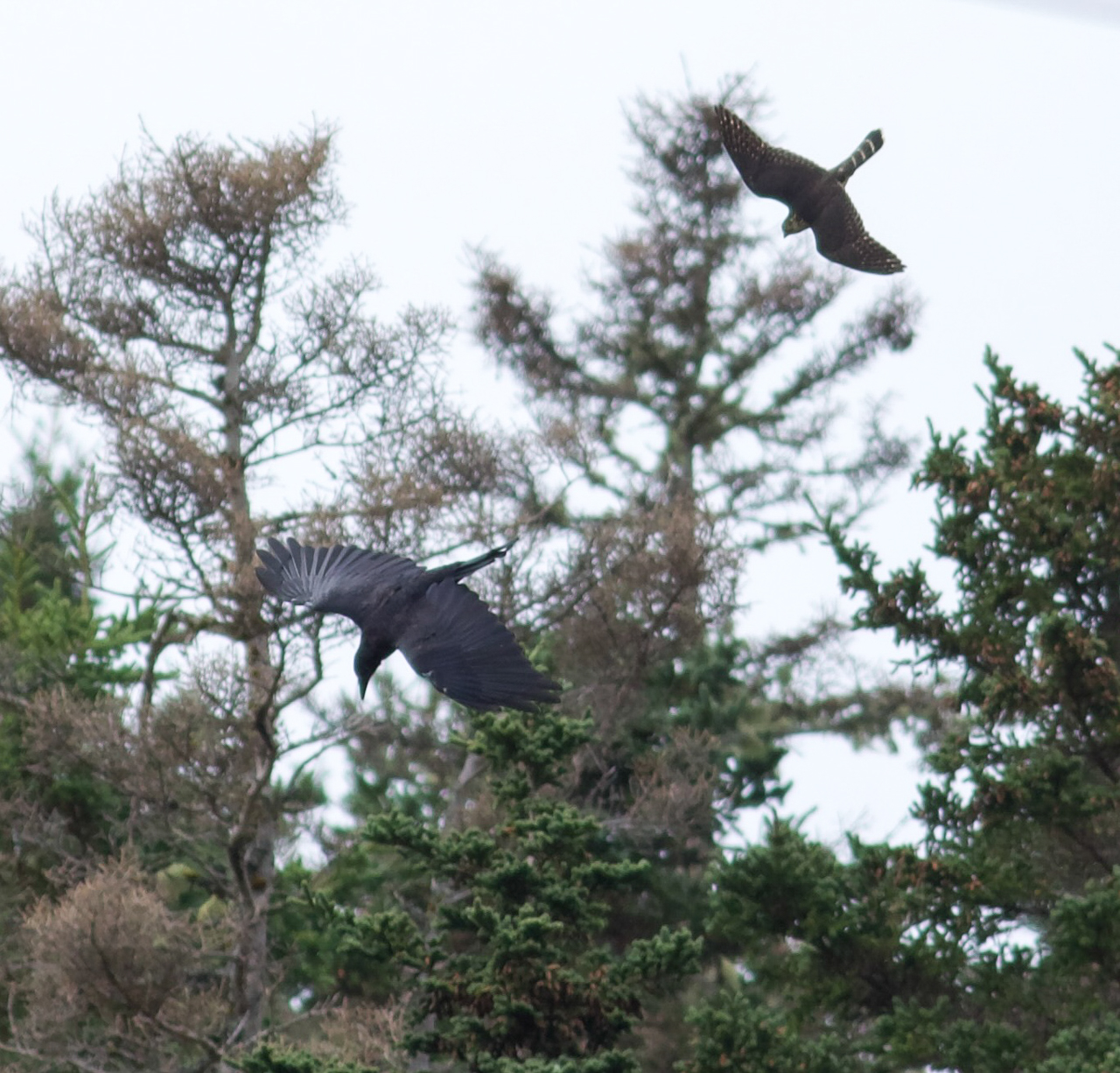
Merlin chasing Raven © Logan Lalonde
The second ferry floated us over the Grand Passage which lies in between Long Island and Brier Island. Once we docked in Westport, Brier Island’s main settlement, we checked out the start of the Big Meadow Bog Trail to get acquainted with the landmarks and bird life of the island. We saw our first Common Eiders in the harbour here, as well as some Northern Harriers and Great Blue Herons in flight. From here, we headed to the Brier Island Lodge and decompressed for a little while before heading to the restaurant at the lodge for dinner. A lovely dinner was had with stunning views of the sunset over Grand Passage and Westport.
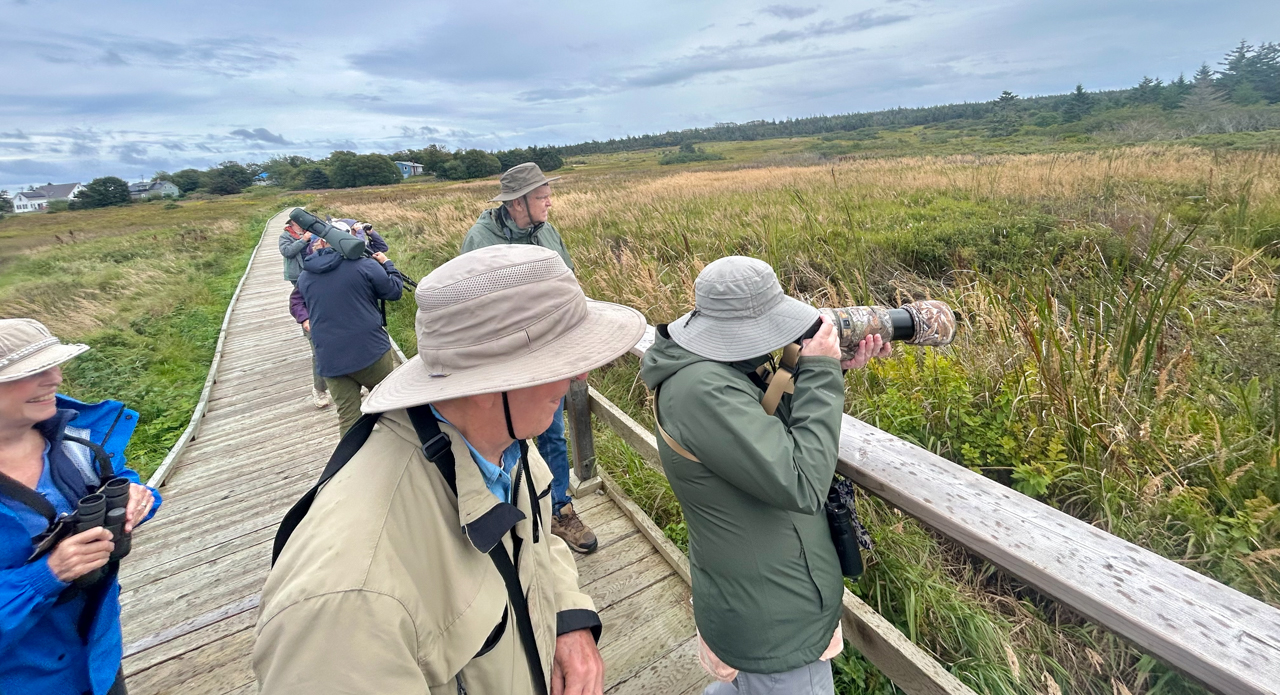
Big Meadow Bog © Logan Lalonde
Day 5. Bay of Fundy Boat Trip, Brier Island Shorebirds
The next morning dawned but the sun was late to the party. It was very overcast and the whole island was covered in a blanket of fog. This did not negatively affect our mood, as we were all excited for the upcoming boat trip to the middle of the Bay of Fundy on a whale watching boat. Cozy in our warm clothes and with a tasty breakfast in our stomachs, we boarded the famed Mariner whale-watching boat for a morning of searching for pelagic birds. Little did we know that today would be one of the best trips of the year in the Bay of Fundy for birds. Despite the fog, birds immediately appeared out of the grey and made passes near the boat, including many of the delightful ‘water dancing’ Wilson’s Storm-Petrels, the sharp Great Shearwater, and a huge amount of Atlantic Puffins.
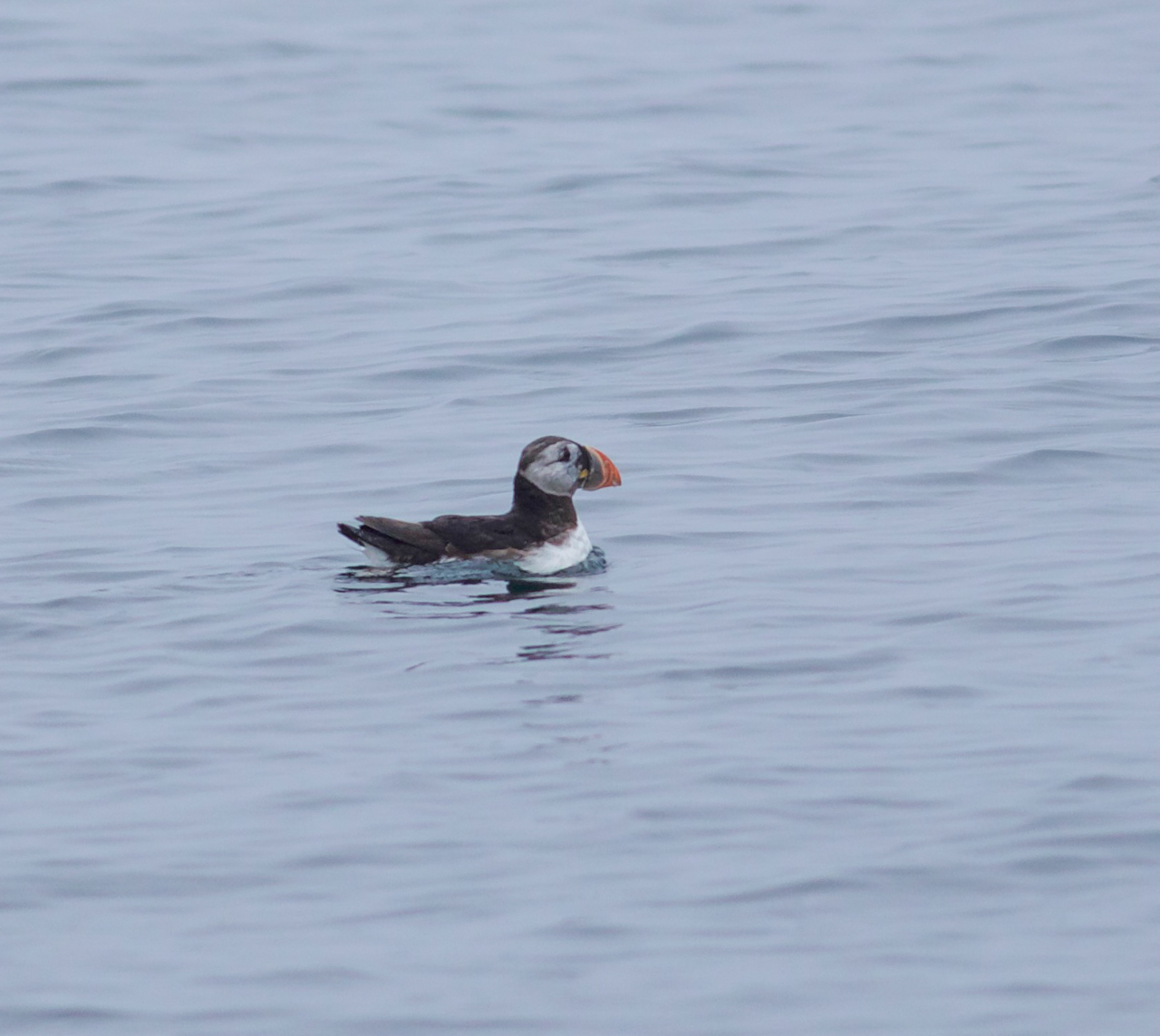
Atlantic Puffin © Logan Lalonde
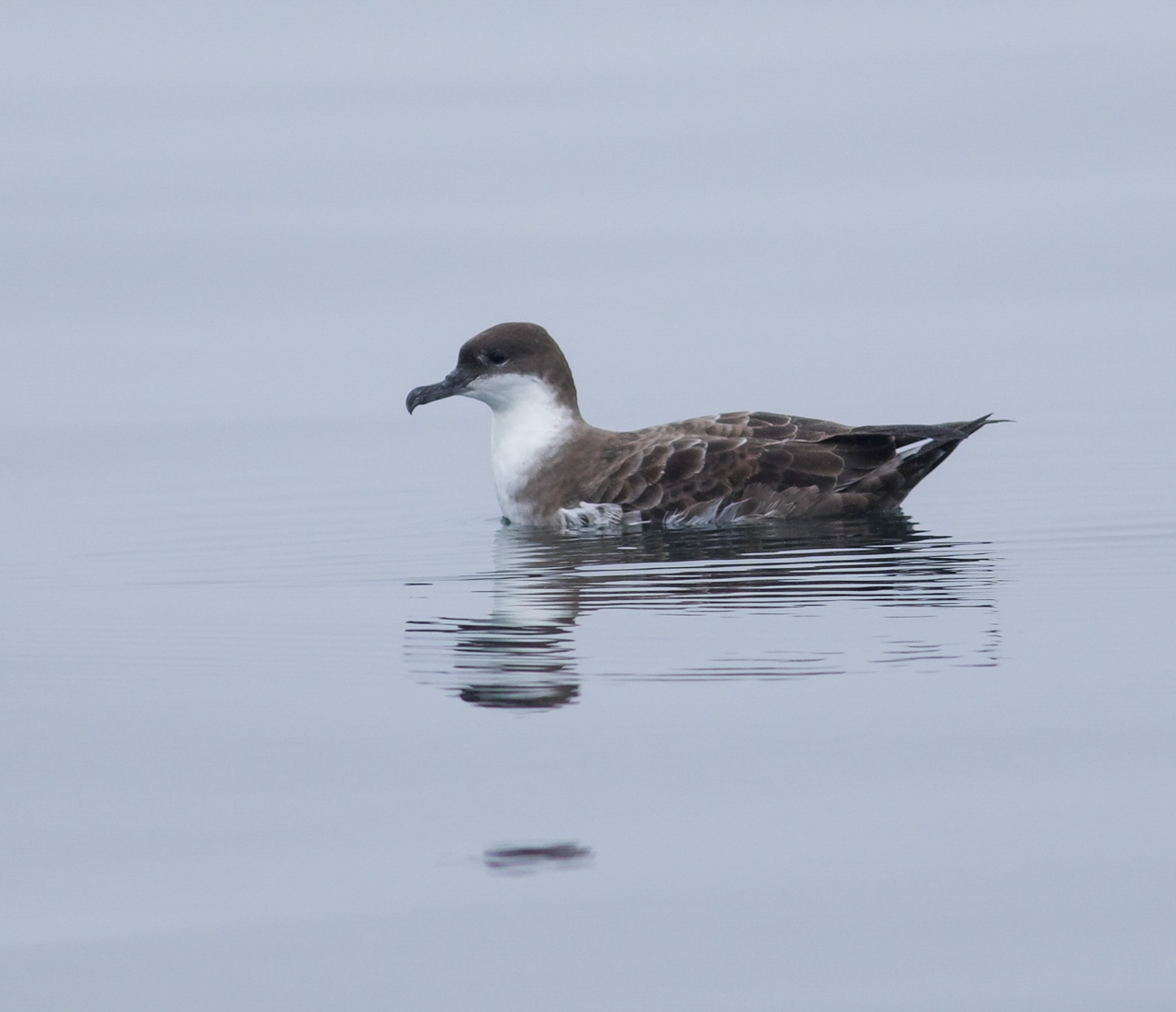
Great Shearwater © Logan Lalonde
Smiles on our faces already, we continued further into central Fundy waters and the birds would not stop coming. Several of the tiny and zippy Manx Shearwaters flew by, as well as both Red and Red-necked Phalaropes. On cue as we were talking about skuas, 2 South Polar Skuas appeared on the water out on the horizon. We caught up with them and they showed off their gorgeous chocolate plumage with white wing flashes right by the boat! These were 2 of 7 individual skuas on the day, which was far above the usual average in Nova Scotia. Some other big birds flew by in the form of Northern Gannets. These athletic birds performed dives and entertained us in between moments of quiet (which were rare!).
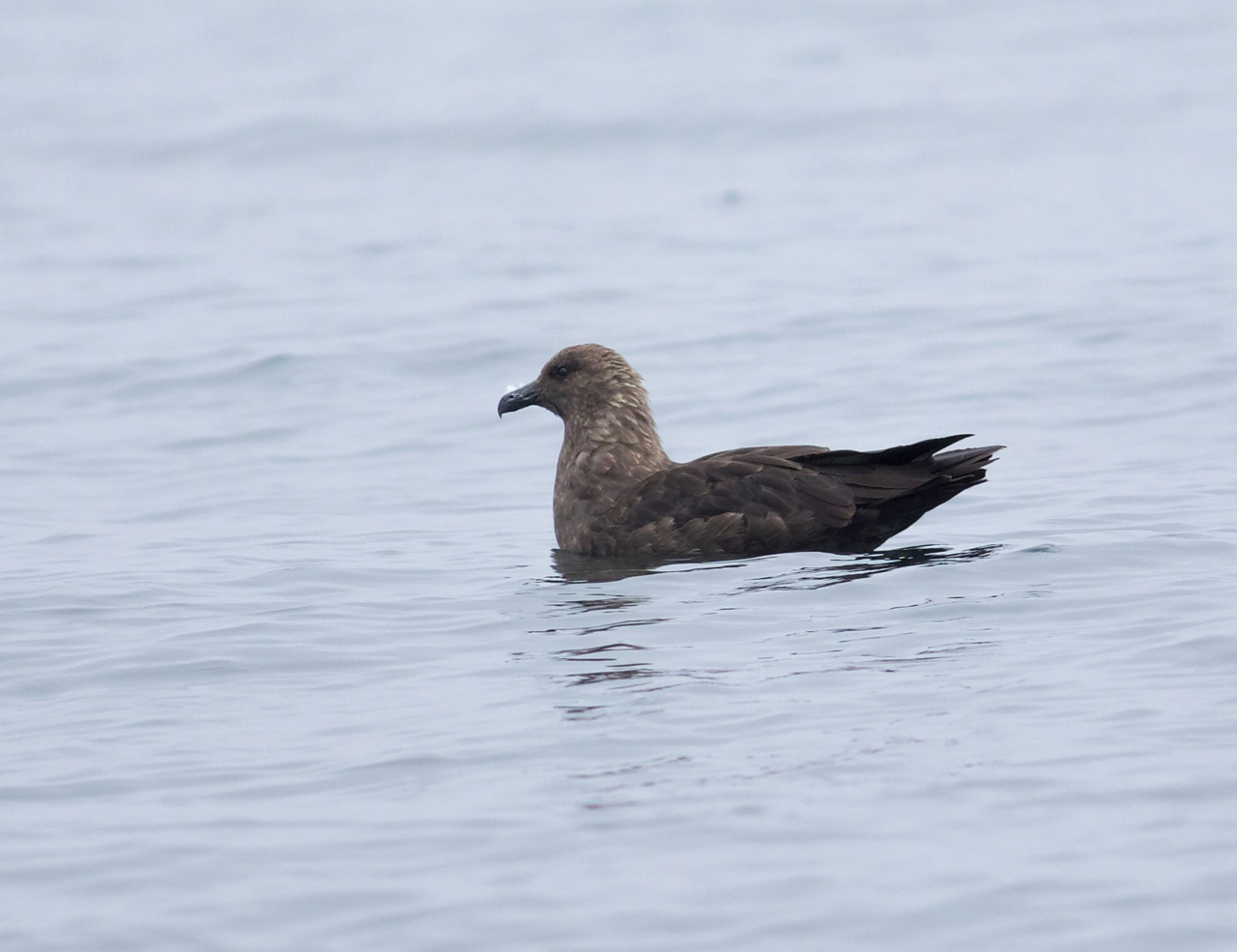
South Polar Skua © Logan Lalonde
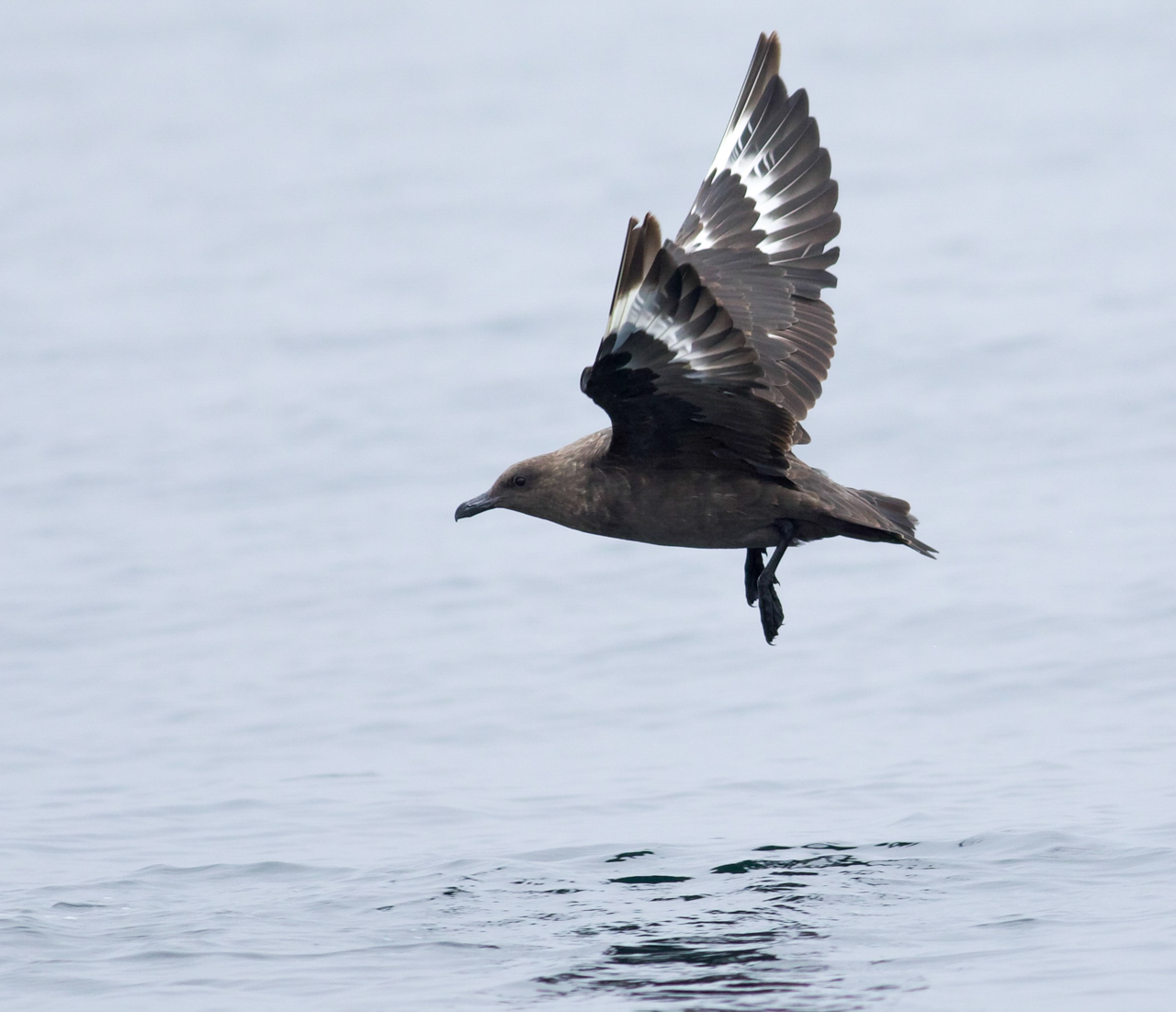
South Polar Skua © Logan Lalonde
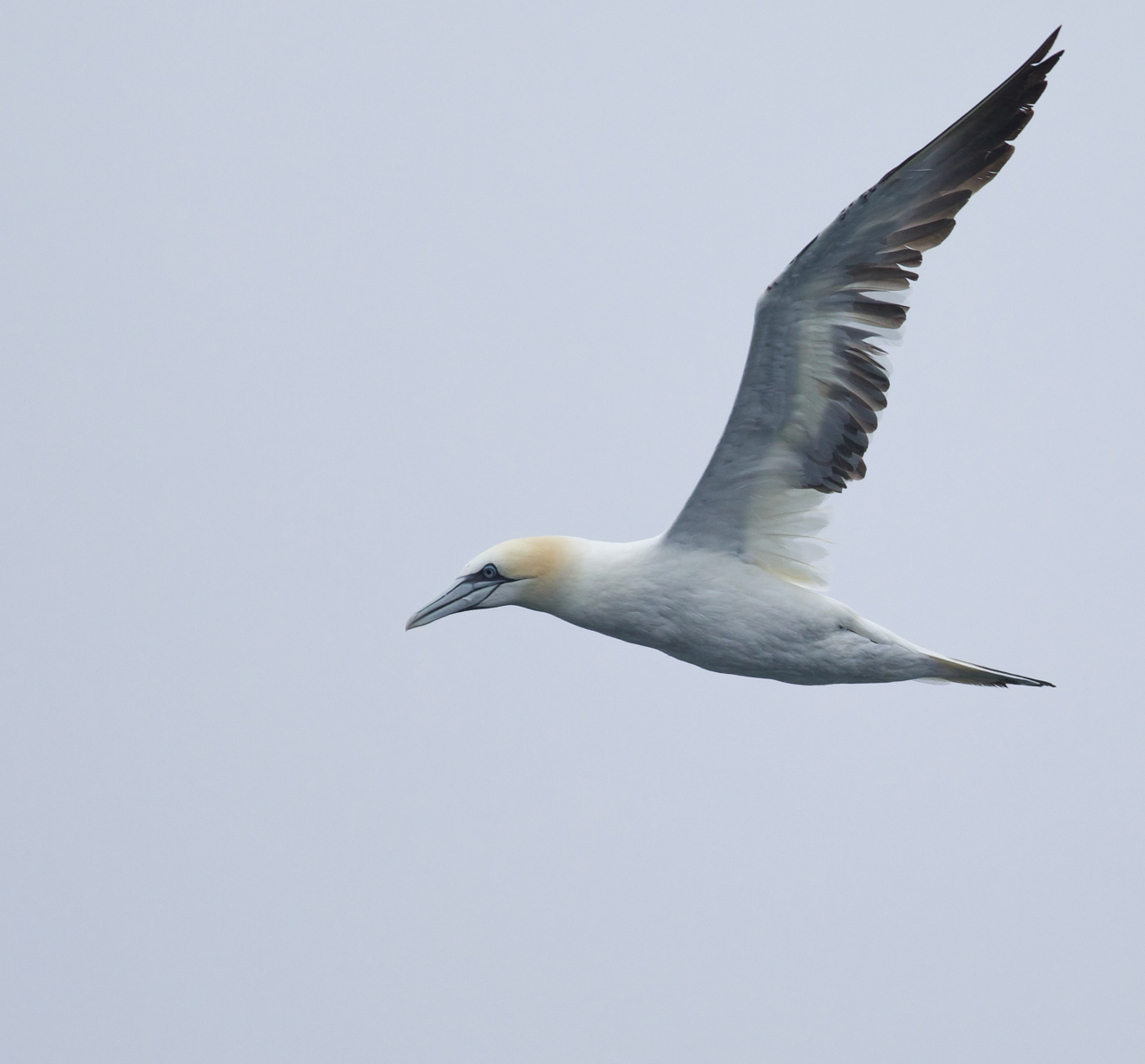
Northern Gannet (Subadult) © Logan Lalonde
These sights were simply mind-blowing, with species appearing back to back just like flipping through a bird field guide. The most special moment was yet to come. After cruising around for a few hours, some large shapes in the water were spotted on the horizon. As we got closer, these shapes revealed themselves as some sleeping Humpback Whales! We spent a magical half an hour watching them sleep right beside the boat, keenly observing their conscious breathing and learning about their life history. A bonus prize was secured here as well; a brilliant Northern Fulmar made several blindingly close passes right beside the boat, very curious about us.
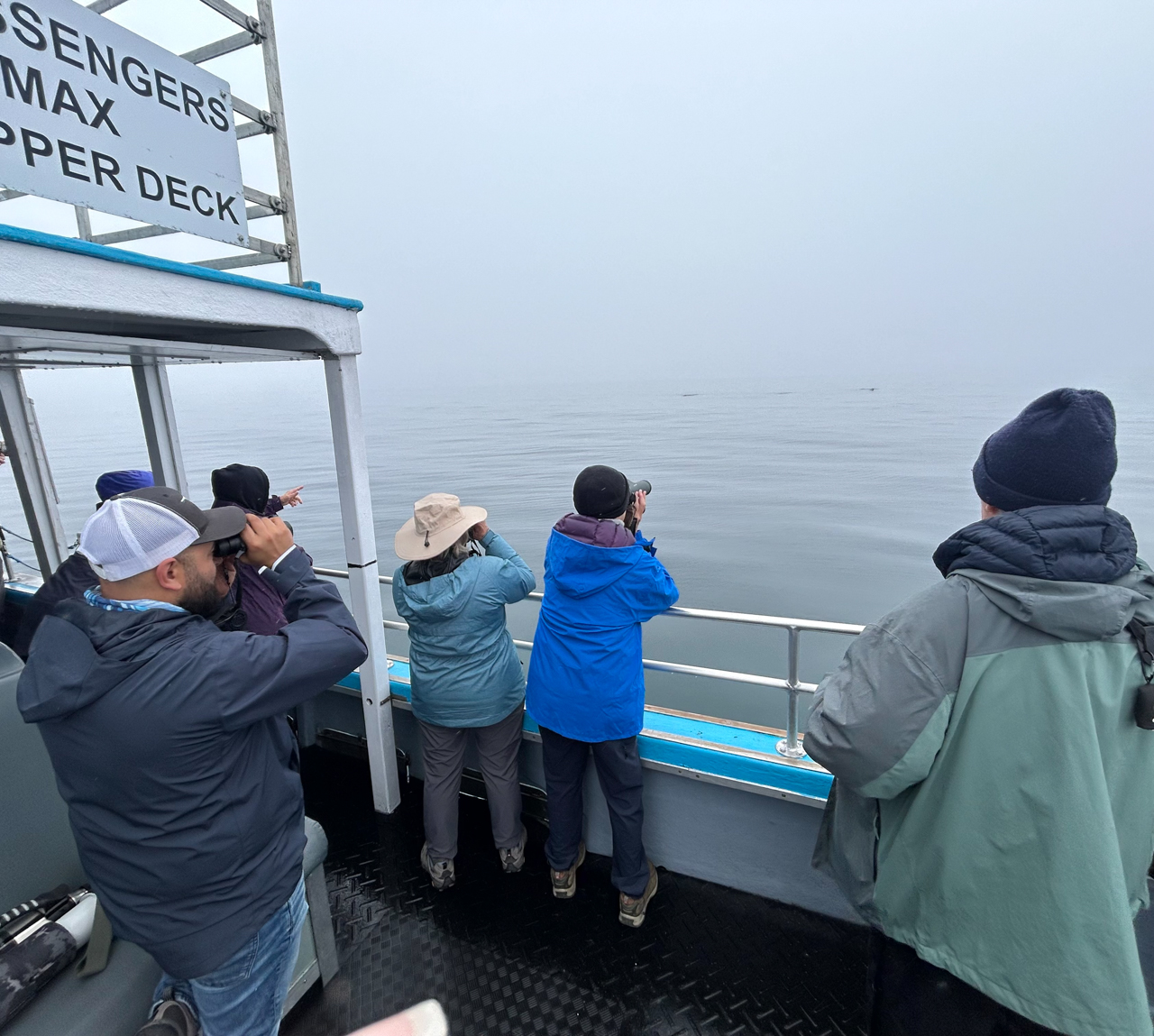
Group looking at three Humpback Whales © Logan Lalonde
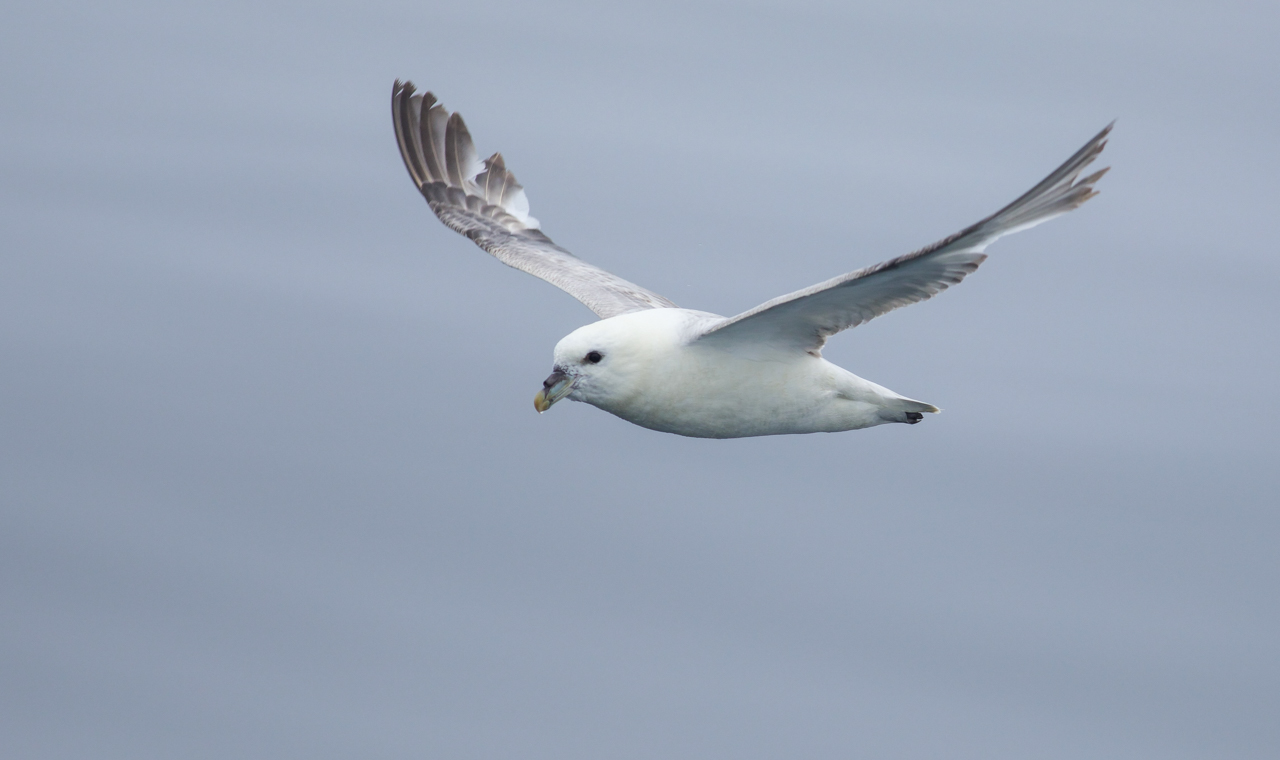
Northern Fulmar © Logan Lalonde
After experiencing these multi-species sights, we ventured back to the harbour, but the bird activity was not trying to stop. Leach’s Storm-Petrels are not as common as Wilson’s at this time of year, but we managed to snag some excellent looks at one of them. Soon after, a rare sight graced us shortly before entering Grand Passage: a young Long-tailed Jaeger materialized on the starboard side of the vessel, first on the water then taking off into the air. What a bird! We soon docked and none of us wanted the boat trip to end. It was a sensational trip, and one none of us will soon forget. The fog ended up amplifying our experience with its peacefulness, silence, and mystery.
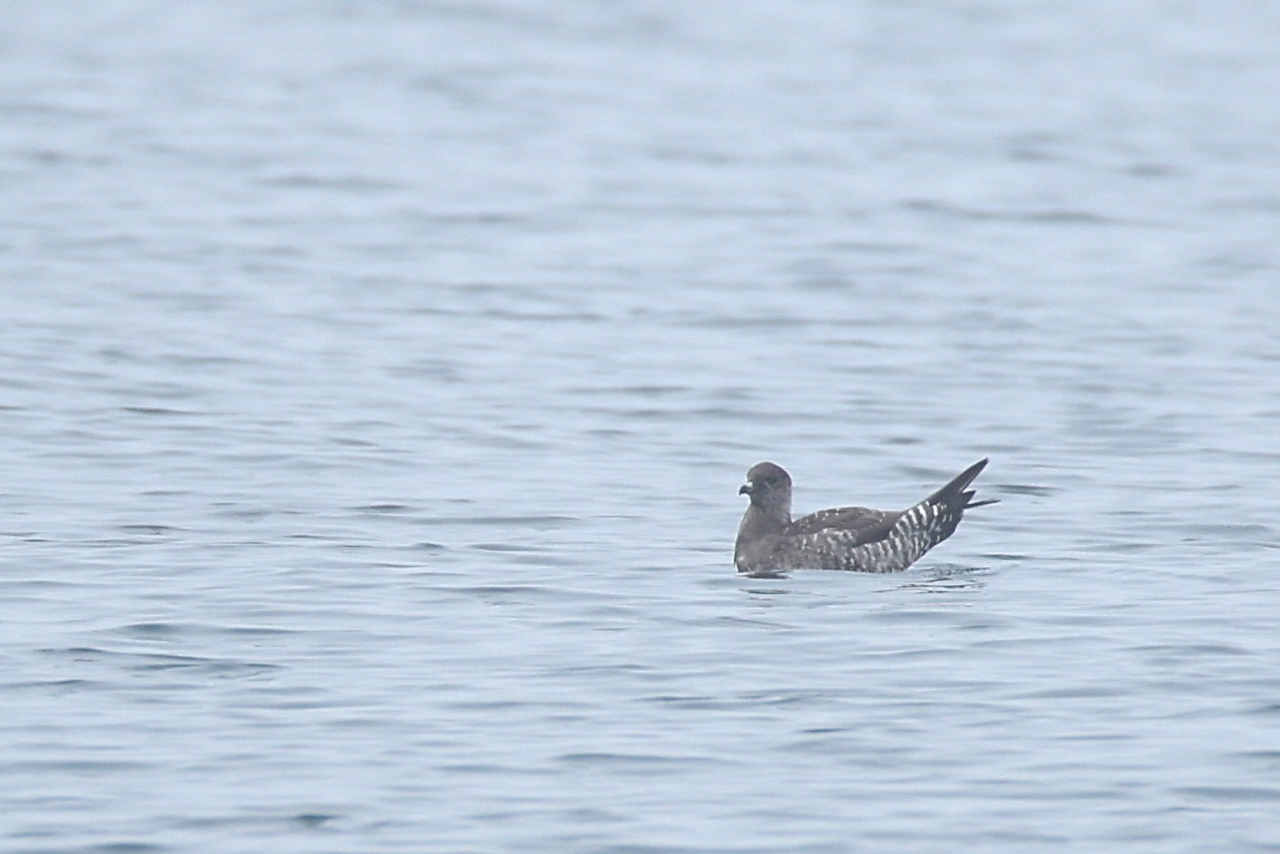
Long-tailed Jaeger © Yousif Attia
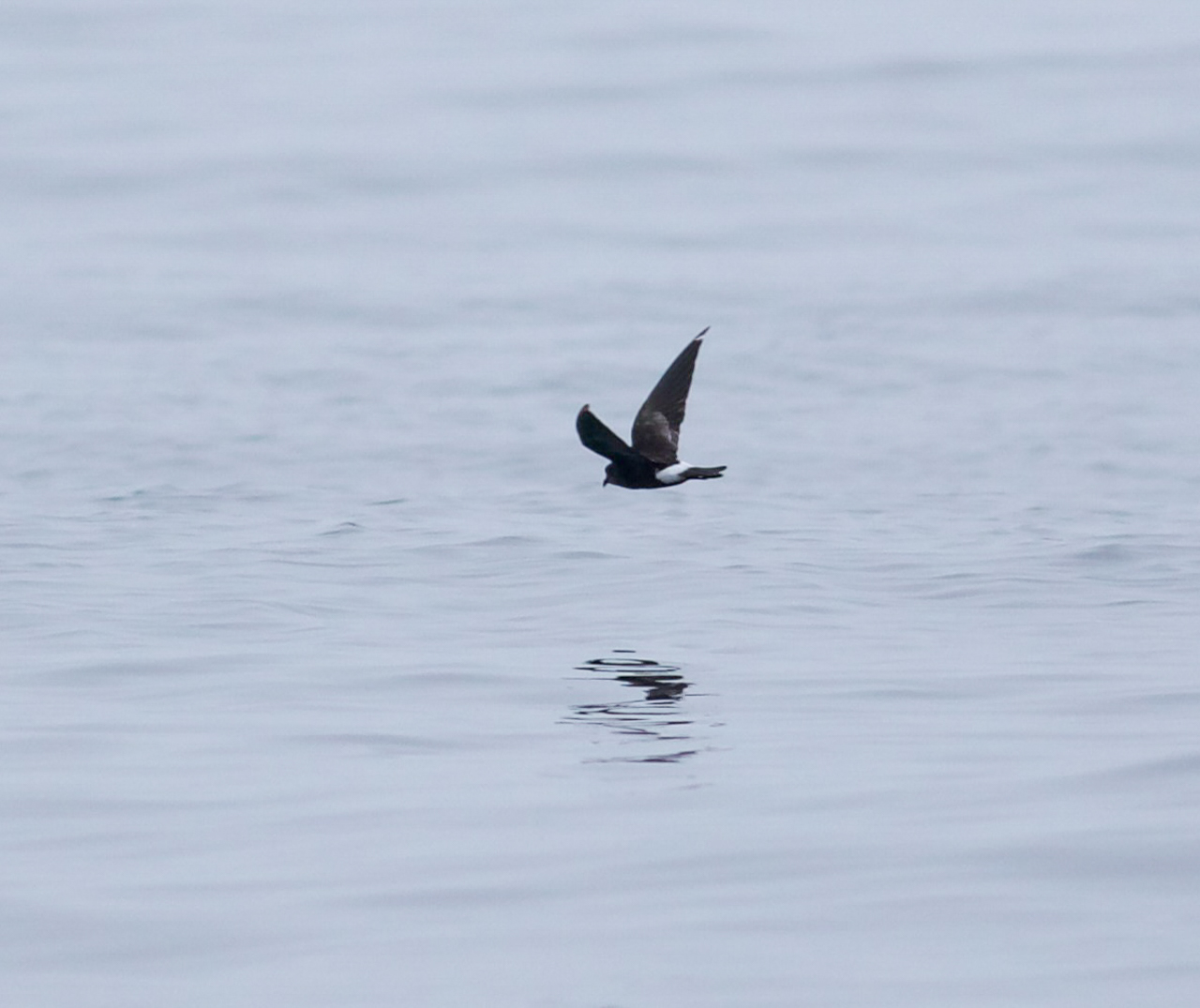
Leach’s Storm Petrel © Logan Lalonde
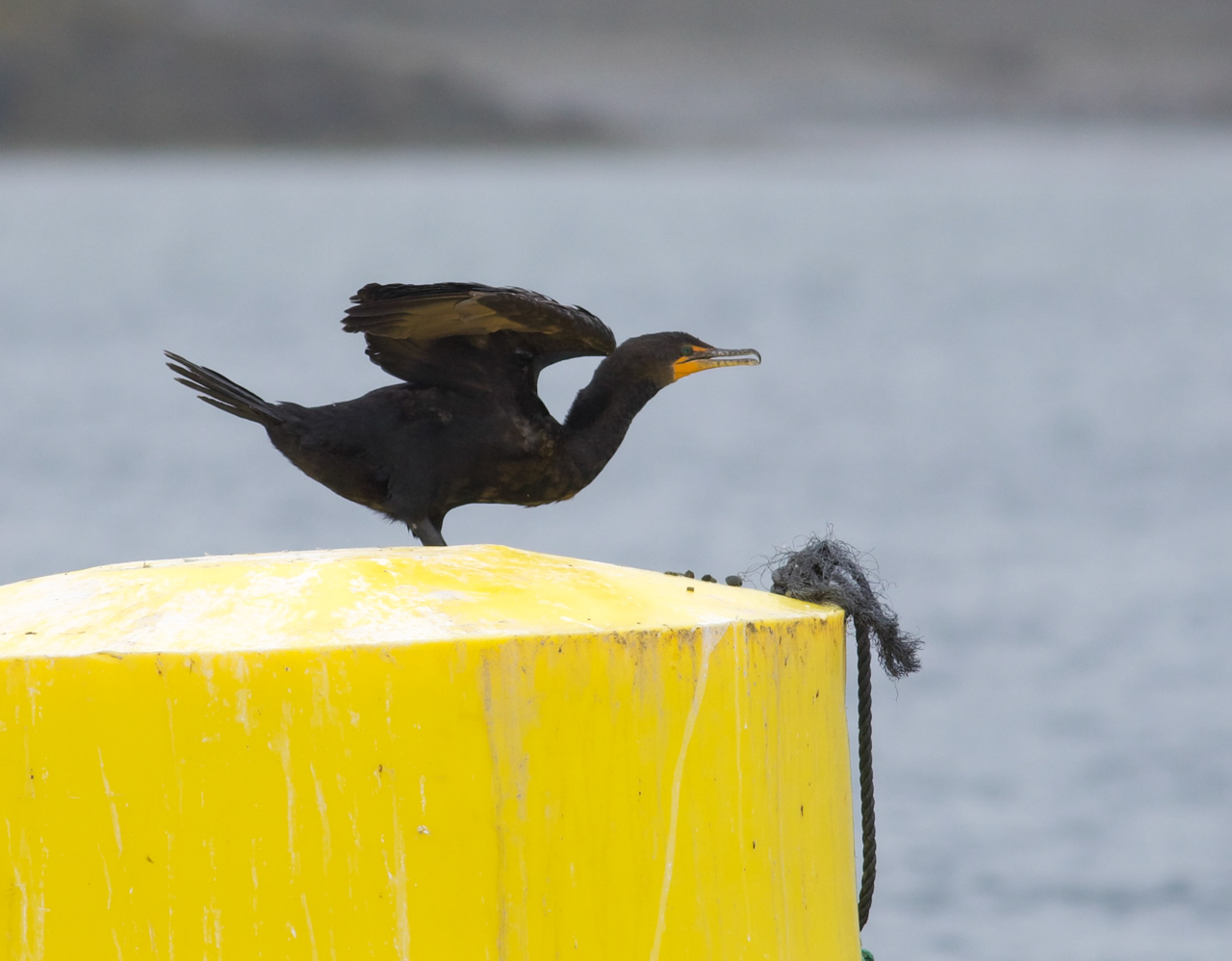
Double-crested Cormorant © Logan Lalonde
We had snacks on the boat, but it was now time for lunch. We set up a picnic at the glorious Joshua Slocum National Monument. Joshua was the first human ever to circumnavigate the globe on a sailing boat solo, and he was born and raised on Brier Island. While eating lunch, we were entertained by the thousands of Double-crested Cormorants, Great Black-backed Gulls, and American Herring Gulls squabbling over fish in the rapid current nearby. These birds were providing a very unique opportunity to witness foraging behaviour seen rarely up close.
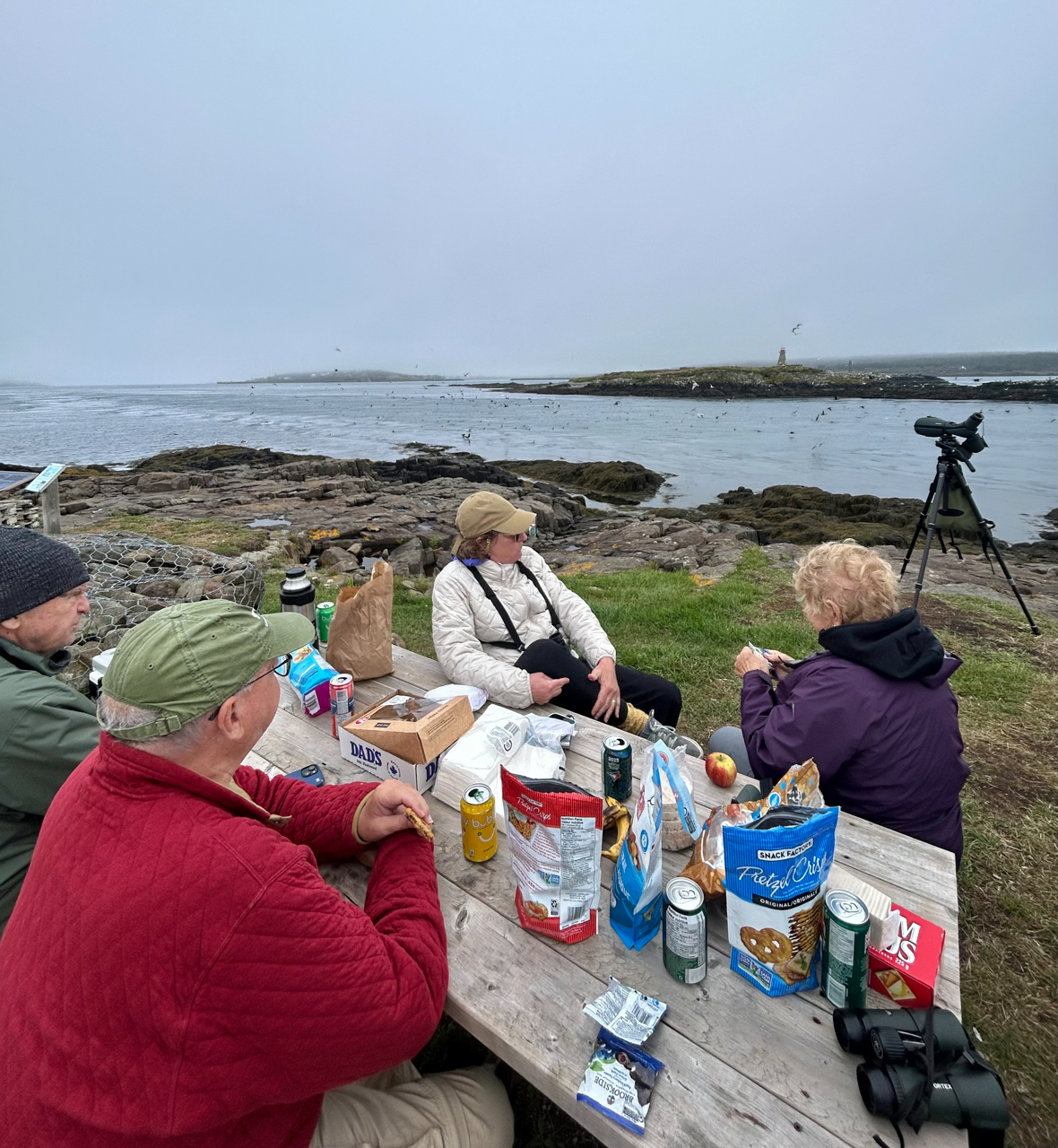
Post-Lunch Snacks + Bird Feeding Frenzy – Joshua Slocum Monument, Brier Island © Logan Lalonde
We then took a break at the lodge to lie down for a bit before heading to our last destination for the day – the best shorebird location in the Southwest of Nova Scotia. When we arrived at Pond Cove Beach, we were confronted quickly by several Merlins zipping by us over the grass. They dipped down and made several attempts to pick shorebirds off the beach, unsuccessful on these occasions. At the pond opposite the beach, a line of shorebirds on the rocks here made studying them a breeze. Along with previously mentioned shorebirds on the trip, we had great looks at Ruddy Turnstone, Short-billed Dowitcher, and Spotted Sandpiper here. A quick glance of the sandy beach revealed that we had found our target bird – Buff-breasted Sandpiper. After some patience and very careful observation, we managed to see this species beautifully as it foraged with some very obliging Sanderlings. Buff-breasted is an arctic breeding shorebird that is severely declining across its range, and we were lucky to see one so close and extensively on its epic migration to South America. This special moment capped off a sensational day, and we headed back to the lodge for a second wonderful supper.
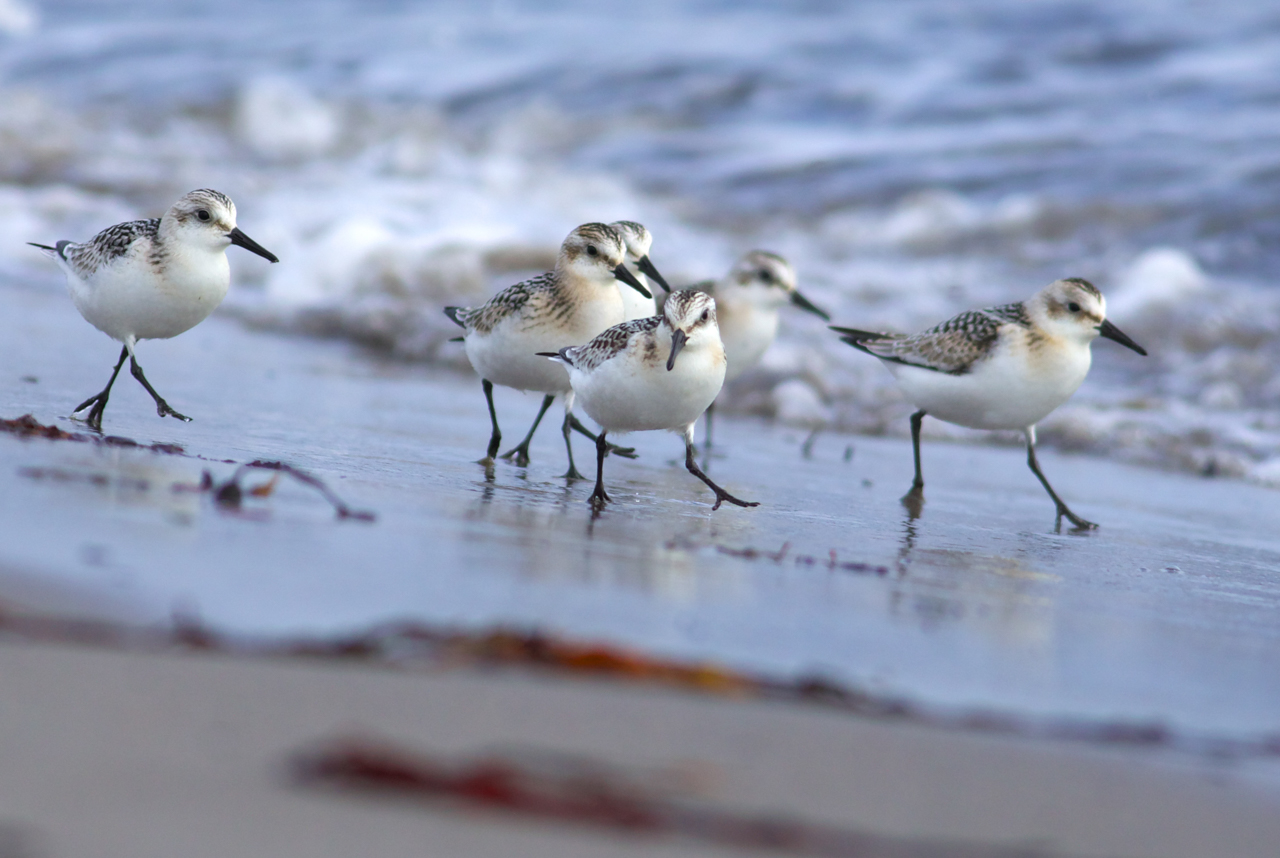
Sanderlings © Logan Lalonde
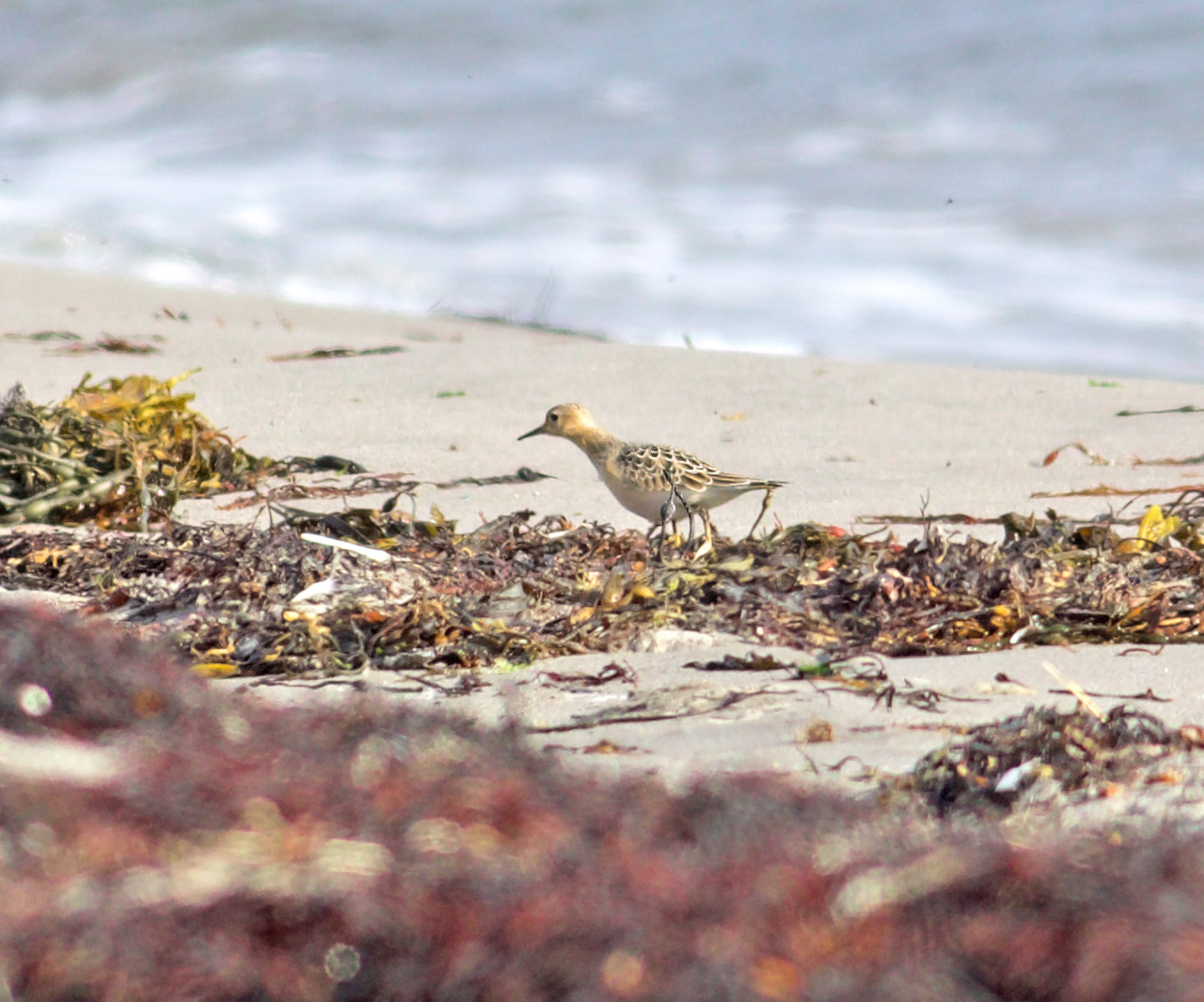
Buff-breasted Sandpiper © Logan Lalonde
Day 6. Brier Island Migration, St. Mary’s Bay, arrival in Yarmouth
This morning provided some sunlight upon waking up, a great return to form after the foggy day prior. We ventured to the gorgeous Western Light lighthouse to witness some seabird and hawk migration on West winds. On the way, the birds on Lighthouse Road were popping off the trees, including several warbler and vireo species. 3 Chimney Swifts flew over, which was a very nice surprise. At Western Light, 80 Northern Gannets treated us to dramatic looks as well as some very cute Black Guillemots. Birds of prey were alighting and spreading across the sky, including several American Kestrels, Northern Harriers, and a handful of Turkey Vultures. Over a hundred of both American Goldfinch and Cedar Waxwing migrated past us over the rocks.
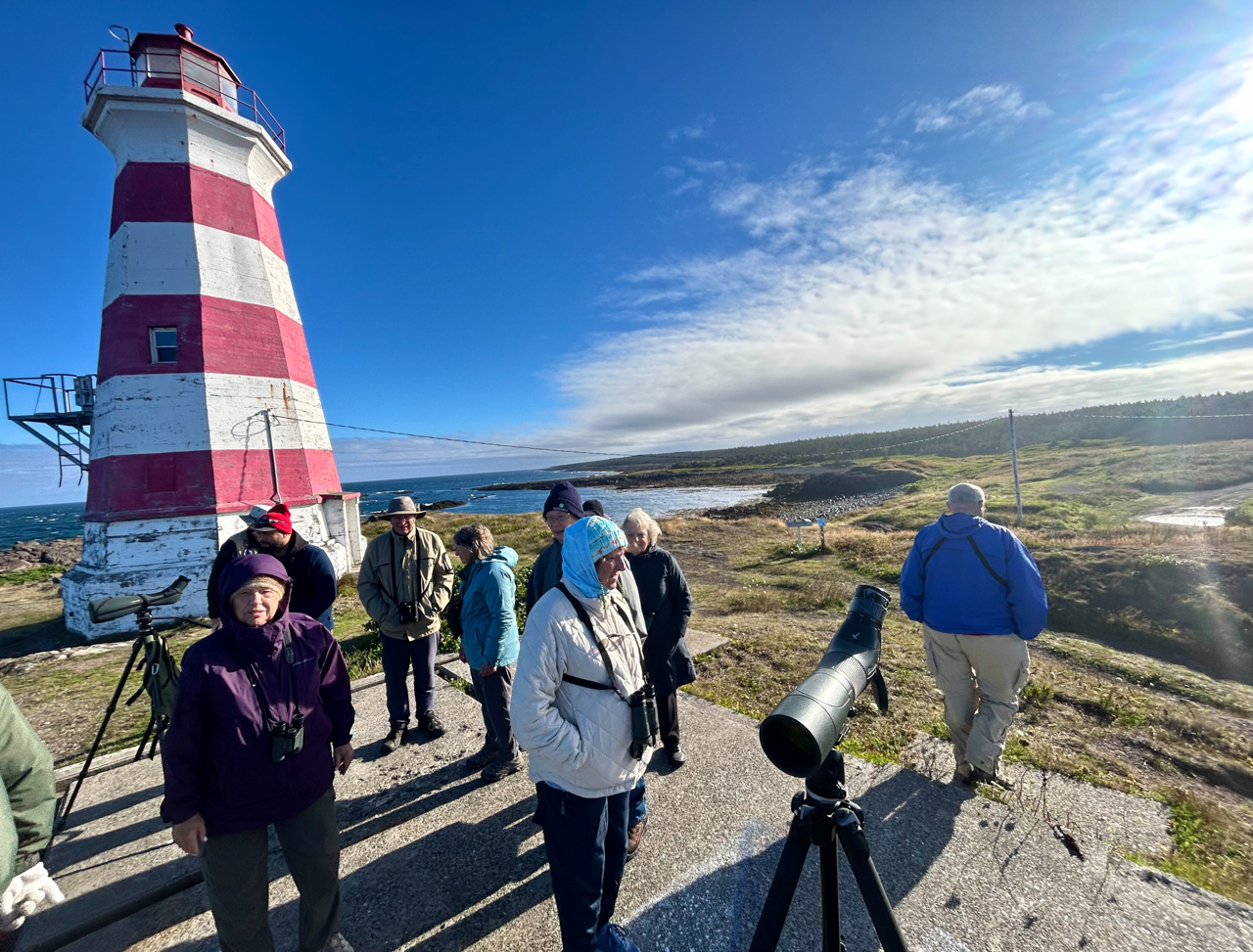
Birding at Western Lighthouse © Logan Lalonde
On our way back down Lighthouse Road, we observed a spectacle of active shorebird migration. Three Vs of plovers flew over very high in the sky over the road. They contained 105 Black-bellied and 15 American Golden. Amazing! Before we had to catch our first ferry off the island, we stopped and birded in a few other locations. At Peajack Cove, we saw several of both Harbour and Grey Seals, and 5 juvenile Bald Eagles circled over us. We scoped at the Northern Point coast guard station and saw a stunning Parasitic Jaeger fly up Grand Passage as well as a Bonaparte’s Gull. On the way to the ferry, we finally got a nice stationary view of a Ruby-throated Hummingbird at a feeder in downtown Westport. It was time to leave Brier Island now, having experienced incredible sightings over and over again.
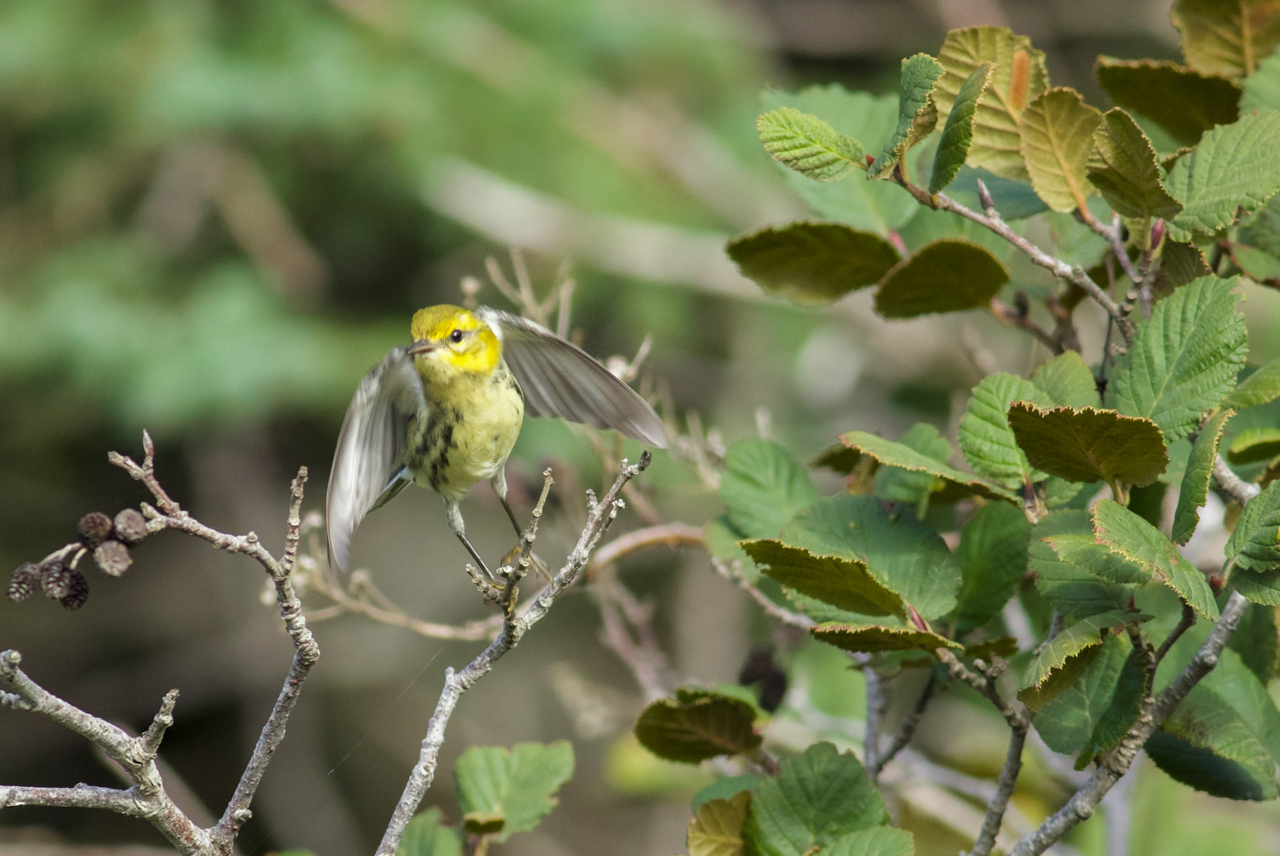
Black-throated Green Warbler © Logan Lalonde
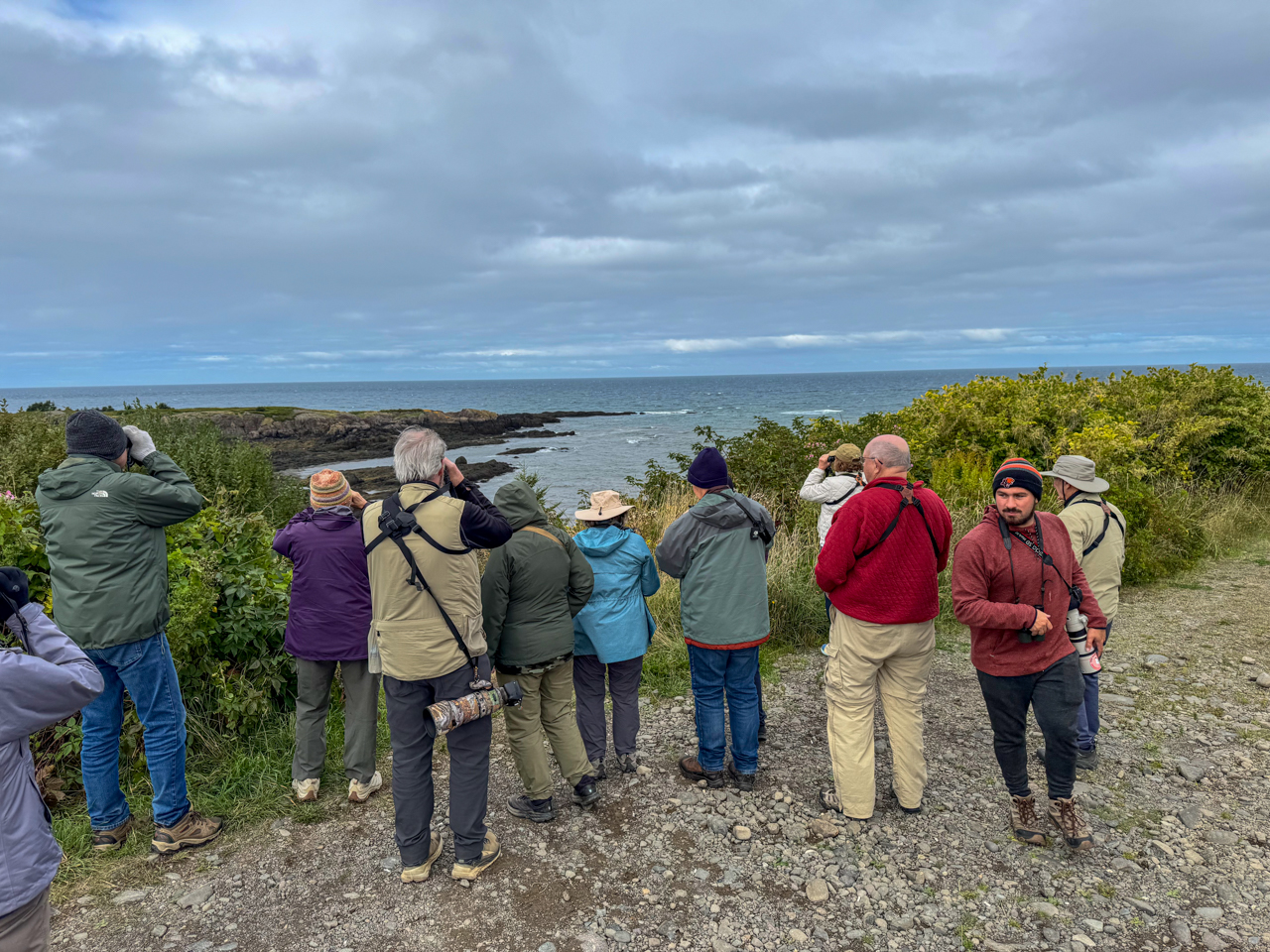
Looking at Grey Seal, at Peajack Cove © Yousif Attia
After boarding both ferries, we had a quaint and scenic lunch, overlooking the ferry and Long Island. From here, we embarked on an epic Southwest Nova Scotian road trip, seeing many beautiful sections of land along the way. Looping down towards the town of Yarmouth, we made a quick stop at Maviellette Beach on the line between Digby and Yarmouth counties, where we were greeted by three Great Egrets and several shorebirds. The St. Mary’s Lighthouse was paid a quick visit and we witnessed the beautiful St. Mary’s Bay beneath it. A Great Cormorant was present here with the Double-cresteds, which is scarce at this time of year. We rolled up to our hotel in Yarmouth and got settled in preparation for dinner. We secured a private room at the world famous seafood restaurant – Rudder’s Seafood – and tasted the Bay of Fundy’s bounty in ceremonious fashion after such a great first half of the trip. The fish was sensational and so was the company. We completed day 6 in wonderful spirits and ready for our next adventure.
Day 7. Cape Forchu, Chebogue Point and Yarmouth area
With the unsettled weather system still upon us, the day’s birding around Yarmouth would be fogged in and slightly colder than we had gotten used to on this trip. Our first order of business was to explore the fabled Cape Forchu, an internationally recognized premier birding destination, migration stopover location and the site of some of the rarest vagrant birds discovered in Nova Scotia. A quick stop at the brackish wetland in Overton turned up no less than five Great Egrets, and a large group of Greater and Lesser Yellowlegs, offering study opportunities between the two species. These birds were taking in some soft morning sunrays that moved in while we watched them.
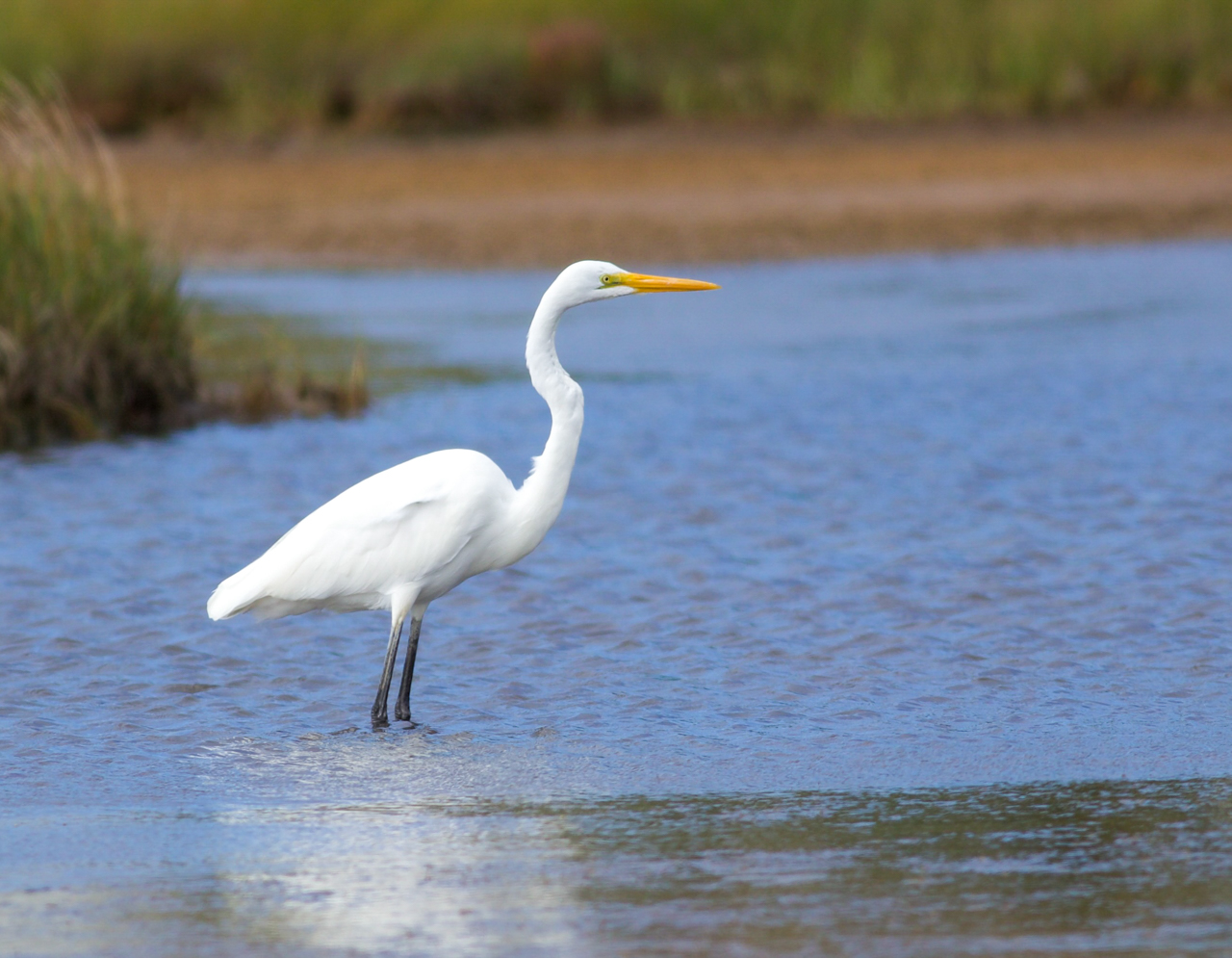
Great Egret © Logan Lalonde
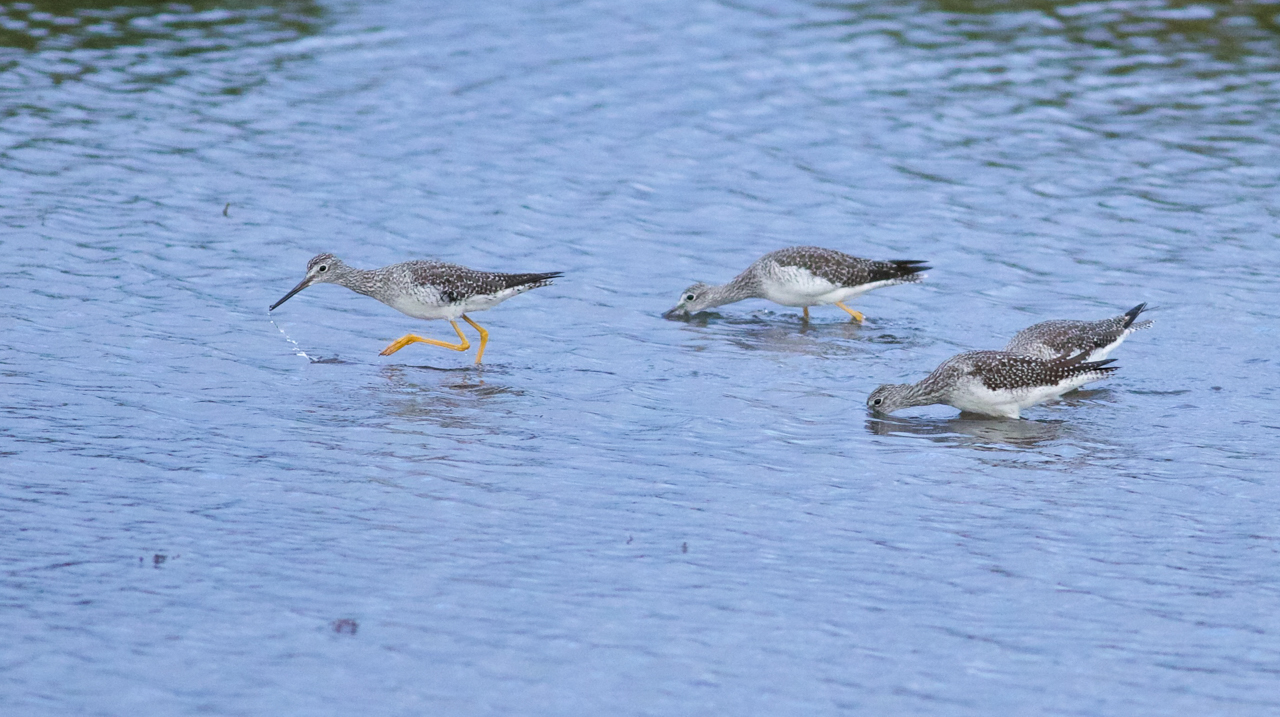
Greater Yellowlegs feeding © Logan Lalonde
We moved on to focus on songbirds on the West peninsula, and quickly came across a mixed flock. Here we had improved looks at Black-throated Green, Magnolia, and our first Wilson’s Warbler of the trip. We took a loop trail where we observed a Merlin and an American Kestrel flying together, which was a rare comparison opportunity. Another Chimney Swift zipped overhead, and a flyover Common Loon offered a fun distraction.
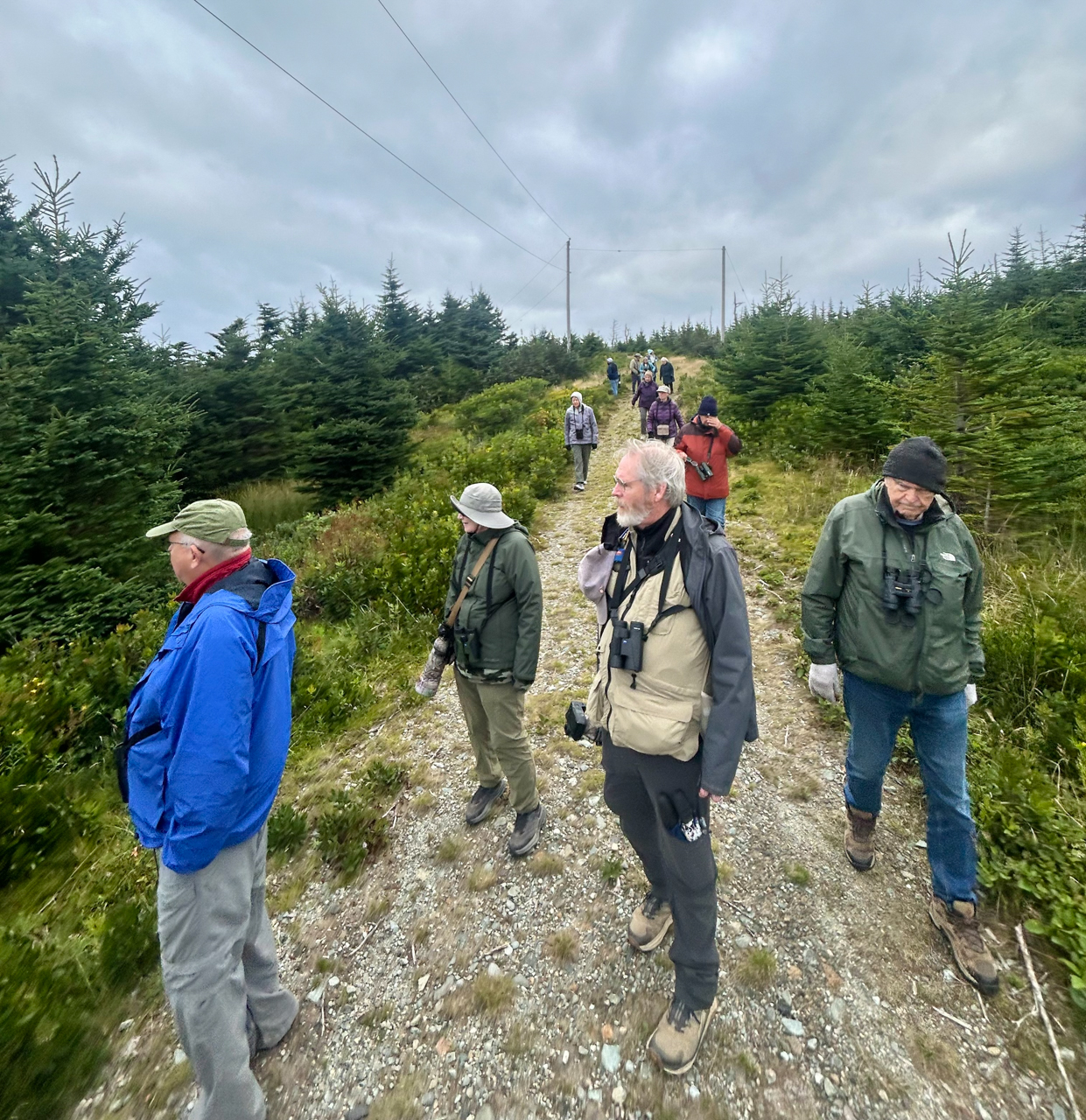
Birding at Cape Forchu © Logan Lalonde
A timely stop in the eastern peninsula of Cape Forchu allowed us to explore the lighthouse and its bathroom facilities. The scenic route up to the lighthouse provided panoramic views of the Yarmouth Harbour and the ocean it ends up meeting, as well as the epic sights of the jagged seaside cliffs. It was obvious that potential was high for this area to hold rare birds although strong chilly winds made for challenging birding. Turning our scopes to the sea we noted distant Northern Gannets, Common Eiders, and more close up views of Black Guillemots.
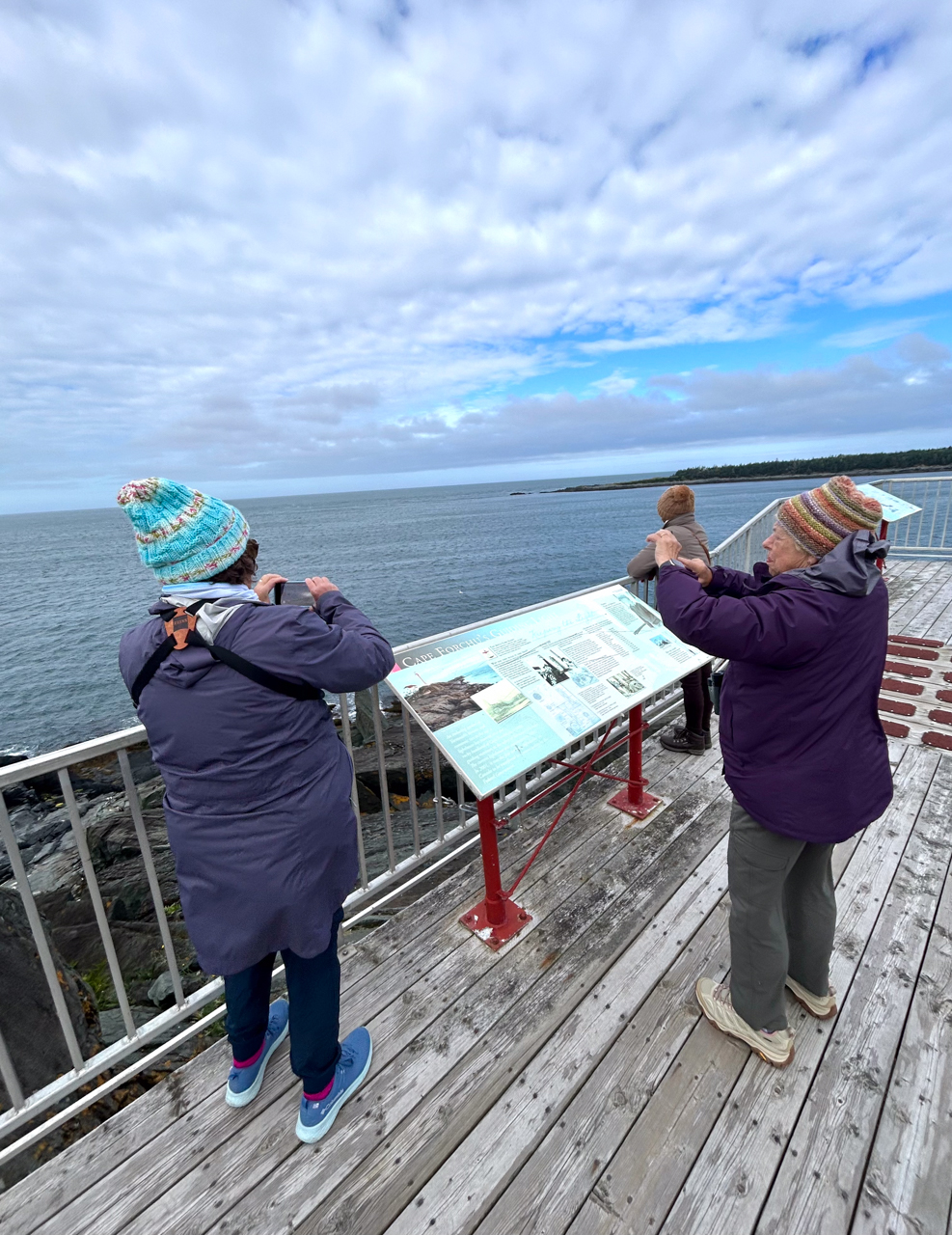
Cape Forchu Lighthouse © Logan Lalonde
After Cape Forchu we headed to Chebogue Point, the single most famous geographically strategic migrant trap in Nova Scotia, which acts as a terrestrial beacon for birds wandering up from the south. It is the only path of open and edge habitat in the area. It is home to “The Willows”, “The Farm”, and “The Wires”, two isolated magnetic forces to attract migrating and lost birds, and one large complex of wires that birds hunt and rest on. The Willows in particular, is an unassuming small grove of willow trees within a small wetland, which is a landmark in birding lore known to harbour many a tantalizing rarity. We did our best despite the strong winds and although we didn’t find anything unusual, a lingering Tree Swallow and some Cliff Swallows were fun to see so late in the season. Both were new for our trip list.
We headed back to Yarmouth for a well-deserved hot lunch and some sensational seafood, desserts, and were introduced to Nova Scotia’s famed traditional potato dish – the Rappie Pie! Many of us tried this unique, bold Maritime speciality, and all of us loved it. Heavy rain was forecast for most of the late afternoon, so we enjoyed our extra leisure time to the fullest at the hotel.
Day 8. Cape Sable Island and transfer to Lunenburg
After checking out of Yarmouth, we headed straight towards Cape Sable Island, or “CSI” as locals call it universally. CSI is a legendary birding super-hotspot – containing a variety of shoreline, forest, and edge habitat – situated at the southernmost point of drivable Nova Scotia birding. This attracts rarities at historical rate, as well as funnels migrants down its many ecosystems. We drove across the causeway to the island and stopped at the best songbird magnet – the Winnie-Penney Woods. The short trail leading through the Woods yielded incredible production during our one hour stop. We had 45 species including our only Eastern Towhee on the trip, a thrilling flyover of a Hudsonian Whimbrel, many species of warbler and sparrow, and a surprise little shy troop of 5 Boreal Chickadees. The Boreal Chickadee is a species that has been declining in the province over the decades, due to climate change and habitat alteration, and encounters like this are becoming harder to predict. The Woods turned out to be a grand slam of a stop for our tour!
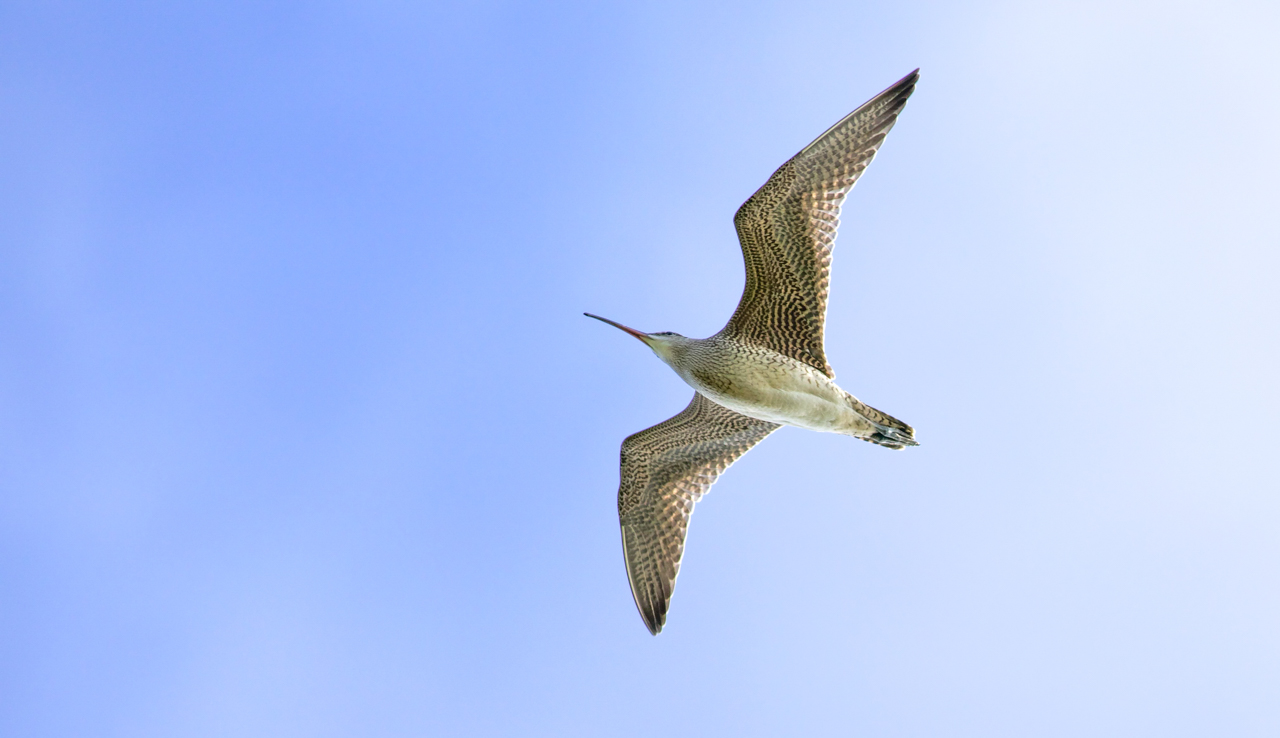
Hudsonian Whimbrel © Logan Lalonde
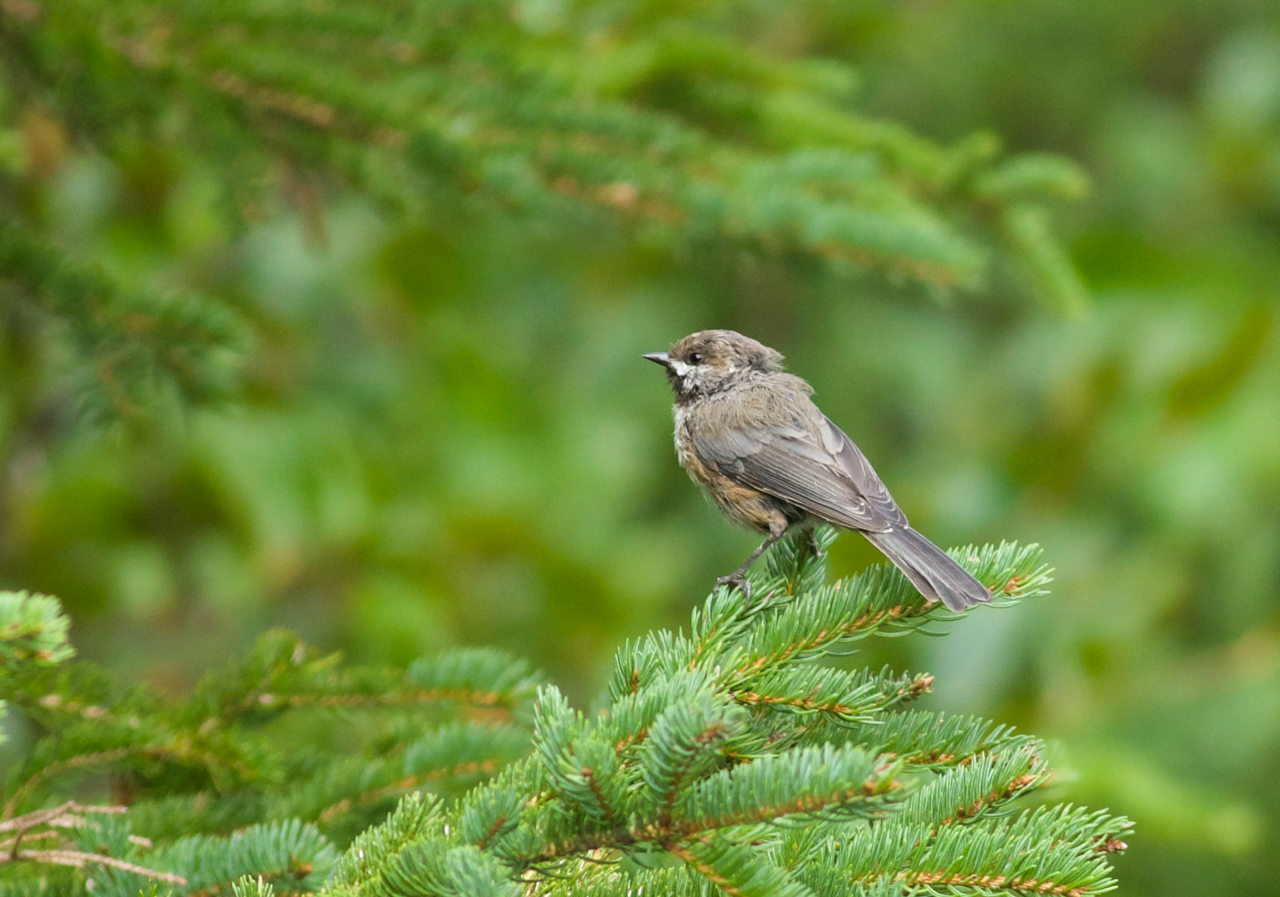
Boreal Chickadee © Logan Lalonde
There was lots more to explore on CSI so we worked our way to Daniel’s Head. Here the shorebird game was in full swing and we had our most intimate views of Black-bellied Plovers in various stages of moult and plumage. Several species of sandpipers as well as a bunch of rapid-fire feeding Short-billed Dowitcher were also present on the vast expanse of estuary mud. Raptor movement began to light up the sky, with both Sharp-shinned and Cooper’s Hawk, an Osprey, a nearly all snow white immature Broad-winged Hawk, and with an unbothered Northern Harrier flyby right in front of us. This gorgeous bird was too close for most of our cameras to focus!
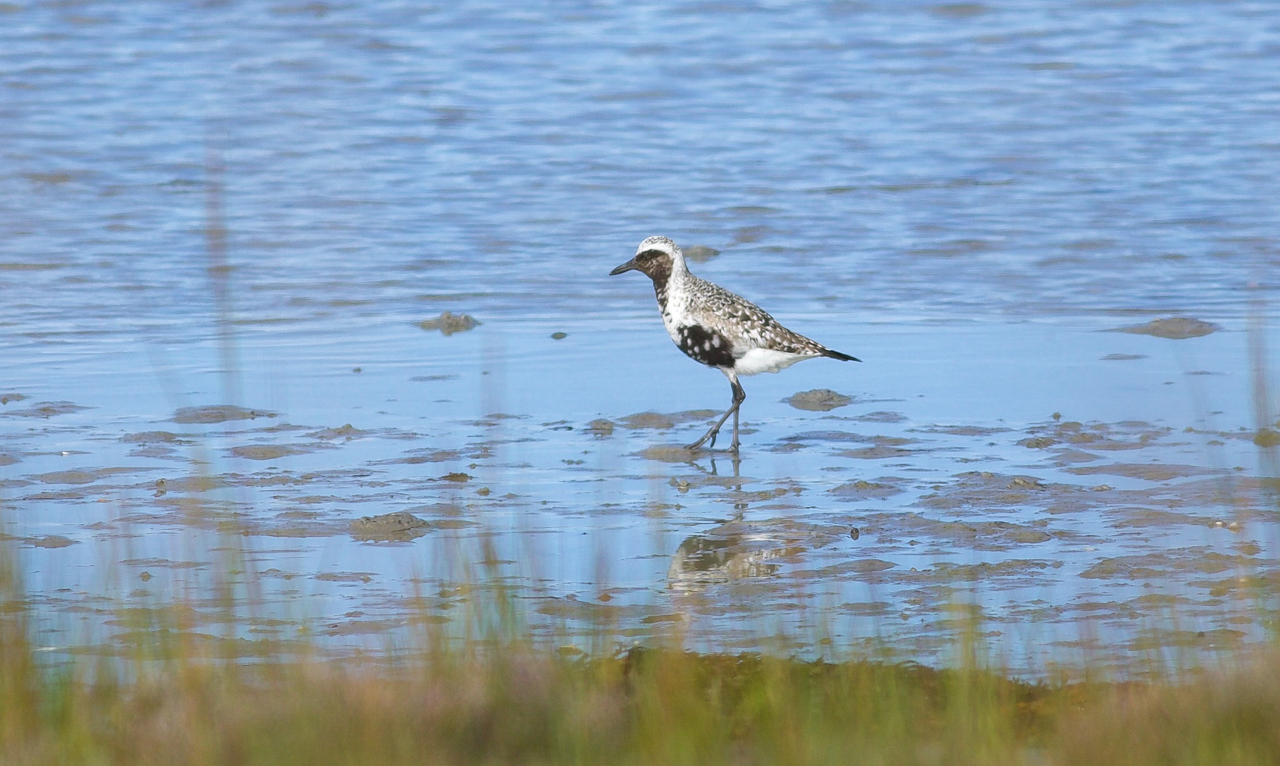
Black-bellied Plover © Logan Lalonde
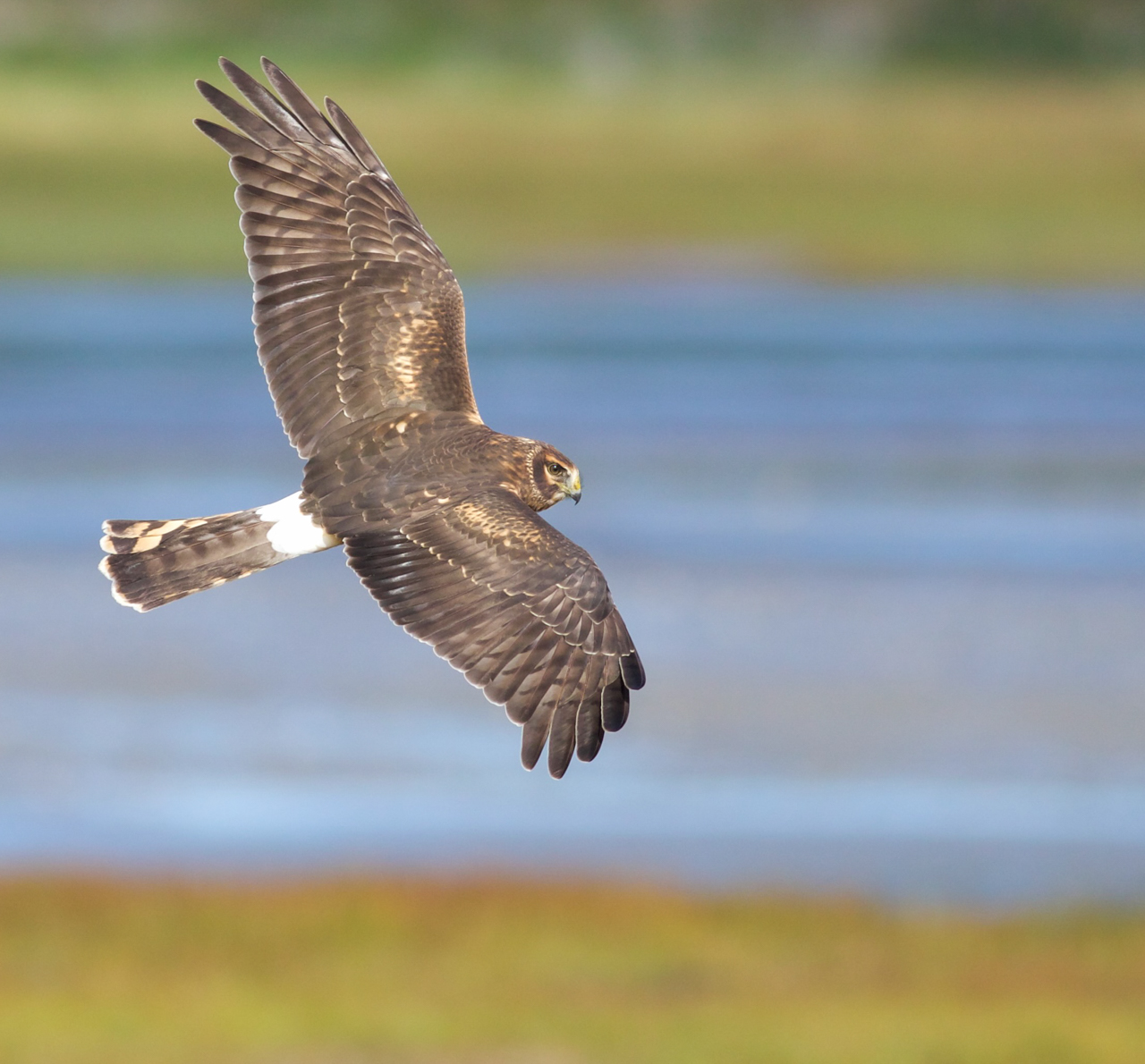
Northern Harrier female © Logan Lalonde
From here, we spend some time searching for shorebirds all over The Hawk, which lies at the southern tip of the island. Our target bird here was American Oystercatcher, which breeds on the nearby Cape, but this species is rare by the second week of September as most have left by now. Although we didn’t luck into any lingering birds of this species, we enjoyed many other birds, including an unseasonably large group of swallows over the stunning Hawk Beach. This hectically foraging flock were darting within inches of our vans and they included many Barn and Tree Swallows but also several of the petite Bank Swallow.
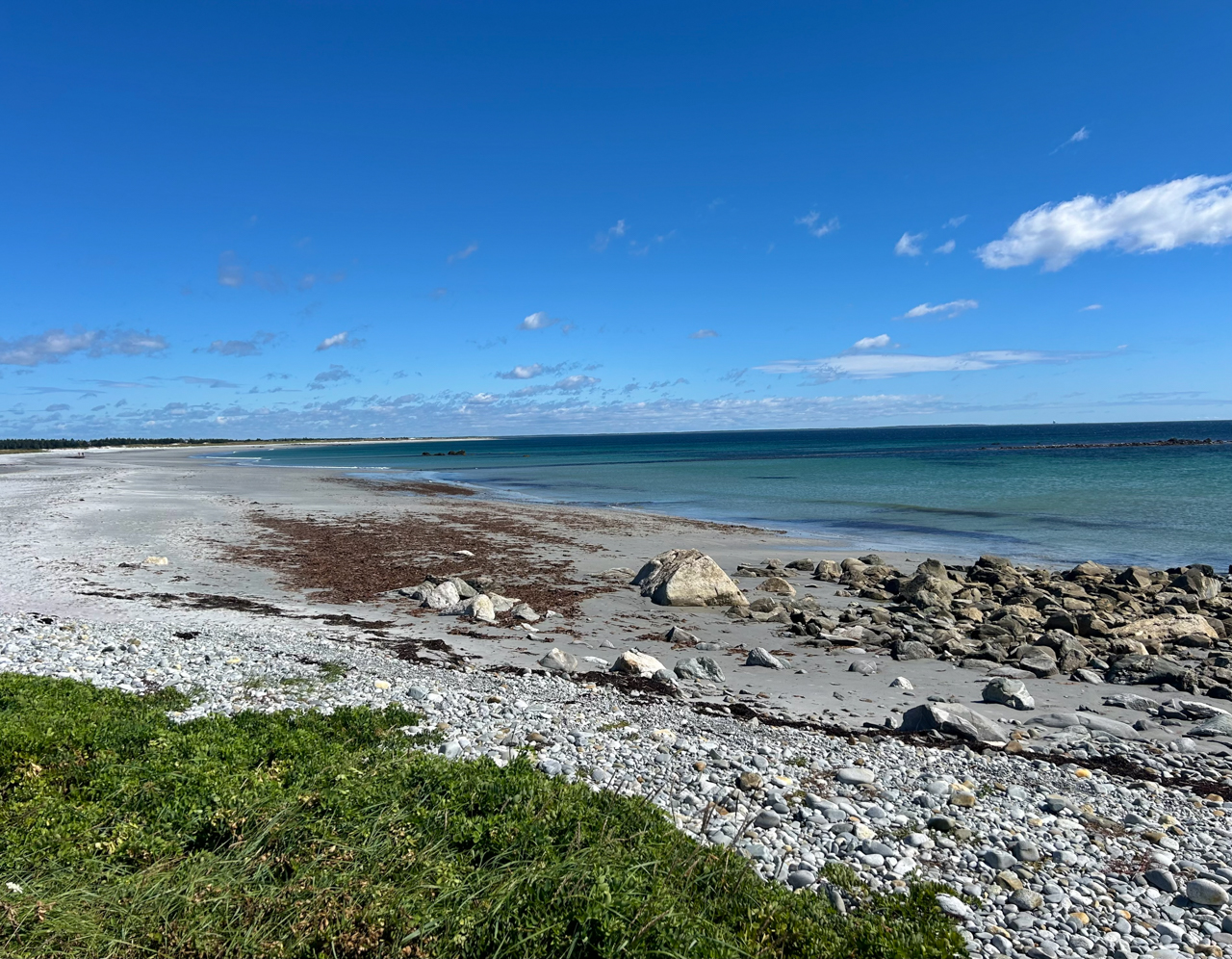
The Hawk Beach © Logan Lalonde
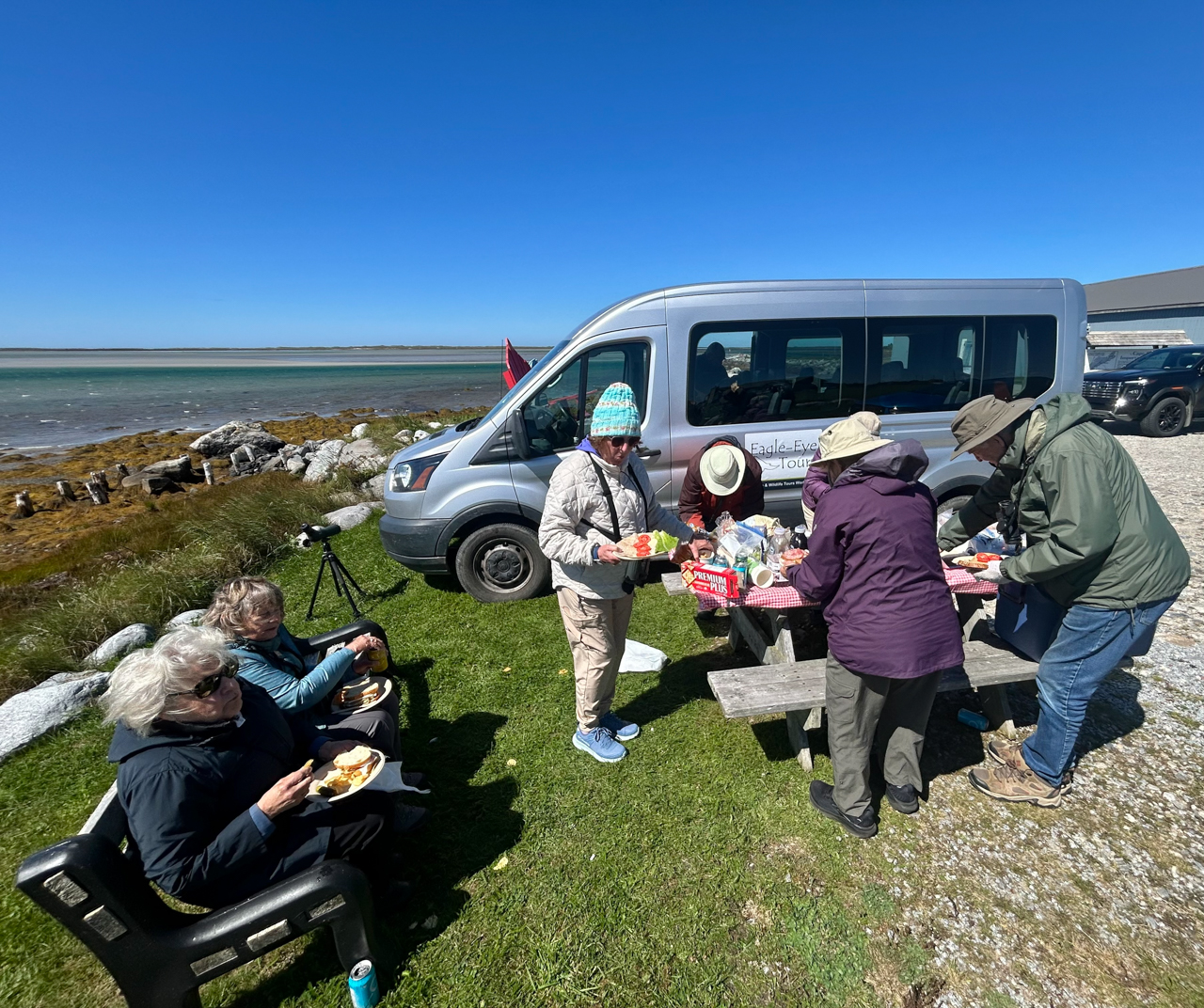
Picnic Lunch at Cape Sable Island © Logan Lalonde
Not far away, we eventually settled in for a picnic lunch at Hawk Veteran’s Memorial on Fish Plant Rd, overlooking the extensive mudflats and coastline. Here we enjoyed a buffet picnic in the company of a smorgasbord of shorebirds, including more Red Knots, Ruddy Turnstones, and 20 Sanderlings among the usual suspects. After lunch we settled in for a two hour drive northward, where the habitat immediately shifted to stunning mature mixed forest. At the midway point, we stopped for a birding and bathroom break at Beach Meadows Beach Park. This location dazzled with its soft white sand, warm weather, and mix of birds posing beautifully. Some shorebirds and gulls dotted the shore at close range, two Hooded Mergansers were in the little adjacent river, we had some up close and personal views of a Merlin through the scopes.
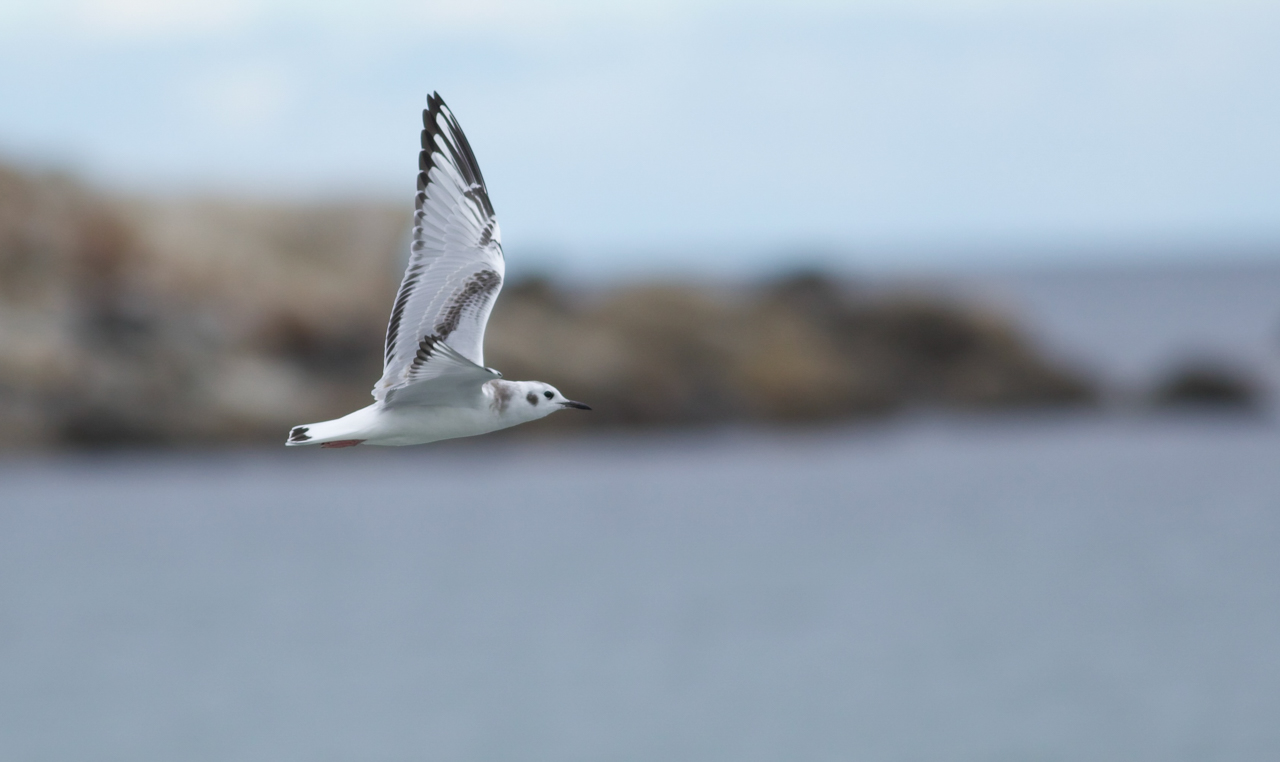
Bonaparte’s Gull © Logan Lalonde
We arrived in good time to the historic coastal port of Lunenburg where we settled into our vintage accommodations. The picturesque waterfront, as well as the real Bluenose II, was the backdrop of our evening meal and we enjoyed yet another seafood extravaganza. We even added our first looks of the trip at the introduced but globally declining House Sparrow in the restaurant bushes, gaining a new appreciation for this species.
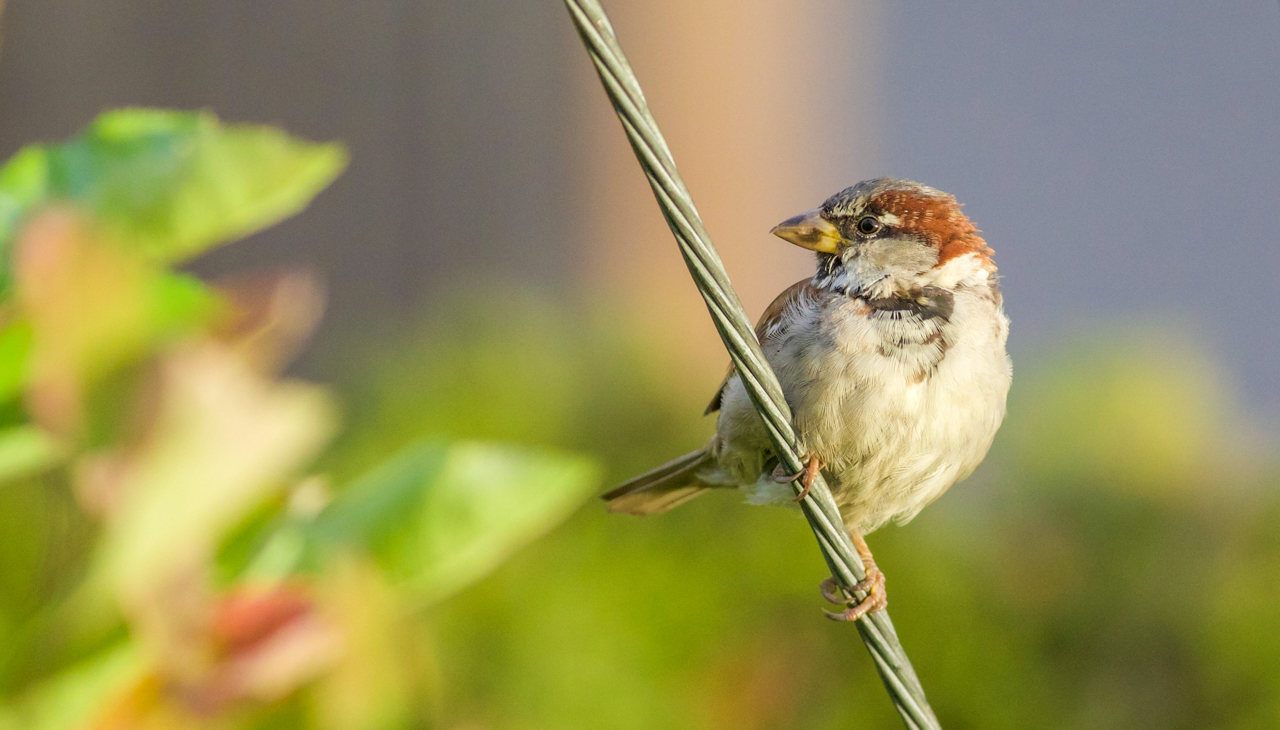
House Sparrow © Logan Lalonde
Day 8. Blue Rocks, Ingramport Road, Peggy’s Cove, and Halifax
It was hard to believe the day dawned on our final full day of birding together. With some iconic sites to visit and target birds to clean up, it would be a packed day! After breakfast, we started the morning exploration mere minutes away from our hotel in the gorgeous community of Blue Rocks. The namesake unique bluish-grey slate formations, the little islands dotting the area, and amazing nature throughout make it a famous kayak destination. After a few days of wind, we all enjoyed this pristine calm morning, taking in the good vibes of this spot, all while noting any and all the birds, of course! A group of migrants was notable here being all large landbirds: three species of woodpecker, many American Robins, and some of the first good looks at the iconic Blue Jay.
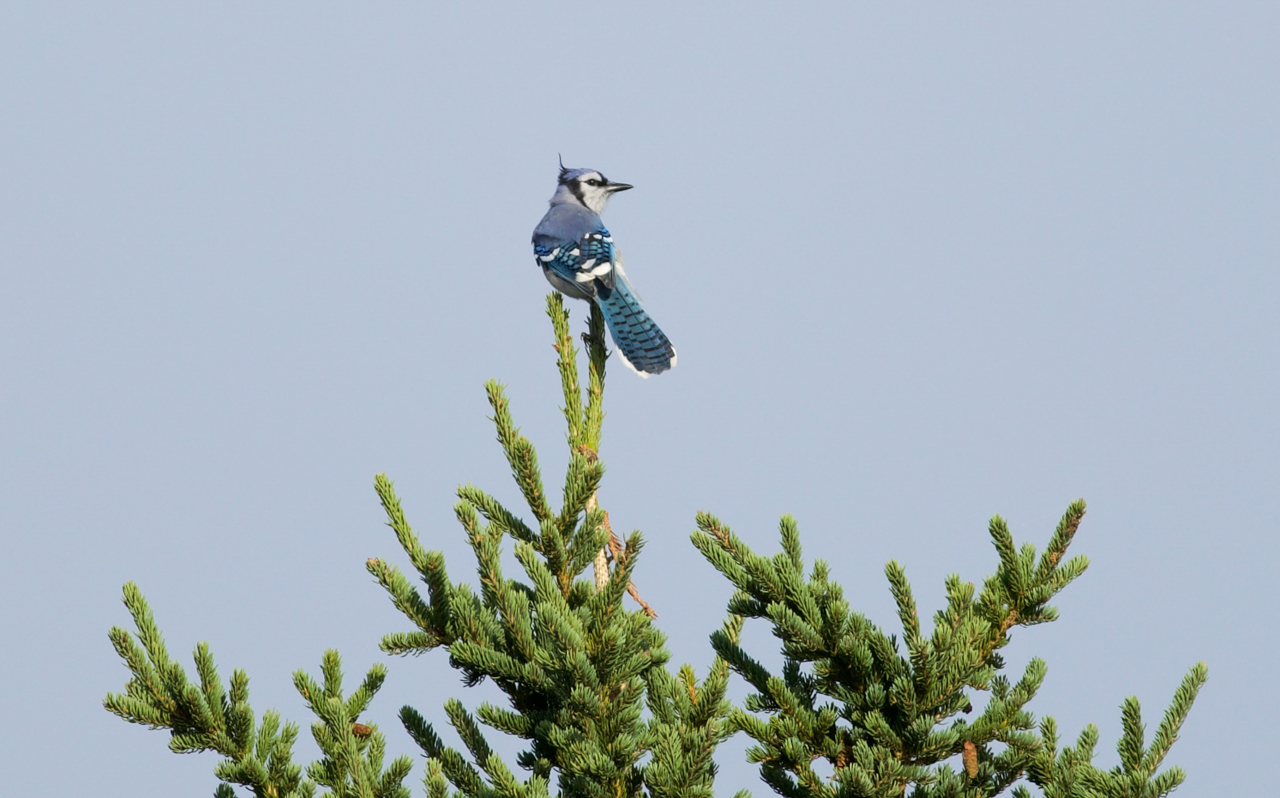
Blue Jay © Logan Lalonde
We drove through a rainshower towards Ingramport Road, which held our best chance for boreal species. The rain petered out to a light drizzle as we worked our way up the old logging road. At the pinnacle of the road, we quickly found a cooperative cotton candy pink and white White-winged Crossbill! This finch was a great pop of colour amidst rainy grey skies. Here also we made note of the passage of several warblers, including our first looks Blackpoll Warblers, which often favour stopping over at higher elevations such as this. As we worked our way back towards the highway, we noticed two birds at the very top of some massive firs – they ended up being Canada Jays! This was our main target at this location and we all had excellent looks at these denizens of the north as they perched, and then bobbed and weaved through the forest.
Lunchtime was approaching as we rolled into Jerry Lawrence Provincial Park. It was another double-whammy of productive birding while enjoying lunch outdoors! The songbird activity was high between the picnic area and the lake, and we got on to some eye-level warblers including the first Tennessee Warbler of the trip. There were also both Red-eyed and Blue-headed Vireos, a calling Pileated Woodpecker close in, and many other goodies. Interestingly, after lunch, when we were ready for a proper walk, the birds had moved on. This was a great reminder that while birding during migration, the time must be taken advantage of when birds are present. As usual, even when birds are few, we found enjoyment in the natural history of the area – in this case spending a bit of time working out fungus identifications.
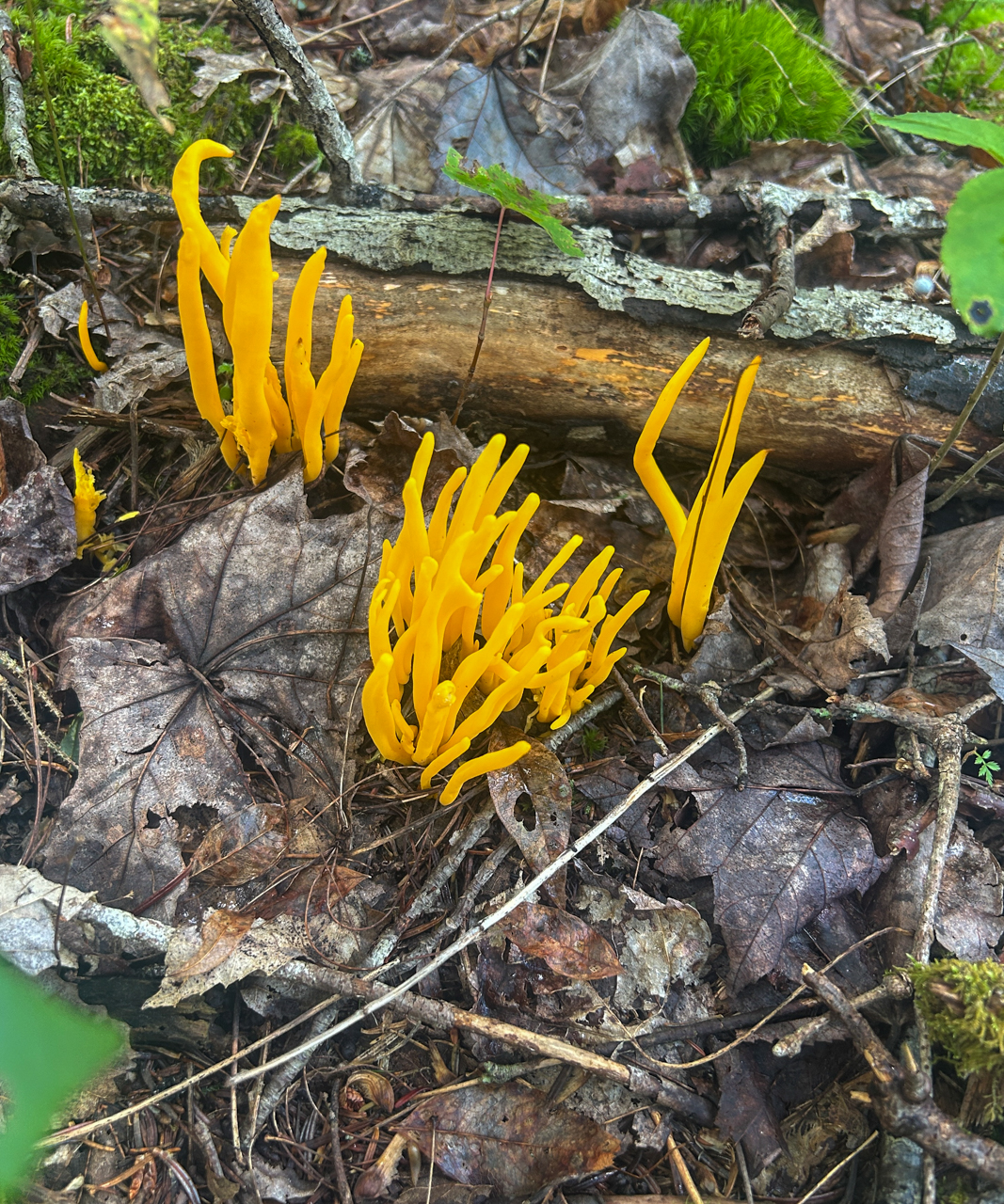
Golden Spindles © Logan Lalonde
Encouraged by our continued success, we switched gears to sight-seeing and progressed to the famous Peggy’s Cove. On the way, we passed through many shockingly beautiful historical seaside communities. After touring around relatively under-visited areas, we experienced a bit of culture shock as we found ourselves among hundreds of tourists that poured out of several double-decker buses as we slowly rolled into the parking area at Peggy’s Cove. We wandered the rocks and around the lighthouse for a while as the sun reappeared, and some of us saw a hungry Monarch feeding in the shrubbery right below the vans.
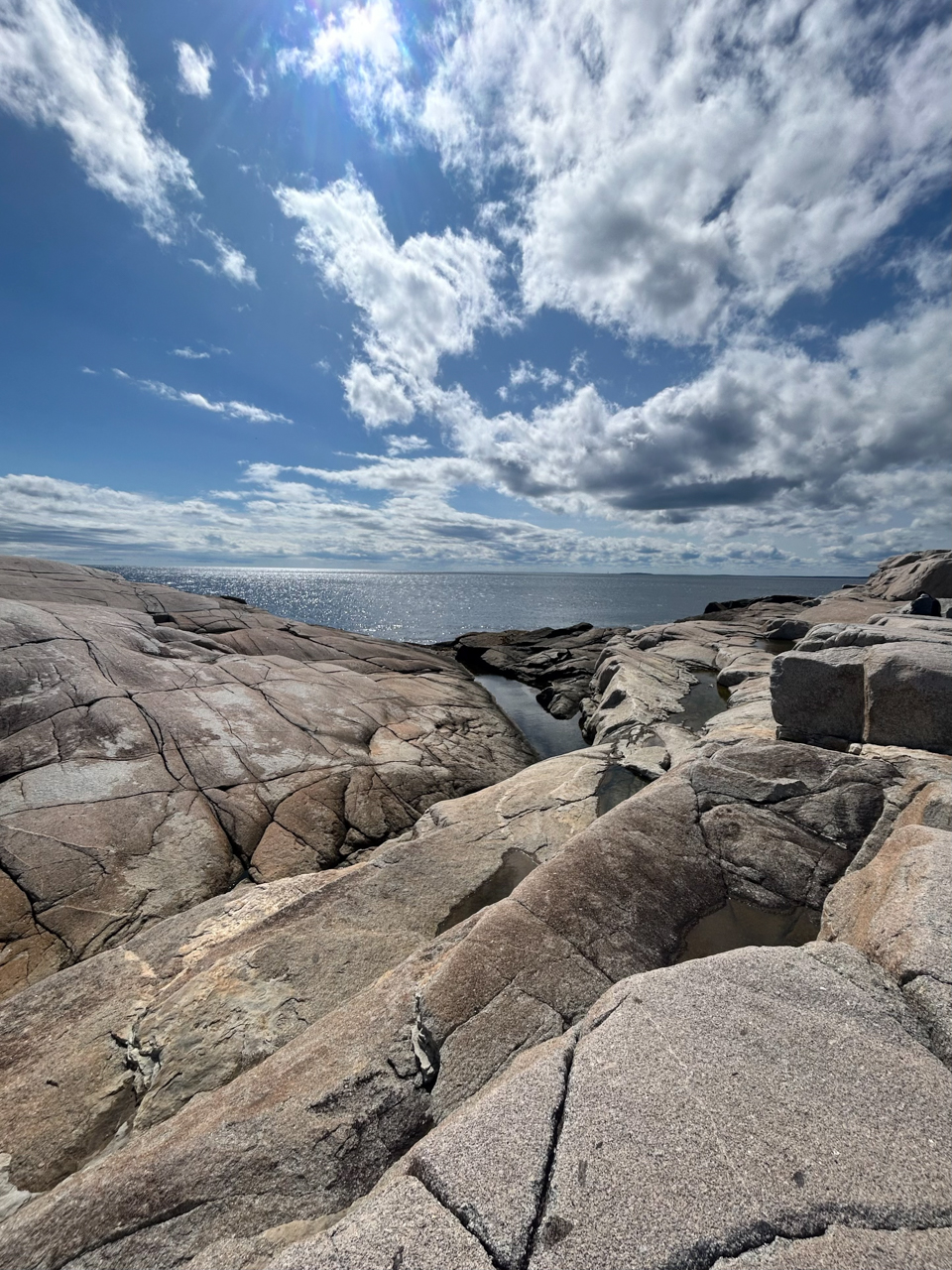
Peggy’s Cove rocks © Logan Lalonde
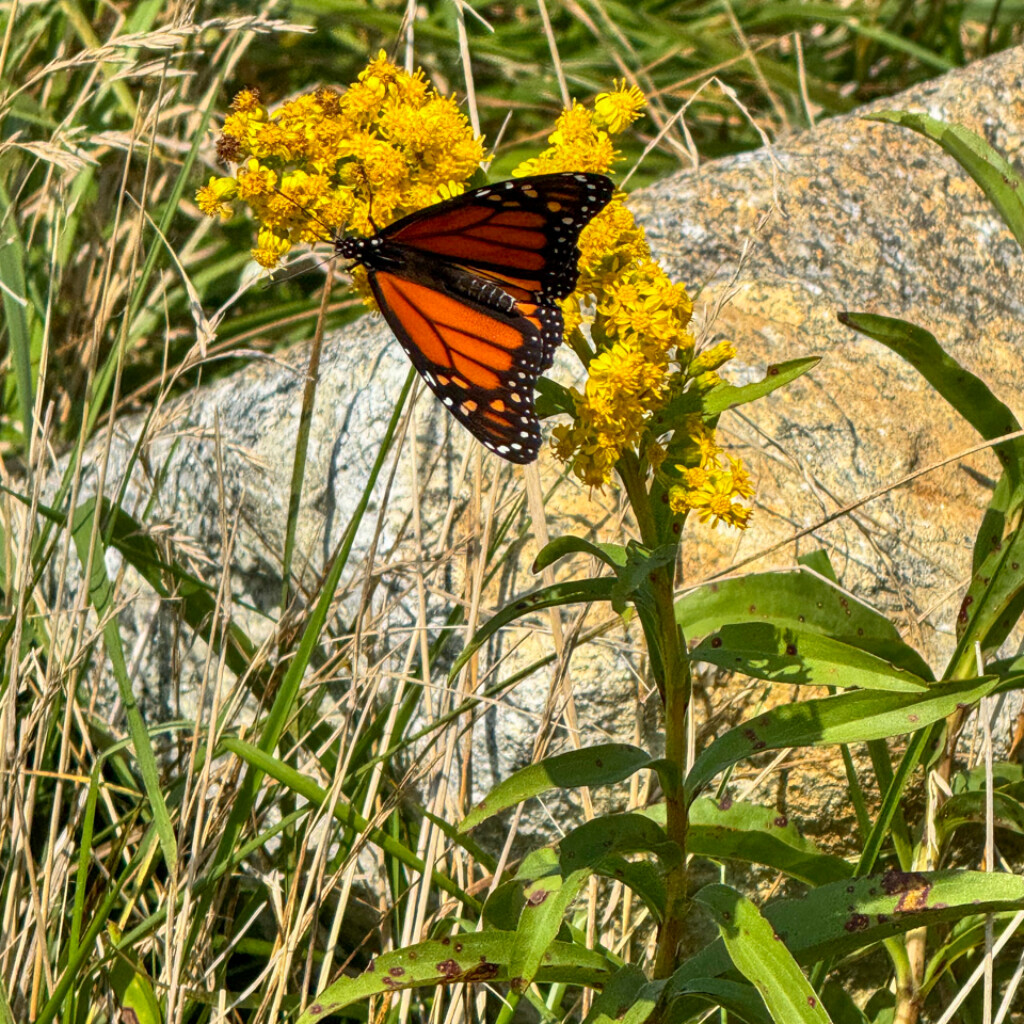
Monarch © Yousif Attia
We moved on from the legend of Peggy’s Cove, heading straight into Halifax and to a walk at Point Pleasant Park. Here we tallied a few more interesting birds while taking in the historic military site and views. A little Downy Woodpecker working a rotting log right by the path marked the last special bird moment of our trip, and a few baby Red Squirrels bolstered the ‘cute’ meter to a new eschalon. Next on the menu was a sample of Halifax’s rush hour, in which we were firmly embedded on the last leg of our journey. This turned out to be a blessing in disguise, as the path to our hotel took us through many of the most famous locations in downtown Halifax. It provided us with a tour of the city with some time to take in the sights.
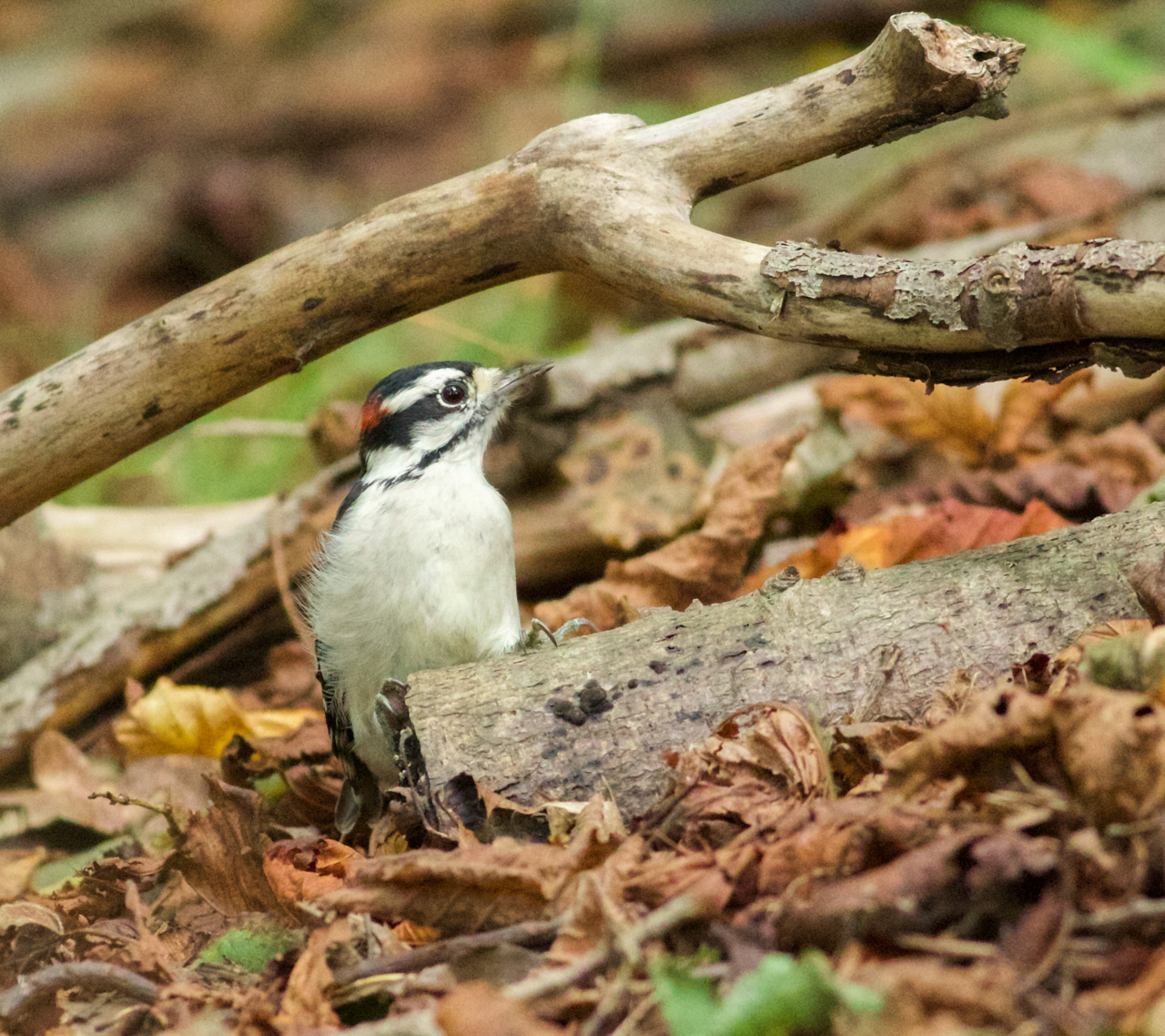
Downy Woodpecker © Logan Lalonde
Despite the traffic, we rolled up to the hotel with plenty of time to check in and relax before our last dinner together. It was hard to believe that our adventure all began here only nine days ago, after we had developed great bonds with each and the land that we traversed each day. Over a hearty dinner, we reminisced on what was truly an incredible adventure in so many different ways. Regarding birds, we had so many wonderful close encounters with songbirds, shorebirds, raptors, and seabirds alike. We found some special rarities ourselves, and observed countless examples of active, epic fall migration. Our group collectively tallied a whopping 144 species of birds, several mammals, and plenty of other critters and plants. We gained an appreciation for how the many unique landscapes here make Southern Nova Scotia such an important place for both breeding and migratory birds. We enjoyed all this wildlife through a backdrop of incredible scenery, sensational weather – with mostly stunning sun and some ethereal fog – and the neverending hospitality and spirit of the incredible Nova Scotian people. The company in our group was something special – a combination of individuals who cared about each other and were passionate about the nature we were seeing and the positive experiences we were having the whole time. Until next time, I hope you all enjoy your next adventures, whether they take you close by or long away from home.
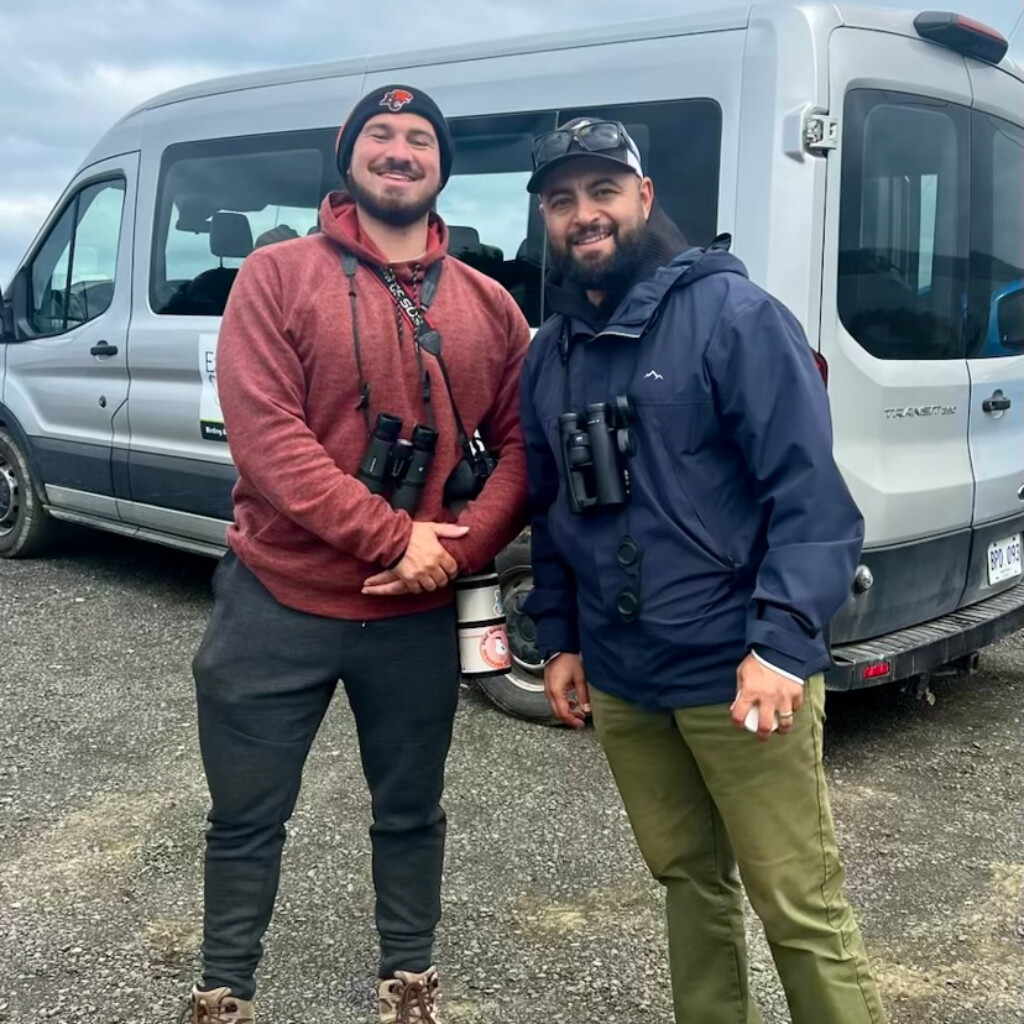
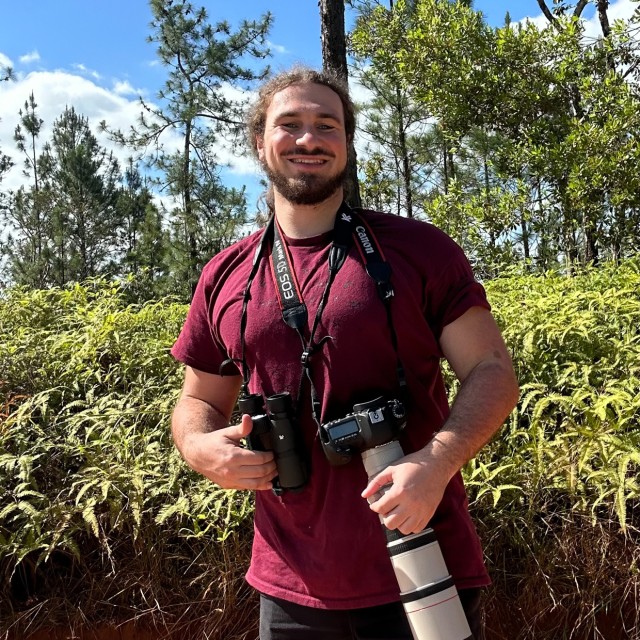
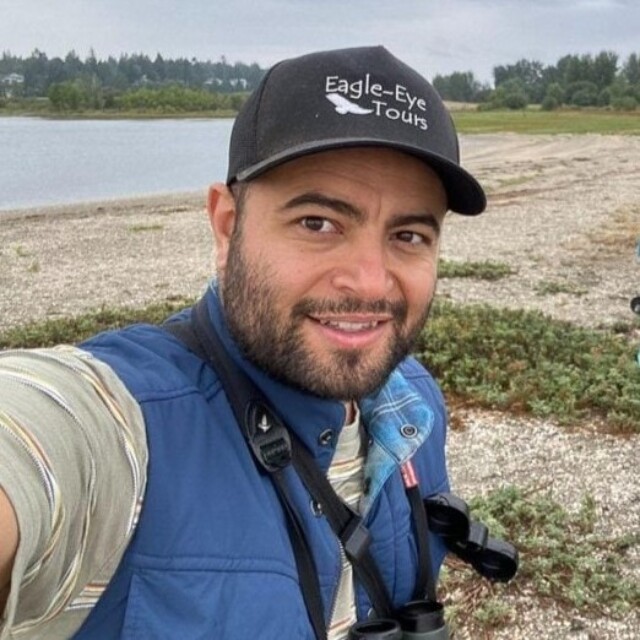
Logan and Yousef (Our Guides!)
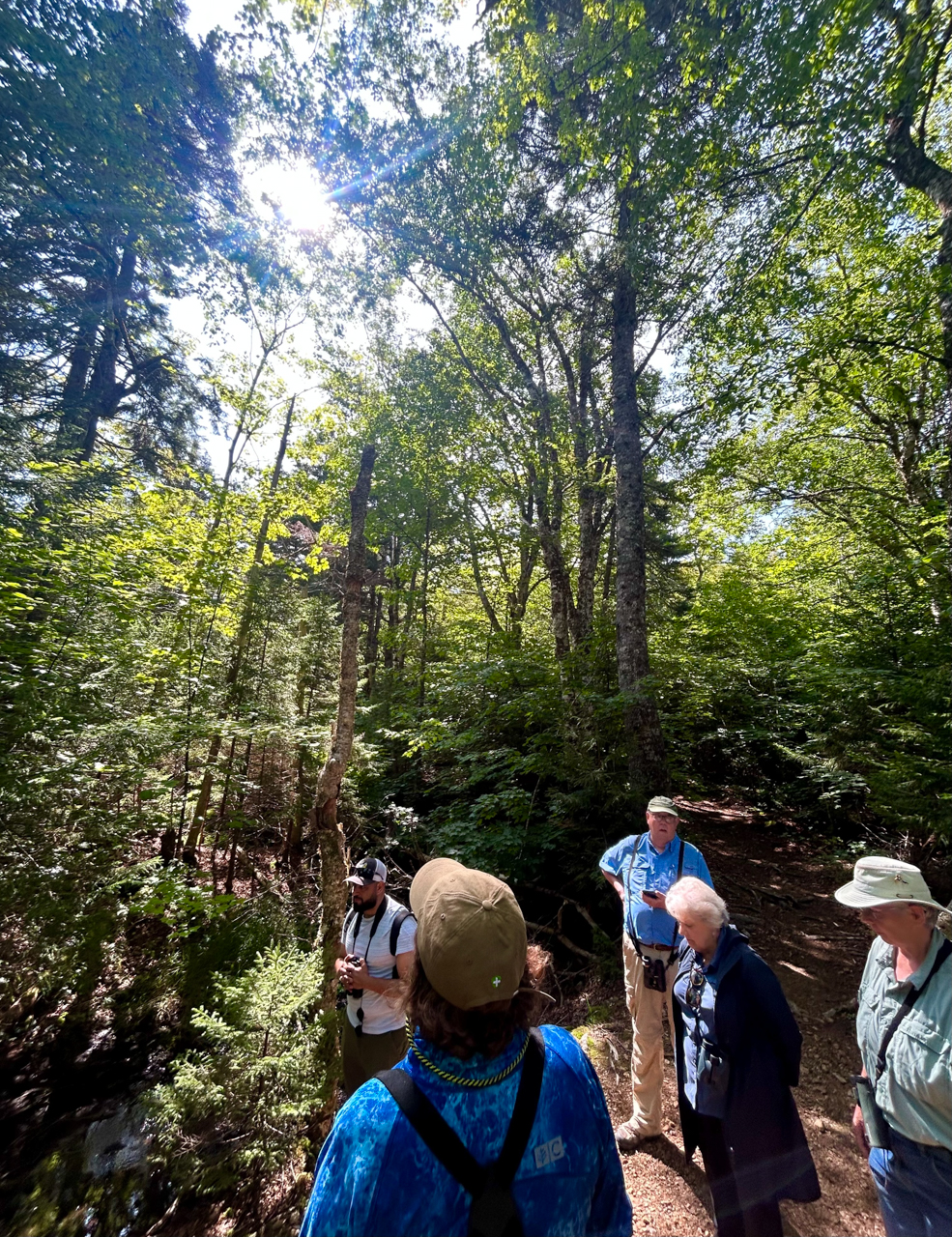
Birding together in the forest © Logan Lalonde
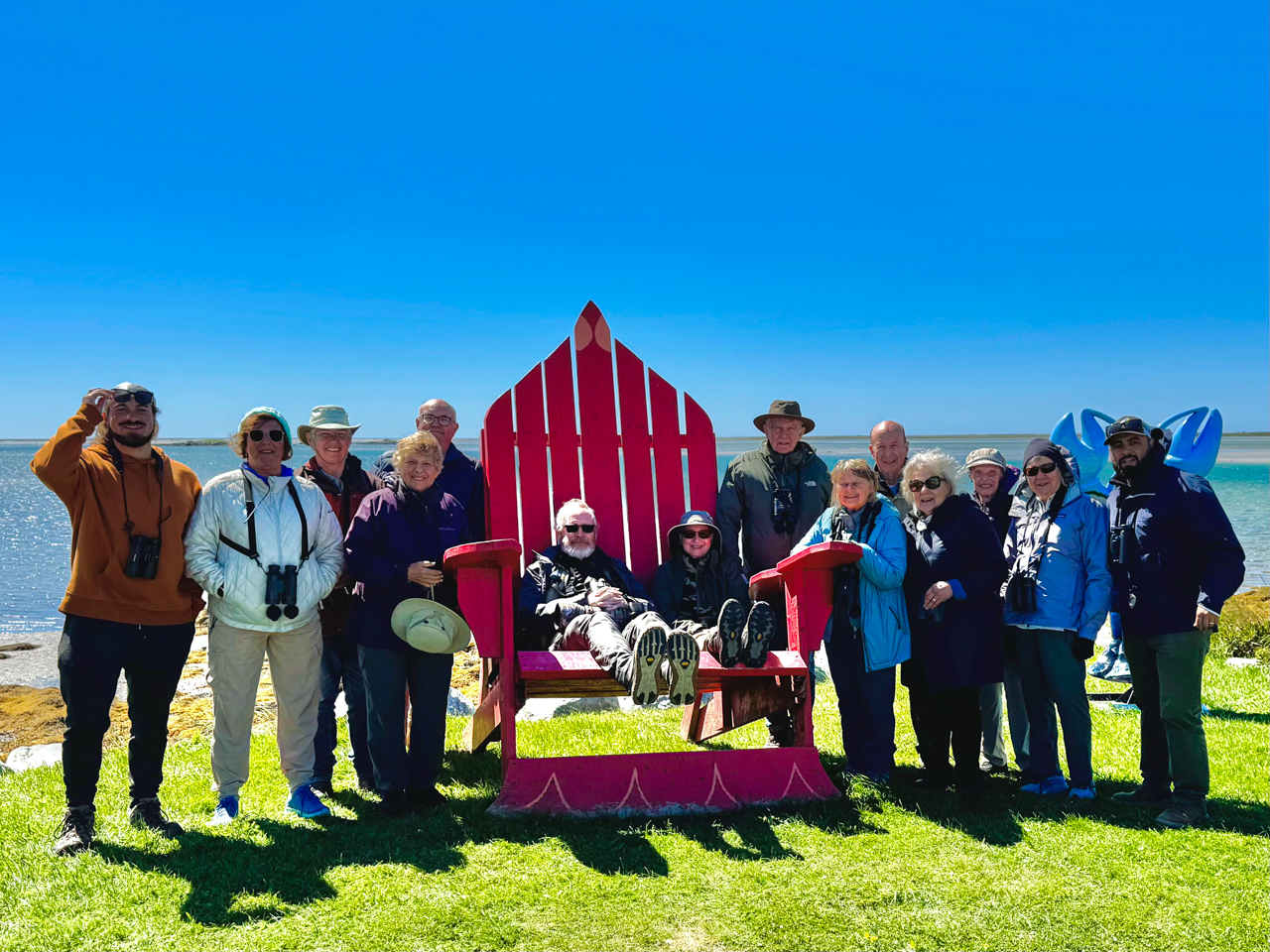
The entire group – Cape Sable Island © Yousif Attia
This tour was a Birds Canada Supporters tour where proceeds go towards the work Birds Canada is doing in the Atlantic region, across Canada and beyond to drive conservation of wild birds and the habitats they need to thrive.