Arizona in Winter Trip Report (Nov 8-16, 2026)
This tour was atypical in that it was much wetter than in typical Novembers, and at the same time a major montane songbird irruption had descended into the state. We had an unusually high diversity of waterbirds, hummingbirds, and montane songbirds, two of which were first-ever records for Arizona! We finished with a phenomenal 174 species enriched largely thanks to: 16 waterfowl, 13 raptors, nine hummingbirds, nine flycatchers, and 18 sparrows. In addition to birds, we observed ten mammal species, four reptiles, and a plethora of butterflies.
Day 1 & 2 – Arrival and Sonoran Desert (and its “wetlands”)
We kicked off the tour with a proper Tucson welcome by watching the sun rise over Saguaro National Park at Gates Pass. Spines on everything, from ocotillos to teddy bear chollas to saguaros, glistened in the morning light.
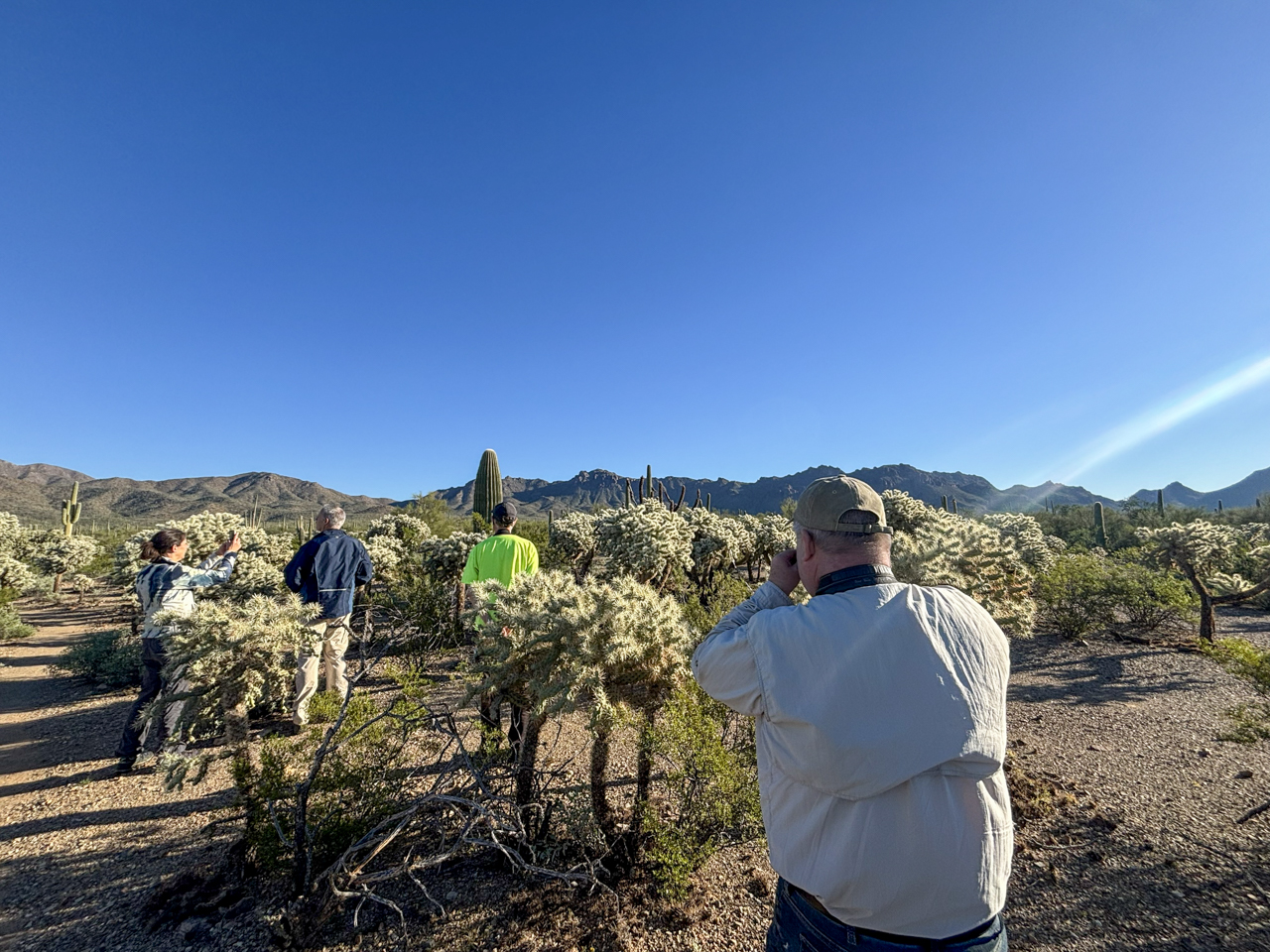
Birding in Saguaro National Park © Alyssa DeRubeis
Soon we caught up with some birds in a nearby ravine. A pair of inquisitive Black-throated Sparrows and a single Curve-billed Thrasher and Cactus Wren teed up in some cacti. A male Gilded Flicker, a true desert woodpecker, perched oh-too-briefly in a saguaro. Dancing in and out of palo verde were tiny Black-tailed and Blue-gray Gnatcatchers, Verdins, and a Ruby-crowned Kinglet–the latter two to be the first of many.
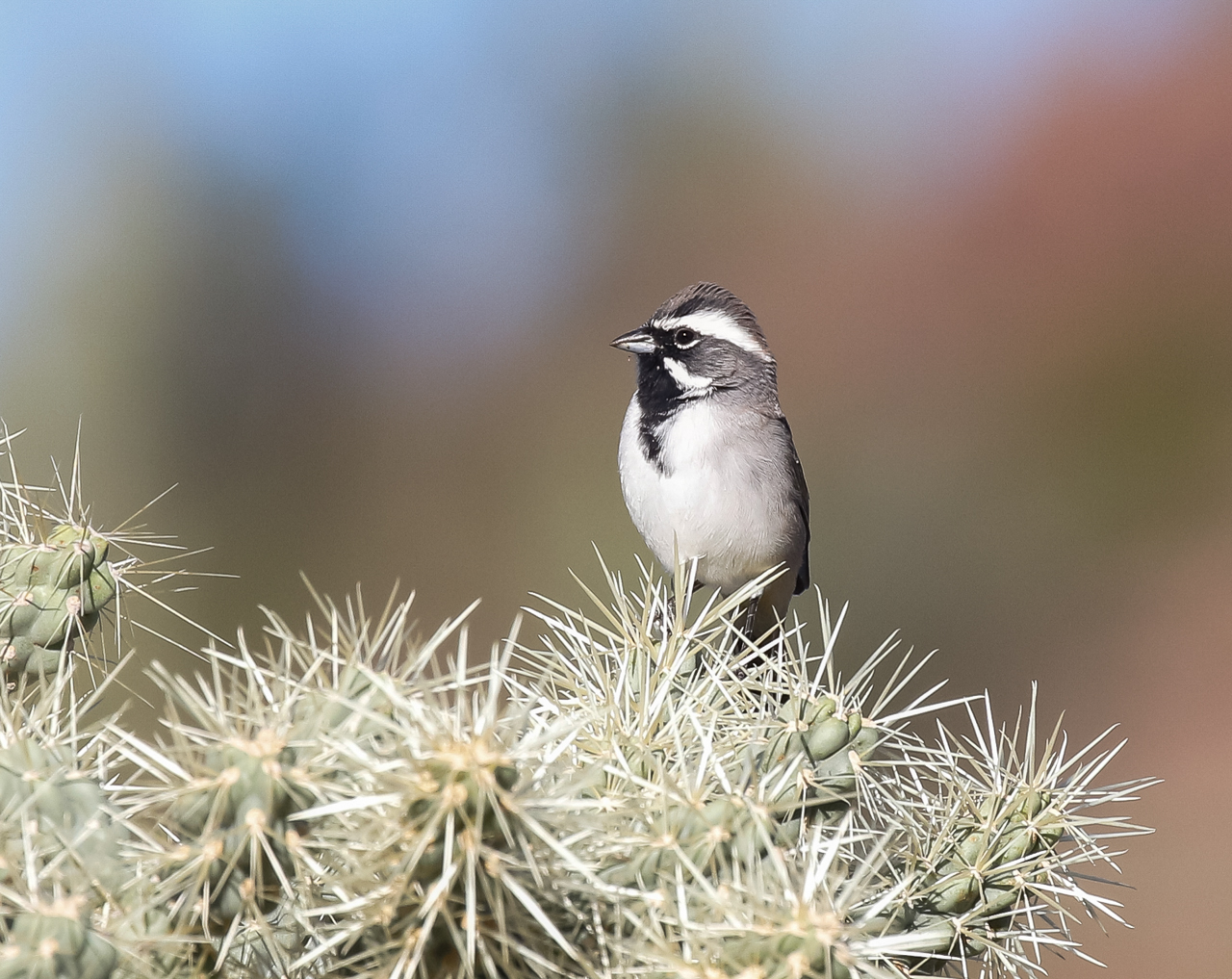
Black-throated Sparrow © Skye Haas
Throughout the tour we saw many nests made by classic desert denizens like Cactus Wrens and Curve-billed Thrashers, which they use for roosting during the cold winter months. Seeing all these quintessential desert avifauna and their homes warmed us up quick!
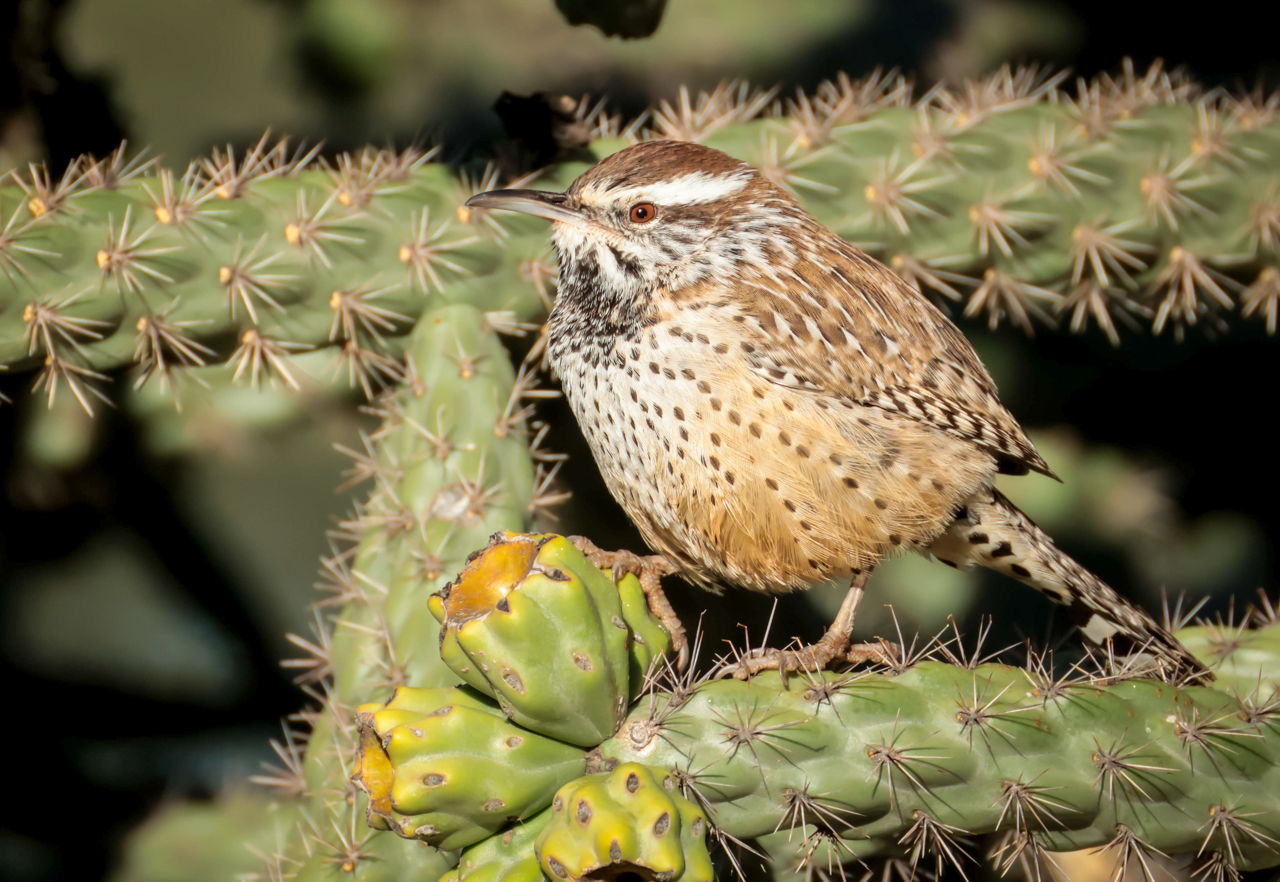
Cactus Wren © Kathleen Waldron
We drove north to Marana, where raptors were speciose in the countryside: an alert Burrowing Owl, three Harris’s Hawks (an uncommon species on this tour), Northern Harrier, and multiple Red-tailed Hawks, Turkey Vultures, and Black Vultures.

Harris’s Hawk © Victoria Chaussee
For our picnic lunch, we stopped at El Rio Preserve. This birdy wetland was rife with waders and duck species: four ducks, two grebes, American Coot, Common Gallinule, and an impressive five waders!
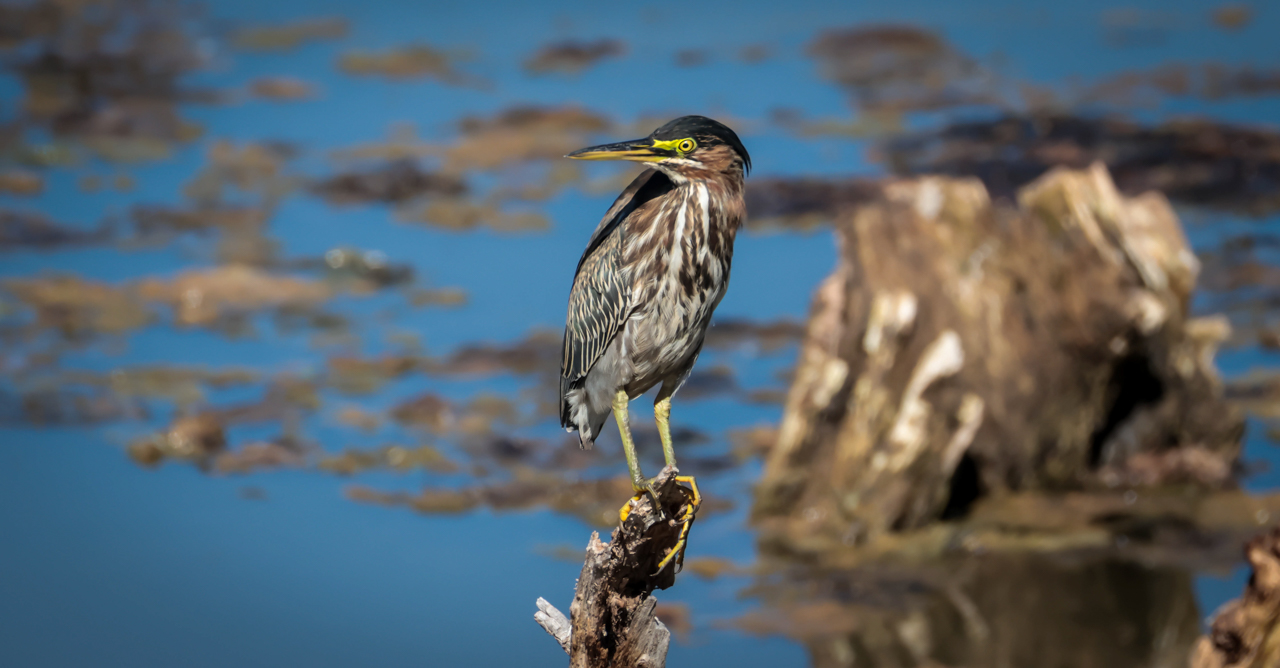
Green Heron © Kathleen Waldron
Finding such high wader diversity in one site is no easy feat in Arizona. The star of the show was a previously-found American Bittern, which is the state’s first record. Our group got wonderful views of it flying, walking, and eating. For such a furtive species, this bittern was quite bold!
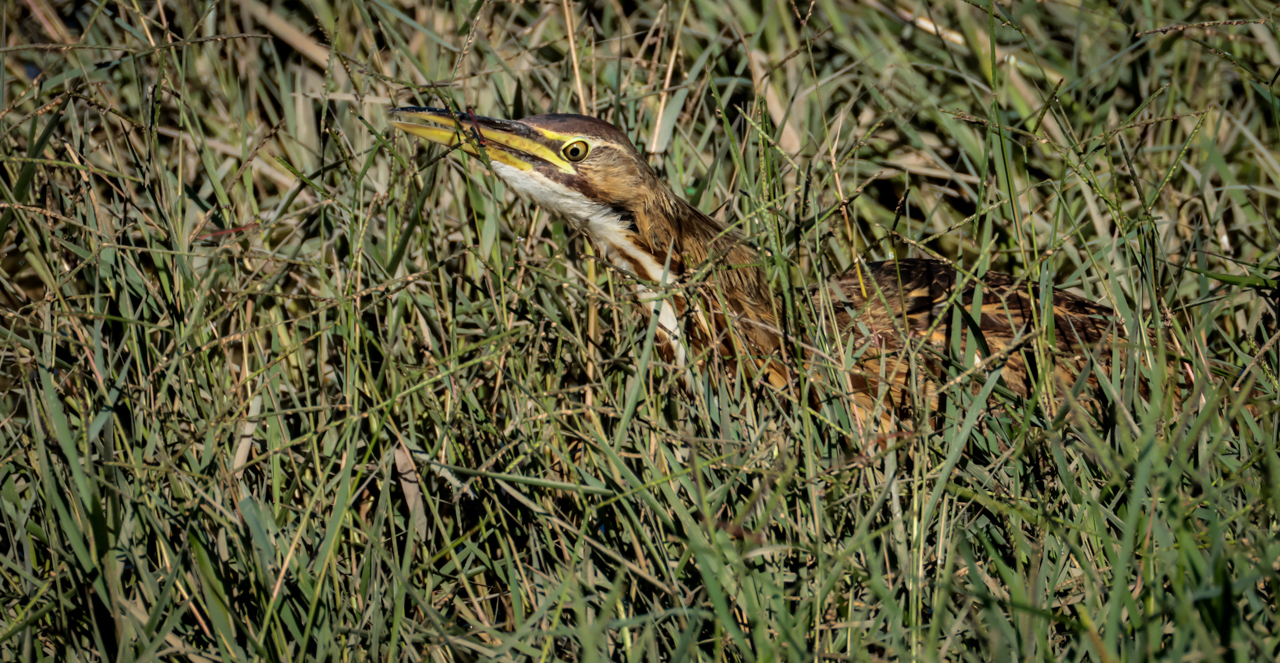
American Bittern © Kathleen Waldron
We ended our first day of birding with hummingbirds at Desert Meadows Park in Green Valley. While Anna’s and Broad-billed Hummingbirds fought for feeder space, a sparkling little Costa’s Hummingbird alternated between feeding on low flowers and singing its peculiar whirring song.
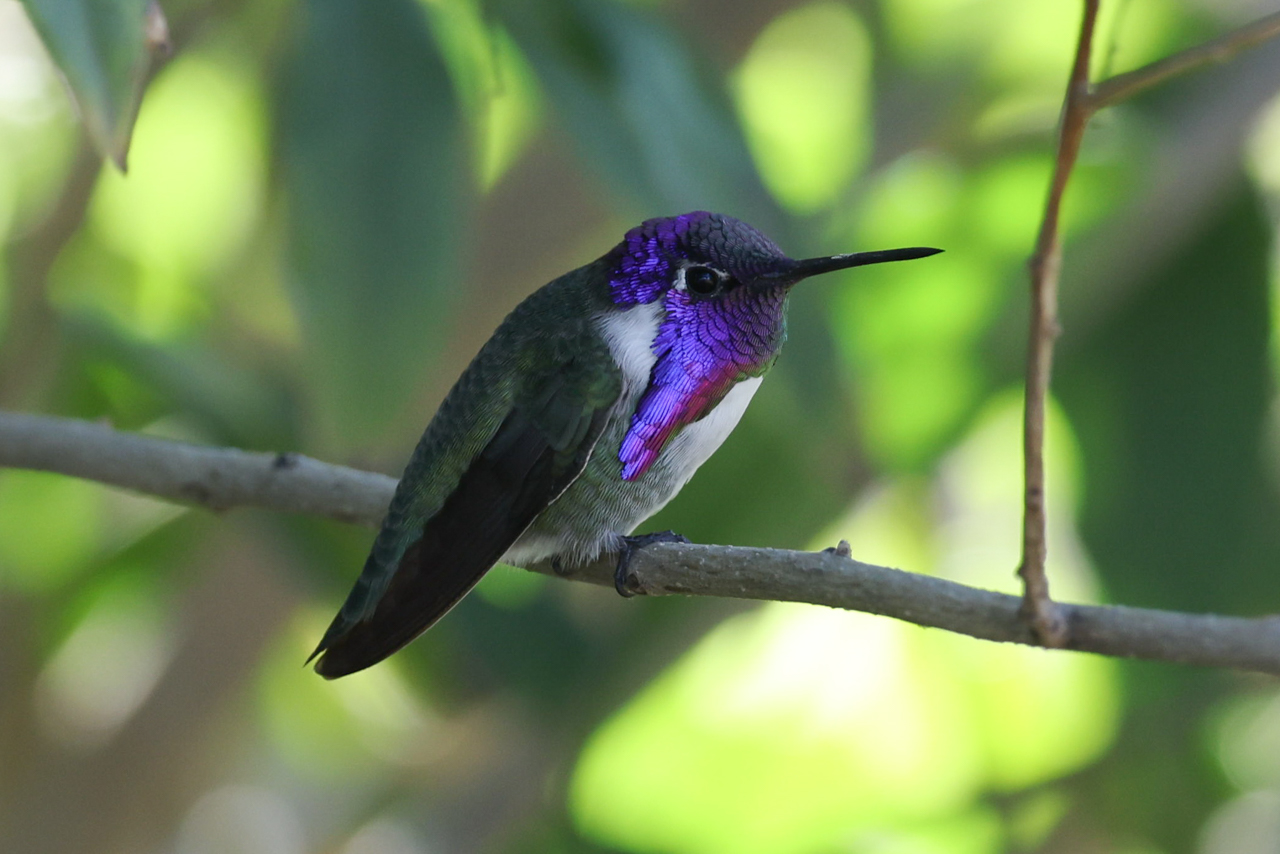
Male Costa’s Hummingbird © Carolyn Erb
Abert’s Towhee and Gambel’s Quail scurried under some prickly pears, and indeed, it was time for us to scurry off to dinner after a wonderful first day!
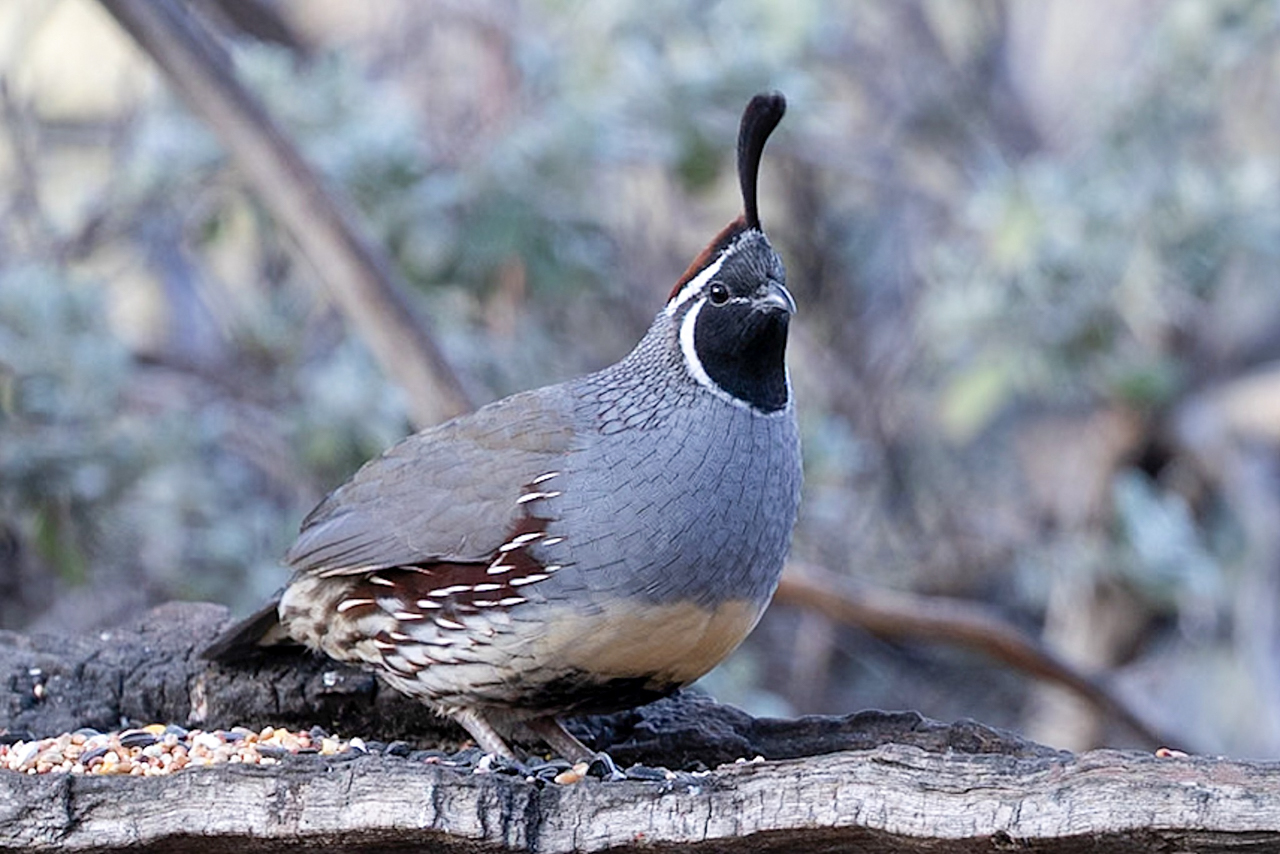
Male Gambel’s Quail © Carolyn Erb
Day 3: First Sky Island Stop
Day three began with another visit to Desert Meadows Park, which added three new sparrow species to our list: Chipping, Lark, and Lincoln’s. Distantly we could make out a Peregrine Falcon barreling through the sky.
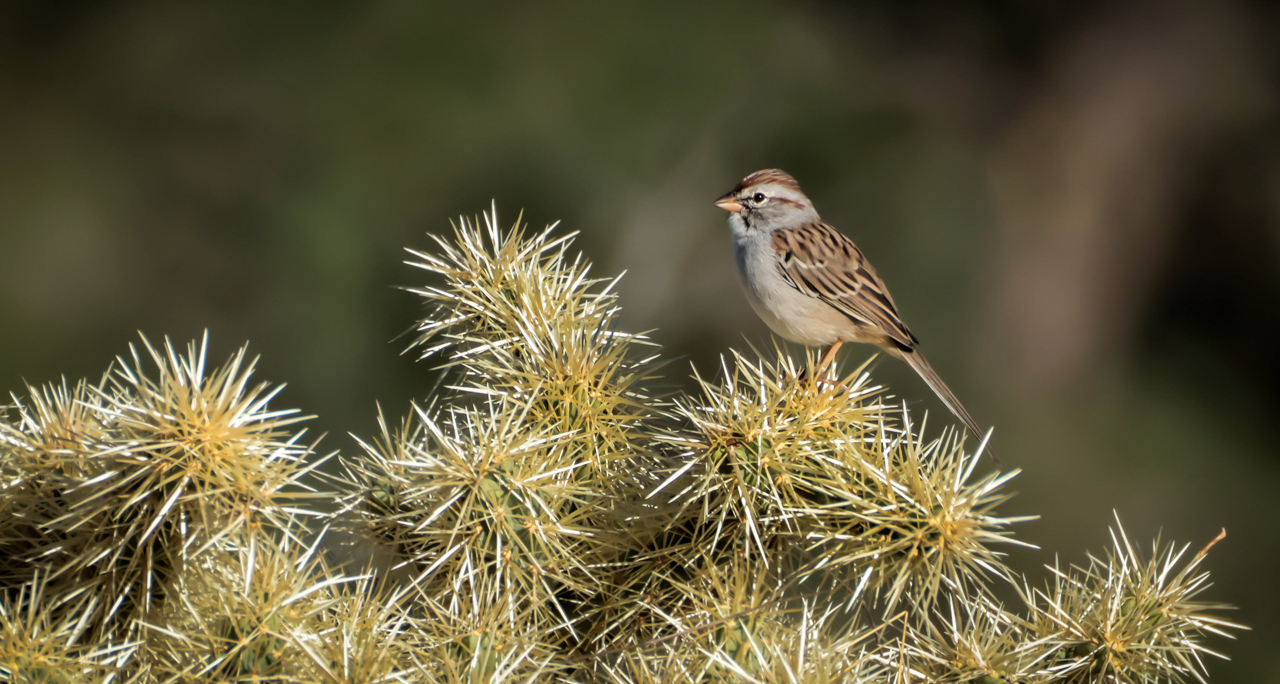
Rufous-winged Sparrow © Kathleen Waldron
The road through mesquite grassland leading up to our first sky island contained several birds of interest: Rufous-winged Sparrow (a range-restricted species of northern Mexico and southeast Arizona), Phainopepla (a two-season breeder of deserts and woodlands), and a limited view of a Crested Caracara (a very localized falcon in Arizona). It’s neat not only to see these birds, but to understand their peculiar life histories in these unique habitats.
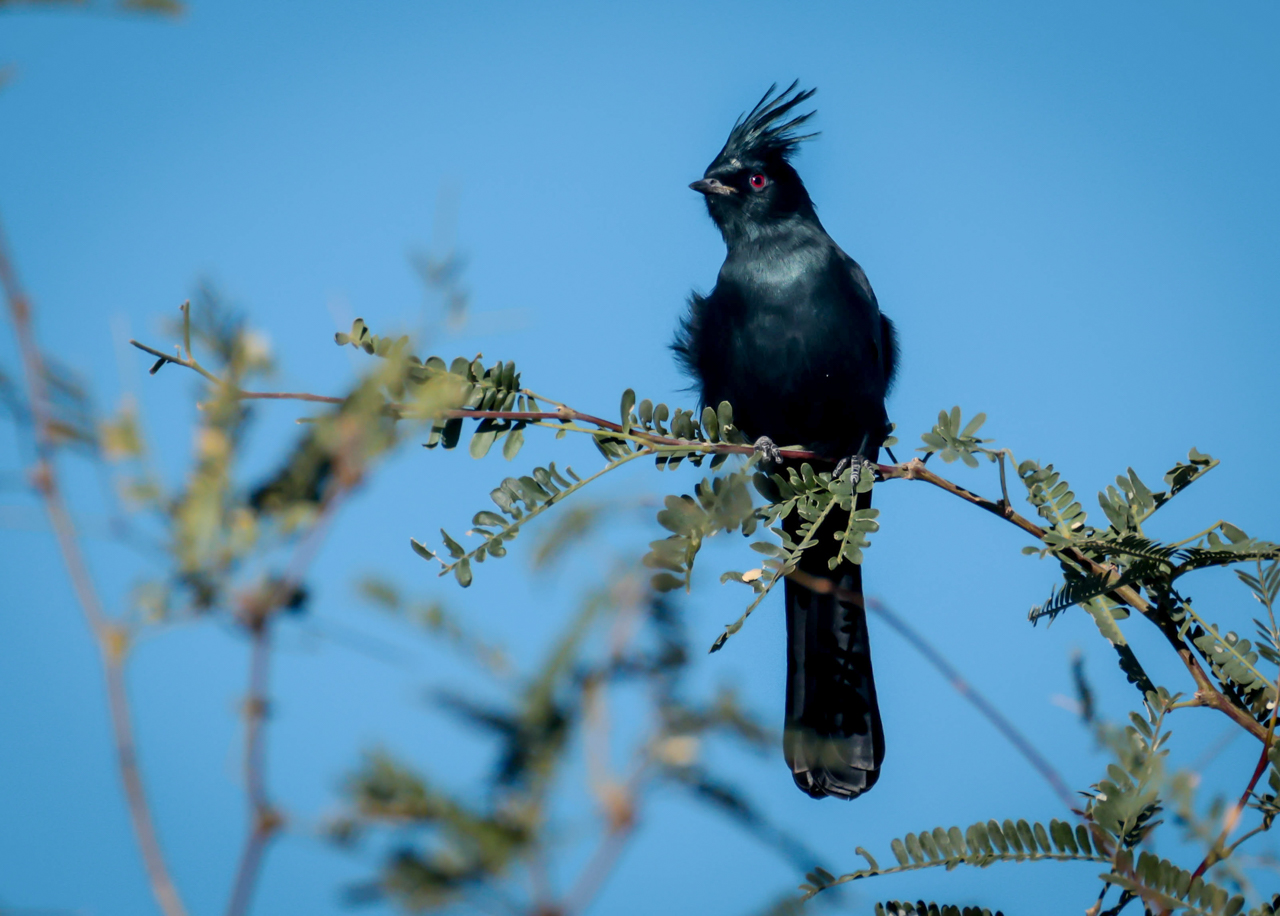
Male Phainopepla © Kathleen Waldron
Finally, we are seeing trees! Madera Canyon, nestled in the Santa Rita Mountains, contains mid-elevation live oak-alligator juniper woodlands and sycamore-laden creeks. The sycamore is the preferred nesting tree of Coppery-tailed Trogon.
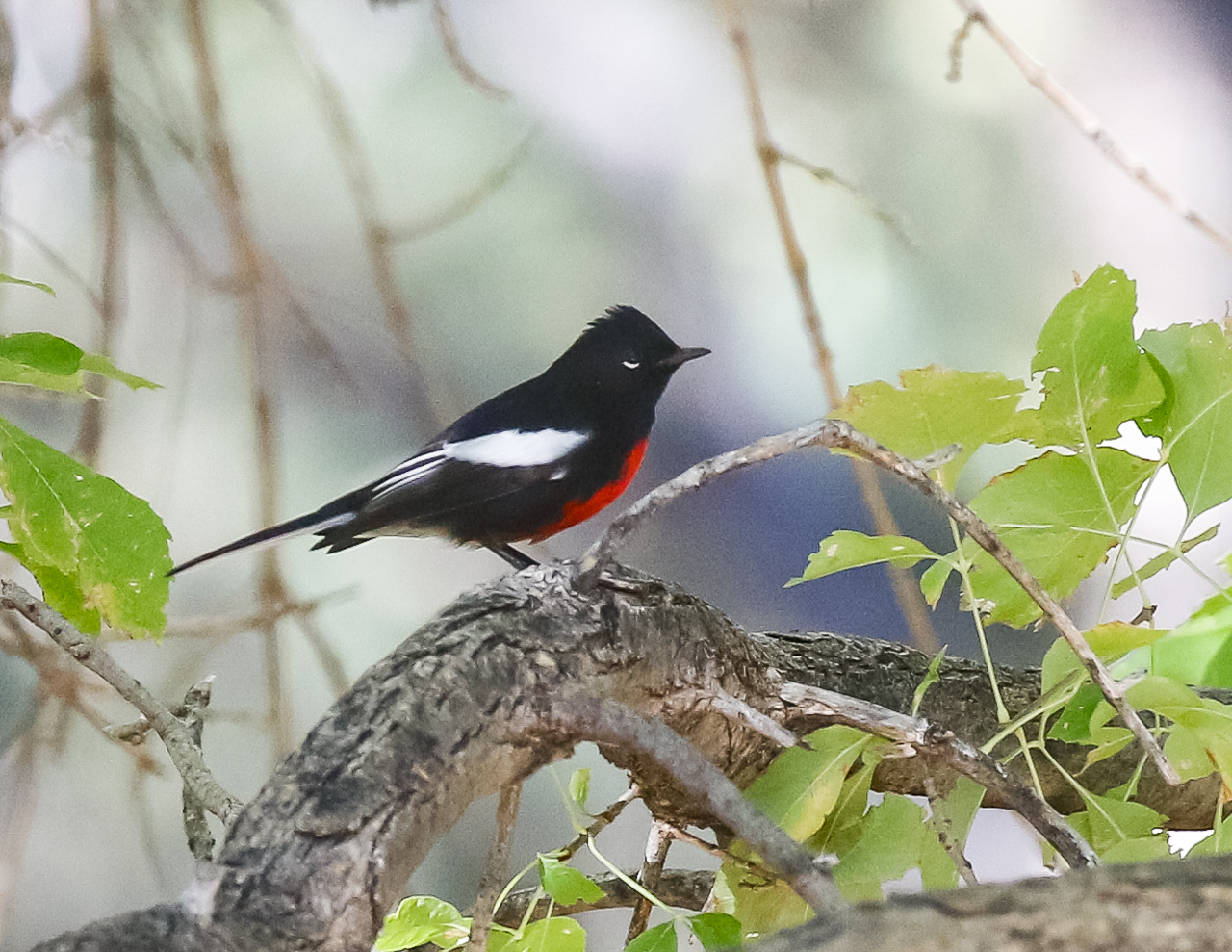
Painted Whitestart © Skye Haas
With new habitat comes new birds: the Santa Rita Lodge bird feeders not only fed birds, but fed our desire to see some fabulous species: vociferous Mexican Jays, boisterous Acorn Woodpeckers, zooming jumbo Rivoli’s Hummingbirds…
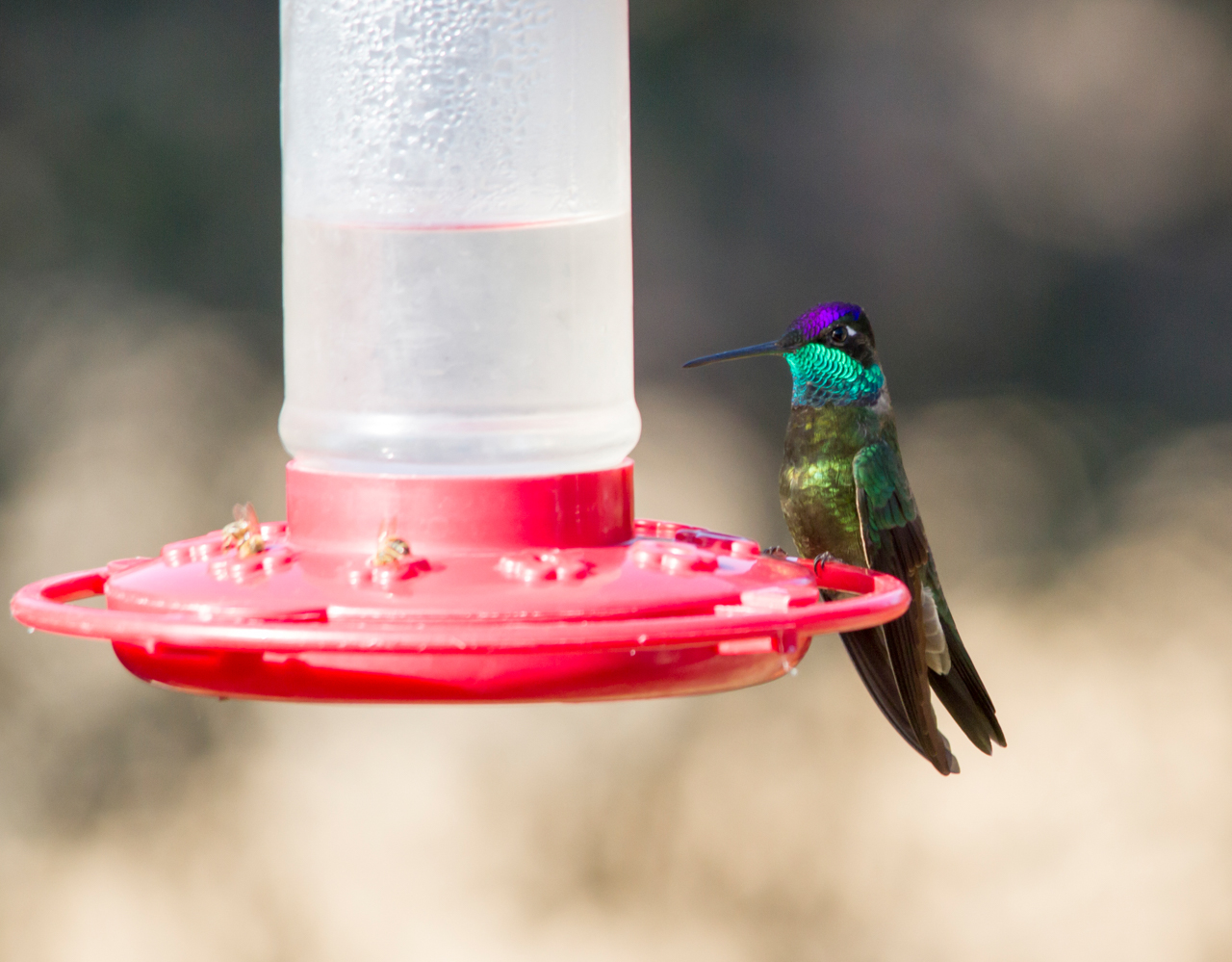
Rivoli’s Hummingbird © Kevin Rysiewski
…snazzy Bridled Titmice, and a timid Painted Whitestart and Townsend’s Warbler. Along some adjacent trails, we encountered Hammond’s Flycatcher and Yellow-eyed Junco. A few of us caught glimpses of Hepatic Tanager and Red-naped Sapsucker as well.
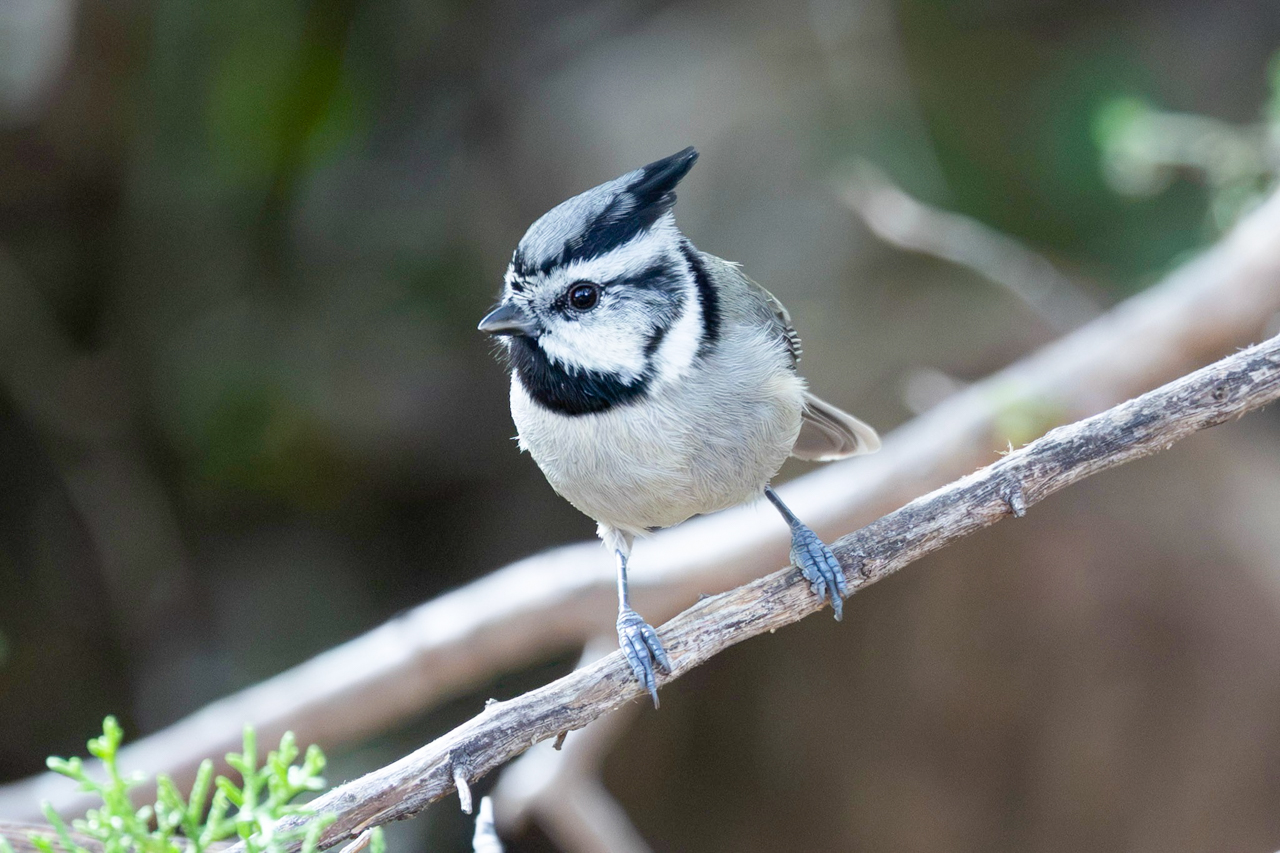
Bridled Titmouse © Carolyn Erb
We ended the day with a drive in Box Canyon, where red and green rocks were interspersed by ocotillos and century plants above and huge cottonwoods below. Rock Wren calls echoed across the canyon, and eventually one came in close to inspect our group.
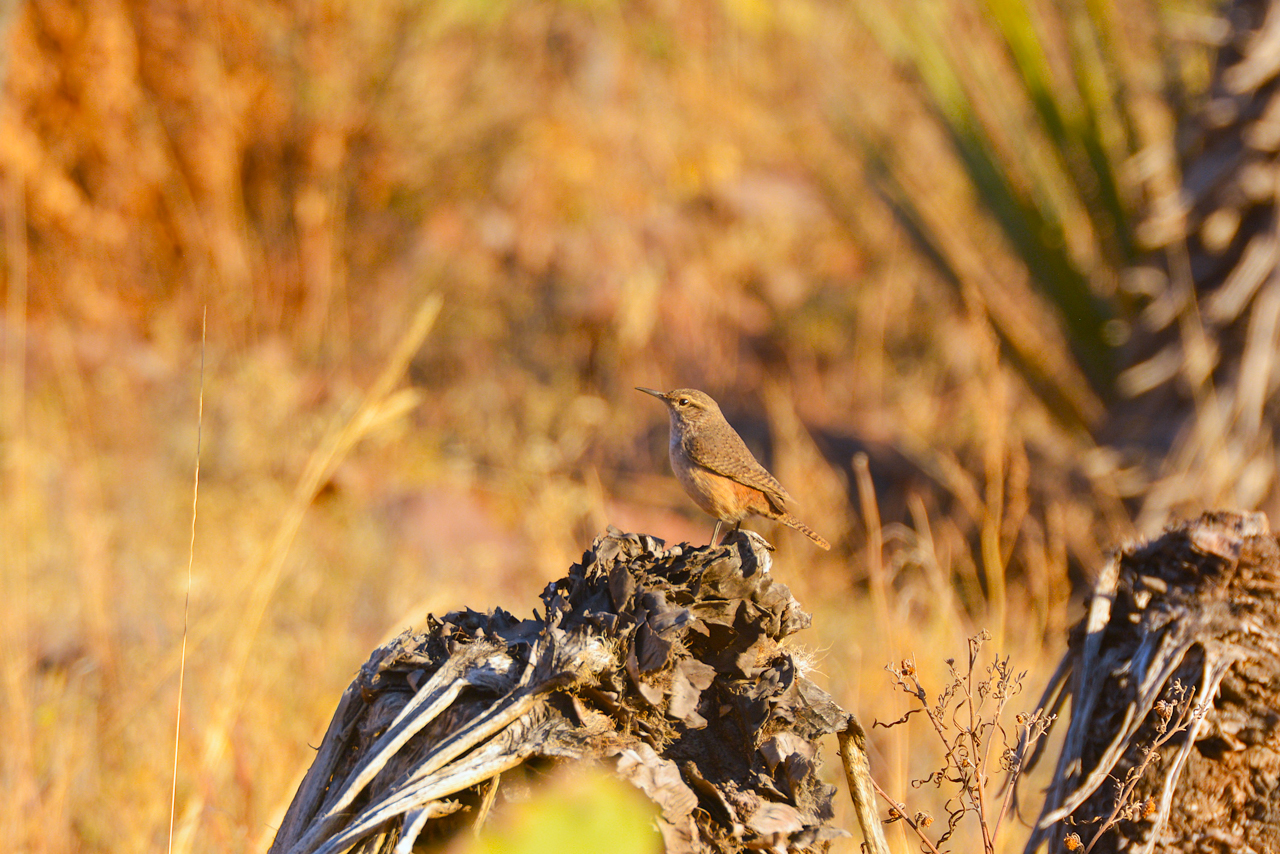
Rock Wren © Alyssa DeRubeis
Loggerhead Shrikes monitored the grasslands on the tallest perch they could find. A pair of Canyon Towhees frolicked in a brush pile. And off we piled into the vans and into the sunset…
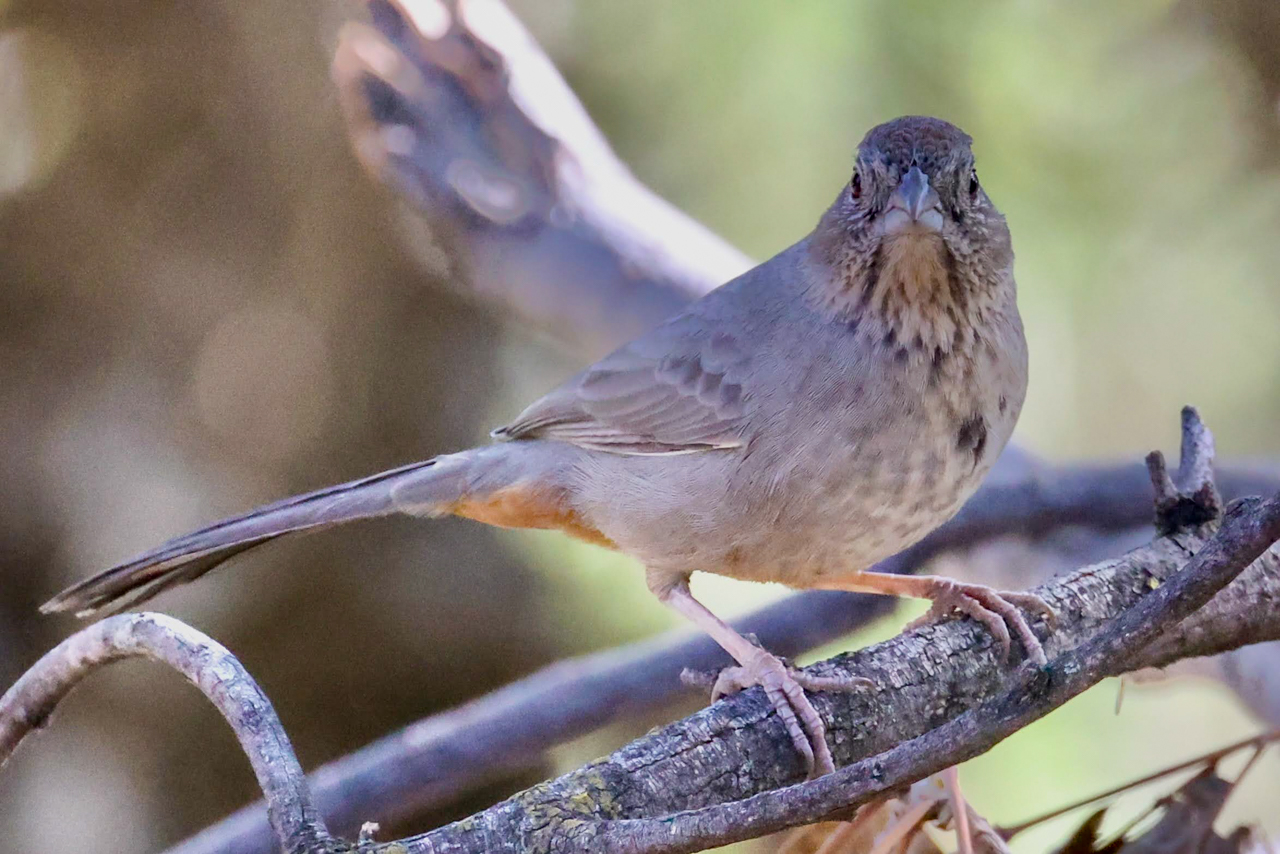
Canyon Towhee © Andrew Waud
Day 4: Flycatchers and Canyons, Oh My!
We spent much of the morning walking up and down Montosa Canyon. The mix of shrubby lowland and rocky desert slopes offered a handful of new fun birds: Canyon Wren and Greater Roadrunner perching up nicely in the ocotillo, an inquisitive Hutton’s Vireo, a speedy Dusky Flycatcher, and a rather angry-sounding Bewick’s Wren.
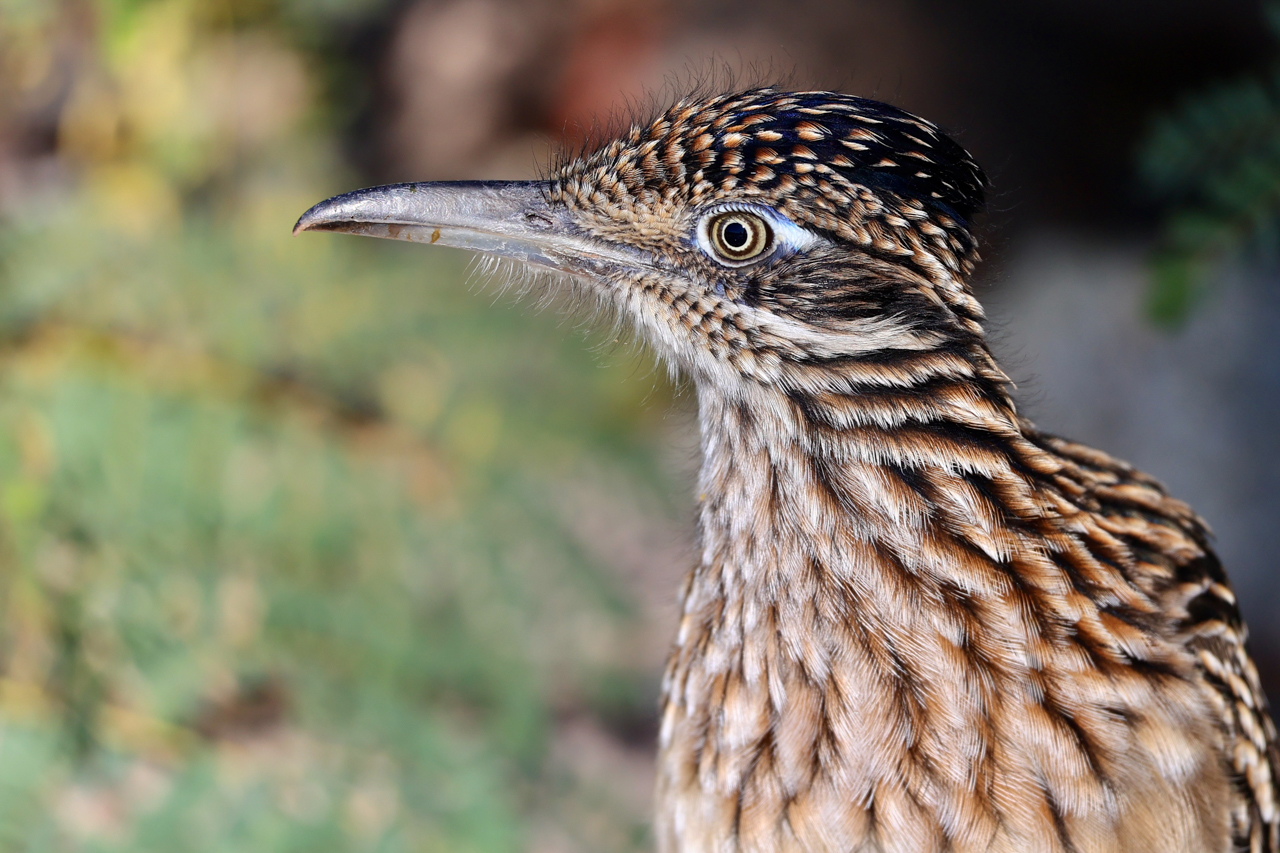
Greater Roadrunner © Andrew Waud
Not only did we see the Canyon Wren, but we were entranced by its lovely song of descending whistles.
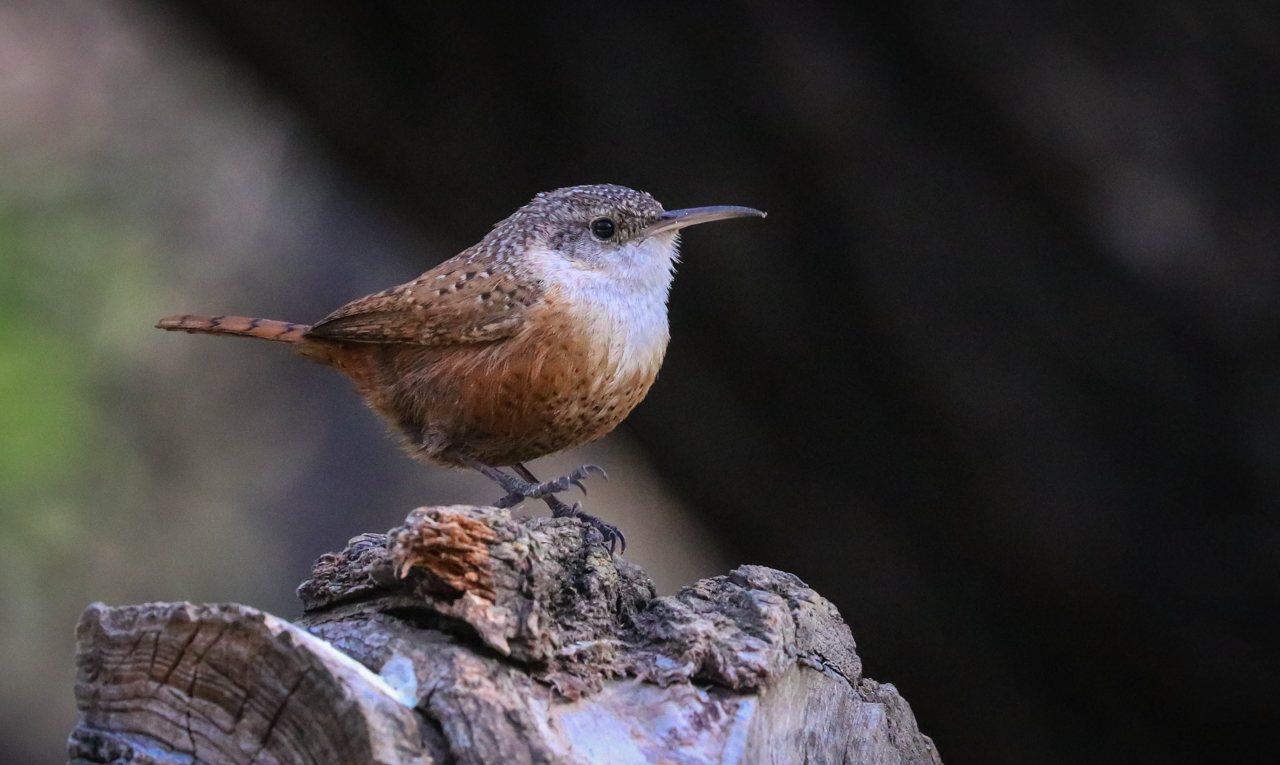
Canyon Wren © Kathleen Waldron
On our way out, we discovered a Northern Beardless-Tyrannulet mobbing a Loggerhead Shrike! The group fell in love with this unassuming and diminutive flycatcher.
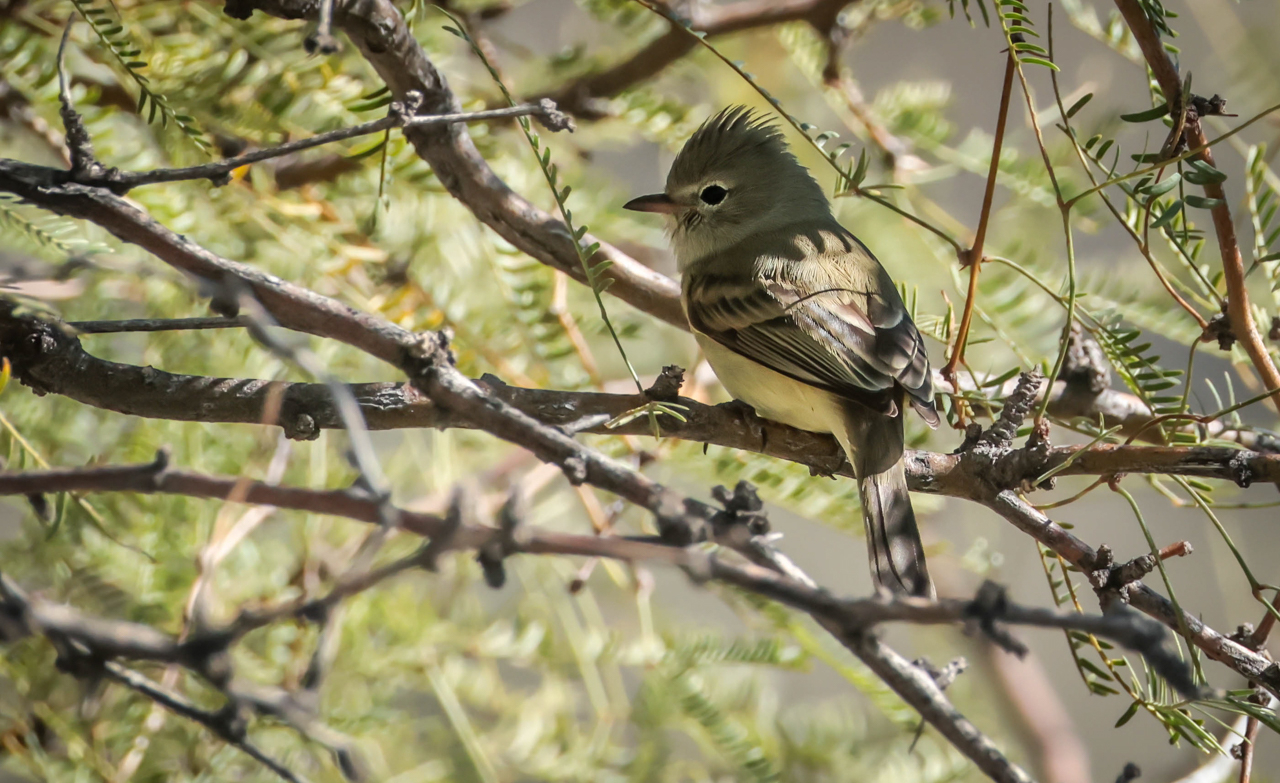
Northern Beardless-Tyrannulet © Kathleen Waldron
Picnic lunch took place at Peña Blanca, yet another fabulous oak-tastic canyon. A pair of lingering Violet-green Swallows posed nicely in the midday sun. Cassin’s Kingbirds surrounded us as well as Black and Say’s Phoebe. Watching these flycatchers acrobatically snag insects in midair was impressive!
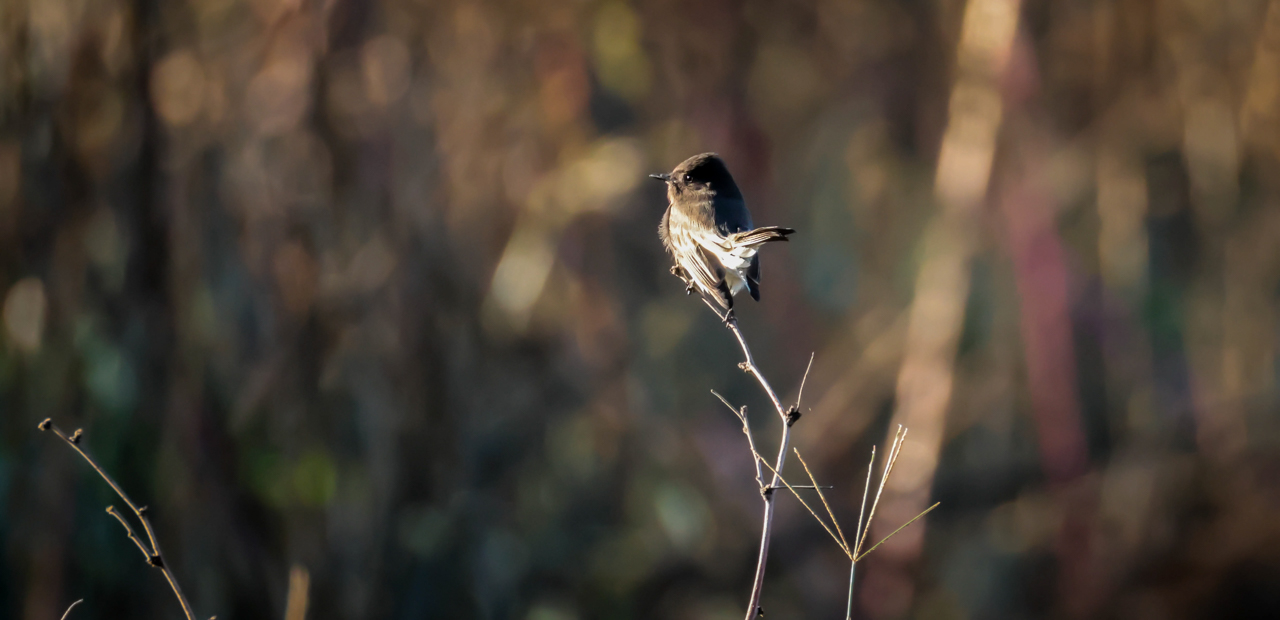
Black Phoebe © Kathleen Waldron
Now that we refueled, it was time for a stroll up the canyon itself. The rocky beauts and golden sycamores were simply incredible on their own. But we also found an inconspicuous Arizona Woodpecker, who did not seem to mind the paparazzi.
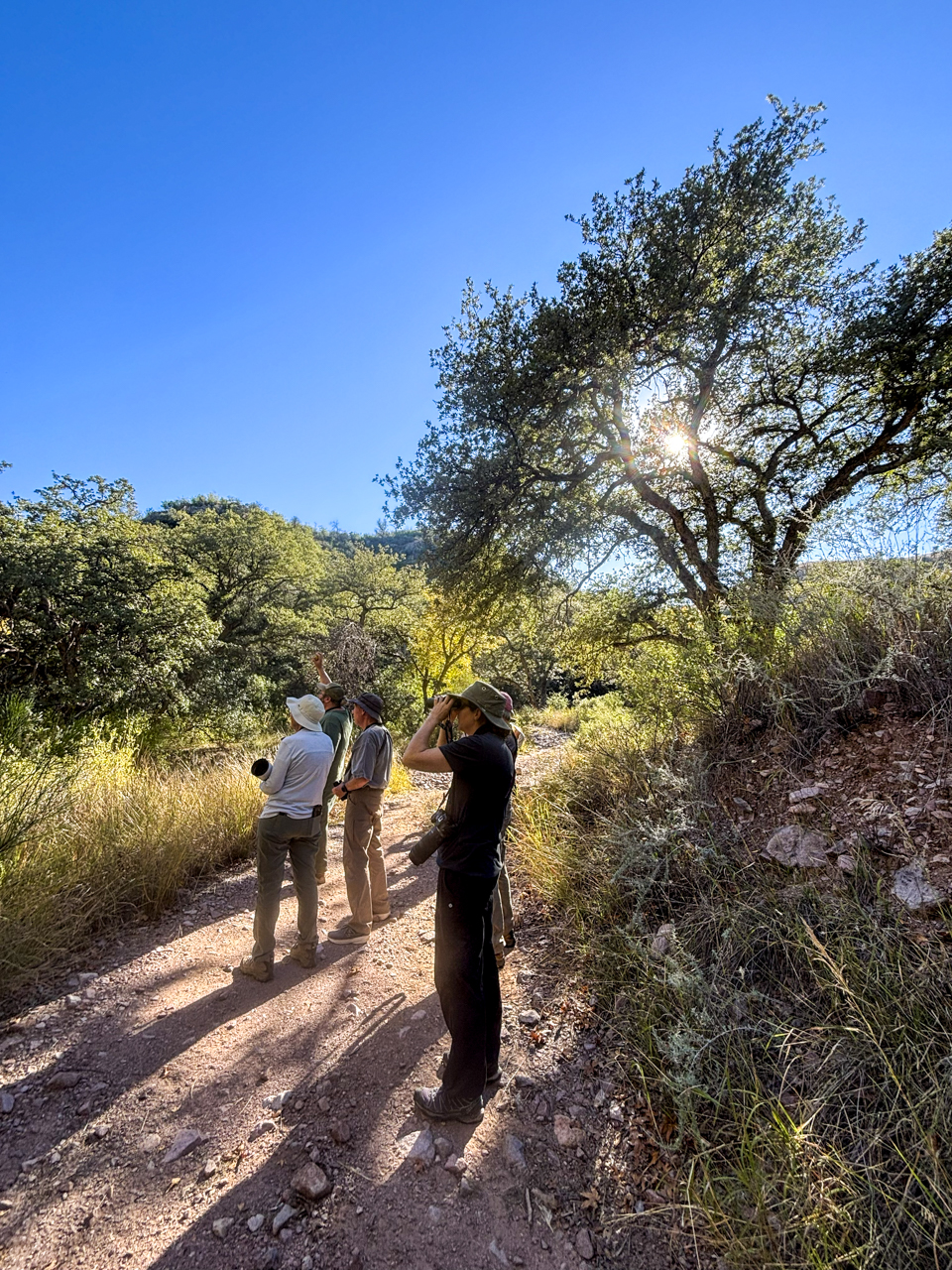
Peña Blanca Canyon © Alyssa DeRubeis
This woodpecker is fairly range-restricted, stretching up into southeast Arizona (as is typical with a handful of Mexican species) and occupies a narrow strip in western Mexico. Indeed, it’s always a treat to find an Arizona Woodpecker.
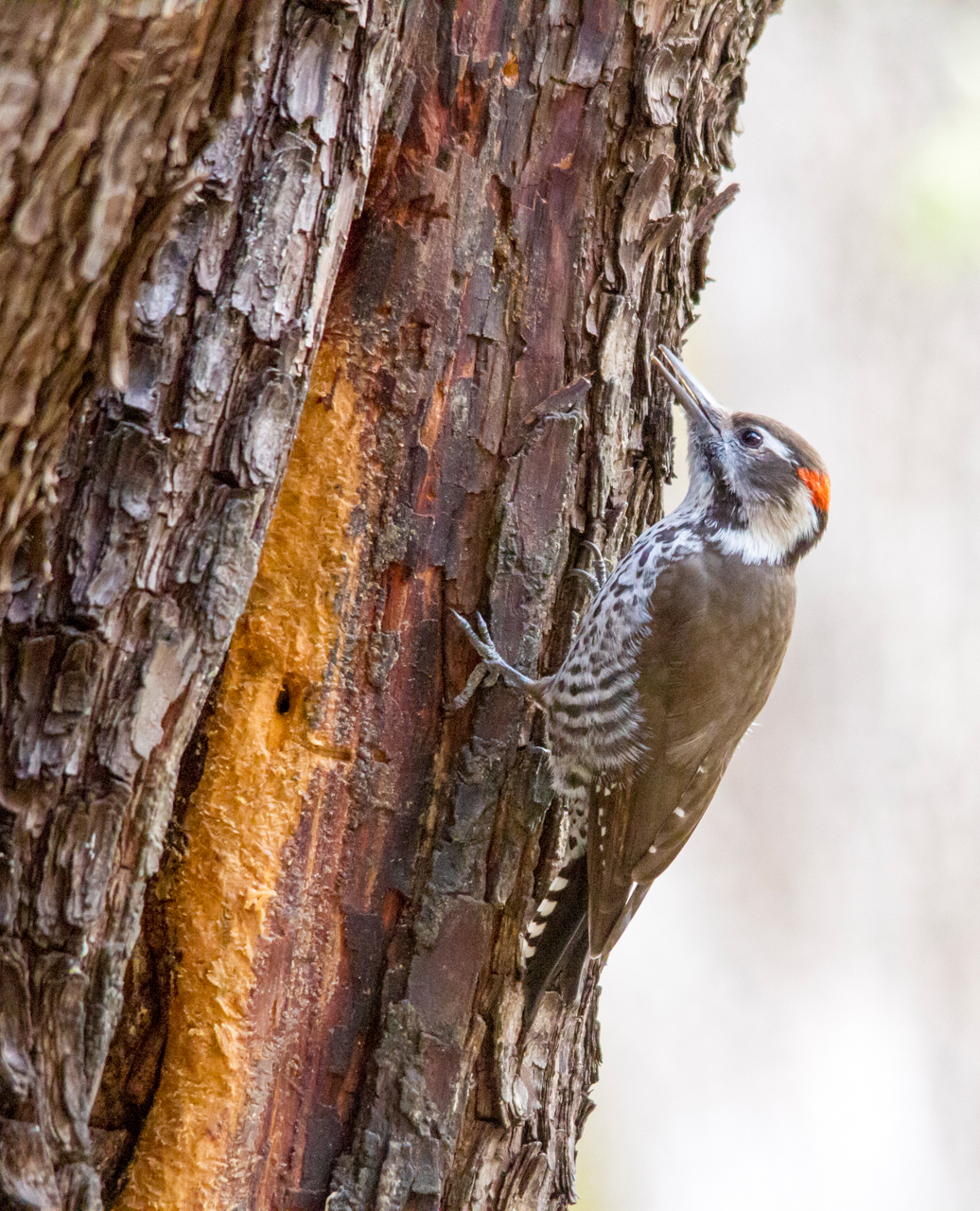
Arizona Woodpecker © Kevin Rysiewski
We are mindful not only of birds, but of other small creatures as well. We nearly stepped on a Tucson Bronze Tarantula. Our only snake species of the entire tour was a Black-necked Garter Snake, a species of the southwestern US, Mexico, and Guatemala. And a local butterfly beauty, the Arizona Sister, was showing well today too.
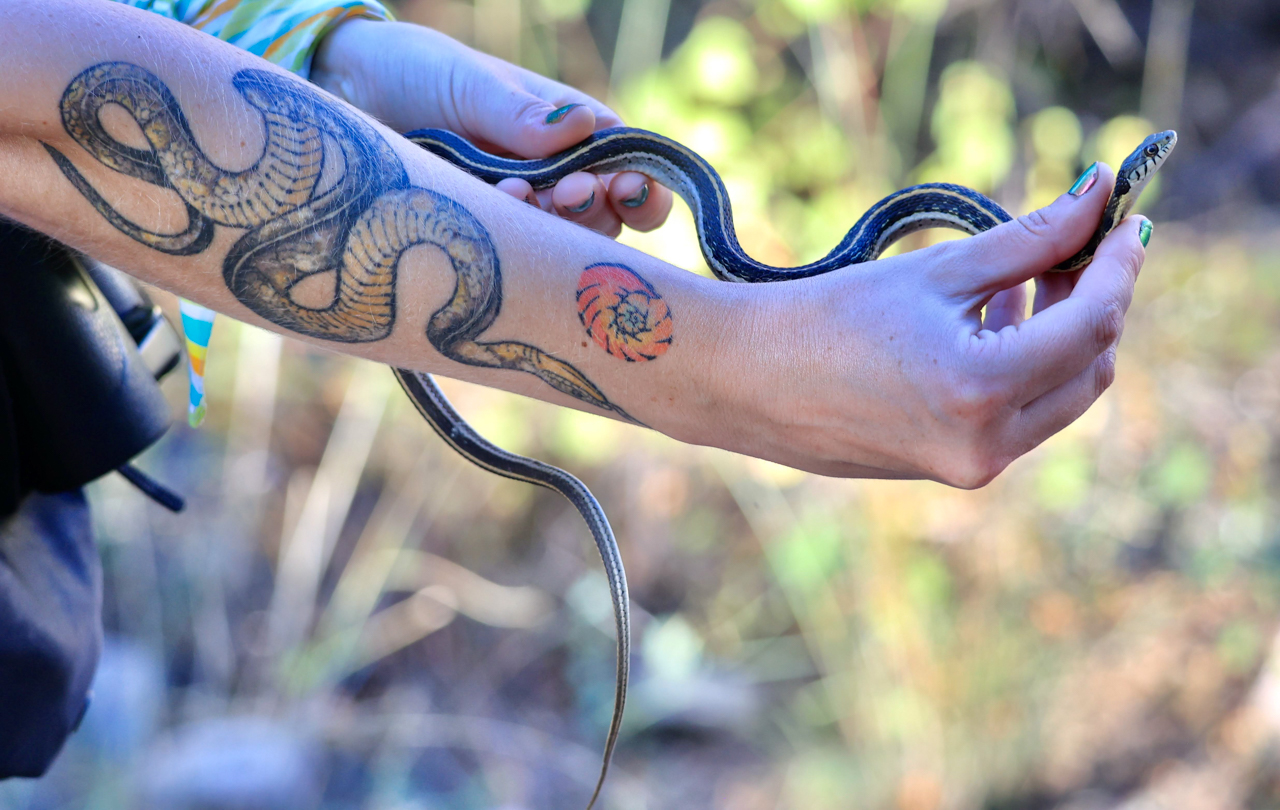
Black-necked Garter Snake held carefully by Alyssa © Andrew Waud
Day 5: From Birdfeeders to Grasslands – Birding Patagonia
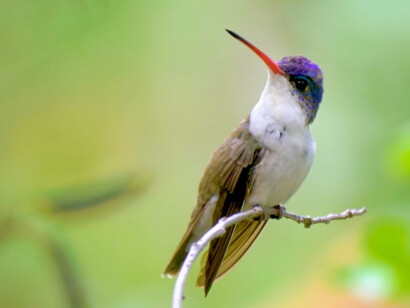
Everyone was ready to visit the famous Paton Center for Hummingbirds! This premier birding destination has been in operation since 1973. Its mascot, the stunning Violet-crowned Hummingbird, was in no short supply here. Not too many birds sport a shiny purple crown and glaring red bill!
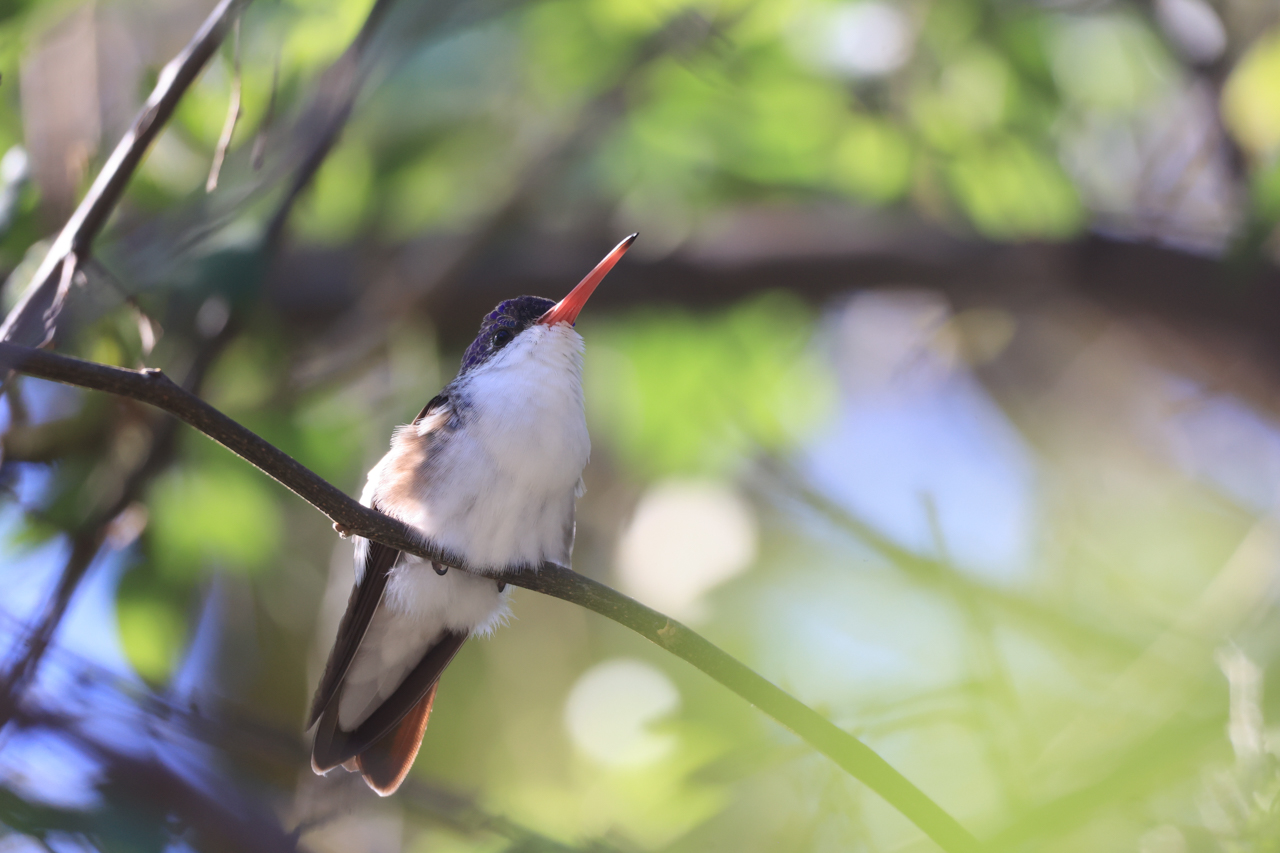
Violet-crowned Hummingbird © Andrew Waud
A bit less cooperative were the Ruddy and Common Ground Doves and Green-tailed Towhee, who all made brief appearances. Fortunately some more photogenic birds (Lazuli Bunting, Inca Dove, and Black-throated Gray and Townsend’s Warblers) kept us quite occupied.
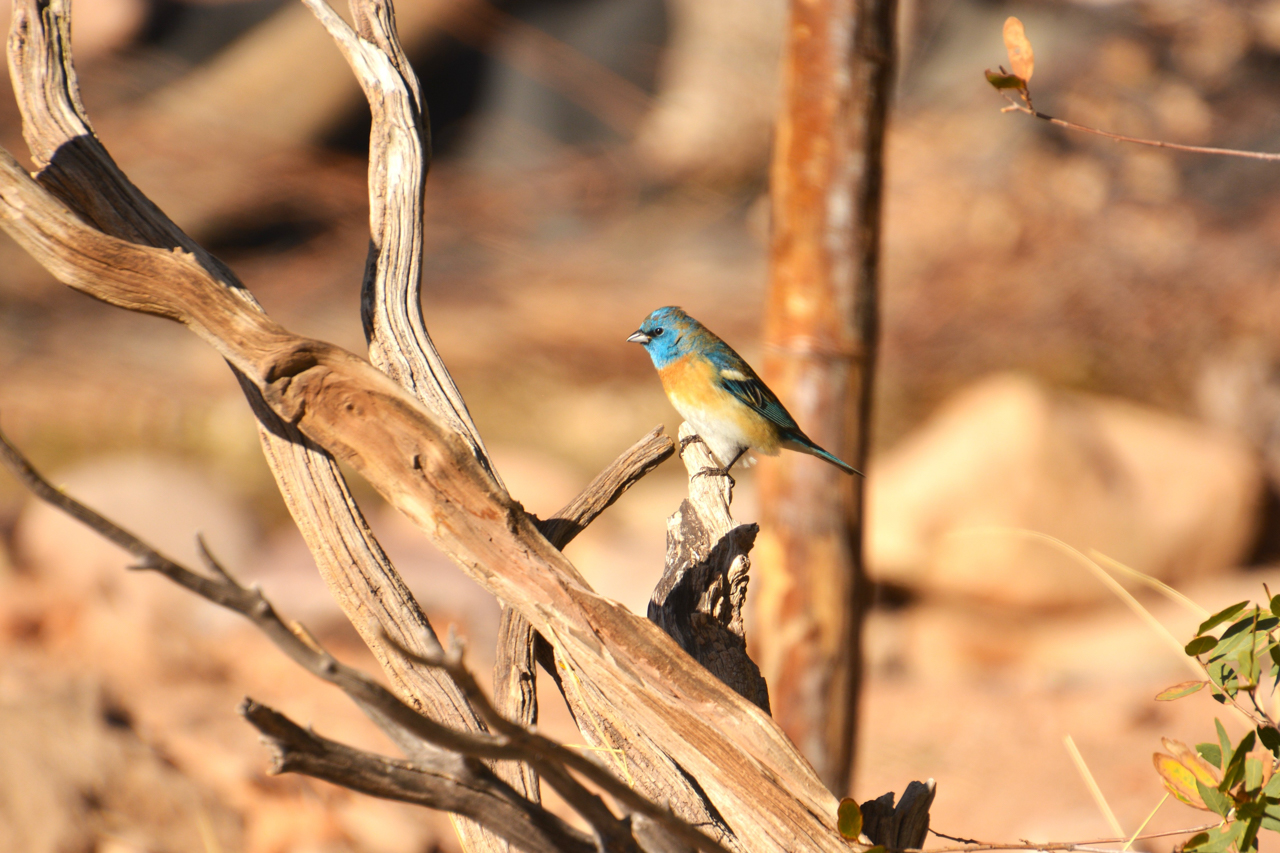
Male Lazuli Bunting © Alyssa DeRubeis
And we had the opportunity to study a strange hummingbird, a hybrid Rivoli’s x Berylline, which looked a lot like Rivoli’s but had a reddish tail. In total, we tallied 48 species at the Paton Center.
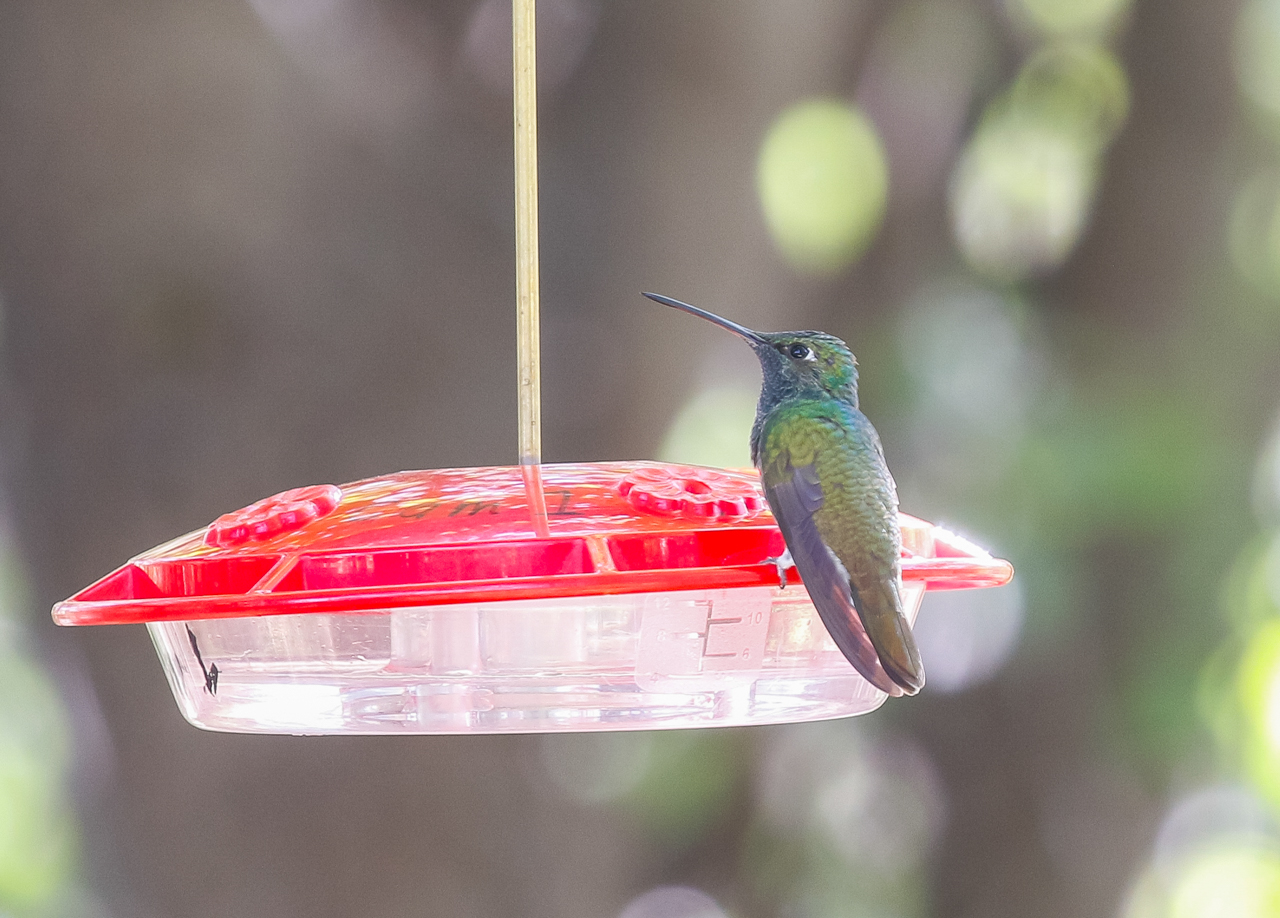
Hybrid Rivoli’s x Berylline Hummingbird © Skye Haas
After checking out some local gift shops and resting, we drove to a sprawling shortgrass prairie parcel, Las Cienegas National Conservation Area. A hallmark winter species of Las Cienegas is the Chestnut-collared Longspur, a bird that has declined by roughly 73% since the mid-1960s. Flocks gregariously breezed by us, chortling all the way. We learned about longspur molt: the black belly and chestnut nape are tinged brown in the winter, and those brown edges gradually wear off over the spring.
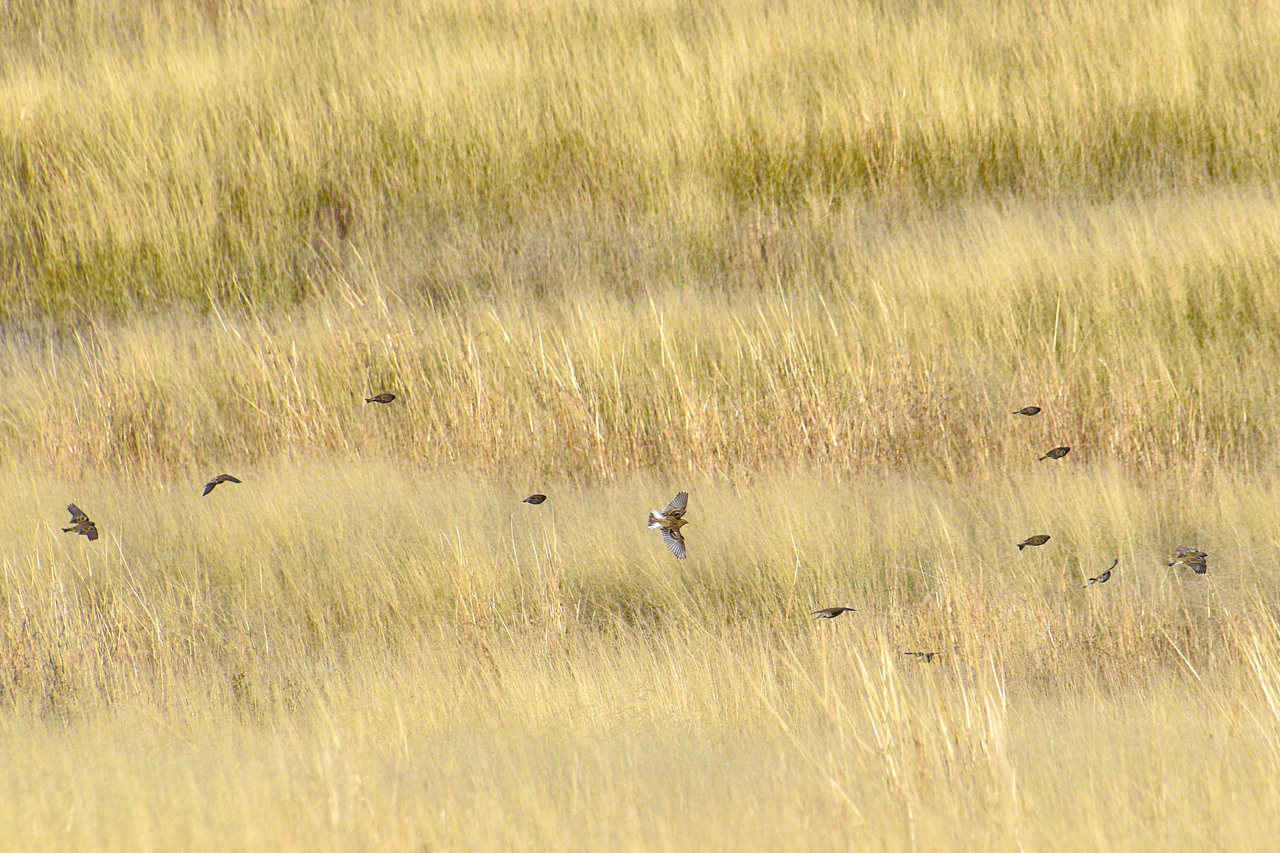
Chestnut-collared Longspurs © Alyssa DeRubeis
But the real winner was a species that has declined by an astounding 90% since the mid-1960s: the extremely secretive Sprague’s Pipit. We first detected two birds by their sharp squeaks, then managed to intersect with a bird that landed near us.
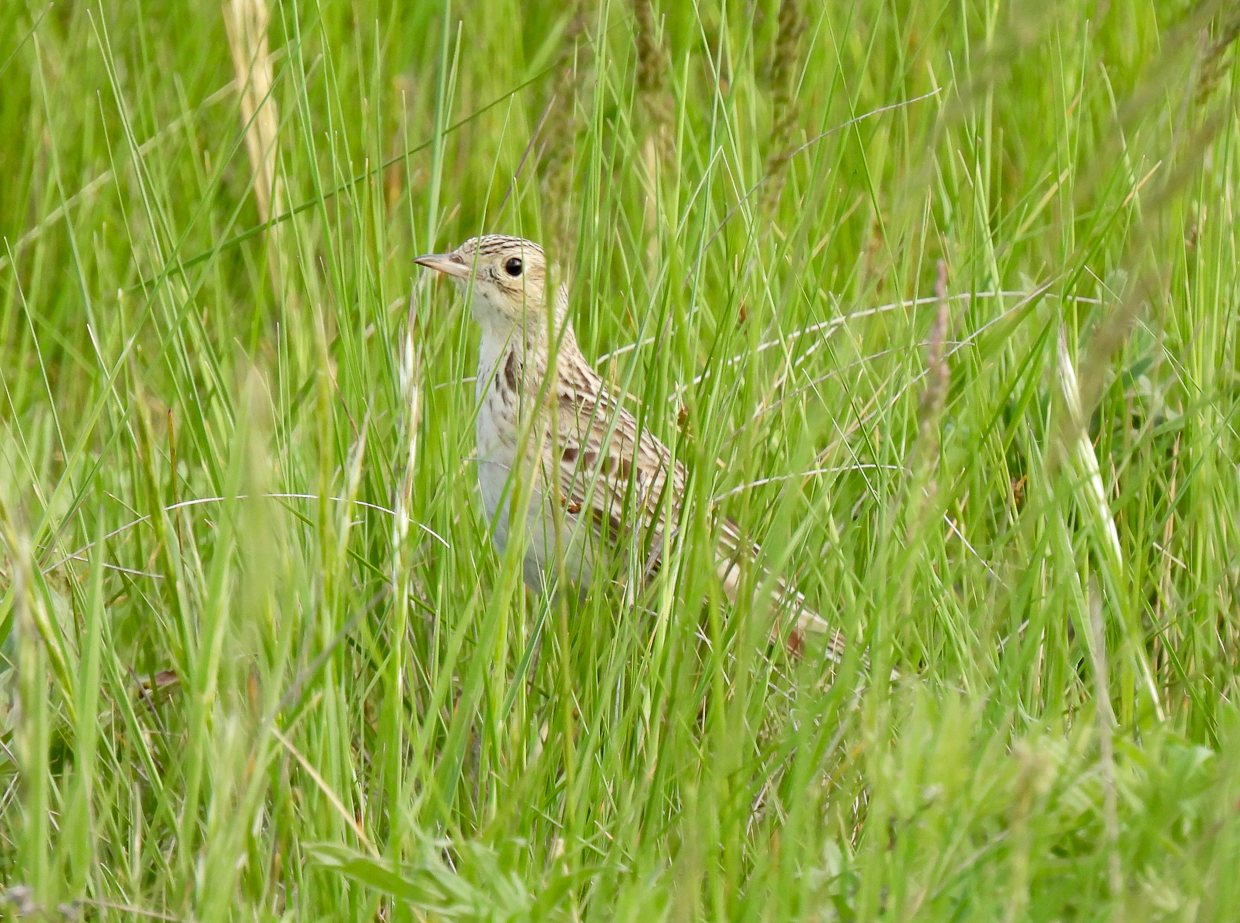
Sprague’s Pipit © Celia Gerry
With patience and persistence, everyone was able to get a view of this endangered songbird in flight. Sprague’s Pipit is such a difficult bird to detect that this was Skye’s first time encountering one in 20 years of birding in Arizona! What a way to end Day 5!
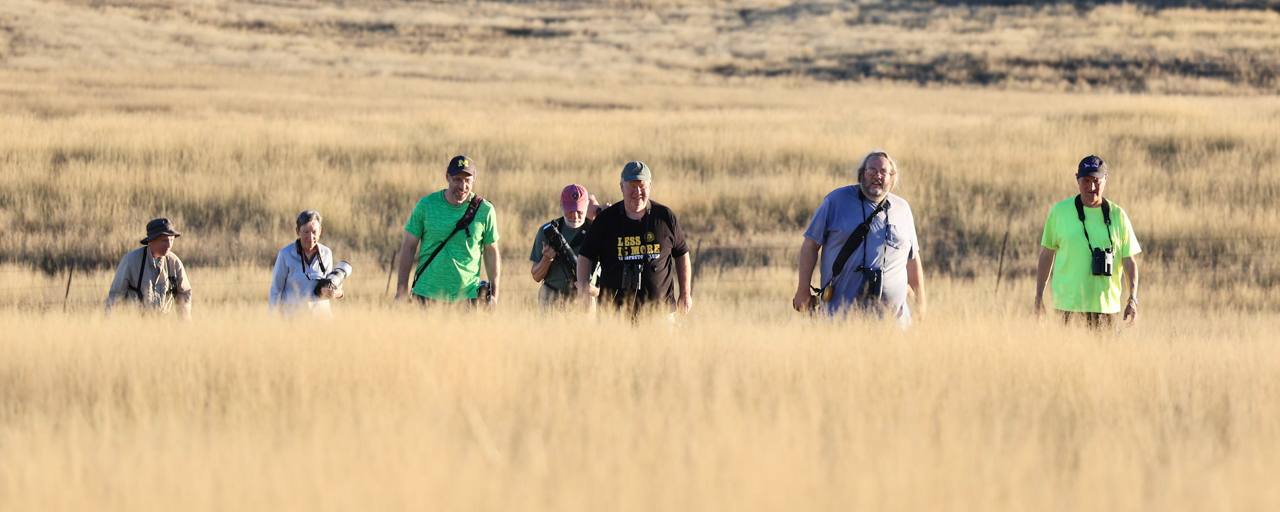
Cienegas birding © Andrew Waud
Day 6: Birderific Whitewater Draw and Thunderstorms over the Chihuahuan Desert
To avoid a gnarly afternoon thunderstorm at our main birding destination, we departed Patagonia early. We first checked out some weedy back roads in Elfrida in pursuit of sparrows and thrashers. While the latter did not deliver at this particular site, we did discover some flocks of Brewer’s Sparrow and Lark Bunting. Both species allowed long looks in good lighting, enough so to study the difference between male and female Lark Bunting in their non-breeding plumage.
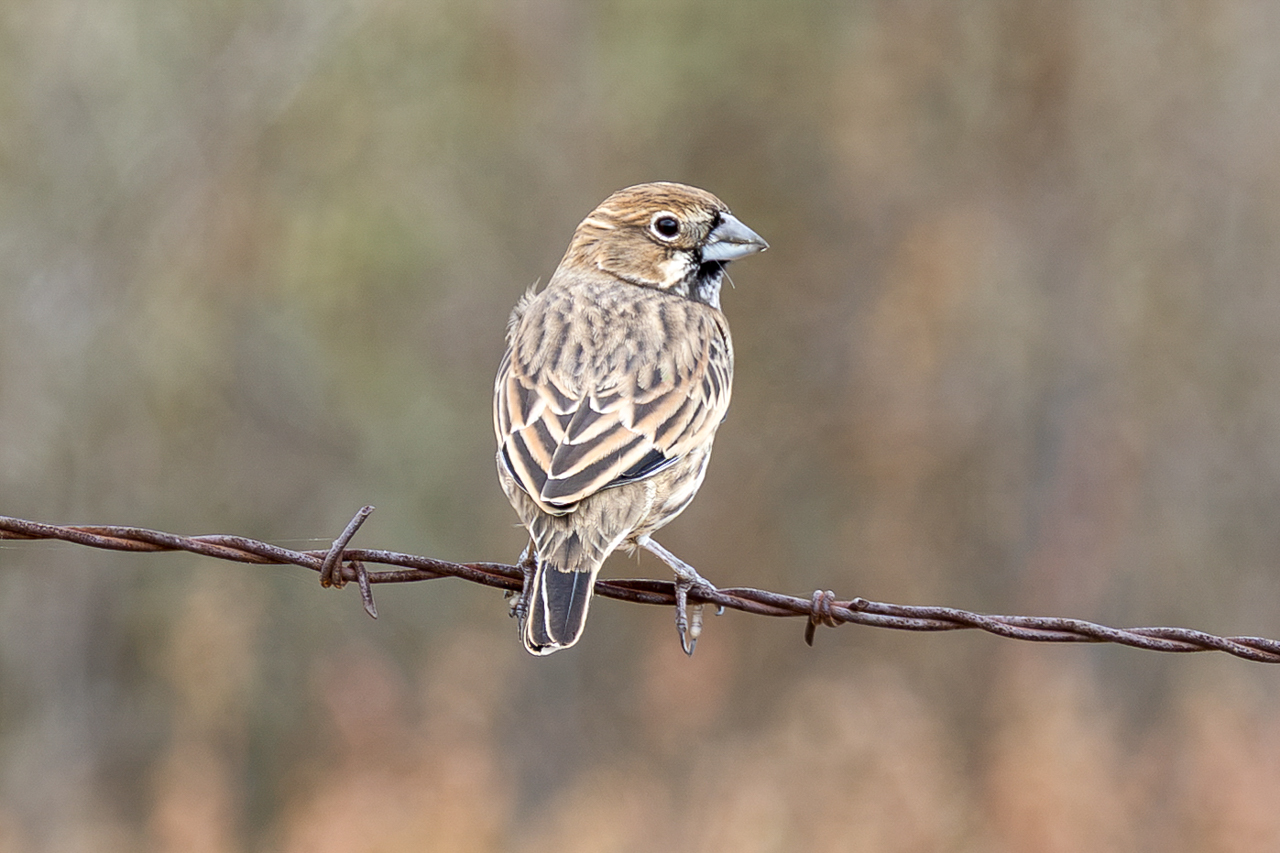
Male Lark Bunting © Carolyn Erb
We then hit up our big stop of the day: Whitewater Draw Wildlife Area. And we were not the only birders there, for a mega-rarity has been seen here for the past week. The famous Slaty-backed Gull, Arizona’s first-ever record, was perched on a telephone pole as it surveyed the ground for tasty lubbers.
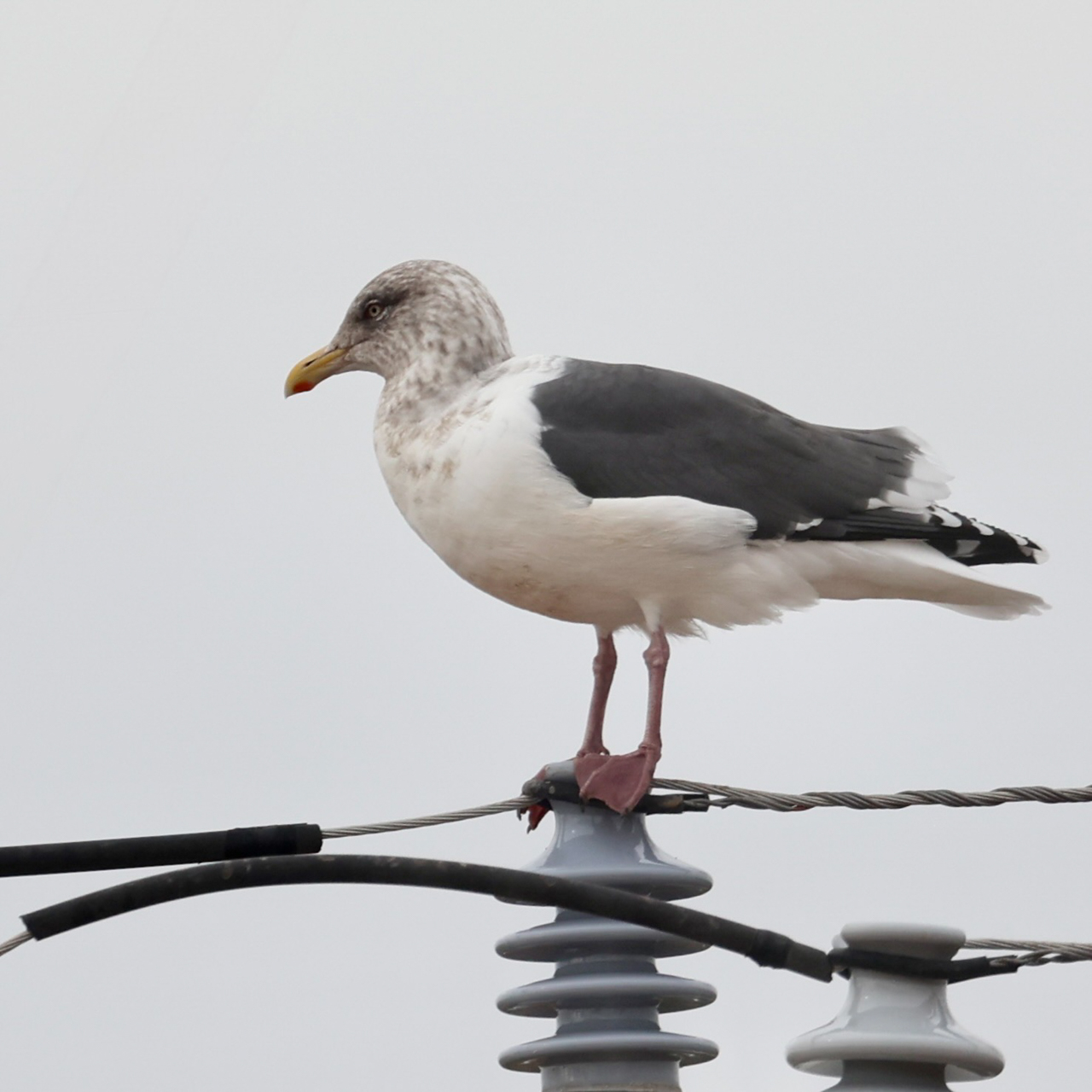
Slaty-backed Gull © Andrew Waud
After excellent views of the gull, we hightailed it to the wetland itself. Here there were Sandhill Cranes by the thousands, plus seven shorebird species and 11 duck species!
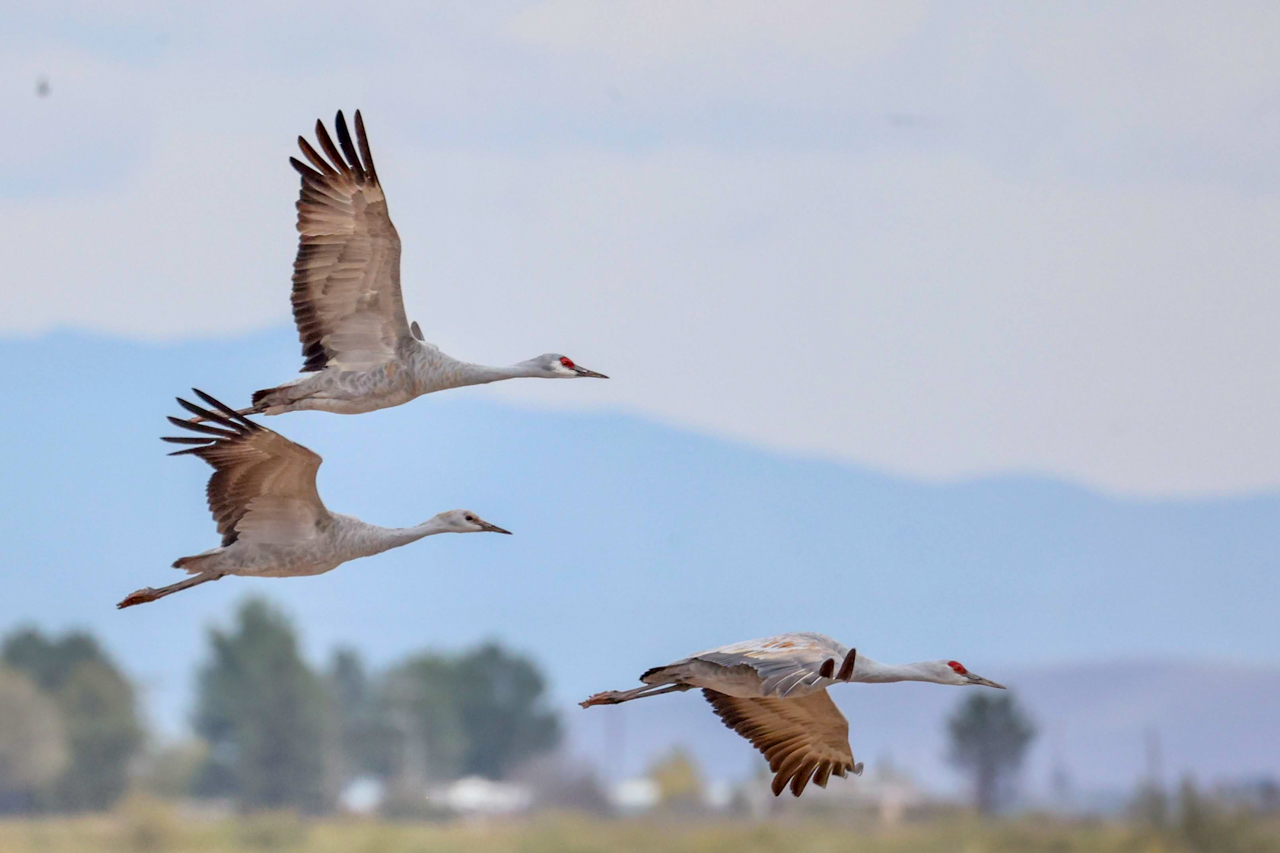
Sandhill Cranes © Andrew Waud
Among the shorebird highlights were Black-necked Stilt (unusual in late autumn) and a pair of graceful American Avocets.
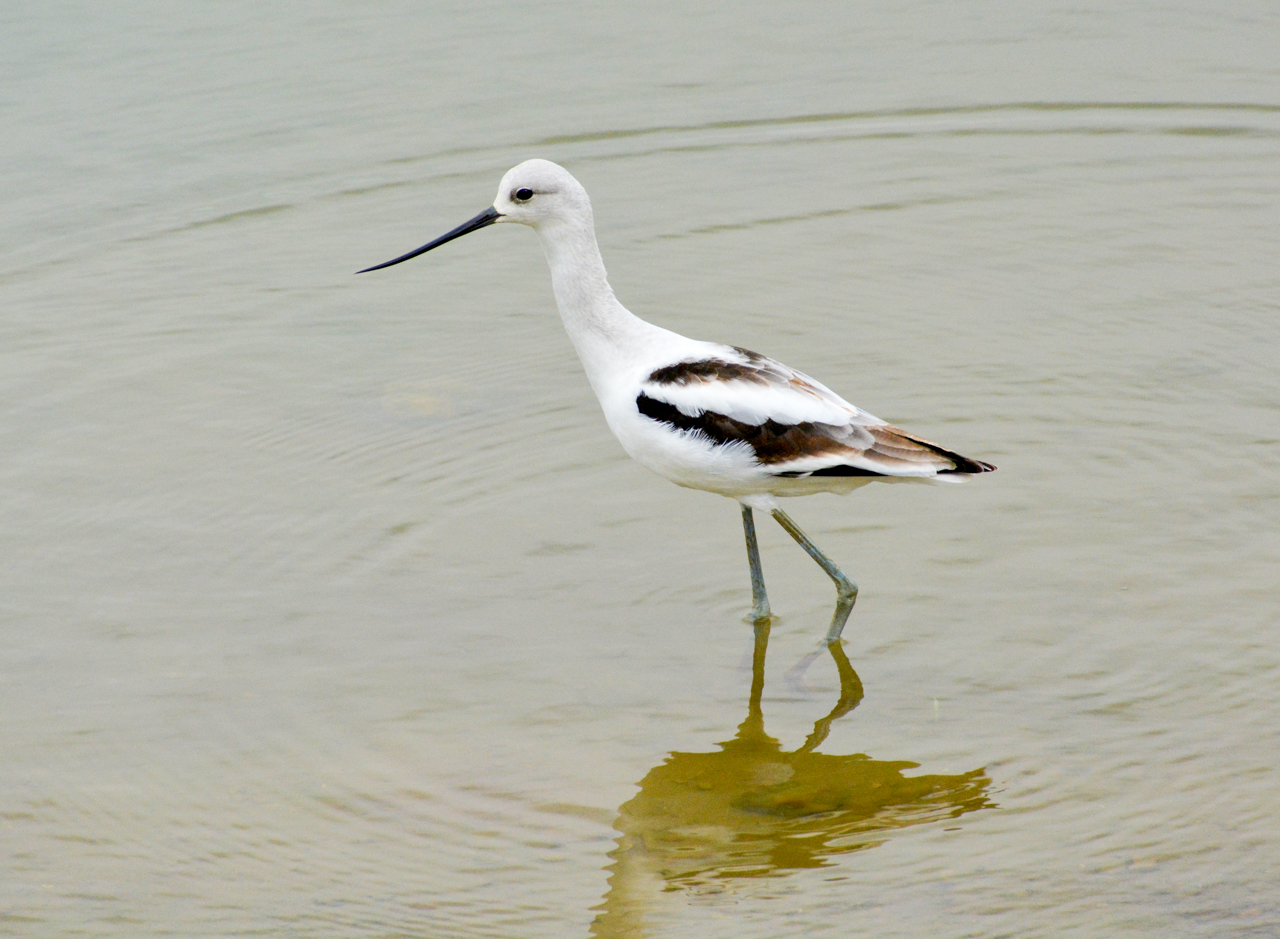
American Avocet © Alyssa DeRubeis
Duck highlights were a local specialty (Mexican Duck) and some less common divers like Canvasback and Redhead. In total we had 55 species at Whitewater Draw. And in the desert scrub near Whitewater Draw, we closely studied a Bendire’s Thrasher. This species has declined by 78% since the 1960s and has its core global range in Arizona. A weakly decurved and short light-based bill, triangular breast spots, and warm flanks are all diagnostic traits for Bendire’s Thrasher.

Bendire’s Thrasher © Victoria Chaussee
What a breathtaking scene on our drive to Portal! Dark storm clouds dotted the horizon. Lightning tore across the blue-gray sky, which contrasted with the yucca-rich Chihuahuan Desert and bright rainbow. Frankly, it didn’t even look real. More surprising is the time of year this storm was occurring; thunderstorms are expected in the monsoon season, but that ended two months ago. Perhaps this is due to the strange super El Niño year? Either way, we weren’t going to pass up a good photo opportunity!
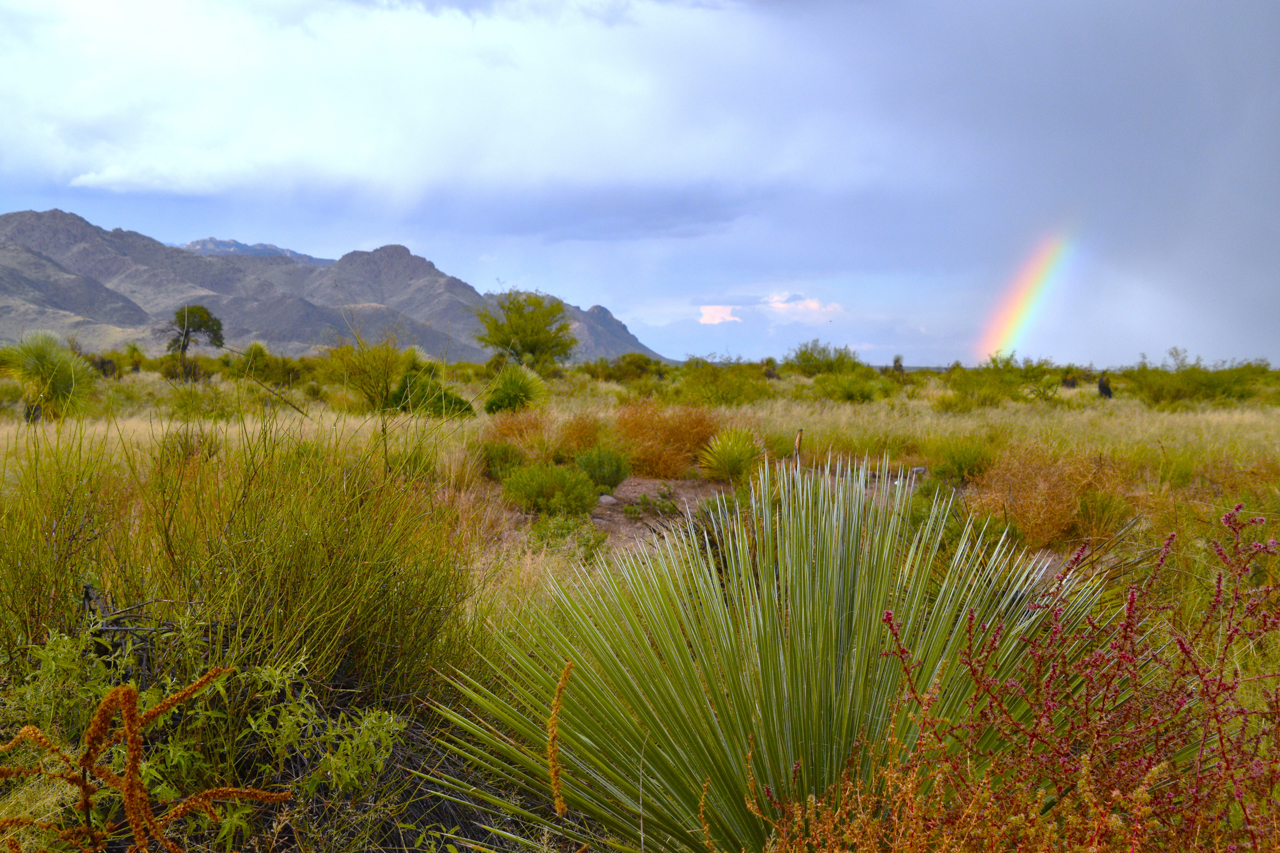
Rainbow near the Chiricahua Mountains © Alyssa DeRubeis
When we arrived in Portal, it had resumed raining. But we simply couldn’t wait to bird this incredible bird-rich town! Dave Jasper’s feeders had been hosting a slough of hummingbirds, so we darted up to his place. Patience paid off. Once it stopped raining, the feeders were teeming with birds! Most bizarre was a very late Berylline Hummingbird (an uncommon monsoon season species).
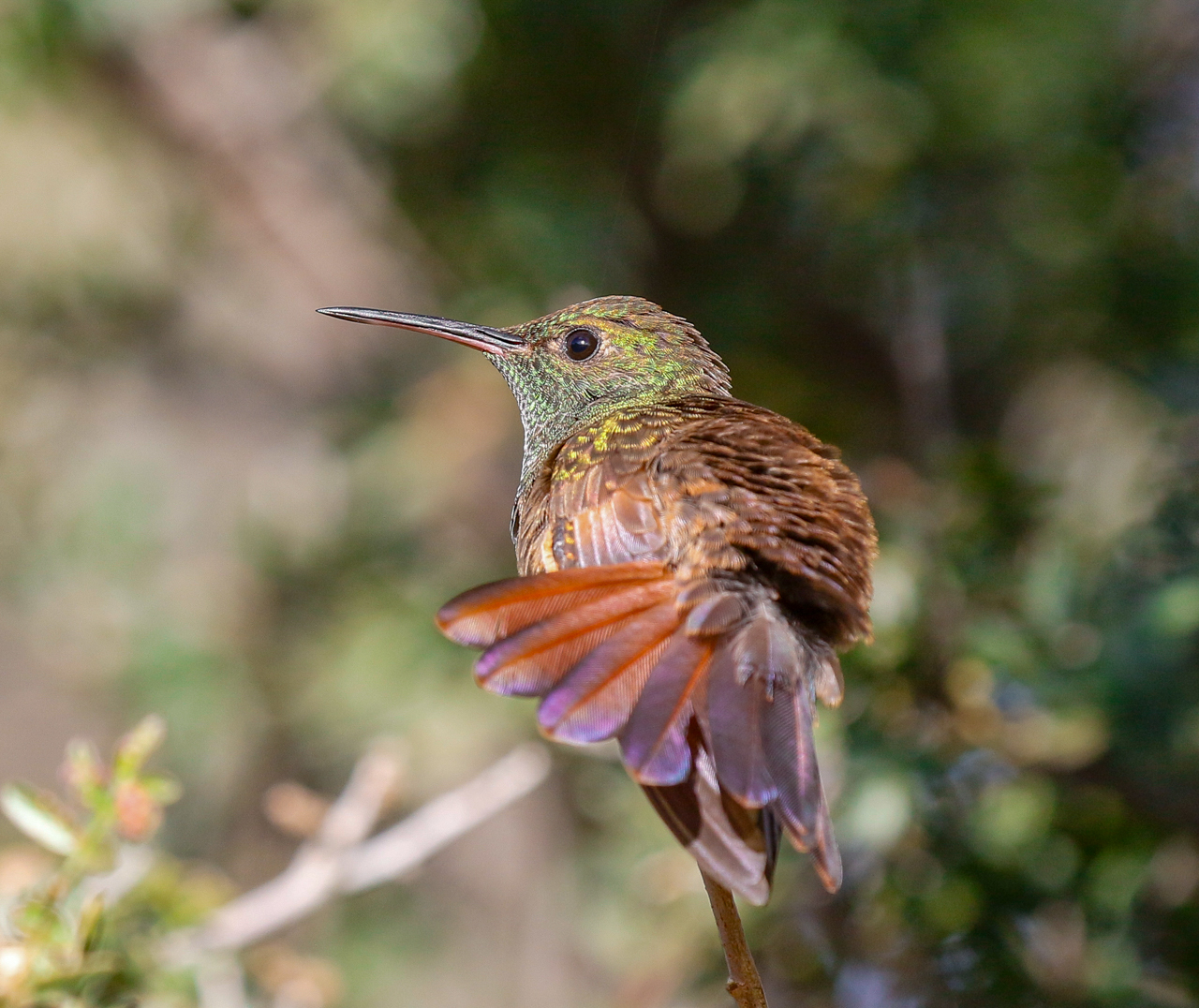
Berylline Hummingbird © Skye Haas
Colossal Blue-throated Mountain-gems demanded our attention in addition to many confusing female hummingbirds. Most were Anna’s, yet sprinkled in were Broad-billed, Broad-tailed, Rufous, and Rivoli’s. Not to mention all the Pyrrhuloxias–at one time six perched together! Tired, cold, damp, but gleeful, we traipsed back to our lodge for dinner.
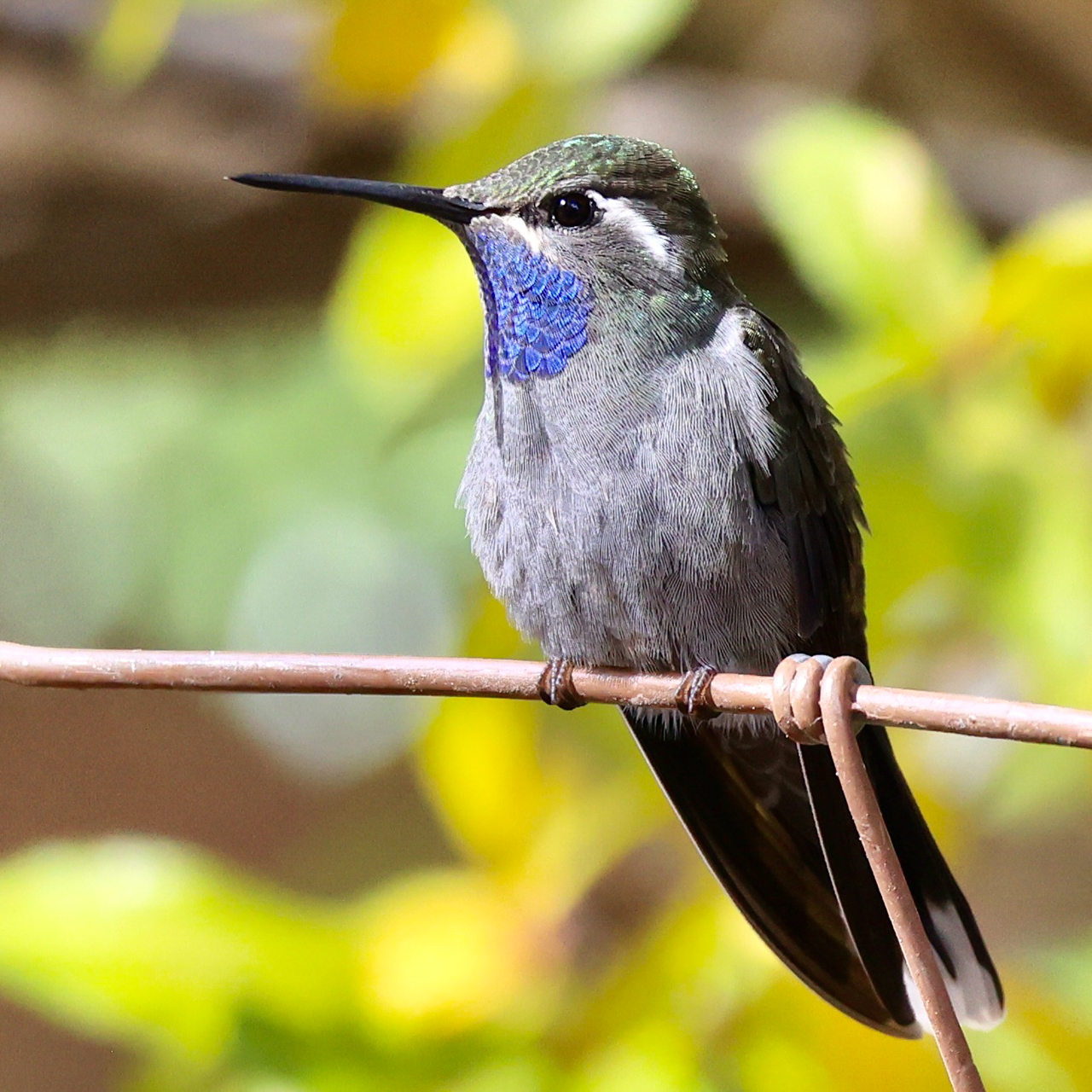
Blue-throated Mountain-Gem © Andrew Waud
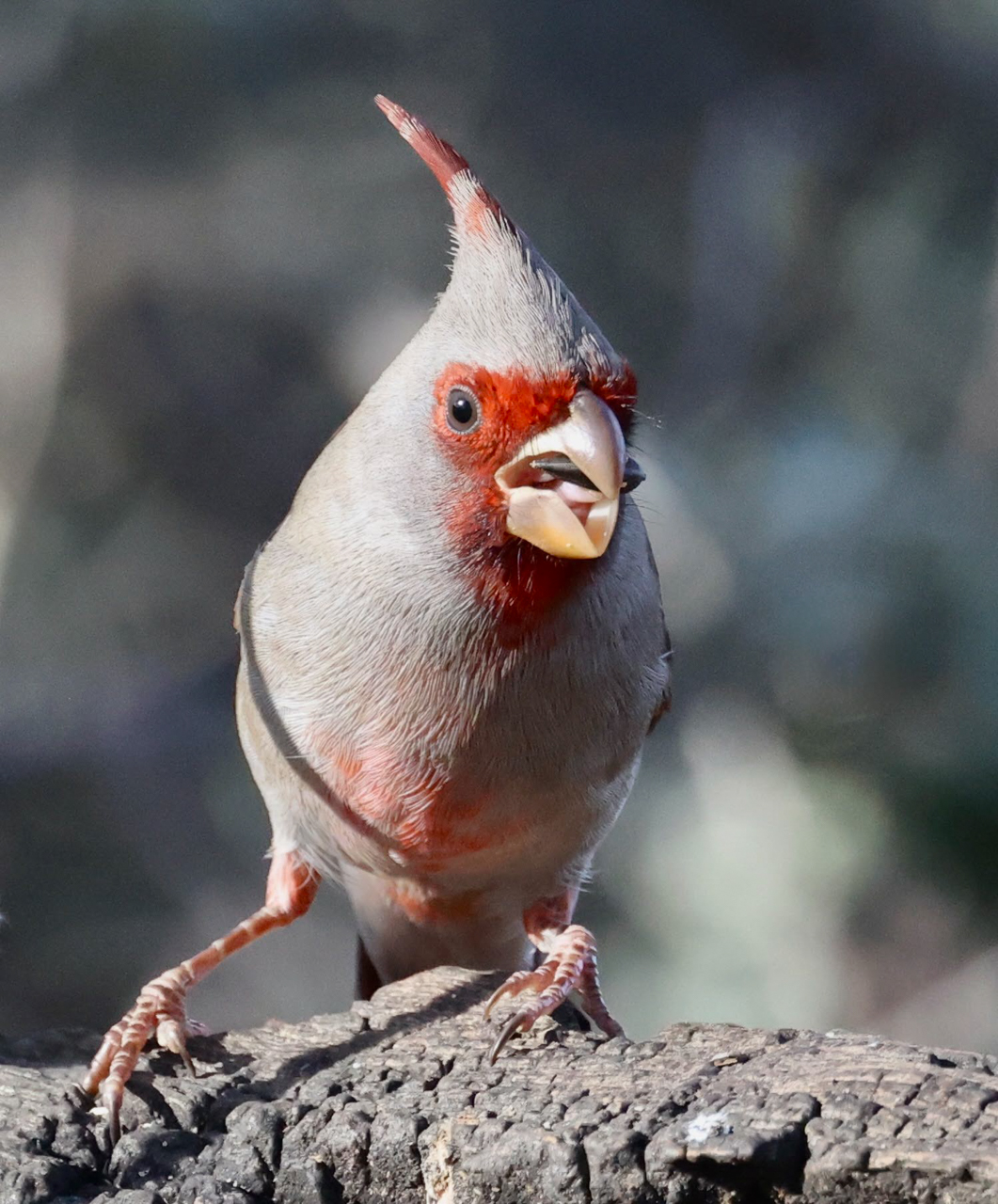
Male Pyhurrloxia © Andrew Waud
Day 7: Up into the Chiricahuas
We explored the last of the habitats for this tour: high-elevation fir-pine forest. Today the mountain songbird irruption was most spectacular! Our trek upward started with a couple of pairs of Cassin’s Finches that were perched on roadside snags. This is the montane look-alike of the more widespread Purple Finch. While both are scarce winter visitors, it was easy to observe the peaked crown and sharp bill unique to Cassin’s Finch.
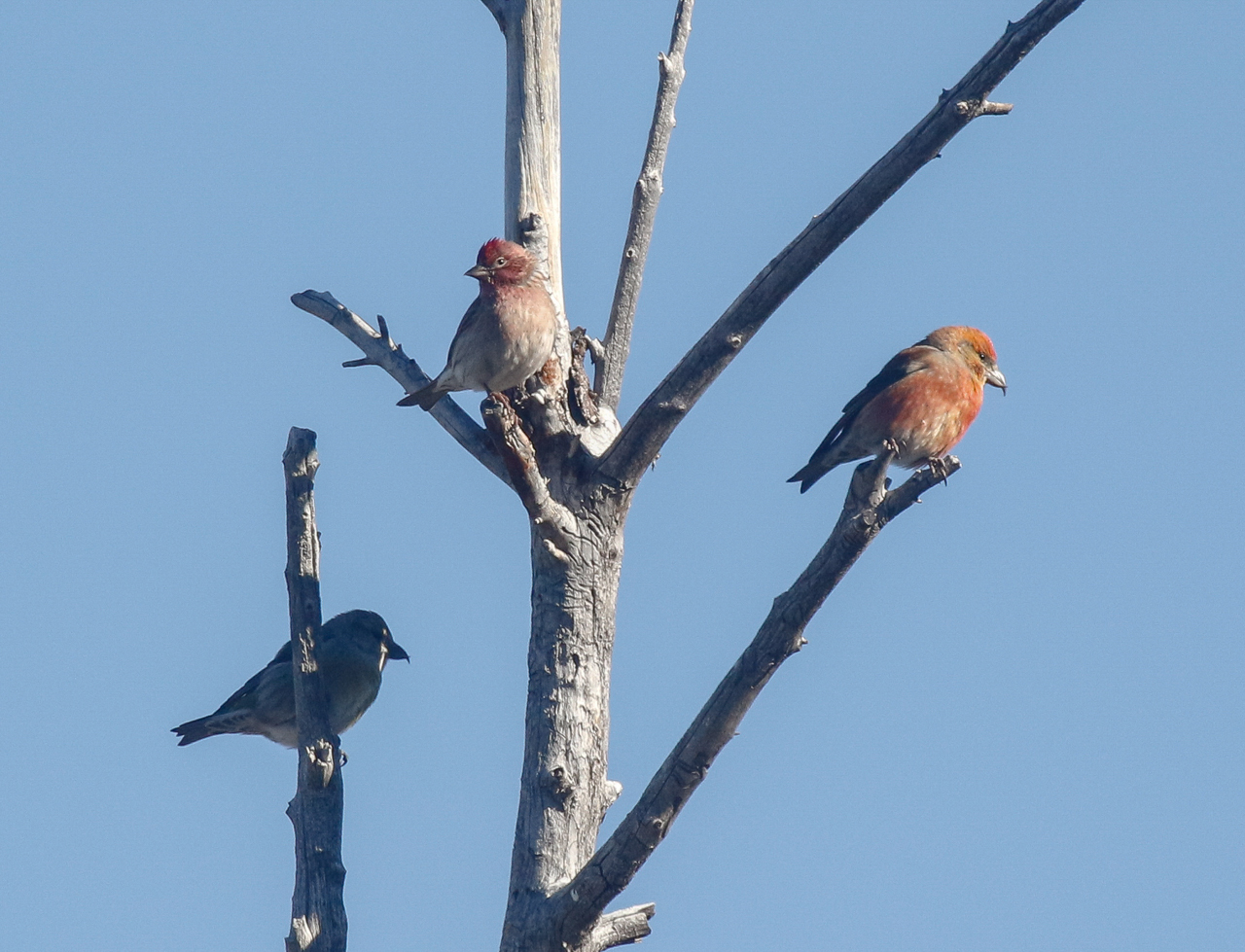
Cassin’s Finch (center) and Red Crossbills © Skye Haas
More rewarding were flocks dozens strong of Red Crossbills that came swooping along the ridges, calling all the way. On two occasions the crossbills posed nicely in the sun for us. To Skye’s ear, these are likely the Type 2 (Ponderosa Pine) subspecies, not the local breeding Sierra Madre (Type 6).
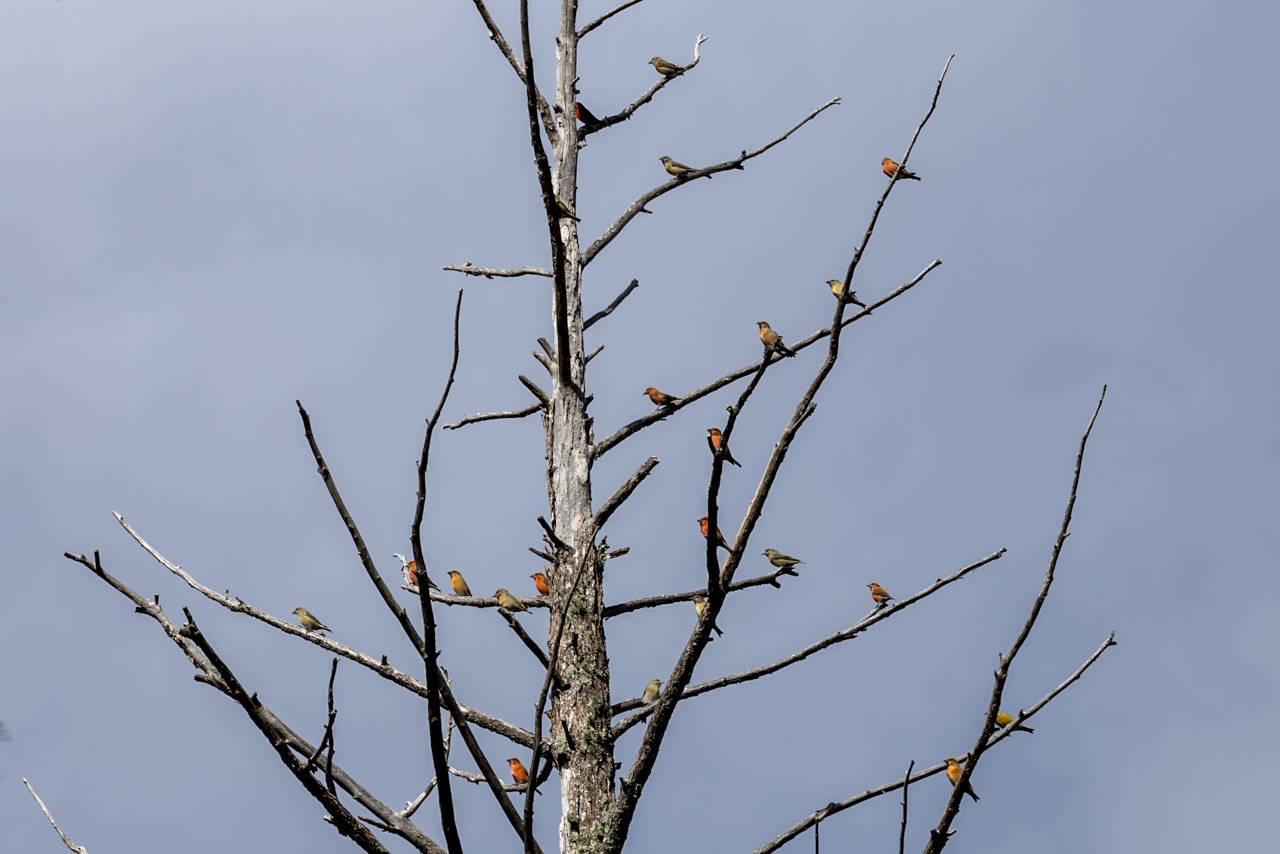
Red Crossbills © Carolyn Erb
A couple of species really wore gray and black well. It took several tries before we all got great looks at the very-localized Mexican Chickadee. Like chickees elsewhere in the US, Mexican Chickadees are curious but hyperactive members of mixed flocks. Other small passerines traveled in multi-species flocks, from Red-breasted Nuthatch to Bushtit to a quick look at a stunning male Olive Warbler!
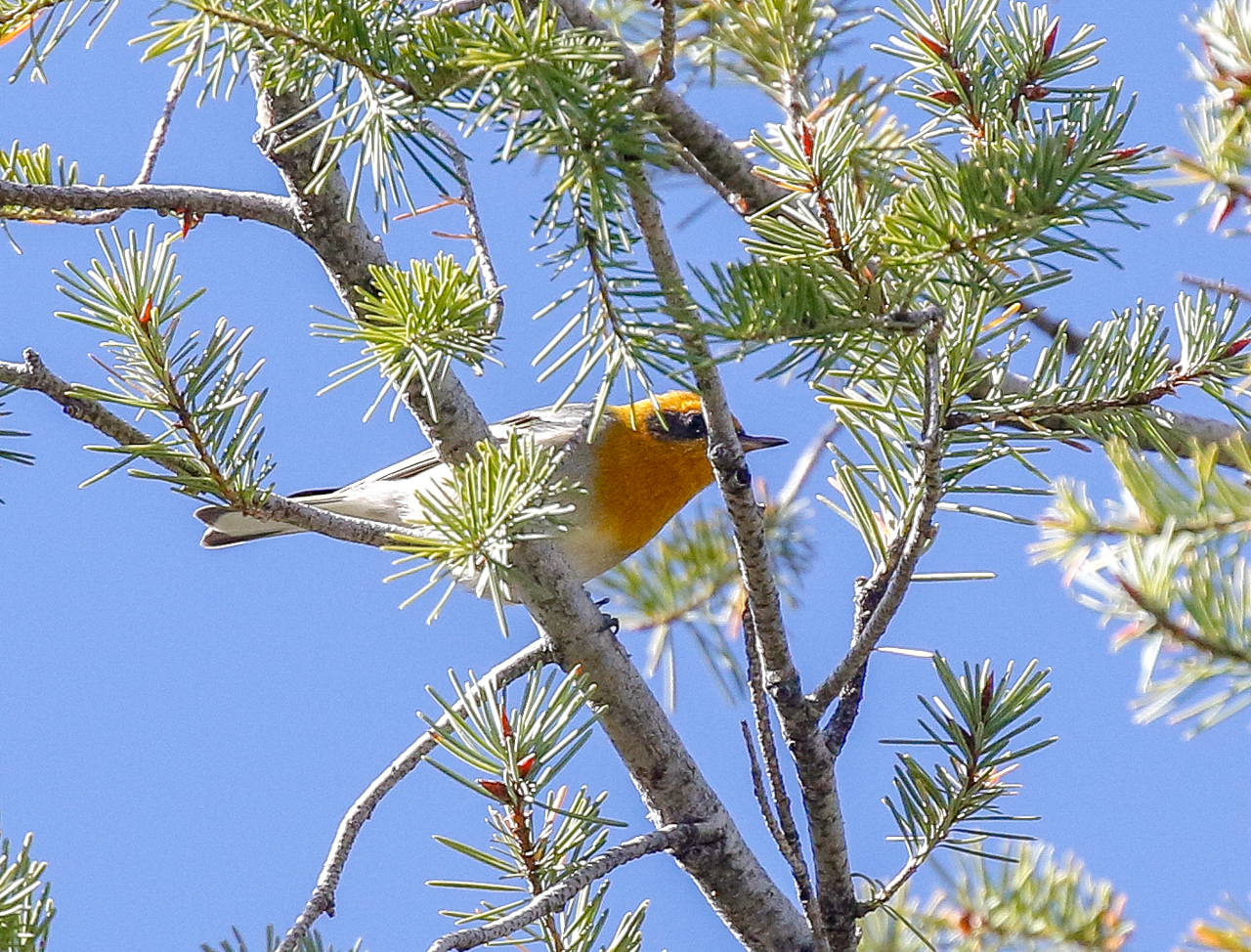
Male Olive Warbler © Skye Haas
But that’s not all. A gregarious group of Clark’s Nutcrackers approached us and were even kind enough to sit right out in the open. It’s not every day that you get to see such an unusual Arizona visitor cooperate so well. Indeed, today we were blessed with many good looks at great birds!
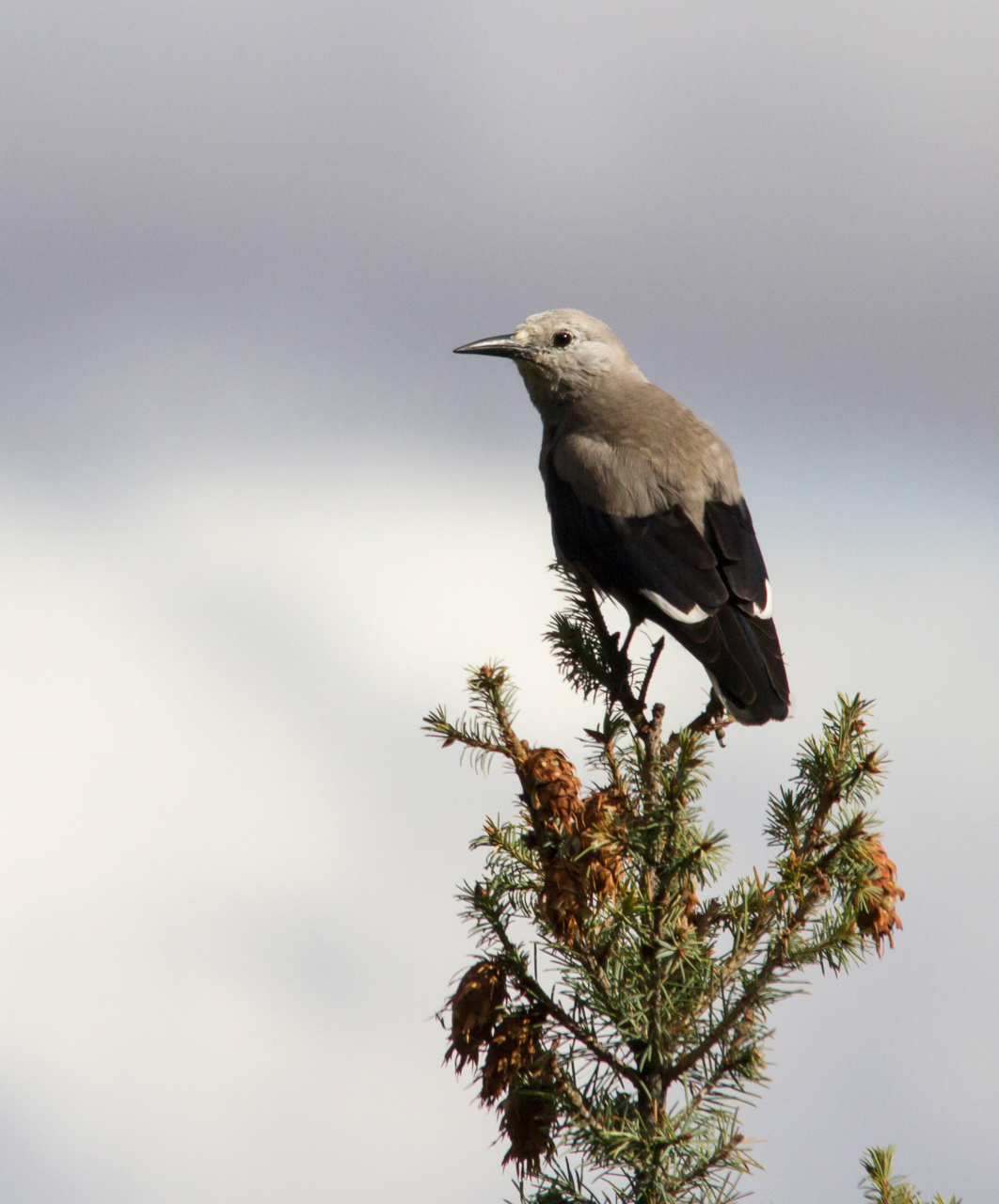
Clark’s Nutcracker © Kevin Rysiewski
Not a bird, but we were entertained by the gobs of Yarrow’s Spiny Lizards warming up on a rock face. We were surprised they were out when it was near-freezing with the windchill, so it must have been a very hot rock!
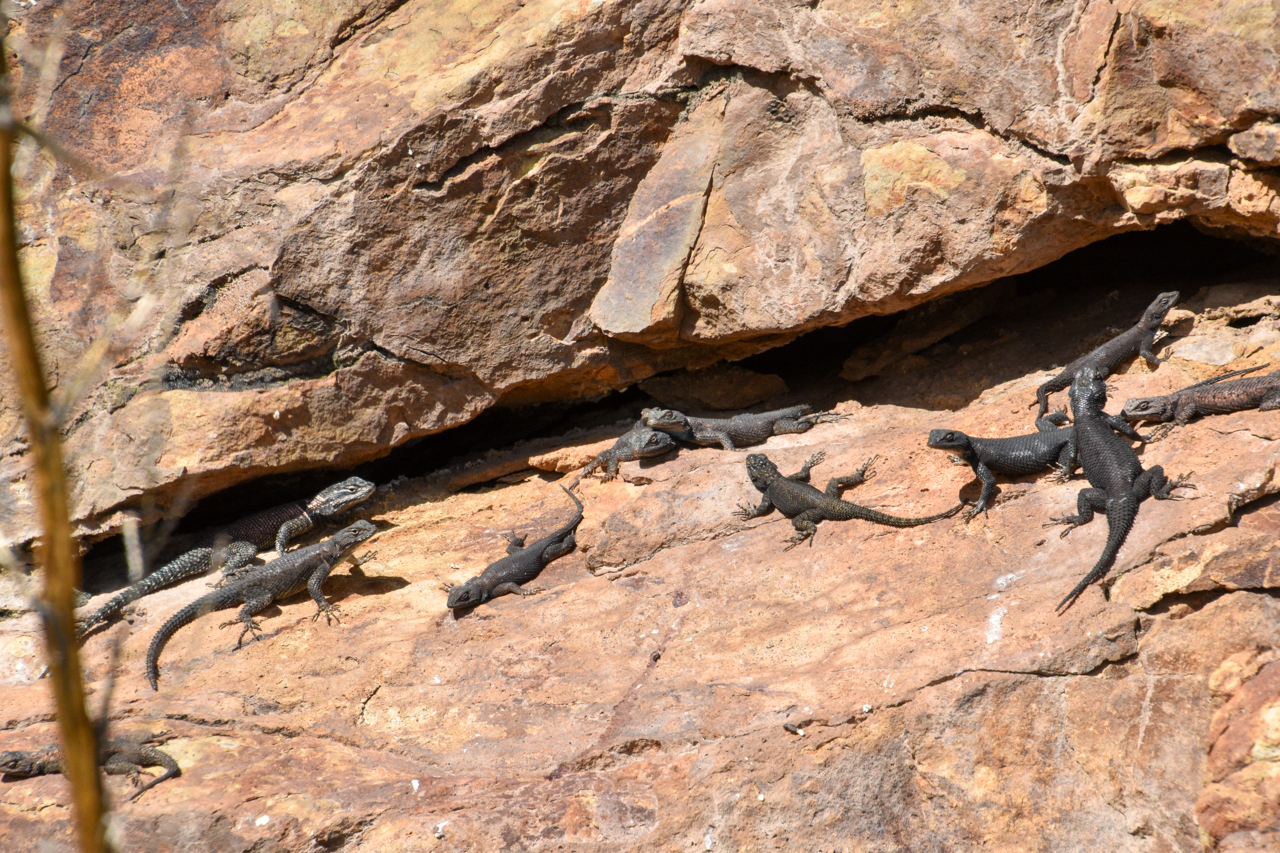
Yarrow’s Spiny Lizards © Alyssa DeRubeis
Day 8: Portal and Out
It was our last day in Portal, but we made the most of the morning. Just a short walk down the road from our lodge awaited two noteworthy birds, a Western Screech-Owl and a rather late Western Tanager (the latter following this tour’s theme of lingering migrants/breeders).
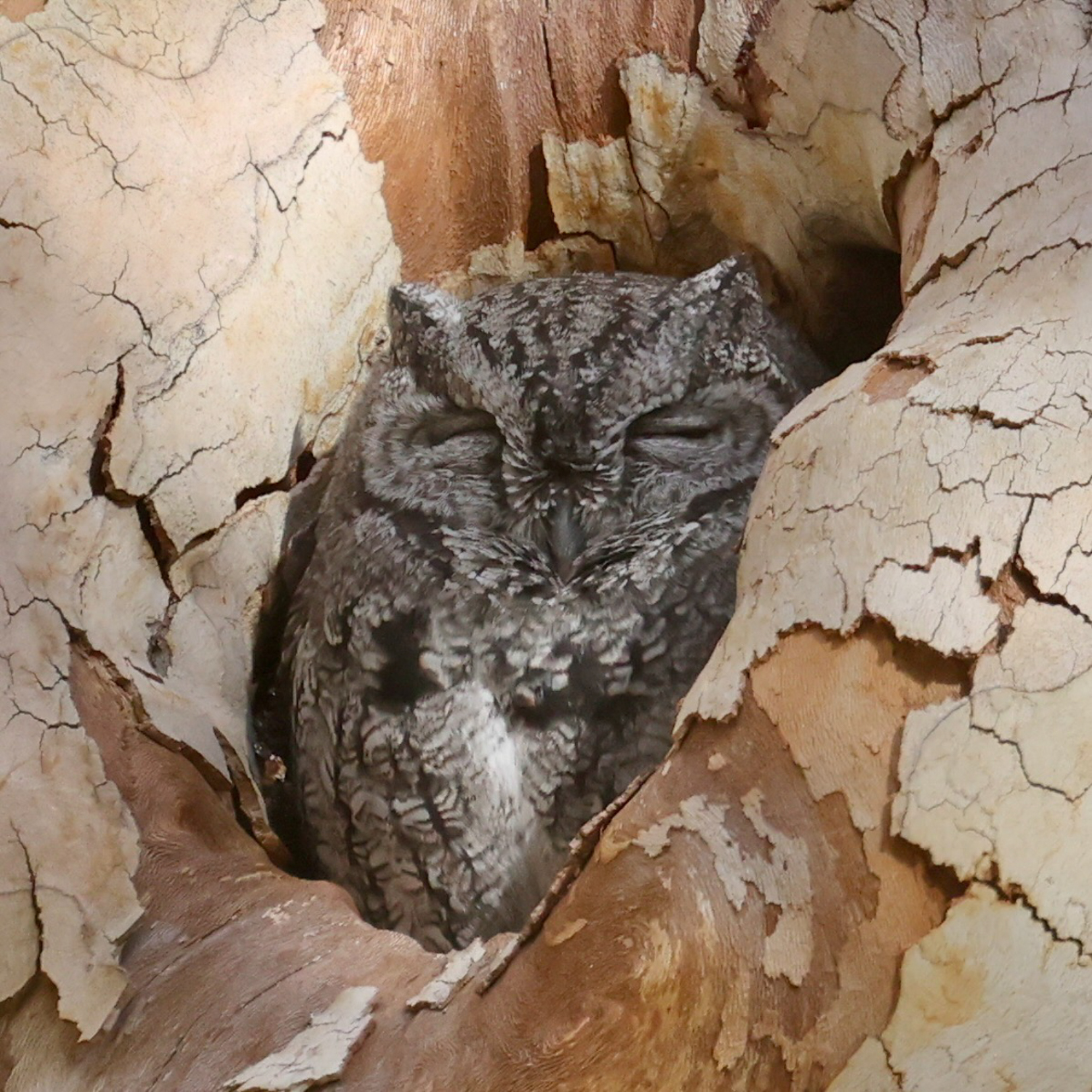
Western Screech-Owl © Andrew Waud
A tour of three local bird feeding stations yielded phenomenal views of some favorites, namely Blue-throated Mountain-Gem, Bridled Titmouse, Cactus Wren, Ladder-backed Woodpecker, Gambel’s Quail, Canyon and Spotted Towhees. A herd of Javelina moseyed near the Cave Creek Ranch feeders, which provided us the best view of this species on our tour.
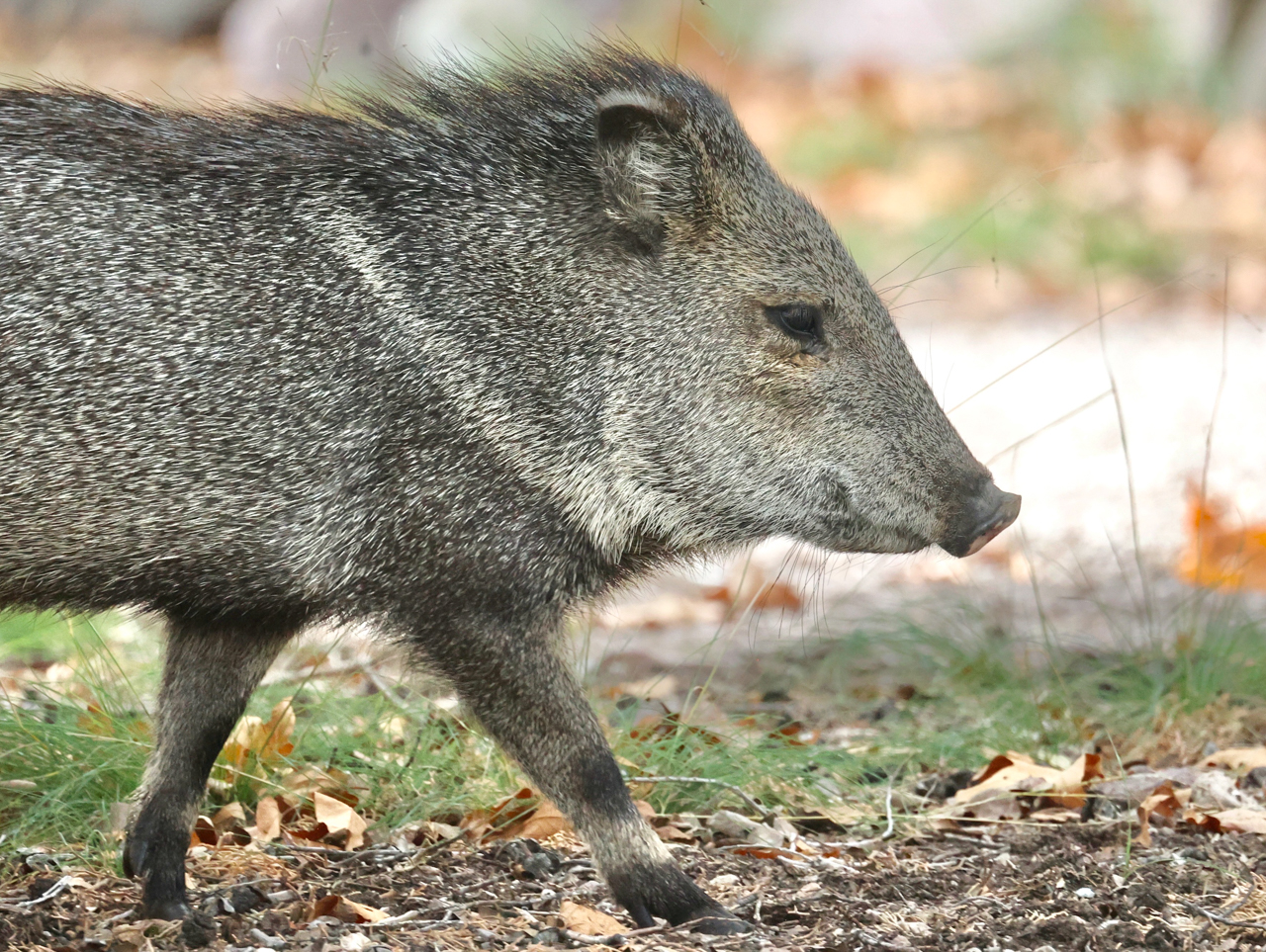
Javelina © Andrew Waud
Our very last stop was at the Willcox Playa’s saline Lake Cochise. The lighting had that perfect afternoon glow as we ogled at numerous American Wigeons (including a unique color morph, the “storm wigeon”) among 9 other waterfowl species. Each time a young Northern Harrier flew above the lake, weary Long-billed Dowitchers and Greater Yellowlegs were the first to flush.
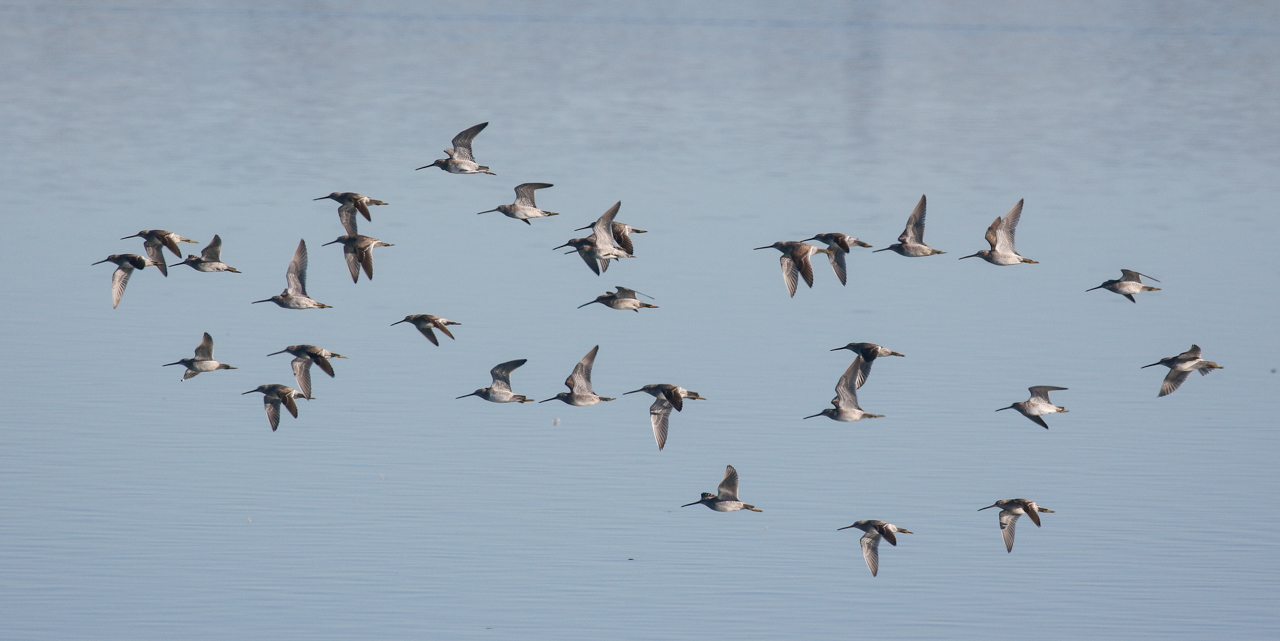
Long-billed Dowitchers © Skye Haas
A single Yellow-headed Blackbird posed on the grassy edge, his head bright as the sun. As we left, nine Wilson’s Snipe scattered and refused a satisfactory view (no surprise for a snipe). Watching this busy birdscape reminded us of the importance of habitat conservation, such as this 555-acre Wildlife Area (managed by the Arizona Game and Fish Commission).
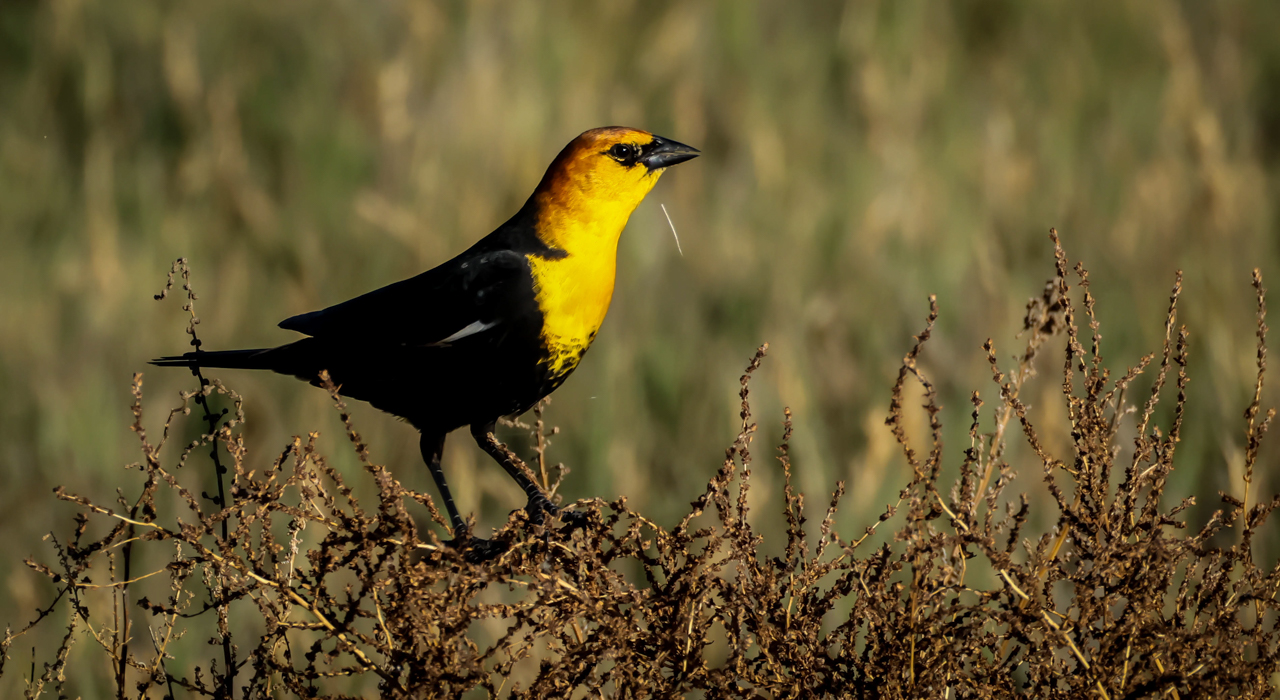
Male Yellow-headed Blackbird © Kathleen Waldron
Thank you to our incredible 10 participants! We appreciate your trust in us, as well as your patience, inquisitiveness, and sense of humor.
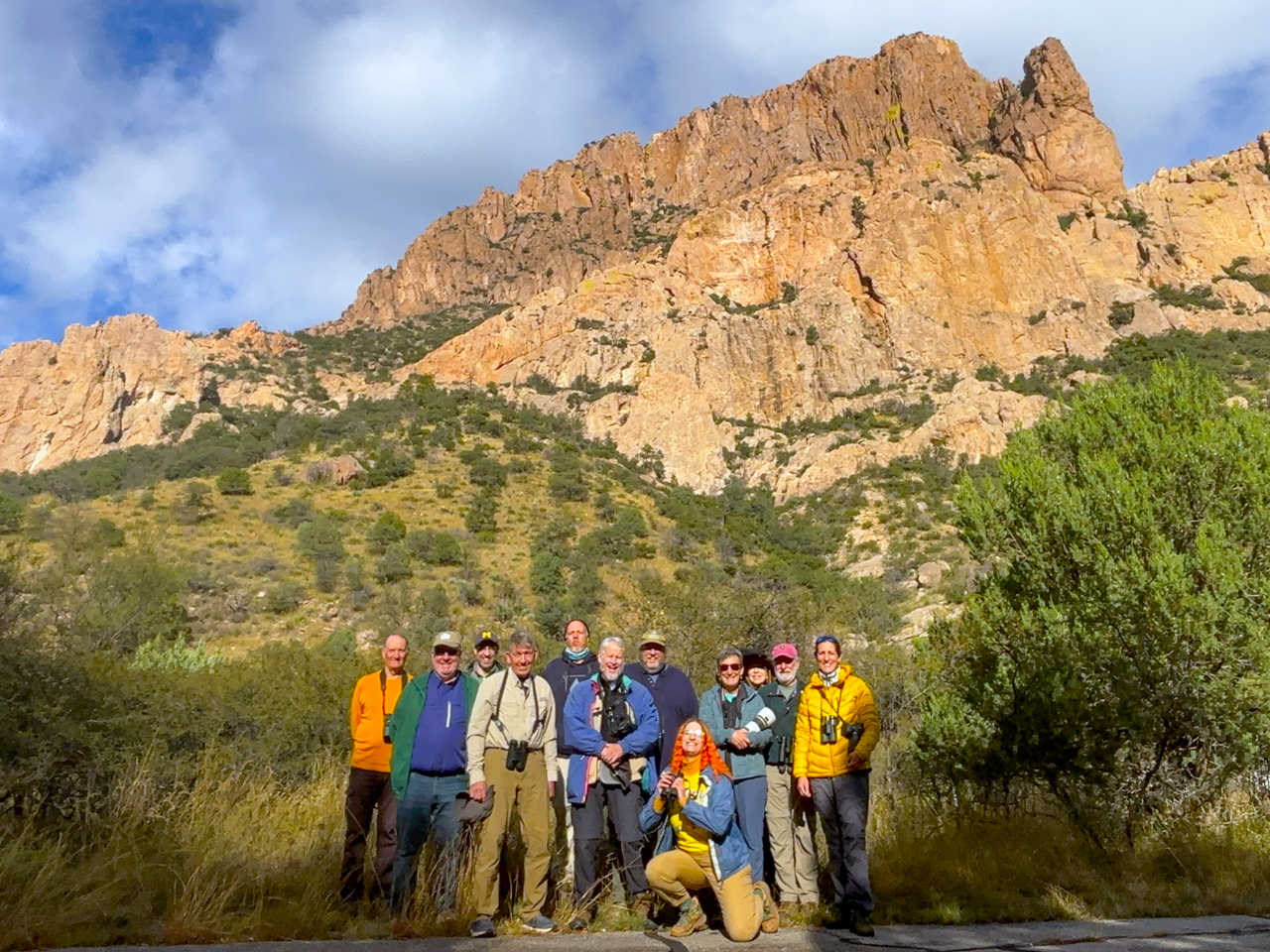
Group in Cave Creek Canyon © Alyssa DeRubeis
Leave a Reply