Ultimate British Columbia: Coast & Grasslands Trip Report (May 31 – Jun 12, 2026)
Day 1
The tour started at our airport hotel, where we enjoyed a welcome dinner and the opportunity to get to know our fellow travellers before setting off on our British Columbia adventure.
Day 2
We began the day at Brunswick Point on the Fraser River Delta, arriving just as the high tide started to recede. The timing could not have been better. As the mudflats slowly emerged, shorebirds began to appear, and before long we were enjoying a superb morning of birding. A small flock of Red Knots fed along the shoreline alongside elegant Hudsonian Whimbrels, while Black Oystercatchers and Black-bellied Plovers added to the spectacle. Closer inspection revealed smaller numbers of Western Sandpipers, Semipalmated Plovers, and Sanderlings busily probing the mud for food. Five species of gulls were also present, including both Bonaparte’s and Short-billed Gulls.
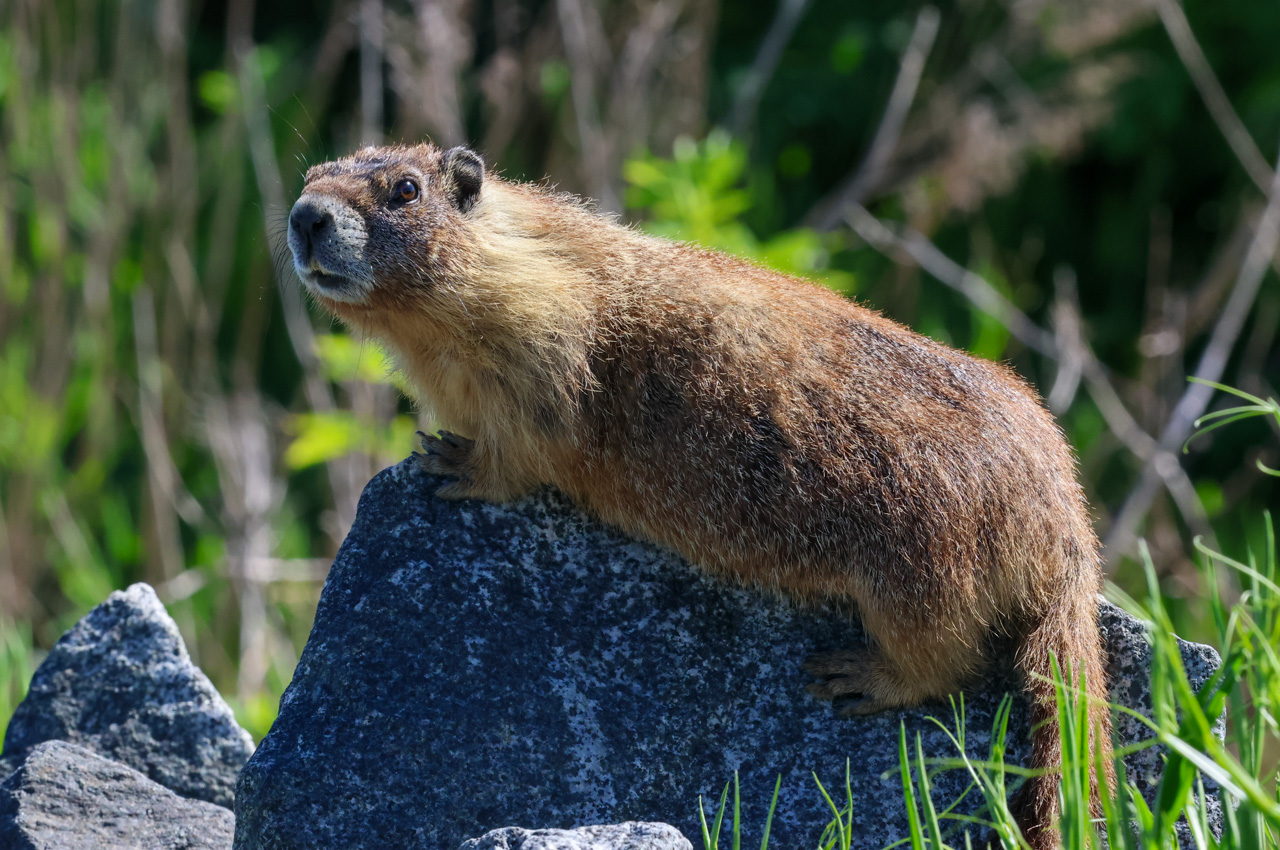
Yellow-bellied Marmot © James Lees
The marshes and scrub proved equally productive. Rufous and Anna’s Hummingbirds zipped through the vegetation, flashing brilliant colours in the morning light, while Marsh Wrens seemed to be singing from every direction. One of the morning’s most unexpected highlights came in the form of several Yellow-bellied Marmots, which gave us remarkably close views as they basked and fed nearby.
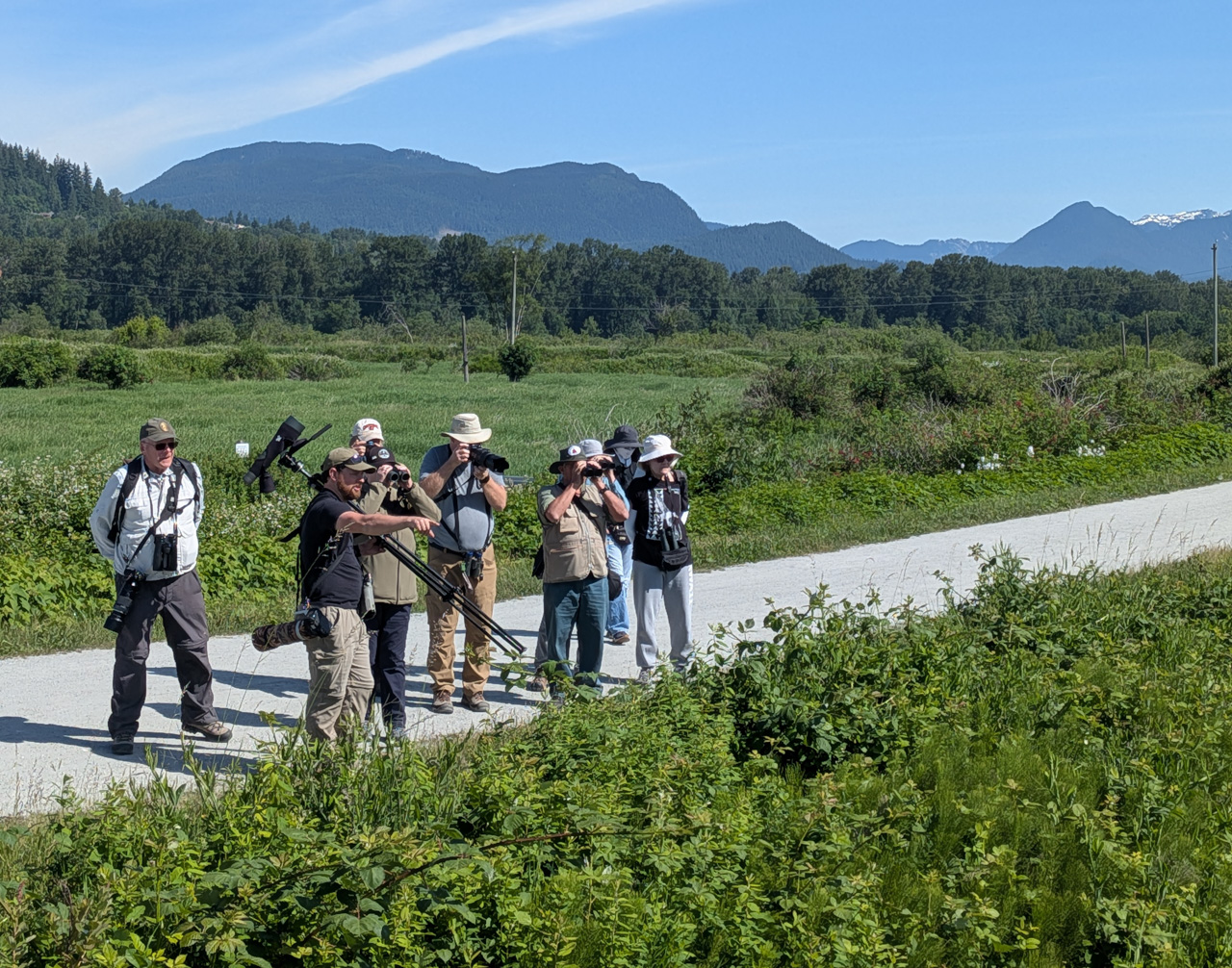
Birding in Vancouver © James Lees
From there, we headed inland to Colony Farm Regional Park, where a completely different cast of birds awaited us. The trails were alive with song as Spotted Towhees, White-crowned Sparrows, and Warbling Vireos filled the air with sound. Reaching the river, we found several Willow Flycatchers and Eastern Kingbirds actively hunting insects, while the skies above were busy with swallows. Violet-green, Cliff, and Northern Rough-winged Swallows swooped low overhead, providing excellent views. Huge flocks of Band-tailed Pigeons gathered wherever berries were abundant, allowing us to watch their surprisingly entertaining antics at close range. Common Yellowthroats appeared regularly from the dense vegetation, and flocks of Cedar Waxwings added a touch of elegance as they moved through the treetops.
After lunch, we made our way into the hills to explore the beautiful forests of Minnekhada Regional Park. Even before leaving the parking lot, we were greeted by the ringing calls of an Olive-sided Flycatcher, a Western Wood-Pewee, and numerous Swainson’s Thrushes. The birding only improved as we ventured deeper into the forest. Brilliant Western Tanagers seemed to glow among the greenery, while several Pacific-slope Flycatchers called from the shadows. We were delighted to encounter both Canada’s smallest and largest woodpeckers on the same walk the tiny Downy Woodpecker and the magnificent Pileated Woodpecker, whose powerful calls echoed through the forest.
At one quiet lake, a Pied-billed Grebe sat attentively on its nest while a handful of Gadwall drifted among the Mallards. Chestnut-backed Chickadees were a constant companion along the trails, and a singing Bewick’s Wren provided prolonged and memorable views from an exposed perch. The afternoon reached another high point when we enjoyed exceptional looks at two striking Black-throated Gray Warblers, followed by a beautiful Wilson’s Warbler glowing bright yellow in the forest canopy.
After dinner, we set out once more in search of a few final highlights. Our first stop produced a breeding pair of California Scrub-Jays, and we were treated to an extraordinary encounter when one bird landed just a few feet away and began catching moths right in front of us. It was a fantastic performance and one of the best views imaginable of this charismatic species.
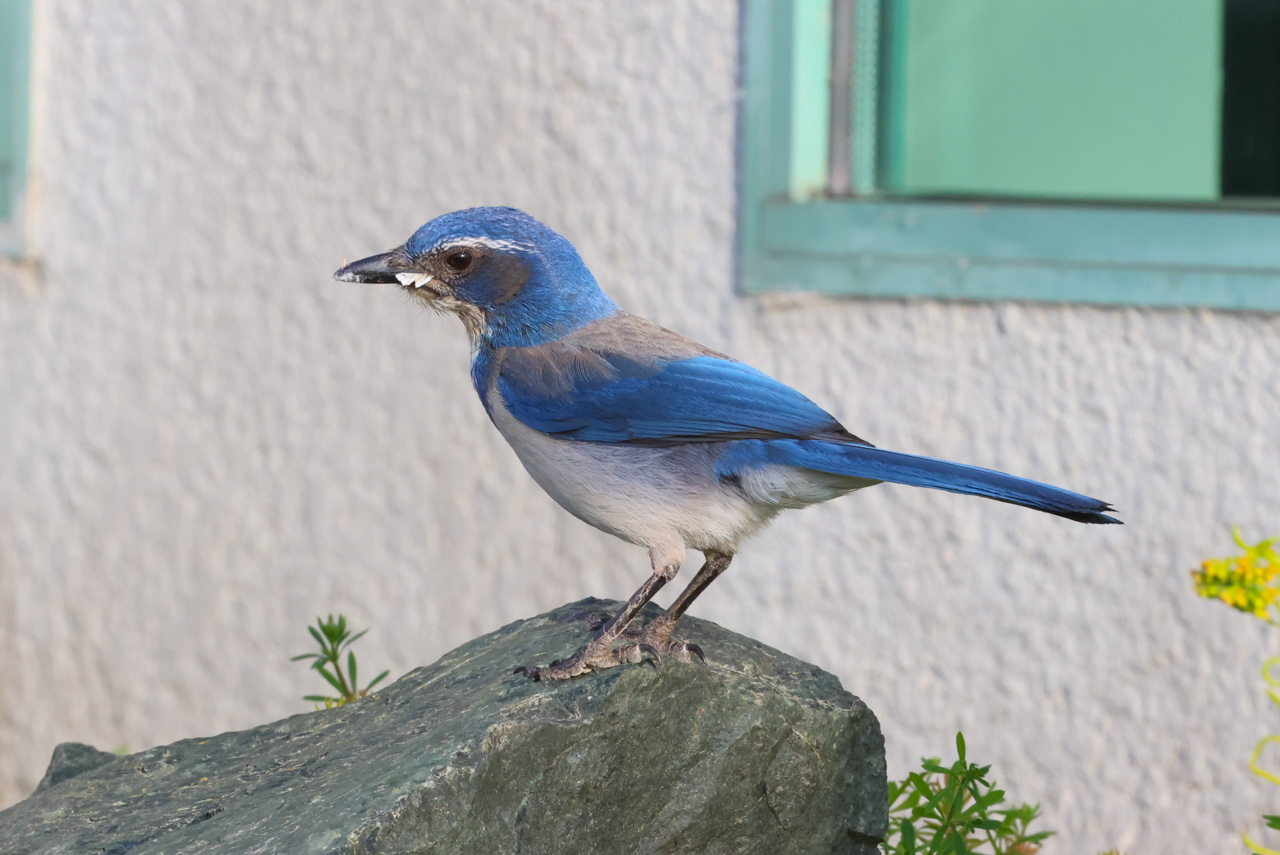
California Scrub Jay © James Lees
As dusk settled, we headed to our final destination of the day. There, in the fading light, a Barred Owl began calling from the forest. After a brief search, we located the bird and enjoyed breathtaking views as it stared back at us from its perch. It was a magical encounter and the perfect finale to an outstanding day.
Day 3
After breakfast, we made our way to Boundary Bay Regional Park for a leisurely walk that quickly turned into an exciting morning of birding. Along the shoreline, we enjoyed excellent views of four Bonaparte’s Gulls and three elegant Caspian Terns resting on the beach. Exploring the surrounding scrubland added even more variety, with Common Yellowthroats, Savannah Sparrows, and Spotted Towhees all making appearances.
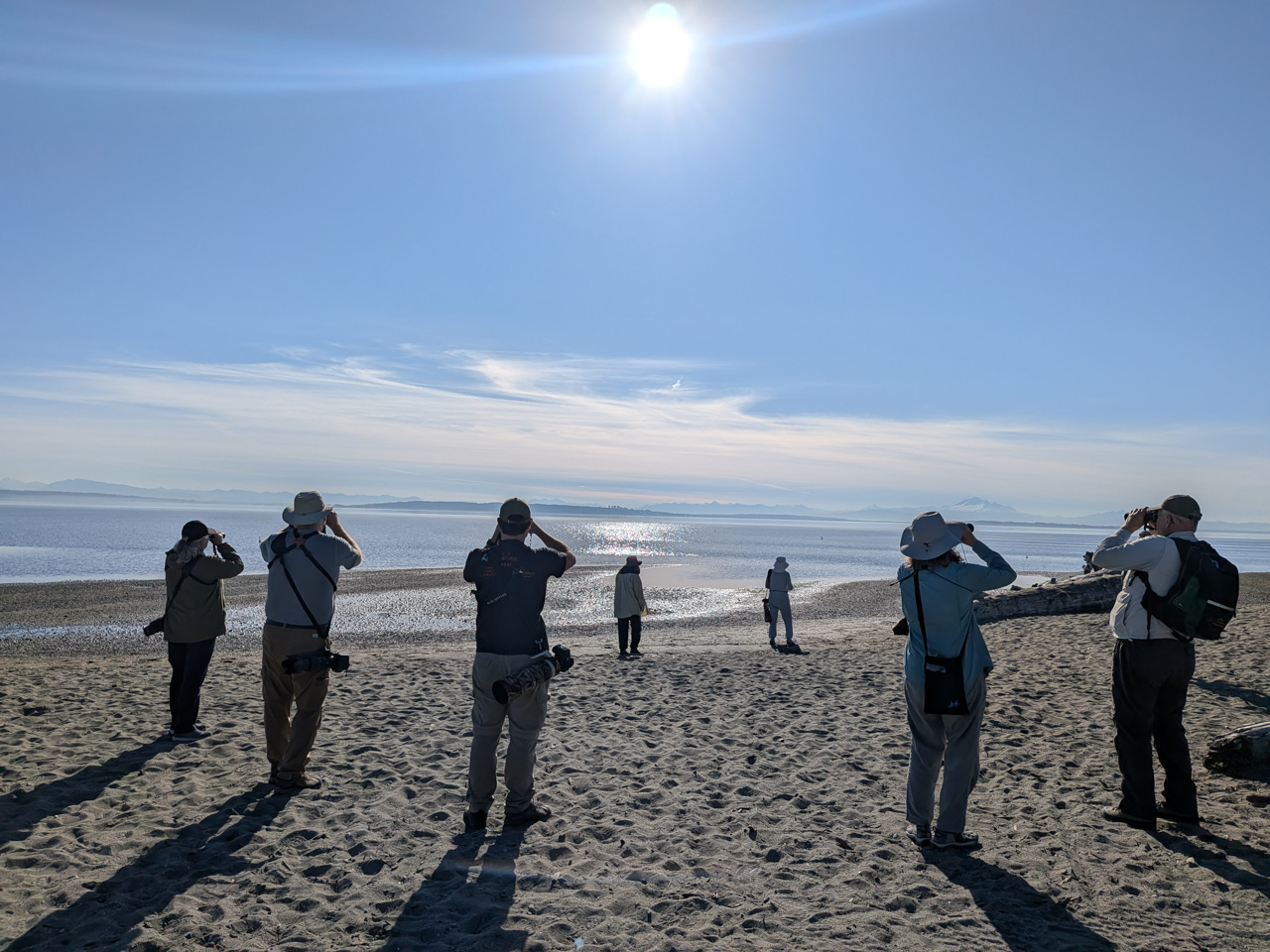
Birding at Boundary Bay © James lees
The real stars of the show, however, were the hummingbirds. Both Rufous and Anna’s Hummingbirds put on an almost continuous aerial display, dazzling us with their speed and agility. We watched in amazement as these tiny birds rocketed hundreds of feet into the sky before plunging back down in sweeping, pendulum-like dives. Adding to the excitement, several Northern Harriers drifted low over the marshes while majestic Bald Eagles patrolled overhead.
Eventually, it was time to continue our journey to the ferry terminal. Once aboard, we headed straight for the viewing deck, where three species of cormorants – Double-crested, Brandt’s, and Pelagic – were conveniently gathered allowing for excellent side by side comparisons. Also on a nearby jetty several pairs of Glaucous-winged Gulls were nesting close allowing for excellent views.
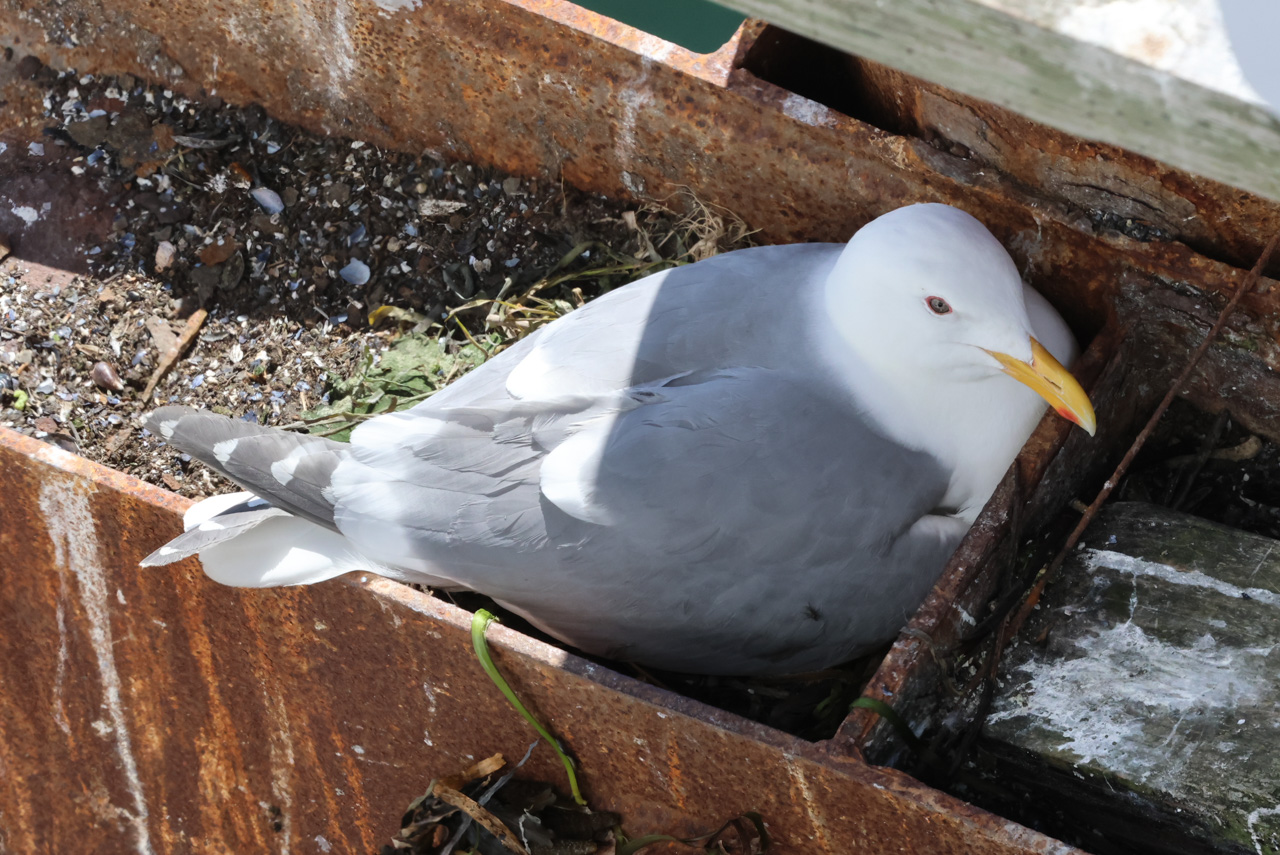
Glaucous-winged Gull © James Lees
The ferry crossing to Nanaimo proved memorable, with numerous Harbour Porpoises breaking the surface and around five Humpback Whales providing spectacular sightings along the way. Bird activity was relatively quiet offshore, but we still added Pigeon Guillemots and Common Murres to the day’s list.
From Nanaimo, we continued west toward Tofino through some of British Columbia’s most breathtaking scenery. Towering mountains, pristine lakes, and dense forests lined the route, making the drive an attraction in itself. Along the roadside, several striking Steller’s Jays and a number of Common Ravens rounded off another fantastic day filled with wildlife and unforgettable landscapes.
Day 4
We had an early start today as we headed out from Tofino on a deep-sea pelagic adventure. After the captain issued our life jackets and delivered a thorough safety briefing, we departed the harbour under a blanket of thick fog. The atmosphere felt wonderfully mysterious, but as soon as we cleared the coastline, the fog was left behind and we emerged into bright, clear conditions with the open Pacific stretching endlessly before us.
It didn’t take long before the birds started appearing. Marbled Murrelets were the first species in what would become a clean sweep of the local alcids. These tiny, brown speckled seabirds zipped past the boat at incredible speed, skimming just inches above the water’s surface. Soon afterwards, larger Rhinoceros Auklets shot by, providing an excellent size comparison and giving us our second alcid of the day.
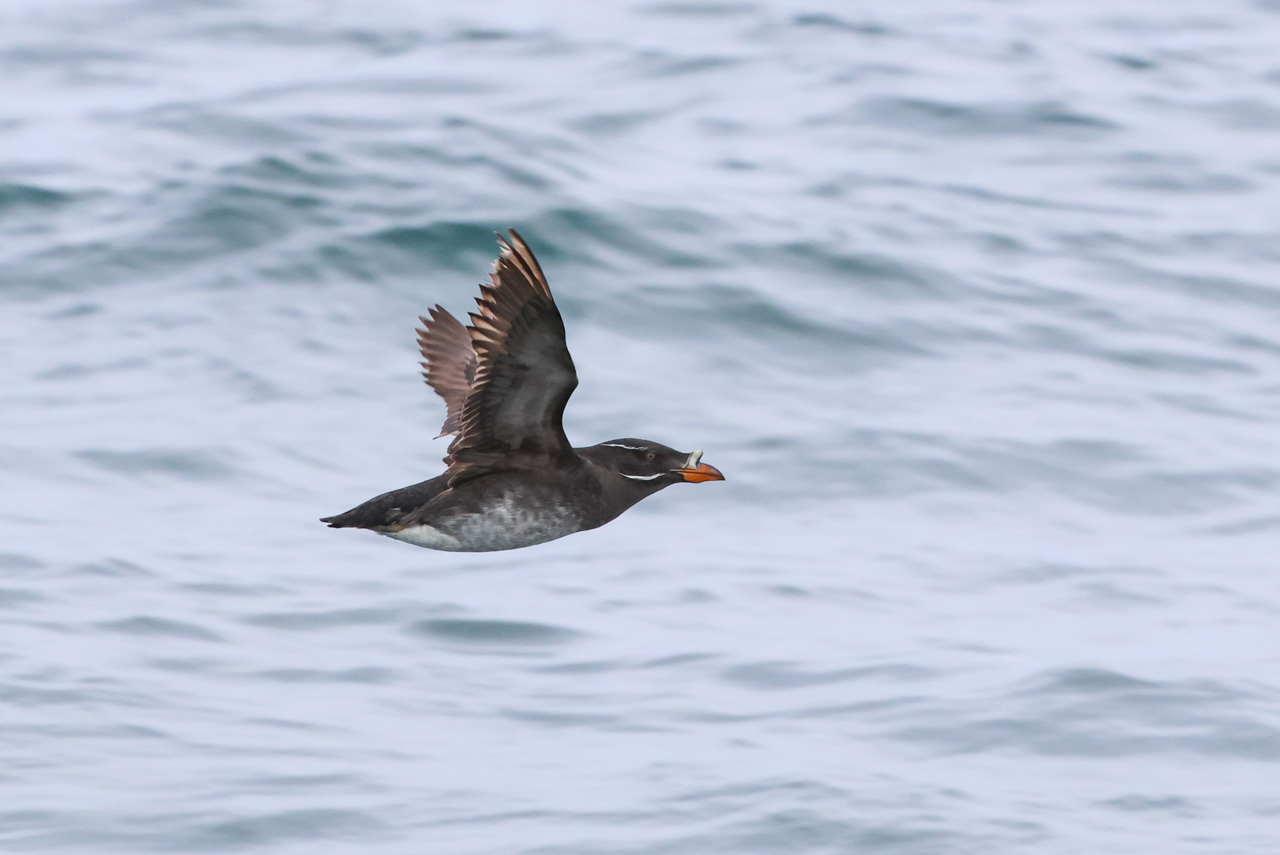
Rhinoceros Auklet © James Lees
As we left the inlet and entered the open ocean, we encountered our first true pelagic species: the Sooty Shearwater. Several large groups were loafing on the sea, allowing fantastic views of these dark chocolate-brown seabirds. Many appeared so full from feeding that they struggled to become airborne. It was remarkable to think that these birds had travelled from breeding colonies over 11,000 kilometres away in New Zealand to spend the northern summer feeding off the coast of British Columbia.
We continued farther offshore, eventually reaching the edge of the continental shelf some 46 kilometres from land. Continental shelves are among the most productive feeding grounds in the ocean. Here, shallow sunlit waters and nutrient rich upwelling currents create immense blooms of plankton, which attract vast numbers of fish and squid. The result is a concentrated and highly predictable food source that supports enormous numbers of seabirds and marine mammals.
As we cruised across these rich waters, more alcids appeared. Common Murres were abundant, and we were delighted to spot a single Tufted Puffin. As if four alcid species were not enough, we added two more: Cassin’s Auklets and Ancient Murrelets, completing an impressive tally.
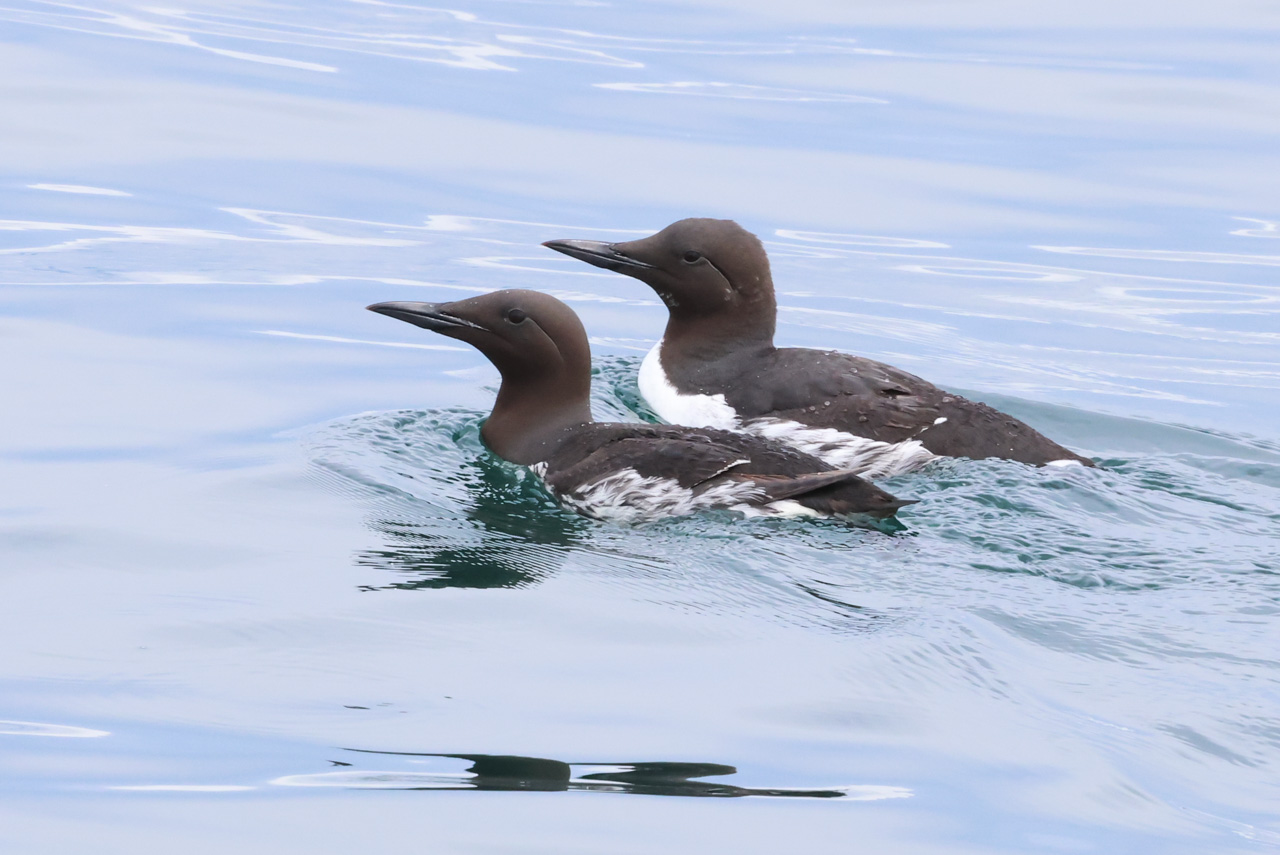
Common Murre © James Lees
Next to appear were two Pink-footed Shearwaters that swept gracefully across the bow while, and almost simultaneously, three beautiful Sabine’s Gulls skimmed low over the roof of the boat. This would prove to be an exceptional day for these elegant Arctic gulls, with an astonishing total of around 1,000 individuals recorded before we returned to shore. Several humpback whales surfaced nearby and a Ocean Sunfish provided additional interest.
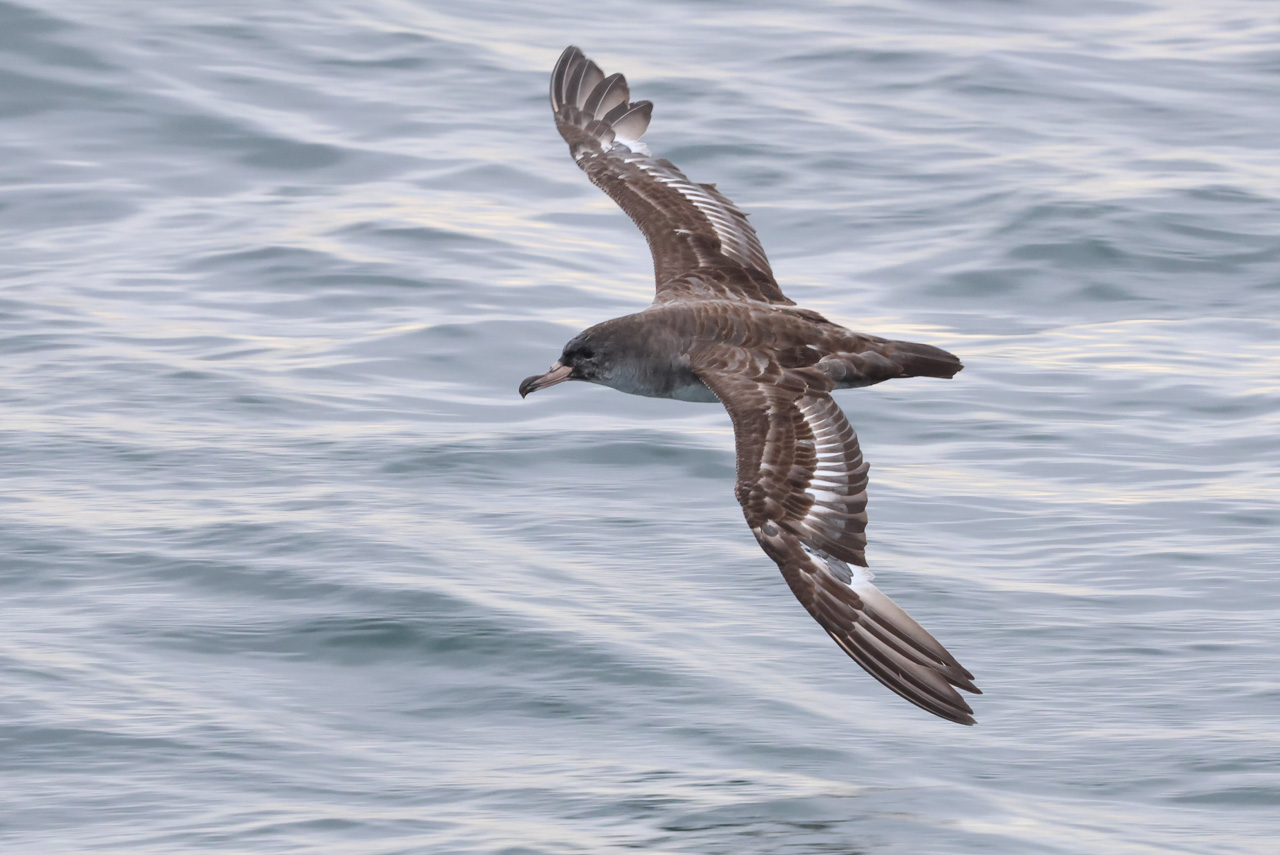
Pink-footed Shearwater © James Lees
After roughly an hour and a half at sea, we arrived at what appeared to be an unremarkable patch of ocean. However, beneath us lay a deep submarine canyon, exactly the type of habitat we had hoped to reach. It did not take long before the rewards became apparent.
First, a Fork-tailed Storm-Petrel fluttered across the waves in front of us. Then came the shout that every pelagic birder dreams of hearing:
“Albatross!”
Instantly, all eyes turned toward a massive bird gliding effortlessly above the swell. With a wingspan approaching seven feet, our first Black-footed Albatross drifted into view, using the uplift from the waves with barely a wingbeat. Gasps and excited exclamations erupted around the boat as we admired this magnificent ocean wanderer.
As we watched the albatross heading toward a distant fishing trawler, we asked our captain to follow. It proved to be an inspired decision.
Approaching the vessel, we could see a large gathering of birds sitting on the water behind it. As we drew closer, the scale of the spectacle became apparent. Nearly sixty Black-footed Albatrosses were feeding on discarded fish at the surface. The views were simply breathtaking.
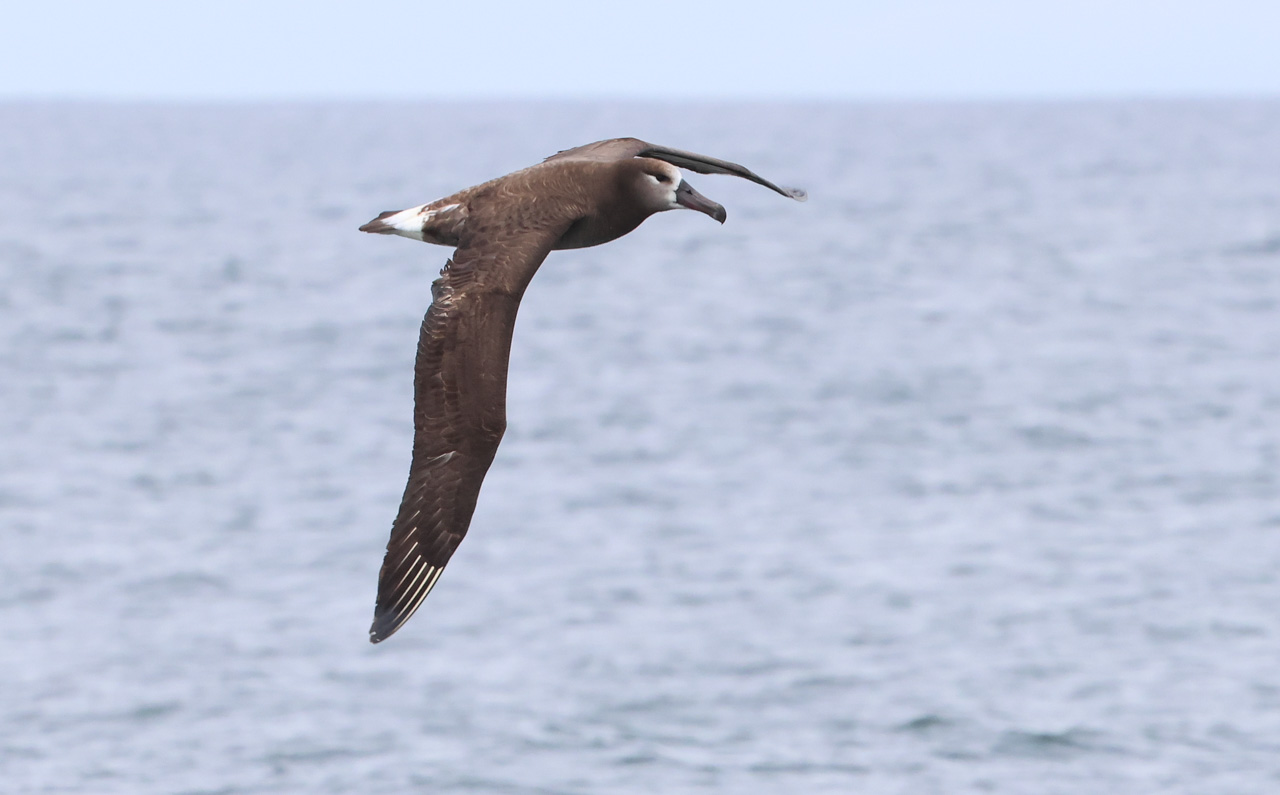
Black-footed Albatross © James Lees
These huge seabirds fed only a few metres from the boat, tearing chunks from fish while squabbling noisily amongst themselves. We were close enough to hear every call and every dispute as the birds jostled for position. Joining the albatrosses were hundreds of Pink-footed and Sooty Shearwaters, along with around seventy Fork-tailed Storm-Petrels dancing delicately across the waves.
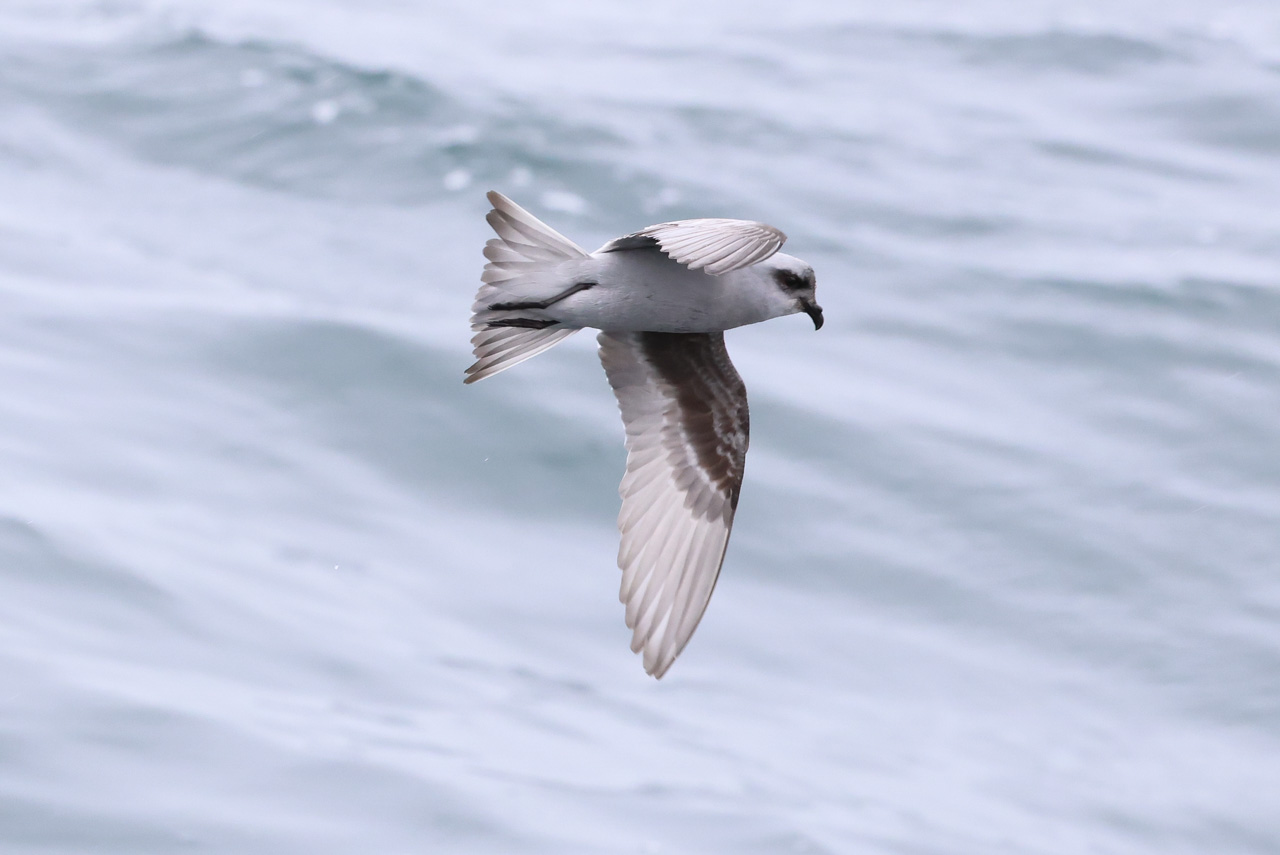
Fork-tailed Petrel 2 © James Lees
To say we enjoyed exceptional views would be a gross understatement. As our captain expertly manoeuvred the vessel around the feeding flock, allowing the birds to drift naturally around us, we found ourselves completely immersed in one of the greatest seabird spectacles imaginable. Everywhere we looked there were birds flying around the boat, feeding beside the boat, and stretching to the horizon in every direction. It felt like being surrounded by a living seabird odyssey.
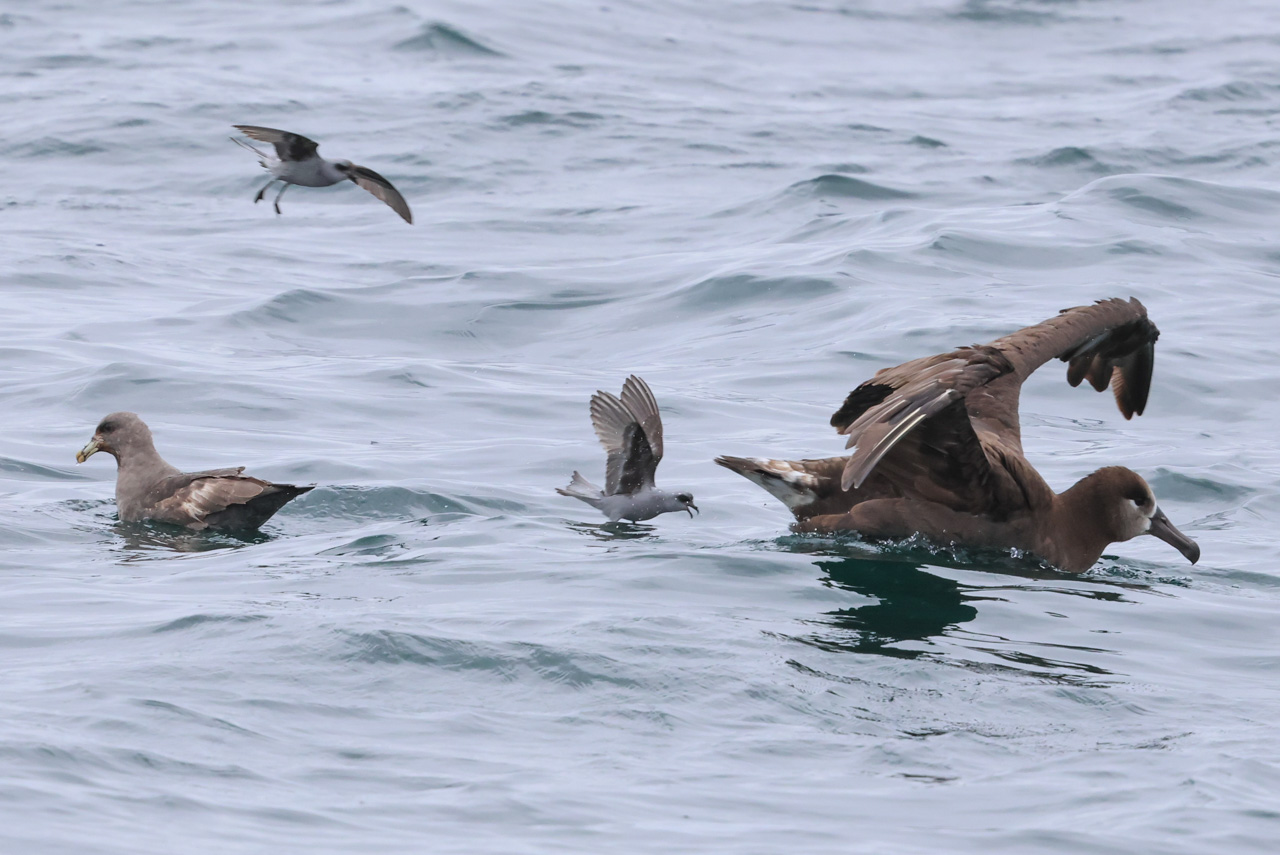
Northern Fulmar, Fork-tailed Petrels & a Black-footed Albatross © James Lees
We remained with this incredible gathering for almost two hours. During that time, additional highlights included another Tufted Puffin, a Pomarine Jaeger, and a Leach’s Storm-Petrel. Eventually, both birds and birders seemed satisfied, and we began our journey back toward the mainland.
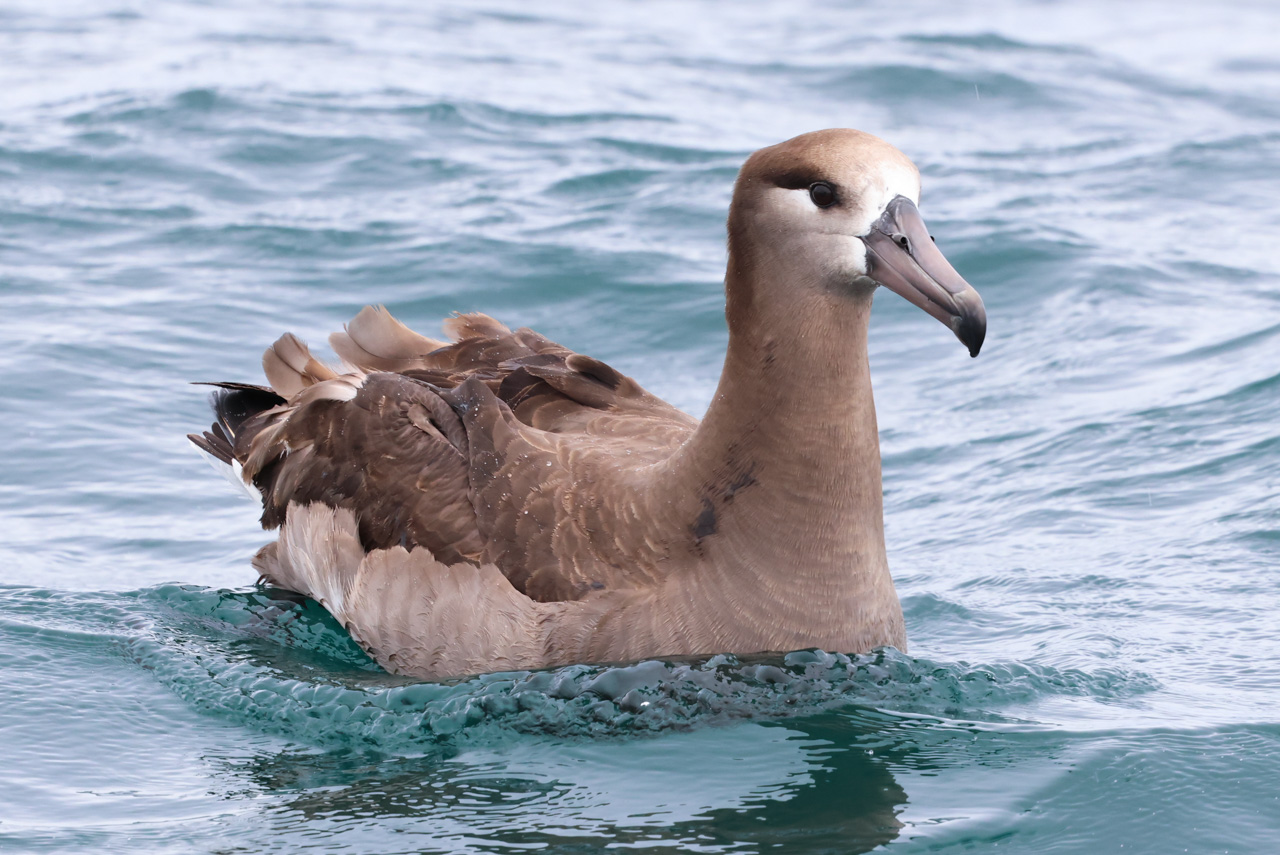
Black-footed Albatross © James Lees
The return voyage was every bit as enjoyable. Vast flocks of Sabine’s Gulls and Sooty Shearwaters streamed across the ocean around us, while an energetic pod of Dall’s Porpoises raced alongside the boat, surfing effortlessly through the bow wave.
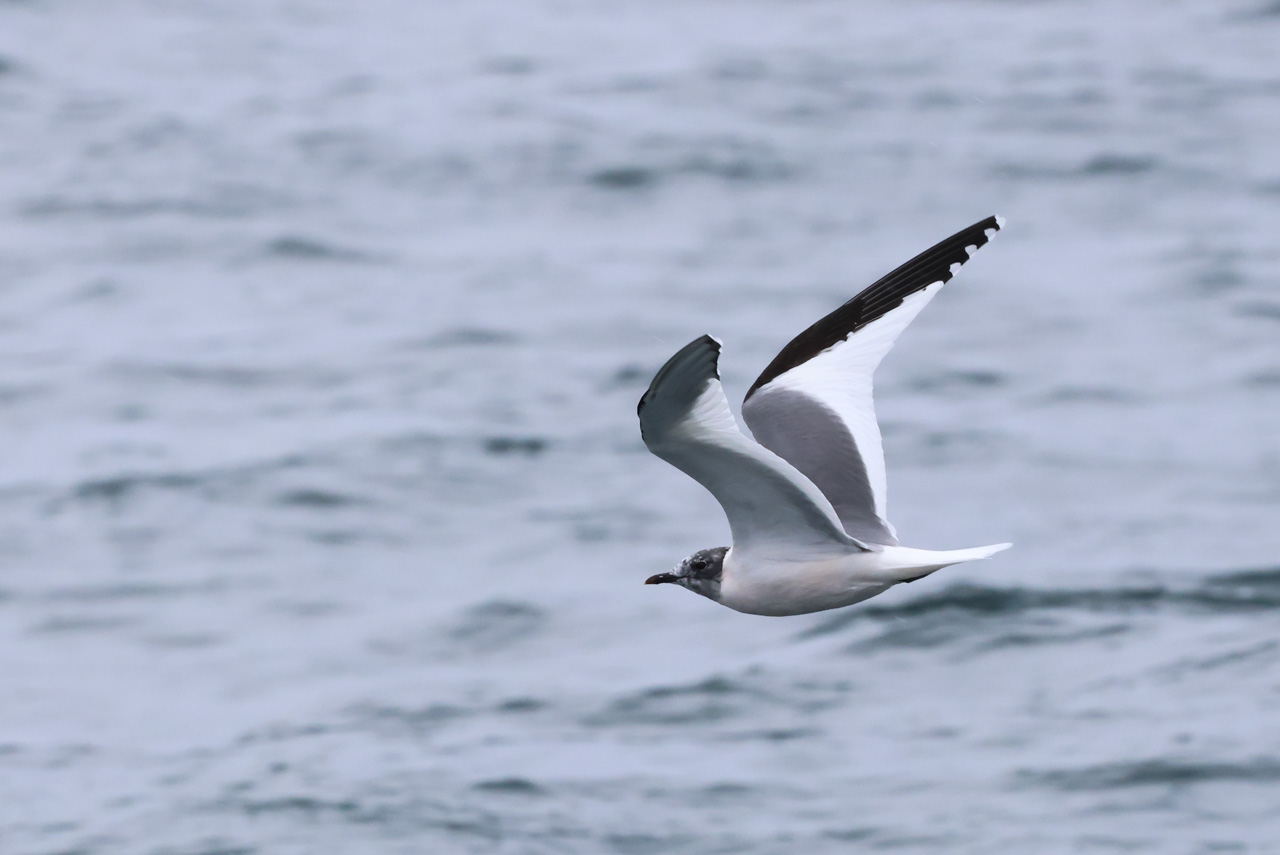
Sabine’s Gull © James Lees
As we approached a group of offshore islands, hundreds more Sooty Shearwaters and Common Murres covered the calm waters. The rocky islands themselves were alive with wildlife. Noisy Steller’s Sea Lions crowded the shoreline, while nesting gulls, cormorants, and Pigeon Guillemots occupied every available ledge.
Then came another surprise, perched on the rocks were nine Brown Pelicans, sleeping and preening in the afternoon sun. Although common farther south, these impressive birds are always exciting to encounter in British Columbia. Nearby, flocks of Harlequin Ducks and Surf Scoters sped past, accompanied by several Pacific Loons.
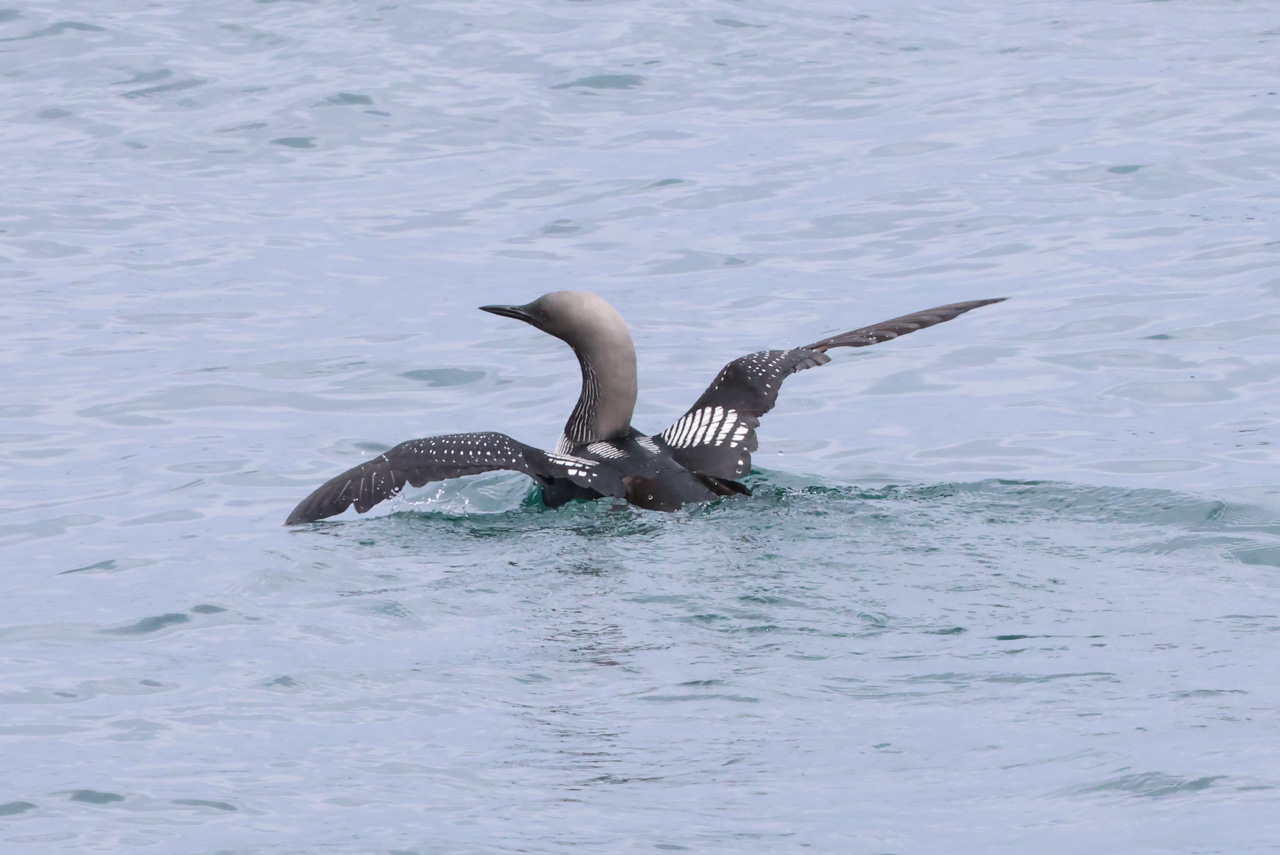
Pacific Loon © James Lees
As we re-entered the inlet, we paused to enjoy a large raft of Sea Otters. Floating on their backs, they busily cracked open clams and other shellfish, seemingly unconcerned by our presence.
Back in Tofino Harbour, nearly twenty Bald Eagles greeted us from the piers and surrounding buildings. Their white heads and tails gleamed in the evening light as they watched over the bustling waterfront.
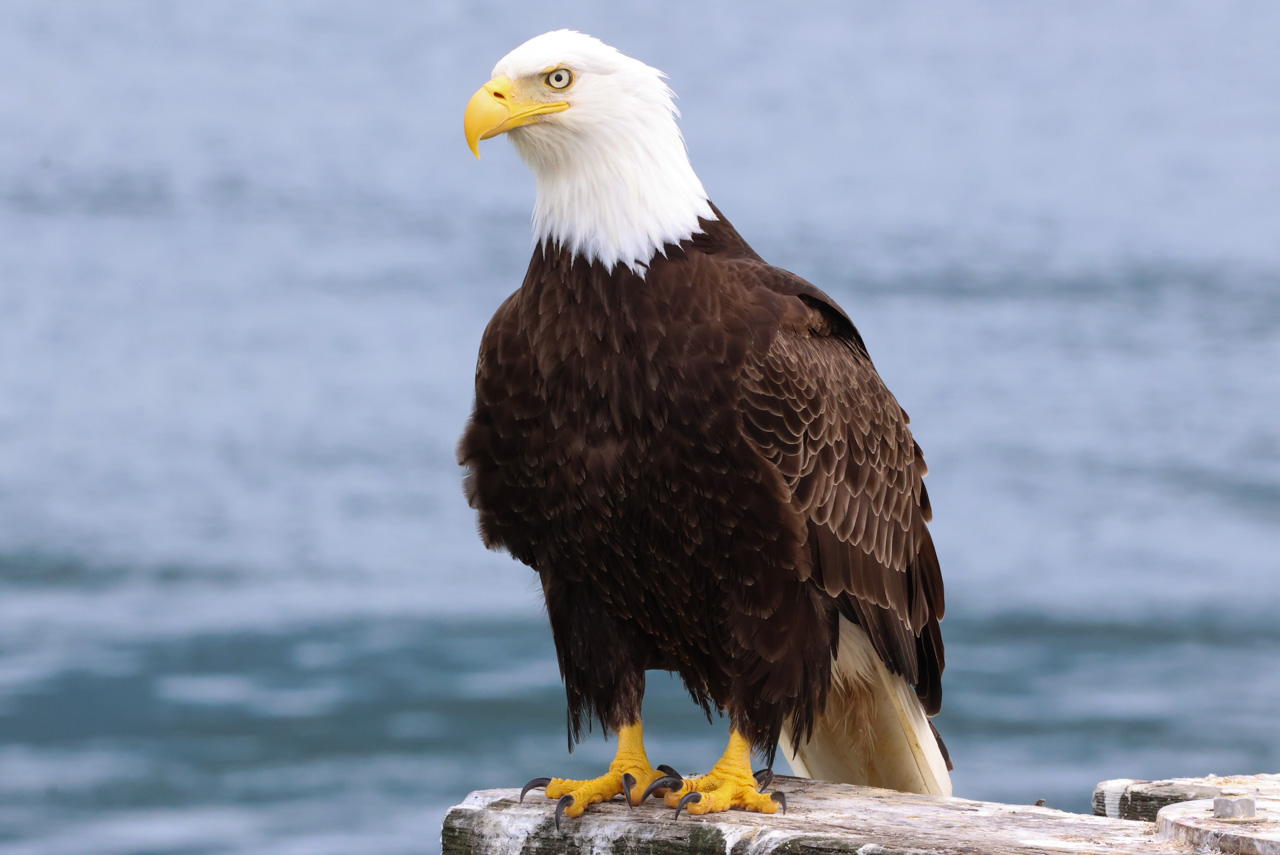
Bald Eagle © James Lees
After thanking our excellent captain for his outstanding work throughout the day, we headed ashore for a thoroughly deserved meal. Yet the day’s surprises were not quite over.
Following dinner, we took a short stroll along the beach. We were casually watching Common Loons and Surf Scoters offshore when suddenly a tall dorsal fin appeared in the bay. Moments later, a male Orca surfaced, cruising calmly through the sheltered waters.
What an incredible way to finish an unforgettable day at sea – a day filled with extraordinary birds, spectacular marine mammals, and one of the finest pelagic experiences imaginable.
Day 5
We had an early start because we had a meeting with a rather special species, so we took a packed breakfast. But first we got down to business and found a female Sooty Grouse that gave us fabulous views, but then suddenly a male arrived on the scene. He was quite taken by her and soon went into full display mode, splaying out his tail and and inflating his air sacs to reveal bright yellow skin. It was an amazing display and to hear his hooting song that resinated all around was something that none of us will forget. After enjoying and photographing this group we got stuck into breakfast, but soon we were interrupted by a gorgeous singing male Townsend’s Warbler and several Steller’s Jays.
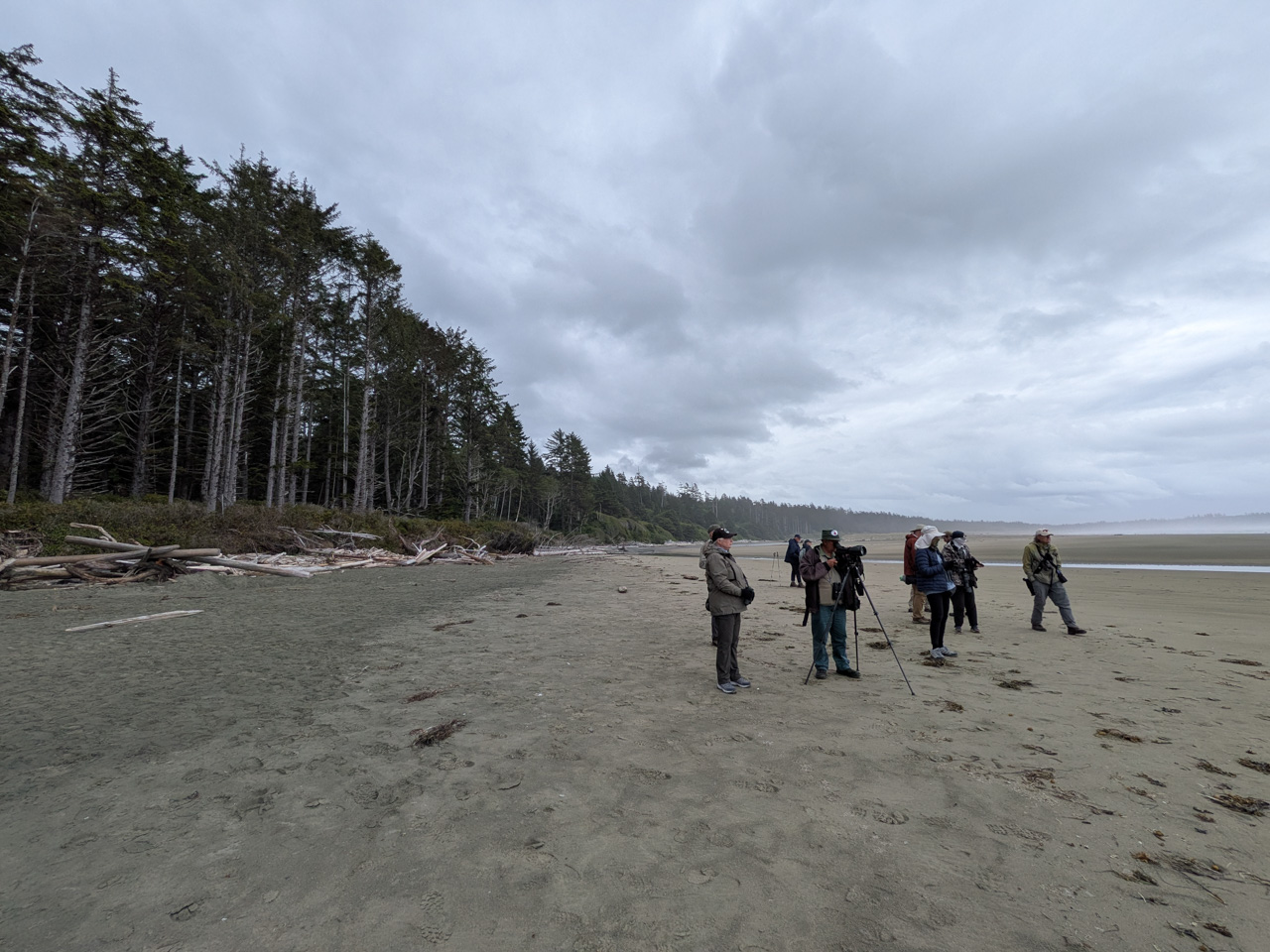
Long Beach Birding © James lees
Next, we moved on to Long Beach, where many surfers were taking advantage of the large waves crashing onto the shore. The surrounding trees provided us with our first Orange-crowned Warblers of the trip, along with several Swainson’s Thrushes and Chestnut-backed Chickadees. A Black Bear feeding beside the road then gave us excellent views for several minutes.
We continued to Tofino Airport, where we were entertained by a beautiful male Rufous Hummingbird. A few Red Crossbills soon made an appearance, and a male Violet-green Swallow provided exceptional views. Just as we were preparing to leave, a Common Nighthawk began flying overhead, performing its full breeding display. Soon afterwards, the rain set in, so we headed to Ucluelet for a warm coffee break.
Our next stop was a wooded area in search of more new species. We were quickly rewarded with a West Coast specialty, the Hutton’s Vireo. Once everyone had enjoyed excellent views of the vireo, as well as several Golden-crowned Kinglets, we moved on.
After the rain cleared and lunch was finished, we took another walk in Pacific Rim National Park. The evocative songs of Varied Thrushes echoed through the vast coastal forest. Although they can be notoriously difficult to locate, patience paid off and we eventually found two beautiful males, providing a memorable end to an excellent afternoon.
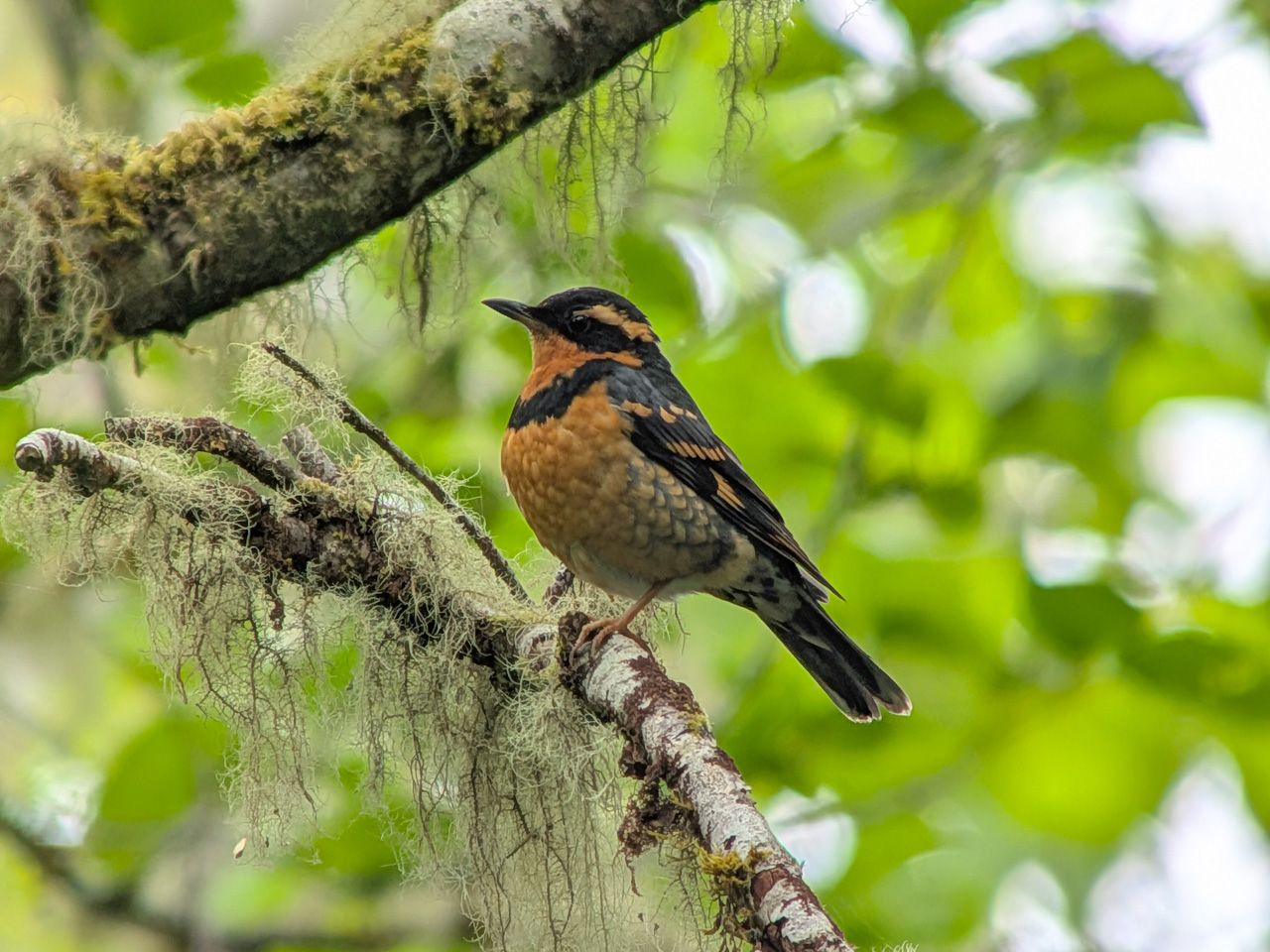
Varied Thrush © James lees
As we walked down towards the beach we found several Pacific Wrens and our first Hairy Woodpecker. Some Surf Scoter and Pacific Loons were out on the ocean and several Californian Gulls were amongst the commoner gulls. A single Brown Pelican flew along low over the surf and several Belted Kingfisher chased each other around the creek.
Then as the rain got heavier we headed back to our hotel for the evening.
Day 6
We awoke to a very wet morning in Tofino. After a delicious breakfast in Ucluelet, we reluctantly left the Pacific coast behind and began our journey east across Vancouver Island. Although today was primarily a travel day, we had planned a couple of stops along the way to break up the drive and explore some new habitats.
Our first birding stop was the world-famous Cathedral Grove. Walking among these ancient giant Western Red Cedars, we could not help but feel privileged to experience such an incredible ecosystem. It is difficult to comprehend the sheer size of these trees until you are standing beneath them. The first bird we encountered was not seen but heard – the haunting and beautiful song of a Varied Thrush echoing through the forest. Soon afterwards, we found a striking Red-breasted Sapsucker, which gave outstanding eye-level views and showed off its vibrant plumage. Several Pacific Wrens sang from the forest floor, while Chestnut-backed Chickadees and Golden-crowned Kinglets fed high above us in the canopy. With some patience, our main target species eventually appeared along a fast-flowing stream. An American Dipper was a delight for everyone as it bobbed effortlessly among the rocks, perfectly adapted to its unique habitat.
Our next stop was Little Mountain, where a pleasant mix of songbirds was active among the pines. Here we recorded our first Red-breasted Nuthatches and Yellow-rumped Warblers of the trip. Numerous Anna’s Hummingbirds buzzed around the flowering shrubs, while an adult Bald Eagle made a very close flyby, providing excellent views. The highlight, however, was a group of five Black Swifts soaring gracefully over the valley below, a memorable sight and a fitting finale to our morning birding.
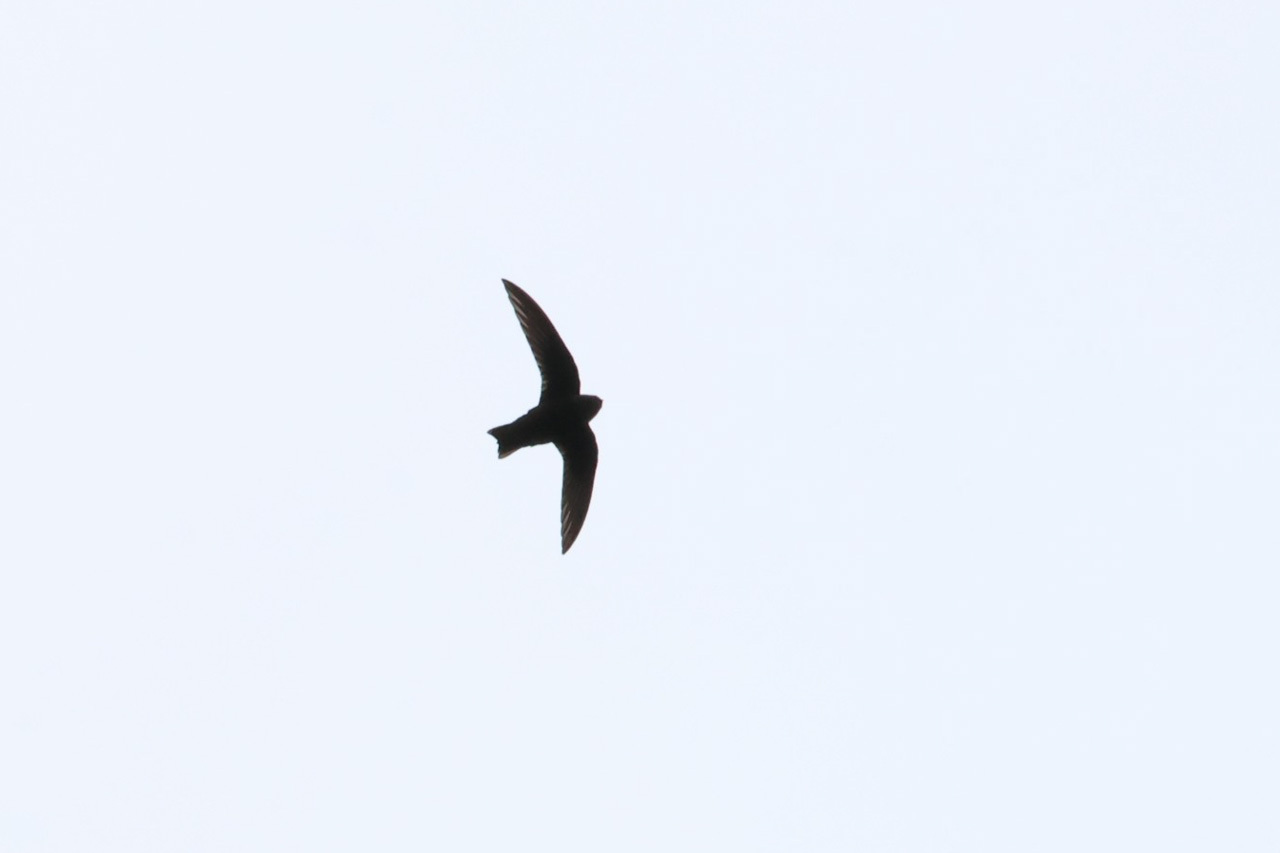
Black Swift © James Lees
Our last stop of the day was Buttertubs where we took a short walk through a small suburban wetland. Several Pied-billed Grebes and a family group of Wood Ducks were out on the lake. A Virginia Rail was briefly seen and a Marsh Wren was in full song. Overhead, Turkey Vultures and Red-tailed Hawks soared and as did another group of Black Swifts. Best of all was our first Bushtits of the trip: two pairs of these tiny shy birds gave us all some brief but good looks.
After this we headed to Victoria for the night.
Day 7
Today’s birding tour from Victoria, Vancouver Island was nothing short of spectacular. We headed offshore on a whale-watching vessel and were rewarded with incredible marine wildlife encounters throughout the day.
The highlight was undoubtedly an extraordinary gathering of approximately 20 Humpback Whales. We enjoyed remarkably close views, with several whales treating us to stunning tail-fluke displays as they dove beneath the surface.
An even more dramatic encounter followed when we located a lone male Orca. We tracked him for some time, watching his purposeful movements before witnessing an unforgettable predation event unfold right in front of us a truly rare and thrilling sight.
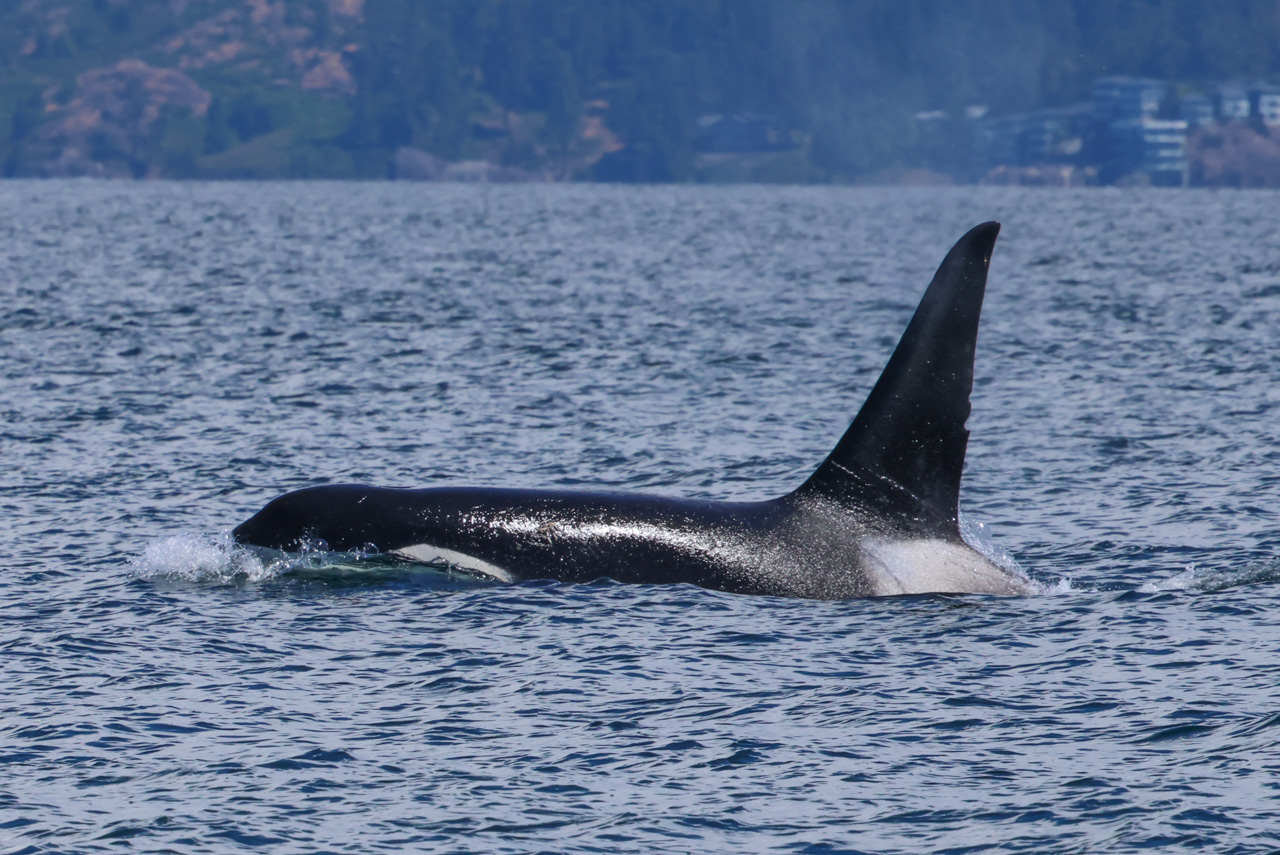
Orca © James Lees
Although this was mainly a whale tour, we did see a decent number of birds. The most numerous species were Common Murres and Rhinoceros Auklets, but we were especially pleased to find two Ancient Murrelets and a Tufted Puffin, both highly sought-after species for many birders.
On our return journey, we passed the famous Race Rocks Lighthouse, where the wildlife spectacle continued. The rocky shores hosted numerous Pigeon Guillemots and a Heermann’s Gulls. Marine mammals were equally impressive, including two Northern Elephant Seals, Steller Sea Lions, California Sea Lions, and Harbour Porpoises.
With exceptional whale encounters, a memorable Orca hunt, and a fantastic selection of seabirds and marine mammals, it was an outstanding day on the waters of the Salish Sea.
After lunch we headed off to explore scrubby open habitats in search of MacGillivray’s Warbler. The species initially proved to be quite elusive, but we were kept entertained by a singing male Black-headed Grosbeak and numerous Spotted Towhees.
We also recorded our first California Quail of the trip, along with several Purple Finches and Orange-crowned Warblers. A couple of Black Swifts flew overhead, while some excellent views of Rufous Hummingbirds added to the afternoon’s highlights.
Eventually, our persistence paid off, and we tracked down two male MacGillivray’s Warblers. After some careful searching, we were rewarded with exceptionally good views of both birds, bringing a successful and enjoyable afternoon in the field to a perfect conclusion.
Day 8
At the ferry terminal, a Merlin flew around and was constantly screaming away; this was the first of the trip. The ferry crossing was very pleasant, with calm and sunny conditions. A few Pelagic Cormorants and Pigeon Guillemots were seen.
Once we arrived back on the mainland, the tides looked at a decent height, so we decided to stop and scan for shorebirds. A large flock of Great Blue Herons was roosting in the neighbouring fields; there must have been around 80 birds. The freshwater pools also produced a stunning male Cinnamon Teal and several broods of young Gadwall.
Then, while scanning the mudflats, we struck gold, in fact double gold, with two Pacific Golden-Plovers. These shorebirds can be confused with the other two larger plovers, the American Golden-Plover and Black-bellied Plover, so we walked closer and obtained much better views. Here, we could see all the key features, including the long bill, short wing projection, and very long legs, which clinched the identification as Pacific Golden-Plovers. This was a really good species to see, not only for the trip but also in Canada.
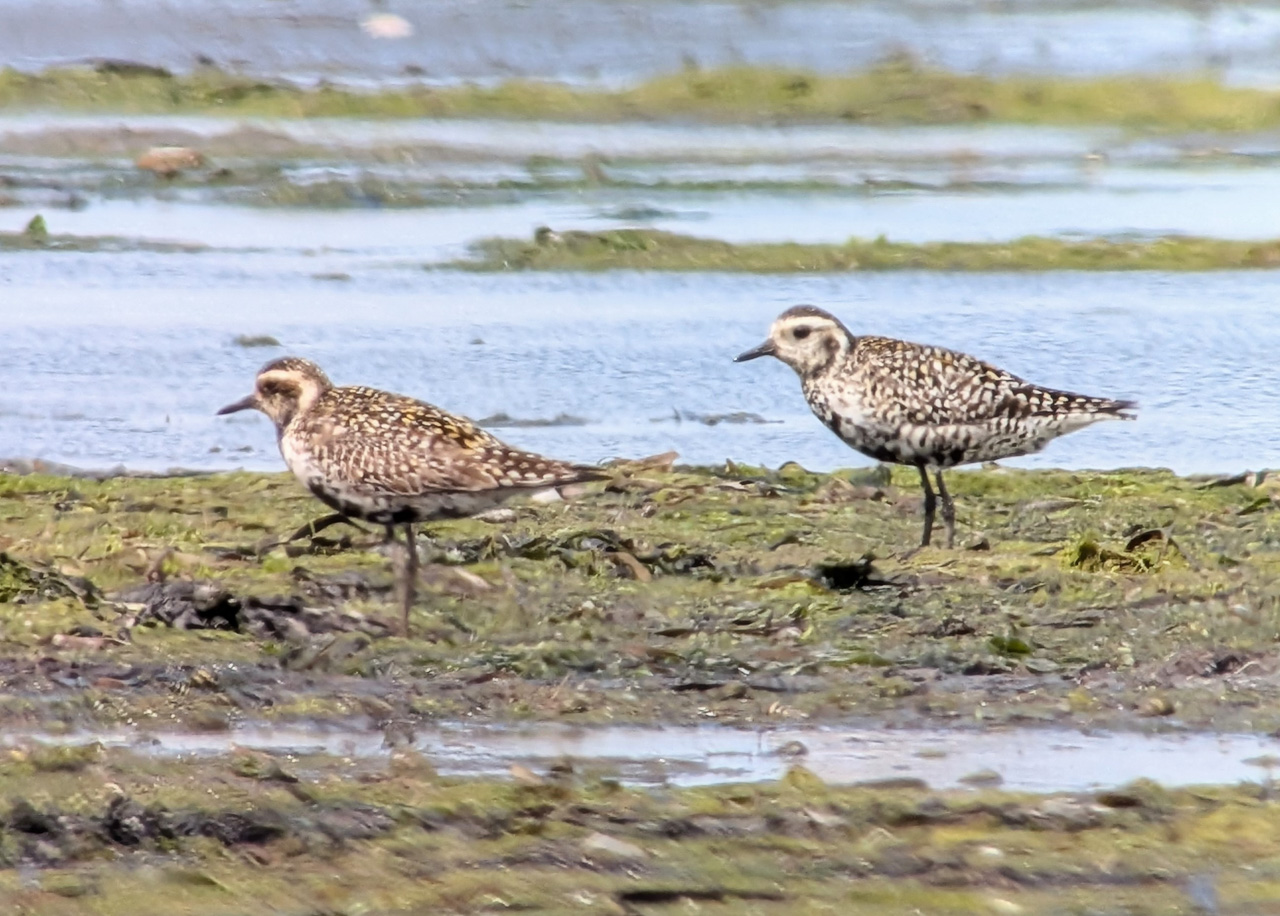
Pacific Golden Plovers © James lees
Next, we began the drive east towards Manning Park, where we would be staying the night. On arrival, we were greeted by lots of Columbia Ground Squirrels and, of course, spectacular views.
Day 9
We woke up early to make the most of our time in Manning Park. It was, however, a very cold start to the day, with temperatures below -3°C. Luckily, there was no wind. There were good numbers of Evening Grosbeaks flying around, and we managed to get excellent views of several that landed nearby, allowing us to admire their striking green bills.
Next up was a male Pine Grosbeak that sat atop a spruce tree and sang continuously for several minutes. We also enjoyed our first views of a couple of Mountain Chickadees, along with numerous Yellow-rumped Warblers. Both a Sooty Grouse and an American Goshawk were heard calling, while an American Pika proved to be an unexpected roadside treat and allowed for some remarkably close views.
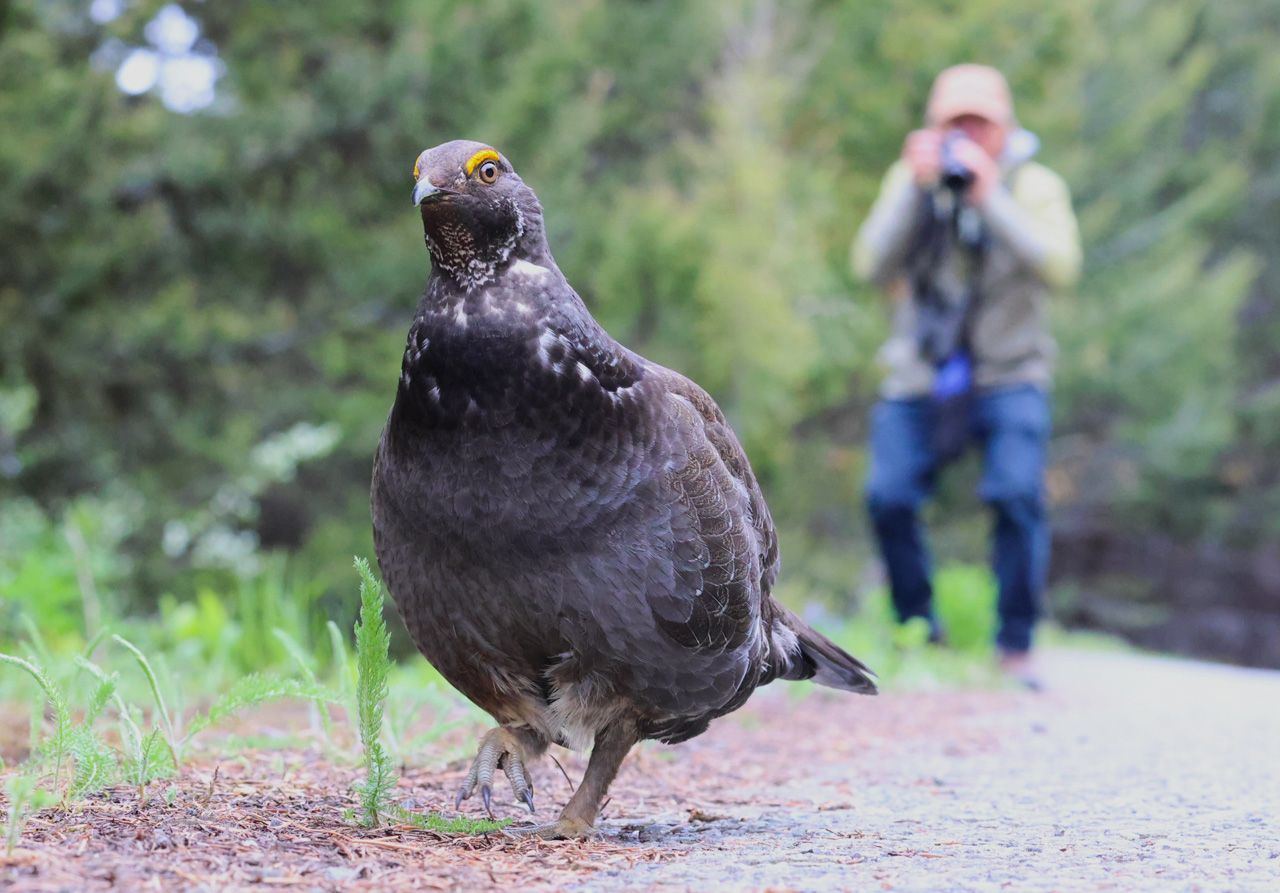
Sooty Grouse © James lees
We then walked around a nearby lake, where more Evening Grosbeaks were feeding on the ground. On the water, a Common Loon and a female Barrow’s Goldeneye with a brood of ten tiny chicks provided a delightful sight. Several Spotted Sandpipers patrolled the shoreline, while a variety of swallow species fed overhead. After a productive morning, it was time to head back to the hotel for breakfast.
After a well-deserved breakfast and a warm drink, we headed to higher elevations in search of more interesting wildlife. At the summit, we were greeted by both Cascade Golden-mantled Ground Squirrels and Yellow-pine Chipmunks. A Common Raven was soon joined by a Clark’s Nutcracker, and we enjoyed wonderful views of both species. A family group of Clark’s Nutcrackers, including several very fresh juveniles, was an added bonus. Also present were two Cassin’s Finches and another Mountain Chickadee.
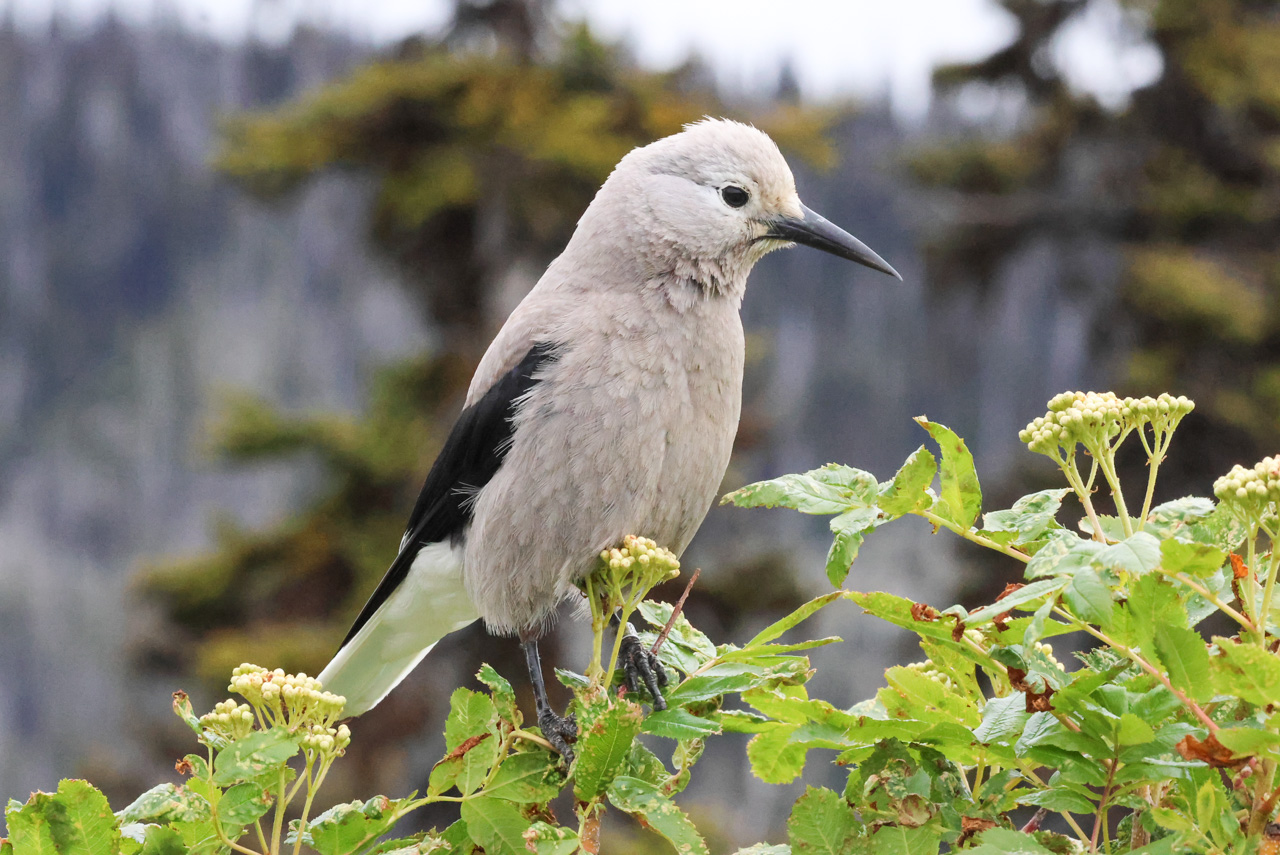
Clark’s Nutcracker © James Lees
As we descended the mountain, we encountered a female Sooty Grouse accompanied by several tiny juveniles. A stop halfway down produced a very obliging Hammond’s Flycatcher, along with both Warbling Vireo and Olive-sided Flycatcher.
After this, we began our scenic drive towards Osoyoos. The habitat changed constantly, and around every corner was a new and spectacular view, making the journey every bit as enjoyable as the wildlife watching.
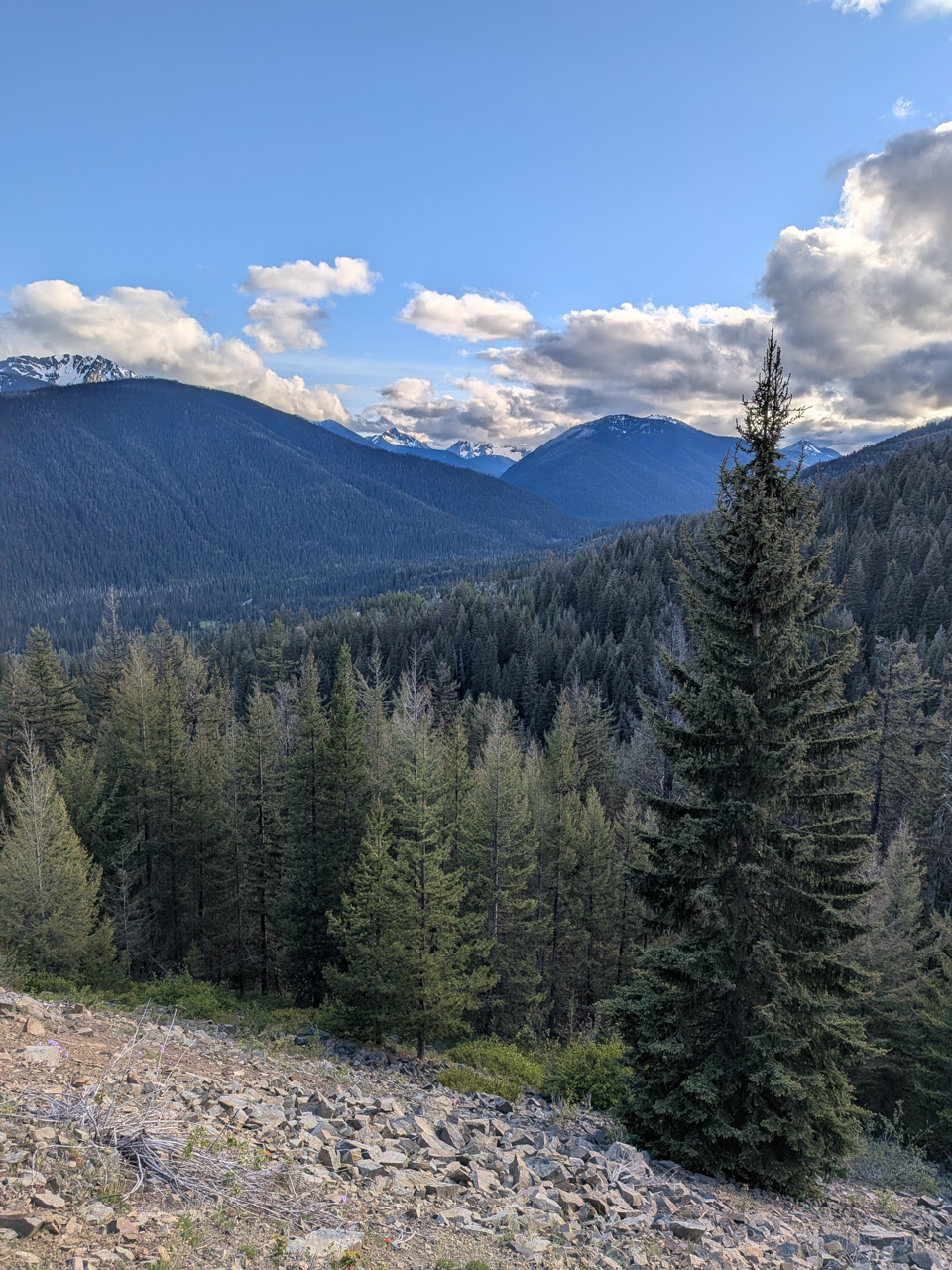
Manning Park © James lees
Following a late lunch, we spent the afternoon exploring Haynes Point Provincial Park. Here we quickly found several Bullock’s Orioles, along with numerous Eastern Kingbirds and Cedar Waxwings. A Mule Deer provided excellent views as she fed at close range. A Bewick’s Wren perched conspicuously while singing, and several Yellow-headed Blackbirds called from the marsh.
The highlight of the afternoon, however, was a Common Nighthawk roosting in a tree. We enjoyed outstanding views through the scope, allowing us to appreciate the intricate plumage of this wonderfully cryptic nocturnal bird.
Day 10
Despite some light rain, we headed out into the Okanagan Valley and managed to enjoy another excellent morning of birding. First up were a few Bobolinks and an American Kestrel out in the meadows. We then walked along the river, where numerous Cliff Swallows and a Say’s Phoebe were nesting beneath a bridge. We also watched a pair of well-grown Bald Eagle chicks in a nest, while an Osprey flew overhead carrying a fish. The surrounding scrub held a Veery and several Gray Catbirds.
The star of the show, however, was a remarkably cooperative Yellow-breasted Chat. The rich yellow plumage of this bird was simply sublime, and we enjoyed some excellent views. Next, we took a walk alongside a rocky hillside and soon came across a family of Canyon Wrens. There were four birds in total, including two very recently fledged juveniles. We had barely had time to process the excitement of these birds when a male Rock Wren began singing from the very same area. We enjoyed excellent views of both of these rocky-terrain specialists. After a highly productive morning, we headed back for a well-earned breakfast.
Next, we headed up into higher-elevation pine forest in search of some more special birds. We soon came across a flock of diminutive Pygmy Nuthatches that were highly vocal and constantly active among the pines. A Dusky Flycatcher gave its presence away by singing, and before long we had good views of this species. Shortly afterwards, we heard the rarer Gray Flycatcher, a bird with a very limited range in Canada. At first, we struggled to get views, but eventually a second individual appeared lower down and provided everyone with some delightful looks. Other birds seen here included White-breasted Nuthatch, Western Bluebird, and Cassin’s Finch.
Further down the road, we made a stop to look for Canada’s smallest hummingbird, the Calliope Hummingbird. We had wonderful views of a male as he sat surveying his territory and even performed a few display flights. This area also produced Vesper Sparrow and more Lazuli Buntings. A Red-naped Sapsucker appeared among the pines, and we were treated to a large flock of White-throated Swifts overhead. Careful scanning through the flock also revealed a few smaller Vaux’s Swifts mixed in among them.
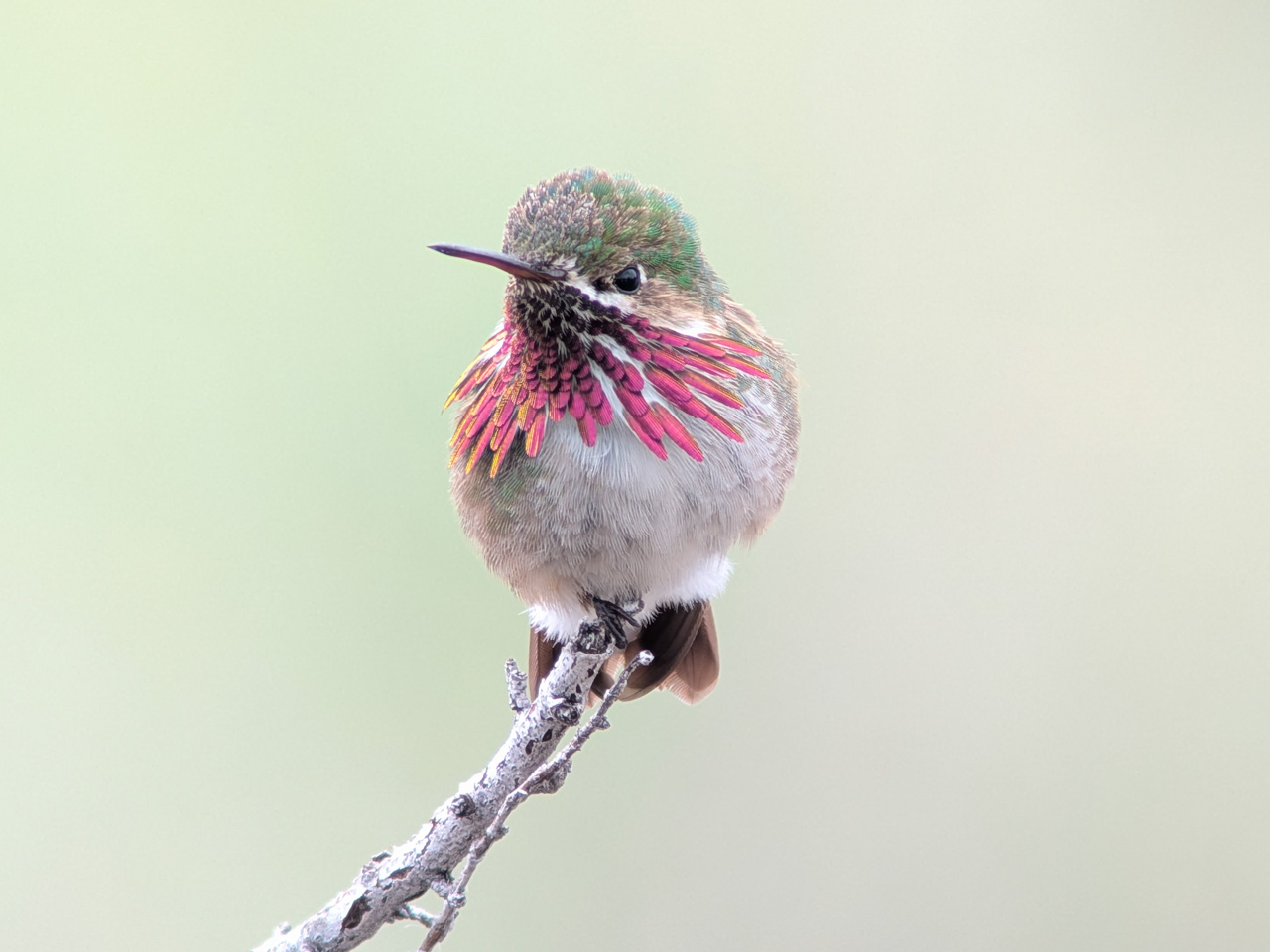
Calliope Hummingbird © James Lees
After lunch, we made a stop to look for Lewis’s Woodpeckers and were instantly rewarded with two individuals at fairly close range. Everyone enjoyed watching these striking green and pink woodpeckers performing their characteristic flycatching behaviour. Other species seen here included Olive-sided Flycatcher, Western Bluebird, more Lazuli Buntings, and our first Swainson’s Hawks of the trip.
Further up the road, we stopped to look for a breeding pair of Williamson’s Sapsuckers. After a patient wait, we were rewarded with wonderful views of one of North America’s most attractive woodpeckers. This area also held plenty of Mountain Bluebirds and Western Meadowlarks.
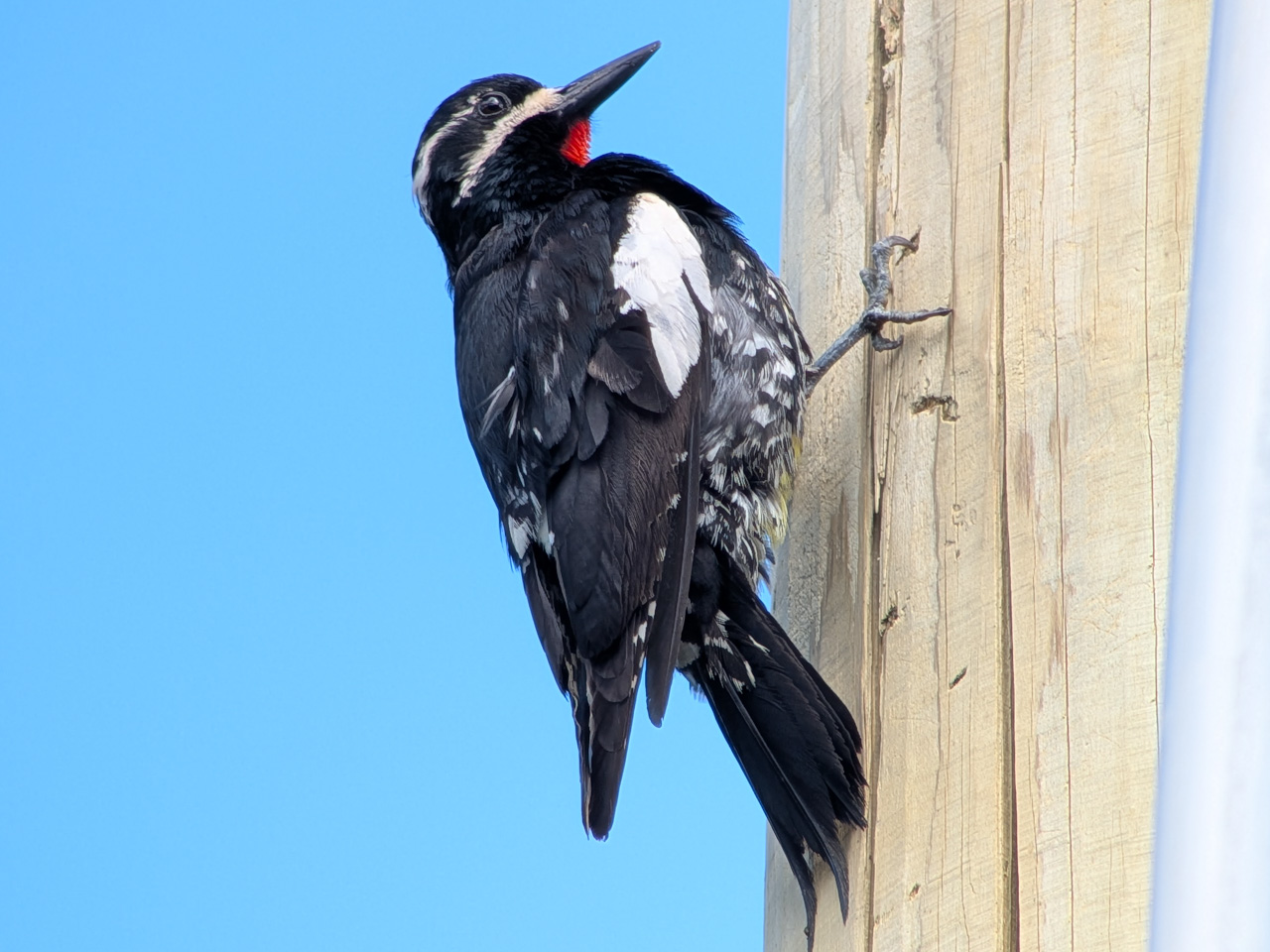
Williamson’s Sapsucker © James lees
After our evening meal, we ventured out in search of some nocturnal birds. Watching the sun set over the mountains was spectacular, and we were rewarded with excellent views of a Common Poorwill, providing a fitting end to another memorable day in British Columbia.
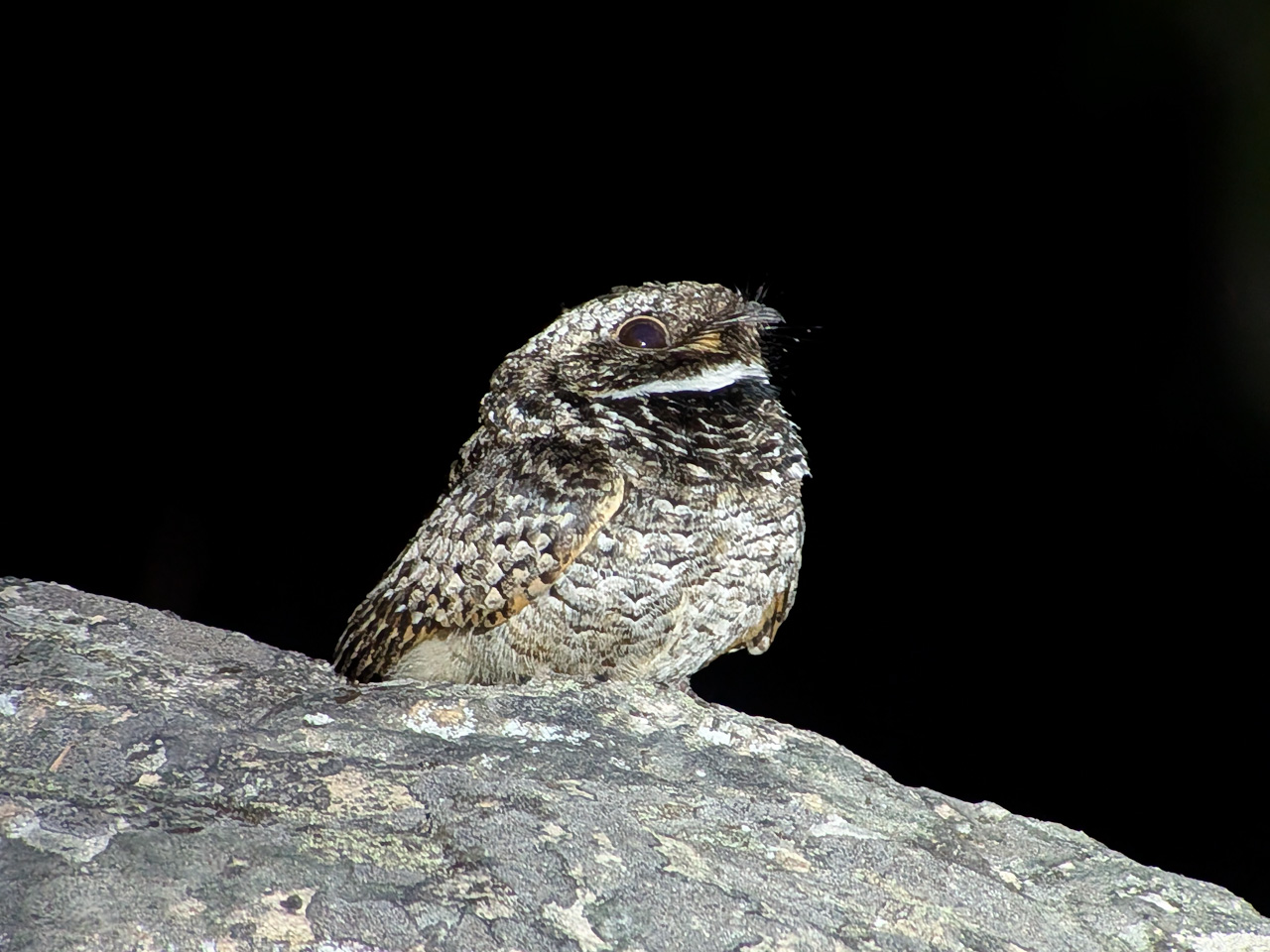
Common Poorwill © James lees
Day 11
We started the day with a pre-breakfast excursion into the sagebrush hills. Common species such as Western Meadowlarks and Lark Sparrows were abundant, with both singing enthusiastically in the early morning light. It took some patience, but we were eventually rewarded when a Sage Thrasher began singing not too far away. We carefully walked closer and enjoyed some excellent views of this species, which has a very restricted range in Canada. Not long afterwards, another male appeared, and both birds could be heard singing from opposite directions at the same time.
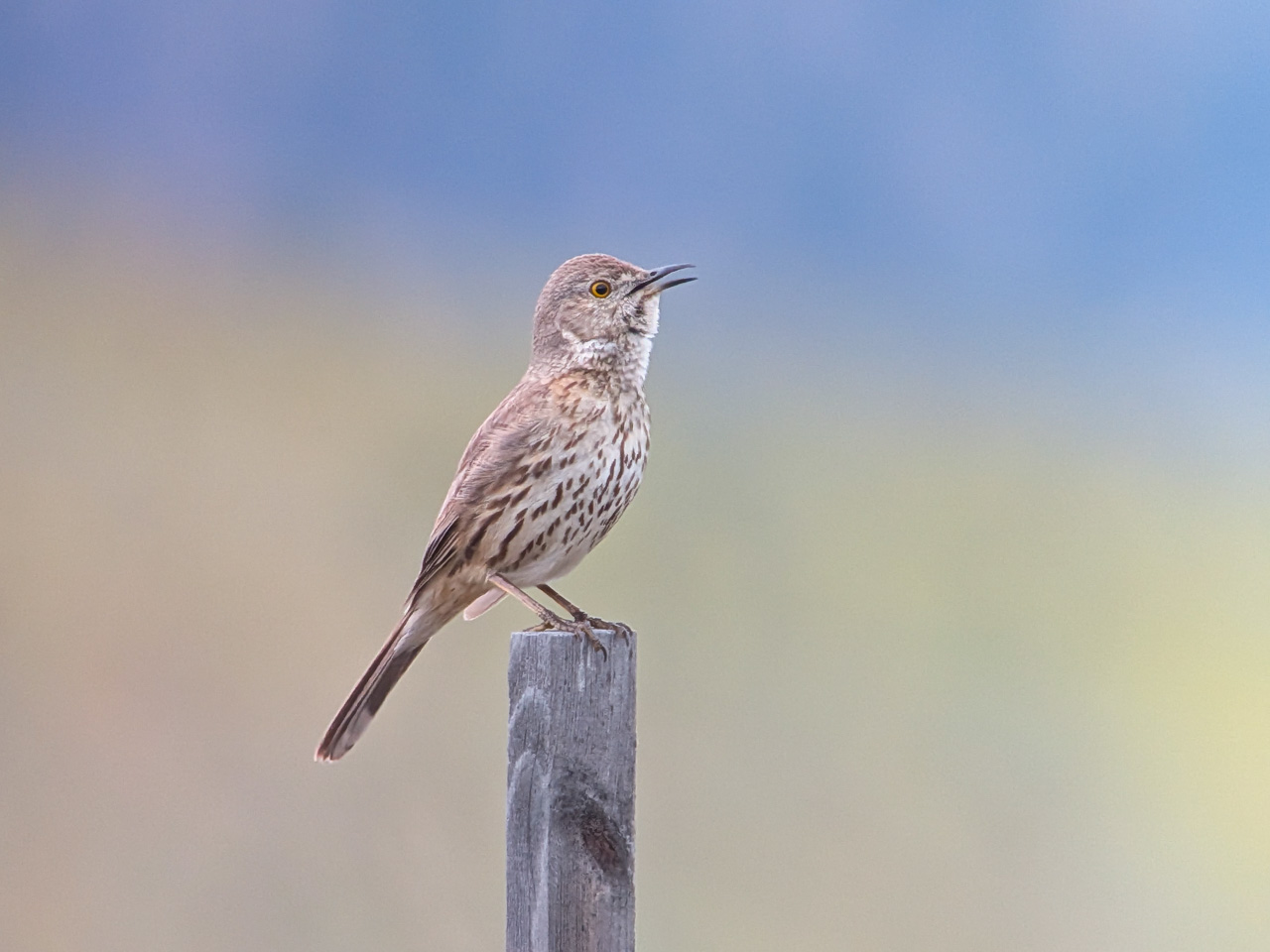
Sage Thrasher © James lees
The final target species of the morning was another bird closely tied to this unique habitat: Brewer’s Sparrow. This one proved much more elusive, but eventually it perched atop a fence post, allowing everyone to get good views.
After breakfast, we headed into an urban area to check some hummingbird feeders in the hope of finding a new species. As luck would have it, a Black-chinned Hummingbird was already perched on a wire awaiting our arrival. We all enjoyed superb views and were able to watch the black throat flash iridescent purple as it caught the light. Also present were more excellent views of Yellow-breasted Chat, Say’s Phoebe, and plenty of White-throated Swifts overhead.
Further along, we stopped in a large meadow and carefully scanned several rock piles. At least two of them had small yellow eyes staring back at us. We had found a pair of Burrowing Owls. To the delight of the group, we enjoyed prolonged views as they surveyed their territory and constantly scanned the skies for potential predators. A Golden Eagle drifted overhead during our watch, while several Western Bluebirds perched on nearby wires.
Next, we drove up into higher-elevation forest, much of which had been affected by wildfires in previous years. Here we encountered a nice flock of Red Crossbills, Pine Siskin’s, and several Mountain Chickadees. At another stop, we could hear American Robins scolding something hidden in the trees. A closer look revealed a Barred Owl sitting in full view. Everyone enjoyed incredible looks at this impressive owl, and the stop became even more productive when both Williamson’s Sapsucker and Canada Jay appeared nearby. On our way back for lunch, a pair of Townsend’s Solitaires was found, including a female sitting on a nest.
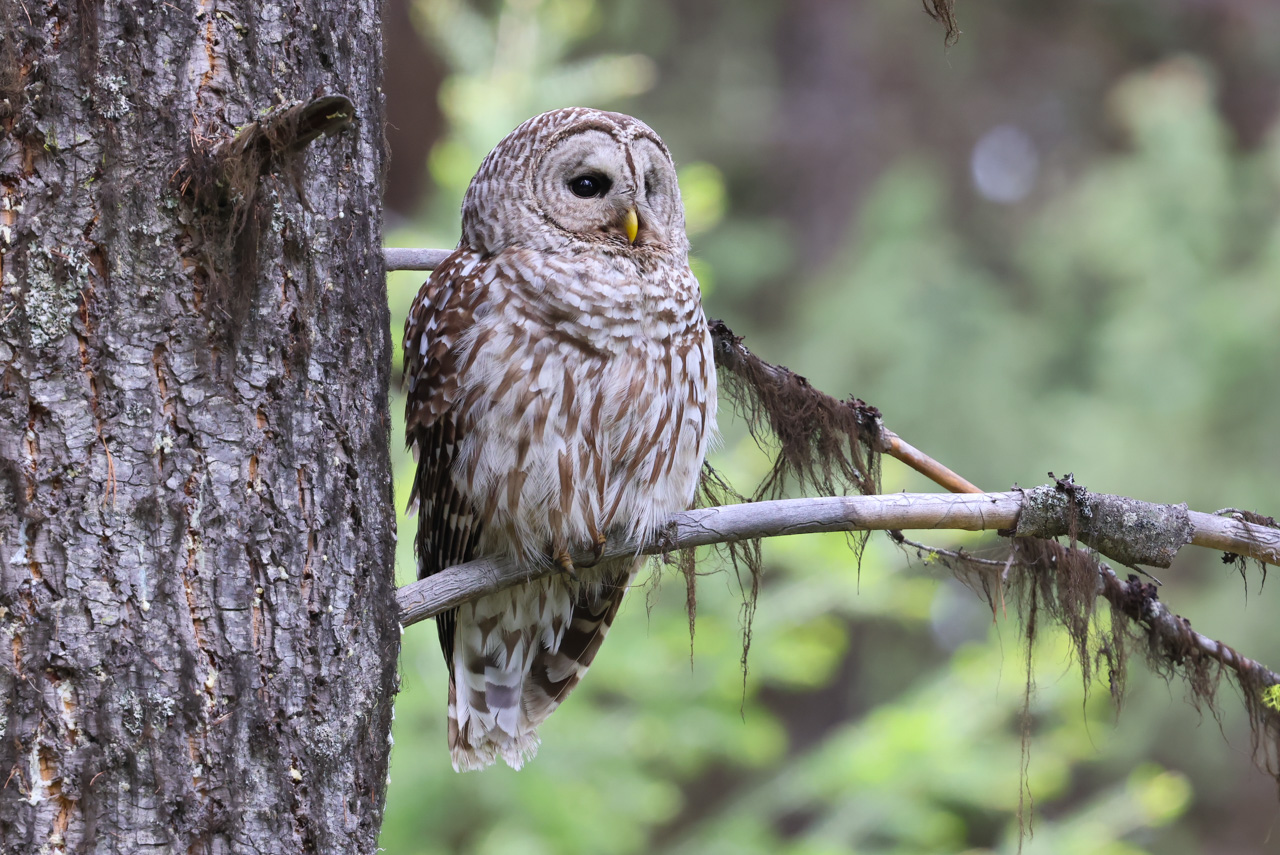
Barred Owl © James Lees
After lunch, we enjoyed excellent views of several Bighorn Sheep. One individual climbed an almost vertical rock face nearly 400 feet high with remarkable ease, an incredible sight to witness. Shortly afterwards, a couple of females ran past with three very young lambs.
Out on the lake, we added Ring-necked Ducks, Redheads, and a Trumpeter Swan to the trip list. Along the shoreline, large flocks of Gadwall contained a few Green-winged Teal and several American Coots. It had been another fantastic day filled with memorable wildlife encounters, but eventually it was time to head back for dinner.
Day 12
This was our last full day so we started by enjoying a walk in to the sage bush deep in the Okanagan Valley. It was a beautiful sunny morning with no wind and made for perfect conditions to hear birds singing all across the valley. The smell of the sage was amazing as we wandered through looking at Western Meadowlarks and lots of Western Bluebirds and Bullock’s Orioles. Our first Clay-coloured Sparrow of the trip posed nicely on a fence along with a Lazuli Bunting. We were amazed to find our third different Sage Thrasher of the week and another Golden Eagle flew over. Then a Goffer Snake was spotted basking on a wood pile.
We made a another stop and were surprised to see five Common Nighthawks out actively feeding in the late morning. More expected was a group of White-throated Swifts and a Say’s Phoebe.
We then began our journey to our final destination – Kelowna. Here we went to a small wetland to do our last birding of the tour. We had incredible views at large number of Ruddy Ducks, Redheads and American Coots. We saw our first Eared Grebes of the tour and they were in their finest breeding plumage. These grebes came so close that we got to see their incredible bright red eyes. Another new bird for the trip list was a Black-necked Stilt that seemed to have a nest. Yellow-headed Blackbirds and Wilson’s Phalaropes seemed to be everywhere.
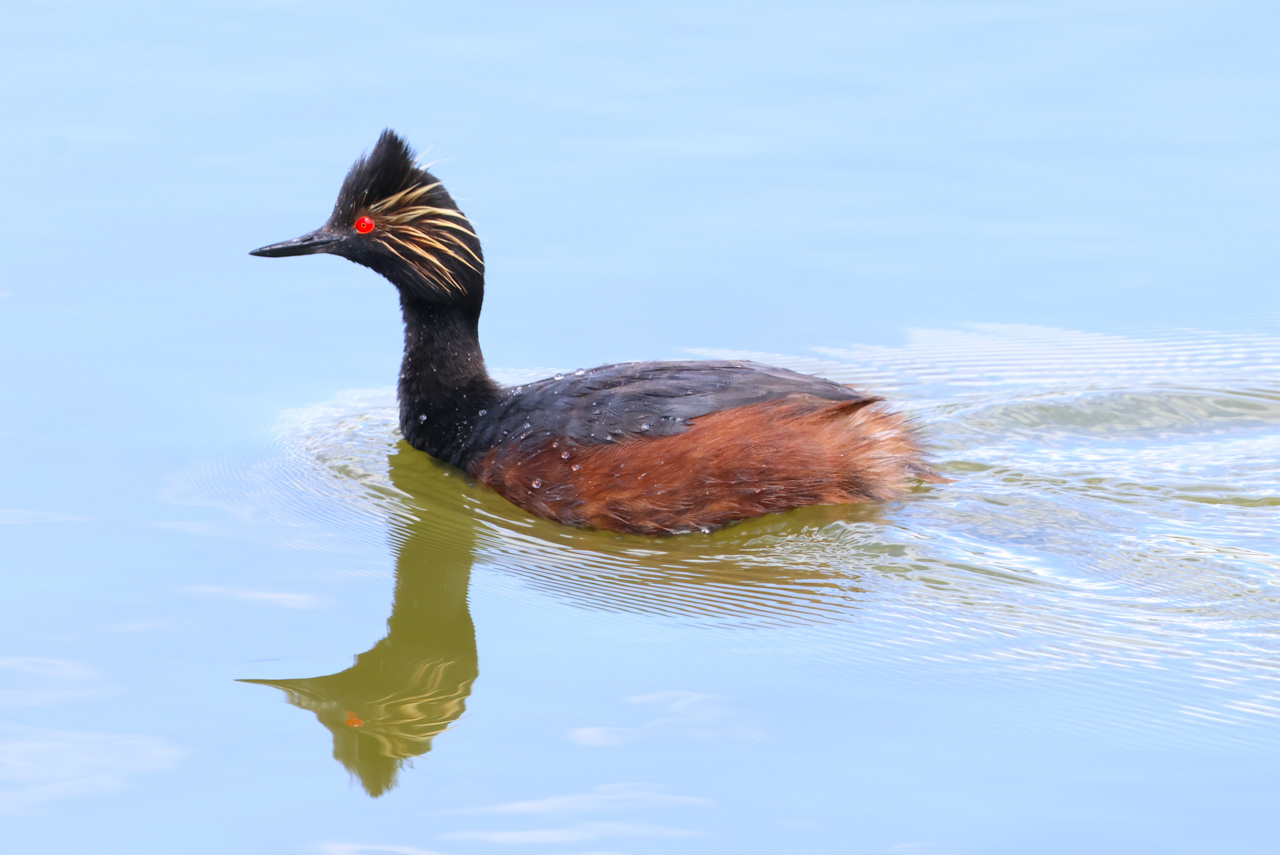
Eared Grebe © James Lees
A Sora also gave incredibles views as it came out in the open – it was a wonderful and fitting bird to end our incredible tour of British Columbia.
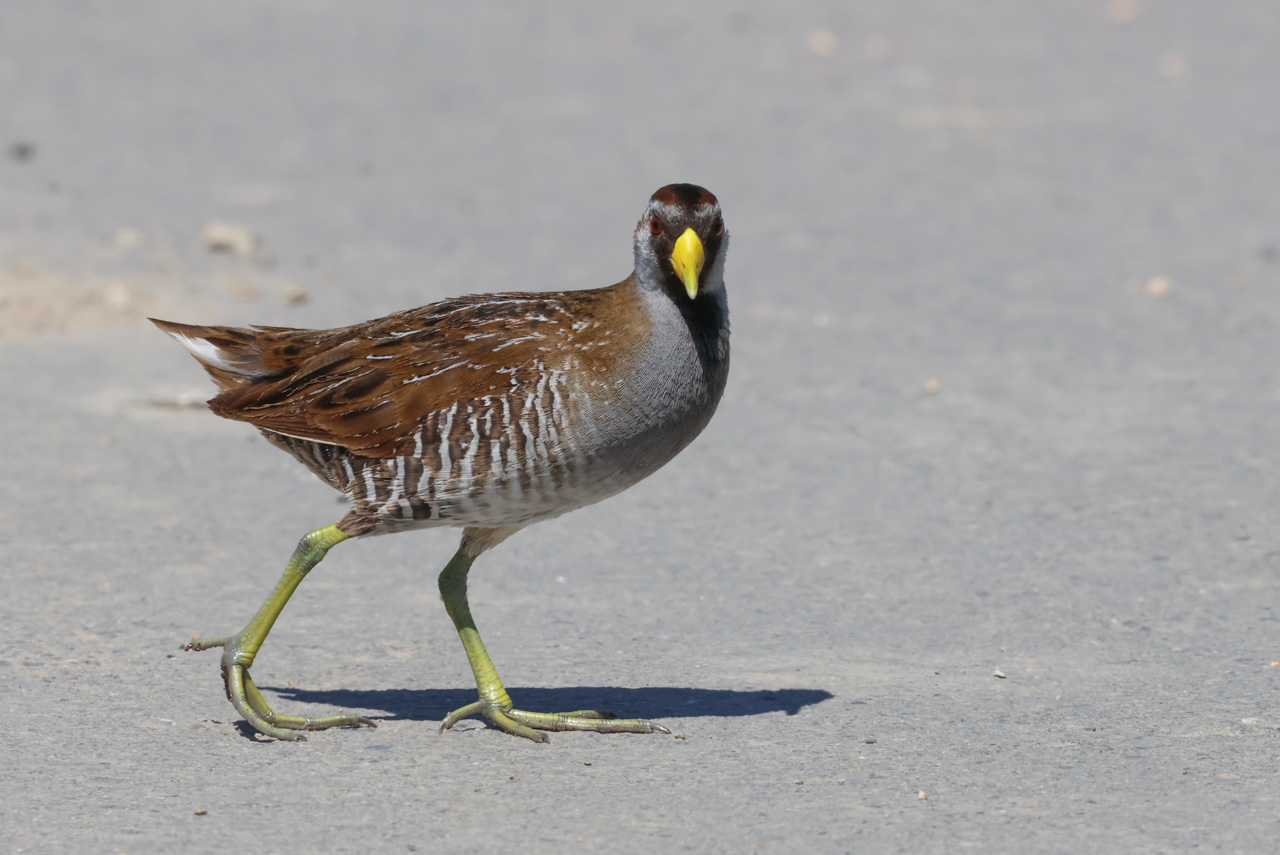
Sora © James Lees
Over twelve unforgettable days, we explored an extraordinary variety of habitats across British Columbia. From the rich mudflats of the Fraser Delta and the ancient rainforests of Vancouver Island to the alpine peaks of Manning Park and the sagebrush valleys of the Okanagan. Along the way we recorded an impressive 208 bird species, a remarkable total that reflects the incredible diversity of landscapes and ecosystems encountered throughout the tour. Highlights included spectacular pelagic birding off Tofino with Black-footed Albatrosses, thousands of Sabine’s Gulls, and multiple species of storm-petrels and alcids. Memorable mammal encounters included Humpback Whales, Orca, Sea Otters, Black Bears, Bighorn Sheep, and countless other species.
The birding was exceptional throughout, producing a remarkable list of west coast specialties and regional highlights, from Sooty Grouse, Varied Thrush, and Black Swift to Burrowing Owl, Sage Thrasher, Williamson’s Sapsucker, Calliope Hummingbird, and Pacific Golden-Plover. Combined with breathtaking scenery, wonderful company, and many unforgettable wildlife encounters, this tour showcased the very best of British Columbia’s coast, mountains, forests, and grasslands.
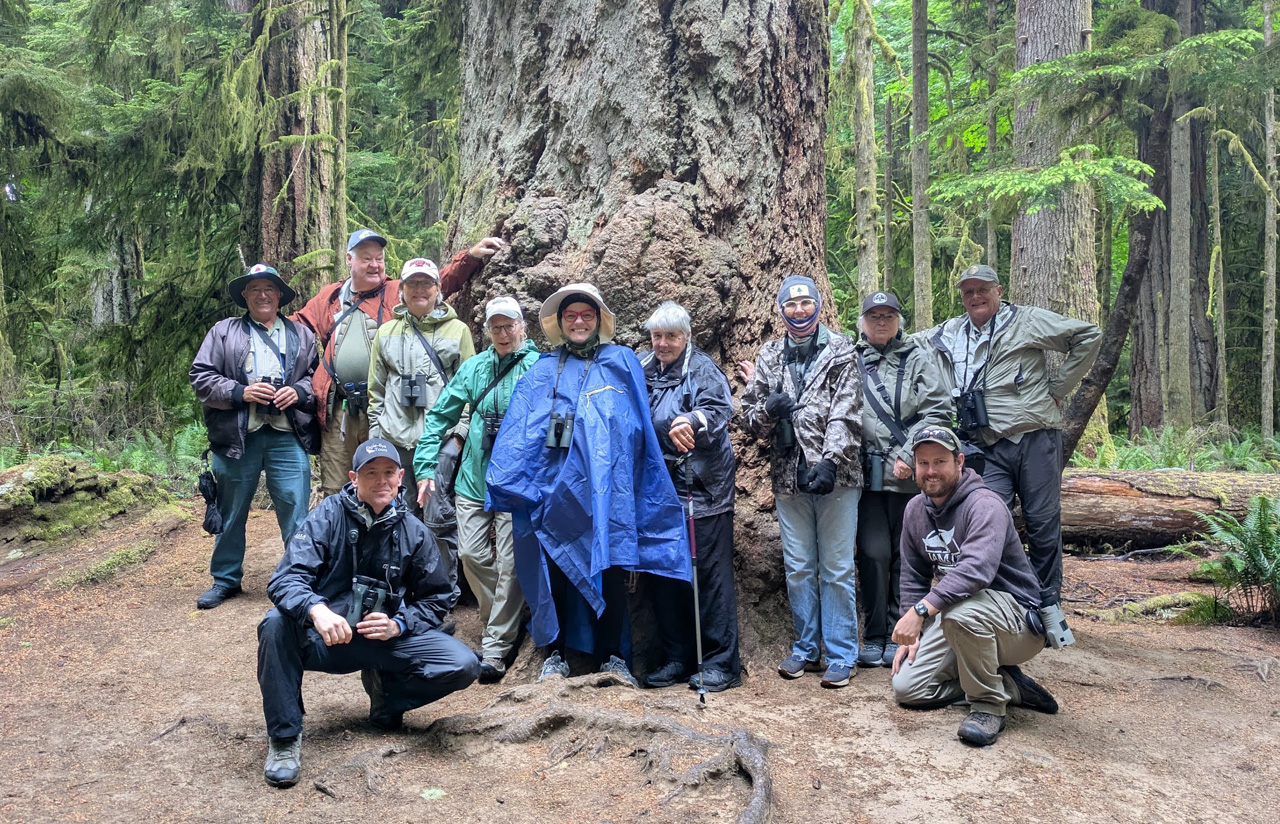
The BC group for 2026