Tanzania Trip Report (Apr 1 – 16, 2026)
The first April EET Tanzania Safari of 2026 was very much about size. Size and equality. Our group of six participants (plus Frank our driver guide and myself) was almost equally divided, between three keen “Birders” and three or four people who were most keen to see the Big Five ! Guiding it therefore frequently revolved around the question of Balance! Thankfully everyone was adaptable and by the end it was undeniable that it had been a great success.
We were able to pass the significant benchmark of 400 bird species seen by some of the participants. We also managed to find the Big Five, those animals traditionally considered to be the most dangerous to the “Great White Hunter”. Furthermore we found for ourselves (and therefore to watch in peace) all three of the Big Cat species: Lion (26), Leopard (3), Cheetah (2).
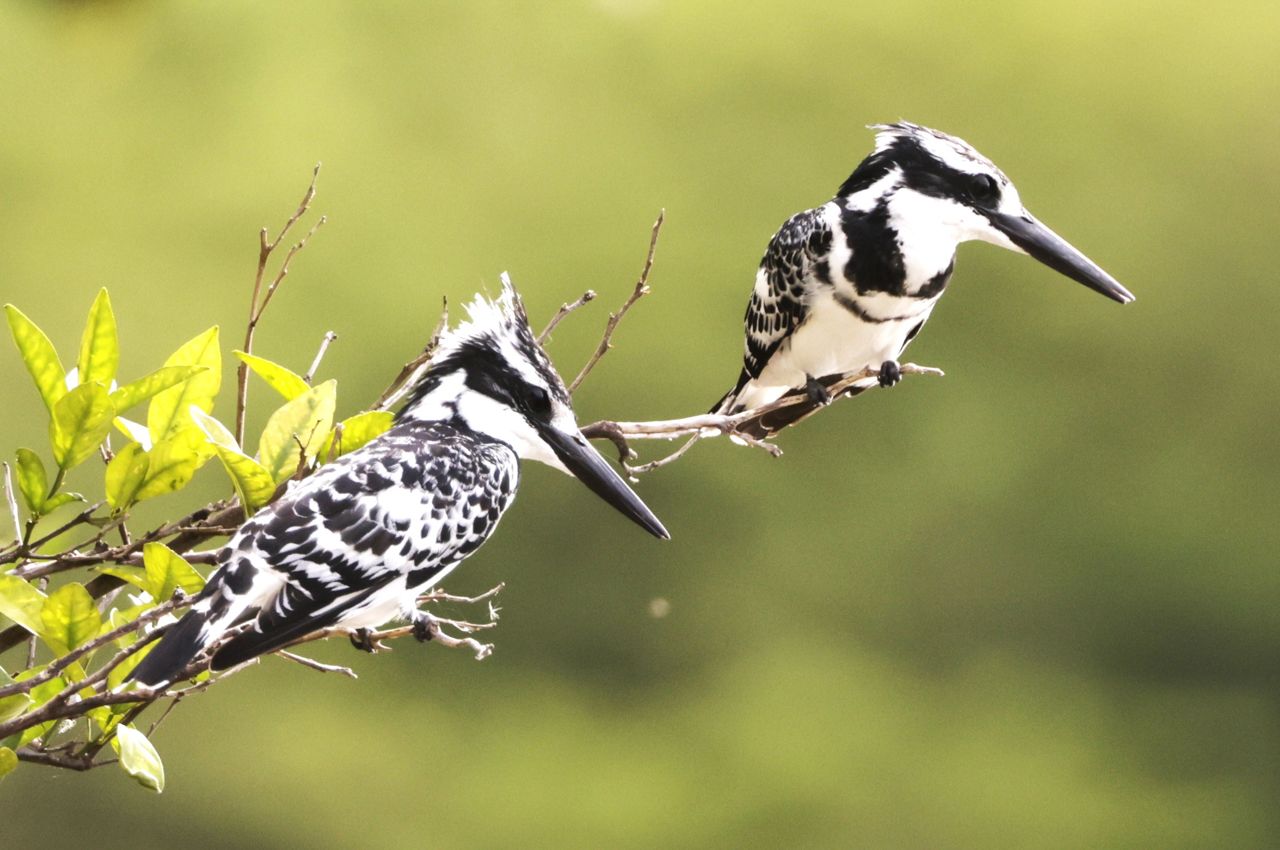
Pied Kingfishers © Paul Mammenga
We were blessed with balmy weather this Green Season, the heavier rain showers made themselves scarce. Our safari was as a consequence uninterrupted by adverse weather conditions.
We started and finished, as is customary, at the delightfully tranquil KIA Lodge. Accommodation which sits within the perimeter of, and beside the little-used runway of, Kilimanjaro International Airport. The large grounds of KIA Lodge were extremely verdant this year, after prolific early rains during March, such that finding the resident family of Spotted Eagle-Owls and six or so Slender-tailed Nightjars took some time. Nevertheless we secured great day time views of both of these nocturnal species.
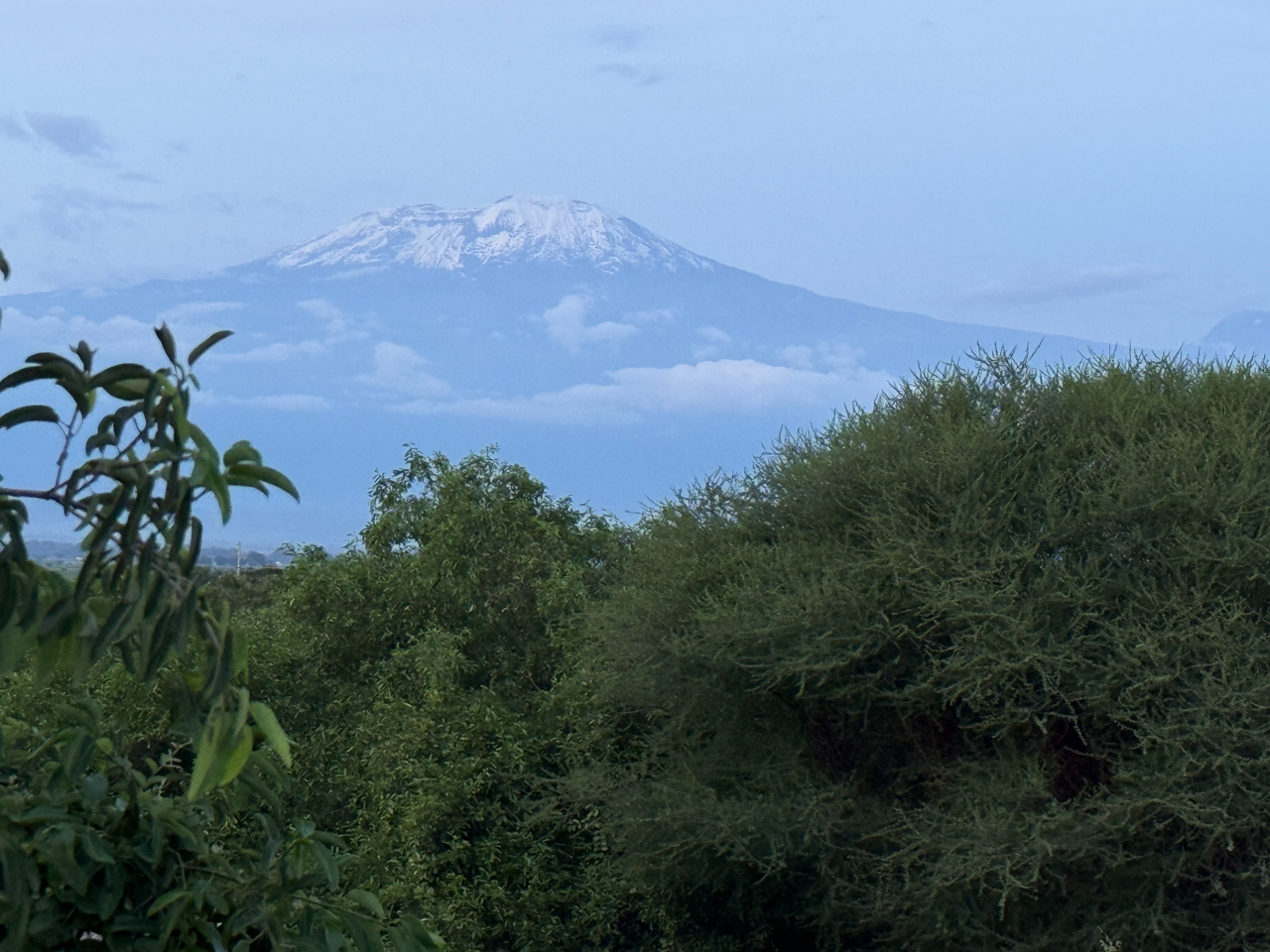
Kilimanjaro from KIA Lodge © James Wolstencroft
When we first drove out of KIA Lodge on the morning of April 2 we were delighted to find breeding plumage Yellow Bishop and other “rains seed-eaters” displaying in the tall grassland of the airstrip and encountered our first Palearctic migrant shorebirds – Wood Sandpiper and Little Stint – together with resident Blacksmith Lapwings at the small water treatment pools, adjacent to the road, and also within the perimeter of the airport.
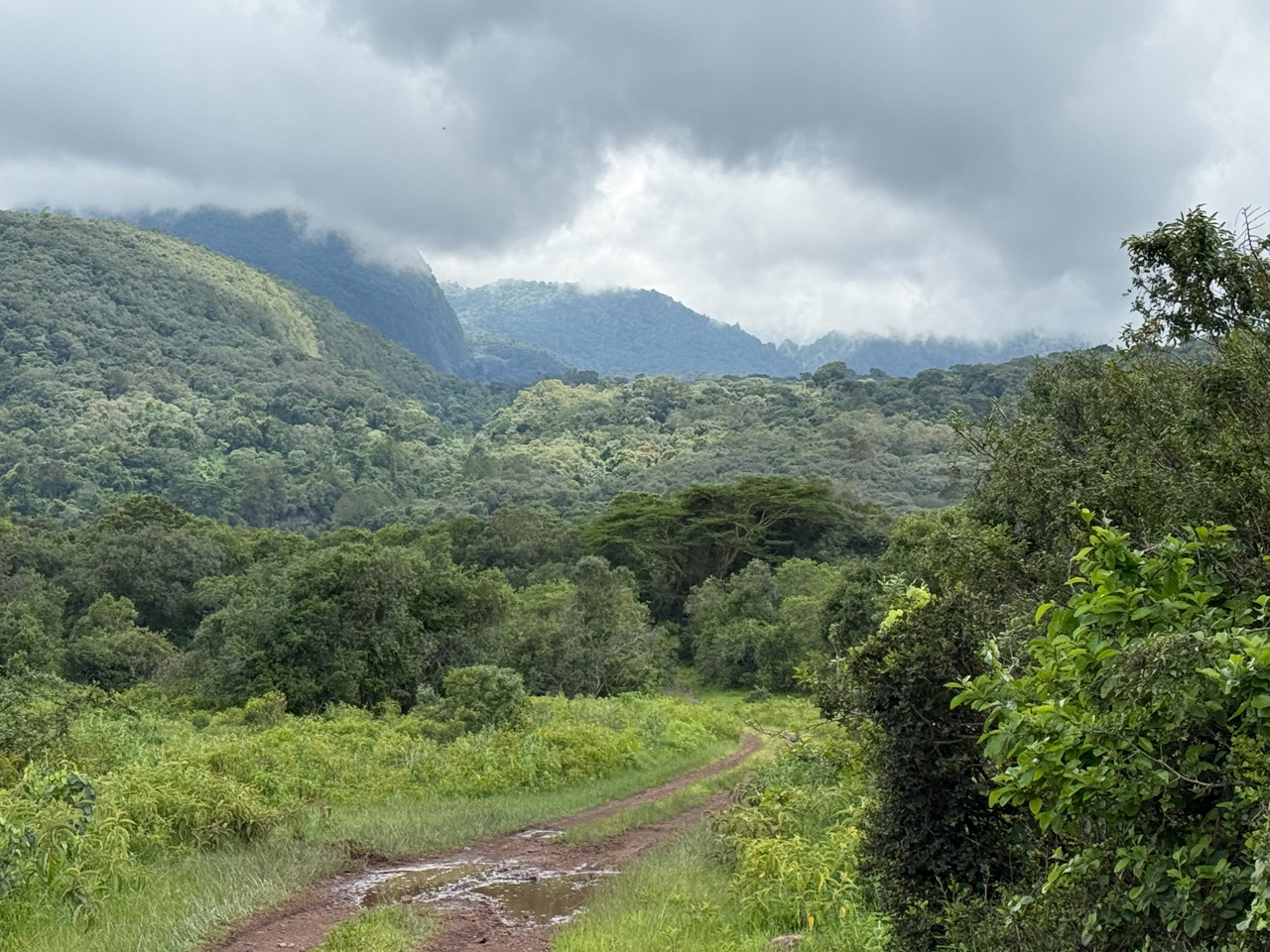
Arusha National Park © James Wolstencroft
Arusha National Park was, as ever, an amazing introduction to the biological wealth of East Africa. Here we wasted no time in getting straight in amongst the big animals. In fact on our second late afternoon in the park we actually found ourselves suddenly surrounded by a tower of Masai Giraffes who temporarily blockaded our exit route, yet in the most delightful of ways.
Our entry to Arusha park on the first day had been auspicious when a pale morph Booted Eagle, an infrequently seen migrant from Asia, circled up over the track immediately ahead of us. Moreover when we reached Momella Lakes in the afternoon I for one was amazed to see two very closely related Palearctic migrant passerines, Isabelline and Turkestan Shrike, hunting from briars in the same clearing. The first time ever!
During a brief shower we closely watched a dun brown Hamerkop foot/paddling, in its quest for nutritious frogs, at a small pool beside the track. This is a very enigmatic and endearing African species, placed in its own endemic family.
On the second day in particular we saw some fabulous mammals in Arusha park as well as some “tough birds”. We had, what were for me, my best ever views of a Suni (the smallest of East Africa’s antelopes) who was browsing in full view, for everyone in the vehicle, in an open glade of dappled shade, together with several delightful Blue Monkeys who were doubtless seen as offering security to the tiny ungulate. We were also treated to some prolonged and spectacular pied Colobus Monkeys, some near the ground and at very close range.
We saw both Hartlaub’s Turaco and the Green Yellowbill (Green Malkoha) in trees draped with arboreal vine tangles near the museum junction. Equally “good” a Pygmy Kingfisher gave protracted views at the little bridge over the Maji ya Chai stream, moments after a northbound European Honey Buzzard had crossed our path.
The next morning we drove from the highland cool of Ngare Sero Mountain Lodge down to the warmth of Tarangire Safari Lodge via a stop for fuel in Arusha town. Whilst there we made a short detour to witness the raucous roost of Straw-coloured Fruit Bats near to the German Boma, constructed in the first years of the twentieth century it is the oldest building in this vibrant little “safari city”. The savannas of Tarangire certainly produced size, the giants even, in the form of the baobabs, of ostriches and of the glorious elephants, for which it is rightly famous.
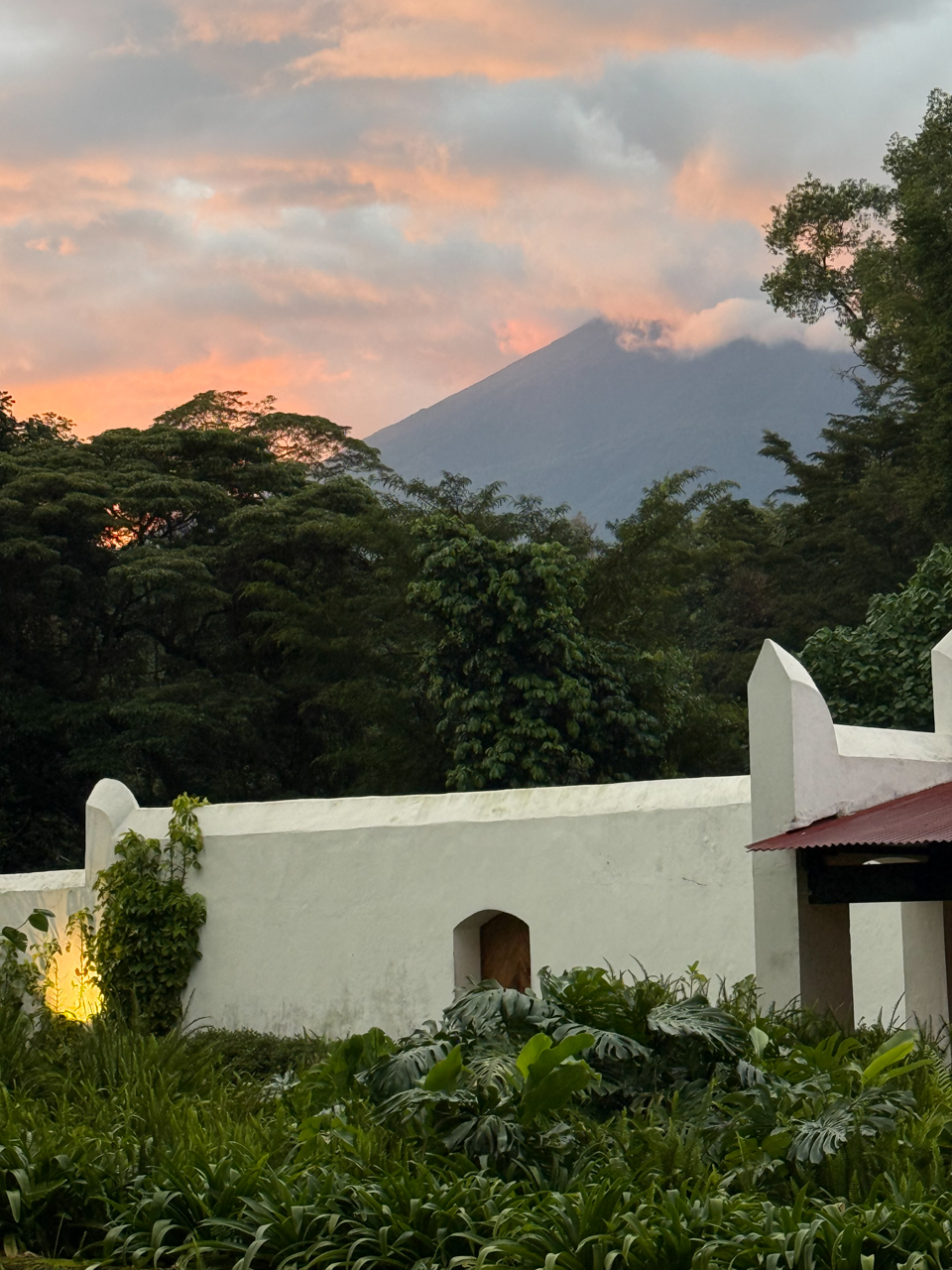
Ngare Sero, Arusha National Park © James Wolstencroft
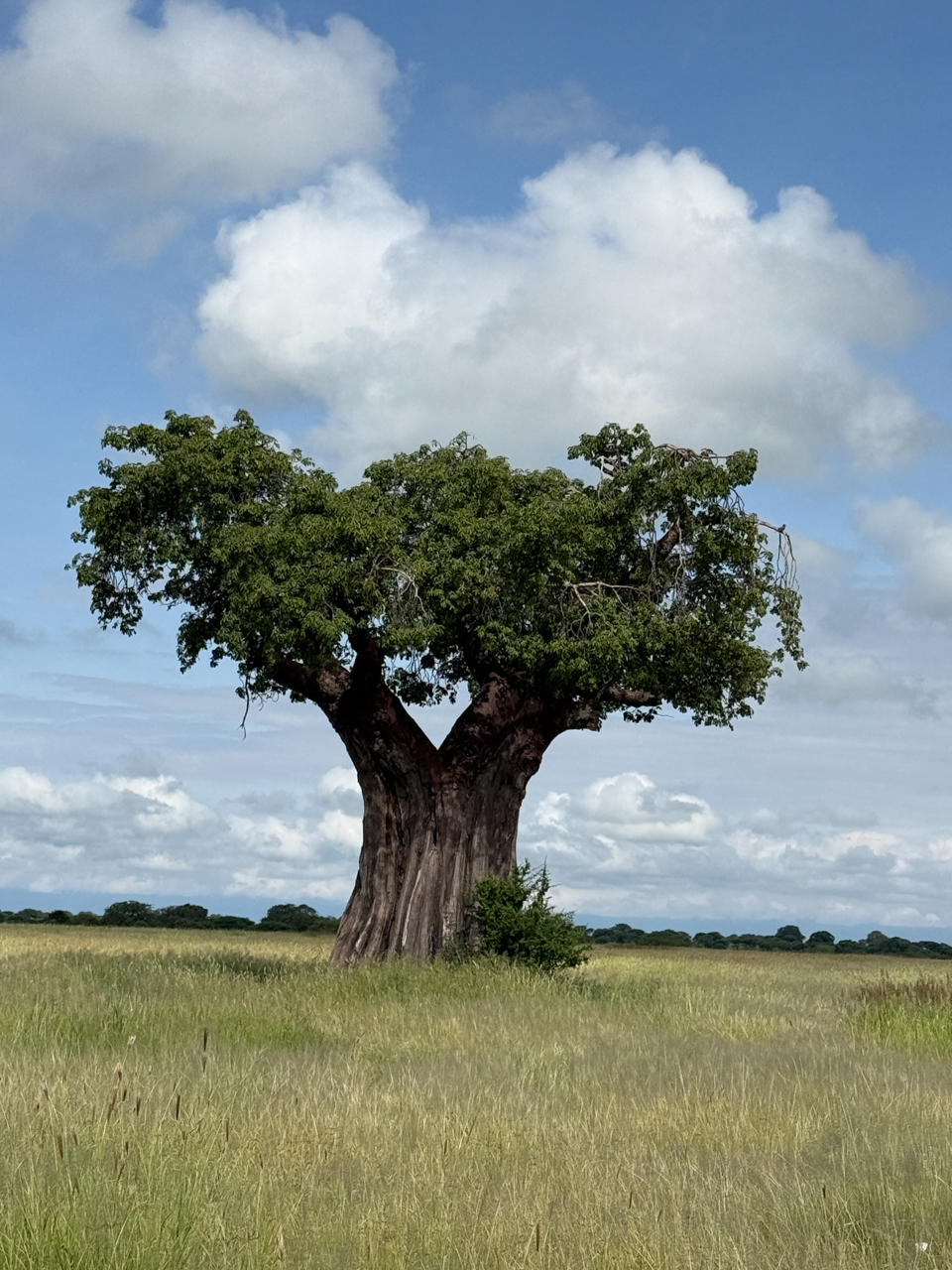
Baobab tree in Tarangire National Park © James Wolstencroft
And it was here where we first met with iconic East African birds such as the Lilac-breasted Roller, surely the most photographed bird in all of Africa. I had another big surprise in Tarangire, on the first afternoon, when we bumped into a pair of bright yellow Cuckoo-finches, nowadays known as Parasitic Weaver, an enigmatic and irruptive bird species which, despite numerous safaris in East Africa, I had not seen for over a decade!
Leaving Tarangire we paused to enjoy a frolicking family of Dwarf Mongooses beside the road, evidently enjoying the morning sun, exuberant little animals these, each of whom seemed oblivious to our looming presence, peering down at them from our Toyota LandCruiser. The highlight in Lake Manyara National Park was undoubtedly three very young Olive Baboons, a primate we saw almost daily and in considerable numbers, who were playing a baboon version of tag in a very spindly shrub and only a few feet from our windows. They appeared to be both clumsy and yet great gymnasts in equal measure.
As always in Manyara the environs of Msasa picnic site provided close-up looks at some special African birds. Three species of spectacular whydah and some glorious “red and…” Black Bishops I think took pride of place.” Foremost among the unusual sightings here was a pair of secretive Eastern Crested Guineafowl scuffling in the leaf litter of the forest, again right next to our vehicle.
After three days in the heat of Tarangire and Lake Manyara, lying as they do in the Great Rift Valley, we were all quite relieved to drive, in late afternoon sunshine, up into the refreshingly cool Crater Highlands. And to arrive well before nightfall at “The Retreat”, our decidedly sumptuous lodge on the edge of the evergreen forest in the legendary Ngorongoro Crater Conservation Area.
On our morning walk next day into the Endoro Forest above Karatu we were blessed with excellent views of two normally skulking birds, a flighty Tambourine Dove (seen from “the truck” before the walk) and close views of a splendid Schalow’s Turaco beside the footpath in the midst of our walk. We also saw an exquisite White-tailed Blue Flycatcher foraging in the canopy of the deciduous Croton trees. We found the nest of a pair of Sharpe’s Starling and enjoyed remarkable views of this little known denizen of the hill forests.
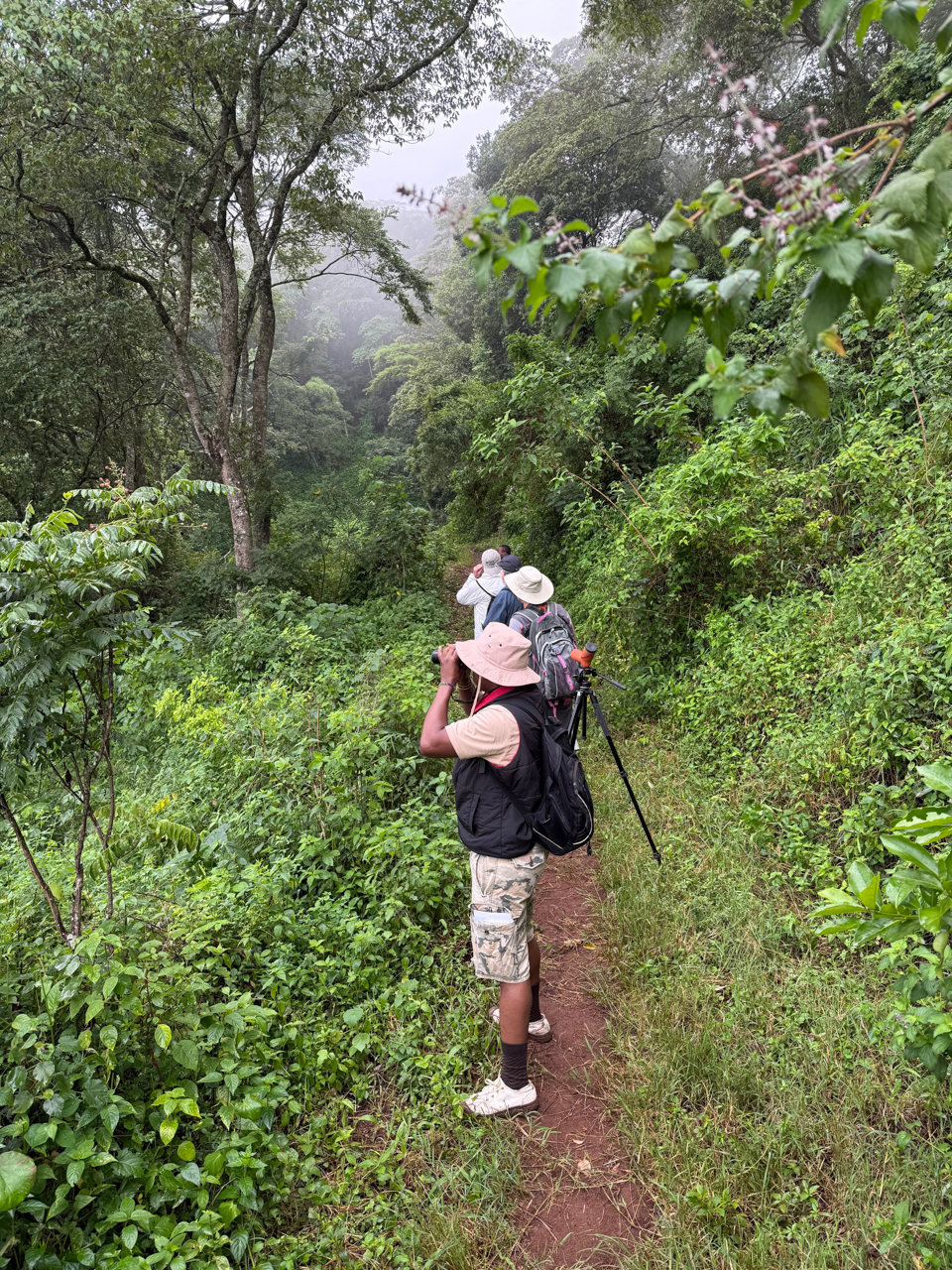
Endoro Forest Walk © James Wolstencroft
We get up extra early on “The Crater Day”, as I always aim to leave our accommodation near Karatu at dawn. Moreover I always try to keep an accurate count of the number of bird species that are seen on our zoological pilgrimage to the Crater itself.
Leaving the farmland and settlements below and behind we entered another world. This safari wonderland of huge vistas and spectacular wildlife, the greater Serengeti ecosystem, would be our home range for the next several days.
We drove up to the crater rim through a thick mist of a cloud forest that nurtures the soft green Mbulu Moss which hangs like Spanish Moss from the branches of the taller trees. On the journey we saw more Crested Guineafowl (at an elevation of over 2,000 metres) saw them for the third consecutive day, something that has never happened before in all my time birding in Africa!
As we began our descent toward the crater we were treated to fabulous views of a mighty Crowned Eagle perched right beside the road. Later, in the middle of the afternoon, we had drive-away views of another marvellous raptor, a pair of African Hawk-Eagles, who were perched over the trail.
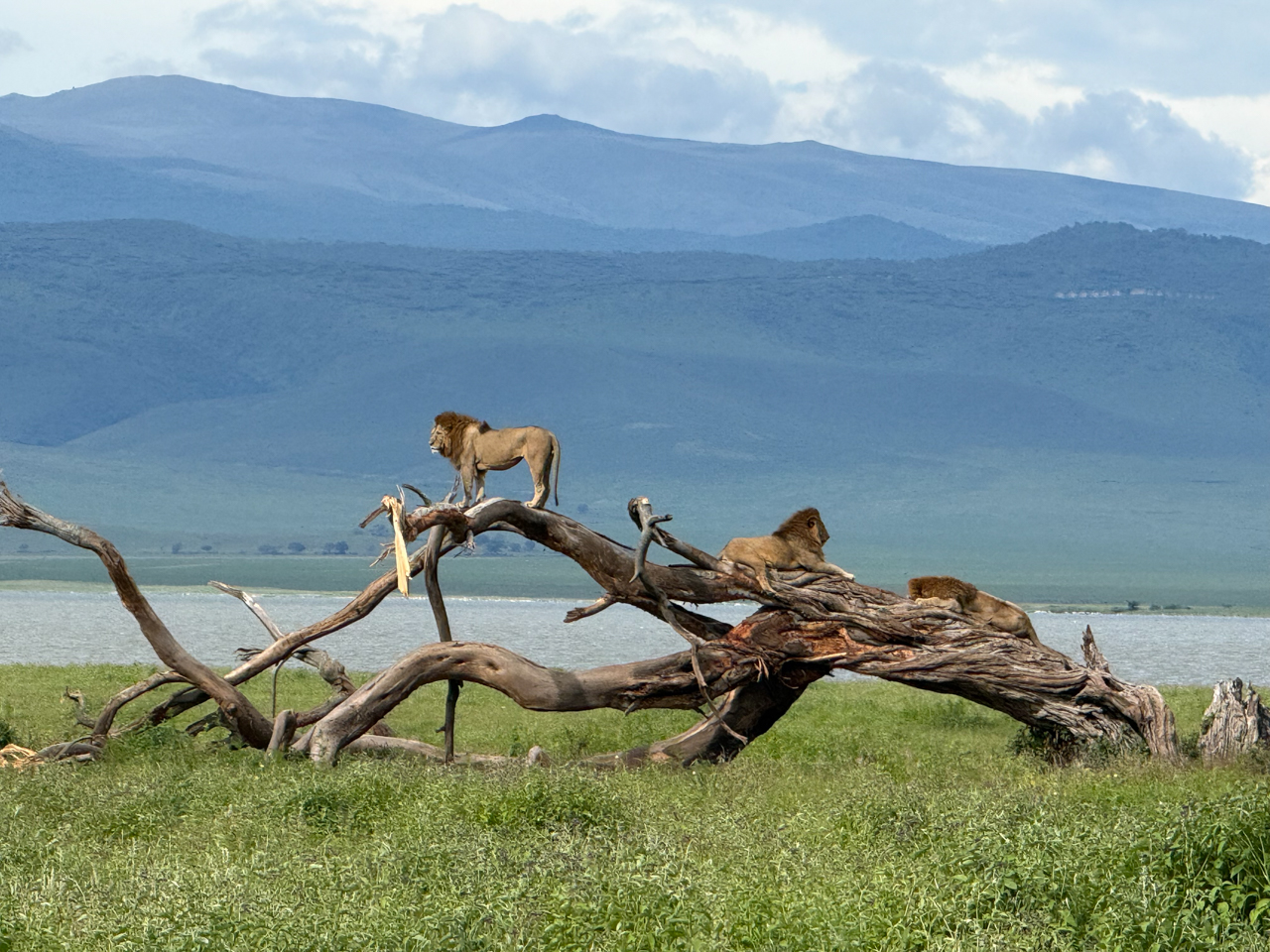
Males lions, Ngorongoro © James Wolstencroft
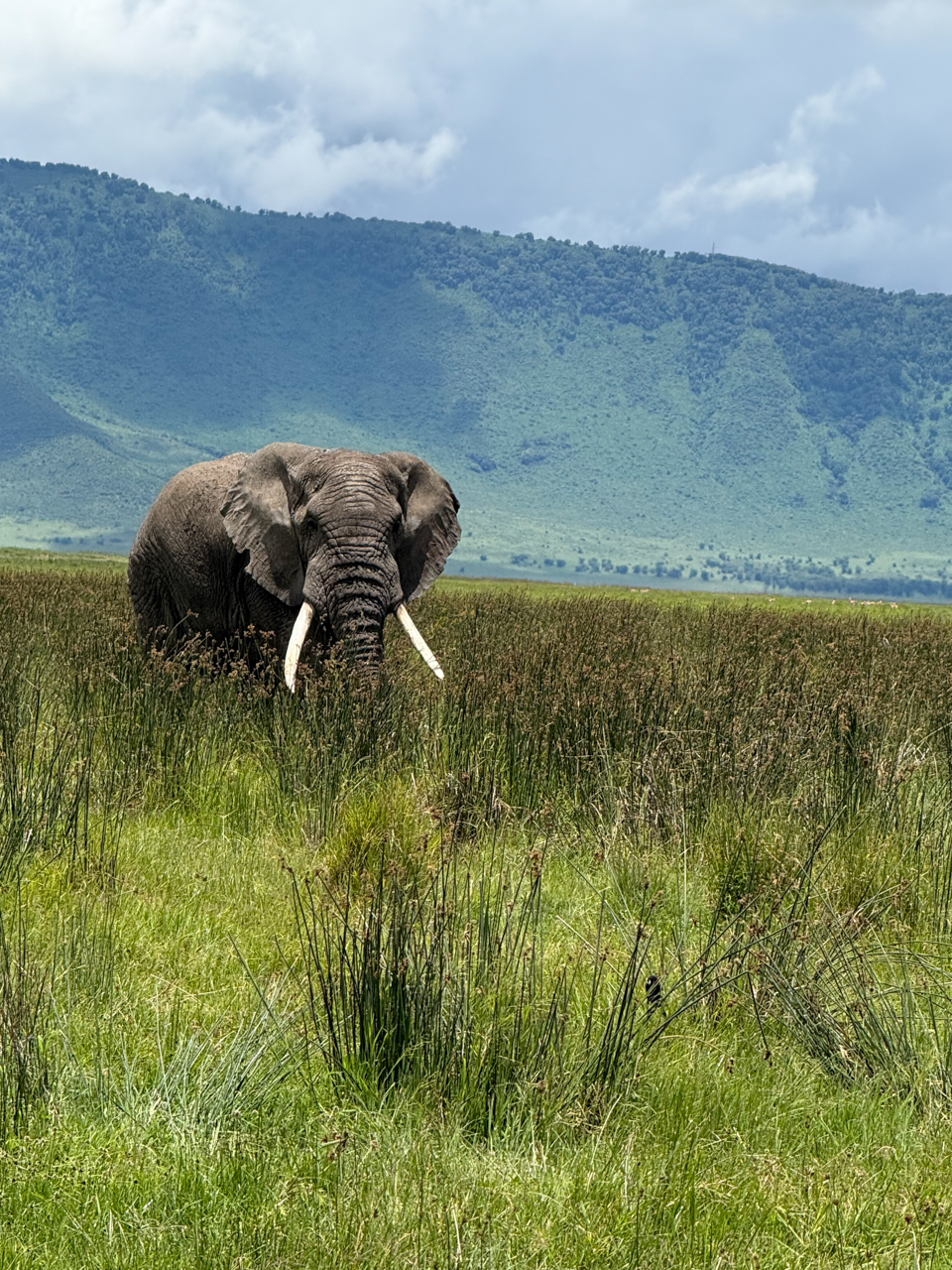
Elephant, Ngorongoro © James Wolstencroft
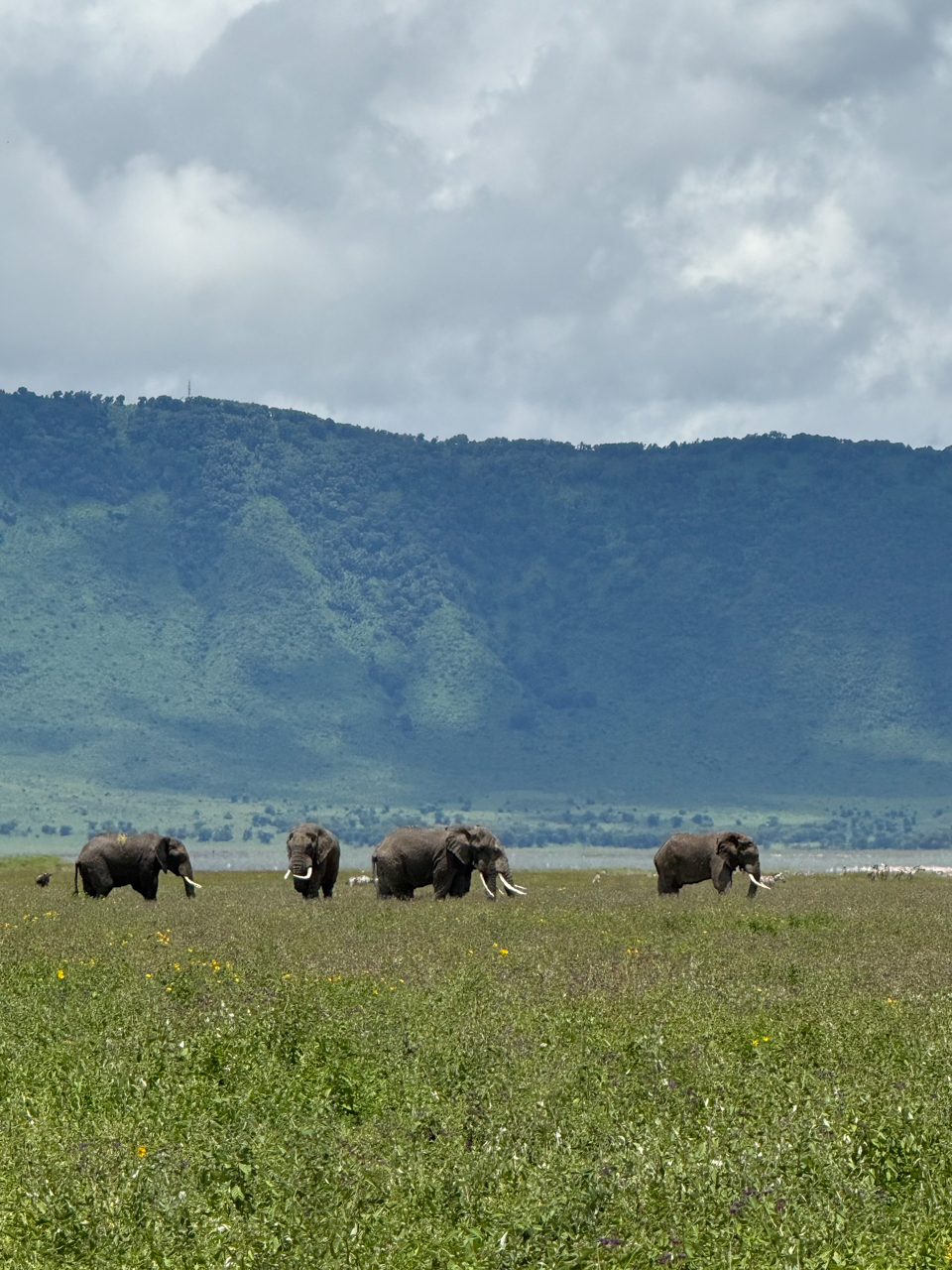
Old Tuskers, Ngorongoro © James Wolstencroft
We saw our first of many Lions today (eight, including three lionesses snoozing on a fallen dead tree) and succeeded in finding our only Black Rhinoceros of the safari, eight individuals. These amazing creatures have been secure from poaching, and for several generations, here on the floor of this “wonder of the world”, the Ngorongoro Crater.
In the late afternoon the extensive fresh water pools, near the base of the ascent road, yielded the nowadays increasingly hard-to-find Yellow-billed Duck and a selection of wonderful water birds, these included a very local austral migrant in the form of a fly-by Rufous-bellied Heron. When we counted up before dinner in the evening we found that no less than 138 bird species had been logged on this day.
We spent another night in luxury at Serena Lodge and were very lucky to find both Brown-backed Woodpecker and a pair of dazzling Tacazze Sunbirds in the almost wild gardens next morning as we departed for Lake Ndutu. We decided to stop at the anthropological exhibits at Olduvai (Oldupai) Museum on our descent to the vast short grass plains around Lake Ndutu. This meant we arrived at Ndutu Safari Lodge for our “hot lunch” only in the nick of time!
At Ndutu on our full first morning we found Black-backed Jackals and delighted in our own ‘pair’ of somewhat skittish Cheetah brothers, as well as finding a superbly comfortable lioness dozing on the bough of a beautiful acacia tree.
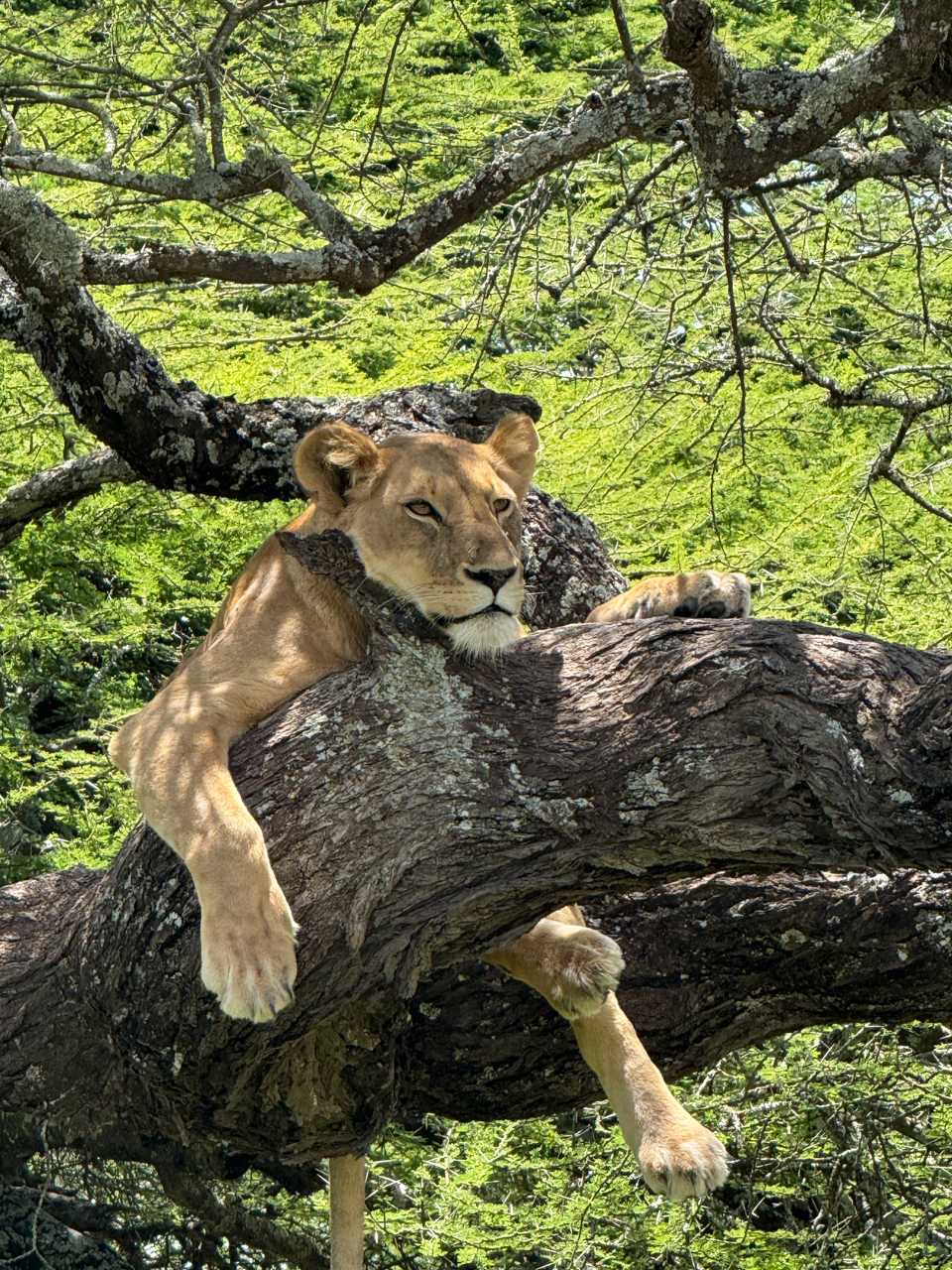
Lioness, Ndutu © James Wolstencroft
We met with the vast herds of Western Wildebeest out on the plains to the south; and a few sandgrouse of two species (Yellow-throated and Chestnut-bellied) together with innumerable larks and pipits and cisticolas – all brown and streaky birds these – foraging in or hovering over the short grass plains.
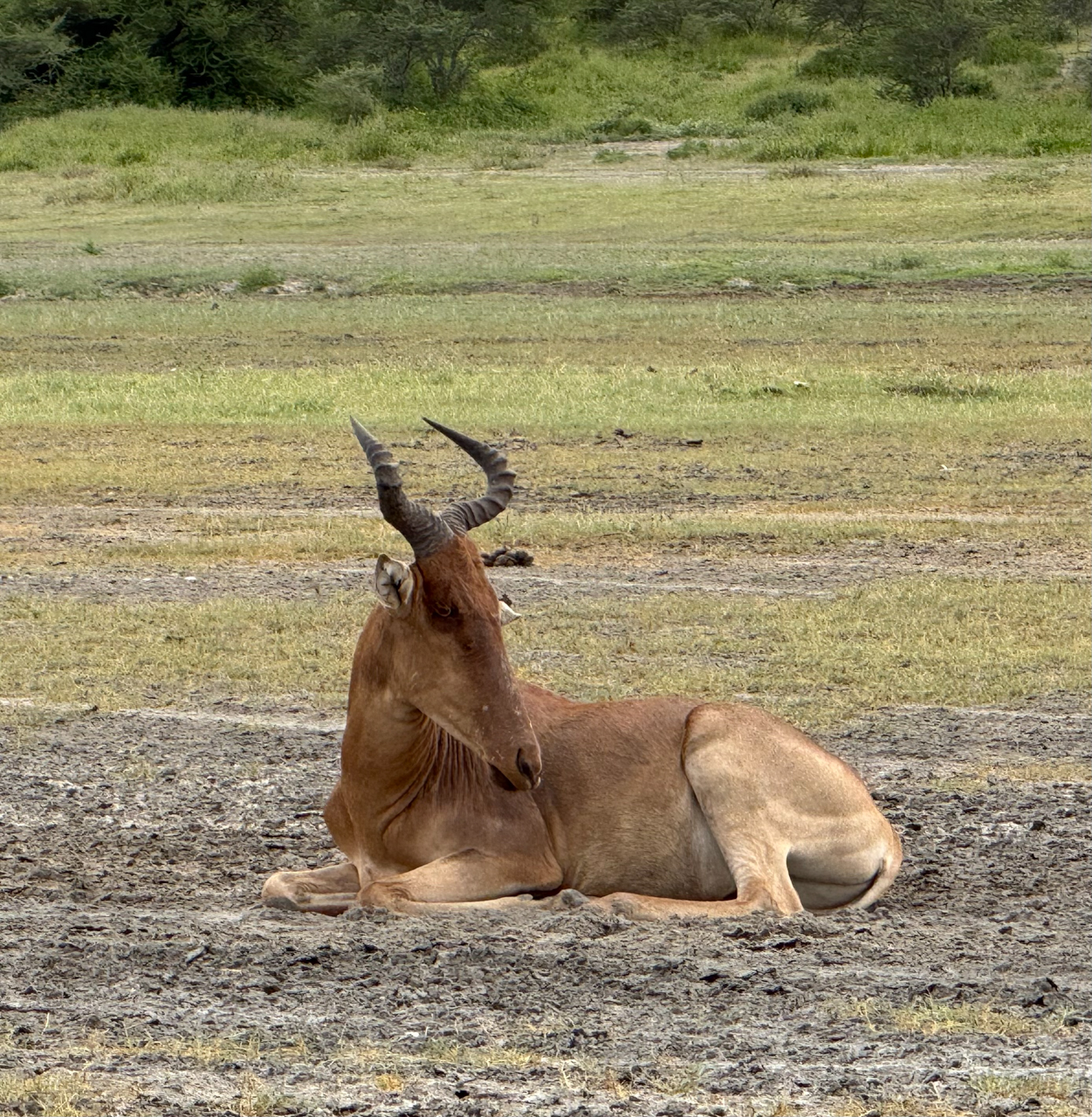
Coke’s Hartebeest, Ndutu © James Wolstencroft
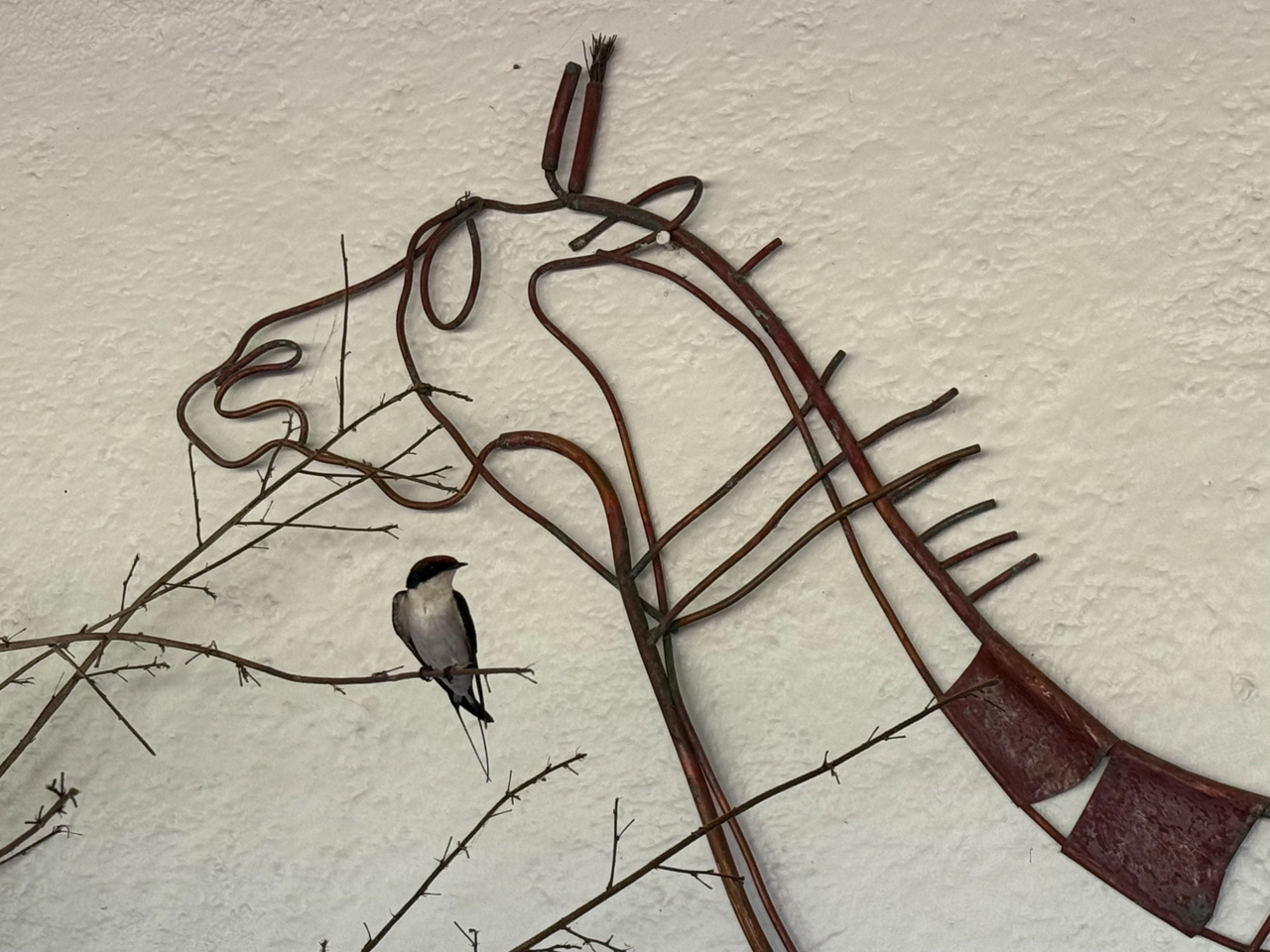
Wire-tailed Swallow, Ndutu Safari © James Wolstencroft
Next day we got much closer to the thrill of “Big Game”! We got in amongst the wildebeest migration. This was after we had found a nest of the Black-chested Snake-Eagle and a Martial Eagle beside the famous “Big Marsh”. Alongside the lake we found no fewer than twelve Chestnut-banded Plovers, a restricted range species utterly confined to the very narrow almost inundated muddy margins of a few African alkaline lakes.
Always a highlight for me at Ndutu is watching the multi-hued flocks of sparrows, weavers, finches, canaries, whydahs and bishops who come, at around midday, to drink at pools at certain points in the middle of the Masek Road. We were not to be disappointed on this safari.
Our stay at Intimate Camp, quite near to Seronera, the central hub of the vast Serengeti National Park has often been considered to be one of THE places in the world to see Leopard . Thankfully we were not in the slightest disappointed by our amazing leopard experiences here.
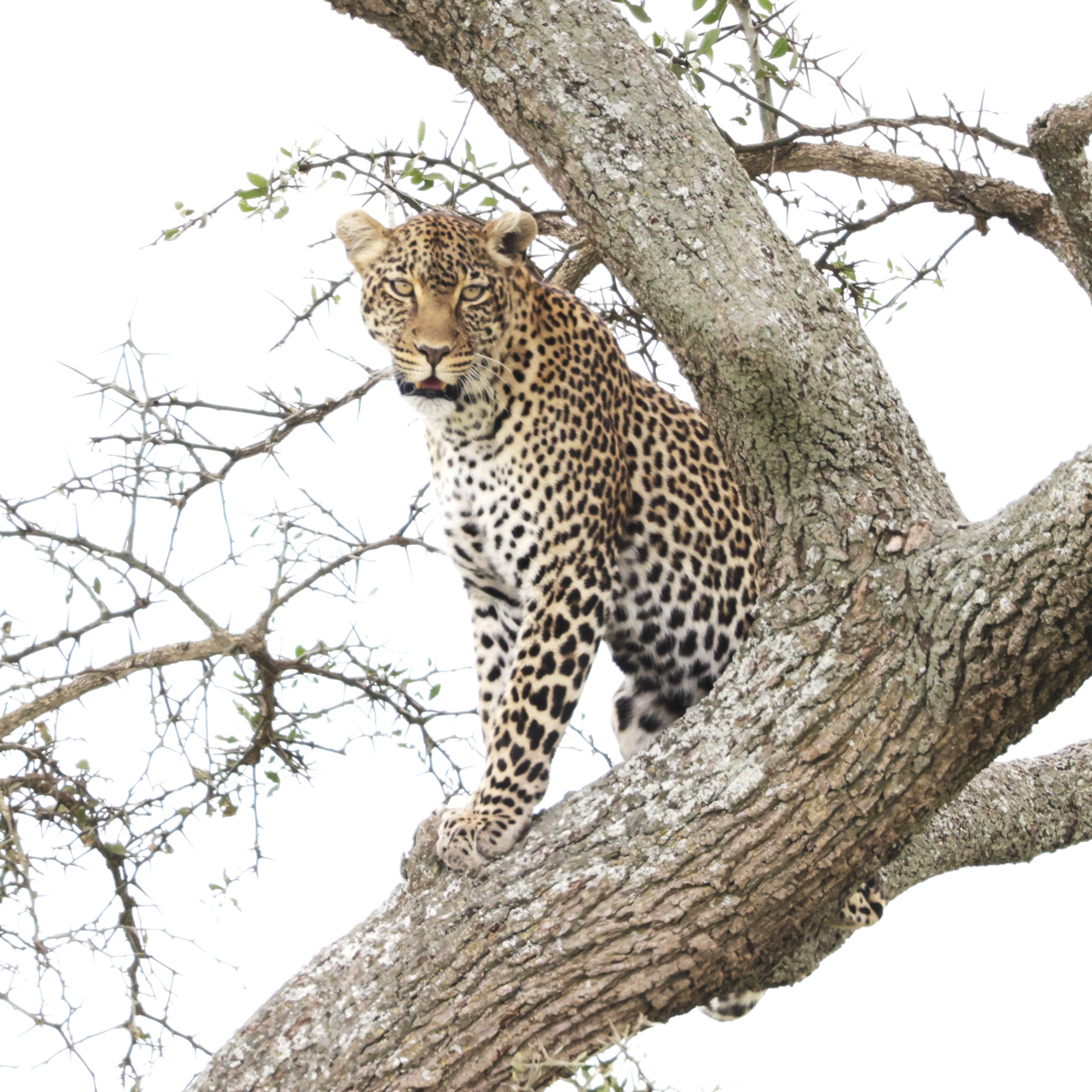
Leopard © Paul Mammenga
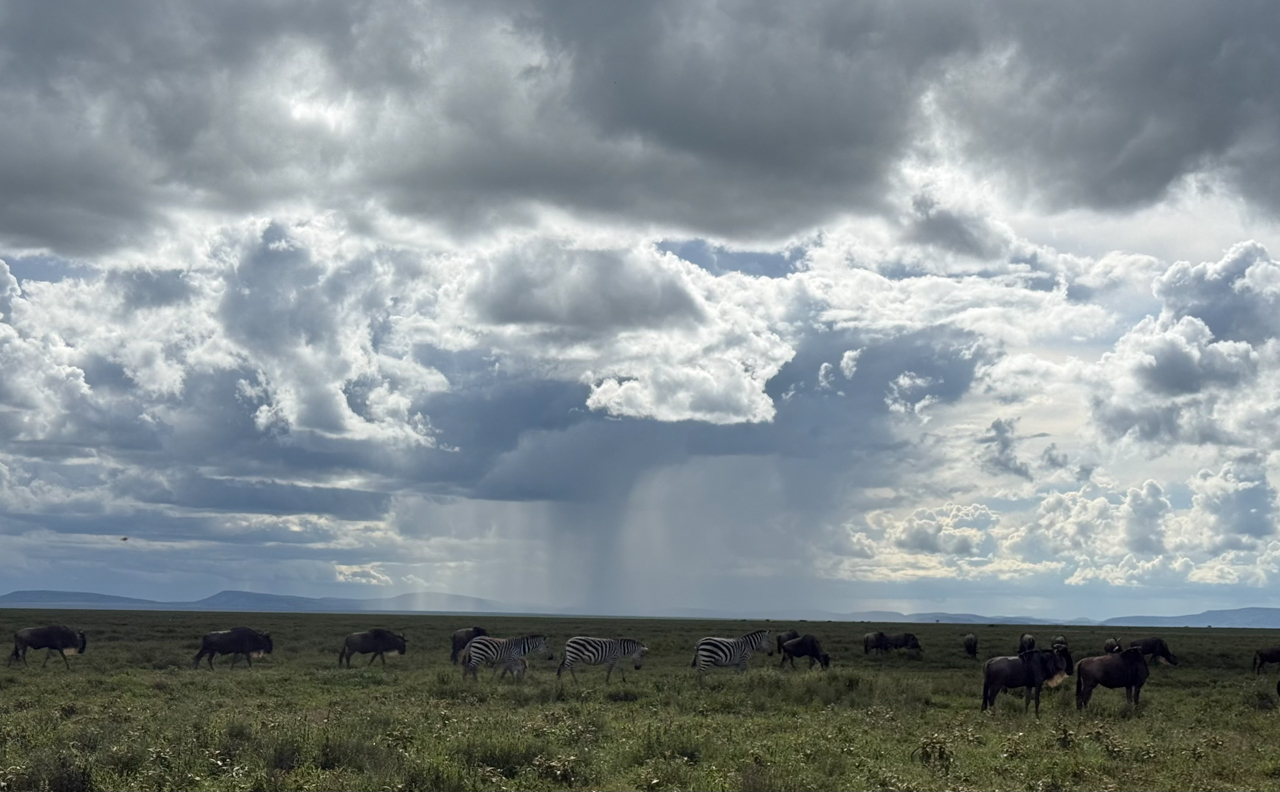
Following the rain on the short-grass plains of the Serengeti © James Wolstencroft
The birds were good here too as one might expect and we got special views of Coqui Francolin and found a pair of the enigmatic Bush Pipit. In the past three days we had seen plenty of vultures, a few eagles, some falcons and hawks and a few of that most enchanting and unique of raptors the Secretary-bird, including one with a small snake in its beak.
Finally we were free from the truck! We were at Speke Bay Lodge and able to make extensive walks in the luxuriant grounds. Here among smaller birds we found a gorgeous Broad-billed Roller and a roosting pair of Three-banded Coursers together with three Spotted Thick-knees attempting to snooze on the ground under the acacia shrubbery.
We also saw all of the western lakeshore bird species for which this lodge is renowned. Birds such as Northern Brown-throated, Black-headed and Slender-billed Weaver, Black-headed Gonolek, Swamp Flycatcher and Angola Swallow. Not to mention in any detail the antics of a horde of highly energetic Pied Kingfishers.
All too soon it seemed, it was time to make our way to Mwanza Airport and to board our Precision Airways flight to JRO (Kilimanjaro) for a final tour night at KIA Lodge. The very place where we had walked-out at the beginning of our great Tanzanian wildlife adventure.
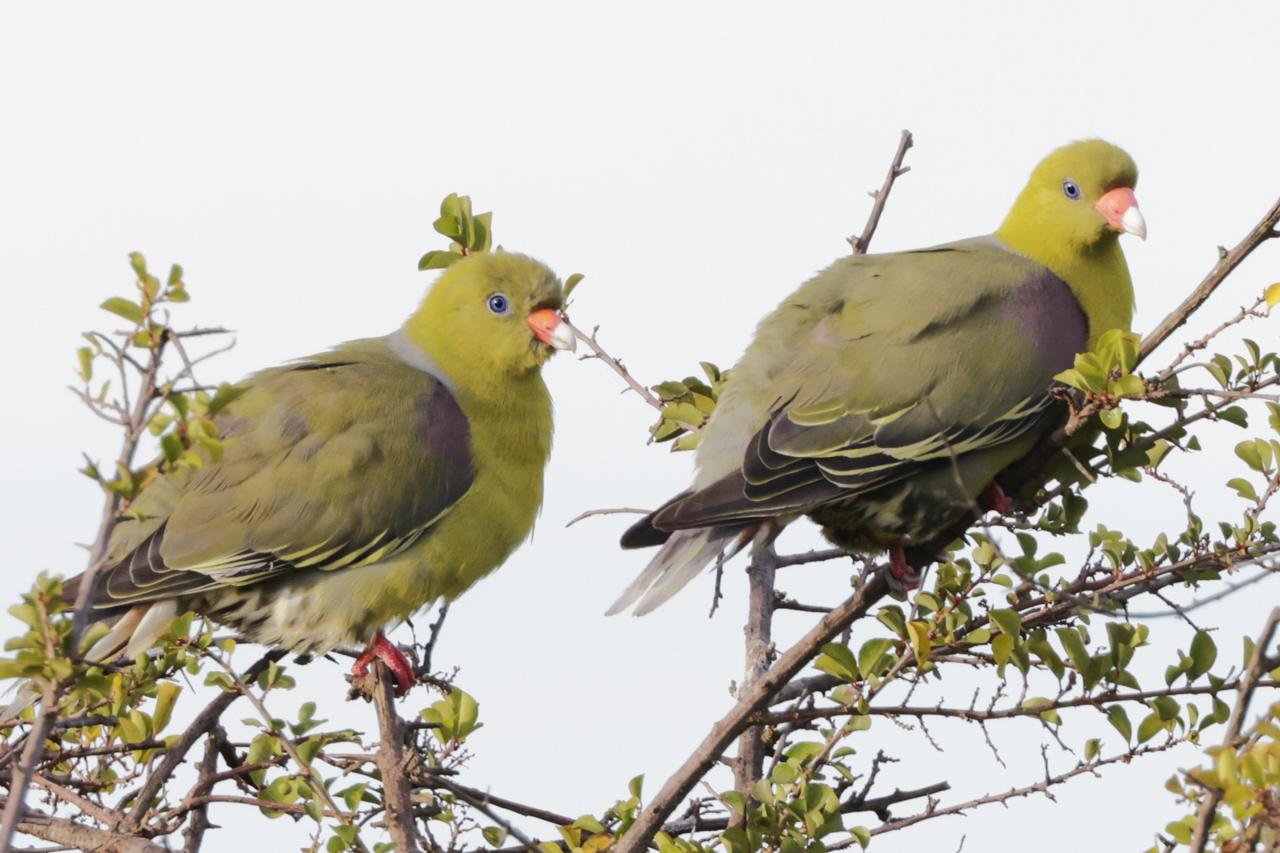
African Green-Pigeon © Paul Mammenga
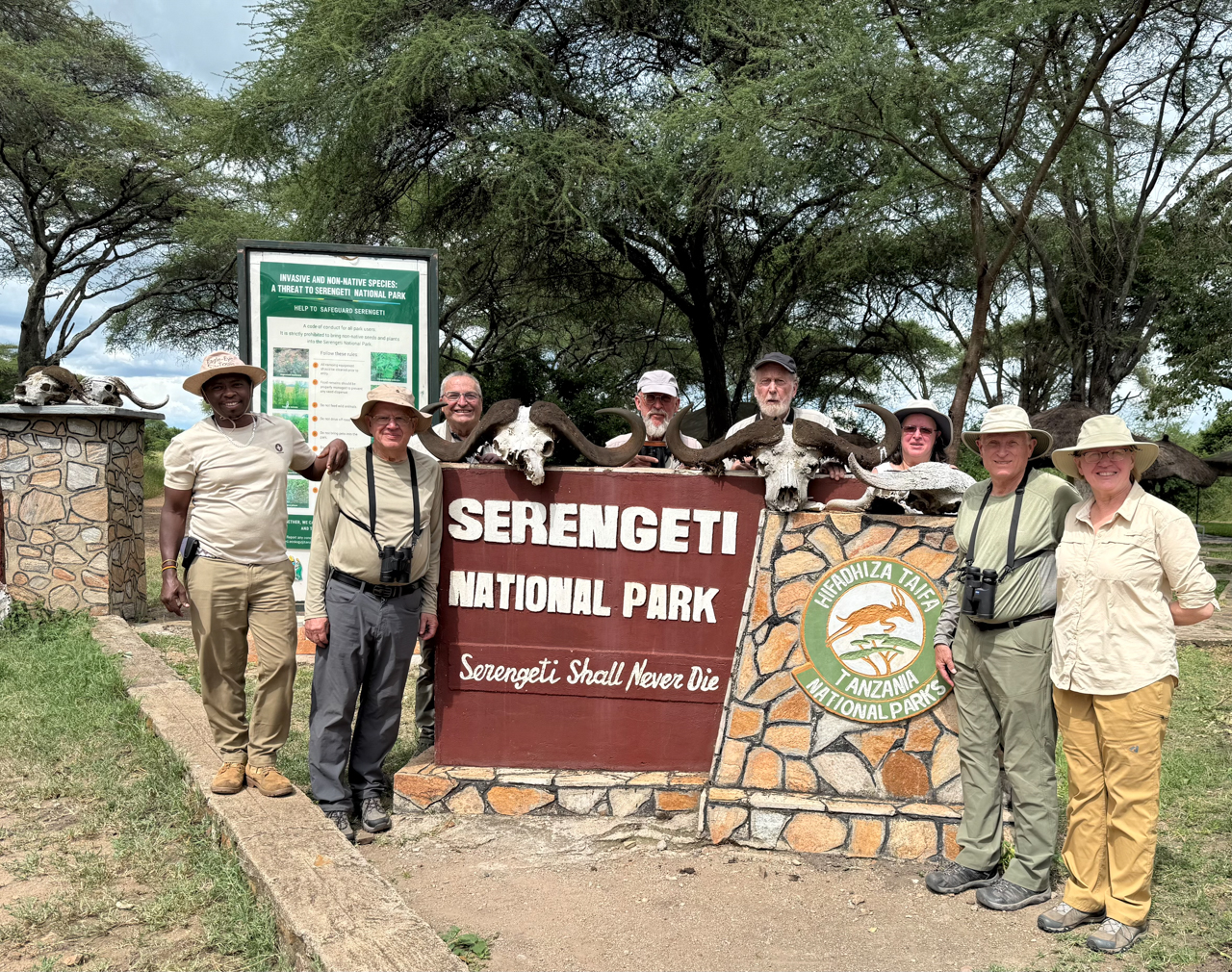
Our group