Southern Mexico Trip Report (March 18 – April 1, 2026)
This tour through Southern Mexico included the States of Oaxaca, Chiapas, entering a small area of Campeche to end in Tabasco. An incredible trip that covered different eco regions that took us to observe 407 species of birds (+ 21 species only recorded by their vocalizations). For the bird families with the most species, in total we saw 26 species of hummingbirds (+ 2 heard), 6 species of trogons, 12 species of woodpeckers (+ 2 heard), 8 species of jays, 16 species of wrens (+ 2 heard), 18 species of sparrows, 36 species of warblers, 8 species of orioles (+1 heard).
Day 1. Arrival in Oaxaca
Our group met for dinner just at dusk, where some tasted a delicious Tlayuda (from the Nahuatl tlao-li which means kneaded corn and the suffix uda which means abundance) and consists of a large, crispy corn tortilla 30 cm in diameter, on which beans, cheese, tasajo (type of beef) or chorizo and molcajete sauce are placed.

Our Group
Day 2. Central Valley of Oaxaca & Sierra Madre de Oaxaca
We began the day observing birds in an extensive area of xeric scrub at the foot of the Sierra Madre de Oaxaca, among the important species for being endemic were West Mexican Chachalaca, Pileated Flycatcher, Nutting’s Flycatcher, Dwarf Vireo, Blue Mockingbird, Oaxaca Sparrow and Rufous-capped Warbler. We had a very distant view of Ocellated Thrasher and only heard the song of Slaty Vireo.
Then we headed towards the northern part of the town of Teotitlán where in a body of water (Piedra Azul) we saw many species of aquatic birds such as ducks, sandpipers, storks, herons, at this point there is a small population of Least Grebe. We had lunch in Teotitlán del Valle and then visited an incredible demonstration of traditional Oaxacan weaving at the workshop called “Bug in the Rug”.
In the afternoon, climbing the hills following the road to Benito Juarez, the xeric scrub quickly transforms into an oak forest, with some humid ravines, along the way we observed Painted Redstart, Greater Pewee (Mexican), White-eared Hummingbird, Hairy Woodpecker (South Mexican), Tufted Flycatcher (Mexican), Hepatic Tanager (Northern) and Coppery-tailed Trogon.
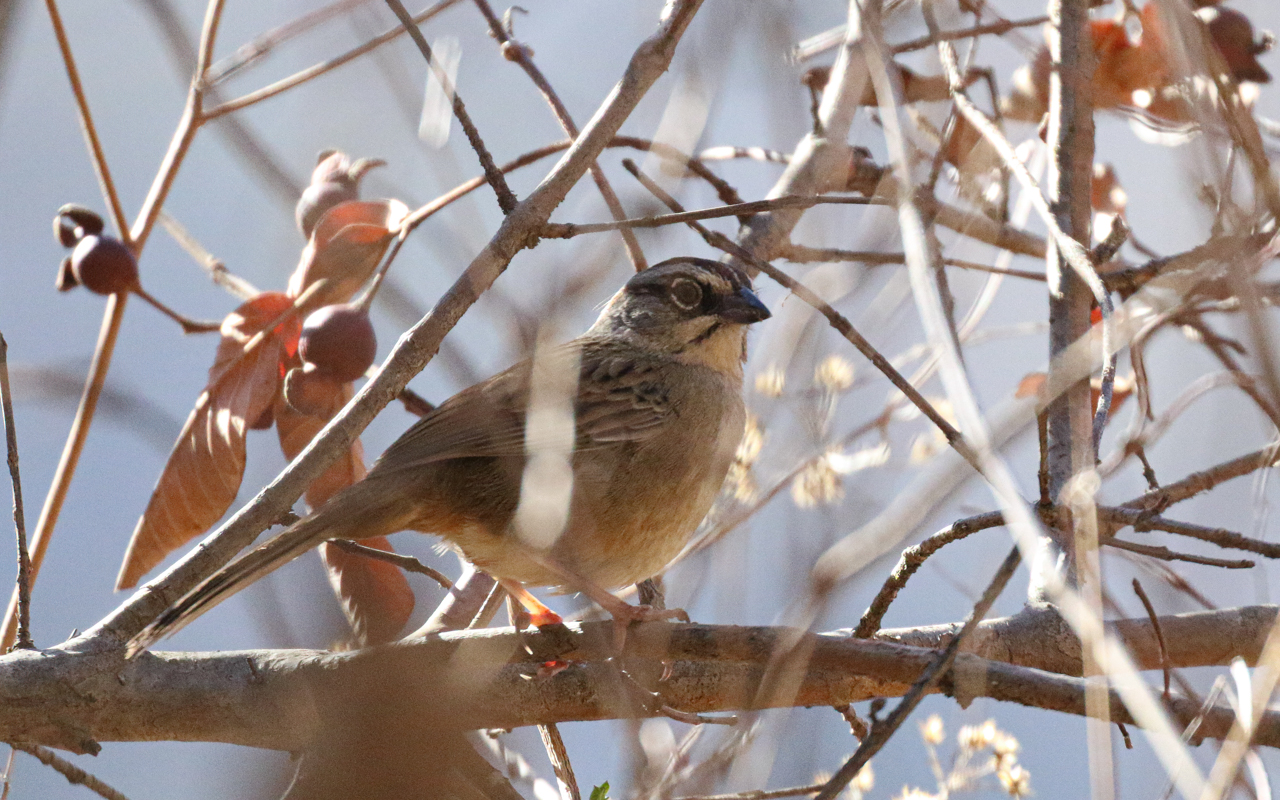
Oaxaca Sparrow © Anuar López
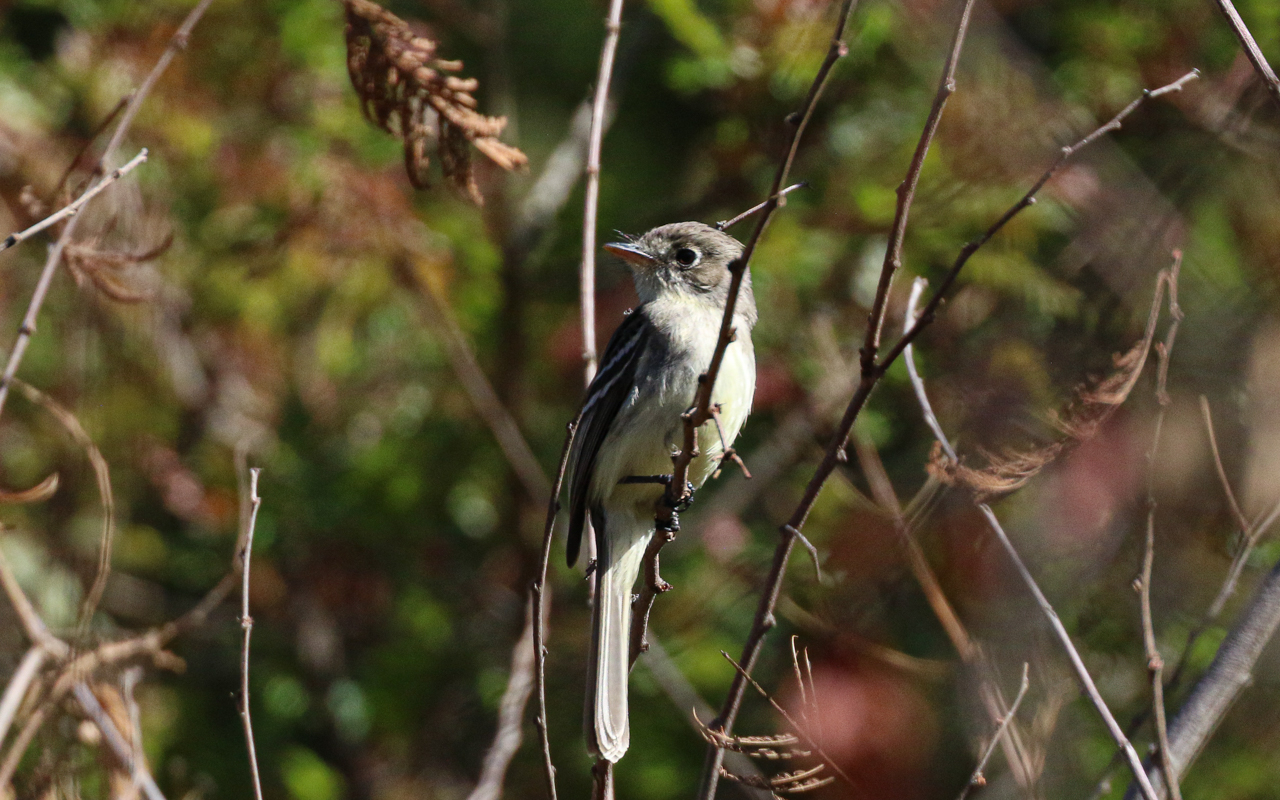
Pileated Flycatcher © Anuar López
Day 3. Sierra Madre de Oaxaca (Cumbre Ixtepeji)
This day we began birding in a pine-oak forest where on a first stop we had good views of Gray-silky Flycatcher, Short-tailed Hawk, Red Crossbill and Woodhouse’s Scrub Jay (Sumichrast’s). Entering the core area of Cumbre Ixtepeji which is an exuberant pine-oak forest we achieved many species including incredible views of Red Warbler (White-cheeked), Slate-throated Redstart, Crescent-chested Warbler and brief views of Grace’s Warbler and Mountain Trogon. Continuing, along the road, we saw an individual of Long-tailed Wood-Partridge, incredible, the specimen was not afraid of our presence. We also observed Russet Nightingale-Thrush, Collared Towhee, Yellow-eyed Junco (Mexican), Hutton’s Vireo (Interior).
In a place of beautiful oak trees covered with moss, in a glen where the cloud forest dominated, we saw the most important species of the site, a mixed group of Gray-barred Wren and Dwarf Jay, which roamed the branches of the oak trees in an acrobatic way, feeding on all types of invertebrates. We also observed the Spot-crowned Woodcreeper (Northern) and Mexican Chickadee.
At lunch time, from our restaurant we had incredible views of Blue-throated Mountain-gem, Rose-throated Becard (Western form), Steller’s Jay (Middle American), Olive Warbler, Chesnut-capped Brushfinch, Rufous-capped Brushfinch, Audubon’s Oriole (Dickey’s) and Rivoli’s Hummingbird.
Returning to the Hotel we were able to observe Violet-crowned Hummingbird, Berylline Hummingbird, Plumbeous Vireo and flying very very high a group of Swainson’s Hawk in migration.
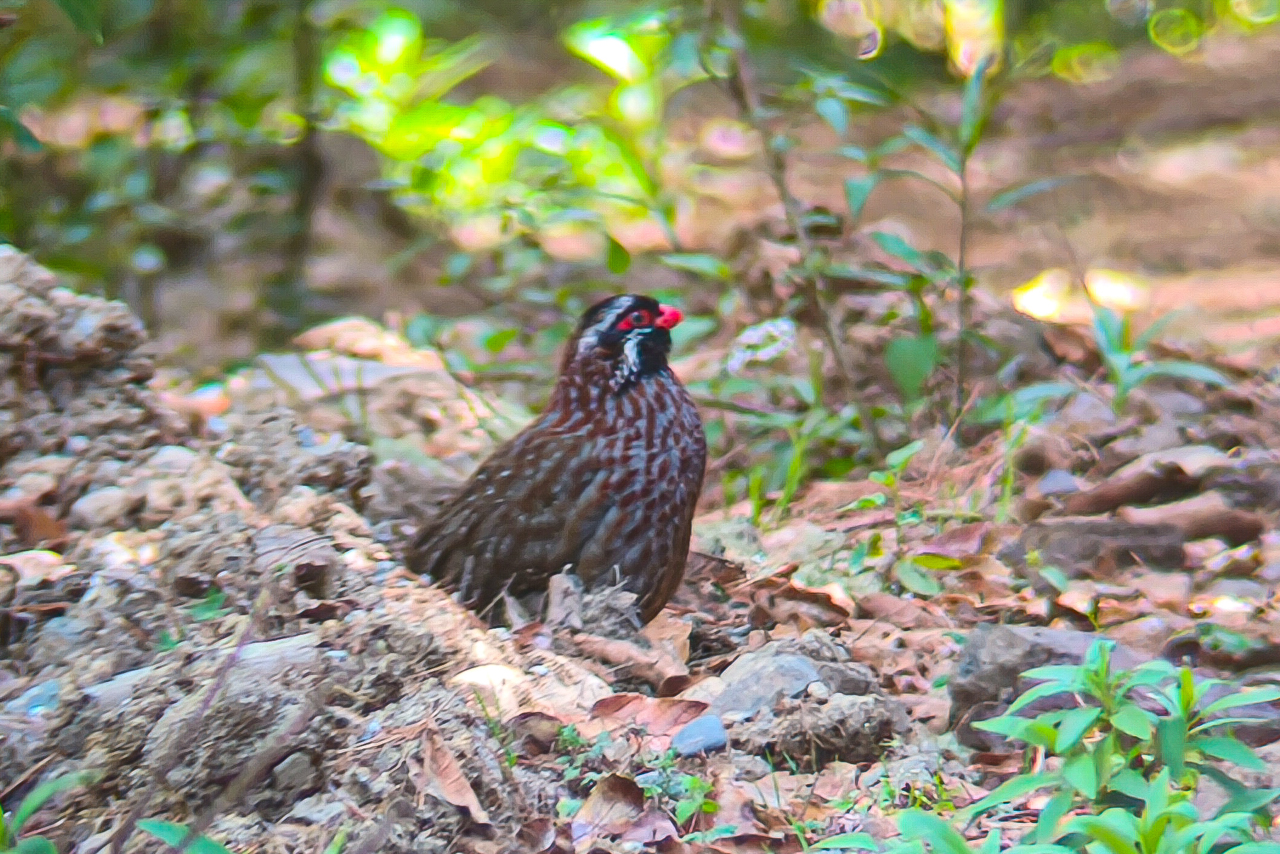
Long-tailed Wood-Partridge © Anuar López
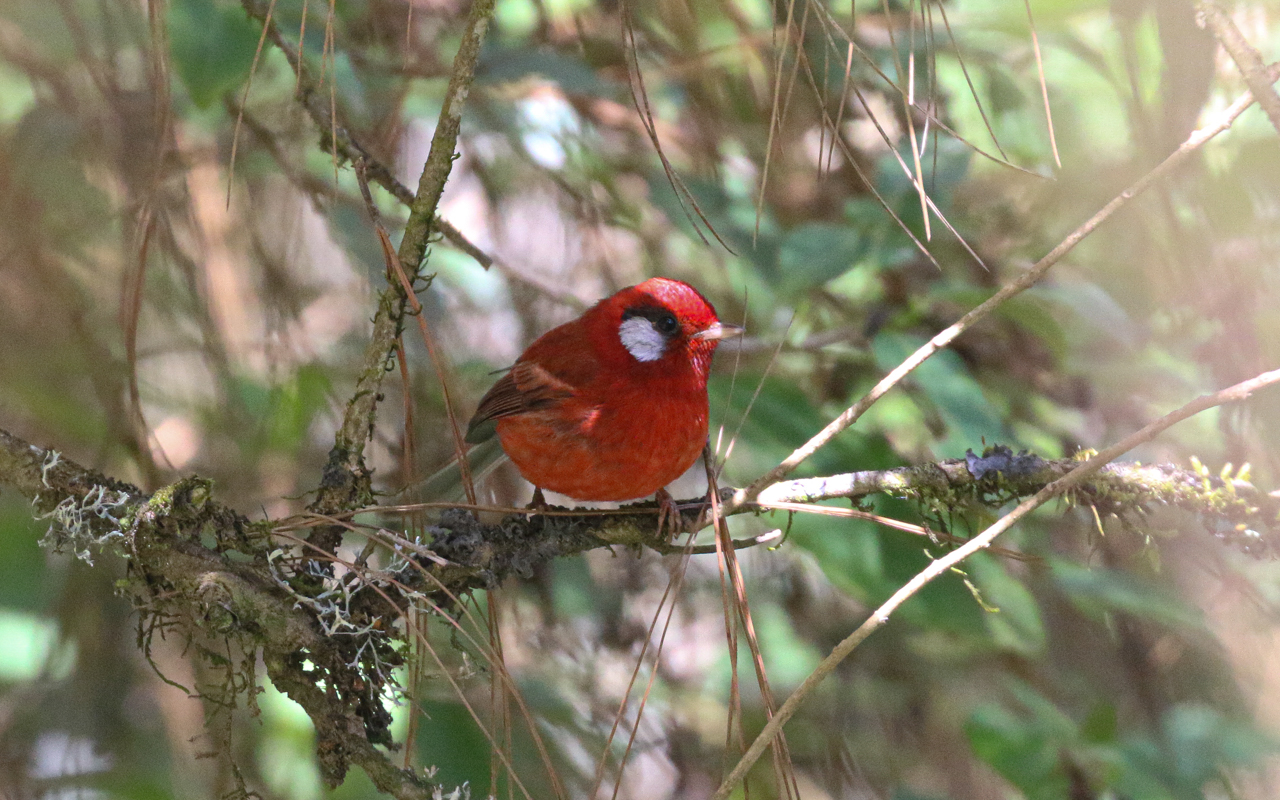
Red Warbler © Anuar López
Day 4. Monte Albán and drive to Sierra Madre del Sur.
We arrived early to the area of the Monte Albán Archaeological Zone, but first we followed a small path where we observed a pair of White-tailed Hawk in their nest and beautiful views of a group of Boucard’s Wren.
The group then enjoyed a tour of the Monte Albán Archaeological Zone, where Jorge gave us an explanation of the site. Continuing with the birding, it was incredible to record at least five individuals of Ocellated Thrasher, where again we observed an individual singing, but very far away. Finally we managed to observe a Slaty Vireo and suddenly a Lesser Roadrunner appeared in front of us, both spectacular species.
Finally, in the afternoon entering Miahutlán we stopped at a point where there were columnar cacti, where we got very good views of Bridled Sparrow and Gray-breasted Woodpecker.
After a long day traveling towards the Sierra Madre del Sur mountains we arrived at our cabins, immersed in a beautiful cloud forest.
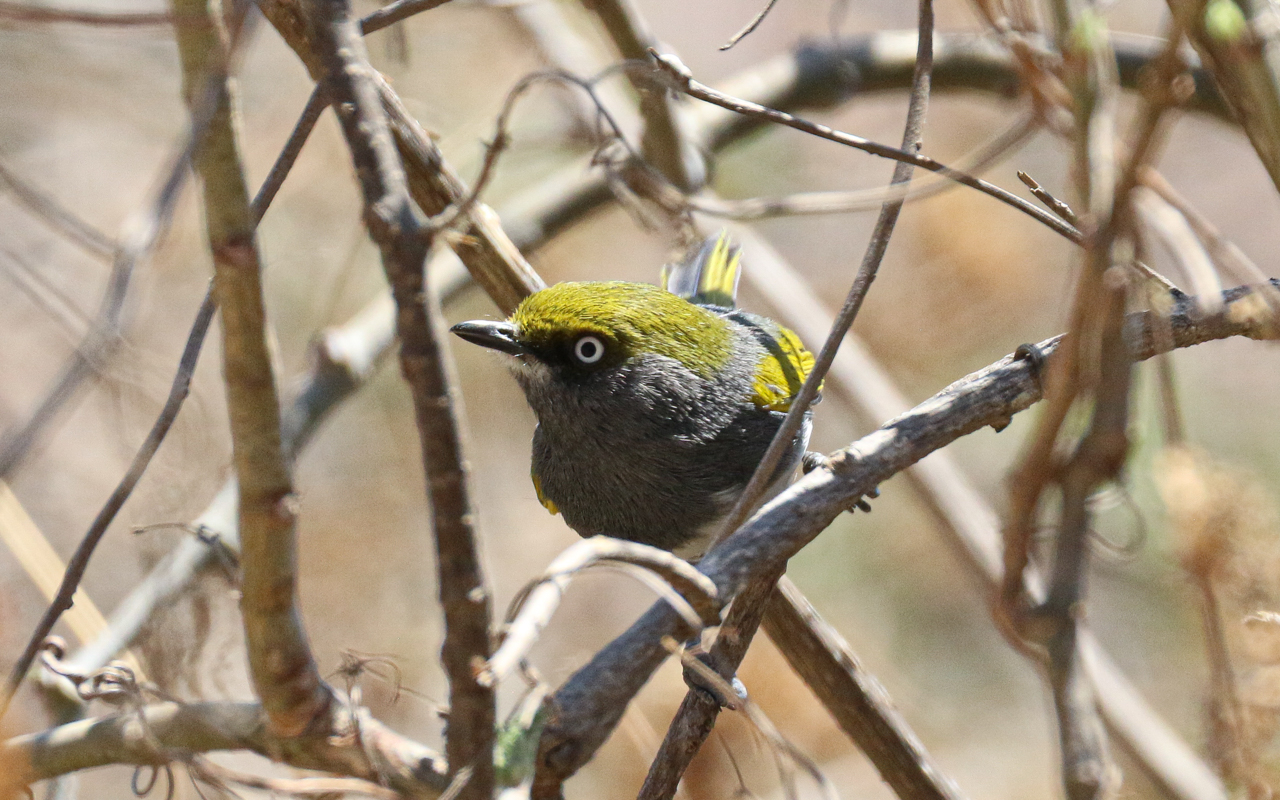
Slaty Vireo © Anuar López
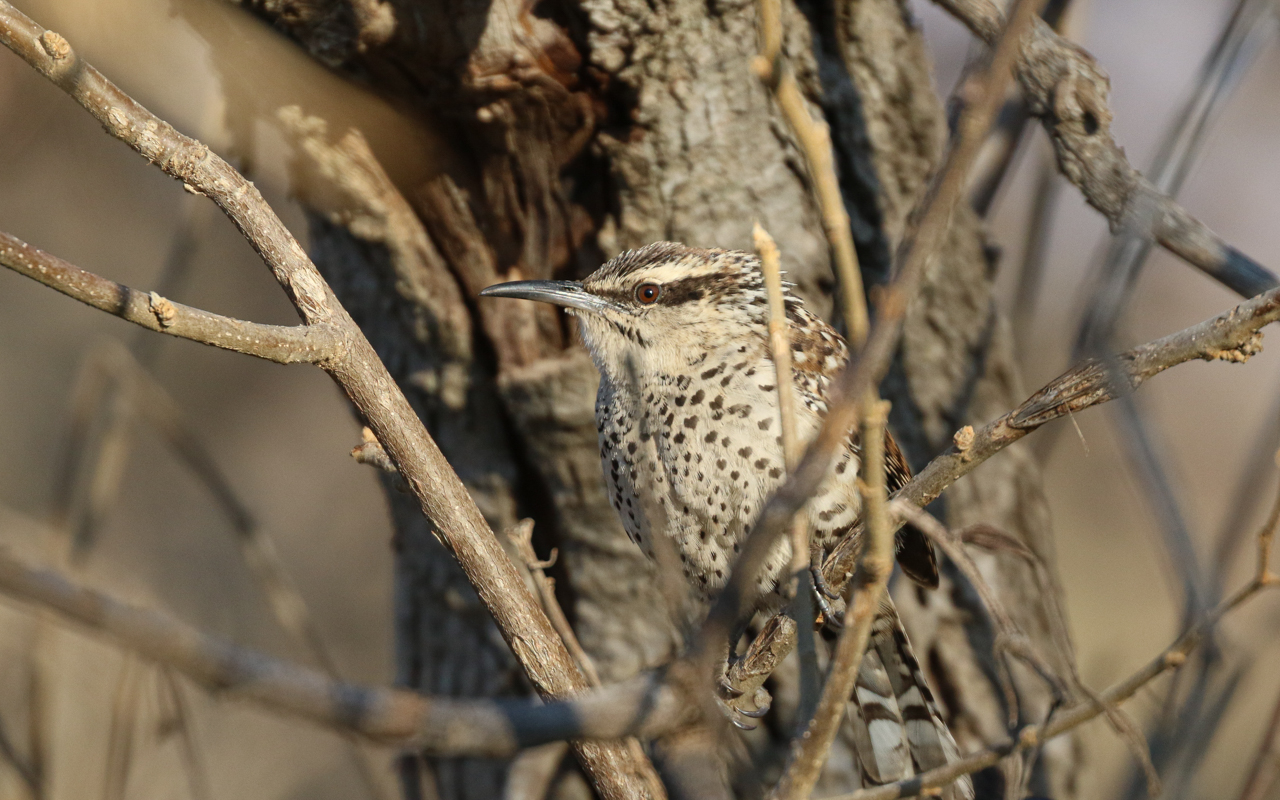
Boucard’s Wren © Anuar López
Day 5. Sierra Madre del Sur
We started the day birding in the gardens of the Cabañas Puesta del Sol, where in the flowers-of the Mexican Hand Tree (Chiranthodendron pentadactylon) allowed us to observe many species of warblers and orioles, as well as thrushes and tanagers. New species for the trip were the Cinammon-bellied Flowerpiercer, Orange-bellied Nightingale-Thrush and very brief views of the Hooded Yellowthroat.
We continued bird watching in the humid pine-oak forests of the Sierra Madre del Sur, in a second location we managed to observe excellent views of the Gray-breasted Wood-Wren (Central American), Golden-browed Warbler and Chestnut-sided Shrike Vireo, the latter vocalizing incredibly. Having our picnic breakfast we stopped at a site and located a female Bumblebee Hummingbird, Pine Flycatcher, Western Flycatcher, White-throated Thrush, Common Chlorospingus (Southwest Mexico) and we only managed to hear the calls of the Blue-capped Hummingbird.
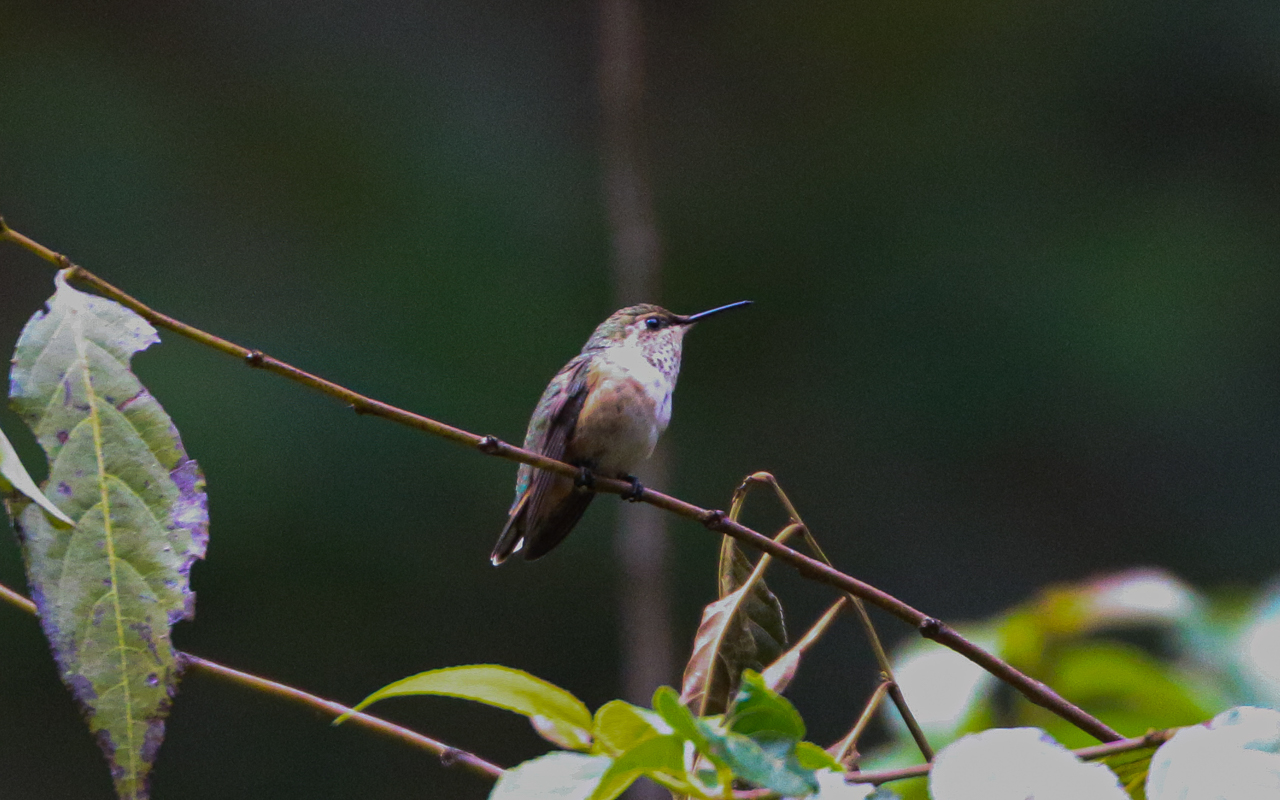
Bumblebee Hummingbird © Anuar López
Going down in altitude and entering the Pacific slope, still in the mountains, we drastically changed to tropical forests where we observed a pair of Collared Trogon (Xalapa), several individuals of Northern Emerald Toucanet (Wagler’s), Black-headed Saltator, Lineated Woodpecker and White-throated Magpie-Jay. Our last stop of the day in the lowlands where the vegetation quickly changed to dry tropical forest we observed Plain-capped Starthroat, Cinnamon Hummingbird, Golden-cheeked Woodpecker and Yellow-winged Cacique.
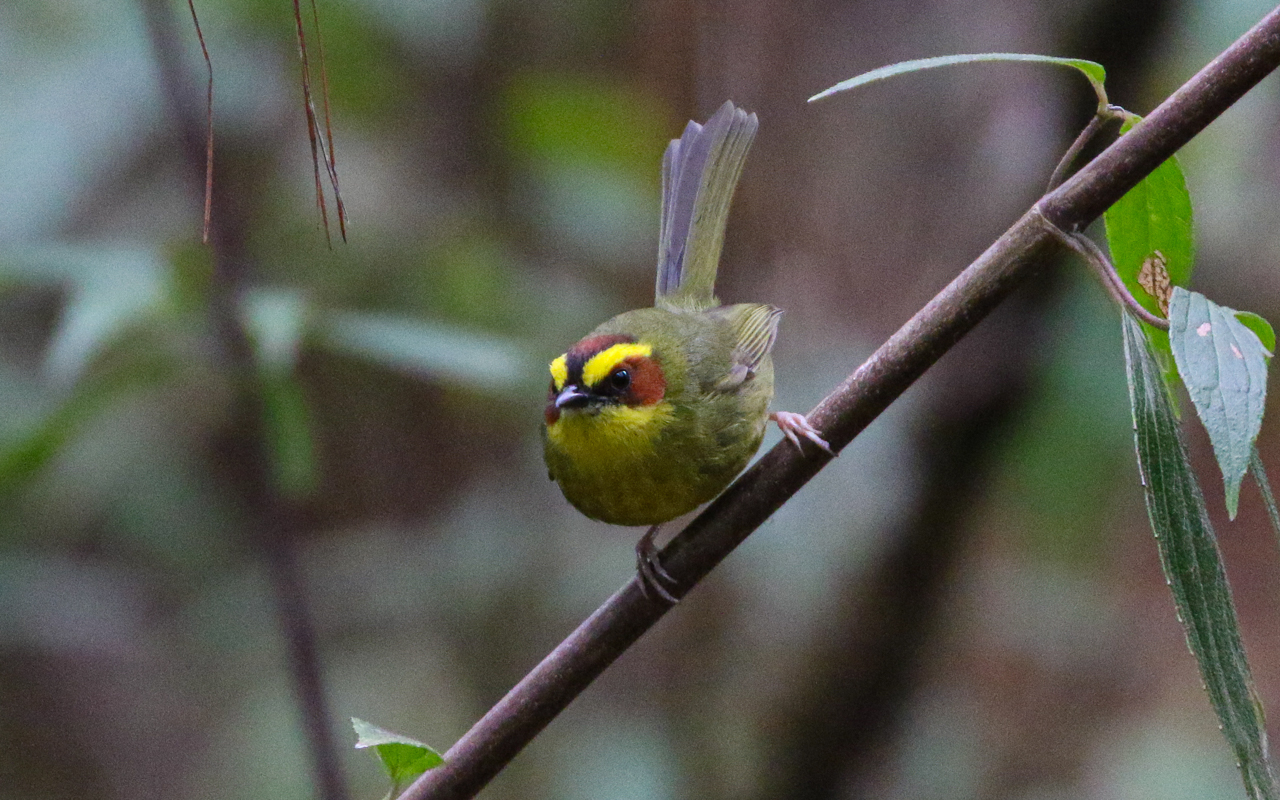
Golden-browed Warbler © Anuar López
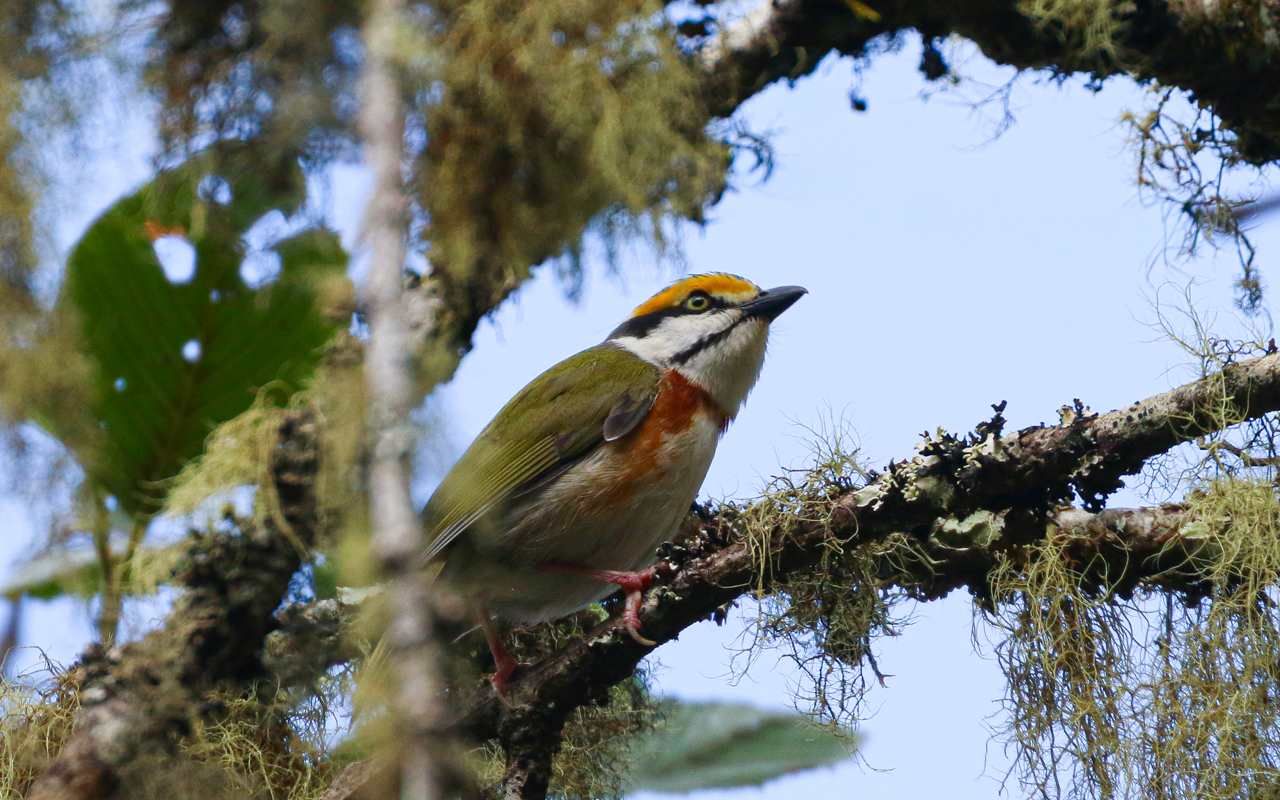
Chestnut-sided Shrike-Vireo © Anuar López
Day 6. Pacific Coast Oaxaca and Isthmus of Tehuantepec
This day began very early, entering the dry tropical forest of the Huatulco National Park, where we achieved an incredible number of new species of birds for the trip and many of them endemic to Western Mexico: Mexican Squirrel-Cuckoo, Turquoise-crowned Hummingbird, Golden-crowned Emerald, Citreoline Trogon, Russet-crowned Motmot, Lilac-crowned Amazon, Flammulated Flycatcher, White-lored Gnatcatcher (Van Rossem’s), Russet-naped Wren, Banded Wren, Happy Wren, Rufous-backed Robin, Olive Sparrow (Pacific), Streak-backed Oriole, Northern Cardinal (Long-crested), Red-breasted Chat, Blue-bunting (West Mexico), unfortunately we only managed to hear the Colima Pygmy-Owl.
Advancing to another location we entered the coast to spot some seabirds, we were scanning the sea and observed a group of humpback whales, finally we managed to observe Blue-footed Booby, but unexpectedly in front of us and jumping from one bush to another in the coastal dune vegetation a Lesser Ground Cuckoo was exposed, what a surprise! We also observed many Orange-breasted Bunting, as well as a Laughing Falcon.
Finally, already in the Isthmus of Tehuantepec we were able to observe Cinnamon-tailed Sparrow and Stripe-headed Sparrow.
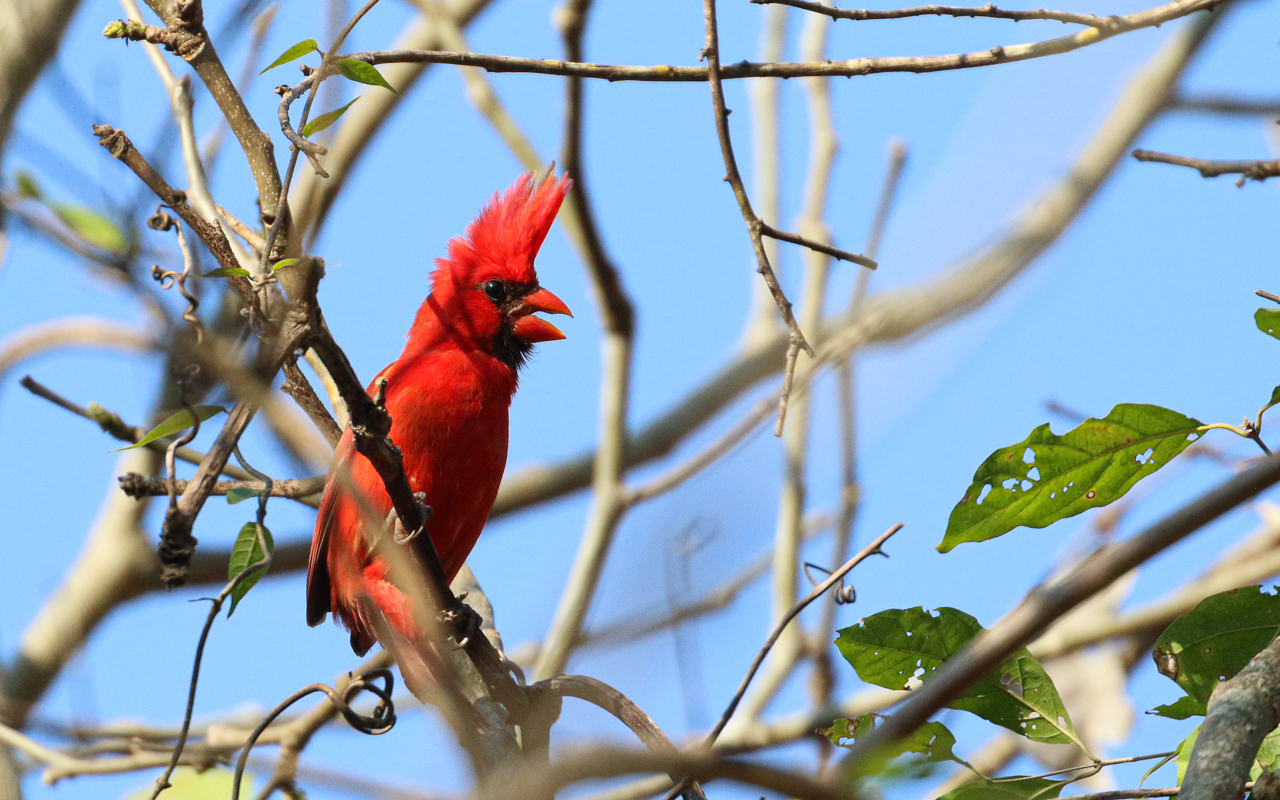
Northern Cardinal (Long crested) © Anuar López
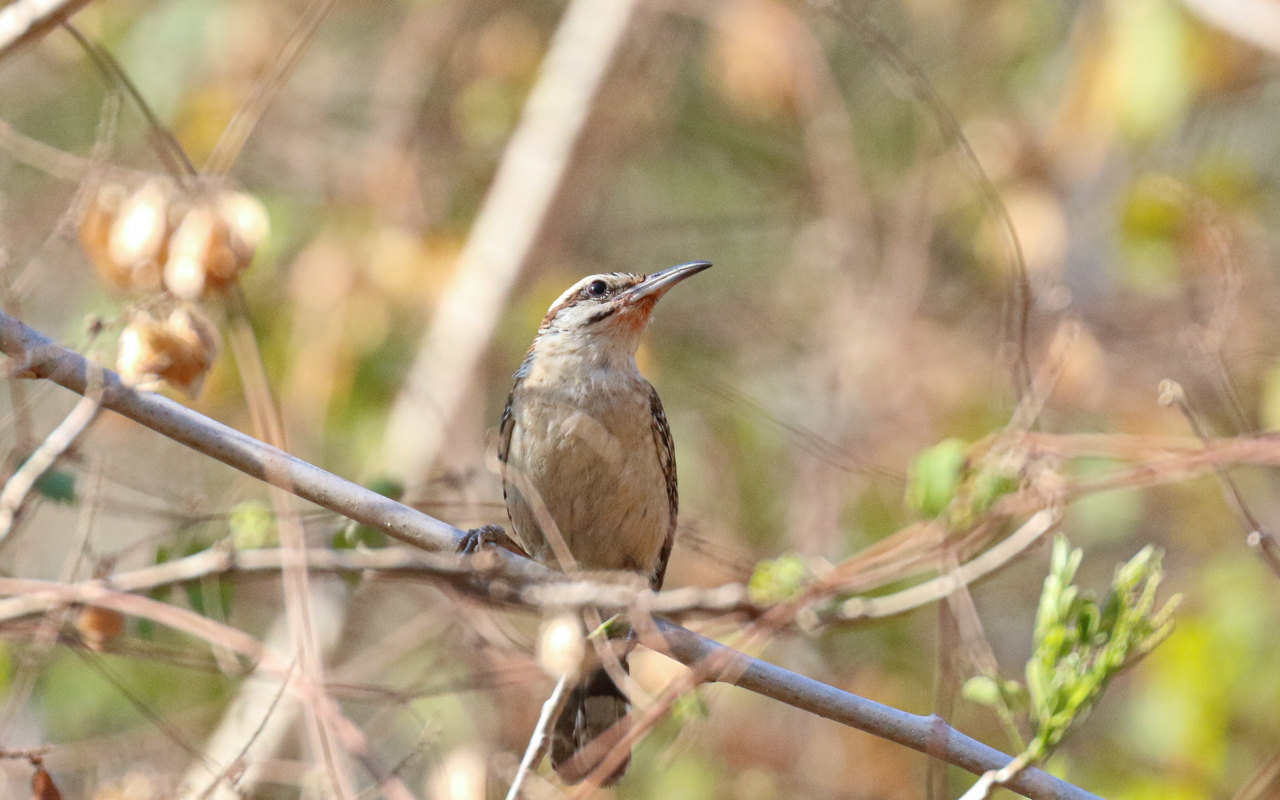
Russet-naped Wren © Anuar López
Day 7. Isthmus of Tehuantepec
This day we begin in the dry tropical forests of the Isthmus of Tehuantepec, which are characterized by low trees due to the strong winds that hit this region. Our target species for the morning was Rose-bellied Bunting, we observed six specimens between males and females, as well as juveniles foraging in a Torchwood (Bursera sp.).
We also managed views of Beautiful Hummingbird, a pair of Double-striped Thick-knee and again Cinnamon-tailed Sparrow.
After lunch we visited the coastal interior lagoon of Santa María Xadani, where we observed several species of aquatic birds. Shorebirds were important, we observed American Oystercatcher, Black-bellied Plover, American Golden Plover, Semipalmated Plover, Hudsonian Whimbrel, Marbled Godwit, Short-billed Dowitcher, Spotted Sandpiper, Western Willet, Ruddy Turnstone and Least Sandpiper.
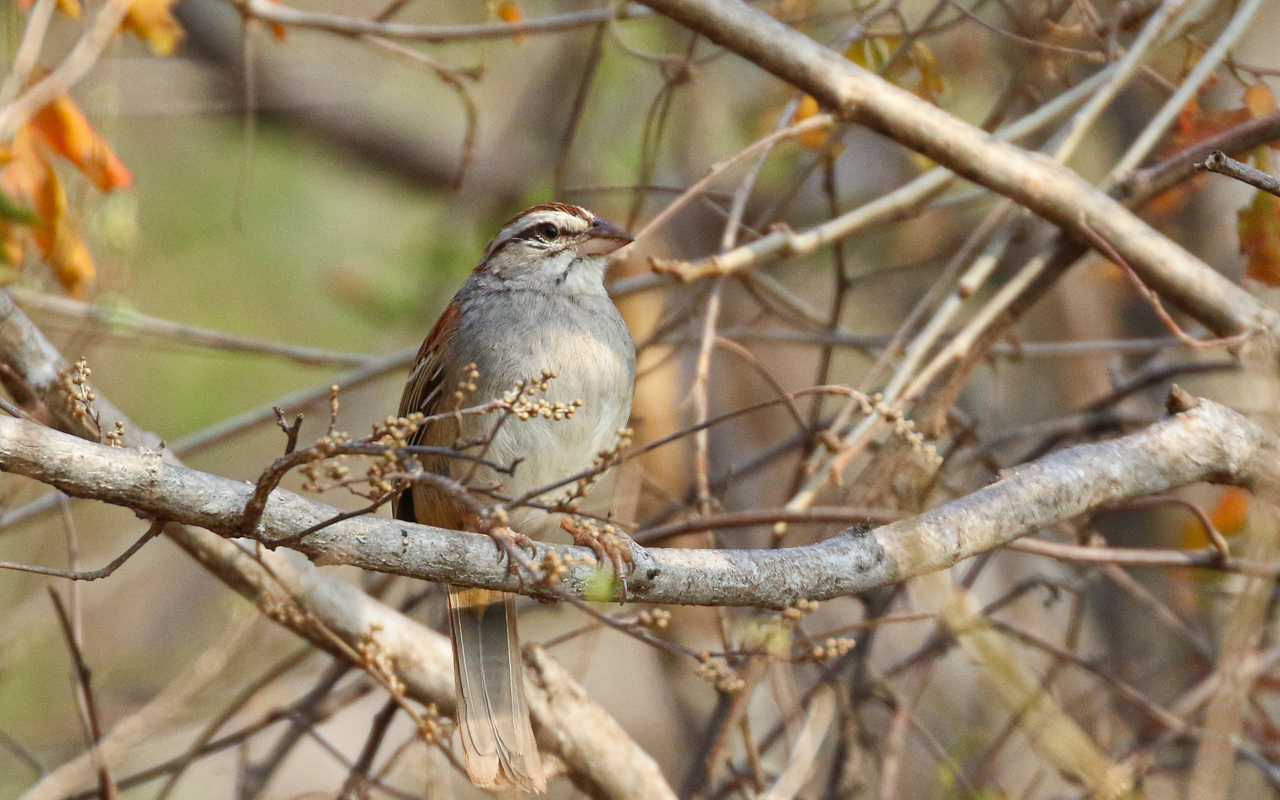
Cinnamon-tailed Sparrow © Anuar López
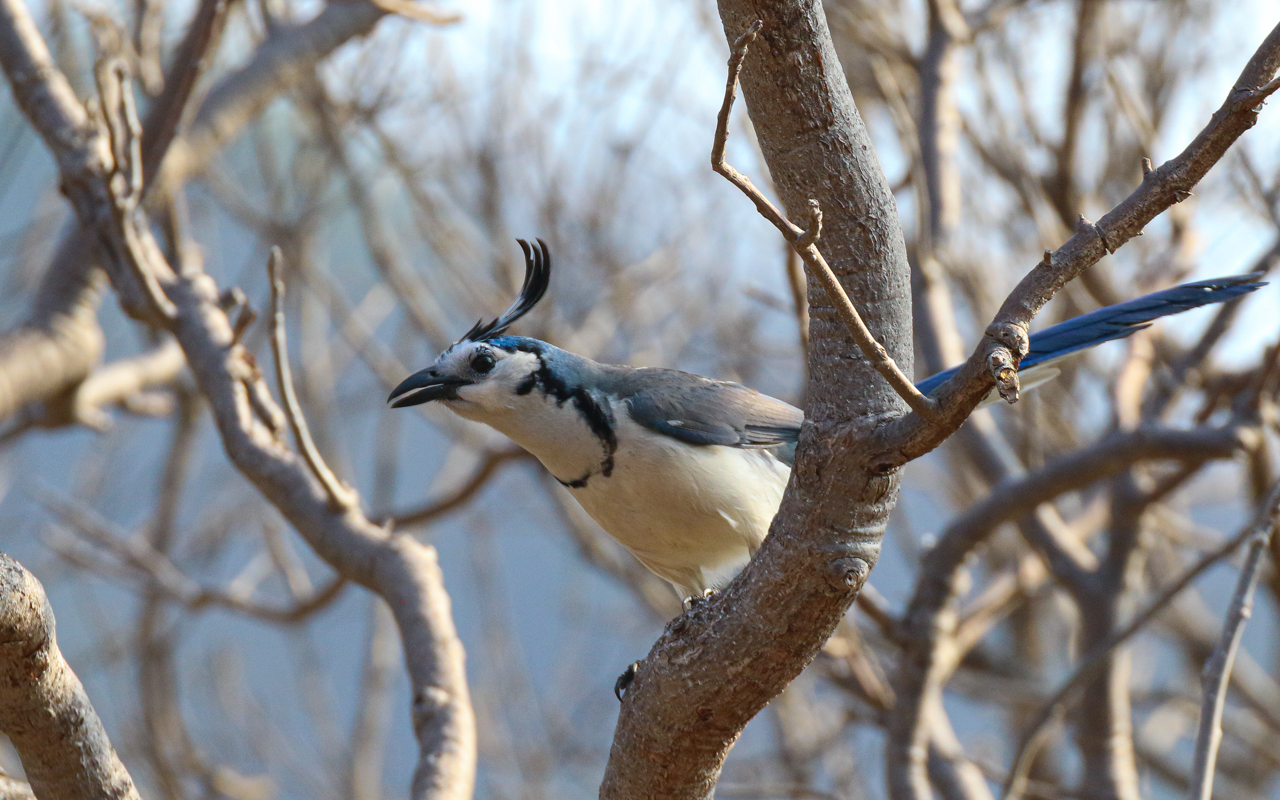
White-throated Magpie-Jay © Anuar López
Day 8. Chiapas lowlands (Pacific)
In the City of Arriaga, in front of our hotel we observed a huge group of Gray-breasted Martin, more than 1,500 individuals resting, as well as a Pacific Parakeet.
Taking the Pan-American Highway we headed towards the lowlands of the Pacific coast, many new birds were added to our list, among them Orange-chinned Parakeet, Roseate Spoonbill, Lesser Yellow-headed Vulture, Giant Wren, Scrub Euphonia, Yellow-throated Euphonia, Yellow-billed Cacique (Prevost’s), Spot-breasted Oriole, Giant Cowbird, Cinnamon-bellied Saltator, Rose-throated becard (Eastern form, very dark plumage), Melodious Blackbird and a group of Painted Bunting among other species.
We left the lowlands and headed towards the La Sepultura Reserve, in these dry tropical forests mixed with oak forests we found new species such as: Common Squirrel-Cuckoo (Middle American), Canivet’s Emerald, Common Black Hawk, Long-tailed Manakin (¡a couple!), Red-legged Honeycreeper and again Rose-bellied Bunting.
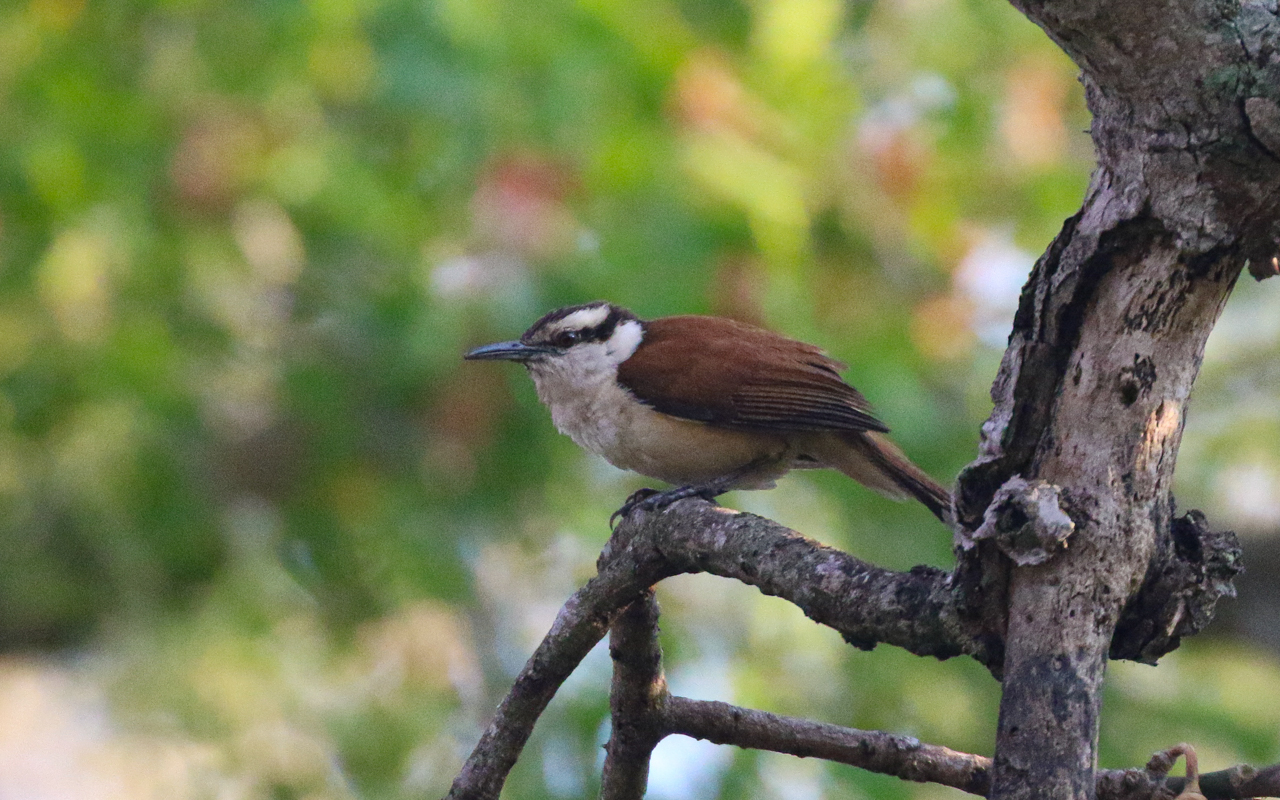
Giant Wren © Anuar López
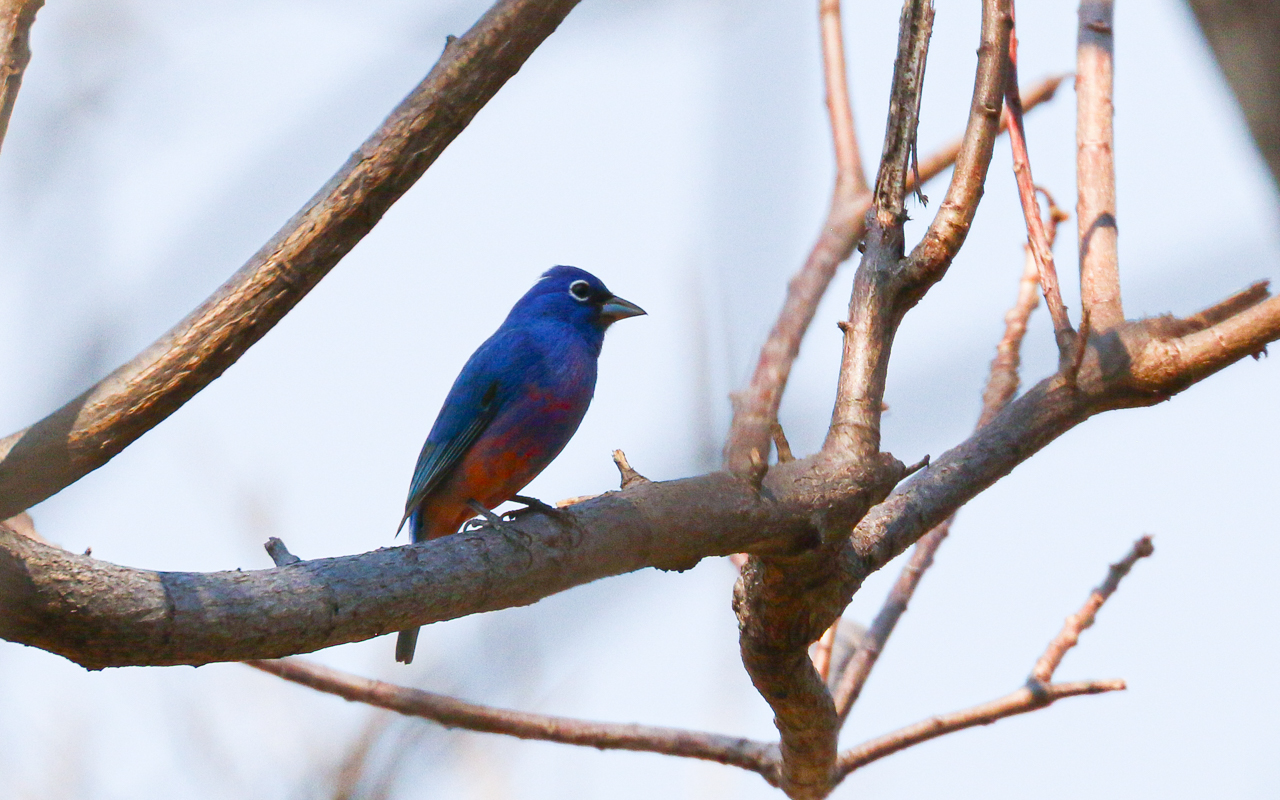
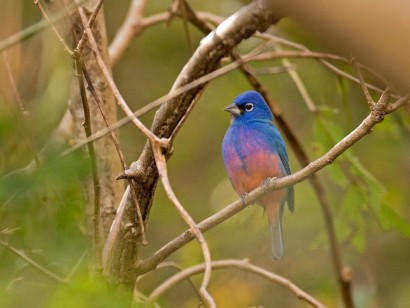
Rose-bellied Bunting © Anuar López
Day 9. Central American pine-oak forests (San Cristóbal de las Casas)
We started the day birding in the Montetik Reserve, a pine-oak forest whose branches were covered with bromeliads and moss, an incredible landscape. We found many species among the most important: Garnet-throated Hummingbird, Guatemalan Flicker, Yellowish Flycatcher, Unicolored Jay, Band-backed Wren (Mesoamerican), Blue-and-white Mockingbird, Ruddy-capped Nightingale-Thrush, Rufous-collared Robin and the incredible Pink-headed Warbler.
In the afternoon we visited another site west of San Cristóbal de las Casas, where we achieved spectacular views of the Belted Flycatcher, as well as the Strong-billed Woodcreper and Rufous-browed Wren.
At night we tried owling, with brief views of the Whiskered Screech-Owl and only heard the Bearded Screech-Owl.
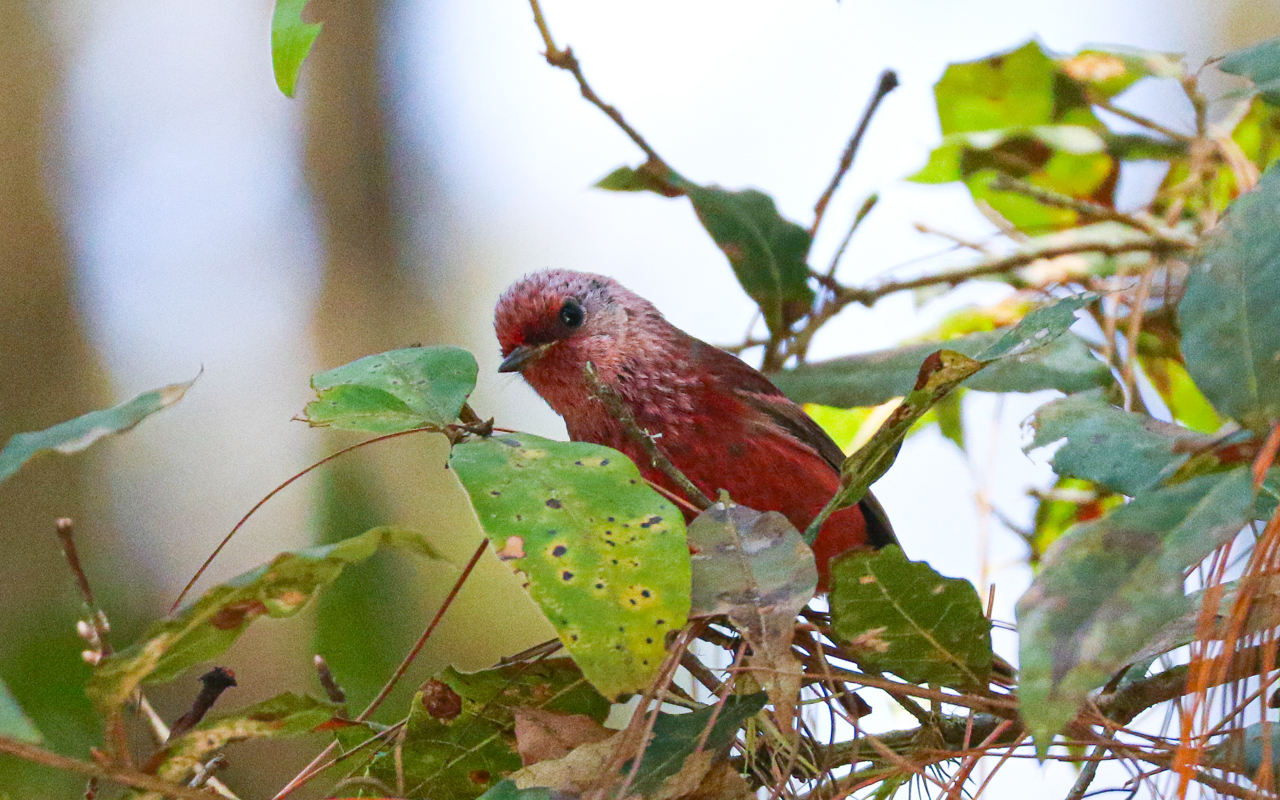
Pink-headed Warbler © Anuar López
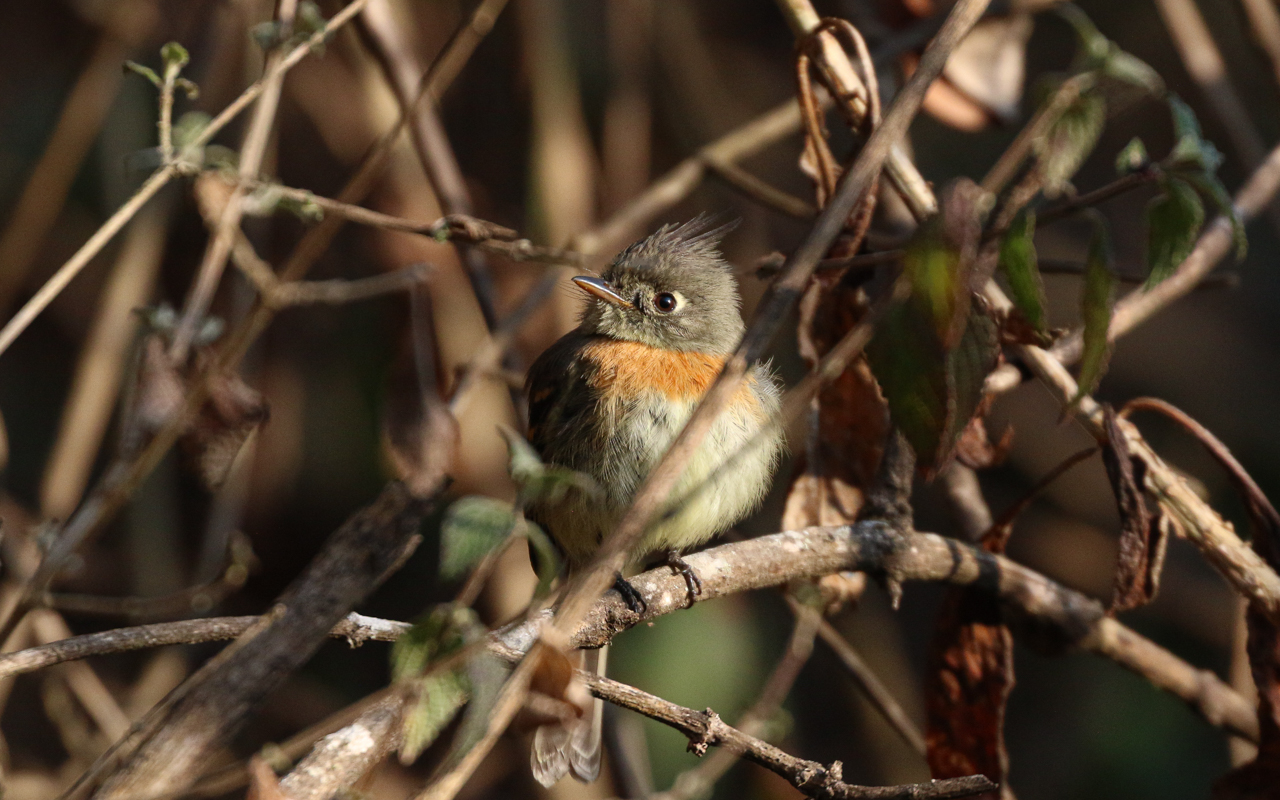
Belted Flycatcher © Anuar López
Day 10. Central American pine-oak forests (Tzontehuitz)
This day we tried in the Tzontehuitz cloud forest, we observed very close a small group of Singing Quail, Sharp-shinned Hawk (White-breasted), Mountain Elaenia, Black-throated Jay, Black-capped Swallow, Common Chlorospingus (Middle American), White-naped Brushfinch, we also recorded Highland Guan and Northern Pygmy-Owl (Guatemalan) only by vocalizations.
In the afternoon at another point we observed the Blue-throated Motmot, but the rain did not allow us to continue further.
In the afternoon, once settled in our hotel, we watched birds from the balcony: Plain Chachalaca, Red-lored Amazon and Green Parakeet.
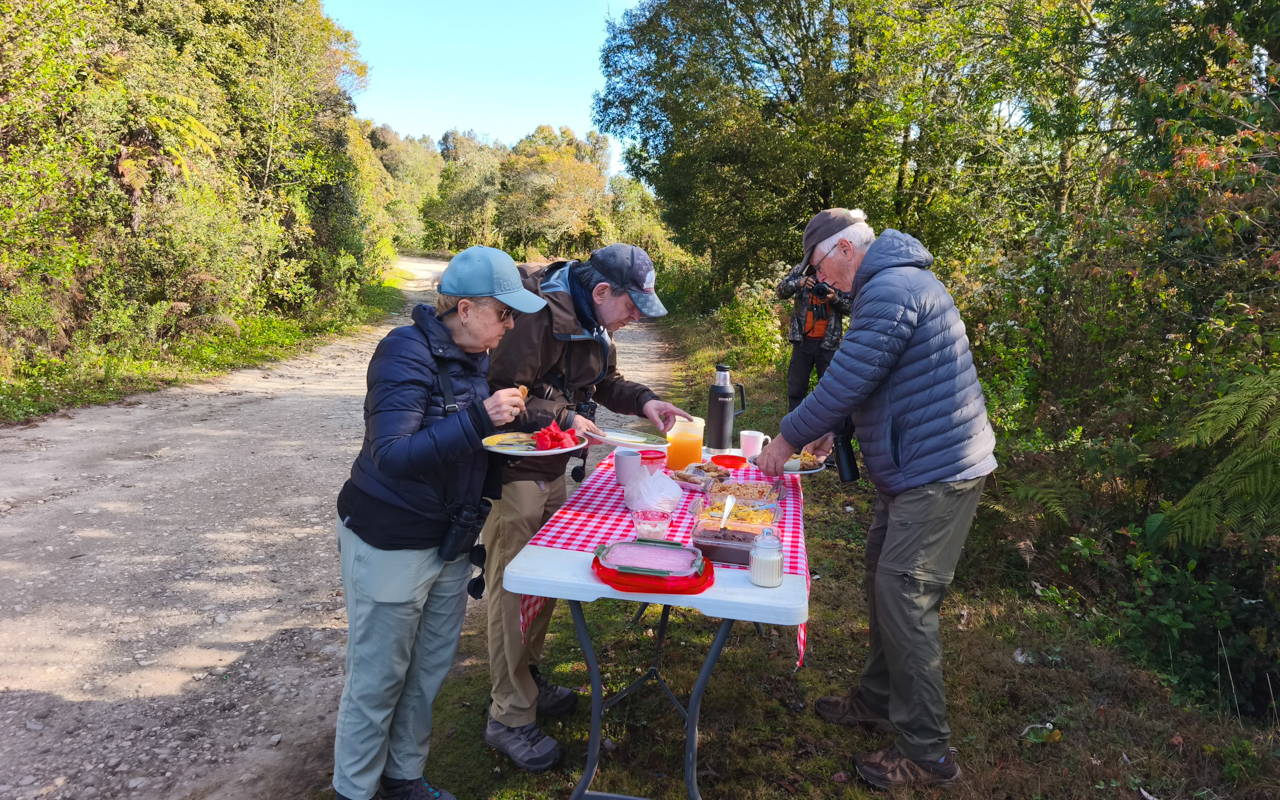
Picnic in Tzontehuitz © Anuar López
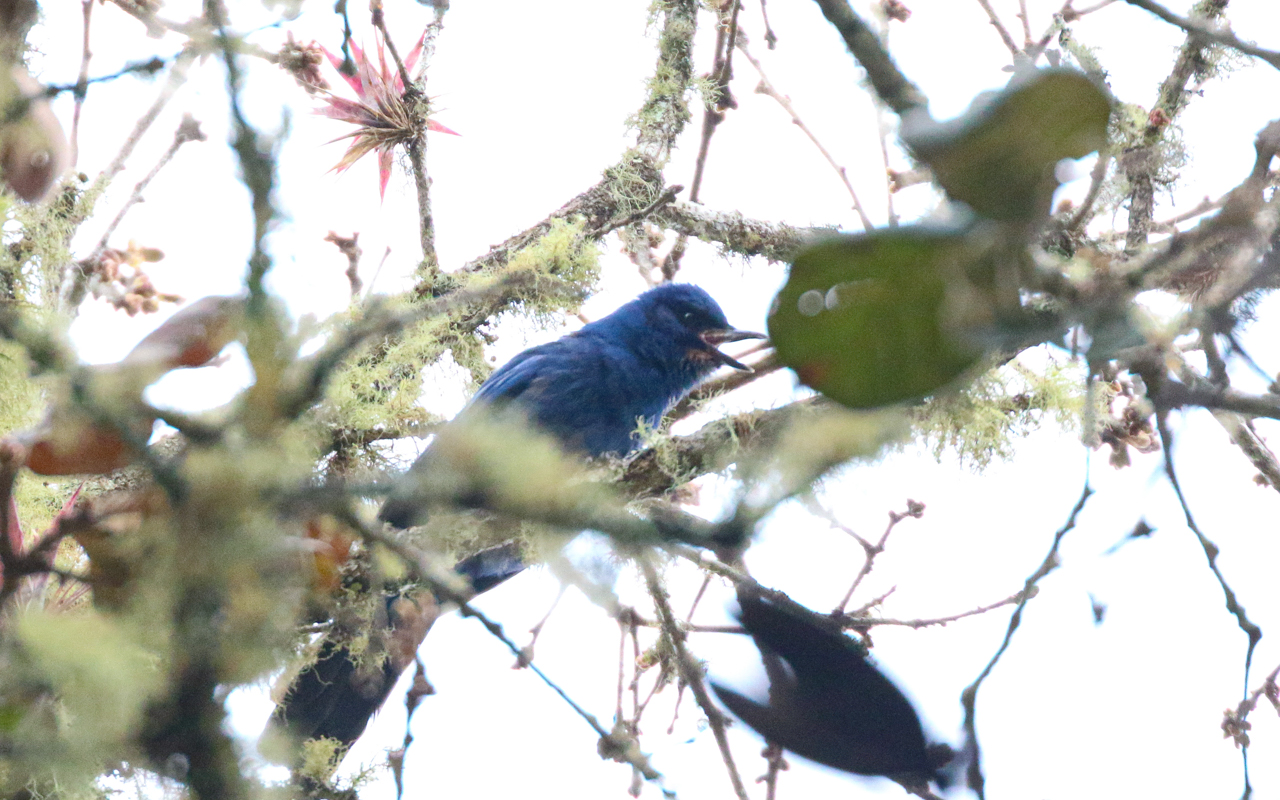
Unicolored Jay © Anuar López
Day 11. Chiapas Depression dry forests (Sumidero Canyon).
We observed birds for approximately six hours at different altitudinal levels along the Sumidero Canyon, from dry tropical forest to tropical forest with oak elements. We managed many species, new ones for the trip: Long-billed Starthroat, Varied Bunting, Buff-bellied Hummingbird, Cabani’s Wren. Spectacularly we witnessed a mixed flock feeding on a swarm of ants, here we had incredible views of Common Squirrel-Cuckoo, Banded Wren, Blue-and-white Mockingbird, Orange-billed Nightingale-Thrush, Olive Sparrow, Ovenbird, Blue-winged Warbler, Fan-tailed Warbler, Red-throated Ant-Tanager (Salvin’s), Blue Bunting (Middle American), Ivory-billed Woodcreeper, Gartered Violaceous Trogon, Green Jay and Olivaceous Woodcreeper.
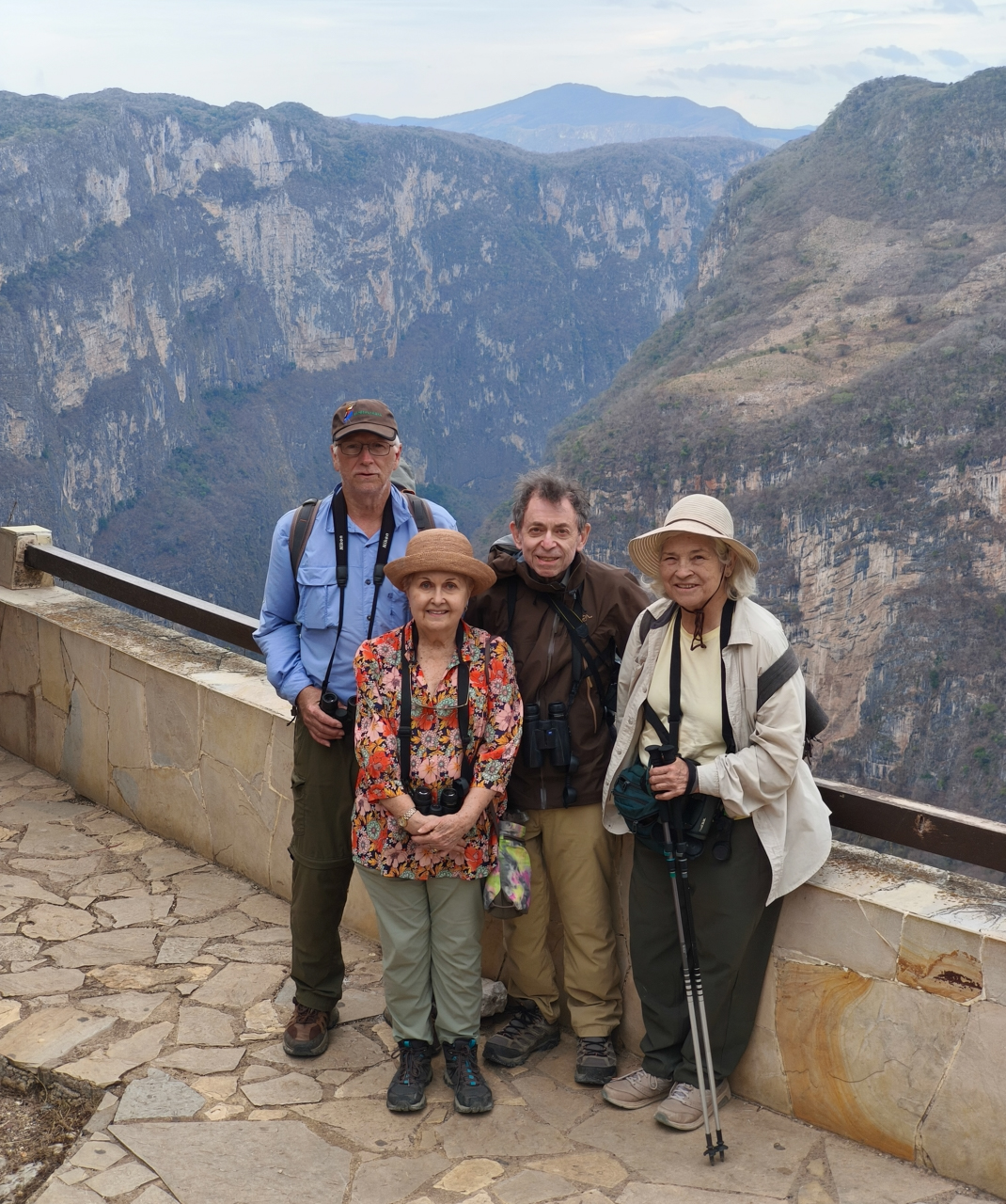
Group at Sumidero Canyon
We also had spectacular and very close views of both a male and a female Blue Seedeater feeding on the tender shoots of a bamboo (Otatea sp.). Finally, in the afternoon we observed a Yellow Grosbeak (Guatemalan).
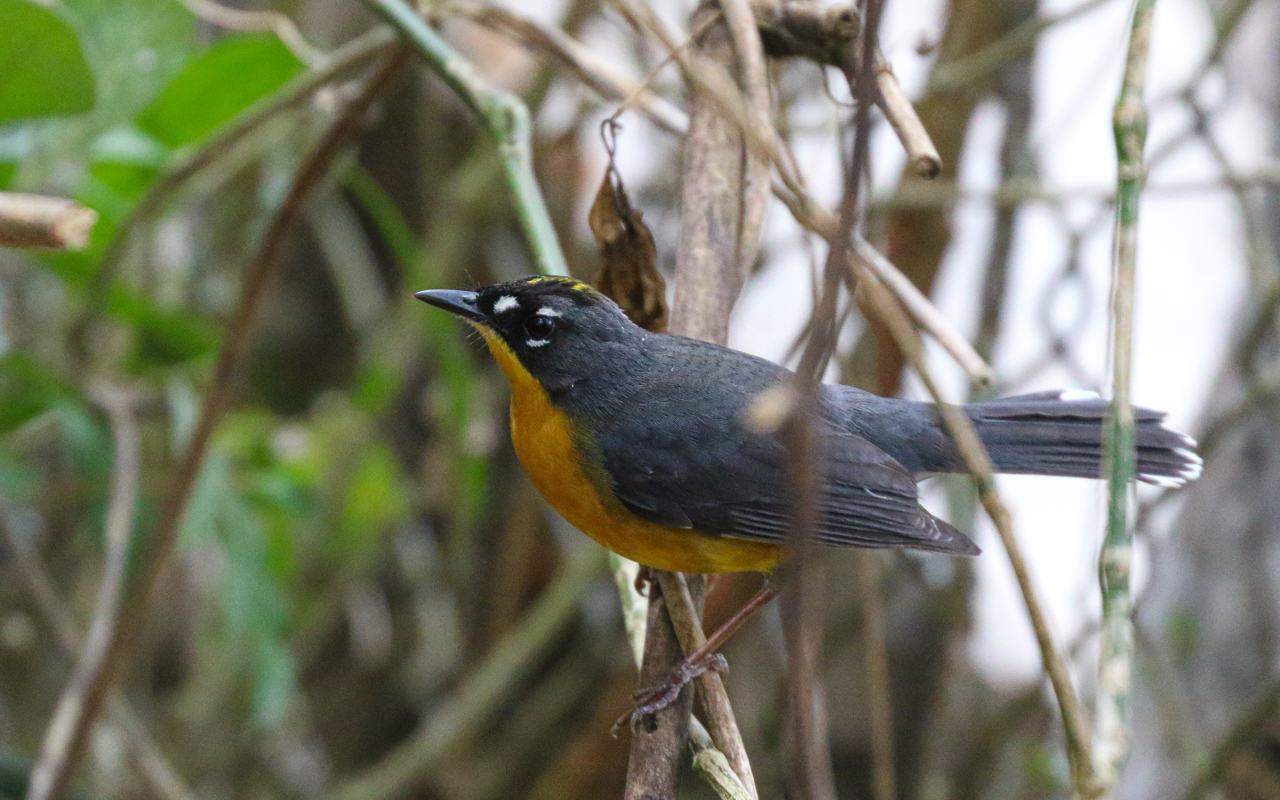 Fan-tailed Warbler © Anuar López
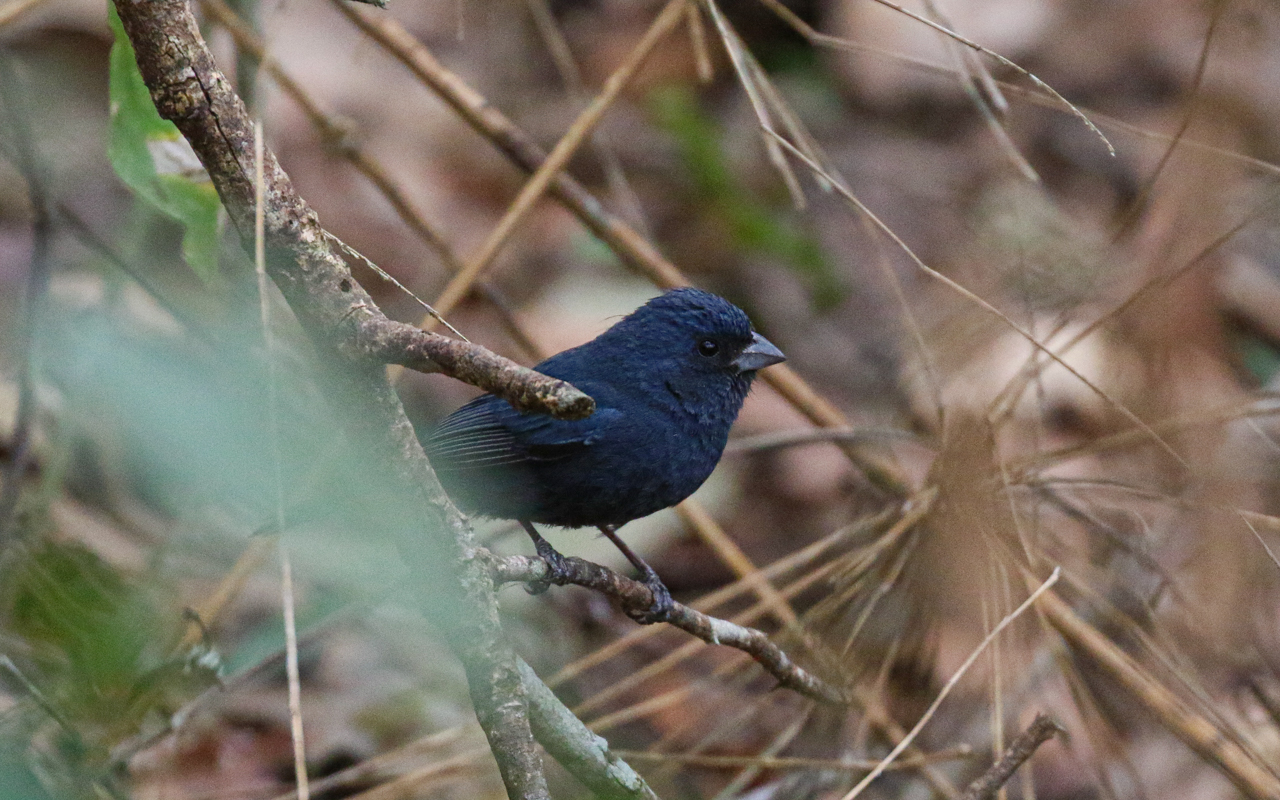
Blue Seedeater (Adult male) © Anuar López
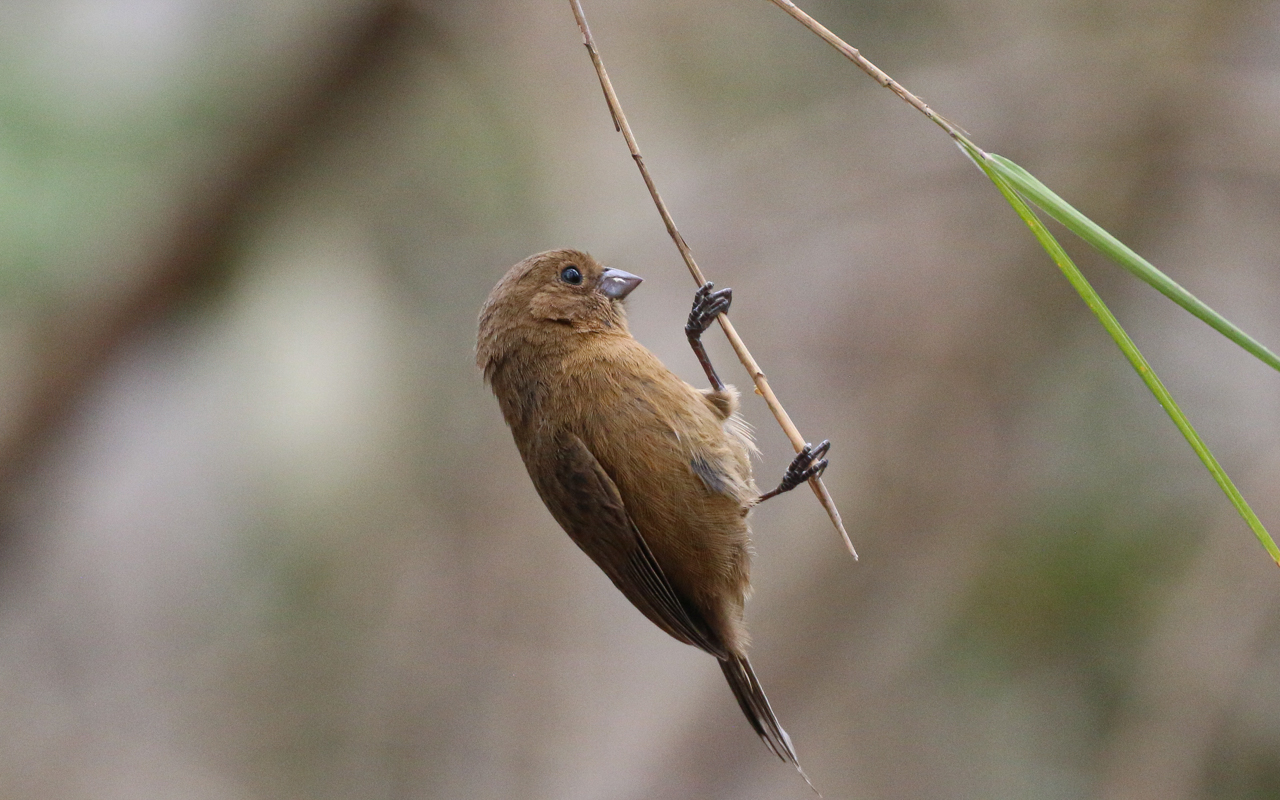
Blue Seedeater, female © Anuar López
Day 12. Chimalapas Montane Forests (El Ocote Biosphere Reserve)
This day we begin in the El Ocote Biosphere Reserve, in a tropical jungle whose soil is karst, with a target species in mind, the microendemic: Nava’s Wren.
During the first two hours the rain was constant, finally when it stopped raining we found several species, such as Stripe-throated Hermit, Wedge-tailed Sabrewing (Long-tailed), Stripe-tailed Hummigbird, Azure-crowned Hummingbird, White-crowned Parrot, Barred Antshrike, Yellow-olive Flatbill (Gray-headed), Montezuma Oropendola, Worm-eating Warbler, Kentucky Warbler, Golden-crowned Warbler (Stripe-crowned), White-winged Tanager, Scarlet-rumped Tanager (Passerini’s), Morelet’s Seedeater, Bananaquit (Continental) and Yellow-faced Grassquit. We tried for Nava’s Wren, but nothing, just at the last minute an individual came out singing explosively, we got very close views, incredible!
At lunch time in the restaurant we had a surprise, right in the center of the roof a couple of American Barn-Owls were resting.
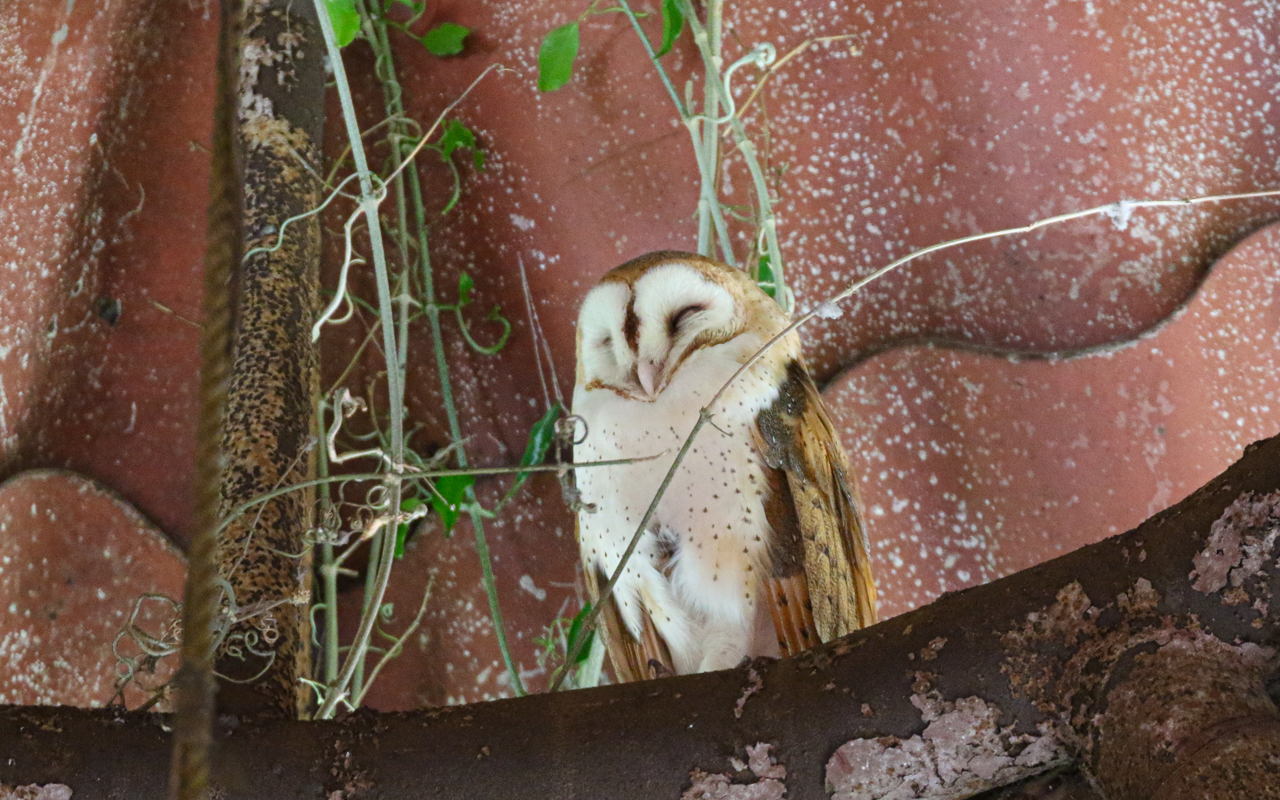
American Barn Owl © Anuar López
Day 13. Montane forests of Chiapas-humid forests of Petén (Palenque)
We started birding in the gardens of our hotel in a humid tropical environment, many birds singing, we observed Pale-vented Pigeon, Russet-naped Wood-Rail, Pale-billed Woodpecker, Chesnut-colored Woodpecker, Olive-throated Parakeet (Aztec), Brown Jay, Crimson-collared Tanager among many other species.
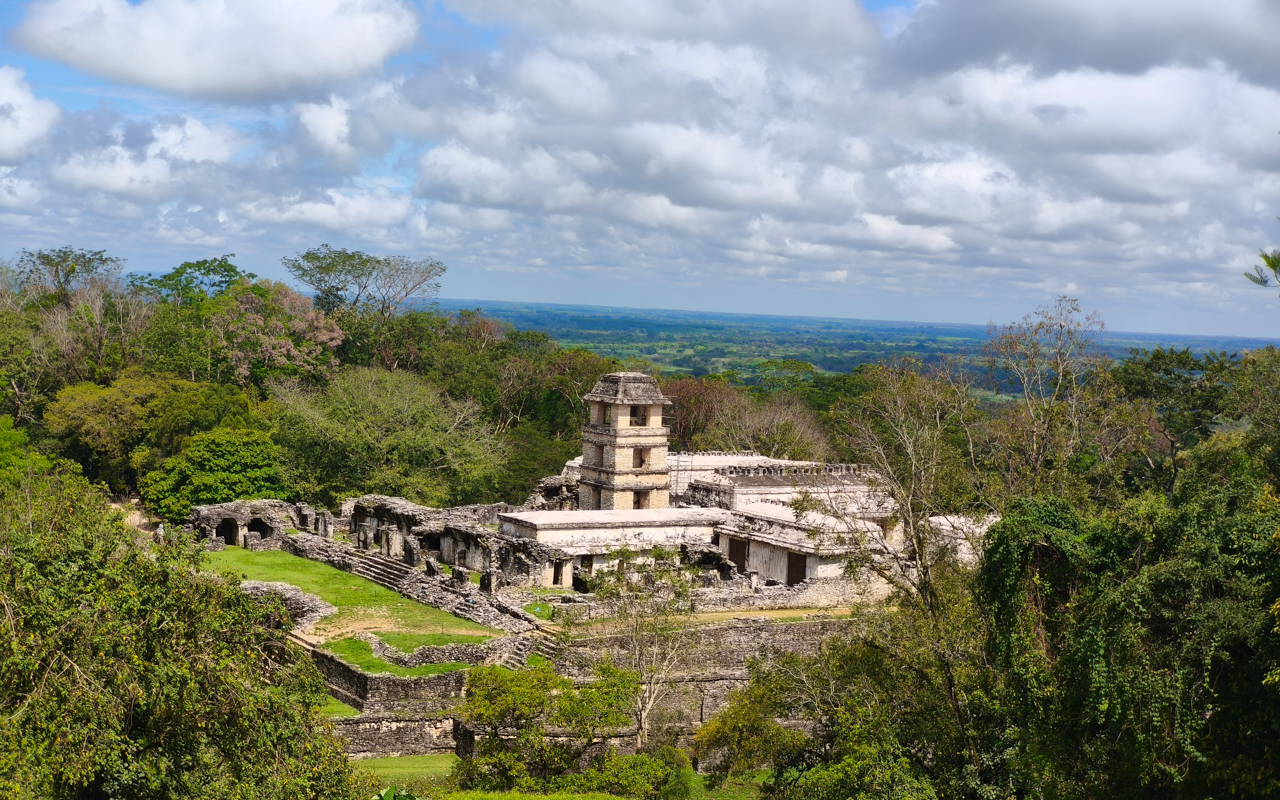
Palenque Ruins © Anuar López
Then we moved to the Archaeological Zone of Palenque, an incredible Mayan City that flourished between the 7th and 8th centuries AD, we toured a large part of the area and continued observing birds ,add new species for the trip such as White-collared Swift, Long-billed Hermit (Central American), Green-breasted Mango, White-bellied Emerald, White Hawk (Snowy), Bat Falcon, Brown-hooded Parrot, Streak-headed Woodcreeper, Masked Tityra, Lesser Greenlet (Northern), Green-backed Sparrow, Golden-hooded Tanager, Red-legged Honeycreeper and Green Honeycreeper.
In the restaurant at lunch time we were still adding new species, we had excellent views of Black-collared Hawk and Scarlet Macaw..
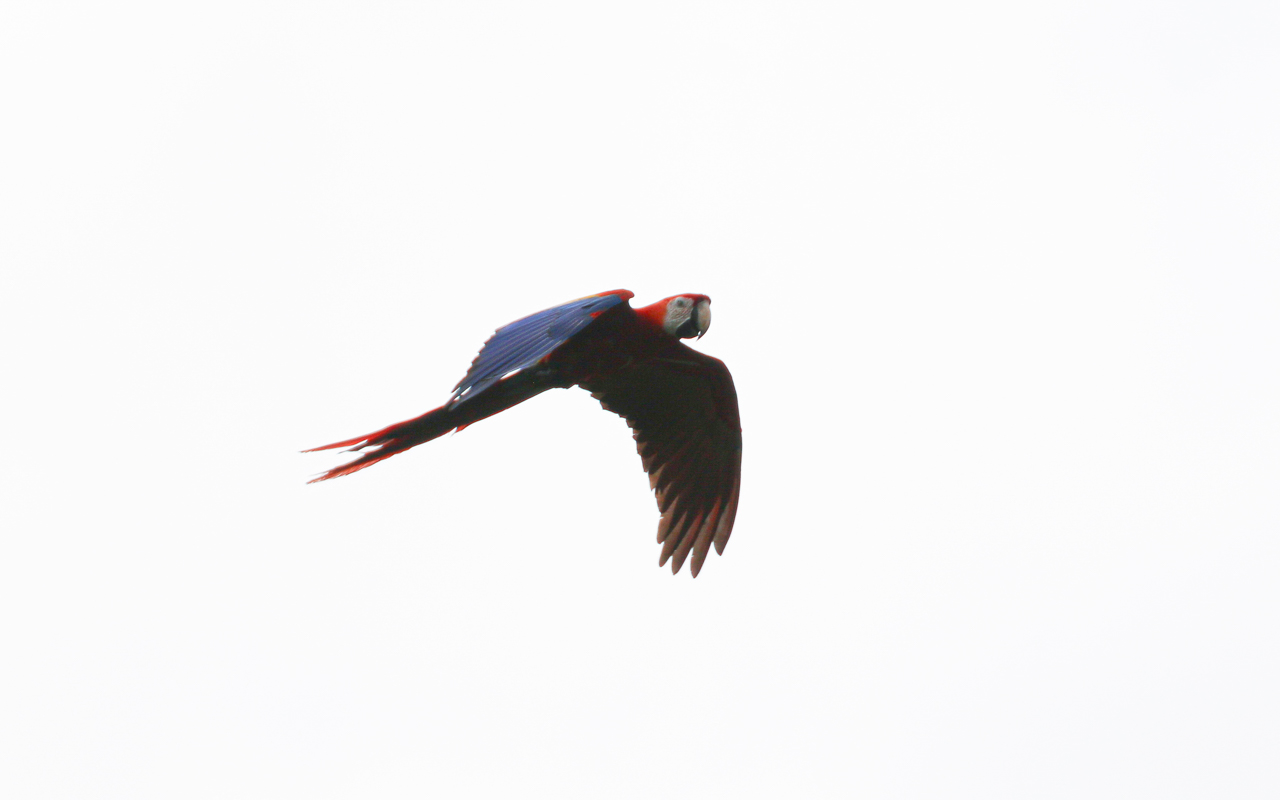
Scarlet Macaw © Anuar López
In the afternoon we observed a pair of Gartered Violaceous Trogon, Keel-billed Toucan, Black-cheeked Woodpecker, Scarlet Macaw and Variable Seedeater (Black)
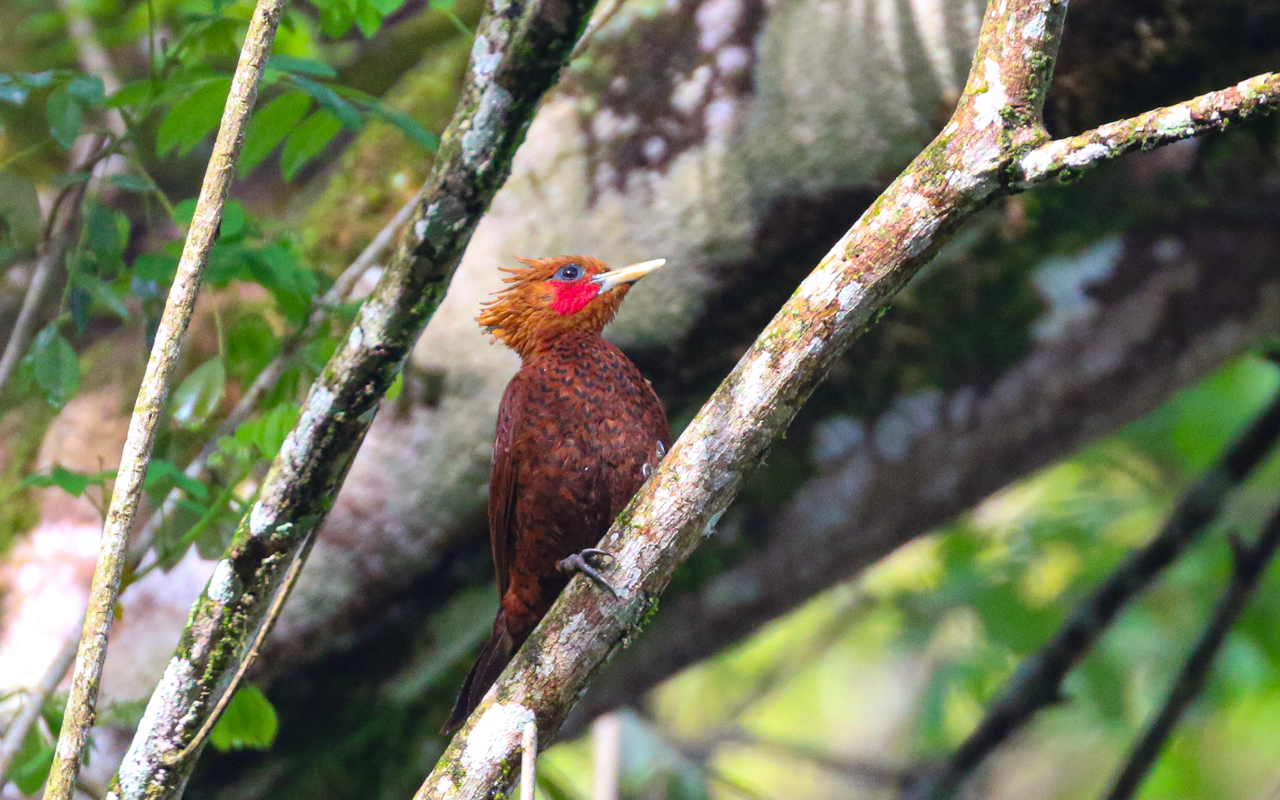
Chestnut-colored Woodpecker © Anuar López
Day. 14 Centla Marshes and drive to Villahermosa
Very early we turned our attention to birds in the gardens of our hotel and heard a Great Tinamou in the distance and excellent views of Slaty-tailed Trogon.
We said goodbye to the rainforest with a group of thirty individuals of migrating Mississippi Kite. Throughout our journey to the Centla Marshes we continued to record a large number of species, including Thick-billed Seed-Finch.
Finally entering the Pantanos de Centla (referred to as Mexico’s Little Pantanal) on flooded farmland we observed Solitary Sandpiper, Lesser Yellowlegs, Greater Yellowlegs and Pectoral Sandpiper, and several individuals of Fork-tailed Flycatcher.
Continuing our tour we were delighted with a large number of waterfowl including ibis, roseate spoonbills, herons, ducks and many migratory passerines everywhere, it was shocking to record 31 individuals of Jabiru and at least ten individuals of Pinnated Bittern.
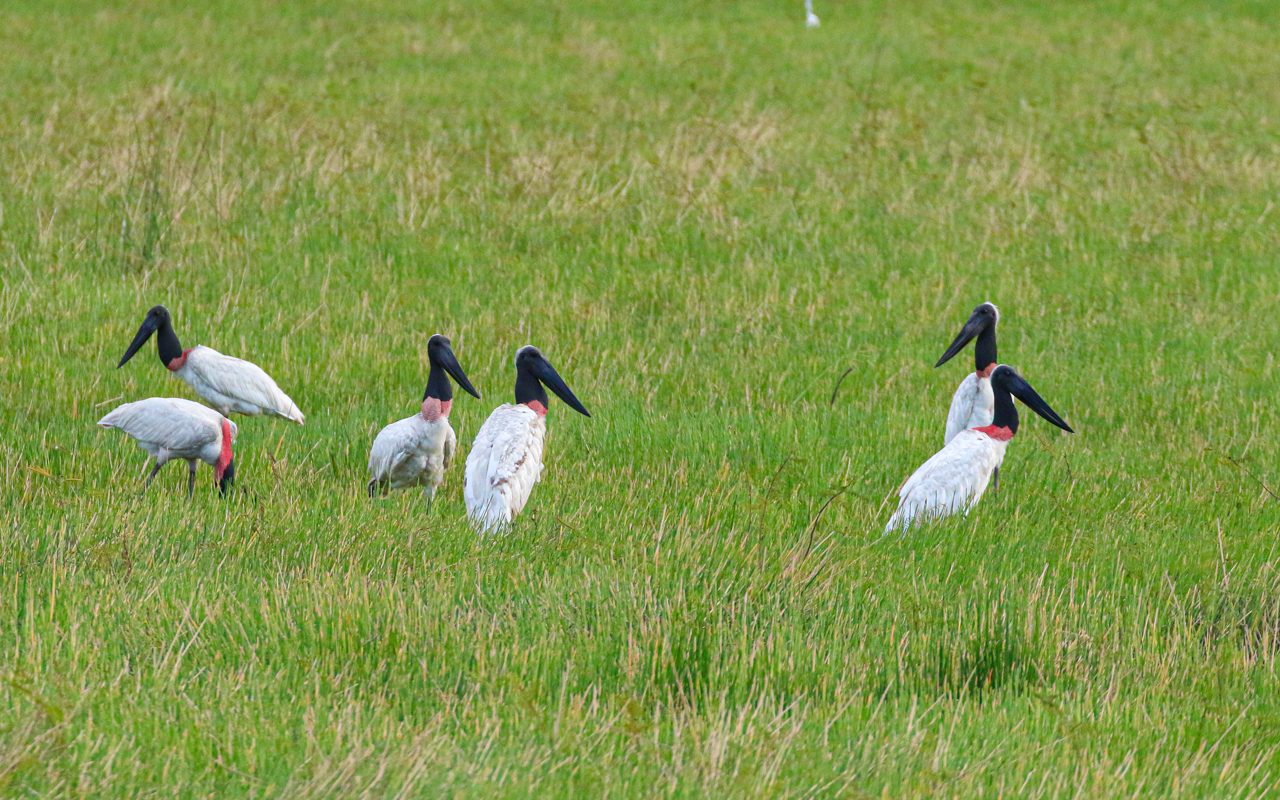
Jabiru © Anuar López
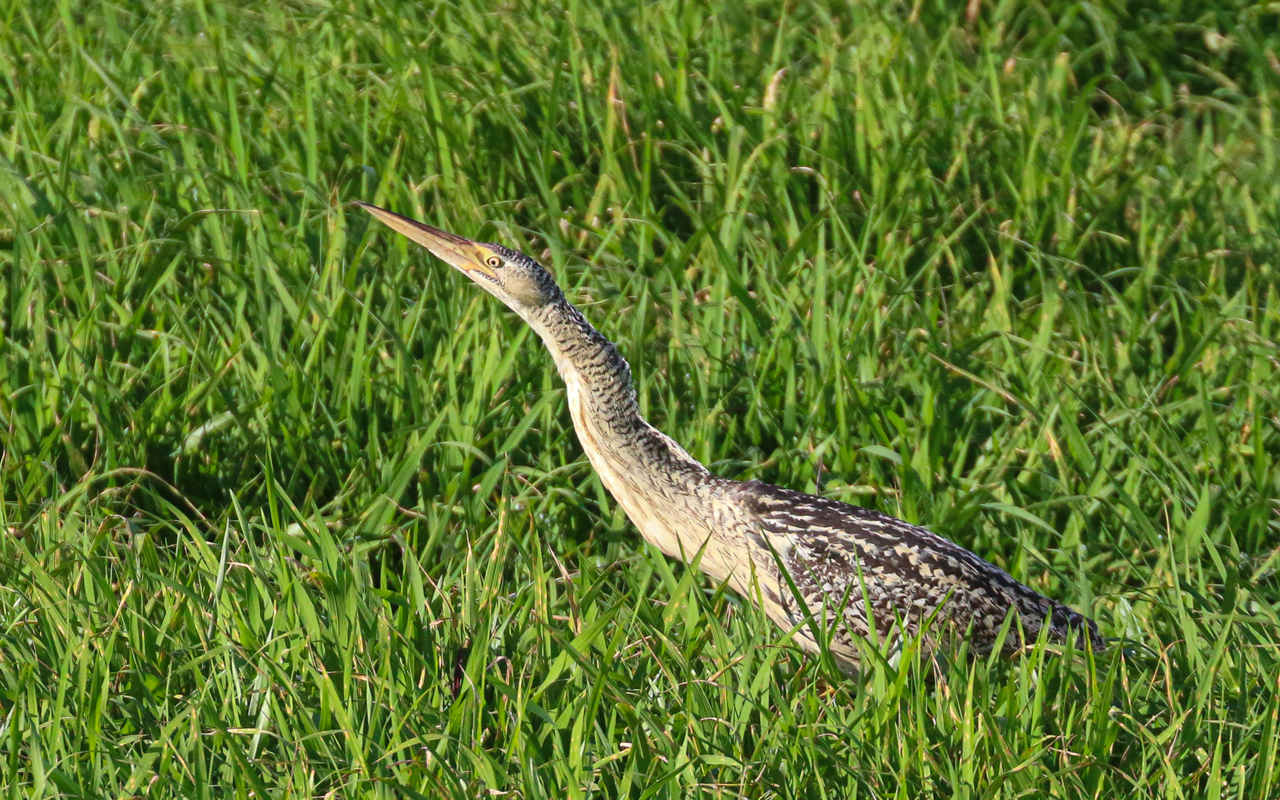
Pinnated Bittern © Anuar López