Southern Mexico
Highlights
Highlights
- Superb birding in a wide variety of habitats, including the spectacular Sumidero Canyon and the pre-Columbian pyramids at Palenque.
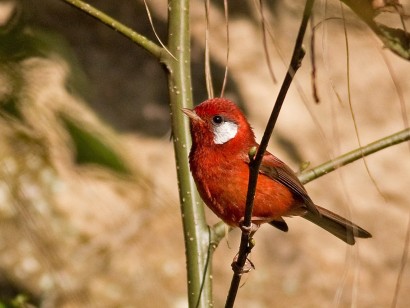
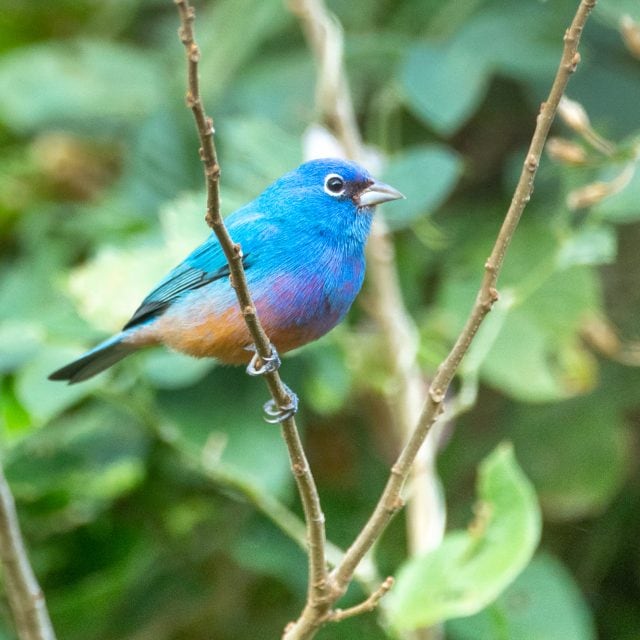
- A wealth of birds, over 40 endemic or near-endemic species, including many localized wrens, hummingbirds, and the splendid Rosita’s Bunting, Orange-breasted Bunting and Red-breasted Chat.
Map
Map
Overview
Tour Overview
On our birding tour to Oaxaca and southern Mexico, we can expect to see up to 45 endemics, plus 43 near-endemics to Mexico, large numbers of other tropical species, and migrants from the United States and Canada. More than 350 species are likely to be tallied.
Habitats are diverse including cloud forest, pine woodland, tropical deciduous and rain forests. We visit the highlands in Oaxaca, Isthmus of Tehuantepec, Pacific Slope around Huatulco, and Gulf Slope rain forests in Chiapas.
We search for Dwarf Jay and Dwarf Vireo, and for two restricted-range species: Nava’s Wren and Long-tailed Sabrewing. We visit spectacular steep-walled Sumidero Canyon and the charming city of San Cristóbal de Las Casas, again targeting very special birds, such as Belted Flycatcher and Pink-headed Warbler.
Other jewels include endemic Rosita’s Bunting, Orange-breasted Bunting and Red-breasted Chat. Our tour culminates at the outstanding Mayan archaeological site of Palenque, where we expect a dazzling array of species in luxuriant rain forest and marvelous Usumacinta marshes.
Dates & Prices
Dates & Prices
What's Included
Tour Price Includes
- All meals and soft drinks
- All accommodation
- Airport transfers
- Ground transportation
- 1 guide with 4 - 8 participants, 2 guides with 9 - 12
- Park entry / tour fees
Tour Price Does Not Include
- Flights to and from start/end location
- Items of a personal nature
- Travel Insurance
- Alcoholic beverages
Gallery
Gallery


Itinerary
Itinerary
Day 1: Arrival and Orientation
Our Southern Mexico birding tour begins with arrival in Oaxaca, where our tour leader(s) will meet you for dinner. Night in Oaxaca.
Days 2 and 3: Oaxaca
The diverse habitats -pine woodland, subtropical scrub and tropical dry forests- within 45 minutes drive of Oaxaca possess nearly one third of Mexico’s endemic bird species. We allow ample time to search for most of these in the foothills and mountains east of the city and at nearby sites in the Interior Valley of Oaxaca such as at Teotitlán del Valle and Yagul. We also spend part of an afternoon enjoying the weaving and dyeing demonstration by Zapotec weavers in Teotitlán del Valle.
In the foothills, expected birds include Dusky and Berylline Hummingbirds, while we specifically search for Oaxaca Sparrow and three endemic species of vireos: Dwarf, Golden and Slaty Vireos. With luck, we may also find Ocellated Thrasher and Pileated Flycatcher. In the humid pine-oak forest at La Cumbre, we can expect to see birds such as Red Warbler, Crescent-chested Warbler, Painted Redstart, Slate-throated Redstart, Tufted Flycatcher, Gray Silky, Gray-barred Wren, Yellow-eyed Junco and others while we search for the rare Dwarf Jay, which is found nowhere else in Mexico. Nights in Oaxaca.
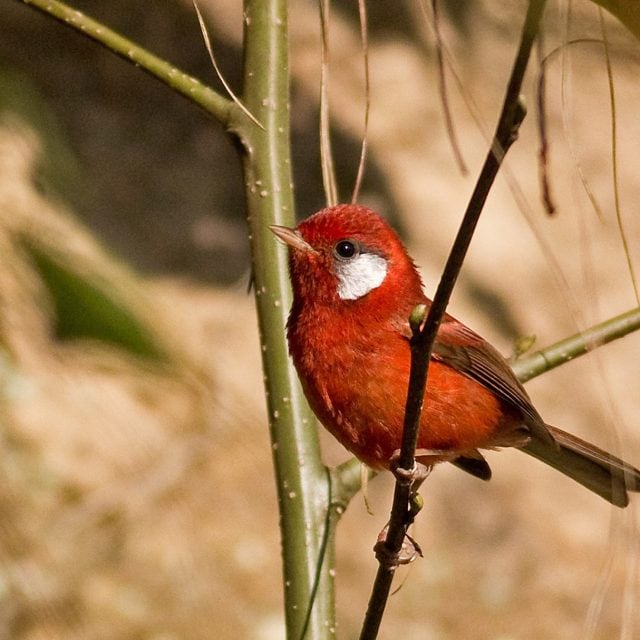
Day 4: Sierra Madre del Sur
Today we have a relaxed morning with optional birding in the hotel grounds and a later-than-usual breakfast in the hotel, then loading our suitcases onto the van and leaving at 1030-11 am. We drive south to the pass in the Sierra Madre del Sur where we will look for additional species of the humid pine/oak and cloud forest such as Garnet-throated Hummingbird and White-throated Jay. Night near San José del Pacífico.
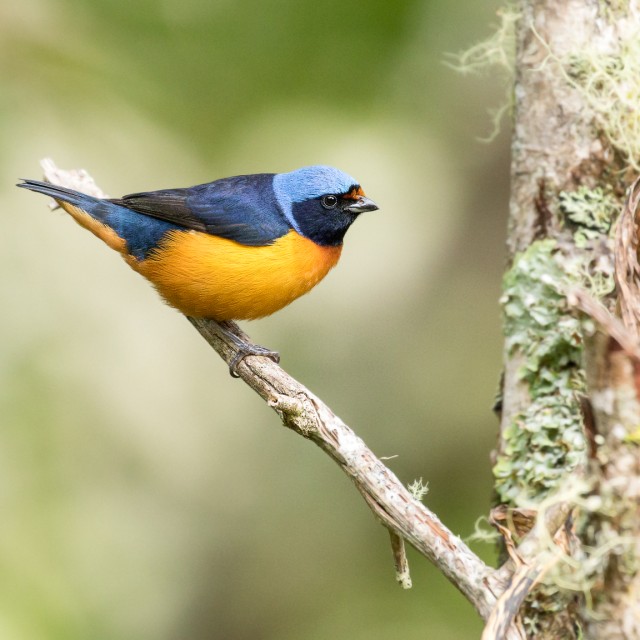
Day 5: Huatulco
After breakfast we will leave southward toward Huatulco on the Pacific coast, with further birding in the cloud forest of the Sierra Madre del Sur. Additional birds we will target include Blue-capped Hummingbird (the state of Oaxaca’s only endemic bird species) and Red-headed Tanager, and there is a second possibility of finding Golden Vireo in case we do not find it while staying in Oaxaca. Night in Huatulco.
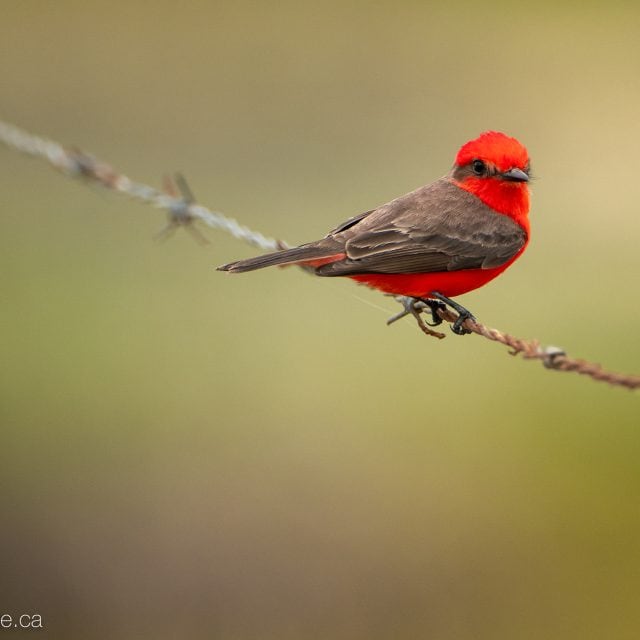
Day 6: Huatulco and drive to Tehuantepec
Around Huatulco, species we are likely to encounter include Citreoline Trogon, Orange-fronted Parakeet, Russet-crowned Motmot, Turquoise-crowned Hummingbird, West Mexican Chachalaca, Rufous-naped Wren, Yellow-winged Cacique, and with luck Colima Pygmy-Owl. After an early lunch we will drive to Tehuantepec, stopping or making small detours in a couple of places to look for Orange-breasted Bunting, Red-breasted Chat and probably distant Blue-footed Boobies on a rocky island offshore. We may have time to search for Cinnamon-tailed Sparrow in the late afternoon (otherwise we will look for it first thing tomorrow). Night in Tehuantepec.
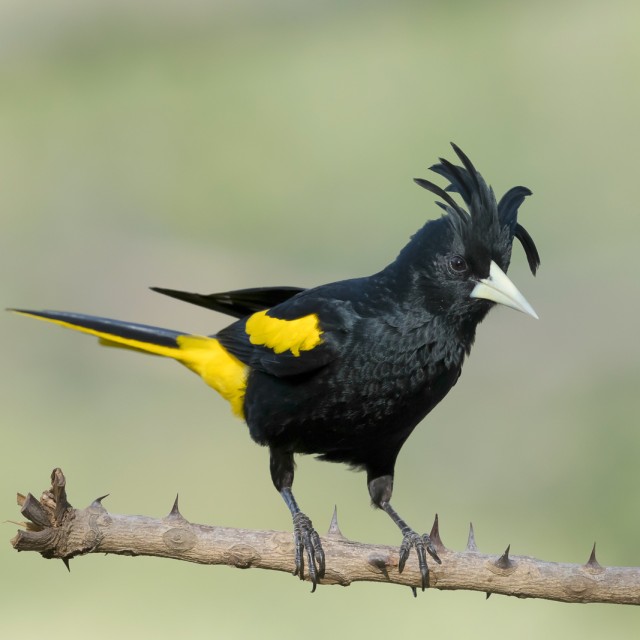
Day 7: Tehuantepec to Arriaga
In the morning we will look for shorebirds, hopefully including Collared Plover, as well as birds of the dry scrub such as Cinnamon-tailed Sparrow (if we did not see it yesterday) and, with a lot of luck, maybe Lesser Ground-Cuckoo. Most of the afternoon will be spent driving and in the late afternoon we will look for Rosita’s Bunting close to Arriaga. Night in Arriaga.
Day 8: Arriaga and on to San Cristóbal de las Casas
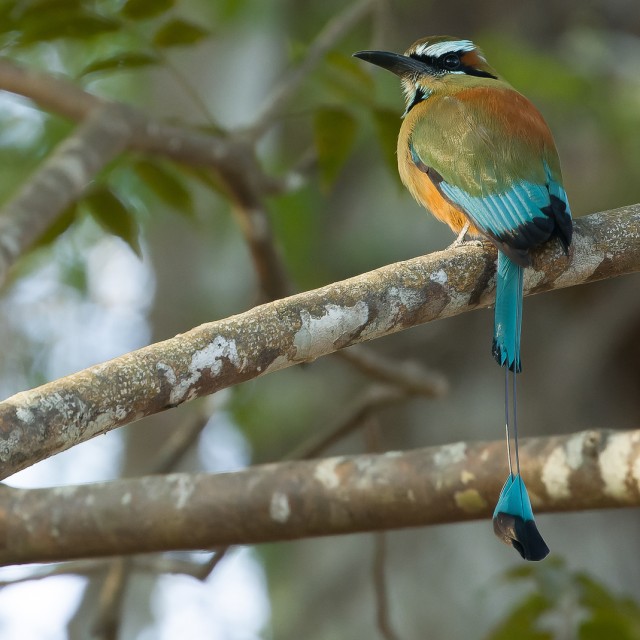
East of Arriaga, we will look for the nearly endemic Giant Wren and White-bellied Chachalaca as well as Turquoise-browed Motmot, Spot-breasted Oriole, Orange-chinned Parakeet and with luck Yellow-naped Parrot and Pacific Parakeet. Night in San Cristóbal de las Casas.
Days 9: San Cristóbal de las Casas
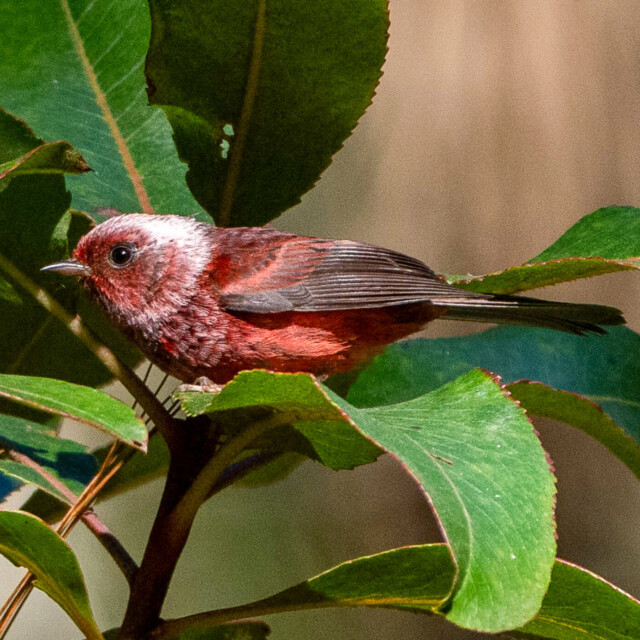
We will bird areas near San Cristóbal de las Casas, where pine forest is the main vegetation. We should see several new species including Rufous-collared Thrush, Rufous-collared Sparrow, Amethyst-throated Hummingbird, Black-capped Swallow, White-naped Brush-Finch, the blue-backed southern form of the Steller’s Jay, Rufous-browed Wren, and our main target, Pink-headed Warbler. One morning we may also visit an archaeological site two hours from San Cristóbal, where we may find Slender Sheartail, Prevost’s Ground-Sparrow, and other species. Night in San Cristóbal de las Casas.
Day 10 & 11: Tuxtla Gutiérrez
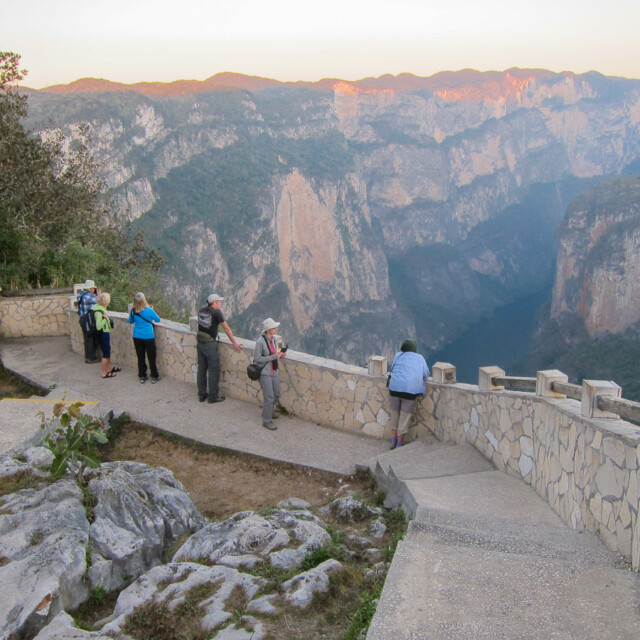
We will drive to Tuxtla Gutiérrez, and over the next couple of days we will visit the spectacular Sumidero Canyon, where we will seek such sought-after species as Belted and Flammulated Flycatchers, Red-breasted Chat, Bar-winged Oriole, and with luck, the rare Slender Sheartail. We will also visit a special site where Nava’s Wren occurs, together with a long list of other tropical rainforest species. Both nights in Tuxtla Gutiérrez.
Days 12 and 13: Nava’s Wren and Palenque
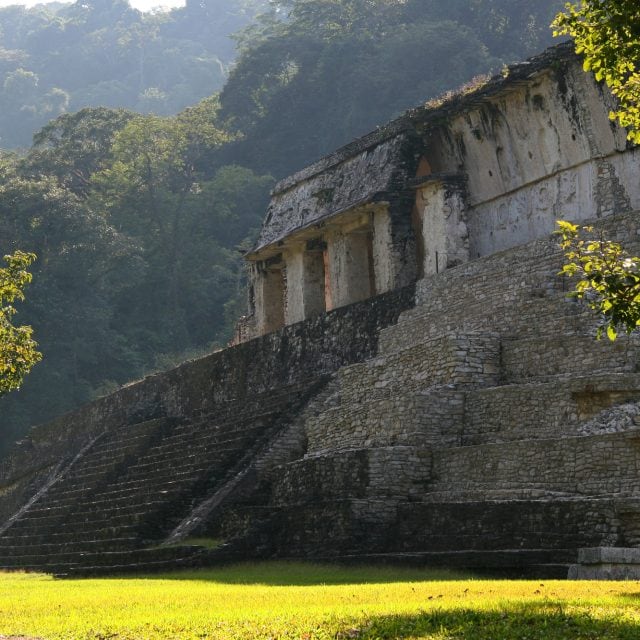
Before heading to Palenque, we will visit another section of the Nava's Wren site. Afterwards, we will take the whole rest of the day driving to Palenque, an outstanding archaeological site surrounded by luxuriant rain forest in land that belonged to the Mayas. Hundreds of bird species can be found in this area, among which we can expect to see Long-billed Hermit, Masked Tityra, Red-capped Manakin, Montezuma’s Oropendola and several species of trogons, parrots, tropical tanagers, wrens, flycatchers and more. Nights in Palenque.
Day 14: Usumacinta marshes
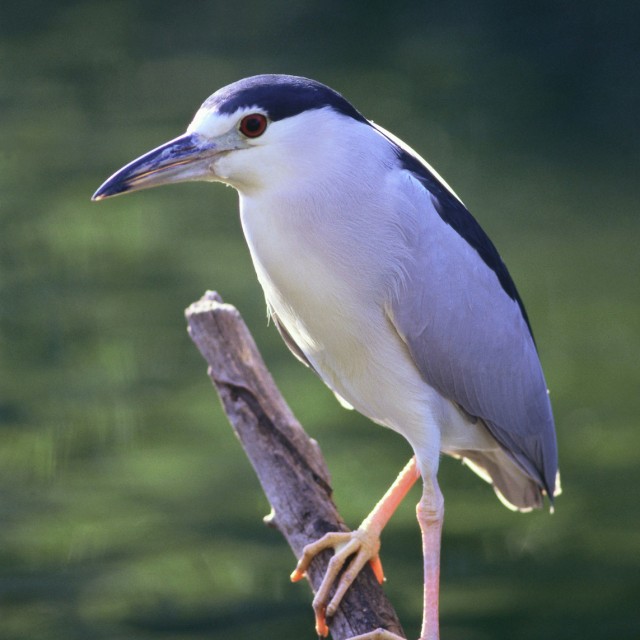
Leaving Palenque we drive through grasslands and marshes near Emiliano Zapata and Villahermosa. We will be looking for a number of interesting birds including Double-striped Thick-knee, Bare-throated Tiger-Heron, Grassland Yellow-Finch, Plain-breasted Ground-Dove and Lesser Yellow-headed Vulture. Night in Villahermosa.
Day 15: Departure From Villahermosa
Our Southern Mexico birding tour concludes today. Breakfast is available at our hotel in Villahermosa, but you are free to leave anytime today.
What to Expect
What to Expect
Overview
The Southern Mexico itinerary is relatively high-intensity, designed to maximize time in the field and provide access to a wide range of habitats. As a result, it includes early mornings, long days in the field, and occasionally extended travel distances. While the tour offers exceptional birding opportunities, the pace and length of days may be physically demanding for some participants
Food
We often begin our mornings very early, so we will take a basic breakfast into the field. On a few days, we will enjoy a more relaxed hotel breakfast (approximately 6:30–7:00 am). Lunch is typically enjoyed as a picnic in the field or occasionally at a local restaurant, depending on the day’s route. Dinners are generally at the hotel or nearby restaurants and provide a chance to review the day’s sightings and prepare for the next day’s birding.
Walking
The tour involves generally easy walking, with occasional short sections of uphill terrain. In one or two areas, trails may be somewhat muddy, but rubber boots are not necessary. The most challenging walk is at Montetik (approximately 1 km round trip), which includes a relatively steep section.
Walks are conducted at a relaxed pace, with frequent stops to observe wildlife. At all times, we remain within a couple of kilometres of the vehicle.
Driving
This itinerary spans a broad geographic range, and most days involve significant travel to reach key birding locations. Some drives may last up to five or six hours, with regular stops for birding, comfort breaks, and scenic views. Road conditions can vary, and travel in some areas may be on winding or rural roads. Please note that vehicle seating may be more compact than what many travellers are accustomed to in North America.
Weather
At higher elevations, temperatures can be cool, and in some cases you may need a coat and gloves (conditions vary by year). In contrast, the Palenque and Villahermosa areas—visited during the final days—are typically hot and humid, with the possibility of late-day showers.
Frequently Asked Questions
Land Tours FAQs
Whether you’re a seasoned birder or new enthusiast, these FAQs cover important details about our tours, including schedules, fitness requirements, group dynamics and more.
Featured Wildlife
Featured Wildlife
While we cannot guarantee sightings of the birds or mammals listed below, we believe that encountering these species is quite likely during this tour.
- Nava's Wren
- Giant Wren
- Bridled Sparrow
- Red-breasted Chat
- Rosita's Bunting
- Belted Flycatcher
- Russet-crowned Motmot
- Oaxaca Sparrow
- Ocellated Thrasher
- Orange-breasted Bunting
Past Tour Checklists
Past Tour Checklists
View the list of birds and other wildlife we encountered on our past tours.
- Southern Mexico eBird Report (March 18 - April 1, 2026)
- Southern Mexico species list Jan 2026 (eBird)
- Southern Mexico species list 2025 (eBird)
- Southern Mexico species list 2024 (eBird)
- Southern Mexico species list 2023
- Southern Mexico species list 2022
- Southern Mexico species list 2020
- Southern Mexico species list 2018
- Southern Mexico species list 2016
- Southern Mexico species list 2012
Compare your life list to our last tour
Get an estimate of how many new species you may see.
Try our Lifer toolTrip Reports & Inspiration
Trip Reports & Inspiration
Southern Mexico Trip Report (Jan 14 - 28, 2026)
Southern Mexico Trip Report 2025
Southern Mexico 2024 Trip Report
Southern Mexico Trip Report 2023
Top Birding Destinations to Escape Winter: Going south when the snow flies!
Southern Mexico Birding Tour 2022 Trip Report