New Zealand Trip Report (Nov 5 – 26, 2025)
Day 1 – Whangarei
Welcome Dinner in Whangarei at our hotel to celebrate the start of our tour and get to know each other and our target birds for the forthcoming adventure together.
Day 2 – Hen and Chickens Islands (outer Hauraki Gulf) Pelagic Trip
We left Whangarei from Marsden Cove on the Sumo, on a beautiful sunny day, for our first pelagic trip and were spoiled with Reef Heron sightings as well as Little Black Shag and Little Shag roosting, and Pied Shag nesting in the coastal Pohutukawa trees.
We also saw Little Penguins on the water on our way past Whangarei Heads.
Once we left the sheltered Whangarei Harbour, heading out towards the Hen & Chicken islands, we were soon joined by a range of seabird sightings, including:
- New Zealand Storm Petrel (target bird)
- Black Petrel (target bird)
- Fleshfooted Shearwater and Australisian Gannets feeding alongside a pod of common dolphins and 3 Bryde’s Whales
- Fairy Prion
- Buller’s Shearwater and Fluttering Shearwater.
We anchored up for lunch in Starfish Bay at Whatupuke Island and spotted a range of terrestrial birds too, including the endemic Tui, Kaka, and New Zealand Pigeon.
On the way back into the marina, we saw a small number of Bar-tailed Godwits, Red Knots, and Royal Spoonbills feeding on the beaches, nearing low-tide.
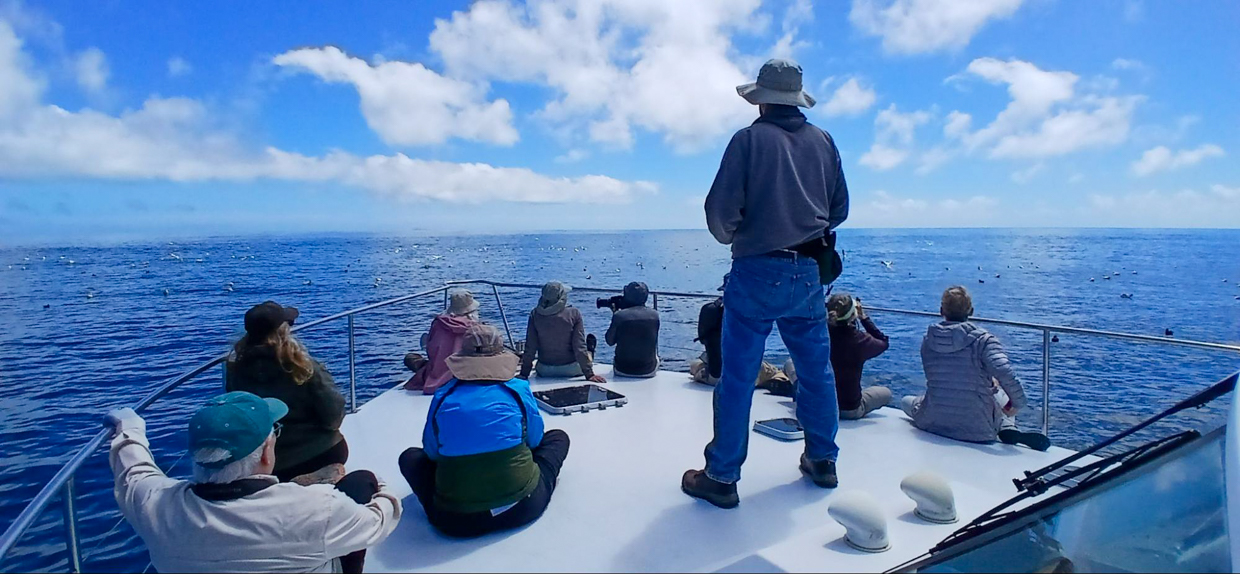
Group on board the Sumo © Anna Wentsch
Day 3 – Trounson Kauri Park
After short stops at Limeburners Creek Wetland and Dargaville for lunch, we were thrilled to see Grey Warbler (=target bird), and Silver Eye (=target bird) at Trounson Kauri Park. We travelled along the elevated boardwalk and marvelled at the magnificent Kauri trees. We were even lucky to see a native eel hiding in a small stream running under the boardwalk.
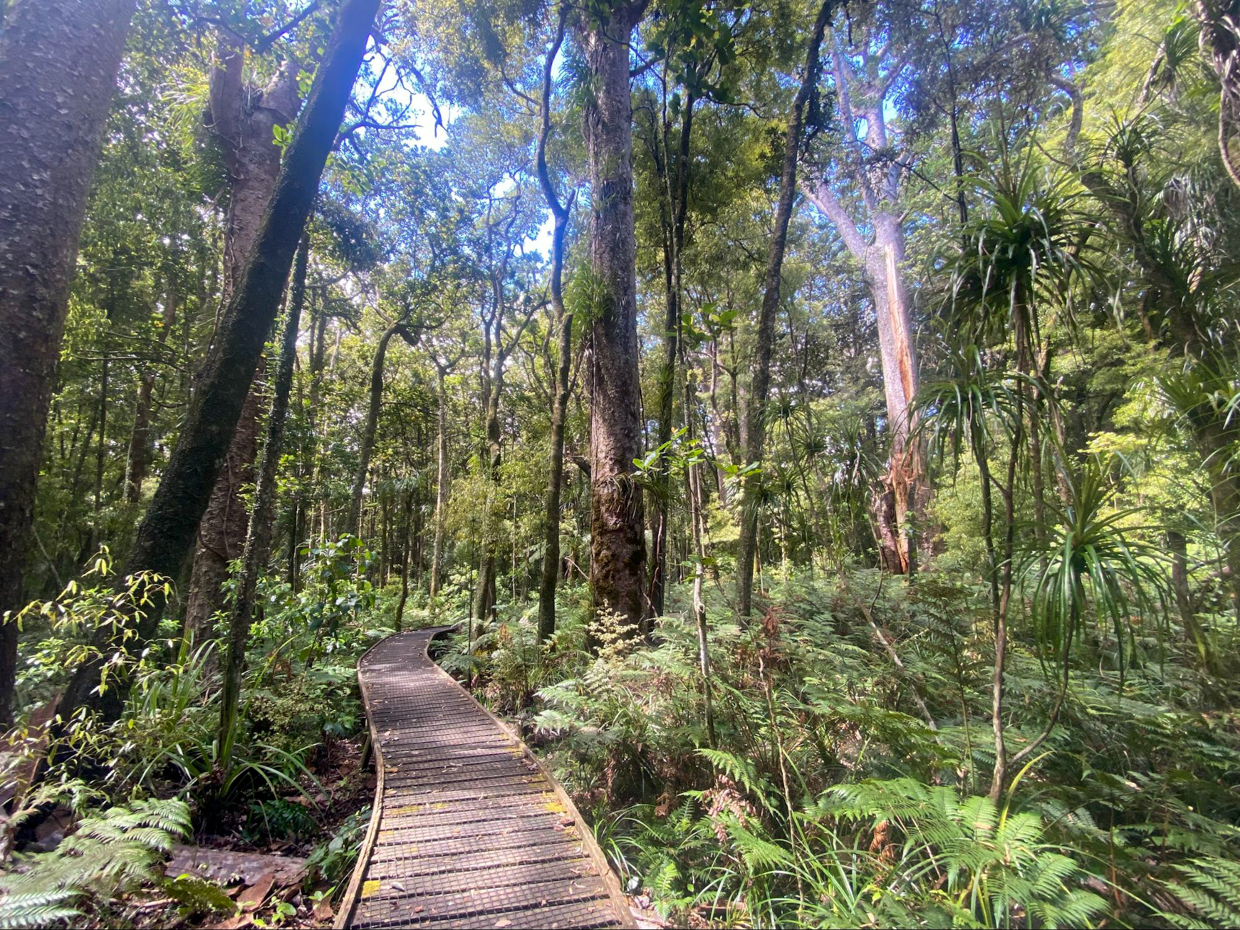
Elevated walkway to protect Kauri from infection, Trounson Kauri Park © Lindsey Gray
Day 4 – Waipu Cove and Tawharanui Regional Park
We travelled south today with stops at Waipu Cove and Mangawhai Spit searching for Tara-iti, Fairy Tern. We were lucky to spot our first Buff-banded Rails, Northern New Zealand Dotterel, and Ruddy Turnstones. We also saw more Bar-Tailed Godwit and Red Knot amongst many other species.
After dinner at Whangaparoa, we went for a night excursion at Tawharanui Regional Park.
Before we set off on our exploration we were treated to a pair of resplendent New Zealand Wood Pigeon (Kereru) who flew in to inspect our group while we prepared our equipment.
We then enjoyed the dusk chorus and also saw Kaka, New Zealand Fantail, and many other species before nightfall. We were fortunate enough to see the Brown Teal after dark. We also heard lots of Morepork and our target bird for the night: North Island Brown Kiwi.
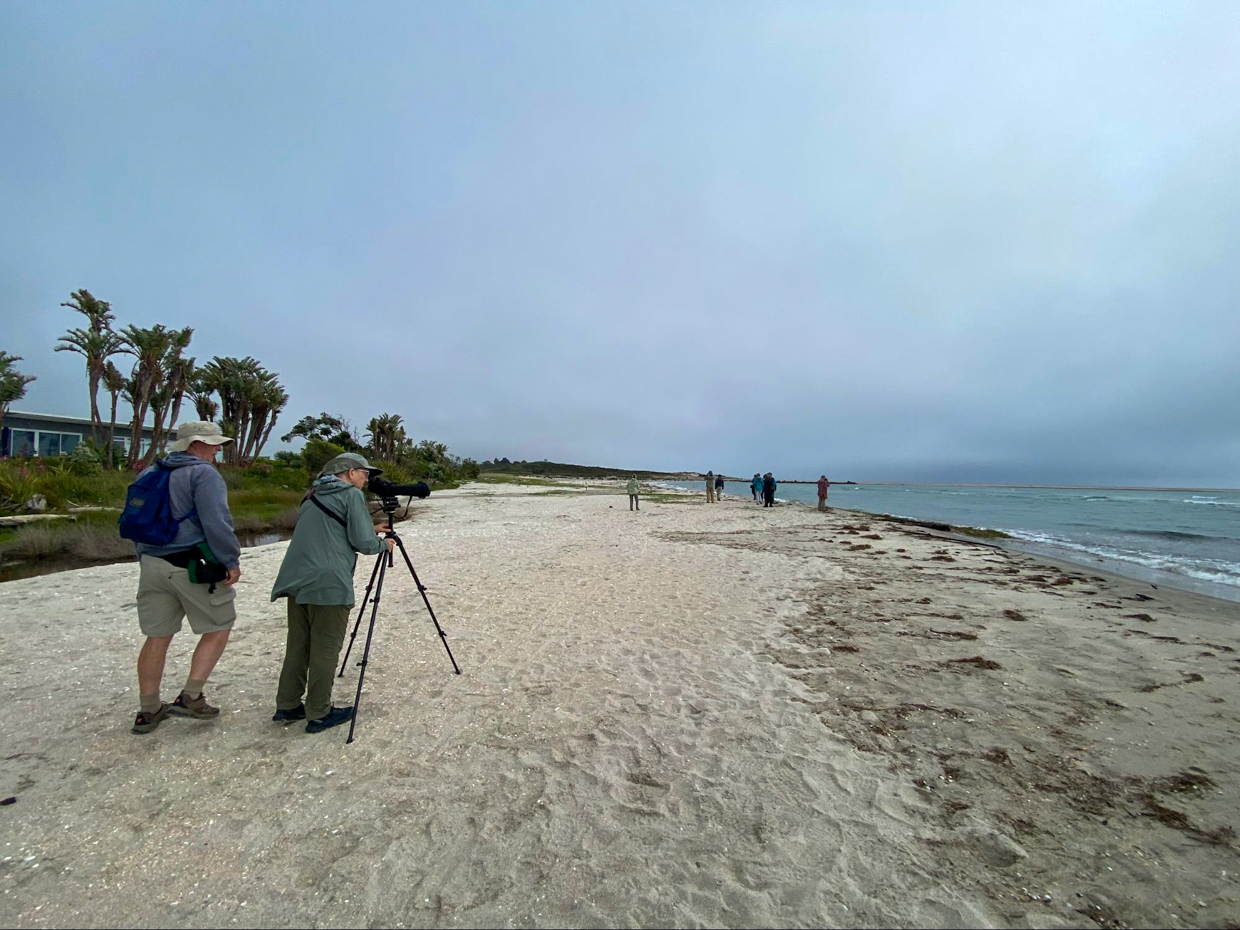
Searching for Fairy tern, Waipu Cove © Lindsey Gray
Day 5 – Tiritiri Matangi
After a short ferry ride from Whangaparoa, we arrived on predator-free Tiritiri Matangi Island for a full day birding trip in this special safe-haven.
We sighted many species including our target birds for the day: Hihi (Stichbird) and North Island Kokako.
We observed many other endemic species including Red-fronted Parakeet, North Island Saddleback, North Island Robin, Fernbird, Rifleman, Bellbird, and several family groups of Whiteheads. We also saw Spotless Crake and Australasian Swamphen. The group were enchanted by the North Island Robin’s habit of bouncing low along the ground, feeding in the upturned leaves and soil stirred up by walker’s feet.
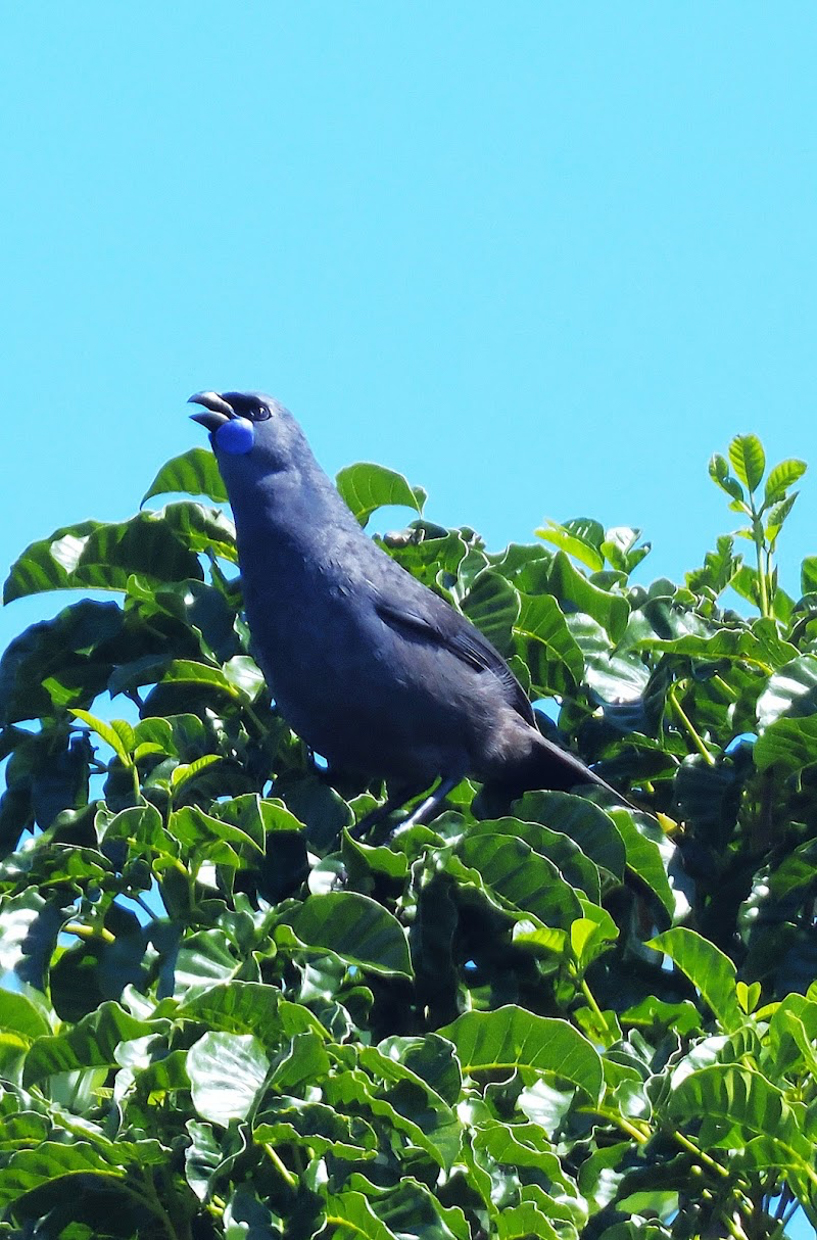
North Island Kokako © May Britton
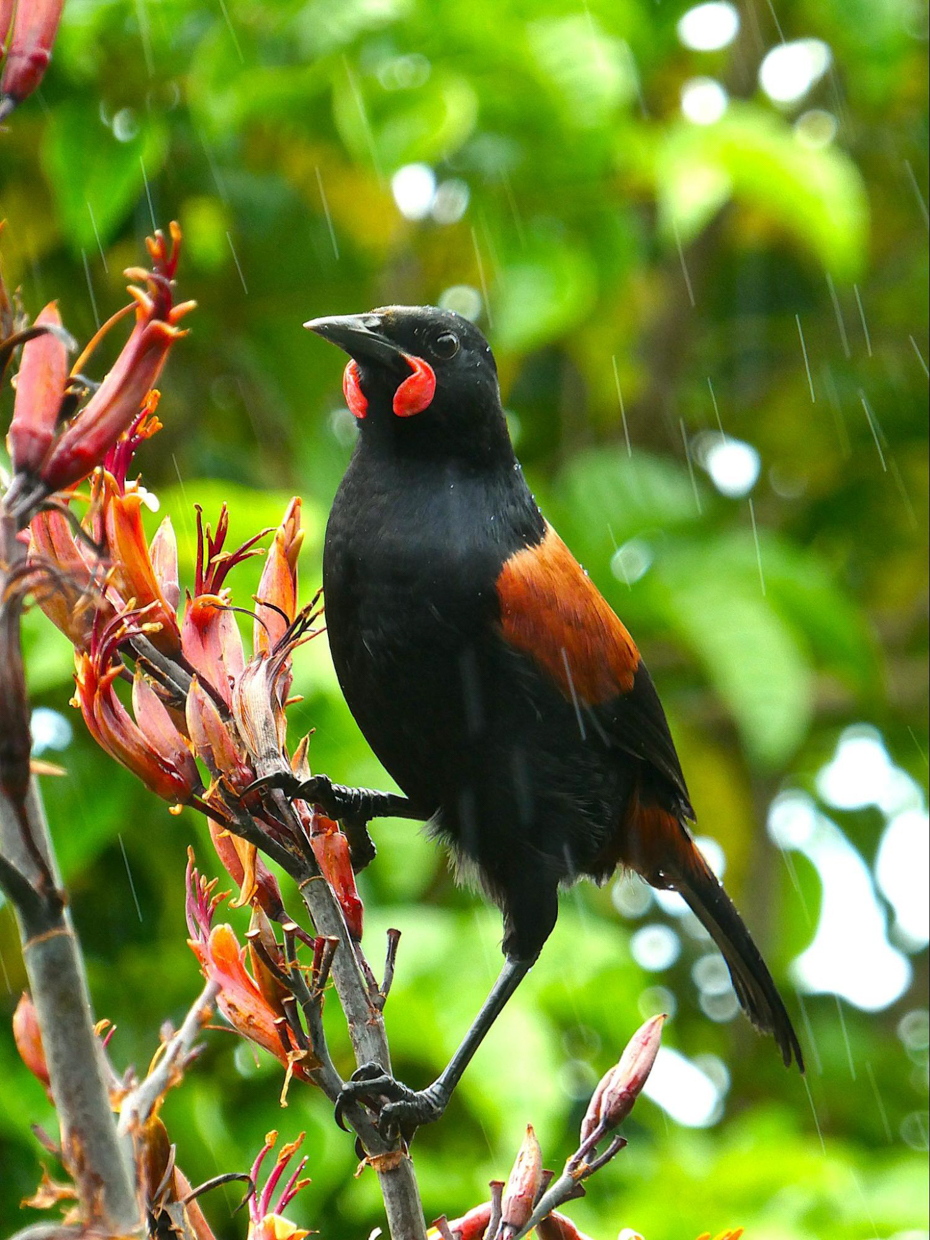
North Island Saddleback © May Britton
Day 6 – Pūkorokoro Miranda Shorebird Centre & Whakamaru Dam
We left Whangaparoa today, and timed our day around high tide at Robert Findlay Wildlife Reserve, a Ramsar site, famously known as a stronghold for many endemic shorebirds and migrants.
We were spoiled with a range of shorebird sightings from the three bird hides onsite, including:
- Wrybill (endemic) – target bird
- Around 3500 Bar-tailed Godwit – target bird
- Red Knot
- Ruddy Turnstone
- Pacific Golden Plover
- Sharp-tailed Sandpiper
- Royal Spoonbill
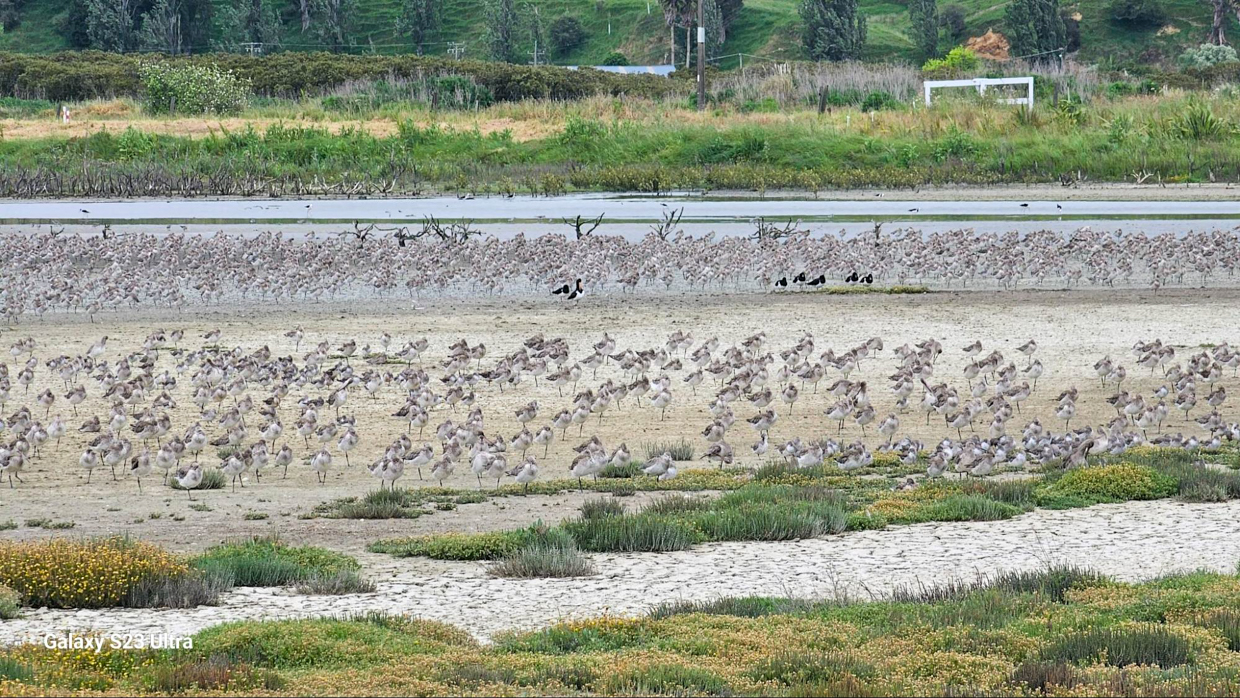
Shorebirds roosting at hightide, Robert Findlay Wildlife Reserve/Pūkorokoro Miranda Shorebird Centre © May Britton
We had lunch at Pūkorokoro Miranda Shorebird Centre and did some more birding around the centre and saw our first Black Shag and Australasian shoveler.
On the way to Taupo, we briefly stopped at Whakamaru Dam and spotted Grey Teal, New Zealand Scaup, and Caspian Tern.
We arrived in Taupo in time for a well-deserved dinner, after a long but fabulous day of birding.
Day 7 – Rotorua Lakes and Wingspan
We ventured to Rotorua to experience some geothermal activity at Sulphur Point and, of course, do some birding.
We sighted many species including our target birds for the day: New Zealand Grebe and Black-billed Gull.
After our lake-front birding, we visited Wingspan Birds of Prey Centre, to learn about raptor conservation in New Zealand and get a close-up experience with the endemic New Zealand Falcon.
We enjoyed another dinner at Taupo with New Zealand’s largest lake at our door step.

New Zealand Dabchick or New Zealand Grebe © Tristan Davis
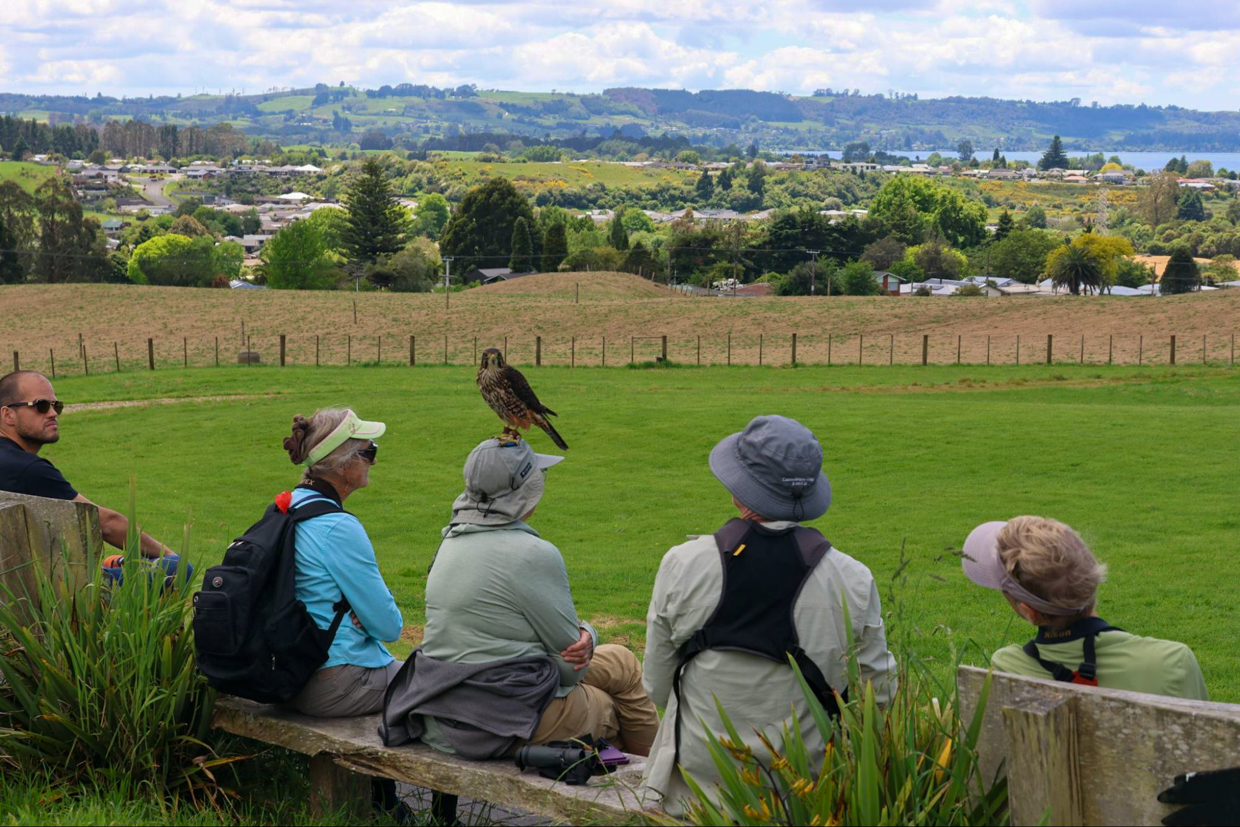
Left: Visiting Wingspan Birds of Prey Centre © Anna Wentsch
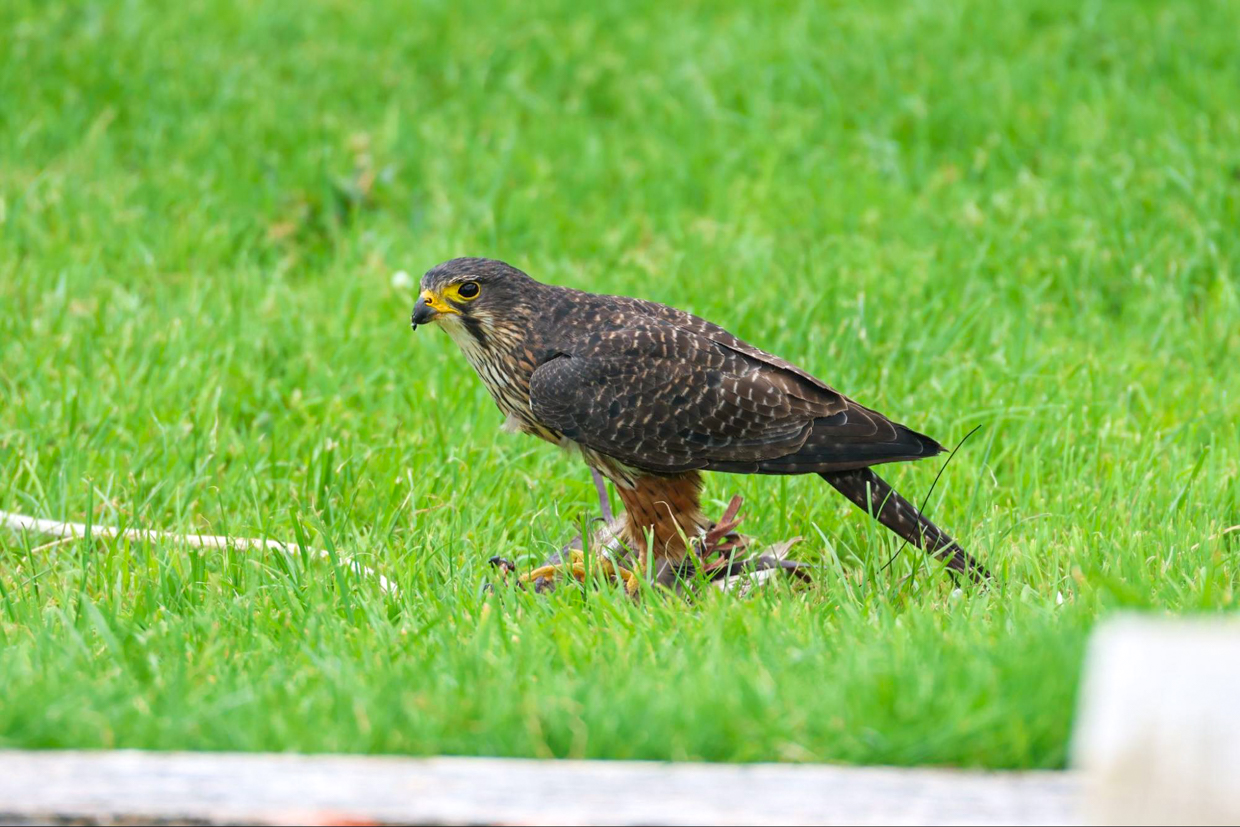
New Zealand Falcon © Anna Wentsch
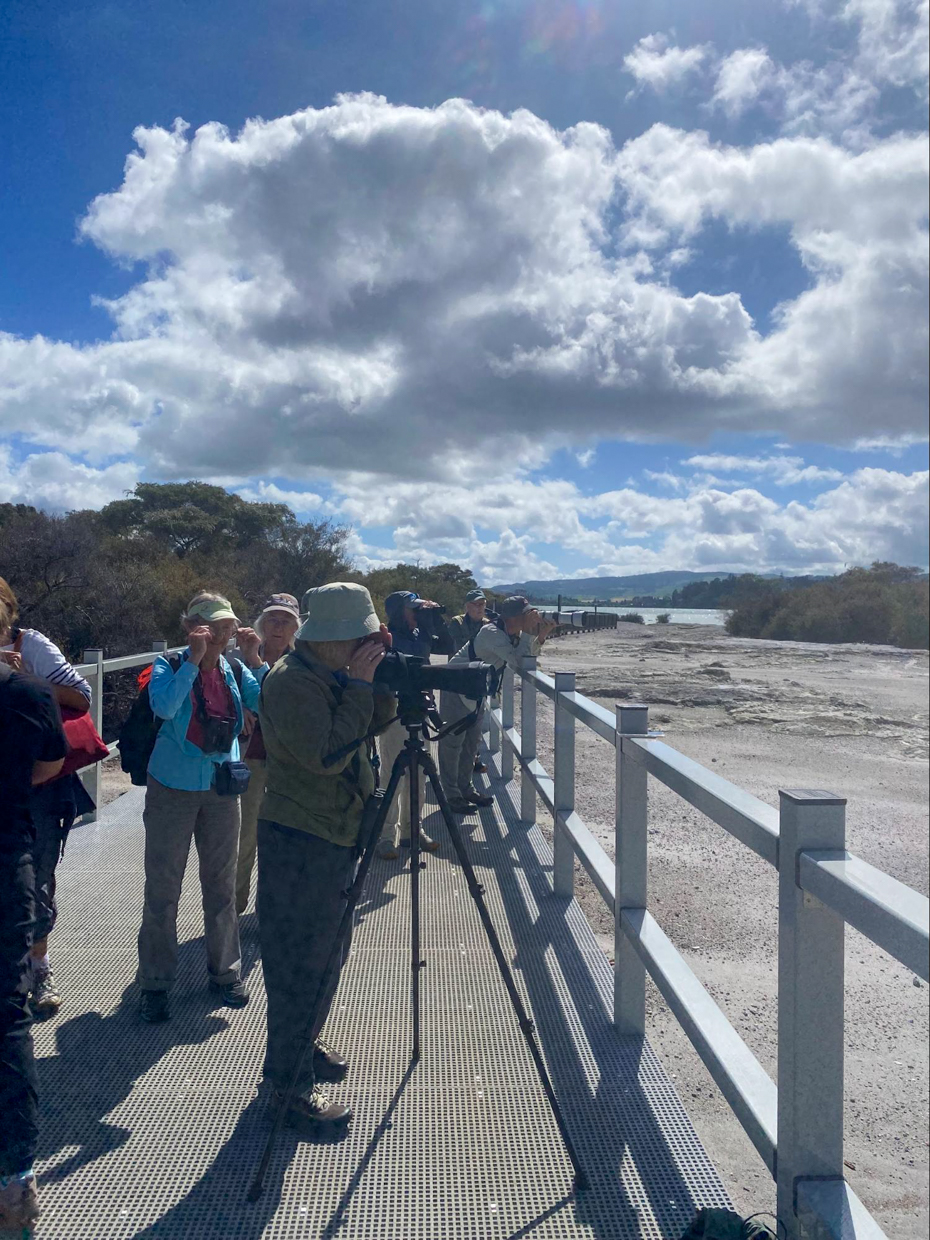
Scoping out Black-billed gulls at Sulphur Point, Rotorua © Lindsey Gray
Day 8 – Turangi and Tongariro National Park
After breakfast in Taupo, we travelled to Turangi to go birding along the Tongaririo River.
We spotted a range of freshwater species, including:
- Whio (Blue duck) – target bird.
- Little Shag
- New Zealand Scaup
- Black Swans
We also saw other terrestrial species, including the endemic Grey Warbler and its brood parasite Shining Bronze-Cuckoo.
The cherry on top of the cake was spotting a New Zealand Falcon at our last birding spot of the day, before driving to Palmerston North to have dinner and spend the night there.

Whio posing on the Tongariro River, Turangi © Greg Starr
Day 9 – Manuwatu Estuary & The Cook’s Strait
Today we were on a mission: Shorebird spotting in the morning and crossing the Cook’s Strait in the afternoon.
We birded at Manuwatu Estuary, another Ramsar site, and spotted many familiar species, including Bar-Tailed Godwit, Red Knots, Royal Spoonbills, South Island Pied Oystercatchers as well as Variable Oystercatchers.
After a short lunch stop in Paekakariki, we headed down to Wellington to catch the ferry: South Island here we come!
Day 10 – Picton
After our first night on the South Island (Picton), we embarked on a cruise in Queen Charlotte Sound to Blumine Island.
We saw the endemic King Shag (target bird) on the way to the island. But once on Blumine, we only had one job to do: find endemic Orange-fronted Parakeet (target bird), one of New Zealand’s rarest terrestrial species, and after a little persistence, we succeeded.
While on Blumine were also fortunate to spend time viewing a Weka mother and her chick who were feeding along the shoreline.
On our way back to the mainland, we saw many other species, including Spotted Shag, Fluttering Shearwater, White-fronted Terns, and Little Penguin.
It was time to say goodbye to Picton after lunch, and hello to Kaikoura in the evening. Dinner and night in Kaikoura.
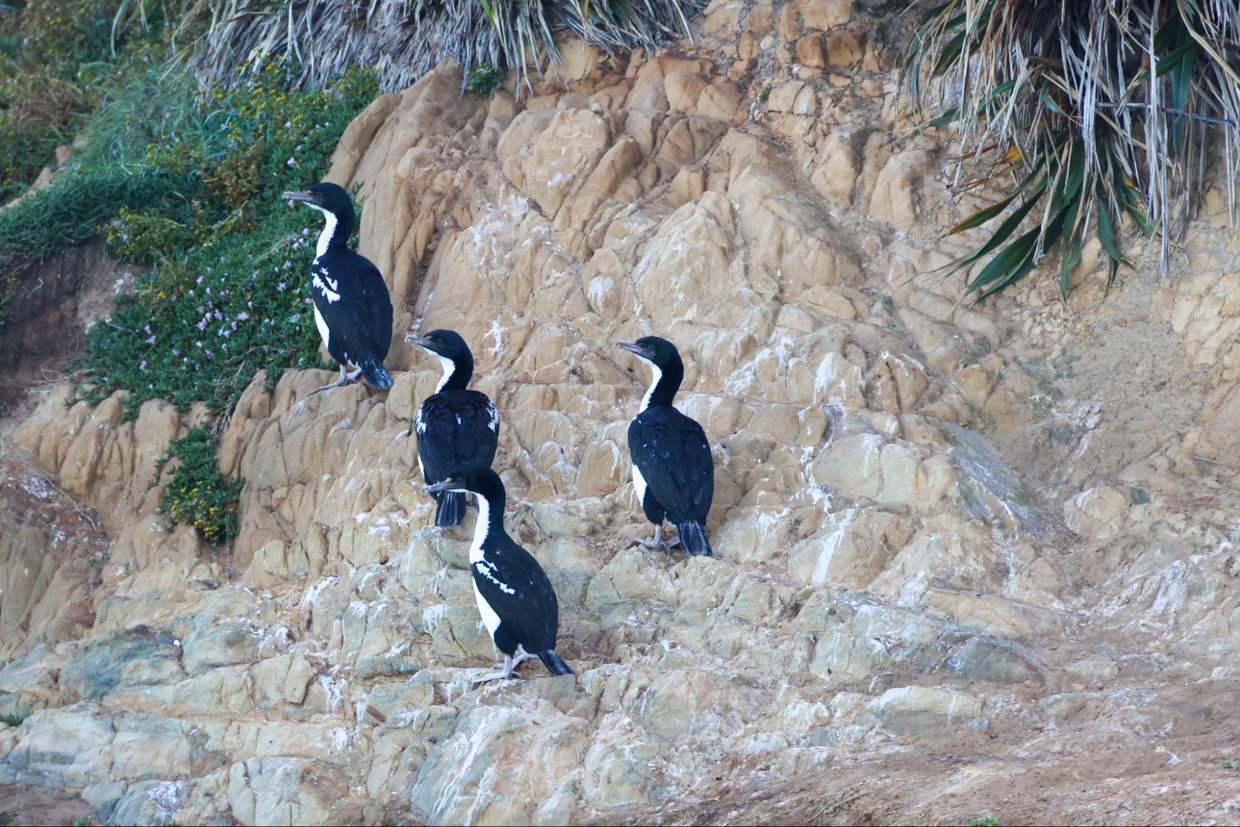
King Shags © Anna Wentsch
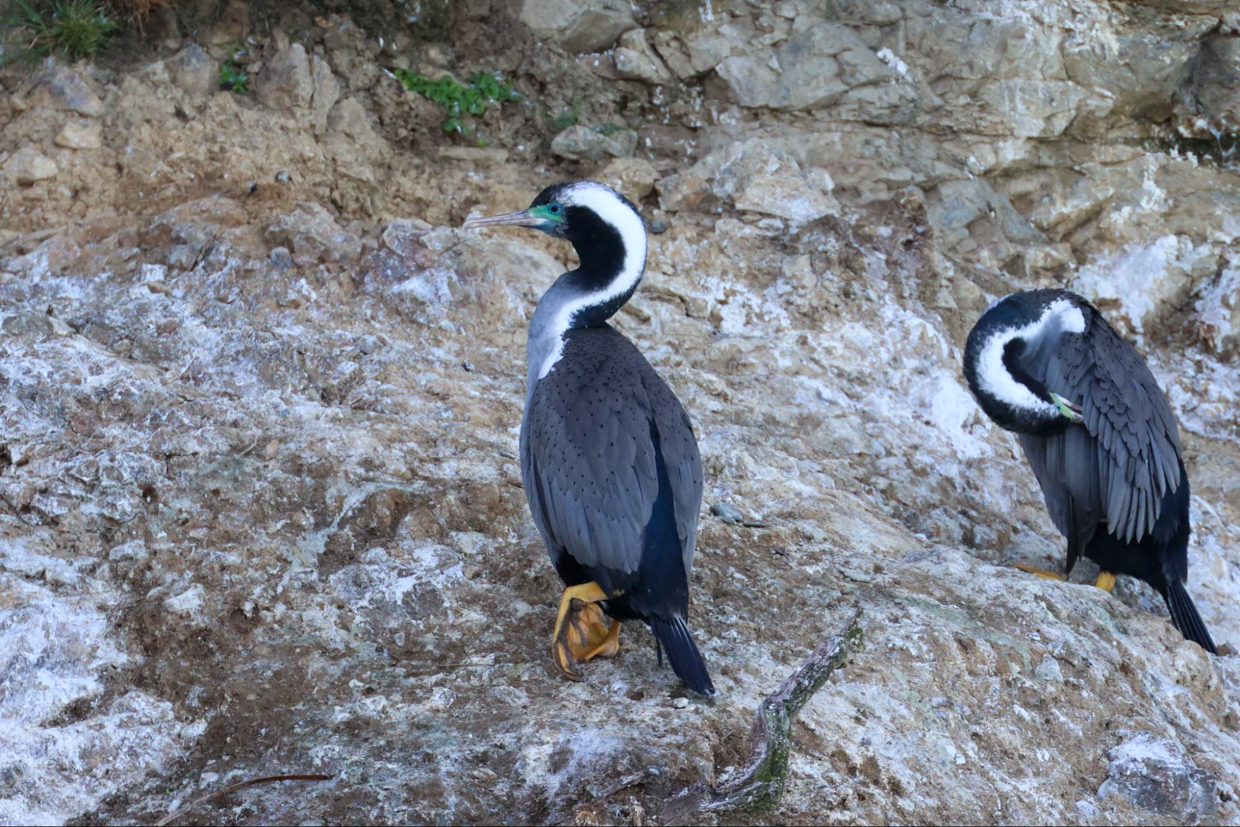
Spotted Shags on the way back from Blumine Island © Anna Wentsch
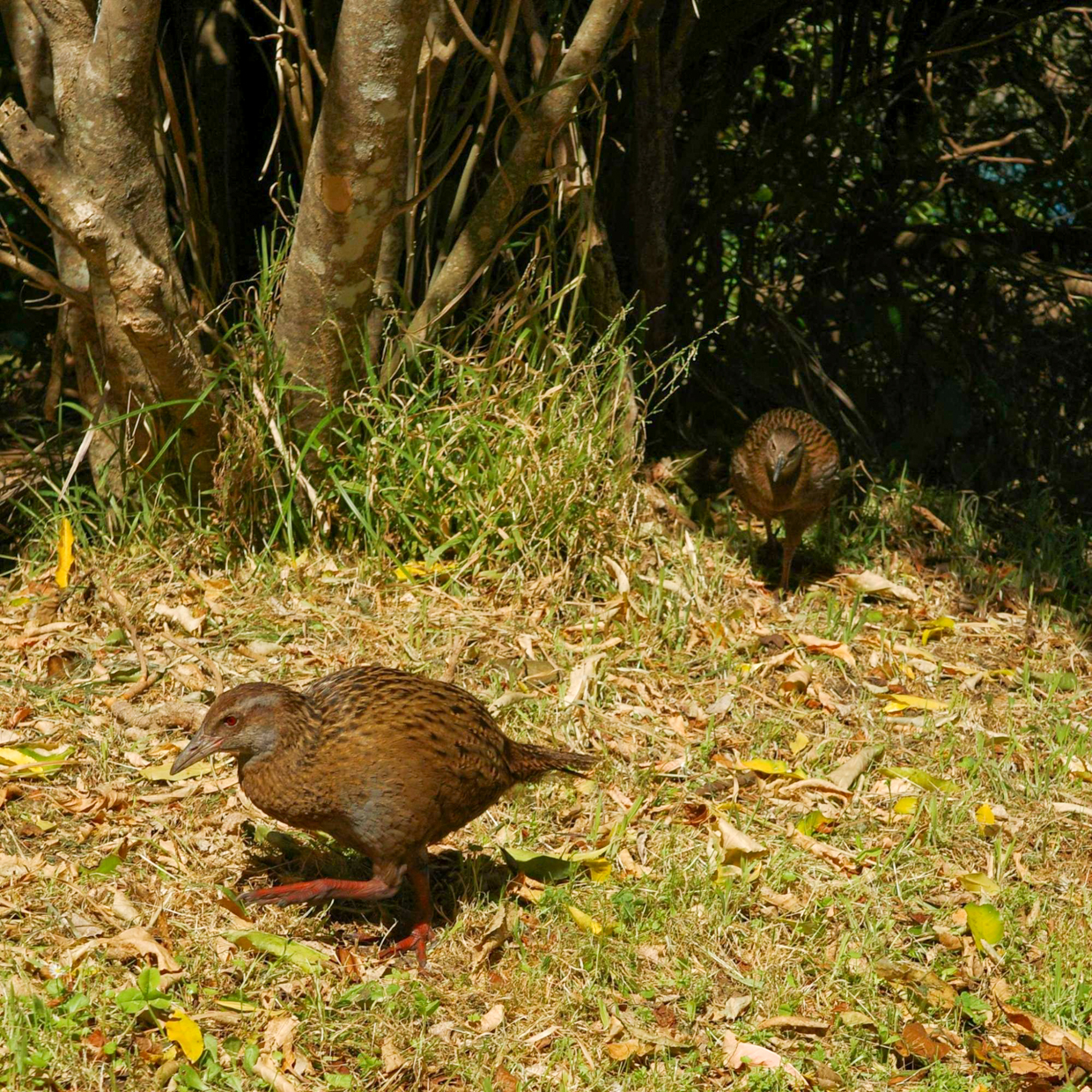
Weka family on Blumine Island © Justine Lee Hirten
Day 11 – Kaikoura Pelagic Trip
After a windy start to the morning, we were fortunate enough to go on our pelagic cruise off the Coast of Kaikoura after lunch.
Soon after departing, we were joined by an array of species, including:
- Snowy Albatross and Antipodean Albatross
- Salvin’s Mollymawk, Black-browed Mollymawk, and White-Capped Mollymawk
- Northern Giant Petrel, Westland Petrel and Greyfaced Petrel
- Hutton Shearwater and Shorttailed Shearwater
Earlier that day, we also saw Banded Dotterel along the coastline and New Zealand fur seals at Point Kean Peninsula.
We enjoyed a well-earned dinner, including some of Kaikoura’s famous seafood. Night in Kaikoura.
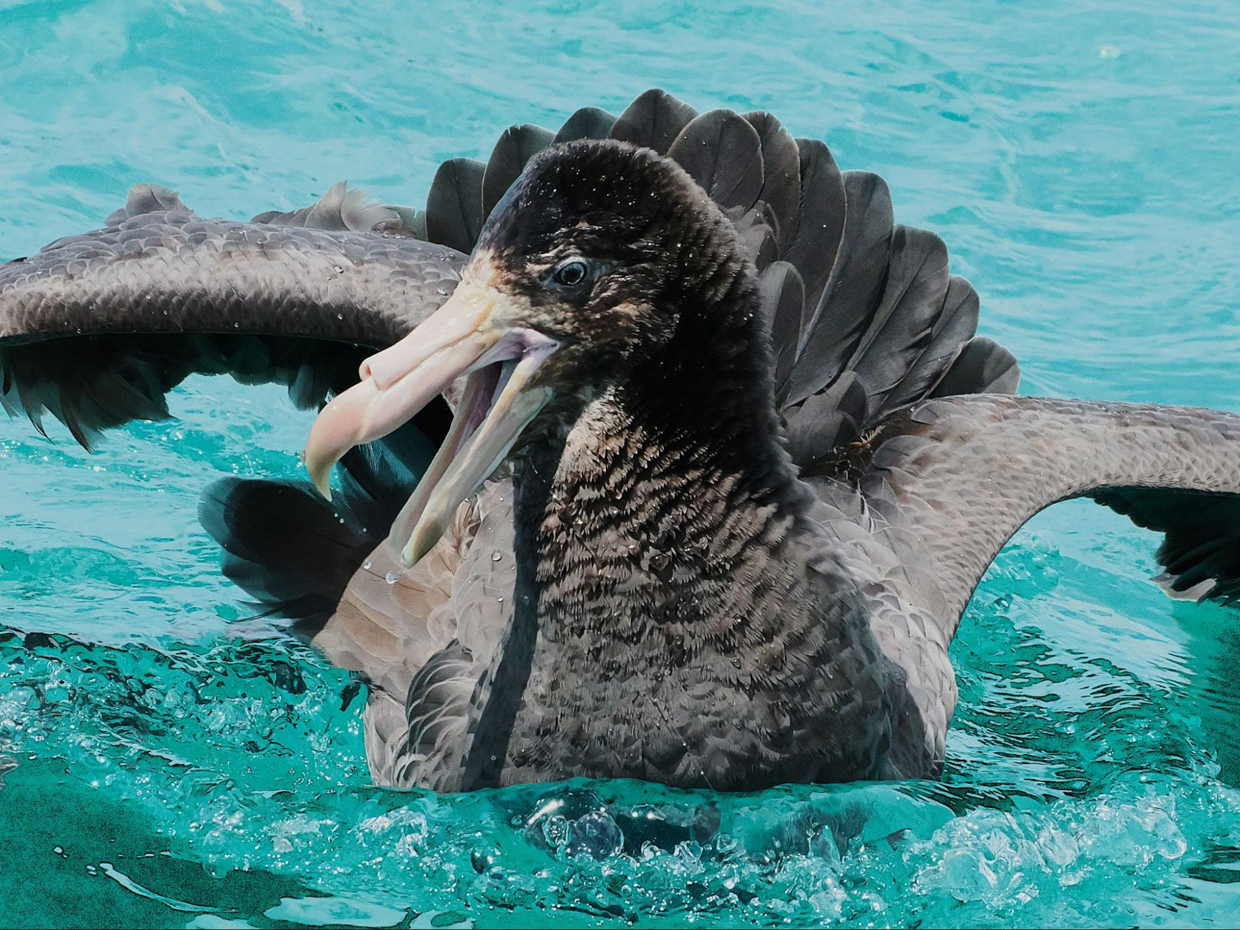
Northern Giant Petrel © May Britton
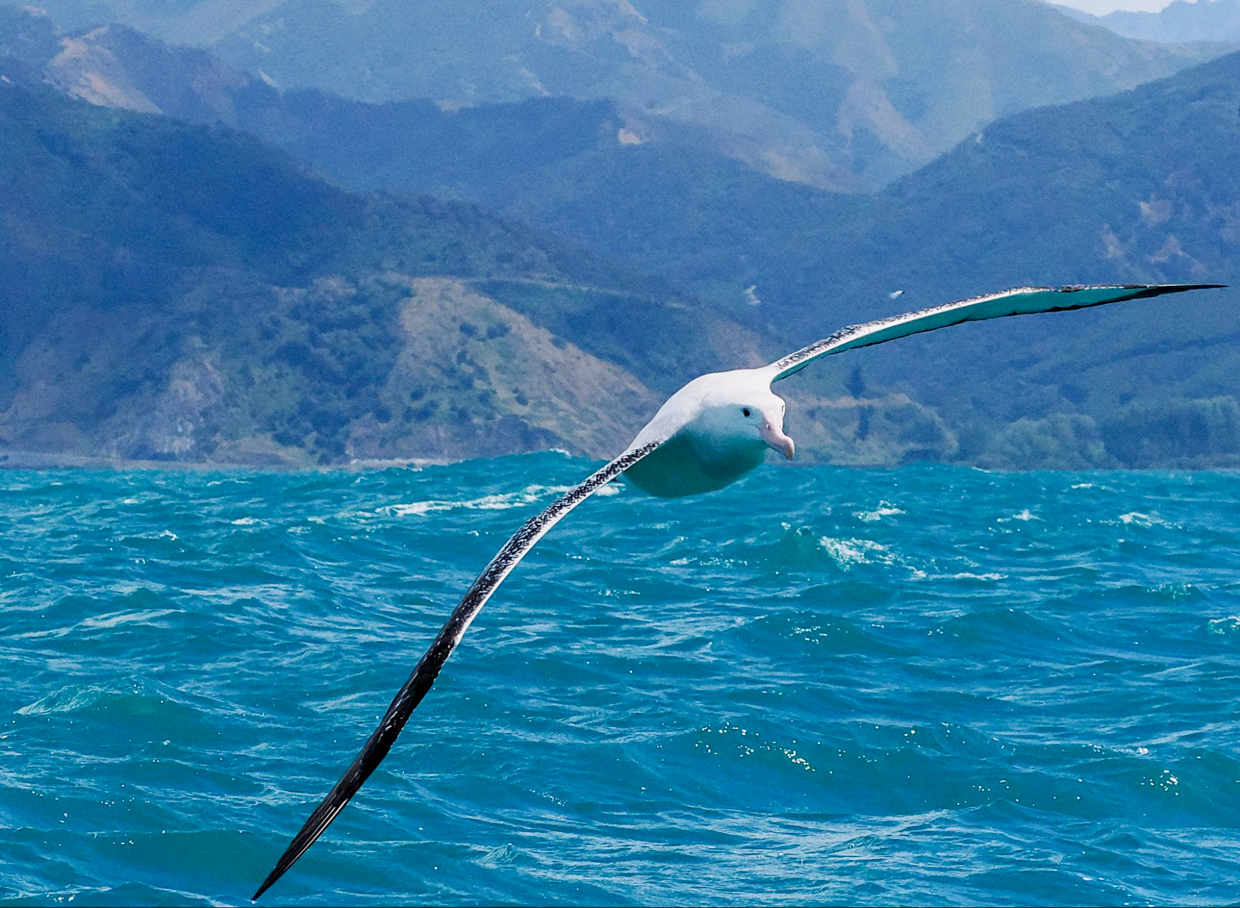
Wandering Albatross © May Britton
Day 12 – St. Anne’s Lagoon & Arthur’s Pass
We started our day with another beach visit, spotting more Banded Dotterel (target bird) and other familiar species in Kaikoura. We then travelled further south to St. Anne’s Lagoon where we saw many species including the endemic Paradise Shellduck and New Zealand Scaup. We also spotted many Black Swans and Australian Coots (subspecies of the Eurasian coot). After enjoying our lunch in the sun, we continued our journey to Arthur’s Pass where we were greeted by the endemic and charismatic Kea (target bird). Dinner and night in Arthurs Pass.
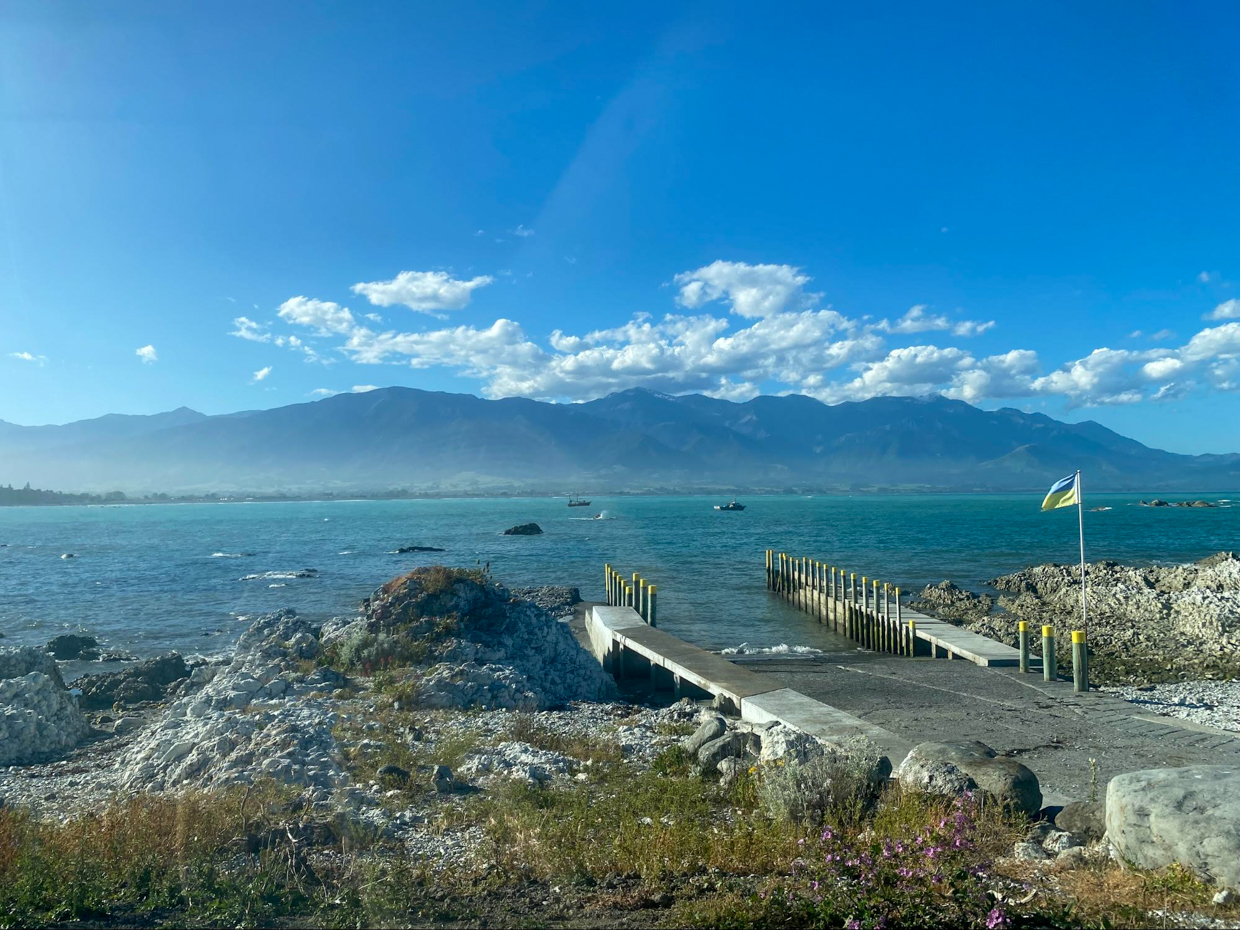
The incredible Kaikoura Ranges, Kaikoura © Lindsey Gray
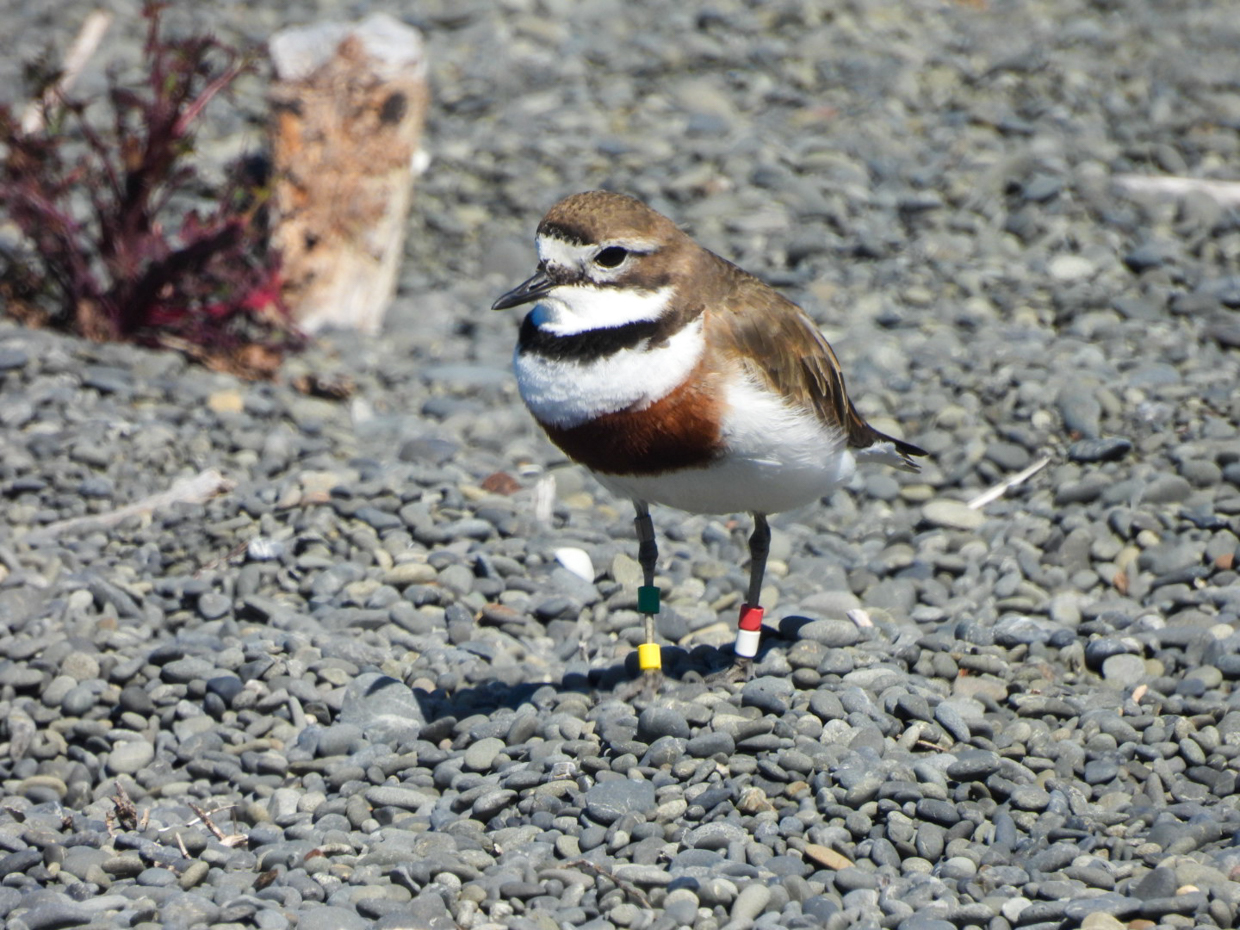
Banded Dotterel, Kaikoura © Tristan Davis
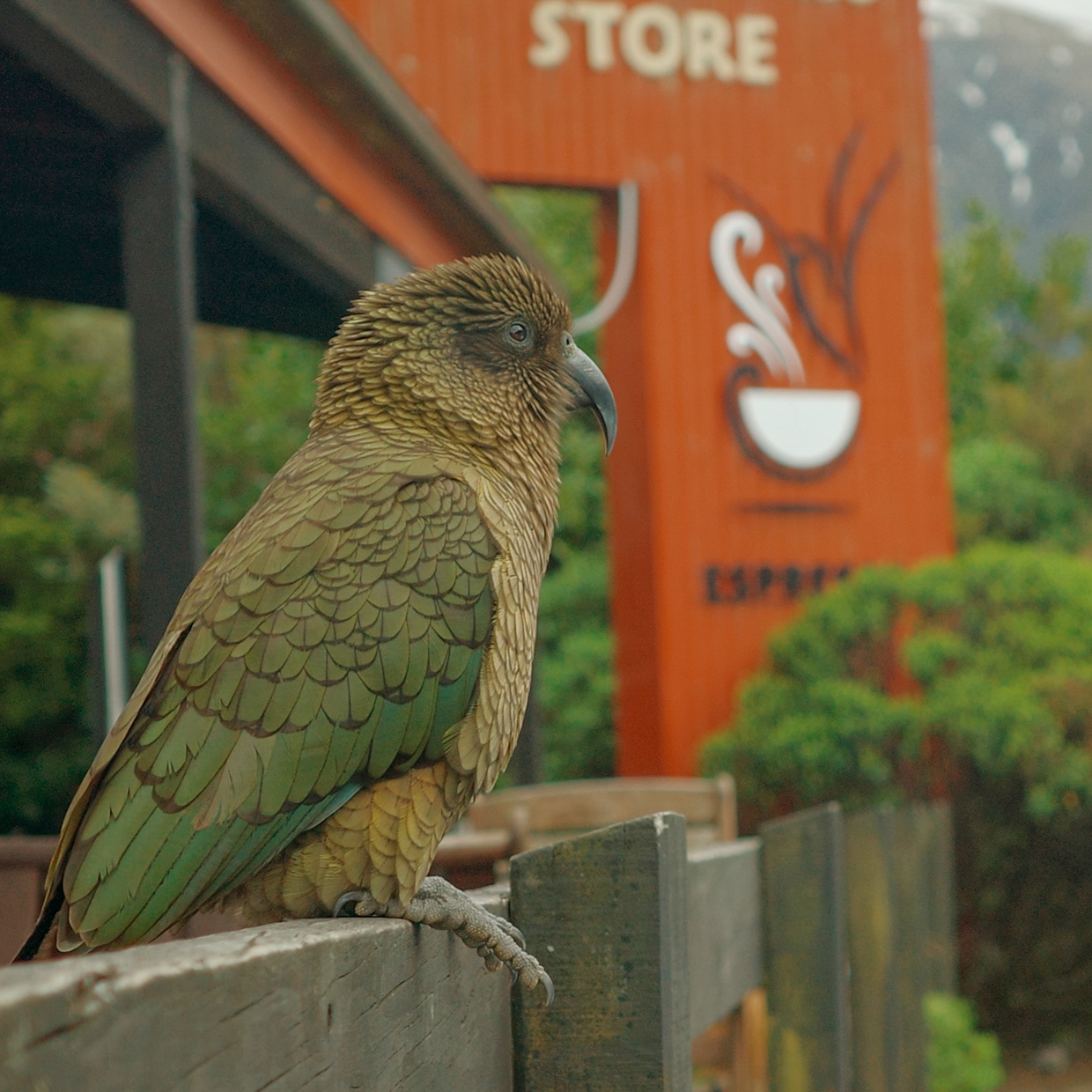
Kea at Arthurs Pass © Justine Lee Hirten
Day 13 – Arthurs Pass & Kiwi Spotting at Okarito Lagoon
We ventured through beech forest to Devils Punchbowl Waterfall in the morning and spotted Brown Creeper/Pipipi (target bird), Tomtit (target bird), Rifleman, New Zealand Fantail and, of course, more Kea. Then it was time to continue our journey down to the West Coast to Franz Josef. We saw Weka and Great Egret along the way.
In the evening, we were in for another treat: a night excursion to Okarito Lagoon to see Rowi (target bird), New Zealand’s rarest kiwi species. Expertly guided by Ian Copper, we observed a male called Moss and later on heard him duet with his partner Rico in the forest. We also heard Morepork.
Day 14 – Franz Josef
Due to heavy rain, we stayed another day and night in Franz Josef. We saw Tomtit, Bellbird and Tui in the vicinity of our hotel throughout the day. We also heard and saw Kea flying above us.
Some of the group visited the local West Coast Wildlife Centre and enjoyed the Tuatara (endemic reptile) on display.
Day 15 – Franz Josef Glacier, Haast and Wanaka
Despite the continued rain, we braved a leisurely walk to the Franz Josef Glacier viewing point in Westland National Park. We caught a glimpse of the Glacier before it went into hiding behind the cloud. Along the way we enjoyed spotting male and female Tomtit and some Grey Warbler. We also spotted some beautiful colonies of flowering Green-hood orchids, Pterostylis banksii.
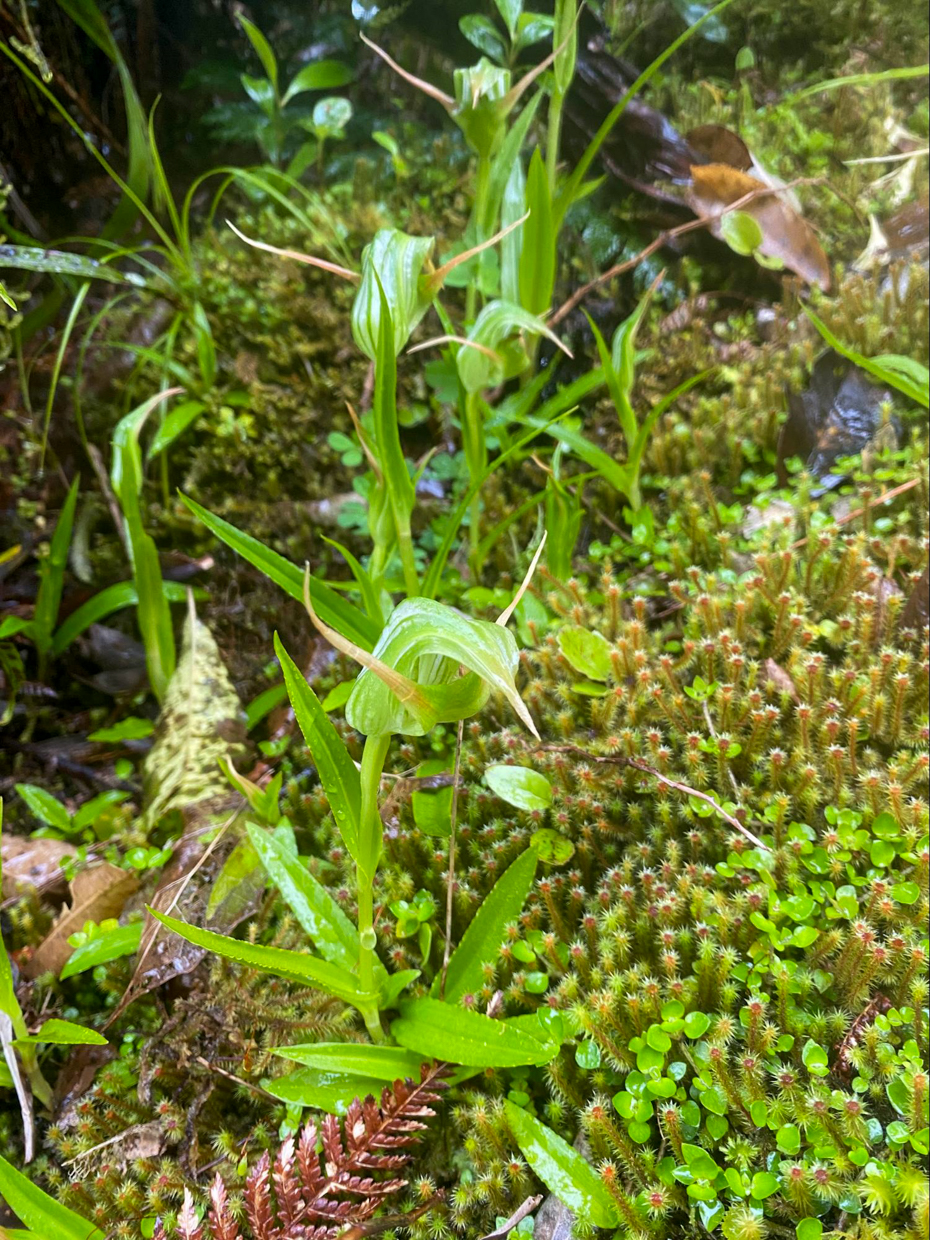
Gorgeous Bank’s Green Hoods at Franz Josef © Lindsey Gray
We then headed south to Sheep Creek where we observed New Zealand Pigeon, Kaka, and more. We enjoyed watching and listening to a friendly pair of New Zealand Fantail comprised of one “dark morph” bird and a typically coloured pied bird – the first pair like this we had seen.
Some of the group were thrilled to hear Fernbird calling from among the robust flax growing around the swamp. Our first Fernbird heard since our sighting on Tiritiri Matangi.
We had lunch in Haast, before making our way to Wanaka. Dinner in Wanaka with some optional lakefront birding.
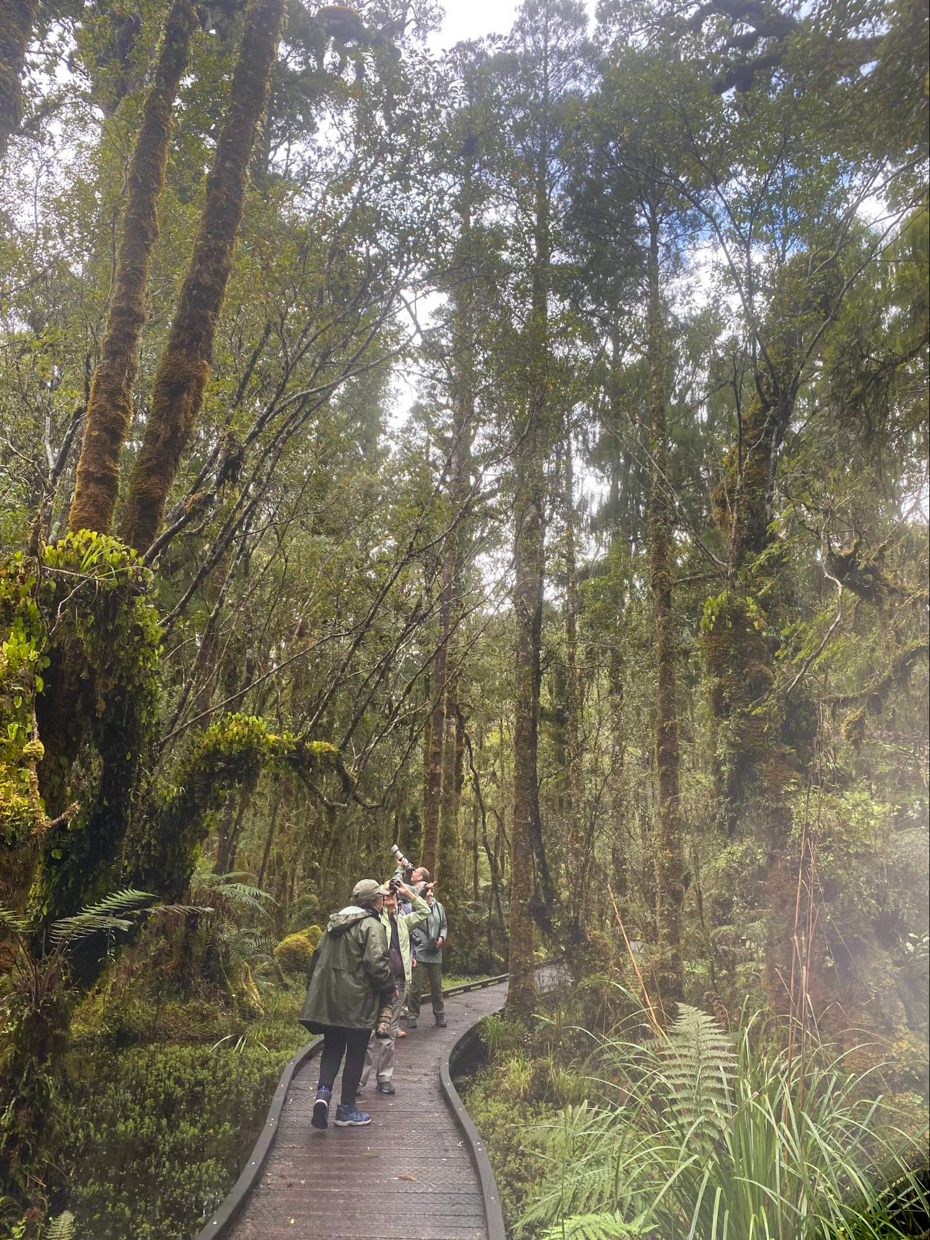
Capturing shots of the dark and pied morph pair of Fantail, Ship Creek © Lindsey Gray
Day 16 – Wanaka and Te Anau
We started our morning with some birding along Lake Wanaka and spotted Australasian Crested Grebe (target bird) amongst other waterfowl. We then made our way to Te Anau and visited Te Anau Bird Sanctuary to see their North Island Takahe pairs. From there we travelled to Upukerora. At the river mouth we saw Black-fronted Tern (target species), Redpoll, Red-billed Gull, and many other familiar species. We also heard, and some of the group saw, New Zealand Pipit.
In the afternoon we went for an optional trip to the start of the Kepler Track, spotting Tomtit, Grey Warbler and New Zealand Fantail. Dinner in Te Anau.
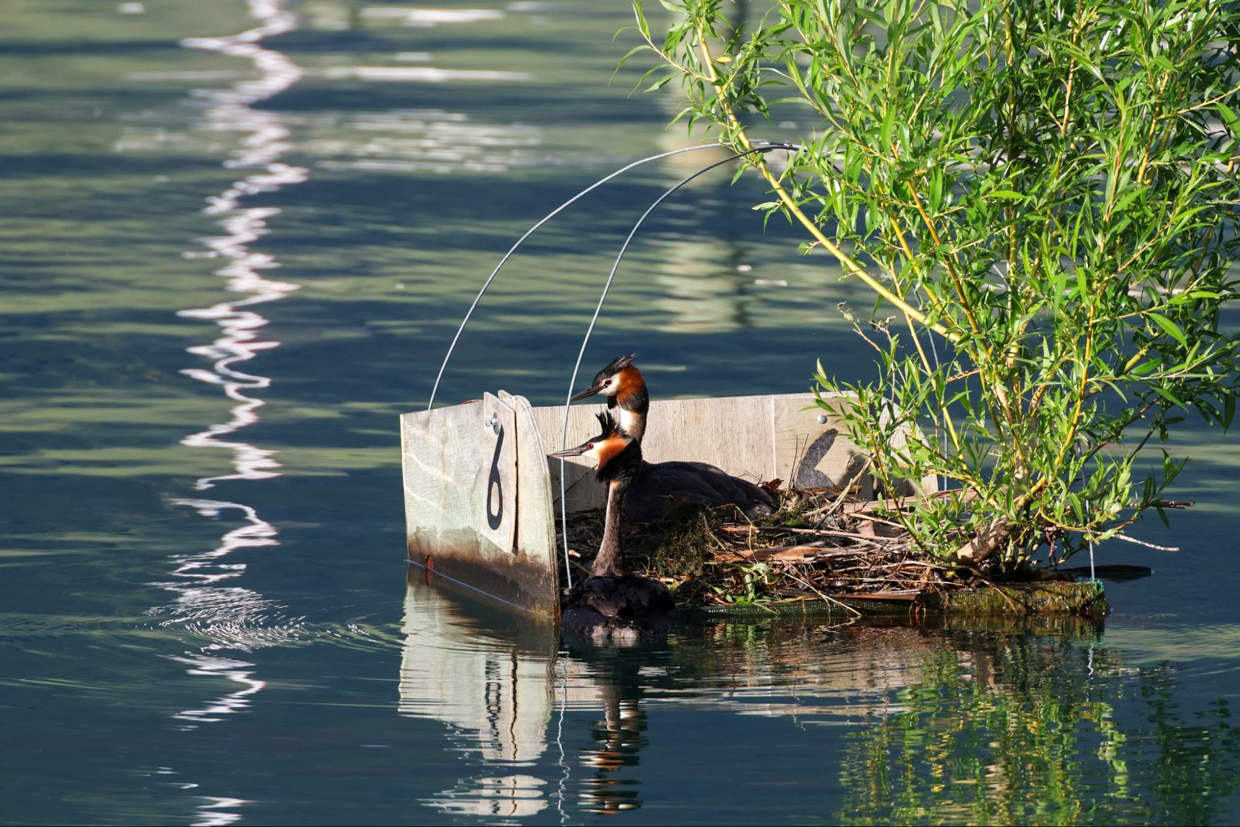
Pair of Australasian Crested Grebe, Lake Wanaka © Anna Wentsch
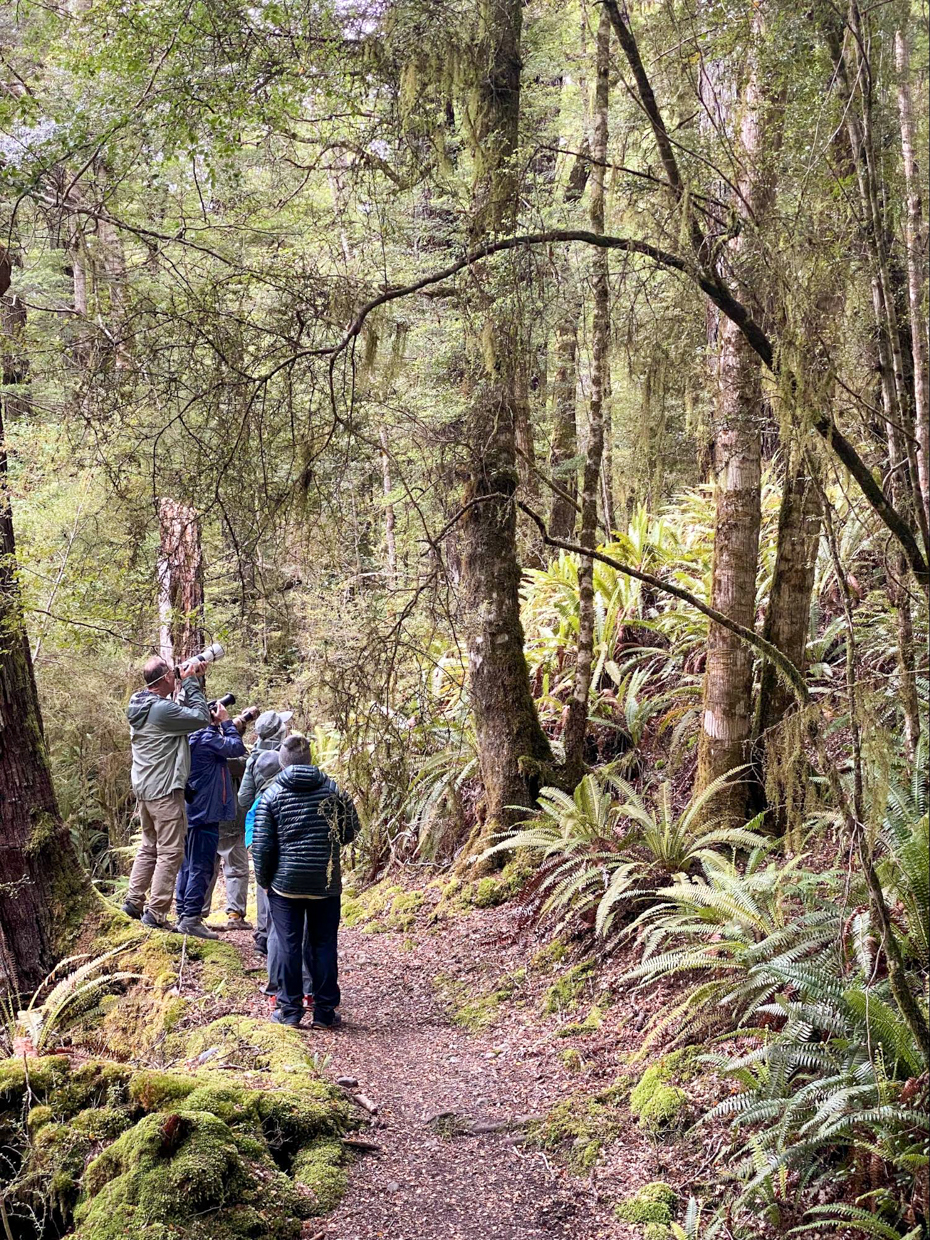
Mesmerised by the Southern Beech forest at the Kepler Track, Te Anau © Lindsey Gray
Day 17 – Milford Road & Milford Sound
Fiordland National Park was awaiting us today. It was a journey into a magical, mystical wonderland where we were greeted by lots of waterfalls along the way to Milford Sound (famous for experiencing an average of around 7 metres of rainfall per year). We saw Kea and Weka along the drive, and were lucky enough to spot Fiordland Crested Penguins during our cruise. Another dinner and night in Te Anau.
Day 18 – Forveaux Strait Crossing & Ulva Island
We made our way to Bluff this morning to take the ferry to Oban, Stewart Island. We saw several White-Capped Mollymawk along the way in Forveaux Strait. Upon arrival in Oban we quickly checked-in to our hotel before making our way to predator-free Ulva Island.
We spotted a range of endemic forest species there, including:
- South Island Saddleback – target bird.
- Yellowhead – target bird.
- South Island Robin – target bird.
- Kaka
- Pipipi (Brown Creeper)
- Red-Crowned Parakeet
We also saw New Zealand Sea Lions on the beach, the rarest sea lion species in the world. Dinner and night in Oban, Stewart Island.
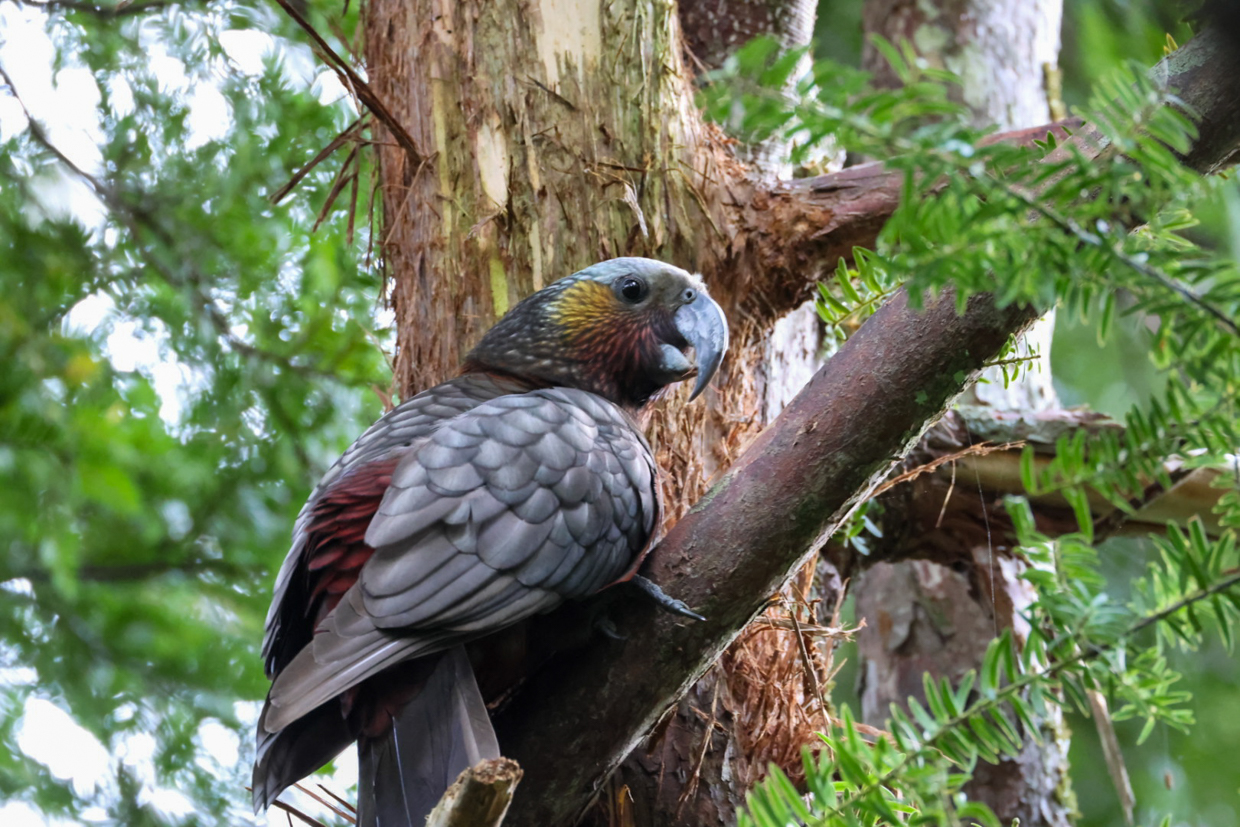
South Island Kaka (© Greg Starr) Yellowhead © Greg Starr
Day 19 – Stewart Island Kiwi Encounter
After a self-guided morning and lunch, we re-grouped for an early dinner at our hotel before heading out on a guided tour, aiming to see Tokoeka (Southern brown kiwi).
Before cruising to the kiwi spot, we went for a detour to Bench Island and Paterson Inlet and saw Fiordland Crested Penguins, Brown Skua, Northern Giant Petrel, and Stewart Island Shag (target species).
After nightfall, we ventured out and were incredibly fortunate to see two Tokoeka (target species) – a juvenile and later on in the evening an adult. We also heard Morepork.
Another night in Oban, Stewart Island.

Stewart Island Tokoeka © Greg Starr
Day 20 – Catlins
It was time to leave Oban today to continue our trip to our final destination, Dunedin, via the Catlins. We stopped at Fortrose, Curio Bay, Niagara Falls, and Nugget Point Lighthouse along the way for some scenic shots and of course to go birding. We saw many shorebird species including Royal Spoonbills, Reef Heron, and White-fronted Terns.
Dinner and night in Dunedin.

Nugget Point Lighthouse, the Catlins © Justine Lee Hirten
Day 21 – Dunedin and Taiaroa Head
We ventured out to the Otago Peninsula today for a guided tour at the OPERA – Otago Peninsula Eco Restoration Alliance for a guided tour and to see Yellow-Eyed Penguin in their rehabilitation facility. The highlight of the day was visiting and seeing the Northern Royal Albatross (target species) colony out at Taiaroa Head. We also saw a breeding colony of Otago Shags and Red-billed gulls.
Farewell dinner and last night in Dunedin.

Northern Royal Albatross in Flight at Taiaroa Head © May Britton
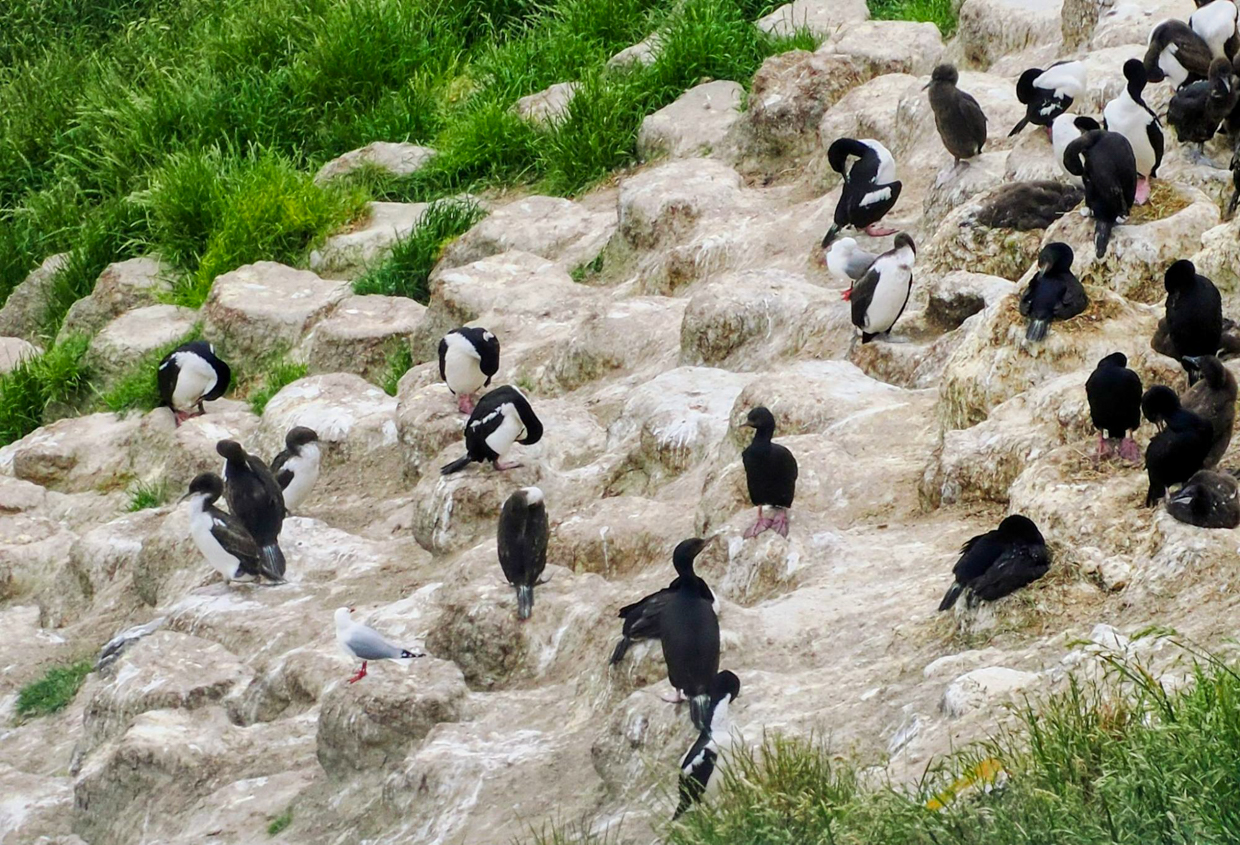
Otago Shag breeding colony at Taiaroa Head © May Britton
Day 22 – Final day in Dunedin
After 3 weeks of birding, exploring almost the entire length of Aotearoa/New Zealand, it was time to part this morning and for each of us to make our way back to our normal lives.