Churchill & Southern Manitoba Trip Report (May 29 – Jun 10, 2025)
This tour is billed as a birding tour and we did mighty fine with the birds getting great views and photos for many of the 231 species we saw or heard. But the mammals may have outshone the birds on this trip! I’d don’t ever recall seeing so many White-tailed Jack Rabbits (24) as we had in the prairies. The Mule Deer that hopped across the prairie were a highlight for those who went out that evening. And good looks at a Badger, an iconic prairie mammals, that we got to watch staring back at us from near its burrow by Whitewater Lake was definitely a highlight. Probably the cutest mammals were a family of Red Foxes with one displaying its prized Short-tailed Weasel and carrying it around like a stuffed toy. Not to be outdone, in Riding Mountain we had an incredible 35 Black Bears, including spectacular close ups with some incredibly adorable family groups. The two small youngsters that scampered up a tree as we approached was a memorable sighting. But it was hard to beat the cinnamon-colored mom that walked next to the vans with her two tiny cinnamon and one black cub, the latter scampering right under one of the vans and panicked when it realized it had got temporarily separated from the rest of the family. In Riding Mountain there was a brief sighting of a Fisher that ran across the road as we headed to the Bison compound, and who could forget the 70 or so Plains Bison including 12 tan-colored calves that we got to watch at length as they slowly ambled across the road quite close to the vans.
Not to be outdone, we had great looks at a large Arctic Hare by Cape Churchill, really handsome in its still mostly in its white winter outfit. Some even got to see an Arctic Hare right outside our motel. We observed a very large River Otter chasing some fish in Goose Creek and briefly popping up on shore for better looks. And seeing Belugas in the Churchill River at this time of year is never a guarantee but we saw some every day, the most memorable being the pod of cows and calves that passed directly below us at on our final afternoon at Cape Churchill. Certainly when we talked about highlights of the trip, getting to see and photograph so many birds that well under a variety of trying conditions stood out. At our final meal we discussed the many highlight moments, birds and mammals from this tour. Hopefully, I can capture some of those in this report. And special thanks for all the great photos you all took.
Day 1 – May 30
Our group of nine adventurers plus myself and Daniel Geisbrecht met in the lobby of the Hampton hotel the first evening and walked over to the nearby Hilton hotel where we dined at the Oak and Grain restaurant, got acquainted and discussed trip logistics. Some of the group had been to Assiniboine Park and some other birding spots in Winnipeg earlier that day; we’d add some of the better birds they had found for Day 1 when we did our list the following day. But, we’d have a fair bit of driving with many stops on route tomorrow, so we packed it in early that evening.
Day 2 – May 31
Stocked with coffee from the lobby, and bag breakfasts from the hotel, we were packed and on the road particularly early today (5:30) bound for St Ambroise on Lake Manitoba. On the way, we stopped at a good spot along PR 227 and had some close up looks at a pair of Red-headed Woodpeckers and we heard a few other more common nesting birds of the parklands region. Further down the road we spotted a Wild Turkey, some pole-top perched Wilson’s Snipes, and had passing looks at some more regular parkland/prairie birds which we would get good looks at later. At St Ambroise marsh, we added Brewer’s Blackbird, Bobolink, Marbled Godwit, Willet, 3 far-off American Bitterns, 2 fly-over Black-crowned Night Herons, Northern Harrier, Marsh & Sedge Wrens, singing Swamp Sparrows, Common Yellowthroats, Yellow-headed Blackbirds and many Black Terns. We stopped at St Ambroise Beach for breakfast, where we had many Sanderling, Ruddy Turnstones, some Semipalmated Sandpipers, and a an Iceland Gull on the beach; over and in the water we spotted lots of American White Pelicans and Double-crested Cormorants, a few Forster’s & Common Terns, and some Western Grebes, plus some Cedar Waxwings, Baltimore & Orchard Orioles in the trees nearby. Driving through a section of the park, we spotted many more Baltimore Orioles and a Franklin’s Ground Squirrel. Driving back through St Ambroise we added Cliff and Barn Swallows, Purple Martins, Gray Catbirds, a Brown Thrasher, more Orchard Orioles, Yellow Warblers, Least Flycatchers, and a Snowshoe Hare.
There was a couple hundred gulls to sort through at our next destination, the PR 227 garbage dump. Most were Franklins, Ring-billed and Herring, but we eventually found two California Gulls, and subadult Lesser Black-backed, Glaucous and Iceland Gulls. A Bald Eagle sat on a post near the dump, and a Turkey Vulture flew overhead. On to Cal’s place along the Portage Creek where we added a few waterbirds including several ducks including Green-winged Teal, Northen Shoveler, American Wigeon, Gadwall & Wood Duck, plus a calling Pied-billed Grebe and Sora Rails. At and near the feeder we had brief looks White-breasted Nuthatch, Rose-breasted Grosbeak, Eastern Wood Pewee, and Alder Flycatcher, plus an Eastern Chipmunk. Finally a walk along a trail through the woods yielded migrant Wilson’s & Palm Warblers, some Red-eyed Vireos, and lastly a very cute young Northern Saw-whet Owl peeking out of a nestbox.
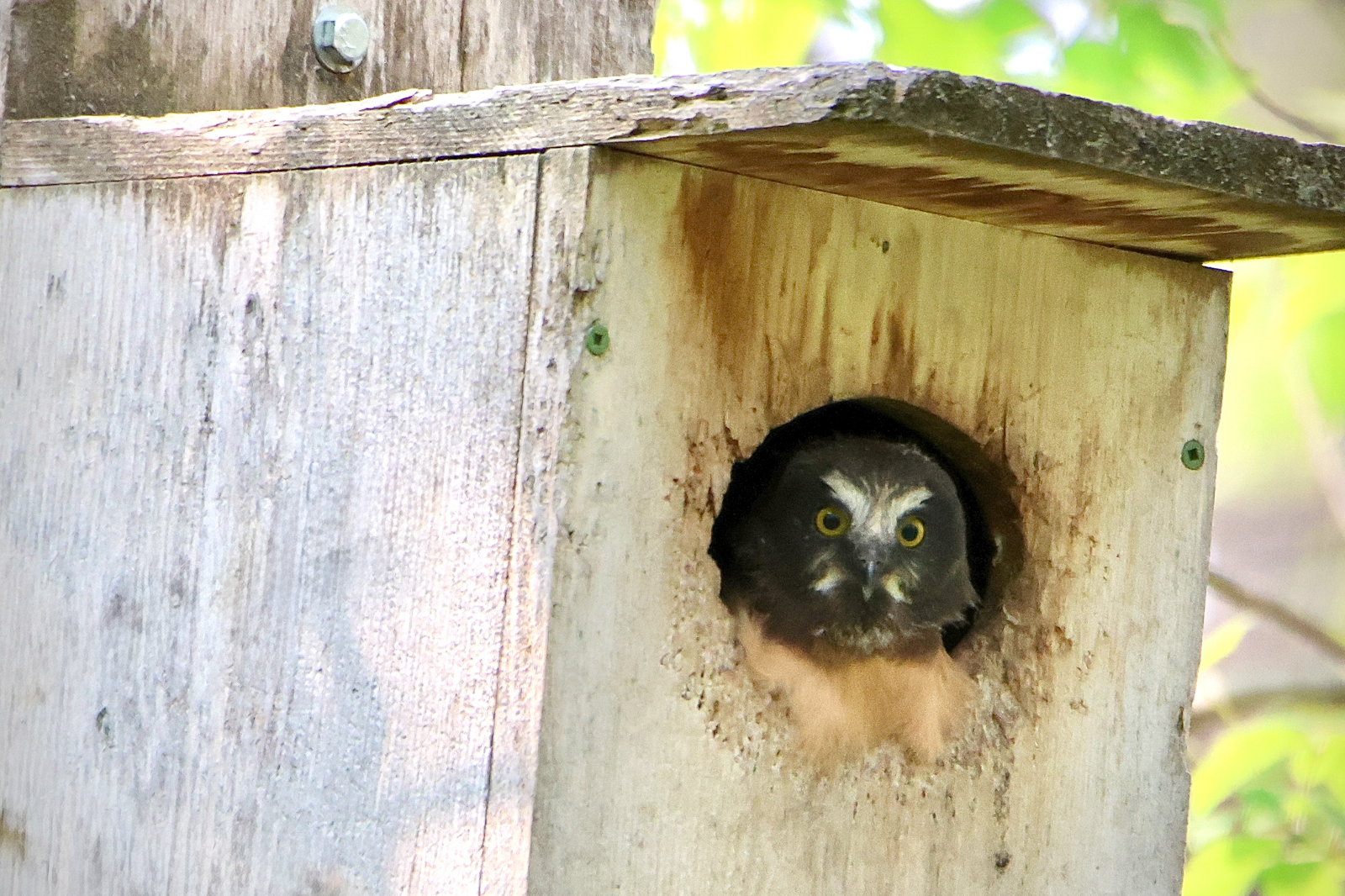
Saw-whet Owl © Mary Coy
Next we hit Delta Marsh where we had a picnic lunch, heard Caspian Tern, and Great Crested Flycatcher, and spotted some Western Kingbirds, Pine Siskins, Warbling Vireos, fly-over Common Nighthawks, plus brief looks at a Canada Warbler. We checked out a couple beaches adding Black-bellied Plovers, Semipalmated Plovers, Marbled Godwits, Dunlin, three of the “peeps” (Baird’s, White-rumped & Semipalmated Sandpipers), an American Pipit, and good numbers of offshore Western Grebes.
Pulling away, we made the long haul to Riding Mountain National Park stopping in Neepawa for gas and restrooms. We had just enough time to check in at the Mooswa Resort in Wasagaming and unpacking before heading for an early dinner at TR McCoys – a very quaint Italian restaurant. After, a few of us headed out to Lake Audy for a couple hours to search for American Bison in their expansive compound there. On the way we spotted some Common Loons and Common Goldeneye on the north end of Clear Lake, our first Black Bears (9 no less including a couple of small cubs that scampered up a tree!), plus brief looks at a Broad-winged Hawk, a Fisher and a Coyote. Once we found the bison we spent some memorable time watching all 70 approach and slowly cross the road. On the way back we took a different route that took us outside the park where we added a Merlin, a pair of Trumpeter Swans, some nesting Red-necked Grebes, and our first Bufflehead and Ring-necked Ducks and Northern Waterthrush and we heard some Sandhill Cranes.
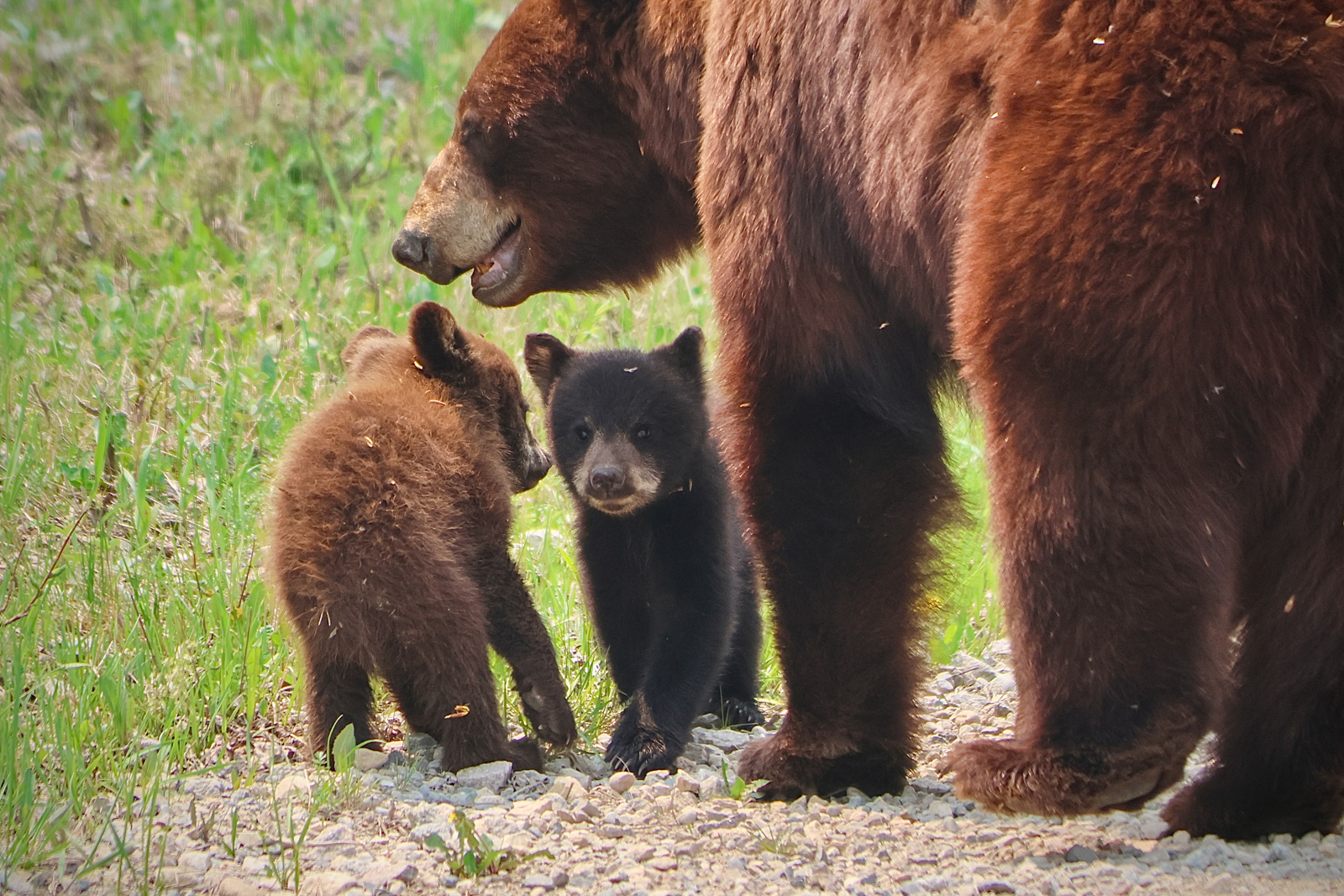
Bear and cubs © Mary Coy
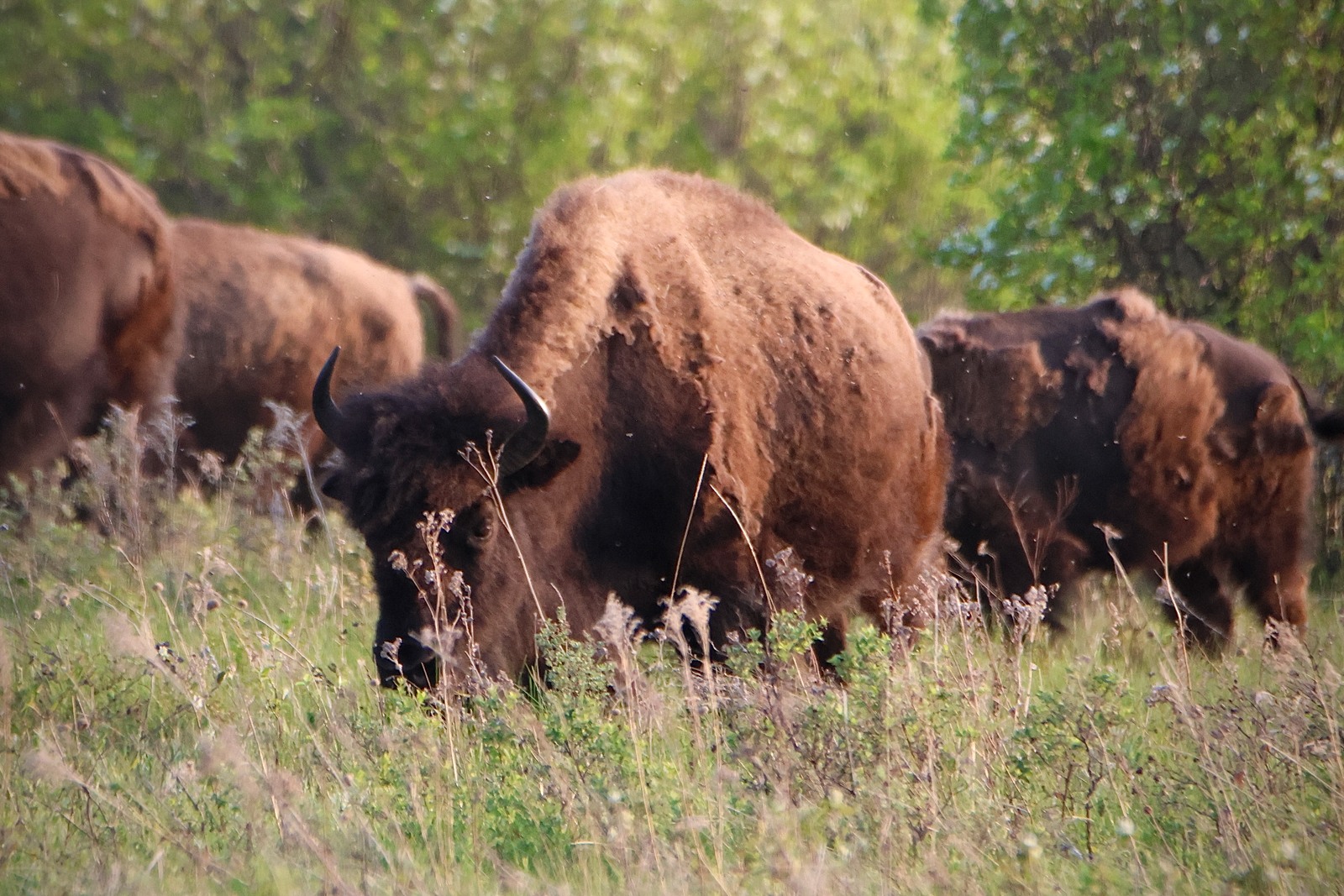
Bison © Mary Coy
Day 3 – June 1
Our routine in Riding Mountain Park would be to head out in the morning at 6 am, and do a bit of birding/driving for an hour or so on the way to a nice lakeside picnic breakfast spot. It was a bit smokey today from the forest fires further north. First off, we took a short walk along the Wishing Well road, hearing or getting first looks at a variety of warblers (Ovenbird, Black-and-white, Tennessee, American Redstart, Magnolia, Blackburnian, Yellow-rumped, Canada, Mourning, and many Chestnut-sided), a Blue-headed Vireo, and quite a few White-throated Sparrows.
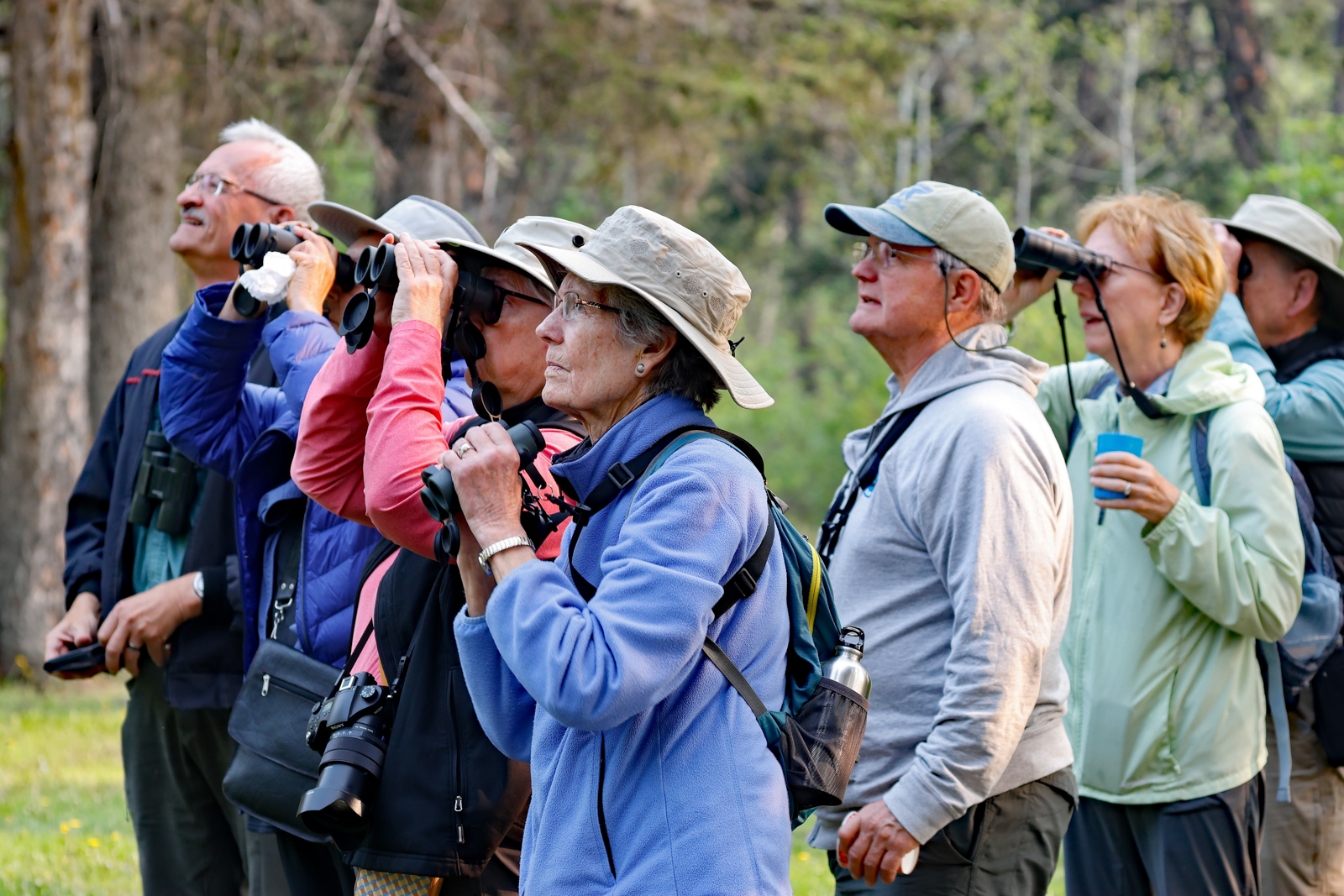
Birding © Joseph Siebert
On the way to our picnic breakfast spot at Whirlpool Lake, we stopped for a couple Hooded Mergansers at a creek crossing and had a few Snowshoe Hares along Hwy 19. At the breakfast spot were some Common Loons, Ring-necked Ducks and Bufflehead on the water, we heard a far-off Pileated Woodpecker, a Lincoln’s Sparrow and a couple Brown Creepers, in the nearby trees we had Evening Grosbeaks, Purple Finch, Blackburnian, Yellow-rumped and Magnolia Warblers, and near the vehicles we spotted some Eastern Phoebes and Canada Jays. But the highlight was a male Black-backed Woodpecker that perched on a snag tree long enough for all to get good looks while a second one drummed in the forest a bit further back. Carrying on down 19 to the East escarpment we had a couple more Black Bears and more Wild Turkeys, before heading around to the Agassiz Ski Hill road (west of McCreary). On the east park boundary, we tried for Scarlet Tanager but settled for some good looks at Indigo Buntings. Going up the ski-hill road we had brief looks at a Veery and Ovenbird, found a couple Eastern Towhees, and listened in the oaks but couldn’t find any Golden-winged Warblers.
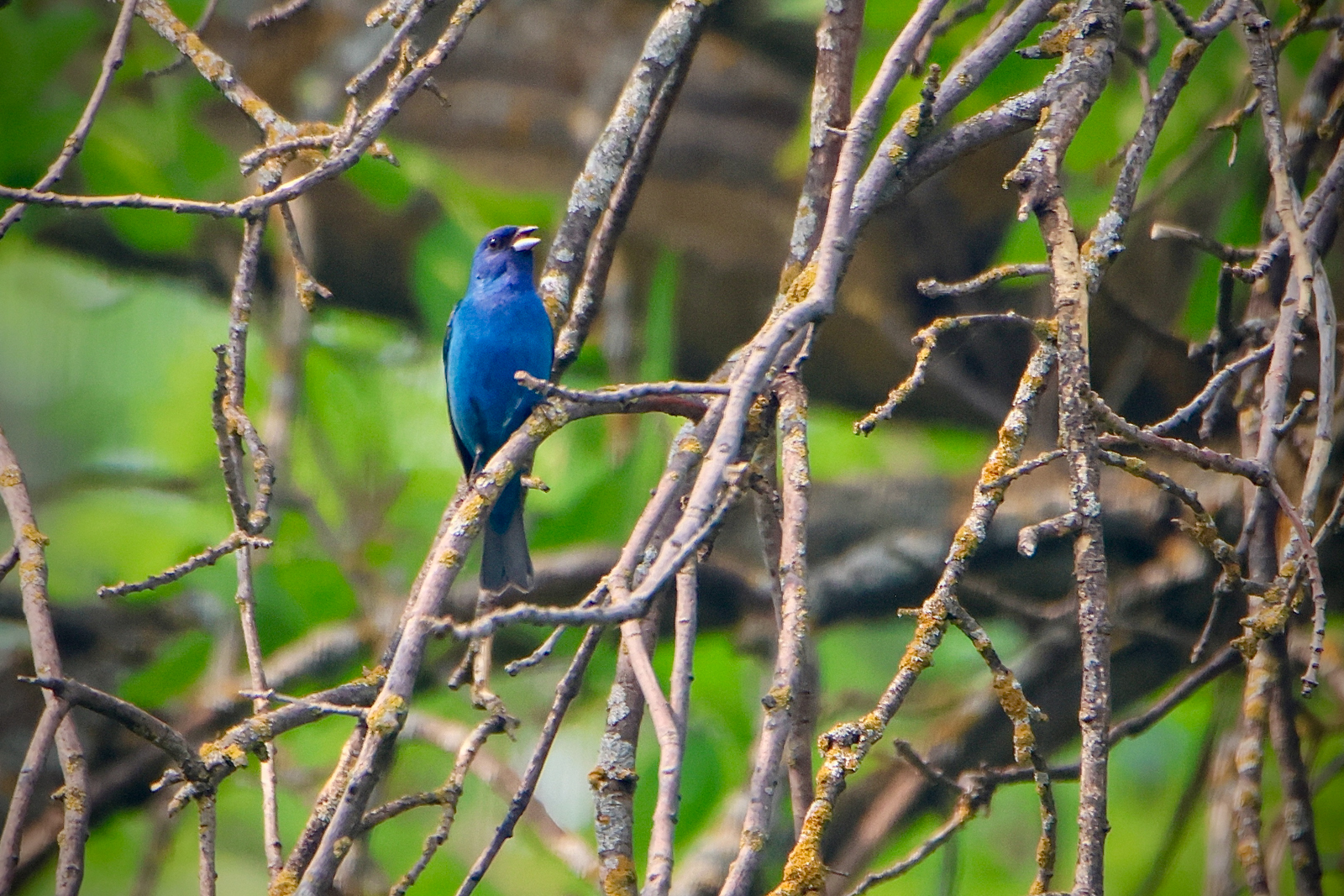
Indigo Bunting © Mary Coy
We had a picnic lunch at the base of the abandoned ski hill where Daniel heard a far-off Black-throated Green Warbler but it was too far off to try for. We saw little new on the way back around, checking another spot for Golden-winged Warbler, and stopping at the east gate for some pictures. While we were getting our first looks at a Lark Sparrow there, some maniac sped by in the ditch beside our parked van driving over our stepstool! We had the memorable encounter with the cinnamon bear mom and her three cubs on the way back, and got back to the hotel with at least two hours to rest or check the townsite out before another 5 o’clock dinner appointment at McCoy’s. All were keen to head south and east of the park that evening to look for Great Grey Owls. On the way we stopped at Proven Lake to listen for LeConte’s or Nelson’s Sparrows (no luck) and then checked out nearby lake along Hwy 45 that had tons of waterbirds (conservative estimates of 50 Canvasback, 50 Redhead, 50 Red-necked Grebe, 75 cormorants, 75 pelicans, 75 Black Terns, as well as some Lesser Scaup, Ring-necked Ducks, Common Goldeneyes, Ruddy Ducks, Eared Grebes, Common Loons, Forster’s Tern, and our first American Avocet, Belted Kingfisher and Muskrat. On our way to the Great Grey Owl spot we spotted a really big Black Bear (our 15th that day), Red Fox, Beaver and some Richardson’s Ground Squirrels. But save for some Purple Finch and a pair of Eastern Bluebirds we had little to show for our effort to find the owls. Getting back a little later than usual, Daniel mentioned he had been feeling some pain in his side for over a day so he went to get checked at a hospital (the nearest one with a doctor handy on staff being Brandon).
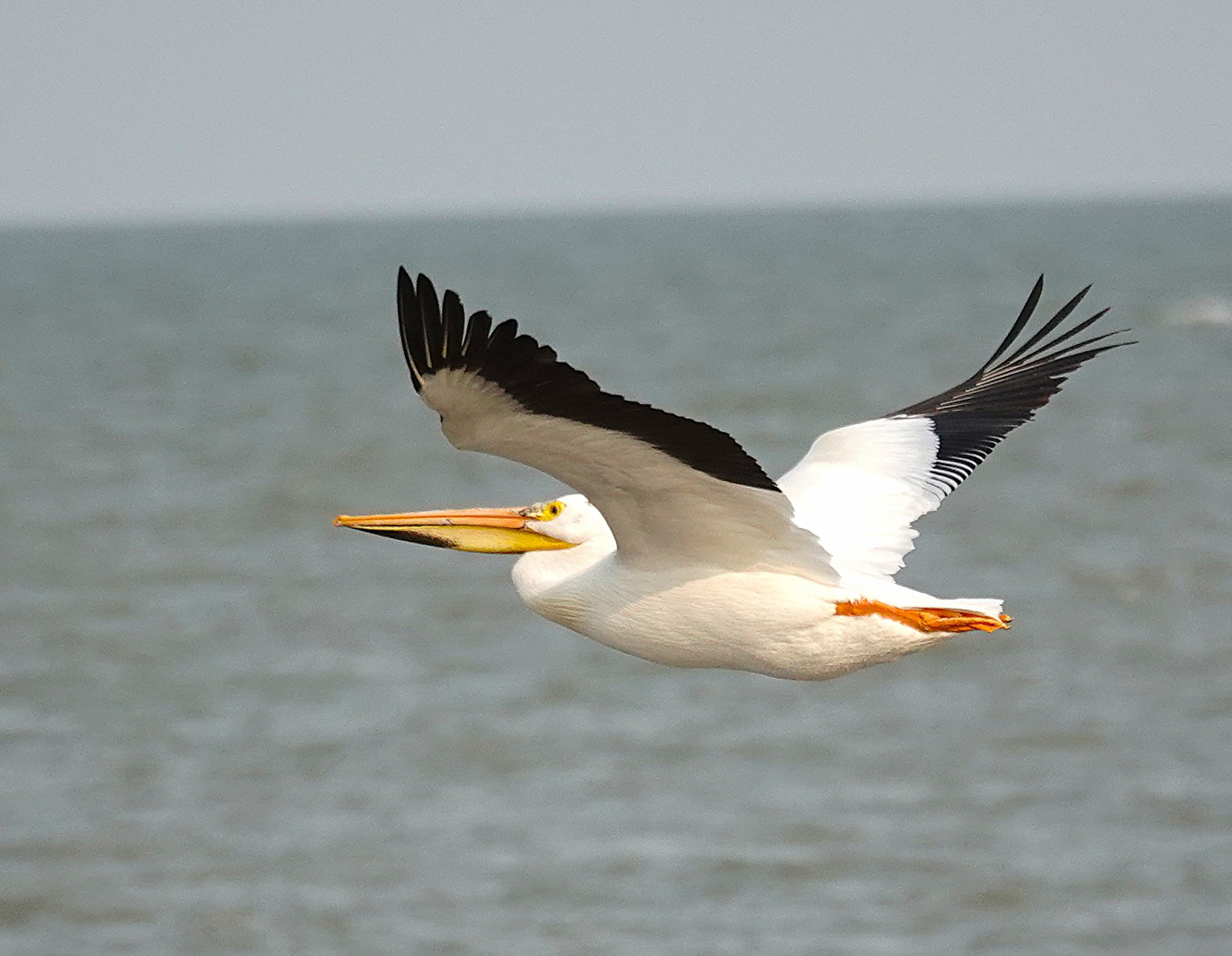
American White Pelican © Marie Jordan
Day 4 – June 2
We slept in just a little the following morning, waking up to really thick smoke and a missing van – later learning that Daniel had a ruptured appendix and would be undergoing surgery later that day!
Heading north on Hwy 10, we bypassed our breakfast spot for a few miles in hopes of seeing a Moose but settling for more Black Bears that basically ignored us and continued to munch on roadside dandelions. Backtracking we had a picnic breakfast at Grayling Lake where we had a pair of Trumpeter Swans and Common Loons on the lake, some Evening Grosbeaks, Cedar Waxwings, American Redstarts, Mourning & Chestnut-sided Warblers, and a Northern Waterthrush, Song Sparrow, and Ruby-crowned Kinglet. Heading north again on Hwy 10, we stopped at the entrance to the Boreal Trail (the best birding site for a number of difficult species but frustratingly closed for the third year in a row!), where tried for some unique warblers but settled for some Evening Grosbeaks and Purple Finch. Further down Hwy 10 we stopped at the Beach Ridge parking lot where at got brief looks at Philadelphia Vireo, Black-and-white Warbler, Northern Waterthrush, and heard more Veerys and a White-breasted Nuthatch.
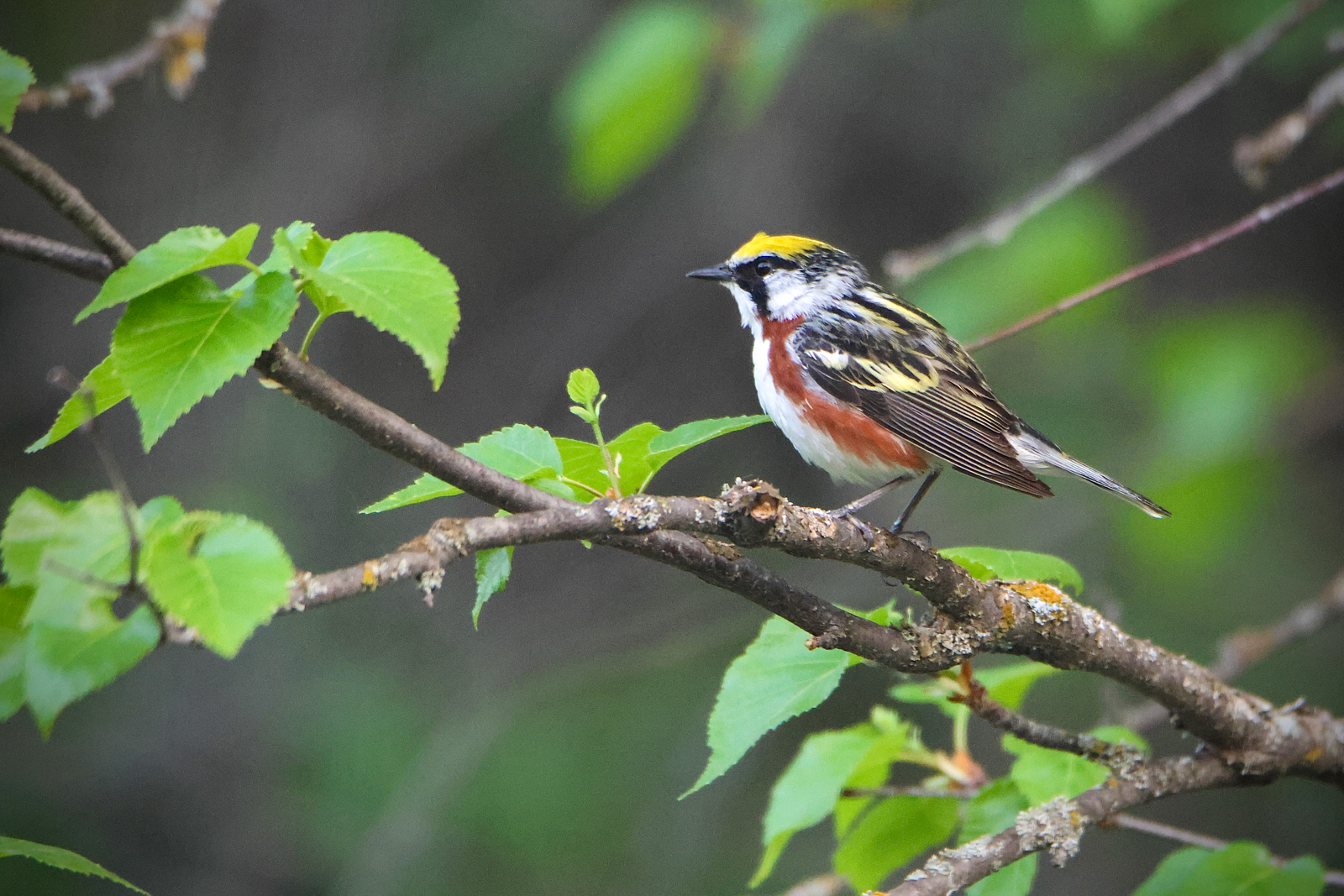
Chestnut-sided Warbler © Mary Coy
Heading back on Hwy 10 we had little of significance except another Merlin and a Broad-winged Hawk, but a Ruffed Grouse standing in the middle of the road near Lake Katherine was a nice surprise. We stopped for a picnic lunch at Lake Katherine and took a short walk after lunch getting a few birds including a calling Pileated Woodpecker and good looks at a Swamp Sparrow. Before heading back for an extended afternoon rest, we walked some stretches of the North Shore loop getting our first looks at Nashville Warblers, plus more Blue Jays, getting better looks at some other warbler species.
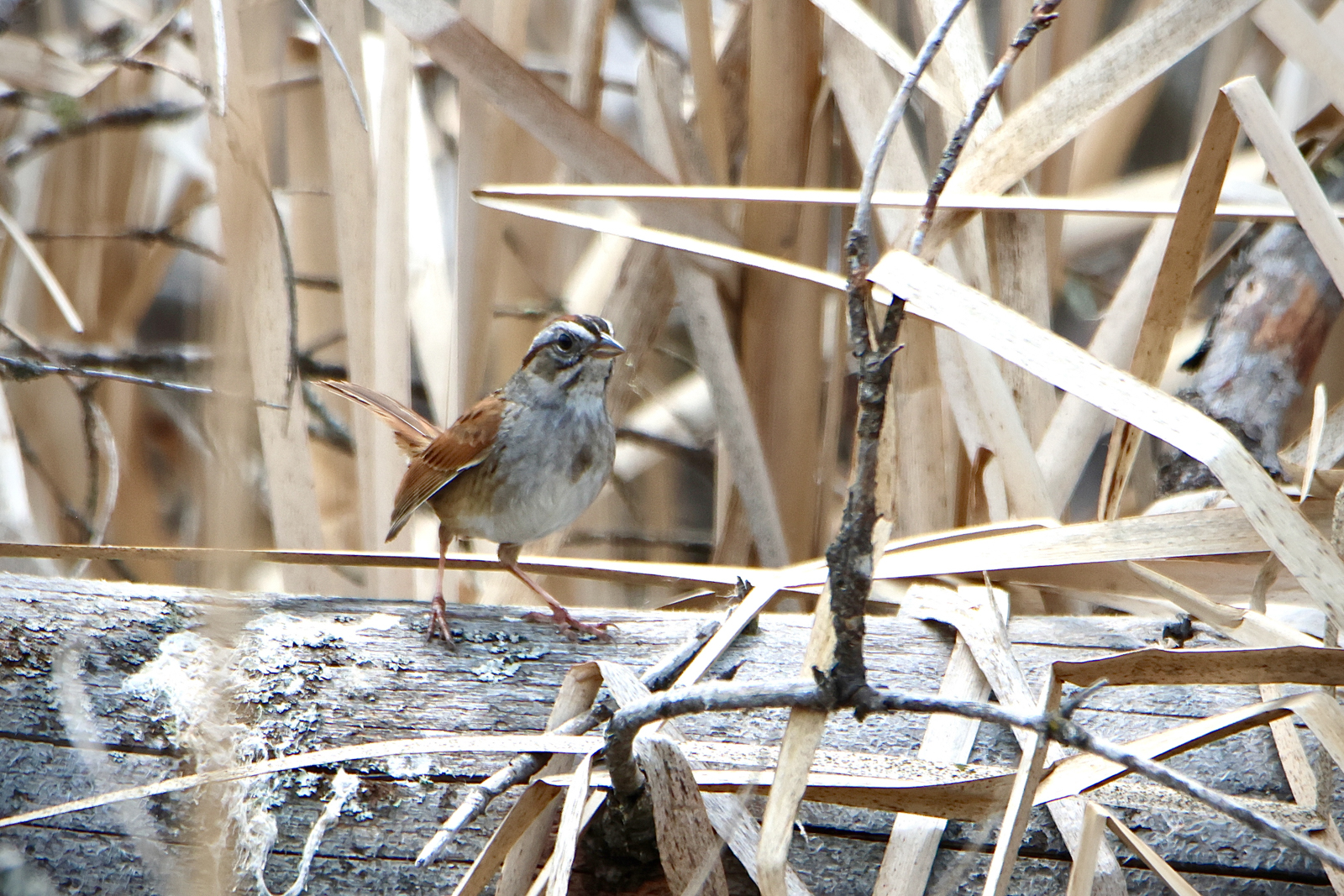
Swamp Sparrow © Mary Coy
Ken had talked to several people in the area who normally would have had locations for Great Gray Owls but all indicated it was a poor year for nesting Great Grays. One of his birding acquaintances, however, decided he could meet us in Melita the following evening to serve as a second guide and drive the other van that was currently parked in Brandon. Hoping we might yet luck into a Great Gray, a few of us headed out after dinner that evening. South of the park we stopped to listen for an Orange-crowned Warbler that Ken had heard on territory while scouting that afternoon but it was nowhere to be found. We checked other spots along PR262 where Great Grays had been seen in previous years with no luck, settling for several Black-billed Magpies and Common Nighthawks, a fly-by Cooper’s Hawk and some breeding plumaged Sandhill Cranes. We also took some pictures of a sign with a pretty realistic Great Gray on it, and we “rescued” a Painted Turtle that was on the side of the road.
Day 5 – June 3
That morning we headed out with all the gear plus 10 passengers in the 15 passenger van. Everyone had a seat and we managed for the day until Ken K could join us that evening in Melita. We picked up Black Bear # 30 for the trip outside the park, and tried Proven Lake for the sparrows but still no singing. On to Minnedosa for a picnic breakfast in a nice little riverside park. Next, we drove through the Minnedosa pothole country, a series of small glacial depression lakes. Good numbers of ducks and waterbirds were found on nearly every pond with all the expected dabbling and diving ducks well represented and conservative estimates of over 100 Canvasback, Redhead, Mallard and Shoveler. We had a few dozen American Coots, 9 Pied-billed Grebes, a Red Fox, and the first of 4 Coyotes for the day. But we could not locate a single Eared or Horned Grebe, as most of the smaller lakes that normally would have had them were occupied by Red-necked Grebes. On the way to Brandon, we stopped at a pond with some shorebirds and found our first Stilt Sandpipers and quite a few Semipalmated Sandpipers.
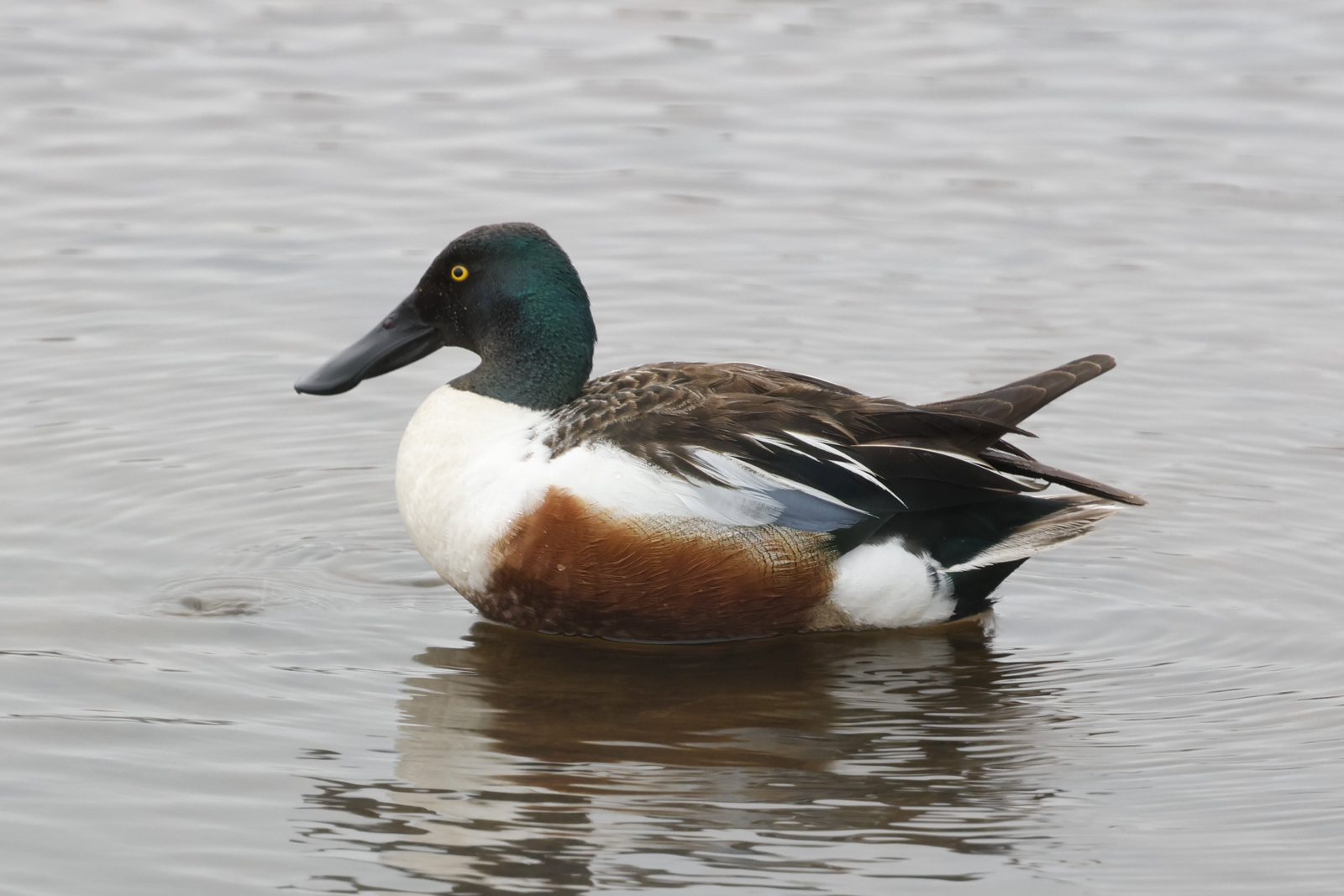
Northern Shoveler © Joseph Siebert
In Brandon we met Daniel’s mom to drop off the rest of Daniel’s gear and picked up another step stool. South of town we stopped by a bridge over a small creek and picked up our first Bank and Rough-winged Swallows. South of the Brandon Hills we stopped at a small cattail pond where we have had luck with Virginia Rail in previous years, but when we tried to call one up we had a Sora come in to defend its territory instead – great close-up looks! On to Boissevain, but not before we hit a small pond with several Eared Grebes, and down the road another pond with a Horned Grebe. We needed to check one more roadside lake closer to Ninga that is often good for shorebirds and today it was great. One Dunlin, our first Wilson’s Phalaropes, several American Avocets, Marbled Godwits, Lesser Yellowlegs, Willets, Sanderling, dozens of White-rumped & Stilt Sandpipers, and over 300 Semipalmated Sandpipers.
At Boissevain we stopped for a Subway lunch and had a quick look around town before proceeding west to Whitewater Lake. Stopping at most of the accessible spots on the lake around the north and west ends and checking a few ponds that afternoon we added to our complement of dabbling ducks and Ruddys, and American Avocets (60 for the day). We also found our first Gray Partridges, kicked up quite a few Vesper Sparrows along the gravel roads, and had our first good looks at a few Swainson’s Hawks and Upland Sandpipers. But the highlights of the afternoon was a Peregrine Falcon that circled overhead for some time, and the aforementioned Badger! In Deloraine we had our first Eurasian Collared-Doves and on the way to Melita we stopped at a small pond that had a dozen Wilson’s Phalaropes, a pair of Red-necked Phalaropes, and quite a few hunting Black Terns which proved to be quite photogenic.
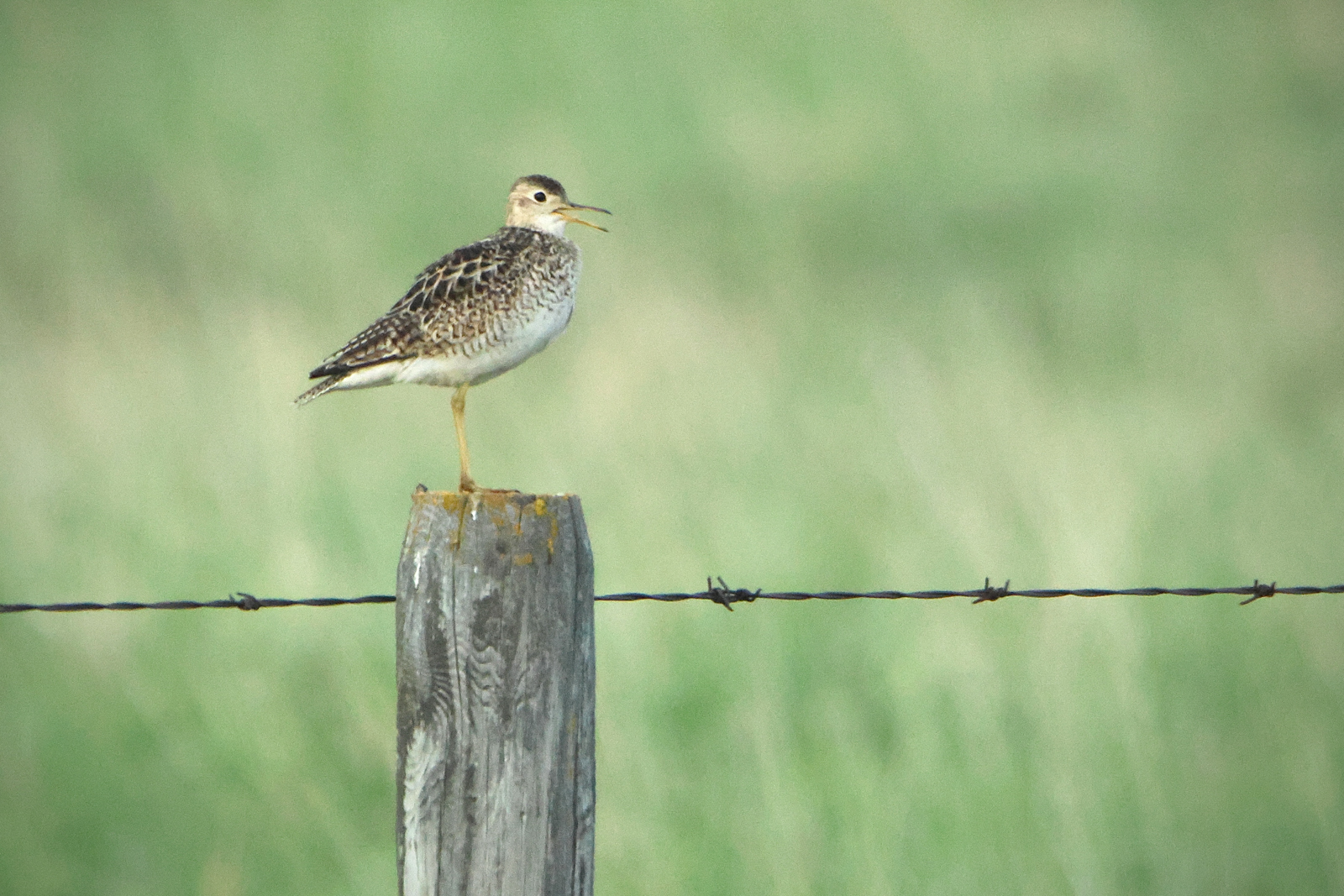
Upland Sandpiper © Mary Coy
At Melita, we checked into Western Star, and had some time off before dinner at the Chicken Chef. After, we drove around town checking out various chimneys used by Chimney Swifts and finally spotting a Swift circling low overhead. Town also produced our first House Finch and another Eurasian Collared-Dove. A few of us headed out after dinner getting several Ring-necked Pheasants, more Gray Partridges (10 for the day!), 5 Mule Deer, and perhaps the gem of the evening – a pair of Burrowing Owls at an old release site.
Day 6 – June 4
Today would be our big day for the southwest prairie specialties. We had breakfast in the hotel and were off by 7, picking up some Ring-necked Pheasants near town, and ring-side seats at a Sharp-tailed Grouse dancing ground (lek) near Lyleton – the males doing stand-offs and strutting their stuff. We proceeded to a nice mixed-grass prairie, crossed a fence and immediately heard one of our main targets – Baird’s Sparrow. We eventually got superb looks at it and immediately after called in a Grasshopper Sparrow that perched up on some snowberry shrubs. Next it was on to some Chestnut-collared Longspurs which we also got great looks at. There were at least three more Baird’s and several Grasshopper Sparrows calling nearby, but the Sprague’s Pipits that are normally found here were not present this time. Further down the road we stopped by a creek where we heard a Willow Flycatcher and had over 100 Cliff Swallows pour out from under a bridge.
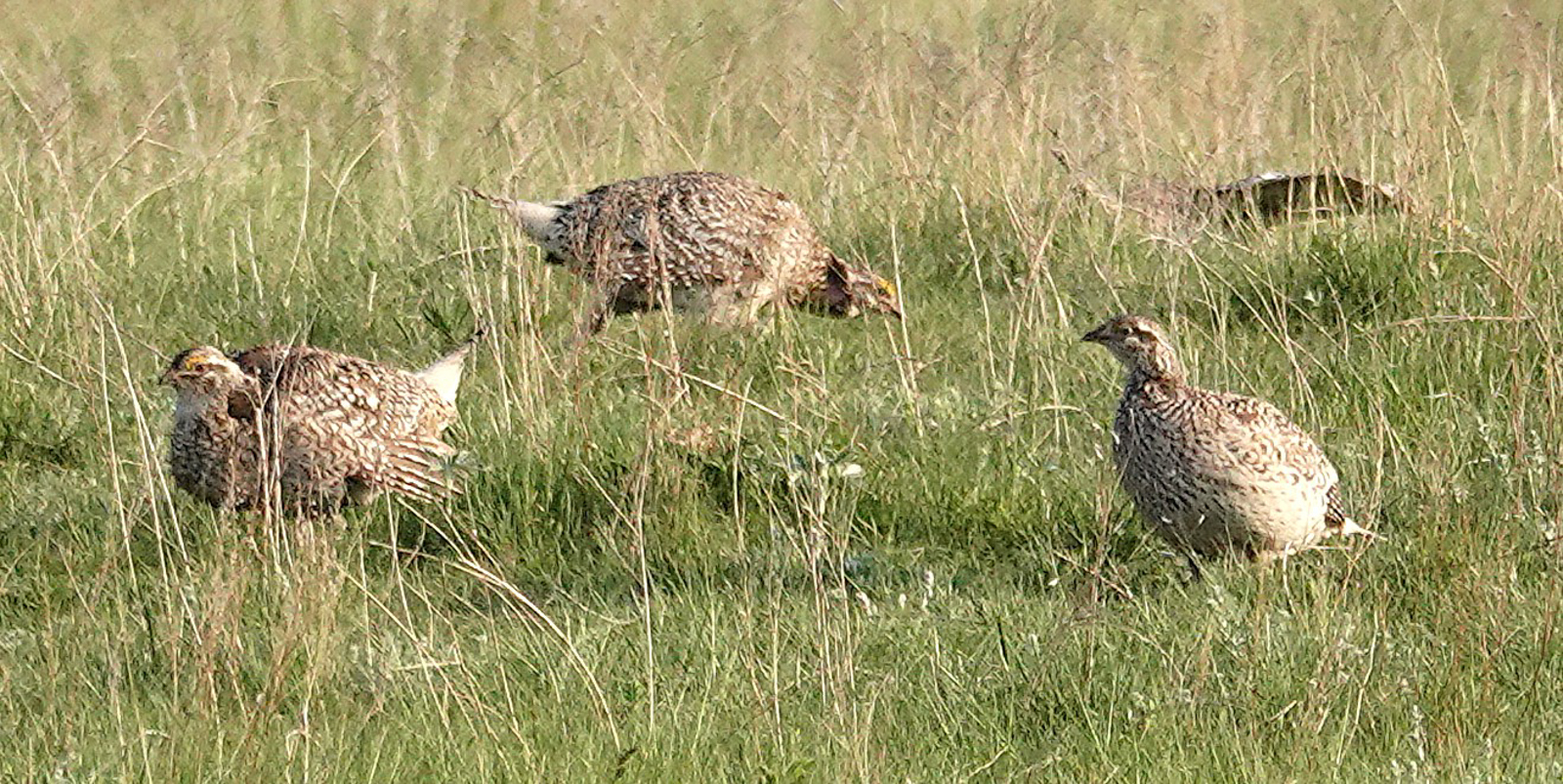
Sharp-tailed Grouse © Marie Jordan
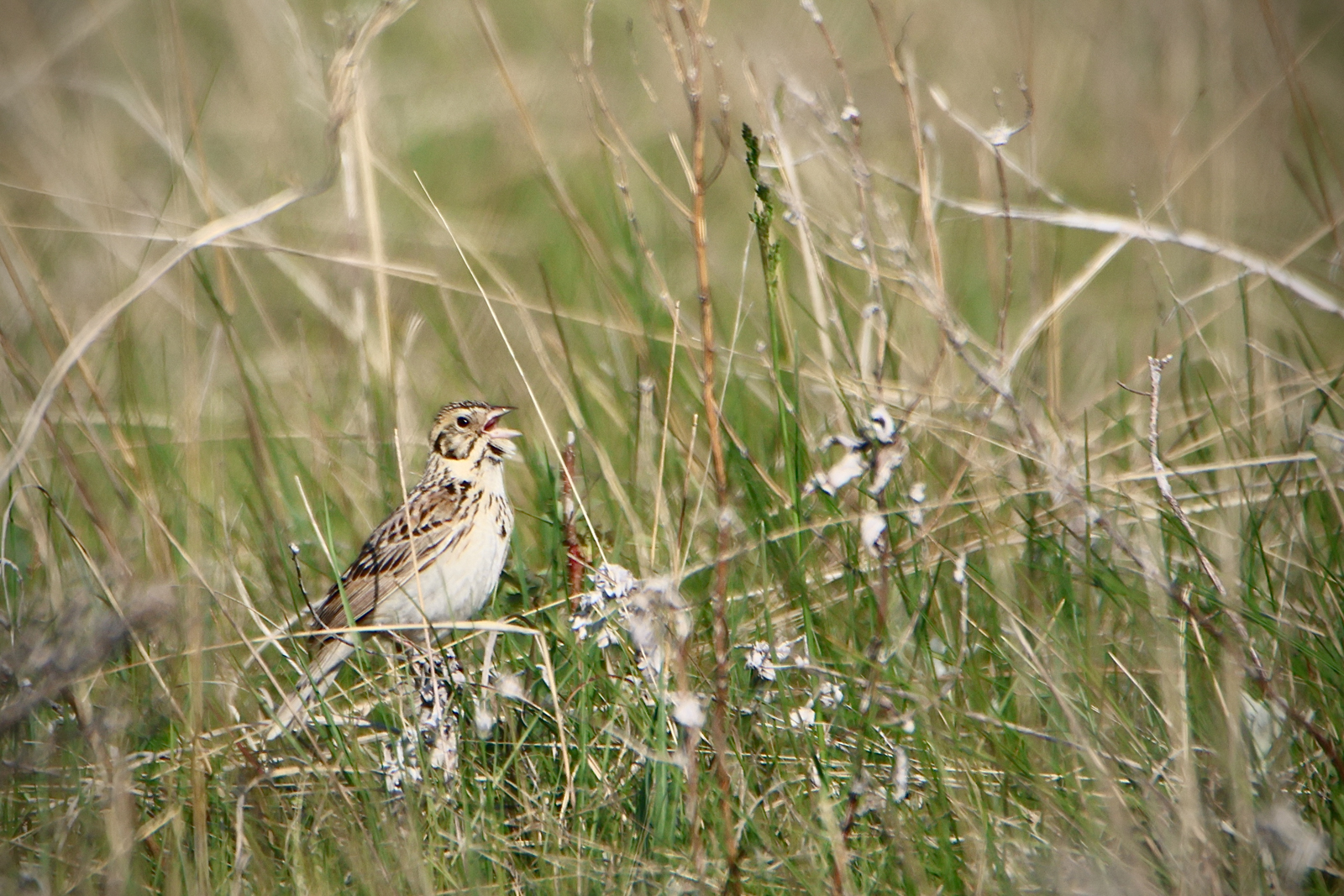
Baird’s Sparrow © Mary Coy
The rest of the morning was uneventful, but lunch at Coulter Park was another matter as a belligerent couple who appeared to think that the whole park belonged to them and their dogs gave us a hard time the entire time we had our lunch! On to some riparian woods along the Souris River where we got good looks at a Great Crested Flycatcher and 4 Yellow-throated Vireos, one going back and forth to a nest that was under construction. North of Pierson we entered a block of private lands known as the Poverty Plains (dominated by pasturelands and where few homesteads remain). This area produced a Ferruginous Hawk perched on the side of a rather large nest and another one in flight, some Horned Larks along a pasture trail, a pair of Say’s Phoebes, a couple Loggerhead Shrikes, and as we were headed back to Melita we stopped for a quick look at the Burrowing Owls we had found the previous evening.
That evening some of us went out for a couple hours with the expressed purpose of finding a Moose as they are probably as plentiful in the willow sloughs of the southwest as anywhere in Manitoba. We didn’t succeed in finding any Moose, but we did get better looks and photos of many of the iconic prairie birds and mammals.
Day 7 –June 5
Packed, fed and ready to roll by 7, we headed northwest of Melita stopping occasionally to listen for Sprague’s Pipits. We’d get more Sharp-tailed Grouse (5), Gray Partridge (12), Ring-necked Pheasant (6), Swainson’s Hawks (15), Say’s Phoebes (2), Loggerhead Shrikes (2) Vesper Sparrows (20), Coyotes (2) and the aforementioned family of foxes with the playful weasel-carrying pup. But the Sprague’s Pipits eluded us, until we stopped just outside Broomhill where we finally heard and called one that that was displaying high overhead down to the ground where we were treated to unbelievable looks.
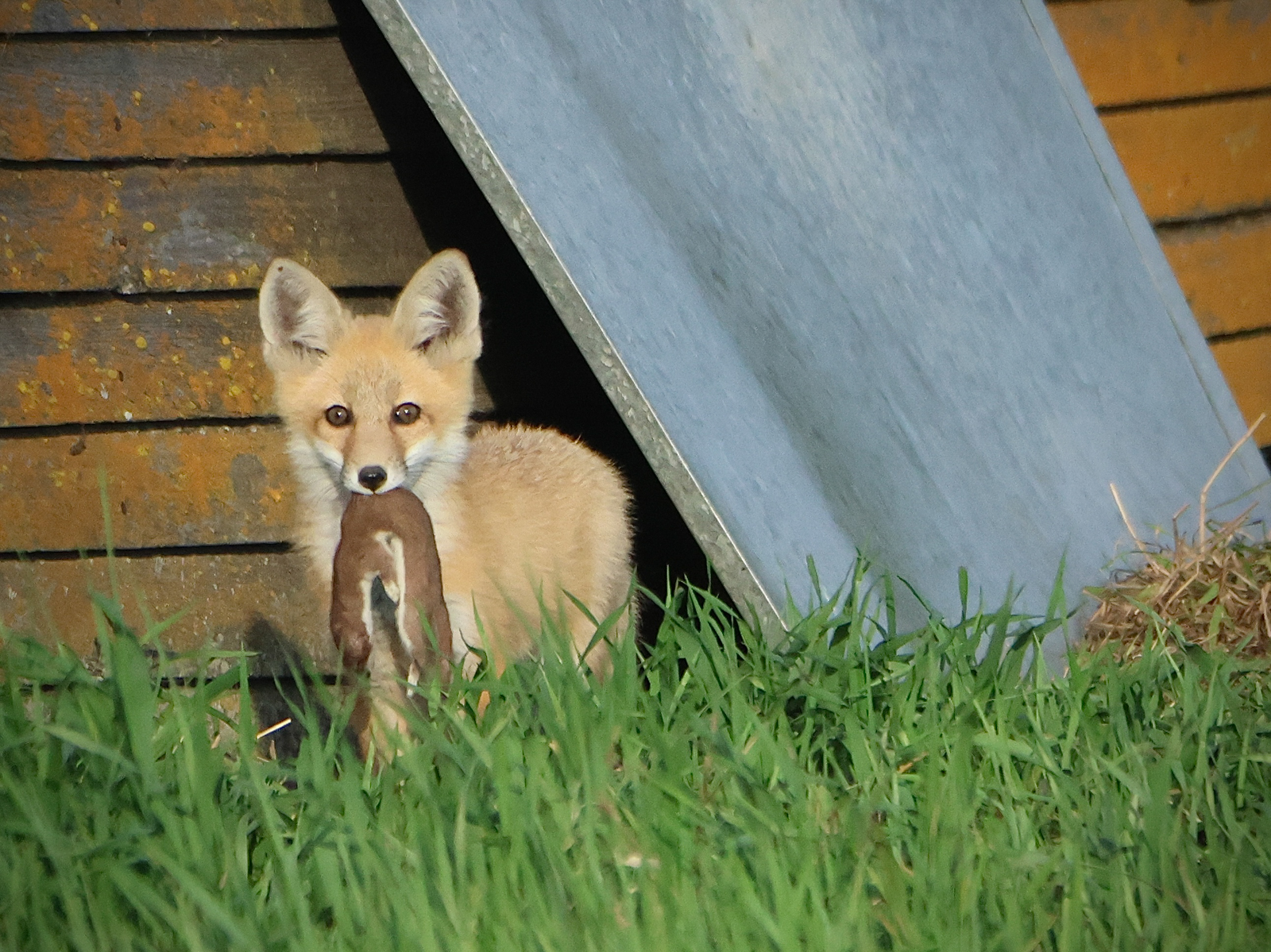
Fox with weasel © Mary Coy
On the wat to our rest stop in Pipestone we picked up a Striped Skunk. From there, we proceeded northeast driving through a section of the extensive Plum Lakes marsh where we had 4 White-faced Ibis, heard a couple Nelson’s Sparrows that would not come in to give us a look, and finally a Virginia Rail – this one was curious enough to give us amazing looks. Further down the highway we looked over some roadside ponds east of Deleau and then headed to our lunch spot near Oak Lake Beach picking up 4 more Red-headed Woodpeckers and 4 Lark Sparrows on route. At the lunch spot we had a couple Yellow-bellied Sapsuckers, Warbling Vireos and an Eastern Wood Pewee before proceeding to the cottage community we spotted our first Eastern Gray Squirrel, and driving a section of the dyke separating Oak Lake and the Oak/Plum marshes where we had large numbers of Eared Grebes and Ruddy Ducks.
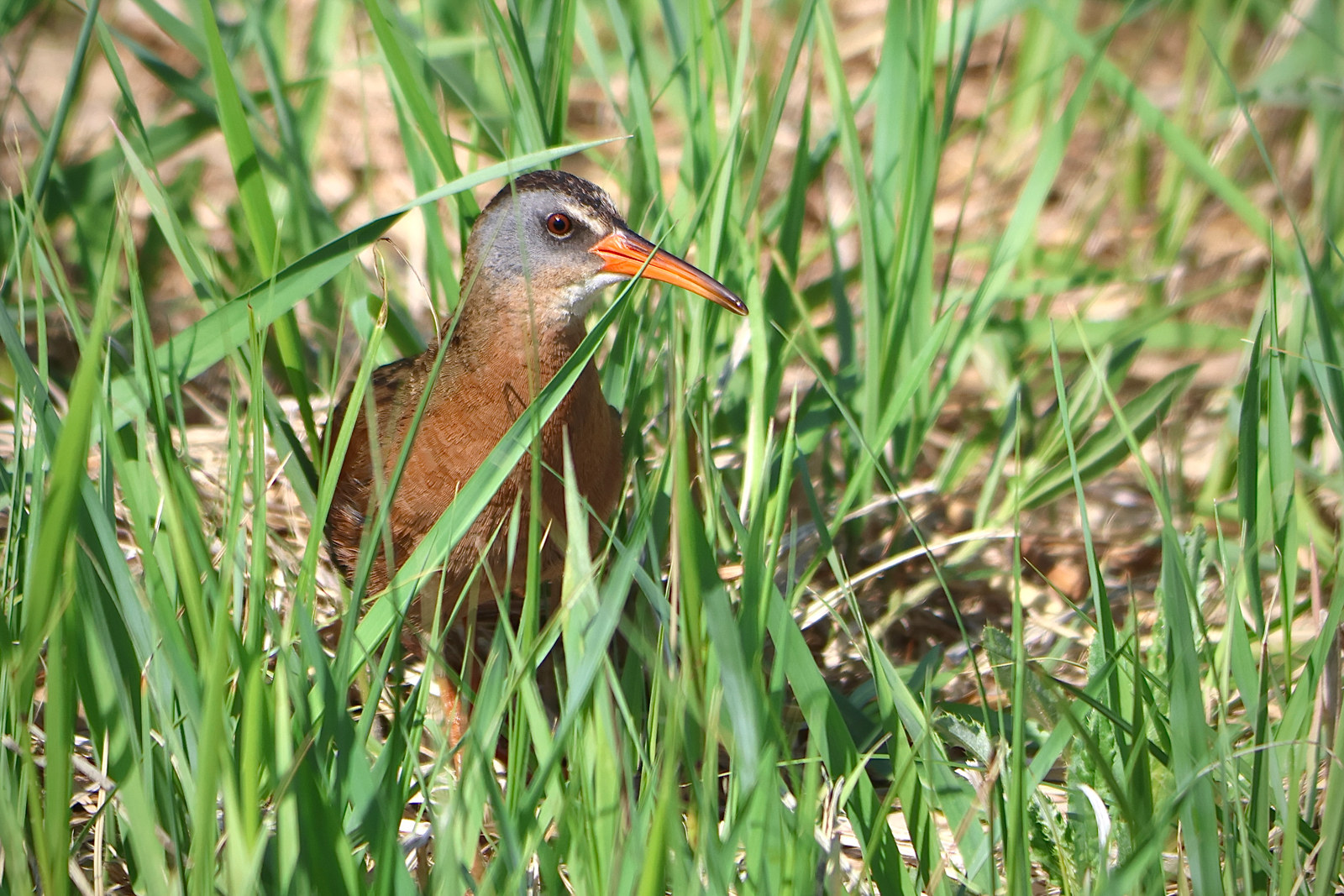
Virginia Rail © Mary Coy
The rest of the afternoon, we cruised backroads heading east to Brandon getting to our hotel (Lakeview Inn) with plenty of time to rest up before we walked across the back lane to a nice Greek restaurant (Albert’s Bistro). Here we had a surprise visit from Daniel who had recovered a bit from his operation but was still quite weak. It was nice to have dinner with him and his mom who just happened to be staying at the same hotel! That evening some of us went for a short jaunt to the Shilo area hoping to find bluebirds, getting the one we really wanted – a pair of Mountain Bluebirds feeding nestlings in a nestbox.
Day 8 – June 6
Today was scheduled as a travel and mop up day, so we headed back to Riding Mountain hoping to fill in some of the gaps we had for that area. And it was a very productive day. On the way we had a Coyote and more White-tailed Jack Rabbits. Near Proven Lake we looked for a heron colony that Ken K knew about; we didn’t see the nests but did spot a couple Great Blue Herons. We walked a short trail near the golf course picking up a heard only Cape May Warbler, but at our next stop along Hwy 10 we got to see a couple flitting near the tops of some spruce and we got onto a Golden-crowned Kinglet. Next we walked a section of the Bead Lakes trail adding a couple Swainson’s Thrush, a nice Black-throated Green Warbler, some Pine Siskins, and finally a cooperative Boreal Chickadee. We stopped for a restroom break at Moon Lake picking up our first good looks at an Alder Flycatcher and heard several warblers including 4 more Mourning and 2 Canada Warblers. Next destination was a trailhead where Ken K had seen Golden-winged Warblers. We were able to get onto a couple, heard more Veerys and we located a Clay-colored Sparrow nest with 3 sky-blue eggs. Proceeding to the North Boundary Road, we spotted a Ruby-throated Hummingbird, had better looks at a Golden-winged Warbler and a couple Great Crested Flycatchers, and we heard a far-off Pileated Woodpecker.
Our morning’s work done, we stopped at Grayling Lake for lunch, and carried on out of the park on Hwy 19, but not before spotting 5 more Black Bears for an incredible total of 35 for the trip! We stopped for a restroom break in Neepawa on the way back to Winnipeg checking into the Hampton Hotel with a hour’s rest before walking over to Chicago Joes for dinner. Ken & Ken had to return the vans that evening, so we took the evening off as everyone got prepared for Churchill and our next adventure.
Day 9 – June 7
Our flight to Churchill was scheduled for 10:30, so after continental breakfast at the hotel we took the hotel shuttle to the airport. Rudolf Koes, a top-notch birder, would meet us at the airport to be a second guide and driver in the north. Vans were waiting at the airport when we landed at about 1pm so we gathered our gear and headed straight to the Polar Inn. Ken grabbed some grub in the local grocery store and we had lunch in the hotel’s dining room, put on some extra layers, and headed out for our first look at what Churchill had to offer. On the flats on the edge of town, we looked over a large number of Canada Geese, finding a Bald Eagle and a far-off Snow Goose. The Granary Ponds supported a bunch of the regular ducks of the north (Greater & Lesser Scaup, Northern Shoveler, Mallards, and Green-winged Teal, as well as a couple Arctic Terns, a handful of Red-necked Phalaropes, and dozen or so Herring Gulls nesting on big rocks in the water. On to the Lower Docks directly below the elevators, where we had a brief look at a Owl flying over the rocks some distance away, our first Common Eiders, and a few more Arctic Terns. Next we headed over to Cape Merry and walked on the boardwalk to the old artillery overlooking the Churchill River. From here we spotted more Common Eiders, some Surf & White-winged Scoters, Red-breasted Mergansers, Common Loons and Bonaparte’s Gulls, a far off Parasitic Jaeger cruised by, and surfacing in the water every once in a while were our first Belugas and Harbor Seals. Walking back to the vans, we spotted a Lapland Longspur perched on the rocks.
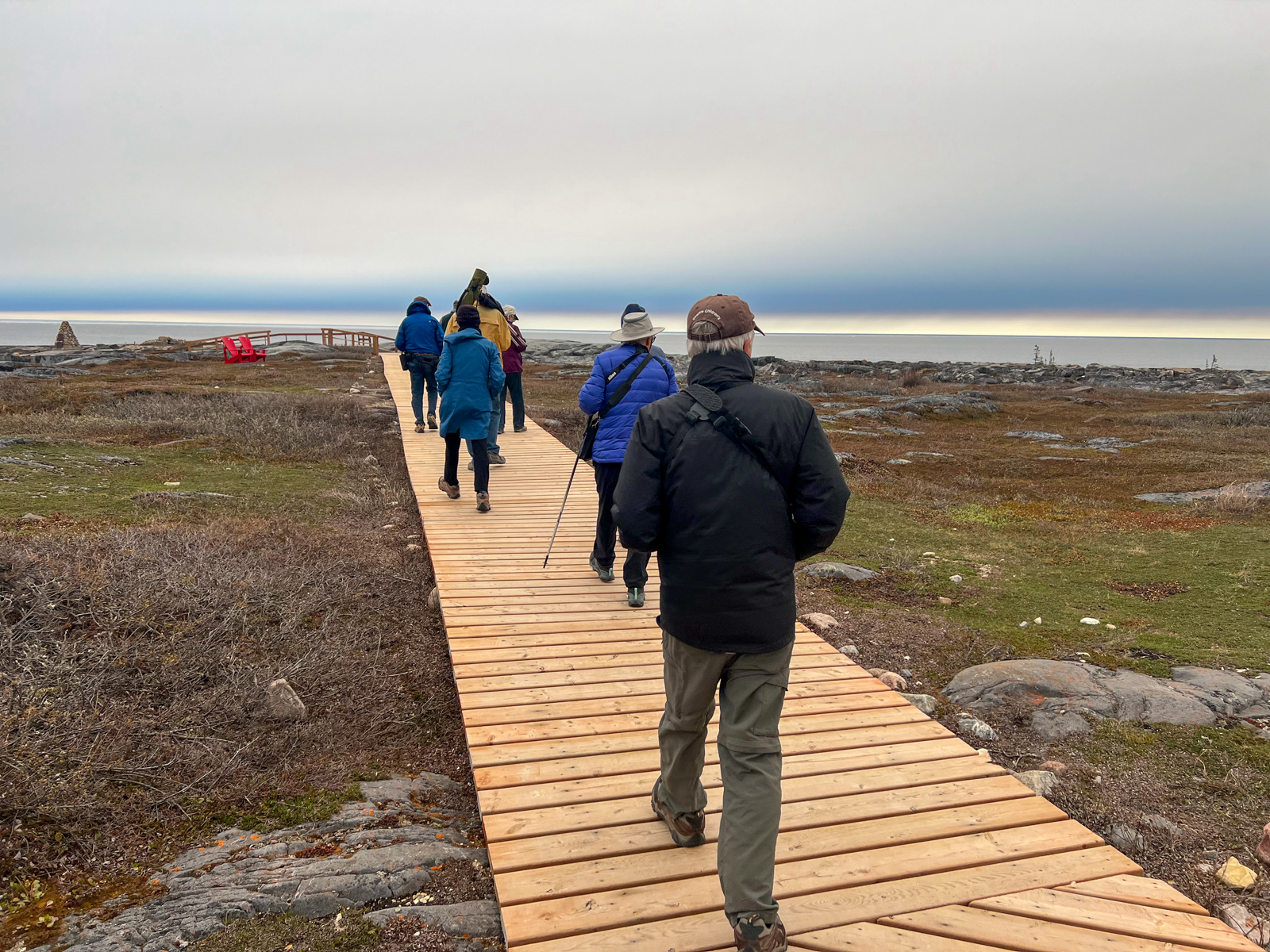
Cape Merry boardwalk © Mary Coy
Goose Creek Road and the feeders at the cabins are always worth a check so that was our next destination. In the flooded ditches and mudflats along Goose Creek we had many Northern Shoveler, Mallards, American Wigeon, Green-winged Teal, Northern Pintail, and a couple Bufflehead. But more interesting were the shorebirds, including quite a few Hudsonian Godwits, Short-billed Dowitchers, Lesser Yellowlegs, a few White-rumped & Stilt Sandpipers, and a couple Wilson’s Snipe. The feeder at the cabins was very productive yielding our first Pine Grosbeaks, Redpolls, Fox & White-crowned Sparrows, as well as a White-throated Sparrow and Dark-eyed Junco. Elsewhere along Goose Creek Road and along a short stretch of Hydro Road to the Marina/restrooms we had a Merlin, Osprey, a couple Bank Swallows flying with some Tree Swallows, and some singing Northern Waterthrushes and Yellow Warblers.
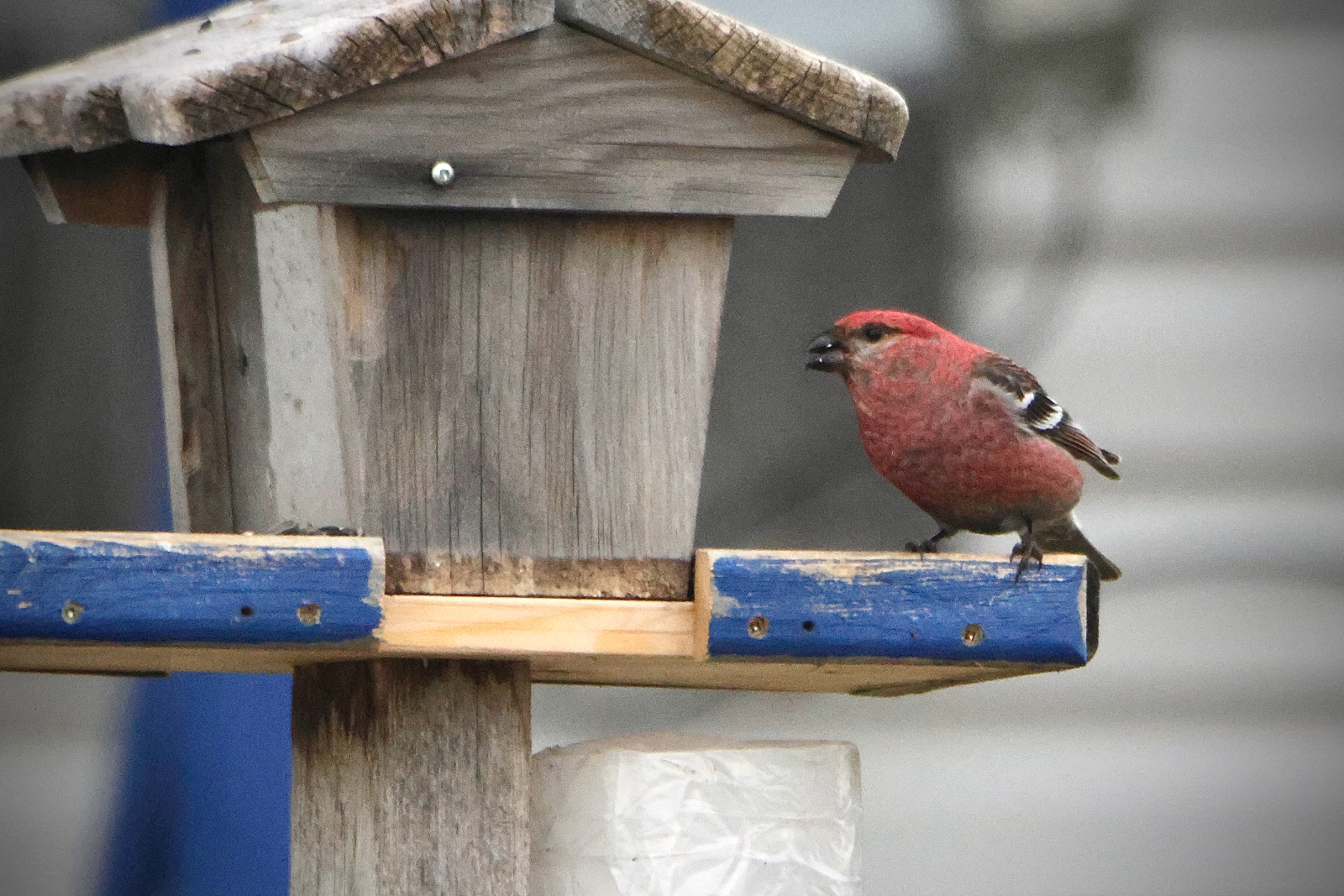
Pine Grosbeak © Mary Coy
We headed back to town with an hour to spare before the only restaurant that was open at this time of year would be closing, but with limited staff they did not want to serve a larger group! So we purchased some pizzas, salads, etc, as well as some wine & beer, and went back to the hotel dining room to celebrate a pretty good first half day in Churchill. That evening some of us tried Kennedy Park for the Spruce Grouse (no luck), rechecked the feeders, and had a look at the shorebirds along Goose Creek and Hydro Road.
Day 10 – June 8
In Churchill, we would settle into an early morning routine of heading out at 6 for a quick look around town, the Flats, Granary Ponds, and the Lower Docks or Goose Creek and the feeders before coming back at 7:30 to a well-stocked continental breakfast at the hotel. We woke up today to drizzle, cool and windy conditions; the drizzle would let up as the day progressed but it was still cool and windy. We headed to the flats first but found very little of significance, save for a couple Bald Eagles perched on rocks that would be the first of 5 for the day. On the Granary Ponds we had an American Coot (rare for the north), the Lower Docks were quiet, and at Cape Merry we found the mostly white Arctic Hare near the Marine Research Buildings, and on the Churchill River some Common Loons, White-winged Scoters, Common Eiders, Red-breasted Mergansers, Bonaparte’s Gulls, a Parasitic Jaeger, at least 3 Belugas and a Harbor Seal.
With windy conditions, after breakfast we headed to Twin Lakes where we would get some shelter from the trees. On the Highway to the airport we had 6 Snow Geese, the latter two Blue color-phase birds, and a very close Pacific Loon. Along Launch Road we had more Pacific Loons, some Long-tailed Ducks, Northern Harriers, a Parasitic Jaegar, the first Sandhill Crane and Northern Harriers for the north, and new for the trip a Whimbrel and Rough-legged Hawk.
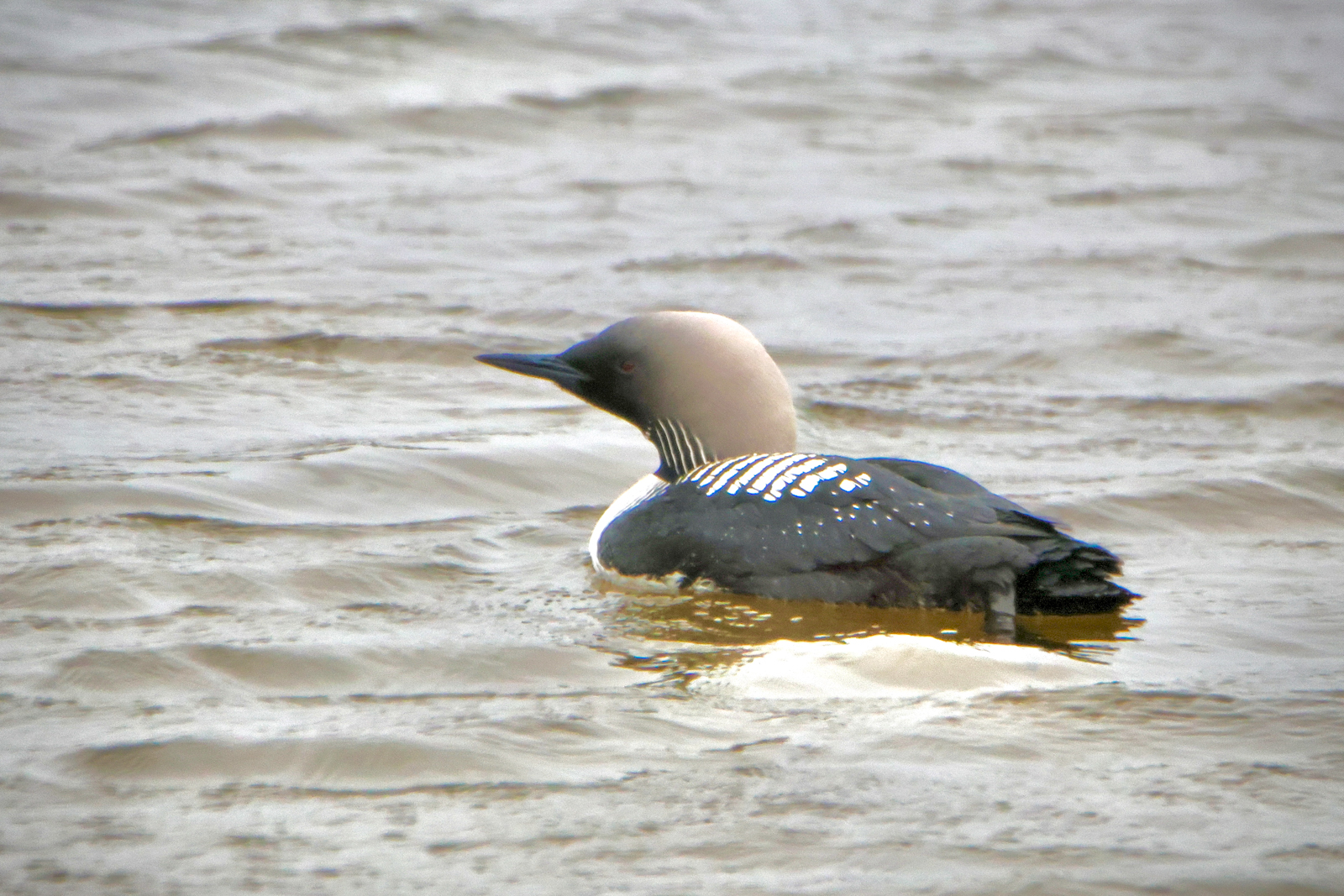
Pacific Loon © Mary Coy
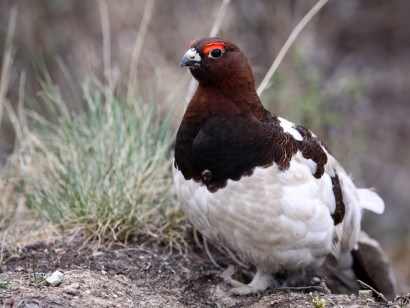
We made a rest stop at the Northern Studies Centre and bought some souvenirs before proceeding up Twin Lakes Road. Not far down we had our first Willow Ptarmigan (the first of 7 today), and at the shorebird fen more Willow Ptarmigans including our first and only female, as well as more Harriers, Parasitic Jaegers and Hudsonian Godwits. Next we took Cook Street where we hoped for a Spruce Grouse, Bohemian Waxwings or crossbills but settled for a Ruby-crowned Kinglet and some Yellow-rumped Warblers. We had a picnic lunch at a deserted cabin where there were several Arctic Terns and a Common Loon on the lake, and Bonaparte’s Gulls and a Canada Jay nearby. After, we walked a stretch along a sandy ridge trail in the forest but there was little calling today.
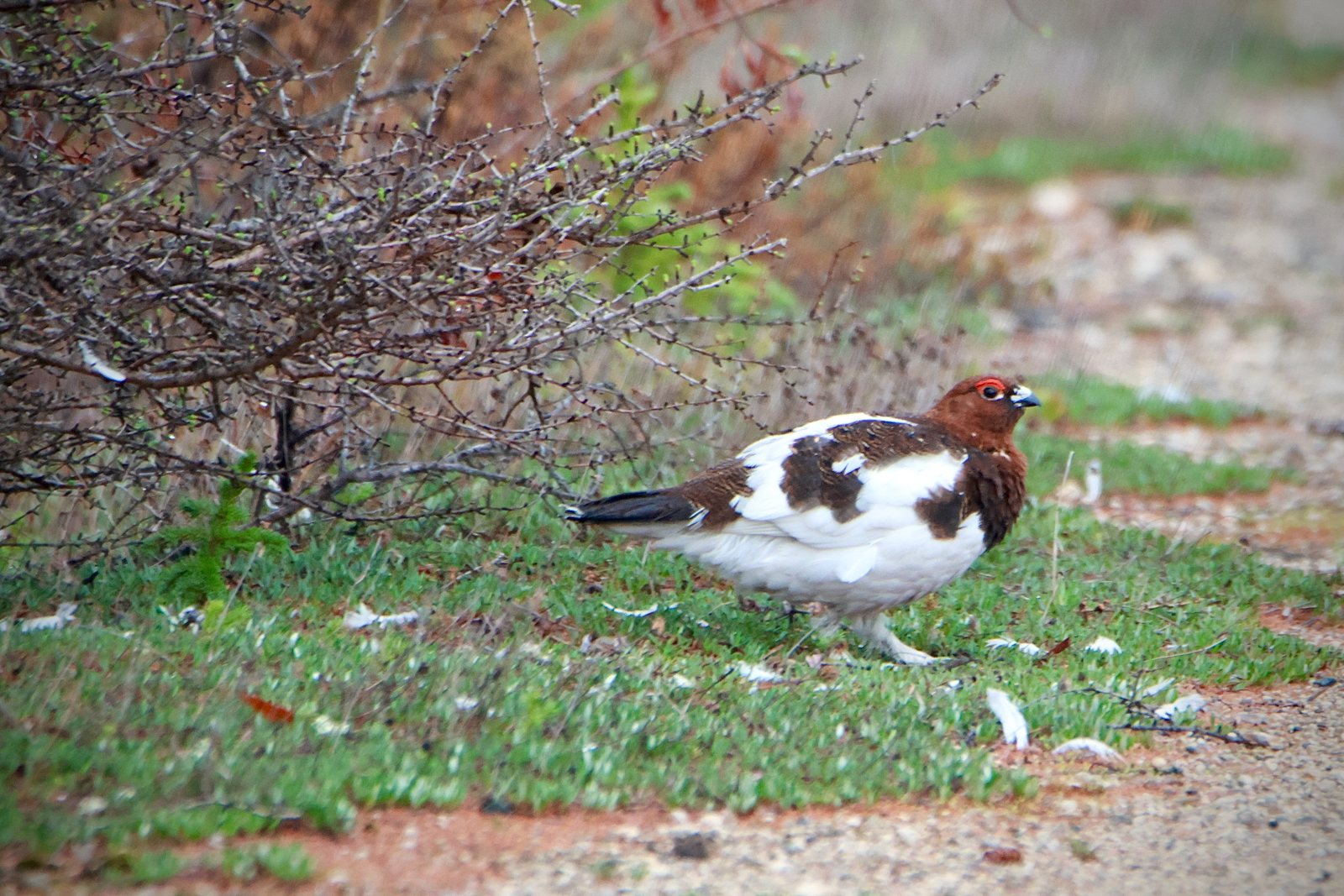
Willow Ptarmigan © Mary Coy
We headed back. At the fen we had two ptarmigan, one that ran ahead of the van for some time before it ran into another ptarmigan; they had a little stand-off before the latter chased it off. We checked Halfway Road on the way back – good for our first Black Ducks. Before heading back we took another tour of Goose Creek Road and part of Hydro Road, this time finding a pair of Horned Grebes, Bufflehead, Merlin, Osprey, quite a number of shorebirds (Black-bellied & Semipalmated Plovers, Short-billed Dowitchers, Lesser Yellowlegs, Stilt & Semipalmated Sandpipers), more Hudsonian Godwits, and finally a rather large River Otter (our 4th write-in mammal for the trip!). We hurried back to town where we had dinner reservations at the Seaport. It had been a full but very productive day and folks were a little tired or had things to do so we took the evening off.
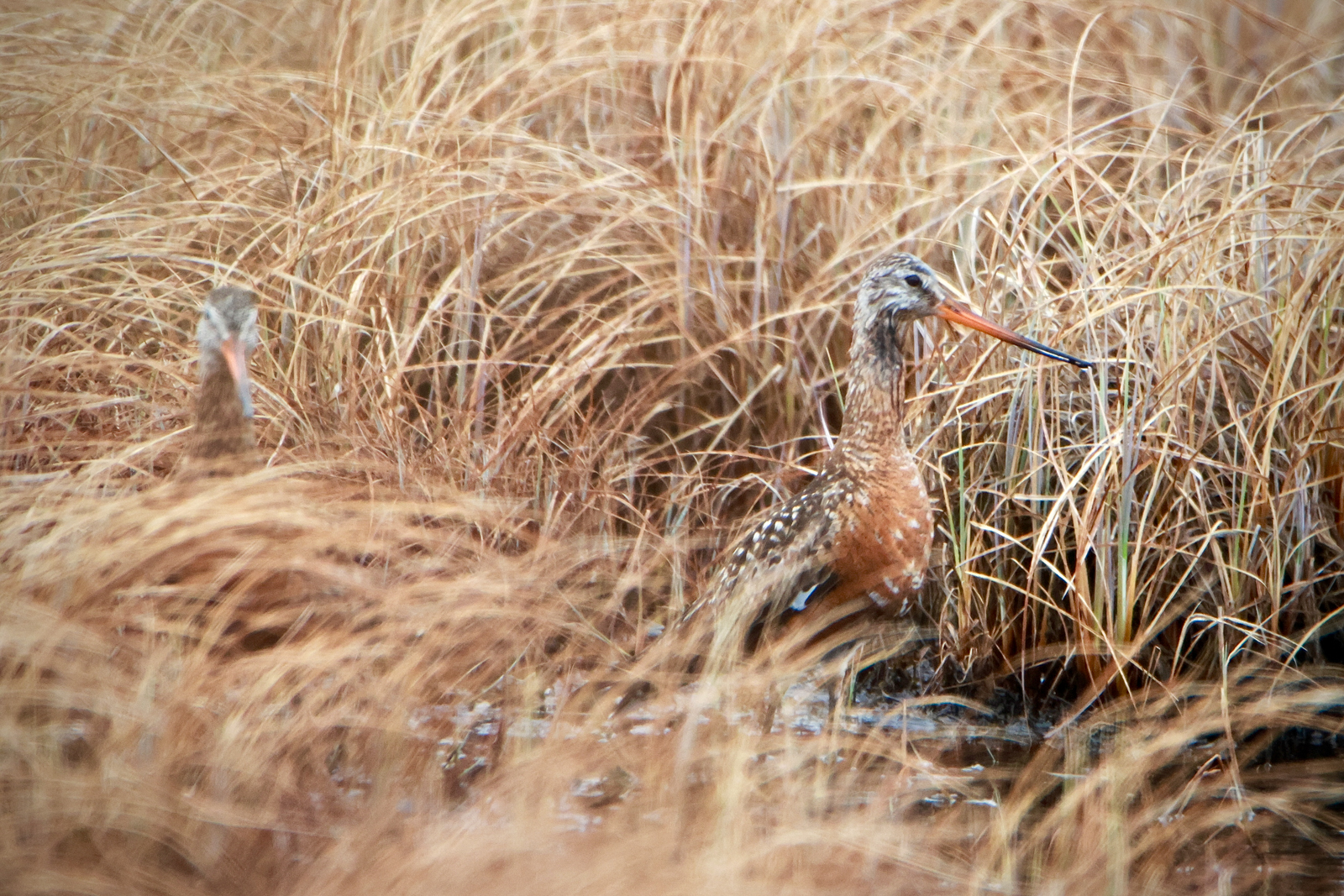
Hudsonian Godwit © Mary Coy
Day 11 – June 9
Today we would wake up to drizzle, windy and cool weather and those conditions would persist throughout the day. Instead of taking the Highway to Akudlik (at the start of Goose Creek Road) we took Pipeline Road where we found another well-stocked feeder with a few birds but nothing new. At the Goose Creek feeder, however, we finally found the Harris’s Sparrow that had eluded us so far and nearby an Orange-crowned Warbler. After breakfast we checked the Granary Ponds & Cape Merry, looked around town in the hopes that a thrush might be found, headed down Goose Creek to see if the Harris’s might still be at the feeders, and veered off Goose Creek to the Weir where we had better looks at a pair of Surf Scoters, a Northern Waterthrush, and two far far-off Tundra Swans. We wanted to make it all the way to CR30 at the end of Hydro Road; on the way we had our first Blackpoll Warbler and first looks at an American Tree Sparrow at the Marina, and our first Rusty Blackbirds and Pectoral Sandpipers. At CR 30, we found some Black Scoters amongst a raft of Surf and White-winged Scoters, and had our first scope looks at a Red-throated Loon.
We zipped back to the motel and had lunch in the dining room. After, we talked to a local birder who gave us some tips, so after lunch we went to her feeder on the edge of town picking up a Brown-headed Cowbird (rare for the north). We drove down Pipeline Road, and when we got a tip that some Sabine’s & Little Gulls had been seen further down the coast and that they were possibly headed to Cape Merry we checked out the Cape but had nothing new. We’d also heard that Dave Daley’s feeder at the end of the Nodwell Trail had Harris’s Sparrows earlier and sure enough there were two very handsome Harris’s there. We rechecked Kennedy Park (still no grouse), and took Scrap Iron Road around the airport to Camp Nanuk where we had close up looks at a Whimbrel and a Merlin. On to the Northern Study Centre where dinner was waiting for us (we’d lucked out as there was no restaurant open on a Sunday in town!). After we dropped off most at the hotel and had another quick look down Goose Creek Road, Kennedy Park and Hydro Road to the Marina.
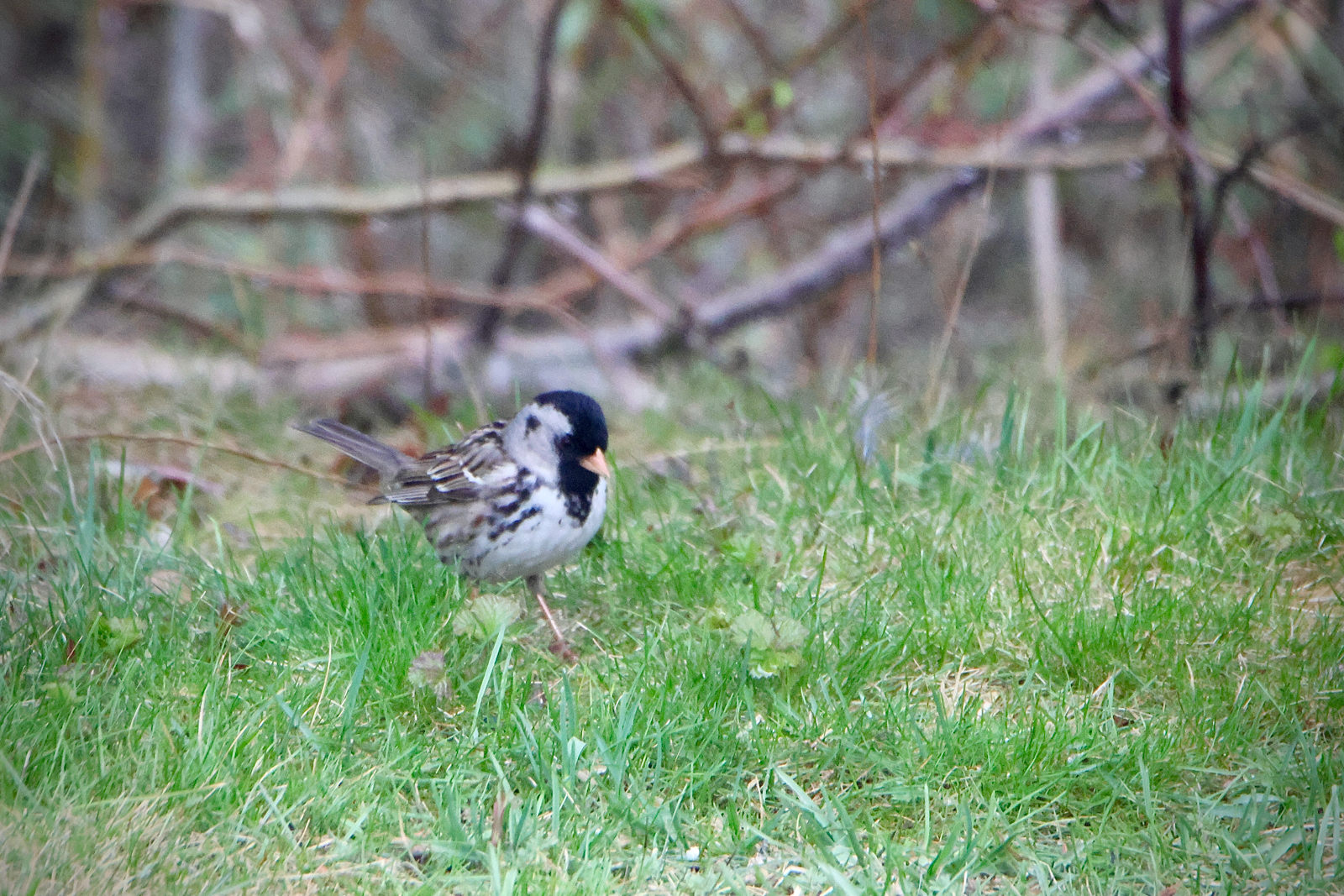
Harris’s Sparrow © Mary Coy
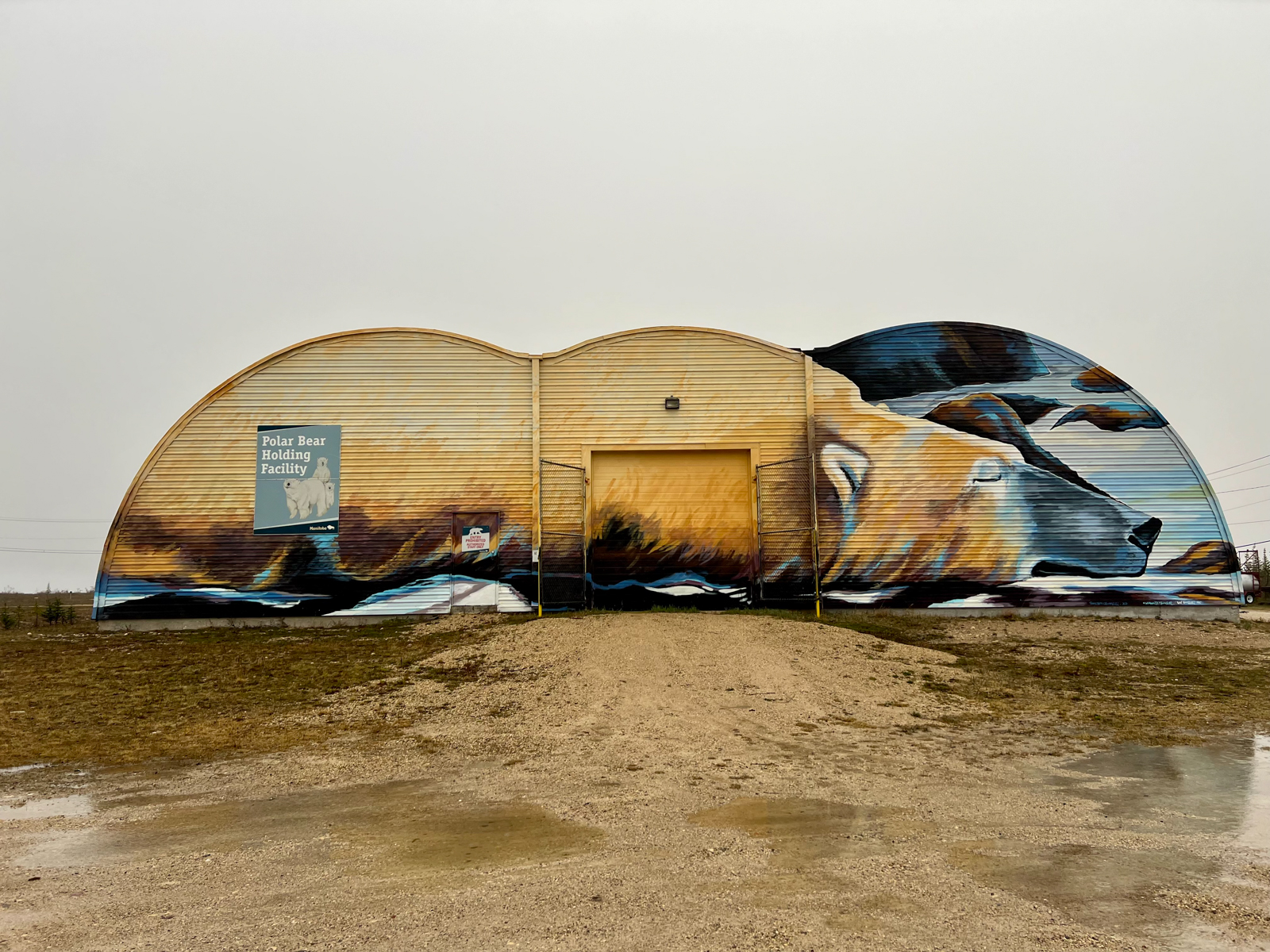
Sleeping bear art © Mary Coy
Days 12 – June 10
Today would be our last half day and a bit in Churchill. We checked the Flats, the Lower Docks (better looks at a Short-eared Owl) and Cape Merry, and the Beach (the ice was piled up on shore in the Bay today that we glassed it over hoping we might spot a Polar Bear). After breakfast we checked feeder road and walked to some abandoned buildings where a pair of Great Horned Owls had been seen a week earlier. No owls, but we got onto some Northern Flickers, heard a Gray-cheeked Thrush, and a couple participants got to see and photograph a female Blackpoll Warbler before it flew off. We spotted a Common Grackle near the feeders and near Goose Creek a male Hooded Merganser (both rare for the north). At the Marina and down Hydro Road we got onto 20 Black-bellied Plovers, nice looks at an American Golden Plover, 6 more Rusty Blackbirds and a Sharp-tailed Grouse (a very rare northern bird). Back at 12 for lunch, we packed our bags and many folks checked out the museum and other sights around town, while a few went down to the Cape where we had some really close Beluga’s go by, had better looks at a Red-throated Loon and some Surf Scoters, and at the last few minutes there Rudolf spotted a Little Gulls at the mouth of the river which we had decent looks at from the artillery.
It was time to head to the airport where we eventually took the plane back to Winnipeg. Getting back to the Hampton shortly after 6, we walked down to Chicago Joe’s for a 7 o’clock dinner and shared our best memories, birds and mammals from the trip. It had been enjoyable trip with great company. Considering the challenges (three second guides and pretty tough conditions up north), we’d done really well finding most of what the participants had wanted and putting together an impressive list of 231 birds and 24 mammals. I hope that this report has helped you relive many of the great experiences and highlights that we experienced while traversing many of Manitoba’s top birding and wildlife-viewing destinations. Here’s hoping our paths may cross again in the future.
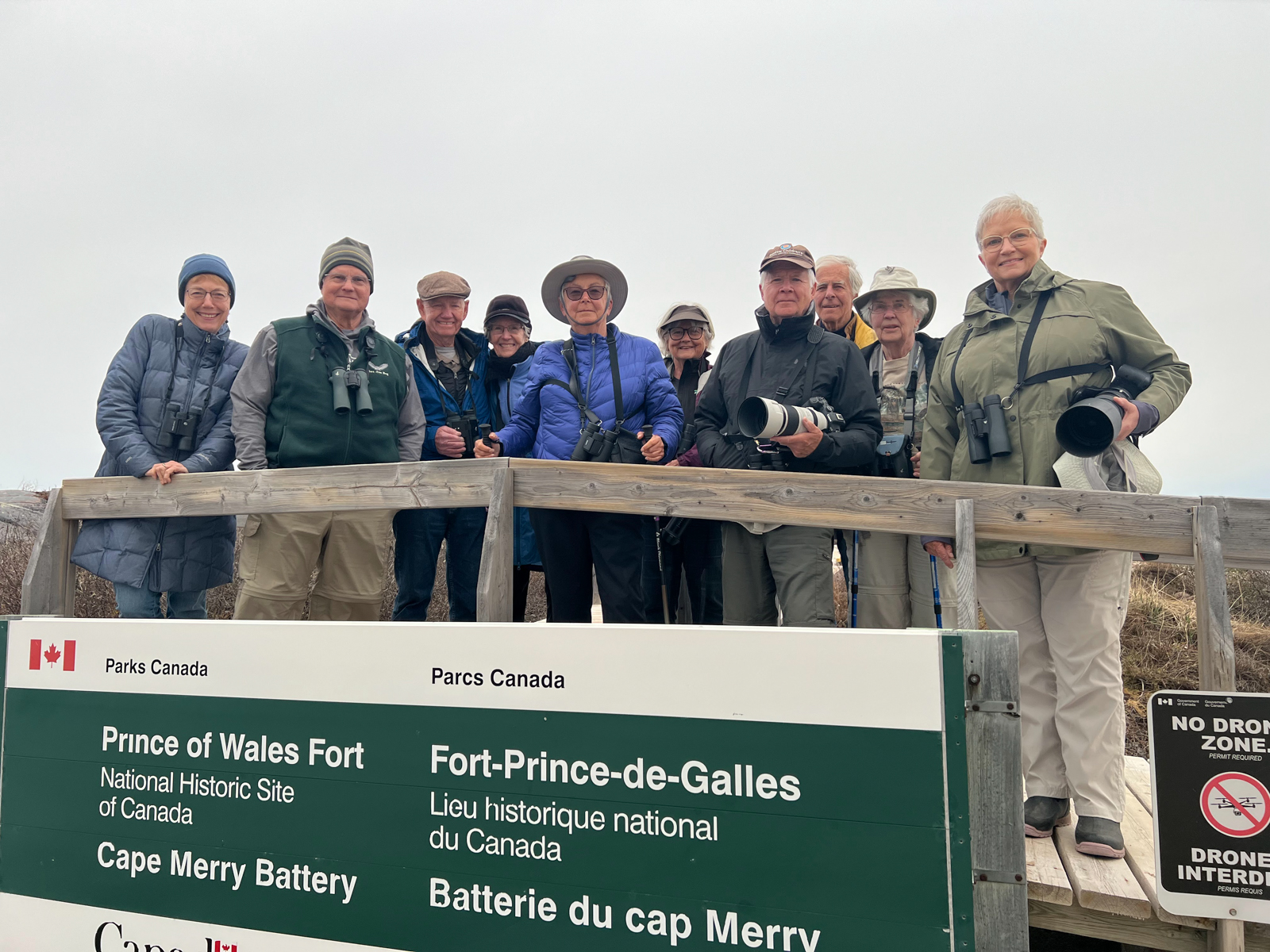
Our group
Churchill & Southern Manitoba tour species list 2025