BC Coast & Pelagic (Aug 24-29 2026)
Day 1: Richmond
The group gathered in the evening for our first dinner together, where we laid out plans for the following day and took the opportunity to get to know one another.
Day 2: Richmond to Ucluelet
After an early breakfast, our first birding stop was Boundary Bay, part of the vast Fraser Delta—one of the most important stopover and wintering sites for Pacific waterfowl and shorebirds. The tides were not ideal for shorebirds, but we did see a nice collection of classic West Coast passerines, including Bewick’s Wren, Spotted Towhee, Willow Flycatcher, Anna’s Hummingbird, and Western Tanager, while exploring the scrub habitat adjacent to the shoreline.
Next, we took the ferry from Tsawwassen to Nanaimo on Vancouver Island. The ferry jetty offered excellent views of Black Oystercatcher and Surf Scoter. We were also able to study all three local species of cormorant: Pelagic, Brandt’s, and Double-crested. All three breed on the ferry jetty and breakwater.
After a quick lunch in Nanaimo, we made our way across the island to the west coast. We made a brief stop along the way at a rest area, where we had great views of Red-breasted Sapsucker and Steller’s Jay. We then continued to Ucluelet, where we settled into our new accommodations and had an early dinner in preparation for an early start and our upcoming pelagic trip.
Day 3: Pelagic Boat Trip to Clayoquot Canyon
We left our hotel rooms and warm beds well before sunrise to drive to our boat in Tofino. We left the dock while it was still mostly dark and headed straight out into the open ocean. Our goal was Clayoquot Canyon, where deep waters are pushed to the ocean surface, attracting an abundance of wildlife. After about an hour and a half of steady cruising, we reached the shelf and almost immediately began seeing pelagic seabirds, including Pink-footed Shearwaters, Sabine’s Gulls, Fork-tailed Storm-Petrels, Northern Fulmars, and our first Black-footed Albatross.
We then noticed a fishing boat with a large congregation of albatrosses floating on the water around it, so we decided to make our way over for better views. Once there, we were treated to dozens of Black-footed Albatrosses sitting on the water and flying so close to the boat that it felt as though we could almost touch them.
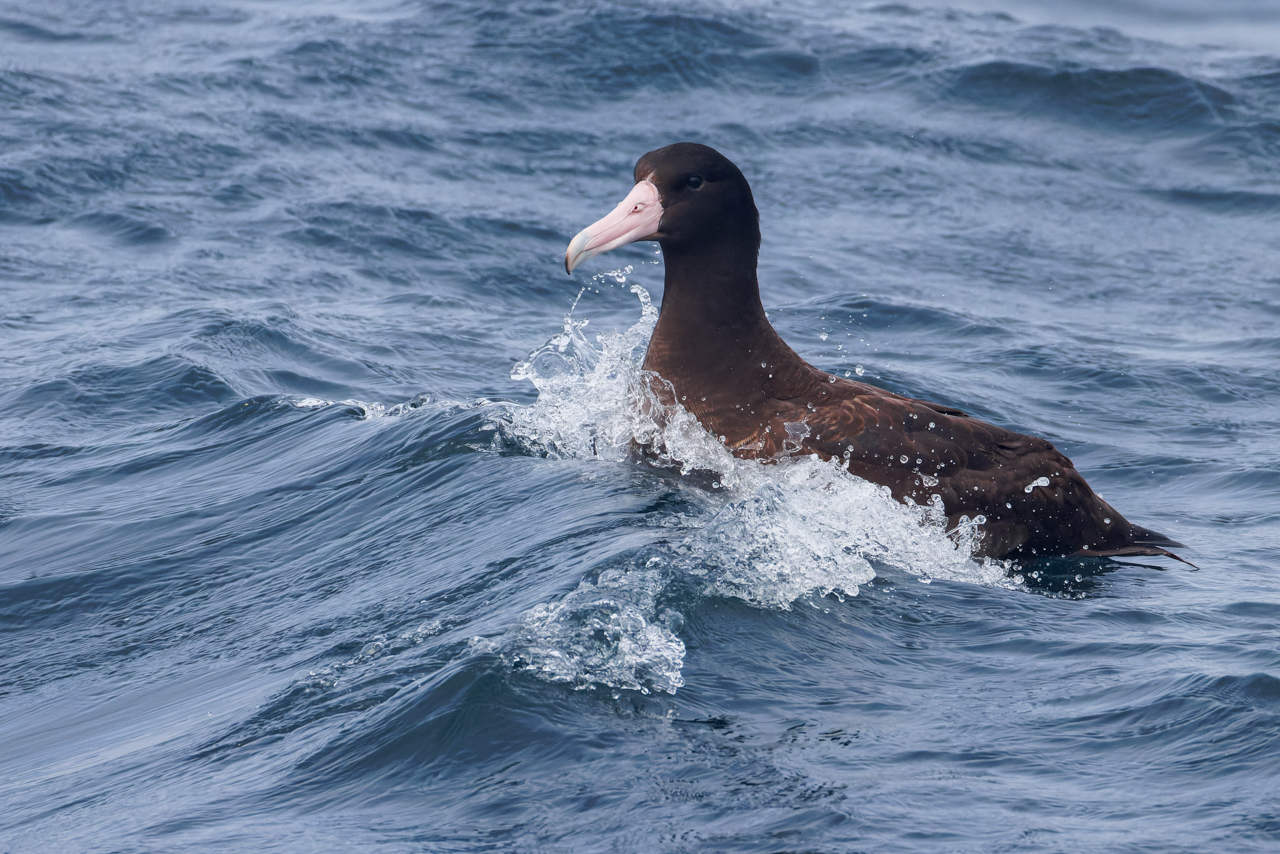
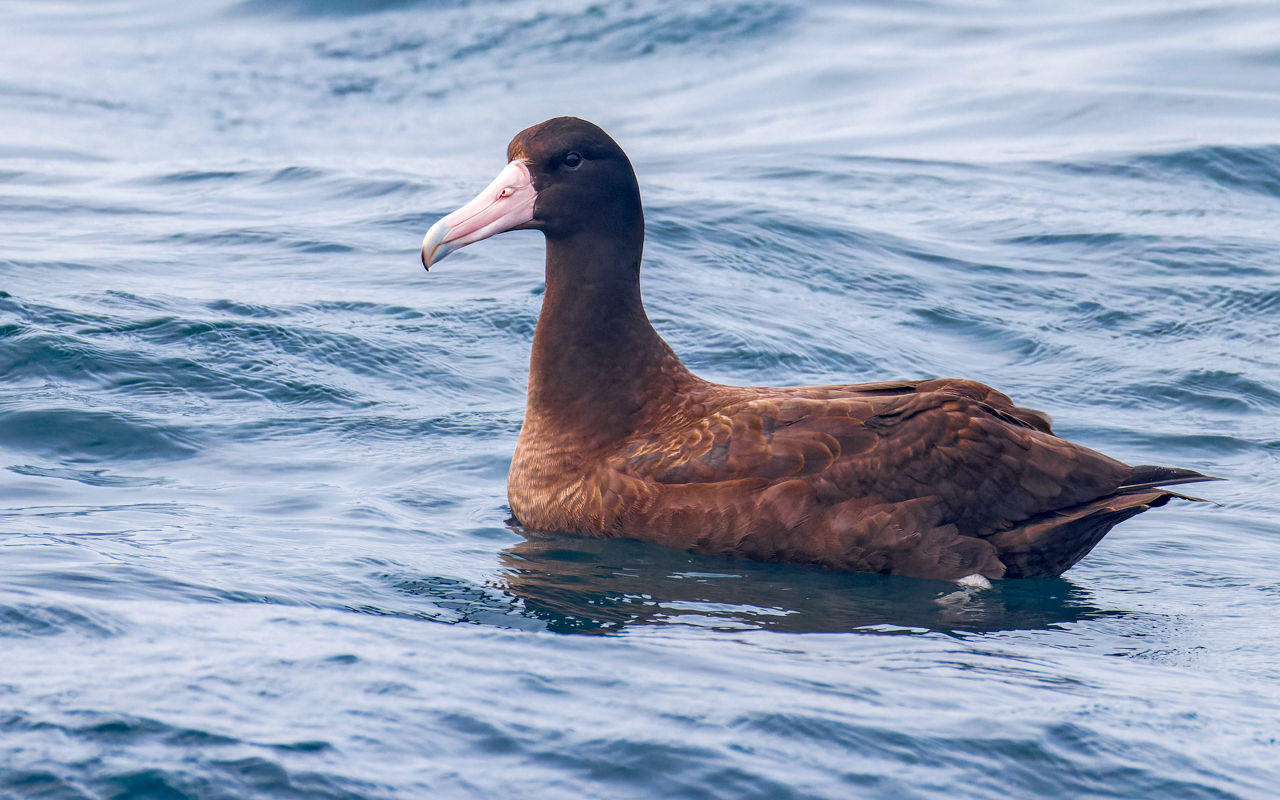
Then, out of nowhere, another albatross appeared—much larger and with a gigantic pink bill. It was a Short-tailed Albatross! Short-tailed Albatrosses are the rarest of the three possible albatross species found off the west coast of British Columbia, and it is always a very special experience to find one on a pelagic trip.
We kept a close eye on the Short-tailed Albatross until it landed, allowing us to get amazing views. Just then, a second Short-tailed Albatross appeared and landed beside the first. We watched the two albatrosses interact, clacking and touching bills in a way I had previously seen only in documentaries. These birds likely came from one of a couple of islands off the coast of Japan, but their interaction made us wonder how closely bonded the two actually were or whether this is simply how all Short-tailed Albatrosses behave.
After spending half an hour or so with the roosting albatrosses, all the birds began to take off and head toward the fishing boat, which was evidently starting to process some of its catch. It was nearly time for us to begin making our way back to land, but we decided to check out the fishing boat one more time. As luck would have it, we completed the albatross trifecta when a juvenile Laysan Albatross flew in and landed among the birds on the water.
We stayed with the birds for a while longer and then headed back toward shore. On our way, we spotted a gigantic Ocean Sunfish and stopped to watch it basking at the surface, allowing us to truly appreciate its strange existence.
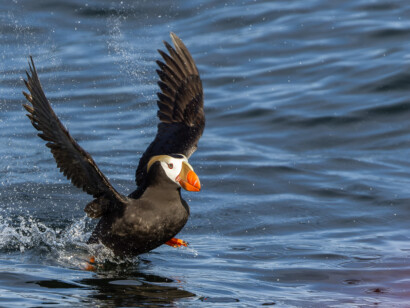
Short-tailed Albatross © Blair Dudeck
Short-tailed Albatross © Blair Dudeck
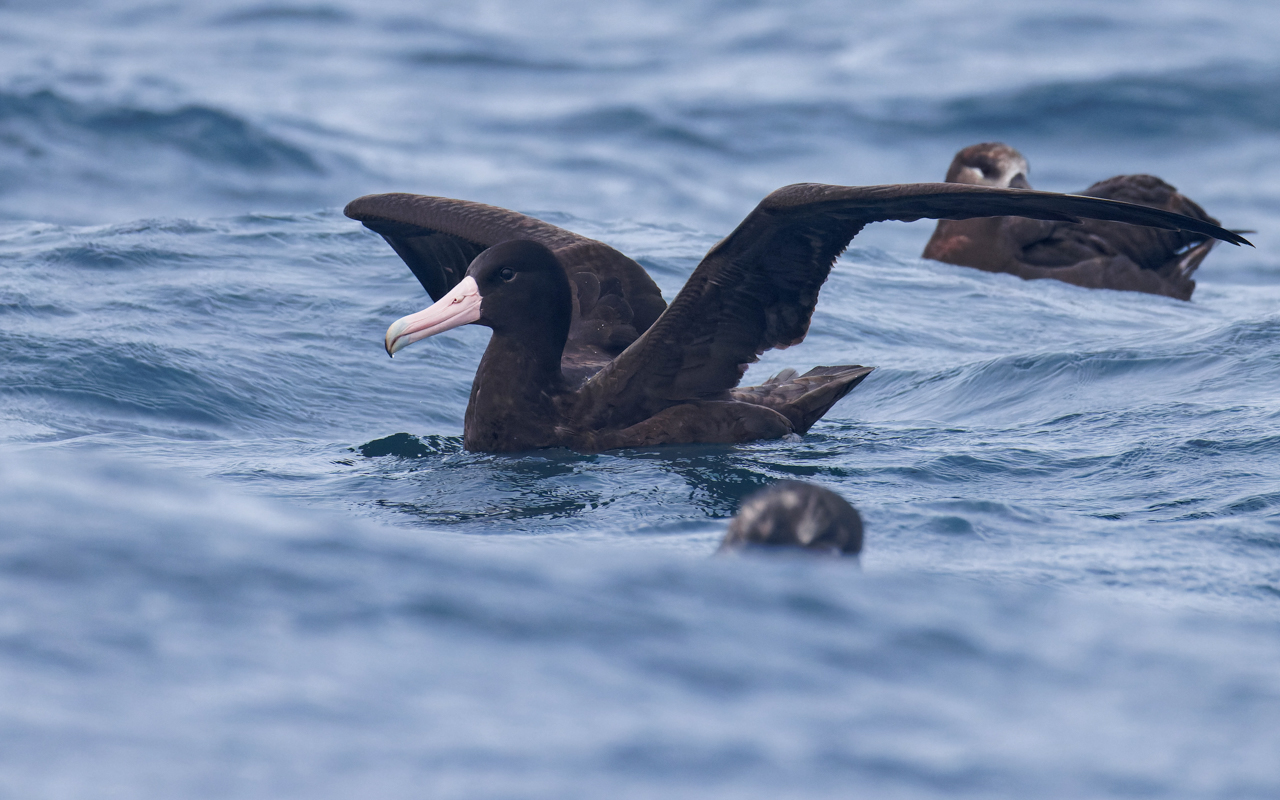
Short-tailed Albatross © Blair Dudeck
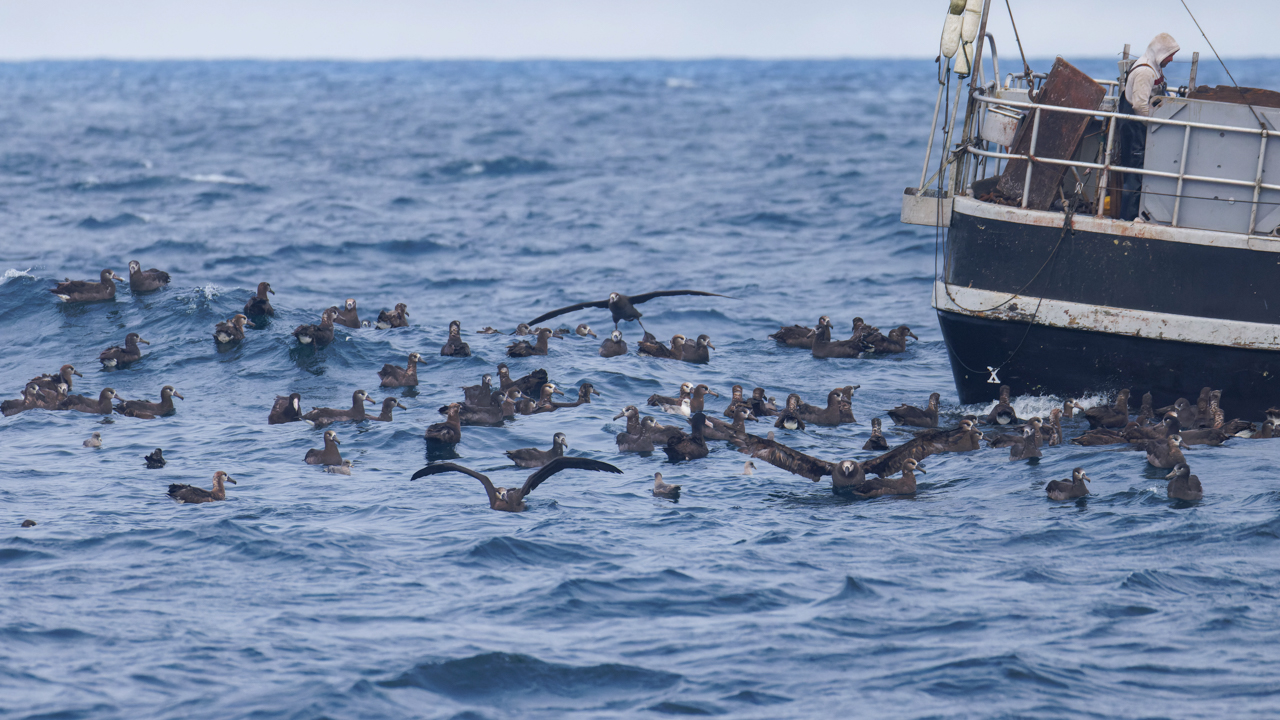
Short-tailed Albatross © Blair Dudeck
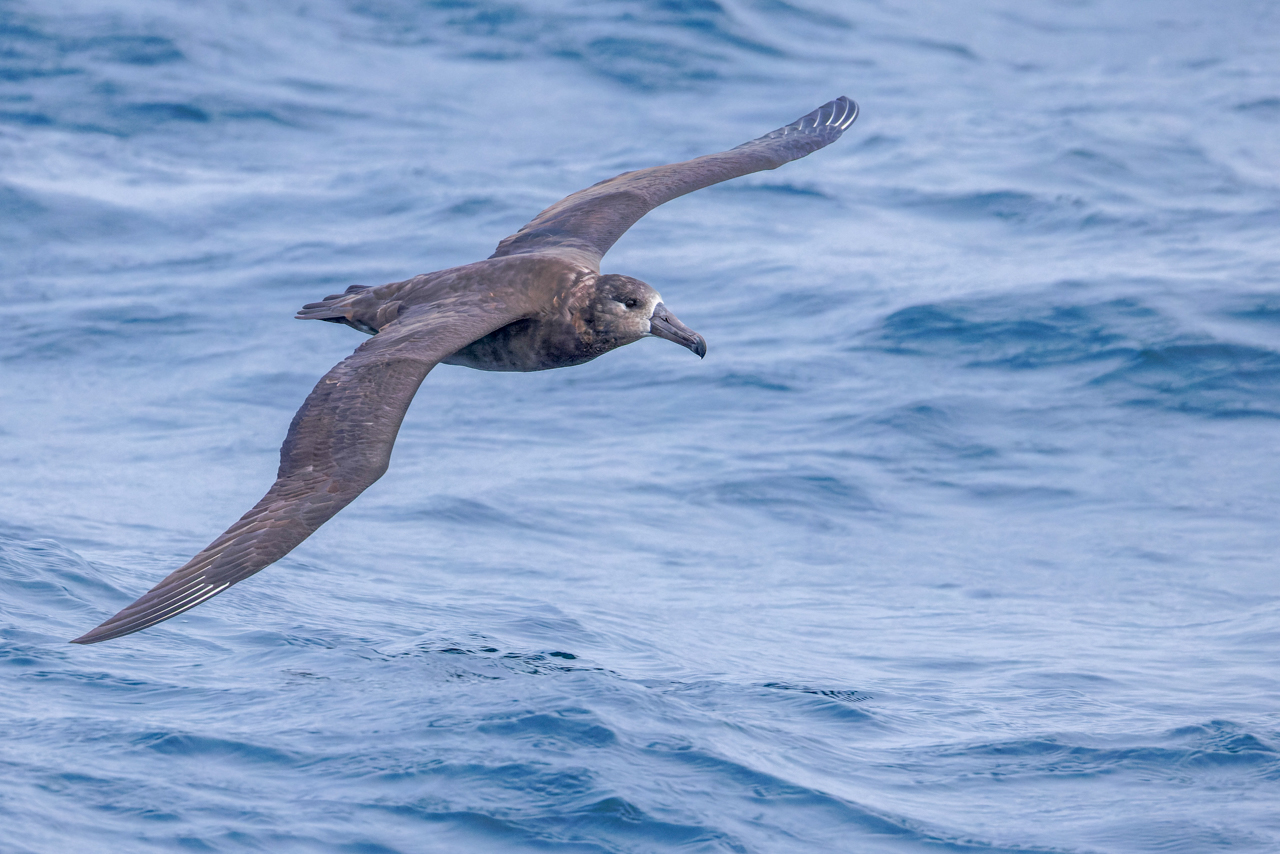
Black-footed Albatross © Blair Dudeck
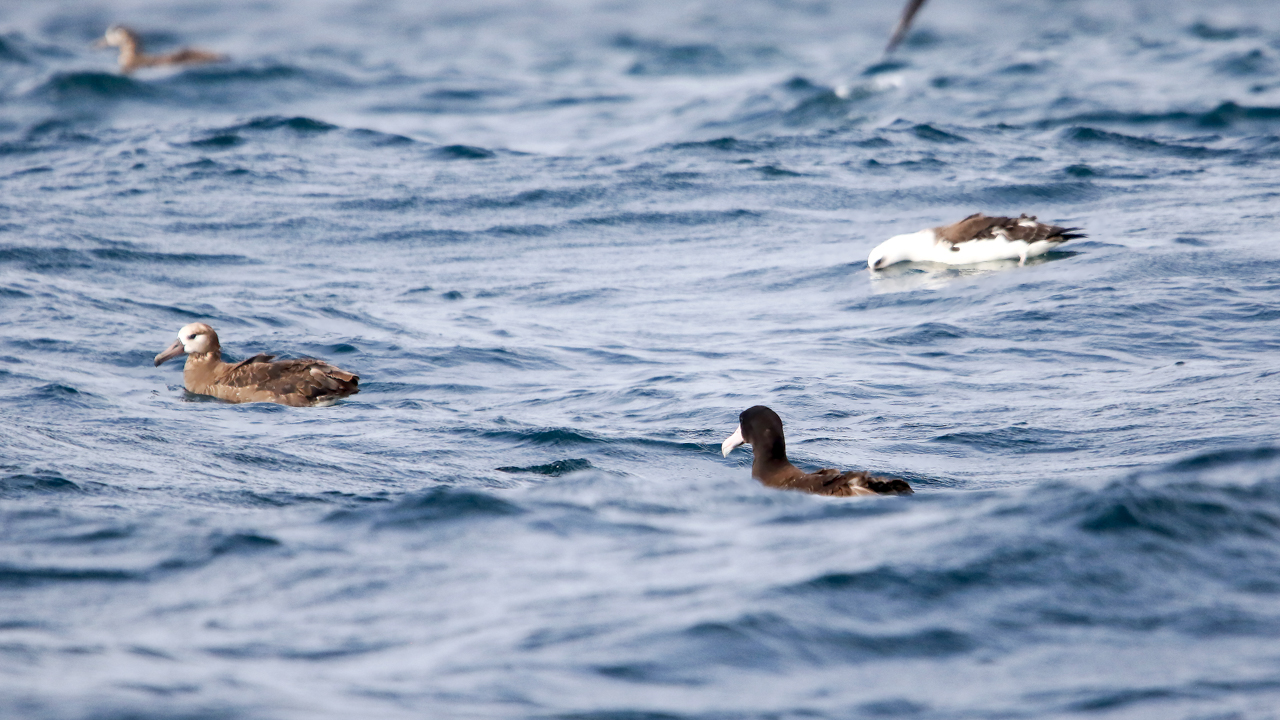
Three species of Albatross! Black-footed, Short-tailed, Laysan Albatross © Jared Clarke
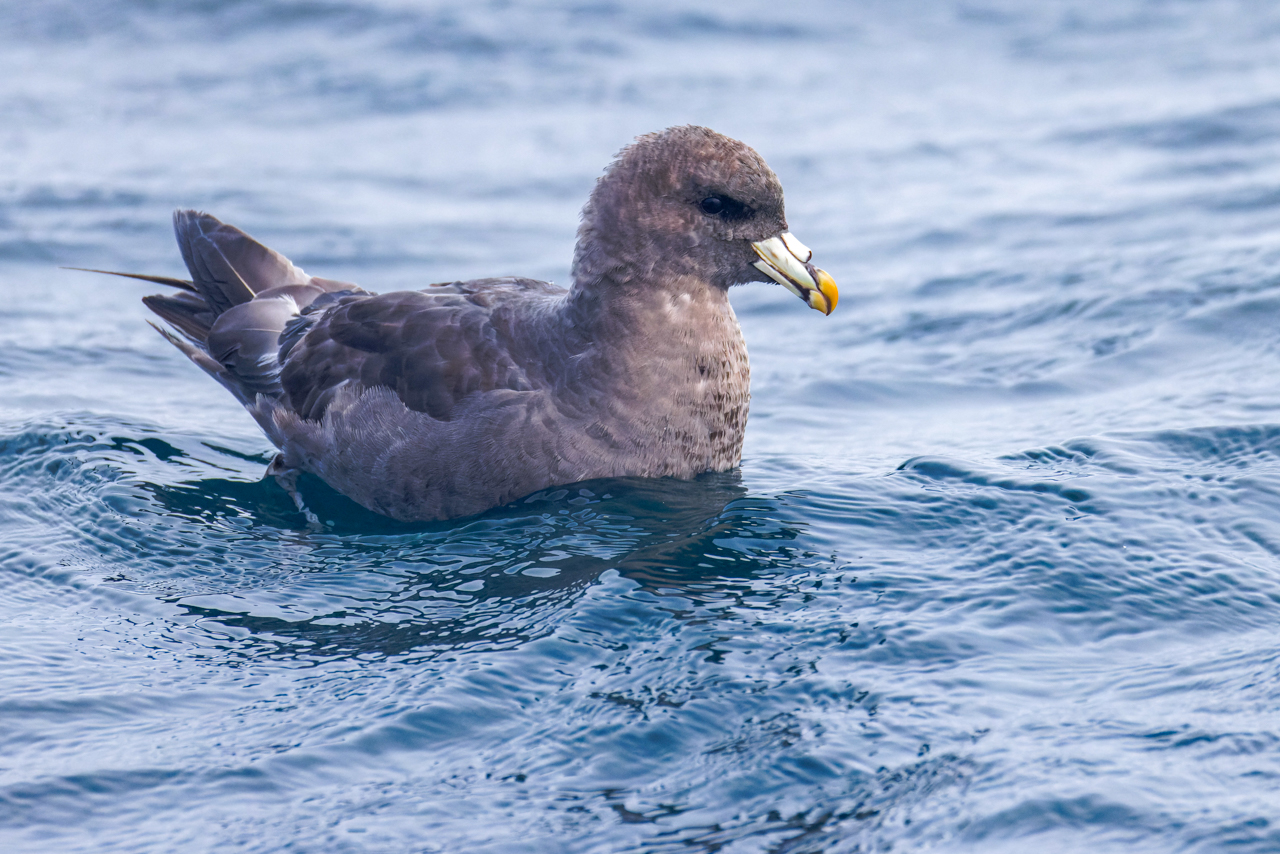
Northern Fulmar © Blair Dudeck
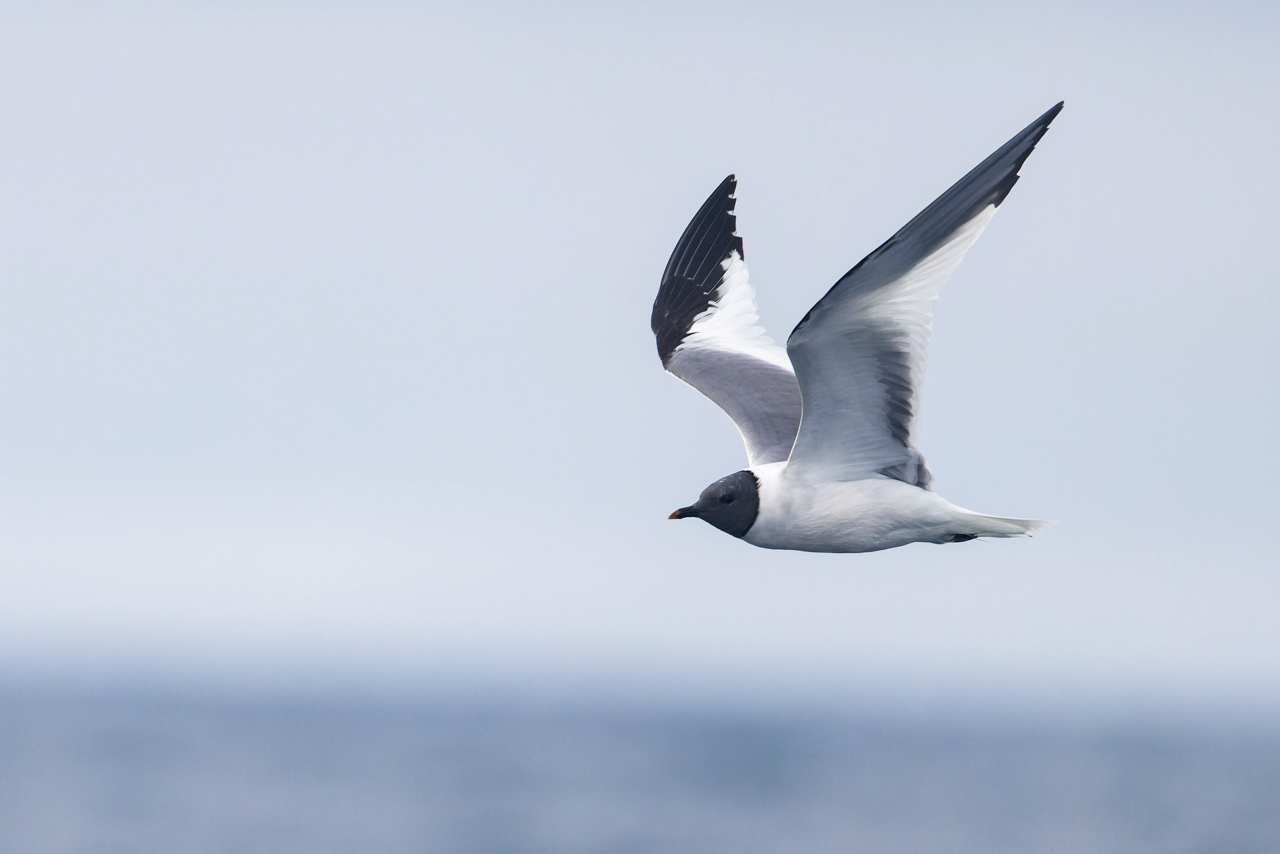
Sabine’s Gull © Blair Dudeck
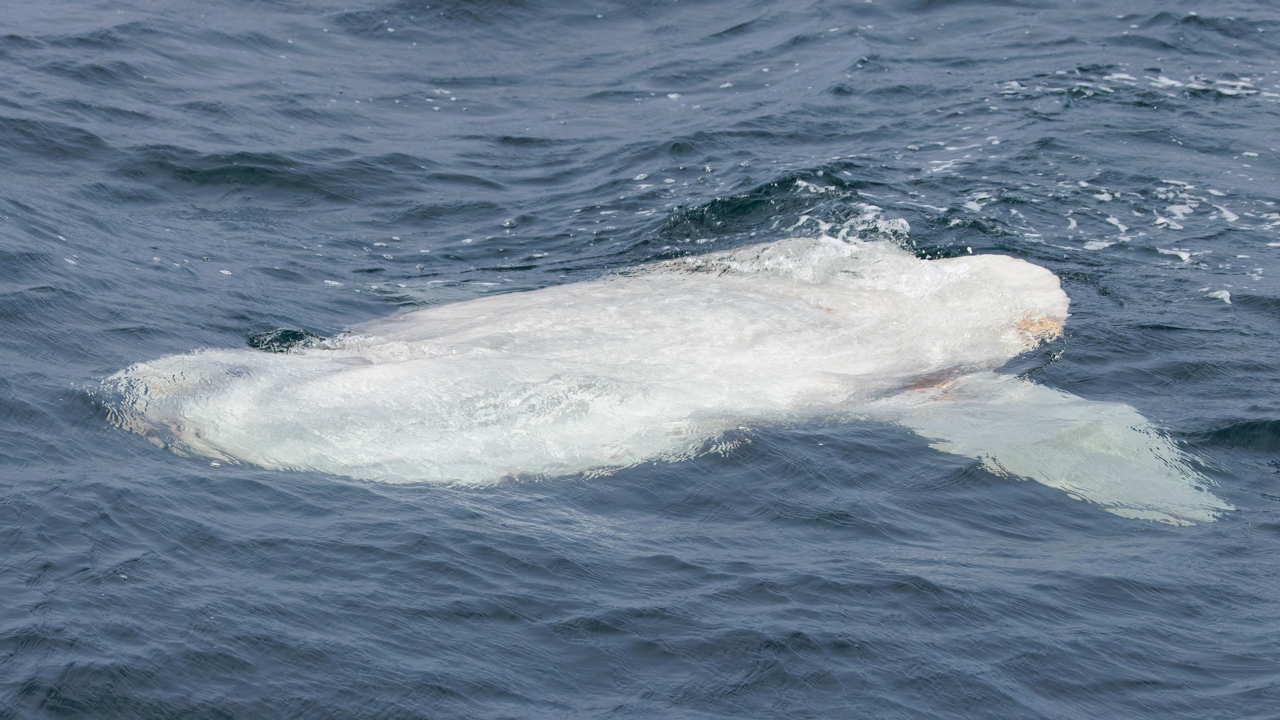
Ocean Sunfish © Blair Dudeck
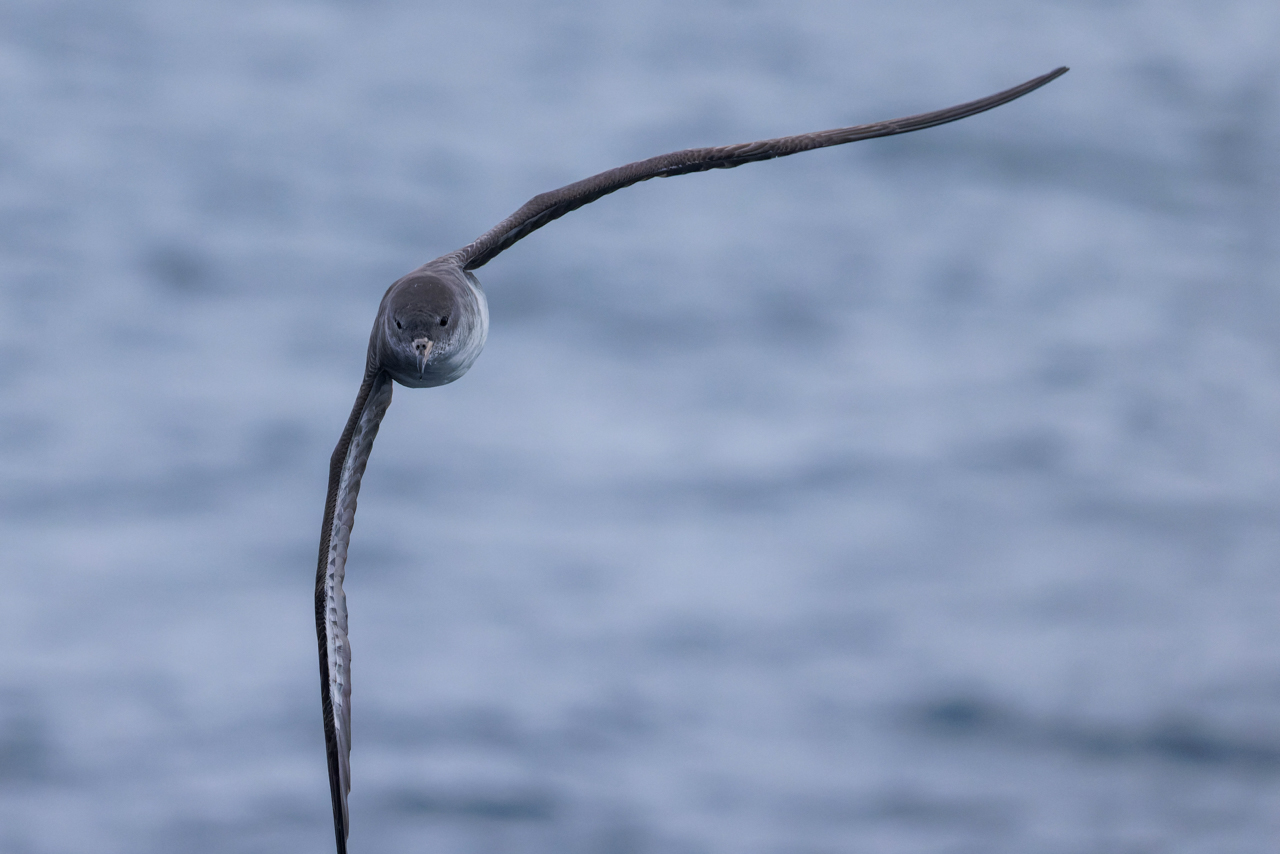
Pink-footed Shearwater © Blair Dudeck
On our way back to the marina, we stopped at Cleland Island, where we added some more nearshore species, including Common Murre, Rhinoceros Auklet, and Pigeon Guillemot. We then headed back to Tofino, where we had a delicious lunch before returning to our hotel to rest after an incredibly successful day.
Day 4: Birding in Pacific Rim National Park
Our second full day on Vancouver Island involved exploring the area between Ucluelet and Tofino. We started the day with some seawatching from Amphitrite Point, just south of Ucluelet. Here, we spotted Marbled Murrelet, Rhinoceros Auklet, Common Murre, and Red-throated Loon, as well as dozens of migrating ducks, including Northern Pintail, Northern Shoveler, and all three species of scoter.
We then walked along the beautiful coastal trail, where we added a pair of Wandering Tattlers foraging on the coastal rocks. Afterward, we drove a short distance to explore more coastal beach habitat at Combers Beach. There, we saw massive flocks of mixed shorebirds flying up and down the beach. After enjoying the show these little peeps put on for us, we made our way back to town for lunch and a short break before finishing the day birding around Tofino.
Our first stop was a wooded area near the Tofino mudflats, where we saw (or mostly heard) Hutton’s Vireo, Chestnut-backed Chickadee, Brown Creeper, Golden-crowned Kinglet, and Warbling Vireo. We also had more great looks at Steller’s Jay.
Our last birding stop of the day was Chesterman Beach, where we had a lovely walk along the beach in search of shorebirds, and we found them in the hundreds! Most were Western Sandpipers, with a healthy mix of Least Sandpipers, as well as a smattering of Sanderlings and Semipalmated Plovers. The highlight, however, was a group of five Baird’s Sandpipers. They were extremely confiding and allowed everyone to study them carefully through spotting scopes and camera lenses. What a wonderful way to end the day!
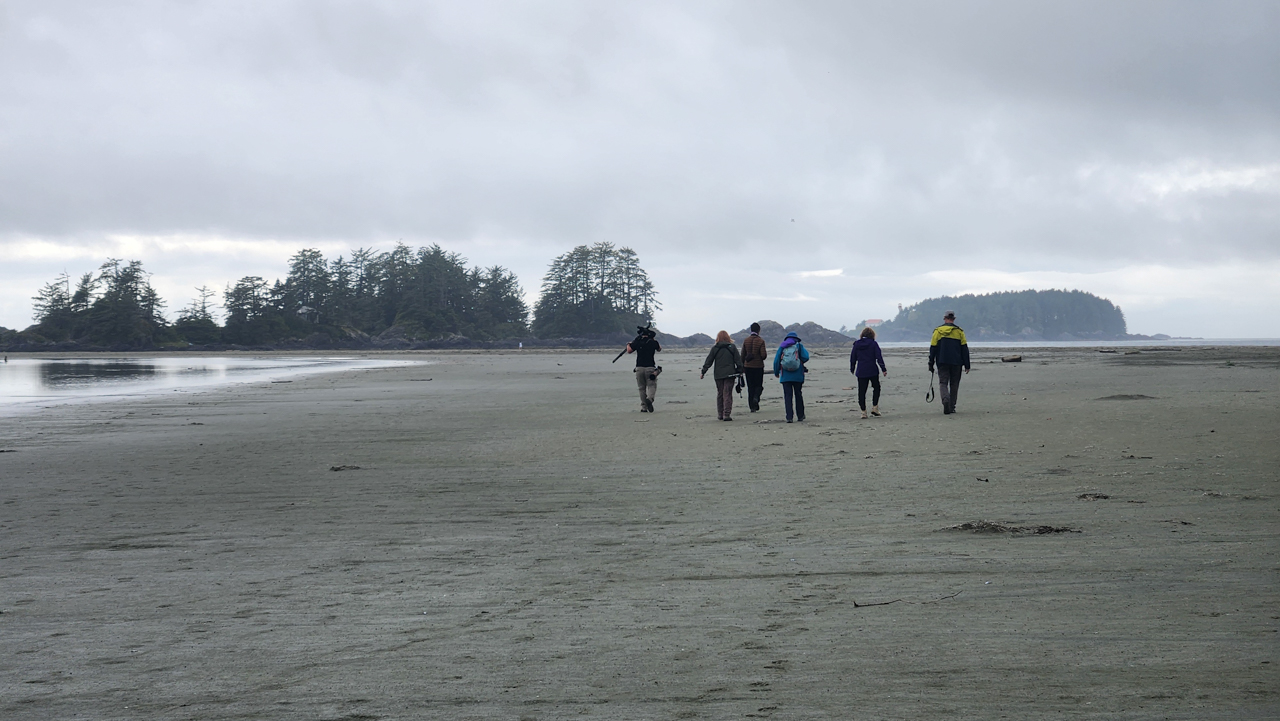
Birding on Long Beach © Jared Clarke
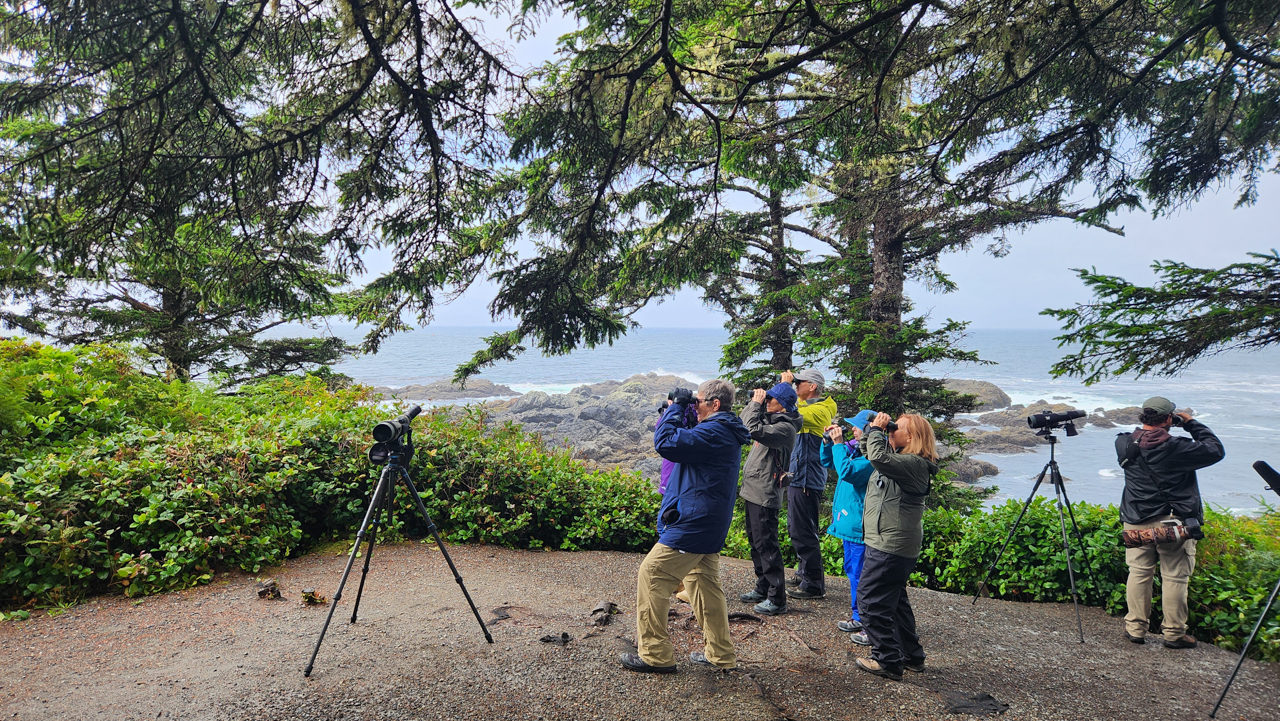
Birding Pacific Rim © Jared Clarke
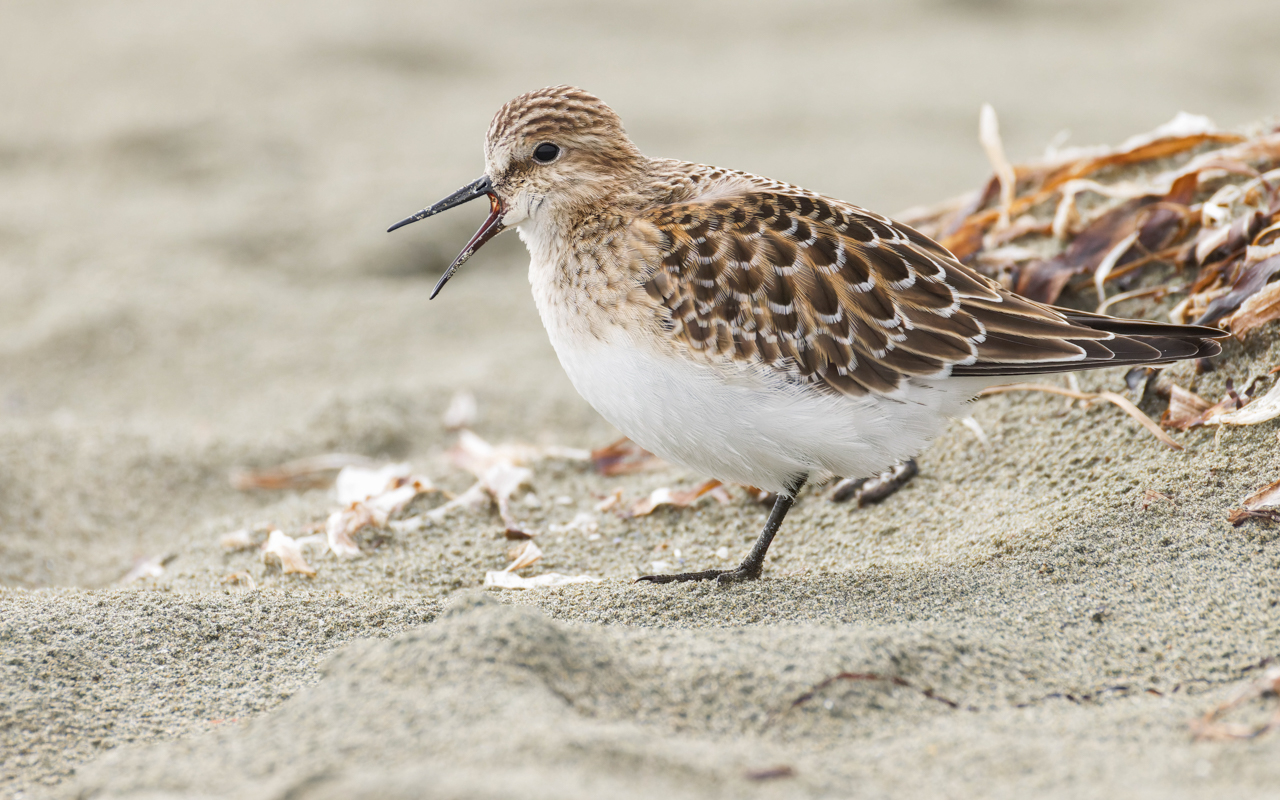
Baird’s Sandpiper © Blair Dudeck
Day 5: Ucluelet to Vancouver
After breakfast, we bid farewell to the west coast and headed back across Vancouver Island, stopping at Cathedral Grove, home to some of the last remaining ancient Douglas-firs, many of which are more than 800 years old. While taking in the splendor of this patch of old-growth forest, we added a few new birds, including Hammond’s Flycatcher, and had much better looks at Chestnut-backed Chickadee.
Our next stop was the Englishman River Estuary for lunch and some ocean birding. We watched a family of Black Oystercatchers foraging together along the waterline. We also found a distant flock of Black-bellied Plovers and mixed flocks of small shorebirds in the estuary, where we had our final looks at Western, Least, and Semipalmated Sandpipers.
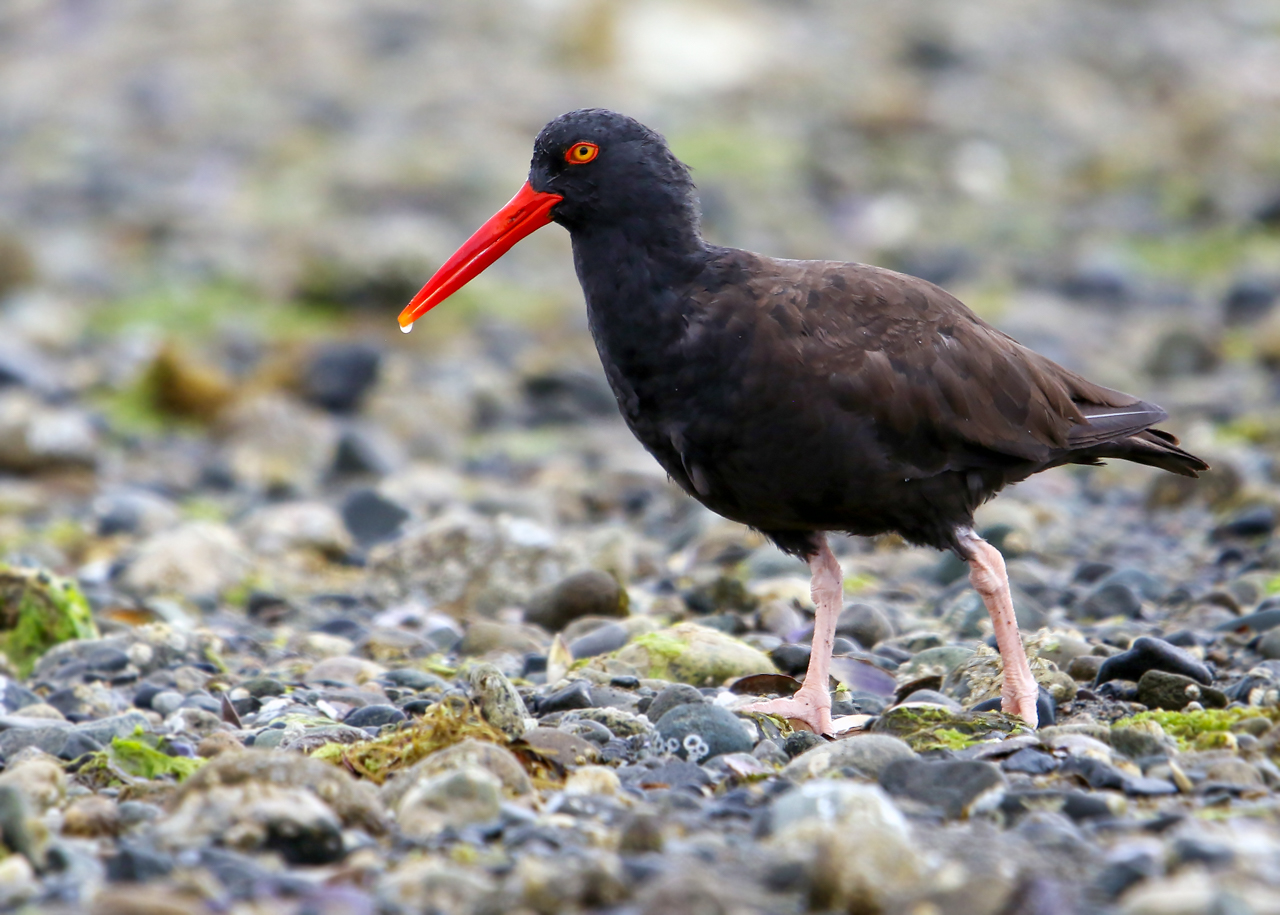
Black Oystercatcher © Jared Clarke
On our ferry ride back to Vancouver, we spotted Short-billed and Bonaparte’s Gulls, as well as several Humpback Whales. We concluded the day with a final group meal at Horseshoe Bay before returning to our hotel. All in all, a great trip exploring the best of BC’s coast!
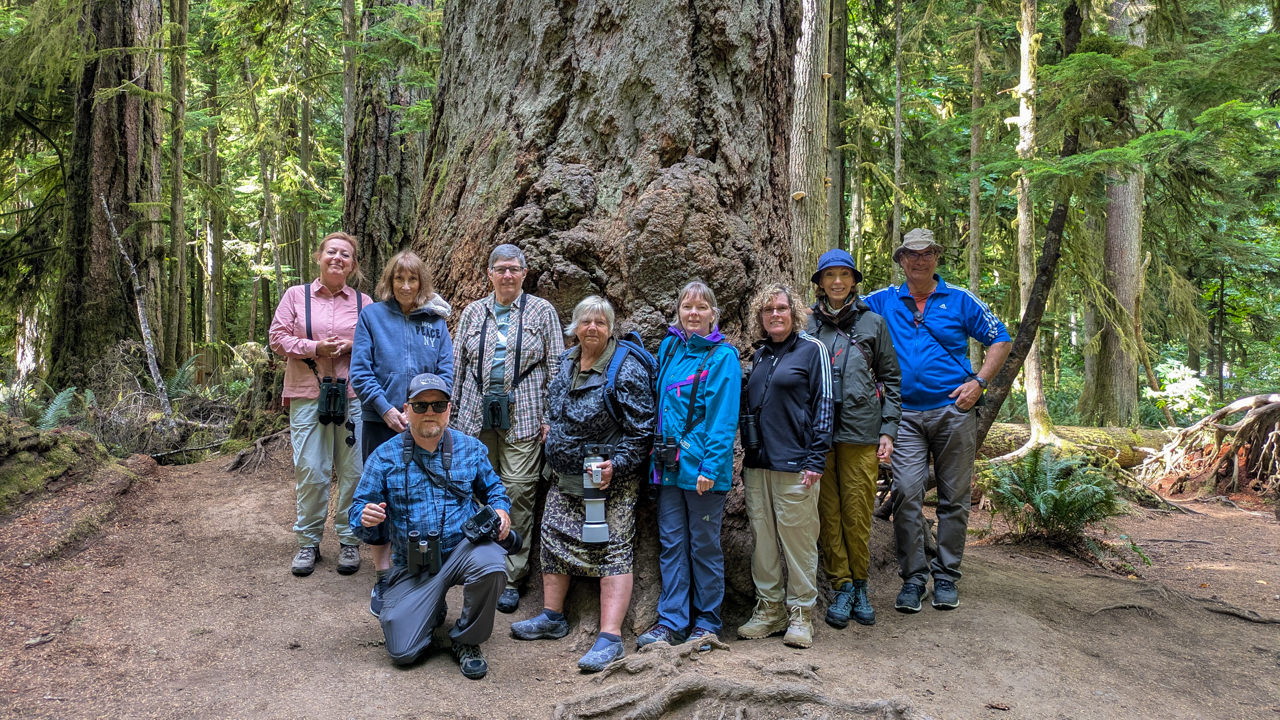
Our group