Tropical Australia Trip Report (Oct 16-24, 2026)
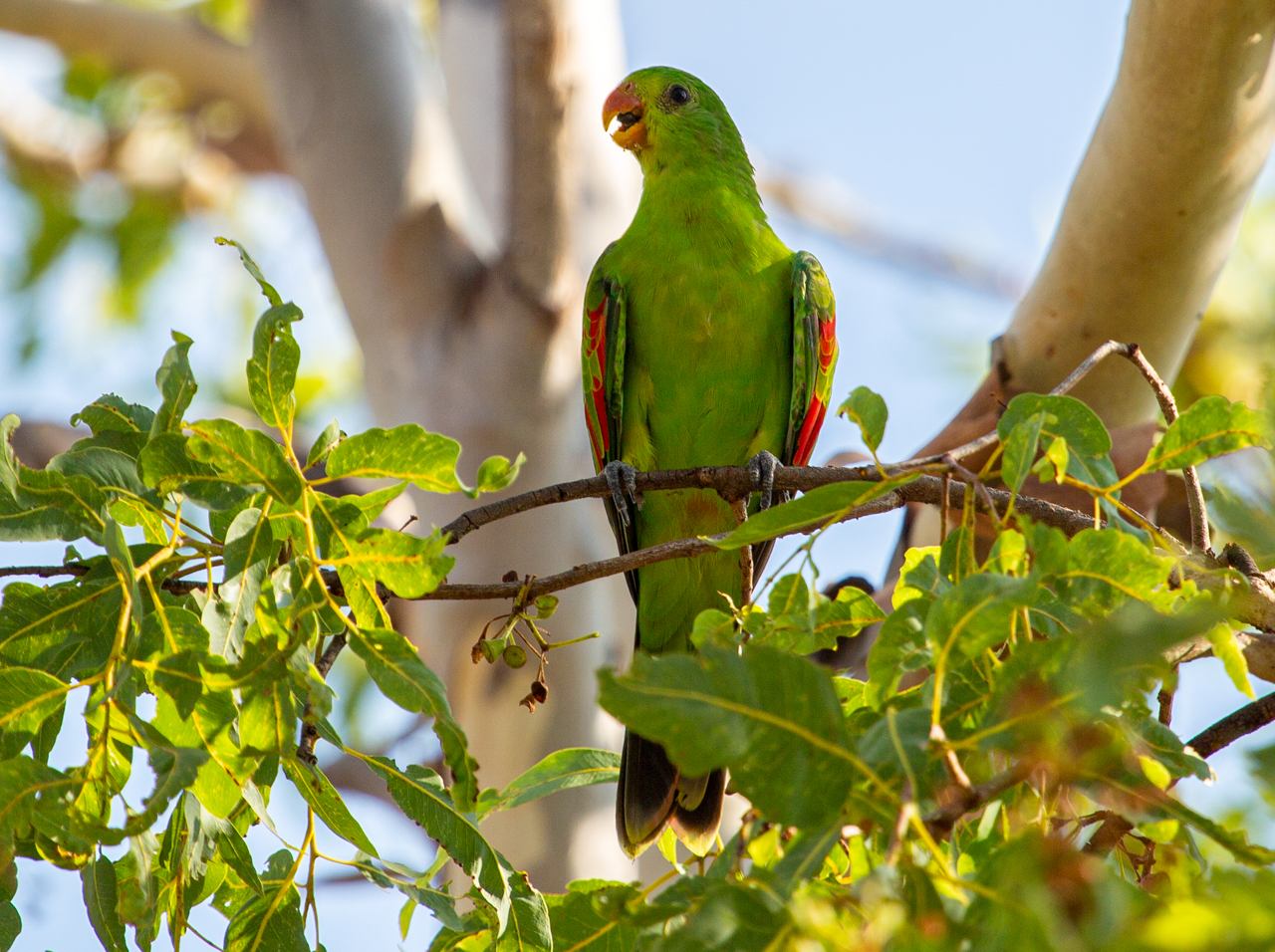
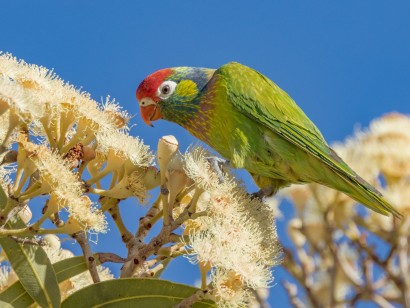
Red-winged Parrot © Maurice Hovens
Day 1: October 16
On the first day of the trip we all met at our hotel in Darwin, named Garramilla in the language of the local Larrakia people, capital of the Northern Territory. After sharing a bit more about ourselves as well as our wishes and expectations of the trip ahead, we enjoyed dinner at a local club and turned in early to get ready for our first early day.
Day 2: October 17
We left the accommodation early in the morning for our first day of birding under the hot tropical sun of the so-called ‘build-up’ season, when the mercury rises fast towards a hundred degrees Fahrenheit (38°C) during the morning hours. Prepared with plenty of water and sunscreen, our first destination was Buffalo Creek on the northernmost part of Darwin. In the dry monsoon forest we went to look for our first target bird, the colourful Rainbow Pitta. Our trip couldn’t have started better when after hearing the first calls we had great views of this beautiful bird. We couldn’t have wished for a better start! Other highlights of the forest were some colourful Rainbow Bee-eaters catching insects on the wing, a flock of noisy Sulphur-crested Cockatoos, White-throated Honeyeaters, Rose-crowned Fruit-Dove, Helmeted Friarbirds and the Little (Arafura) Shrikethrush.
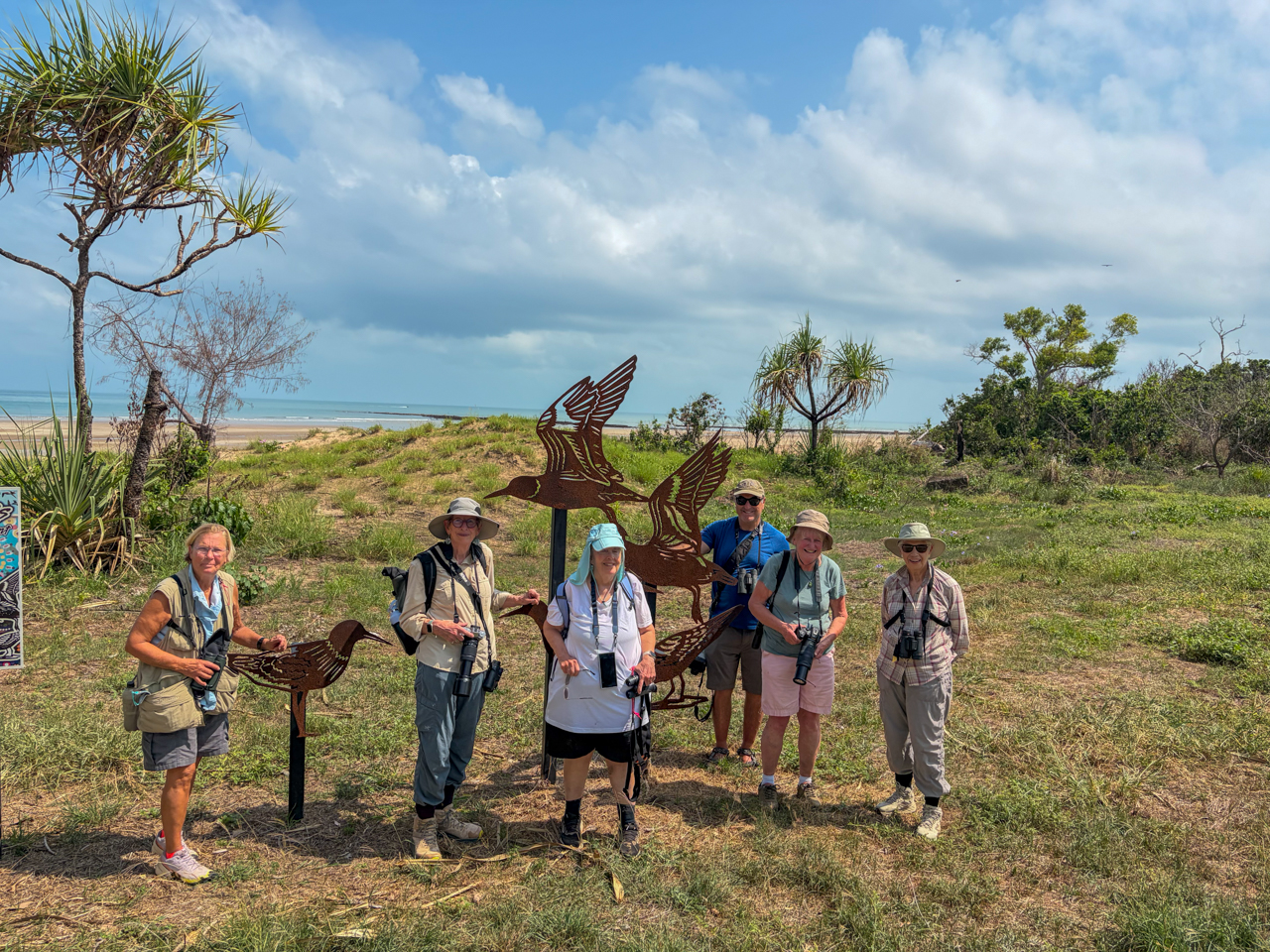
Birding at Lee Point, Darwin’s hotspot for shorebird © Maurice Hovens
We swapped the forest for the beach in search of shorebirds, however, despite the high tide only a handful of birds were found, including a Common Greenshank, Australasian Darter and a couple of Pied Cormorants, a meagre harvest for an otherwise bountiful location. We therefore decided to try our luck at the nearby Lee Point Casuarina Coastal Reserve.
Lee Point always delivers a good mix of both shore and woodland birds, and this time we had good sightings of both. On the ocean side the shorebirds weren’t roosting as close as usual, however, through the scope we had some good views of Sooty Oystercatcher, Pacific Reef-Heron, Eurasian Whimbrel, Black-necked Stork, Gray-tailed Tattler and the incredibly long-billed Far Eastern Curlew, the largest curlew that recently started to arrive on the Top End’s shores after their long migratory flight from their Siberian breeding grounds. On the woodland side of the reserve we had a lovely view of our first Blue-winged Kookaburra, the species that only chuckles and never laughs like its cousin. Other highlights included Arafura Fantail, Little Friarbird, Large-billed Gerygone and a flock of Double-barred Finch.
Our next stop was the George Brown Darwin Botanic Gardens. After lunch at a café we started our search for the Rufous Owl, a species that has become increasingly hard to find at this location, and no luck was had unfortunately. At one of the ponds we had a lovely time watching the antics of drinking White-gaped Honeyeaters and Helmeted Friarbirds; we spotted our first Forest Kingfisher and were delighted with a fly-over of a Brahminy Kite.
We left the gardens to go back to our accommodation to escape the afternoon heat for a few hours. After we felt refreshed and rested we headed towards East Point Reserve. We stopped briefly at the roadside to watch Black-necked Stork from the top of the dripstone cliffs, as well as a lone Pacific Golden-Plover and Eurasian Whimbrel. A bit further down the road we walked the East Point Mangrove Boardwalk where we sighted Lemon-bellied Flyrobin, Australian Yellow White-eye, Varied Triller, a male Shining Flycatcher with a nuptial gift for his nearby unimpressed mate, and Broad-billed Flycatcher, a species associated with mangroves.
With the sun setting and a cool breeze coming in from the Arafura Sea, we made our way back to the hotel and had another dinner at the same club.
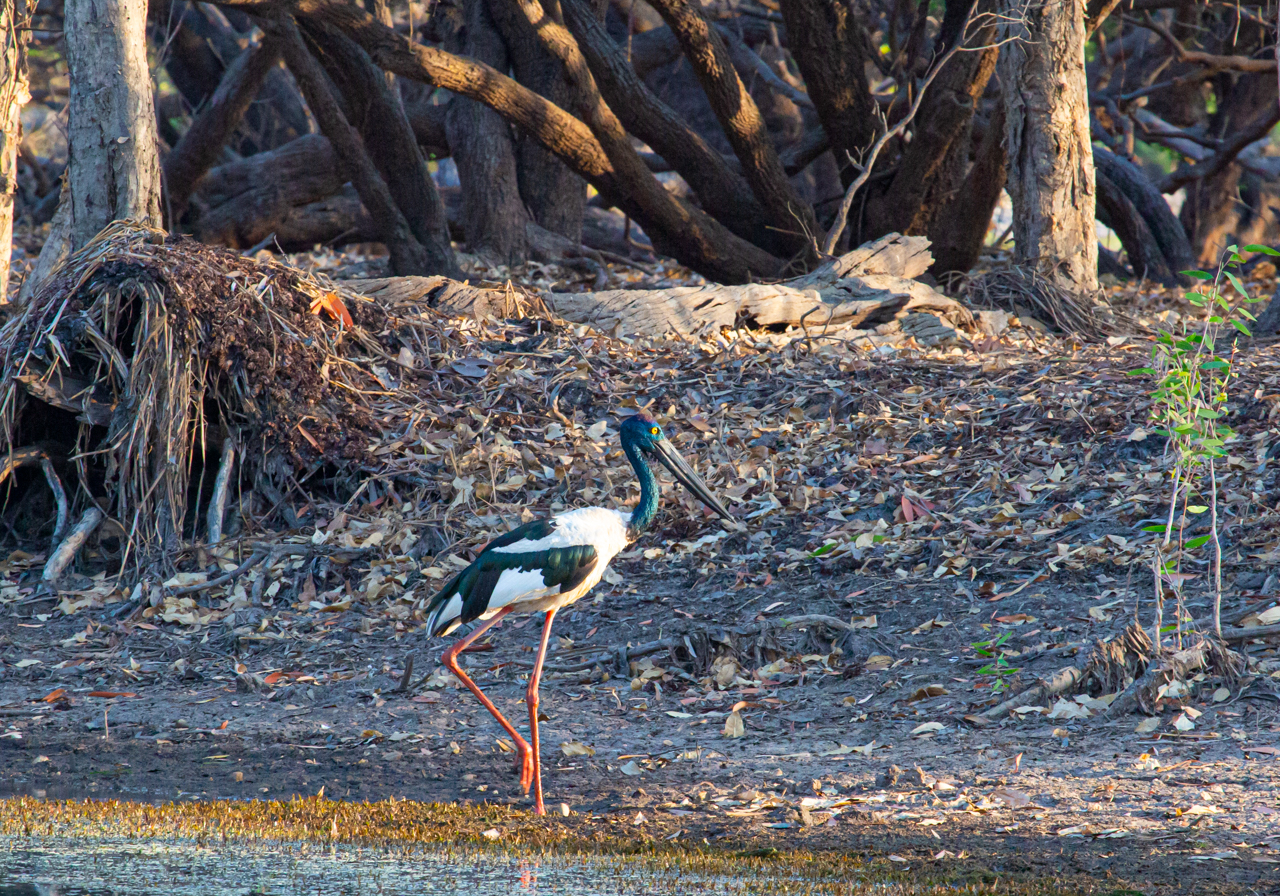
Black-necked Stork © Maurice Hovens
Day 3: October 18
After an early rise to beat the heat and make the most of our birding, we went back to Buffalo Creek to try our luck with the shorebirds once more. This time the conditions were better and the birds soon showed in great numbers. Using our scope, we had good views of both Siberian and Greater Sand-Plover, Bar-tailed Godwit, Great and Red Knot, Red-capped and Black-bellied Plover, Ruddy Turnstone and Terek Sandpiper. At the far end of the beach we managed to see great numbers of Eurasian Whimbrel and Far Eastern Curlew, and although seen from a distance it was a sight to behold. Upon return to the vehicle we had a treat with the sighting of a juvenile Brown Goshawk on its nest. A good start of the day.
We left Darwin and made our way in the direction of Kakadu National Park. To make the long journey enjoyable we had several stops along the way; Knuckey Lagoon was the first. Here we found a large congregation of birds around the drying body of water, and to our delight we caught some Australian Pratincole in breeding plumage, ready to start their journey southwards soon. Other notable sightings were Marsh and Wood Sandpiper, Pied Stilt, Little Black, Little Pied and Pied Cormorant, Whiskered Tern and a fly-over of no less than thirty-five Brolga. With water becoming increasingly sparse Magpie Goose were well represented, as well as Plumed Whistling-Duck, Green Pygmy-Goose and Radjah Shelduck. Just before leaving we had brief glimpses of Red-winged Parrot, Pacific Koel and Channel-billed Cuckoo, frugivorous brood parasites that migrate from New Guinea at the onset of the ‘wet season’.
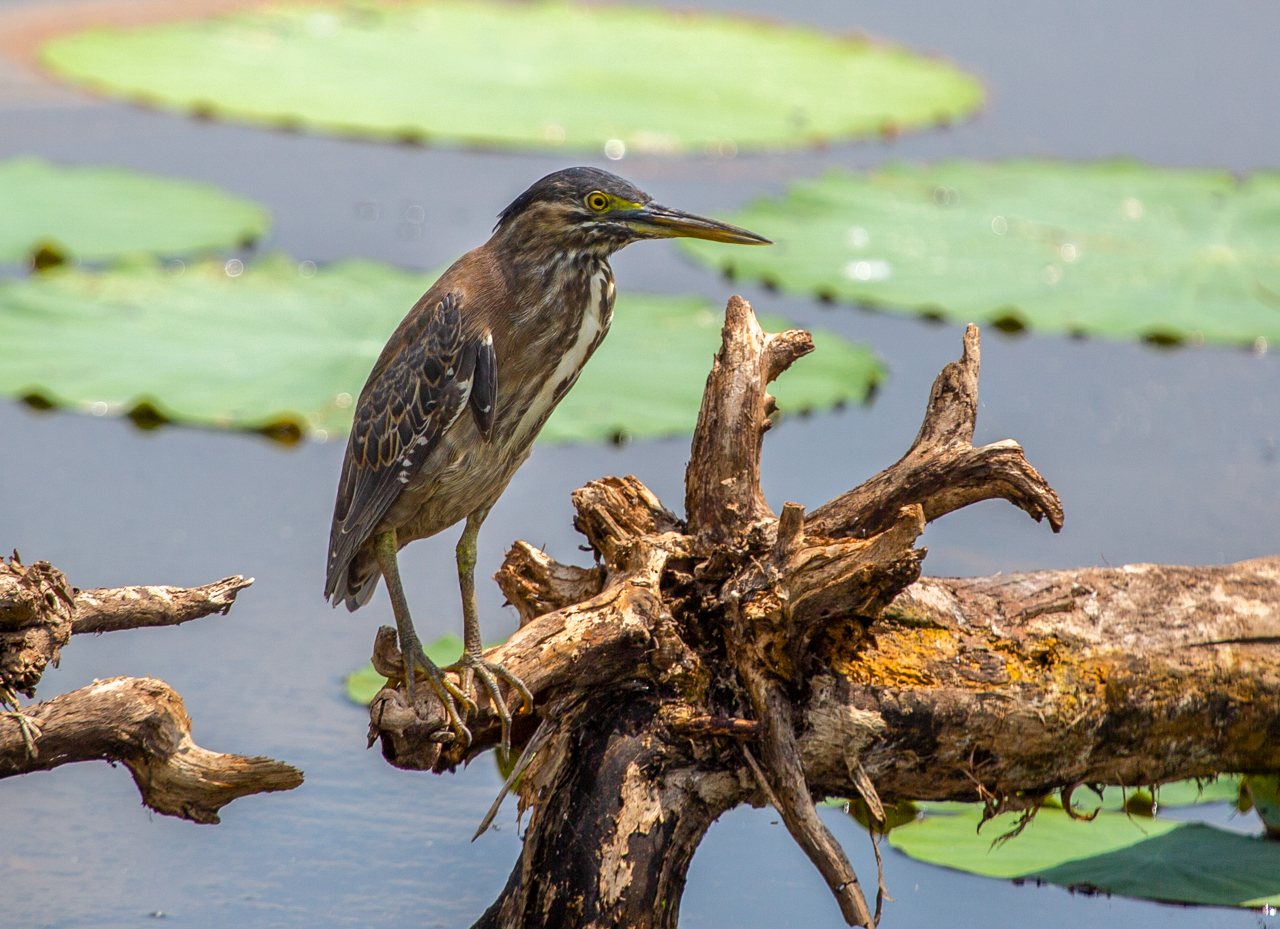
Little Heron, Fogg Dam Conservation Area © Maurice Hovens
Our next stop was Fogg Dam, one hour east of Darwin. The floodplain on the northern side of the dam wall had already completely dried up, while the water level on the southern side was getting very low. Despite the dry conditions, we had a lovely time birding. We found our first Wandering Whistling-Ducks, as well as Comb-crested Jacanas, Paperbark Flycatcher, Little Heron and Crimson Finch. The real stars of the show, however, came with the elusive White-browed Crake, hopping from lily pad to lily pad on its long toes, and a beautiful Bar-breasted Honeyeater, a species typically found in wetlands like this.
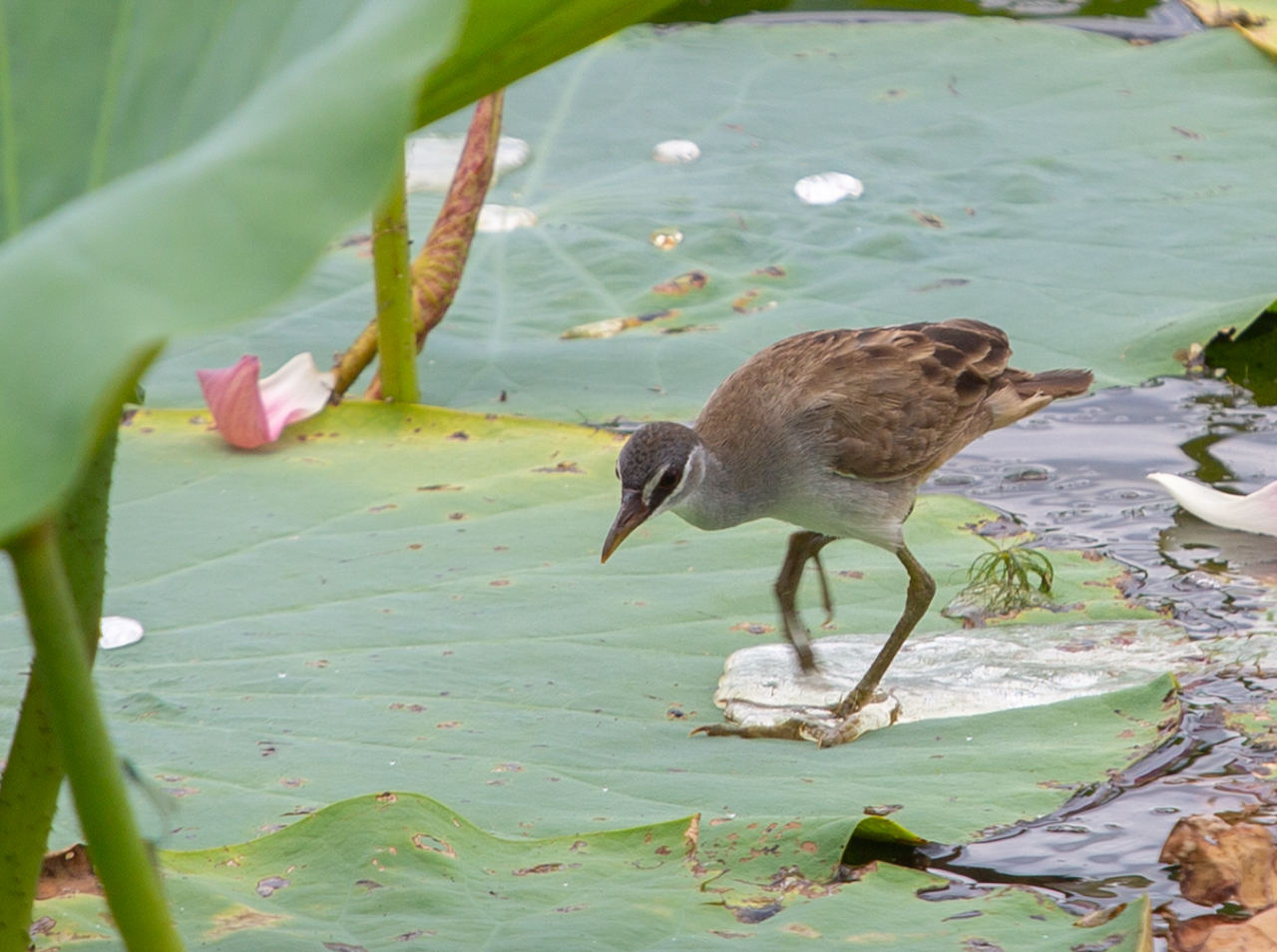
White-browed Crake Close-up © Maurice Hovens
A few stops along the road into Kakadu offered sightings of both Brown and Black Falcon, and a last short birding stop at the Bowali Visitor Centre after checking in at our accommodation delivered Red-tailed Black-Cockatoo, Little Corella and Sacred Kingfisher. Upon return to the accommodation we were treated to a sighting of a Barking Owl roosting in a nearby ironwood tree. What an end to the day!
To the sounds of wailing Bush Thick-knees, we drove to the the hotel restaurant to have dinner and go through all the sightings we enjoyed.
Day 4: October 19
The day started very early with our drive to Yellow Water, named Ngurrungurrudjba by the local Murumburr clan. Here we went on board with the infamous Dennis Miller, ‘Master of the Billabong’, in search of the wetland’s rich bird and wildlife. We were not disappointed with great sightings of White-bellied Sea-Eagle and Whistling Kite, a plethora of waterbirds such as Plumed and Wandering Whistling-Duck, Radjah Shelduck, Nankeen Night Heron, Little, Plumed, Great and Eastern Cattle-Egret, Green Pygmy-Goose and of course the iconic Magpie Goose, to name just a few.
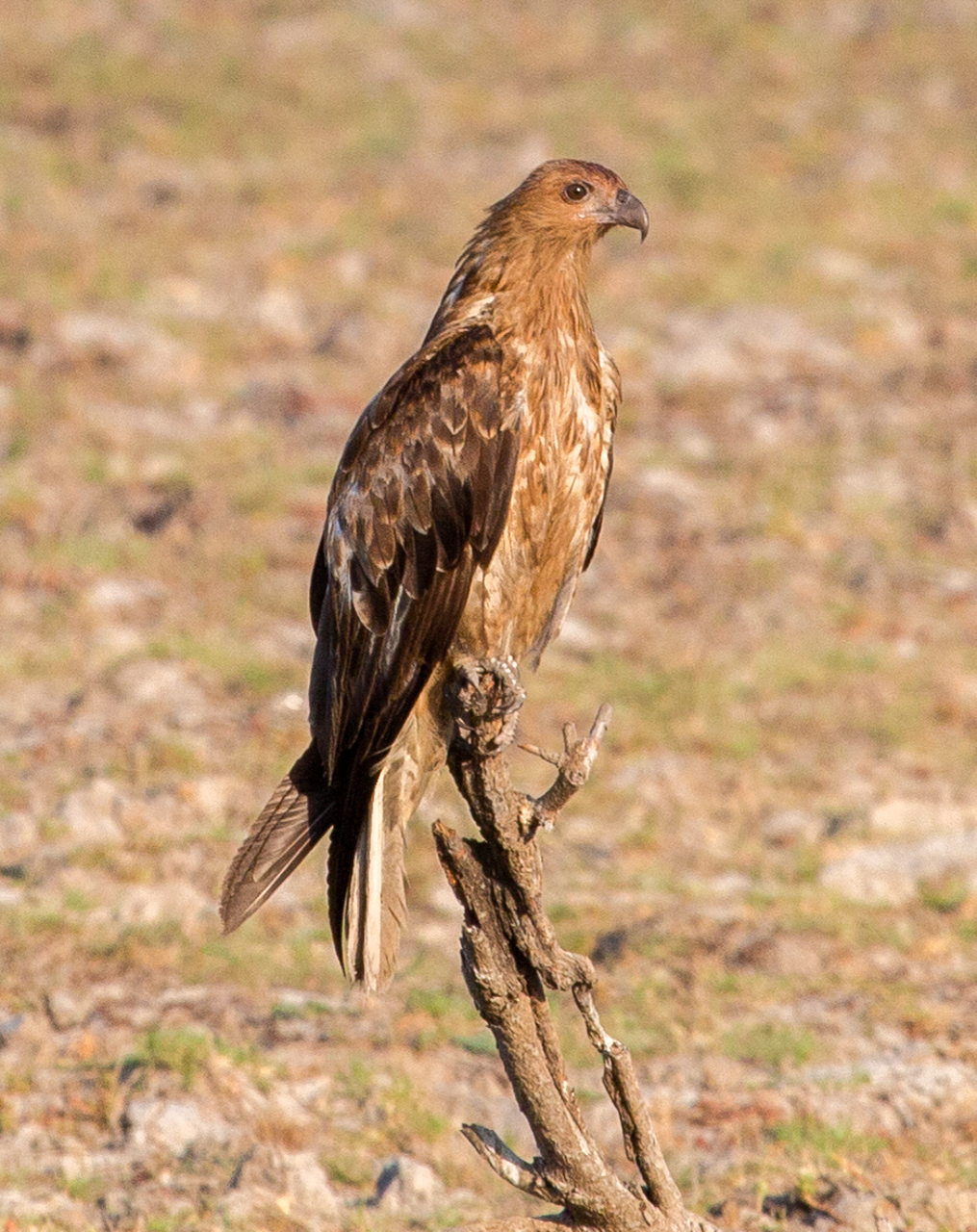
Whistling Kite © Maurice Hovens
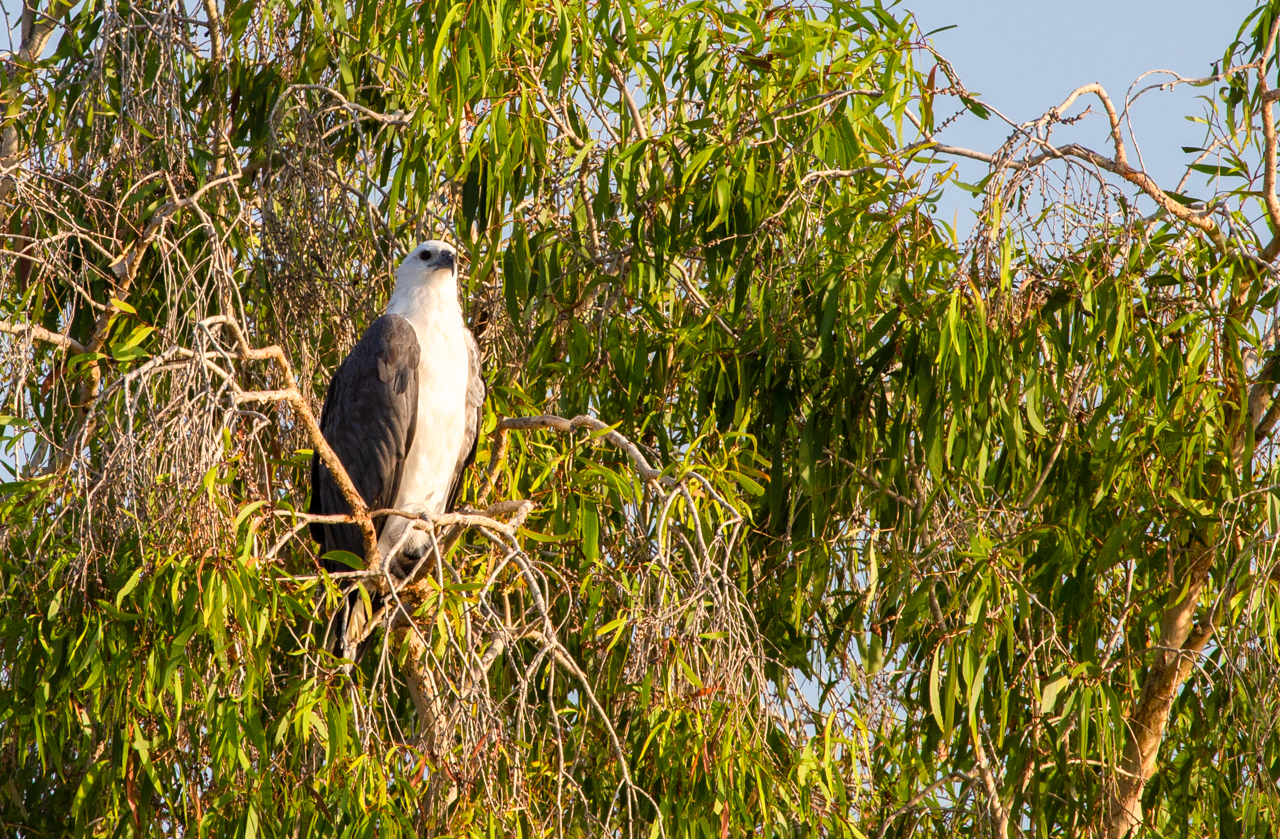
White-bellied Sea Eagle © Maurice Hovens
Large species such as Brolga and Black-necked Stork made several appearances, and so did the small Azure Kingfisher, perching and pouncing amongst the freshwater mangroves. Further towards the mudflats of the drying billabong we had lovely views of Sharp-tailed Sandpiper, Black-fronted Dotterel, White-browed Crake, Australasian Swamphen and Royal Spoonbill. And of course, a visit to Yellow Water would not be complete without the many Estuarine Crocodiles that call this place home.
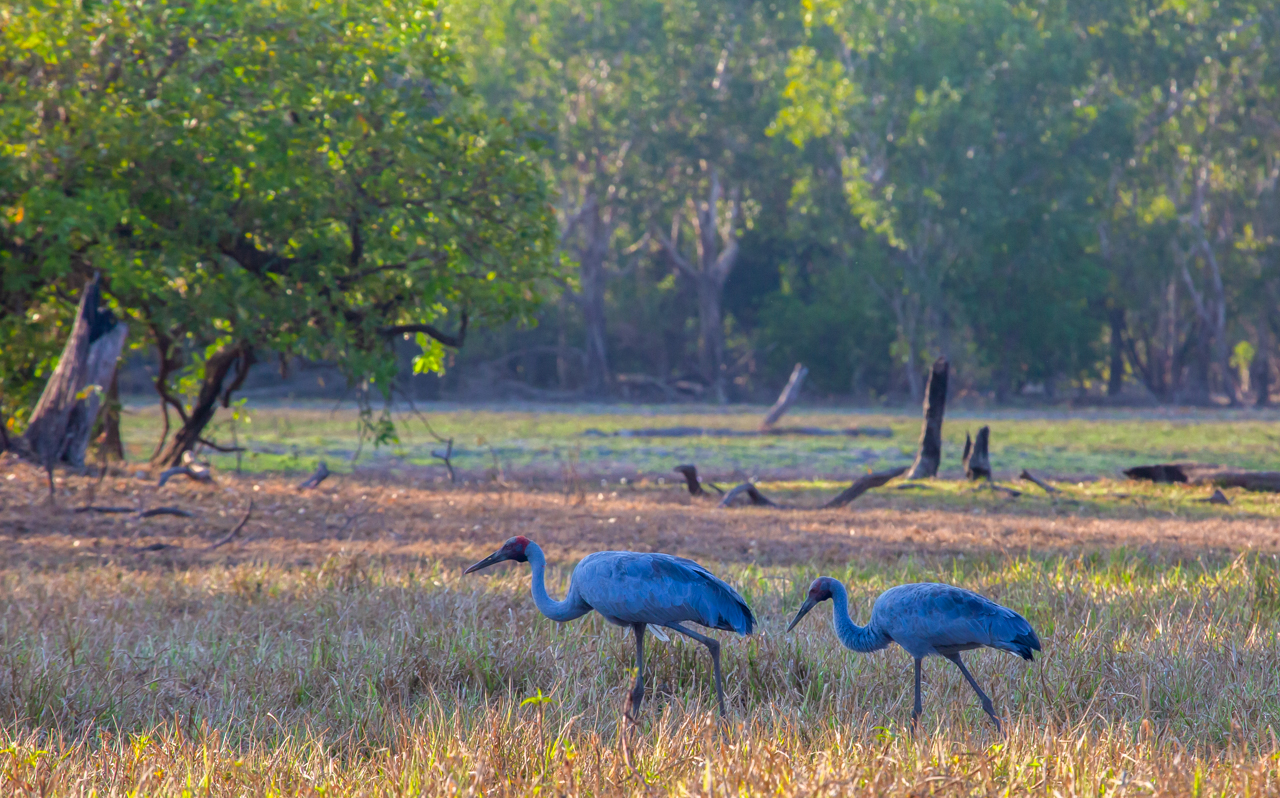
Brolga in the golden morning light © Maurice Hovens
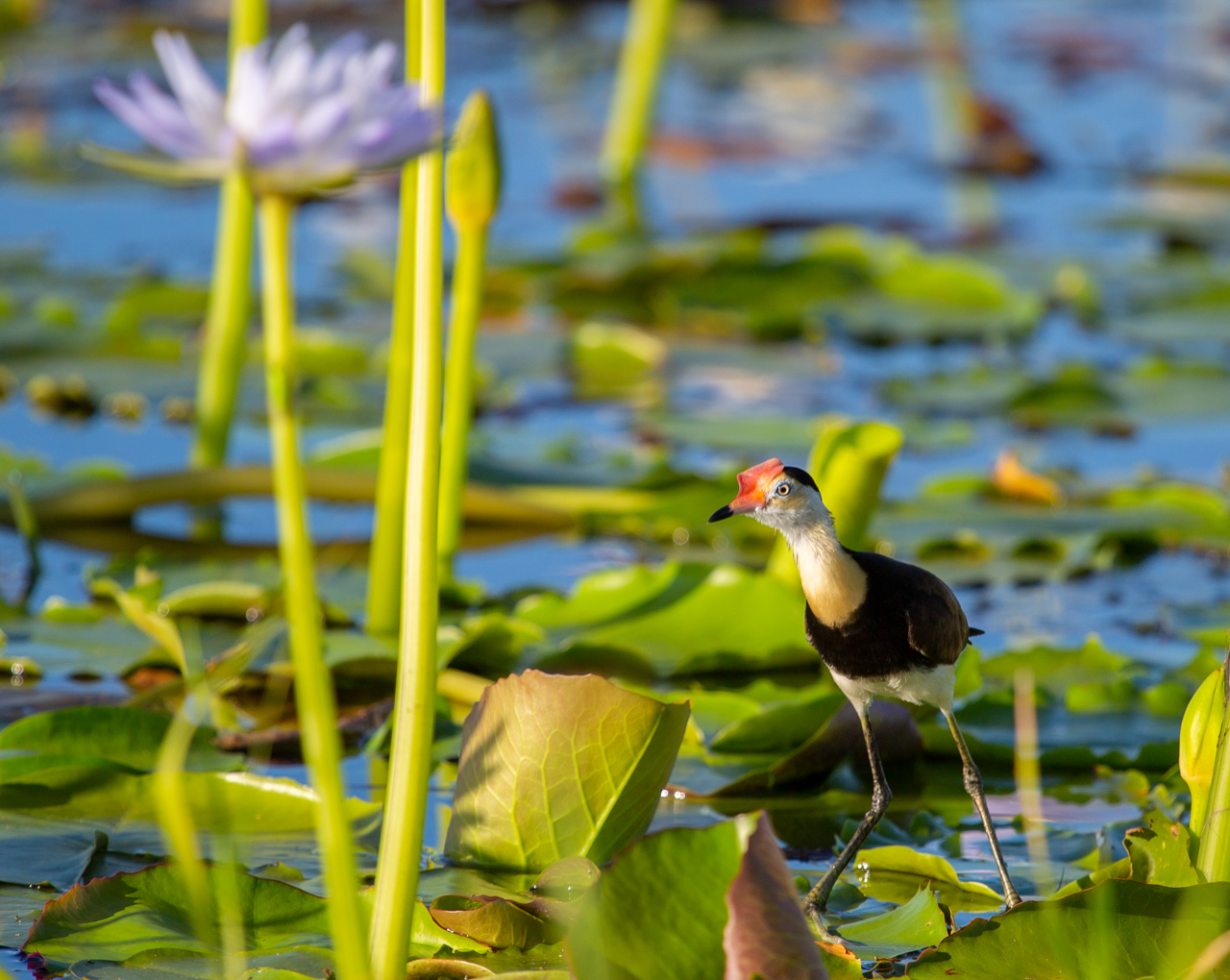
Comb-crested Jacana, aka the ‘Jesus-bird’ © Maurice Hovens
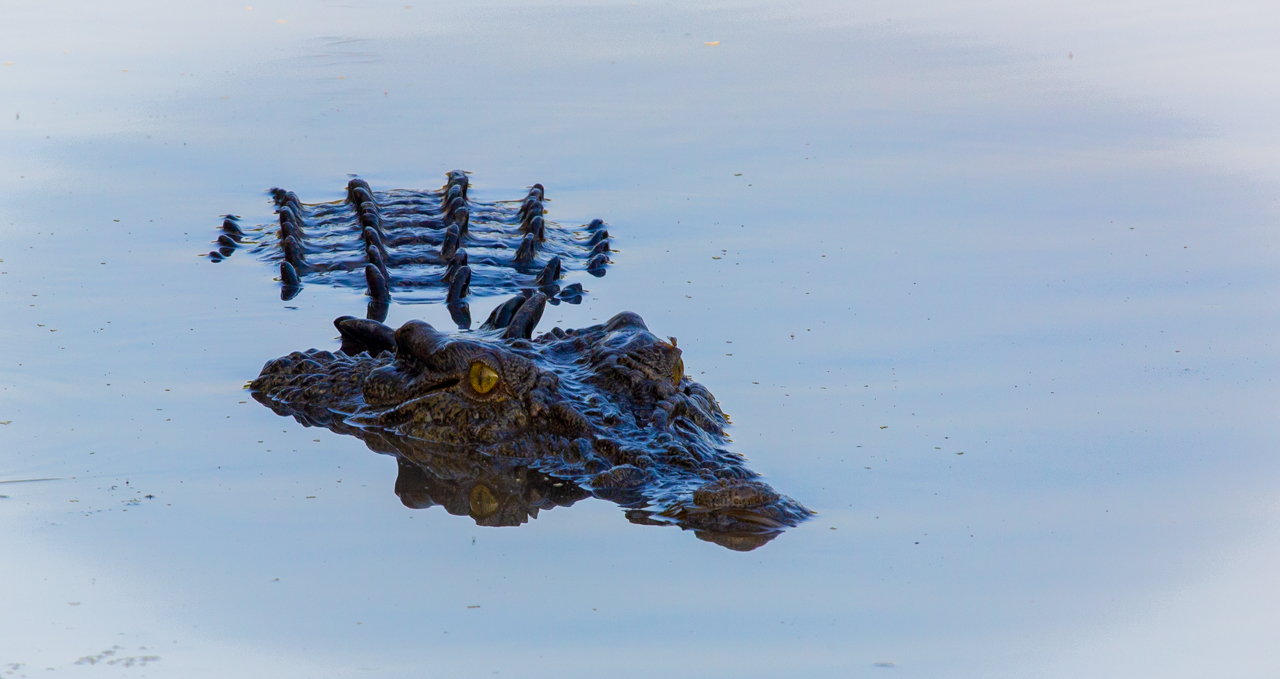
Estuarine Crocodile © Maurice Hovens
Shortly after the fantastic breakfast buffet at Cooinda, we decided to make the most out of the still cool morning, and headed out for a walk around the resort. Some of the highlights were Gray Whistler, Shining Flycatcher, Red-tailed Black-Cockatoo and Spangled Drongo and Collared Sparrowhawk, both on nests. As usual, Cooinda also proved to be a very reliable place for the many resident Blue-faced, Rufous-banded and White-throated Honeyeaters.
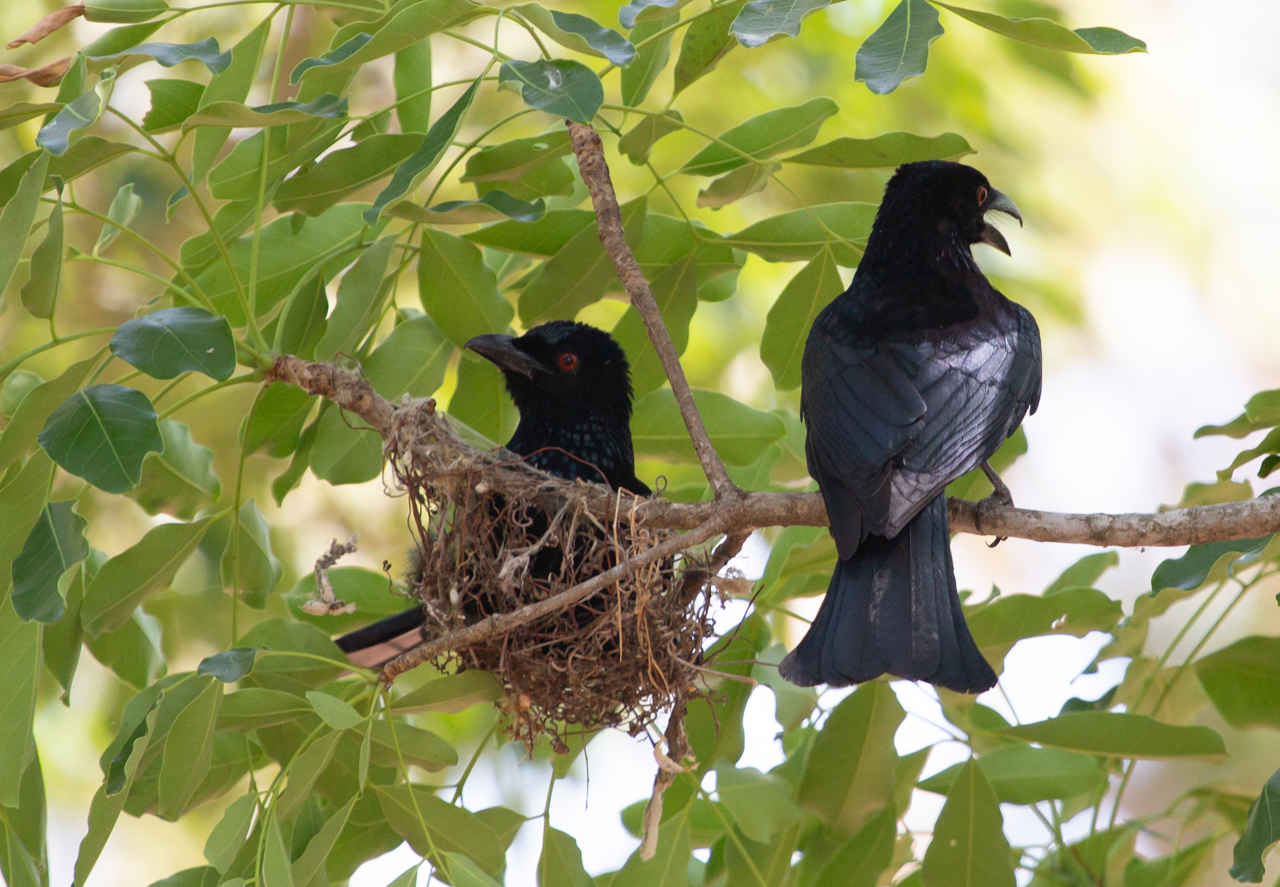
Spangled Drongo © Maurice Hovens
We said our goodbye to Cooinda and stopped by at the nearby Warradjan Cultural Centre. Some birding around the big fig trees on the grounds rewarded us with Dusky Myzomela, Horsfield’s Bronze-Cuckoo, Green Oriole and Sulphur-crested Cockatoo.
We headed back to our accommodation for our afternoon siesta as the heat already had taken its toll. Just before going out to Nourlangie Rock we were greeted by a Pheasant Coucal right in front of our cabins, a rare occurrence for this rather shy bird. At Nourlangie we gave it our first try for the endemics of the sandstone escarpment, yet the hot conditions proved not to be productive for great birdwatching. Nevertheless, we managed to have a glimpse of Sandstone Shrikethrush and a Chestnut-quilled Rock-Pigeon, two of the main target birds for this area. After stopping at the famous Anbangbang rock art gallery we had further views of Great Bowerbird, Forest Kingfisher and Northern Fantail.
After dinner at the restaurant we went out for a spotlight around our accommodation, where apart from Bush Thick-knee, a Blue-winged Kookaburra and some flying foxes no other night creatures were spotted.
Day 5: October 20
After another early rise, we made our way towards the Bardedjilidji walk, a loop around the sandstone outliers in the East Alligator region of the park. Where the previous day we didn’t have any luck with the endemic Black-banded Fruit-Dove, at this location we managed to have a brief glimpse of these shy birds. However, both the Sandstone Shrikethrushes and Chestnut-quilled Rock-Pigeons seemed to have already retreated underneath the many rock ledges on this particularly hot morning. However, our persistence in search for birds was rewarded with sightings of Oriental Dollarbird, Mistletoebird, Leaden Flycatcher, Little Bronze-Cuckoo and a fast and low-flying Brown Goshawk with its morning breakfast. Knowing we had more chances for Chestnut-quilled Rock-Pigeon and Sandstone Shrikethrush, we made our way to Ubirr to have a look at its exquisite rock art galleries.
While having breakfast at Ubirr picnic area, we kept our eyes peeled for birds. Soon two Rose-crowned Fruit-Doves flew past, while some noisy Gray-crowned Babblers scurried around the grounds. We then dived into the deep past by immersing ourselves in the rich tapestry of rock paintings, ranging from benevolent Mimi-spirits, to X-ray-styled Barramundi, Saratoga, Wallabies, Goannas and Pig-nosed and Long-necked Turtles, and of course the long-extinct Thylacine painted on a surface high above the ground. After a visit to the lookout over the Nadab floodplain we enjoyed another avian highlight with a Forest Kingfisher flying out of its arboreal termite nest home.
After some refreshments at a local store we parked our vehicle at the Cahill’s Crossing Carpark, ready to spot some more crocodiles that call this stretch of the East Alligator River home. At the lookout point over the river we saw Common Sandpiper, White-faced Heron and Great Egret. But the biggest reward came on our way back to the carpark, when a Rainbow Pitta showed in all its colourful glory, the second one of this trip, and a great opportunity to get some close-up photographs!
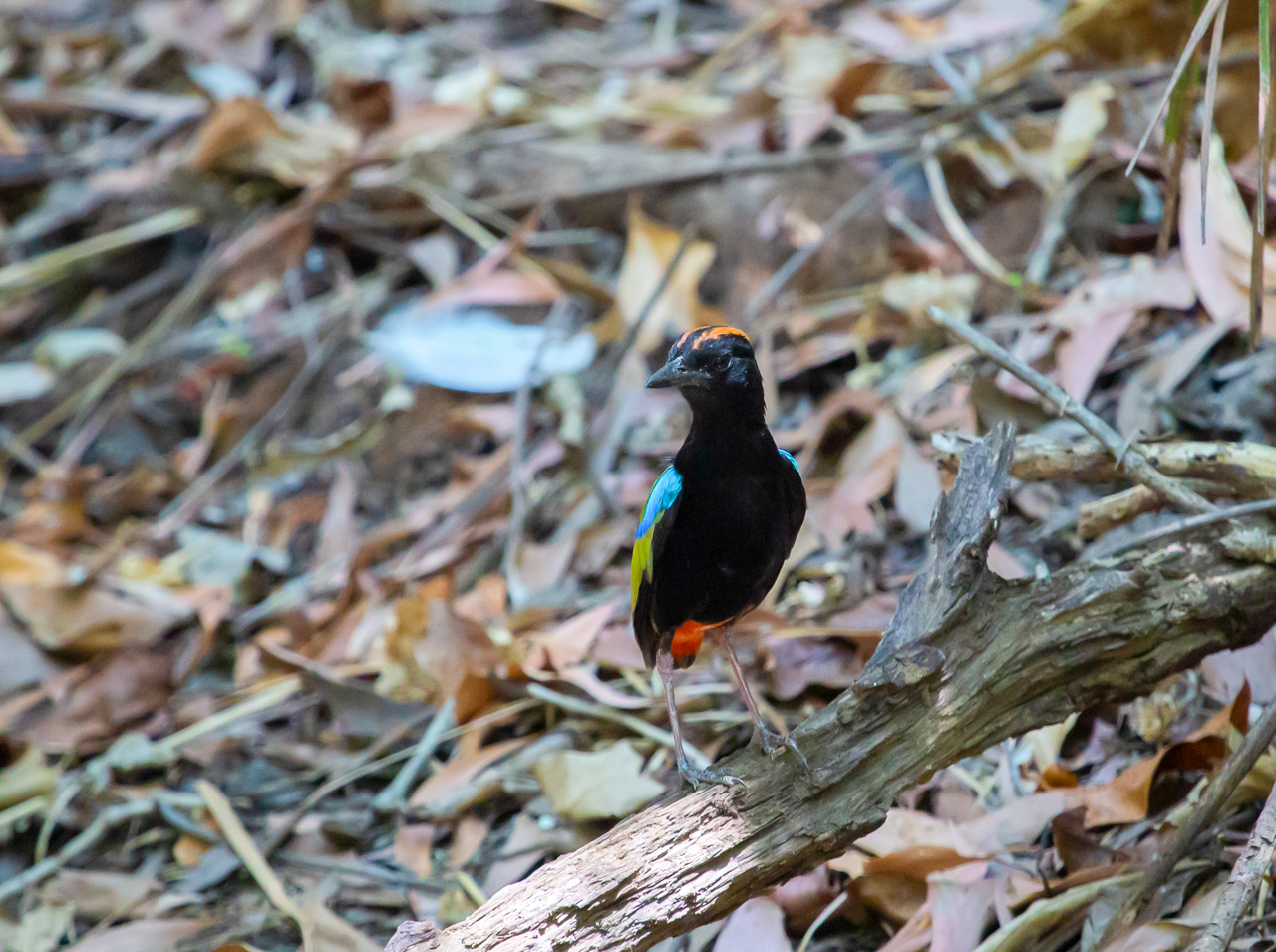
Rainbow Pitta, Jewel of the Top End © Maurice Hovens
After our daily afternoon rest, we headed out to the Jabiru water treatment plant, where apart from the numerous Radjah Shelduck and Whistling-Duck species the highlights came in the form of Australasian Grebes and a Golden-headed Cisticola.
Last stop of the day was Bowali Visitor Centre, where we had good views of Mistletoebird, another Brown Goshawk, White-bellied and Black-faced Cuckooshrike. We had dinner at the hotel restaurant for the last time and made for an early night in preparation for another big day ahead.
Day 6: October 21
Today we were making our way to Pine Creek, but before leaving Kakadu, we planned for a few more stops within the National Park. The first was Nourlangie, where we searched for some of the endemics of the sandstone escarpment the day before yesterday. We arrived before the gate opened, so made a little stop at the Nanguluwur car park and looked for birds in the open savannah woodlands. This place is known for its friarbirds, and it didn’t take long before we finally found the third species that occurs in the Top End, the Silver-crowned Friarbird. Other highlights we spotted were Pacific Koel and a group of Gray-crowned Babblers foraging in a patch of recently burned forest.
We didn’t spend too much time here, as just after the gate opened we drove to Nourlangie. We quietly walked through the forest, eyes and ears open for any movement. All of a sudden we were surprised by a flash of green zooming past, a bird that turned out to be a Pacific Emerald Dove that got alarmed by our presence. Not much later a Black-banded Fruit-Dove flew past, one of our target birds. Unfortunately, it landed close to the rock and didn’t make another appearance. For the next twenty minutes or so we tried to locate a few White-lined Honeyeaters that were calling nearby, but the only birds that showed up from the same spot were some Helmeted Friarbirds; how frustrating! Resigned to the prospect we wouldn’t find any other endemics we slowly made our way back to the carpark when all of a sudden two brown birds appeared next to the path: Chestnut-quilled Rock-Pigeons! Finally, our persistence had paid off. Many looks through the scope and photographs further, we walked back to the vehicle to drive to the nearby Anbangbang Billabong for breakfast.
Upon arrival, we were greeted by many waterbirds such as Little Pied and Little Black Cormorant, Plumed and Great Egret, Comb-crested Jacana and a Pacific Heron. All of a sudden the question ‘Are these Emus?’ was asked, and to our amazement two Emus walked on the opposite side of the Billabong indeed, a sight not often witnessed in Kakadu! Upon further scanning of the tree line where the Emus had disappeared we found a Little Eagle overlooking the scene, and if that was not enough a Blue-winged Kookaburra flew in with a snake it had caught, perching just above our breakfast table. The snake was killed and eaten within a few minutes, after which we scanned the Billabong one last time. We found Royal Spoonbill and were entertained by the acrobatics of an Oriental Dollarbird, showing its white spots underneath its beautiful blue wings.
After a beautiful morning of birding we briefly stopped at Cooinda for coffee and a quick look at the Collared Sparrowhawk we saw there a few days ago. We then made our way towards Pine Creek, stopping at the Bukbukluk lookout and Mary River Ranger Station, where we spotted Silver-backed Butcherbird, Yellow-throated Miner and Blue-faced Honeyeater.
After arrival in Pine Creek we checked in at our accommodation. A little rest was planned, however, the Hooded Parrots we were going to look for later in the afternoon had already made their appearance in good numbers, so we decided to make the most out of this opportunity. Apart from the Hooded Parrots we had great views of Red-winged Parrot, Pacific Koel, Great Bowerbird, Gray-crowned Babbler and Masked Finch, all in the waterpark in front of our accommodation.
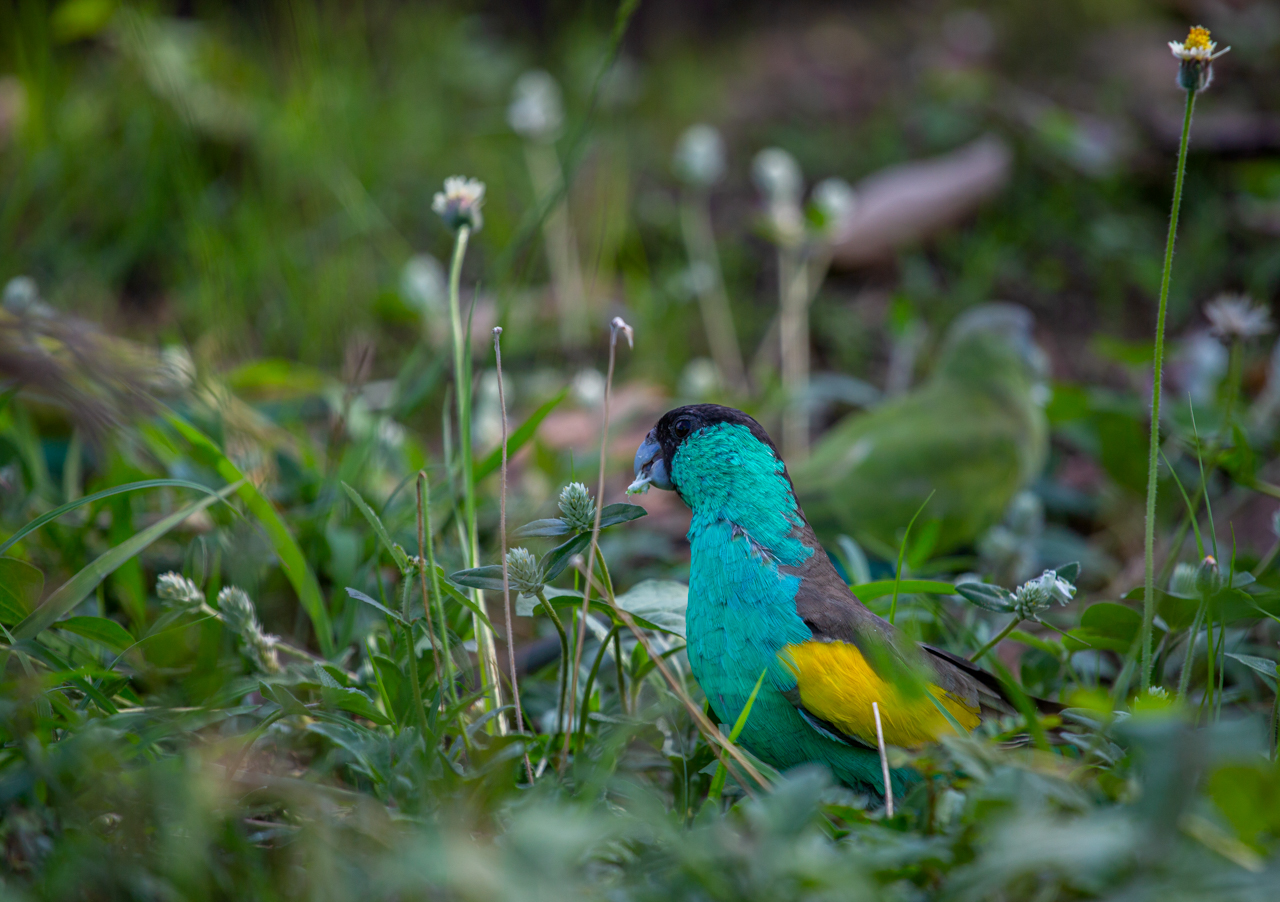
Hooded Parrot, Male © Maurice Hovens
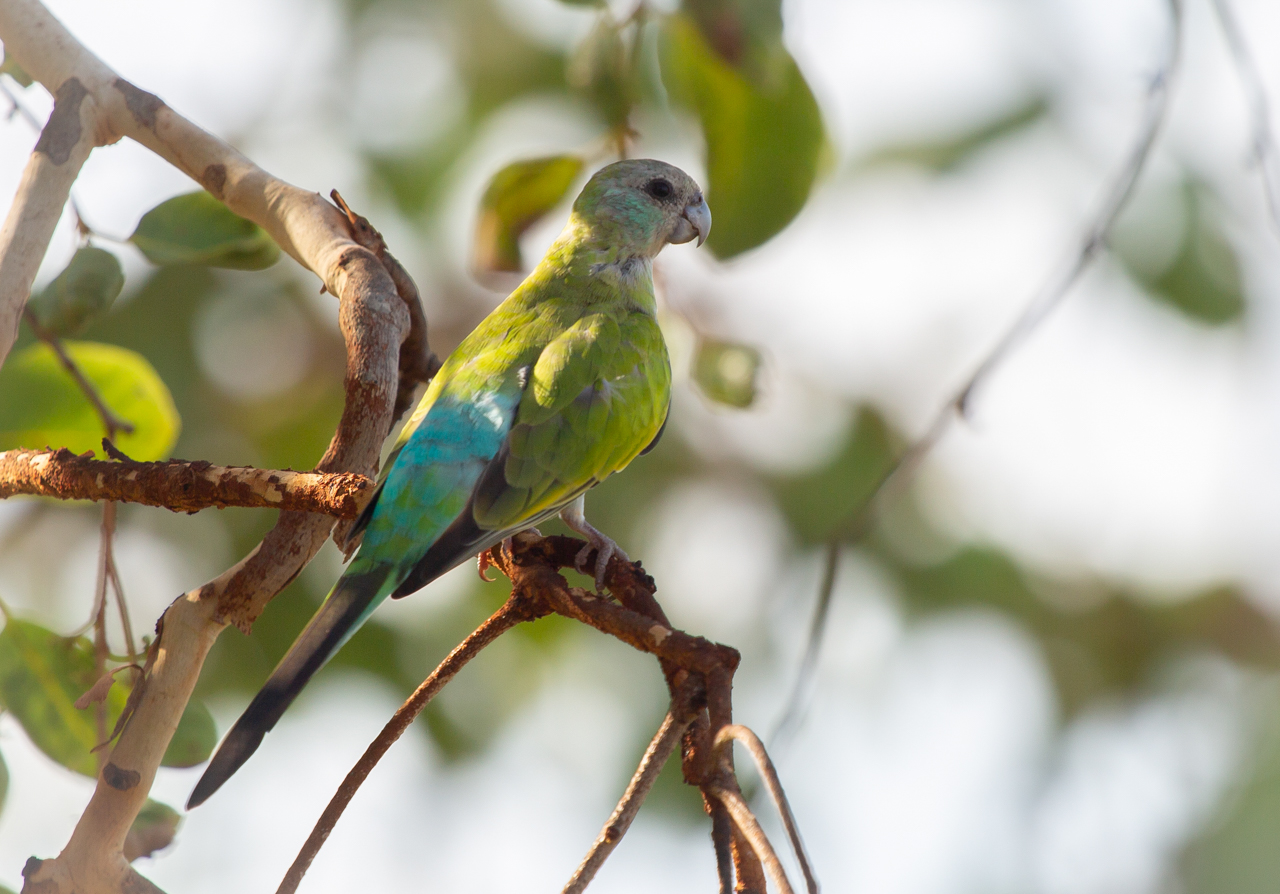
Hooded Parrot Female © Maurice Hovens
After a long day, we had an early dinner at a local restaurant and turned in early for another early morning the following day.
Day 7: October 22
Today we rose early and drove to the Ferguson River on Edith Falls Road, the only place in the Katherine-Pine Creek-Darwin area where Gouldian Finch had been seen recently. Despite the fact that the last sighting dated two weeks back, we were full of optimism and settled down quietly in front of the almost dry waterhole. Apart from a few cautious Peaceful Doves it took a fairly long time before the first finches appeared: Crimson, Masked, Double-barred and Long-tailed Finch all appeared, but no signs of Gouldian. Our hearts briefly lifted when a male and female Hooded Parrot came in for a drink, and we decided to stay as long as needed. Further scanning delivered Rufous-throated Honeyeater, Paperbark and Leaden Flycatcher and Azure, Forest and Sacred Kingfisher, but no Gouldian. With the sun starting to truly beat down on us we decided to drive to Katherine and give it another go the day after.
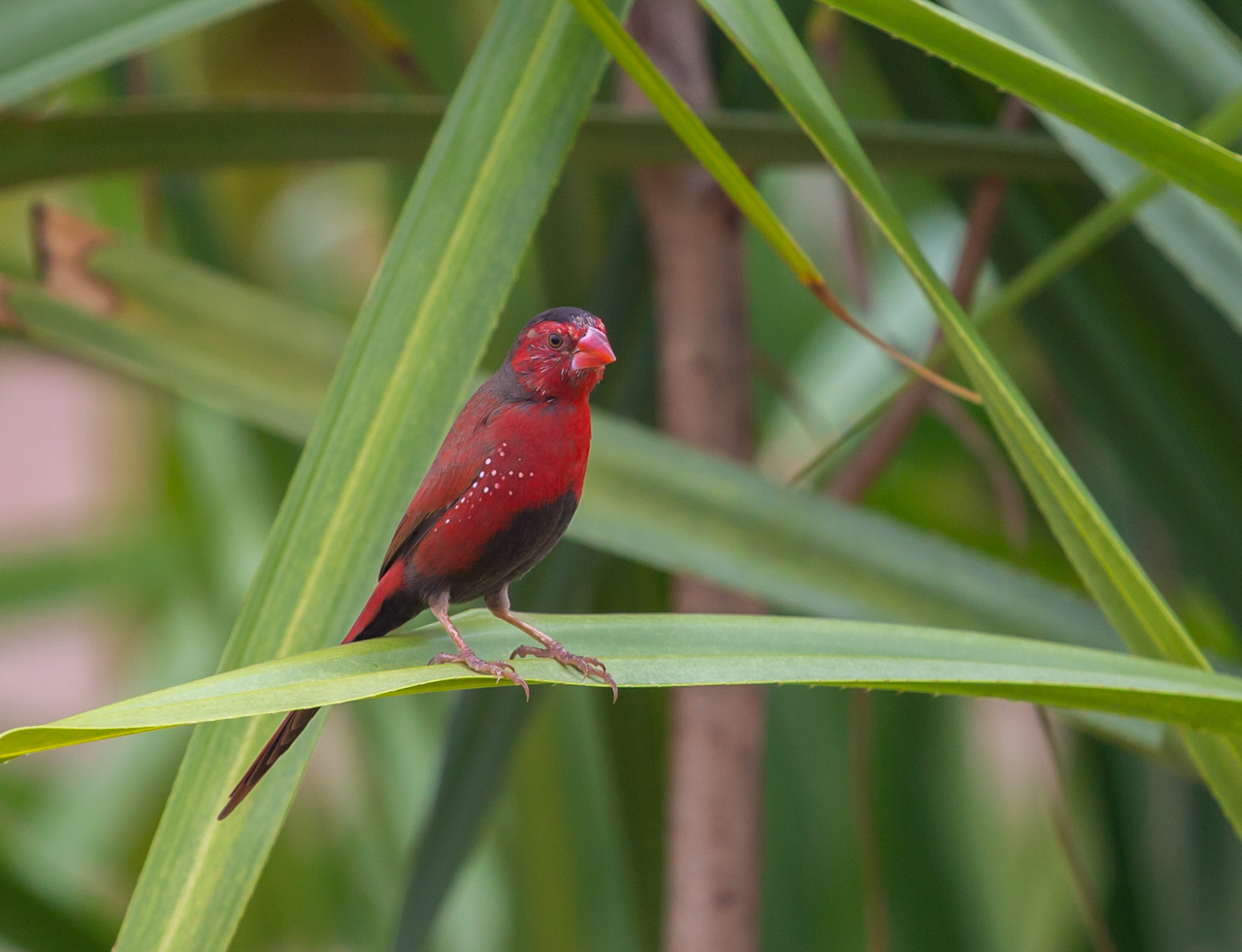
Crimson Finch © Maurice Hovens
In Katherine, we had breakfast at a local café, where we spotted our first Apostlebird and Crested Pigeon. With the mercury rising fast we moved on to Gorrie-Dry River Road, where we had lovely sightings of Sahul Brush Cuckoo, Striated Pardalote and Banded Honeyeater, Rufous Whistler and Red-winged Parrot.
After lunch at the Low Level Nature Park we rested up for a couple of hours before visiting the Water Treatment Plant. Where this place had been a hive of activity during previous visits, there was little activity this time around apart from some Whiskered Terns and Common Sandpiper, so we made our way back to the Low Level Nature Park to try our luck for some more woodland species. We briefly stopped at the rubbish tip to gaze at hundreds of Plumed Egrets and Eastern Cattle-Egrets and Black and Whistling Kites. At the Nature Park we soon found both Green and Olive-backed Oriole, however, the real highlight was a pair of Northern Rosella, perfectly perching in the beautiful evening sun. A nice end of a long day.
Day 8: October 23
On our last day, we checked out at our hotel, making our way back to the Ferguson River waterhole. Compared with the day before, even fewer birds made their appearance, and we all accepted that Gouldian Finch would not get a tick on our checklists. We instead drove to Edith Falls to make the most out of the last morning coolness, a decision that turned out to be rewarding: apart from Northern Fantail, White-throated Honeyeater and Mistletoebird, the real highlights came at the end with sightings of Australian Hobby and a pair of Pacific Baza, two species we hadn’t encountered yet.
With a long drive ahead of us, we left Edith Falls and made our way back to Darwin. Rain unfortunately cut short further birding along the way, so when we arrived at our hotel late in the afternoon we prepared ourselves for our last dinner of the trip at a local sailing club. Under a tropical night-sky we cherished all the moments with the birds we got to see and photograph and looked back on our journey through what is such a special part of Australia.
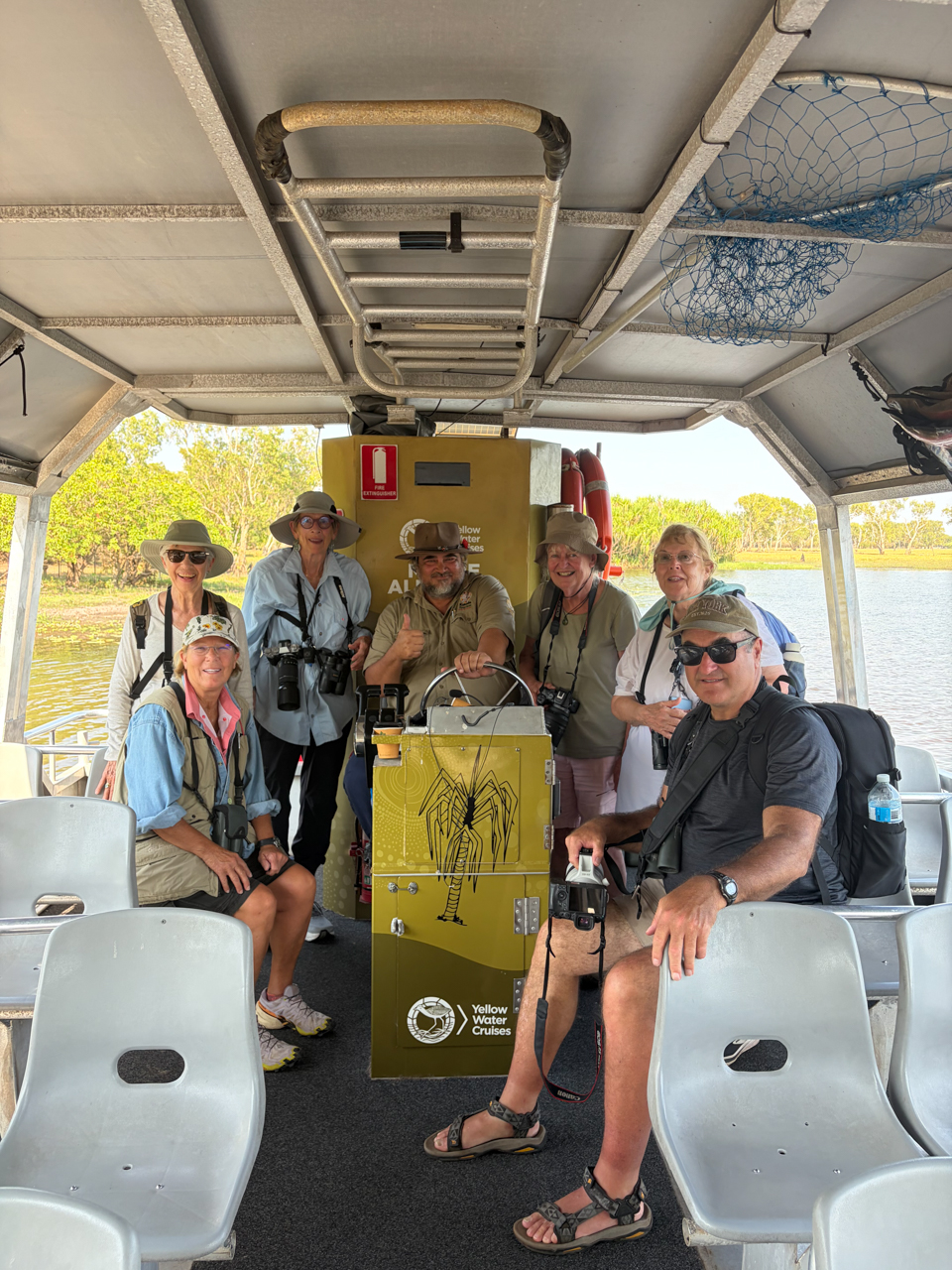
On board with the Master of the Billabong, Dennis ‘with two Ns’ Miller © Maurice Hovens

Leave a Reply