Texas Spring Migration & Hill Country Trip Report (April 14 – 22, 2026)
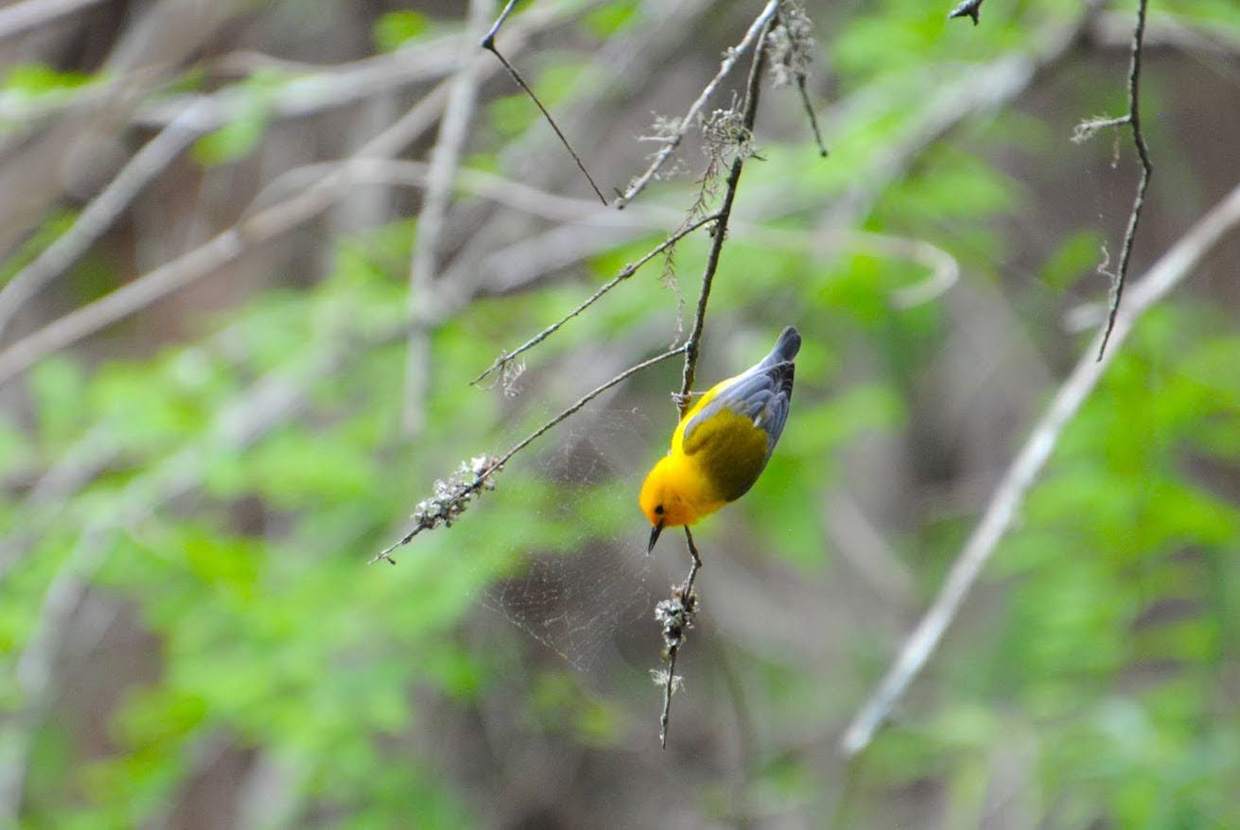
Prothonotary Warbler ©Alyssa DeRubeis
After meeting in San Antonio, we drove west to Conocan in the Texas Hill Country. We spent two days birding the oak-juniper forests, scrubland, and rivers of the Edwards Plateau, where eastern and western birds meet and endangered songbirds nest.
Then we made the long trek east to the Upper Texas Coast (east of Houston), where we would spend the rest of the tour scouring for a myriad of migrants and residents in lowland deciduous forests, cypress swamps, brackish and freshwater marshes, sandy coastal beaches, and flooded rice fields. We parted ways in Houston. Of the 229 species we saw and heard, these taxonomic groups were the most speciose: 25 shorebirds, 8 terns, 15 waders, 16 raptors, 13 flycatchers, 8 vireos, 7 wrens, 15 sparrows, 27 warblers, and 8 cardinalids. We also encountered 9 reptile, 5 amphibian, and 9 mammal species.
Day 1: Welcome to the Texas Hill Country
We left San Antonio early and under dark skies. Roadside Scissor-tailed Flycatchers and Crested Caracaras kept us entertained until we reached Cook’s Slough Sanctuary near Uvalde.
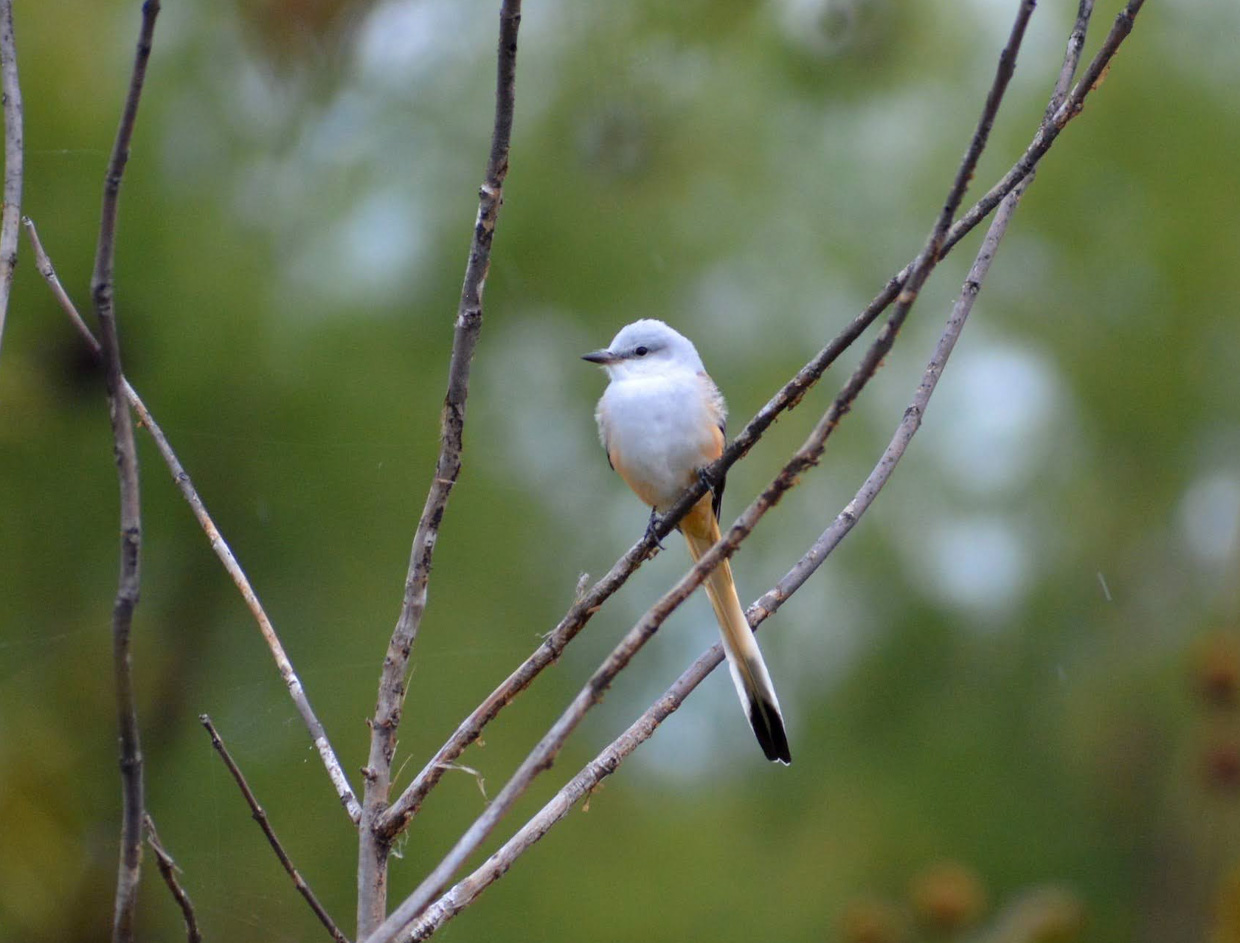
Sissor-tailed Flycatcher © Alyssa DeRubeis
Bell’s Vireo joined in on the songbird chorus with Bewick’s Wren, Black-crested Titmouse, and Olive Sparrow. Although Bell’s Vireo is typically secretive, this bold male decided to treat us to close views.
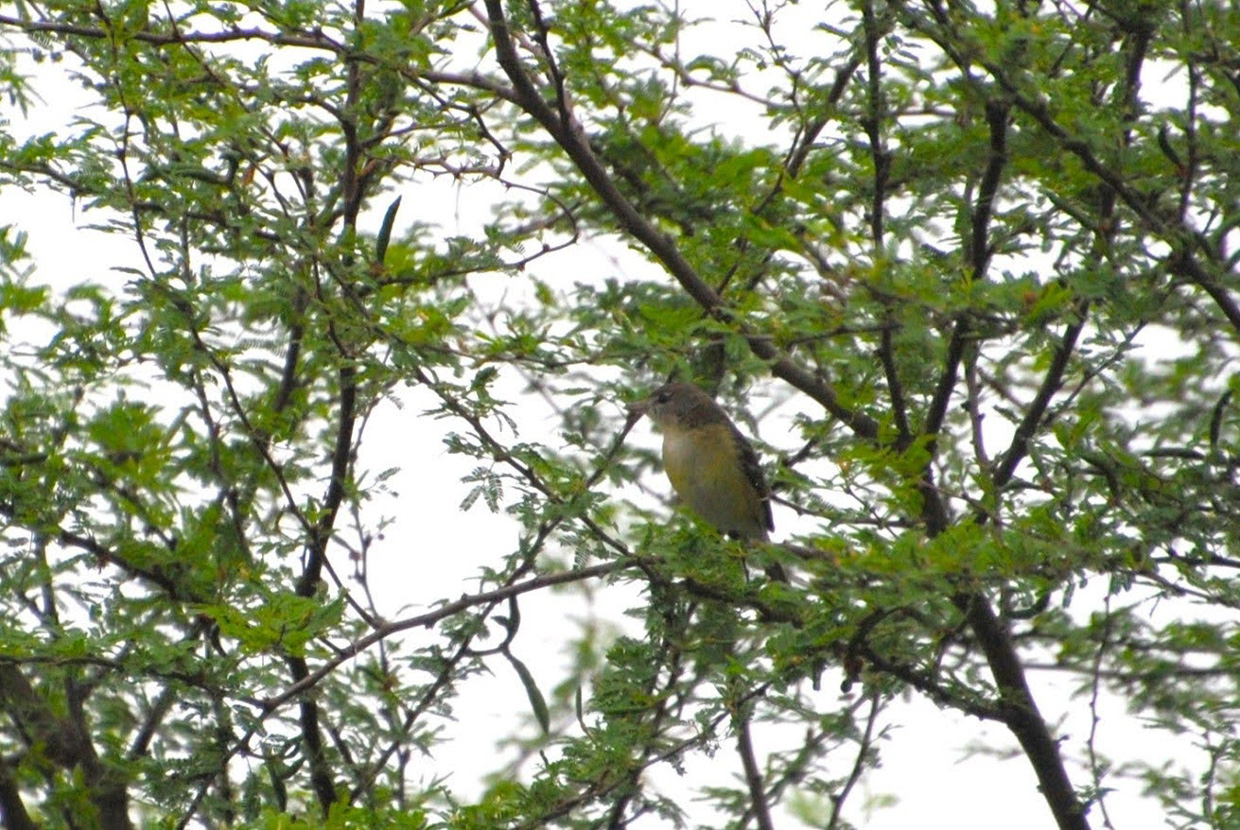
Bell’s Vireo ©Alyssa DeRubeis
Great Kiskadee, Couch’s and Western Kingbirds gave us a “yellow flycatcher” identification primer with varying beak sizes and facial markings. And as much as we love birds, we couldn’t possibly ignore the flowering prickly pear cactuses and sleepy Raccoon!
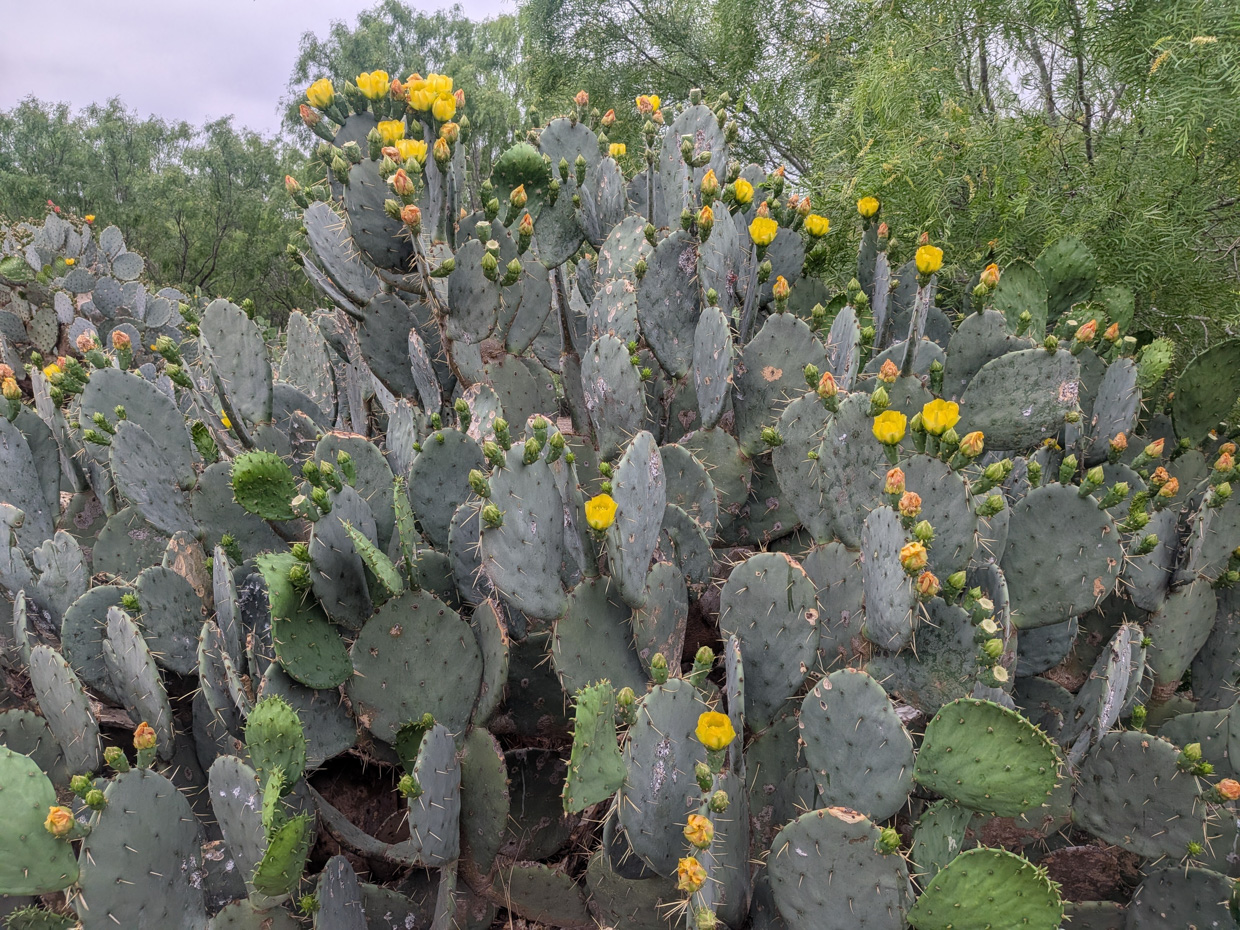
Prickly pear blooms ©Mary Huebner
We then hightailed it to Chalk Bluff River Park for our ever-so-scenic picnic. It was so birdy that it was nearly impossible to eat lunch! Both Belted and Green Kingfishers patrolled the Nueces River. Above on the bluff, Canyon Wrens laughed at our inability to spot them; meanwhile a Common Raven tended to her chicks. At our picnic site were Lark, Chipping, and Clay-colored Sparrows working the grasses.
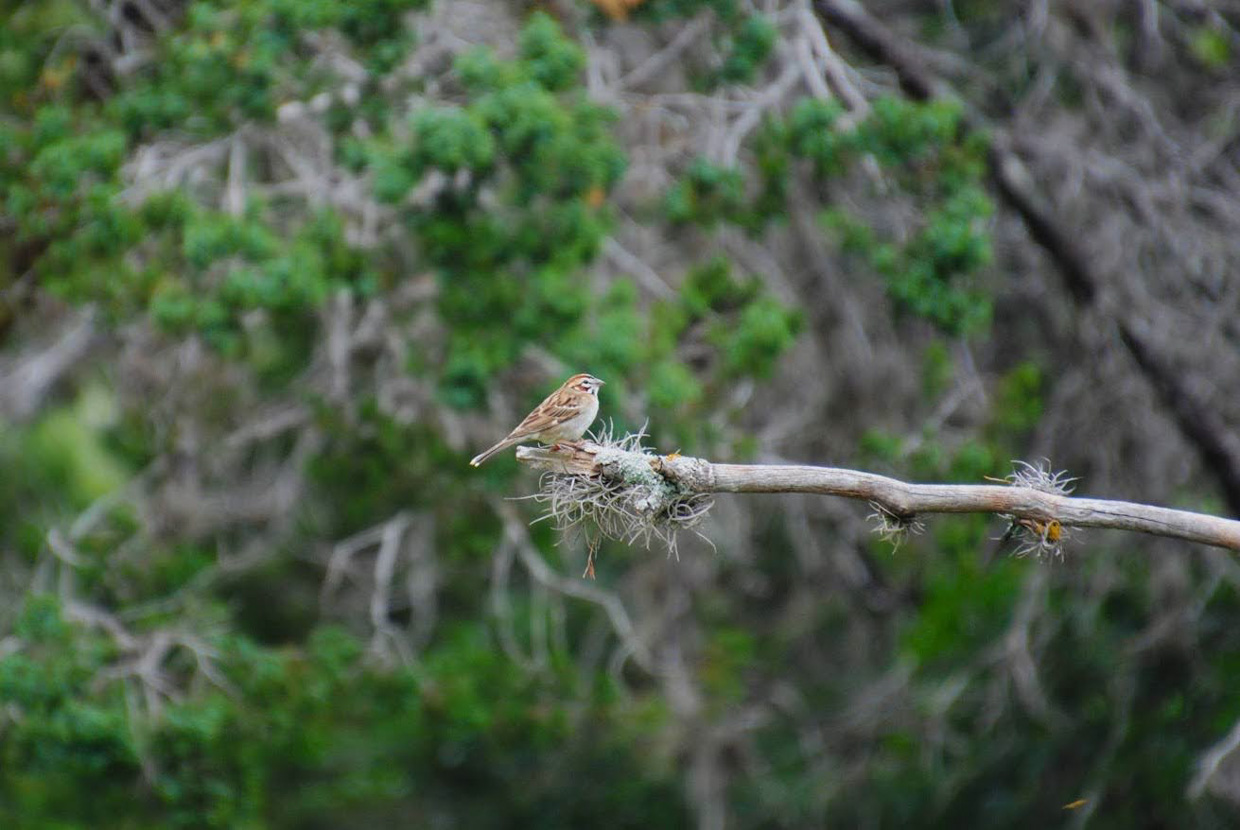
Lark Sparrow ©Alyssa DeRubeis
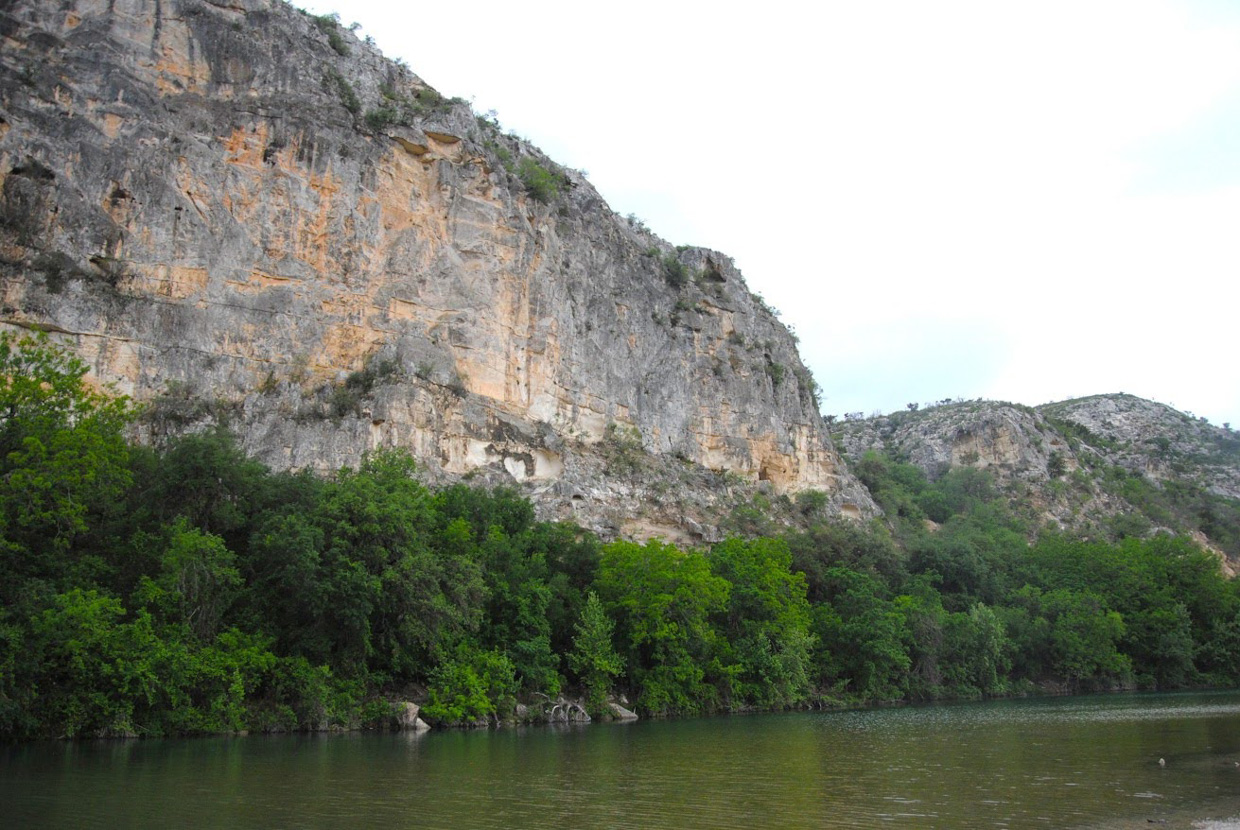
Chalk Bluff and Nueces River ©Alyssa DeRubeis
Pairs of Golden-fronted Woodpecker, Green Jay, Hooded Oriole, Pyrrhuloxia, Summer Tanager, and Vermilion Flycatcher caught our eye with their super saturated colours (yes, even the females were beautiful!). A male Summer Tanager was so bold that it almost flew into a group of people!
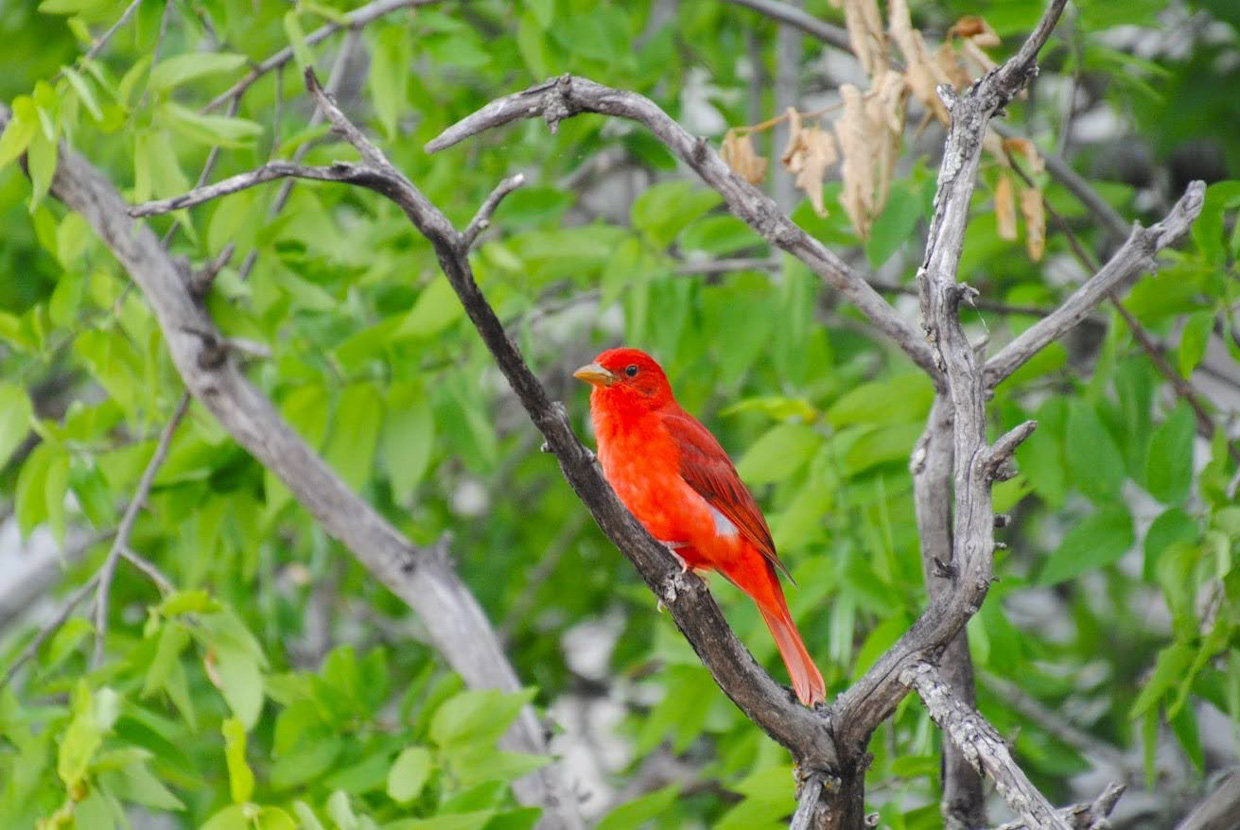
Summer Tanager ©Alyssa DeRubeis
But if orioles and tanagers weren’t colorful enough, we ooh-ed and aah-ed at a male Tropical Parula singing above us in the live oaks. This warbler’s range just barely reaches the United States in southern Texas, making it a particularly special species for us northerners. And finally on the drive out of the park we found a Cactus Wren singing and nest-building.
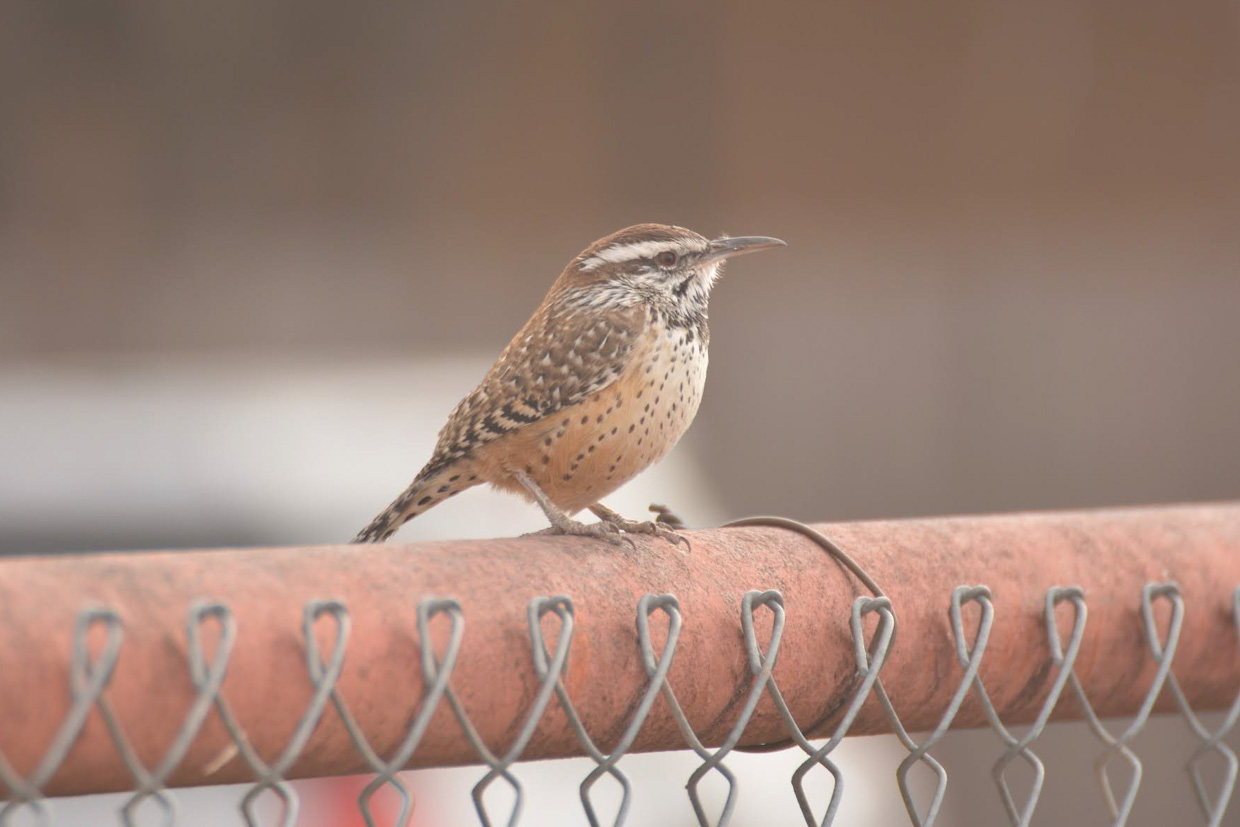
Cactus Wren ©Alyssa DeRubeis
After dinner at Neal’s Dining Room, birdsong beckoned us outside. Here we observed a Yellow-throated Warbler getting his last songs in for the evening, and a male Ladder-backed Woodpecker that was eventually chased away by an Ash-throated Flycatcher. It is hard to rest when there are so many birds, but we deserved rest after our first full day of birding!
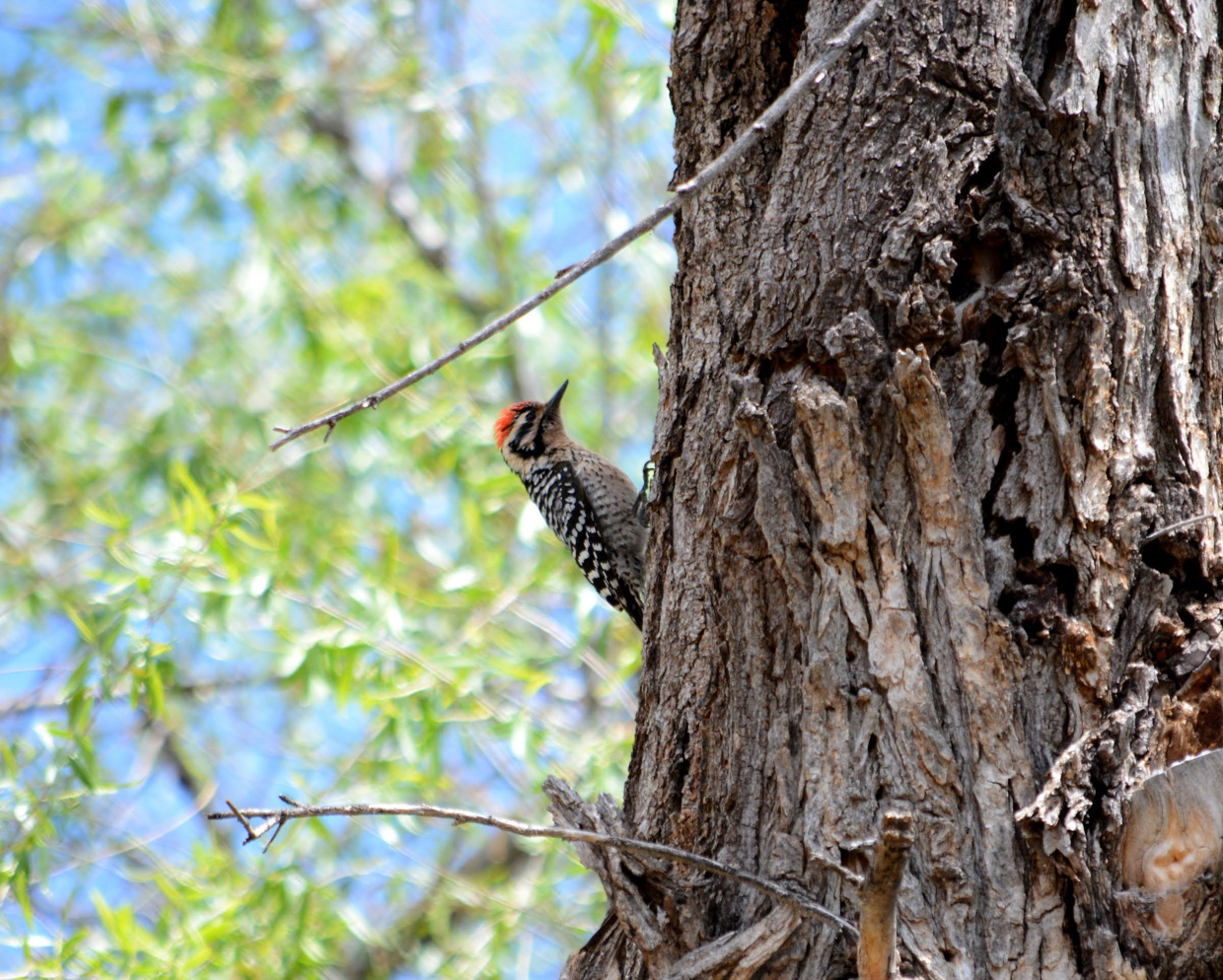
[Ladder-backed Woodpecker by Alyssa DeRubeis]
Day 2: Birds and Bats in Edwards Plateau
We spent the vast majority of our day sauntering around Lost Maples State Natural Area. This site is known for breeding Black-capped Vireo and Golden-cheeked Warbler, both rare species with a limited global distribution. We heard many Golden-cheeked warblers and managed to get our eyes on two birds. We heard fewer Black-capped Vireos but got brief yet close looks at a nest-building pair. Two other secretive species, White-eyed Vireo and Yellow-breasted Chat, eventually allowed phenomenal views.
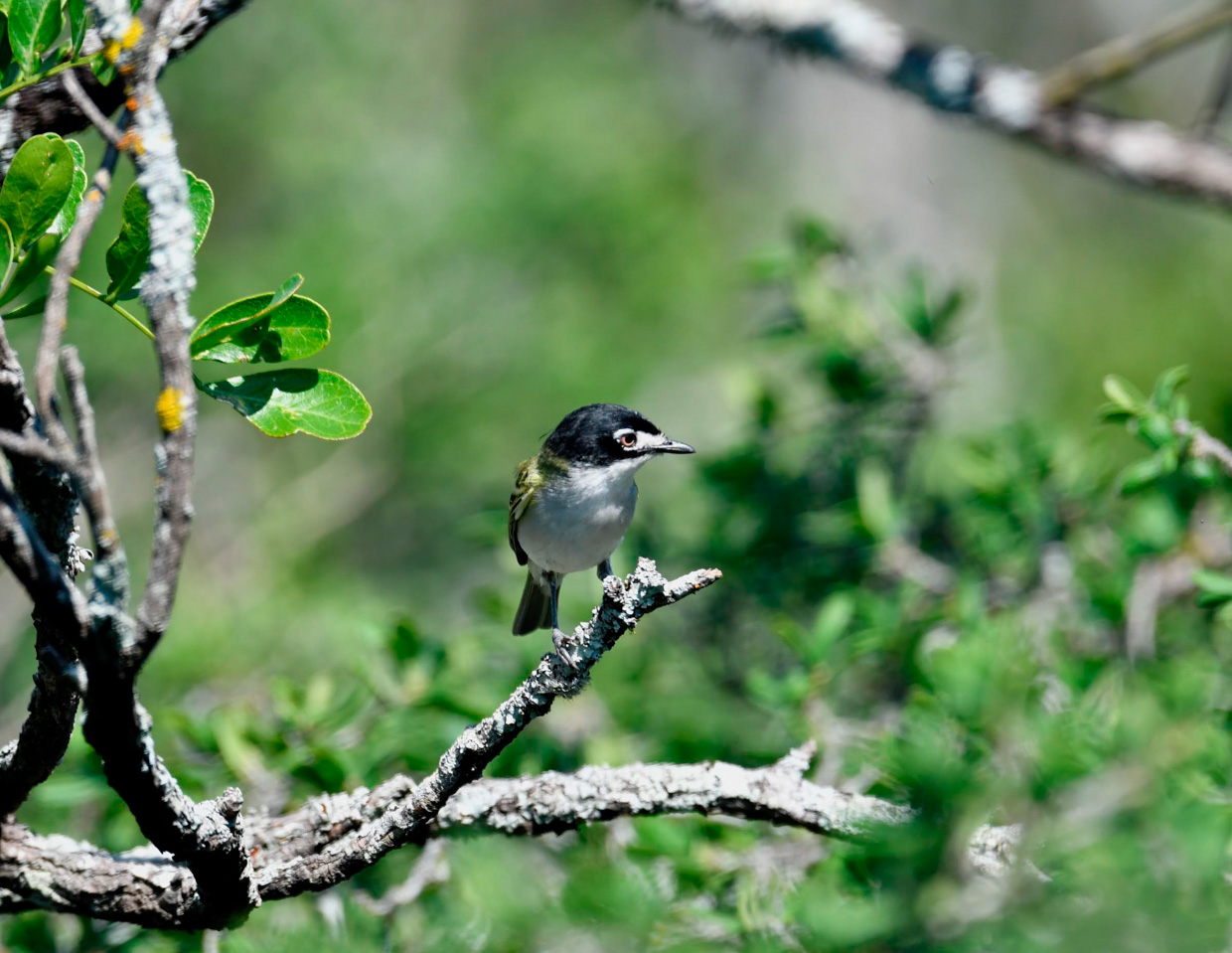
Black-capped Vireo ©Alyssa DeRubeis
While eating lunch, we watched birds coming and going from the birdfeeders. Lesser Goldfinch and Rufous-crowned Sparrow were highlights amongst the numerous White-winged Dove.
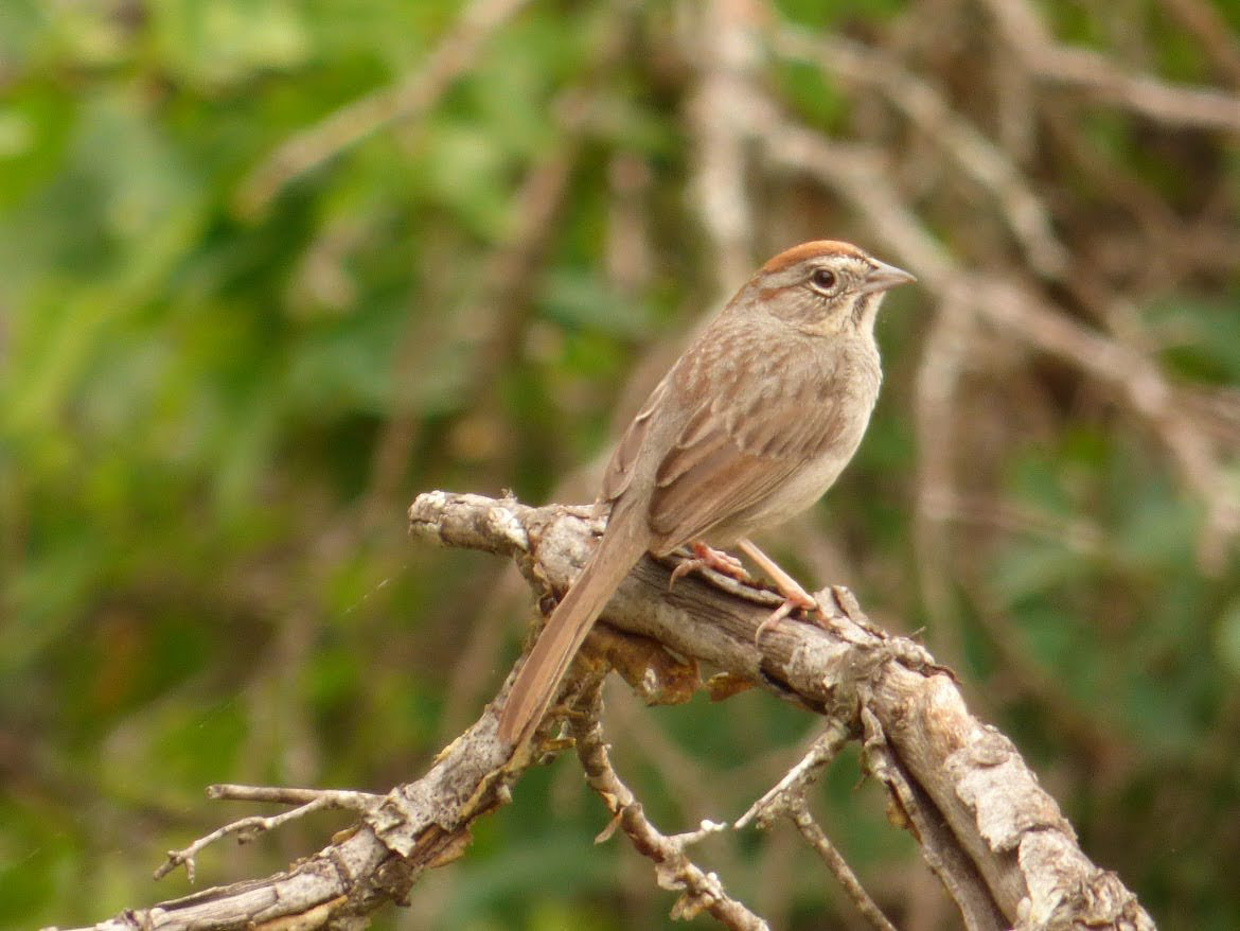
Rufous-crowned Sparrow ©Ellen Lawler
Our day extended into the evening with a visit to Frio Bat Cave. We witnessed the exodus of literal millions of Mexican Free-tailed Bat! This species forms the largest groups of any animal in the world! It was astounding hearing the flaps and bumps of these bats as they beelined south to forage on an agricultural moth pest.
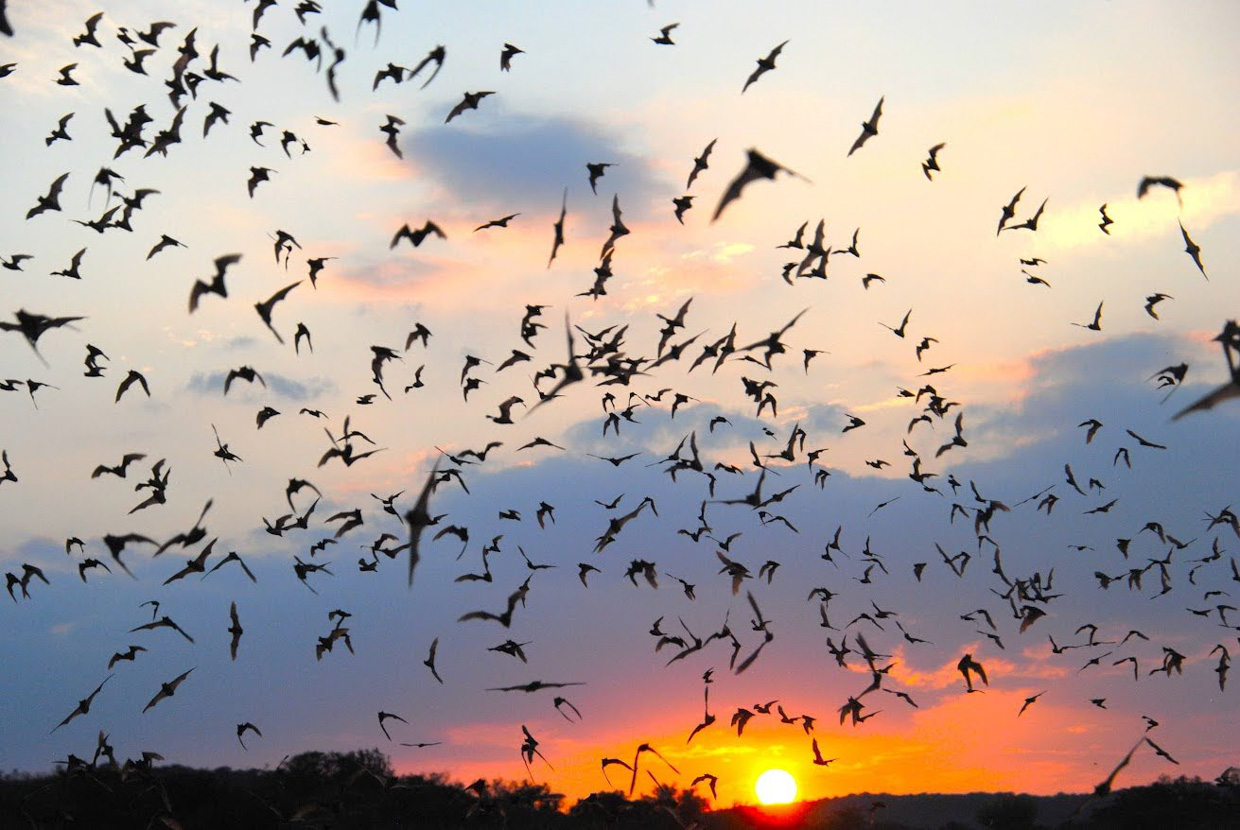
Mexican Free-tailed Bats
Bats weren’t the only hungry critters here. Hundreds of Cave Swallows swarmed around the cave, getting their final meals in before nightfall. Harris’s, Red-tailed, and Swainson’s Hawk all convened to hunt the bats; Red-tailed Hawk appeared to be quite successful with three captures observed. From rare songbirds to hyper abundant bats, Day 2 was one for the books!
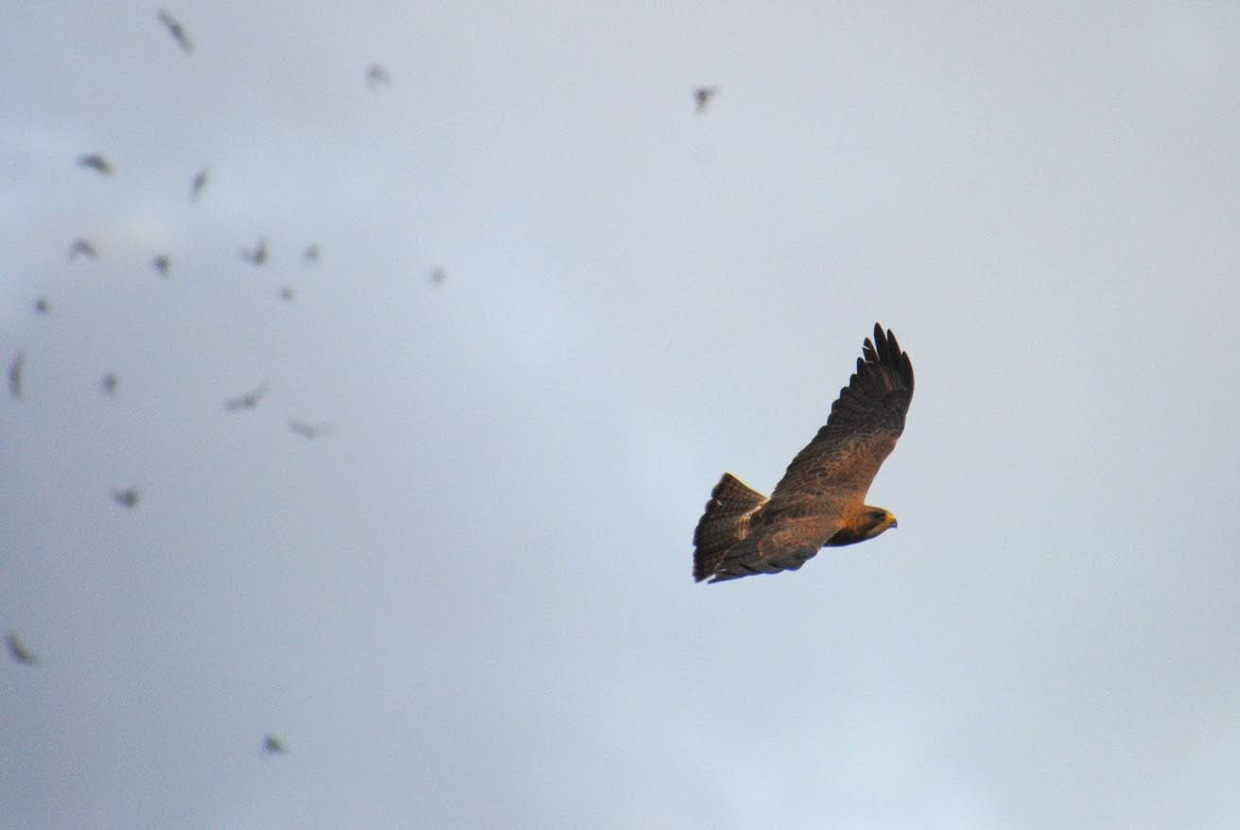
Swainson’s Hawk and Mexican Free-tailed Bats ©Alyssa DeRubeis
Day 3: Big Drive to Big Migration (Winnie)
Even though today was mostly a driving day, we didn’t miss out on some morning birding in the Texas Hill Country. Neal’s Lodge’s “Pecan Grove” contains a mix of forest, shrubland, and fields. It rewarded us with nice views of two male Painted Buntings, a Blue Grosbeak, and a cooperative Grasshopper Sparrow that flushed up from the road’s edge.
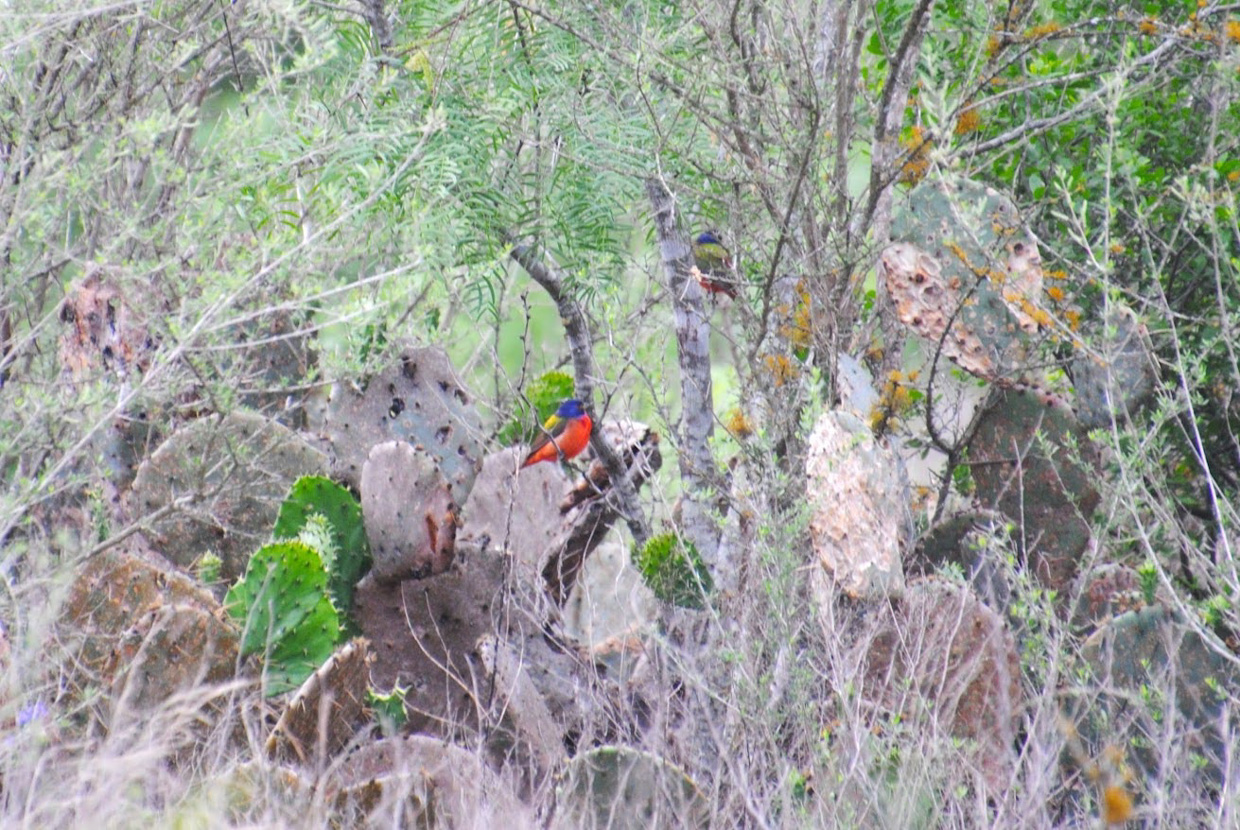
Painted Buntings ©Alyssa DeRubeis
Our other birding location was along Farm to Market Road 2690 less than 10 miles south of Neal’s Lodges. Our target in the shrubby grassland was the unassuming Cassin’s Sparrow. We heard two males, including one that came in close for visuals and sang two song types. With most of its global range in Texas, New Mexico, and northern Mexico, we were quite content that this fairly localized sparrow put on such a nice show for us.
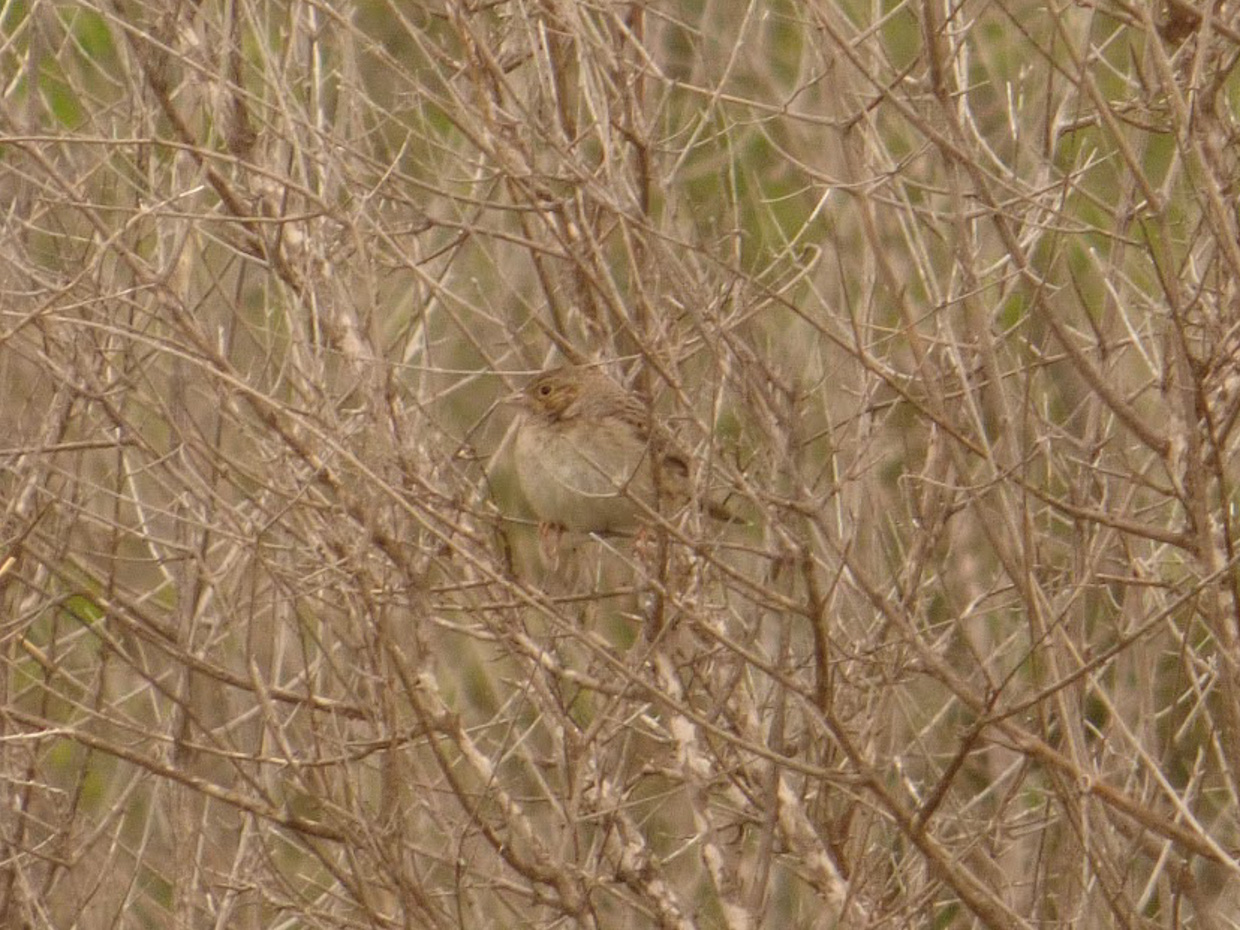
Cassin’s Sparrow ©Ellen Lawler
It was evident that we were approaching the coast when we observed Laughing Gulls flying over I-10. These birds reminded us of what’s to come: waterbirds galore!
Day 4: First Taste of Coastal Texas: High Island and Jocelyn Nungaray National Wildlife Refuge
The first chunk of the day we spent at several sites on High Island. Hands down the highlight of the morning was the raucous waterbird rookery at Smith Oaks Sanctuary. Scores of Roseate Spoonbill, Tricolored Heron, Great and Snowy Egrets, and Neotropic Cormorant courted and squabbled loudly, all with their splendid breeding plumes.
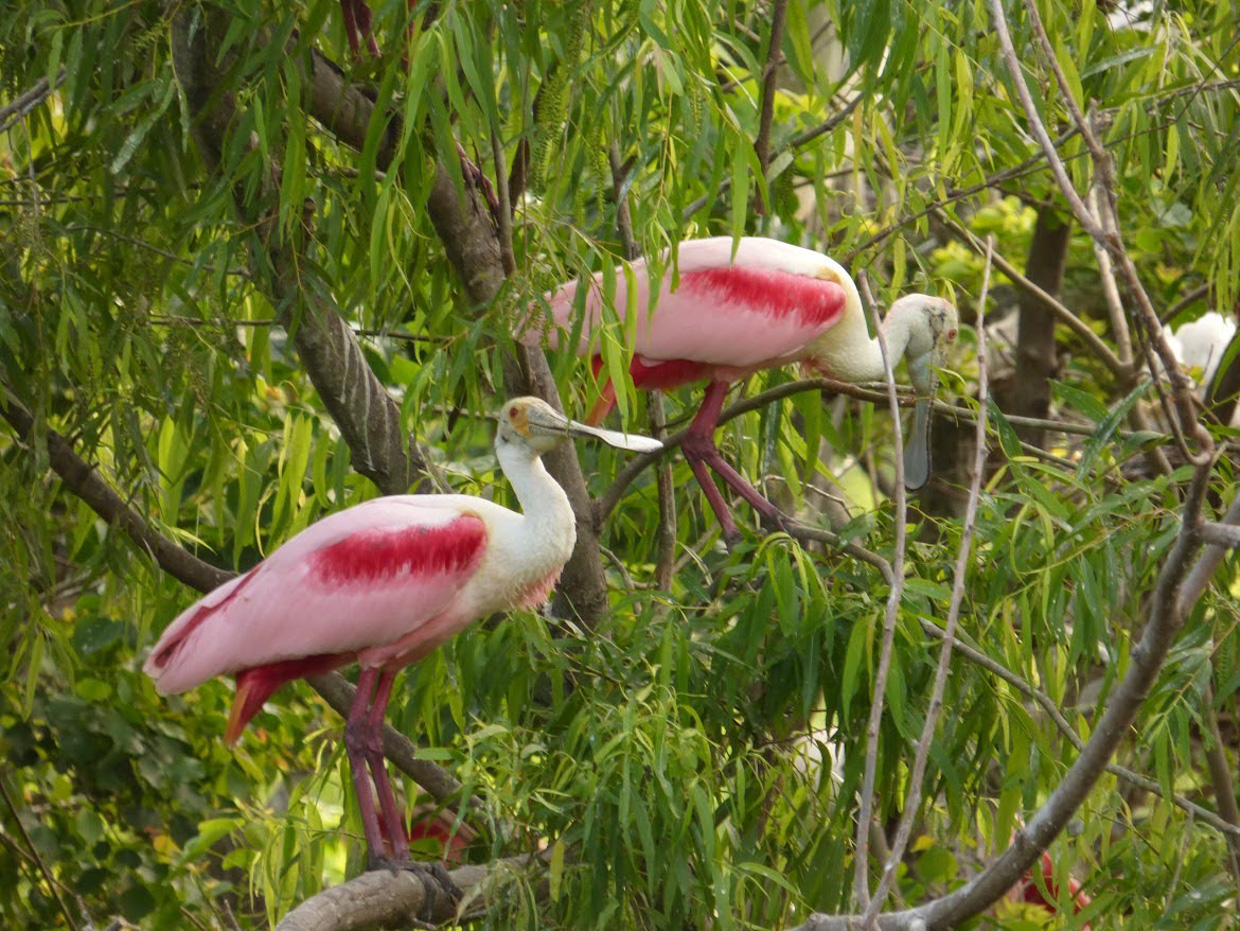
Roseate Spoonbill ©Ellen Lawler
Large white eggs were visible in a spoonbill nest as the couple tried awkwardly adding another stick to their abode. Up high, a Great Egret stood over its fuzzy chicks while a Purple Gallinule foraged on rice below. The rookery was so alive!
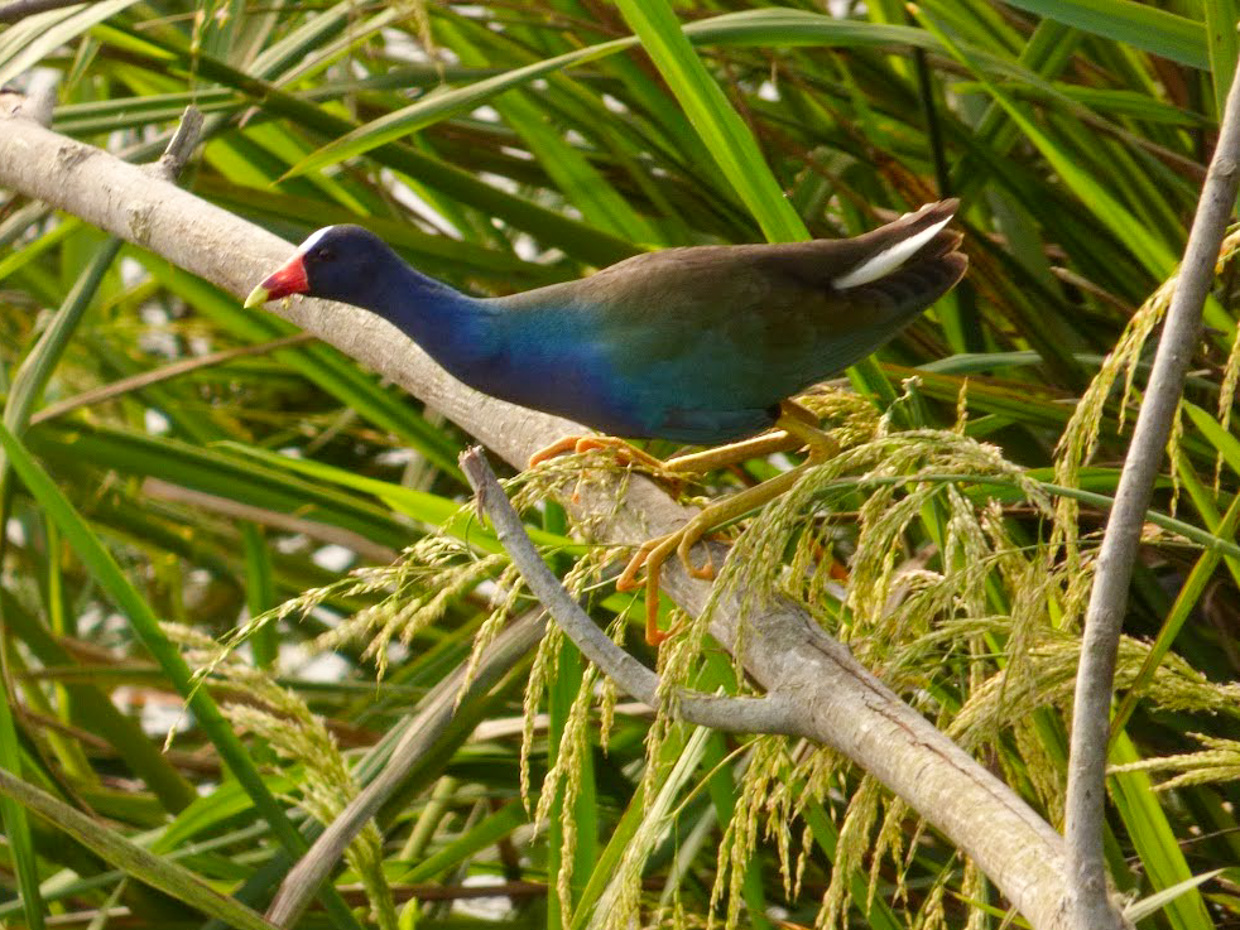
Purple Gallinule ©Ellen Lawler
Migration was quiet, which meant we could practice our “locating a moving warbler” skills on Hooded, Northern Yellow, and Prothonotary Warblers, Northern Waterthrush, Ovenbird, Blue-headed Vireo, and Wood Thrush.
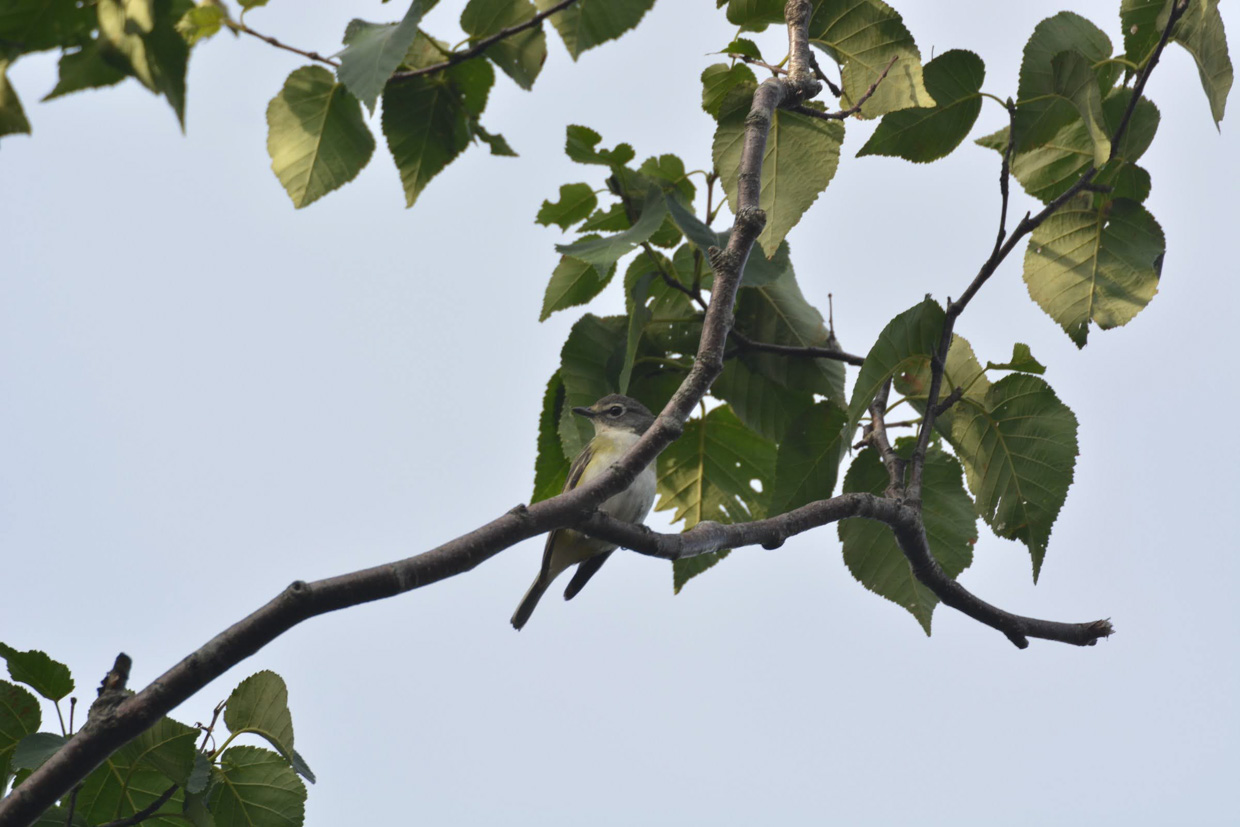
Blue-headed Vireo ©Ellen Lawler
In the afternoon, we pivoted to shorebirds. From the Winnie hotel to Jocelyn Nungaray National Wildlife Refuge, we tallied 16 species of plovers, curlews, stilts, and sandpipers. The vast majority were Long-billed Dowitcher (800+ individuals), who were relentlessly drilling their long beaks into the muck.
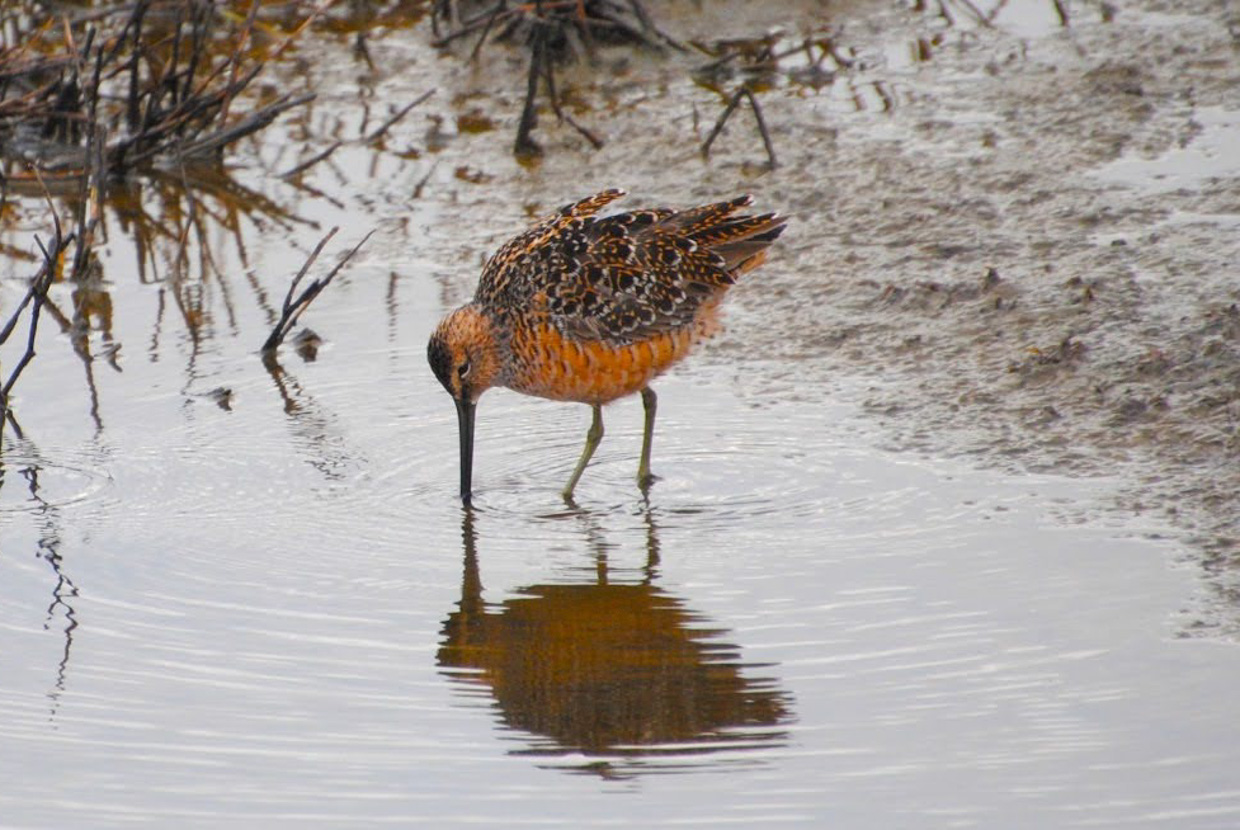
Long-billed Dowitcher ©Alyssa DeRubeis
American Avocet, Black-bellied Plover, Ruddy Turnstone, and Wilson’s Phalarope looked rather snazzy in their spring garb. The flooded field also attracted several Gull-billed Terns whose silvery-white bodies popped out from the stormy clouds behind them.
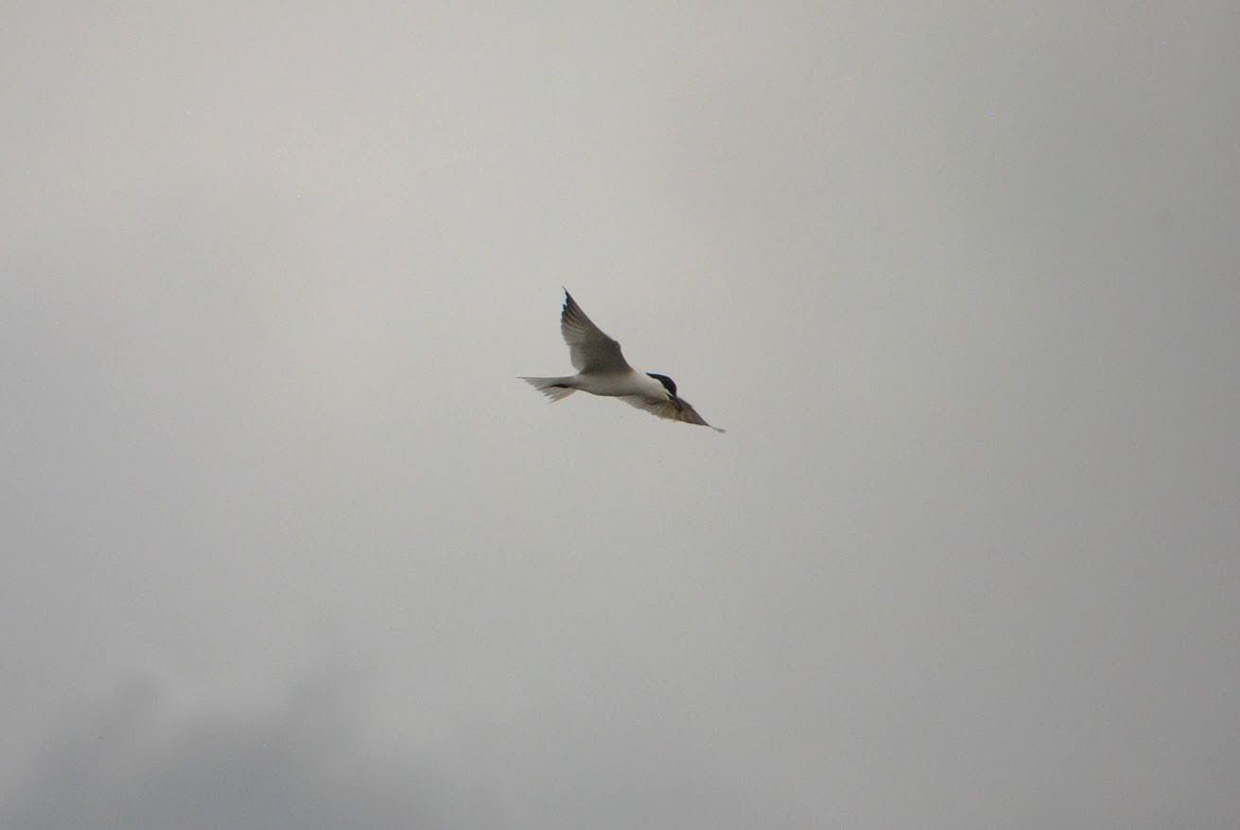
Gull-billed Tern ©Alyssa DeRubeis
The cherry on top was a nest of five American Barn Owls! These owlets were active as they peered curiously at us from afar and flapped their wings. Surely they were ready for dinner, as were we. (Mice for them, Indian curries for us.)
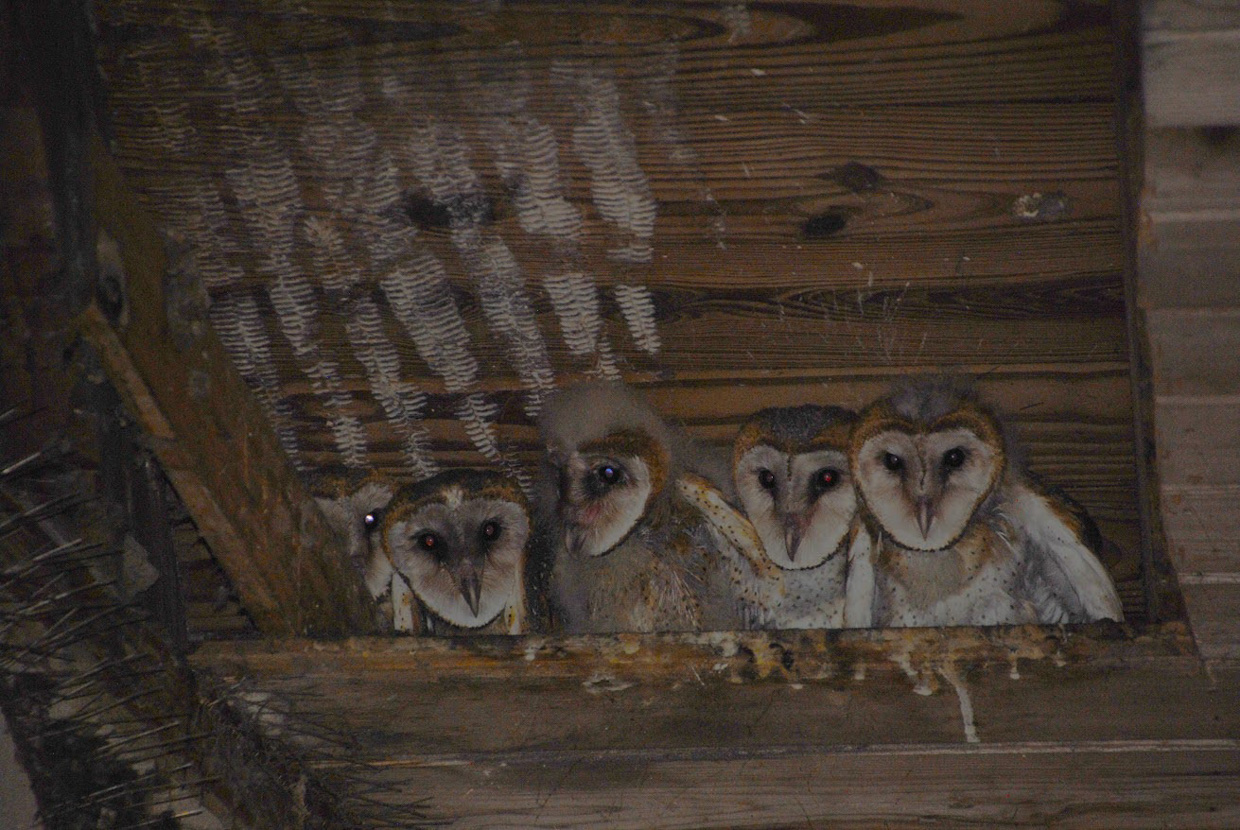
American Barn Owl ©Alyssa DeRubeis
Day 5: Inland and Coastal Forests
Birding today brought us inland to Big Thicket National Preserve. The pines and thick understory were home to Kentucky, Prairie, and Swainson’s Warblers. The furtive Swainson’s was a new bird for nearly everyone in our group!
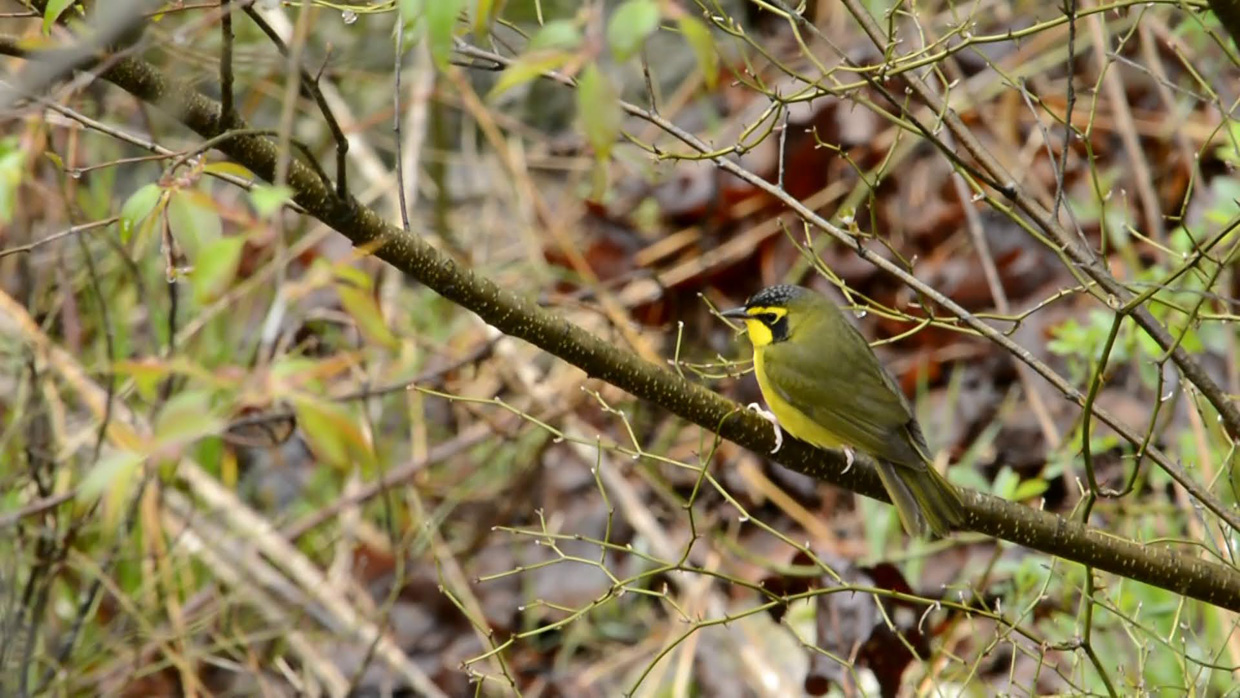
Kentucky Warbler ©Alyssa DeRubeis
Further down the road, pairs of Blue-gray Gnatcatcher, Greater Roadrunner, and Pine Warbler stuck close together. The unseasonably chilly weather did not convince these mated couples that spring was gone, although the gnatcatcher and roadrunner fluffed out in the open in an attempt to warm up.
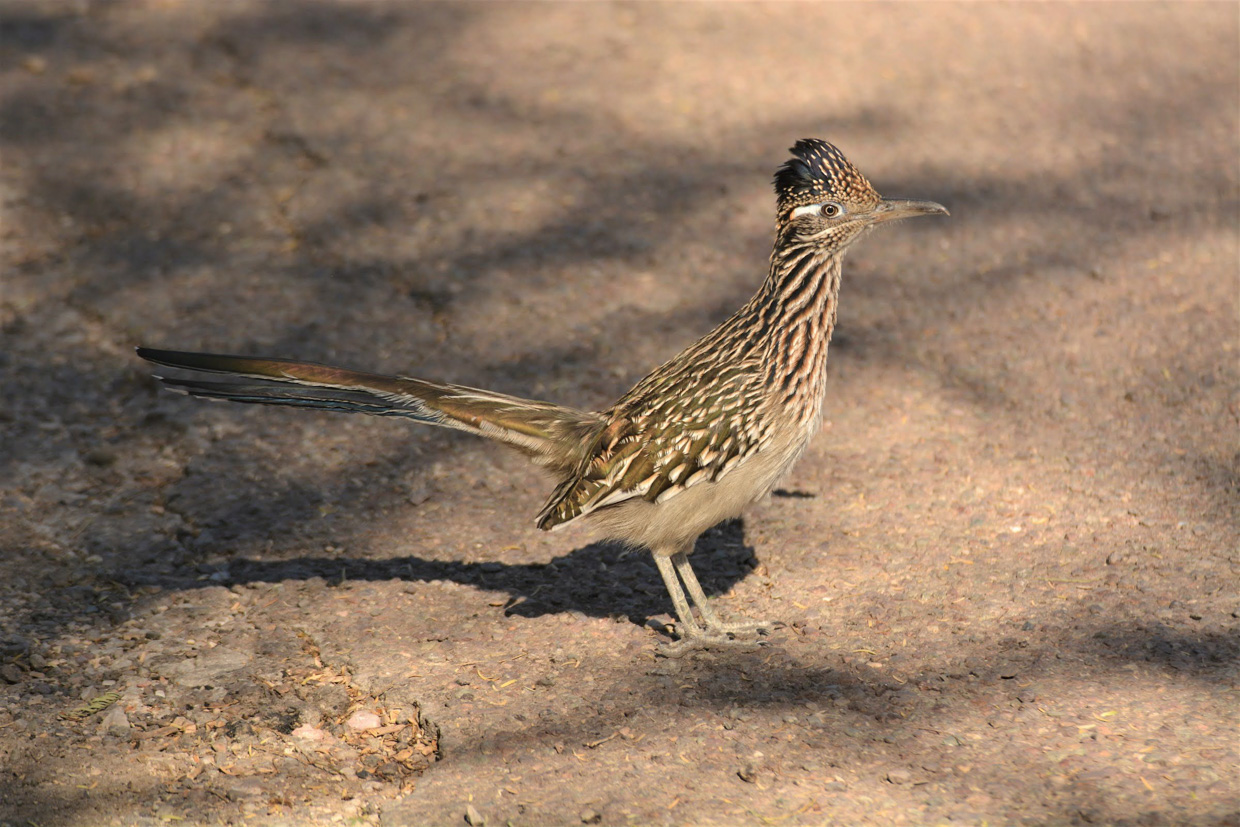
Greater Roadrunner ©Alyssa DeRubeis
After a quick coffee break, we booked it to Sabine Woods Sanctuary. Good thing we had some caffeine, because we needed it for what would be our busiest spring migration day yet! We identified 14 warbler species, four vireo species, and three flycatcher species, in addition to Swainson’s and Wood Thrushes, Baltimore and Orchard Orioles, Scarlet and Summer Tanagers, and Rose-breasted Grosbeak.
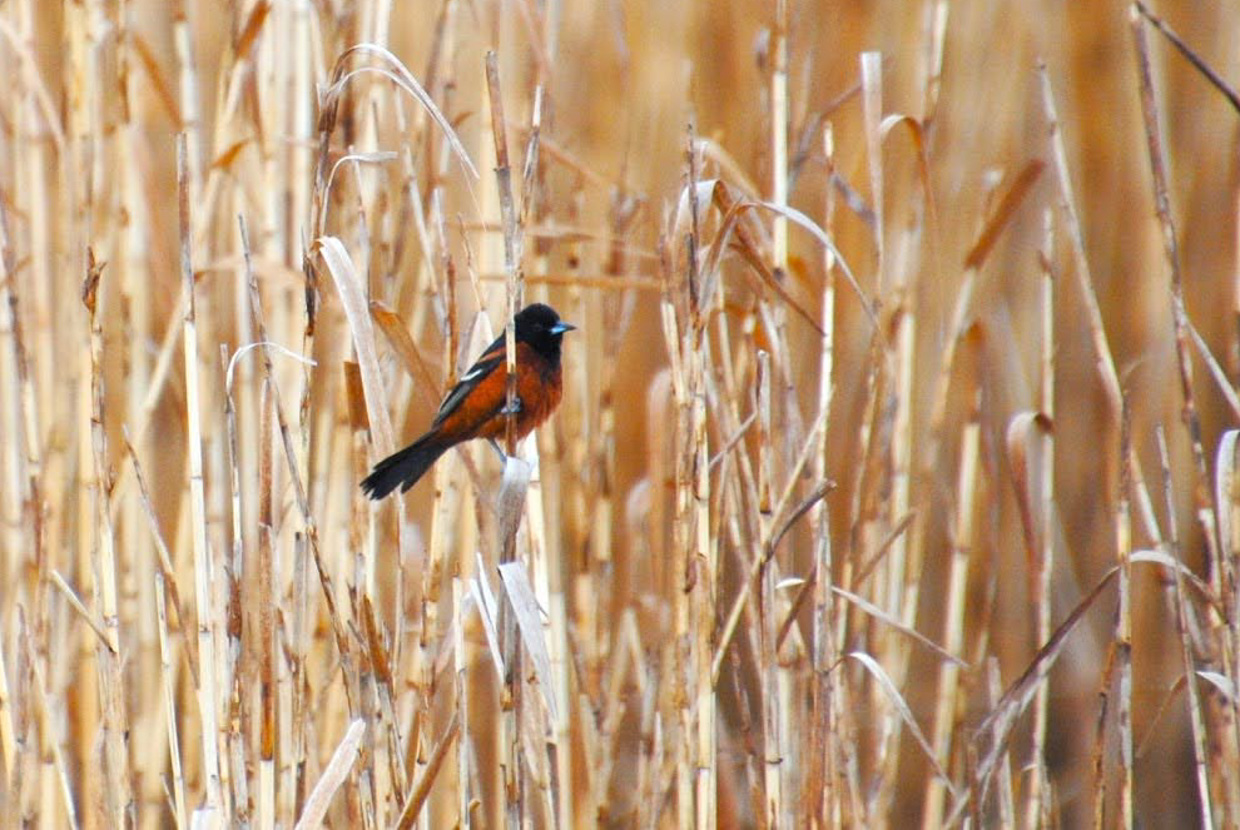
Orchard Oriole Alyssa DeRubeis
By far the most numerous warbler was Hooded, of which we counted 35. It was impossible to look anywhere without seeing at least one Hooded Warbler (and we weren’t complaining about that!). The second most abundant was Tennessee Warbler (20 individuals). Close views in good lighting permitted us to study the variance in the Tennessee’s plumage brightness, from a dull olive of perhaps a young female to the vibrant lime of likely an older male.
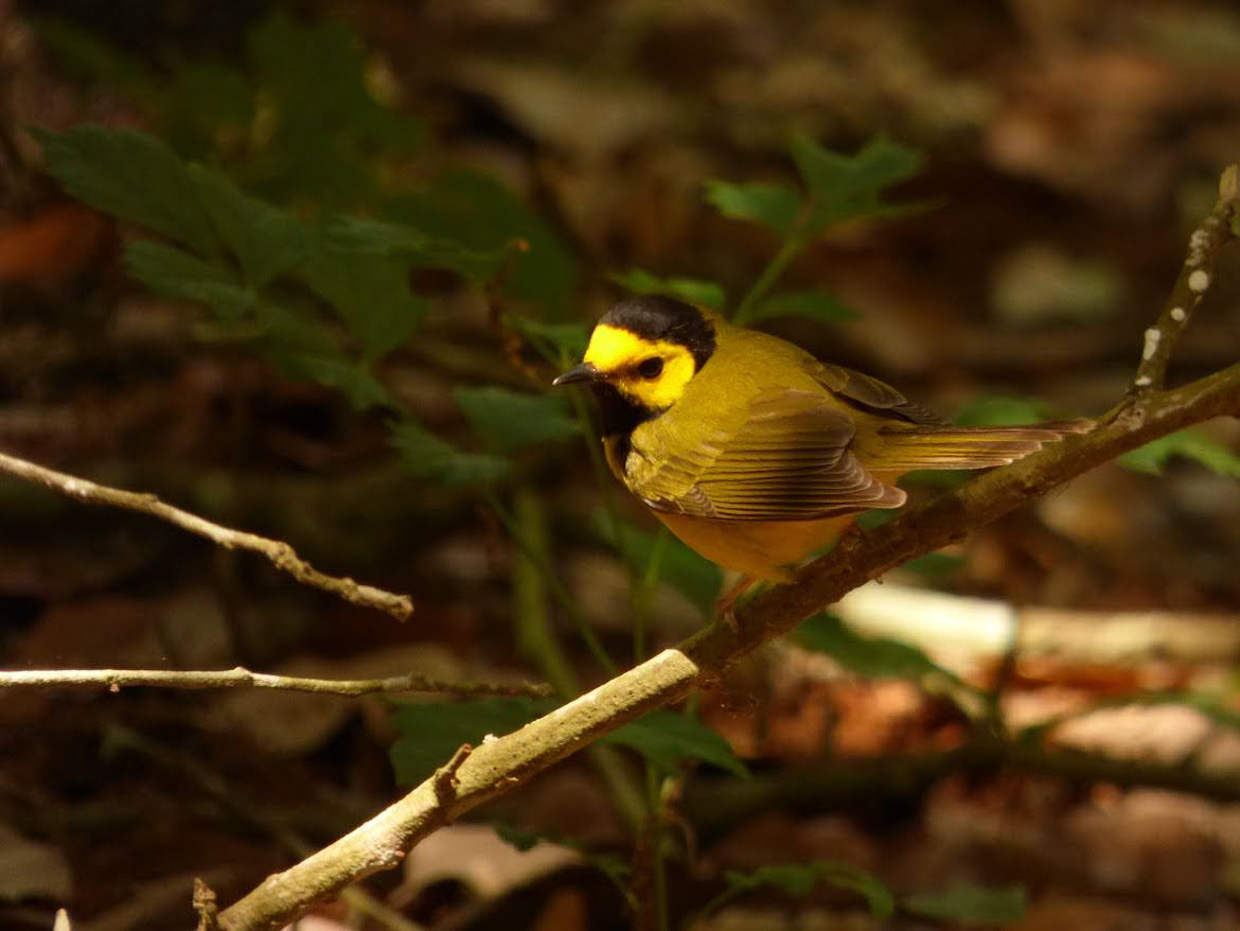
Hooded Warbler ©Ellen Lawler
Two warblers participants were particularly stoked about were the Cerulean and Worm-eating Warblers. The former we followed for about 10 minutes while it sang, and lo and behold, it posed nice and low for us! For a notoriously upper canopy species, we were so grateful. And for a species which has declined by 68% since the 1960s (per the North American Breeding Bird Survey), we were grateful to see it at all. Neotropical migrants dripping from the trees is what birders dream of. We left Sabine Woods exhausted but overjoyed at the sheer number of orioles, tanagers, thrushes, and warblers.
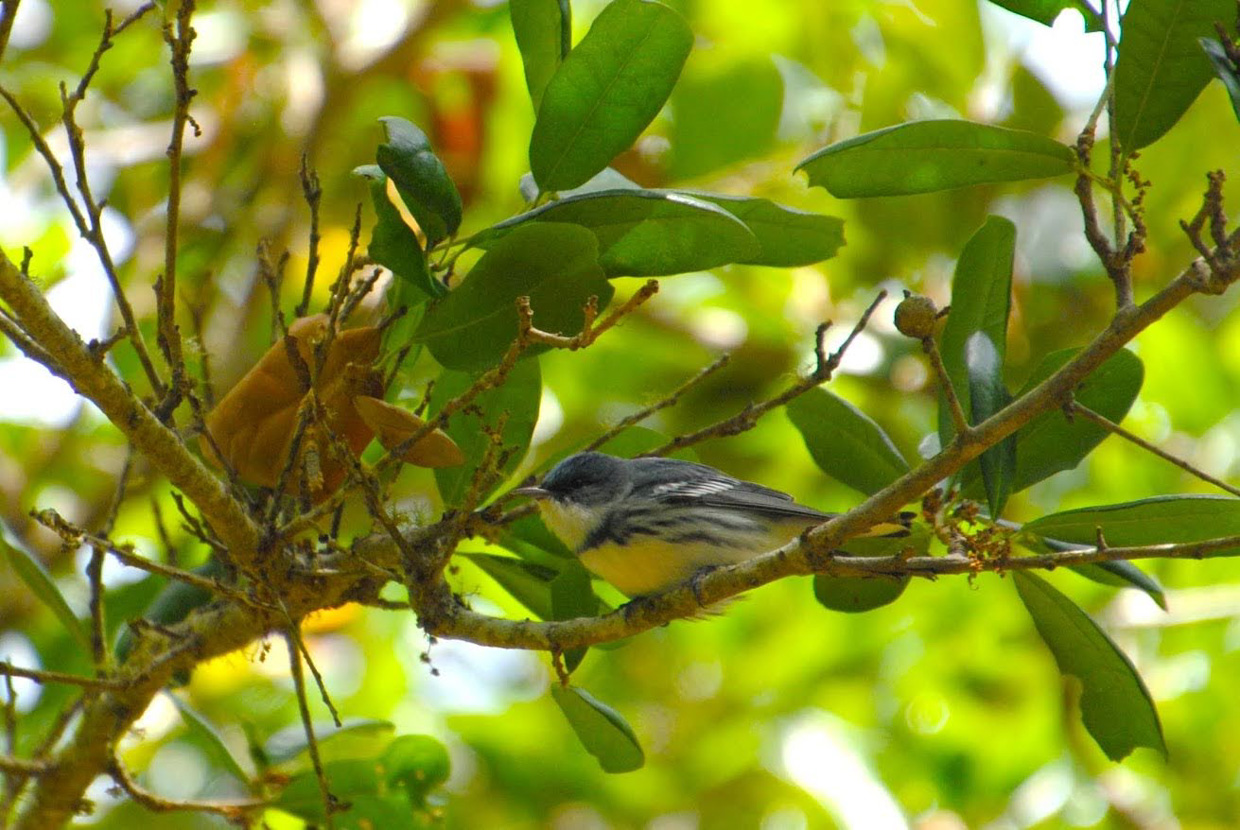
Cerulean Warbler ©Alyssa DeRubeis
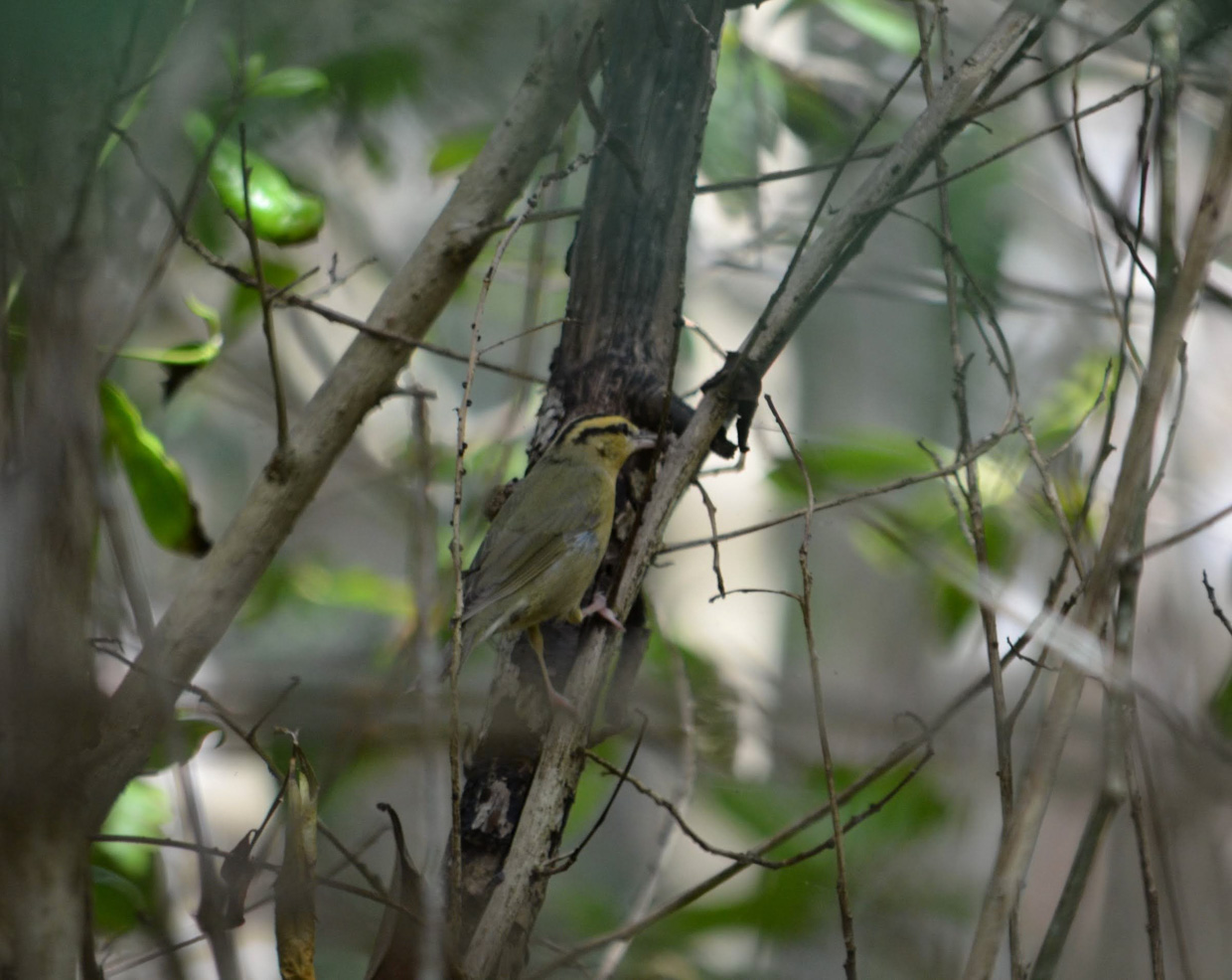
Worm-eating Warbler ©Alyssa DeRubeis
Day 6: Shorebird Bonanza
Tuna Road saltmarsh was our first stop today. Immediately we were greeted by singing Marsh and Sedge Wrens; the latter gave us lovely views. It didn’t take us long to find tons of Seaside Sparrows, who would perch up in the sedge, sing, then flutter to another sedge patch and hunker down. Some were close enough to clearly see the yellow lores and dark breast streaks.
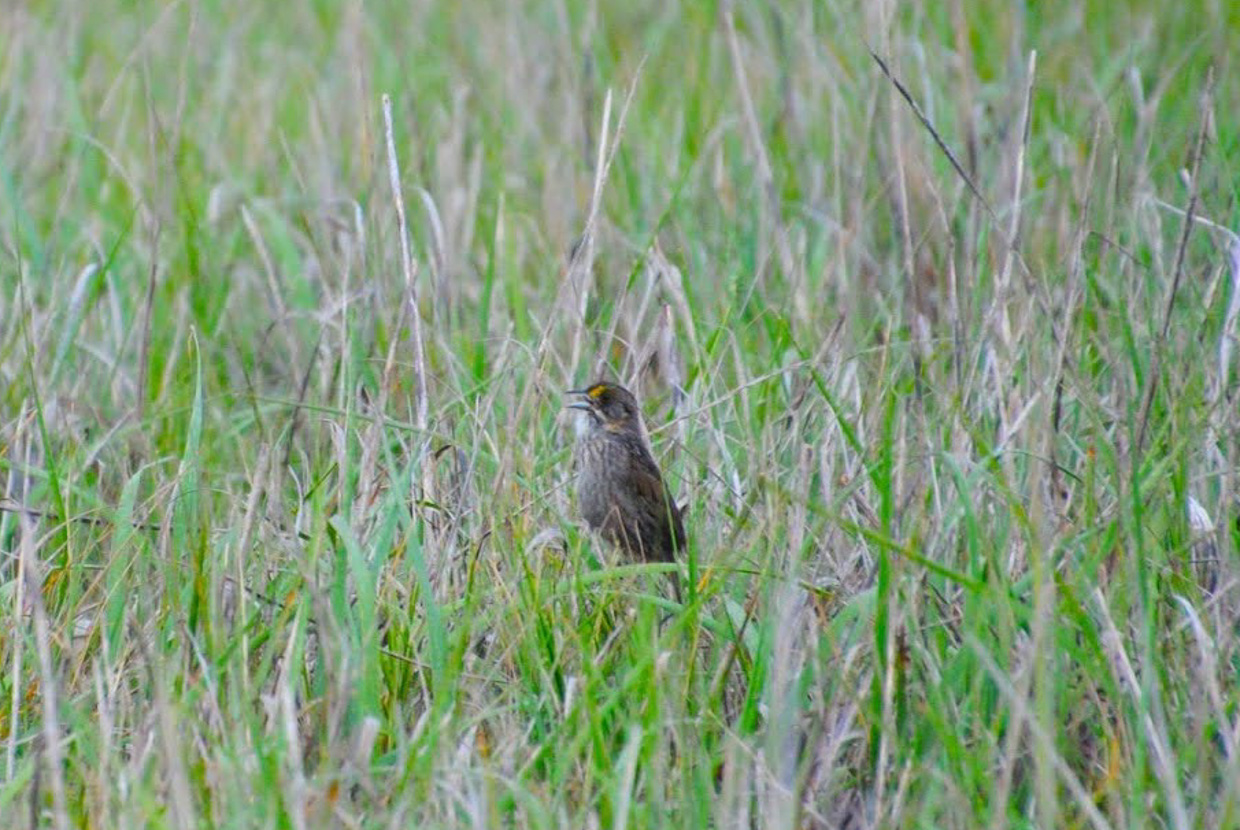
Seaside Sparrow ©Alyssa DeRubeis
Further up Tuna Road, Alyssa heard the faint hissing song of a Nelson’s Sparrow! Sure enough, two birds came to the road. We were mesmerized by their gorgeous pumpkin-orange faces.
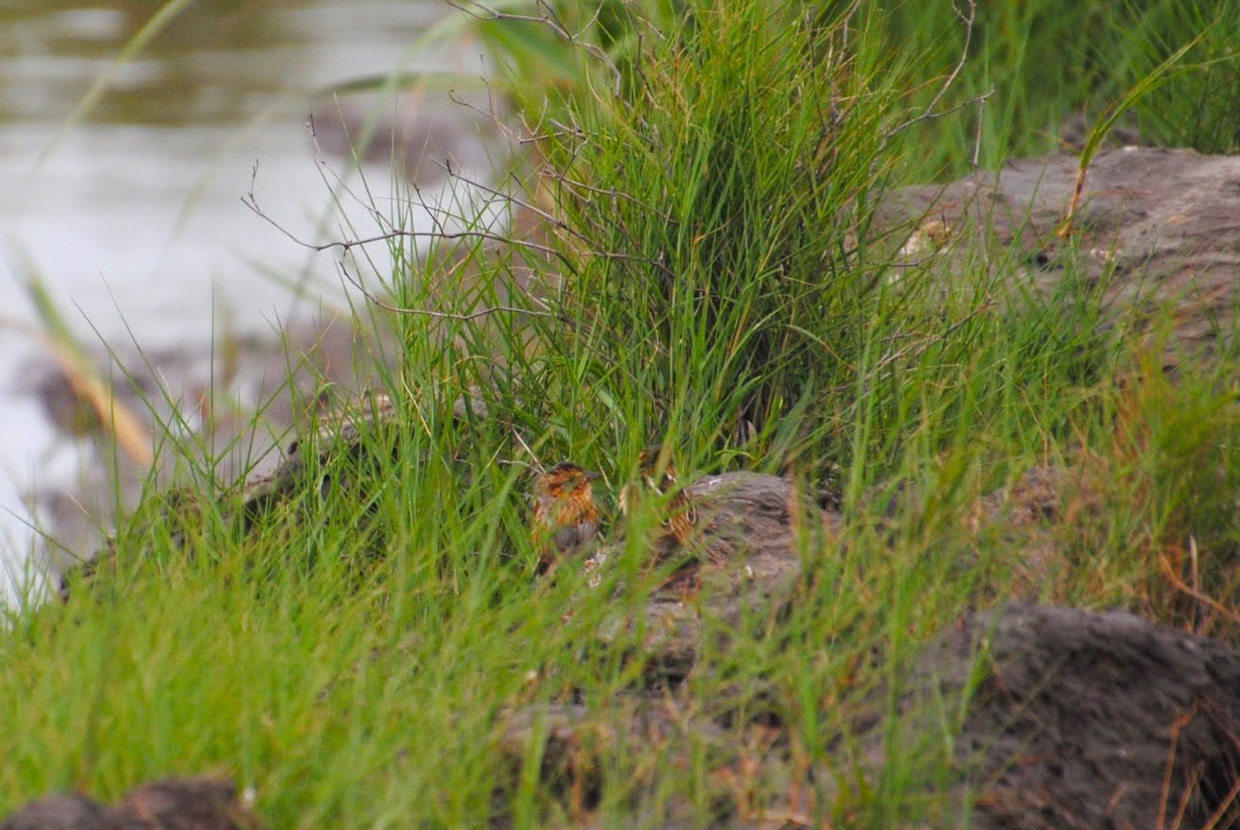
Nelson’s Sparrows ©Alyssa DeRubeis
Stop number two was Bolivar Flats Shorebird Sanctuary. The strong winds didn’t stop us from finding several Piping Plovers and a Snowy Plover. These adorable imperiled shorebirds provided great views.
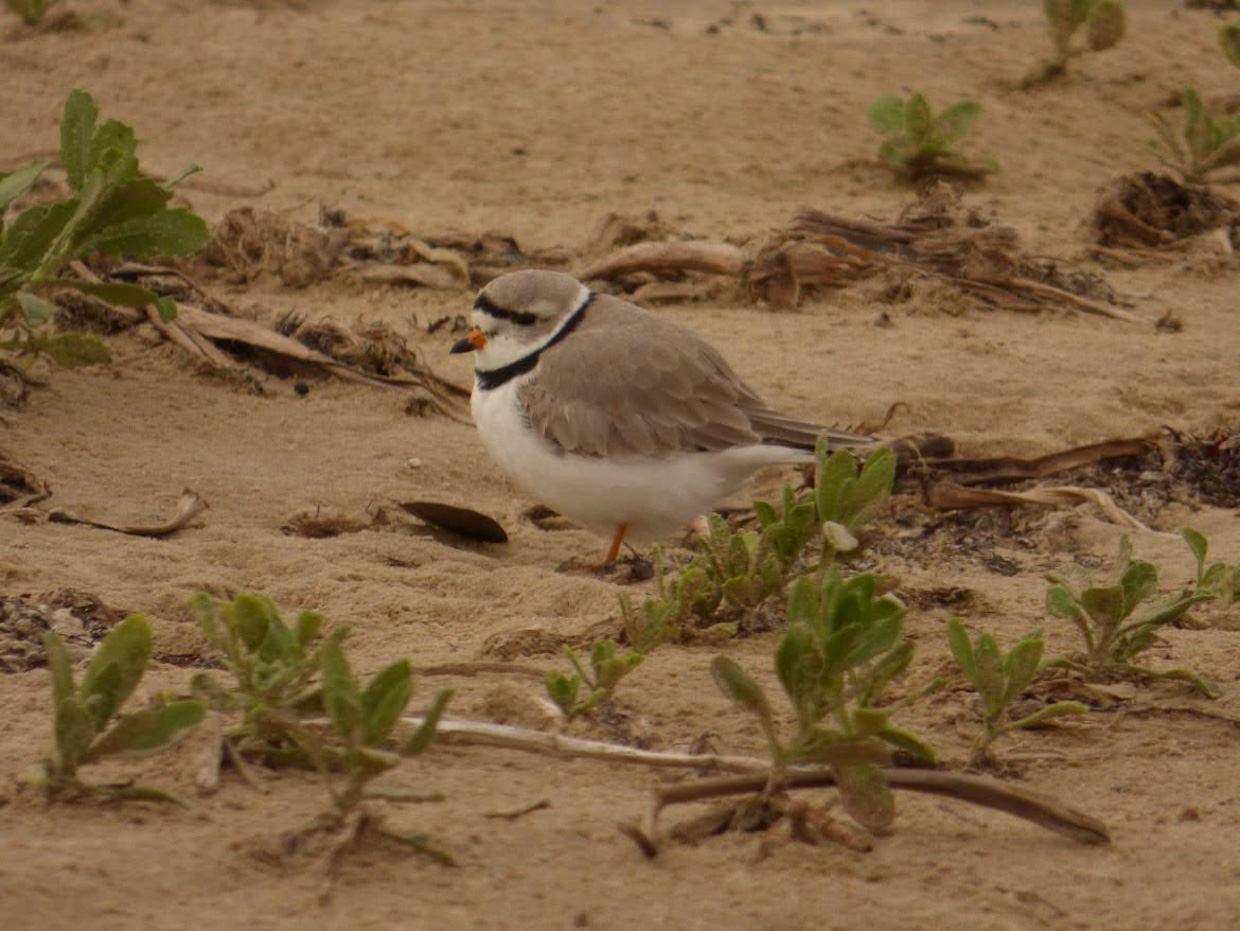
Piping Plover ©Ellen Lawler
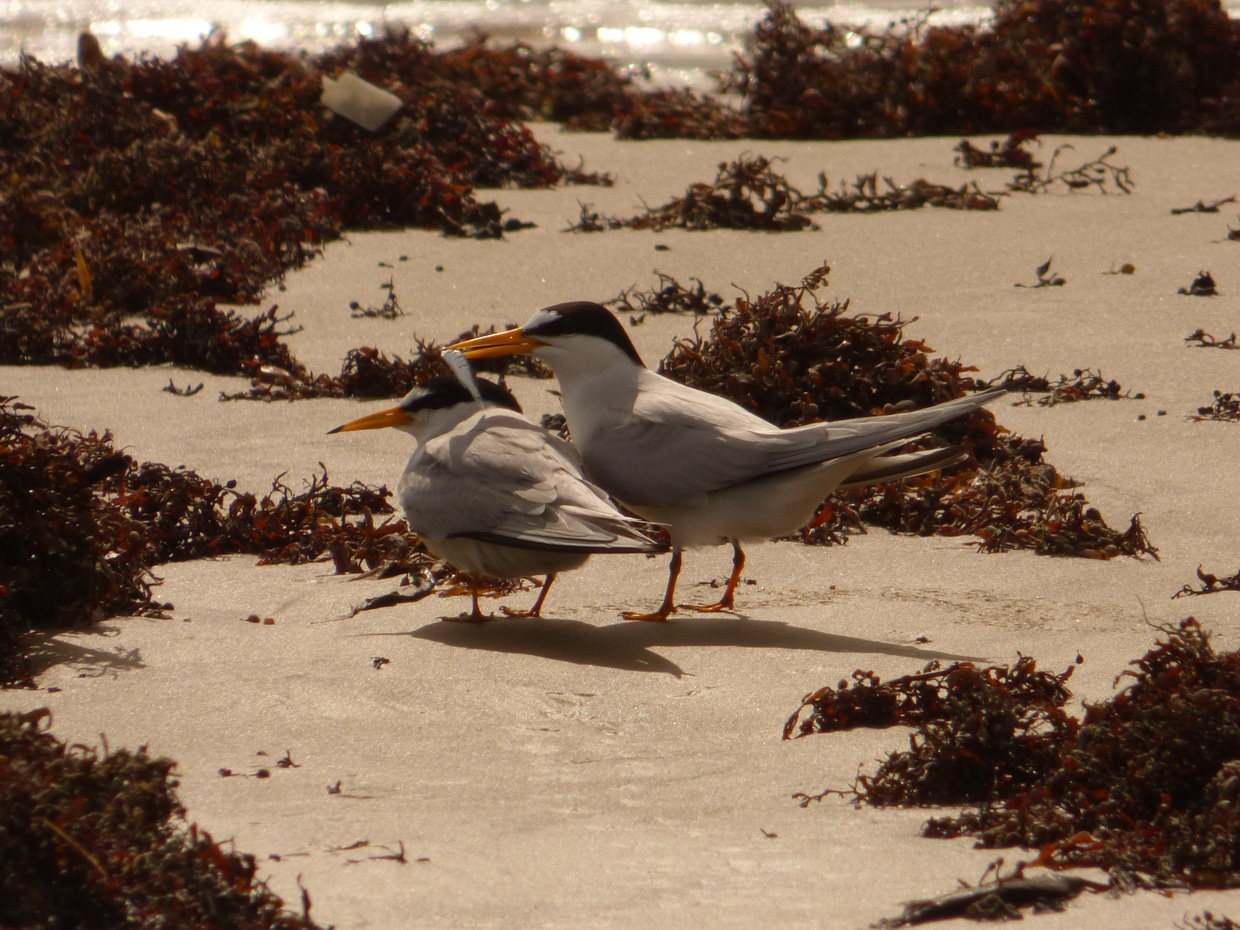
Another declining and cute species, the Least Tern, showed off its courtship with a male carrying a small fish, flipping his head side to side to woo his mate. Other highlights were a comically active Reddish Egret and a Lesser Black-backed Gull eating a shark carcass!
Least Terns courting ©Ellen Lawler
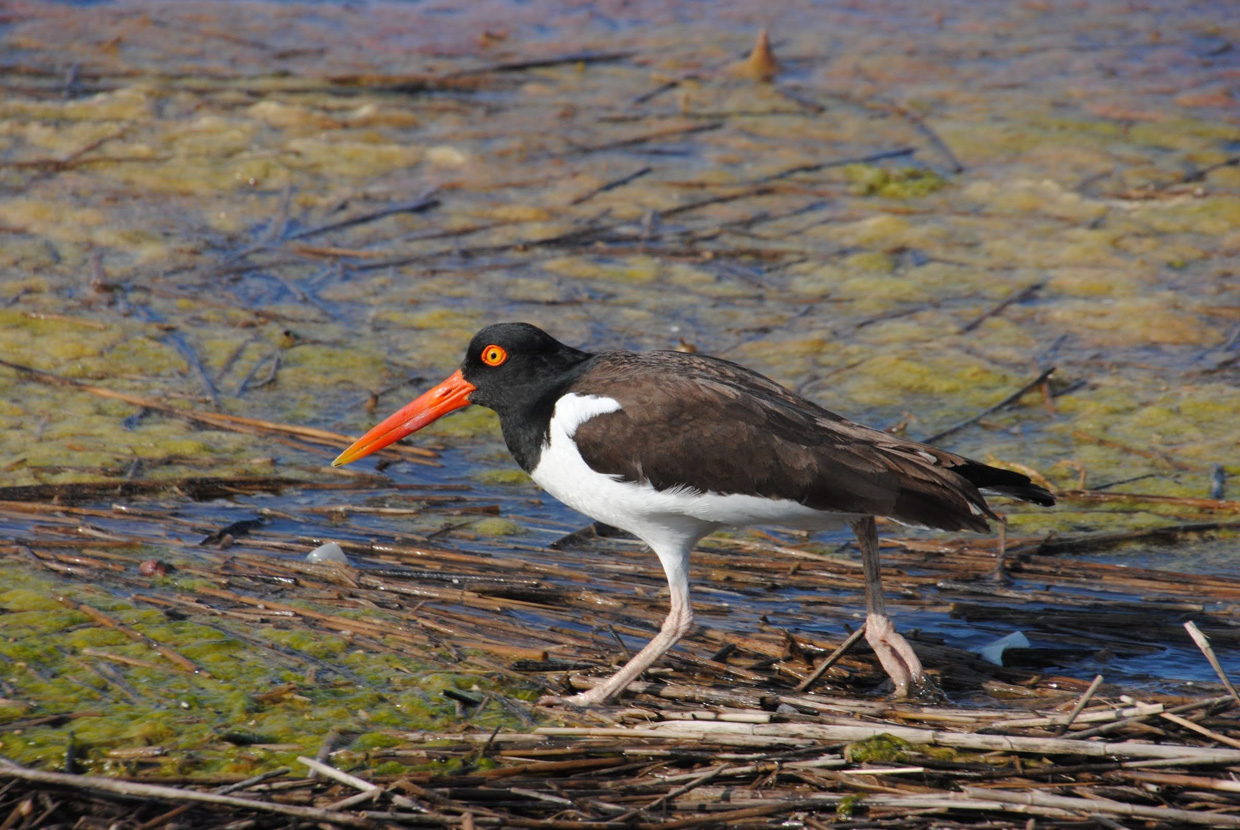
Next we made a pass at Rollover Pass, an inlet full of hundreds of terns of five species, plus larger waterbirds like American Oystercatcher, Black Skimmer, and Marbled Godwit.
American Oystercatcher ©Alyssa DeRubeis
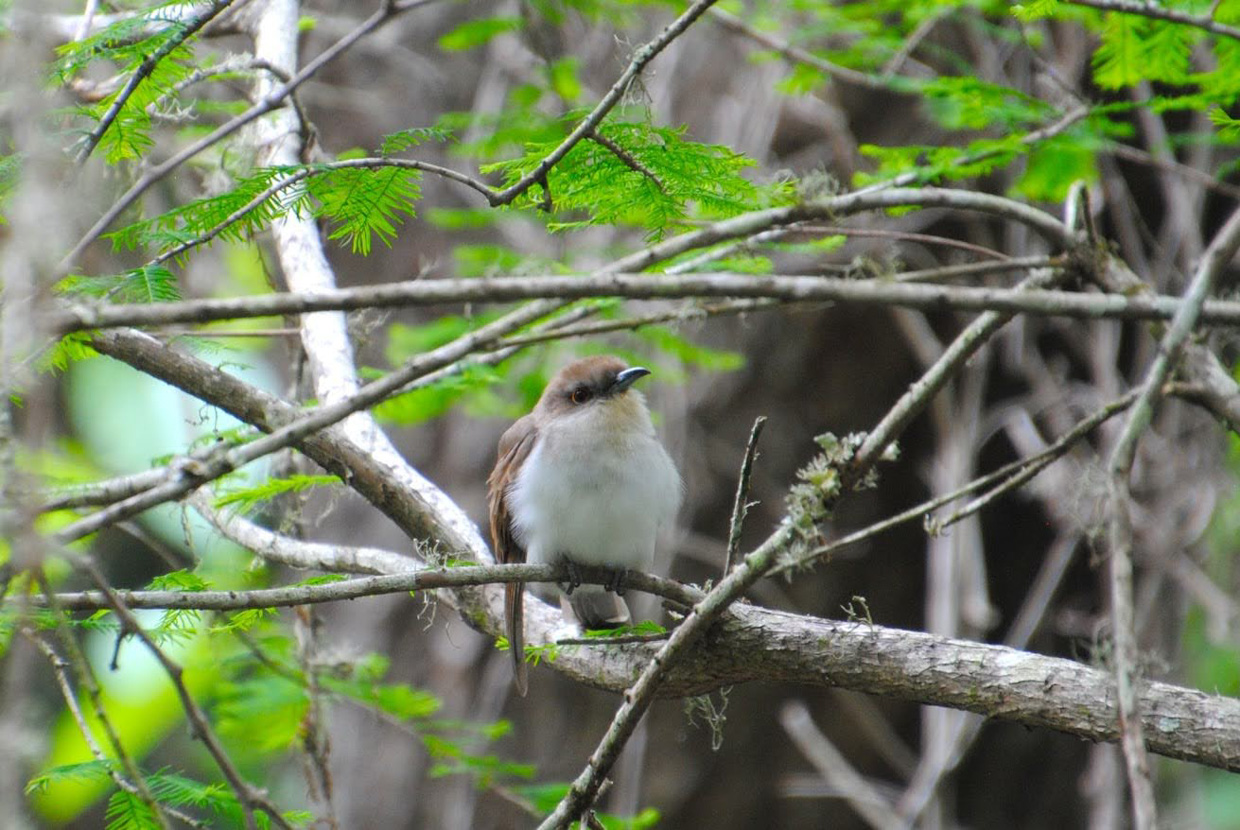
After lunch was stop number four at Boy Scout Woods Sanctuary. This site was much birdier than our previous visit there, with killer looks at Black-billed and Yellow-billed Cuckoos, Magnolia and Prothonotary Warblers, Ovenbird, Gray-cheeked, Swainson’s, and Wood Thrushes, and much more.
Black-billed Cuckoo ©Alyssa DeRubeis
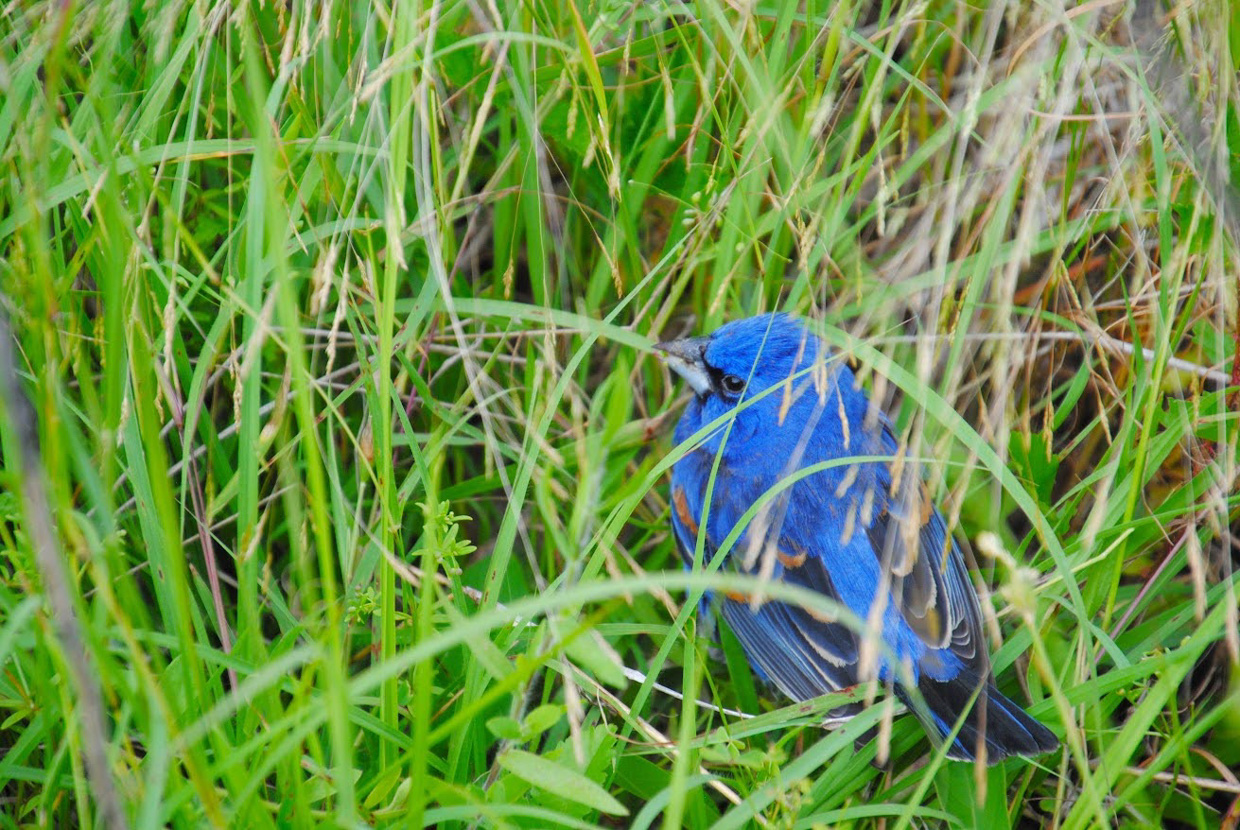
We could tell these birds were fatigued and hungry, especially a tame male Blue Grosbeak that ate grass seeds directly below us on the boardwalk as we walked by!
Blue Grosbeak ©Alyssa DeRubeis
The early evening brought us to our fifth stop of the day on Fairview Road. We scoured the rice fields for shorebirds. Various flocks of six species were nearly always on the move, in part thanks to the presence of predators like a Merlin. We did manage nice looks at an American Golden-Plover in its crisp breeding plumage. A pleasant surprise was a locally uncommon White-tailed Hawk. We could make out its disproportionately long wings and short tail.
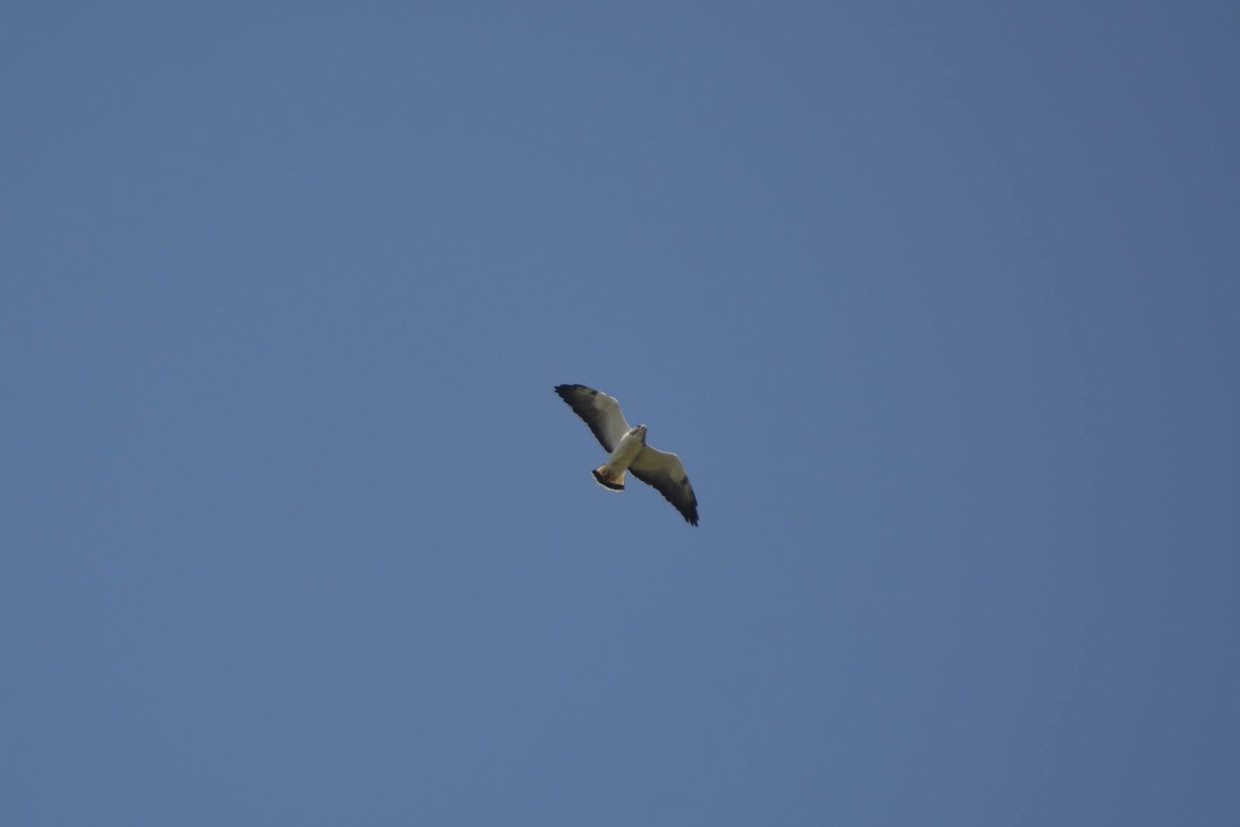
White-tailed Hawk ©Alyssa DeRubeis
We ended the day at stop number six, Smith Oaks Sanctuary. We couldn’t miss one last opportunity to admire the gregarious waterbird rookery. While we peered out over the lakes, Common Nighthawks glided above us. We knew it would be hard to leave the Texas Coast tomorrow morning.
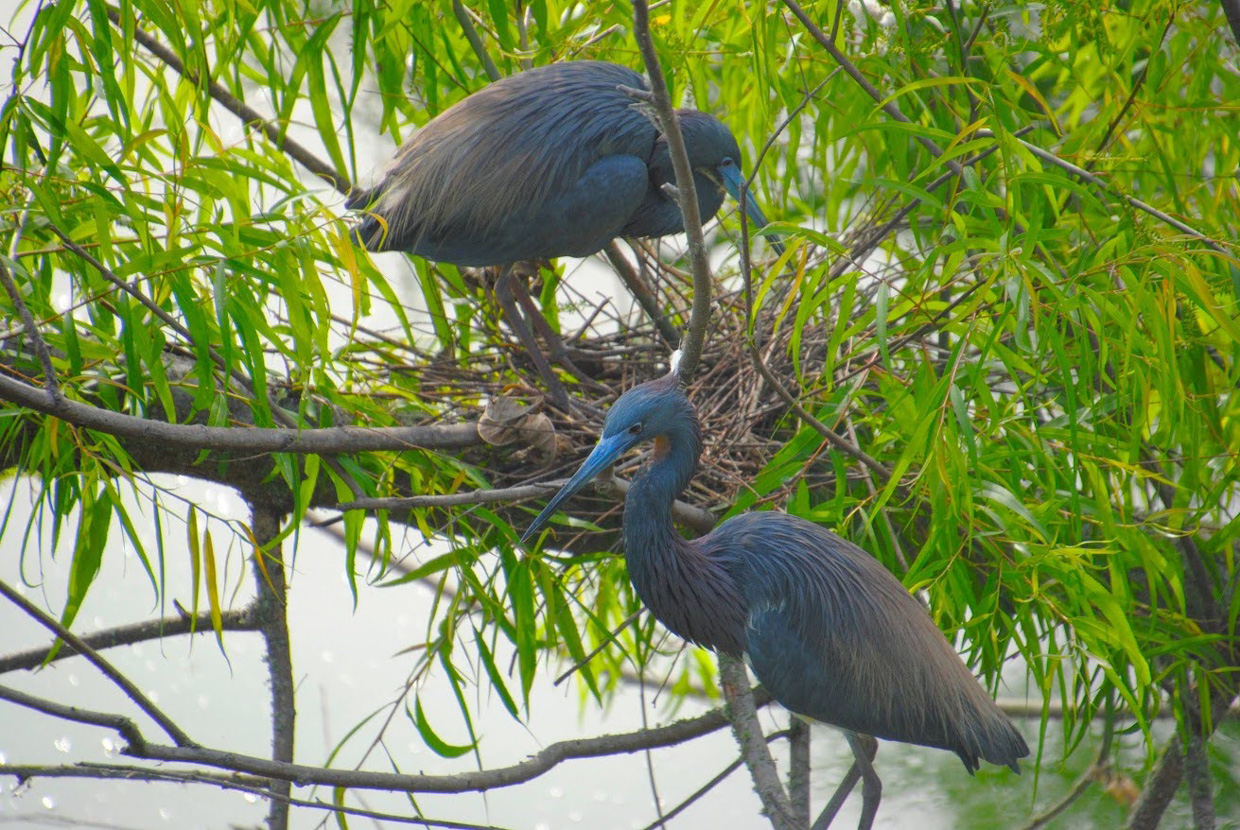
Tricolored Herons ©Alyssa DeRubeis
Day 7: Rails in the Rain, And That’s a Wrap, Folks!
The final morning’s damp conditions brought us waterbirding at Jocelyn Nungaray National Wildlife Refuge’s Shoveler Pond.
Today we had ample time to take a stroll on the boardwalk, where we were amused by shorebirds at very close range. We studied the shape and size differences between Greater and Lesser Yellowlegs side-by-side. We also observed the progression of breeding plumage between several beautiful Stilt Sandpipers in varying stages of moult.
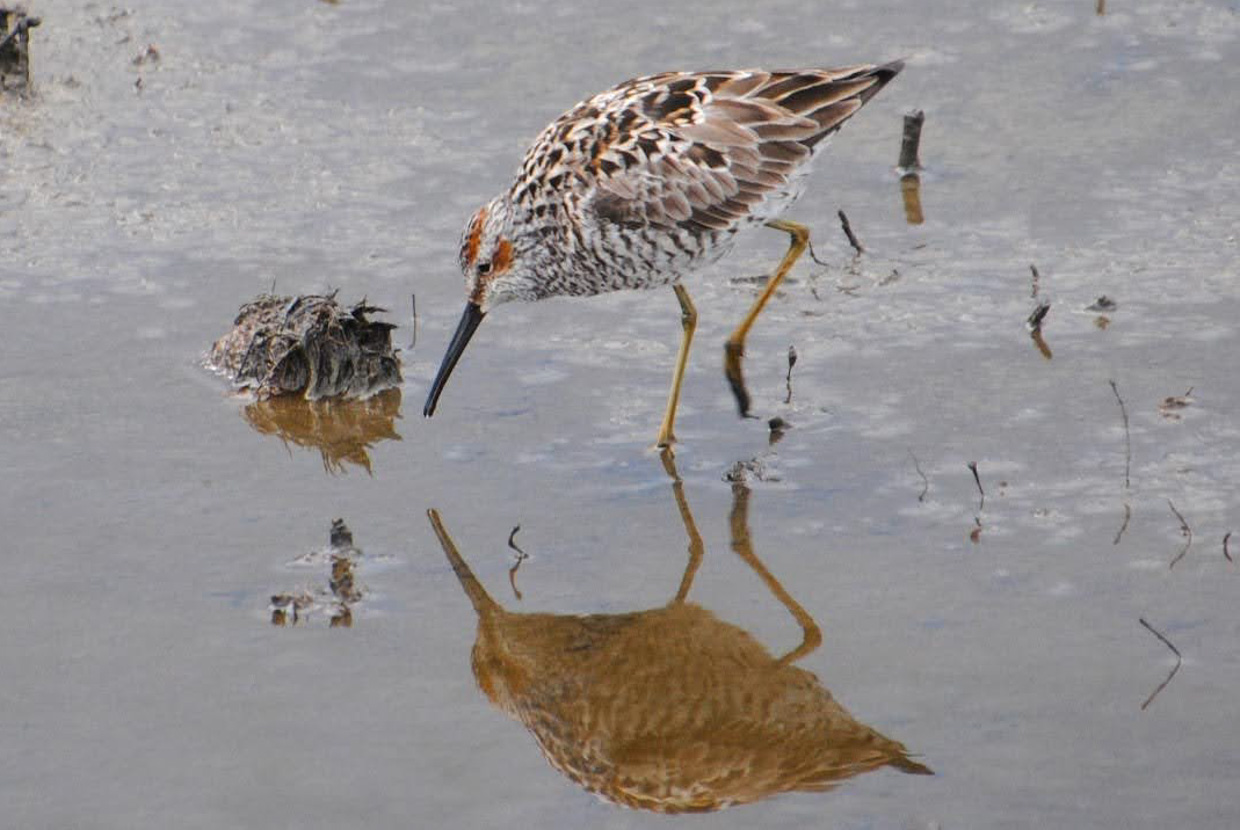
Stilt Sandpiper ©Alyssa DeRubeis
Witnessing sandpipers so up close was special, but this boardwalk had more in store for us. Soras strutted out in the open, even chasing shorebirds, seemingly wanting all the attention on their bright yellow beaks and elaborate plumage pattern and colors. But then, a chicken-sized rail stepped out onto the scene: King Rail! This elusive and endangered rail was a new species for most in our group, and it gave us a few brief but unobstructed views.
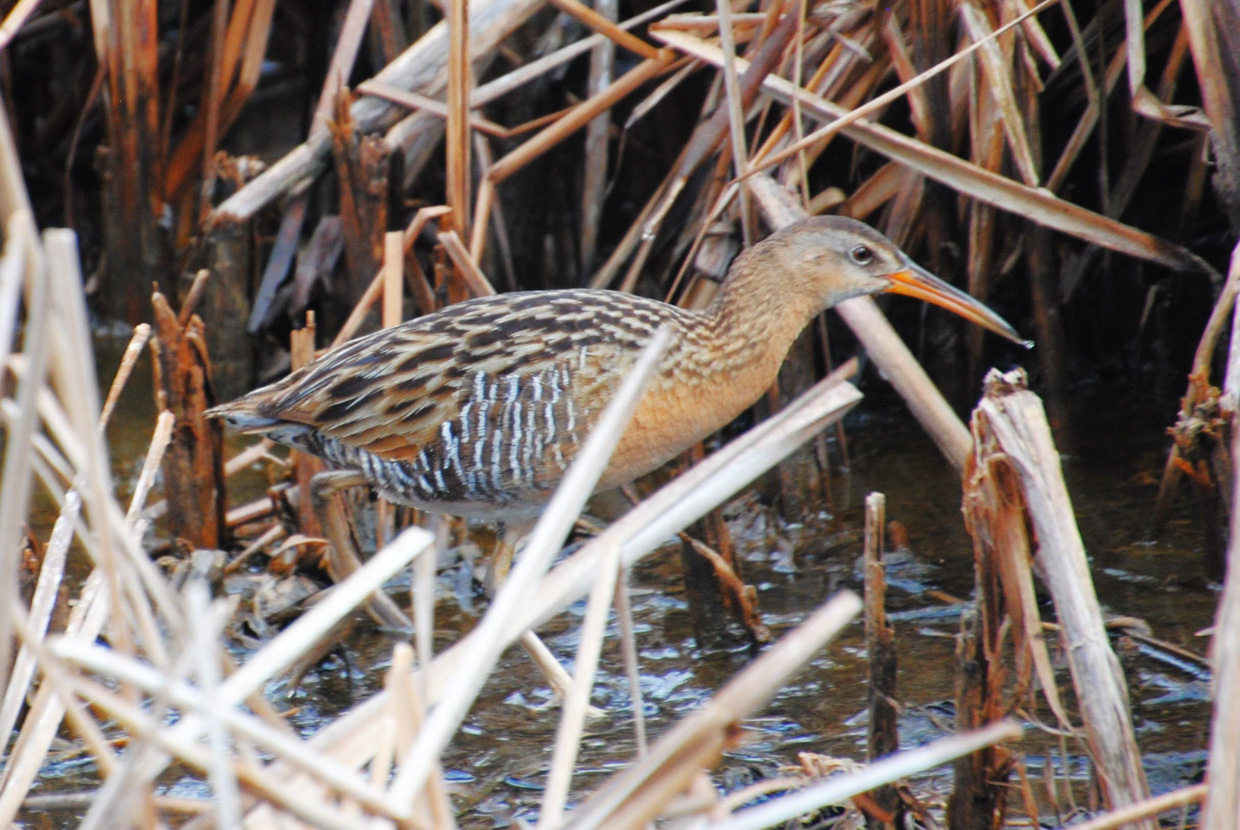
King Rail ©Alyssa DeRubeis
After giddily departing the boardwalk, two small herons lurked below the road in dense foliage: Least Bittern! One bird popped up and flew around us. We audibly gasped at its bright yellow and navy colorblocking and diminutive size. When leaving the refuge, we found a small group of Fulvous Whistling-Duck. How incredible to see so many amazing birds in one spot!
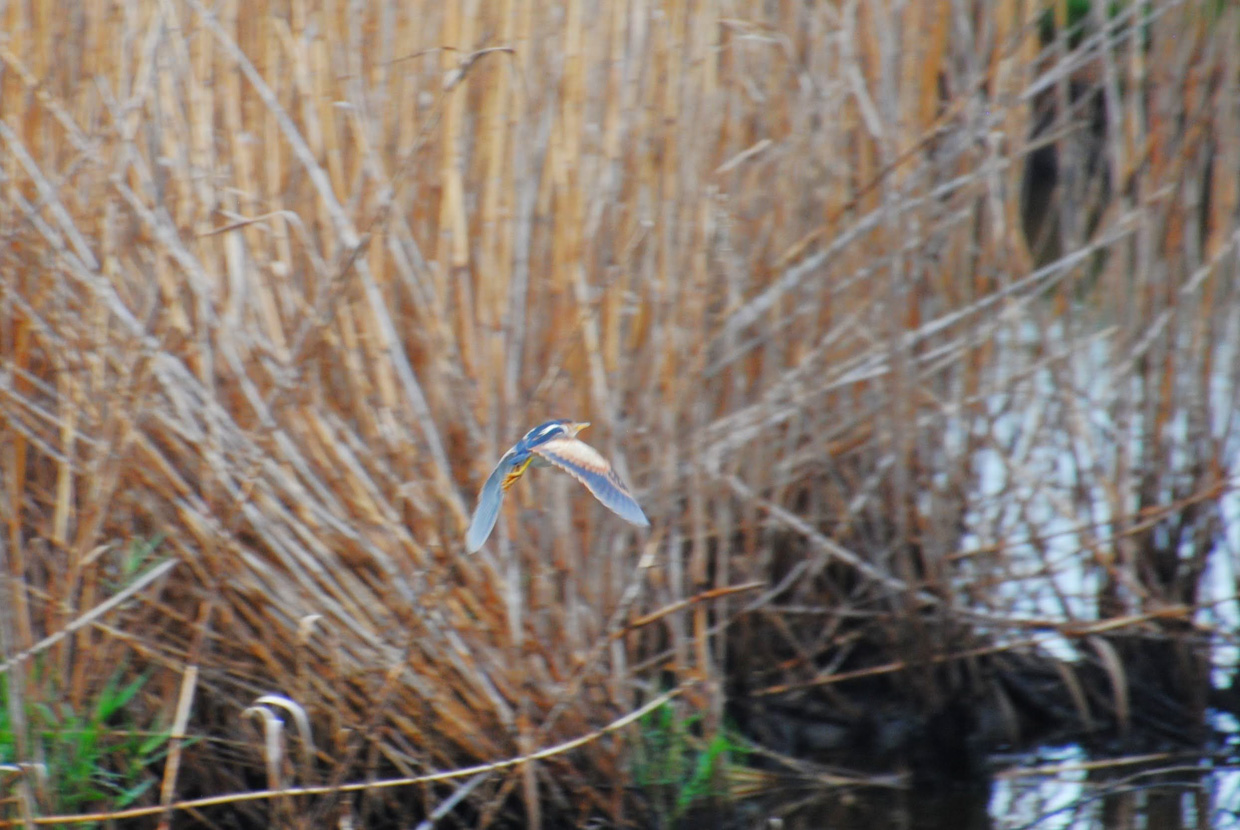
Least Bittern ©Alyssa DeRubeis
We ended our tour north of Houston in W.G. Jones State Forest. Brown-headed Nuthatches squeaked from up high in the pines, while a pair of Eastern Bluebirds dutifully tended to some hungry fledglings, all while being serenaded by Pine Warblers.
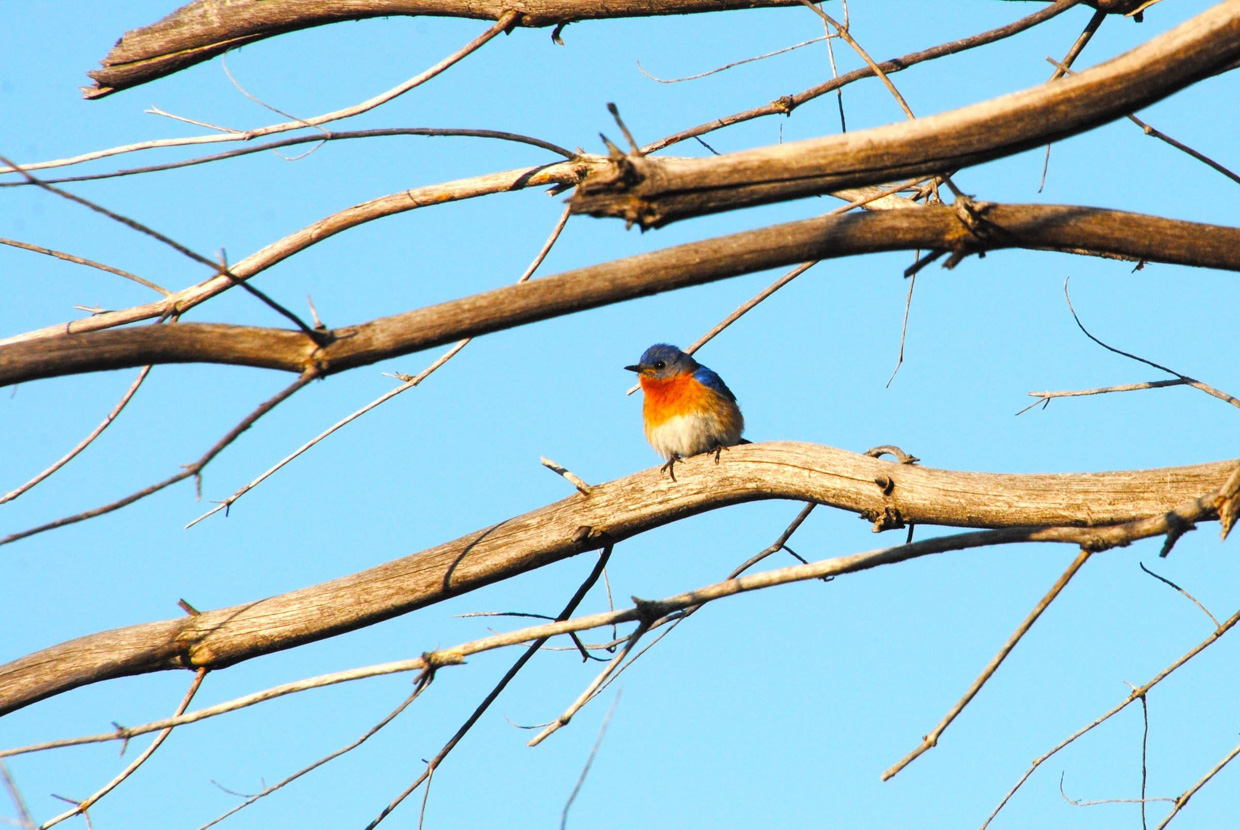
Eastern Bluebird ©Alyssa DeRubeis
Everyone on the tour was a true team player. We helped each other get on and find birds, from the persnickety Black-capped Vireo in the Edwards Plateau to the countless hyperactive migratory warblers on the coast. Thank you for making this trip a memorable experience!
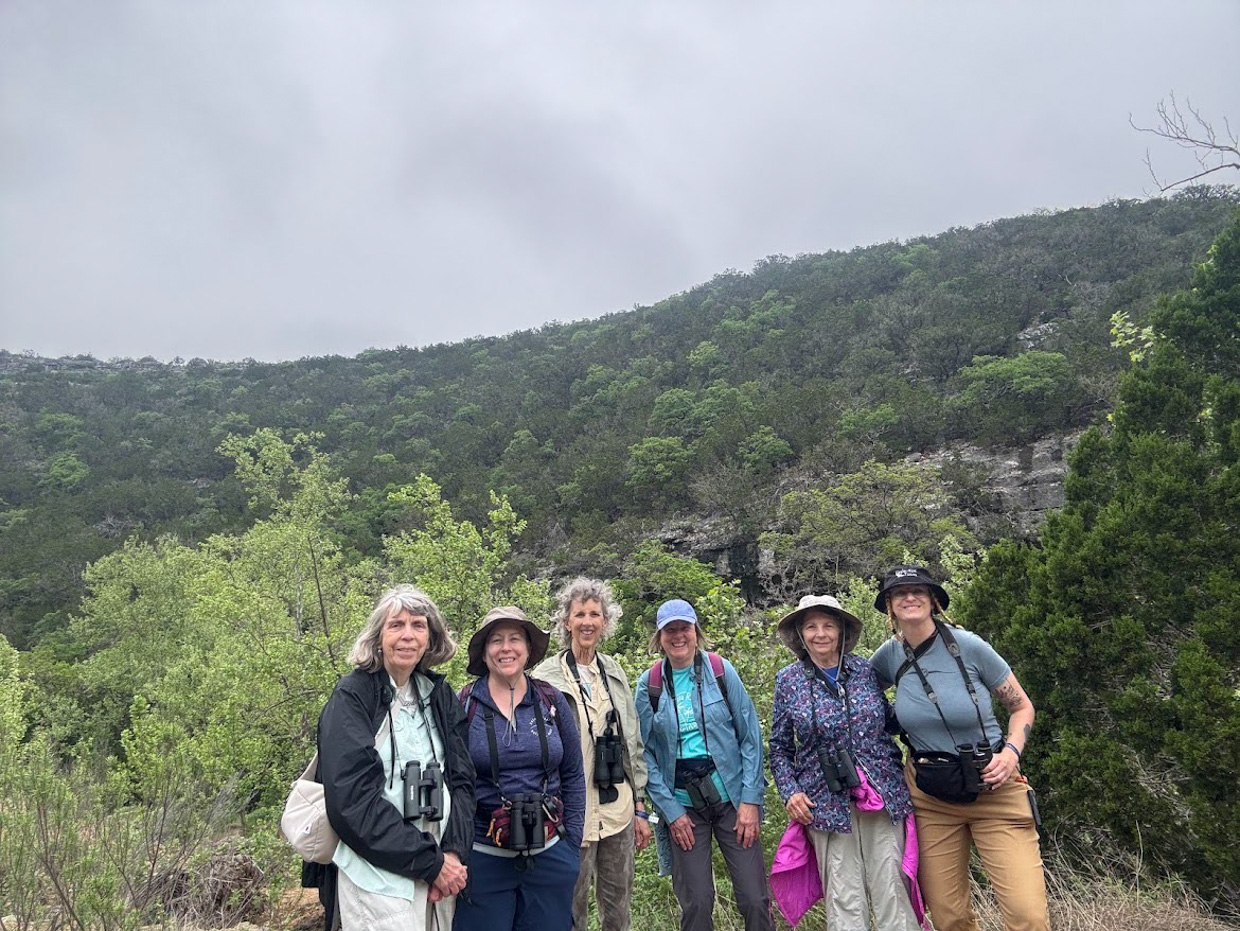
Texas Spring Migration group 2026