Tanzania Trip Report April 15 – 30, 2025
If the first Tanzanian safari we ran in March-April 2025 was remarkable for the number of birds found, over 400 species seen by almost all of us, then our second safari quickly became something of a mammal watcher’s extravaganza. Even this guide, a former resident of Tanzania and lifelong disciple of “winged beings”would have to admit that the “chief take-away” from our second tour was our mountain of mammal watching joy!
Joy repeatedly sparked, as in one thematic example, by our meeting with four species of medium and large cat, over a period of only three days whilst exploring the wide-open, yet extremely exclusive (in terms of opportunity), ecological landscapes of the western Serengeti.
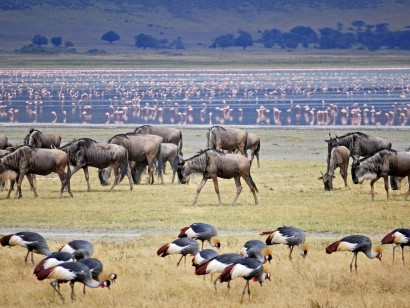
These “big cat meetings”, often ourselves alone, plus hours spent surrounded by, and immersed within, great grey rivers of heaving beasts, the fabled Serengeti ungulate migration, are unique to Tanzania. This migration often becomes a braided Mississippi or a Lena. A colossal flow of walking beings in greys and browns. At any one spot a river of tens or even hundreds of thousands of wildebeest and zebra, together with a smaller number of the lesser ungulates. African animals on the move, some being truly migratory, others semi-resident.
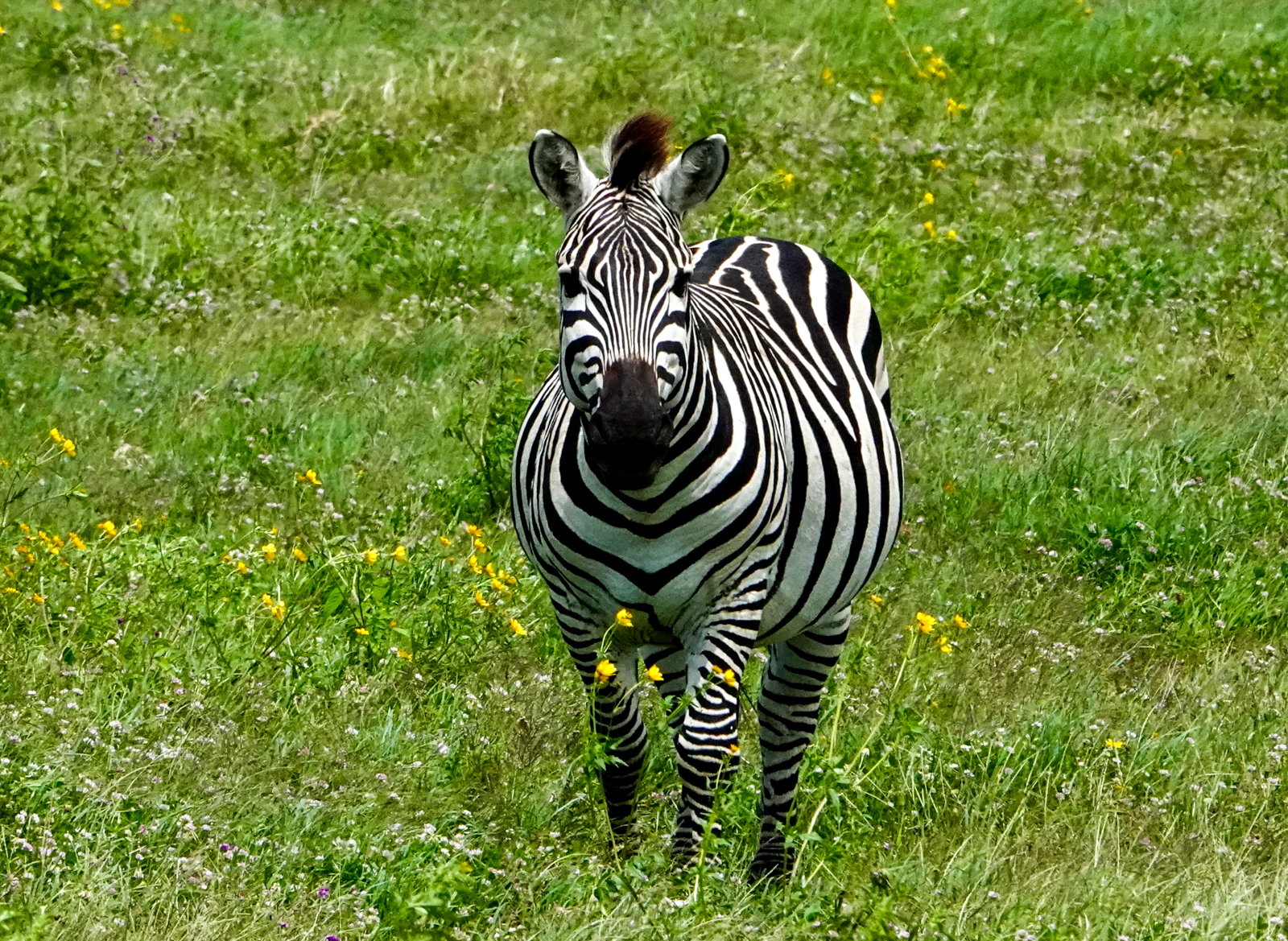
Zebra © John Beecham

Waterbuck © John Beecham
As usual, our tour began at KIA Lodge, not only is it adjacent to the delightfully old-fashioned and laid back Kilimanjaro international airport, but it is also a “rewilding” lodge, so a place where we can easily encounter a few roosting fruit bats and watch colourful scuttling agamid lizards among the rocks. Not to mention the big eagle-owls, cryptic nightjars and all the beautiful insects.

Spotted Eagle-Owl © John Beecham
Here our group of eight, seven “foreign wageni” (Kiswahili language for guests) plus the indispensable Moses, our deeply experienced driver-guide, gathered on the morning of 16th of April to commence our Tanzania exploration. Our safari would run from the dry plateau around snow-crowned Kilimanjaro mountain, down through the heat of the Great Rift Valley, into the Crater Highlands, across the vastness of Serengeti to the verdant, densely populated shores of the mighty Lake Victoria.

Kilimanjaro © John Beecham
There had been rain overnight, after a very hot and humid day on the 15th of April. As we drove out of the lodge, alongside and still within the airport perimeter we were lucky to find a pair of delightful Pygmy Falcons on the dead snags of an old acacia tree.
Within an hour and a half we were in the cool of Arusha National Park watching resplendent Colobus Monkeys in their long cloaks of black-and-white. We also saw our first Blue Monkeys, a complex species with more names in English than you could wish for!
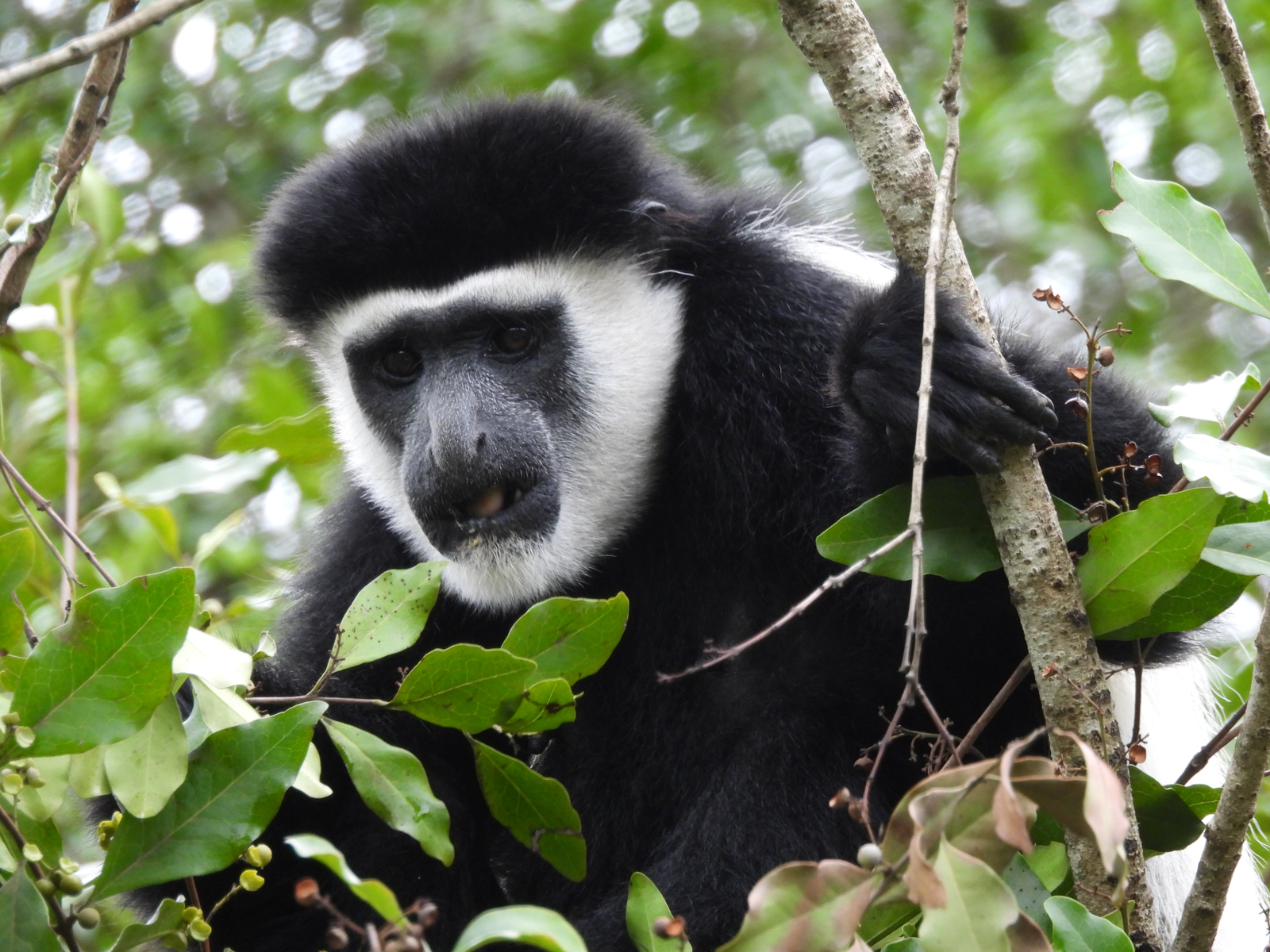
Colobus Monkey © Rob Leonhardt
Far more difficult to see were three or four Hartlaub’s Turacos who were weaving through the dense evergreen tree canopy like colourful green and red squirrels.
During the course of the day we were very lucky to come upon a small herd of forest-dwelling (Savanna) Elephants. Nowadays, at this location, they are perforce retiring animals, typically confining themselves within these deep mountain woods, and consequently hard to meet.
There were many statuesque Maasai Giraffes, often right out in the open, as is often the case in Arusha National Park. But these statues are highly animated and stride around to browse the fresh green sprigs off the tops of favoured trees.
We saw more monkeys in the afternoon together with raucous Silvery-cheeked Hornbills searching for figs high in the forest canopy. Whilst down on the forest floor in dappled shade we found little chestnut-coloured antelopes, the shy and retiring Red Duikers. Here we also found an elusive endemic forest bird, the well-named moss green Kilimanjaro White-eye.
One of the sharp-eyed members of the group found a pair of Spur-winged Lapwings along the shoreline of the brackish lake of Momella in the north of the park. A haunt of several thousand gorgeous pink and rose Greater Flamingos.
In the expansive grassy glade of a place called Serengeti Ndogo (Little Serengeti) there was our first herd of African Buffalos, Plains Zebra, Common Warthog, Bushbuck and strange-looking Palm-nut Vultures plus a flock of seven Spur-winged Geese our first big waterfowl of the tour.
It was also in Arusha National Park that we encountered our first Helmeted Guineafowl, these “game birds” looking suitably exotic in their natural environment. On the road to the little museum at Ngurdoto we found a pair of the forest dwelling Scaly Spurfowl.
Tarangire was as enchanting as could be. The expansive views westward to the sun setting over the wall of the Great Rift Valley are always a favourite. The sentinel baobab trees, as if upturned, dotting the savanna landscape. The introduction this place provides to African open-country bird life, full of iridescence and of a unique character is in itself a great joy.

Elephant and giraffe in Tarangire National Park © Rob Leonhardt
Here we met with our first sandgrouse and bustards, Go-away-birds and numerous other African bird “specialities”. We were very lucky to find three species of courser (primarily nocturnal dry land shorebirds) in one drive through one small area, including the much sought after Bronze-winged. At some small pools we found two quite skulking birds, both “rain migrants” from farther south, the delightful Dwarf Bittern and the elusive African Crake. Whilst overhead gorgeous emerald-hued Blue-cheeked Bee-eaters caught dragonflies during a stop-over en route to the Caspian Sea!

Kori Bustard © John Beecham

Elephant © John Beecham
Close around the wonderful lodge, with its breathtakingly panoramic views, were our first snoozing up close, (and ourselves perhaps somewhat intrusive), a pair of African Scops Owls. The bizarrely named Unstriped Ground Squirrels, Ochre Bush Squirrels and Dwarf Mongooses, all mammals that are very tame here, as are the Kirk’s Dikdik that tiny antelope of the acacia bushland of Tanzania who nibble grasses by the porch of your tent.
One afternoon we chanced upon a delightful display by an ostentatious Red-backed Scrub-Robin. This genus of birds usually produces individuals who are much more secretive.
Sunbirds should be a welcome daily feature on any tropical African birdy tour. We were well rewarded for our efforts. During our safari we saw many splendid males, of several species, their iridescence always simply astounding. The sunbird most prized at Tarangire was most likely the somewhat anomalous Eastern Violet-backed. Up in the highlands the Tacazze is a speciality. Yet the most frequently encountered sunbird species on the safari as a whole was undoubtedly the newly ‘split and named’ but, one must say, quite appropriately so, Gorgeous Sunbird.

Eastern Double-collared Sunbird © John Beecham
Leaving Tarangire we passed a stand of cattails in a small pool at a little quarry just outside the park. Here we watched the courtship antics of two species of those black-with-colour wetland seed-eating birds, the Bishops: the widespread Southern Red and the far more localised yet even more adorable Golden-crowned Bishop.

Black-winged Bishop © John Beecham
On our way to Karatu and the Crater Highlands we pass through Lake Manyara National Park. This protected area has changed greatly over the past two decades, so that it no longer supports the vast numbers of flamingos and other water birds that it used to.
However, it’s a good spot to observe Blue Monkeys and Olive Baboons, various species of hornbill and other frugivorous birds. And Lake Manyara still has its fair share of waterbirds, birds which one can drive right up to.
The picnic site too, is an especially good area, excellent for seeing up close a few localised forest bird species that hail from further south.
During our afternoon along the lakeshore I was particularly impressed by being able to watch the feeding behaviour of Great White Pelicans at close range.
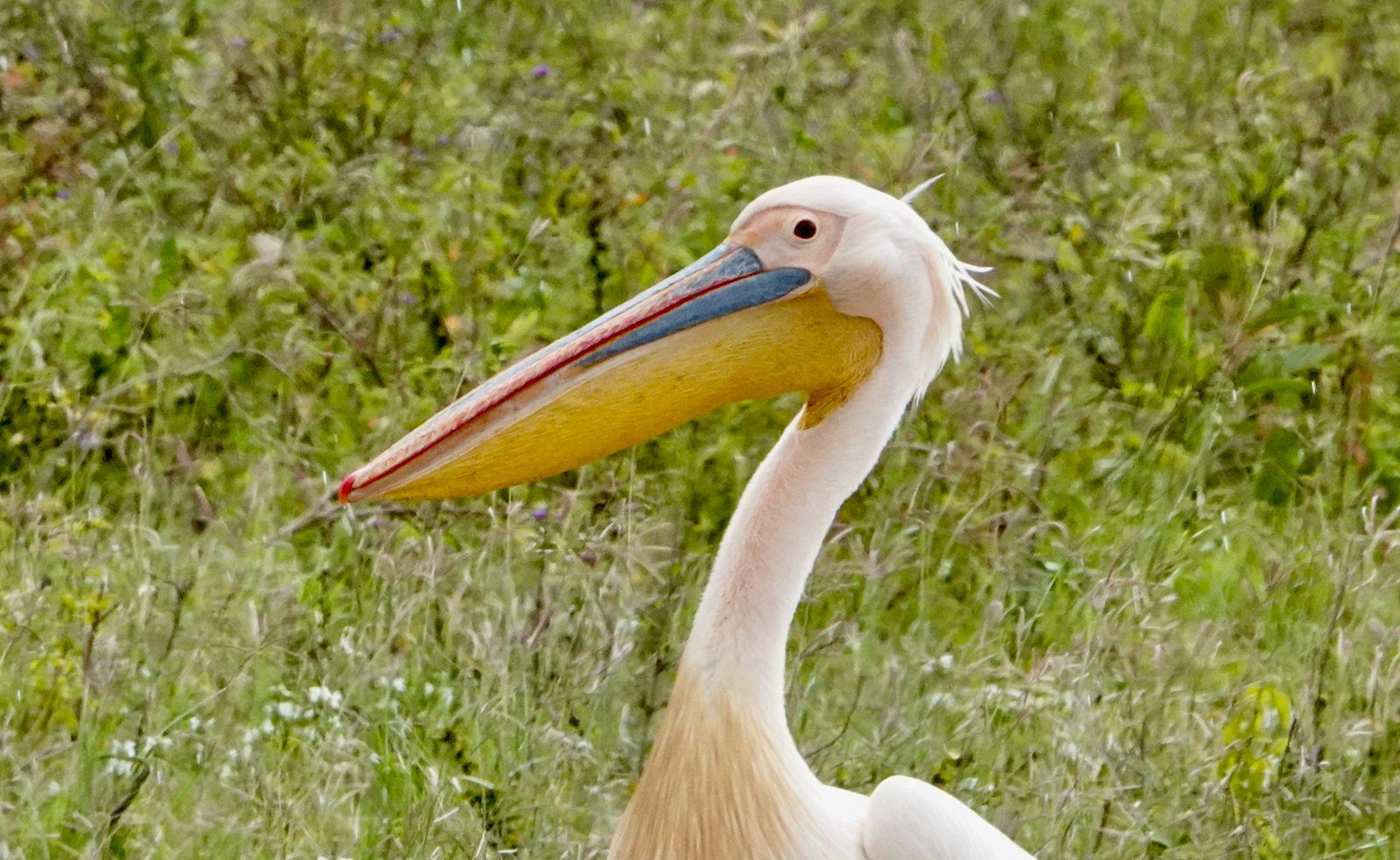
Great White Pelican © John Beecham
Back in the cool of the highlands we were able to take it easy and to have a day outside of the vehicle. We spent a morning with a local guide and an armed ranger on a gentle walk up into the Endoro forest. In this cool and misty montane semi-evergreen forest we were able to see several unusual bird species that one cannot find at lower elevations. Perhaps the best experience amongst these was the good views we obtained of Purple-throated Cuckoo-shrike and Black-fronted Bushshrike. Whilst two of us were very lucky to see an African Broadbill sitting motionless on a branch overhanging the track.
The next day was “Our Day in the Crater”!This privilege of a visit to Ngorongoro Crater is the day I most look forward to of any day on tour in Northern Tanzanian. So nowadays I always keep a very careful check of all the bird species we see. And we accumulate a list of approximately 135 species on an April visit, nearly all of them from our “mobile blind” which, through decades of experience, we are able to pilot into all of the best locations “down in the crater”.
This visit saved the best moments until near the end of the day. It was after five pm when, on our way along the exit track to the rim, we rolled-up to a female Leopard who was preparing to leave her day time roost. A broad bough, a perfect place of dappled shade, high up in an old Sycamore Fig beside the base of the Lerai ascent road.

Leopard © John Beecham
Next day on our descent from the Crater Highlands, continuing westwards, into the plains of the Serengeti we were fortunate to find a Rufous-crowned Roller right beside the road. This roller is becoming scarce as it depends upon the amazingly complex (and sensitive) insect fauna that is associated with herds of wild ungulates and Maasai cattle. Upon animals who remain relatively un-polluted by the cocktails of veterinarian chemicals quite recently released upon East Africa.
Our highly educational visit to Oldupai anthropological museum was punctuated by a few ‘extra’ bird species for our list such as the female Mockingbird Cliff-chat who forages around the well presented murals within the buildings! Mention must be made of the “Indian” House Sparrows at the gate to the museum, seemingly quite happy at this building in the midst of a vast wilderness. A pair of these sparrows is resident here. Individuals who have hitch-hiked here, most likely in a vegetable delivery truck that services one of the camps and lodges in the Serengeti.

Oldupai © James Wolstencroft
Our destination was Ndutu Safari Lodge, another fabulous place. The oldest and finest accommodation for “A Naturalist” in this area. It was made famous by the “Big Cat Diary” series, late last century, on the BBC. So it attracts a regular clientele of dedicated feline enthusiasts.
This April was very green, hence tall and wavy grass. A season where finding the various big cats is not at all easy. Nevertheless we were able to see both Cheetah and Leopard and see them well, thanks to that inexplicably essential combination of good judgement and good luck. For a safari to be successful “Timing is everything”, or so some are wont to say. And Moses, our driver, is an acknowledged expert at finding the cats. Nevertheless out there in the savannah of the Serengeti an almost mystical serendipity is king!
Searching for Cheetah on the limitless plains can seem a daunting task. Indeed it often is. After our hard work out on the open savanna in the morning we were blessed to find two males (likely brothers) hunting together at the turn off to the safari lodge as we were leaving for our evening “game drive”. One of us had stayed behind to further soak-up the ambience of this place, so we soon learned that, after we had watched them from our truck, they had passed right through the unfenced and fully naturalised garden of the lodge.

Cheetah with prey (Impala) © John Beecham
After the “highs” of The Crater and Ndutu we finally entered the immensity of the Serengeti National Park where we spent extended periods surrounded by what is almost a sea of large mammals. Words are unable to effectively describe the multitude of feelings that such experiences elicit. These rivers of beasts, in this “movable feast” as the great George Schaller termed it. A phenomenon for apex predators, that’s what many folk come here to witness. We were not to be in any way disappointed.
In particular I recall our glorious late afternoon at “Mbuzi Mawi”. This is a great granite Kopje through which passes the little-used north road of the Serengeti.
In the course of a few hours here, not only did we appear at times to be drifting among the surging tide of southbound wildebeest and zebra who were crossing our trail, but we also had time to search out and find special vertebrate residents of the colossal surrounding rocks: the Klipspringers who so improbably negotiate these boulders on tip-toe or high-hoof, two species of recalcitrant Hyrax (both Rock and Bush) and the lurid-coloured Mwanza Agama lizards who scuttle and bob across the sun-baked boulders.

Klipspringers © John Beecham
Eventually it was time to complete our trek across the wildlife wonderland of this far-sighted and peaceful nation of Tanzania. So we entered “The Western Corridor” and undertook the, at times difficult, drive to Speke Bay Lodge on the very tranquil shore of the mighty Lake Victoria. We had plenty of time though, en route, to pause and admire the special birds such as a few pairs of recently arrived Black-winged Bishops.
At a quiet and secluded “rest stop” we found the diminutive African Penduline-Tit (of the buff-bellied, nominate form, caroli), dazzling male Marico Sunbirds and elegant Rufous-chested Swallows.
We saw further flocks of vultures and the unique Bateleur Eagle (finally finding a stationary adult) perched in trees or out there circling over the Musabi Plains. We disturbed Spotted Hyenas who had been enjoying track-side mud wallows or dozing in culverts under this nowadays seldom used great western trail.

Spotted Hyena © John Beecham
At one point on our journey, whilst stopped and silent on the red cobbled road to admire a courting pair of endemic Grey-breasted Spurfowl we were extremely fortunate to coincide with a Caracal who was intent on hunting this very pair. He made a dashing grab but was unsuccessful. Unlike the Cheetah we had watched the day before downing a young Impala antelope.
In the late afternoon near to the western gate of Serengeti National Park, so by now close to the vast lake, we bade farewell to the mighty Savanna Elephants, to the African buffalo and the wildebeest and zebra, the gazelles and all the eagles and returned to our former world. To the lands of people, tarmac and buses. The road which we had left behind, long days ago, beyond the plains, over the Crater and behind the fiercely independent Maasai of Ngorongoro, a road a long ways east around Karatu town.
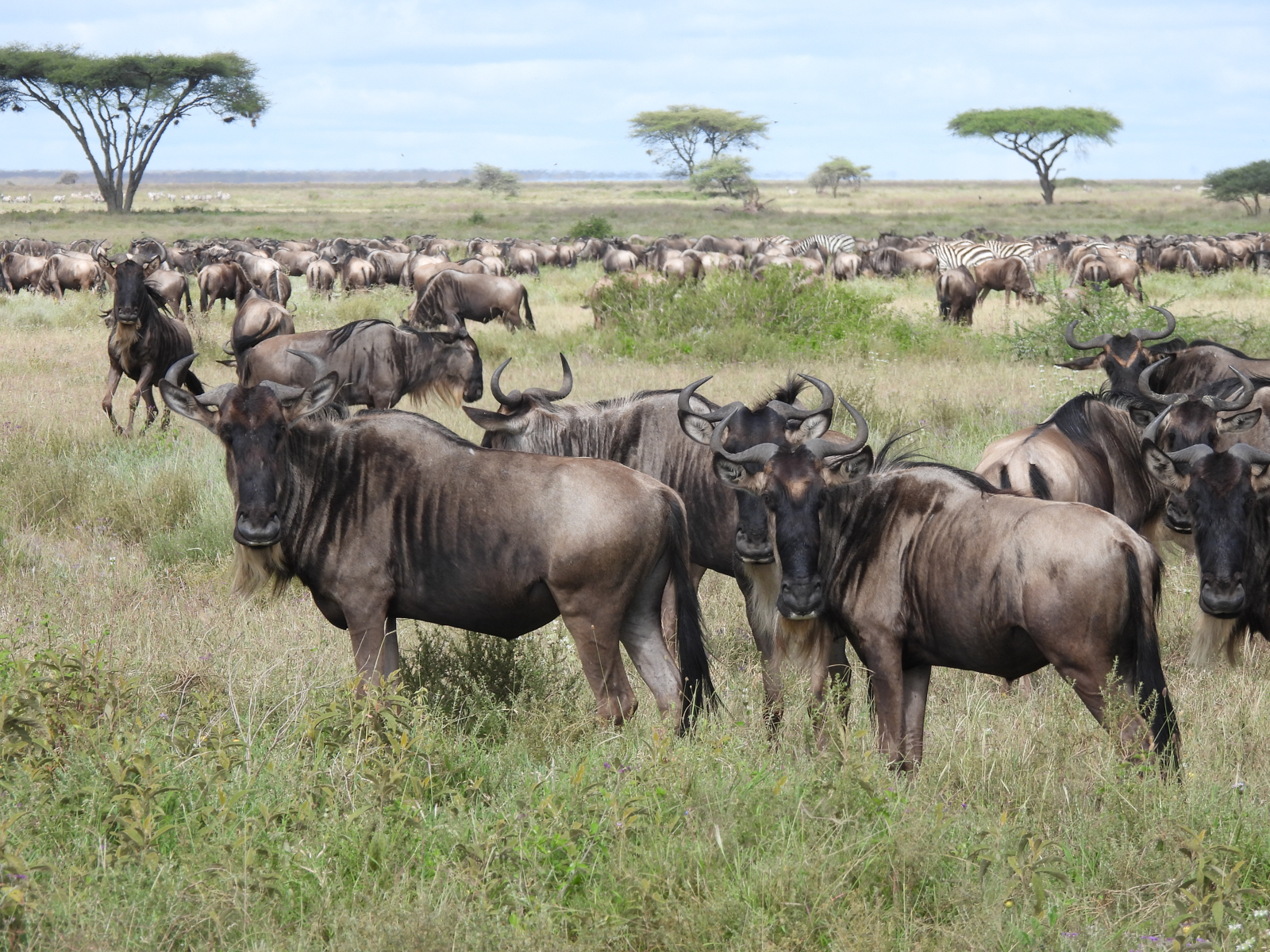
Wildbeest © Rob Leonhardt
After those long and dusty days on the “Wildebeest Trail” it was a delight for everyone to immerse ourselves in the birds and flowers of Speke Bay Lodge, caressed by the lake breezes and essential tranquility of this unique place.
For the keen birder there were still plenty of species to look for: from resplendent Red-chested Sunbirds to Woodland Kingfishers and the beautiful but secretive Black-headed Gonolek, roosting nightjars and big water birds, often overhead. And migrants too such as the crimson male of the Cardinal Quelea and the soft green Madagascar Bee-eaters.
Birds fresh-in from places south, indicating that an African austral autumn, otherwise almost imperceptibly, was fast approaching.
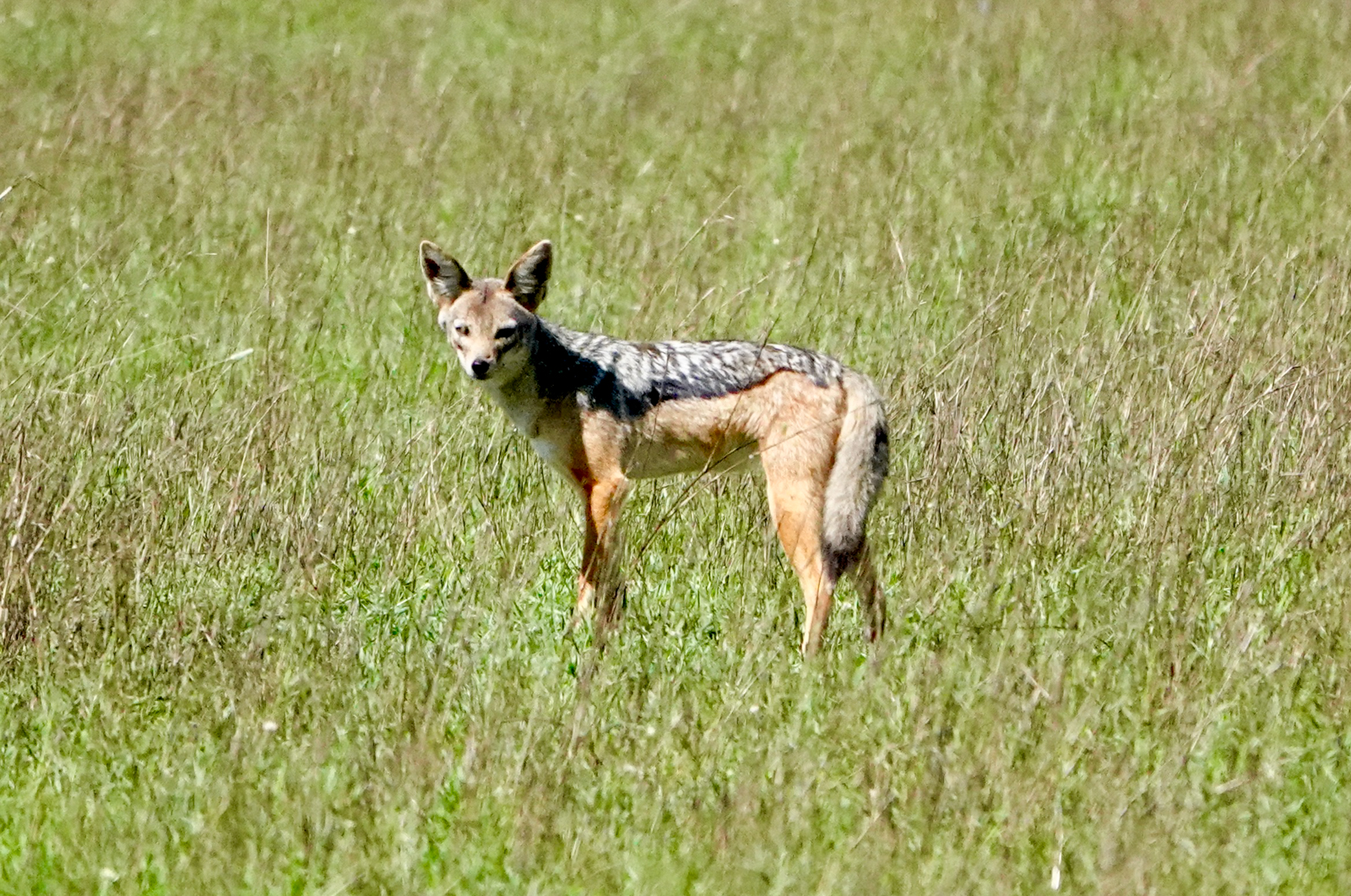
Black-backed Jackal © John Beecham

Ostrich © John Beecham
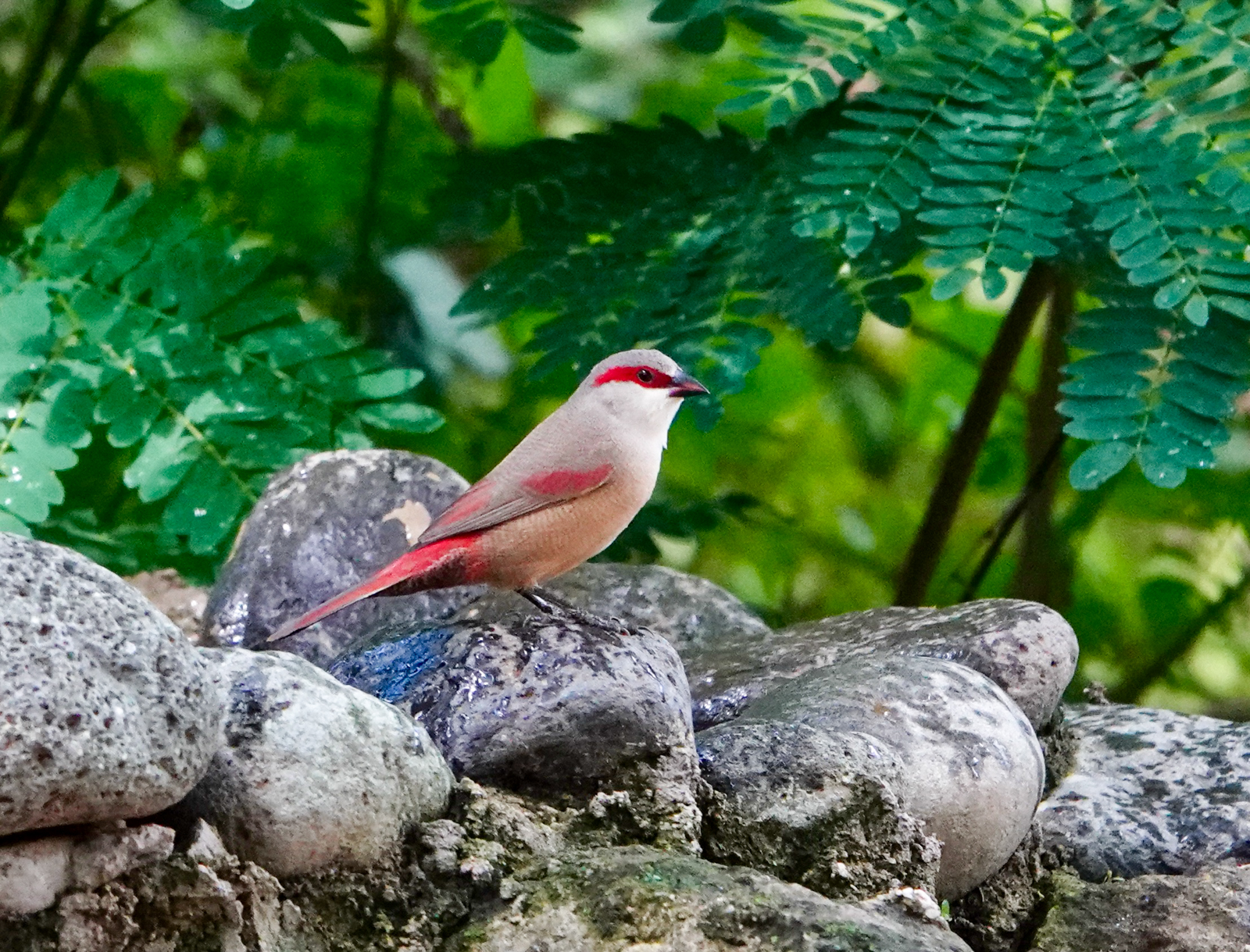
Crimson-rumped Waxbill © John Beecham
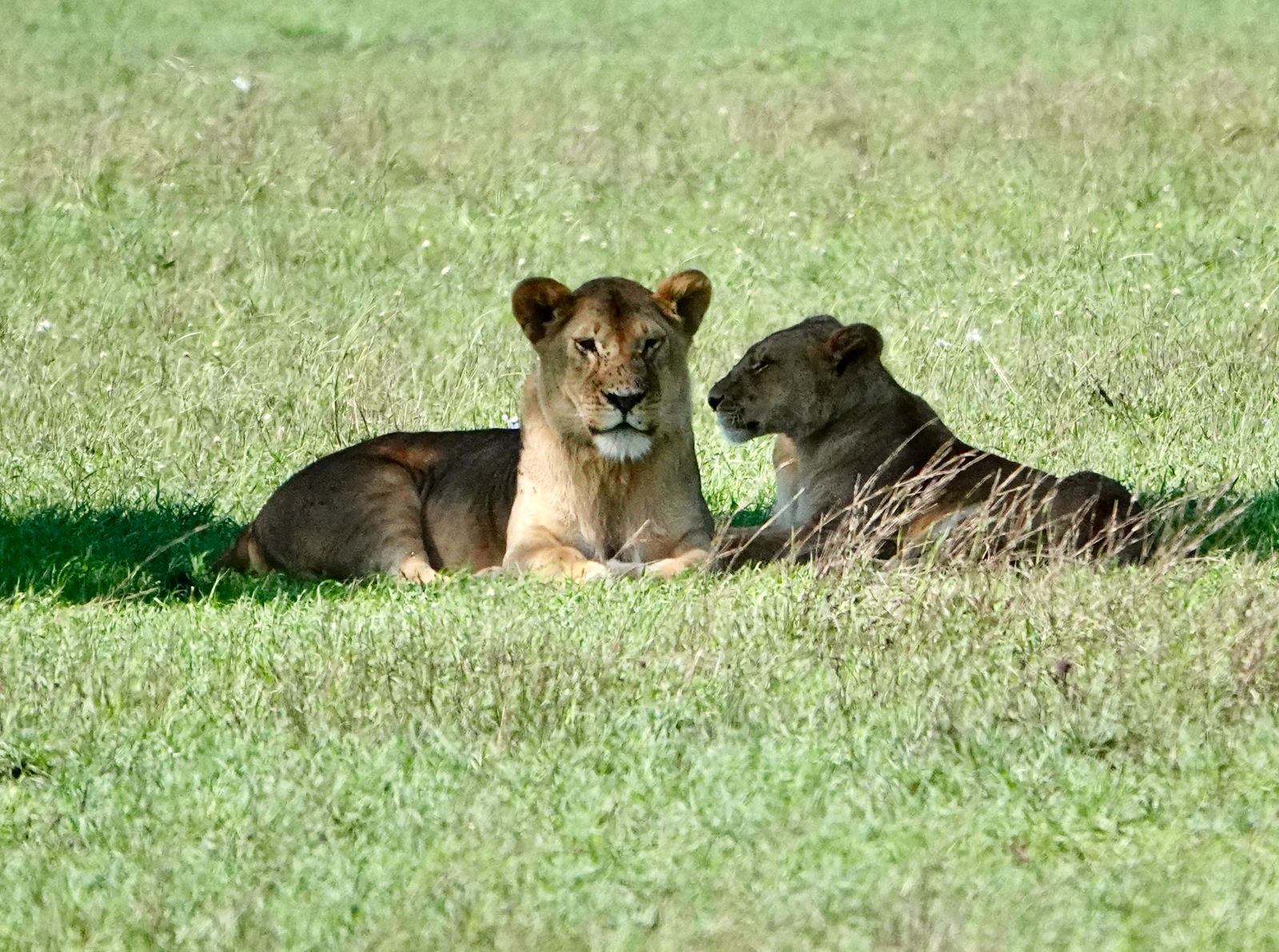
Female African Lion with cub © John Beecham

Gray-crowned Crane © John Beecham
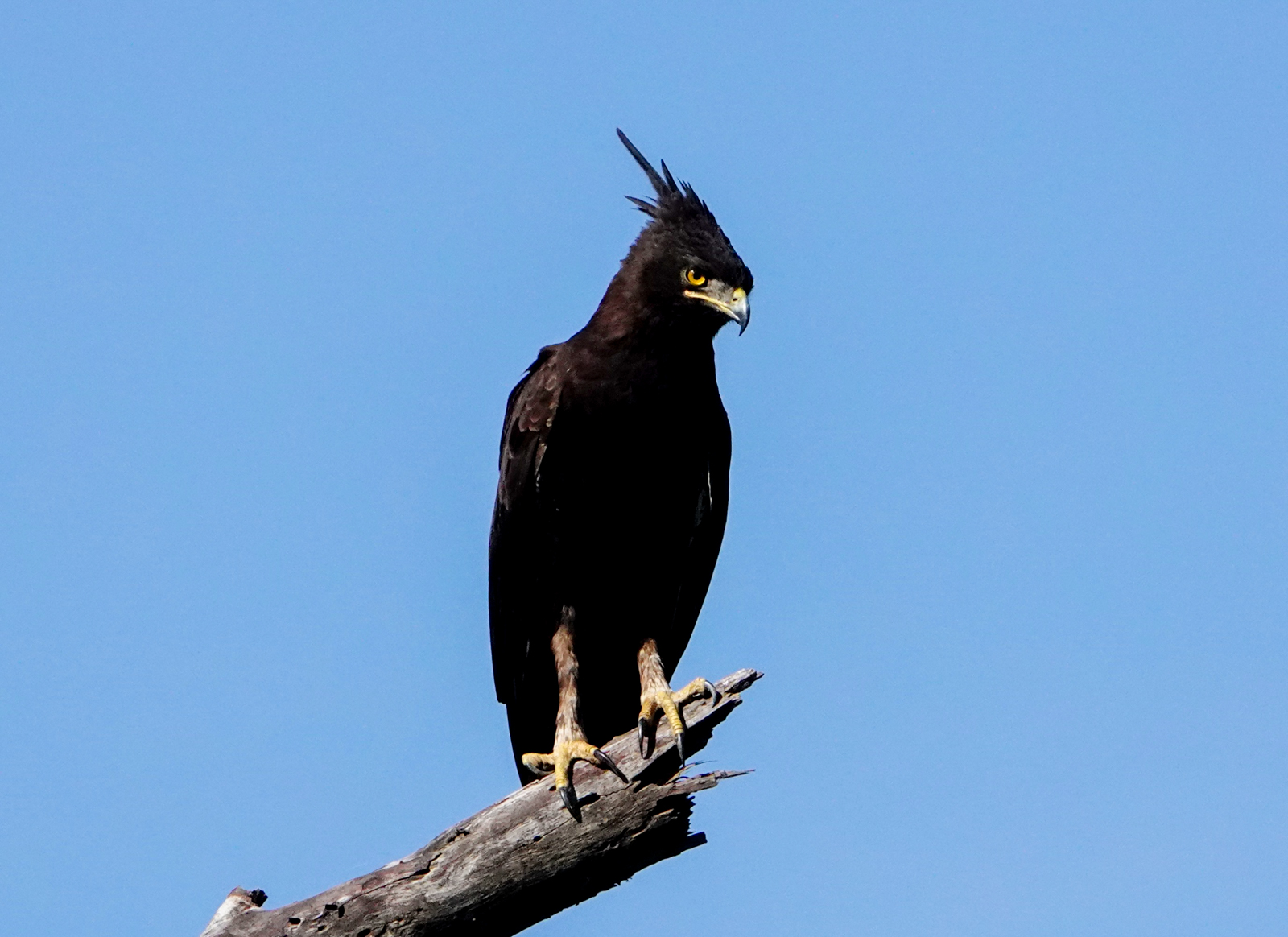
Long-crested Eagle © John Beecham

Purple Grenadier © John Beecham
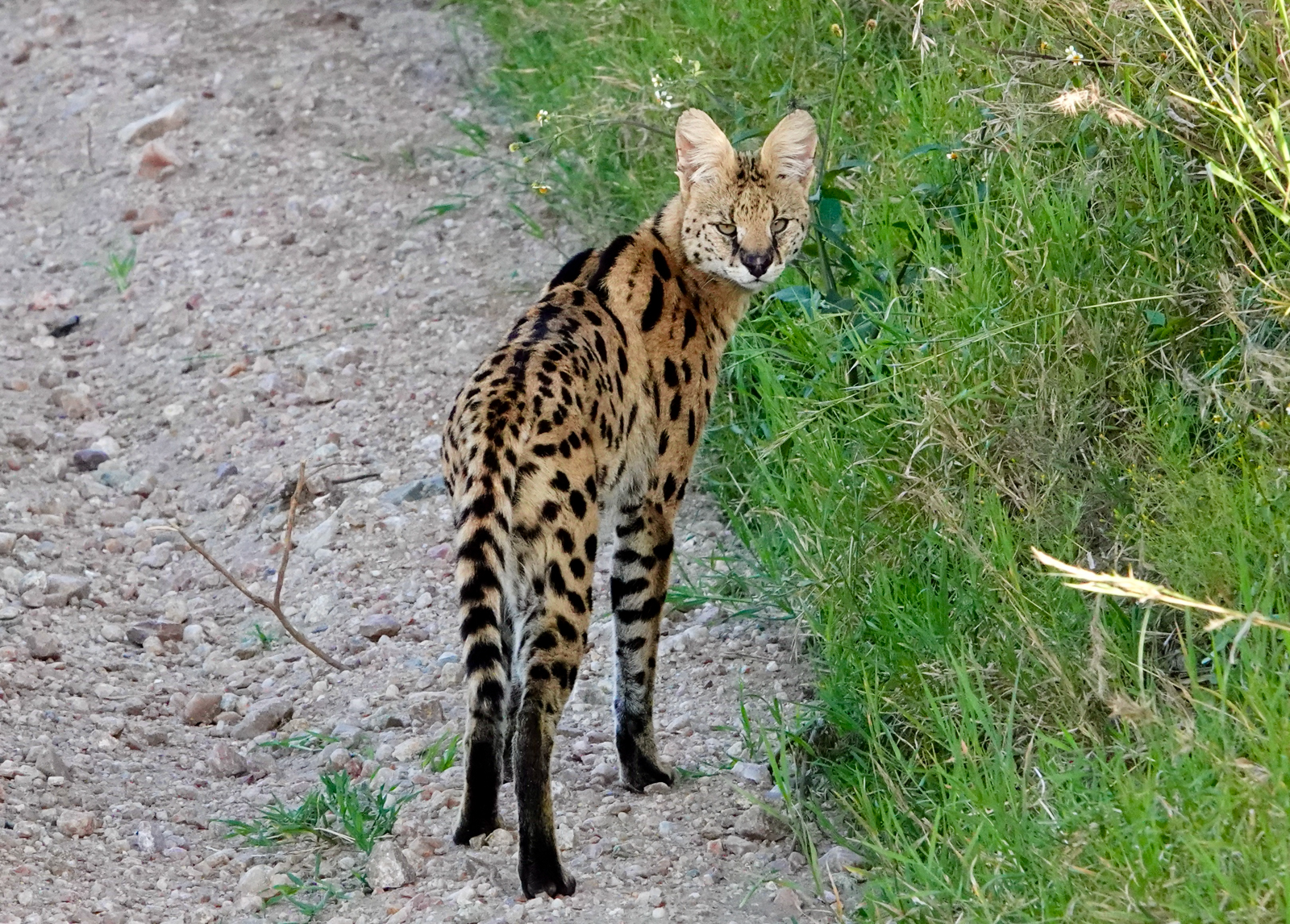
Serval Cat © John Beecham

Superb Starling © John Beecham
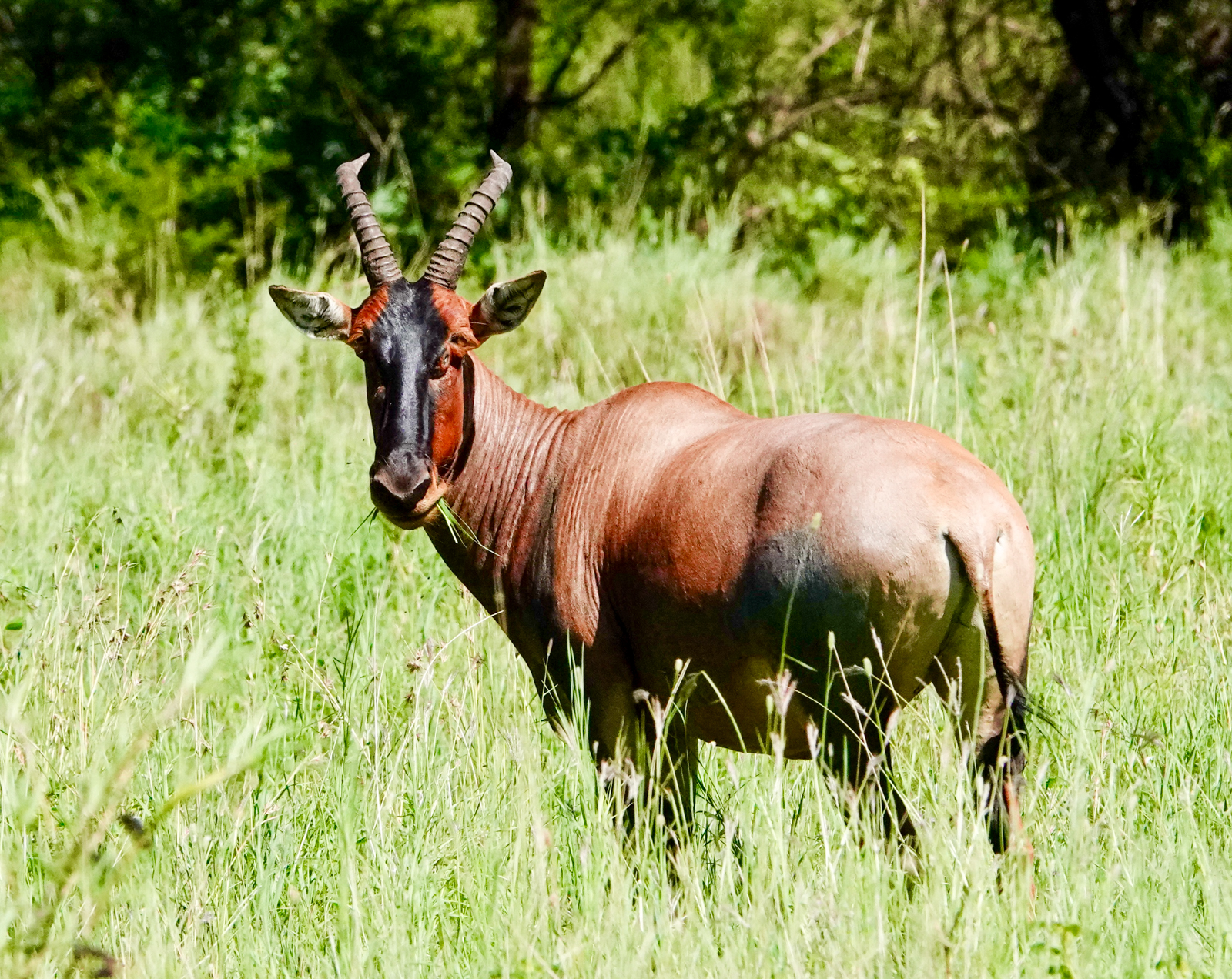
Topi © Beecham
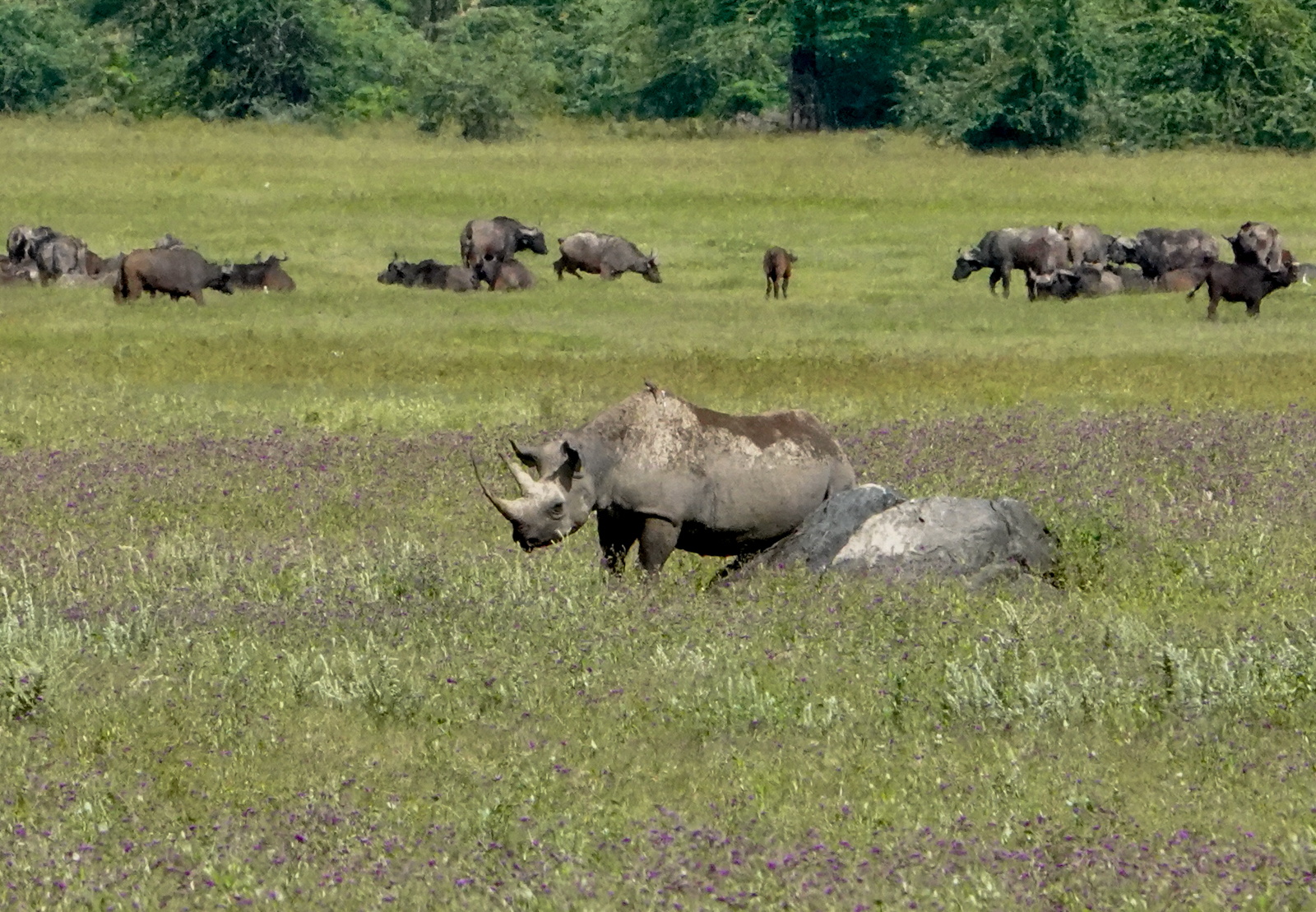
Black Rhinoceros © John Beecham

Secretarybird © Rob Leonhardt

Our group