Quebec in Spring Trip Report 2026
This was the first time the Quebec in Spring – Gaspé Peninsula tour officially ran and we were very excited to show this region to our guests. We curated this tour to showcase this magnificent region and its birding potential. Although it has been known as a notable area for bird migration for a very long time, not many birders, especially foreigners, have experienced it first hand. The weather was hard on us this year but that is a part of birding and at times, it only made the experience even more unique.
Some of the participants arrived early for this tour and got to enjoy the food and culture of downtown Quebec city, which we highly recommend! On the first morning we drove out of the city and got to enjoy a sunny day in Kitsokuk marsh, Cacouna, a massive preserve of the lower Saint-Lawrence. There, we got to see a few shorebirds, 12 species of ducks and a few flights of Snow Geese. Making our way to the coast in this awe-inspiring landscape, we stumbled upon a Raven’s nest with fledglings almost as big as adults still begging for their sustenance. We closed the outing with a spectacle of simultaneous Broad-winged Hawk migration and views of Saint Lawrence estuary Belugas, an isolated population of this charming marine mammal. We then hit the road again to reach the beautiful coastal town of Rimouski. The evening ended with massive rafts of Brant Geese resting on the shores of the town while the sun was setting.
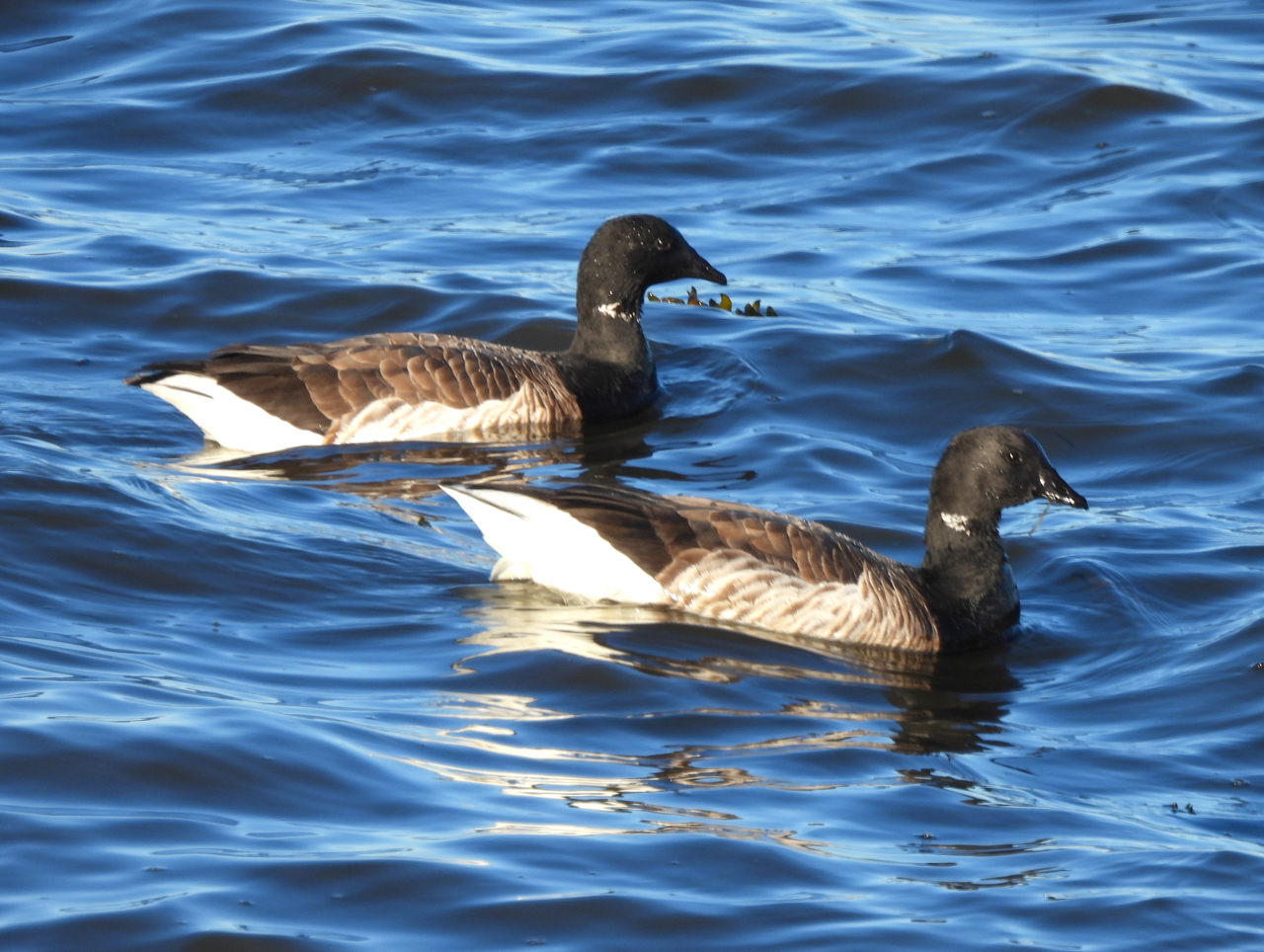
Brant © Robert Leonhardt
The next morning, we did a tour of Rocher Blanc, a wooded area where the Rimouski Bird Observatory bands birds every spring. We got a quick banding demo from Andra Florea, long time bird bander and EET guide, before hitting the trails. We got lucky with good views at Boreal Chickadees, a target species of the trip and a great little bird. We then headed off to Bic Park; a go-to spot for naturalists visiting Quebec. We then partook in the raptor migration count at the Raoul Roy lookout from the Rimouski Bird Observatory. Apart from the Broad-winged and Red-tailed hawks going by at eye level, we got to witness the ongoing migration of fun birds like a Sandhill Crane and a few warblers heading to their northern breeding grounds.
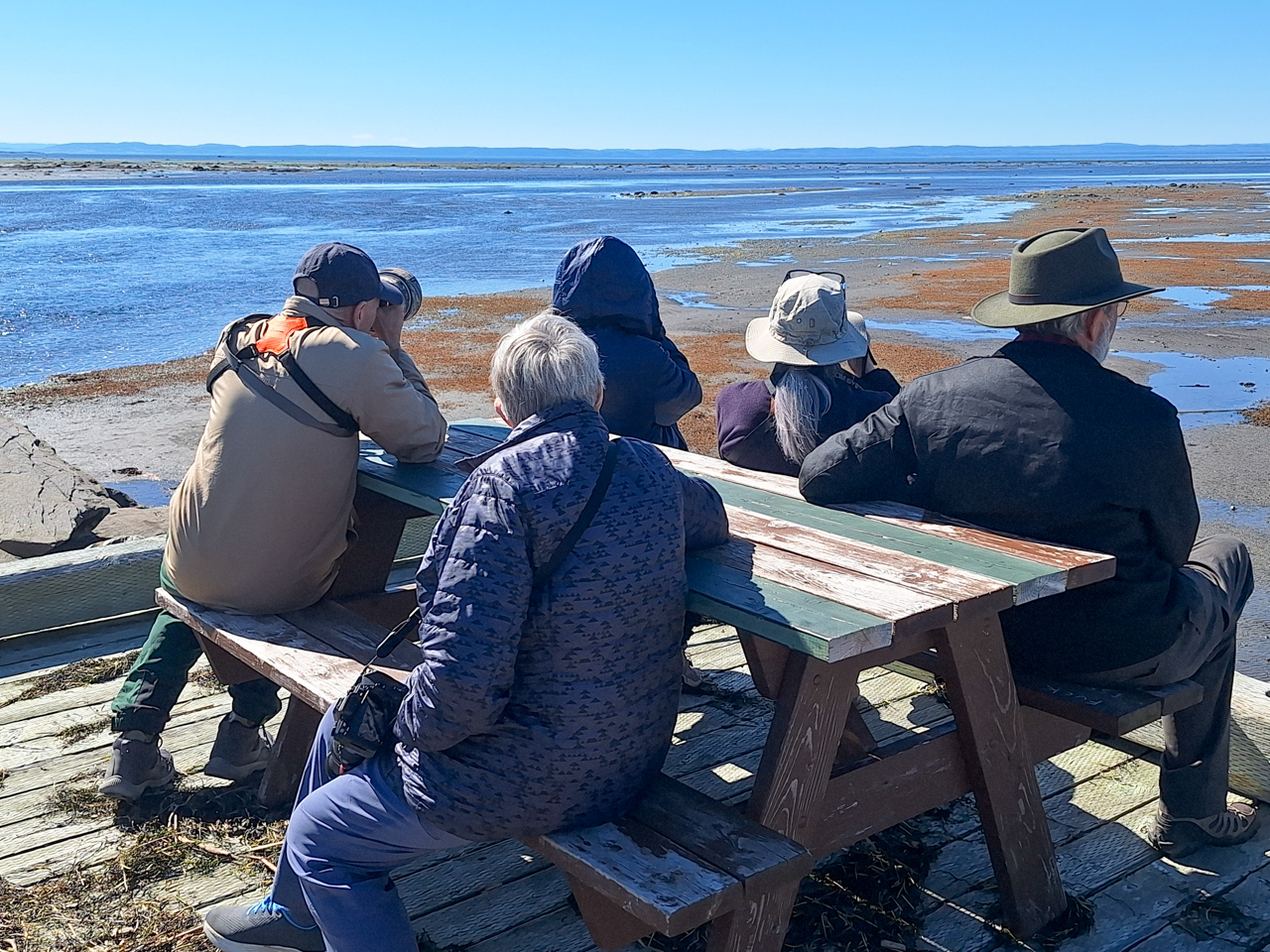
Rivières Trois-Pistoles © Aaron Brisebois
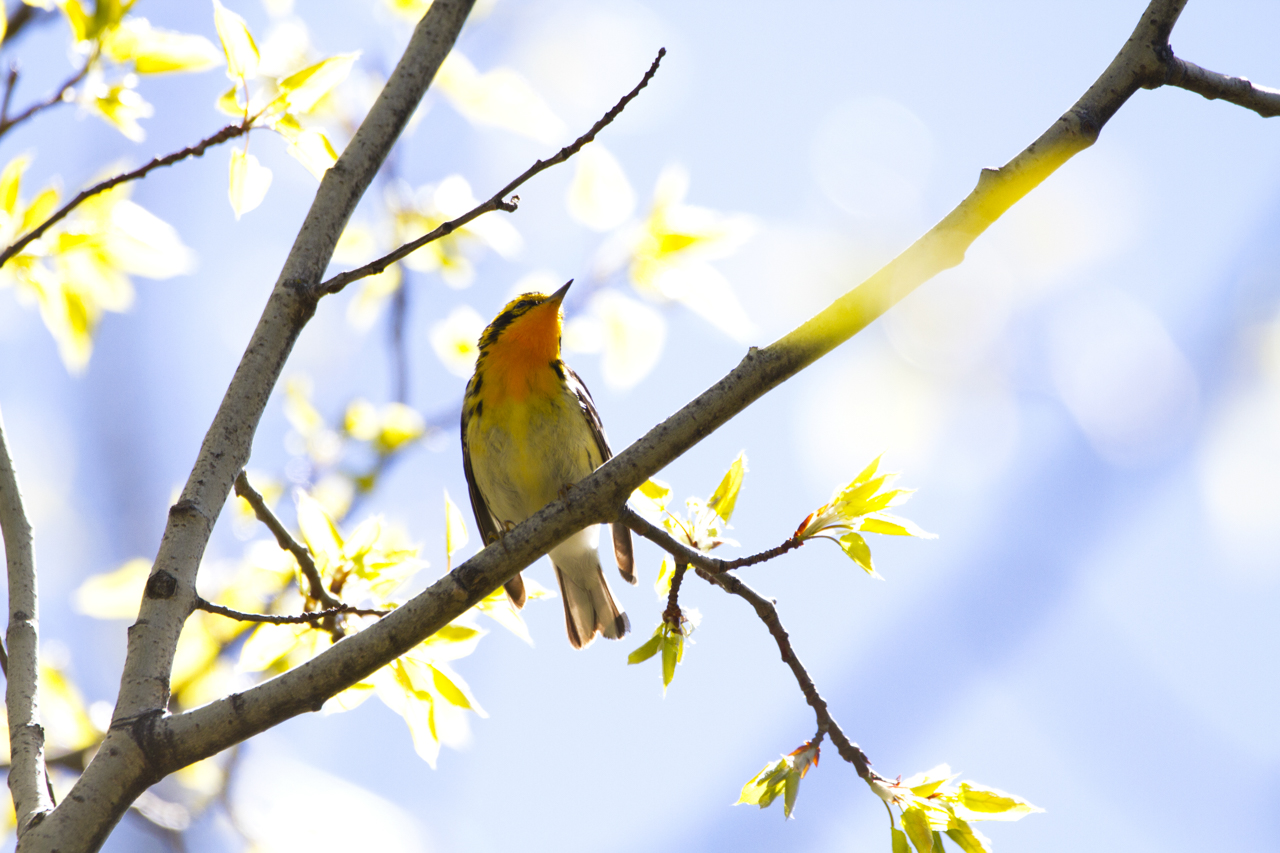
Blackburnian Warbler © Arnaud Valade
From Rimouski, we headed across the Gaspé peninsula in the Matapedia Valley.There, we explored a hidden gem of local birding, Lac Castonguay, a migratory hotspot in this mountainous region. We saw and heard 12 species of Warblers there, including a very cooperative Wilson’s. The lake and marshes offered good looks at Lesser and Greater Yellowlegs, displaying Pied-billed Grebes and Soras calling from the reeds. We reached Chaleur Bay, the southern shore of the Peninsula, at noon and had lunch by the sandbanks of the Carleton Lagoon where a few thousand gulls were resting. Apart from the abundant American Herrings, these gull flocks offered a few surprises in the form of Bonaparte’s, Lesser Black-Backed, Iceland and Glaucous Gulls. There were even a few Kittywakes and common terns hiding in there! The team got to learn a bit about gull identification; one of the often-dreaded aspects of birding that becomes truly rewarding when experienced with knowledgeable people.
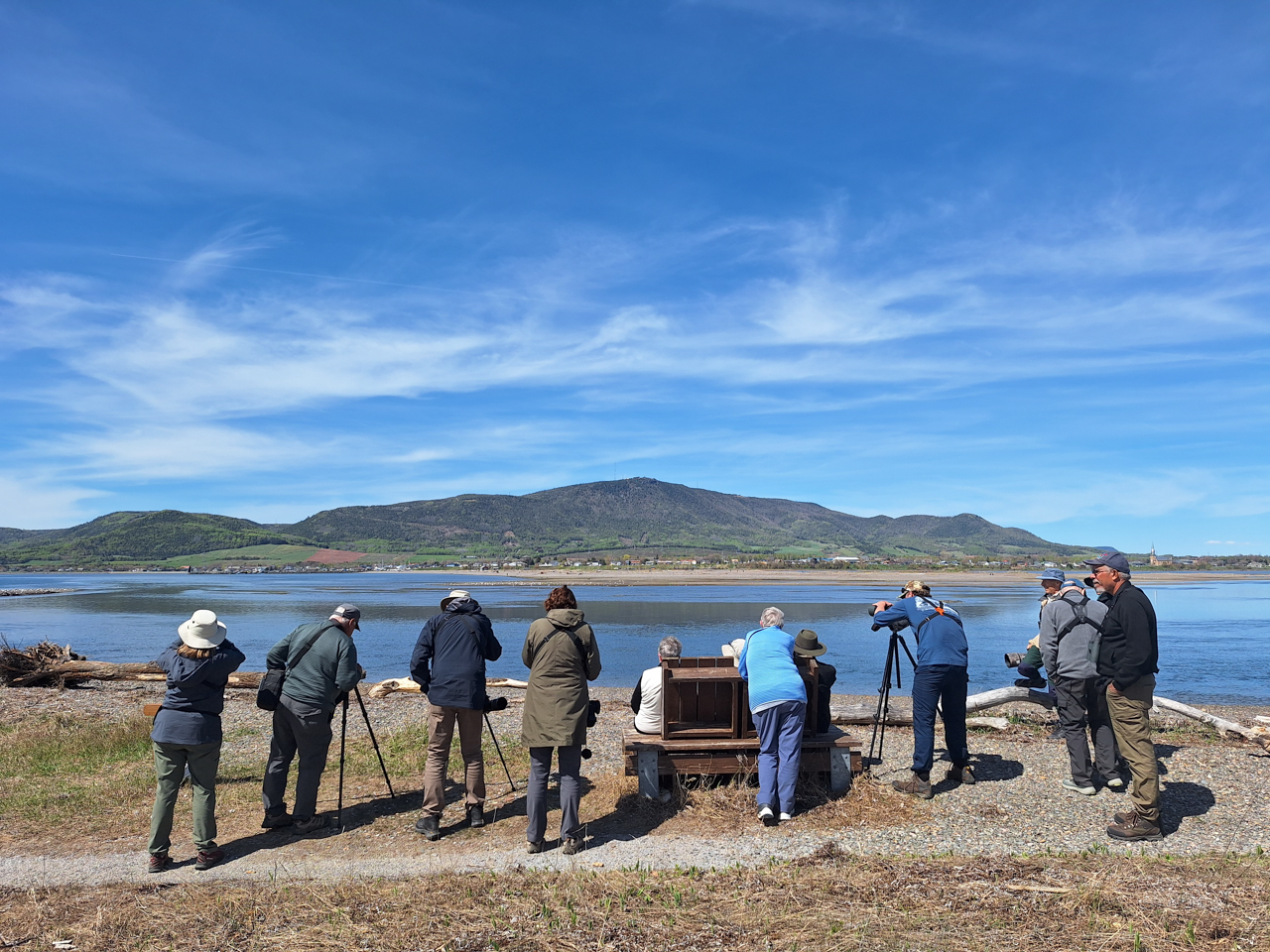
Carelton Sur Mer © Aaron Brisebois
The next day, we got to the town of Chandler to bird the Grand-Pabos saltmarshes. We were very lucky to get close up looks at a Sora, as one walked right in front of the group at the edge of a marsh. As we made our way down the dike, the wind started to shift, as a cold front, which would take over the peninsula, was setting in. We started to see some movement in the woods around the dike as we took shelter from the wind in a small clearing. There, we witnessed what we call ‘’reverse migration’’, a phenomenon that happens when migrant birds head back the way they came to avoid bad weather on their migration journey. This gives birders the chance to see active migration during the day, as neotropic migrants fly low across the vegetation. We saw good numbers of Northern Parulas, Tennessee and Yellow-rumped warblers as well as a cooperative Philadelphia Vireo and unexpected Bobolinks flying southward.
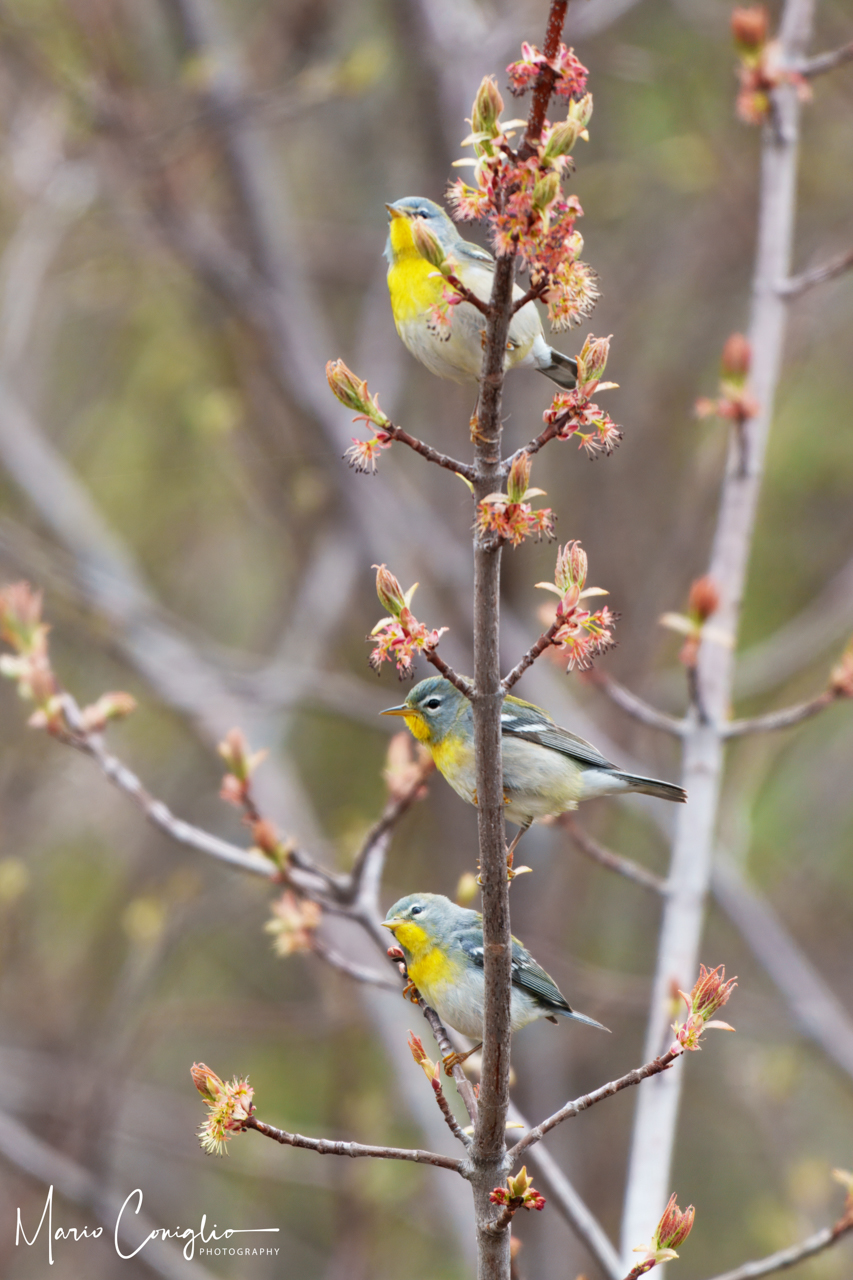
Parulas © Mario Coniglio
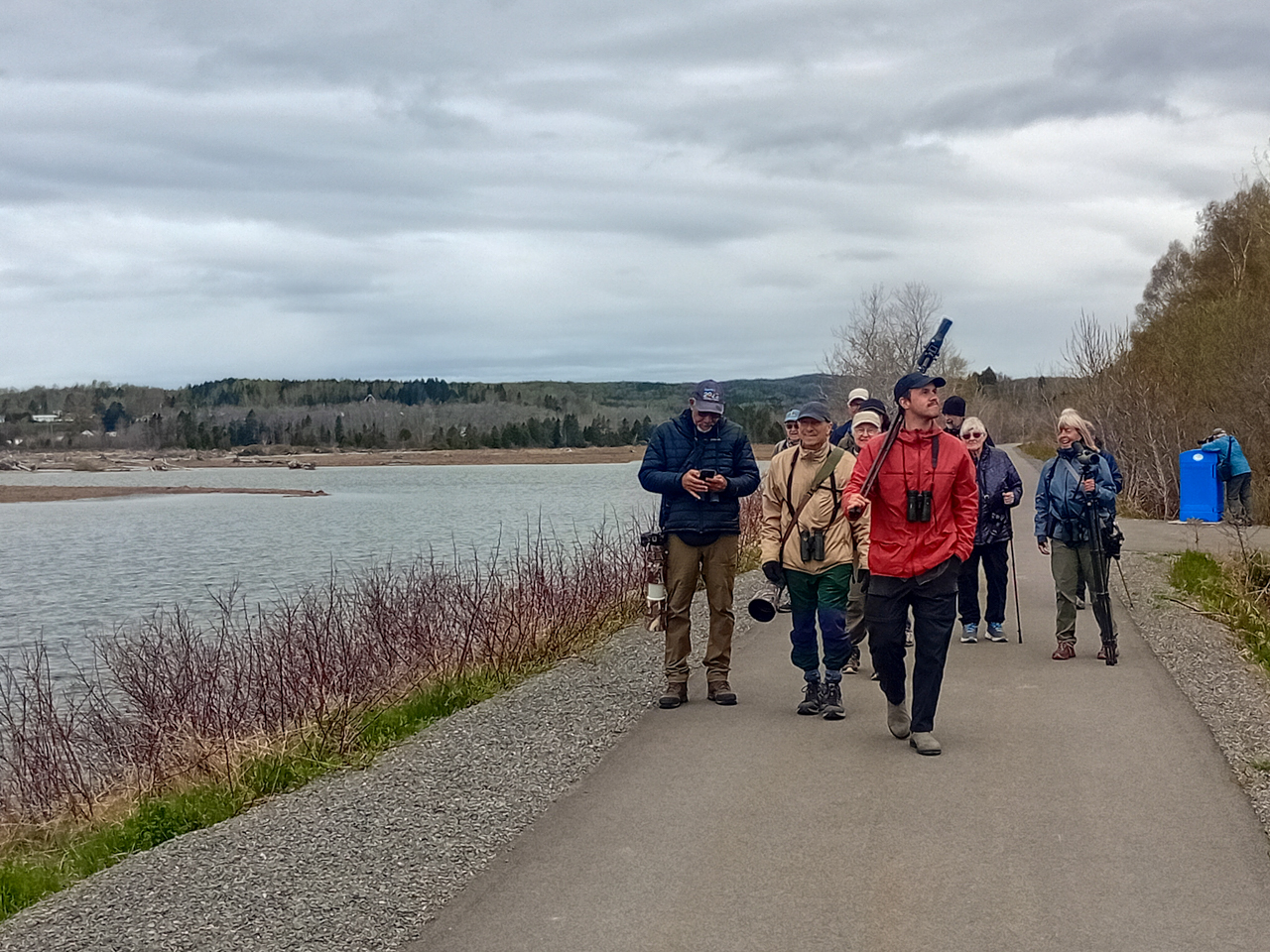
Chandler © Arnaud Valade
That same morning, we headed to Cap-d’Espoir, a famous seawatching spot, to see what the northeastern winds would bring us. This point of land jutting into the Gulf of Saint Lawrence offers the chance to see migrating seabirds from upclose, as Gannets, gulls of all sorts and loons fly right overhead. This is also one of the best places to see Great Cormorants in all of continental Canada. In fact, this big sea bearing Suliformes nests on the rocky islands on the shores of the peninsula. Cap d’Espoir also granted us our first close encounters with breathtaking breeding plumage Harlequin, Long-tailed ducks and Common Eiders. Dark clouds started catching up to us on the horizon and soon enough, rain started pouring. This gave us the opportunity to visit the John Wiseman Gallery. A showroom in the beautiful historical house of the naturalist painter who was there to greet us. After a tour of the gallery, guests could enjoy Cape-May Warblers feeding in their hummingbird feeders, trying to avoid the beating of the rain and cold.
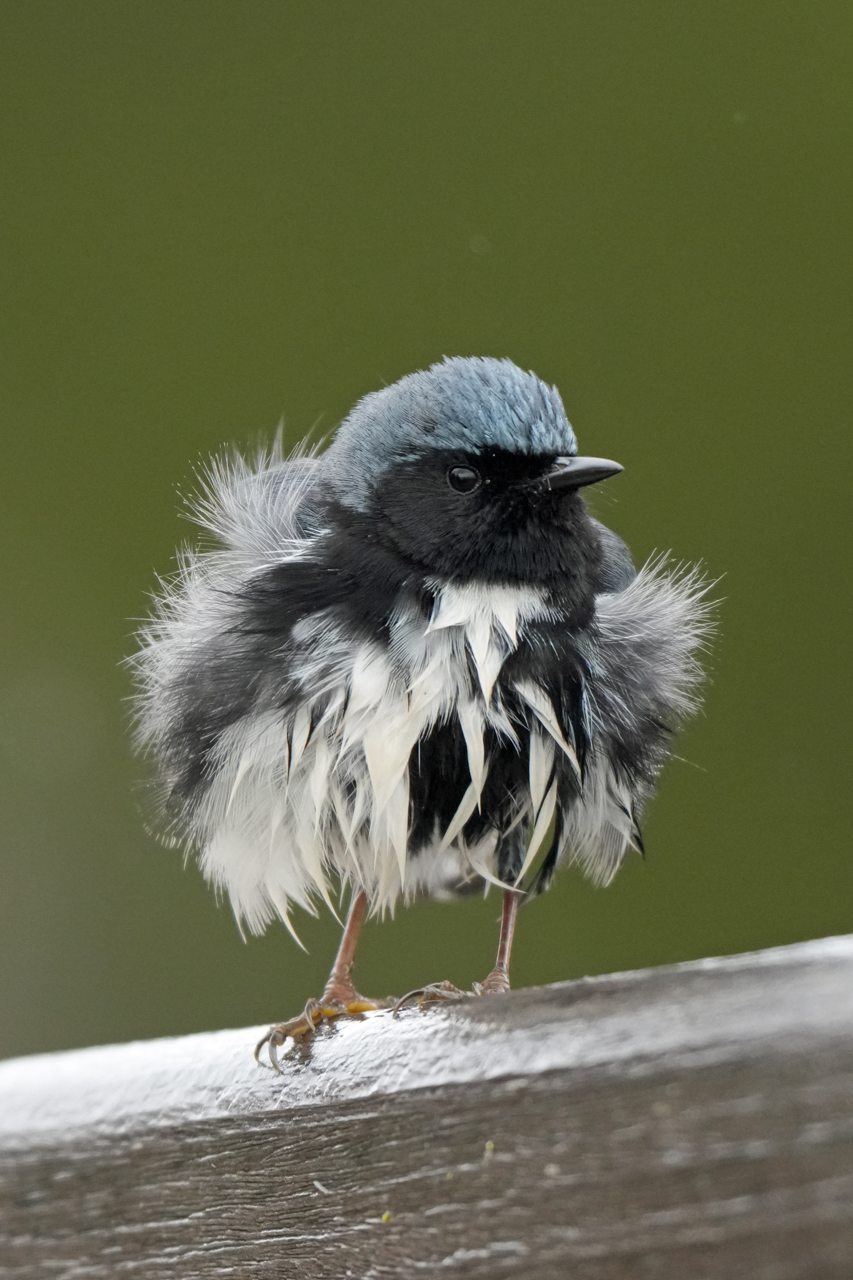
Black-throated Blue Warbler © Mario Coniglio
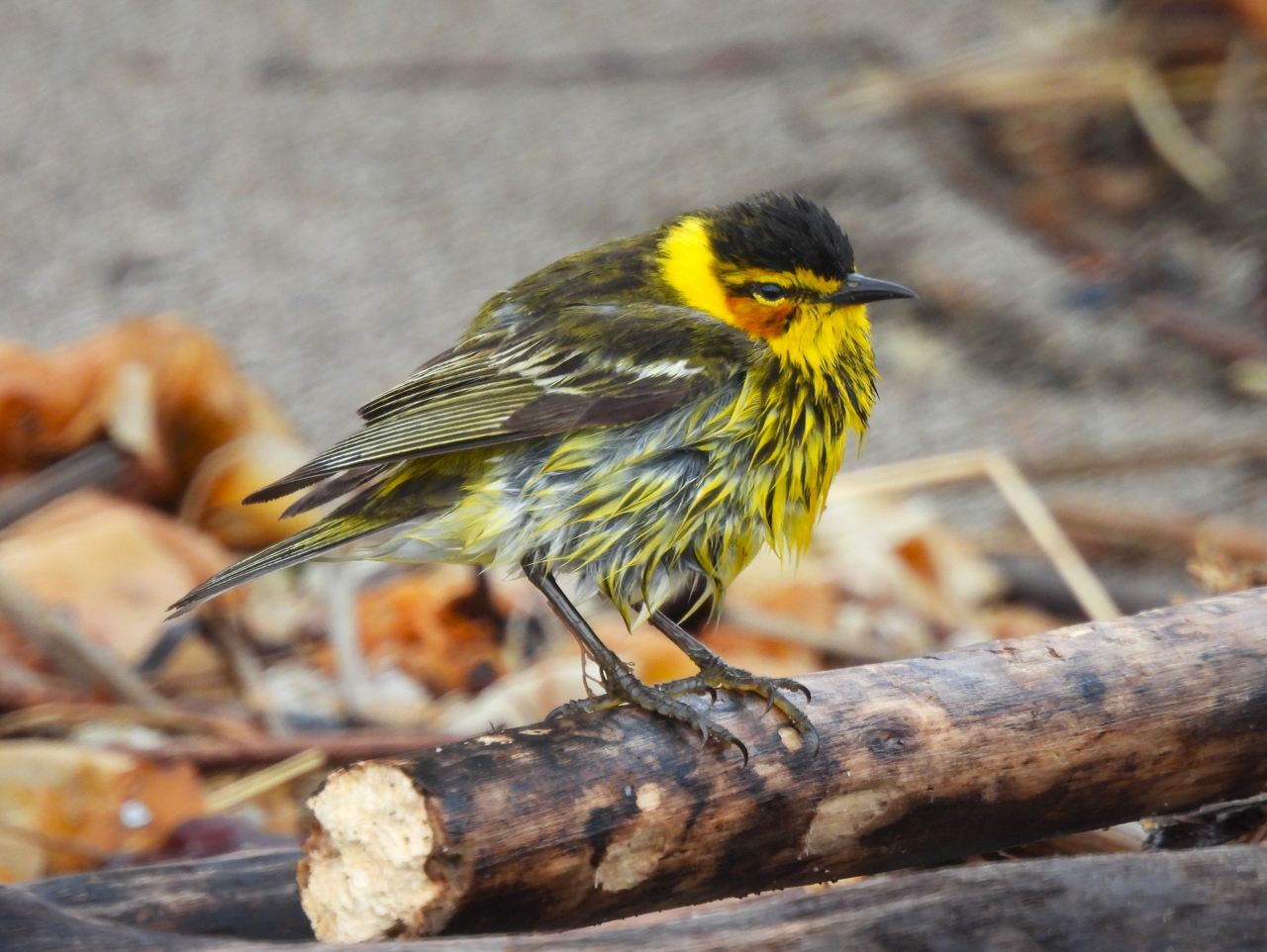
Cape May Warbler © Robert Leonhardt
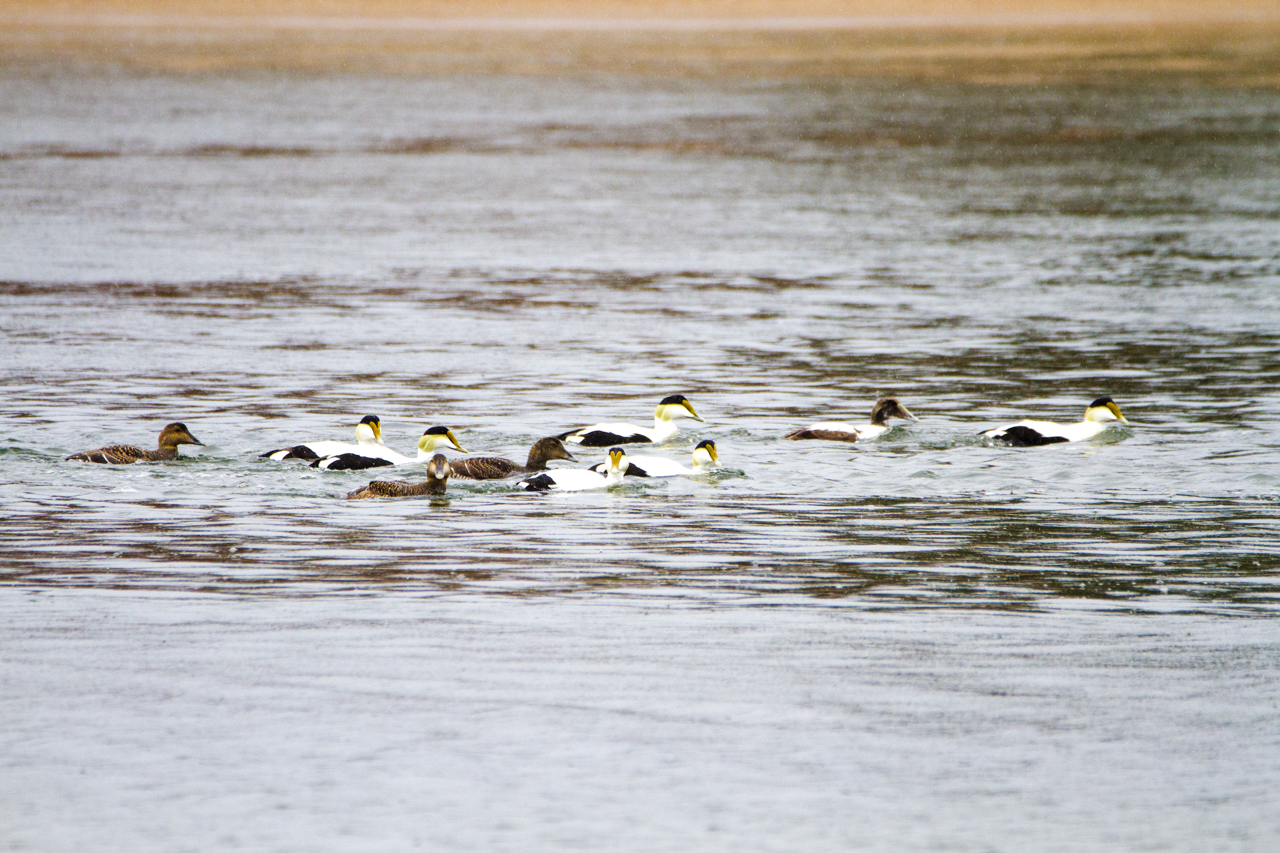
Common Eider © Arnaud Valade
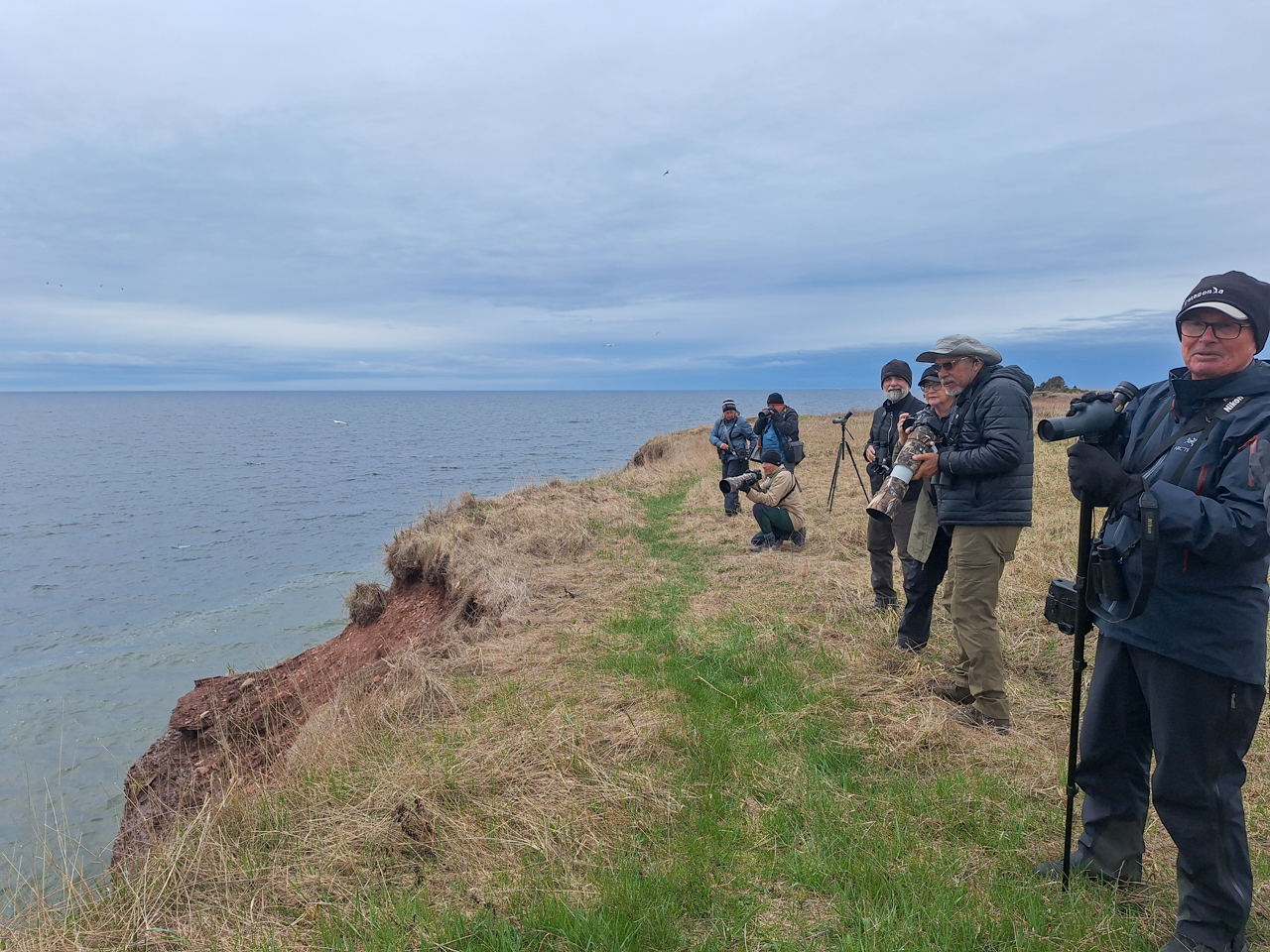
Cap d’Espoir Seawatch © Aaron Brisebois
After a well deserved night of rest in our hotel with a view of the Percé rock, we headed to the docks to take a boat to the glorious Bonaventure Island and its seabird colonies. Bonaventure Island park is closed at that time of year but we got the chance to have a private guide from SEPAQ to show us around the island. The captain of the boat took us to the cliffs of the eastern side of the island where thousands of Common Murres, Razorbills, Black Guillemots, Black-Legged Kittywakes and, of course, Northern Gannets are nesting. We even got to see an Atlantic Puffin amongst them. It’s hard to describe the chaos and beauty of being surrounded by all these seabirds jumping down the cliffs in swarms, flying directly over the boat.
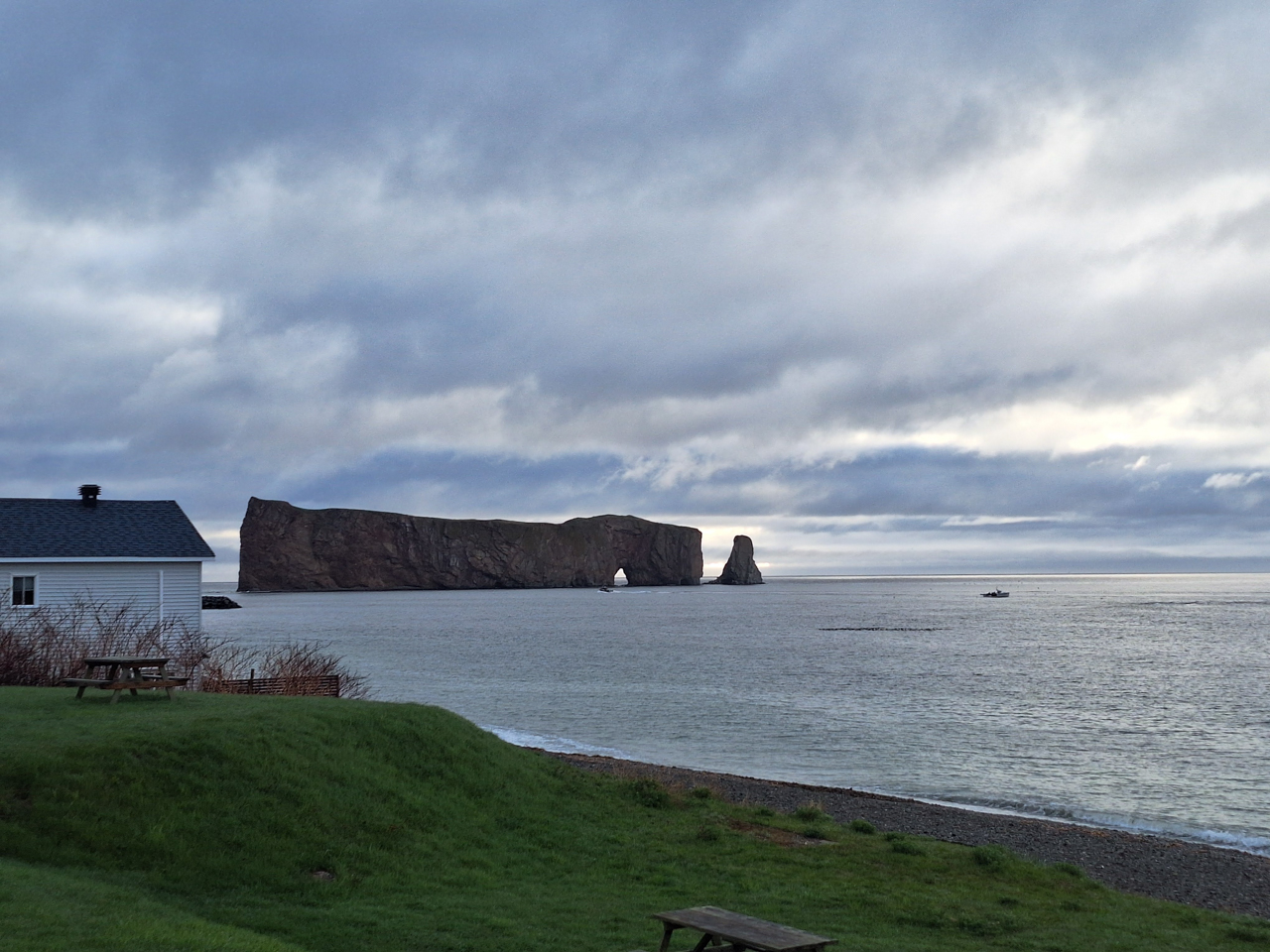
Perce Rock from hotel © Arnaud Valade
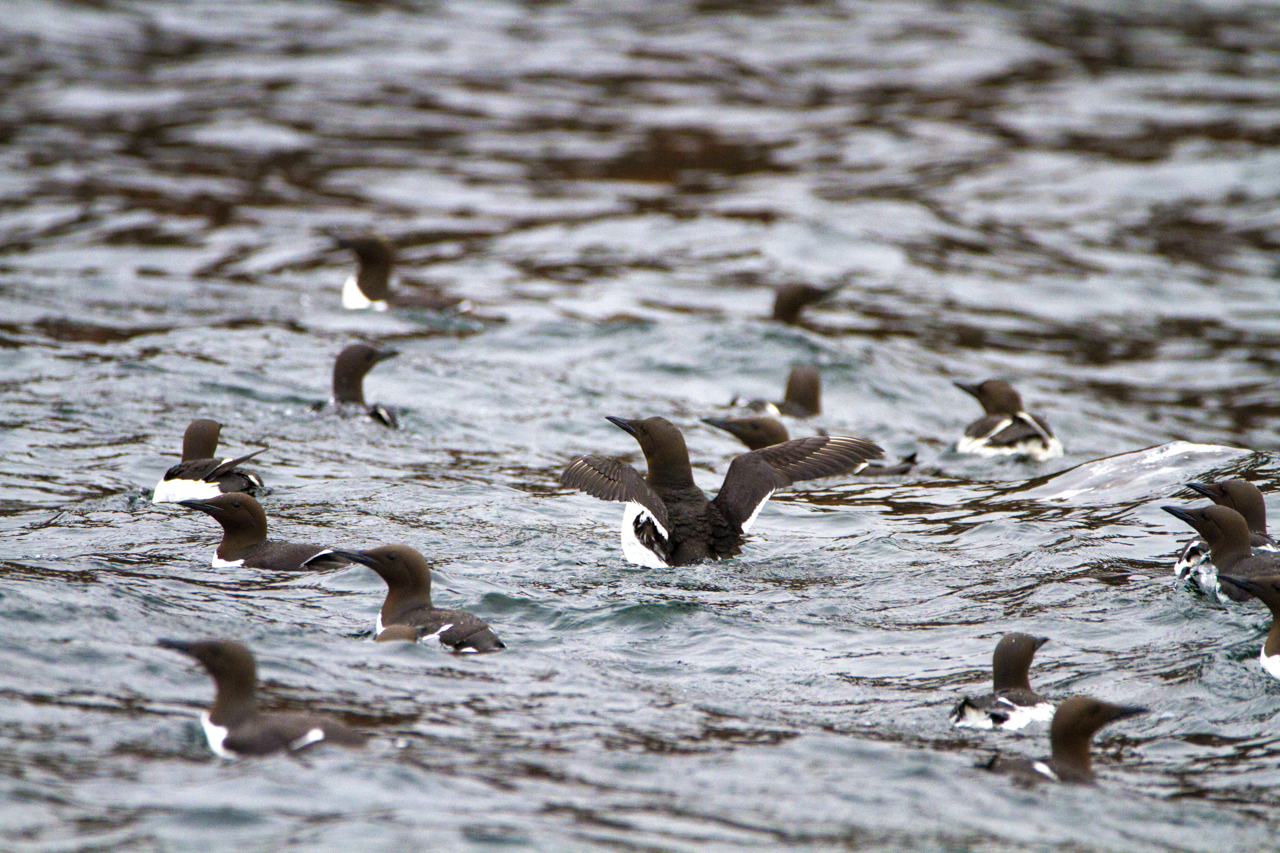
Common Murres © Arnaud Valade
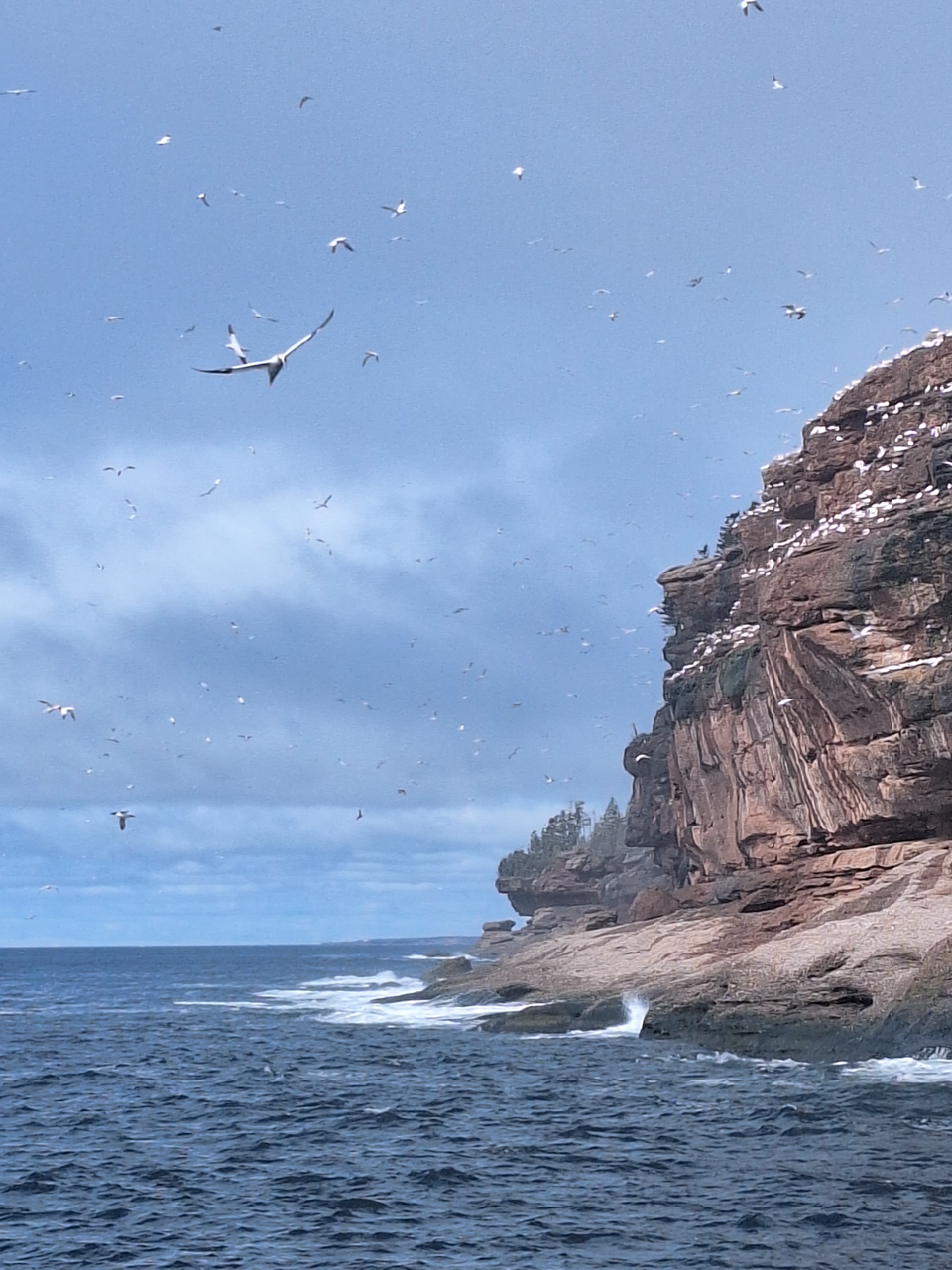
Bonaventure Island © Aaron Brisebois
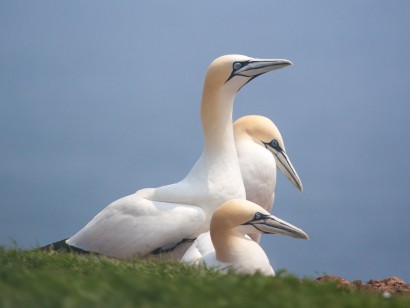
We finally docked on the Island, which still hosts historical houses from when it was a cod fishing settlement in the late 1700’s. We made our way in thick fog through the trail that goes across the forested part of the island. After a few kilometres, we started to hear the raucous calls of the Gannets and got drafts of wind bringing up a pungent smell heralding the spectacle to come. At the end of the trail, we reached an open area looking over the sea which was covered in large white birds; we had reached the biggest colony of Gannets in North America. Some of the birds were displaying to each other, others were gathering grass to better their nests as immature birds were mimicking their elders at the edge of the colonies, practicing for the coming years. Being up close to the colony feels surreal, almost as if you were in a David Attenborough film, and the fact that we had the Island all to ourselves only amplified that.
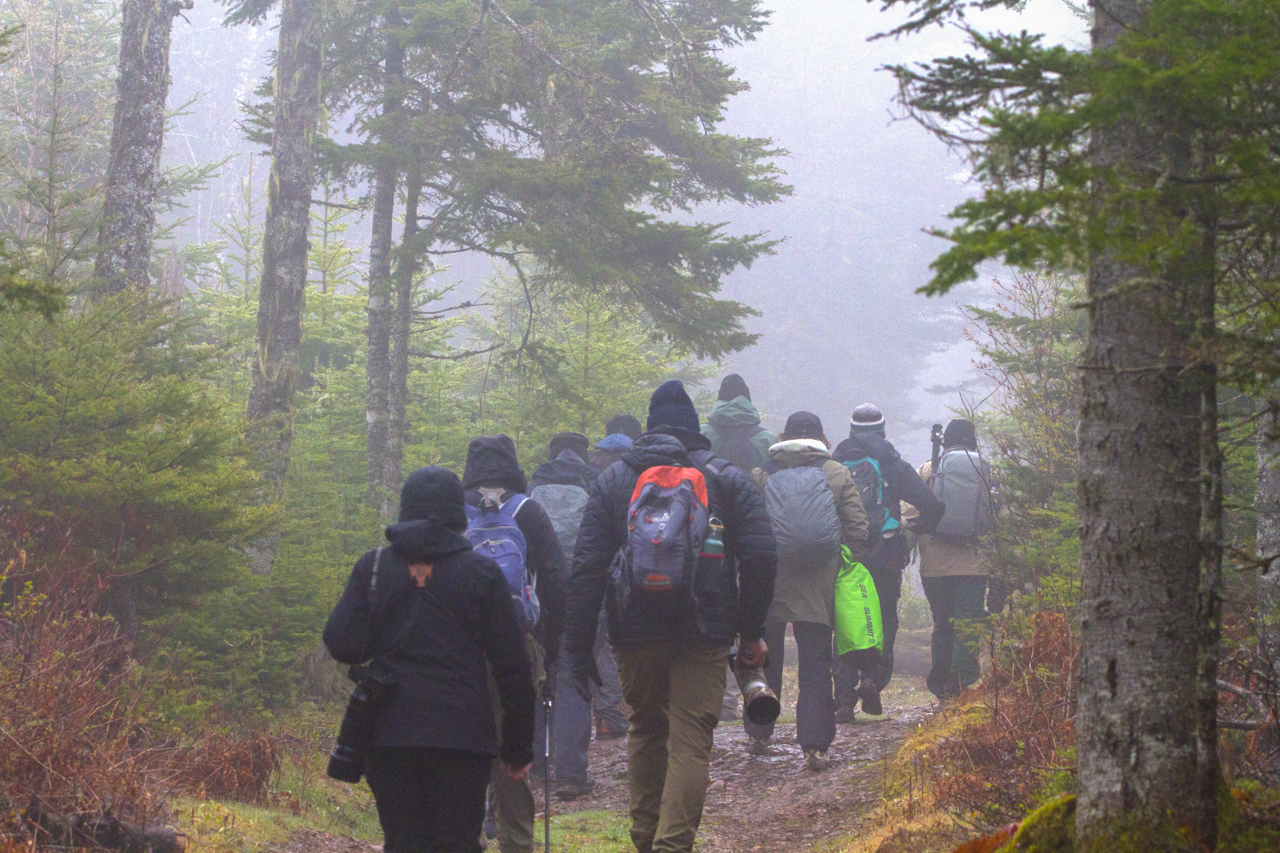
Bonaventure Island © Arnaud Valade
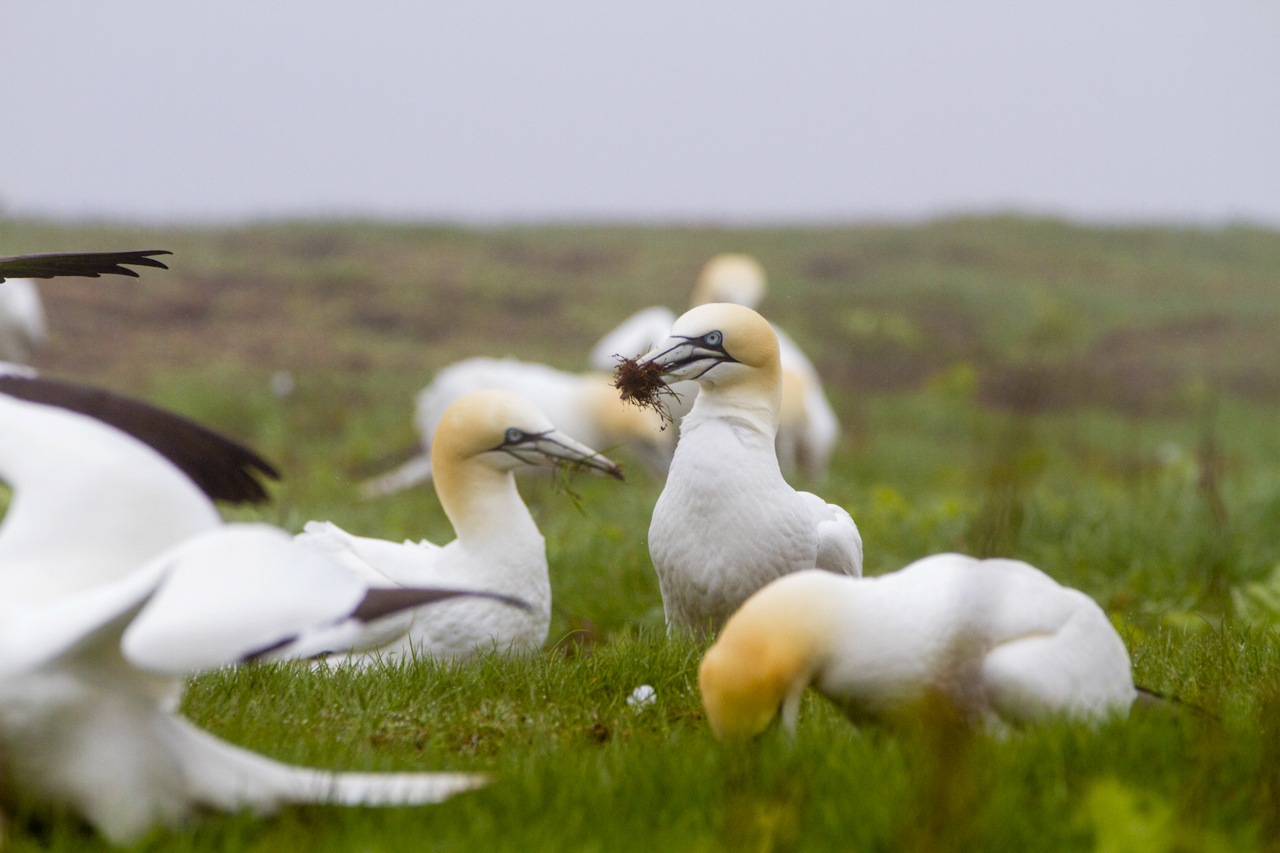
Gannet © Arnaud Valade
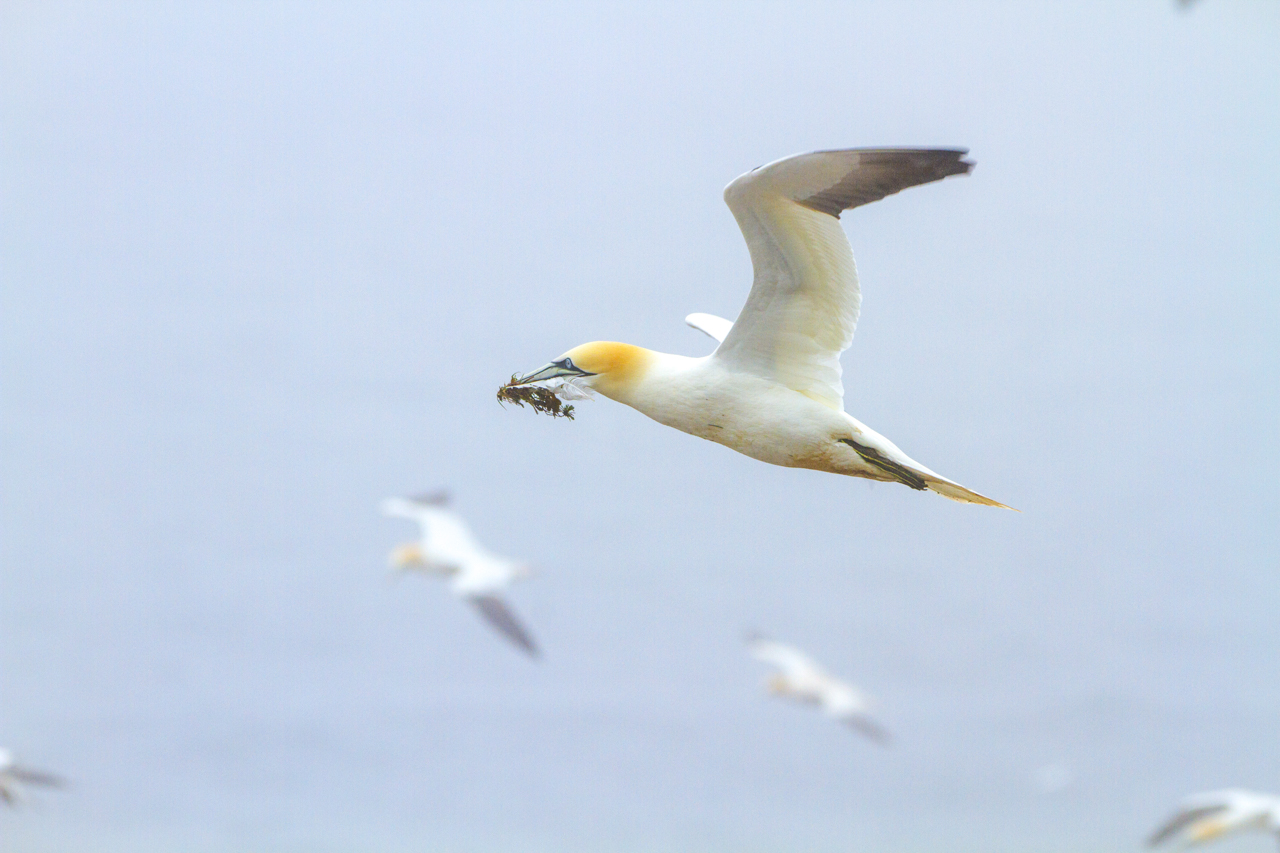
Gannet © Arnaud
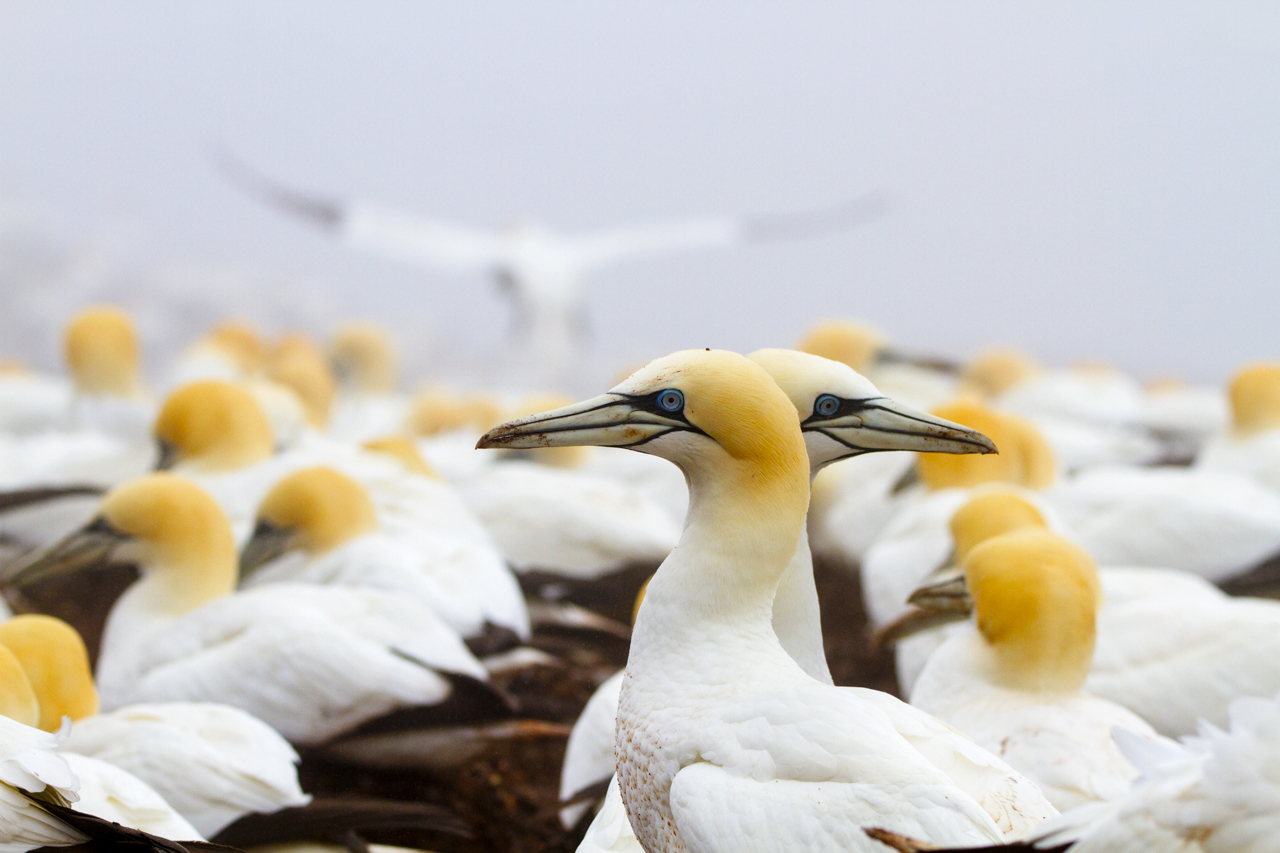
Gannet © Arnaud Valade
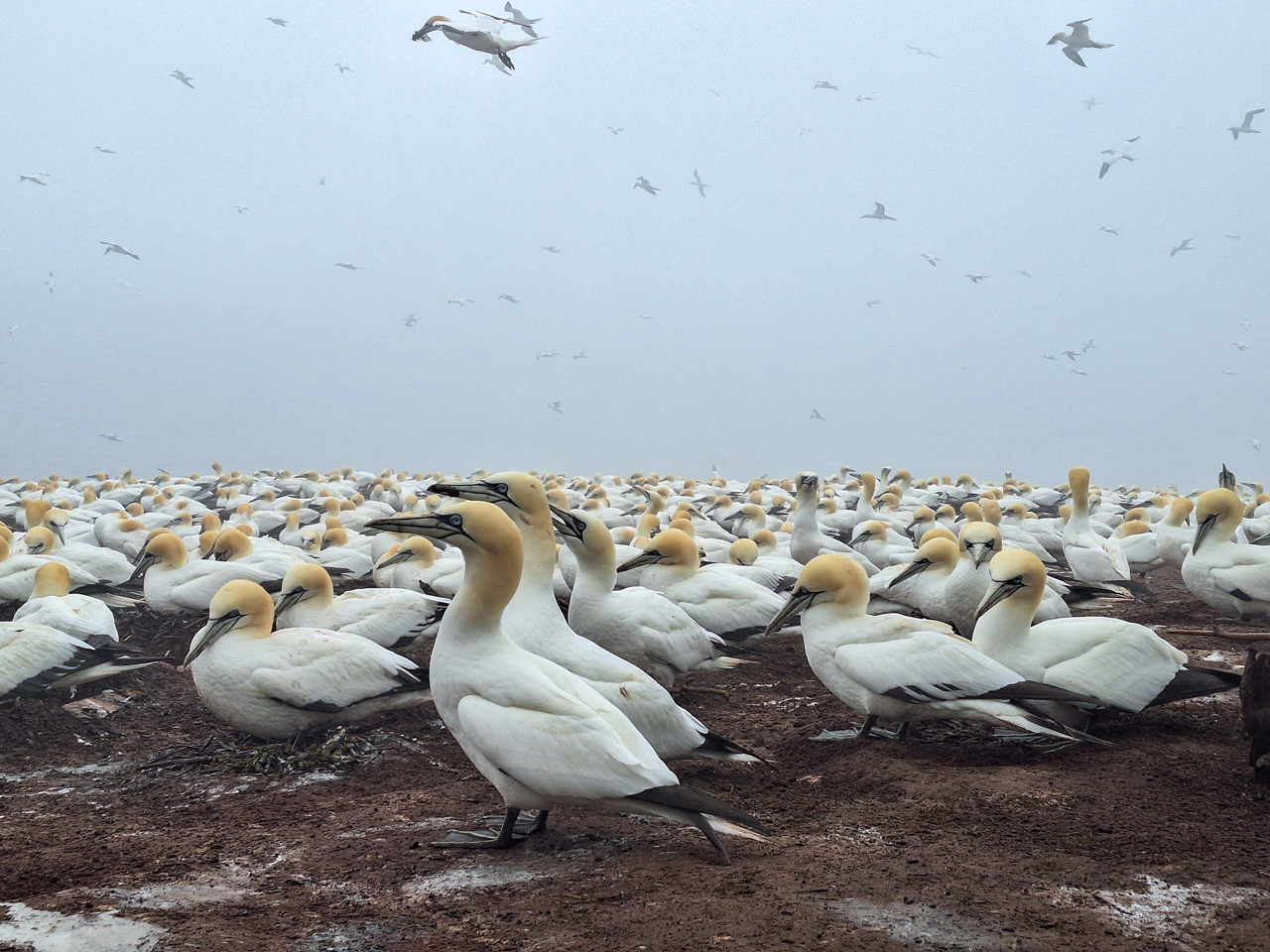
Gannet Colony, Bonaventure Island © Aaron Brisebois
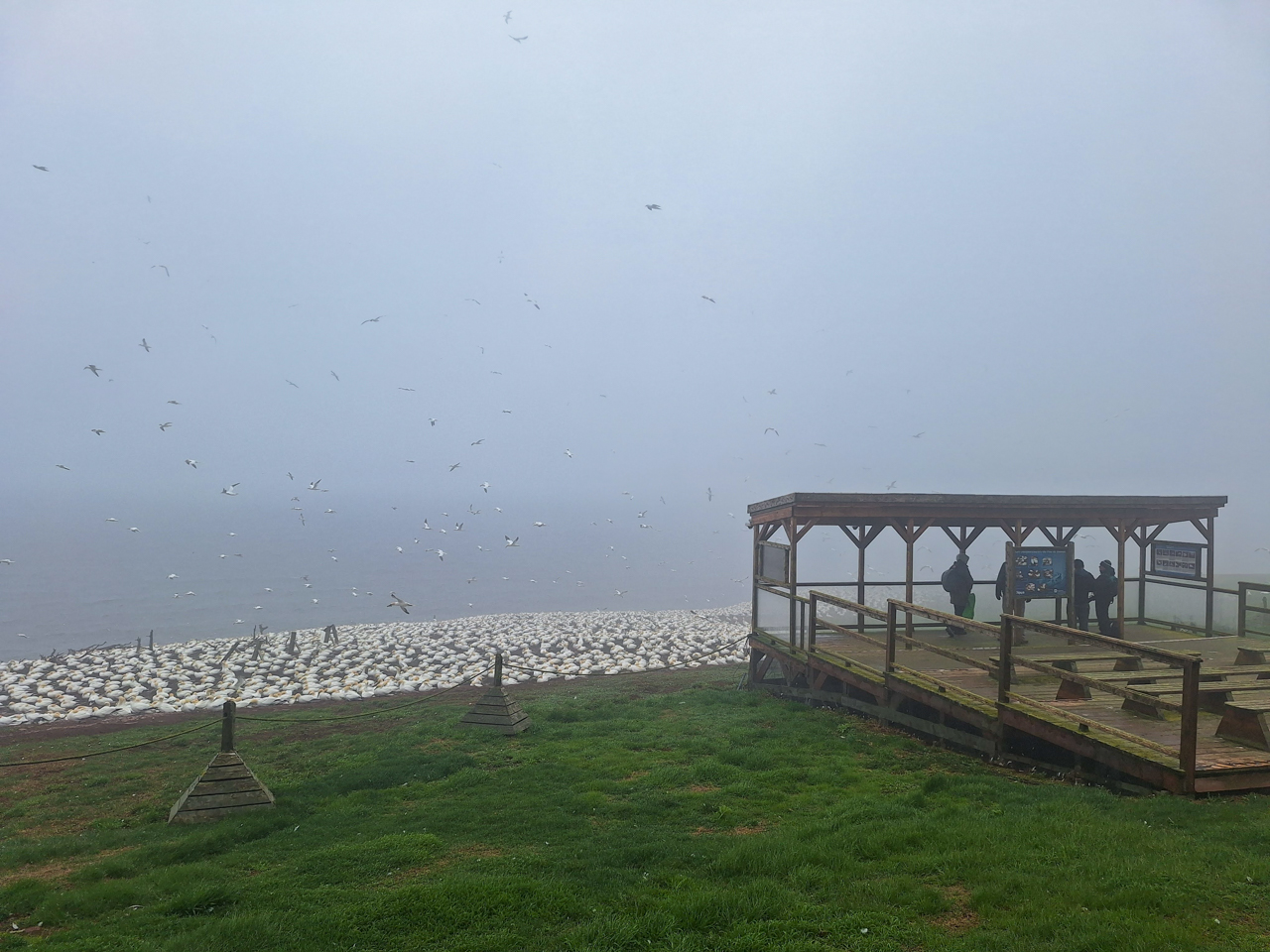
Gannet Colony, Bonaventure Island © Aaron Brisebois
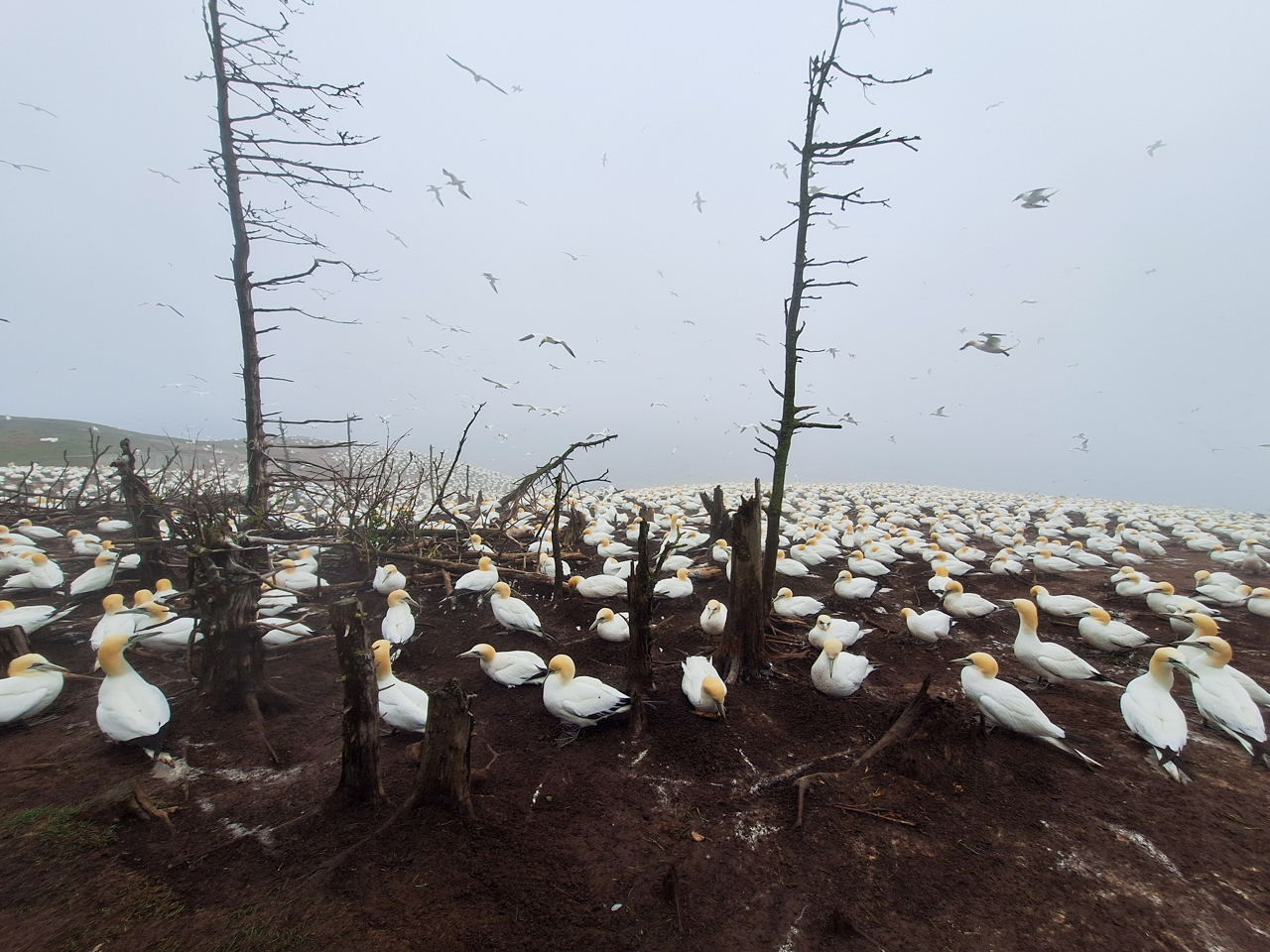
Gannet Colony, Bonaventure Island © Aaron Brisebois
The next few days were cold and rainy but we tried to make the most of it. If passerines were scarce, we managed to find a rarity for the region male Baltimore Oriole, bringing sun and colour in our hearts. In the large Malbay Saltmarshes, right outside Percé, we got great views of shorebirds. Least Sandpipers and Semipalmated Plovers were abundant and Short-billed Dowitchers were lazily feeding on the shores. The star of the show was a beautiful breeding plumage Black-bellied Plover which landed right by our vans. Soaked but motivated, we kept going and ended up in Pointe Saint-Pierre, where we walked this beautiful boreal forest trail that leads to a great view of the Gulf. There, we saw tons of migrating alcids and hundreds of loons (Red-throated and Common) going north. The Gaspé Peninsula is a real gem in migration; when it’s not hundreds of warblers flying around it’s loons or seabirds, or both!
We finally reached Gaspé, where we would spend the rest of the trip. This town is known as the birthplace of Canada, as Jacques Cartier first settled here before claiming Québec as ‘’New France’’. Gaspé is a beautiful coastal city full of historical buildings surrounded by seemingly endless wilderness. We got insight from a local that a trail right outside of town led to a pair of nesting Canada Jays so we headed there the first morning. Although the trail did not seem promising at first, we persevered and got to this beautiful spruce bog. There, all we could see were Blue Jays at first but we waited patiently. At one point, a long tailed figure showed up on top of a dead spruce and we all put our binos on the bird. A few other birds joined it and there they were, ‘’Whiskey Jacks’’ as some called them, a beautiful corvid of the Boreal and a hard one to find in breeding season.
Up next was our first experience in Forillon park, an immense protected area at the very tip of the Gaspé peninsula. The rain and cold kept nesting neotropical migrants mostly out of the woods so we tried for the Penouille area, a long vegetated sandbank extending into the Gaspé bay. Upon arrival we noticed a lot of passerines flying out in the open. Soon enough, we were surrounded by warblers of all types, desperately trying to feed in the grass and on the beach, even landing on our optical gear as if too busy to care about our presence. The harsh conditions had forced these skulky forest birds to ditch their discrete manners, as their sole focus was to find food. Although the scene was grim, knowing some of these birds would not make it, we felt privileged to witness this scene showing the immense challenges these migrating songbirds face.
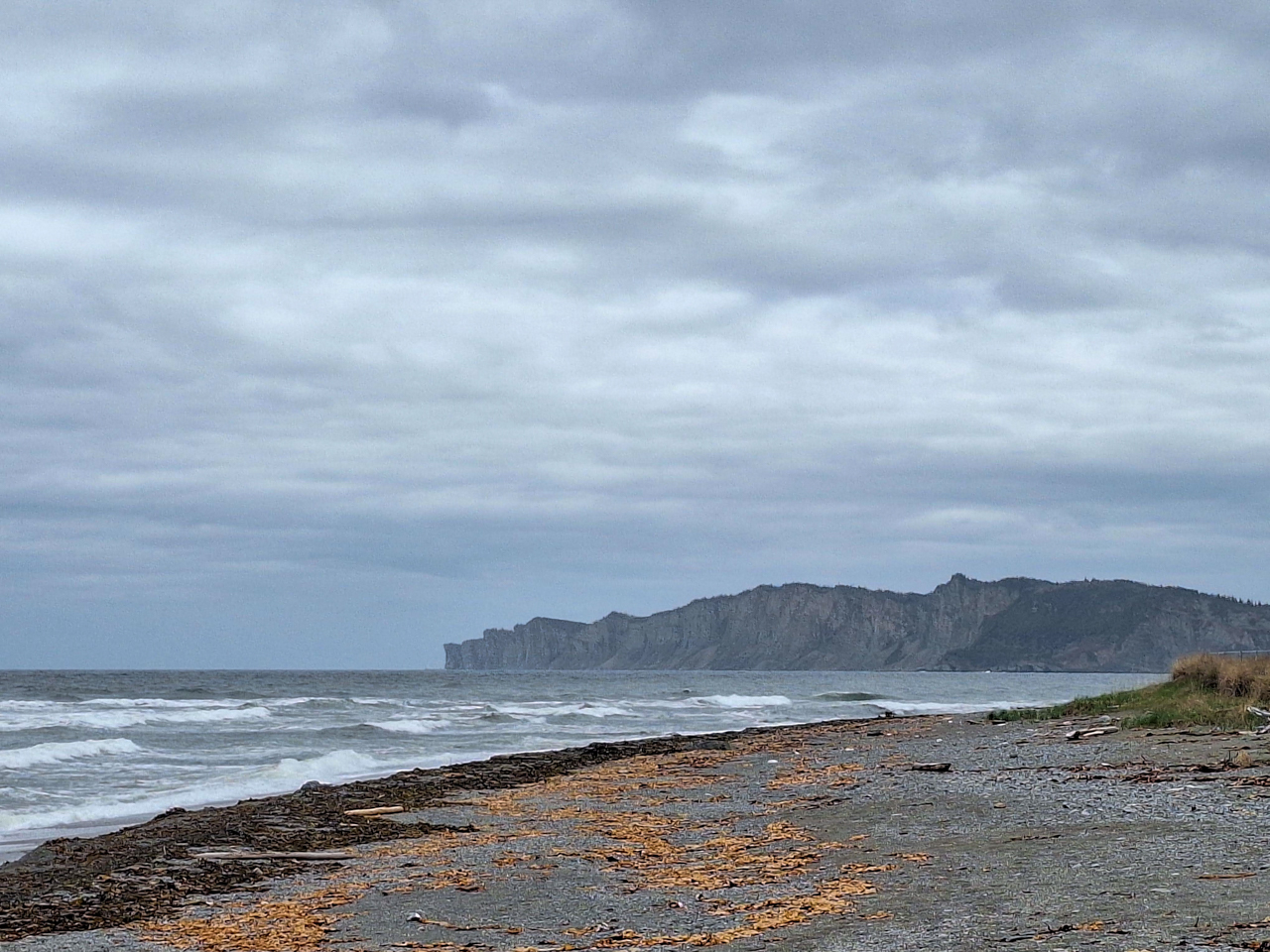
Cliffs of Forillon National Park © Aaron Brisebois
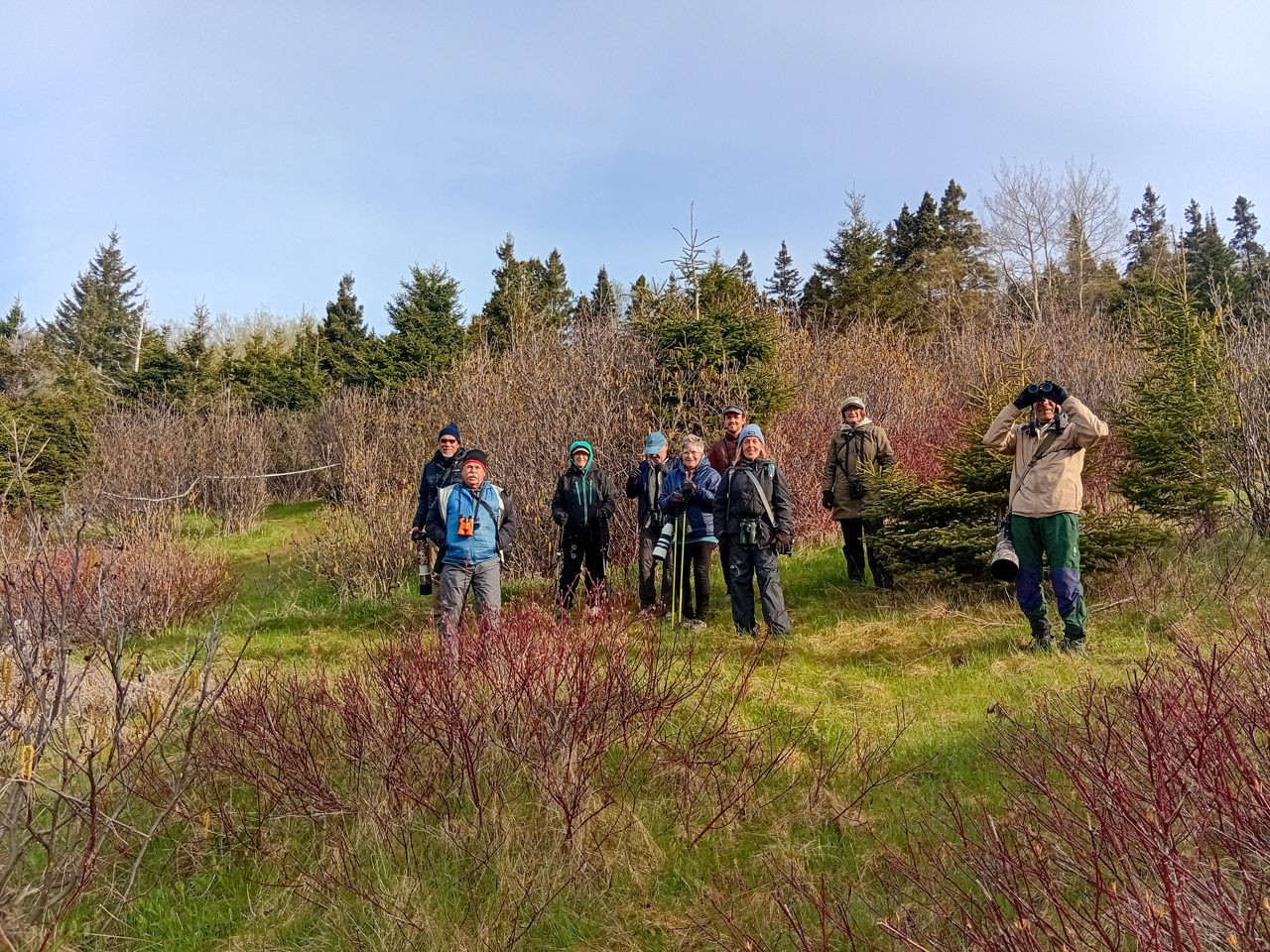
Forillon Park © Arnaud Valade
The next morning, the rain had stopped but the cold temperatures persisted. We walked parts of the ‘’End of the World Trail’’, situated at the very end of the tip of Forillon. There, amongst the thick forest, Aaron found a displaying Ruffed Grouse, thumping its chest with its wings on top of a log. National parks like Forillon offer that kind of experience because these birds have been sheltered from human hunters for so long. We then drove across the park to the northern end and birded ‘’Le Castor’’ trail, where warblers and flycatchers of all sorts were hunting insects on top of the water like swallows. Amongst them was an Eastern Phoebe, a rare sight in the Gaspé region. After eating lunch in the great park installations of the Forillon Harbour, we birded the area which is a great place to see sea ducks from up close. Notably, there were roughly 170 Harlequin Ducks resting directly in the harbour!
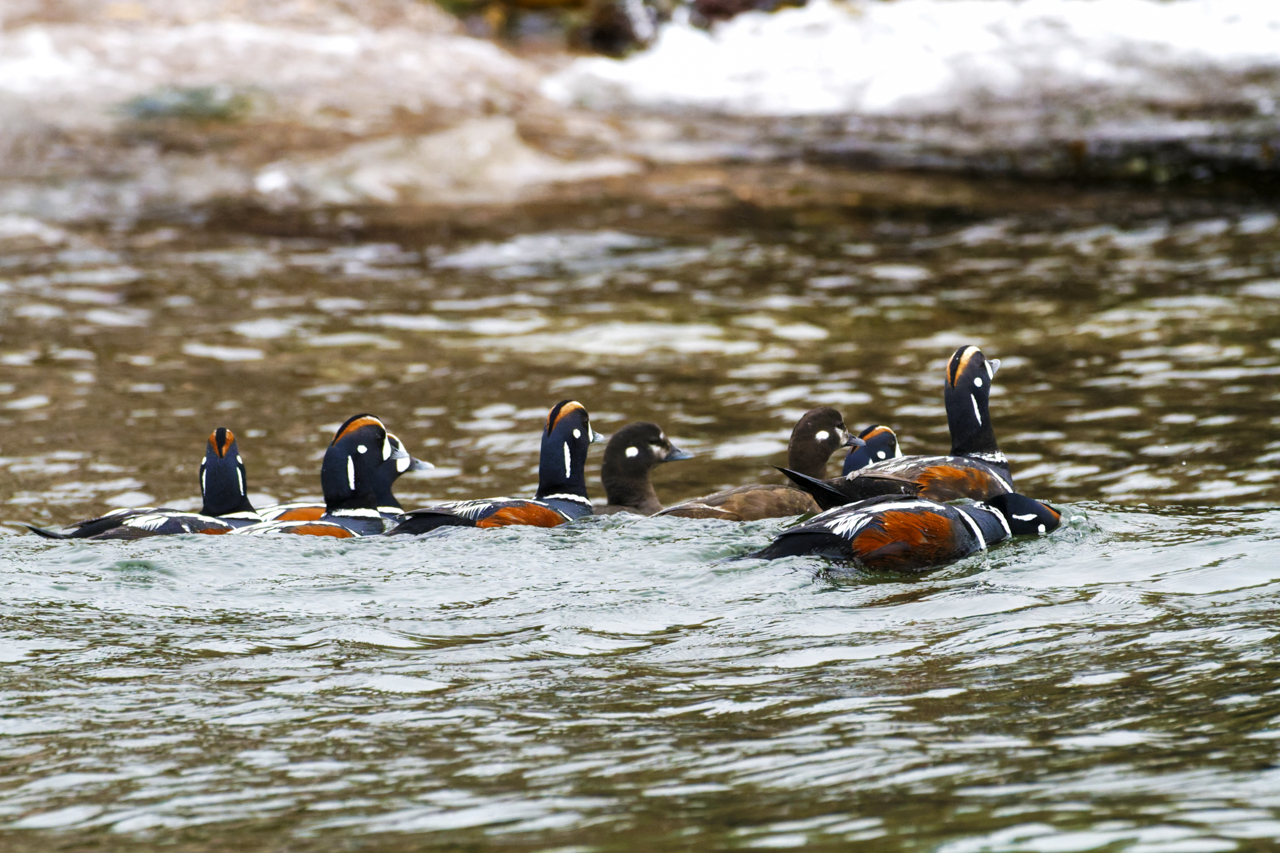
Harlequin Duck © Arnaud Valade
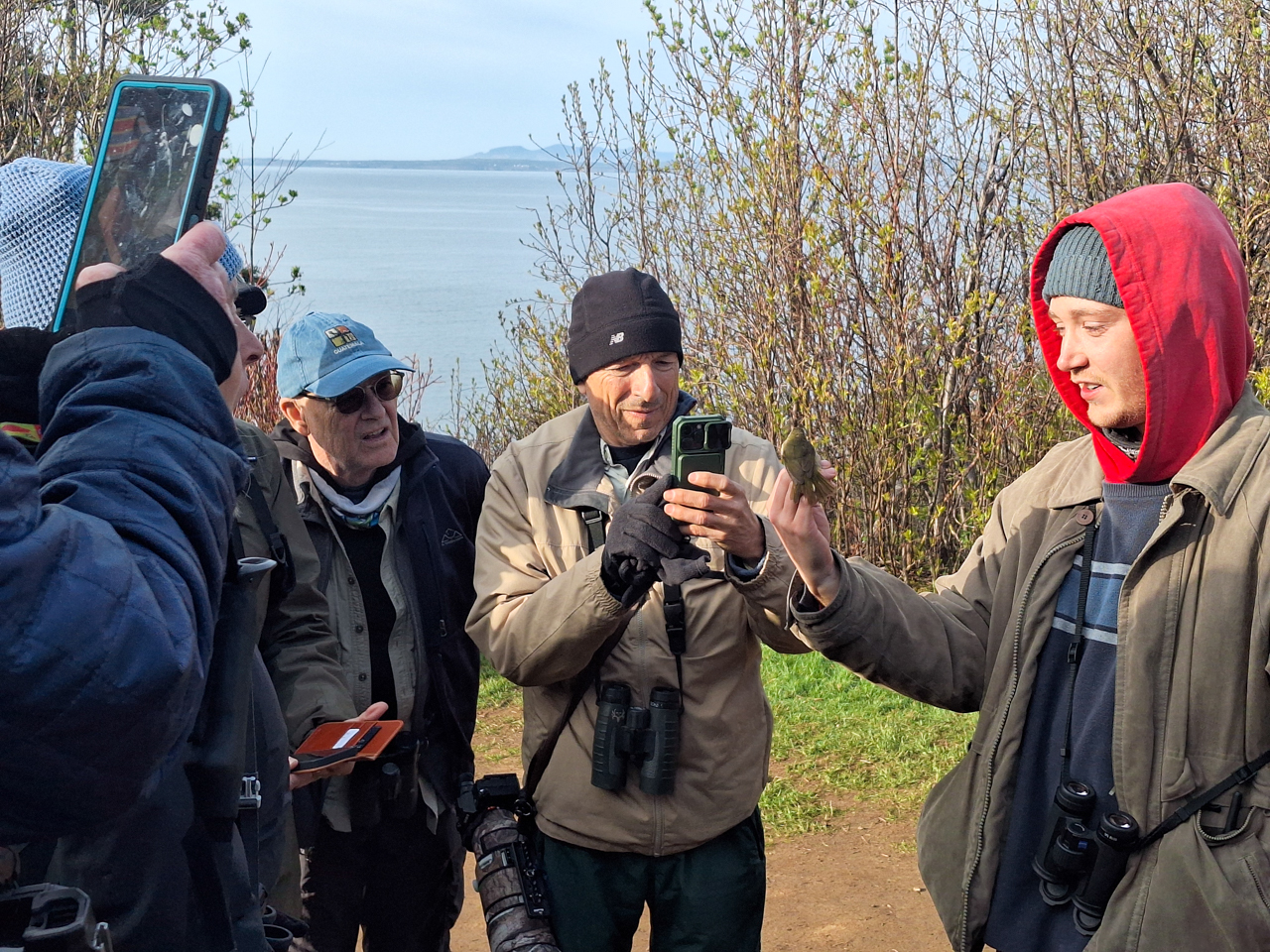
Bird Banding, Forillon NP © Aaron Brisebois
After some of us went out early to scan the Haldimand Saltmarsh and found a Caspian Tern (another rarity for Gaspé), we ate breakfast in town and headed to Murdochville. This old mining town is surrounded by high summits of the Appalachian mountains hosting one of North-America’s rarest birds: the Bicknell’s thrush. We tried to seek out this secretive bird but the unusual cold had probably drawn them out of the mountains, which were pretty quiet except for the eerie sounds of the surrounding wind turbines. Although we did not find the birds, the view from the mountaintop was breathtaking. On the way back, the sunshine finally came back and we stopped at a salmon fishing pool on the York River to enjoy an intact Balsam Fur and Black Spruce forest where the boreal birds seemed delighted to see the sun finally return. We sat around and marveled at the scenery for as long as we could before going back to Gaspé for our last night.
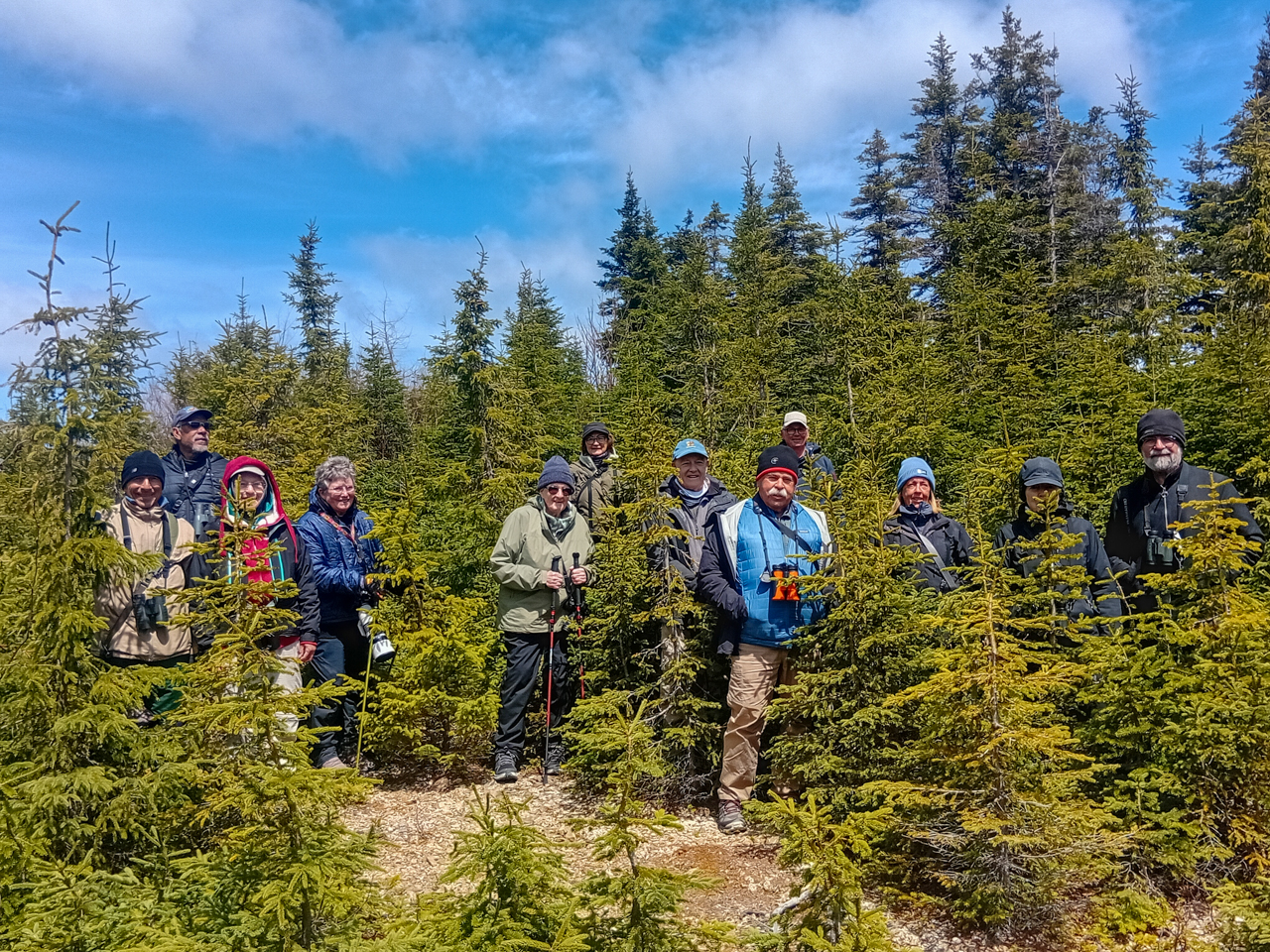
Murdochville © Arnaud Valade
On our last morning, we headed directly to l’Anse aux Amérindiens to witness visible migration from this renowned location. Although the winds seemed just right for a big morning flight, Thomas, the bird bander there told us that the high altitude winds were still northerly and cold. There were still a lot more forest birds around than during the last few days and we got to enjoy a banding demonstration and a workshop on the dynamics of migration in the peninsula. We got to see Swainson’s Thrush, Veerys and Warblers in hand which is always a delight. Apart from the birds, the view there was truly magnificent and humbled us right away; the infinite horizon, the rugged cliffs and the flight of the loons going over the peninsula, a sight that followed us all along this memorable trip. The sun had returned in Gaspé as we were all heading back home, our heads filled with memorable adventures. What a great trip that was and what a delightful group of humans to enjoy it with.