Newfoundland Birding with Canadian Geographic (Jun 3 – 11, 2026) Trip Report 2026
Our group, along with the phenomenal Canadian Geographic Society ambassador, Myrna Pearman, were treated to an unforgettable adventure exploring southern and eastern Newfoundland. We journeyed from the rugged coastal Avalon Peninsula, to the lush forested Terra Nova National Park, and everywhere in between. These travels contained many jewels of nature, culture, and history just waiting for us to uncover, and in the end, the trip exceeded all of our expectations. The rewards from our odyssey included remarkable wildlife encounters, picturesque uniquely Newfoundland towns, welcoming charismatic locals, delicious food, and truly breathtaking scenery the entire way. From St. John’s, to Cape St. Mary’s, to Bonavista and back, we saw 101 species of birds, several mammals including two species of whale, icebergs, endemic plant species, and many other awe-inspiring natural sights.
Day 1: June 3rd – Arrival and Introductions in St. John’s, Newfoundland
This calm evening was the start of an unforgettable journey, defined by wonderful company, amazing experiences, and endless natural beauty. Newfoundland’s mystical personality set the backdrop for a tight-knit group that enjoyed every moment of our time here to the fullest. After we all arrived, we met for introductions and dinner at The Little Sparo restaurant connected to the hotel. The food was delightful and we walked it off afterwards on Signal Hill at sunset, under the purple glow of the monument.
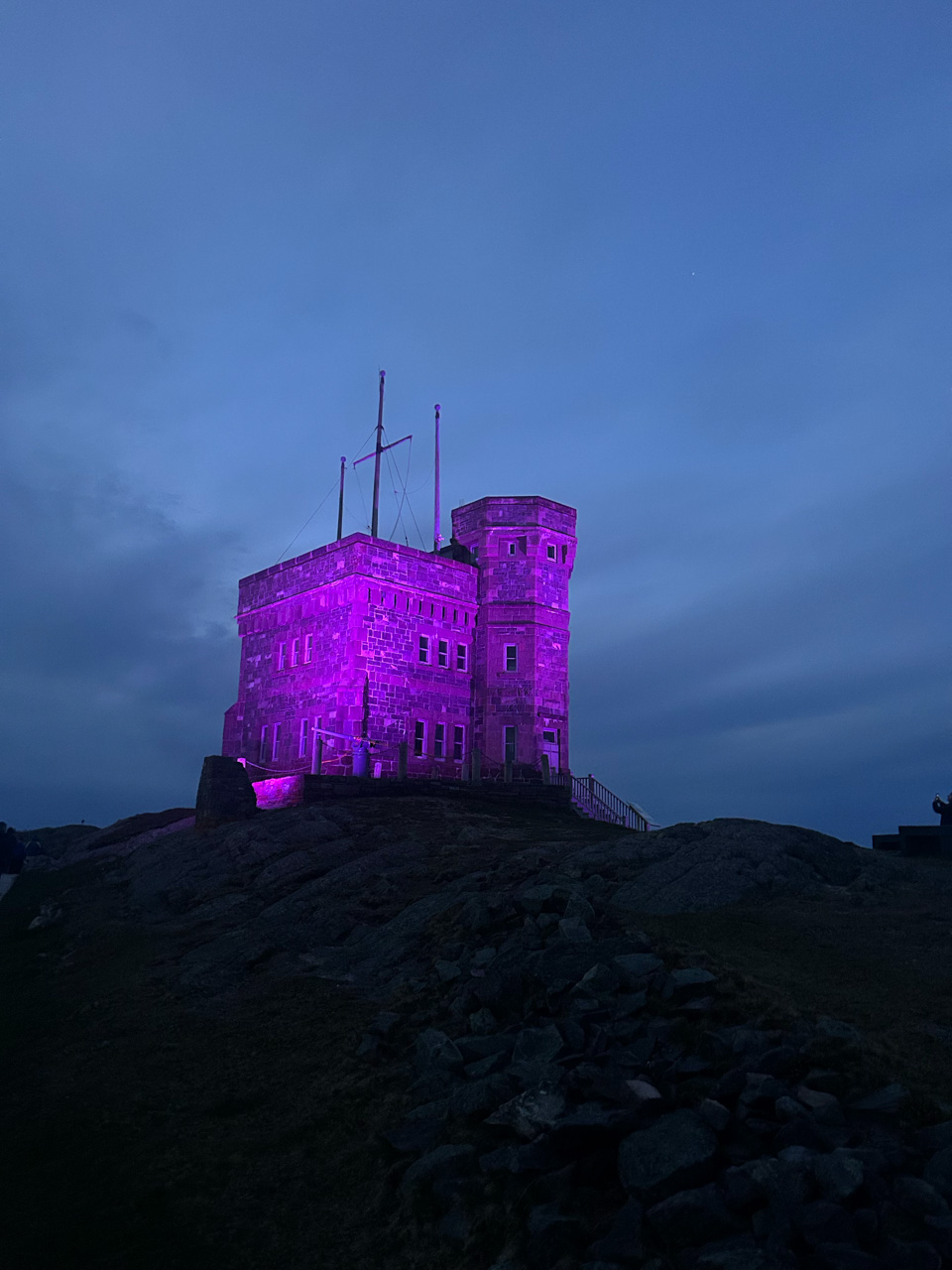
Signal Hill © Logan Lalonde
Day 2: June 4th – Cape Spear, Bidgood Park, Witness Bay
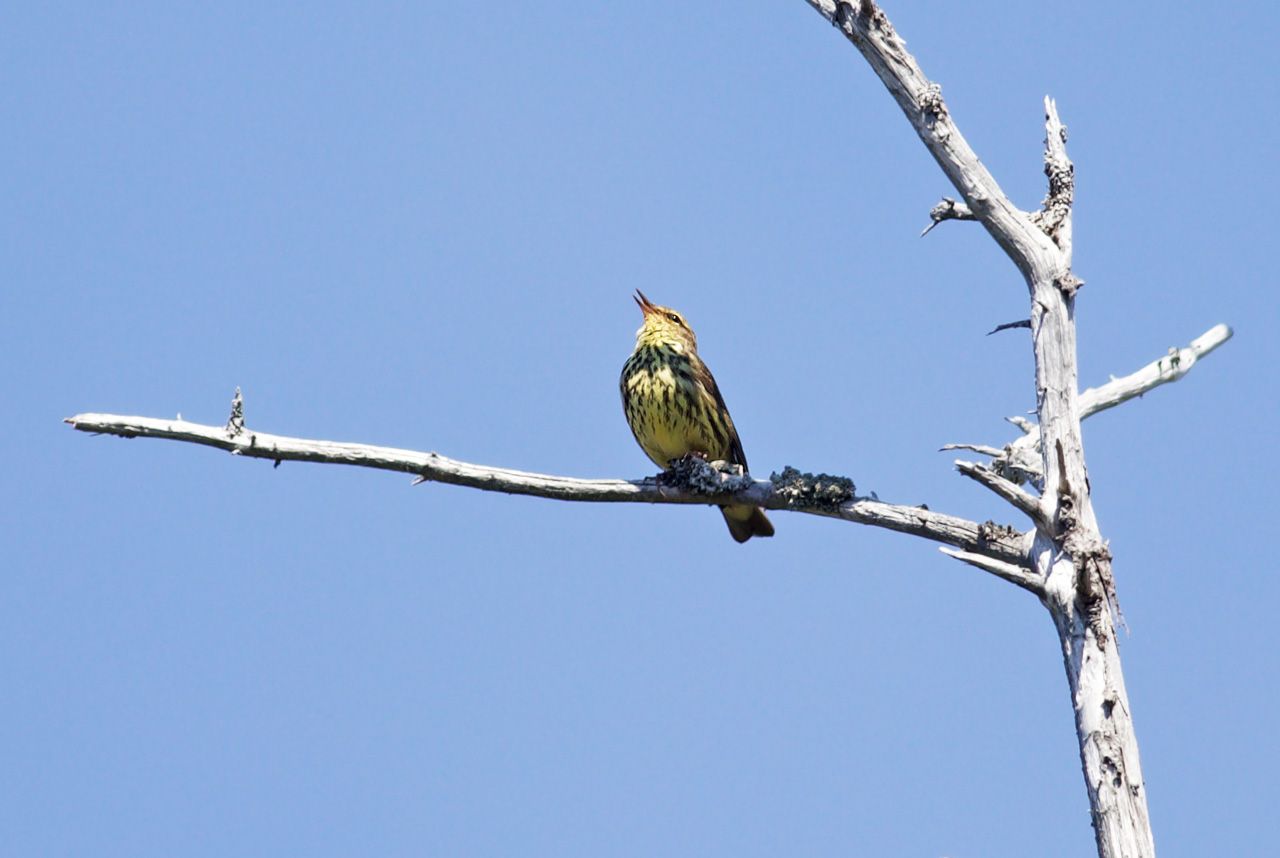
Full of enthusiasm for the trip, we headed to Cape Spear in the morning to get our first taste of seabirds for the trip. However, the first oceanic animal we observed on approach was a small pod of Minke Whales close to the shore! Razorbills, Black-legged Kittiwakes, Black Guillemots, and Common Loons gave us good looks through the scopes, and a migrant flock of several dozen Cedar Waxwings flew over us. After a pleasant first walk in Newfoundland, we headed along the picturesque East Avalon coastline and up to Bidgood’s Park. It was a stunning sunny morning here with a pleasant breeze, and birdsong filled every corner of the soundscape. Warblers were all over the woodland surrounding the wetland on our circuit walk, and everyone had incredible looks at breeding species including Northern Waterthrush, Wilson’s Warbler, and Blackpoll Warbler. Brown Creepers worked the spruces and a stream of birds of prey Sharp-shinned Hawk, Osprey, and Northern Harrier were active in the sky. This location proved to be the most species diverse stop of our trip. The big highlight was a secretive immature male Cape May Warbler that methodically gleaned the branches of the conifers near the bridge, which is a scarce bird in the province.
Northern Waterthrush © Logan Lalonde

Cape May Warbler © Logan Lalonde
We enjoyed a wonderful picnic lunch here, and then it was time to drive to our first major adventure of the trip. Soon, we arrived at the famed O’Brien’s Whale & Boat Tour jetty in Bay Bulls just after noon, and the sun continued to emblazon our day as we soaked it up while waiting for the boat to leave. Cultural and environmental elements were both amazing on this boat trip to Gull Island and back, and our first excitement was only a ten minute ride from the harbour. Hoving into view with an ethereal quality to it, a large iceberg appeared on the horizon. We approached, and with some great driving by the skipper, got to circle it at incredibly close range! This sight dropped all jaws on-board, as did the amazing photos we all got of it.
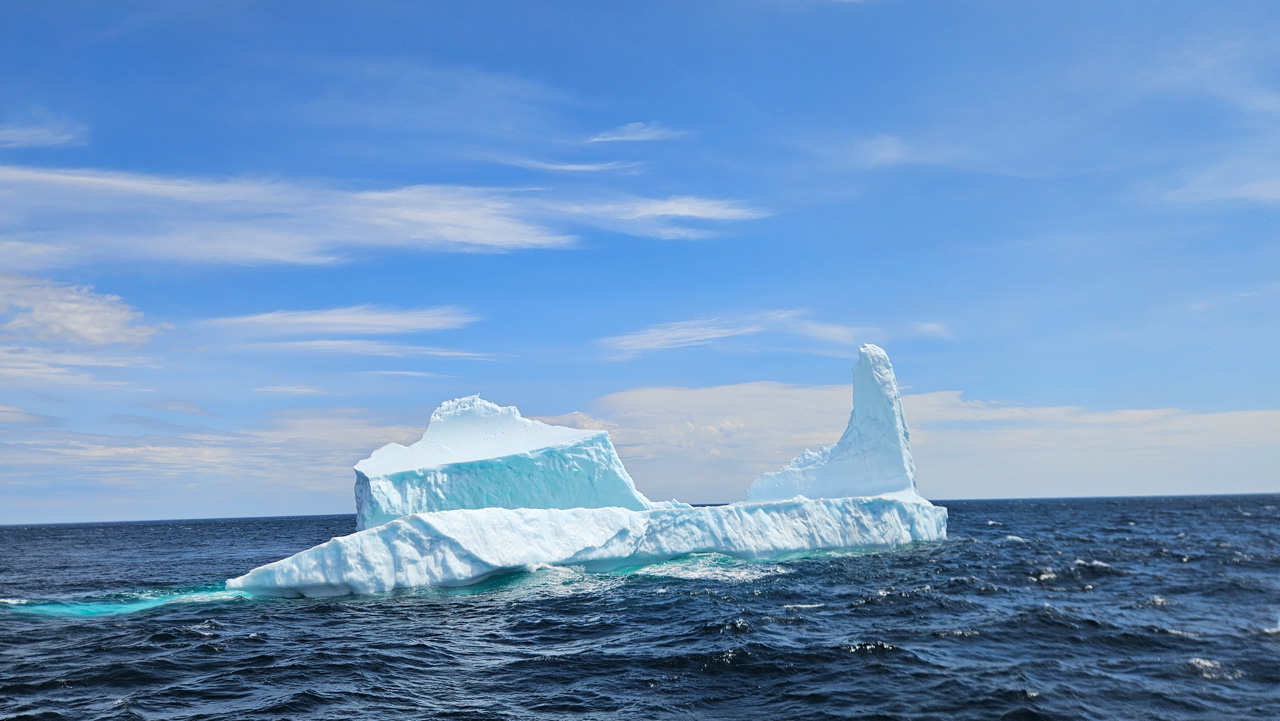
Iceberg © Myrna Pearman
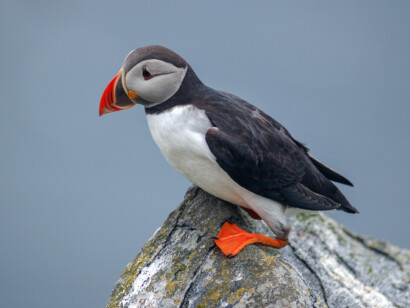
Many Northern Gannets, Common Murres, and a gliding Sooty Shearwater helped comprise the bird action near the iceberg as we slowly circled it. Once we got our looks and selfies, we made a beeline to Gull Island, and its mind-numbingly massive seabird colony. It is home to a top 5 Atlantic Puffin colony in the world in terms of size (250,000 pairs), as well as 10s of thousands of Common Murres and Black-legged Kittiwakes. Each of these species treated us to close looks as we cruised by at low speed.

Atlantic Puffins © Logan Lalonde
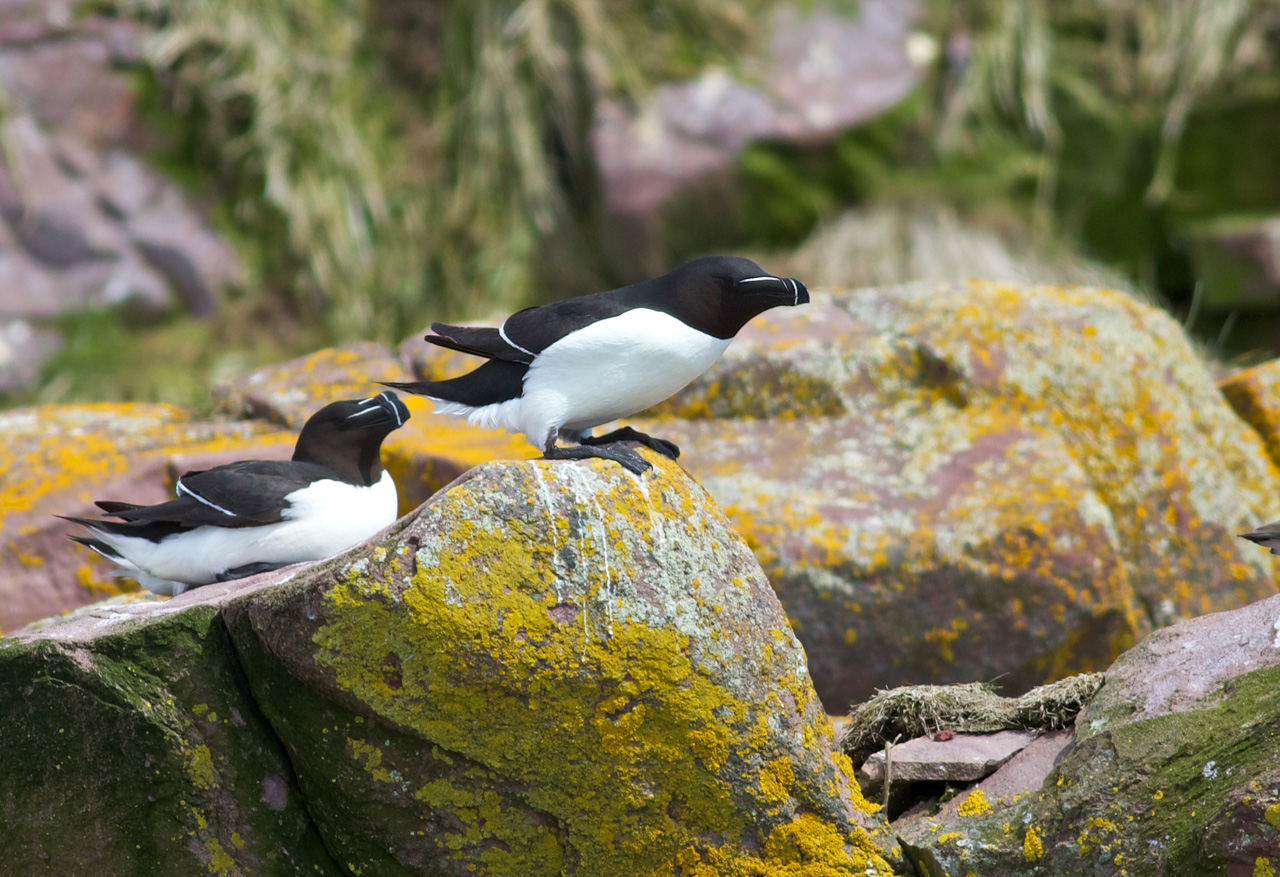
Razorbills © Logan Lalonde
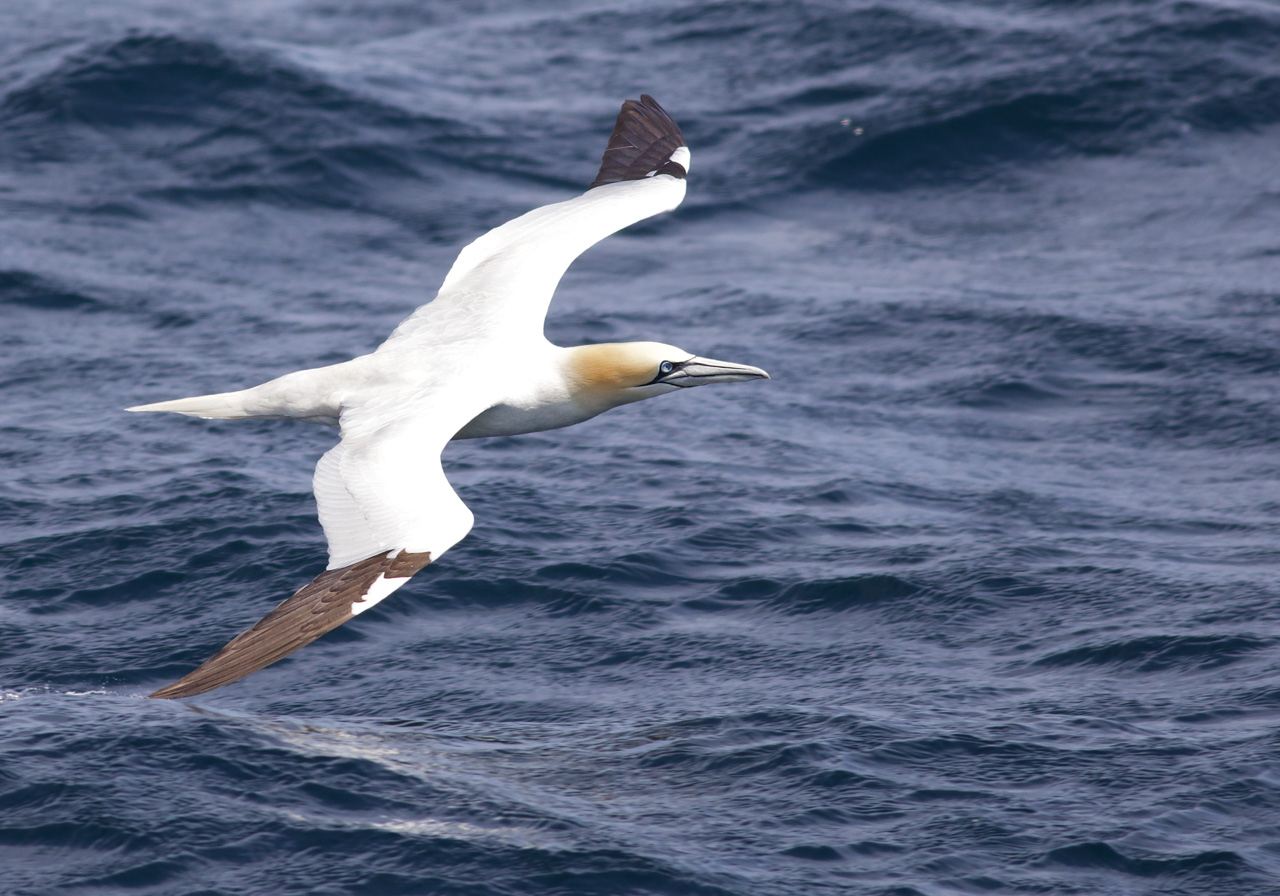
Northern Gannet © Logan Lalonde
The crew on-board picked out a stunning Thick-billed Murre just before we left the island, resulting in many oohs and aahs. This was a target bird for many birders on-board. The swarms of seabirds were incredible shining like innumerable stars in the sky all over the vegetation on the island, on the water, and in the air.

Thick-billed Murre © Logan Lalonde
From here, we zipped back to land and got our land legs back under us. Soon after, we stopped at an active Great Horned Owl nest nearby, nestled within an old weather satellite. Humans and the rest of nature can co-existent seamlessly, and this was an example of it!
Day one of birding in Newfoundland was finally drawing to a near, and we decompressed and chatted about birds all over North America at our relaxing dinner spot in St. Johns the Yellowbelly. It capped off a sensational first official birding day of the trip.
Day 3: June 5 – Cape Broyle, Southeast Avalon, Mistaken Point
The day began with a lovely breakfast at the hotel, and we packed all of our luggage for a day of scenery, birds, and travel to the Southeast Avalon. We stopped in St. Michaels and quickly viewed a very cute pair of the seabird oddity that is Northern Fulmar on the cliffs across from the highway. This arctic species is a rare breeder this far south, so it was great to see them so easily. The wind was blowing strongly here, and so before it had a chance to blow us all the way to Ireland, we dashed to Cape Broyle. This was not before one of the cars viewed a male Gadwall in a seaside pond, an uncommon species on the Avalon. Many recently returned songbirds were singing around the woods at the gas station in Cape Broyle, and the nearby Fairy Pond gave us incredible looks at a hunting Common Tern. Other birds we had good looks at here included: Spotted Sandpiper, Greater Yellowlegs, and Northern Pintail.
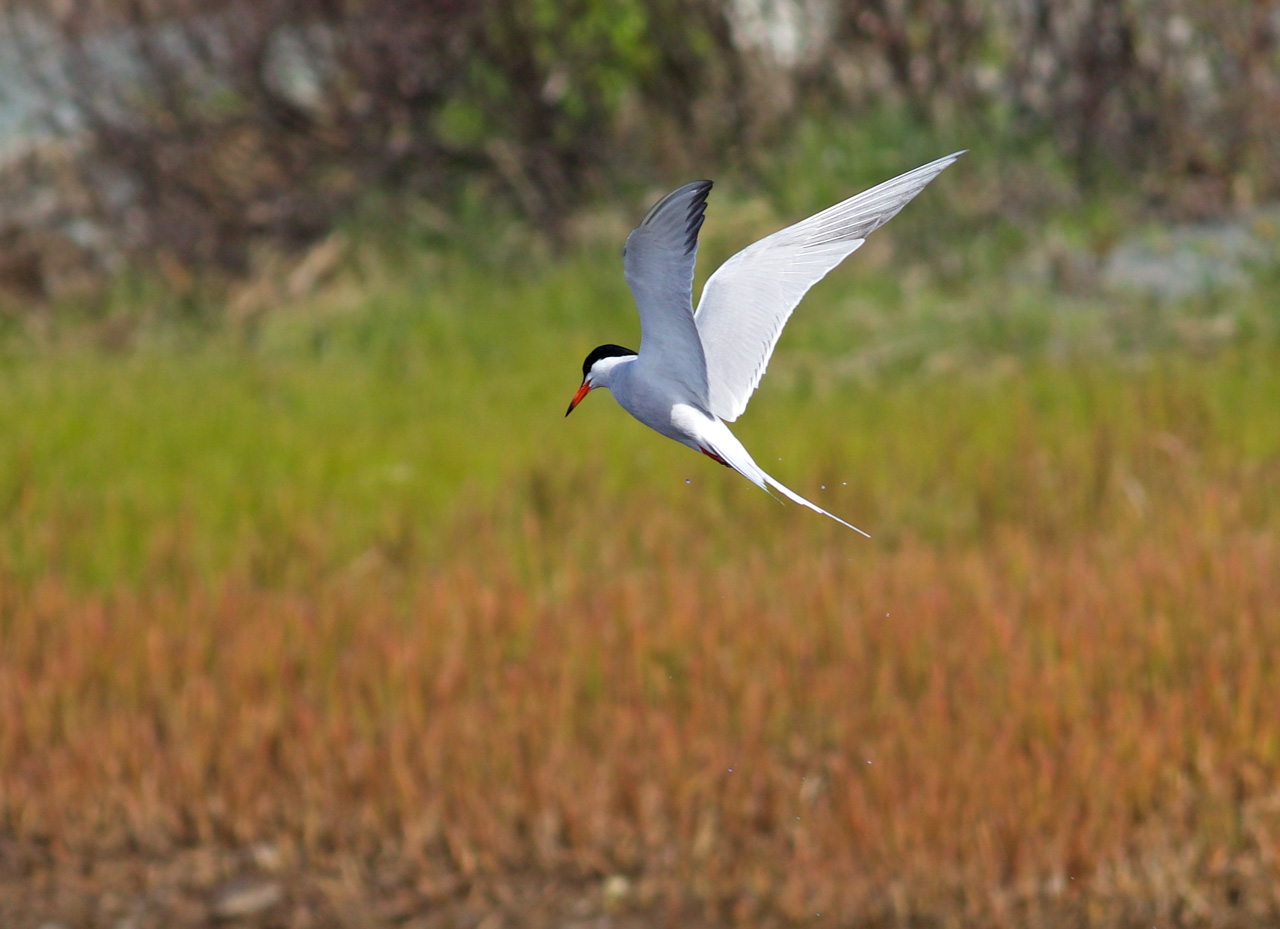
Common Tern © Logan Lalonde
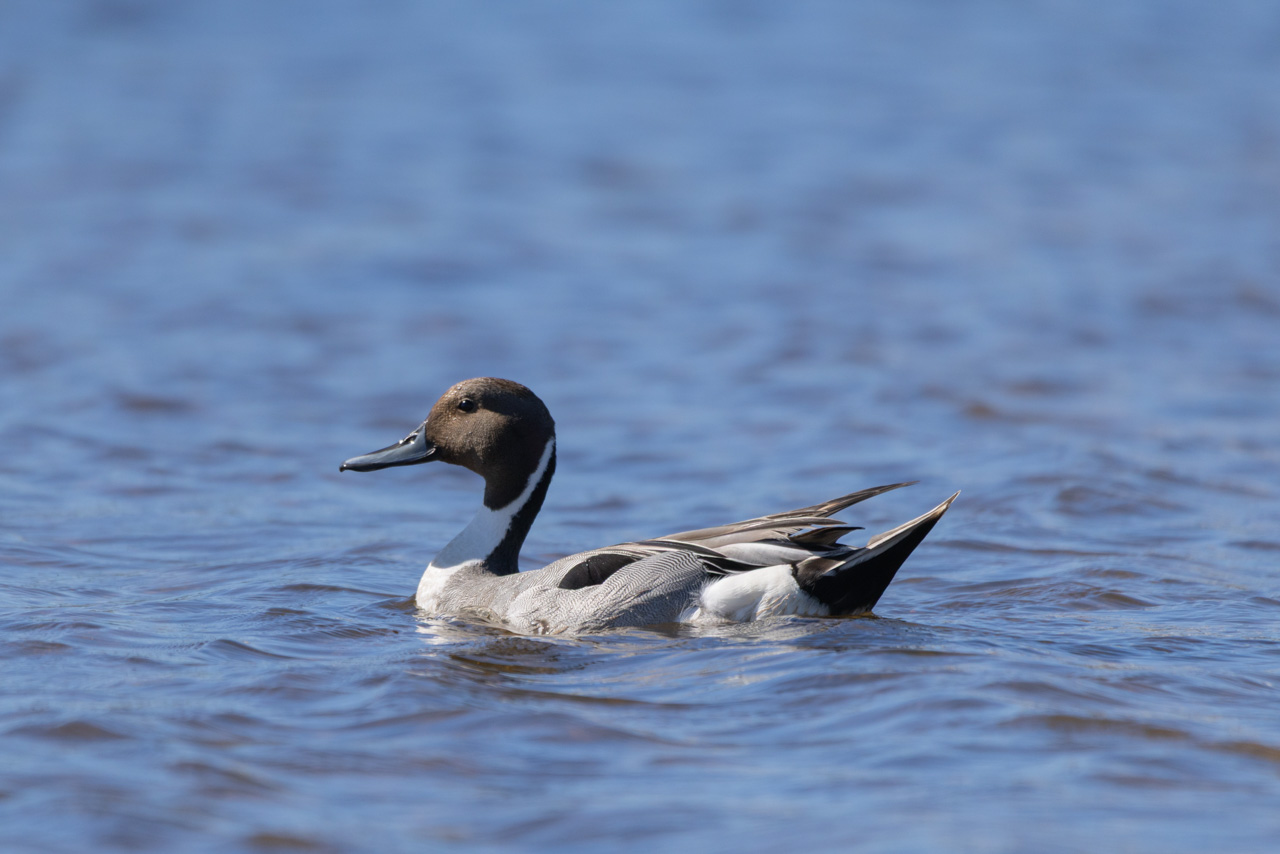
Northern Pintail © Vernon Buckle
We continued down the coastline, enamoured by the quaint coastal communities and the important historical site of the Colony of Avalon in Ferryland. We also stopped in Renews, where there were some avian goodies waiting to be found on the little rocky island and in the convergence with the creek. Our best looks at Arctic Tern of the trip were had here, and a nice bonus of two sleeping Black-headed Gulls were present right beside the highway.
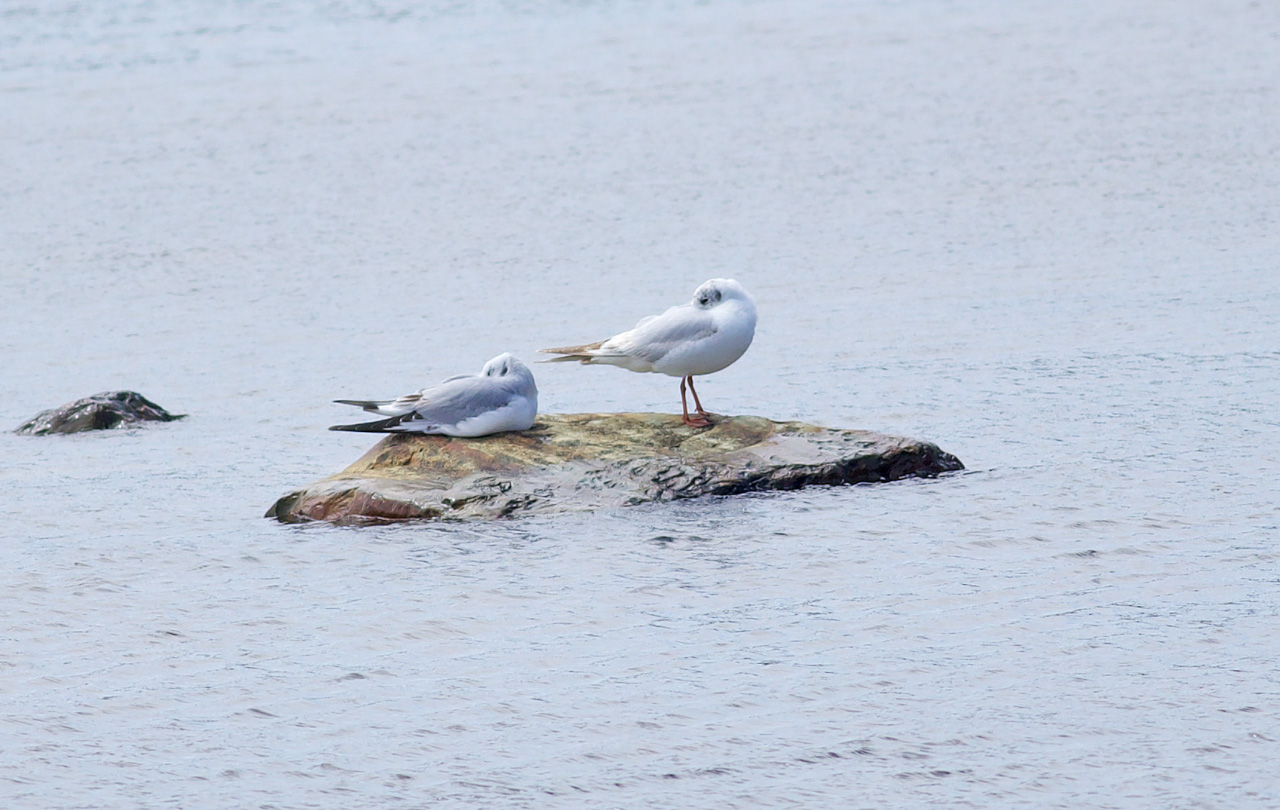
Black-headed Gulls © Logan Lalonde
The tarmac was hit hard as we made some ground on our way to the start of the Mistaken Point National Historic Site trail, which was to be the jewel of the day. On the way, we lucked into some roving Caribou, including a mother and young calf. We also snagged a Willet flying over the road after we began following the local biologists to the protected area.
We bundled up, donned backpacks with snacks, and got prepared to walk the 6 km round trip to the iconic fossil site. As birds are always on a birder’s radar, we lucked into our target bird here Willow Ptarmigan right from the parking lot. A Peregrine Falcon also flew across our view even before we stepped a foot on the path. It was another day, another amazing experience with pristine weather when it came to this afternoon. Our trek to this unique fossil site and back was wonderful, as all group members walked at their own pace and enjoyed the sunshine. We were enthralled by the presentation by the interpreters, who explained how fossils of an entire set of primitive Ediacaran animals were preserved pristinely at the site by-way of highly compressed ash as well as plate tectonics. We discovered the many species of primitive oceanic animals here and ran our fingers over their imprints in the stone, as if travelling back in time.
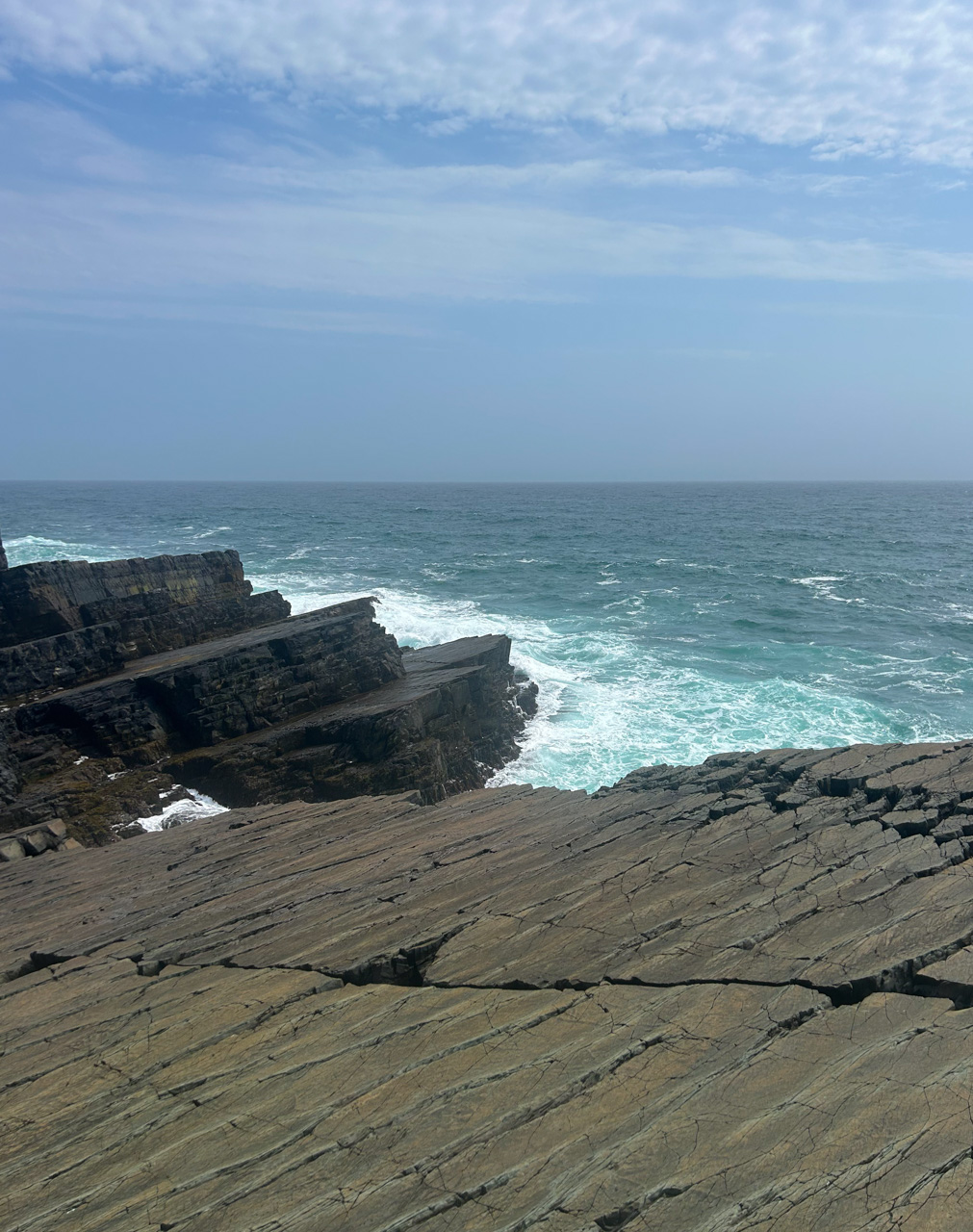
Fossil surface in foreground, Avalon coastline in background © Logan Lalonde
Oh, and there were also a lot of birds here too. Bank and Barn Swallows flew over the cliffs and American Pipits were performing flight displays. Nearby, several Fox Sparrows filled the air with their cheerful song, along with several other species.
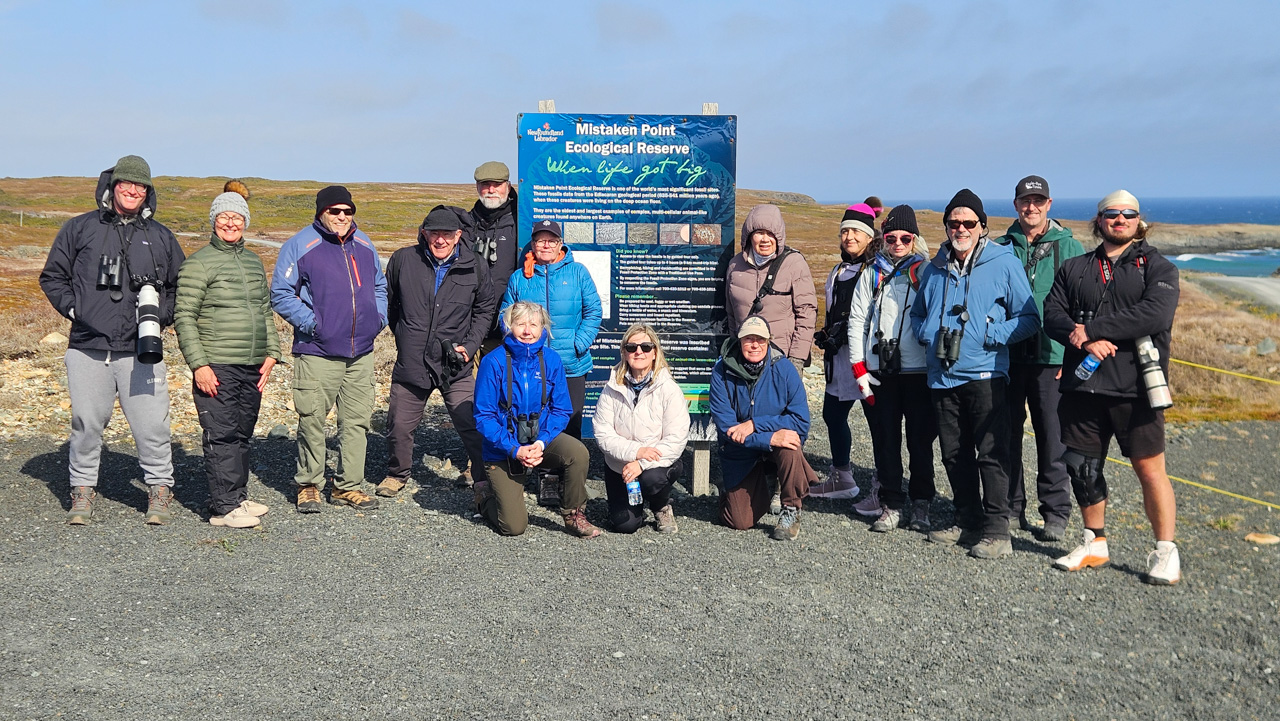
Group at Mistaken Point © Myrna Pearman
The next phase of our trip was set to be Trepassey, and we wandered there gradually, enjoying the stunning coves and coastlines en route. We also passed by many great spots for waterfowl, and noted a late pair of Long-tailed Ducks as well as Green-winged Teal and Ring-necked Duck. Once we got to the stunning Edge of Avalon Inn, we enjoyed a sunset-enrobed dinner at the hotel.
Day 4: June 6 – Trepassey, Central Avalon Coast, St. Bride’s
This morning started earlier than normal for half of the group, who decided to go for an early morning bird walk in the woods nearby. This road was fruitful for boreal forest breeding songbirds, including its namesake Boreal Chickadee, Black-throated Green Warbler, Yellow-bellied Flycatcher, and non-songbirds such as Belted Kingfisher and Ruffed Grouse. There was also a Merlin being accompanied by our first Blue Jay of the trip on the wires.
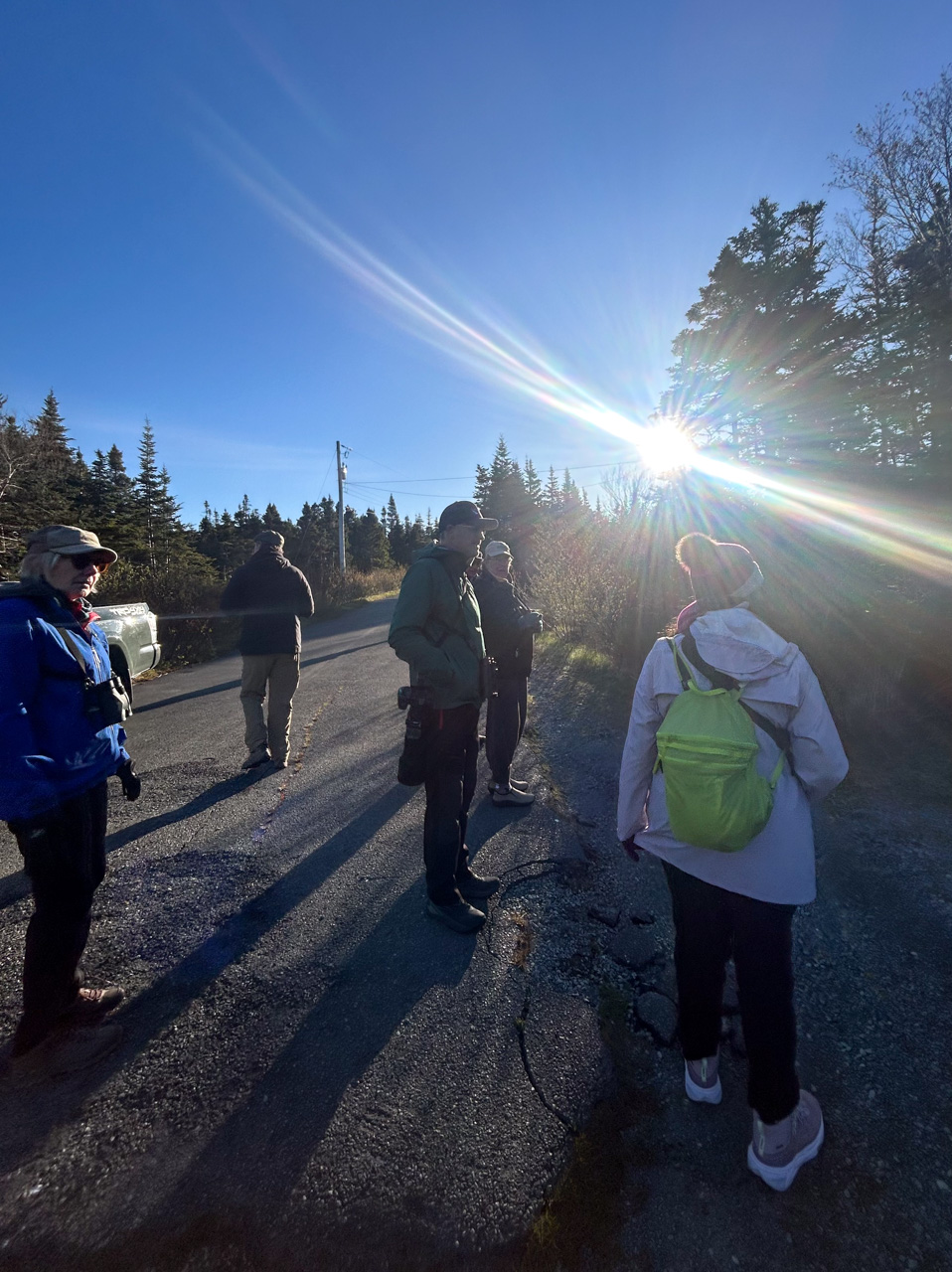
Sunrise Walk in Trepassey © Logan Lalonde
Once the two groups reconvened at the Inn for breakfast, everyone was treated to gorgeous Boreal Chickadee looks in the parking lot, so the entire group got to see this species well!
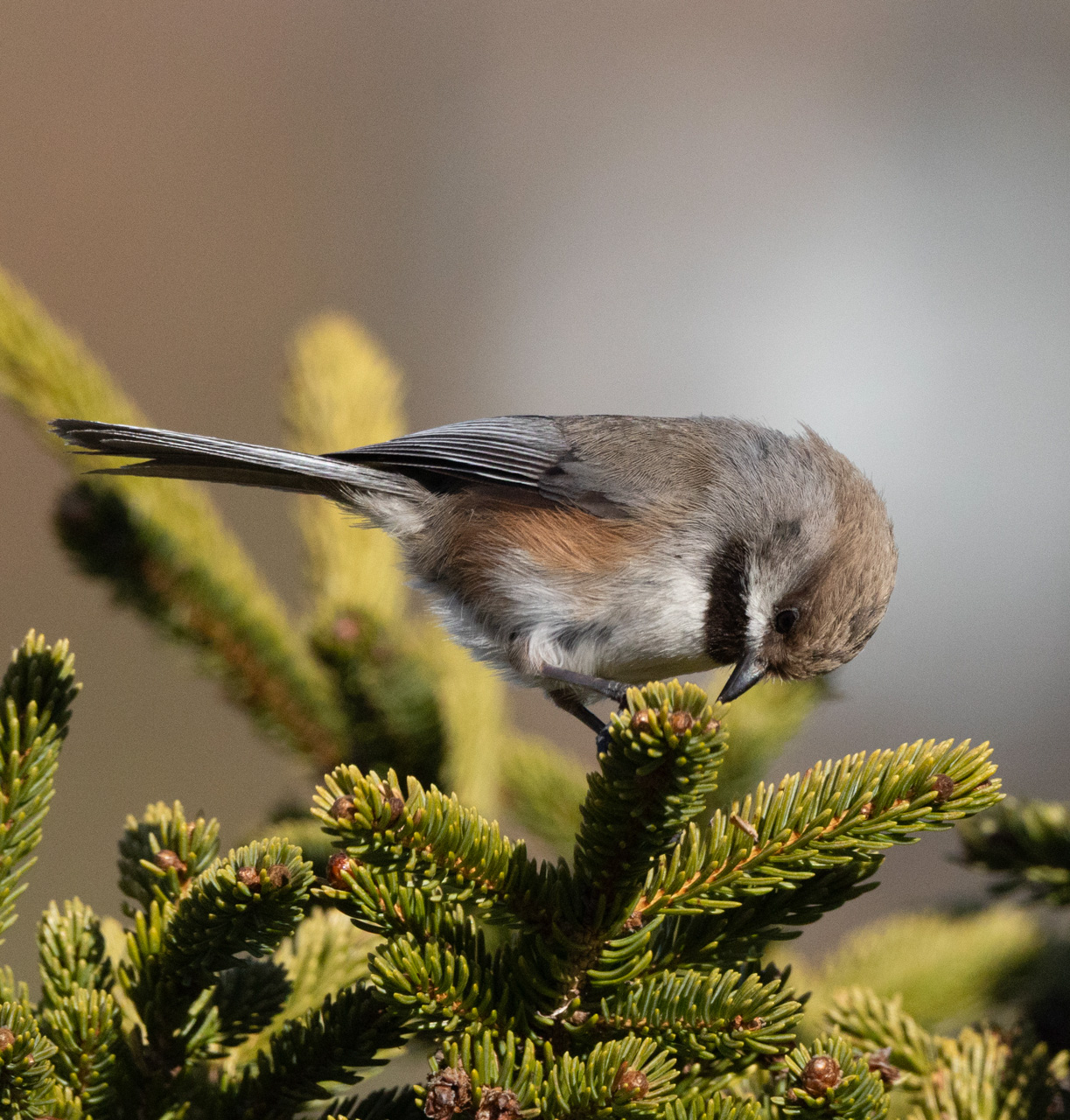
Boreal Chickadee © Vernon Buckle
We packed our bags and checked out the rocky causeway below the hotel and were rewarded with 10 Red-throated Loons, 7 more Long-tailed Ducks, and various coastal species on our scan.
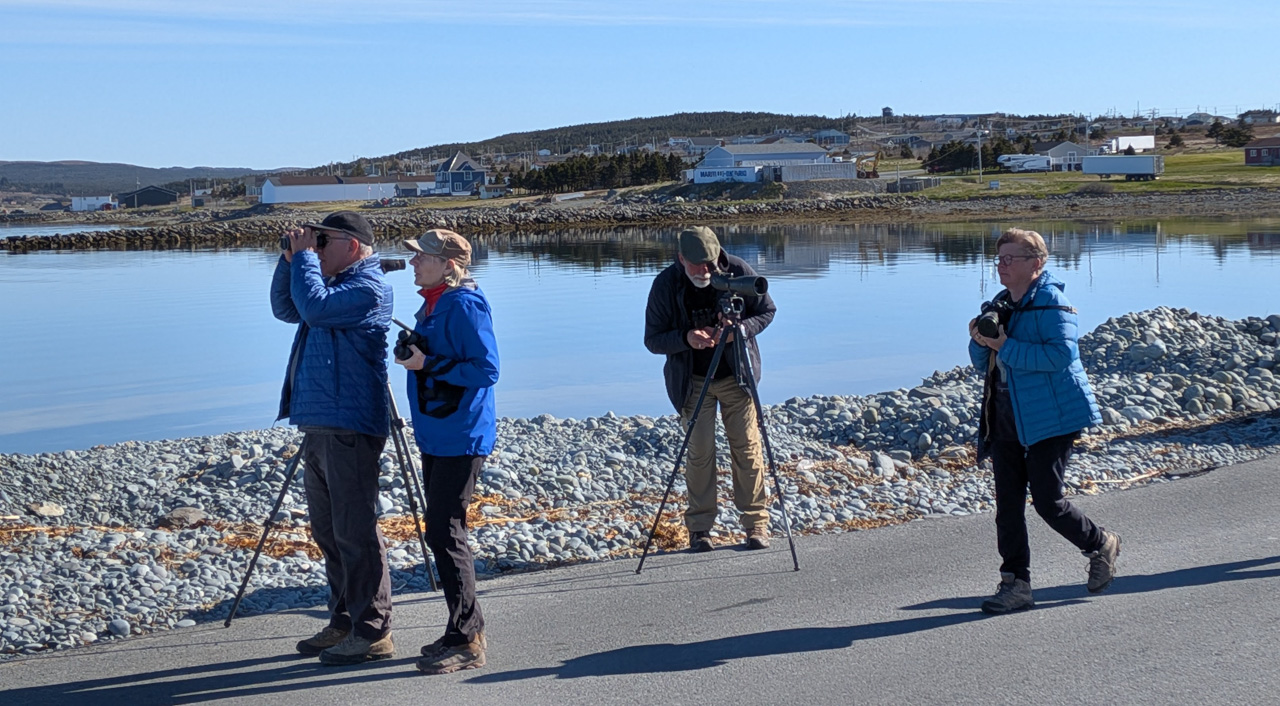
Looking at coastal avian gems © Susan Fisher
Our day was about to evolve an epic coastal road trip, with many picturesque locations to explore. First up was Cape Pine Road and its Lighthouse, where we saw tons of interesting natural spectacles including: several Horned Larks posing just off the road, a great variety of subarctic plants, a Northern Harrier that put on a show – nearly grazing its wing across the hood of one of our vans as it hunted low over the tundra and a Woodland Caribou that posed for us within 30 feet of the vans!
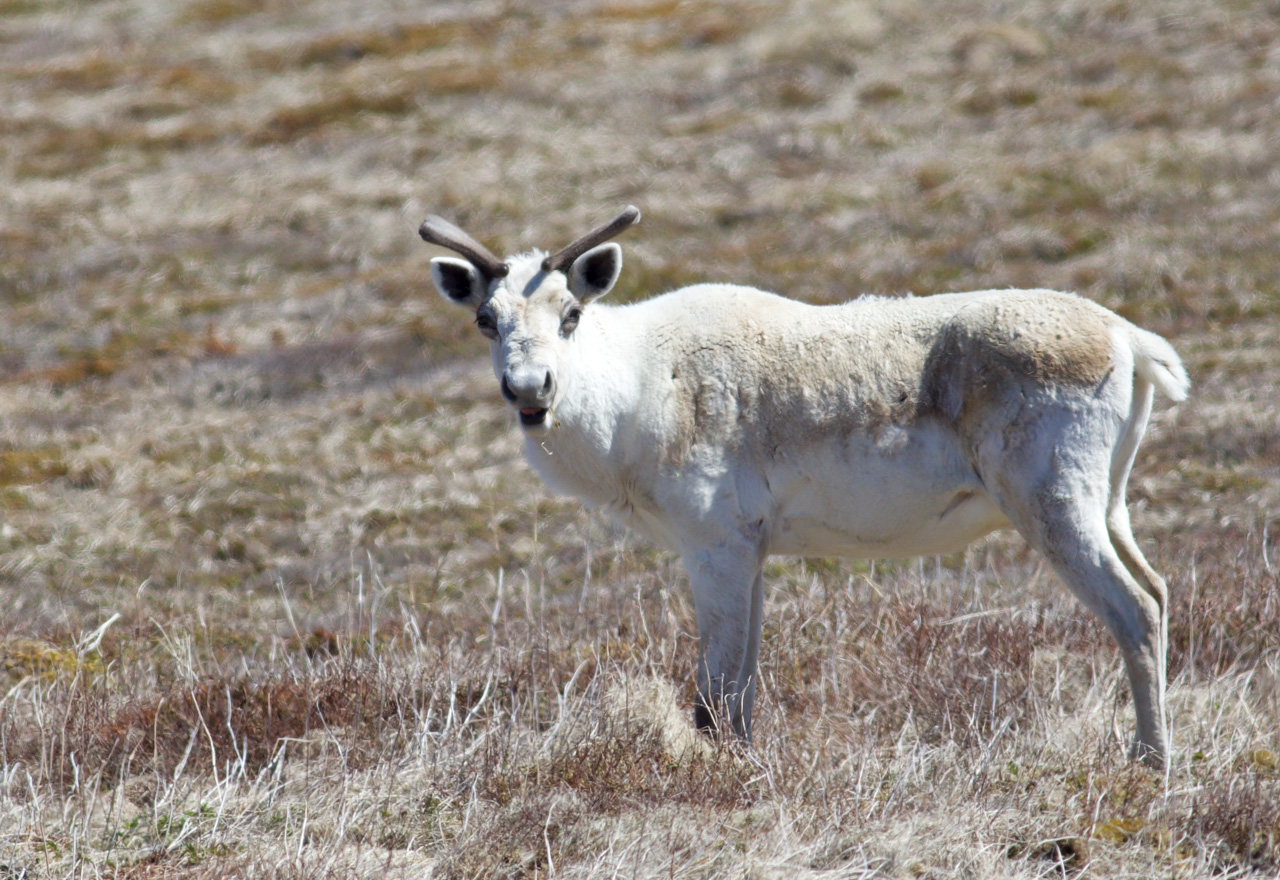
Woodland Caribou © Logan Lalonde
Next was the historic village of St. Shott’s and its rugged scenery with gorgeous coastal water dazzled everybody. The birds were nice too, in the form of almost 30 Common Eiders near the rocks, Arctic Terns along the coastline, and three species of swallow.
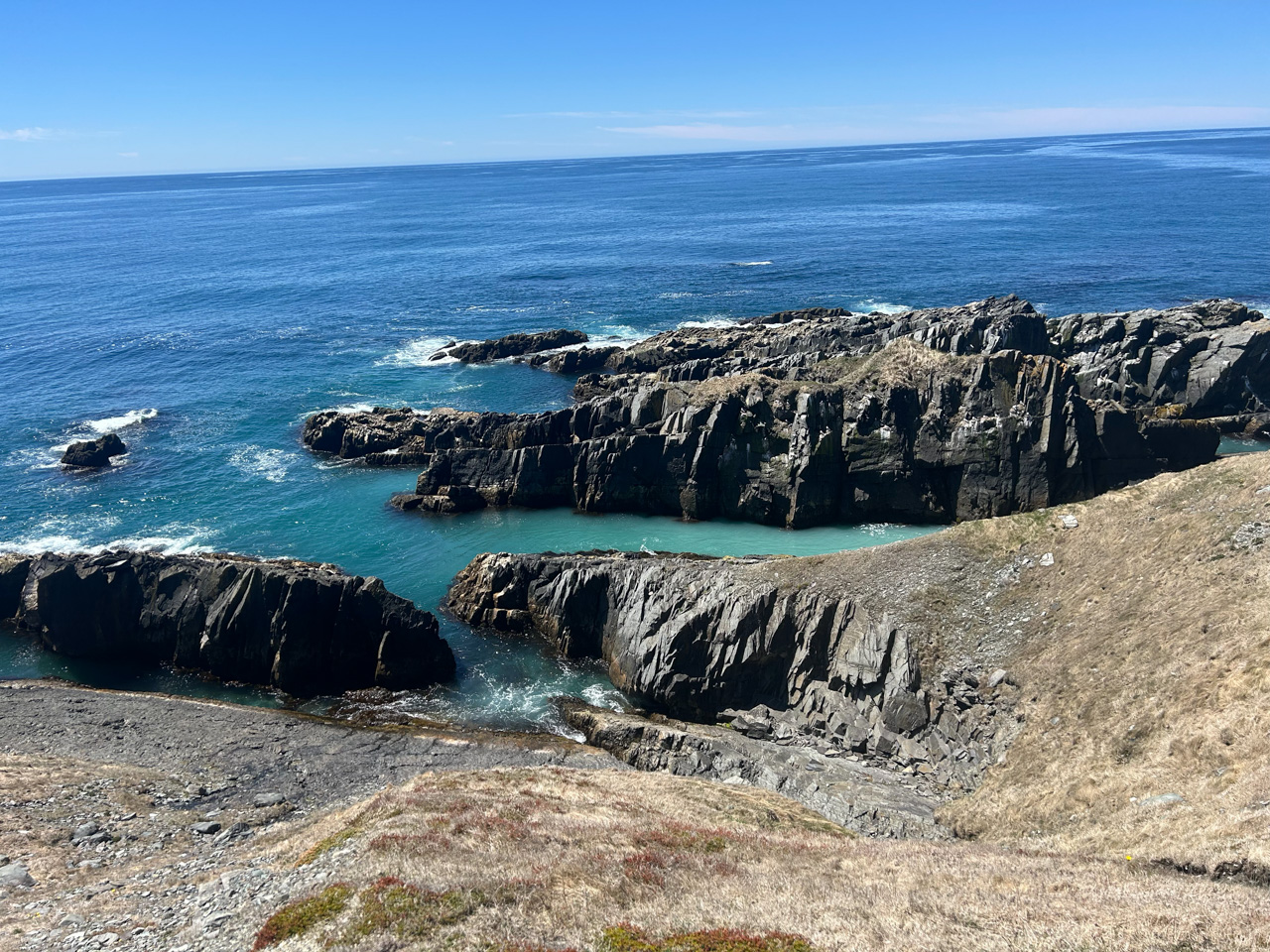
St. Shott’s © Logan Lalonde
We charged our human batteries in the form of a picnic lunch in the windy St. Vincents and witnessed a Humpback and Minke Whale simultaneously in the ocean across the road. Before grabbing some ice cream and treats in a local community on our way, we enjoyed the grassy knoll and panoramic oceanic views of Point La Haye.
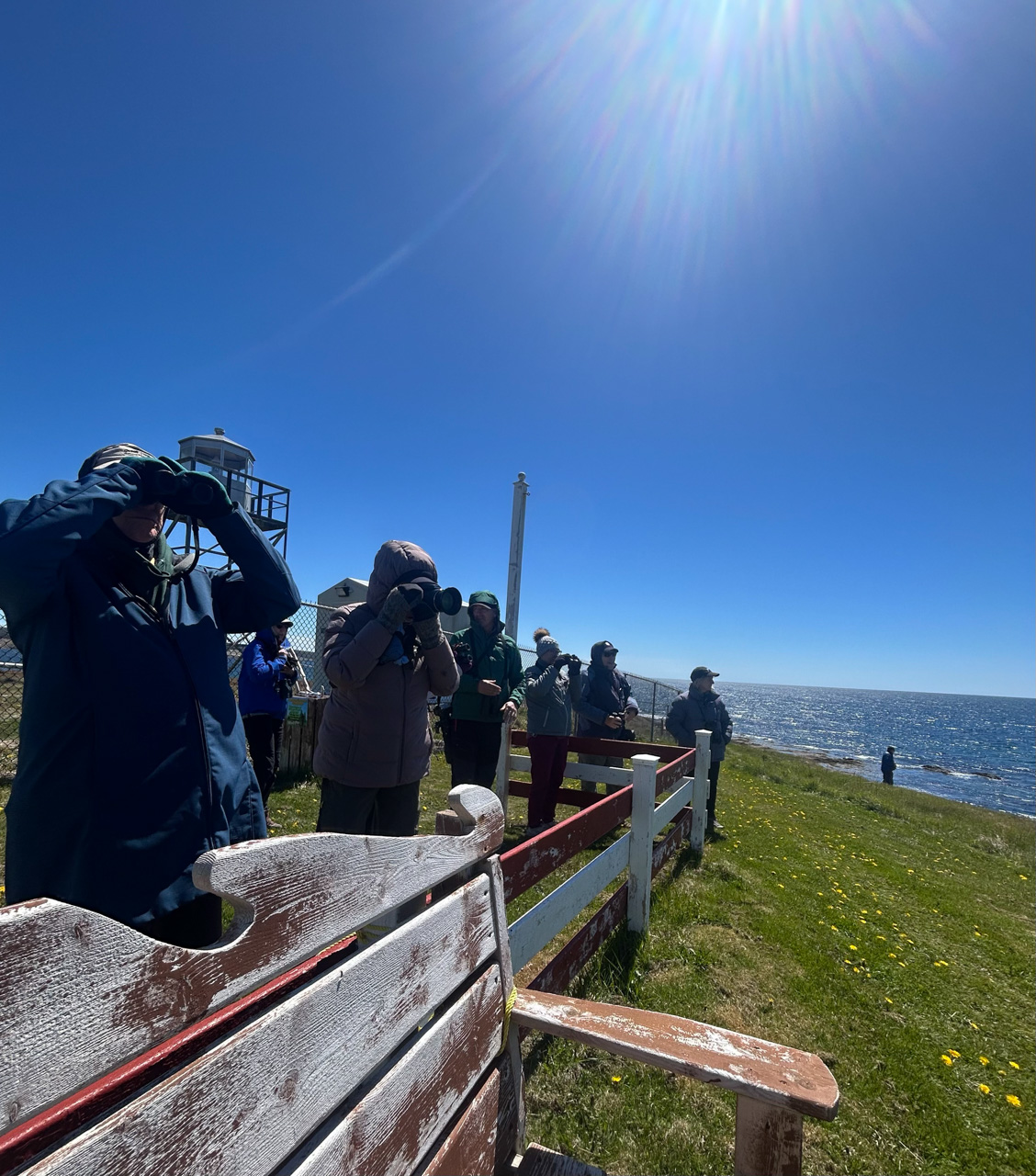
Point La Haye © Logan Lalonde
We soon entered the West Avalon, and the habitats surrounding the highway were diverse and stunning. There was not a dull moment. One van even saw a Rough-legged Hawk fly across the highway along this stretch.
Soon, we arrived at the Capeway Motel in St. Brides and settled in at this gorgeous historic building. Dinner was next, around the corner at Da Bird’s Eye, and we were treated to the iconic service that this restaurant is famous for. A new icon of this restaurant was introduced this evening in the form of a Short-eared Owl! Spotted from the parking lot by a few outside, the rest of our group single filed out the restaurant swiftly once the word got out, and we watched this beautiful owl circling over the hill with corvids in pursuit. The sun set on another day to remember in Newfoundland.
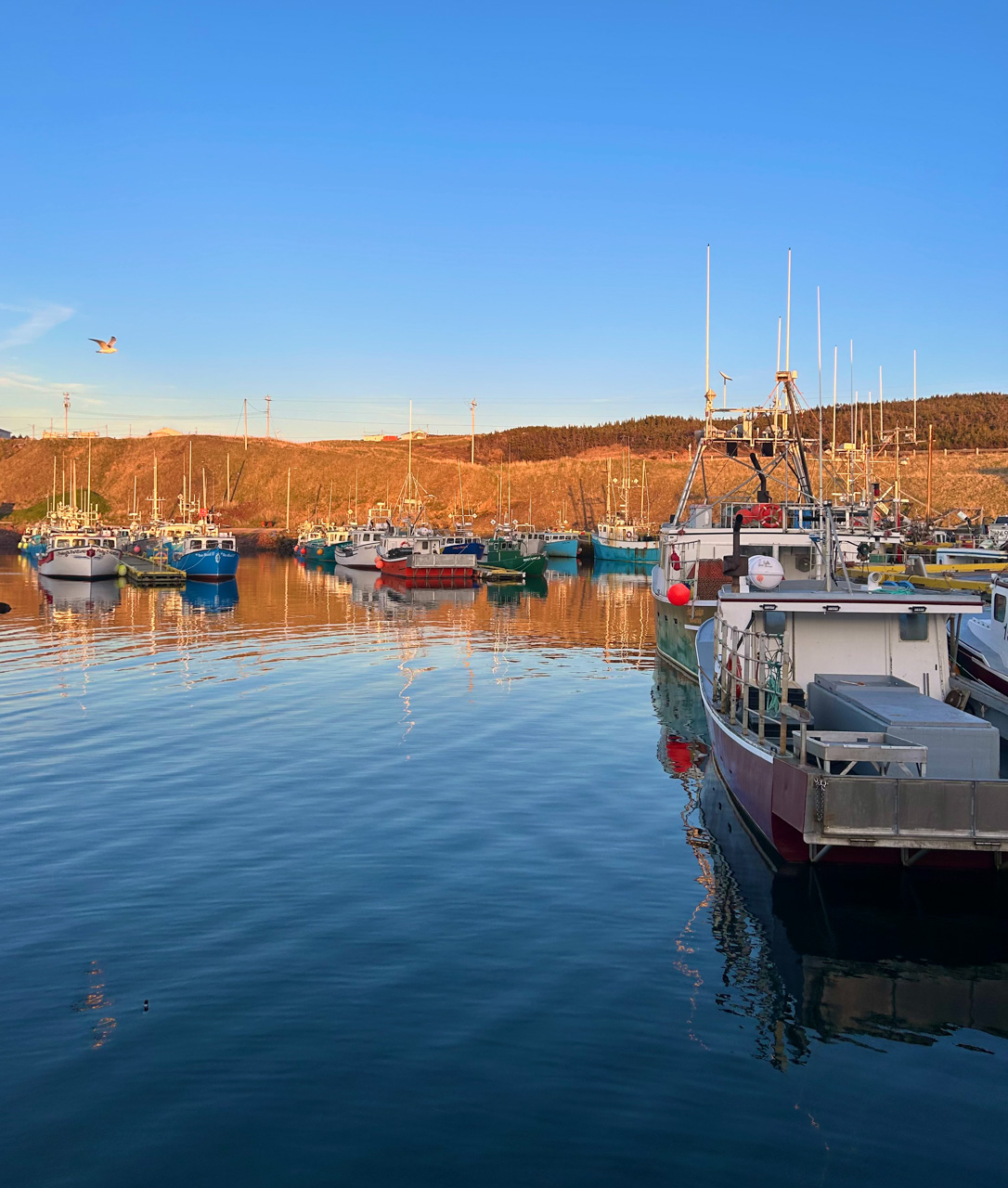
St. Bride’s © Logan Lalonde
Day 5: June 7 – Cape St. Mary’s, Whiteway Bay, Clode Sound
We awoke with the anticipation of seeing Newfoundland’s most iconic land-based seabird colony at Cape St. Mary’s. This location surpassed our expectations. From the info centre, to the windswept cliffside trail en route, to the ‘nature documentary’ esque experience at the colony itself, it was unforgettable. We sat on the epic protruding cliff edge overlooking the gargantuan colony of Northern Gannets, where the birds are completely at peace with humans coming to observe the perfect chaos. Not only were we treated to seeing 5000 gannets up close building their nests, but also with other nesting birds seemingly within an arm’s reach, including Common Murre, Black-legged Kittiwake, and Razorbill. We also saw our only Great Cormorants of the trip here as well as some massive Great Black-backed Gulls. Many incredible memories were made here during some pleasantly mild weather.
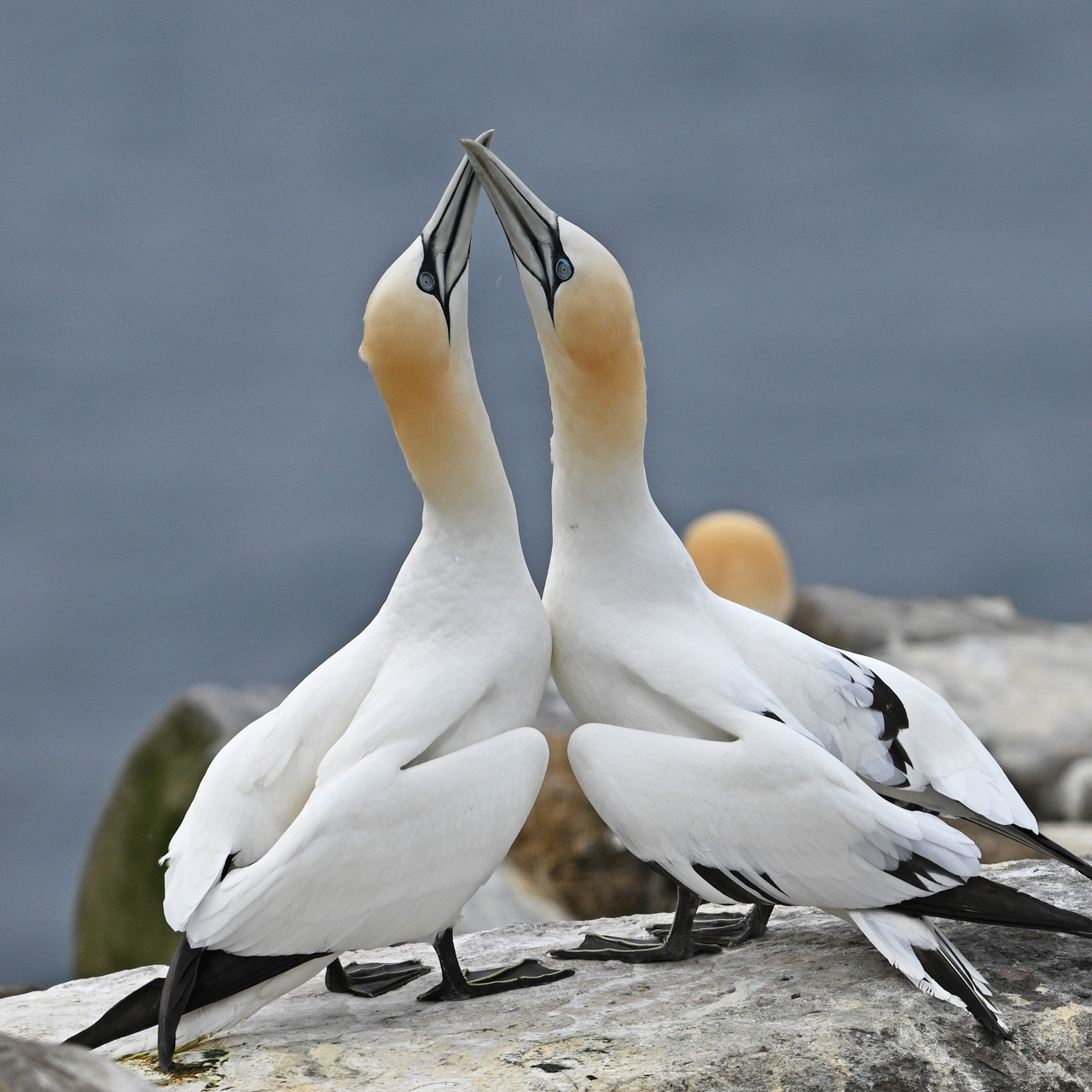
Northern Gannet Courtship Ritual © Myrna Pearman
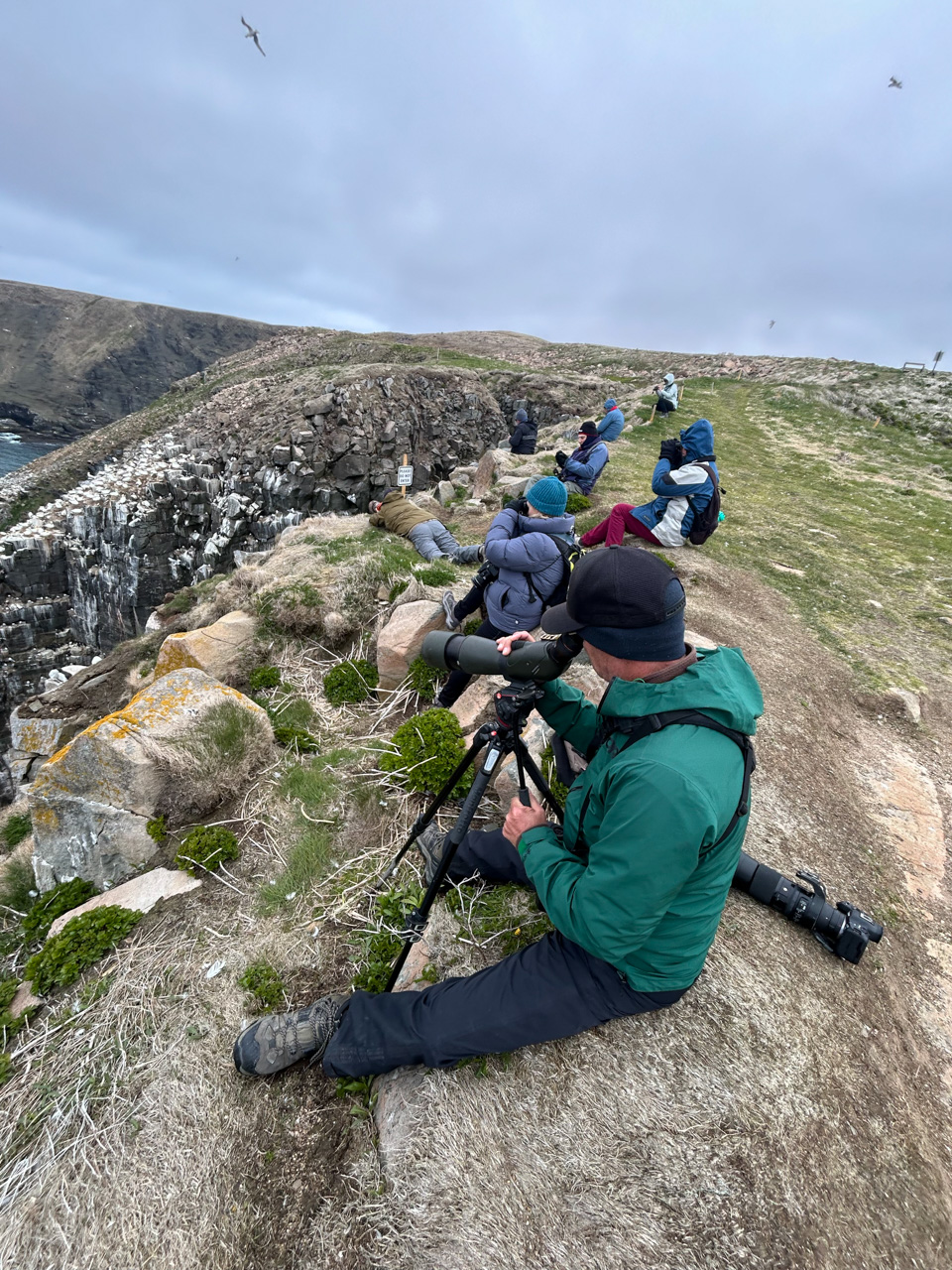
Enjoying the nesting seabirds © Logan Lalonde
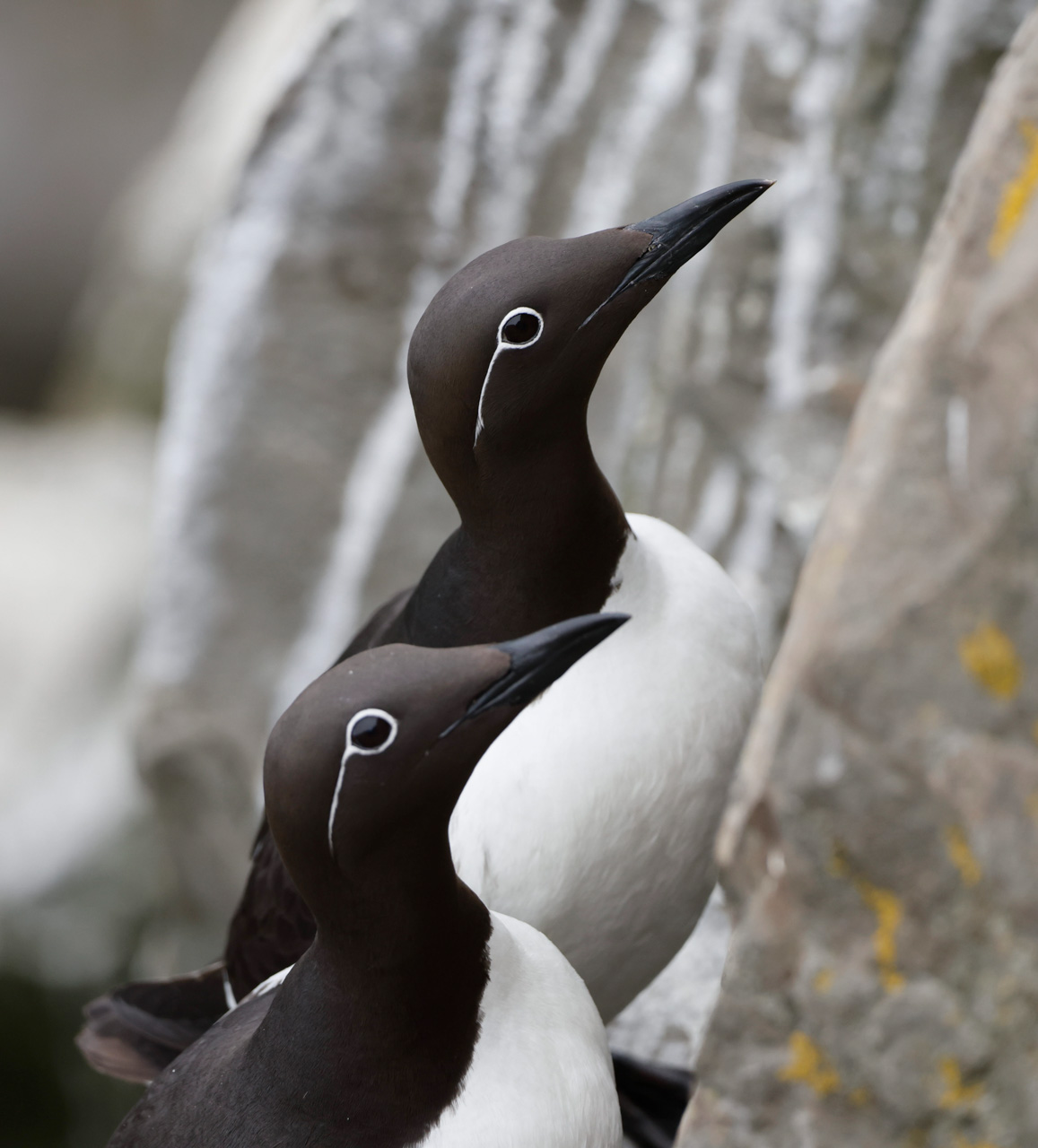
Common Murres (bridled form) © Vernon Buckle
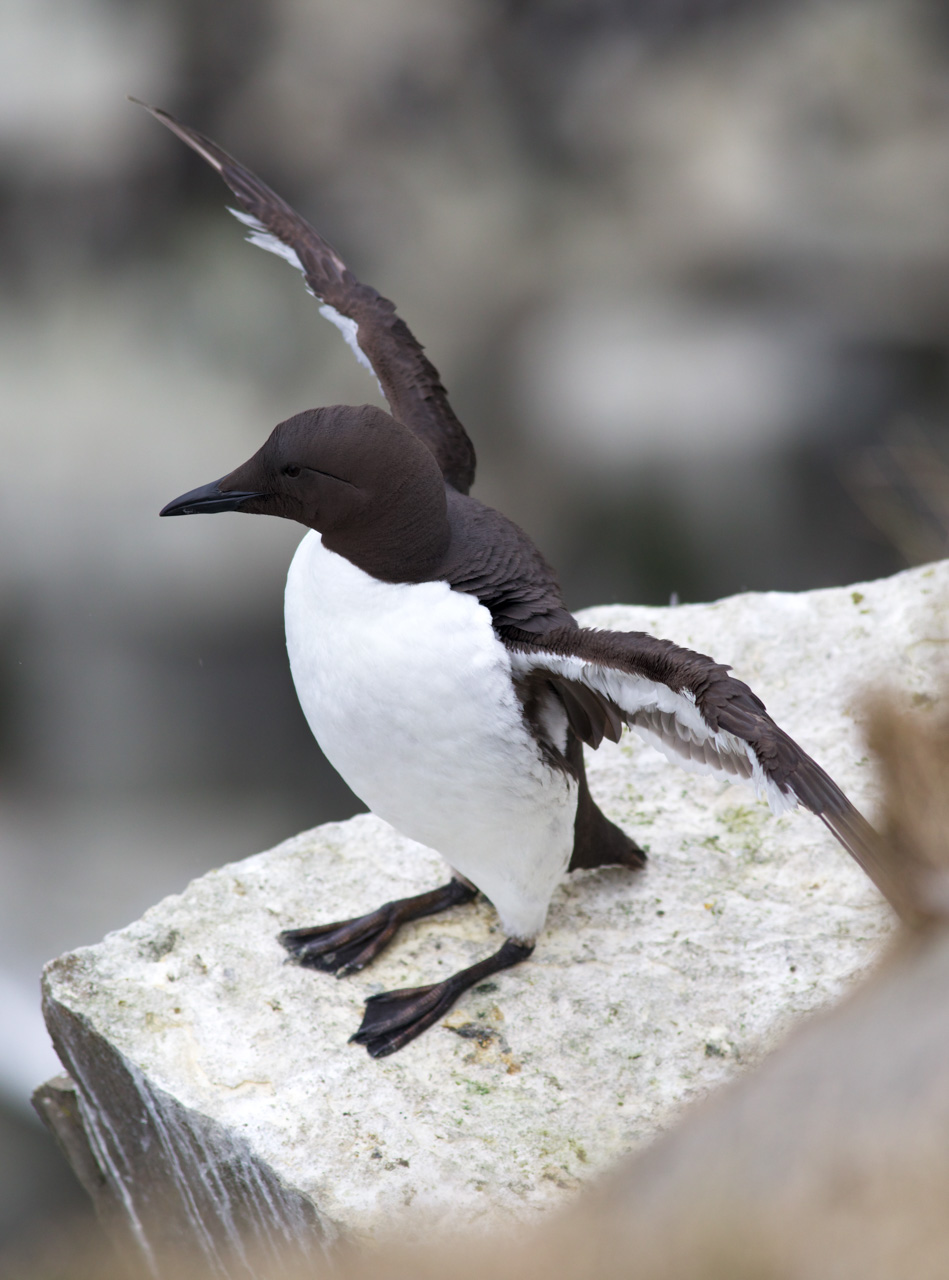
Common Murre © Logan Lalonde
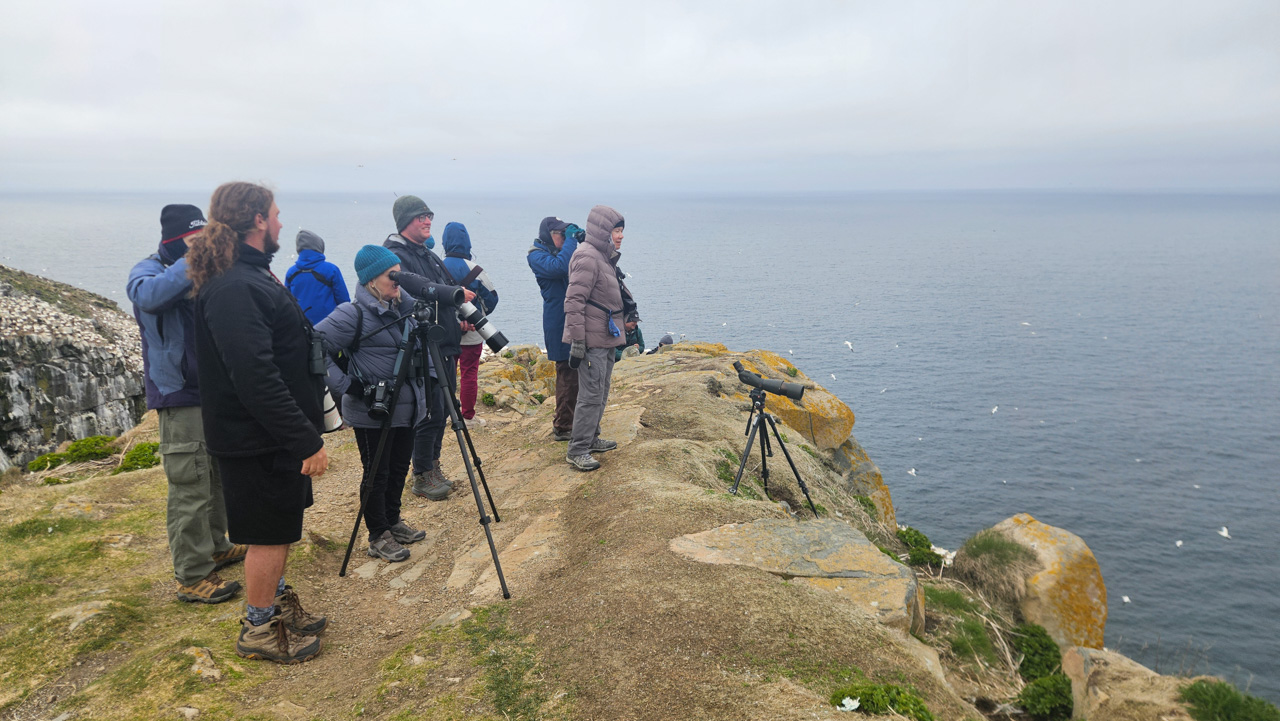
Studying Great vs Double-crested Cormorants © Myrna Pearman
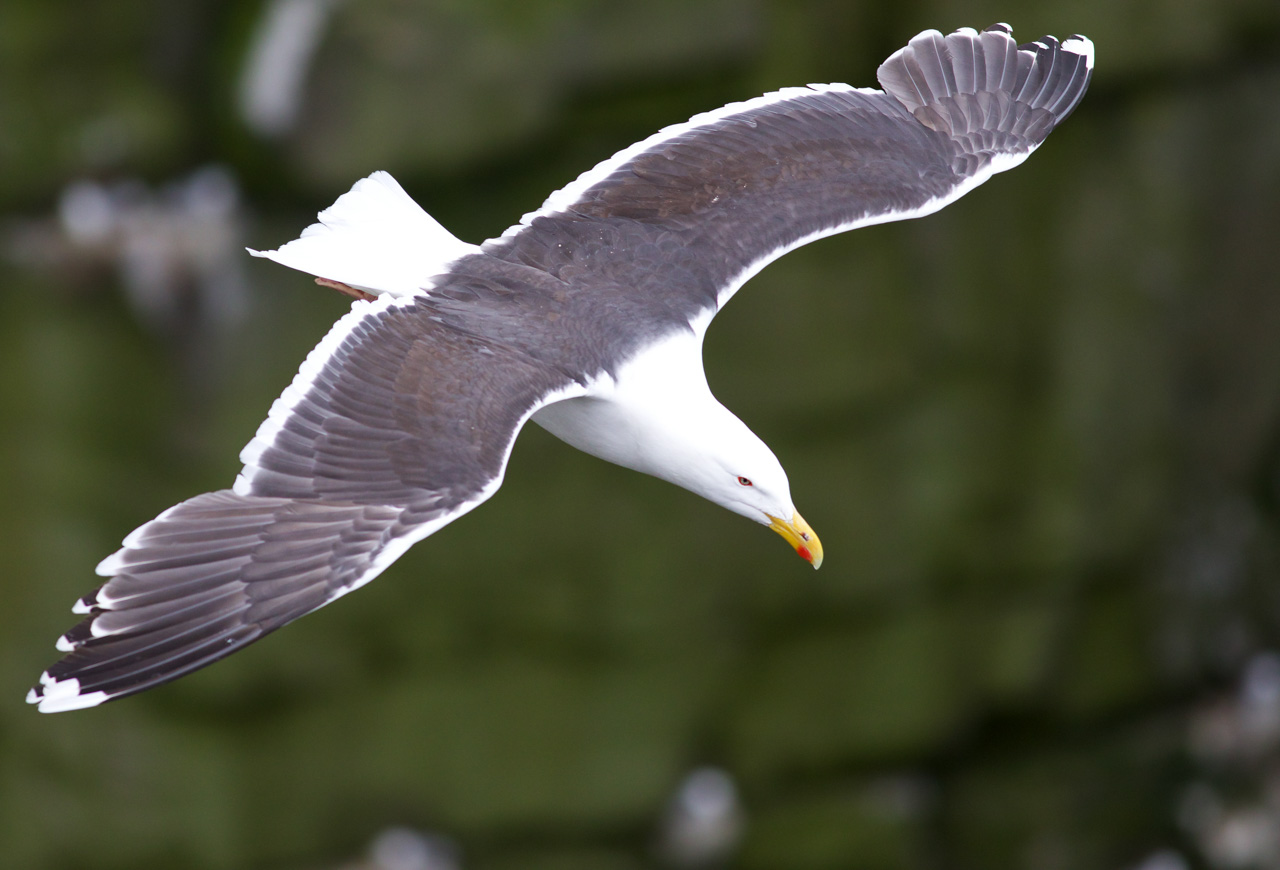
Great Black-backed Gull © Logan Lalonde
Many of us bought some sleek merchandise from the info centre before we left the area for good. It was nearly time to say goodbye to the Avalon Peninsula, but not before giving the Stellar’s Sea-Eagle location in Whiteway an attempt. Although we did not luck into seeing this long-staying rarity, we saw many forest birds here, including a male Black-backed Woodpecker that one of our participants was fortunate enough to have flown right in front of her! The other eagle the Bald Eagle put on a show on our way out; there was a majestic adult that sat by the road in a tree for as long as we wanted to view it.
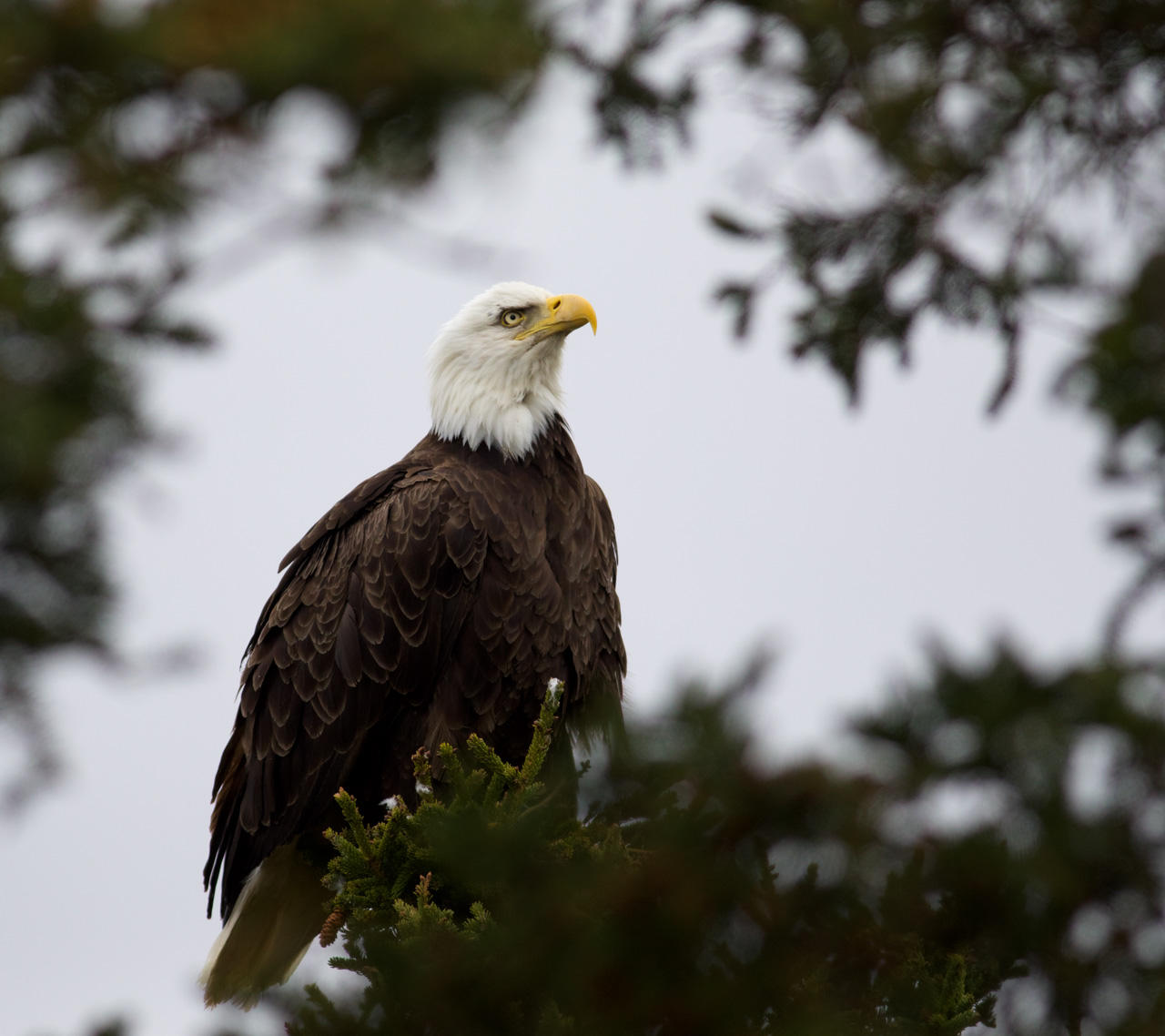
Bald Eagle © Logan Lalonde
We checked our clocks and knew it was time to depart and head to the epic Terra Nova National Park. We arrived in Clode Sound near dusk and enjoyed a tasty dinner at its restaurant. As night set in, we had the privilege of listening to Myrna talk about her life story, passions, and inspirational legacy. This presentation brought a lot of emotion out of our group, and it was a bonding experience for us all.
Day 6: June 8 – Terra Nova National Park, Clode Sound, Bonavista
Now even closer as a group, the next day we woke up with excitement to explore Terra Nova. However, the clouds had finally opened up during the night and it was not letting up. Regardless, we headed out to the Ochre Hill loop trail, where thankfully the precipitation eased up a little. Along this trail, we saw many boreal breeders and lots of wonderful plant species as well. A cooperative Hermit Thrush was quite curious of our van and walked up to it as we departed, resulting in phenomenal looks.
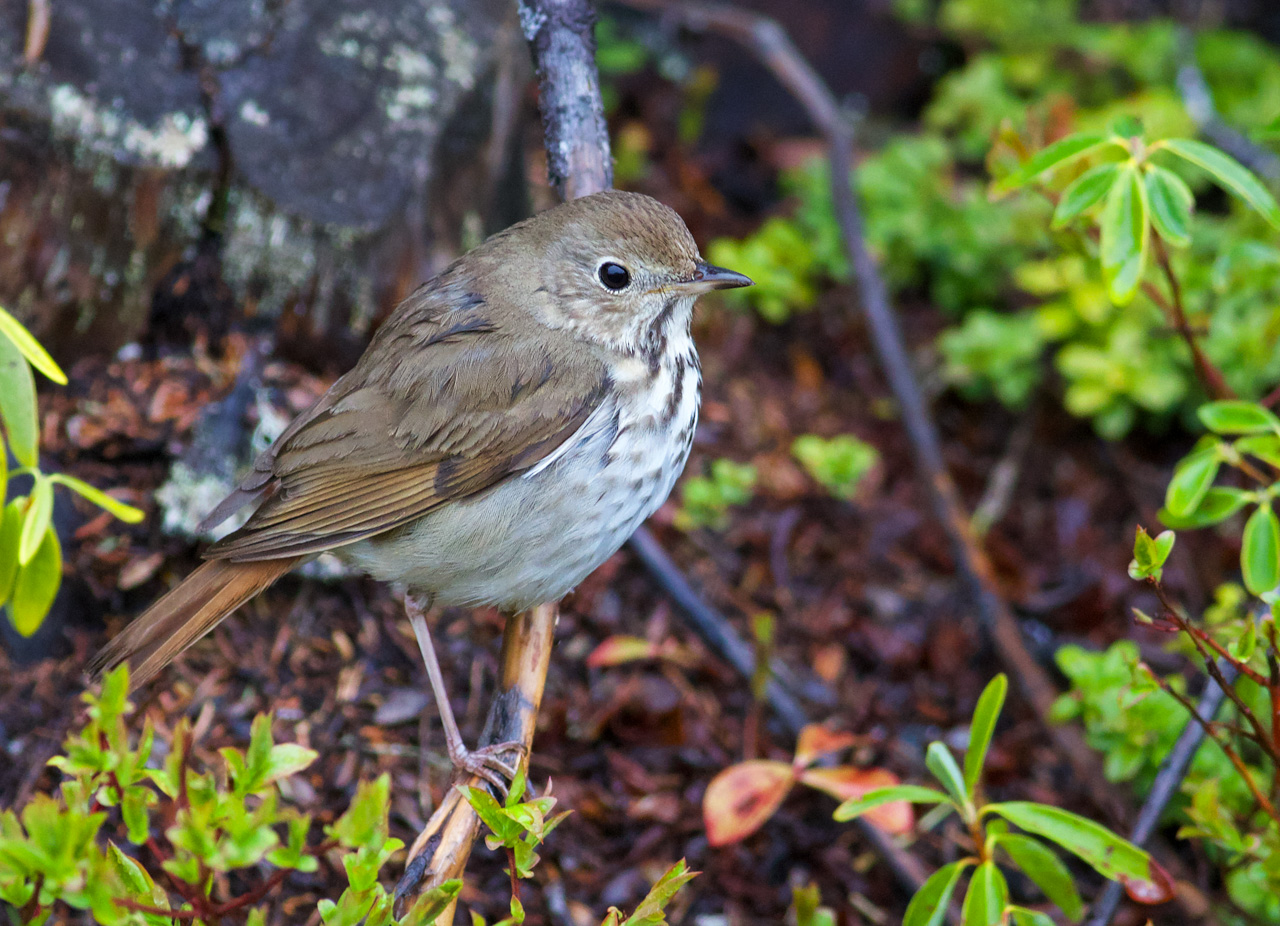
Hermit Thrush © Logan Lalonde
We popped back to the hotel to check for more deciduous-loving bird species, as the ring of broadleaf trees surrounding the property is the only patch of its kind for many kilometres. This proved to be an excellent decision. The group was treated to a cloud of warblers descending upon the maples and aspens in this area. Magnolia, Black-and-white, Yellow-rumped, Black-throated Green, and many more were all over the canopies due to the low pressure system forcing the birds down. Downy Woodpecker and Wilson’s Snipe were new additions to the trip list. The best highlight from this stop was waiting for us, keeping to themselves and quietly eating in a cherry tree a pair of stunning Pine Grosbeaks. They had no fear of us and in fact seemed happy to share their feeding time with us.
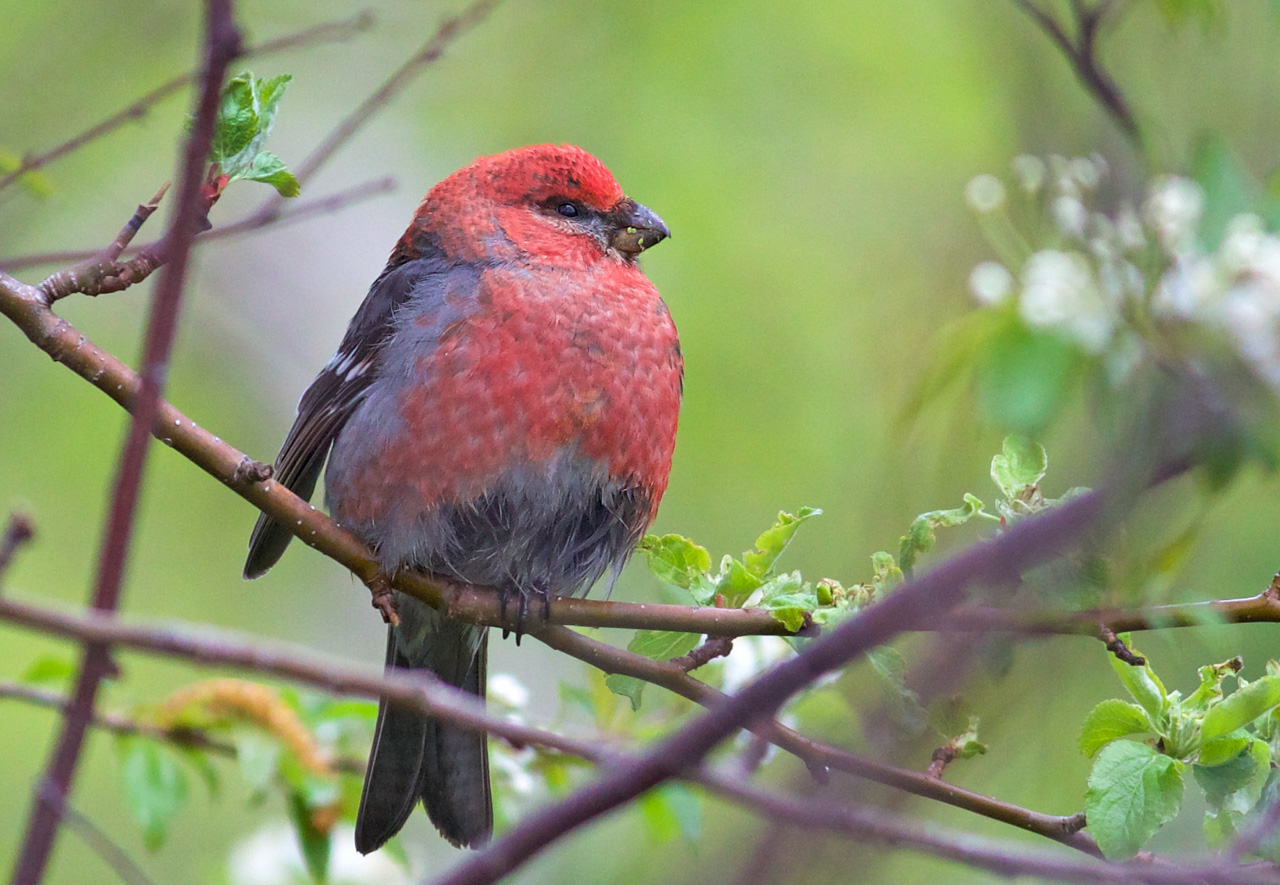
Pine Grosbeak © Logan Lalonde
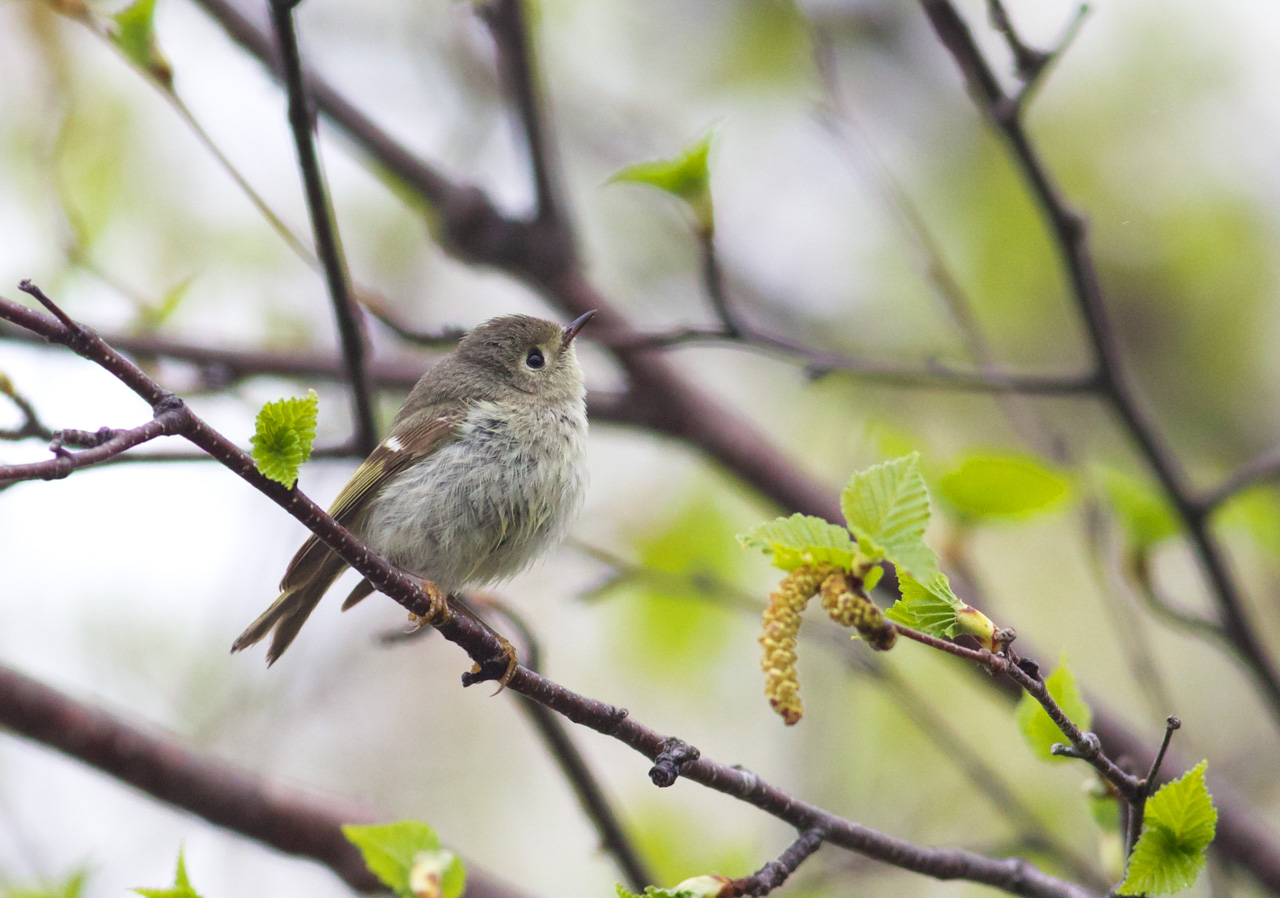
Ruby-crowned Kinglet © Logan Lalonde
From here, we had lunch in a pretty hall within the Terra Nova Campground and headed to the Visitor’s Centre. The Goowiddy Path was our next hike, and we did not have to wait long for the songbird action to continue. The overnight heavy rain, winds from the south, and slight lifting of the wind and rain throughout the day resulted in a feeding frenzy for migrants. One half of the group went further up the path and the other focused on the lake edge, with both groups witnessing incredible amounts of warblers and other woodland jewels. American Redstarts were everywhere, Yellow-bellied Flycatchers were flycatching all over the beach, and finches such as Pine Siskin and White-winged Crossbill were active here. In total we had 30 species of bird within the first 200 metres of the trail, and 8 species of warbler.
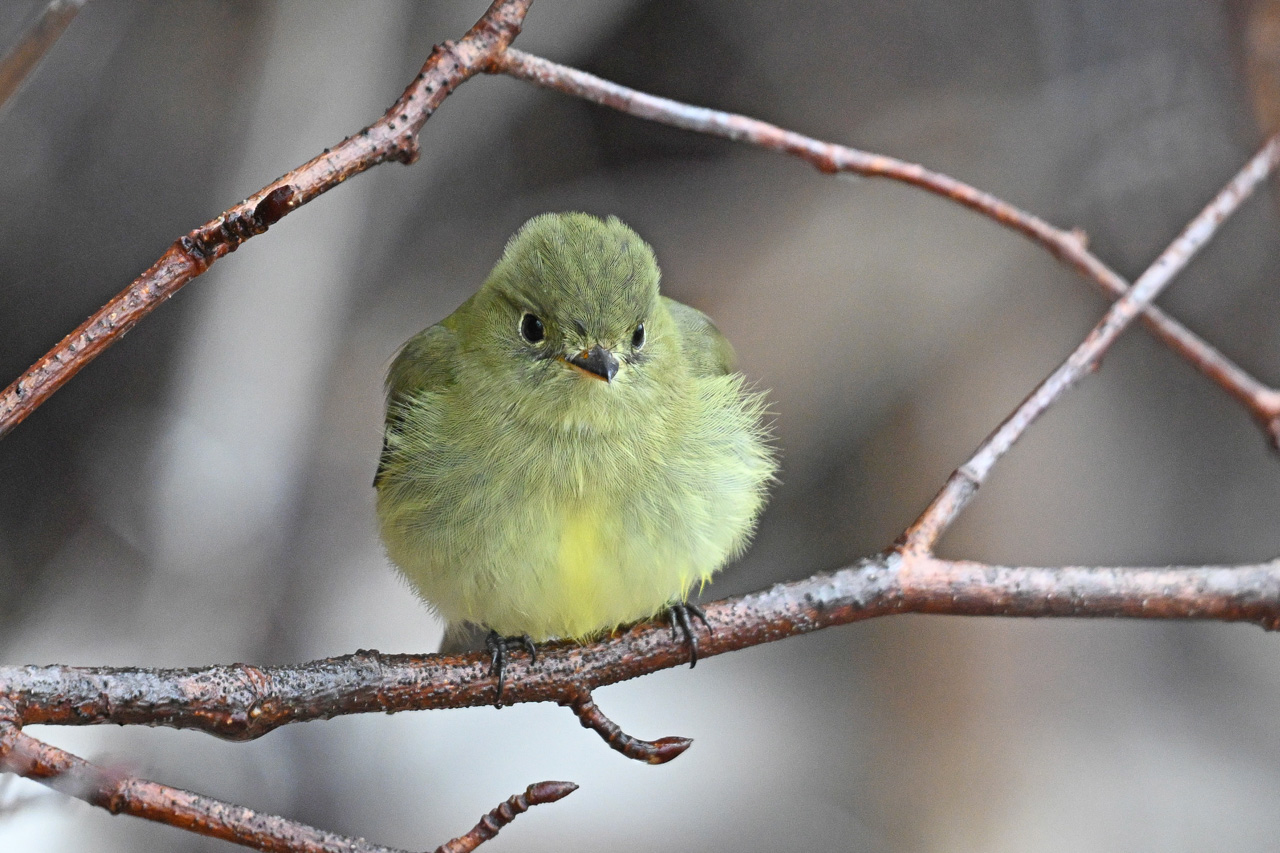
Yellow-bellied Flycatcher © Myrna Pearman
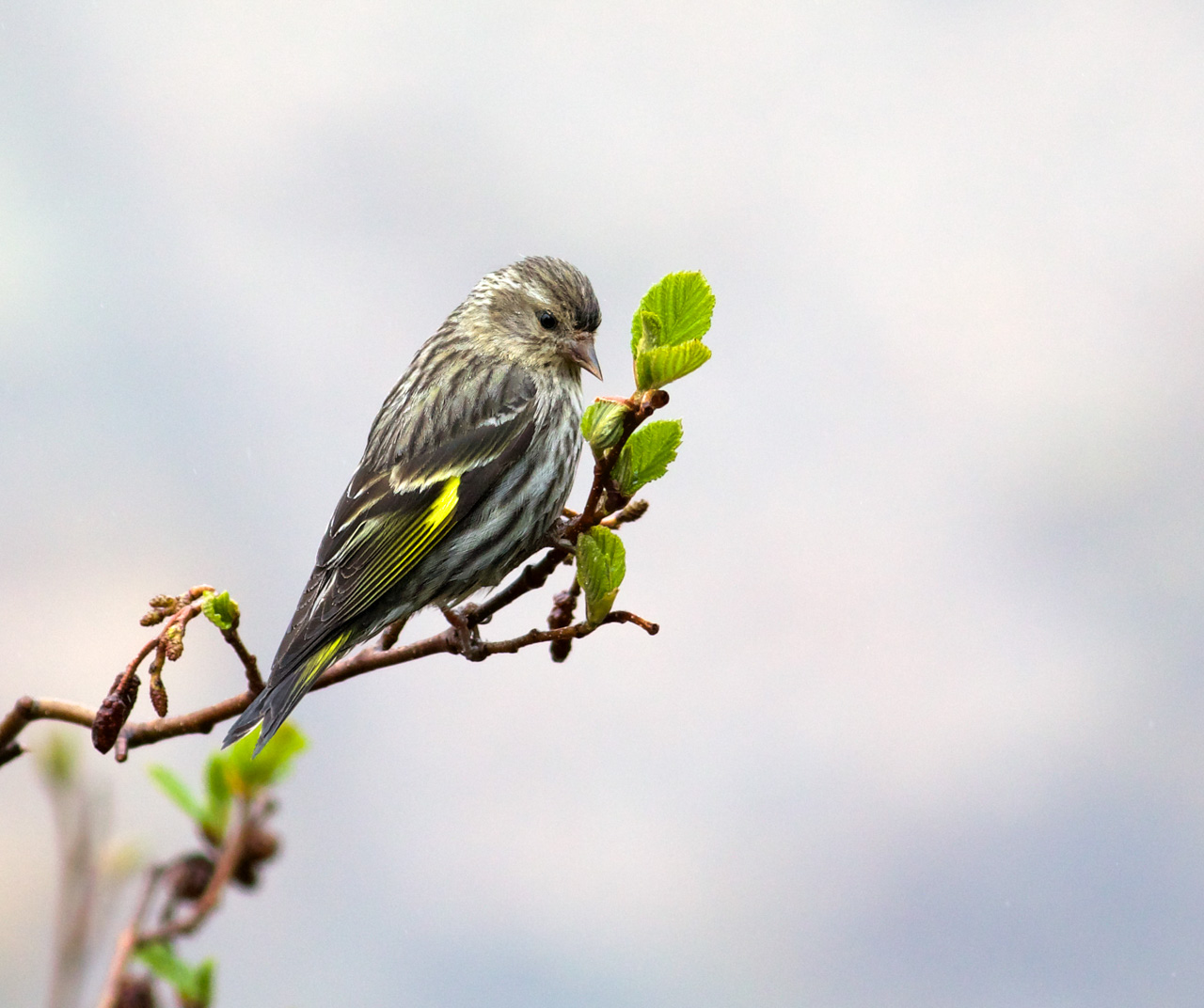
Pine Siskin © Logan Lalonde

White-throated Sparrow © Logan Lalonde
A nesting spot for both Spotted Sandpiper and Greater Yellowlegs was discovered just up the shore and they provided close initial looks for the group that went further up the trail. The pair of yellowlegs eventually flew right to the lower group and fed around us like a scene out of CanGEO.

Greater Yellowlegs © Logan Lalonde
As if by magic, the rain returned to torrential levels nearly as soon as we started driving out of the national park. It was now our moment to drive the rainy highways to the alluring town of Bonavista for several days of breathtaking moments back to back. Dinner was iconic: Nanny’s Root Cellar supplied steeped cultural history, sensational company, and great food. After this, it was time to rest up and get prepared for another eventful day.
Day 7: June 9 – Trinity, Bonavista (Town & Cape)
When the morning dawned, we dashed to the Trinity boat dock after breakfast to commence our zodiac adventure. Every facet of this morning was a blast. From these photos, you can see how excited we were before we even left!
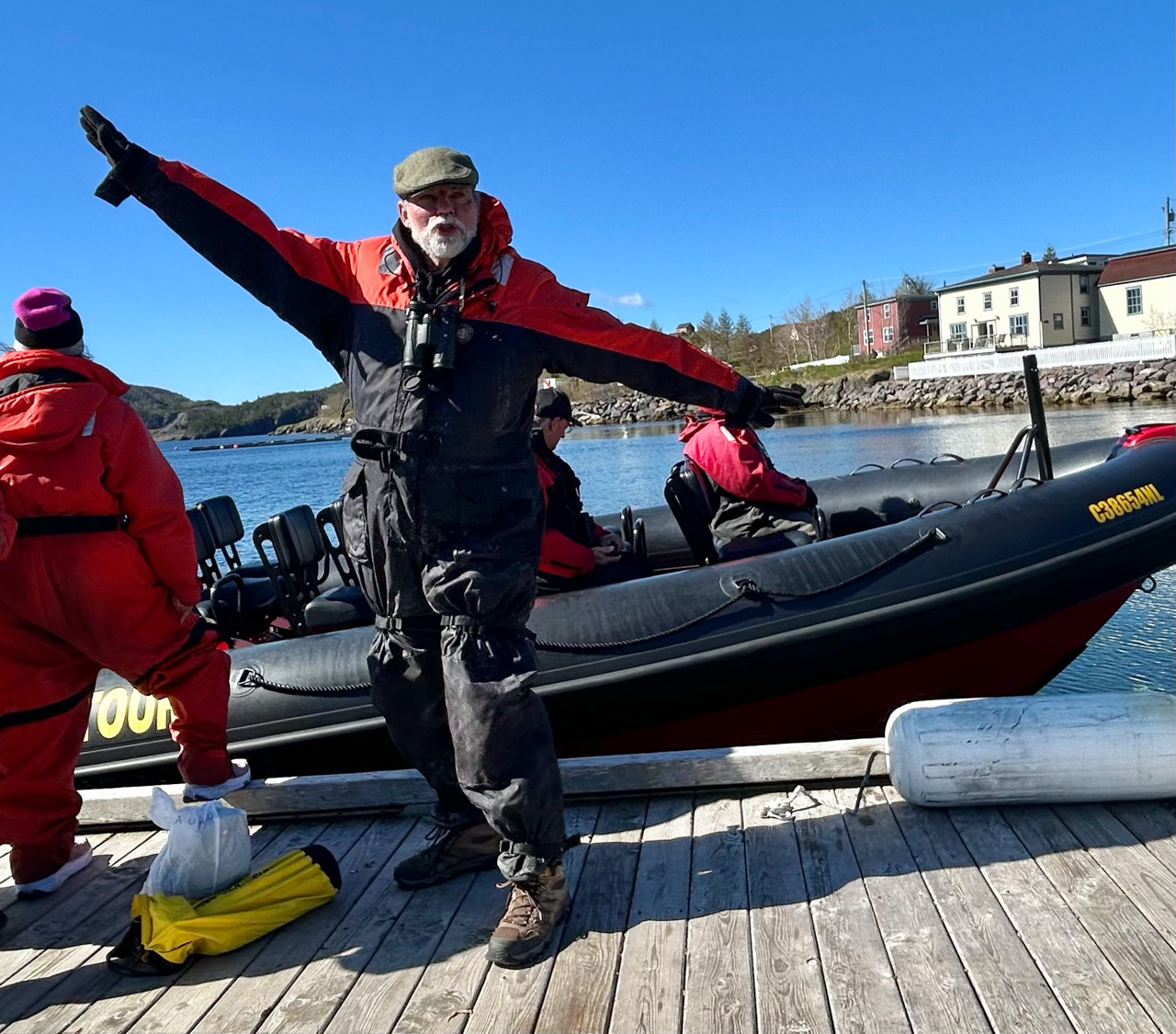
Ready for departure! © Logan Lalonde
We saw countless geological and scenic landscapes that captured the imagination, visited coves that used to contain old settlements, and had great fun zipping around on the zodiacs with the skippers sharing local knowledge everywhere we went.
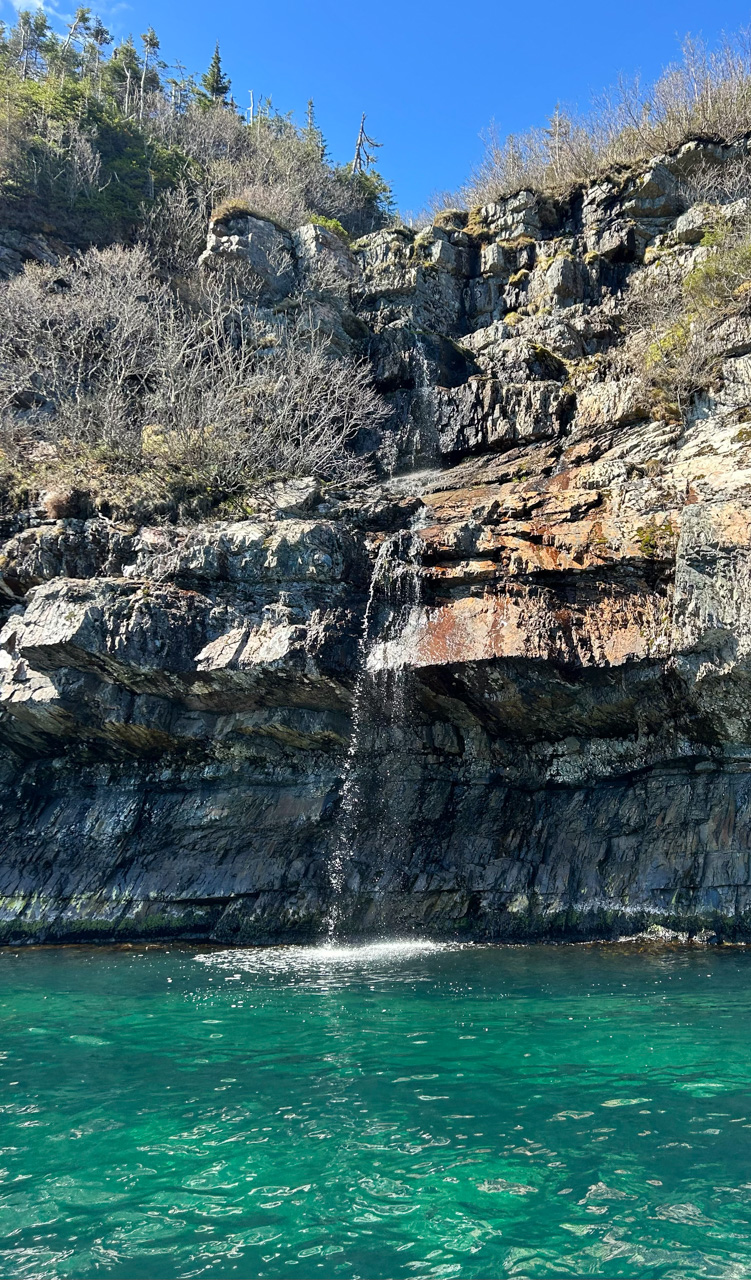
Mini-waterfall © Logan Lalonde
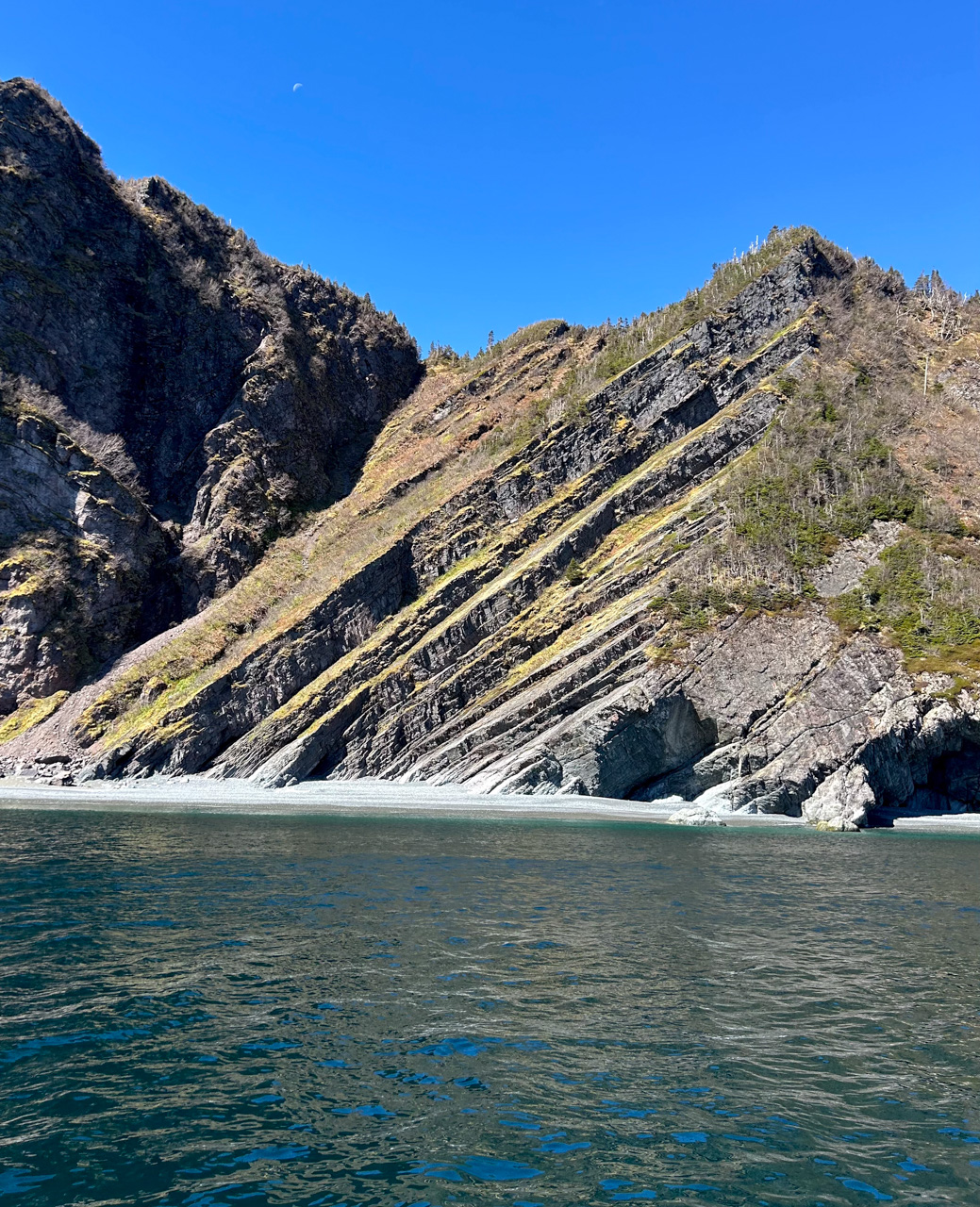
Diagonal Sedimentary Strata © Logan Lalonde

Cave exploration by boat! © Logan Lalonde
Birds were all over – most conspicuously Bald Eagles – 15 of them! The forest close by was filled with birdsong, with Northern Waterthrush being the most abundant. Our group was split up into two boats, and each had a special moment. One boat was lucky enough to have a Humpback Whale surface close to the boat repeatedly, and the other had a roving flock of Canada Jays fly over the boat down one of the deepest coves. This was a target bird for many on the trip.
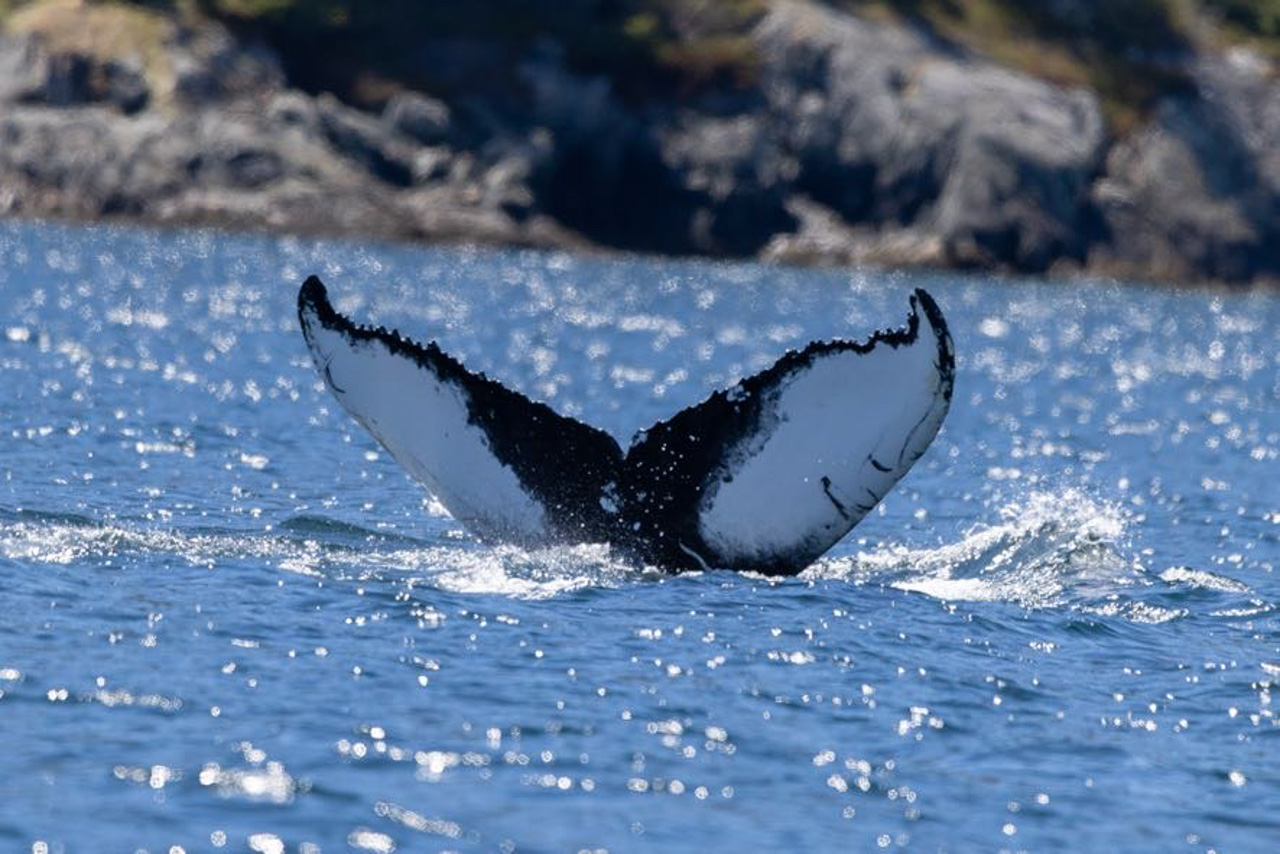
Humpback Whale © Vernon Buckle
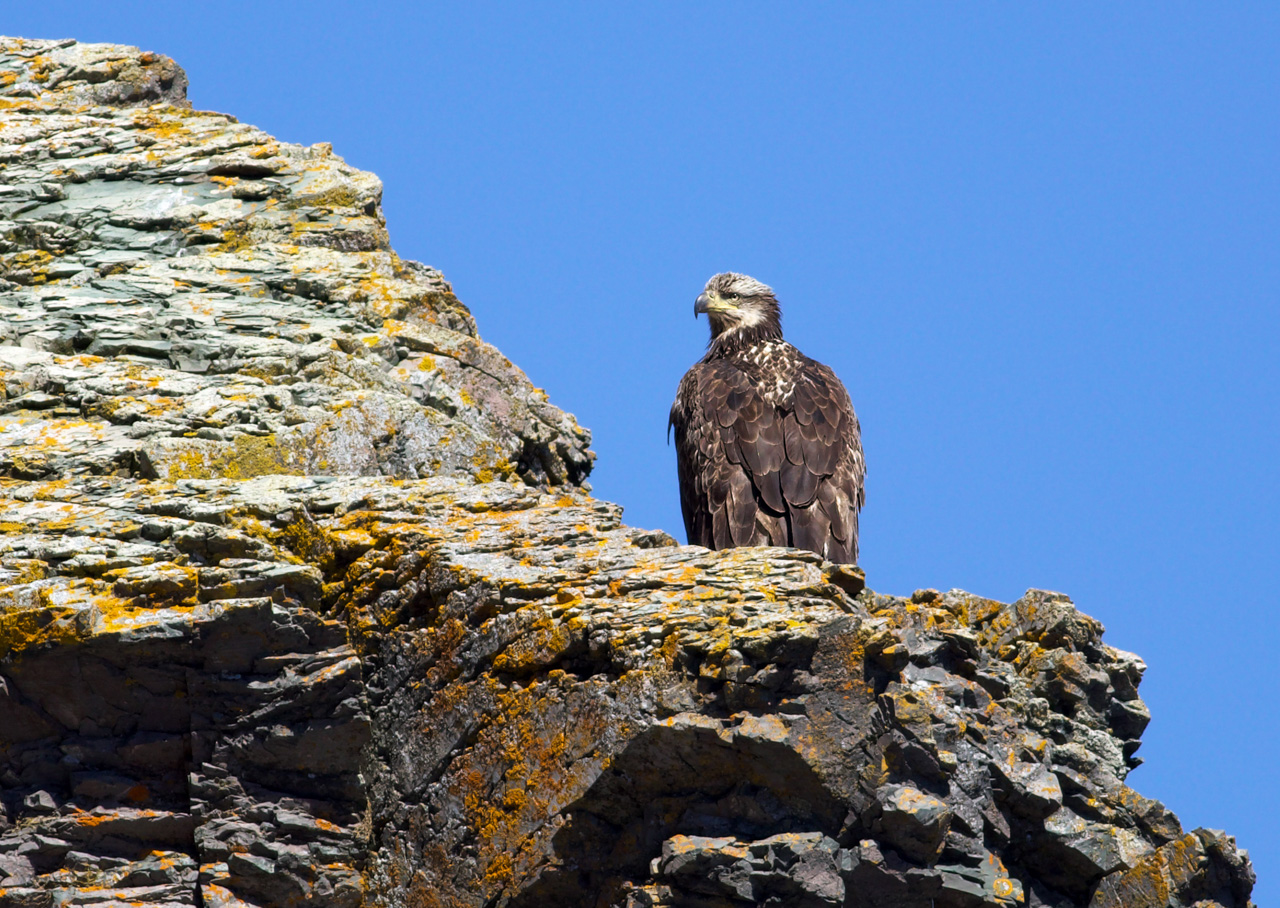
Bald Eagle (immature) © Logan Lalonde
On this zodiac trip, we anticipated viewing another seabird colony up close, but the major presence of eagles dissuaded most of them from landing on the island. So, we turned around and zoomed back to the harbour with tea, hot chocolate, muffins, and coffee waiting for us at the visitor’s centre.
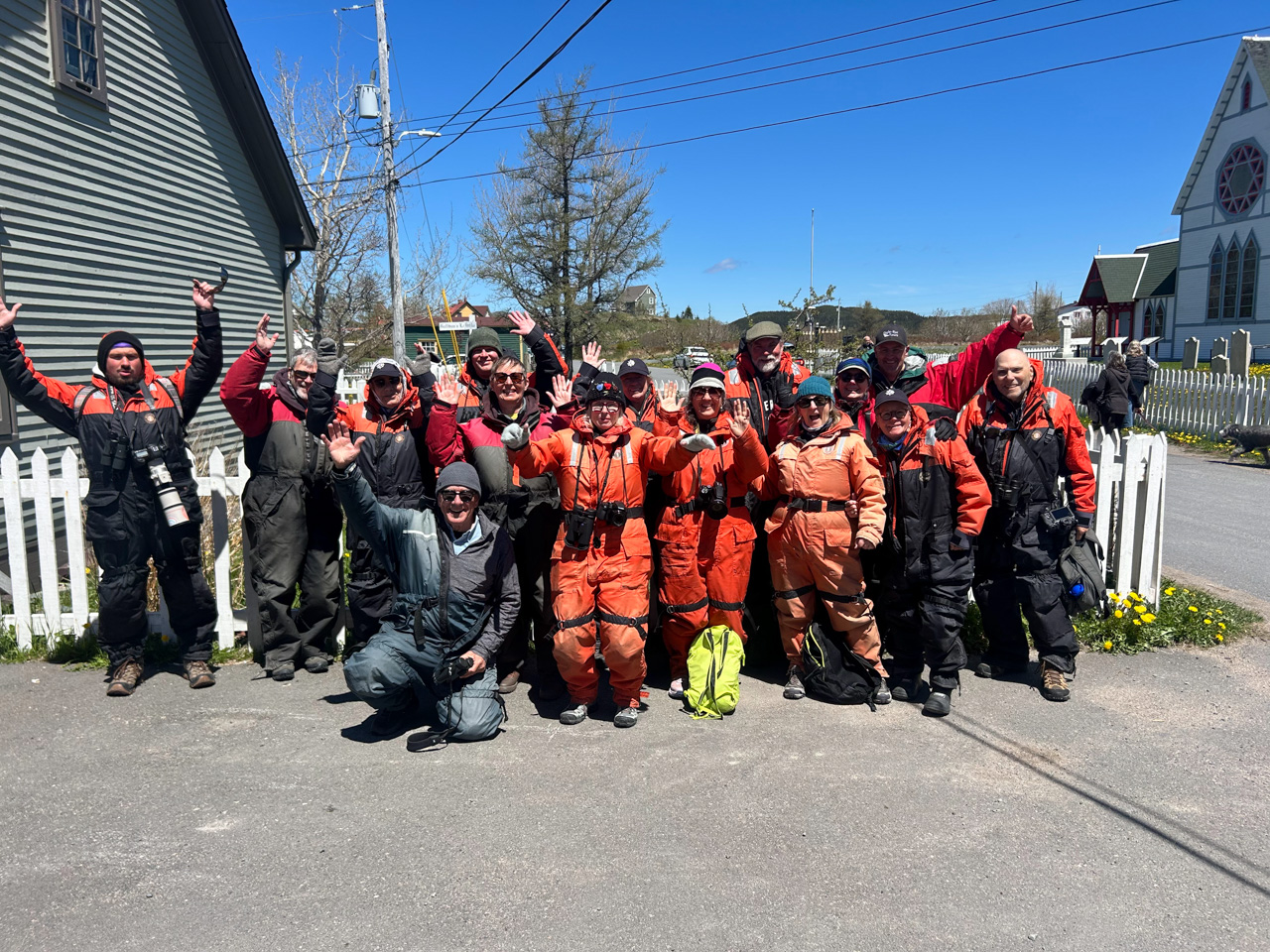
Post-disembarkment celebration © Myrna Pearman
Our lunch at Mifflin’s Tea House was one of our best meals of the entire trip, with ornate, quaint aesthetics, local Newfoundland food specialities, and local teas and jams to buy. Once we were officially refuelled after the events of the morning, we explored two local ponds in Bonavista – Beaver and Old Day’s. Beaver Pond in particular was a beautiful spot, and we walked along the causeway that juts straight out into the large marshy ecosystem. Due to this, we got fantastic photos of its denizens, including Ring-necked Duck, American Wigeon, Northern Pintail, and Northern Yellow Warbler.
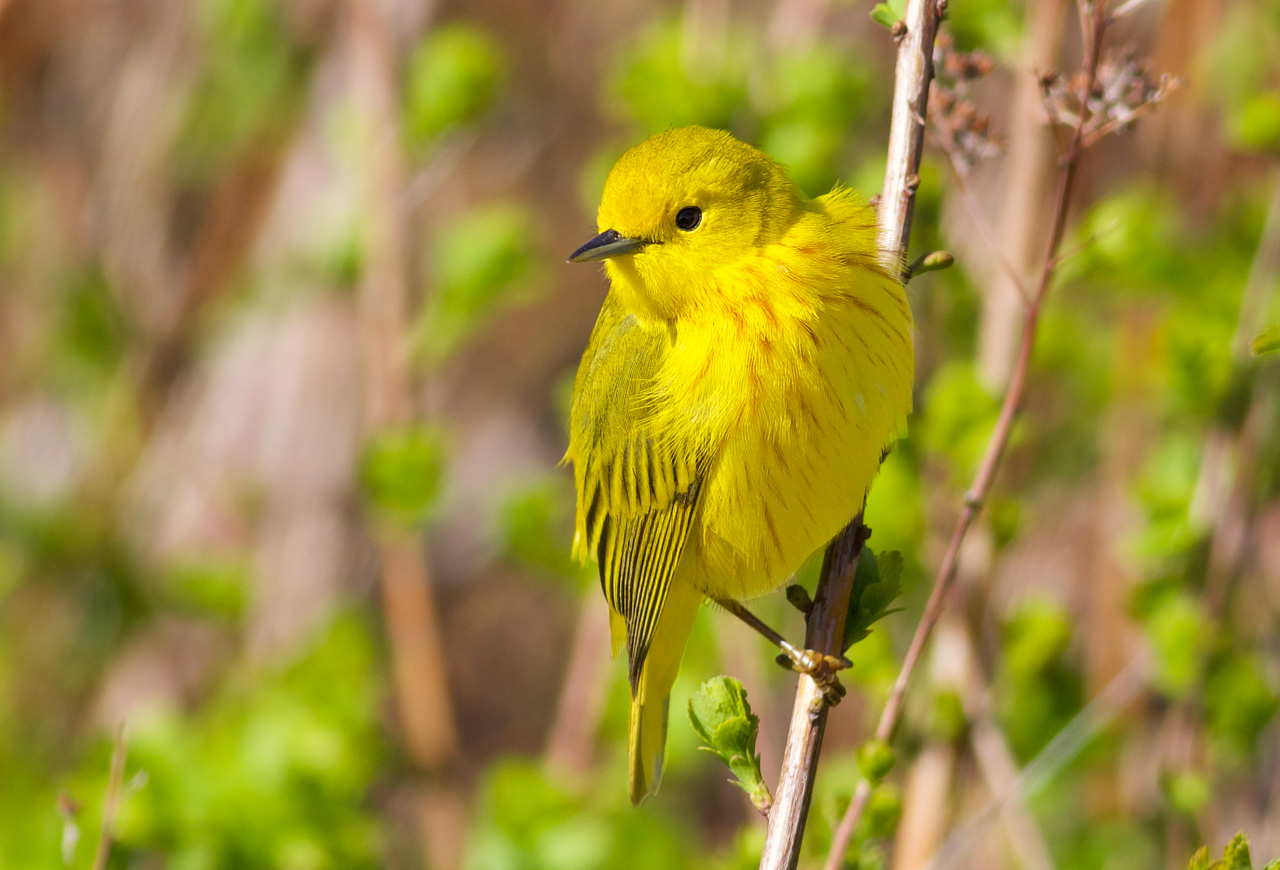
Northern Yellow Warbler © Logan Lalonde
Old Day’s Pond was not to be outdone, as it boasted an uncommon Bonaparte’s Gull wheeling around in circles feeding near some Common Terns. We travelled to Cape Bonavista both before and after a solid dinner at Ragged Rocks Brewery. After dinner was spent observing the sunset, and before was used to explore the Cape itself and its gorgeous scenery and birds. This day was a resounding success.
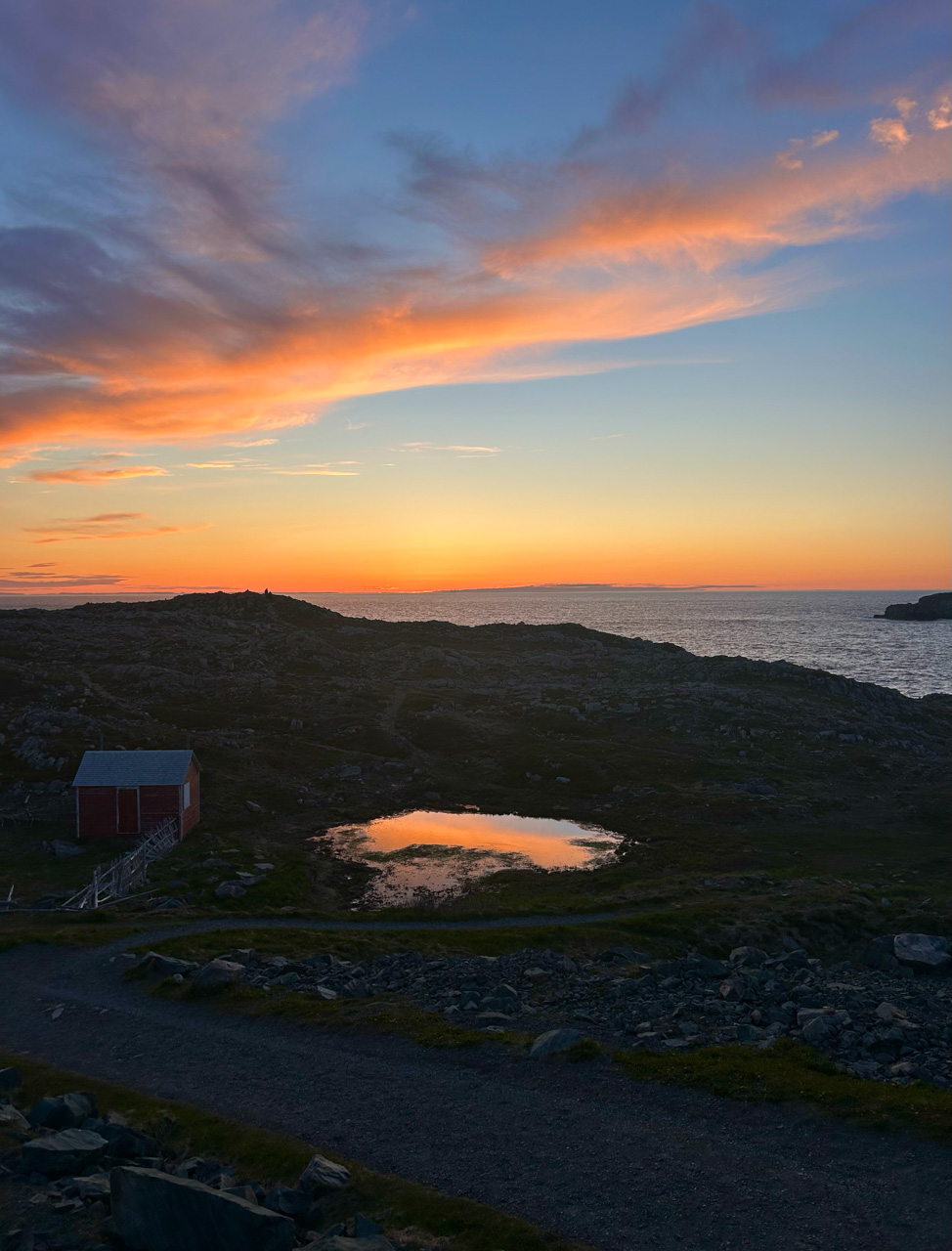
Cape Bonavista sunset © Logan Lalonde
Day 8: June 10 – Elliston, Roadtrip back to St. Johns
As dawn broke on our last day in Newfoundland, it felt bittersweet for all of us. In the early morning, we explored Elliston and its unique ‘walk-up’ Atlantic Puffin colony, where this species often comes shockingly close. They did not walk over our feet, but we still got very close to them as they bred on the nearby knolls. Savannah Sparrows showed off their camouflage as they walked around at our feet, Black-legged Kittiwakes were hurriedly gathering nesting material, and Black Guillemot pairs were courting and exhibiting all kinds of interesting behaviours – much to our delight – right below us.
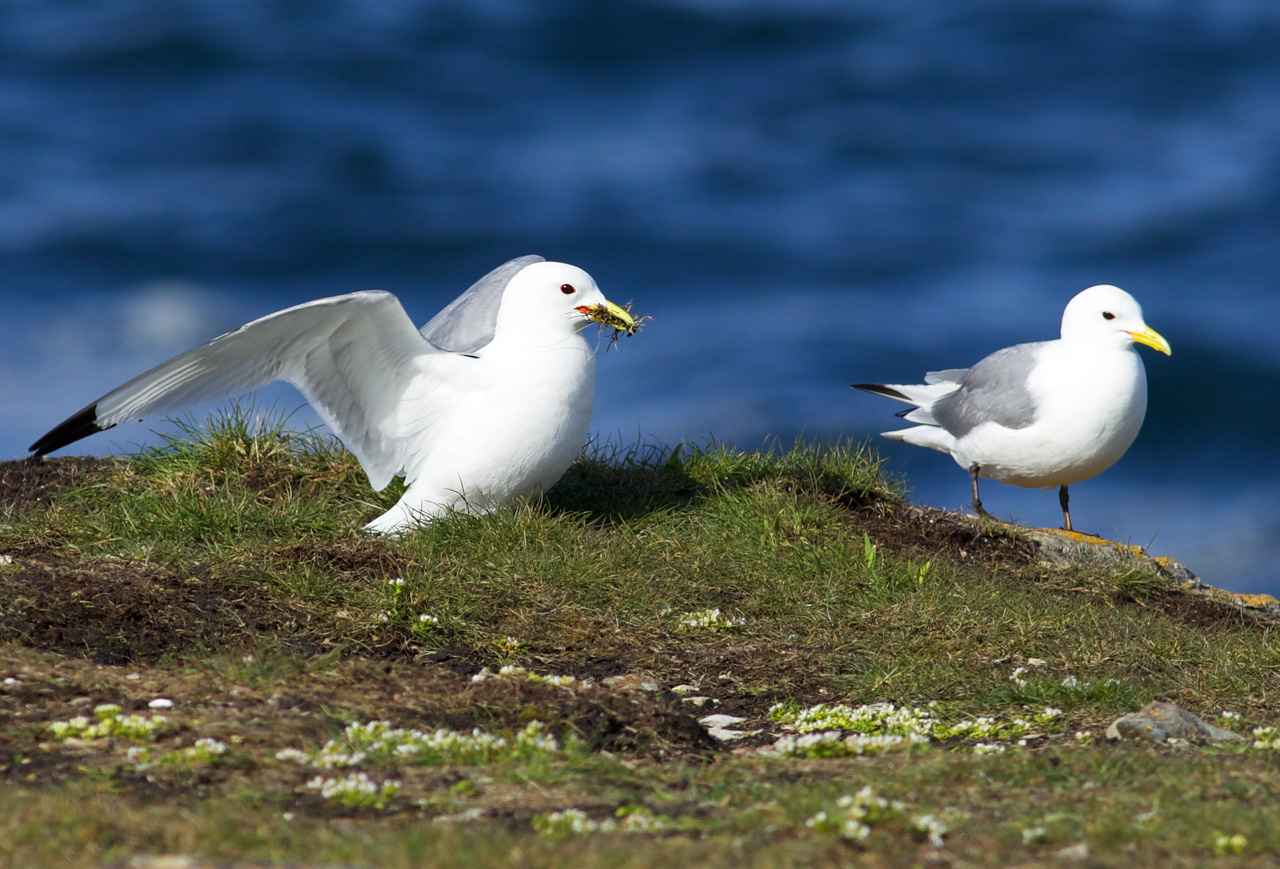
Black-legged Kittiwakes © Logan Lalonde
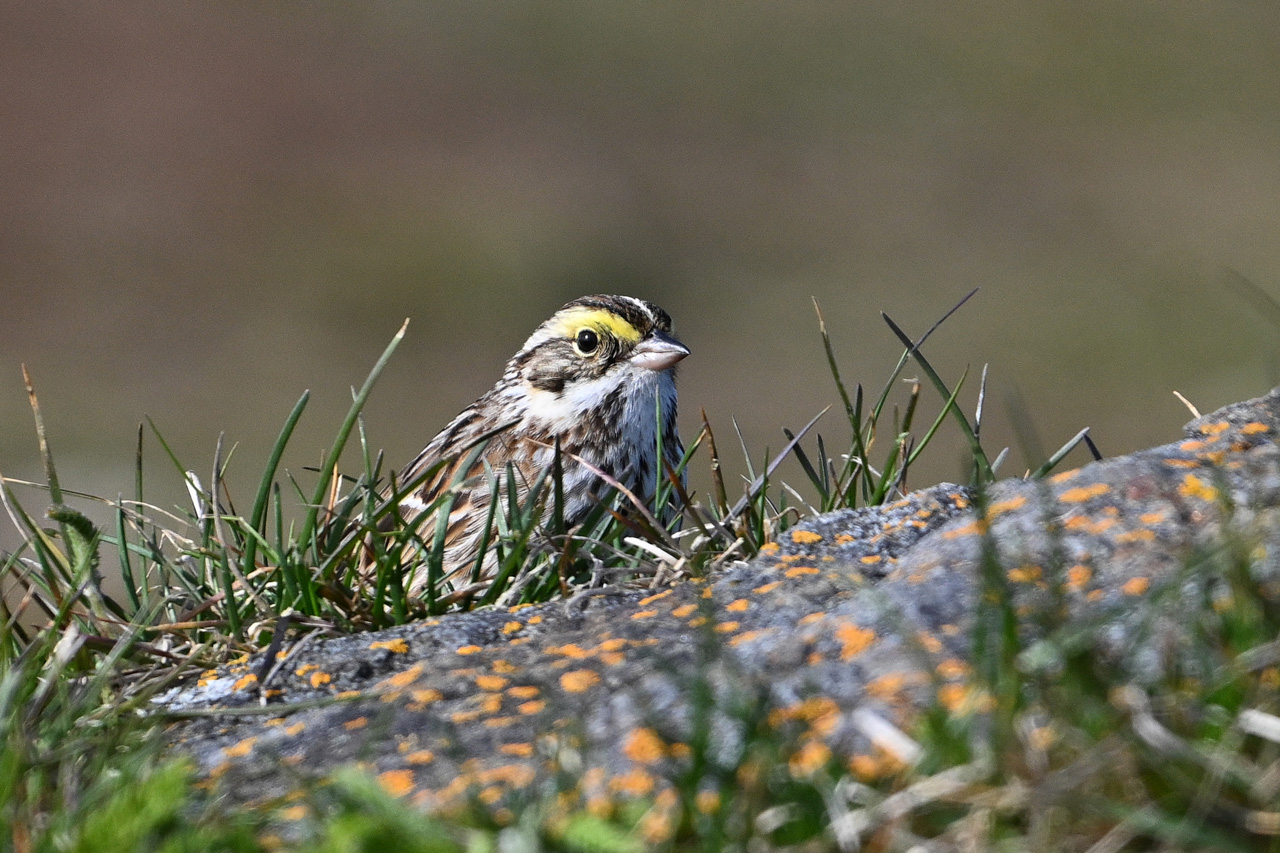
Savannah Sparrow © Myrna Pearman
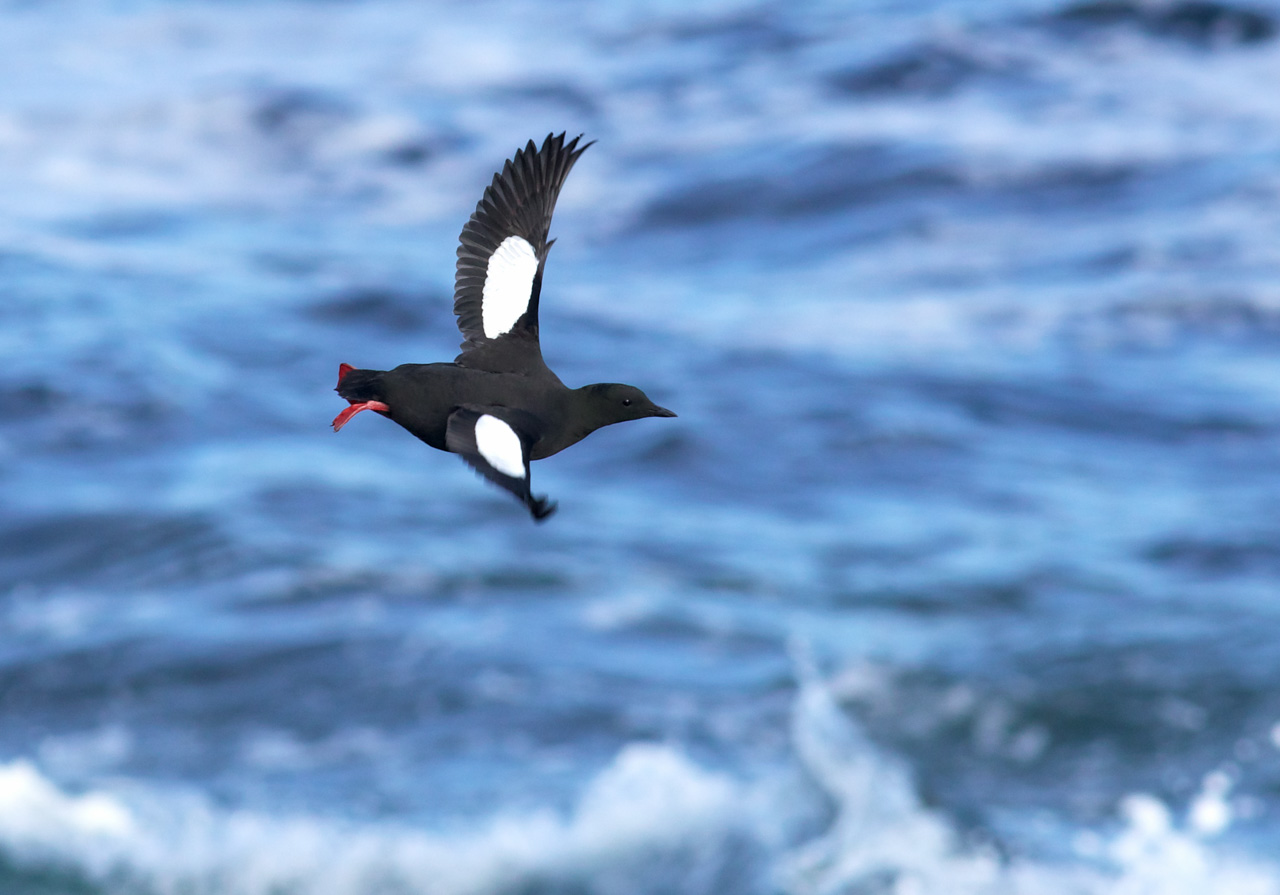
Black Guillemot
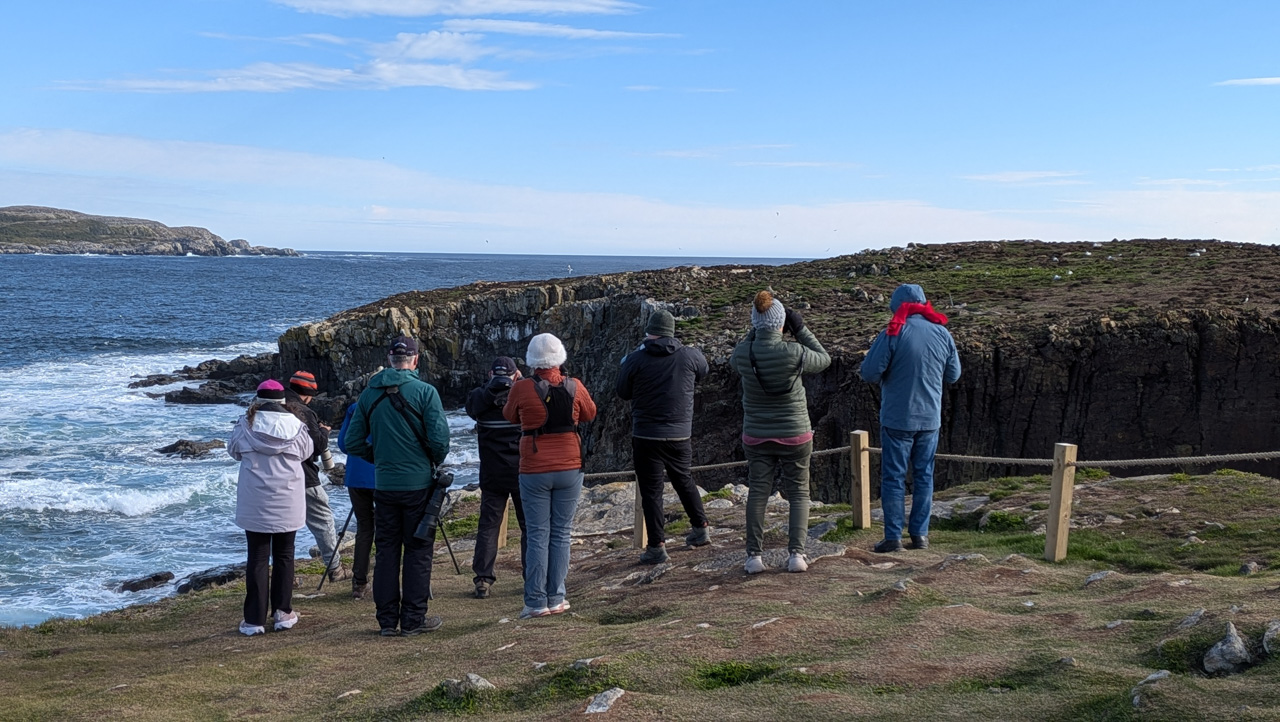
Watching the puffin colony © Susan Fisher
We dashed momentarily to The Dungeons UNESCO Geosite to look at the spectacle before embarking on our long trek back to St. Johns.
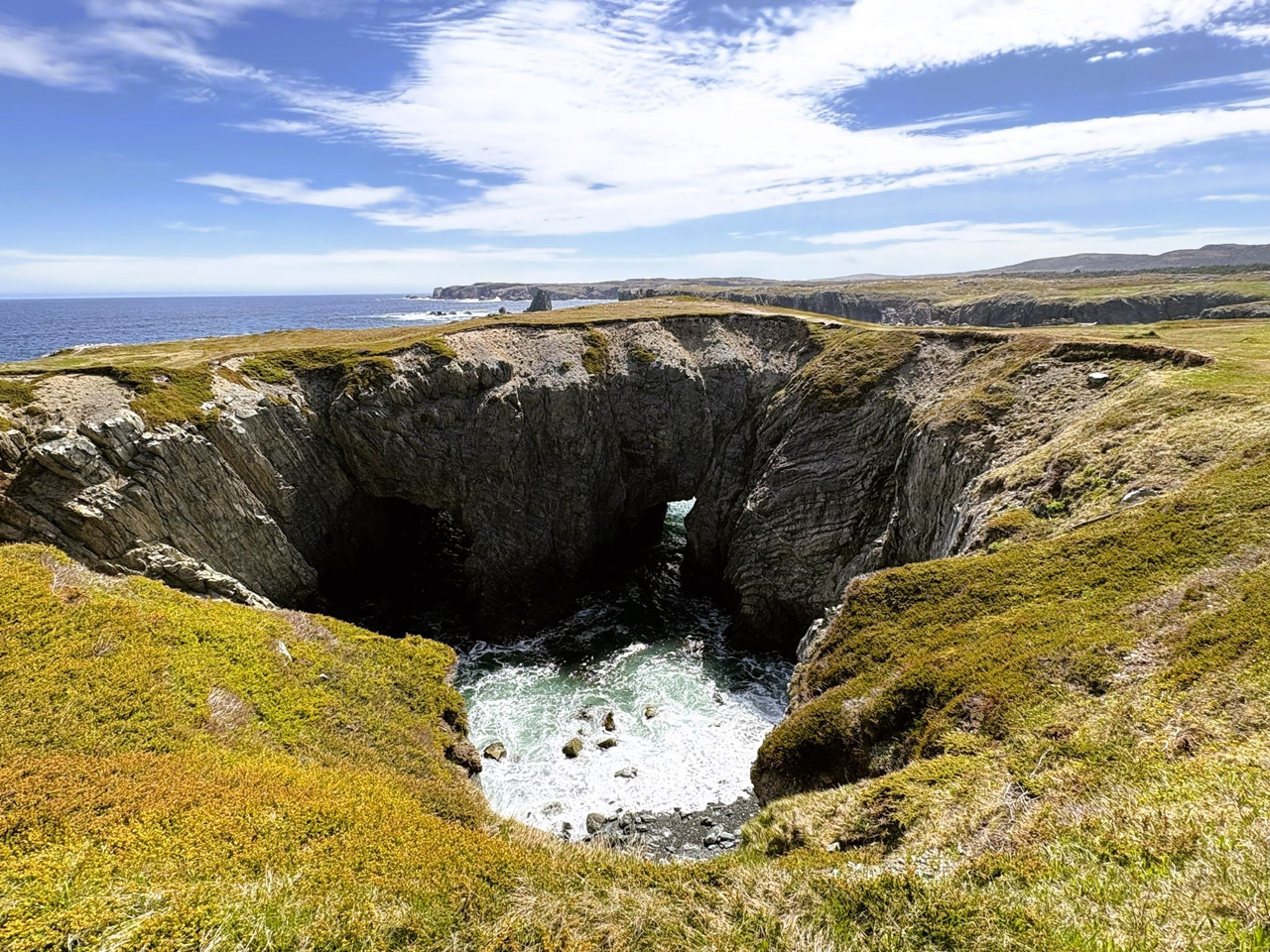
The Dungeons © Alessandra Leopardi
There was a quick exciting moment as we checked out of the hotel. A late Iceland Gull was in the hotel’s harbour, providing extended scope views as a bonus bird, and it was our third unexpected species of gull of the trip. The ensuing long drive was filled with great music, some impromptu karaoke, and a valiant effort to again try to track down the elusive Stellar’s Sea-Eagle. This attempt too came up empty, but we saw many woodland species again in this patch.
With heavy hearts, we had our last dinner together at Gian’s Kitchen in St. Johns. Many prestigious and completely scientific awards were given around to everybody, and more laughs and smiles were exchanged than we thought could be possible!
Later that night, we said our goodbyes and the next day went our separate ways. As a group, we all enjoyed each other’s company more than we can describe. This epic trip was filled with so much joy, positivity, comradery, and care between us all. There was kindness and an overall genuine and generous energy over the whole group. We also totalled 101 bird species on this trip! Not a moment was dull and not a face was left without a permanent smile from this once-in-a-lifetime experience.
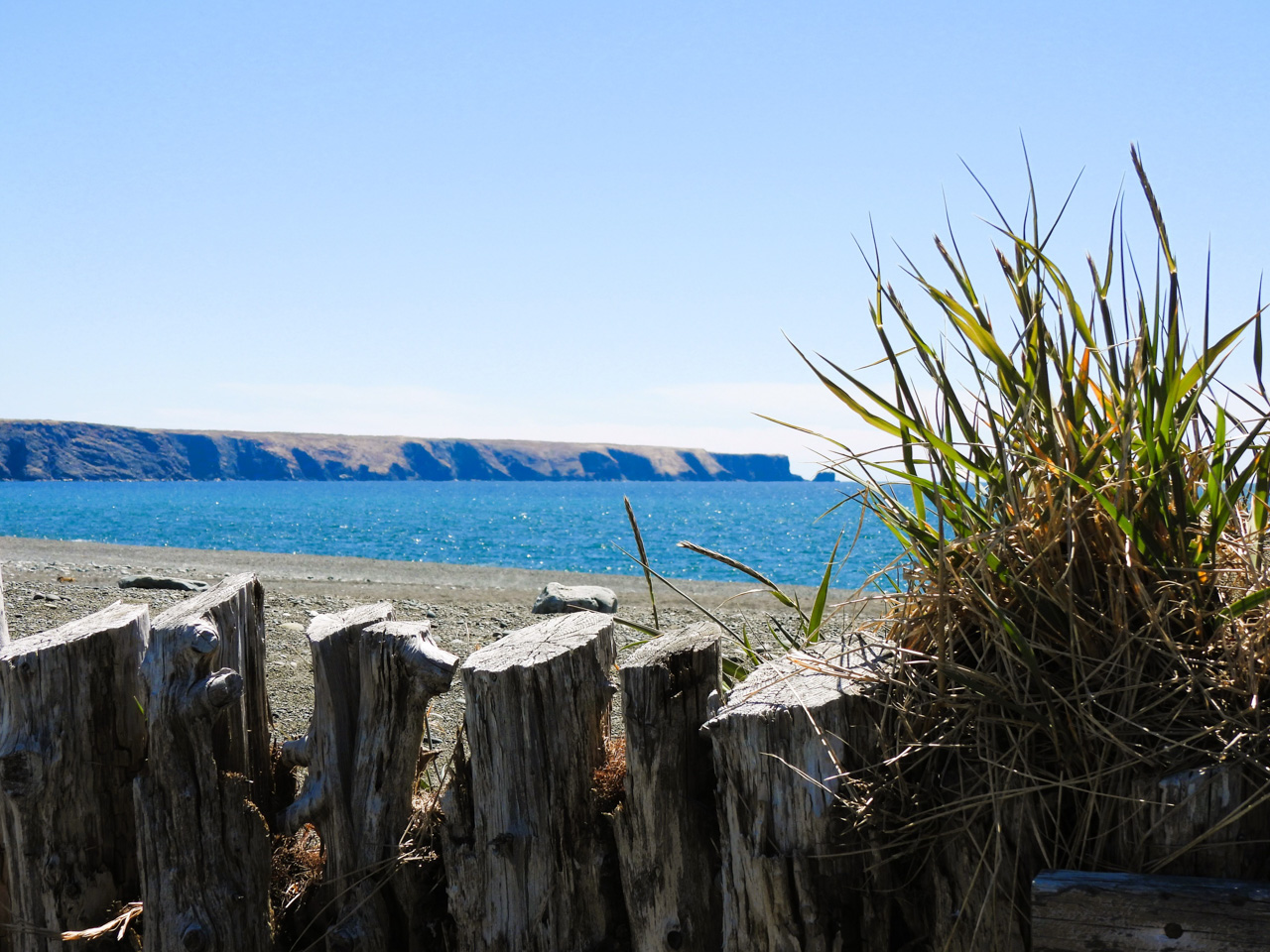
The Avalon Peninsul © Alessandra Leopardi