High Arctic & Northwest Territories Trip Report (June 28 – July 8, 2026)
Day 1
Our High Arctic Tour began with a welcome gathering at our hotel in Edmonton, where we reviewed the itinerary, got to know one another, and enjoyed dinner before turning in for the night.
Day 2
Our bus driver for the day picked us up after our early breakfast and drove us east, straight out to the flooded land near Dodds where as soon as we disembarked, we were greeted by dancing Eared Grebes. The same pond held our first Wilson’s Phalaropes and an assortment of handsome waterfowl: Blue-winged and Green-winged Teal, Northern Shoveler, Ruddy Duck, but only a couple of Cinnamon Teal.
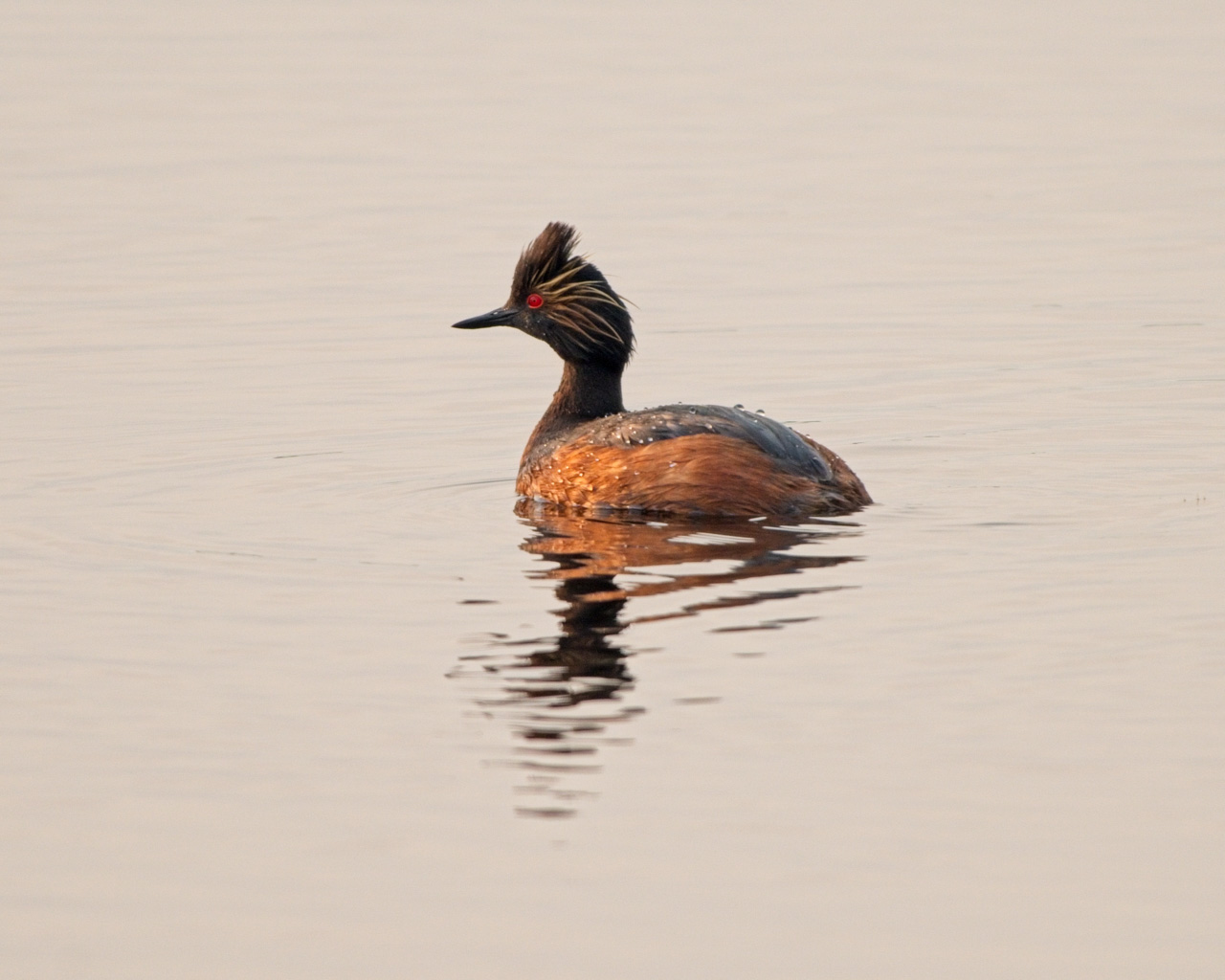
Eared Grebe © Frank Letniowski
Leaving our bus at the junction, we headed along the wide gravel road passing between the extensive sloughs where Black Terns and Forster’s Terns foraged. The roadside Yellow-headed Blackbirds paid no attention to us and strutted their splendid stuff as we passed. Meanwhile, we had to keep eyes on the sky as flocks of Franklin’s and California Gulls passed low overhead, en route to other flooded areas. Other birds flying past with business elsewhere included an unexpected flock of 12 Hudsonian Godwits.
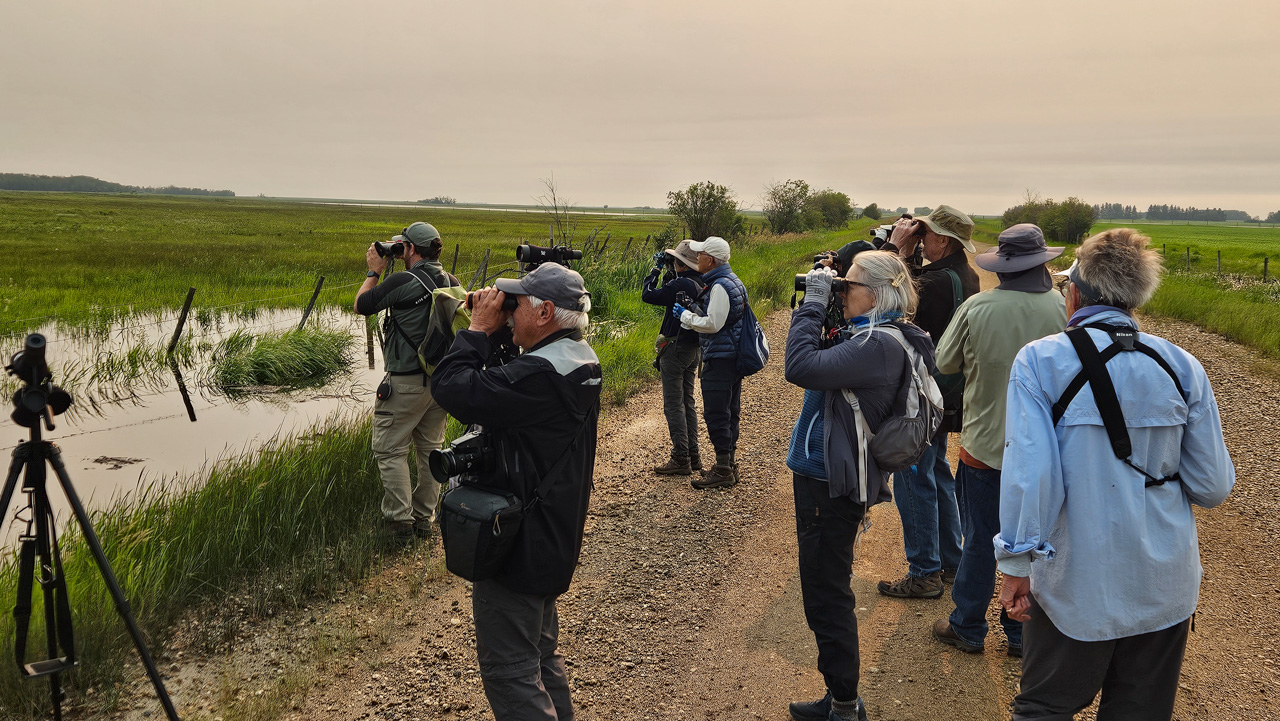
Birding the wetlands © Sharon Bieck
After about a kilometer we reached a dry area where Western Meadowlarks sang from fence posts and low shrubs, while hidden away, deeper in the marsh vegetation, Nelson’s Sparrows hissed but remained invisible. Displaying Wilson’s Snipes added to the early morning marsh music, and rather too far away on the far side of the slough, a handful of Garbled Modwits (sic), and American Avocets foraged.
Fetched by our trusty bus, we were now driven to Beaverhill, where unfortunately a combination of flooded trails and intense “skeeter” activity had us all retreating to the bus with only Least Flycatcher, White-throated Sparrow, and Eastern Warbling Vireo to show for our effort.
The road out of Beaverhill was much more productive with a dozen White-faced Ibis probing in the flooded agricultural land, and both Red-necked and Wilson’s Phalaropes foraging close to the road. A small squadron of five American White Pelicans wheeled overhead and more Marbled Godwits displayed briefly over the adjacent field. We trained our scopes on a good number of ducks feeding on the far side of the flooded field; many Shoveler, American Wigeon, a few Gadwall, Green-winged Teal, with small numbers of both Greater and Lesser Yellowlegs mixed in.
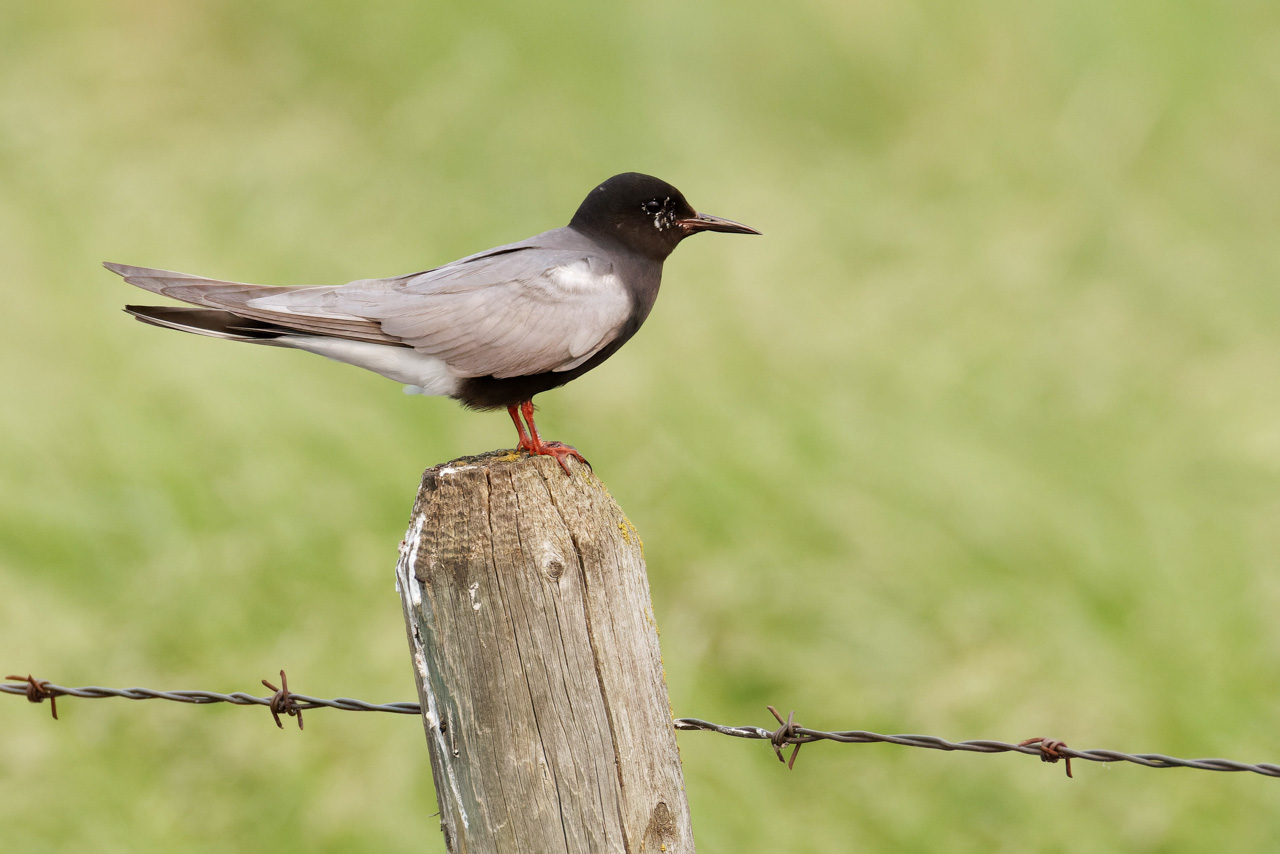
Black Tern © Blair Dudeck
The ditch along the side of the road held Sora and the roadside fence provided perches for Bobolink and Eastern Kingbird. Having exhausted the possibilities hereabouts we now drove north to Elk Island National Park where we made use of the park benches to spread out the first of this trip’s many picnic lunches. Once we’d had our fill, we headed to a nearby trail (on the east side of Astotin Lake) and hiked single file through aspen forest on the banks of extensive ponds where Bufflehead, Common Goldeneye, Red-necked Grebe and Ring-necked Duck napped.
The woods here held Great Crested Flycatcher, Ovenbird, Western Tanager, Red-breasted Nuthatch and a lovely collection of butterflies, although the latter seemed to prefer probing for minerals in the trailhead car park (Northern Crescent, White Admiral, Canadian Swallowtail). Throughout this trip, our group seemed more than happy to take all other aspects of nature that were presented to us: butterflies, dragonflies, flowers, so much of it was new to us. As we drove back out of the park, a roadside Plains Bison caught our attention and we stopped to ogle this fine beast with his attendant Brown-headed Cowbirds. A Le Conte’s Sparrow “sang” from the nearby meadow, but sadly was unresponsive to our broadcast invitation to come visit with us.
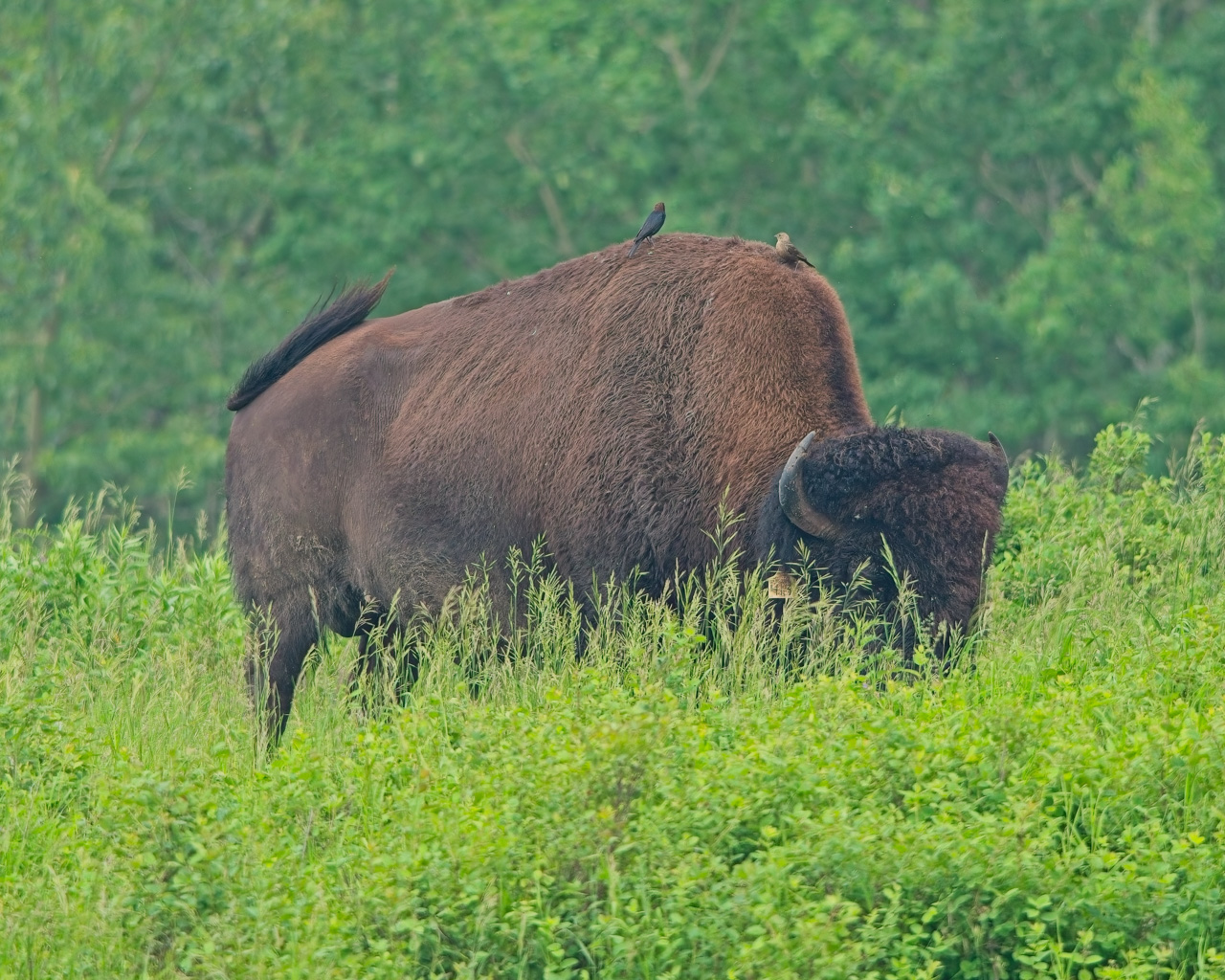
Plains Bison © Frank Letniowski
Day 3
Departing too early for the hotel breakfast, we had to depend on Canadian North Airlines to provide sustenance; they did not disappoint. At Yellowknife, Blair and I fetched our mini-vans while the rest of the group headed to our hotel. Here we stashed all the luggage and headed straight out to explore the neighbouring Niven Lake. A pair of proud-looking Horned Grebes gave their brood of grebelets a piggyback around a shallow lagoon while White-crowned (Gambel’s) Sparrow sang from the shoreline spruces accompanied by Orange-crowned and Myrtle Warblers.
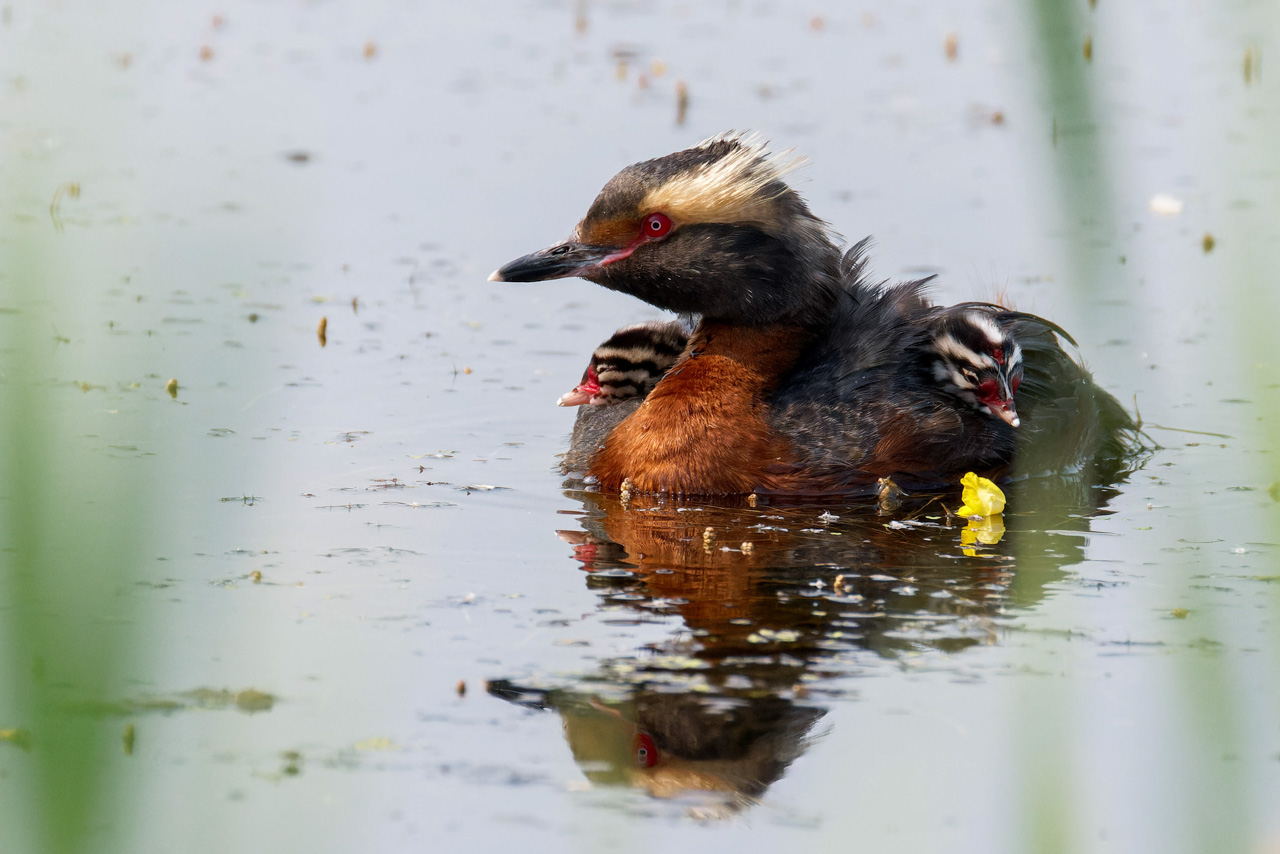
Honed Grebe © Blair Dudeck
As was to become our habit on this trip, we were distracted by carnivorous Bladderwort and dashing Boreal Whiteface dragonflies. Our first Bonaparte’s Gulls traveled to and from their arboreal nest locations, while all four of Ring-billed, California, Short-billed and American Herring Gull flew to parts unknown (although one of our number subsequently discovered Short-billed Gulls were nesting on the next lake over.)
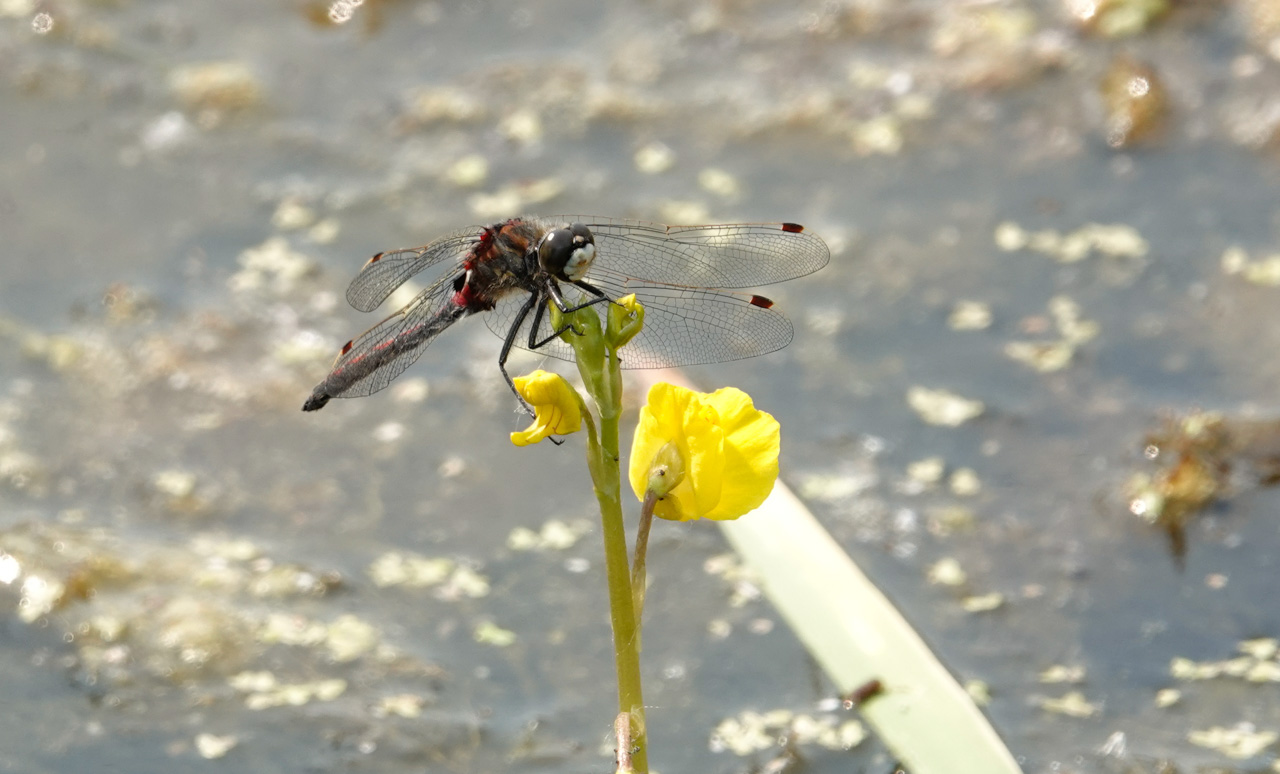
Boreal Whiteface © Paul Prior
We lunched in the hotel restaurant and then opted to reconvene at supper, allowing the group to do their own exploring of this important northern capital.
Day 4
A full day spent exploring the forest and shrubby areas around Yellowknife started with a delightful pre-breakfast encounter with a litter of well grown Red Fox kits along the Ingraham Trail: one black, one red, and half a dozen cross foxes.
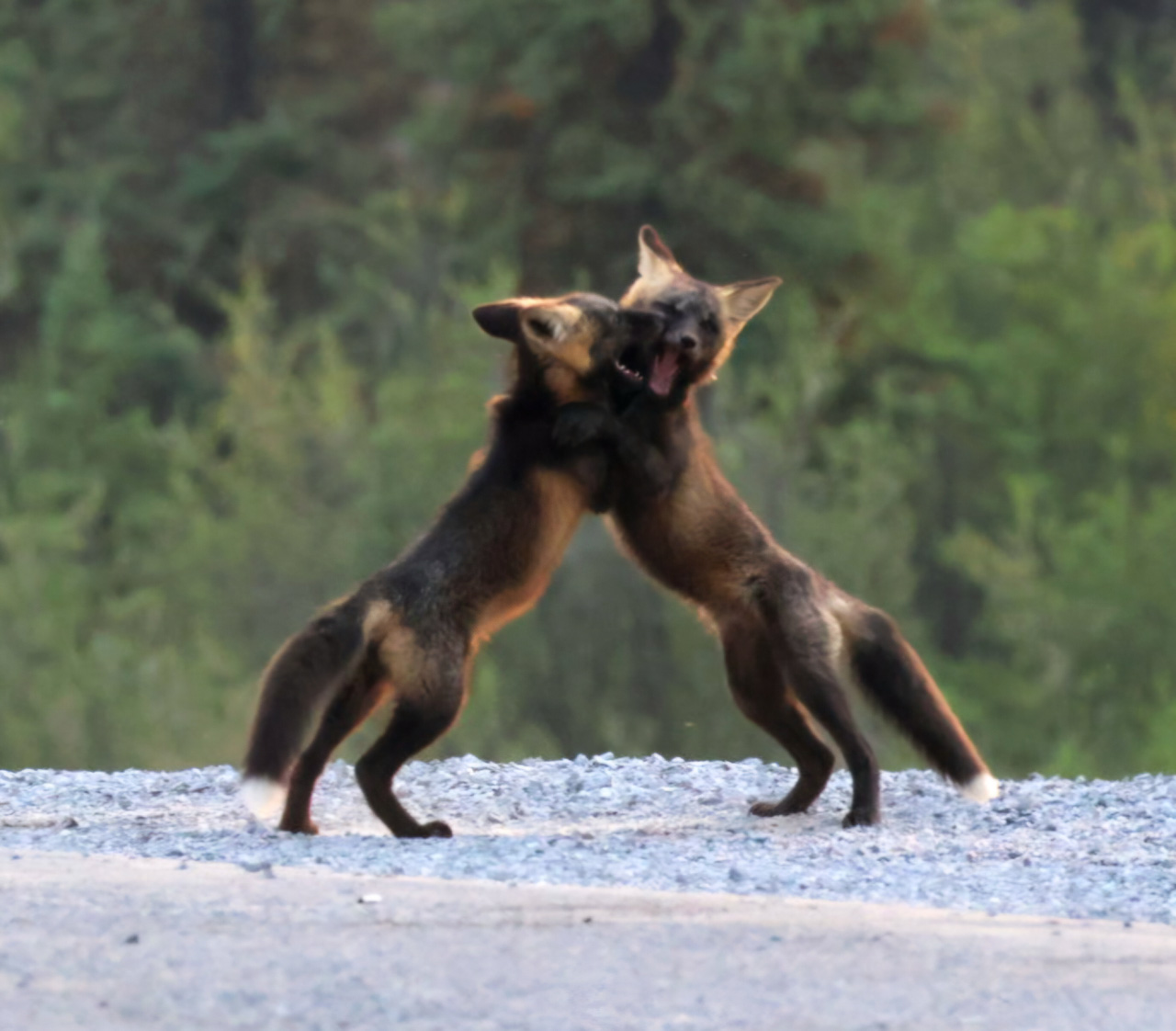
Cross Fox Kits wrestling © Sharon Bieck
A recent eBird submission had inspired us stop here and sure enough, a couple of broadcasts brought a very cooperative Le Conte’s Sparrow into close proximity providing never-to-be-repeated views of this pretty little skulker. A small family party of Canada Jays hurried through on the far side of the bog.
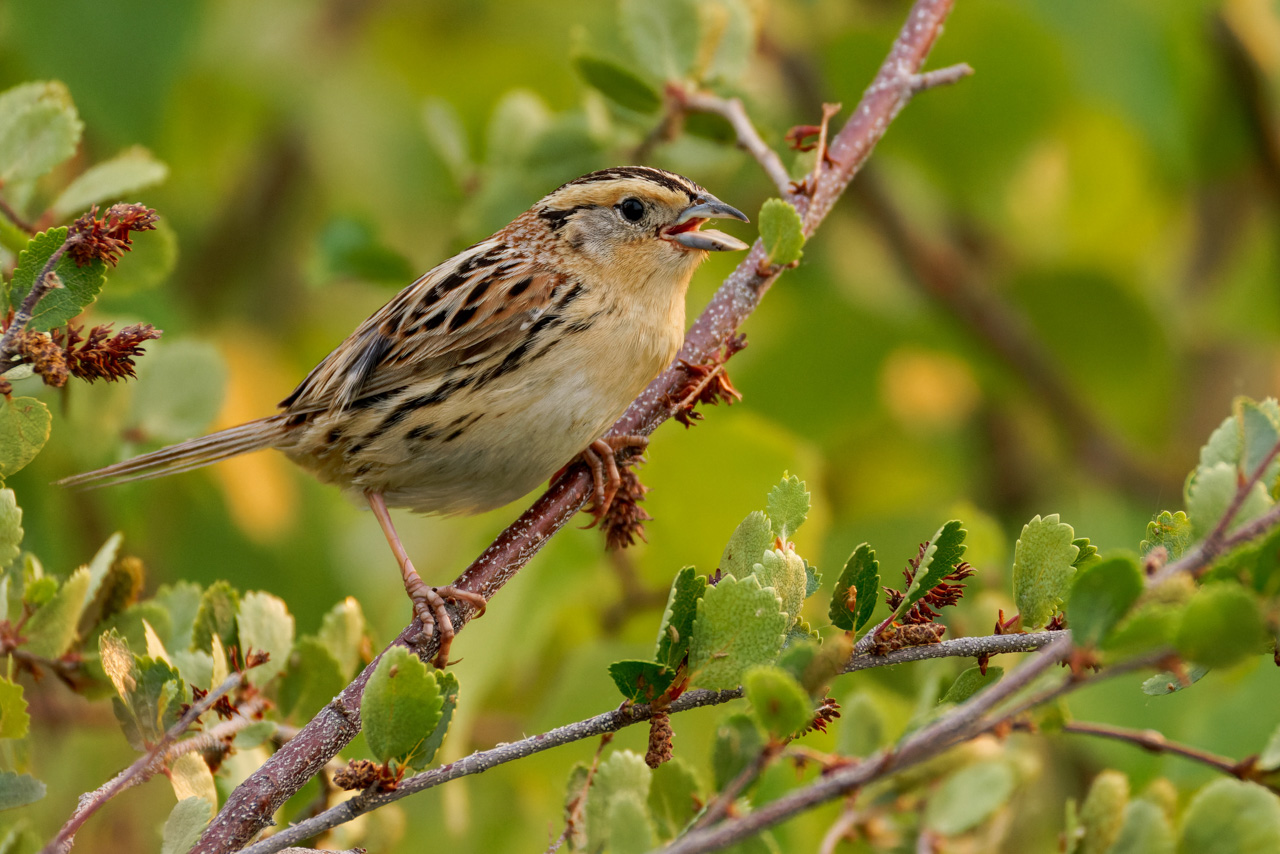
LeConte’s Sparrow © Blair-Dudeck
We headed back to the hotel for breakfast and then went straight back out to the west end of Long Lake, in Fred Henne Territorial Park where Common Loons posed closer to shore and both Short-billed and Ring-billed Gulls loafed and preened on one of the campsite beaches affording great comparisons between the two species.
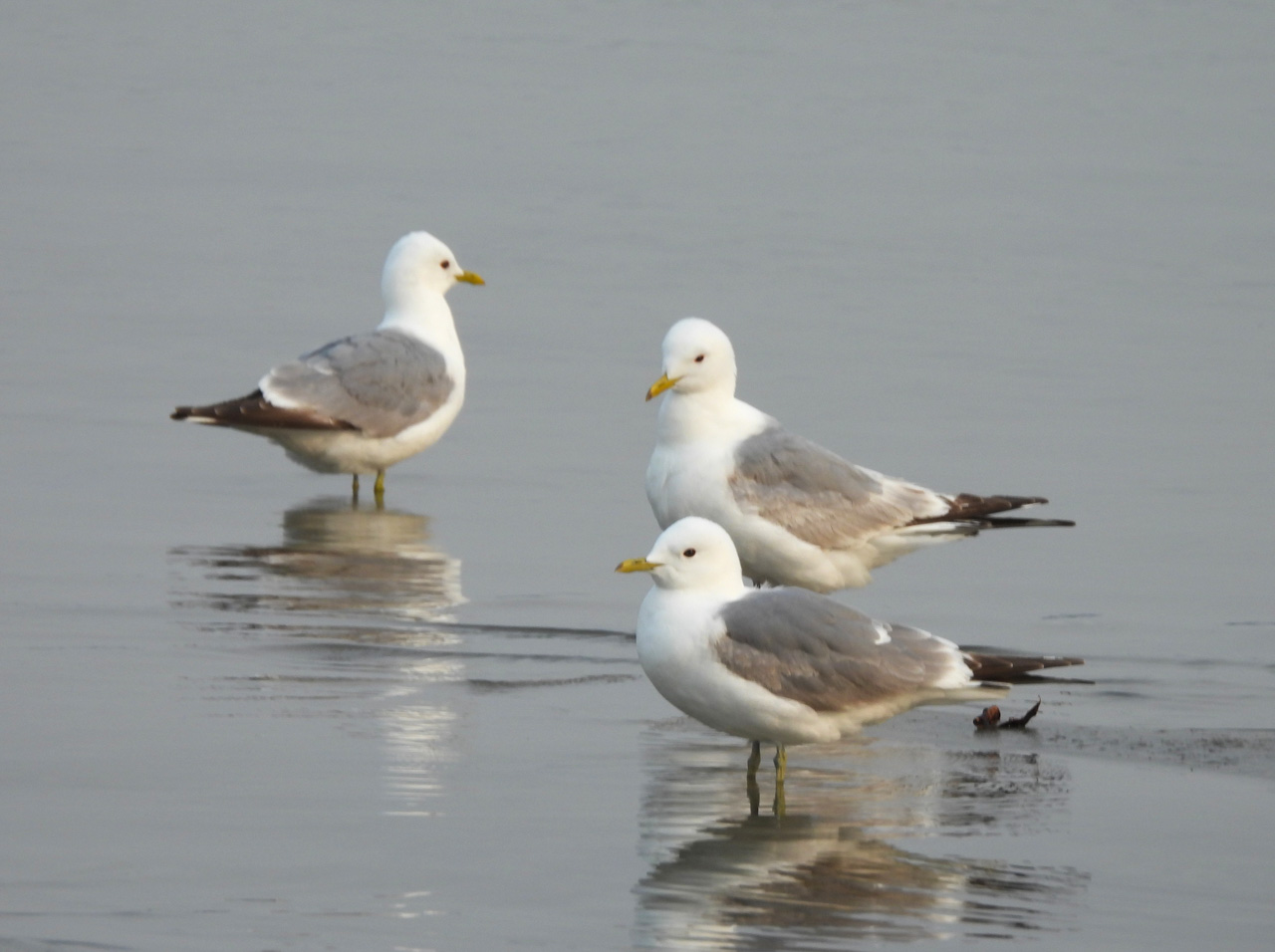
Short-billed Gulls © Robert Leonhardt
The forest here was rather quiet with just Tennessee and Myrtle Warblers and so we moved onto another site where a narrow track took us deeper into the forest and we were able to lure in Ruby-crowned Kinglets, Dark-eyed Junco and Red-eyed Vireo. It was here that we also happened upon a patch of Sparrow’s-egg Lady’s Slipper orchids, a thrill for the more botanically-inclined amongst us.
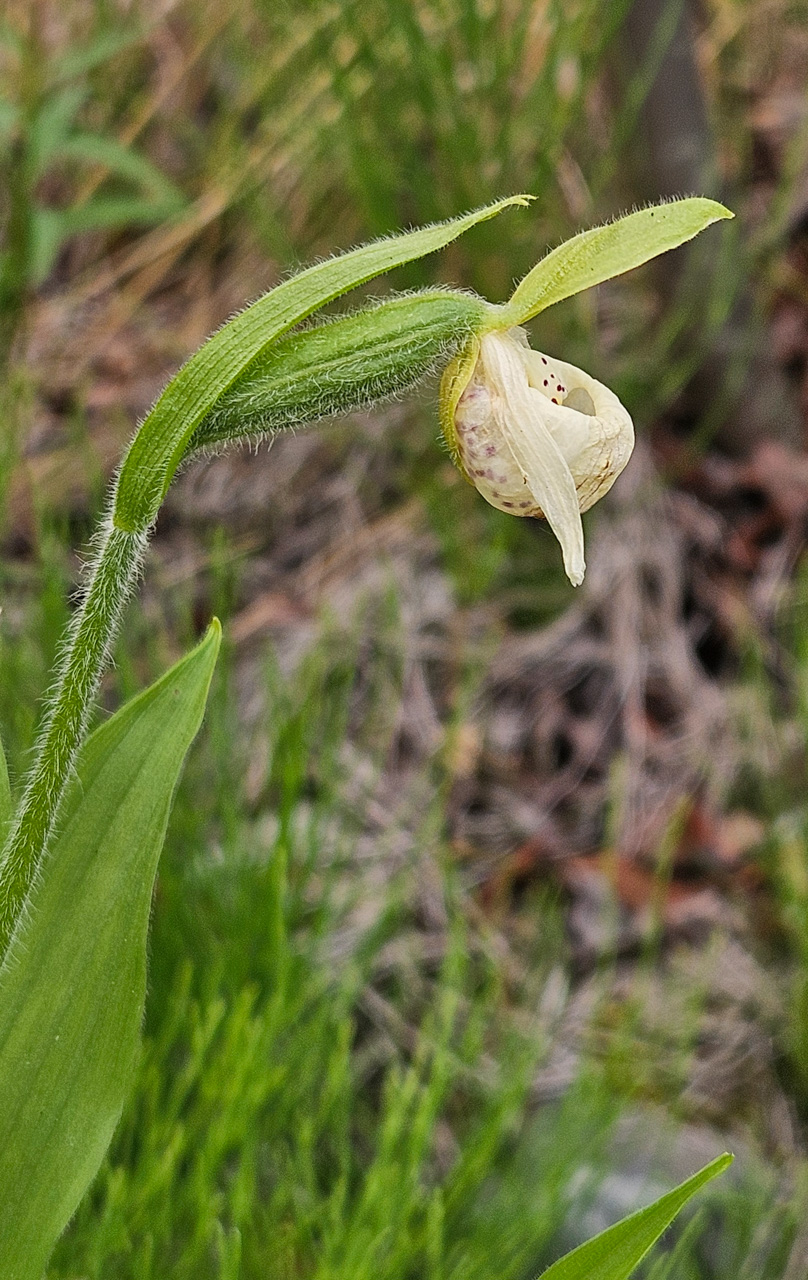
Sparrows-egg Ladys-Slipper © Sharon Bieck
After lunch and a short siesta, we reconvened for another outing primarily in search of Boreal Chickadee, but content with whatever we might find. We skirted an old tailings pond and selected a location to try broadcasting: sure enough, within a minute a pair of Boreal Chickadees flew in to investigate, together with an agitated Ruby-crowned Kinglet. On the opposite side of the road, we could hear – but sadly not see – a singing Swainson’s Thrush. Walking back to the vans past a forest pond we noticed a very young and forlorn-looking Goldeneye duckling, mum nowhere to be seen.
Day 5
Our late flight to Cambridge Bay afforded us the opportunity for another hike around Niven Lake for more encounters with tree-nesting Bonaparte’s Gulls, and views of a single downy chick at the lake’s shoreline; good numbers of Lesser Scaup, Green-winged Teal, Red-necked and Horned Grebes were also on show.
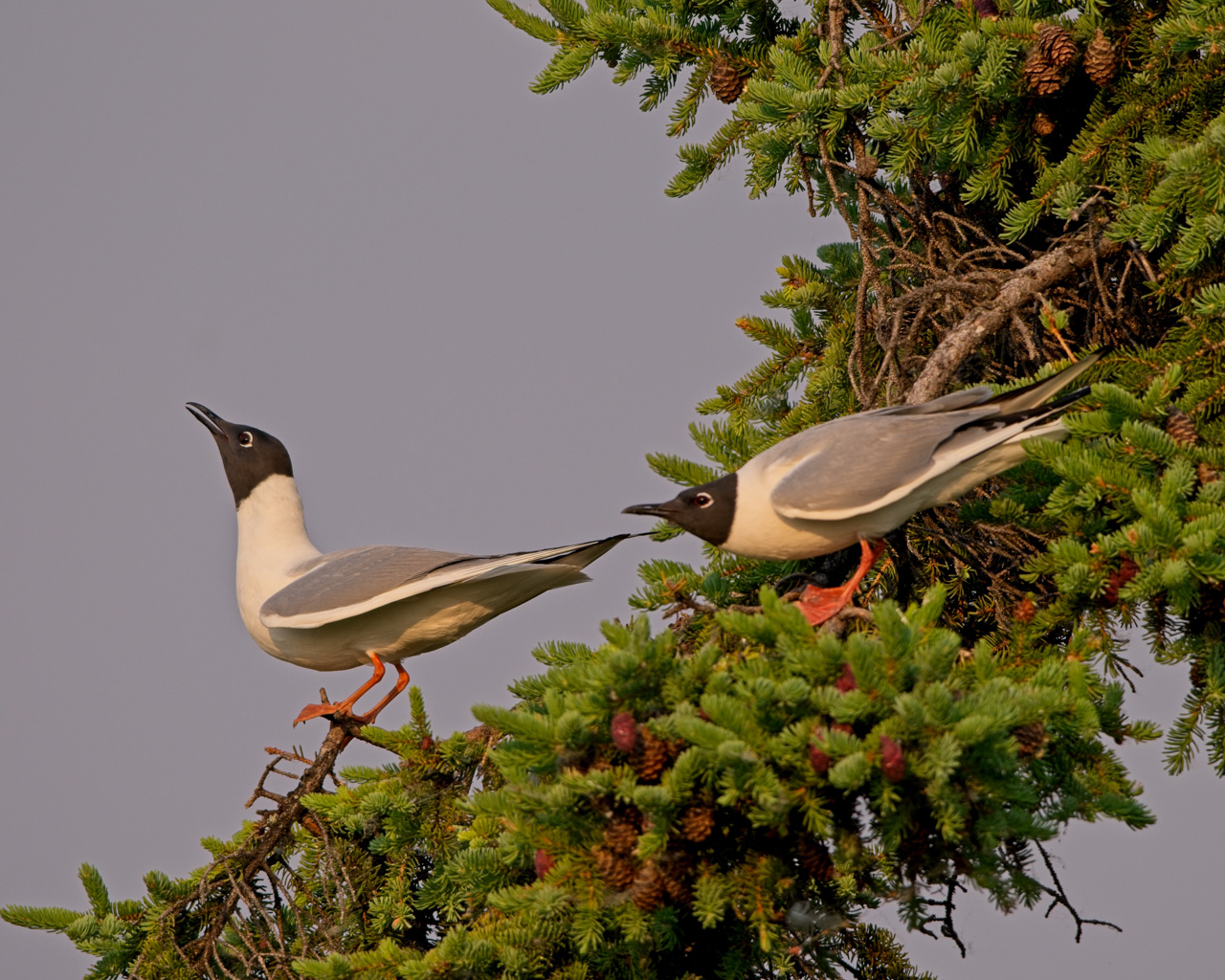
Bonaparte’s Gull © Frank Letniowski
Then we were off to the main attraction, north of the Arctic Circle to Cambridge Bay located on the south tip of Victoria Island, on the north side of the most western leg of the famous Northwest Passage.
As soon as we arrived and had collected our two trusty, dusty vans, we were met by a nesting Pacific Loon just metres from the airport entrance; a splendid, looking bird, but sadly, over the course of the next few days, her rather foolishly accessible nest had been predated. Otherwise, our first spot of Arctic birding occurred at the pond adjacent to the town-dump. This relatively small pond held a flock of about 20 King Eider, half of them males in spectacular breeding plumage.
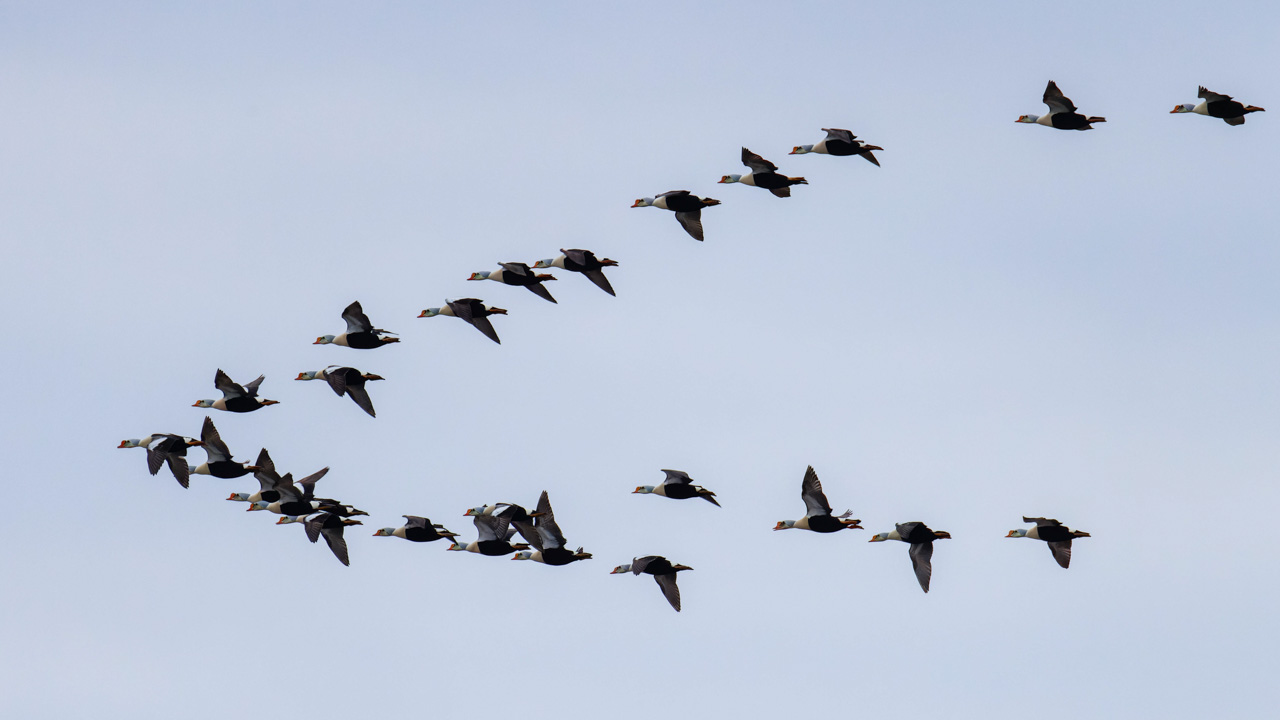
King Eiders © Blair Dudeck
Accompanying them there was a duo of female Common Eider and a handful of Long-tailed Ducks. Cackling Geese patrolled the far shore while several Red-necked Phalaropes and our first Semipalmated Sandpiper foraged along the near shoreline. We very quickly got used to the local “sparrows” – Snow Buntings and Lapland Longspurs – perching on houses and abandoned machinery to proudly proclaim ownership of their urban real estate.
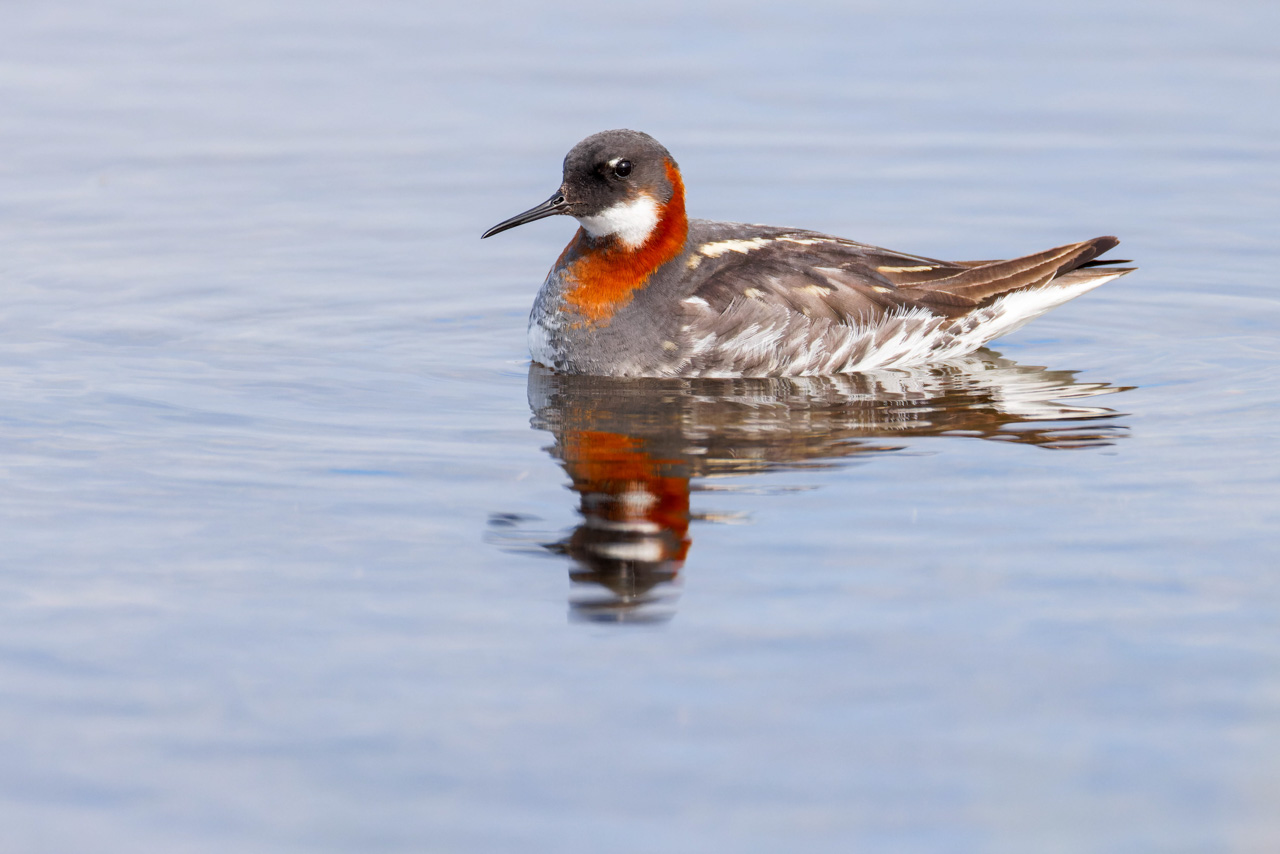
Red-necked Phalarope © Blair Dudeck
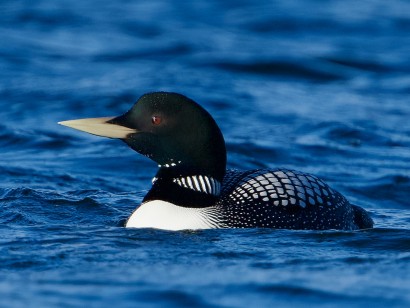
We continued out along the dump road to the town’s reservoir where we hoped for a repeat last year‘s Yellow-billed Loon sighting. Sure enough, Blair quickly picked out a rather distant, but unmistakable Yellow-billed Loon and we watched through scopes as the bird yodeled and fished, and was then joined by a second individual. It proved difficult to pull ourselves away from the sights and sounds of the tundra to attend to such mundane requirements as supper and sleep, especially given the perpetual daylight!
Day 6
Today we took the DEW-line road northwest out of town, stopping at likely looking ponds where we would hike out across the blossoming tundra (Boreal Sweet-Vetch, Alpine Milkvetch and Maydell’s Point-Vetch) in search of nesting shorebirds.
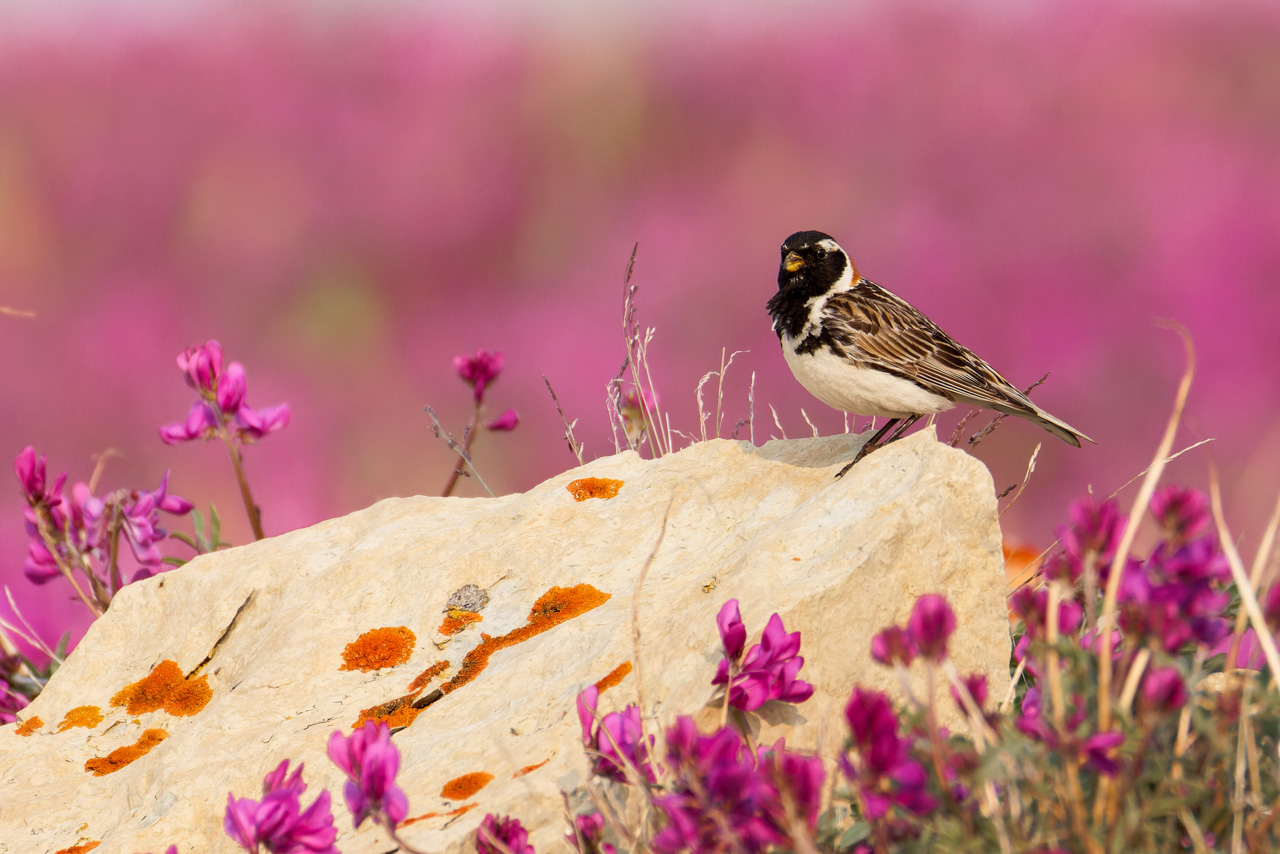
Lapland Longspur © Blair Dudeck
Lapland Longspurs were everywhere, seemingly synchronized in fledging young. Likewise, Semipalmated Sandpipers were ubiquitous, uttering their strange, mechanical songs, and whining to lure us away from their precocious little fluffball chicks.
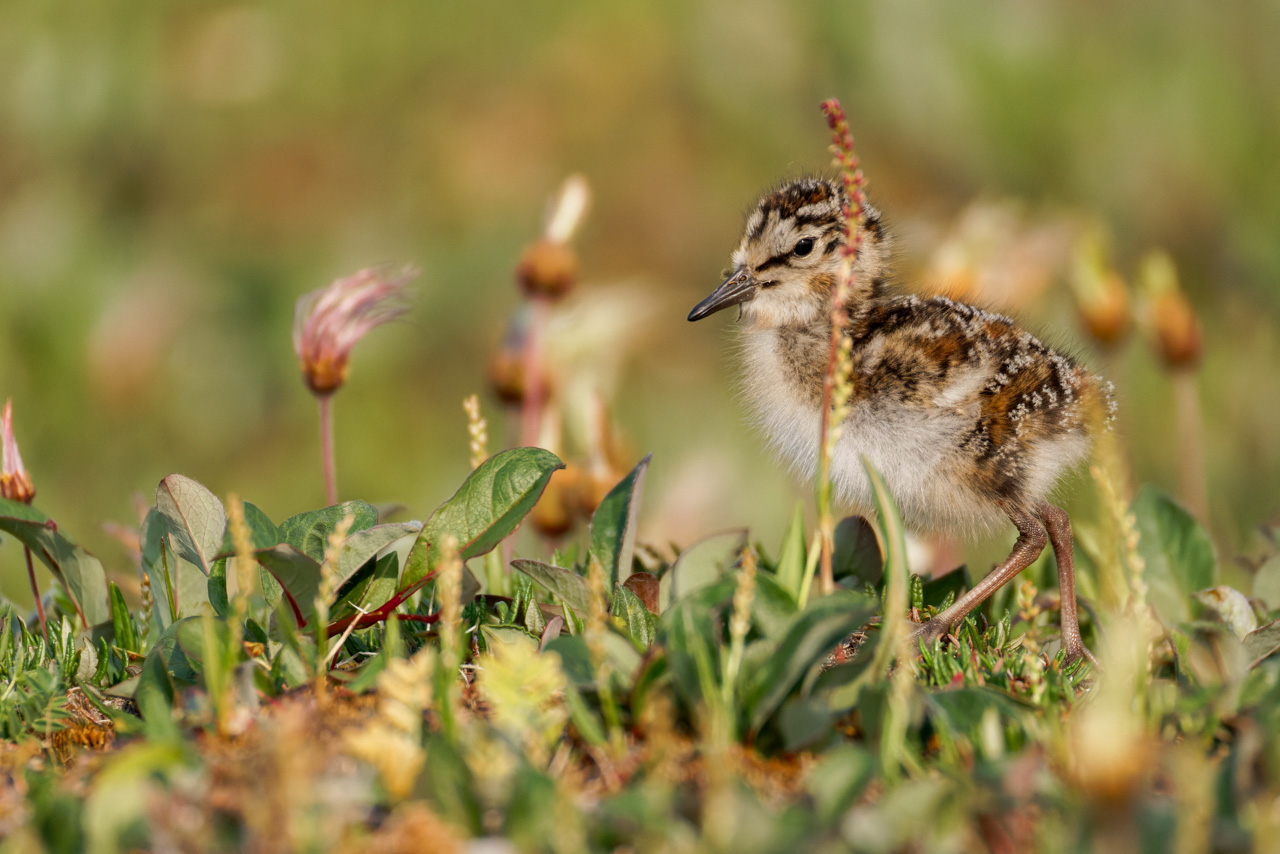
Semipalmated Sandpiper © Blair Dudeck
One small roadside pond hosted in an anxious Stilt Sandpiper, hurrying her chicks away from the lumbering bipeds that had just piled out of the vans.
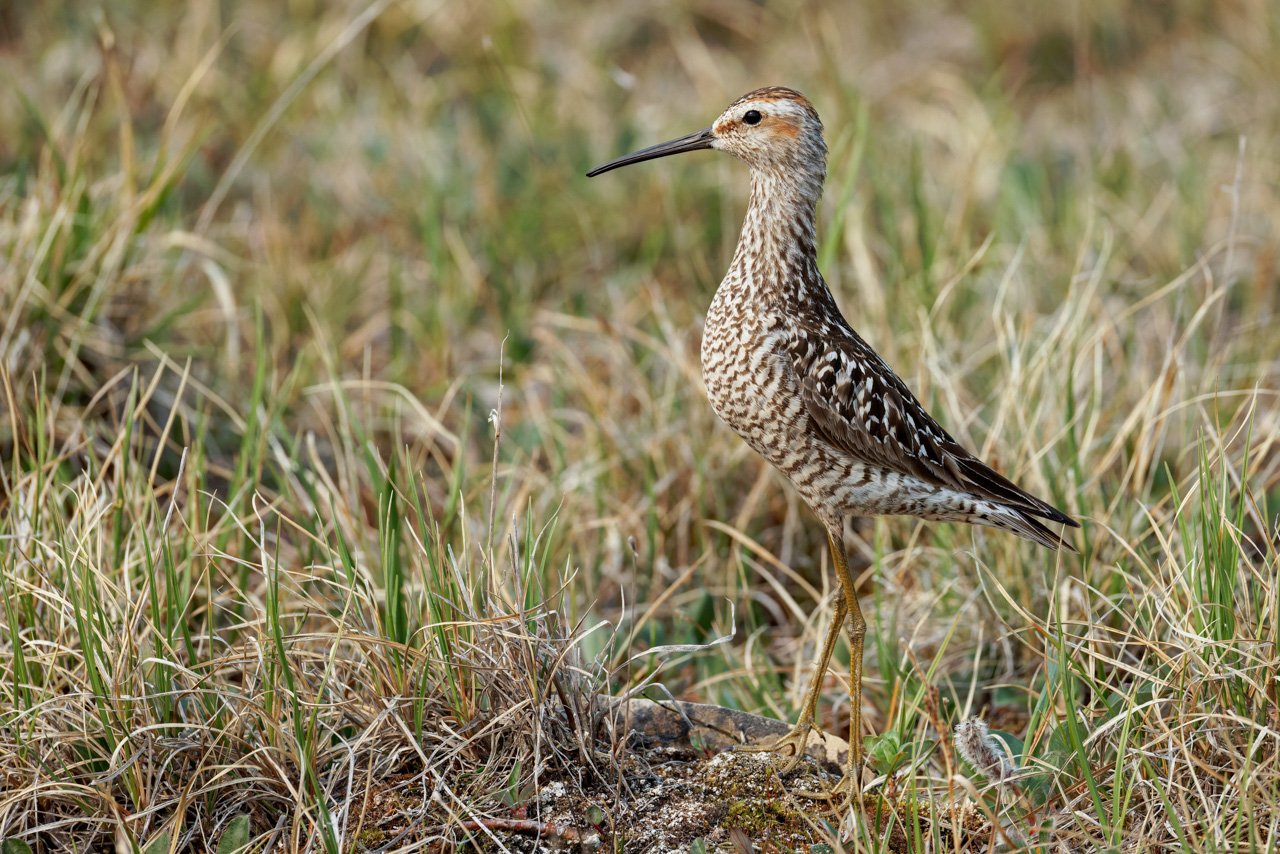
Stilt Sandpiper © Blair Dudeck
Further out across the endless tundra, we scoped pairs of Sandhill Cranes, Greater White-fronted Goose, and Tundra Swan. Closer to, Baird’s Sandpiper, Semipalmated Plover and gorgeously spangled American Golden Plover completed our shorebird encounters. It didn’t take too long for Long-tailed Jaegers to join the show, sailing around over the tundra as if they owned it – pirates that they are.
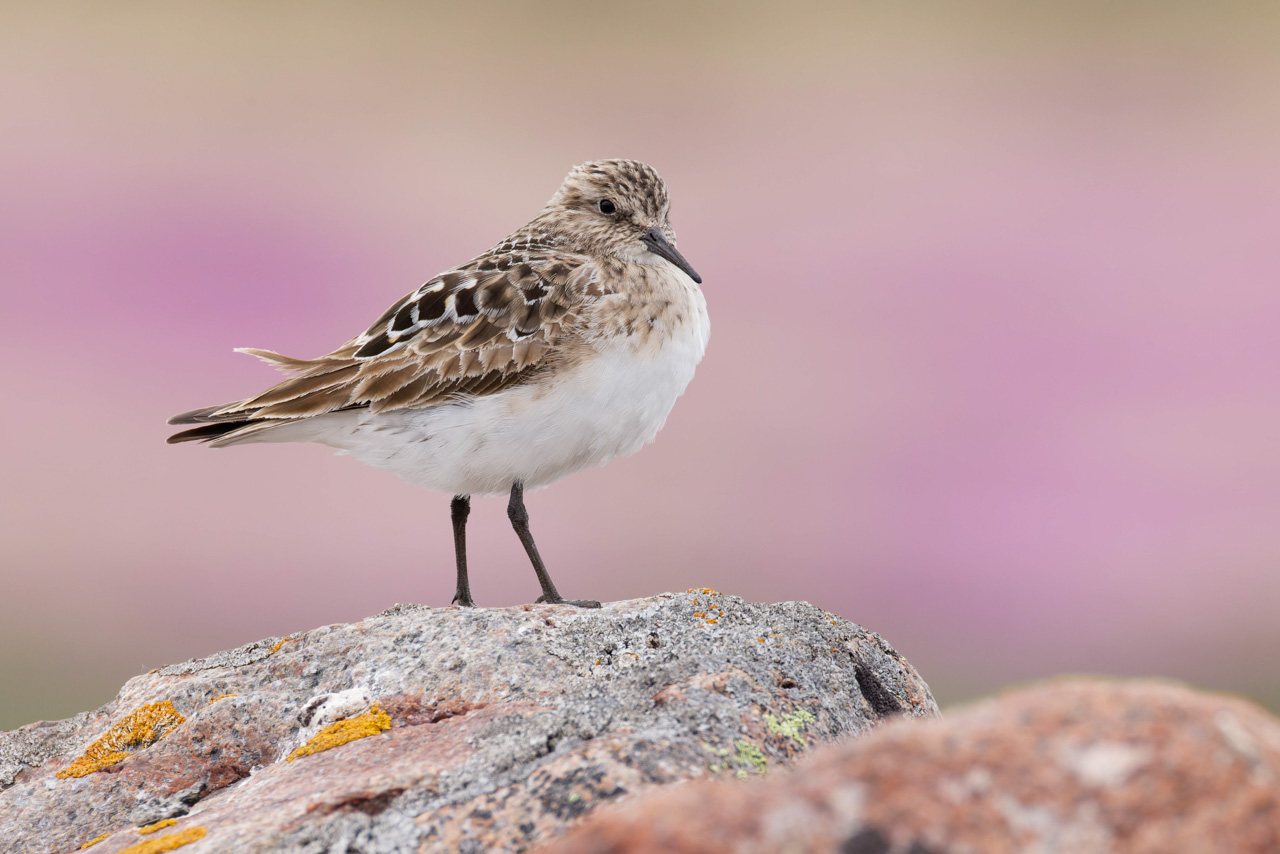
Baird’s Sandpiper © Blair Dudeck
Day 7
Glorious weather yet again, we headed in the opposite direction, northeast towards Mount Pelly. Early on in the drive, we came across our only pair of Brant, grazing with a pair of Cackling Geese down in the Freshwater Creek valley.
We continued out along the typically bumpy gravel track, stopping at likely-looking spots to hike out across the tundra and enjoy the Arctic in bloom, and pondering the assortment of butterflies (Labrador and Hecla Sulphurs, Polaris Fritillaries) and moths (Alpine Sallows and various geometers) enjoying the 24hr sunshine.
As we approached the shoreline of the huge Greiner lake, the road crossed a small creek, where an Arctic Tern sat patiently on her nest, her mate valiantly repelling, all-comers; meanwhile, a lone Sabine’s Gull stood in the shallow creek taking a break from nest duties at the small island colony a few hundred metres away.
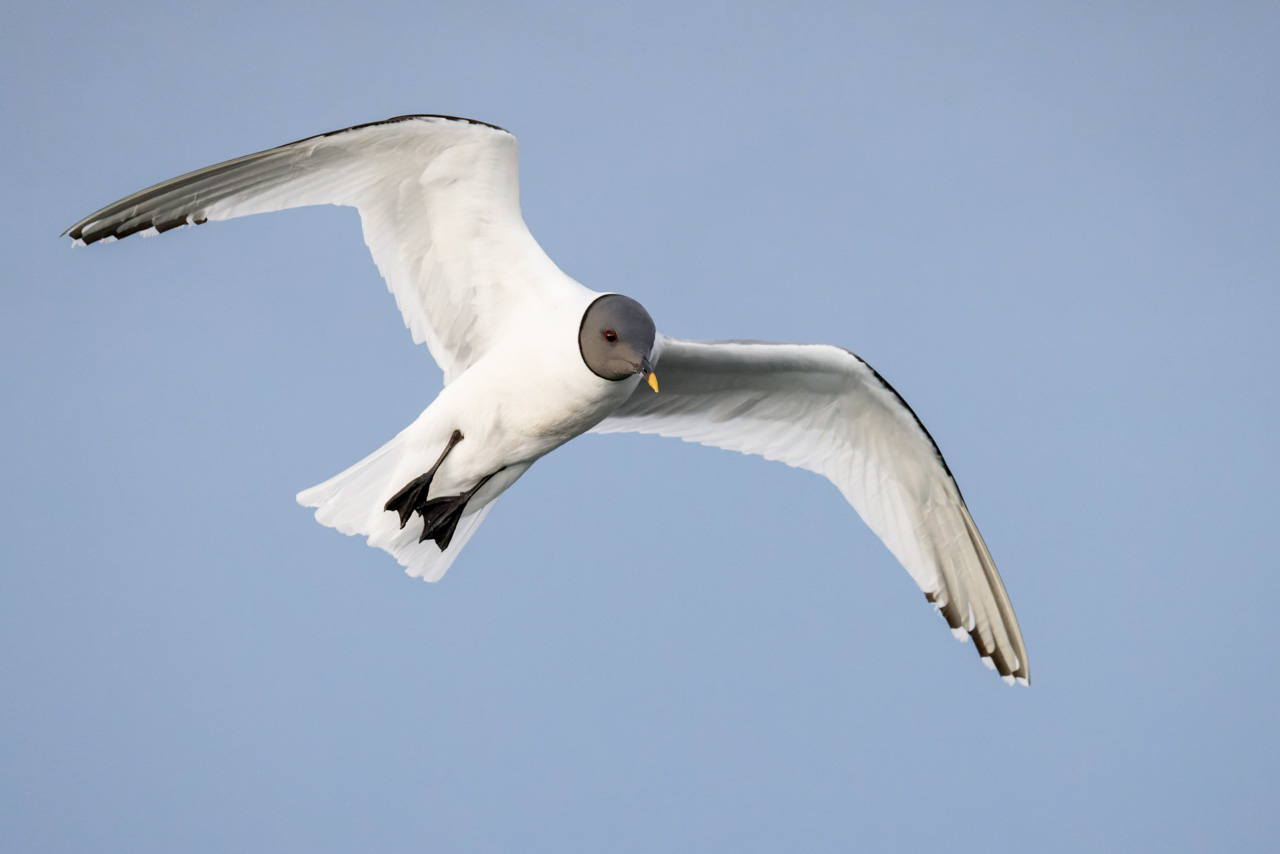
Sabine’s Gull © Blair Dudeck
We hiked out across the tundra and spotted our first pair of Parasitic Jaegers, one on the nest the other standing guard 200 m to one side.
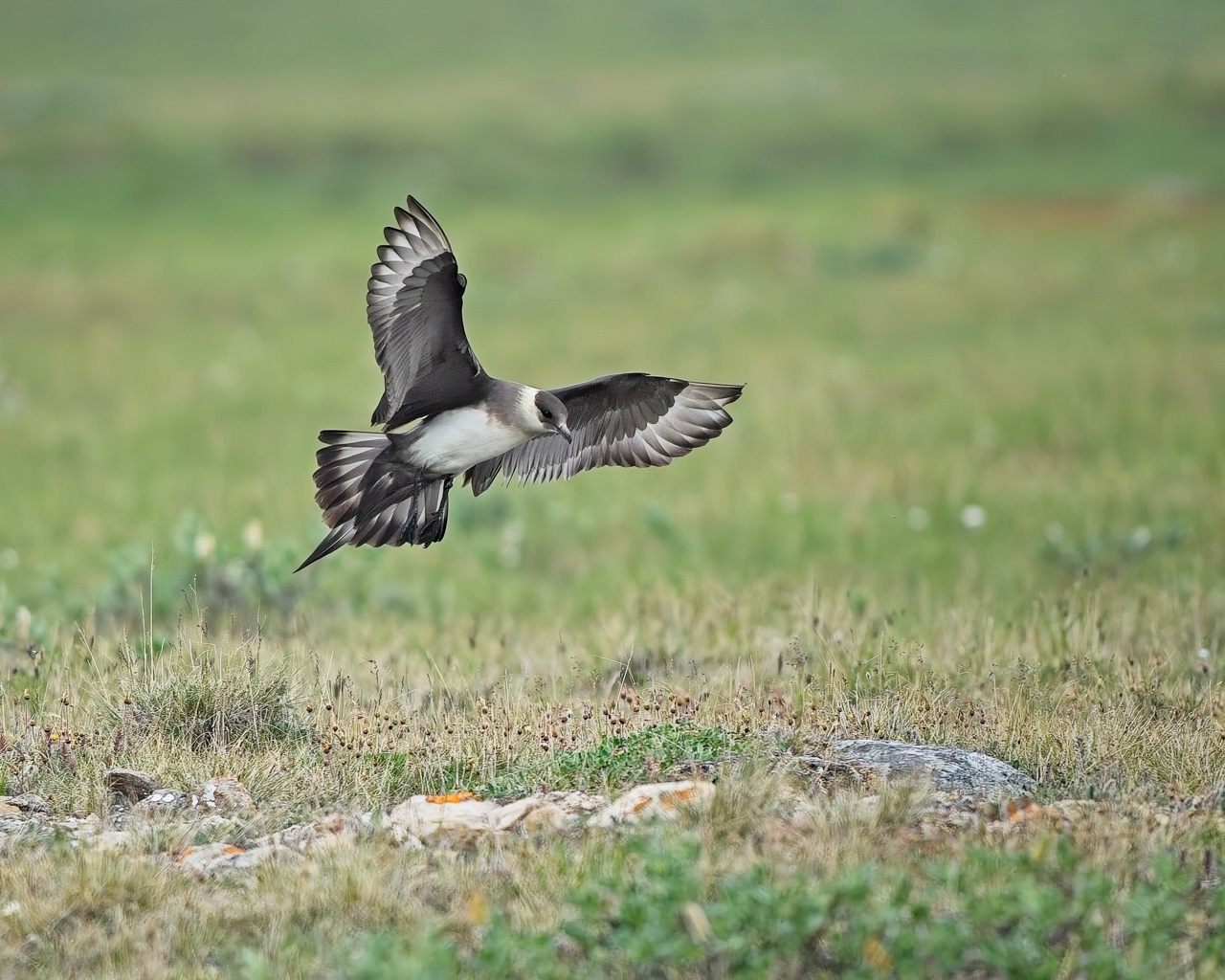
Parasitic Jaeger © Frank Letniowski
A quartet of Black-bellied Plovers patrolled the skies above us. Small tundra ponds held Red-necked Phalaropes, while larger ponds hosted Pacific Loons and King Eider with a few rather wary Northern Pintail.
Having picnicked in the vicinity of the base of Mount Pelly, we turned around and made our way slowly back towards town, stopping for further encounters with broods of Semipalmated Sandpipers and a roadside American Pipit hanging out near the cemetery.
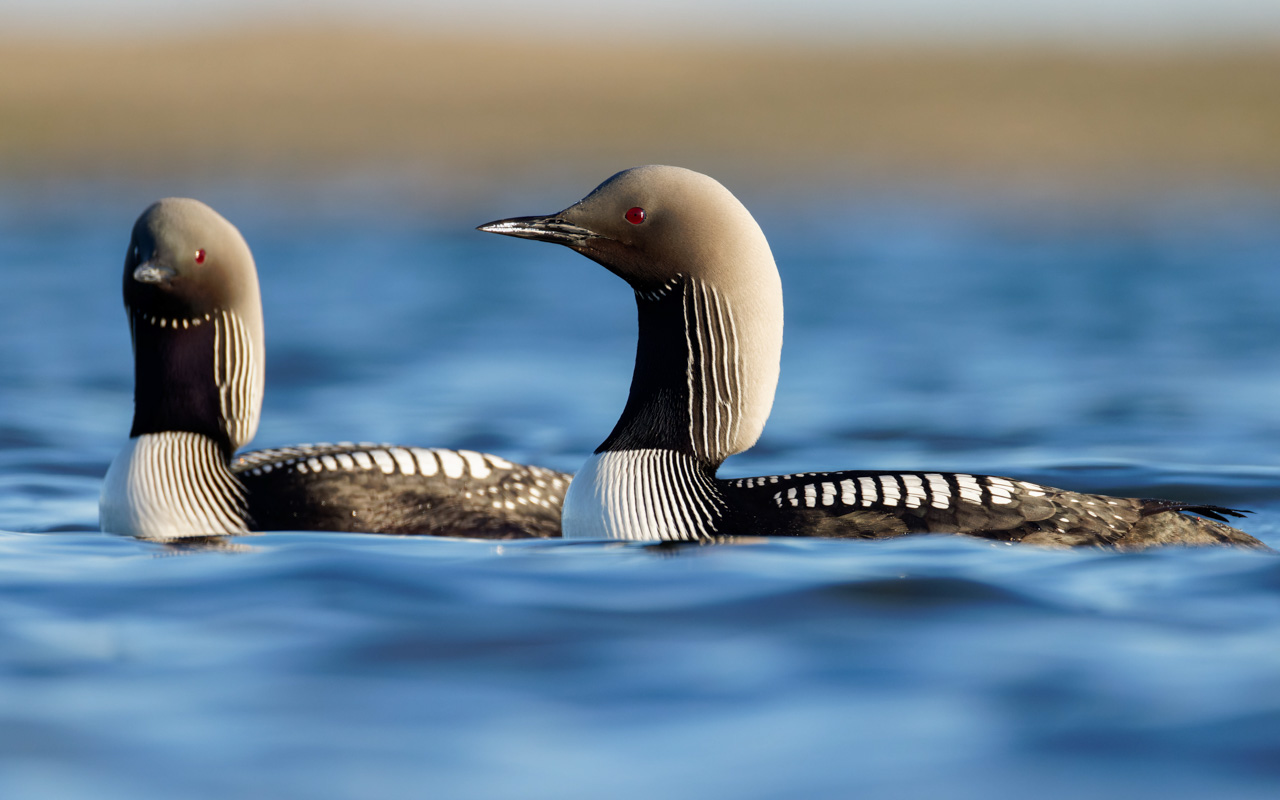
Pacific Loon © Blair Dudeck
Day 8
The day we conquered Mount Pelly, or rather: Ovayok. Well, actually not a mountain but a large esker just a little over 200m tall, which nevertheless provides excellent vistas across the tundra southwest back towards town and beyond to the ice in Dease Strait. The hike took us through extensive purple patches of Dwarf Fireweed – Blair indicated that he had never experienced such colour on previous trips – up to the stony terrain at the top of the esker.
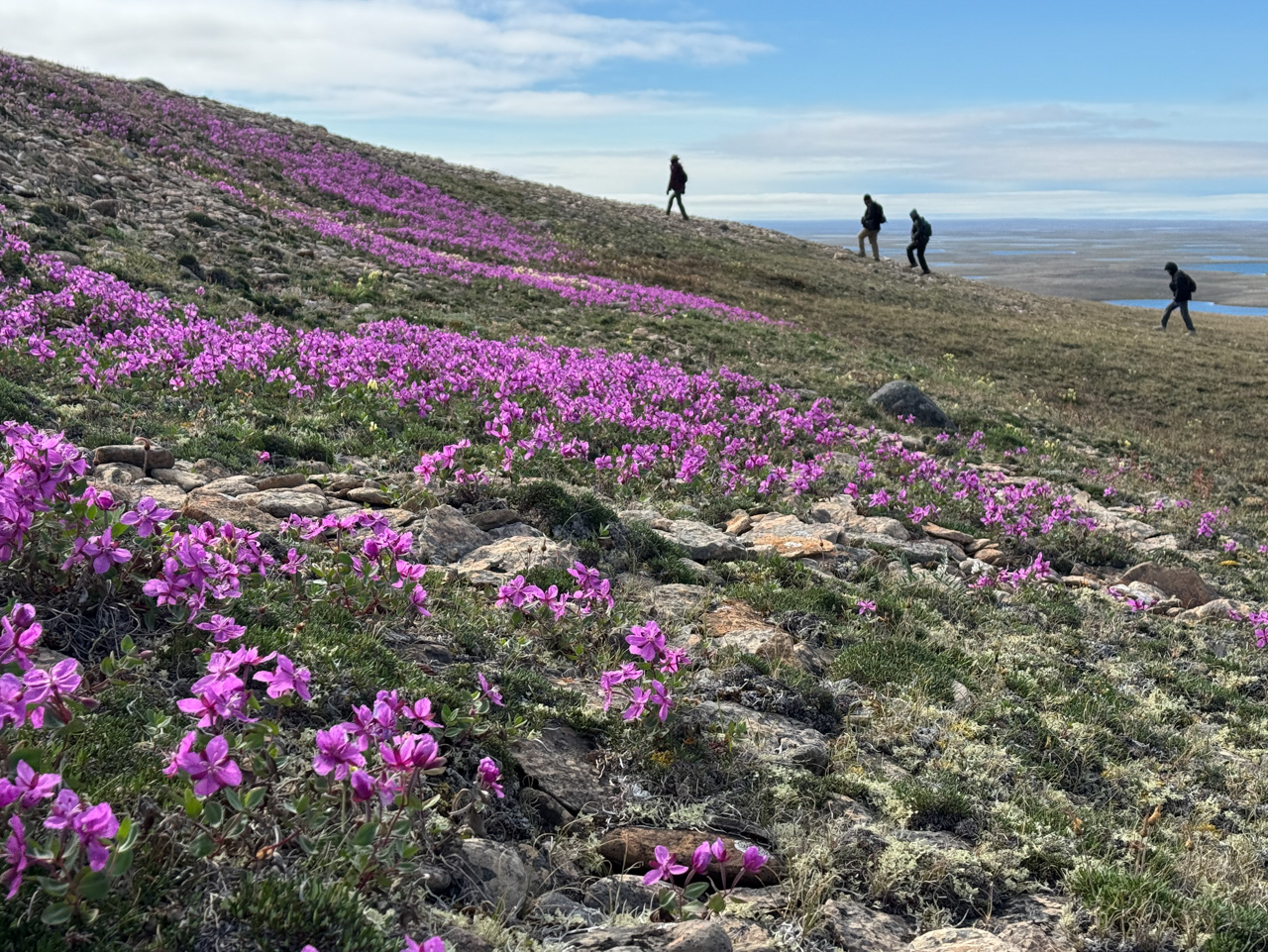
Hike through purple blooms © Paul Prior
Once we were back in the lowlands, we enjoyed another picnic lunch and then turned to scanning the surrounding tundra. We picked out our first and only Snow Geese grazing on a distant shoreline, and grabbed scope views of a handsome Black-bellied Plover; meanwhile the Parasitic Jaegers were on guard again as we explored the tundra flora.
After supper, given the 24 hours of daylight available, we walked the town’s waterfront, making the most of the opportunity to snap photos of the more maritime Common Eiders, which obviously preferred the seashore since we rarely encountered them hanging out with the numerous King Eiders on their freshwater ponds.
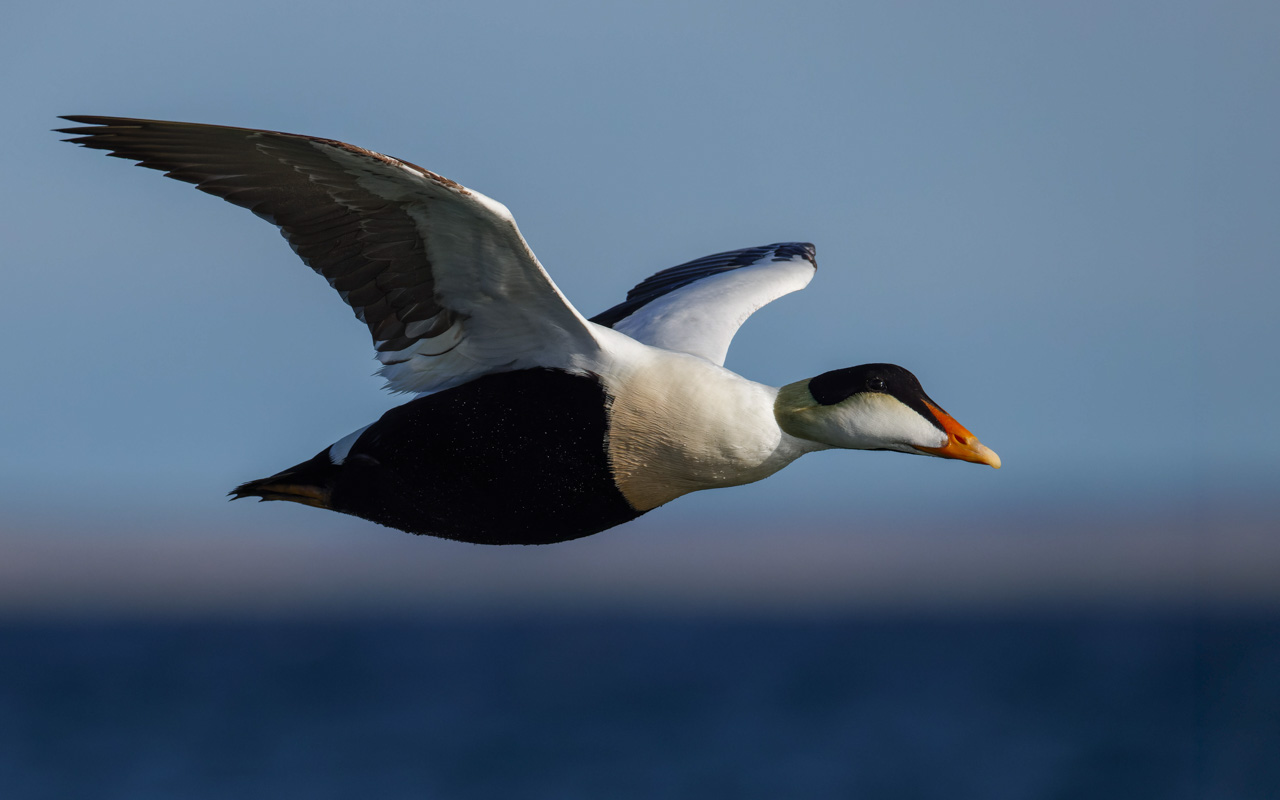
Common Eider © Blair Dudeck
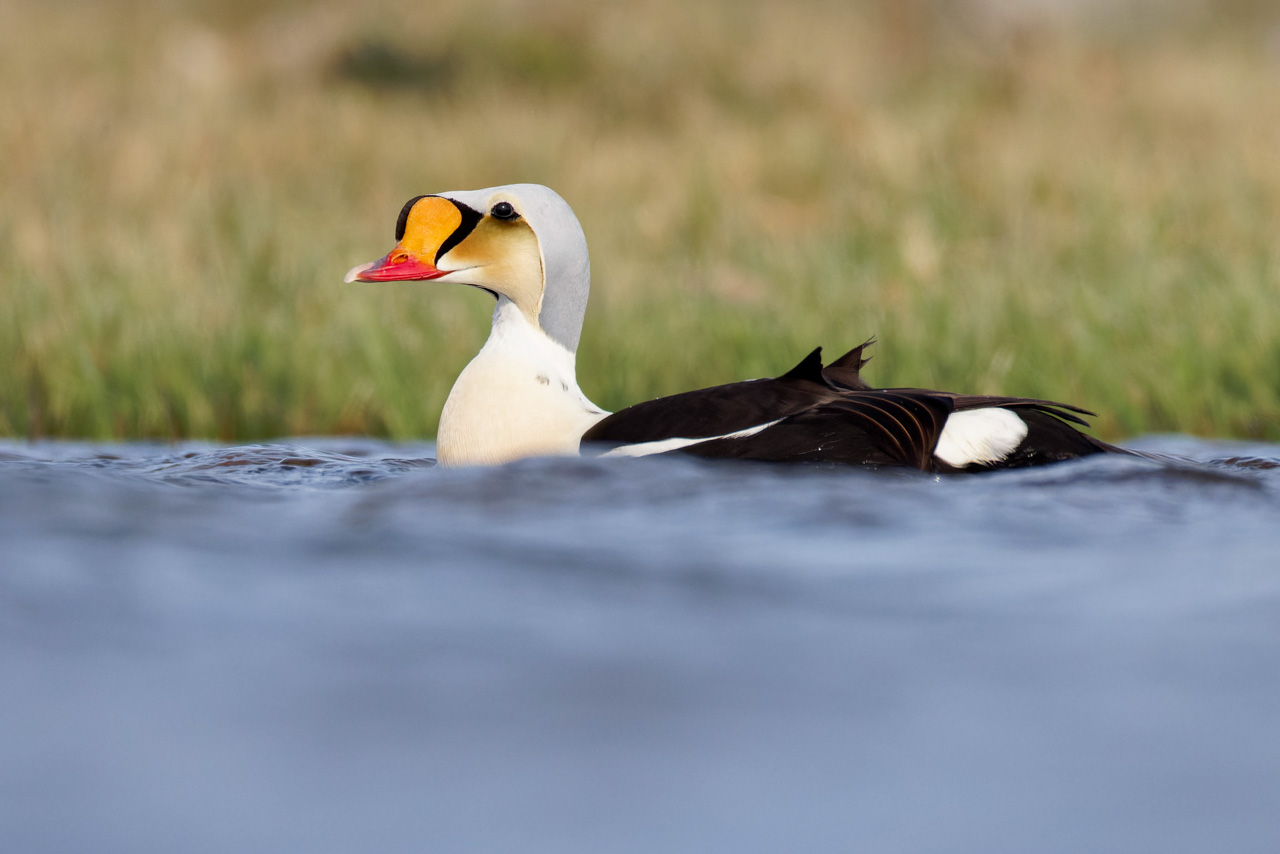
King Eider © Blair Dudeck
The walk also provided us with the opportunity to spend time watching busy Snow Bunting and Lapland Longspur parents bringing food to their recently fledged youngsters.
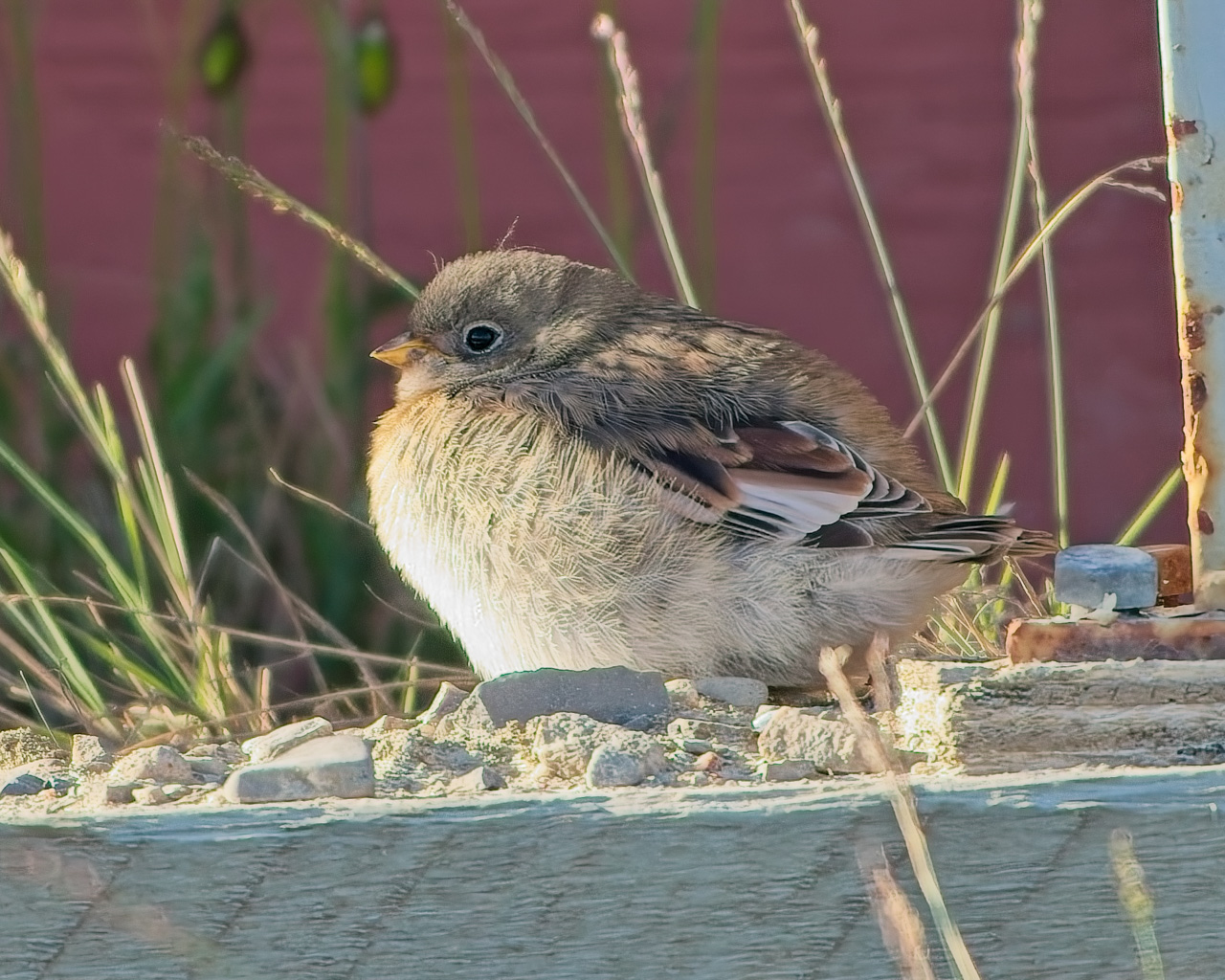
Snow Bunting fledgling © Frank Letniowski
Day 9
Before breakfast, we took a couple of hours to revisit the closer section of the old DEW-line road, but most of the day was to be spent exploring the coastline tundra west along Dease Strait. It was quite a thrill to stand on the beach and scan out across the sea ice towards the mainland.
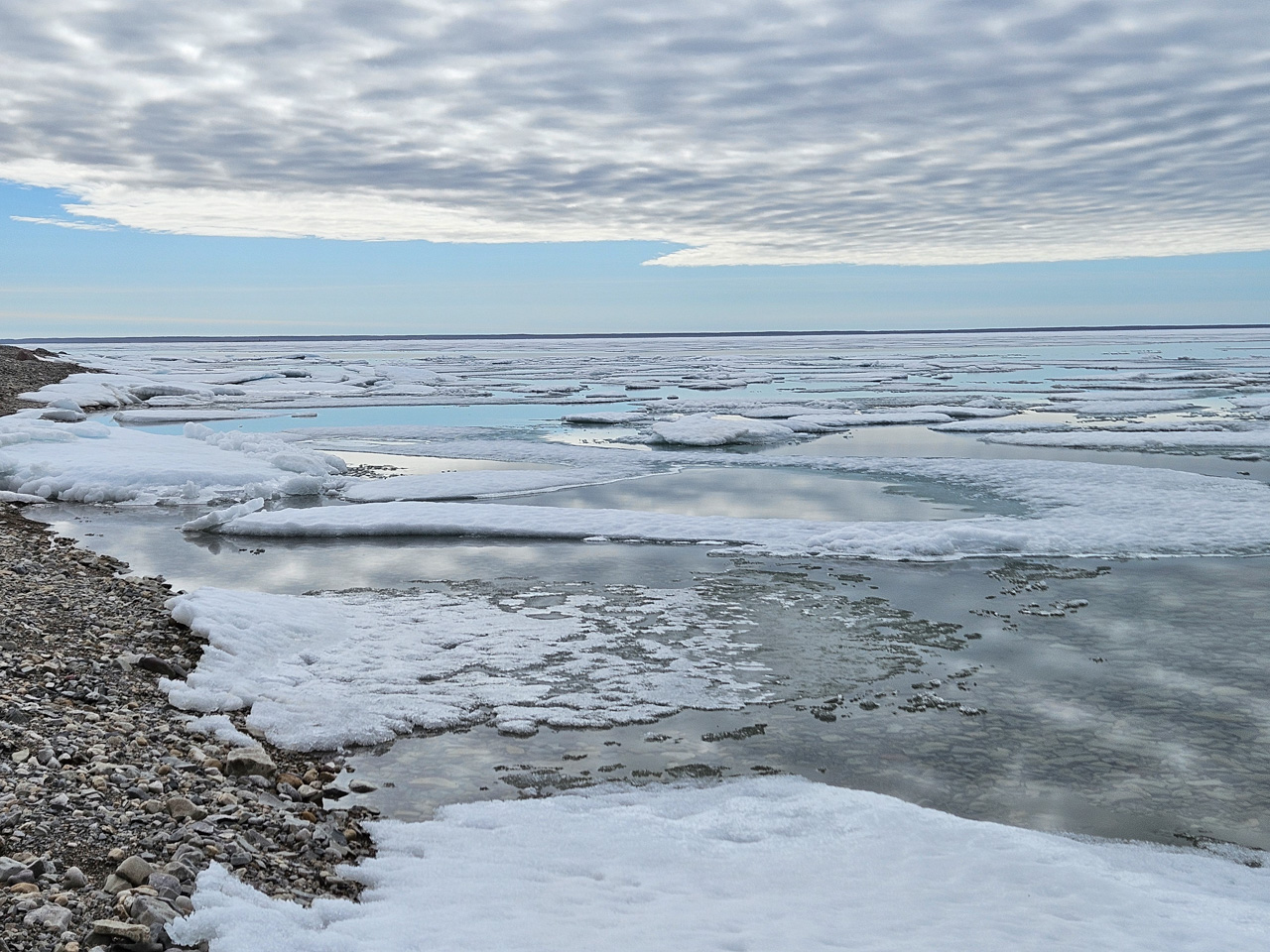
Dease Strait ice © Dianne Leonhardt
Small numbers of Ringed Seals were loafing far out on the ice edge, and some of the leads in the ice held Common Eider, Red-throated and Pacific Loons and surprisingly large numbers of Long-tailed Ducks, the latter presumably birds that had either finished or failed nesting.
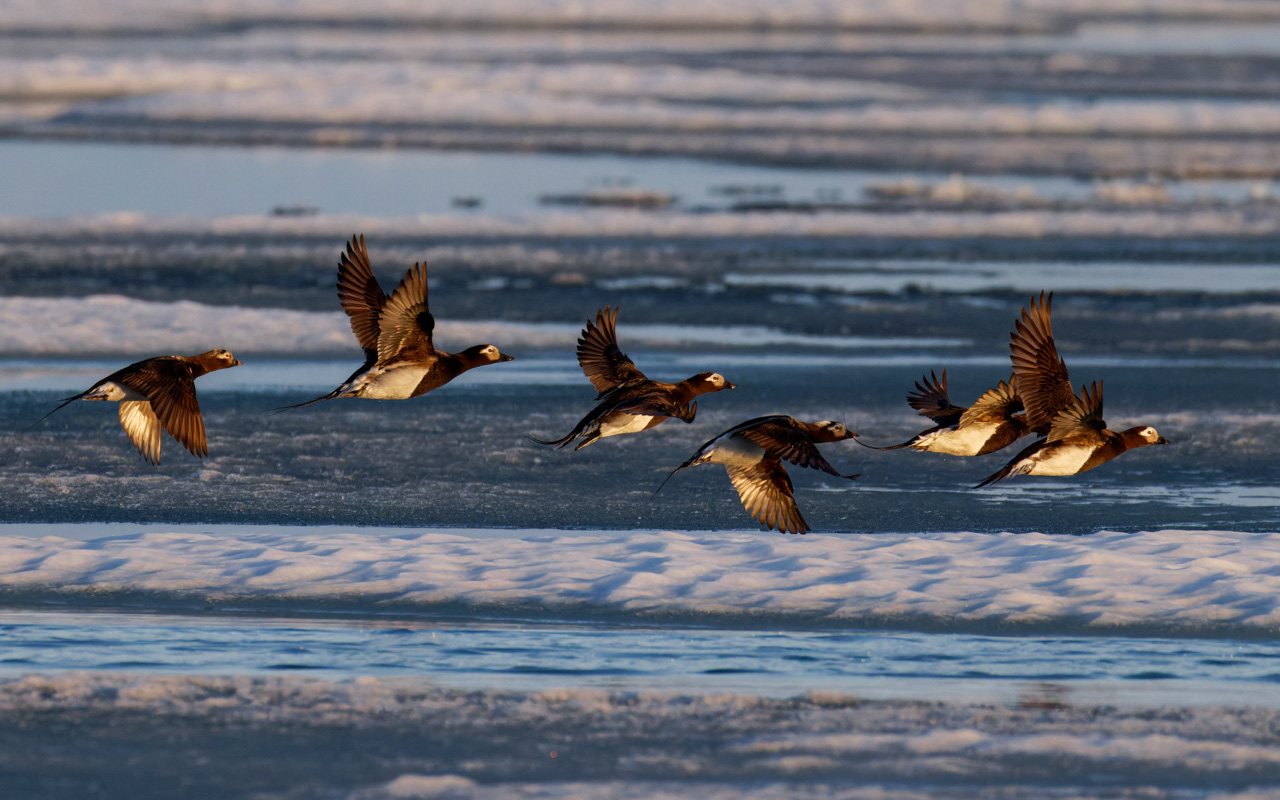
Long-tailed Ducks © Blair Dudeck
We continued further west along the gradually deteriorating road and then turned inland for another ambling hike out across the tundra, encountering a new suite of the Arctic blooms in this somewhat sandier terrain, along with a couple of new butterfly species (Dingy Fritillary and a rather unexpected American Copper).
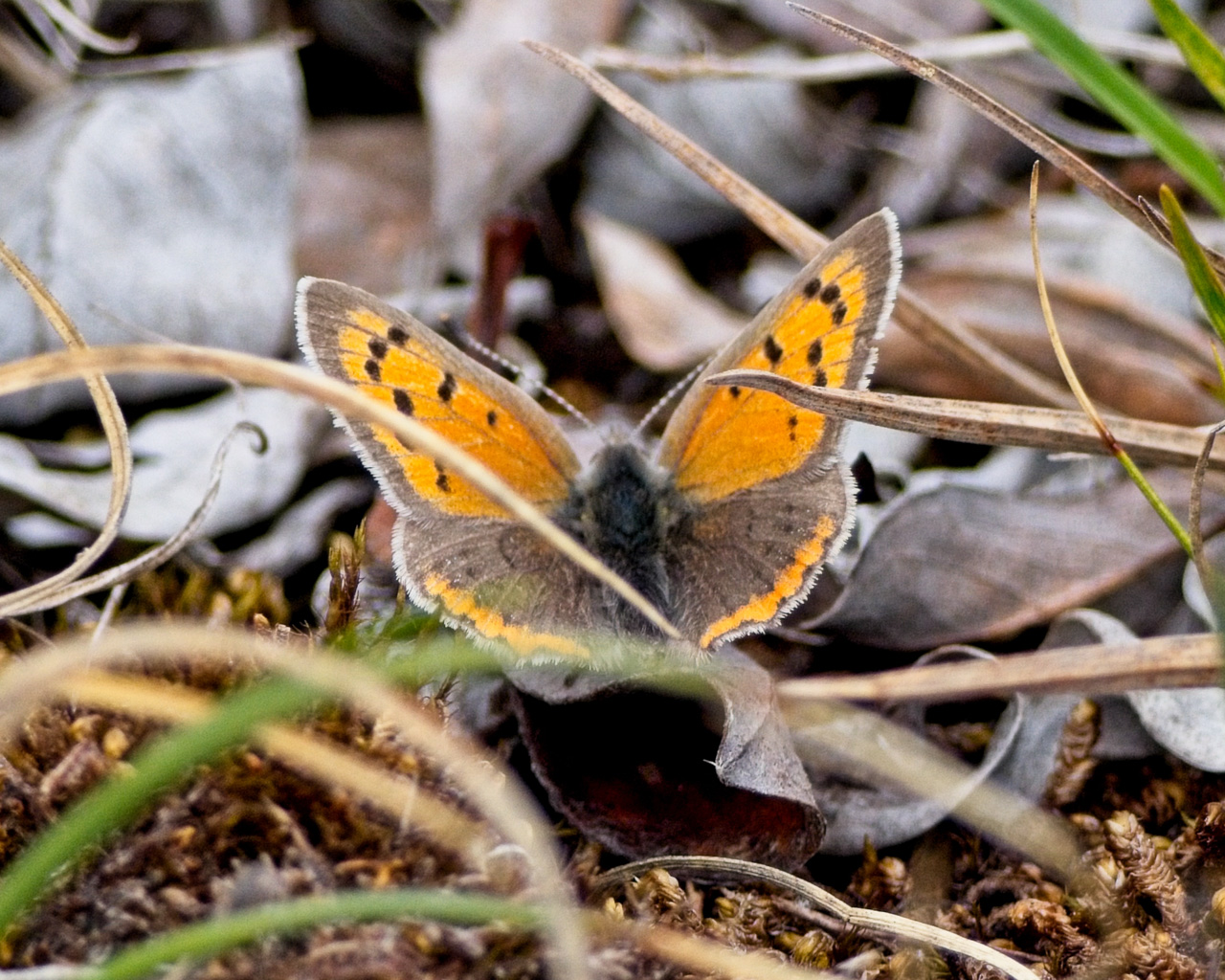
American Copper © Frank Letniowski
A handsome Long-tailed Jaeger posed on a prominent boulder, unconcerned by our close approach, although a parent Baird’s Sandpiper was certainly not as impressed by the Jaeger’s relaxed demeanour.
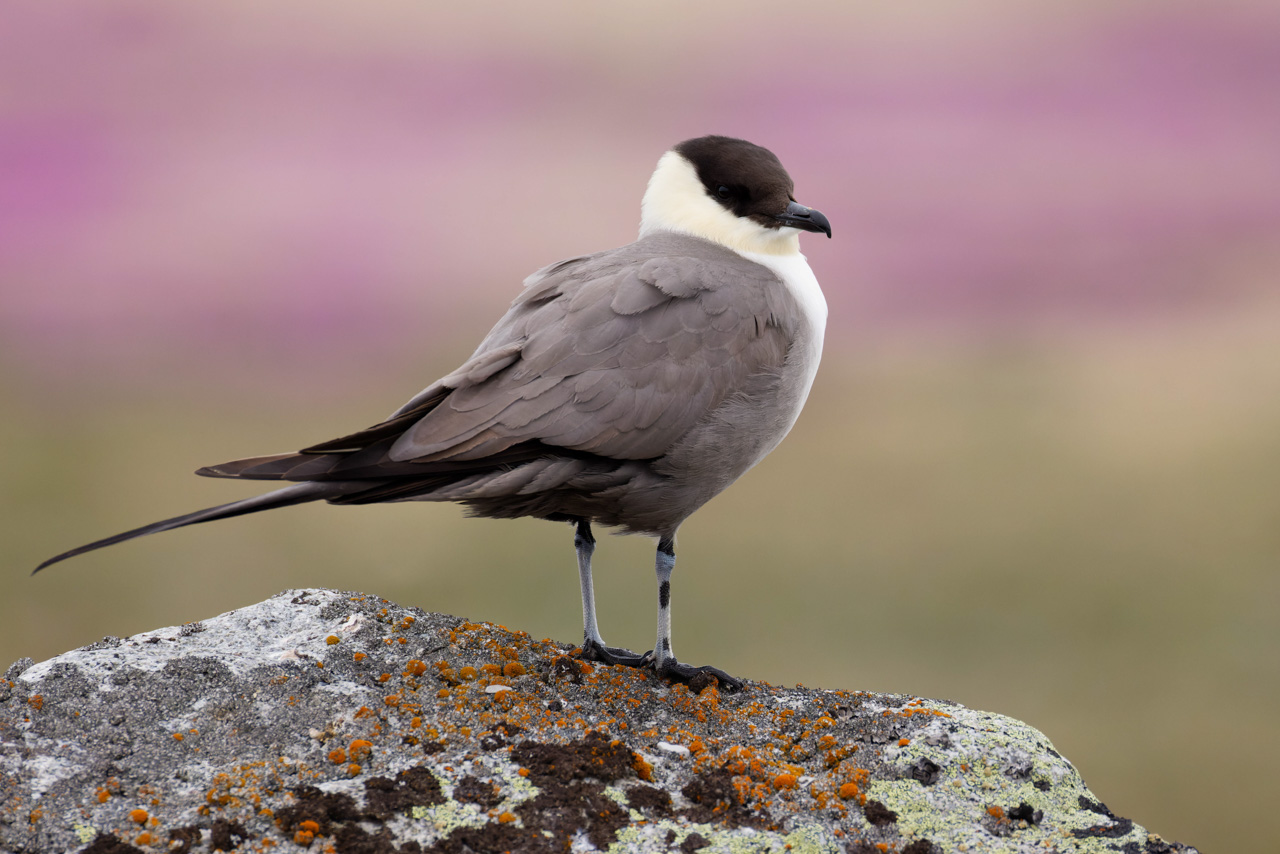
Long-tailed Jaegar © Blair Dudeck
A lone Hudsonian Whimbrel passed overhead, probably the trip’s rarest avian sighting; the literature doesn’t indicate any nesting for Victoria Island so perhaps a wanderer from the Yukon/Alaskan population.
Day 10
Our late flight afforded us time for one last drive along the DEW-line road where a very close Pacific Loon flyby provided excellent photo opportunities for those quick enough on the draw.
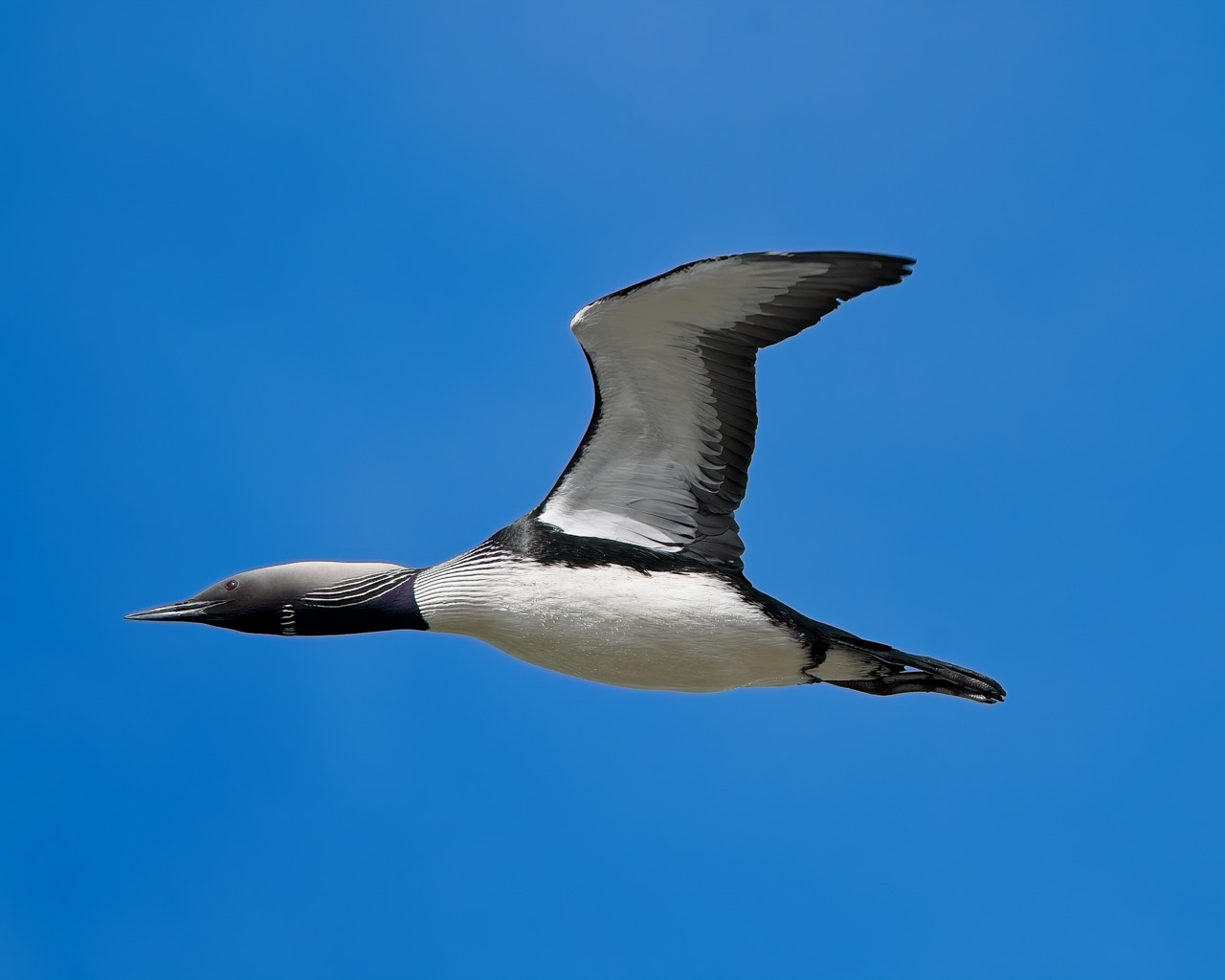
Pacific Loon © Frank Letniowski
We picnic-breakfasted once again with a swarm of over-friendly tundra mosquitoes, and then made our way back to town via more encounters with broods of Semipalmated Sandpipers, Stilt Sandpiper, Semipalmated Plover and American Golden Plovers.
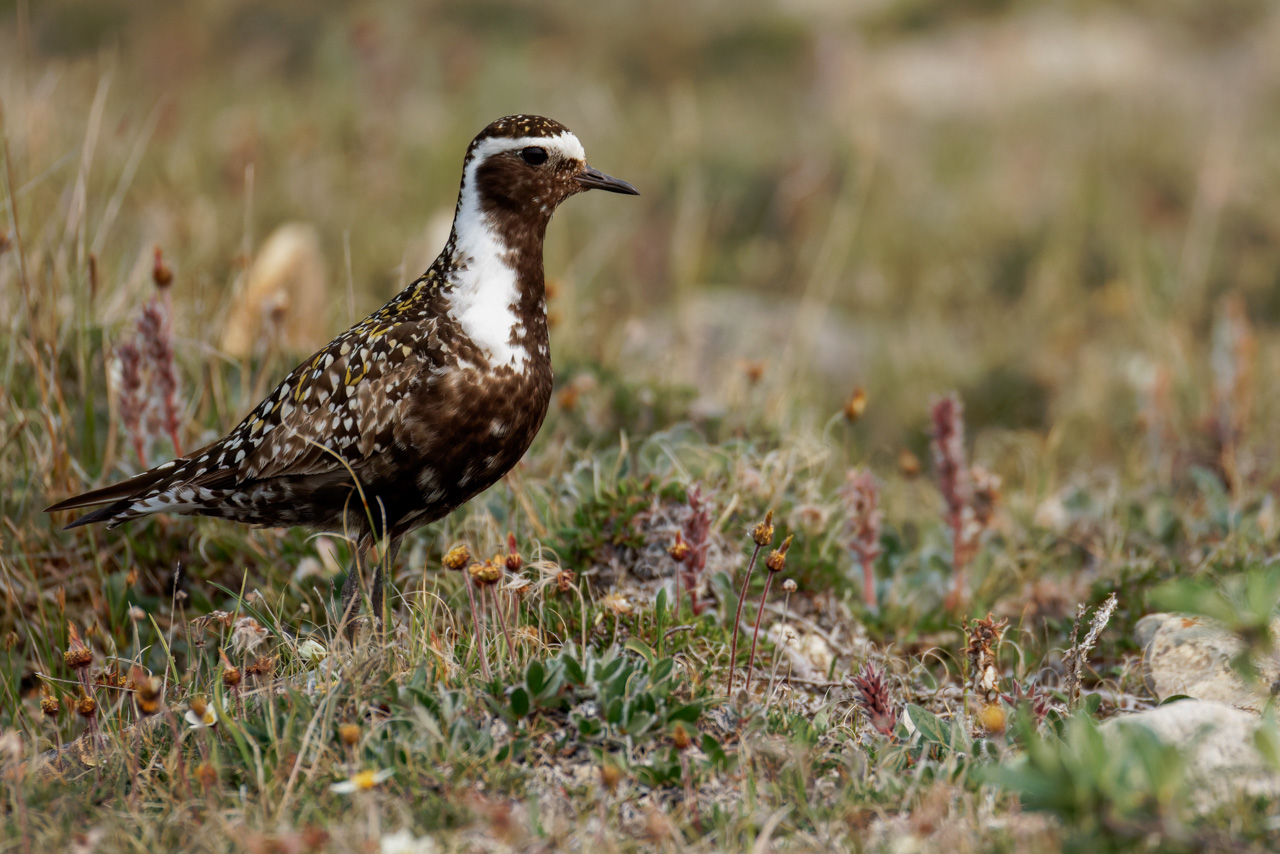
American Golden-Plover © Blair Dudeck
After lunch, as we drove to the airport, an adult Arctic Fox, escorted her small kit across the road ahead of the first van. We pulled onto the roadside and watched dad and a second kit join the first duo. The whole family proceeded to simply hang out nearby, the adults keeping a watchful eye on us as the kits did what kits do. An absolutely delightful note upon which to end our Arctic adventure.
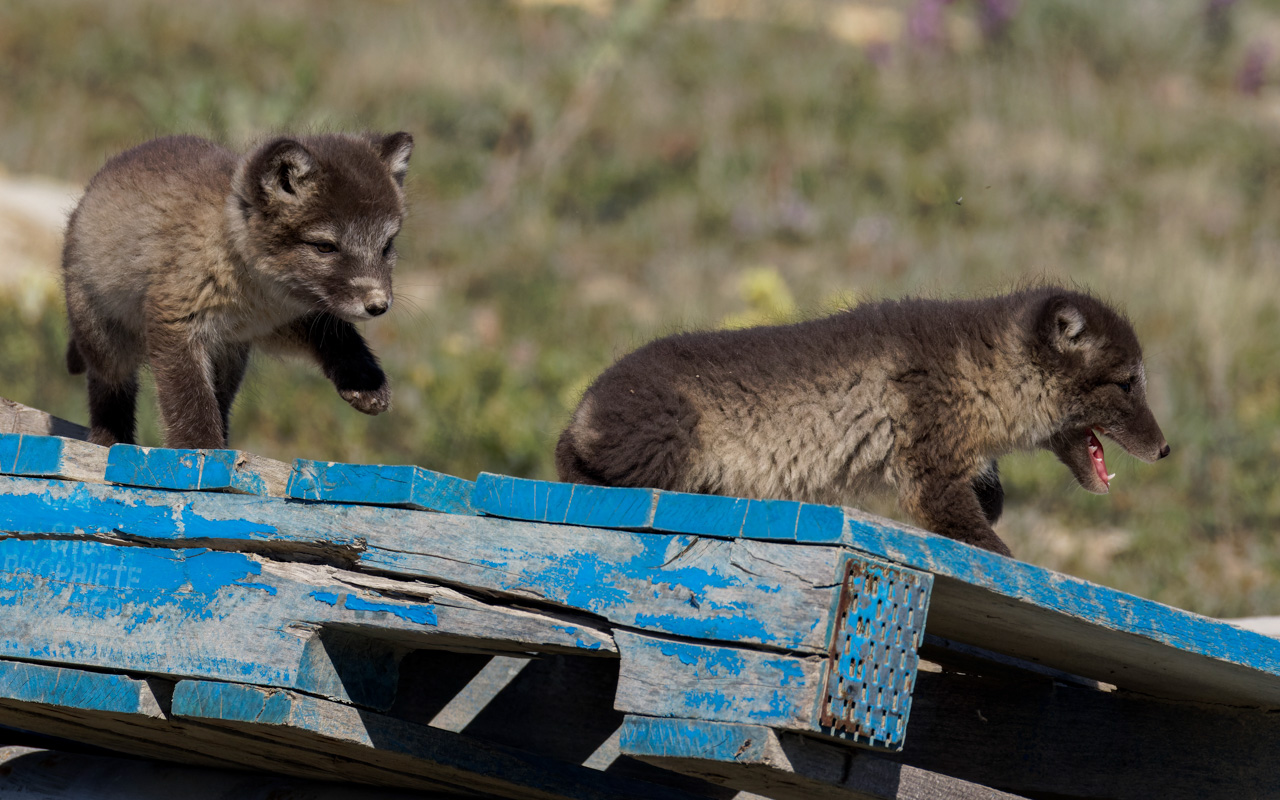
Arctic Fox pups © Blair Dudeck
Canadian North airlines whisked us back to Edmonton via Yellowknife for our last night in Leduc. The following day, we all went our separate ways, driving or flying to distant points east and west in this enormous country. For most of the group this had been their very first trip to the Canadian north, an experience that will certainly have left everyone with a lasting love for this wonderful part of the world. As ever, it was a real joy for Blair and I to share our enthusiasm for all aspects of the Arctic region with such a like-minded group of nature lovers.
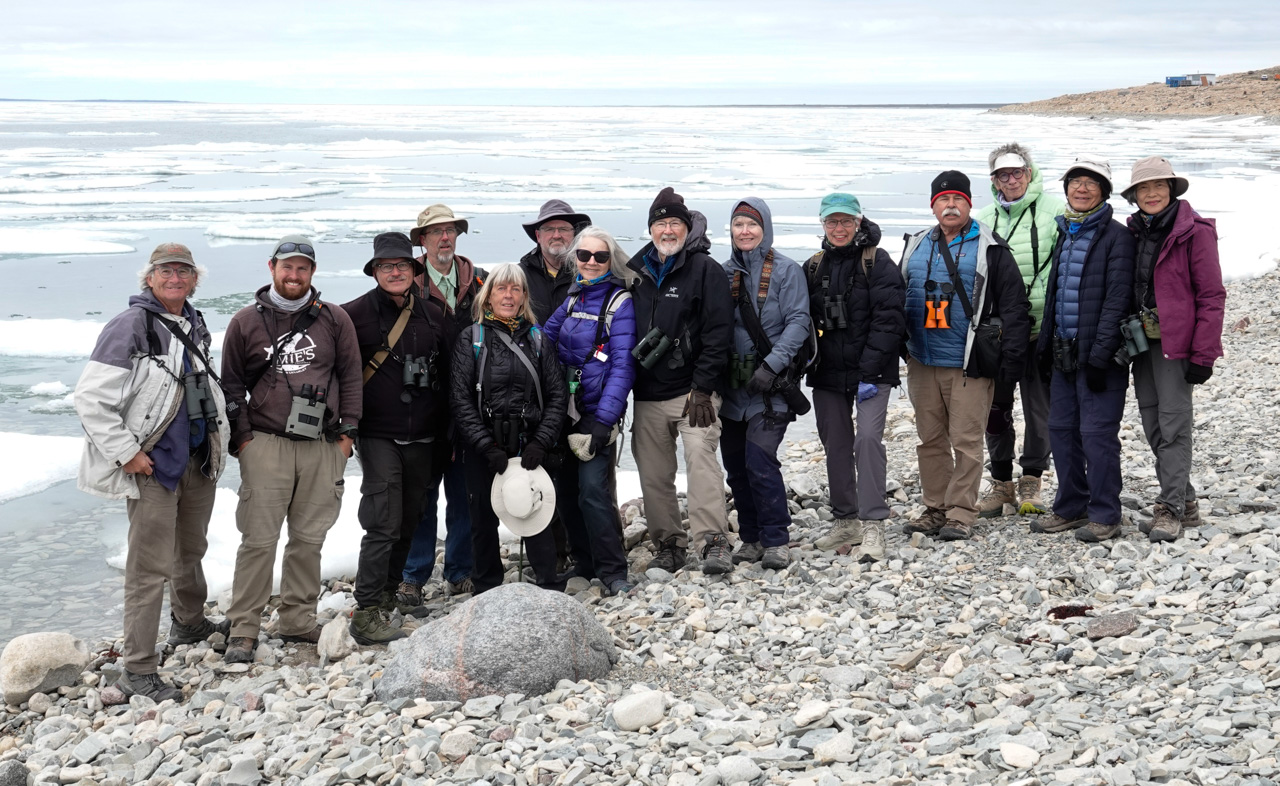
Group Photo July 2026
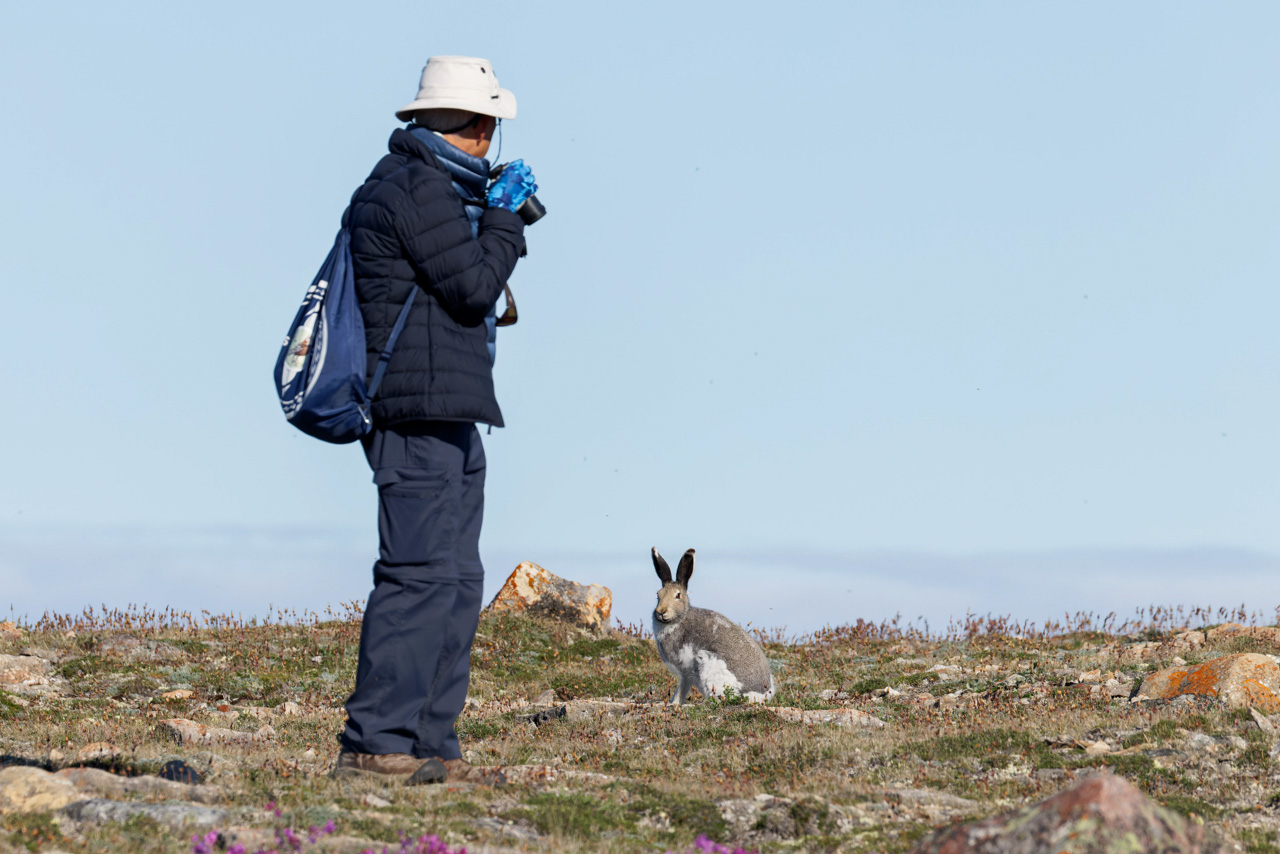
Arctic Hare © Blair Dudeck