Grand Newfoundland Trip Report (June 3-14, 2026)
Our group of eleven participants and two guides spent eleven days exploring what Newfoundland has to offer, from the lively and colourful city of St. Johns, to the rocky east coast and tundra-like barrens of the Avalon Peninsula, and finally the fjords and forested mountains of the west coast. We saw some of Newfoundland’s most iconic birds and wildlife – thousands of Atlantic Puffins, Common Murres and Northern Gannets, megafauna like Moose and Woodland Caribou, and even got to see the long staying Steller’s Sea Eagle! Our group had an incredible time exploring this beautiful province with unforgettable wildlife encounters, scenic hikes, and lots of laughs throughout the trip.
Day 1: Arrive in St. John’s
Our group met in our hotel lobby at the DoubleTree by Hilton Harbourview before heading over to the Little Sparo to get to know each other over some great food. Most of the group headed out after dinner for some birding at Deadman’s Pond and an evening sea watch at Signal Hill. We had some great looks at American Black Duck and Common Tern at Dead Man’s Pond, as well as a very obliging Northern Yellow Warbler, our first warbler for the trip! The view at the top of Signal Hill was spectacular, and here we saw our first Northern Gannets and Great Black-backed Gulls, as well as many distant Minke Whales.
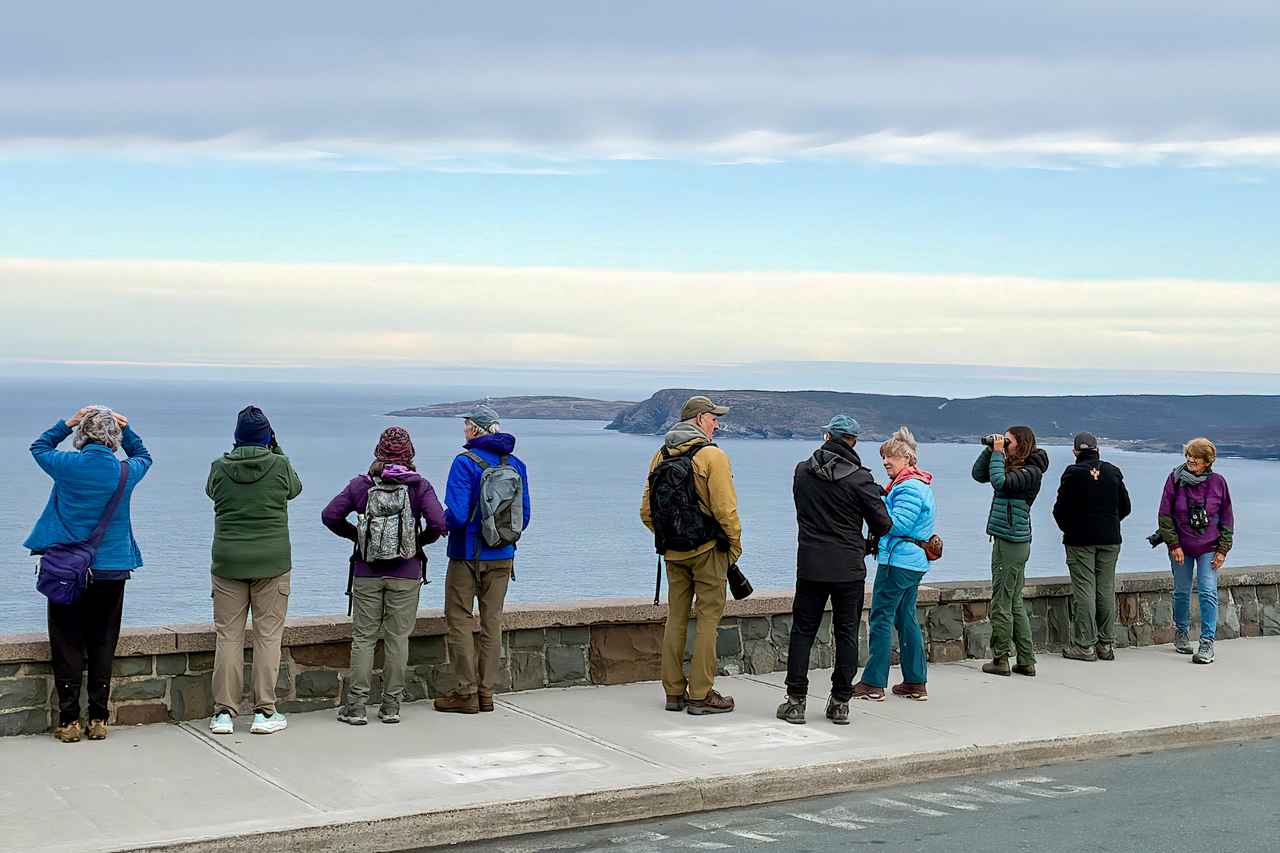
Watching Over Signal Hill © Mitch Doucet
Day 2: The Gould’s and Witless Bay Ecological Reserve
We began day two by heading to the Gould’s area to bird Cochrane Pond Road and Bidgood Park, areas surrounded by Black Spruce forest, a preferred habitat by many of the boreal breeding warblers in St John’s. We made a quick stop on our way there to Tobin Road where we had our first looks at Northern Pintail, as well as Killdeer – a rarity for the island! Once at Cochrane Pond Road warblers came quickly – singing Northern Waterthrushes were scattered along the road, and we had great looks at Yellow-rumped Warblers, Wilson’s Warbler, and Blackpoll Warbler.
Our next stop for the morning was Bidgood Park, one of the best locations in the St. John’s area for breeding song birds. The biggest surprise sighting of the morning was an American Bittern, who was casually skulking through some short vegetation for great looks at a usually well hidden bird. Some other highlights from Bidgood Park included our only Brown Creepers of the trip, as well as our first looks at a Northern Waterthrush, who perched conspicuously to sing.
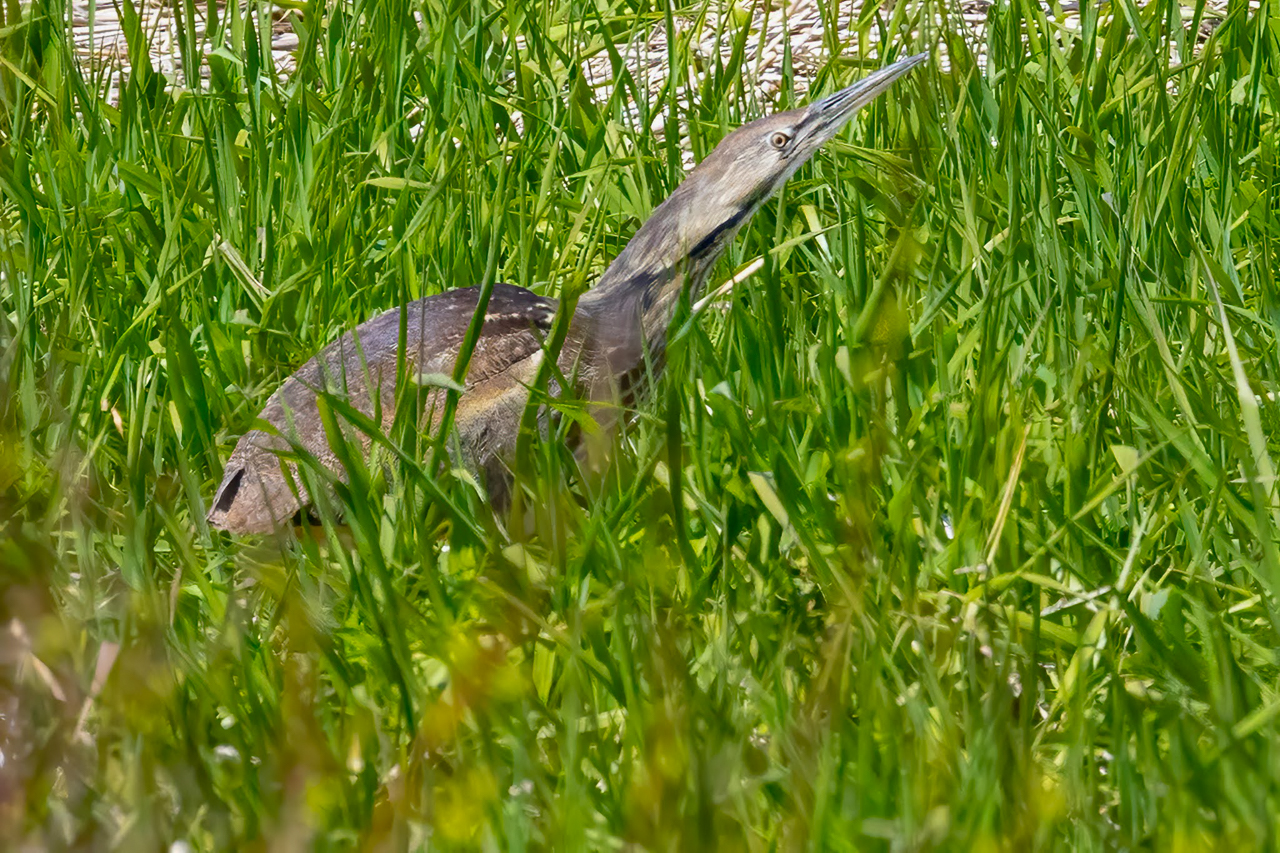
American Bittern © Mitch Doucet
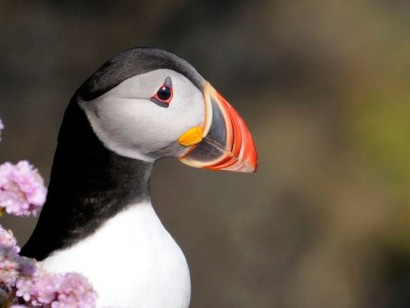
In the afternoon we made our way over to Bay Bulls, where we had a nice packed sandwich lunch at O’Brien’s Boat Tours before departing on our boat tour into Witless Bay Ecological Reserve to see the sea bird colonies on Gull Island. Before arriving into Witless Bay, an iceberg was spotted just outside of Bay Bulls Bay, and our boat tour driver graciously took us to get an up close look at it! After doing a loop of the massive chunk of floating ice, we continued on to Gull Island. Once in view of the Island, we could already see the spectacle of the thousands of puffins and murres, as they literally filled the sky as they flew around. As we got closer to the island, our group was in awe of the sheer number of Atlantic Puffins, Common Murres, Razorbills and Black-legged Kittiwakes that were whizzing past our boat and sitting along the cliffs of the island. It is truly a spectacle that should be on everyone’s bucket list! Our group was also lucky enough to see a Thick-billed Murre, which is a needle in a haystack among the thousands of Common Murres along the cliffside.
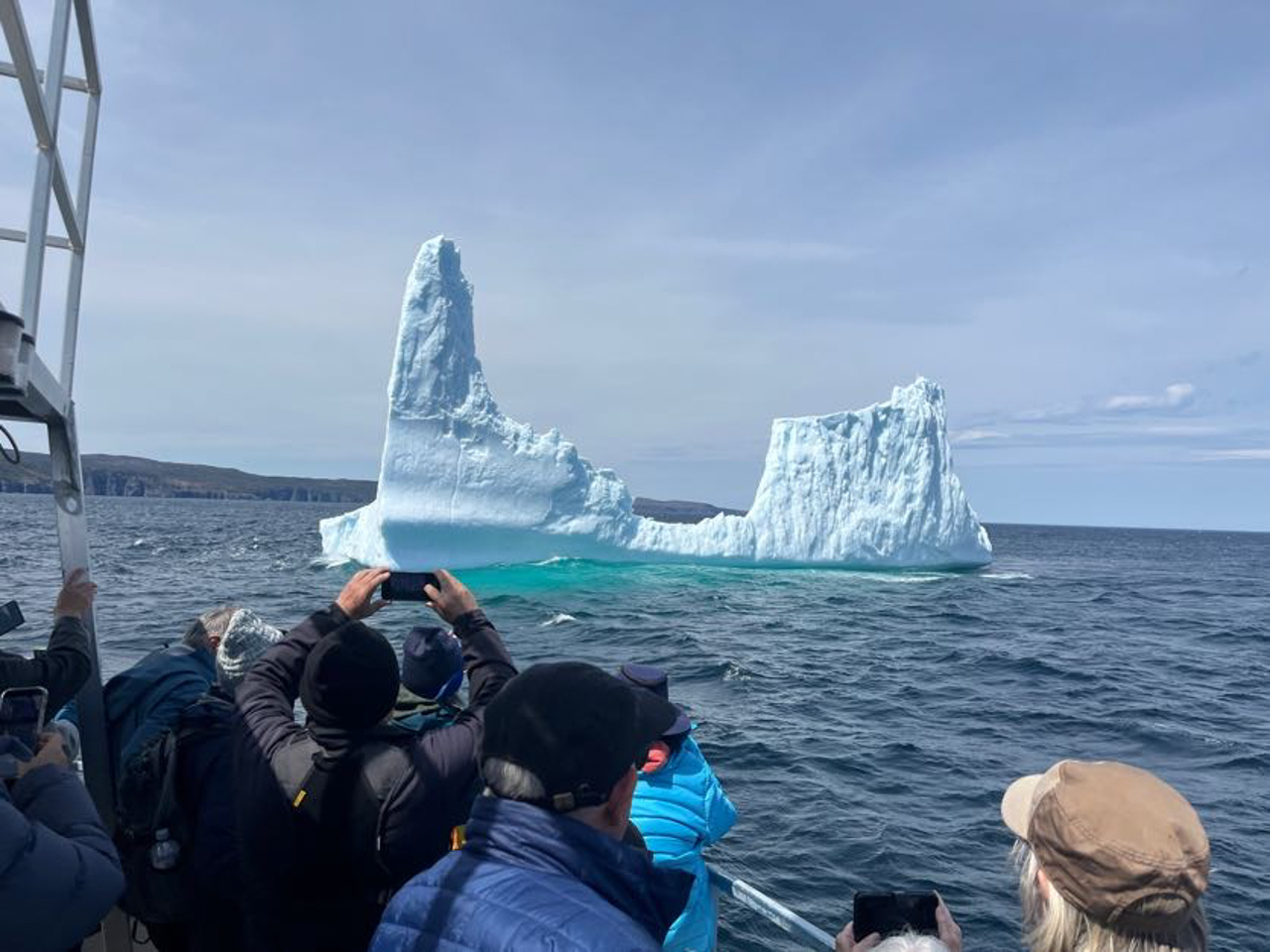
Iceberg © Sarah Lamond
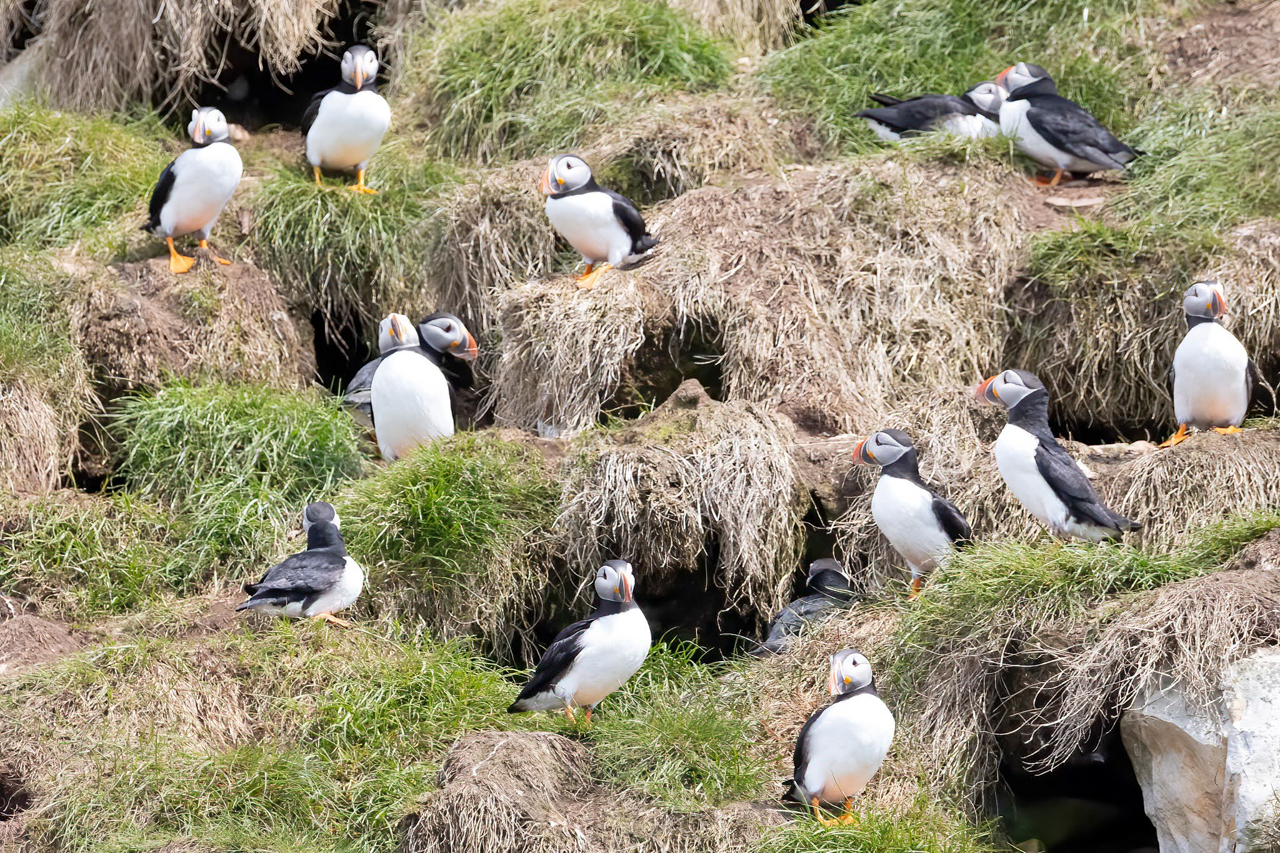
Puffins © Mitch Doucet
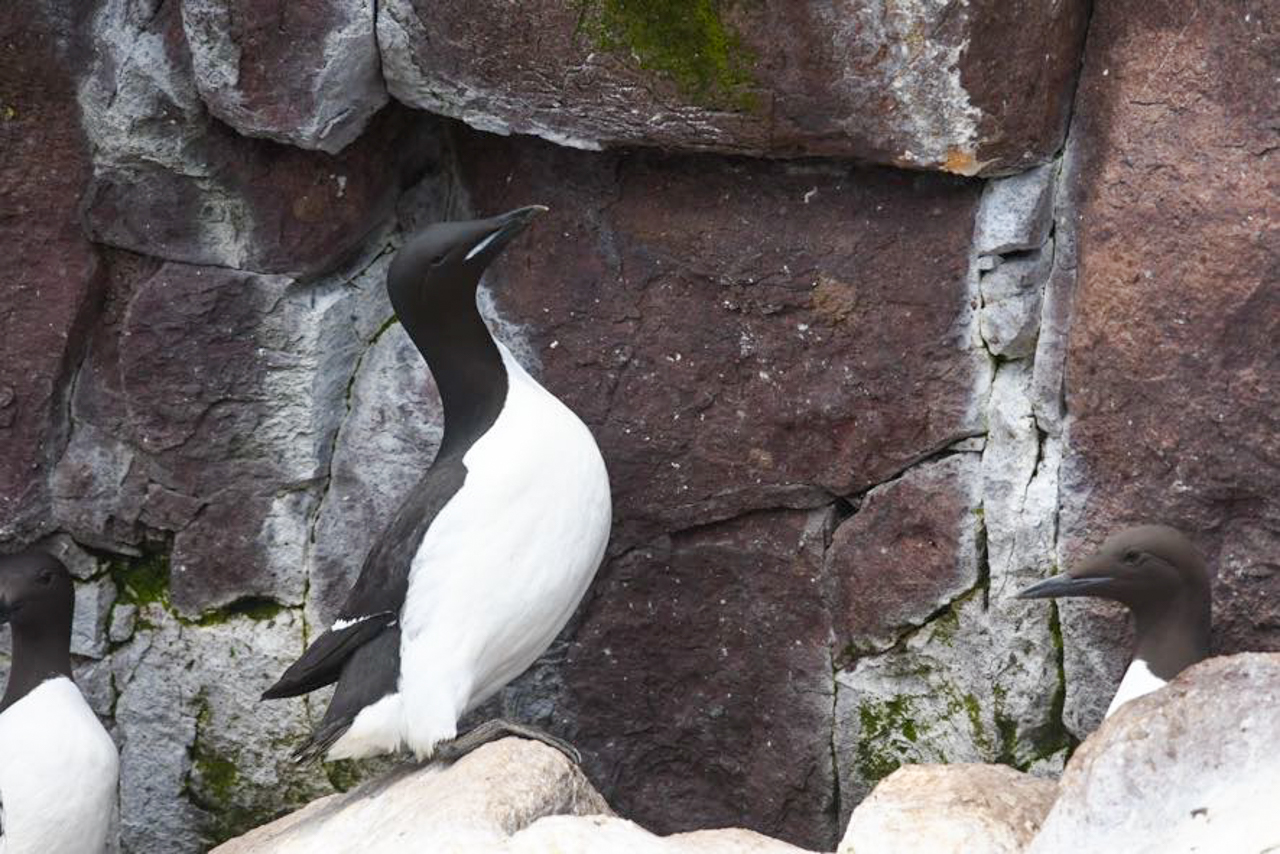
Thick-billed Murre © Sarah Lamond
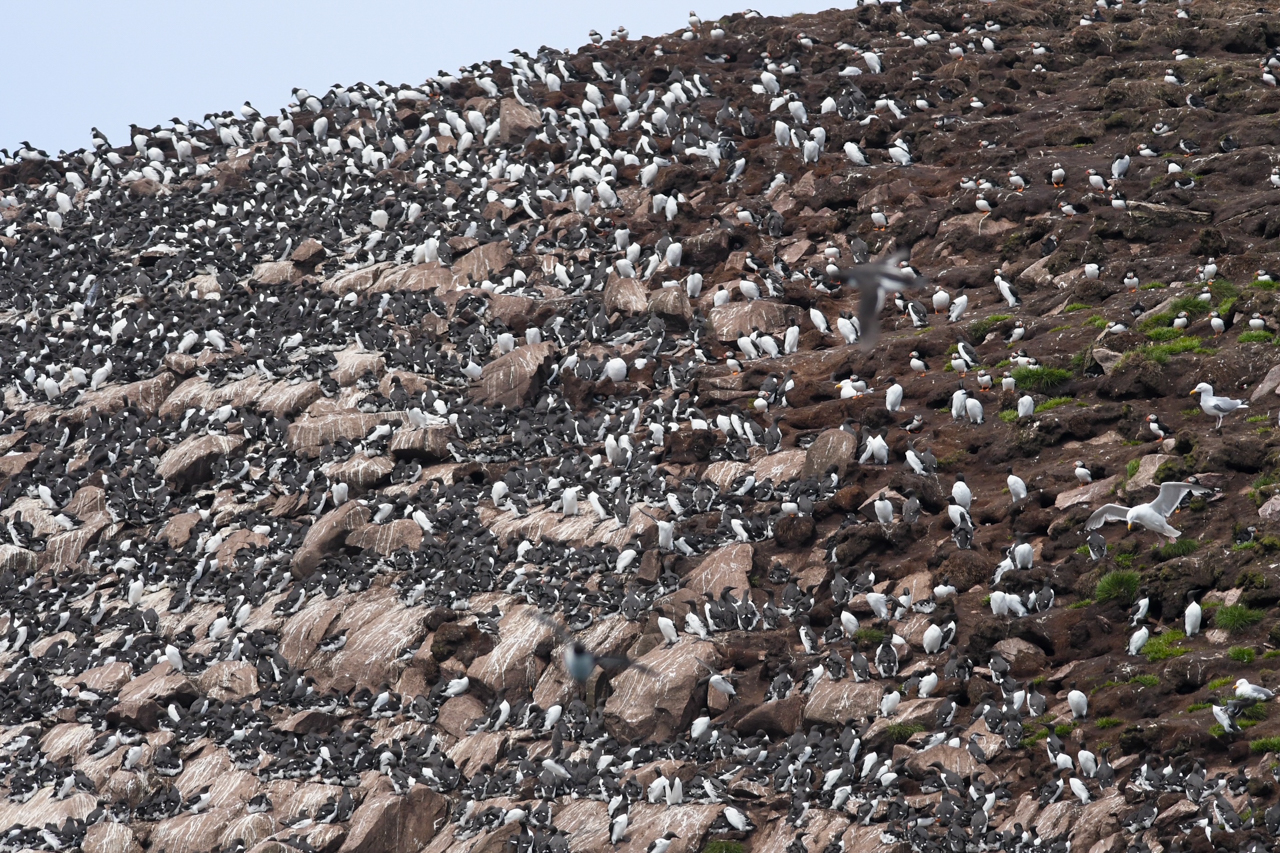
Seabird Colony on Gull Island © Sarah Lamond
After our amazing boat tour, we made one last stop to see a known Great Horned Owl nest. The nest was in a strange spot – lodged on the backside of an old parabolic antenna. Not only did we get to see the young bird, but one of the adults was also there keeping it company! An exciting scene to end off an already amazing day of birding.
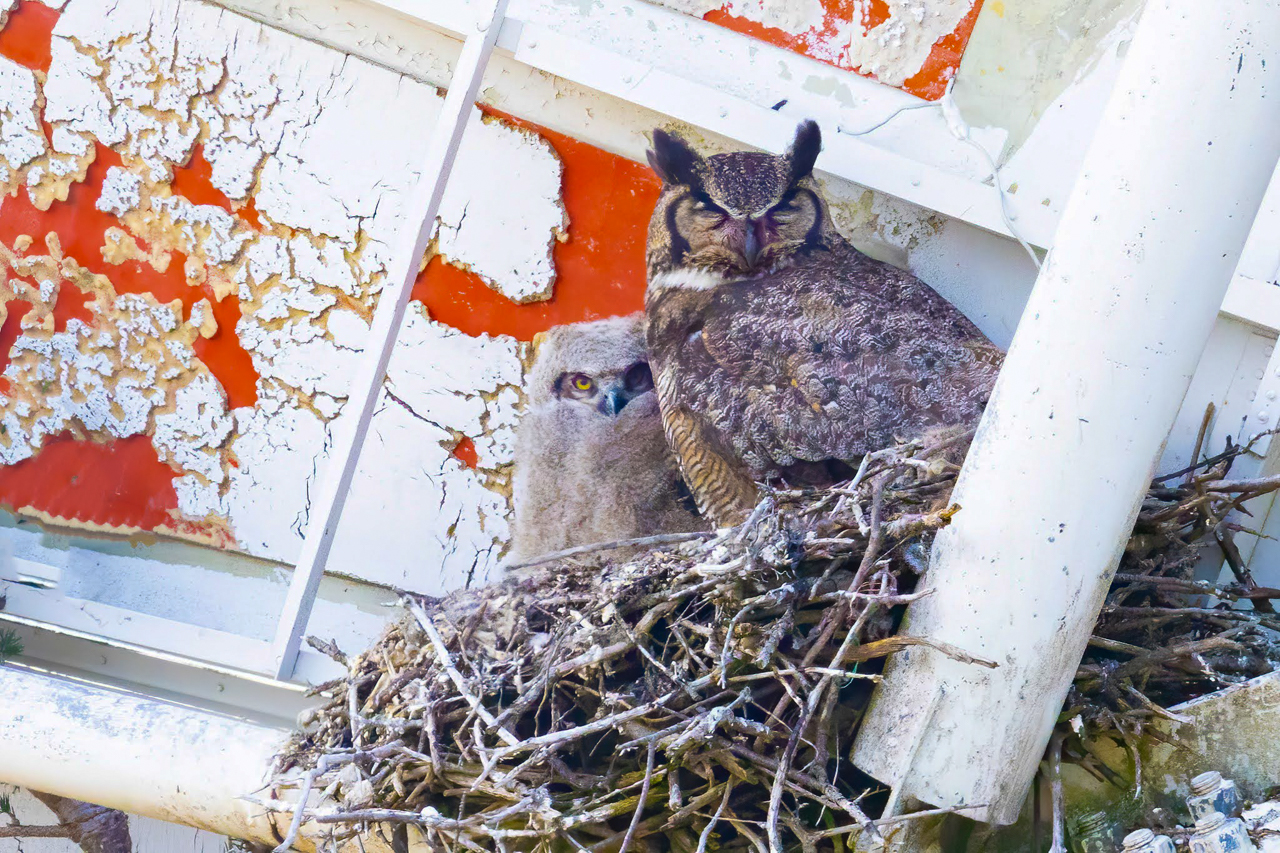
Great Horned Owl nest © Mitch Doucet
Day 3: A Successful Visit With the Steller’s Sea Eagle, Cape Spear, and Some St John’s Ponds
Our group made the unified decision to try our luck with the infamous Steller’s Sea Eagle, who has now been a permanent resident in Newfoundland since the summer of 2023. The current location of the Eagle in Whiteway makes it difficult to always see from land, and often times a boat is the only possible way to view it, however when we arrived to the location and began scanning the far shore of Whiteway Bay there it was! Although the bird was about 1.5km away our group still had decent scope views, and we all left Whiteway extremely happy!
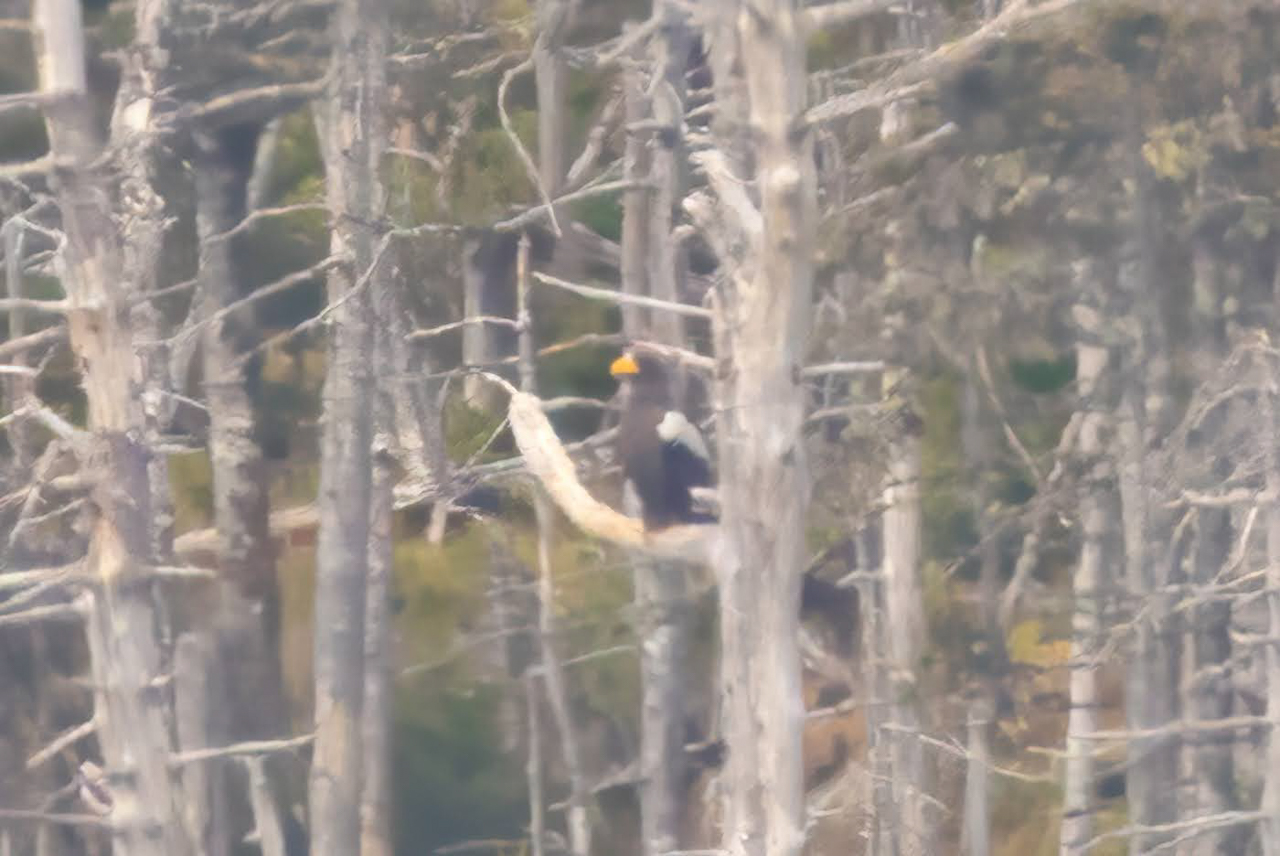
Steller’s Sea Eagle © Mitch Doucet
We then made our way back to St. John’s to visit Cape Spear, the easternmost point in North America. It was a brutally windy and cold day, so we had our picnic lunch in the back of the vehicles. After lunch, most of our group braved the awful winds to walk out to the easternmost point and explore the lighthouse. Due to the weather, very few birds were seen here, however we did have a very obliging Savannah Sparrow feeding on some dropped crackers in the parking lot.
After Cape Spear we made a few more stops at some of the ponds in St John’s: Bowring Park, Mundy Pond and Burton’s Pond. The weather made birding difficult, but we had some highlight sightings, such as a Lesser Scaup at Mundy’s Pond and a Hooded Merganser at Burton’s Pond. We then headed back to the DoubleTree by Hilton Harbourview to warm up before walking over to Vu restaurant to wrap up our last day in St John’s.
Day 4: The Irish Loop from St. John’s to Trepassey
We started our morning by making one last birding stop in St. John’s to Quidi Vidi Lake, a very popular spot for waterfowl and gulls. Our highlight here was a beautiful male Wood Duck, who was quite tame and gave us great views.
We then continued on to St. Michaels to scope Ship Island in hopes of seeing some Northern Fulmars who nest here. This is a rare southern colony in North America with only about a dozen pairs, as most Northern Fulmars breed in the high Arctic. We managed to see at least three of these elegant white seabirds perched on the cliffs, and even got to watch them effortlessly glide along the cliffside of the island.
Before lunch we made a quick stop to La Manche Provincial Park, where we got our best looks of the trip at Purple Finches and Blue-headed Vireos. For lunch we stopped at the Million Dollar View Restaurant in Ferryland, where we had delicious food and great views of the Atlantic Ocean. We then continued on to Renews for our next target of the day: Arctic Tern! Two were spotted quickly very close to shore, and we got great comparisons of them with Common Terns.
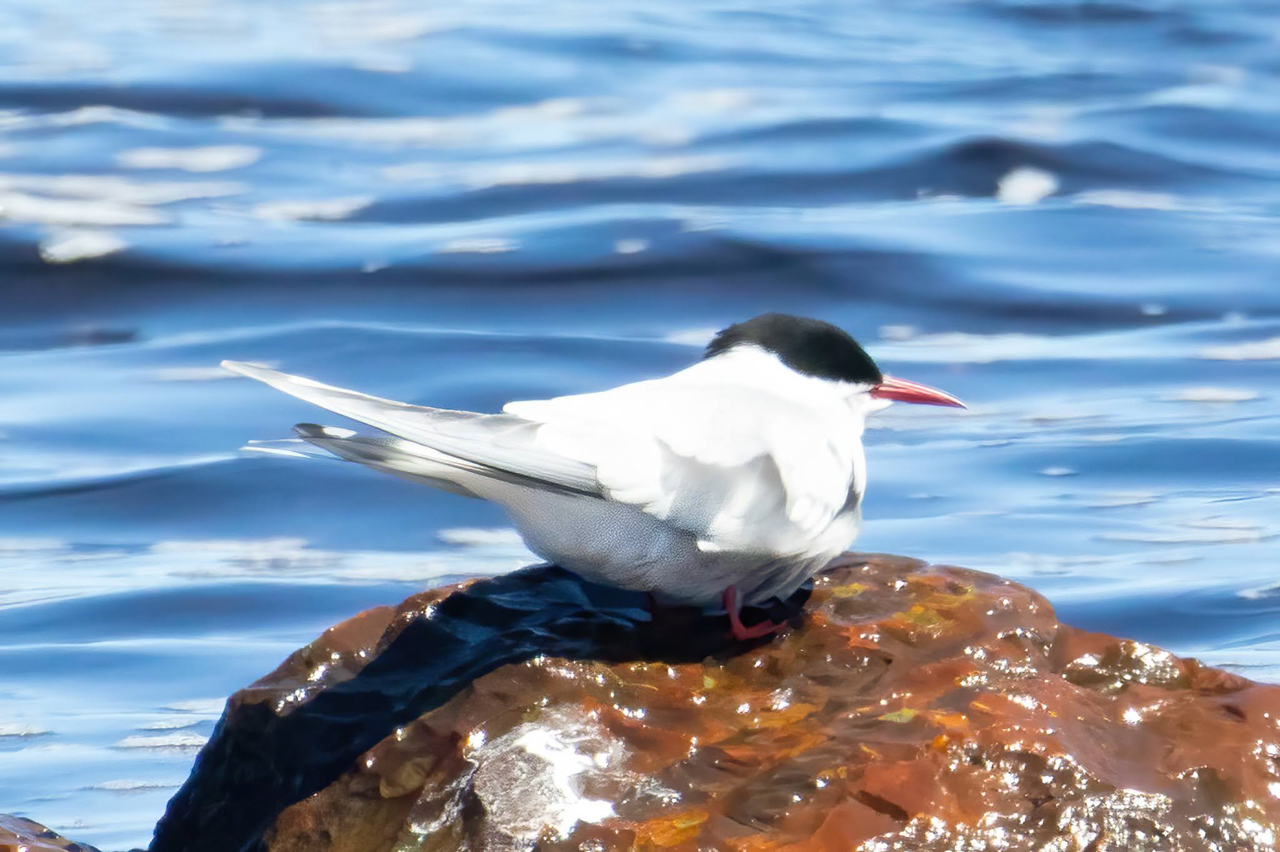
Arctic Tern © Mitch Doucet
In the late afternoon we stopped in at the Edge of Avalon Interpretation Centre in Portugal Cove South, the starting point for exploring the Mistaken Point Ecological Reserve. This reserve features 565-million-year-old fossils, and is a UNESCO World Heritage Site. We then finished off the day by driving down the long road to the Cape Race Lighthouse, a remote lighthouse on the southeastern tip of the Avalon Peninsula. The wireless station at Cape Race was one of the very first to receive the Titanic’s distress signals, and because of this holds a significant place in maritime history. The views from Cape Race were beautiful in the early evening, and we added Common Eider and American Pipits to our trip, as well as had good views of Black Guillemots, Common Loons and Northern Gannets. We also had our first Woodland Caribou sightings of the trip along the main road on our way to Cape Race.
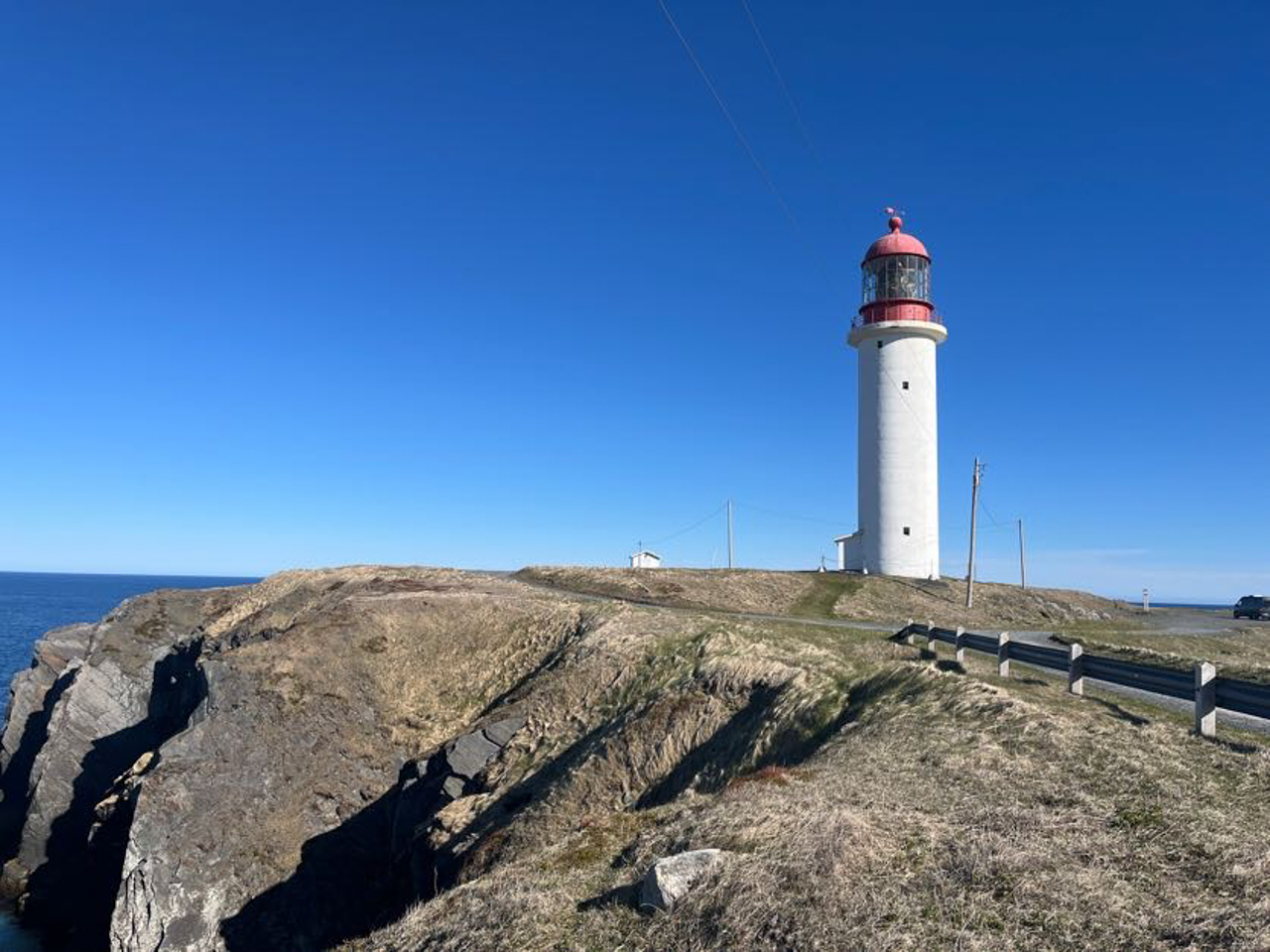
Cape Race © Sarah Lamond
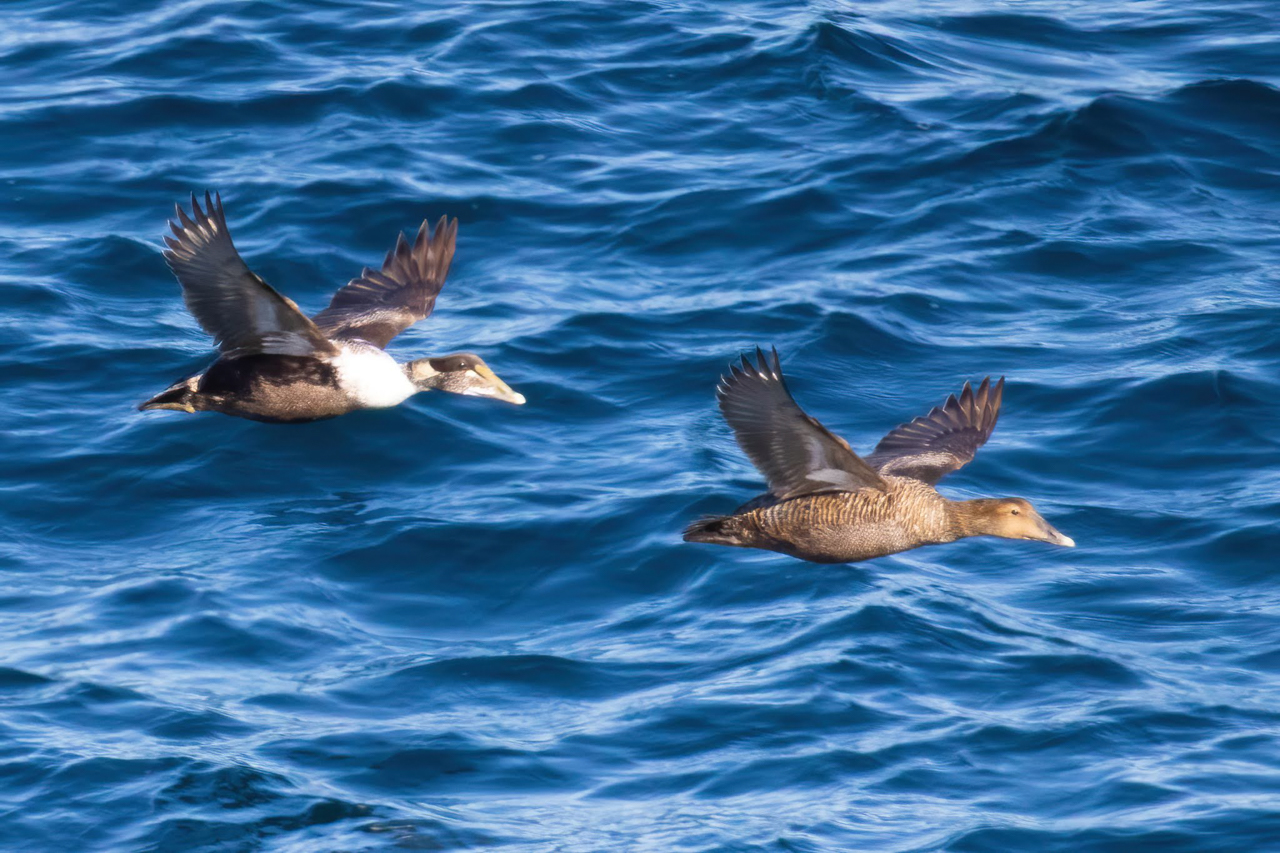
Common Eiders © Mitch Doucet
Day 5: The Irish Loop from Trepassey to St. Bride’s
Some of us started bright and early with pre-breakfast birding around the Mistaken Point Ecological Reserve area. A group of us walked one of the publicly accessible trails while the other group drove the main road towards Cape Race. Highlights included White-winged Scoter, Green-winged Teal, Horned Larks, Savannah Sparrows and Razorbills.
The southern Avalon Peninsula region is known as the Eastern Hyper-Oceanic Barrens, a very rare ecosystem showcasing a mix of coastal barrens, peat bogs and stunted coniferous forests. Due to this unique geography, the habitat supports many seabird colonies, as well as the most southerly caribou in Canada! Our targets for this area included Caribou, Short-eared Owl, and Willow Ptarmigan – all species that are found in tundra habitats.
After breakfast, we began our drive to the Cape Pine Lighthouse in St. Shott’s. Along this drive we ended up seeing a Glaucous Gull, a few Grey Seals, eight more Woodland Caribou, as well as a Short-eared Owl, who we watched catch a vole, and briefly pick at it before flying off out of sight with it’s meal. Once at the Cape Pine Lighthouse, we connected with three Bald Eagles, as well as two Northern Harriers. After spending a bit of time around the lighthouse, we decided it was time to start our drive out of the southern Avalon Peninsula, and north St. Vincent’s. We had one last chance to look for Willow Ptarmigan on our drive out of the St. Shott’s area, and were lucky enough to spot one along the side of the road! This was a lifer for most of the group, and one of the main targets, so we were all quite happy to have finally found one.
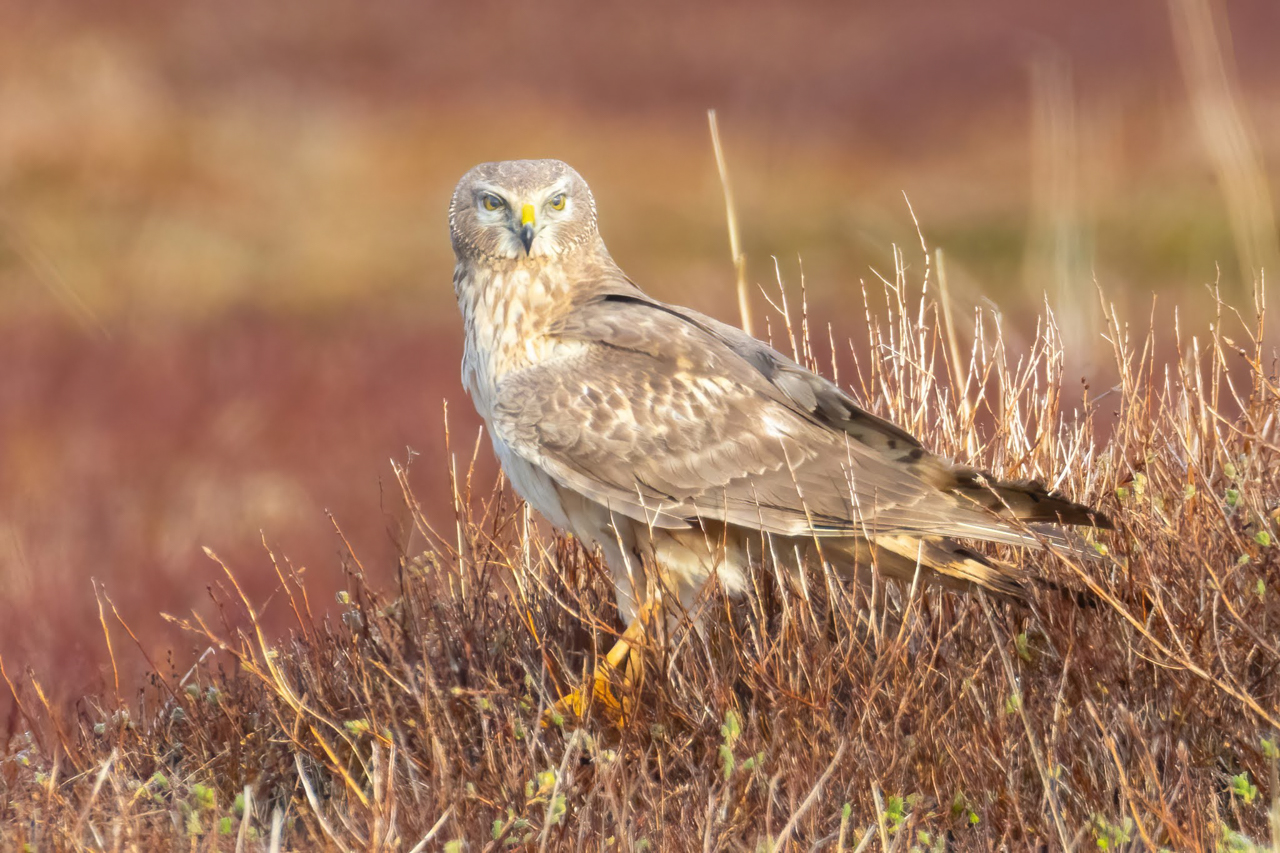
Northern Harrier © Mitch Doucet
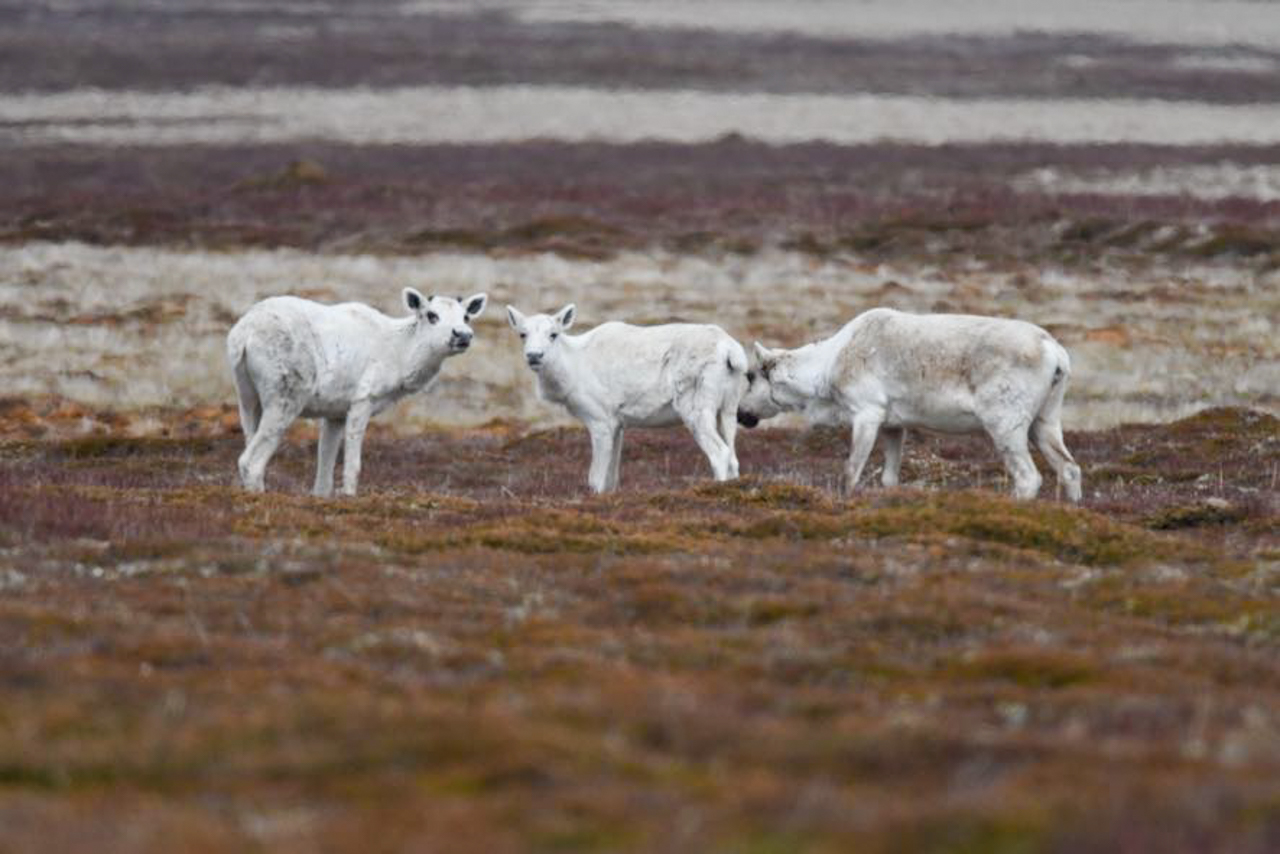
Woodland Caribou © Sarah Lamond
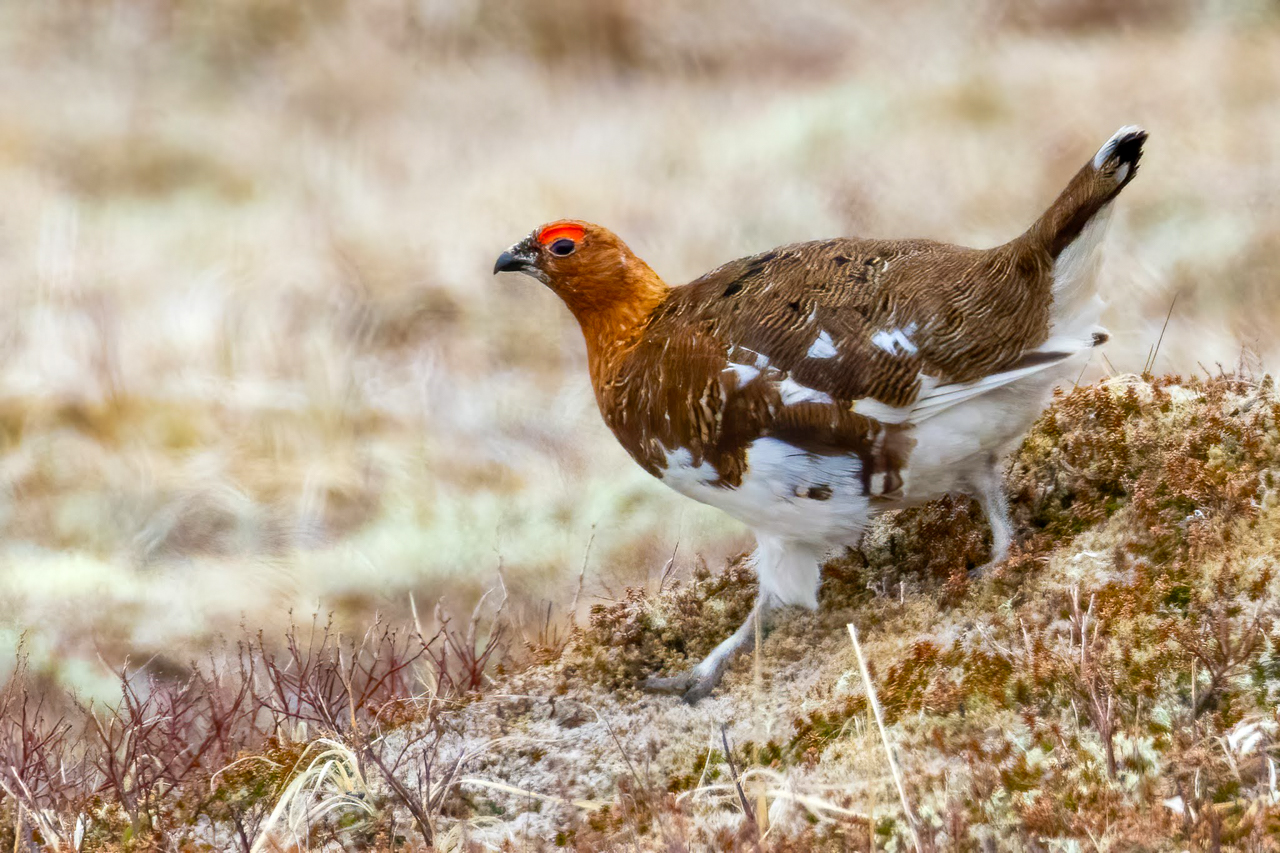
Willow Ptarmigan © Mitch Doucet
We had a nice picnic lunch at St. Vincent’s, and shared our lunch spot with a couple of Common Loons and a Greater Yellowlegs. We realized the weather wasn’t looking too hot for our trip to Cape St. Mary’s Ecological Reserve the following day, so we decided to make a b-line there from lunch instead. Once we arrived to Cape St. Mary’s, an extremely thick fog had rolled in, however that didn’t matter once we walked out to the main viewing area, as the breeding colonies of Northern Gannets, Common Murres, and Black-legged Kittiwakes were only about 50 feet away from us! This is the most accessible seabird colony in Newfoundland and home to the third-largest nesting site of Northern Gannets in North America. Another Willow Ptarmigan was seen here through the fog along the main trail.
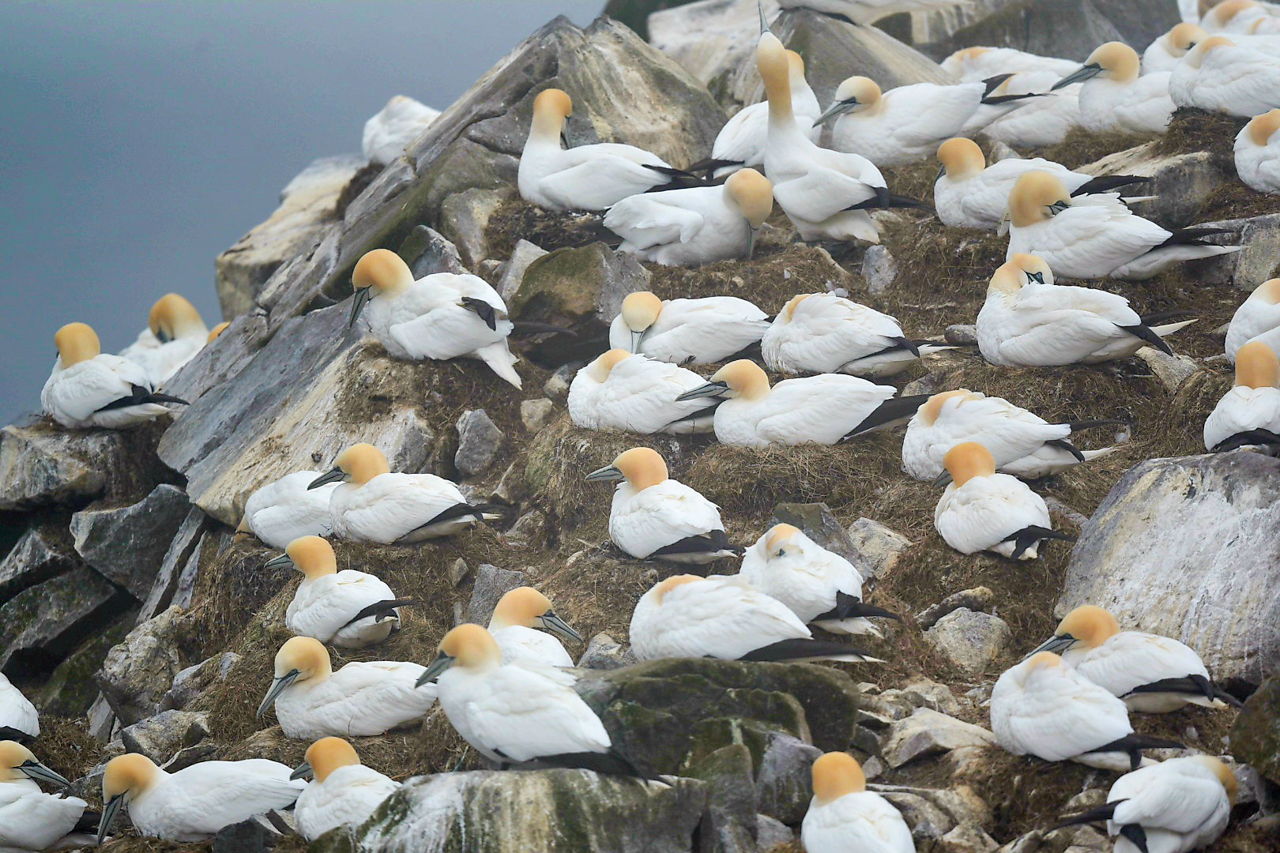
Northern Gannets © Steve Czyzycki
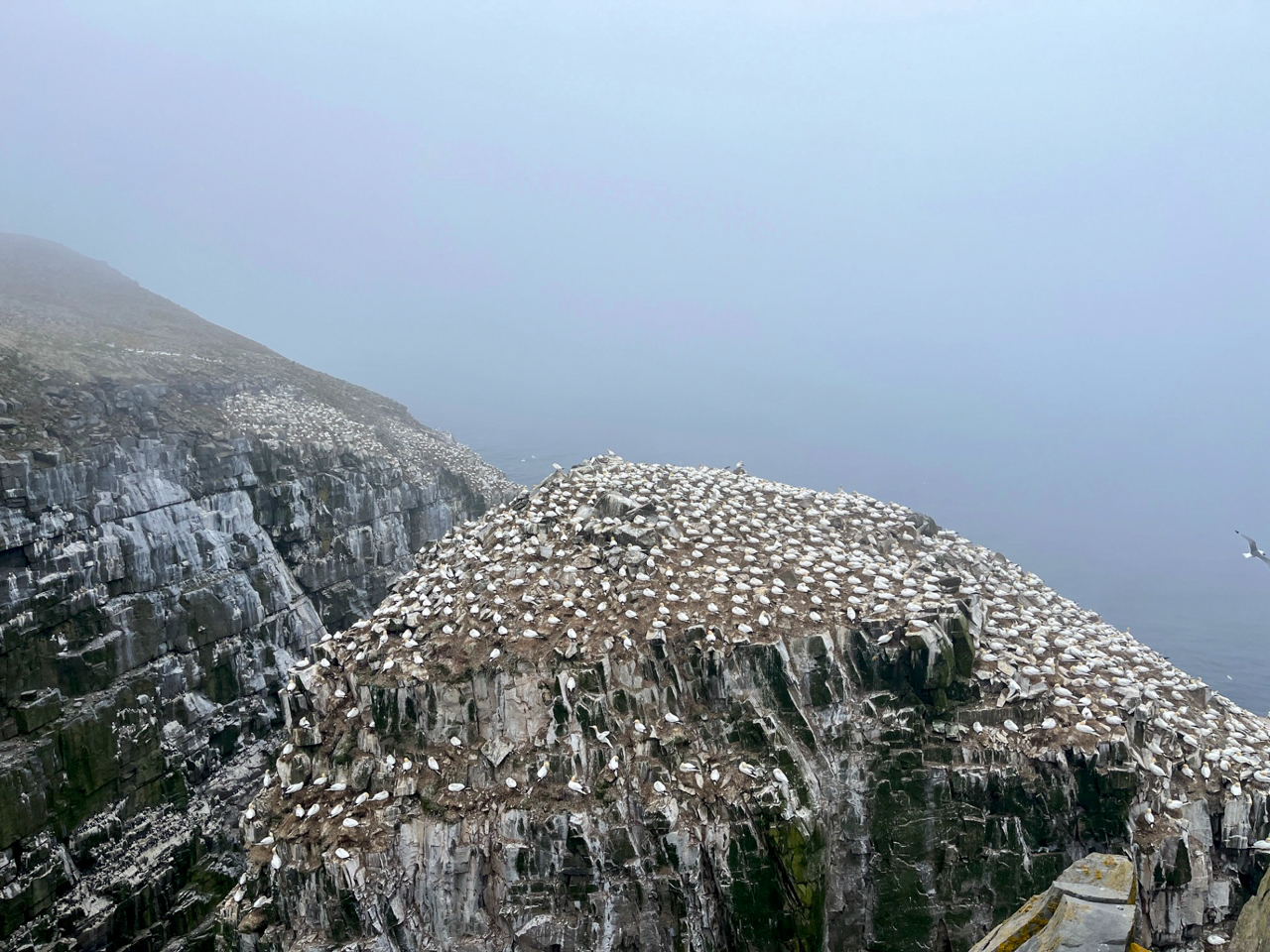
Gannet Rock © Sarah Lamond
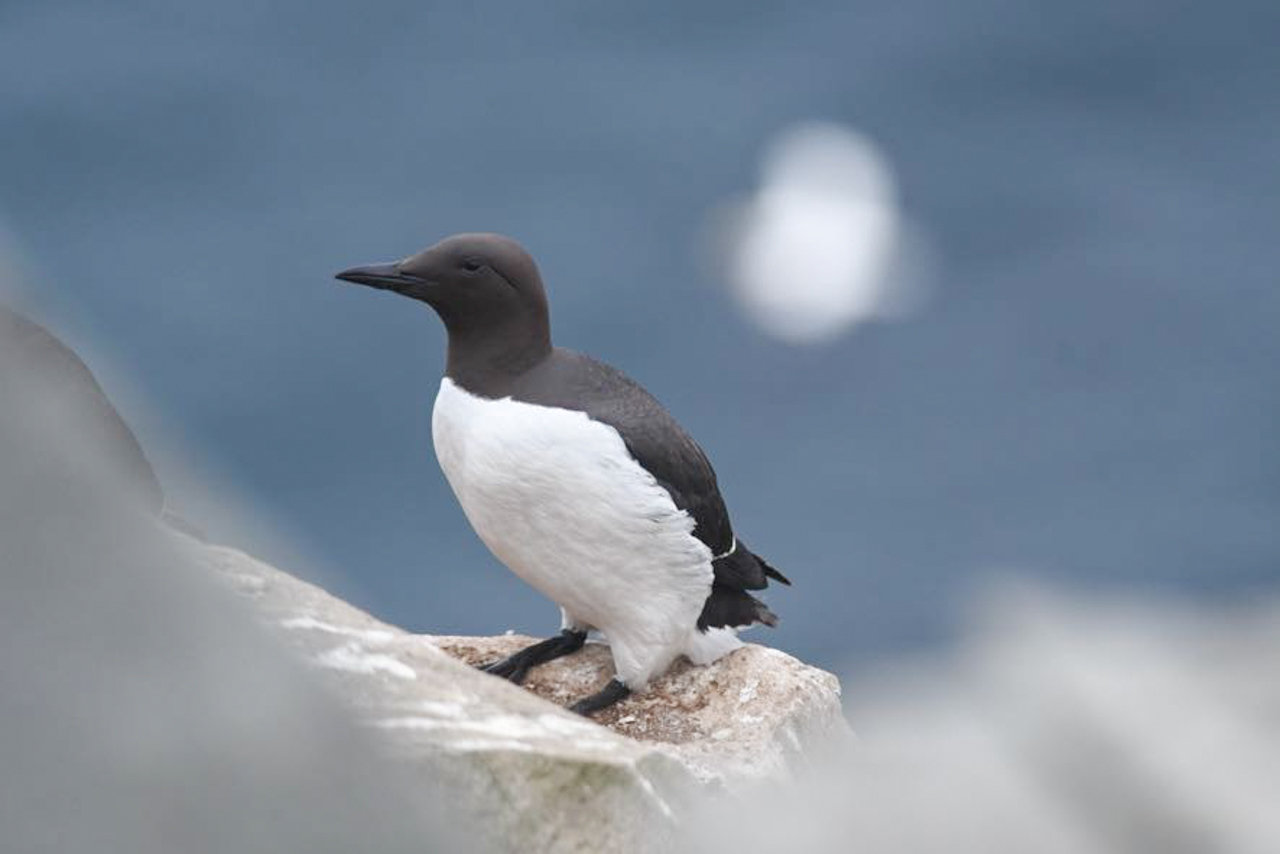
Common Murre © Sarah Lamond
We ended the day at the Capeway Inn and Suites in St. Brides, and celebrated our exceptional day over dinner at Da Bird’s Eye Restaurant.
Day 6: Point Verde, Placentia and Castle Hill
Since we visited Cape St. Mary’s Ecological Reserve the day before due to the weather, our morning was spent birding a couple of places along the way to Castle Hill instead. We quickly scanned the shoreline St. Brides before heading out, and had great looks at Spotted Sandpipers, as well as many groups of Common Murres and Northern Gannets flying by. As we continued on our drive, we stopped in Point Verde to do some birding along a quiet road. This area was very birdy, and we ended up with some new species for the trip like Black-throated Green Warbler, Black-and-white Warbler, and Pine Grosbeak. During this drive we also saw a Cow Moose, our second Moose at that point in the trip. Before our lunch in Placentia we also stopped along the beach where we added American Redstart, another new warbler for our trip! Another highlight at this spot was a skate egg case that had washed up on shore.
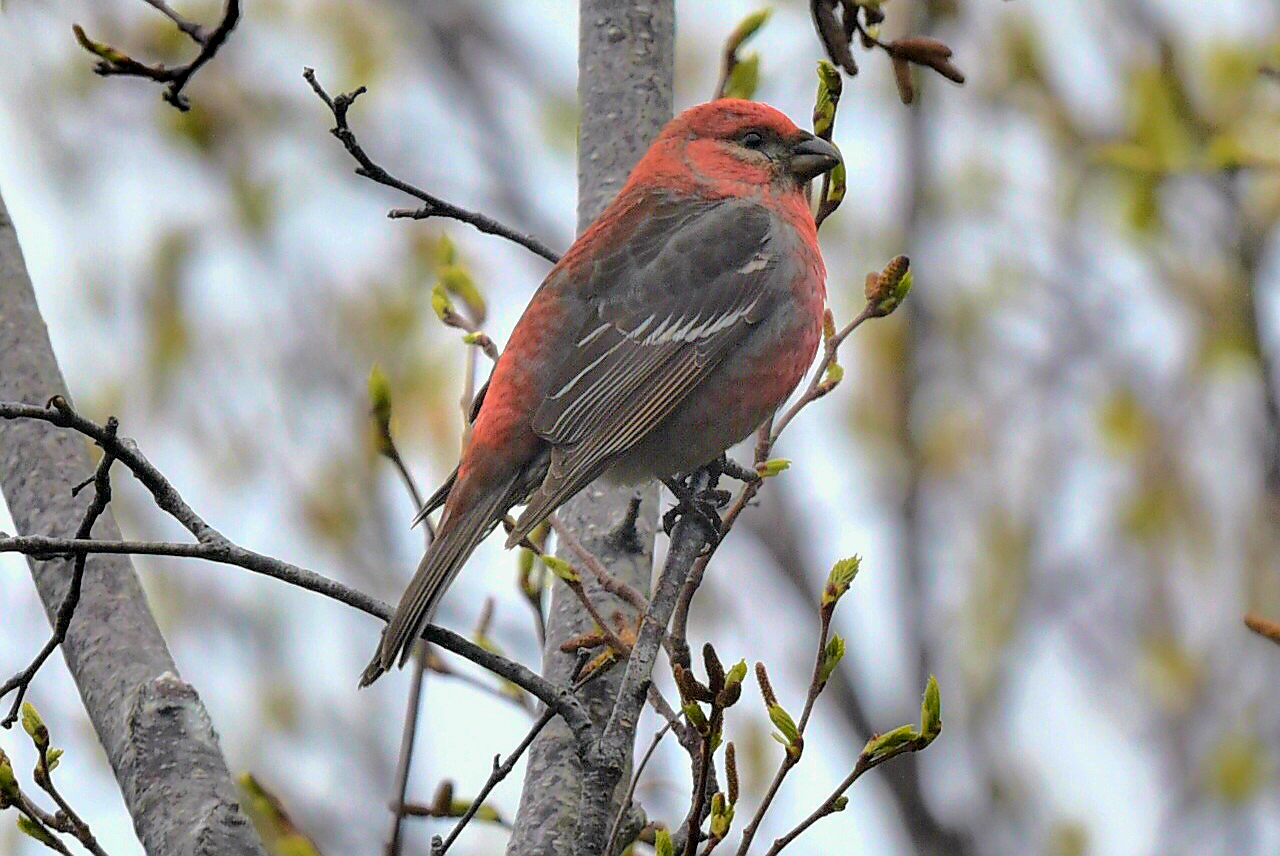
Pine Grosbeak © Steve Czyzyzcki
After lunch we visited Castle Hill National Historic Site, where French and English setters fought to control the continent in the 17th-century. The group was given a guided tour through the exhibits, where we then went outside into the foggy drizzle to explore the remains of the old fort. We then continued on to finish the long stretch of our drive to Charlottetown, where we would be spending the next two nights at the Clode Sound Motel.
Day 7: Terra Nova National Park
We started our first day at Terra Nova National Park with a pre-breakfast bird outing across the road from our motel. We finally got eyes on a Yellow-bellied Flycatcher, a species we had been hearing lots but had yet been able to see. Other highlights from the morning included our first Magnolia Warblers, who sat in beautiful sunlight for us. We also had our first Lincoln’s Sparrow of the trip, singing loudly and sitting at the top of a spruce tree. We then headed back over to our motel for breakfast. Once our bellies were full, we headed out to the Sandy Pond Trail, a trail that loops around Sandy Pond, which is surrounded by a beautiful Black Spruce and Balsam Fir bog. This trail was teeming with bird song, and many new birds were seen here, such as Common Yellowthroat, Palm Warbler, Olive-sided Flycatcher, and Rusty Blackbird. We also saw Brook Trout in the creek, Purple Pitcher Plants in the sphagnum bog, a Green Comma fluttering along the trail, and many American Toads.
After a quick snack break back at the vehicle we headed to the Ochre Hill lookout. Some of the group climbed up the fire tower, while others enjoyed the views from the observation deck. The panoramic views of the wooded valley, Ochre Hill Pond, and Clode Sound were stunning!
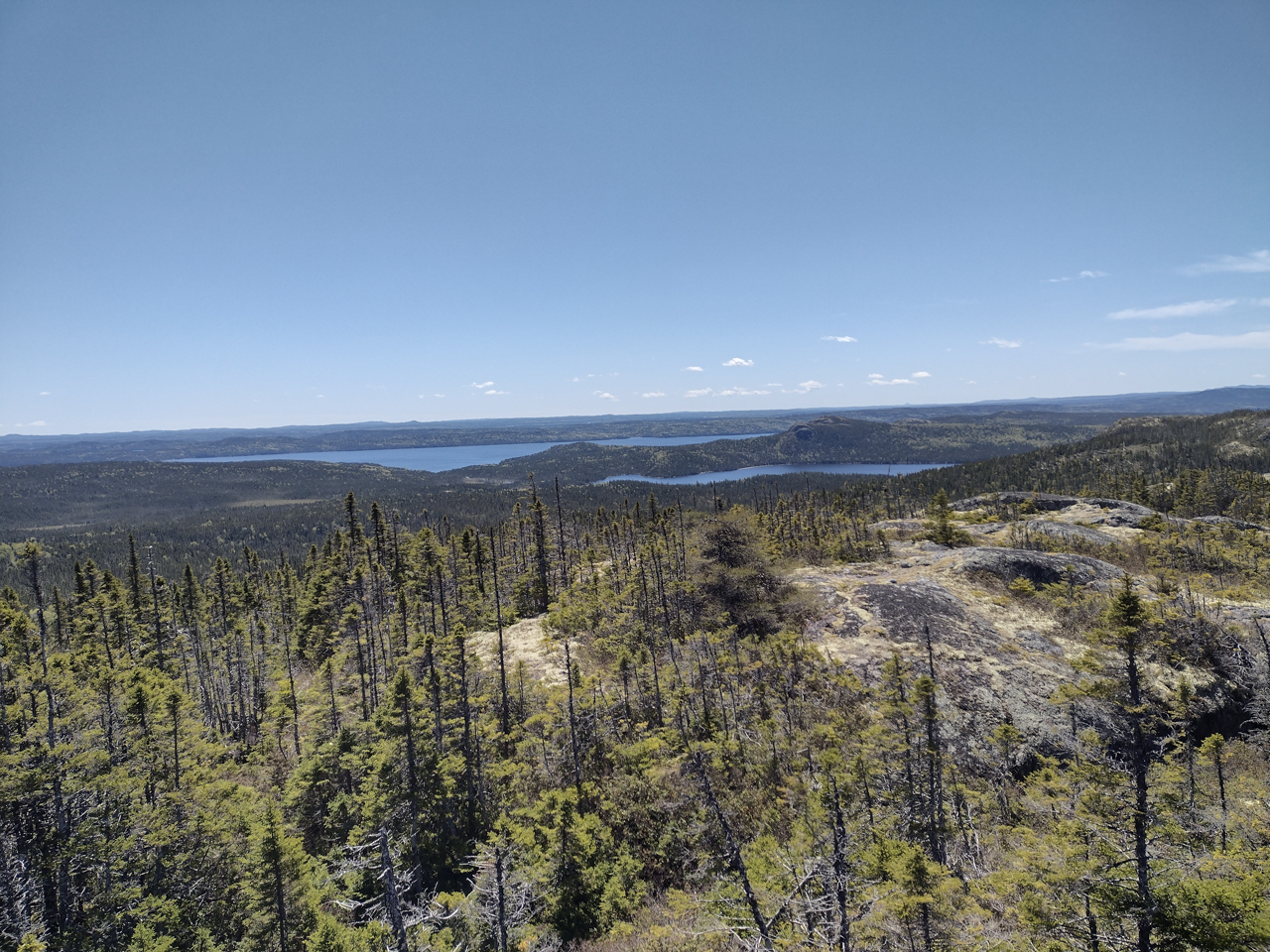
View from Ochre Hill © Maurice LeBlanc
We then headed back to Clode Sound Motel for lunch. Later in the afternoon after a brief siesta, we headed over to Port Blandford, where we saw three Common Goldeneyes and a group of five Ospreys circling overhead! We then did a short walk on the Dunphy’s Pond Trail, where we enjoyed a peaceful, quiet walk. Our evening was spent back at the motel, where we enjoyed another delicious dinner and dessert!
Day 8: Terra Nova National Park and Gander
We began our second day at Terra Nova with another pre-breakfast bird walk across the street from our Motel. Highlights this morning included Wilson’s Snipes, which were heard winnowing in the distance, as well as a drumming Ruffed Grouse. Two new additions to the trip list! After one last delicious breakfast at the Clode Sound Motel we packed up and made our way to Blue Hill for a view of Newman Sound. The highlight here was a distant iceberg!
We then made our way over to the Visitor Centre and walked parts of both of the trails here. Although a quieter morning, we still had some great observations: finally some brief views of Boreal Chickadees, as well as an American Crow nest with at least to young! We enjoyed a picnic lunch here, and enjoyed watching the crows forage for food to bring to their babies.
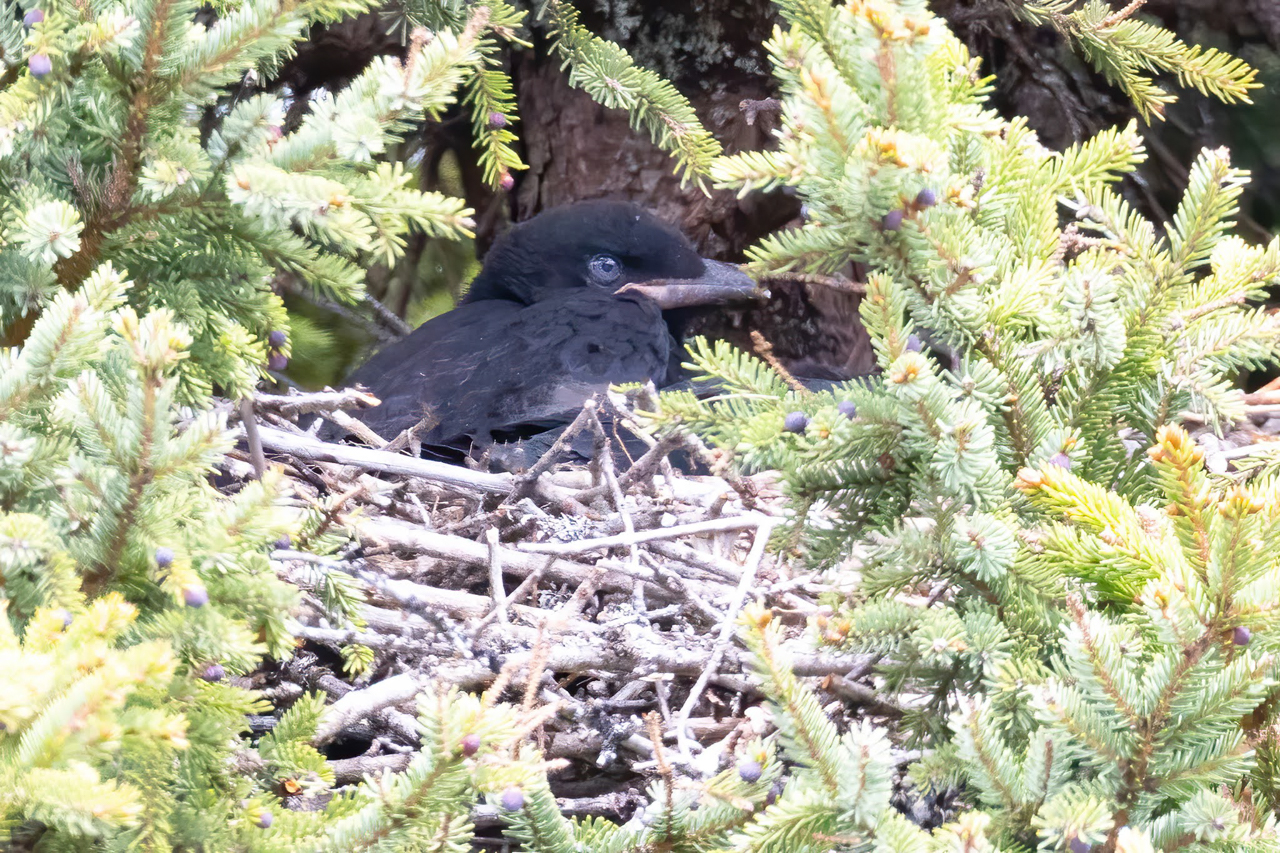
Young Crow in Nest © Mitch Doucet
After lunch we said goodbye to Terra Nova and started our drive towards Grand-Falls Windsor. Our first stop along the way was in Traytown to look for Caspian Terns. This is one of the most reliable spots to see this species in Newfoundland, and we were lucky enough to see six of them here! We also got great side-by-side comparisons of Caspian and Common Terns, as some of them were sitting close together.
Our next stop of the day was to the Gander International Airport. The airport holds the North Atlantic Aviation Museum, where a variety of artifacts and displays chronicle the airport’s role in transatlantic aviation, as well as the Come From Away 9/11 story, where the town took in thousands of displaced passengers during this tragedy. Afterwards, we continued on to Mount Peyton Hotel in Grand-Falls Windsor, where we had dinner at Clem’s Diner, followed by a “Mug-Up” that was put on by the hotel that included singing, snacks and tea and coffee.
Day 9: Corduroy Brook Nature Trails and the Demasduit Regional Museum
After breakfast at the hotel, we headed over to the Corduroy Brook Nature Trail. This area is made up of mixed hardwood and conifer forest, a new habitat we had yet to explore. The light rain didn’t deter our group and we added a couple new species to our trip list: many Alder Flycatchers, as well as a singing Mourning Warbler. Other highlights included nice looks at Cedar Waxwings, American Redstart, Wilson’s Warbler and Yellow-bellied Flycatchers. Rhodora, a native rhododendron to eastern North America, was in full flower here, and painted the understory in pinks and purples. As the rain began to pick up we took shelter under a gazebo where we watched young black ducks dive under the water for food, while their mother dabbled on the surface nearby.
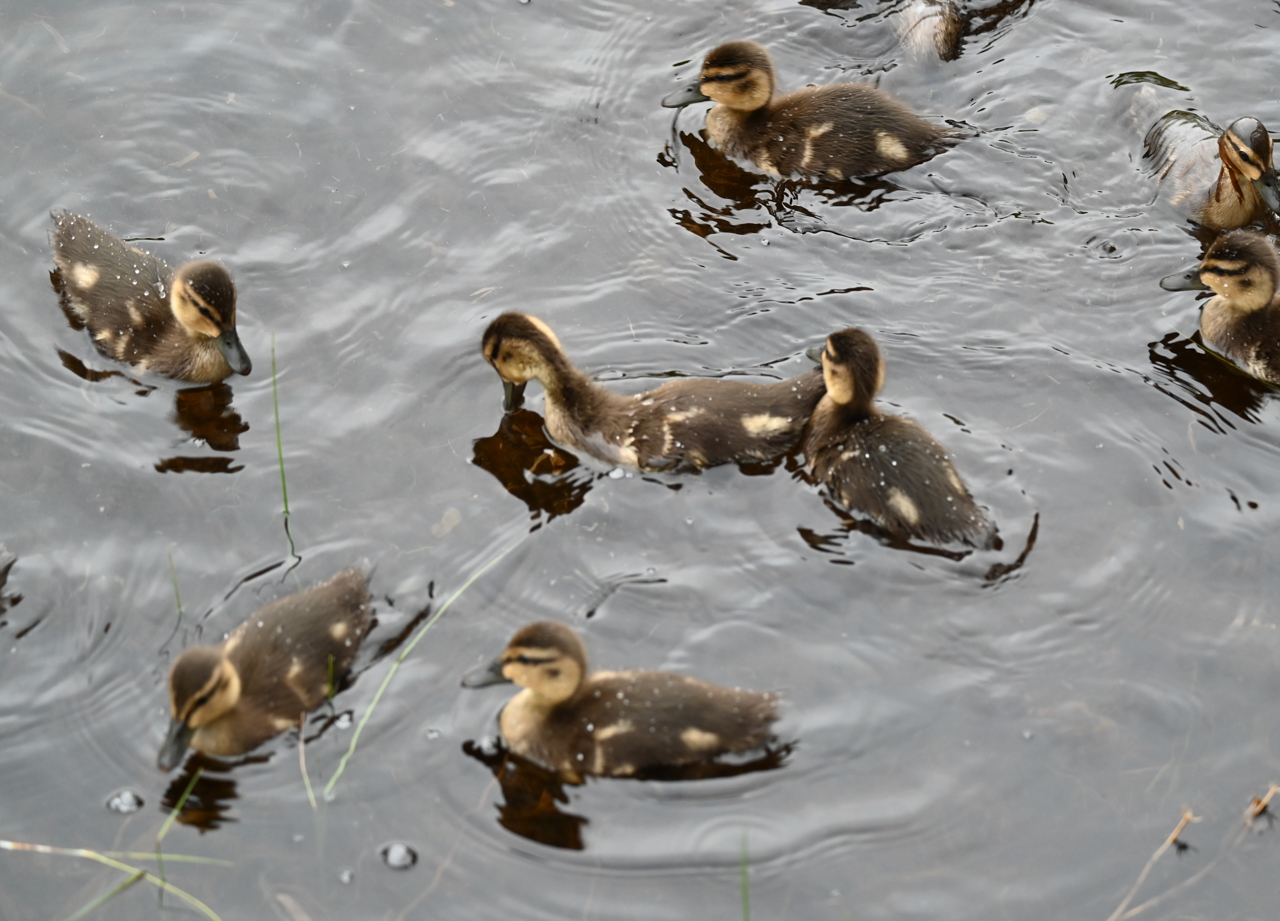
Young American Black Ducks © Maurice LeBlanc
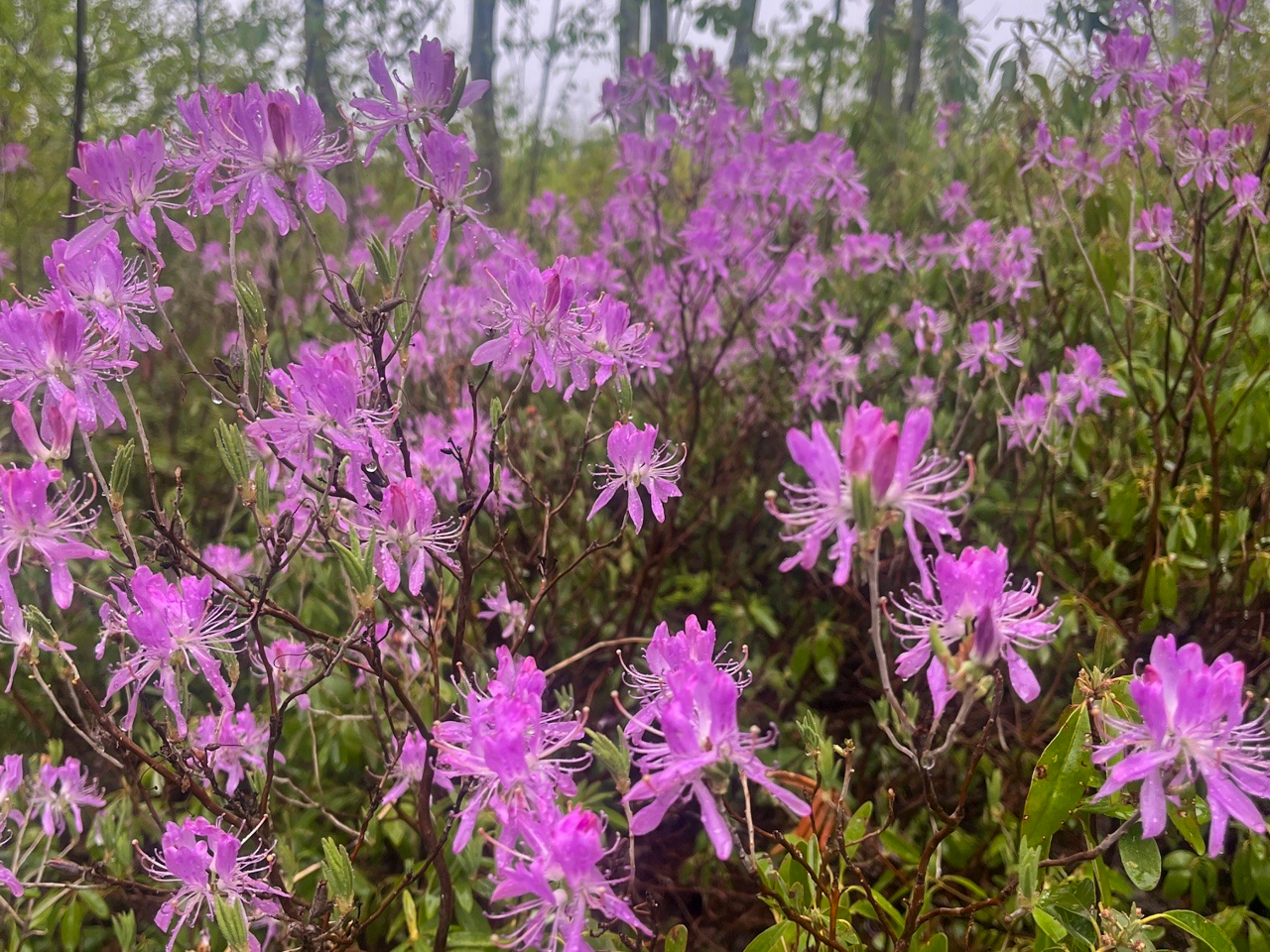
Rhodora flowers © Sarah Lamond
As the rain continued to pick up we left Corduroy Brook and headed over to the Demasduit Regional Museum, a perfect rainy day activity. The museum mostly showcases the indigenous cultures that thrived in the area 5,000 years ago, as well as how Newfoundland has changed over 20th-century industrial development. Our group got to see many interesting artifacts and read about the history of the ancient Maritime Archaic Indigenous Peoples, Paleo-Inuit, and Beothuk Peoples, as well as the Europeans and Mi’kmaq who came much later. We then went for lunch and continued on our long journey to Rocky Harbour. Along the way we enjoyed the epic scenery and landscapes of Gros Morne National Park, and got great looks at a Bull Moose at one of the lookout spots along the Viking Trail. That evening we enjoyed an excellent dinner at Earle’s Restaurant with local Cloudberry and Partridgeberry desserts to top it off!
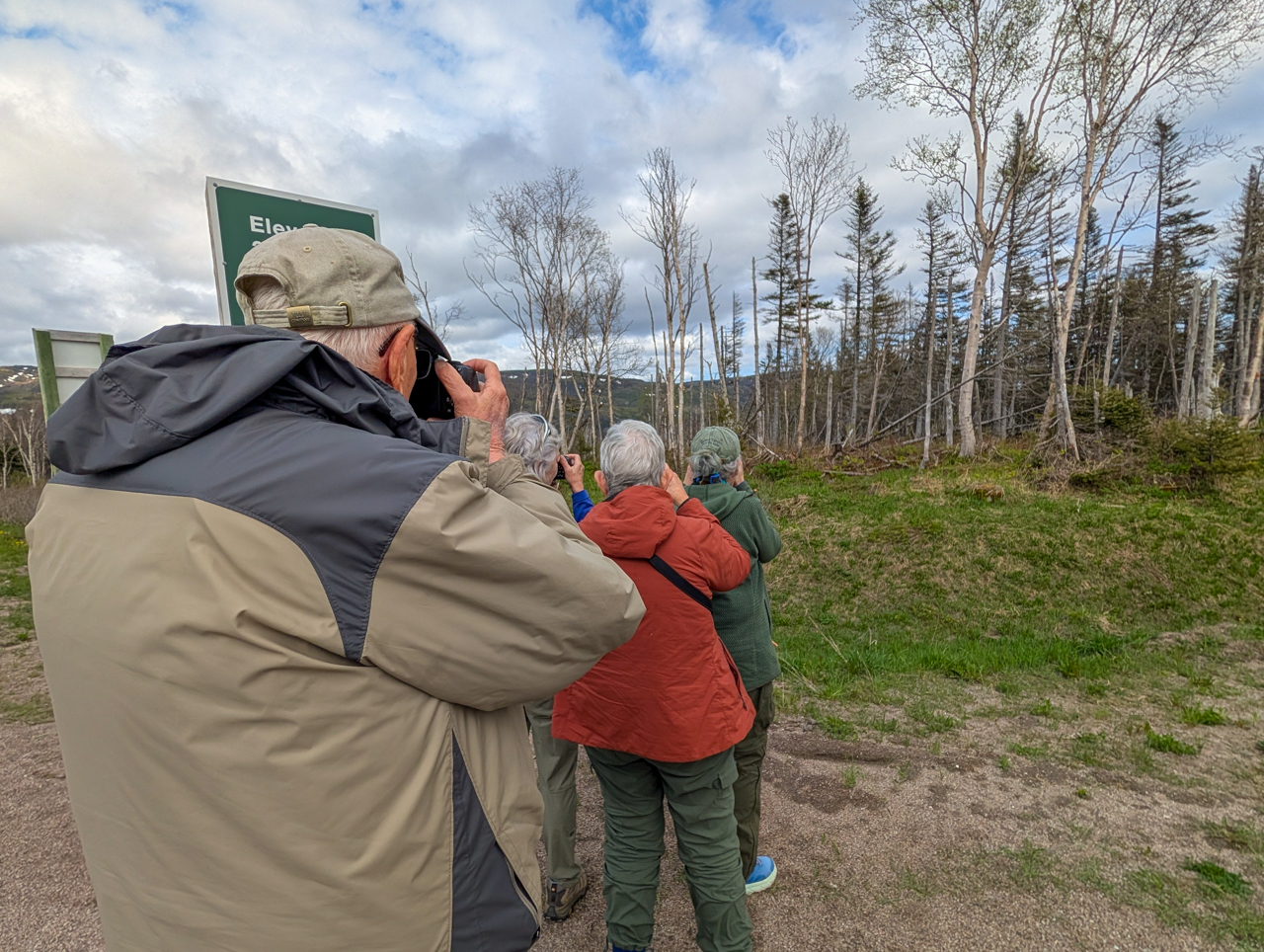
Taking photos of Bull Moose © Eileen McFadden
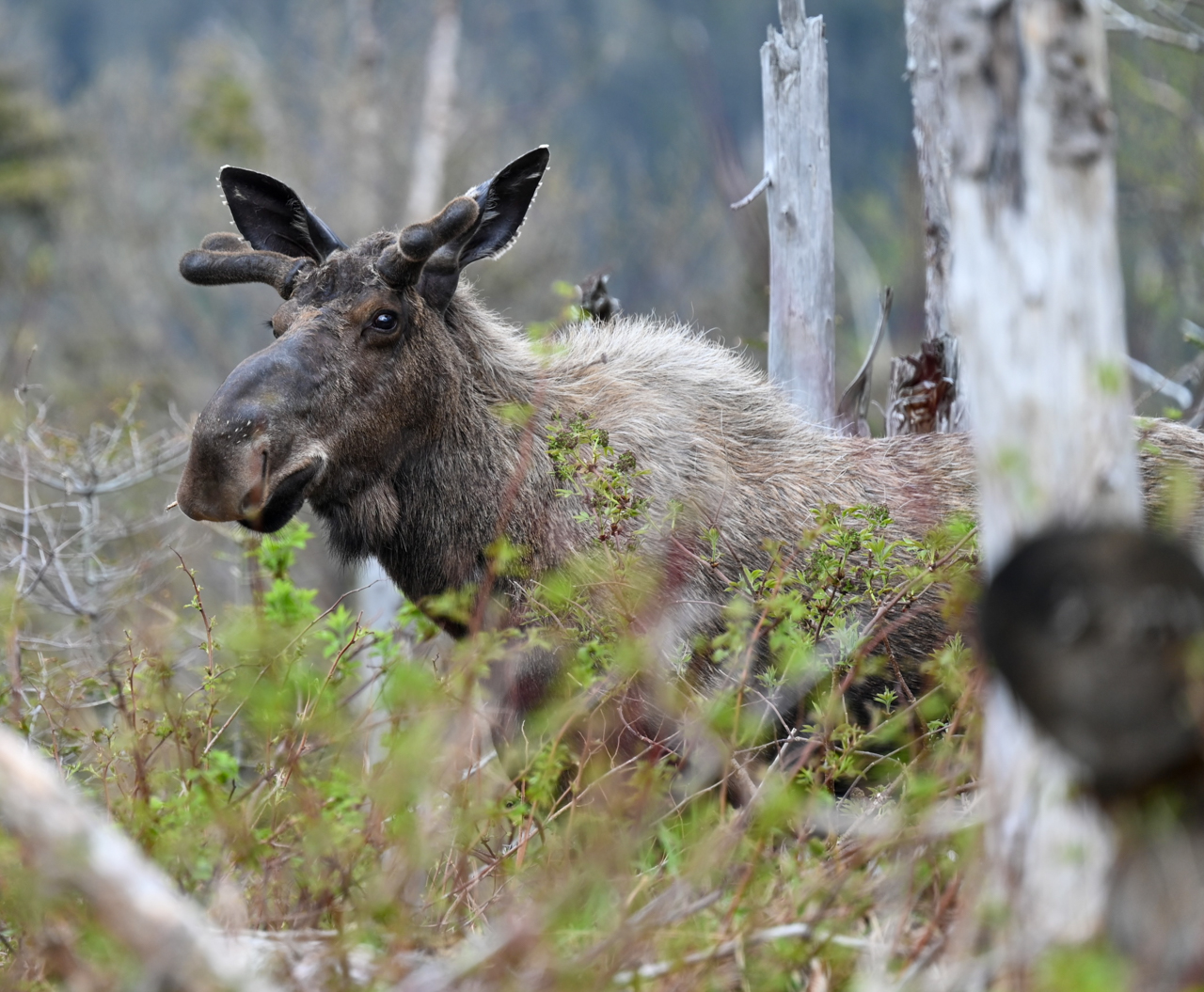
Bull Moose © Maurice LeBlanc
Day 10: Gros Morne National Park, Western Pond Boat Tour
We did some pre-breakfast birding along Pond Road in Rocky Harbour, getting better looks at Boreal Chickadee, as well as our first sighting of Mourning Warbler. We also watched a very obliging Swainson’s Thrush back at the vehicle as we were leaving, a new one for the tour. The area was full of birdsong and it was a worthwhile walk! After breakfast we headed north to the Berry Head Pond Trail. This trail mostly takes you through a Balsam Fir bog around the edge of Berry Head Pond. The trees were quite spindly, giving them an interesting look. Highlights here included more good looks at Swainson’s Thrush and Mourning Warbler, as well as our first really good looks at a singing Fox Sparrow. Blackpoll and Magnolia Warblers were also feeding low in great light, and we watched many mating American Toads along the edge of the pond, and even saw some eggs!
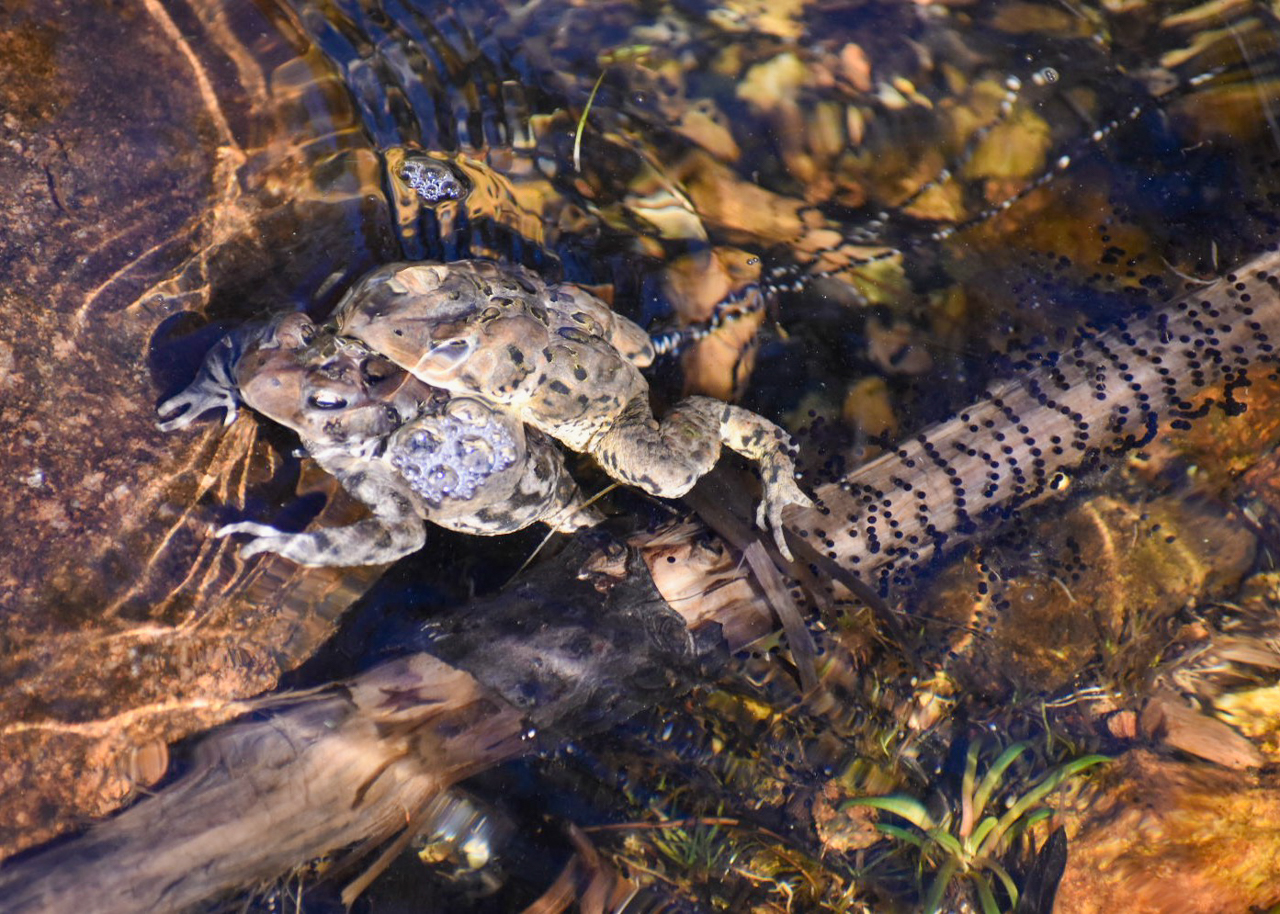
American Toads with Eggs © Selena Keehnel
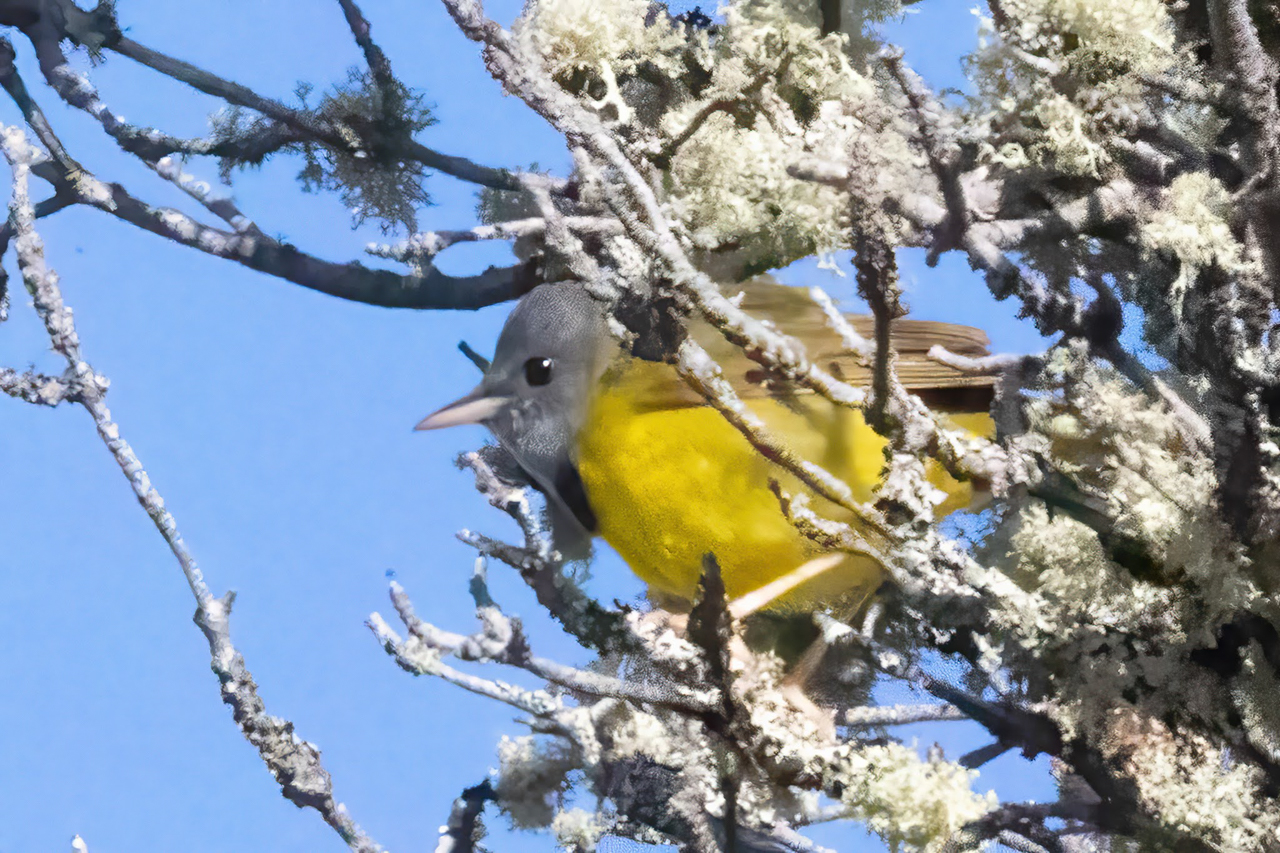
Mourning Warbler © Mitch Doucet
We then headed over to Western Brook Pond for a boat tour through breathtaking, billion-year-old glacial fjord with cascading waterfalls and towering cliffs (some taller than the CN Tower!). On our walk to the pond, we had amazing views of many species of warbler’s who were feeding low in the stunted Black Spruce Trees: Blackpoll Warblers, Black-and-white Warblers, Northern Yellow Warblers, Wilson’s Warblers, and Tennessee Warblers, a new one for the trip! We also encountered some interesting plants along the walk, such as Purple Pitcher Plants, Round-leaved Sundew, and Common Butterwort, all of which are carnivorous plants! Mistassini Primrose and Marsh Violets were also in flower here, giving a pop of pinks, whites and purples to the subarctic boreal lowlands. We then enjoyed our boxed lunch from the Fisherman’s Landing along the pond before getting on the boat, where we sat back and enjoyed a relaxing (but windy) boat tour through the Western Brook Pond fjord. We were surrounded by mountains, which still had snow scattered in areas not yet receiving much sun.
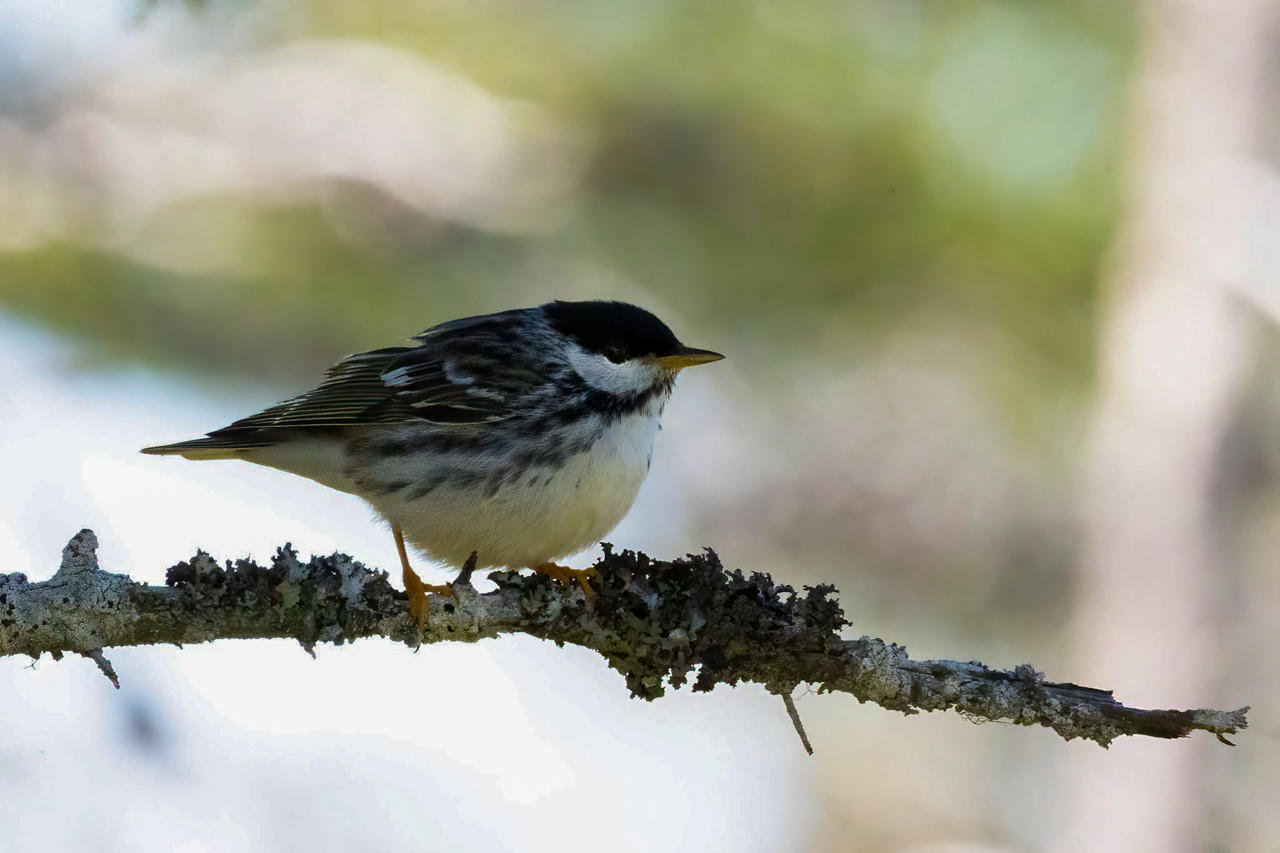
Blackpoll Warbler © Mitch Doucet
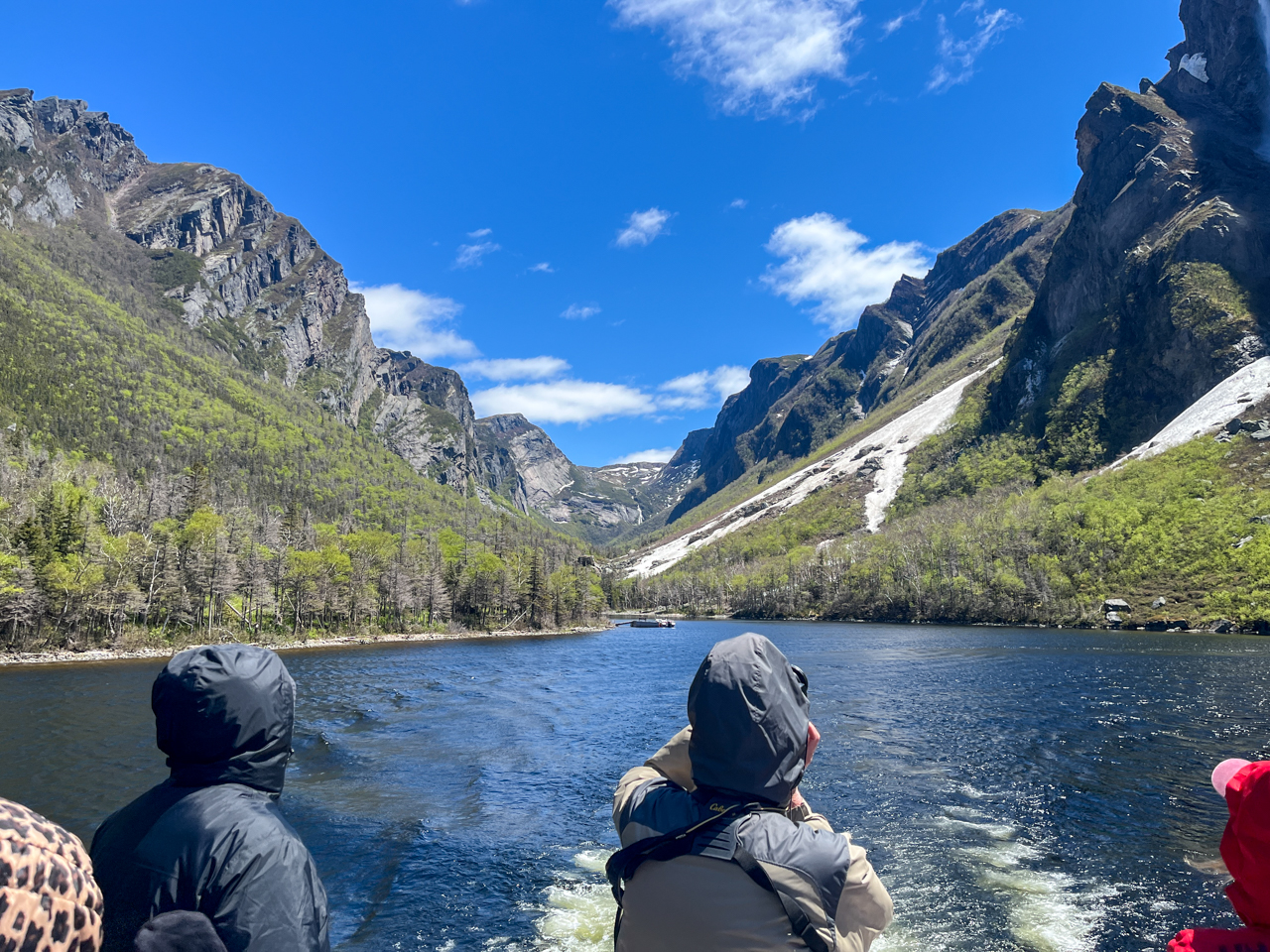
Group on Western Brook Pond Boat Tour © Sarah Lamond
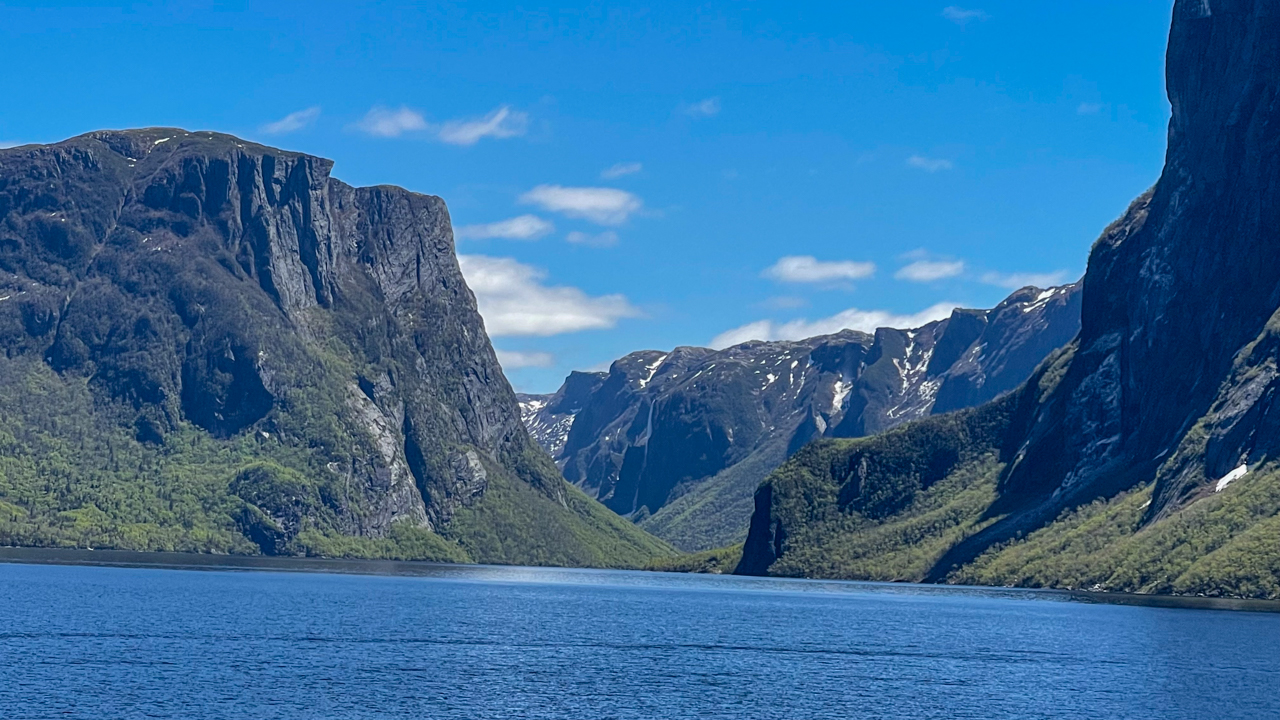
View of the Fjord © Selena Keehnel
After our boat tour we headed back to the vans and went over to Broom Point where we picked up another couple of new species for the trip: Great Cormorant and Harlequin Duck! It was nice to get side-by-side comparisons of Double-crested and Great Cormorants, and had a group of 30 Harlequin Ducks, a mix of both females and males. Also here were a number of Common Eiders, including one female with chicks!
We made one last stop for the day at Parson’s Pond, where we added Bank Swallow to our trip list. This species is very localized in Newfoundland, but there is a breeding colony here along the tall sandy banks along the coastline. Afterwards we returned to the hotel before enjoying our dinner at the Fisherman’s Landing Restaurant.
Day 11: Gros Morne National Park, Tablelands
Our group did one last pre-breakfast bird outing, this time at the Berry Hill Trail. We were rewarded with great looks at Black-throated Green Warblers, Blue-headed Vireos, and Pine Siskins. A fairly tame Snowshoe Hare was also a highlight of the morning. Our group also finally connected with a pair of Canada Jays, a species we had yet to see on the trip! We had one last breakfast as a group back at the hotel before packing up and heading to Lobster Cove Head. The views over the ocean from this spot were beautiful in the morning light, and we had more great looks at low warblers, in particular a male Magnolia Warbler who was constantly singing from the top of his spruce perch. We then continued on to the Mattie Mitchell trailhead, which overlooks Deer Arm. The parking lot here was very birdy with many Yellow-bellied Flycatchers, a beautiful male Pine Grosbeak, Pine Siskins, as well as Purple Finches. We also added Red-breasted Merganser to the trip list, who was hunting the shallow shoreline of Deer Arm. Next we made a quick snack stop at Mill Brook, where we had beautiful views of East Arm, and saw an adult Bald Eagle catching some thermals over one of the mountain tops.
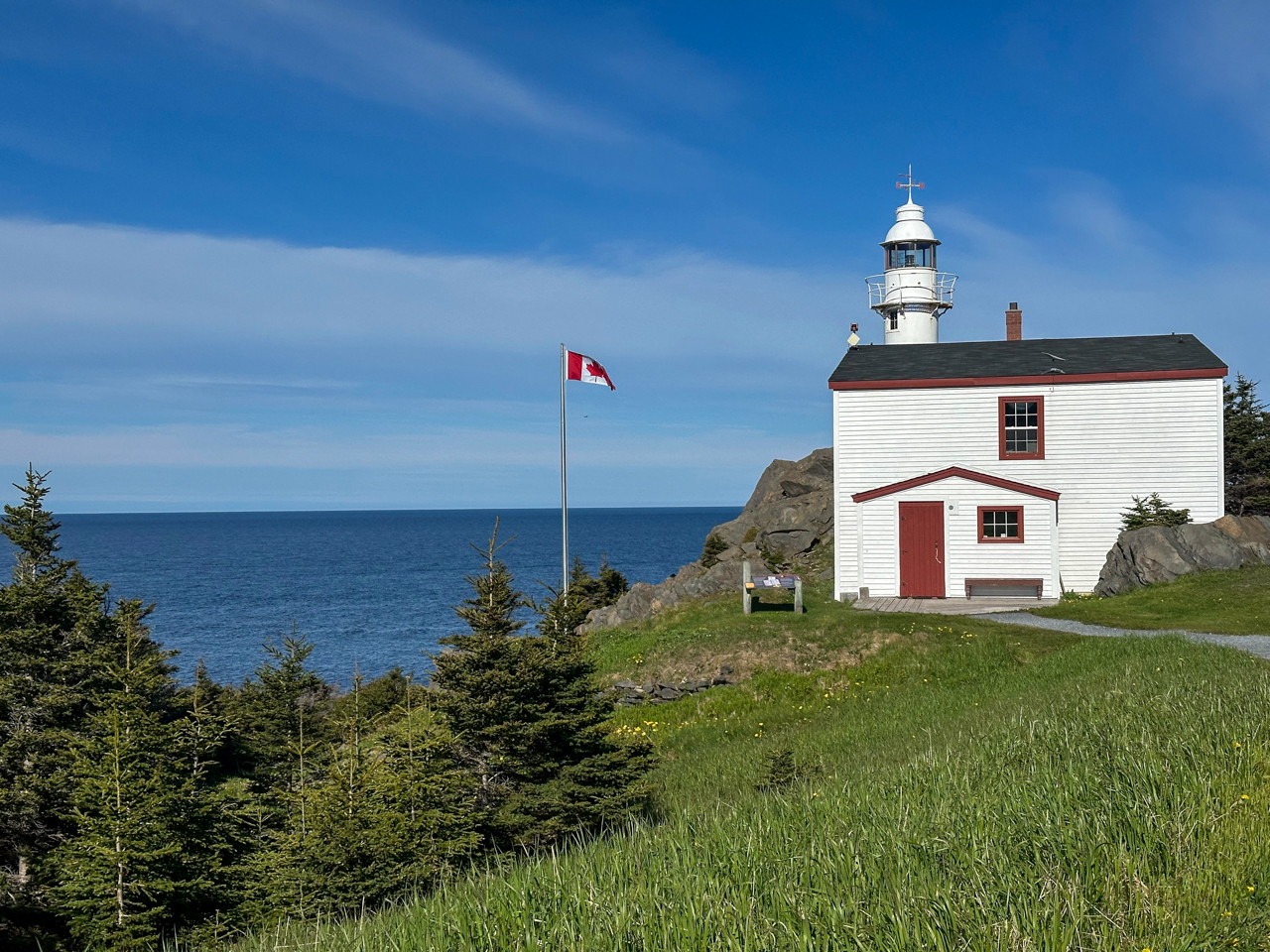
Lobster Cove © Adina Merenlender
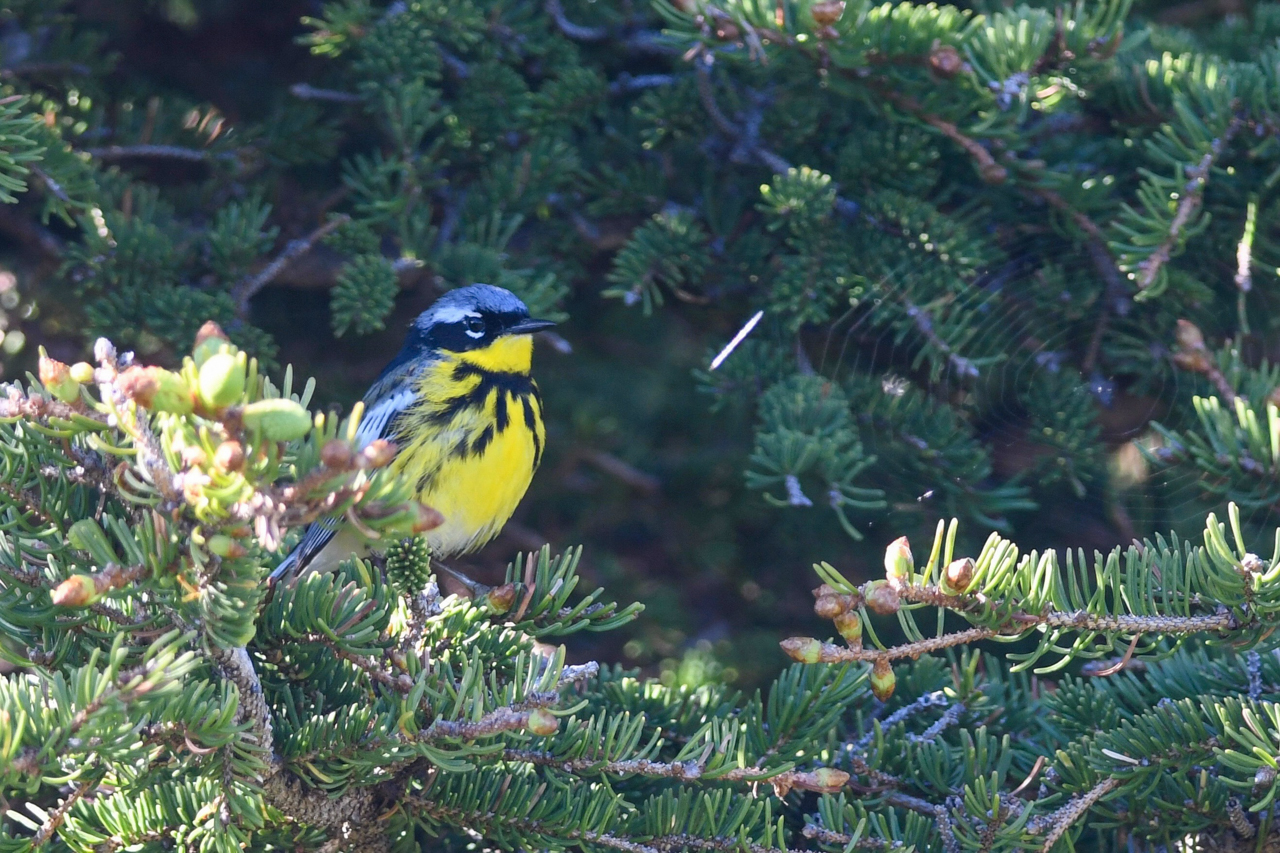
Magnolia Warbler © Sarah Lamond
Our final stop of the morning was at the Lomond River trail. We found a few large patches of Yellow Lady’s Slipper near the parking lot, however they weren’t in flower yet. We also successfully managed to track down a calling Olive-sided Flycatcher, about 300m into the trail system. Our first look at this beautifully vested and large flycatcher! We then drove on to the quaint town of Woody Point for a nice lunch at the Back Room Cafe.
After lunch we headed over to the Discovery Centre to learn about the processes that formed these incredible mountains and geological formations that we were seeing around us in Gros Morne National Park. Following our geology lesson we headed over to one of the main attractions of Gros Morne National Park: The Tablelands. This Mars-like mountain landscape formed roughly 500 million years ago where the Earth’s mantle is directly exposed to the surface, an extremely rare phenomenon and one of the only places on Earth this exists. A hike along this trail produced very few birds, but we saw some neat plants like Beautiful Sandwort, Moss Campion and lots of Purple Pitcher Plant.
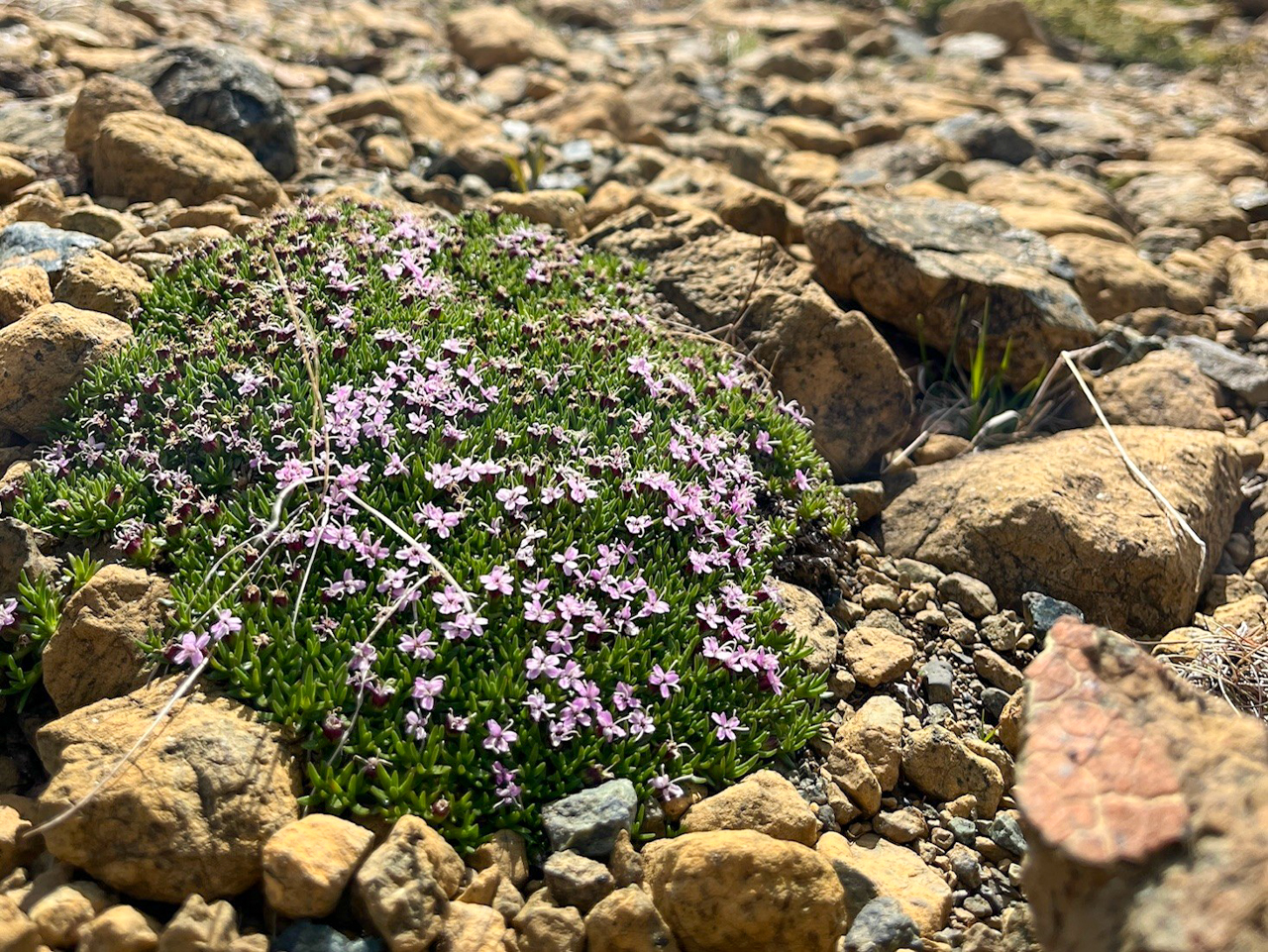
Moss Campion © Sarah Lamond
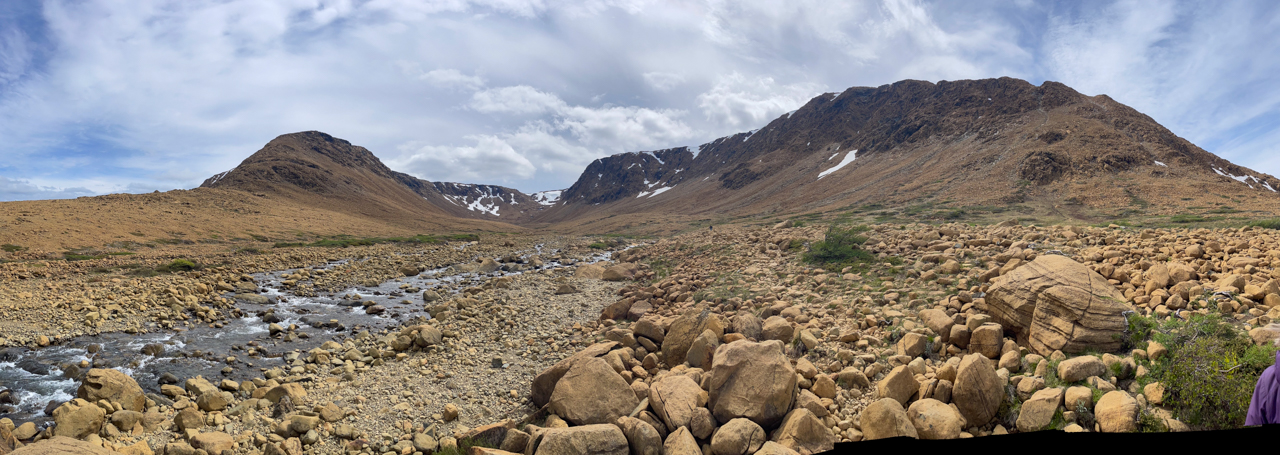
The Tablelands © Selena Keehnel
Saying goodbye to the incredible landscapes and wildlife of Gros Morne, we traveled back to Deer Lake. We then had our last dinner together, where we all shared some of our highlights of the trip and celebrated a birthday in true Newfoundland style with some Screech. It was an incredible trip spent exploring the beauty of Newfoundland with an awesome group of people!
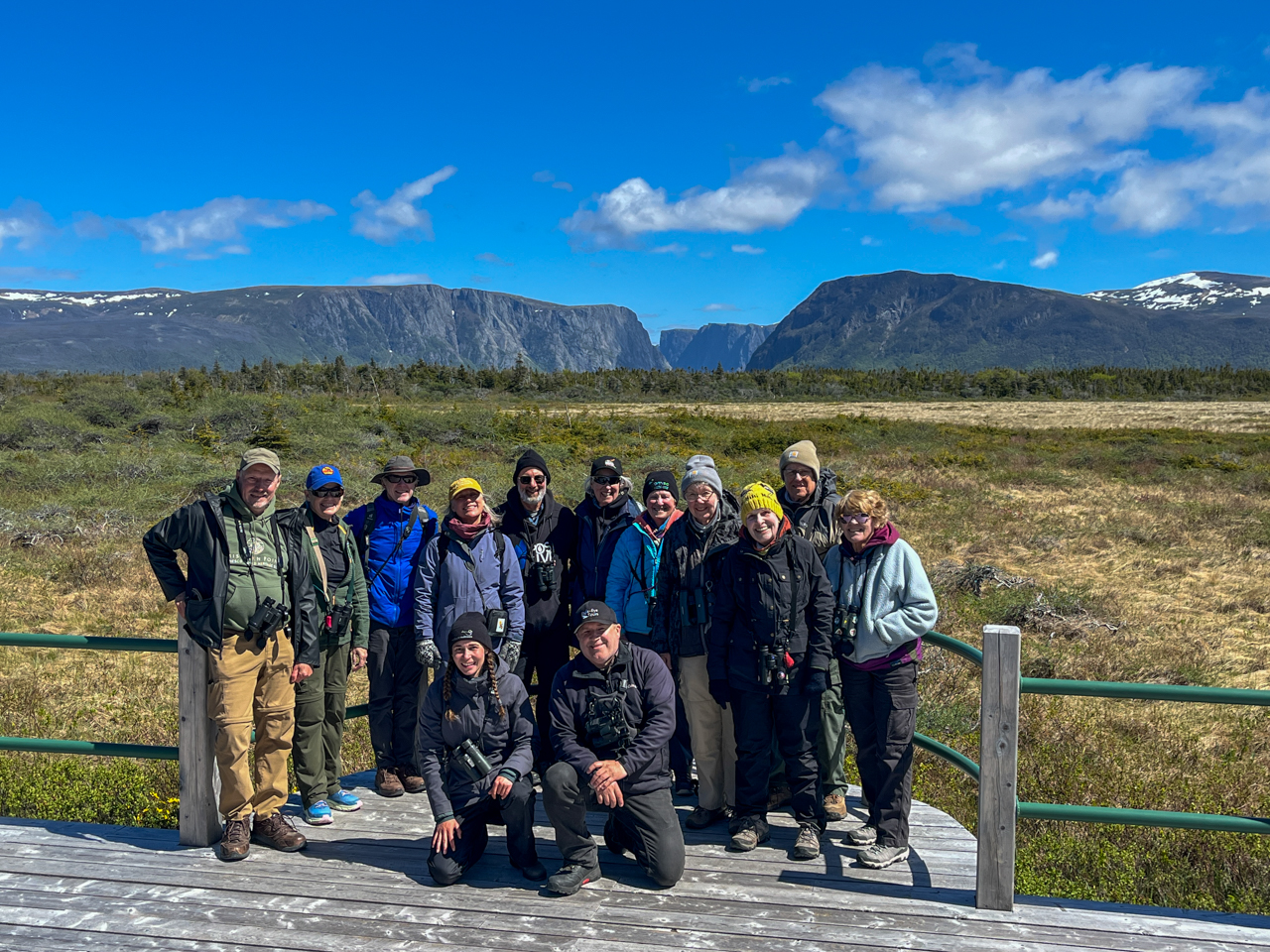
Our group