Grand Newfoundland Birding Trip Report (June 11 – 22, 2026)
114 Bird Species · 10 Mammals · 12 Incredible Days
What if we told you there’s a place in North America where you can stand on the Earth’s mantle, receive a Screech In from a salty sea captain, watch 45,000 seabirds wheel overhead, and still make it to dinner for fresh lobster — all in the same day? Welcome to Newfoundland.
Newfoundland is birding’s best-kept secret — and we’re not sure we want to keep it secret any longer. This is a place where Humpback Whales breach alongside puffin-watching boats, where 100,000 nesting seabirds crowd a single sea stack, where Willow Ptarmigan use the road as a dust bath, and where a 15-year-old girl named Sarah Berry will stop the room cold with a Newfoundland folk song. It is remote, rugged, wildly beautiful, and unlike anywhere else on Earth.
This 12-day trip report is your invitation. Read it, feel the salt air, hear the gannets, and then book your spot — because every June, we come back, and every time, someone goes home with a life list that’ll make their birding friends weak in the knees.
Day 1 · Arrival in St. John’s
We all met up at the hotel just in time for our welcome dinner — a fitting introduction to Newfoundland cuisine, with cod and fish chowder appearing on every menu. Over the next 11 days we would explore Cod Tongue, Fresh Lobster, and Mussels as the local delicacies. As we got to know each other over dinner it was very evident that we had an amazing group of people to spend the next 11 days with. The adventure had begun.
Day 2 · Witless Bay & The Greatest Puffin Show on Earth
Our mornings always started with a Power Walk led by Rick, beginning between 5:30 and 6:00 am — more walk-centred than bird-centred, but being up with the birds led to some great sightings that left the sleep-in crowd wishing they’d dragged themselves out of bed.
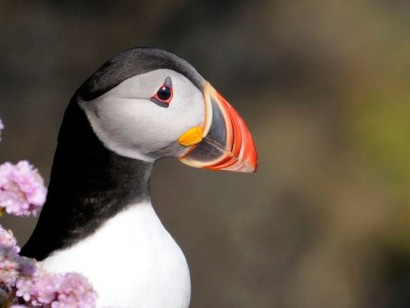
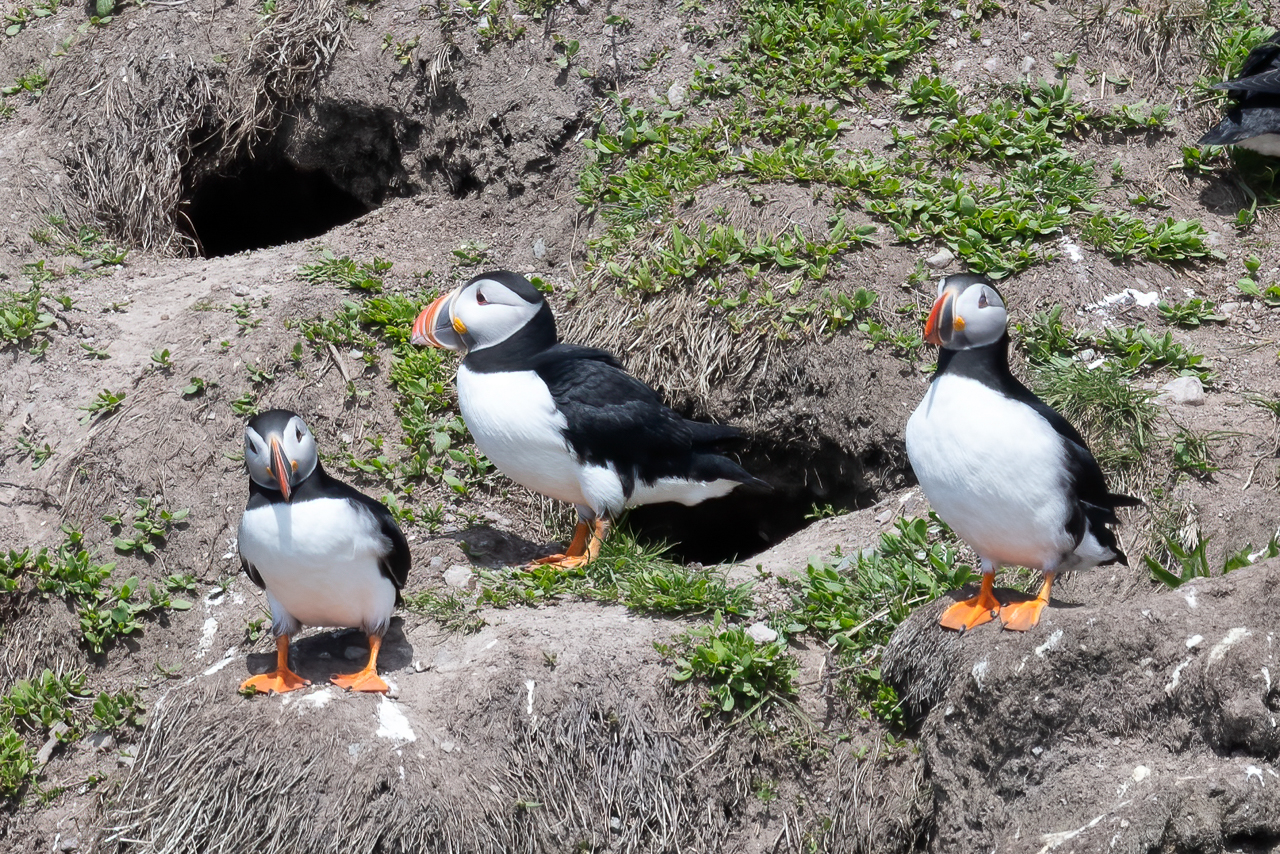
Our first morning in St. John’s was spent exploring the ponds and city hotspots on our way to Witless Bay Ecological Reserve — home to the largest Atlantic Puffin colony in North America. We started with a bang: over 45,000 birds on our boat trip out to the preserve, including 10,000 Puffins, 10,000 Black-legged Kittiwakes, and 25,000 Common Murres. The O’Brien’s, who operate the whale and bird tours, always create a memorable atmosphere for the journey back, having guests sing along to Sea Shanties and performing a Screech In ceremony for first-time visitors to Newfoundland.
Atlantic Puffin © Tim Arthur
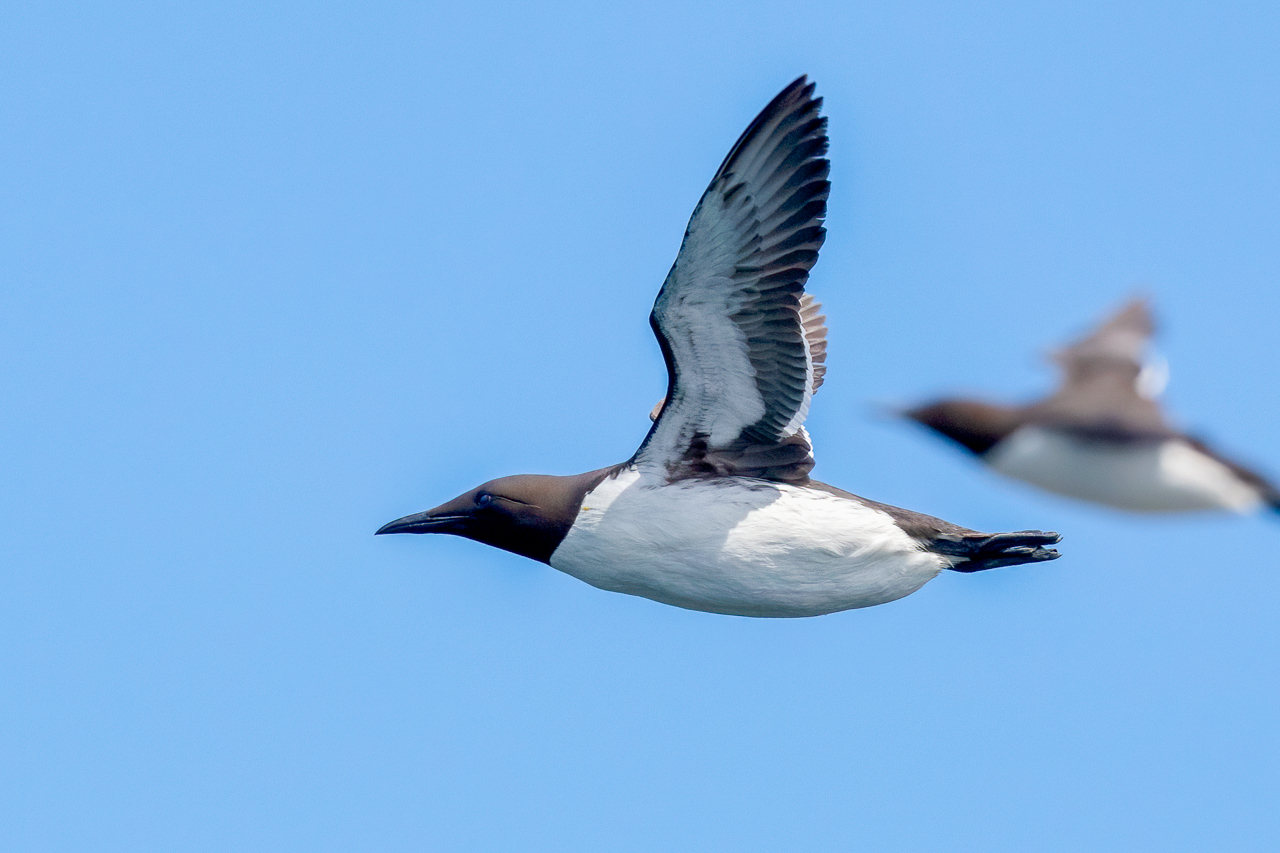
Common Murre © Tim Arthur
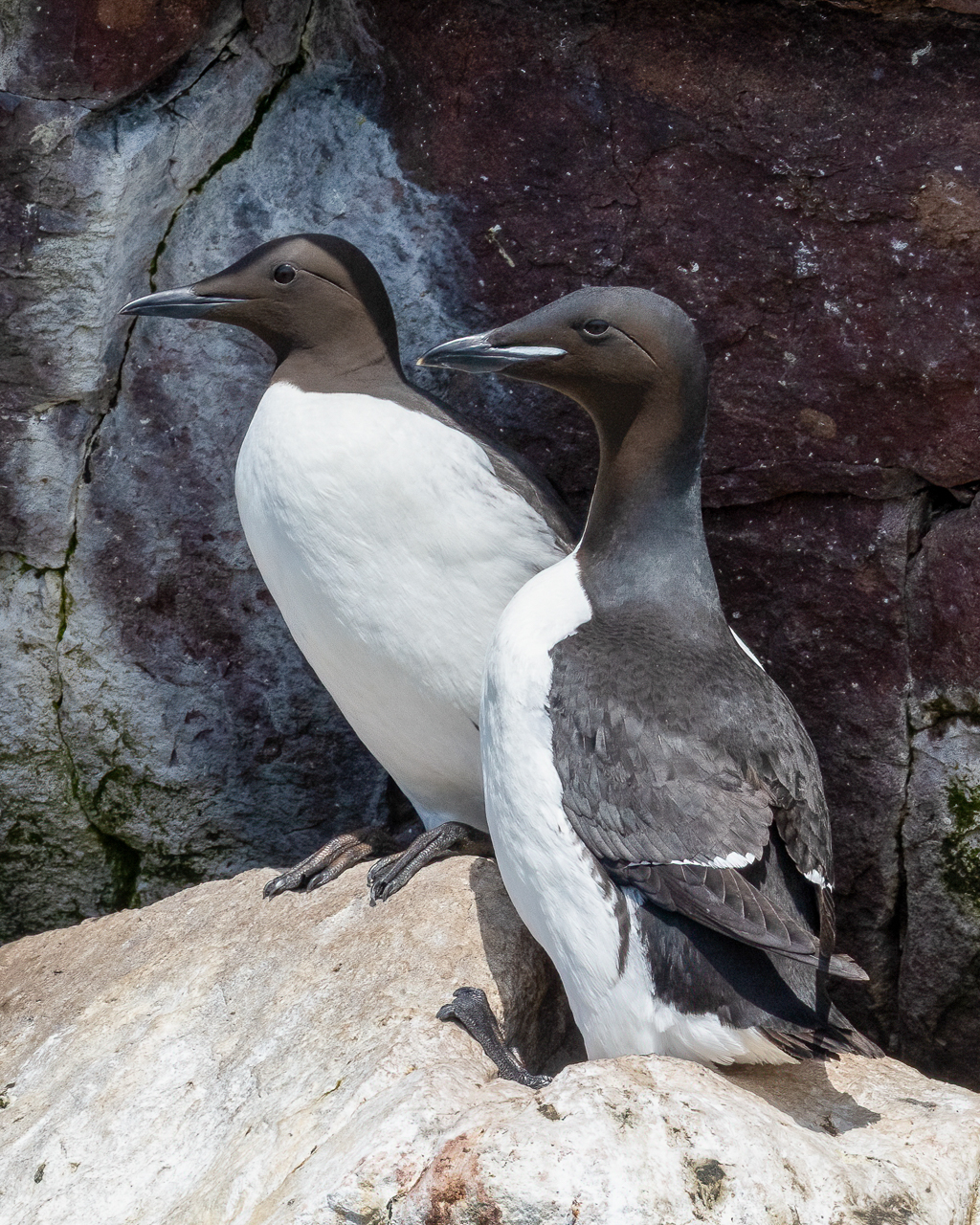
Thick-billed Murre (right) Common Murre (left) © Tim Arthur
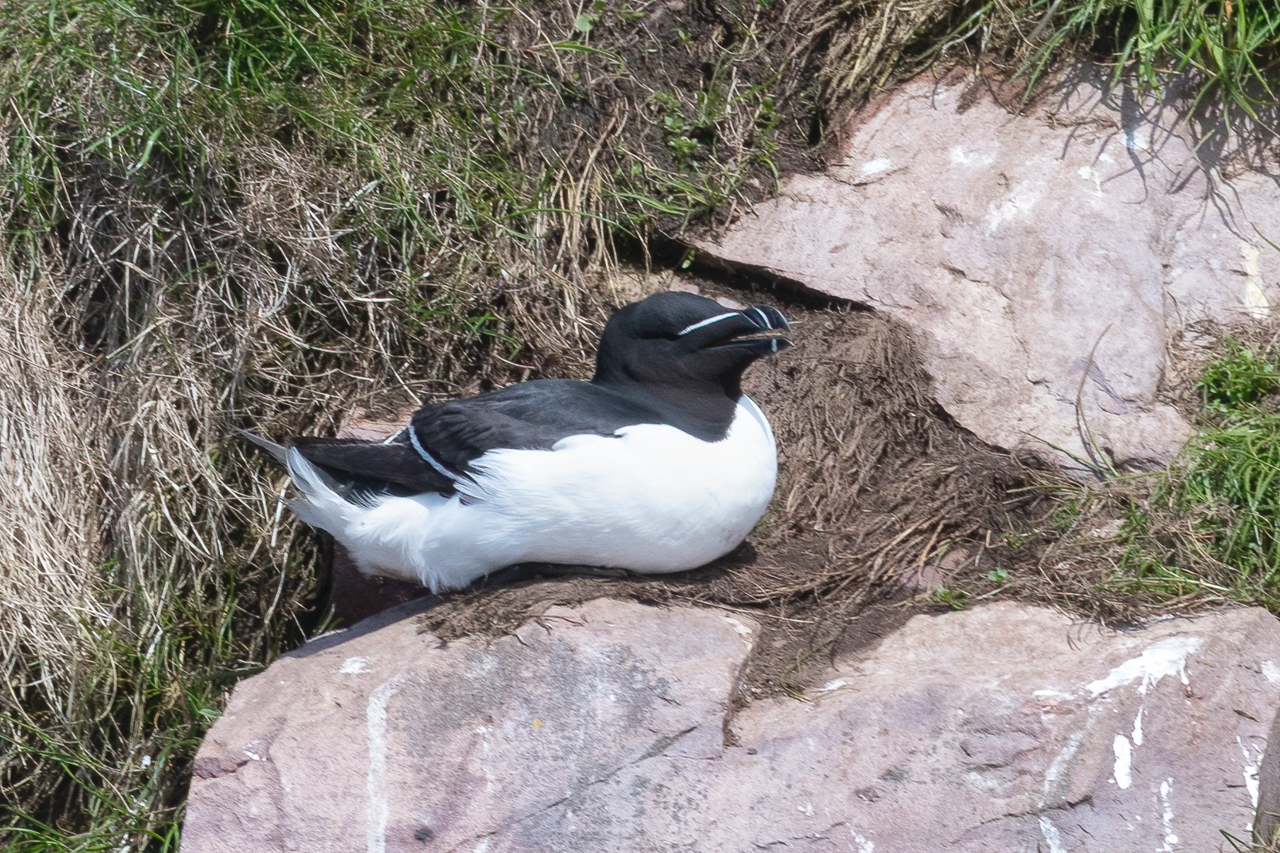
Razorbill © Tim Arthur
📍 Did You Know? The Screech In
The Screech In is a beloved Newfoundland rite of passage. First-timers drink Screech — a robust Newfoundland rum — kiss a cod, and recite an oath to become an honorary Newfoundlander. O’Brien’s Whale & Bird Tours has been running these trips for decades and is one of the most respected ecotourism operators on the island.
The non-bird highlight was watching Humpback Whales breaching and splashing in a grand performance for the boat — the Oohs and Ahhhs were entirely justified. On the way back to St. John’s we made an unplanned stop at a known Great Horned Owl nest occupied by an adult and an owlet.
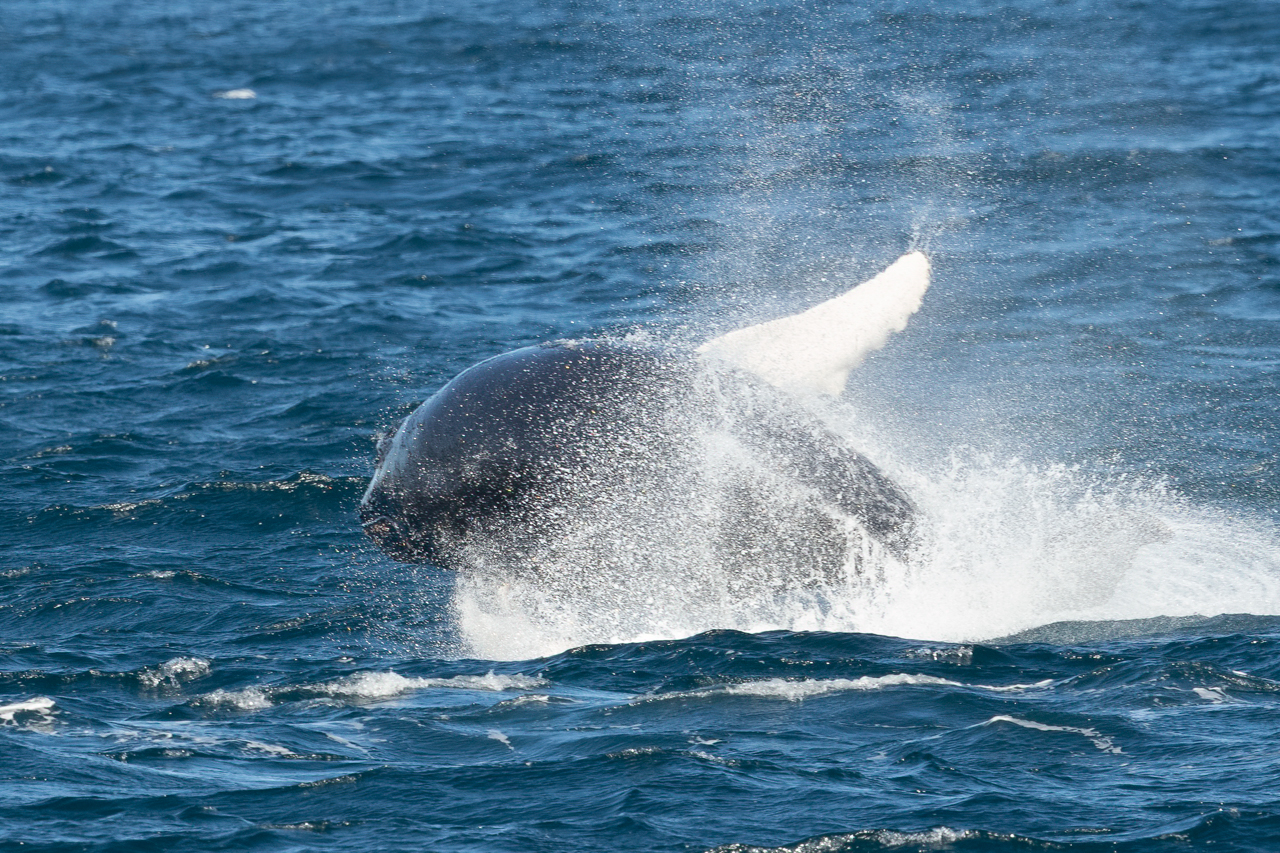
Humpback Whale © Tim Arthur
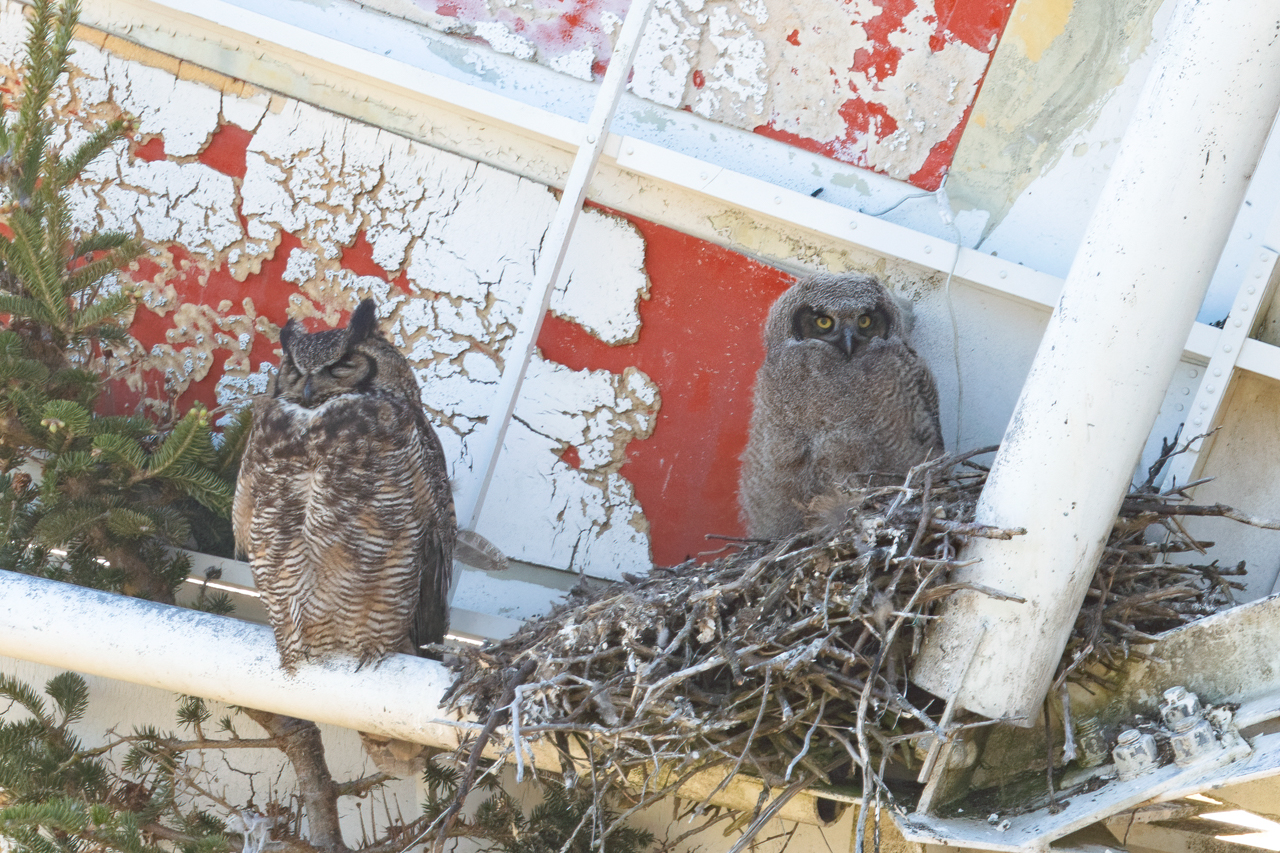
Great Horned Owl © Tim Arthur
Day 2 tally: 40 bird species. Meg announced she was already up to 7 lifers before dinner.
Day 3 · Cape Spear, Signal Hill & Rare European Visitors
Our second full day in St. John’s took us to two culturally and historically significant sites — which also happened to be excellent birding spots.
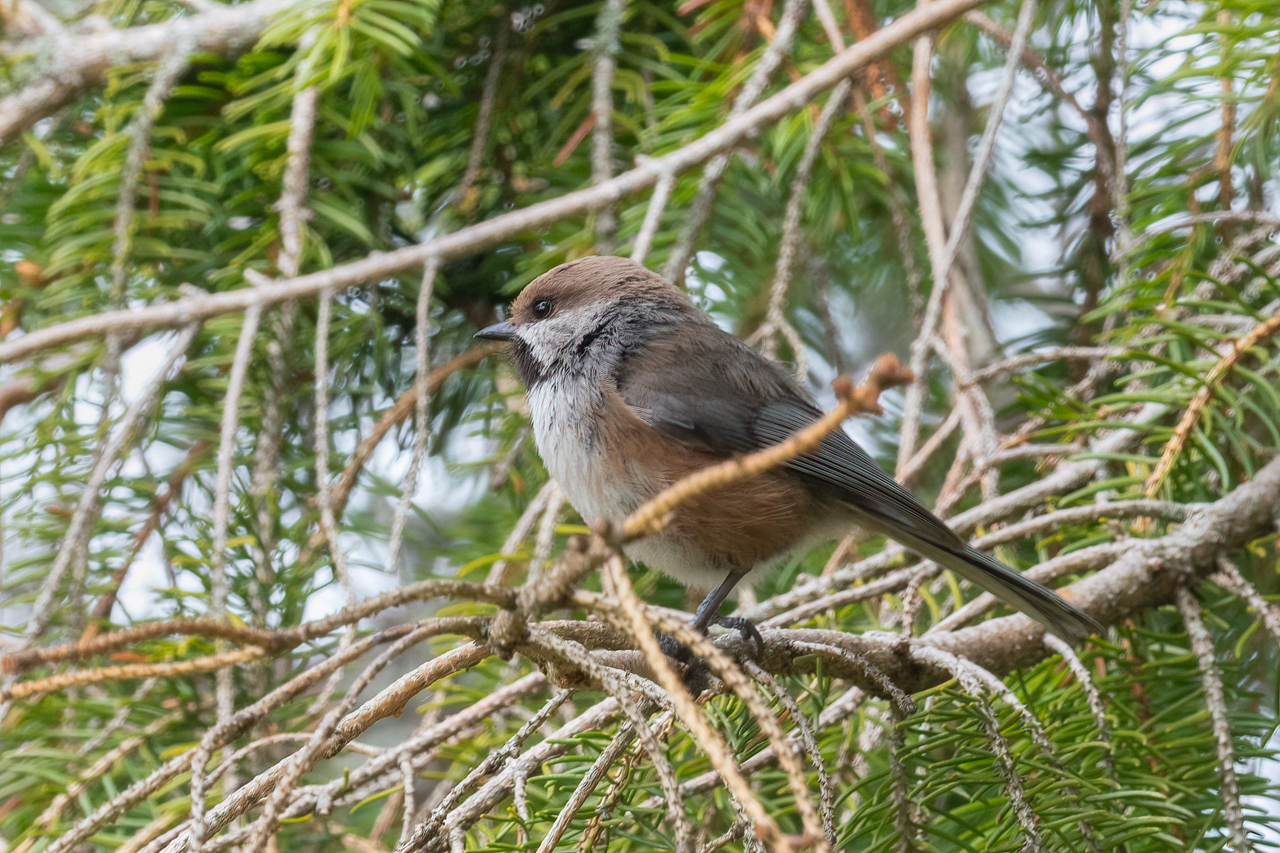
Boreal Chickadee © Tim Arthur
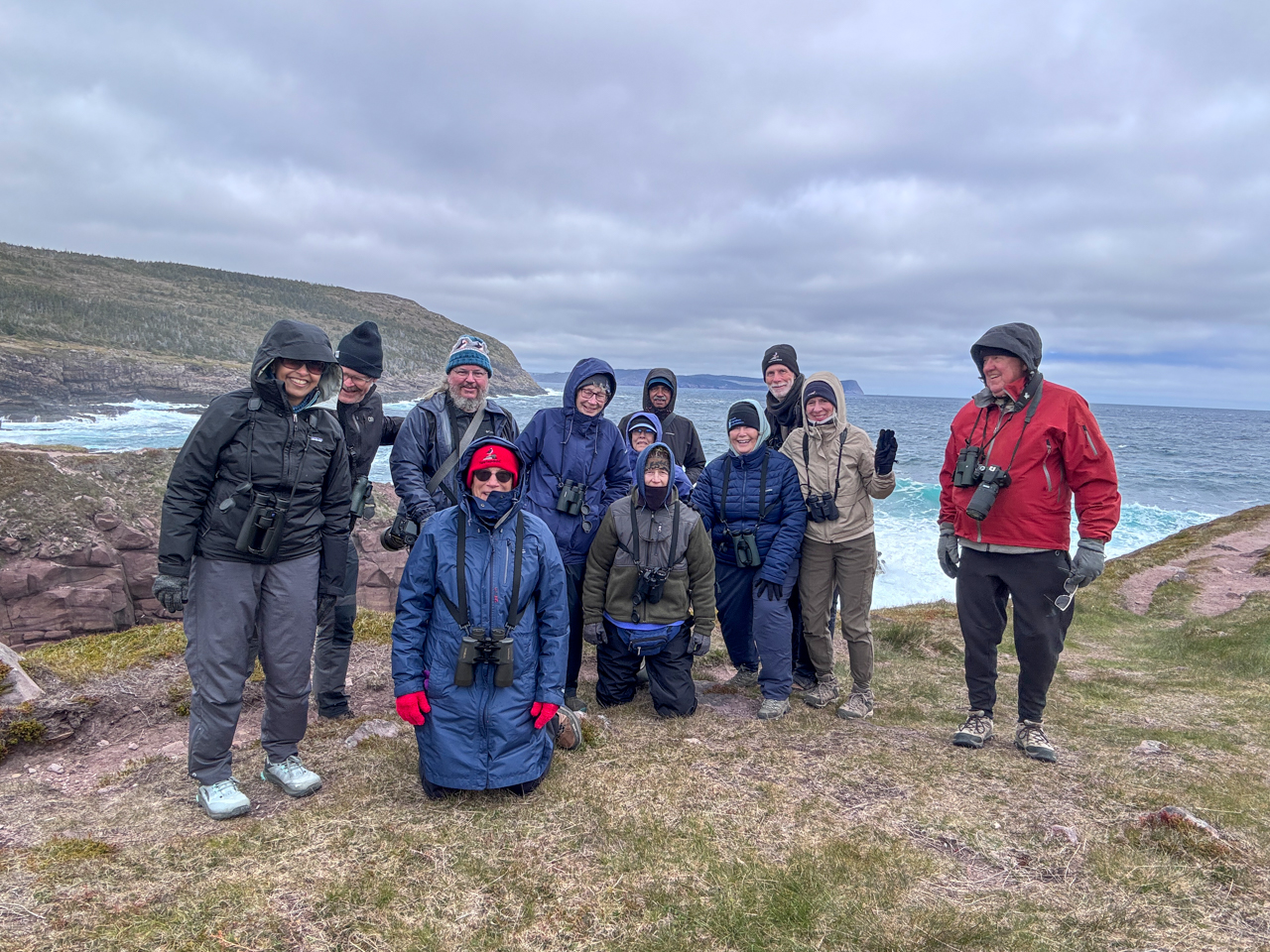
Our group © Rick Szabo
📍 Did You Know? Cape Spear
At latitude 47.5°N, Cape Spear is the most easterly point of North America (excluding Greenland). The lighthouse, built in 1836, is the oldest surviving lighthouse in Newfoundland, and the original keeper’s cottage has been restored to its 1839 appearance.
📍 Did You Know? Signal Hill
This is where Italian inventor Guglielmo Marconi received the first transatlantic wireless signal on December 12, 1901 — the letter ‘S’ in Morse code, transmitted from Cornwall, England. A staggering piece of communications history.
Our keen guides had their scopes pointed out to sea and aptly identified Great Shearwater, streams of Sooty Shearwater (76 individuals logged), Northern Gannet, Black Guillemot, and over 1,000 Common Murres. The group was getting sharp on their alcid and oceanic bird IDs.
The afternoon took us on a specialty hunt to Virginia Lake, chasing recent sightings of Eurasian Wigeon. In the same pond, a Black-headed Gull dropped in — two special European birds in one afternoon. We were glad we found them, as it would be the only time we’d encounter either rarity. The Black-headed Gull proved to be a one-day vagrant; nobody reported seeing it again after we left.
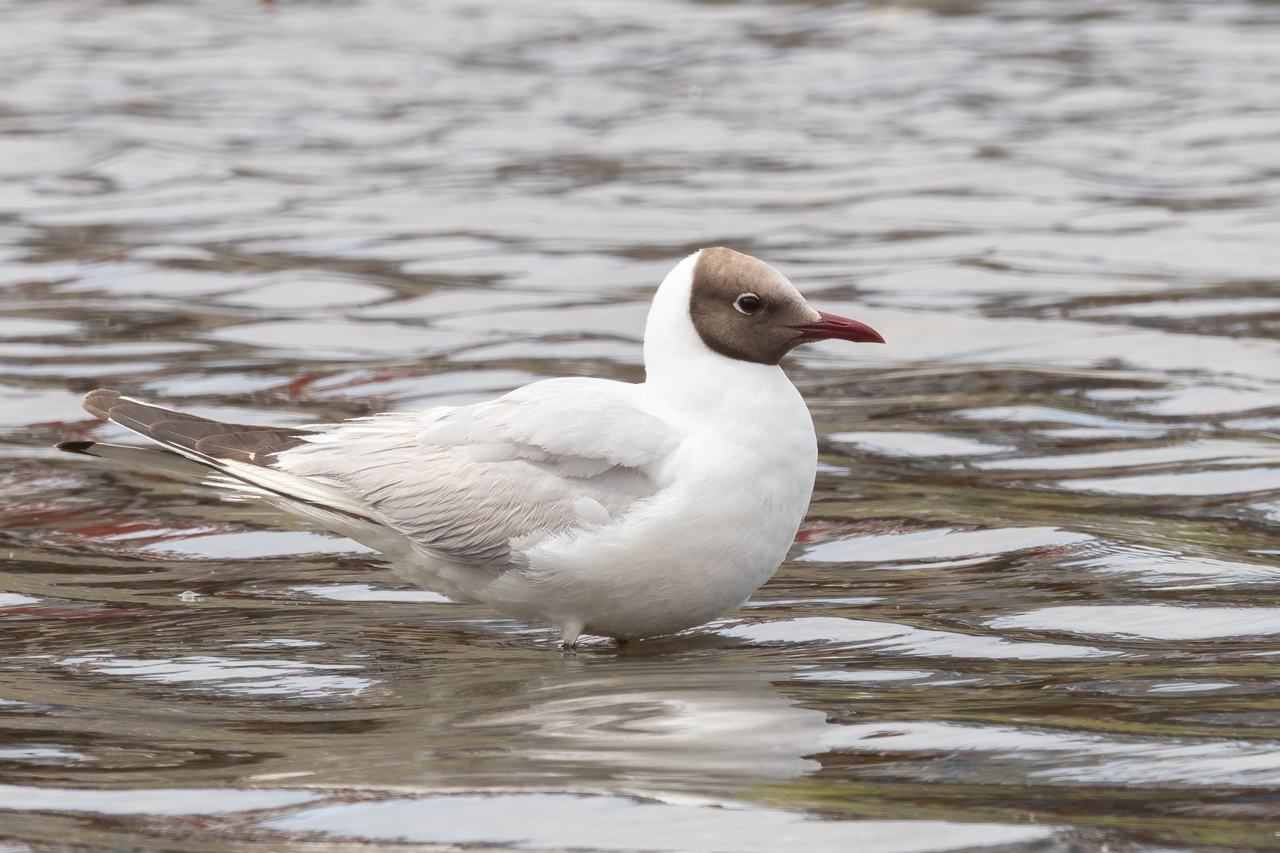
Black-headed Gull © Tim Arthur
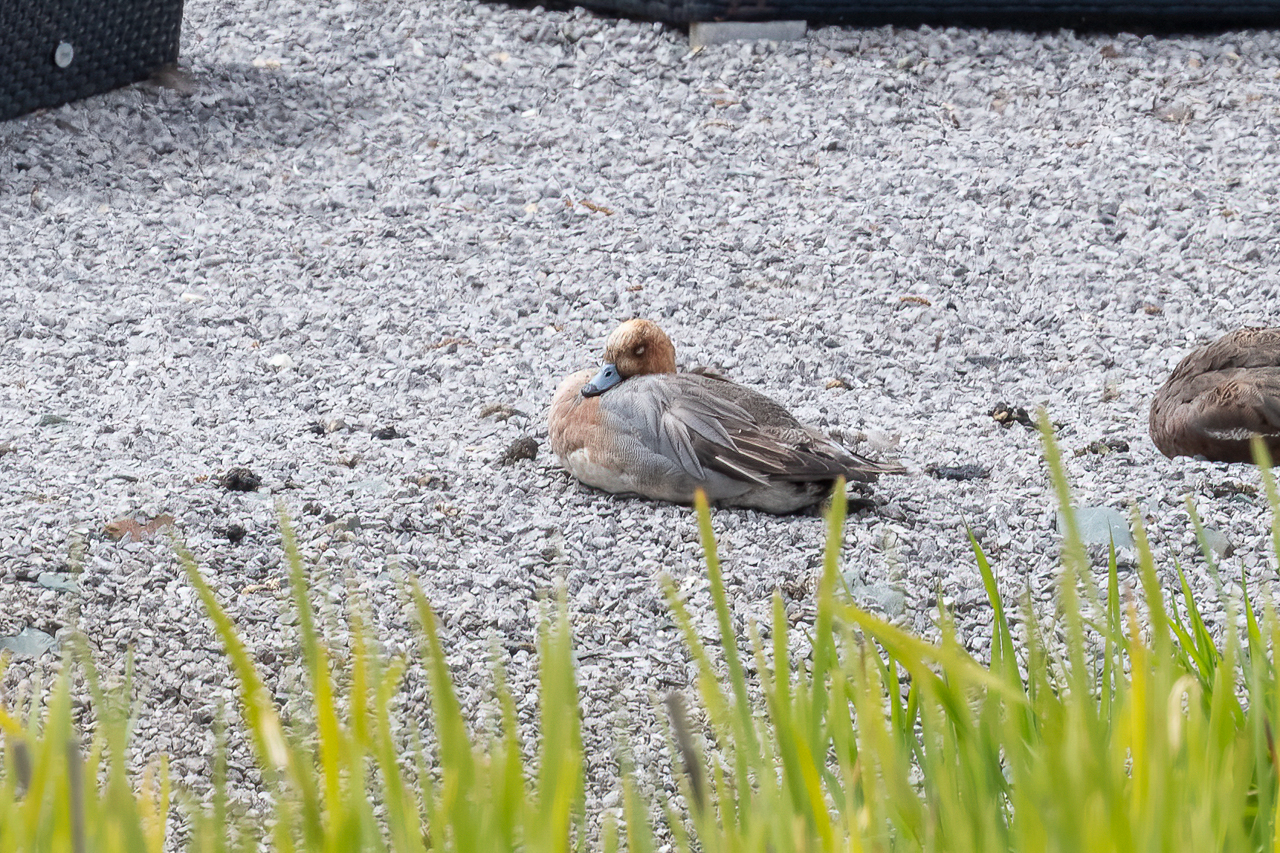
Eurasian Wigeon © Tim Arthur
Celebrations followed over a traditional Newfoundland meal in St. John’s, where lobster abounded and local beer flowed freely. We were ready to leave the city and head into the wild, bird-filled interior of the province.
Day 4 · South Along the Avalon — Forests, Terns & Cape Race
We bid farewell to St. John’s and headed south along the coast towards Trepassey, with planned stops at St. Michael’s to scope the nearby islands for nesting seabirds. Our efforts were rewarded with our only Northern Fulmar of the trip, along with great looks at Atlantic Puffins, Kittiwakes, and Murres. Our group never tired of seeing Puffins.
As we left the coast and entered the forests of La Manche Provincial Park, the species changed entirely. We found Purple Finch, Pine Siskin, Northern Waterthrush, Black-and-White Warbler, Blackpoll Warbler, Yellow-rumped Warbler, Black-throated Green Warbler, and Wilson’s Warbler. By trip’s end we would tally 15 warbler species with fantastic views of all of them.
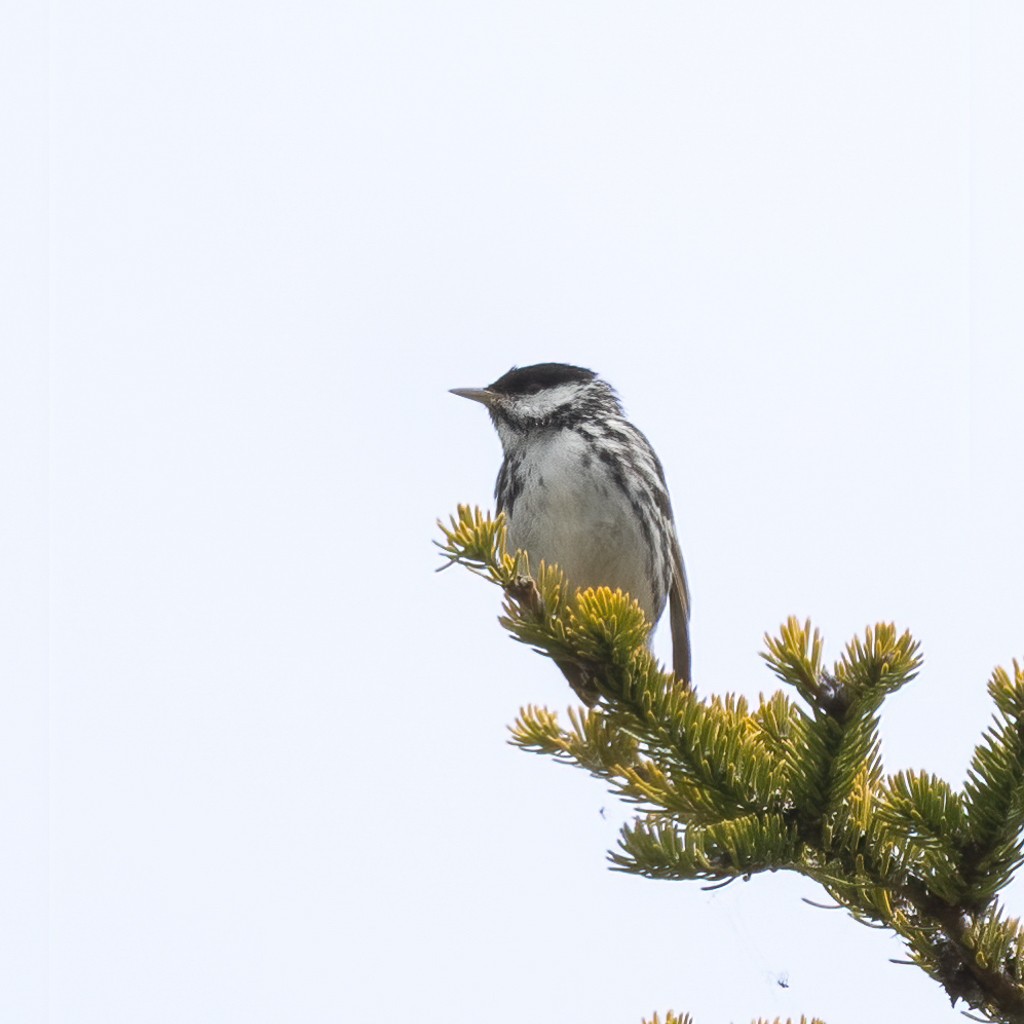
Blackpoll Warbler © Tim Arthur
We stopped at the charming Tetley Tea House for lunch — hot soup and tea to warm our bellies after the morning sea-watch and forest walk. With renewed energy we set out to the town of Renews for a lesson in Tern identification, successfully picking out Arctic Terns from the Common Terns. High fives all around for the many guests getting their lifer Arctic Tern.
Late afternoon brought a cultural visit to the Cape Race Lighthouse — made famous as the location that first received the distress signal from the Titanic.
📍 Did You Know? Cape Race Lighthouse
Built in 1907, Cape Race is one of the most powerful lighthouses in North America. On the night of April 14, 1912, wireless operator Jack Goodwin received the Titanic’s distress signals from this very spot. The barren surrounding landscape — known as the Avalon Barrens — is a uniquely stark and beautiful ecosystem unlike anything else on the island.
The views from the lighthouse were endless, interrupted only by a close group of Common Eiders and a lone White-winged Scoter. Our drive back was rewarded when two Willow Ptarmigan used the road in front of us for their evening dust bath — we laughed at their wild vocalizations and talked about them all through dinner at the Edge of Avalon Inn in Trepassey.

Common Eider © Tim Arthur

Willow Ptarmigan © Tim Arthur
Day 5 · Trepassey, St. Bride’s & Maud’s Unforgettable Restaurant
We all wished we could stay an extra night in Trepassey — the innkeeper was so gracious and the food was exceptional — but the road was calling. We spent the morning in the bay and were rewarded with a rare Red-throated Loon among the many Common Loons (28 logged over the trip). We also found Black Scoter, Northern Gannet, and our only sightings of the trip of Iceland Gull, Grey Catbird, Barn Swallow, and Bank Swallow.

Fox Sparrow © Tim Arthur
Our afternoon drive down the St. Bride’s Peninsula turned out to be our best mammal-viewing day of the entire trip. Woodland Caribou, Moose, Snowshoe Hare, Red Squirrel, Harbour Porpoise, and Harbour Seal — a genuine safari!
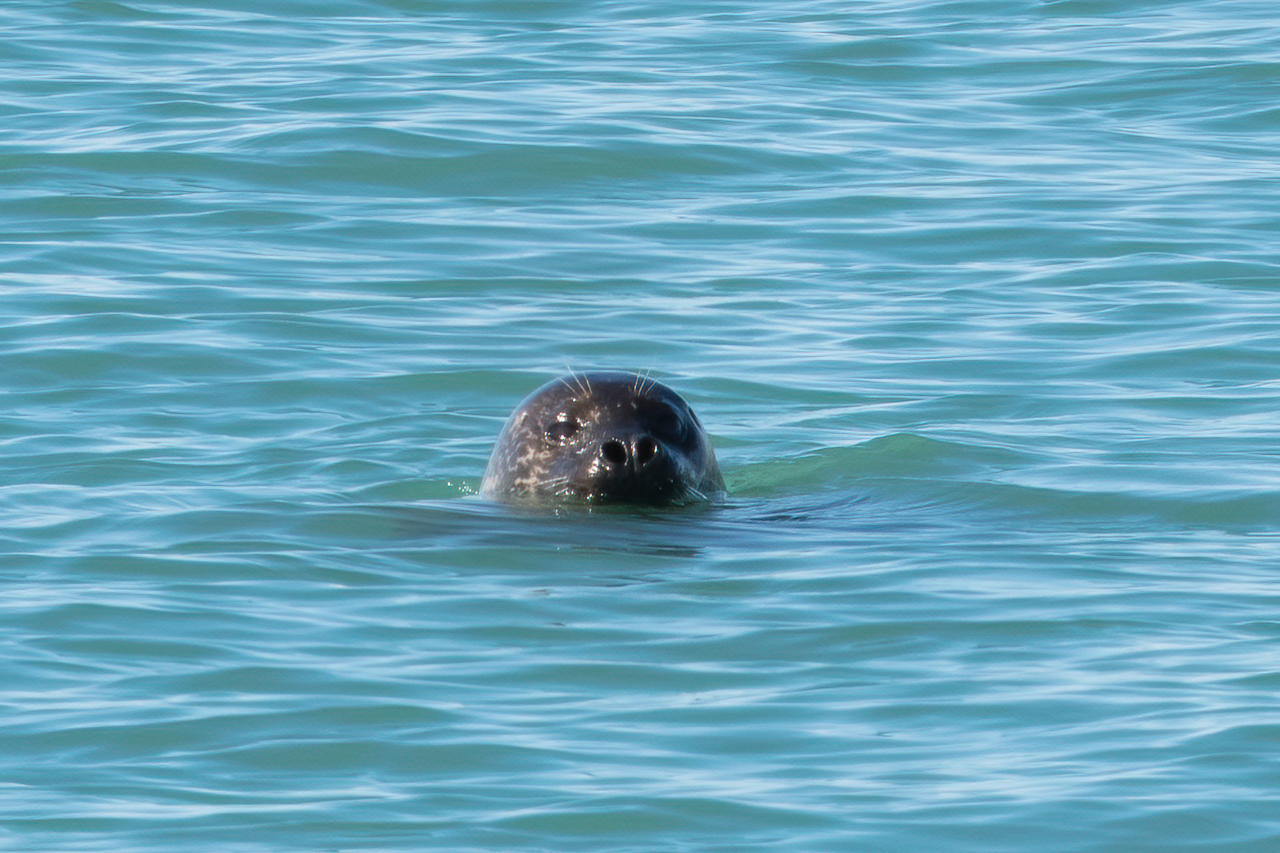
Harbour Seal © Tim Arthur
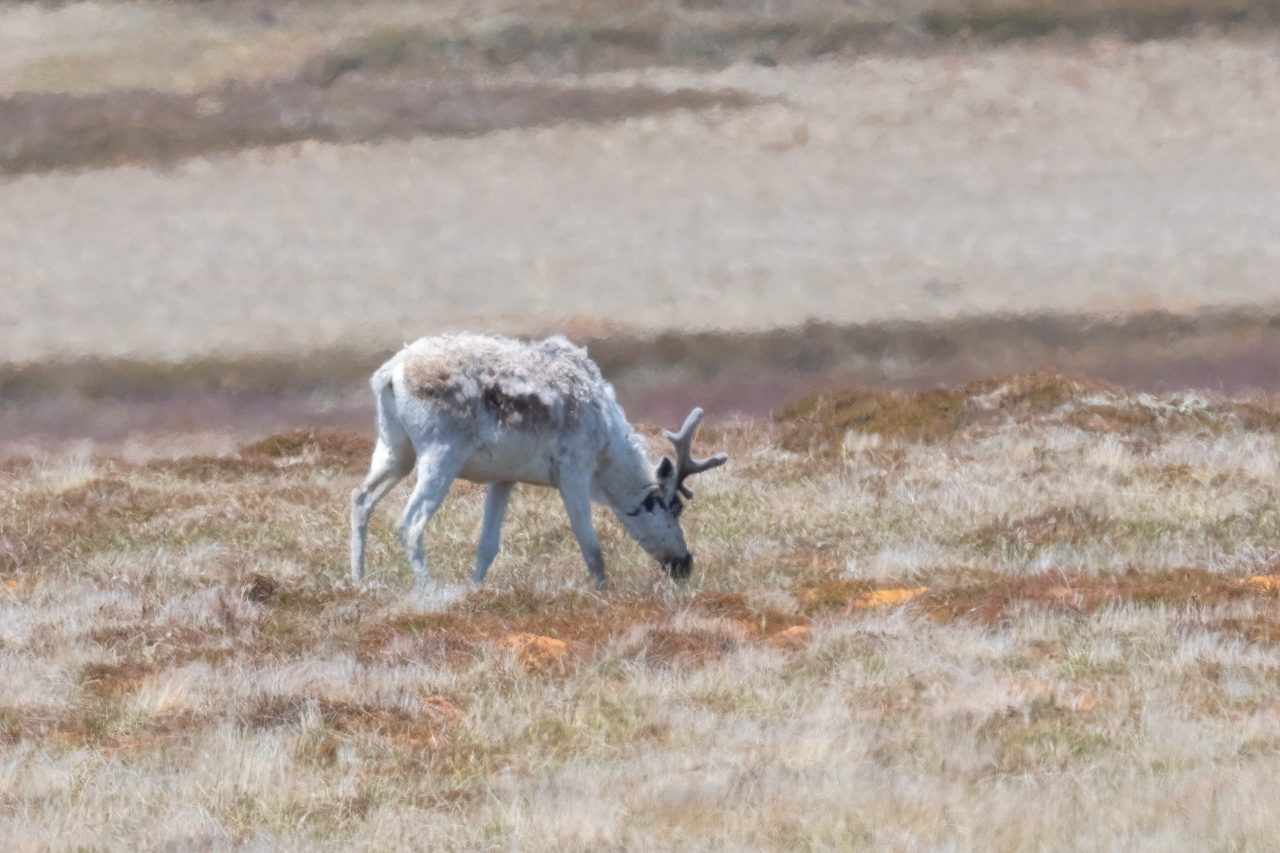
Woodland Caribou © Tim Arthur
Highlight of the Trip (Non-Bird Division): Dinner at Da Birds’ Eye restaurant in St. Bride’s. The food was fine, but the real entertainment was proprietor Maude, who regaled the group with stories in an accent so gloriously thick it had us giggling all evening. For many guests, this was the single most memorable moment of 12 days.
Day 6 · Cape St. Mary’s — Nothing Can Prepare You
Cape St. Mary’s Ecological Reserve is a magical place. Period.
Nothing can quite prepare you for what you’re about to see. It is the most accessible Northern Gannet colony in the world, and a UNESCO World Heritage Site. It was the favourite stop for most guests on this tour — and it isn’t hard to understand why. Imagine rounding the bend at the very tip of the Avalon Peninsula and beginning to hear the raucous noise, beginning to smell the stench of hundreds of thousands of nesting seabirds. You can’t imagine it. You have to be there.
📍 Did You Know? Northern Gannets at Cape St. Mary’s
Northern Gannets are extraordinary hunters — they plunge-dive from heights of up to 40 metres (130 feet), hitting the water at speeds exceeding 100 km/h (60 mph). At its peak, this reserve held over 20,000 nesting pairs of Northern Gannets. The recent outbreak of Highly Pathogenic Avian Influenza (HPAI) in 2022–23 significantly impacted the colony — a sobering reminder of the conservation challenges facing seabird populations worldwide. What remains is still breathtaking. Over our trip we logged 8,069 Northern Gannets in total.
The walk from the Visitors Centre to the seabird colony is spectacular for the scenery alone. Our first glimpse was interrupted by one of our day’s targets: the Great Cormorant, standing perfectly alongside Double-crested Cormorants — a live field lesson in telling the two species apart.
Then came Bird Rock. A rock. Covered in birds. When you add the tens of thousands of nesting Black-legged Kittiwakes and Common Murres to the Gannets, you get a scene straight out of Hitchcock. Birds at your feet, birds in the air, birds on every surface. The sound and smell are overwhelming. You don’t know where to look. This is the spot where the birders go quiet, because there are no words. We spent hours there. Nobody wanted to leave.

Common Murre © Tim Arthur
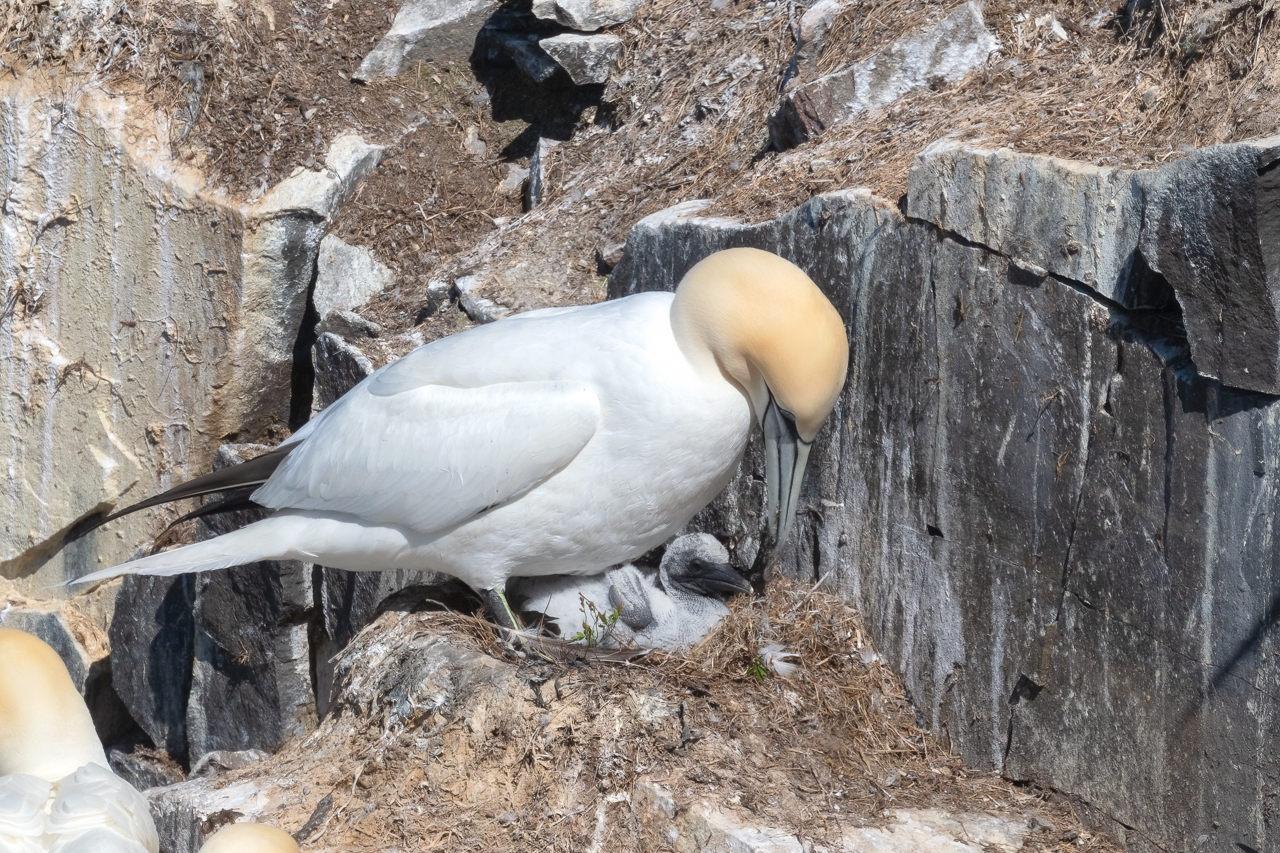
Northern Gannet and chick © Tim Arthur
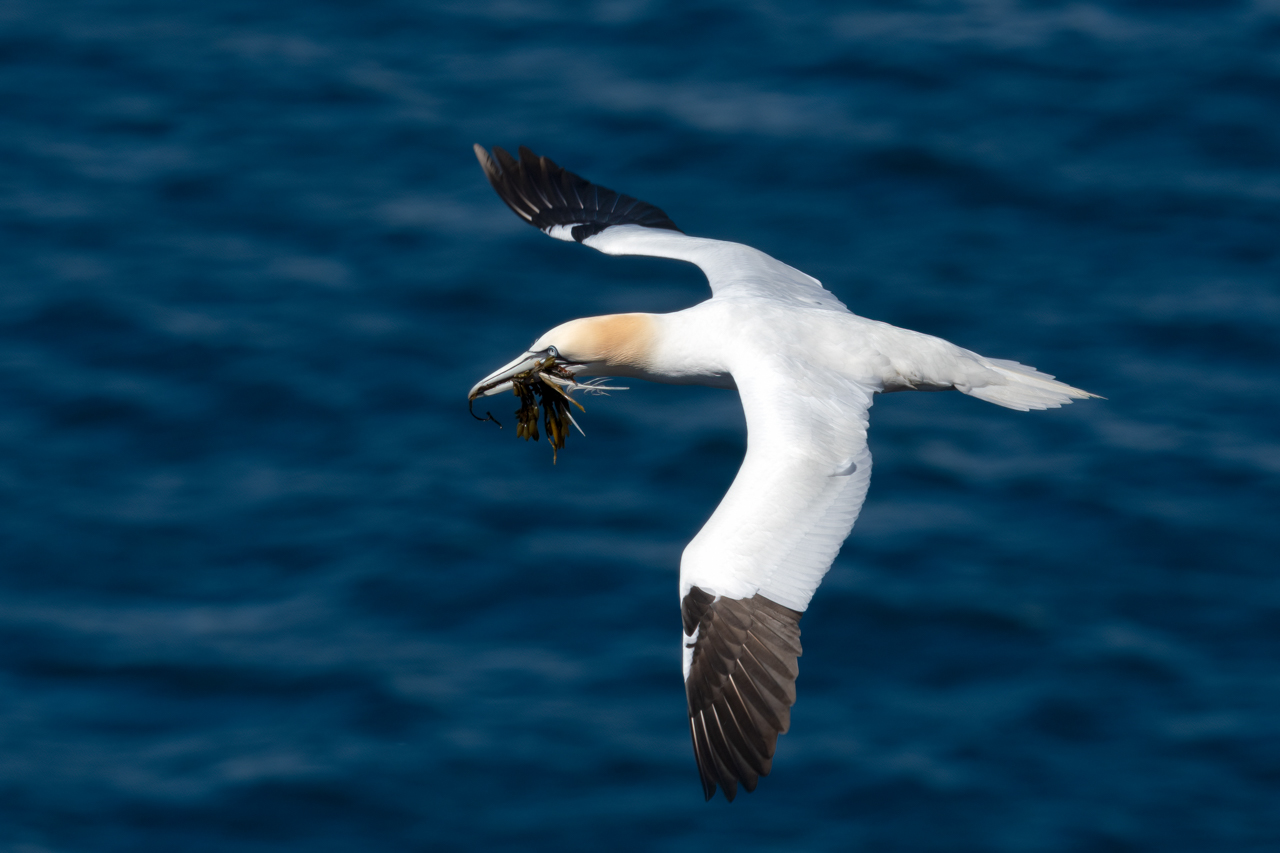
Northern Gannet © Tim Arthur
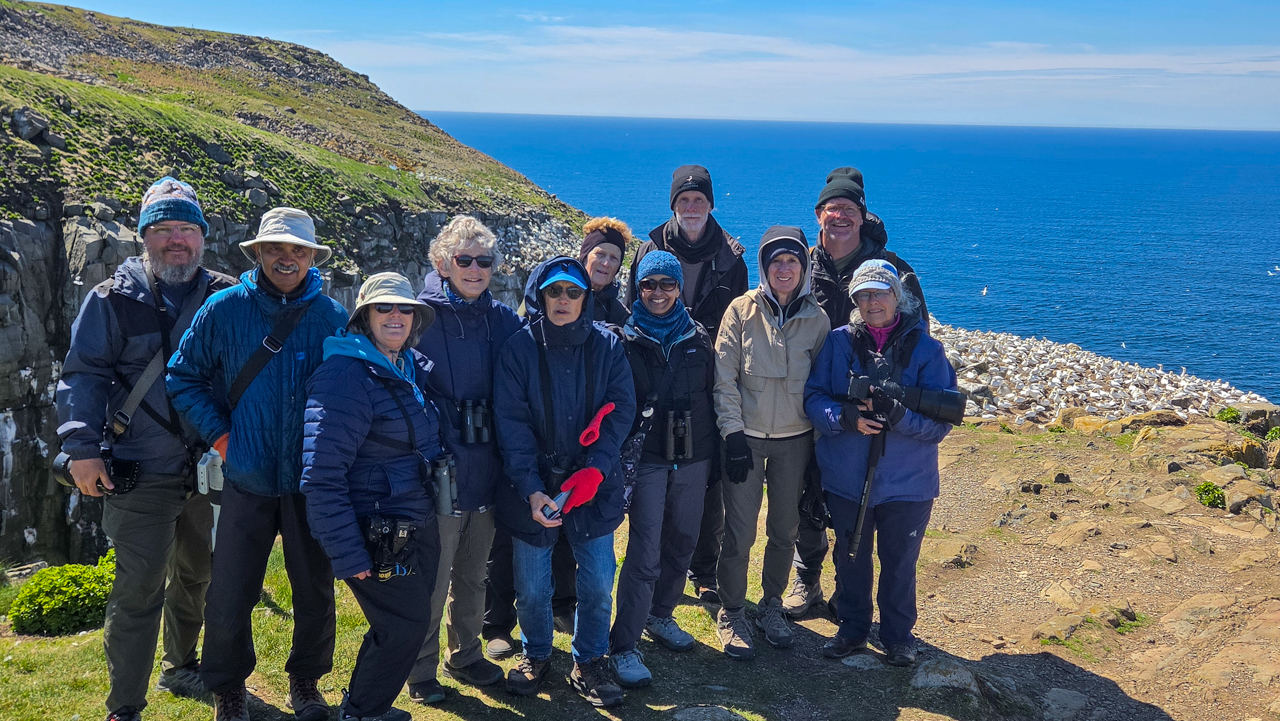
Our Group at Cape St. Mary’s
We took a group photo out at Bird Rock. We will all cherish this.
On the walk back, we took a less-travelled trail and got stunning close looks at a Willow Ptarmigan — and once again laughed at the sounds these wonderfully eccentric birds make.
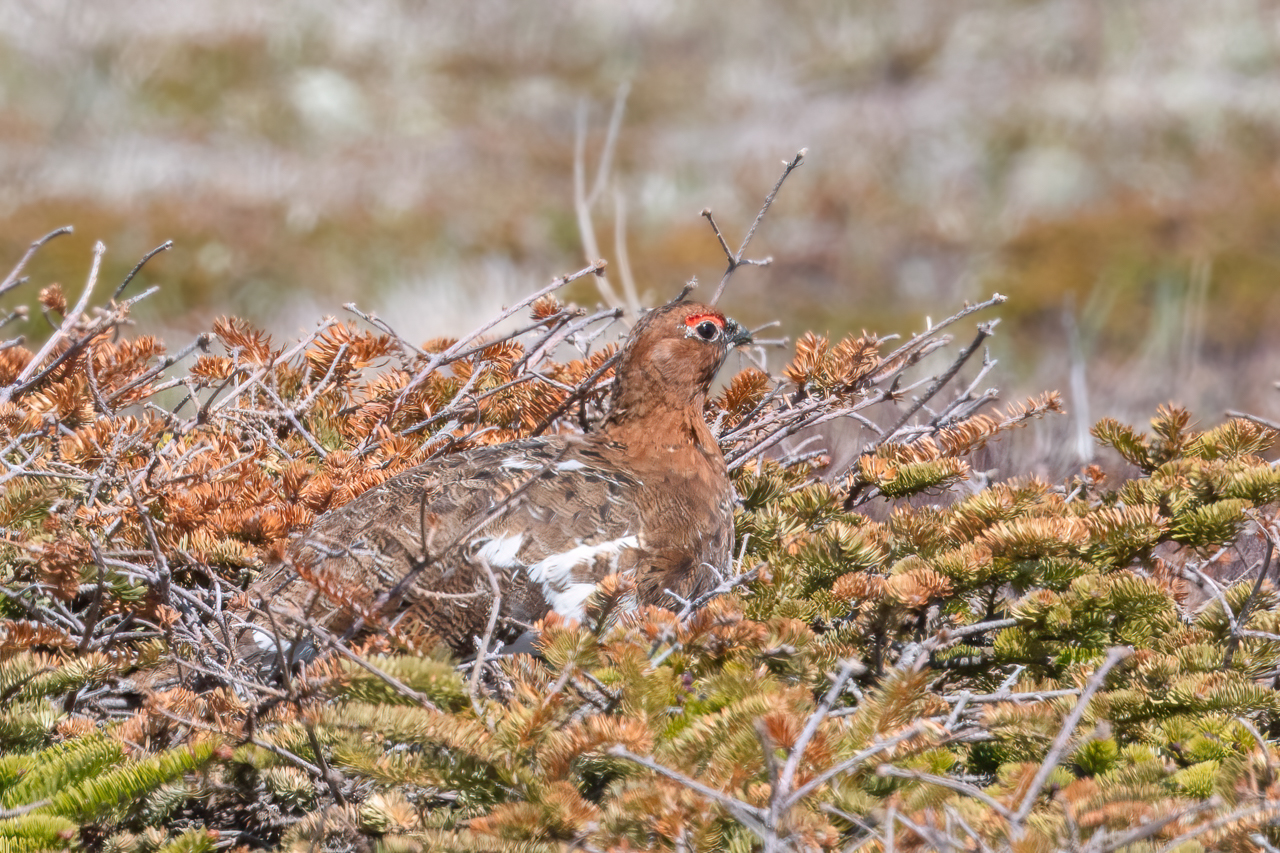
Willow Ptarmigan © Tim Arthur
The afternoon was a wild bird chase after the famous Steller’s Sea Eagle — an extraordinary vagrant from Siberia that had been reported on and off for several weeks near Whitebay. We all agreed the detour was worth attempting. After a lengthy and ultimately fruitless search we called it off. That’s birding — and honestly, we wouldn’t have it any other way. We headed on to Terra Nova National Park.
Day 7 · Terra Nova National Park — Into the Boreal
📍 Did You Know? Terra Nova National Park
Established in 1957, Terra Nova was the first national park in Atlantic Canada. It spans over 400 square kilometres of boreal forest and sheltered fjords on Bonavista Bay — and the bird life changes completely the moment you enter its forest.
Entering Terra Nova is like crossing into a completely different country. Away from the ocean, surrounded now by Black Spruces and tall canopy, the species list changes dramatically. Red Crossbill, Ruffed Grouse, Pine Grosbeak, Hermit Thrush, and Lincoln’s Sparrow appeared for the first time. We spent the day on two trails within the park, dodging rain squalls and downpours, and dried off in time for an evening drive that turned up a Black Bear crossing the road.

Birding in the Rain © Rick Szabo
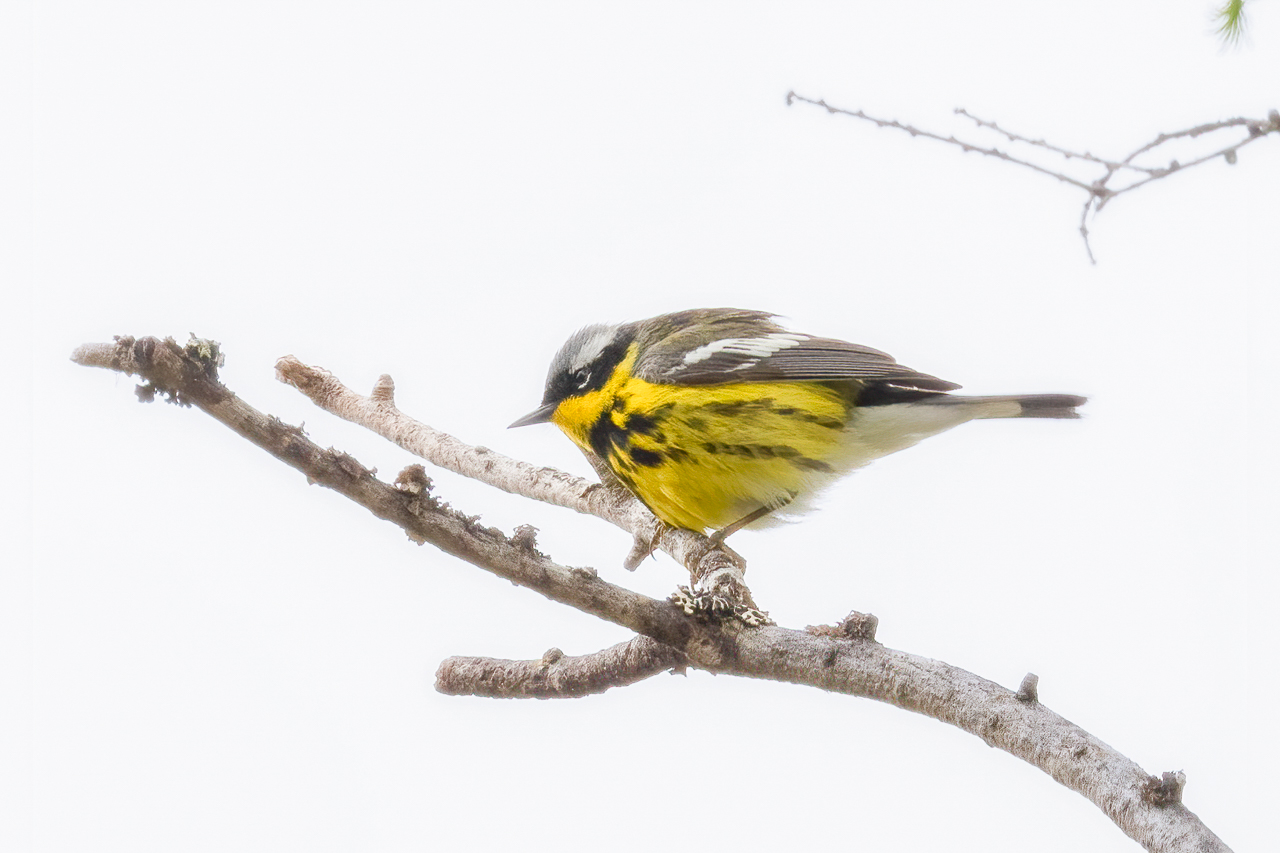
Magnolia Warbler © Tim Arthur
The restaurant and accommodations at Clode Sound quickly became a group favourite — particularly because the restaurant doubled as a bakery, producing fresh-baked pies each night served with hard-scooped ice cream. Partridgeberry Pie became our nightly ritual. The vegetarians in the group were thrilled with the homemade vegan chili. Rick had it four meals in a row.
Day 8 · Dunphy’s Pond, Gander & Come From Away
We saved the best trail in the park for when the weather cleared. The 3-kilometre walk to Dunphy’s Pond rewarded our patience with Olive-sided Flycatcher, Alder Flycatcher, Blue-headed Vireo, Canada Jay, Rusty Blackbird, and Magnolia Warbler. A stop at the Visitors Centre added a Common Goldeneye on the inlet, known as Newman Sound.
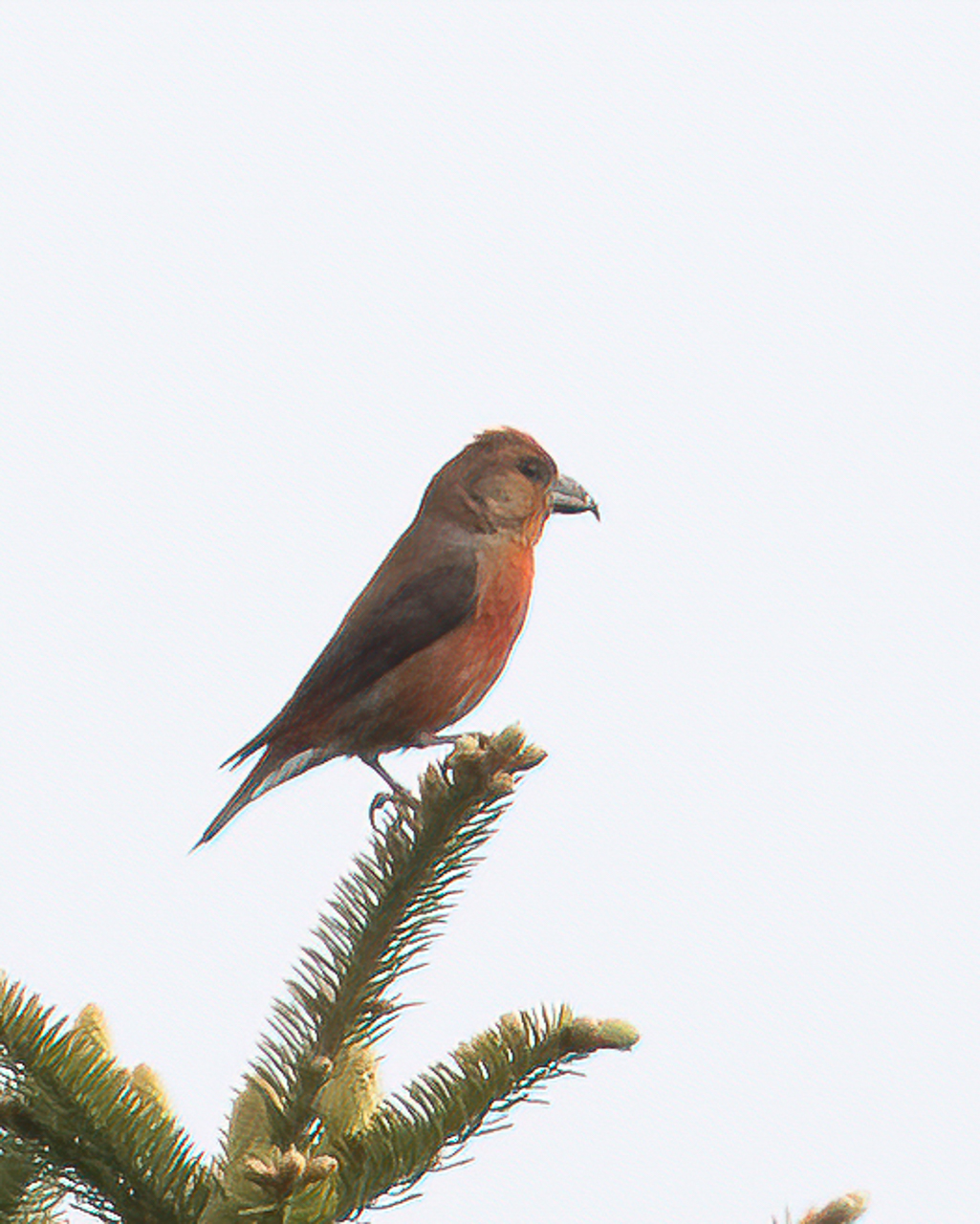
Red Crossbill © Tim Arthur
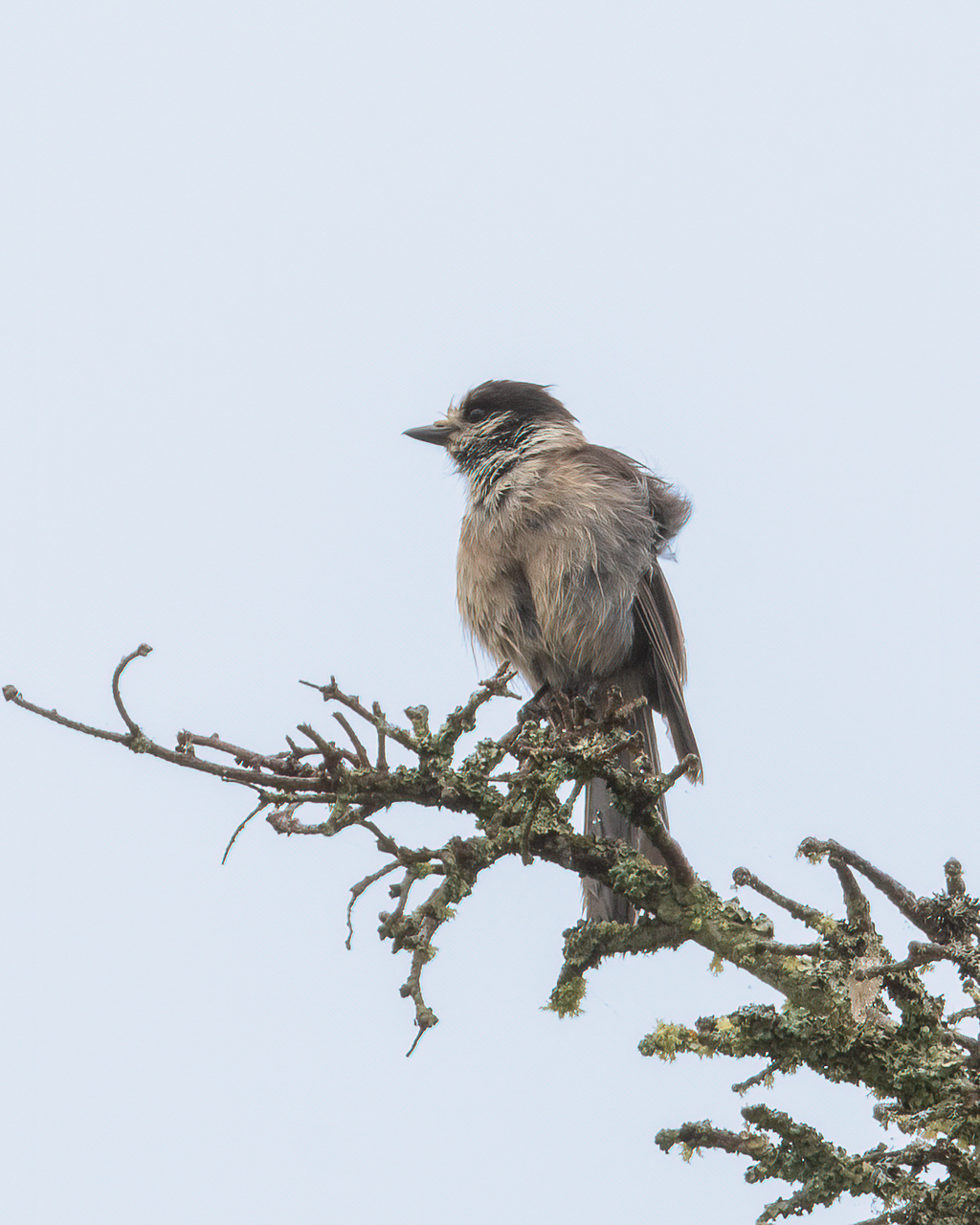
Canada Jay © Tim Arthur
The route to Grand Falls-Windsor takes us through the town of Gander — and we always stop here.
📍 Did You Know? Gander & Come From Away
On September 11, 2001, when American airspace was closed, Gander and its surrounding communities took in nearly 7,000 stranded airline passengers virtually overnight — more than doubling the town’s population. The extraordinary generosity of those residents became the basis for the hit Broadway musical Come From Away, which ran from 2017 to 2022 and won numerous awards. The airport exhibit honouring this event is quietly moving and well worth the stop.
After the exhibit, our group birded the nearby Townsite Trails and picked up a surprise: a Red-eyed Vireo sitting right on its nest.
That evening at the Mount Peyton Hotel in Grand Falls, we had our first ‘Mug-up’ — a beloved Newfoundland tradition of gathering over tea, coffee, and a light snack. Our mug-up featured local singer Sarah Berry, a 15-year-old who stopped the entire room with her angelic voice and deeply traditional Newfoundland songs. A genuinely unforgettable evening!
Day 9 · Grand Falls to Gros Morne — The Long Road West
We spent the morning on the Corduroy Brook Trail System — one of the most well-organised and beautifully maintained trail networks we’ve visited. Soaring Wilson’s Snipe, many Alder Flycatchers, and outstanding looks at Mourning Warblers throughout the park.
Thanks to a hot tip from fellow Eagle-Eye guides, we made a detour to the Grand Falls-Windsor Wastewater Treatment Facility, where the friendly employee Dave welcomed us in to explore the lagoons. This proved to be a brilliant stop, adding Wood Duck, Blue-winged Teal, Greater Scaup, Osprey, Ring-necked Duck, and Green-winged Teal to our ever-growing list.
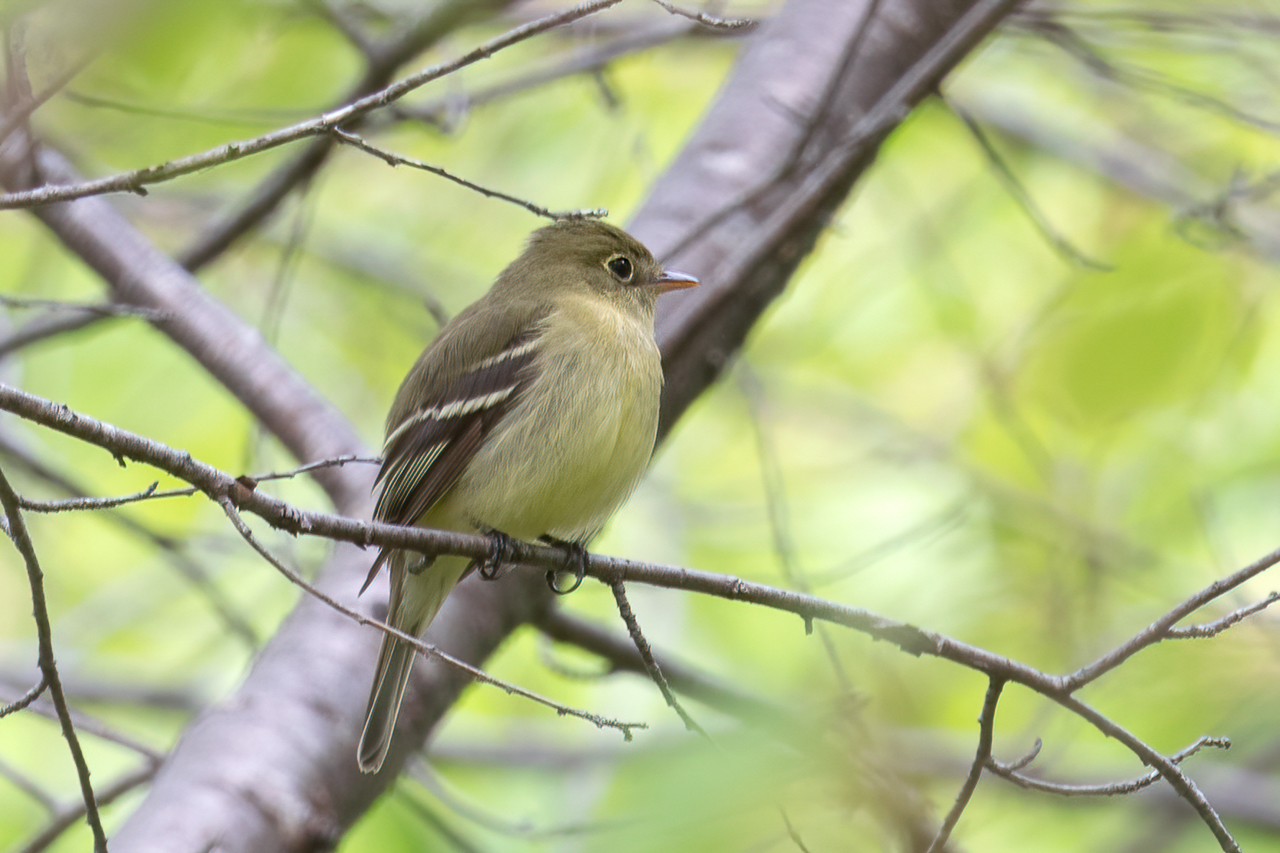
Yellow-bellied Flycatcher © Tim Arthur
Pro tip: Never turn down a wastewater facility on a birding trip. Dave, you’re a legend.
A long, much-appreciated lunch at a local Indian restaurant fuelled our final major drive of the trip out to Gros Morne National Park, passing by Deer Lake and settling into Rocky Harbour.
Day 10 · Gros Morne — Walking on the Earth’s Mantle
Gros Morne National Park is one of the most beautiful places in Newfoundland — the poster image for picturesque hikes, vast vistas, and fjords. Standing in it, you feel somewhere between New Zealand and Norway.
📍 Did You Know? Gros Morne — UNESCO World Heritage Site
Designated in 1987, Gros Morne earned its UNESCO status for extraordinary geological significance. The Tablelands — the rust-brown plateau we’d visit this afternoon — are one of the only places on Earth where oceanic mantle rock (peridotite) has been thrust to the surface through a geological process called obduction. The rock is toxic to most plants, which is why the landscape looks barren and otherworldly — like walking on the moon, or Mars.
Our first day explored the region between Rocky Harbour and the Tablelands, adding Ovenbird, Swainson’s Thrush, White-winged Crossbill, Evening Grosbeak, Common Merganser, and Lesser Black-backed Gull. The Evening Grosbeak practically dropped from the sky and landed inches from our heads — no binoculars required for that one!
The Tablelands Trail lived up to every word of the Visitors Centre description. The barren rust-coloured landscape is not rich in birds, but the experience of standing on the Earth’s mantle — the layer that normally sits 30 kilometres below your feet — is something that stays with you.
Our last stop was Trout River, where hundreds of Gulls were gathering to feed on the Capelin run.
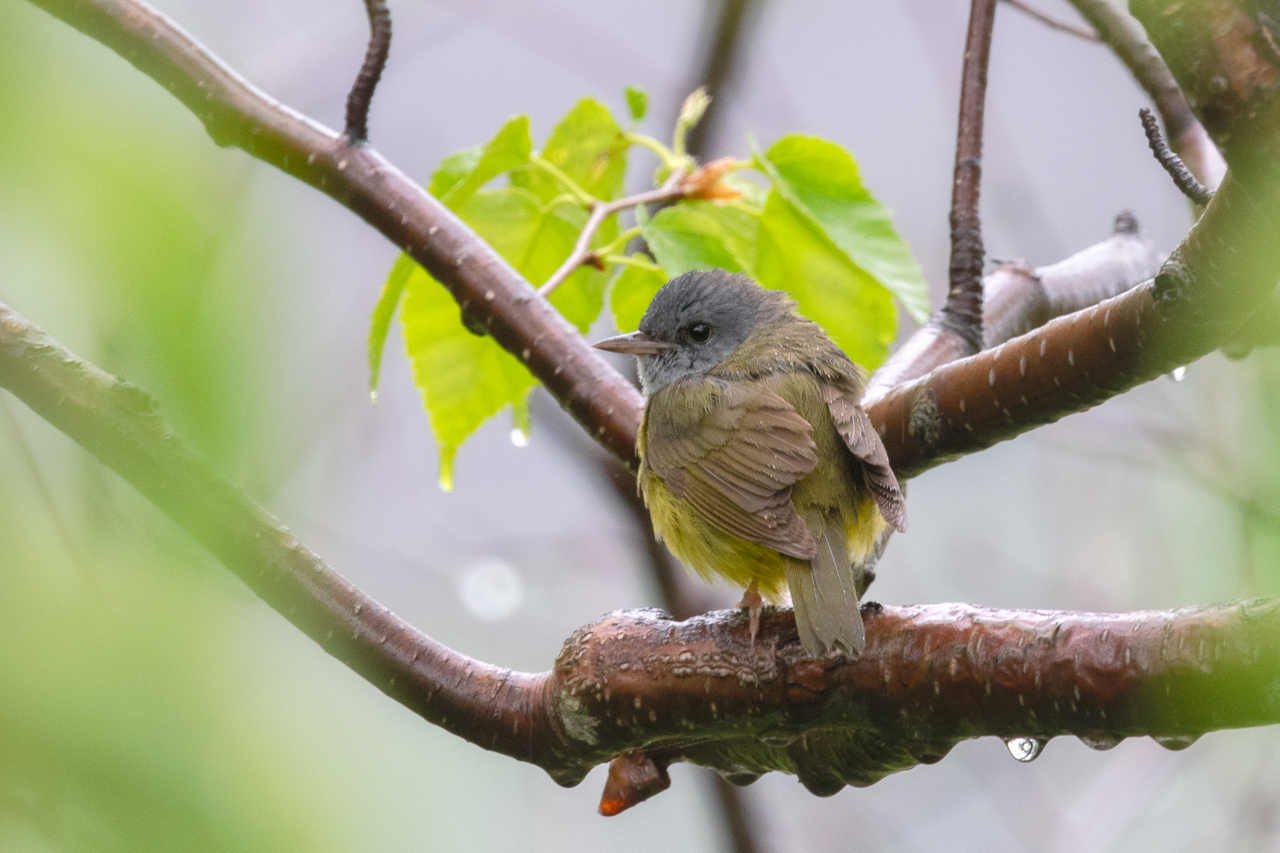
Mourning Warbler © Tim Arthur
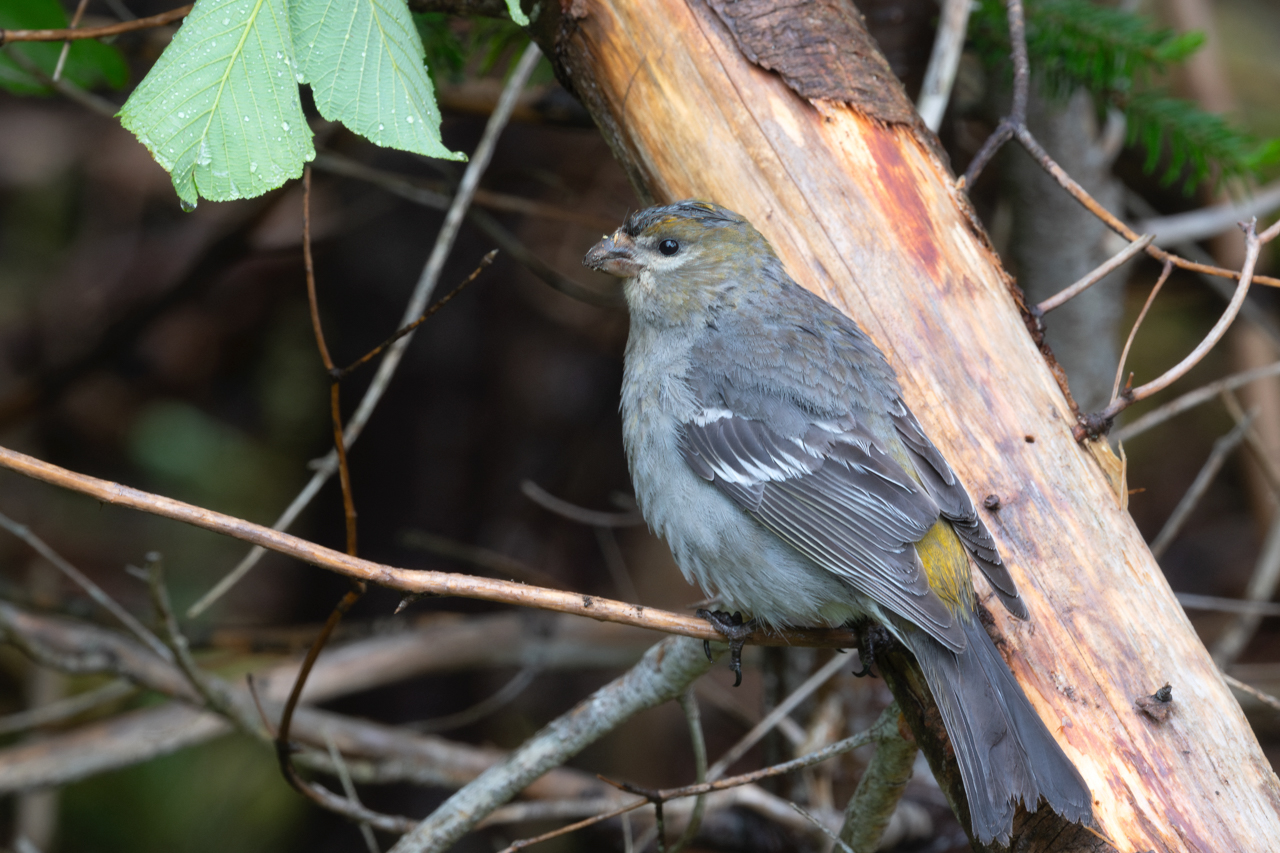
Pine Grosbeak © Tim Arthur
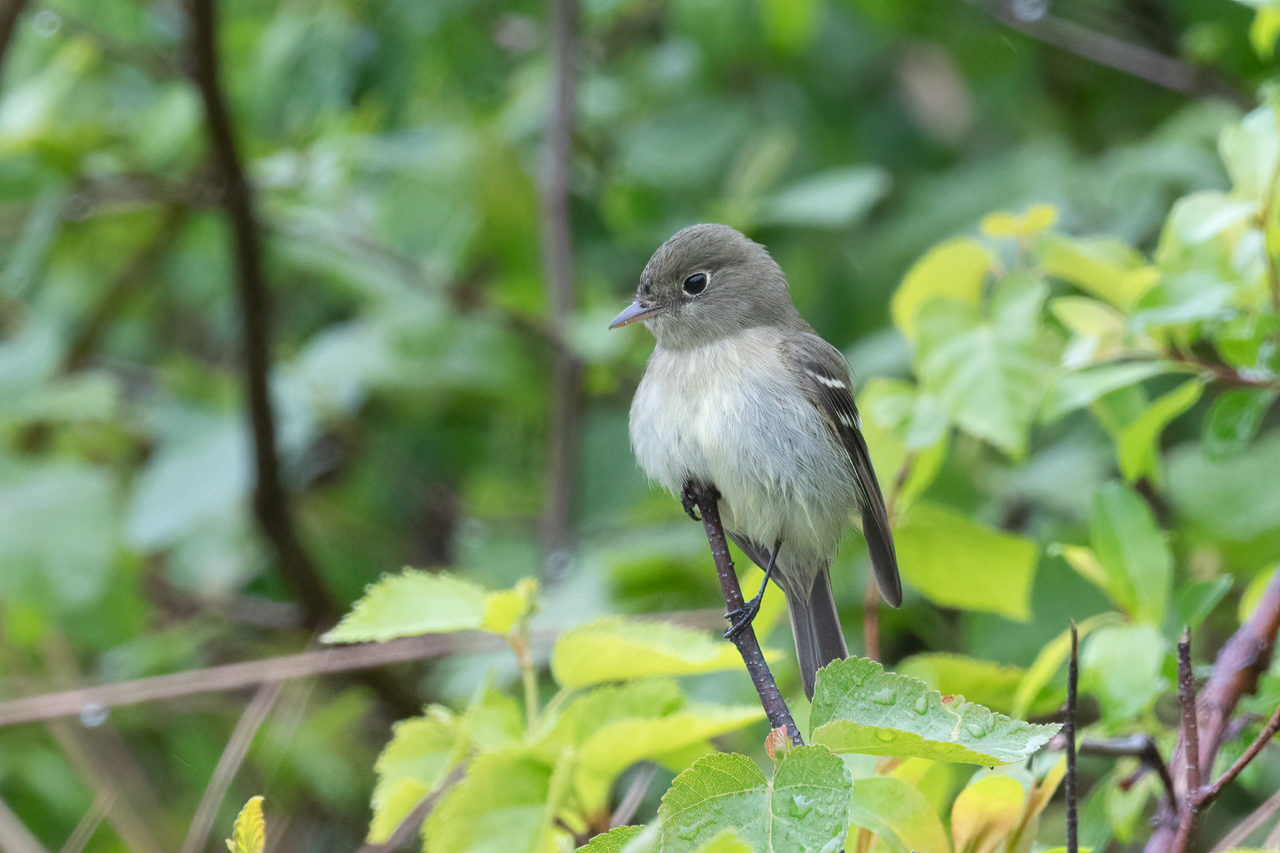
Alder Flycatcher © Tim Arthur
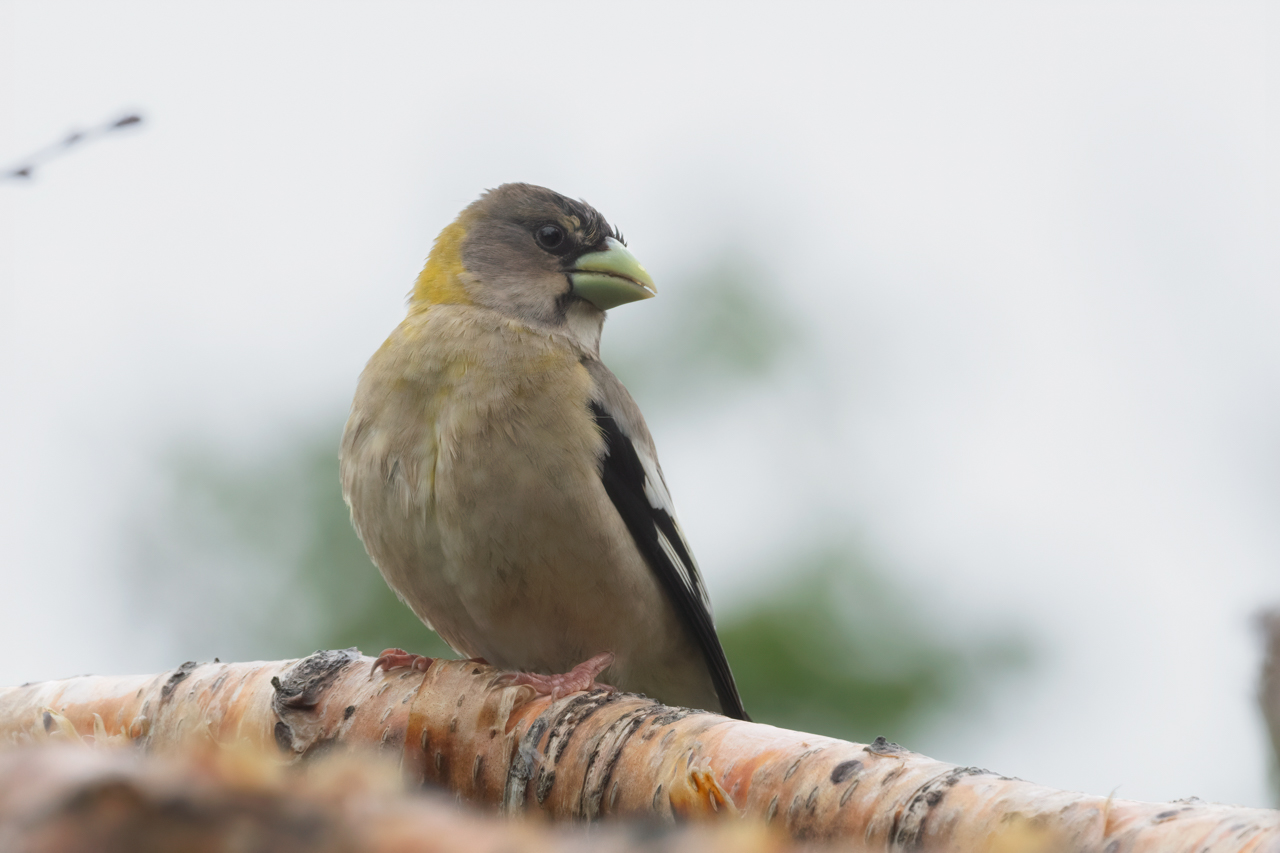
Evening Grosbeak © Tim Arthur
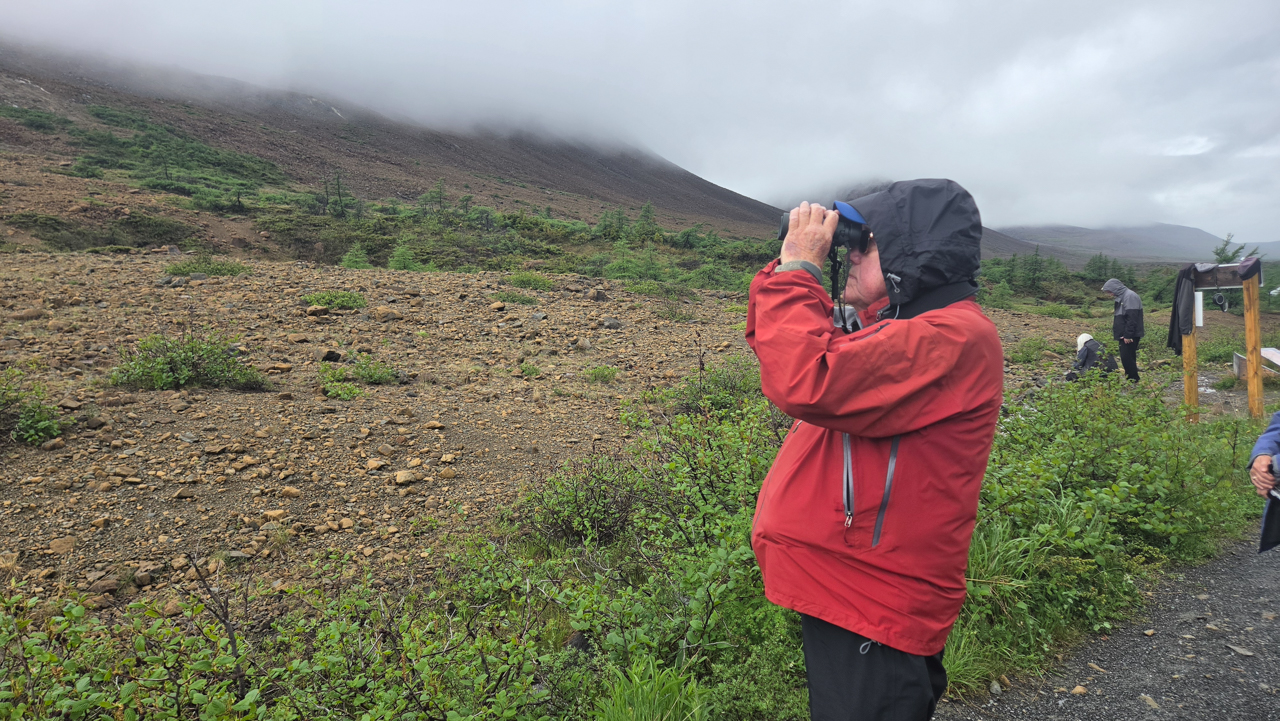
Birding at Tablelands © Tim Arthur
📍 Did You Know? The Capelin
Capelin are small fish in the smelt family that arrive in extraordinary numbers in late June to spawn in the shallows — a phenomenon known as ‘the capelin rolling.’ The run draws Humpback Whales, seabirds, and locals alike. For us, it delivered a crowd of gulls that let us practise our field ID skills, picking out Great Black-backed Gulls and rare Lesser Black-backed Gulls by bill colour, back shade, and leg colour.
Day 11 · The Grand Finale — Harlequins, Fjords & Farewells
We warned the group: today would be a lot of walking. And it would be worth every step.
We started with the 2-kilometre Berry Head Pond Trail, a gentle loop that delivered a close Moose sighting along with Magnolia Warbler, Canada Jay, and a singing Fox Sparrow.
Then came the moment one guest had been building toward the entire trip. She had her eyes set on her lifer Harlequin Duck. At Broom Point, we found all 10 of them — and the point was absolutely alive with birds. A pair of Great Black-backed Gulls feeding a newborn chick. A Harbour Seal chasing Harlequin Ducks through the shallows. Common Eiders and their chicks. Great Cormorants. Black Guillemots. Common Terns. Fist bumps. High fives. Lifer tears.
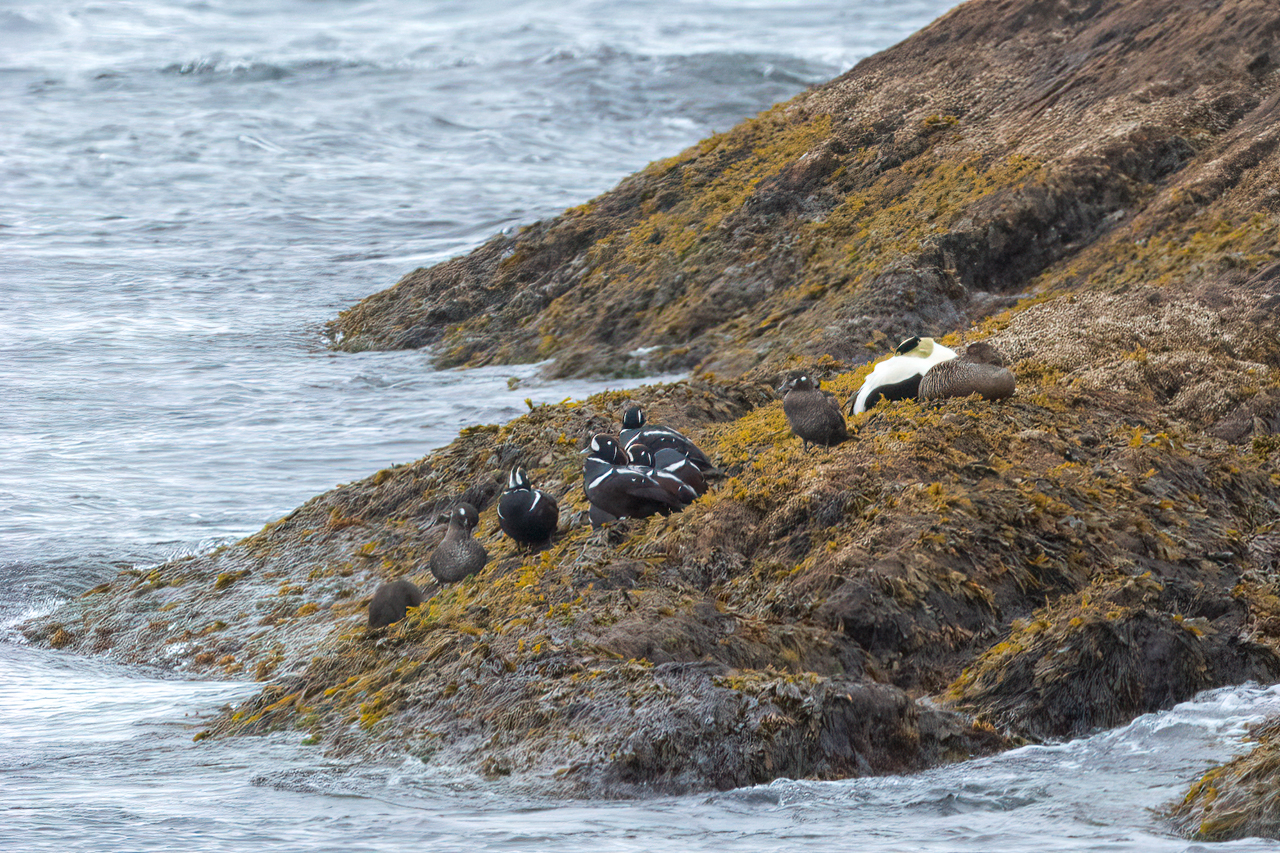
Harlequin Duck and Common Eider © Tim Arthur
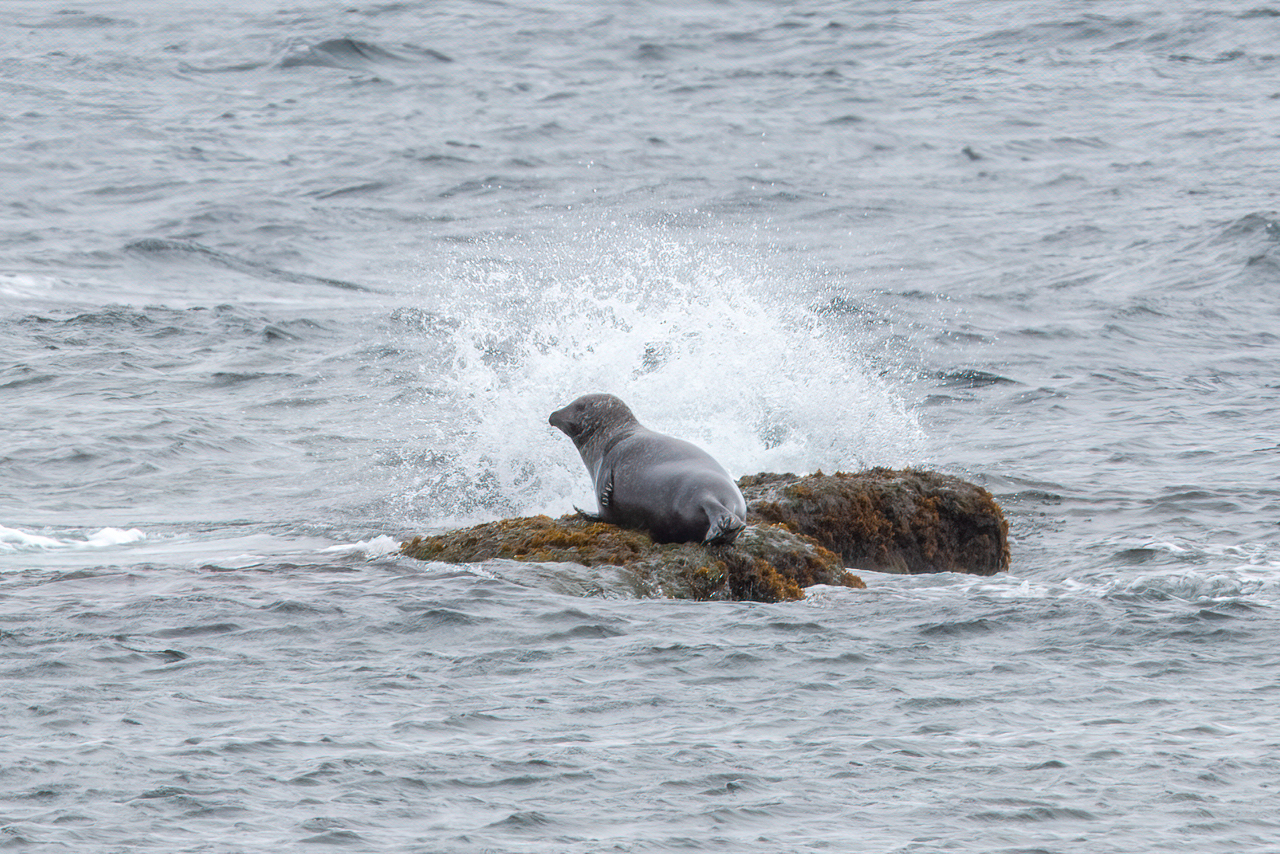
Harbour Seal © Tim Arthur
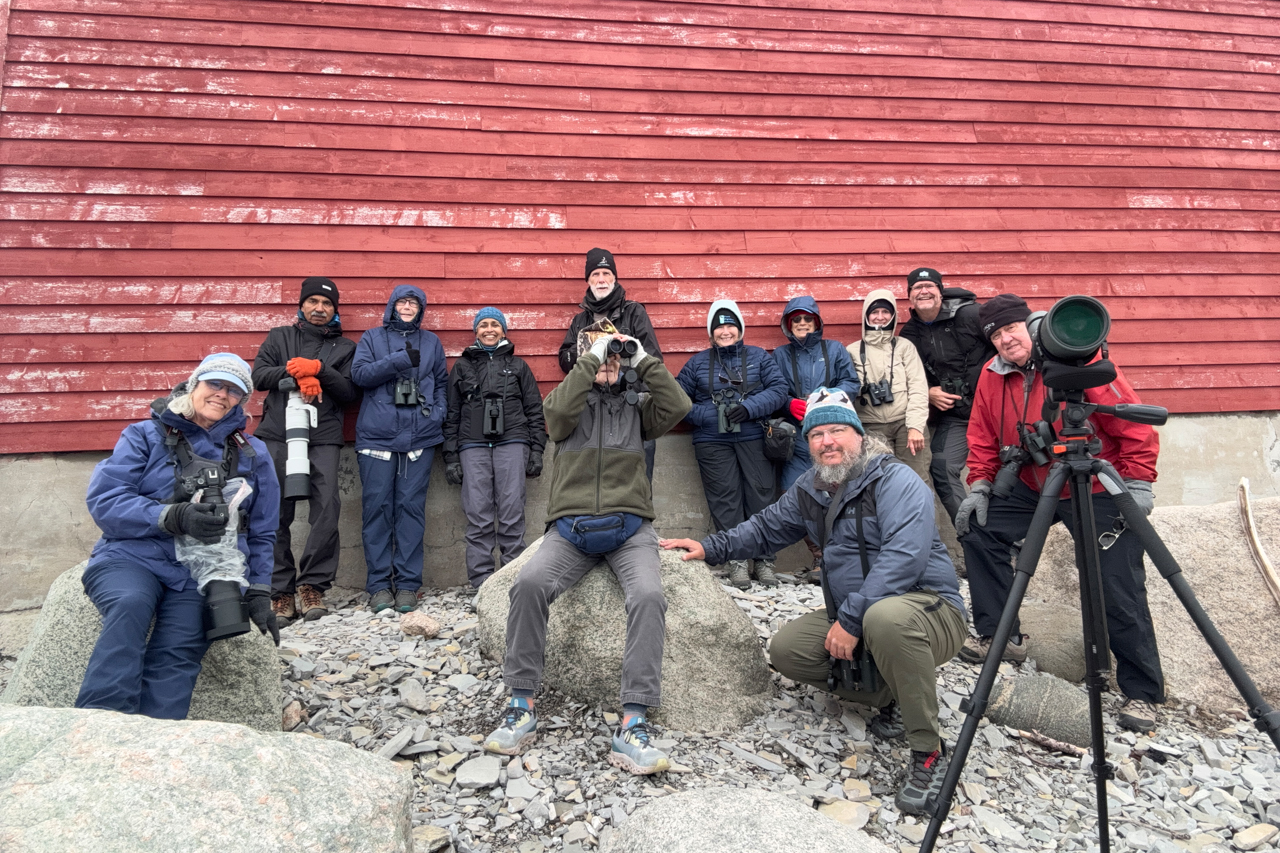
Group photo Broom Point © Rick Szabo
We took another group photo here. Nobody needed reminding.
The cherry on top was the 3-kilometre walk to the Western Brook Pond boat dock for a 2-hour boat trip to close out the tour.
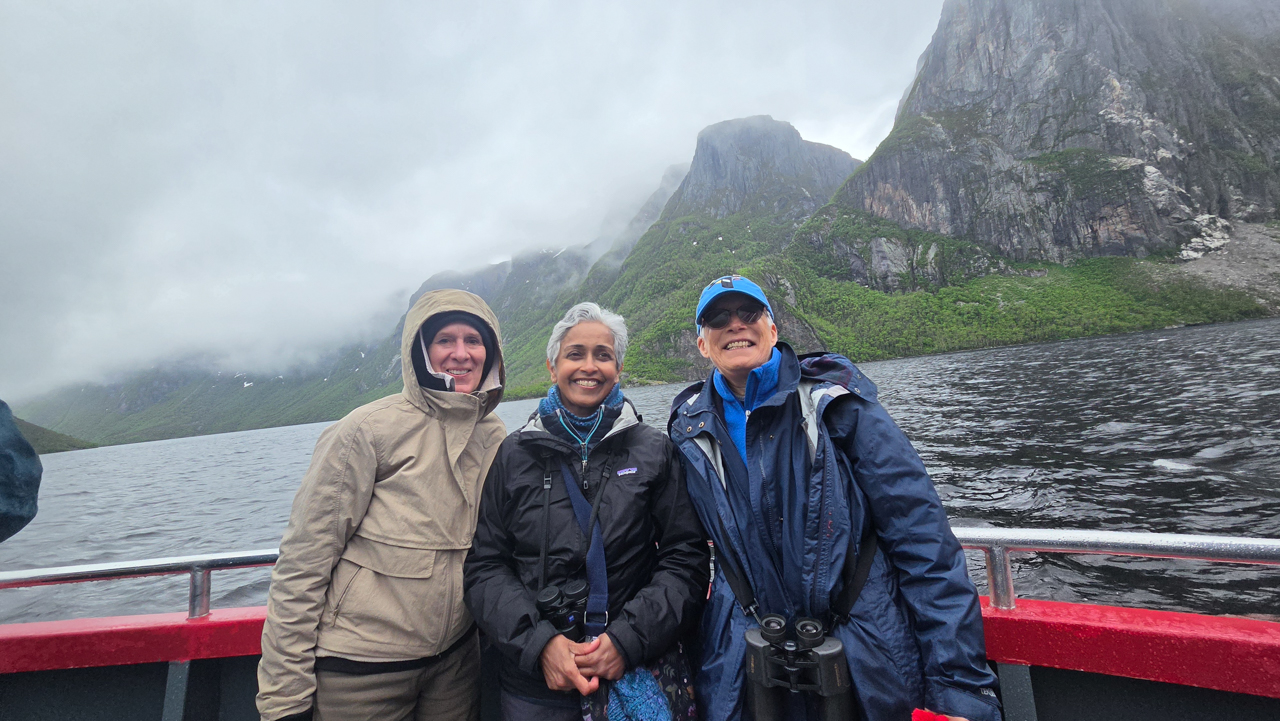
Guests at Western Brook Pond Boat Tour © Tim Arthur
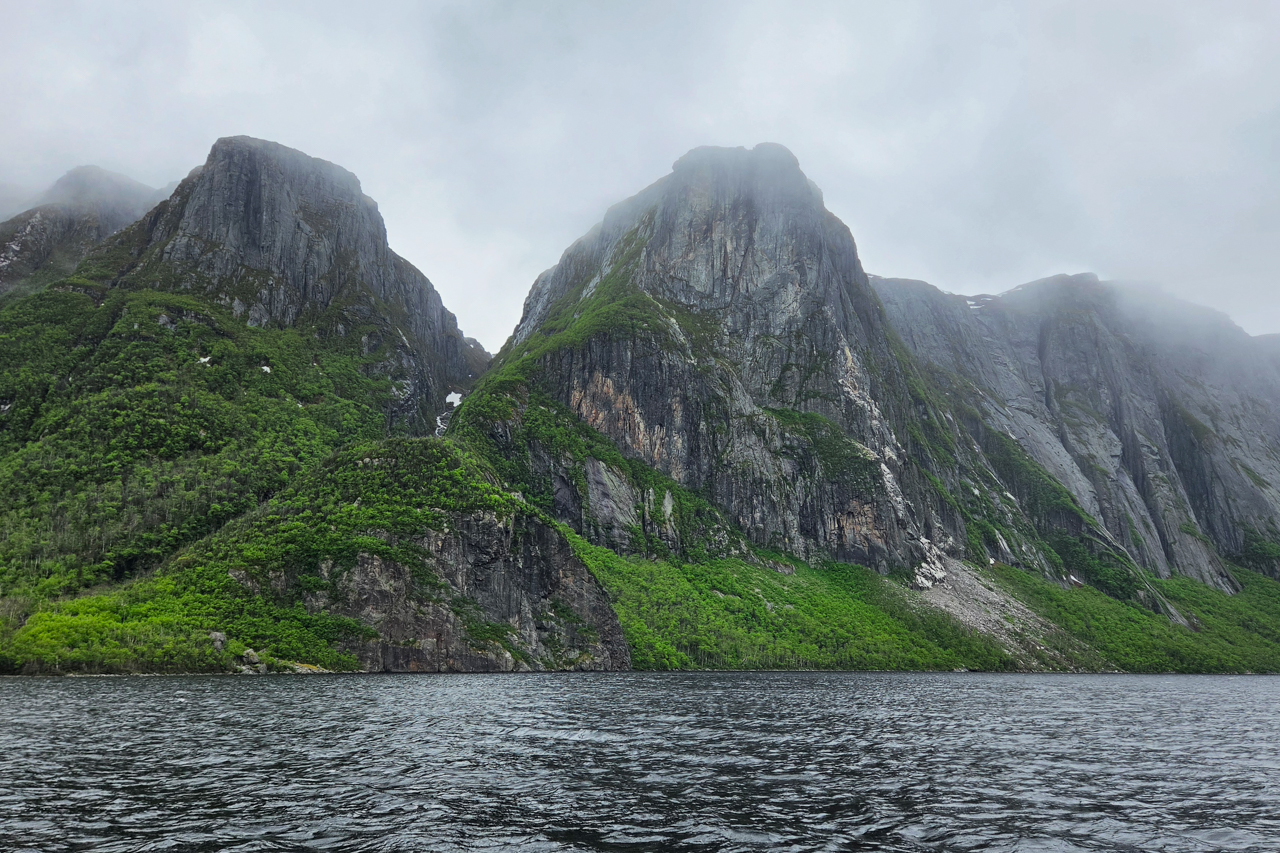
Western Brook Pond © Tim Arthur
📍 Did You Know? Western Brook Pond — A Landlocked Fjord
Despite the humble name, Western Brook Pond is one of the world’s deepest landlocked fjords — over 165 metres (540 feet) deep. It was cut off from the sea after glaciers retreated approximately 10,000 years ago, leaving behind a freshwater fjord with sheer walls rising over 600 metres (2,000 feet) above the water and countless waterfalls cascading down the cliffs. It is genuinely one of the most spectacular boat rides in the world.
The only bird seen on the water was a lone Long-tailed Duck — a rare sighting and our only one of the trip. The scenery, though, needed no birds. We all just looked up.
Our final dinner that evening in Deer Lake was full of recounts, inside jokes, and lifer counts. We came to St. John’s as 12 strangers. We left Deer Lake as friends — contact details exchanged, promises made to join future trips.
Day 12 · Departure Day — One Last Twitch
We all departed Deer Lake at different times. Those who left later had one final birding session near the airport and added Sora, Red-breasted Nuthatch, Tennessee Warbler, and Bay-breasted Warbler to the trip list.
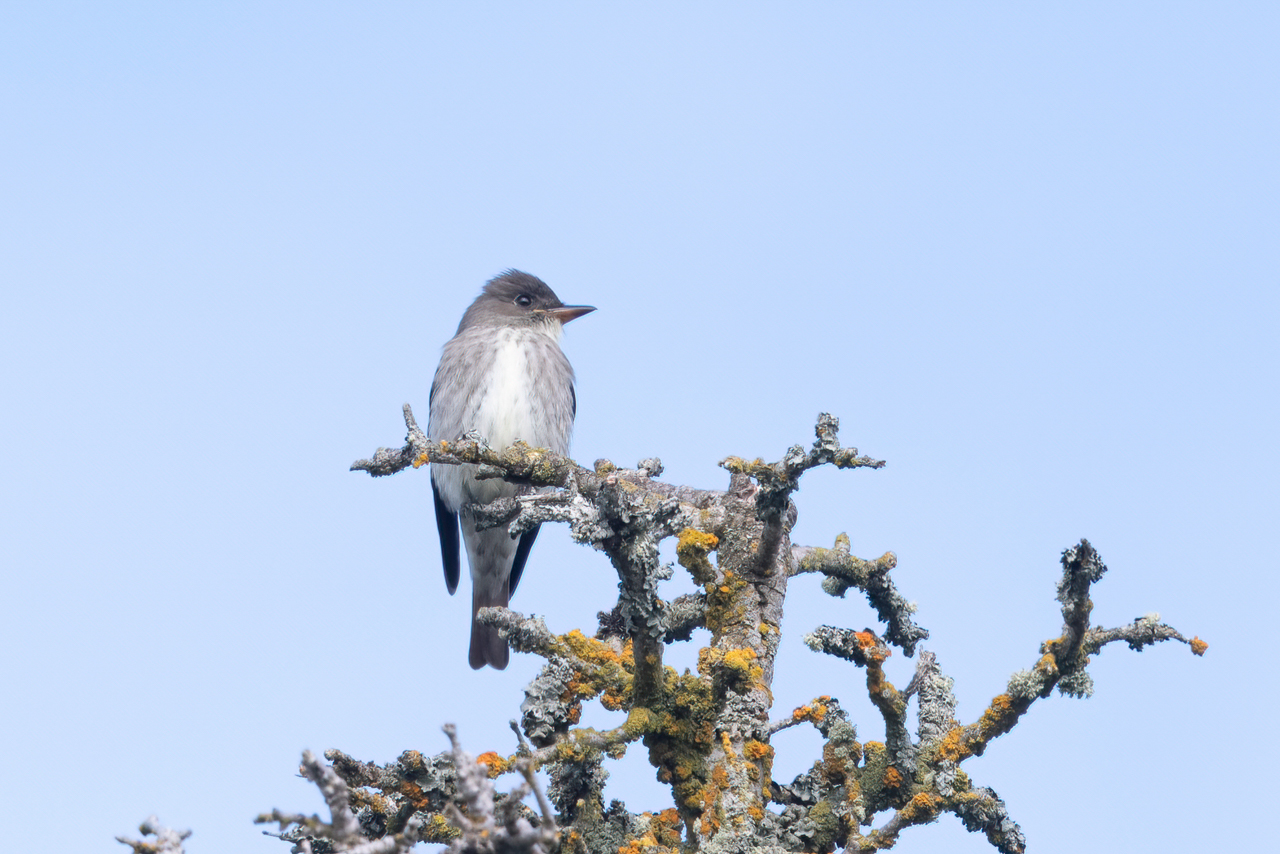
Olive-sided Flycatcher © Tim Arthur
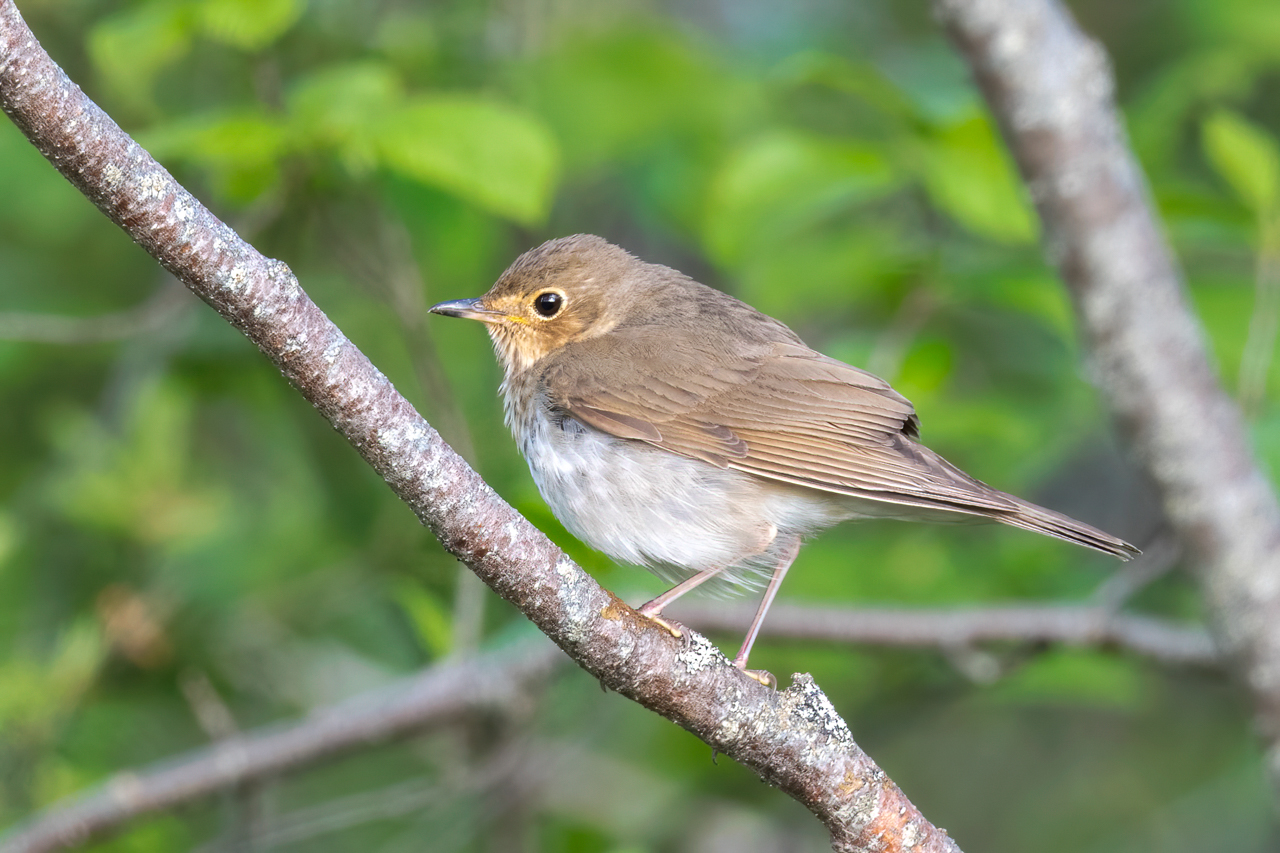
Swainson’s Thrush © Tim Arthur
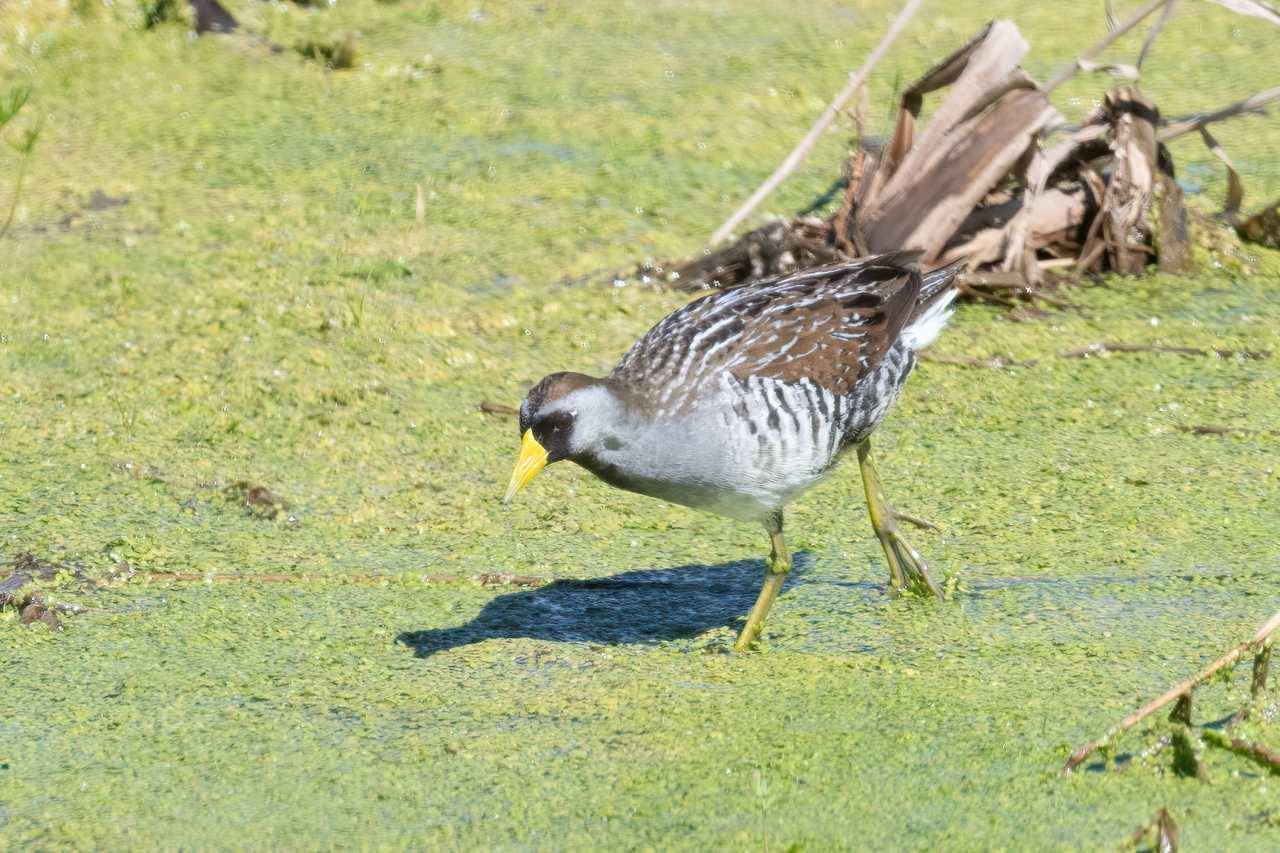
Sora © Tim Arthur
You know a birding trip has been exceptional when guests are twitching the airport parking lot on the way home.
Want to be on next year’s Newfoundland departure? Spots fill fast. Book your spot — and start practising your Puffin impressions.