England Birds & Gardens: Southeast Trip Report (Apr 27 – May 8, 2026)
As ever, this tour around some of the best birding sites and formal gardens of eastern England was an absolute delight. Of the latter, Beth Chatto’s Gardens were a big hit, along with the contrasting Barnsdale, Fairhaven and the world-renowned Kew; while among the avian highlights were stellar views of specialities such as Dartford Warbler, Bearded Reedling and Eurasian Spoonbill. There were also a few unexpected bonus birds along the way, and that long-standing favourite of gardeners, locals and overseas birders alike, European Robin. On top of those headlines, we also enjoyed the picture-perfect villages tucked away in this part of England and country pubs in typical spring weather: that is, everything from warm afternoons, sunny with an icy wind, and cloudy and blustery!
Rhododendron selection at Kew © Mike Hoit
Day one: Kew Gardens
Day one was, technically, day two of the tour – but day one was mainly about making first introductions and, for some, continuing recovery from jetlag! The tour commenced in earnest on a somewhat grey Tuesday morning, at the flagship Royal Botanic Gardens at Kew, on the western fringe of London. This began our journey on a high, in verdant settings that make it hard to believe the noisy, bustling capital city is so close, but first we did some initial birding on the River Thames, right next to the car park. Here, we had a first look at species such as Grey Heron and Rose-ringed Parakeets; the abundance of these raucous, bright-green birds throughout the gardens showed just how much they have taken to London life!
Other sightings in Kew included brilliant looks at ground-feeding Mistle Thrushes and Eurasian Green Woodpecker, the latter particularly appreciated, while we were also entertained by the antics of Egyptian Geese, compared Eurasian Coots and Eurasian Moorhens side-by-side around our feet, and saw common woodland species like Great Tit, Long-tailed Tits (including cute youngsters) and Eurasian Blackbirds.
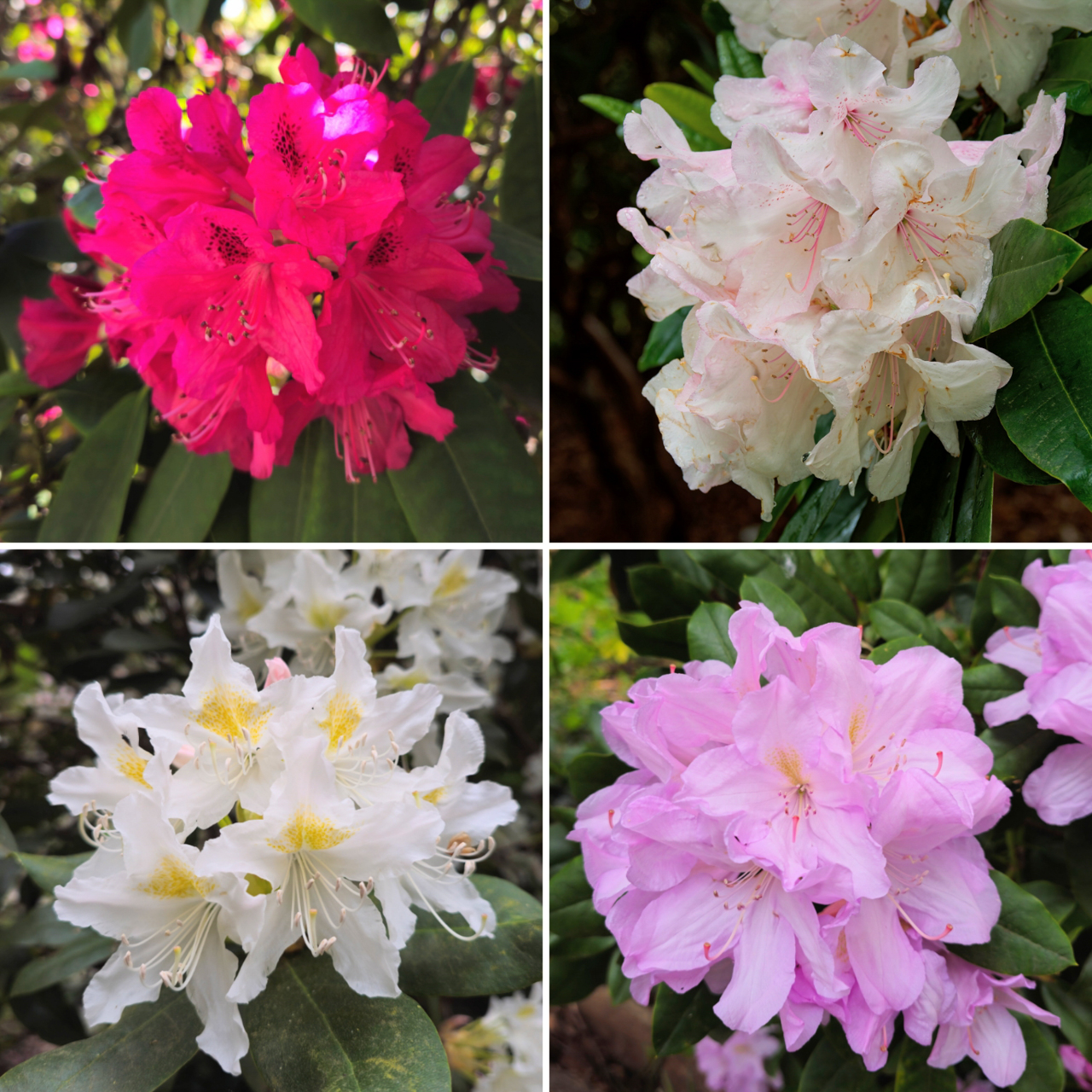
Of course, this was all a sideshow to Kew itself! Perhaps the highlight was the incredible Titan Arum, a Sumatran plant that exists as a subterranean tuber for most of the time, occasionally sending up a single three metre tall flower which lasts just a couple of days. As luck would have it, this had bloomed the night before we arrived – what a thing to see (and smell – it isn’t nicknamed the corpse flower for nothing!). We spent most of the day exploring the architecturally-impressive glasshouses, which house flora of rainforests and other ecosystems, the vibrant displays of flowering rhododendron and camelia shrubs, and native woodland habitats. In the latter, a wonderful sighting of a confiding Red Fox was most enjoyable, before we boarded the vans to drive around the urban sprawl and settle into a hotel in the more rural Essex.
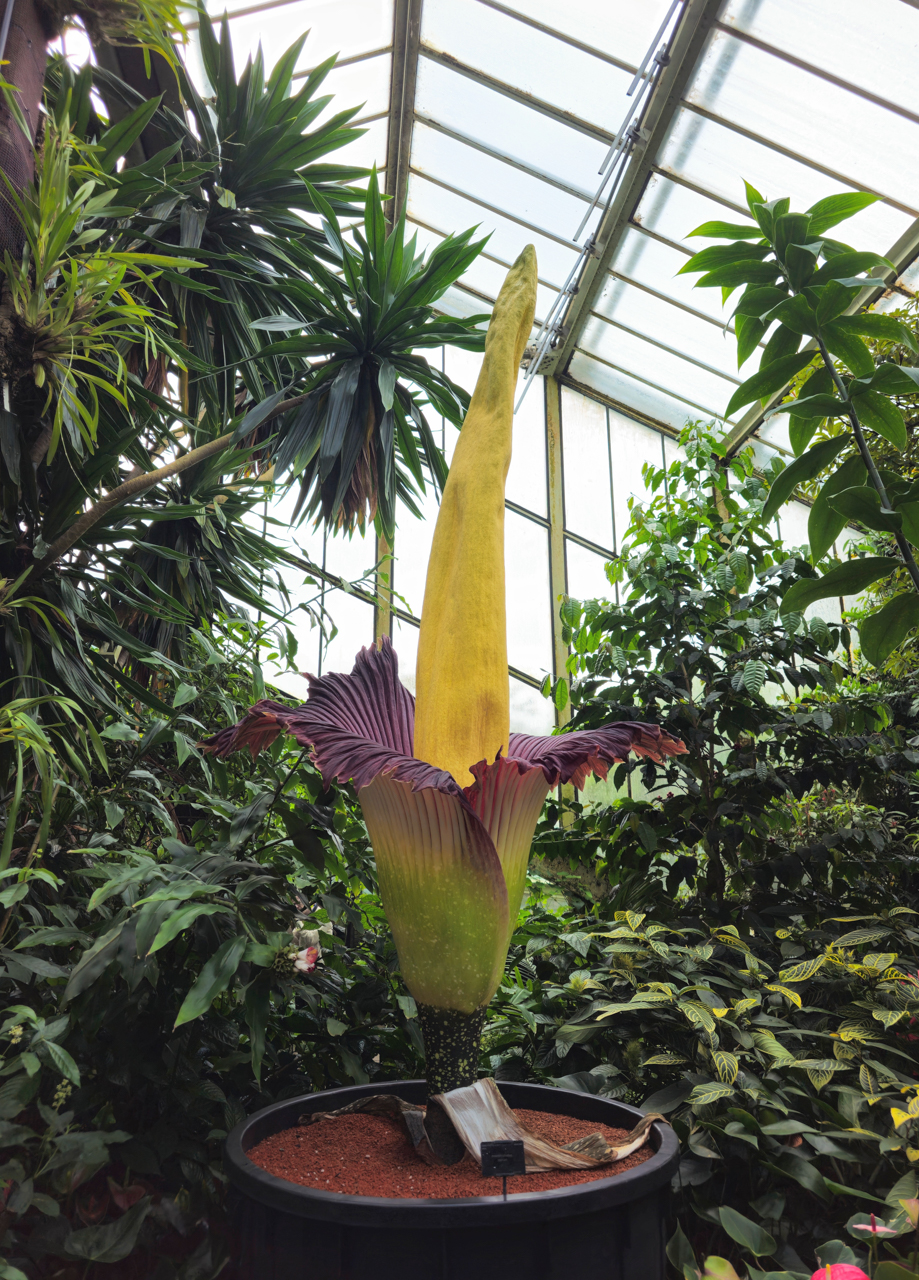
Titan Arum at Kew Gardens © Mike Hoit
Day two: Abberton Reservoir and Hyde Hall.
This was a day mixing both aspects of this tour, starting with birding at Abberton Reservoir. This huge man-made lake provides both water for a large part of Essex and northeast London, and a home for a huge diversity of wildlife due to a wide variety of habitats. At the outset, great views of Great Crested Grebes and Common Terns were obtained, but this is not the best season for the open water birds – particularly on a day where the cold wind was howling right across the reservoir!
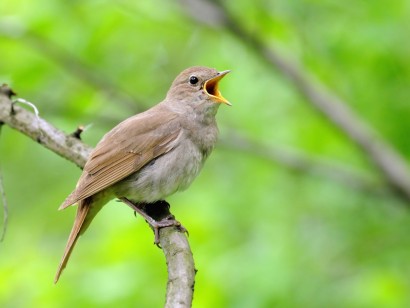
A flock of Common Swifts, newly-arrived for the summer, did not seem to mind, but we soon headed for the shelter of scrub and woodland. Common Nightingales put on a great vocal performance but stayed stubbornly in the denser vegetation, but singing Eurasian Blackcaps and both Greater and Lesser Whitethroats were seen in the open. The Layer Breton causeway end of Abberton was slightly more sheltered, and we quickly found some Eurasian Spoonbills among the colony of tree-nesting Grey Heron, Little Egrets and Great Cormorants; also here were some handsome Common Shelducks and Northern Shovelers. Next stop was Hyde Hall, where the Royal Horticultural Society has set up a world-class demonstration garden among a gentle rolling farmland landscape.
After lunch, one of the garden staff talked us through the history and concept of this site. As well as typical courtyard floral borders, we were led up through the dry gardens – an indication of what horticulturalists can achieve in a warming, drying climate – and wooded dells to the hilltop with its pond and experimental vegetable plots, and commanding views. It also demonstrated that the wind was still blowing strongly (the moving sycamore-seed sculptures should have been a clue!) and so, via a short stop at the bird hide, we repaired back to the hotel and another tasty dinner.
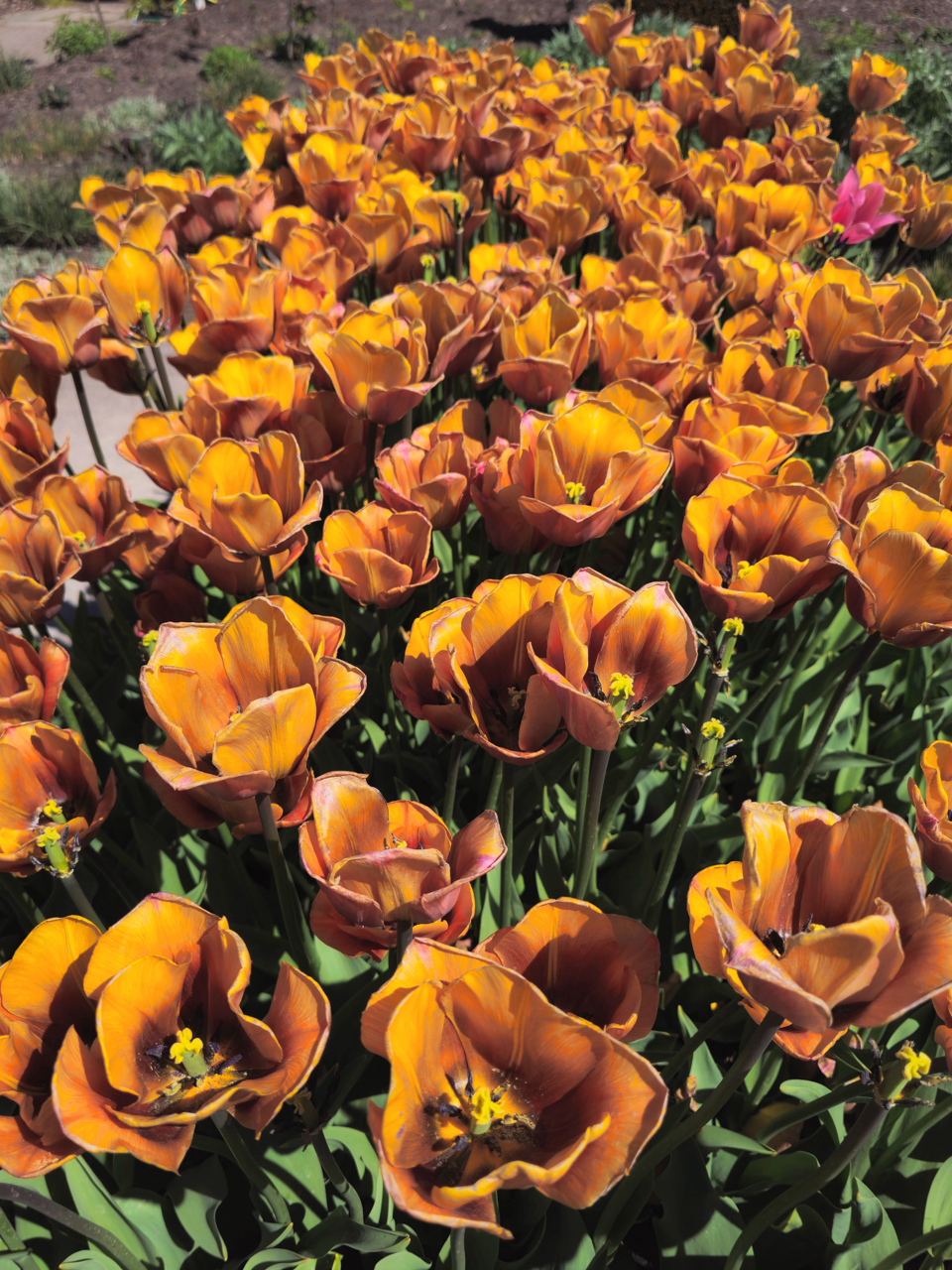
Tulips at Hyde Hall © Mike Hoit
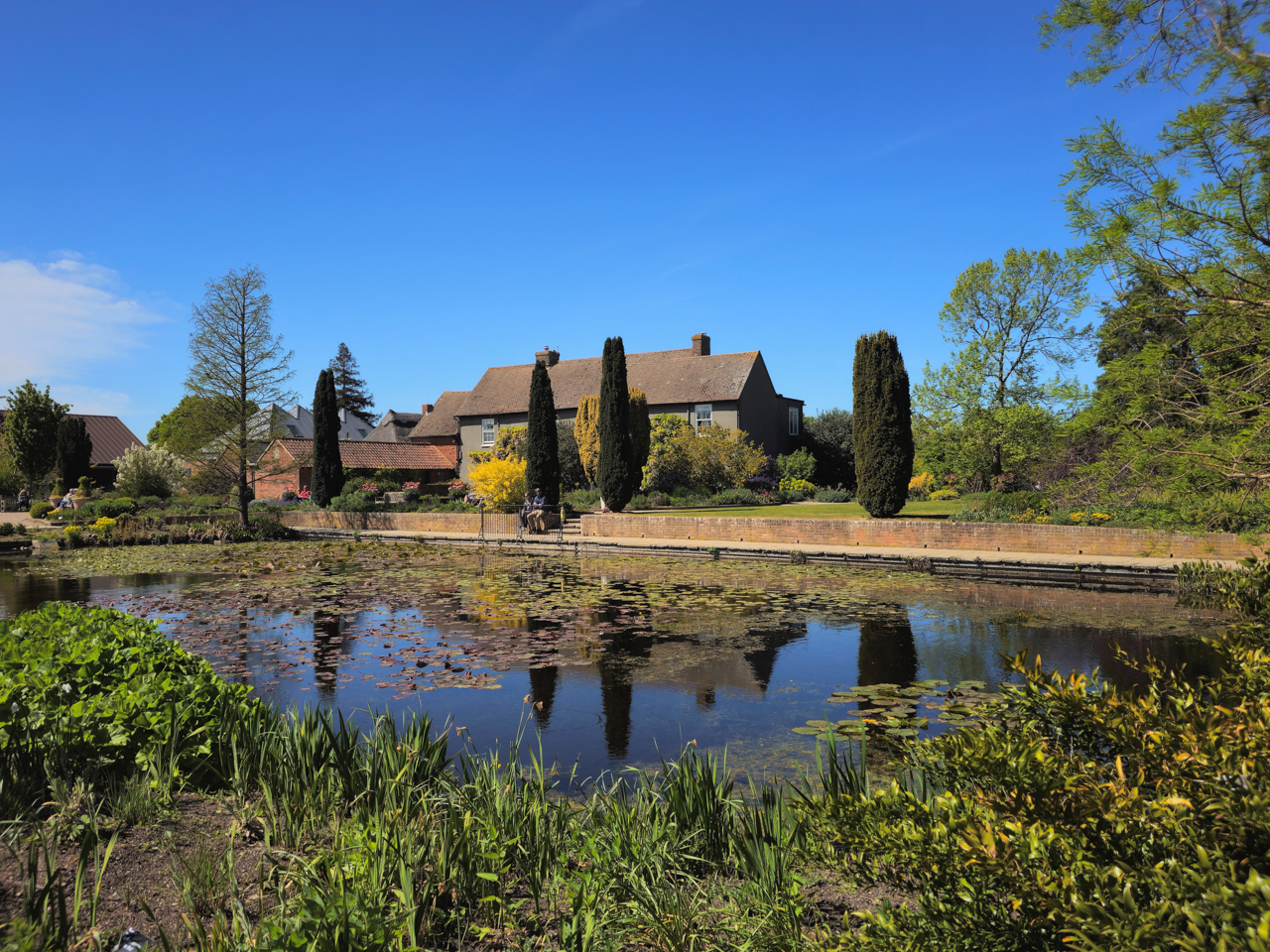
Hyde Hall © Mike Hoit
Day three: Hanningfield, Beth Chatto’s Gardens, and on to Suffolk.
Not the most auspicious start today, as factors beyond our control necessitated a deviation from the itinerary! Unfortunate, but we tried to make the best of things; some of us visited another Essex waterbody, Hanningfield Reservoir, seeing Red-crested Pochards and Lapwings, while everyone got very good views of Red Kite.
Back on track in the afternoon, a tearoom lunch preceded a tour of Beth Chatto Gardens in warming weather – some people even shed a layer or two! We were lucky to have a guided tour by head gardener Malin, whose enthusiasm for this lovely place – and gardening in general – is infectious. What was once disused farmland, has been transformed painstakingly into a mosaic of dry zones, water gardens, floral beds and native woodlands, a long-term process guided by ecological principles. The result is a beautiful and wildlife-rich garden; Plenty of common species like Common Buzzard, Dunnock and Chaffinch were here, as well Rudd (the fish in the pools), Large Red Damselfly, and butterflies including Green Hairstreak, Holly Blue and Orange-tip. A very impressive endeavour and a trip highlight for all the group! Soon it was time to move onto the next county north, bird-rich Suffolk, for a few nights. Our accommodation was in the chocolate-box village of Westleton, with quaint thatched cottages, a picturesque church, and a stone’s throw from great birding sites.
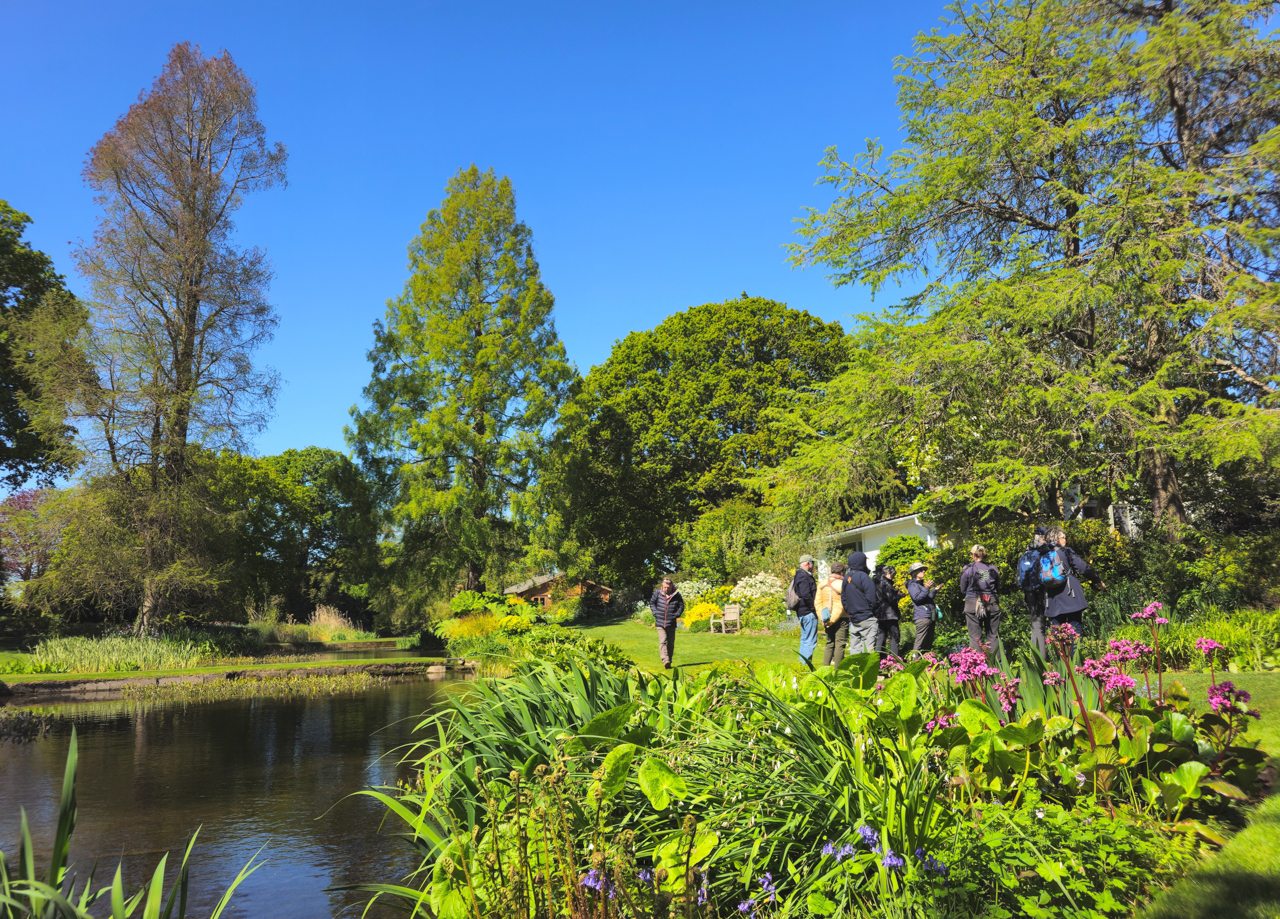
Group at Beth Chatto Gardens © Mike Hoit
Days four and five: Westleton, Minsmere, Dunwich and Westleton.
With some effort, it is possible to find upwards of 100 bird species in a day within a few miles of our base, but of course we took things at a more relaxed pace – this is a holiday after all! – and settled for passing the same total on our trip list. Over two full days, we saw an impressive diversity of birds, which speaks to the quality of the network of protected areas and the varied landscapes. We began in the sandy, gorse-dotted heathlands of Dunwich and Westleton heaths, having several encounters with Dartford Warblers at very close range. Good numbers of Wood Larks were giving melodious songs from high in the sky, and we had some good views of perched birds with a bit of patience, and we also saw Common Stonechats and a vagrant Woodchat Shrike, which is normally found in similar (albeit hotter) habitats in southern Europe. We also had a good look at that weird, dry-country shorebird, the Eurasian Thick-knee, known more commonly as stone-curlew, although some of us were more taken with the local name: Wailing Heath Chicken. Dunwich village itself is a fascinating stop: eight hundred years ago one of the more important towns in England, now largely lost to the sea as this corner of the country slowly sinks, and just a small village remains. We wandered the ruins of the medieval Franciscan abbey and tried to picture what the town once looked like!
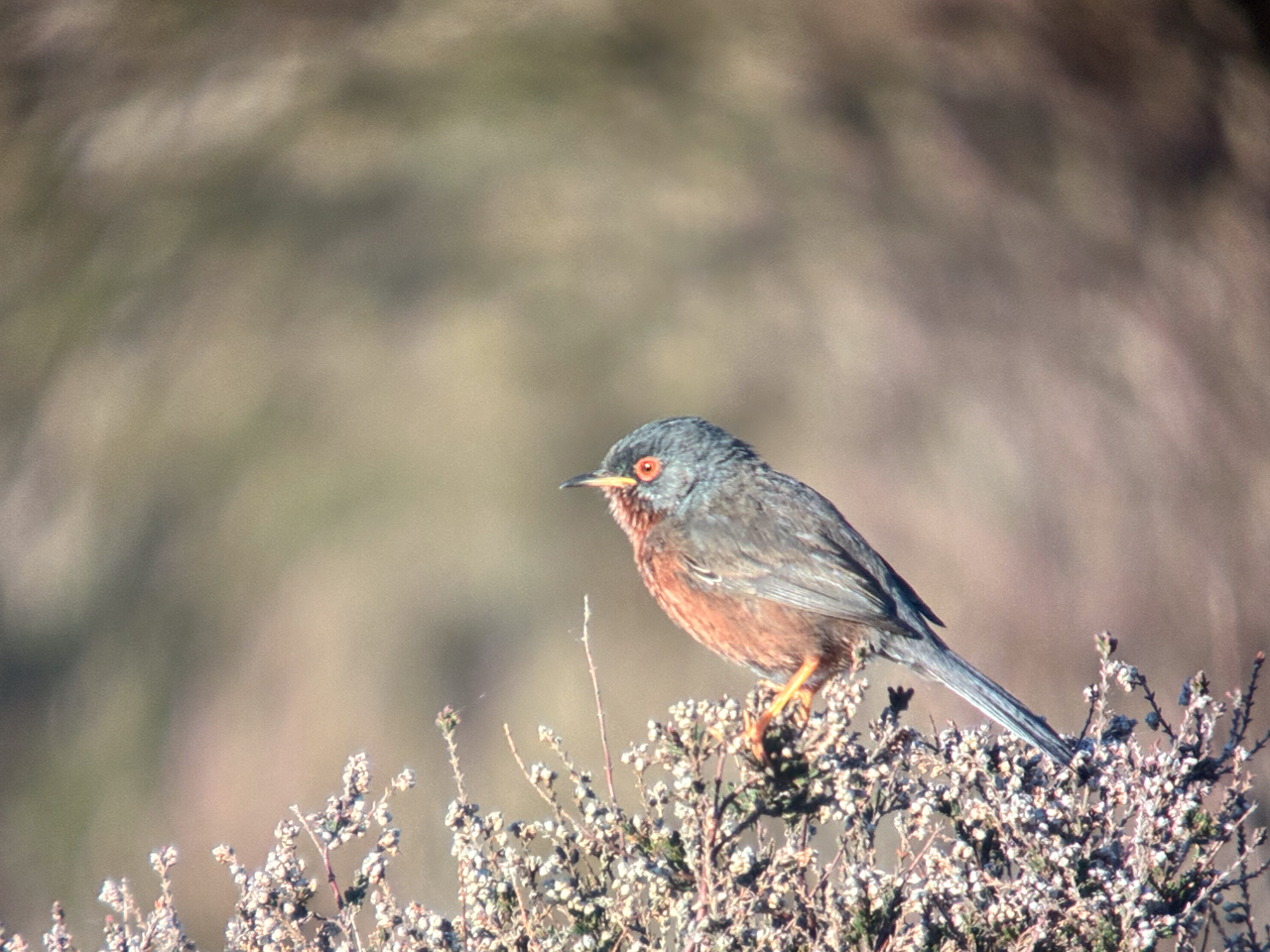
Dartford Warbler © Alan Tilmouth
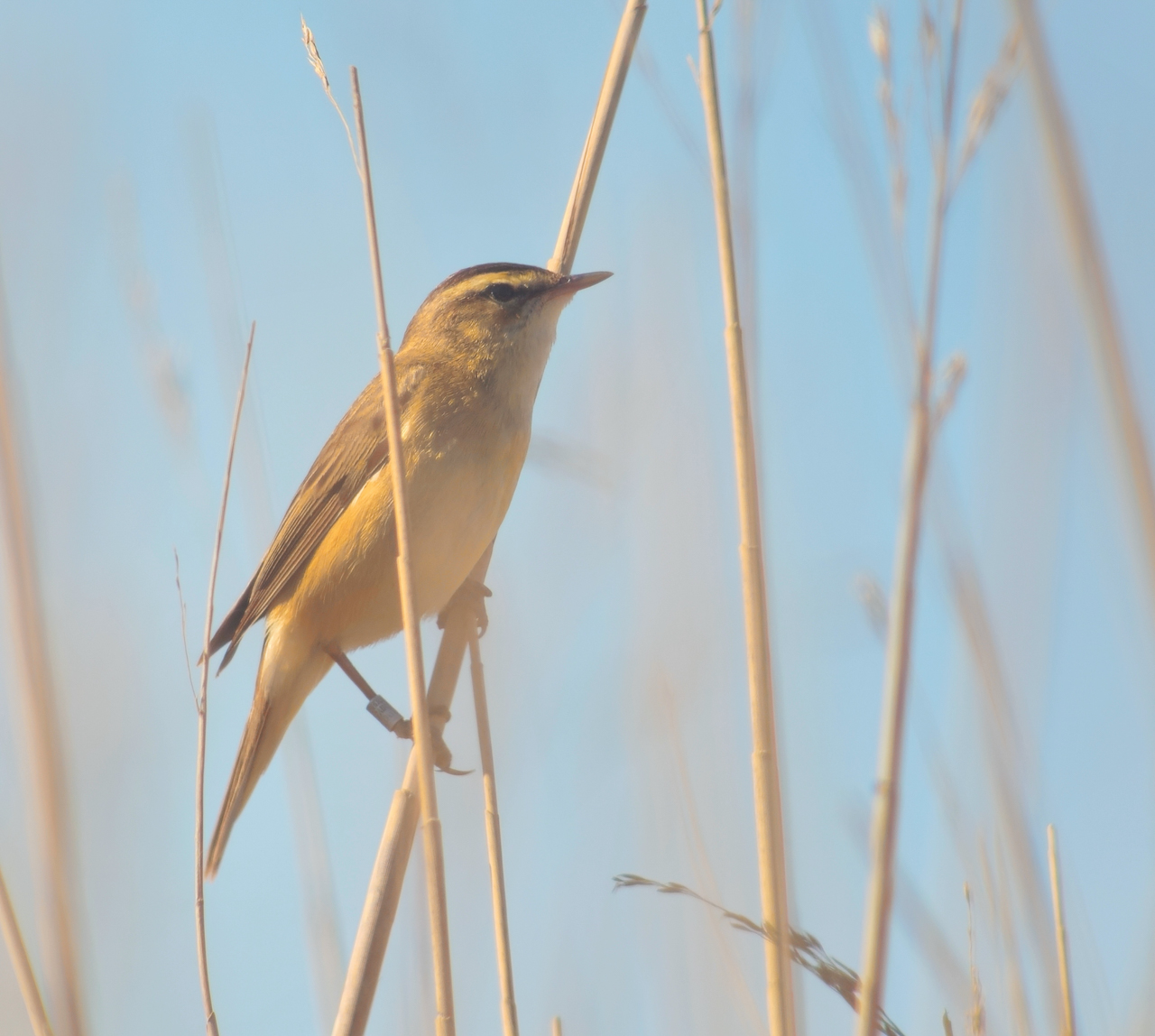
Sedge Warbler, Minsmere © Mike Hoit
This area is most famous for Minsmere, one of the most well-known of all the reserves managed by the Royal Society for The Protection of Birds. Considering that this site was arable farmland as recently as 1940 (before being deliberately flooded as a defence against feared invasion during the Second World War), the expanse of pools and reedbeds is impressive indeed.
On one visit we birded pools by the coast, seeing a variety of passage shorebirds – including Little Stint, Bar-tailed Godwit and Common Sandpiper – dotted amongst nesting Pied Avocets – the elegant black and white waders for whom the reserve was created. Also here were Barnacle Geese and other wildfowl, an array of gulls including Mediterranean Gull and Black-legged Kittiwake, plus Little, Common and Sandwich Terns. Back near the reserve cafe, we enjoyed a nesting colony of Bank Swallows (or Sand Martins, if you prefer…) and found a dapper male Whinchat – an uncommon passage migrant here.
Further into Minsmere, the Great Bitterns for which the area is famed proved atypically difficult, with only a few ‘booming’ vocalisations and brief views for a few of us. However, Bearded Reedlings showed magnificently, as both males and females of this unique bird fed right outside the hide. We also had some lovely looks at other birds of this habitat, including Sedge and Common Reed Warblers and Reed Buntings. Back in Westleton, we tried once more for Common Nightingales, after multiple serenades from invisible birds; after blink-and-you’ll-miss-it views of a nest-building pair, one songster broke cover for no apparent reason to sit in full view and was even scoped. Success!
A great couple of days in a very birdy part of the world, with the bonus of delicious meals back at the hotel – and once at a pub sited on an estuary, allowing Common Greenshank and Eurasian Whimbrel to be added to the trip list!.
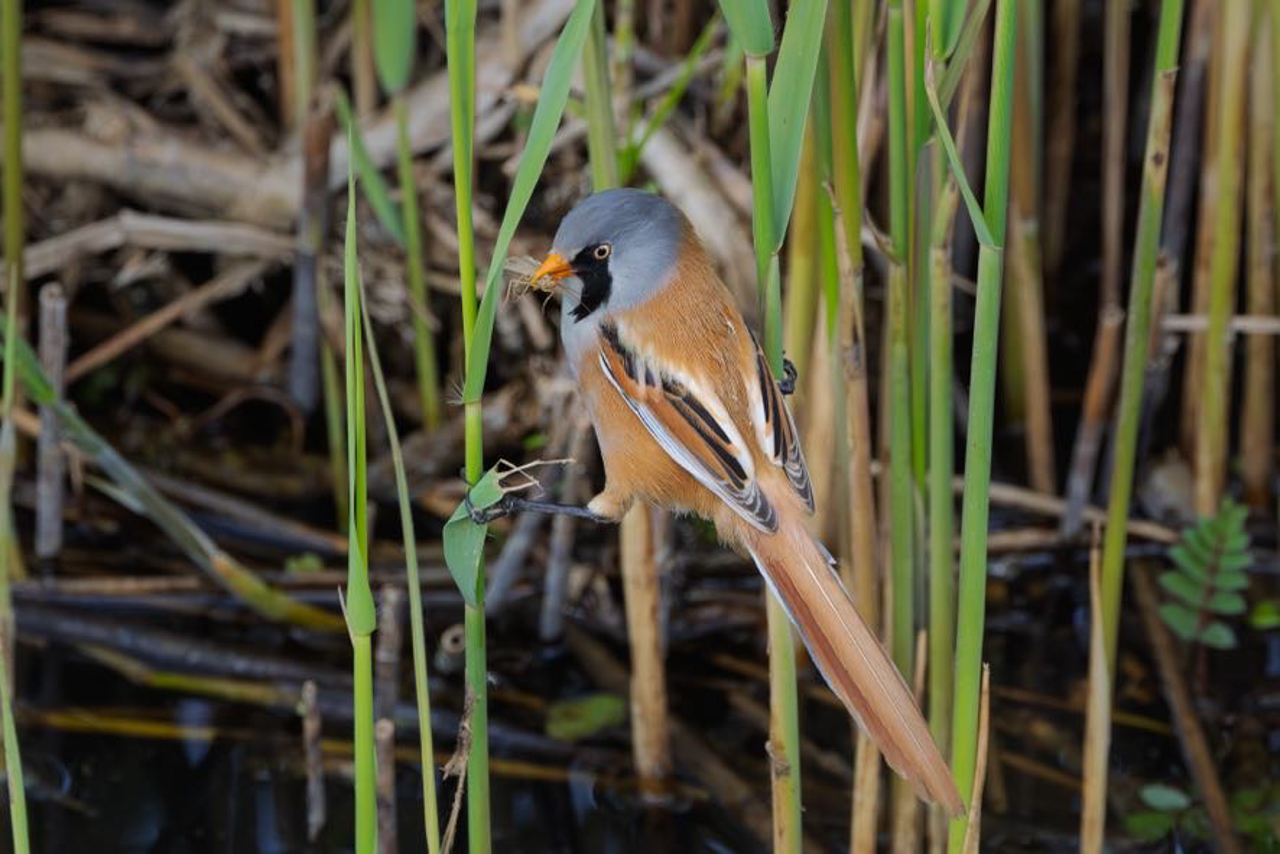
Bearded Reedling © Minsmere Bob Bramley
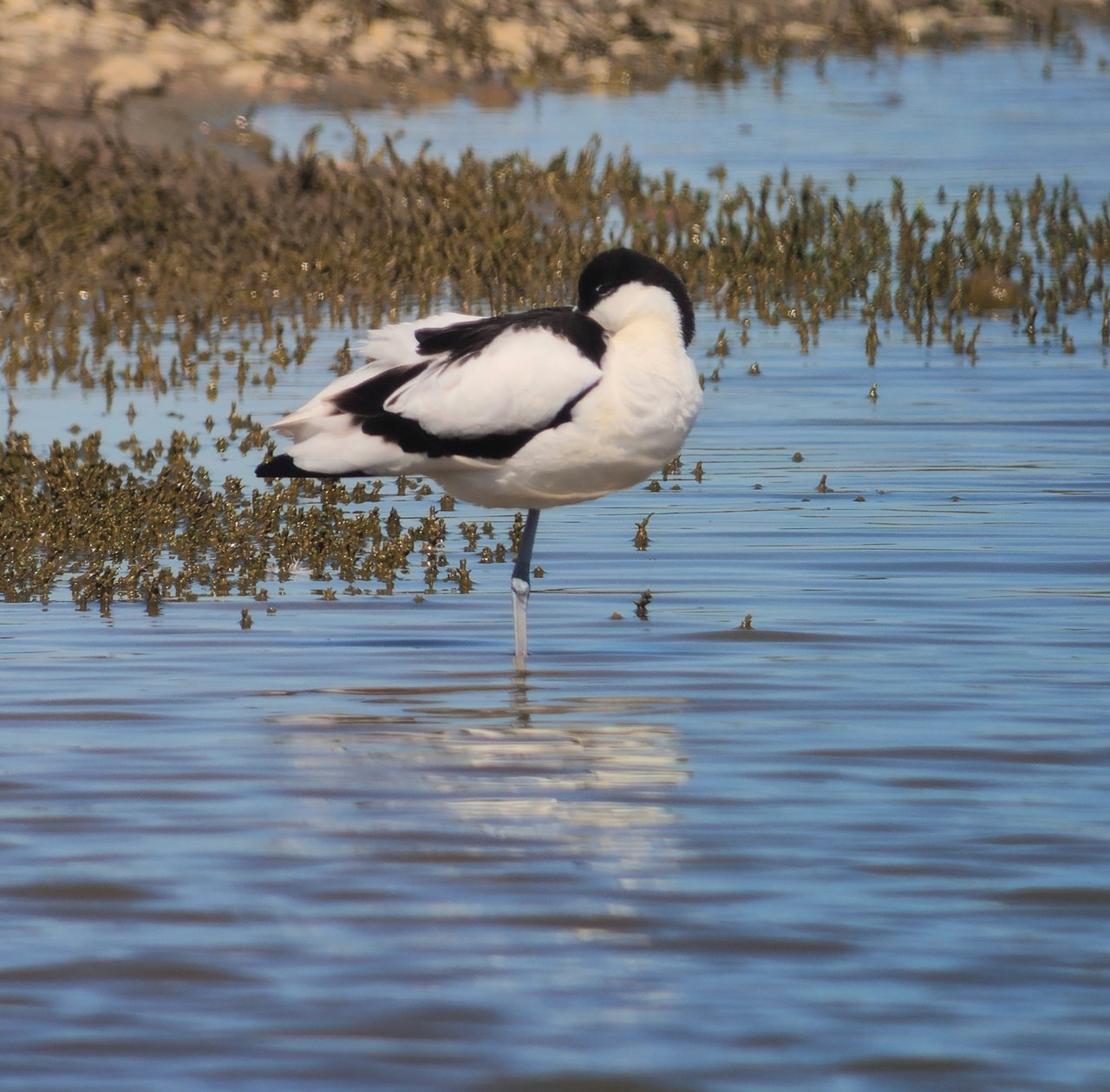
Pied Avocet © Mike Hoit
Day six: Bressingham and Wyken Hall.
The next leg took us inland a little, fortunately in more pleasant weather than initially forecast. After a relaxed start, the route meandered along the border of Suffolk and Norfolk before arriving at Bressingham Gardens. Here we had the privilege of a guided tour from Adrian Bloom; in a clear case of nominative determinism, Adrian has been developing the gardens (including creating his own) since 1962. It all looked very fine today, with an array of brightly-flowered shrubs and colourful borders, especially in Foggy Bottom – a damp, low-lying part of the grounds, tucked away behind giant redwoods grown from seed.
We took a break at a tearoom en route to Wyken Hall, just a little further into the Suffolk countryside. In contrast to Bressingham, this features small traditional garden ‘rooms’ wrapping around an Elizabethan country house, orchards and a wildflower meadow – along with a small maze to explore, for those inclined. For quite a small site, there feels like a lot going on, more so this year with an interesting sculpture trail among apple trees laden with blossom and topiary hedges. While exploring these two gardens, various commoner birds appeared, including just-fledged Song Thrushes, Coal Tit, European Greenfinches and Common Chaffinches.
A short drive took us – via a roadside herd of Red Deer – to Mundford, a small village with the flint-studded buildings typical of the region, where we would stay for the night.
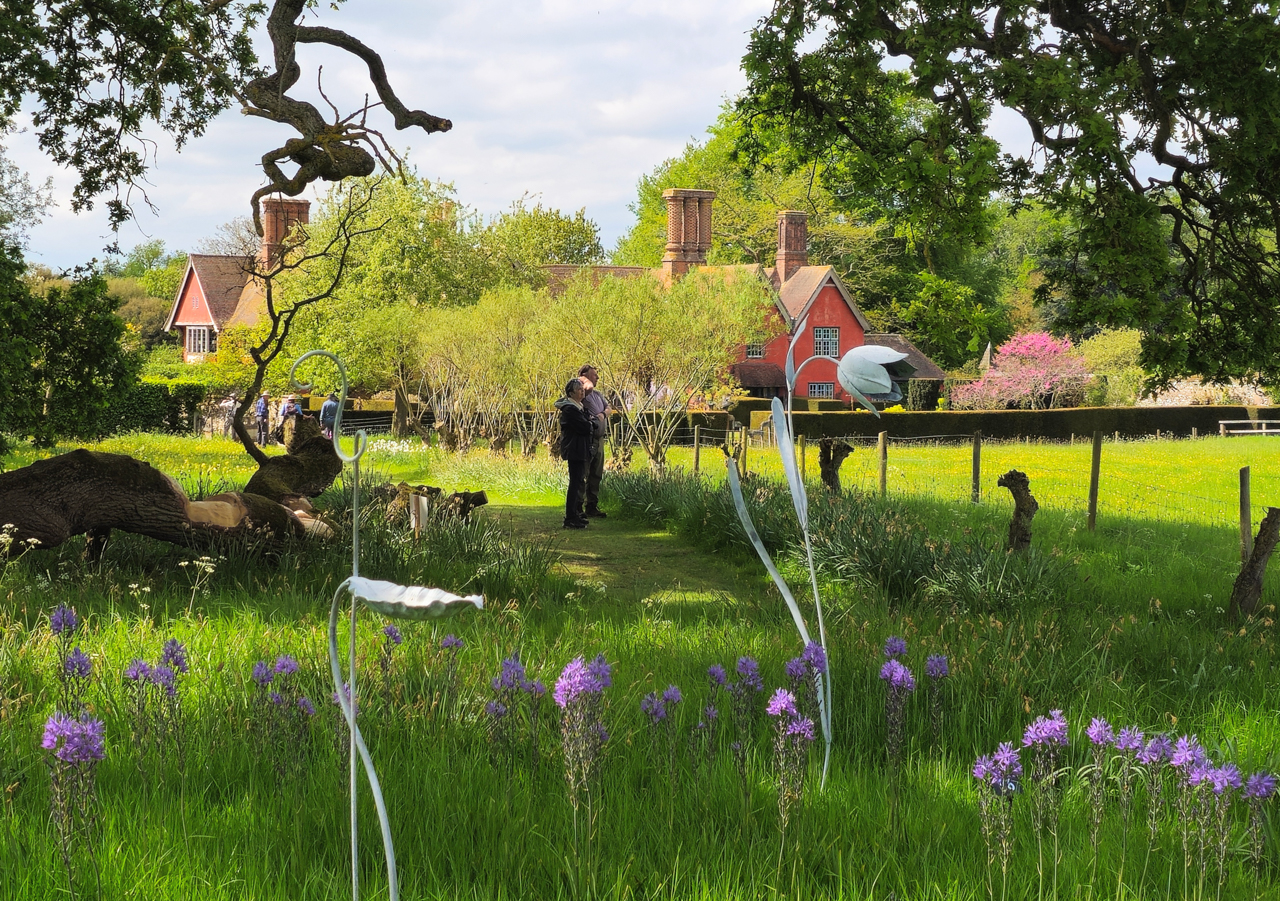
Wyken Hall © Mike Hoit
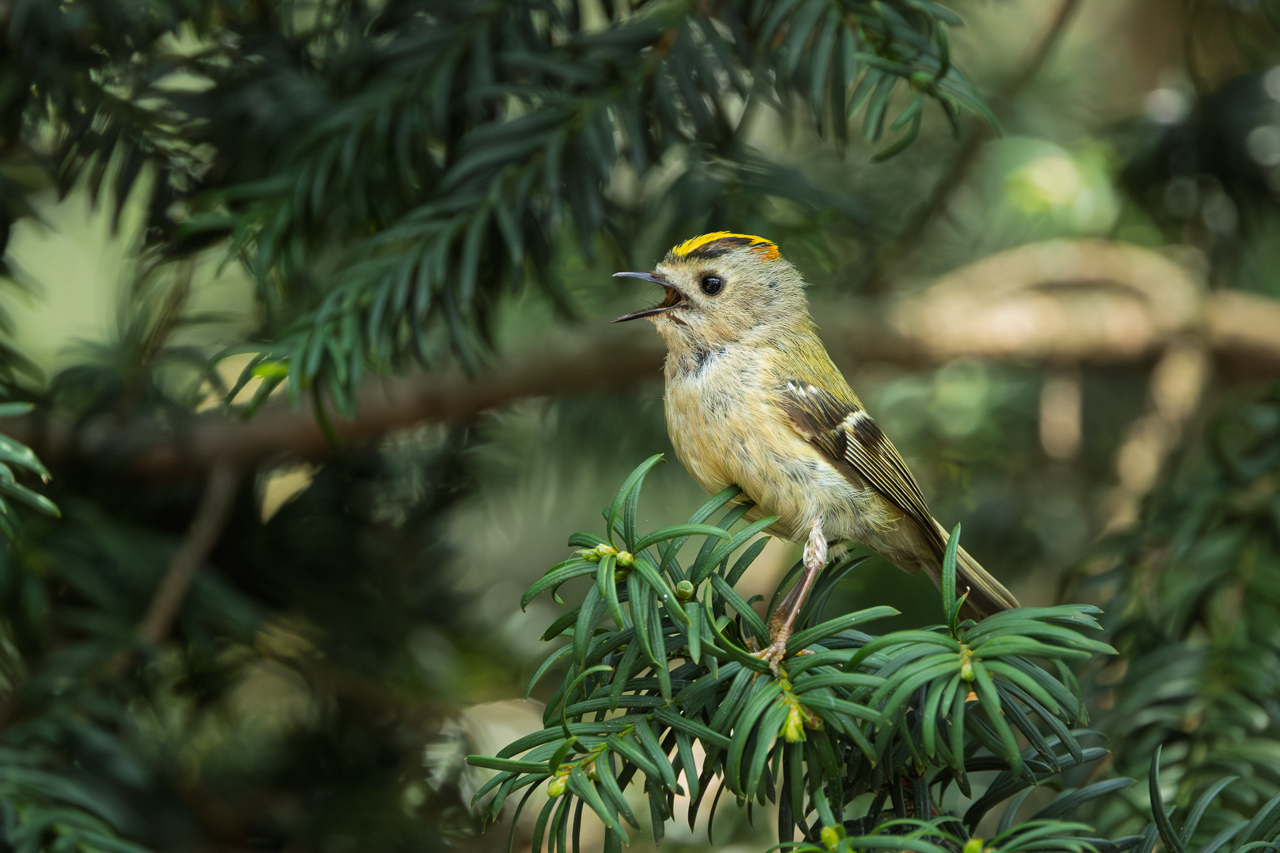
Goldcrest © Bob Bramley
Day seven: Breckland and Broadland.
This morning we birded the area known as Breckland, a unique corner of England with a dry, somewhat continental climate, and suite of specialities to look for among deciduous riparian woodland and open heaths (despite the destruction of most of the latter for industrial forestry during the twentieth century). Starting at Lynford Arboretum, the main target of Firecrest gave us a bit of a runaround before showing well, as did some Red Crossbills – one of the few species to benefit from the aforementioned forestry and its Sitka Spruce monoculture.
After a warming breakfast, a circuit close to the River Little Ouse produced perched views of Common Cuckoo, a showy Tree Pipit giving his lovely song, Yellowhammer, Mandarin Duck, and more Woodlarks. Some convenient bird feeders allowed bright green-and-yellow Eurasian Siskins, and Great Spotted Woodpecker to be scoped, and Eurasian Nutharches were nearby. Most productive!
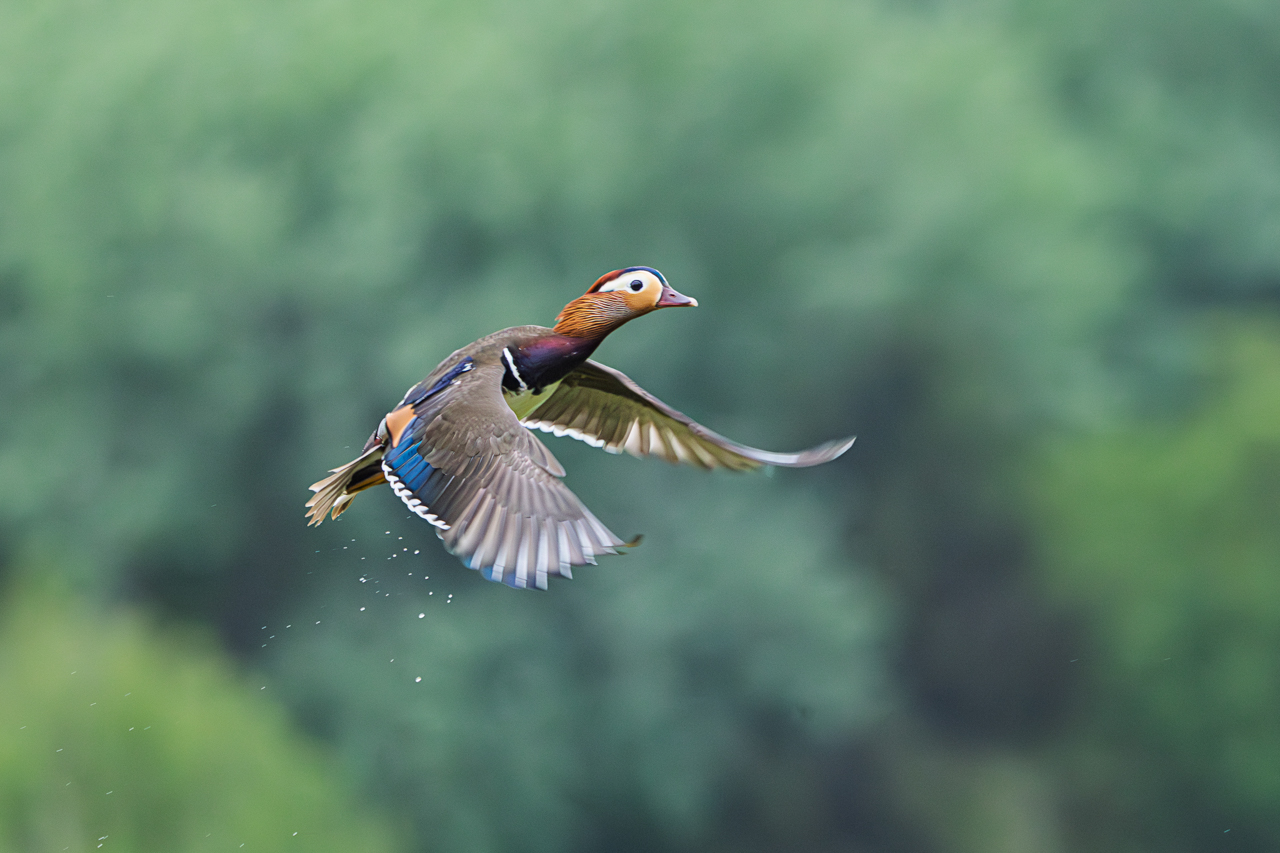
Mandarin Duck © Bob Bramley
Continuing northeast, the afternoon’s destination was in another Norfolk district – Broadland. Although not too far from Breckland, this is a wetter landscape, barely above sea level and named for the eponymous Norfolk Broads – lakes formed by peat extraction in the middle ages, surrounded by reed and fen and joined by rivers and channels. Fairhaven Water Gardens sits on South Walsham Broad, in alder carr woodland – a classic wet woodland habitat of the area.
Within this habitat, a garden was planted by the late Richard Broughton, which added colour via American Skunk-cabbage and candelabra primroses, originating in Asia, alongside which native Yellow-flag Irises and Cuckooflower were in bloom. The network of paths through this wildlife-rich combination allowed for a pleasant stroll, where we had close views of a number of species like Eurasian Jay and Common Tern, found a Long-tailed Tit nest, and saw a Stoat dashing across a lawn. Back in the van, another fairly painless drive took the group to the country town of Holt, to settle in for three nights in advance of exploring north Norfolk.
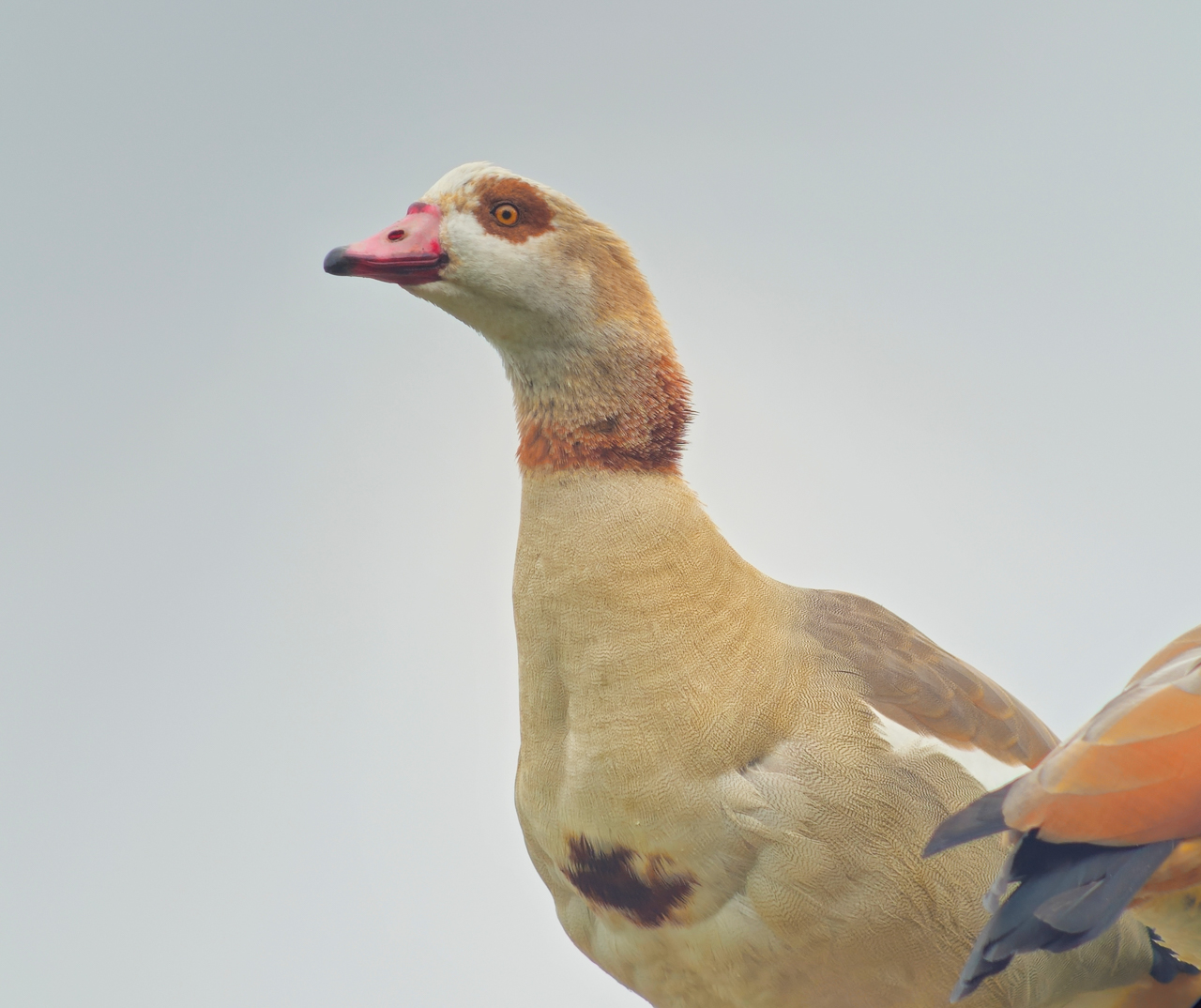
Egyptian Goose © Mike Hoit
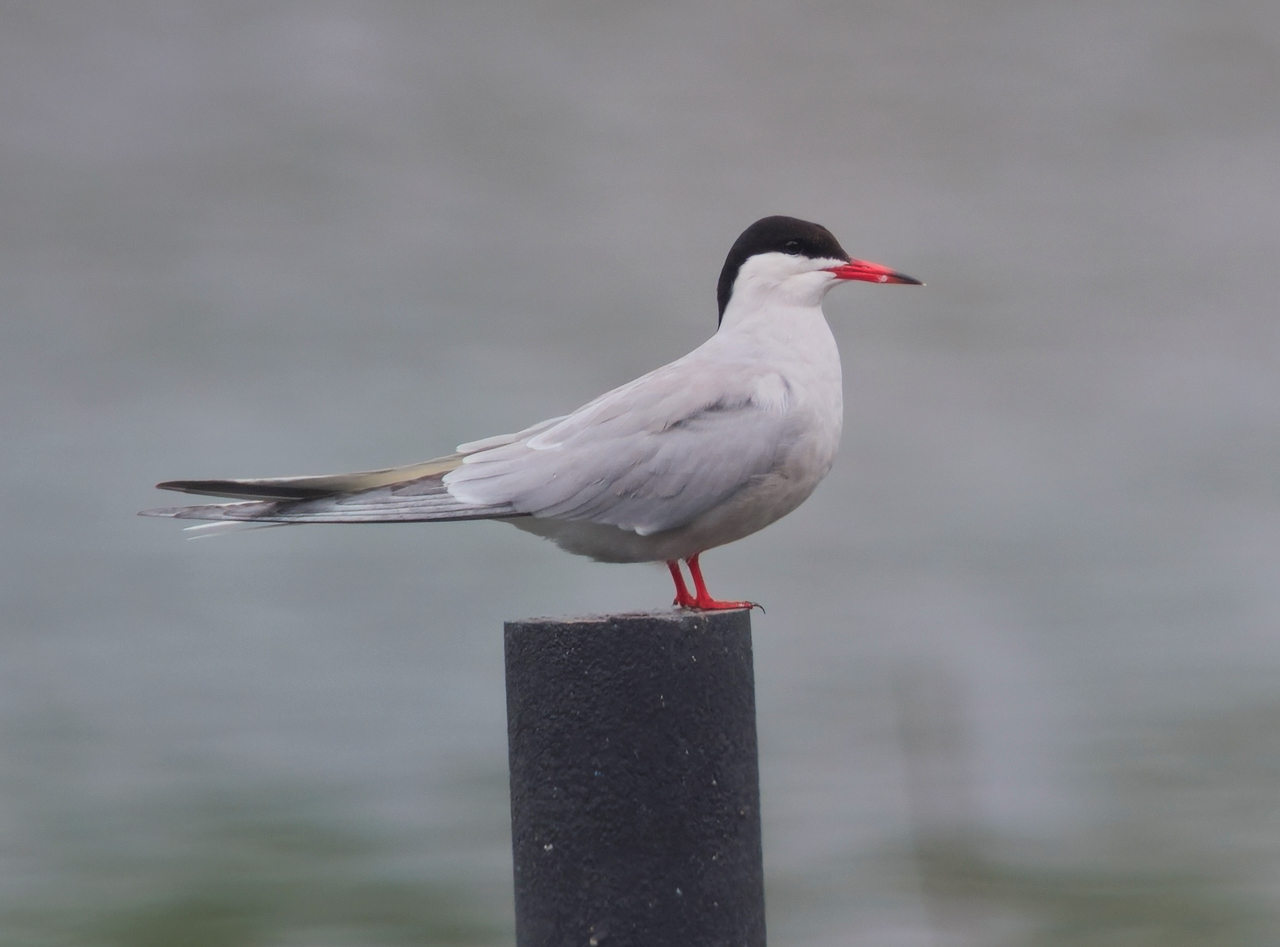
Common Tern © Mike Hoit
Day eight: Cley Marshes NWT
The north Norfolk coast has a near-inexhaustible set of birding destinations, as reserves of different designations and ownerships form an almost unbroken chain along the North Sea. Rather than spend time travelling and being spoiled for choice, we opted to focus on just one of these and explore it properly. Cley has a birding heritage going back decades, and was up to standard on a sunny spring day.
Much of the morning was spent in one of the hides overlooking shallow pools, which were hosting a fine set of migrant shorebirds. Both Black-tailed (bound for Iceland) and Bar-tailed (en route to the Siberian tundra) Godwits were seen well, as were Wood Sandpipers and spectacular male Ruffs (which both breed in the wet woodlands and fens of northern Eurasia) and Dunlins (which nest in the high Arctic). Alongside these were locally-nesting Little Ringed Plovers, and an absolutely brilliant view of a Eurasian Spoonbill which fed and preened before – typically – going to sleep.
The local deli provided us with a great picnic lunch which we consumed on the shingle beach, opposite a field containing Eurasian Golden Plovers and Western Yellow Wagtails;nearby we found nesting Common Ringed Plovers and Eurasian Oystercatchers.
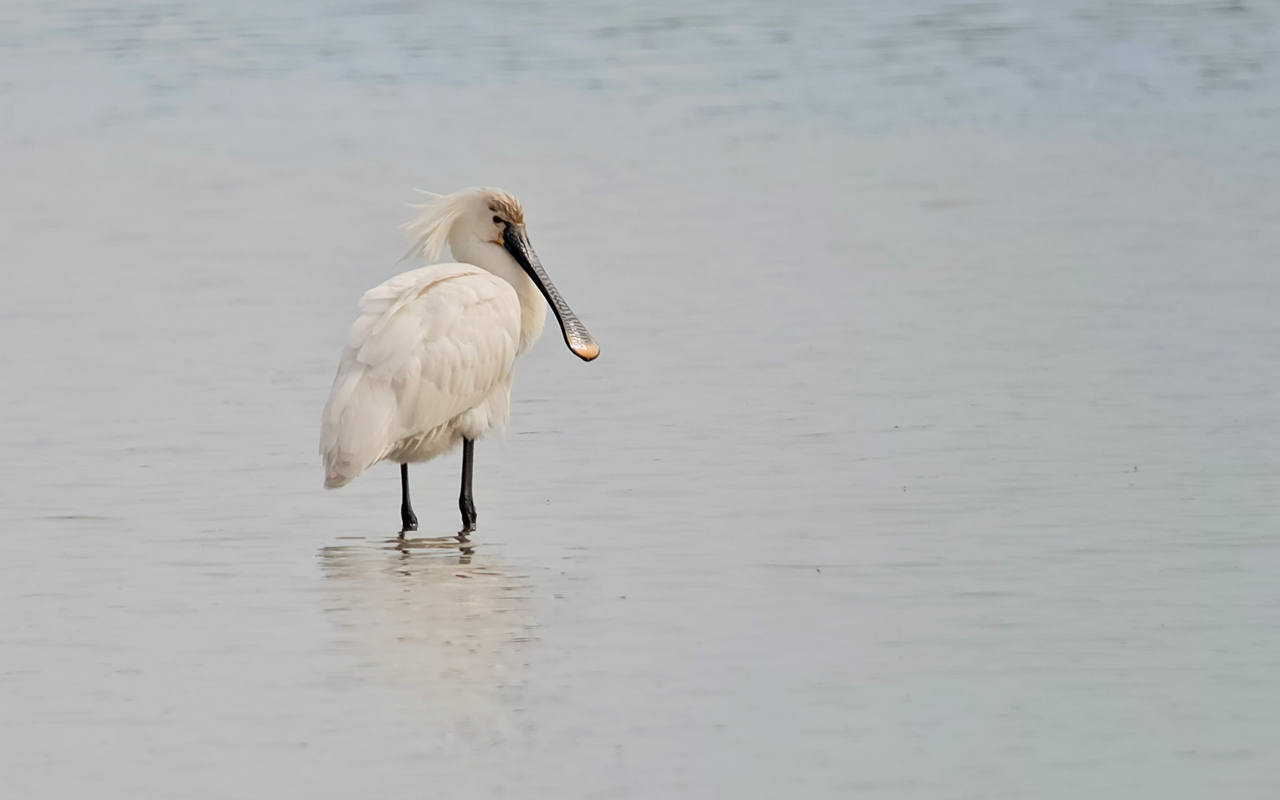
Eurasian Spoonbill © Mike Hoit
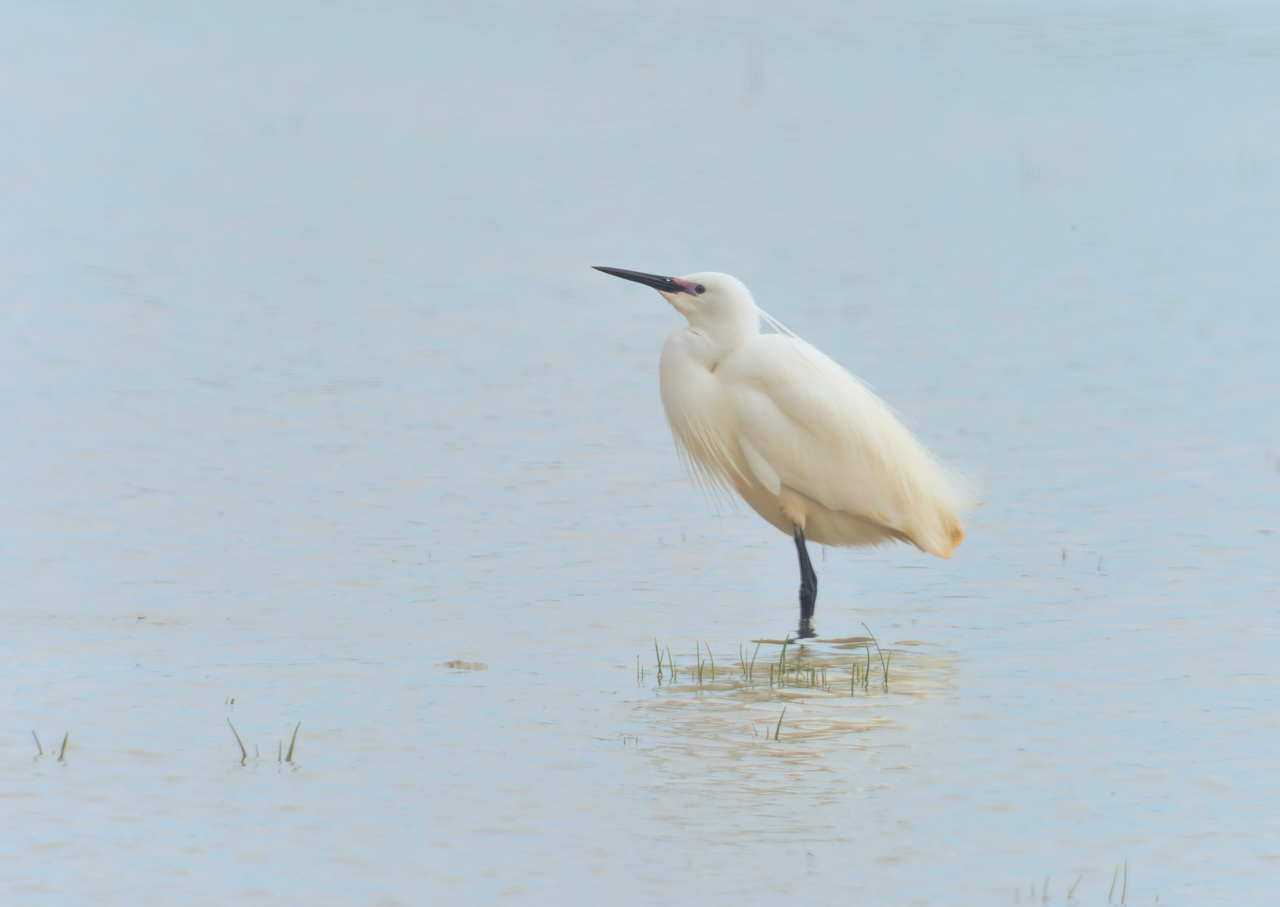
Little Egret © Mike Hoit
Moving to another part of the reserve, a raised path between reedbed and grazing marsh was a good place to enjoy the birds and scenery. Some much more vivid male Yellow Wagtails fed among the cattle, alongside some Northern Wheatears of the ‘Greenland’ race, midway through an epic migration which might take them as far as Baffin Island to breed! We also had some very close views of Marsh Harriers and other entertainment was provided by Common Snipe, Little Terns and Red Knot. With such a short journey back to Holt, there was time this afternoon to explore this characterful small town.
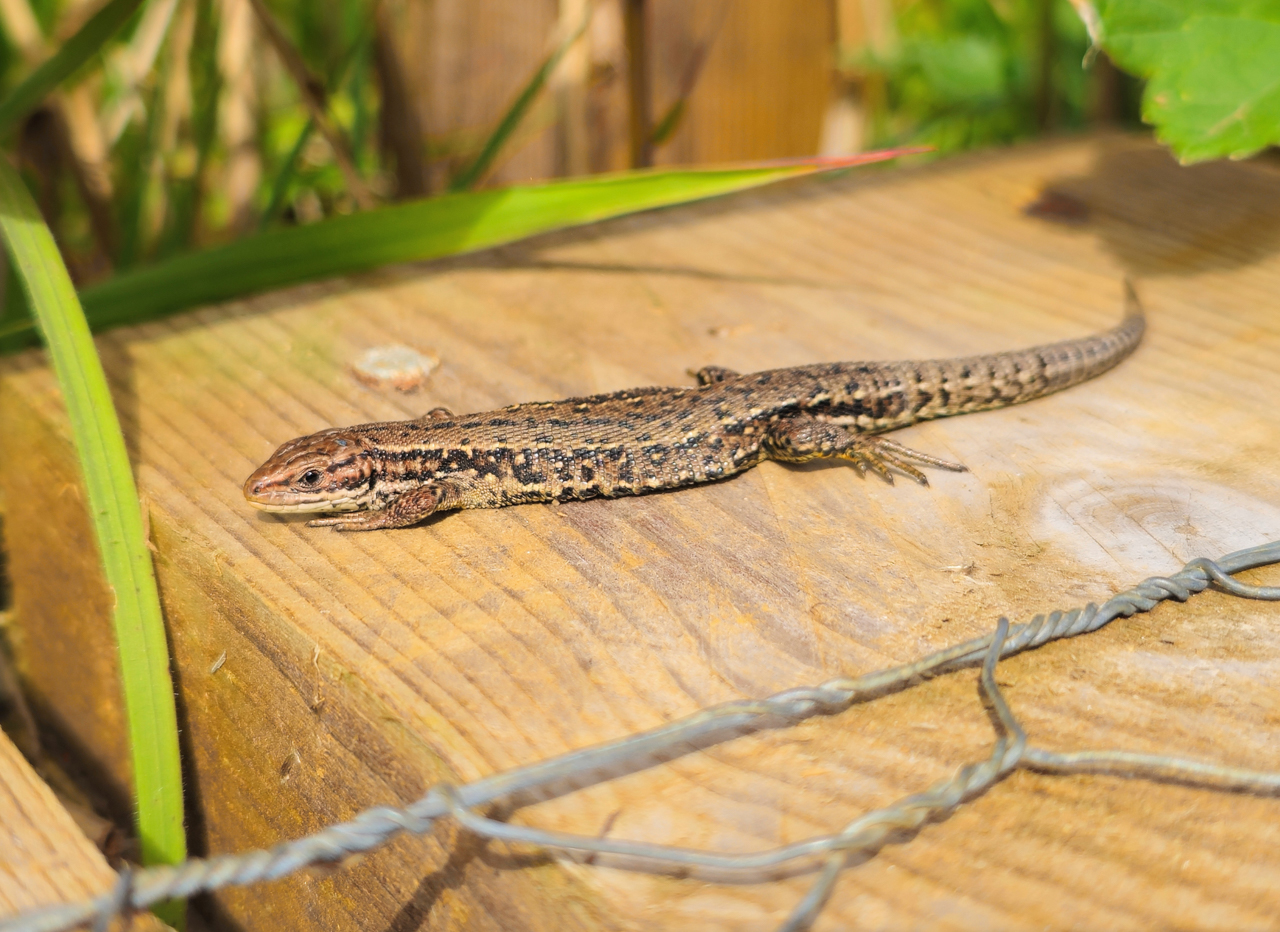
Viviparous Lizard, Cley © Mike Hoit
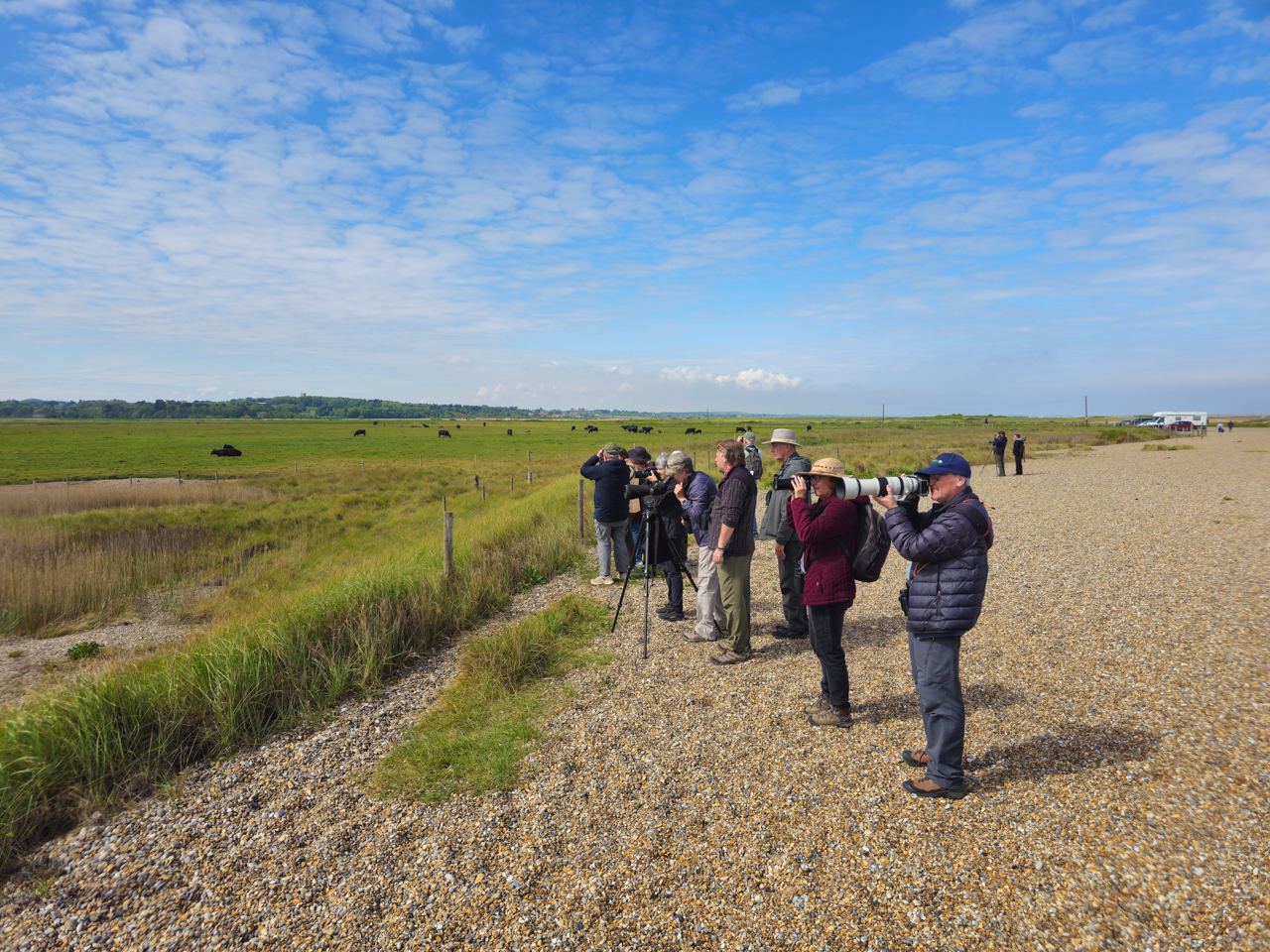
Our group on Cley Beach © Mike Hoit
Day nine: Hickling and East Ruston
On the agenda today was a journey back southeast, returning to The Broads National Park under rather ominously grey skies. Fortunately though, the chilly rain showers avoided us, and another stroke of luck was arriving at the Norfolk Wildlife Trust’s reserve at Hickling Broad as they were showing off the contents of the moth trap. A nice bonus for those interested in winged creatures other than birds, and we were shown some good-looking ones with evocative names like Lesser Swallow Prominent, Puss Moth, Chocolate-tip, and both Eyed and Poplar Hawk-moths.
After this distraction, we headed out into a place of vast reedswamps and under wide open skies. Common Cranes have their British stronghold here and put on a better than expected show: groups of these impressive birds were frequently on the wing with a chorus of trumpeting calls, and a few were seen strutting on the ground. Super perched views of Eurasian Hobby were had, Bearded Reedlings buzzed around busily, and a dapper male Garganey was on the pools alongside more Wood Sandpipers and Ruffs. It was a touch chilly today though, so lunch in a cafe was more appealing than a picnic!
East Ruston Gardens is another singular place; with humble beginnings as a private residence with a garden started from scratch, the owners expanded it from three acres of grass to a thirty-three acre complex over the last fifty years. Each time was passed through a gap in one of the hedges separating these sections, another little delight was to be found: anything from a Mediterranean garden, one full of roses and tulips, another planted with exotics, topiary, and a peaceful Catalpa Gardens with neatly arranged Indian Bean Trees. The various paths are also laid out with great thought, lining up with “windows” in hedges that frame a nearby lighthouse and a church. Back at base, it was time for one final convivial pub dinner before we departed Norfolk.
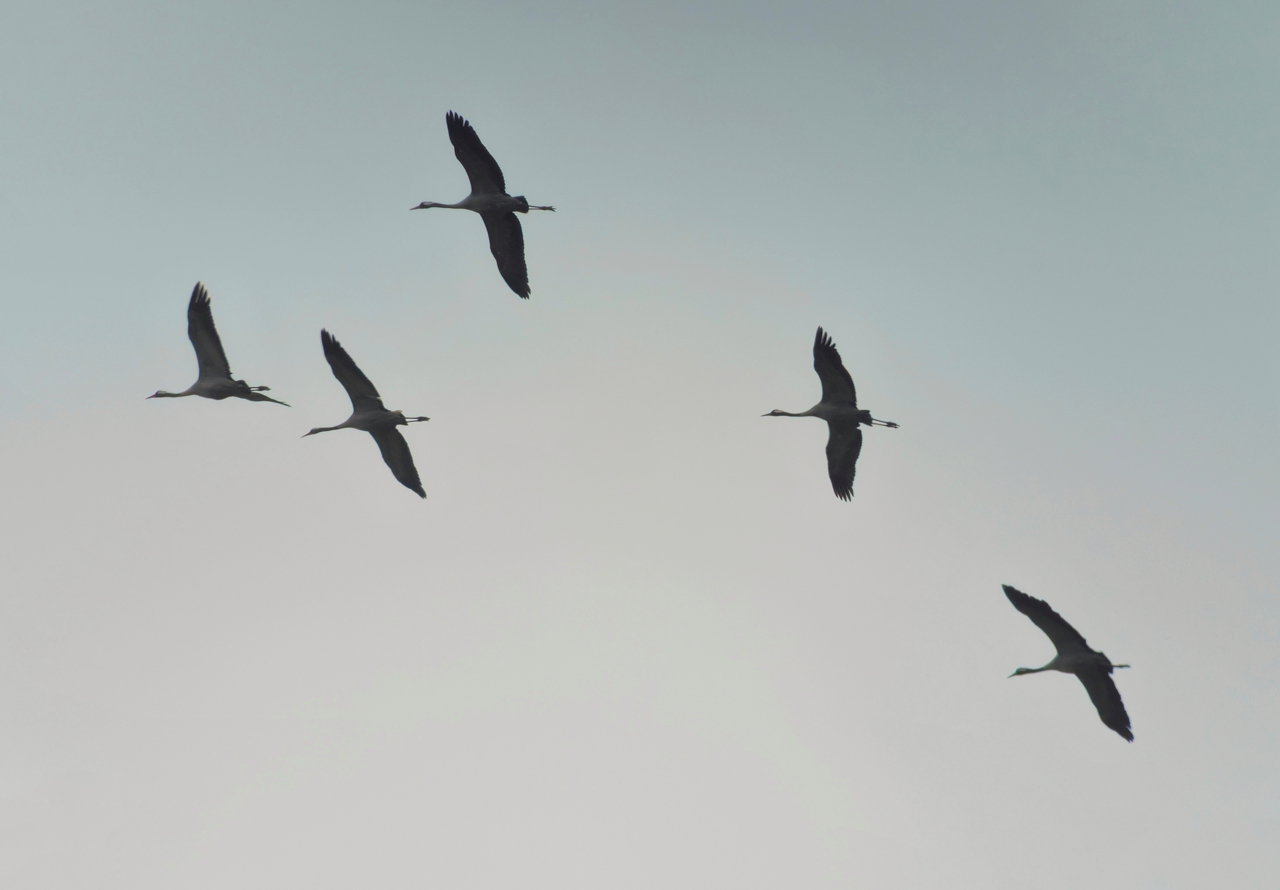
Common Cranes © Mike Hoit
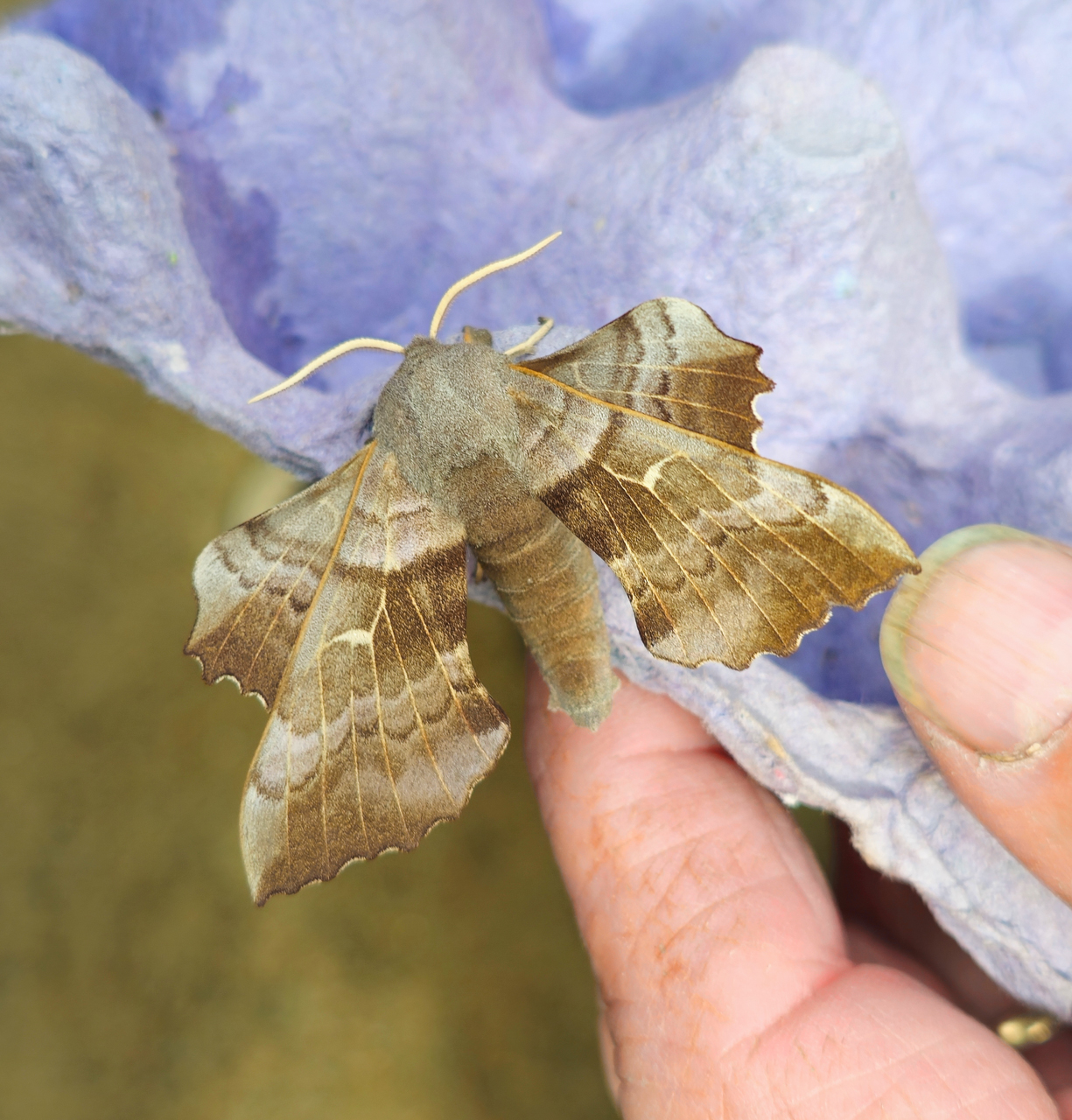
Poplar Hawk Moth © Mike Hoit
Day ten:
Sadly, this was the final day of the itinerary, with the journey back to London ahead of us. However, there was still time for more birds and another garden, of course. Travelling right across Norfolk, were determined to find one or two new farmland species, and a bit of local knowledge was employed to finally catch up with a nice pair of Grey Partridges.
We still arrived at the main destination, Barnsdale Gardens, in good time for a scheduled tour with the friendly head gardener, Jon, who shared wealth if knowledge gained over thirty years working here. Barnsdale, – which is in England’s smallest county, Rutland – is the brainchild of the late Geoff Hamilton, who created most of the thirty-eight display plots here for his BBC TV show Gardener’s World. The aim of the series of individually-designed gardens is to inspire gardeners of all levels of experience, however small the patch of land they have. And in keeping with most of our stops on this tour, nowadays with an eye on how to be wildlife-friendly – a most fitting and enjoyable end to the tour. This was also a final opportunity to enjoy both familiar birds – Blackcaps, European Goldfinch and of course Robins – and an eccentric tearoom…
Tallying the roadside Common Buzzards and Red Kites passed the time on the drive back down to Heathrow, where an airport hotel was a change of pace from the accommodations we had got used to! A final (pre-ordered) meal together was a great chance to reminisce over a trip of great birds, great gardens, and most importantly great fun with a great group. And for most, hopefully some more of the same on their extended travels.
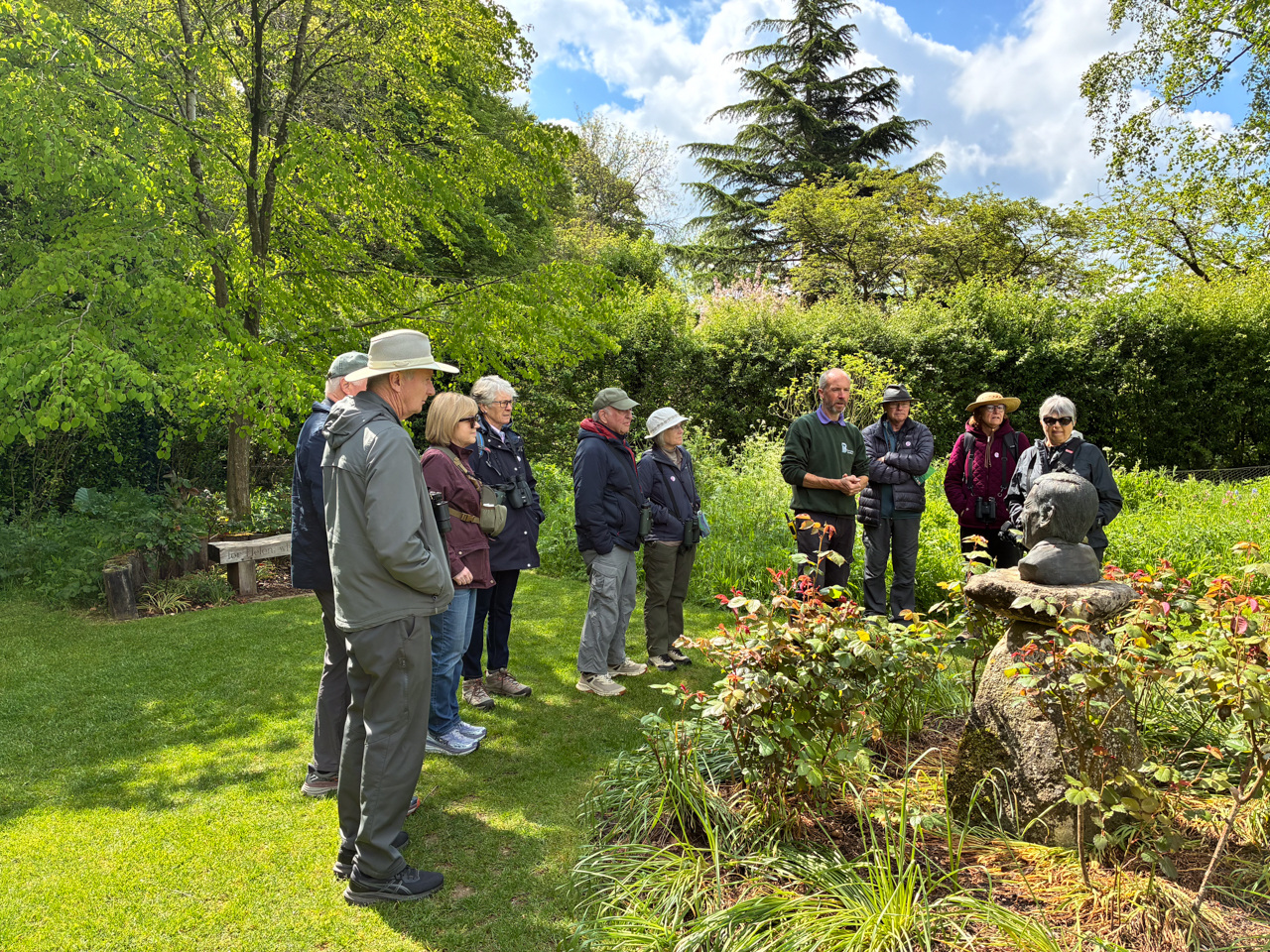
Barnsdale Gardens © Alan Tilmouth
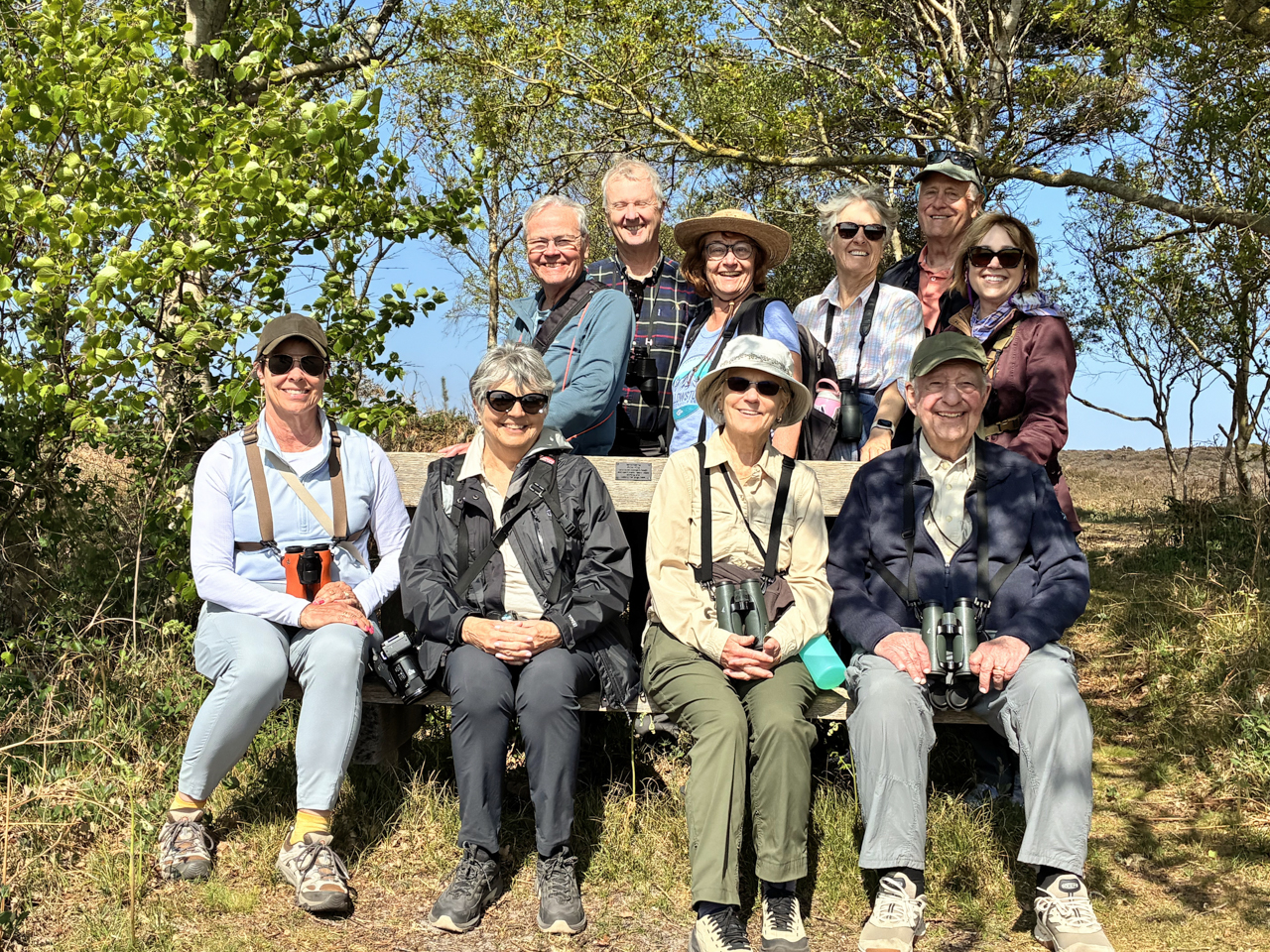
Our group at Dunwich © Alan Tilmouth