Eastern Australia Trip Report (Oct 24 – Nov 9, 2026)
The Eastern Australia trip took us through the diverse habitats of Australia’s East Coast, from the World Heritage Wet Tropics and Great Barrier Reef in Far North Queensland, to the temperate forests of Southern Queensland and New South Wales. The birdlife encountered was therefore incredibly diverse, and, as expected from a continent such as Australia, weirdly unique.
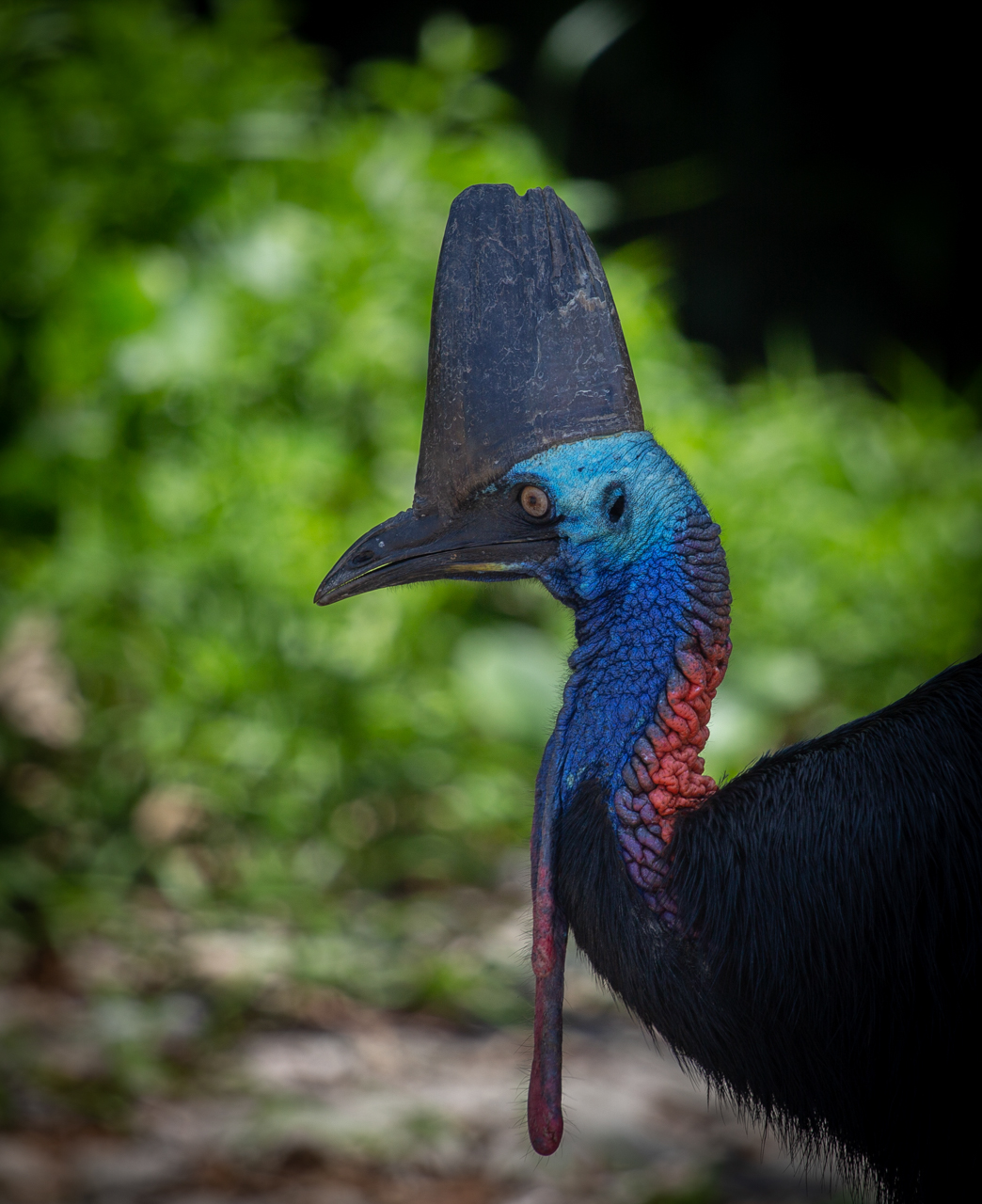
Southern Cassowary © Maurice Hovens
Day 1:
On the first day of this Eastern Australia trip we all met at our hotel in Cairns, capital of Queensland’s Wet Tropics. After sharing a bit more about ourselves, as well as all our wishes and expectations of the journey ahead of us, we enjoyed some delicious Indonesian food at the restaurant.
Day 2:
After breakfast, we went in a southern direction along the famous Cassowary Coast in search of this iconic rainforest bird. Driving through northern Queensland’s sugarcane fields, we first stopped at France Road, where we spotted Eastern Yellow Wagtail, Australian Pipits, Black-fronted Dotterels, Rainbow Bee-eaters, Australian Ibis, Nankeen Kestrel and a large number of Black Kites. We continued our journey southwards with sightings of Australasian Swamphen, Crimson Finch, White-breasted Woodswallow and Golden-headed Cisticola along the way.
Straight after arriving at Etty Bay Beach we were greeted by a Pacific Reef-Heron on the same beach where a Cassowary had walked just a few minutes before, so we had to wait for the bird to show its bright blue and crimson colours again. Birding against a spectacular backdrop of forest-covered mountains we picked up Metallic Starling, Laughing Kookaburra, Australasian Figbird and a couple of Sahul Sunbirds. Just when we were having a morning tea underneath the shade of a fig tree one of the guests excitedly told the group a Cassowary had started walking onto the grounds, and it didn’t take long before it made its way onto the beach, a sight straight out of Australian Geographic!
After the morning excitement, as we began packing up to say our goodbyes to Etty Bay, we were greeted again by the same Cassowary, offering us more extraordinary views. We then headed back to Cairns via Innisfail for a nice lunch in a cafe. After lunch, we continued our long journey back up the Cassowary Coast. Upon arriving back in Cairns, we had an hour’s rest back in the hotel, before we headed back out for birding at the Centenary Lakes. The highlights continued with Black Butcherbird, Orange-footed Megapode and Australian Brushturkey. We got first-class entertainment from an Australasian Darter eating its dinner, a huge fish that took a whopping 10 minutes to gobble down!
We concluded the day with a short stop at Les Davie Park where the highlights were a Bush Thick-knee, Yellow Honeyeaters and a colony of Spectacled Flying-foxes.
Day 3:
A bright and early start brought us to the Cairns Reef Terminal for our journey to Michaelmas Cay on the Great Barrier Reef. After a two-hour boat trip we were greeted by Bridled Terns and a Green Sea Turtle. We were tendered to the shoreline by the beach buggy where we were met by the sounds and smells of hundreds of Brown Noddies and Brown Boobies, the occasional Sooty Tern, Ruddy Turnstone, Silver Gulls, Great Frigatebird, Greater and Lesser Crested Terns. After our session on the beach guests had time to explore the reef and its colourful inhabitants. After all the excitement of exploring the reef we had lunch on board the Ocean Spirit after which we embarked on a last boat trip around the cay, where we spotted a single Black-naped Tern and a Common Tern. We then made our way back to Cairns to conclude the day with a lovely sighting of multiple Nankeen Night Herons.
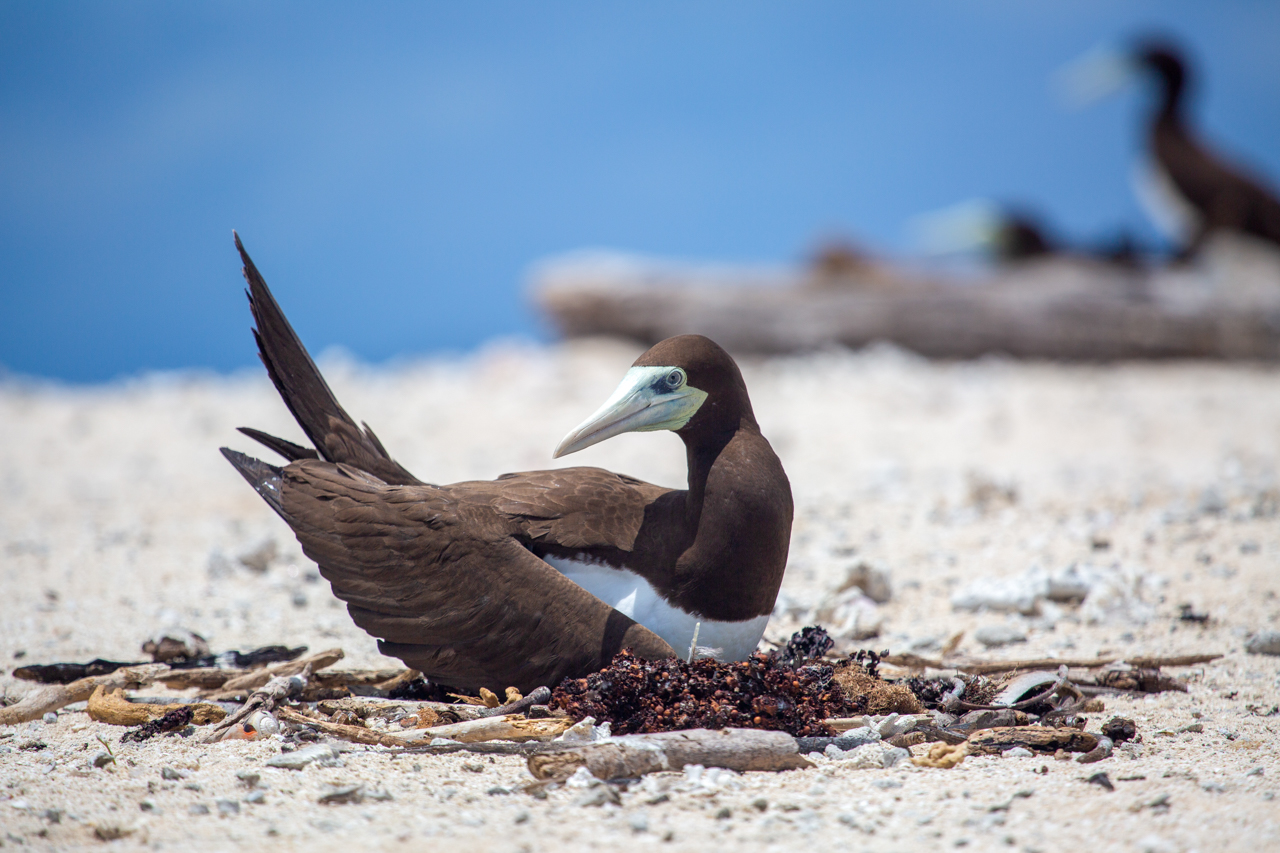
Brown Booby © Maurice Hovens
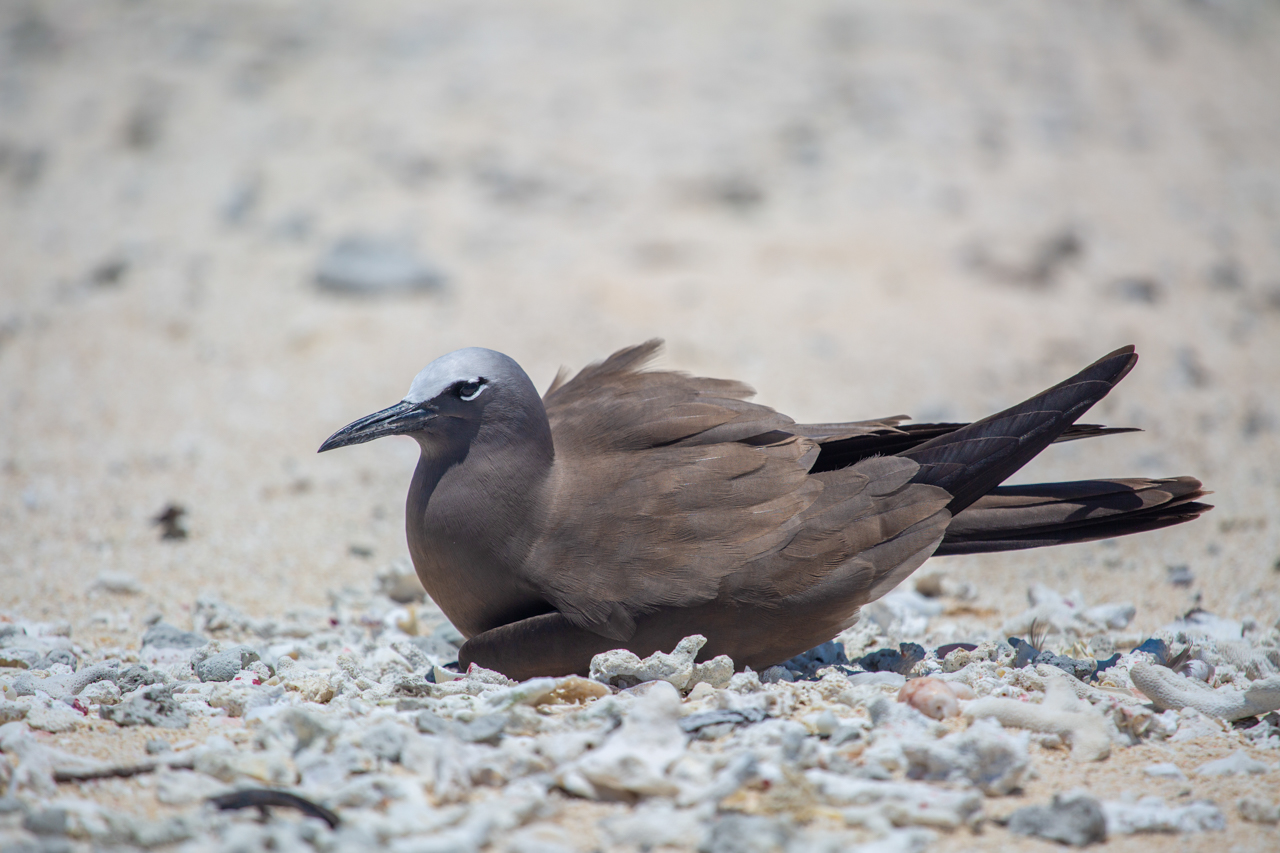
Brown Noddy © Maurice Hovens
Day 4:
After our maritime adventure, we started the next day birding along the northern end of the Cairns Esplanade. Despite the very high tide we still managed to get nice sightings of Eurasian Whimbrel, Bar-tailed Godwit and Common Greenshank. A bit further on we spotted Mangrove Robin and Torresian Kingfisher, mangrove specialties that are always rewarding to see. On our way back we were treated to excellent views of Rose-crowned Fruit-Dove, one of the many colourful birds that call northern Australia home.
We slowly rolled on north and stopped at Barron River Mouth in search of more waders and were rewarded with a close encounter with the cute Red-capped Plover. A small flock of Little Terns put up a show for the group with their acrobatic dives.
The next stop was a brief excursion to Dunne Road ephemeral wetlands where we saw Pied Stilt, Sharp-tailed Sandpiper and needle-billed Marsh Sandpiper, a species that moves as elegantly as a ballet dancer.
We got the vehicles rolling again to Redford Road where the show continued with two Comb-crested Jacanas, a pair of Black-necked Storks soaring high in the sky and beautiful views of Crimson Finch and Chestnut-breasted Munia.
We drove north to Port Douglas where we checked in at the accommodation. After having a break from the afternoon heat we had one more stop for the day at Ferrero Road. Just as we arrived we were welcomed by Australasian Grebe, Green Pygmy-Goose and Wandering Whistling-Duck. Shortly after we had great views of a bathing Brown-backed Honeyeater. Rain cut the birding short, but dinner at the brewery was already calling.
Day 5:
As we had an appointment on the Daintree River, we started the day bright and early. On arrival, we got a brief fly-by of a Great-billed Heron, a rarity we enjoyed better views of further downstream. This was only the beginning of one of the many highlights of the day. Other cast members of the Daintree River Show were the Shining Flycatchers, the sought-after Spotted Whistling-Duck, the bright and beautiful Wompoo Fruit-Dove, spectacular Azure Kingfisher and a Papuan Frogmouth.
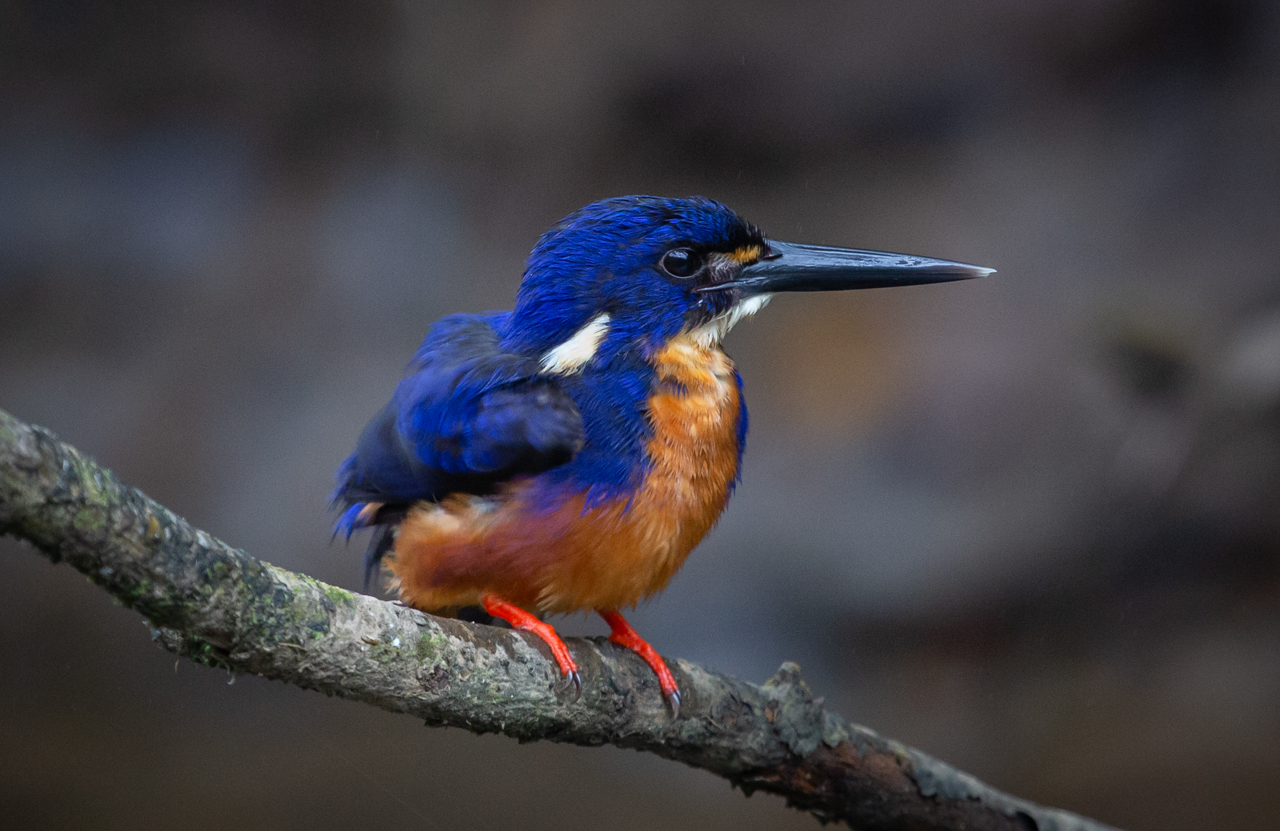
Azure Kingfisher © Maurice Hovens
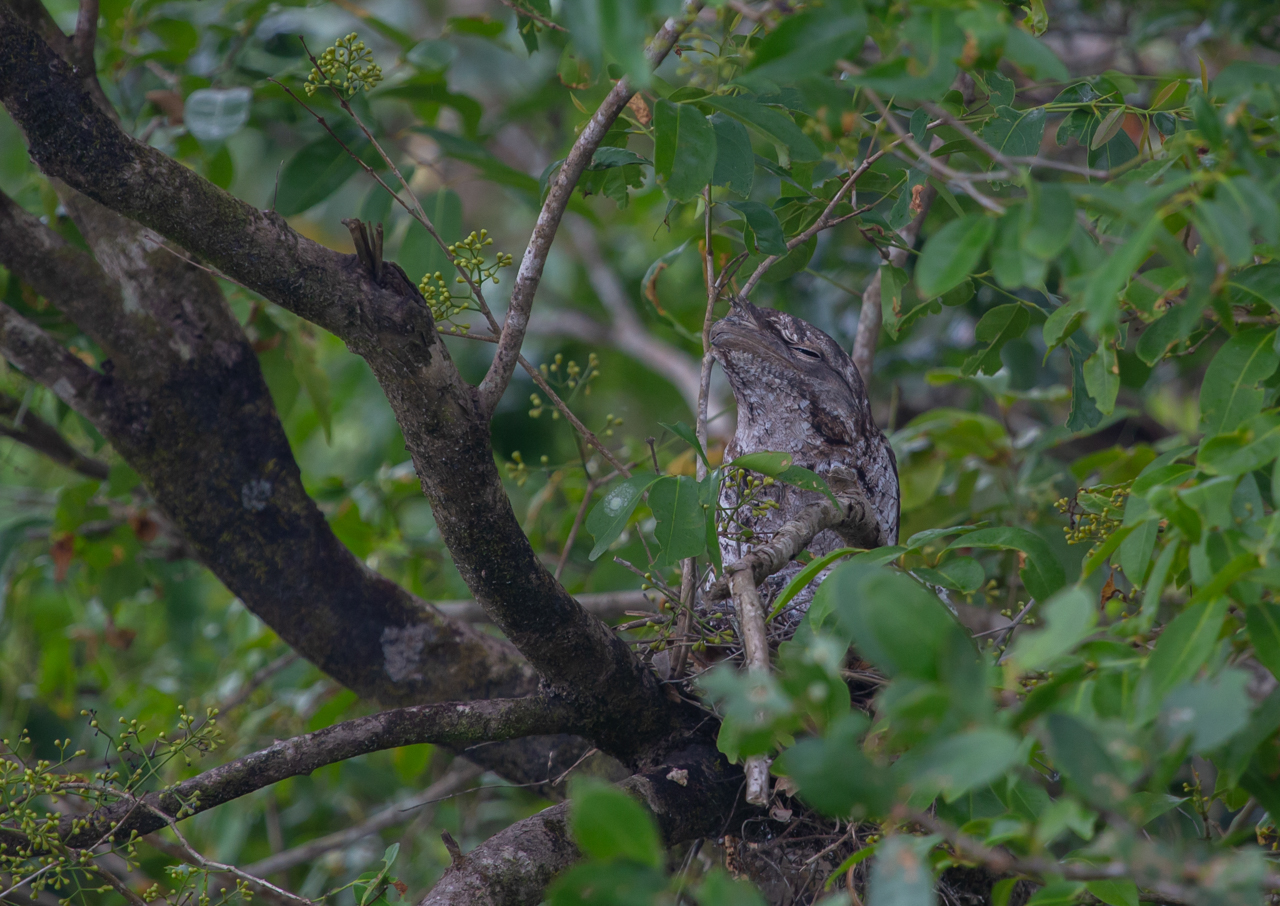
Papuan Frogmouth © Maurice Hovens
We reflected upon the great morning that we had over coffee and some snacks after which we made our way over the other side of the Great Dividing Range, away from the green and lush Daintree rainforest to the dry savannah of Mount Carbine. Birding highlights included Pale-headed Rosella, Red-winged Parrot, Tawny Frogmouth, Blue-winged Kookaburra, and not to forget the omnipresent Apostlebirds. After lunch, we had a brief look at a Great Bowerbird tending its bower.
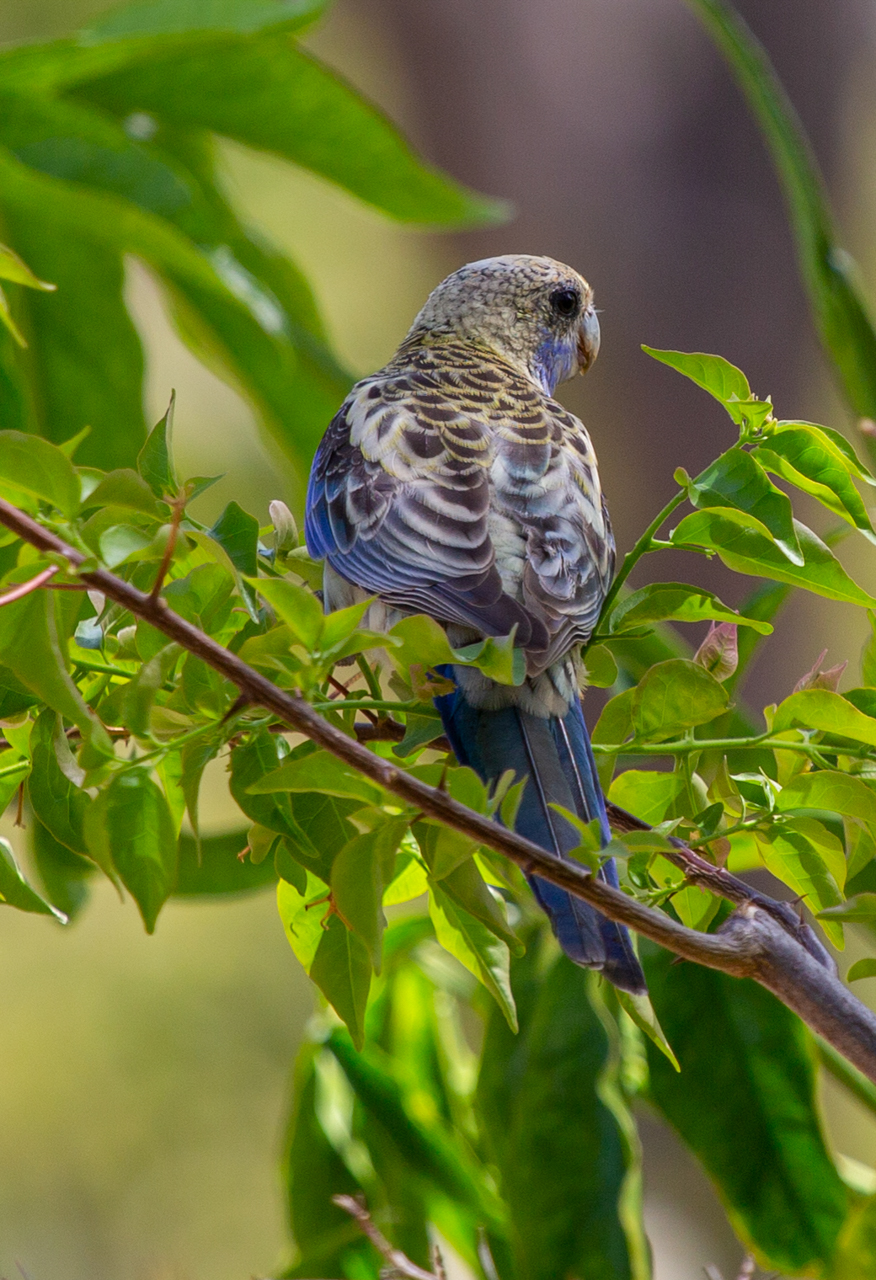
Pale-headed Rosella © Maurice Hovens
A short drive brought us to West Mary Road, where we spotted the first of many Australian Bustards: we were bewildered by the sheer number of birds that we saw in a small area!!!
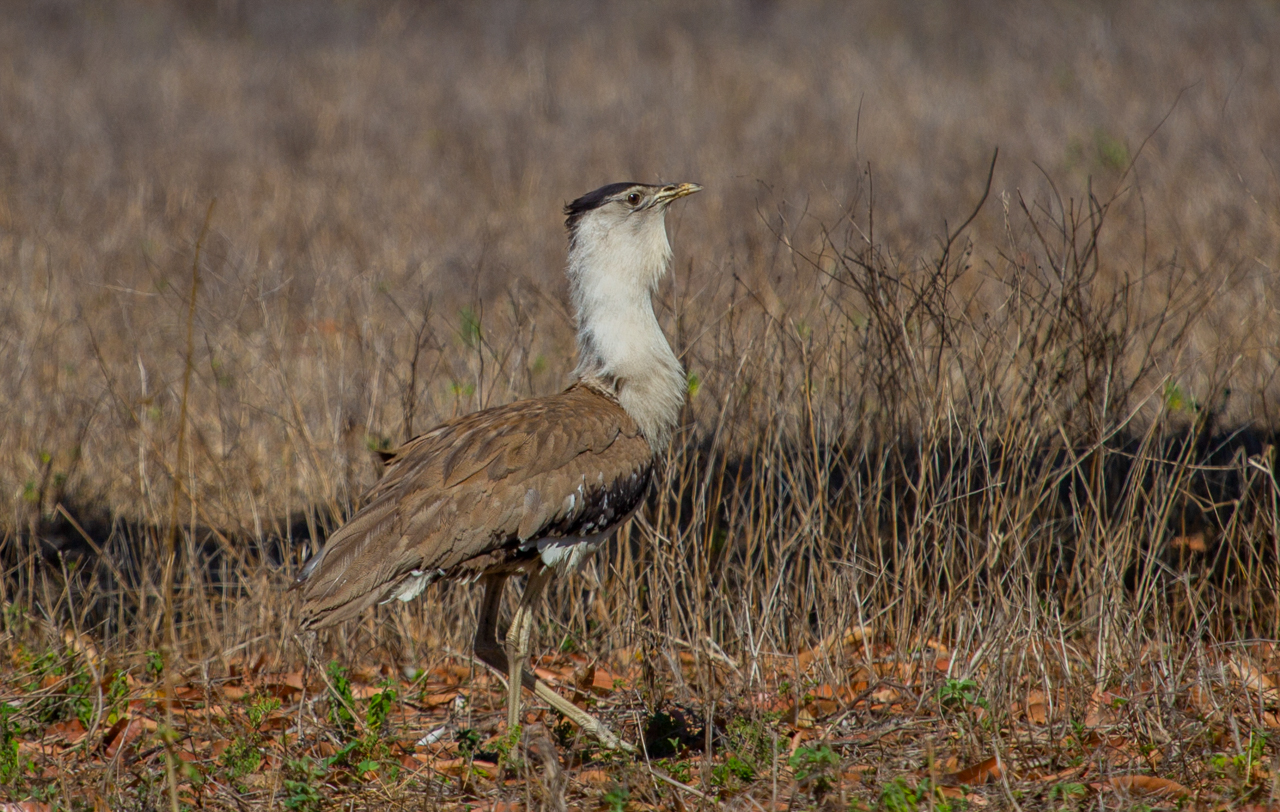
Australian Bustard © Maurice Hovens
Last stop of the day was at Sides Road, where we were entertained by some forest birds including Macleay’s and Cryptic Honeyeaters, Fairy Gerygone and flyover Topknot Pigeons. After a rewarding day, we returned to Port Douglas for a lovely dinner.
Day 6:
After an early breakfast, we left Port Douglas behind us and continued our journey towards the Atherton Tablelands. On our first stop of the day at Kingfisher Park we were greeted by Brown-backed, Cryptic and Macleay’s Honeyeaters feeding off the abundant nectar of some roadside grevilleas. We also spotted an Australian Spectacled Monarch, a Large-billed Scrubwren as well as dozens of nesting Metallic Starlings. This was a prelude to what turned out to be another great day.
The next stop brought us to Abattoir Swamp, where Lovely and Red-backed Fairywrens were the absolute showstoppers. Other highlights included Northern Fantail, Little Shrikethrush, Rufous and Gray Whistlers.
On our way to Mareeba we stopped briefly to look for Black-throated Finch. No luck; however, we were rewarded with great views of a Frilled-necked Lizard. After arriving in Mareeba, we picked up lunch and made our way to Granite Gorge. Here we had close encounters with the local rock wallabies, but were soon called over to come and admire a couple of Squatter Pigeons. We also had our first views of Noisy Friarbirds.
We continued our way to our accommodation, when we took an unexpected detour to witness an unbelievable gathering of over a hundred Sarus Cranes. A sight to behold.
We made one last quick stop at the Curtain Tree to be greeted by our first rainforest birds. The Spotted Catbird and Victoria’s Riflebird were the highlights.
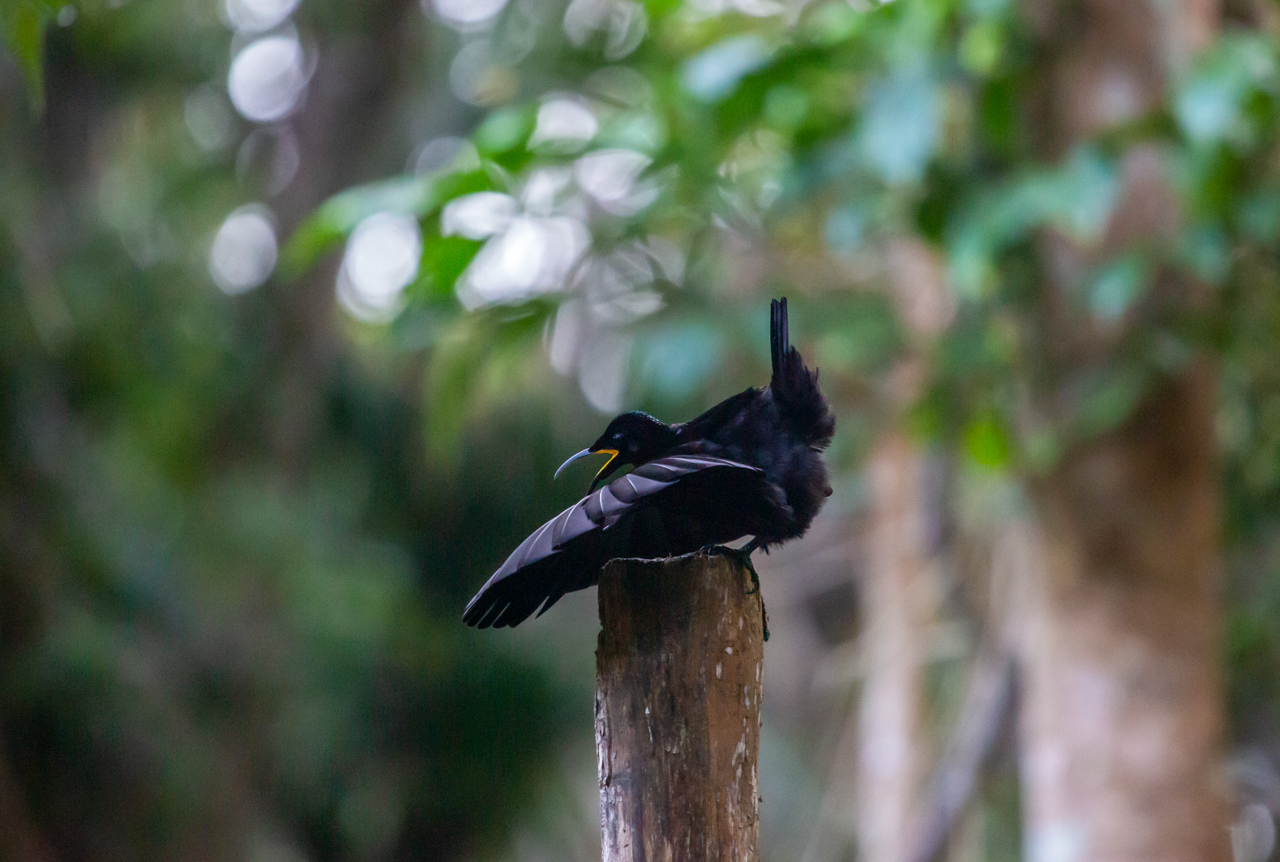
Victoria’s Riflebird © Maurice Hovens
After picking up the guests at our accommodation we tried our luck at the Platypus Viewing Platform in Yungaburra, where we had brief glimpses of this elusive monotreme. After dinner at the historic local hotel we had our last highlight of the day with sightings of Striped Possum and Long-nosed Bandicoot back at our accommodation.
Day 7:
We had breakfast at our lodge and started our birding for the day in front of the restaurant where we picked up a Pacific Baza. Soon after we drove to Mount Hypipamee in search of the elusive Golden Bowerbird. The moment we arrived in the carpark the endemic Gray-headed Robin, Gray Fantail and Scarlet Myzomela gave us a warm welcome. Following a narrow path into the rainforest we all waited near the bower of our main target of this morning, and patience paid off when the jewel of Mount Hypipamee made its entrée.
We left the location on a high to continue our search for Brolga, yet we only managed to find the field full of Sarus Cranes. We had lunch in Malanda where we got the tip about a location where Lumholtz’s Tree-kangaroos can be found quite regularly. While scanning the treeline for this unique marsupial we managed to spot Brown Cuckoo-Dove, Black-faced Monarch and some nice Silvereye. After an hour of searching, a long drooping tail was seen hanging down a tall tree, and with repositioning we all managed to have some good views.
After returning to the accommodation, some guests opted for some much-needed rest while others continued birding around the lodge. Some were lucky to catch a group of Barred Cuckooshrikes and flyovers of Wompoo Fruit-Dove. We had a second round at the Platypus Viewing Platform where we had cracking views of this otherworldly creature. The day ended with another dinner at the local pub, including a round of highly entertaining music bingo.
Day 8:
After another great breakfast, we had to say our goodbyes to our lodge and headed down the road to a friend of one of the guides who has a feeding station. After a nervous fifteen-minute wait the action kicked off with Lewin’s and Macleay’s Honeyeaters, Victoria’s Riflebird, Pacific Emerald Dove and Spotted Catbird.
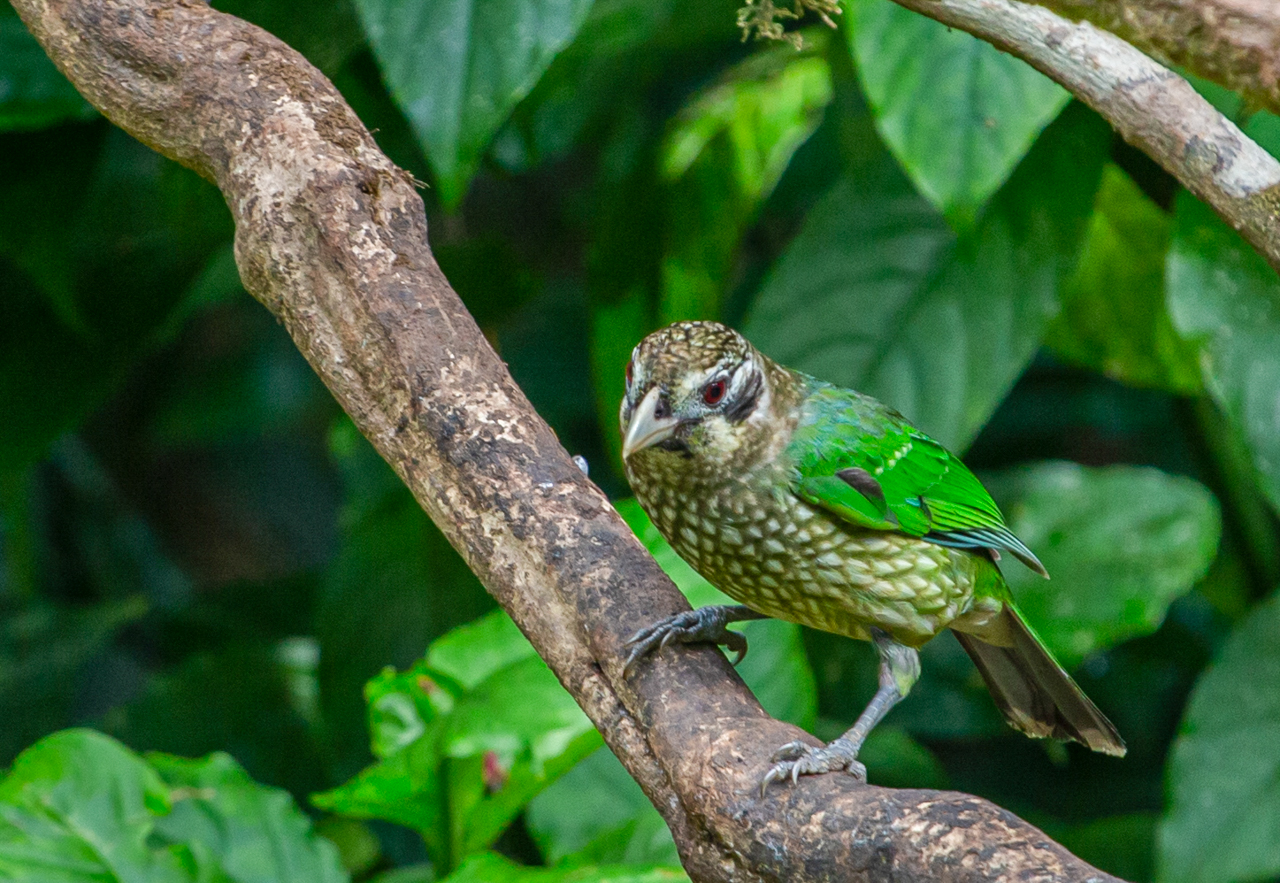
Spotted Catbird © Maurice Hovens
Lake Barrine was our next stop where hundreds of Great Crested Grebes dotted the water. We then took a walk into the interior of the forest with an obliging Tooth-billed Bowerbird being the absolute highlight. The elusive Eastern Whipbird and Chowchilla allowed for brief glimpses through the dense undergrowth, however, not everyone was able to enjoy good views.
We left Lake Barrine and the Atherton Tablelands, and on our way back to Cairns we had a brief stop in Mareeba to look for White-browed Robin. However, failing to find the robin, we instead had a stunning view of a Little Bronze-Cuckoo. We eventually made our way down to Cairns for the last stop of the day at the northern end of the Esplanade. Luckily the tide was going back out and a nice variety of waders made their appearance, including Bar-tailed Godwit, Great Knot, Terek and Curlew Sandpipers, Caspian and Australian Terns, and a single Red-necked Stint.
We then checked back into our hotel, had dinner and prepared for a very early rise the next day.
Day 9:
Early morning, we caught the red-eye flight to Brisbane, and after picking up our rental vehicles we headed to Mount Gravatt. It didn’t take us long to get our highlight of the day in the form of a rather cuddly Koala. On top of that another Tawny Frogmouth was seen in a tree next to it. Two sleepy characters in one place! An early lunch was enjoyed and unfortunately our birding was cut short by rain.
We made our way to O’Reilly’s and made two short roadside stops for whistling-ducks and Little Corella.
On the road up to O’Reilly’s we stopped for another session of birding with Variegated Fairywrens, White-naped Honeyeater, Spotted Pardalote and Bell Miner as the highlights. On arrival at the lodge we were welcomed by Crimson Rosellas and Australian King-Parrot. After a long day, it was nice to end the day with a scrumptious buffet dinner.
Day 10:
We woke up to a beautiful sunrise overlooking the surrounding hinterland. We had a delicious buffet breakfast in the O’Reilly’s dining room. Straight after breakfast we hit the O’Reilly’s boardwalks, which produced some extraordinary sightings of Yellow-throated Scrubwren, Eastern Whipbird, Australian Logrunner, Eastern Yellow Robin, Australian Rufous Fantail, Regent Bowerbird and the crowd favourite of Rose Robin.
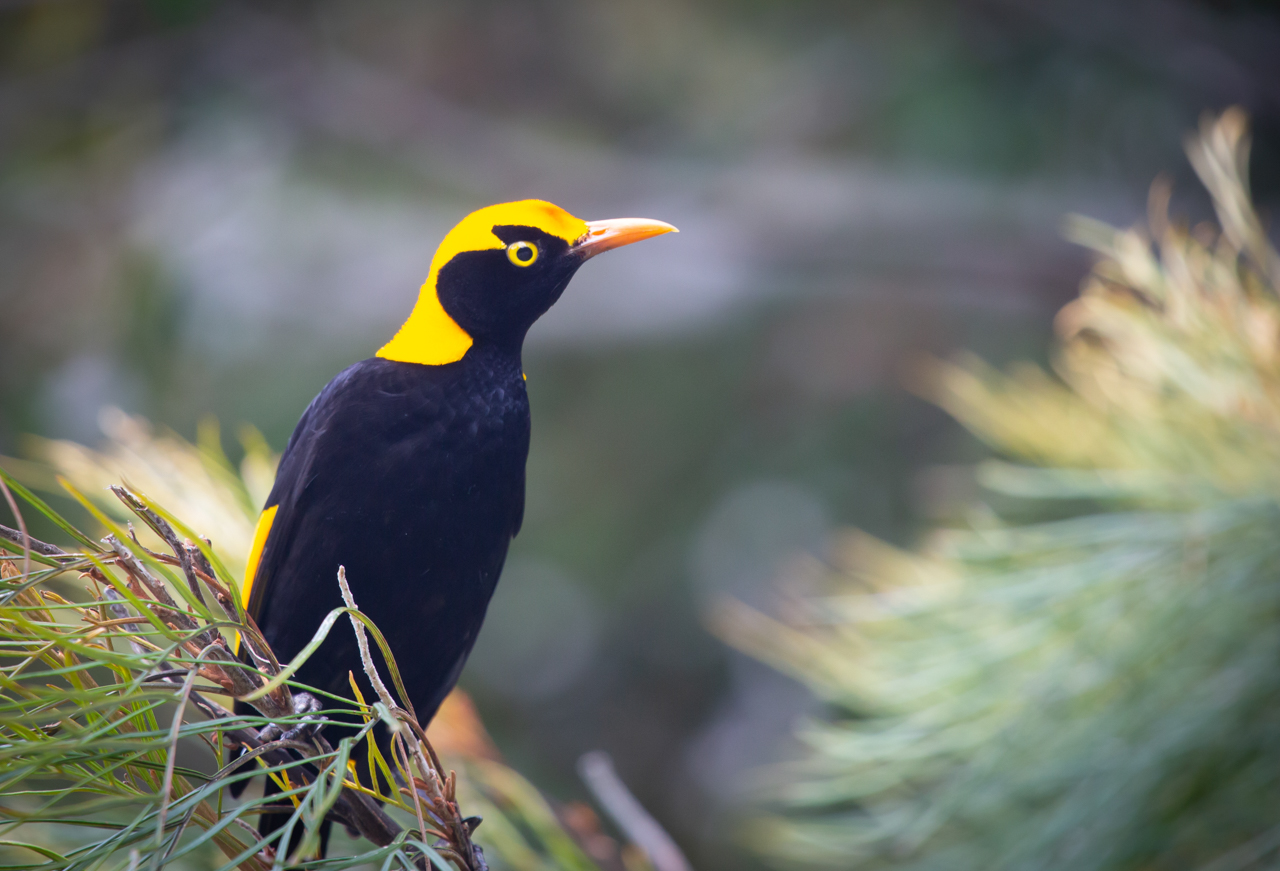
Regent Bowerbird © Maurice Hovens
When we had a little break away from the birds in order to be able to enjoy the O’Reilly’s facilities and gift shop, we received an unexpected call that an Albert’s Lyrebird had been spotted in close vicinity of the reception area. Everyone rushed to the spot and got incredible views of this magnificent bird.
Shortly afterwards we made our way to Duck Creek Road. Two Paradise Riflebirds were located within the canopy about one hundred metres from where we parked the car. Further along the road we managed to get another nice encounter with Rose Robin. We continued to try our luck with the Noisy Pitta; however, the bird remained frustratingly obscured from our views.
A bit further down the valley we tried our luck with the Red-browed Treecreeper, which turned out more obliging than the above-mentioned Pitta. Members of the supporting cast were a couple of Striated Thornbills, Gray Shrikethrush and a distant view of a Gray Goshawk. After this we decided to try one last time for the Pitta, yet no luck was had.
Day 11:
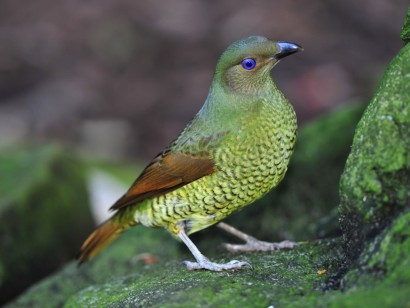
After a rainy night, we were greeted by another day of blue skies and went for an early morning walk to find a Noisy Pitta. Halfway through two Russet-tailed Thrushes were seen, along with Yellow-throated Scrubwren, Australian Logrunner, Australian Rufous Fantail and Satin Bowerbird. We had to return to the lodge for breakfast as our time at O’Reilly’s had come to an end. We then made our way back to Brisbane Airport for our flight to Sydney. After picking up the cars we checked in at our hotel and had an early dinner at a local Italian restaurant. A big day ahead of us with the much-anticipated trip with Sydney Pelagic.
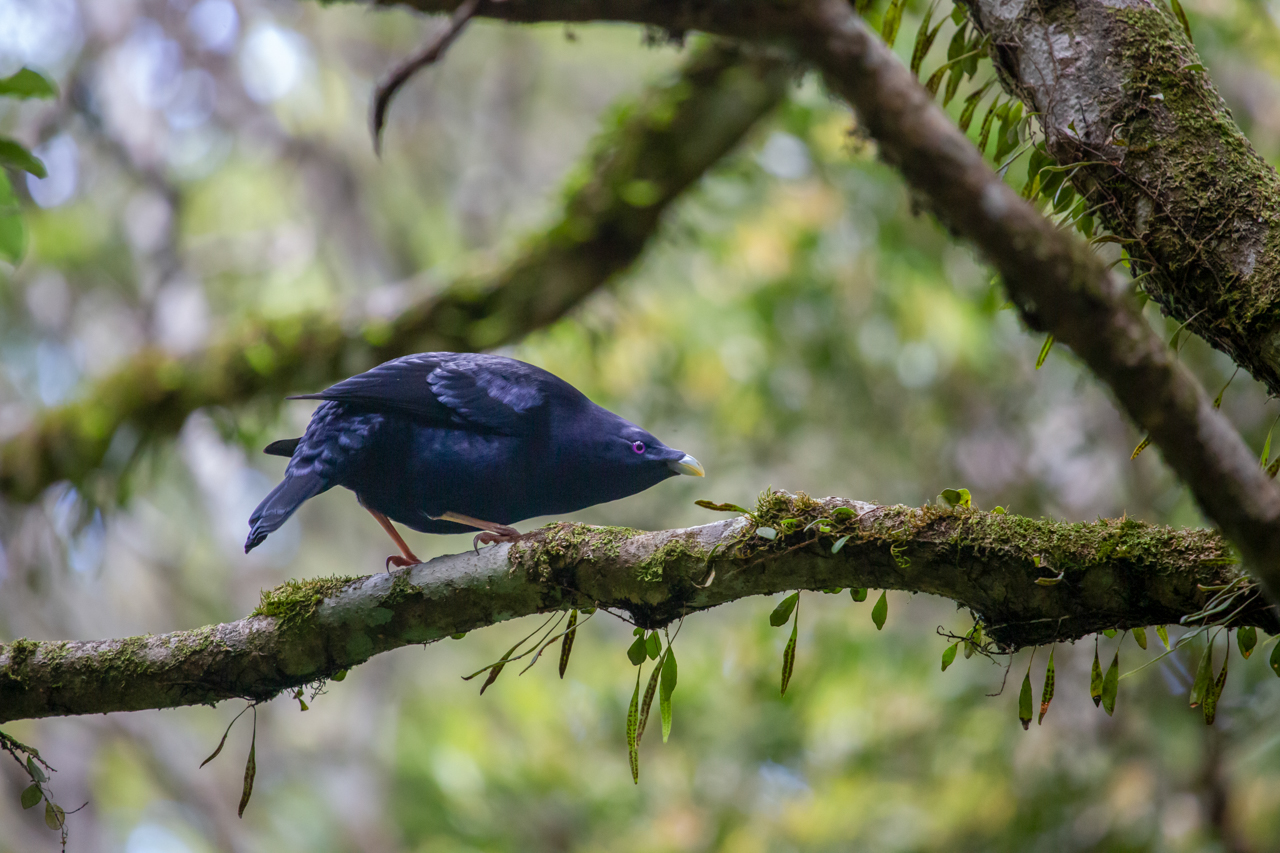
Satin Bowerbird © Maurice Hovens
Day 12:
Another early start as we made our way to Rose Bay Wharf. We had a quick coffee and some banana bread before we stepped on board and departed on our pelagic. The Silver Gulls escorted us out of the harbour and it didn’t take long for our first new bird of the trip, the Pied Cormorant. The further out we went the bigger the swell as we made our way out to the edge of the continental shelf. To everyone’s excitement a pod of Short-beaked Common Dolphins appeared and swam in every direction of the vessel. The seabirds typically appeared in bands, with Wedge-tailed Shearwaters being the first, soon to be followed by a couple of Black-browed Albatrosses. Once we arrived at the shelf we soon saw our first White-capped Albatross appearing on the horizon, and soon after that an unexpected appearance by an Antipodean Albatross.
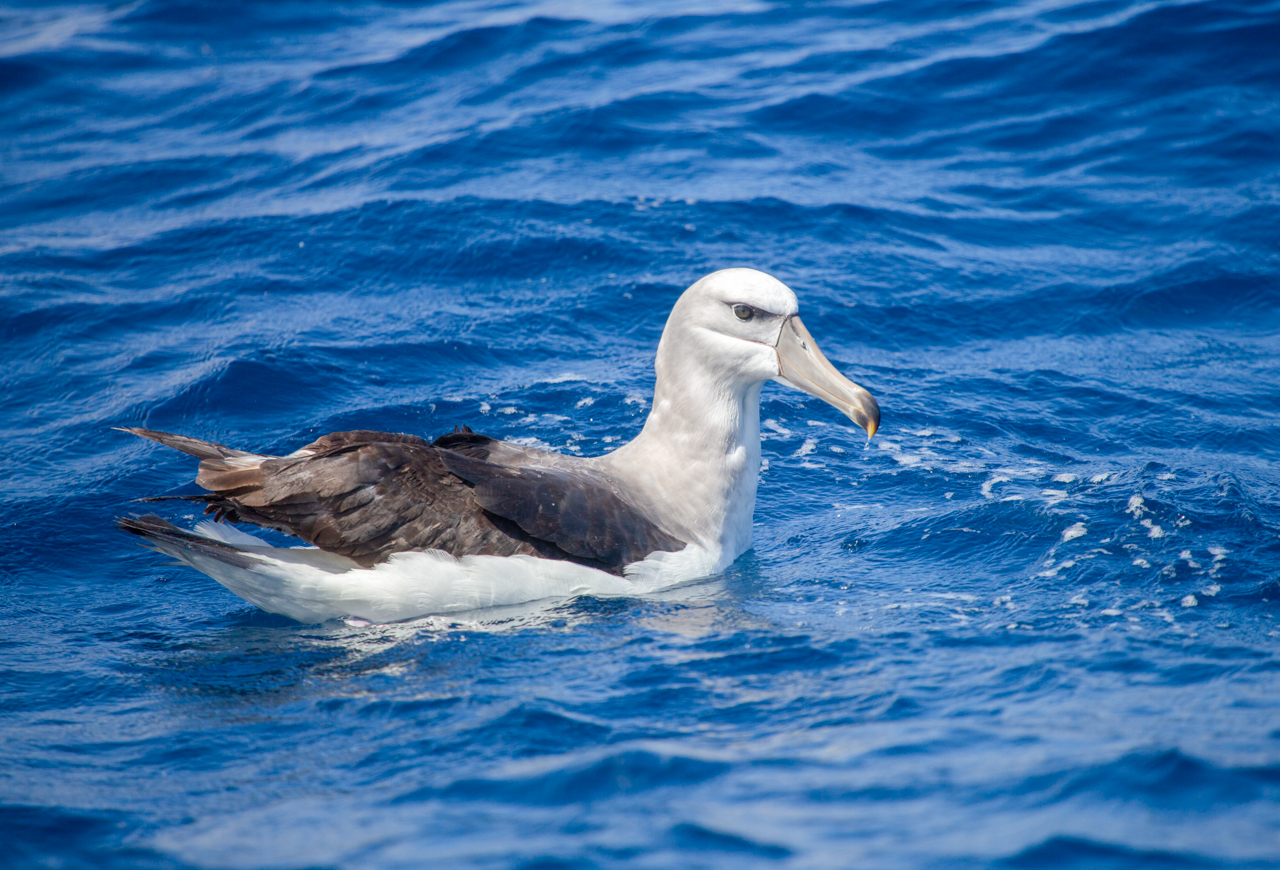
White-capped Albatross (Shy Albatross) © Maurice Hovens
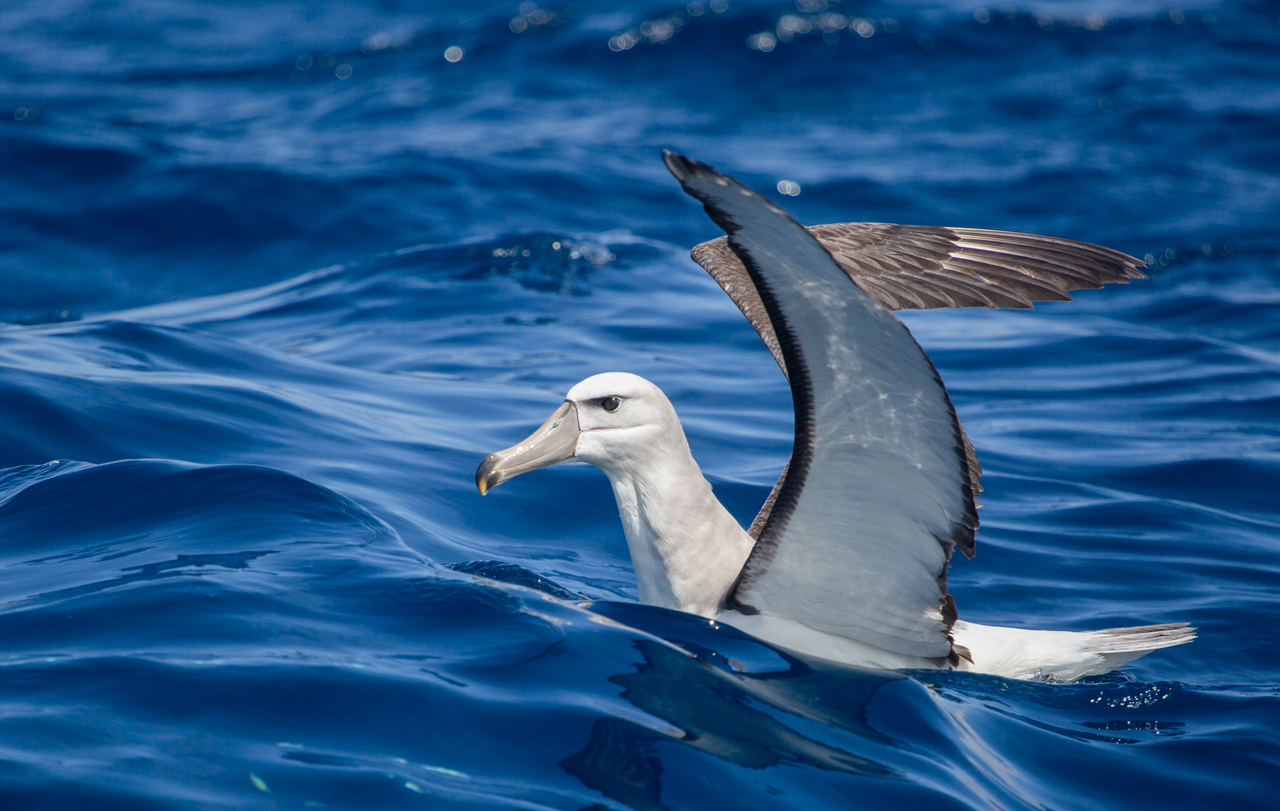
White-capped Albatross (Shy Albatross) © Maurice Hovens
As we were already impressed with the size of the first two albatrosses, the size of the latter left us speechless. It was quite a contrast with the smallest of the tube-nosed birds that flew around the boat, the Wilson’s Storm-Petrel. One last avian surprise of the day came in the form of a Gray-faced Petrel flying past.
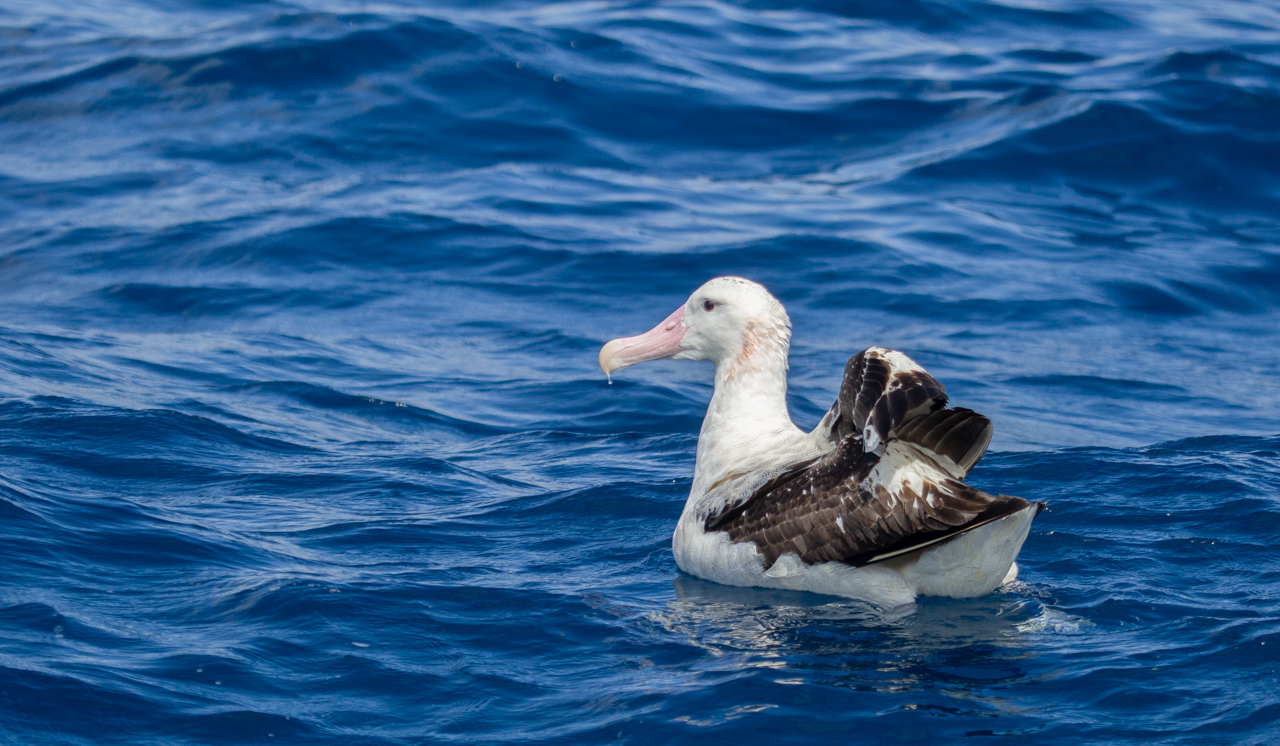
Antipodean Albatross (Wandering) © Maurice Hovens
After a few hours of drifting we made our way back towards Sydney. One last stop was made to observe a couple of New Zealand Fur Seals sunbaking on the cliffs at Sydney Heads. The omnipresent Welcome Swallows indicated that we would soon set our foot on land again, and after returning we drove back to the accommodation. We had an early dinner and early night after this big day at sea.
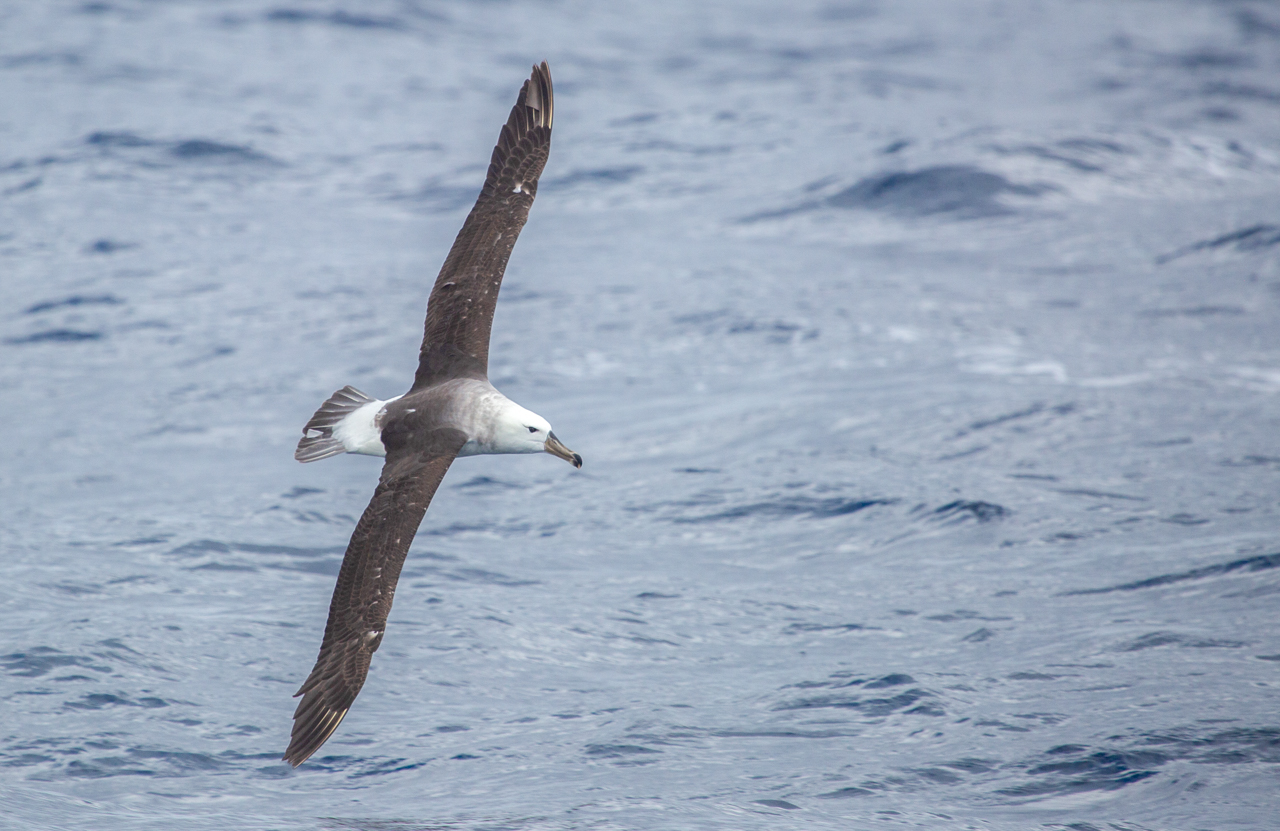
Black-browed Albatross © Maurice Hovens
Day 13:
Woke up to the sound of Sydney traffic and a beautiful sunny morning. We drove to Royal National Park where we were greeted by Pacific Black Duck with ducklings and a group of Maned Ducks. On our walk along Lady Carrington Drive we successfully tried for Yellow-tailed Black-Cockatoo, Little Wattlebird, Eastern Spinebill, Fan-tailed Cuckoo and Shining Bronze-Cuckoo, Brown Cuckoo-Dove, Satin Bowerbird and Superb Fairywren, males and females that stunned everyone.
We continued to Madden Plains where we had our first taste of birding in heathland. We were treated to a brief view of Southern Emuwren and Tawny-crowned Honeyeaters.
After lunch in Bulli we successfully looked for Sooty Oystercatcher while also finding Long-billed Corellas in the park nearby. Our last stop of the day at Lake Illawarra delivered many Black Swans, Pied Stilt, Pied Oystercatchers, Little Heron, White-faced Heron and Gray Butcherbird. After this long day, we checked in at our nice accommodation in Gerringong and had some authentic Thai food for dinner.
Day 14:
Early morning, we made our way to the Barren Grounds to try for some special birds. We walked the Griffith trail and kept our ears and eyes open; however, the first hour of the walk turned out to be extremely quiet. But as often happens in this kind of habitat luck came our way when an Eastern Bristlebird began calling. We had great views of this skulker when it crossed the track. On top of that we had a lovely sighting of a Short-beaked Echidna walking towards us, an Australian icon many were hoping to see. On our way back we encountered Fan-tailed Cuckoo and better views of a Southern Emuwren than the day before.
After that we headed down the mountain to Minnamurra Rainforest Centre to look for Superb Lyrebird, which we found near the second level carpark. We visited the centre to look at some interesting taxidermy mounts of Australian native animals that call this forest home, after which we started our long drive to the Blue Mountains.
We had lunch at a diner in Glenbrook before we visited a spot nearby to try for Rockwarbler. It didn’t take long before a few appeared on the rocks right in front of us. We further managed to get good views of White-eared Honeyeater as well as Leaden Flycatcher. With a long drive ahead of us we then travelled further west across the Dividing Range and arrived in Lithgow. Before checking in at the accommodation we stopped at the wastewater treatment plant. Blue-billed and Pink-eared Ducks, Hardhead and Hoary-headed Grebe were the highlights. A long day came to an end and we made for an early dinner with another big day ahead of us.
Day 15:
Another early start as we wanted to make the most of the day at Capertee Valley. Within an hour of leaving we had our first stop at Coco Creek where we had a brief glimpse of a single Turquoise Parrot, some Dusky Woodswallows, Sacred Kingfisher, White-plumed Honeyeater and two Eastern Shrike-tits.
At our next stop, we managed to get excellent views of Fuscous Honeyeater drinking from a roadside dam, as well as Brown Treecreeper and Restless Flycatcher. When we arrived at the campground we got overwhelmed by the diversity of Capertee’s birdlife. We added sightings of Yellow-tufted Honeyeater, White-winged Triller, Noisy Friarbird, Yellow-faced Honeyeater and Dusky Woodswallow to our list, but the real highlight happened a little further on when we saw the rare and critically endangered Regent Honeyeaters feeding on the nectar of a flowering ironbark. Some said this might be the bird of the trip. Sightings of Musk Lorikeet and Jacky-winter sealed this sweet deal.
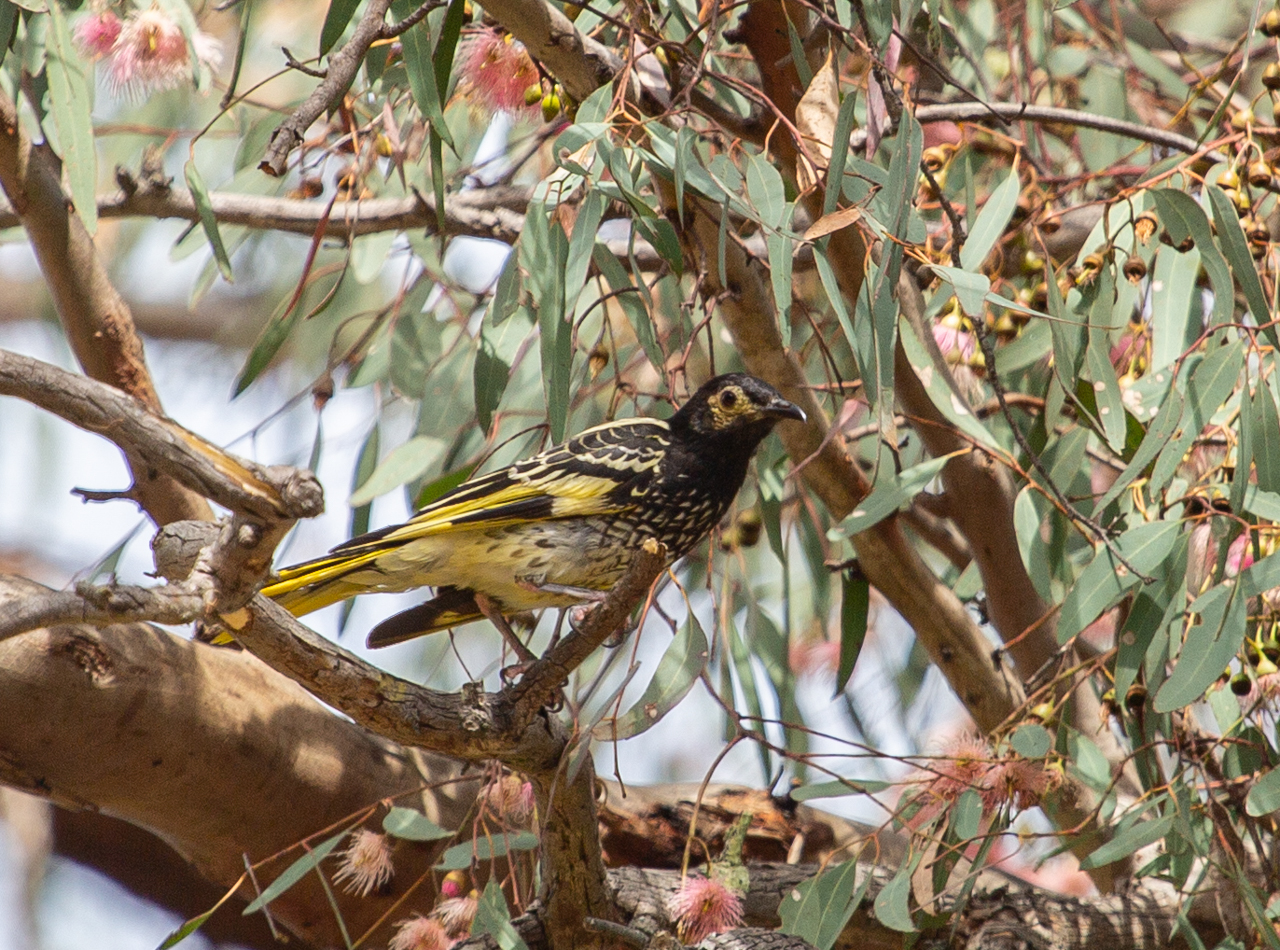
Regent Honeyeater © Maurice Hovens
While we were having a Mexican-style lunch, we got word of some Gang-gang Cockatoos nearby, which we managed to see inspecting a potential nesting hollow in a tall gum tree. It seemed luck was on our side this afternoon.
On our way back we made several short stops and were rewarded with Plum-headed Finch, Red-rumped Parrot and White-throated Gerygone before we stopped at Lake Wallace to look at Musk Duck and some nice Great Crested Grebes. The day ended with a penultimate dinner at our lodge.
Day 16:
Today marked our last full day of the trip, and to make the most out of it we rose early. Stepping out of our rooms we were met by rather cold weather with frost on our windscreens! First stop of the day was the Lithgow Blast Furnace where we were trying for Flame Robin. The Robin unfortunately didn’t make an appearance; however, we had good looks at a trio of Eastern Rosellas and a Striated Pardalote.
After this brief stop we stopped at Mount Victoria Cemetery. At this spot, we saw a beautiful male and female Scarlet Robin, fast-fluttering Varied Sittella, a bunch of Brown-headed Honeyeaters and an unexpected Satin Flycatcher.
After these rather cold stops we then went to Evans Lookout, where the iconic Blue Mountains showed themselves in full glory. This stop was not as much about birding but all about the splendid scenery. Having seen a coffee van from the corner of our eyes on the way in, we decided to get some hot drinks to warm ourselves up.
Further down the Great Western Highway we made another stop at Chester Road Firetrail to scan the heathland for New Holland Honeyeater and Glossy Black-Cockatoo. We succeeded in finding the first, but the Glossies turned out to be as elusive as ever.
Before we said goodbye to the Blue Mountains we had another great lunch at the diner. We headed back to Sydney for our very last stop of the trip, the Botanic Gardens. Here we enjoyed a great view of a family of Powerful Owls, Australia’s largest flying night predator. What a way to end an amazing journey!
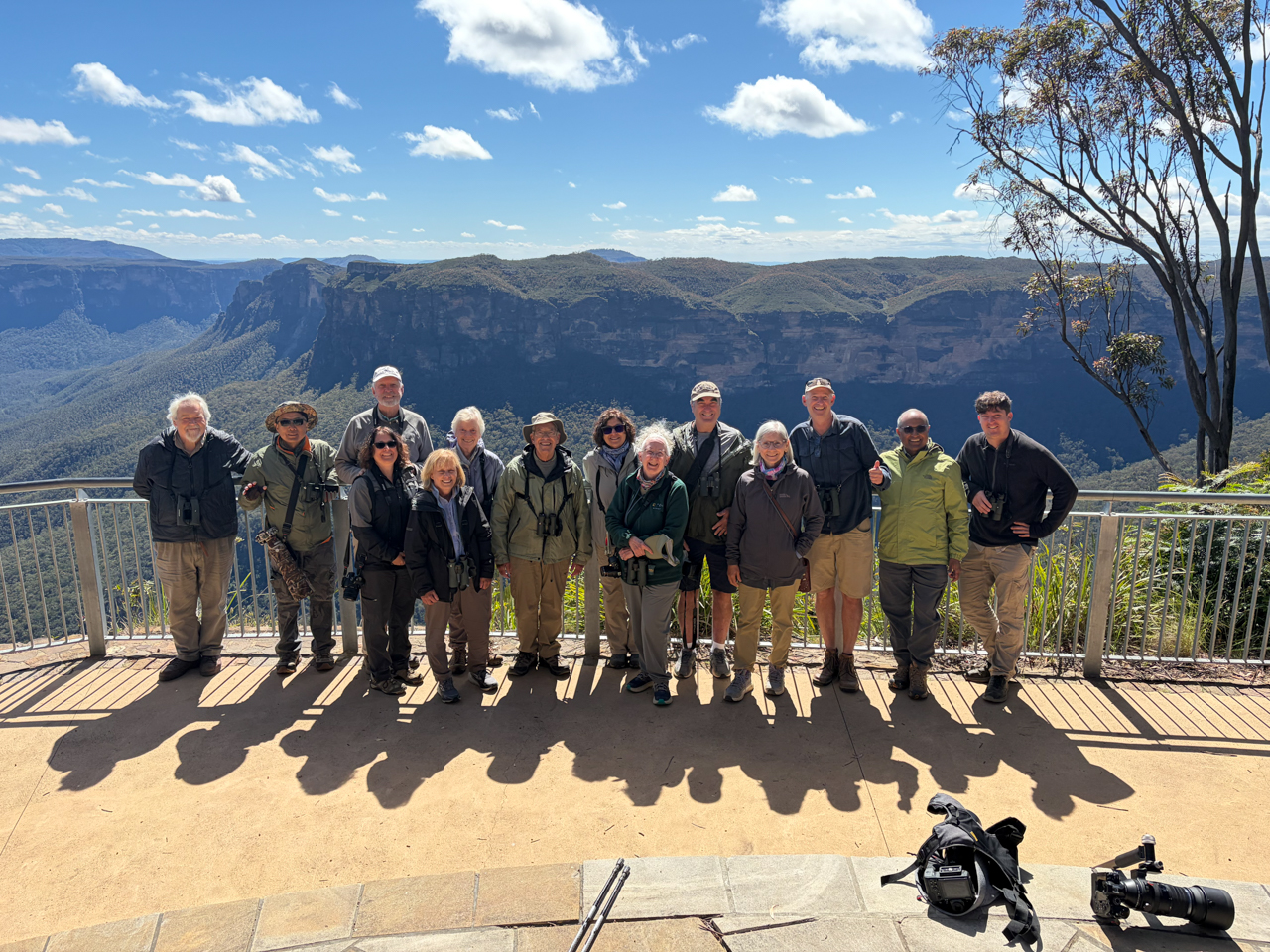
A great group of birders at Evans Lookout Blue Mountains

Leave a Reply