Costa Rica Birding Trip Report (Feb 15- Mar 3, 2026)
Day 1 – Hotel Bougainvillea
We gathered in the lobby of our Hotel in the afternoon for our first birding walk around the hotel’s beautiful gardens full of local art and spectacular plants. The sky was already overcast, with dark clouds hinting at rain from the start. During our walk we enjoyed a nice introduction to some of the common birds of Costa Rica’s Central Valley, including Red-billed Pigeon, Clay-colored Thrush (Costa Rica’s national bird), Cinnamon-bellied Saltator, Lesson’s Motmot, Montezuma Oropendola, Hoffmann’s Woodpecker, Boat-billed Flycatcher, and several others. One particularly exciting find was a Mottled Owl quietly roosting deep within the giant bamboo stands.
The cloudy skies soon filled with dozens of swifts, entertaining us for several minutes. We recorded four species: Vaux’s Swift, White-collared Swift, Chestnut-collared Swift, and even the uncommon Spot-fronted Swift. It was the perfect prelude to several brief but heavy rain showers that followed shortly afterward.
That evening we held our welcome briefing followed by dinner. Afterward, we spent a few minutes exploring the gardens at night, where we found a Golden-eyed Leaf Frog (a Costa Rican endemic!) and Leopard Frogs, as well as several Bromeliad Spiders.
Day 2 – Central Pacific
Before dawn we met our driver Jaime and departed from the Western Central Valley toward the Central Pacific coast. Along the way we watched the sunrise and observed the vegetation gradually change as we descended toward the coast: from coffee plantations to mangroves and coastal wetlands.
We arrived in Caldera where we enjoyed a picnic breakfast accompanied by an excellent selection of birds including Northern Scrub Flycatcher, Brown-crested Flycatcher, Mangrove Warbler, Rufous-backed Wren, Streak-backed Oriole, a female Hook-billed Kite, Prothonotary Warbler, and six species of hummingbirds, highlighted by the endemic and threatened Mangrove Hummingbird. We also observed our first primate of the tour: a troop of White-faced Capuchin Monkeys.

Hook-billed Kite © Jose Pablo Castillo
Later in the morning we explored the shoreline where we encountered coastal species such as Brown Pelican, Magnificent Frigatebird, Willet, Hudsonian Whimbrel, Laughing Gull, and Mangrove Swallow.
After an excellent lunch at a local restaurant we continued birding during the afternoon, adding Nutting’s Flycatcher, Gray-crowned Yellowthroat, Stripe-headed Sparrow, Common Squirrel Cuckoo, and Streak-headed Woodcreeper. The highlights of the afternoon were fantastic views of two Scarlet Macaw nesting in natural cavities of two big native trees. We finished the day enjoying prolonged views of Laughing Falcon and Black-headed Trogon perched right in front of us while a troop of Mantled Howler Monkeys relaxed in the trees nearby.

Scarlet Macaw © Jose Pablo Castillo

Laughing Falcon © Jose Pablo Castillo
Day 3 – Carara National Park & Tárcoles River
We started the day birding before breakfast at the hotel. This early session produced several new species for the trip including Gartered Trogon, Dusky Antbird, Orange-billed Sparrow, Chestnut-backed Antbird, Blue-throated Goldentail, Greenish Elaenia, and Great Crested Flycatcher.
Later we headed to beautiful Carara National Park. This park sits at a biological transition between Costa Rica’s dry northwest forests and the humid southern Pacific forests, resulting in exceptional biodiversity. We spent the entire morning birding the trails and enjoyed excellent views of species such as Eye-ringed Flatbill, Yellow-olive Flatbill, Northen Plain Xenops, Rufous-tailed Jacamar, Ruddy-tailed Flycatcher, Dot-winged Antwren, White-shouldered Tanager, White-whiskered Puffbird, Black-hooded Antshrike, and Graceful Black-throated Trogon. One of the stars of the morning was a stunning Tropical Royal Flycatcher.
During the afternoon we took a boat tour along the Tárcoles River, where we recorded a long and varied list of birds including Double-striped Thick-knee, Bare-throated Tiger Heron, Reddish Egret, Tricolored Heron, Roseate Spoonbill, Black-bellied Plover, Semipalmated Plover, Royal Tern, Brown Pelican, Osprey, Green Kingfisher, Plumbeous Kite, Bat Falcon, Lineated Woodpecker, Yellow-naped Amazon, Scarlet Macaw, Scissor-tailed Flycatcher, Northern Tropical Pewee, Mangrove Warbler, Northern Waterthrush, and many more.

Happy birders enjoying the Tarcoles River
We also observed a family of Crab-eating Raccoons and several Proboscis Bats hanging beneath a tree trunk along the riverbank.
We ended the day watching a spectacular sunset over the distant mountains of the Nicoya Peninsula while Lesser Nighthawks flew low over the river in the fading light.
Day 4 – From Carara to the Osa Peninsula
Today was primarily a travel day toward the spectacular Osa Peninsula, but we still found time for birding. We spent part of the morning birding around the hotel where we observed White-whiskered Puffbird, Chestnut-backed Antbird, Lesson’s Motmot, and several others.
Later we stopped at a scenic Pacific overlook where we spotted Gray-headed Chachalaca, Dusky-capped Flycatcher, Scarlet Macaw, and two impressive Zone-tailed Hawks soaring overhead.
Road construction caused some delays during the drive south, but the slowdown rewarded us with a wonderful surprise: an active Reddish Egret feeding along a nearby beach.

Reddish Egret © Jose Pablo Castillo
As we continued south the views of Costa Rica’s rugged Pacific coastline and the beautiful Golfo Dulce became increasingly spectacular.
Upon arriving at our lodge we were greeted by Red-breasted Meadowlark, Gray-cowled Wood-Rail, Scarlet-rumped Tanager, Charming Hummingbird, and several Central American Squirrel Monkeys heading toward their evening roosts. A lively chorus of birds filled the air, highlighted by the loud calls of Yellow-throated Toucans.
Day 5 – Danta Lodge and surroundings
We met before sunrise and walked to the observation tower, accompanied by a rich dawn chorus of woodcreepers, tinamous, toucans, trogons, and many other birds.
The morning was filled with incredible encounters including Fiery-billed Aracari, Golden-naped Woodpecker, Golden-hooded Tanager, Long-billed Starthroat, Blue Dacnis, Turquoise Cotinga, White Hawk, Piratic Flycatcher, Scarlet Macaw, Crimson-fronted Parakeet, Brown-hooded Parrot, White-crowned Parrot, Red-lored Amazon and Mealy Amazon. Many of them perched just a few meters away!
Later in the morning we explored the lodge trails, discussing tropical forest ecology and plant diversity while adding more birds such as Rufous Mourner, Golden-crowned Spadebill, Gray-chested Dove, roosting Black-and-white Owls, Double-toothed Kite, Graceful Black-throated Trogon, and Wedge-billed Woodcreeper.

Double-toothed Kite © Jose Pablo Castillo
In the afternoon we visited several nearby sites including the famous Rincón River. Here we enjoyed thrilling views of the endangered and near-endemic Yellow-billed Cotinga.
We ended the day with fantastic views of both a male and female White-crested Coquette feeding in a Porterweed garden along with Charming Hummingbird, Blue-throated Goldentail and (not a bird!) many Hummingbird Moths!

Female White-crested Coquette © Jose Pablo Castillo
Day 6 – La Gamba
We began the morning with excellent views of a Bright-rumped Attila and a pair of Gray-headed Kites high in the canopy, being persistently mobbed by hummingbirds and White-browed Gnatcatchers. An entertaining start to the day!
After breakfast we headed toward La Gamba road and the area surrounding Esquinas Lodge. This region lies within the Golfo Dulce forest reserve and on the buffer zone of the Piedras Blancas National Park.
Bird activity was steady throughout the morning and we added several new species to the trip list, including Scrub Greenlet, Sapphire-throated Hummingbird, Riverside Wren, Black-striped Sparrow, Rufous-tailed Jacamar, Band-tailed Barbthroat, Ochre-bellied Flycatcher, Ruddy Quail-Dove, Spot-crowned Euphonia, Thick-billed Euphonia, Swallow-tailed Kite and Gray-lined Hawk.
Day 7 – From the Osa Peninsula to San Gerardo de Dota
Our day began before sunrise as we walked toward the lodge’s observation tower, enjoying the beautiful dawn chorus echoing through the forest. Our first bird of the day was a Piping Long-tailed Woodcreeper soon followed by dozens of spectacular species visible from the tower, including Baird’s Trogon, White-necked Jacobin and Gray-headed Kite.
Down in the darker understory we observed Ruddy Quail-Dove, Black-faced Antthrush, Chestnut-backed Antbird, and Orange-billed Sparrow, while the sharp snapping sounds of Orange-collared Manakins echoed from deep within the forest.
After saying goodbye to the friendly staff at the Lodge, we began our journey toward the mountains of the Talamanca Range. On the way we stopped for lunch at a restaurant near San Isidro de El General, enjoying wonderful views of the surrounding valley and mountains. After finishing our meal, a variety of birds appeared in the nearby vegetation, allowing us to observe species such as Southern Beardless Tyrannulet, Yellow-crowned Euphonia, Mistletoe Tyrannulet, Summer Tanager, Baltimore Oriole and several others.
As we continued climbing into the highlands, we admired the dramatic change in vegetation that characterizes Costa Rica’s different elevation zones, from tropical lowland rainforest to cool montane oak forests.
Before arriving at our hotel, we made some birding stops along the way, where we observed Sooty-capped Chlorospingus, Flame-throated Warbler, Black-cheeked Warbler, Sooty Thrush, Black Guan, Mountain Elaenia, Spot-crowned Woodcreeper, and other highland specialties.
Day 8 – Birding the Talamanca Highlands
During the morning we explored the oak forests surrounding the beautiful Savegre River in the Talamanca Mountains. These highland forests are known to host a unique assemblage of endemic birds.
Bird activity was excellent and we observed several regional specialties including Spangle-cheeked Tanager, Fasciated Tiger-Heron, Ruddy Treerunner, Northern Emerald Toucanet (Blue-throated), Sulphur-winged Parakeet, Common Chlorospingus, Long-tailed Silky-Flycatcher, Ochraceous Wren, Gray-breasted Wood-Wren, Ruddy-capped Nightingale-Thrush, Scintillant Hummingbird, Collared Redstart, Black-throated Green-Warbler, Louisiana Waterthrush, Yellow-winged Vireo, Brown-capped Vireo, Philadelphia Vireo and Yellow-thighed Brushfinch.
At lunch we enjoyed delicious homemade food while admiring the many birds visiting the feeders at the café. Species included Large-footed Finch, Acorn Woodpecker, Flame-colored Tanager, Mountain Thrush, Sooty Thrush, Slaty Flowerpiercer, White-throated Mountain-gem, Talamanca Hummingbird, Lesser Violetear, Fiery-throated Hummingbird, and the tiny Volcano Hummingbird.
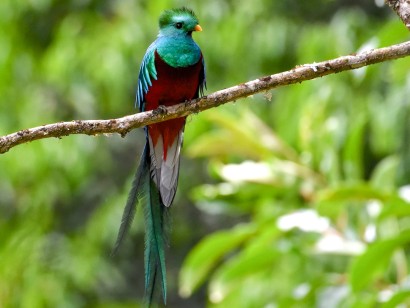
The afternoon was reserved for a very special bird: the mythical Resplendent Quetzal. Visiting a nearby farm, we were fortunate to observe a pair actively working on its nest, calling and perching for an extended period of time. Perfect oportunity for lots of pictures and to share vast information about its natural history. At this same place we enjoyed a small mixed-species flock, adding Black-capped Flycatcher, Olive-streaked Flycatcher.

Resplendent Quetzal © Jose Pablo Castillo

Resplendent Quetzal © Jose Pablo Castillo
We ended the afternoon at Paraíso Quetzal where we enjoyed memorable encounters with birds like Golden-browed Chlorophonia, Black-thighed Grosbeak, Black-billed Nightingale-Thrush, Black-and-yellow Silky-Flycatcher, and several others.
Back at the hotel we spotted an American Dipper along the river before heading to bed, grateful for such a remarkable day.
Day 9 – From the Highlands to Paraíso de Cartago
Before breakfast we enjoyed of our final morning in the highlands birding the gardens of the Hotel. Here we had the opportunity to observe Sulphur-winged Parakeets through the scope, and we also added Stripe-tailed Hummingbird to our already impressive hummingbird list.
After breakfast we began our journey toward the cantón of Paraíso de Cartago, making an important stop at the páramo of Cerro Buena Vista. After an intensive search we were rewarded with excellent views of the range restricted Volcano Junco, as well as the tiny and charismatic Timberline Wren. These two species strongly associated with Costa Rica’s high-elevation páramo habitat. The clear morning also provided spectacular views of “Los Crestones del Cerro Chirripó,” the dramatic rock formations near the summit of Cerro Chirripó, the highest peak in Costa Rica at 3,821 meters (12,536 ft).
After our visit to the páramo we continued toward Paraíso de Cartago. There we made a stop in the town park to see the statue of the “Pinzón Costarricense,” the local name for the endemic Cabanis’s Ground-Sparrow, which is considered the symbol bird of the canton. While in the park we also found a Tropical Screech-Owl roosting quietly and several noisy Crimson-fronted Parakeets flying overhead.
Around midday we arrived just in time for a delicious homemade lunch, followed by an informative and engaging coffee tour where we learned about sustainable coffee production and its relationship with biodiversity. Remarkably, this small farm—covering just about 11 hectares—has recorded over 300 bird species, making it an outstanding example of how organic, shade-grown coffee can support wildlife. Even during the tour we observed several birds, including Stripe-throated Hermit, Tropical Parula.
After the tour we spent the afternoon exploring the beautiful Ujarrás Valley. Here we were fortunate to add a pair of the elusive and endemic Cabanis’s Ground-Sparrow to our list, watching them quietly foraging in the leaf litter of a coffee plantation.
By late afternoon we arrived at the beautiful Hotel, where rain dominated much of the evening, providing the perfect atmosphere to relax and enjoy a delicious dinner after another rewarding day in the field.
Day 10 – Quelitales and the Caribbean Lowlands
We met early to enjoy our only morning birding at the beautiful hotel grounds. Despite persistent rain, the morning produced several wonderful encounters with special birds. Our first sightings of the day were Black and Crested Guans feeding on the fruits of a wild avocado tree. At one of the hotel feeders we enjoyed prolonged views of several regional specialties, including Chestnut-capped Brushfinch, White-eared Ground-Sparrow, and Sooty-faced Finch.
A brief mixed flock passed through the forest edge, allowing us to record White-winged Tanager, Golden-winged Warbler, Tawny-capped Euphonia, and Golden-bellied Flycatcher. Meanwhile, hummingbirds visited the feeders just a few feet in front of us, including Green-crowned Brilliant, Violet Sabrewing, Green Hermit, and Stripe-tailed Hummingbird.
The rain intensified toward the end of the session, but just before returning for breakfast we enjoyed a memorable sight: a pair of Sunbitterns slowly crossing the entrance road to the hotel.
After a delicious breakfast we began our descent toward the Caribbean lowlands of Costa Rica. By mid-morning we arrived at Rincón Verde, a small family-run property near the beautiful Dos Novillos River. There we were warmly welcomed by the local family and helped us to observe an active nest of the magnificent Ornate Hawk-Eagle. From a respectful distance, we watched the adult female as well as her single chick, just over one month old. This beautiful raptor is one of the top predators of Neotropical forests. We also enjoyed a delicious homemade Costa Rican lunch during our visit while watching Olive-backed Euphonias, Black-cowled Orioles, Masked Tityras and even a Tropical Royal Flycatcher!
After this truly special experience, we continued to La Hoja Garden, where we visited their amazing bird feeders. Dozens of birds gathered in front of us, including Red-legged, Shining, and Green Honeycreepers, as well as three species of toucans: Collared Aracari, Keel-billed Toucan, and Yellow-throated Toucan. Other highlights included Black-cheeked Woodpecker, Hoffmann’s Woodpecker, Orange-chinned Parakeet, White-lined Tanager, White-necked Jacobin, Green-breasted Mango, Russet-naped Wood-Rail and Chestnut-headed Oropendola.

Keel-billed Toucan © Jose Pablo Castillo
By late afternoon we arrived at our next Lodge in Sarapiquí, enjoying wonderful views of Red-eyed Leaf Frogs during a short night walk after dinner.
Day 11 – La Selva Biological Station
Rainy and wind dominated the day, reducing bird activity during our morning visit to La Selva Biological Station. Nevertheless, the group’s excellent attitude ensured we still had a very enjoyable and educational morning.
La Selva is one of the most important tropical research stations in the world, managed by the Organization for Tropical Studies. The station protects more than 1,600 hectares of primary and secondary rainforest and has been the site of hundreds of scientific studies on tropical ecology and biodiversity.
Despite the challenging weather we observed several interesting species including Black-faced Grosbeak, Plain-colored Tanager, Crimson-collared Tanager, Broad-billed Motmot, Broad-winged Hawk, Blue-chested Hummingbird, Crested Guan, Green Ibis, and Scaled Pigeon.
After lunch we drove into the mountains of the Central Volcanic Range and visited the famous feeders at Soda y Mirador Cinchona. These feeders offered excellent views of Summer Tanager, Baltimore Oriole, Common Chlorospingus, Silver-throated Tanager, Red-legged Honeycreeper, Violet Sabrewing, and the spectacular Red-headed Barbet.
We also did some roadside birding in the area, finding Yellow-bellied Elaenia, Bay-headed Tanager, Blackburnian Warbler, White-fronted Tyrannulet, Black-and-yellow Tanager, Louisiana Waterthrush, American Dipper, Green Kingfisher, and several other species.
Day 12 – Sarapiquí to Caño Negro
Before breakfast we birded the gardens of La Quinta, where we observed Red-throated Ant-Tanager, Crimson-collared Tanager, Scaly-breasted Hummingbird, White-collared Manakin, and Black-cowled Oriole. We also enjoyed excellent views of Ovenbird and Fasciated Antshrike.
After breakfast we headed toward Puerto Viejo de Sarapiquí. As the weather improved dramatically, we began noticing hundreds of Turkey Vultures rising into the sky in circular flights as thermals formed in the warming morning air. Within minutes the numbers increased dramatically, and when we stopped along the roadside we witnessed thousands of individuals migrating north!
It was a spectacular sight that drew the attention of many people—even non-birders—who stopped to look at the sky filled with swirling vultures. Among them we also spotted Swainson’s Hawks and Broad-winged Hawks joining the migration. Our stop in Sarapiquí also produced Striped Cuckoo, Bat Falcon, and King Vulture, as well as Scarlet Macaws and a distant pair of Great Green Macaws.

Raptor migration in Sarapiqui © Jose Pablo Castillo
Continuing toward Caño Negro, we encountered a Three-toed Sloth resting in a Cecropia tree beside the road while enjoying the rural landscapes along the way. Around midday we stopped for lunch at a small local restaurant where we enjoyed delicious traditional Costa Rican food while observing a Two-toed Sloth with a newborn baby.

Two-fingered Sloth © Jose Pablo Castillo
In the afternoon we explored the wetlands of Medio Queso, near the town of Los Chiles close to the Nicaraguan border. This wetland complex is an important habitat for hundreds of species. Here we observed several regional specialties including Lesser Yellow-headed Vulture, Nicaraguan Grackle, Black-collared Hawk, Pinnated Bittern, Purple Gallinule, Snail Kite, and Ruddy-breasted Seedeater.

Pinneated Bittern © Jose Pablo Castillo

Lesser Yellow-headed Vulture © Jose Pablo Castillo
Before reaching our hotel we encountered even more local specialties, including a family of Nicaraguan Seed-Finches with a fledgling being fed by its father, as well as an Olive-throated Parakeet nesting inside an abandoned termite mound.

Nicaraguan Seed-Finch © Jose Pablo Castillo
Upon arriving at the hotel we watched several Central American Spider Monkeys moving gracefully through the treetops.
That night we explored the surroundings of the lodge and found several White-tailed Deer and a Common Opossum, bringing another wonderful day of wildlife encounters to a close.
Day 13 – Caño Negro National Wildlife Refuge
We started early and headed toward the wetlands of Caño Negro. Our first bird of the day was the tiny Spot-breasted Wren singing its heart out from a living-fence near the hotel.
At the dock we met our local guide Renato and began exploring this remarkable wetland system. Caño Negro is one of the most important freshwater wetlands in Central America, supporting large populations of both resident and migratory waterbirds.
During our boat tour we observed Black-bellied Whistling-duck, Wood Stork, Green Ibis, Russet-naped Wood-Rail, Northern Beardless Tyrannulet, Yellow Tyrannulet, four species of kingfishers including the beautiful American Pygmy Kingfisher, Pied Puffbird, Tropical Royal Flycatcher, Olivaceous Piculet, Sungrebe, Nicaraguan Grackle, Black-collared Hawk, Gray-headed Dove, and Barred Antshrike.

American Pygmy Kingfisher © Jose Pablo Castillo

Sungrebe © Jose Pablo Castillo

Boat-billed Heron © Jose Pablo Castillo
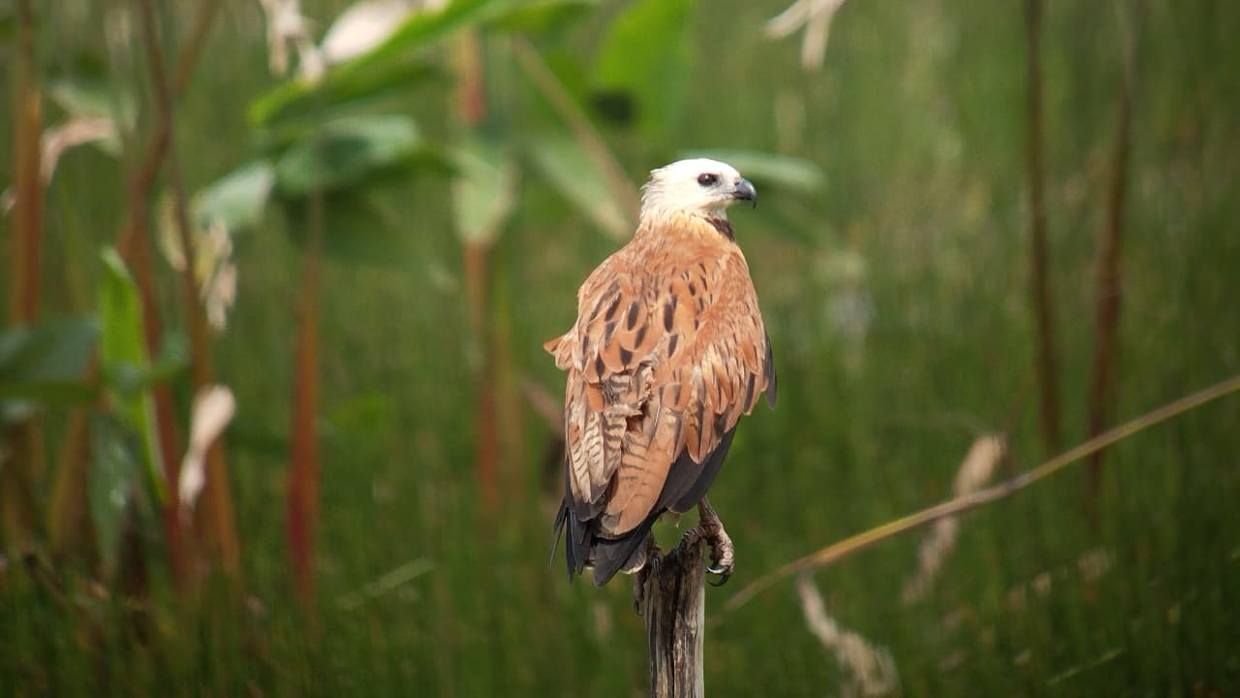
Black-collared Hawk © Jose Pablo Castillo
One of the highlights was observing two Tayras actively foraging high in an emergent tree—an excellent opportunity to study and photograph this normally elusive mammal.
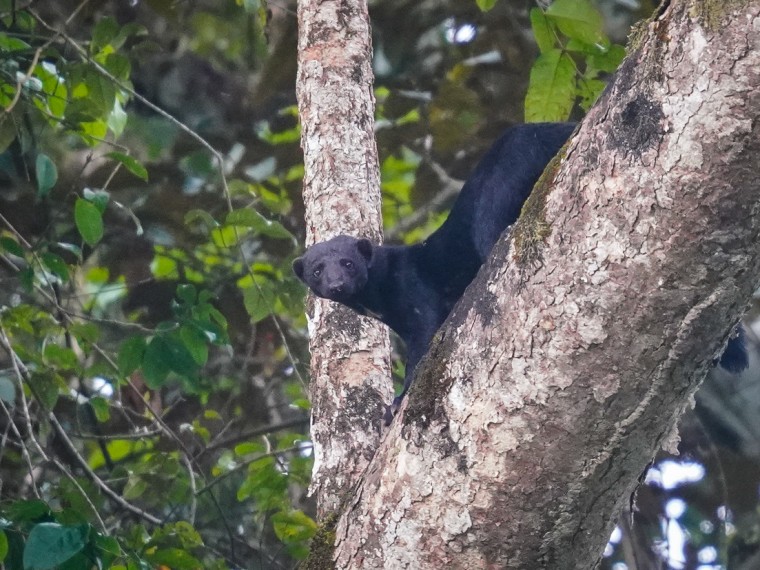
Tayra © Jose Pablo Castillo
We also saw three monkey species, Emerald Basilisk lizards, Spectacled Caimans, and numerous wonderful butterflies and dragonflies.
After returning to the hotel, we enjoyed a hearty late-morning breakfast and spent a few minutes exploring the gardens. There we added an American Redstart to our trip list, which had joined a small mixed flock of Lesser Greenlets, Black-and-white Warblers, and other songbirds that were actively mobbing what appeared to be a small snake tangled among the vines of a tree.
We then spent the rest of the day traveling toward the beautiful Arenal region, where we would stay for the next three nights at Arenal. Along the way we stopped at the famous “Iguana Bridge” to take photos and observe these impressive reptiles up close. During our stop we also spotted a Smoky-brown Woodpecker busily searching for insects in a decaying tree branch.
Days 14 & 15 – Arenal
We spent two full days exploring the extensive birding areas around the Lodge. We observed birds at the lodge feeders, gardens, and trail system, and also explored nearby roads and forest edges to maximize our chances of adding new species to the trip list.
Our mornings usually began near the fruit feeders, where the impressive Great Curassow and Crested Guan were often the first birds to appear, feeding alongside the slightly smaller—but equally striking—Montezuma Oropendolas. Soon afterward a variety of colorful species would arrive, including Emerald Tanager, Green Honeycreeper, Hepatic Tanager, and several others.
From there we moved on to the lodge gardens and forest trails, where we encountered additional species such as a Rufous Motmot quietly perched among forest vines and a pair of Brown-hooded Parrots preening high atop a dead tree. Several canopy mixed flocks also passed through, including Scarlet-thighed Dacnis, Olive-streaked Flycatcher, Golden-browed Chlorophonia, Rufous-winged Tanager, Long-billed Gnatwren, White-shouldered Tanager, and Cinnamon Becard.
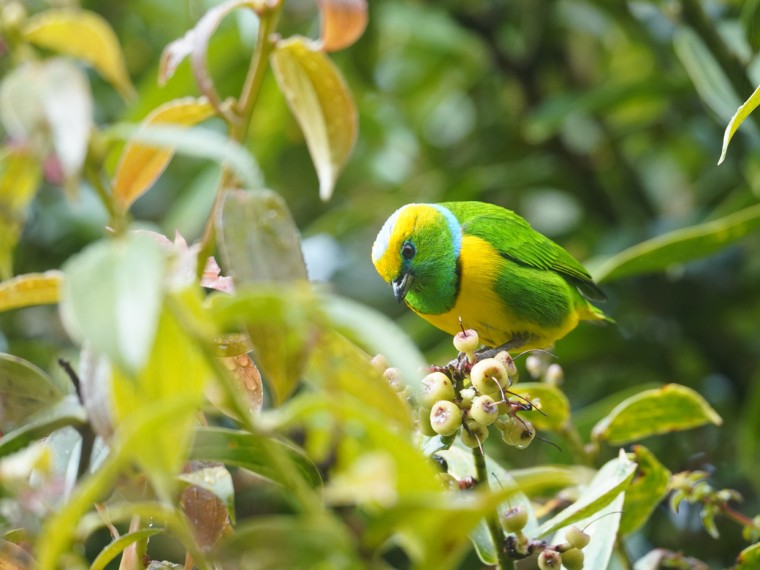
Male Golden-browed Chlorophonia © Jose Pablo Castillo
The trails around the lodge proved especially productive. We enjoyed repeated views of Spotted Antbirds foraging along the forest edge, and the beautiful songs of Nightingale Wren, Thicket Antpitta, and Song Wren brought smiles to the group on multiple occasions. As is typical in tropical forests, there were stretches of time when bird activity seemed almost nonexistent and we heard only distant calls. However, multiple times we were suddenly surrounded by active mixed flocks moving through the forest, providing exciting views of species such as Russet Antshrike, White-throated Shrike-Tanager, Western Woodhaunter, Scale-crested Pygmy-Tyrant, Slaty Antwren, Streak-crowned Antvireo, Golden-crowned Warbler, Spotted Woodcreeper, Slaty-capped Flycatcher, Canada Warbler, Northern Plain Xenops, and even a Sharpbill that briefly appeared before vanishing into the vegetation.
We also added a mammal to our list when a Northern Tamandua was seen searching the branches for termites.
During both lunch breaks we were treated to an unexpected spectacle: a juvenile Ornate Hawk-Eagle appeared at the lodge feeders attempting to hunt some of the medium-sized birds gathering there. These encounters provided incredible views of this magnificent raptor and offered a fascinating glimpse into the hunting behavior of a young top predator. Quite simply, it was sensational.
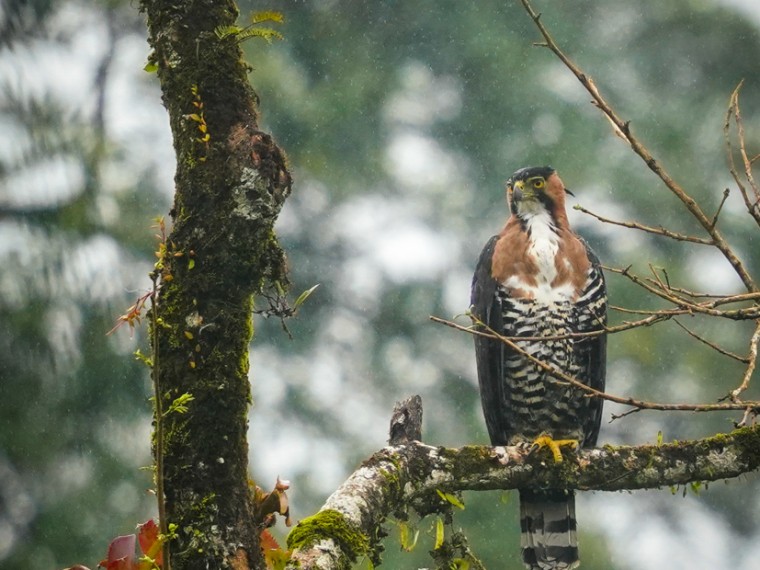
Ornate Hawk-Eagle
During the afternoon sessions we explored nearby roads and forest edges, adding several more species to the trip list and improving views of birds we had only briefly seen earlier in the tour, including Long-tailed Tyrant, White-fronted Amazon, Rufous-tailed Jacamar, Black-headed Saltator, Broad-billed Motmot, Purple-crowned Fairy, Red-throated Ant-Tanager, and White-throated Magpie-Jay.
One evening we also enjoyed a night walk around the lodge grounds. Highlights included Red-eyed Leaf Frog, Brilliant Forest Frog, Hourglass Tree Frog, Masked Treefrog, Water Anole, Costa Rican Forest Rabbit, and a Black-and-white Owl. Along the way we also stopped frequently to admire the many orchids and gesneriads that flourish in this lush rainforest environment.
Final Day – Much More Than a Travel Day
Our final day is supposedly intended mainly as a return journey to the Central Valley with a some birding stops along the way. But it turned into one of the most memorable days of the entire trip!
After breakfast we headed toward the beautiful mountains of San Ramón de Alajuela. Here we visited famous San Luis Park where we learned about an active army ant swarm attracting mutiple special birds on a neighboring property. Guided by our local friend Luigi, we hiked into the forest and soon began hearing Bicolored Antbirds and Ocellated Antbirds, clear signs we were in the right place!
After waiting quietly for several minutes as the swarm moved through a gap in the forest, the action began. We first saw a Ruddy Woodcreeper, followed by several Ocellated Antbirds. Then, in an unforgettable moment, three Rufous-vented Ground-Cuckoos appeared right in front of us. These rare cuckoos are among the most sought-after birds of the Neotropical rainforest!
With huge smiles after such a successful mission, we returned to San Luis to enjoy the feeder birds, highlighted by the spectacular Blue-and-Gold Tanager.
Our final birding stop was at Bosque Nuboso El Cocora where we finished with wonderful hummingbirds including Crowned Woodnymph, Violet Sabrewing, Green Hermit, the near-endemic White-bellied Mountain-gem, and the endemic Coppery-headed Emerald.
That evening we arrived at Hotel Robledal and enjoyed some relaxed birding in the gardens where we found Lineated Woodpeckers building a nest, a nesting Cinnamon Hummingbird, and our final new species of the tour: the beautiful Spot-breasted Oriole singing from an exposed treetop.
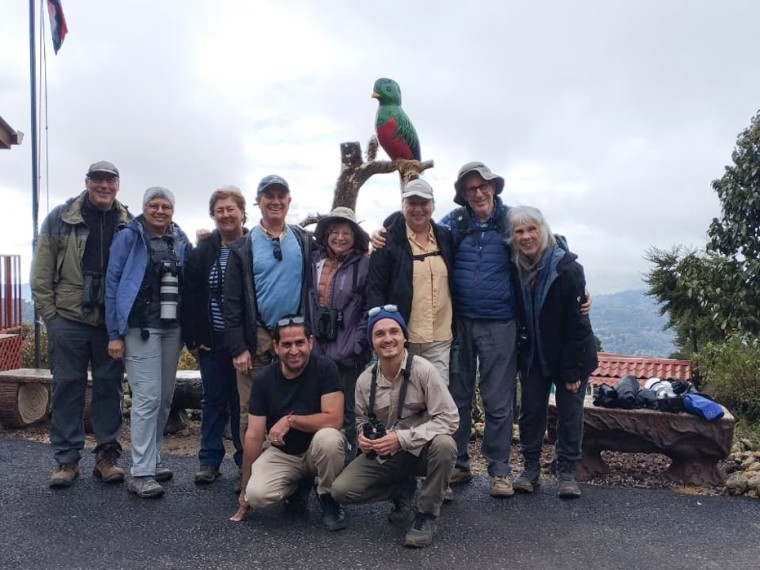
Group photo
During our farewell dinner we shared favorite moments and species, celebrating a highly successful tour with a wonderful group whose enthusiasm and love for nature made the experience even more special.
I sincerely thank all participants for trusting Eagle-Eye Tours and me to guide this journey. Special thanks to everyone who helped make the tour run smoothly and our fantastic driver Jaime for his excellent driving skills and sharp eye for wildlife along the road.
Pura vida and until next time!