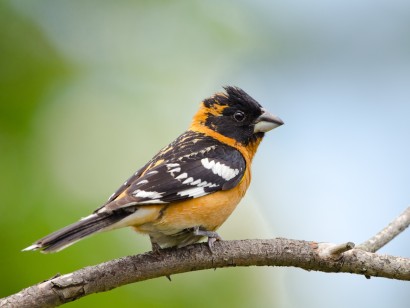
Canadian Rockies: Waterton Lakes trip report (May 30 – Jun 4, 2025)
Our Canadian Rockies: Waterton Lakes tour went off smoothly, providing guests with a great diversity of bird sightings, spectacular views of the Canadian Rockies, feelings of warm camaraderie, and lots of good laughs!
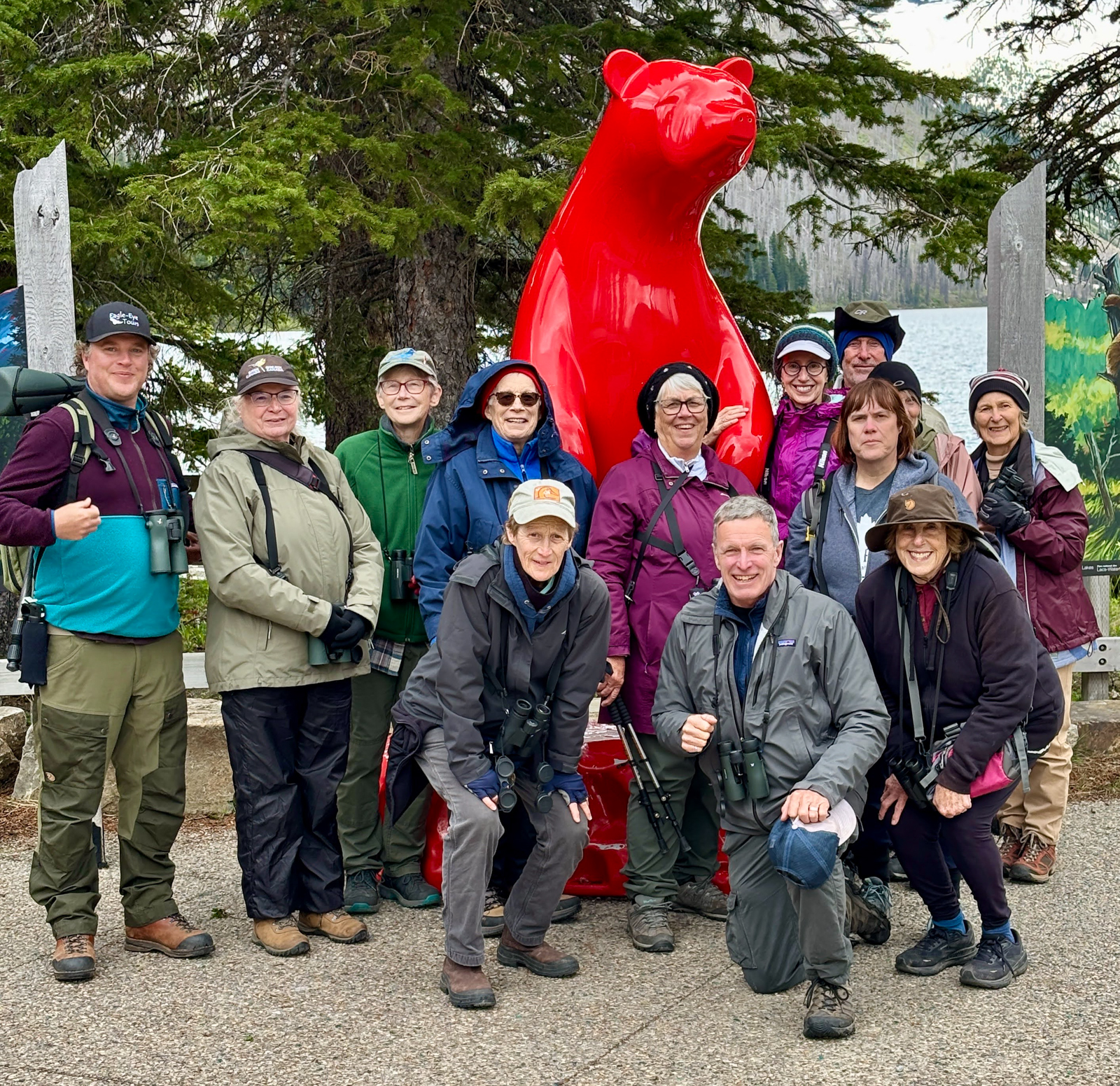
Cameron Lake in Waterton Lakes National Park
The laughs began early, and continued throughout. At one stop on the first day one of our experienced and knowledgeable guides gave an enthusiastic description of the Varied Thrush we were hoping to see, showing guests the bird’s rich plumage on his phone. No sooner had he put the phone back into his pocket when we were amazed to hear, perfectly on cue, the unique song of that same bird! It took us a few seconds to realize that, in his eagerness, our guide had inadvertently pushed the ‘play’ button on his app, and that the bird’s mesmerizing song was emanating from his pocket.
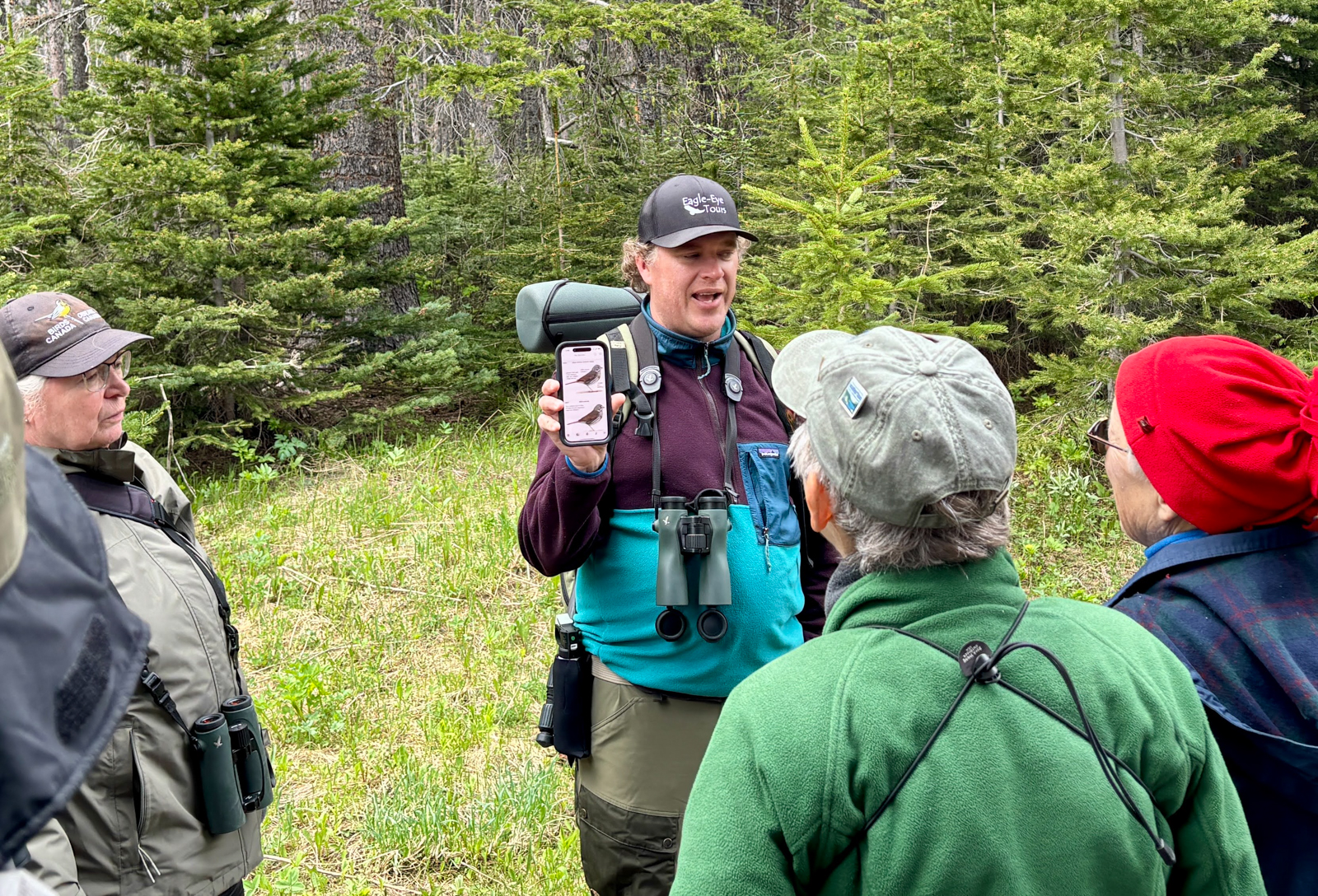
One of our trusty guides, educating about a bird © Gareth Thomson
Frank Lake is one of the big highlights of this tour, and indeed one of the best places to bird in Alberta. This Key Biodiversity Area is noted not only for the abundance and diversity of bird species, but for how close birders and photographers can get to the birds themselves.
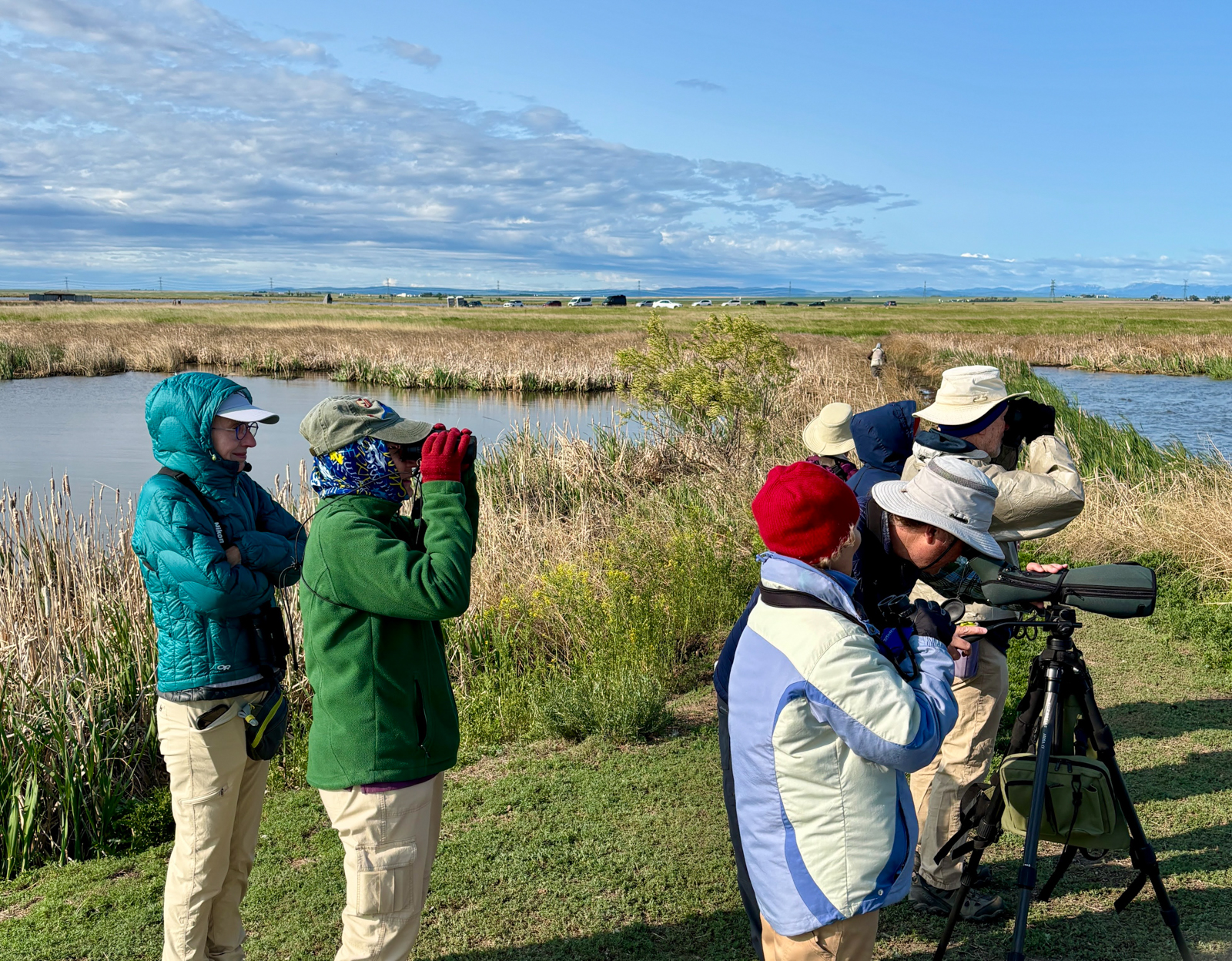
Birding at Frank Lake © Gareth Thomson
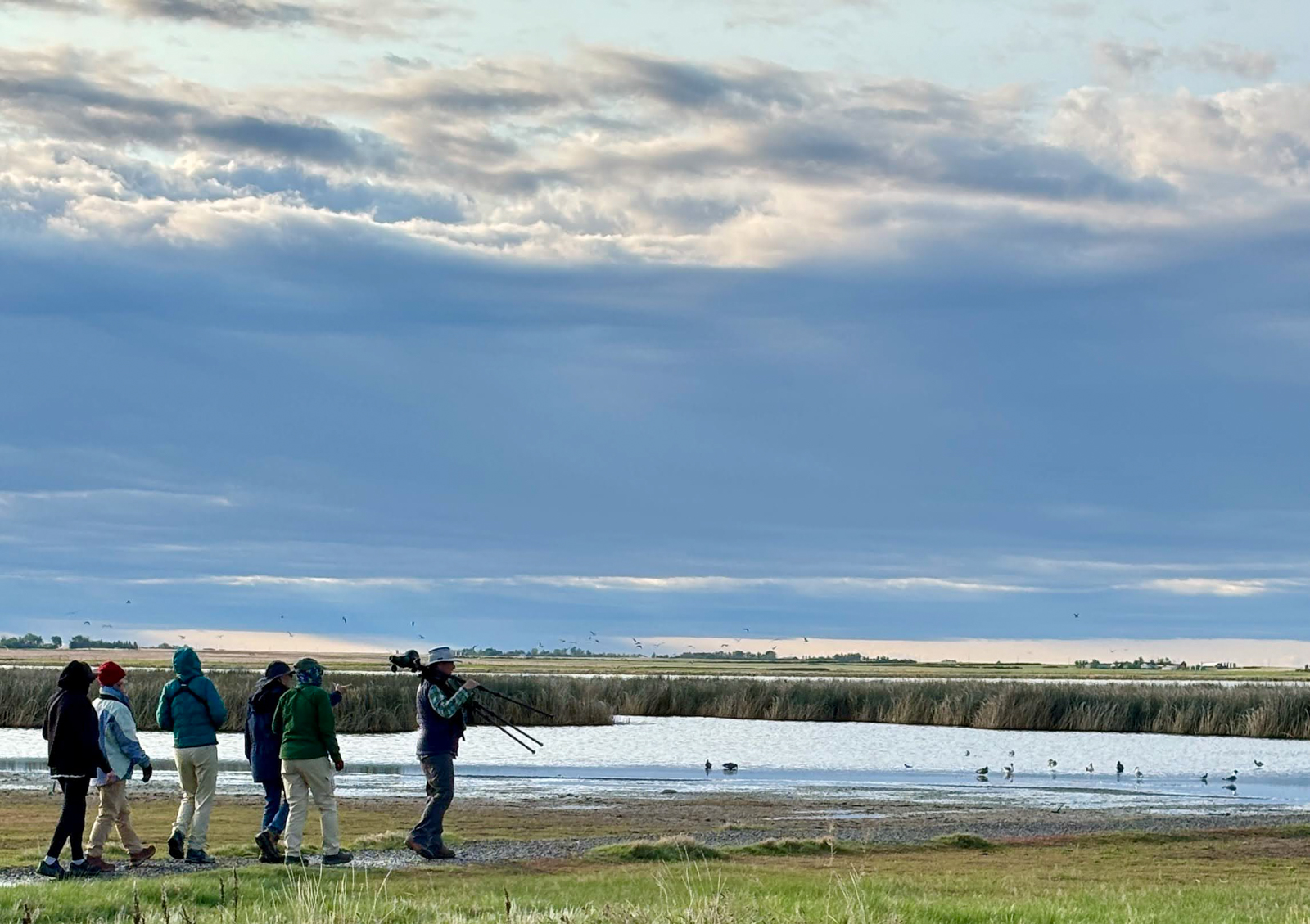
Frank Lake © Gareth Thomson
We enjoyed spectacular close-up views of many dozens of species of ducks and shorebirds, including one female Wilson’s Phalarope – more brightly coloured than her male counterpart – feeding unconcerned within a few feet of us.
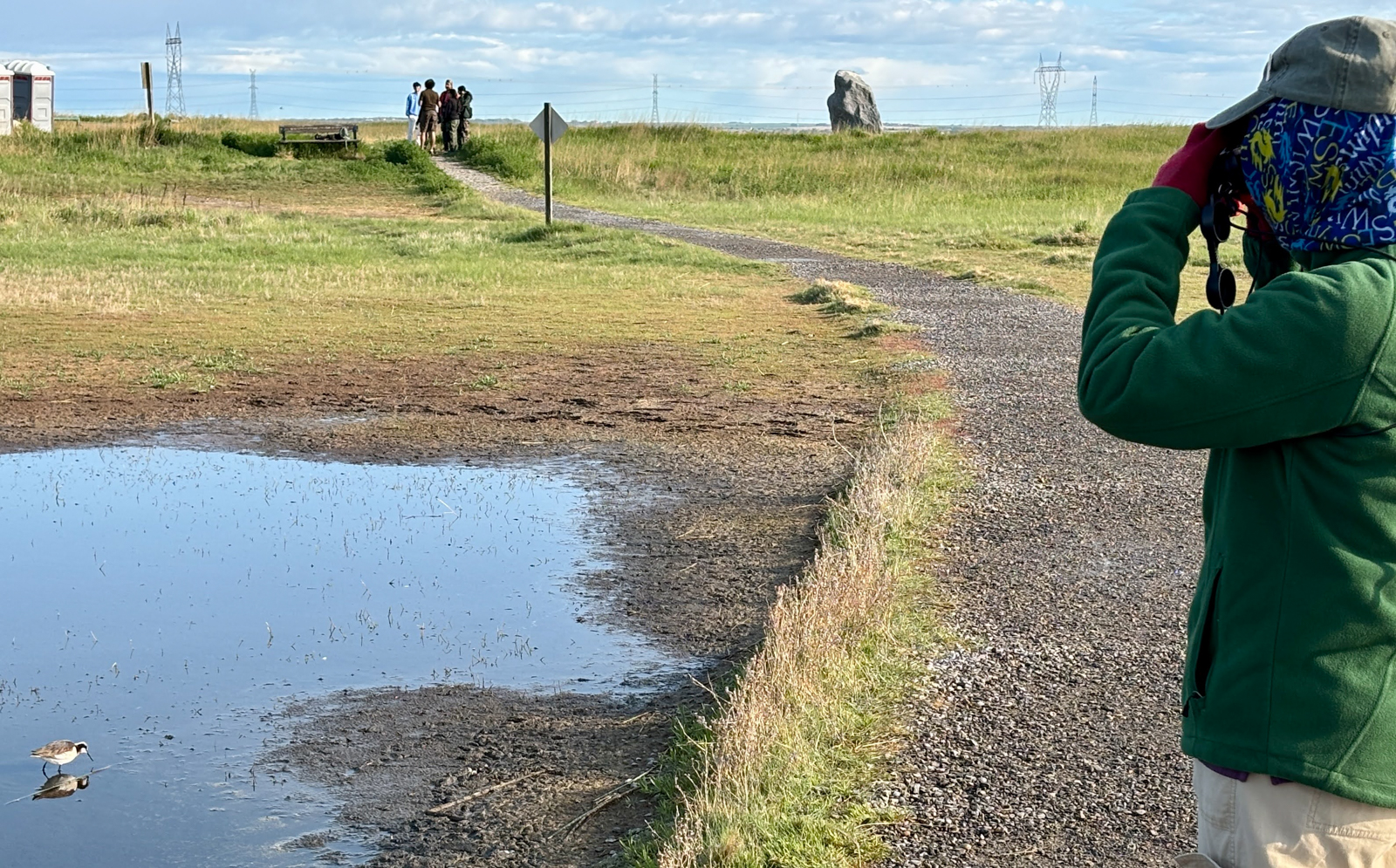
Watching Wilson’s Phalarope © Gareth Thomson
The air and water were full of birds, and our necks were on a swivel as we tried to keep up with the pageantry unfolding around us: elegant pairs of Western Grebes, squadrons of American White Pelicans soaring majestically by, and a profusion of beautiful flyers – from Forster‘s Terns to Tree Swallows – that swirled around our heads.
Later that day we entered a prairie coulee, and entered into one of those Peak Experiences that birders talk about in hushed and reverent tones. The theme was raptors, and began with great views of a Northern Harrier that hunted in a meadow close to us. Then a kettle of several Red-tailed Hawks, soaring majestically above our heads. Next, fabulous and highly unexpected views through the scope of a Ferruginous Hawk, a prairie specialist sitting on the most western nest that any of us had ever seen, with a couple of downy chicks periodically appearing from beneath their parent’s breast to look around. Then we had great views of a Prairie Falcon perched on the sandstone rocks adorning the coulee, while Rock Pigeon and Cliff Swallows – both potential prey species – nested close by, seemingly unconcerned about the presence of this beautiful bird-eating predator.
One of our guides used his binoculars to scan the rocks – a process that ended abruptly when he found himself looking into the eyes of a female Golden Eagle, the huge bird seemingly staring into his soul. There was a pair, and they soared around us in the valley, offering great views of the beautiful golden plumage on their neck and backs for all to see; they were both dive-bombed by a Northern Harrier and a Merlin, who looked like gnats in comparison to the massive bulk of the eagles. The pair nests here, and we were thrilled to discover the Eagles had added a large and weighty deer antler to their nest! It was a magic time, and affected us all: one first time birder confessed that the whole affair gave her goosebumps, always a reliable indicator of a birding Peak Experience.
The prairies boast coulees like this and magnificent sandstone ramps, such as the one we visited at Head-Smashed-In Buffalo Jump, a World Heritage Site used by First Nations for centuries to harvest buffalo. This site offers attractions inside and out, from the fabulous museum displays shared with us by the talented Blood tribe interpreters, to the Brown Thrashers and Yellow-bellied marmots who make this sandstone bluff their home.
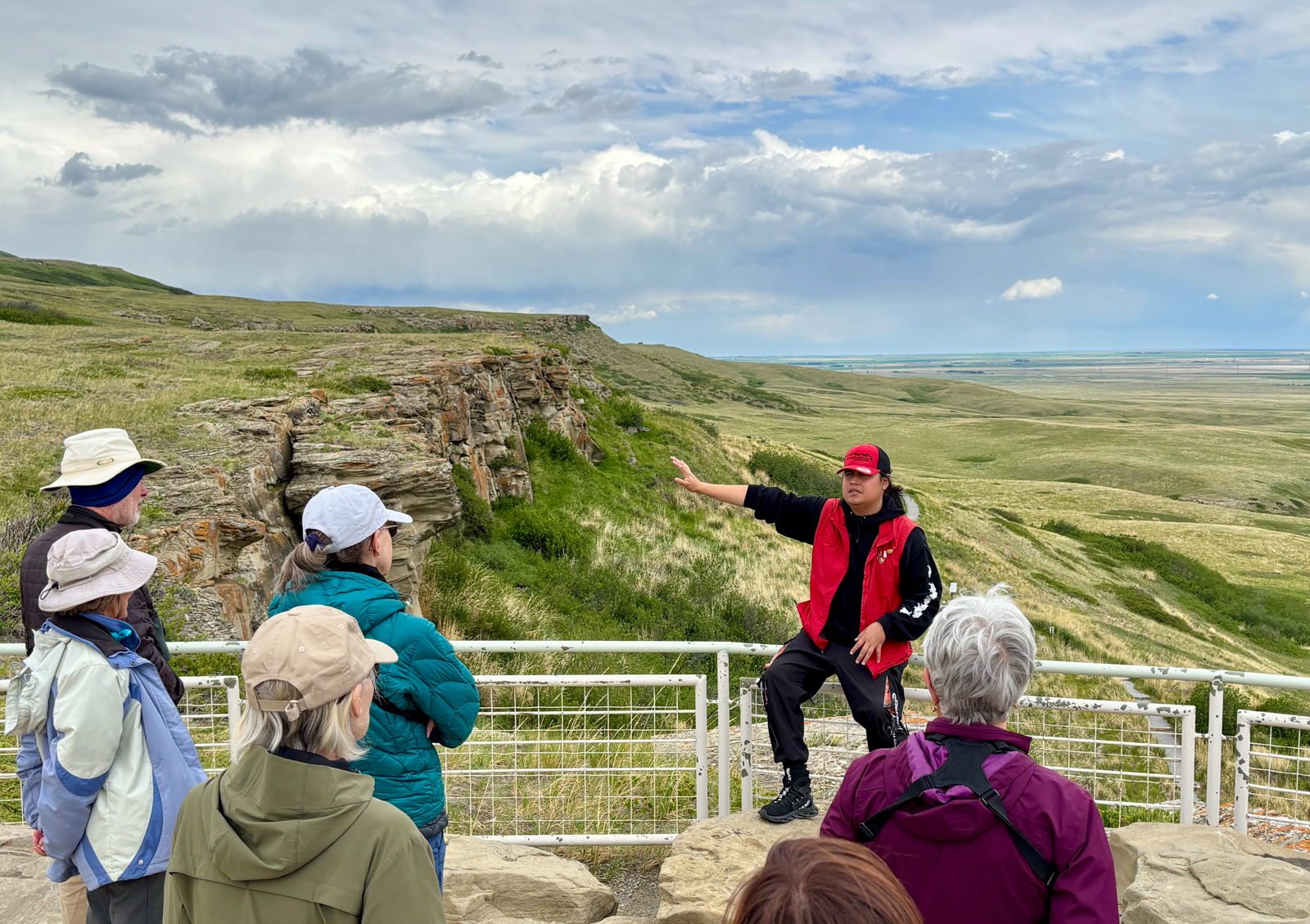
Head-Smashed-In-Buffalo-Jump © Gareth Thomson
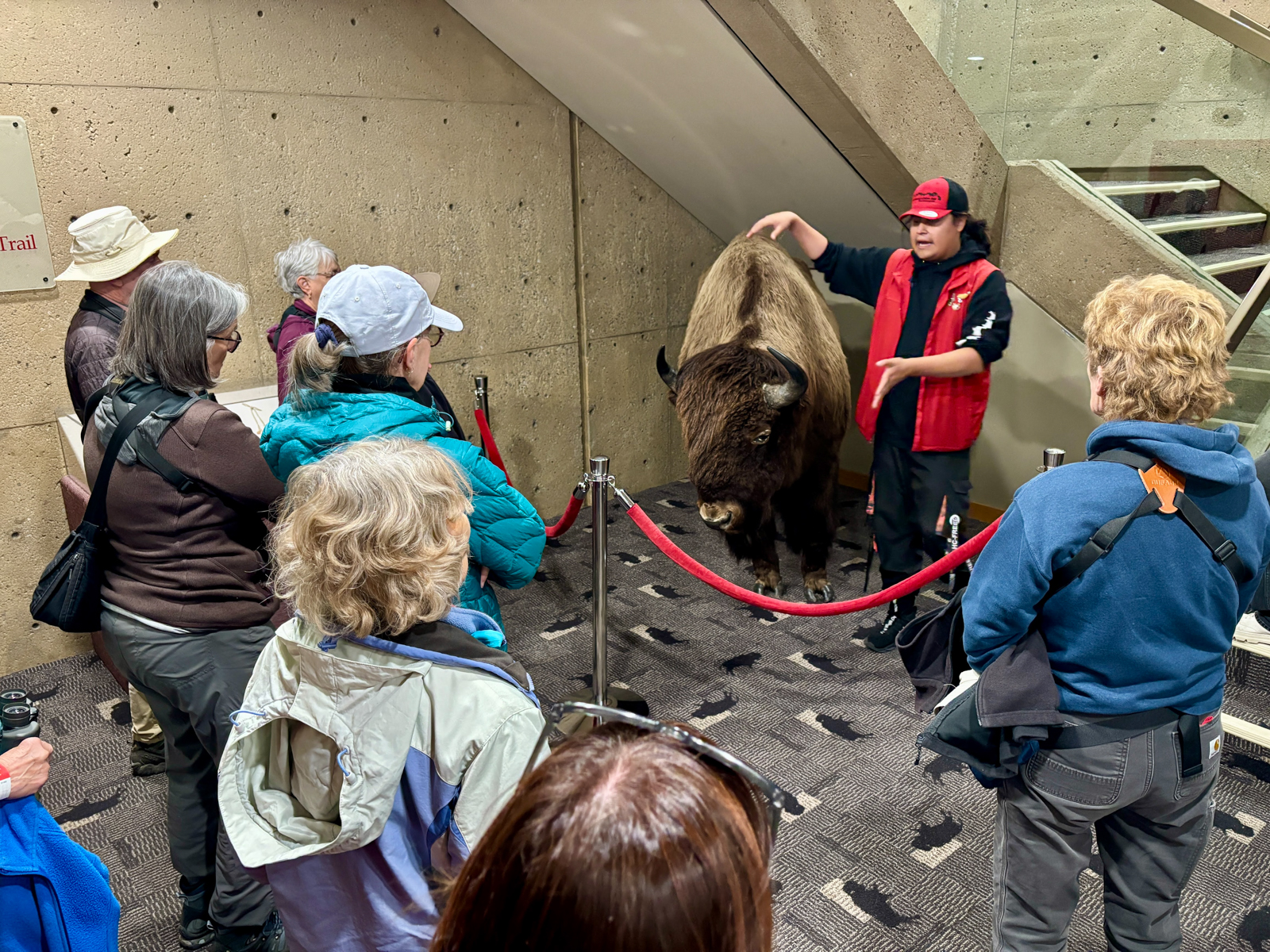
A Blood tribe interpreter, and buffalo © Gareth Thomson
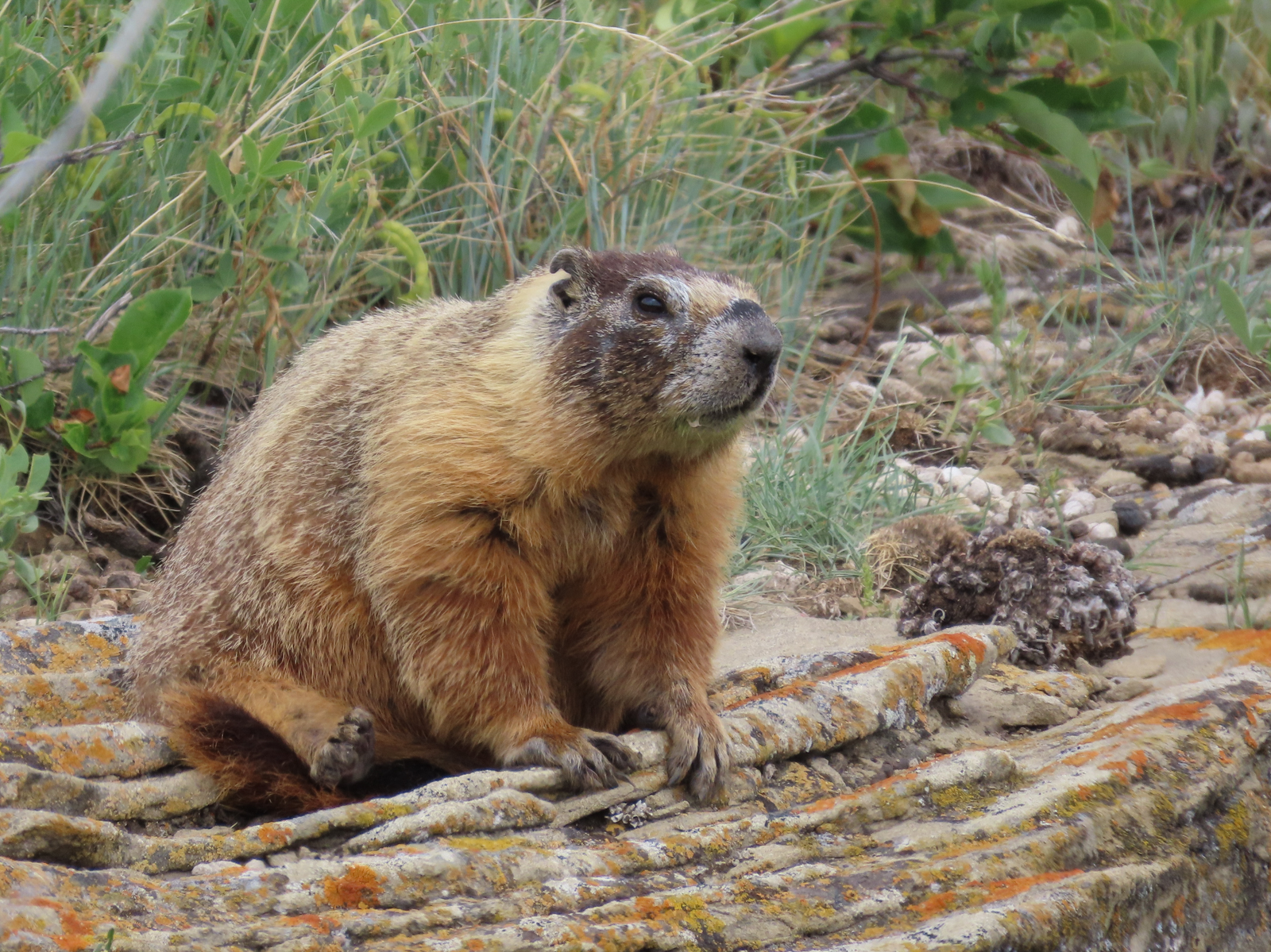
Yellow-bellied Marmot © DP Siminski
Waterton Lakes National Park is one of the treasures of this province, boasting some of the best flower displays we had ever seen.
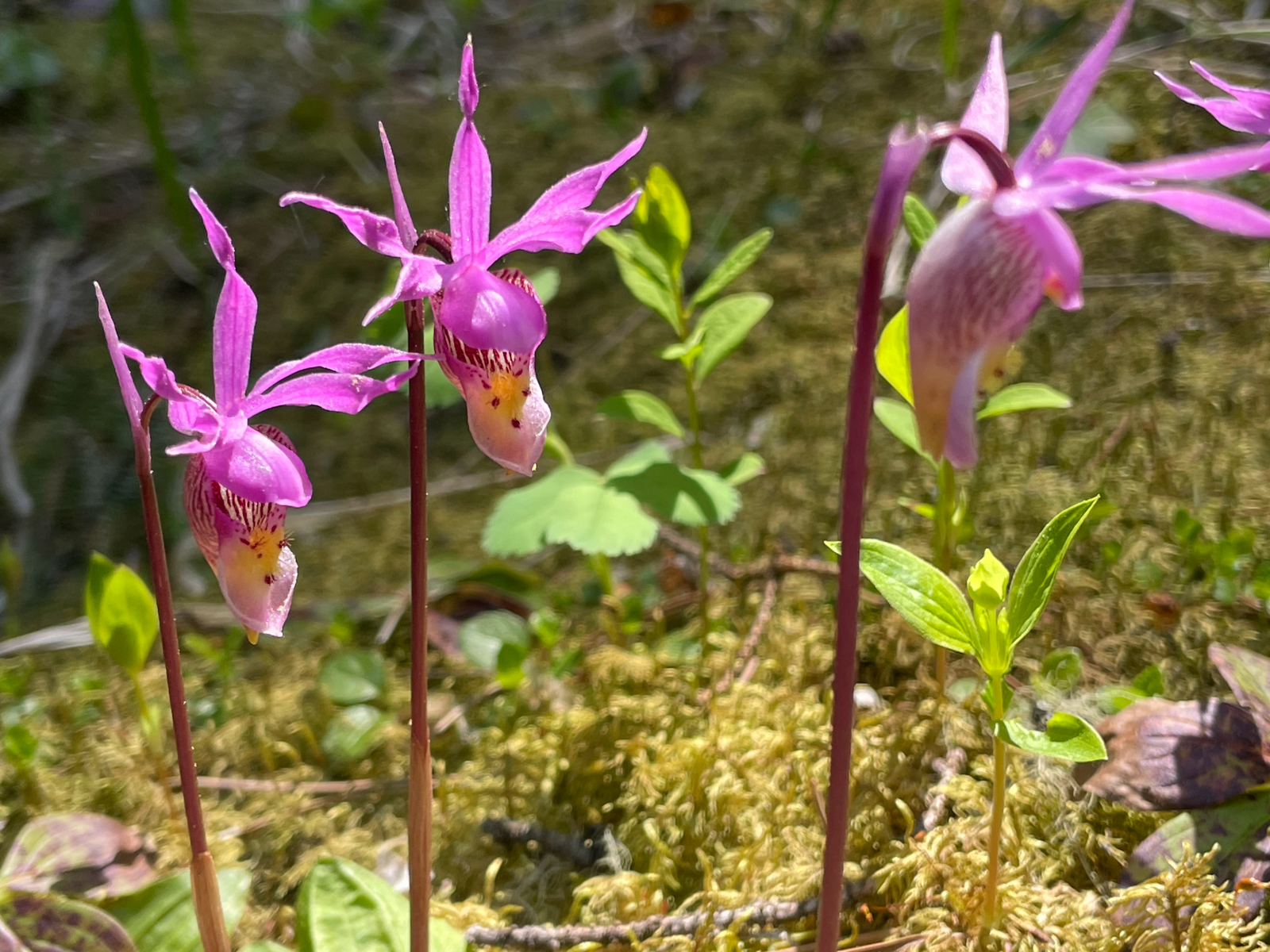
Calypso Orchid © M Swanger
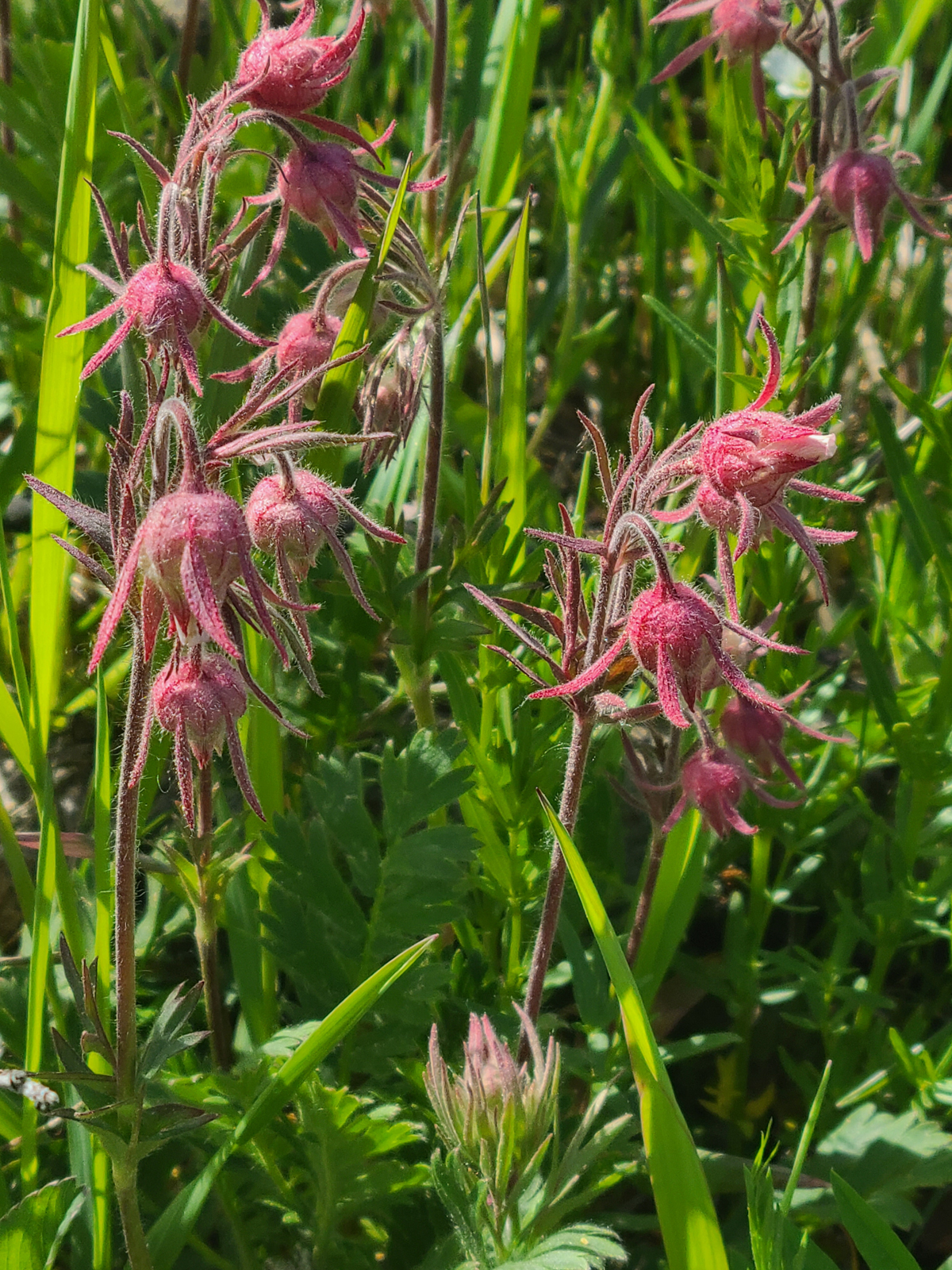
Three-flowered Avens, or ‘Prairie Smoke’ © DP Siminski
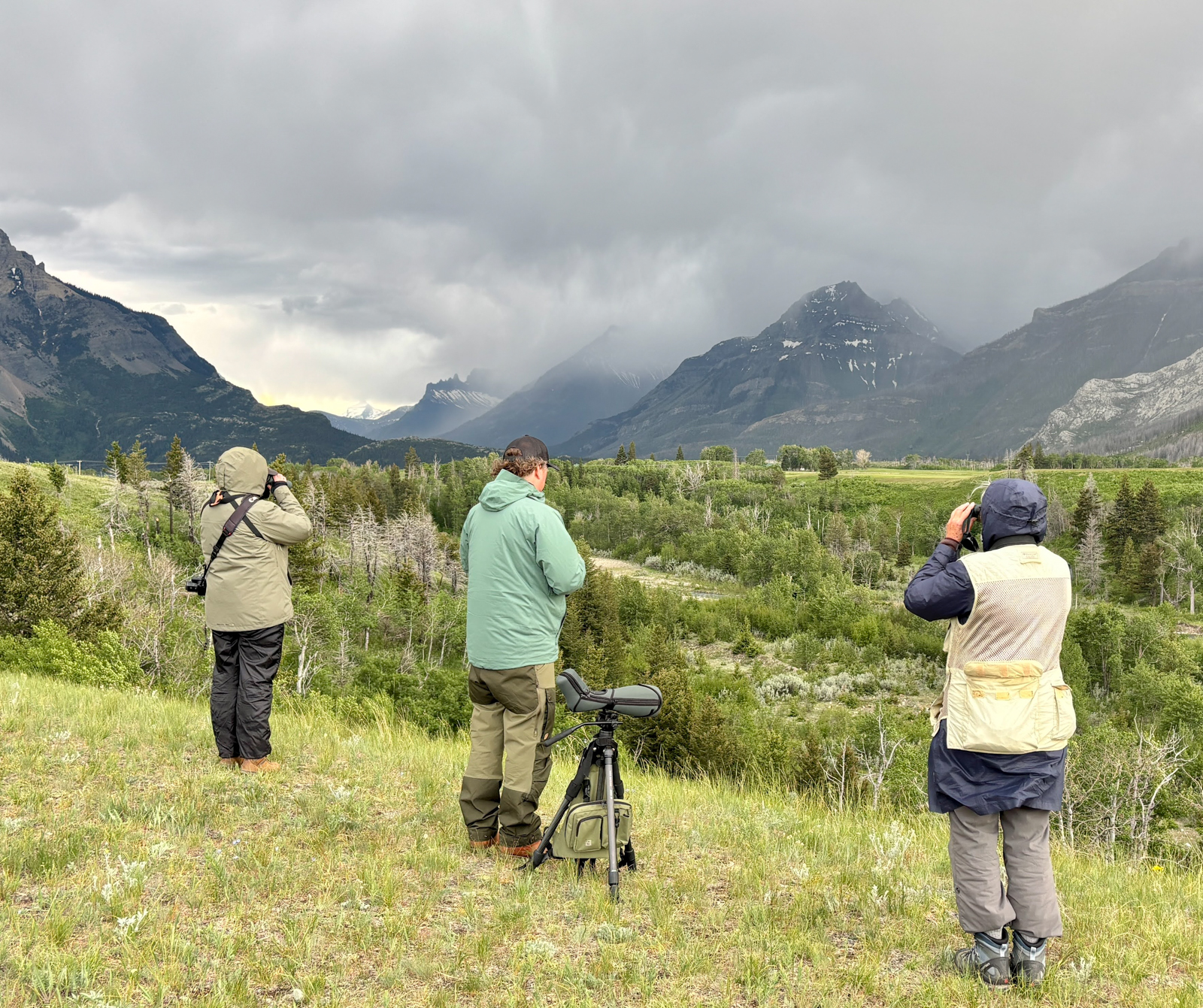
Birding in Waterton © Gareth Thomson
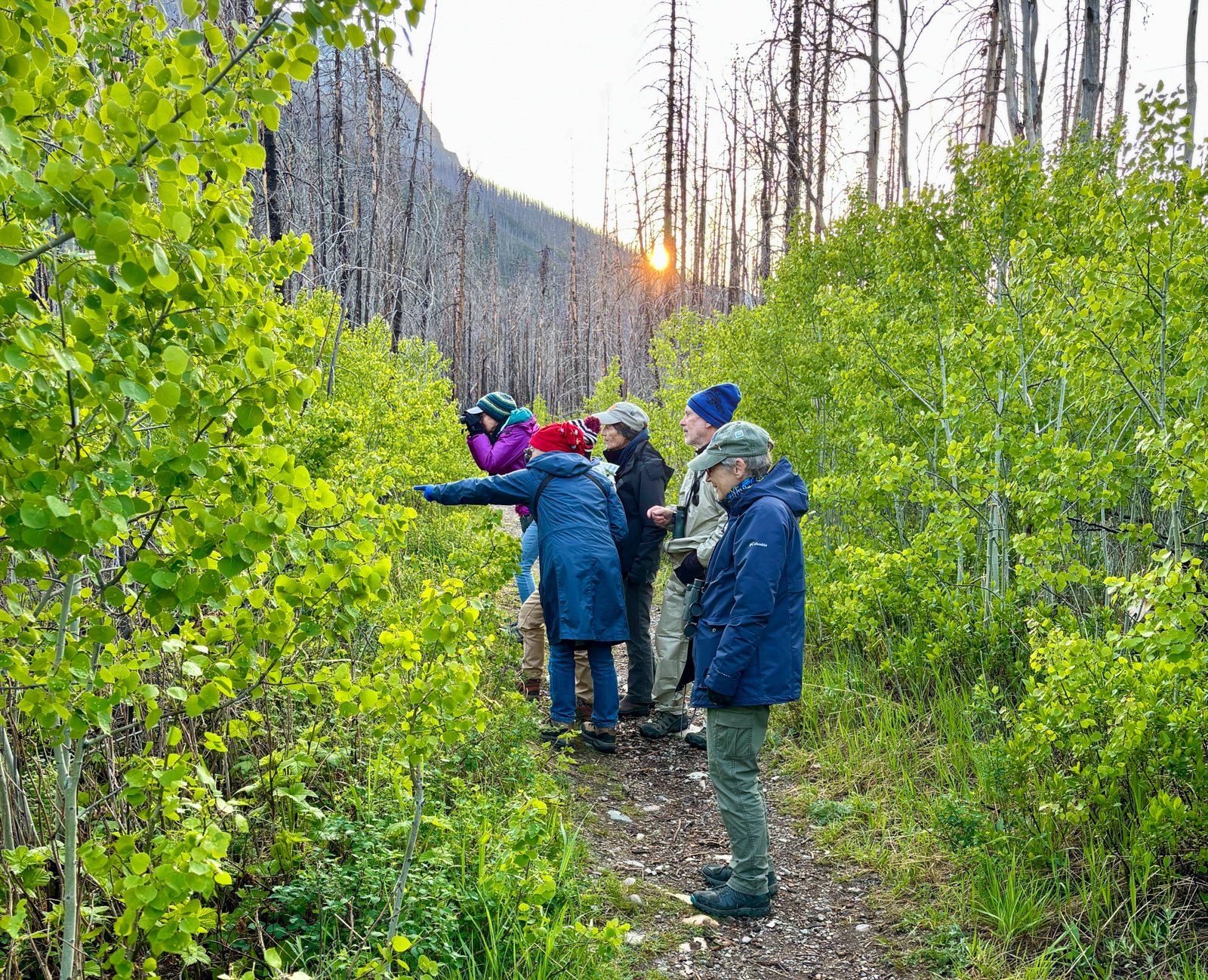
Birding in the Waterton burn © Gareth Thomson
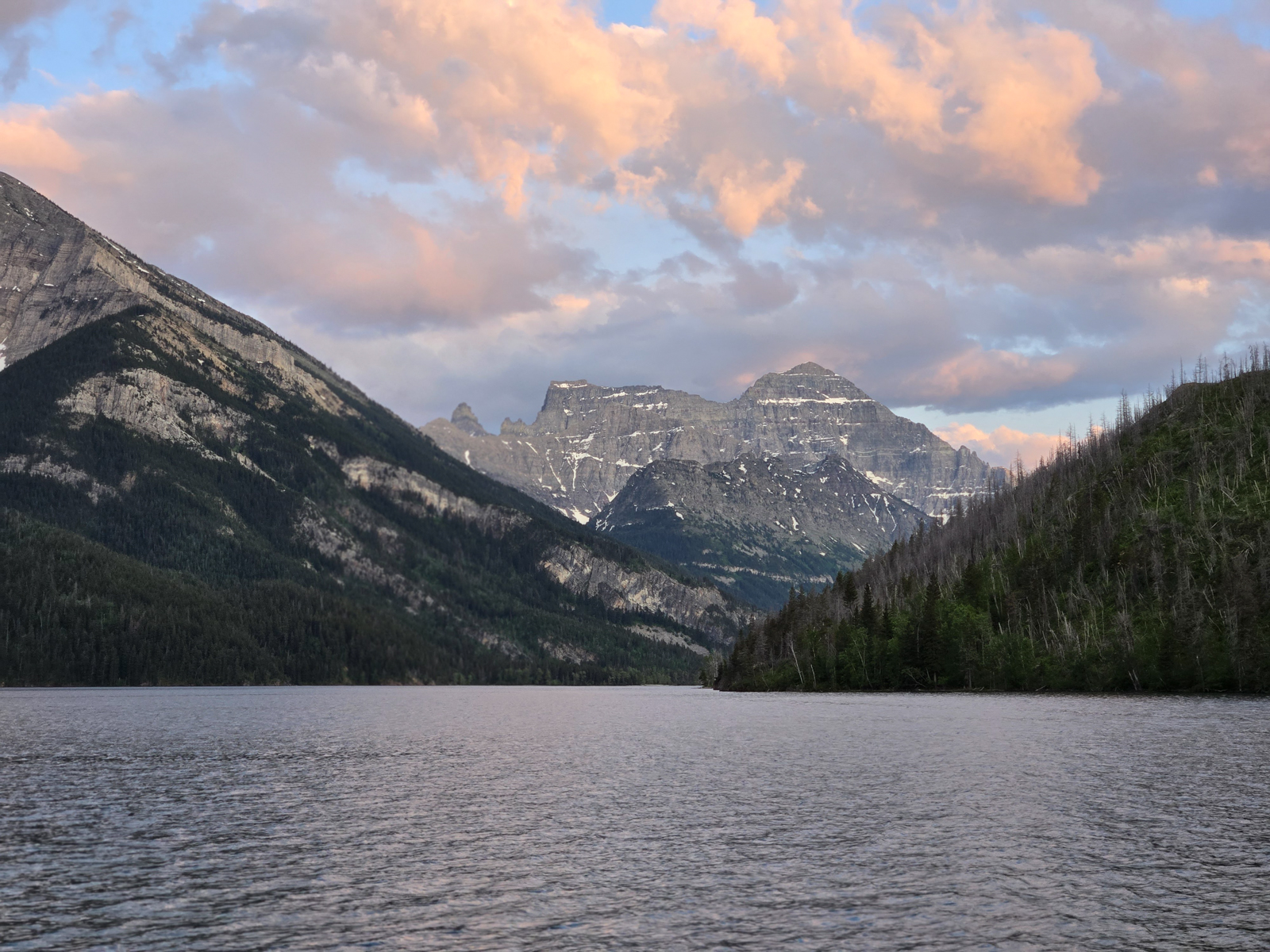
Waterton Lake © Gareth Thomson
Waterton exceeded expectations: we had great views of a spectrum of the Park’s mammals, ranging from a magnificent Grizzly Bear high on a ridge, all the way down to a sloe-eyed Thirteen Lined Ground Squirrel in the grass at our feet. There was a problem, however…
The Lazuli Bunting is a veritable jewel of a bird, its red breast beautifully complementing the unusual lazuli colouring on its back, and many guests were eager to see one. We looked for many hours, but had no luck, and the bird rapidly assumed Nemesis Bird status in our minds: one of those birds that birders search high and low for without success.
We worked hard. Our practice was to pull over at a roadside stop and get out: we would all listen for the bunting’s song, assuming various stances of immobility, entering a Zen-like state as we stood and listened. The presence of so many people on the roadside inevitably attracted the attention of bear-seeking tourists, who would swerve over to the side of the road and leap out to join us, gazing upon us in wonderment as we stood there like so many naturalists frozen into stone. Indeed, one of our guests proposed that Eagle-Eye Tours should provide roadside sandwich boards, saying “Just listening for birds – nothing to see here.”
We were unable to find the bunting, and on our last evening visit to Waterton Park’s Red Rock Canyon we resorted to driving slowly with our windows down, listening for the bird’s song. We were finally rewarded by two scintillating males counter-singing at one another, offering great views through our binoculars and telescopes.
We made our way home feeling highly contented, driving with our backs to the setting sun, which lifted out the full spectrum of colours in the rainbow, thousand shades of green from the verdant trees, shrubs, and grass, making the red rocks of this wonderful place glow before our appreciative eyes.
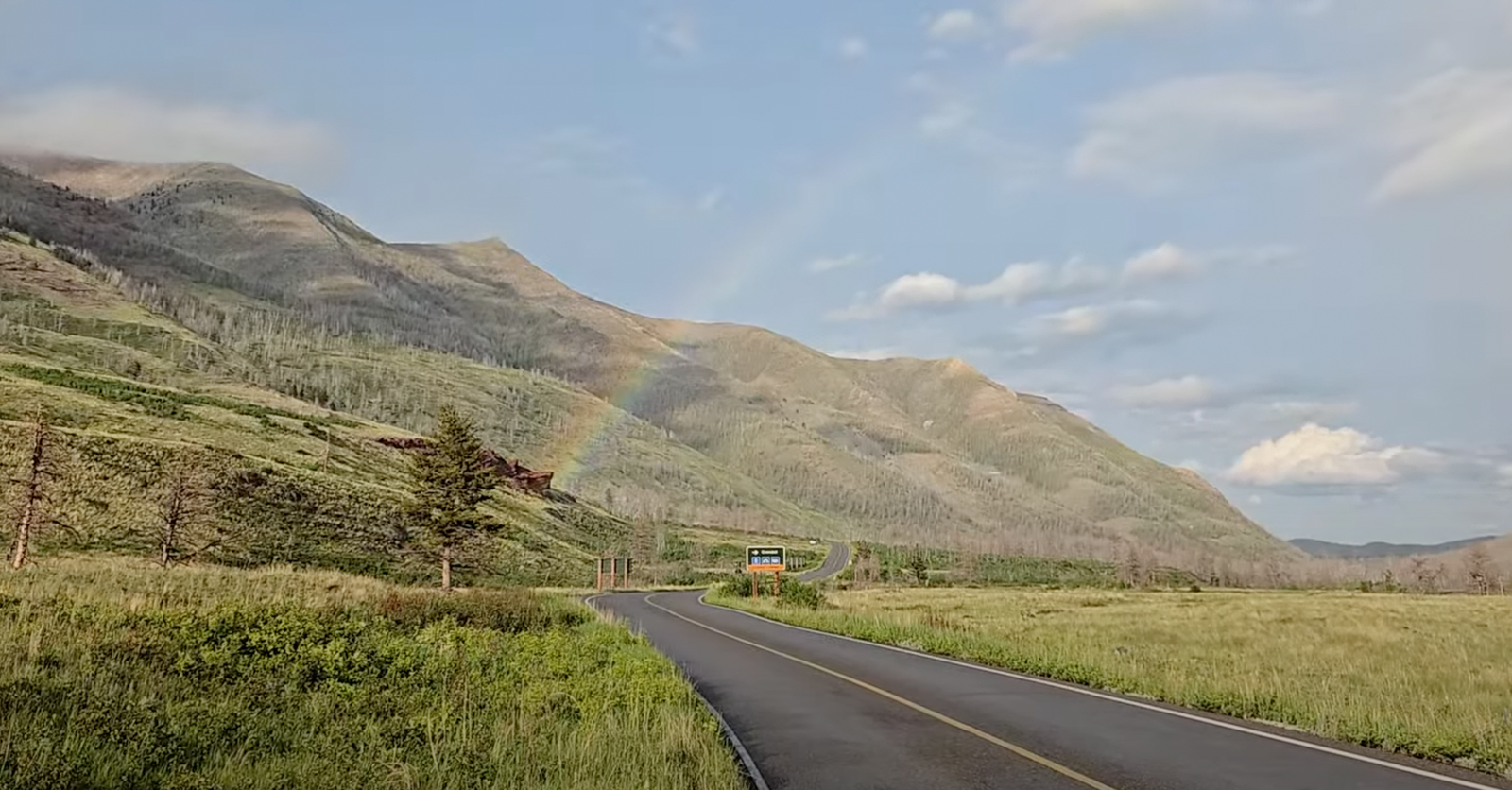
Rainbow, Waterton Lakes National Park © Gareth Thomson
Canadian Rockies Waterton Lakes bird list (May 30 – Jun 4, 2025)