Belugas, Bears & Birds Trip Report (July 3 – 14, 2026)
Day 1
We met with the group and went over the plan for the trip; we quickly got acquainted over dinner.
Day 2
After breakfast, we made our way out to Woodlands, a town which has been a great place to search for Red-headed Woodpeckers. In a cattle pasture with a clear understory and spaced-out oak trees. We had success, though viewing was short.
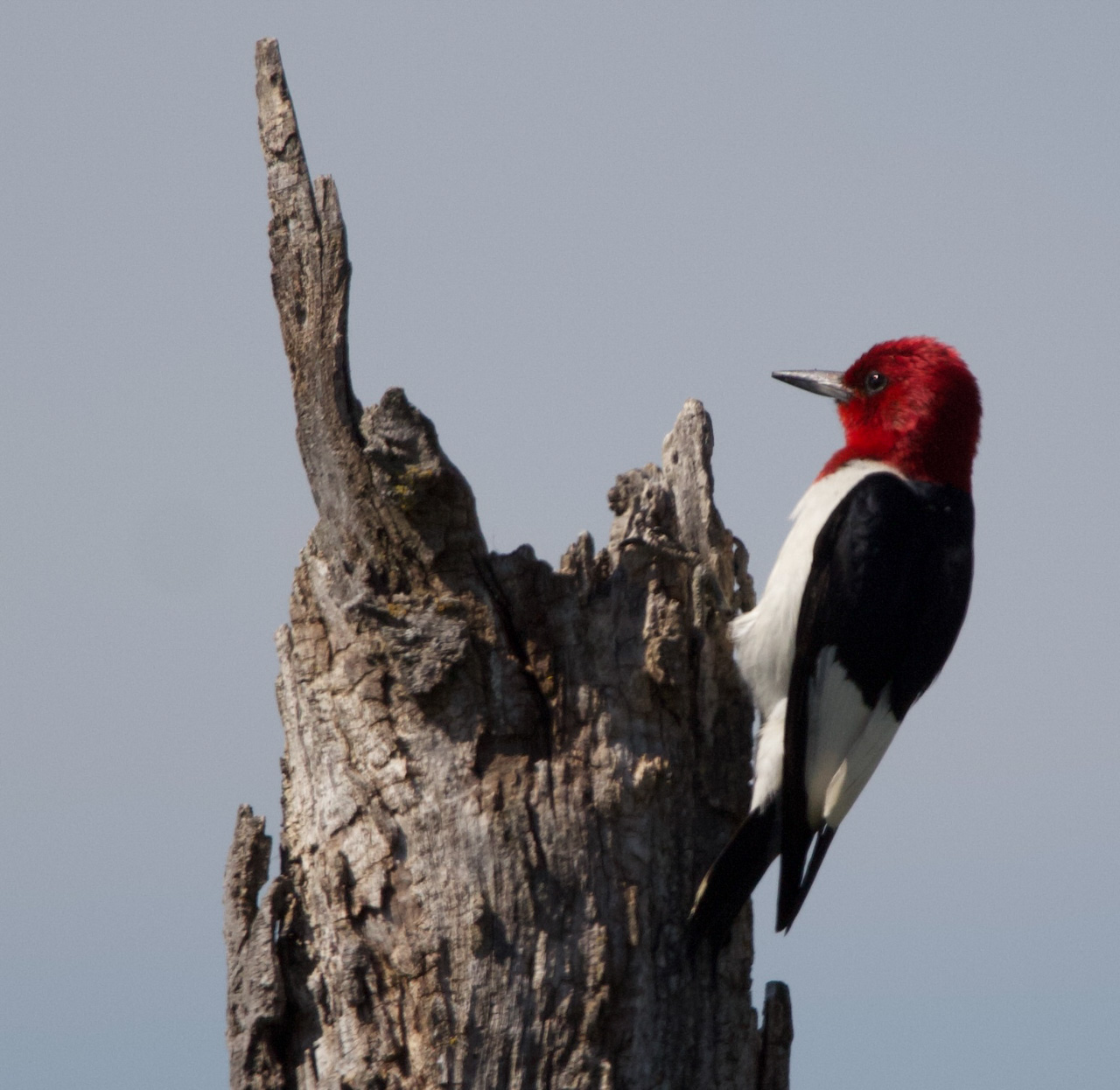
Red-headed Woodpecker © Josh Dewitt
Moving along the west side of the Shoal Lakes, we made several stops in productive spots along the road. Here we sorted through waterfowl, with an abundance of duck species present, as well as grebes, and many American White Pelicans. We were stopped along the way by a Willet, who had several small, fuzzy babies in tow!
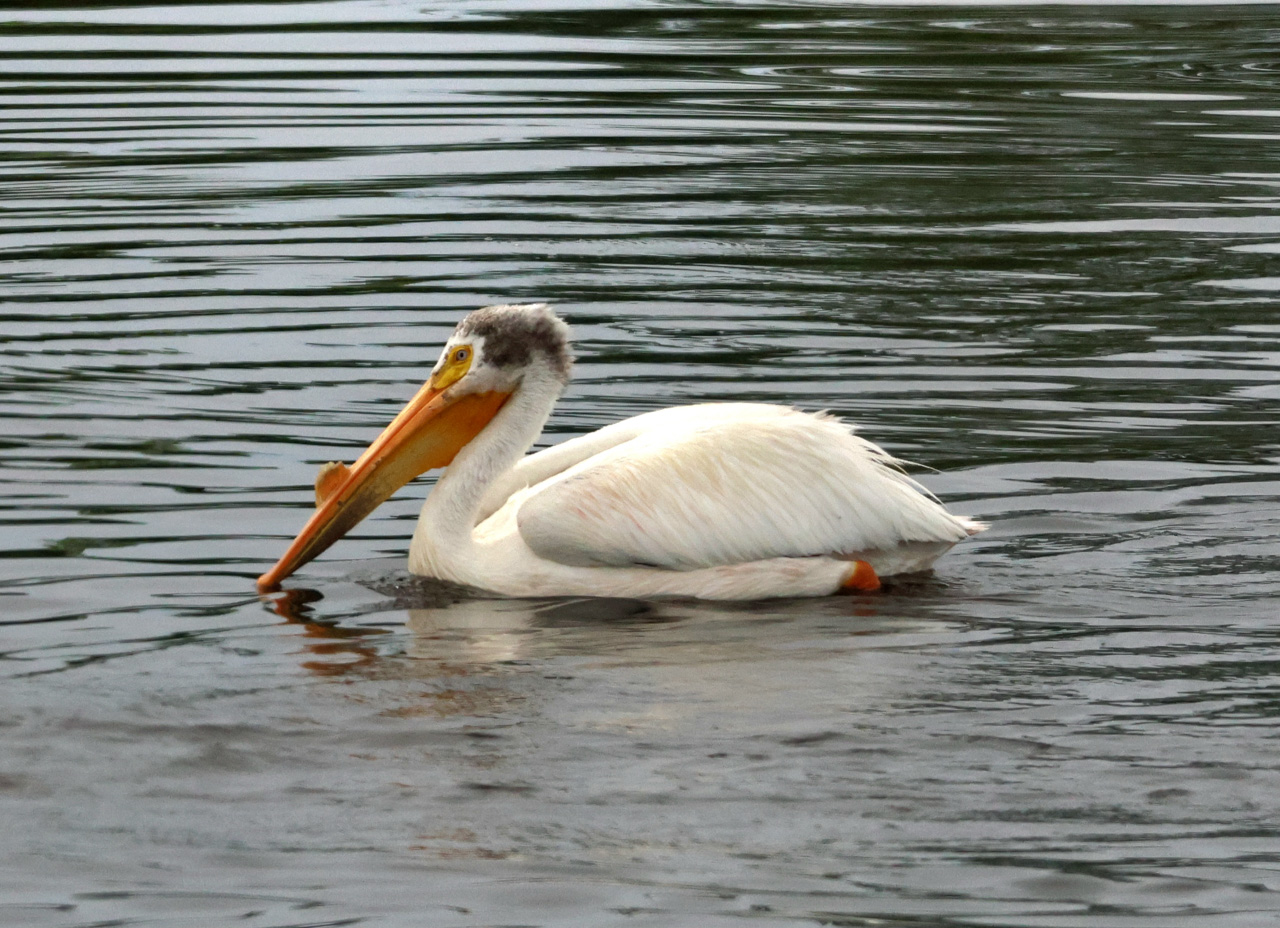
American White Pelican © Heidi Chan
Farther up the road, we took a short snack break where we were treated to the songs of Le Conte’s Sparrows, their buzzy songs filling our ears while we filled our stomachs with homemade cookies.
Whilst dodging garter snakes on the road, both Plains and Red-sided Garters, we were able to find a handful of Great Egrets.
Along the causeways, terns hunted for food. Forster’s Terns dove for small fish, and numerous Black Terns swooped over the water and picked aquatic insects and snails off the surface.
After a nice lunch at St. Laurent, we then hopped over to the Portage la Prairie landfill, in hopes of finding some good gull species. Present here were many American Herring and Ring-billed Gulls, and among them we were able to pick out a couple California Gulls, with some Bald Eagles watching the activity.
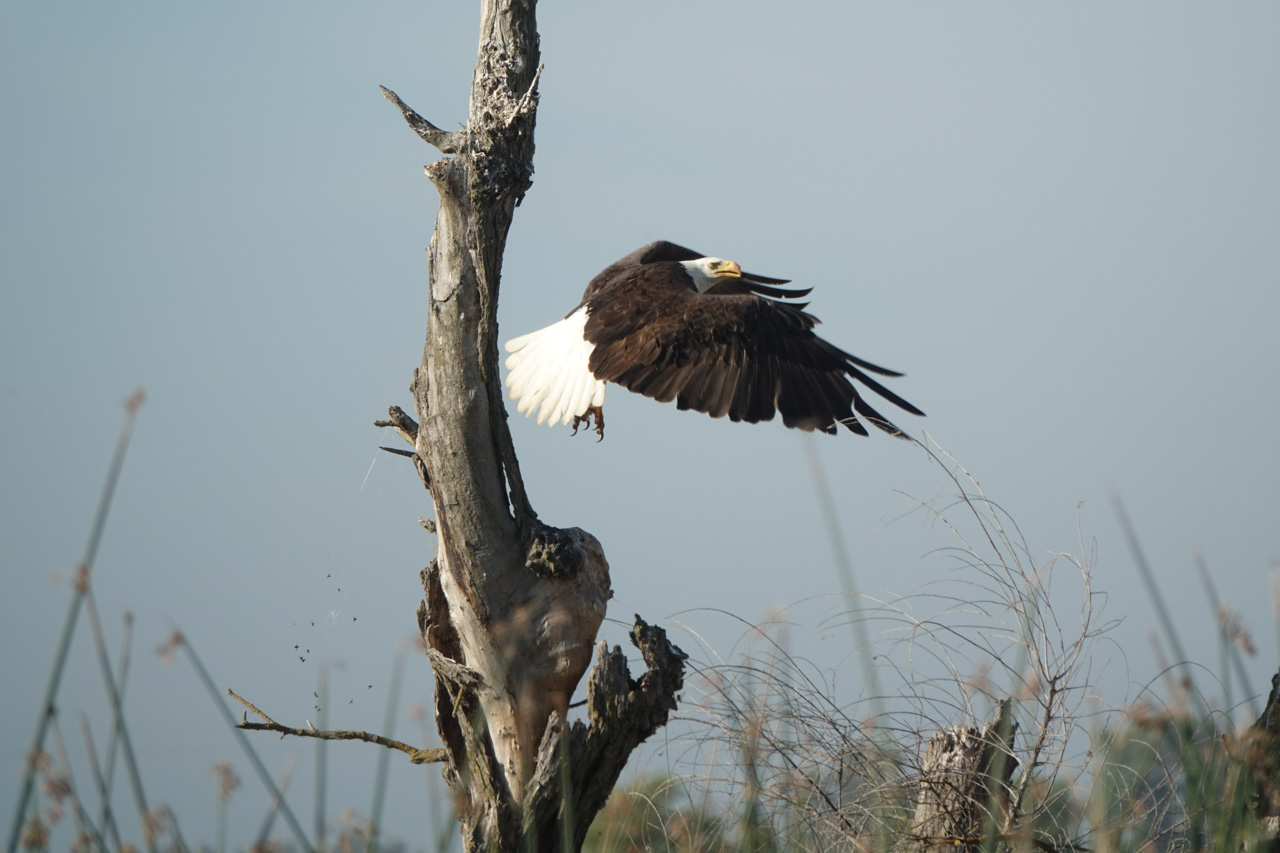
Bald Eagle © Fred Bertsch
Delta Marsh was seemingly quiet, though there were some songbirds, including many Yellow-headed Blackbirds, and a leucistic Common Grackle.
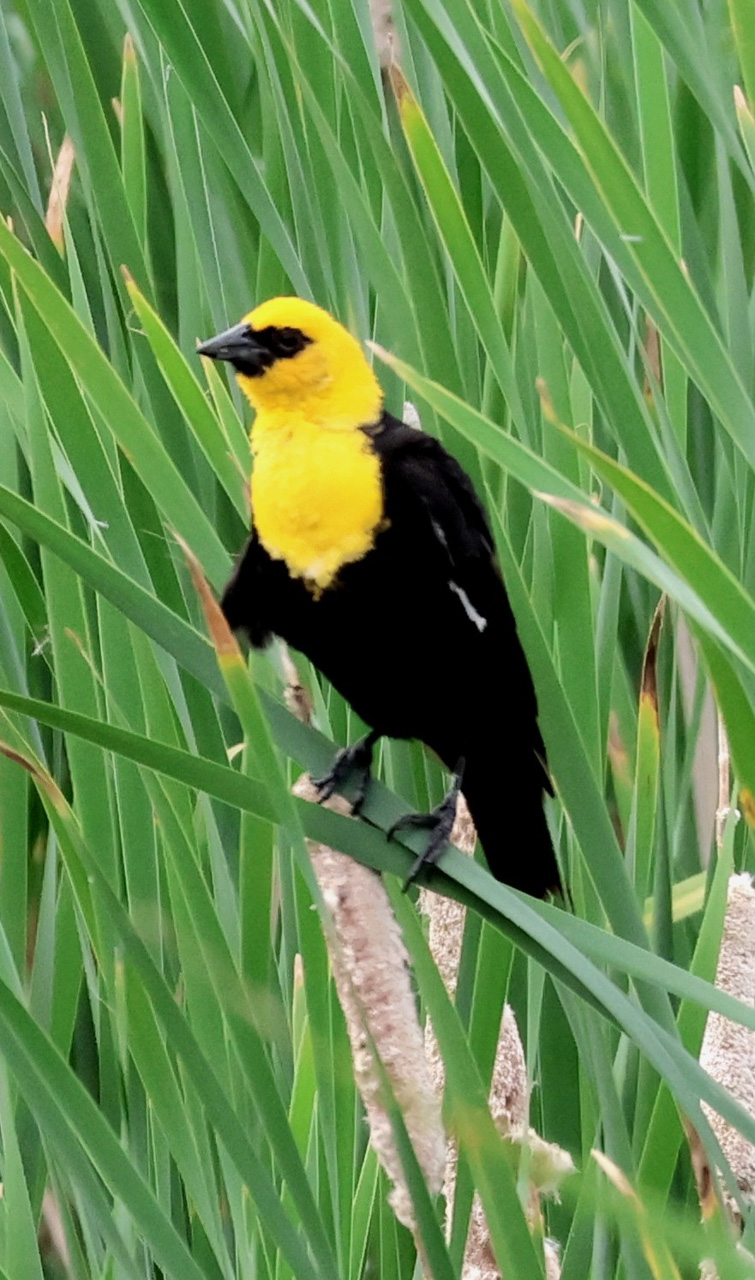
Yellow-headed Blackbird © Heidi Chan
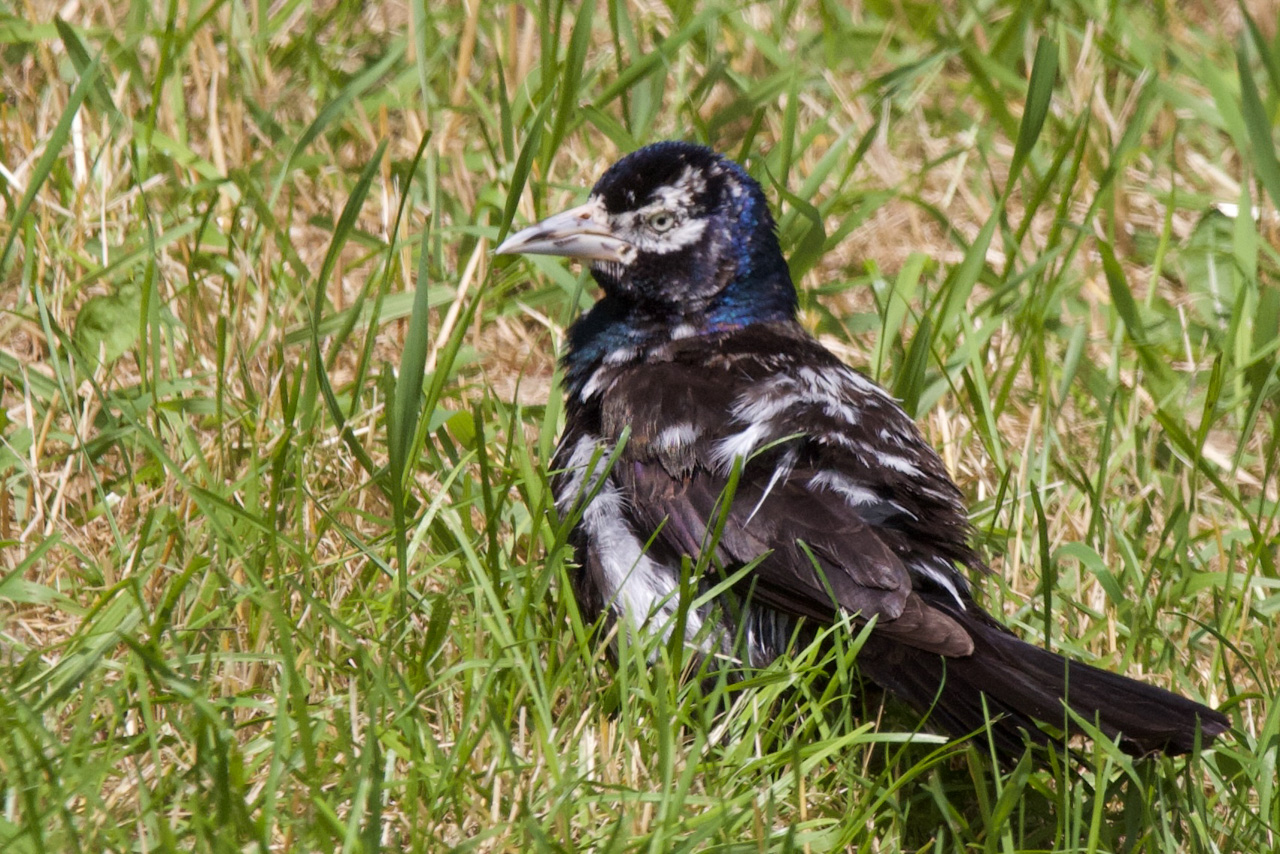
Common Grackle © Josh Dewitt
After a full first day, we had a delicious dinner at Nine Restaurant in Riding Mountain National Park.
Post dinner, we decided to go for a short evening drive to look for wildlife. Almost immediately we were met by a Great Grey Owl, hunting along the roadside. A little later on were also lucky to spot a Long-eared Owl doing the same thing, and a mother black bear and her yearling cub added to the excitement for the evening.
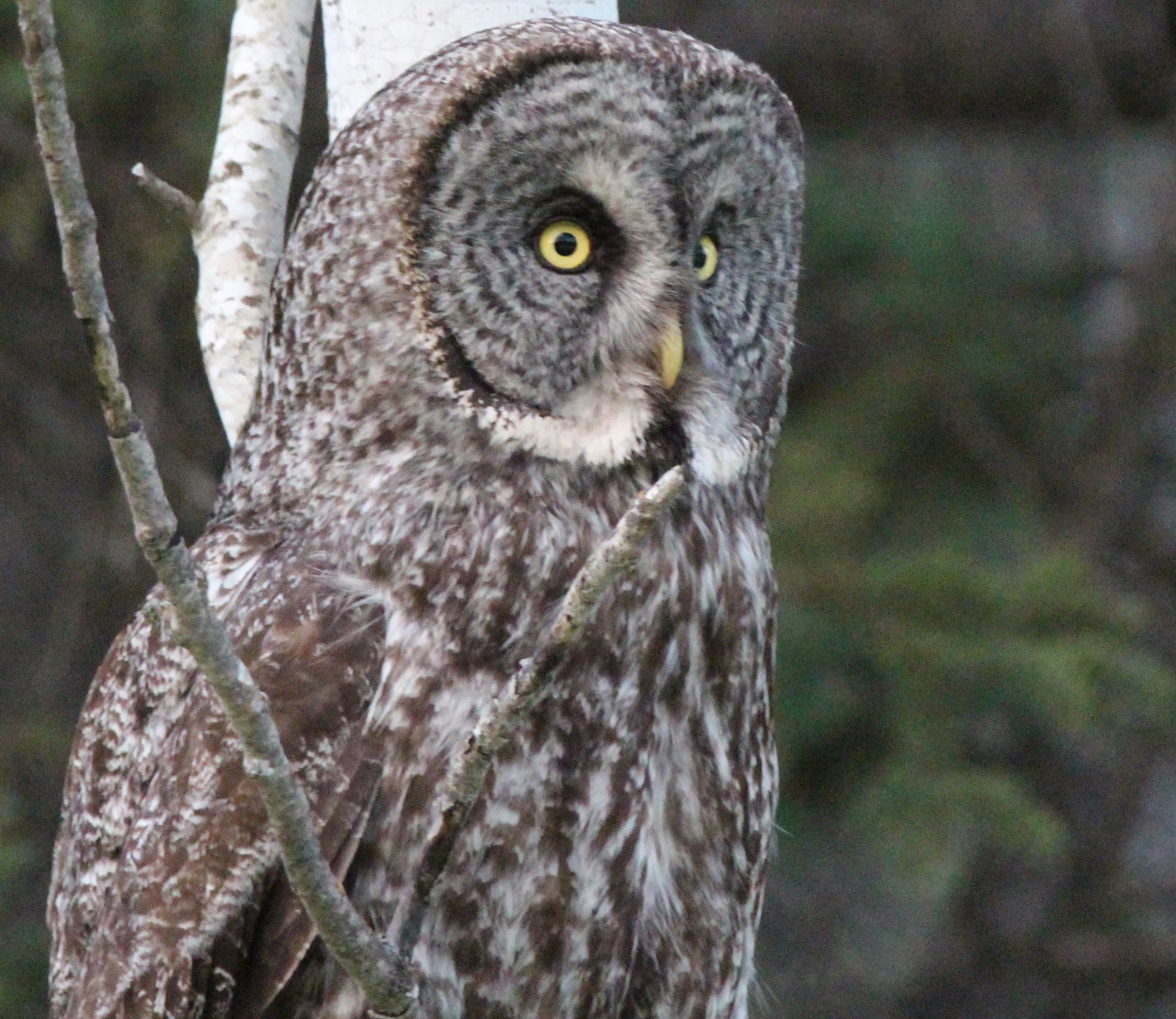
Great Grey Owl © Josh Dewitt
Day 3
A pre-breakfast drive was a great way to find many boreal birds could be found, and among them were Evening Grosbeaks, Red-breasted Nuthatches, and Pine Siskins. Additionally, we managed to spot a few bears along the road.
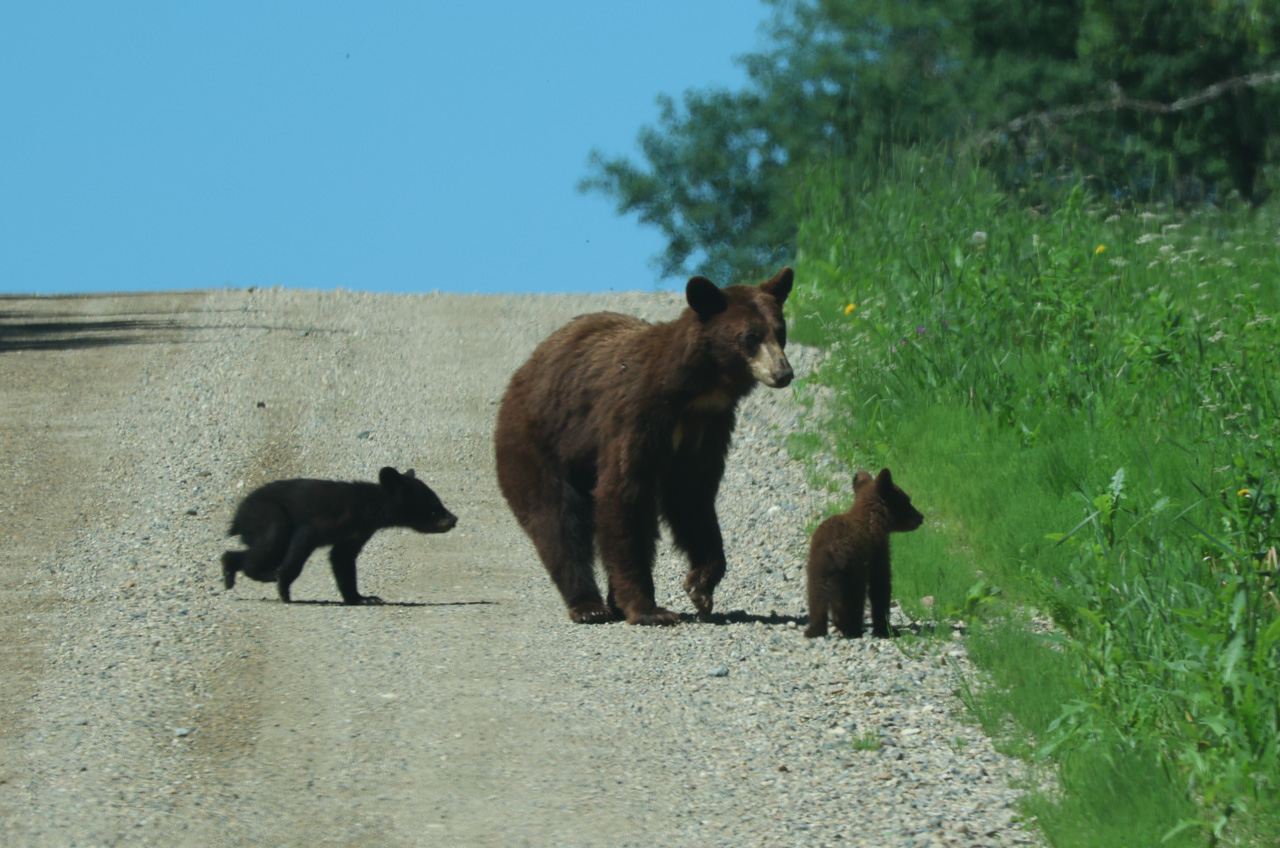
American Black Bears © Heidi Chan
At a crossing over Swanson Creek, we took another short walk to see what other species were present. Canada Jays were here, with a juvenile in tow. Yellow-rumped Warblers, Lincoln’s Sparrows and Cedar Waxwings added to the chorus, as well as a sneaky Wilson’s Snipe perched atop a dead spruce tree. Along the shore close to the bridge a beaver also made an appearance, and we were able to see the full body below the surface of the clear water, its front paws tucked under the body while the large back feet paddled.
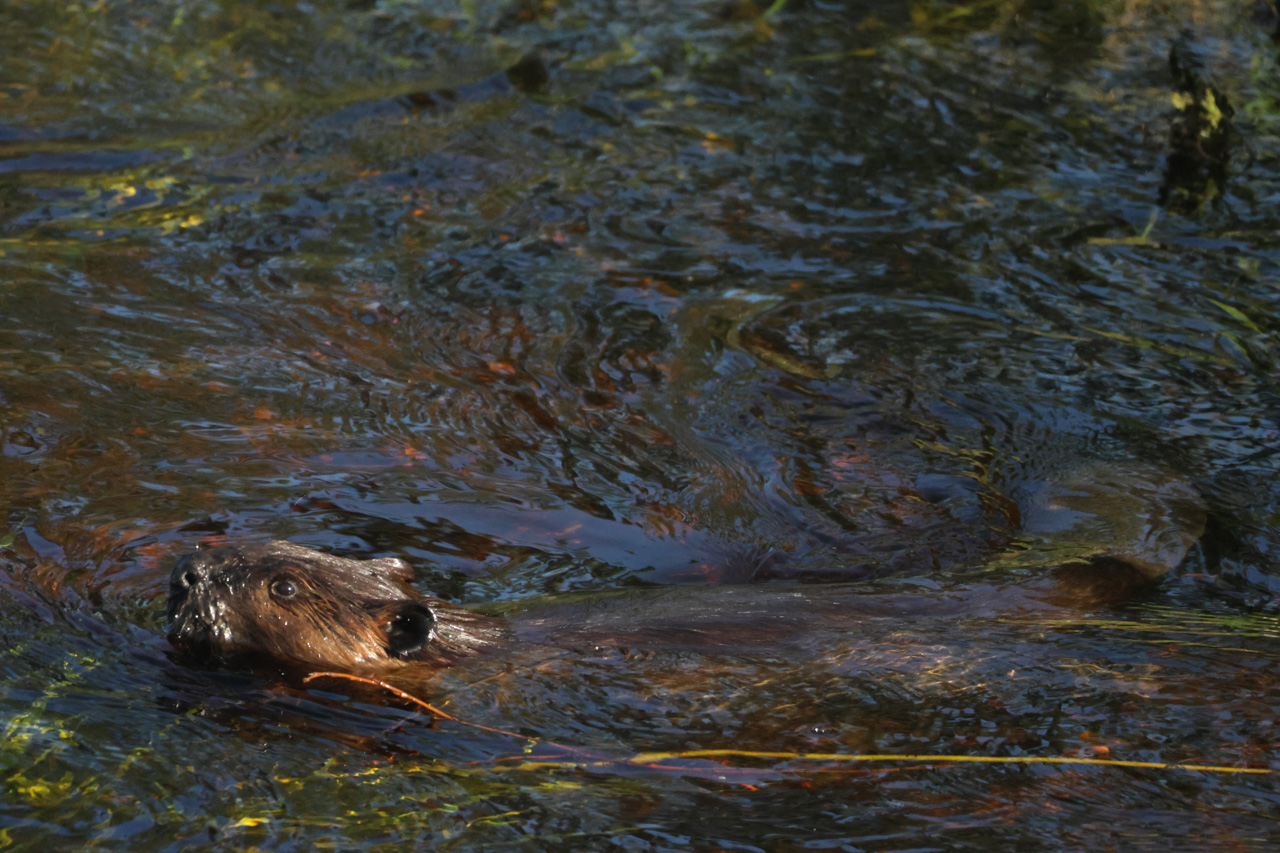
Canadian Beaver © Heidi Chan
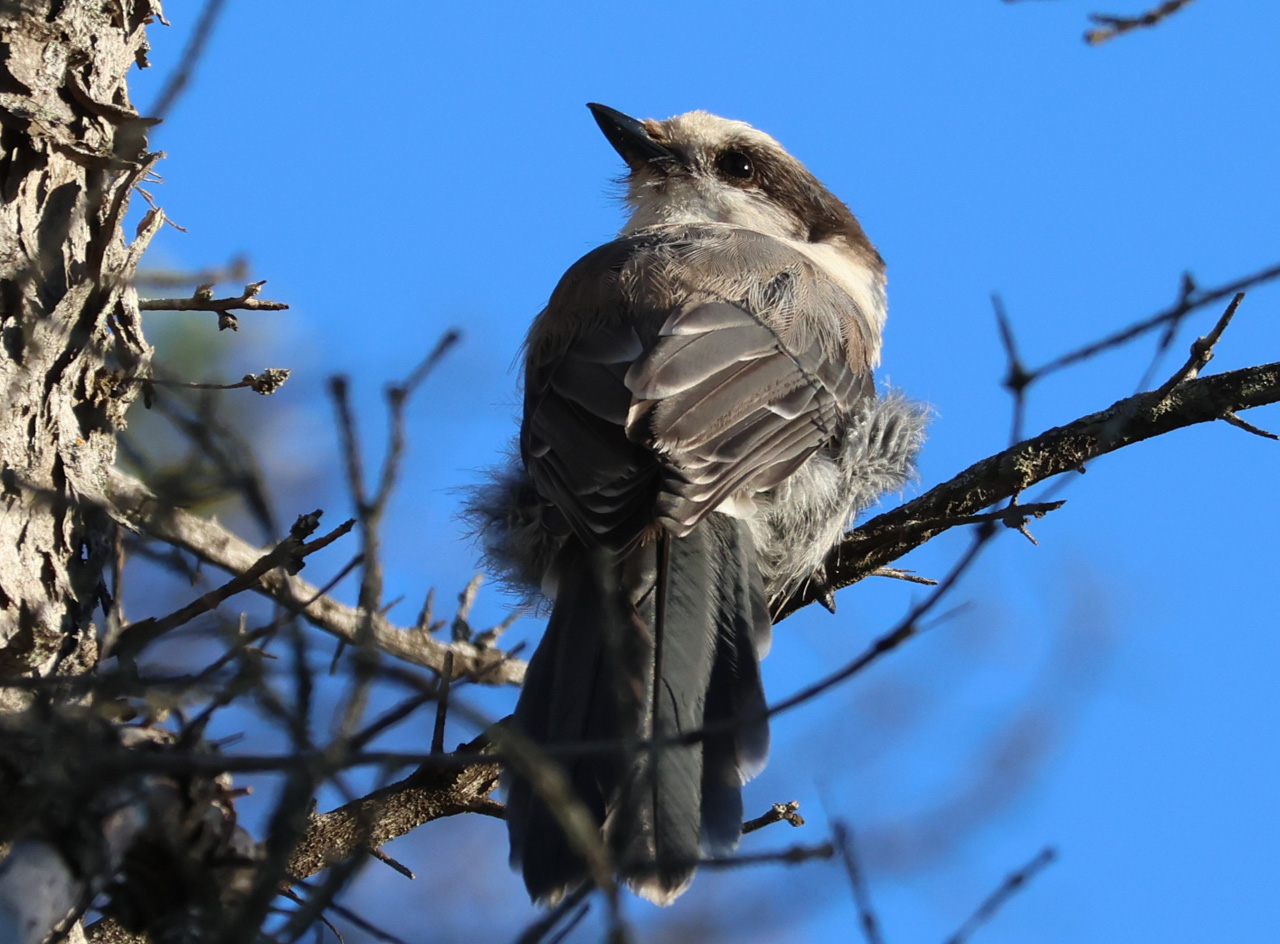
Canada Jay © Heidi Chan
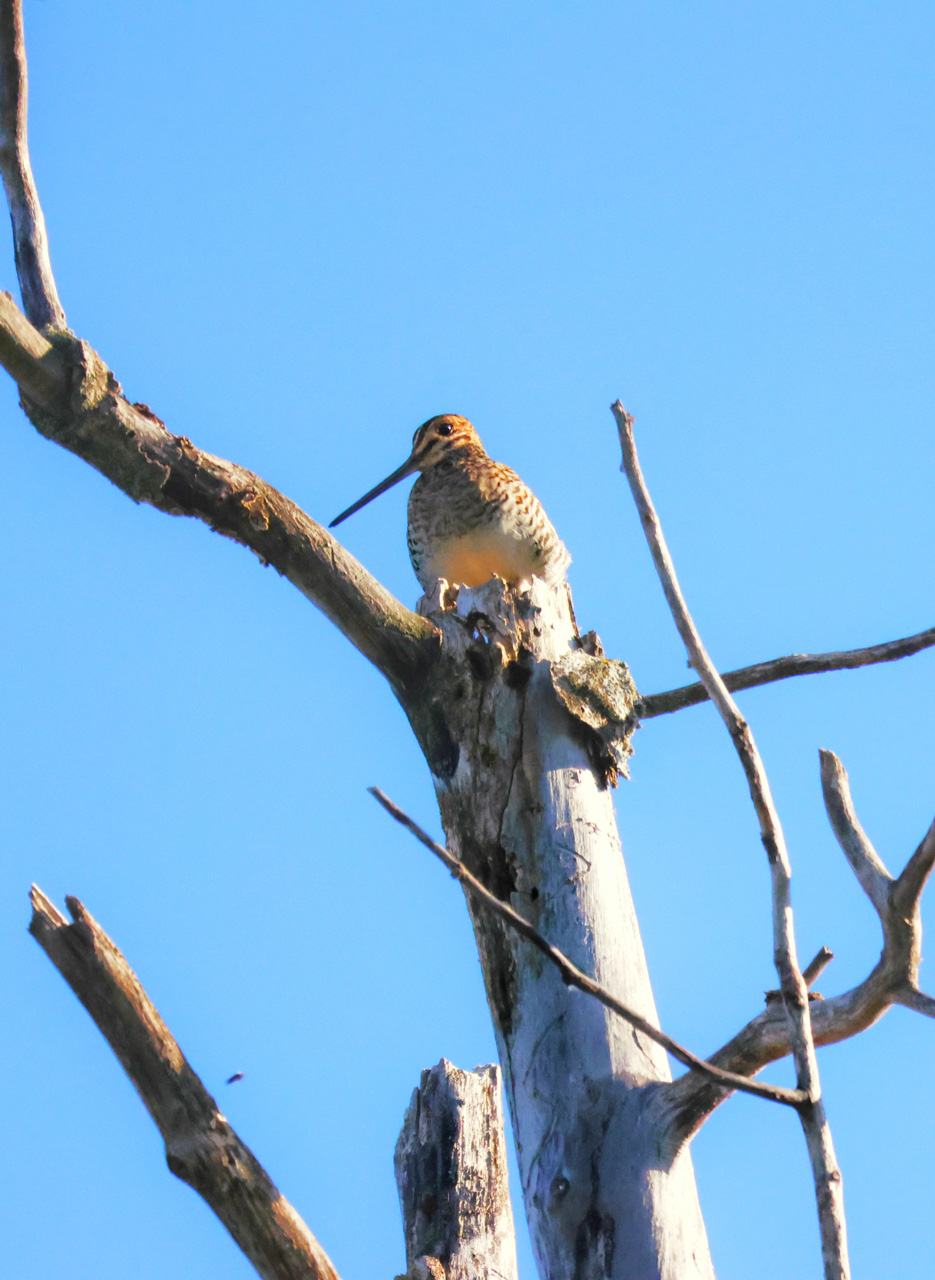
Wilson’s Snipe © Heidi Chan
After breakfast, we made our way down towards the Lake Audy Bison enclosure. Along the way we again found several black bears. These individuals were busy feeding in a soy bean field and included a distant mother and cub.
Sadly, due to recent flooding we were unable to visit the bison, as the road had completely washed out. So instead, we did a little walk along some pathways in the town of Wasagaming, which lies within the park. Some good birds are found here, with Blackburnian and Mourning Warblers being the highlights. Along the shore of Clear Lake, we were offered some close views of Common Loons, and beneath the surface were sever large Northern Pike.
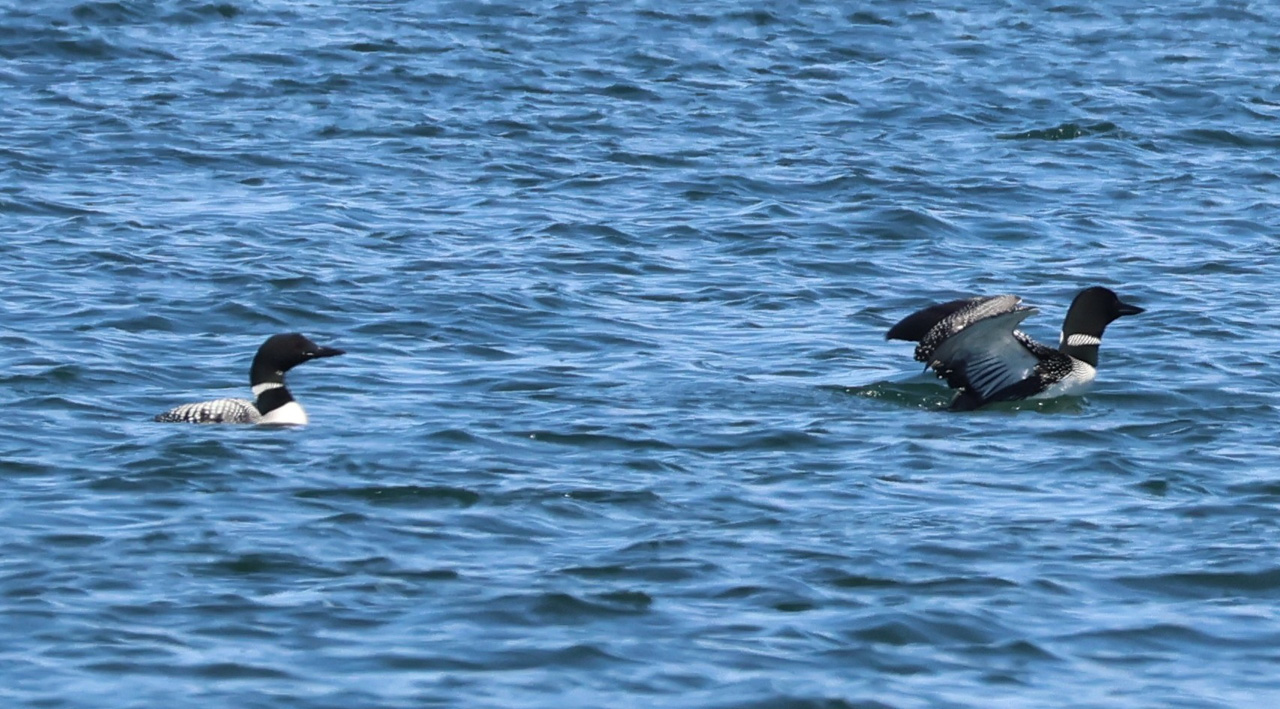
Common Loons © Heidi Chan
After lunch, we decided to take a break from the heat. Bird and mammal activity slows down at this time, so we planned to get back together later in the afternoon when things cooled down.
Reconvening, we took a little drive over to Grayling Lake in hopes of spotting some new birds, or perhaps a Moose. All was relatively quiet, though we managed to spot a Common Merganser on the far side of the lake.
Having had a quiet afternoon, we thought it would be good to again try a night drive along the highway in hopes to spot mammals coming out for the evening. We again were able to find some bears, particularly a large male foraging along the edge of the forest. A young Coyote was also found, and we watched as it hunted in the ditch next to the road.
Day 4
After a couple late nights, it felt good to sleep in a little. After having breakfast, we set out to do some birding, again making our way along 19, as it was by far the most productive route around the park. The success continued, and addition to the regular boreal birds, we also added Cooper’s Hawk and Alder Flycatchers along an open river crossing – classic habitat for these species.
Further up, we also came upon a mixed flock of passerines, among them several warblers, Nashville, Black-and-white, Chestnut-sided and Yellow-rumped Warblers, Ovenbirds and a Blue-headed Vireo.
Closer to the east border of the park, there is a lookout that shows the elevation changed between Riding Mountain and the surrounding area. It is quite a stark contrast, as Manitoba is often seen as a “flat” province. With the air warming, thermals also start to form, and this can be a great place to watch for raptors hitching a ride on the thermals. Unsurprisingly then, we happened upon some Broad-winged Hawks circling up out of the forest. Lower down, we also managed to find (though admittedly with very low difficulty) a quartet of Purple Finches.
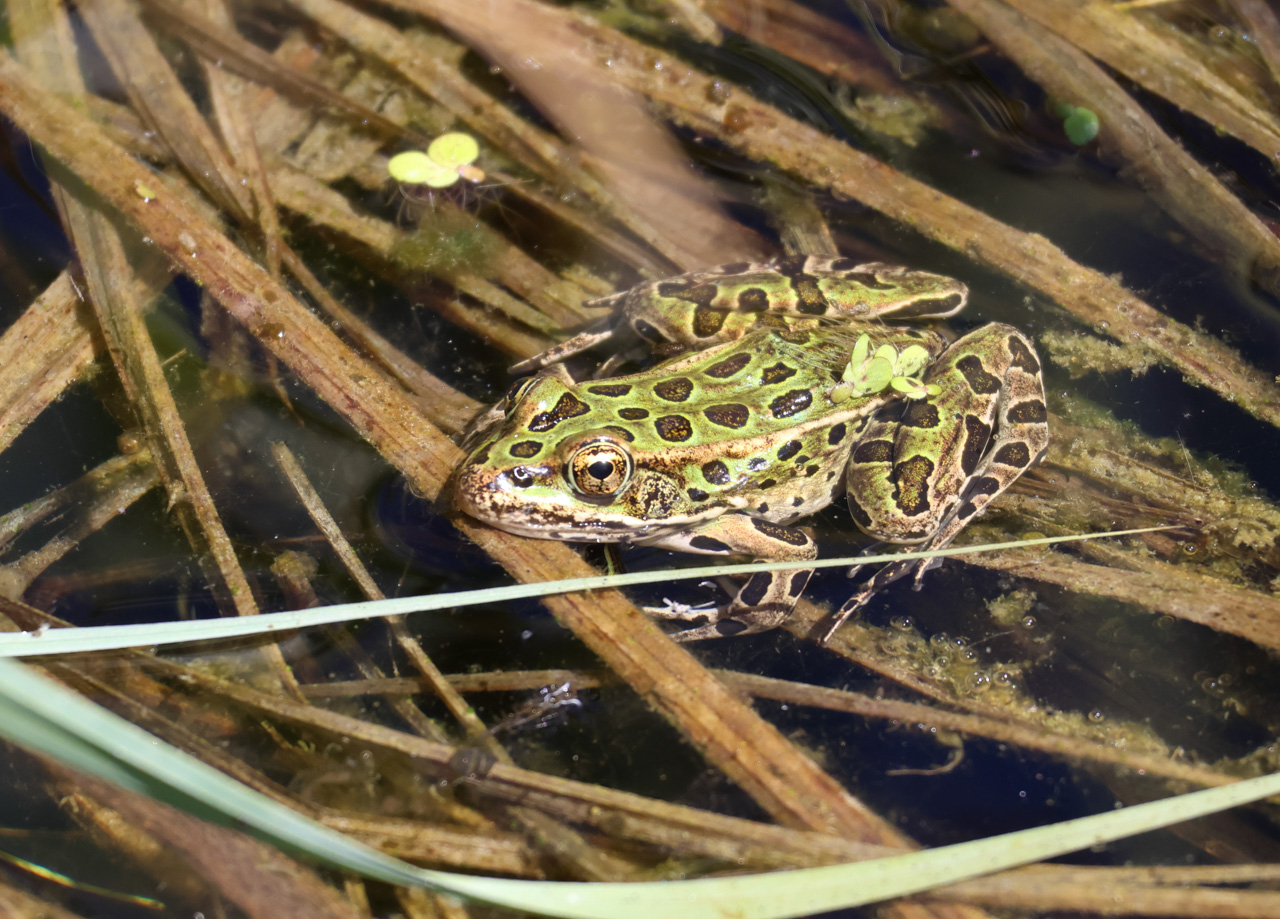
Northern Leopard Frog © Heidi Chan
Making our way back to town, we had a quick picnic lunch, after which we did a walk at Ominik Marsh. Swamp Sparrows and Common Yellowthroats were actively defending their territories, and below Northern Leopard Frogs basked in the sun, ready to snatch up prey.
Not long into our walk, an American Ermine appeared behind us on the trail, in its mouth a Meadow Vole it had just dispatched. Shortly after, we also happened upon a resident pair of Trumpeter Swans, their five cygnets neatly in a row between them as they paddled across the lake. Brown Creepers were present in the spruce trees along the lake, as were White-throated Sparrows. The biggest surprise of all was when a beaver stopped briefly on the path in front of us, carrying a large branch it had just cut down!
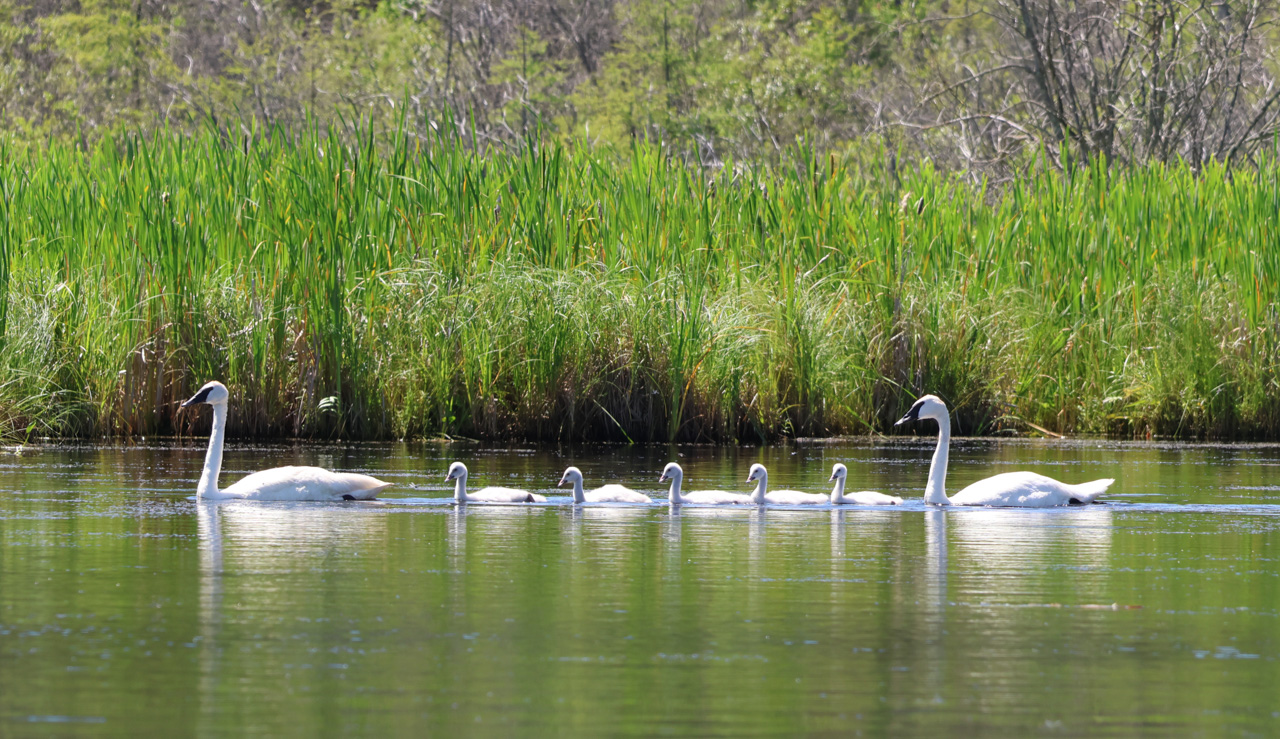
Trumpeter Swans © Heidi Chan
Following dinner, we went for our last evening drive. Aside from the abundance of Snowshoe Hares, we were able to locate some beavers, as well as a single Solitary Sandpiper. The best part of the drive came from a Spruce Grouse on the road. Just as curious of us as we were of it, the grouse perched up beside the van, while its chicks foraged below.
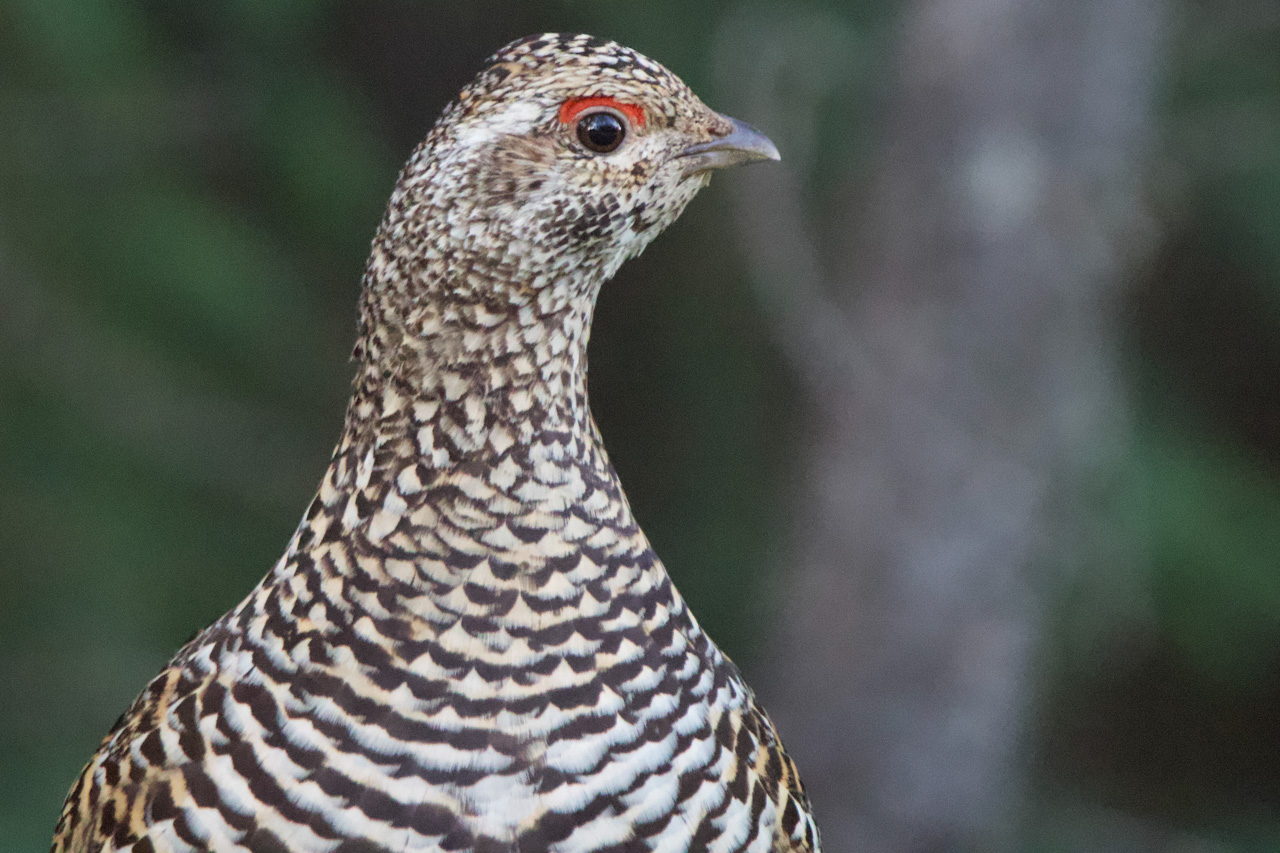
Spruce Grouse © Josh Dewitt
Day 5
Our plan for this day was to make our way down towards Minnedosa, where we would have breakfast, then afterwards search around the “potholes” for marsh life. We were briefly held back though, as a couple Boreal Chickadees appeared in the trees along the hotel parking lot. At times very common in the park, we had nonetheless struck out on this species until now, so they were a nice addition to our growing bird list.
Our post-breakfast drive along the potholes was good for adding more bird species as well, with several ducks to be found which hadn’t been spotted at the Shoal Lakes. Lesser Scaup are common here, and we also happened upon several Redhead as well. There were also familiar faces, Black Terns and Ruddy Ducks greeted us at nearly every water body, and we were happy to also find quite a few Red-necked and Pied-billed Grebes as well.
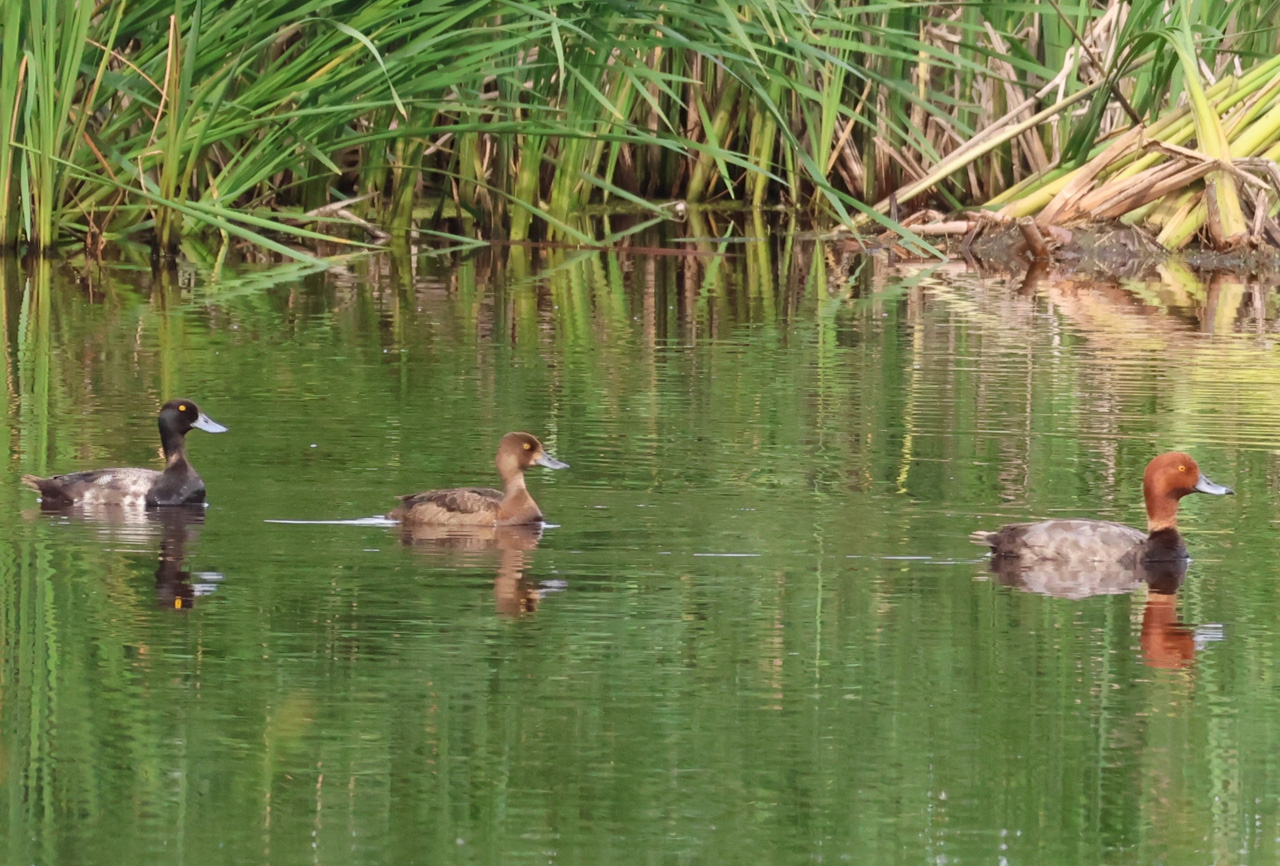
Lesser Scaup & Redhead © Heidi Chan
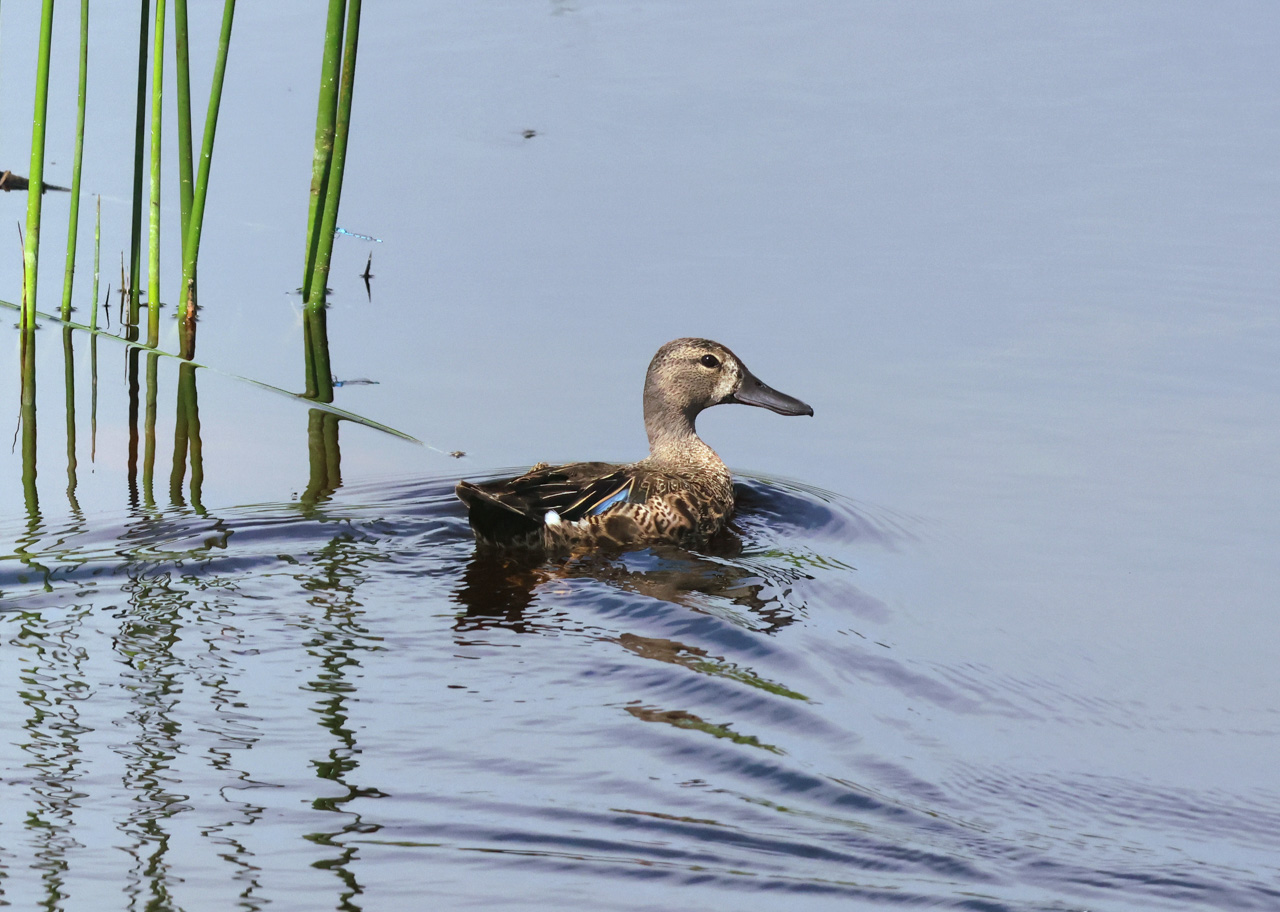
Blue-winged Teal © Heidi Chan
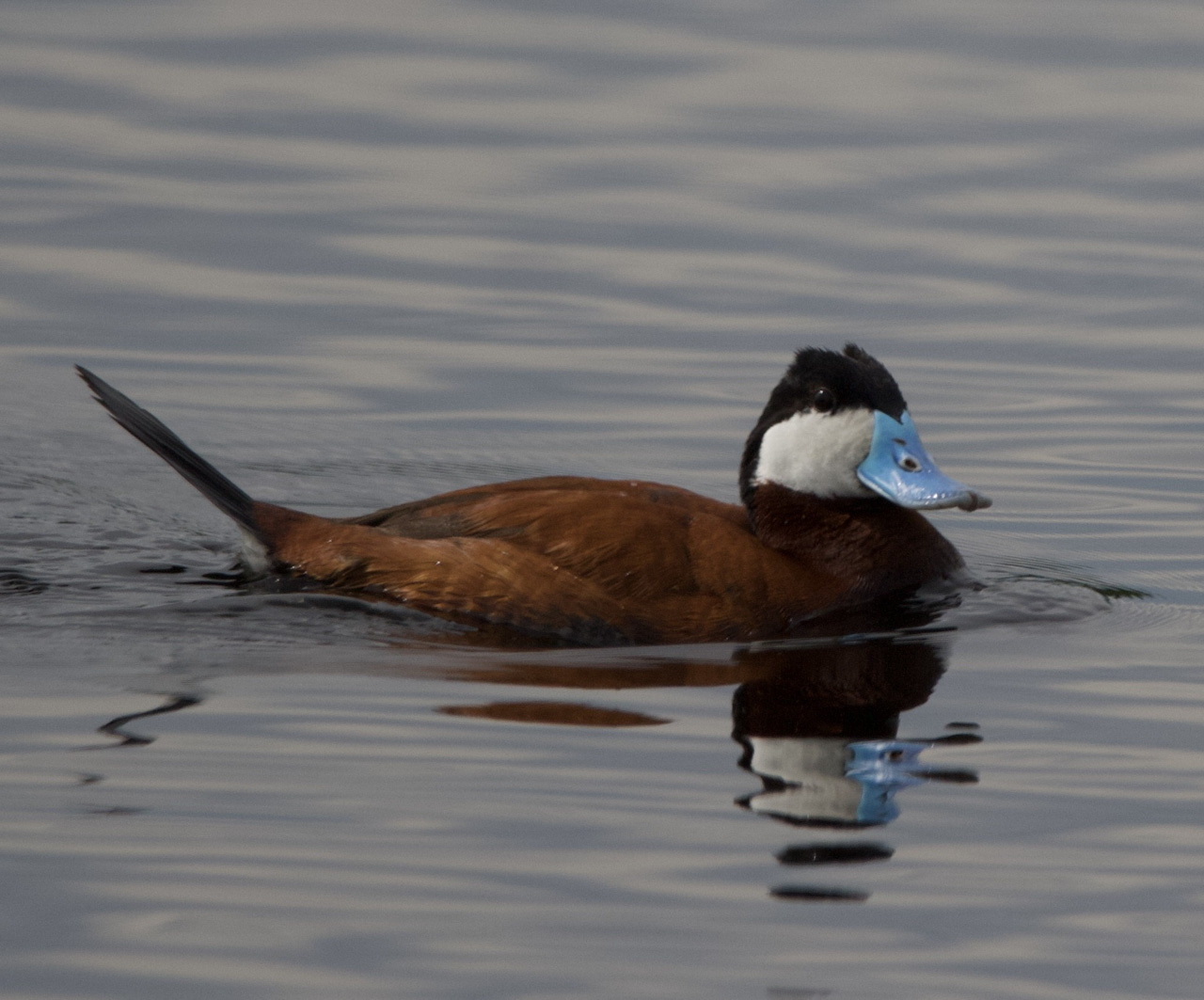
Ruddy Duck © Josh Dewitt
Heading west, we stopped over at Oak Lake for a picnic lunch. It would be here that we would get many White-faced Ibis – about a dozen of them! Eastern Fox Squirrels were also around, as this is a fairly reliable place for them, and no doubt campers feed them.
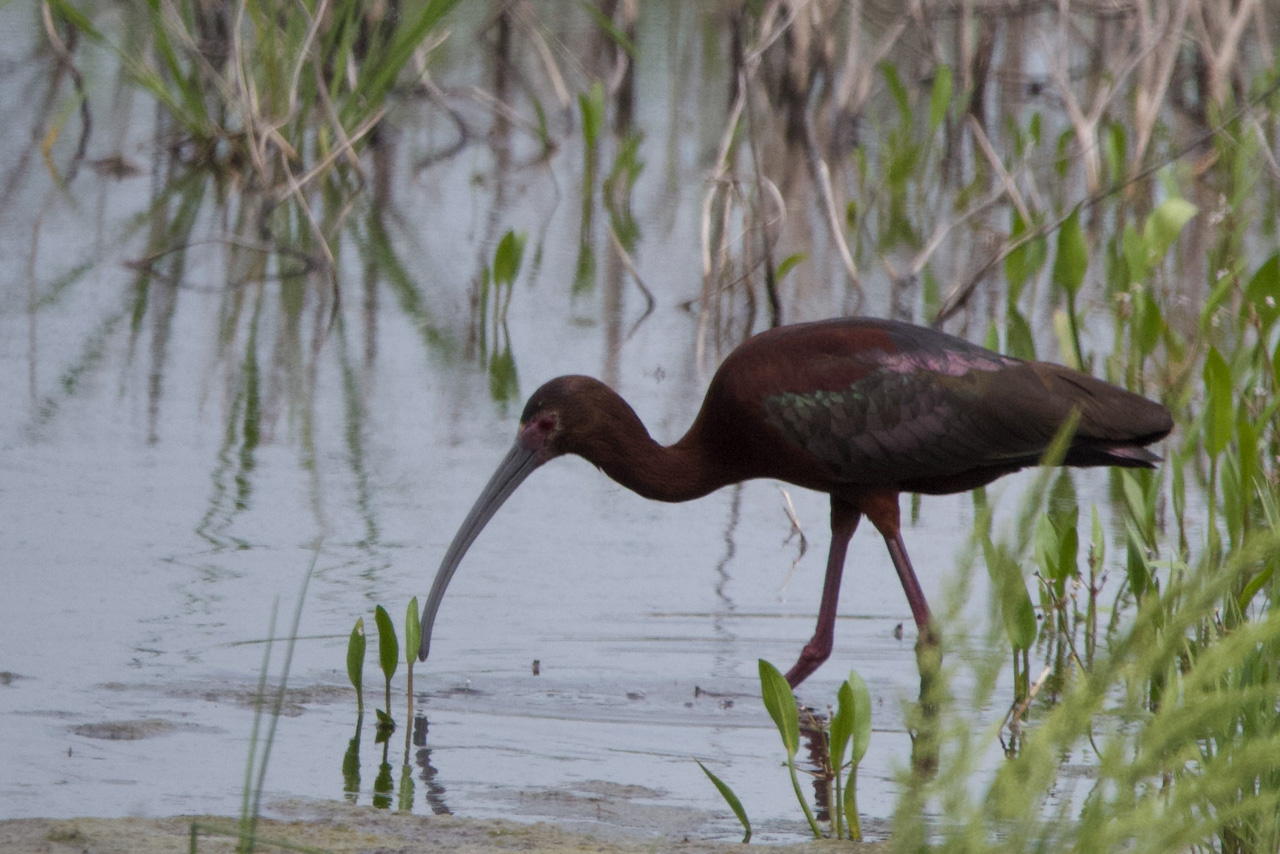
White-faced Ibis © Josh Dewitt
We switched over to the south side of the lake, which at times allows us closer views of ibis. While they did make a few flyovers, truck activity seemed to keep them out of the ditches. The real stars of the show were a couple Nelson’s Sparrows. Normally secretive and hard to spot, we were blessed with a couple close up looks at this species.
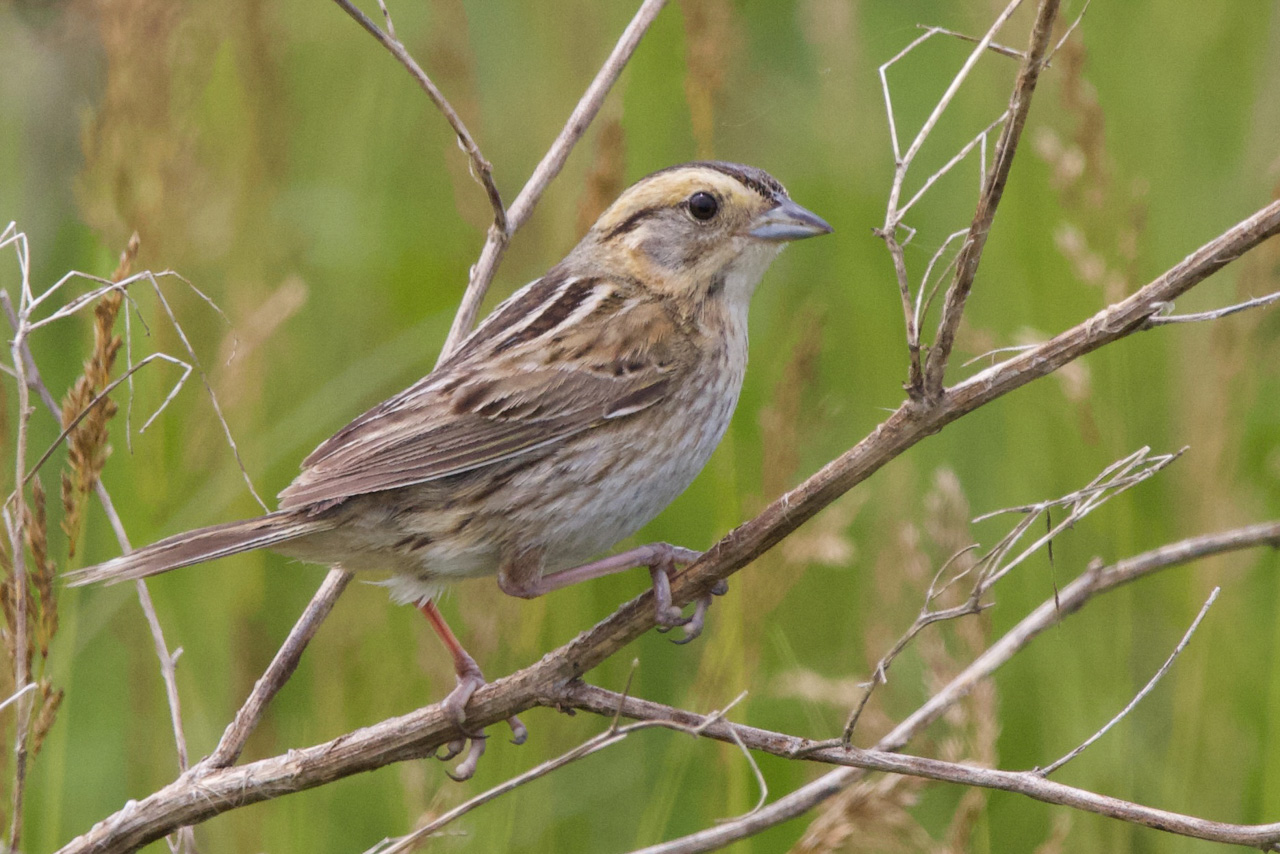
Nelson’s Sparrow © Josh Dewitt
We filled in the rest of our drive by stopping at several more potholes, finding a few Wilson’s Phalaropes along the way, as well as a few Horned Grebes before arriving in Melita and heading for dinner.
Day 6
In the prairie, early starts are often key in avoiding the afternoon heat and take advantage of bird and mammal activity. Coulter Park is always a great place to start, but before we could even get down there, we were able to find several interesting species. Just outside Melita, we happened upon a Mule Deer (“Donkey” Deer). This species has a curious method of moving when escaping predators, called stotting, where it lifts off the ground with all four legs at once. We chuckled as the deer bounced through a canola field, its body popping up above the yellow flowers with every jump.
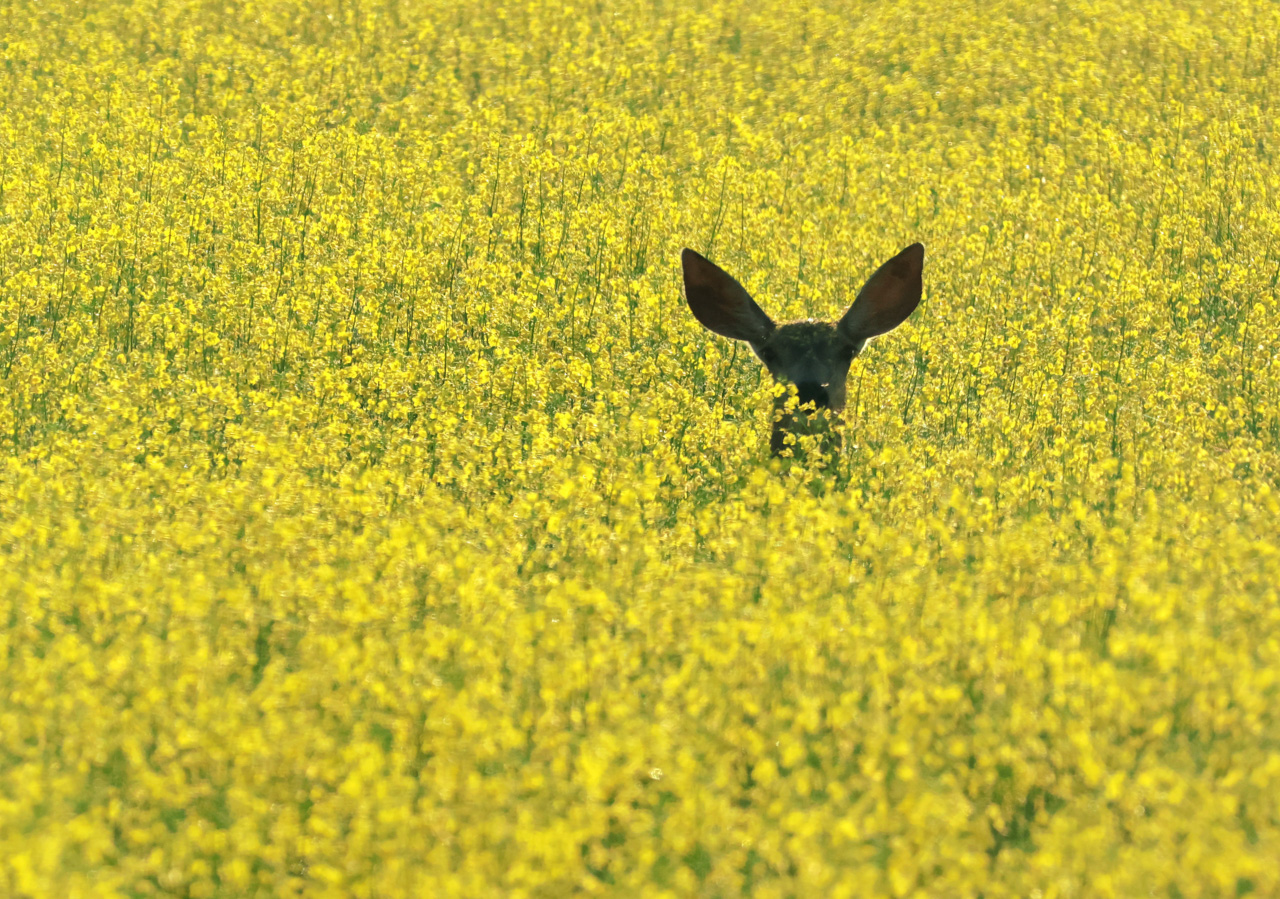
Mule Deer © Heidi Chan
Up the road we found a Wild Turkey, and then a curious Sharp-tailed Grouse. The grouse stayed up on the road despite us getting out to view it, quite the opposite of their usual skittish nature. Within Coulter Park, we took a short walk along the road in the bur oak forests that line the Antler River, a common feature in coulees like this. Within the trees we could hear Yellow-throated Vireos and Orchard Orioles, with Gray Catbirds and Brown Thrashers calling from low bushes nearby.
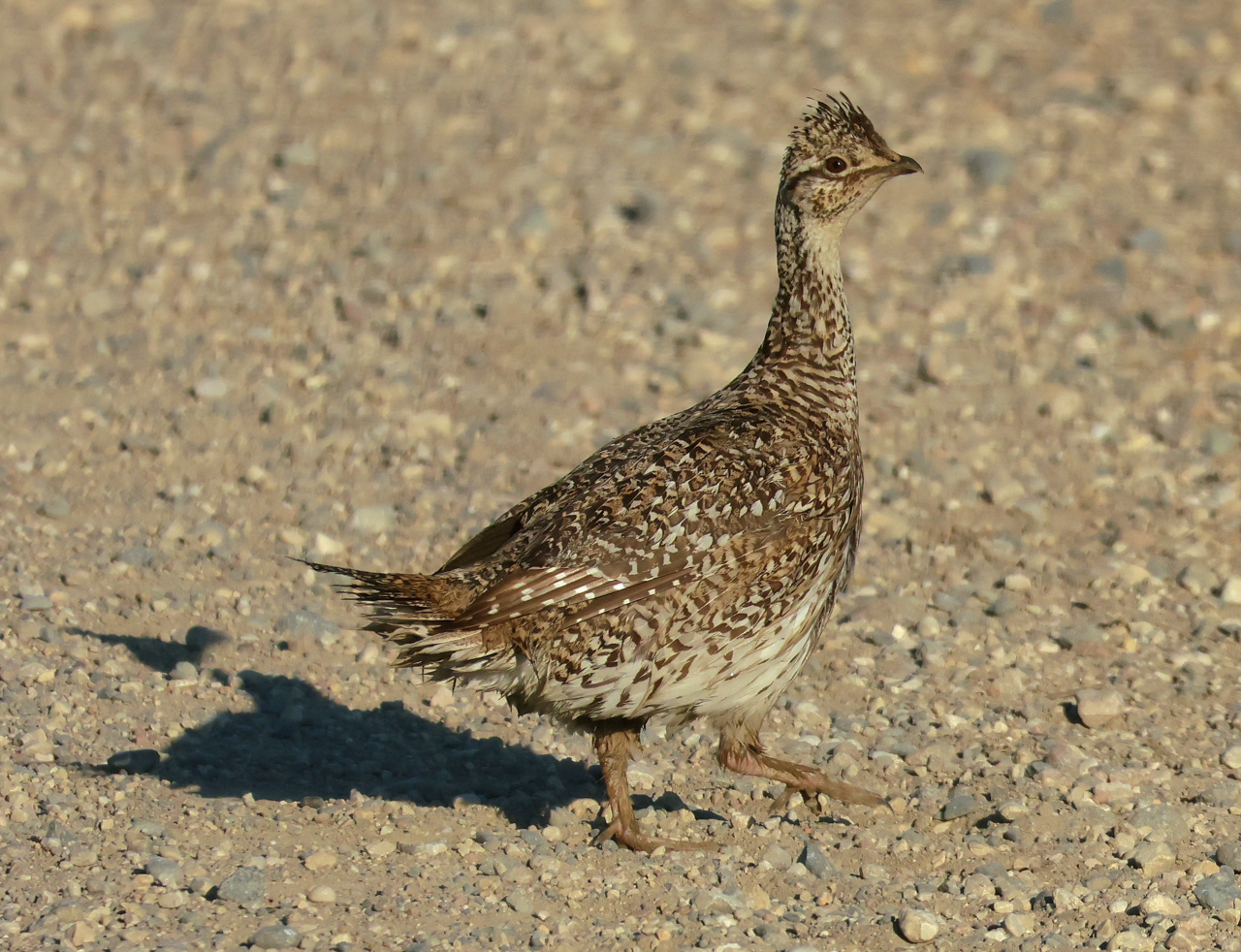
Sharp-tailed Grouse © Heidi Chan
A bridge over the river was alive with Cliff Swallows, busy tending to their young. Across the river sits a historical building, and here we were happy to see a pair of Say’s Phoebes also feeding some fledglings.
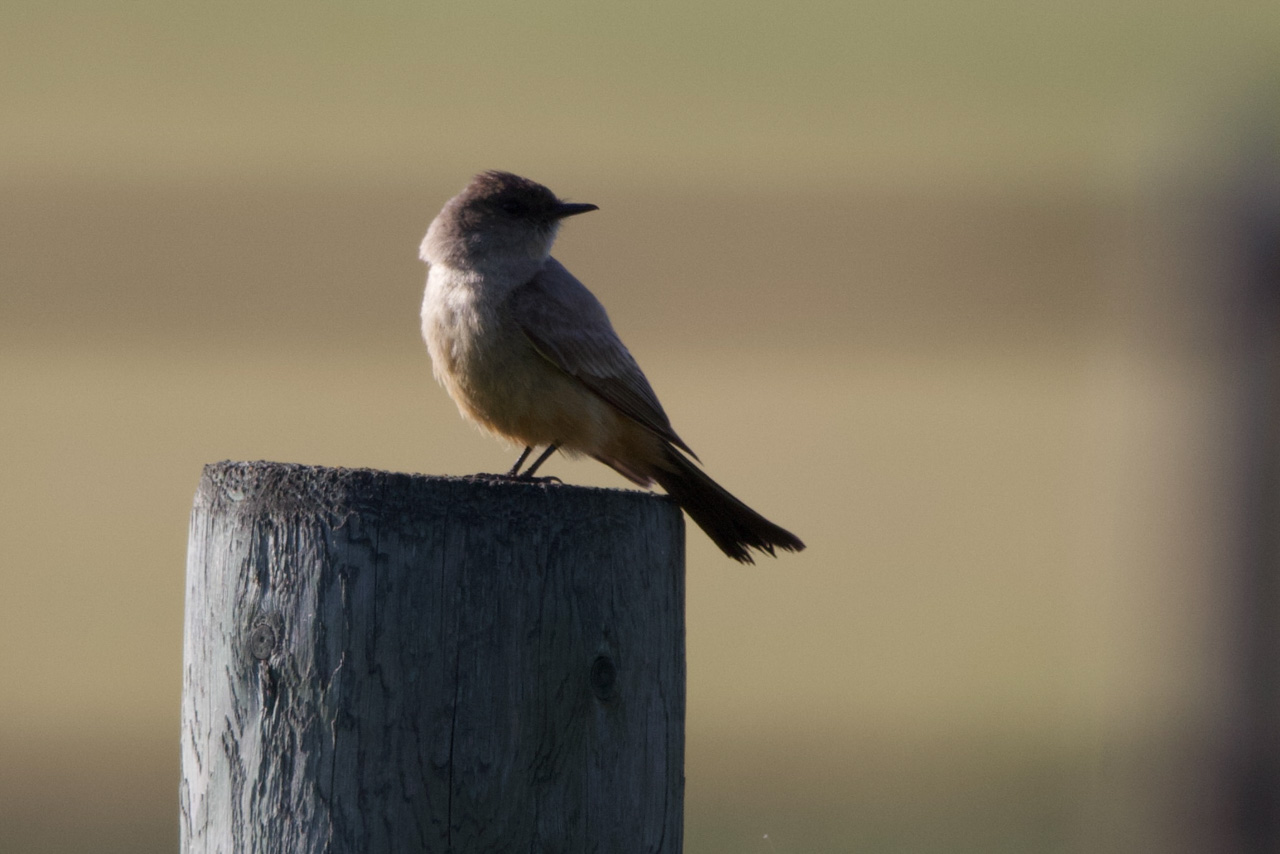
Say’s Phoebe © Josh Dewitt
From here we then made our way over to a location known locally as the “Baird’s Sparrow Spot”, seeing a couple Ring-necked Pheasants along the way – a common sight in this part of the province. The Baird’s escaped us, but we were happy to get some great looks at several Chestnut-collared Longspurs here, a species at risk. Males floated up as they sang, and then dropped down into the grass. Occasionally one would perch up higher, and they would be very obvious as their black colouration on their bellies would stand out against the tan vegetation in the field. We were also able to find some Grasshopper Sparrows here, and Upland Sandpipers perched on top of the fence posts.
Our next targets would prove to be a little more difficult to locate. Ferruginous Hawk was a big one, and it seemed every hawk we saw turned out to be a Swainson’s. We were given a tip on a Ferruginous Hawk nest, so we set off to find it. Along the way we passed through some excellent grassland habitat, so decided to stop and listen for a brief while. This was very quickly rewarded with a singing Sprague’s Pipit, though this species is very difficult to get eyes on, especially when they are display up high against a cloudless sky. Our hawk search proved fruitful as well, and we spent some time watching a couple near-fledglings as they devoured a Richardson’s Ground Squirrel, a favourite prey of this large hawk. As we were heading up the road to turn around, we were also lucky enough to have a brief encounter with an American Badger, another important predator of ground squirrels.
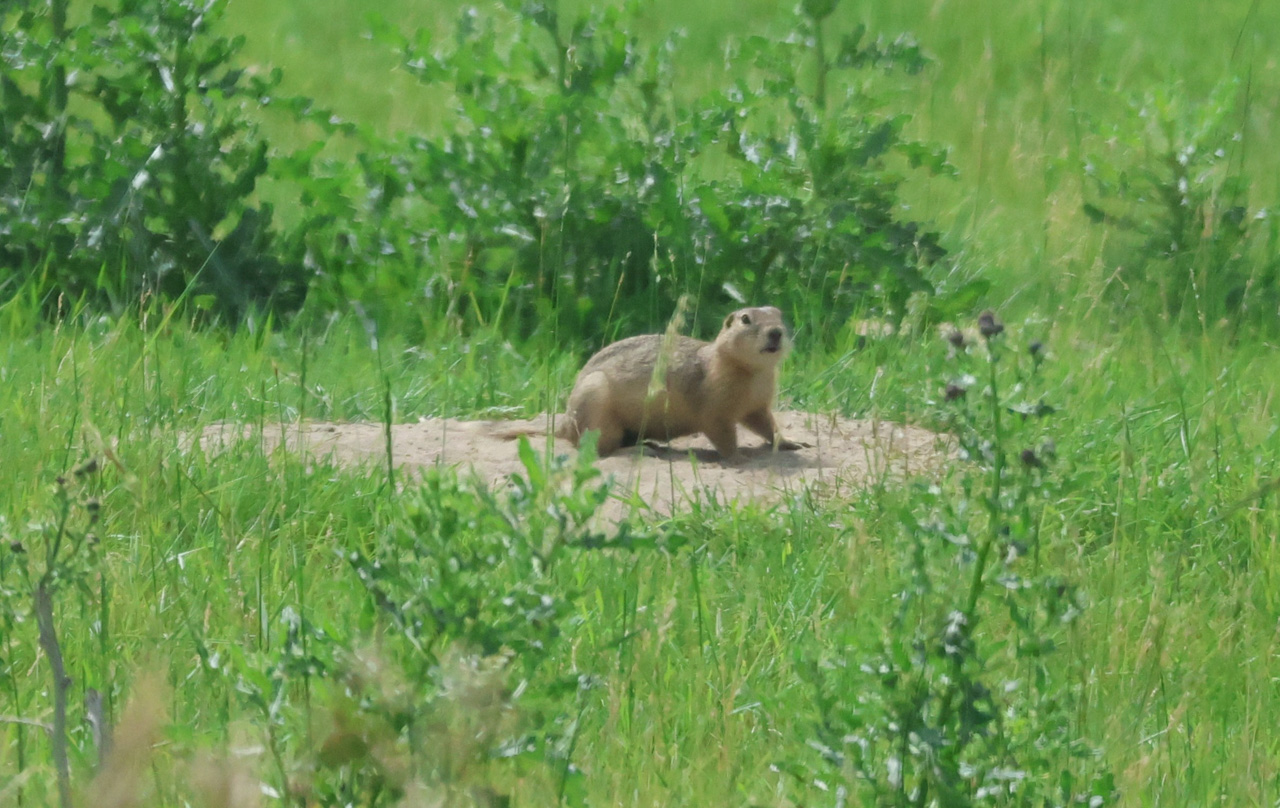
Richardson’s Ground Squirrel © Heidi Chan
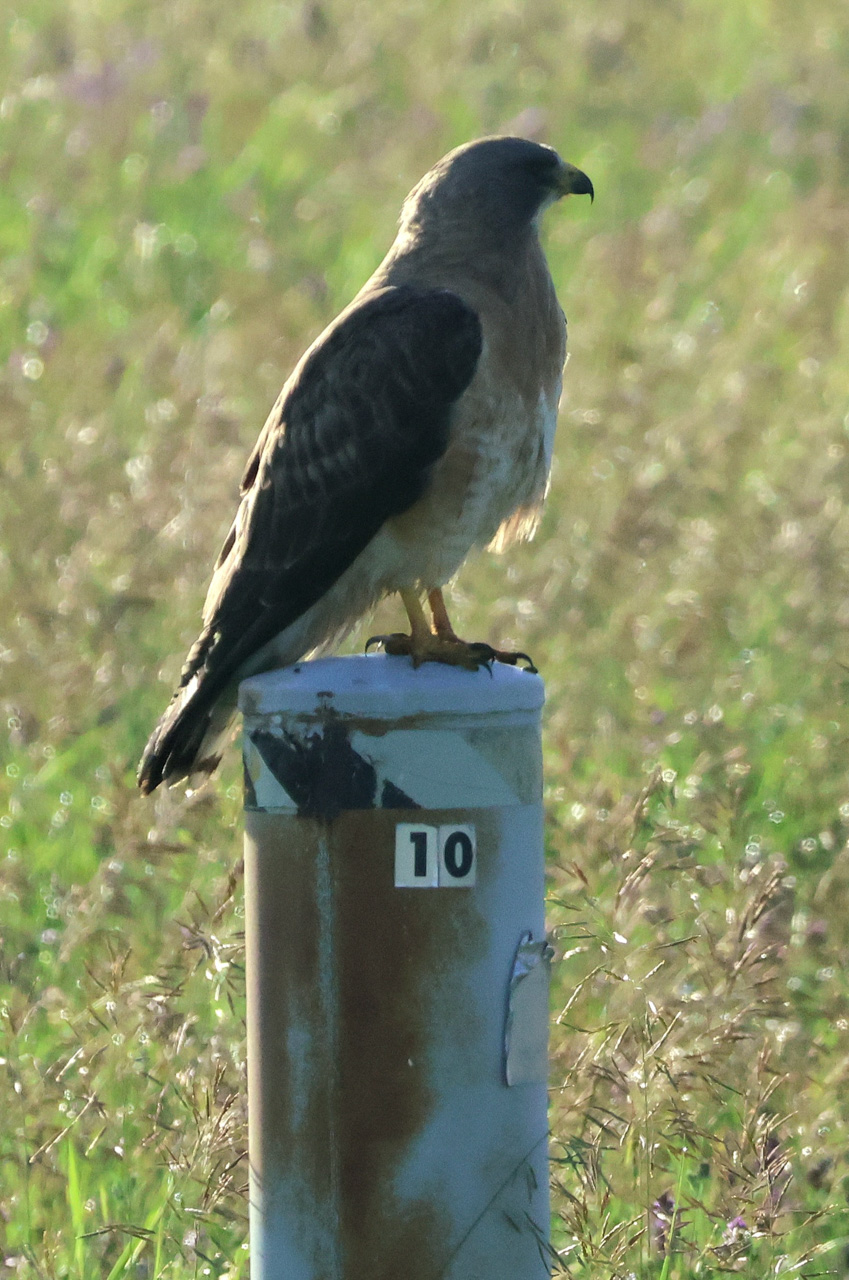
Swainson’s Hawk © Heidi Chan
We turned back to Coulter Park for lunch, after which we went back up north. It would be here that we’d have on of the greatest surprises of the tour, and absolutely on of the most memorable moments in a tour full of them. Perched on a fence post along the road was a Burrowing Owl, a species which is endangered locally and extremely hard to find in the province. It was very confiding, and allowed close views, seemingly unphased by our presence.
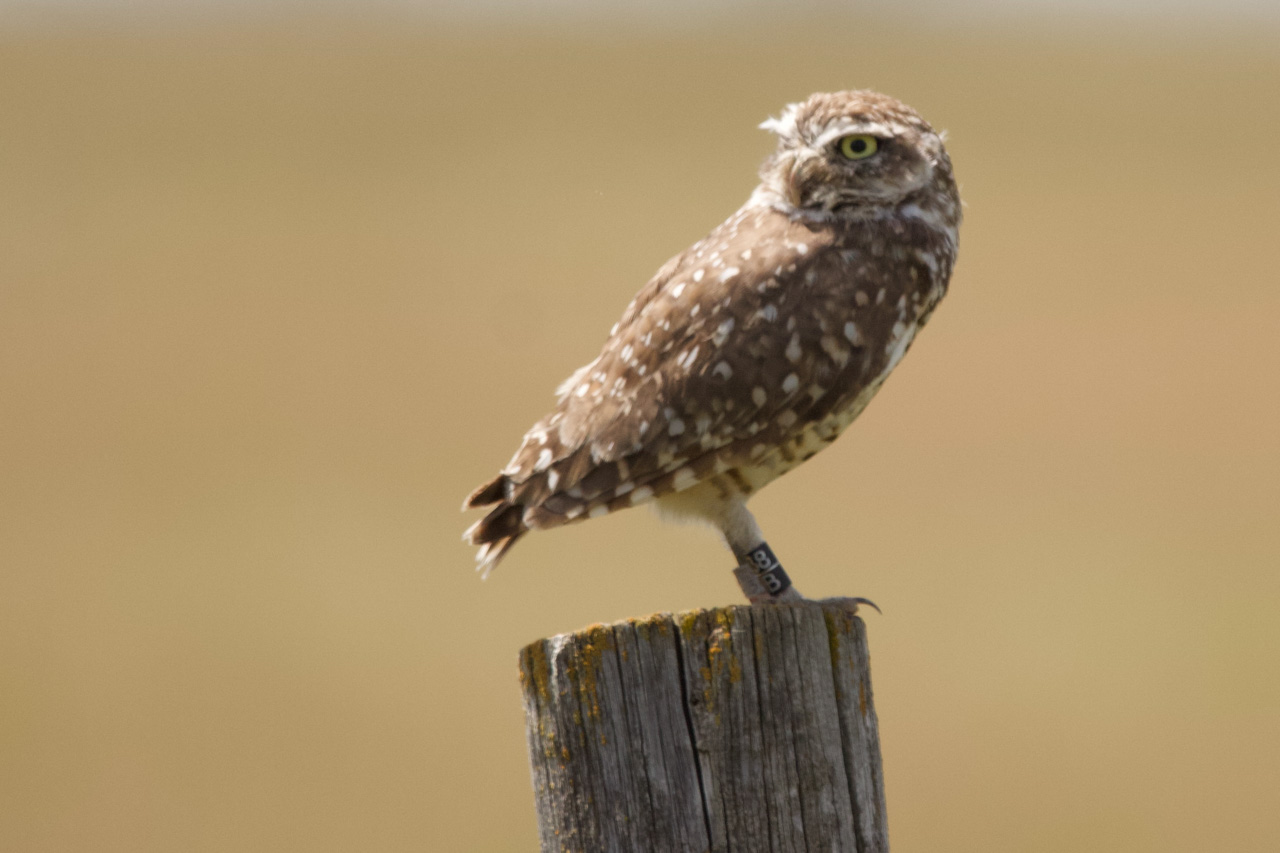
Burrowing Owl © Josh Dewitt
Bubbling with excitement, we wondered how we could top this. Just around the corner we hand yet another surprise, a lone Sandhill Crane feeding in a wet area of a grainfield just off the road. Not nearly as rare as the owl, but certainly a highlight!
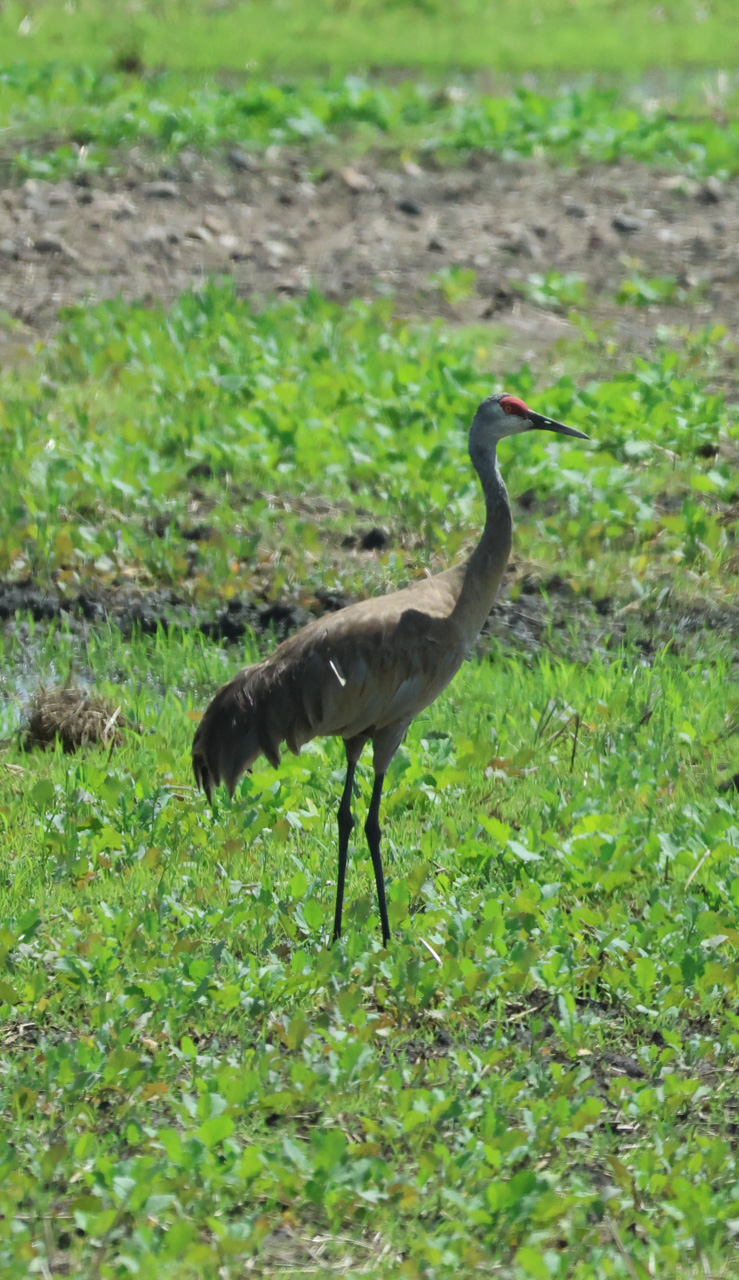
Sandhil Crane © Heidi Chan
The next and last stop was the head of the birding trail, just west of Melita. The icing on the cake for an already fantastic day full of great birds and other wildlife was a lone male Lazuli Bunting. This species is rare in Manitoba, popping up as an occasional vagrant that sometimes sets up territory here in the southwest.
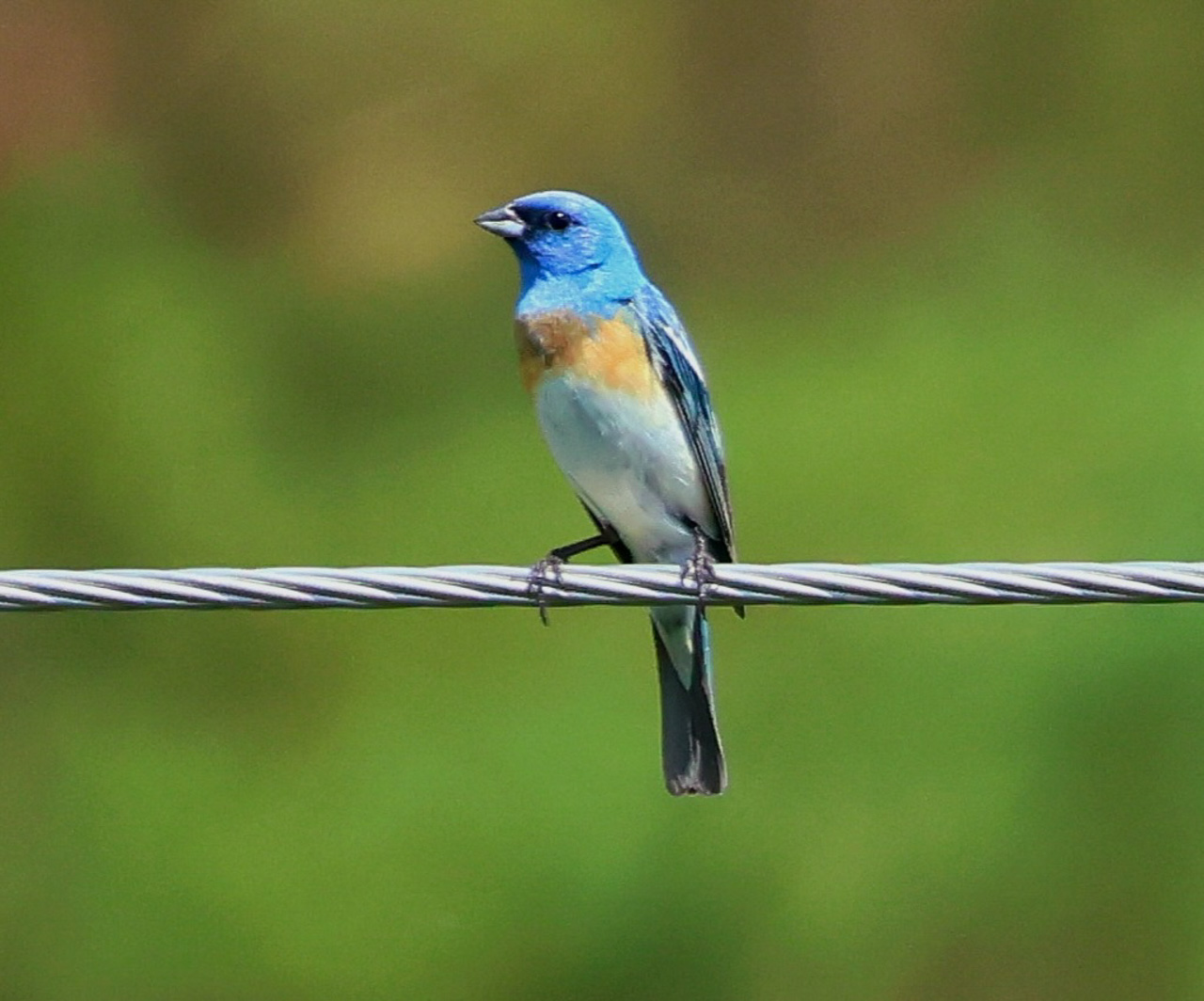
Lazuli Bunting © Heidi Chan
We finished up our fantastic birding at Chicken Chef, ready for the next day where we would return to Winnipeg.
Day 7
With an early start to our day, we headed back east towards Winnipeg. The marshes along the west side of Whitewater Lake would be our first stop, and the low water and exposed mud in some places north of the town of Deloraine ended up being very good for shorebirds. Present here were a good number of Stilt Sandpipers, likely having finished their breeding season up north and were now on their migration south. With them were also several groups of Long-billed Dowitchers, Greater Yellowlegs, a lingering pair of Baird’s Sandpipers and a multitude of Franklin’s Gulls.
Not to be outdone were a number of Soras, often times calling from just within the reeds in front of us. Eared Grebes seemed just as curious of us, and came in for a close look. Within town we also were finally able to add Eurasian Collared-Dove to our count, a species that is generally restricted to towns.
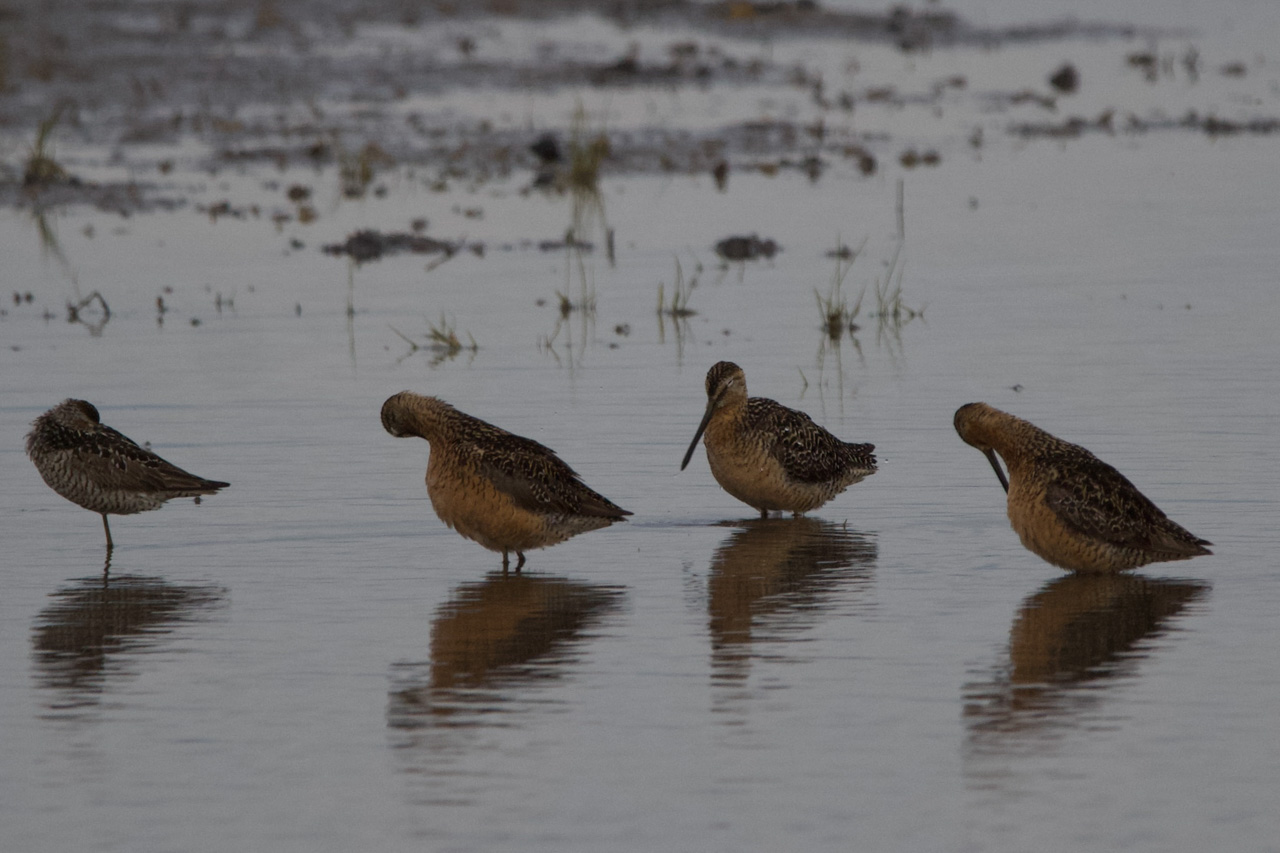
Long-billed Dowitchers and Stilt Sandpiper © Josh Dewitt
Further east we added to this over a hundred Wilson’s Phalaropes, swirling in the water, with American Avocets and Marbled Godwits feeding along the water’s edge.
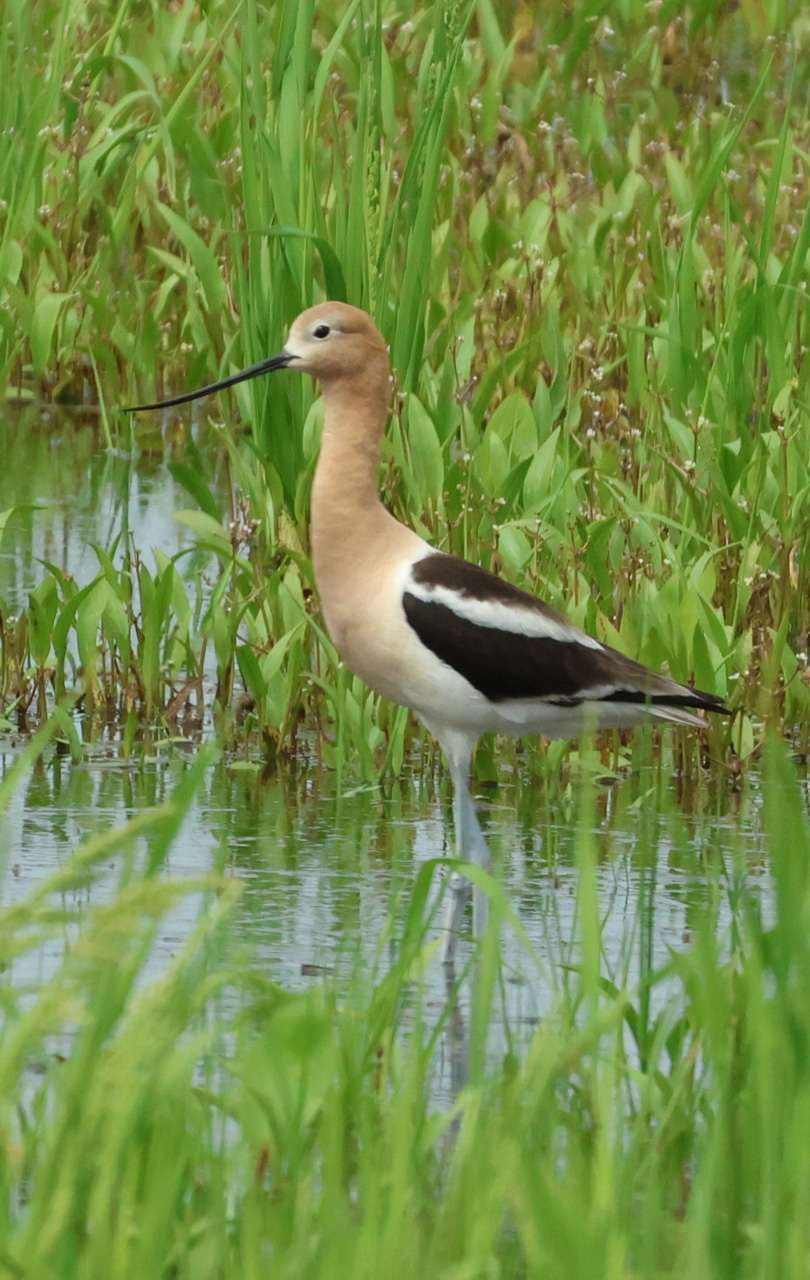
American Avocet © Heidi Chan
Not long after we also made a stop alongside a brush pile north of the lake. Calling from within a small willow bush was, perhaps unsurprisingly, a Willow Flycatcher.
We then made our way over to Criddle-Vane Homestead Provincial Park. This park was our best bet for Mountain Bluebird, though they proved a little tricky on this day. Many Eastern Bluebirds were present, and the two species often forage for prey in close proximity. One bird seemed to be different, and after some deliberation was determined to indeed be a female Mountain Bluebird. Not to be outdone were a handful of Lark Sparrows, and several Vesper Sparrows as well.
We then made it back to Winnipeg as quickly as possible, making a brief stop for lunch along the way.
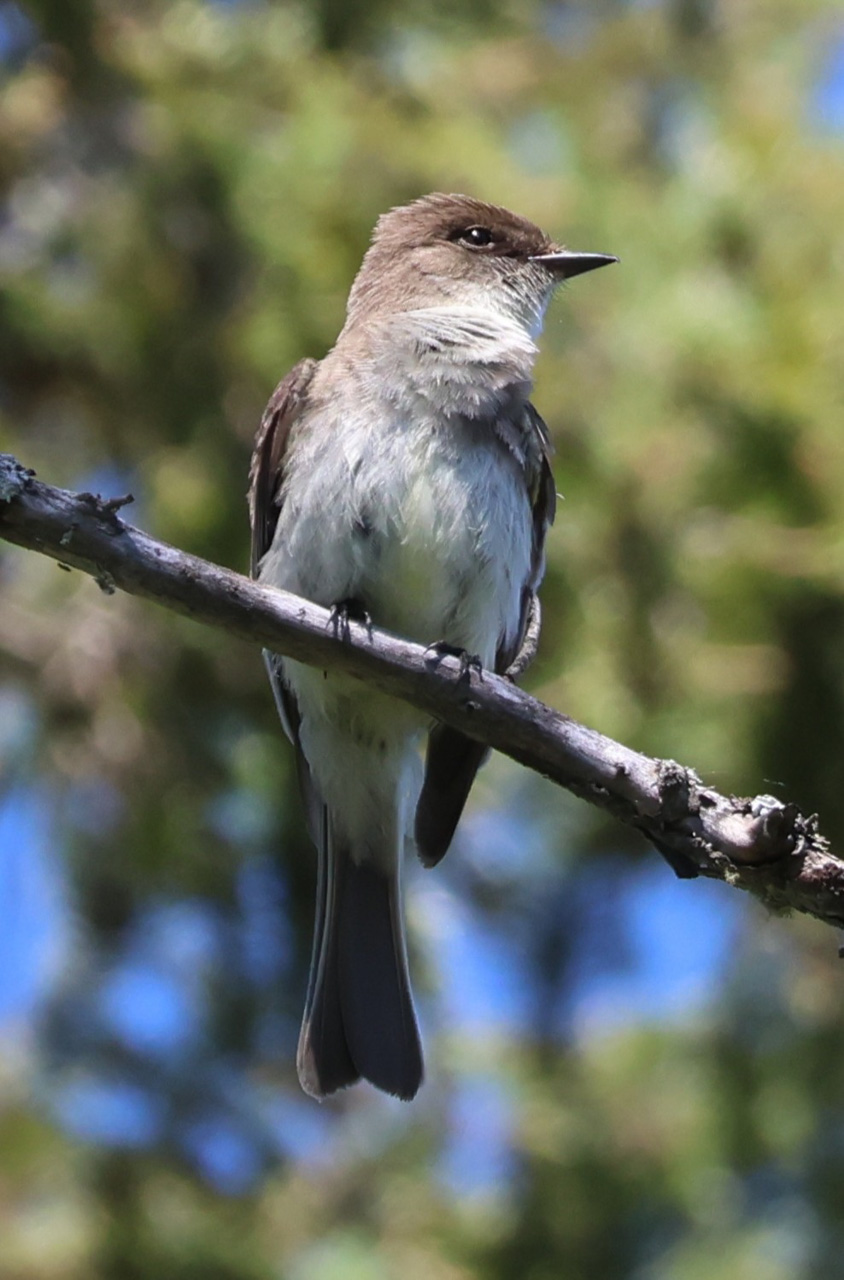
Eastern Phoebe © Heidi Chan
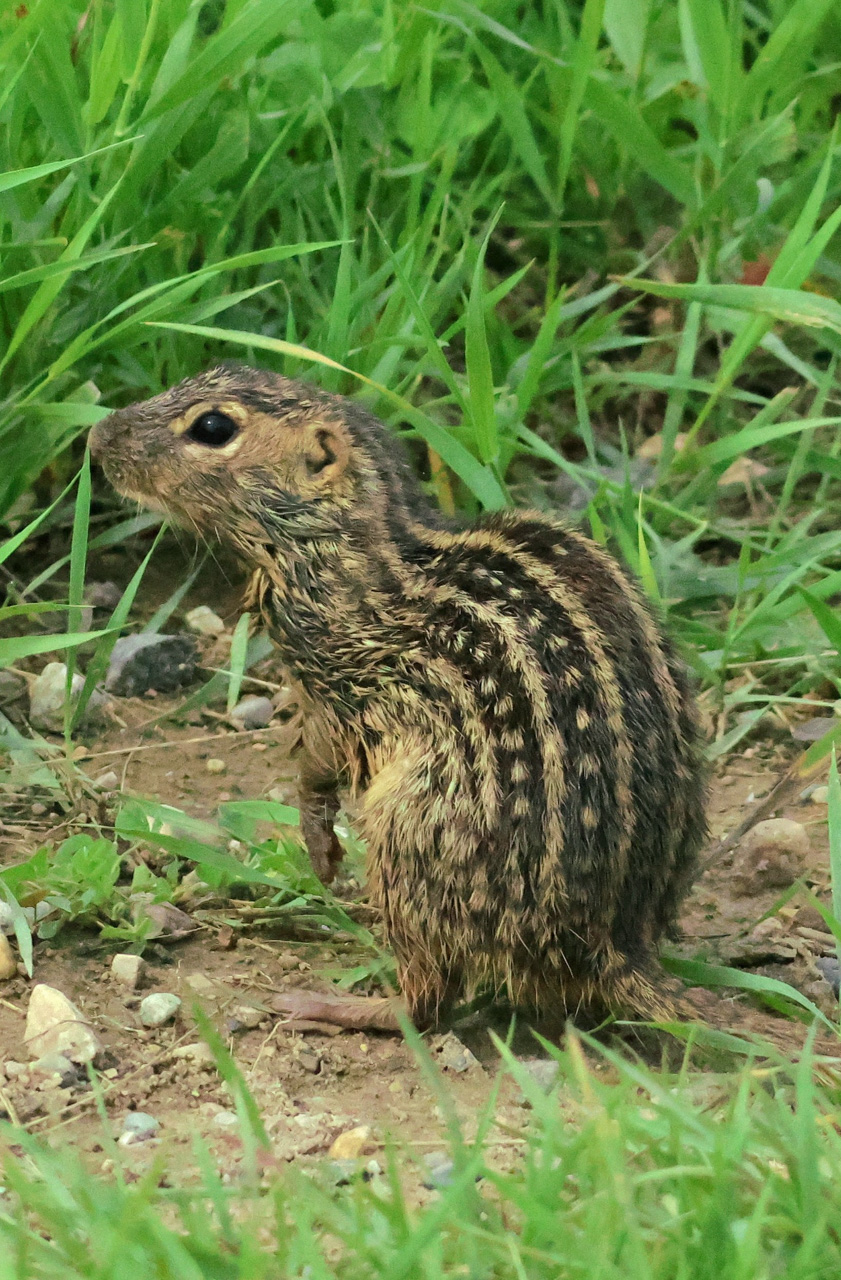
Thirteen-lined Ground Squirrel © Heidi Chan
Our last birding location for southern Manitoba would be Winnipeg’s Assiniboine Park. The forests and English Garden along the river are usually a great place for riparian species. On this day things were really quiet. That being said, we still managed some new birds, with a few young Wood Ducks in the pond, a distant Great Crested Flycatcher calling and Chimney Swifts overhead.
We would end our day with dinner at Oak & Grain, ready for the next leg of our trip, the journey to Churchill.
Day 8
After breakfast at our hotel, it was time to catch a morning flight to Churchill.
After settling in to our hotel we set off to find our first subarctic species. Our first stop was at the Granary Ponds. Located just north of town, this series of small water bodies often holds species at a closer proximity that some of the larger lakes south of town. Gulls covered the small rocks and gravel piles nearby, some of them with brown, fuzzy babies. Green-winged Teals and American Wigeons dabbled along the pond edges, and swirling on the water’s surface were a handful of Red-necked Phalaropes.
Just up the road is Cape Merry, and it was here that we got our first looks at Belugas as they hunted the Capelin, a small fish in the smelt family, close to shore. Birds gather where the Belugas are hunting, taking advantage of the fish that are separated or driven close to the surface. Bonaparte’s Gulls and Arctic Terns swarmed the area, and with them were Parasitic Jaegers and American Herring Gulls, the latter two chasing the former in hopes of stealing their catch. Cruising along the shoreline were many Common Eiders, as well as a couple Hudsonian Whimbrels along the rocks.
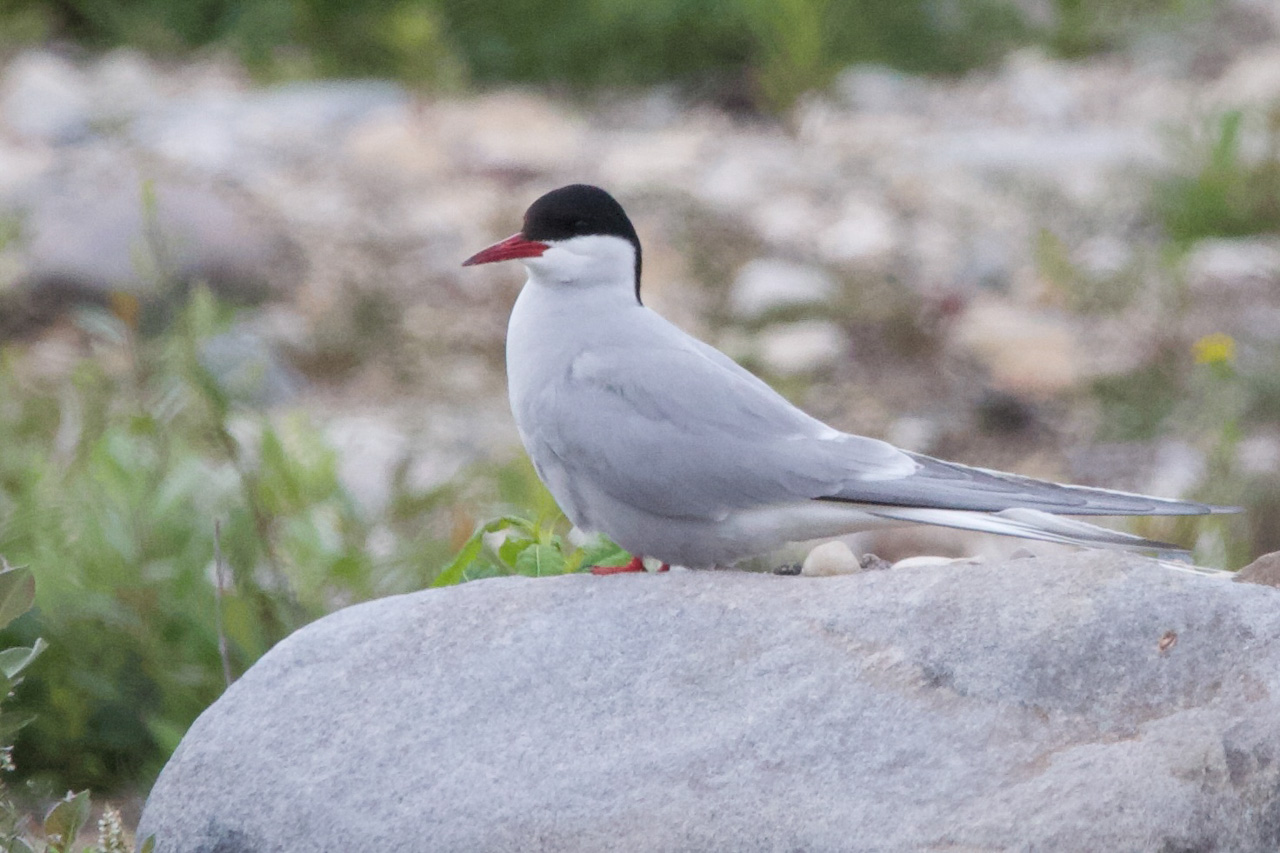
Arctic Tern © Josh Dewitt
From Cape Merry we headed south to Akudlik Marsh. Another productive location, we picked through the gulls here, which were mostly Herring, though we were able to pick out a couple Glaucous as well. On the water were Pacific Loons and Greater Scaup, and above the ever-present Arctic Terns. Bayside we were happy to see a fly-by group of Black Scoters, as well as a raft of White-winged Scoters as well. Dotted around the bay were Red-breasted Mergansers, with the occasional Beluga or Harbour Seal surfacing between them.
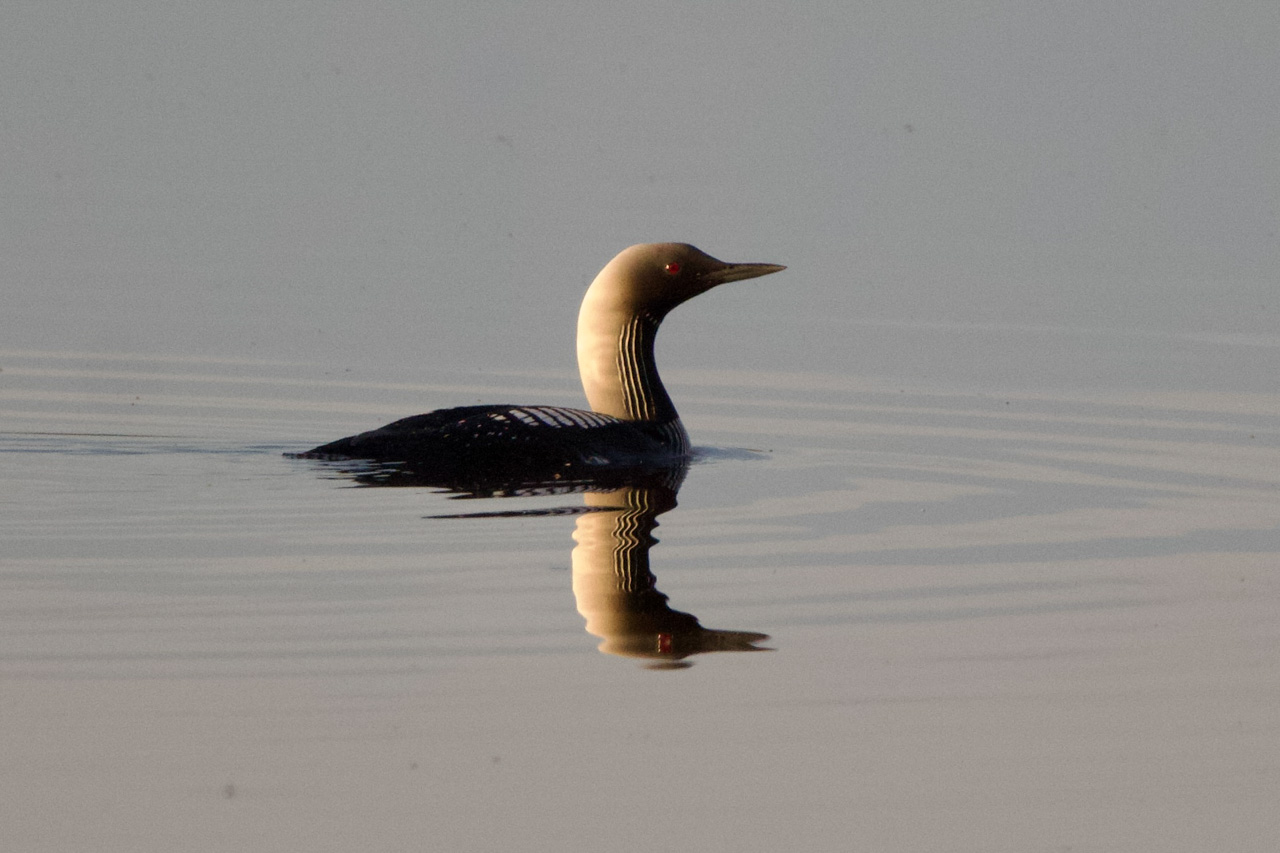
Pacific Loon © Josh Dewitt
After this, we headed for a delicious dinner. Some of us wanted to keep birding, so after dinner we did a little drive back towards Akudlik Marsh and the airport.
The lakes along the shore held the usual suspects, Pacific Loons, American Herring Gulls and Arctic Terns. On occasion we also caught glimpses of Richardson’s Collared Lemmings, a species found only along the west coast of Hudson Bay, as they crossed the road.
Not long after we’d also find a major predator of this species, a Short-eared Owl. We watched as it floated over the tundra, with bouncy wingbeats. Our last animal of the day, before heading to bed, was a large Arctic Hare as we were coming into town.
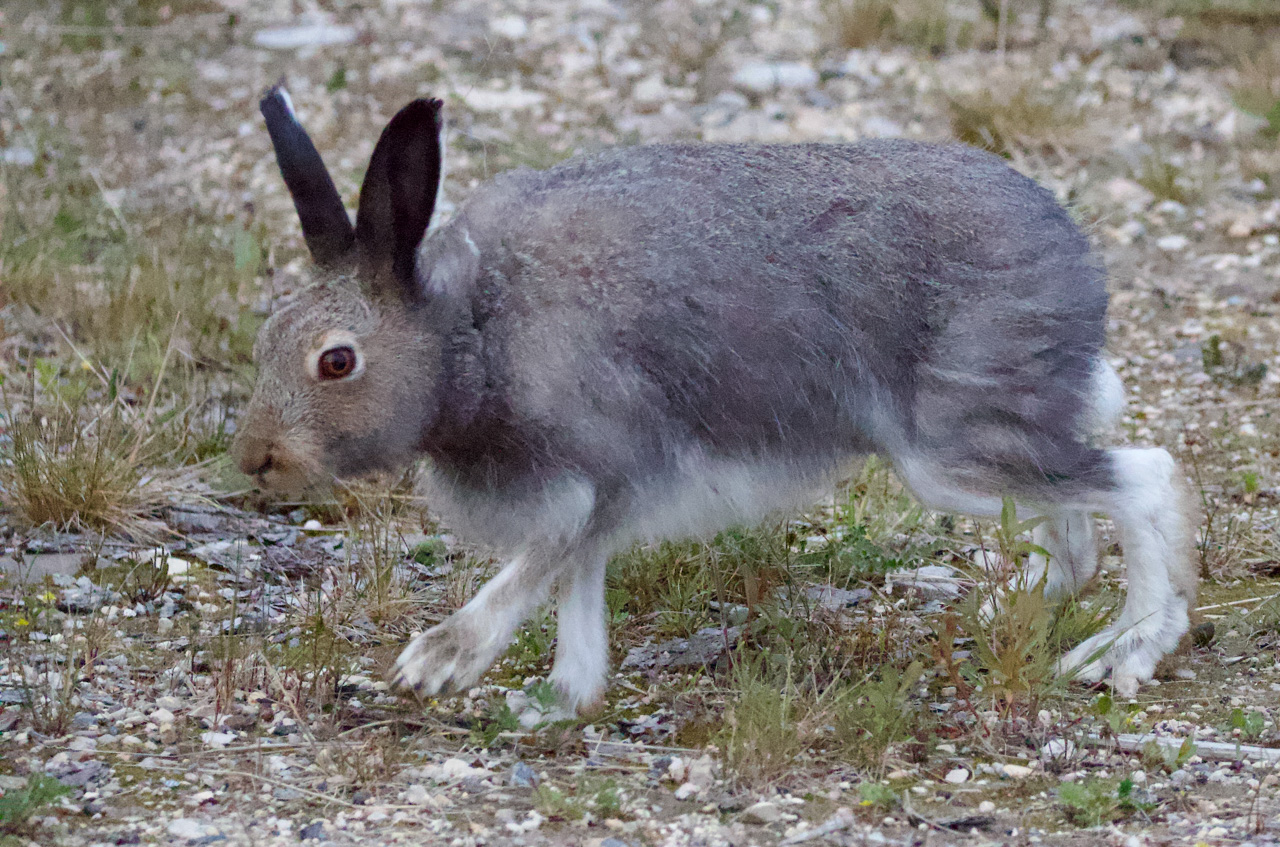
Arctic Hare © Josh Dewitt
Day 9
Our following day started early, the sun rises early and sets very late at this time of year. We once again took a drive out to Akudlik Marsh, hoping to find some of the species that those who stayed back missed on the previous evening’s outing. We were successful in this, the loons, terns, and even Short-eared Owl, this time joined by a second, were present.
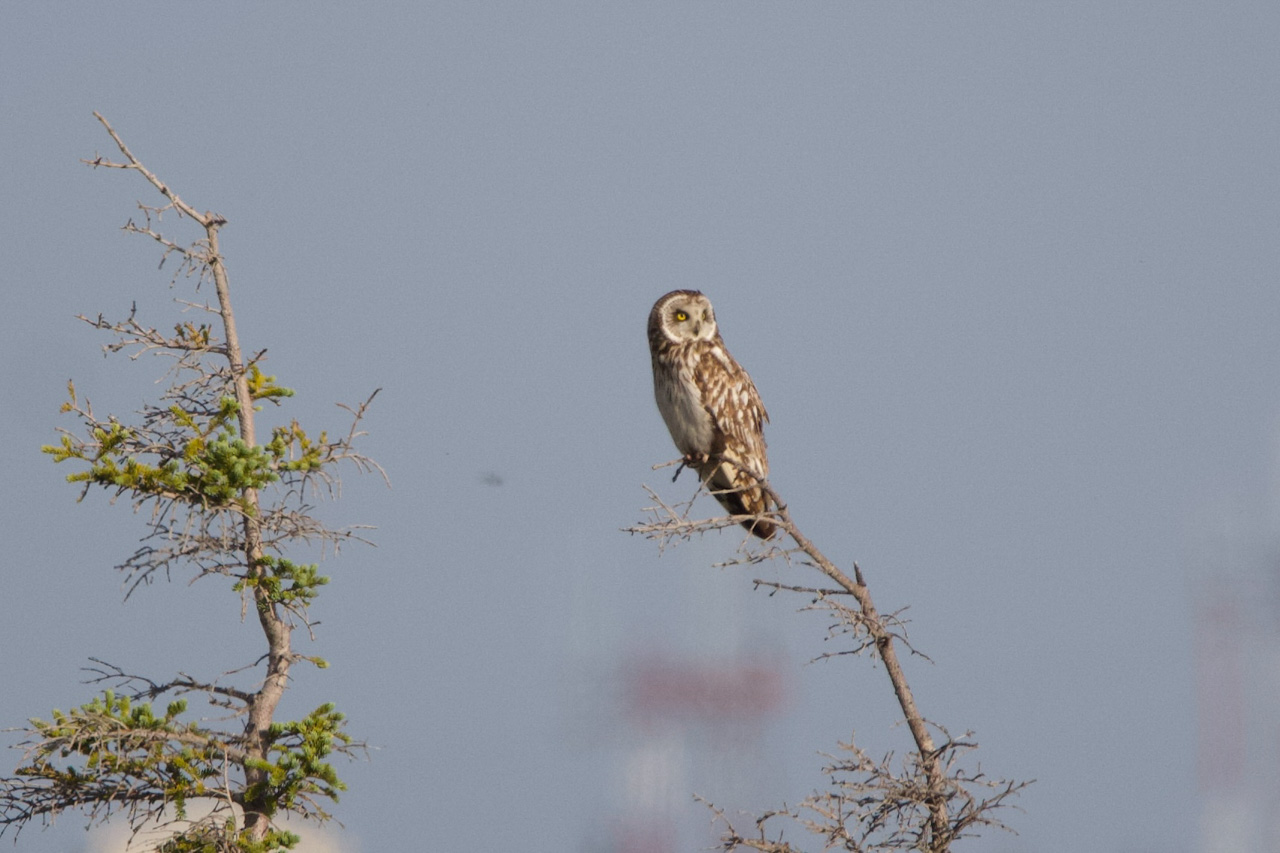
Short-eared Owl © Josh Dewitt
We went back to the hotel for breakfast, and afterwards we were off to a new location in the Churchill area. Goose Creek Road is a great pace to add marsh and boreal forest species. We could hear Blackpoll Warbler singing, their songs being a simple rhythmic ticking noise that sounds more like squealing brakes than a bird. Fox Sparrows are also very common here, as are Nashville Warblers.
Down the road the forest opens up to more marshy areas, which are great for shorebirds. Lesser Yellowlegs are by far the most common species here, being found in nearly every open area. Also present were Short-billed Dowitchers, probing the mud in a motion similar to a sowing machine, and Stilt Sandpipers. Larger bodies of water were home to Tundra Swans. A scan from the tower long the Churchill River gave us more views of these birds, as well as a few Bald Eagles, and white moving rock in the distance.
We headed north to see if perhaps this was a bear, and were able to pick out a large white object. After taking some pictures and going over them at lunch, which we had at the Seaport Hotel, we decided it was indeed a rock. If there was bear along the river, we’d just have to keep our eyes peeled.
After lunch we made our way back down the road, ending at the pumphouse. We got out briefly, but things were quiet, aside from a Spotted Sandpiper which seemed to have a nest nearby, so we decided it was best to move on.
With bears still on the mind, we went back over to Cape Merry to see if we could spot one. We didn’t but were treated to some lovely views of White-winged Scoters, Long-tailed Ducks, and Parasitic Jaegers.
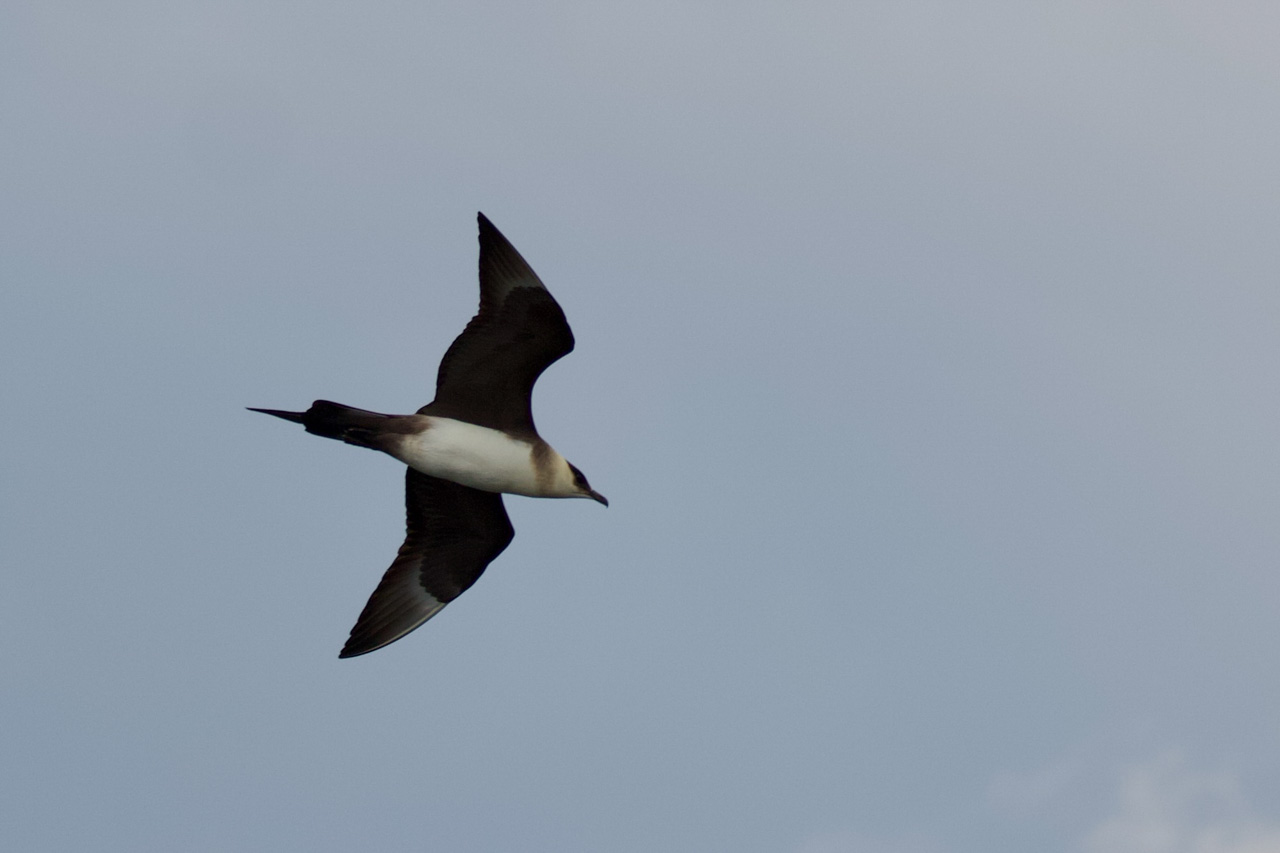
Parasitic Jaeger © Josh Dewitt
Afterwards we made our way over to the docks to take a zodiac ride on the river. Our goal was to find Belugas, which didn’t take very long. In fact, it was more that the Belugas found us! Curious and intelligent animals, on several occasions they came right up to the boat to have a look, sometimes putting their faces into the bubbles coming from the propellers. All around us we could see the white backs of the adults as they surfaced for air, some of them accompanied by greyish calves.
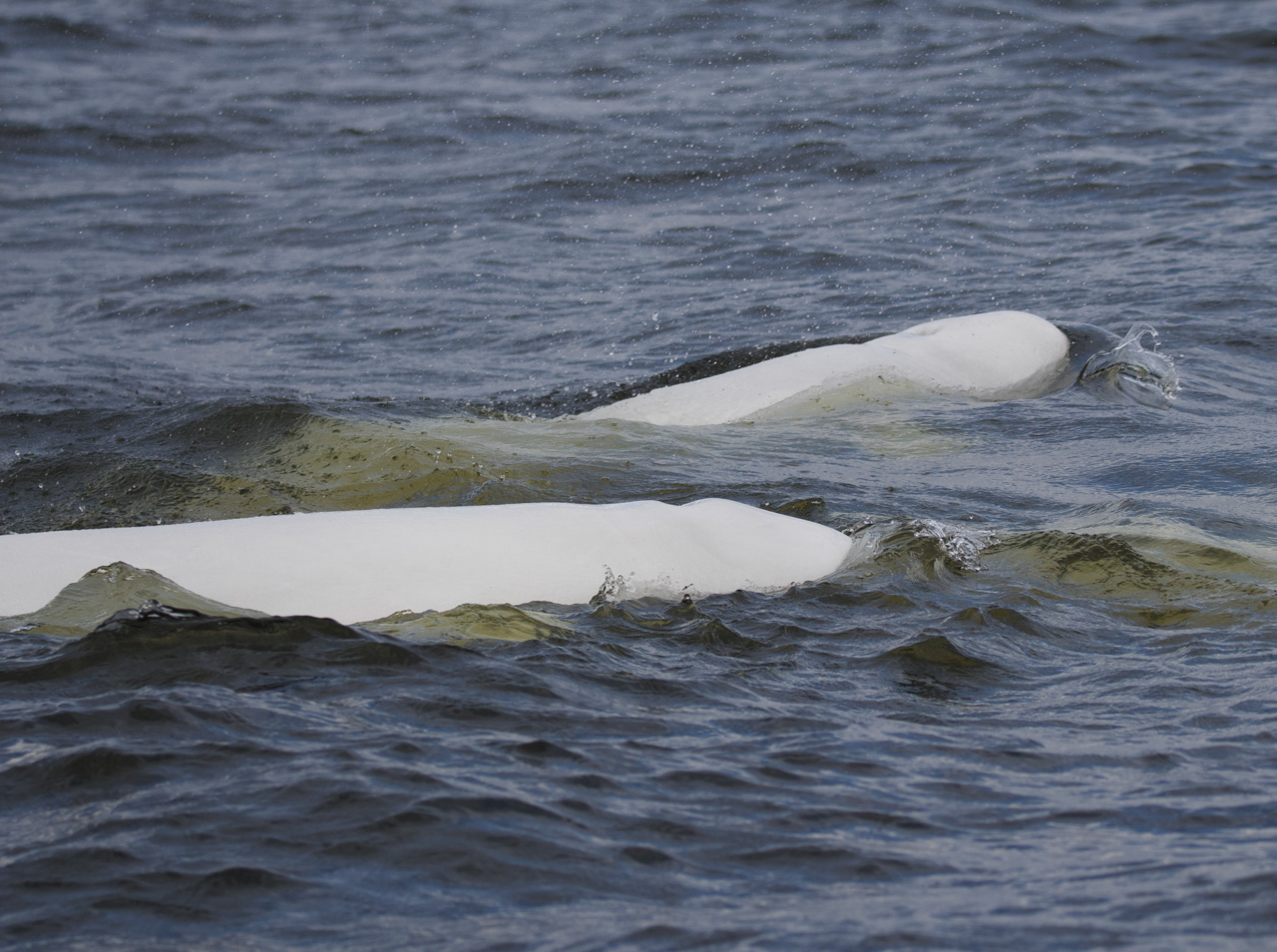
Belugas © Josh Dewitt
Soon enough it was over, with a storm rolling in and the water getting rough. We ended our day by drying off and warming up at the Tundra Pub, deciding to stay in that night.
Day 10
The next day we headed south along the coast. Our first stop was just past the Churchill Northern Studies Centre, where we spotted a pair of Red Foxes beside on of the buildings, one adult and a kit.
We got a tip from a fellow birder that something good was just around was just around the corner, so we turned down Ramsey Road to get a look.
To our surprise a lone Sabine’s Gull was feeding with several Bonaparte’s Gulls. Bellow them floated a few female Long-tailed Ducks. We at one point thought we had spotted a couple ducklings swimming along the back edge of the pond, but they actually turned out to be a pair of fuzzy young Bonaparte’s Gulls, eagerly chasing the adults around the pond.
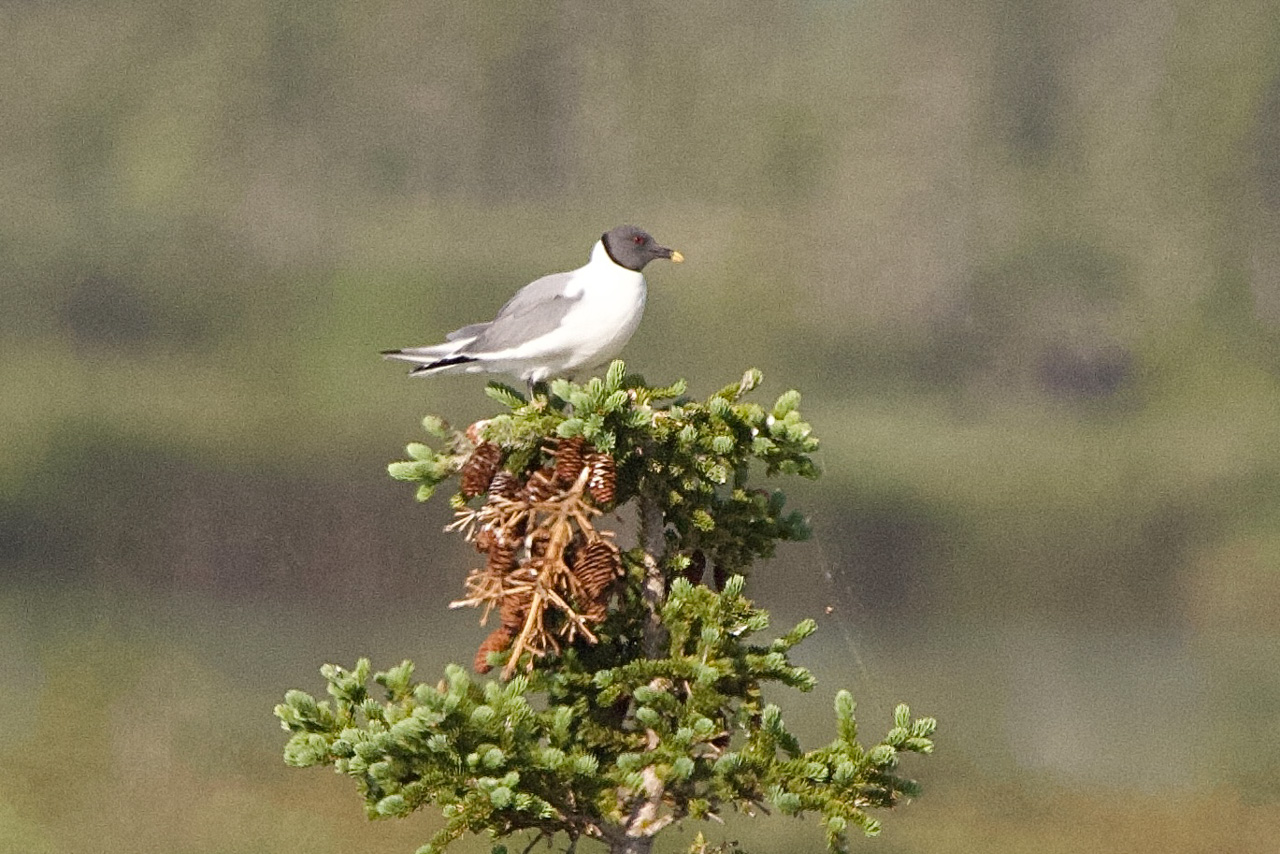
Sabine’s Gull © Josh Dewitt
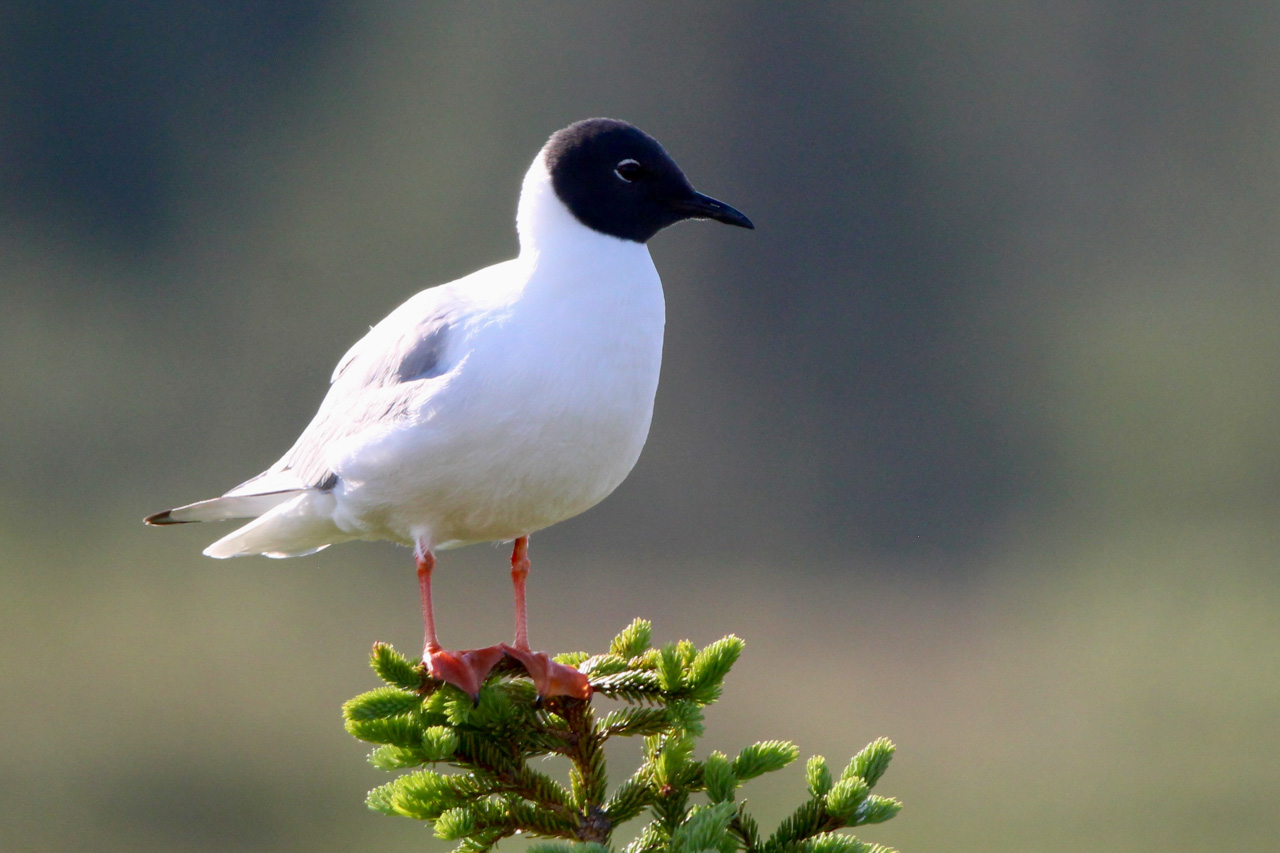
Bonaparte’s Gull © Josh Dewitt
Excited about this find, we jumped back into the fan to continue forward. We immediately stopped, because the whole time we were watching the gulls, we had been watched unknowingly by a female Willow Ptarmigan on the side of the road just ahead of the van. Soon after it was joined by a male, then another female, until there were five ptarmigan! One male in particular seemed interested in us, coming up very close as we stood close to the van.
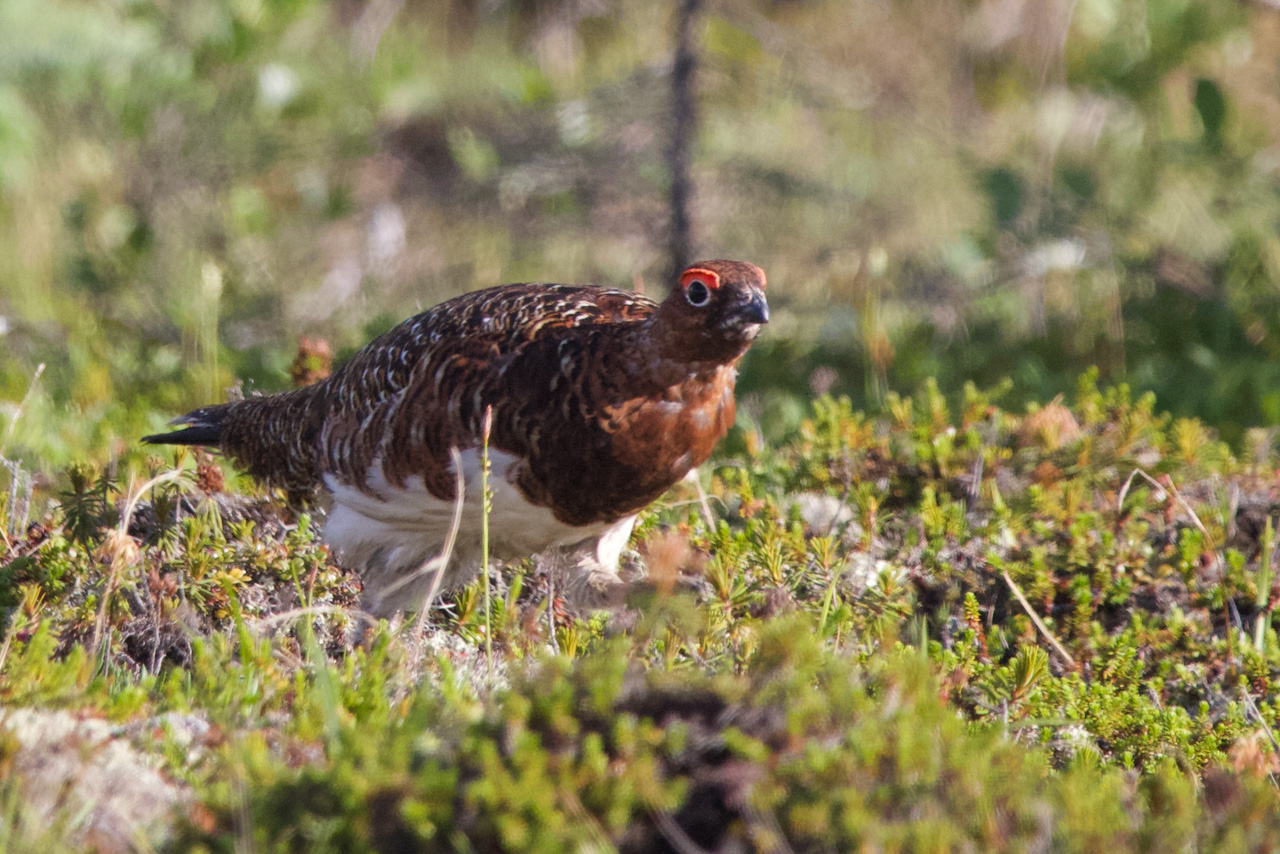
Willow Ptarmigan male © Josh Dewitt
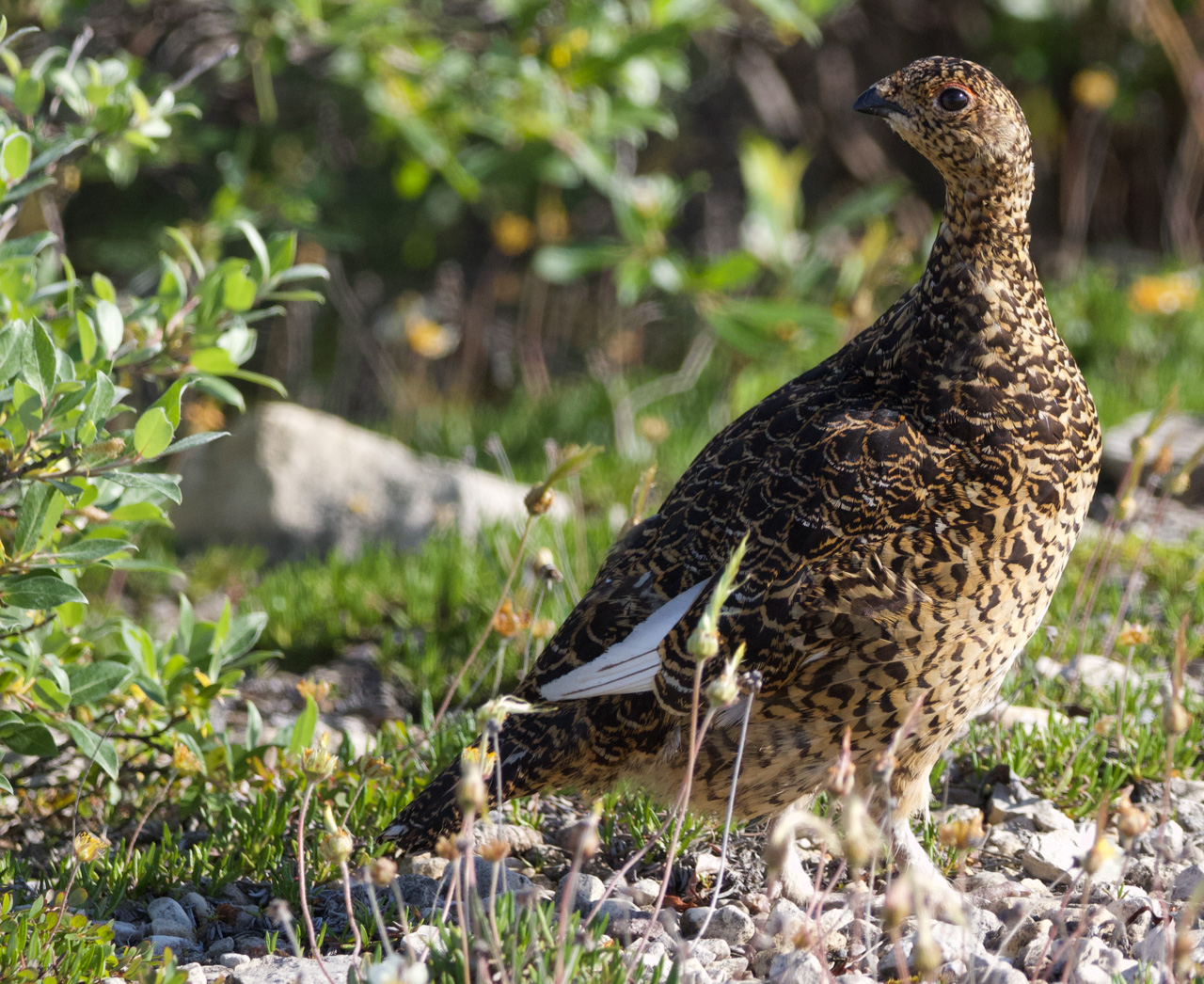
Willow Ptarmigan female © Josh Dewitt
We then popped into CNSC for lunch, after which they gave us a great tour of their building, where we learned about the research they do, how their green building works and the history of the location.
Going south of the CNSC, we made our way down towards Twin Lakes. Along the way we were lucky to spot yet another fox kit, which was quick to run to its den. Up the road we made a stop at “The Fens”, a large expanse of wet tundra. This area is often great for nesting shorebirds, and on rare occasions also longspurs. We found things to be relatively quiet though, with some brief fly-bys from Hudsonian Godwits, Rusty Blackbirds, Northern Harriers and a Short-eared Owl.
The rest of the drive was quiet as well, we had bumped into some forestry workers who were spending their day off birding, and they had said things were slow for them as well. We were doing very for foxes though, on our return while stopping to check some caribou tracks on the road, we were surprised by a black fox, which is just a colour phase of the Red Fox, with a freshly killed Snowshoe Hare in its jaws.
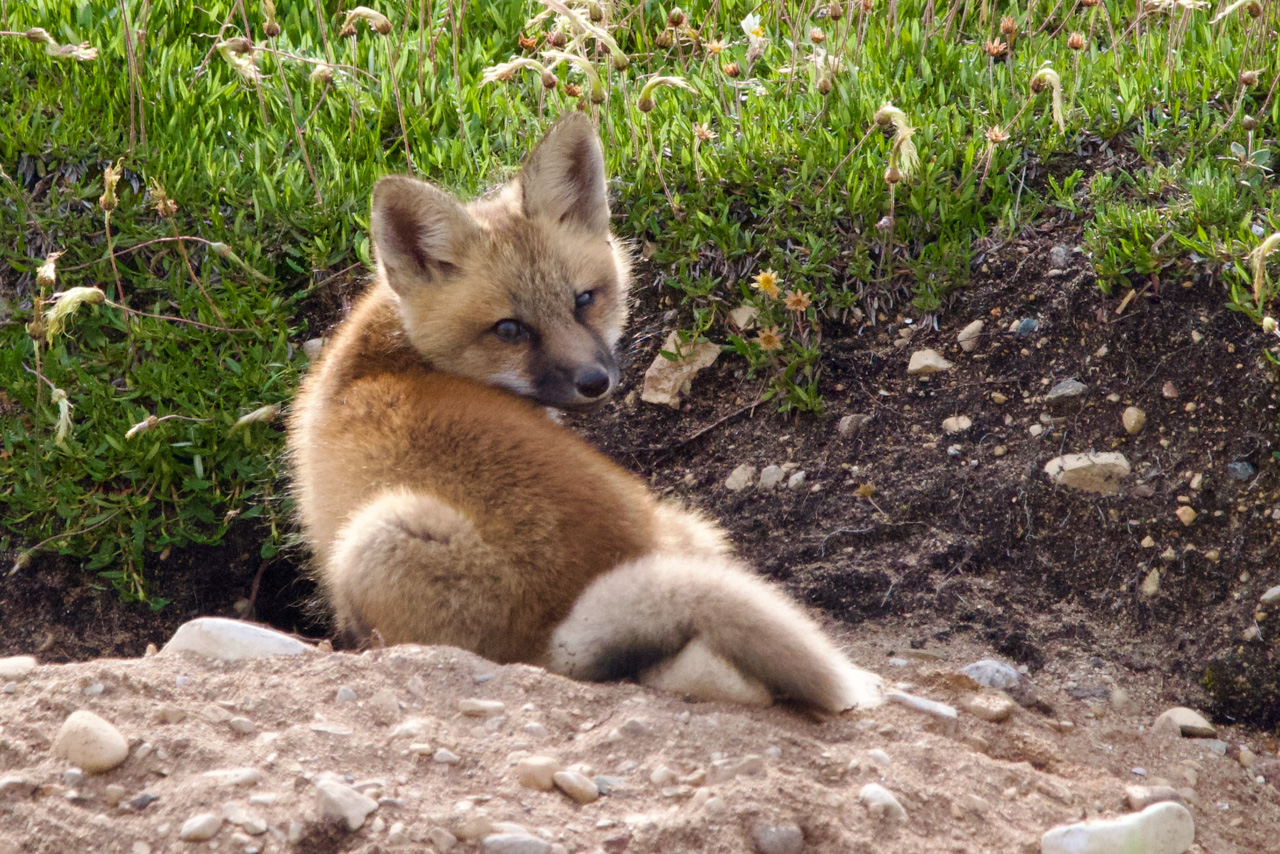
Red Fox © Josh Dewitt
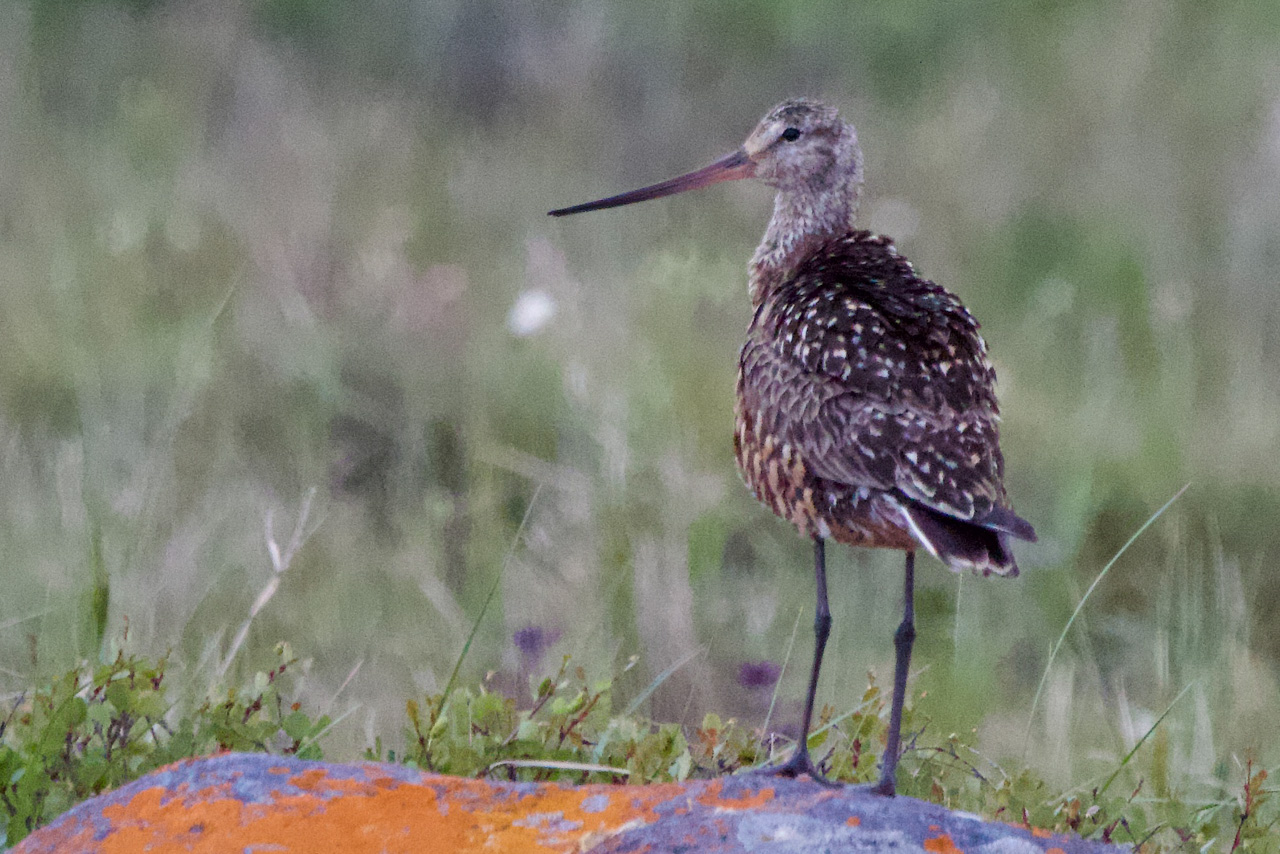
Hudsonian Godwit © Josh Dewitt
We decided we would drive back towards town, first making a stop at a feeder which held a few Pine Grosbeaks. The bugs unfortunately chased us off, so we drove up to Cape Merry.
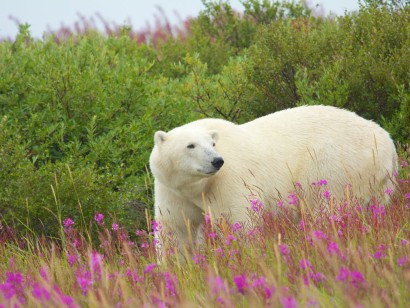
Our birder friends were there, standing on the viewing platform watching the river. Upon asking them if they had anything interesting, they nonchalantly stated there was a Polar Bear swimming across the river! Excitedly we looked at the bear through the scope as it snuffled along the far shore, close to Fort Prince of Wales. We were excited to get some closer looks at this bear, so we went back to check in for our tour of the river and fort.
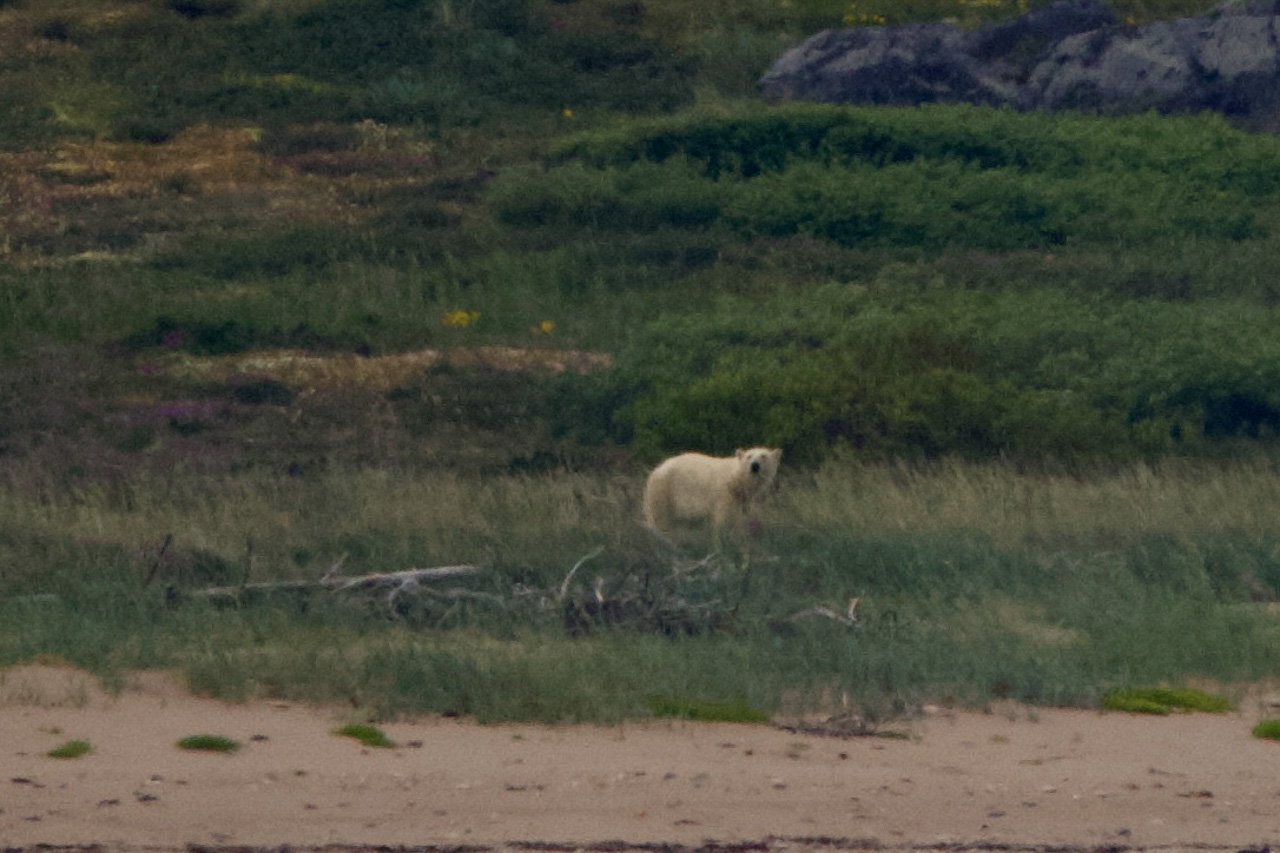
Polar Bear © Josh Dewitt
We went out on the water; however inclement weather was again coming in so the water proved to be fairly choppy. We weren’t able to find the bear, which we had heard conservations officers had scared over to the Cape Merry side of the river.
Belugas were also hard to find, with some feeding close to shore but frequently moving out to the rough waters of the bay to herd fish back into the river, so we sadly weren’t able to follow. We crossed over to Fort Prince of Wales, where we taking in the architecture and cannons, learning about the confrontation here between the French and the Hudson’s Bay Company during the 1700s. Our visit would be cut short, as a storm had come in and it started to rain quite heavily.
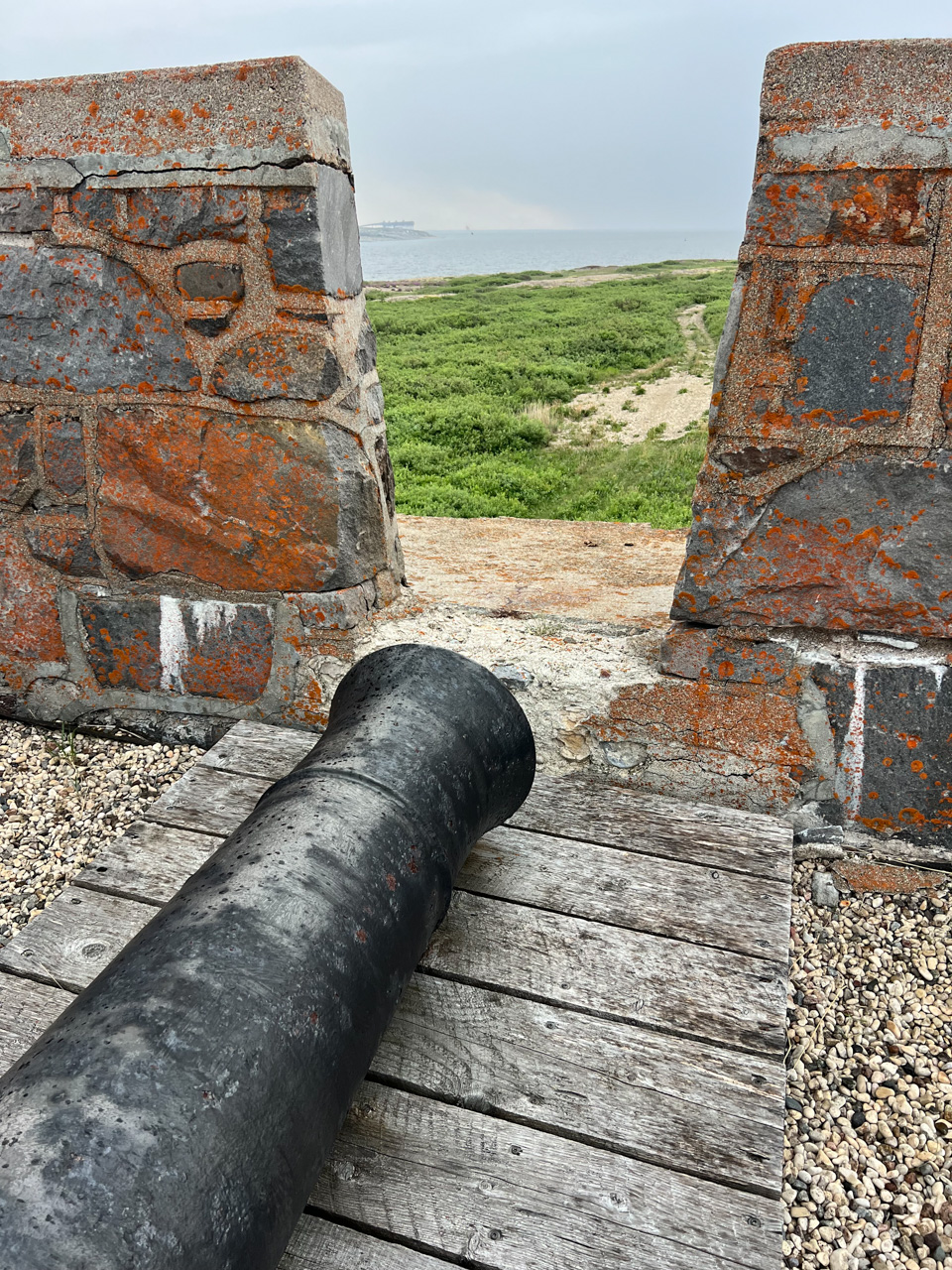
Fort Prince of Wales © Josh Dewitt
We gathered back at Ptarmigan for dinner, where we would end our day, as the storm was just too strong to continue birding afterwards.
Day 11
Our last half day of birding started after breakfast, being a lot more casual. We had done so well birding here that we had managed to find all the most likely species.
With that being the case, we decided to try for a few easier to find mammals. Seals are common along the shoreline, and we were able to find several Harbour Seals lounging on the rocks in “banana pose”. We made another stop at the Granary Ponds, gaining some more views of Red-necked Phalaropes, and nearby at Cape Merry we were happy to spot an American Pipit as well.
Our last stop would be the coast just past Akudlik Marsh, in addition to spotting small pods of Belugas cruising close to the shore, we also were able to find a couple rafts of ducks. Among the expected Common Eiders and Red-breasted Mergansers, there were also White-winged and Black Scoters, and a few Long-tailed Ducks.
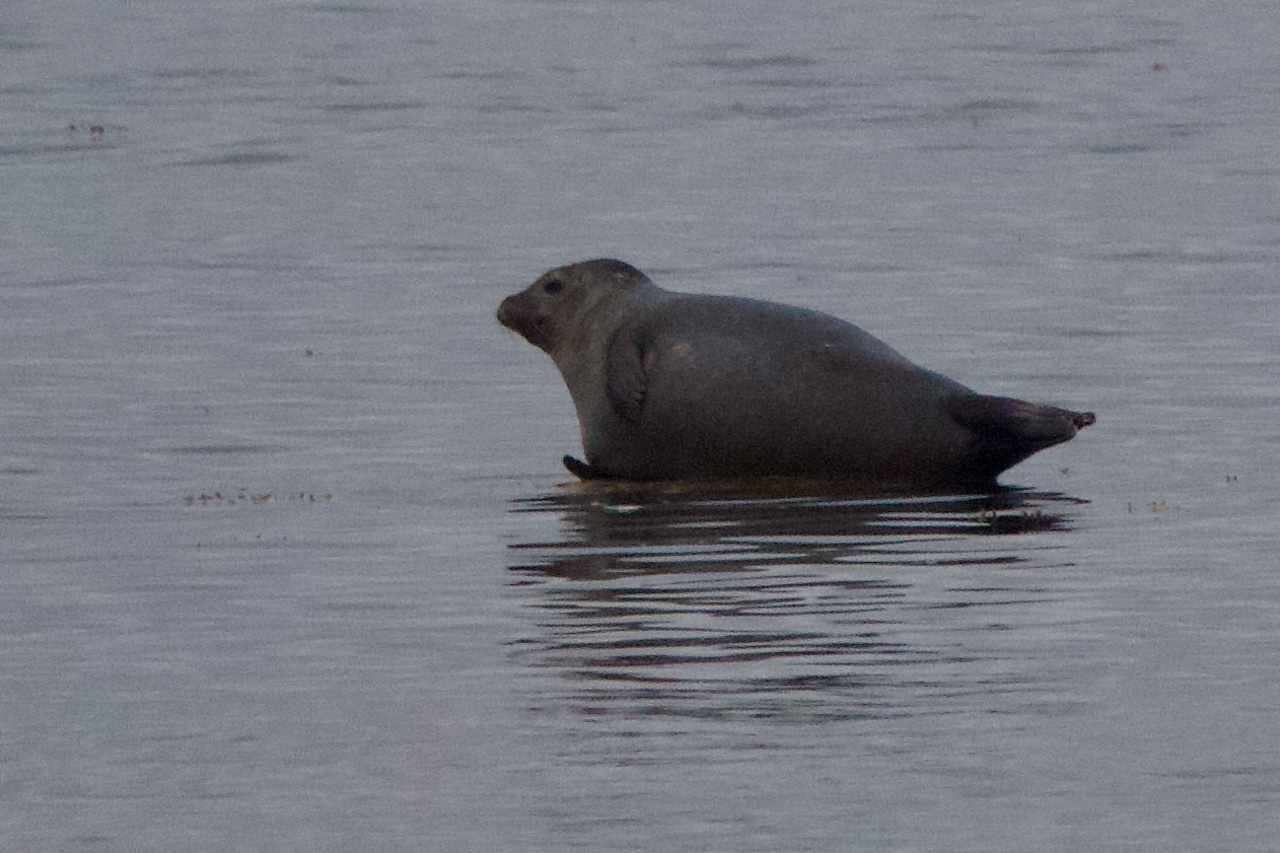
Harbour Seal © Josh Dewitt
With that we then loaded up our van, and soon were on our way back to Winnipeg. Churchill had one surpise left for us. As we were driving to the airport, a cross fox, a colour form of the Red Fox, ran across the road, completing the Red Fox trifecta, every pattern was found during our stay.
We flew back to Winnipeg where we’d have our final dinner at Chicago Joe’s. We shared our favourite memories of the trip, one full of amazing animals, fantastic environments and great cultural experiences.
Day 12
After a fantastic trip, full of great memories, everyone headed home.
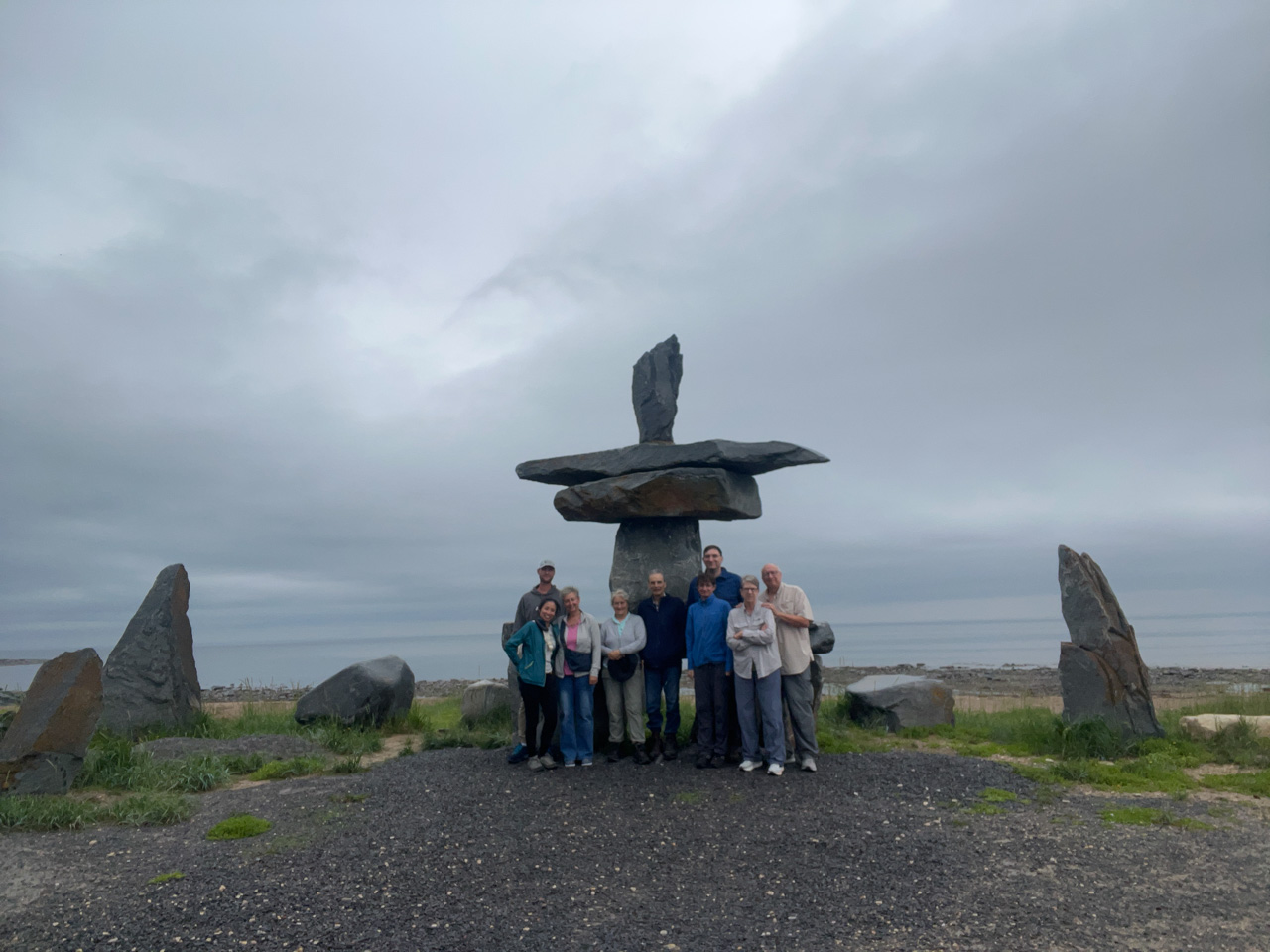
Our 2026 group © Josh Dewitt