Australia: Tasmania Trip Report (Nov 19–25, 2026)
Day 1: Hobart arrival
On the first day of our Tasmania trip, we gathered outside our hotel reception for our introductions. Once everyone had introduced themselves, we made our way to a nearby Thai restaurant. Over some delicious Thai curries, we shared a little more about ourselves and our excitement for the upcoming trip.
Day 2: Mount Field National Park to Bruny Island
We awoke to an exciting day ahead. After having breakfast in our rooms, we headed off on a one-hour drive to Mount Field National Park.
Upon arrival at the Mount Field picnic area, we were greeted by an overly friendly Tasmanian Pademelon and our first endemic bird of the trip, the Black Currawong, and the ever-popular Gray Fantail. The endemics continued as we took a short walk around the picnic area, where we picked up the cute Tasmanian Thornbill, identifiable by its conspicuous white underpants, and the Tasmanian Nativehen, aka the “turbo-chicken”, as the locals like to call it.
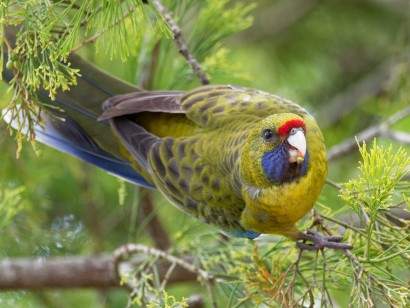
Afterwards, we enjoyed a walk along the brilliant Russell Falls Track. Along the way, we came across a rather drab-looking female Pink Robin, the always angry-looking Tasmanian Scrubwren and a Green Rosella. However, the highlights of the walk had to be the spectacular Russell Falls and the ever-obliging Superb Fairywrens, which stole the hearts of our guests.
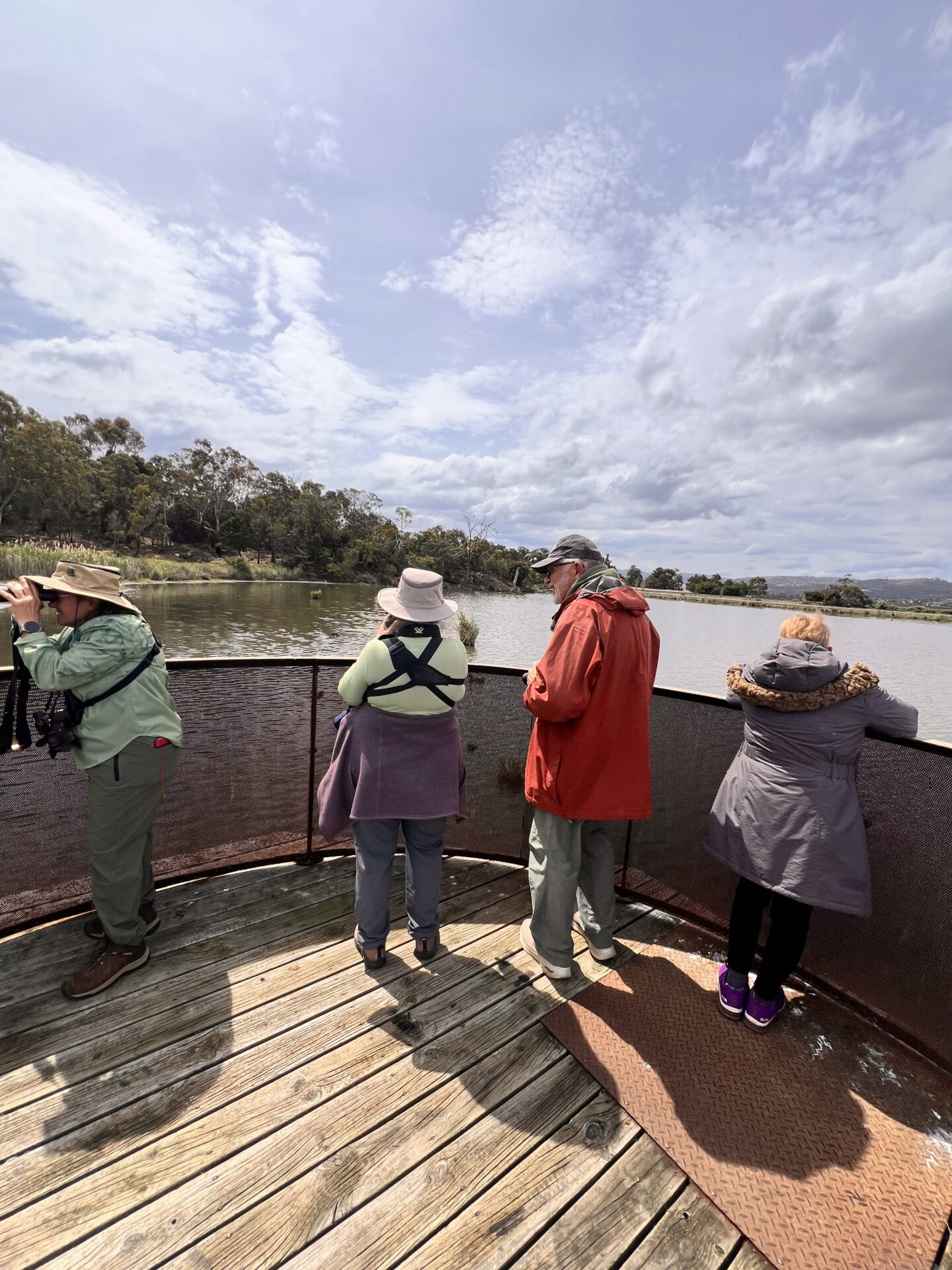
The crew at Gould’s Lagoon © Jackson Hagley
The day continued as we drove further up into the park to explore the Tall Trees Walk. We were hoping to find the elusive Scrubtit and a male Pink Robin. However, we were rewarded with more stunning views of Superb Fairywrens, some neck-breaking views of a Sulphur-crested Cockatoo and a Gray Shrikethrush.
After missing our target species, we decided to retreat to the visitor centre for some delicious lunch at the café. Following a fantastic morning of birding, it was time to make our way back towards Hobart.
On the way, we made a quick stop at Gould’s Lagoon, where we were rewarded with 20 new species for the trip list. Some of the highlights included Australian Shelduck, Black Swan, Australasian Shoveler, Chestnut Teal, Musk Lorikeet and the fantastic, colourful Eastern Rosella, which was probably voted bird of the day!
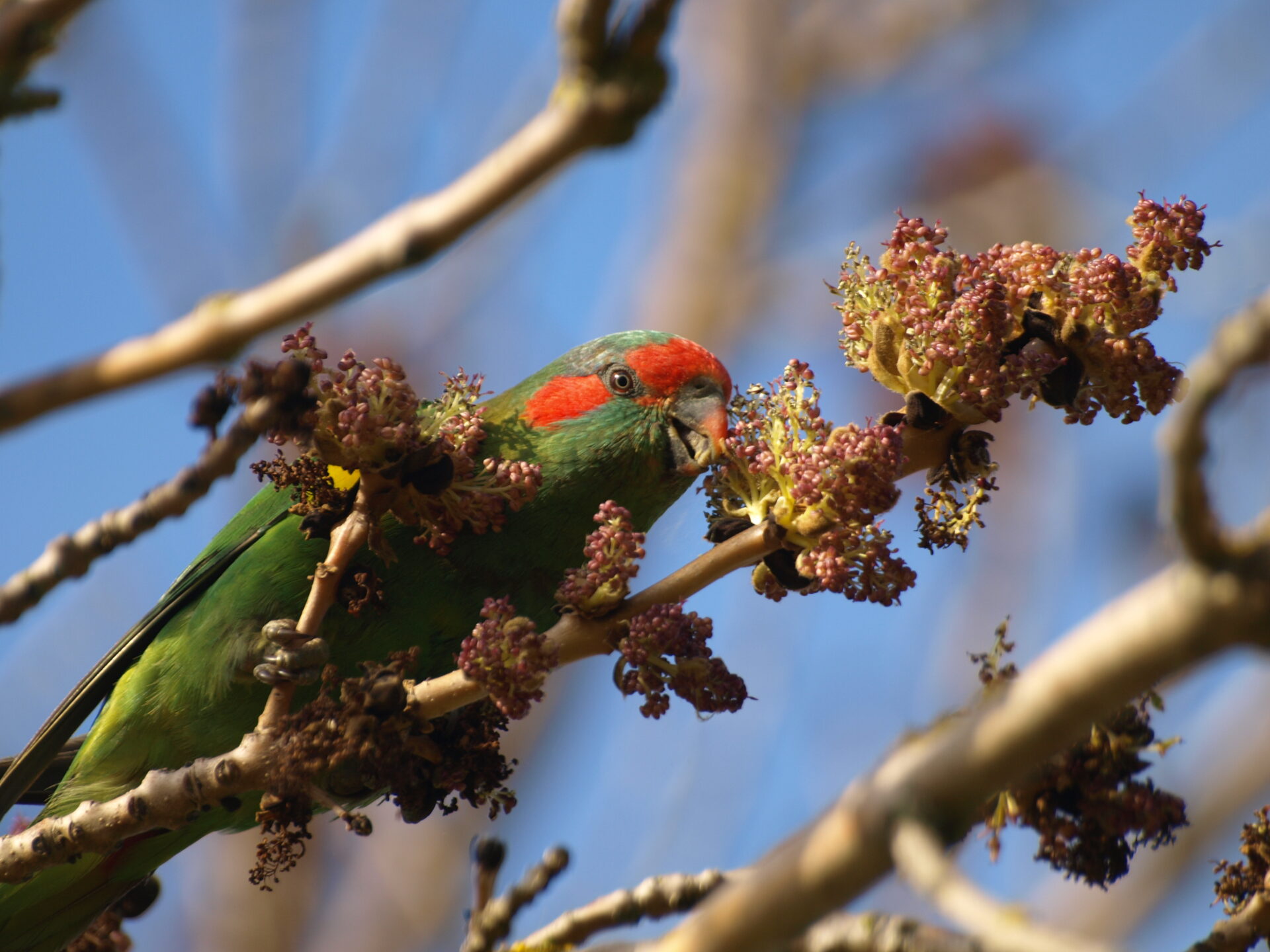
Musk Lorikeet © Jackson Hagley
It was time to continue south, as we had a ferry to catch to Bruny Island. Having no dramas with the ferry crossing, we made a quick stop at the Truganini Lookout, which sits on the isthmus connecting North and South Bruny Islands. Here, we were rewarded with fantastic views of both Pied Oystercatchers and Sooty Oystercatchers.
We finally arrived at our hotel, which would be our home for the next two nights. After a quick rest, we enjoyed an early dinner featuring spectacular local seafood, which was thoroughly enjoyed and appreciated by everyone.
Day 3: Bruny Island
The following morning, we awoke to the sound of rain on the roof. Unfortunately, it proved to be quite a miserable morning, with persistent light drizzle.
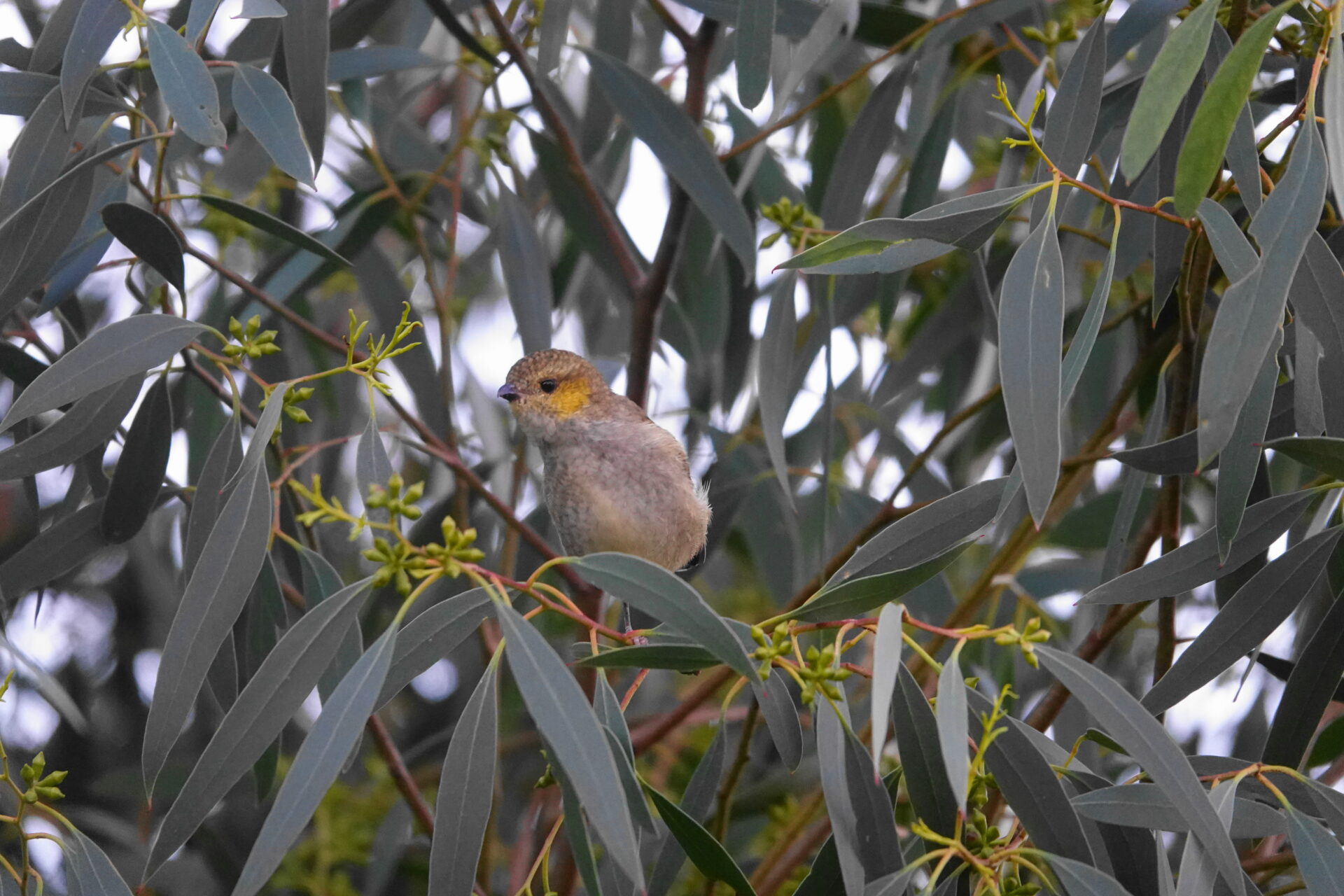
Forty-spotted Pardalote © Jackson Hagley
We had an appointment at Inala, a famous birding property on Bruny Island. During our three-hour guided tour around the property, we encountered a star-studded line-up of species. Some of the standout birds included the gorgeous Pink Robin, the endangered endemic Forty-spotted Pardalote, another Tasmanian endemic, the Strong-billed Honeyeater, and the brilliant white-morph Gray Goshawk.
After a brilliant morning of birding, we headed to Cape Bruny, where we enjoyed fantastic views of a male Flame Robin. Everyone was in awe of his brilliant, fiery orange breast as he sang his heart out from the roof of the lighthouse keeper’s house.
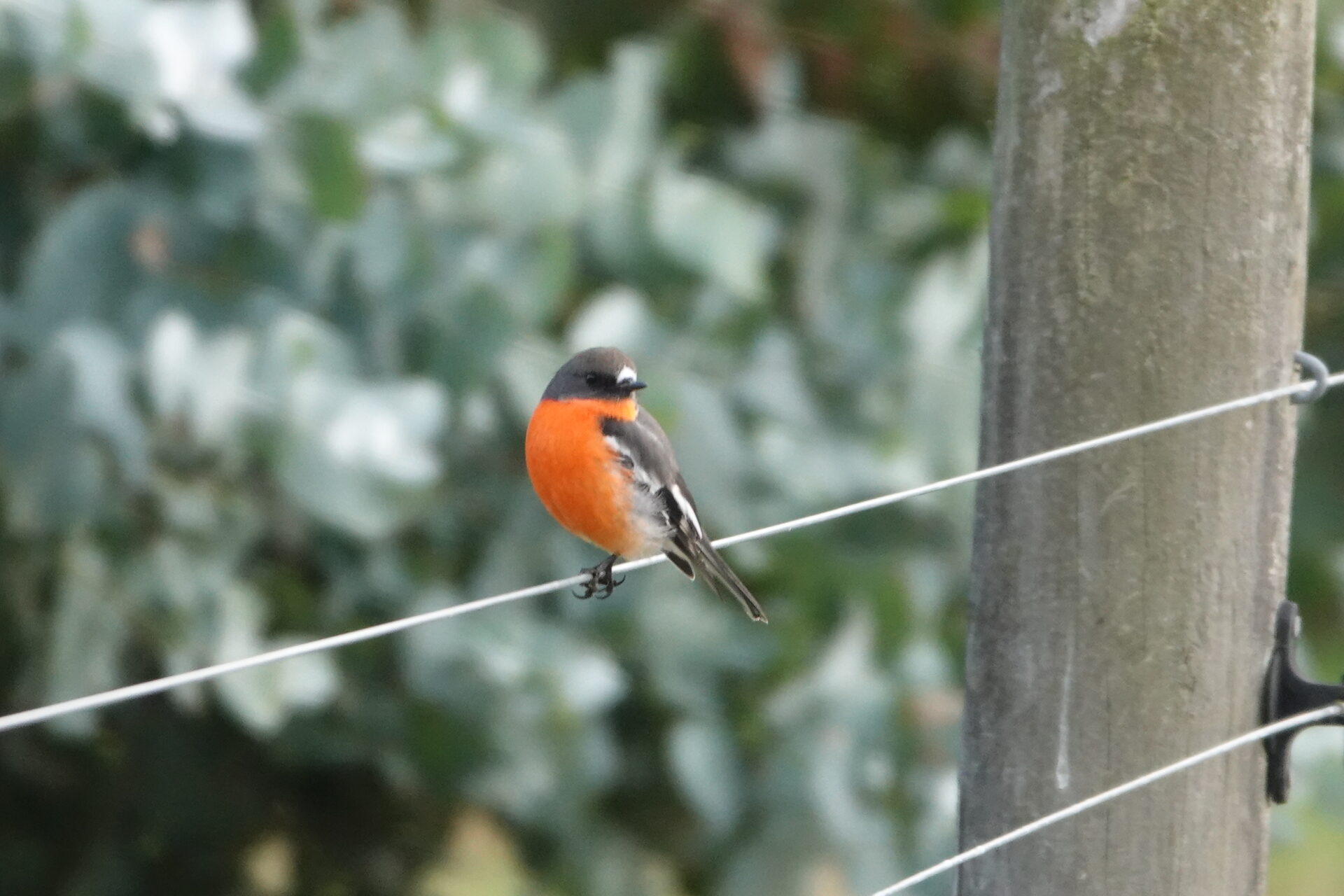
Flame Robin © Jackson Hagley
We drove back to Alonnah to collect our lunch and enjoyed a delightful picnic overlooking the bay, with beautiful views across the water towards mainland Tasmania.
After lunch, we made our way to Adventure Bay, where we made several stops in search of our remaining target species for the day.
At our first stop, we hit the jackpot, finding a nesting pair of Hooded Plovers, which were a delight to watch. Further along towards Adventure Bay, we stopped at an estuary where we had all three Australian gull species side by side: Kelp Gull, Pacific Gull and Silver Gull.
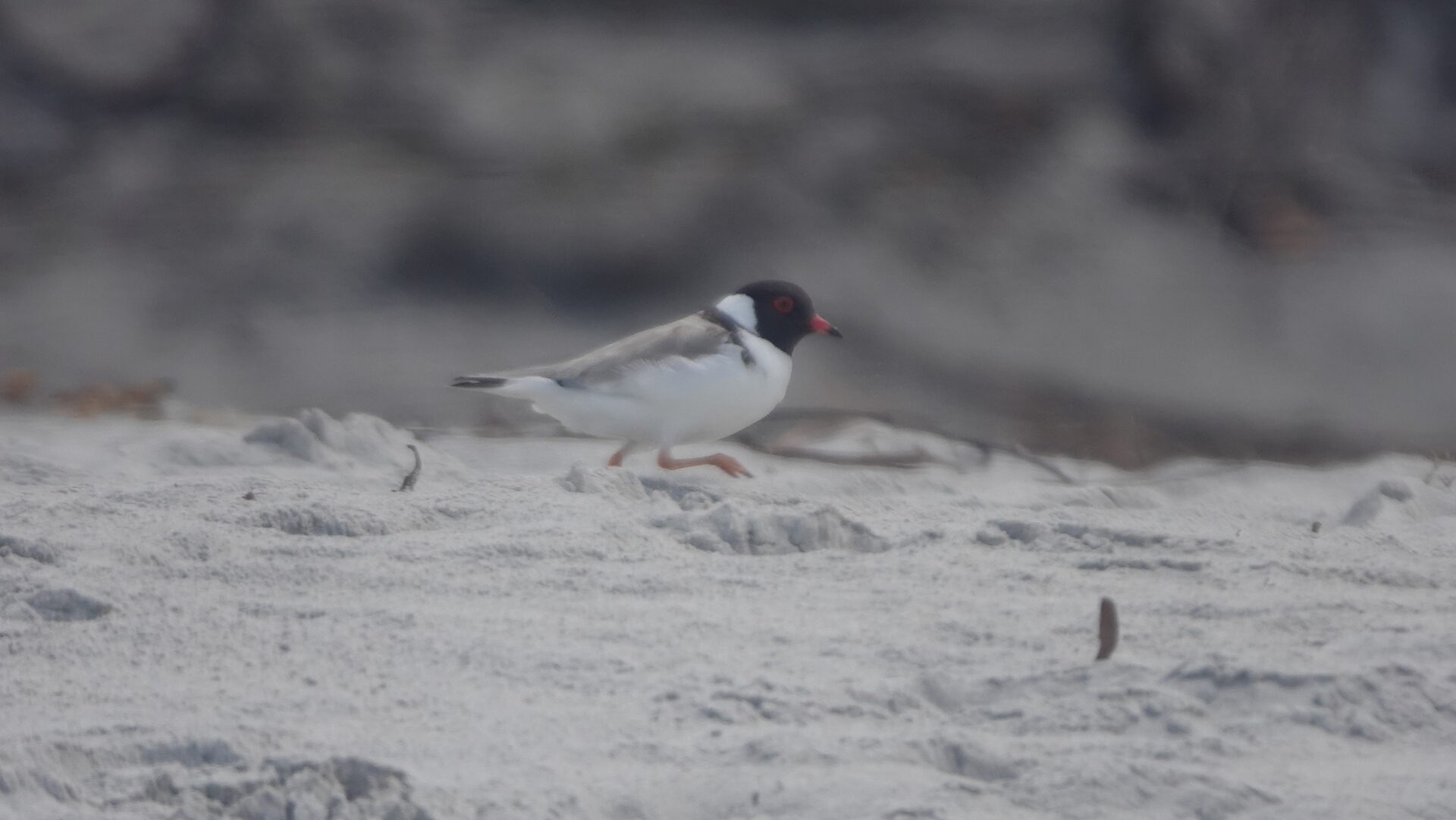
Hooded Plover © Jackson Hagley
Our final stop of the day was right in the middle of Adventure Bay. We came across some blossoming Blue Gums, the favourite flowering tree of our target bird, the Swift Parrot. It didn’t take long before we located a small flock of Swift Parrots feeding in the trees. We spent the next half an hour making the most of fantastic views of this endangered parrot. It was another wonderful day of birding, and once again, we headed back to our hotel for a delicious dinner.
After dinner, we ventured out for a quick night drive along the roads of Bruny Island, where we found our first Brushtail Possum of the trip. Just when we had almost given up hope, we turned back into our accommodation and found our main target mammal, the Eastern Quoll. What a mammal!
Day 4: Bruny Island to Eaglehawk Neck
The day started with a visit to the Cape Queen Elizabeth Track. We walked a short distance to Big Lagoon, where we found some of our main target species, including the brilliant-looking Blue-winged Parrot, the smart-looking White-fronted Chat and, of course, more Australian Shelducks.
After spending a few hours exploring the Cape Queen Elizabeth Track, we headed to Missionary Road. Here, we enjoyed some nice views of Australian Magpies, Brown Thornbills, a Pallid Cuckoo and, once again, some more Blue-winged Parrots.
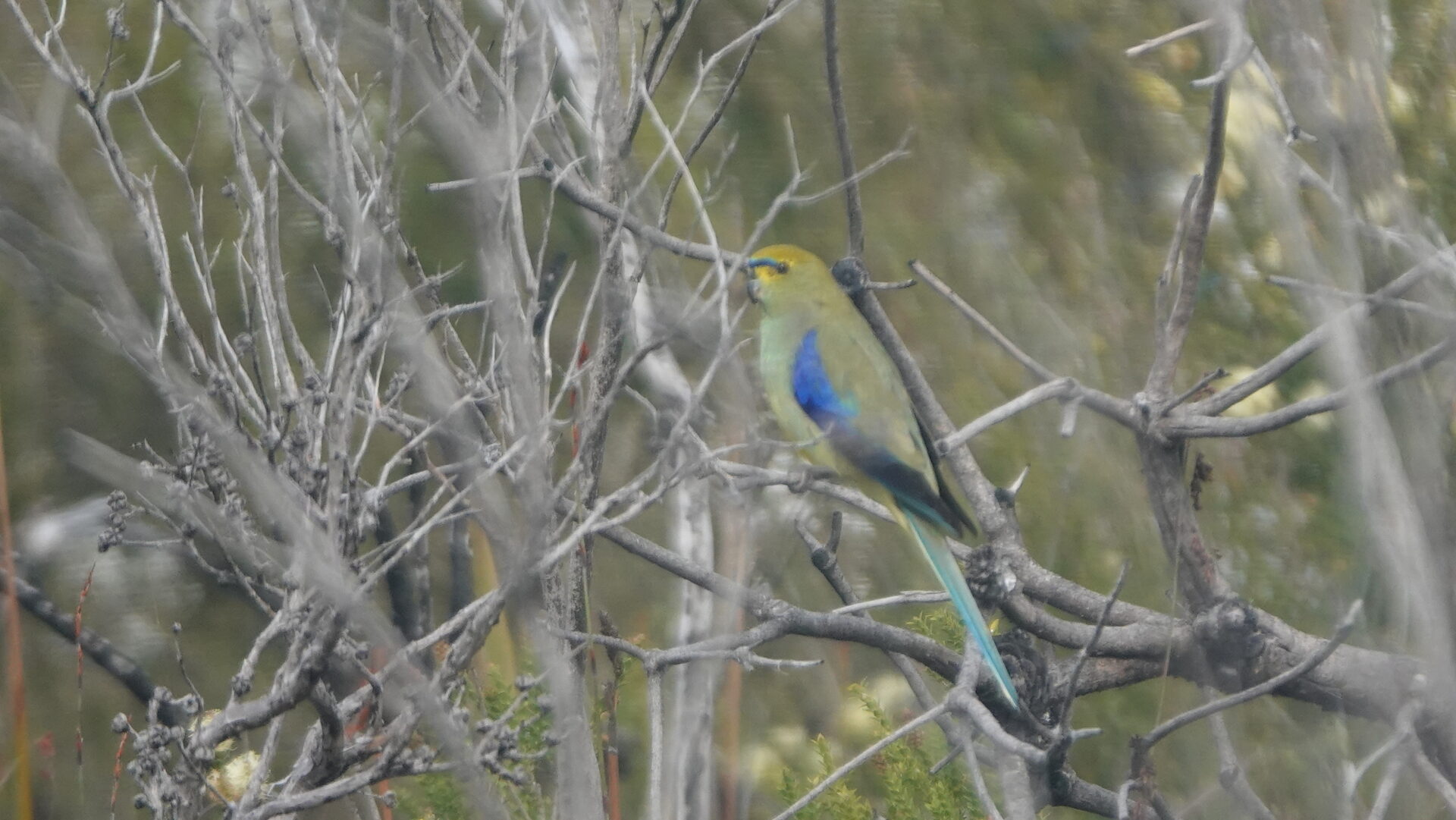
Blue-winged Parrot © Jackson Hagley
We then made our way back to the ferry for the crossing to Kettering, where we enjoyed a lovely lunch.
Afterwards, we made the long drive to Eaglehawk Neck, with a small diversion along the way to try our luck at finding Cape Barren Geese. We were rewarded with fantastic close-up views of these birds right beside the highway. As an added bonus, we also spotted our first monotreme of the trip, a Short-beaked Echidna!
After a hearty dinner at our hotel, we made a short drive to a nearby beach to try our luck at finding Little Penguins. It took only 45 minutes of waiting before our target species slowly came wandering up the beach from the surf. What a sight!
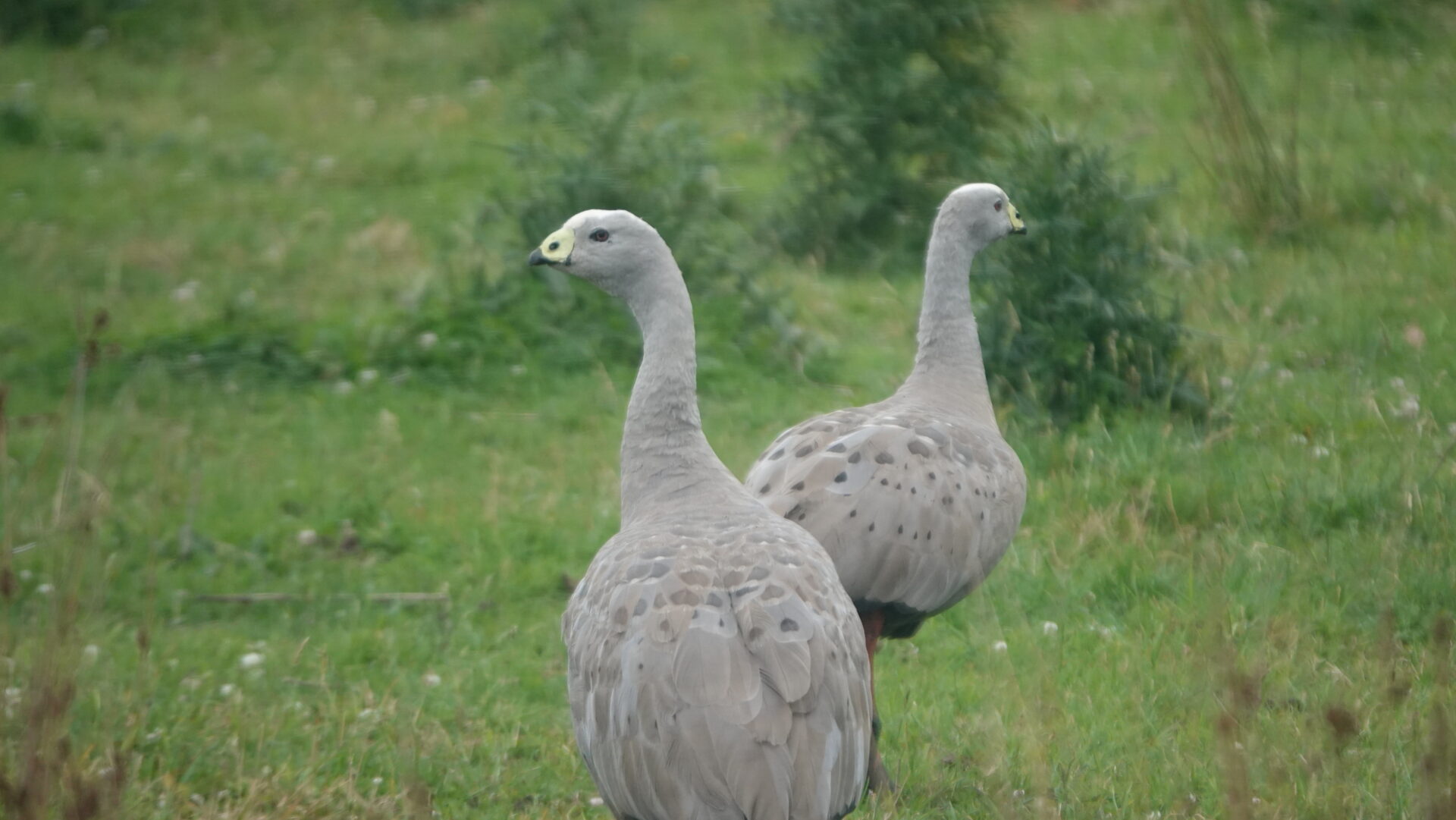
Cape Barren Goose © Jackson Hagley
Day 5: Eaglehawk Neck pelagic
It was an early start as we prepared for the famous Eaglehawk Neck pelagic. We arrived at the jetty to find the boat already waiting for us, allowing us to head out straight away with no delays.
The day was cloudy with a bit of a breeze as we left the harbour and reached the open ocean. It didn’t take long before we spotted our first of many White-capped Albatrosses (known locally as Shy Albatross). The exciting pelagic birding continued when a smart-looking White-chinned Petrel sailed past the boat to check out what was happening.
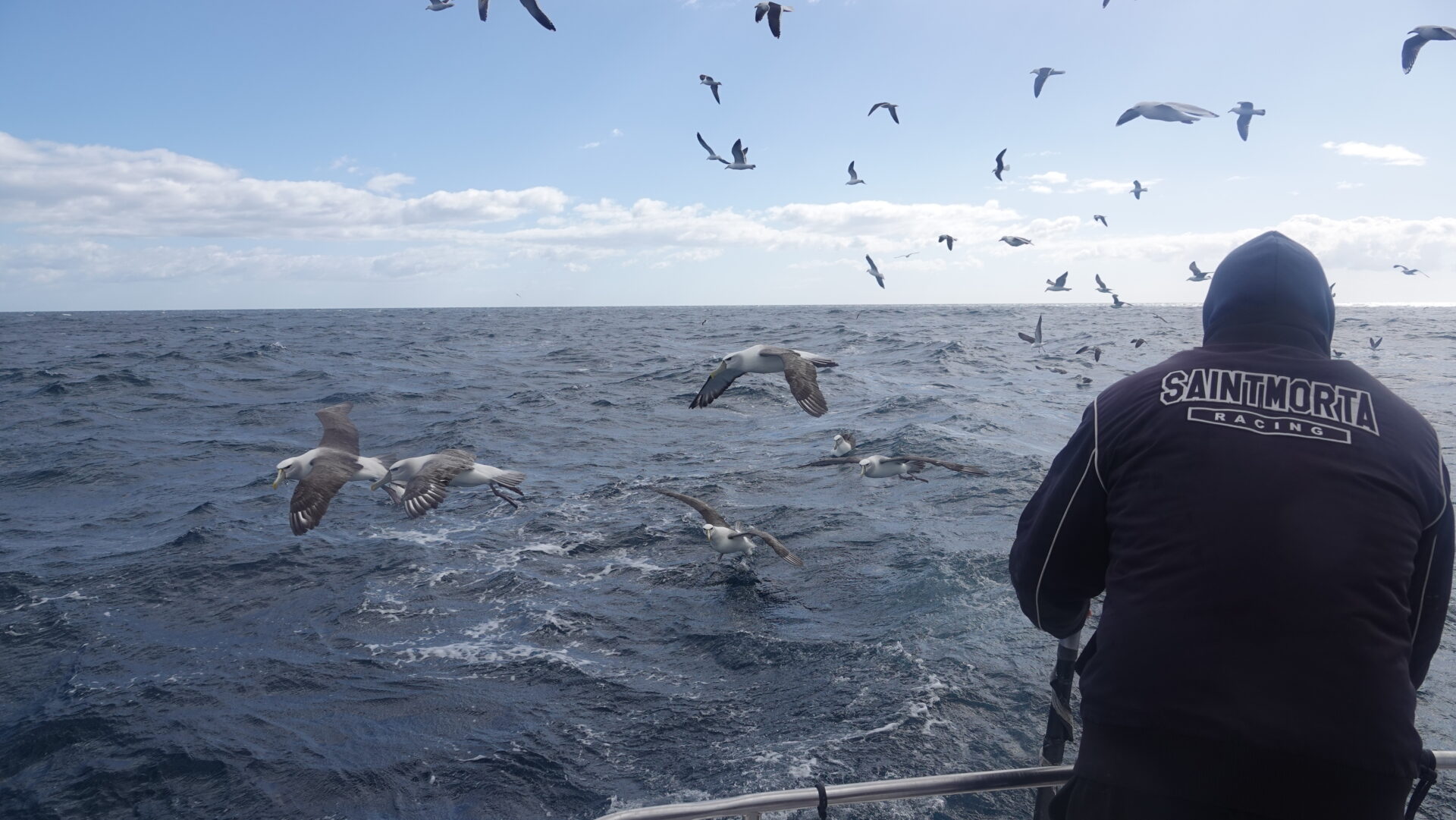
White-capped Albatross © Jackson Hagley
Once we reached the continental shelf, the real pelagic birding began. Over the next three to four hours, we had five different species of albatross visit the boat: Indian Yellow-nosed, Buller’s, Black-browed, White-capped and Salvin’s Albatrosses. There aren’t many places in the world where you can experience something quite like this!
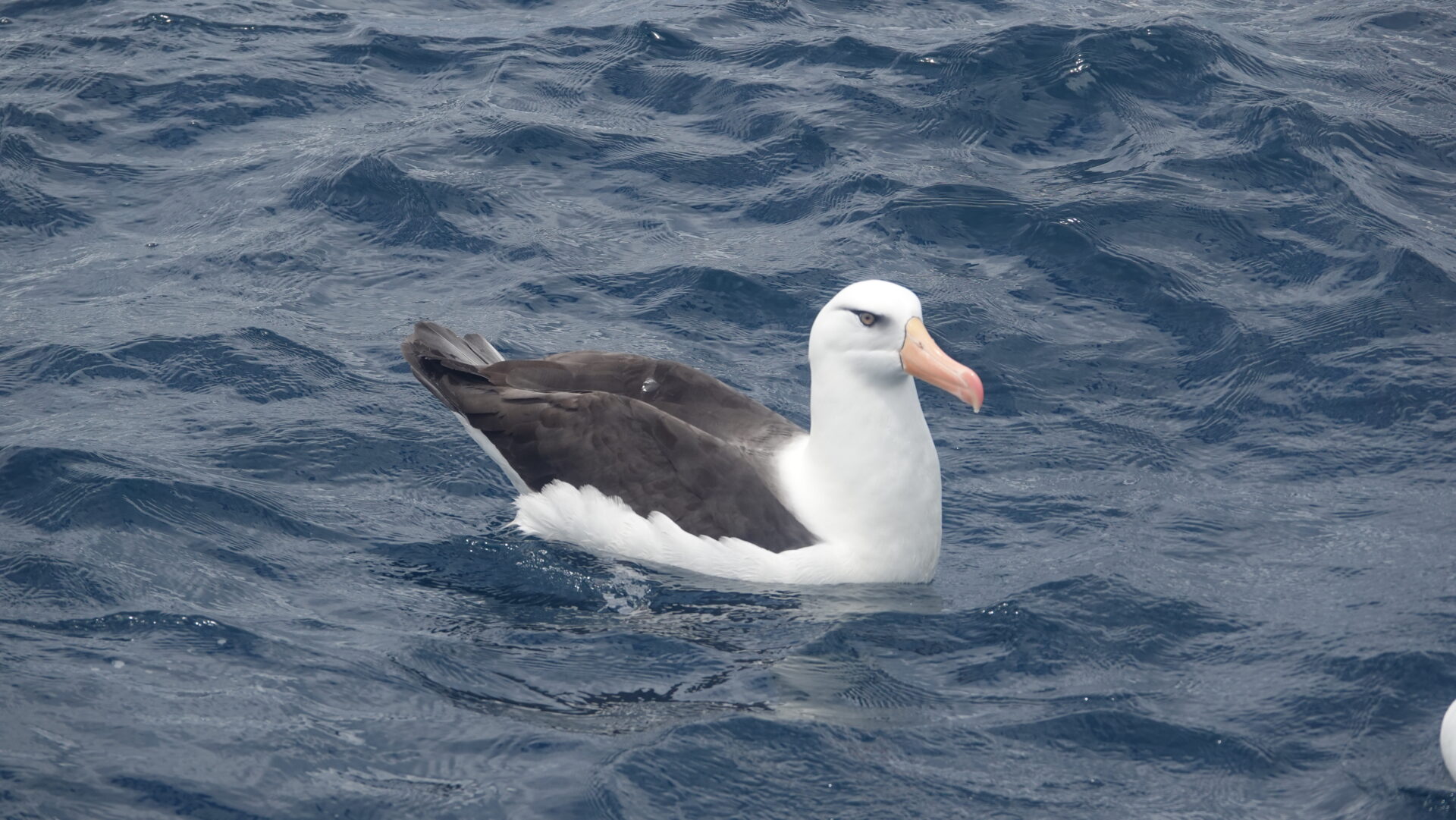
Black-browed Albatross © Jackson Hagley
Some other notable species included Gray-faced Petrel, Northern Giant-Petrel and thousands of Short-tailed Shearwaters.
After eight hours at sea, it was unfortunately time to return to the harbour. We headed back to the hotel for some much-needed rest.
Before dinner, we went for a short walk around the hotel gardens, where we enjoyed better views of Yellow Wattlebirds and Yellow-throated Honeyeaters, along with some nice fly-by views of Yellow-tailed Black-Cockatoos.
We decided to head out for a quick drive around the back streets of Eaglehawk Neck in search of Tasmanian Devils. However, we were treated to even better views of Little Penguins in their burrows, which was a wonderful find. As a final consolation prize, we also spotted an Eastern Barred Bandicoot on the drive home!
Day 6: Tasman Peninsula to Hobart
This morning, we enjoyed a bit of a sleep-in and had a later start to the day. Our first stop was Station Lagoon. Some of the highlights included better views of Australian Shelducks, Hardheads and some beautiful breeding-plumaged Hoary-headed Grebes. We then made the 45-minute drive back to Tasmania’s capital, Hobart.
Once we arrived, we headed straight to Hobart Rivulet, where we spent the next two hours searching for Platypus. During this time, we also added two new species to our trip list: Australia’s largest bird of prey, the Wedge-tailed Eagle, and a lovely pair of roosting Tawny Frogmouths.
However, the biggest highlight was getting fantastic views of a Platypus! After spending around 15 minutes watching this wonderful and unique monotreme, we found ourselves a nice picnic table and enjoyed our packed lunch.
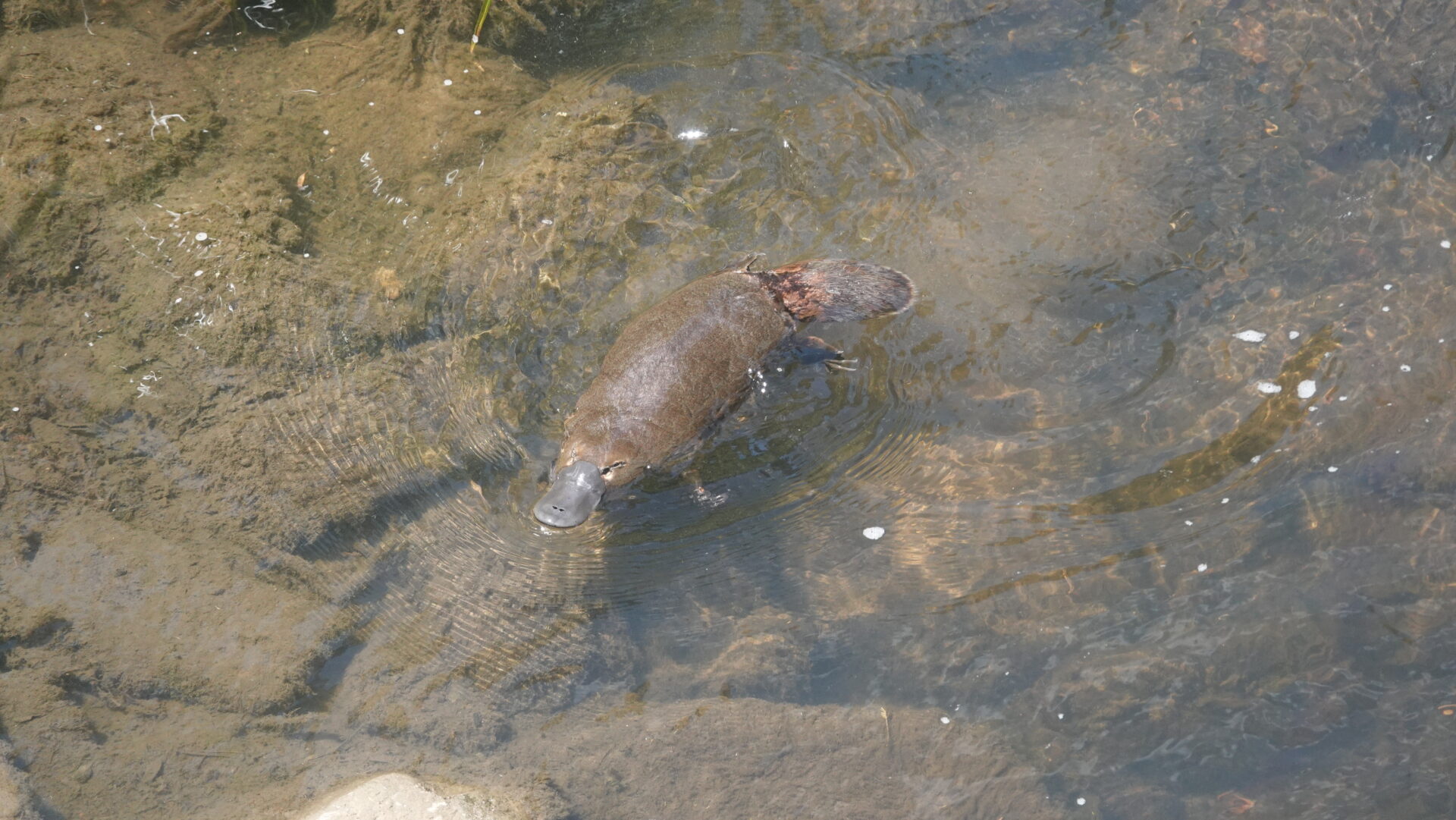
Platypus © Jackson Hagley
After lunch, we headed to the foothills of Mount Wellington for an appointment with our final Tasmanian endemic target, the Scrubtit. Over the next hour and a half, every little brown bird we encountered raised our blood pressure as we hoped it might be our elusive Scrubtit. Unfortunately, they all turned out to be the more common Tasmanian Scrubwren!
It wasn’t all disappointment, though, as we added our first Eastern Spinebill of the trip and enjoyed astounding views of Yellow-tailed Black-Cockatoos feeding low to the ground.
With our final stop of the trip on the horizon, we made our way to the summit of Mount Wellington to enjoy unforgettable views of Hobart city and its surrounds.
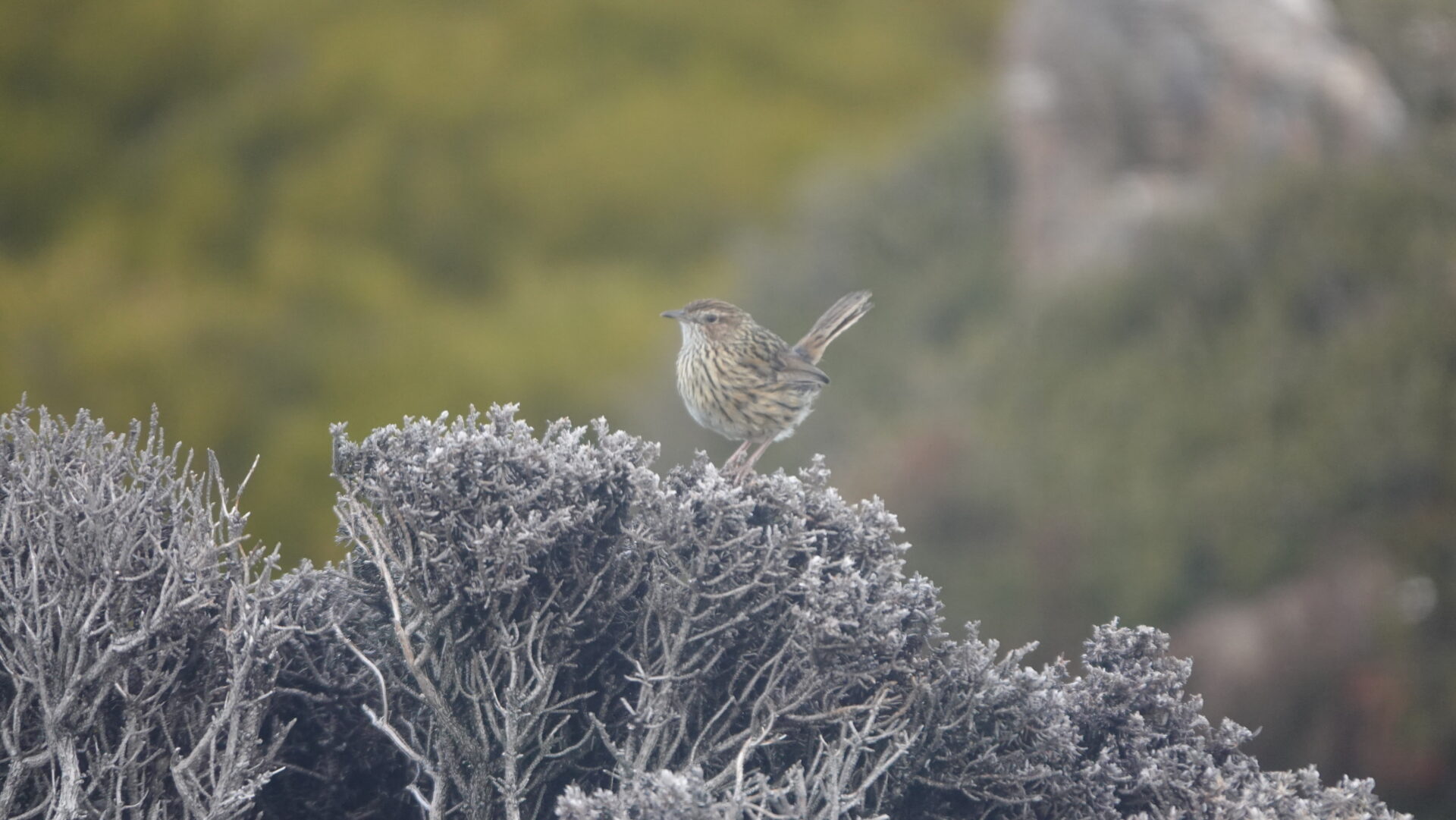
Striated Fieldwren © Jackson Hagley
As we soaked in the spectacular scenery, we were rewarded with our final new bird of the trip: the Striated Fieldwren, which put on a fantastic show and gave everyone wonderful views.
We then drove back down the mountain to our accommodation, where a delicious Thai dinner was waiting for us. It was the perfect way to celebrate and reflect on what had been a truly wonderful trip!
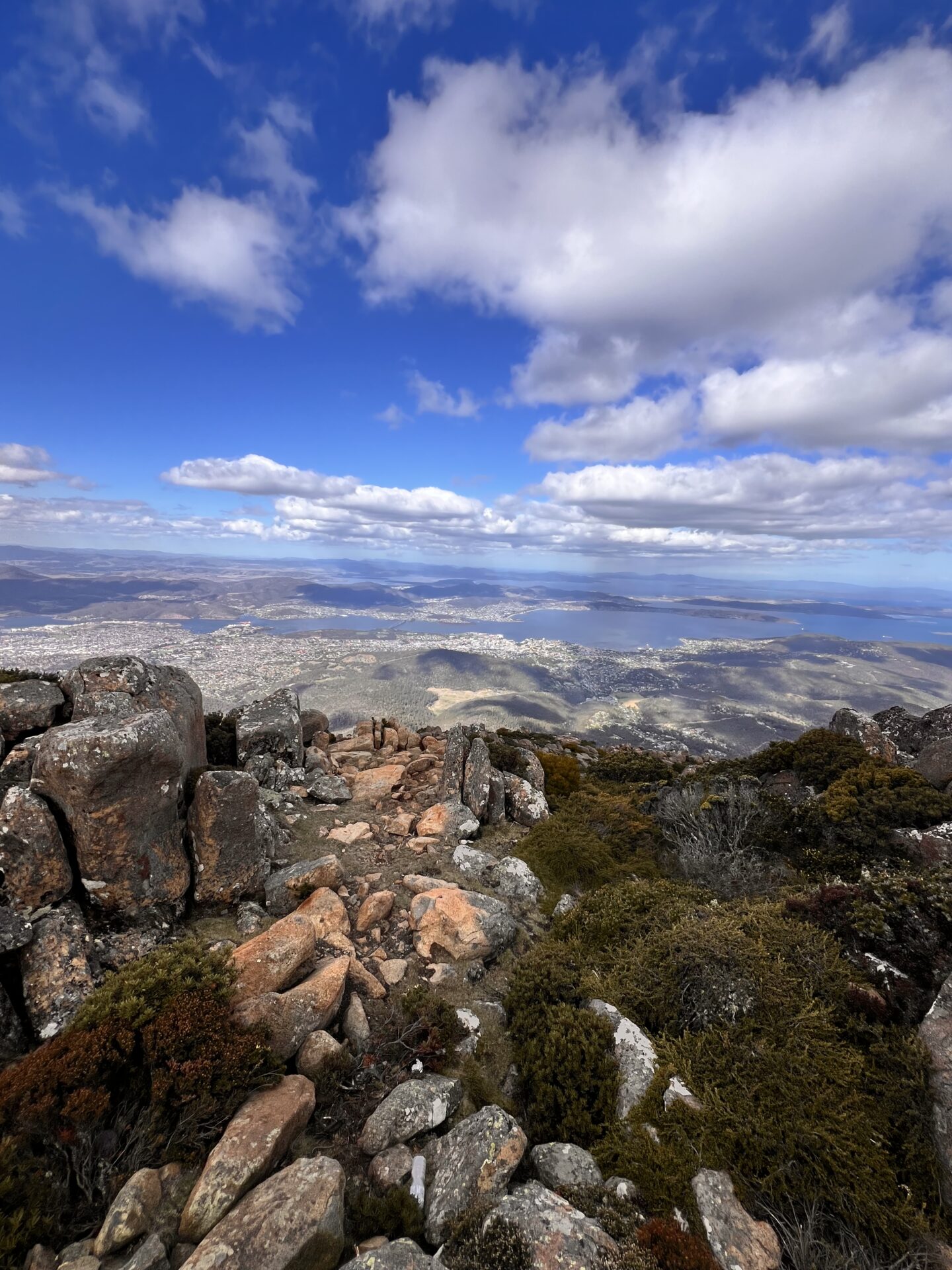
The view from Mt Wellington © Jackson Hagley
Leave a Reply