Arizona in Winter Trip Report (March 2026)
We began the tour in Tucson, then migrated south to the Santa Rita Mountains. Next we explored the Patagonia region, and finally, the Chiricahua Mountains. Southeastern Arizona encompasses several Sky Island mountains that contain a variety of ecotones across different elevations. The lowlands featured Sonoran and Chihuahuan Deserts, cottonwood riparian zones, mesquite bosques, shortgrass prairies, and artificial wetlands; mid-elevations hosted sycamore-juniper-oak woodlands along creeks; and higher elevations supported tall conifers like pines and firs. We documented an unusually high 174 species. Diversity was most notable in the following number of species: 14 ducks, 9 hummingbirds, 9 shorebirds, 11 raptors, 8 woodpeckers, 4 thrashers, 20(!) sparrows, and 9 icterids (blackbirds). Harris’s Antelope Squirrel, Pronghorn, and White-collared Peccary were some of the more charismatic of the 13 mammal species on this tour. To learn more about our epic expedition, continue reading!
Day 1: Tucson
What better way to kick off the tour than watching the sun rise over Tucson Mountain Park? Saguaros and Teddy-bear Chollas glowed angelic in the morning light. Many birds actually consider these prickly cacti to be cozy homes, and while at Gates Pass, we observed several classic desert species: an active Ash-throated Flycatcher, singing Verdin (a song we would quickly become familiar with), a boisterous pair of Gila Woodpeckers, and a Rock Wren singing atop rocks, true to its name. At a nearby roadside stop, we crossed paths with a local specialty, the Gilded Flicker, as well as a pair of chatty Black-tailed Gnatcatchers.
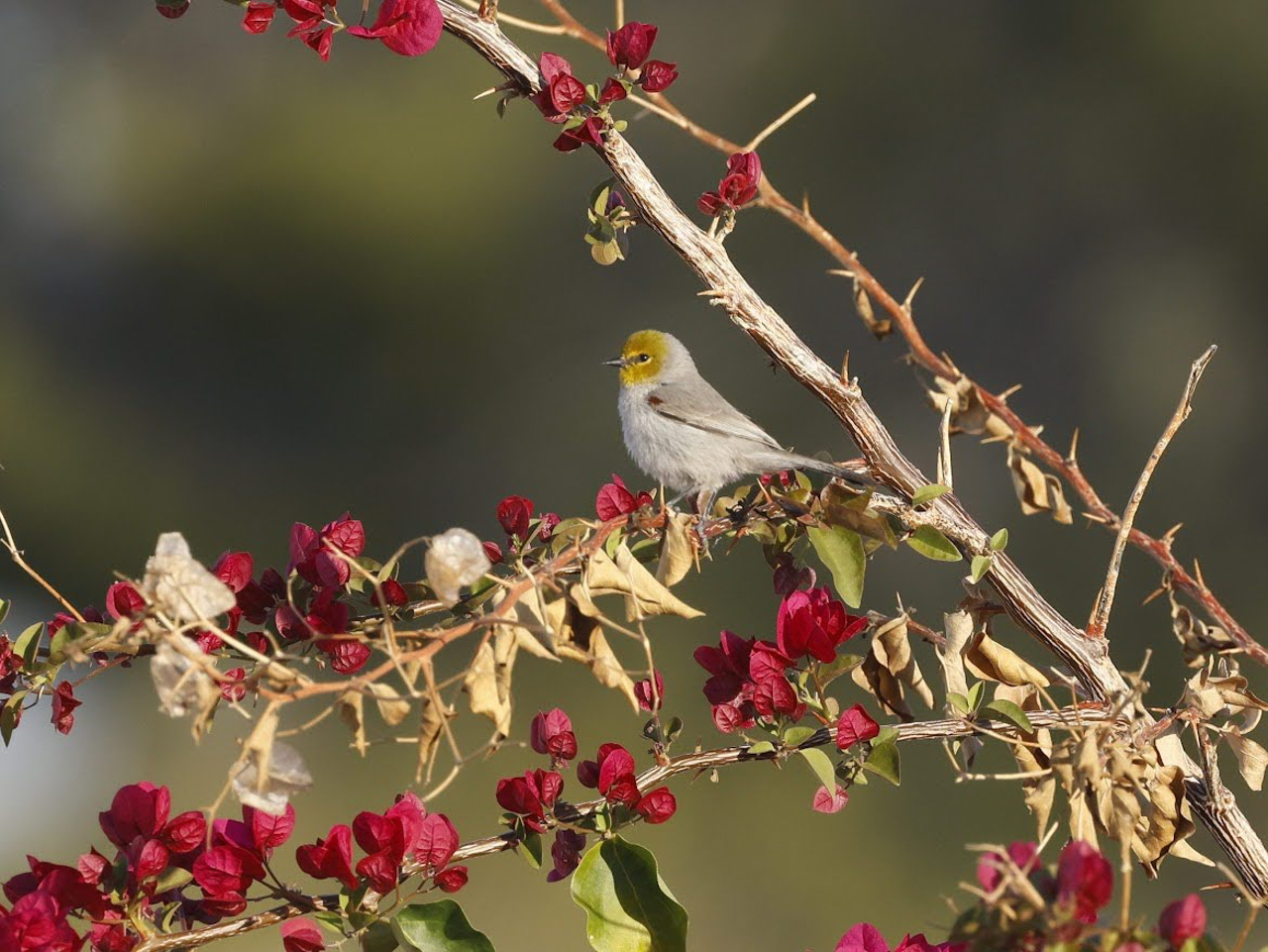
Verdin © Karin Kirchhoff
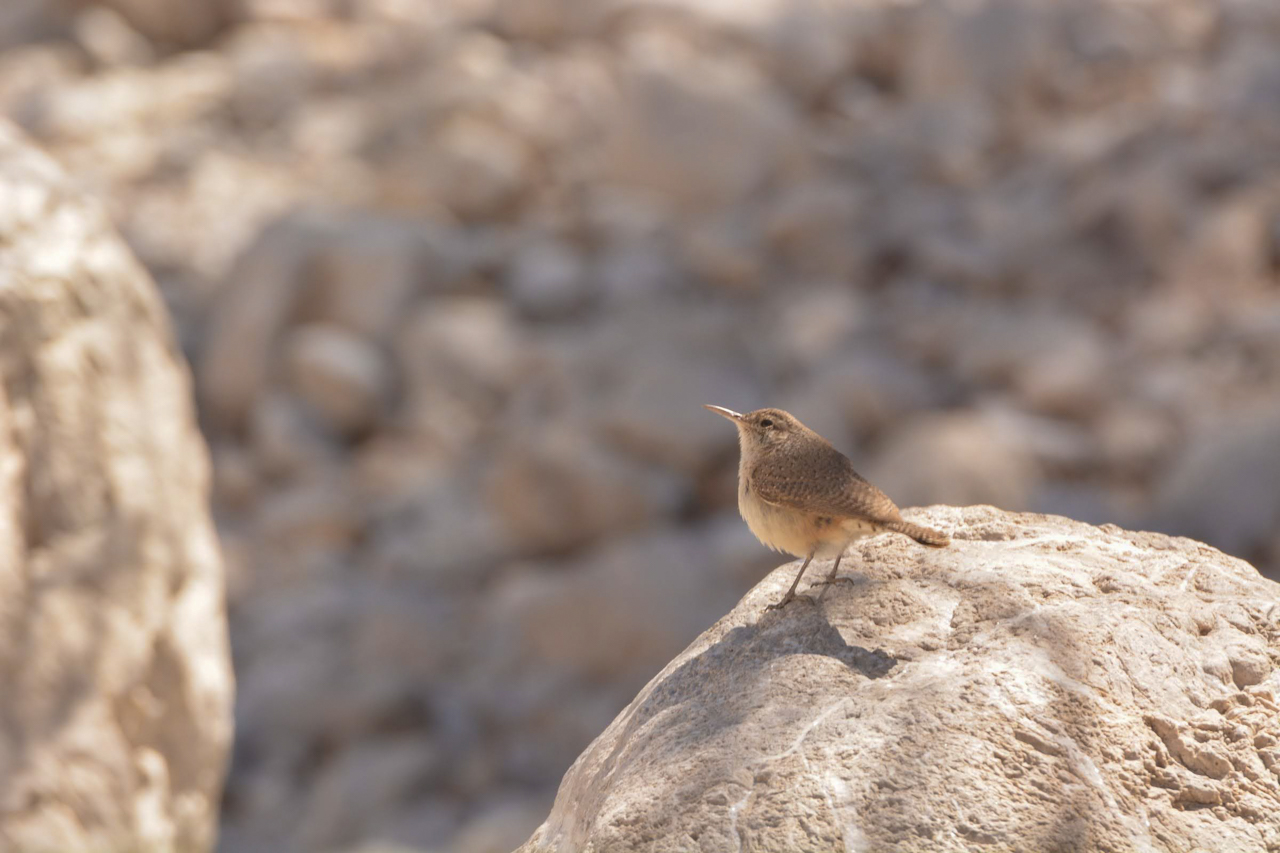
Rock Wren © Alyssa DeRubeis
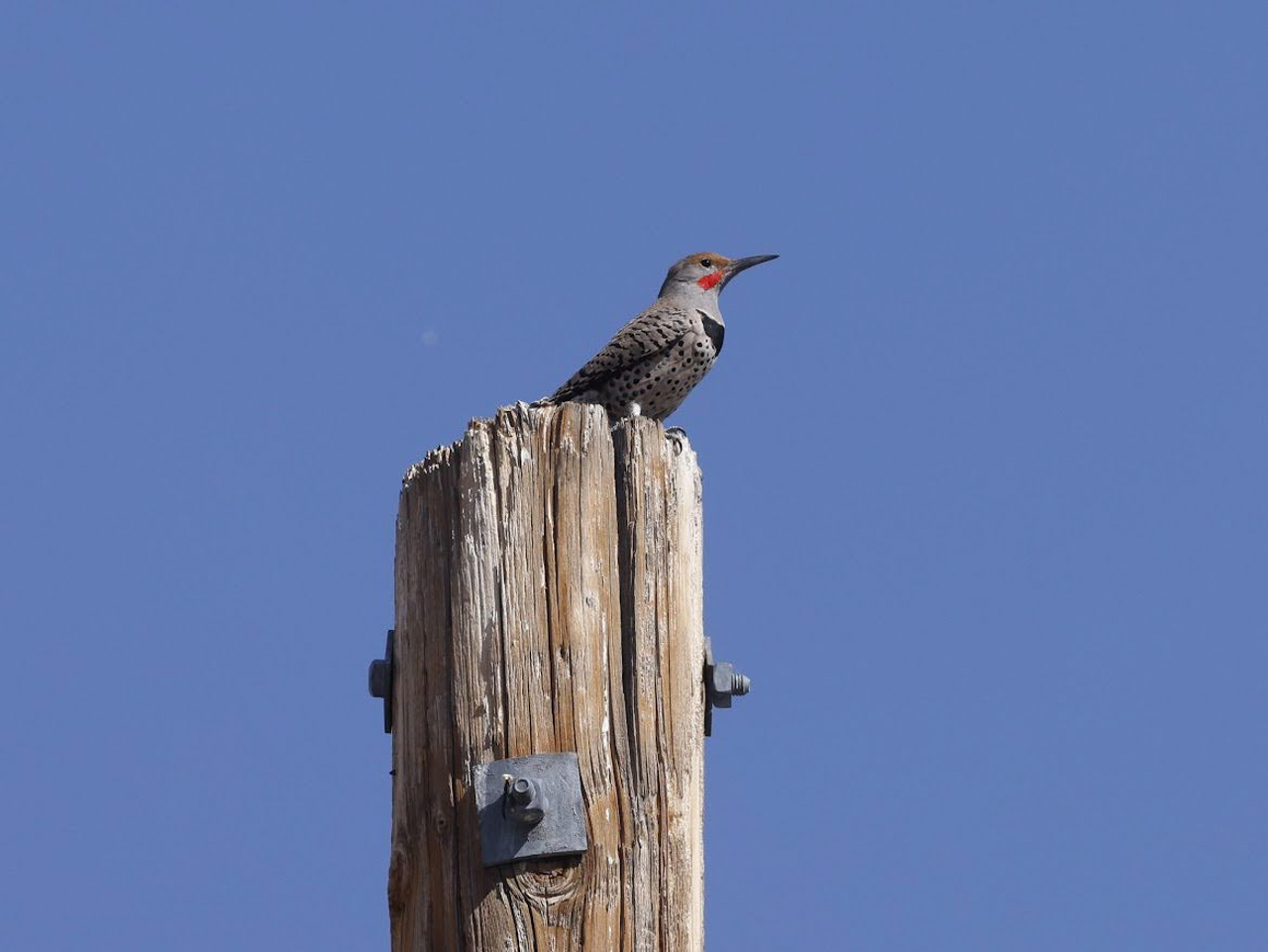
Gilded Flicker © Karin Kirchhoff
Our other big stop of the day was at the popular Sweetwater Wetlands. Created in 1996 for the purpose of putting cleaned water back into Tucson’s aquifer, Sweetwater was no longer in use after the creation of a nearby water treatment facility in 2013. Its legacy lives on in the name of birds, plants, insects, and more that rely on this manmade marsh. How fortunate were we to visit this site shortly after a clutch of American Coots hatched? The tiny red-headed orange fuzzballs were too young to dive, instead seeking shelter in the shoreline reeds. The parents were constantly feeding their chicks–such a treat to witness!
Other waterbirds put on a show too, like American Wigeon and Northern Shoveler that were courting via head-bobs. The winner of waterfowl was the drake Cinnamon Teal, which was a lifer for most and observed in great lighting and at close range. Three other fun birds we found at Sweetwater Wetlands were a singing Greater Roadrunner (the only one we did not see while driving on the entire tour!), the mega-vibrant male Vermilion Flycatcher, and a dazzling male Black-throated Gray Warbler.
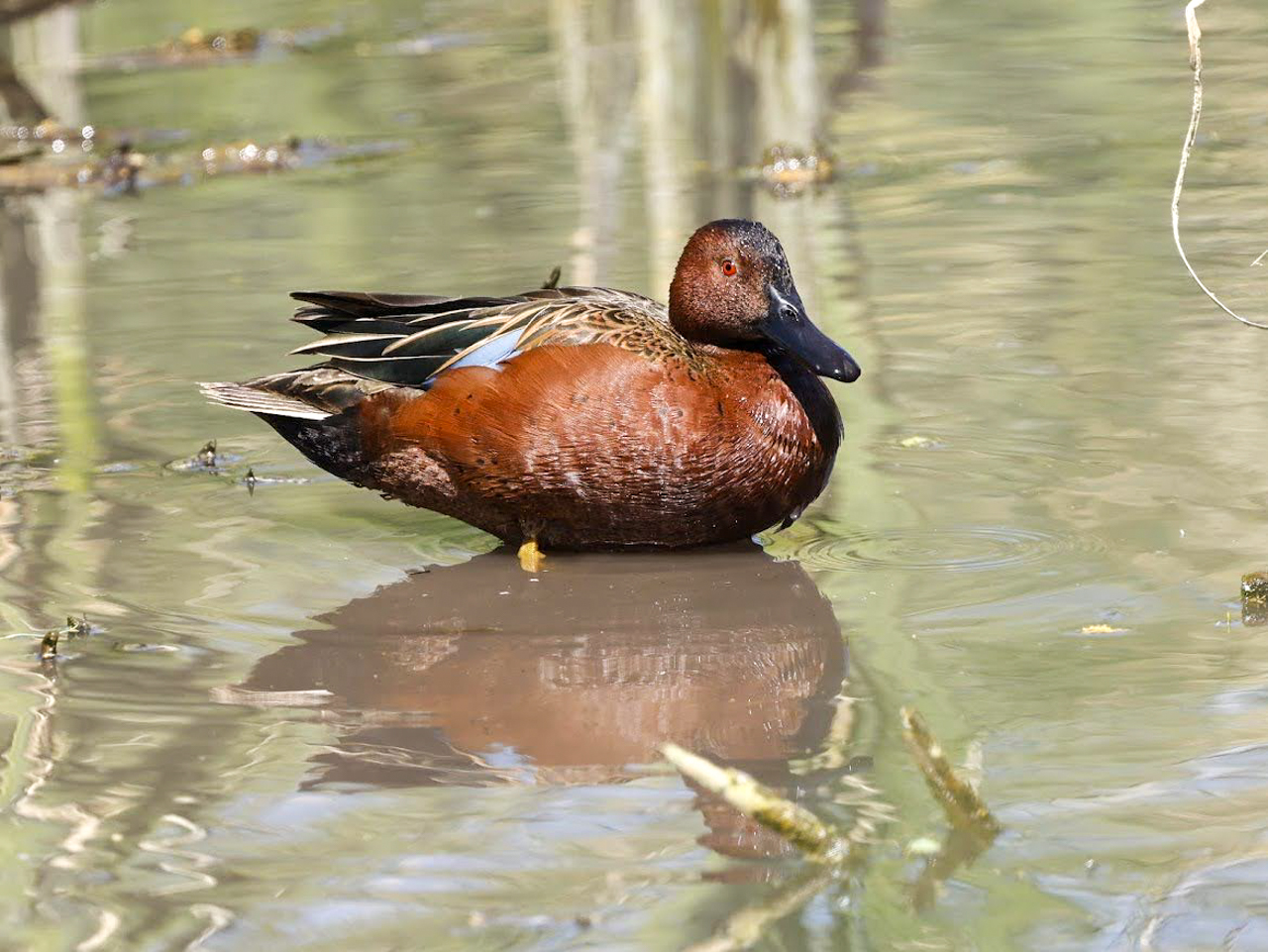
Cinnamon Teal © Karin Kirchhoff
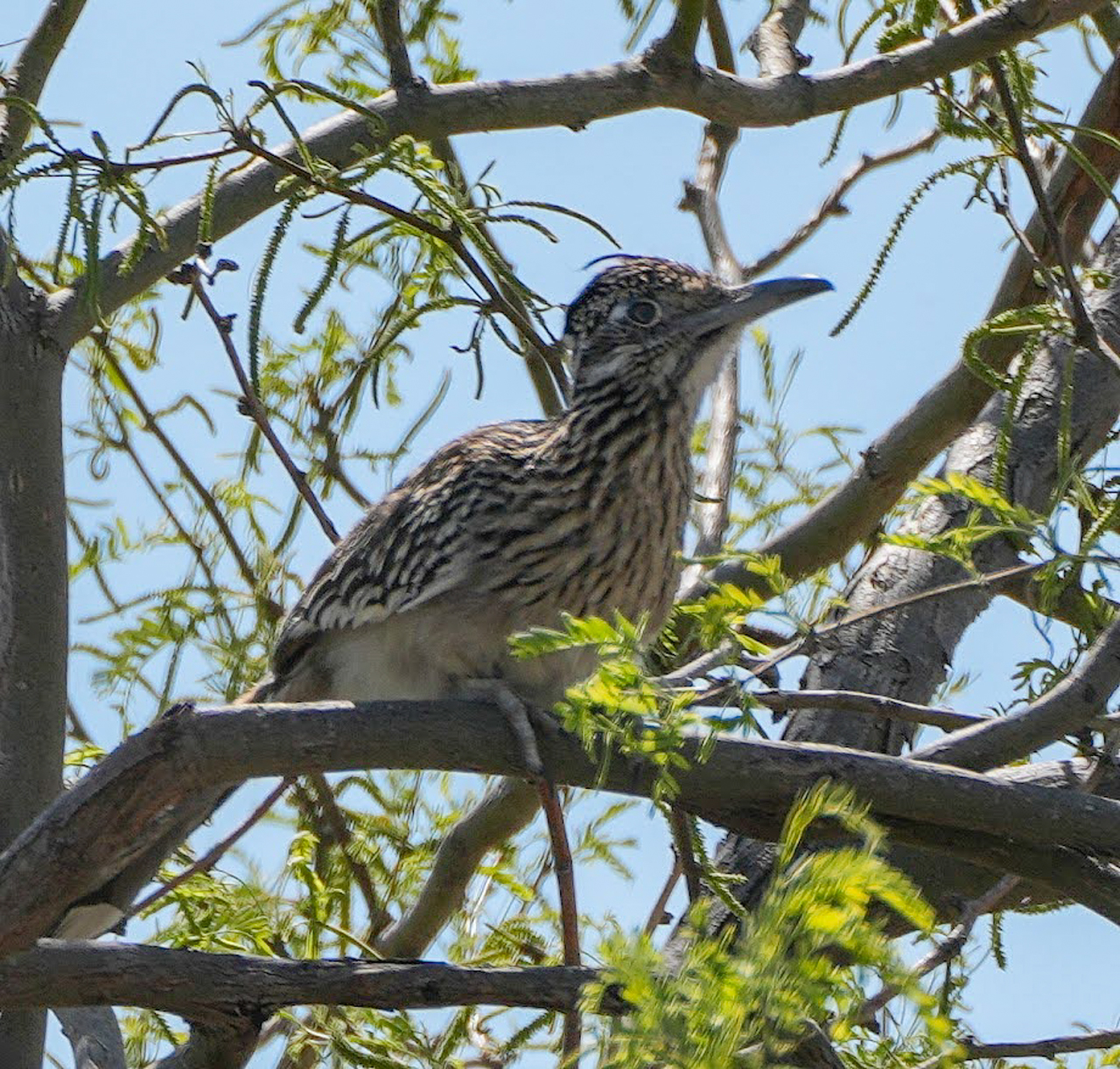
Greater Roadrunner © Roger Burns
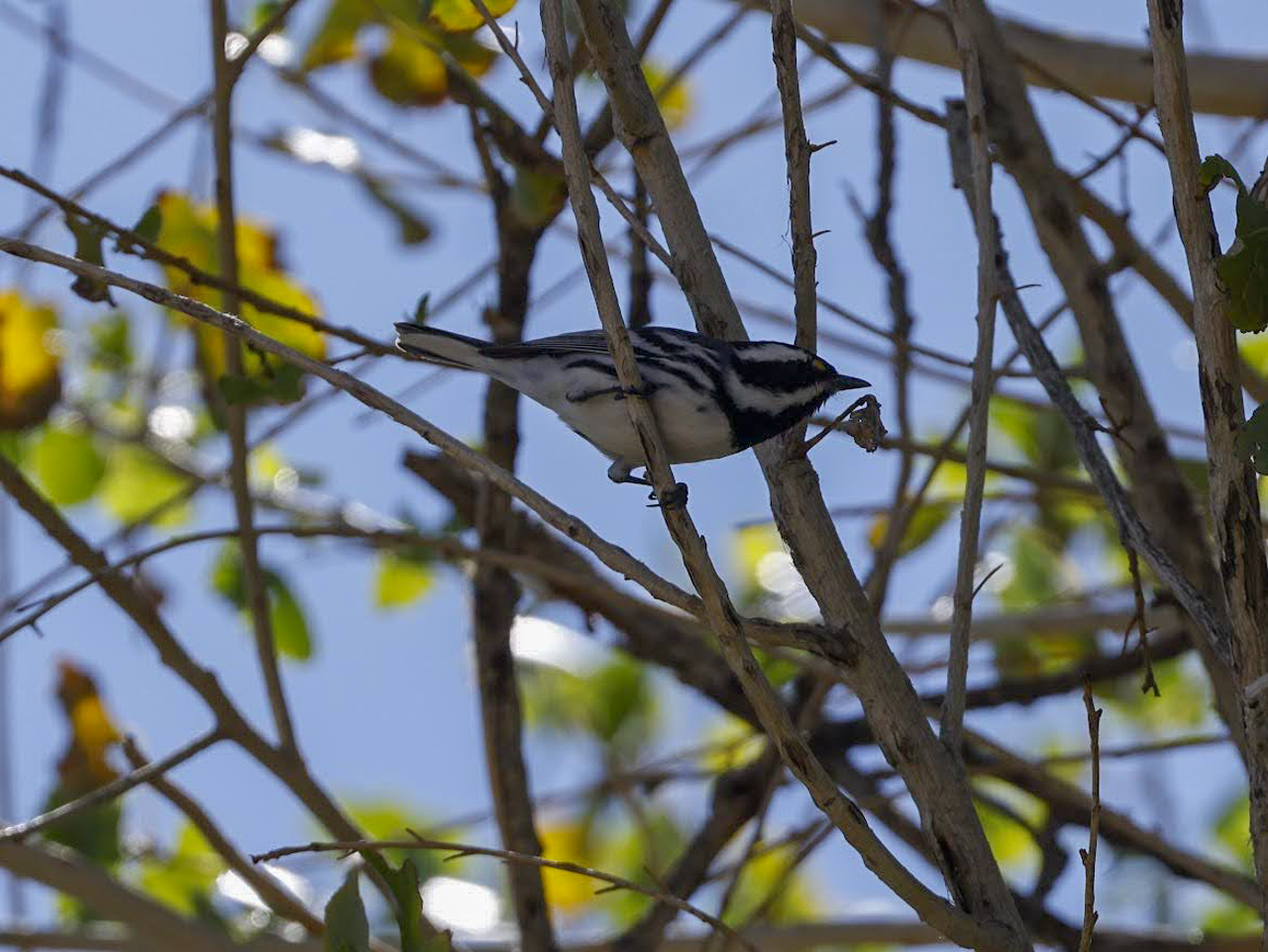
Black-throated Gray Warbler © Karin Kirchhoff
The Vermilion Flycatcher became an instant star bird of the tour. And how can one resist its flaming scarlet plumage, a pleasant surprise from a family of songbirds that is largely dully-colored. Males welcomed the breeding season by performing their glorious slow-motion and puffed-out flight display on multiple occasions during our trip. While we would soon see other literal jaw-droppingly gorgeous species, the Vermilion Flycatcher was a nearly guaranteed daily beauty on this tour. From desert denizens to pond inhabitants, Tucson served us well on Day 1!

Vermilion Flycatcher © Alyssa DeRubeis
Day 2: Santa Rita Mountains
We started the day off right with a sunny stroll in Desert Meadows Park in Green Valley. This communal space for gardening and art is filled to the brim with birdfeeders, and of course, birds! The feeders attracted sparrows like the ubiquitous White-crowned and another local specialty, the Rufous-winged. In the trees above, a tiny Lucy’s Warbler (a.k.a. “Desert Warbler”) sang its heart out and a glistening jet-black male Phainopepla flycatched for food. On the ground, Gambel’s Quail quarreled and a pair of Abert’s Towhee (yet another local specialty!) stuck close together.

Phainopepla © Alyssa DeRubeis

Gambel’s Quail © Roger Burns

Abert’s Towhee © Roger Burns
During our saunter, it was clear that spring had sprung: Anna’s Hummingbirds were busy nest-building and sitting on eggs, and both Curve-billed Thrashers and Verdins were adding the finishing touches to their stick nests. Our group admired the different styles of nests, from the soft spider web-laden hummingbird nests to the tricky entry way of the globular Verdin nest.
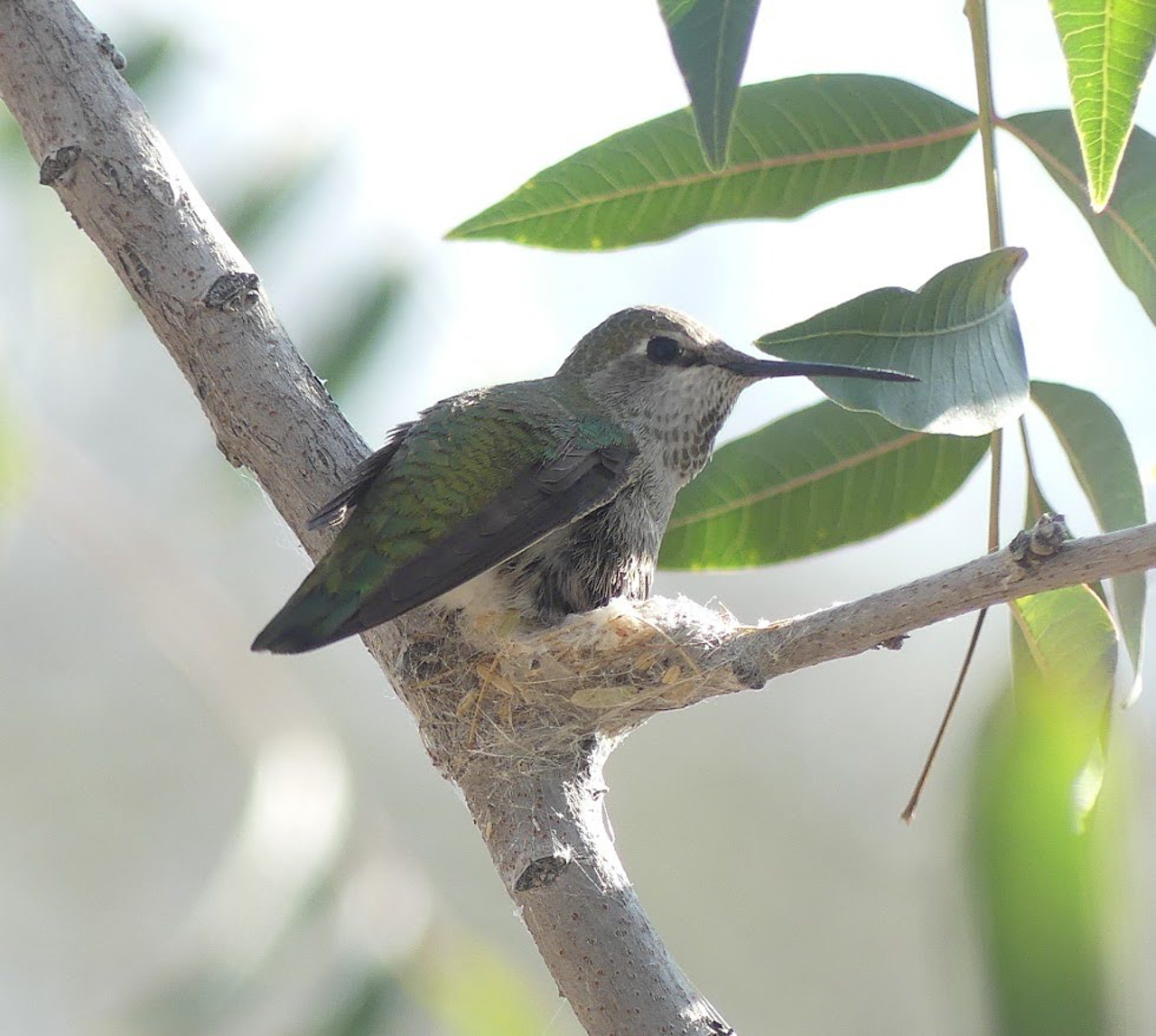
Anna’s Hummingbird nest building © Joy Burns
We timed our visit to the Tubac Hawk Watch at the perfect time for peak Common Black Hawk migration. This count site is the best location in the country for Common Black Hawk migration. We tallied 11 during our one-hour visit as well as a Gray Hawk cruising fast overhead. Both of these raptors nest in cottonwoods in riparian zones like the Santa Cruz River, and local activists are trying to protect this crucial habitat by creating a National Wildlife Refuge. Other species would also benefit from this habitat conservation, like Black Phoebe and Mexican Duck, two other birds we found here.

Common Black Hawk © Alyssa DeRubeis
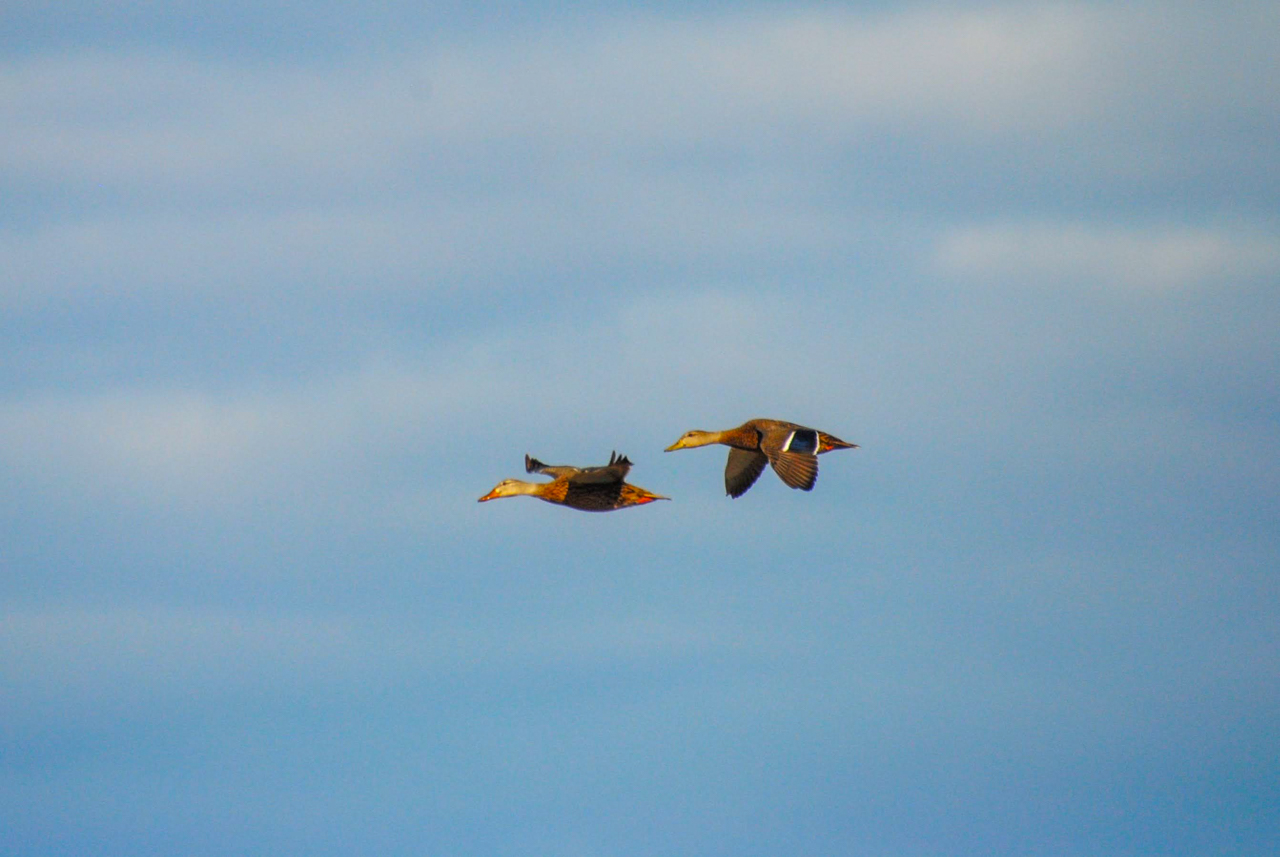
Mexican Duck © Alyssa DeRubeis
Our final stop of the day was to the famous Madera Canyon. Positioned in the Santa Rita Mountains, it gifted us a dizzying list of incredible birds. We encountered Cassin’s and Black-throated Sparrows in the grassy lowlands, and higher up in elevation (5,000 feet), in the sycamore-oak-juniper riparian zone, we saw a suite of Sky Island specialties: Arizona Woodpecker, Hepatic Tanager, Mexican Jay, Painted Redstart, Rivoli’s Hummingbird, and Yellow-eyed Junco.
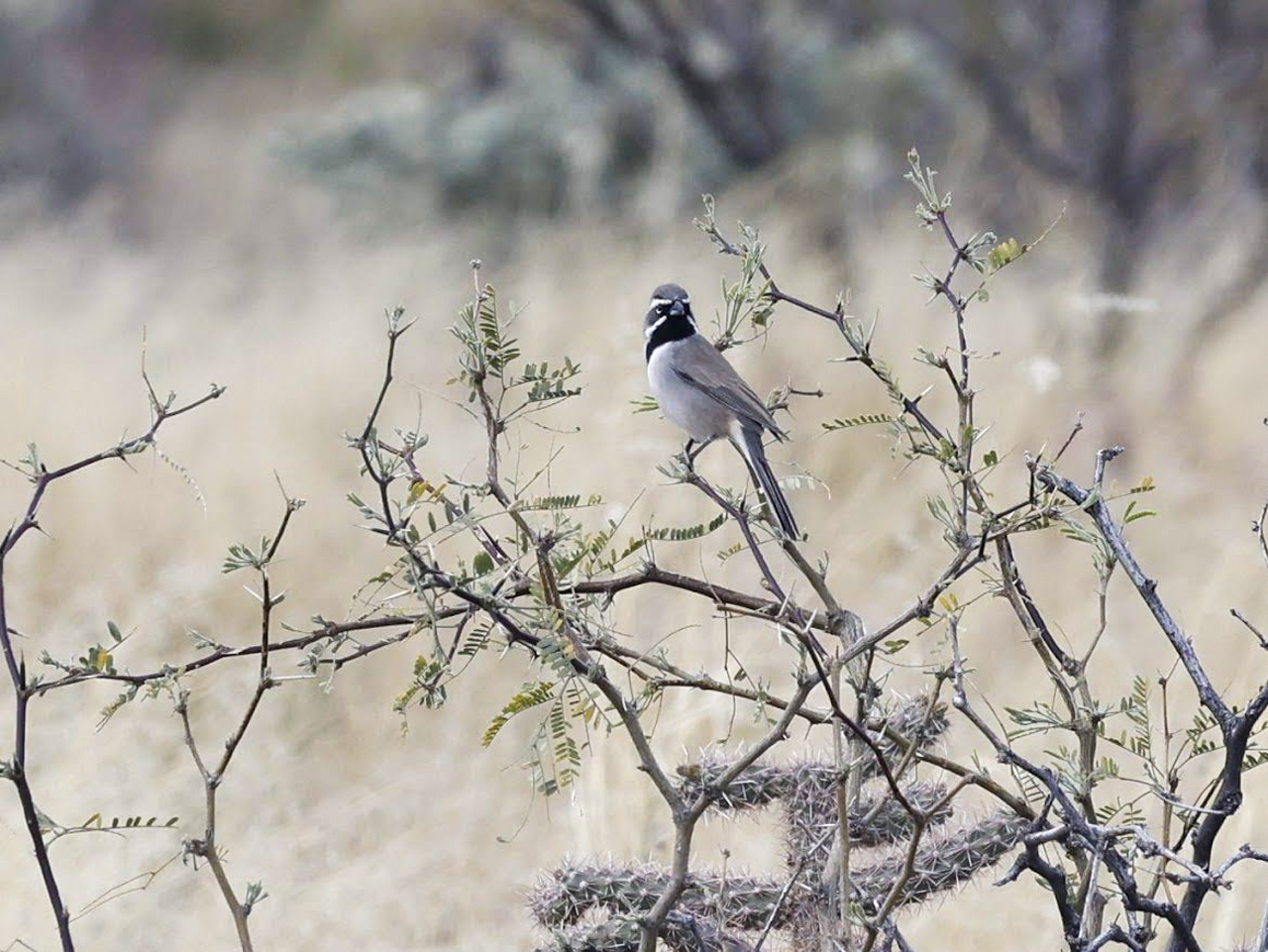
Black-throated Sparrow © Karin Kirchhoff

Painted Redstart © Karin Kirchhoff
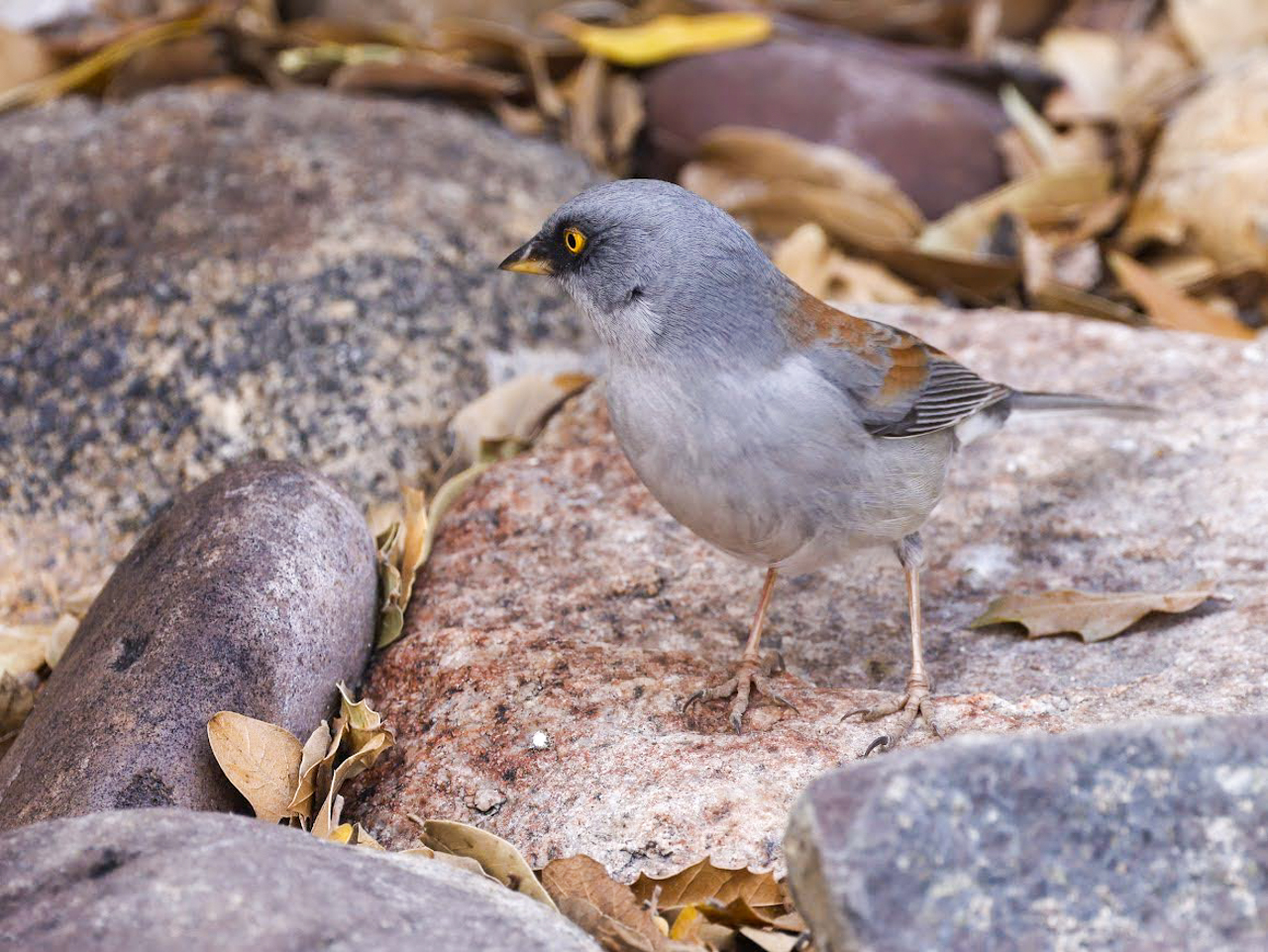
Yellow-eyed Junco © Karin Kirchhoff
A real identification head-scratcher was a returning hummingbird hybrid from last year, the Broad-billed x Berylline Hummingbird. It had a mix of both species’ traits: the dark belly and tail of a Broad-billed and a green throat and drooping bill of a Berylline.
But equally perplexing was the berry-caching behavior of a Red-naped Sapsucker, which was a new behavior for this species for all of us! It seems like it learned something from the neighborhood Acorn Woodpeckers. As hard as it was to peel away from the busy feeders at Santa Rita Lodge, good Mexican food and rest was much needed.
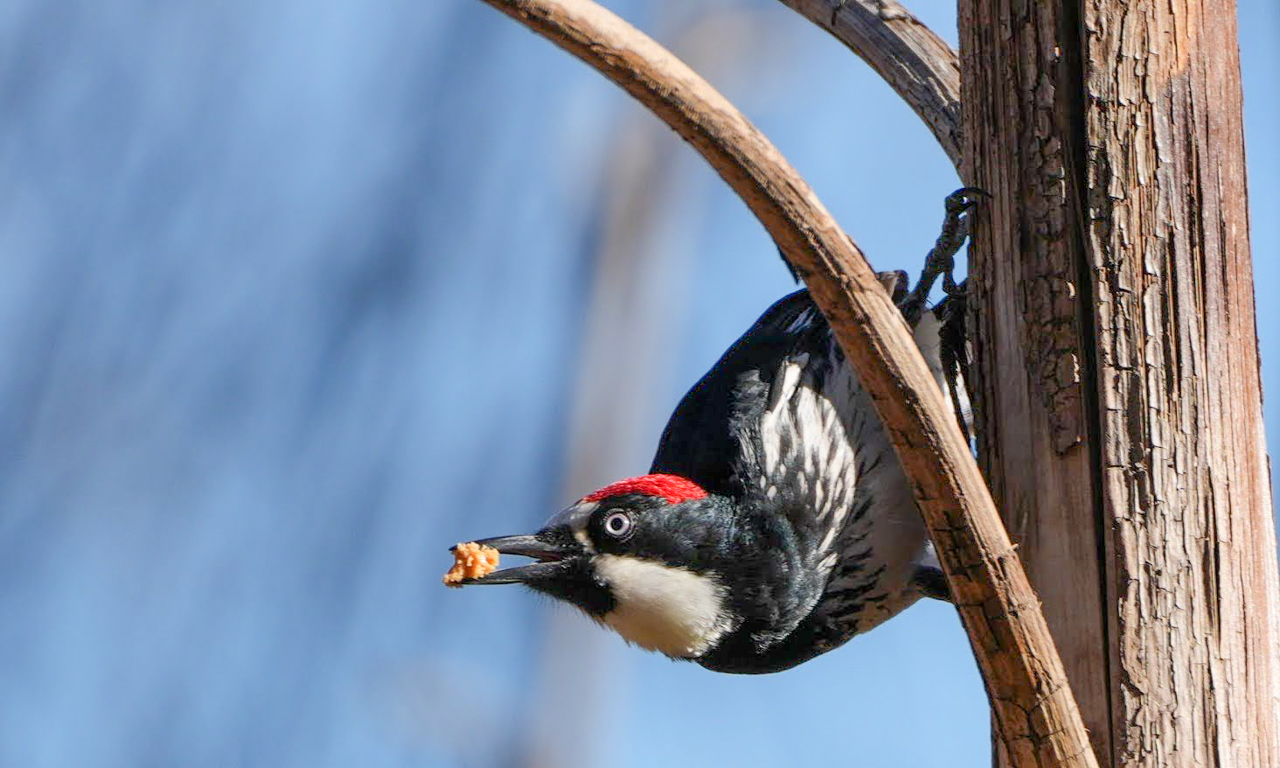
Acorn Woodpecker © Roger Burns
Day 3: Intro to Patagonia
The scarcity of water in the desert often means that the few existing water sources are jam-packed with birds. The Green Valley Water Retention Facility (WRF) was covered with 12 species of ducks, including scores of Ring-necked Duck and the regionally rare Greater Scaup, as well as early Baird’s and Western Sandpipers. As we scoped out the ponds, squeaky American Pipits and singing Horned Larks caroled us.
Dark storm clouds loomed over the arid landscape as we drove to our next stop. Even though it rained for much of the drive, it miraculously ceased by the time we reached Patagonia Lake State Park. The birding trail was quite fruitful, and in fact was our birdiest checklist with 49 species. This was largely thanks to a mixed songbird flock that contained Bell’s, Cassin’s, and Plumbeous Vireos, two quick Gray Flycatchers, buzzy Blue-gray Gnatcatchers, hyperactive Ruby-crowned Kinglets, a shy Hermit Thrush, and four warbler species.
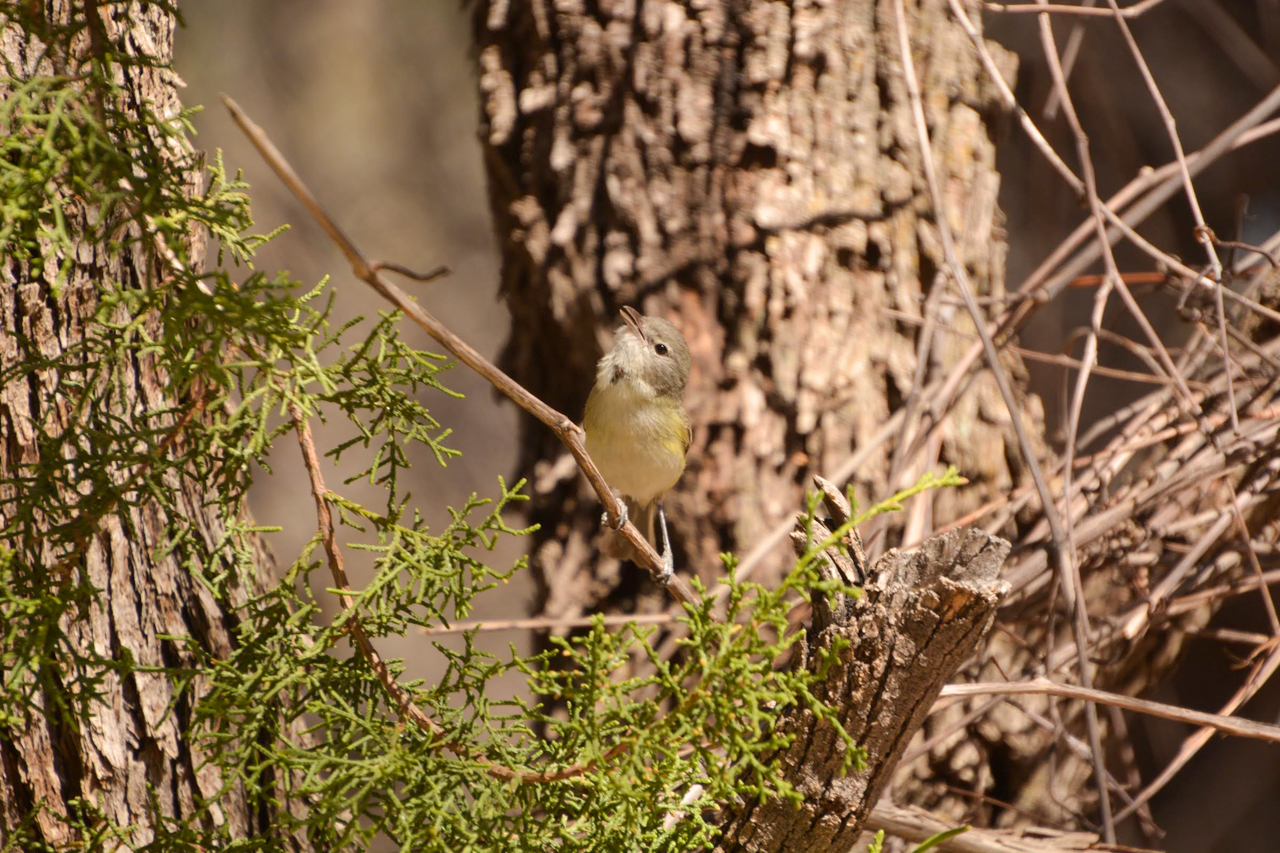
Bell’s Vireo © Alyssa DeRubeis
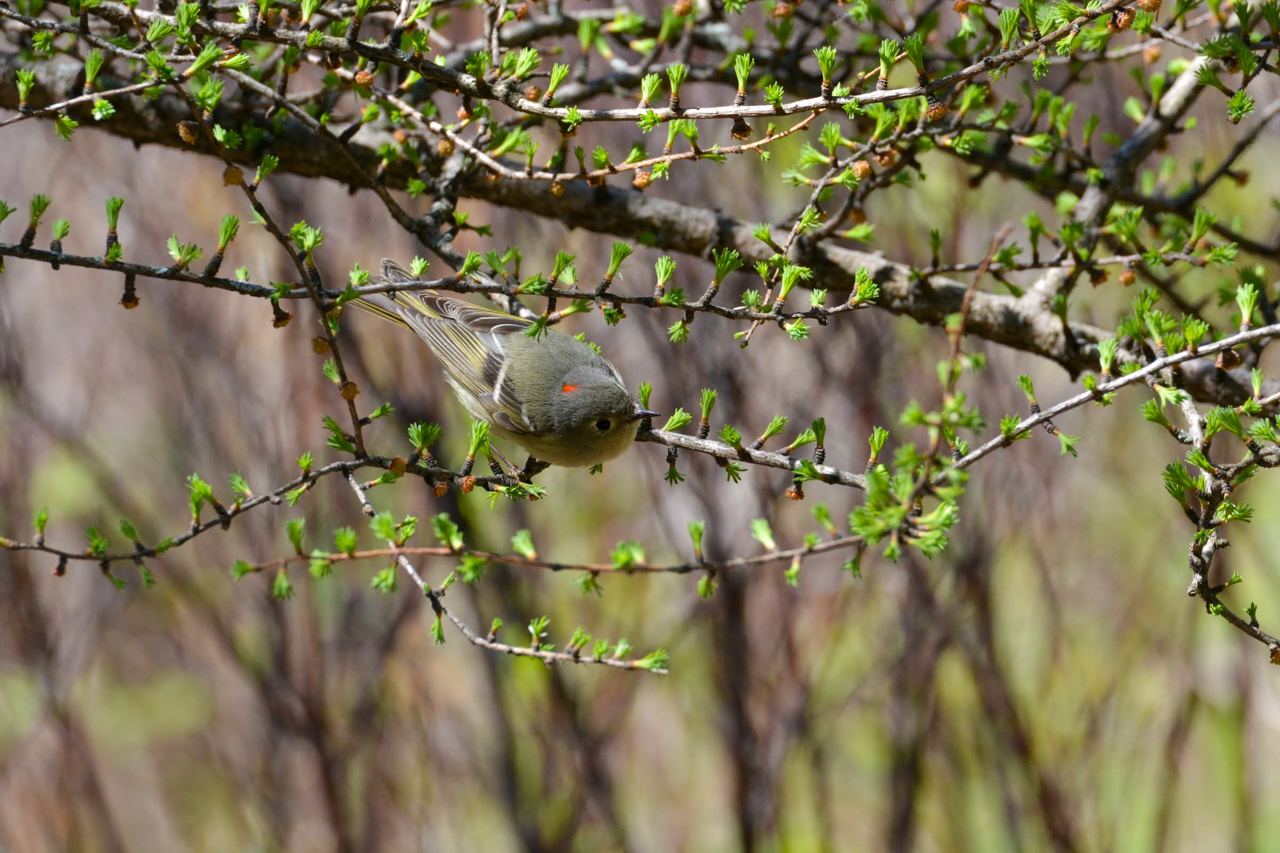
Ruby-crowned Kinglet © Alyssa DeRubeis
Our ears were delighted to hear the cries of a Gray Hawk and the whinny of a Sora. After spending much time admiring another handson male Vermilion Flycatcher, we found the female busy building a nest. At lunch, it was hard to focus on eating as a pair of Phainopeplas and an obliging Northern Beardless-Tyrannulet demanded our attention.
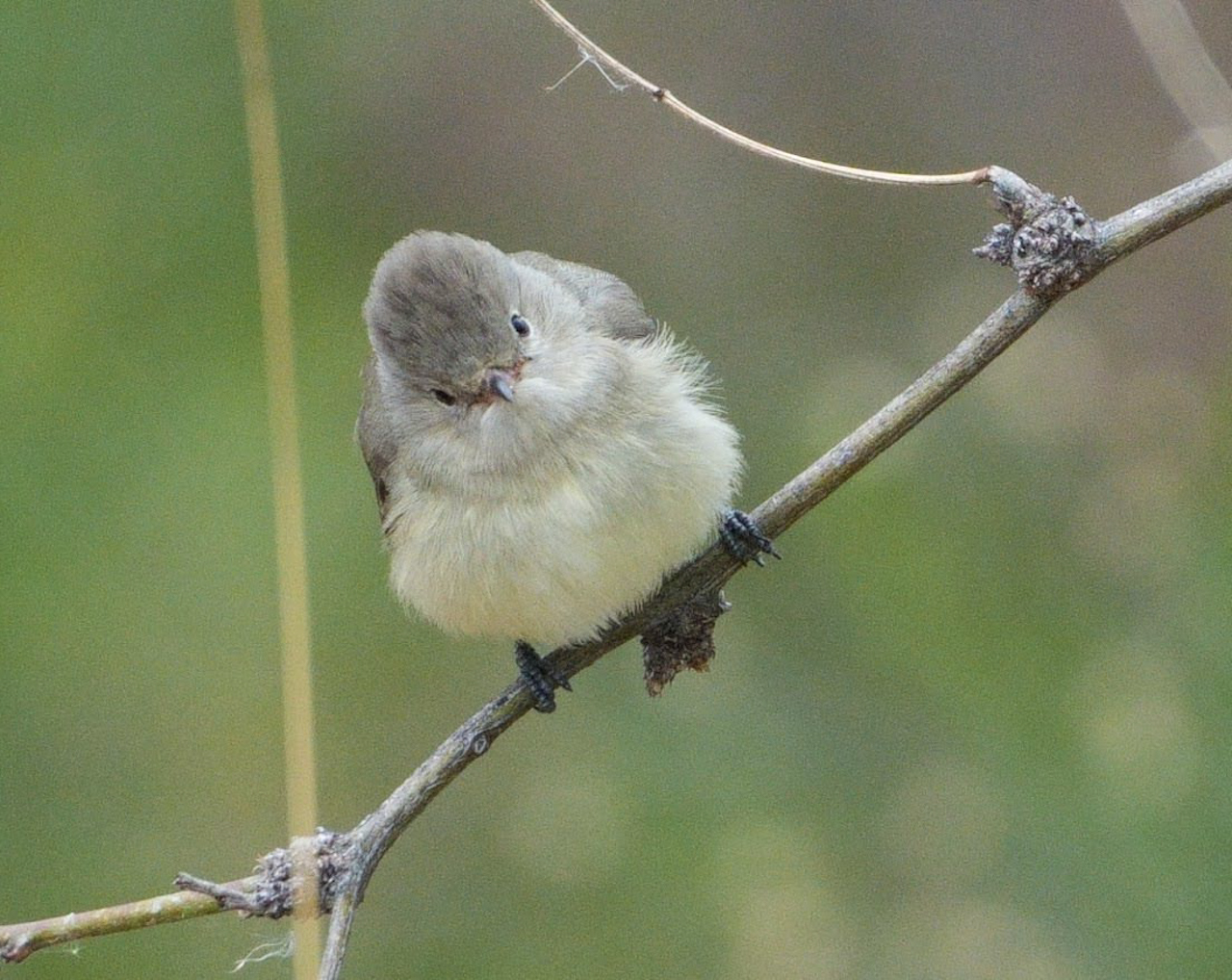
Northern Beardless-Tyrannulet © Roger Burns
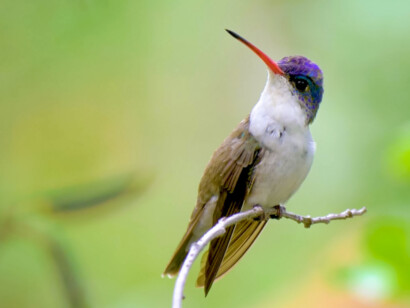
After a brief stop at the Patagonia Roadside Rest Area to observe a flock of zooming White-throated Swifts, we finally arrived at Patagonia, an artsy town full of resident birders. A quick pre-dinner stroll around the city park was delightfully productive, with an early Summer Tanager and our first Violet-crowned Hummingbird. These brightly-colored birds fueled our appetite for a full day of Patagonia birding tomorrow!
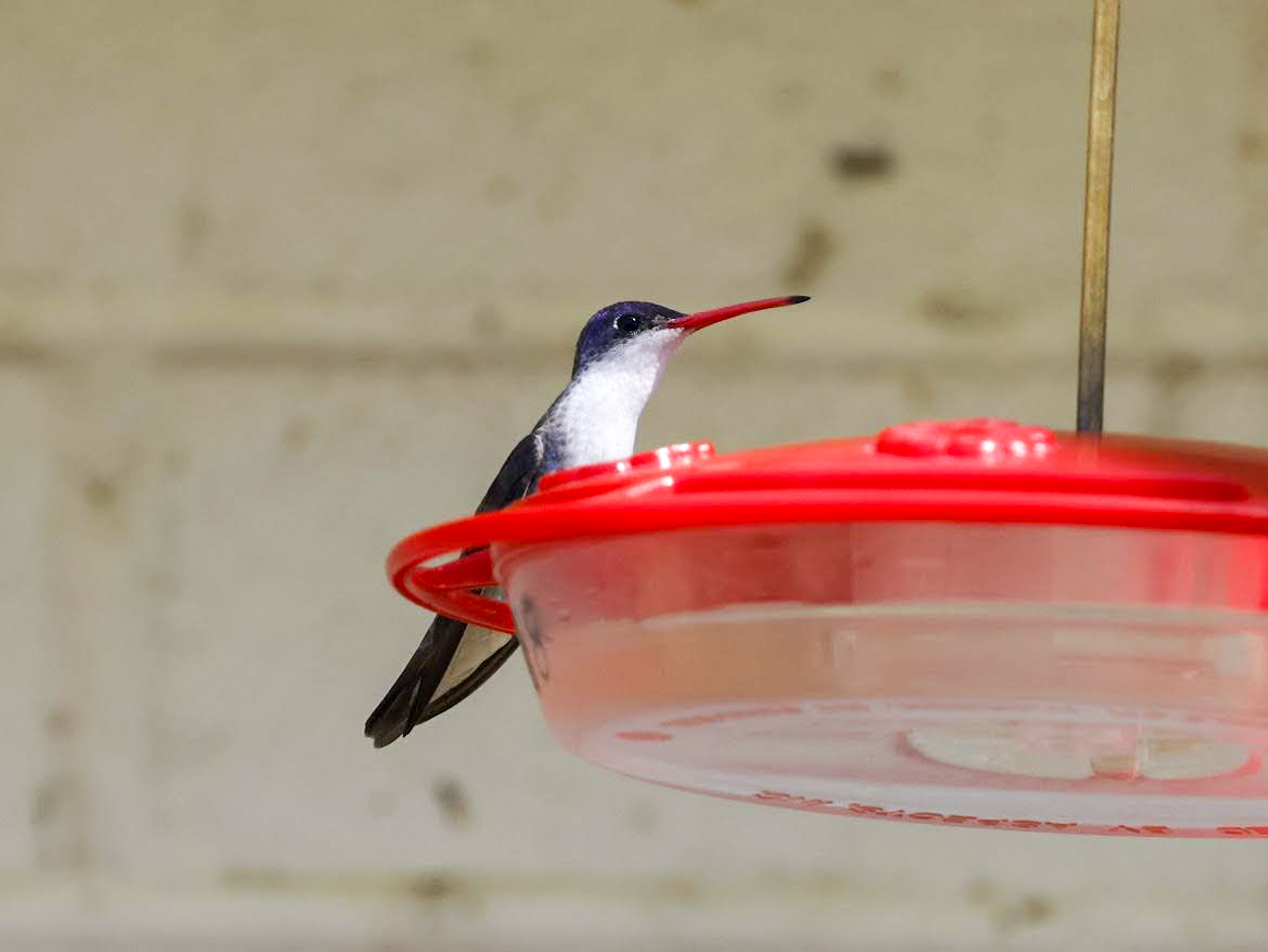
Violet-crowned Hummingbird © Karin Kirchhoff
Day 4: Patagonia: From the Canyons to the Grasslands
Harshaw Creek Road is a birdy location that follows Harshaw Creek. The huge cavity-filled Arizona Sycamores piqued Alyssa’s interest, and her curiosity was rewarded with a sleeping Western Screech-Owl! Bridled Titmice, Bushtits, and other songbirds mobbed the owl briefly before deeming it safe. Other little treats featured both Canyon Towhee and Broad-billed Hummingbird nest-building.
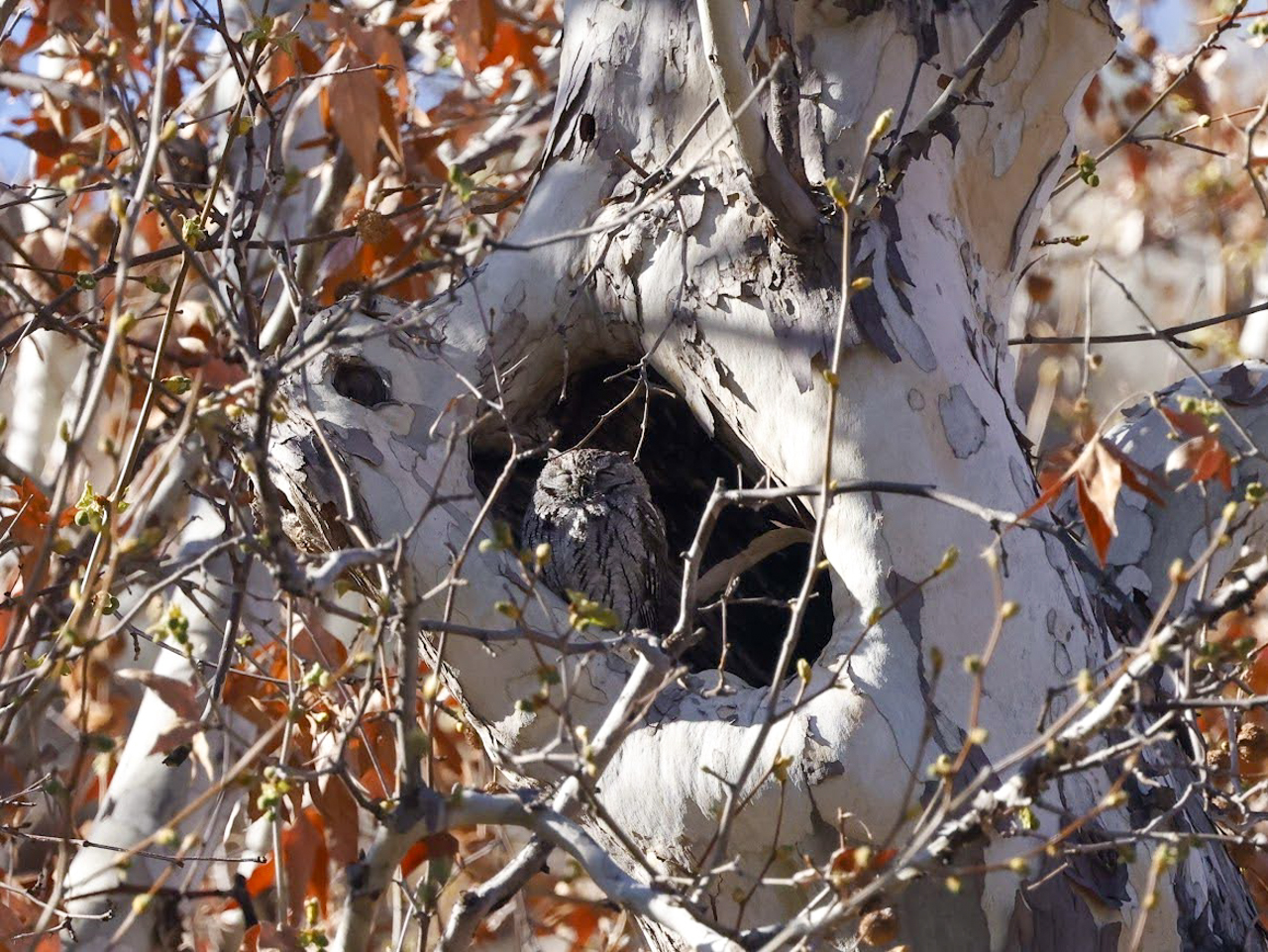
Western Screech Owl © Karin Kirchhoff
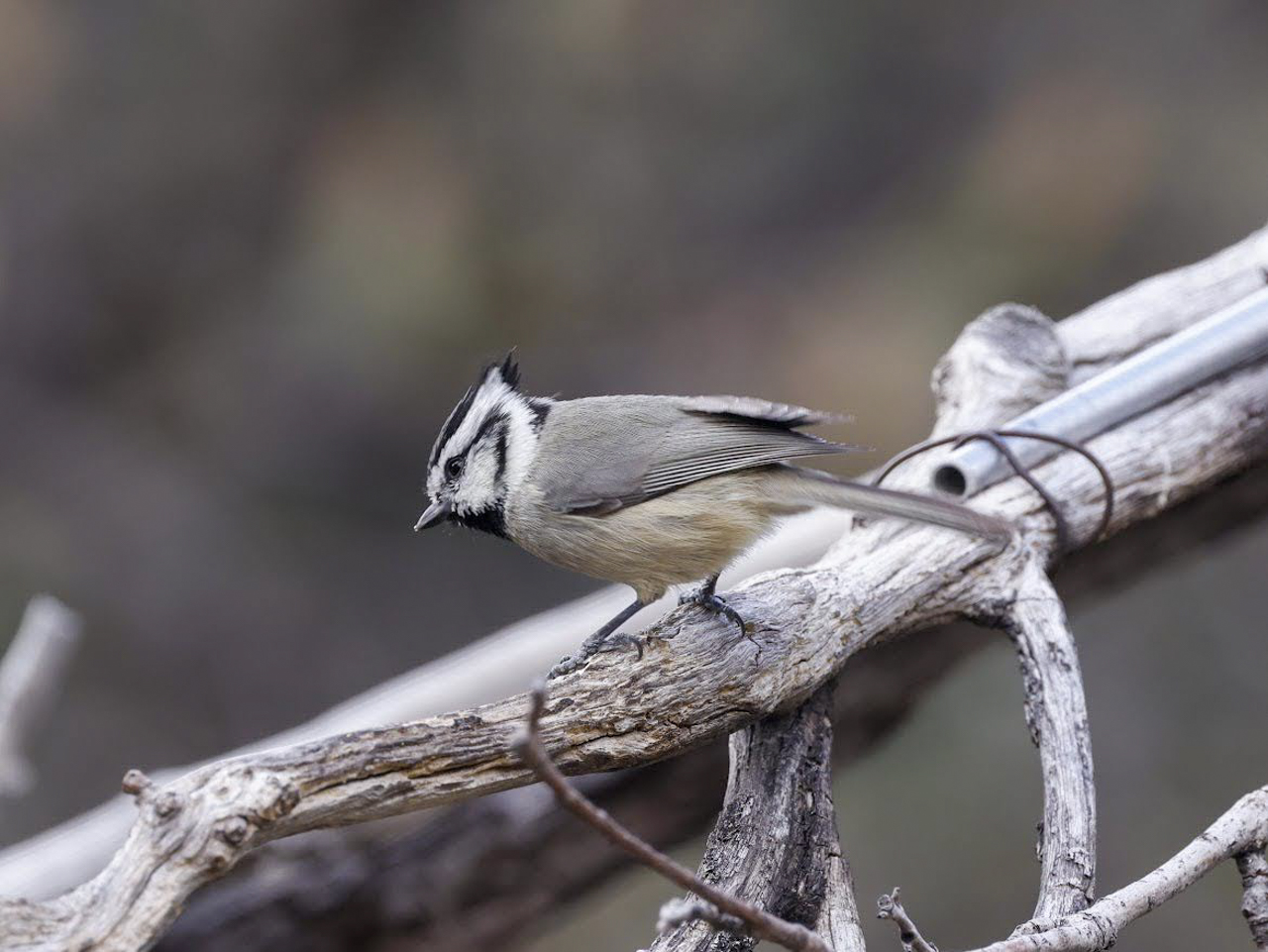
Bridled Titmouse © Karin Kirchhoff
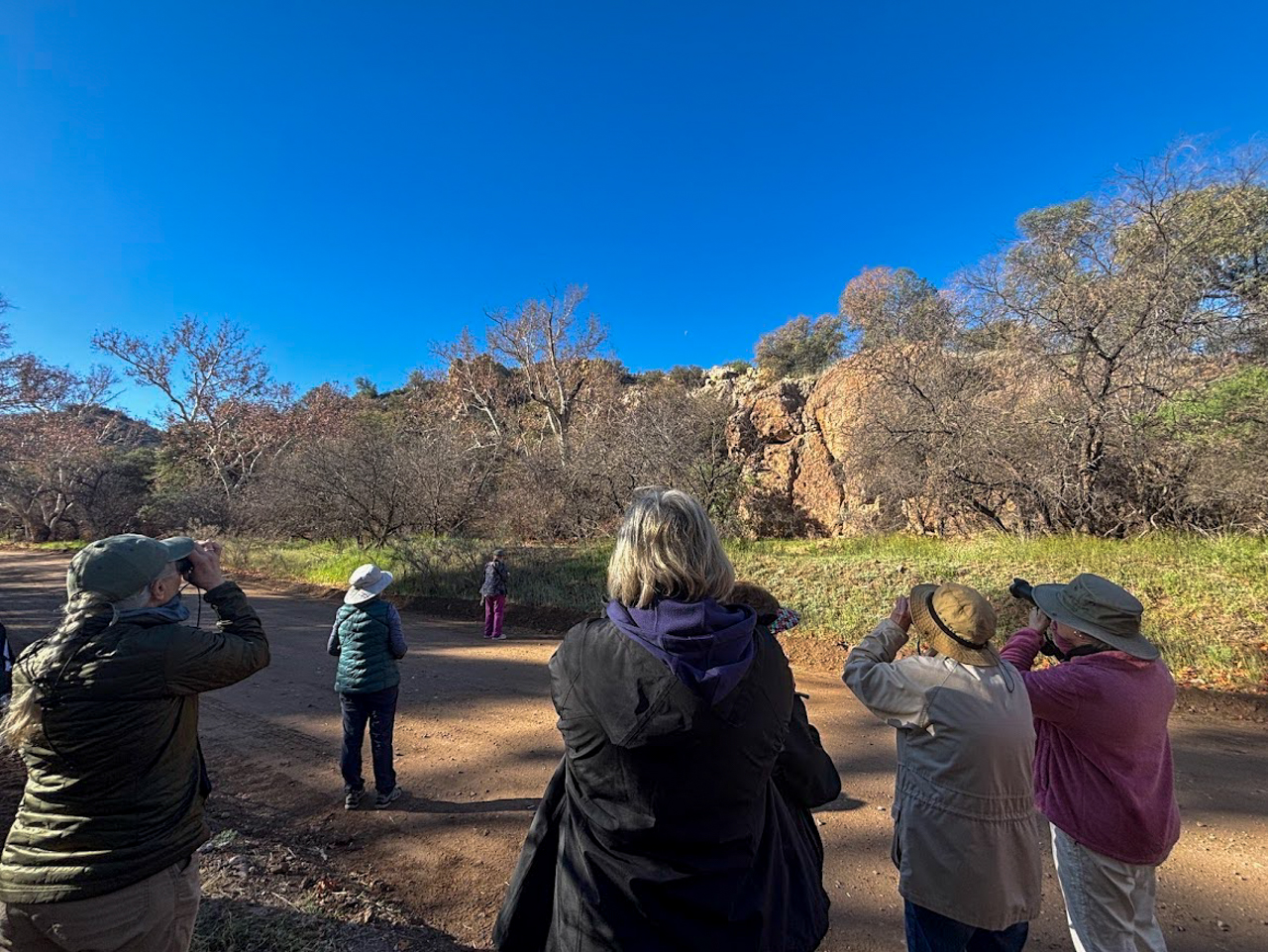
Birding Harshaw Creek Canyon © Alyssa DeRubeis
Patagonia is best known for the Paton Center for Hummingbirds, which has been in operation since 1973! The feeders were copious and so were the birds. We got better views of Violet-crowned Hummingbirds in the sunlight, and added a couple more species to our hummer list (Rufous and Black-chinned). Lazuli Bunting was a crowd favorite, a perfect blend of bright blue and light brown.
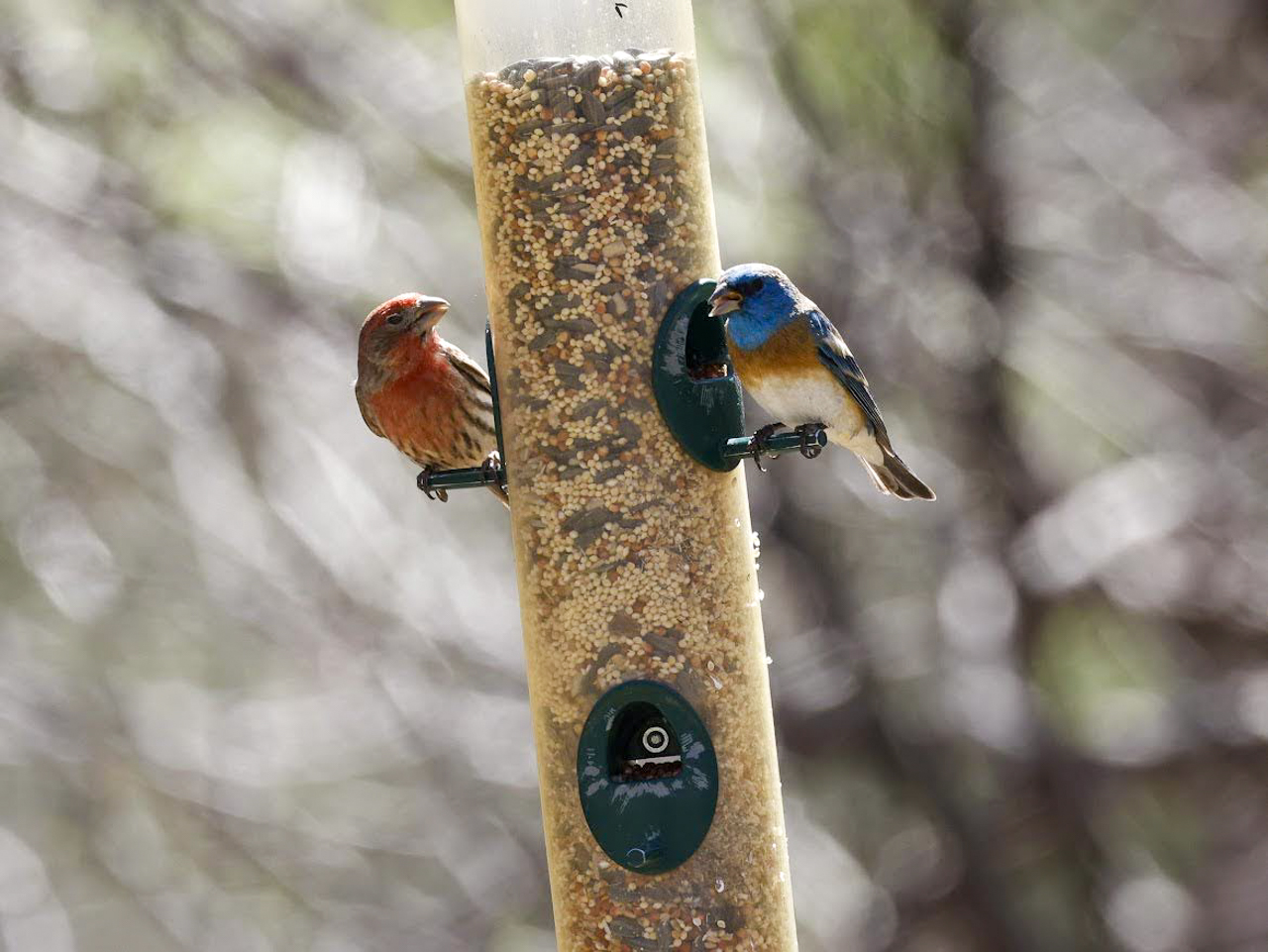
House Finch and Lazuli Bunting © Karin Kirchhoff
After lunch some of us checked out the myriad of local art pieces at a Patagonia gift shop. But then, back to birding! We birded the vast prairies and open landscapes along Curly Horse Ranch Road and into Las Cienegas National Conservation Area. Grassland birds are declining faster than any other land bird group in North America, so we cherished each Chestnut-collared Longspur we saw. These flighty songbirds spend much of their time on the wing or hidden in the grass, but lucky for us, a few decided to perch on a fence. We ended our visit there with Chihuahuan Meadowlarks singing away and Pronghorn basking in the waning sun.
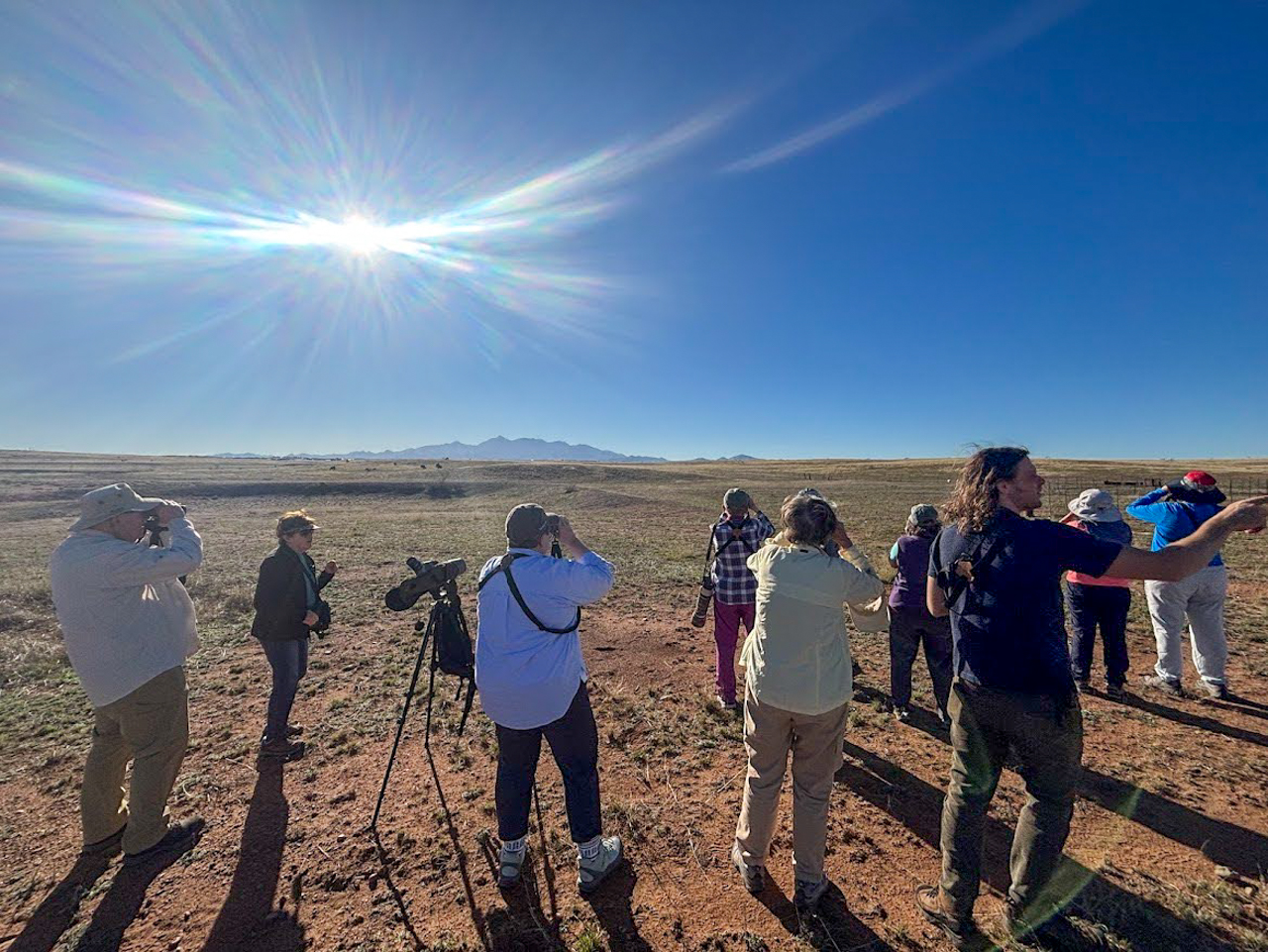
Birding the grassland © Alyssa DeRubeis
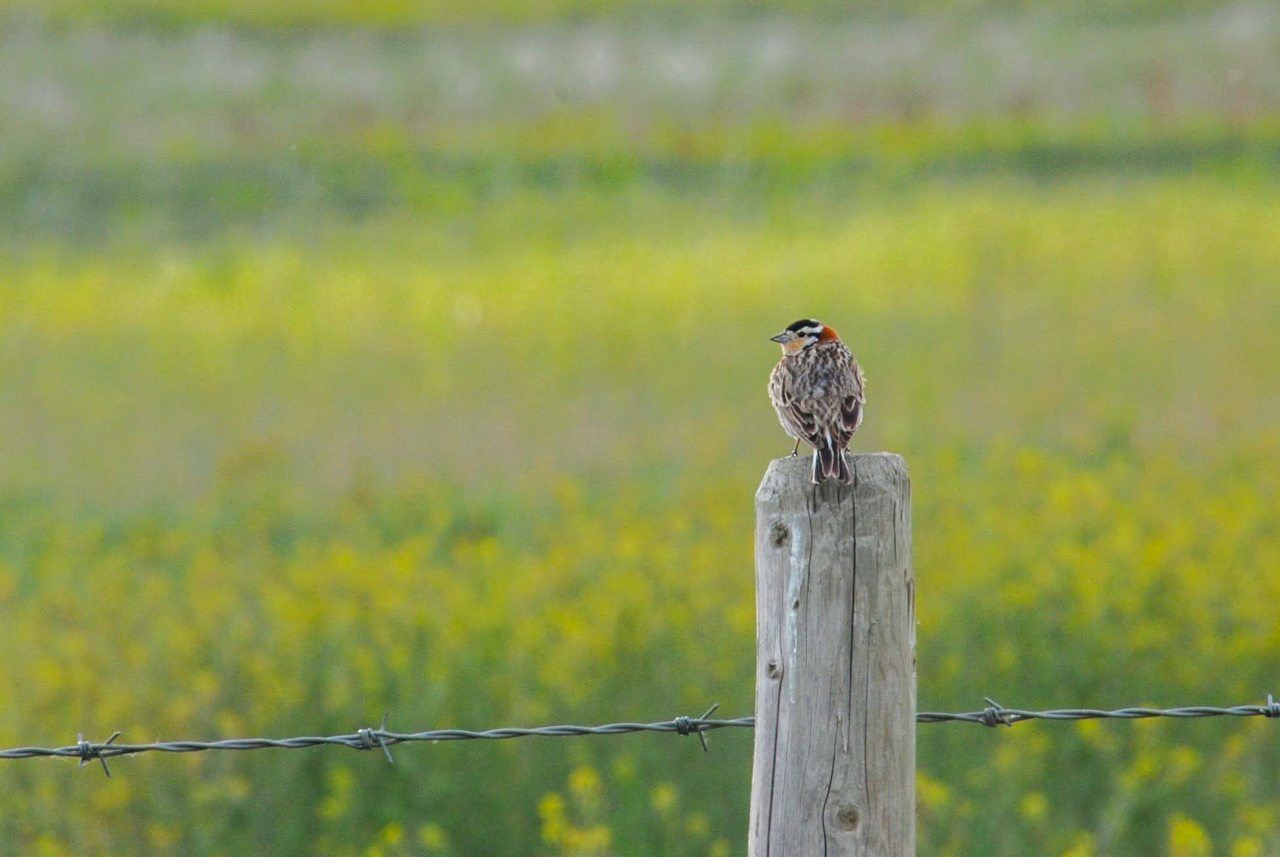
Chestnut-collared Longspur © Alyssa DeRubeis
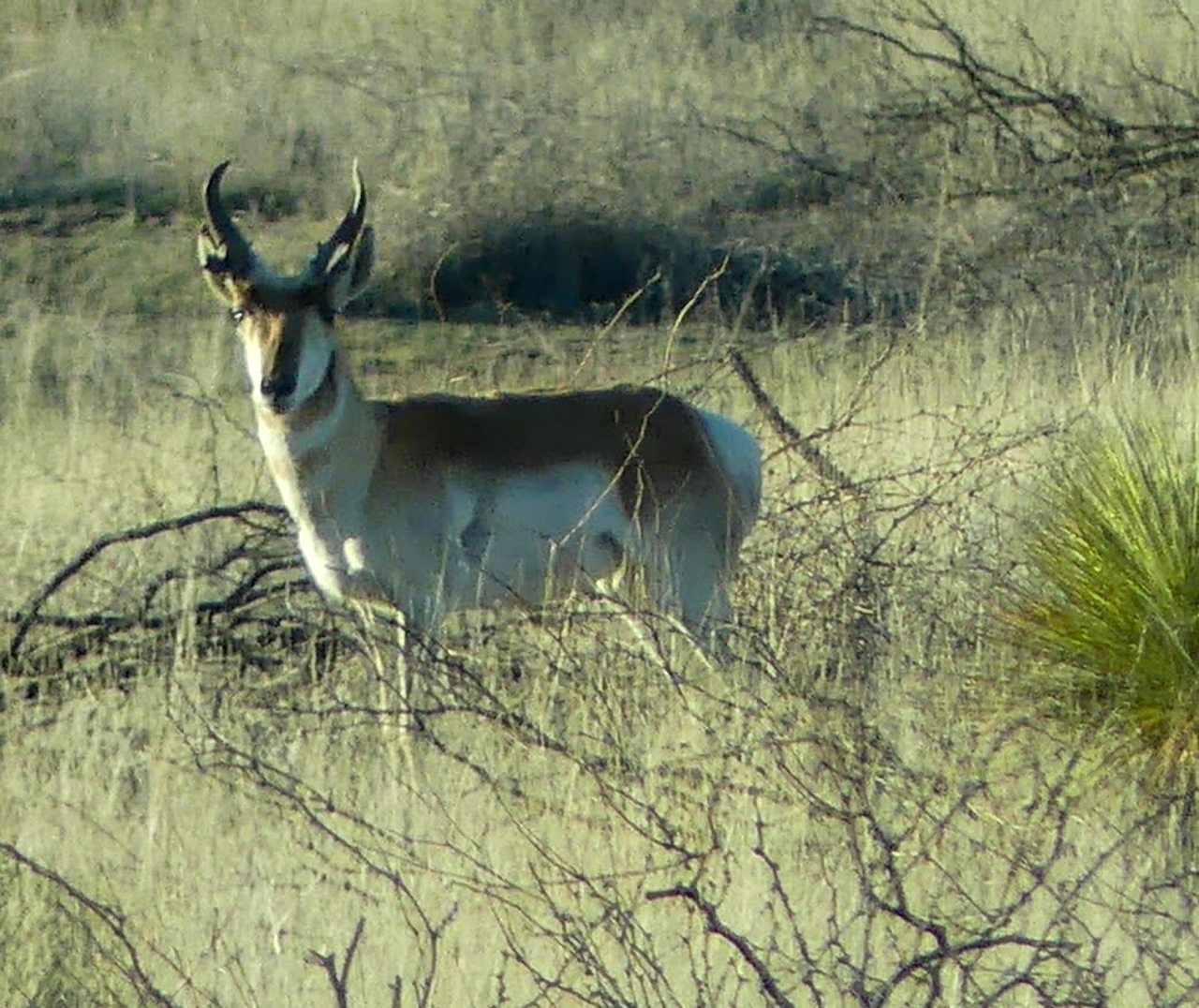
Pronghorn © Joy Burns
The day was not yet over. An owl prowl on Harshaw Creek Road yielded five calling Elf Owls! One individual was close to the road and provided satisfactory views. We were absolutely thrilled to see the world’s smallest owl!
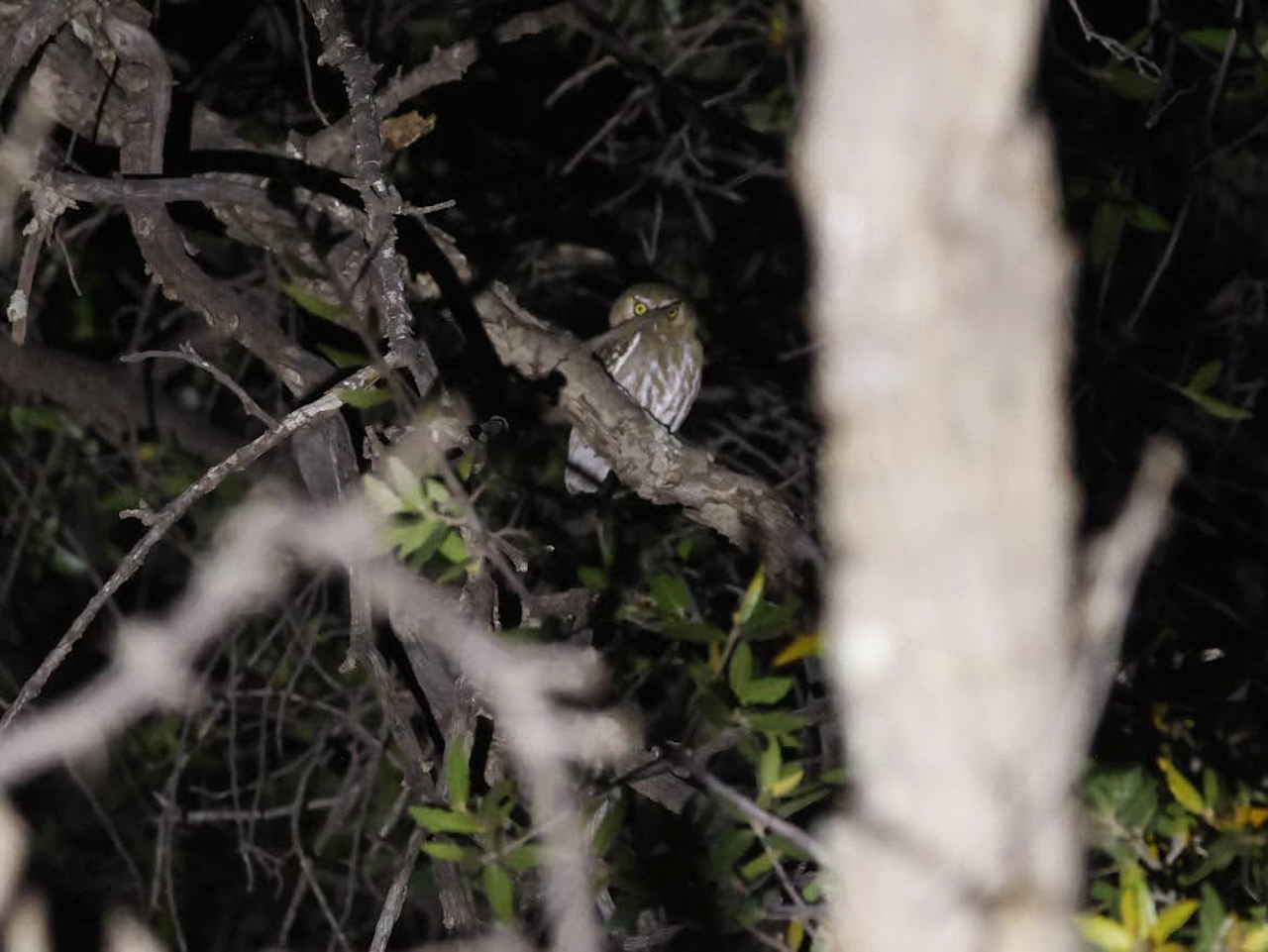
Elf Owl © Karin Kirchhoff
Day 5: Birding from Patagonia to Portal
We attempted to cross paths with a local overwintering flock of Lawrence’s Goldfinch at the Arizona Birding Guide’s feeders in Patagonia. We did not encounter any, most likely due to the commencement of spring migration. Regardless, we enjoyed the sunrise over some of our familiar beloveds (Broad-billed and Anna’s Hummingbirds to name a few).
After starting our trek east, we investigated a couple spots within the San Pedro Riparian National Conservation Area. The strip of green cottonwoods along the river starkly contrasted with the surrounding gray mesquite bosque. Cracking views at a Green-tailed Towhee and Brewer’s Sparrows were highlights from the San Pedro.
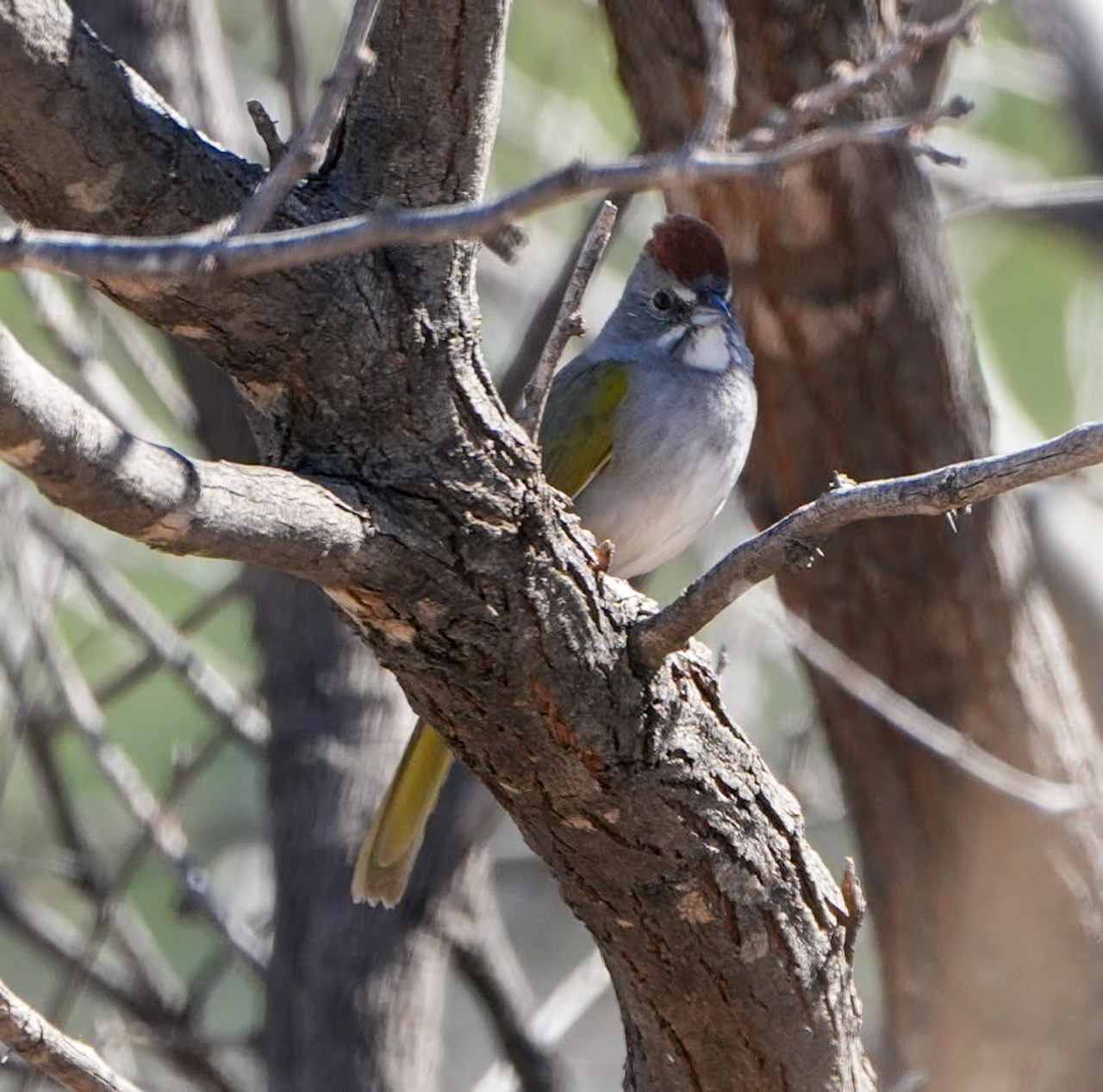
Green-tailed Towhee © Roger Burns
Our last birding destination was the Whitewater Draw Wildlife Area. We sought shelter from the afternoon heat while eating lunch, but wildlife was still surprisingly active. On the drive in, some folks got fleeting glimpses of a Sage Thrasher. On the way out, we spied several Black-tailed Jackrabbits seemingly unbothered by the scorching sun.
Adjacent to the lake, a pair of Soras foraged unobstructed by foliage, displaying their lovely plumage and bold rail reputation. Vocal Marsh Wrens, like large plump hummingbirds, floated from one patch of cattails to the next. In the willows behind us was a mixed flock of songbirds containing Gray Flycatcher, Yellow-rumped Warbler, and a flashy male Common Yellowthroat, all to the constant hum of honeybees pollinating the willow flowers.
Least Sandpipers numbering 80 birds strong, as well as a lone Sandhill Crane and White-faced Ibis, made use of what little was left of the pond. We later learned that this puddle completely dried up two days later. Yet the Chiricahuas would have running creeks waiting for us…
Day 6: Chiricahua Mountains
At last, the largest of Arizona’s sky islands: the Chiricahua Mountains. We started at the base of the mountains in another very birder-friendly town: Portal. First we feeder-watched at Bob Rodrigues’s yard. This was the only location where we had the Full Towhee Sweep: Abert’s, Canyon, Green-tailed, and Spotted. Phenomenal views of a rare male Northern Parula and Pyrrhuloxias were enjoyed by all. A few of us heard and saw a flock of Woodhouse’s Scrub-Jays pass by overhead.
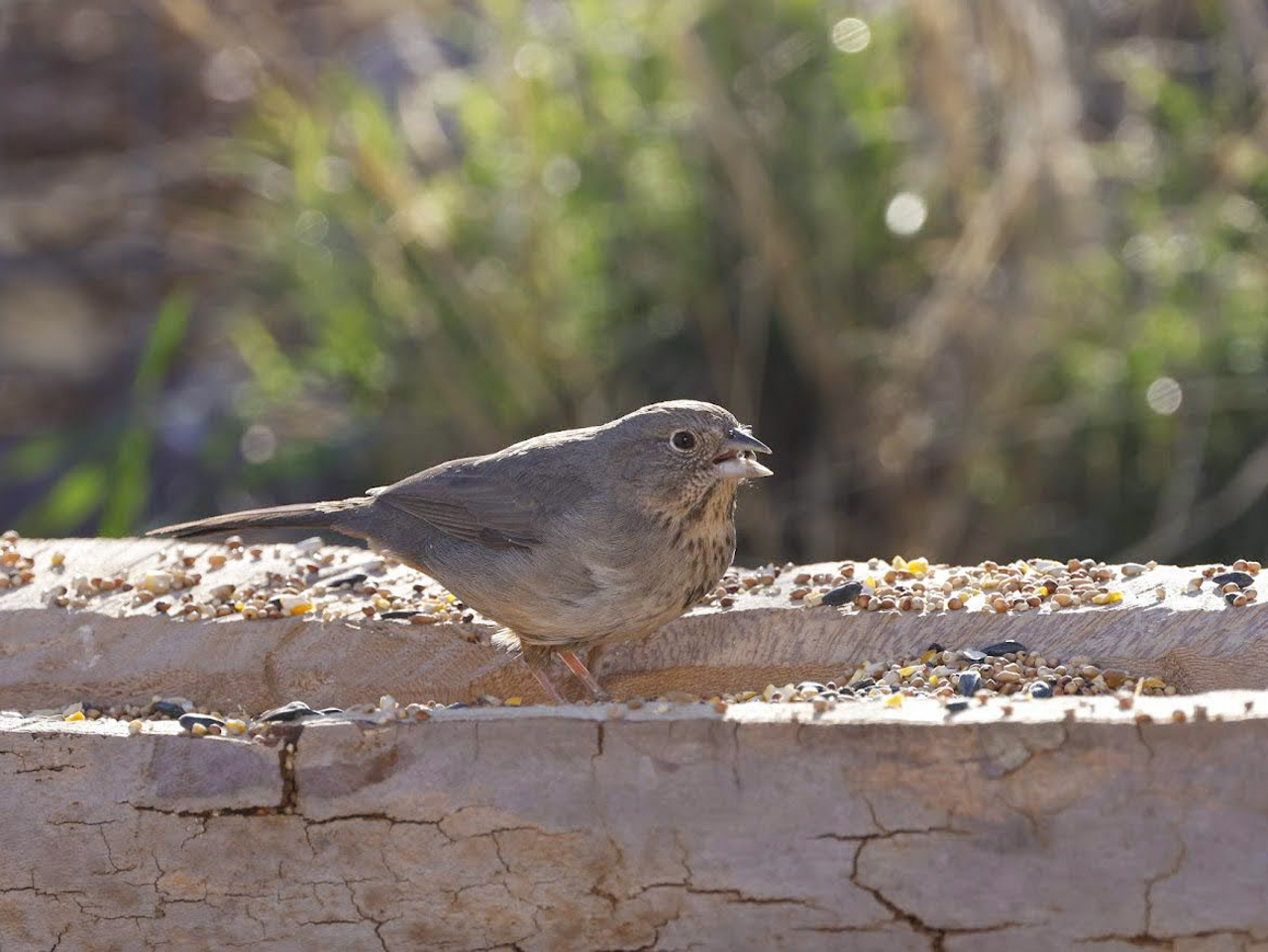
Canyon Towhee © Karin Kirchhoff
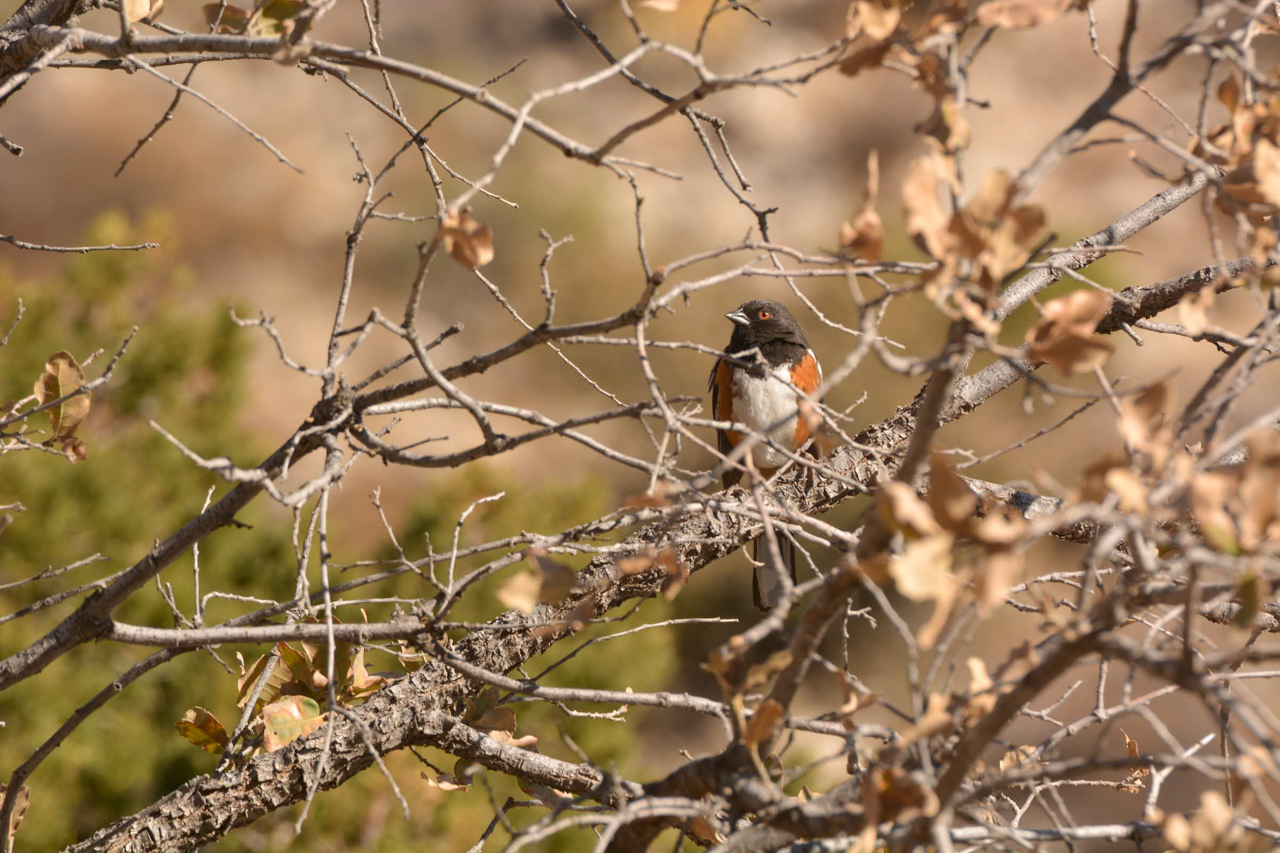
Spotted Towhee Spotted © Alyssa DeRubeis
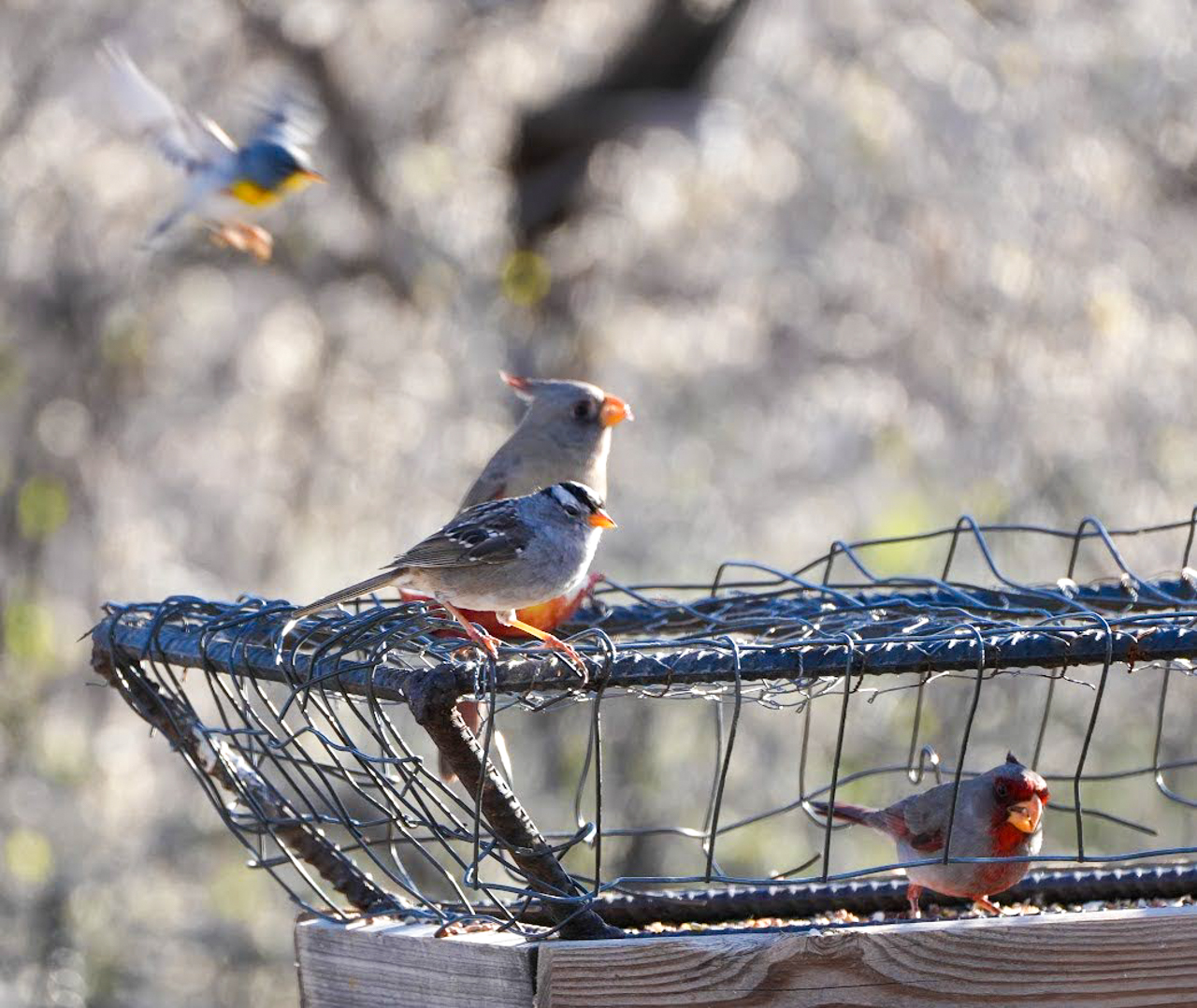
Northern Parula, Pyrrhuloxia pair, and White-crowned Sparrow © Roger Burns
The Jasper/Moisan bird feeders were next on our itinerary. Here we got great looks at a pair of Ladder-backed Woodpeckers and the monstrous Blue-throated Mountain-gem. This is North America’s largest hummingbird, yet despite its heftiness, it mostly remained hidden in a shrub. Meanwhile, adorable yet feisty Harris’s Antelope Squirrels ran amok.
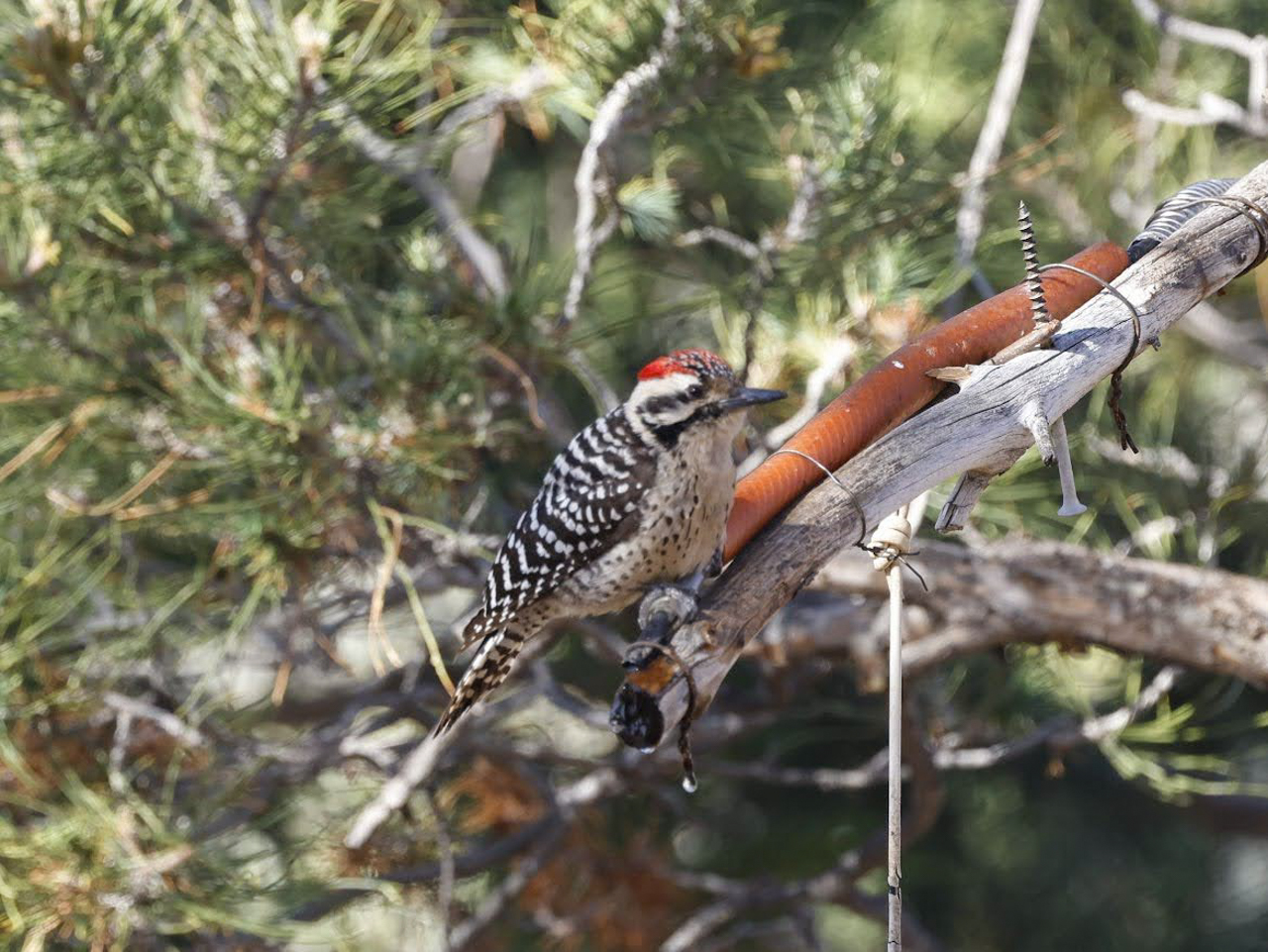
Ladder-backed Woodpecker © Karin Kirchhoff
Now for the big climb from 4,700 feet to 8,500 feet! We slowly inched our way forward on the rocky roads in the Chiricahuas to eat lunch in Rustler Park. It was noticeably cooler this high up, and the aromatic Douglas-Fir and Ponderosa Pine forest further protected us from the blaring sun. Dancing in the tippy-top of the trees were Mexican Chickadees, Pygmy Nuthatches, Brown Creepers, and locally uncommon Golden-crowned Kinglets. The Chiricahuas is the stronghold for the small population of Mexican Chickadee in the United States, so seeing multiple birds was gratuitous. Another bird-tastic day down in the books!
Day 7: Birding Our Way Back to Tucson
We couldn’t resist visiting a couple more birdfeeding hotspots in Portal before our departure. Not far from the Portal library was a feeder that gave us our best looks and listens at the diminutive Inca Dove. All around us we could hear its song “No hope!” Juniper Titmouse and Steller’s Jay made frustratingly brief appearances, while a migrating Osprey was quite unexpected!
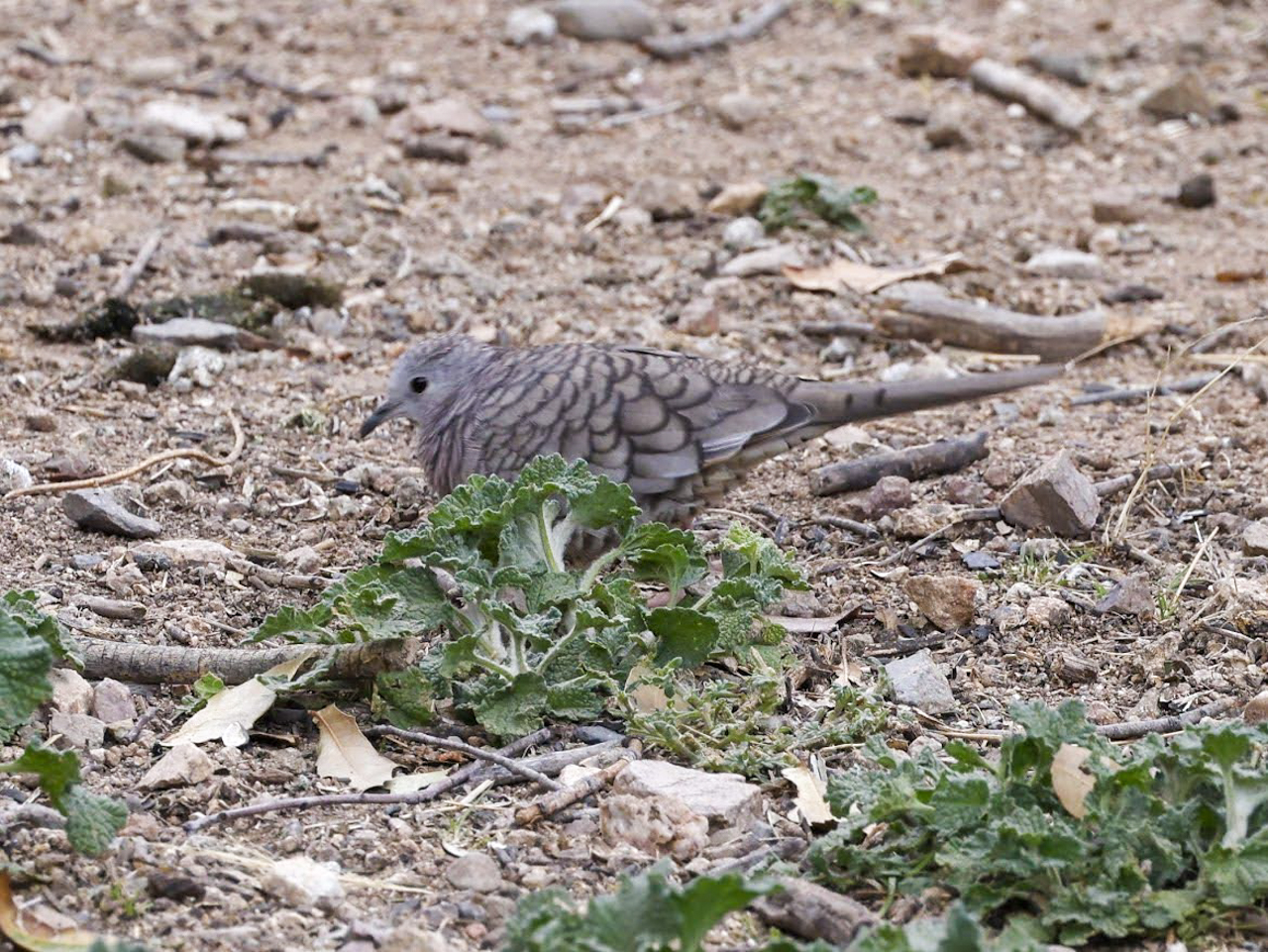
Inca Dove © Karin Kirchhoff
Then we ventured to Cave Creek Ranch, where Cactus Wrens and a centipede-eating Curve-billed Thrasher were more than cooperative. On the mammal front were tame Coues’s White-tailed Deer and a brilliant orange Mexican Fox Squirrel. And as we piled into our vans, Kyle spotted a roving Scott’s Oriole. We got distant but definitive peeks at this recent spring arrival.
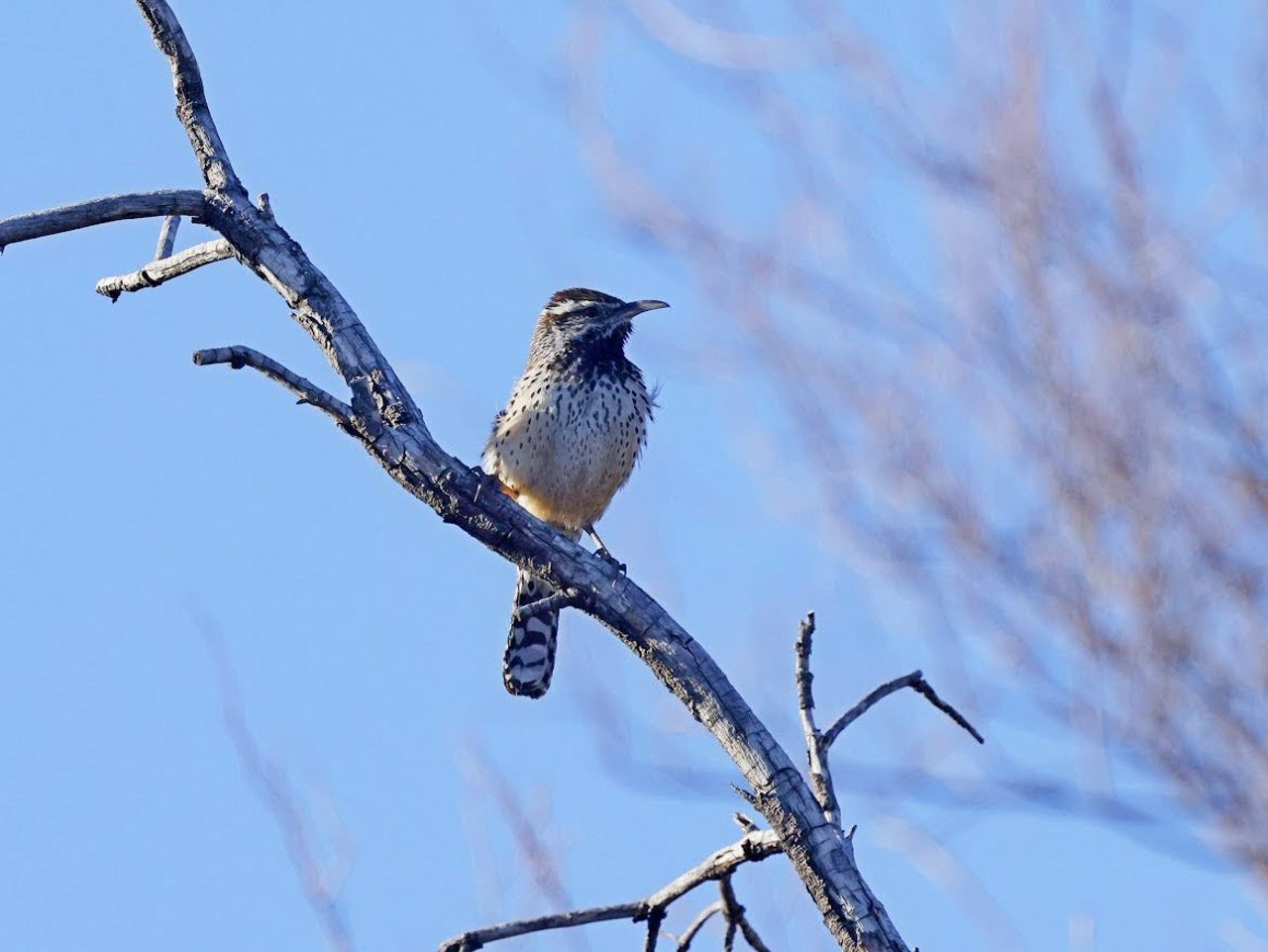
Cactus Wren © Karin Kirchhoff
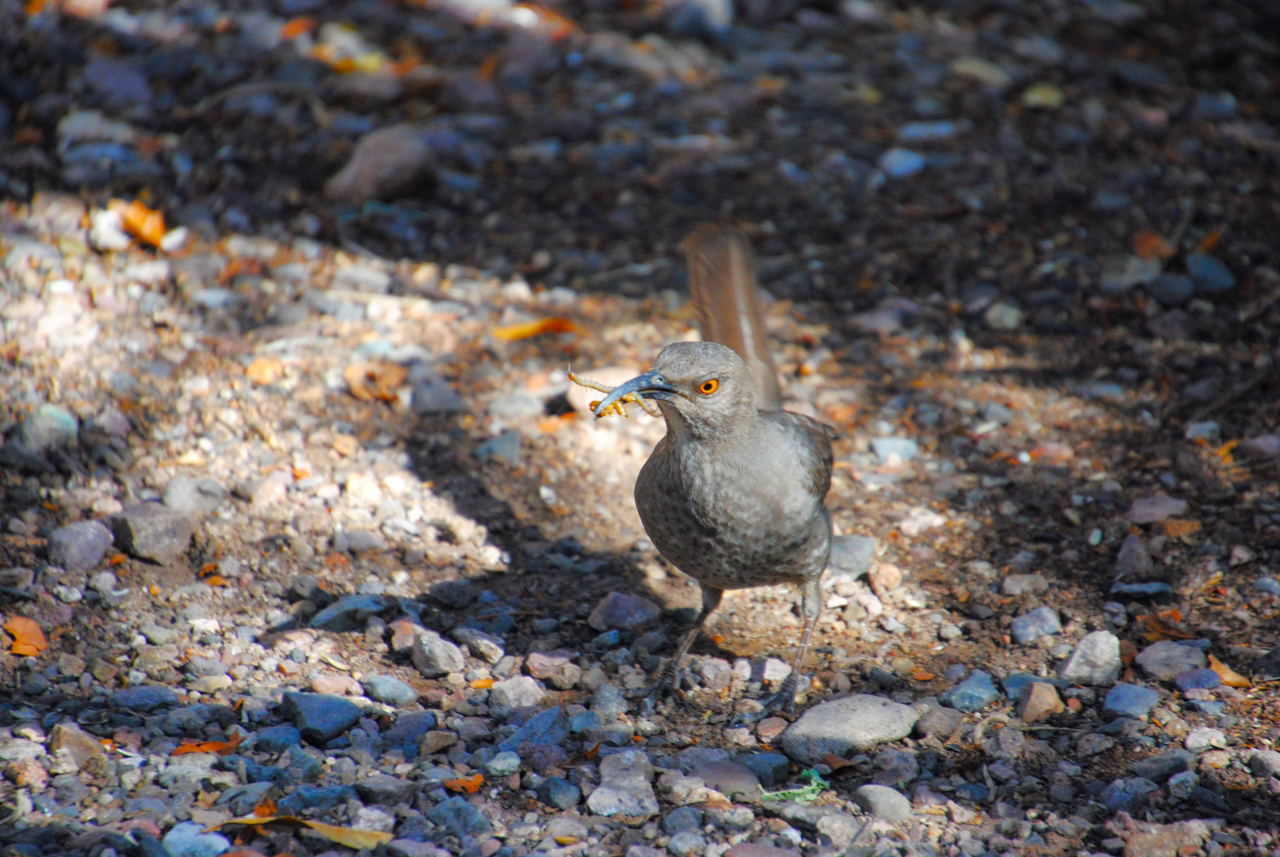
Curve-billed Thrasher © Alyssa DeRubeis
Our final stop in the Chiricahuas was along the South Fork of Cave Creek. The running water, light breeze, and sunlight sprinkled through the oaks and sycamores made for a serene moment. Birds were also attracted to the water, especially the ever-curious Mexican Jay. Pairs of Arizona and Acorn Woodpeckers, a spritely Painted Redstart, and a busy flock of Ruby-crowned Kinglets also caught our eye.
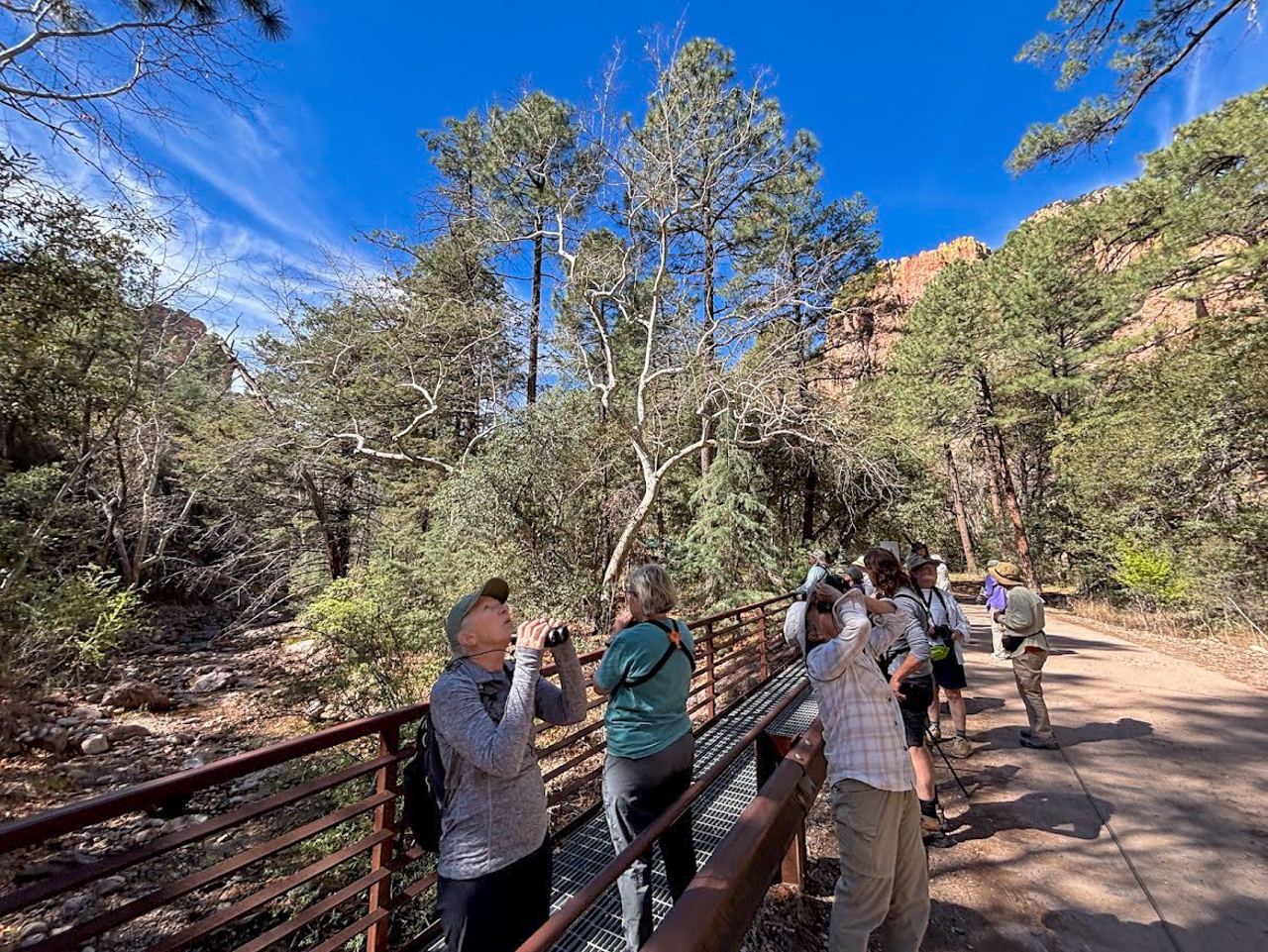
Birding over the bridge © Alyssa DeRubeis
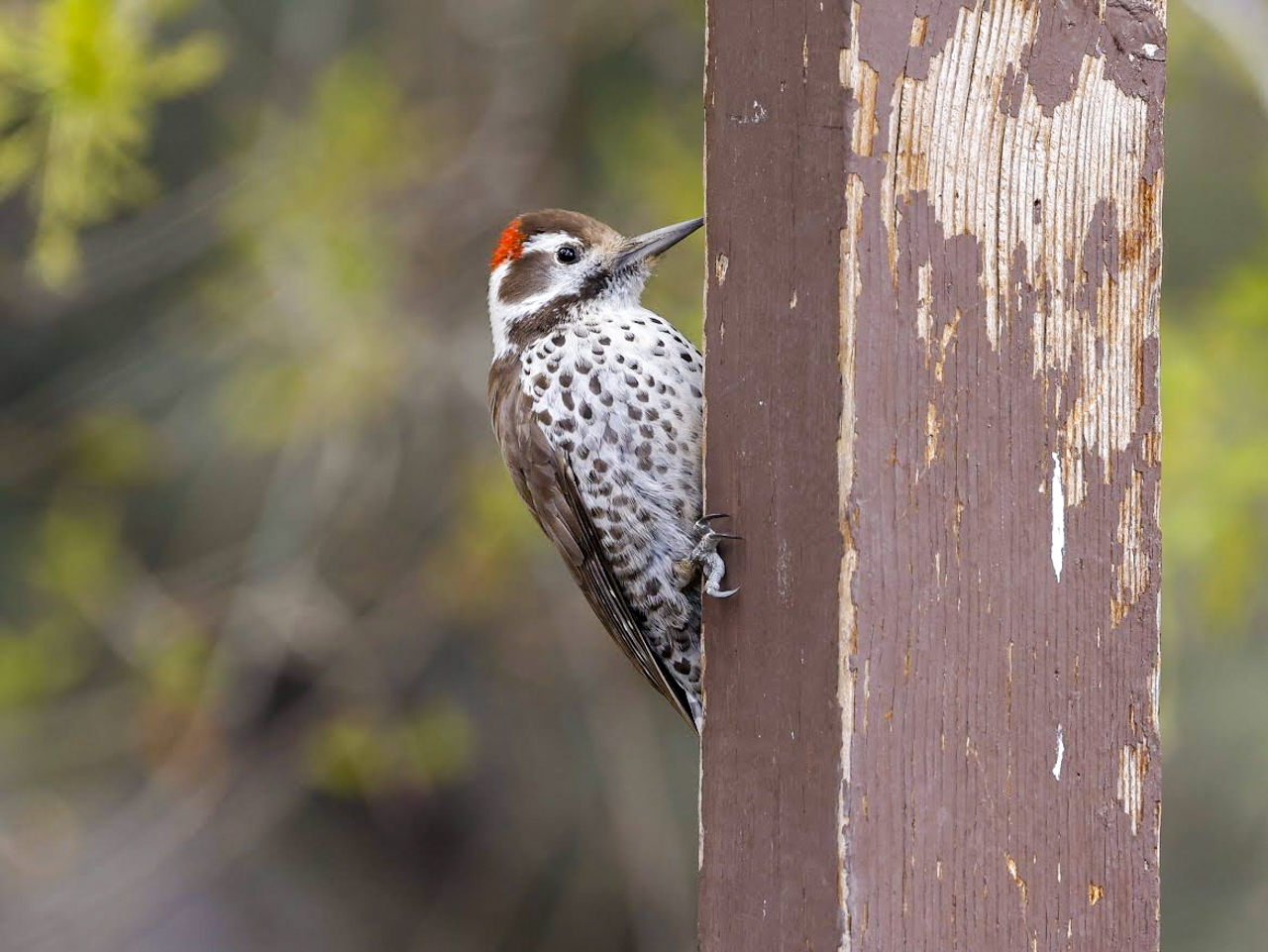
Arizona Woodpecker © Karin Kirchhoff
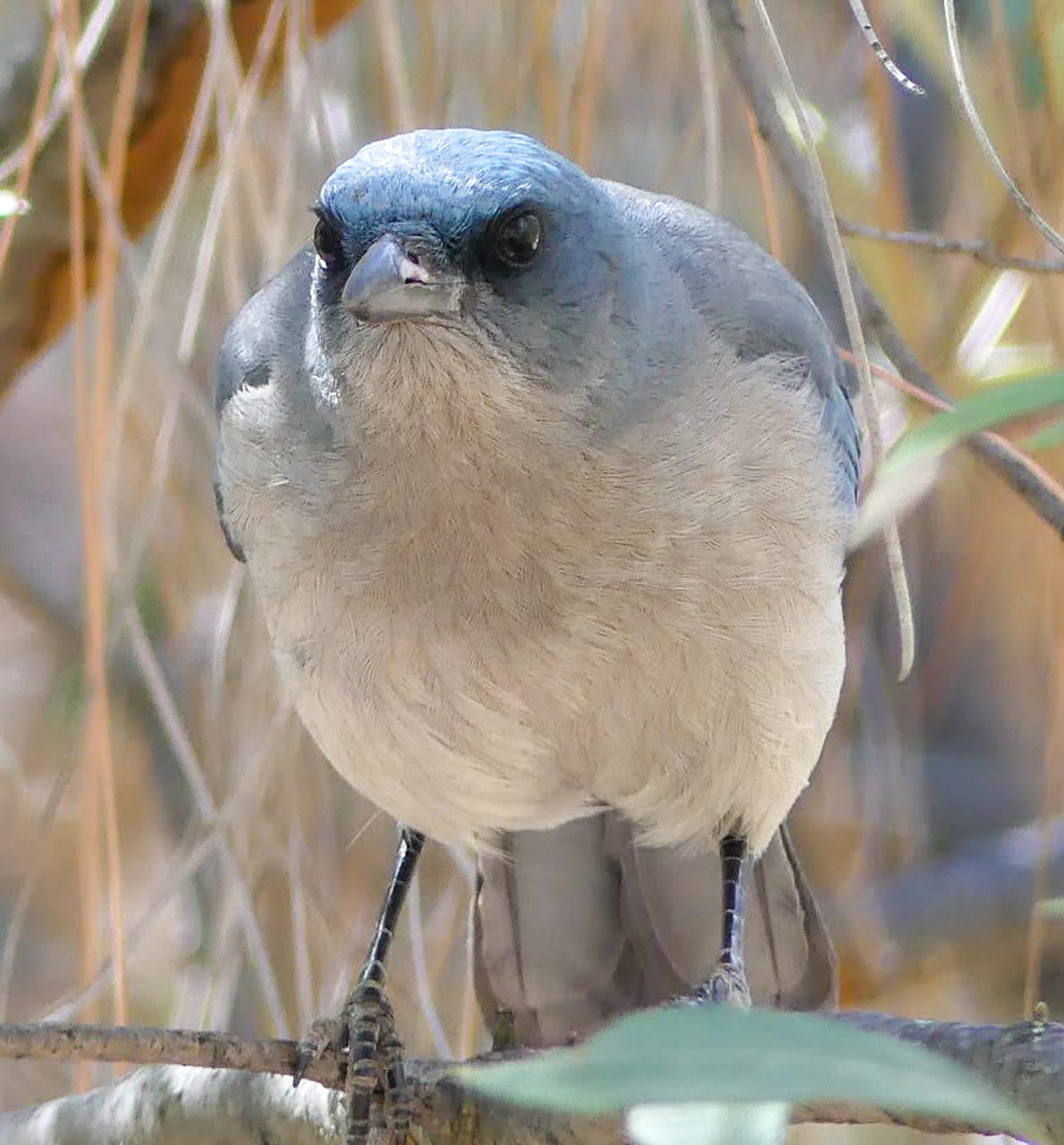
Mexican Jay © Joy Burns
The last stop of the tour brought us to Lake Cochise and Twin Lakes Golf Course (in Willcox). Six shorebird species were working the shallow water, each demonstrating their unique foraging niche: American Avocet, Long-billed Dowitcher, and Wilson’s Snipe with their deep aquatic probes, and Killdeer and Least and Pectoral Sandpipers with their quick jabs on shore.
The roosting winter flock of Sandhill Crane dwindled from thousands on last month’s tour to 600 birds on this tour, which aligns with this species’ phenology as an early spring migrant. Some remaining cranes were dancing, perhaps giving us their blessings to find the local pair of Globally Threatened Bendire’s Thrasher–which we did! This often skulky songbird was the cherry on top of an impressively species-rich trip, arguably one of the most speciose checklists ever for the Arizona in Winter Tour!
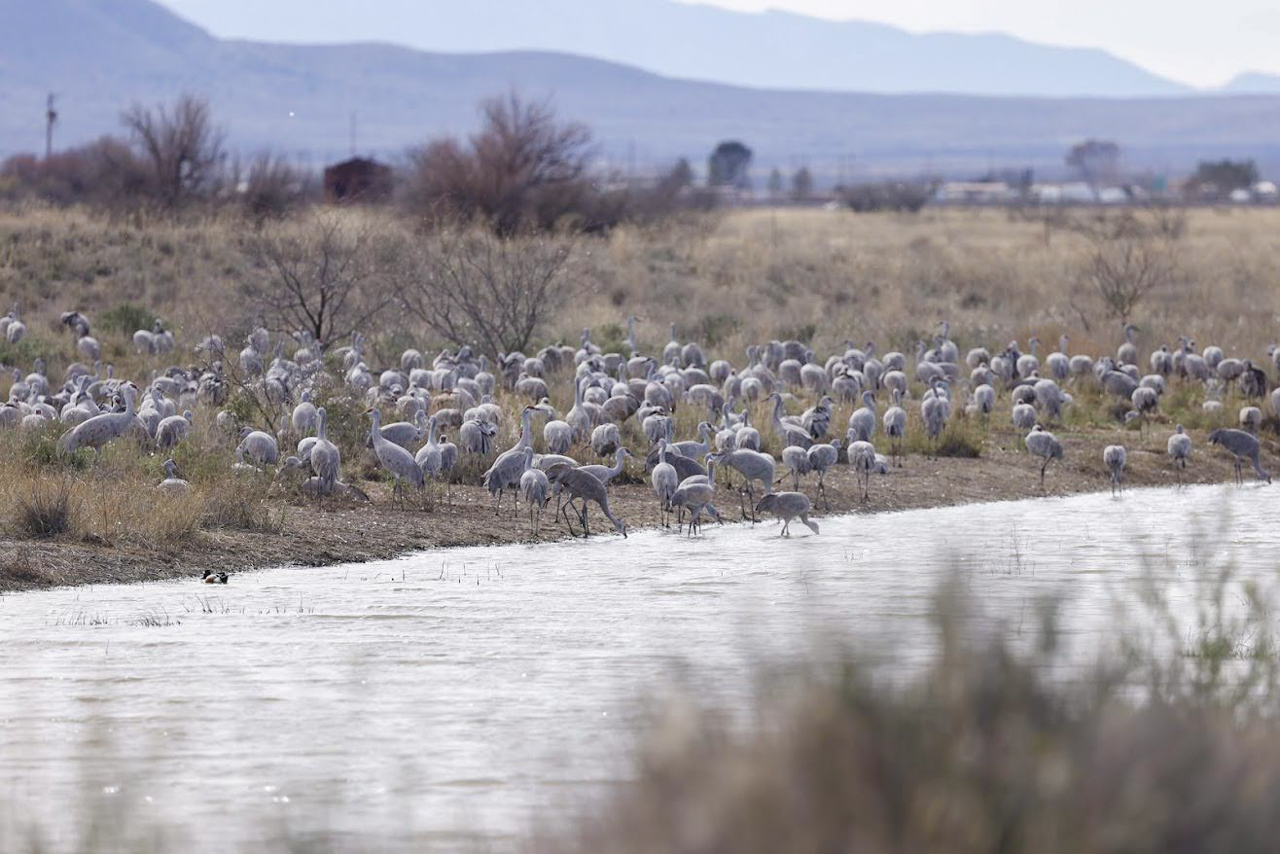
Sandhill Cranes © Roger Burns
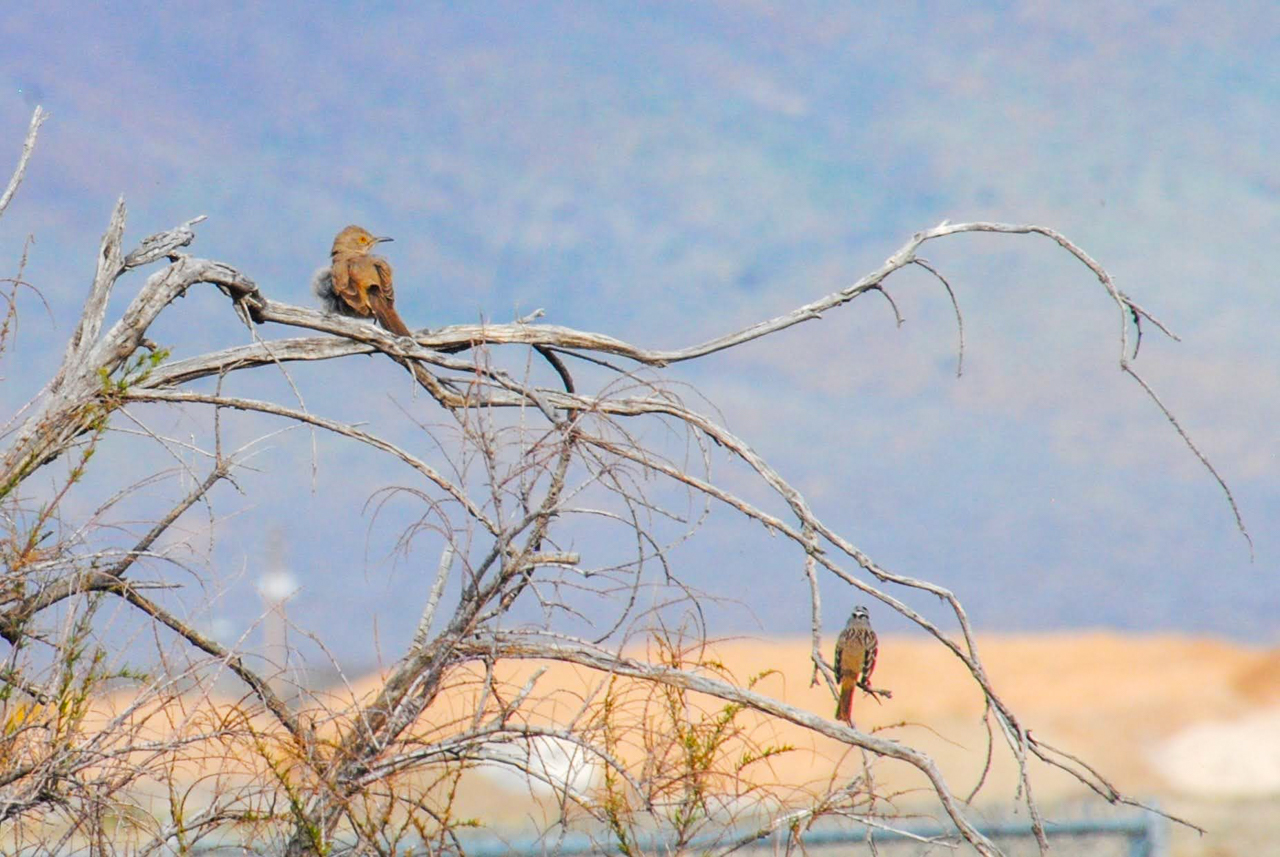
Bendire’s Thrasher and White-crowned Sparrow © Alyssa DeRubeis
But it’s not just the birds, mammals, and flora that made this trip great. It was great thanks to the participants’ upbeat attitudes, patience, flexibility, sense of humor, and excellent bird-spotting skills! We would also like to say thank you to all the bird-feeding hosts that allowed our posse of 14 on to their properties.
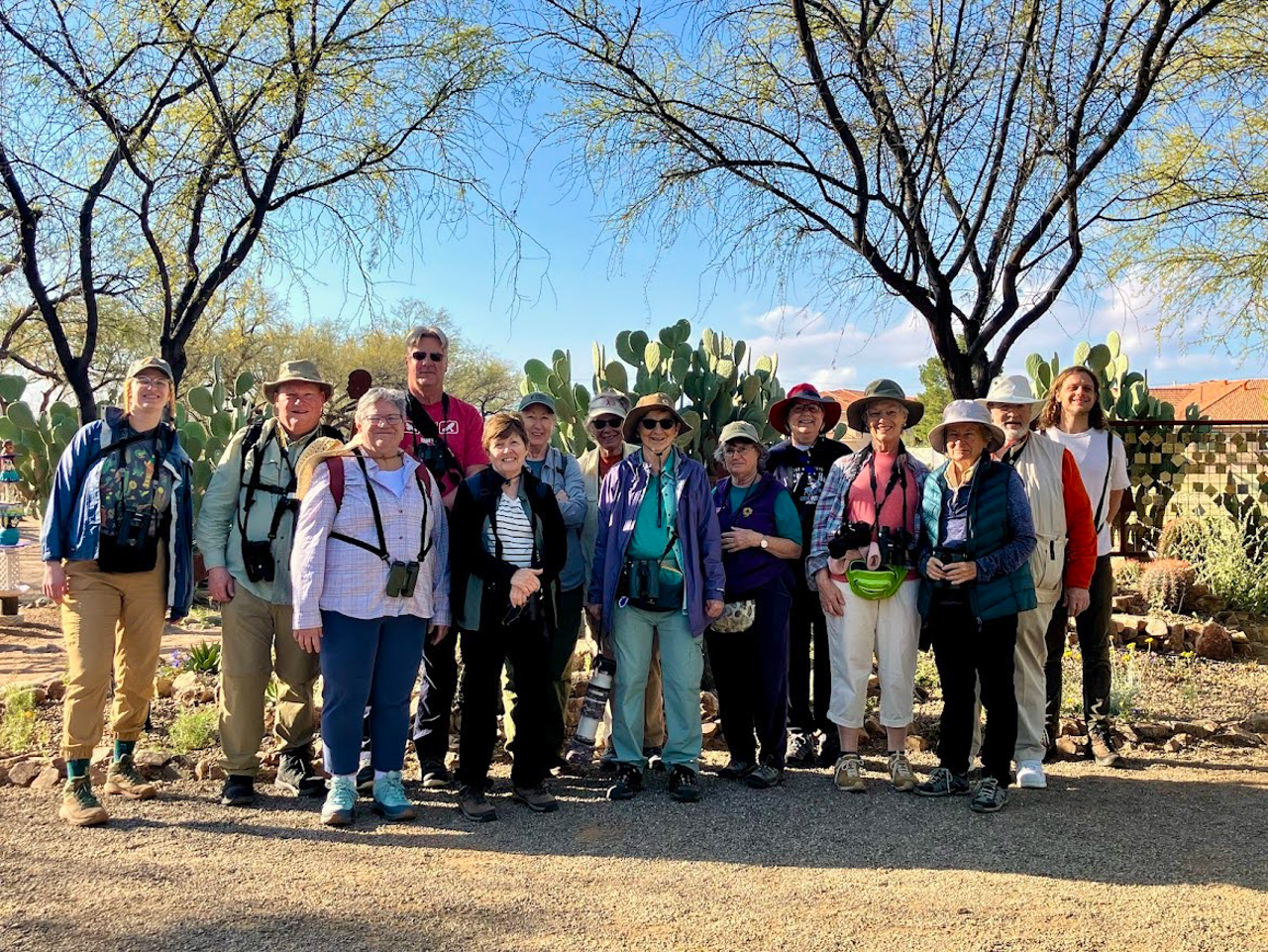
Our group