Birding in Mexico & Central ...
Mexico and Central America offer some of the richest bird diversity in the Western Hemisphere, where Nearctic and Neotropical species meet across a mosaic of habitats—from tropical forests and cloud forests to coasts and highlands.
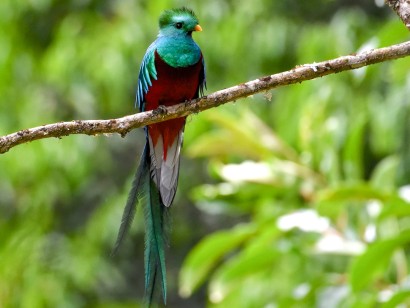
Birds are everywhere. The majority—billions upon billions—of northern breeding migrants spend their winters in Central America and the Caribbean, or pass through during migration. Seeing these species and the migration spectacle is a real treat, but the main attraction for birders is to watch colourful tropical birds in their untouched, native habitats. Few can ever forget a Pink-headed Warbler, Emerald Toucanet or Resplendent Quetzal viewed in a lofty pine or oak forest. Our Central American highland birding areas have a cool, temperate feel amid some highly dramatic mountain scenery. On those brisk mornings it’s easy to warm up with a locally-picked and brewed coffee on the deck of a cozy lodge.
Imagine a guided walk through Costa Rica’s famed La Selva Biological Station, where Vermiculated Screech-Owl, Broad-billed Motmot and Fasciated Antshrike can be found in the same tree. Many birders who witness their first Harpy Eagle—the world’s largest raptor—do so in the steamy lowland jungles of the Darién region of Panama, at a nest tree staked-out by indigenous guides. Drier lowland hotspots such as those along the Pacific coast of Mexico offer a suite of birds with names you won’t soon forget, like Happy Wren, White-throated Magpie-Jay and Lesser Ground-Cuckoo. Least, but not last… we can point out a Bumblebee hummingbird – the world’s smallest bird in the mountains of Southern Mexico. If more robust subjects are your thing, there’s always the towering Jabiru Stork found in Belize’s Crooked Tree Wildlife Sanctuary!
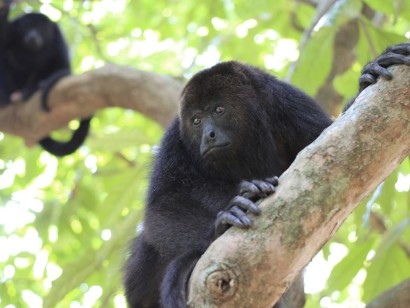
On these tours we use a wide-range of lodging options that have a few things in common: they are comfortable, offer hearty meals, and are centrally-located to access the best wildlife-viewing within a short distance. Lodge grounds, balconies and feeder set-ups are often the best places to see mammals like Three-toed Sloths, Howler Monkeys, Coatimundis, Kinkajous and Leaf-nosed Bats. Some of the more charismatic birds we encounter on the lodge grounds include: Keel-billed Toucan, Red-legged Honeycreeper, Barred Antshrike, Ferruginous Pygmy-Owl and dozens of hummingbird species. In Tikal, it’s not only the Orange-breasted Falcon along with many other resident and migrant species that beckon us, but also the enormous cultural riches of the archaeological ruins found only a short walk from our hotel. Indeed, we often don’t have to travel far for exciting discoveries, both new and old. On a few tours, like our Southern Mexico birding tour, we traverse a vast amount of countryside to seek-out amazing, endemic birds, new landscapes and even specialized cuisine around almost every corner.
The terrain in this part of the world is varied but we normally adventure in the most accessible and easy-going environs. At Arenal Observatory Lodge we can watch antbird flocks and other secretive species feeding at army ant swarms, while strolling on a flat, paved walkway. In the Sumidero Canyon of Chiapas we climb up scenic, winding roads in our vehicle then stop in accessible zones to overlook the canyon and birdwatch downhill on the road. It’s not difficult to imagine that our Caribbean destinations offer pleasant, postcard-worthy birding sites with sandy beaches, forested hillsides and oceanic excursions all in one trip!