Subantarctic Islands Cruise
- Upcoming Departures:
- Nov 22 - Dec 3, 2026
- Dec 17 - 28, 2026
- Nov 21 - Dec 2, 2027
- Dec 16 - 27, 2027
Highlights
Highlights
- Visit subantarctic islands including The Snares, Macquarie Island, Auckland Islands, Campbell Island
- See the incredible biodiversity of the islands - the flora like the majority of the birds are endemic to these islands.
- See a vast array of wildlife including albatross, penguins, petrels, prions, shearwaters and marine mammals like sea lions, fur seals and elephant seals.
Map
Map

Overview
Tour Overview
This expedition is one of the most informative journeys or expeditions into the Southern Ocean ecosystem that one can make anywhere in the world. The Subantarctic Islands have long been recognised for their rich biodiversity and are in a select group of only 180 natural sites that have been designated as ‘the most important and significant natural habitats’ on the planet. They are also afforded the highest conservation status and protection by the Australian and New Zealand governments and access to these islands is by permit only. On this expedition we offer you the unique chance to explore, photograph and understand these wonderful places in the company of some of the most knowledgeable and passionate guides.
The name we have given to this voyage ‘Galapagos of the Southern Ocean’ reflects the astounding natural biodiversity and the importance of these islands as a wildlife refuge. (The book Galapagos of the Antarctic written by Rodney Russ and Aleks Terauds and published by Heritage Expeditions describes all of these islands in great detail.) The islands all lie in the cool temperate zone with a unique climate and are home to a vast array of wildlife including albatross, penguins, petrels, prions, shearwaters and marine mammals like sea lions, fur seals and elephant seals. The flora is equally fascinating; the majority of it being like the birds and endemic to these islands.
Departures & Cabins
Departures & Cabins
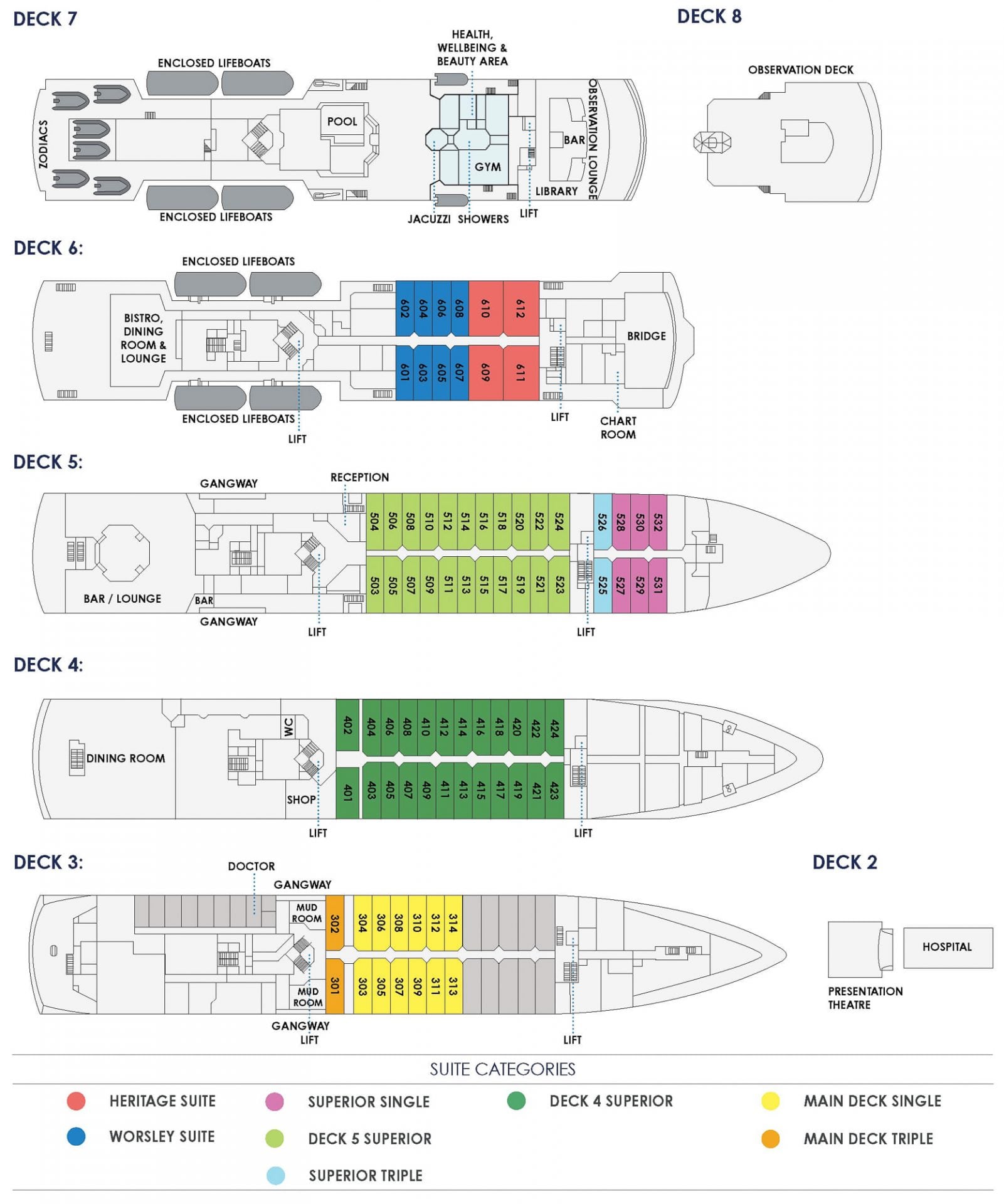
Deck Plan
What's Included
Tour Price Includes
- Pre/Post cruise transfers
- One night hotel accommodation in a twin share room (inc. dinner/breakfast)
- All on board ship accommodation with meals.
- House beer, wine and soft drinks with lunch and dinner
- All shore excursions and activities.
- Programme of lectures by noted naturalists.
Tour Price Does Not Include
- International/domestic flights
- All items of a personal nature
- Laundry
- Drinks
- Gratuities
- Visas
- Travel insurance
Gallery
Gallery


Itinerary
Itinerary
Day 1: Queenstown
Guests should make their way to the designated hotel where we will spend the first night of the expedition. This evening there will be an informal get-together at the hotel for dinner; an excellent opportunity to meet fellow adventurers on your voyage and some of our expedition team.
Day 2: Port of Bluff
Today we enjoy breakfast in the hotel restaurant and have the morning free to explore Queenstown before returning to the hotel for lunch and departing for the Port of Bluff to embark your ship. You will have time to settle into your cabin and familarise yourself with the ship; we will also take the opportunity to conduct a number of safety briefings. You are invited to join the expedition team in the Observation Lounge and up on the Observation Deck as we set our course to The Snares and our adventure begins.
Day 3: The Snares - North East Island
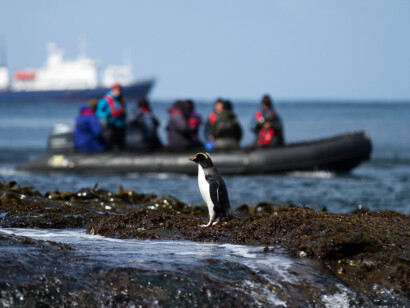
The closest Subantarctic Islands to New Zealand, they were appropriately called The Snares as they were once considered a hazard for sailing ships. Comprising of two main islands and a group of five islands called the Western Chain; they are uninhabited and enjoy the highest protection as Nature Reserves. It is claimed by some that these islands are home to more nesting seabirds than all of the British Isles together. We plan to arrive in the morning, and as landings are not permitted, we will Zodiac cruise along the sheltered eastern side of the main island if the weather and sea conditions are suitable. In the sheltered bays, we should see the endemic Snares Crested Penguin, Snares Island Tomtit and Fernbirds. There are hundreds of thousands of Sooty Shearwaters nesting on The Snares; the actual number is much debated. Buller’s Albatross breed here from early January onwards. There will be opportunities to view the forests of large tree daisy Olearia lyallii which forms a canopy over much of the island group.

Day 4: Auckland Islands - Enderby Island
The Auckland Islands group was formed by two volcanoes which erupted some 10-25 million years ago. They have subsequently been eroded and dissected by glaciation creating the archipelago as we know it today. Enderby Island is one of the most beautiful islands in this group and is named after the same distinguished shipping family as one of our previous vessels. This northern most island in the archipelago is an outstanding wildlife and birding location and is relatively easy to land on and walk around. The island was cleared of all introduced animals (pests) in 1994 and both birds and the vegetation, especially the herbaceous plants, are recovering both in numbers and diversity. Our plan is to land at Sandy Bay, one of three breeding areas in the Auckland Islands for the Hooker’s or New Zealand Sea Lion, a rare member of the seal family. Beachmaster bulls gather on the beach, defending their harems from younger (ambitious) males, to mate with the cows shortly after they have given birth to a single pup. Hooker’s or New Zealand Sea Lion numbers are in a slow decline, for reasons which are not obvious but most probably connected with a nearby squid fishery. During our day ashore there will be several options, some longer walks, some shorter walks and time to spend enjoying the wildlife. The walking is relatively easy. A boardwalk traverses the island to the dramatic western cliffs, from there we follow the coast and circumnavigate the island. Birds that we are likely to encounter include the following species: Southern Royal Albatross, Northern Giant Petrel, Auckland Island Shag, Auckland Island Flightless Teal, Auckland Island Banded Dotterel, Auckland Island Tomtit, Bellbird, Pipit, Red-crowned Parakeet, Yellow-eyed Penguin and Light-mantled Sooty Albatross. There is also a very good chance of seeing the Subantarctic Snipe. Other more common species we will see include the Goldfinch, Song Thrush, Blackbird, European Starling, Red-billed Gull and Redpoll. On Derry Castle Reef we will look for migratory waders which could include Bar-tailed Godwit, Turnstone and possibly vagrants.

Day 5: Auckland Islands – Carnley Harbour
In the south of the archipelago there is a very large sheltered harbour rich in human history including shipwrecks, treasure hunters, Coastwatchers and, of course, scientific parties. We plan to arrive mid-morning entering the harbour through the eastern entrance which is guarded on both sides by dramatic cliffs and rugged, tussock-covered hills. Our activities here today are weather dependent. We have a number of options. If the weather is fine there will be an opportunity for the more energetic expeditioners to climb to the South West Cape and visit the Shy Mollymawk colony. This climb provides magnificent views in all directions, especially over the western entrance to Carnley Harbour, Adams Island and Western Harbour. For those not making the climb there will be an opportunity to Zodiac cruise along the coast of Adams Island, Western Harbour and Victoria Passage. Other options include the Tagua Bay Coastwatcher’s hut and lookout which was occupied during the Second World War. We could visit Epigwatt and the remains of the ‘Grafton’ which was wrecked here in 1864. All five men aboard survived and lived here for 18 months before sailing their modified dinghy to New Zealand to get help. Two of the survivors wrote books about their ordeal, their first-hand accounts tell us a lot about their time here. Later this afternoon we depart for Macquarie Island.

Day 6: At Sea
As we make our way through an area known as the Furious Fifties in the tumultuous Southern Ocean, we will learn more about the flora and fauna as we prepare for our arrival at Macquarie Island. En route there are great birding opportunities which may include the Wandering Albatross, Royal Albatross, Black-browed Albatross, Light-mantled Sooty Albatross, Salvin’s Albatross, Grey-headed Albatross, Northern and Southern Giant Petrel, Sooty Shearwater and Little Shearwater. We will endeavour to spot the Fairy Prion, Fulmar Prion and Antarctic Prion – never an easy task – but we should get some great views. Other species to be on the lookout for include the Soft-plumaged Petrel, Mottled Petrel, White-headed Petrel, Grey-faced Petrel, White-chinned Petrel, Grey-backed Storm-Petrel, Wilson’s Storm-Petrel and the Black-bellied Storm-Petrel.
Days 7 to 8: Macquarie Island
Described by one Australian explorer as “One of the wonder spots of the world” this is the only place in the world where the beautiful Royal Penguin breeds. Three other species of penguins, the King, Gentoo and Rockhopper also breed here. You will never forget your first experience of a noisy ‘penguin city’, where the dapper inhabitants show no fear of their strange visitors and where you will be immersed in a tumult of chattering, feeding chicks; territorial disputes; petty pilfering and courtship displays. This all happens amongst the hundreds of Southern Elephant Seals lolling on the beaches and dunes. On arrival we hope to meet with scientists and Park Rangers based here who will accompany us on all our landings.

Day 9: At Sea
There will be briefings and lectures on Campbell Island in preparation for our visit there and opportunities for pelagic birding and/or simply relaxing.
Day 10: Campbell Island – Perseverance Harbour
We have a full day to explore Campbell Island, New Zealand’s southernmost Subantarctic territory. Its history is as rich and varied as the other islands we visit. Discovered in 1810, it was soon occupied by sealers who introduced rats and cats. Farming followed from 1895 to 1934 when it was abandoned. Coastwatchers were stationed on the island during the war and at the end of the war the station was taken over by the New Zealand Metrological service. They maintained a manned weather/ research station there until 1995. In the early 1970s the removal of farm animals commenced and all were eventually removed by 1990. The vegetation recovered quickly and the cats died out naturally. In a very ambitious (and never before attempted on such a large scale) eradication programme the New Zealand Department of Conservation successfully removed the rats. With the island declared predator free, the way was clear to reintroduce the endangered Campbell Island Flightless Teal, which had been rediscovered on an offshore island in 1975. Snipe, which were formerly unknown from the island but were discovered on another offshore island, recolonised the islands themselves. The vegetation which the great English botanist Sir Joseph Hooker described in 1841 as having a “Flora display second to none outside the tropics” is flourishing and is nothing short of spectacular. We will offer a number of options which will enable you to explore the island including an extended walk to Northwest Bay. There will also be an easier walk to the Col Lyall Saddle. All of these options will allow you the opportunity and time to enjoy the Southern Royal Albatross which nest here in large numbers. We also visit areas of the island which contain outstanding examples of the megaherbs for which the island is renowned.

Day 11: At Sea
At sea en route to the Port of Bluff, take the opportunity to relax and reflect on an amazing experience. We will recap the highlights of our expedition and enjoy a farewell dinner tonight as we complete the last few miles of our journey.

Day 12: Invercargill/Queenstown
Early this morning we will arrive in the Port of Bluff. After a final breakfast we bid farewell to our fellow voyagers and take a complimentary coach transfer to either Invercargill or Queenstown Airports. In case of unexpected delays due to weather and/or port operations we ask you not to book any onward travel until after midday from Invercargill and after 3pm from Queenstown.
Note: During our voyage, circumstances may make it necessary or desirable to deviate from the proposed itinerary. This can include poor weather and opportunities for making unplanned excursions. Your Expedition Leader will keep you fully informed. Landings at the Subantarctic Islands of New Zealand are by permit only as administered by the Government of New Zealand. No landings are permitted at The Snares.
What to Expect
What to Expect
The focus and emphasis of every expedition is getting you ashore as often as possible for as long as possible with maximum safety and comfort. Our Expeditions are accompanied by some of the most experienced naturalists and guides, who have devoted a lifetime to field research in the areas that we visit. Please note, this is a general natural history expedition rather than a dedicated birding tour.
This expedition cruise necessitates passengers to be in reasonably good health. Zodiac cruises and transfer times can be lengthy. You must be able to climb stairs between decks on the ship, as well as the external gangway stairs to transfer between the zodiac and ship.
Some of our shore landings will be ‘wet’, requiring waterproof boots. Once you have left the zodiac, you’ll find our shore excursions accommodate both those who wish to enjoy a gentle stroll and those who prefer more active hikes. The excursion may involve walking over uneven or sandy terrain in variable weather conditions. Our onboard specialists will join us on these shore excursions to provide interpretation and narration to these wonderful landscapes and experiences.
When the ship is underway, it is a wonderful time to join a naturalist on deck, take photos of the stunning scenery, or get caught up on some reading in the library. In addition, our resource staff will give informative talks at various times throughout the voyage.
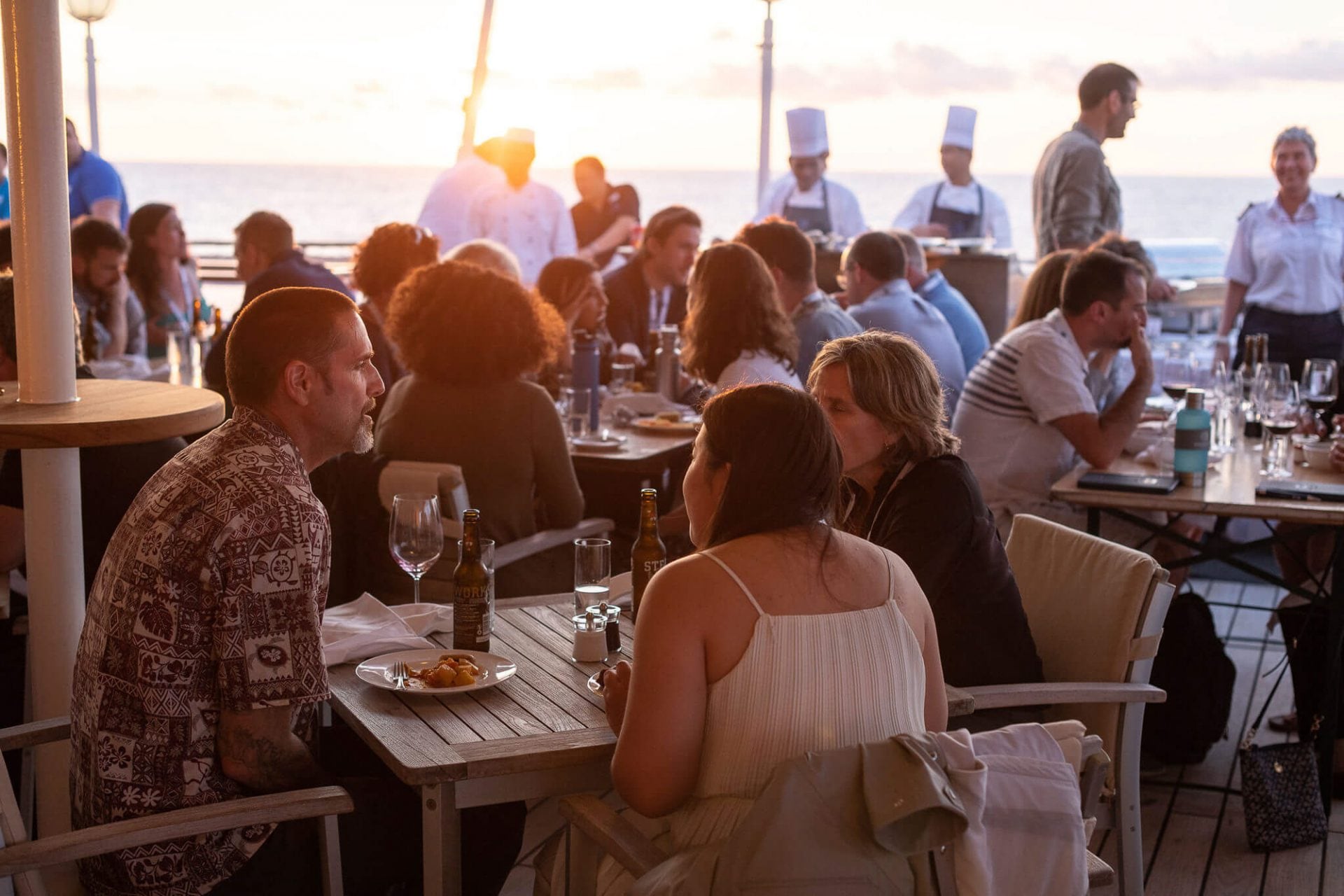
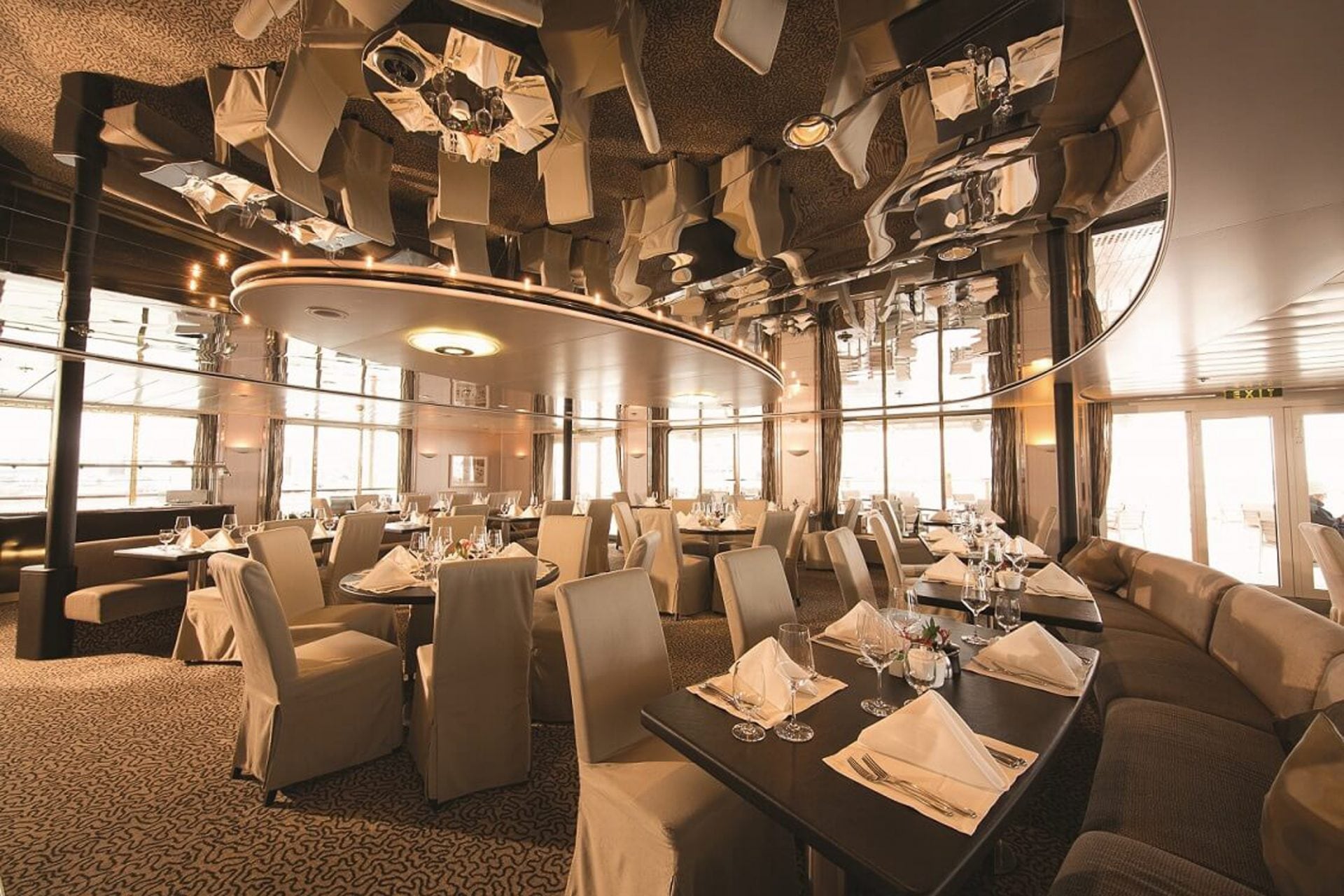
Meals in the ship’s dining room are a great opportunity to meet new friends and recount the day’s adventures. Special diets can be accommodated with advance notice. Safety is also a top priority with us – our team has extensive experience in the field, and all of our Voyages are run in conjunction with operators with the highest safety standards. The Heritage Adventurer is equipped with a well-stocked hospital and medical doctor on voyages.
Weather, ice, government regulations, and community requests may necessitate changes to the planned itineraries and/or the cancellation of certain shore excursions and enhancements. Published itineraries are examples only and we reserve the right to change or modify the itinerary and landing sites at any time prior or during an expedition. Changes will be communicated at your expedition orientation or during your onboard expedition briefings.
We know that everyone travels for different reasons. Over the years, however, we have found one common element among the guest who choose to travel with us – a thirst of knowledge and authentic experience. Knowing this drives us to ensure the highest quality learning experience on our trips, by taking time to carefully design each trip we offer.
Frequently Asked Questions
Ship Trip FAQs
Find answers to our Frequently Asked Questions regarding our Ship Trips, including information on our cancellation and refund policy, or how fit you need to be to go on an expedition cruise or sailing tour.
Ship & Deck Plan
Ship & Deck Plan: Heritage Adventurer
Heritage Adventurer
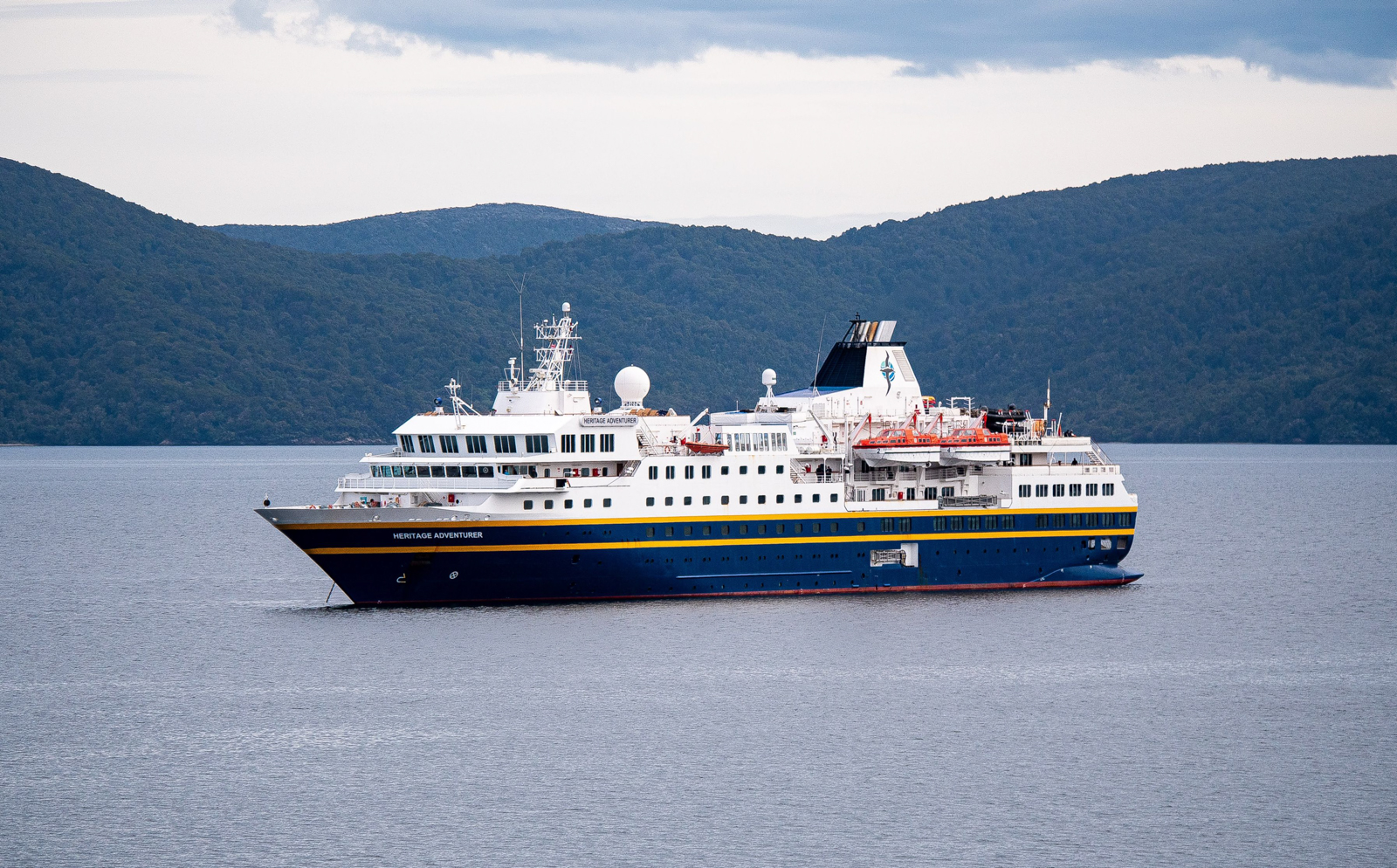
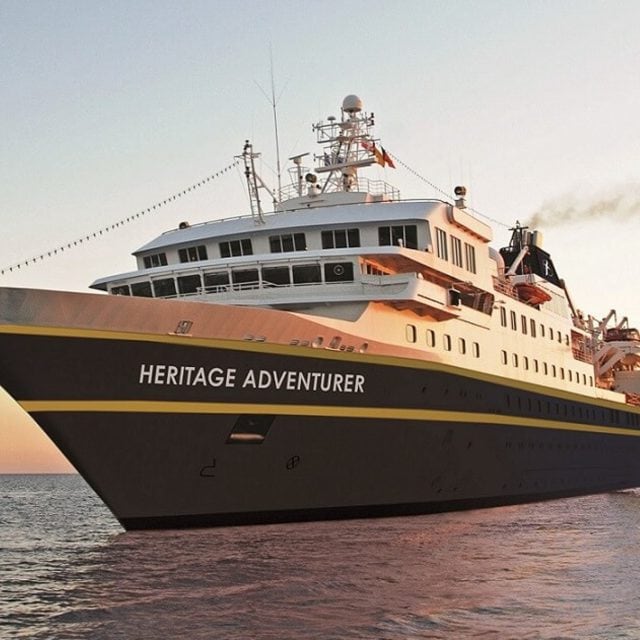
Heritage Adventurer is a true pioneering expedition vessel of exceptional pedigree. Often referred to as the ‘Grande Dame of Polar Exploration’ due to her celebrated history and refined design, she was purpose-built for adventure in 1991 at Finland’s Rauma shipyard and specifically designed for Polar exploration.
Setting a peerless standard in authentic expedition travel, Heritage Adventurer (formerly known as MS Hanseatic) combines the highest passenger ship iceclass rating (1A Super) with an impressive history of Polar exploration. Having held records for the most northern and southern Arctic and Antarctic navigations, and for traversing both the Northwest and Northeast Passages, makes Heritage Adventurer perfect for pioneering New Zealand-based signature experiential expedition travel.
Originally designed to accommodate 184 guests, Heritage Adventurer now welcomes just 140 expeditioners ensuring spacious, stylish and comfortable voyages, while a fleet of 14 Zodiacs ensures all guests are able to maximise their expedition adventure. Heritage Adventurer proudly continues our traditions of exceptional, personalised expedition experiences.
Learn MoreDeck Plan


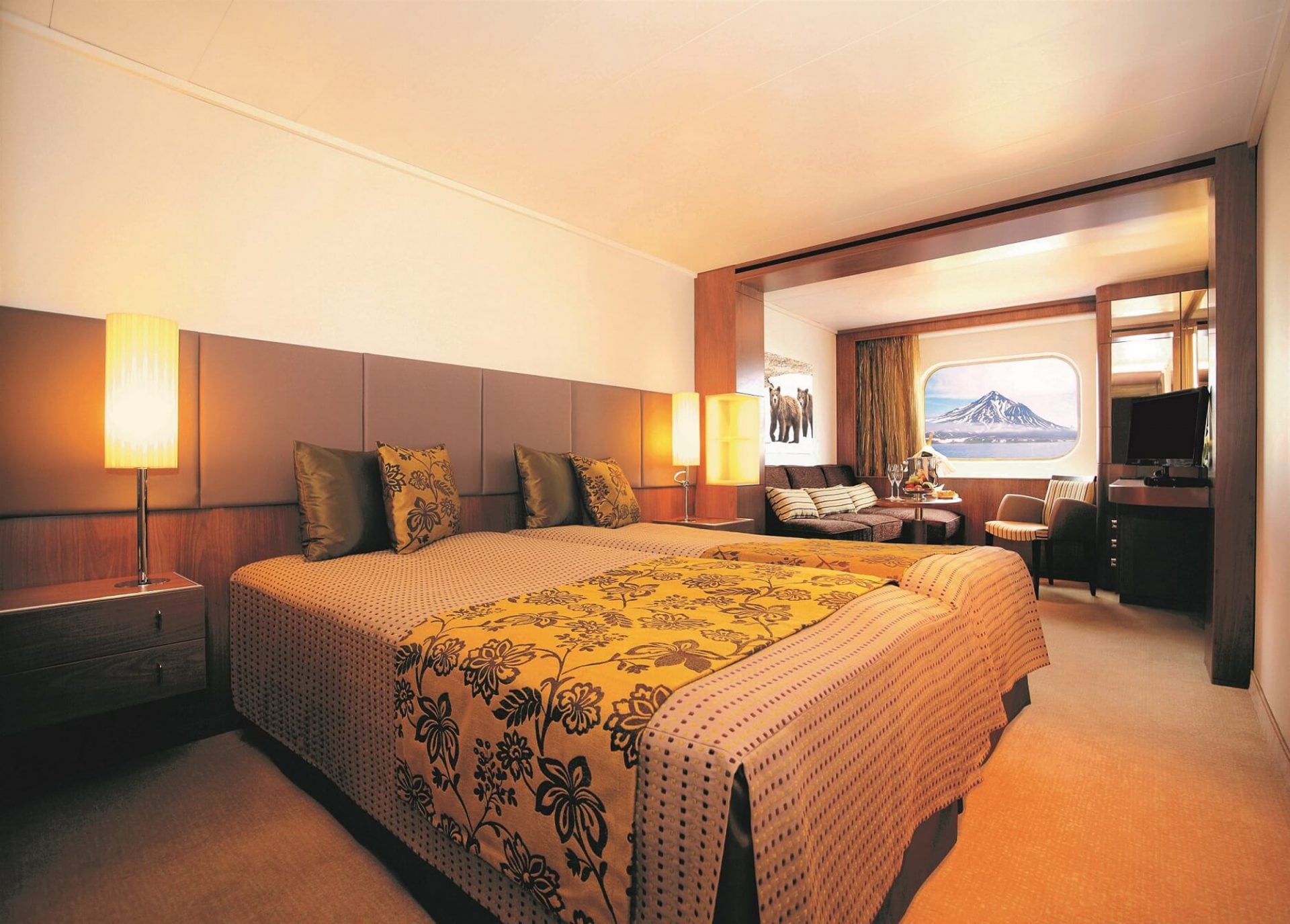


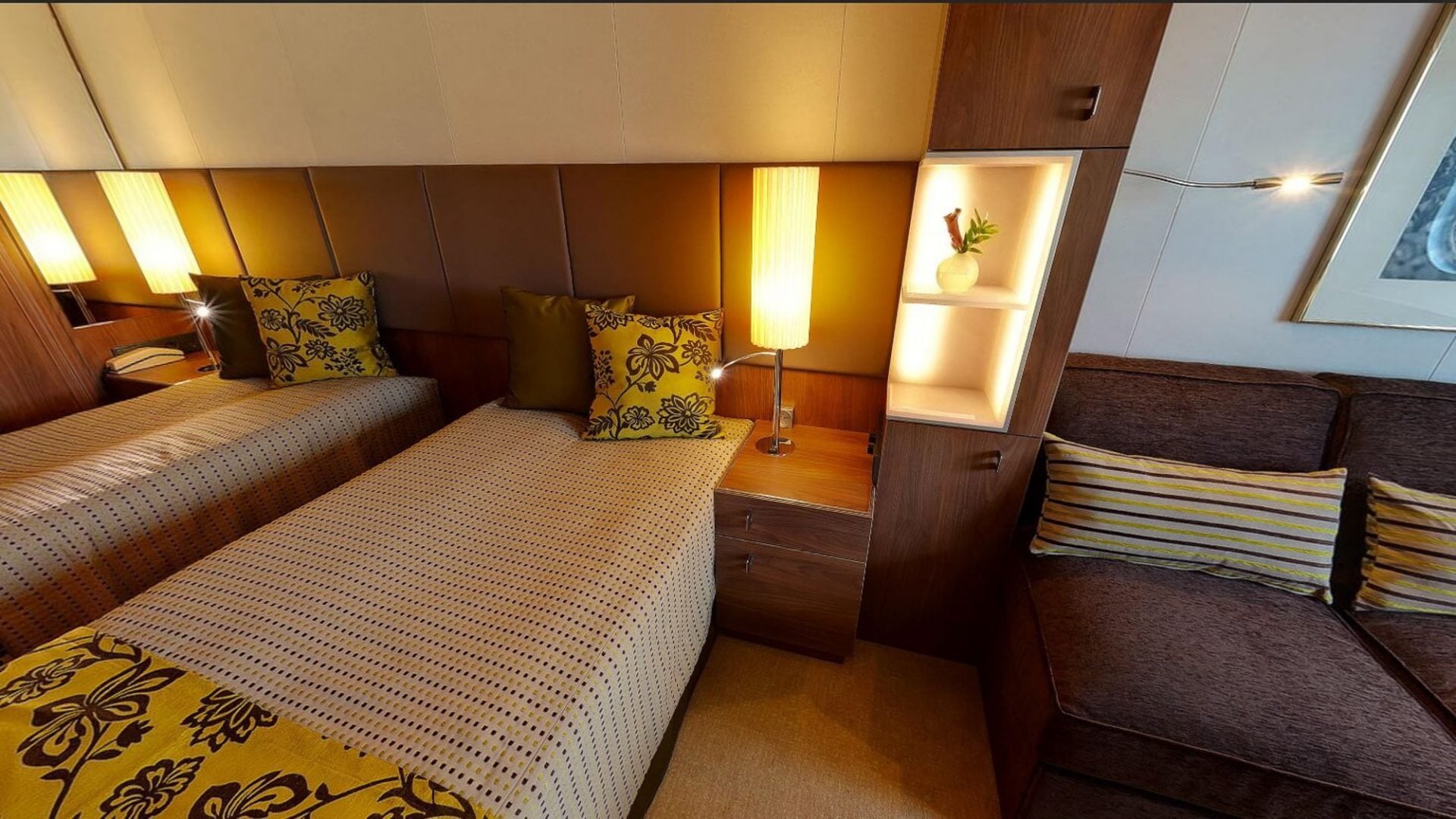



Past Tour Checklists
Past Tour Checklists
View the list of birds and other wildlife we encountered on our past tours.