Southern Peru: Manu to Machu Picchu Trip Report (Sep 12 – 29, 2026)
Days 1–2: Lima, Pantanos de Villa and Pucusana
We began our Peruvian adventure in the wetlands along the coast south of Lima. Pantanos de Villa protects important habitat for both resident and migratory birds, and at Laguna Maravilla and the beach it was hard to keep track of everything we were seeing. Hundreds of Gray, Kelp, Belcher’s and Gray-hooded Gulls lined the sand while Sanderlings raced back and forth after the receding waves. Overhead, Peruvian Boobies dive-bombed the fish, and Neotropic Cormorants attacked from below.
The lagoon on the mainland side offered a completely different cast: a conspicuous Chilean Flamingo, White-cheeked Pintail, Cinnamon Teal, Wilson’s Phalarope, Stilt, Spotted Sandpiper, Common Gallinule and Black-bellied Plover. In the surrounding vegetation we picked out Many-colored Rush-Tyrant, Wren-like Rushbird and Peruvian Meadowlark. At a second lagoon we added Black-crowned and Yellow-crowned Night-Herons, Chestnut-throated Seedeater, Grassland Yellow-Finch, Great Grebe and Pied-billed Grebe.
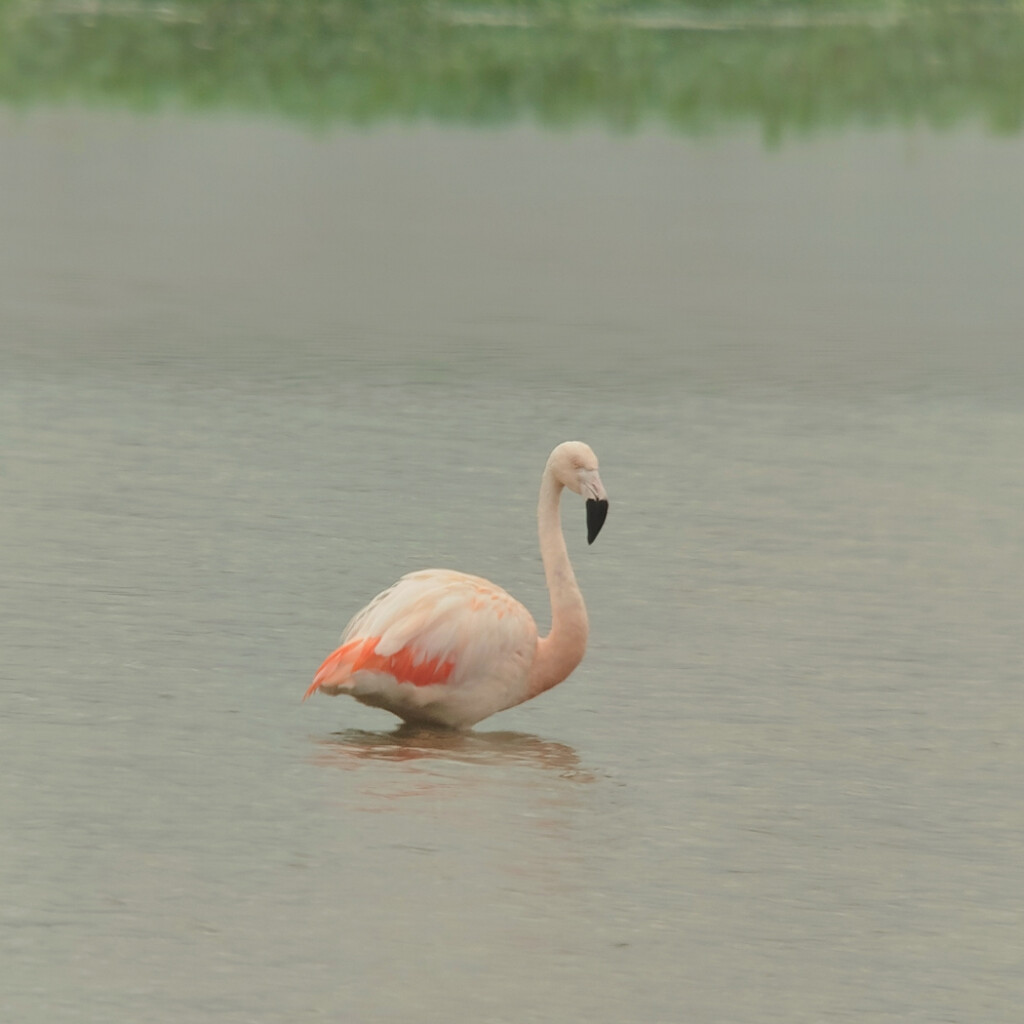
Chilean Flamingo © E Carman
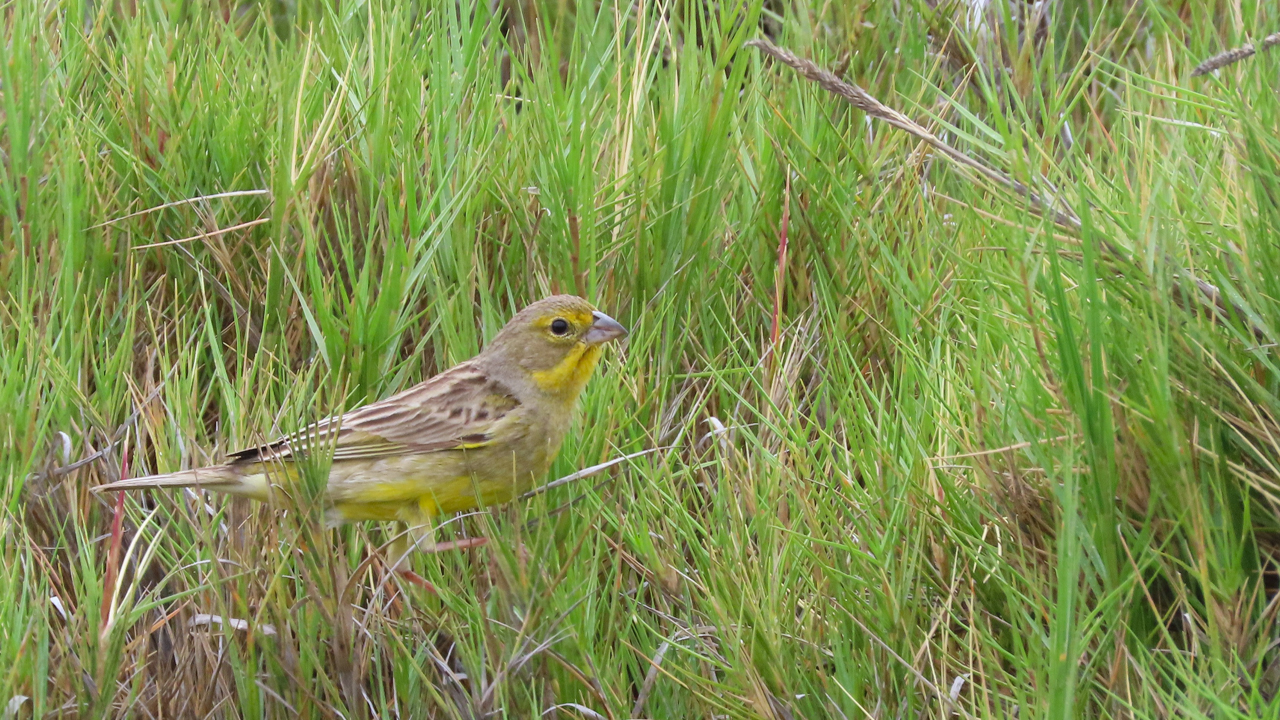
Grassland Yellow-Finch © E Carman
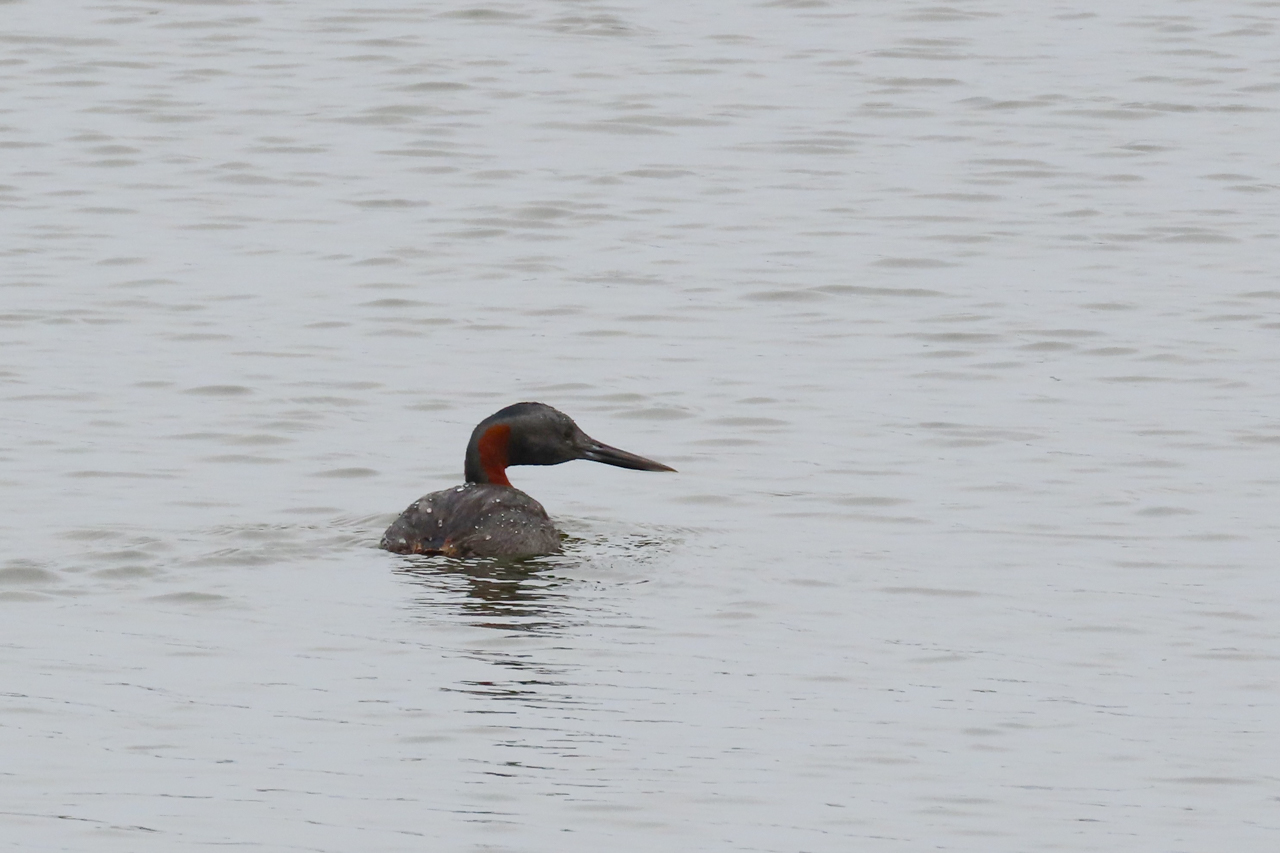
Great Grebe © E Carman
We then drove a short distance south to the fishing village of Pucusana, where South American Sea Lions greeted us, basking on the beach. With calm seas and a strong El Niño year (which can push oceanic species closer to shore), we ventured out for a few pelagic birds, and our luck held. We found Markham’s and Elliott’s Storm-Petrels, Sooty Shearwater and the range-restricted Peruvian Diving Petrel.
Back along the coast, we scanned the cliffs of Pucusana Island. Among dozens of sea lions we found two Humboldt’s Penguins, Red-legged and Guanay Cormorants, Blackish and American Oystercatchers, Blue-footed Boobies and dozens of Inca Terns, which we saw from every angle. After such a productive morning we returned to the port for lunch, then headed back to Lima for the night.
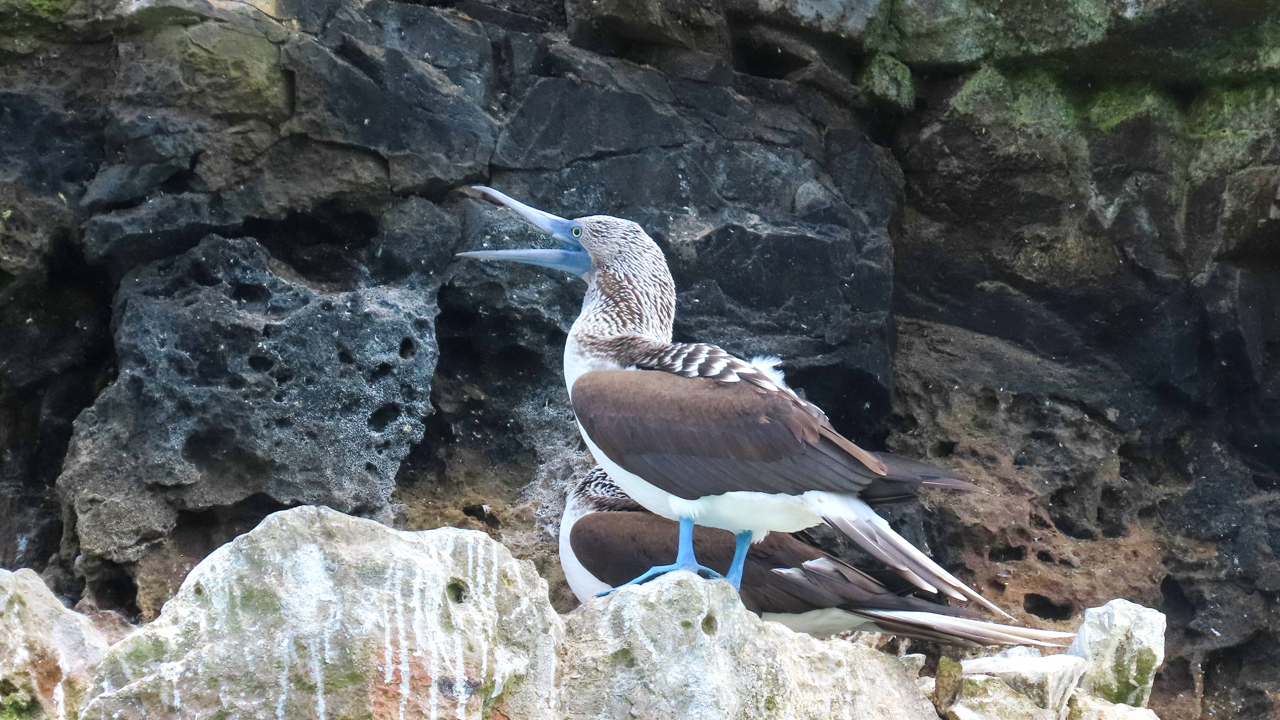
Blue-footed Booby © E Carman
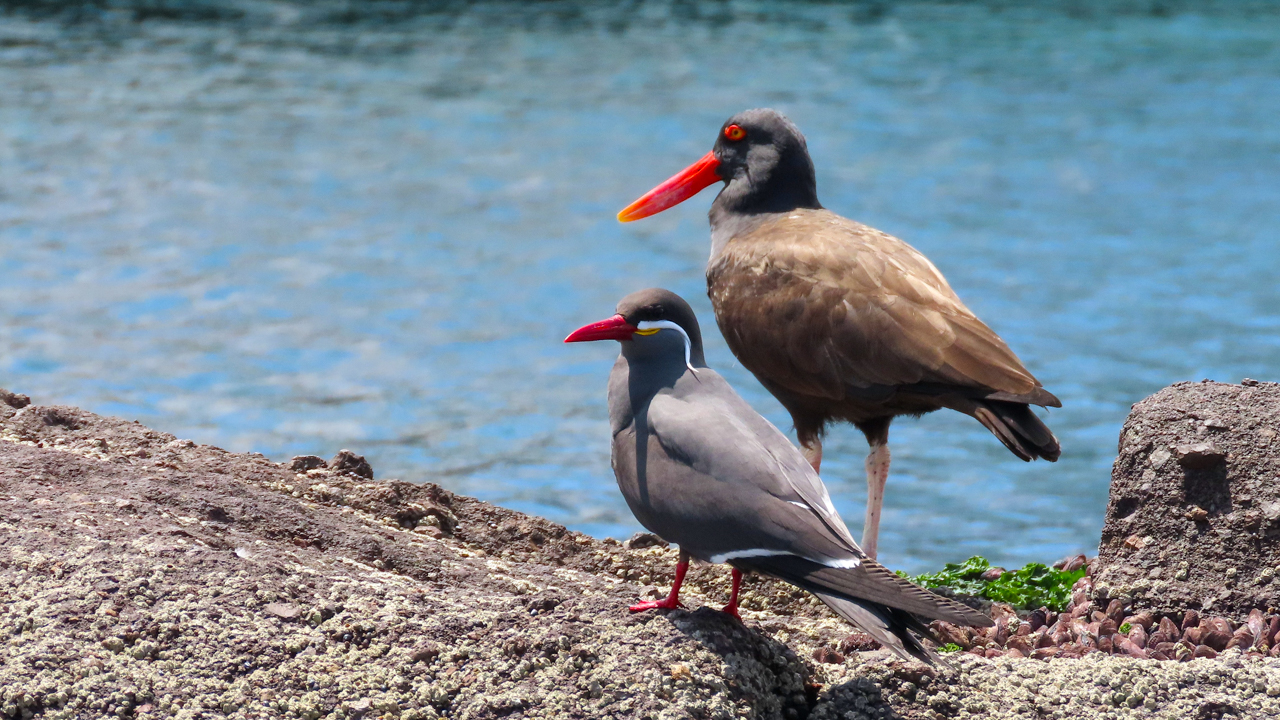
Inca Tern & Blackish Oystercatcher © E Carman
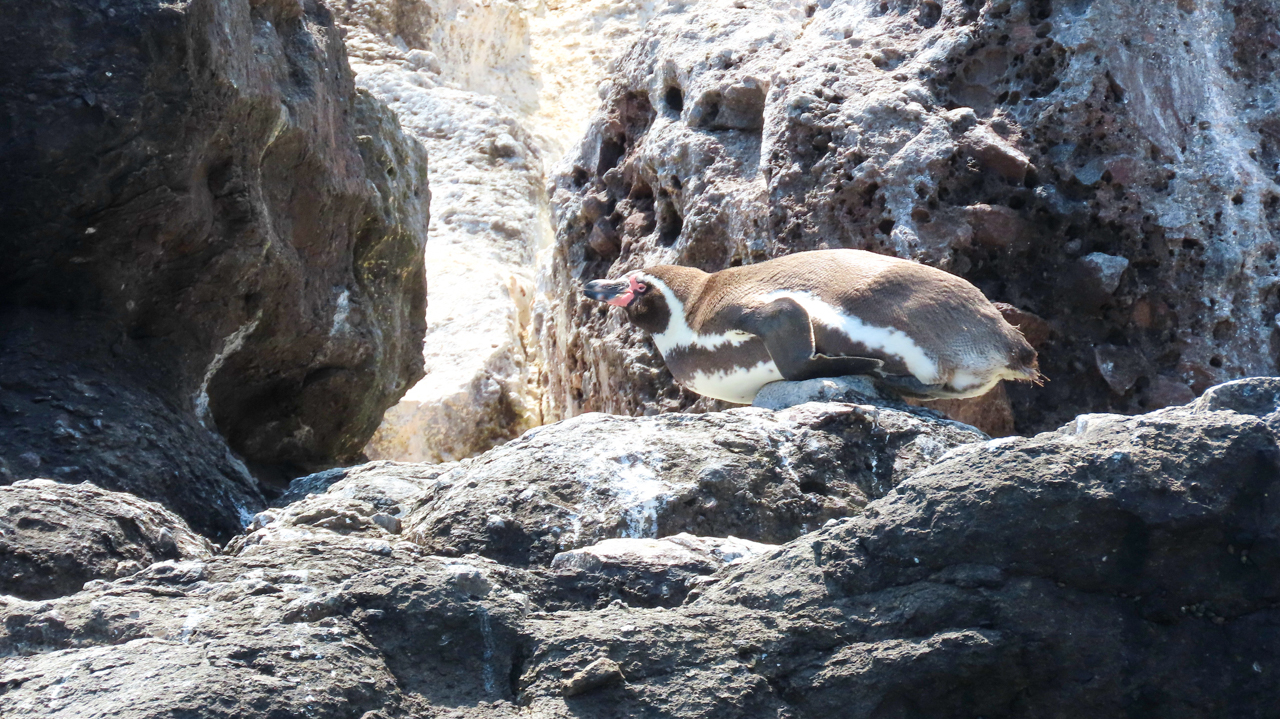
Humboldt Penguin © E Carman
Days 3–6: Finca Sachavacayoc and the Amazon Rainforest
We flew east over the Andes to Puerto Maldonado, in the Amazon basin at the confluence of the Madre de Dios and Tambopata Rivers. After reorganizing our luggage, we boarded a motorized canoe and worked our way up the Tambopata to Finca Sachavacayoc, our home for the next three nights and our base for exploring the rainforest.
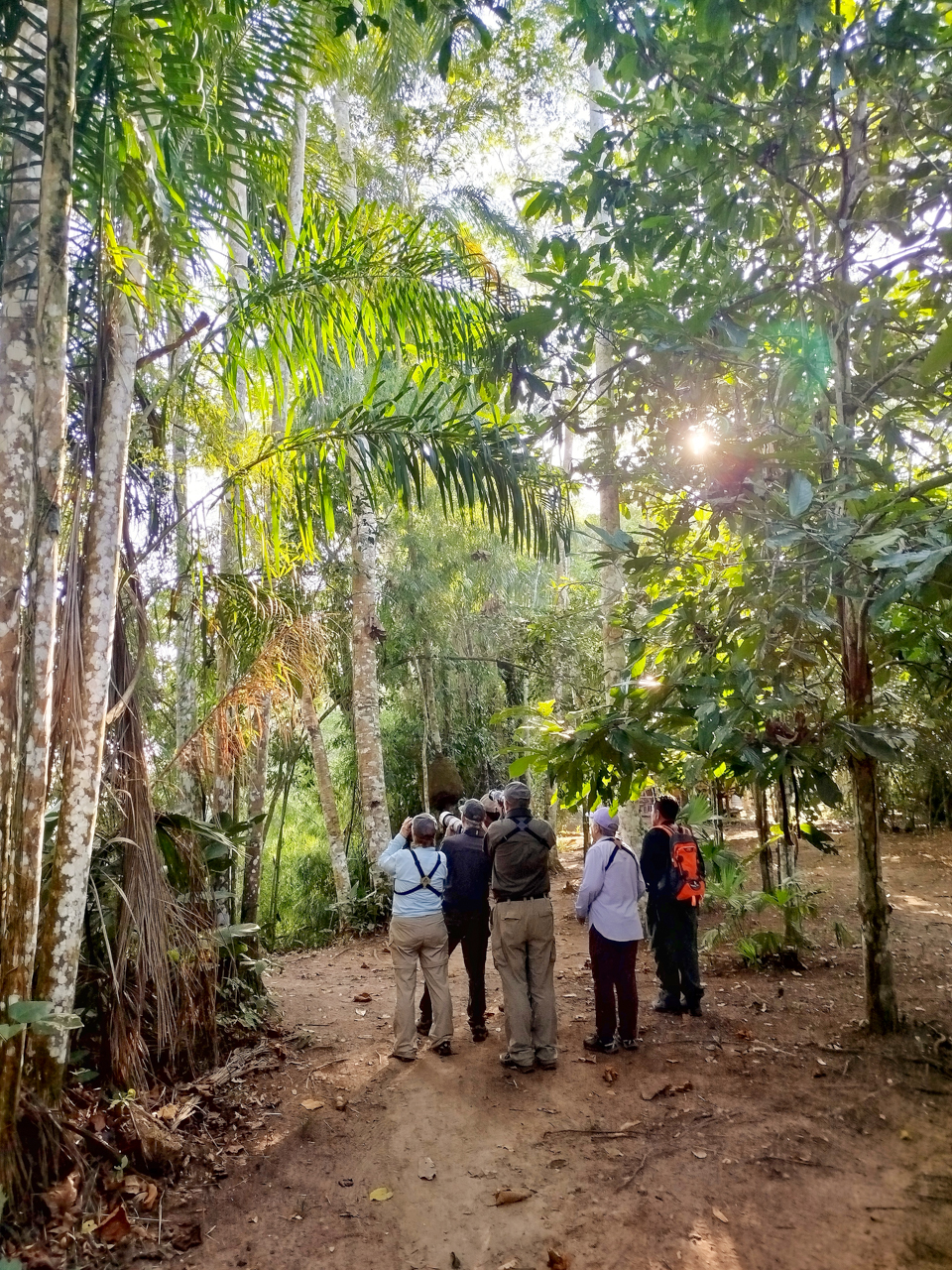
Birding Sachavacayoc © E Carman
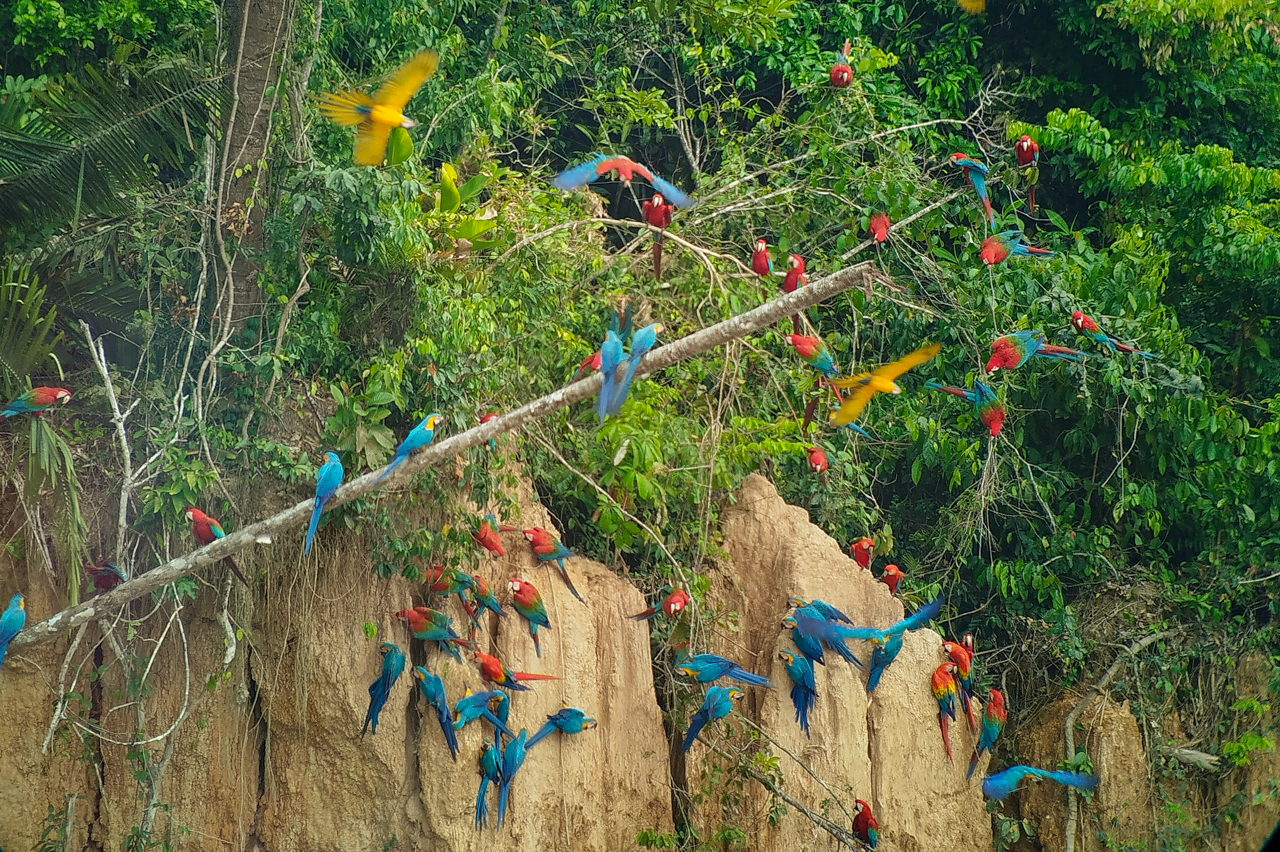
One of the trip’s highlights was the famous macaw clay-lick at Collpa Chuncho, which required an early start and a pre-dawn journey up the river in the dark. The logistics were simple: we stood on the edge of a sandbar facing the red embankment and waited. The trees were already full of macaws, parrots and parakeets. Several smaller species were on the clay, including Mealy, Yellow-crowned and Blue-headed Parrots and Dusky-headed and White-eyed Parakeets, but the only macaws to venture down for their mineral fix were the smaller Chestnut-fronted Macaws.
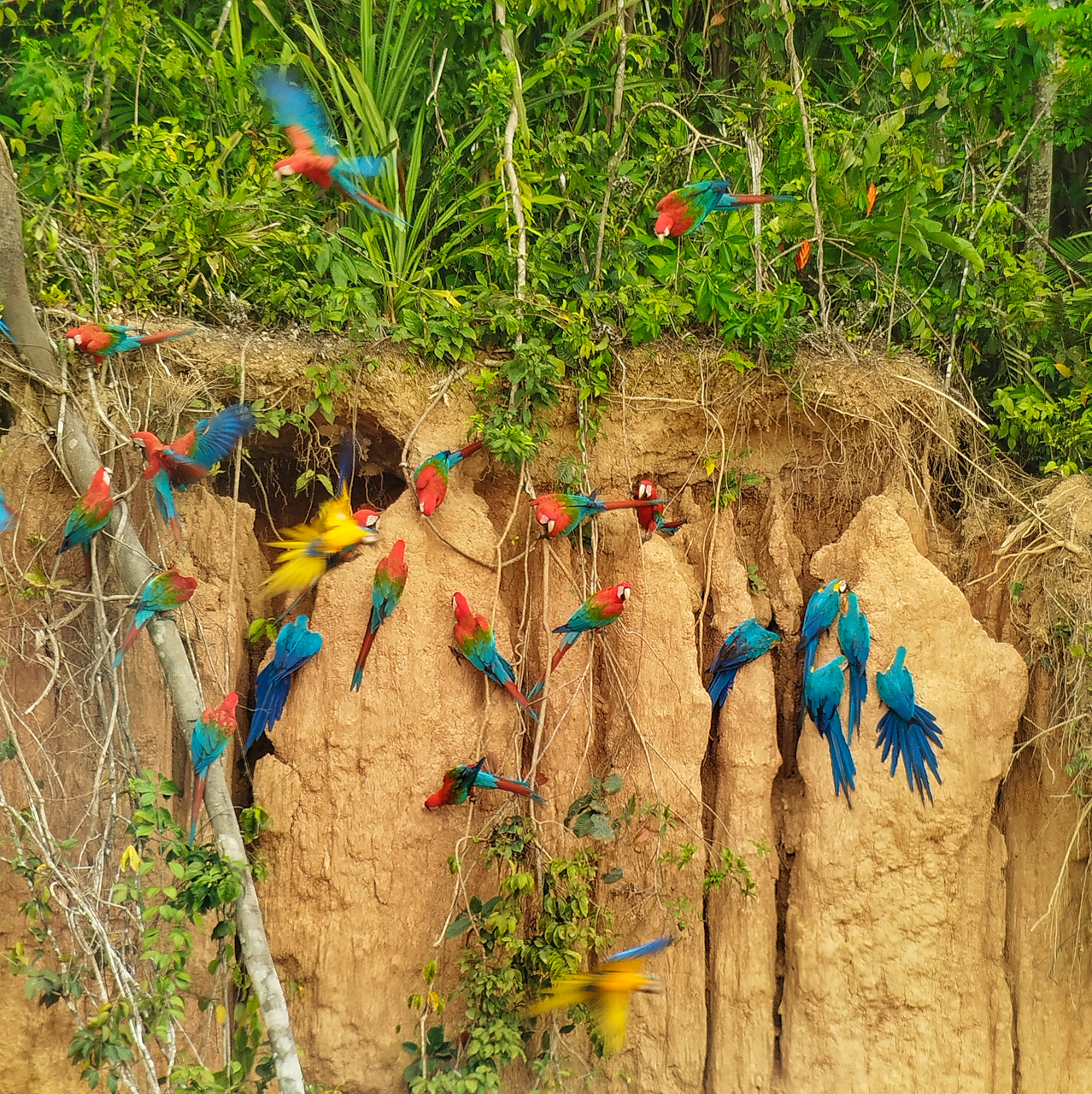
Macaw Claylick © E Carman
Macaw Claylick © E Carman
The larger macaws stayed in the trees, and after a while we saw why. A Black-and-white Hawk-Eagle, one of the main predators of macaws, was perched in a big tree above the clay-lick. No wonder they were skittish! Groups of macaws repeatedly circled the tree, mobbing the raptor.
While we waited, we were well entertained by two adult Brazilian Tapirs that came to the clay-lick, gave us fantastic views, and then melted back into the forest. Eventually the hawk-eagle soared away, and it wasn’t long before the other three macaw species (Blue-and-yellow, Red-and-green and Scarlet) began dropping down to the embankment. Even better than seeing them on the red clay was the moment more than 300 macaws took off together in a spectacle of sound and color.
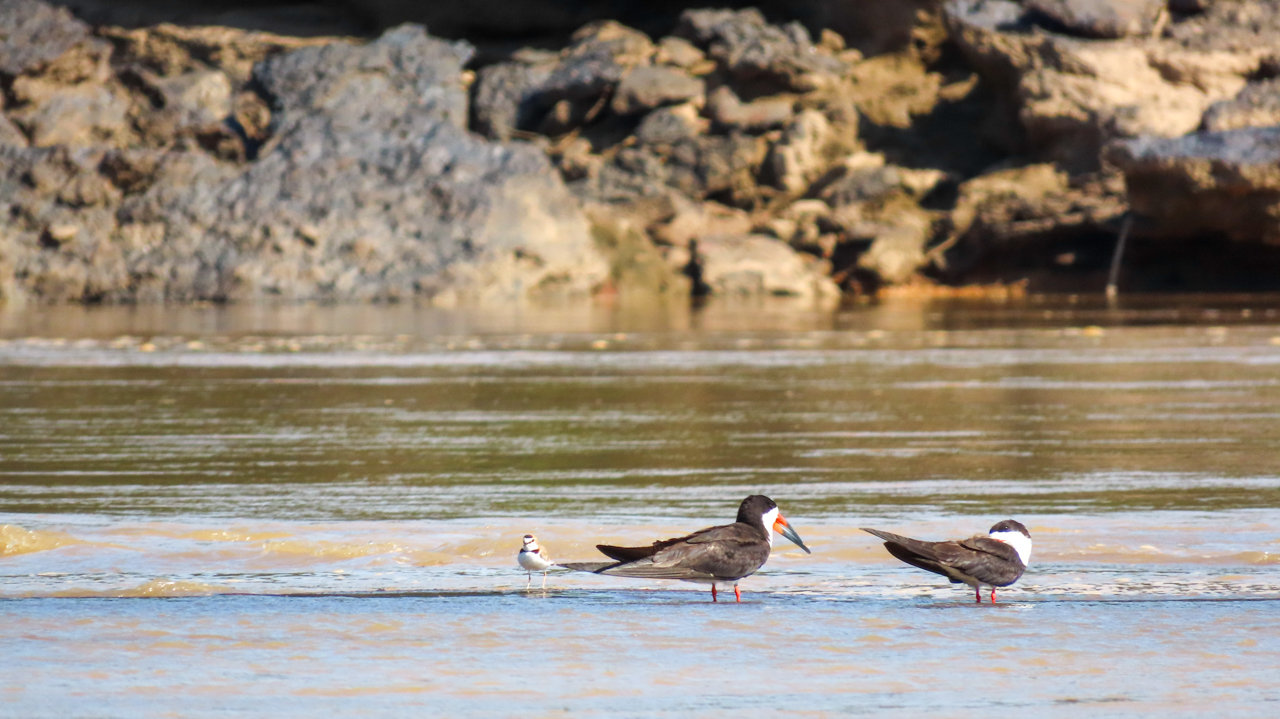
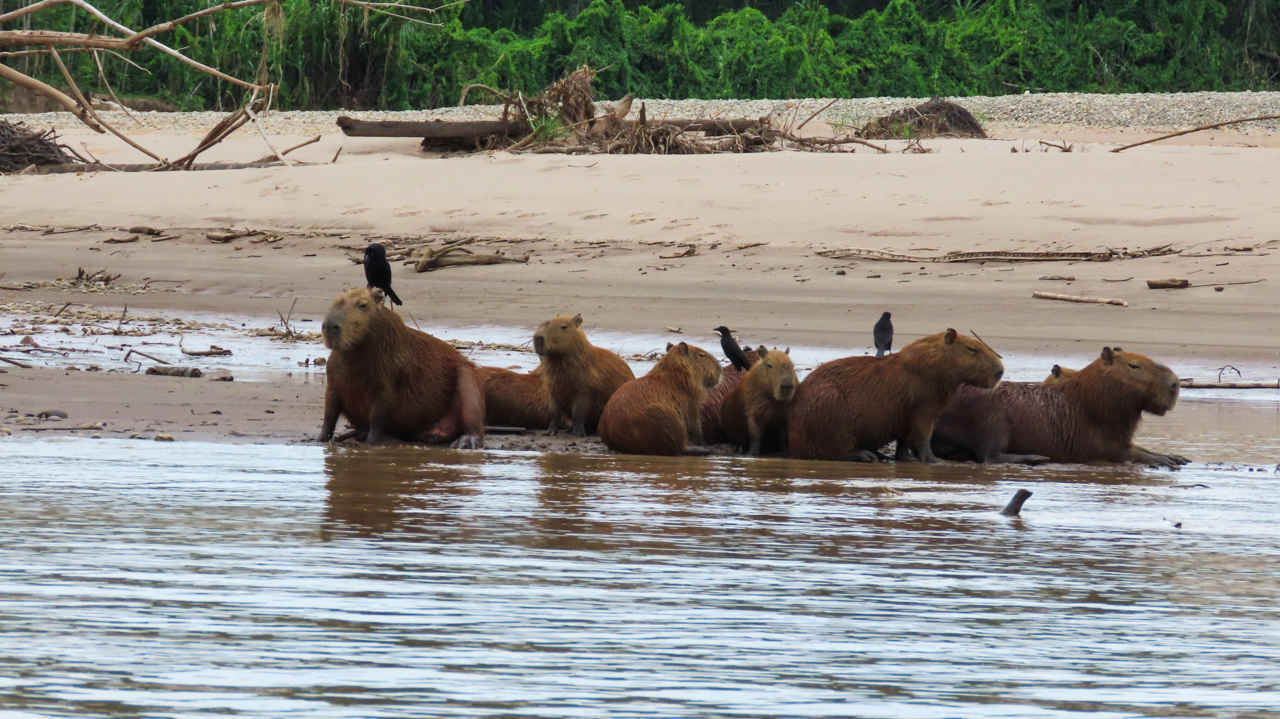
The river itself was rewarding as we traveled to and from birding sites. We enjoyed great views of Black Skimmer, Large-billed and Yellow-billed Terns, Pied Lapwing, Orinoco Goose, Brazilian Teal, and family groups of Capybaras, each accompanied by Giant Cowbirds picking parasites off these giant rodents.
Black Skimmer and Collared Plover © E Carman
Capybara and Cowbird © E Carman
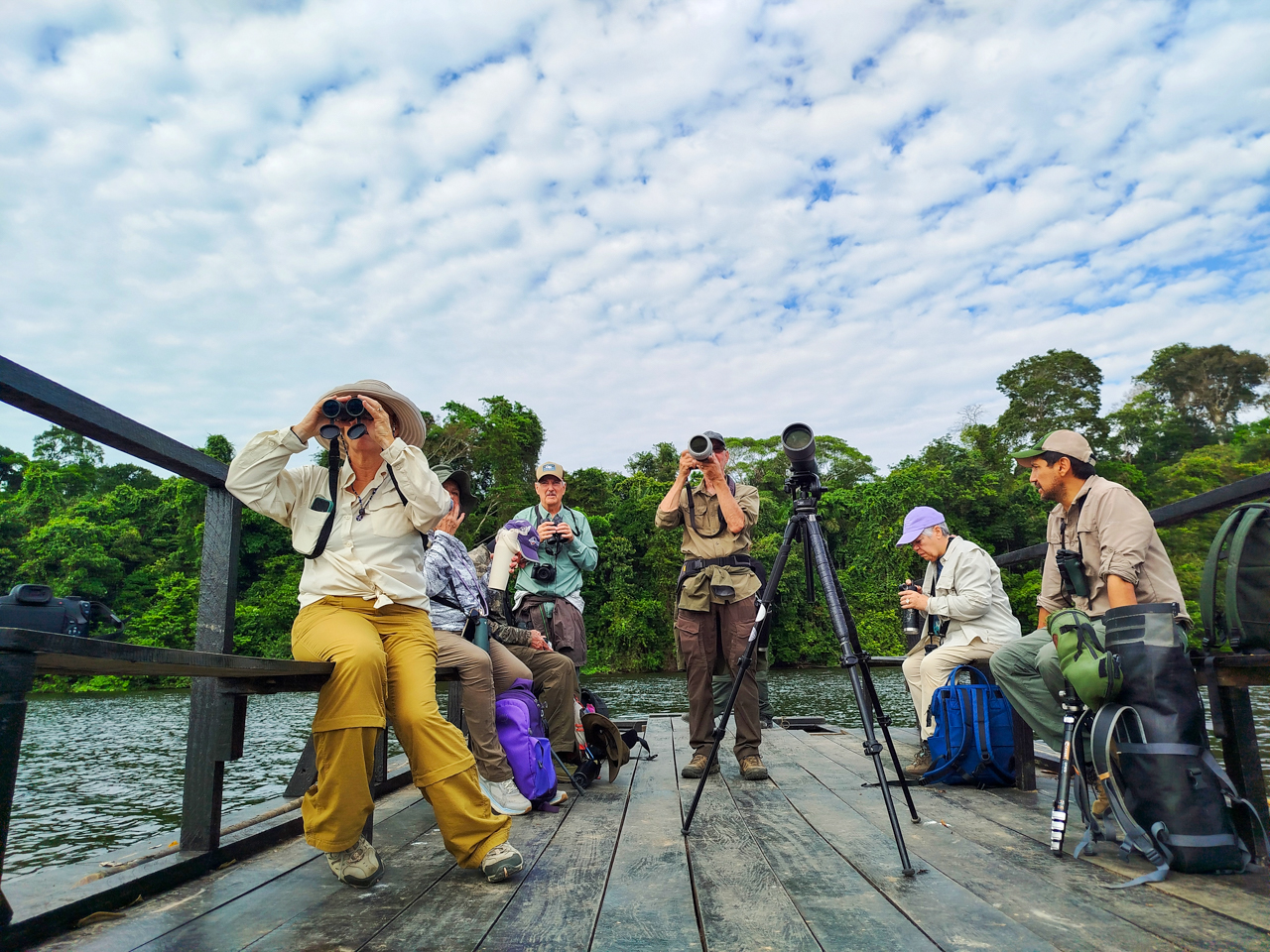
Another Amazon highlight was the Tres Chimbadas oxbow lagoon. Slow-moving Amazonian rivers snake across the landscape and often leave behind these crescent-shaped lakes, called cochas locally, which support a special suite of species. We walked into the cocha and boarded a pontoon boat with a rear oar, then glided quietly around the lagoon’s edges. Cocha specialties came quickly: Red-capped Cardinal, Rufescent Tiger-Heron, Anhinga, Wattled Jacana, Sungrebe, Ringed and Amazon Kingfishers, and the primitive Horned Screamer and Hoatzin. The undisputed stars, though, were a family of Giant River Otters, which put on a show as they hunted and surfaced to eat their catch right in front of us. At one point they came close and climbed onto a log, giving us excellent photo opportunities.
Birding Tres Chimbadas Lagoon © E Carman
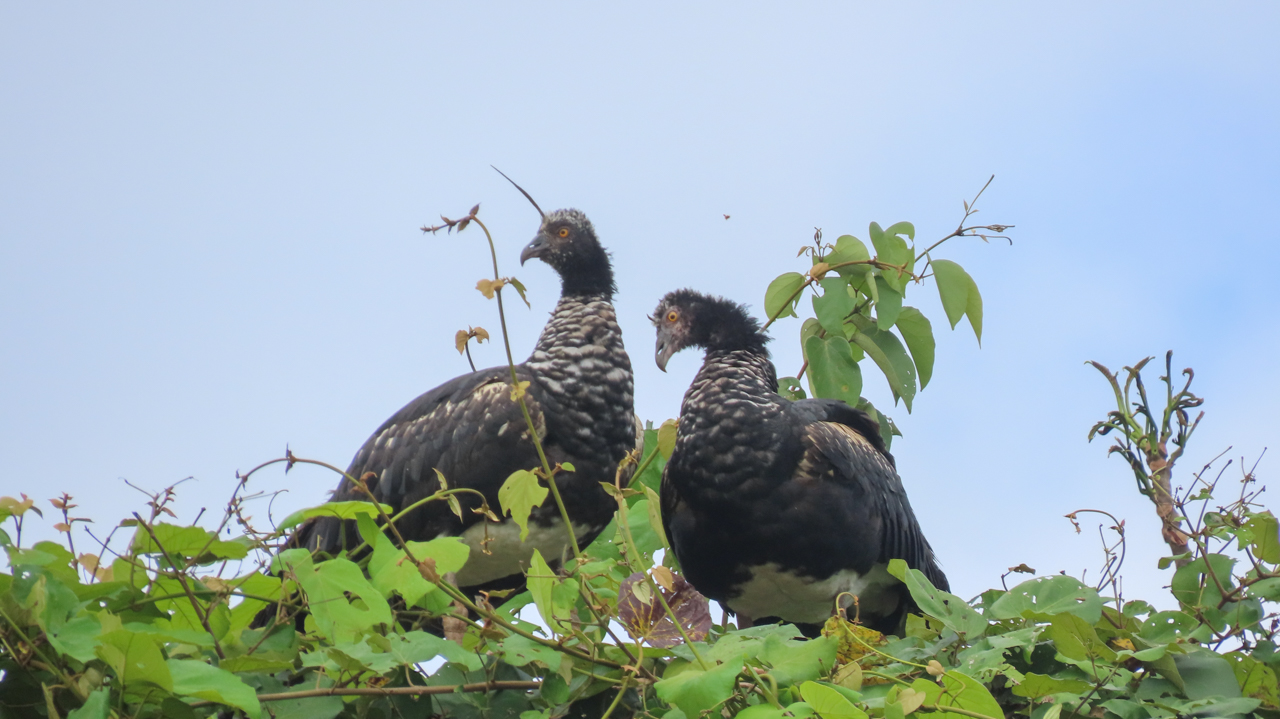
Horned Screamer © E Carman
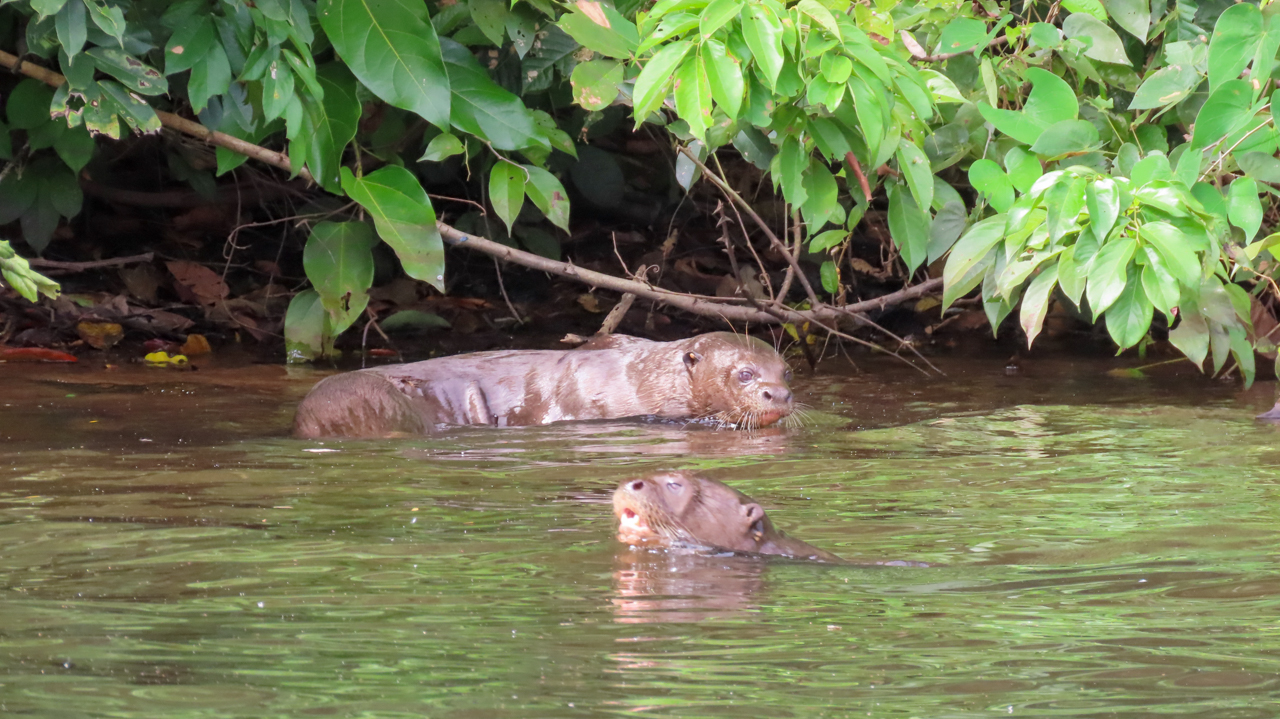
Giant River Otter © E Carman
The lodge gardens were just as lively, with Black-tailed and Blue-crowned Trogons, Black-fronted Nunbird, Black-tailed and Masked Tityras, Thrush-like Wren, Crested Oropendola and Amazonian Motmot, plus the scarcer Pale-tailed Barbthroat and the truly stunning Rufous-headed Woodpecker. It wasn’t only birds, either. We saw four primates (Large-headed Capuchin, Bolivian Black-capped Squirrel Monkey, Red Howler and Toppin’s Tití Monkey), tarantulas, dozens of butterflies “puddling” along the river, and a gorgeous Emerald Tree Boa that we admired every time we passed it on the boardwalk.
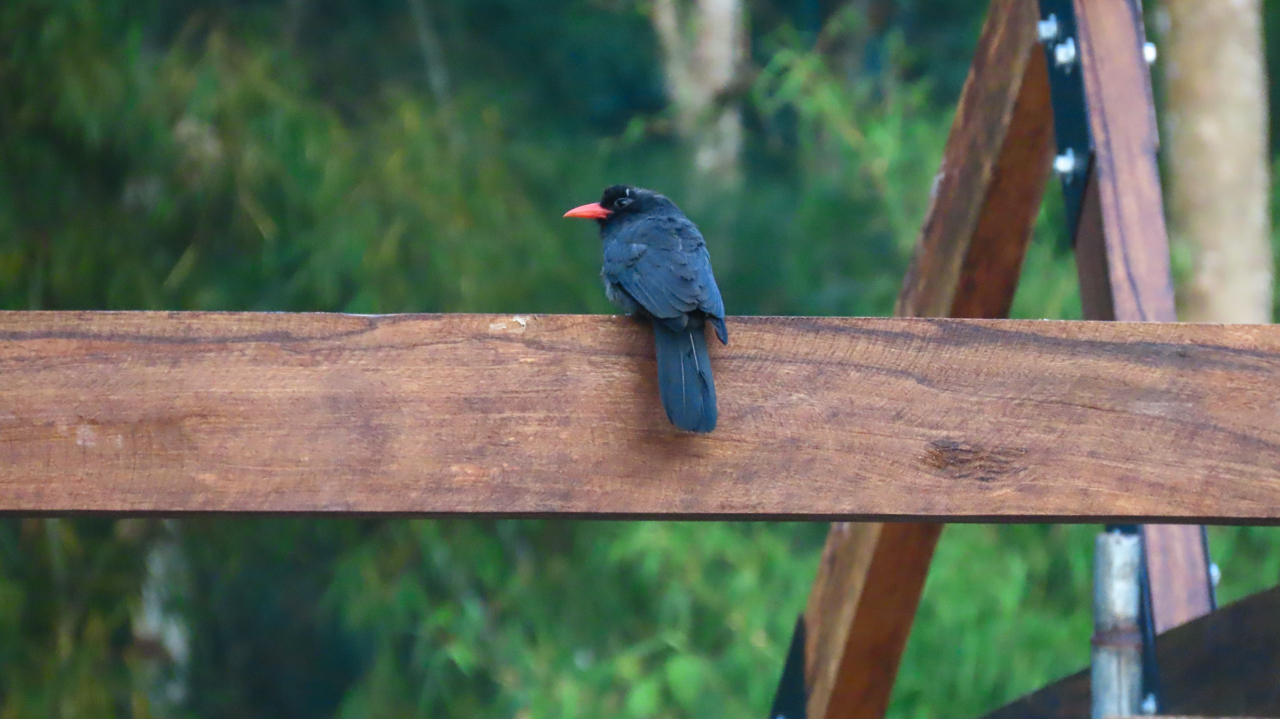
Black-fronted Nunbird © E Carman
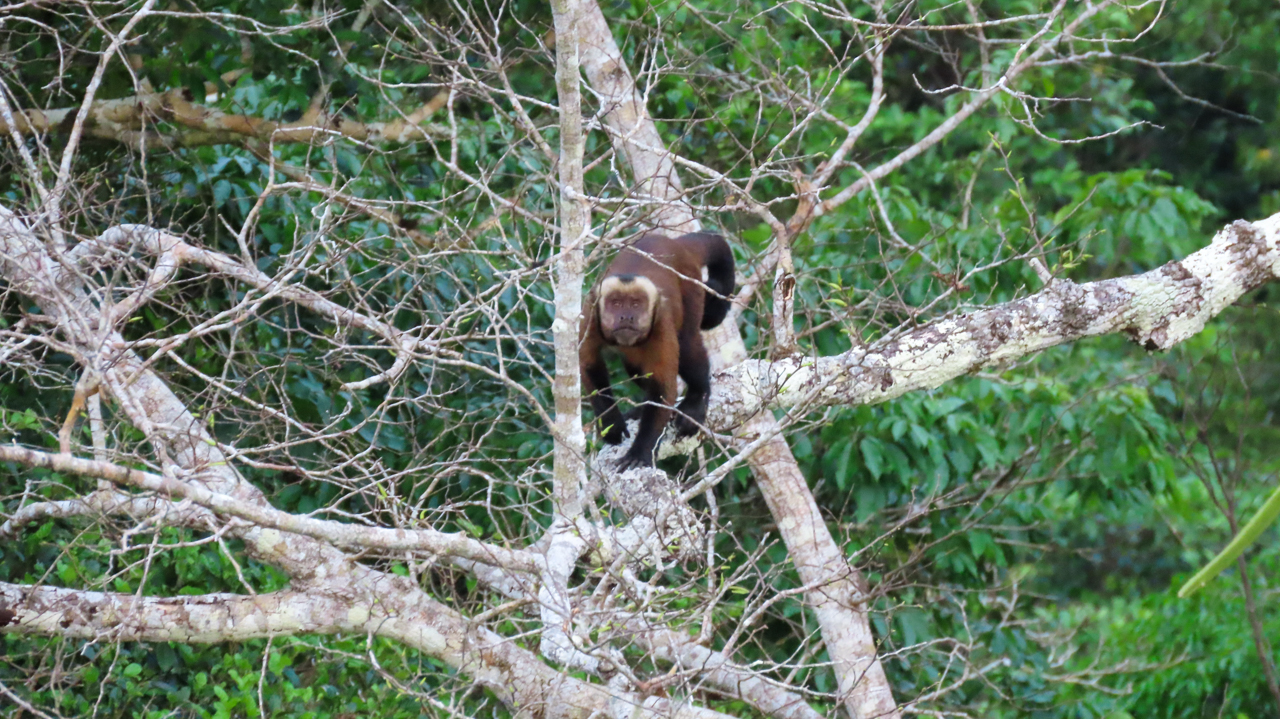
Large-headed Capuchin Monkey © E Carman
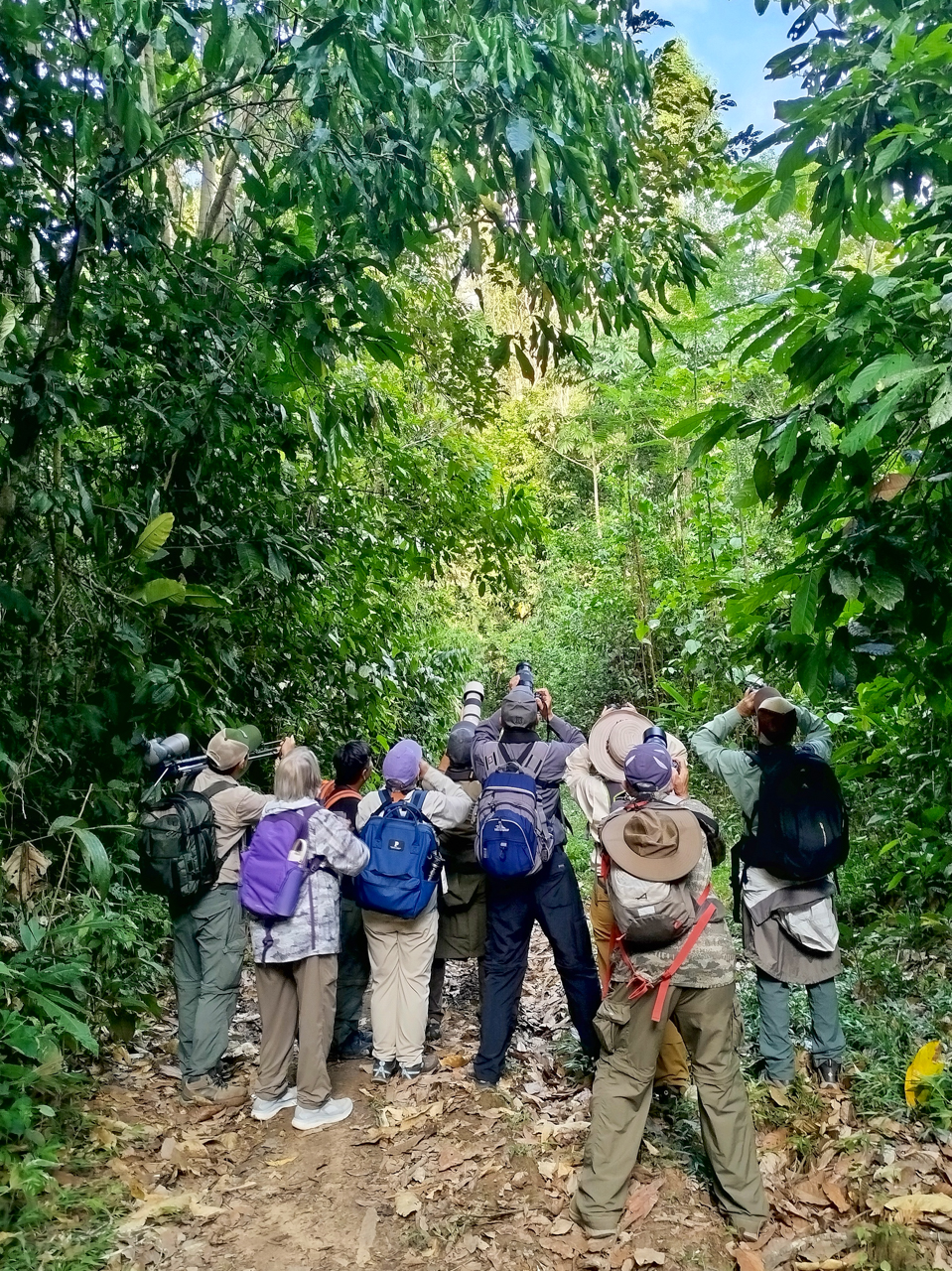
Birding in the Amazon © E Carman
Our journey back to Puerto Maldonado brought several raptors: Plumbeous Kite, Slate-colored Hawk, Roadside Hawk, and four species of vulture (King, Greater Yellow-headed, Turkey and Black).
Day 7: Cusco, Pisaq and Ollantaytambo
After the lowland rainforest, Cusco felt like another world: high, dry and dramatically different. We spent the day visiting archaeological sites on our way to the Sacred Valley, birding as we went. We found several interesting species, a couple of them regional endemics: Creamy-crested Spinetail, Rusty-fronted Canastero, Peruvian Sierra-Finch, Tyrian Metaltail, Chiguanco Thrush, Cream-winged Cinclodes, Black-billed Shrike-Tyrant and the unbelievable Giant Hummingbird.
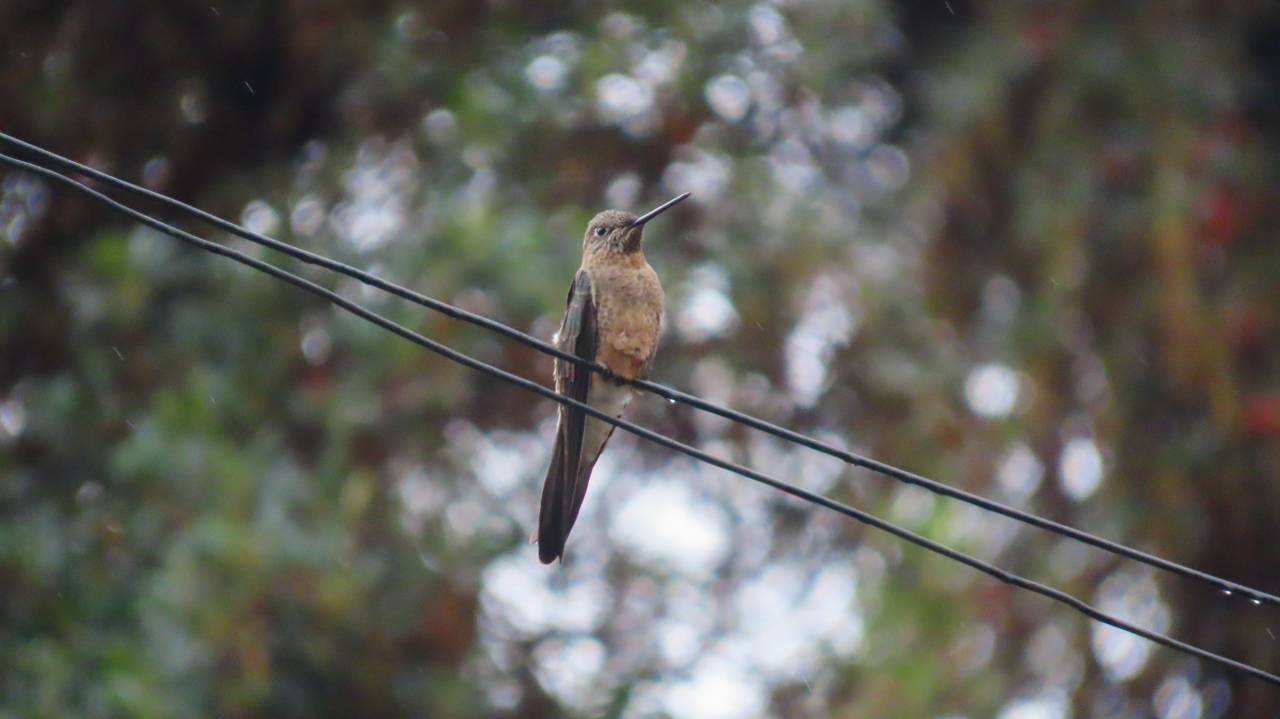
Giant Hummingbird © E Carman
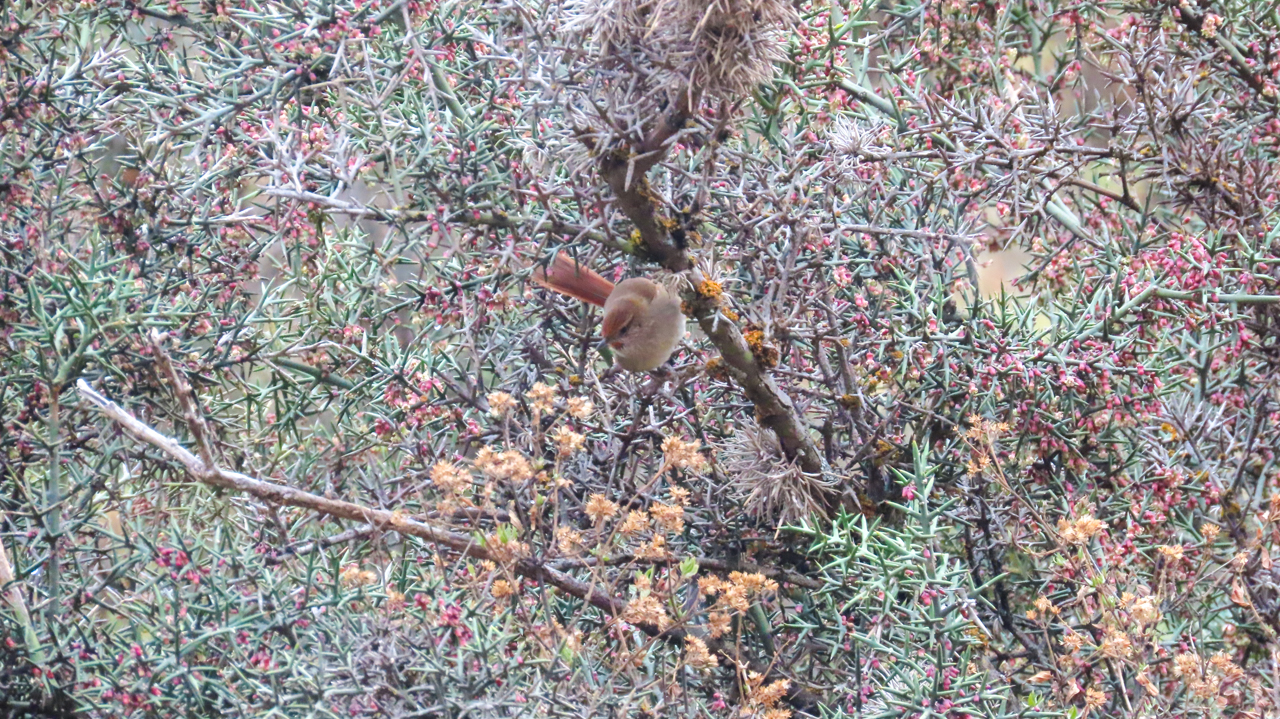
Rusty-fronted Canastero © E Carman
We visited four archaeological sites (Sacsayhuamán, Tambomachay, Pisaq and Ollantaytambo) and learned a great deal about the history and culture of the Sacred Valley, and of Peru in general. At day’s end we boarded the train to Machu Picchu, ready for the next day’s main event.
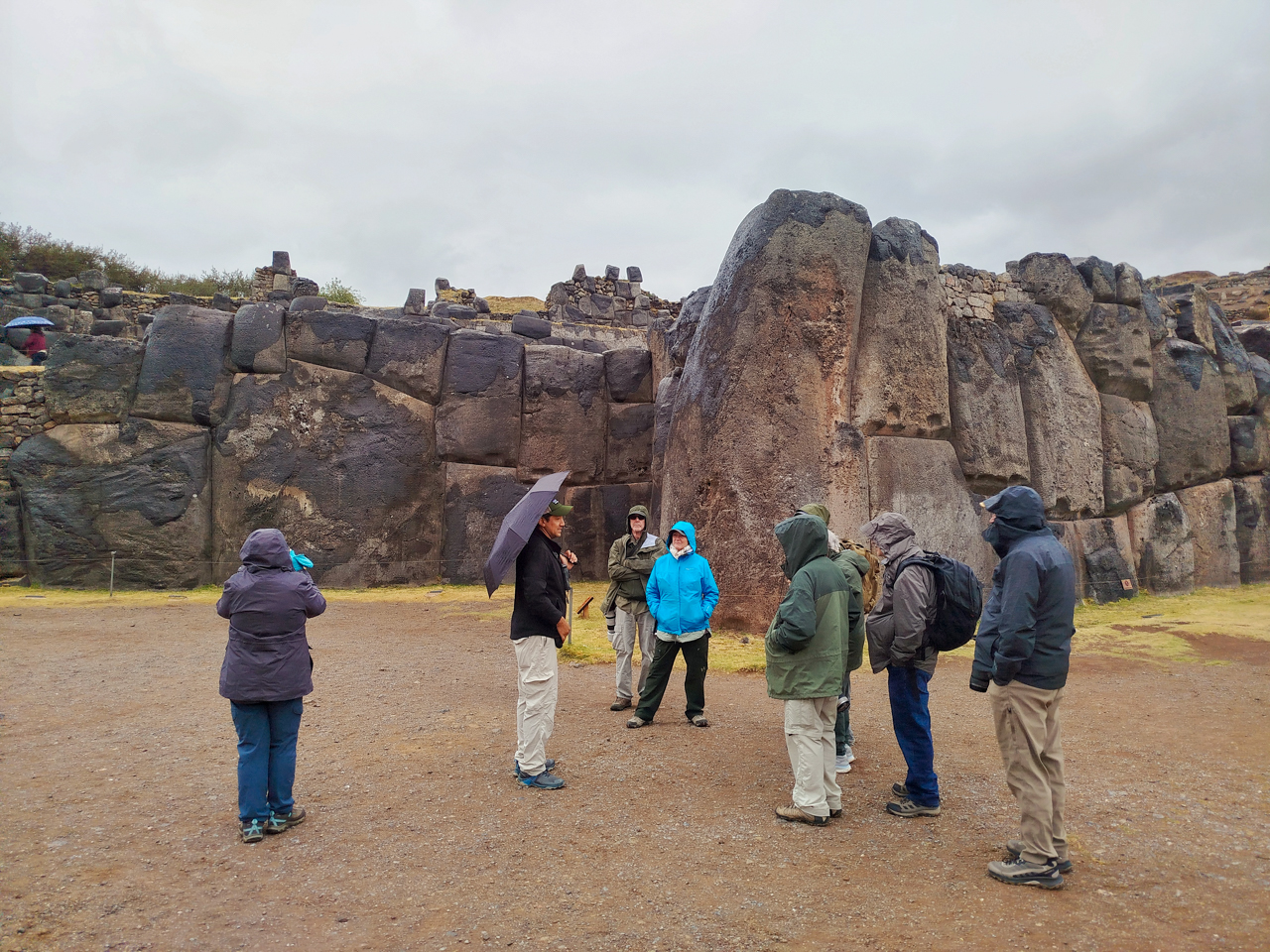
Sacsaywahman © E Carman
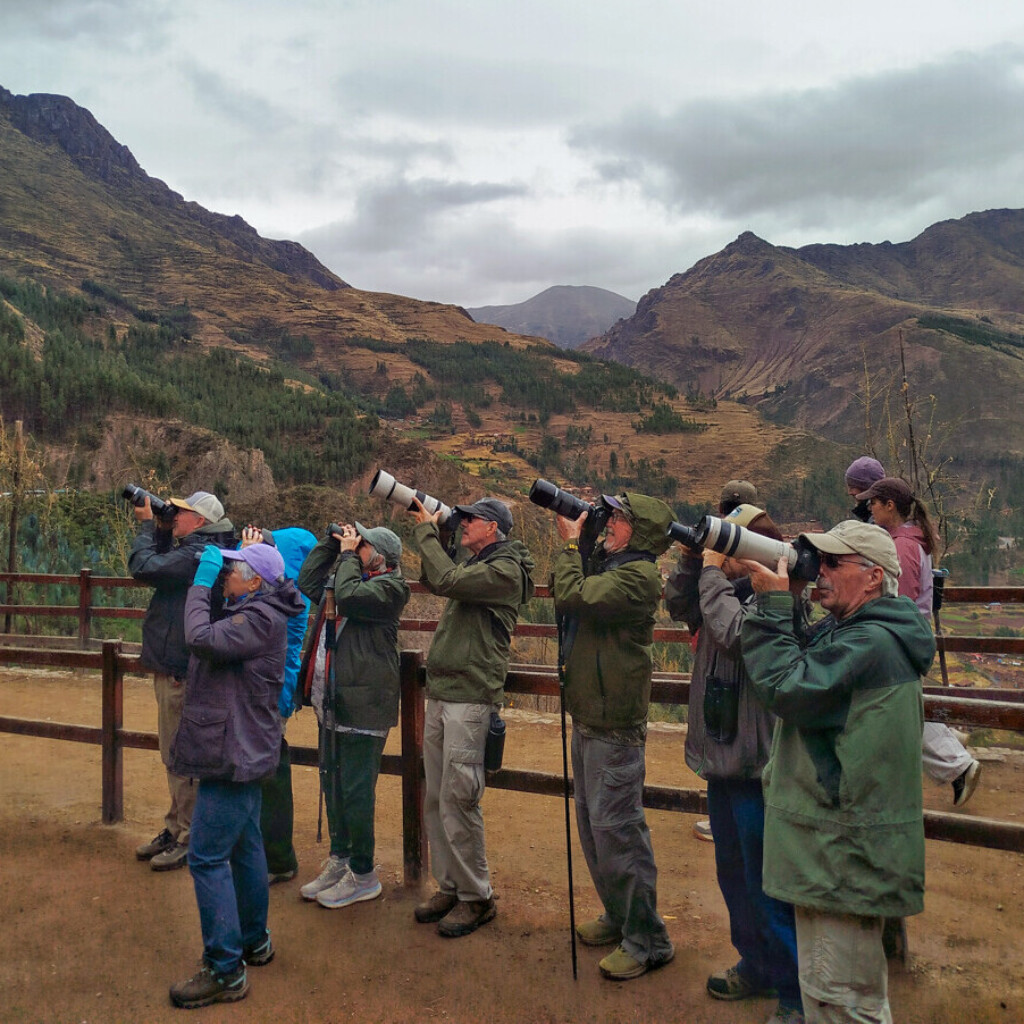
Birding Pisaq © E Carman
Days 8–10: Machu Picchu, Abra Málaga, Sacred Valley and Cusco
We started before breakfast birding the town and the grounds of Hotel Inkaterra, where we found Blue-gray, Palm, Saffron-crowned and Silvery Tanagers, Thick-billed Euphonia, Azara’s Spinetail, Andean Motmot, Speckled Hummingbird, Chestnut-breasted Coronet, Gould’s Inca and the endemic Green-and-white Hummingbird.
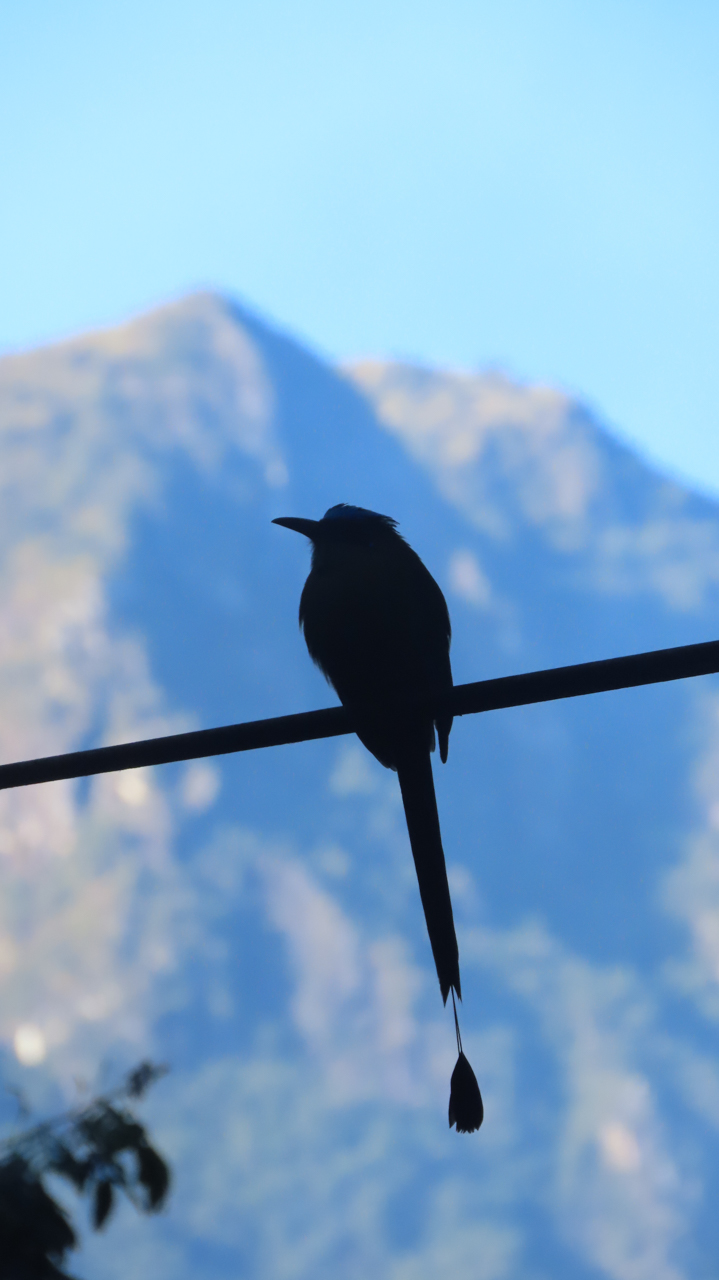
Andean Motmot © E Carman
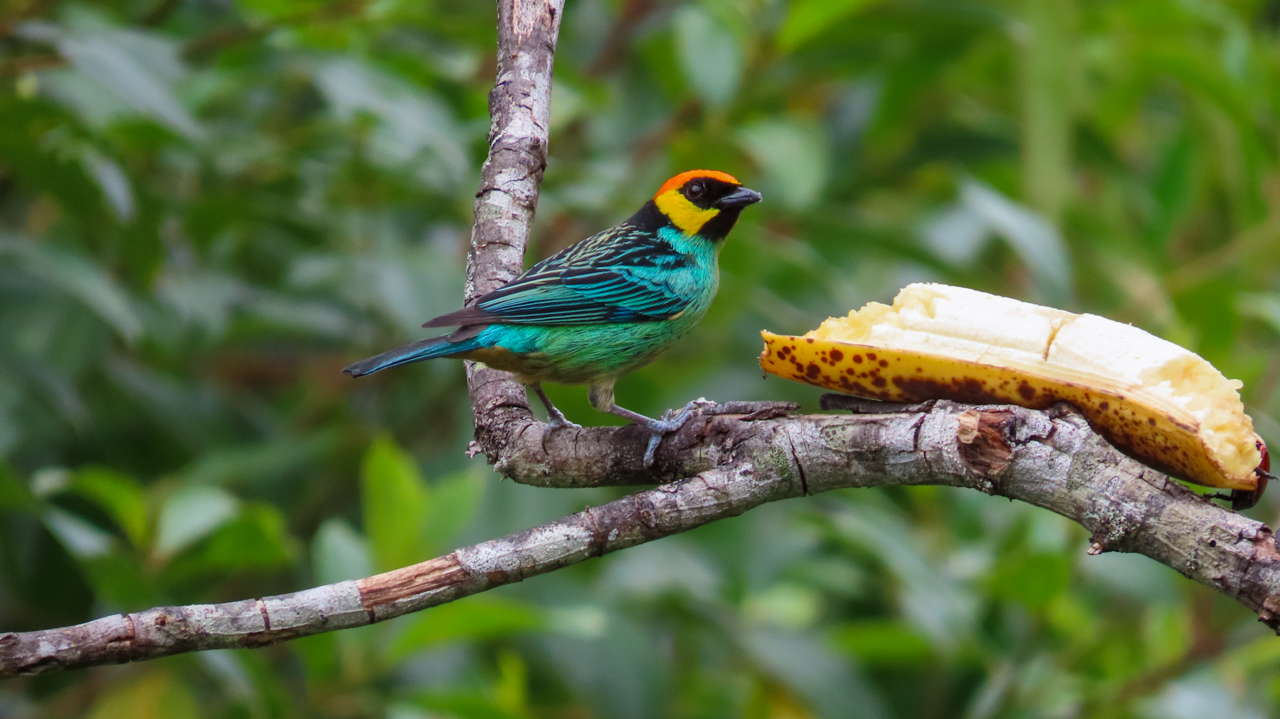
Saffron-crowned Tanager © E Carman
After breakfast we began our visit to Machu Picchu with a twenty-minute bus ride up the switchbacks. The site grew more impressive with every staircase we climbed and every corner we turned. Our local guide, Erick, shared the history and details of this incredible place, and the views were breathtaking. Birds were few (Hepatic Tanager, American Kestrel and Blue-and-white Swallow), but that was fine. Today’s goal was simply to explore, learn and enjoy. After a phenomenal morning we took the bus down to town, had lunch, and caught the train to Ollantaytambo, where we spent the next two nights.
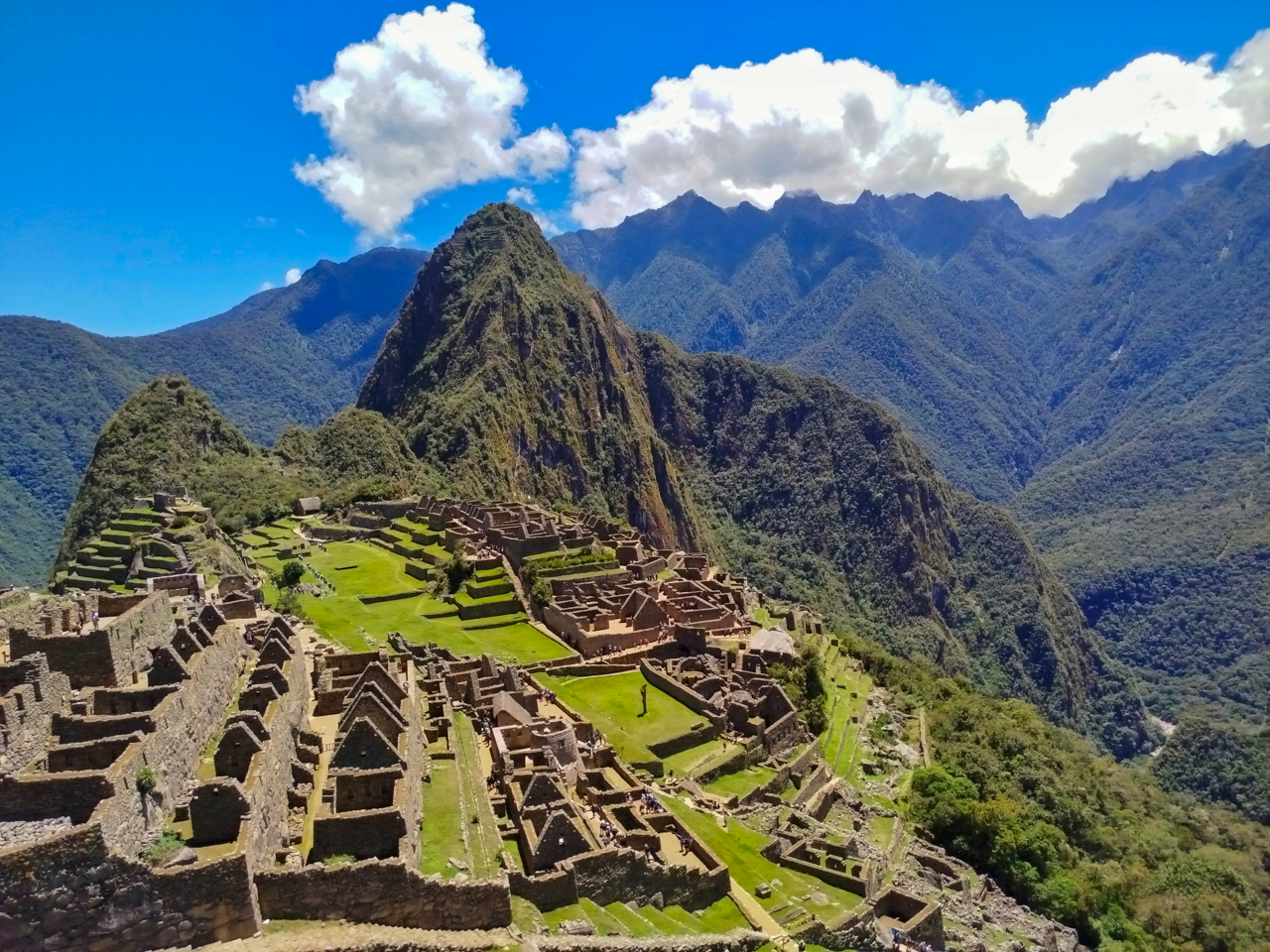
Machu Picchu © E Carman
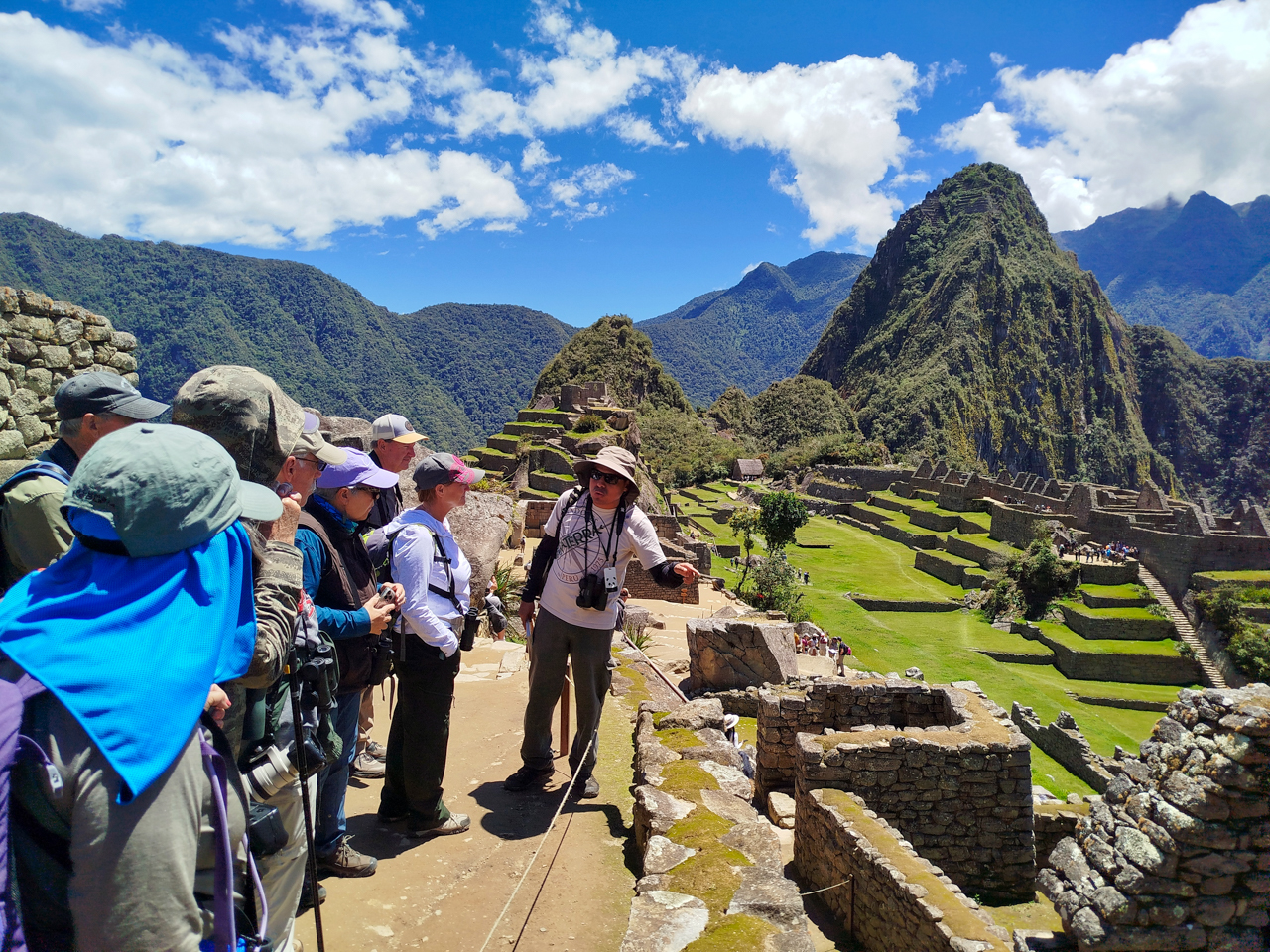
Machu Picchu © E Carman
The following day we drove up to Abra Málaga, the highest point of the tour at 4,300 m (14,100 ft). The weather was splendid, with not a cloud in the sky, and the views of Nevado Veronica and the surrounding snow-covered, glacier-carved peaks were spectacular. Endemics included White-tufted Sunbeam and Cusco Brushfinch, along with Glacier Finch, Plumbeous and Ash-breasted Sierra-Finches, Mountain Caracara and Cream-winged Cinclodes hopping across the frosty vegetation. On the far side of the pass we added Andean and Puna Ibis, Andean Lapwing, Rust-and-yellow Tanager, Spectacled Redstart and Red-crested Cotinga.
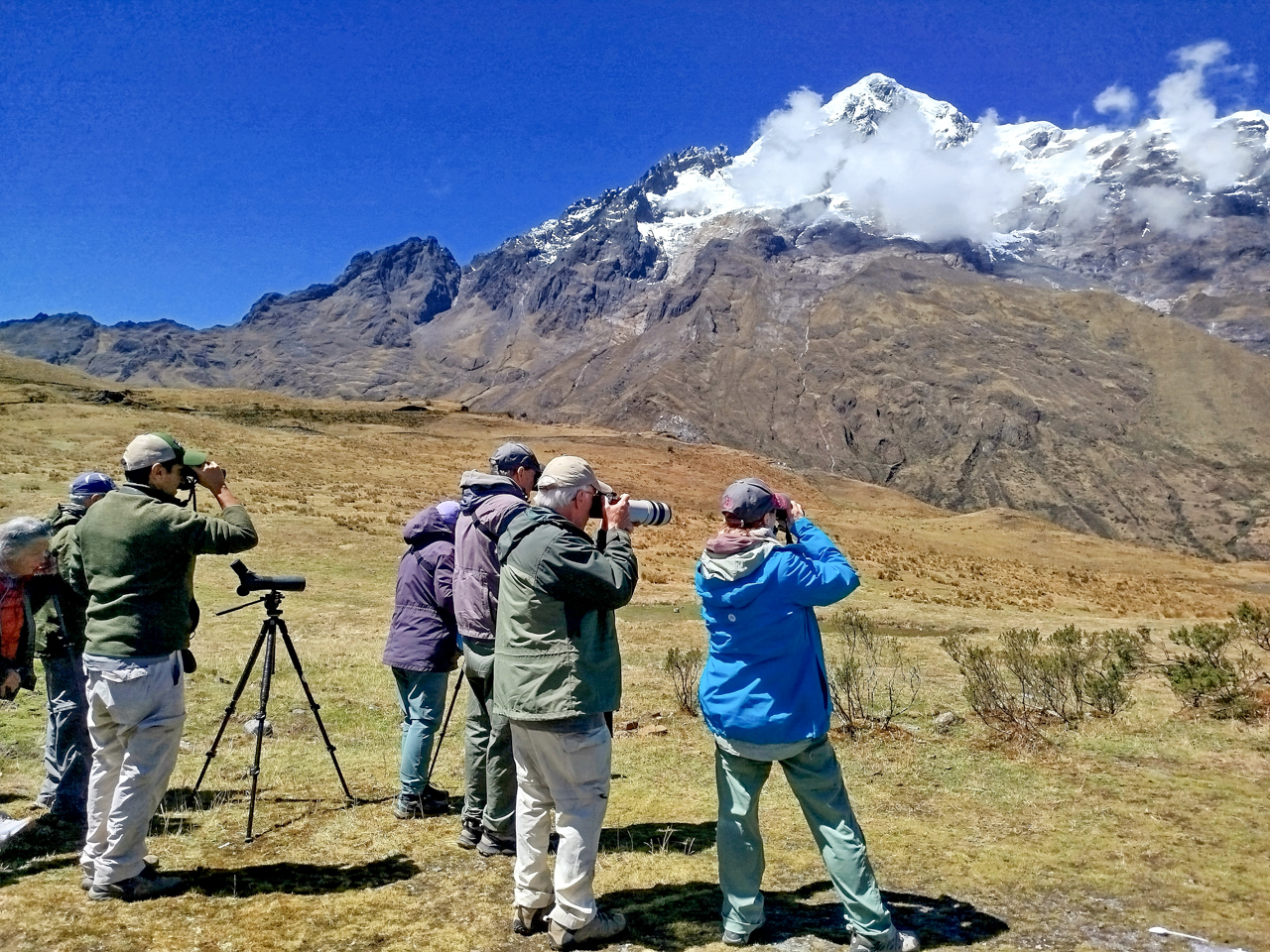
Birding Abra Malaga © E Carman
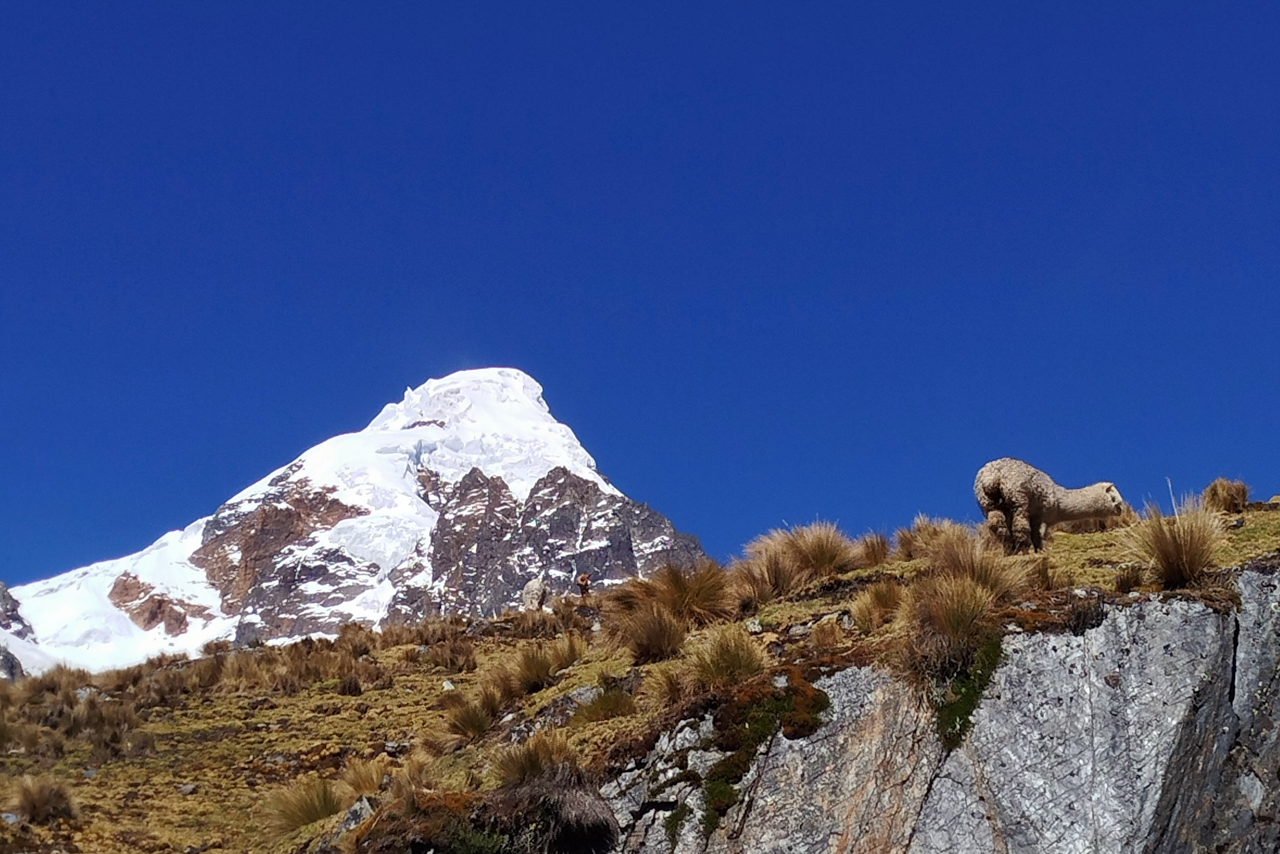
Veronica Peak and Alpaca © E Carman
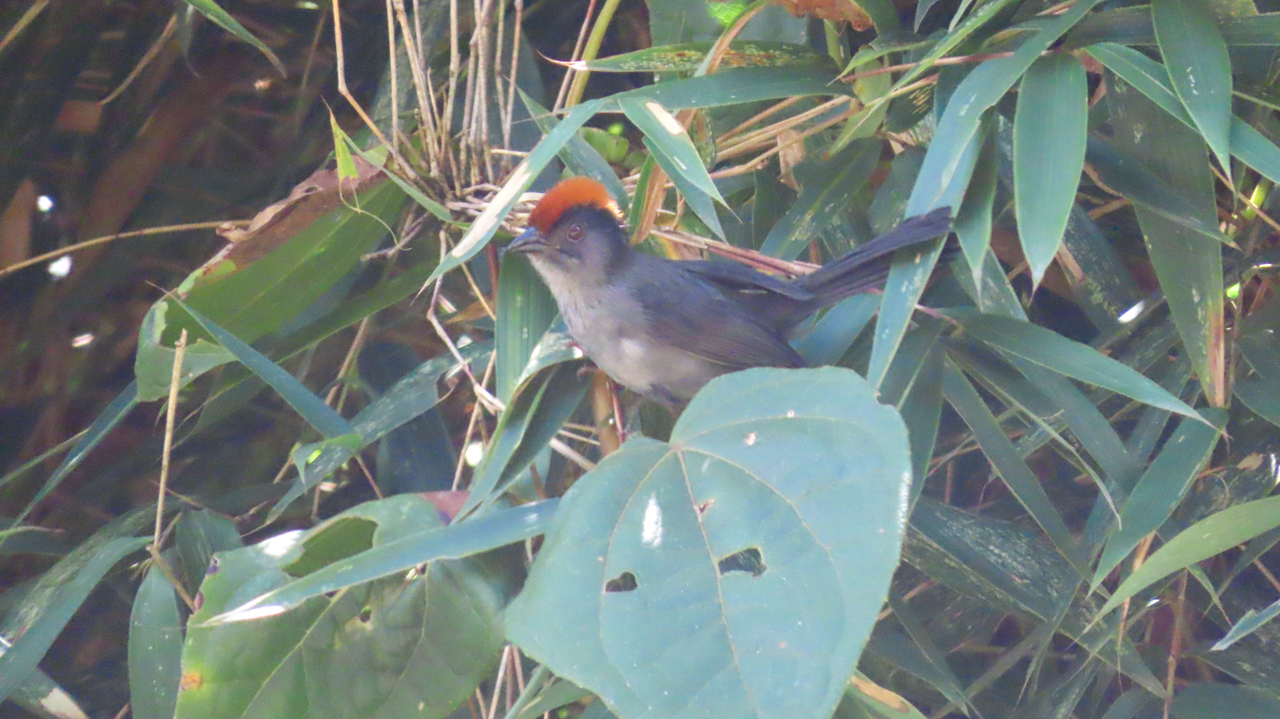
Cuzco Brushfinch © E Carman
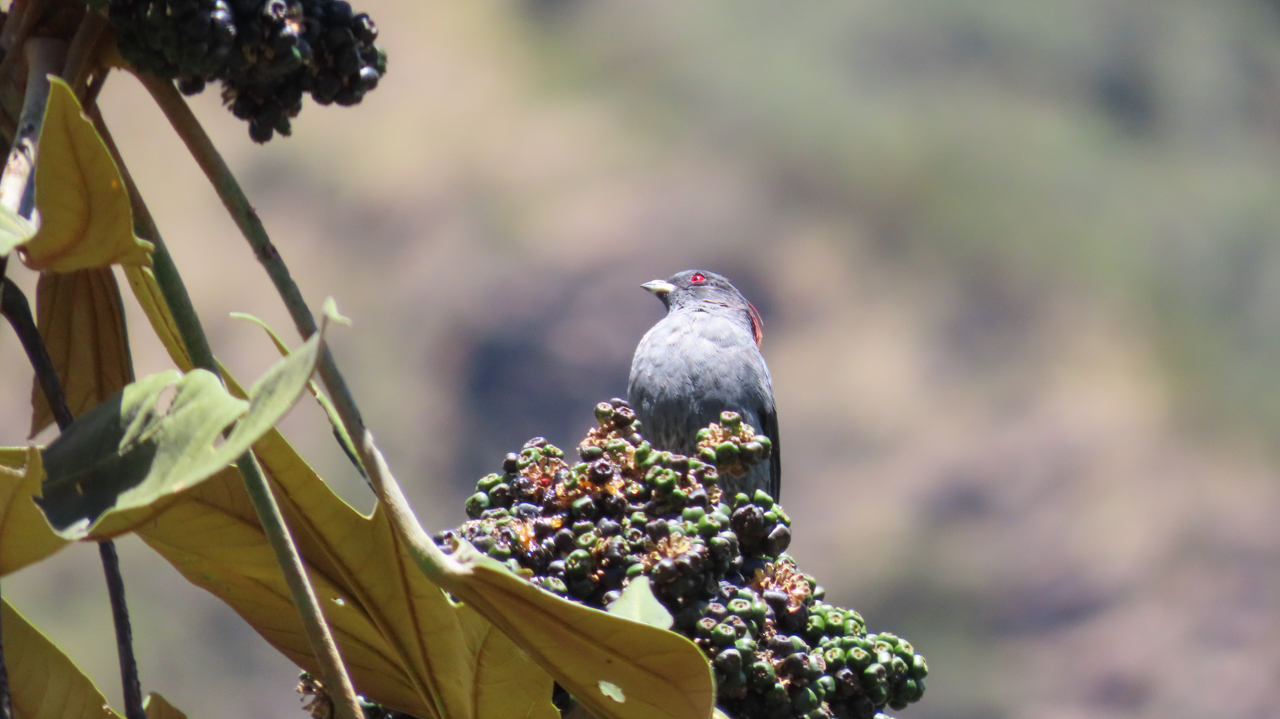
Red-crested Cotinga © E Carman
On the way back to Cusco we made several key stops. First, we searched for a spectacular endemic that feeds from native tobacco flowers, the Bearded Mountaineer, and we found it. Next was Ensifera Camp, a private feeder garden where we had wonderful views of the tiny Tyrian Metaltail, the extravagant Black-tailed Trainbearer, the gigantic Giant Hummingbird, the Shining Sunbeam (with its rainbow-colored rump) and the Sword-billed Hummingbird. Some of us also got lucky with the resident Undulated Antpitta, a rare denizen of the dense elfin forest.
We also visited the archaeological site of Moray, once used for agricultural experimentation, and the Maras salt mines, which have produced pink salt since before Inca times. Our last stop before Cusco was Lake Ayacan, which was full of waterbirds: Puna, Cinnamon and Yellow-billed Teal, Yellow-billed and White-cheeked Pintail, Andean Duck, Lesser and Greater Yellowlegs, and White-tufted and Silvery Grebes.
Day 11: Cusco, Huacarpay, Paucartambo and Wayqecha
Today brought another change of scenery as we headed for the world-famous Manu Road, which spans a 4,000 m elevational gradient. We made a few stops first. At the Huacarpay wetlands we saw some familiar waterfowl (Puna Teal, Yellow-billed Pintail, Andean Lapwing and Andean Gull) and some great new species: Plumbeous Rail, Andean Negrito, Band-tailed Seedeater, Yellow-billed Tit-Tyrant, Yellow-winged Blackbird and Peruvian Sierra-Finch. We picked up Chestnut-breasted Mountain-Finch on the way to Paucartambo, a lovely town considered the heart of Peruvian folklore, where we had lunch and saw White-bellied Hummingbird and both Green-tailed and Black-tailed Trainbearers.
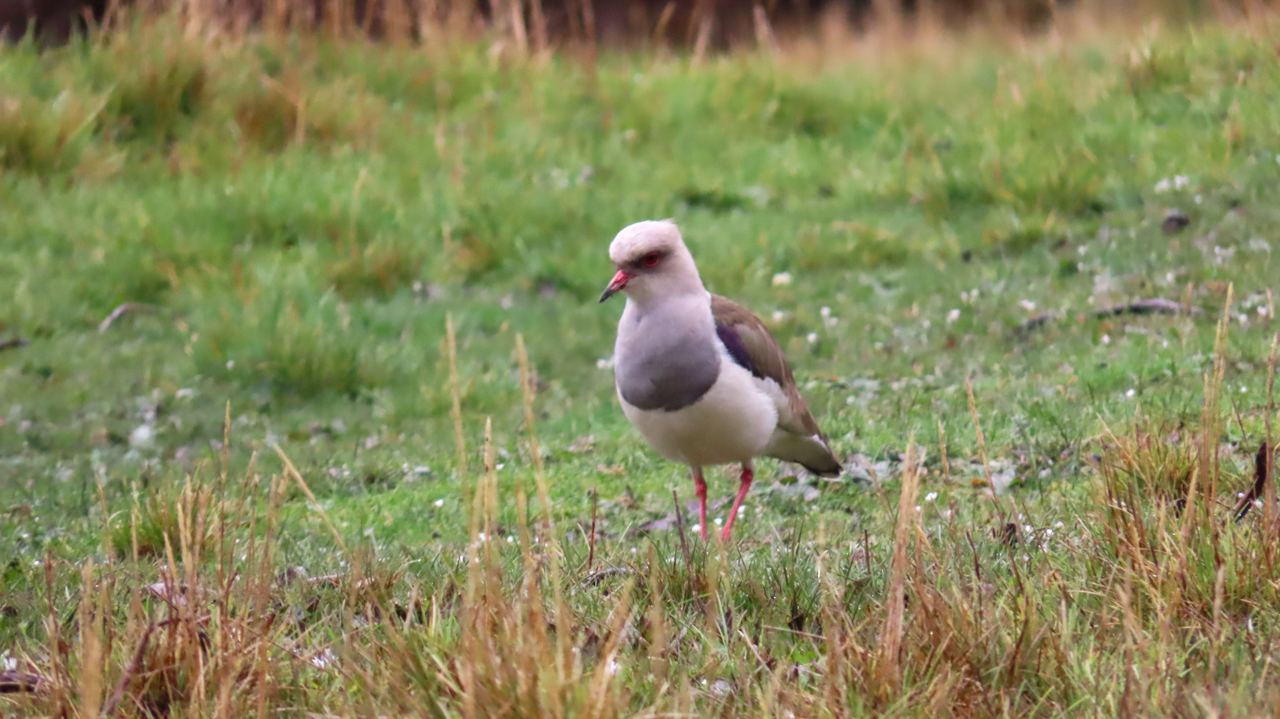
Andean Lapwing © E Carman
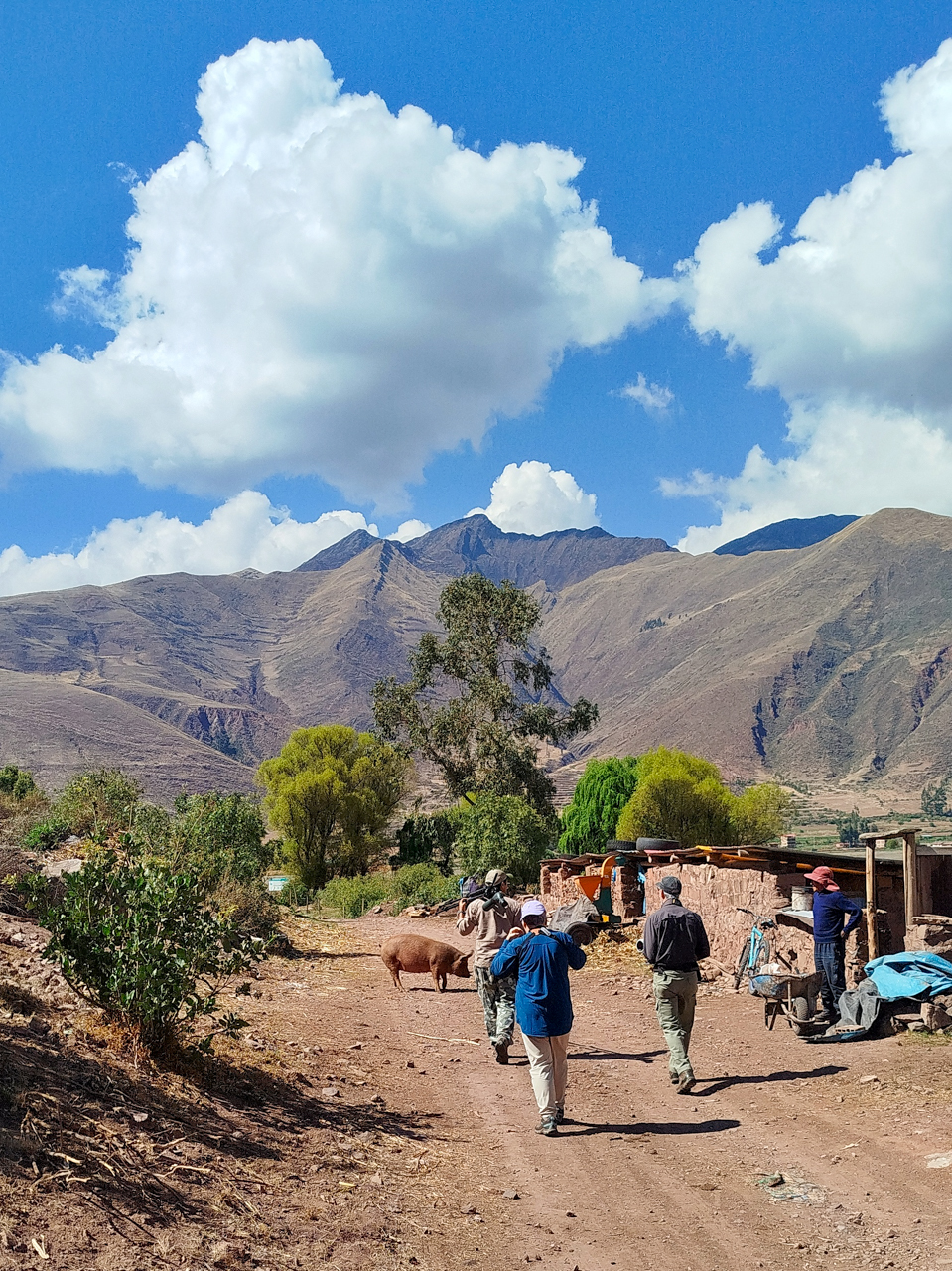
Birding Huacarpay © E Carman
We then crossed the mountain pass to Wayqecha Biological Station, our home for the night. With time to spare, we watched the feeders and saw Lesser Violetear, Amethyst-throated Sunangel, White-bellied Woodstar, Hooded Mountain-Tanager, Masked Flowerpiercer, Black-faced Brushfinch and Andean Guan. At dusk we drove a short way down the road and found Swallow-tailed Nightjar, and a Burrowing Owl sat on a ledge behind us.
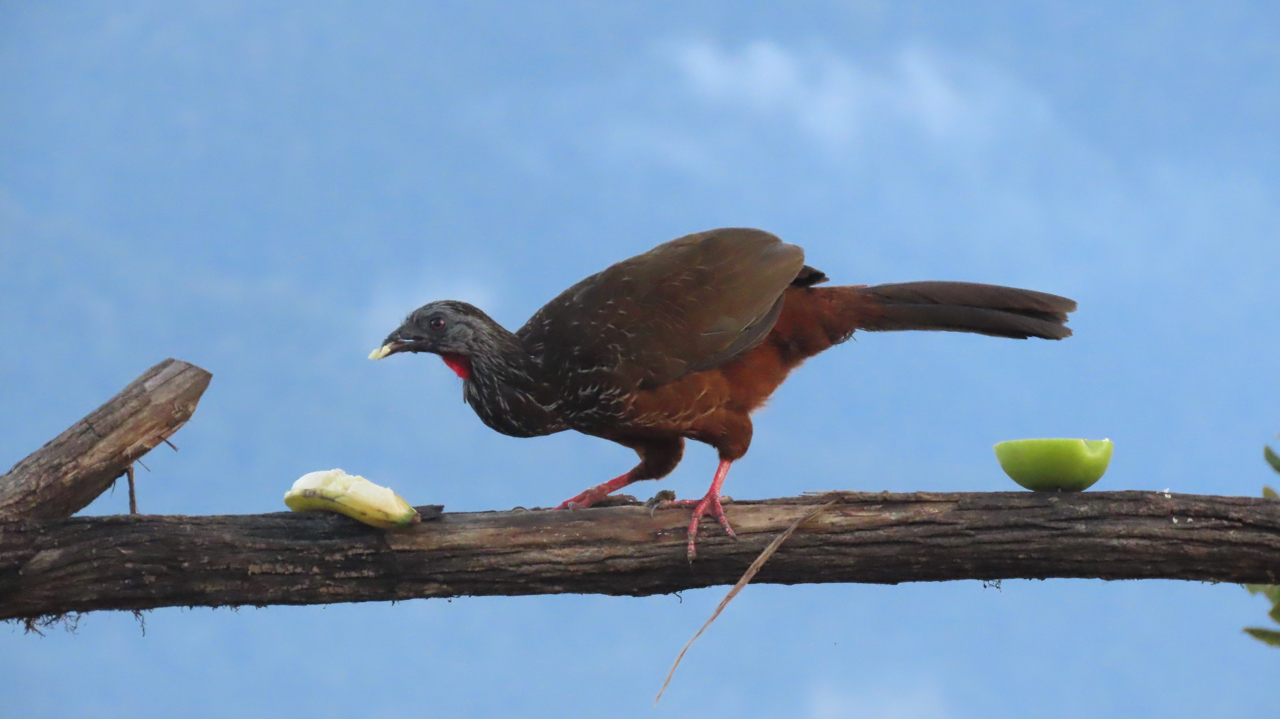
Andean Guan © E Carman
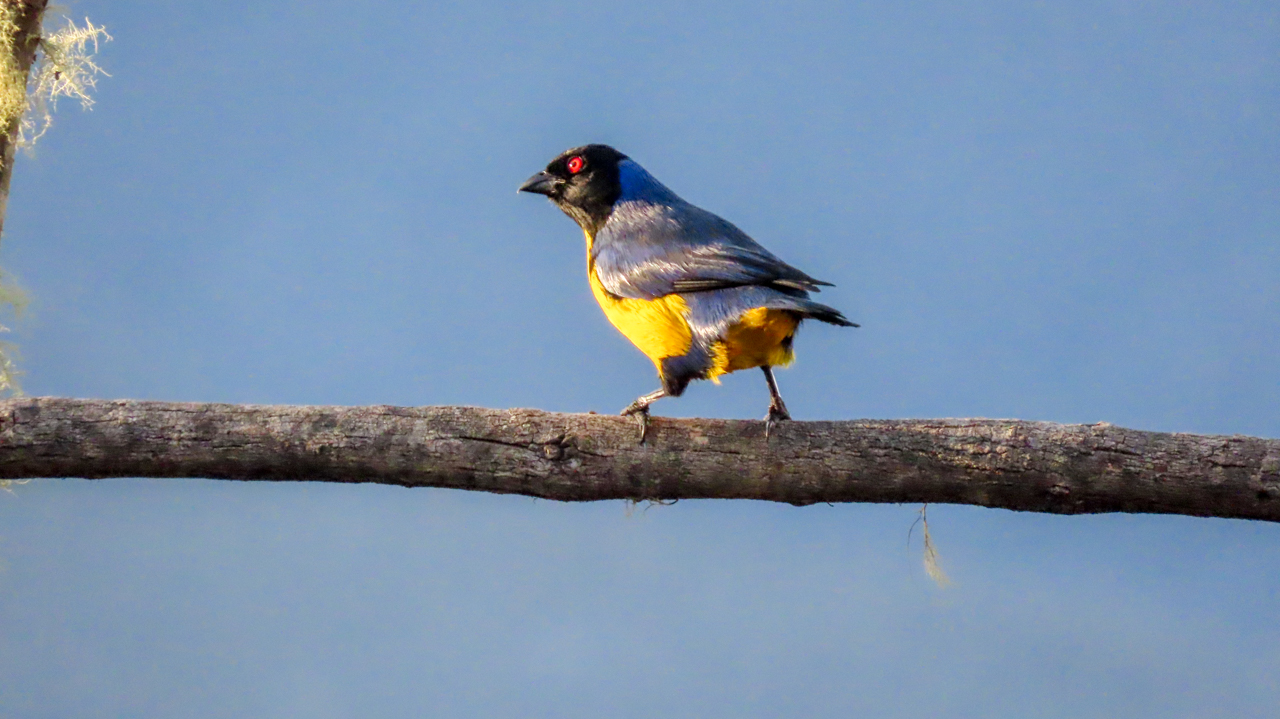
Hooded Mountain-Tanager © E Carman
Days 12–13: Wayqecha Biological Station and Cock-of-the-Rock Lodge
We spent the next couple of days birding the upper and middle Manu Road, between 3,000 and 1,300 m. A highlight of Wayqecha is its three antpitta species, trained to come for mealworms, which gives a rare chance to see these famously elusive birds. We saw the Urubamba, Leymebamba and Red-and-white Antpittas, with incredible photo opportunities.
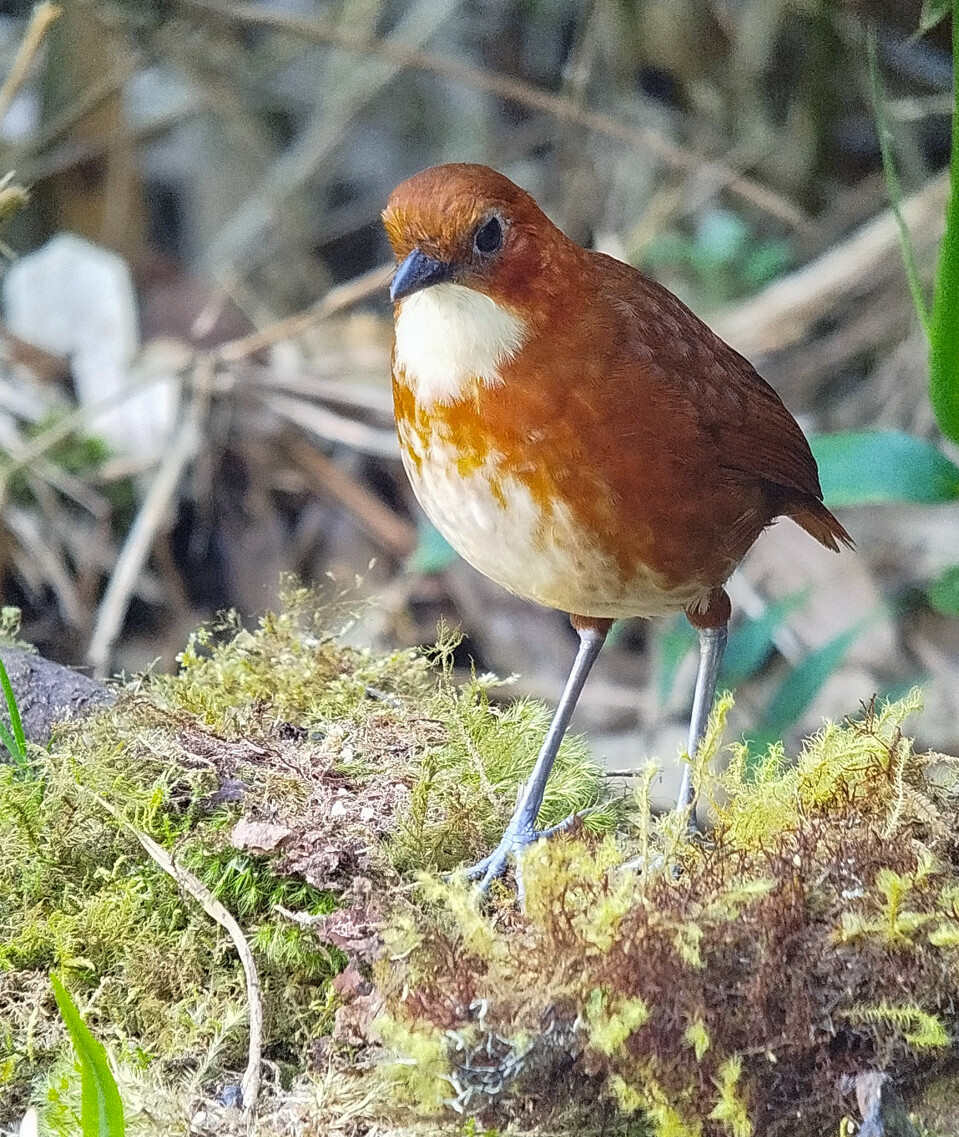
Red-and-white Antpitta © E Carman
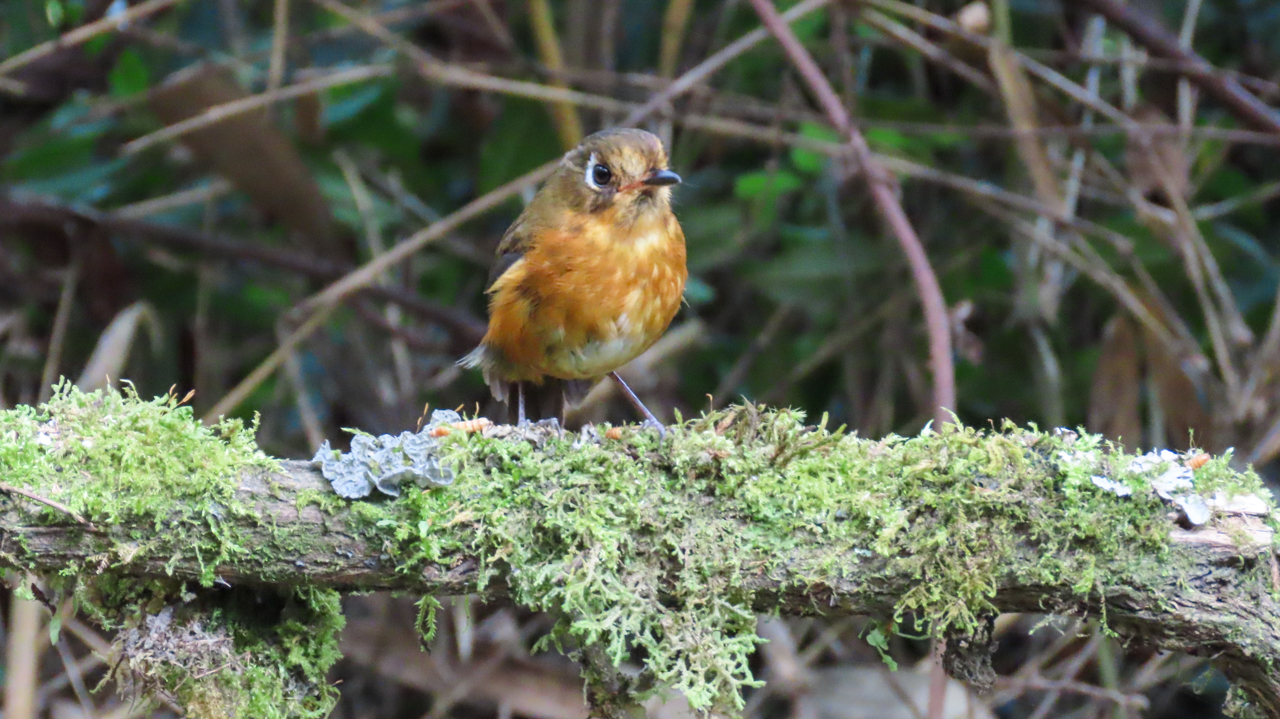
Leymebamba Antpitta © E Carman
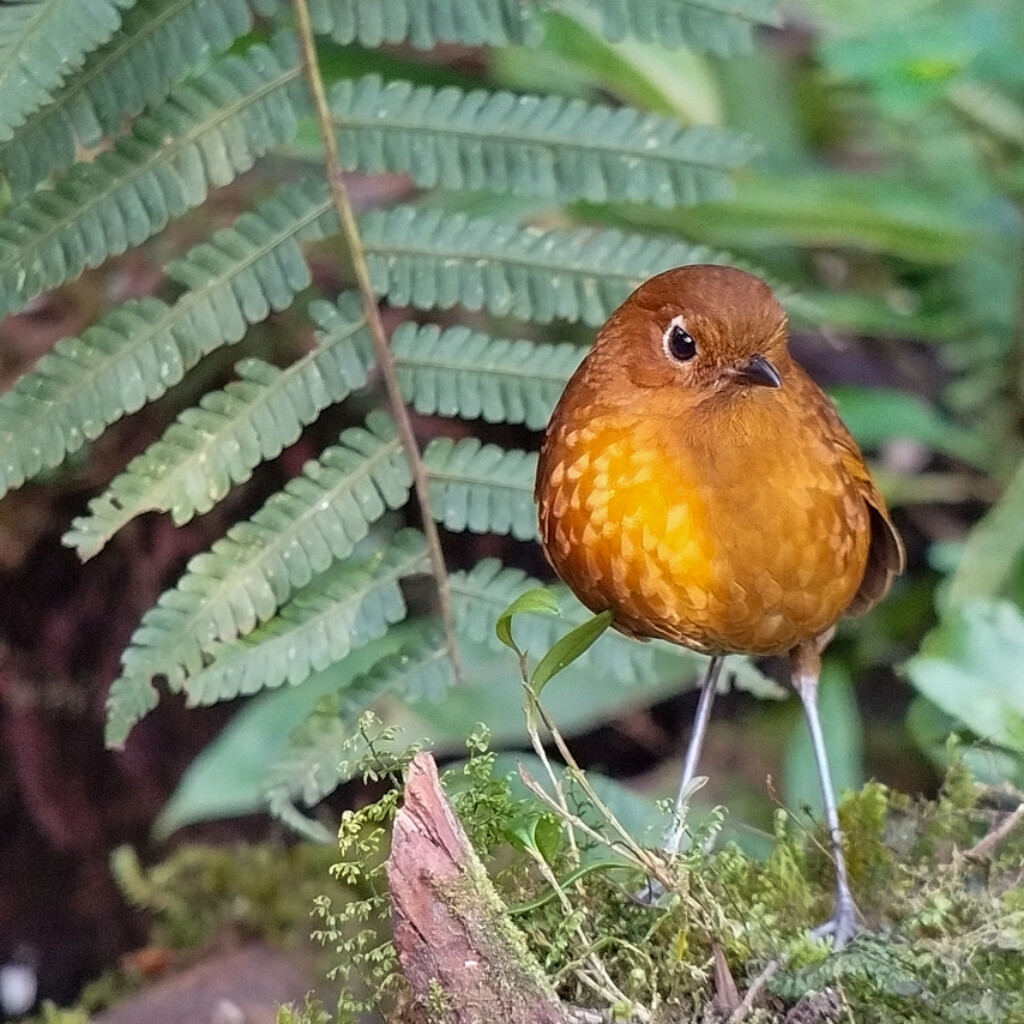
Urubamba Antpitta © E Carman
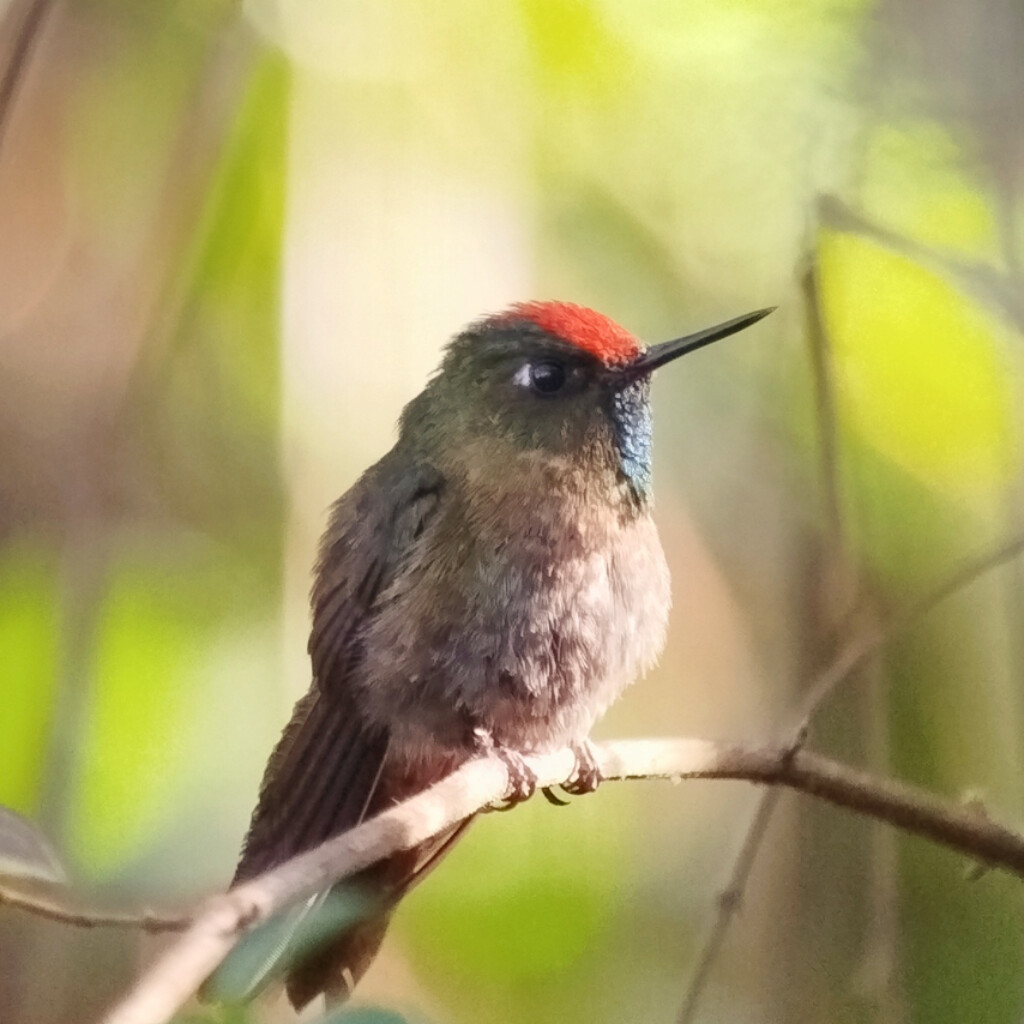
Rufous-capped Thornbill © E Carman
Birding the Manu Road is a simple routine: drive until you find a mixed-species flock, hop out, see as much as possible, then move on to the next. In these flocks we found Short-billed, Yellow-throated and Common Chlorospingus, Slate-throated Redstart, White-banded Tyrannulet, Pearled Treerunner and Montane Foliage-gleaner. We also began to meet the region’s dazzling tanagers: Blue-necked, Spotted, Silver-beaked, Golden-naped, Yellow-throated, Golden, Saffron-crowned, Orange-eared and Paradise. Other outstanding sightings included Torrent Duck, displaying Andean Cocks-of-the-Rock, Lyre-tailed Nightjar, an Amazonian Umbrellabird with a chick in its nest, and two large raptors, Solitary Eagle and Black-and-chestnut Eagle.
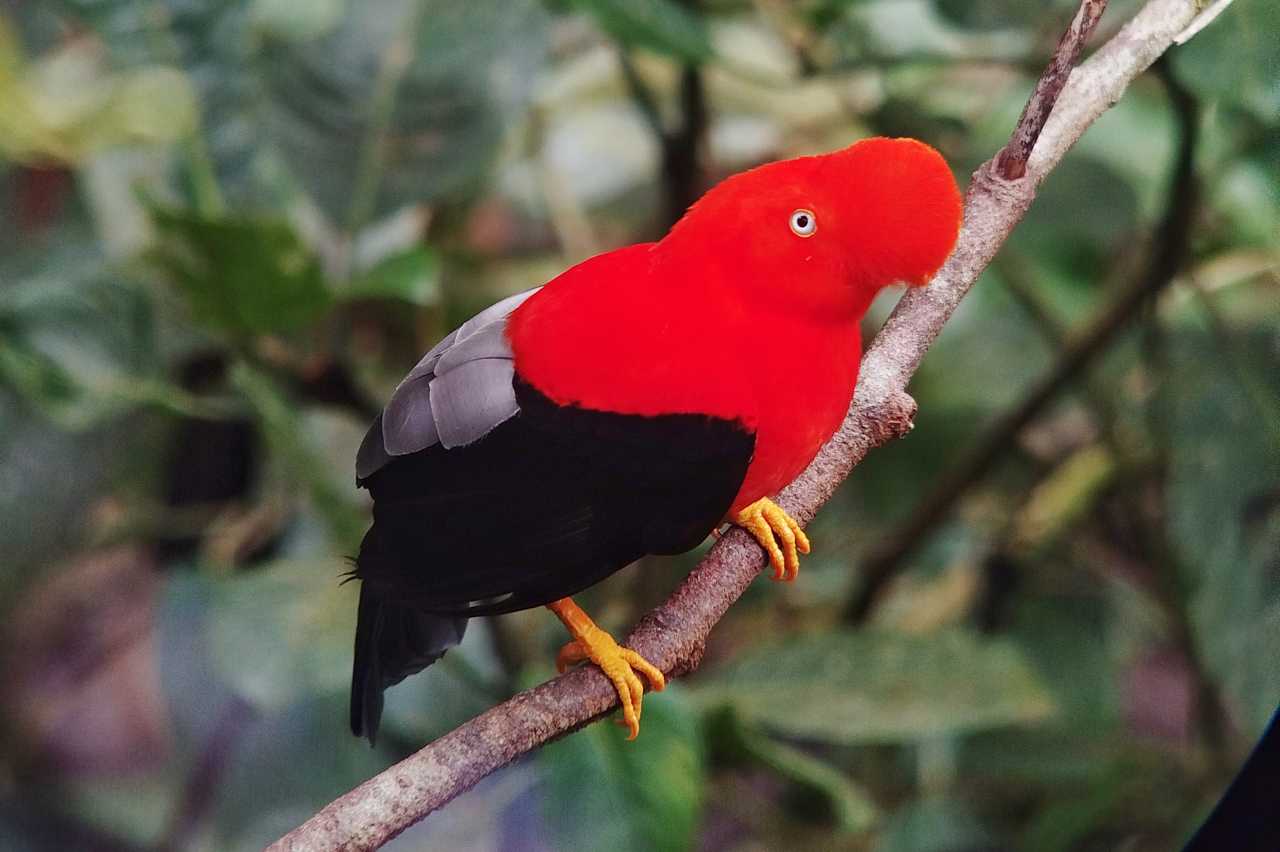
Andean Cock-of-the-Rock © E Carman
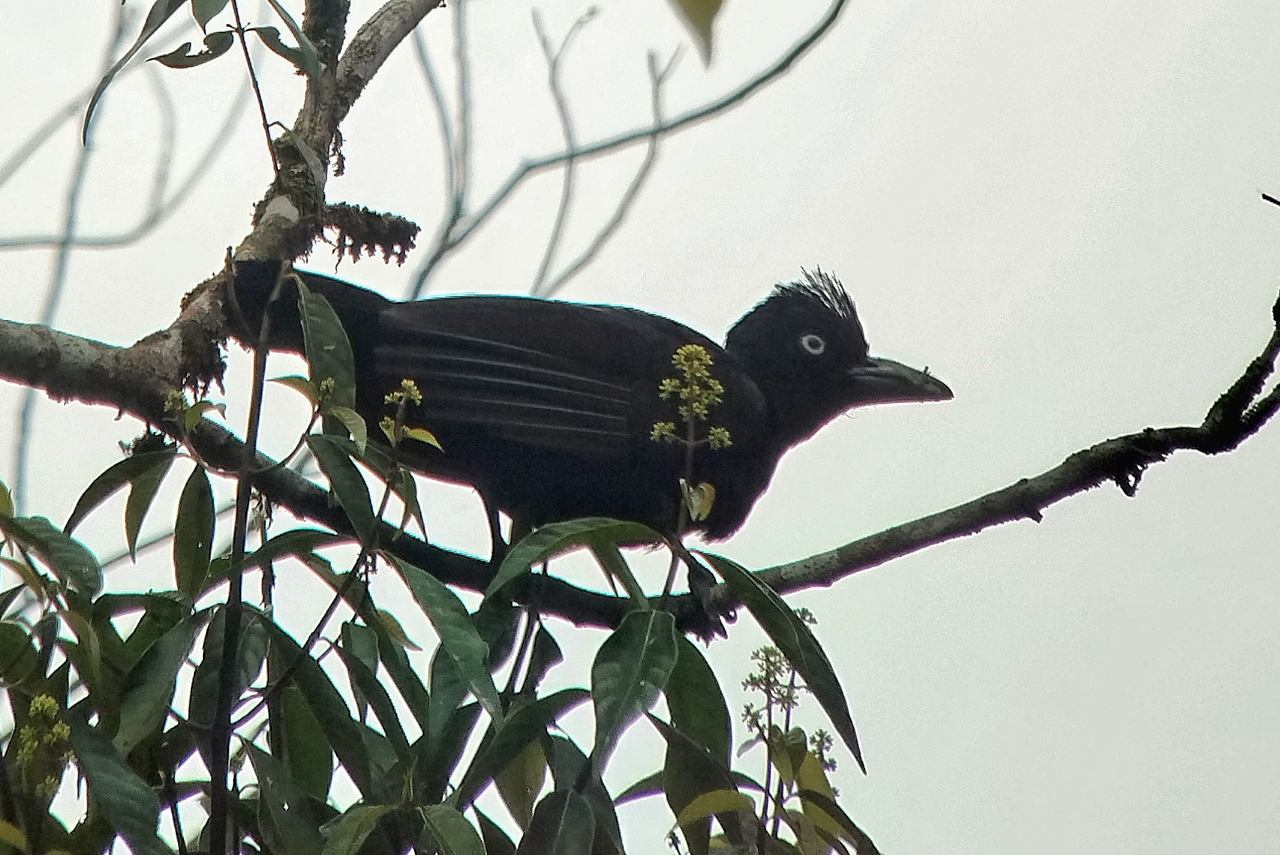
Amazonian Umbrellabird © E Carman
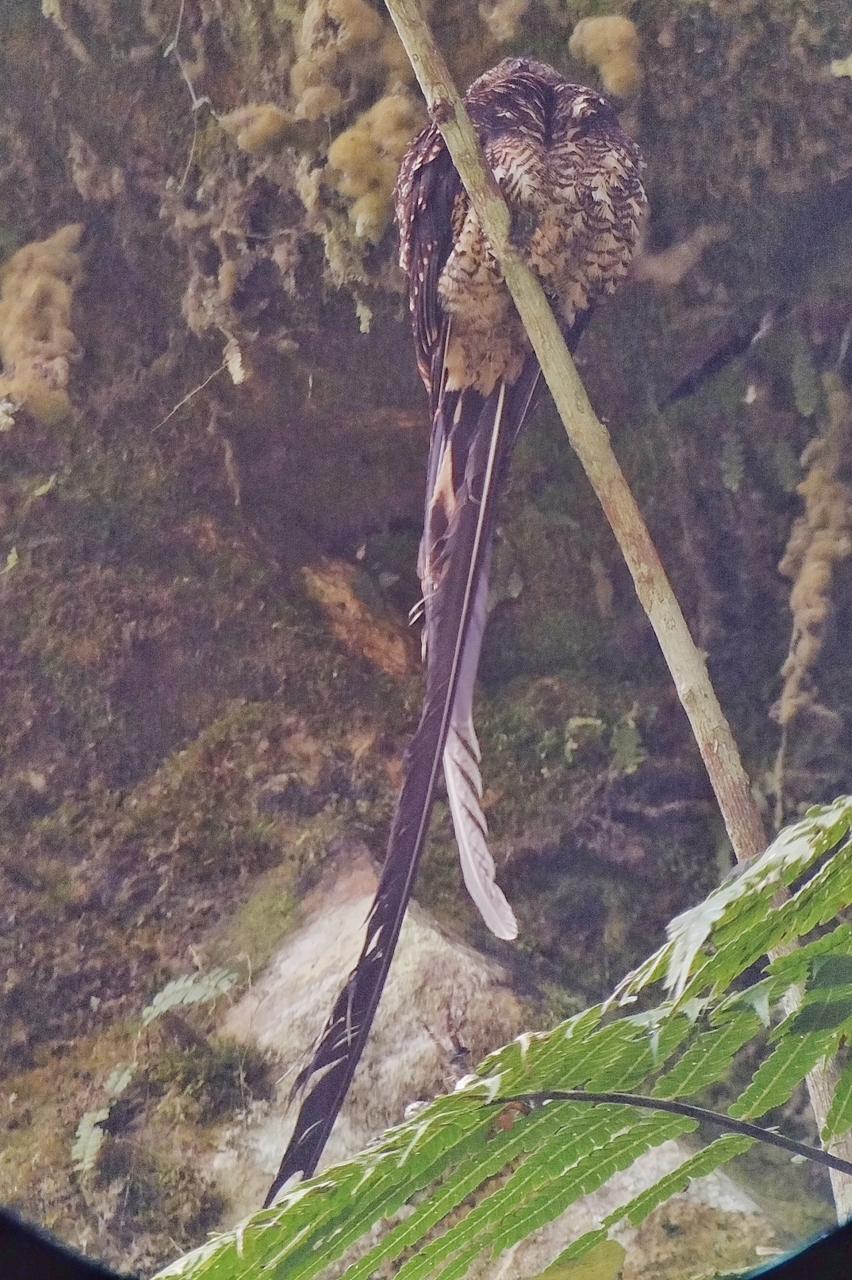
Lyre-tailed Nightjar © E Carman
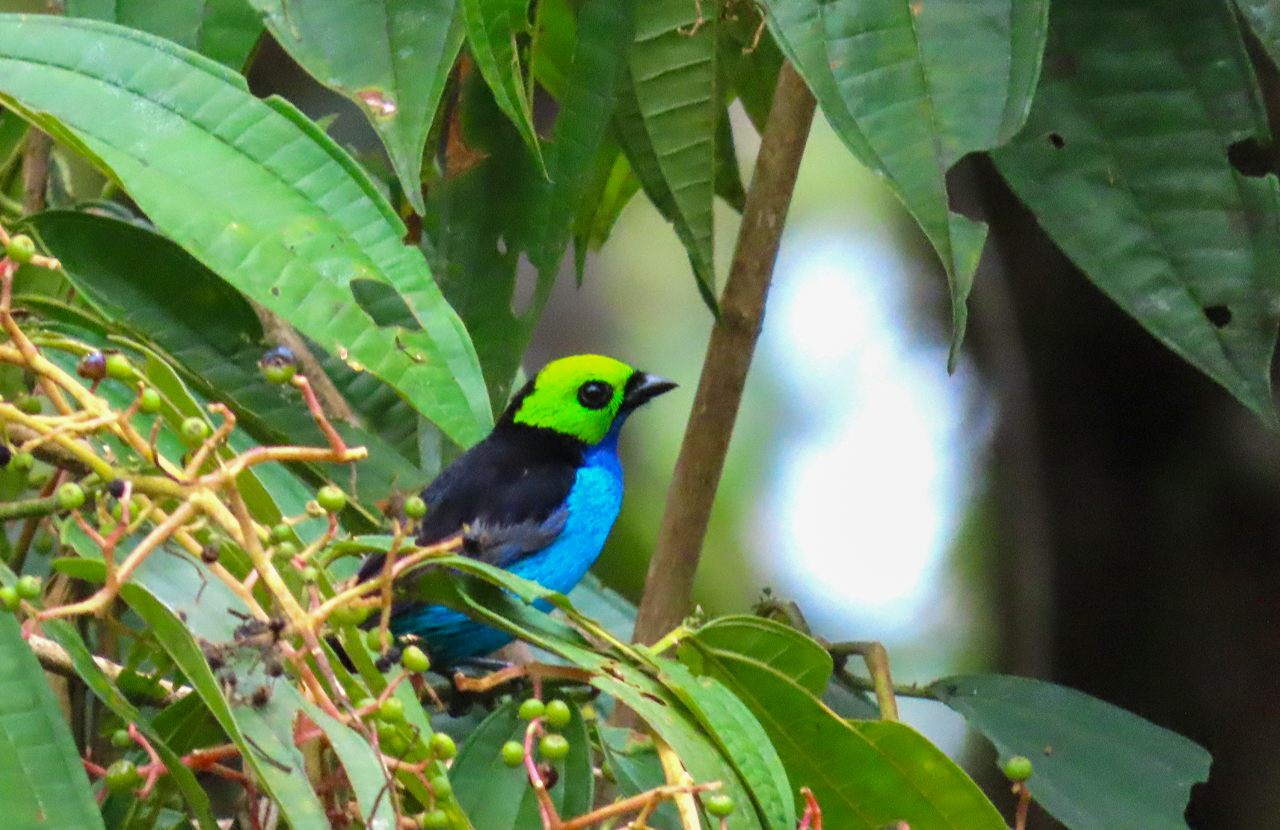
Paradise Tanager © E Carman
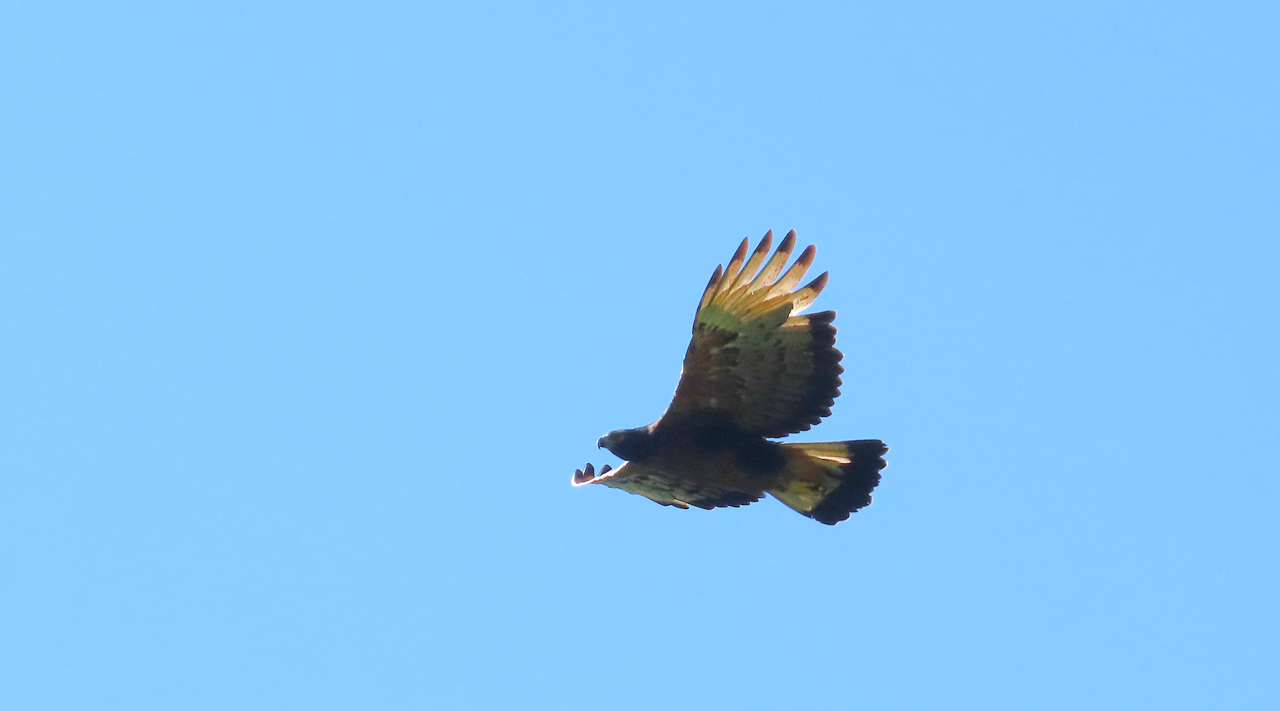
Black-and-chestnut Eagle © E Carman
Day 14: Cock-of-the-Rock Lodge, Manu Endemic Station and Manu Biolodge
From the middle elevations we worked our way down the lower Manu Road, stopping at one of the most spectacular hummingbird stations anywhere, Manu Endemic Station. We tallied 17 hummingbird species without leaving our seats. Highlights included the large Gray-breasted Sabrewing, Great-billed, Green and White-browed Hermits, Blue-tailed Emerald, Sapphire-spangled Emerald, Golden-tailed Sapphire, Long-billed Starthroat, the tiny but striking Rufous-crested Coquette, and the endemic and rare Peruvian Piedtail. It was a mind-blowing experience and a true testament to the diversity of this national park.
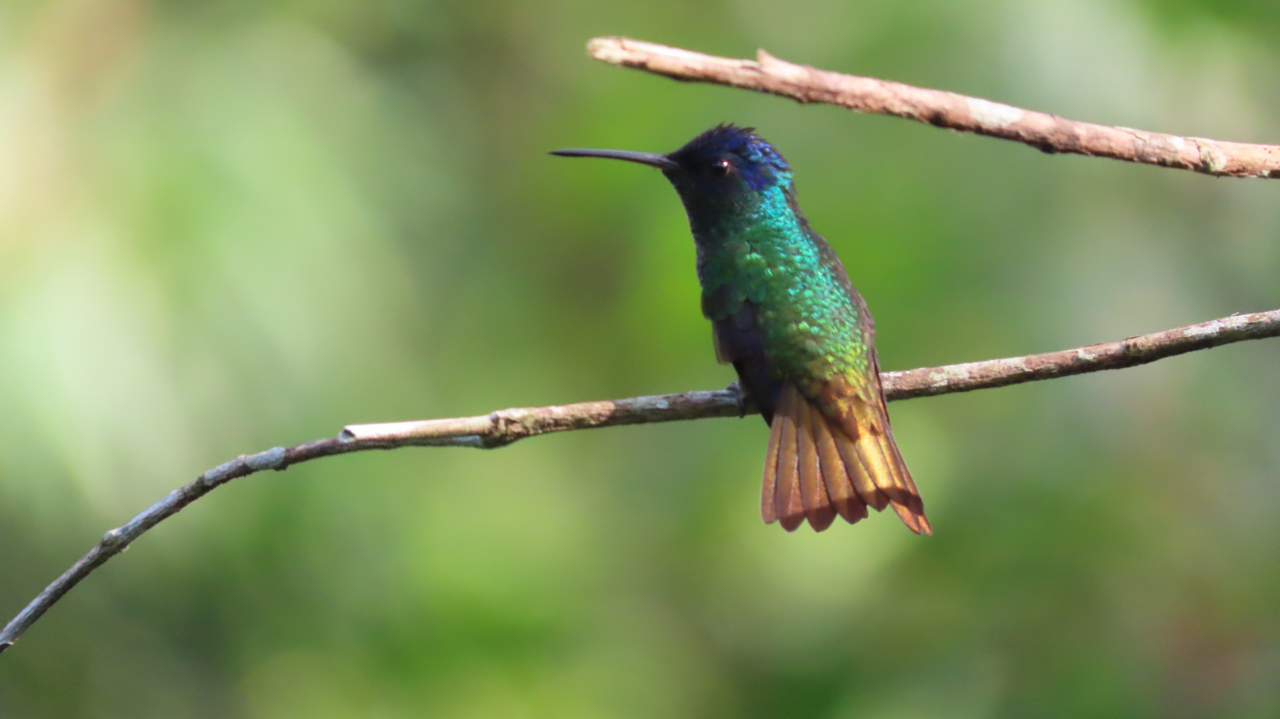
Golden-tailed Sapphire © E Carman
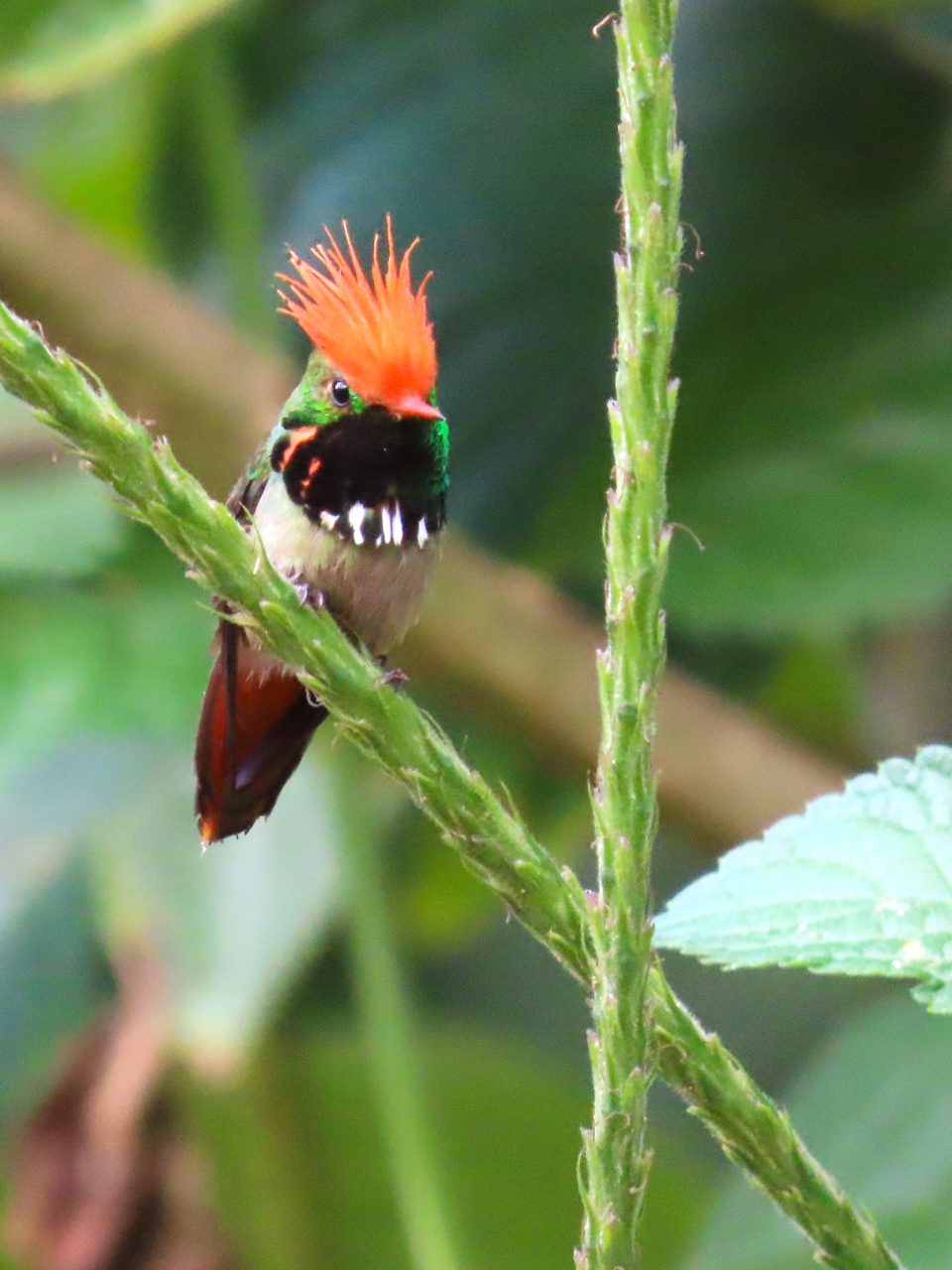
Rufous-crested Coquette © E Carman
We reached Manu Biolodge in the late afternoon and were greeted by even more new birds. From our rooms, which overlook a lagoon, we saw Black-capped Donacobius, Capped Heron, Violaceous Jay, Red-capped Cardinal, Speckled Chachalaca and Spix’s Guan.
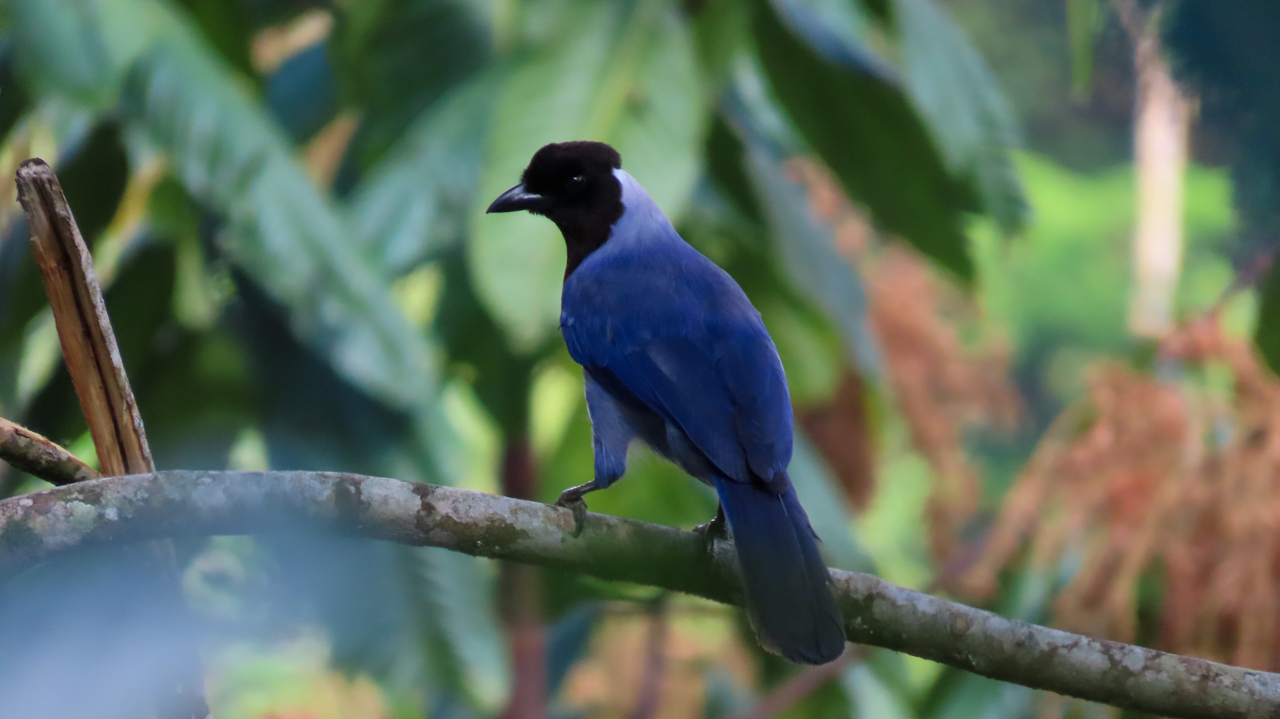
Violaceous Jay © E Carman
Days 15–16: Manu Biolodge and Pico de Hoz
At this lower elevation we made the most of the early hours, when activity was best. A highlight was our visit to Pico de Hoz Mirador, a small family business with an impressive hummingbird garden and, even better, mealworm feeders that attract antbirds. We had spectacular views of three: White-browed, Goeldi’s and White-lined, two of which are specialists of the native bamboo forests in the lower Andean foothills. We also found Rufous-sided Crake (also being fed!), Cream-colored Woodpecker, Chestnut-tailed Antbird, Great Black Hawk, Spot-breasted Woodpecker and a Common Potoo on its day roost. Mammals joined the show too, with fantastic views of the range-restricted Urubamba Tití Monkey and Long-nosed Bats.
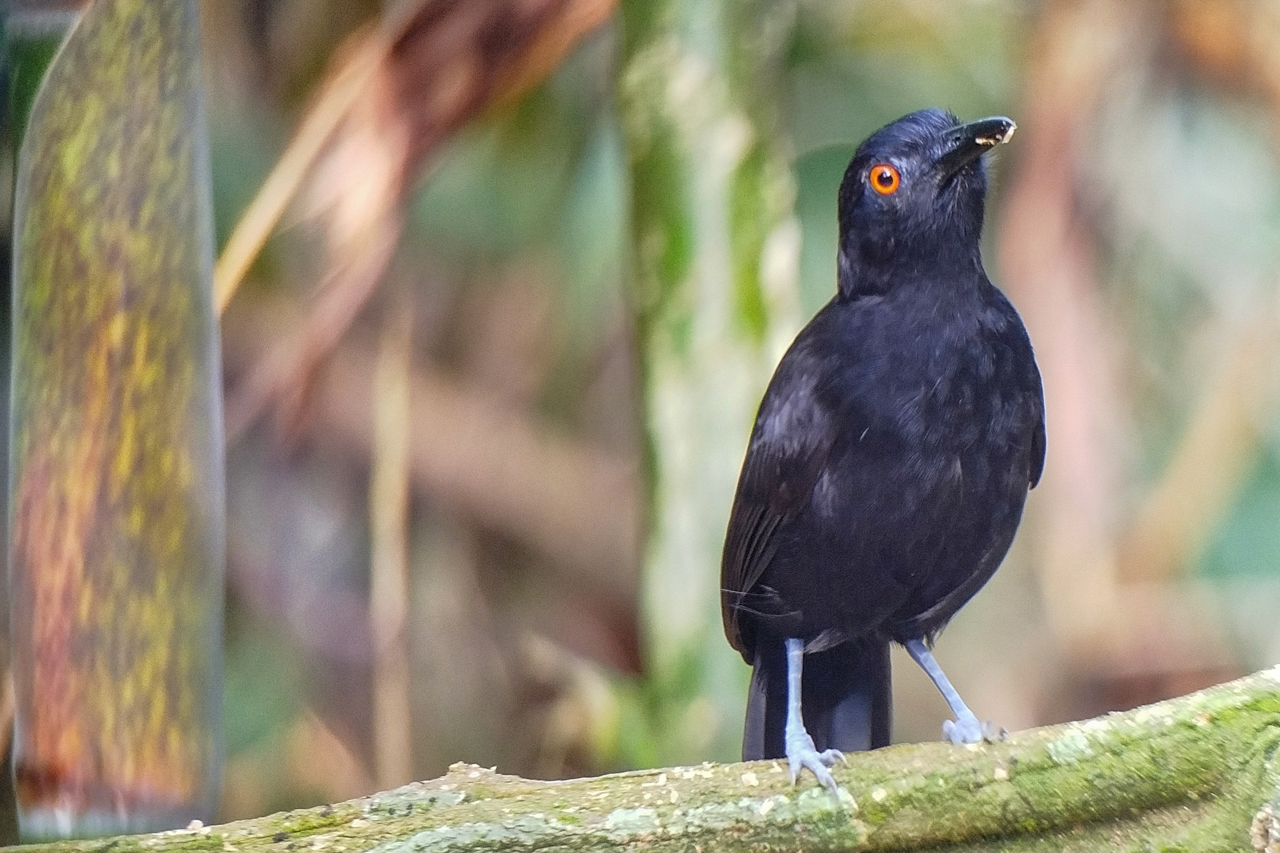
Goeldi’s Antbird © E Carman
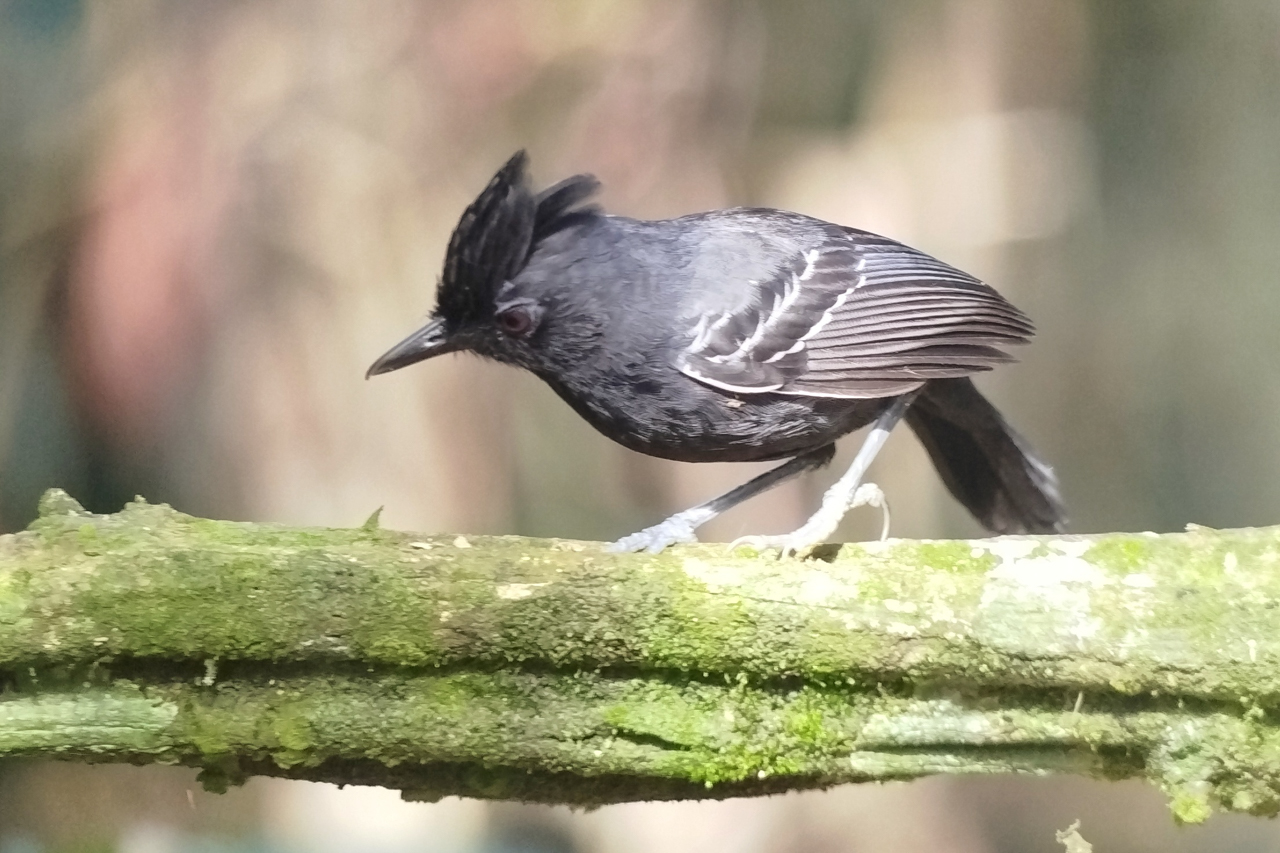
White-lined Antbird © E Carman
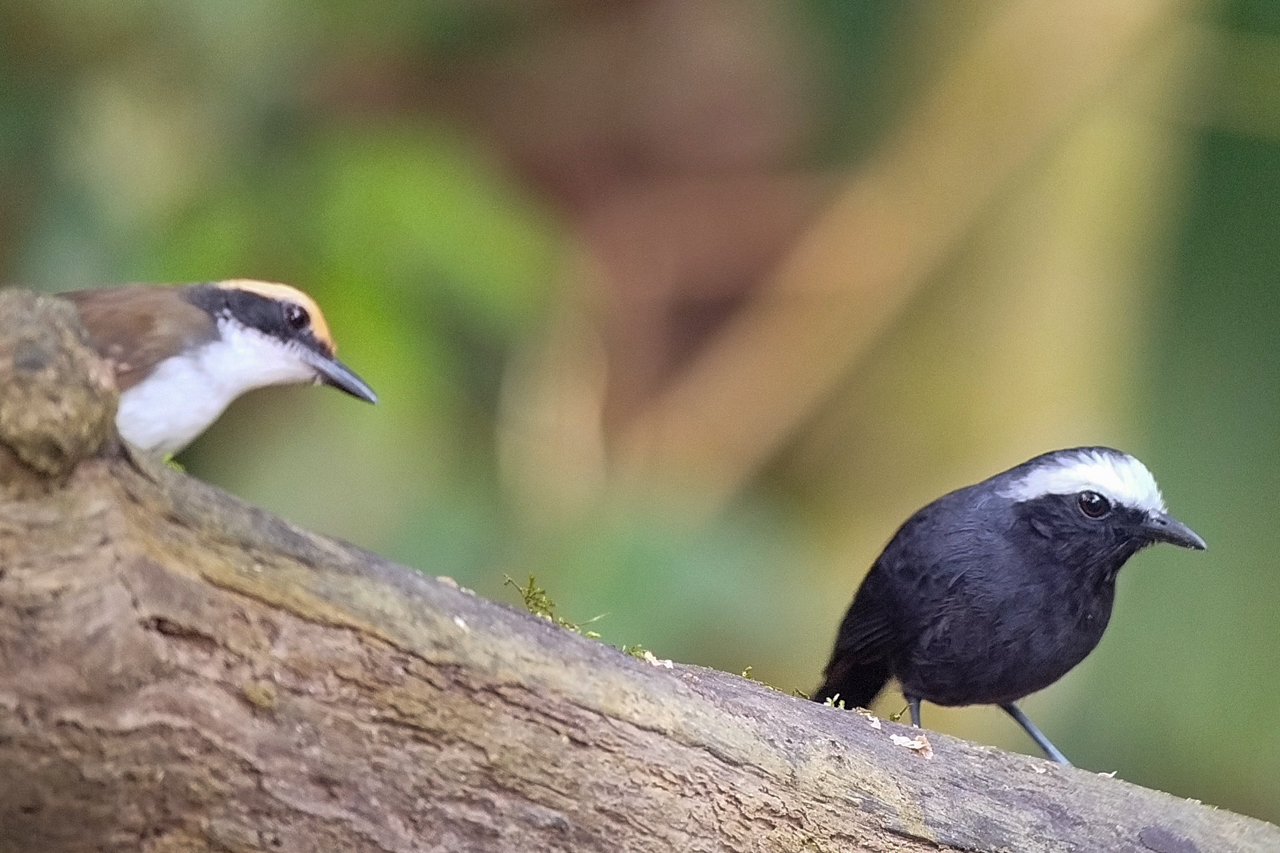
White-browed Antbird © E Carman
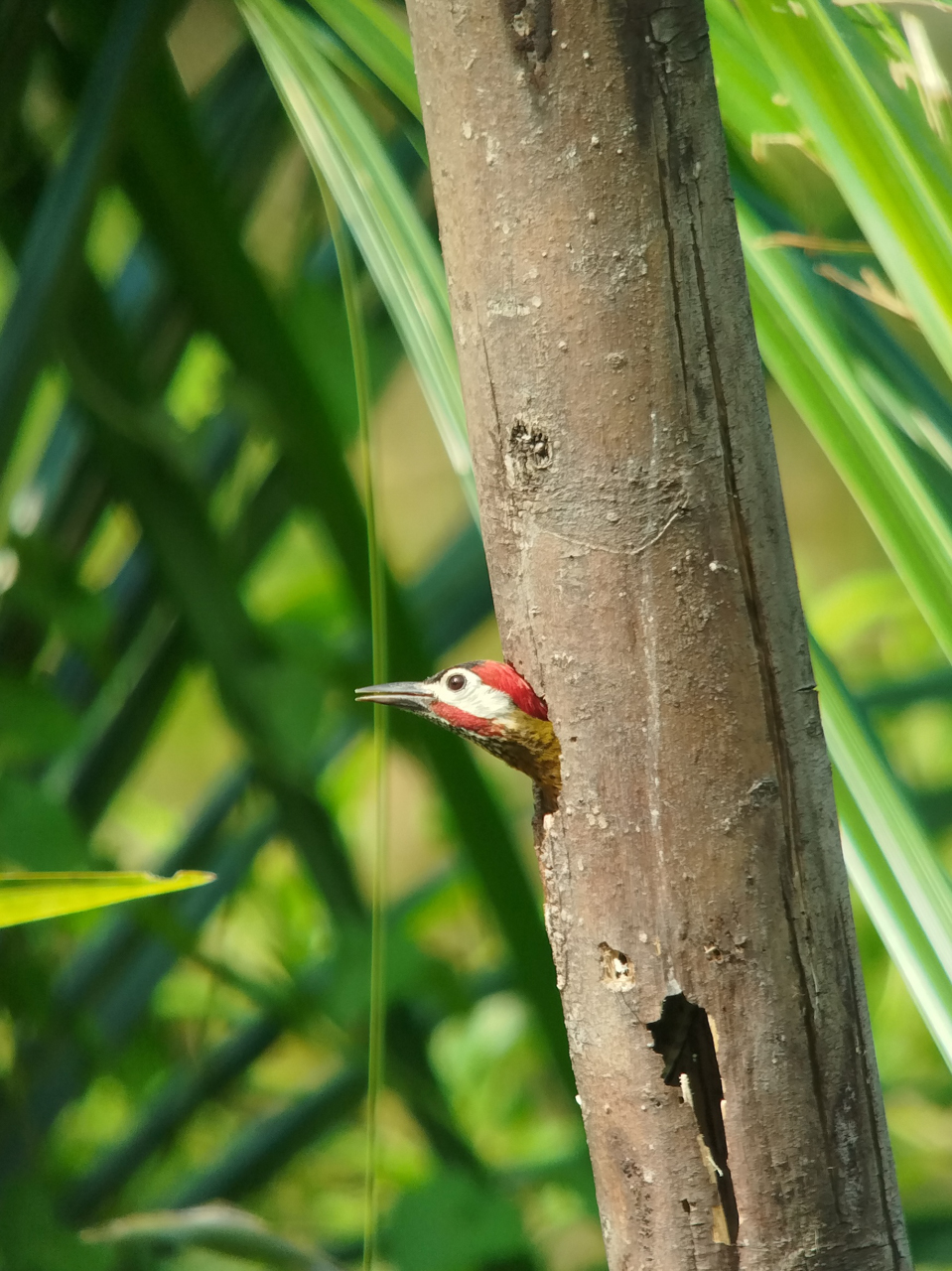
Spot-breasted Woodpecker © E Carman
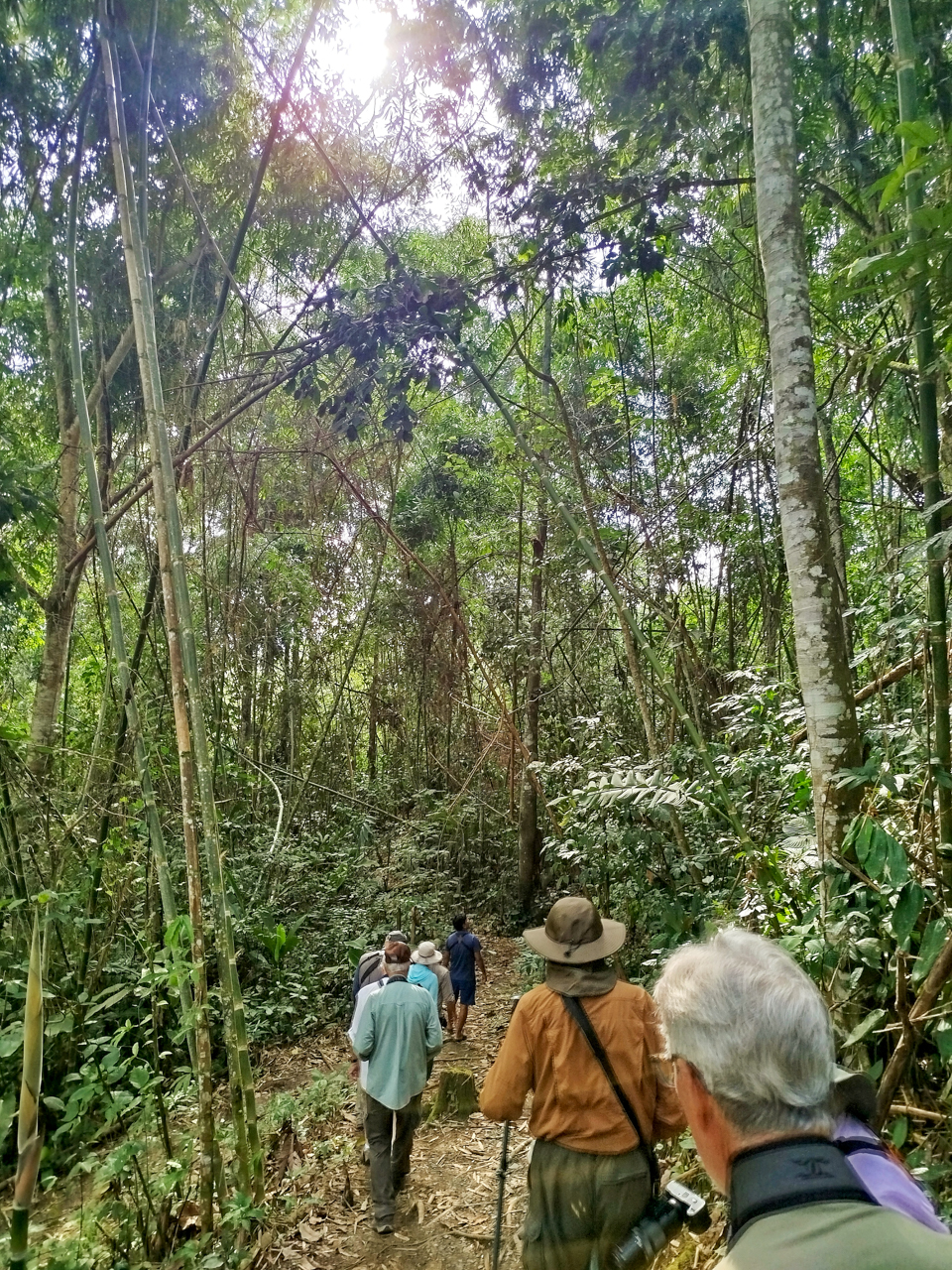
Birding Bamboo Forest © E Carman
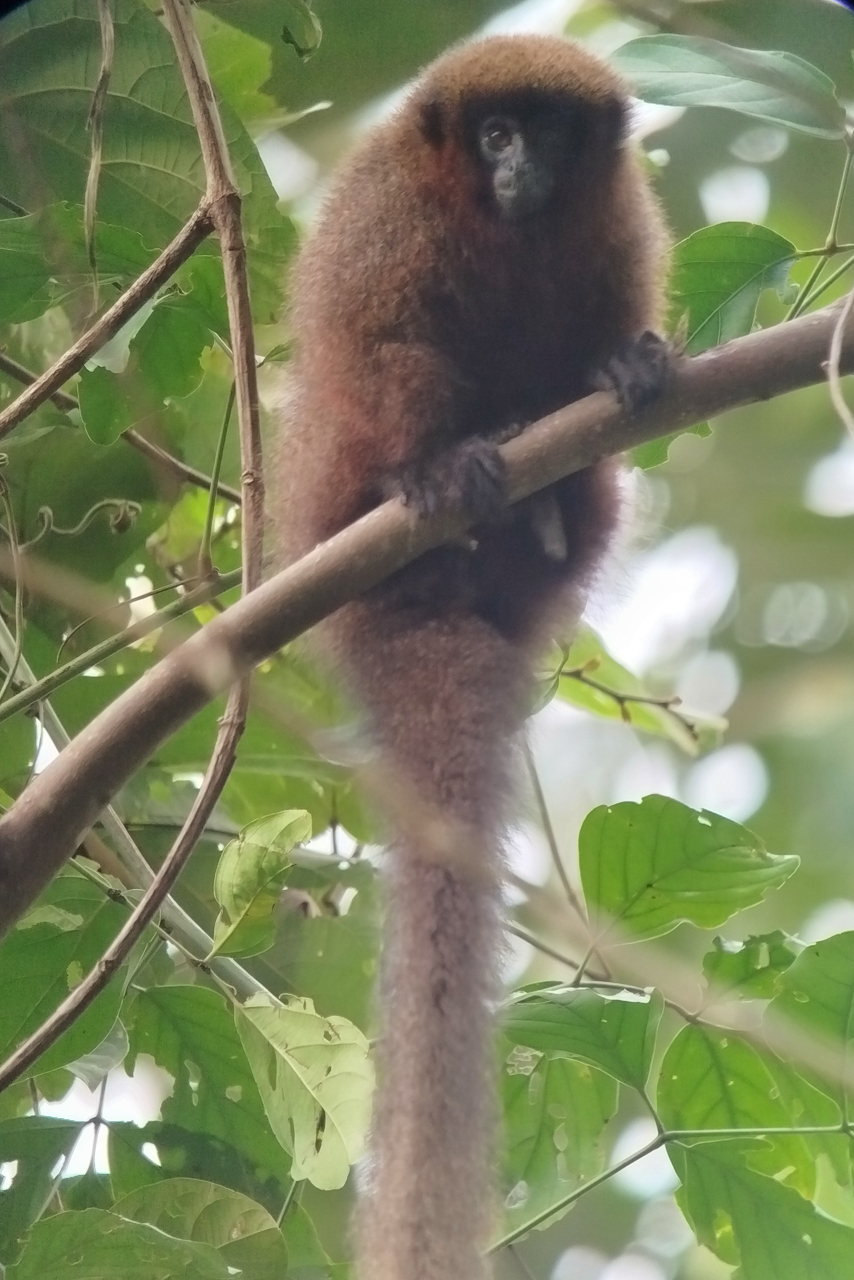
Urubamba Titi Monkey © E Carman
Manu Biolodge itself was equally rich: Hoatzin, Turquoise Tanager, Chestnut-eared Aracari, Swallow-winged Puffbird, Lemon-throated Barbet and King Vulture. The pond in front of the rooms was always productive, with Great Egret, Capped Heron, Black-capped Donacobius, Purple Gallinule and even Capybaras.
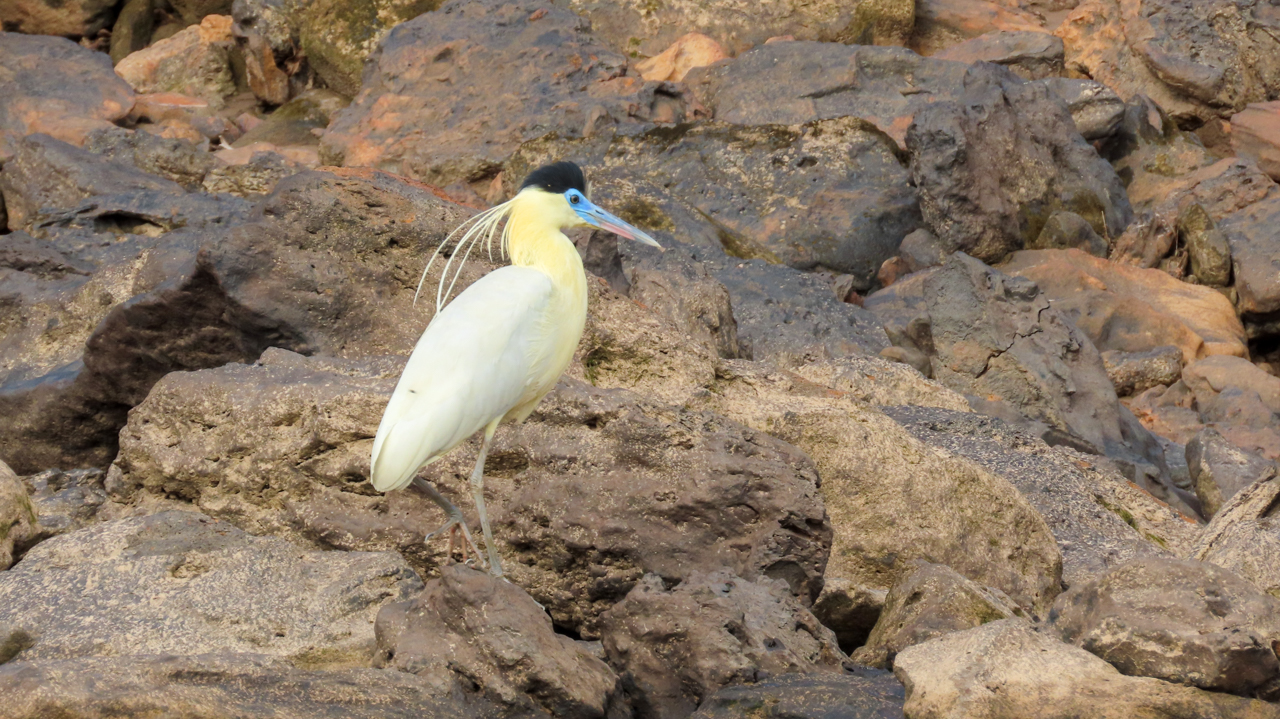
Capped Heron © E Carman
Day 17: Wayqecha, Sword-billed Hummingbird Garden and Cusco
We drove back up the Manu Road to Wayqecha to break up the trip to Cusco and perhaps pick up a few more high-elevation species. Sure enough, as we were checking in, a pair of Gray-breasted Mountain-Toucans came to the feeders! The next morning brought lively mixed flocks, a review of species we’d seen before, and new ones: Mountain Cacique, Smoke-colored Pewee, Scarlet-bellied Mountain-Tanager, Speckle-faced Parrot, Moustached Flowerpiercer and the elegant Maroon-belted Chat-Tyrant.
Our final birding stop before the drive to Cusco was the Sword-billed Hummingbird Garden, where we saw Violet-throated Starfrontlet, White-bellied Woodstar and Tyrian Metaltail. The unexpected stars, however, were a pair of Undulated Antpittas, which the owner, Mariano, has accustomed to coming for food. They gave us amazing views of this difficult and elusive species. It was a fitting finale to a wonderful tour.
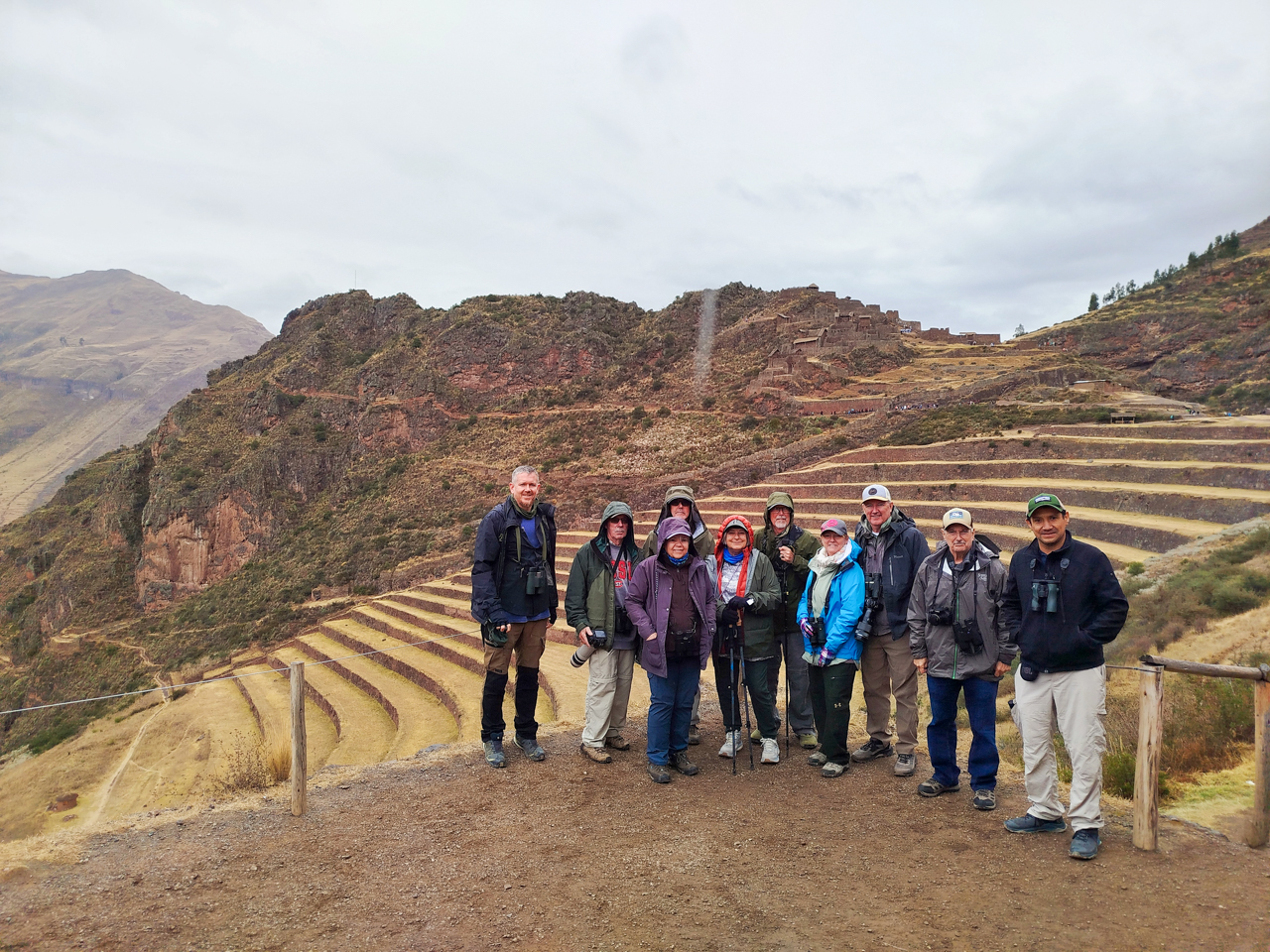
Our group
Leave a Reply