South Texas Trip Report (Feb 5 -13, 2026)
We began the tour in Corpus Christi with its unparalleled coastal birding, dipped down into the lower Rio Grande Valley with its diverse subtropical avifauna, and ended in the drier country upriver with its assortment of desert-adapted species
Our primary birding destination for the first day was Mustang Island, but we made several stops along the way to appreciate the diverse assortment of waterbirds in the area. At our very first stop, we encountered Long-billed Curlews, White Ibises, six species of herons and got laughed at by numerous Laughing Gulls. Once we reached the island, we paused to enjoy a flock of Roseate Spoonbills feeding just off the road.

Long-billed Curlew © James McCoy
We soon found ourselves on a boardwalk overlooking flocks of Black-necked Stilts, American Avocets and several species of dabbling ducks including a bright male Cinnamon Teal. We searched through a large flock of dowitchers and found a few Stilt Sandpipers mixed in. One keen-eyed participant even spotted our first Whooping Crane of the tour off in the extensive marsh.

Cinnamon Teal © James McCoy
As we headed back toward Corpus Christi we kept an eye out for raptors that we had missed on the drive over and succeeded in finding both a White-tailed Hawk and an Aplomado Falcon!
After lunch at a spot with nesting Monk Parakeets, we made our way to downtown Corpus Christi to seek out two long-staying rarities. Upon seeing a group of binocular-laden visitors, several local people stopped to ask if we were “looking for that bird”. They were talking about a Cattle Tyrant, an improbable visitor from South America that has become a local celebrity since it was first spotted in November 2023. A flycatcher that spends most of its time on the ground behaving more like a robin, we thought we had missed it until some patrons of an open air restaurant pointed toward the ground and there was our target bird, foraging just feet away from the diners.

Cattle Tyrant with shadow of Great-tailed Grackle © Rebecca Bicker
After enjoying the Cattle Tyrant’s antics for a bit, we headed to nearby Bayfront Park where the afternoon’s other target bird, a very rare Red-footed Booby, showed off by flying around, swimming, and perching with its red feet splayed out for good scope views.

Red-footed Booby © James McCoy
Before settling in for the night at Rockport, we visited a spot where we got to see and hear several stately Whooping Cranes as they foraged at close range near some Sandhill Cranes, offering a size comparison that made the Whoopers all the more impressive.

Whooping Crane © James McCoy
The next day began with a boat ride into the wilderness of the Aransas National Wildlife Refuge where we saw many more Whooping Cranes and learned about their biology from our knowledgeable boat captain. We also enjoyed such species as American Oystercatchers, Neotropic Cormorants, Black Skimmers, Marbled Godwits, and many long-legged waders such as Reddish Egret and Tricolored Heron and a huge number of Great Blue Herons.

Reddish Egret (dark morph) © James McCoy
After the boat ride we headed to Brownsville, getting a taste of the Lower Rio Grande Valley birding experience along the way with our first sightings of Golden-fronted Woodpecker, Black-crested Titmouse, and Green Jay.

Golden fronted woodpecker , female © Rebecca Bicker
On our first morning in Brownsville we headed to a nearby boat launch site that afforded us good looks at Yellow-crowned Night-Heron, Long-billed Curlew, and a cooperative Gull-billed Tern. But we didn’t tarry long here, because we were headed to some of the famed birding locales on South Padre Island. Before the day was done we had close looks at Mottled Duck, Clapper Rail, Sora, both dark and light morph Reddish Egrets along with six other heron species, hundreds of Redheads, and our first Great Kiskadee and Loggerhead Shrike.

Clapper Rail © Catherine Hagstrom

White morph Reddish Egret © James McCoy
From Brownsville we headed west to McAllen, stopping along the way to marvel at a long-staying Limpkin reigning over a flock of several hundred colorful Black-bellied Whistling-Ducks. Then we were off to Estero Llano Grande World Birding Center where we found two well-camouflaged Common Pauraques roosting among dead leaves on the forest floor and also located a roosting Eastern Screech-Owl of the northeast Mexican subspecies that occurs here.

Eastern Screech-Owl (McCall’s) © Catherine Hagstrom
We spent a morning at Bentsen State Park World Birding Center where we were treated to our first Green Kingfisher, a close leisurely flyby of a pair of Gray Hawks, numerous Altamira Orioles, a Tropical Kingbird giving diagnostic twittering vocalizations, among many other species. An afternoon visit to the National Butterfly Center’s feeding station afforded us good looks at more of the specialty birds of the Rio Grande Valley including Olive Sparrow, Long-billed Thrasher and Bronzed Cowbird.
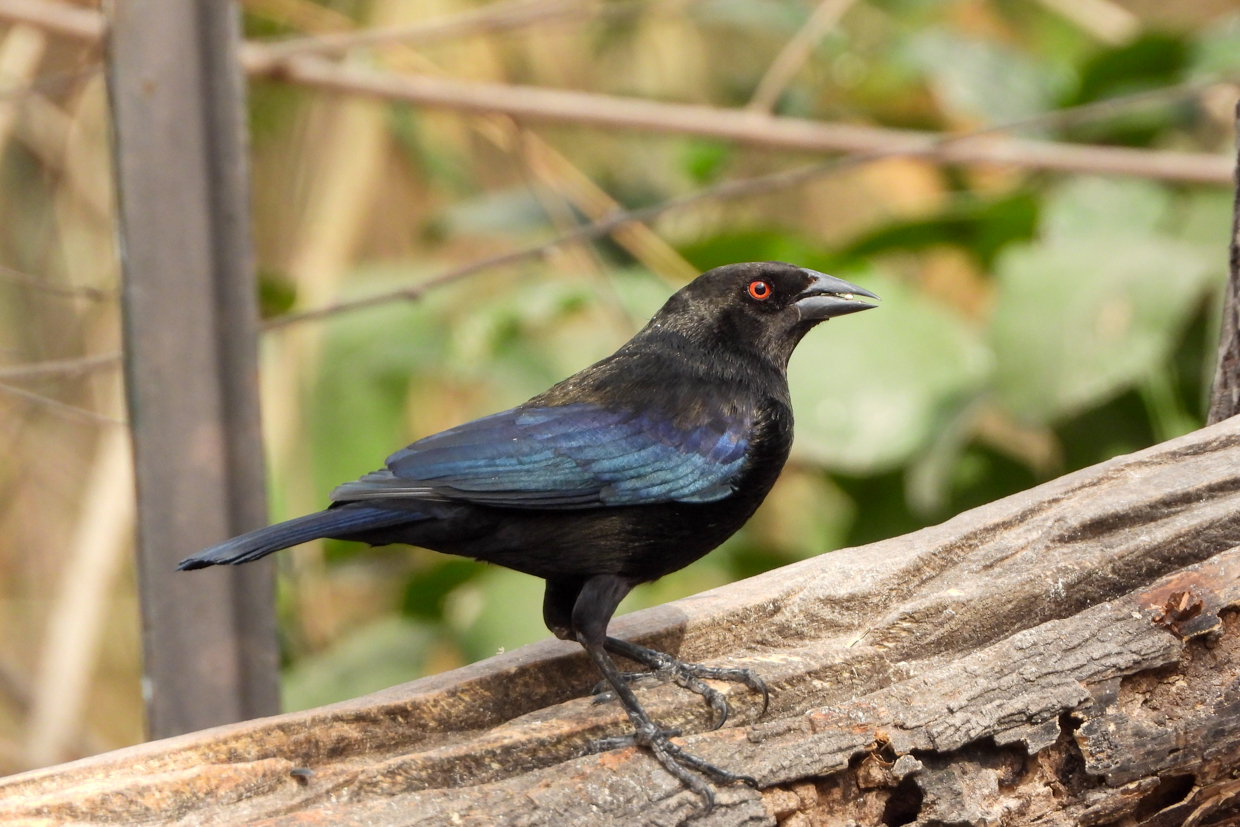
Bronzed Cowbird © Catherine Hagstrom
We also managed to fit in dusk-time visits to two memorable parrot roosts, one with raucous Red-crowned Amazons and White-crowned Parrots (and a few larger Yellow-headed Amazons) in Brownsville, the other a delightfully chaotic assemblage of hundreds of Green Parakeets among thousands of Great-tailed Grackles (and one Cockatiel) in McAllen.
One morning we arose early to drive to a private ranch accessible only by special arrangement with private local guides. Once on site we crossed through the border wall and hiked to a bluff overlooking the Rio Grande River. Scanning this magnificent view, we spotted Ringed and Green Kingfishers, Anhingas, Least Grebes, both Double-crested and Neotropic Cormorants, and nine species of ducks.
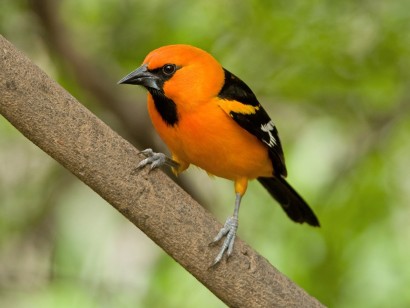
The main draw at this ranch is a family group of Brown Jays, a widespread tropical species that in recent years has been seen north of the Mexican border almost exclusively at this site alone. We got our first looks at these large enigmatic birds from the bluff, but later we would see them up close at a feeding station as they vied for attention with Audubon’s and Altamira Orioles, White-tipped Doves, Plain Chachalacas and Northern Bobwhites.

Green Kingfisher © Catherine Hagstrom
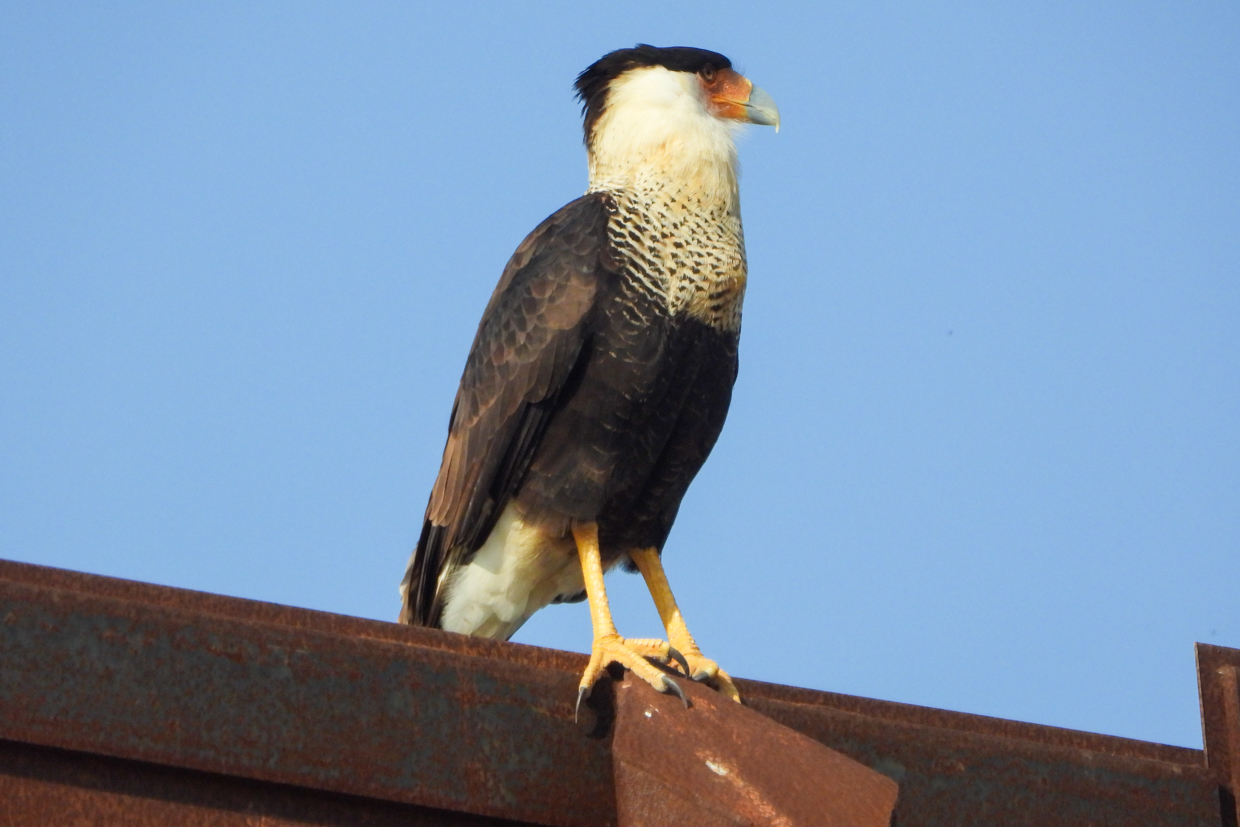
Crested Caracara on border wall © Catherine Hagstrom
A flock of Red-billed Pigeons flew by the bluff all too fast, but we found one of these shy forest pigeons perched, watching us warily, during a hike through the woods along the river where we also found such shy species as Carolina Wren, White-eyed Vireo, Swamp Sparrow and American Pipit.
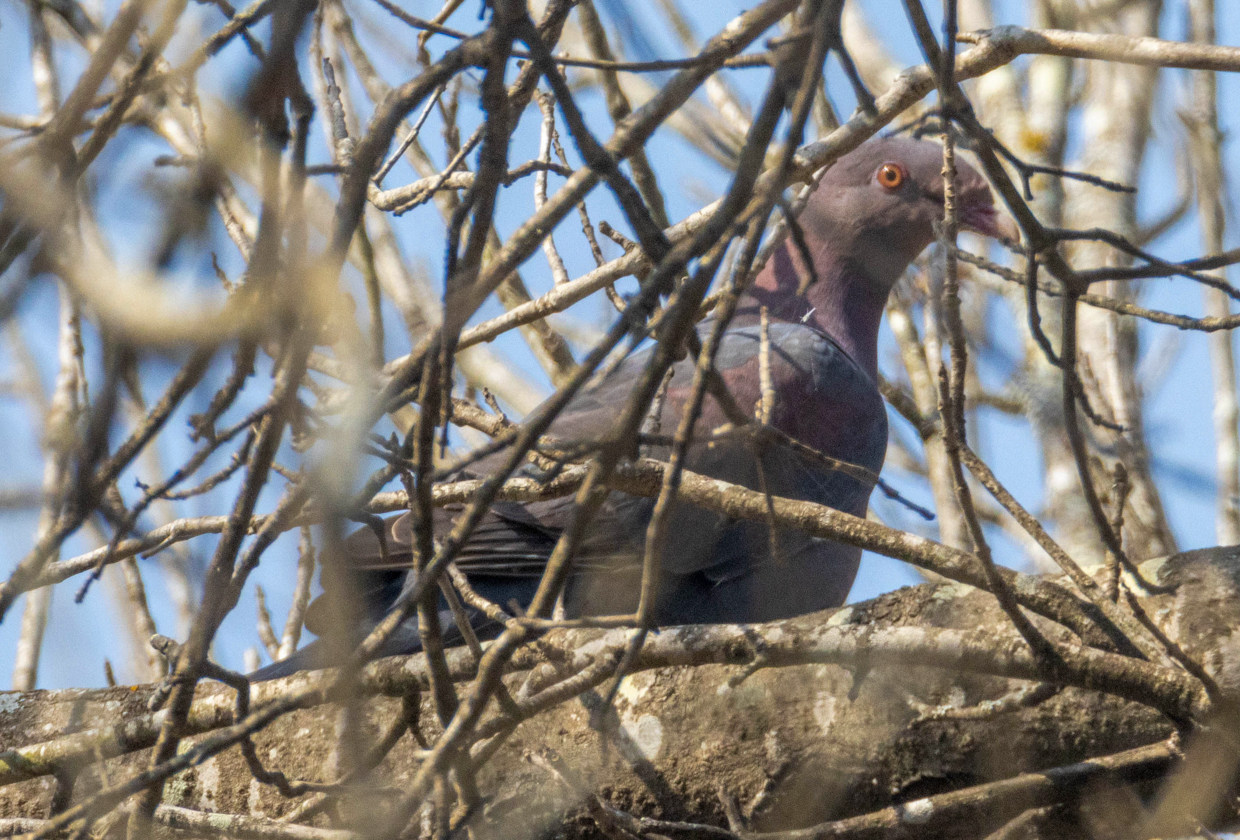
Red-billed Pigeon © James McCoy
We spent that afternoon exploring some of the drier country a bit further upriver, searching for such harder to find desert-adapted species such as Greater Roadrunner, Black-throated Sparrow, Pyrrhuloxia, Black-tailed Gnatcatcher and Green-tailed Towhee. One location along the river produced a White-faced Ibis and Black Phoebe.
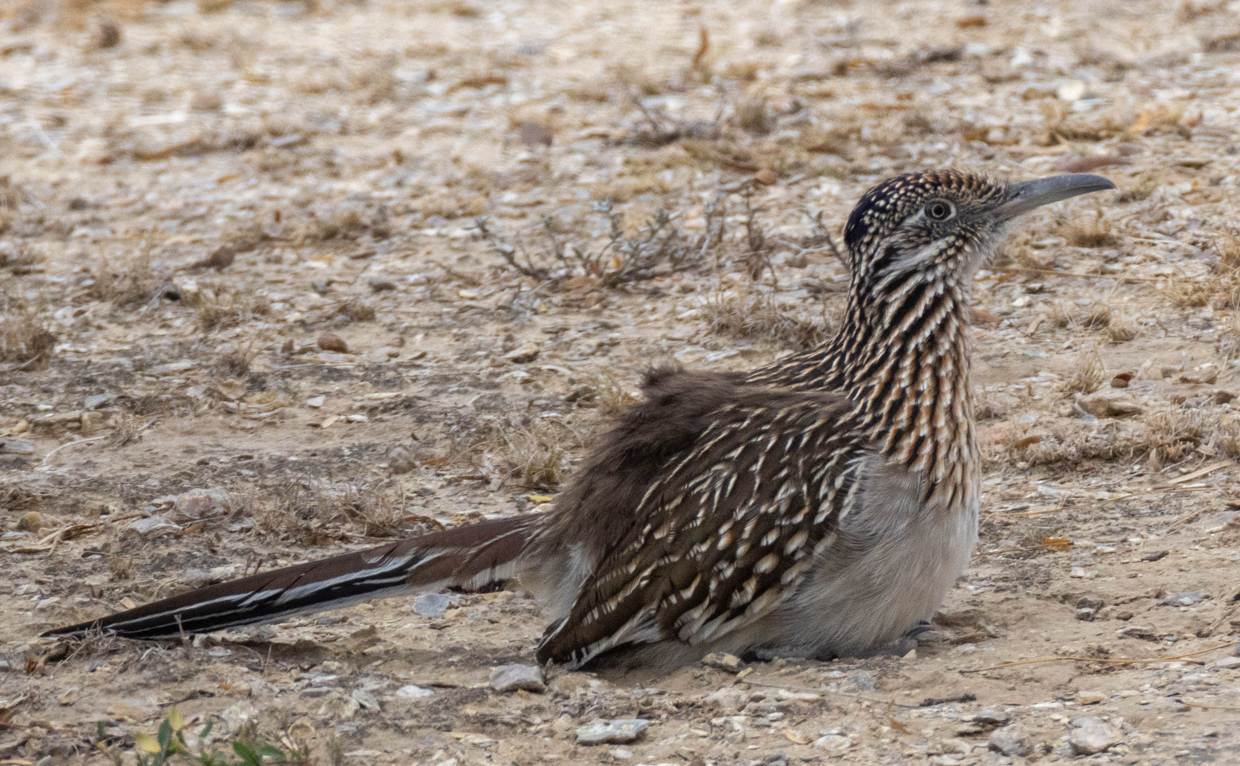
Greater Roadrunner © James McCou
On our last birding day we visited the Edinburg Scenic Wetlands World Birding Center, where a boldly patterned olive-yellow and black female-plumaged Crimson-collared Grosbeak had been present for weeks. With a tip from the helpful staff there, we located this rare visitor that had wandered north from its limited range in northeast Mexico. There were many other highlights here, including wonderful looks at a Buff-bellied Hummingbird, Western Cattle-Egrets, Yellow-bellied Sapsucker and six species of warblers including Wilson’s and Nashville Warblers.
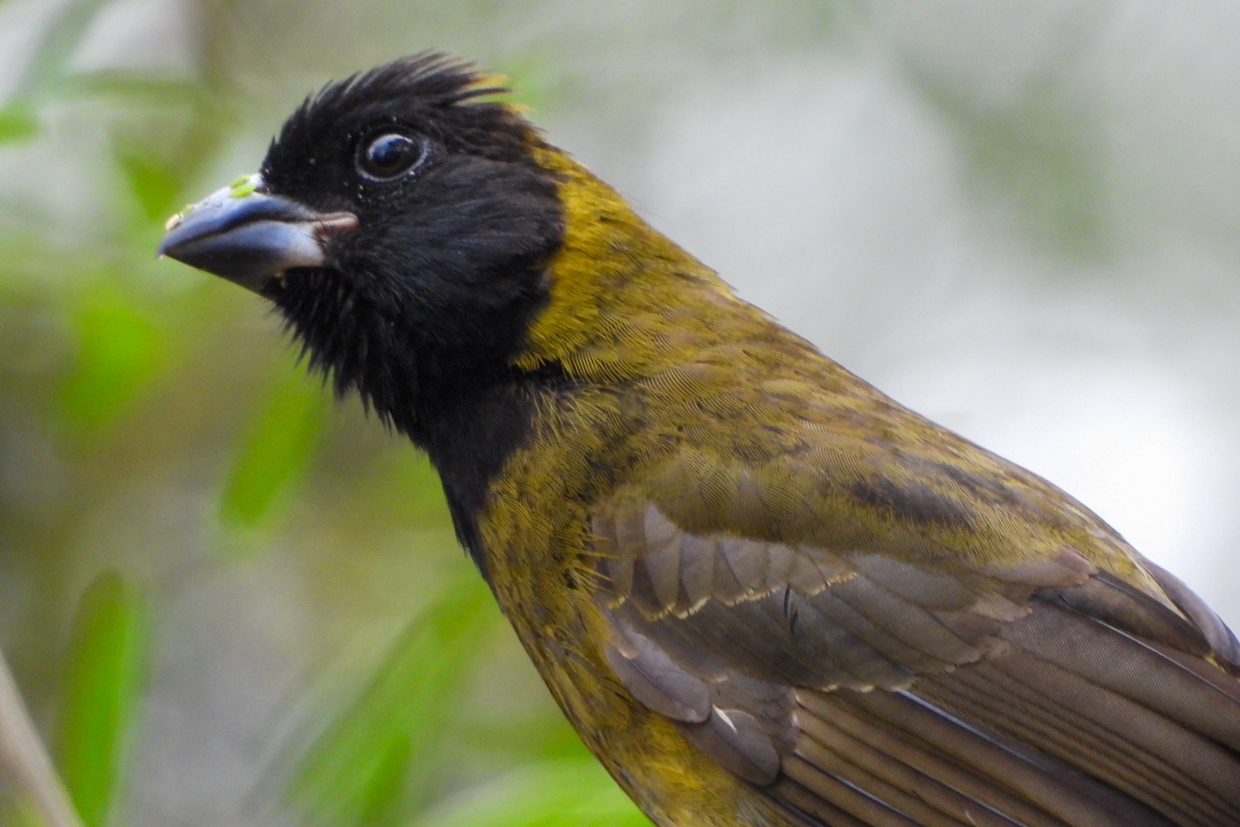
Crimson-collared Grosbeak © Catherine Hagstrom
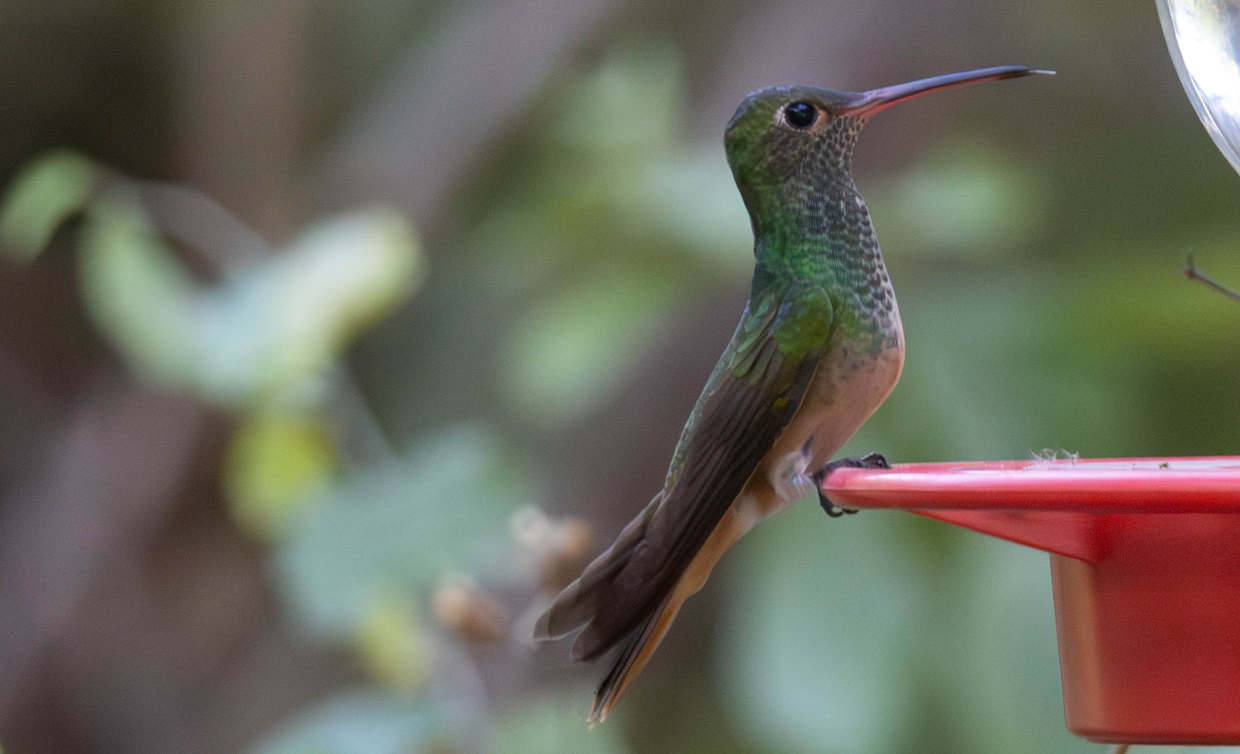
Buff-bellied Hummingbird © James McCoy
At the outset of the tour, the group was advised to check every Turkey Vulture carefully to make sure it wasn’t actually a Zone-tailed Hawk, a look-alike species with similar proportions but sporting distinguishing white tail bands — if you looked for them. At the last park we visited on the last day of our tour this advice paid off, and our much sought after Zone-tailed Hawk was the last new species we added on the tour! As we returned to the hotel late that afternoon to take a short break before going out to dinner, a Gray Hawk flew ahead of the car and landed atop a utility pole in the hotel parking lot, affording us our best look at this border specialty, a fitting end to a bird-rich tour.
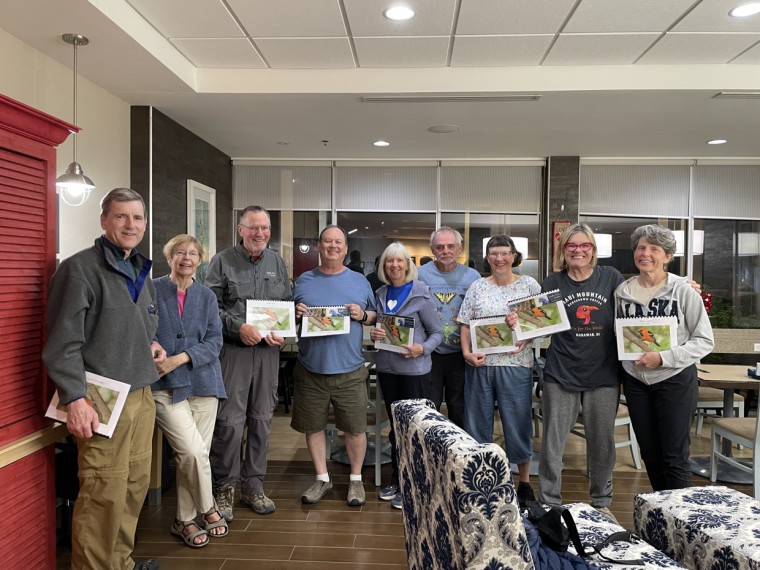
Our group at our final daily compilation