Romania Trip Report (May 2 – 14, 2026)
Day 1, May 2
At dinner in the evening, we met with the tour participants in Otopeni and discussed the itinerary for the next few days.
Day 2, May 3
After packing up in the morning, we set off towards the fabulous mountains of Southern Carpathians. On the way, we saw the first bird species associated with agricultural habitats, such as the Common Buzzard, Eurasian Kestrel, White Stork and several species of corvids. Our first stop was in the town of Sinaia, where a singing Collared Flycatcher and two foraging Long-tailed Tits delighted us. A nice Great-spotted Woodpecker was also present at the site. In the afternoon, our path led us up through old deciduous forests towards the alpine pastures of the Bucegi Natural Park. We stopped at several places along the way to listen to the songs of forest birds. Most of the migrating songbirds had already returned to their breeding grounds so we were greeted by vibrant life in the old, well-natural spruce and beech forests. We could admire the smallest bird in Europe, the Common Firecrest for a long time but a persistently singing Eurasian Wren also showed itself beautifully, which the participants managed to photograph up close. Grey Wagtails were singing along the streams and Common Crossbills were feeding at the tops of the trees. Coal Tits and Great Tits were moving in the lower parts of the canopy.
As we climbed higher and higher, the composition of the forests also changed with the altitude. Evergreens increasingly replaced the beech, and then, reaching the open alpine pastures of the Bucegi Mountain where the dwarf pine zone became dominant. A singing male Tree Pipit perched on a spruce as well as Water Pipits were seen but this time mainly flyby birds.
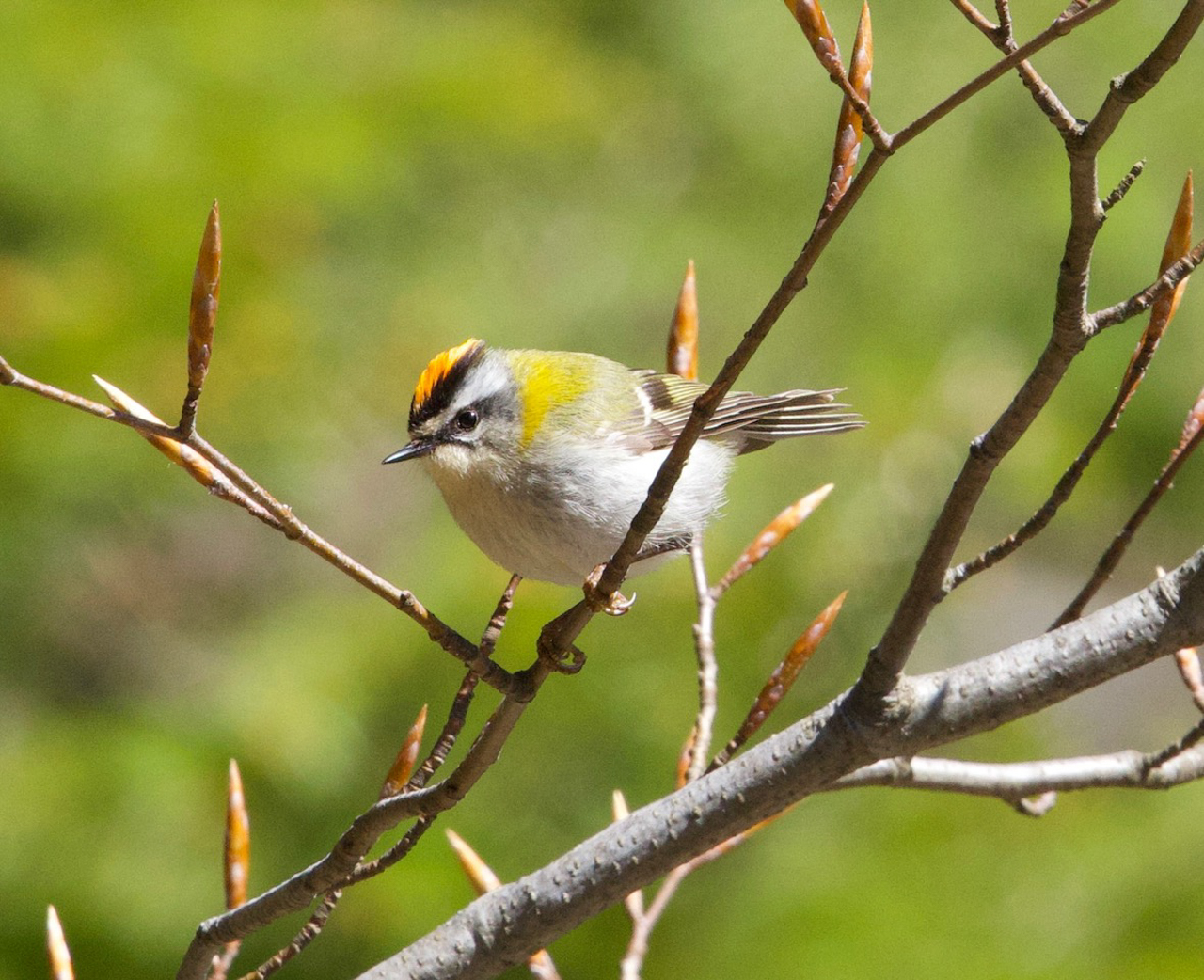
Firecrest © Robert Moore
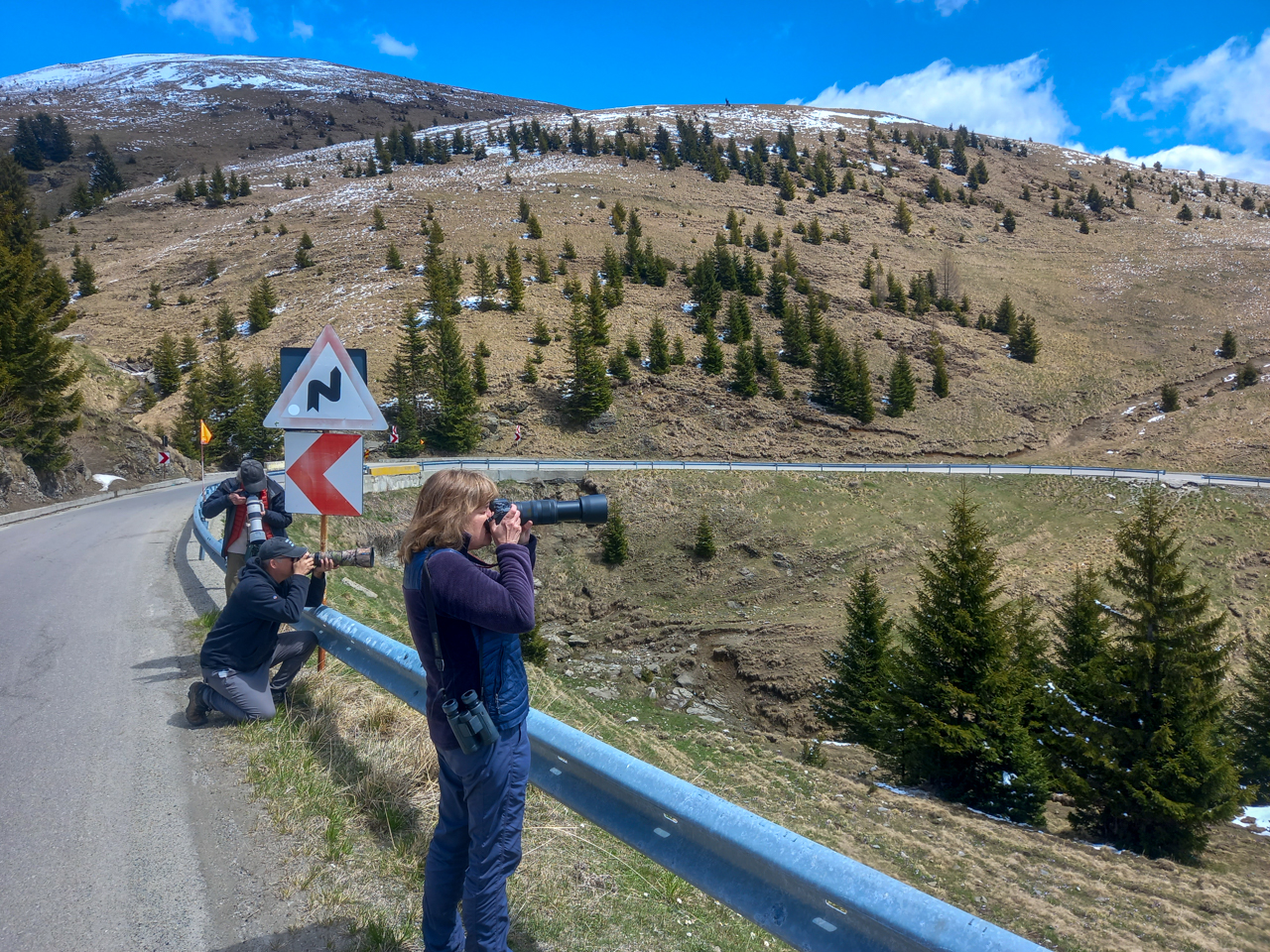
Bucegi Mountains © Ádám Tamás
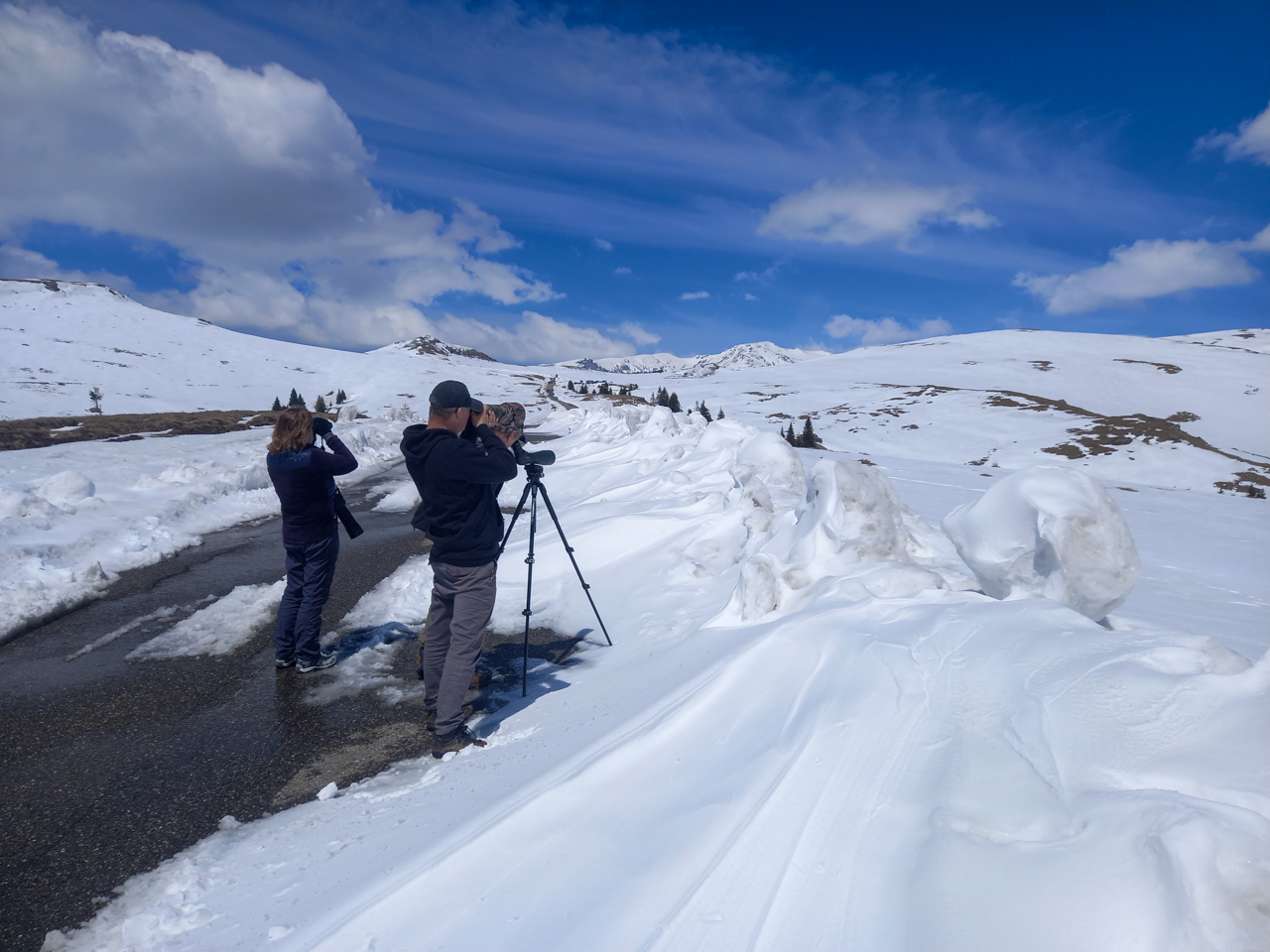
Bucegi Mountains © Ádám Tamás
The Carpathian Saffron blossomed in high numbers on the slopes, creating an extremely spectacular landscape. Ring Ouzels and Mistle Thrushes were feeding intensively with earthworms, chasing each other on the grassy slopes between the melting snow patches. Common Ravens and Common Buzzards soared in the sky. The first Northern Wheatears and Eurasian Skylarks of the trip were spotted at distance on rocky slopes.
Late in the afternoon we descended to the northern side of Lake Bolboci, where we birded by the rocks of Cheile Tatarului. At one of the small dams of the stream a pair of White-throated Dipper were feeding their chicks behind the waterfall giving a nice view to all of us. A pair of Common Ravens raising chicks close to the size of their mother but not yet able to fly, were nesting on the cliff face just above the road. After a short birding we headed towards our hotel in Magura.
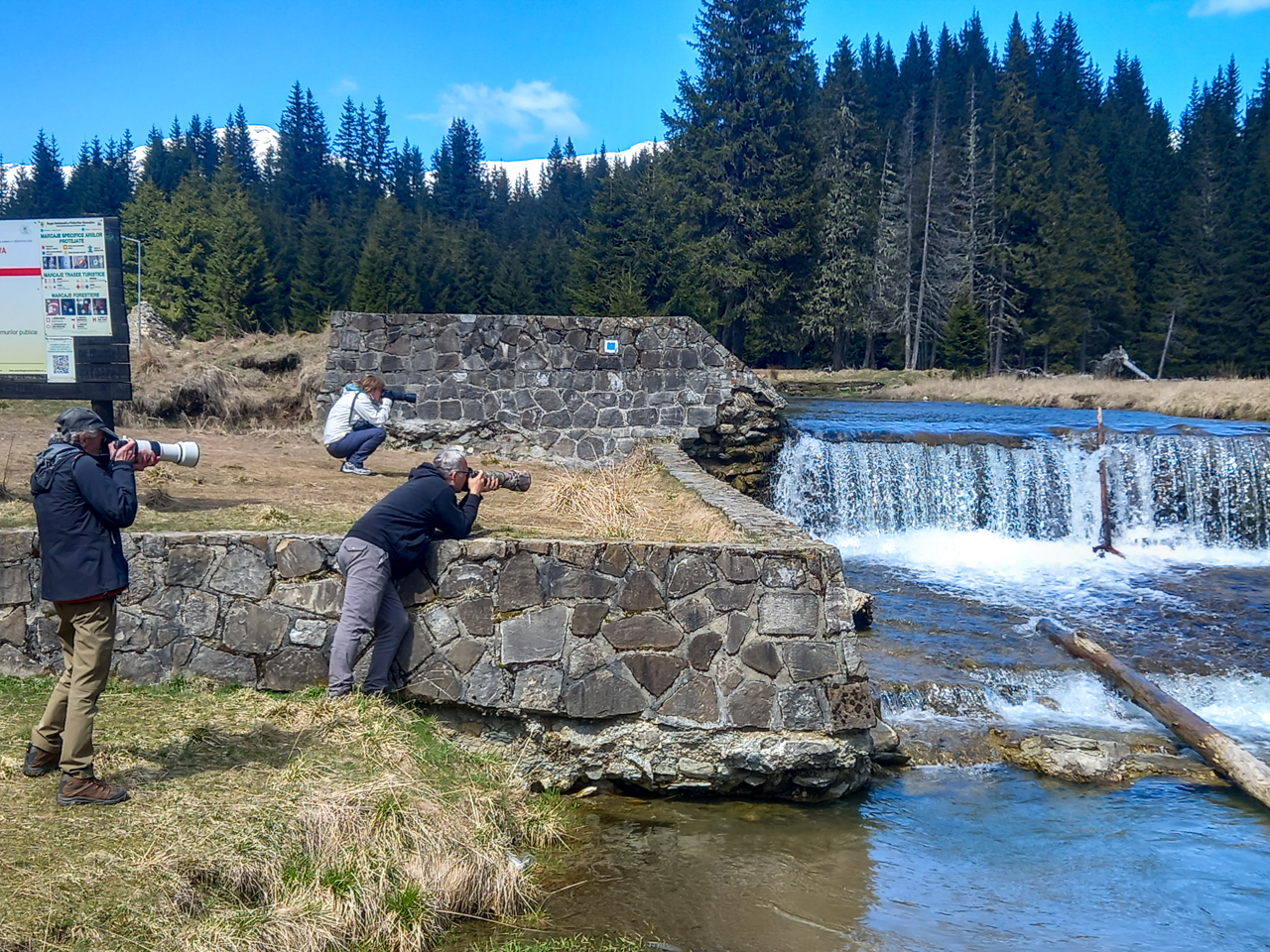
Lake Bolboci, dipper nest © Ádám Tamás
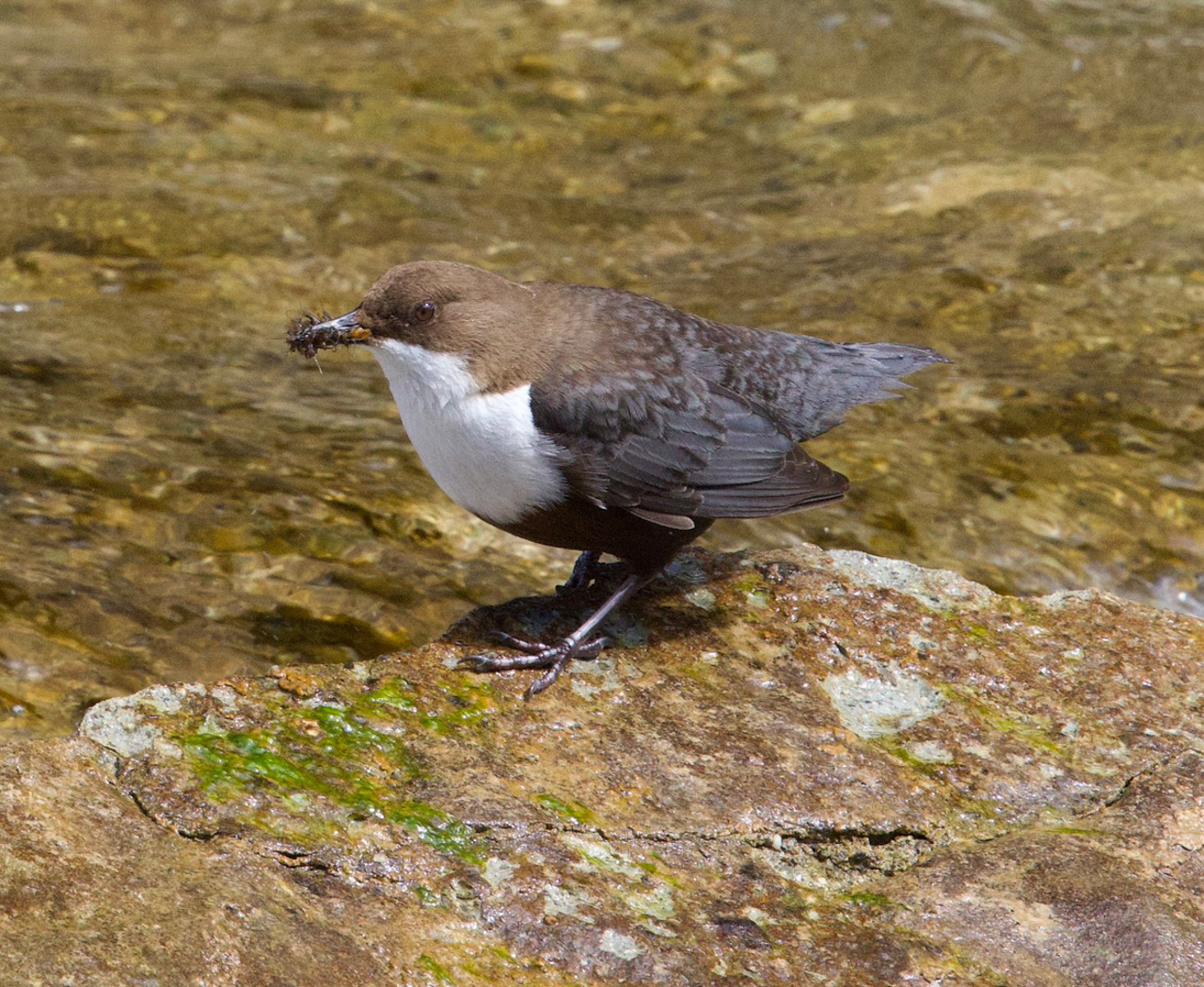
Northern Dipper © Robert Moore
Day 3, May 4
We started the morning with an early birding walk around the hotel. The common songbirds were very active. A handsome male Black Redstart was singing on a rooftop, while in the yards several Fieldfares were already collecting worms for their chicks. A pair of Common Kestrel occupied territory in the village, chasing loudly above our heads.
Right after breakfast we went down to the fascinating Zarnesti gorge to make a 4 km walk along the creek. The first Red-breasted Flycatcher of the year was singing away giving a nice view. Marsh Tits, Willow Tits, Great Tits, Coal Tits and Crested Tits were all present in the gorge however, the highlight of the morning was definitely the sought-after Wallcreeper pair that were drinking and bathing in the creek not paying attention to us. Walking back to the car park produced some overflying Eurasian Crag Martins, Eurasian Treecreeper and a singing Goldcrest.
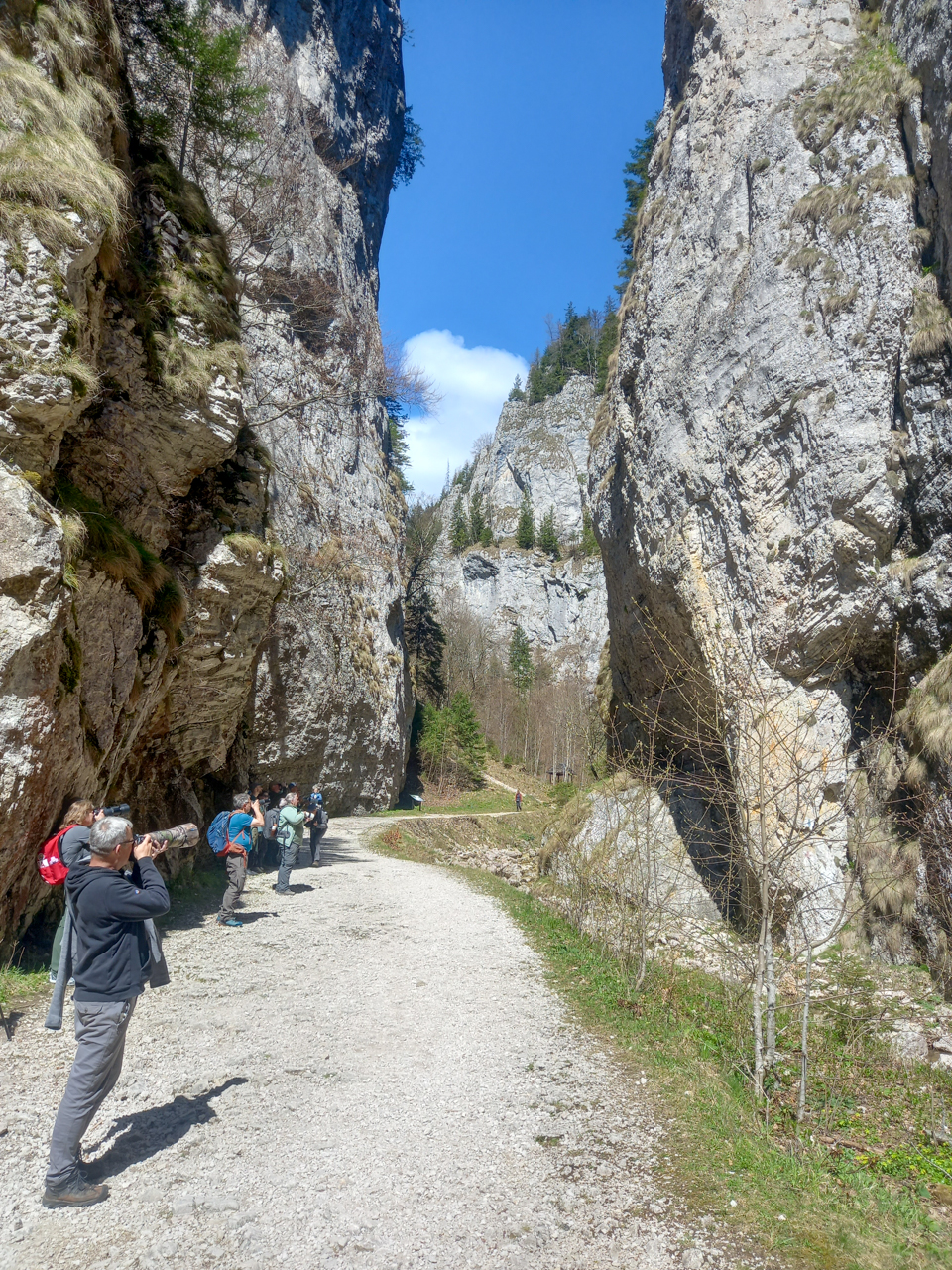
Zarnesti gorge © Ádám Tamás
We spent the afternoon at the Stramba Valley. At the beginning of the valley we managed to spot a pair of Lesser-spotted Eagles soaring over the area, as well as a Eurasian Sparrowhawk and a Common Buzzard. A Eurasian Golden Oriole, Garden Warblers and Common Whitethroats were also singing in the bushes in the wide stream valley and a Eurasian Green Woodpecker also showed itself nicely on a dead branch. Both Common Cuckoo and Common Hoopoe were seen during our visit. In the late afternoon we finished our day at a bear hide where we had a good opportunity to see as many as 10 Brown Bears at once in a feeder. A nice Eurasian Jay and a confiding Common Raven were also feeding at site in the drizzling rain.
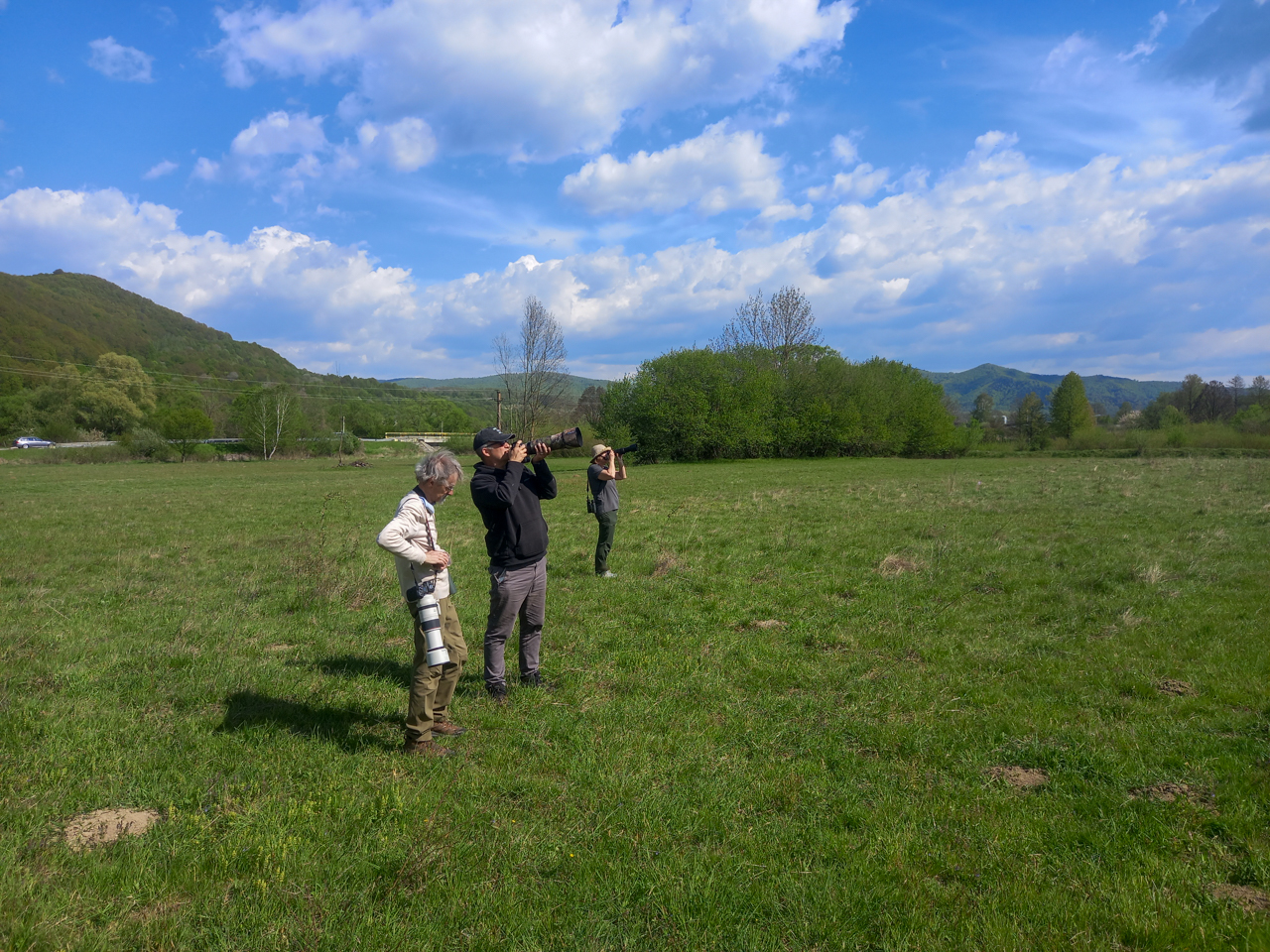
Stramba Valley © Ádám Tamás
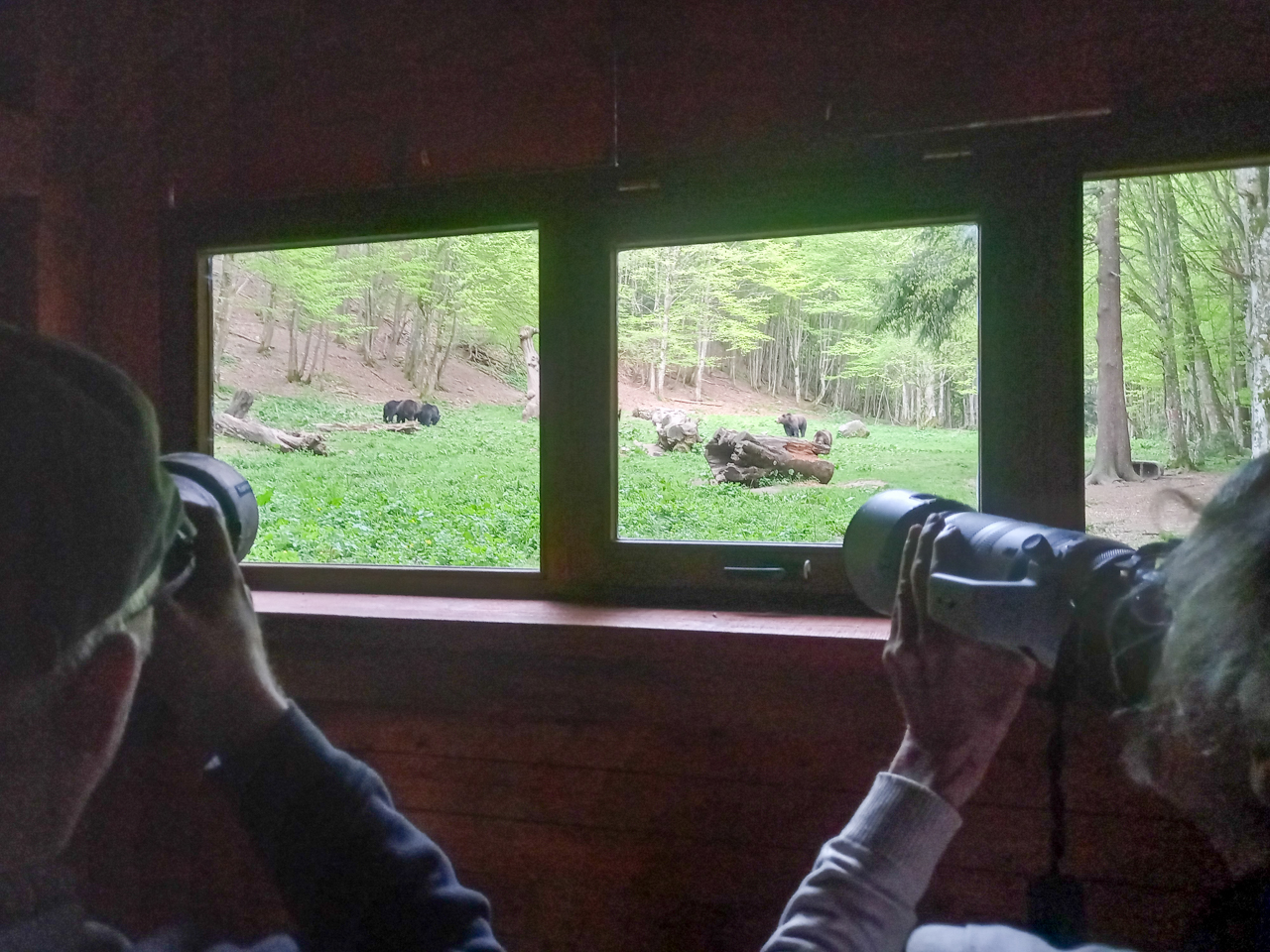
Bear hide © Ádám Tamás
Day 4, May 5
We stopped at two sites along the road to Poiana Brasov. At one parking lot, a stunning adult male Red-breasted Flycatcher was singing. From further away in the forest a Stock Dove and a distant Tawny Owl also called a few times. Later on by a beautiful hay meadow at the other stop we managed to observe and photograph a Lesser Whitethroat up close for a long time. In the very touristic Poiana Brasov, which is mainly known as a crowded ski resort we took the cable car up to Postavaru Peak which was again impressive. From here, you can see all the peaks of the Southern Carpathians. During the short walk on the snowy footpath we saw a singing Willow Tit and a well-perched Dunnock. While we were amazed by the scenic view, a Tengmalm’s Owl called a few times in the distance.
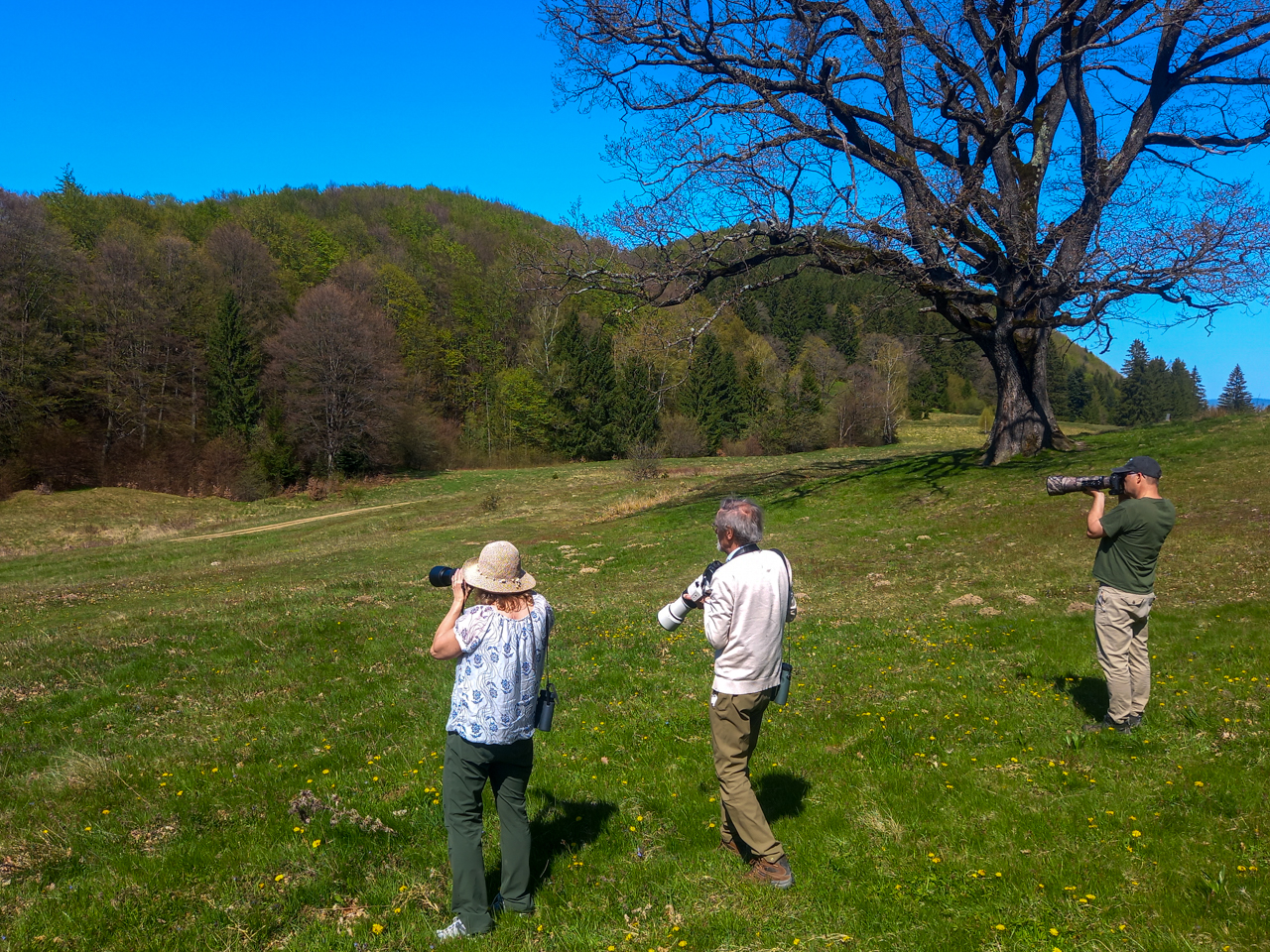
Poiana Brasov © Ádám Tamás
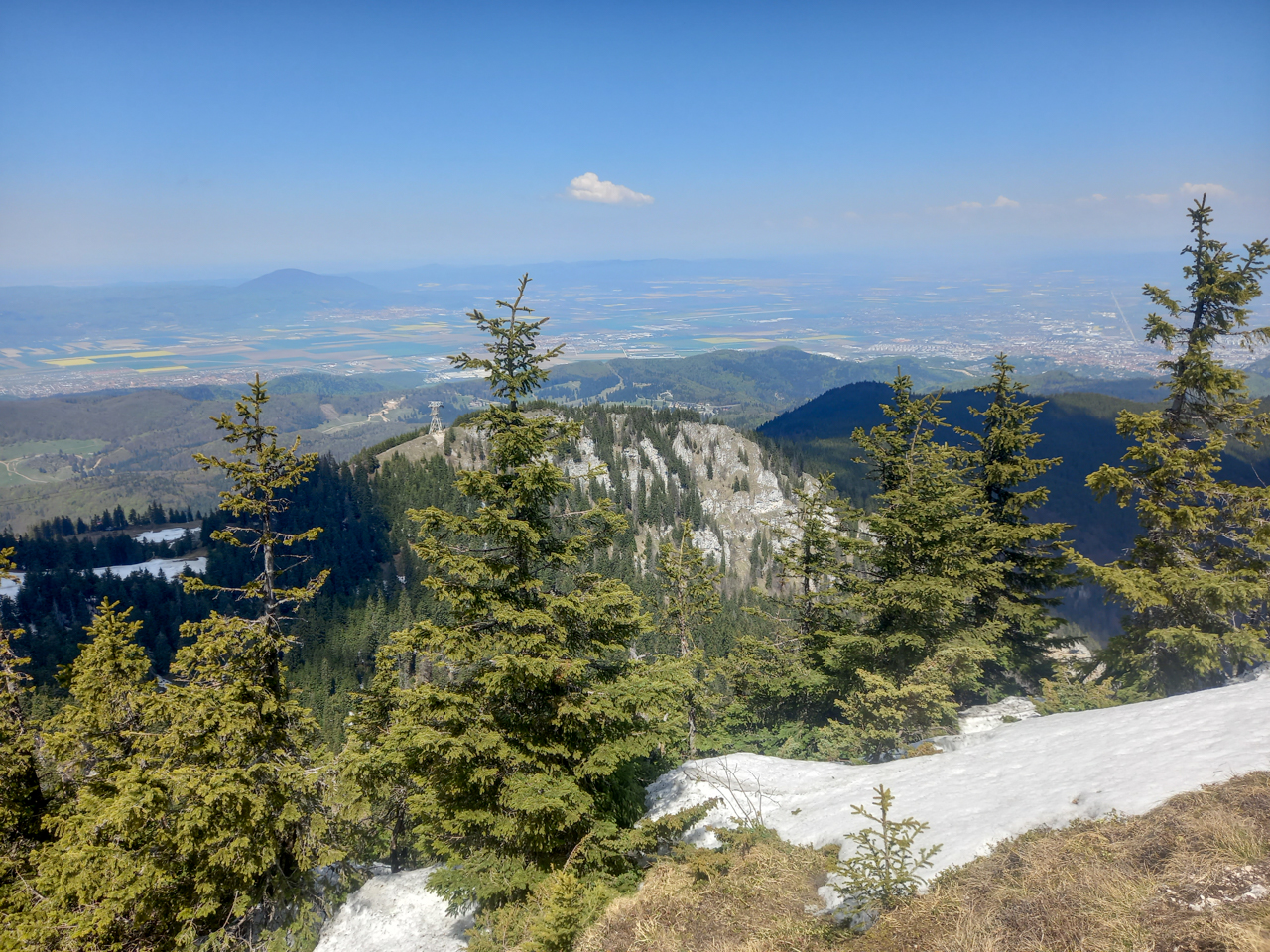
Poiana Brasov © Ádám Tamás
To fulfill our cultural needs we visited the historic old town of Brasov where we were fascinated by the well maintained medieval buildings such as the gothic-style Black Church and the Council’s House.
Day 5, May 6
Before breakfast we had a short excursion in Magura hoping to see some of the colorful birds such as the European Goldfinch and Common Linnet. We were lucky to see both of them well and we also added some new birds to our list. A beautiful singing male Common Redstart welcomed us in the hotel’s backyard.
We spent the rest of the morning in the dry oak forest near the Dumbravita fish ponds, where we added more new bird species to our list. All three potential Phylloscopus warblers (Common Chiffchaff, Wood Warbler and Willow Warbler) were seen and photographed. Above the small clearing a soaring pair of European Honey Buzzard showed well. These birds might have been the firsts of the year in this region because they are back very late from their wintering grounds. While we were walking slowly a stunning male Red-backed Shrike turned up on a hawthorn giving a nice opportunity to take some really good images.
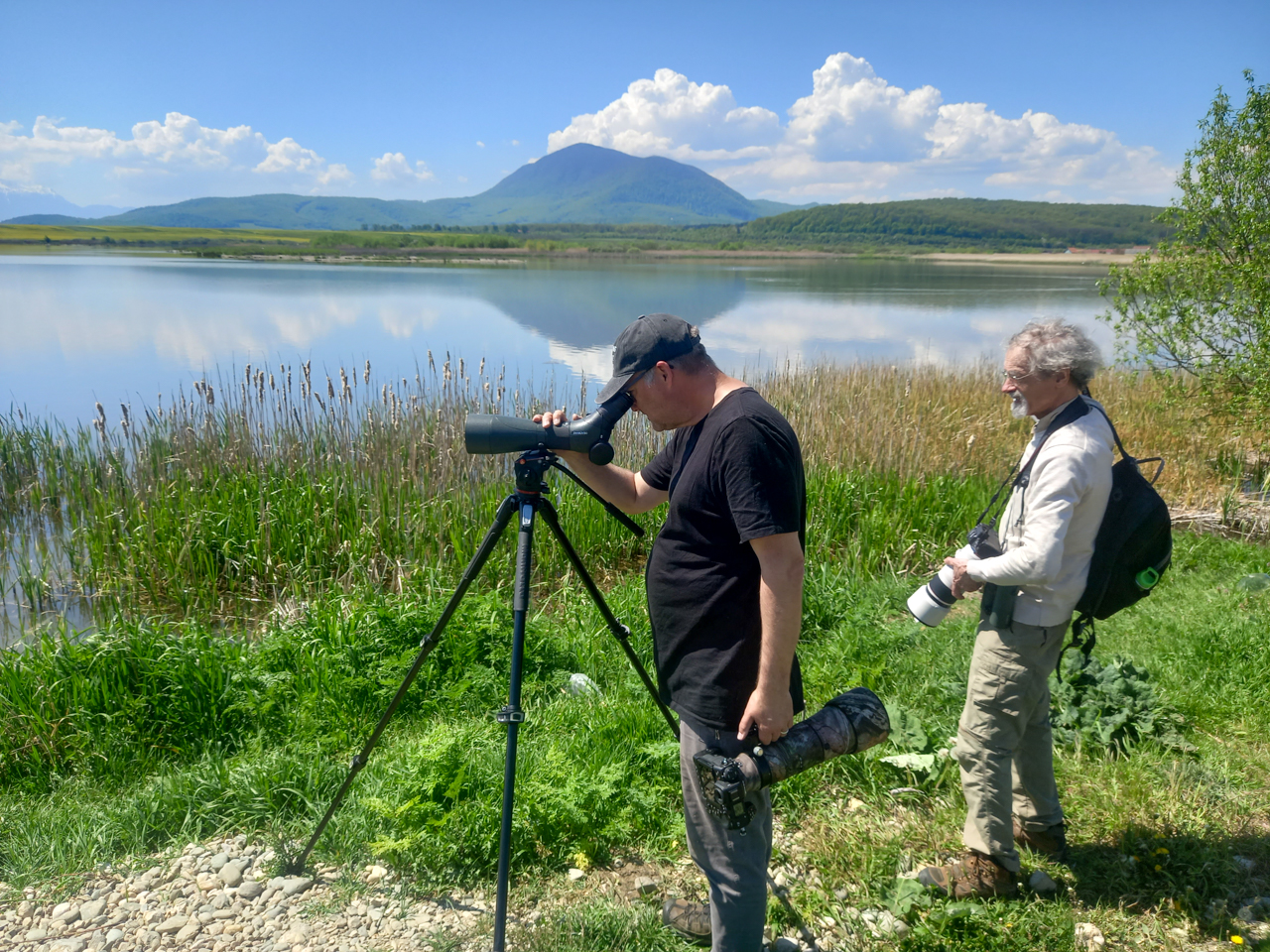
Dumbravita fishpond © Ádám Tamás
Neither the tricky Eurasian Golden Oriole nor the Icterine Warbler didn’t let us to approach and take some decent photos on them but the Lesser Spotted Woodpecker and a pair of Eurasian Wryneck showed themselves well. A pair of Eurasian Hobby were playing in the air but were quite far to be able to get them on the screen.
The three hours long afternoon birding had produced as many as 64 species at the fishpond. We flushed three Grey Partridges while walking on the dirt road by the lakeside. Most of the possible reed warblers were seen or at least heard several times in the reedbed. The first Marsh Warbler had arrived from Africa and sang its variable song away from the dense vegetation. Great Reed Warbler, Sedge Warbler, Savi’s Warbler and Common Reed Warbler were all numerous in suitable habitats. We saw some Western Yellow Wagtails and Whinchats too on setaside field. The lake was full of waterbirds. Caspian Gulls, Common Terns, Black-headed Gulls were occupying their nesting site on artificial islands. Black Terns and Whiskered Terns were abundant while we could spot only two individuals of White-winged Black Tern and two Little Gull, respectively. Shorebirds were represented by a single Dunlin and a Common Sandpiper. Displaying Great Crested Grebes with their magnificent plumage were also attracted our attention.
After a successfull fishpond birding we decided to visit the nearby famous Bran’s Castle. After looking around in the castle we stopped by the castle’s park to enjoy a feeding pair of Eurasian Nuthatch. At least three recently fledged chicks were begging for food. A nice-looking Marsh Tit and a singing Serin were also new to our list.
Day 6, May 7
After breakfast, we said goodbye to the mighty Carpathian Mountains and headed southeast, towards the Black Sea. En route we saw some new birds from the highways. On a puddle on an arable field a Ruddy Shelduck was foraging but unfortunately we had no chance to stop and have a better look on it. Our following accommodation was in the most famous birding spot in the Dobruja region, in the village of Vadu. After unpacking we immediately went birding at the salt marshes near the village where we saw many new species. The well-known Red-footed Falcon colony has already begun to form in the acacia plantation near the village.
A huge foraging mixed flock of swallows surprised us in the strong wind including two European Red-rumped Swallows, hundreeds of Sand Martins, Western House Martins and Barn Swallows. Black-winged Stilts, Pied Avocets and Wood Sandpipers, Curlew Sandpipers, Northern Lapwings were all seen well on the shallow alkaline water bodies. We managed to see a few flyby Little Gulls, Black-headed Gulls, Pallas’s Gulls, Caspian Gulls and Common Terns. A colorful summer plumaged Red-throated Pipit was on the bank of the pond where we also saw many ducks such as Common Shelducks, Red-crested Pochards and Ferruginous Ducks. Despite the chilly wind the reedbed was full of life. Bearded Reedlings, Savi’s Warblers were all heard but not seen properly due to weather conditions. A neat pinkish breasted Lesser Grey Shrike popped up onto a bush not too far from us. On the way back to the hotel we noticed a rather noisy Syrian Woodpecker that was pecking on a concrete electricity pole.
We spent less than two hours birding but put dozens of new species to the checklist of our trip. By the table we discussed the plan for tomorrow and all the target species that are probable to be seen.
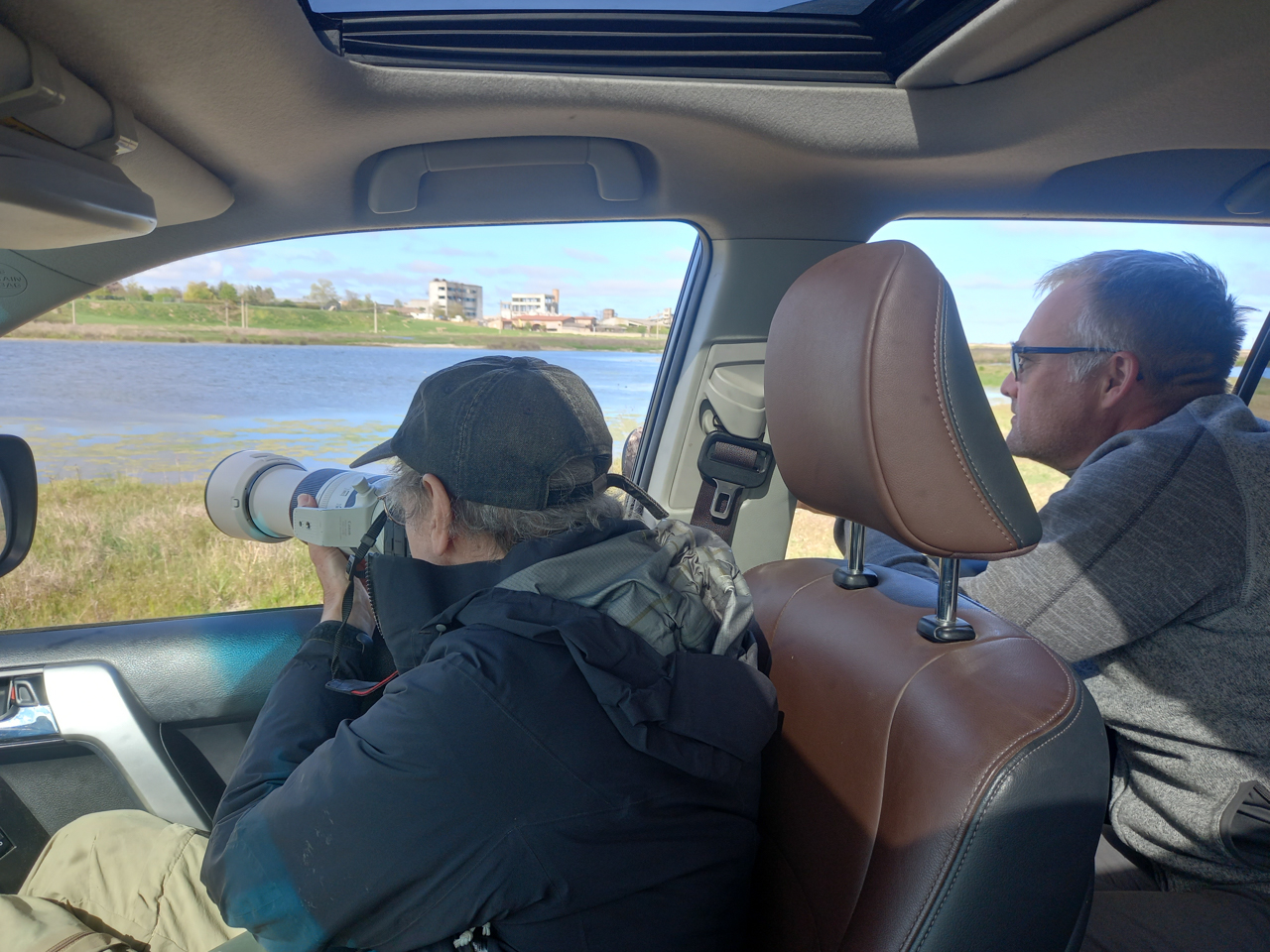
Dobruja Vadu wetlands © Ádám Tamás
Day 7, May 8
We had a short morning walk between crop fields near the hotel. Luckily yesterday’s strong wind finally stopped, giving us a great opportunity to listen to bird sounds properly. After a few hundred meters we immediately noticed that the first European Bee-eaters had arrived as well as the magnificent European Rollers. An elegant European Turtle Dove perched on electric wire at a distance but later on we managed to see this nicely patterned bird better.
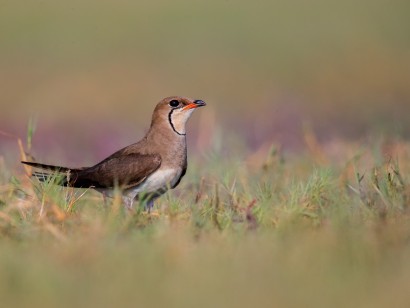
Wetland birding during the morning has resulted in a good variety of waterbirds. A flock of 20 Collared Pratincoles were foraging around us on the road. Bearded Reedlings, Reed Buntings and Savi’s Warblers were singing and constantly moving around us. The first Garganey and Eurasian Teals of the trip were spotted among other dabbling ducks. Great Bittern and Water Rail caused some annoyance because we were unable to see them although they were calling from the reed just in front of us. Hundreds of shorebirds in a mixed flock were wading in shallow water. Common Ringed Plovers, Little Stints, Curlew Sandpipers and Ruffs were scanned by the participants but no rarity spotted. Later we visited the shore of Black Sea. Mediterranean Gulls, Ruddy Turnstones and two Sandwich Terns were seen.
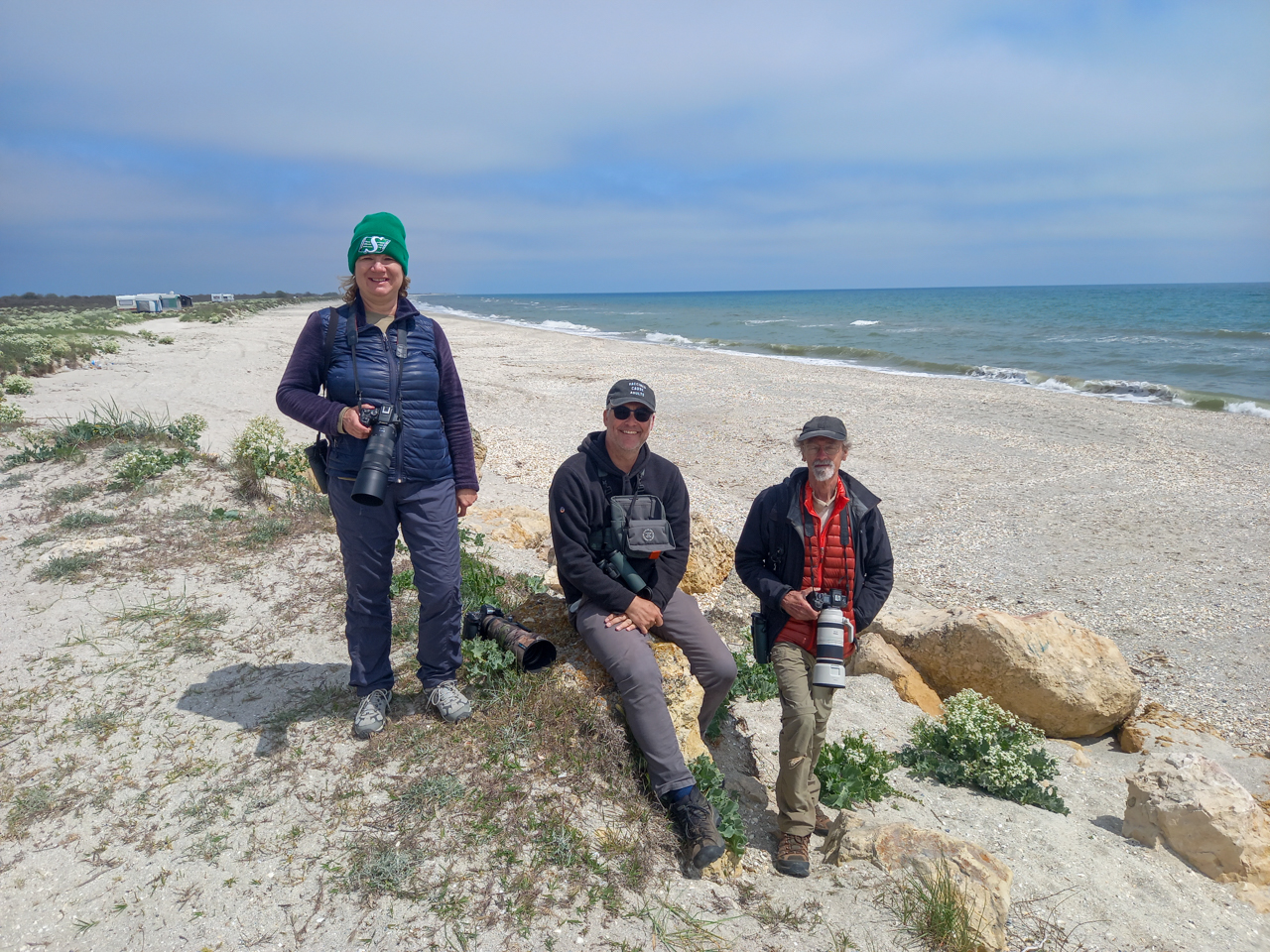
Black Sea shore © Ádám Tamás
For the afternoon we had a plan to check the steppland birds so we decided to drive 20 km on a rather challenging dirt road. It was definitely worth choosing a little uncomfortable drive because we saw 4 lark species well along the road. Greater Short-toad Lark, Calandra Lark, Skylark and Crested Lark were all seen as well as the Tawny Pipit. Foraging Long-legged Buzzard and a Montague’s Harrier were also spotted on arable land. Despite our effort we invested in seeing a Common Quail, it remained an invisible bird.
Late afternoon we arrived at the famous quarry of Sitorman. A couple of years ago this site became famous for its Rosy Starling colony however, we couldn’t yet expect to see any by this time of May though. From the top of the quarry we managed to have a good view of some nice birds such as the Pied and Isabelline Wheatear, Roller and many Common Hoopoe.
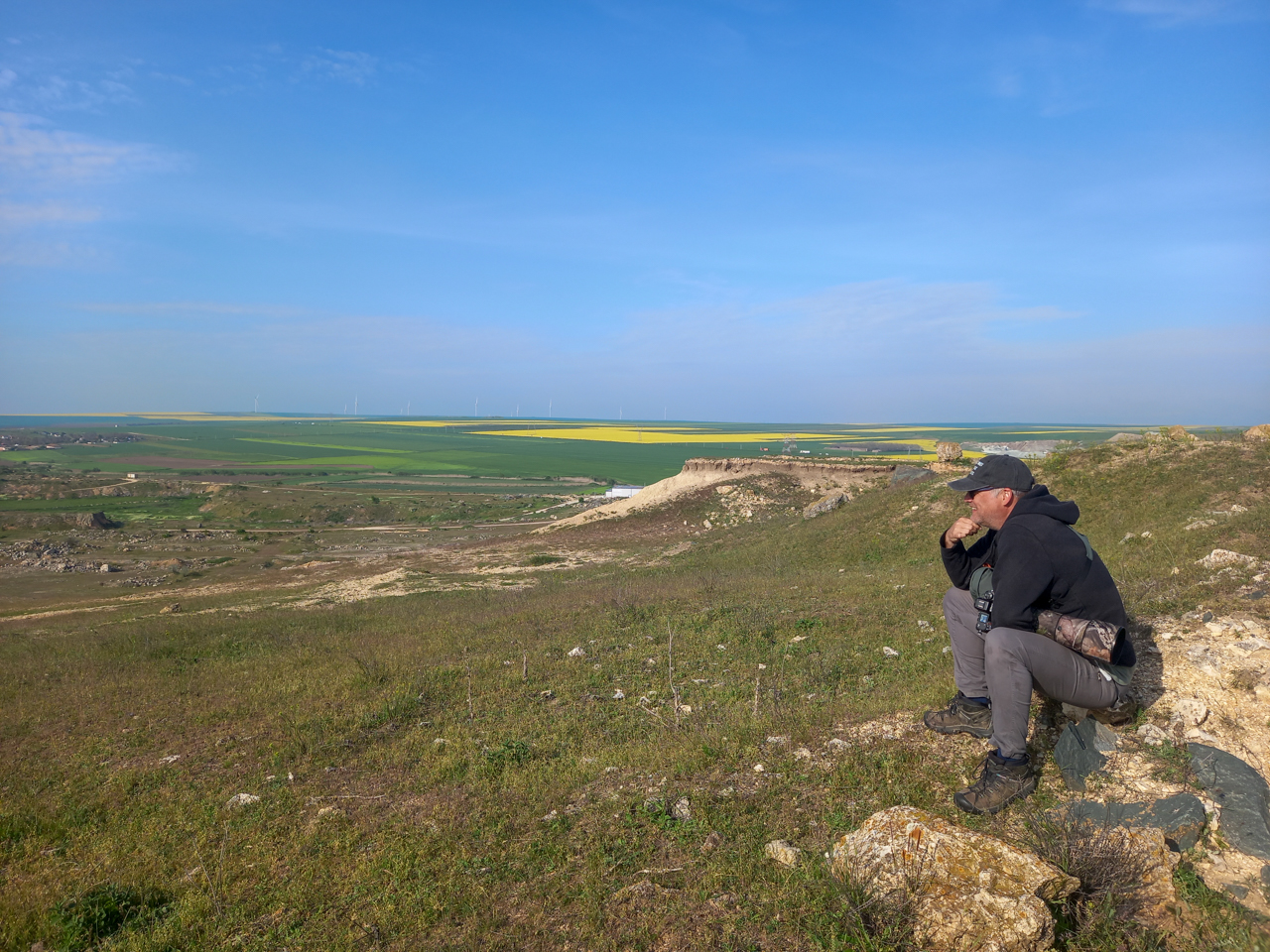
Sitorman Quarry © Ádám Tamás
Day 8, May 9
Similar to yesterday afternoon, this morning we set off to observe the bird species of the Dobruja Steppe. We drove on dirt roads between small villages and experienced very good bird movement. In the area of Gura Dobrogei we saw a pale morph Booted Eagle mobbed by a male Levant Sparrowhawk. The first Ortolan Bunting and Cetti’s Warbler also showed themselves nicely, but the Barred Warbler, Eurasian Golden Oriole and Common Nightingale were very secretive, so we were not able to observe them closely. The White Stork nests we came across had significant sparrow colonies in each of them, mainly House Sparrow and Spanish Sparrow.
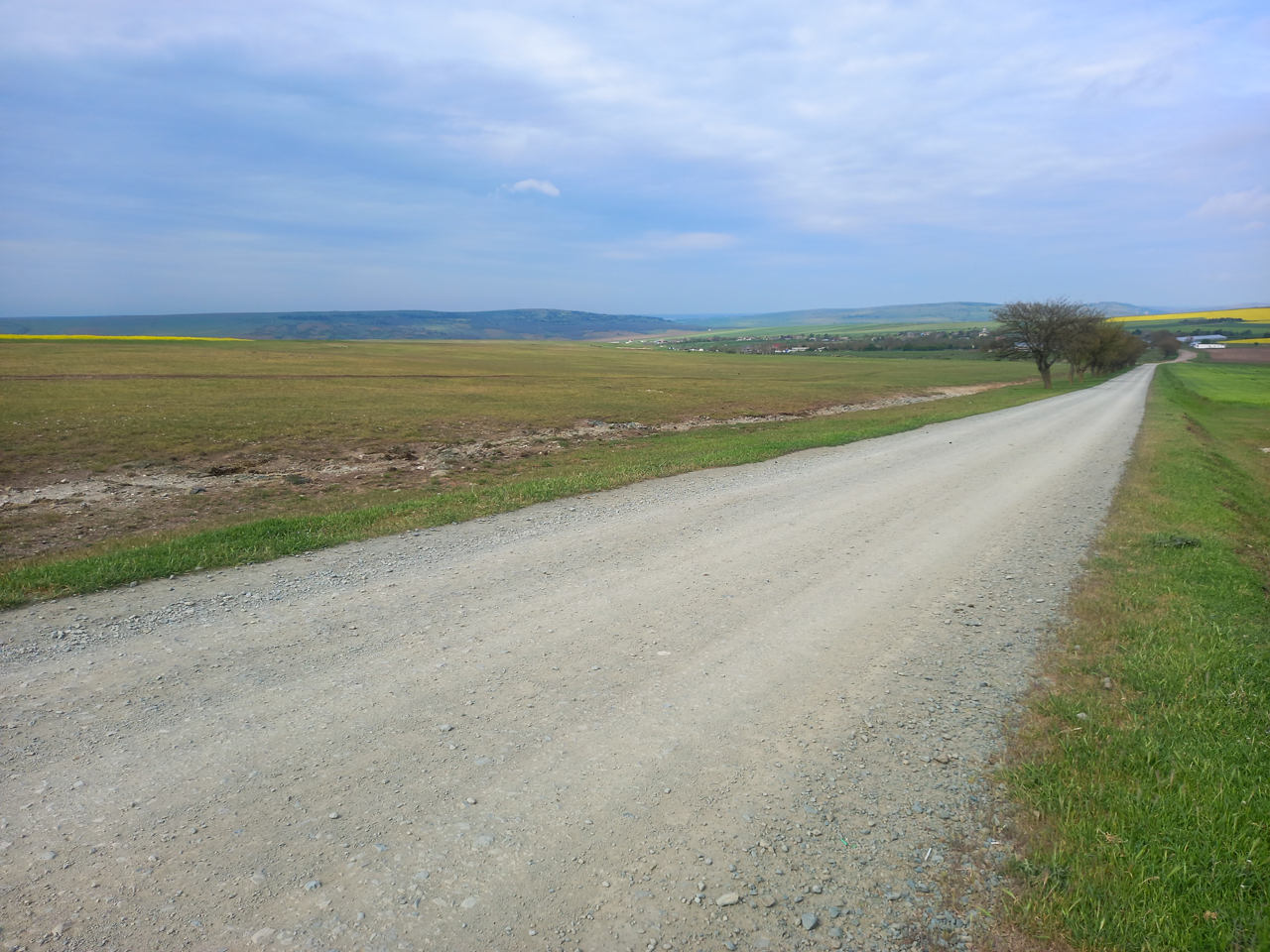
Gura Dobrogei steppland © Ádám Tamás
In the afternoon, there were unfortunately a lot of tourists in the Cheia Gorge, famous for its spectacular geological formations, so the birds were also more shy. The first Woodlark of the tour flew over the area right above our head, and a nearby Northern Wheatear perched very close to the rocks. A Eurasian Hobby flying over is also worth mentioning. In the second half of the afternoon we returned to the wetlands around Vadu, where bird movement was more moderate. Due to the high water level, Lake Tuzla and Lake Nuntasi were not optimal for shorebirds, but the sight of hundreds of Little Gull and Black Tern flocks made up for it. On the way a passing immature Pallid Harrier was the most exciting bird species. The Greater Flamingo, as one of the target species, was not easy, but in the end we managed to get a single individual before sunset. We finished our day with finding a cute Little Owl pair in an abandoned house.
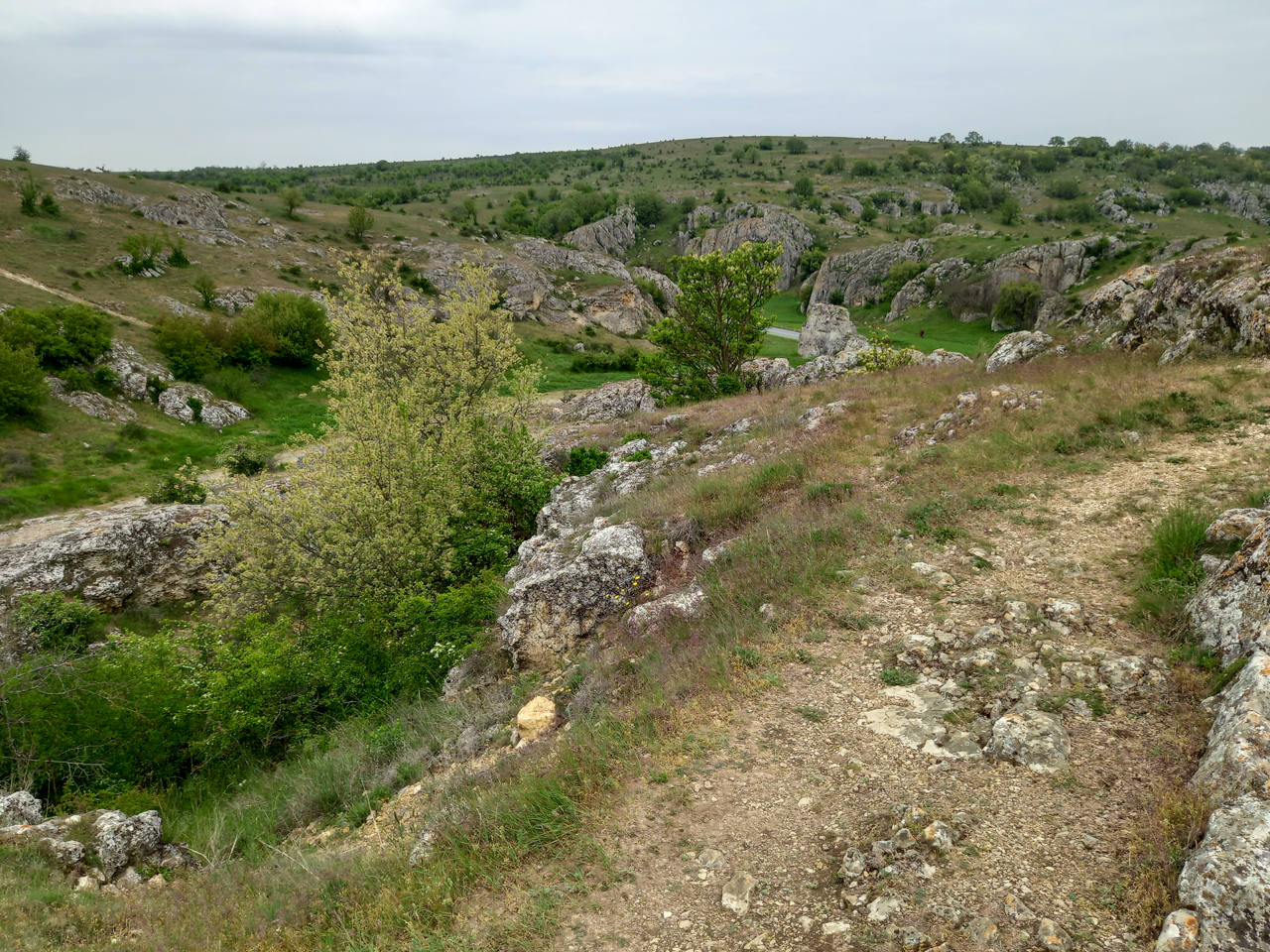
Cheia Gorge © Ádám Tamás
Day 9, May 10
After leaving Vadu we headed north, where we got to know the birdlife of the vast reed beds and shallow saline lakes. Even the pouring rain did not stop us from enjoying the song of the Paddyfield Warbler, which is very common locally. The lakes and marshes were also full of life. Eurasian Spoonbills, Glossy Ibises, Purple Herons were feeding on the edge habitats and the shorebirds were represented by migrating Common Greenshank, Wood Sandpiper, Ruff, Spotted Redshank and Northern Lapwing. A pair of Eurasian Wigeon surprised us because by this time of the year they are not supposed to be here but on their breeding ground. From the direction of Lake Histria we headed towards the well-known “Grindul Lupilor” which refers to “Wolf’s Island”, where we came across a beautiful Red-throated Pipit flock on the way. At least 15 individuals were feeding on the freshly mown alfalfa fields along the road. Not far away we also saw a flock of 120 Mediterranean Gulls, which were picking insects in the fields. As we reached the wetlands, we stumbled upon a national rarity. A White-tailed Lapwing in its summer plumage was feeding in the shallow water next to the dirt road. Fortunately, everyone managed to take good photos of it and few local birders saw it as well, who arrived after us when they heard the news.
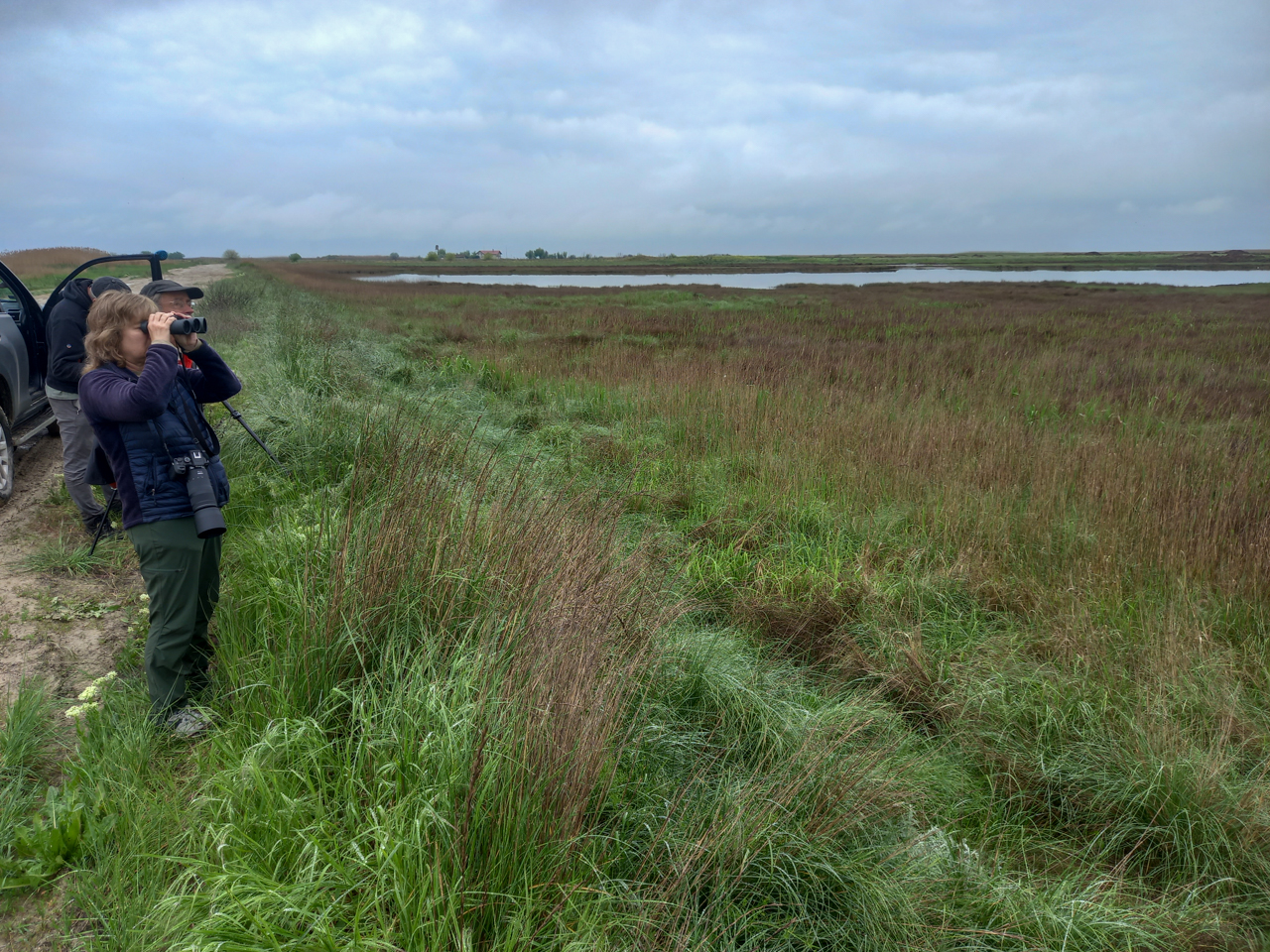
Grindul Lupilor © Ádám Tamás
In the extremely species-rich salt marshes we saw several species that we had not seen before. Caspian Terns, Kentish Plovers, a single Marsh Sandpiper, flyby Eurasian Curlew flock with a single summer plumaged Bar-tailed Godwit among them and many others. Decent flocks of shorebirds were moving everywhere, which we tried to scan thoroughly. Birdlife was definitely sparkling, of which we enjoyed a lot. We decided to have lunch in a magnificent dry oak woodland near Camena. While we were eating a Scops Owl started whistling. We tried to find it but couldn’t. Eurasian Golden Oriole was singing from the canopy in several places and we also saw a Hawfinch. The Sombre Tit, which is typically associated with this type of habitat, was also present, but we couldn’t get a decent photo of it. However, a confiding Long-legged Buzzard was perched on a tree not too far from the road, which we were really happy about. A vigorously singing Ortolan Bunting right next to the road was also an unforgettable sighting.
We arrived in Murighiol late in the afternoon, from where we took a boat to Crisan, where we stayed. This village is practically located in the heart of the Danube Delta, right next to the Sulina branch. The nearly 4,200 square kilometer delta has an incredibly rich wildlife. More than 300 bird species have been observed here so far and the number of fish species also reaches 150. As a UNESCO World Heritage Site Danube Delta is Europe’s best-preserved river delta. During the two hours long boat trip we saw as many as 70 species including many local specialties such as both Dalmatian and White Pelicans, White-winged Black, Black and Whiskered Terns, Black-necked, Red-necked, Great Crested Grebes and most of the Herons. After dinner, we discussed the next day’s chances and plan and we were all very excited about the next day’s promising birding.
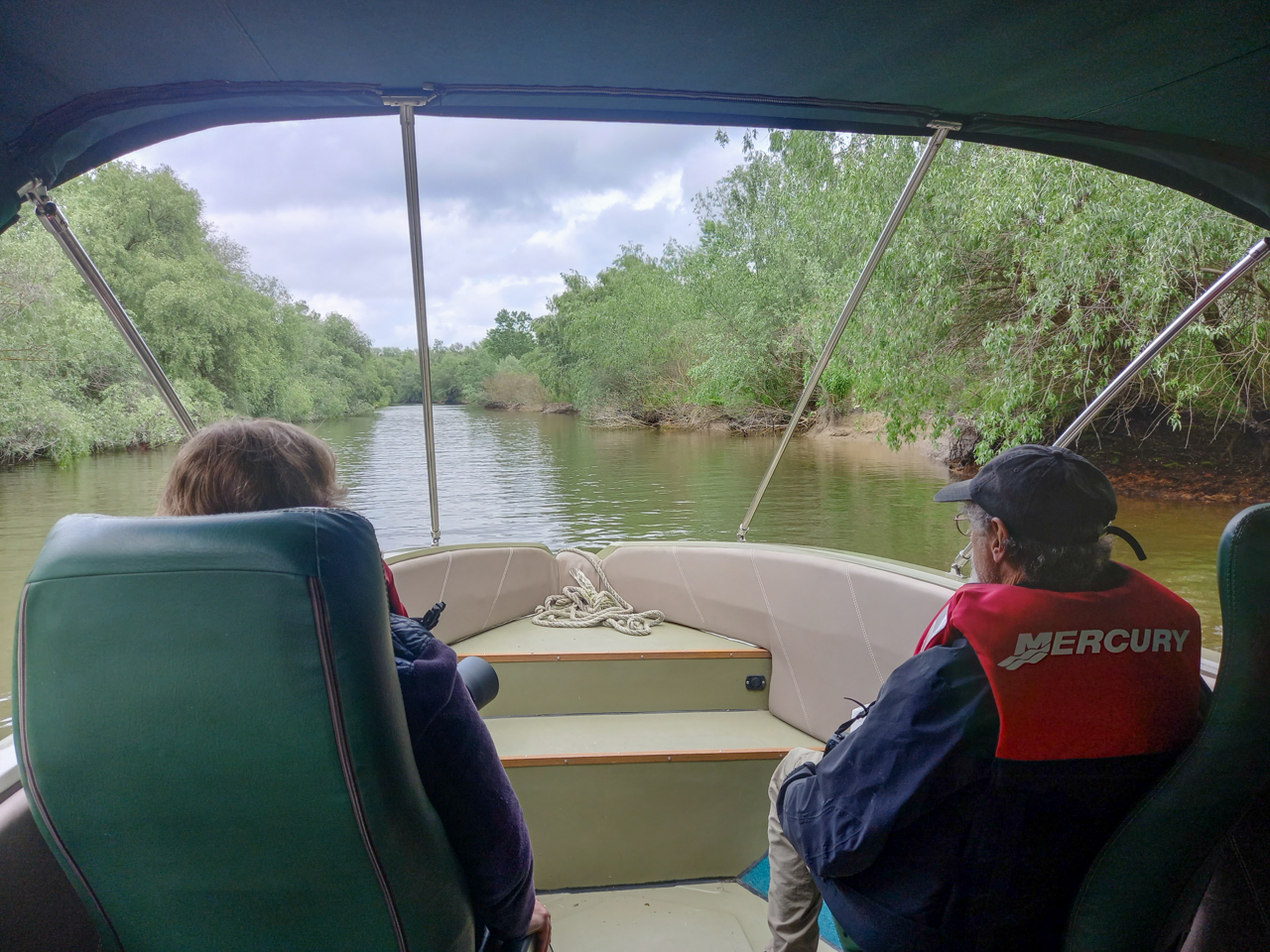
Danube delta © Ádám Tamás
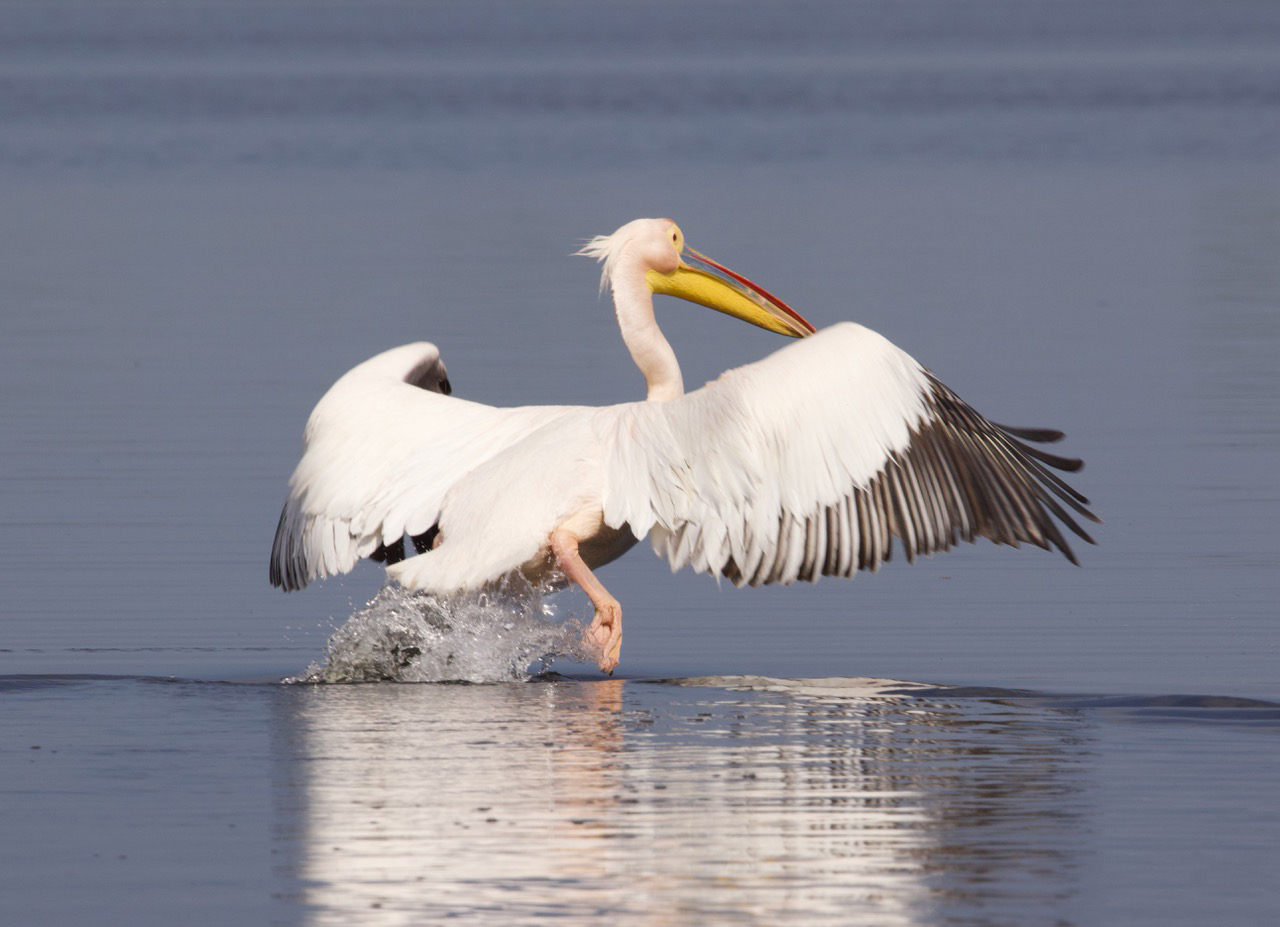
White Pelican © Robert Moore
Day 10, May 11
Luckily, today we were able to explore a new area of the delta by boat in excellent weather conditions. We were birding in the extensive canal network of the area, where by the end of the day it seemed that the three most common songbird species were Garden Warbler, Thrush Nightingale and Common Redstart. We saw a lot of them everywhere. The Common Redstart was especially common where trees had previously been burned by fire and there were many cavities available for it to nest. Due to the old willow and poplar trees the area is a stronghold of woodpeckers. The most common woodpecker around here was without doubt the Gray-headed Woodpecker.
Diving ducks were represented by Ferruginous Ducks and Common Pochards providing good views while feeding. Thanks to our professional local boat driver who had a great knowledge of the area we had seen many species at good light conditions from close distance. One of the most sought-after species was the Common Kingfisher which we could see many times and also found several nest holes in the banks of the canals. We just couldn’t get enough of its bright azure blue color that is just unbelievable.
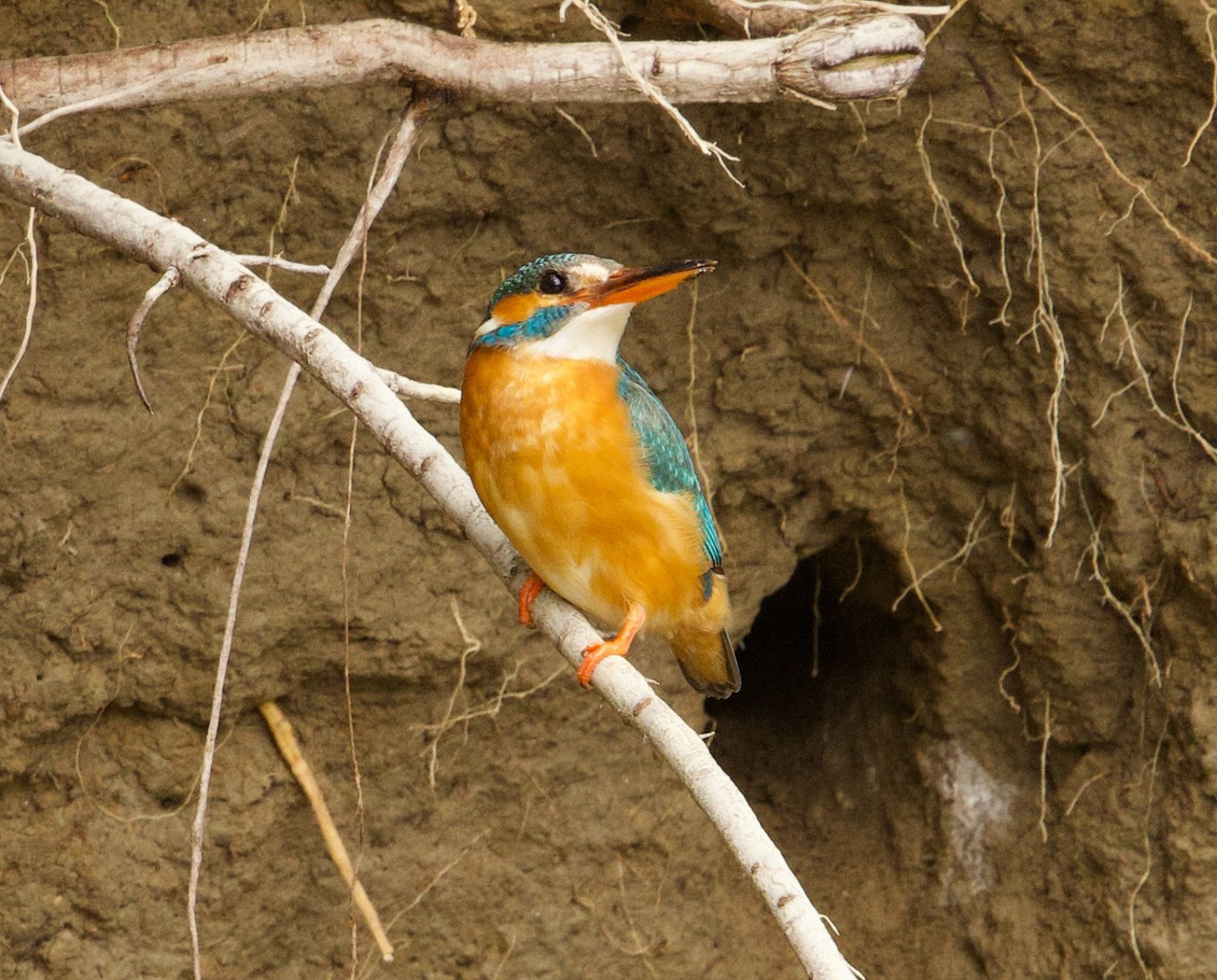
Kingfisher © Robert Moore
The highlights of the day were an adult White-tailed Eagle, the foraging and soaring hundreds of Pelicans, Tern and gull colonies on Water lily, several Bearded Tits and many Common Cuckoos. We finished our day with a very delicious meal thanks to our hosts.
Danube Delta © Ádám Tamás
Day 11, May 12
Our last full day in the delta was rather unforgettable. We spent the morning in the Caraorman part of the region. Having a good view of Eurasian Golden Oriole was still a very challenging task despite our efforts. The first very tame foraging Eurasian Spoonbill gave us an exceptional experience. We could watch this truly amazing bird from less than 20 meters for a quarter of an hour. Glossy Ibises were numerous along the canals and were not afraid of our approaching boat. On the grazed grasslands by the canals Northern Lapwings appeared and luckily some of them landed on the bank of the canal. Garganey and Godwall were spotted and had a fairly close encounter with both. On the way back from morning birding we stopped by a small marsh where we saw the one and only Little Grebe pair of our trip. 3 pairs of Red-necked Grebes were here as well as some Great Crested Grebes.
Afternoon birding had offered some new experiences. After lunch we headed northwards from our accommodation in order to add some new species to our list. Surprisingly we had not seen any European Stonechat which we finally managed to see. The most memorable sighting was the random finding of an Eurasian Penduline Tit nest. Its owner was looking out from its hanging nest and let us approach him carefully. We were all glad to have the opportunity to have a little insight into their life. Before the storm arrived at the delta we were lucky again to see a soaring pair of European Honey Buzzard and a pair of Black Stork. As dark clouds were approaching the birds’ behaviour changed. They became less active therefore we could hardly see any movement. An hour-long rain refreshed us as well as the birds. As we were getting closer to dusk some songbirds either started to sing loudly or still dried its feathers. Great Reed Warblers, Icterine Warbler, Common Reed Warbler, Great Tits, Long-tailed Tits, Thrush Nightingales, Common Reed Buntings, some woodpeckers were popping up and forage actively. Black-crowned Night Herons, Squacco Herons and Little Egrets were all abundant by the canals. Eurasian Hobby and Common Kestrels were arranging their wet plumage on treetops. Although we were a little late for dinner, we enjoyed our last evening in the delta very much.
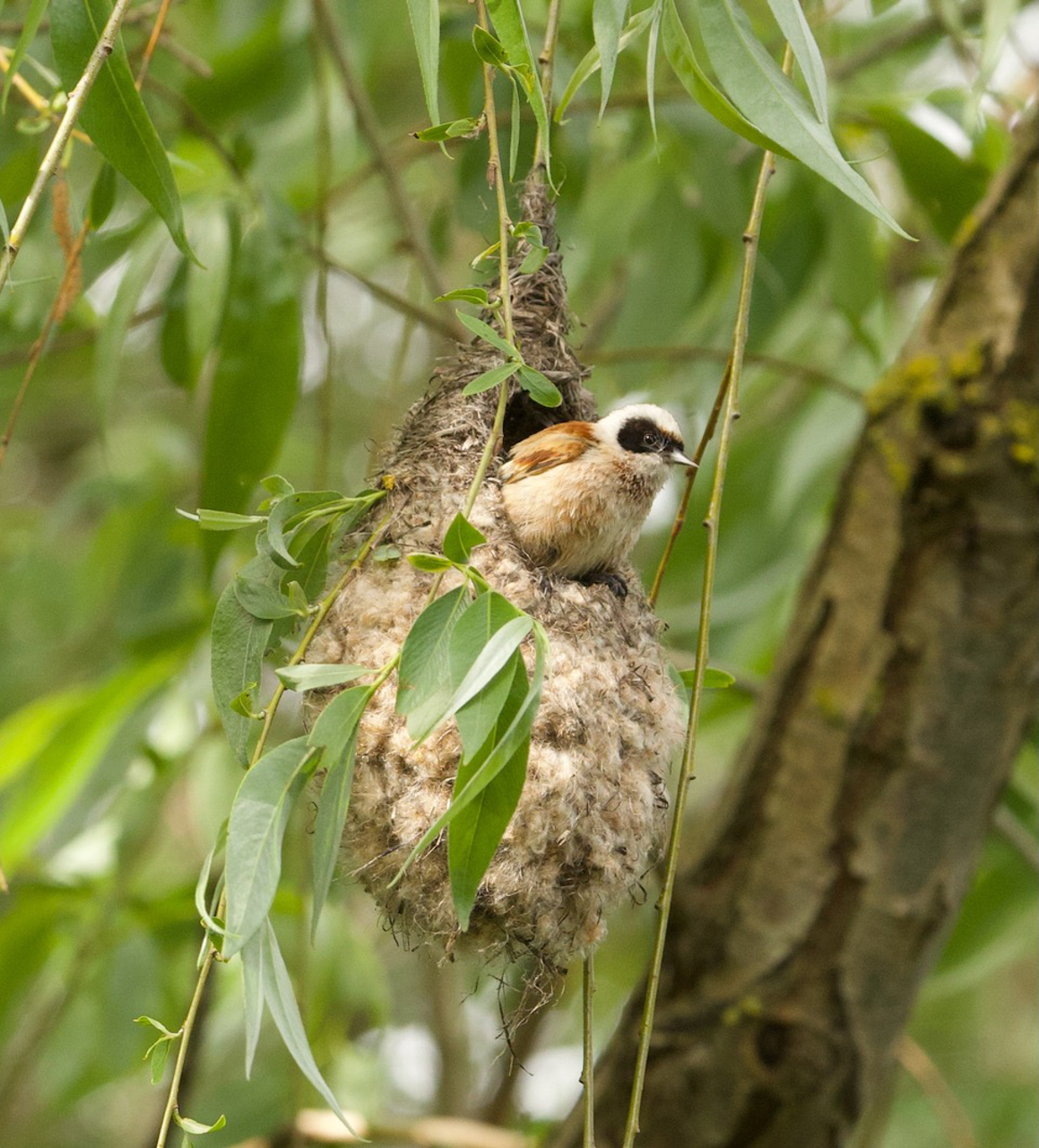
Penduline Tit © Robert Moore
Day 12, May 13
After breakfast we said goodbye to our hosts and then a 3-hour boat trip back to Murighiol followed. We stopped at several places to photograph birds. Already near Miurighiol, we managed to hear Eastern Olivaceous Warblers singing in two places, and in one place we were even able to photograph it. The Thrush Nightingale, however, did not show itself. It sang persistently in the dense undergrowth, but it was almost impossible to catch a glimpse of it. We stopped a few more times because of Spotted Flycatcher and a nicely posing Squacco Heron, but we still tried our best to leave for Otopeni on time.
We agreed with the participants that we would stop at a few more places to birdwatch on the way to our airport accommodation. The first place was the southern edge of the famous Babadag forest, where we could watch European Bee-eaters for a long time perching very confidently on the bushes in the strong wind at a pasture. Long-legged Buzzard and Booted Eagle also appeared here surely because of the Souslik colony living here. An overflying White-tailed Eagle also deserves a mention as well as the nervously flying Ortolan Bunting, which most likely nested at the edge of the forest.
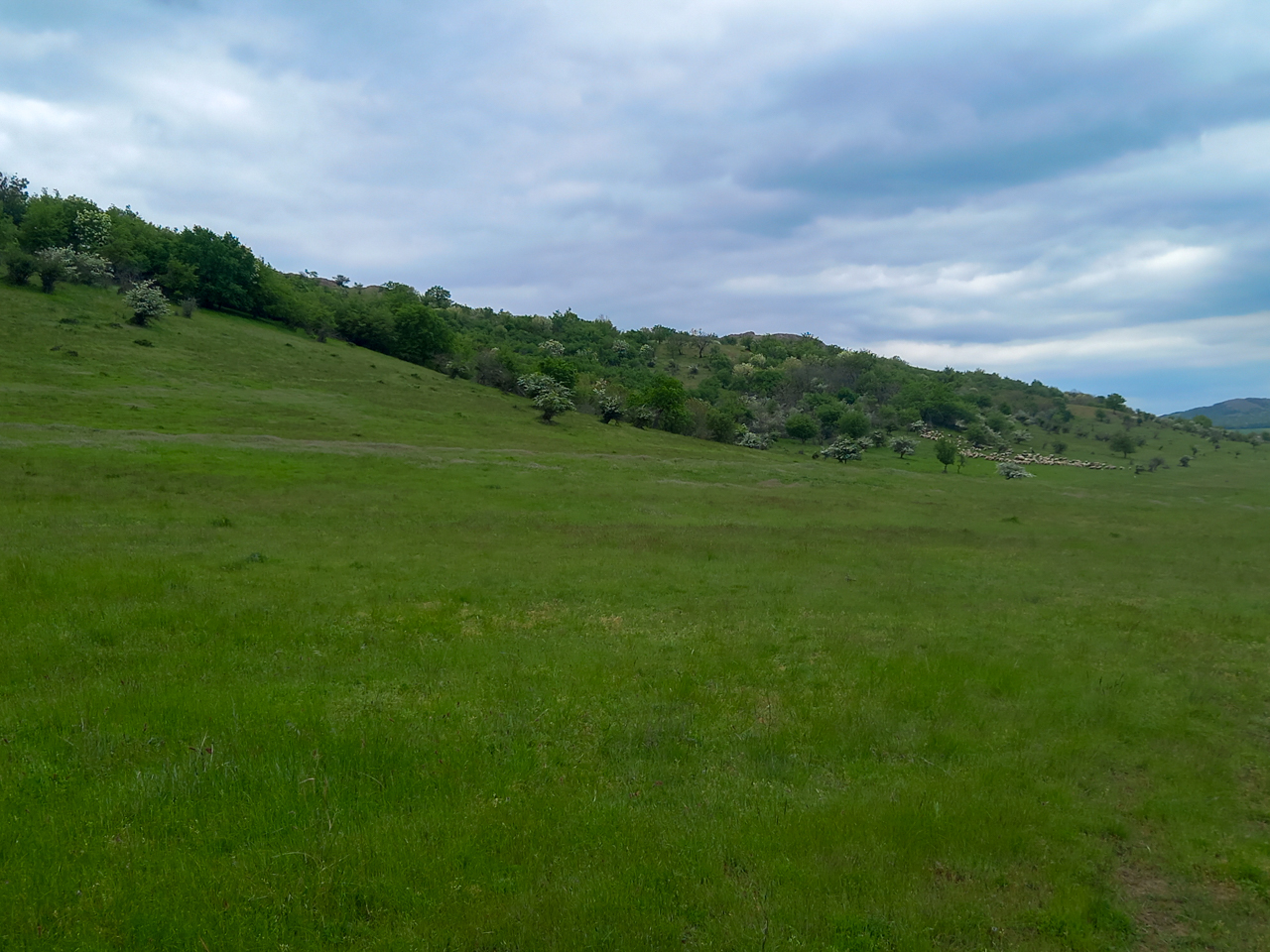
Babadag forest © Ádám Tamás
Later we returned to the dry oak forests near Camena with the hope that this time we would be able to see and photograph the Sombre Tit and other species better. We were lucky because we saw 2 birds up close, which perched nicely on the dry bushes, thus providing an unforgettable experience for everyone. European Roller and Common Hoopoe also awaited us close and luckily a Woodchat Shrike also appeared on the stony, bushy hillside, which we had not seen before, so our list was expanded with a spectacular new species. Finally we managed to take a decent photo of a pair of Woodlarks perched on the lower side branch of an oak tree. We also saw them really well this time during the trip. It rained almost the entire 3 hours long drive, so we did not make any more detours.
Our tour has come to an end. During the two-week, somewhat tiring, but very successful tour, we spotted a total of 203 bird species and most of them were seen or at least heard by all of us. We all came away with enriching experiences and pleasant memories.
Day 13, May 14
Some of us left the hotel at dawn to get to the flight but others stayed in Bucharest for a few more days doing sightseeing.
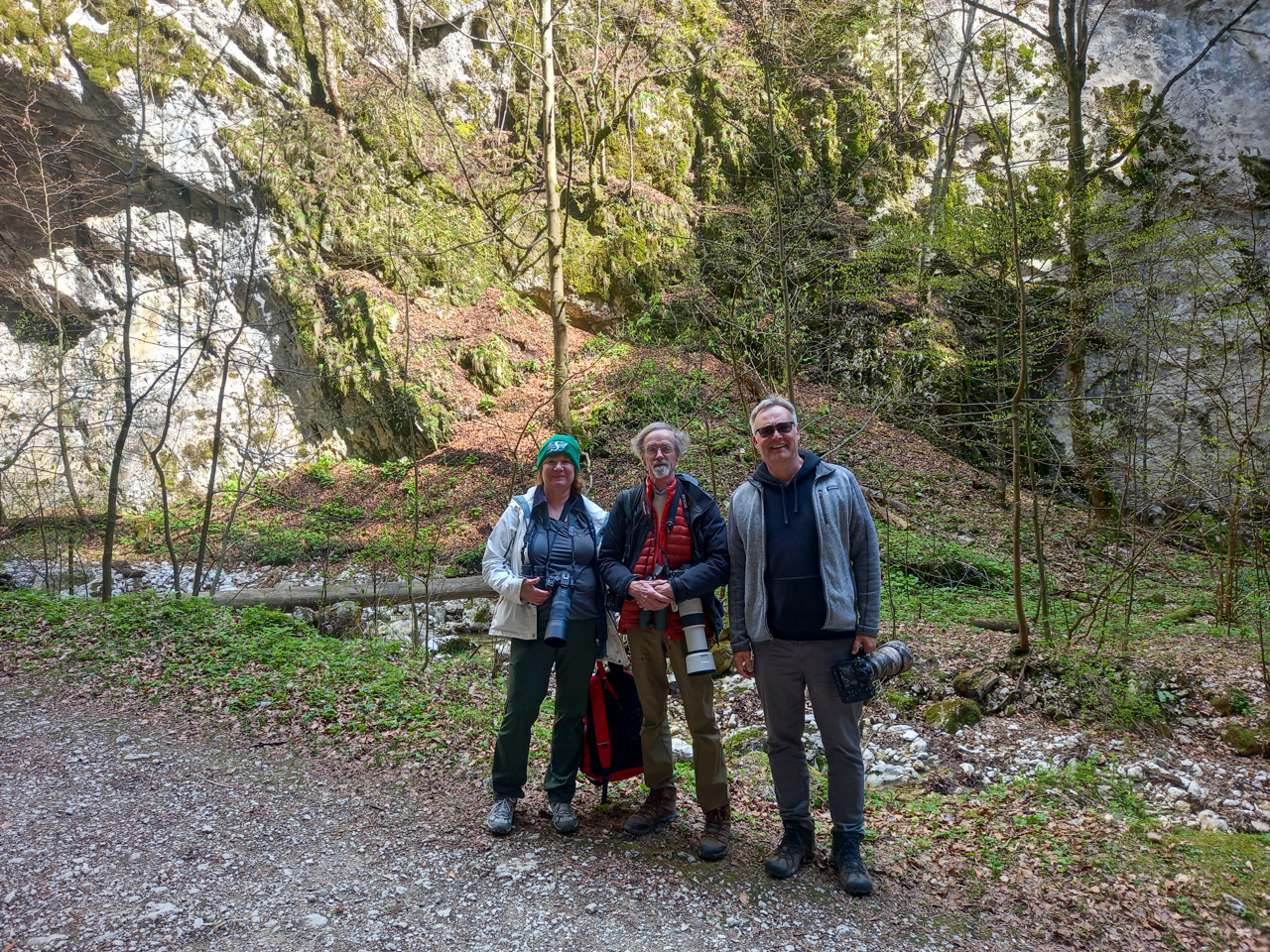
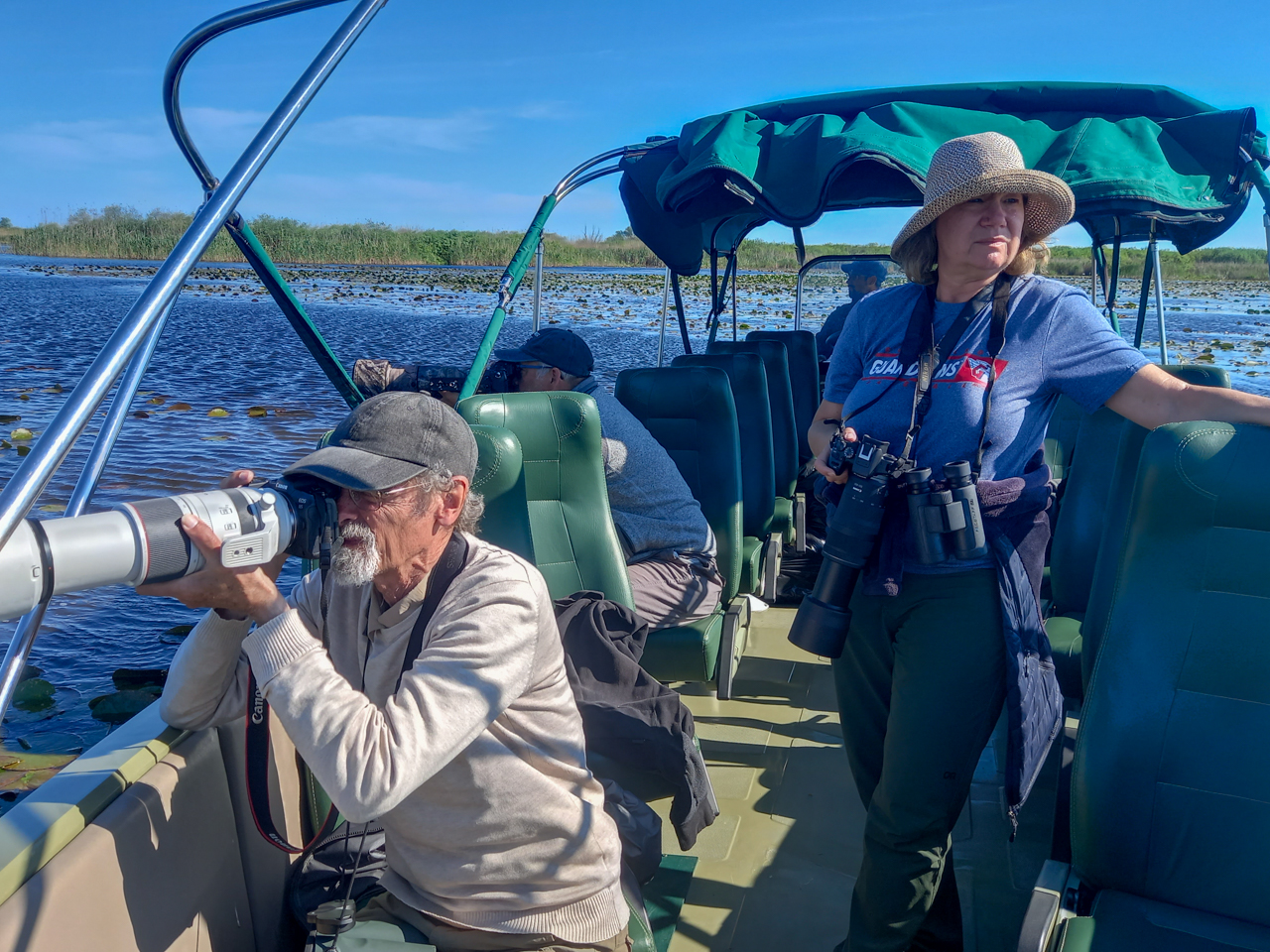
Our group in Zarnesti gorge © Ádám Tamás