Quebec in Fall Trip Report (Sep 22 – Oct 1, 2026)
September 23rd – Quebec City
During our first morning of the trip we headed west of Québec City to the Léon-Provancher Marsh Nature Reserve. We took a nice sunny walk along the marsh as well as by the river and through some woods. After a Pileated Woodpecker welcomed us upon arrival, we were lucky to get great looks at a Green Heron feeding on the marsh edge while a Cooper’s Hawk chased songbirds in the background. We also saw our first Rusty Blackbirds, Green-winged Teals, and Pied-billed Grebes of the trip. Throughout the walk we were pleasantly harassed by hungry Black-capped Chickadees and White-breasted Nuthatches wanting to be fed. When we came by the river, there were quite a number of Great Blue Herons spread out along the edge of the beautiful St. Lawrence and a young Bald Eagle soaring above.
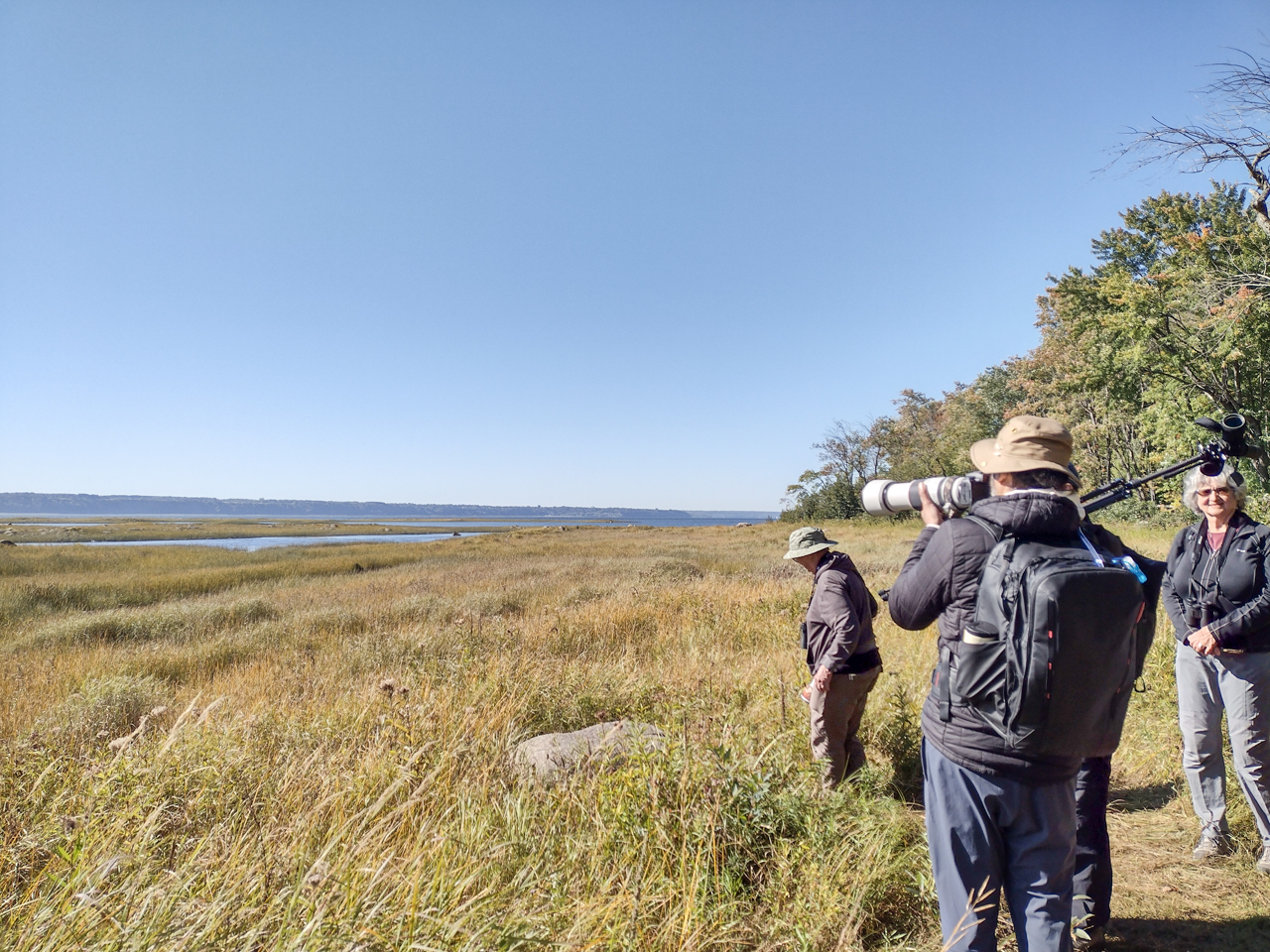
Léon-Provancher Marsh © Maurice LeBlanc
We then headed to the east side of town to bird the Pointe de Maizerets. This big bay was at low tide with lots of Gulls, Geese, Great Blue Herons, and four Great Egrets, including two who were feeding quite close to the beach! With the scope, we were also able to spot our first pair of Black-bellied Plovers.
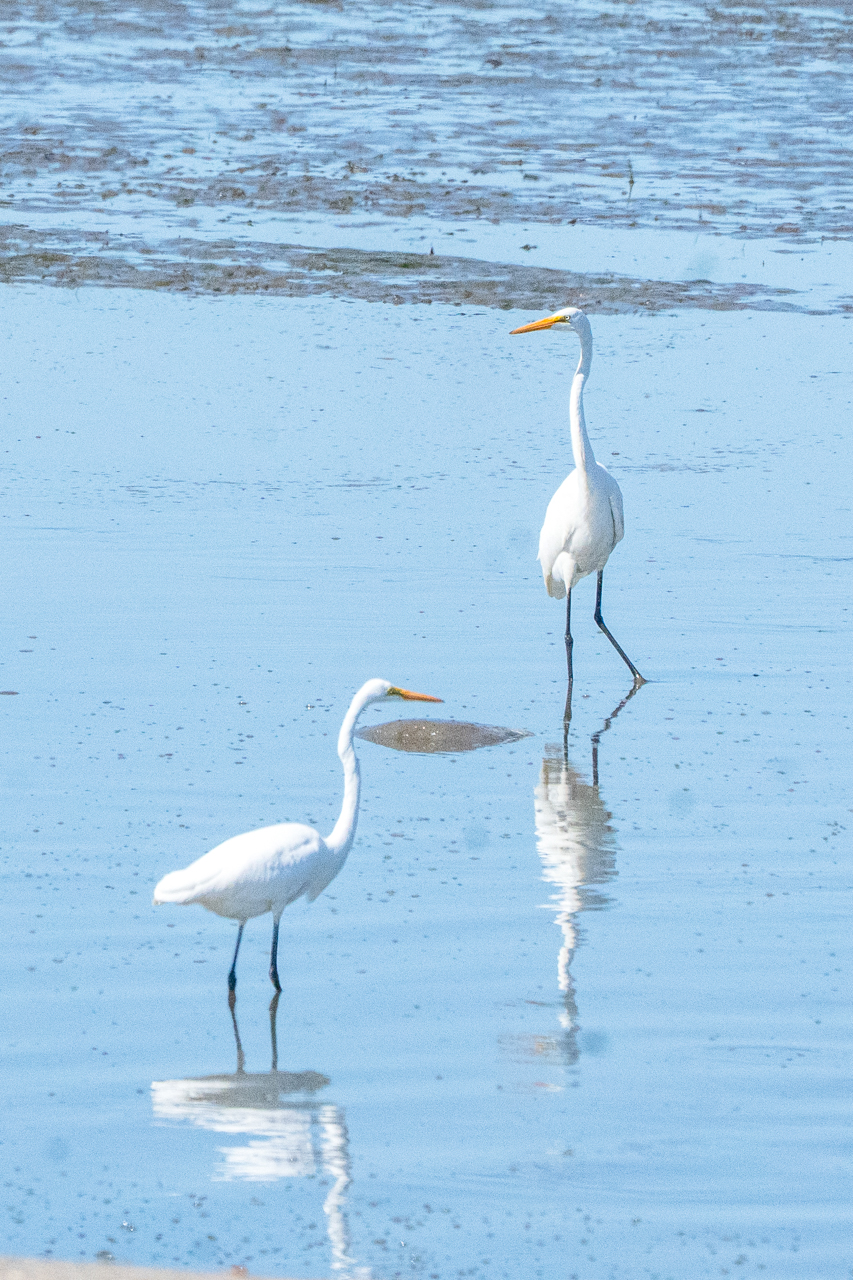
Great Egrets © Carol Labrie
After a nice picnic lunch, we took a short drive to Domaine de Maizerets where we had a lovely walk through tall forest and more open park habitat. It was pretty quiet bird-wise, which can often be the case in the afternoons during fall migration, but the wooded park and arboretum were beautiful and the sun was shining.
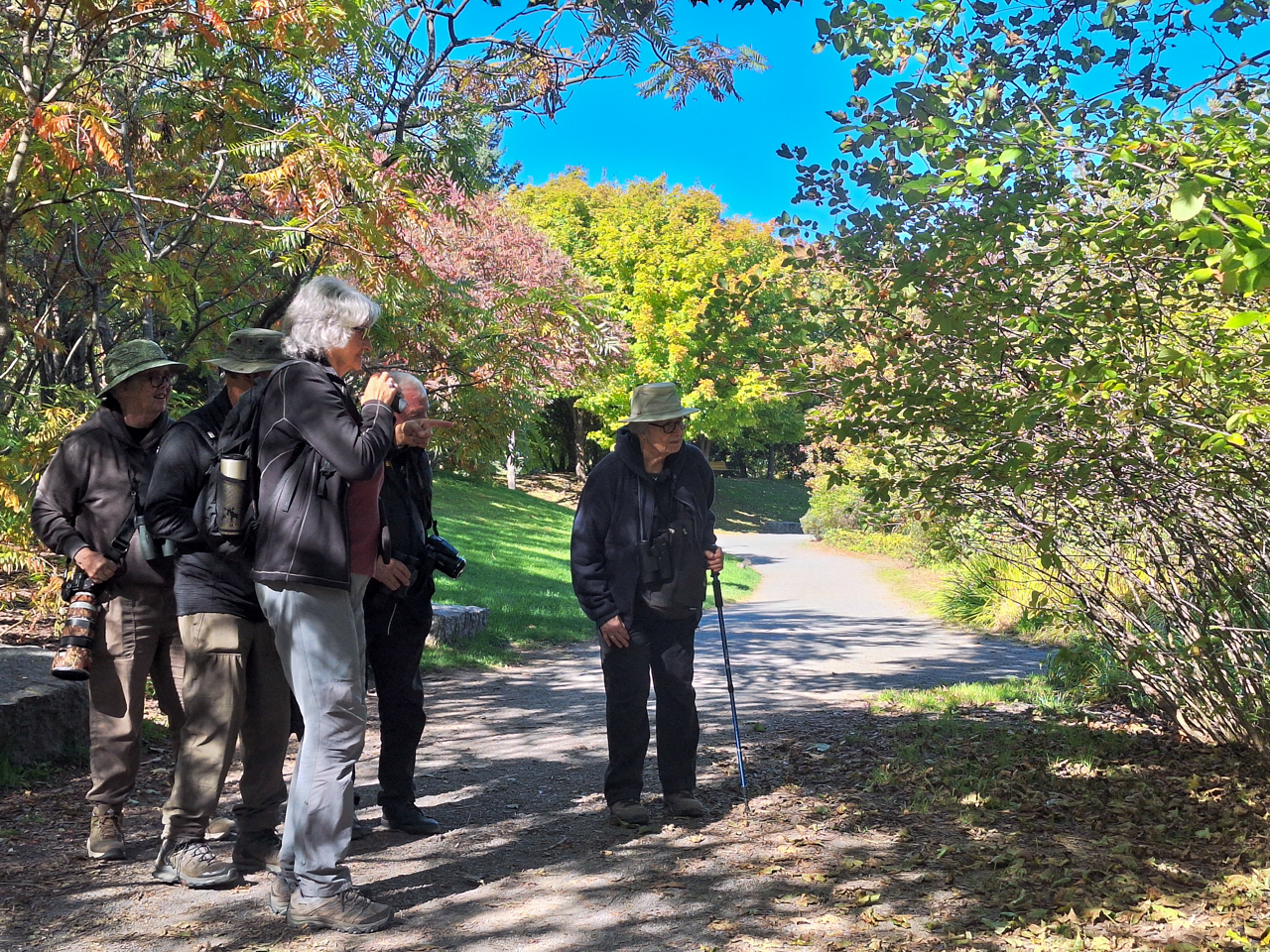
Birding Domaine de Maizerets © Aaron Brisebois
This concluded a first big day of birding for the trip and we filled our stomachs at a local restaurant, eager to start the journey east towards Tadoussac in the morning.
September 24th – Québec City to Baie-Saint-Paul: Birding Cap Tourmente
After breakfast at the hotel, we took off for an exciting and gorgeous sunny morning of birding at Cap Tourmente National Wildlife Area. The fall colours were in full swing and it was the first of many beautiful drives to come. Our first stop was at the Marais des Graves, where we arrived at the perfect time to experience a bit of fall migration magic. We only had to walk a few metres before hitting a mixed-species flock of passerines moving quickly south along the thin stand of freshly sun-kissed trees lining each side of the trail bordering the marsh. Over the span of an hour, there were over 100 passerines, mainly Yellow-rumped Warblers, Blue-headed Vireos and Sparrows but also Ruby-crowned Kinglets and perhaps other species! As exciting as it was, the marsh itself also had some interesting birds like Common Gallinules, American Coots, Pied-billed Grebes, Lincoln’s Sparrows, Common Yellowthroats, and a flyby American Bittern!
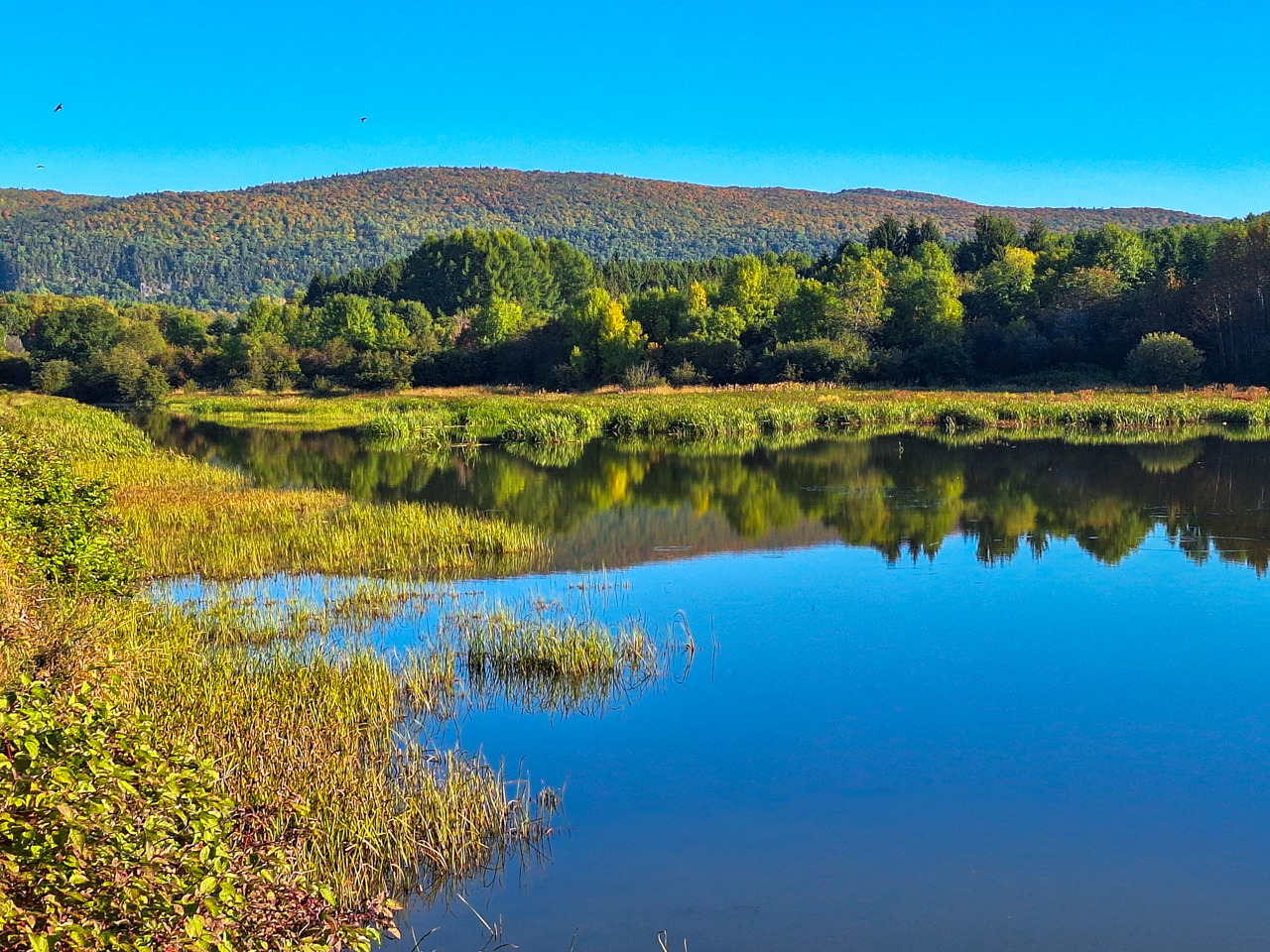
Marais des Graives © Aaron Brisebois
With such a wonderful start to the day, we raced to the bird banding presentation hoping our luck would continue there. We learnt a little about how the banding season had gone so far and got to see birds like Swainson’s Thrush and Ruby-crowned Kinglet get banded. Unfortunately, we were five minutes late to a very rare Yellow-breasted Chat being banded, but as everyone had to repeatedly remind the guide; it’s not about the birds you don’t see, but about the ones you do see…
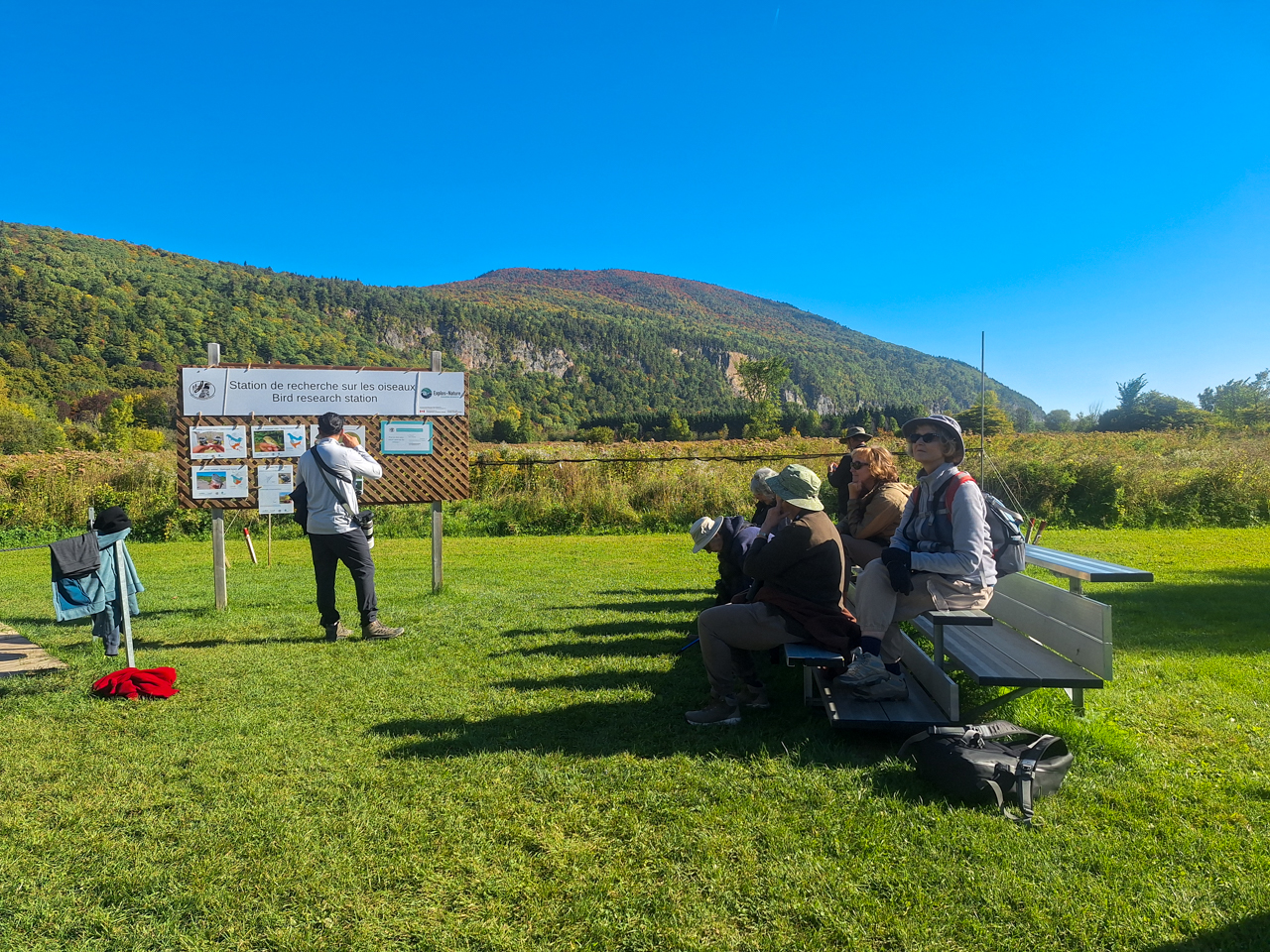
Bird Banding at Cape Tourmente © Aaron Brisebois
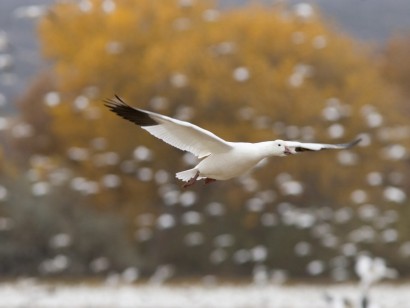
After the educational presentation and a quick snack, we went and walked to the blinds to watch the impressive flock of Snow Geese by the river. This species famously stops over during fall migration at Cap Tourmente and today they numbered around 10,000! While it was distant views, it is always exciting when something like a flyby Bald Eagle flushes them and the flock takes off, circling and filling the sky with the sound of geese and flashes of black and white. The walk also led to good looks at Yellow-bellied Sapsucker.
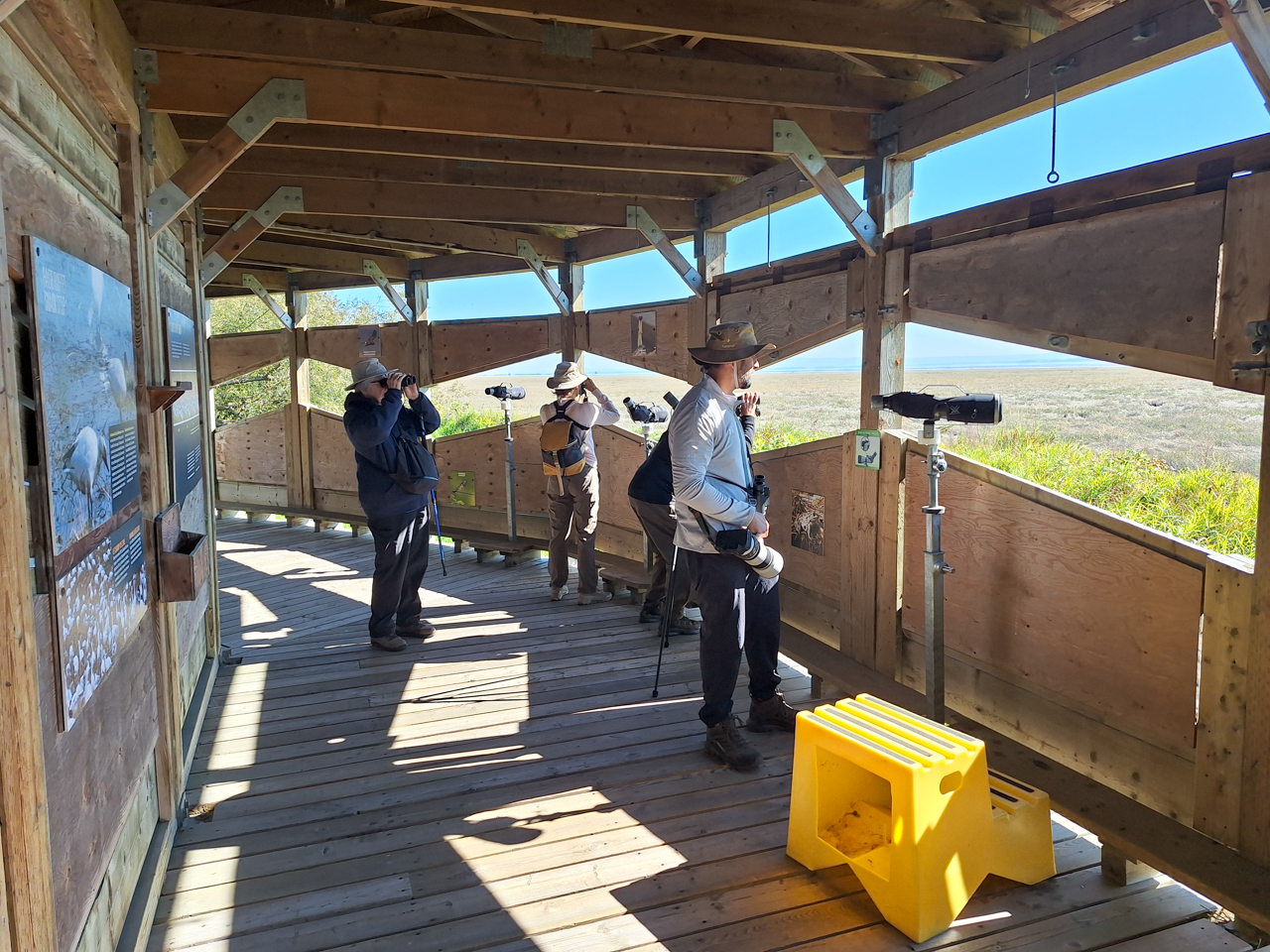
Snow Geese Blinds, Cap Tourmente © Aaron Brisebois
We then moved to a different part of the park and birded La Petite Ferme before lunch. We surprisingly found a few new warbler species as we walked the dykes around the marsh, namely some late Magnolia and Nashville Warblers, but we also saw a flock of Ring-necked Ducks, our best view of the trip of Rusty Blackbirds, a couple of Hooded Mergansers, and more Bald Eagles scaring clouds of Snow Geese and Northern Pintails in the background.
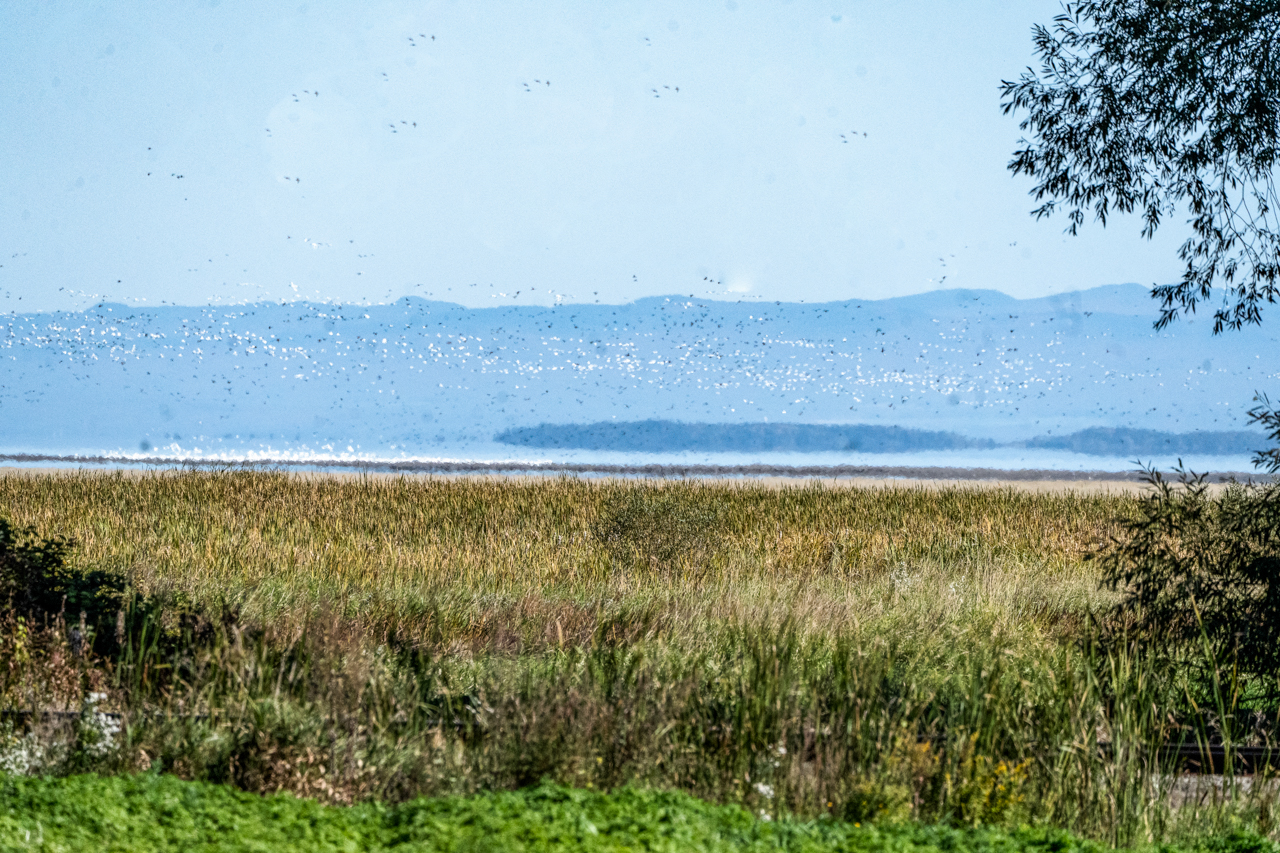
Distant Swarm of Snow Geese © Carol Labrie
After a nice picnic lunch, we drove to Baie-Saint-Paul and some of us birded the wooded beach by the wharf while others went to explore the cute historical town known for its art galleries. Those who birded got close views of Red-breasted Nuthatch as well as an American Kestrel hunting in a field.
We had dinner in Baie-Saint-Paul at the a local microbrewery and reminisced about an overall awesome day of perfect weather in the oh so scenic Cap Tourmente.
September 25th – Baie-Saint-Paul to Tadoussac: Birding Isle-aux-Coudres
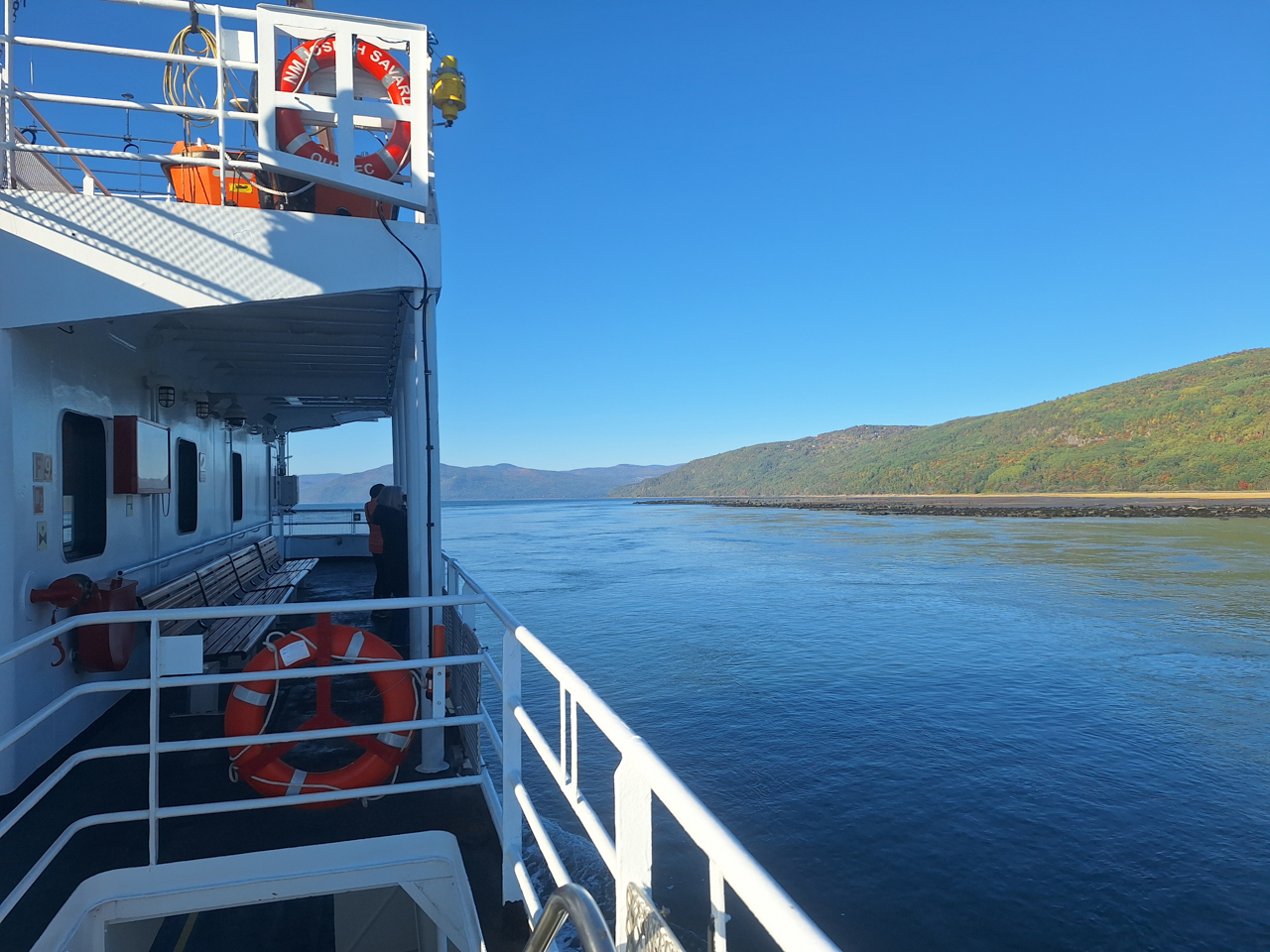
Isle-aux Coudres Ferry © Aaron Brisebois
While making our way from Baie-Saint-Paul to Tadoussac, we took a short ferry to the island of Isle-aux Coudres. On the boat ride, we were greeted to incredible views of the hilly north coast of the St. Lawrence absolutely filled with yellow, orange, red, and green colours gleaming in the constant sunshine.
We then drove around the island and birded the Parc de la Pointe du Bout d’en Bas where we took a nice long walk around the eastern tip of the island. We saw a Northern Harrier hunting up close over an open field, flocks of nomadic Horned Larks and even flocks of migrating Chickadees buzzing around! We managed to find five Black-bellied Plovers nearby, but the tides were not in our favour for shorebirding. The walk was beautiful and in the distance we saw our first Surf Scoter and Grey Seals of the trip.
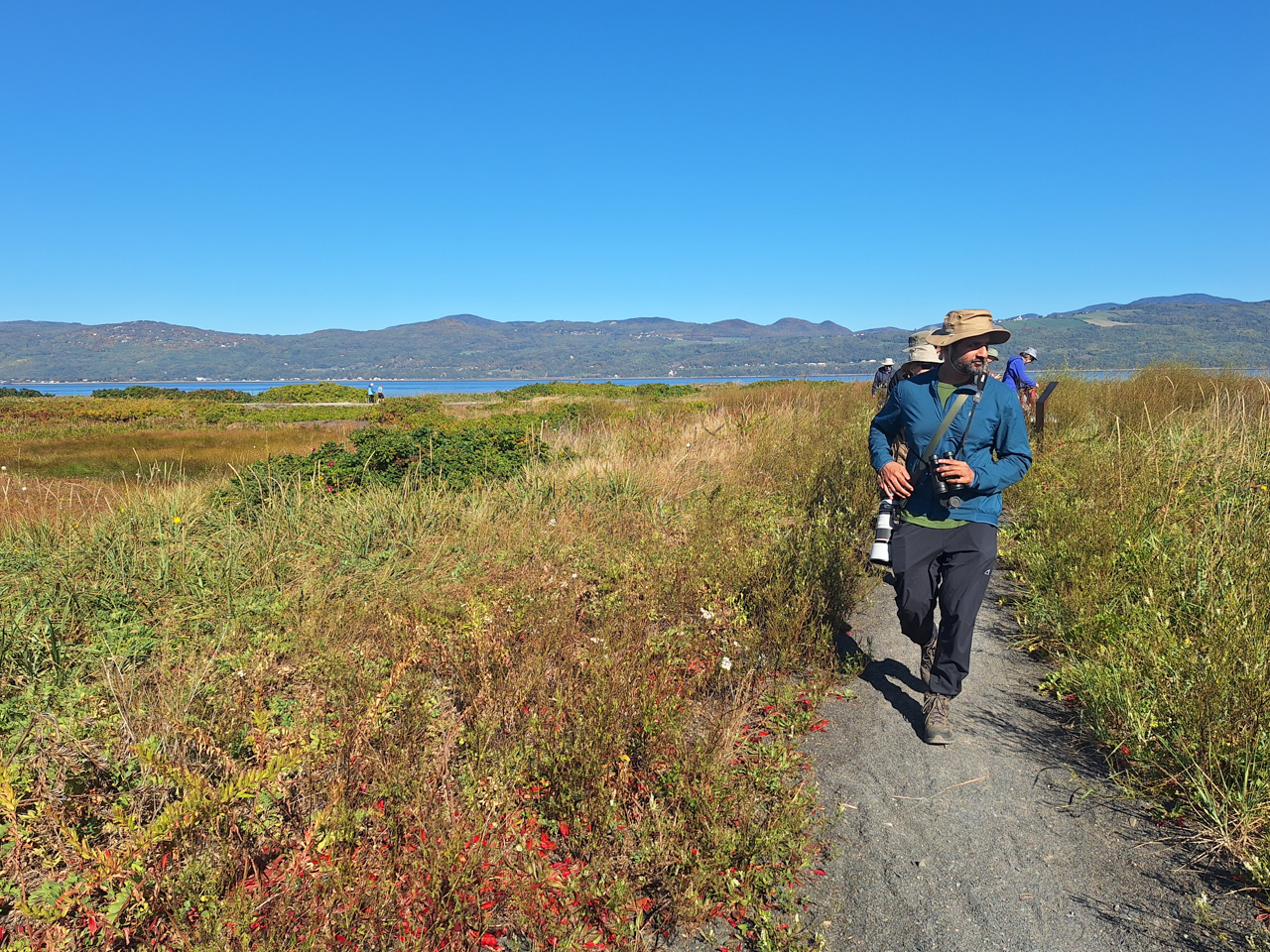
Parc de la Pointe du Bout d’en Bas © Aaron Brisebois
After lunch at the lovely a local bakery on the western side of the island, we took the ferry back to the north coast and drove all the way to Baie-Sainte-Catherine, stopping for some local maple chocolates along the way in Les Éboulements. Upon arrival, we immediately went to the very interesting Pointe-Noire Interpretation and Observation Centre to look out for whales! Sure enough, it took only a few minutes before we spotted two Minke whales lunge feeding in the distance. During the action, we listened to an informative talk from the local interpreter, teaching us about how good of a summer it had been for whales this year. The confluence of the Saguenay and St. Lawrence rivers in September really is a special place!
We then crossed the dramatic Saguenay River by ferry and checked in to the gorgeous Tadoussac Hotel which was hosting a birder’s happy hour on the big Friday night of the bird festival. We had a lovely dinner celebrating a birthday that evening under a full moon and a clear night sky.
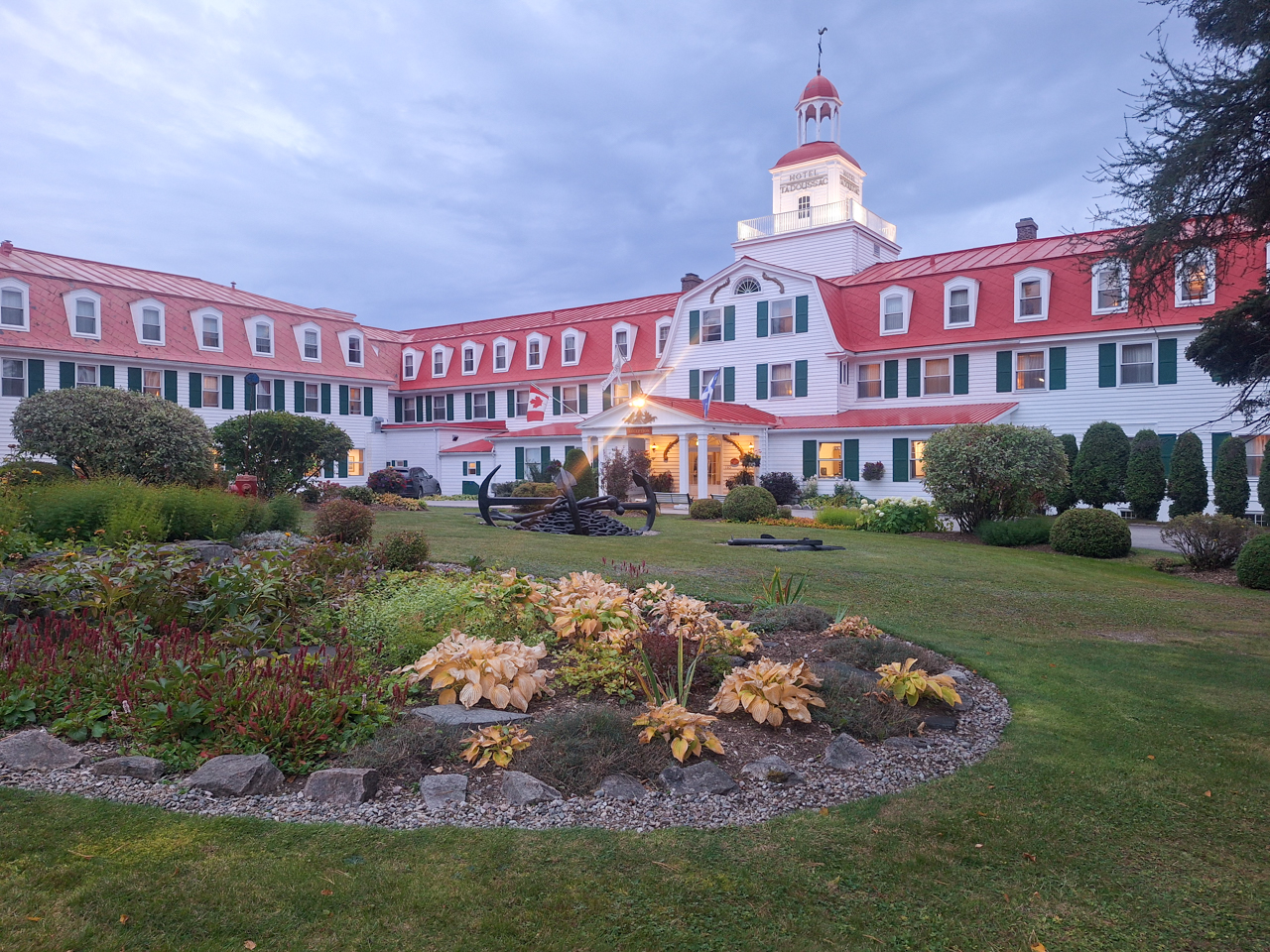
Tadoussac Hotel © Aaron Brisebois
September 26th – Whale Watching Trip
During our first morning in Tadoussac, we went to the nearby Tadoussac Bird Observatory at the Tadoussac Dunes after a delicious breakfast at the hotel. Bird-wise, migration was a little slow that morning although we did see two flyby Black-backed Woodpeckers and from the expansive view of the river, there were huge rafts of Common Eiders and swarms of Bonaparte’s Gulls. Apart from that, the festival was in full swing with bird banding demonstrations and lots of educational stands. We also met Jessé Roy-Drainville, who is in charge of counting all the birds passing through the Observatory during the fall migration.
After a quick visit we walked around Pointe de l’Islet looking for Gulls, Boreal Chickadees, and cetaceans before heading out for our whale-watching trip with Autremont! Despite the warm, sunny weather, there was little to no wind and the St. Lawrence was glass, making for perfect viewing, and our luck didn’t stop there. Before long, we had awesome close views of lunge feeding Minke Whales congregating around strong eddy currents.
As we moved on further down the St. Lawrence we saw numerous Belugas flashing white along the surface and a few grey coloured babies, along with a number of Razorbills and Common Murres. Every now and then, a spectacular acrobatic chase between a Parasitic Jaeger and a Gull would distract us from the whales! But the highlight was towards the end, when we managed to spend a significant amount of time with three huge Fin Whales who were surfacing remarkably close to the boat! The whale-watching guide Renaud taught us that one of those Fin Whales had been frequenting Tadoussac for decades, and shared many other interesting facts and anecdotes.
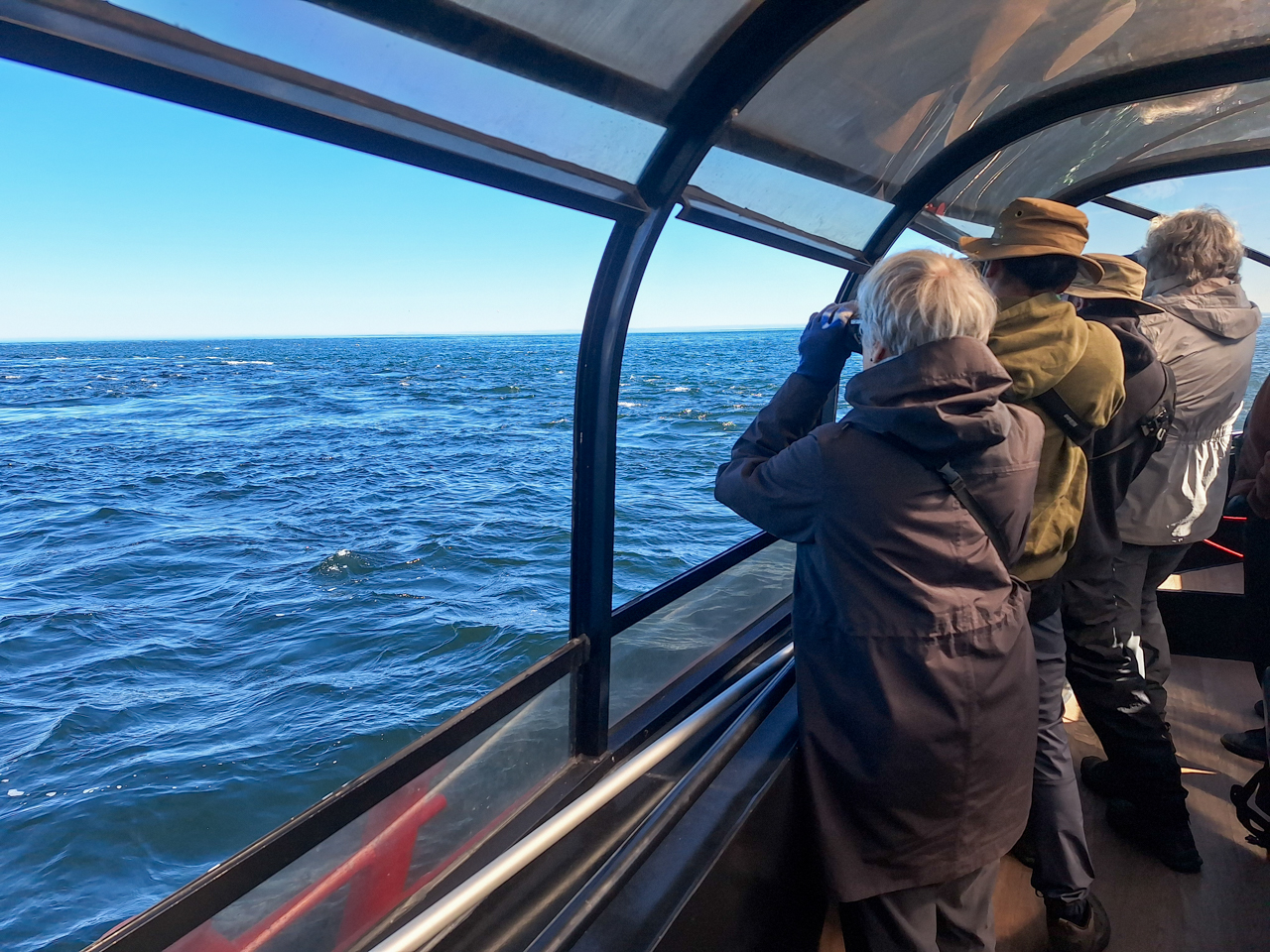
Whale Watching Trip © Aaron Brisebois
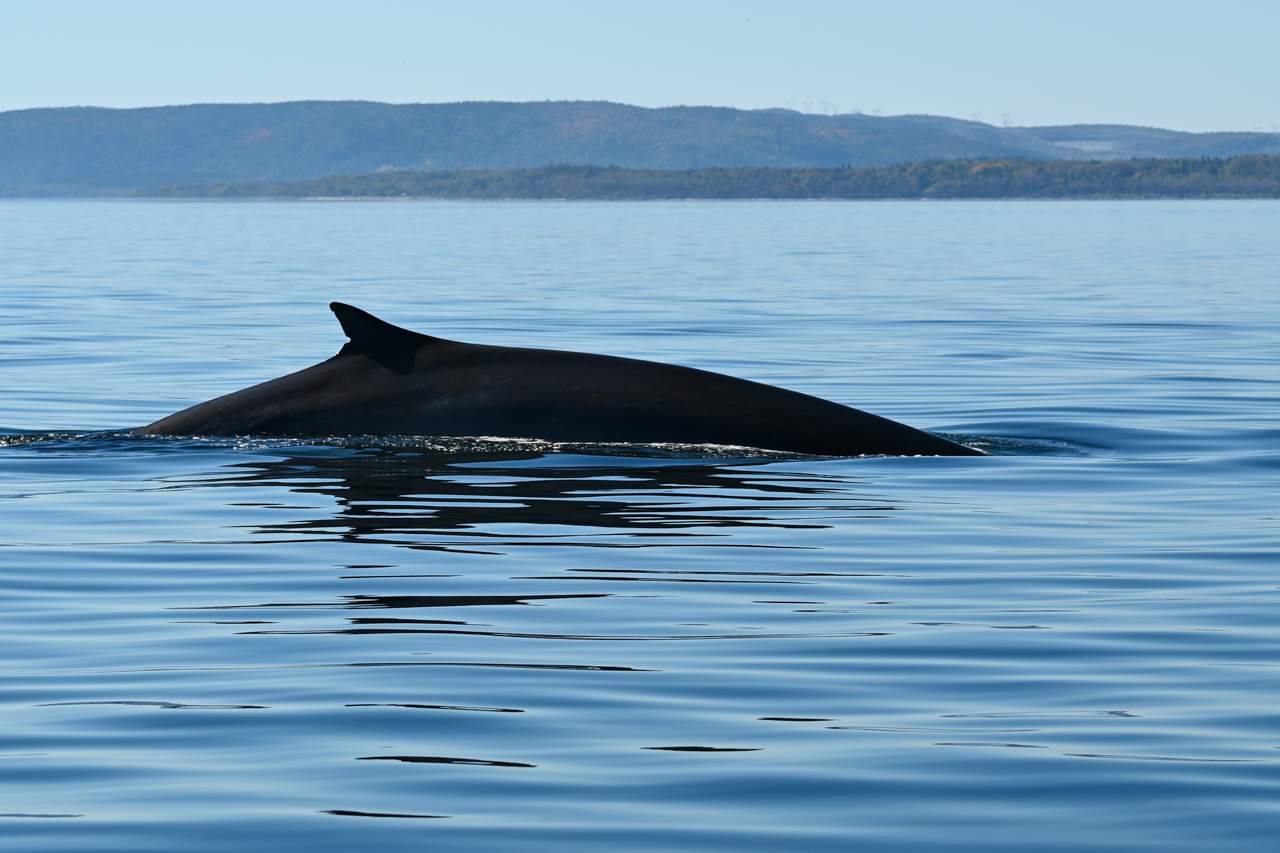
Minke Whale © Maurice LeBlanc
We came back to land with smiles on our faces, still baking in some beautiful September sun, and spent the rest of the afternoon freely roaming around the quaint town of Tadoussac before having a nice dinner at a local restaurant.
September 27th – Pelagic Birding Trip
During our second morning in Tadoussac, the adventure continued. We joined a pelagic birding trip out of Les Escoumins to see if our luck on the water had run out! While things started off quiet, there was just enough wind to keep things moving around and sure enough, it quickly became evident that it would be another great day. We ended up seeing multiple Atlantic Puffins, great views of a Northern Fulmar that looked like it wanted to come crashing into the boat, a flock of Red-necked Phalaropes feeding close by, a glimpse of a Wilson’s Storm-Petrel, and an even rarer Long-tailed Jaeger! This was all on top of multiple jaw-dropping Parasitic Jaeger chases, a flyby Red-throated Loon, a diving Northern Gannet, Razorbills and Common Murres, White-winged Scoters, a Lesser Black-backed Gull, and huge Gull flocks of mostly Bonaparte’s and Black-legged Kittiwakes. Not to mention more great views of Minke Whales and Belugas again! We experienced one of the best pelagics of the season.
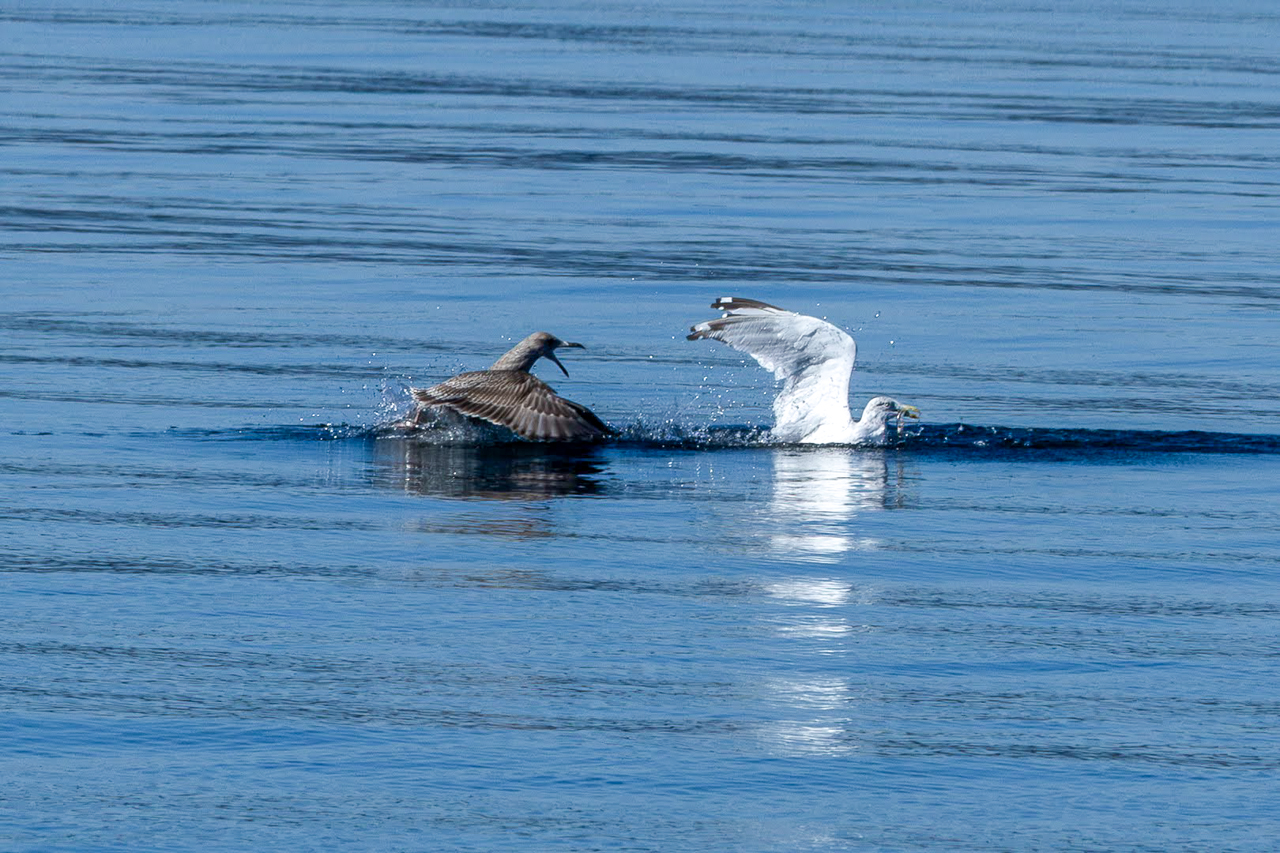
Parasitic Jaeger Chase © Zubair Baig
After a morning full of action, we had lunch at a local café and then continued birding! We scanned all the Gulls and waterfowl at the Baie des Escoumins, hoping to find a Little Gull amongst the hundreds of Bonaparte’s, but no luck. We did, however, see a few Great Black-backed Gulls and Common Eiders. We went for a short walk nearby to see if we could find a Black-headed Gull that had been hanging around, but once again, no luck.
The last stop on our way back to Tadoussac was a wonderful walk at the Cap de Bon-Désir Interpretation and Observation Centre, where we looked out onto the St. Lawrence and spotted the spouts of 5 Fin Whales! What an amazing place.
After a big day, we had dinner at a local café with Jessé followed by some much-needed rest.
September 28th – Birding the North Shore
Our last full day in Tadoussac would end up being our biggest day of birding. Some of us started before breakfast with a walk around Pointe de l’Islet and after yet another delicious breakfast at the hotel, we all set off for Beaulieu Lake.
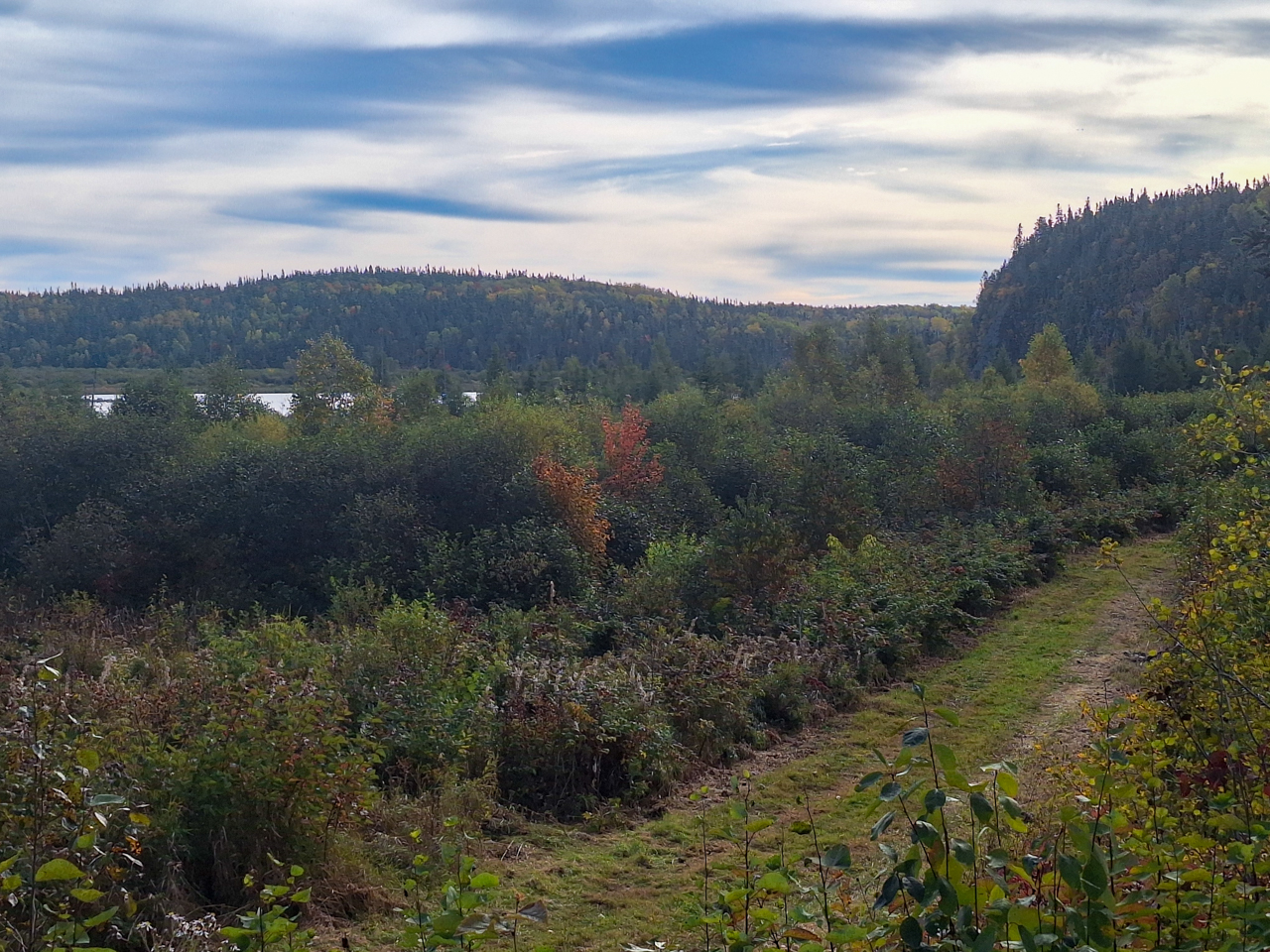
Lac Beaulieu © Aaron Brisebois
Lac Beaulieu
The sun was still out and the fall colours were as good as it gets. Before arriving at the lake, we drove a few farm roads seeing what we could find. We first found a small group of Sandhill Cranes, followed by a number of American Kestrels! The short walk to the lake was very beautiful, bordered by shrubs on one side and a forested cliff face with soaring Common Ravens on the other. There were Canada Geese and the sounds of swooping ducks. We saw Swamp Sparrows and Golden-crowned Kinglets and on our way back out along the country roads, we saw an early Rough-legged Hawk!
We continued on further east and the next stop was the ferry terminal in Les Escoumins. We scanned for waterfowl, Gulls, and whales and managed to spot some Common Goldeneye, a Spotted Sandpiper, a Common Loon, a few Black-backed gulls, a flyby Sharp-shinned Hawk, and a few hundred Common Eiders.
We then drove further northeast along the river all the way to Forestville where we had lunch. This would be the furthest northeast we would go on the trip, and already you could see the landscape starting to become more and more boreal forest and bog.
After lunch, we scanned Pointe des Fortin from afar and saw a big flock of hundreds of schooling Dunlin and Sanderling flying and feeding up and down the beach. This area is known for large groups of migrating shorebirds at this time of year!
Our last and biggest stop of the day was Pointe à Émile where we went on an adventurous walk around the sandy point. We were greeted by at least 100 Horned Larks with scattered Lapland Longspurs mixed among them that surrounded us as they buzzed around the beach feeding, creating quite a spectacle! A number of Pectoral Sandpipers and a few American Pipits joined them as well and there was a small flock of Red-breasted Mergansers out on the water. Another interesting find was a dead Northern Harrier! By the end of the fun, eventful walk, the sun was finally beginning to be replaced by clouds accompanied by a cold wind. We were all tired from a big successful day of birding, so it was time to head back to Tadoussac.
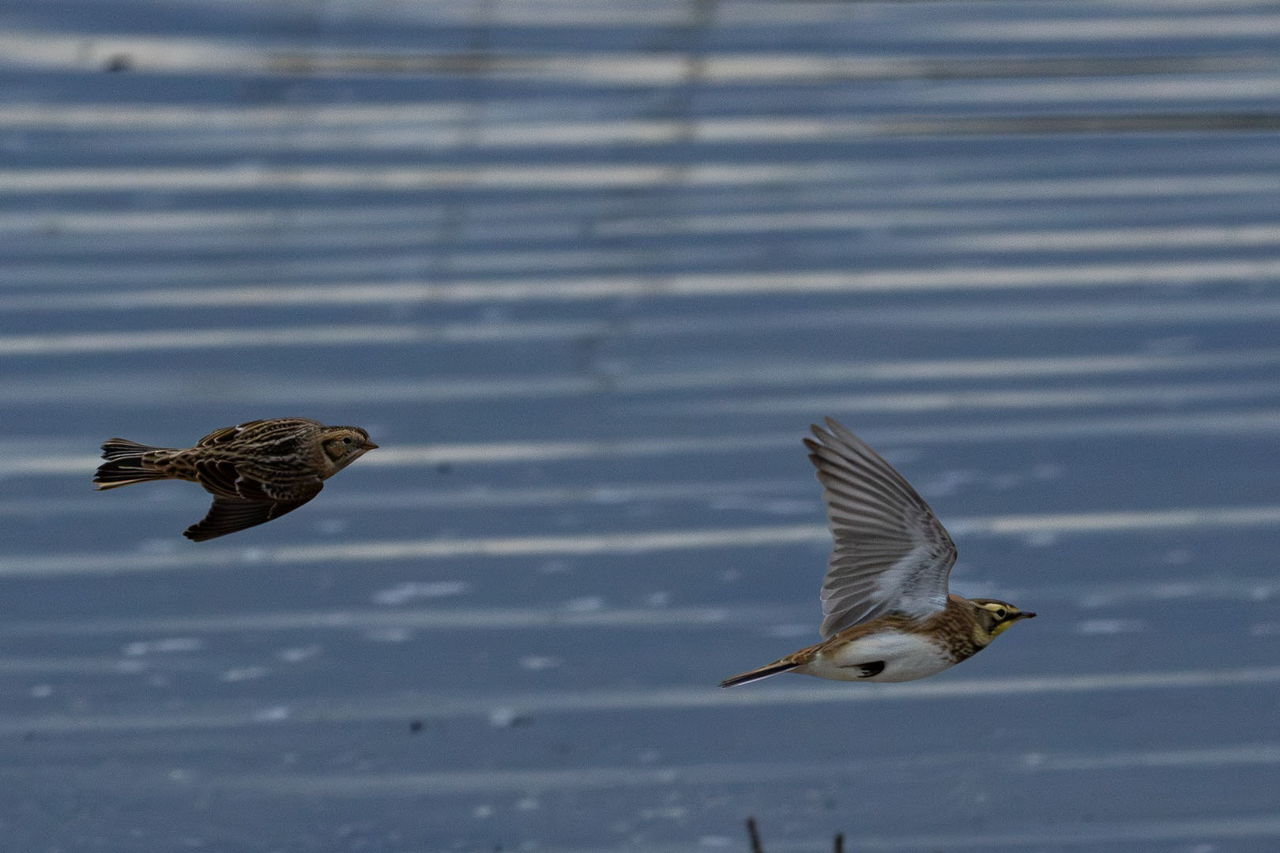
Lapland Longspur and Horned Lark © Zubair Baig
We had dinner at a local restaurant and celebrated another birthday but unfortunately, some rain finally came in and we had to cancel our night of owl banding. You apparently can’t have perfect weather forever.
September 29th – Ferry to the South Shore
Alas, our last morning in Tadoussac before taking the ferry to the south shore. It was a colder, cloudier day finally, which led to some interesting birding. As soon as we stepped out of the hotel, in a small sumac bush in the parking lot there was a tired-looking Northern Parula desperately looking for food and ignoring our presence. These types of observations can often happen on cold, hard mornings during migration, where birds gather low desperately looking for sheltering insects.
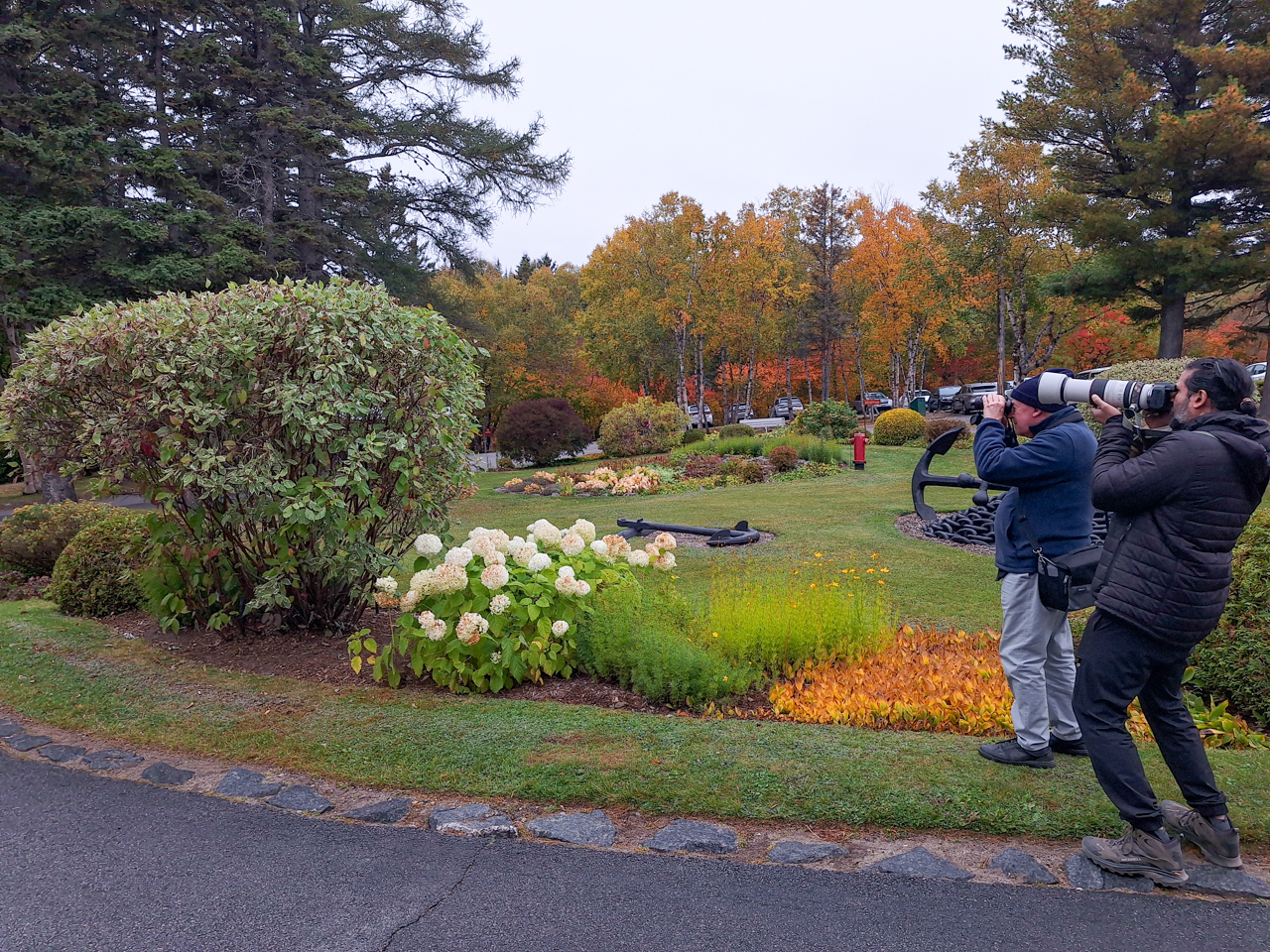
Photographing a Northern Parula © Aaron Brisebois
We then took one more walk around the point after some early risers saw Boreal Chickadees before breakfast, but no luck during this second attempt. However, the loop offers such a beautiful view of the Saguenay River and we saw a number of low-hanging Yellow-rumped Warblers.
Afterwards, we couldn’t leave without stopping by the Tadoussac Dunes and reuniting with Jessé one last time. He showed us a diving Merlin, a late Yellow Warbler, large flocks of migrating Pine Siskins, and even spotted us a trio of Black Guillemots in the scope! We also noticed a migrating Northern Harrier with a large patch of feathers missing from its right wing. We thanked Jessé, wished him the best of luck for the remainder of the season, and headed off to Pointe à John for a quick stop before needing to catch the ferry.
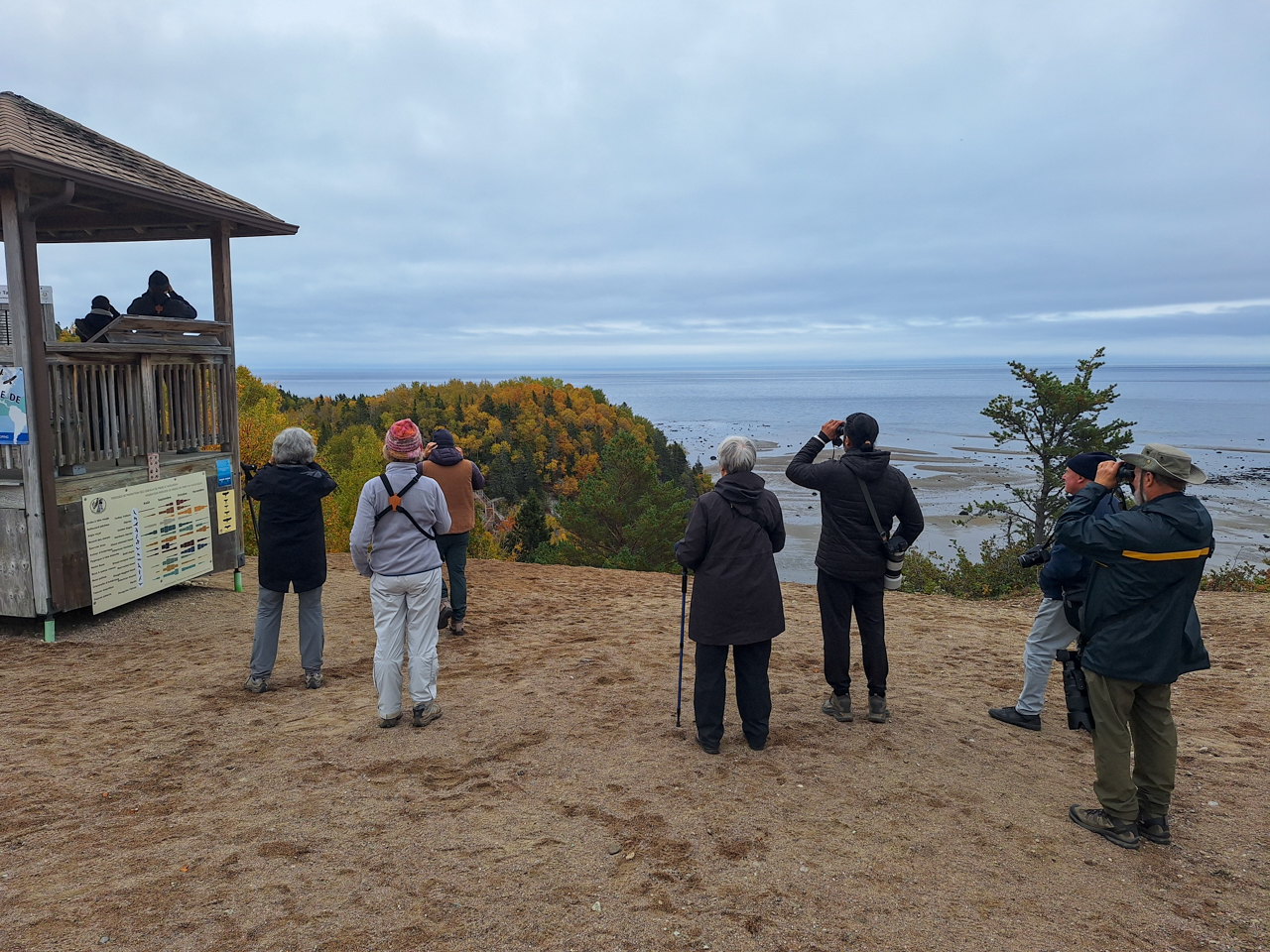
Birding the Tadoussac Dunes © Aaron Brisebois
At Pointe à John, we were hoping to find an Orange-crowned Warbler, but instead we were surprised by a number of other warblers. Despite the very slow, cold morning of migration at the dunes, the small trees and bushes bordering the beach here were full of feeding warblers! We managed to find a Wilson’s Warbler and a Tennessee Warbler along with many Yellow-rumped Warblers before needing to leave for the ferry. Flurries of action like this are what can make birding during migration so exciting!
Back in Les Escoumins, while waiting for the ferry, the fun continued. We birded the terminal and saw a zooming Peregrine Falcon, a hunting Merlin, and even the same Harrier with the missing feathers! Migration is so cool. We also spotted a Red-necked Grebe and finally got brief views of Boreal Chickadees before hopping on the water.
Early on the ferry we saw Belugas but then fog came in and it was a good chance to relax and reminisce about the trip.
Once on the beautiful south shore of the St. Lawrence in Trois-Pistoles, we began making our way back towards Québec City. We made a quick stop where the Trois-Pistoles River meets the St. Lawrence to look for shorebirds and found a large flock of Semipalmated Plovers and a smaller flock of Black-bellied Plovers.
In Rivière-du-Loup, we checked into our beautiful hotel. On one side, hundreds of Snow Geese could be seen flying over a hill of fall colours and tall church spires, and on the other, a grand view of the St. Lawrence! We got to watch the beautiful light of a slowly setting autumn sun over the glassy St. Lawrence while enjoying a nice dinner before bed.
September 30th – Rivière-du-Loup to Québec City: Birding Cacouna
For the last morning, we saved the best overall birding location of the trip: the marshes of Gros-Cacouna. Here we walked multiple kilometres on dikes that were bordered by marsh and forest. Despite the fog, the bird action was everywhere! A large flock of Snow Geese was in the marsh when we arrived and little by little began taking off. A group of over 100 Lesser and Greater Yellowlegs were constantly moving from wetland to wetland. A few hundred Ducks were spread across the various bodies of water, including Greater and Lesser Scaup, American Wigeon, Northern Pintail, Gadwall, Bufflehead, Hooded Merganser, Blue-winged Teal, Northern Shoveler, Green-winged Teal, Common Goldeneye, and one Ruddy Duck! We also were able to find one American Tree Sparrow, one toad, and one Muskrat. It was a great, full morning of birding, and it was enough to make us hungry for a classic “casse-croûte” lunch stop to find out what poutine is all about.
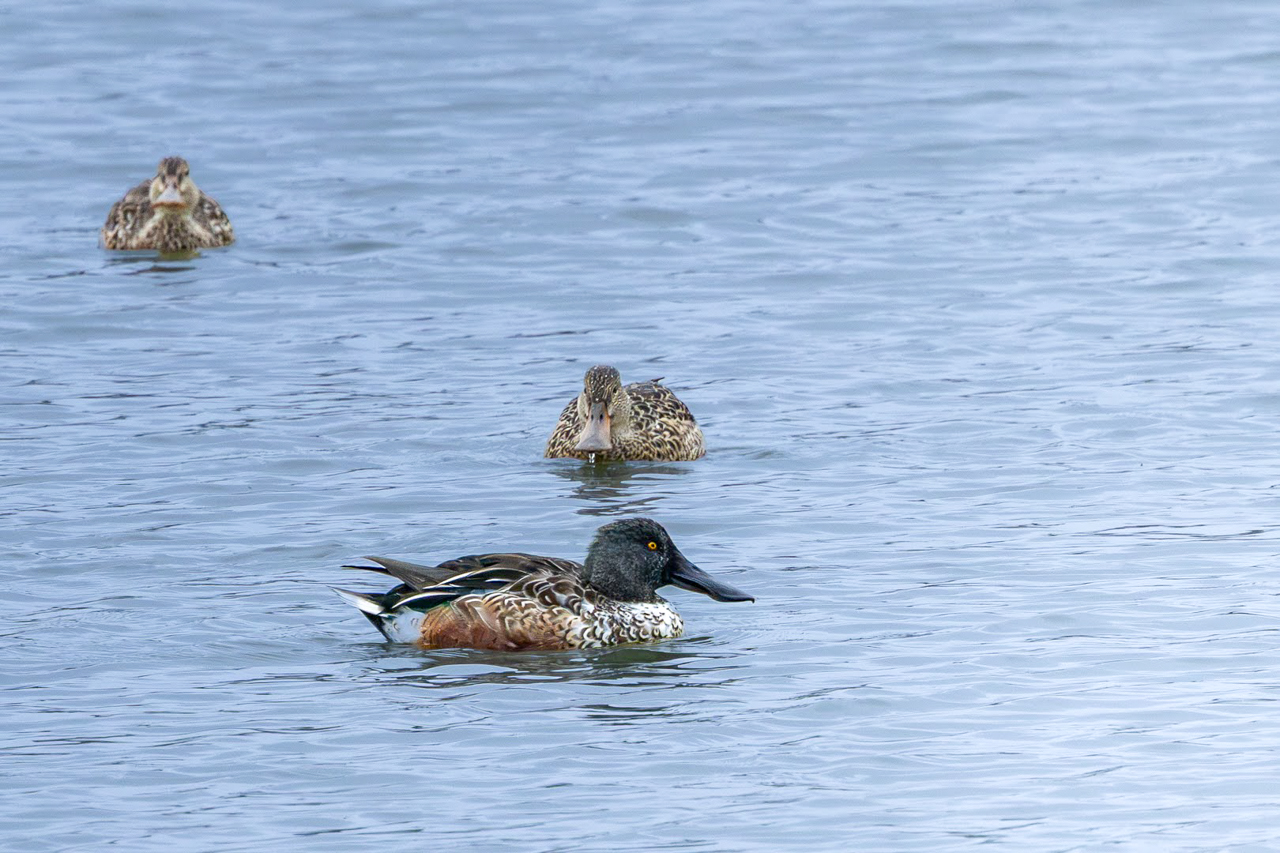
Northern Shovelers © Zubair Baig
We spent the remainder of the day driving to Québec City to complete the loop of our trip, and the route was breathtaking. We drove down some country roads along the river driving through perfect Fall foliage of never-ending yellow, orange and red trees interrupted by colourful old houses and fields of Snow Geese and soaring Northern Harriers. We also saw a Merlin, an Osprey, and a few more shorebirds during a quick stop. Eastern Québec in autumn really is one of the prettiest places on the planet.
Finally, dinner was in Québec back at the a local restaurant where we reminisced, kindly shared words of gratitude, and stuffed our bellies one last time.
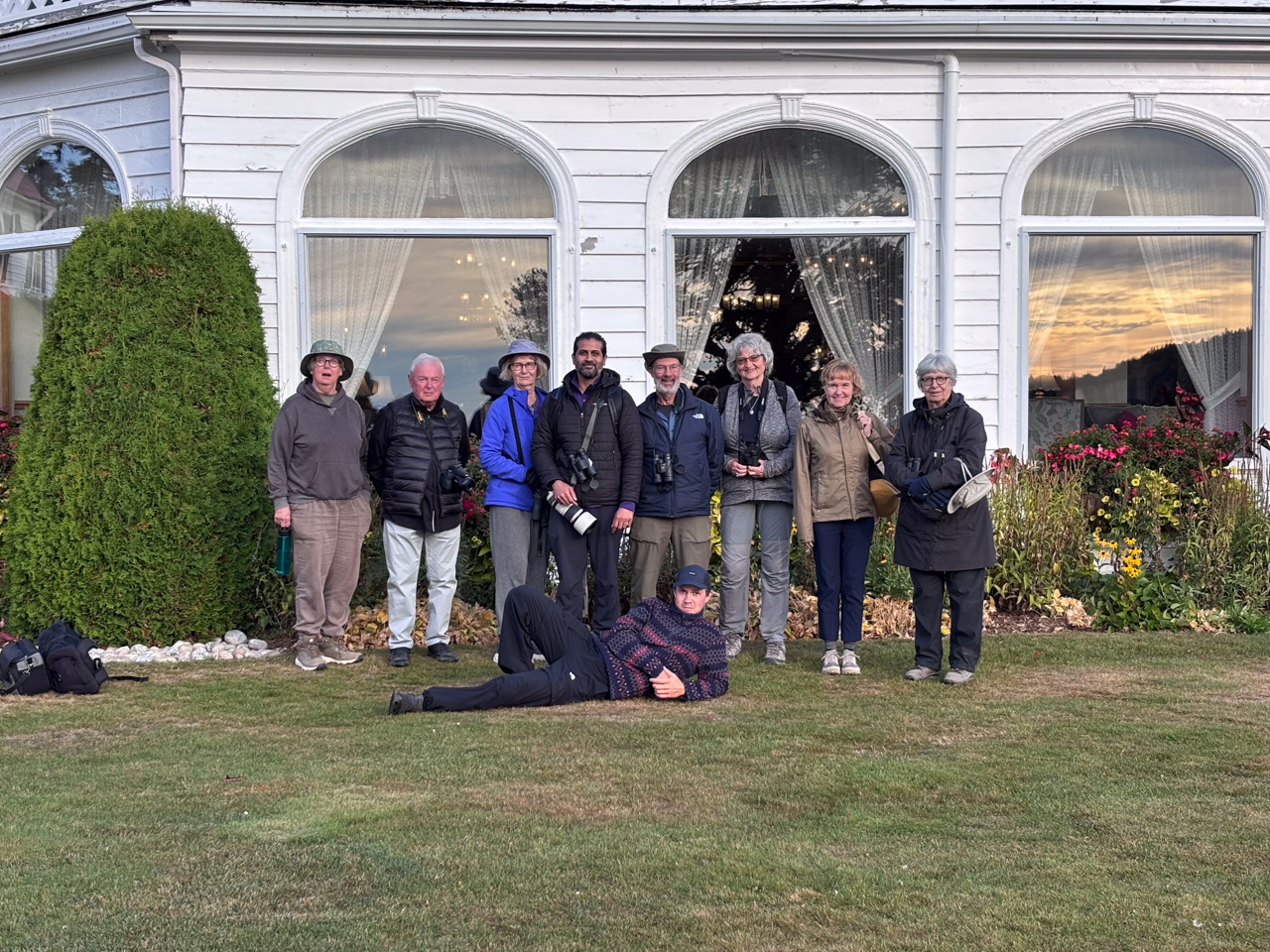
Our group
Leave a Reply