Puerto Rico Trip Report (March 3 – Mar 10, 2026)
Day 1 – March 3: Arrival and Welcome Dinner
After arrival in Puerto Rico we all gathered for dinner and to go over the trip schedule and tour expectations.
Day 2 – March 4: San Juan to Río Abajo, Charca Arizona, Cambalache, and Playa Sardinera
The tour began early in the morning from San Juan, with the group enjoying a delicious roadside breakfast at El Mesón, featuring local sandwiches and excellent hot coffee.
Our first destination was located in the northern karst region at the Río Abajo State Forest, where the main goal was to observe the critically endangered Puerto Rican Amazon. This site currently holds the largest flock thanks to the extraordinary conservation efforts. When we arrived the forest was alive with bird and coqui chorus and the understory shaded by the tall mature trees with wide canopies. We headed up the main trail scanning the tree tops for any movement. Not too long the group was thrilled to have excellent views of a pair of Puerto Rican Amazons perched on the very top of the canopy. We later saw several individuals, some of them perched and calling and flying above us. Not long after the PR Amazons moved to forage in the interior of the forest and we focused on other special birds from this area.
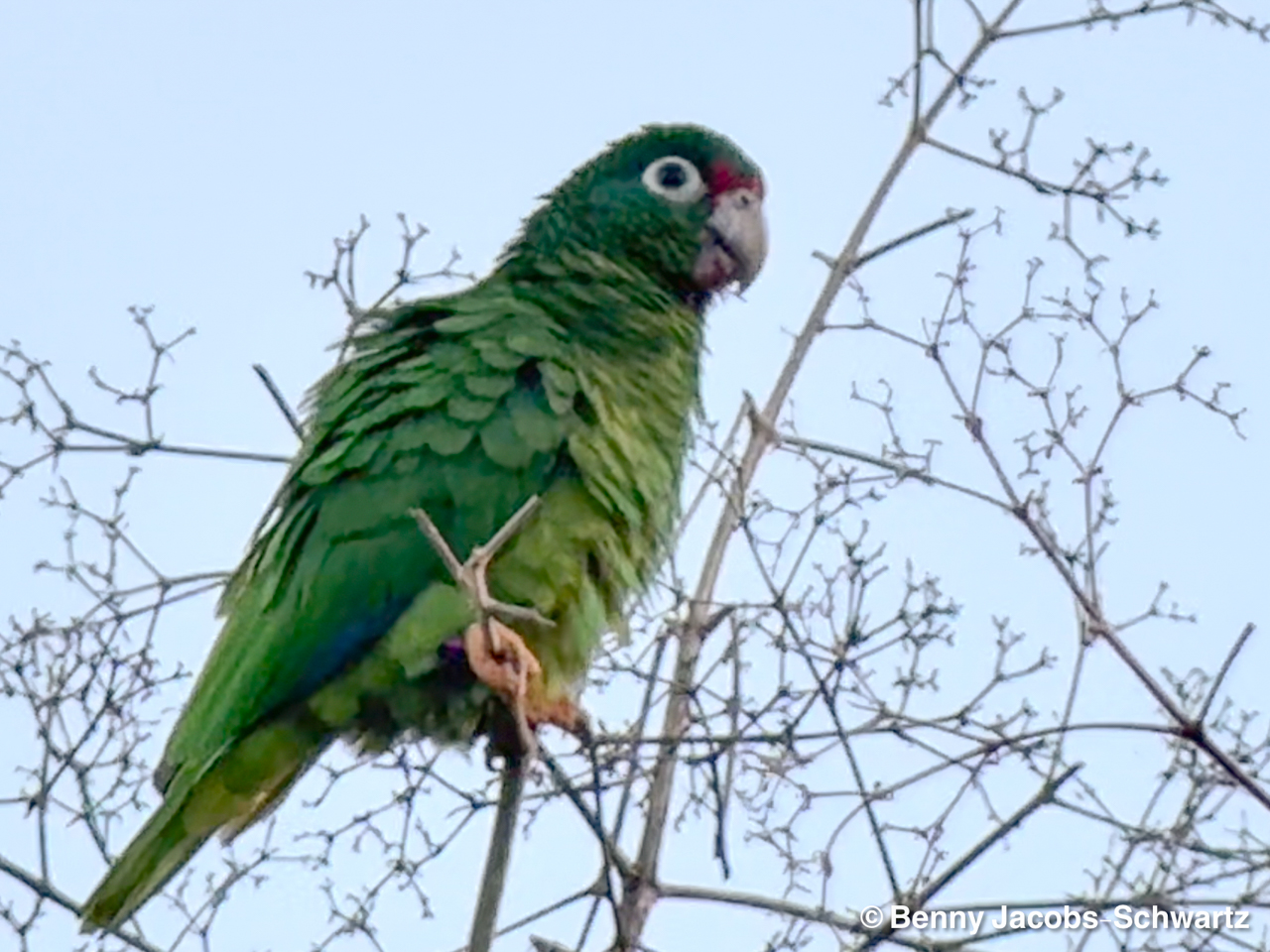
Puerto Rican Amazon
Quickly we enjoyed sightings of other endemics such as Puerto Rican Emerald darting to the red flowers to sip on its nectar in the company of the common and abundant Bananaquits. Puerto Rican Bullfinch were calling everywhere but are an elusive species, after some patience finally we got good looks of this black and bright red-orange bird. We were surprised by the resident subspecies of Broad-winged Hawk, an endangered raptor in Puerto Rico and are very localized in this area. Additional highlights included Puerto Rican Peewee, the Puerto Rican Lizard Cuckoo which never gets tiring to look at. Before getting to the van to explore a nearby trail, we got excellent views of Loggerhead Kingbirds perched in the open, a couple of flying Scaly-naped Pigeons and the noisy Puerto Rican Woodpecker.
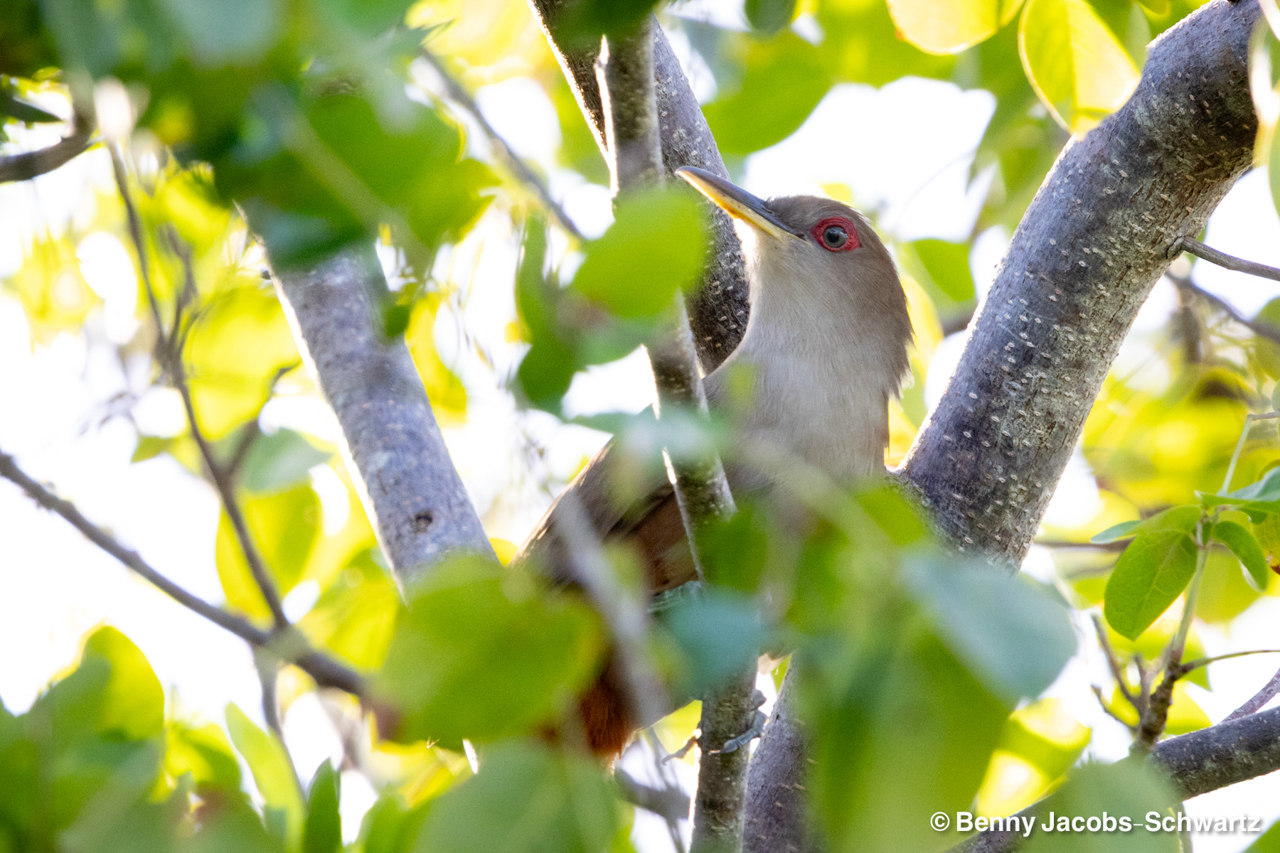
Puerto Rican Lizard-Cuckoo
After Río Abajo, we visited the local wetland Charca Arizona, a small ox-bow lake that forms from the floods of the Arecibo River. Here in the open grassy fields Western Cattle Egrets were foraging, Northern Mockingbirds greeted us from the wood posts and Gray Kingbirds sallied from the canopy of scattered trees. We walked to the edge of the water where the group was greeted by a flock of West Indian Whistling Ducks, a rare and local Caribbean specialty. Additionally, a mixed species flock which included Blue-winged Teal, White-cheeked Pintails and Ring-necked Ducks were seen resting at the waters edge. A Little Blue Heron was observed foraging between the reeds was a nice addition. A pair of Red-tailed Hawks was seen soaring in company of a flock of Cave Swallows. This site provided an excellent complement to the day’s early forest birding.
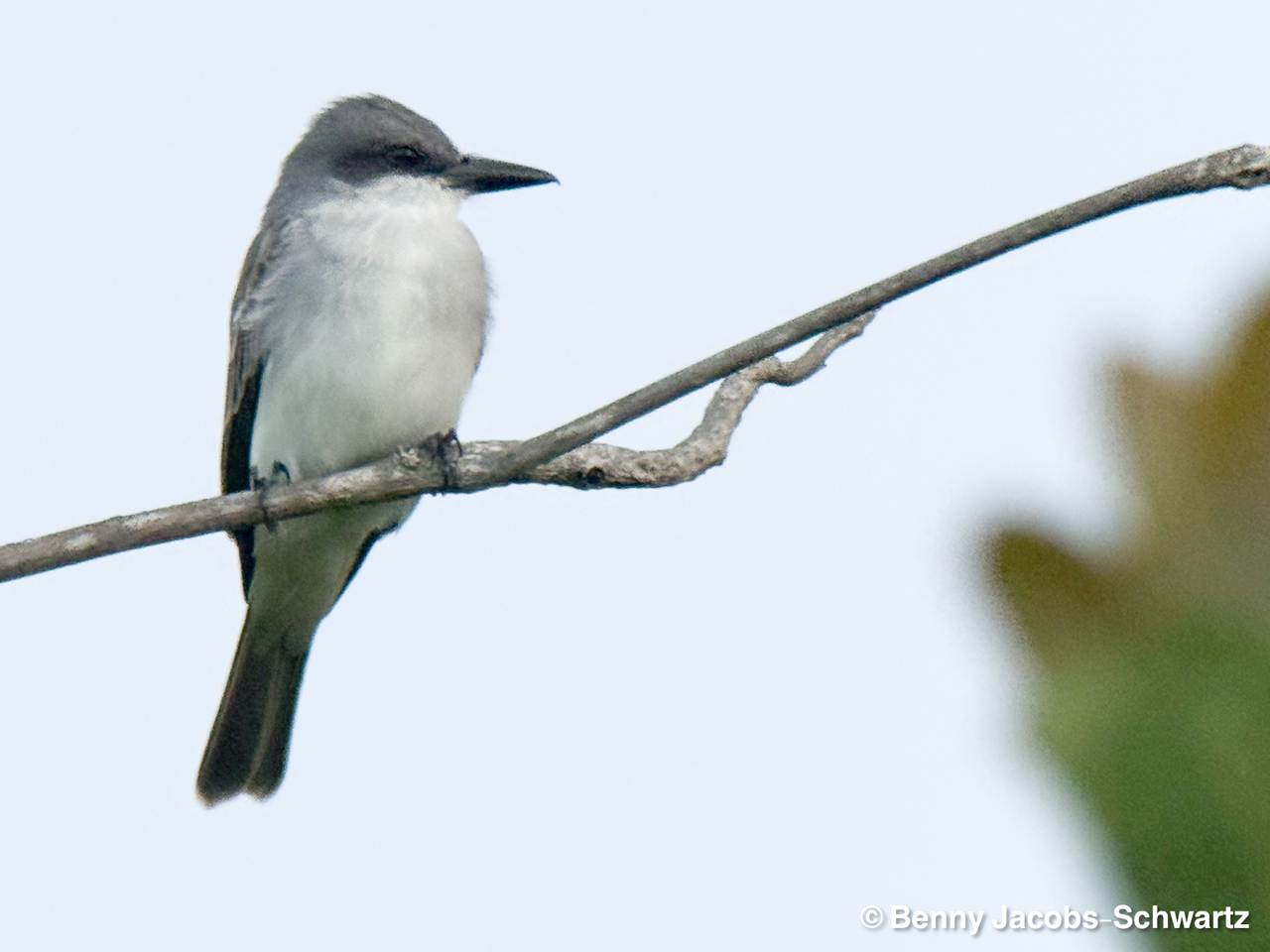
Gray Kingbird
Next, we visited the lowland karst region of Cambalache State Forest. Around the parking lot was a very productive area where sightings included striking Venezuelan Troupial nesting inside a woodpecker hole. A Puerto Rican Oriole paused on the exposed canopy providing excellent views of this endemic. There are plenty more too with Common Ground Dove, Gray Kingbird, Great Egret, and another of the recently splits for the island the endemic Puerto Rican Mango.
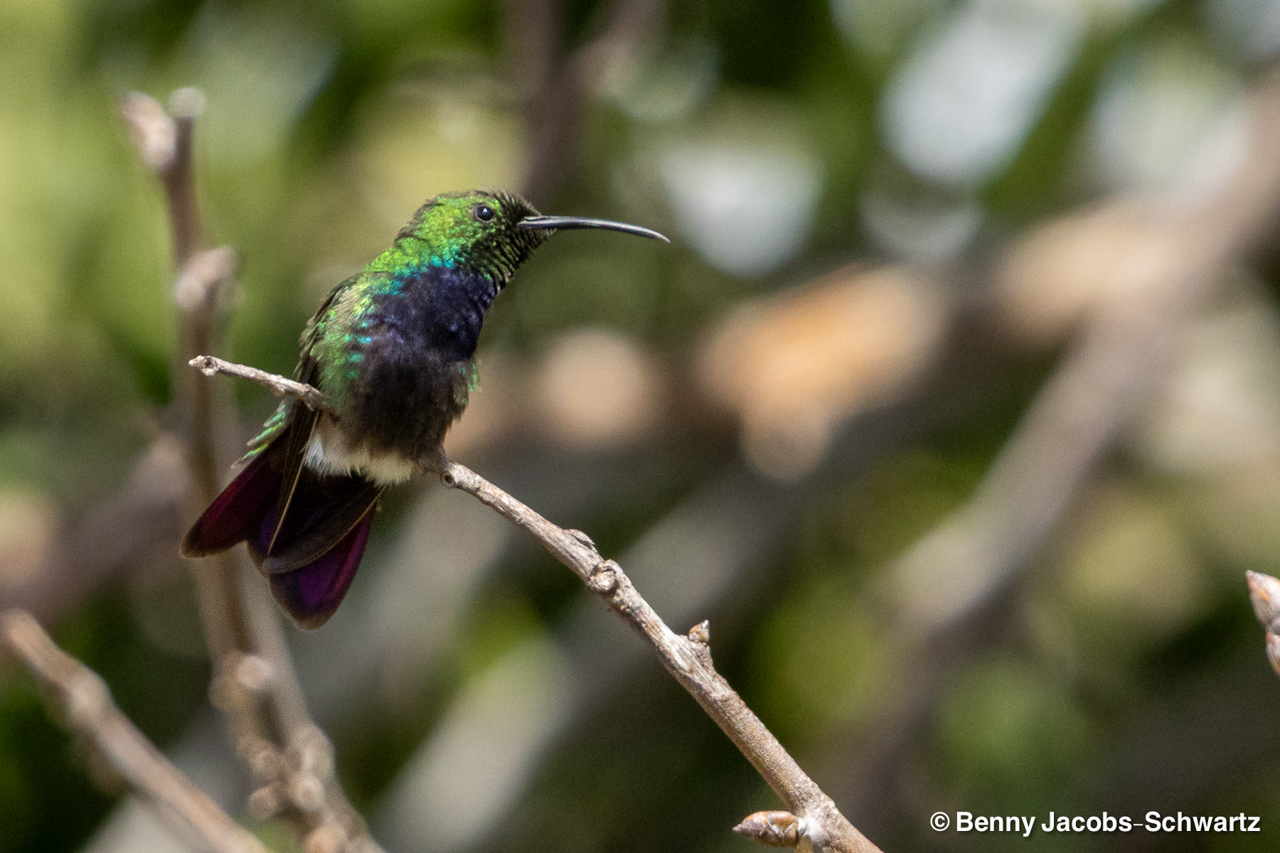
Puerto Rican Mango
Continuing along the coast towards the hotel we explored Playa Sardinera, observing a diverse array of shorebirds including, Black-bellied Plovers, Semipalmated Plovers, Lesser Yellowlegs, Solitary Sandpipers, and Ruddy Turnstones. In the mangroves behind the dunes a beautiful Tricolored Heron in breeding plumage was seen foraging, while flocks of Glossy Ibis, White Ibis, Great Egrets and Western Cattle Egrets, were seen entering an active rookery. On the way to the van we spotted a female Puerto Rican Woodpecker foraging at eye level providing excellent close-up views and photography opportunities.
After having lunch and checking in at our hotel the group had a much needed rest from a very productive morning.
In the late afternoon we were ready again to continue our adventure and we continued to two additional coastal wetland sites. The brackish Amador wetland was teeming with flocks of White-cheeked Pintails, Black-necked Stilts, Killdeer, Stilt Sandpipers and Common Gallinules. While on the scattered palm trees noisy Monk Parakeets watched us. These wetlands provided excellent scope views of waterbirds and concluded a productive first day of birding.
Day 3 – March 5: North Coast, Mayagüez, La Parguera
After breakfast at El Buen Café, the group headed west along the north coast to Los Merenderos de Guajataca. Here the park trails give access through a coastal stunted forest to the cliff edge overlooking the Atlantic Ocean. What an amazing scenery! Here the elegant White-tailed tropicbirds flew very close to us to visit their nesting sites, while Brown pelicans flew by.
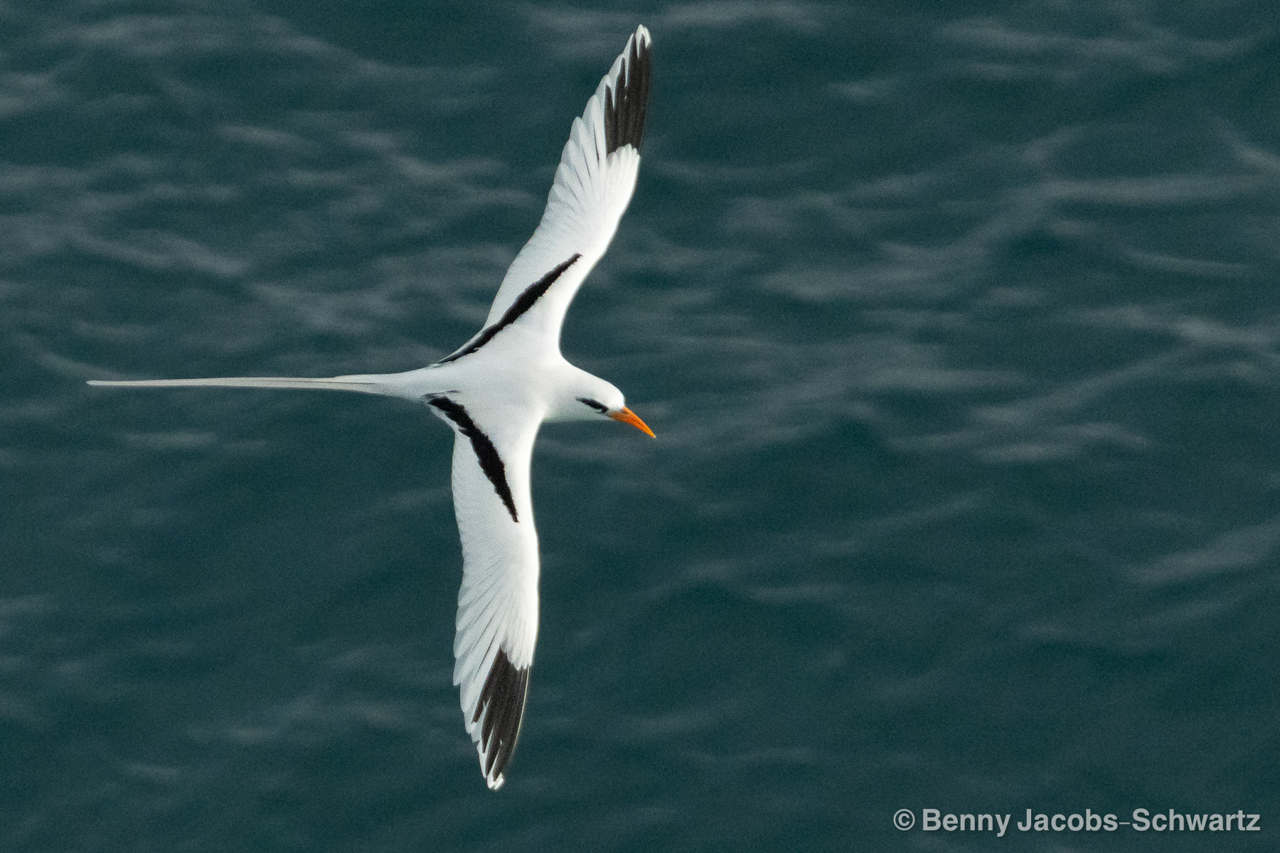
White-tailed Tropicbird
After having a tropicbird bonanza we headed to explore the trails and not long a Puerto Rican Lizard Cuckoo called, we waited until it appeared on the trails edge paused quietly while preening its impressive tail feathers. This moment provided by far the best views of this endemic cuckoo. Soon after we spotted a gorgeous male Puerto Rican spindalis on an exposed snag also providing excellent views and if this was not enough a Adelaide’s Warbler also sang in full view. What an endemic trio!
Continuing to the west side of the island we visited Punta Boca Morena. The tranquil bay provided the perfect spot for resting to a large flock of terns. The mixed species flock included Foster’s Tern, Roseate Tern, Sandwich Terns, Royal Terns, alongside Magnificent Frigatebirds, Brown Pelicans, Ring-billed Gull, and Lesser Black-backed Gull. A very nice bonus for a short stop. Lunch was enjoyed at a local bakery and we tasted fine pastries and great locally grown coffee.
We finally arrived at our hotel and rested until the heat of the day had passed.
We went straight to Cabo Rojo and Lajas. Here the group observed a male Puerto Rican Mango feeding on cactus flowers and then posing on his preferred perch allowing us to make detailed observations of this fast pace hummer. Nearby a pair of American Kestrels and a small flock of Greater Antillean Grackles watched us. We then continued to the The Lajas Valley rice fields, these provided abundant sightings of introduced finches including numerous flocks of Northern Red Bishops, Scaly-breasted Munias, Pintail Whydahs, and Orange-cheeked Waxbills, alongside, Yellow-faced Grassquits, Black-faced Grassquits and a Palm Warbler. An Osprey flew over us, and then what is that raptor?! a Northern Harrier!, we had great looks of this uncommon wintering raptor foraging in the fields.
We continued to Cartagena Lagoon, and right just getting of the van Alcides exclaimed Masked Duck! the group successfully located four Masked Ducks (one male, three females).
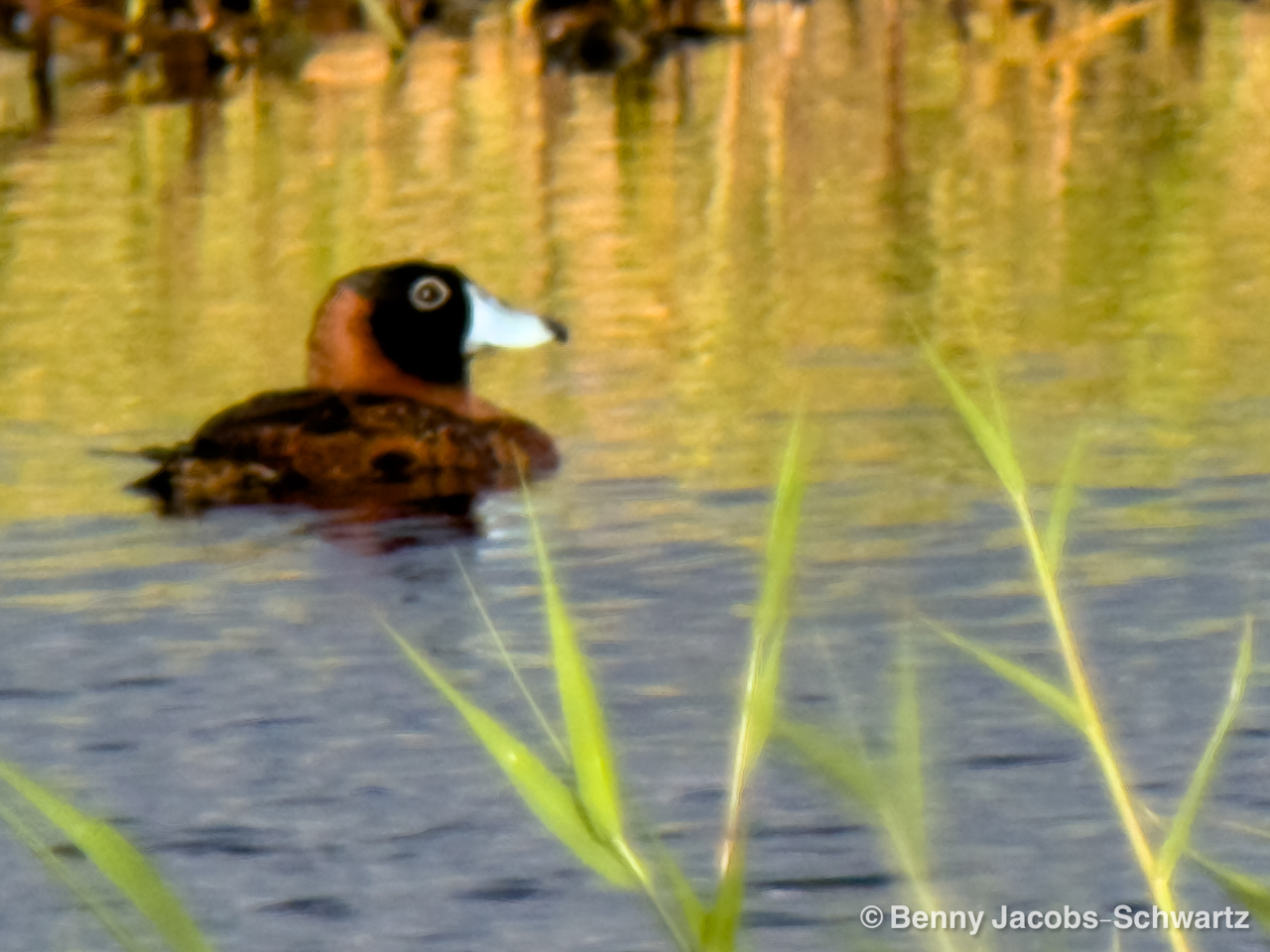
Masked Duck
The day concluded with birding at La Parguera mangroves, where elusive Clapper rails allowed clear views and amazing photography session. We also spotted a White-crowned Pigeon inside the mangroves and Yellow-crowned night Heron foraged quietly nearby. Patience paid off when flocks of Yellow-shouldered Blackbirds were spotted flying towards their roost sites on the offshore keys. Quite an impressive sight to see the yellow flashes of blackbirds flying and best of all several of them perched nearby allowing the group close up views. A male Mangrove Yellow Warbler was heard singing and it was spotted from a very low mangrove tree. As night fell we continued to the dry scrubby forest of the area to wait for the Puerto Rican Nightjars to start calling. It wasn’t even completely dark when a chorus of nightjars began to call from inside the dry forest. Eventually it was completely dark and we spotted one perched were the group had a the chance for quick views of this nocturnal species.
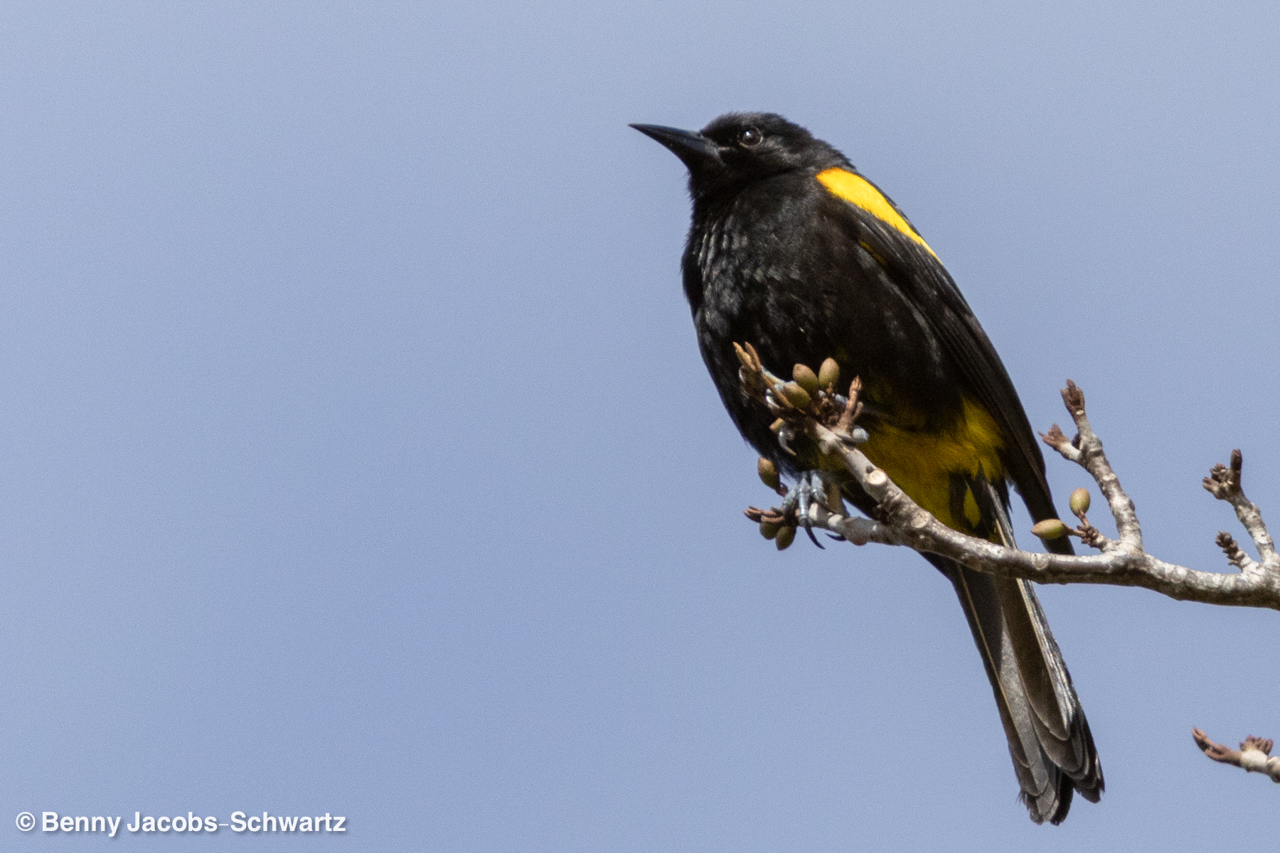
Yellow-shouldered Blackbird
Day 4 – March 6: Maricao Mountains, La Parguera Restoration Site
With a packed breakfast and coffee in hand we began the day early for heading up to the Maricao mountains. The weather was cool and a bit breezy, with the first bird of the day being Pearly-eyed Thrashers. Soon after a Puerto Rican Oriole and Puerto Rican Tanager (not really a tanager!) was spotted. We were told by another birder of a Green Mango with a nest, so we decided to go check it out, but before this gem we decided to search for the elusive Elfin Woods Warbler which proved to be a bit hard to get. Finally we had brief but rewarding looks of four Elfin Woods Warblers!!
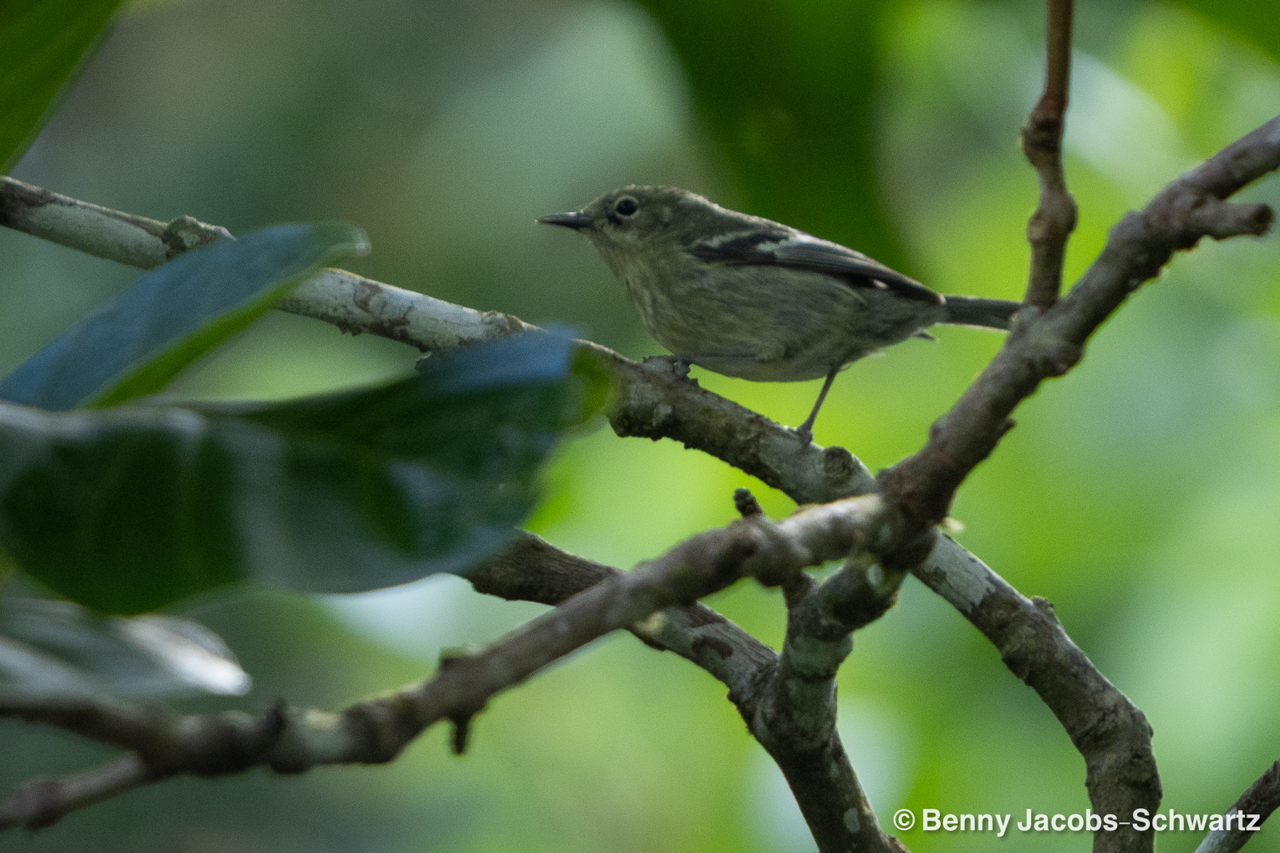
Elfin-woods Warbler
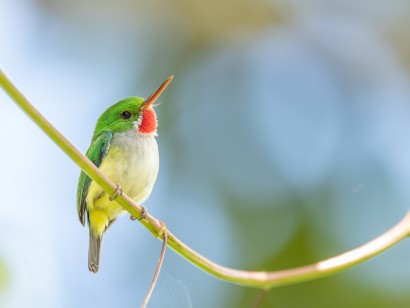
A stunning male Puerto Rican Chlorophonia came into view allowing for photos. Also on the same trail the charismatic Puerto Rican Tody made a spectacular appearance. We finally found the Green Mango sitting inside a nest, allowing all participants to enjoy a bit of breeding behavior of this endemic hummer.
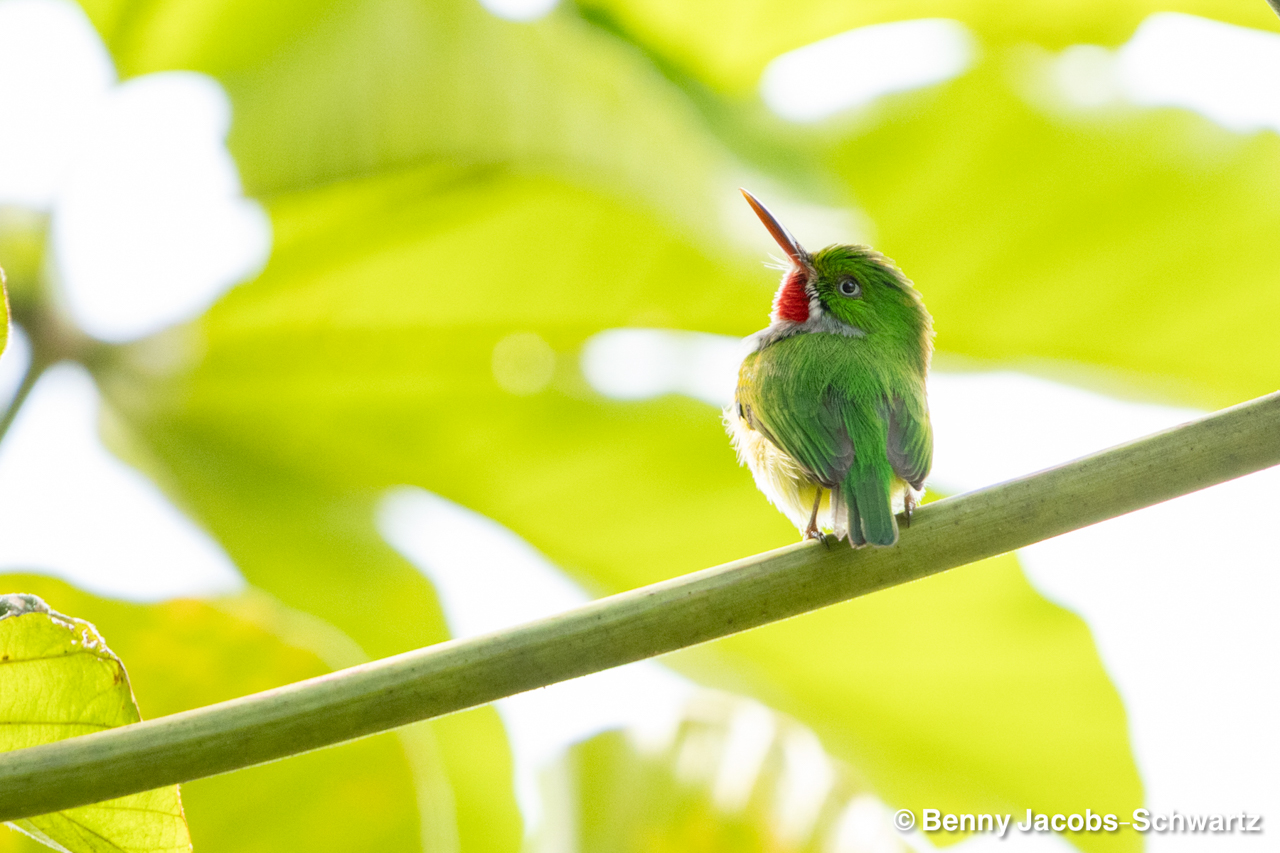
Puerto Rican Tody
We then headed to the lowlands, and after lunch, the group visited dry forest restoration sites in La Parguera. The landscape is dominated by mesquite trees with many planted saplings of different native trees from dry forest. We were greeted by a Mangrove Cuckoo which was quite tame and allowed great photos, also Loggerhead Kingbirds were very cooperative as well the Puerto Rican Fluycatcher Caribbean Elaenia. A mixed species flock of Prairie Warblers, Northern Parula, and Puerto Rican Vireo was a nice addition to this area.
Crossing the road from this site tidal mud flats produced Wilson’s Plovers, Clapper Rails, Northern Waterthrush, and multiple egret species. To conclude this day, at night fall we tried for the Puerto Rican Owl, the group had a brief look of an owl that responded to a call. And then it decided to let us know of his presence with his mysterious repertoire of vocalizations.
Day 5 – March 7: Guanica Dry Forest and Southwest Wetlands
After breakfast we headed to Guánica State Forest, a well-preserved dry forest growing over limestone. Common Ground-Doves and Pearly-eyed Thrashers greeted us after getting out of the van. Not long after going into the trails we heard a much wanted species, the Key West Quail-Dove, however this shy species remained hidden. Puerto Rican Bullfinch and Puerto Rican Tody allowed the group excellent views. Before getting on the van a male Puerto Rican Emerald taunted the group with brief looks.
The group headed to Cabo Rojo to the Boquerón Wildlife Refuge, a mangrove forest with open water lagoons. A Green Heron was spotted fishing among the mangrove roots while Northern Watertrushes were also spotted. Also a Limpkin was heard, but our interest quickly turned to a Lesser Antillean Pewee calling close by. Soon enough we had good looks of this endemic subspecies. A female Puerto Rican Emerald made an appearance and perched on a twig allowing for a paused look.
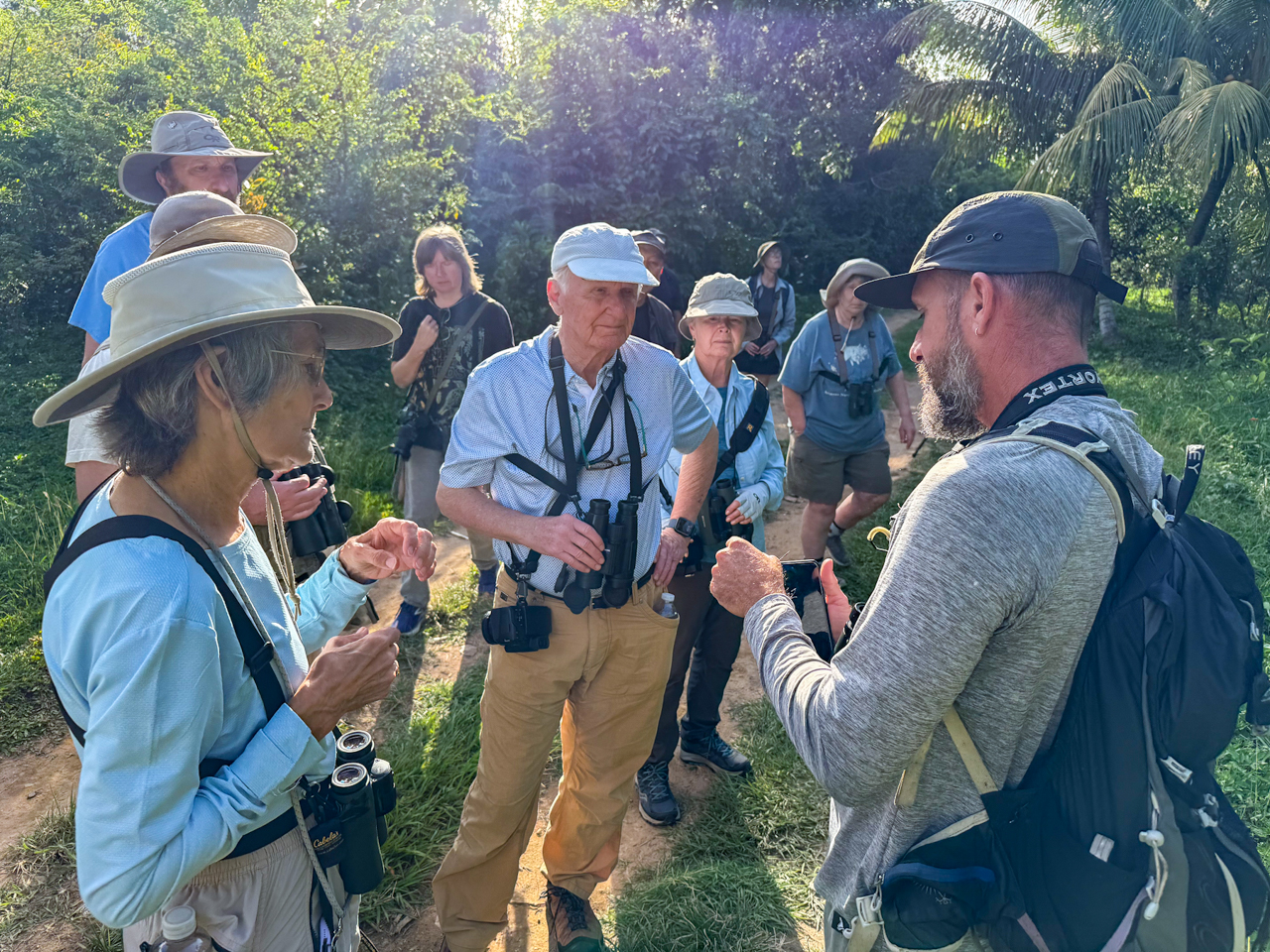
Birding in Puerto Rico
We then arrived at a viewing point of the lagoon which was bordered by White and Red mangroves and part of it was covered with flowering water lilies. Here a flock of Ruddy ducks (males and females) was spotted, a Pied-billed Grebe was spotted foraging and flocks of American Coots with Common Gallinules foraged between the water lilies. Flying above us we spotted Caribbean Martins which are arriving on the island for the nesting season ahead. Before leaving this area we spotted a mixed species flock of Northern Watertrush, Black-and-white Warbler, American Redstar, Northern Parula and Bananaquits, a fantastic closing for this spot.
Day 6 – March 8: Central Aguirre, Las Mareas, and Northeast Coastal Forests
We then departed to visit the historical Central Aguirre, one of the last cane sugar plantations to shut down in the island. In the flowering trees near the roadside we stopped to look for hummingbirds. Bananquits as always were busy foraging and all of the sudden a Green-throated Carib and Antillean Crested Hummingbirds appeared to sip nectar from the flowers. What a treat seeing these two hummers side by side. Suddenly a pair of Red-crowned Amazons, an introduced species, was seen landing on nearby trees.
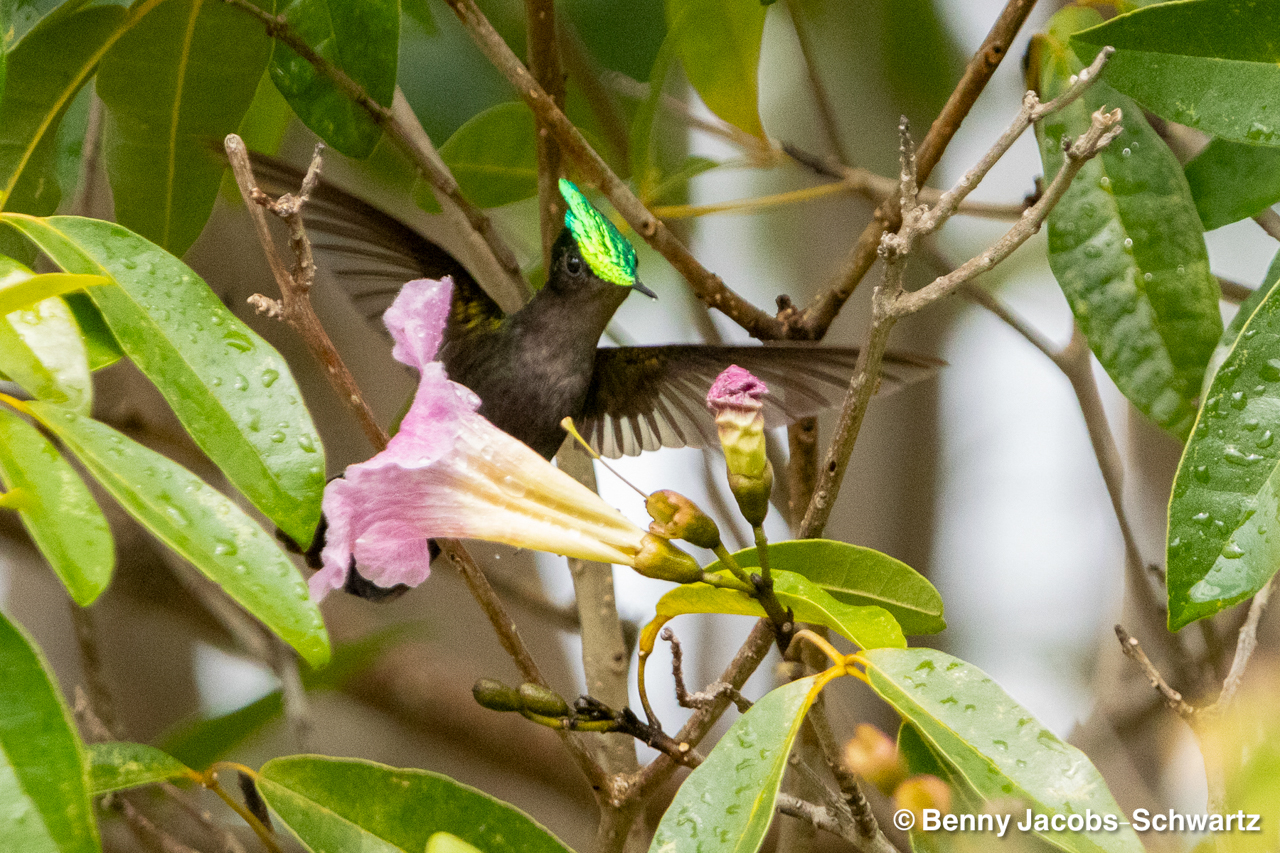
Antillean Crested Hummingbird
Near Aguirre, we visited Las Mareas – Hobos Bay Estuarine Reserve, where mudflats hosted hundreds of Hudsonian Whimbrels, Willets, Black-bellied Plovers, and Brown Pelicans.
We continued our drive toward the north-east and stopped for lunch on the way. After checking inn at our hotel and having a brief rest we continued to explored the Ecological Corridor Nature Reserve, observing Scaly-naped Pigeons, White-winged Doves, Puerto Rican Flycatchers, Black-whiskered Vireos, and mixed-species flocks of warbler including Northern Waterthrush, Black-and-white Warbler, Common Yellowthroat, American Redstart, Northern Parula, and Prairie Warbler.
Day 7 – March 9: Luquillo Mountains, El Yunque, and Medio Mundo y Daguao
After breakfast in a nearby bakery, the group observed Orange-fronted Parakeets flying over the road. The group headed to El Yunque National Forest, the only rain forest in Puerto Rico; it receives an average of 120 to over 200 inches of rain per year! After driving the up winding roads we finally arrived at the lush rain forest with cool weather, the sounds of waterfalls and amazing scenery. As always the first birds to receive us were Bananaquits, but soon after we had a nice sighting of Puerto Rican tanager foraging in the fruits of a Cecropia tree. An Eastern Red-legged Thrush was surprised in the middle of the road as well a Louisiana Watertrush, wich provided a nice opportunity of adding a new species for the trip. Puerto Rican Bullfinch were calling and we stopped to have closer look and they were in a mixed species flock that included Puerto Rican Spindalis, Northern Parula and Bananaquits. In the trail numerous anole lizards and endemic land snails were spotted. This lush rainforest featured waterfalls, streams, and abundant wildlife, providing a contrast to drier forests visited earlier.
Later, the group visited Medio Mundo y Daguao Nature Reserve, one of the most important wetlands in the eastern side of the island with wide expanses of mudflats surrounded by mangrove forests and dry forests. Here the group put in practice its shorebird ID skills since we saw mixed species flocks Black-bellied Plovers, Short-billed Dowitchers, Lesser Yellowlegs, and Ruddy Turnstone. Adding to this diversity of water birds were White-cheeked Pintails, Tricolored Herons, and a small flock of six American Flamingos!! a rare and remarkable sighting. Land bird species were active and calling with Caribbean Elaenias, Puerto Rican Flycatchers and Mangrove Yellow Warblers. The habitat offered spectacular vistas of mud flats and the Luquillo Mountains, a connected landscape making this area a wonder.
On the way to lunch, a flock of Blue-and-Yellow Macaws flew overhead, providing an unexpected encounter.
The tour concluded in San Juan with a farewell dinner featuring Puerto Rican cuisine as always. The group shared memorable encounters of several highlights, including Puerto Rican Amazon, Elfin Woods Warbler, Masked Duck, American Flamingo, and Blue-and-Yellow Macaws. 126 species were recorded during this amazing trip making this the most detected so far. Many wildlife encounters beyond birds, including lizards, land snails, fiddler crabs, and butterflies were a nice bonus. The group left highly satisfied, having experienced Puerto Rico’s unique biodiversity, iconic landscapes, and cultural richness.
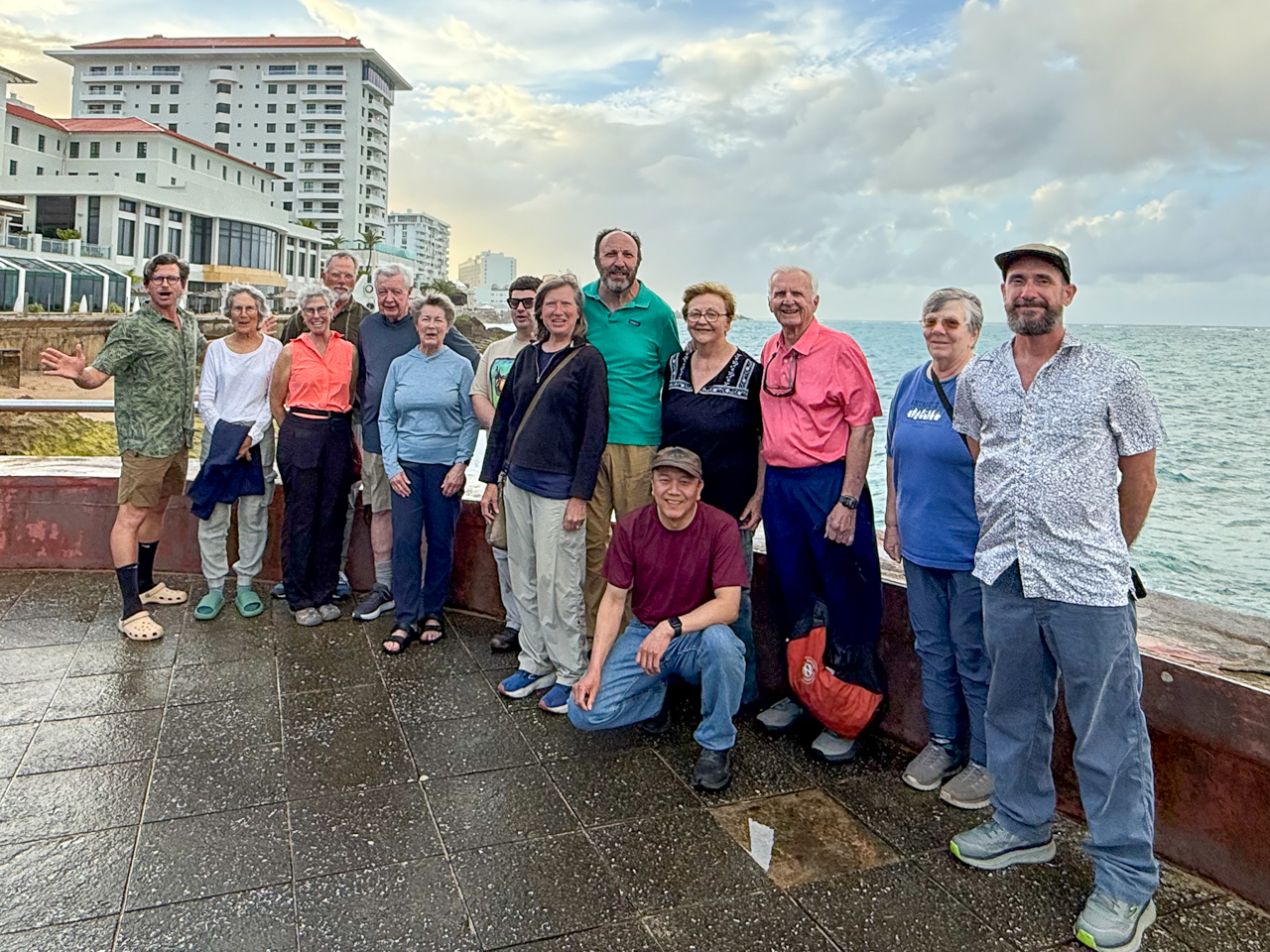
Puerto Rico birding group