Panama Trip Report (March 4 – 14, 2026)
Day 1 – Arrival in Panama
Everyone arrived in good spirits and on time in the evening for our first introductory dinner together at the Riande Hotel.
Day 2 – Cerro Azul
Our first inaugural day of birding would begin as most birding days do, with downing a quick early morning breakfast and coffee before congregating at the bus and leaving for the day.
On our first morning, we headed Northeast up the hillsides adjacent to the city to Cerro Azul, a gated community that is nested within Chagres National Park. Upon entering the park we headed straight to the home of our Hosts Jerry and Linda, who greeted us with open arms and ushered us into their backyard paradise. They have been maintaining a feeder setup for the past 13 years and as a result have attracted an amazing amount of bird diversity to their yard.
The colorful flashes of the wings of dozens of birds vying for their spot at the feeders was mesmerizing. Throughout the morning we were treated with a total of 7 Hummingbird species, including the White-necked Jacobin, Blue-chested and Snowy-bellied Hummingbirds, and several dazzling Crowned Woodnymphs. Dozens of Honeycreepers were present as well, with Shining, Red-legged and Green all being present. Several bashful Chestnut-headed Oropendolas took turns making quick passes at a piece of papaya, as well as a pair of Hepatic Tanagers. A Fulvous-vented Euphonia was seen low down on the branches giving good views, as well as a White-ruffed Manakin that was very cooperative and showed up right at the end of the morning.
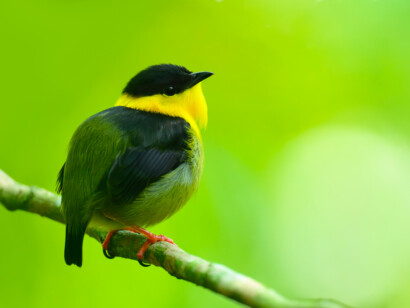
After having a picnic lunch, we stopped and walked up a road that was closed for construction. Several Swallow-tailed Kites were flying overhead, and a pair of Rufous Motmots made an appearance eating in a fruiting tree. Several Masked Tityras were hopping along the treetops, and a ground of Golden-collared Manakins were heard quite close to the road but were not very visible. Near the end of our walk 2 Red-throated Ant-tanagers made an appearance, along with good views of a Scale-crested Pygmy-Tyrant.
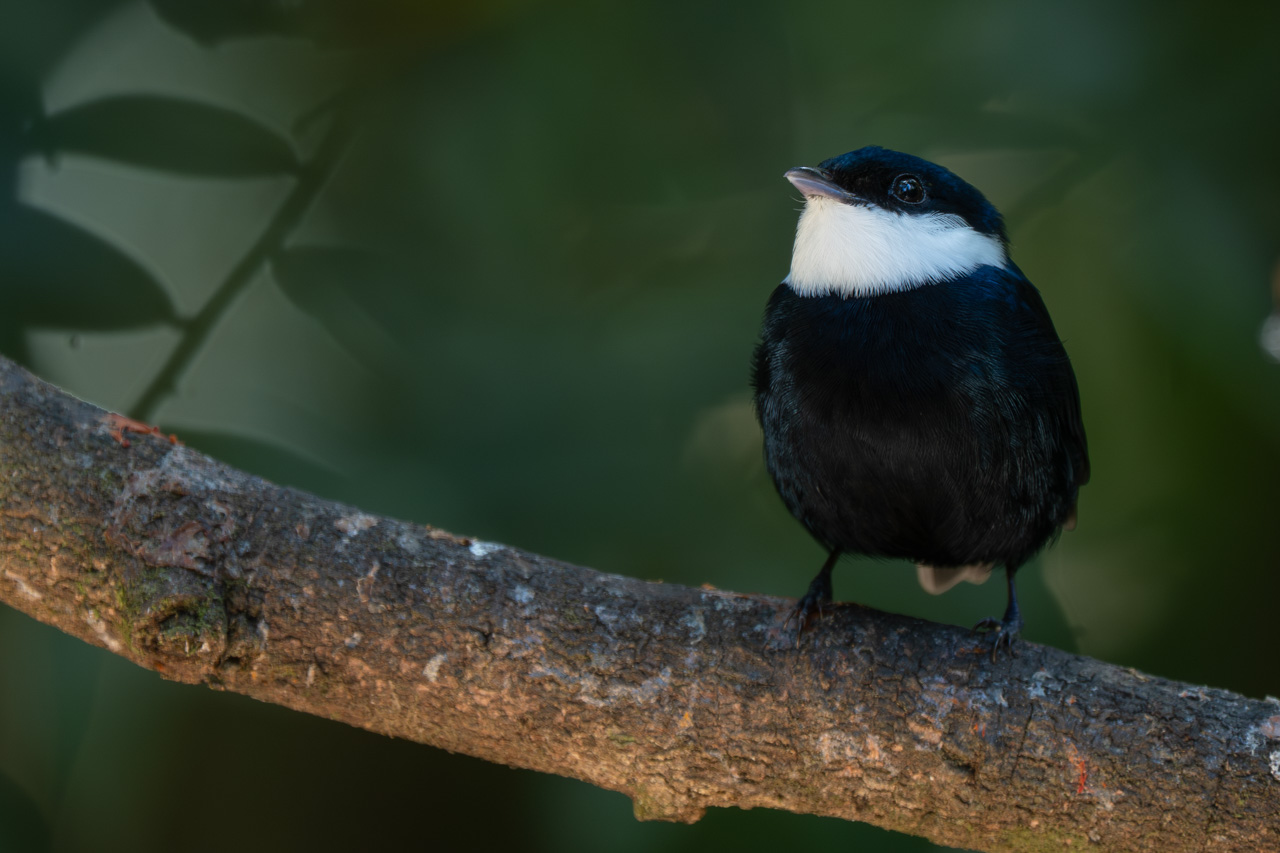
White-bibbed Manakin ©Phil Chaon
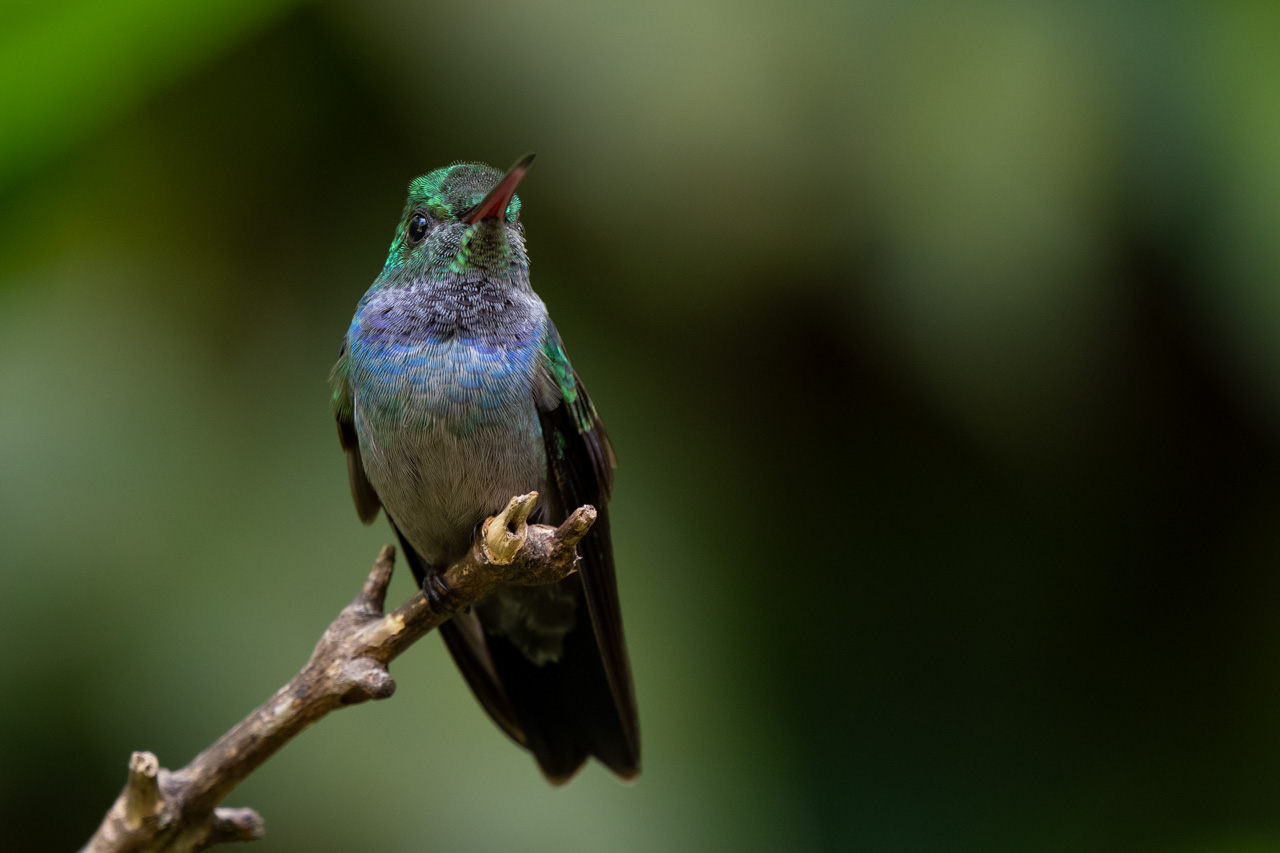
Blue-chested Hummingbird ©Phil Chaon
Day 3 – Transit to Torti
Our second day would see us up with the sunrise, and we grabbed our to-go breakfast bags and headed off. We bid farewell to Panama City as we headed East and South along the Pan-American Highway on our trek towards the Darien Region, which would be our eventual destination in 2 days’ time.
Our first stop was at the Camino de Tanara road just East of the city. The road goes through a nice dry forest area that is dotted with wetland. One of the first of the target birds on our radar that we spotted was a pair of vocal Panama Flycatchers. A Saphire-throated Hummingbird perched just above the road gave good views for all, and several groups of Red-lored and Yellow-crowned Amazons would be the first parrots of the trip. A nearby wetland just off the road yielded a pair of Pied Water Tyrants foraging along the edge of the water, with Wattled Jacanas, Southern Lapwings, a Least Grebe and a Green Heron making a showing as well.
After enjoying a picnic breakfast spread, we were back on the bus and continued to the San Blas road. The road winds North towards the Guna Yala Indigenous Province, where we stopped at a trailhead just shy of the community. One of our targets a Sapayoa was heard only, but a nice male Velvety Manakin made a nice consolation prize. The clouds opened and brought some brief light showers, but the rain wouldn’t last long and gave way to a small flurry of bird activity which included a mixed flock of Sulfur-rumped, Black-and-yellow and Tawny-crested Tanagers. The addition of a nice male Blue-black Grosbeak, a perched White-tailed Trogon and a couple of Broad-billed Motmots filled out the morning list nicely.
After a brief stop for a picnic lunch on out way back down from the San Blas hills, we continued on to Hotel Avicar in Torti. This would be our base for the next few days of birding in and around the Darien region.
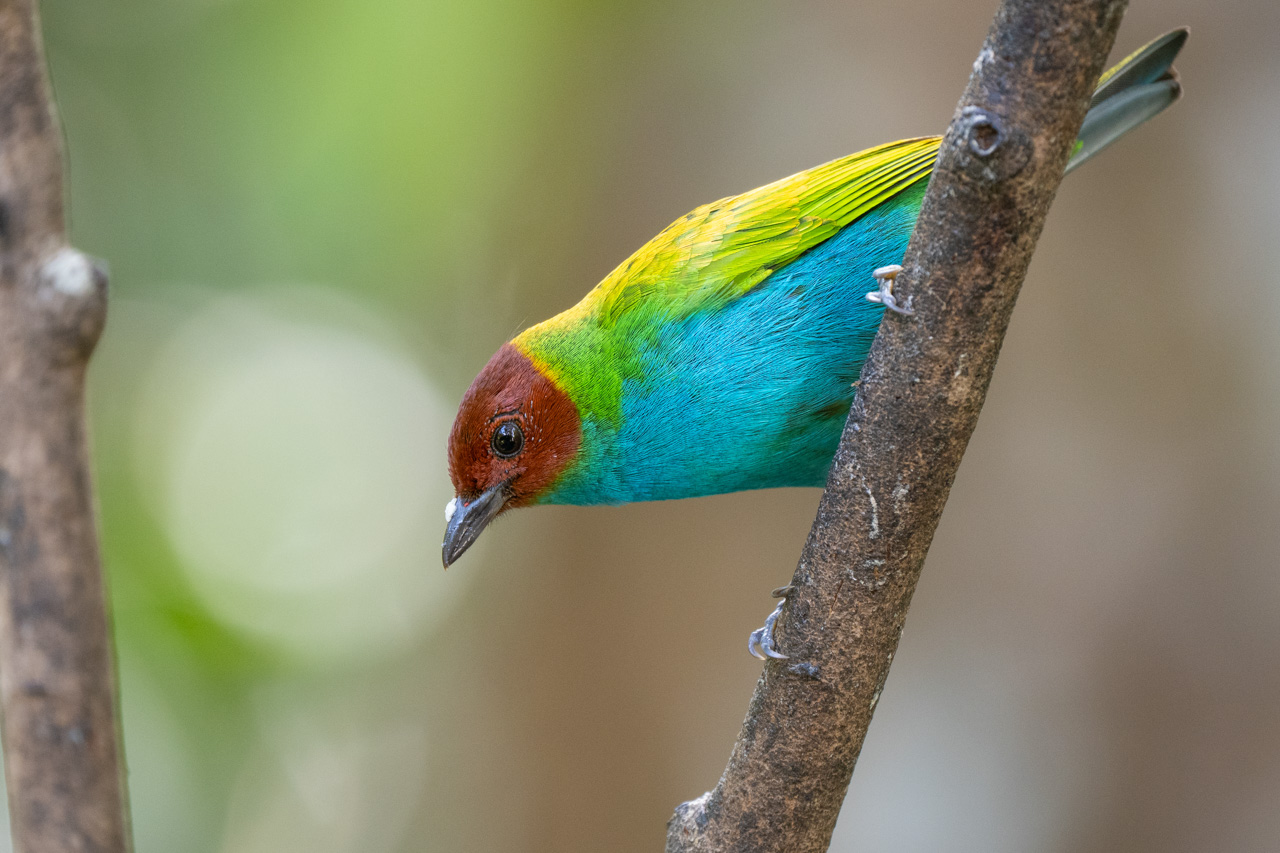
Bay-headed Tanager ©Phil Chaon
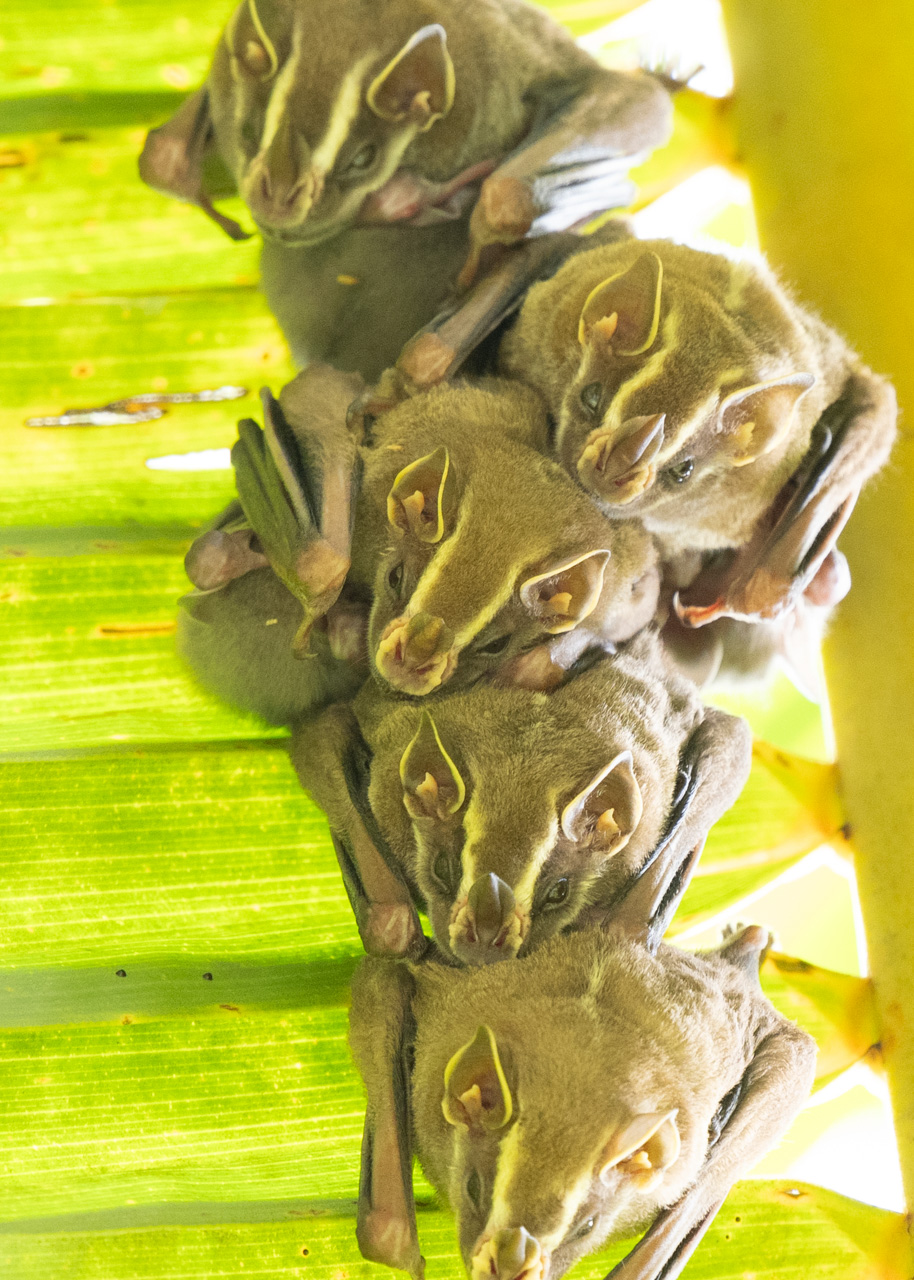
Common Tent-making Bats ©Phil Chaon
Day 4 – San Francisco Reserve
We left the hotel with our day packs and headed just outside of town towards the San Francisco Reserve. Along the way we made a quick stop at a nearby wetland and managed to find several singing male Red-breasted Meadowlarks dotted throughout the field. A pair of Least Grebes were seen disappearing in and out of sight on the pond, and a single Purple Gallinule made a brief roadside appearance before disappearing back into the grass.
It was a nice sunny morning at the reserve, and we were greeted by a several Keel-billed Toucans that made an appearance in a Cecropia tree. The open fields at the beginning of the reserve form the perfect habitat for flycatchers, and we accumulated 11 species total including a Lesser Kiskadee building a nest. As the morning warmed up, overhead 2 King Vultures were spotted, along with a Double-toothed Kite, Zone-tailed Hawk, and a White Hawk all taking advantage of the thermals. Two Savanna Hawks flushed from the edge of a clearing, and a pair each of Barred Puffbirds and White-winged Becards were cooperative relatively low down.
Further along the trail we ducked into the forest, we were greeted by the song of a Buff-rumped Warbler that was making its way along a stream at the beginning of the trail. A group of 3 White-fronted Nunbirds were found feeding across a small valley, and a pair of Gartered Violaceous Trogons gave good views close overhead. We decided to turn around once we arrived at a second stream that was a bit too wide to cross easily. Above the water we came across a group of 3 Royal Tropical Flycatchers flying about and foraging, and got fleeting views of a pair of Song Wrens along the opposite bank.
After lunch and a quick siesta back at the hotel, we headed out again for some afternoon birding at the Torti River. There was a decent amount of water flowing, so we were unable to cross and remained on the close side of the water. A Green Kingfisher stopped close by on a crossing wire, and an Amazon Kingfisher was making rounds up and down the river. A Little Blue Heron and Snowy Egret could be seen around the bend feeding in the water, a Grey-lined Hawk darted across above us, and a pair of Buff-breasted Wrens could be heard echoing each other’s calls along the bank. As we headed inland from the river, we came across a Whooping Motmot, a Collared Aracari, several Woodcreepers including Cocoa, Plain-brown and Streak-headed, and a very cooperative Common Tody Flycatcher was wagging its tail at us as we boarded the bus.
In the evening we once again a few of us opted to try for some nighttime birding and stopped by the San Francisco Reserve. It was surprisingly still and quiet, but we did manage to find a distant pair of Common Potoos, as well as a roosting Black-tailed Trogon and Whooping Motmot, and happened upon an unidentified Manakin asleep on its nest.
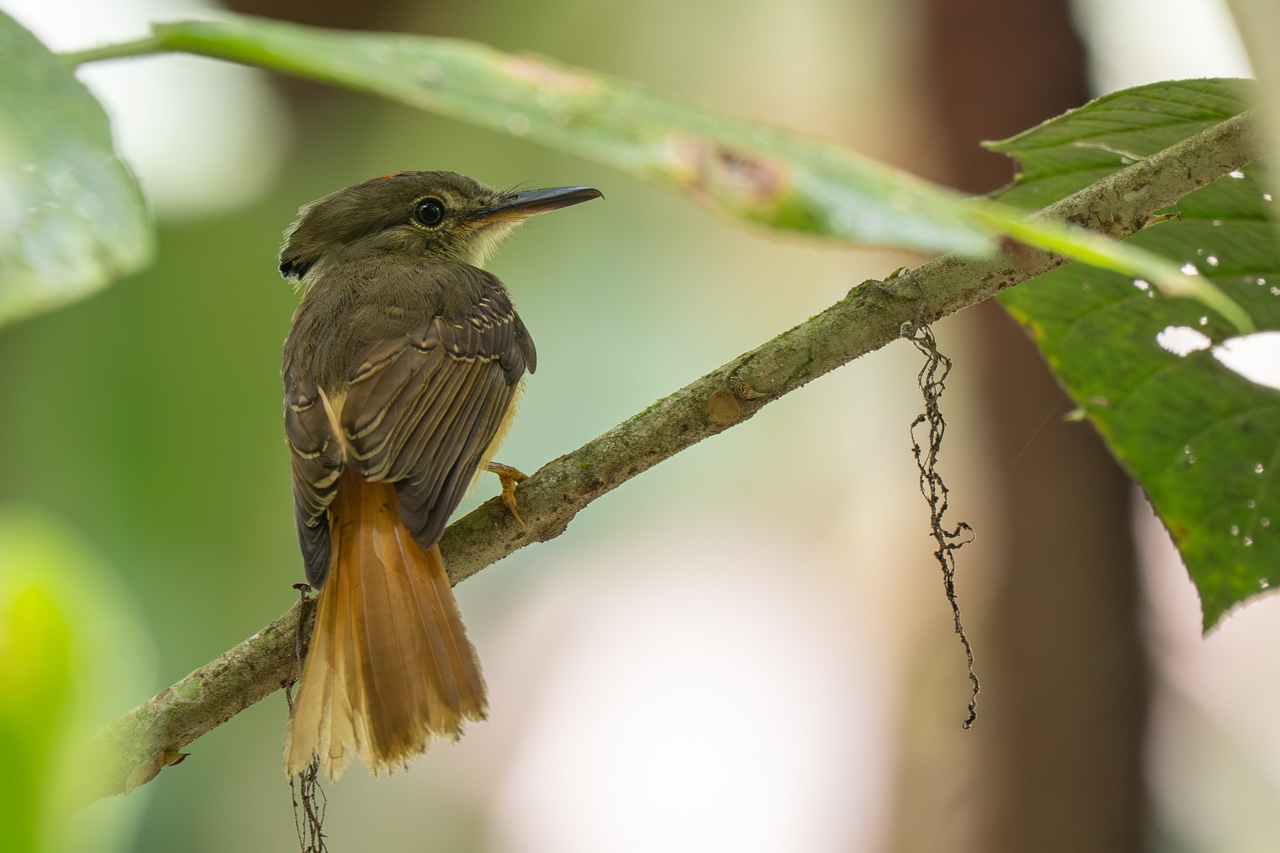
Tropical Royal Flycatcher ©Phil Chaon
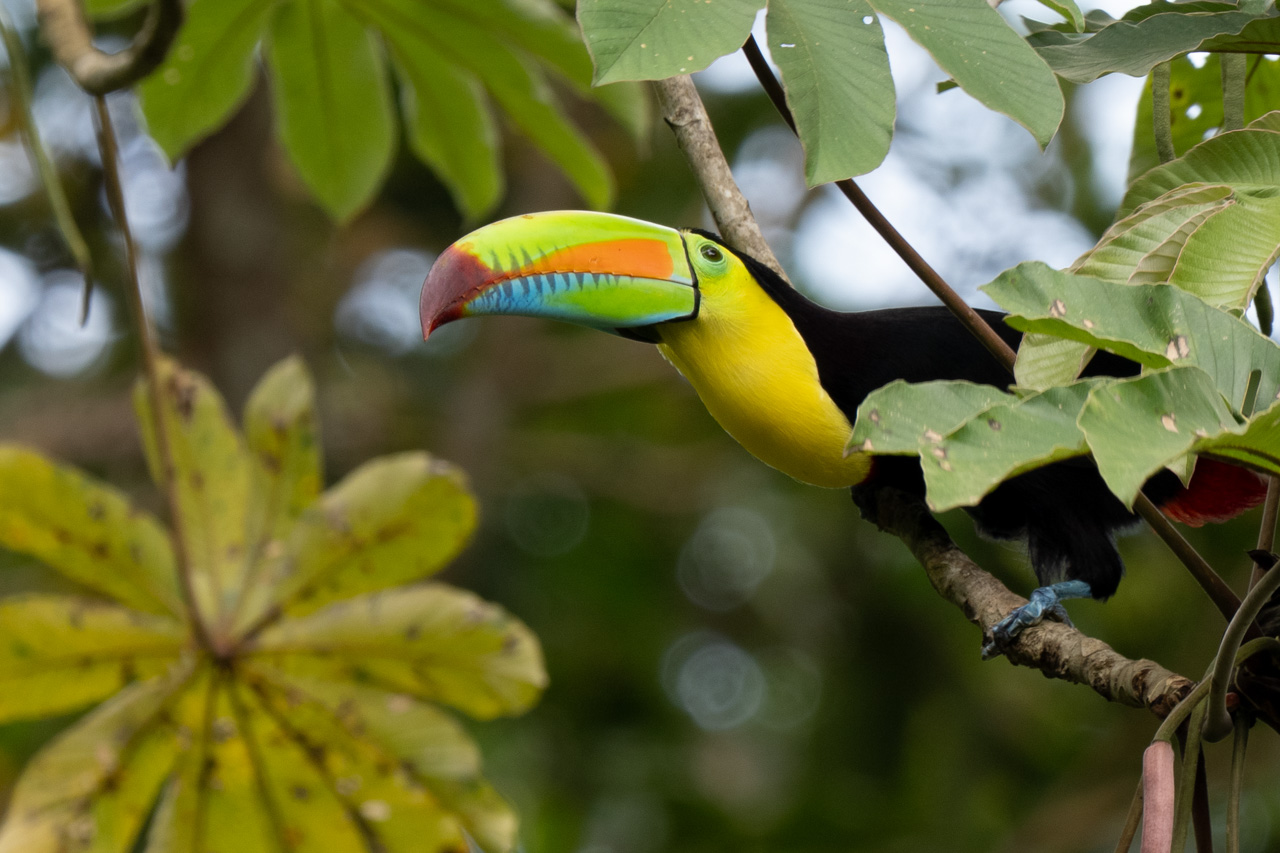
Keel-billed Toucan ©Phil Chaon
Day 5 – El Salto Road and Yaviza
This would be our earliest start of the trip, as we boarded the bus at 4:30 for our 2 hour bus ride down the El Salto road. It was a beautiful calm and sunny morning, with dew clinging to plants as the sun started to poke through the trees. The morning started with the calls of singular Great and Little Tinamous off in the distance, with several very shy White-bellied Antbirds skulking just off the road offering a challenge to catch them on a perch long enough to get a good look. A pair of Chestnut Fronted Macaws were our first parrots of the day, and perched briefly at the top of the canopy before flying straight overhead. We also saw Red-lored Amazons, Mealy Amazons, and Blue-headed Parrots flying past in small groups throughout the morning.
We had good views of a Perched Hook-billed Kite, a White-tailed and Black-tailed Trogon, and a Grey-cheeked Nunlet was heard just off of the road. Several Chesnut-headed, Crested and Black Oropendolas were seen throughout the morning, and a group of Black-chested Jays crossed the clearing above us and were picking through a fruiting tree.
Driving further down the road, we stopped just shy of the Chucanaque River where we decided to hike down a trail that runs inland along the river. Midway down the trail at the height of a ridge we came upon a fruiting tree that was full of activity that yielded good views of Black-headed and Masked Tityra, Streaked, Sulfur-bellied and Great Crested Flycatchers, a Blue Dacnis, many Bay-breasted warblers, and a splash of Tanagers including Summer, Crimson-backed, and a pair of White-shouldered among others.
After a picnic lunch, we drove to the end of the Panamerican Highway into Yaviza to take a quick walk around town, and to also take the obligatory group photo at the sign that marks the end of the road.
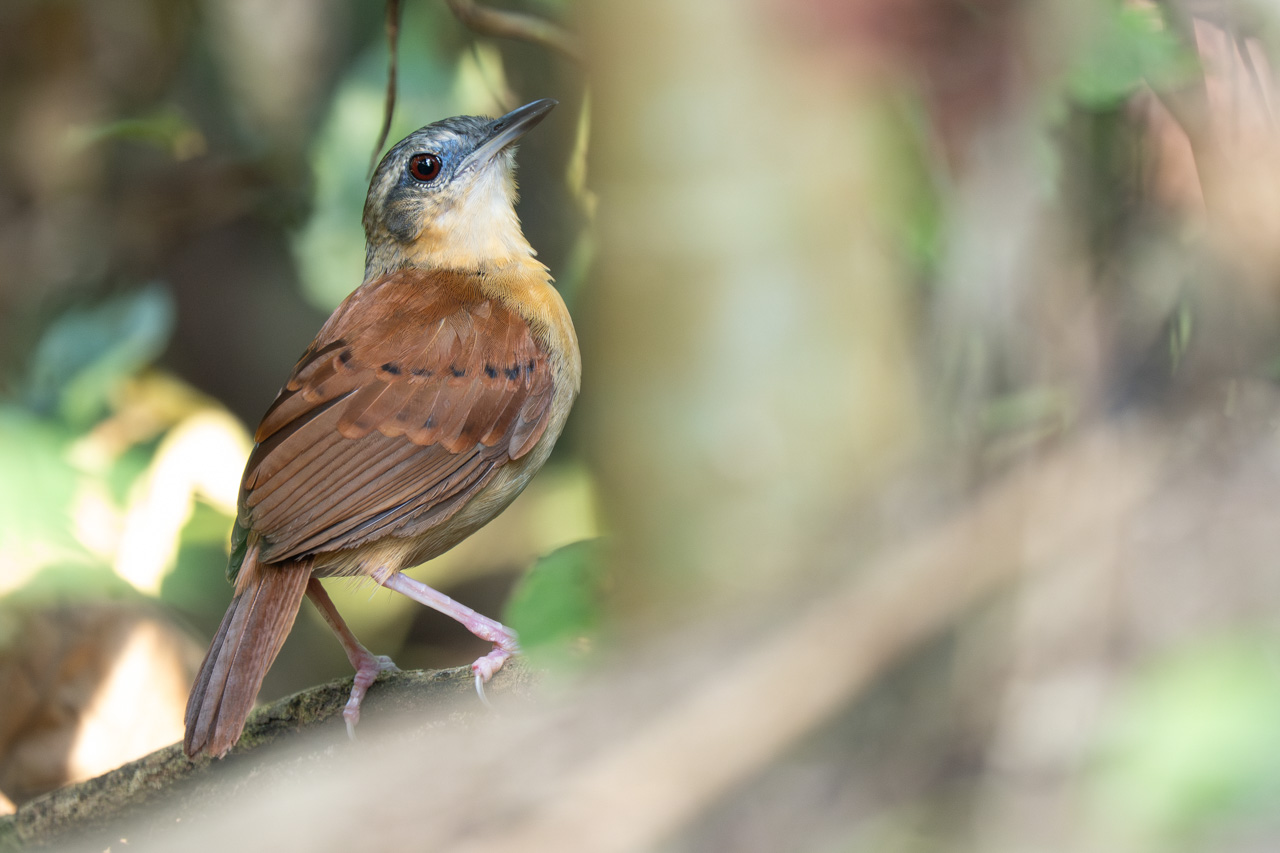
White-bellied Antbird ©Phil Chaon
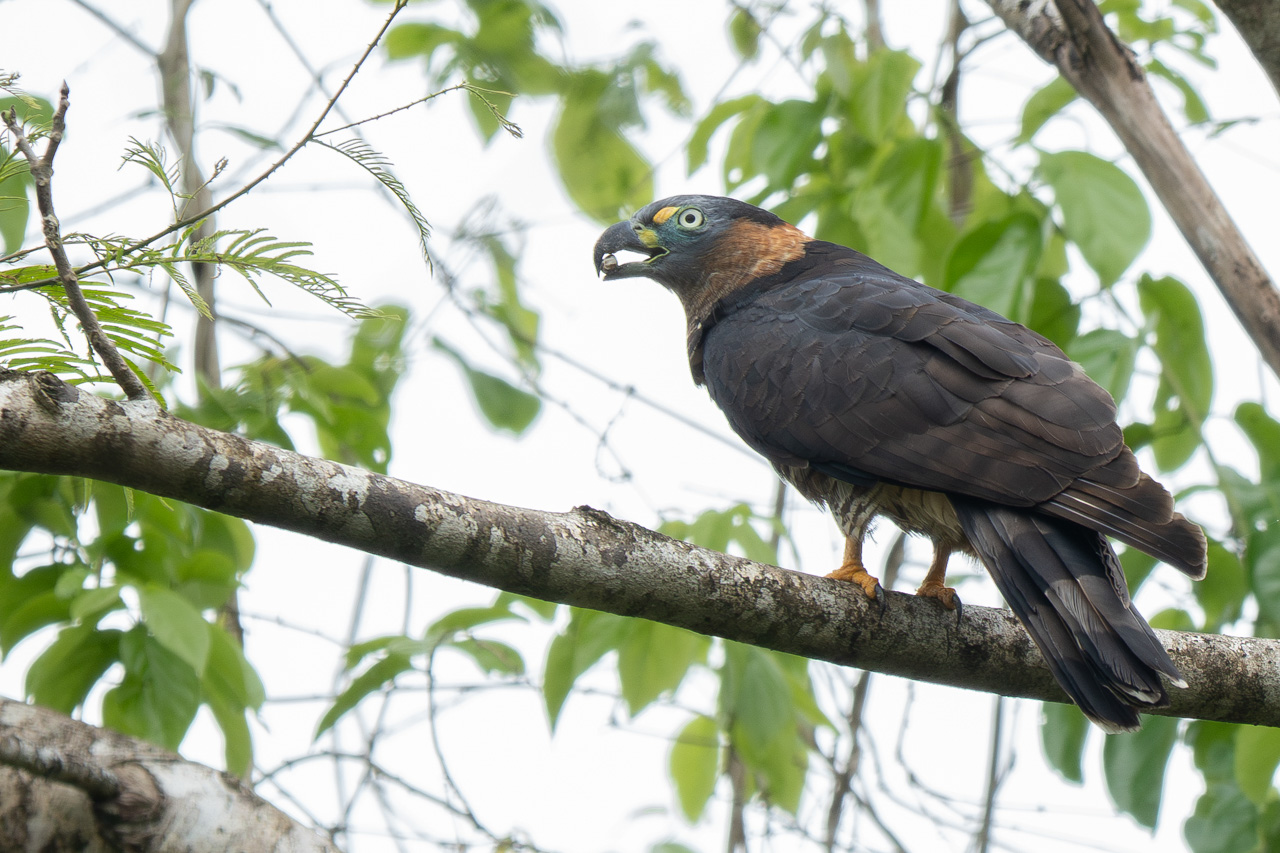
Hook-billed Kite ©Phil Chaon
Day 6 – Torti River and travel to Gamboa
We started our day by heading out just before sunrise towards the Torti River once again. We stopped just shy of the river to bird the open fields outside of town and were greeted with a beautiful view of the sunrise to the East as the clouds gave way to the golden rays of the new day. An Eastern Meadowlark started us off as it sang in the dawn light, and we had good views of a perched Roadside Hawk, Fork-tailed Flycatcher, and several Blue Headed Parrots that stopped to perch in a palm tree.
Further along at the rivers edge, we were greeted by some decent bird activity along the banks. Phil impressed us all by spotting the nest of a Long-billed Starthroat up in a Cecropia tree just across the bank, with a Black-throated Mango foraging in the same tree, with a Band-tailed Barbthroat making a pass at eye level. Several White Ibis were foraging in the water around the bend of the river, as well as some Cattle Egrets and a pair of Little-blue Herons. A Ringed and Green Kingfisher each made several appearances as they flew up and down the river, and a Great Antshrike was lazily foraging along the bank in the open.
A Pacific Antwren made a quick appearance as we neared the bus for our return journey, as well as a pair of Cinnamon Becards that were catching insects just above the roof of the bus. A handful of warblers made an appearance including Northern Yellow, Tennessee, Bay-breasted and Mourning, as well as a pair of Summer Tanagers. After our successful morning we returned to the hotel for one last lovely sit-down breakfast before boarding the bus that would take us back towards the Canal region.
The afternoon saw us arrive at the Gamboa Rainforest Reserve, a lovely hotel resort situated just North of Panama City. After getting situated in our rooms and taking a quick siesta, we all met down in the lobby and headed out for a leisurely walk around the hotel grounds. A pair of Grey-headed Chachalacas started us off just past the parking lot, and a nice group of Golden-hooded Tanagers was found feeding in a low tree at eye level. Down near the edge of the Chagres River a Grey-cowled Wood rail was a nice surprise and made several appearances waddling out into the open. Overhead a pair of cooperative Flame-rumped Tanagers were hopping around one of the gardens, along with several Crimson-backed Tanagers.
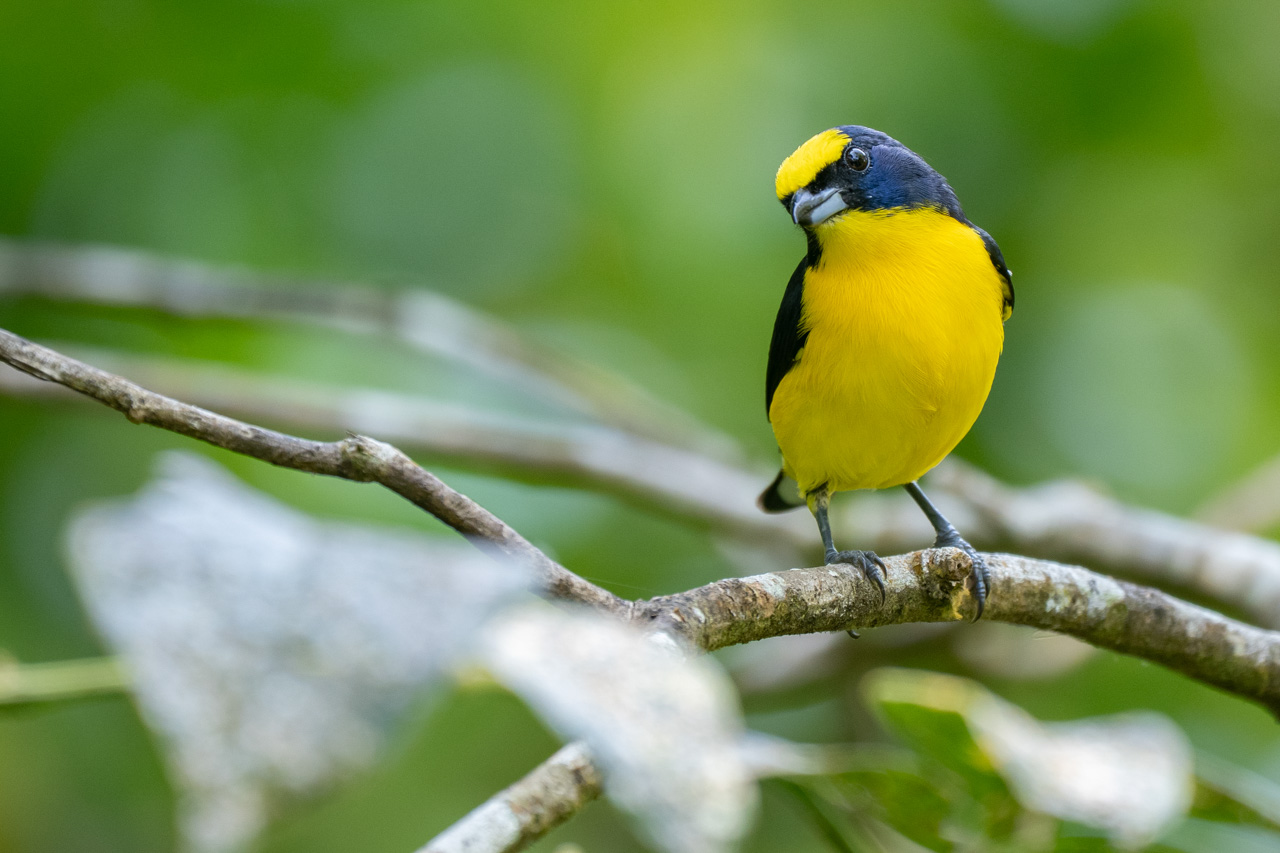
Thick-billed Euphonia ©Phil Chaon
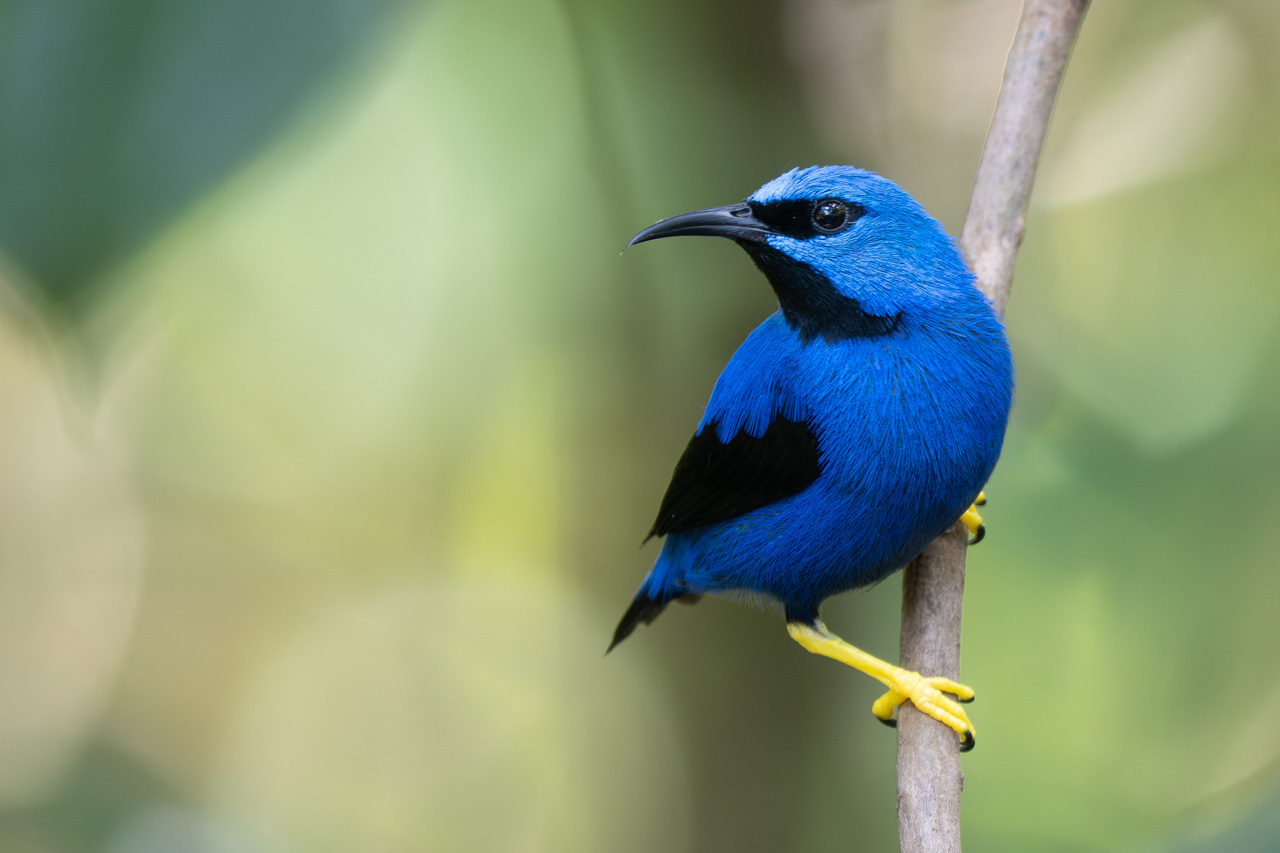
Shining Honeycreeper ©Phil Chaon
Day 7 – Pipeline Road: The Rainforest Discovery Center
We started our day with a walk around the hotel grounds at first light before breakfast, and we were rewarded with good looks at a pair each of Gartered Violaceous and Slaty-tailed Trogons just outside of the hotel parkinglot. Several cooperative Keel-billed Toucans made an appearance, as well as a Golden-hooded Tanager, Buff-throated Saltator, a pair of Red-crowned Woodpeckers, and several Short-tailed and Lesser Swallow-tailed Swifts cruising overhead.
After grabbing our breakfast to-go bags we drove down to Pipeline Road and made our way into the Rainforest Discovery Center. As we started down the trail a Pheasant Cuckoo could be heard calling not too far in the distance. We eventually found it just off the trail, and everyone had good looks as it walked back and forth along the forest floor doing an open wing display. Just down the path an Olive-backed Quail Dove waltzed by, a Black-faced Antthrush made an appearance, and a female Velvety Manakin posed nicely for all to see. Further on small mixed group of ant-following birds crossed the path in front of us, which included a Checker-throated Stipplethroat, White-flanked Antwren, Dot-winged Antwren, several Chestnut-backed Antbirds, and a lone Southern Bentbill.
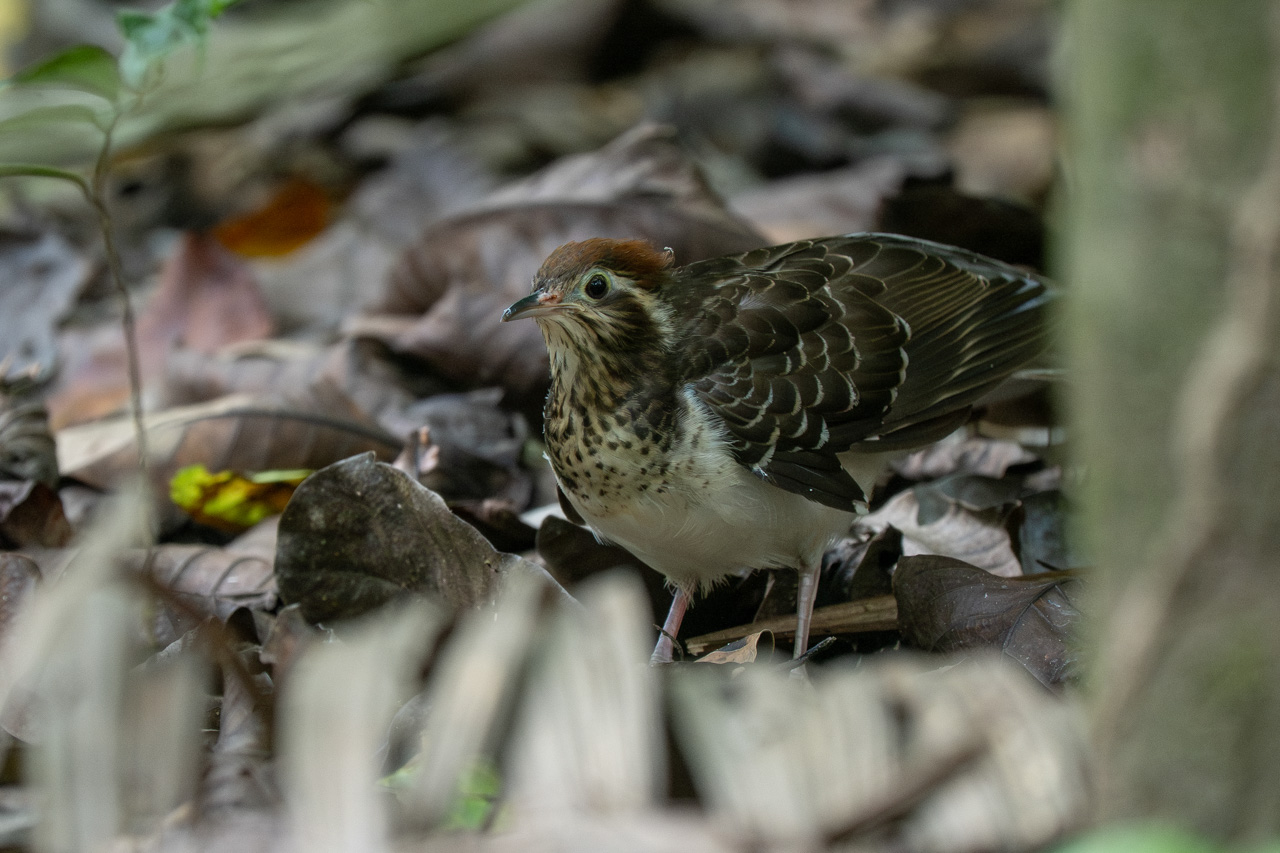
Pheasant Cuckoo ©Phil Chaon
When we arrived at the visitor center, we stopped for a brief coffee and a quick chat with the friendly staff who pointed out a nesting Bright-rumped Atilla nestled into one of the corners of the structure.
As we sipped our coffee we started to notice some Raptor activity overhead through the trees. We decided to make our way up the nearby observation tower to see what kind of activity there was now that the mid-morning thermal air currents were heating up. Unfortunately, the brief burst of activity we had seen from the ground had quieted down, but we still managed to spy a few Hook-billed Kites among the numerous Black and Turkey Vultures that made up most of the birds in the air.
A female Blue Cotinga made a quick appearance rather close to the tower just below us, and a Purple-crowned Fairy made a very brief appearance before disappearing. A cooperative Brown-capped Tyrannulet was new for the morning, along with a Chestnut-sided Warbler popping up shortly after in the same tree.
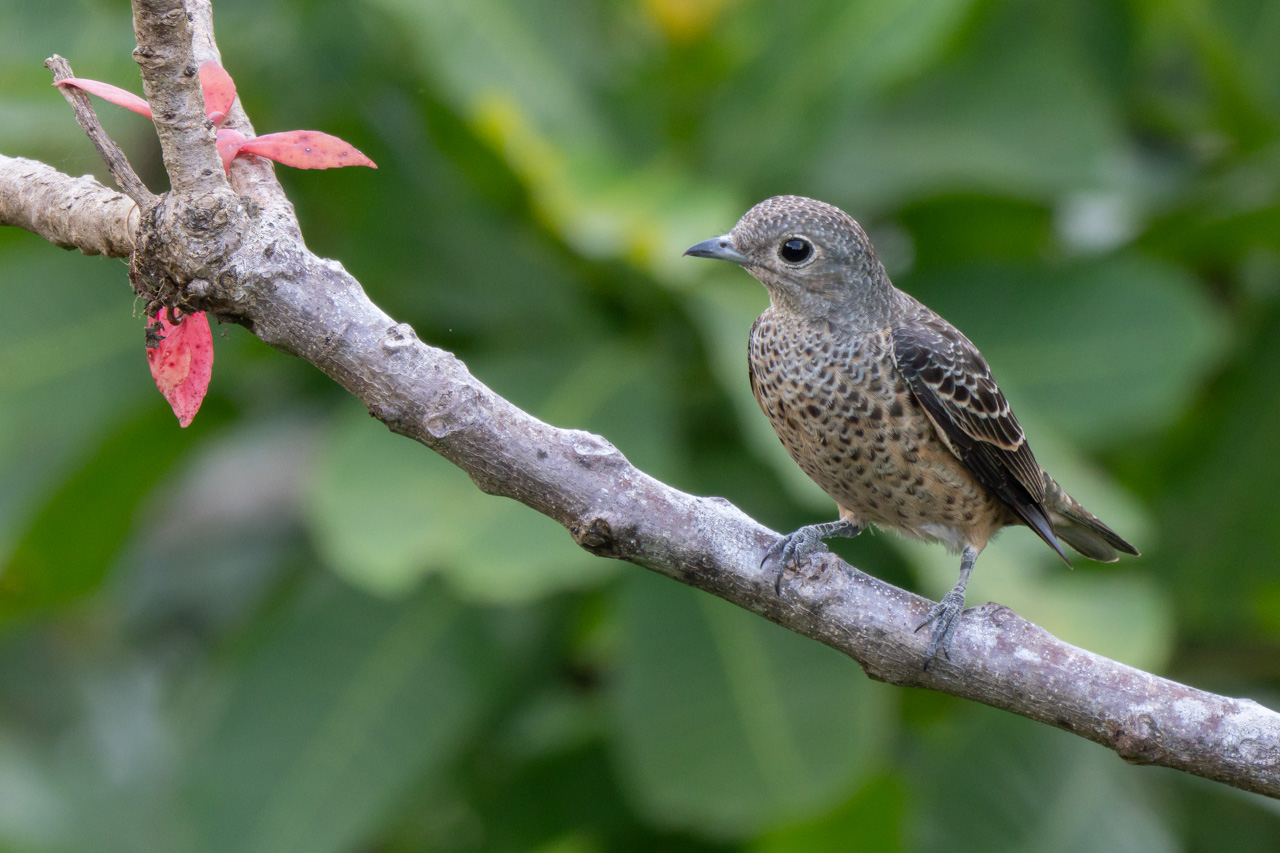
Blue Cotinga ©Phil Chaon
In the afternoon we returned to Pipeline Road, and started our birding walk just past the entrance. An Ochre-bellied Flycatcher was one of the first new birds of the day, and good views were had of both Black-tailed and Graceful Black-throated Trogons. Another small group of ant-following birds appeared including a cooperative Spotted Antbird, in addition to a Dull-mantled Antbird, and a pair each of Dot-winged Antwren and White-flanked Antwren. We were also delighted to find our first 2 Three-toed Sloths of the trip, one of which was directly above us hanging upside down eating the fruits of a Cecropia tree.
On our way back towards the hotel, we stopped by the Ammo Dump Ponds for some evening wetland birding. A nice-sized Caiman was one of the first creatures to welcome us, doing a not-very-convincing log impression in the long grass, while a family of Wattled Jacanas foraged not far off. 2 Rufescent Tiger-Herons were attending to a nest with young, as well as a pair of Red-crowned Woodpeckers. An Anhinga was found perched in a thicket just above the water, while below we could hear a trio of White-throated Crakes calling though we were unable to see any of the mouselike birds among the grasses and foliage.
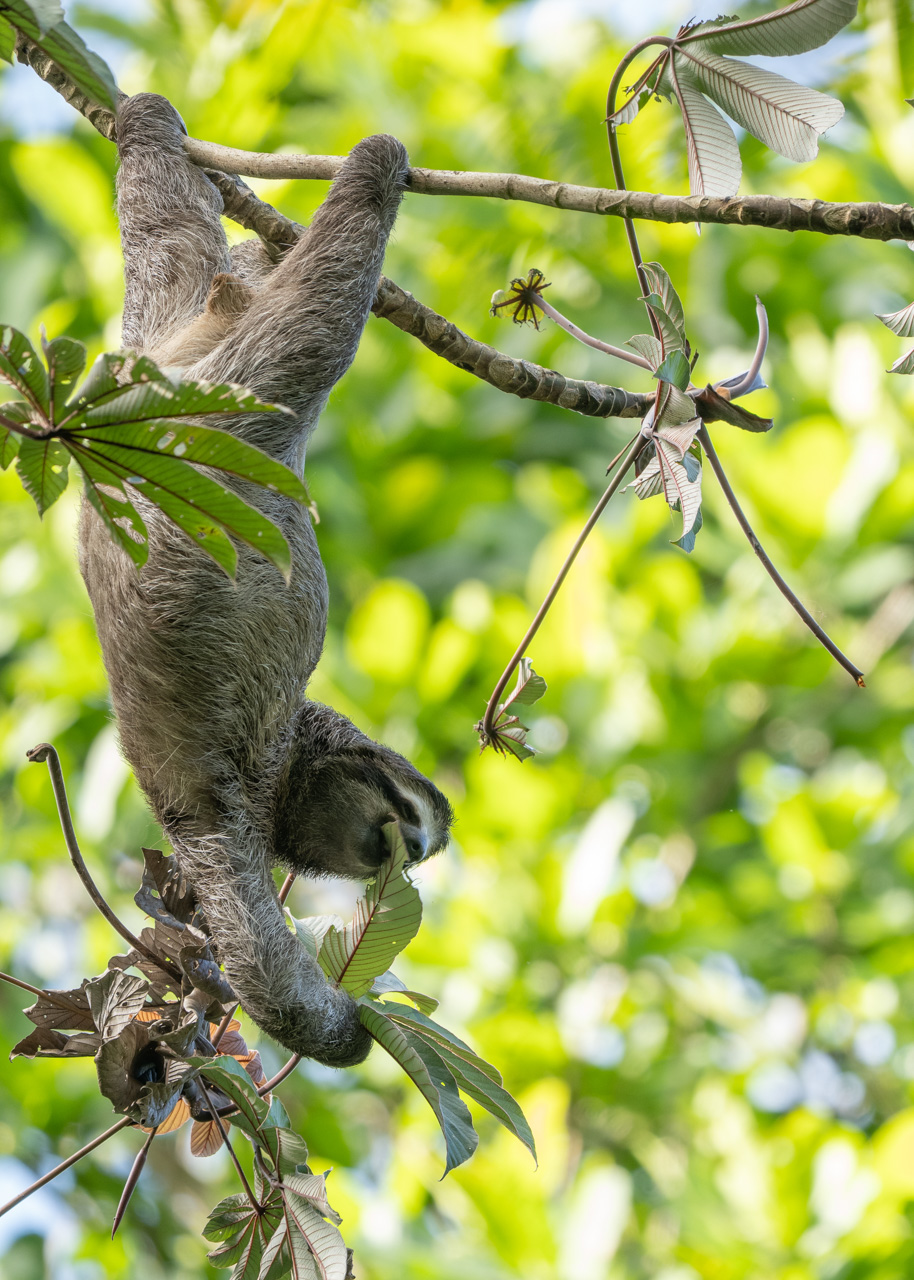
Three-toed Sloth ©Phil Chaon
Day 8 – Pipeline Road and Boating the Chagres
We once again headed towards Pipeline Road bright and early and stopped again along the way at the Ammo Dump Ponds. There was much more activity than the previous evening, both on the water and in the trees. A lone Cocoi Heron was a pleasant surprise, along with a Green, Striated and Rufescent Tiger-Heron. A Green-and-rufous Kingfisher was another highlight, in addition to a group of Mealy and Red-lored Amazons feeding in the trees just above us. A pair of Barred Antshrikes were very cooperative as they foraged in and around an exposed chain-link fence allowing for good views and photos.
Once again we hopped back on the bus and continued along down Pipeline Road, stopping at the entrance to Soberania National Park. It was to be a very productive morning, with bird activity being steady throughout our walk through the park. A pair of White-whiskered Puffbirds were cooperative perched at eye level just off the path offering some great poses for pictures, as well as a Black-breasted Puffbird which was found later in the morning higher up in the canopy. We added Bicolored to our list, which was found in a mixed flock along with a pair of Spotted Antbirds and several Antwrens, and we heard a Streak-chested Antpitta that was a good way into the trees and couldn’t be found. We found several new flycatchers for the trip including Golden-crowned Spadebill and Mistletoe Tyrannulet, with a Choco Elania being heard only.
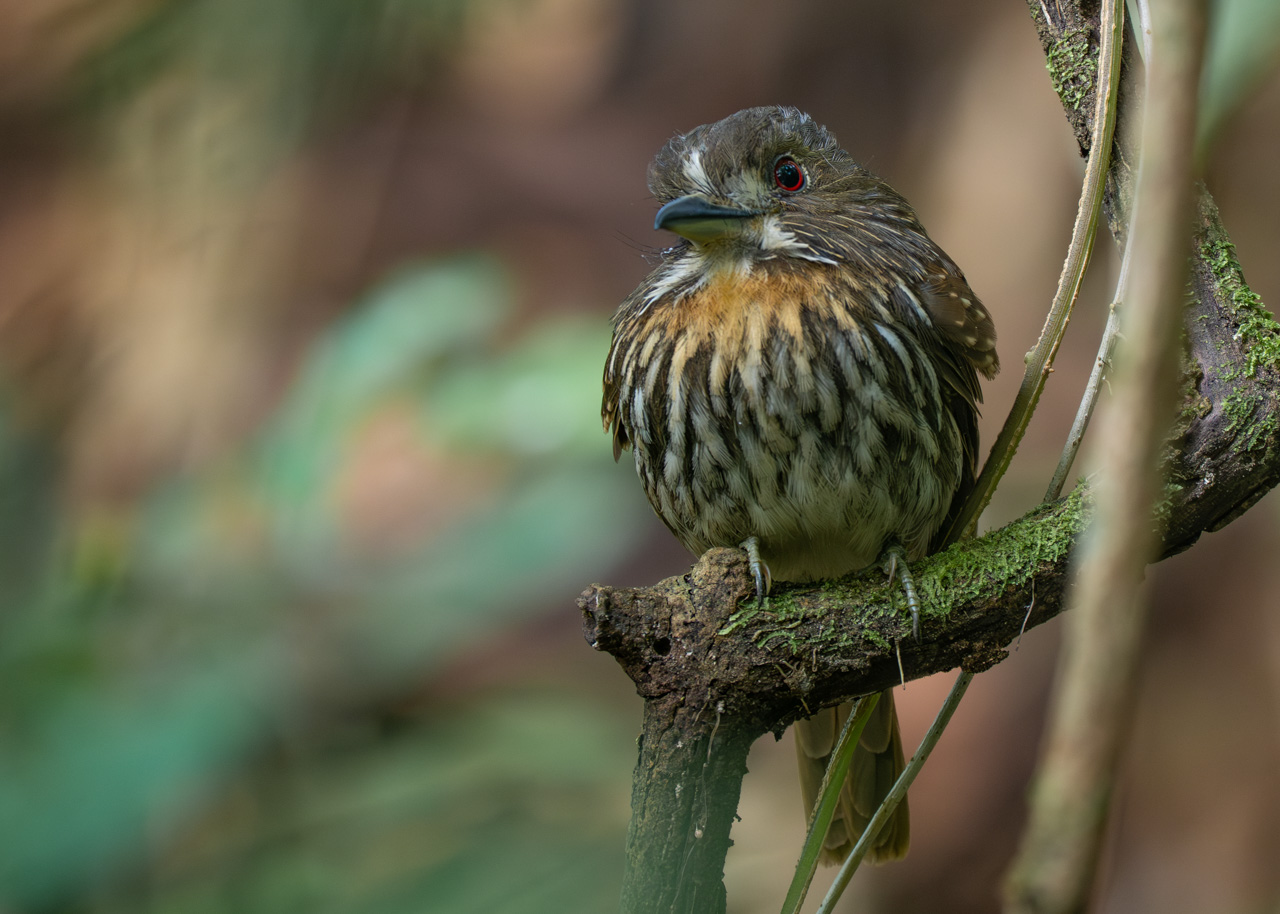
White-whiskered Puffbird ©Phil Chaon
The afternoon found us embarking on our boat tour of the Chagres River. The sky was clear and the weather calm as we made our way upstream, and there was a good mix of water birds as to be expected. Anhingas and Jacanas were scattered about in good numbers, along with other expected species such as Snowy and Great Egrets, Little Blue, Striated, Great Blue and Rufescent Tiger-Herons, and a single Neotropic Cormorant. Always a favorite, a Snail Kite flew in and perched just above the water allowing us to get quite close without flushing. Overhead a decent number of Turkey Vultures were flying about, with a single Lesser Yellow-heaeded Vulture fling by low and close allowing for easy IDing. As we were hopping off the boat back at the dock, we ended off with a Peregrin Falcon that was found soaring on a thermal along with a group of Vultures.
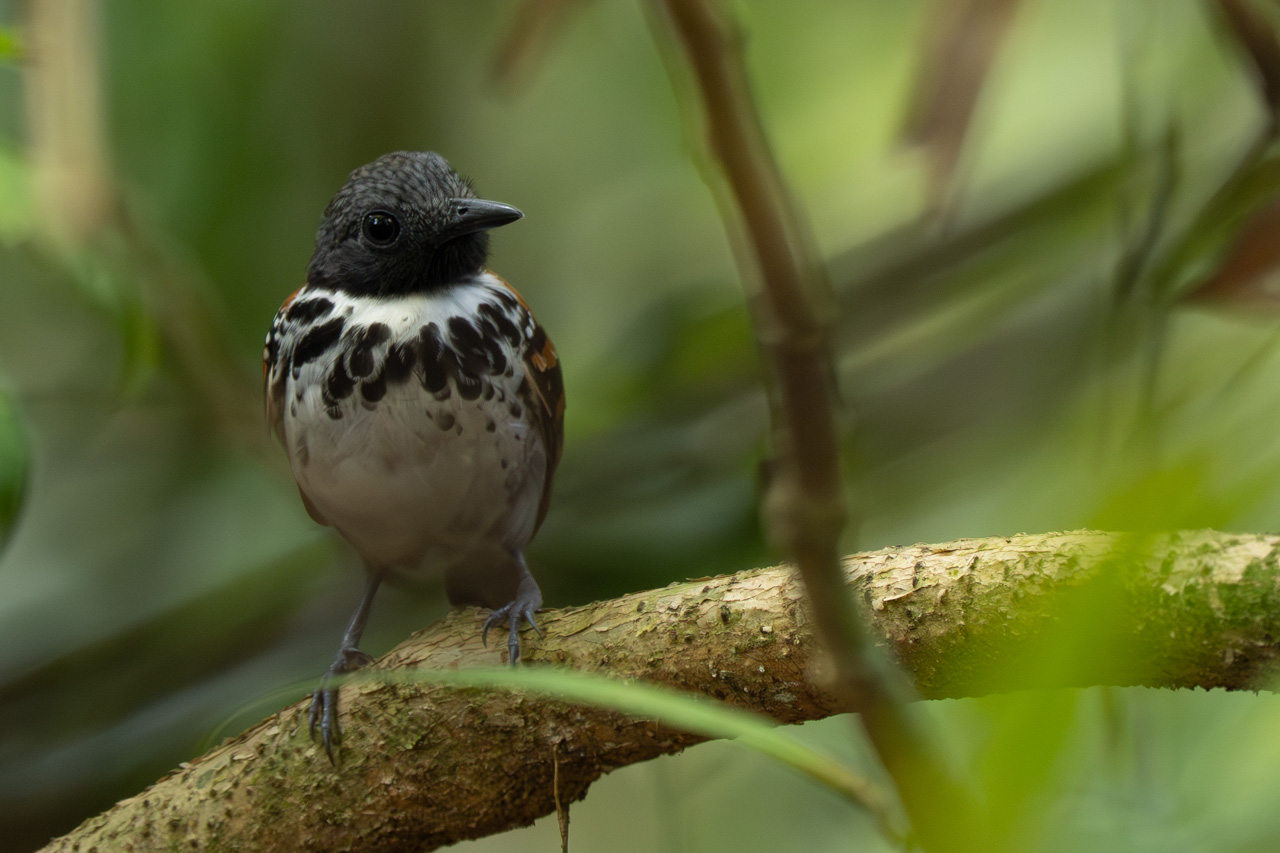
Spotted Antbird ©Phil Chaon
Though most folks were tired out from the days activities, a handful of us decided to head out again for one last night walk around the hotel grounds. We started out with 2 9 Banded Armadillos just as we started off near the hotel grounds, followed by a couple of (oddly quiet) Common Pauraques roosting in the grass near the waters edge. A Capybara was spotted with his head poking up out of the water, stationary in the tall grasses. A Tropical Screech Owl would be our final bird of the night, found right at end of the last stop of our walk.
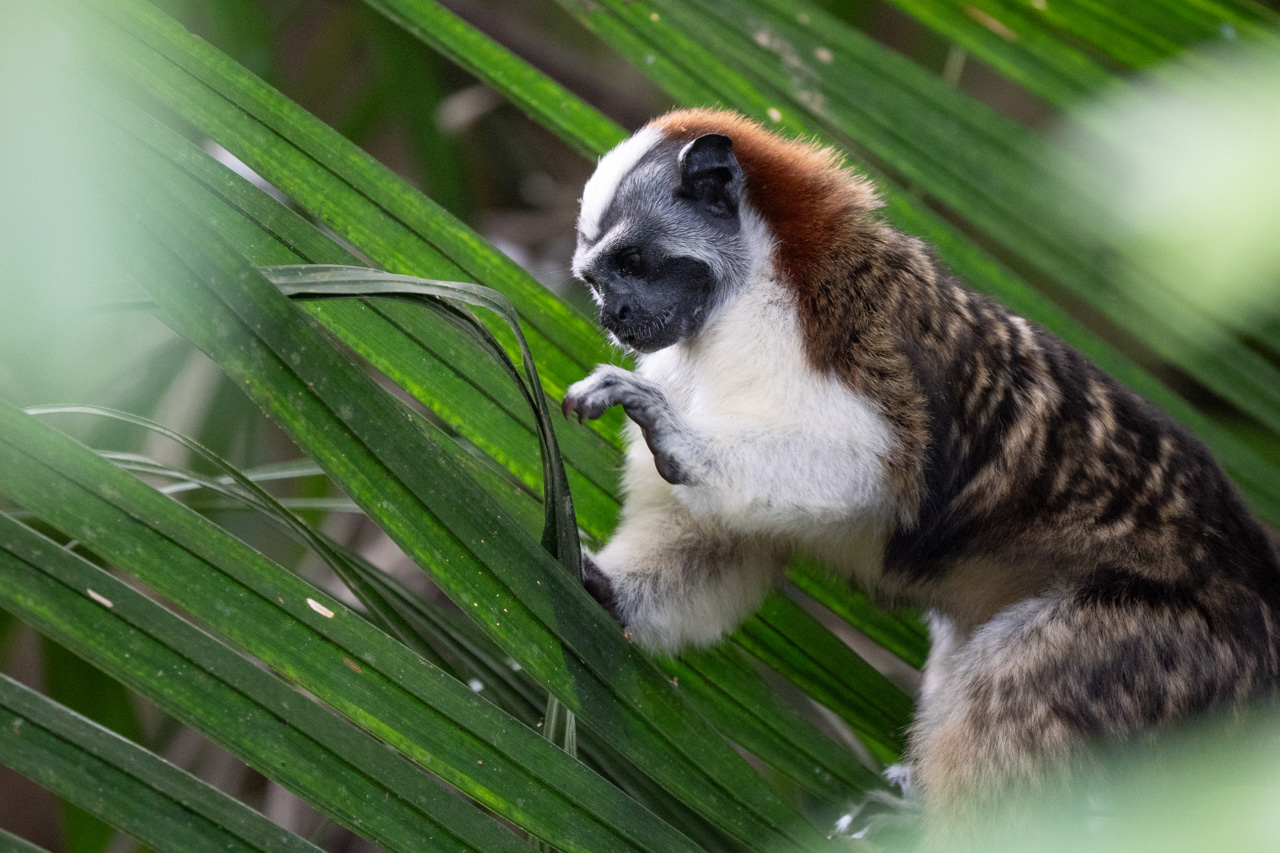
Geoffroy’s Tamarin ©Phil Chaon
Day 9 – Pipeline Road, Parque Metropolitano, Casco Viejo and Costal birding
The final day! We started our last day together with an early morning trek back to Pipeline Road, where we once again started at the entrance to Soberania National Park. A group of Song Wrens were found in a thicket, and as we were trying to get a good look at them foraging in the leaf litter a Great Tinamou waltzed out of the brush and was seen by all. A pair of Black-cheeked Woodpeckers were a new addition to our trip list, as well as a Yellow-tailed Oriole, a brief Orange-billed Sparrow, and an Acadian Flycatcher was added to our list of migrants. A young Stripe-throated Hermit was first heard calling then found perched out in the open, a Red-capped Manakin was found sitting on her nest, and a Fasciated Antshrike was observed collecting fine root material for the last stages of lining a nearby nest.
After a quick breakfast back at the hotel, we hurried across town over to the Parque Metropolitano. The morning was heating up and activity was a little quiet, but we soon came across several calling Lance-tailed Manakins, which after some determination finally were spotted hopping along in amongst some tangled vines. A Nine Banded Armadillo was seen a bit further down the trail, given away by the rustling of dried leaves as it aggressively foraged for a snack. New additions to our list included a Ruddy-tailed Flycatcher, Rufous-breasted Wren, and 2 individual Slate-colored Seedeaters.
For lunch we headed over to the scenic old town center Casco Viejo. Our lunch spot was adjacent to the historic Plaza de la Catedral, which is dotted with many beautiful old buildings with architecture dating back to the 18th century.
After lunch we stopped by the coast near the Antiguo Museum of Panama Viejo. The tide was out rather far so the bulk of the shorebirds were at the far reaches of our scopes and couldn’t be identified past peeps sp, but there was still a good deal birds closer to be seen. There was a good number of Black-necked Stilts mixed with Black-bellied Plovers, as well as Hudsonian Whimbrel, Marbled Godwit, Willet, and a few Short-billed Dowitchers. Yellow-crowned Night Herons were new for the trip, as well as only our second Cocoi Heron found hiding half hidden in the mangrove trees. Amongst a flock of Laughing Gulls we found a small group of terns including Elegant, Royal and Sandwich Terns. On the close shore we found 2 Northern Scrub Flycatchers, and several Mangrove Yellow Warblers. Having squinted at the shores for long enough, we decided to call it a day and head back to the hotel. Our final farewell dinner together was enjoyed by all, as we swapped stories and reminisced about the days that had flown by. All told we managed to tally up a total of 295 bird species
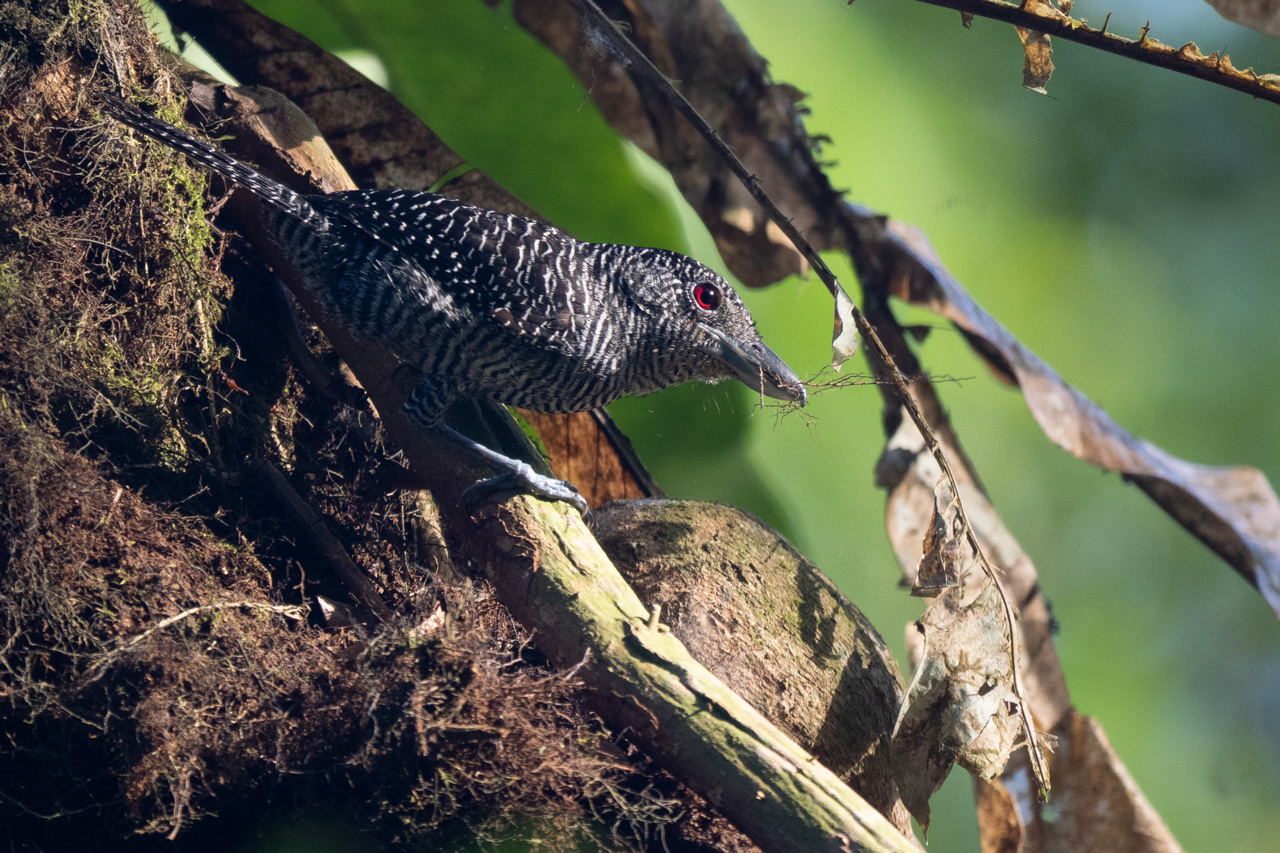
Fasciated Antshrike ©Phil Chaon
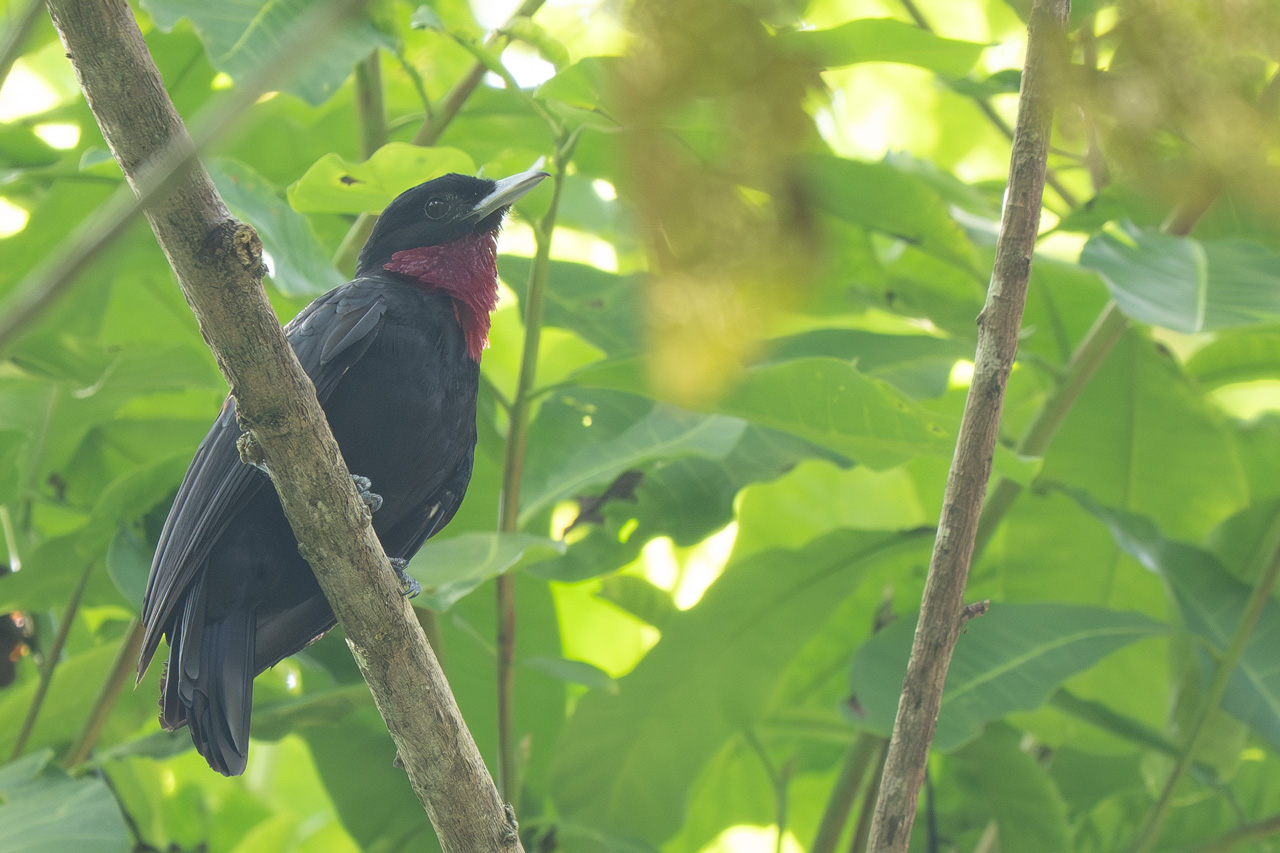
Purple-throated Fruitcrow ©Phil Chaon
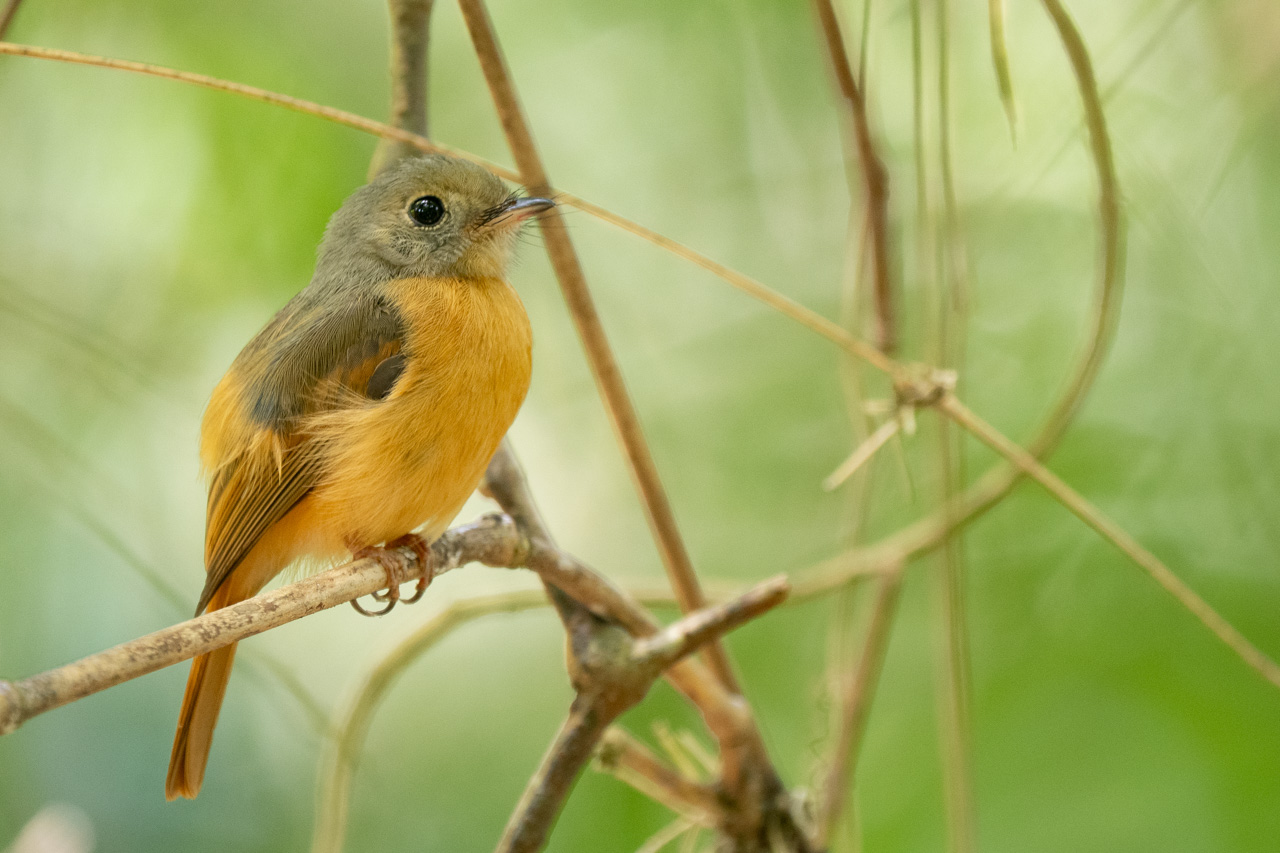
Ruddy-tailed Flycatcher ©Phil Chaon