Mongolia: Snow Leopards & Birds Trip Report (May 24 – June 7, 2026)
Day 1
After all participants had arrived, we started the tour with a relaxed introductory walk around the hotel and along the nearby Tuul river before dinner. Spring migration was still lingering, and the hotel grounds proved to be exceptionally productive for passerines. The trees and shrubs held numerous migrating warblers, including Arctic Warblers, Dusky Warblers and Pallas’s Leaf Warblers. Several flycatchers were also encountered, among them Taiga Flycatcher, Asian Brown Flycatcher and Spotted Flycatcher. Olive-backed Pipits were present in the area, while Black-faced Buntings were regularly seen feeding in the undergrowth. Large numbers of Hawfinches were observed in the surrounding habitats and we also could observe a few very responsive Lesser Spotted Woodpeckers. The hotel grounds supported several breeding species as well. Nesting Goosander and Mallard were found in the garden, while dozens of Black Kites circled overhead throughout the afternoon. A rookery of Rooks occupied a section of the park, where several pairs of Daurian Jackdaws were also breeding. Eurasian Tree Sparrows were abundant and a few House Sparrows were present. Long-tailed Rosefinches were singing in suitable breeding habitat around the hotel.
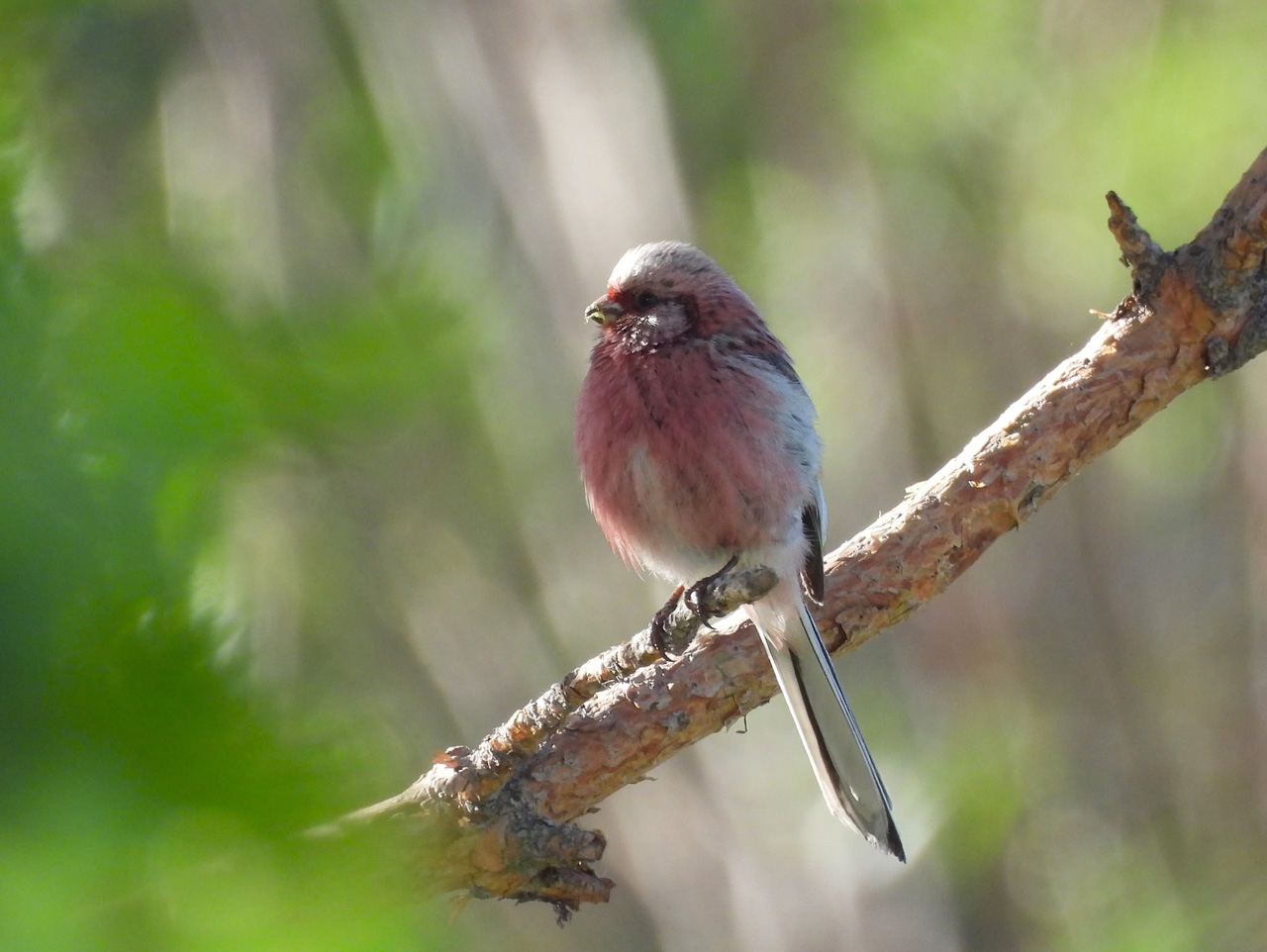
Long-tailed Rosefinch © Máté Havasi
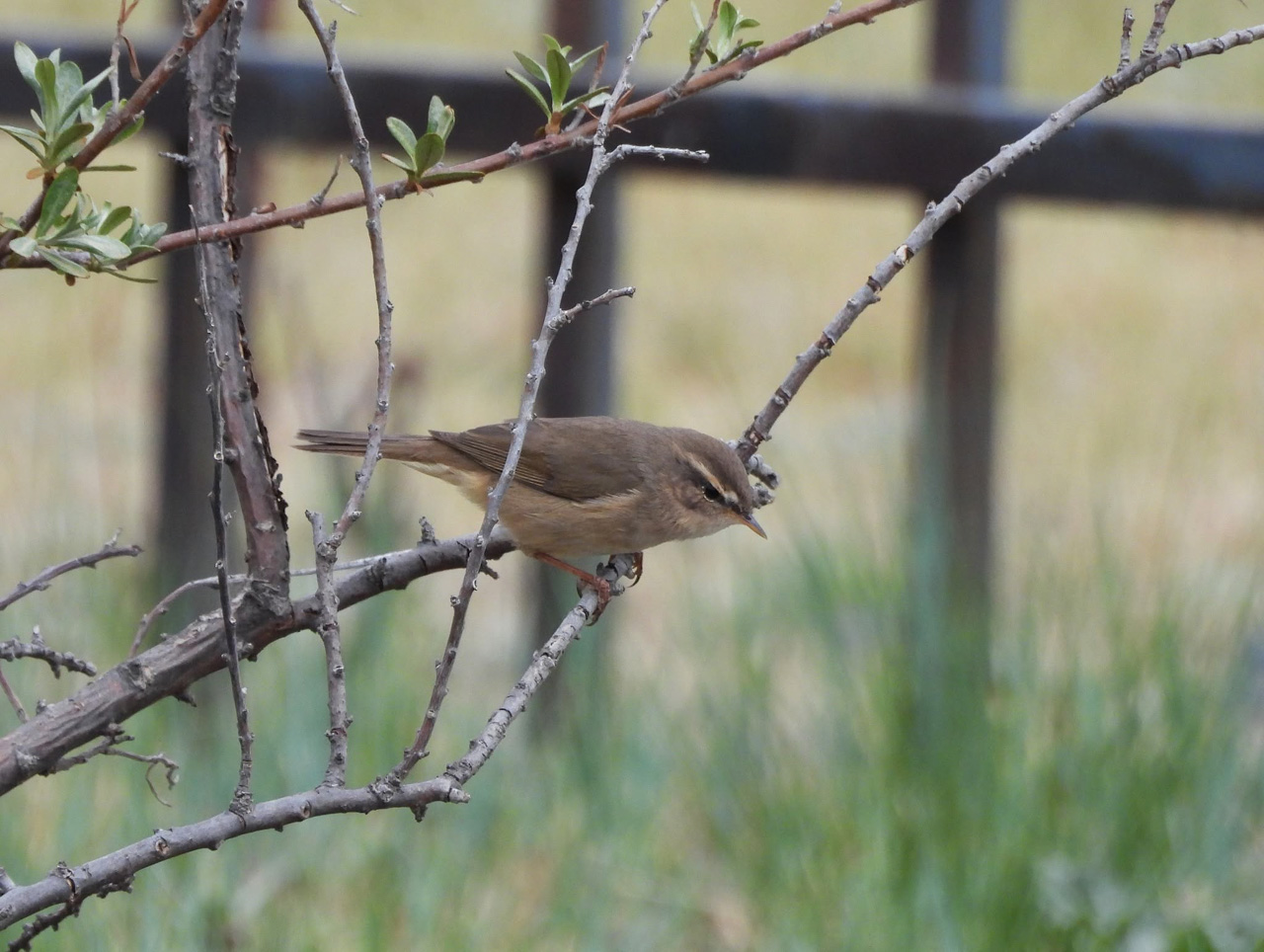
Dusky Warbler © Máté Havasi
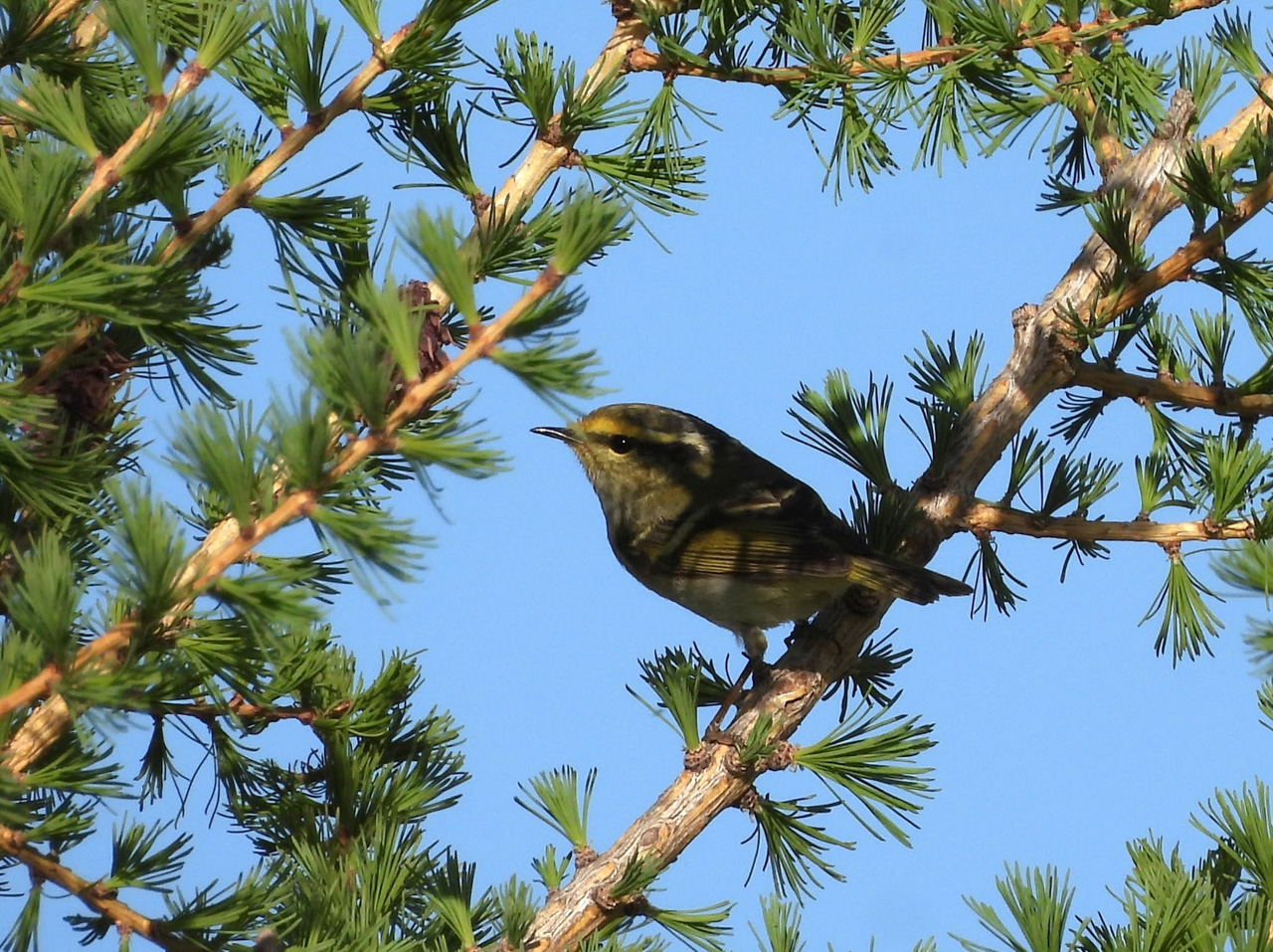
Pallas’s Leaf Warbler © Máté Havasi
Along the river we obtained our first views of Amur Falcons, while a distant Cinereous Vulture soaring above the surrounding hills provided another exciting sighting. Great Tits and Azure Tits were both recorded, although the hoped-for Azure-winged Magpie failed to appear. A brave female Siberian Rubythroat caused a very exciting moment moving out on the open ground while we were taking shots of a singing Wryneck. Mammal observations were very rewarding. Several Wapitis were seen feeding and resting along the riverbanks. A particularly unusual observation involved five young Argali Sheep running along fences near the hotel. These magnificent wild sheep had likely descended from the surrounding mountains while avoiding a predator. Seeing Argali outside their typical habitat was an unexpected and memorable encounter. Back at the hotel grounds we enjoyed excellent views of two Corsac Fox families, including several playful cubs, providing a fitting end to our first day in Mongolia.
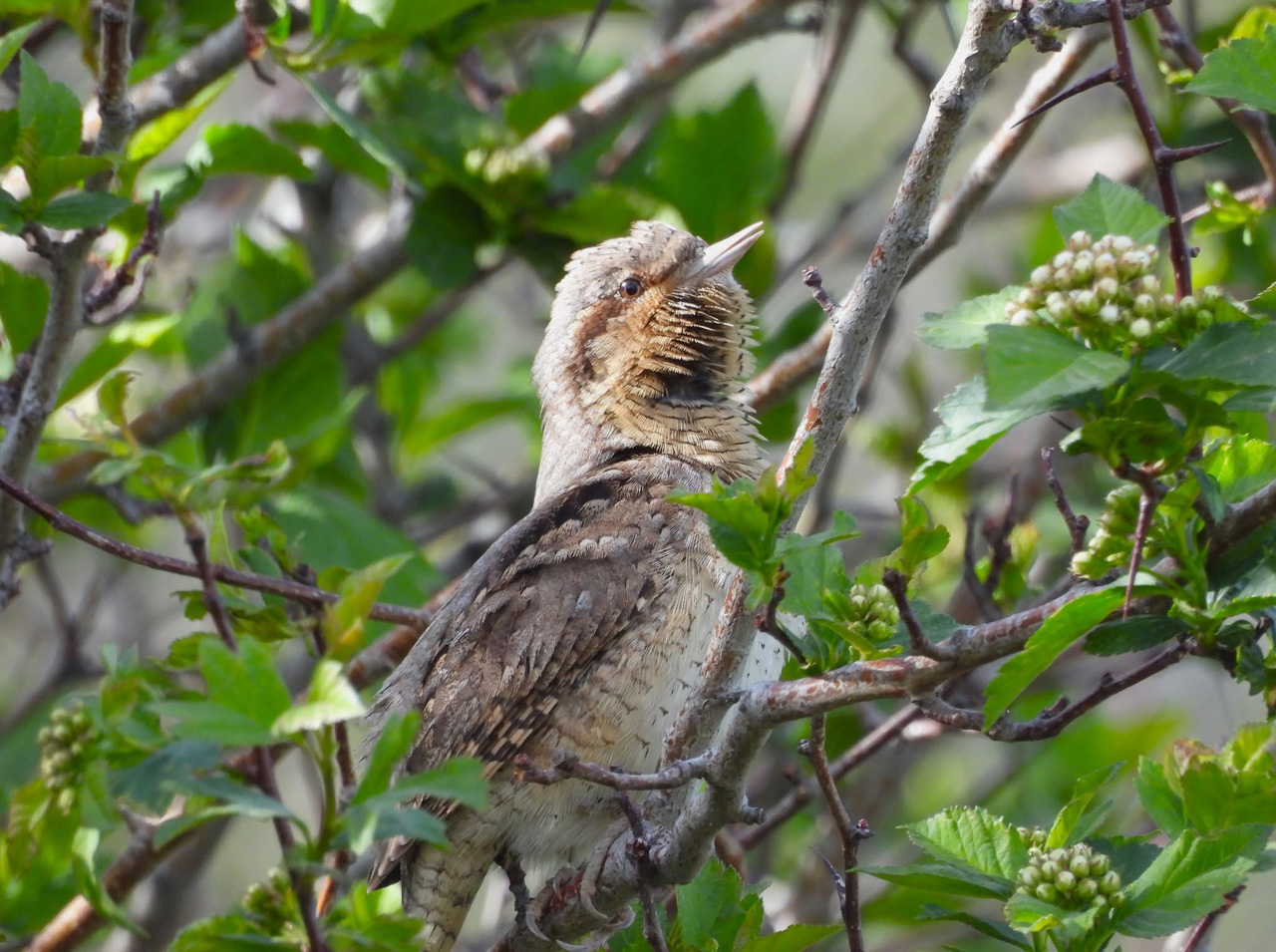
Wryneck © Máté Havasi
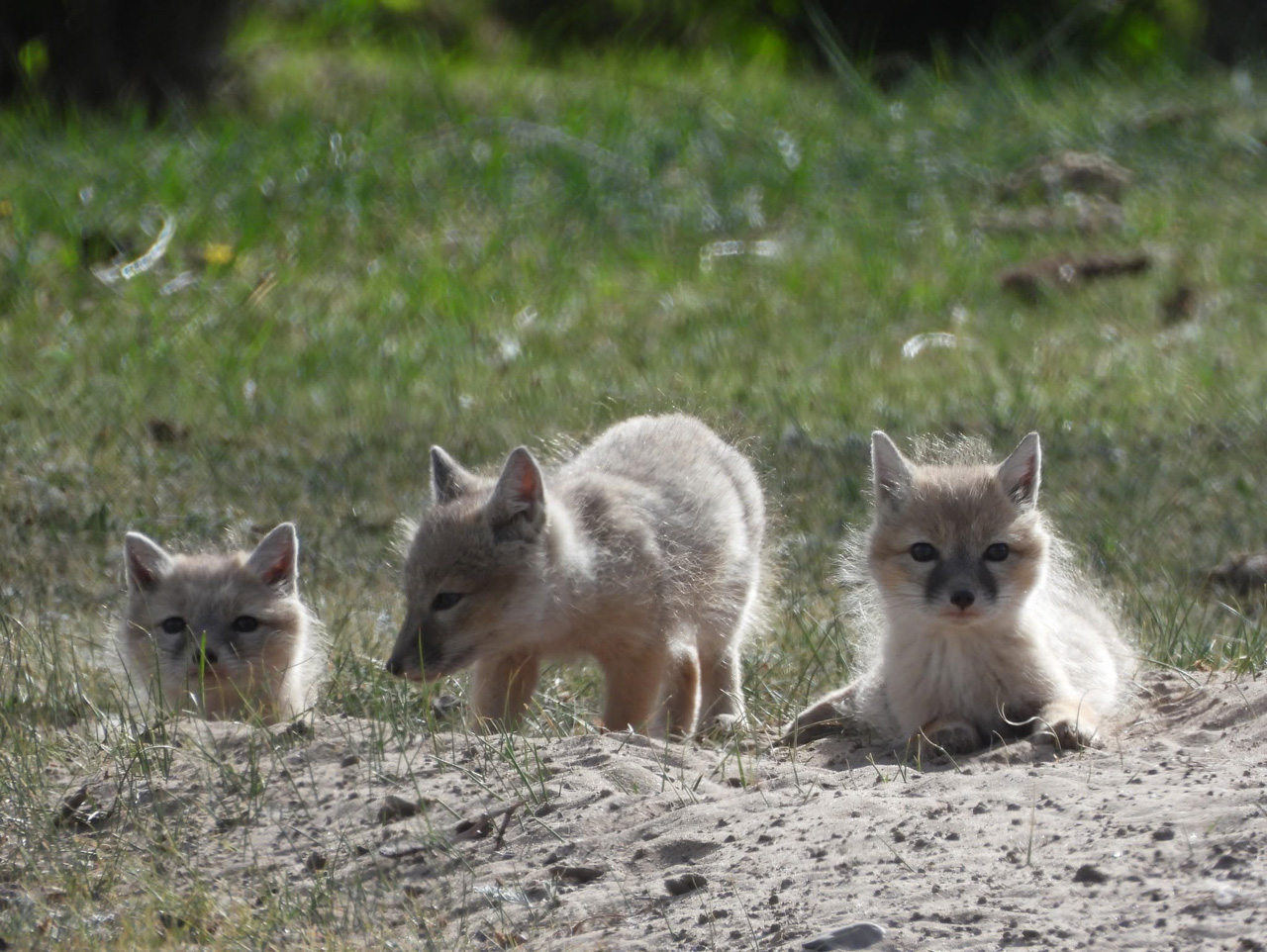
Corsac Fox family © Máté Havas
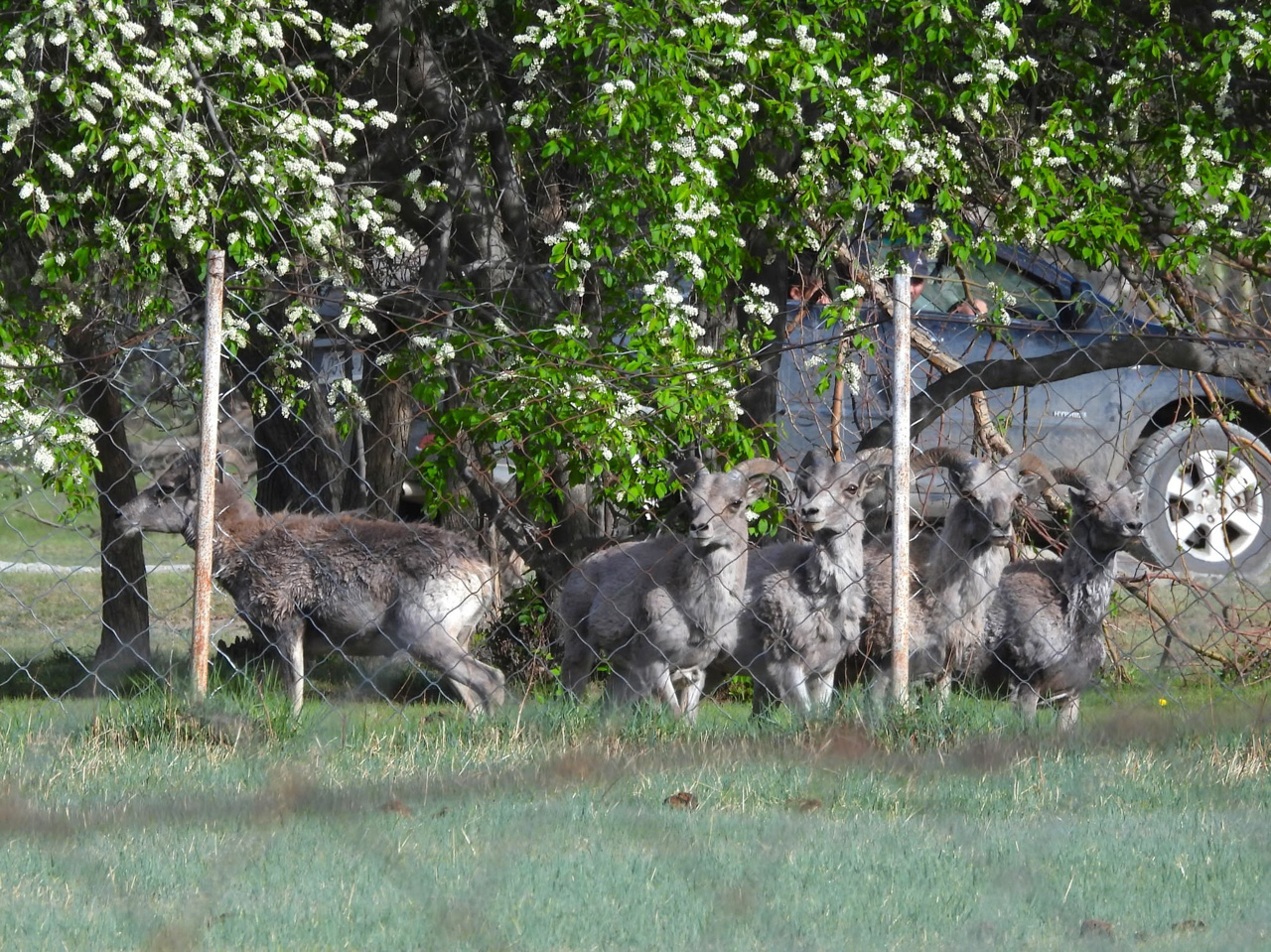
Argali © Máté Havasi
Day 2
After breakfast we left Ulaanbaatar and started our journey towards Gun Galuut Nature Reserve. On the way we stopped at a small lake on the outskirts of the capital. Although the surroundings were far from picturesque, the site proved exceptionally productive and significantly expanded our waterbird list. The lake held an excellent variety of waterfowl, including Swan Goose, Whooper Swan, Ruddy Shelduck, Garganey, Northern Shoveler, Gadwall, Mallard, Common Pochard, Tufted Duck and Common Goldeneye. Great Crested Grebes and Eurasian Coots were also present, while the muddy shorelines attracted numerous waders such as Little Ringed Plover, Northern Lapwing, Black-tailed Godwit, Common Redshank and other shorebirds. Several Pacific Swifts were feeding above the water, while a small island hosted a group of Pallas’s Reed Buntings. A particularly memorable moment came when a pale-morph Booted Eagle appeared above the lake. The bird immediately attracted the attention of several Black Kites, which began mobbing it as it circled overhead. We also recorded our first Demoiselle Cranes of the tour.
Continuing eastwards, we eventually arrived at our camp in Gun Galuut. The camp surroundings supported a variety of breeding birds, including Barn Swallow, Red-billed Chough, Rock Sparrow and Blyth’s Pipit. A small grove of trees near the camp acts as a magnet for migrating passerines, and during our visit we found Arctic Warblers together with Pallas’s Leaf Warblers and Dusky Warblers. The surrounding steppe held good numbers of wheatears, particularly Northern and Isabelline Wheatears. After lunch we visited a nearby wetland, where the highlight was observing several White-naped Cranes occupying their breeding territory. An elegant male Eastern Marsh Harrier hunting low over the marsh provided another memorable sighting. Other birds recorded in the wetland included Eurasian Spoonbill and Grey Heron. Along the roads and grasslands we encountered a variety of larks, including Eurasian Skylark, Mongolian Lark and Horned Lark. We were especially pleased to find several pairs of David’s Snowfinches, a species that can often be difficult to observe well. The marshes supported large numbers of wagtails, particularly Citrine Wagtails, while smaller numbers of White Wagtails were also present. Among mammals, the resident Daurian Pikas around the camp provided enjoyable observations throughout the day.
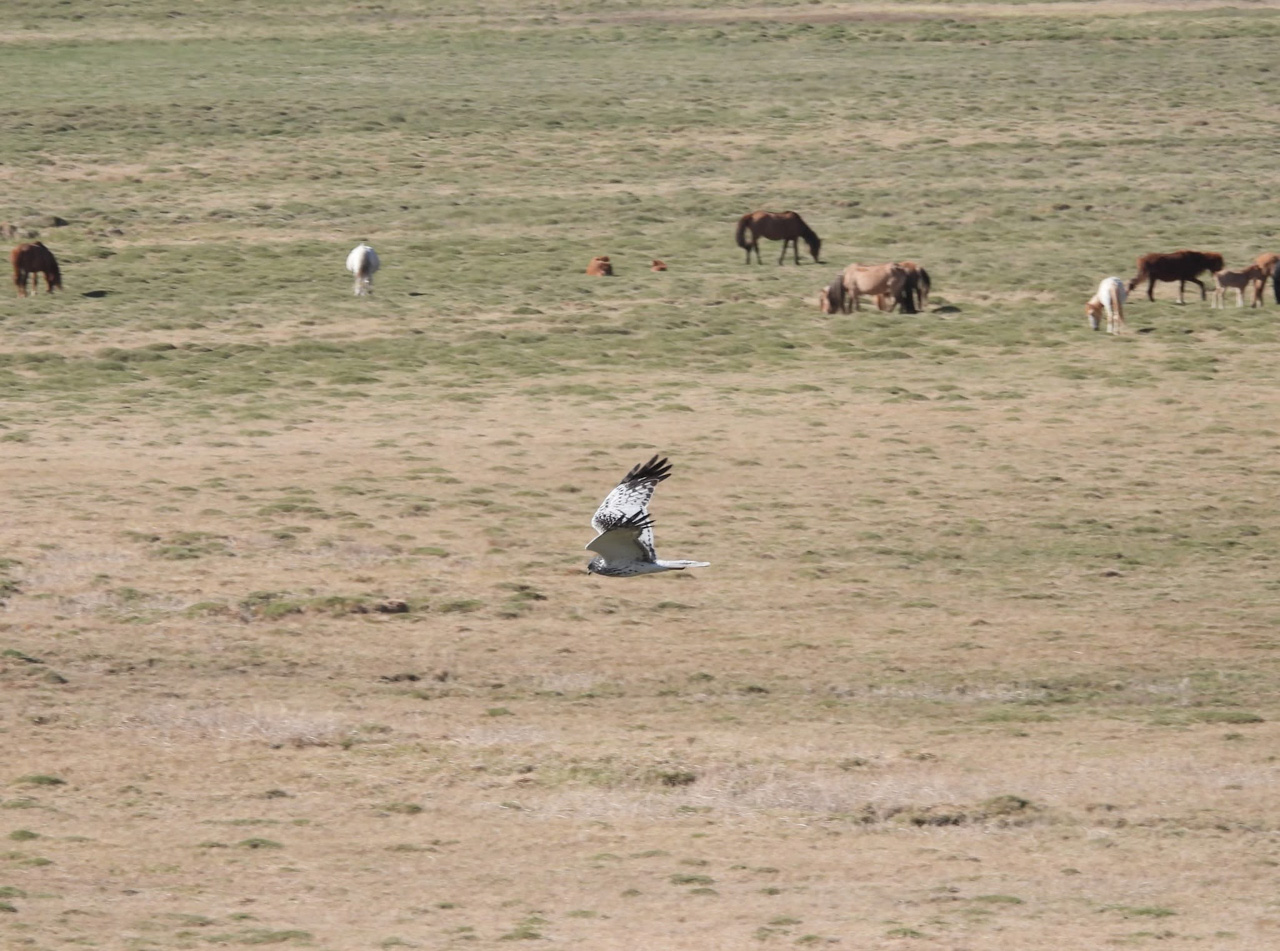
Eastern Marsh Harrier © Máté Havasi.
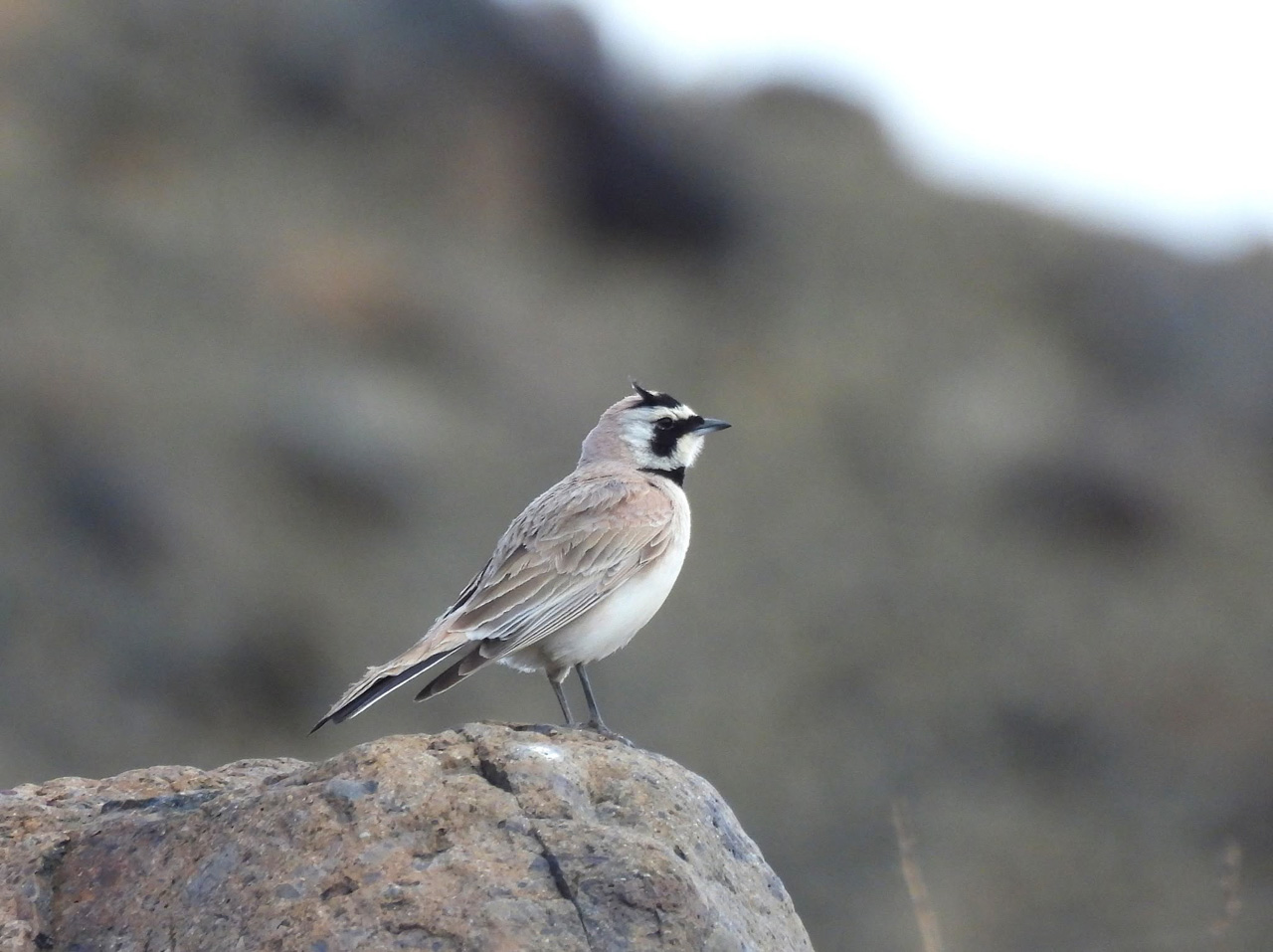
Horned Lark © Máté Havasi
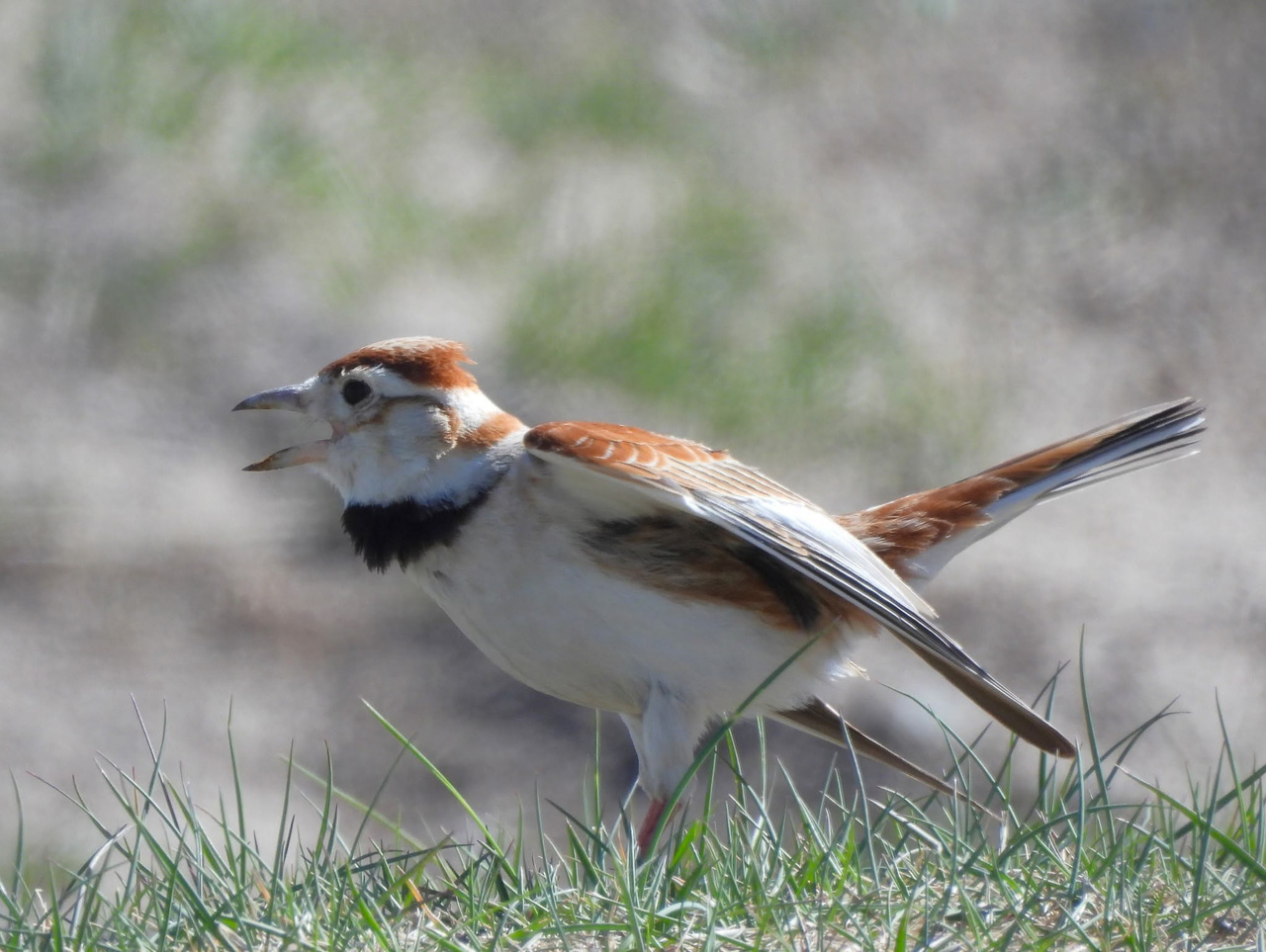
Mongolian Lark © Máté Havas
Day 3
We spent the morning revisiting the lakes and marshes seen on the previous day. Although the weather was considerably less pleasant, with strong winds and intermittent rain, the wetlands still produced several new species for the trip list. Among the waterfowl we added Stejneger’s Scoter, Common Shelduck and Green-winged Teal. A single Common Crane was observed together with several elegant Demoiselle Cranes. The extensive mudflats and shallow pools attracted a good variety of waders. In addition to the numerous Black-winged Stilts already present, we recorded Wood Sandpiper, Marsh Sandpiper, Pacific Golden Plover, Kentish Plover and Spotted Redshank. A small flock of Eared Grebes was found on one of the lakes, while large numbers of White-winged Terns were actively feeding over the water. Along the shoreline a solitary Dunlin was feeding among the other shorebirds. Raptors were represented by our first Steppe Eagle of the tour, and for the third consecutive day we enjoyed views of hunting Amur Falcon.
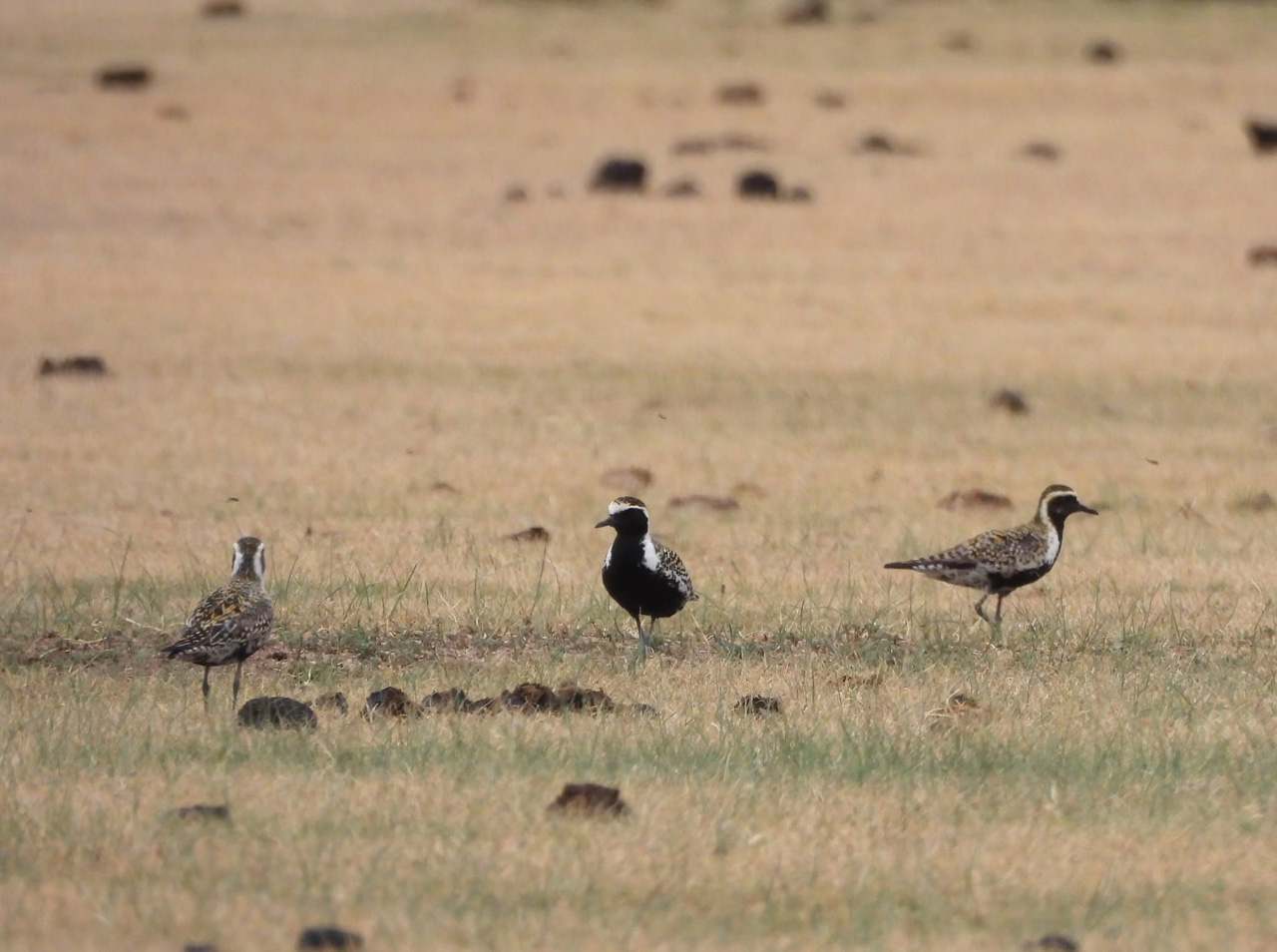
Pacific Golden Plover © Máté Havasi
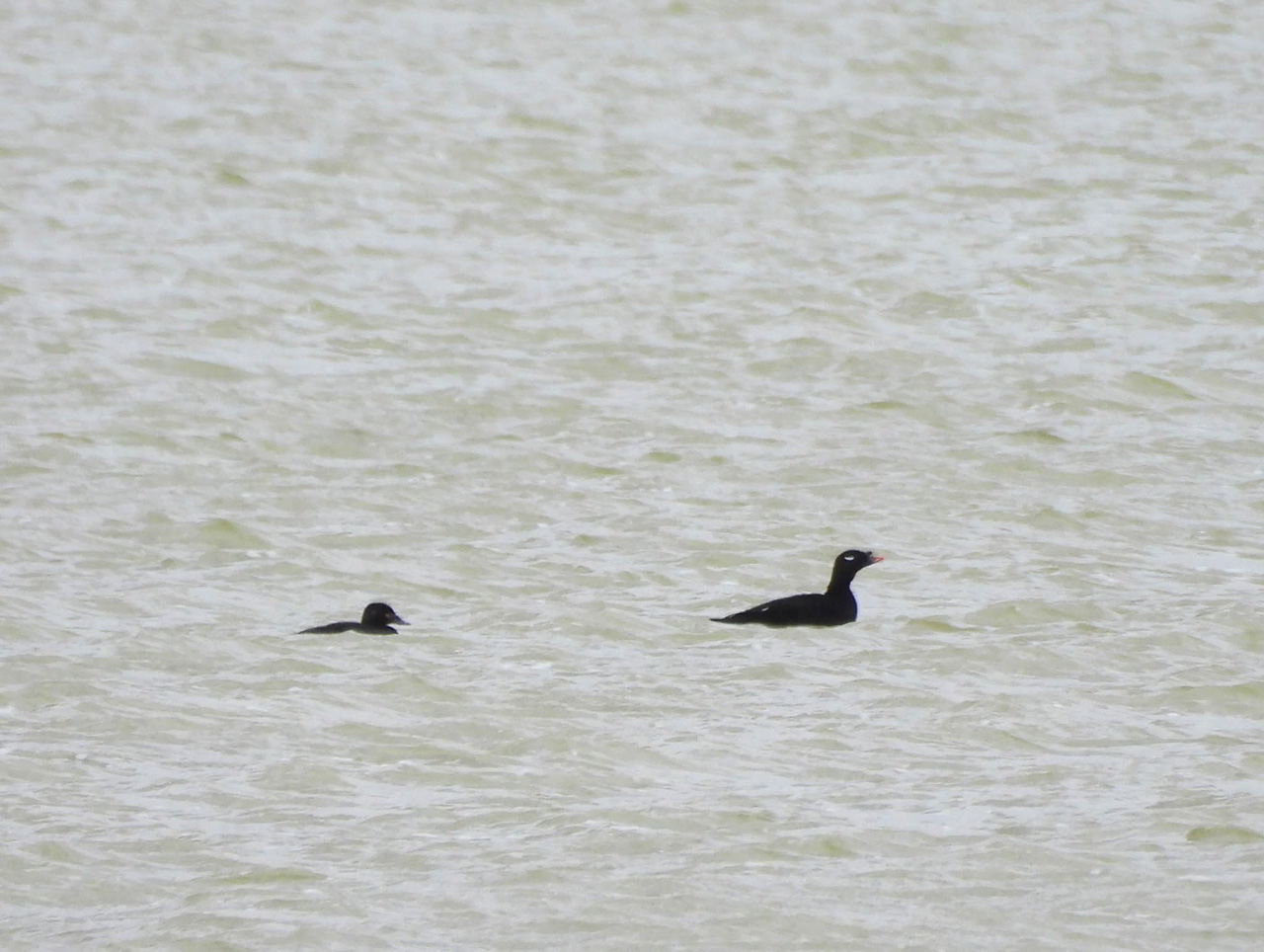
Stejneger’s Scoter © Máté Havasi.
During lunch heavy rain threatened to cancel our afternoon programme. Fortunately, the weather improved shortly afterwards, allowing us to continue with our planned excursion into the nearby hills in search of Argali Sheep. On the drive we once again encountered David’s Snowfinches, providing excellent views for all participants. Other notable birds included Asian Short-toed Lark and a magnificent Black Stork soaring above the landscape. Argali Sheep were found at two different locations. First, we observed two young animals moving across the slopes. Later, we located a second group consisting of three adults accompanied by two younger individuals. Watching these impressive wild sheep in their natural mountain habitat was one of the highlights of the day. Birding remained productive throughout the excursion, new species included Pied Wheatear and Meadow Bunting. On the return journey a Cinereous Vulture perched close on the ground provided outstanding photographic opportunities.
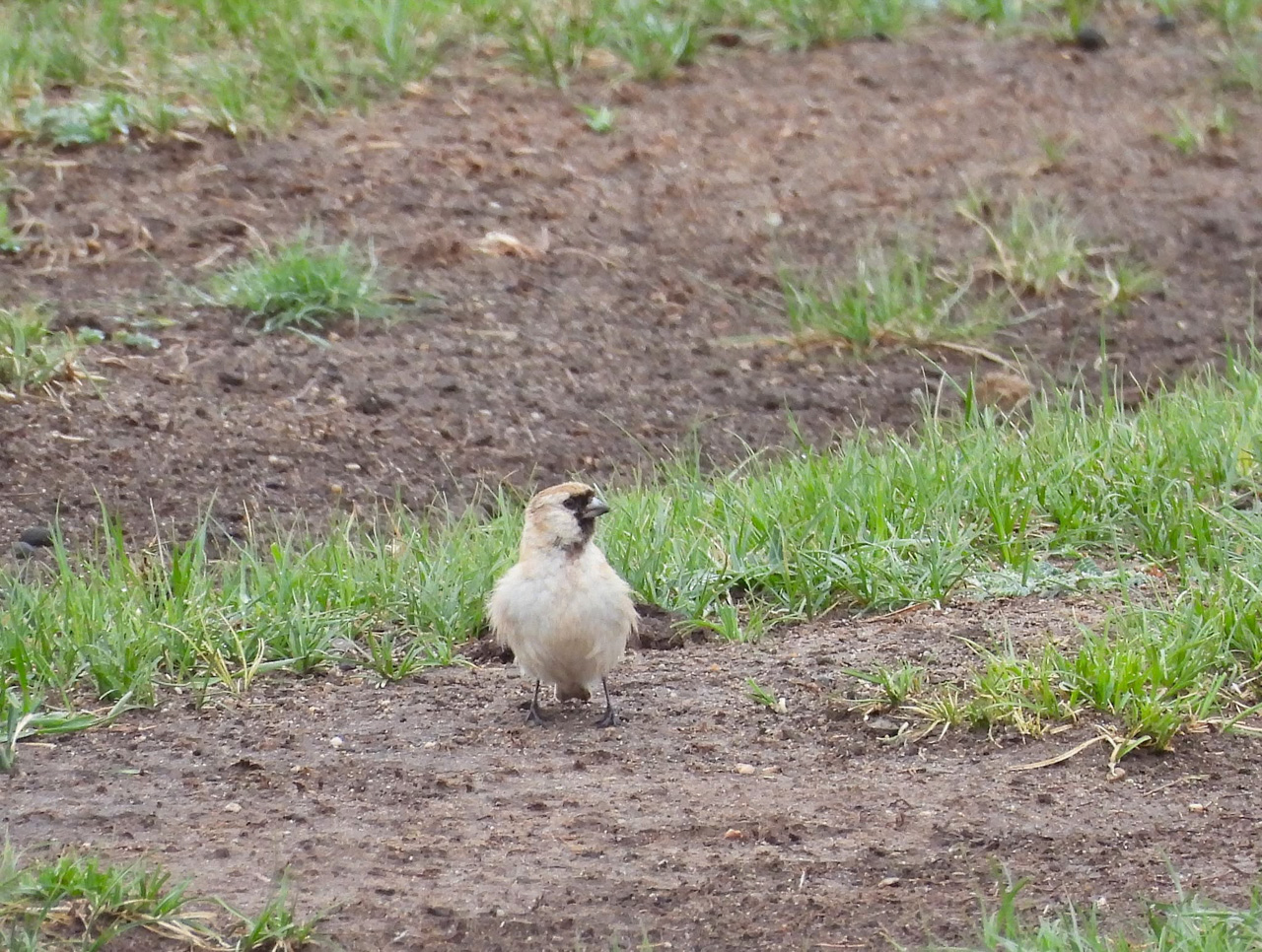
David’s Snowfinch © Máté Havasi
After an early dinner we decided on an additional evening excursion to search for Pallas’s Cat. Despite exploring a promising area, the elusive cat remained hidden. As darkness fell we heard the calls of a Little Owl, while thermal imaging equipment revealed a hunting Corsac Fox moving across the steppe. Using spotlights, we were also able to observe several Siberian Jerboas, the largest jerboa species occurring in Mongolia, bringing an exciting end to another rewarding day in the field.
Day 4
The fourth day was primarily a travel day as we continued our journey towards Terelj National Park. Before leaving the area, however, we once again passed by the small lakes that had already provided excellent birding on previous days. Despite the strong wind, we made a brief stop to scan the waters and, once again, the lakes did not disappoint. Among the numerous waterbirds already recorded, we added several new species to the trip list, including Eurasian Wigeon, Northern Pintail, and a single Eastern Spot-billed Duck. Along the shorelines, Black-headed Gulls and Mongolian Gulls were once again present in good numbers.
Leaving the lakes behind, we continued westward, making a short stop at the impressive 40-metre-high statue of Genghis Khan. Shortly after departing from the monument, we encountered our first Eurasian Hoopoe of the journey. Further along the route, a large flock of vultures numbering several dozen individuals attracted our attention, while two Steppe Eagles prompted additional roadside stops before we eventually reached our camp.
After lunch, we spent the afternoon birding in a spectacular nearby valley characterised by extensive stands of Siberian Larch forest interspersed with impressive rocky outcrops. The scenery alone made the visit worthwhile, but the birdlife proved equally rewarding. One of the highlights was a Cinereous Vulture observed at its nest, while the valley also provided our first Bearded Vulture of the tour. Corvid diversity was particularly impressive, with most of the species already encountered during the trip present here, complemented by Daurian Jackdaw, Spotted Nutcracker, and Carrion Crow. The forest and scrub habitats also supported a rich passerine community. In addition to familiar species, we observed both Willow Tit and Coal Tit, as well as another Great Tits. Other notable sightings included Daurian Redstart, numerous Pine Buntings, several Olive-backed Pipits, and our first Lesser Whitethroat of the trip. The dense shrubs once again produced Black-faced Bunting and the striking Siberian Rubythroat, both of which showed well during the afternoon.
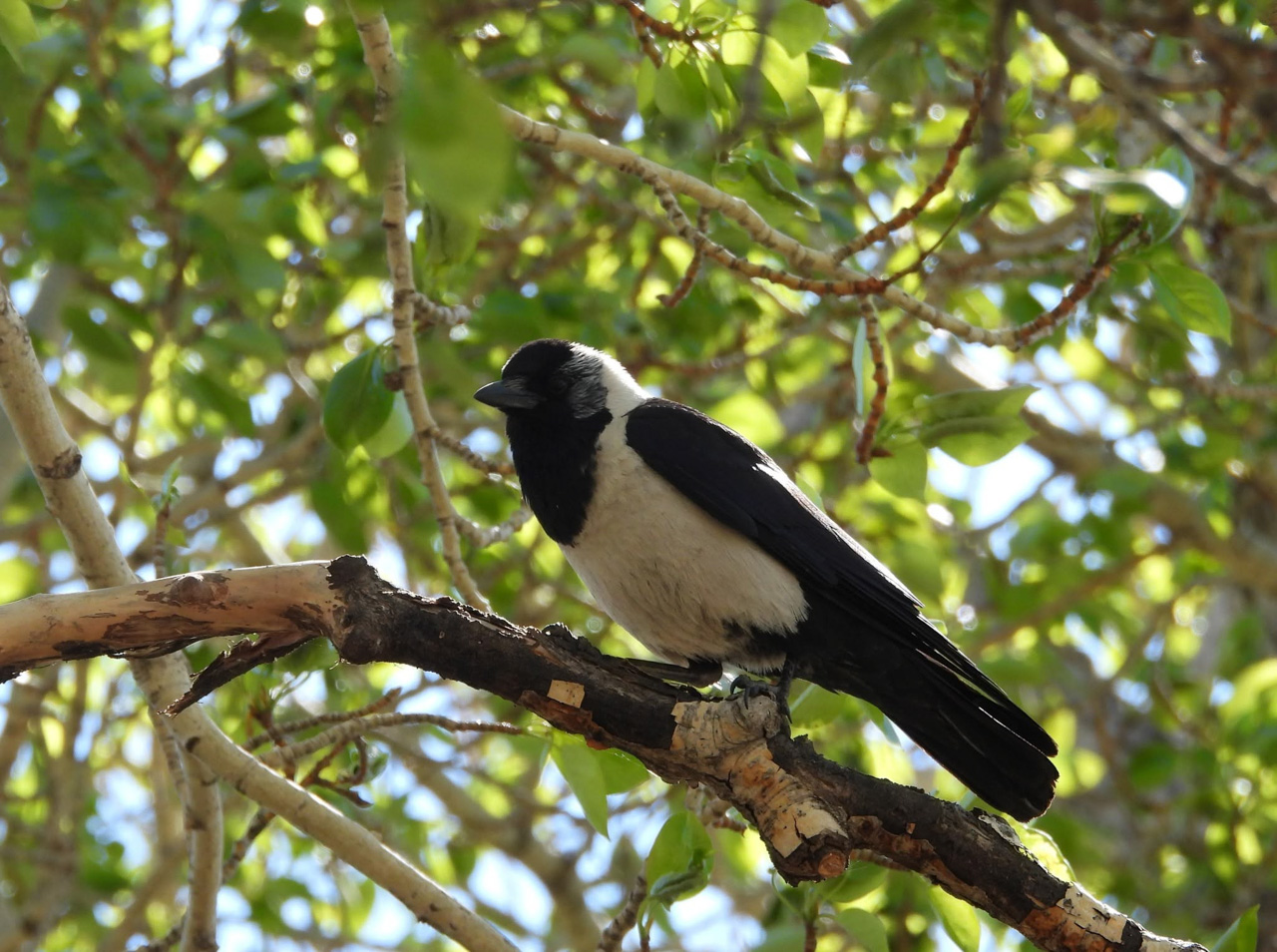
Daurian Jackdaw © Máté Havasi
Day 5
The fifth day began exceptionally early, as our primary target was one of Mongolia’s most sought-after birds: the Black-billed Capercaillie. To maximize our chances, we needed to reach the lekking area around sunrise. Fortunately, our timing proved perfect. As soon as we stepped out of the vehicle, the distinctive calls of displaying males could already be heard echoing through the forest. After a careful approach, we managed to observe four males at close range. The birds remained remarkably cooperative, providing excellent photographic opportunities and one of the most memorable wildlife encounters of the tour.
Before breakfast, we spent some additional time birding in the surrounding forest. The morning produced our first Great Spotted Woodpeckers of the trip, while Coal Tits, previously heard but not seen, finally gave themselves up to observation. Other species recorded in the forest included Great Tit, Willow Tit, Hawfinch, and several Olive-backed Pipits. Eurasian Jays and Common Cuckoos were also present, while Oriental Cuckoos seemed to be calling from almost every direction. Although only briefly, we also heard Eurasian Treecreeper and an Eastern Buzzard. Another notable sighting was a young male Red-flanked Bluetail, a particularly attractive addition to the day’s list. During and after breakfast, we explored more open habitats and meadows around. Northern Wheatears and Daurian Redstarts were common, while singing Brown Shrikes and Pine Buntings were encountered regularly. At one point, a dark-morph Booted Eagle circled overhead, providing an unexpected highlight. The drive back towards the hotel produced additional encounters with various corvids, vultures, and several Eurasian Hoopoes.
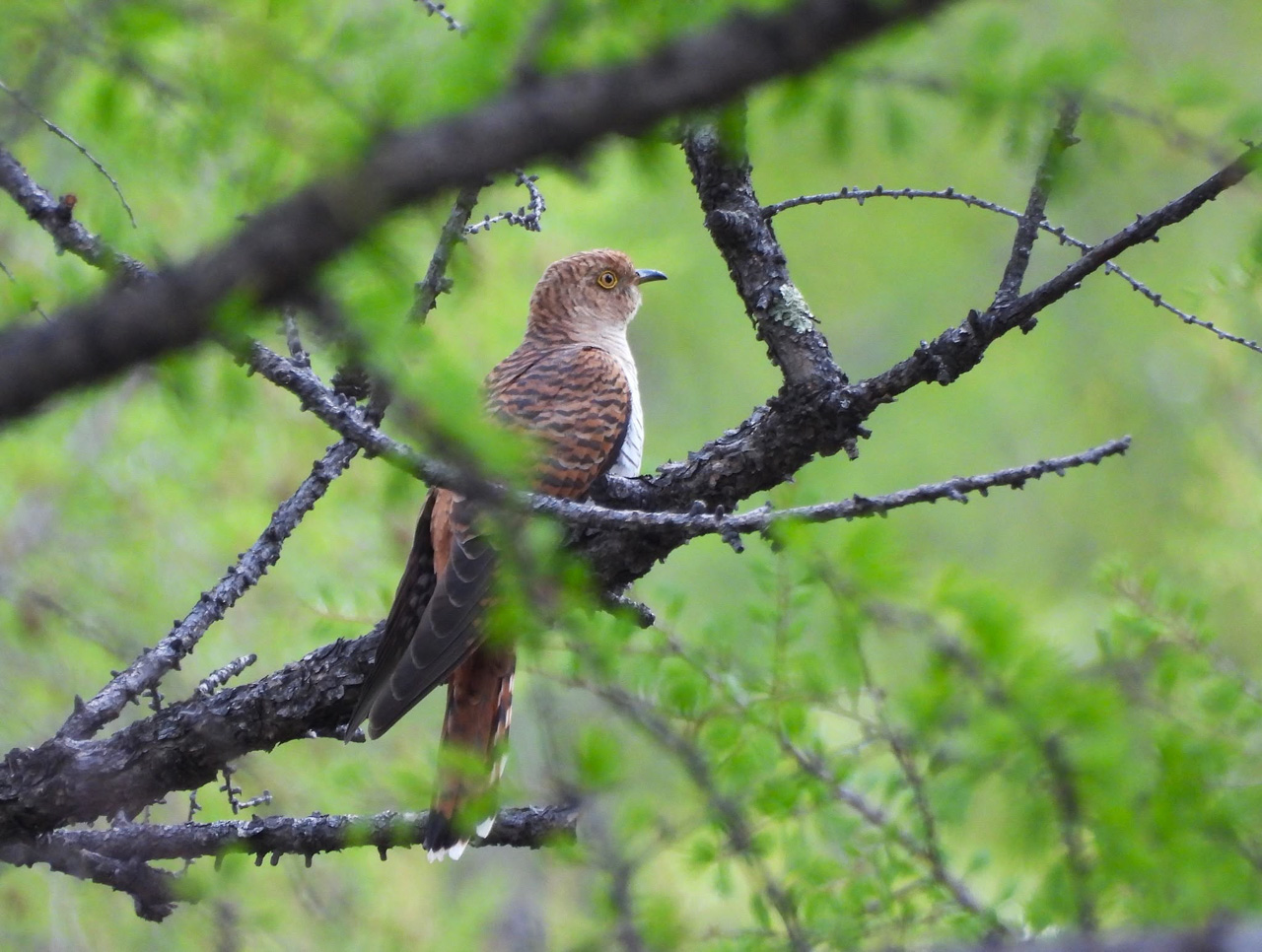
Common Cuckoo © Mate Máté Havasi
Following lunch, we made a final short walk in the vicinity of the camp. One of our target species was Godlewski’s Bunting, which unfortunately remained elusive. Nevertheless, the excursion proved worthwhile thanks to outstanding views of a pair of Rufous-tailed Rock Thrushes. The surrounding grasslands also supported numerous Tarbagan Marmots, while a fleeting glimpse of a Japanese Sparrowhawk briefly raised excitement before the bird disappeared from view. After the afternoon walk, we began our journey back to our hotel in Ulaanbaatar, where we prepared for the following day’s flight and the next stage of our Mongolian adventure.
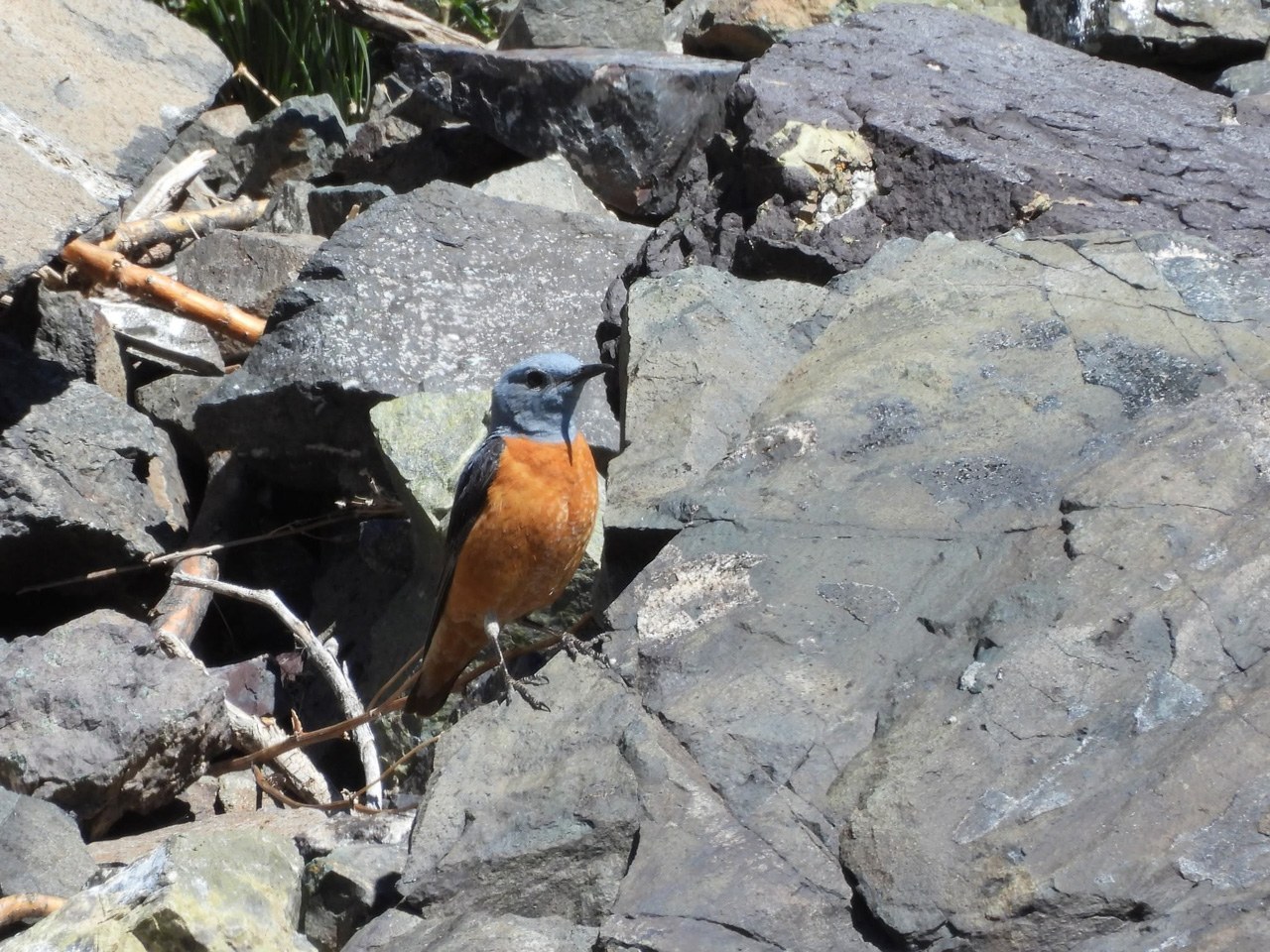
Rufous-tailed Rock Thrush © Máté Havasi
Day 6
The sixth day began with a roughly two-hour flight into western Mongolia and the spectacular Altai Mountains. Our destination was Khovd, where we arrived around midday and stopped for lunch before continuing deeper into the region. Even during lunch, birding opportunities were plentiful. House Sparrows, European Starlings, Carrion Crows, Black Kites, and Feral Pigeons were all observed around the town. After lunch, we set off towards our remote camp, making several short birding stops at Khar-Us Lake along the way. Unfortunately, strong winds made observations challenging, and using a spotting scope proved particularly difficult. Nevertheless, the area provided several rewarding sightings. In the gorge leading towards the lake, we encountered our first Mongolian Finches and Desert Wheatears of the trip. The lake itself held large numbers of the waterbirds already familiar from previous days, but also produced several notable additions. Two White-headed Ducks were among the highlights, a species many visitors hope to see. Large flocks of Black-headed, Mongolian, and Pallas’s Gulls were present around the lake, while the extensive mudflats supported impressive numbers of shorebirds. Among these, Temminck’s Stint and Little Stint were recorded as new species for the trip. Along the shoreline, numerous Bank Swallows were actively feeding and migrating through the area. The lake also held substantial numbers of Greylag Geese and Red-crested Pochards, both new additions to the growing trip list. Other noteworthy observations included a small group of Grey Plovers and our first Caspian Terns.
Following a long and tiring drive across increasingly remote landscapes, we finally reached our camp in the midst of a dust storm. This isolated base would serve as our home for the next six days as we explore the Altai region. After dinner, most participants retired early following the demanding travel day. However, some of the more fortunate members of the group were rewarded with the distant calls of a Eurasian Eagle-Owl from the surrounding hills, providing a fitting end to our first evening in western Mongolia.
Day 7
On our seventh day, we made our first dedicated attempt to observe a Snow Leopard. To do so, we ventured onto the plateau situated at approximately 3,000 metres above sea level. The journey uphill proved rewarding in its own right, as we encountered several new species along the way, including Isabelline Shrike, Barred Warbler, Sulphur-bellied Warbler, and Brown Accentor. We also observed singing Black Redstarts, Rufous-tailed Rock Thrushes, and numerous Black Kites. During the ascent, we made a stop at a nearby petroglyph site, taking the opportunity to appreciate some of the region’s remarkable cultural heritage alongside its natural treasures.
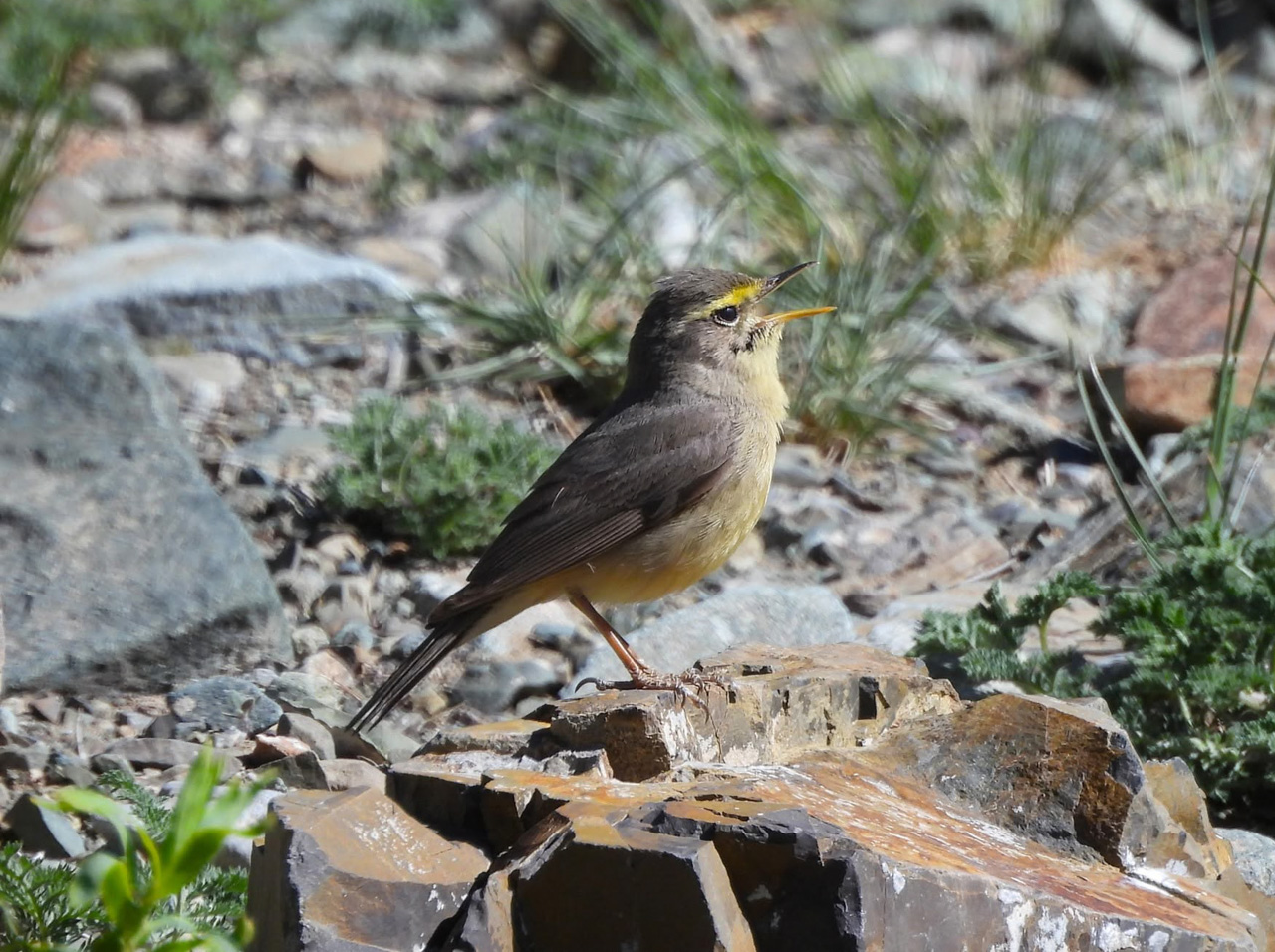
Sulphur-beilled Warbler © Máté Havasi
Although our search for Snow Leopards was unsuccessful on this day, the plateau still offered plenty of wildlife highlights. Through the scope, we managed to pick out a distant Altai Snowcock on the surrounding slopes. Other notable species included Saker Falcon, White-winged Redstart, White-winged Snowfinch and Siberian Ibex. Raptors were particularly well represented throughout the day. Cinereous Vultures, Bearded Vultures, Golden Eagles, Saker Falcon and Black Kites could all be seen soaring above the mountains, providing a spectacular complement to the dramatic scenery of the Altai range.
Day 8
On the eighth day, we headed towards neighbouring Durgun Lake. Our primary target was the rare and remarkable Saiga Antelope, and fortunately the day proved to be a success. At first, only distant animals could be discerned through the shimmering heat haze of the steppe, but with some careful stalking we eventually managed to approach two individuals at a reasonably close distance. The vast desert steppe surrounding the lake, home to the Saiga population, also produced several other interesting observations. We encountered numerous Pallid Ground Squirrels and inspected an artificial nesting platform erected for birds of prey in the middle of this seemingly endless landscape. Instead of a raptor, however, it was occupied by a Raven nest containing several well-grown chicks.
At the lake itself, the familiar assemblage of waterbirds was supplemented by a number of new species. Highlights included a mixed breeding colony of Great Crested Grebes and Great Cormorants, along with Great White Egrets and Little Terns. We also recorded our first Greater Sand Plovers of the trip and our first Arctic Loon. While birding around the lake, we also noted numerous Tuvan Toad-headed Agamas, which added a welcome reptilian element to the day’s observations.
After lunch on the lakeshore, we set off towards the settlement of Chandmani, where our target species was the Hill Pigeon. Before leaving the lake area, however, we observed a group of Pallas’s Sandgrouse on a narrow spit extending into the lake. Later, we were able to drive out onto the spit itself, allowing exceptionally close views and excellent photographic opportunities of a species that is often surprisingly difficult to locate. On the road towards the village, we checked several stone corals in the hope of finding Little Owls. Although the owls failed to appear, the search produced Hoopoe, Lesser Kestrel, and Common Cuckoo.
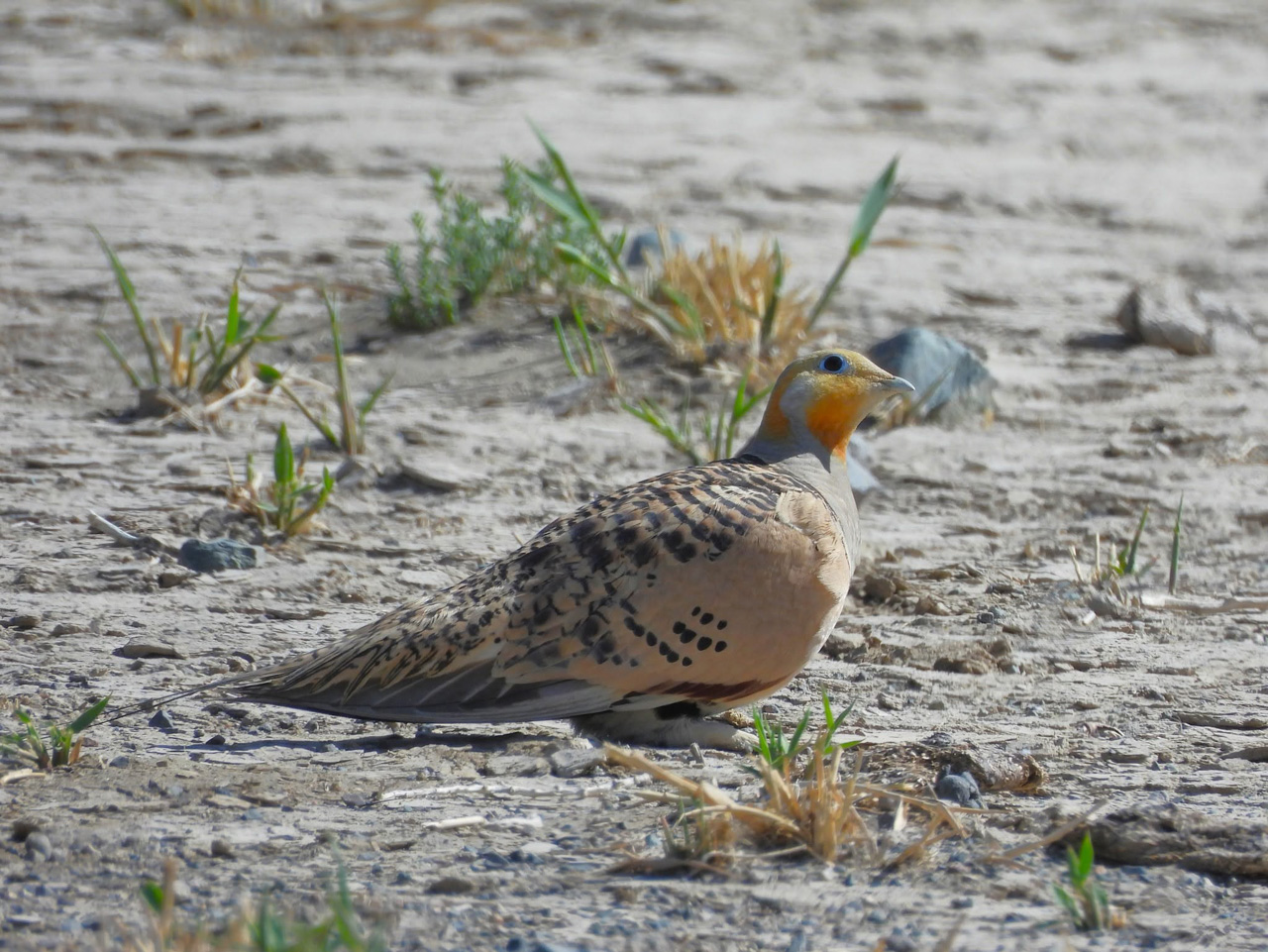
Palla’s Sandgrouse © Máté Havasi
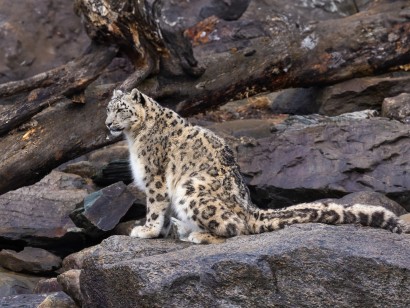
While refuelling in Chandmani, exciting news arrived from the scouting team: a Snow Leopard had been located in the mountains. As a result we immediately headed back towards the mountains. It was an easy decision, and one that paid off spectacularly. By late afternoon, we were rewarded with excellent telescope views of a Snow Leopard resting on a distant mountainside—an unforgettable moment and undoubtedly one of the highlights of the entire expedition. Naturally, such a remarkable sighting called for a small celebration on the mountain before we finally returned to camp in time for dinner.
Day 9
On the ninth day, we headed into the Bumbat Valley, a spectacular landscape that has historically proven to be an excellent location for migrant passerines. Even without the birds, the valley itself is well worth a visit thanks to its dramatic scenery. Shortly after leaving camp, a pair of confiding Little Ringed Plovers brightened our morning. Not long afterwards, two Steppe Eagles flew overhead, offering excellent views in the soft morning light. Along the way, Northern Wheatears, Isabelline Wheatears, and Pied Wheatears also added variety to the day’s bird list. The journey into the valley had already produced several noteworthy observations, including numerous Barred Warblers and Rufous-tailed Rock Thrushes. At a nearby cliff face, we located a pair of Bearded Vultures attending a large chick at their nest. These magnificent birds later provided unforgettable views in flight, circling above the valley. While watching and photographing them, we also picked up several Himalayan Griffons soaring high overhead, together with Golden Eagle and Booted Eagle.
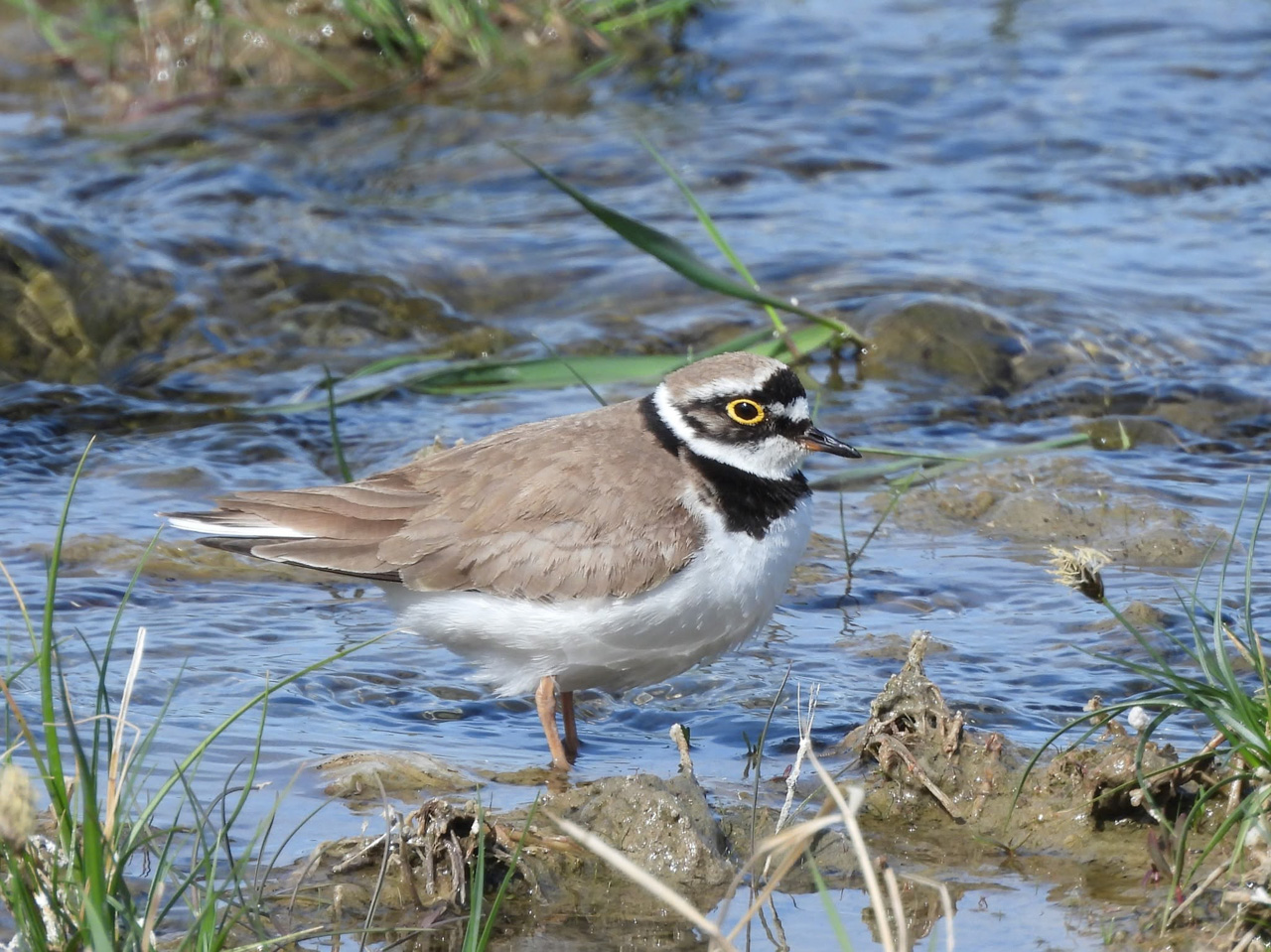
Little-ringed Plover © Máté Havasi
Upon reaching the valley, numerous Chukars once again appeared among the rocky slopes and scrub. By midday, we arrived at our lunch stop, a small wooded oasis along a stream, complete with nesting Black Kites in the surrounding trees. The area proved particularly productive for passerines. New species for the trip included Grey Wagtail, Common Rosefinch, and Hume’s Warbler. It was also here that everyone finally enjoyed excellent views of Hill Pigeons, with opportunities for close observation and photography. Additional highlights included our first Eurasian Crag Martins and an unidentified thrush that was most likely either a Black-throated Thrush or a Red-throated Thrush. We also spent some enjoyable time photographing Spotted Flycatchers at close range.
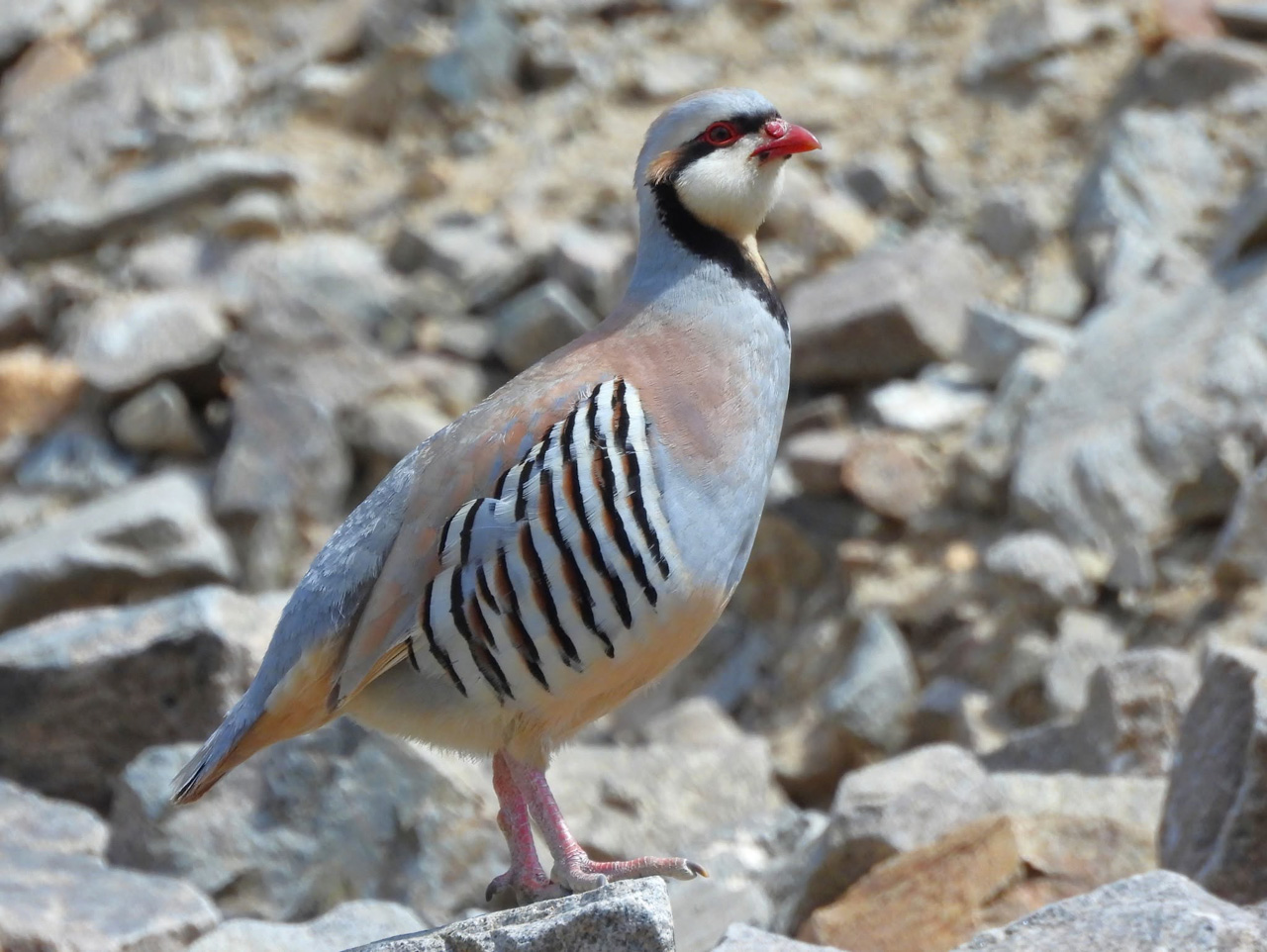
Chukar © Máté Havasi
On the way back, we made a number of short birding stops. The highlight was a male Taiga Flycatcher, which showed exceptionally well. We also examined tree trunks bearing scratches and scent marks left by Snow Leopards in previous years, a reminder of the elusive predator whose presence still defines this wilderness.
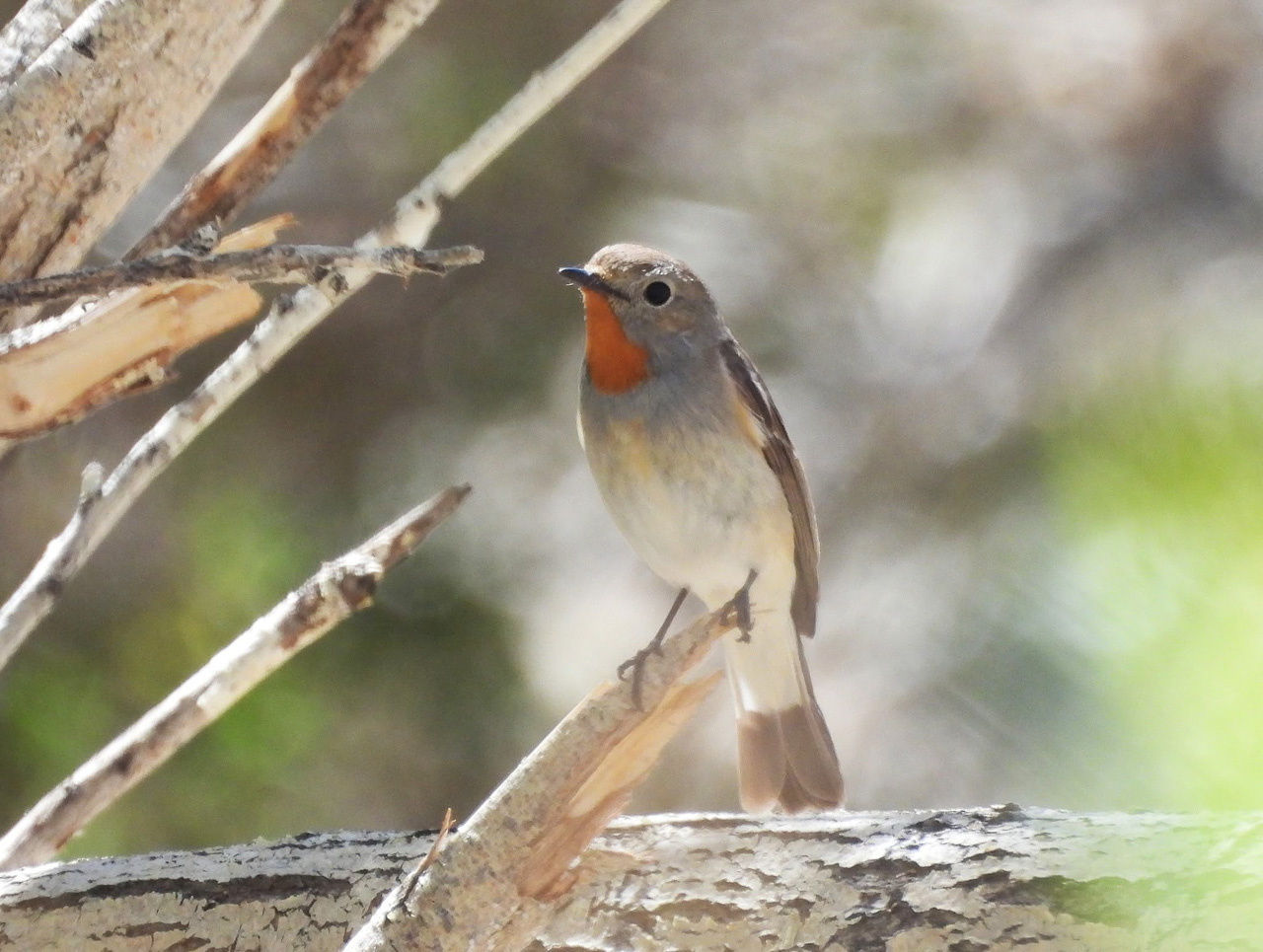
Taiga Flycatcher © Máté Havasi
Having left the valley with time to spare, we decided to make an effort to find Goitered Gazelles. The search proved somewhat more challenging than expected, but persistence eventually paid off. Through the scopes, we were able to observe six individuals at a distance. While searching for the gazelles, we encountered Pallas’s Sandgrouse once again, and a brief but satisfying distant observation of a Little Owl ensured that everyone in the group managed to see the species before the day came to an end.
Day 10
On the morning of the tenth day, we visited a more distant small lake in the hope of finding a few new species. The excursion proved successful, as we added both Gull-billed Tern and Ferruginous Duck to our trip list. Along the way, another Demoiselle Crane was observed. Despite its modest size, the lake hosted an impressive diversity of waterbirds. Here we had our first opportunity to observe Whooper Swan cygnets as well as Ruddy Shelduck broods. A small colony of Bank Swallows occupied the shoreline, while Steppe Eagle, Cinereous Vulture, and Black Kite represented the raptors. The lake once again attracted two Pallas’s Sandgrouse coming to drink, meaning that remarkably, we had now seen this often challenging species on three consecutive days. This helped ease the disappointment of yet another unsuccessful morning search for Henderson’s Ground Jay, which continued to elude us despite repeated efforts.
After lunch, we explored the deep valleys surrounding our camp, searching for the Eurasian Eagle-Owl that we had previously heard calling. At the first site, we added another species to our trip list when a Twite was heard, although the bird itself remained hidden. Our second attempt at locating the owl proved far more successful. We found a beautifully positioned nest occupied by an adult Eurasian Eagle-Owl, accompanied by a large chick and a single unhatched egg. While observing the owls, we also heard Grey-necked Buntings and later managed to locate and photograph them. We then carefully approached to a better viewing position without disturbing the nesting birds, allowing everyone to enjoy excellent views and photographs of this magnificent species.
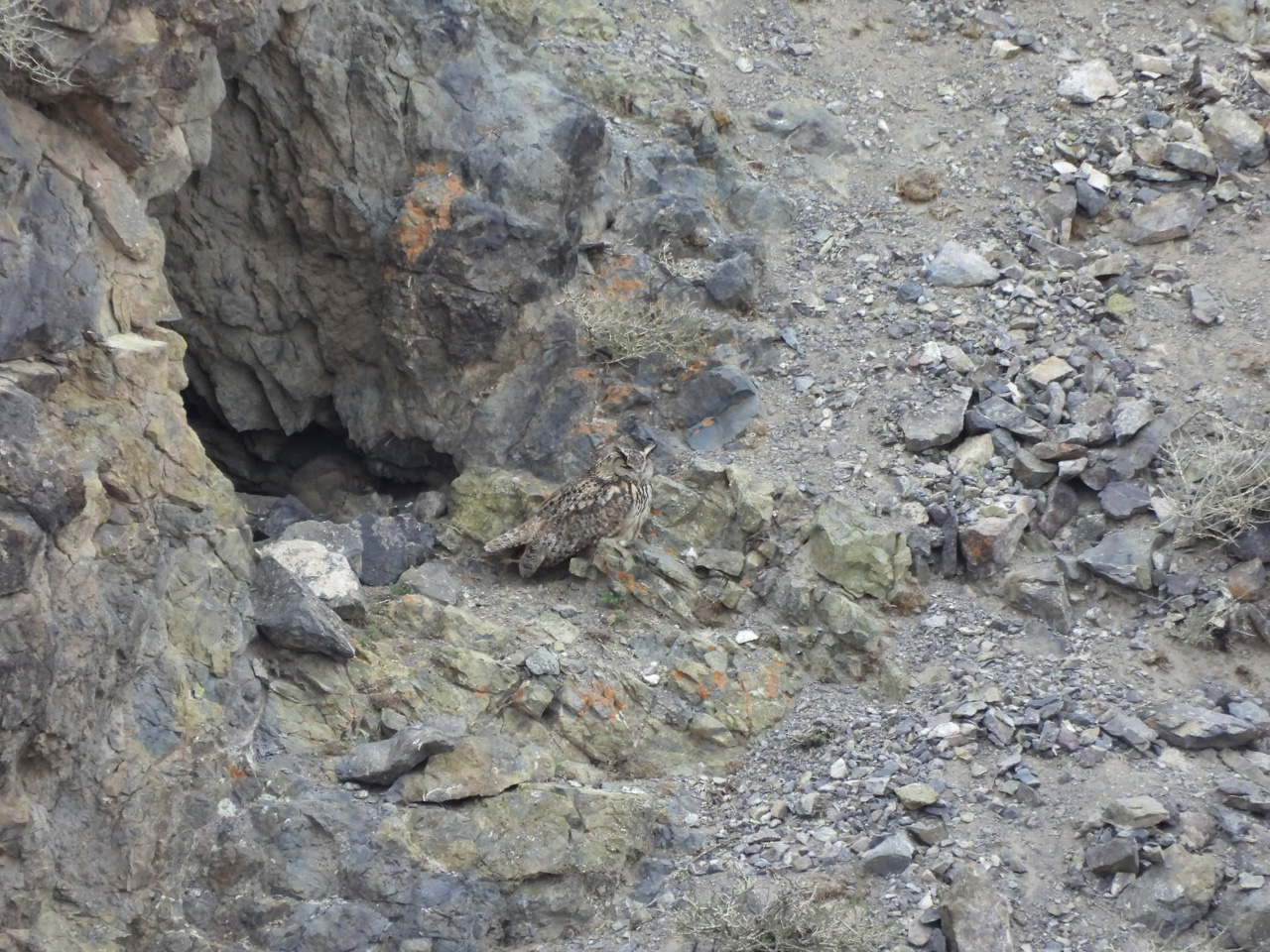
Eurasian Eagle-Owl © Máté Havasi
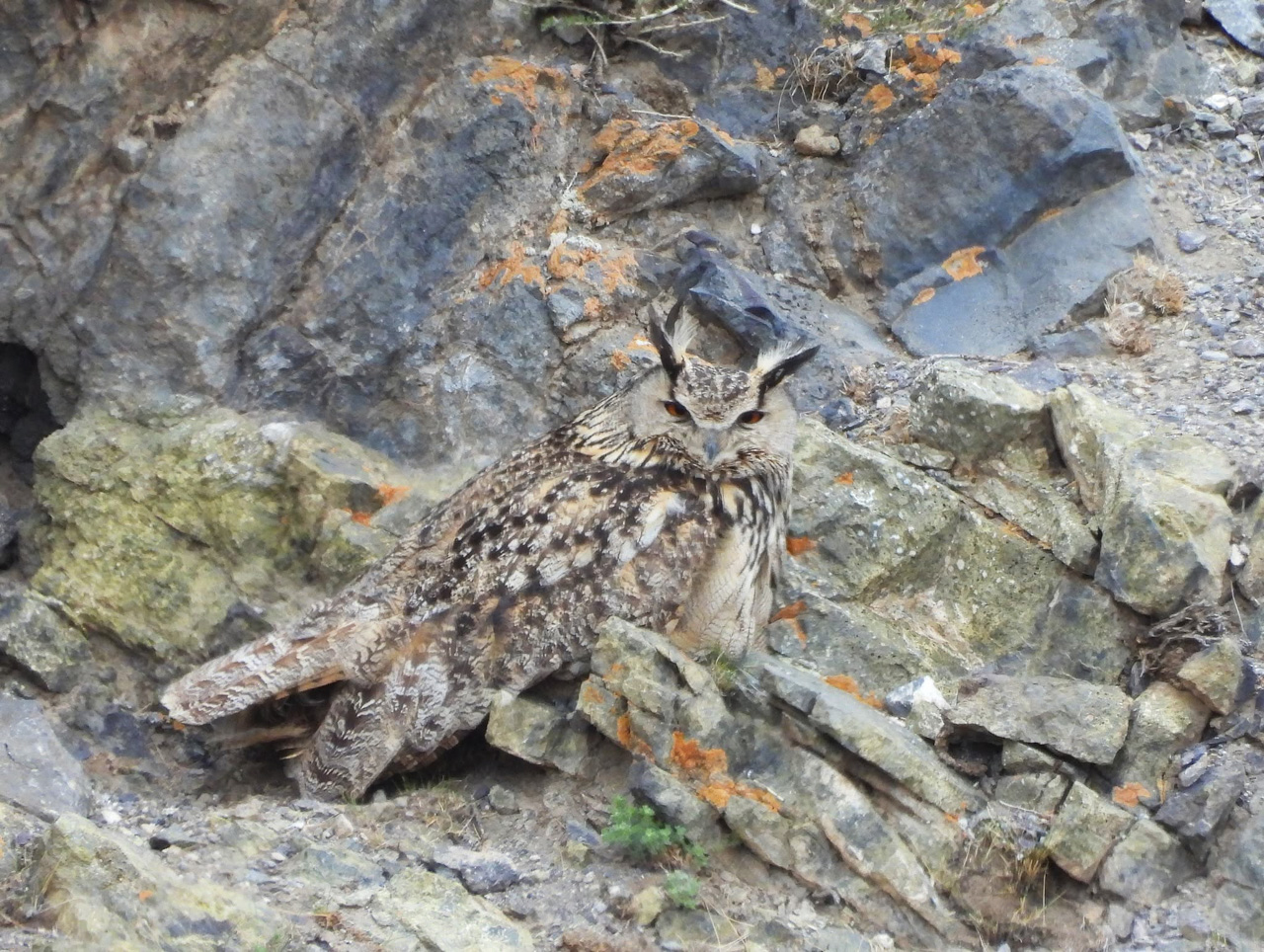
Eurasian Eagle-Owl © Máté Havasi
The day concluded as one of the highlights of the tour. In the evening, we celebrated a birthday with cake, a small party, and a surprise concert. As the sun set over the Altai Mountains, we enjoyed the unforgettable experience of listening to the traditional sounds of the morin khuur, Mongolia’s iconic horsehead fiddle, creating a perfect ending to an outstanding day in the field.
Day 11
On the eleventh day, we once again headed up onto the plateau in search of Snow Leopard. As on previous visits to this high-altitude landscape, the day produced many of the characteristic mountain species of the region. Among the birds, Western House Martin was added to the trip list, while everyone also enjoyed excellent views of Eurasian Crag Martin. Another new species for the tour was Water Pipit, although not everyone managed to see it.
Although Snow Leopard once again remained elusive, the day proved particularly rewarding for both raptors and mammals. The impressive raptor list included Bearded Vulture, Cinereous Vulture, Himalayan Griffon, Golden Eagle, Steppe Eagle, Black Kite, and Lesser Kestrel. The abundance of birds of prey provided almost constant entertainment throughout the day. The plateau also delivered a fine selection of mammals. Numerous Tarbagan Marmots and Long-tailed Ground Squirrels were encountered, while Red Fox, Siberian Ibexes and domestic Bactrian Camels added further variety to the day’s sightings. One particularly memorable observation came thanks to a fortunate coincidence. While stopping the vehicle to watch several Golden Eagles soaring high overhead, we happened to notice a Pallas’s Pika nearby, allowing everyone to enjoy excellent views of this charismatic little mammal. As we made our way back toward camp in the evening, the day’s final surprise awaited us. A few members of the group were fortunate enough to catch a brief but exciting glimpse of a Grey Wolf, providing a fittingly dramatic conclusion to another memorable day on the Mongolian plateau.
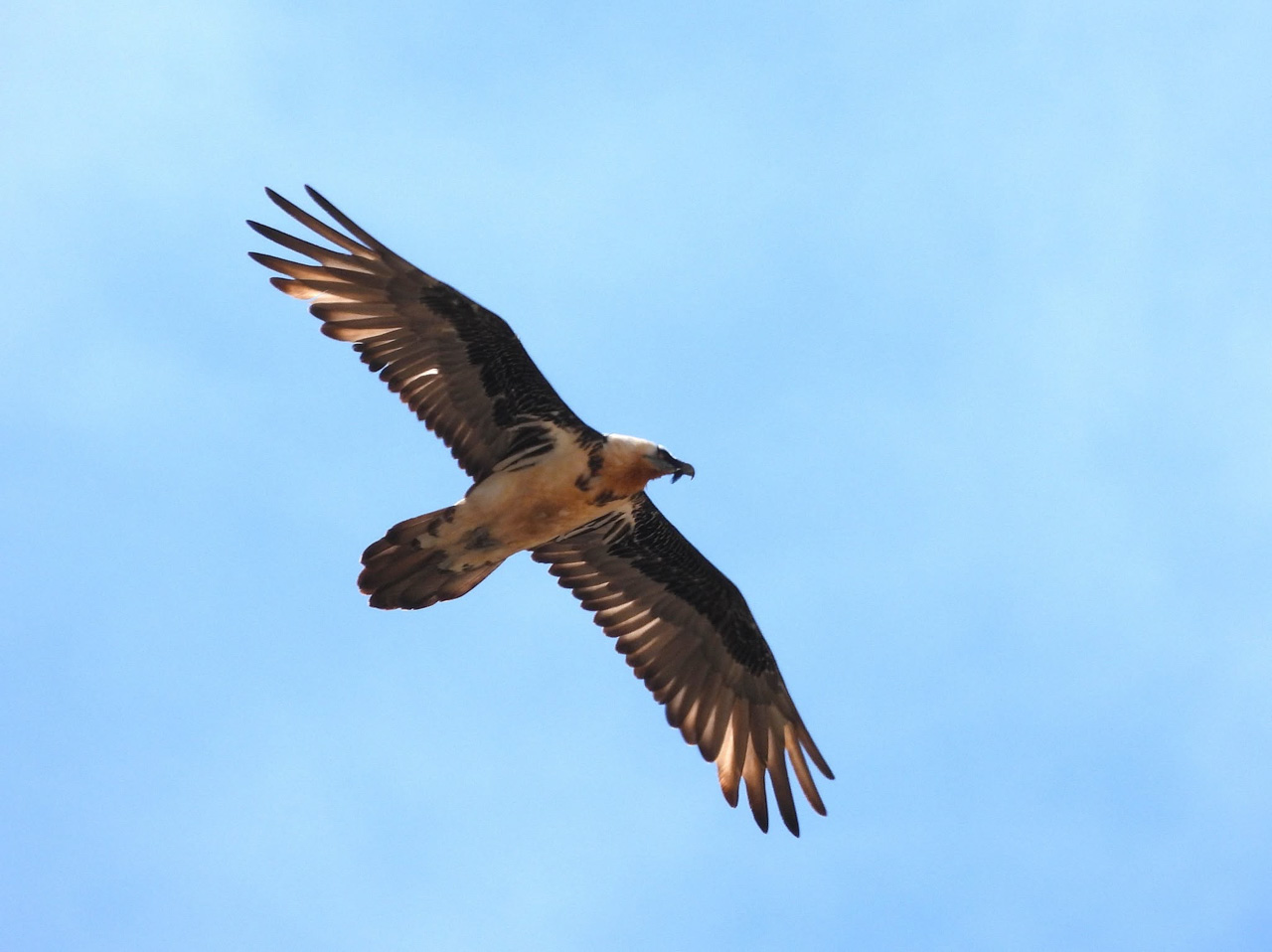
Bearded Vulture © Máté Havasi
Day 12
Having successfully observed most of the region’s target species during the previous days, we regarded the twelfth day as something of a bonus day. The program was decided collectively by the group, allowing everyone to focus on the species and activities they most wanted to enjoy before leaving the area. Since Henderson’s Ground Jay remained one of the few major targets still missing from our lists, we agreed to begin birding before breakfast, when the chances of finding this elusive species would be highest. Fortunately, our efforts were rewarded. After a brief period of confusion and scrambling into position, the entire group obtained excellent views of this remarkable bird, finally securing one of the most sought-after species of the tour. During the search, we also encountered Goitered Gazelles once again and found a recently fledged Horned Lark, providing additional highlights to the early morning excursion.
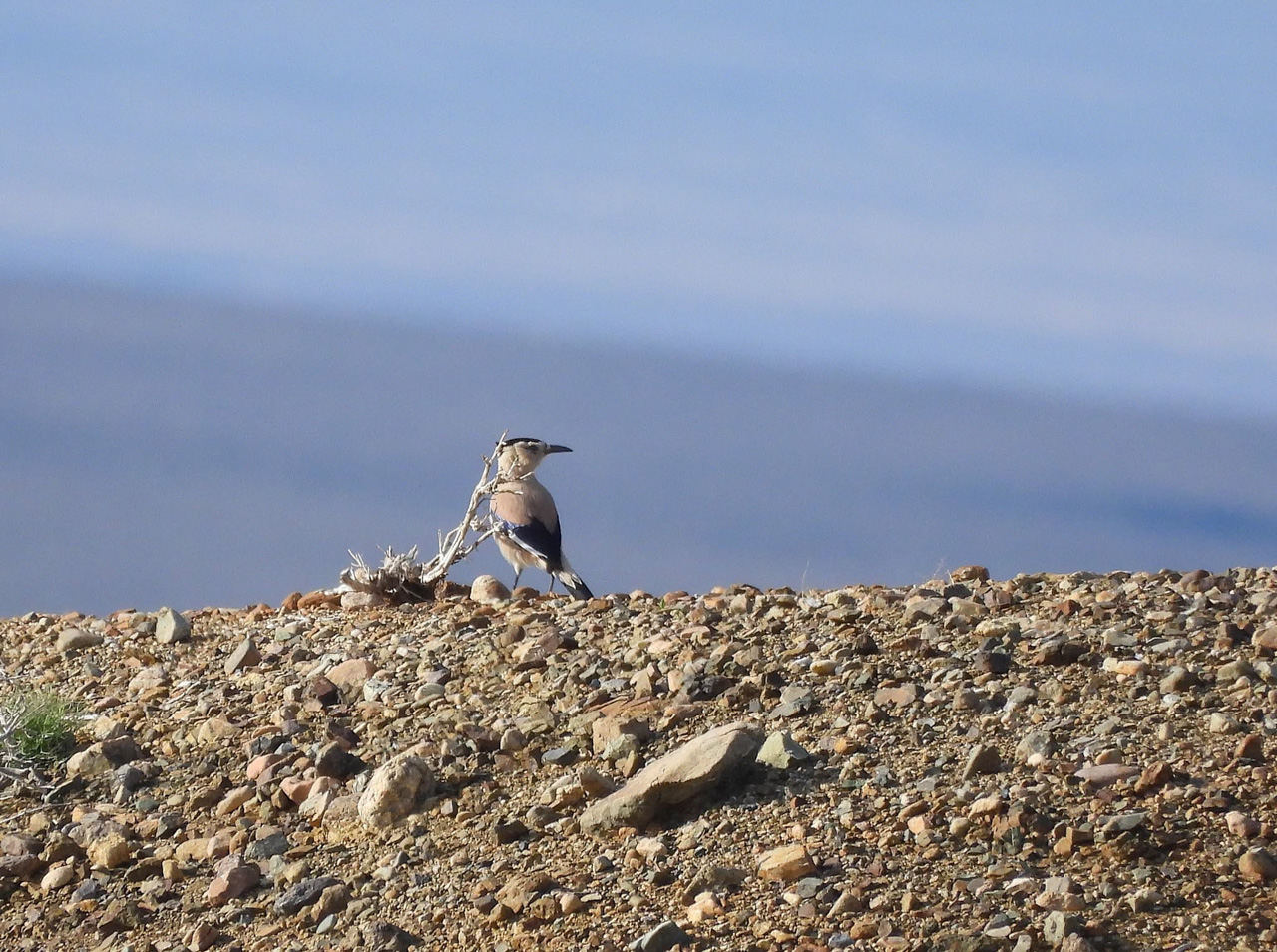
Mongolian Ground Jay © Máté Havasi.
After breakfast, we dedicated the rest of the morning to photographing Little Owls. The birds proved exceptionally cooperative, repeatedly perching on fence posts and remaining in view for extended periods. As a result, everyone was able to obtain excellent photographs and enjoy prolonged observations of this charismatic species. Remarkably, Pallas’s Sandgrouse made another appearance during the day. This time, however, the excitement came from a flock of approximately forty birds flying overhead rather than from drinking birds at a waterhole.
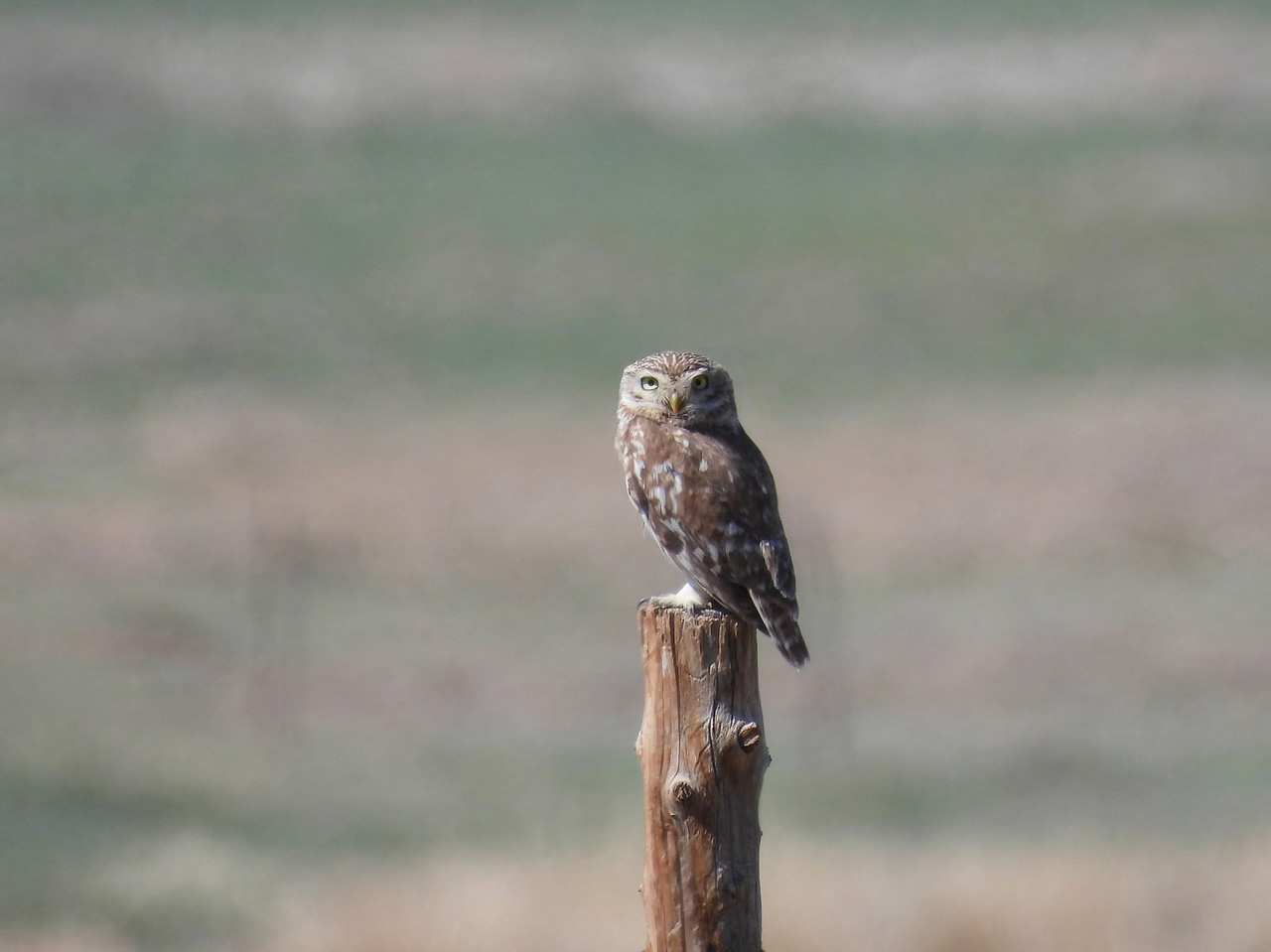
Little Owl © Máté Havasi
The remainder of the day was spent relaxing around camp. In the late afternoon, we once again visited the Eurasian Eagle-Owl site for another photography session, taking advantage of the excellent opportunities offered by the nesting birds. The day concluded with a brief search that eventually produced very short views of two Twites, providing a pleasant final addition to another enjoyable day in the Altai Mountains.
Day 13
Day 13 was primarily a travel day, as we had to make our way back from the Altai Mountains to the region surrounding Ulaanbaatar. After departing our Altai camp in the morning, we were treated to a wonderful farewell sight: two perched Himalayan Vultures at close range. This species is usually observed only in flight over the area, so such prolonged and intimate views were a special privilege and a fitting end to our time in the Altai.
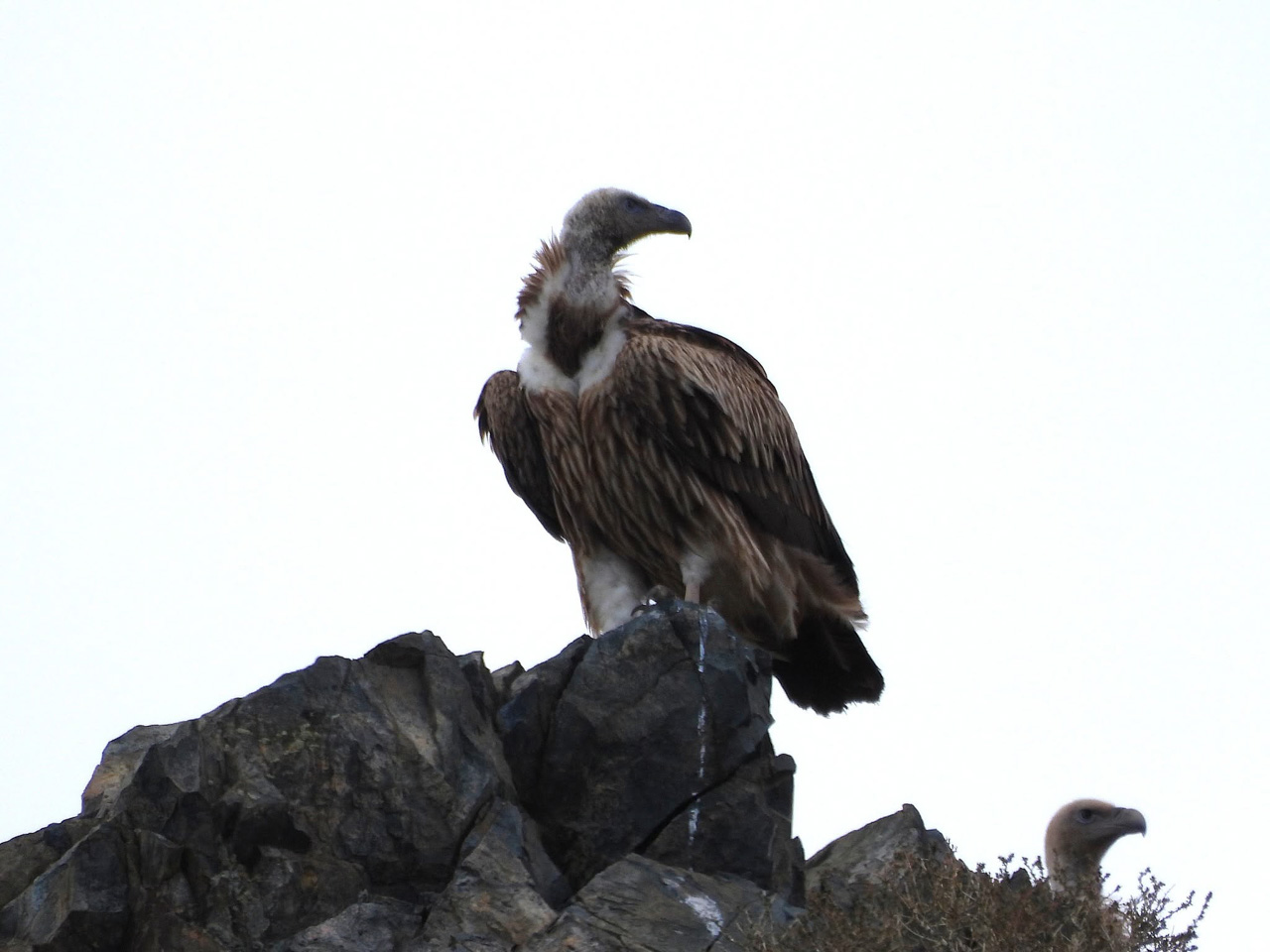
Himalayan Vultures © Máté Havasi
Following several hours of driving, we boarded our two-hour flight back east. Upon arrival, the local team was already waiting for us at the airport, and after another drive of roughly two hours we reached our final destination of the tour, the Khustain Nuruu National Park. While travelling, we received exciting news from the park staff: they had successfully located a Pallas’s Cat. As a result, after arriving at camp and enjoying a quick dinner, we immediately set out in search of this elusive feline. Our efforts were rewarded with excellent, close-range views of the cat, allowing everyone to appreciate this remarkable species and obtain some memorable photographs.
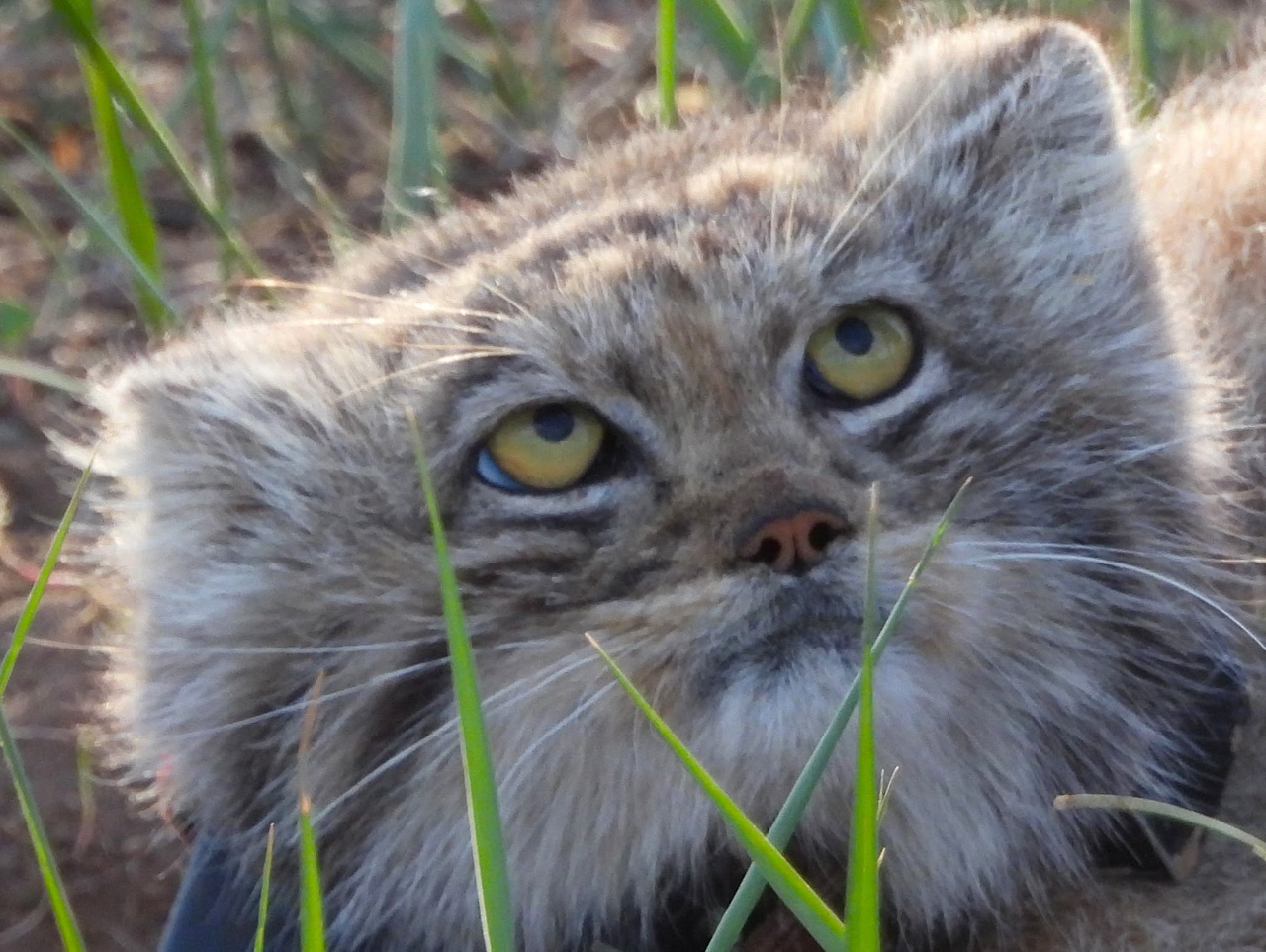
Pallas’s Cat © Máté Havasi
The evening was made even more rewarding by another observation of the two young Argali that had already provided us with excellent views on a previous occasion, bringing a fitting conclusion to a long but highly successful day of travel and wildlife watching.
Day 14
Our fourteenth day began early once again, as our primary target in the national park was the iconic Przewalski’s Horse. These remarkable animals are often easiest to observe during the early morning hours when they remain close to water sources. The strategy proved successful, and in the beautiful morning light we enjoyed excellent views of several large herds, many accompanied by foals, providing outstanding photographic opportunities. Afterwards, we set out in search of Mongolian Gazelles, another target species for the day. We were successful once again, although at this time of year the species is less spectacular than during the migration period. As the calvingt approaches, individuals tend to disperse and are more often encountered singly or in small groups across the open grasslands rather than in the vast herds for which the species is famous.
We then returned to camp for breakfast before making another attempt to locate wolves. This search was ultimately unsuccessful, likely because unauthorized visitors had been moving through the area near the suspected den sites. Nevertheless, the excursion produced several memorable observations, including another magnificent Black Stork and a number of Upland Buzzards. Our morning concluded with a visit to a former Saker Falcon nesting area, located in a beautiful narrow valley with particularly atmospheric scenery. The falcons had not occupied the territory this year, but the walk nevertheless proved highly rewarding. New species for the trip included Daurian Partridge and Dark-sided Flycatcher, while Meadow Buntings, Asian Brown Flycatchers, and Pallas’s Leaf Warblers were encountered once again.
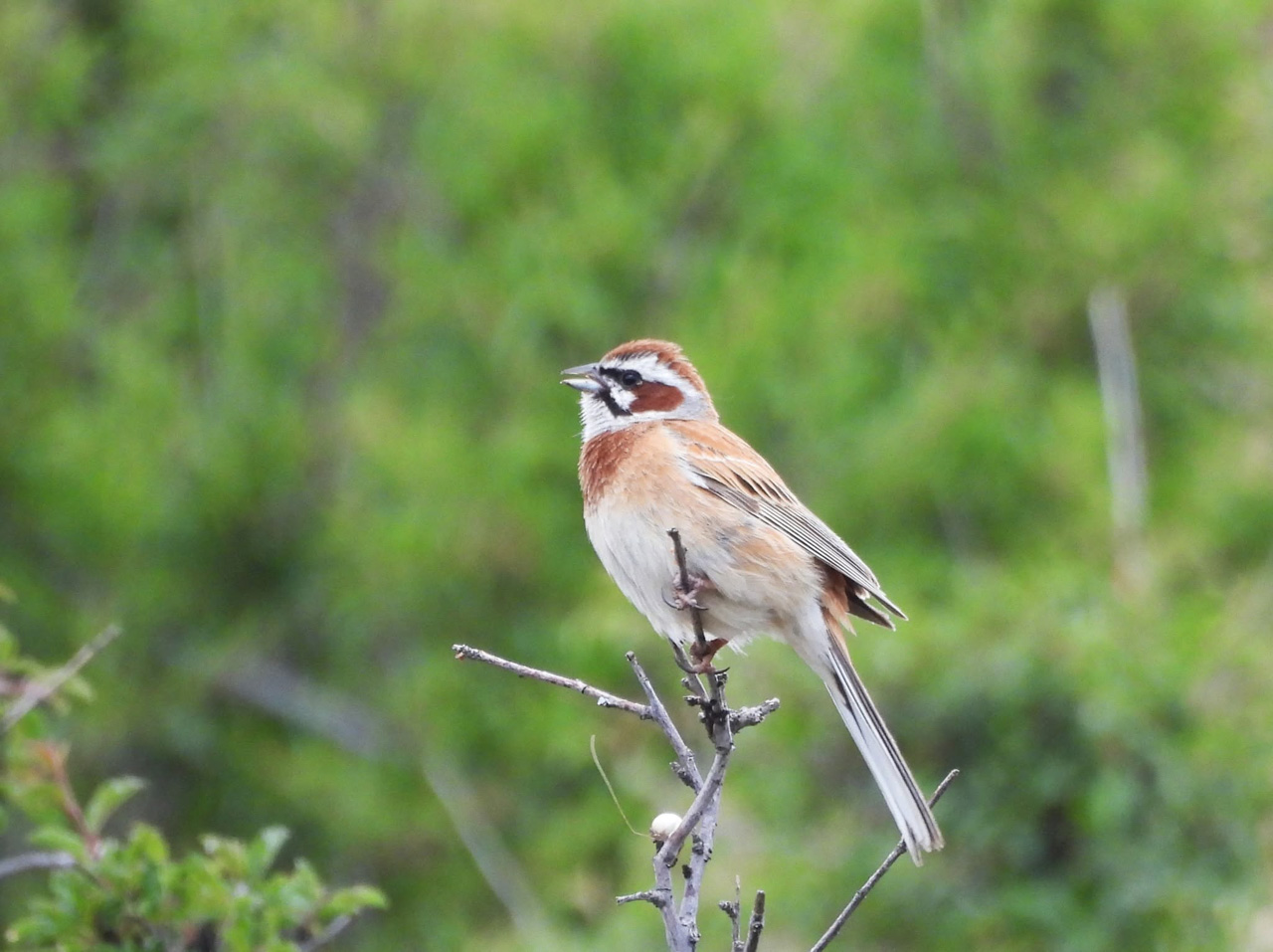
Meadow Bunting © Máté Havasi
After lunch, we said goodbye to three participants who had chosen to spend an additional day in the national park. The remainder of the group began the journey back to Ulaanbaatar to spend our final night before the journey home. Along the way, we came across a freshly ploughed field where more than a dozen Steppe Eagles were taking advantage of the disturbed ground to hunt exposed rodents. Before our farewell dinner, we enjoyed one last hour-long walk in the hotel garden. Although many familiar species were present, the highlight was the appearance of two scarce migrants: a Thick-billed Warbler and, remarkably, a female Siberian Blue Robin in the very same shrub.
It was a wonderful way to conclude an outstanding and eventful two-week journey through Mongolia. Following our farewell dinner, we exchanged good wishes and said our goodbyes, hoping that our paths would cross again on another birding adventure in the future.
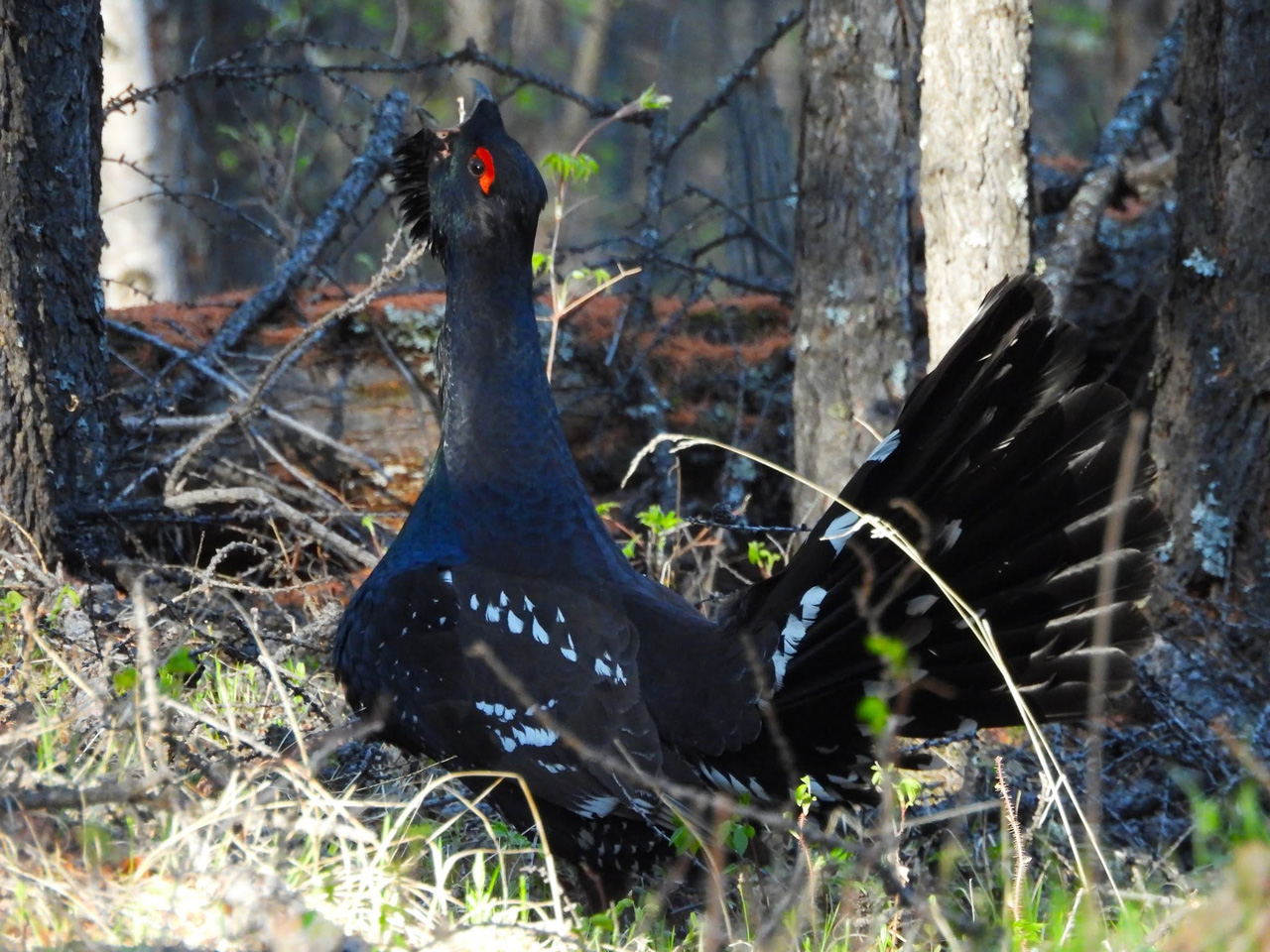
Black-billed Capercaillie © Máté Havasi
One of the avian highlights of our Mongolian tour was an unforgettable encounter with a stunning Black-billed Capercaillie.
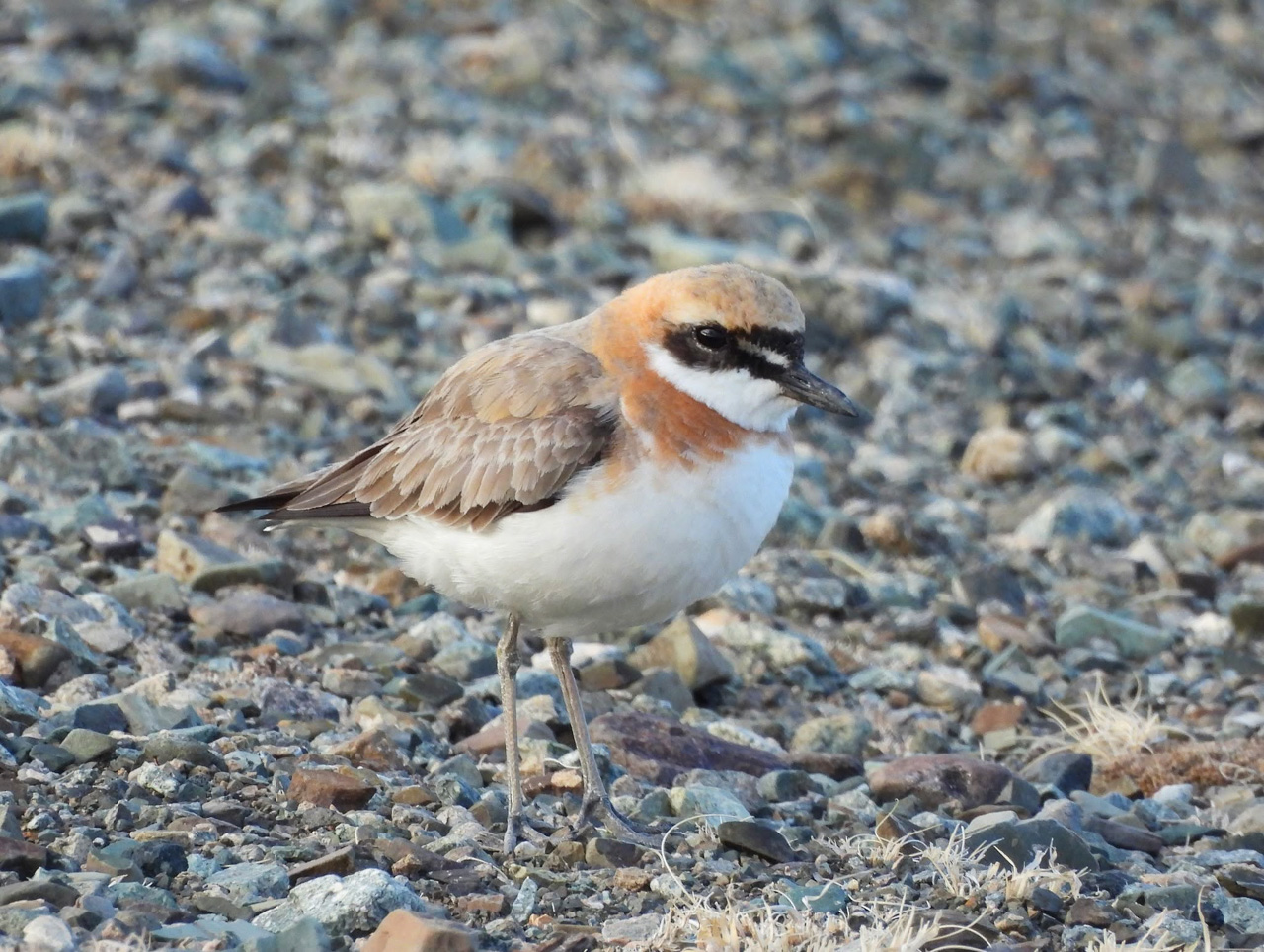
Siberian Sand-Plover © Máté Havasi
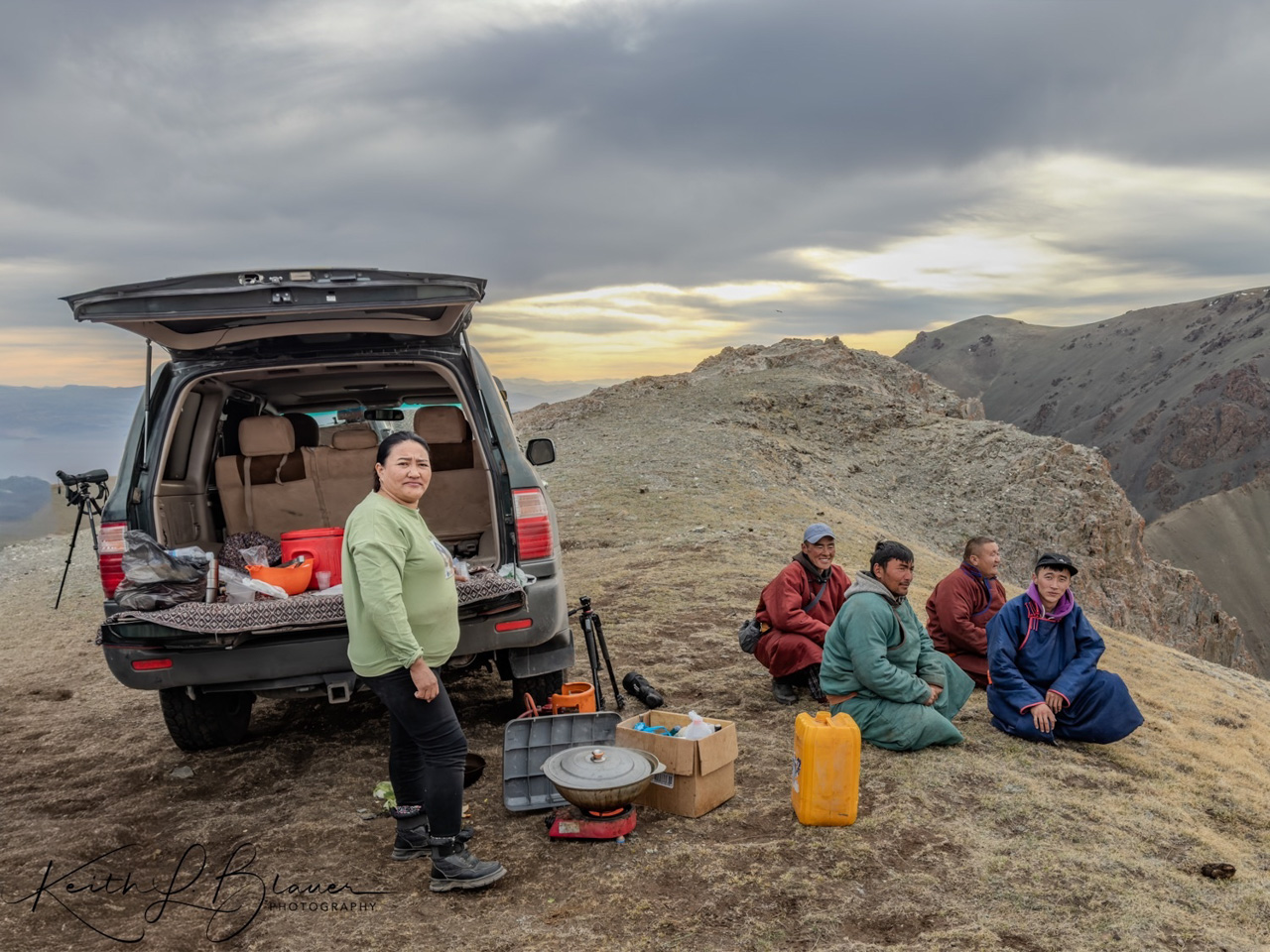
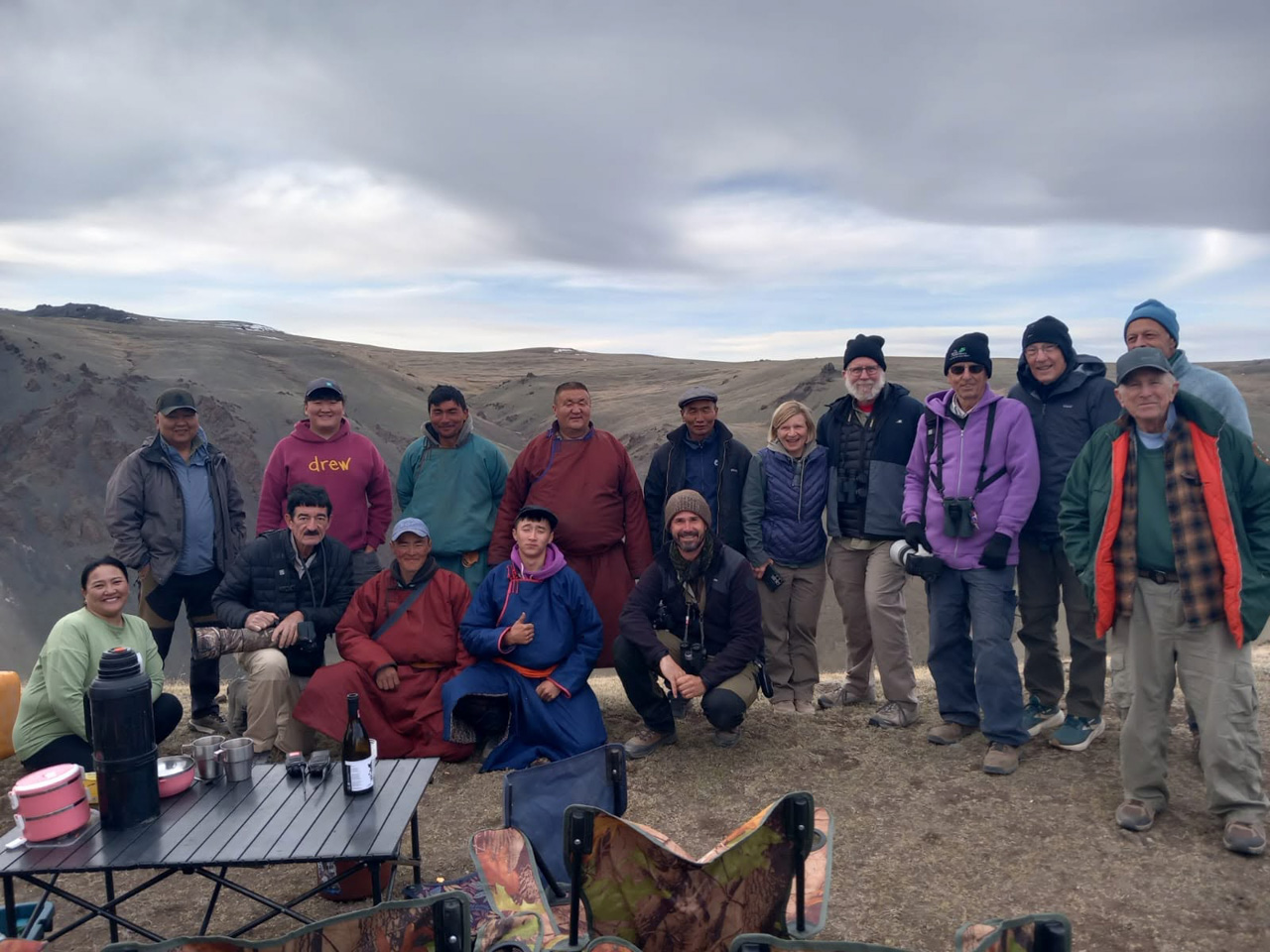
The crew © Keith Blauer