Lake Erie Spring Migration (May 5 – 13, 2026) Trip Report
The Lake Erie Spring Migration tour was filled with some excellent warbler filled days, remarkable rarities, and a broad selection of species from songbirds to shorebirds. We spent quality time appreciating many species while learning about the broader ecology of the various regions visited. Over the course of nine days, we explored the migration hotspots of Point Pelee, Rondeau, and Long Point. Aside from the birding, the excellent weather, delicious food, and great company during this full and immersive tour made the experience a resounding success. 156 bird species were tallied, with notable additions of spotting some exciting amphibians, reptiles, and plants.
Day 1 – Toronto
Our adventure started by meeting at the hotel for 6:30pm, as we sat down for introductions over dinner and discussed our collective hopes and dreams for the coming days.
Day 2 – Toronto to Leamington
Our first stop of the tour was Colonel Samuel Smith Park in Toronto to get the ball rolling with a few local specialities including Red-necked Grebe (rather vociferous), Black-crowned Night-Heron, and the greatly enjoyed Tree Swallow nest box grid, displaying all the antics which it entails.
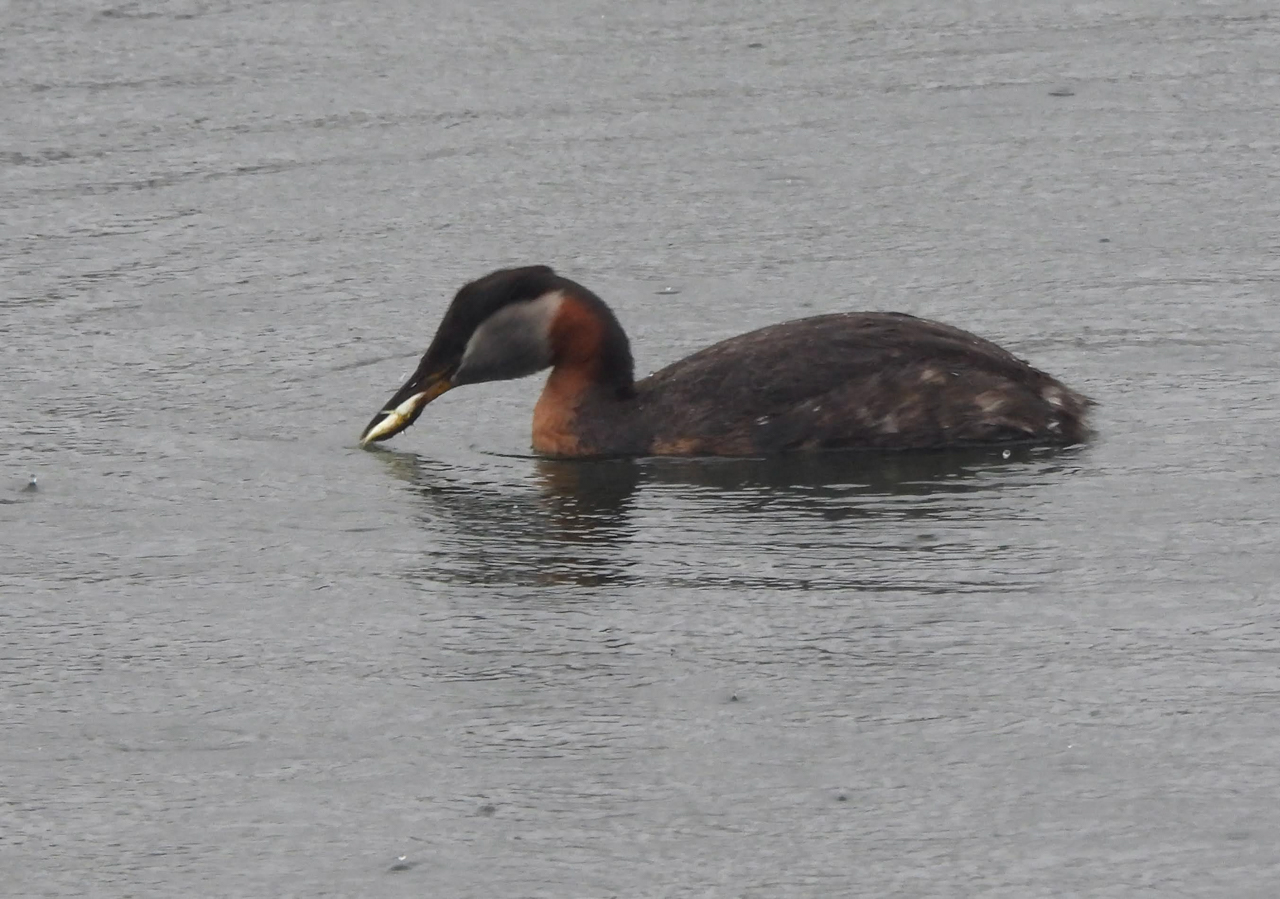
Red-necked Grebe © Nancy Overholtz
A surprisingly large number of Long-tailed Ducks remained around the lake edge and afforded some lovely views in a wide variety of plumage states – a highlight for many. These were interspersed with Red-breasted Merganser and breeding plumage Common Loon. Thanks to some abating rain, a couple warblers also appeared and included Palm, Magnolia, and Black-throated Green Warblers.
We then travelled to Leamington for dinner, and with the remaining time available prior to dusk, we visited Hillman Marsh before returning to our hotel. This proved most fruitful with a flock of 15 American Avocets greeting our arrival by doing a lap of the shorebird cell. Around these stunning birds had amassed many Lesser and Greater Yellowlegs, and Dunlin.
Day 3 – Point Pelee National Park
Our first full day at Point Pelee involved a pre-dawn start, and with fresh anticipation we headed for the Tip. On arrival in the park, we took one of the first shuttles from the Visitor’s Centre to the Tip where we enjoyed a spectacular sunrise (something which rarely disappoints). With the pastel colours of the rising sun and clouds we enjoyed a leisurely flyby of an American White Pelican along with a host of more common species – most notably a passage of Common Terns, Bald Eagles, and a Common Loon.
The arrival of some classic spring songbird migrants in the trees immediately north of us soon drew our attention, including a stunning bright red Scarlet Tanager, many singing Yellow Warblers, and a buzzing Blue-winged Warbler. Whispers down the long line of birders on the beach alerted us to the bizarre presence of a Least Bittern perched a few meters above the trail in full view in the trees, only a short distance up the beach. After obtaining excellent views, we all left in disbelief how such a secretive species might settle in such an open location. Next on the agenda was an opportunity to scale the 80-foot Tip Observation Tower. From the summit, we enjoyed a Red-headed Woodpecker migrating south, settle in one of the last cottonwoods at the Tip before back tracking inland.
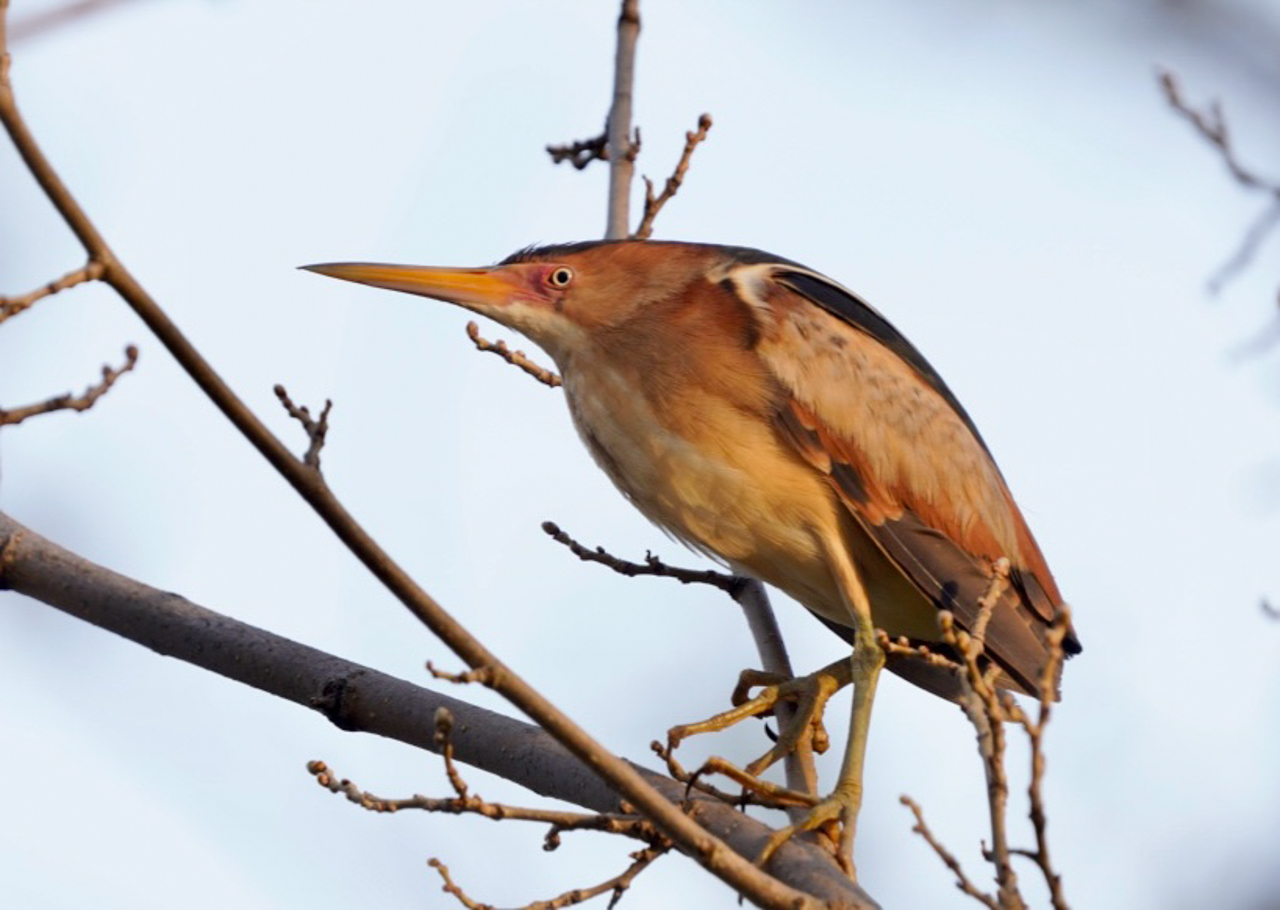
Least Bittern © Bill Hebner
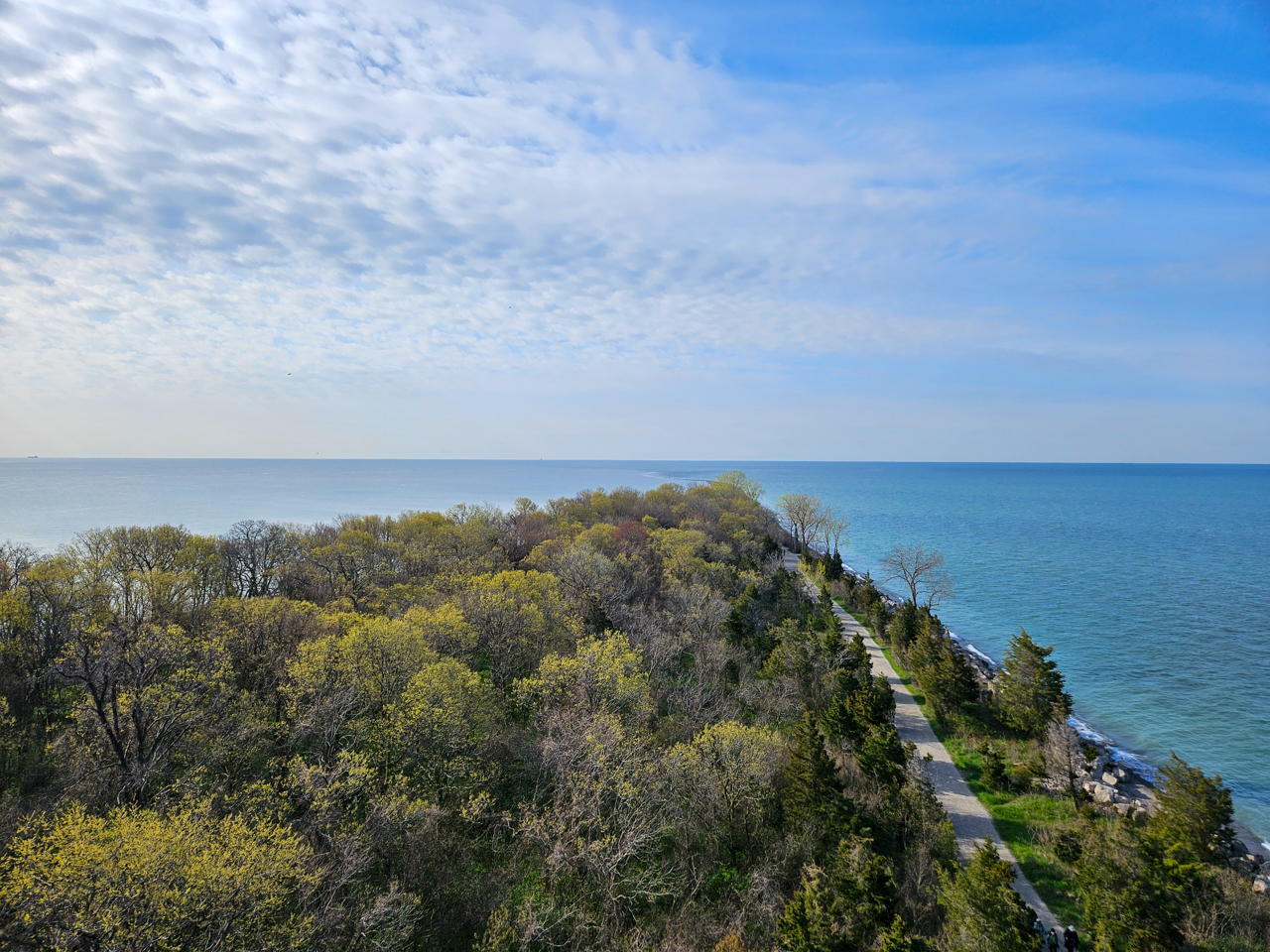
View from Observation tower © Samuel Perfect
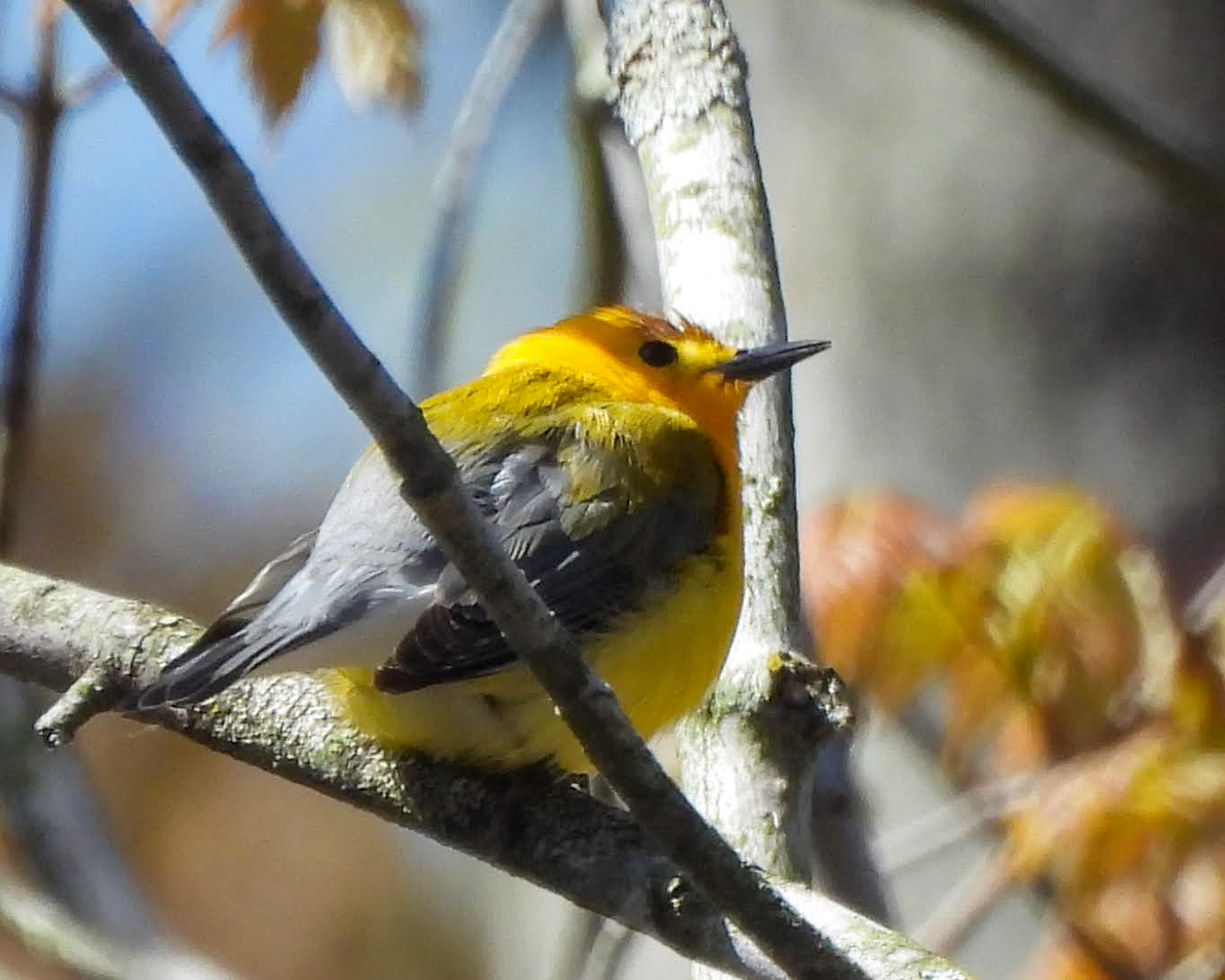
Prothonotary Warbler © Nancy Overholtz
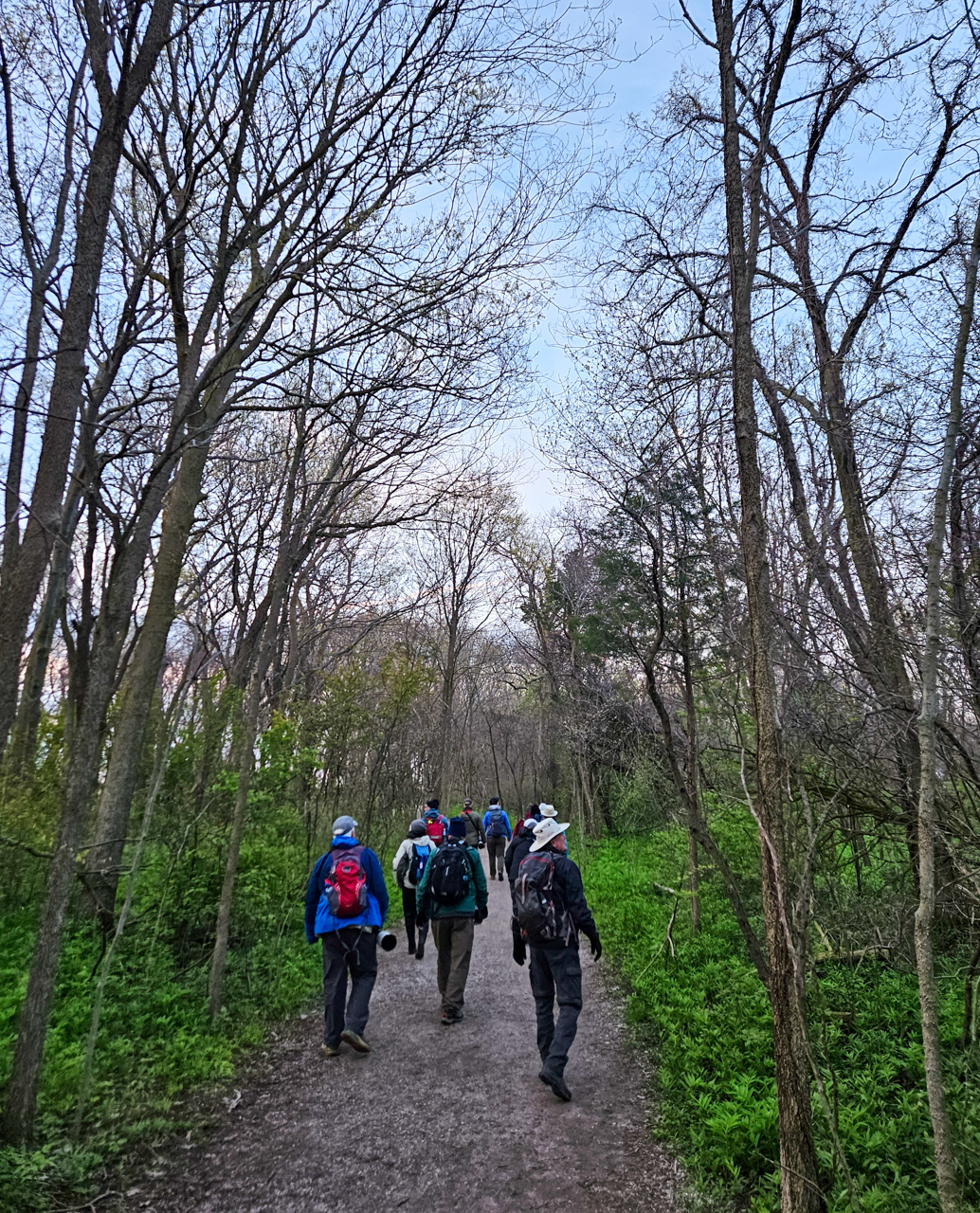
© Samuel Perfect
Our next port of call, following lunch at the Visitor Centre, was the Woodland Trail. This is a must visit site which offered great views of a Prothonotary Warbler singing for all to enjoy. The altruistic nature of fellow birders in the park also directed us to a roosting Great Horned Owl further along the trail which also provided uncharacteristically good views through a scope. Additional highlights included the distant nasal calls of a Fish Crow, an unexpected fly over flock of Black-bellied Plovers and displaying Wild Turkey.
With late afternoon fast approaching, the golden hour of sunlight was soon upon us. As such, we had few better options than Hillman Marsh. This rewarded us with brick red Long-billed Dowitchers, frantically feeding Dunlin, and dainty Lesser and Greater Yellowlegs picking their way carefully around the shallows. Suddenly, out from the masses popped a Black-headed Gull! This rare European vagrant which winters off the coast of Newfoundland and Nova Scotia, certainly created a stir with over 100 local birders soon on site.
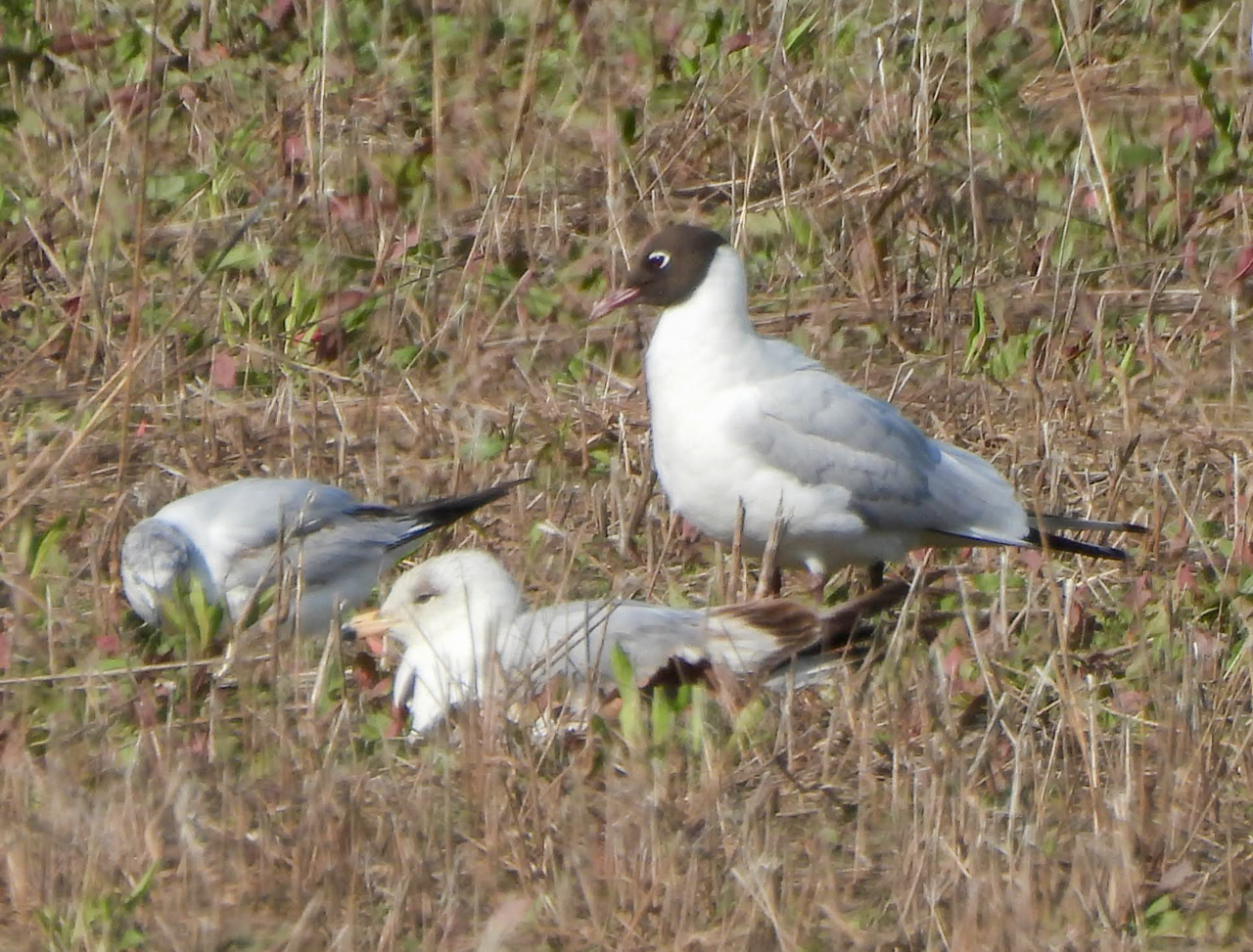
Black-headed Gull © Nancy Overholtz
A post-dinner excursion back to the park in the evening for the amusing display of the American Woodcock didn’t disappoint as one stood in full view on the lawn announcing itself periodically with its characteristic “Peent”, before beginning its flight display! The tour group also enjoyed stargazing and viewing Jupiter through the scope.
Day 4 – Point Pelee to Chatham
Another bright, early, and birdy day started with an excursion to West Beach inside Point Pelee. Our efforts were rewarded with Lesser Scaup, a brief Hooded Warbler, and our only Hermit Thrush of the trip.
Next up was a leisurely route around the Marsh Boardwalk which produced multiple Common Yellowthroats, Swamp Sparrows, a Black Tern, a squadron of seven American White Pelicans, and the continued company of Barn Swallows busily filtering up as many aerial insects hatching from the marsh. The surrounding land also proved fruitful with great views of a Clay-coloured Sparrow, Orchard Oriole, Least Flycatcher, American Redstart, and Veery.
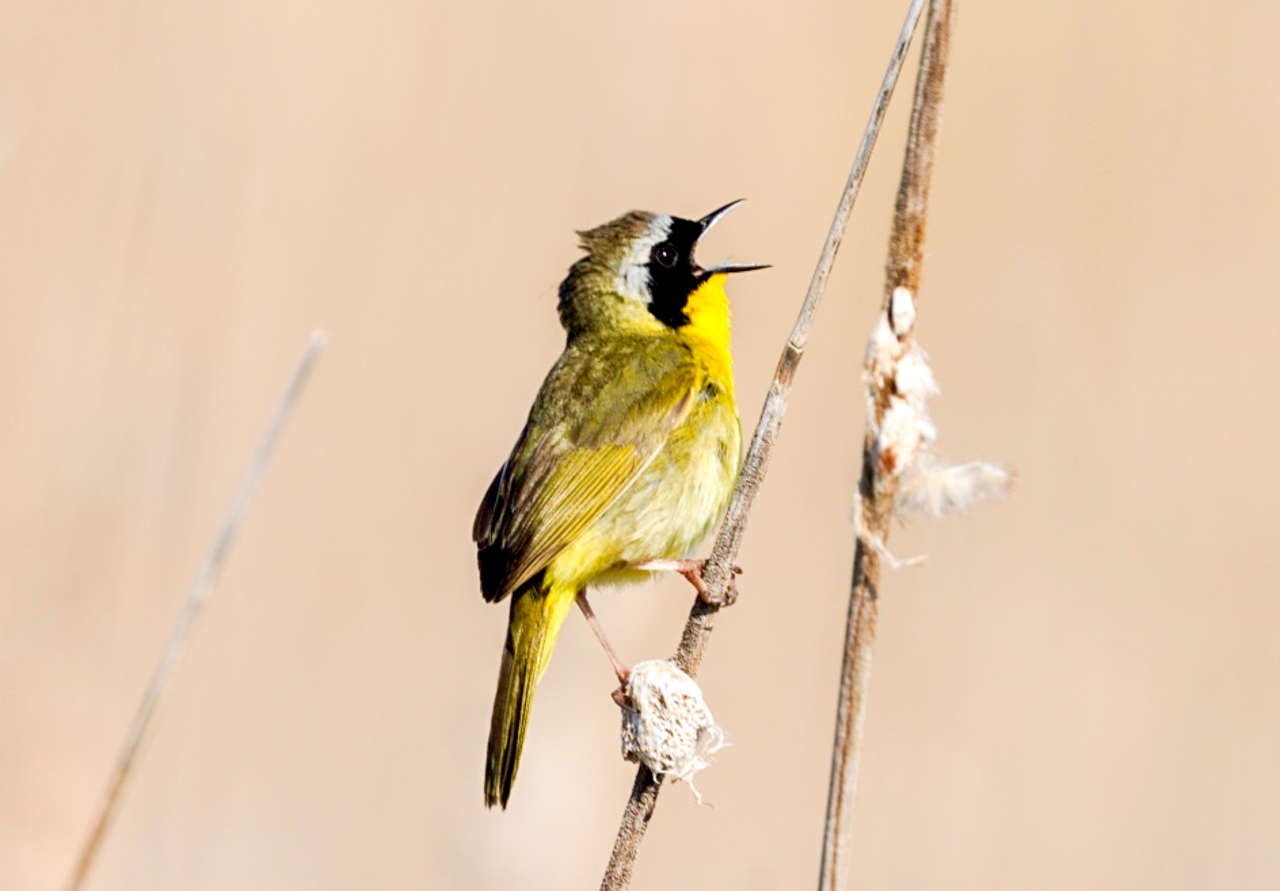
Common Yellowthroat © Bill Hebner
There are too many trails to cover in the park during a single day, but we selected the Cactus Trail as our next destination to connect with the singing Yellow-breasted Chats. This was immediately successful with bonus views of their display flights. A trickle of other May delights included Palm, Black-and-white, Chestnut-sided, and Black-throated Blue Warblers, Northern Waterthrush, and a pair of Red-bellied Woodpeckers excavating a dead tree.
Our final bird in the park was a roosting Eastern Screech-Owl enjoying the last of the afternoons rays of sunlight as it dozed in the entrance to its favoured cavity. We then travelled to Chatham where we prepped for our next day’s adventure.
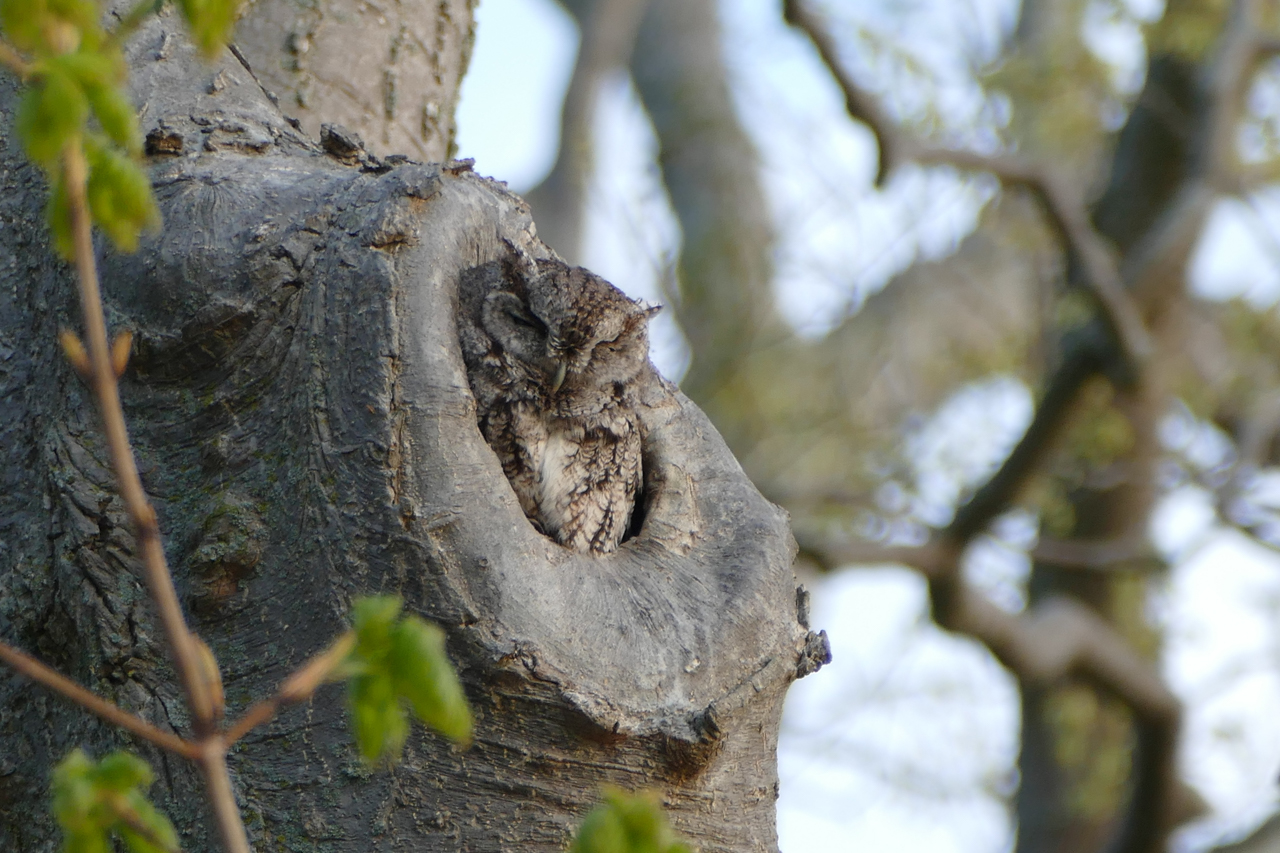
Eastern Screech-Owl © Rob and Teresa Brown
Day 5 – Rondeau Provincial Park
Back on the road, we headed eastward with Rondeau as our focal location for the day. First, a brief stop at the Blenheim Sewage Lagoons yielded singing Eastern Meadowlark, Savannah Sparrow, and Bobolinks utilizing the long grass fields.
We then travelled to Rondeau, where we enjoyed a Yellow-throated Vireo singing in the parking lot after being detected immediately on exiting the minibus, Wood Thrushes serenading our walk to the southern tip, a Pileated Woodpecker excavating numerous rectangular holes near the southern parking lot, and nest building Blue-gray Gnatcatchers (using cobwebs and lichen as building materials).
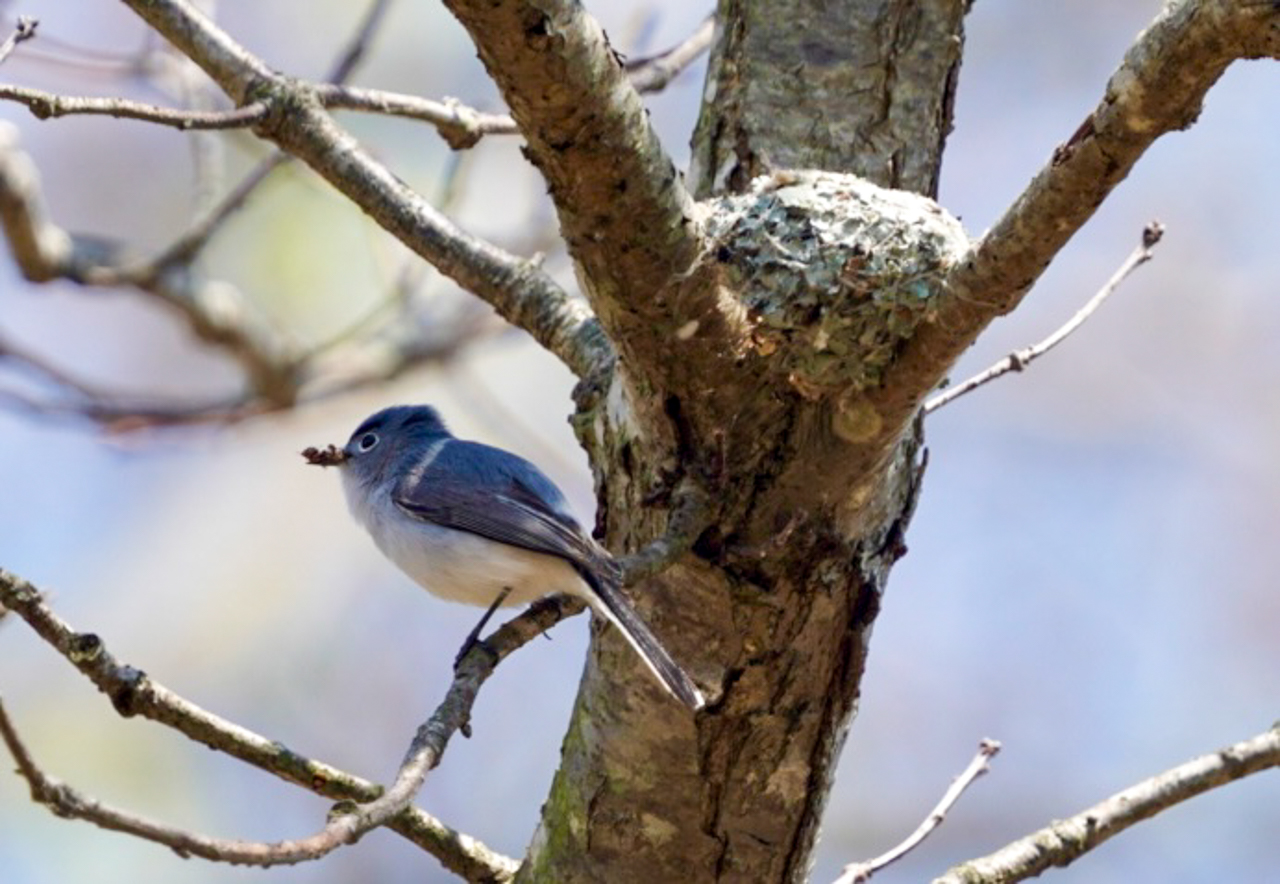
Blue-gray Gnatcatcher Nest © Bill Hebner
Following lunch at the Visitor Centre we made a quick stop at Bennet Avenue to connect with the Yellow-throated Warbler which had been reported recently. This proved fruitful with walk-away views of this surprisingly long-billed warbler. A brief smattering of rain did the trick with a sudden uptick in activity producing Cape May, Blackburnian, and even the greatly sought after Cerulean Warbler busily feeding in the canopy. Our journey continued that evening as we made our way to the Long Point region.
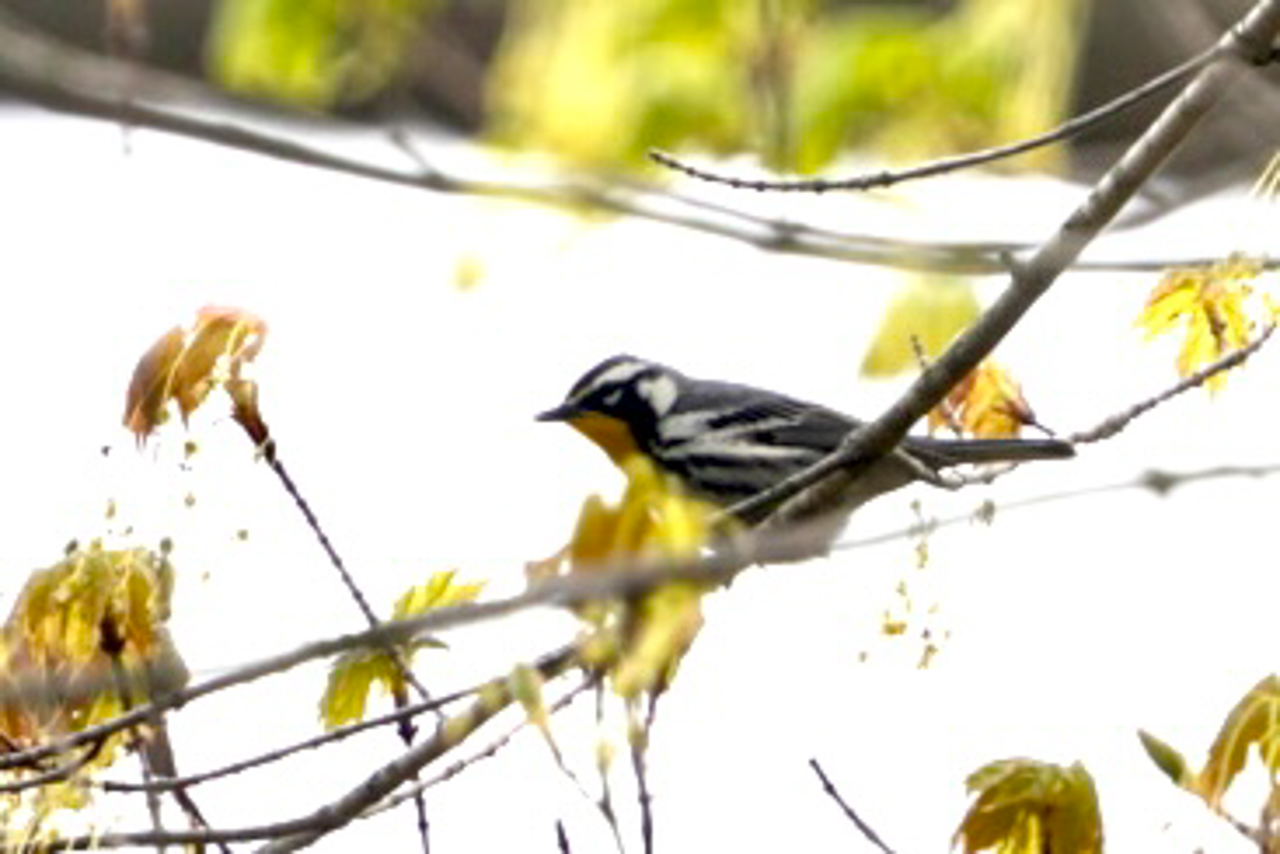
Yellow-throated Warbler © Bill Hebner
Day 6 – Long Point
Our day started with a hearty breakfast accompanied by five flyover Common Loons seen from the restaurant window. Most of our morning was spent at the Long Point Bird Observatory’s Old Cut research station. Here we enjoyed the delicate and skilled art of bird banding. The licensed banders and guide Samuel (Long Point Bird Observatory Coordinator) gave the group a demonstration of their work which offered a deep insight into the intricacies of plumage, body condition, biometrics, and a wealth of other valuable data. This also allowed us exceptional views of birds which are otherwise missed in the field, including moult limits on a Blue Jay, the emarginations on a Least Flycatcher, and the rufous on the crown of a Nashville Warbler. Other highlights at Old Cut included our first Ruby-throated Hummingbird of the trip, two Great Egrets loitering in the marsh, and Purple Martins busily nest building.
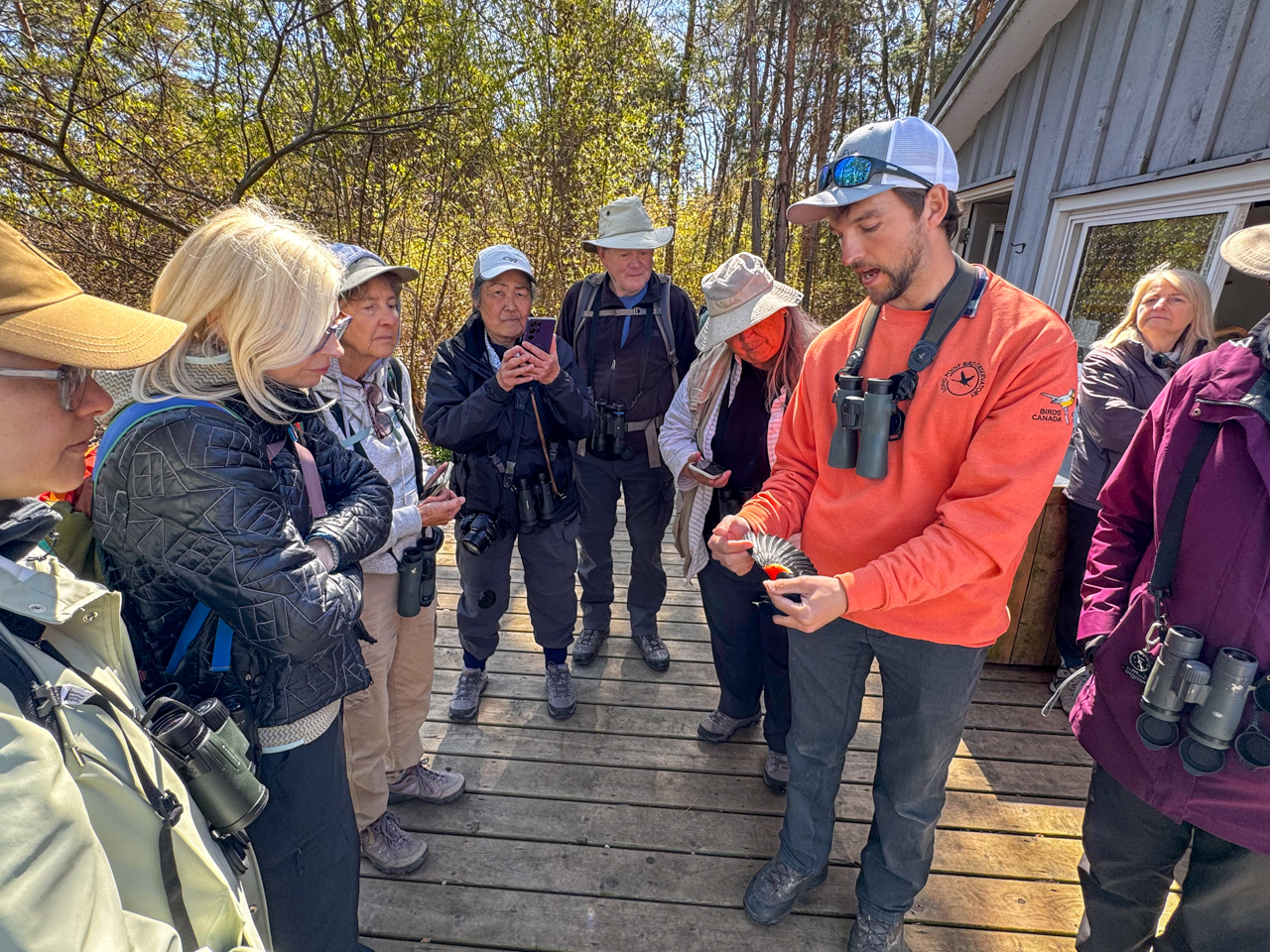
Bird banding demonstration
After lunch at Old Cut, we ventured to Backus Woods and in typical fashion, the highlight appeared right away in the parking lot, on this occasion two Blue-winged Warblers showing exceptionally well and enthusiastically singing their buzzing song. Other notables encountered on a casual walk around Backus were Great Crested Flycatcher, Eastern Towhee, Yellow-bellied Sapsucker, Rose-breasted Grosbeaks, and a dark morph Red-backed Salamander!
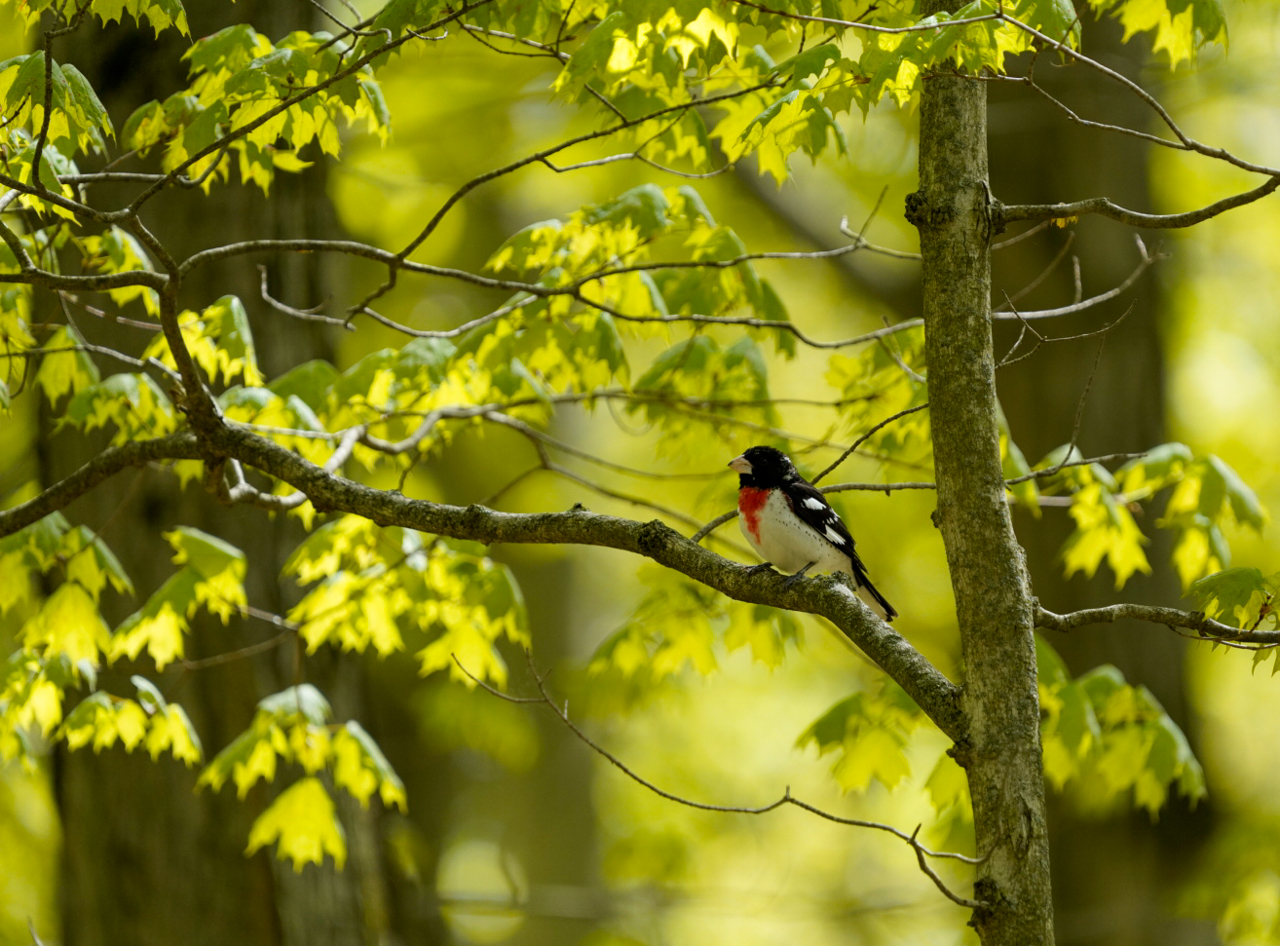
Rose-breasted Grosbeak © Bill Hebner
A quick stop at 1st Concession yielded the sprightly coloured plumes of a Western Cattle Egret patrolling the edge of a small roadside pond in search of invertebrates.
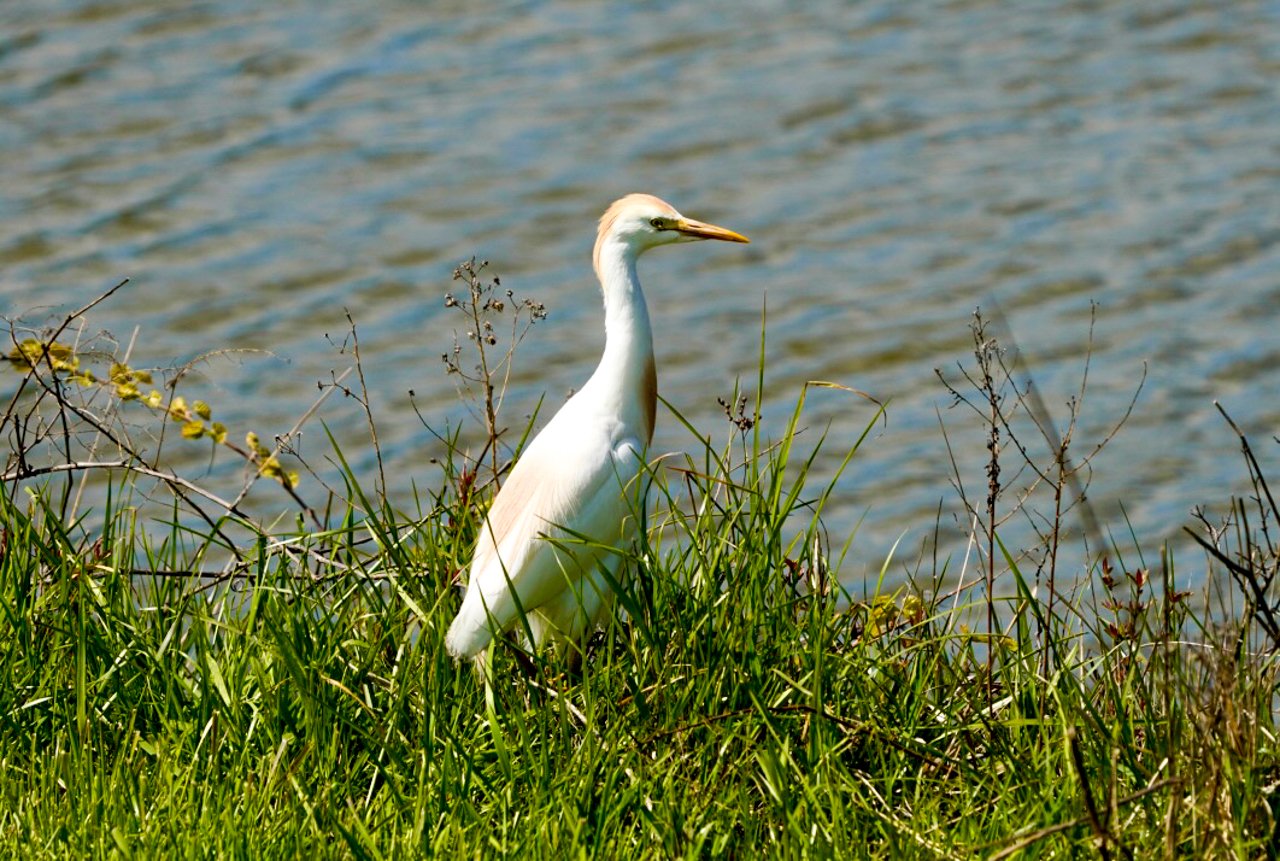
Western Cattle-Egret © Bill Hebner
For many, the day’s highlight came at the very end. At nightfall, we joined the Birds Canada aerial insectivore team in their efforts to capture and monitor the local breeding population of Eastern Whip-poor-will. This proved fruitful with a single young male captured and banded by guide Natasha (Birds Canada’s Ontario Programs Biologist), providing us with excellent views of its cryptic plumage, the comb on its claw for preening, and its long whiskers. All this was done whilst the researchers went about carefully gathering biometric data on the bird.
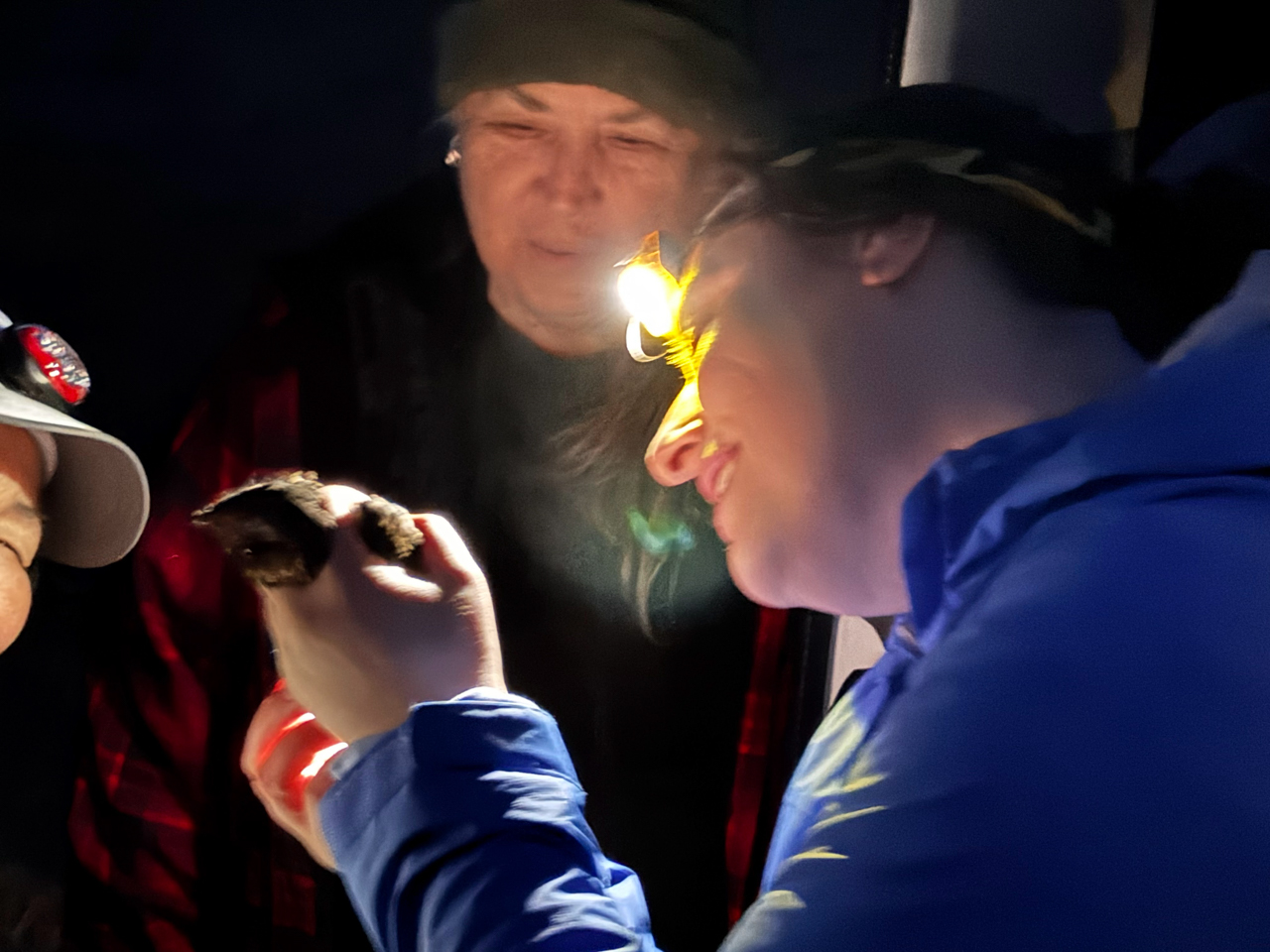
Eastern Whip-poor-will banding © Bill Hebner
Day 7 – Long Point
Following yesterday’s woodland focus, today the attention was turned to the grasslands. The tall prairies and oak-savannah alongside West ¼ Line Road offer excellent opportunities for grassland species due to ongoing restoration and maintenance from private landowners and nature-based organizations. Here, we enjoyed some showy Eastern Bluebirds singing from atop their nest boxes, great views of a Grasshopper Sparrow (typically much shier than would be presumed from the views we obtained), as well as Baltimore Orioles, Eastern Towhees, and Field Sparrows. Further on in the adjacent woodlot, we encountered singing Ovenbird, Pine Warbler, and Hooded Warblers (a local speciality).
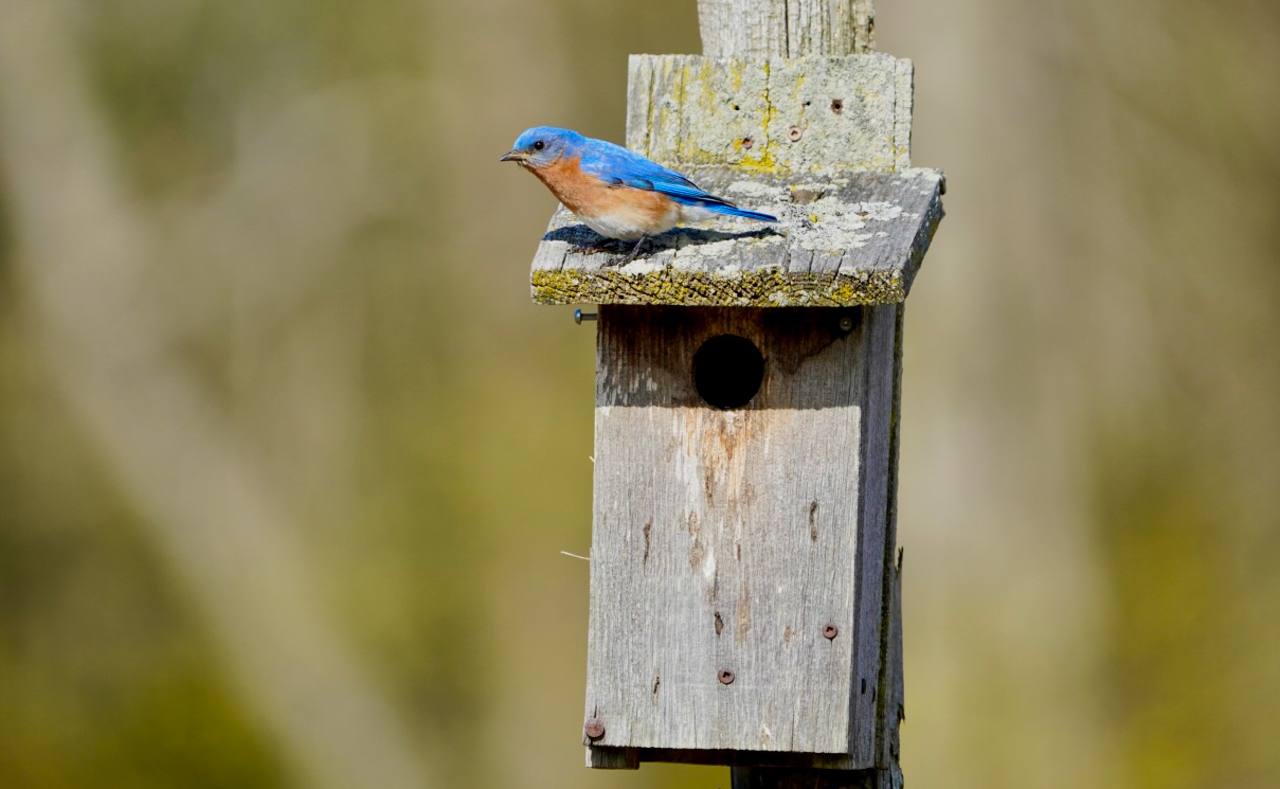
Eastern Bluebird © Bill Hebner
Our lunch break was enjoyed in the New Long Point Provincial Park with good birds within a short distance all around us. A relaxed walk around the park yielded lovely views of a Black-throated Blue Warbler, a stunning male Magnolia Warbler, Northern Flickers chasing one another from tree to tree, and a flyby Green Heron.
As dusk drew nearer, we headed for Big Creek Marsh. At the viewing platform we watched as the sun gradually approached the horizon, the Sandhill Cranes stealthily patrolled the marsh, and a Common Gallinule swam across the creek. A little further down the road at the Port Rowan Marina, we enjoyed spectacular views of the local breeding pair of Osprey – one parent diligently incubating on the nest and the other eating a fish for dinner.
Day 8 – Long Point to Toronto
All too soon, we had reached the final full day of our tour. However, one final treat lay in store – a trip to the remote Tip of Long Point! Reaching the Tip is no mean feat and involved an hour-long boat ride before setting foot at our destination.
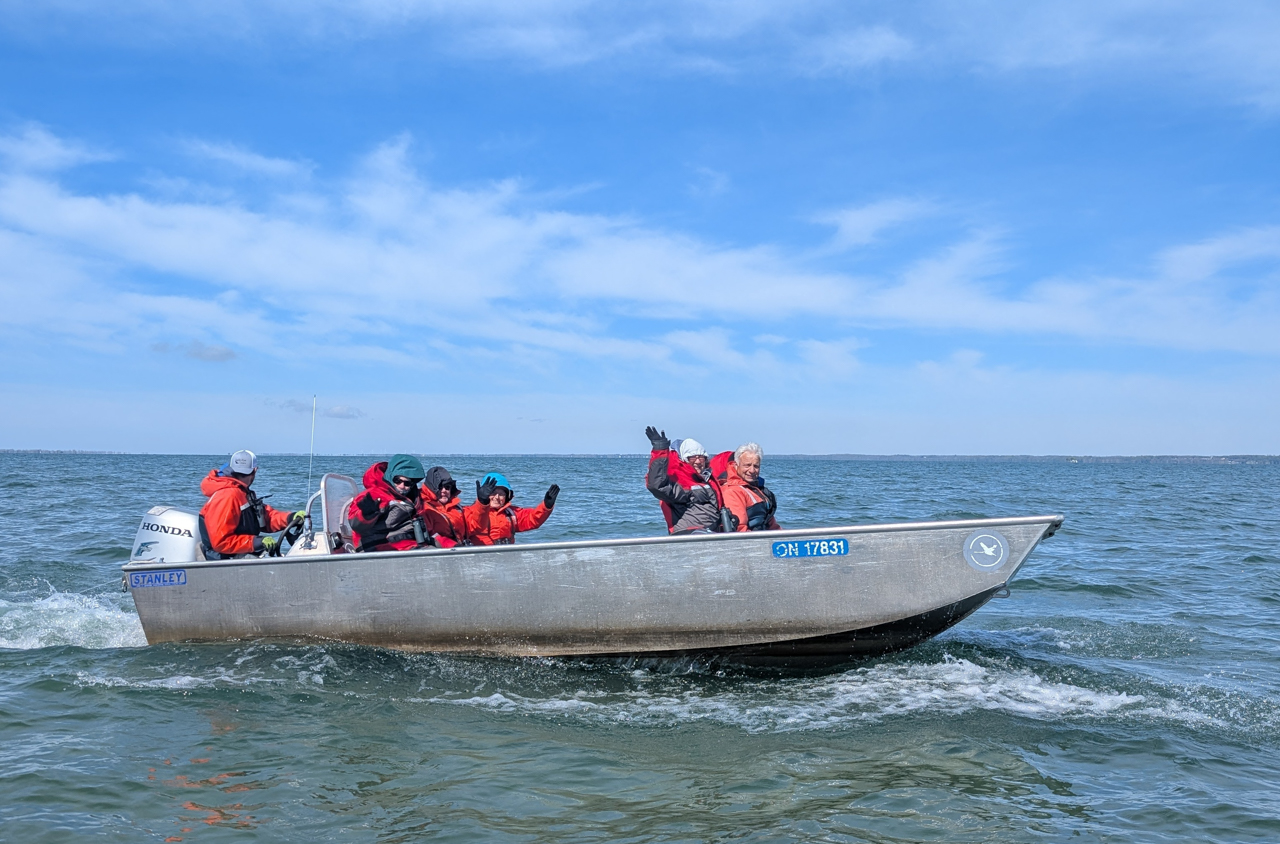
Boat trip © Natasha Barlow
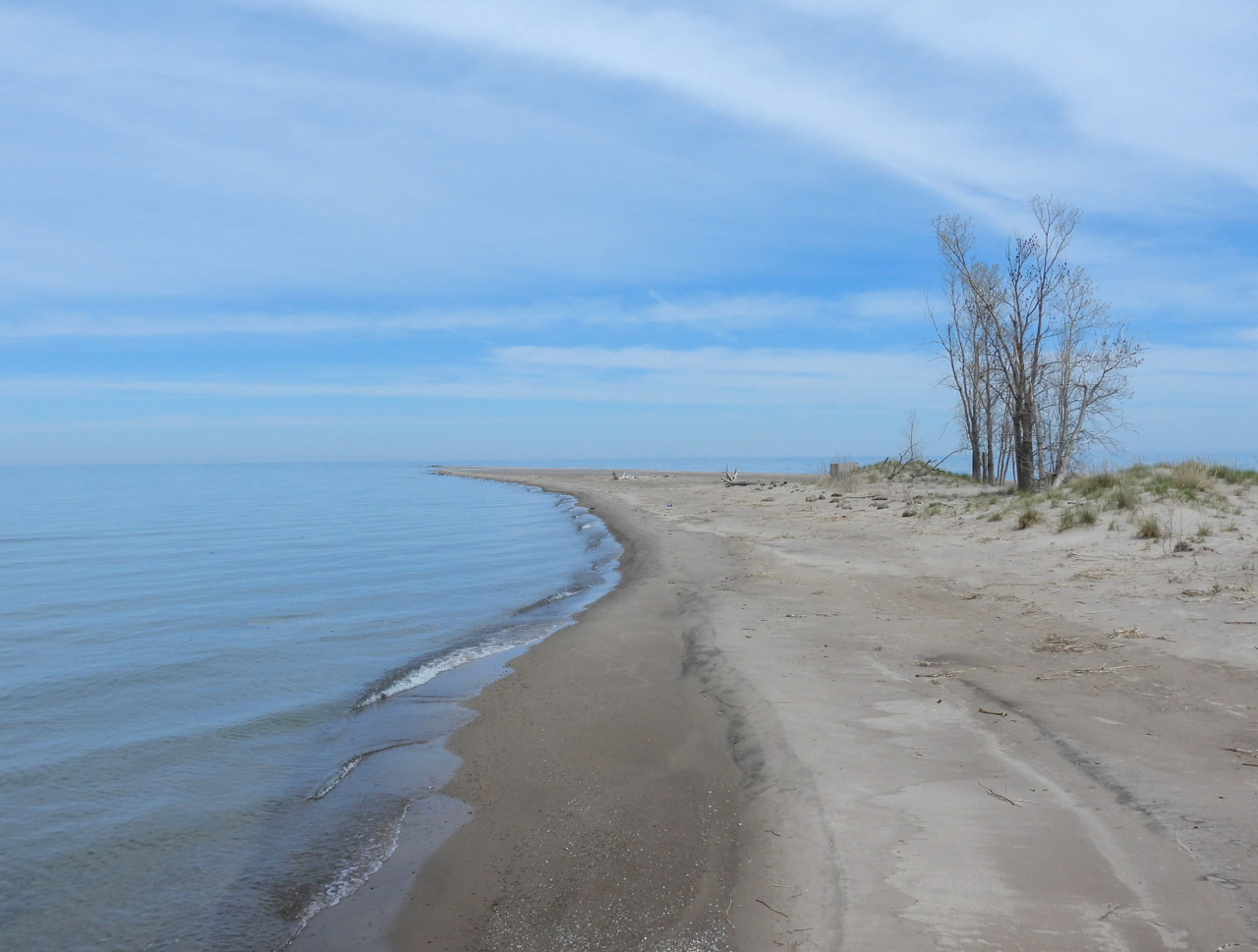
Long Point tip © Nancy Overholtz
The effort was soon rewarded with views across a landscape dominated by sand, lake, and sky. Here too, we gained an insight into the workings of the Long Point Bird Observatory’s Tip research station. Highlights on our adventure around this special landscape included a singing Northern Mockingbird, White-winged Scoter, Palm Warblers, Bank Swallows, and Red-headed Woodpecker. Once again, the ongoing bird banding operations provided us in the hand views of Ruby-throated Hummingbird, Field Sparrow, and Baltimore Oriole to name a few. All too soon, our time at the Tip was ending, lunch was packed up, and we made our way back to the boats, not before we had a final glimpse of the Tip smothered in gulls, terns, and shorebirds, most notably Bonaparte’s Gulls, Dunlin, and a Spotted Sandpiper.
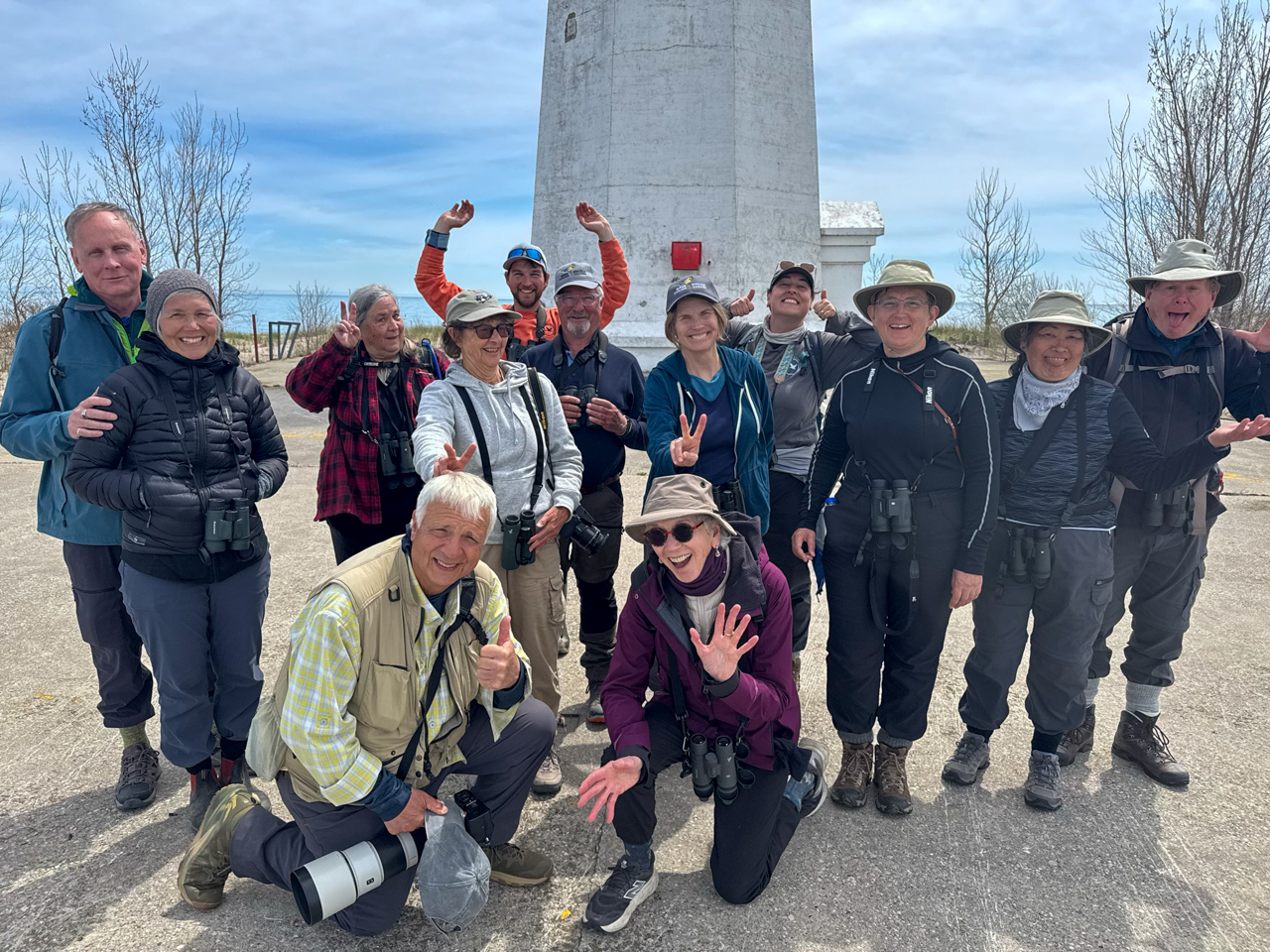
Our group at Lighthouse © Matthew Fuirst
On arrival back at Old Cut, there was one final surprise waiting for us – a roosting Long-eared Owl quietly perched near the canopy of a tall pine as it glared down at us from up high. A fantastic way to end our birding journey!
After heading back to Toronto for the evening, our group enjoyed dinner together and reminisced about highlights of the trip.
Day 9 – Toronto
After breakfast, guests and guides departed the hotel.
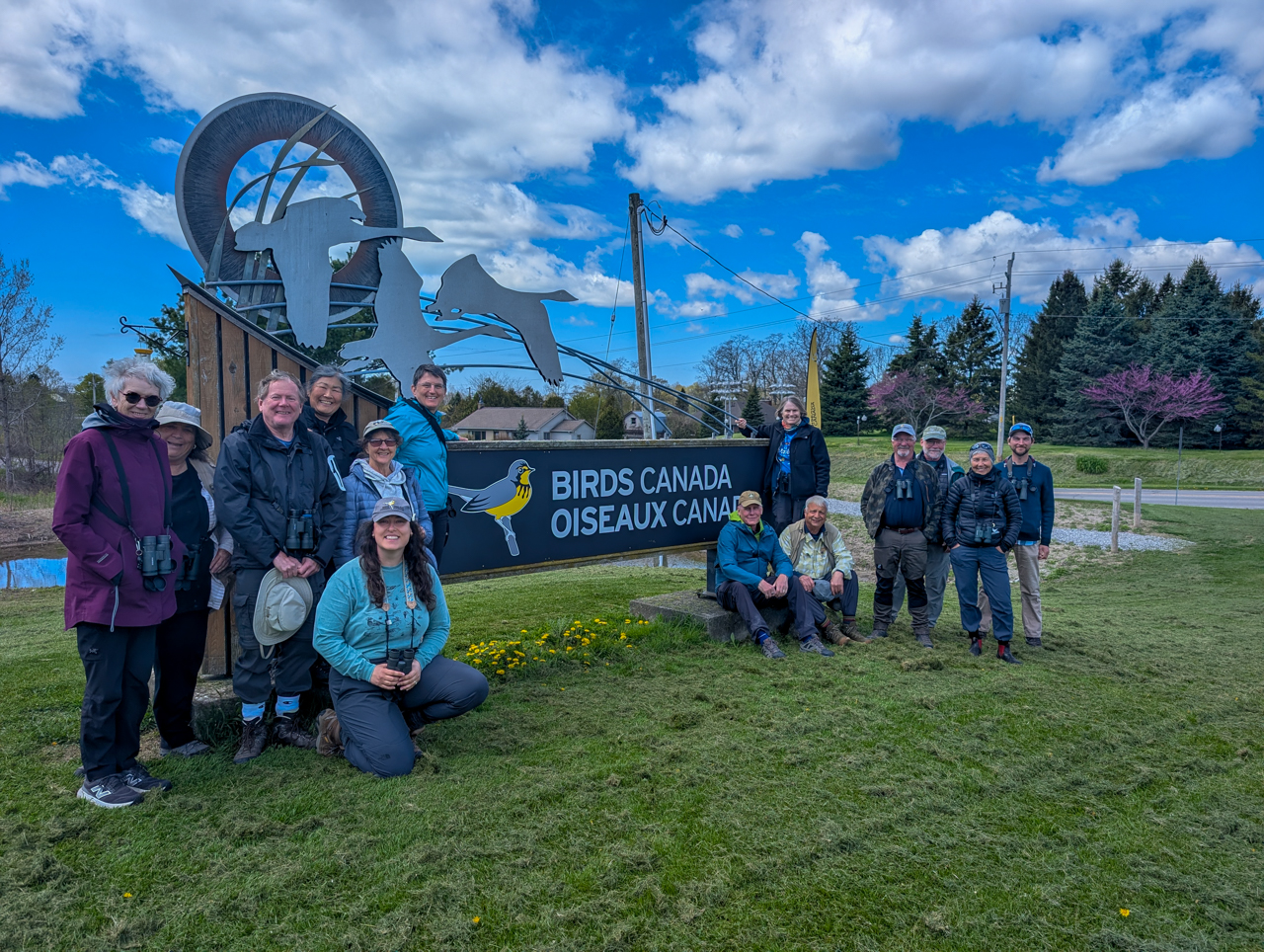
Our group, Birds Canada © Natasha Barlow