High Arctic & Northwest Territories Trip Report (July 3 – 13, 2026)
On July 3rd, our group gathered in a little suburb outside Edmonton for a 10-day adventure where we would travel more than 2000 kilometer’s in three different biomes, from the prairies to the boreal forest and the arctic tundra. During that time we would behold the true diversity of Canada’s wildlife and the challenges it faces amidst climate disruptions. We would also take a peak at life beyond the arctic circle and behold its inhabitant’s resilience at a time when this remote territory seems to be moving ever closer to the centre of the world’s concerns.
Our day in the prairies started out in the vicinity of Beaverhill Lake, east of Edmonton. This area is a mosaic of protected and managed wetlands, meadows and woodlands designated as an Important Bird Area (IBA) by BirdLife International.
We set foot outside the bus, anxious to see if the bugs would eat us alive, as rumors of swarms caused by the recent floods had been circulating. Our attention was quickly diverted by the sights and sounds of the prairie. Close to the road, we saw Common Yellowthroats, Eastern Kingbirds and the best possible views at the skulky Sedge Wren. While scanning the background for the dozens of Blue-winged Teals, Northern Pintails, White-faced Ibises and Pelicans flying around, a Black-billed Cuckoo began singing its low pitched, repetitive song. This species is rare in the region and Beaverhill Lake is at the very easternmost point of its range, which made that observation all the more interesting.
Reaching the marshes and flooded fields down the road, we saw iconic birds of the prairies such as Yellow-headed Blackbirds, Eared Grebes, Avocets, Black-necked Stilts and heard a few Nelson’s Sparrows. Bobolinks were also displaying and beautifully singing in the grazing fields right in front of us.
A little bit further west, we made a quick stop in Francis Point to look for Sprague’s Pipit. This highly declining species is the only other Pipit species commonly found on our continent apart from the American Pipit and has one of the most beautiful songs as well. We were lucky to hear a few sing right away and have quick looks at them flying around in the fields. Among the heavily exploited landscape of the Albertan lowlands, it was a true delight to see that safe havens persist through the dedication of a few bird-loving landowners and conservationists.
We then made our way to Elk Island National Park, a UNESCO designated Biosphere Reserve east of Edmonton. After only a few minutes driving in the park, we saw the stars of the show here: Wood Bisons! These massive bovines were brought here to save the species from extinction over a century ago and are still thriving in this protected area. For some of us, it was our first time seeing wild bison, and it felt like meeting a movie star we’d only seen on TV since childhood.
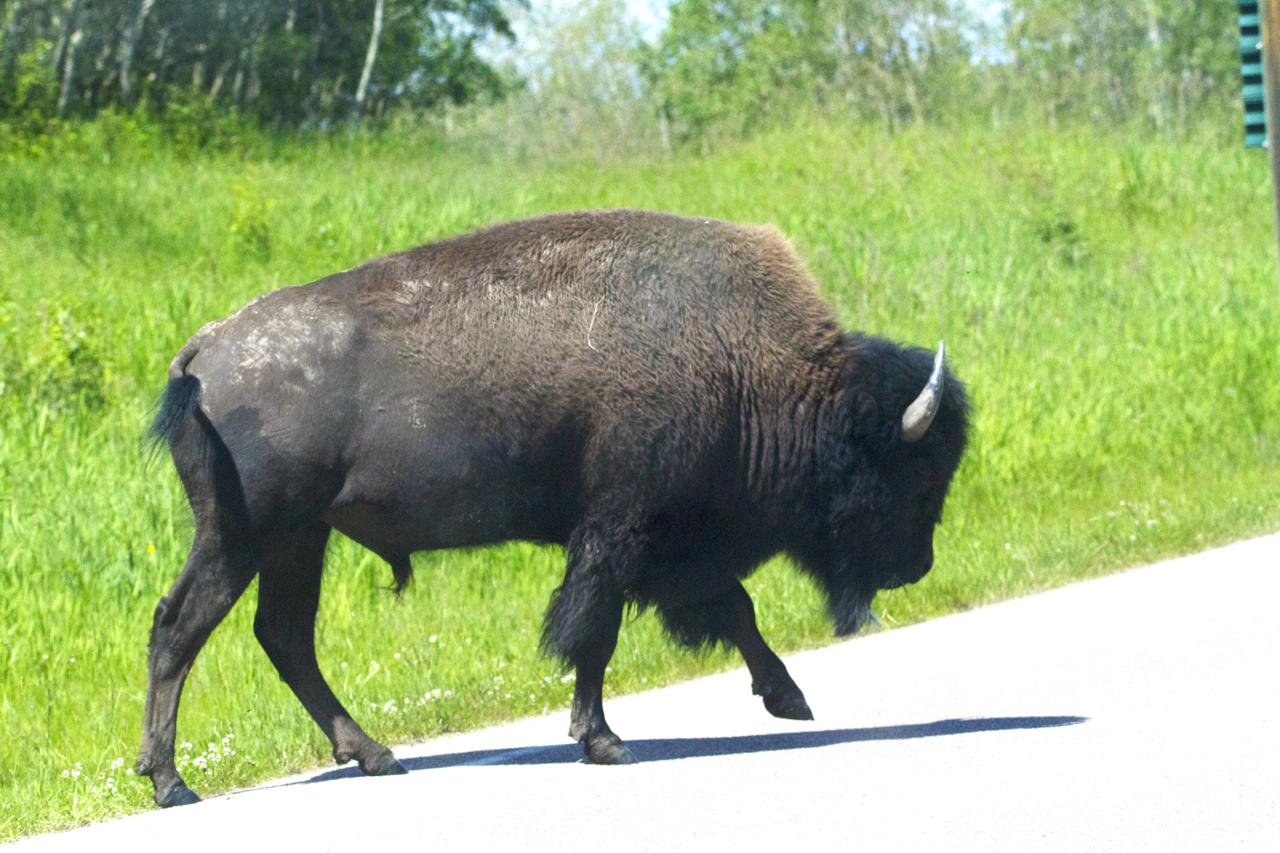
Bison © Arnaud Valade
Elk Island is also an interesting spot for birds, with very diverse habitat in the transition between boreal and more temperate forests and prairies. We noticed a lot of the trees were almost leafless and quickly realized this was the work of Tent Caterpillars. Thousands of cocoons covered the denuded trees and this allowed us to get good looks at a Red-eyed Vireo that seemed unbothered by this invasion. We made our way around a little lake where we saw our first Red-necked Grebes with very young chicks.
The next morning, we took a flight to Yellowknife and upon landing, we saw the thick layer of smoke from the fires raging in the forests further west. Even though the horizon was still a bit hazy, the smoke cleared enough that we were able to go out to Niven Lake: one of the best birding spots around Yellowknife, which was right outside our hotel.
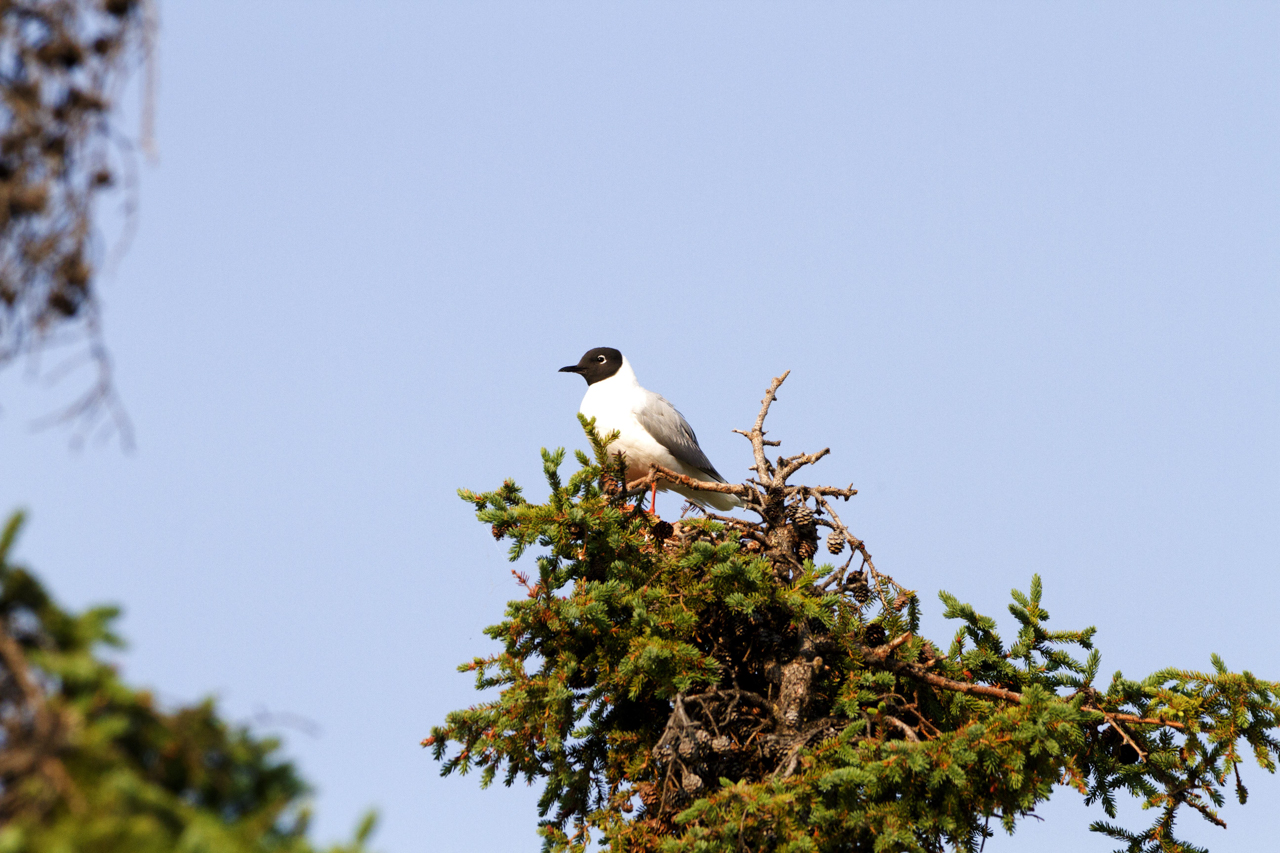
Bonapartes Gull © Arnaud Valade
On the trail around this little lake, we were surrounded right away by nesting Bonaparte’s Gulls. These are the true rulers here and the landscape makes this compact gull species look pretty big and impressive. It is a privilege to see these birds on their breeding grounds, after knowing them only as migrants. They weren’t the only ones breeding on the lake; we got to see Horned Grebes feeding their chicks from very close and a few Canvasback family groups with adorable yellow ducklings with telltale sloppy foreheads.
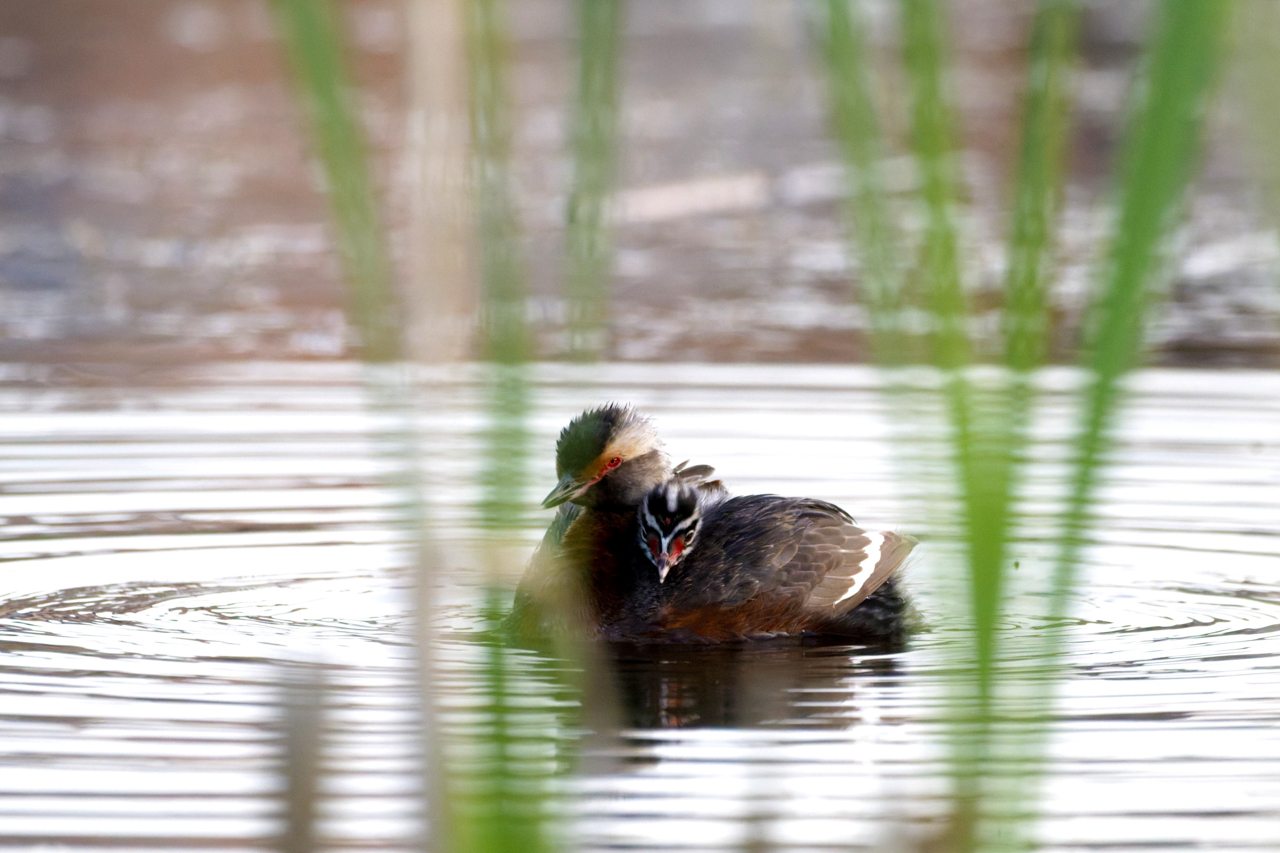
Horned Grebe © Arnaud Valade
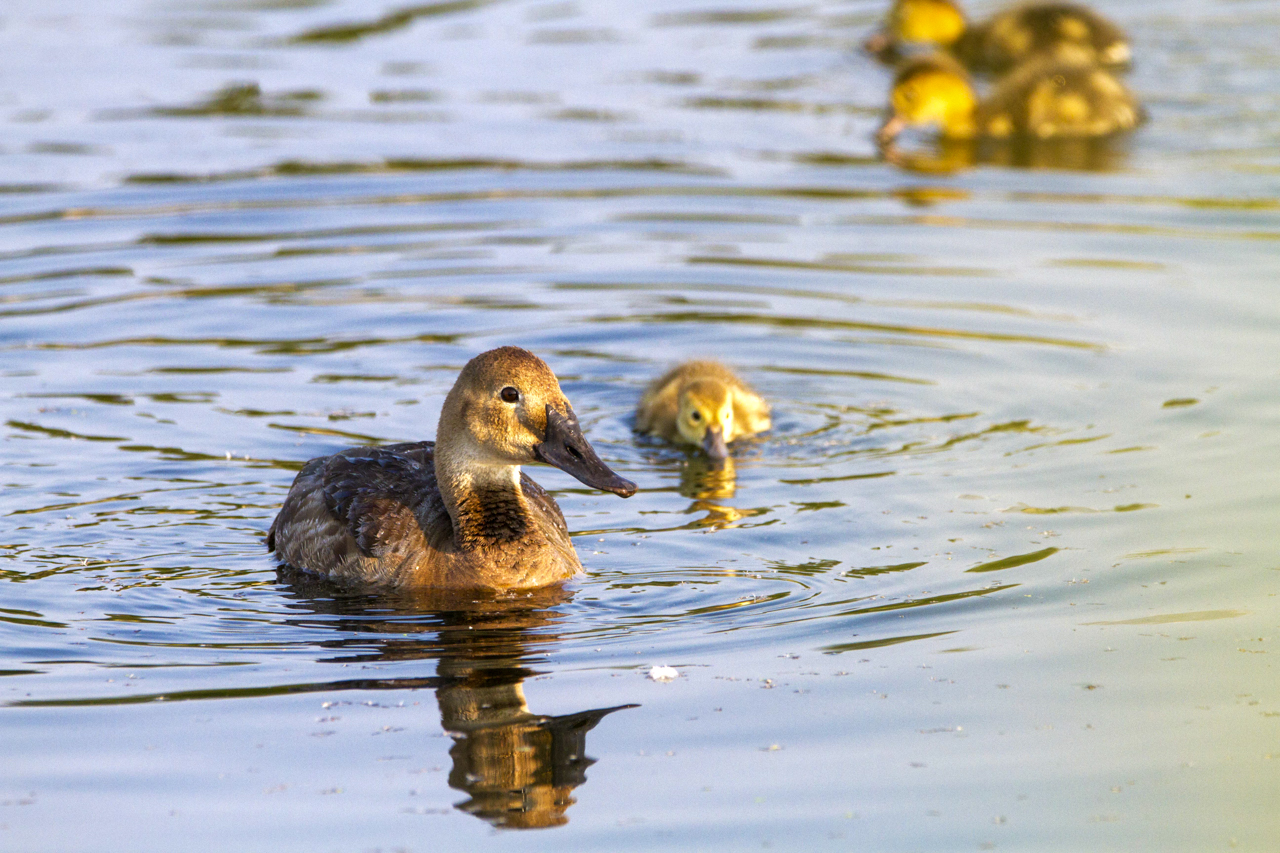
Canvasback © Arnaud Valade
The day ended with a very instructive visit of the Prince of Wales Northern Heritage Center, a natural and cultural history museum of northern Canada that heralded our upcoming visit of the tundra.
On our second day, in the woodlands and riverbanks around Yellowknife, we saw a handful of boreal specialists such as Swainson’s Thrushes, Canada Jays and Orange-crowned warblers. We also had good looks at a very cooperative Le Conte’s Sparrow, which showed us its beautiful buff colours and stubby bill.
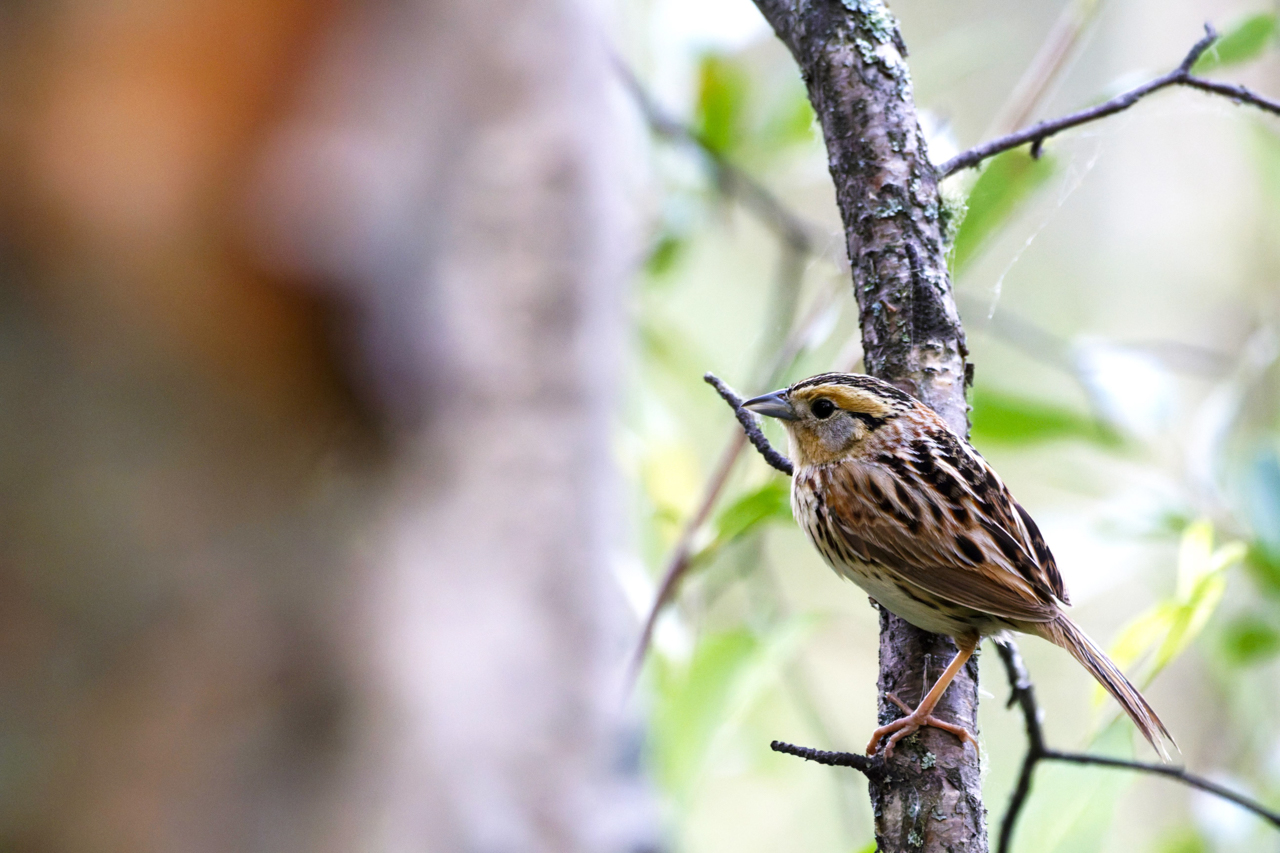
Leconte’s Sparrow © Arnaud Valade
We then headed to Willow Flats, where we birded along the shores of the Great Slave Lake, the deepest lake in North America at 614m, and one of the largest in Canada. In this coastal habitat, the birds were very diverse and easy to see in the shorter vegetation. Highlights were a raft of Surf Scoters with a lone Black Scoter among them, an array of gulls, including Short-billed gulls, California Gulls and a few Arctic Terns. We also had great views of sparrows of all sorts, a lot of them with fledglings fluttering about in the vegetation.
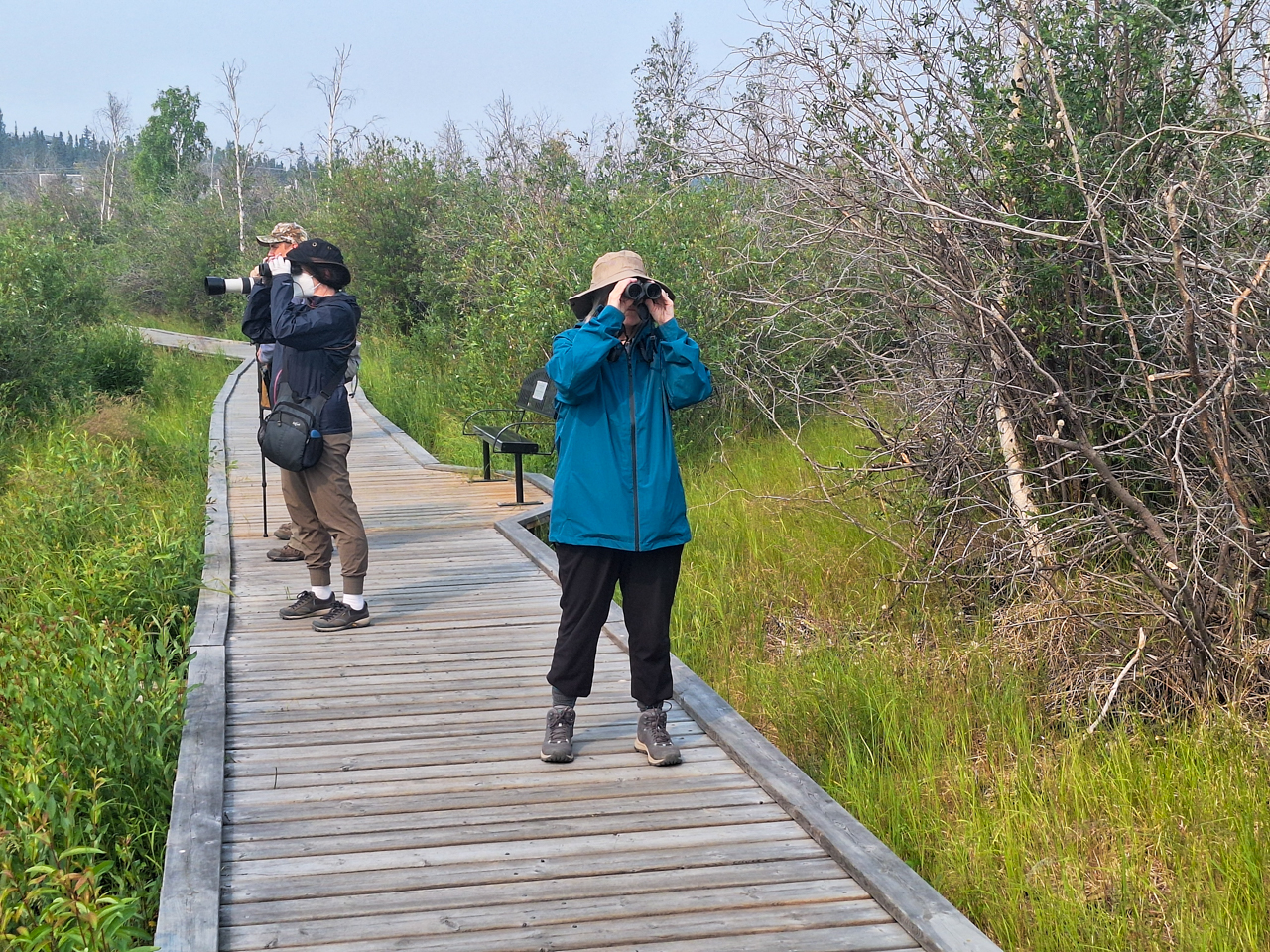
Willow Flats © Aaron Brisebois
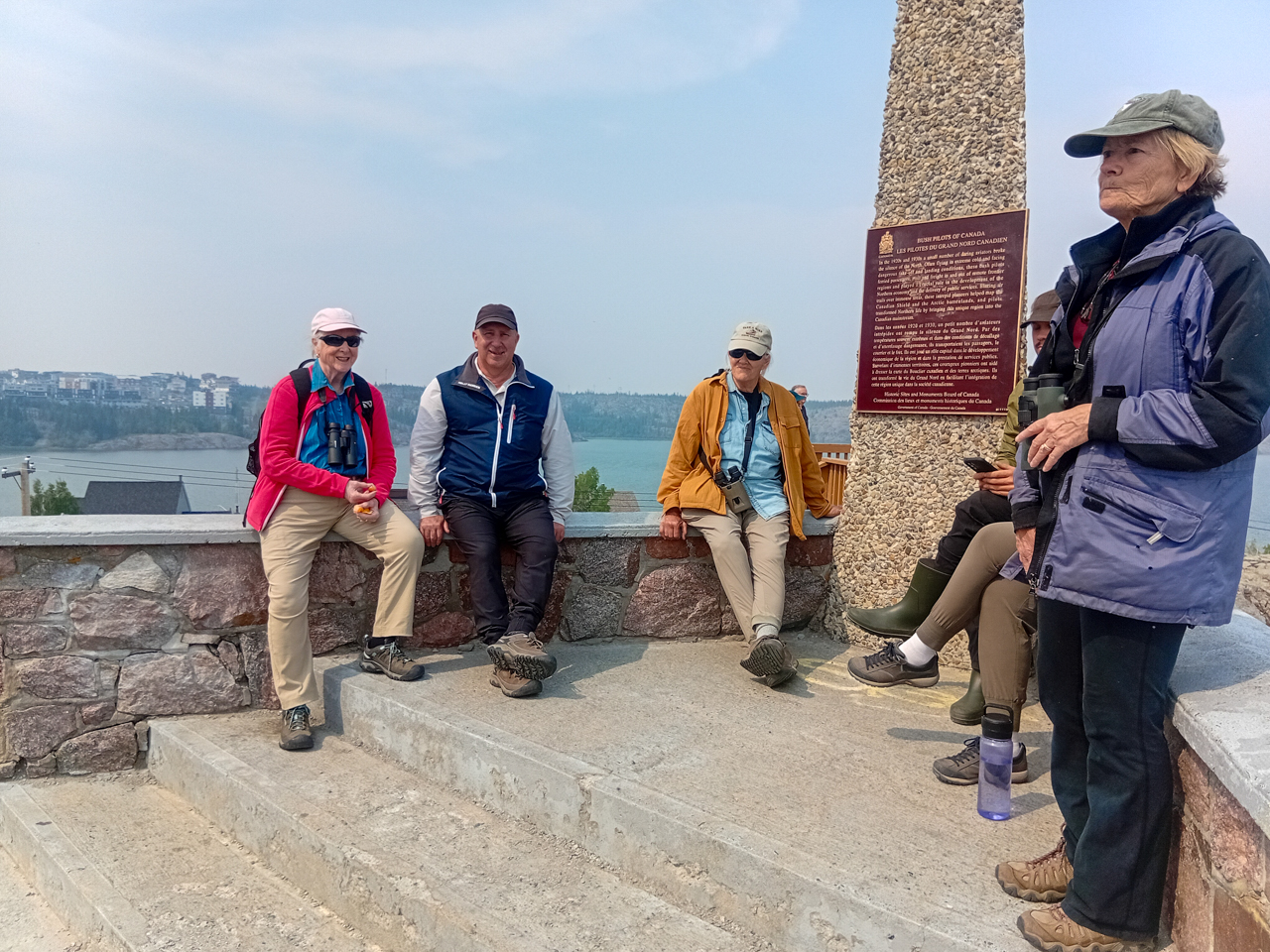
YellowKnife © Arnaud Valade
After another quick visit to Niven Lake, we took a flight to our final destination: Cambridge Bay Nunavut.
As soon the plane dove below the clouds, the scenery was immediately striking. The waters of the Northwest Passage were still partly frozen, the seemingly infinite tundra landscape of Victoria Island and the scattered infrastructures that look like they’re straight out of a science fiction movie. On the little stretch of road from the small airport leading into town, most of us were speechless, finally witnessing the arctic with our own eyes, as we passed ponds with pairs of Tundra Swans and Pacific Loons swimming calmly.
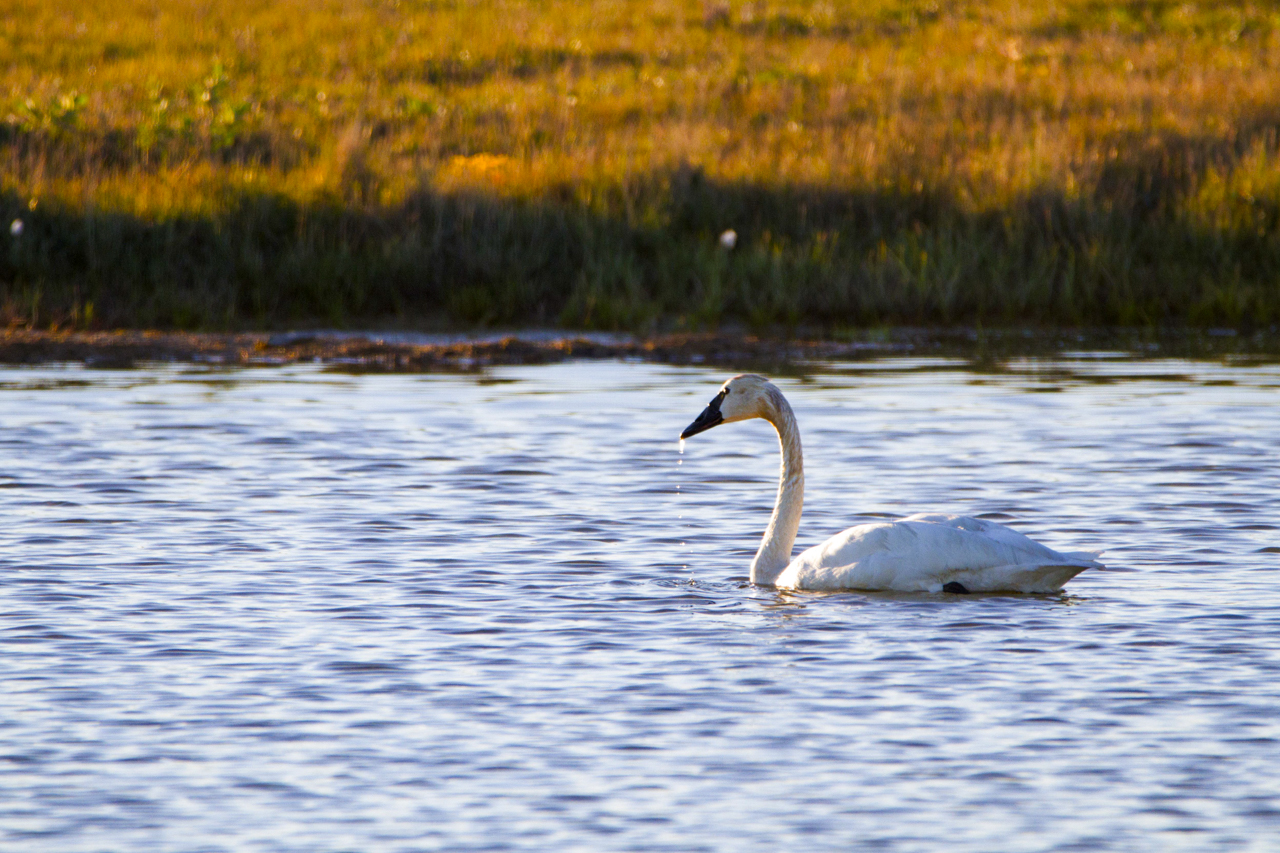
Tundra Swan © Arnaud Valade
We were all very anxious to go explore and soon we had our first encounter with arguably the most beautiful duck in the world, the King Eider. This large sea duck nests in the tundra of western Canada and Alaska. As soon as the eggs hatch, the males go to sea, so we were lucky to catch the last few of them remaining inland. We lingered there for a while, admiring their silver neck and head, lime green cheeks and bright orange knob, almost forgetting the hundreds of Red-Necked Phalaropes, Sandhill Cranes and the Glaucous and Sabine’s Gulls flying overhead.
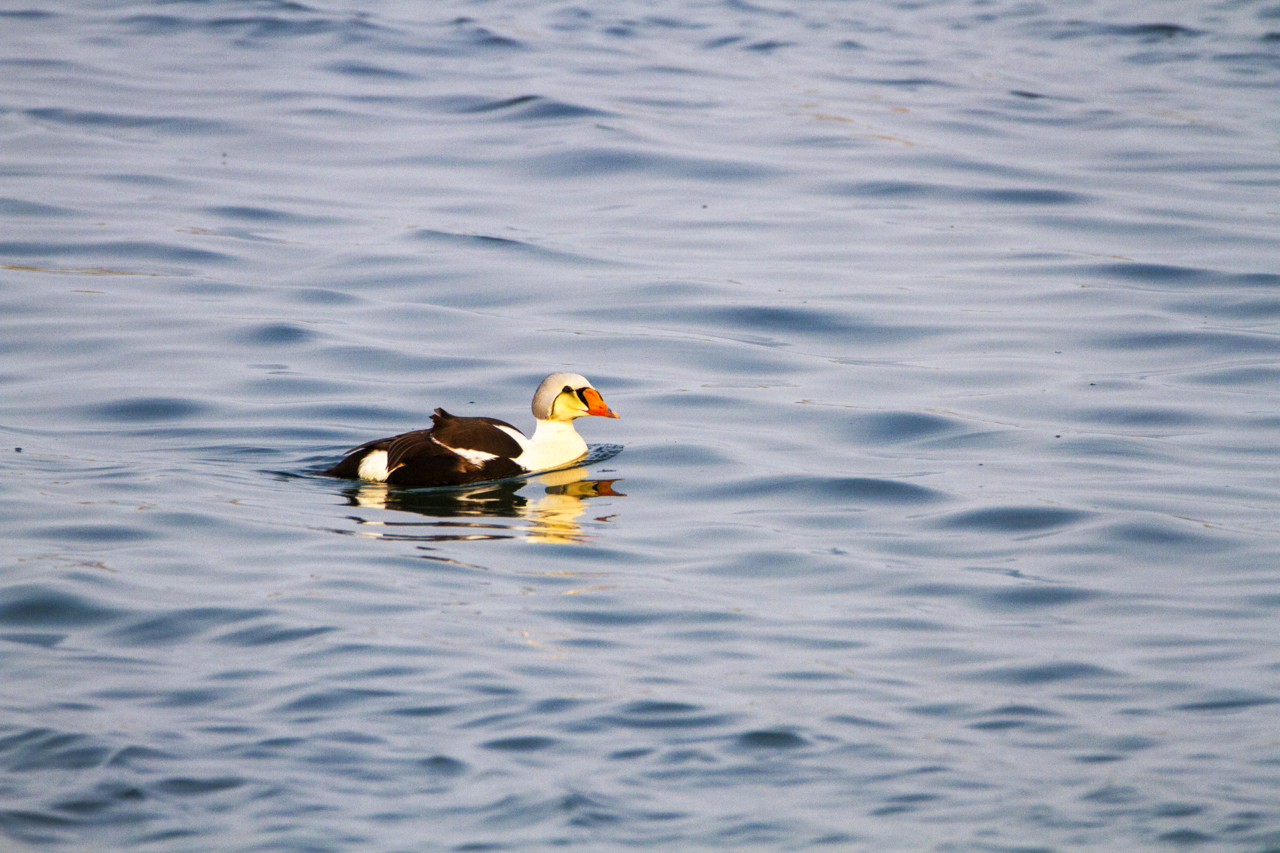
King Eider © Arnaud Valade
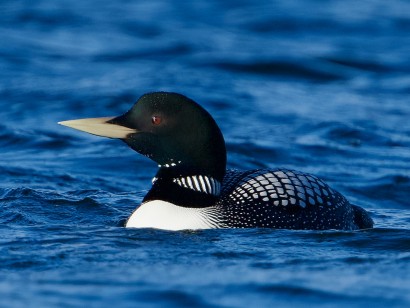
We then made our way on a road leading to the town’s main water source, a beautiful lake hosting a pair of Yellow-billed Loons. They seemed absent upon our arrival, and anxiety started to grow as we scanned every inch of the lake.
Making our way on top of a small hill, the anxiety turned to excitement when we found three adults emerging from a cove far away. This close cousin to the Common Loon is very much a regional speciality and is high on the short list of many birders around the world. To our great delight, the loons started getting closer and closer. As if this was planned by some kind of force of nature, one of the loons proceeded to display right in front of our group, singing and standing upright in the water to show its stature.
Everyone from our group was in shock, the only words coming out of our mouths were exclamations and gasps. The scene ended with one of the loons diving for a few seconds only to come out with a fish half its size to comically gulp it down in a fashion ‘’only known to Homer Simpson’’ as one of the guests said.
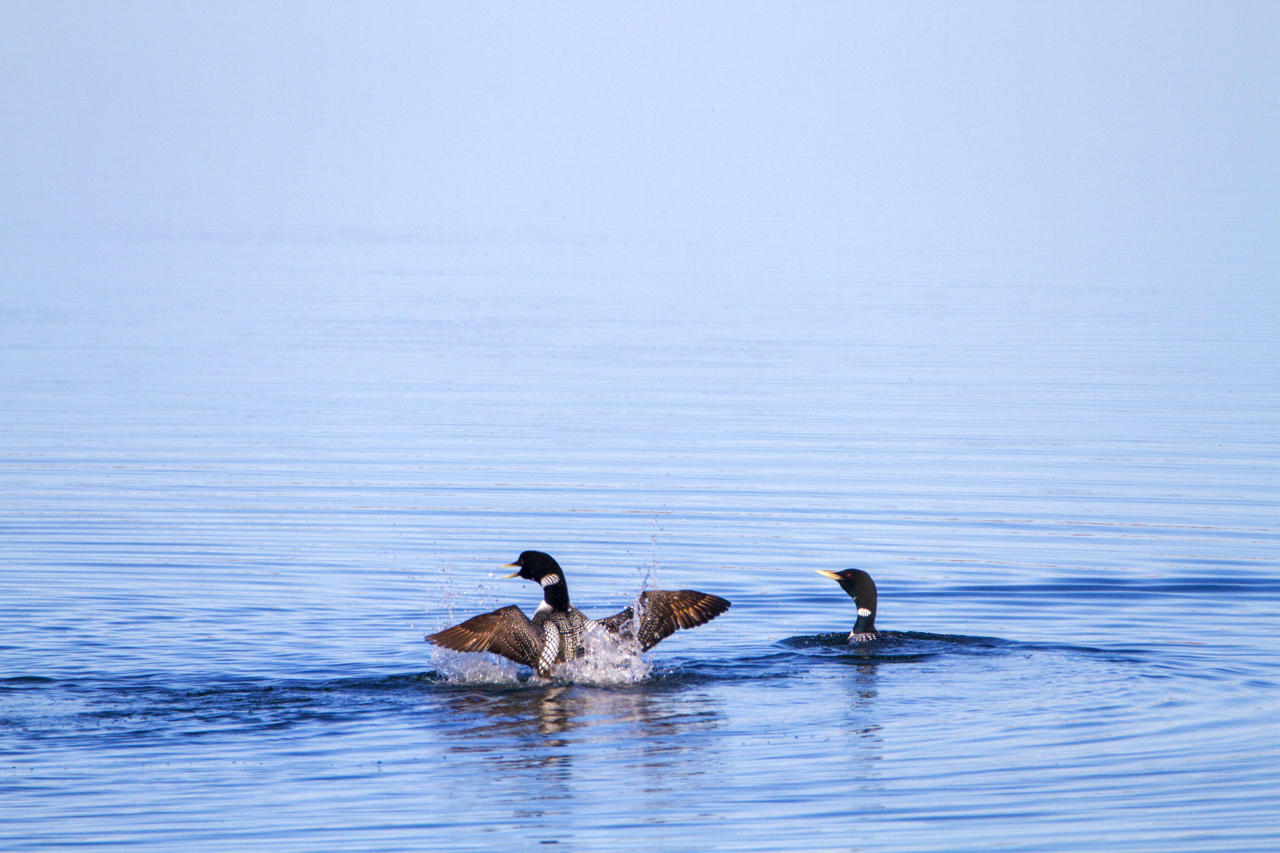
Yellow-billed Loons © Arnaud Valade
We spent the next five days roaming the few accessible roads of Victoria Island in our vans. The sun never sets at these latitudes in the heart of summer and the size and beauty of the scenery is hypnotic, inviting you to wander for hours.
We quickly realised it was baby season here on Victoria Island. Everywhere we went, the calls of agitated parents of Lapland Longspurs, Semipalmated, Baird’s and Stilt Sandpipers as well as Pipits and Horned Larks were being heard. It wasn’t too hard to admire adorable fledglings of all sorts coming in and out of the arctic willow bushes or a freshly fledged Longspur following its mother around. These sightings felt truly special, as this is one of the only easily accessible places on earth where you can casually experience these birds on breeding grounds.
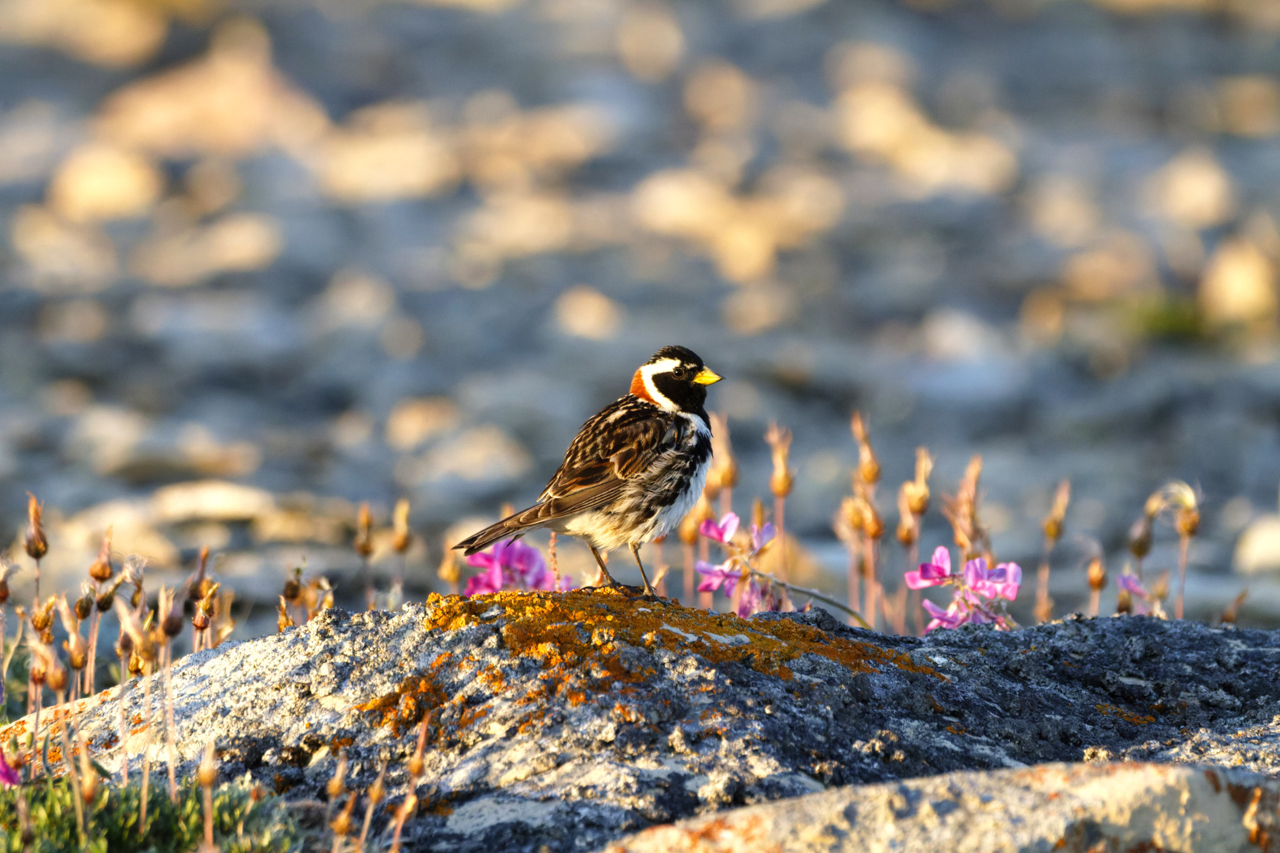
Lapland Longspur © Arnaud Valade
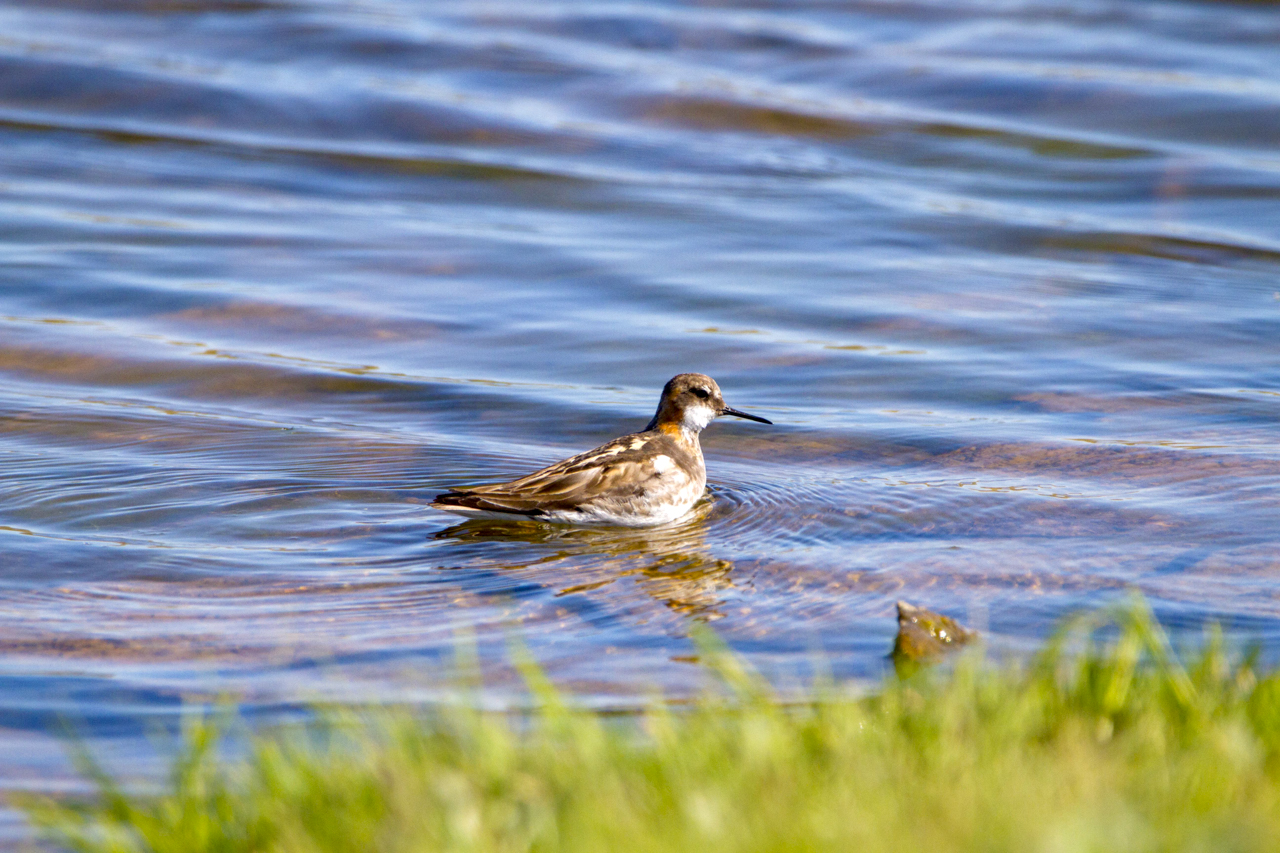
Red-Necked Phalarope © Arnaud Valade
At dinner, we were hosted by the great people of the Arctic Island Lodge who greeted us with a warm welcome and shared stories of life in the north.
On our 3rd day we went to the Arctic ocean by the road west of Cambridge Bay. This road is lined with a few fishing cabins and houses and is a little busier than the others. That does not stop bird activity though. It was there that we saw our first Long-tailed and Parasitic Jaegers, birds we typically know as pelagic kleptoparasites. In the tundra, they become mostly terrestrial, hunting lemmings and voles instead.
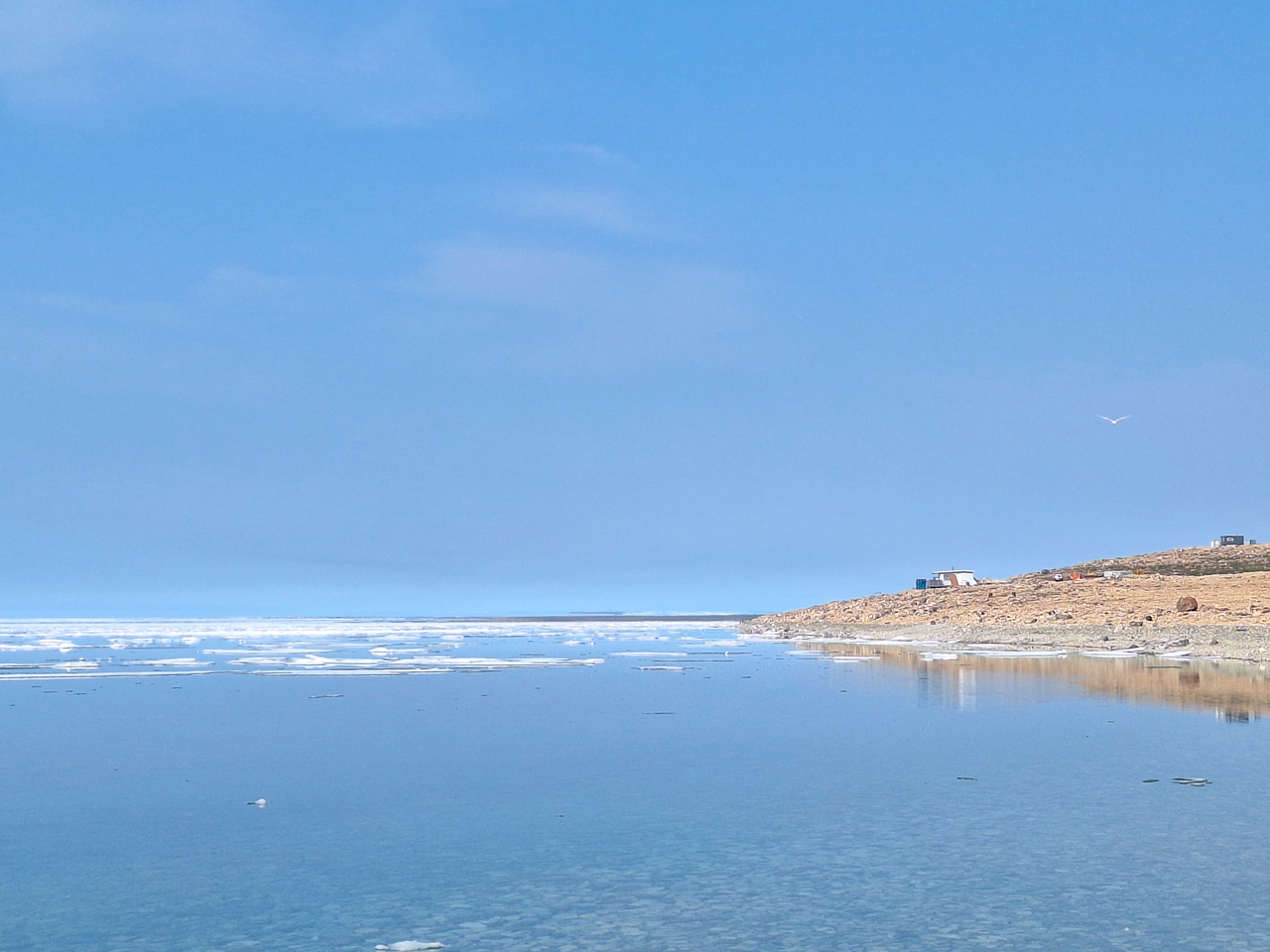
The coast near Cambridge Bay © Aaron Brisebois
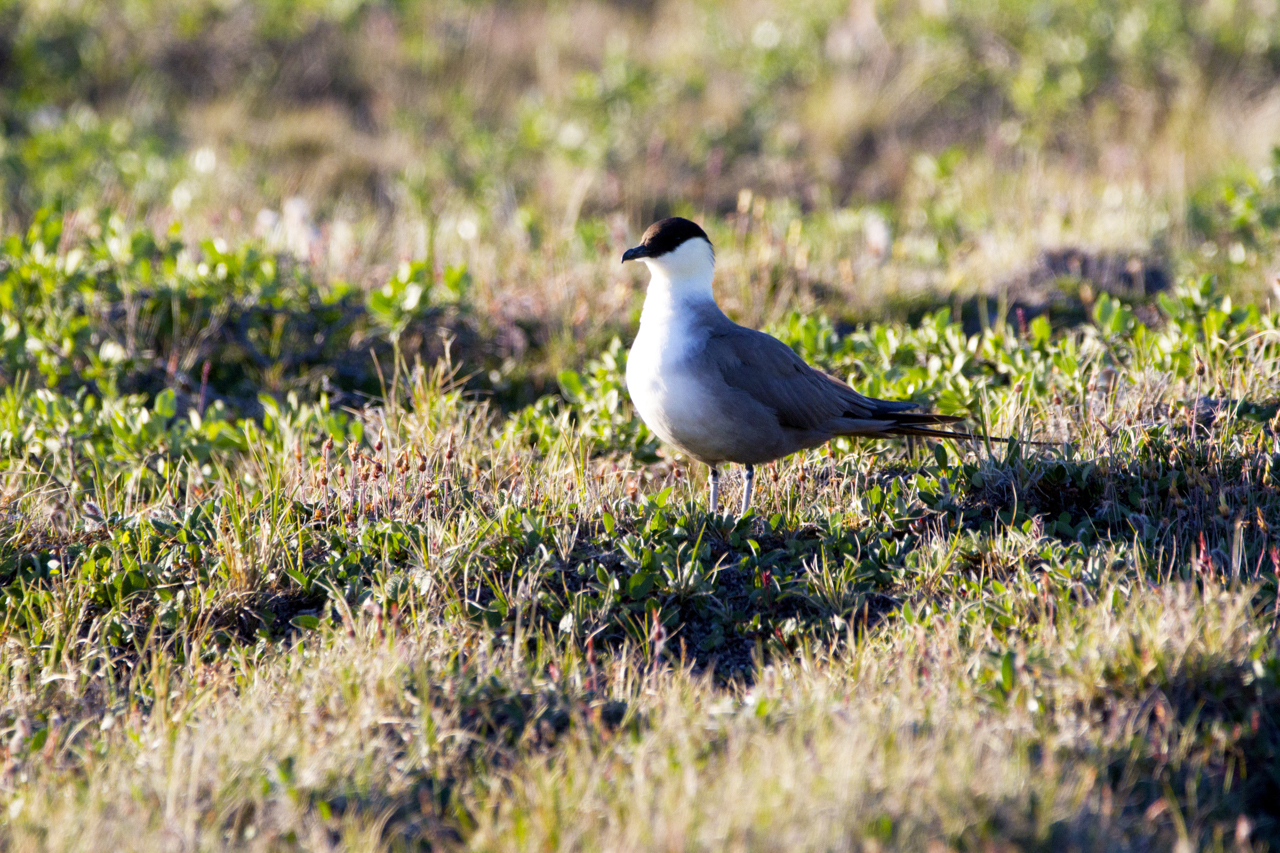
Long-tailed Jaeger © Arnaud Valade
American Golden-Plovers were also found sporadically, showing us their striking breeding plumage. Upon arriving to the ice-cold waters of the Northwest Passage, a curious ringed seal came to greet us. The waters were calm as glass and we could hear the strange calls of Long-tailed Ducks in the distance.
We attended the jigging contest part of the Nunavut Day festivities, a variant of a dance that us Quebecers were familiar with. The atmosphere was blissful and reflected a strong sense of community that is hard to find in modern times. Since most amenities were closed, we cooked a dinner for the whole gang that made us feel a little bit more at home in this land at the end of the world.
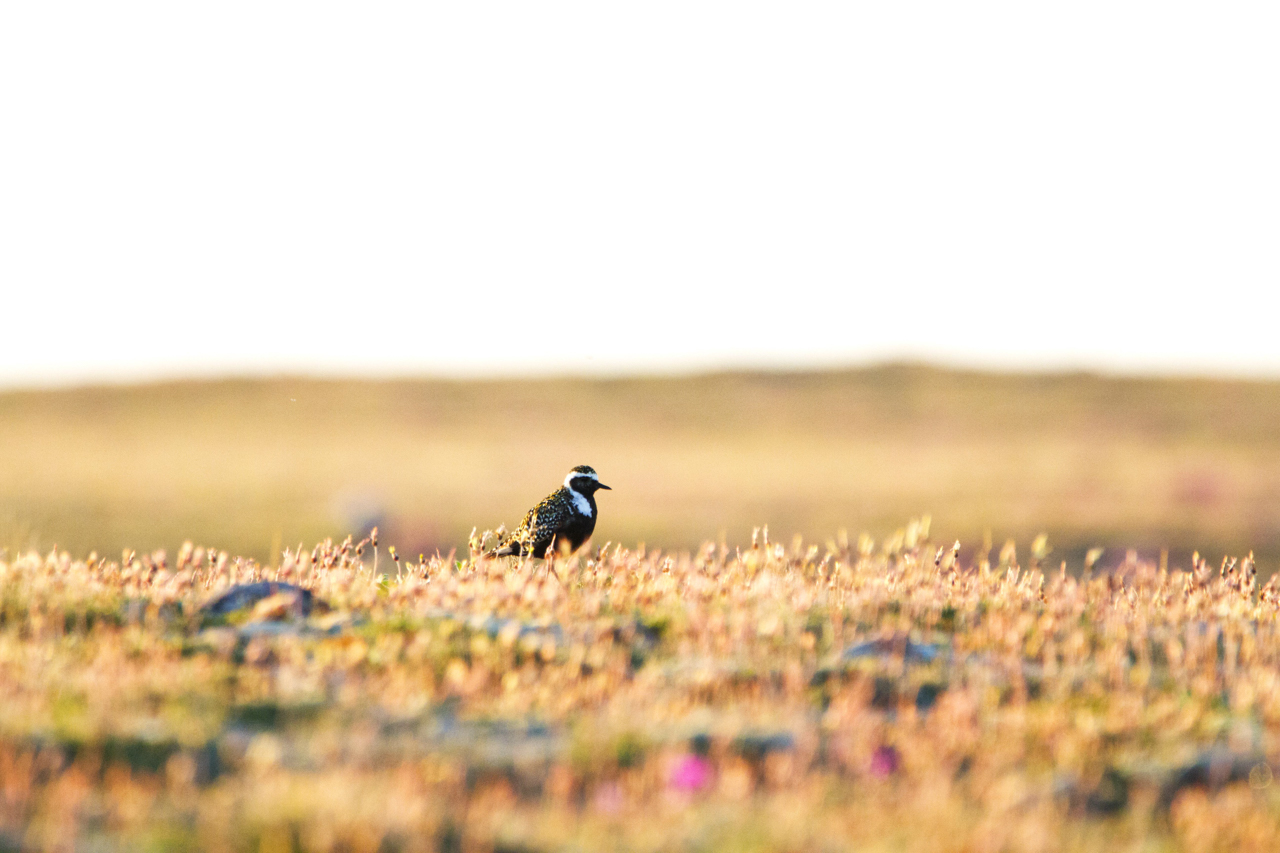
American Golden-Plover © Arnaud Valade
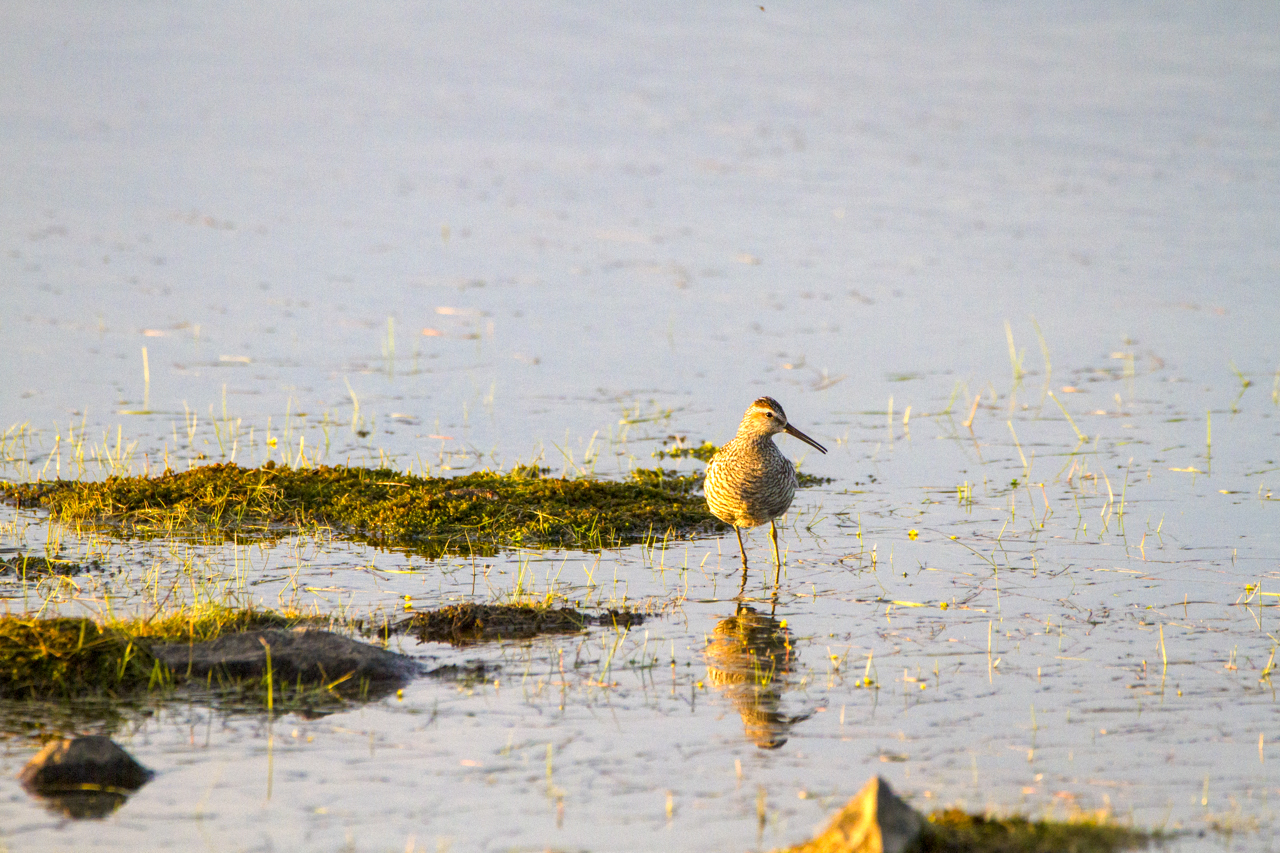
Stilt Sandpiper © Arnaud Valade
The next day was spent exploring the road leading to Mount Pelly. This hill, rising 200m over the tundra is an Esker, a mound of sand and rocks deposited by rivers under the glaciers of the last ice age. The road to get there is the wildest of the region, offering cut throat views of the arctic landscape and a great diversity of birds. It goes along a river which turns into Greiner Lake and more coastal habitats.
This offered the opportunity to observe our first Black-bellied Plovers with tiny cotton-ball-like chicks and legions of Snow Geese with tons of goslings. We also found a Parasitic Jaeger nest thanks to the group that preceded us and got to observe a nestling being fed by its parents. We were all very glad to see that dark little fluffball that seemed happy and well fed by its parents.
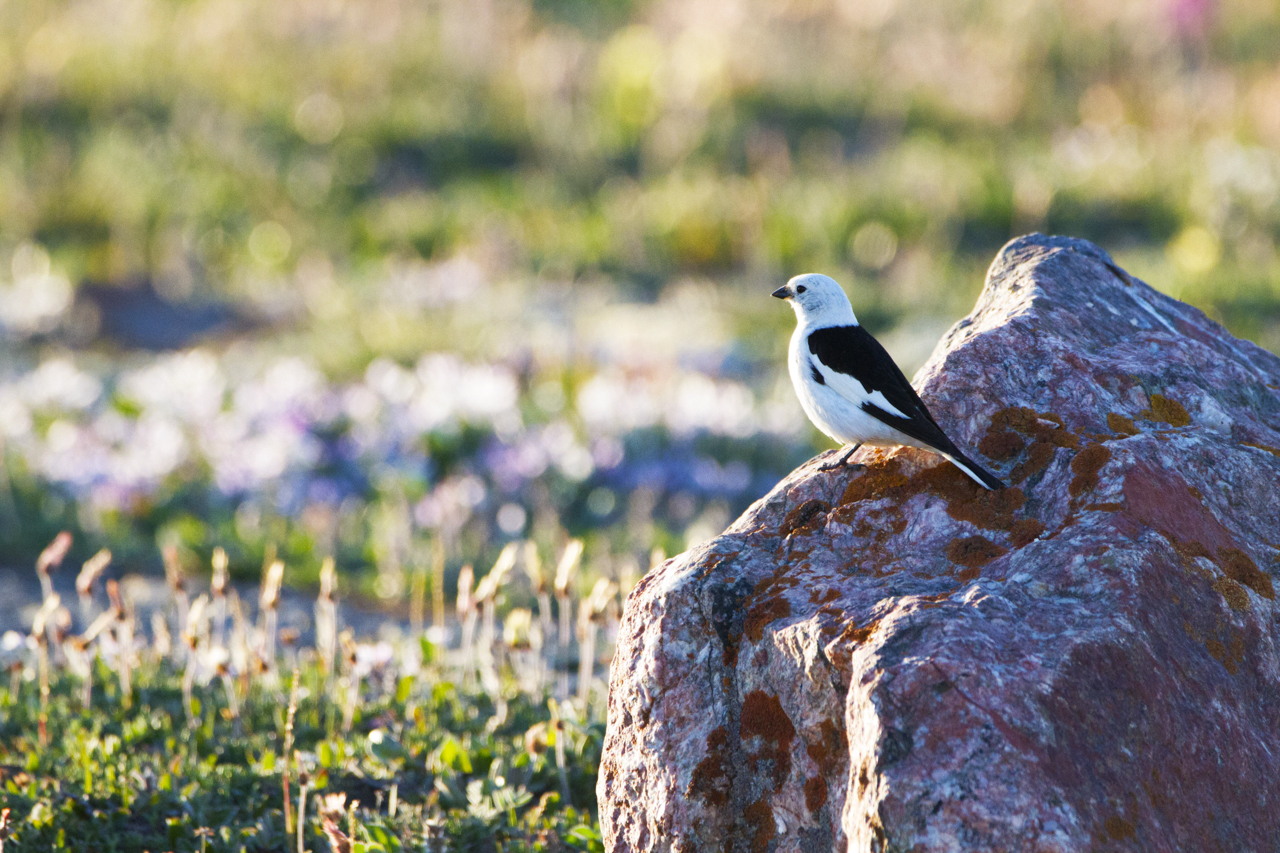
Snow Bunting © Arnaud Valade
On our way back, we had the chance to visit CHARS (Canadian High Arctic Research Station) along with students and researchers working there. The contrast between the station and the town is striking: this is a high-end facility with state of the art labs and a marine mammal autopsy room with doors rising about 40ft high. A lot of the studies going on here are allowing us to understand the disruptions taking place in the arctic. Out here, these transformations are notable and happen faster than anywhere else. Anecdotally, the temperature felt oddly hot during the time we were there and the locals felt it too. We also learned that there were a little bit more bugs than usual, sea-ice went out quicker than most years and Grizzlys recently started showing up on the island (far from areas accessible by our vehicles). This truly left us wondering about the future of this beautiful place and the ways the birds and other wildlife are going to have to adapt to withstand these upheavals.
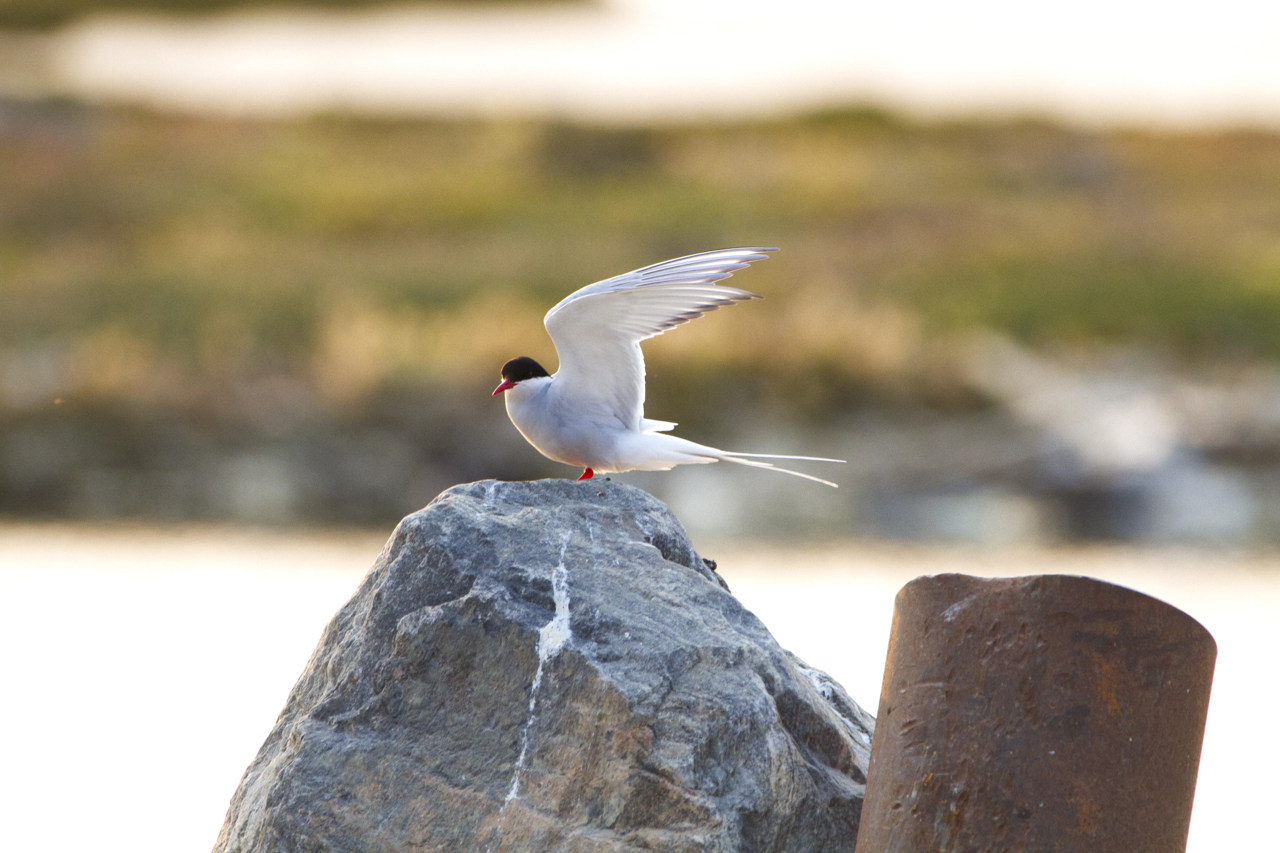
Arctic Tern © Arnaud Valade
On our last full day in Cambridge bay, we tried putting blinds on so we could reach Mount Pelly in a reasonable time without being distracted by the wildlife. We failed a few times for good reasons and got to see a Pectoral Sandpiper, a bird that had eluded us until then.
We managed to get to the mountain and began the climb, to each their pace. The rocky environment favours American Pipits along the rocky trail to the top. The summit offers an exquisite panorama of the tundra and allows us to appreciate its vastness. Up there, we watched a beautiful Peregrine Falcon looming over its nordic domain. It stayed distant at first but eventually did a few fly pasts right below our view point. Finally, we saw a trio of Rough-legged hawks rising in the thermals only to reach our level and beyond. Another bird that is especially hard to see on its arctic breeding grounds.
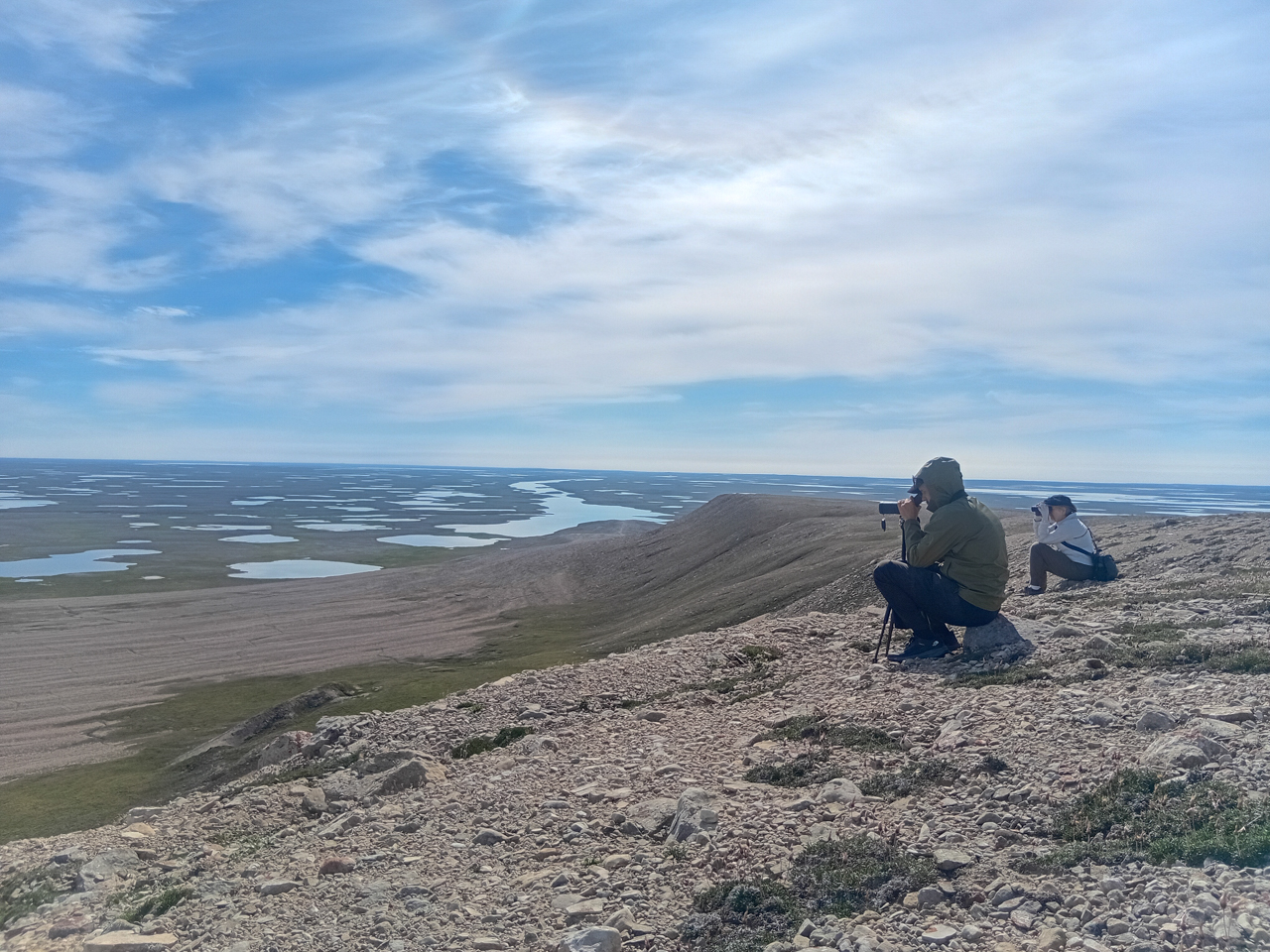
Mount Pelly © Arnaud Valade
Our Cambridge bay journey ended as it started, by visiting the dump. The group of Cranes were still there, searching through the rubble for their pittance, the King Eiders had left for the sea but had been replaced by Red-Throated Loons.
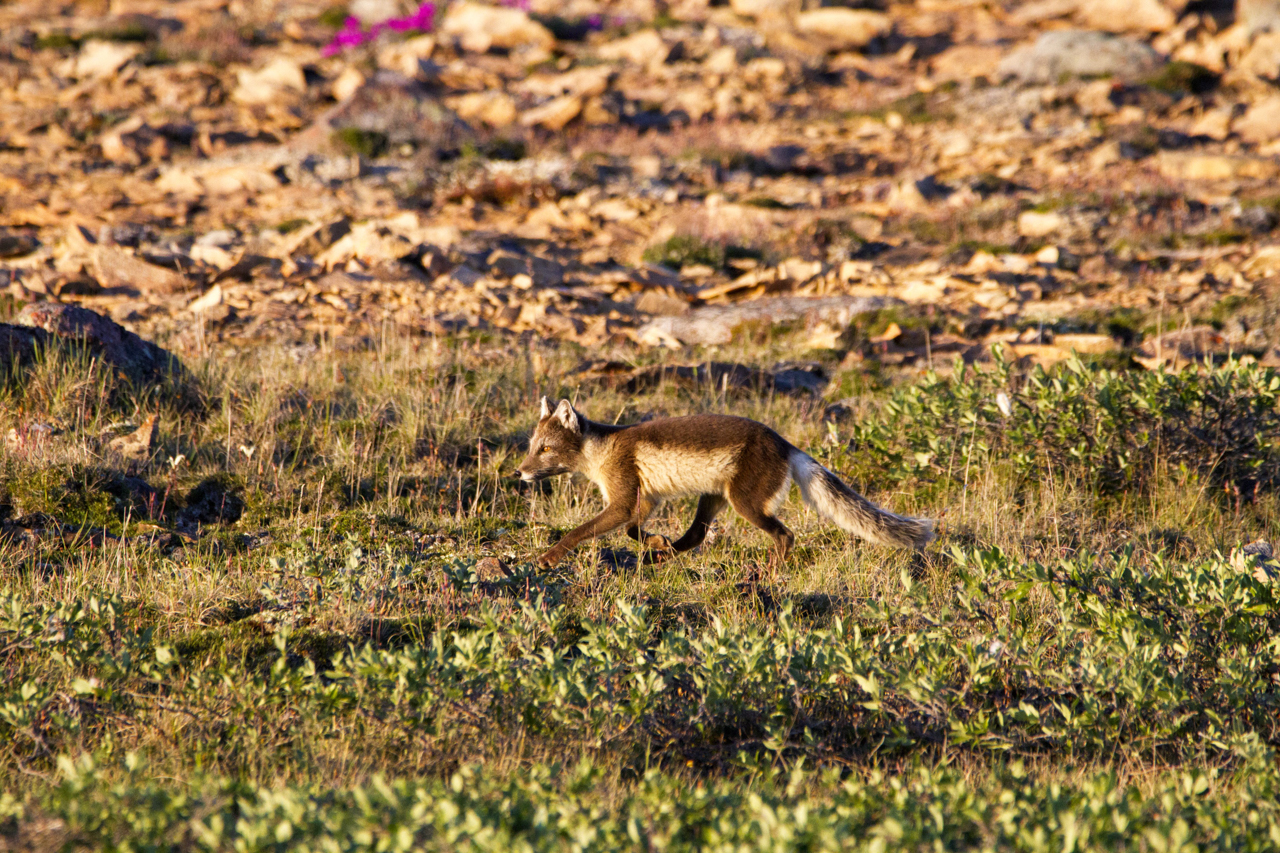
Artic Fox © Arnaud Valade
An Arctic Fox was trotting along the shores of a pond, searching for eggs or fledglings to feed its own.
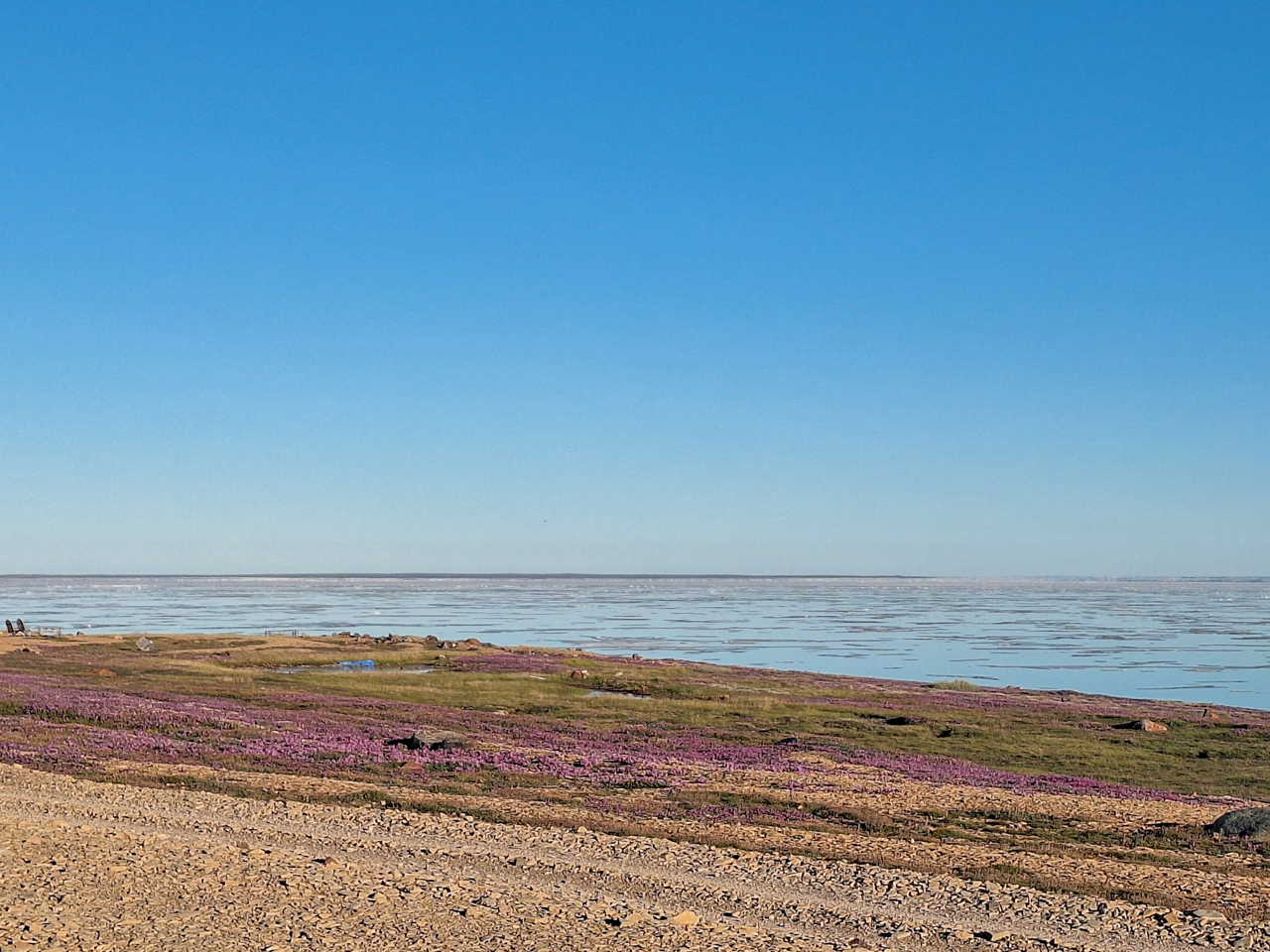
Arctic Ocean and wildflowers, Cambridge Bay © Aaron Brisebois
Our short time in the arctic tundra of Victoria Island led us to better understand this enigmatic landscape of cold beauty but left us with so many questions about its future. The best trips are the ones that leave you lusting for more.
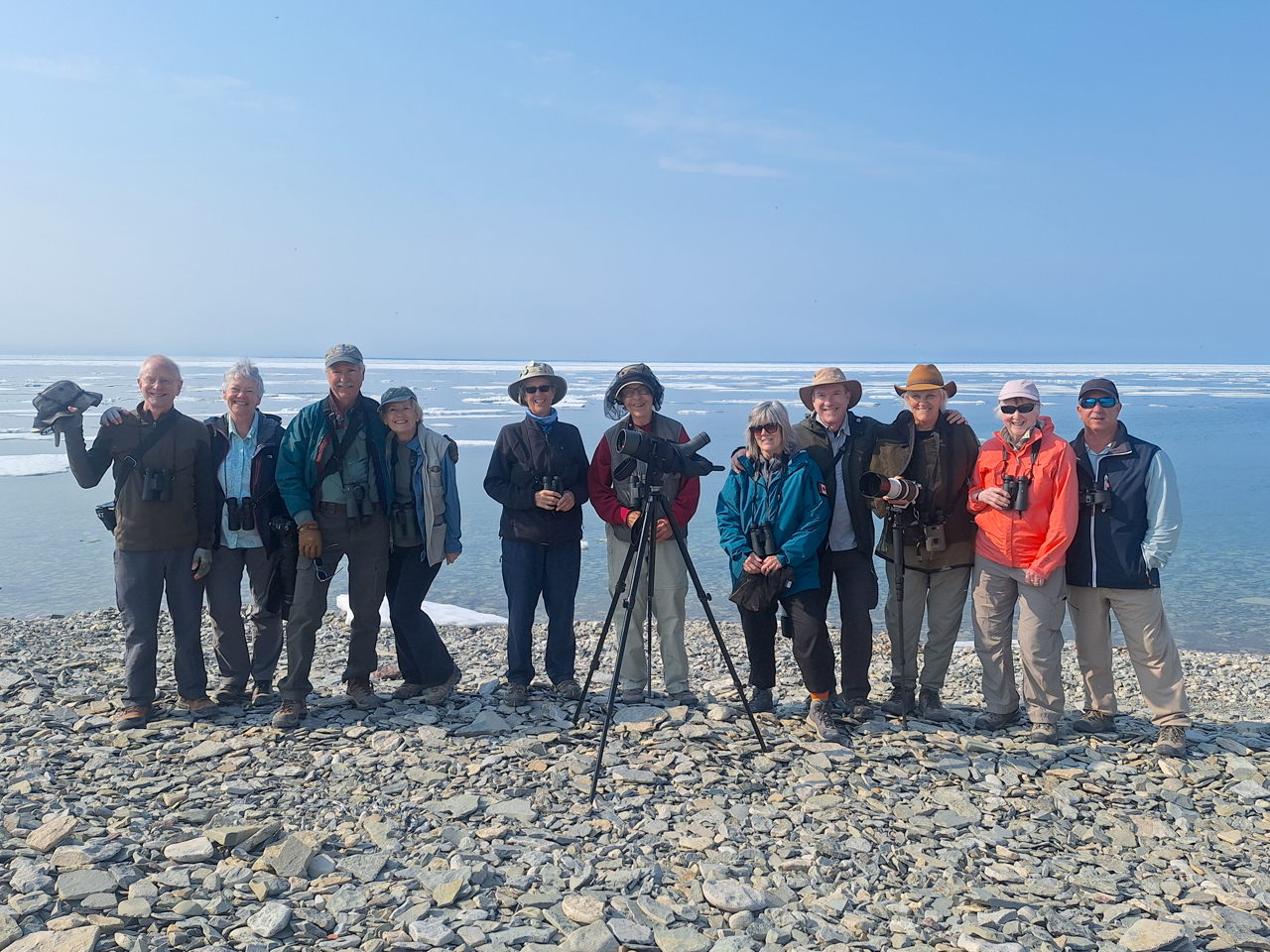
Group Photo, Cambridge Bay © Aaron Brisebois