Hawaii Trip Report (Mar 9 -26, 2026)
We began our birding tour of Hawaii by taking a morning walk from our hotel in Honolulu where before long we were seeing the iconic Blue-billed White-Terns flying between the skyscrapers, and even spotted a few juveniles still at their nest sites in the trees lining the city streets.
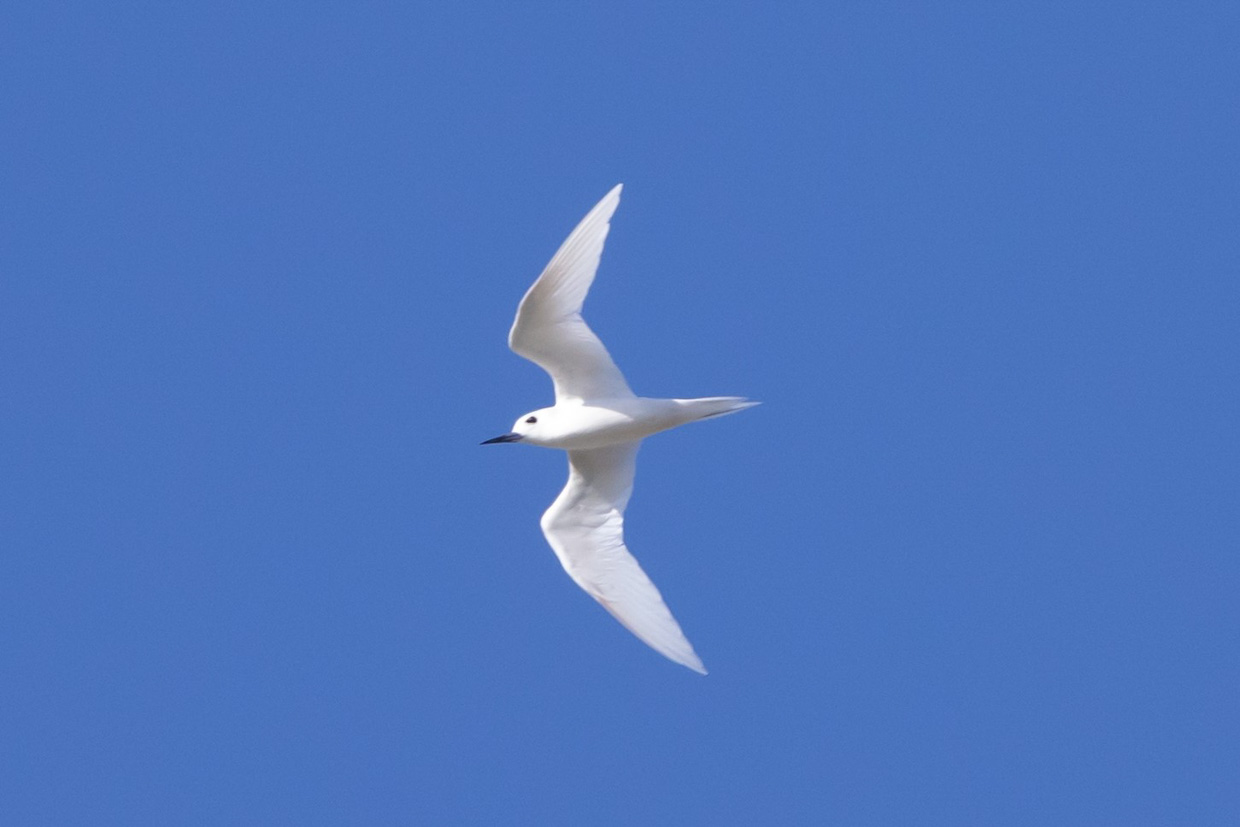
Blue-billed White-Tern ©Kees de Mooy
From here we left on a trip around the island of Oahu, making our first stop at a wooded trail in the high country above Honolulu. After feasting our eyes on such colorful introduced birds as White-rumped Shama, Warbling White-eye and Red-crested Cardinal, we saw the first species of Hawaiian honeycreeper, the Oahu Amakihi. Before we left for our next destination we heard the screeches of Red-crowned Amazons and managed a decent look at a Red-billed Leiothrix, one of the more secretive introduced species.
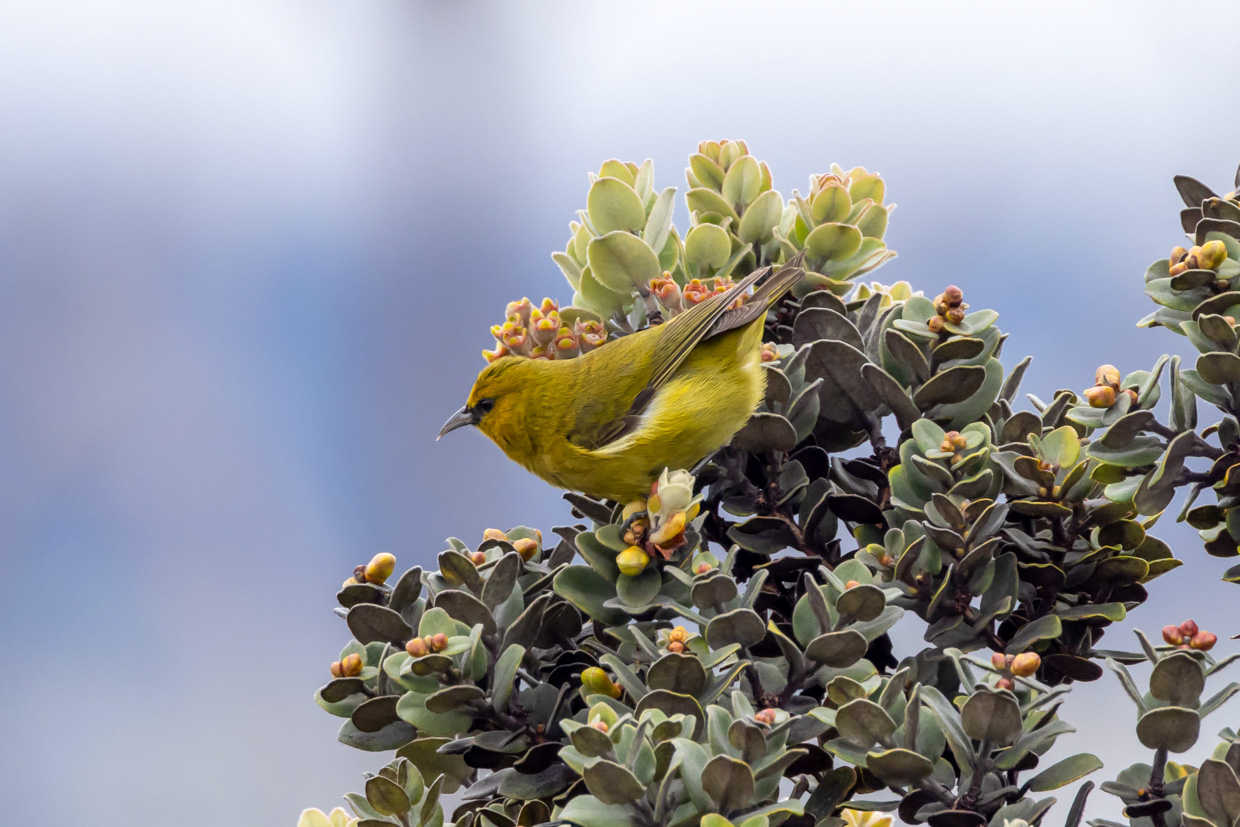
Oahu Amakihi ©Kees de Mooy
After lunch we headed to an oceanside golf course where we soon spotted our main target species for this stop, a Bristle-thighed Curlew feeding on the lawn. Before we made our way back to Honolulu we had seen our first Red-footed and Brown Boobies and Laysan Albatross and had good looks at introduced Red-vented and Red-whiskered Bulbuls. At one scenic overlook we were treated to views of spouting humpback whales.
Before boarding a plane to Kauai the next morning, we enjoyed looks at such local introduced eye-candy birds such as Common Mynas, Java Sparrows and Rose-ringed Parakeets on a short walk through a park across the street from our hotel.
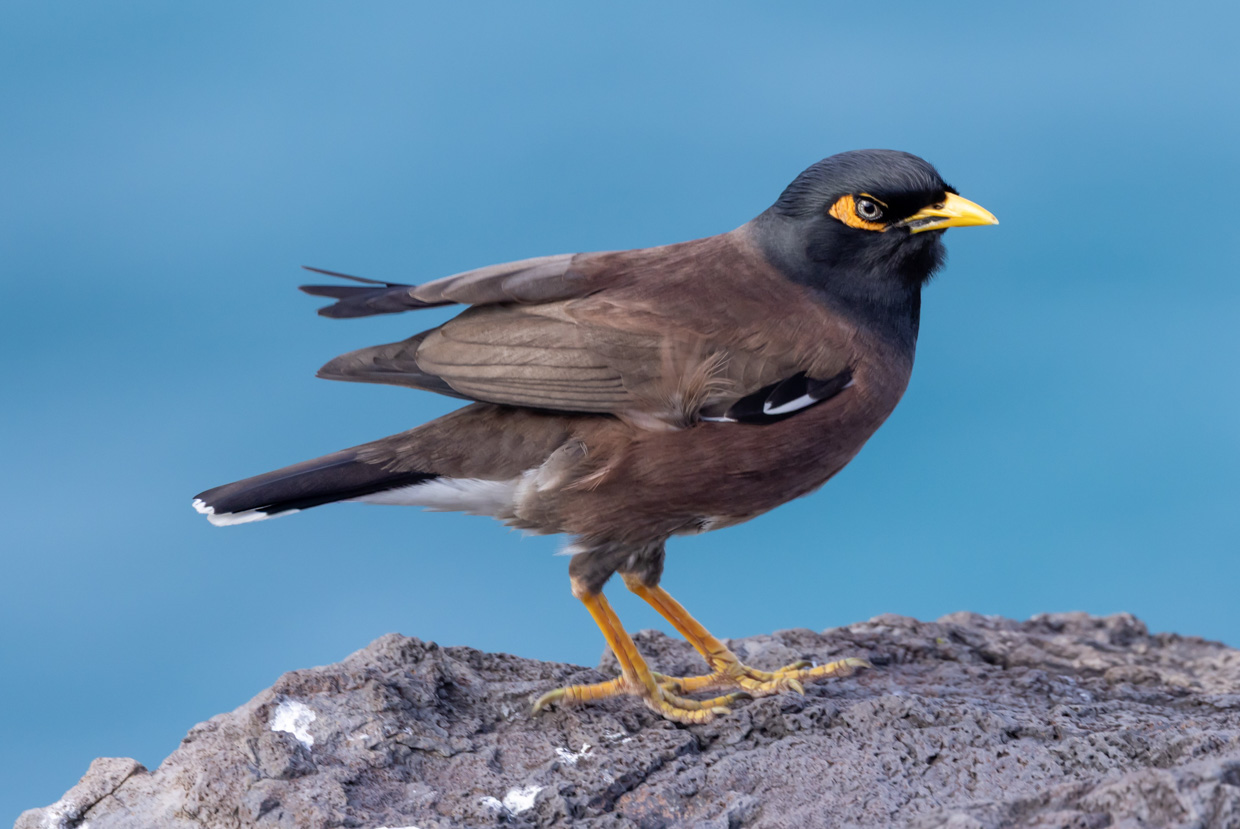
Common Myna ©Kees de Mooy
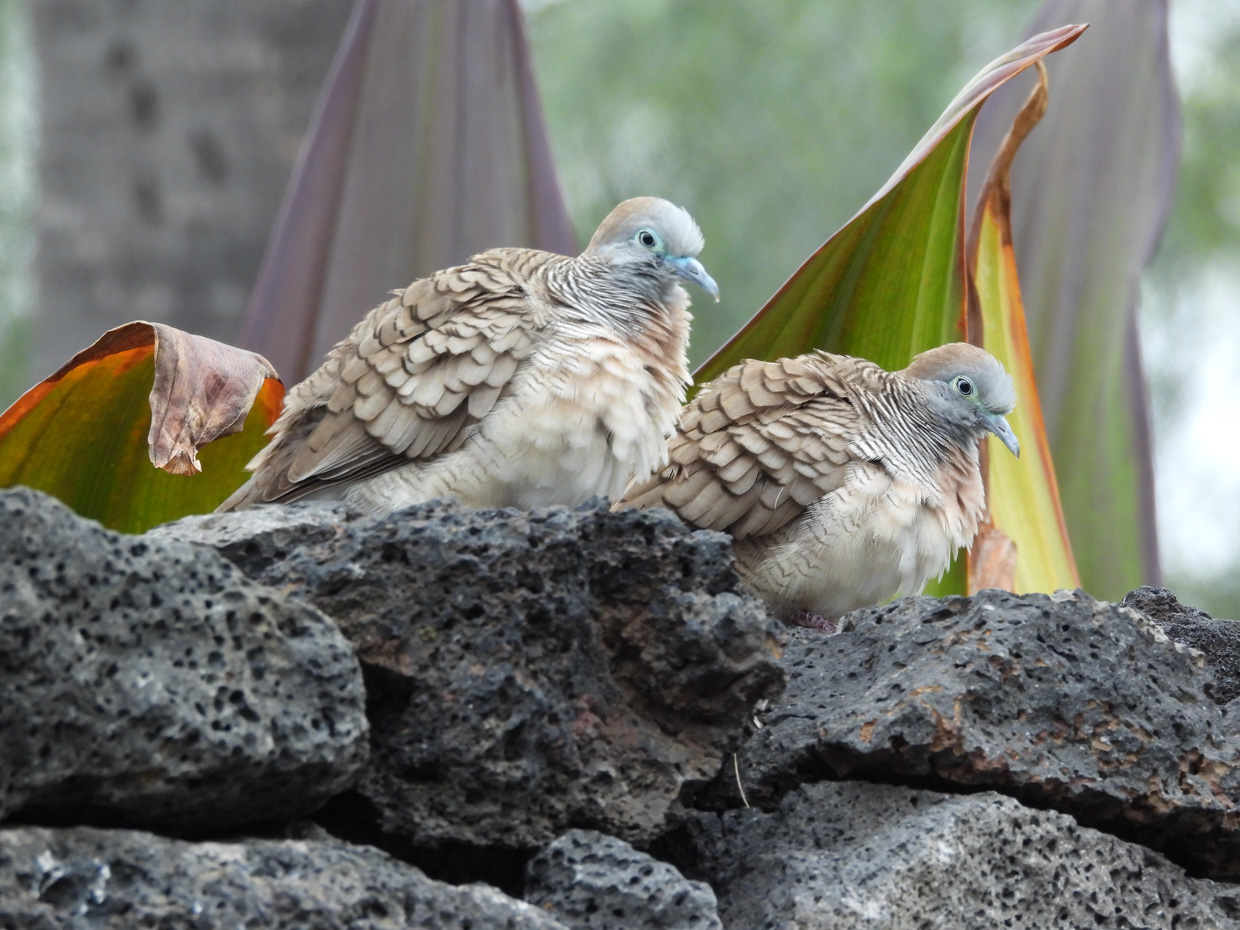
Zebra Doves ©Louie Dombroski
After settling into our hotel on Kauai we drove through a nearby golf course familiarizing ourselves with some of the native waterbird species of Hawaii such the endemic Hawaiian Coot and Hawaiian Duck, the endemic subspecies of Common Gallinule and the beautifully patterned Hawaiian Goose or Nene.
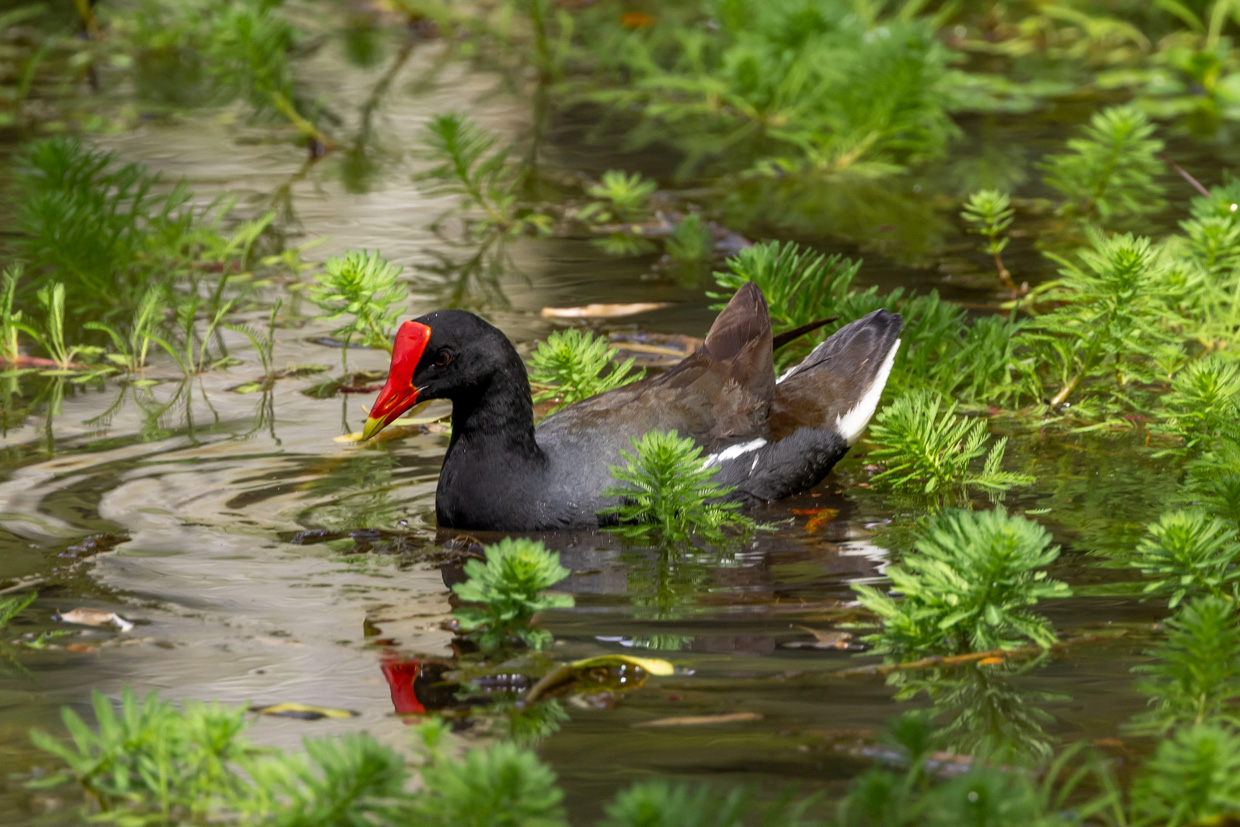
Common Gallinule (Hawaiian) ©Kees de Mooy
Before dinner we spent half an hour watching for ocean birds in the shadow of a lighthouse, gaining more experience with Brown and Red-footed Boobies and saw the first Great Frigatebird of the trip. On our way out we stopped to look at a trio of Northern Mockingbirds atop a chain link fence.
Our three full days on Kauai were evenly divided between visiting lowland refuges and shorelines for waterbirds and searching mountain forests for passerines.
We watched Red-footed Boobies flying with their red feet splayed out as they landed at their nests, and saw Great Frigatebirds attempting to pirate food from them. We were able to hear the peculiar moaning calls of Wedge-tailed Shearwaters in their nest burrows and even get views of a few of them, and got great looks at both White-tailed and Red-tailed Tropicbirds.
A surreal element of this tropical seabird paradise was hearing the songs of introduced Western Meadowlarks and Northern Cardinals.
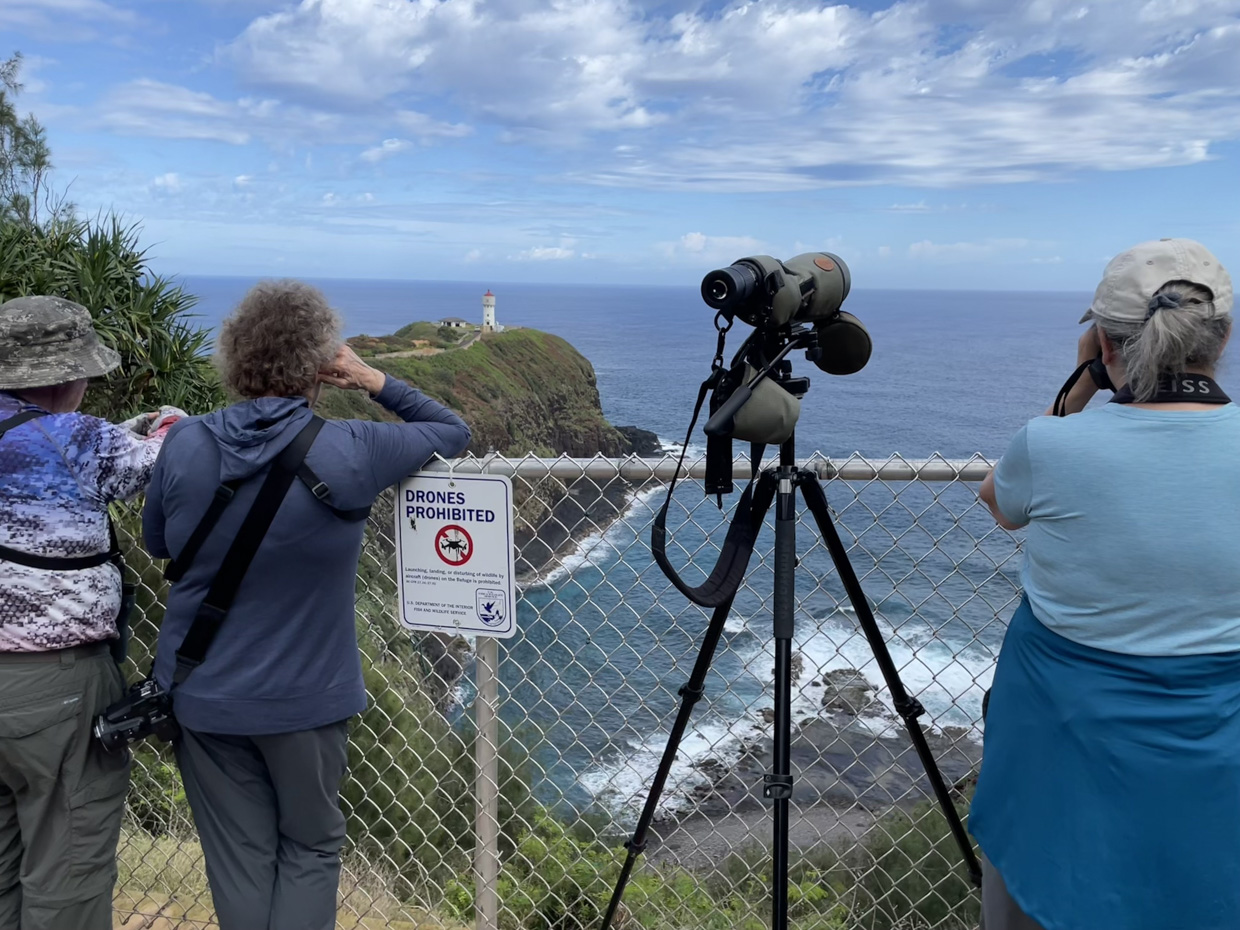
Scanning the ocean for birds on Kauai ©Louie Dombroski
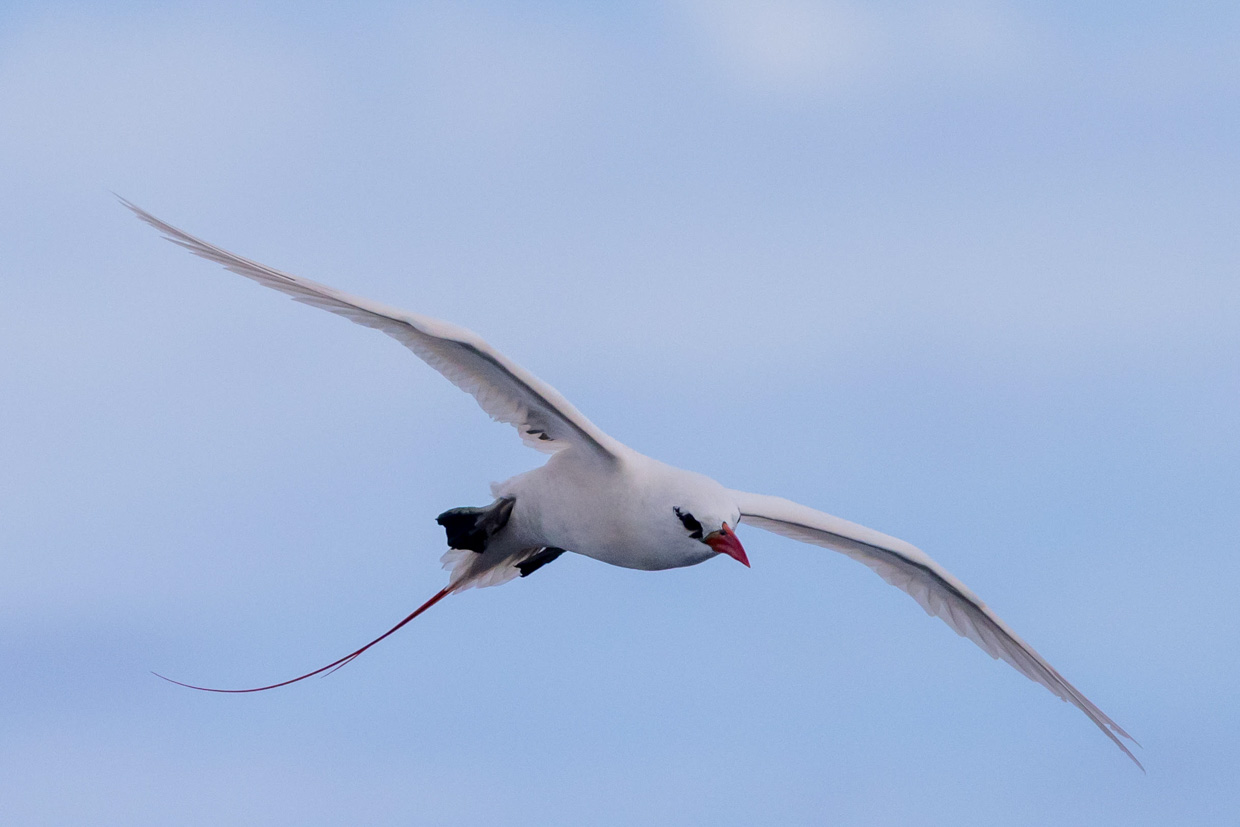
Red-tailed Tropicbird ©Kees de Mooy
We spent ample time exploring the high country of Waimea Canyon and Kokee State Park. Here we had our first encounter with the Pueo, the Hawaiian subspecies of Short-eared Owl. We also came across some of the game birds that have been introduced to Hawaii, such as the Black Francolin that was singing its head off at close range but not allowing us even a glimpse. The largest introduced grouse species in Hawaii, the Erckel’s Spurfowl was more cooperative
The main goal of birding the high country is the native songbirds. We became familiar with the Apapane, the commonest of the red-plumaged honeycreepers, but the rarer species eluded us. After much searching, all got a view of a Kauai Elepaio, an endemic member of the old world monarch flycatcher family.
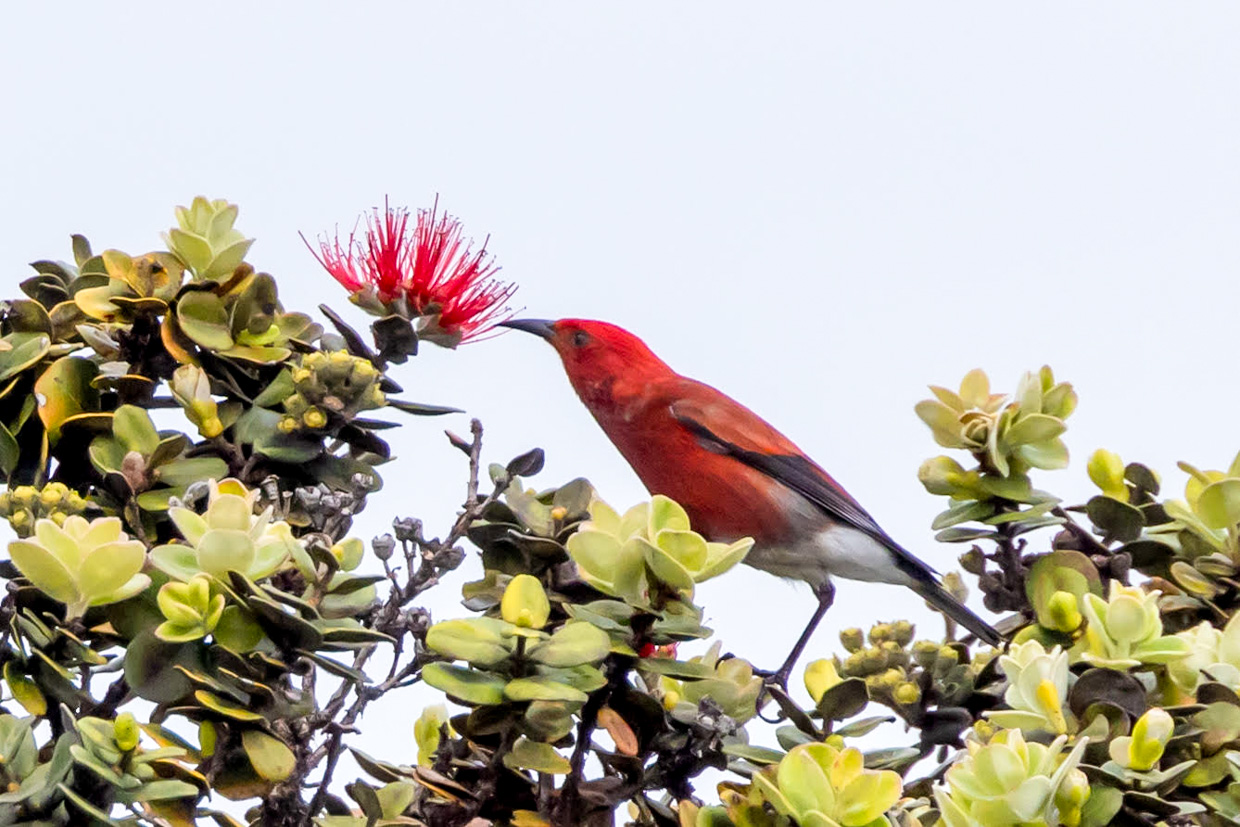
Apapane ©Kees de Mooy
Exploring some wetland sanctuaries along the southwest coast, we got to add several species to our trip list, including Ruddy Turnstone and a rare Dunlin that had been discovered only the day before.
On our last evening on Kauai we were treated to a view of a distant Black-footed Albatross and marveled over the sight of a dozen Hawaiian Green Sea Turtles hauled up on shore while an armada of Great Frigatebirds filled one quadrant of the sky behind us.
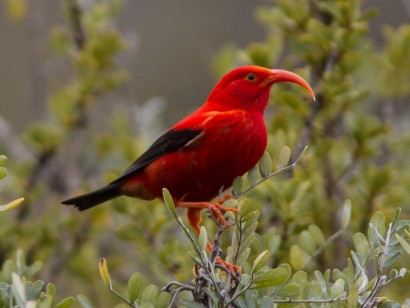
The next morning we arose early to catch a flight to the big island of Hawaii. An unusually heavy storm prevented us from entering Hawaii Volcanoes National Park, so the local guide we had hired to take us through the park instead took us on a hike on a forested trail where we saw our first Iiwis and Hawaii Amakihis. Our local guide shared his extensive knowledge of the unusual native plants and the culture of the indigenous people, even beginning our hike with a chant in the native Hawaiian language. He also took us through the town of Hilo to search for some birds rare in Hawaii, and we were successful in spotting an Osprey and a Peregrine Falcon.
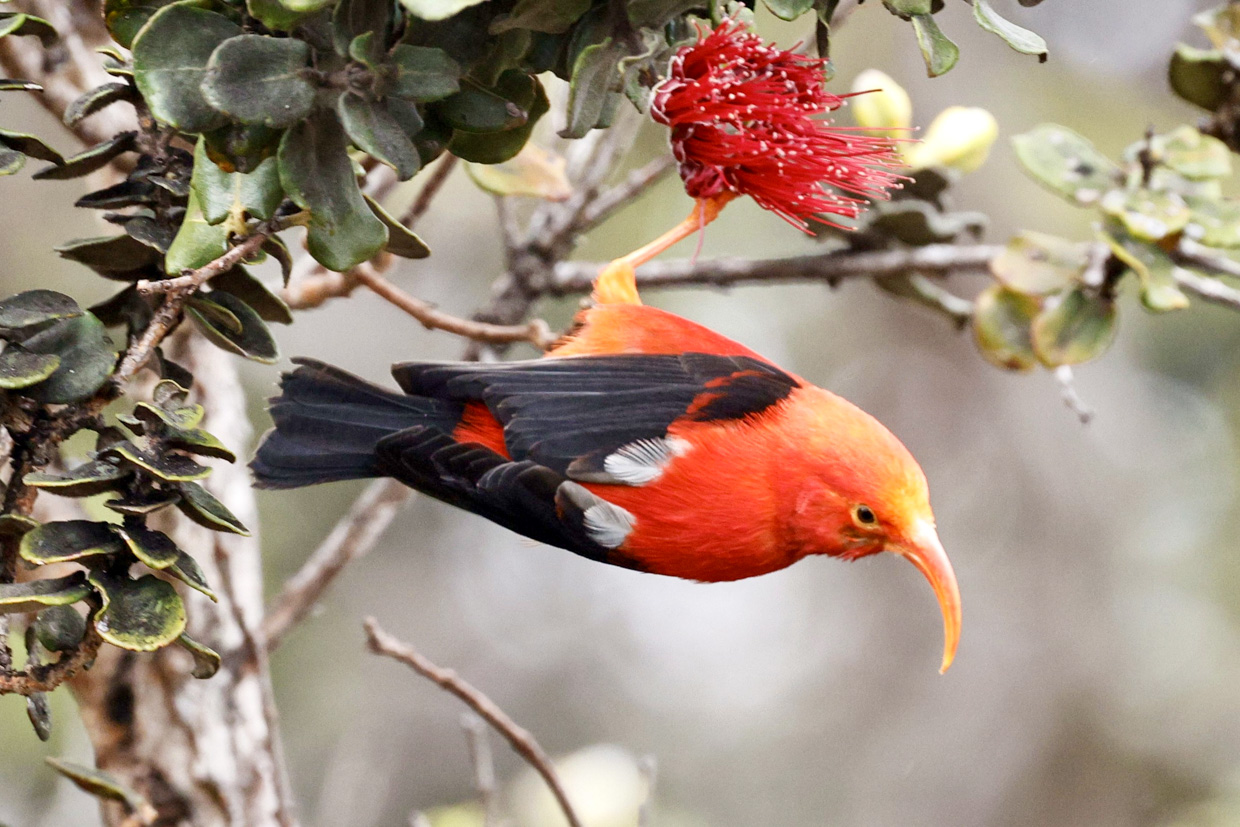
Iiwi ©Kees de Mooy
On our last morning on the east side of the big island, with the National Park still closed, we slow-cruised the roads around town looking for Hawaiian Hawks and Kalij Pheasants. We would have to wait to see the Hawk, but the pheasants proved numerous and tame.
As we made our way to our lunch stop near the southern end of the island, one participant spotted the first of six Hawaiian Hawks we were to encounter that day.
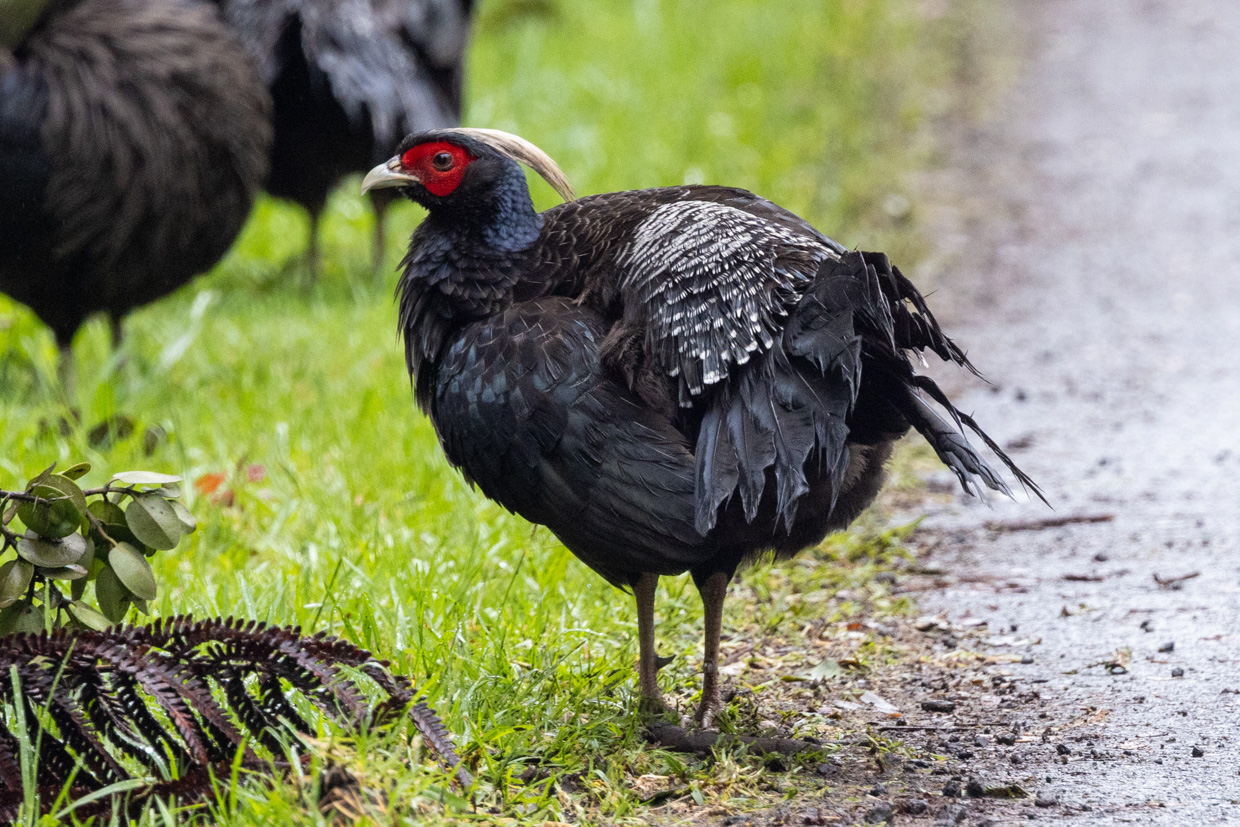
Kalij Pheasant ©Kees de Mooy
We made a stop along the beach where we got great looks at the distinctive Hawaiian subspecies of Black Noddy before having lunch at the southernmost bakery in the United States. Before arriving at our hotel in Kona we walked around the pleasant grounds of a beach resort where we were successful in finding a flock of Red-masked Parakeets. We enjoyed more close looks at Saffron Finches and Common Waxbills but the Lavender Waxbills reported sporadically there did not appear for us.
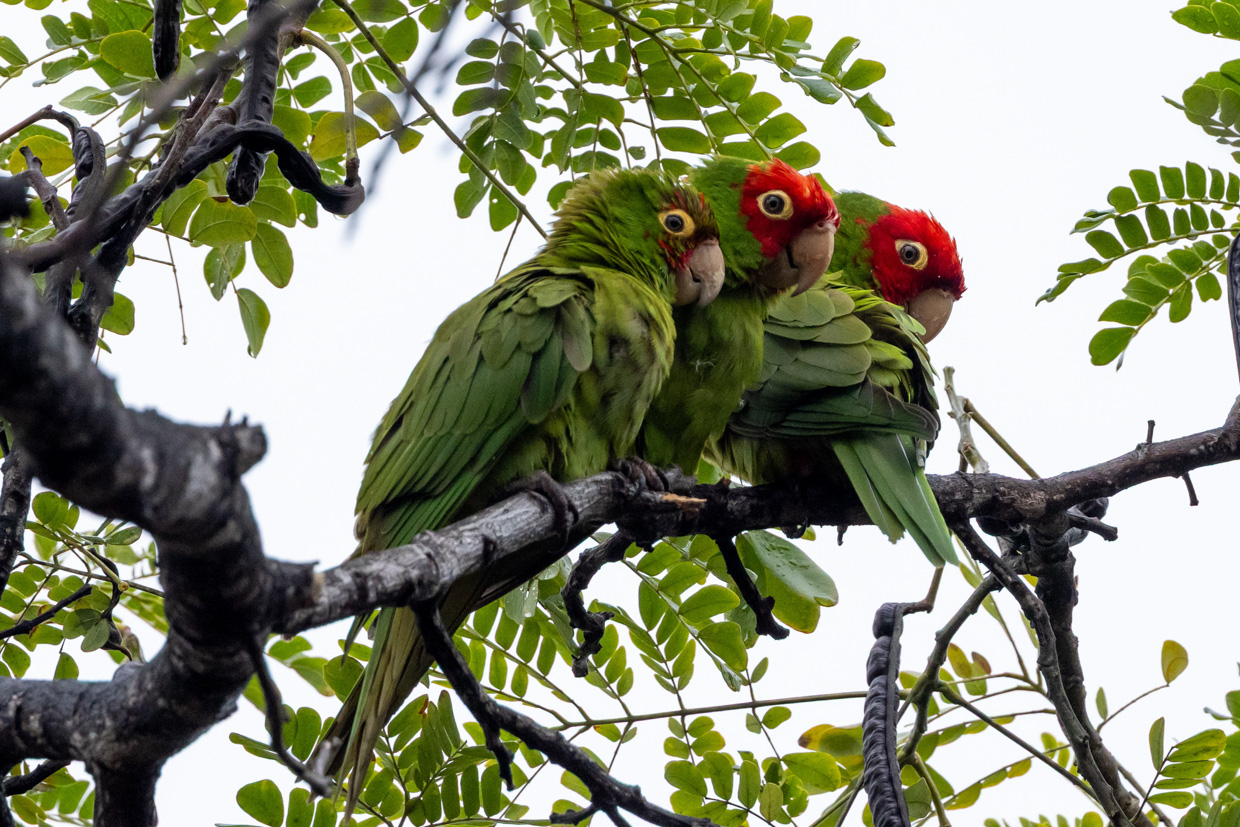
Red-masked Parakeets ©Kees de Mooy.jpg
The next morning we arose early to begin our adventure to the Hakalau Forest National Wildlife Refuge, the highlight of any birding tour of Hawaii. With our local guide (required by refuge regulations) at the wheel of a four-wheel drive van, we made our way up a dirt road, making brief stops along the way to look at Eurasian Skylark, Wild Turkey, and Erckel’s Spurfowl, but the main goal of the day was birding in the forest above 6000 feet. Here temperatures are cool enough that introduced mosquitoes and the avian malaria they transmit have not decimated the populations of the native passerines that were once widespread throughout the island.
Upon entering the forest, we soon spotted a bright-plumaged male Hawaiian Amakihi which was singing away, and soon after found two of the rarer species we were seeking. First, we encountered the diminutive and inconspicuous Alawi or Hawaii Creeper, a bird that behaves much like a nuthatch or Brown Creeper as it works over tree trunks and large branches searching for spiders and tiny insects.
Then the sound of a bird pecking on wood (there are no woodpeckers in Hawaii) alerted us to the most sought-after bird of this forest, the Akiapolaau, which has a chisel-like lower mandible and a long curved upper mandible; its unique feeding technique involves opening its beak wide as it pecks with the lower mandible, then probes the holes thus created with its upper mandible. It took a little more effort to find Hawaii Akepa, but after a few glimpses on our hike, we were fortunate to have a carrot-colored male land in the top of a tree while we had lunch in a shelter out of the light rain. We also had great views of Hawaii Elepaio and Omao, an endemic thrush.
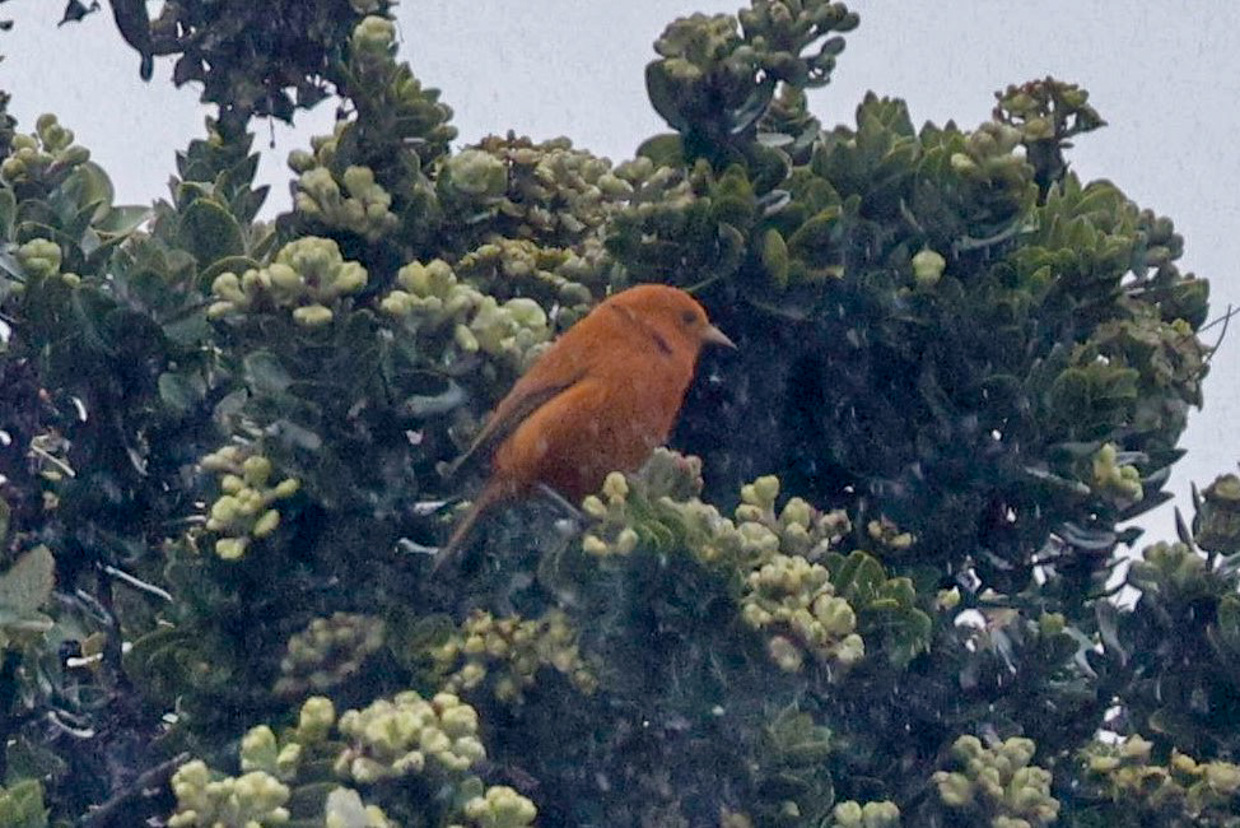
Hawaii Akepa © Kees de Mooy
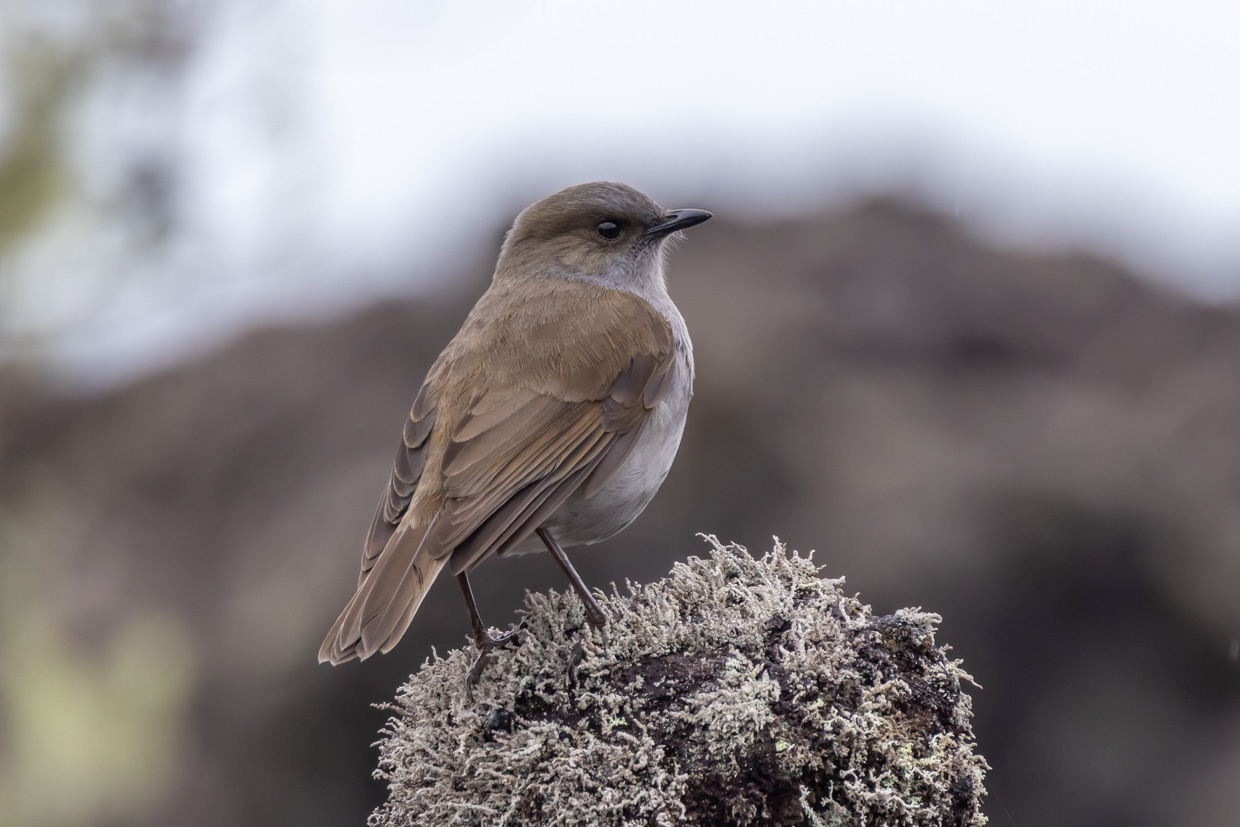
Omao ©Kees de Mooy
We began our last day of birding by visiting a large wastewater treatment plant where we added a few new waterbirds for the trip and also saw our first Gray Francolins. We then headed up to some spots north of Kona where we watched Rosy-faced Lovebirds congregating at a shopping center and did a double-take as we drove by some dove-like birds along a busy road that proved to be one of our most sought after targets, the introduced Chestnut-bellied Sandgrouse. Ducking down a nearby side-street, we were able to get out and get good looks at these distinctive birds before they flew off.
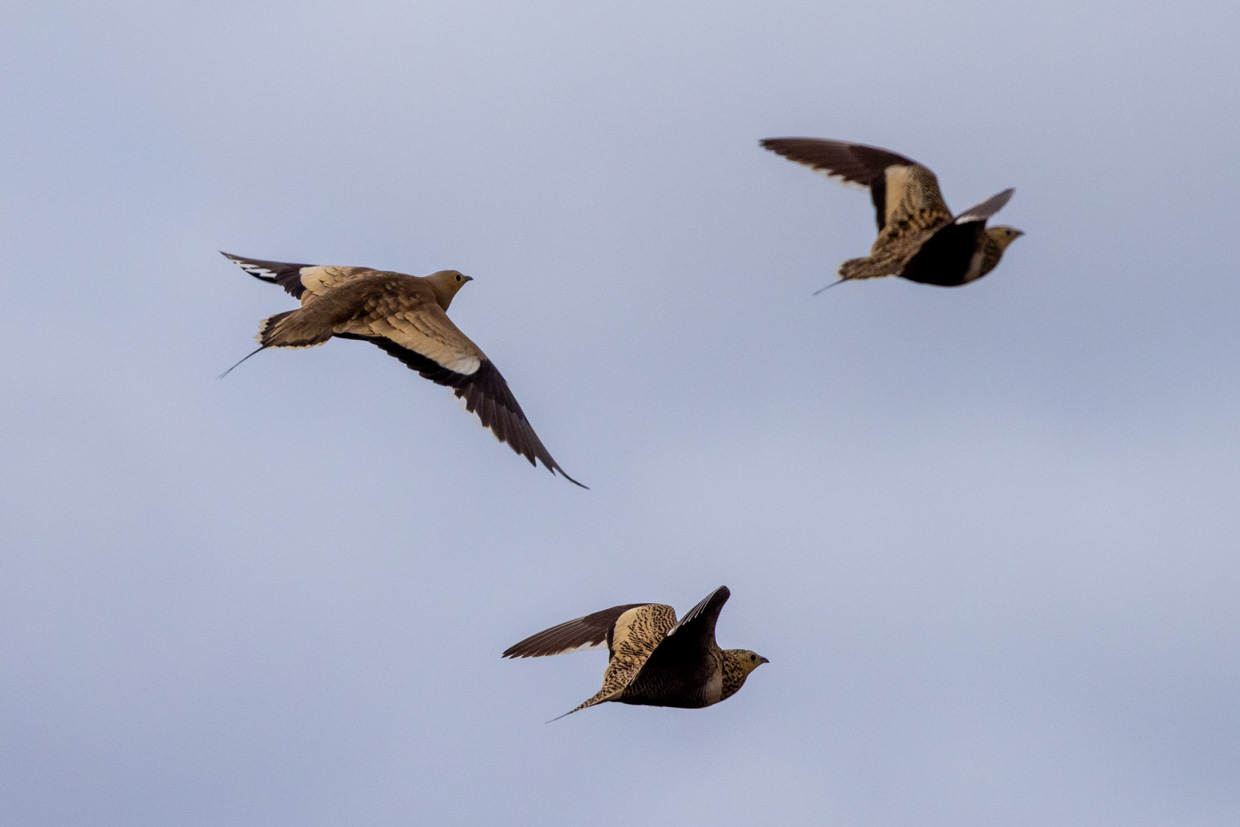
Chestnut-bellied Sandgrouse ©Kees de Mooy
Along the old Saddle Road, we were serenaded with the song of a Eurasian Skylark, visited with a cooperative California Quail, watched a flock of Yellow-fronted Canaries bathing in a puddle and had a few more encounters with the Hawaiian subspecies of Short-eared Owl before heading back for our final night in Kona.
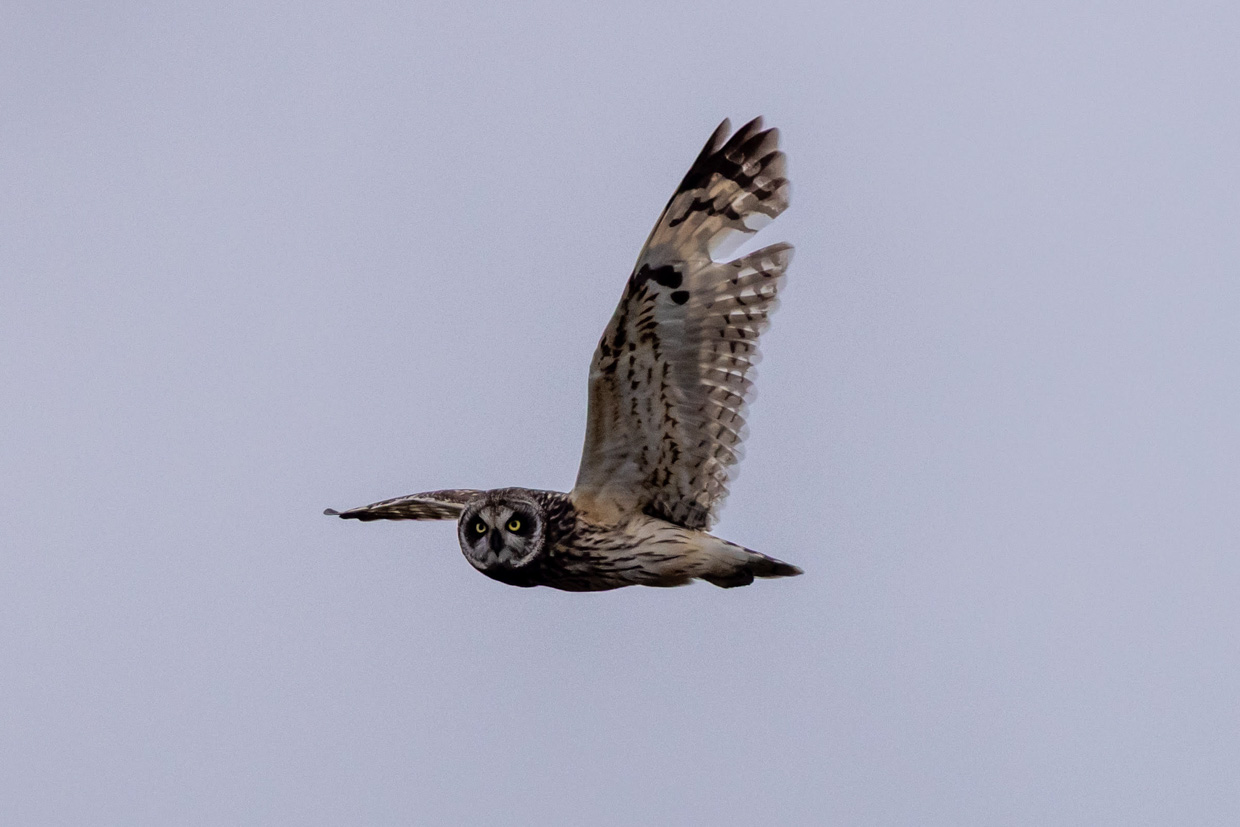
Short-eared Owl ©Kees de Mooy
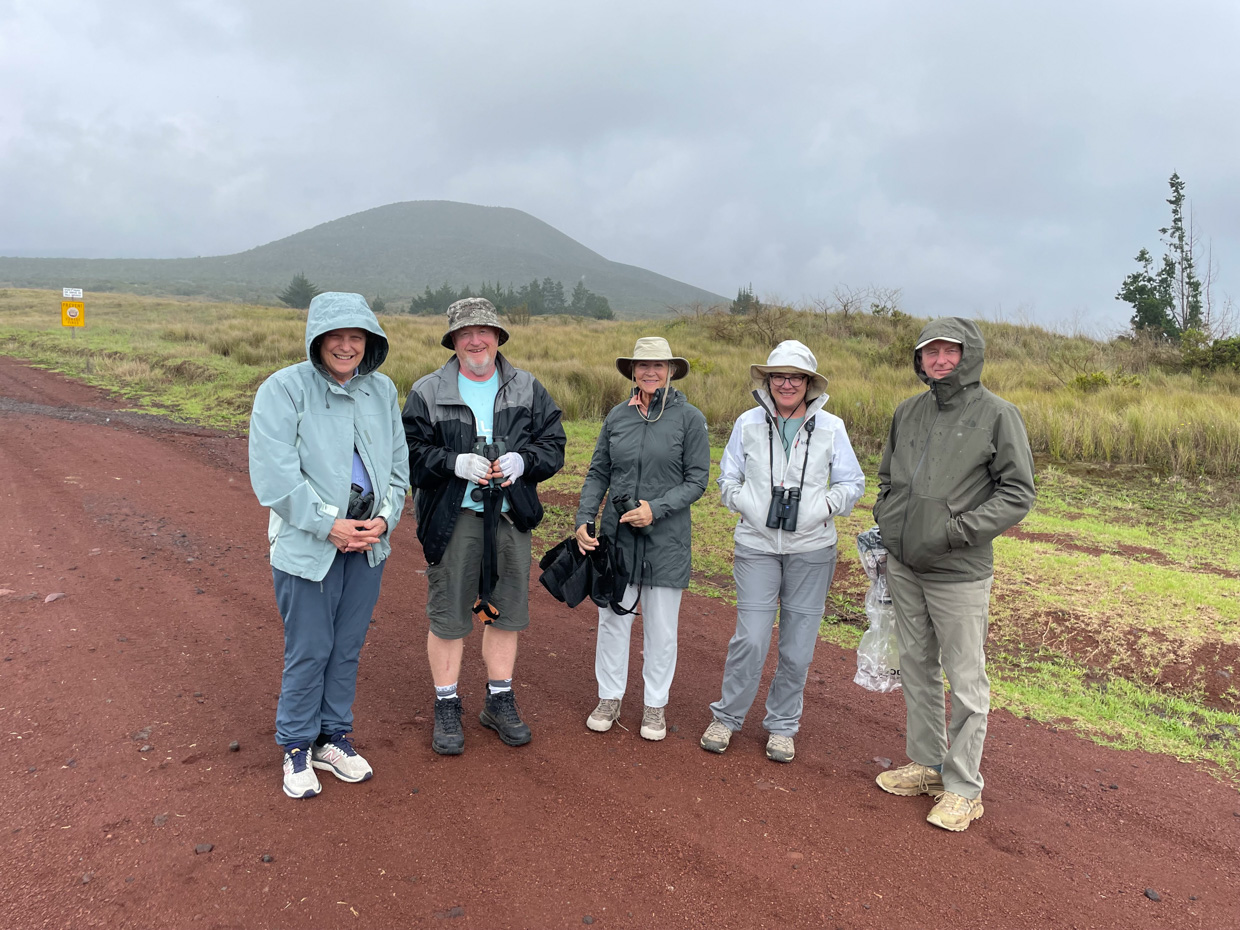
Hawaii birding group along old Saddle Road – ©Louie Dombroski