Grand Ecuador Trip Report (Mar 30 – Apr 15, 2026)
Seventeen days, seven lodges, and a transect that carried us from the dry inter-Andean valley of Puembo up to the páramo above Papallacta, across the Chocó cloud forest of the western slope, over the eastern Andes, and down through the foothill forests of Sumaco into the deep Amazon at Sani. Along the way we recorded 556 species of birds — a total that reflects not just Ecuador’s astonishing diversity, but also the patience, sharp eyes, and camaraderie of a group that pulled together every single day. Most of the group had already traveled with Ernesto and myself in other countries, and it was a real pleasure to share your first Ecuador tour together. What follows is a recap of where we went, what we saw, and the moments that made this trip unforgettable.
Puembo Birding Garden — Arrival (March 30)
Everyone arrived to Quito on different flights throughout the day, some with a few hours to spare for a first look around the gardens of Puembo Birding Garden, others stepping straight into the dry inter-Andean valley ambience of cactus, eucalyptus, and hummingbird feeders. Ernesto and I gathered the full group at six o’clock for a welcome briefing, a walk-through of the itinerary, and our first dinner together.
Sachatamia Lodge — Chocó Cloud Forest (March 31 – April 3)
We crossed the Andes westward on March 31, dropping out of Quito toward Mindo and the Chocó. Before settling at Sachatamia, we spent the morning at Reserva Zuro Loma, a private reserve above Nono, where the high-elevation birding set the tone for the trip. The star was a perched Sword-billed Hummingbird, that almost-comical architectural wonder, alongside Buff-winged Starfrontlet, Collared Inca, Sapphire-vented Puffleg, and Scarlet-bellied Mountain Tanager at the fruit feeders. Two antpittas cooperated: Equatorial and Rufous-crowned. A surprise bathing visit from a pair of Spectacled Redstarts and White-banded Tyrannulets rounded out the morning. We stopped at Tandayapa Bird Lodge for lunch, where the hummingbird show featured Violet-tailed Sylph, Booted Racket-tail, Purple-bibbed Whitetip, Empress Brilliant, and Andean Emerald. One of the participants spotted a Smoky-brown Woodpecker tucked inside a hollow snag.
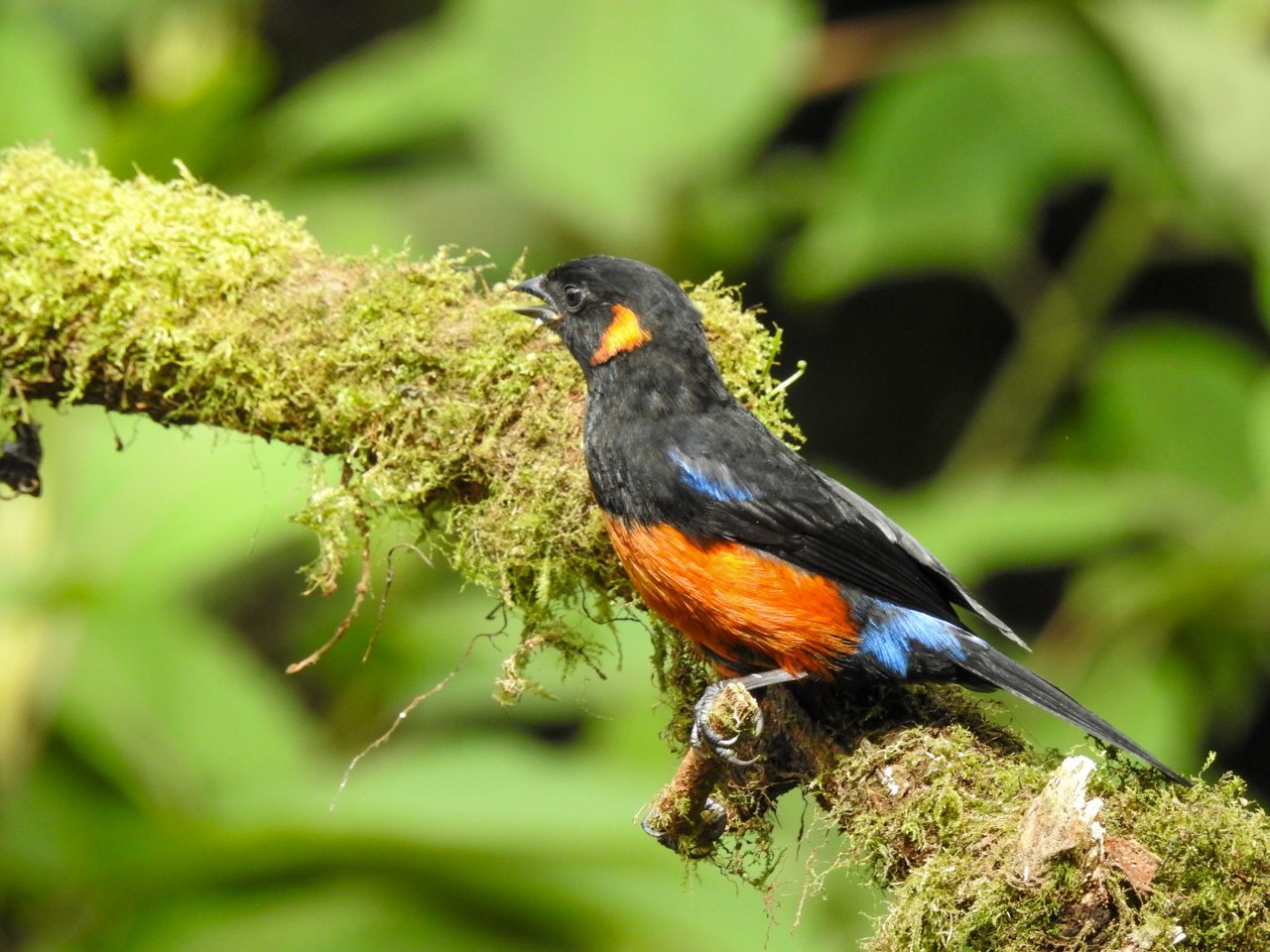
Scarlet-bellied Mountain-Tanager © Paz A Irola
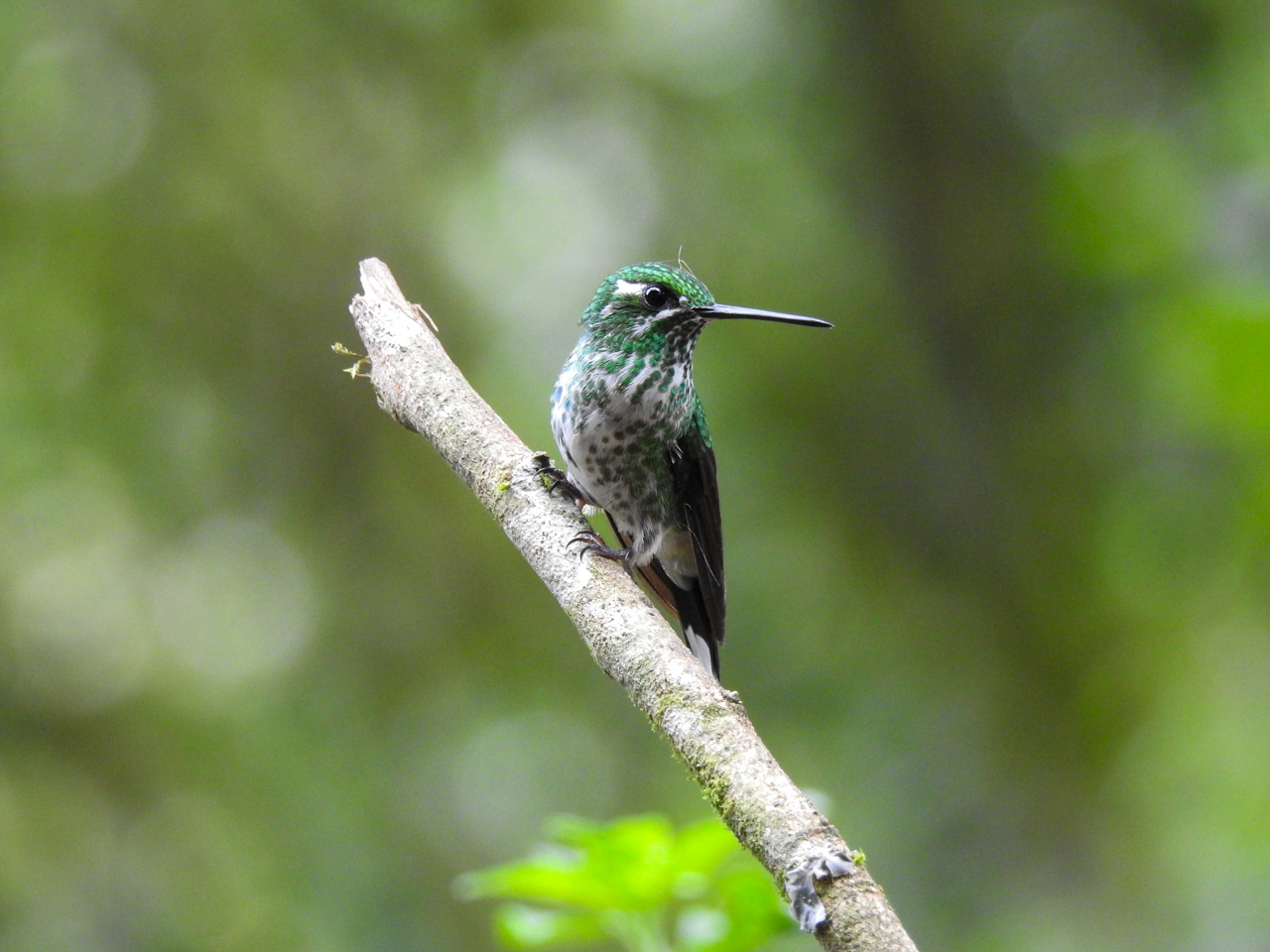
Purple-bibbed Whitetip © Paz A Irola
Arrival at Sachatamia was already productive. A mixed flock rolled through the parking area as we unloaded the bags: Blue-winged Mountain Tanager, Flame-faced Tanager, Beryl-spangled Tanager, Silver-throated Tanager, and Dusky Chlorospingus. Over the next three days, the lodge grounds and feeders delivered a steady parade of Chocó specialties: the electric Velvet-purple Coronet, Brown Violetear, and the endemic Choco Toucan. Central American Agoutis shuffled beneath the fruit feeders while Ecuadorian Thrush, Thick-billed Euphonia, and Orange-bellied Euphonia worked the bananas.
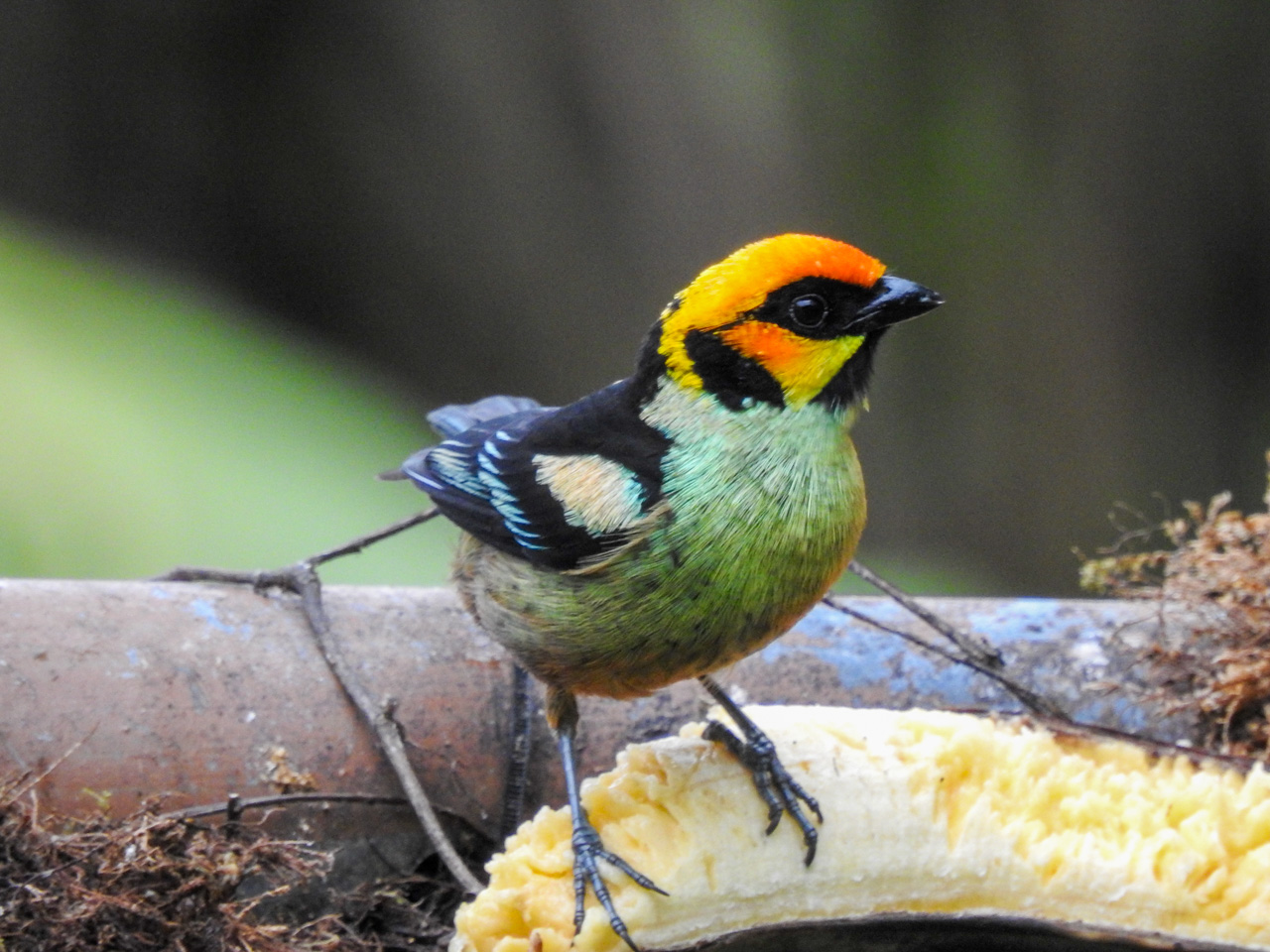
Flame-faced Tanager © Paz A Irola
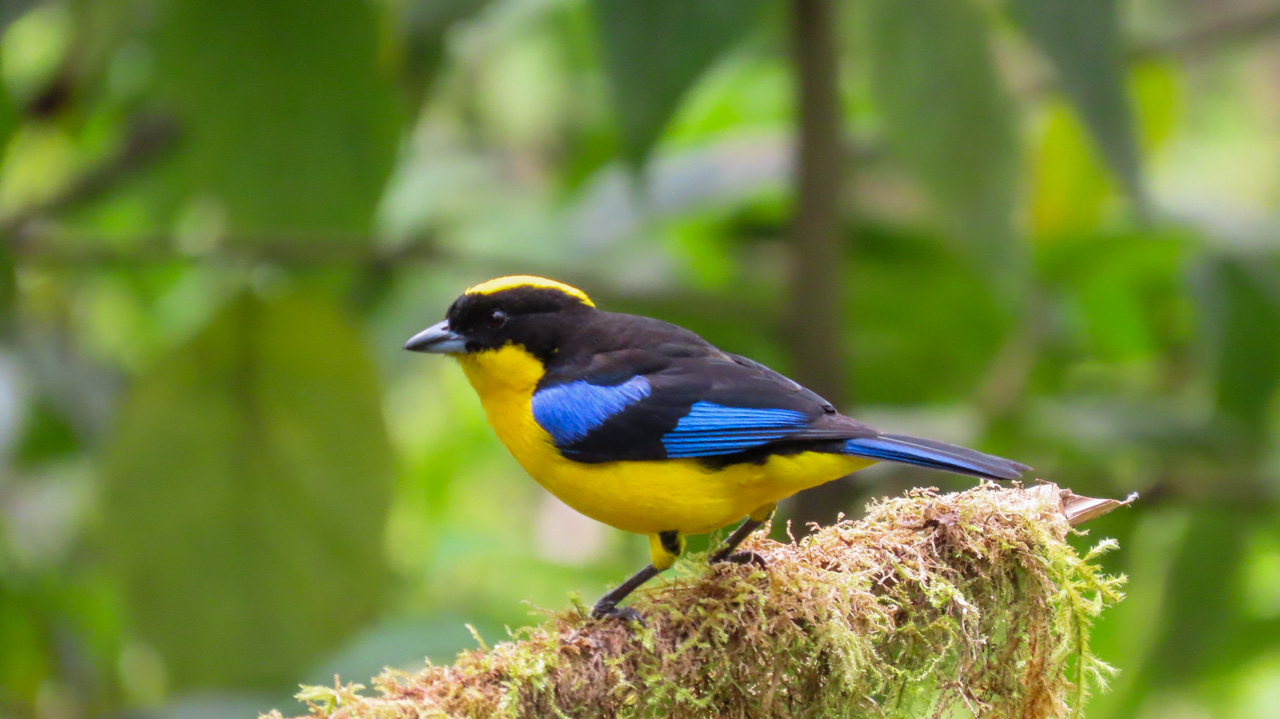
Blue-winged Mountain-Tanager © E Carman
The undisputed highlight at Sachatamia came on our first full morning at the insect light hide: a female Long-wattled Umbrellabird feeding an immature — an intimate look at a species most birders never see, let alone in a nesting context. From the same spot we also picked up Ornate Flycatcher, Streak-capped Treehunter, and a jewel that none of us expected: the Glistening-green Tanager! The morning kept giving: Crested Guan, a Barred Hawk soaring overhead, Golden-olive Woodpecker, and Smoke-colored Pewee.
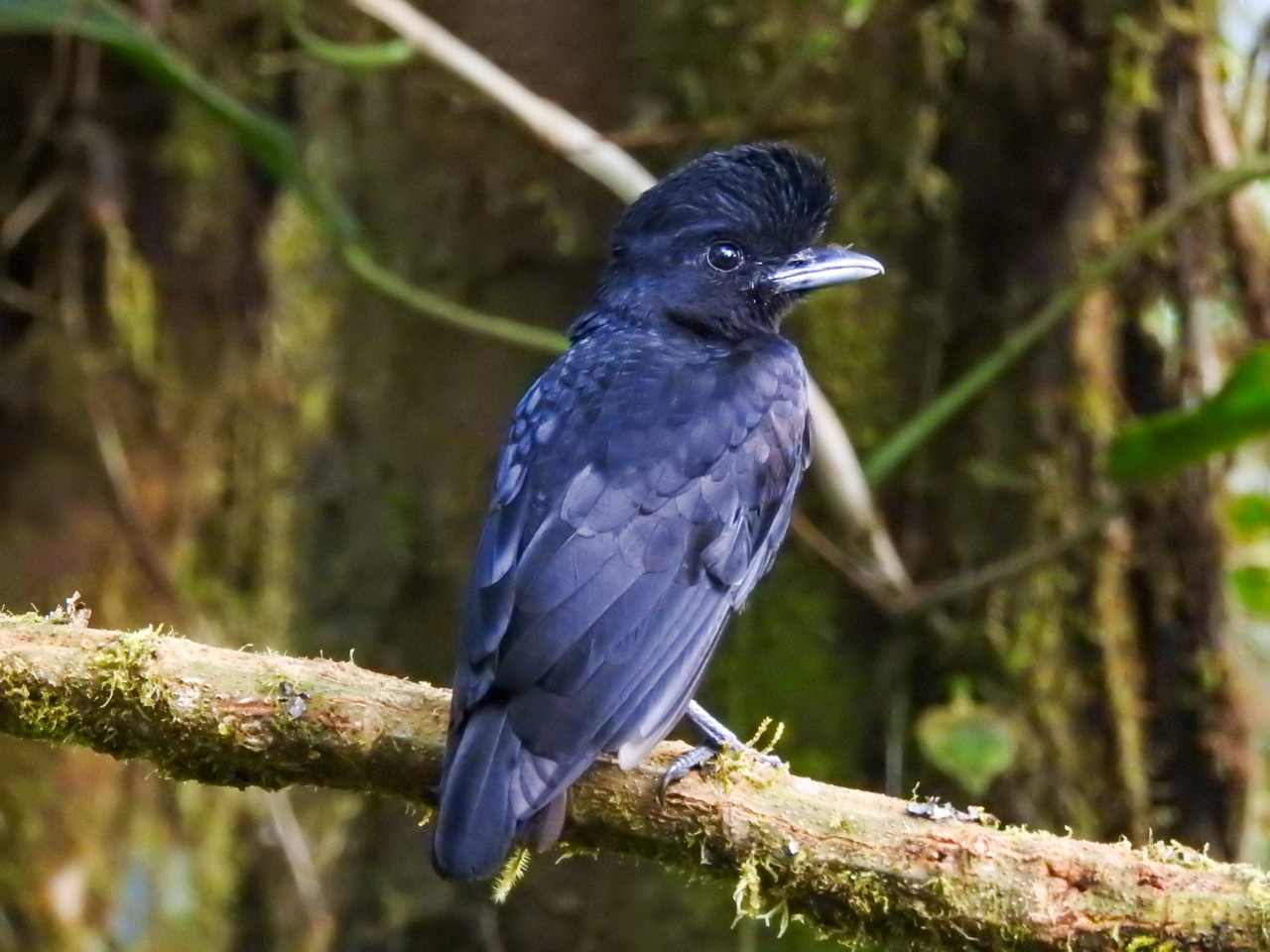
Long-wattled Umbrellabird © Paz A Irola
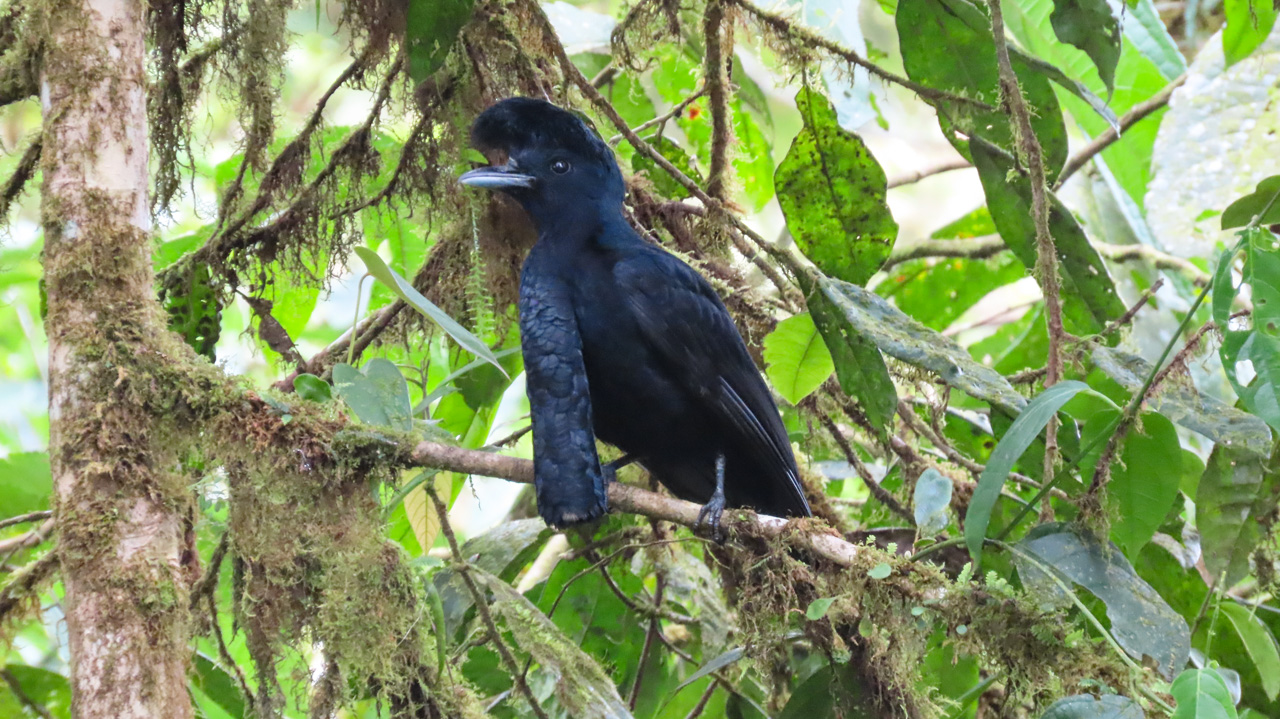
Long-wattled Umbrellabird ©E Carman
That afternoon we visited Guaycapi Lodge, a gem of a place where the late-day light and constant bird activity made for one of those afternoons you don’t want to end. The star here was the Plate-billed Mountain-Toucan a Chocó endemic with that almost cartoonish, oversized rainbow bill — and we added Black-capped Tanager to the growing tanager list.
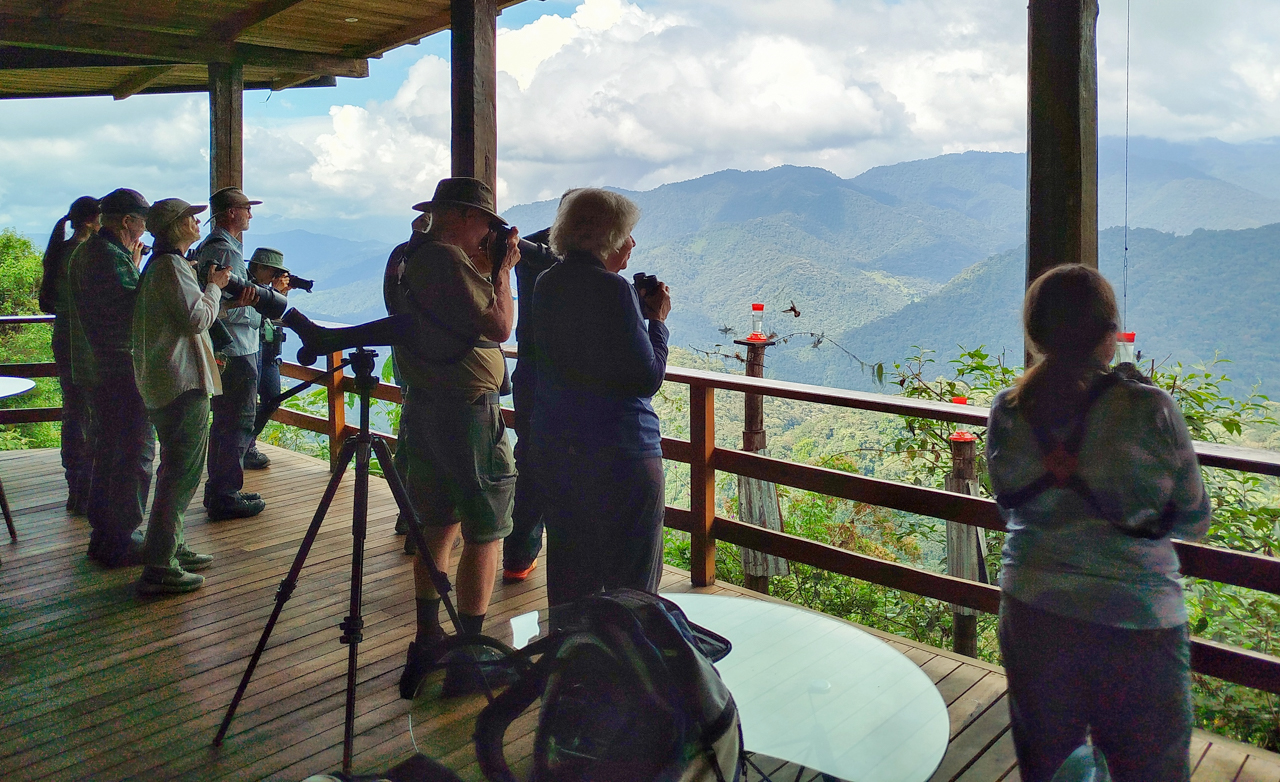
Birding Guaycapi feeders © Ernesto Carman
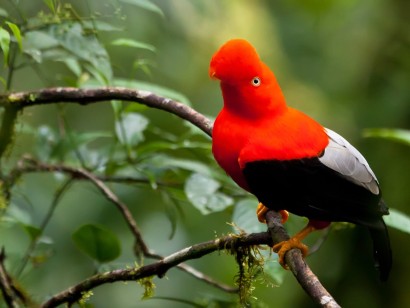
Our final morning in the Chocó took us to Refugio Paz de las Aves, a place that is as much a conservation story as it is a birding site. We started pre-dawn at the Cock-of-the-rock lek with Esteban, one of Don Ángel’s nephews, as our guide male Andean Cock-of-the-rocks displayed and called at close range, their scarlet plumage almost glowing in the low light. Afterwards, we had the honor of meeting Don Ángel Paz himself, the “Antpitta whisperer”. For those who didn’t know the backstory: Don Ángel is the man who essentially invented the practice of habituating antpittas to come to worm feeders. What began decades ago as a personal curiosity a former logger turning conservationist has become a model replicated across the Neotropics, and has given thousands of birders their first-ever look at these famously elusive birds. We only managed one antpitta species that morning, Willemina the Yellow-breasted Antpitta. The site also delivered Crimson-rumped Toucanet, a group of four Toucan Barbets, Golden-winged Manakin, Orange-breasted Fruiteater, and another new tanager for the list, Black-chinned Mountain Tanager.
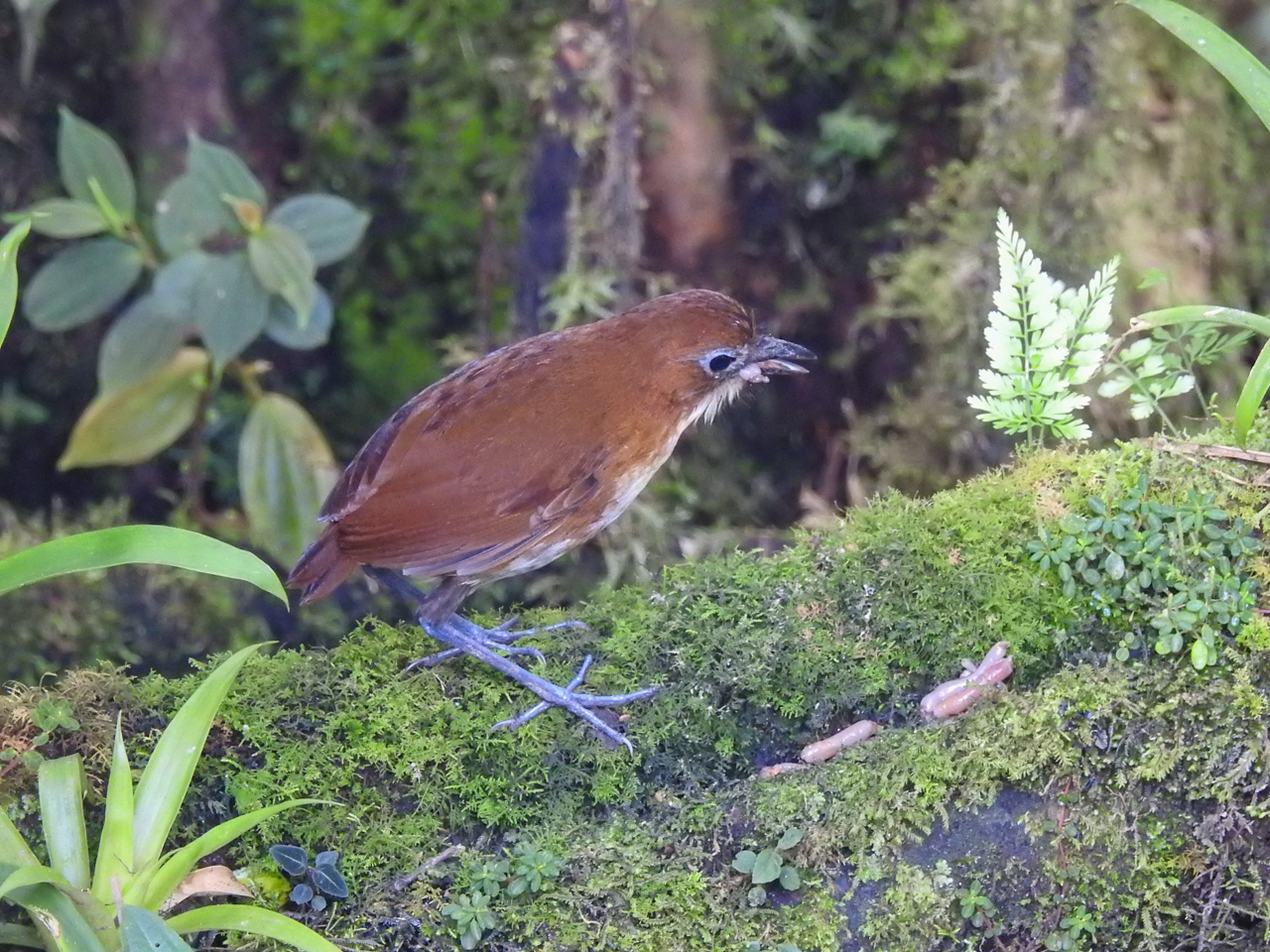
Yellow-breasted Antpitta © Paz A Irola
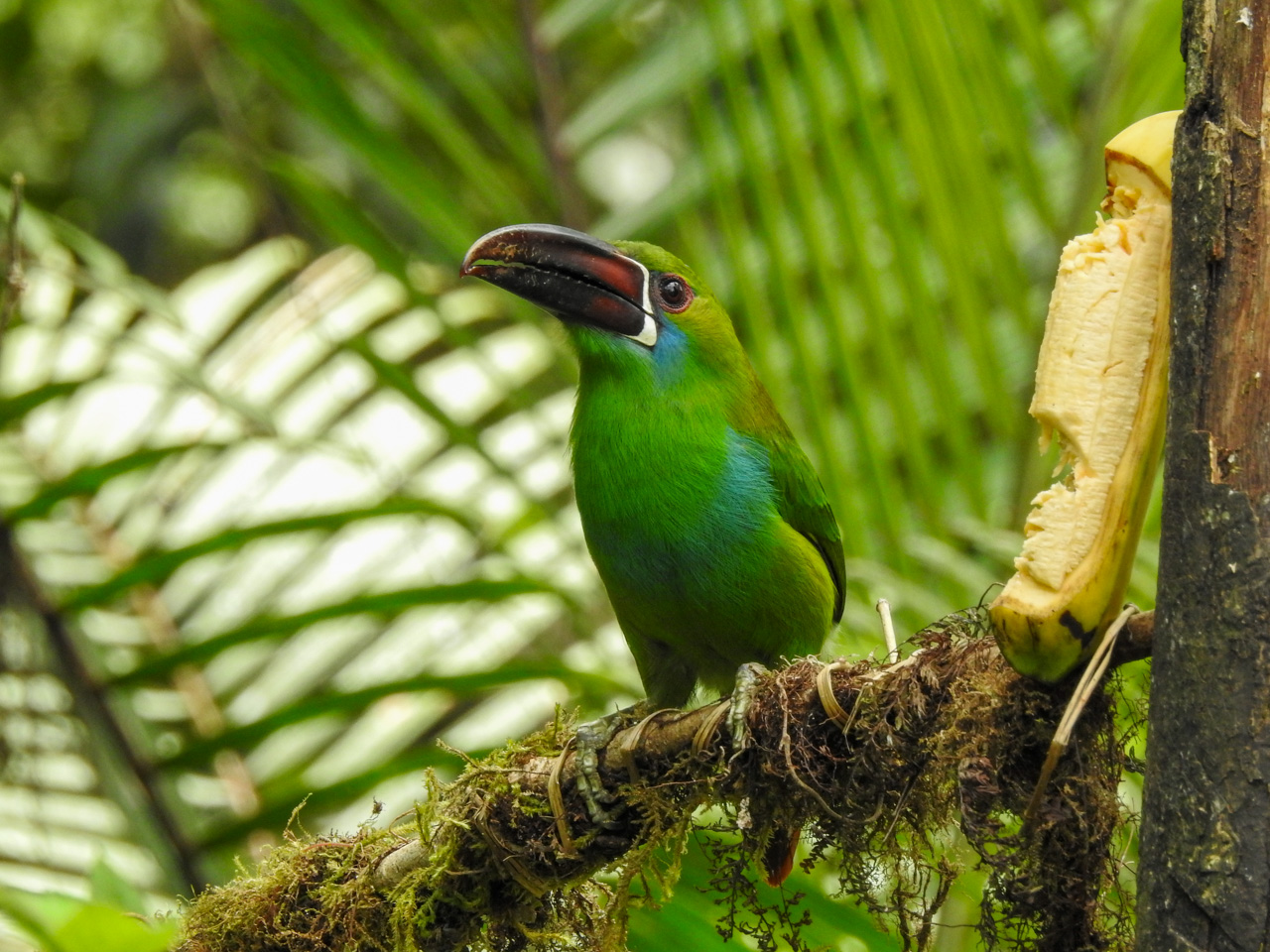
Crimson-rumped Toucanet © Paz A Irola
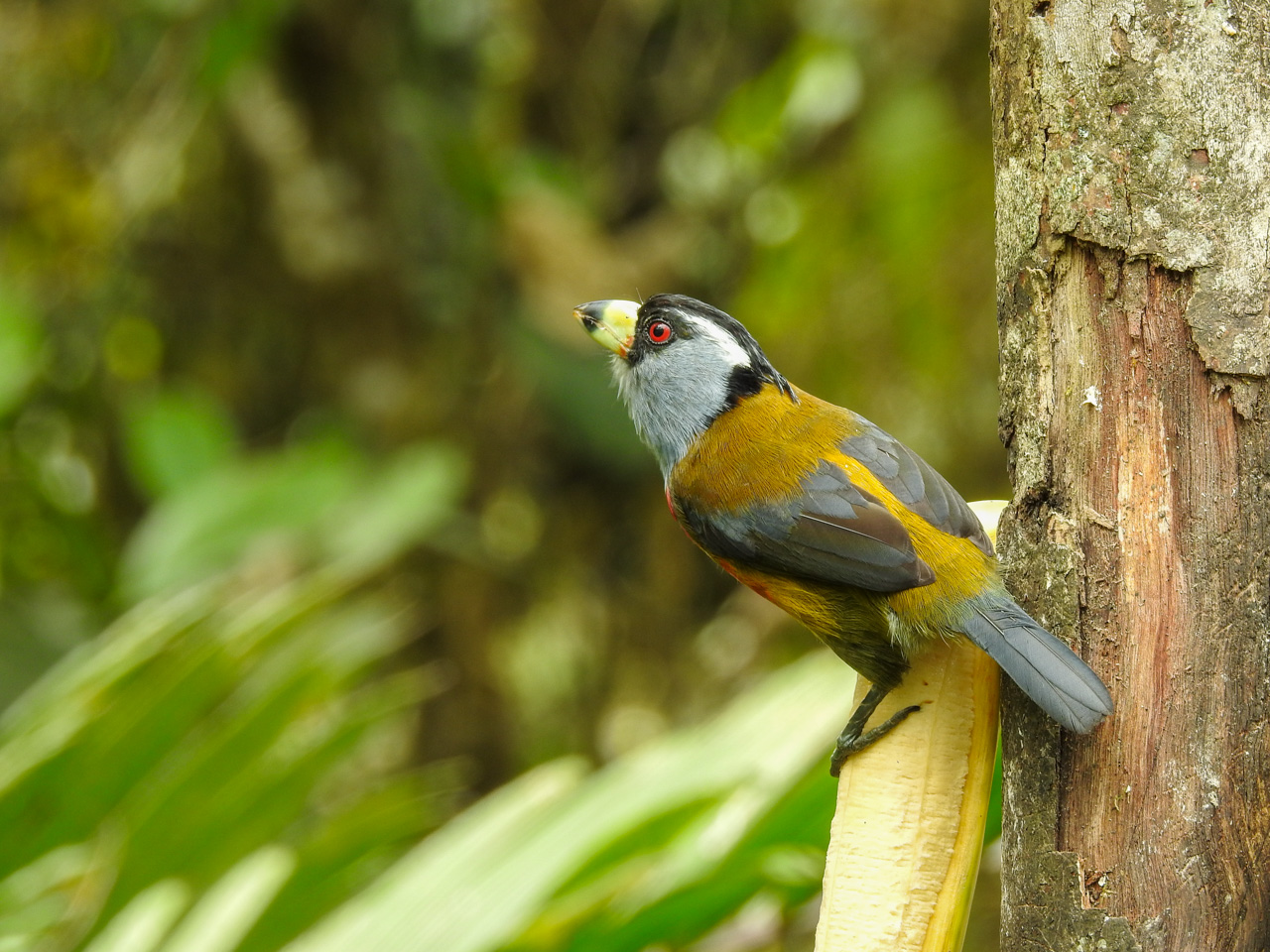
Toucan Barbet © Paz A Irola
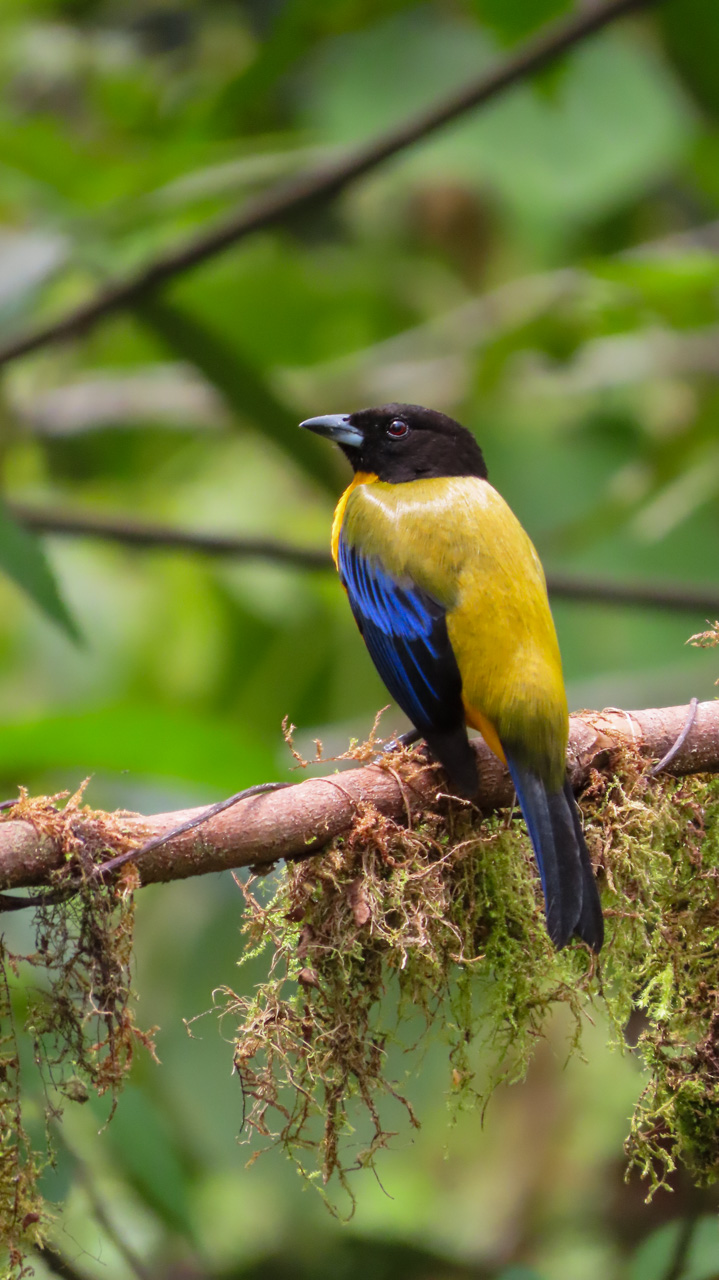
Black-chinned Mountain-Tanager © E Carman
In the afternoon we drove downhill to the village of Pedro Vicente to visit another amazing feeding station called FrutiTour, and it was wild with birds! We saw several new hummingbirds including Green Thorntail, Purple-crowned Fairy, Purple-chested Hummingbird, Violet-bellied Hummingbird and Long-billed Starthroat, as well as Great Antshrike, Dusky-faced Tanager, Pallid Dove, Orange-billed Sparrow and Red-headed Barbet. We finished our visit climbing up the brand new observation deck at FrutiTour where we saw Bronze-winged Parrot, Black-winged Saltator, Choco Tyrannulet and Pacific Antwren in the golden afternoon light.
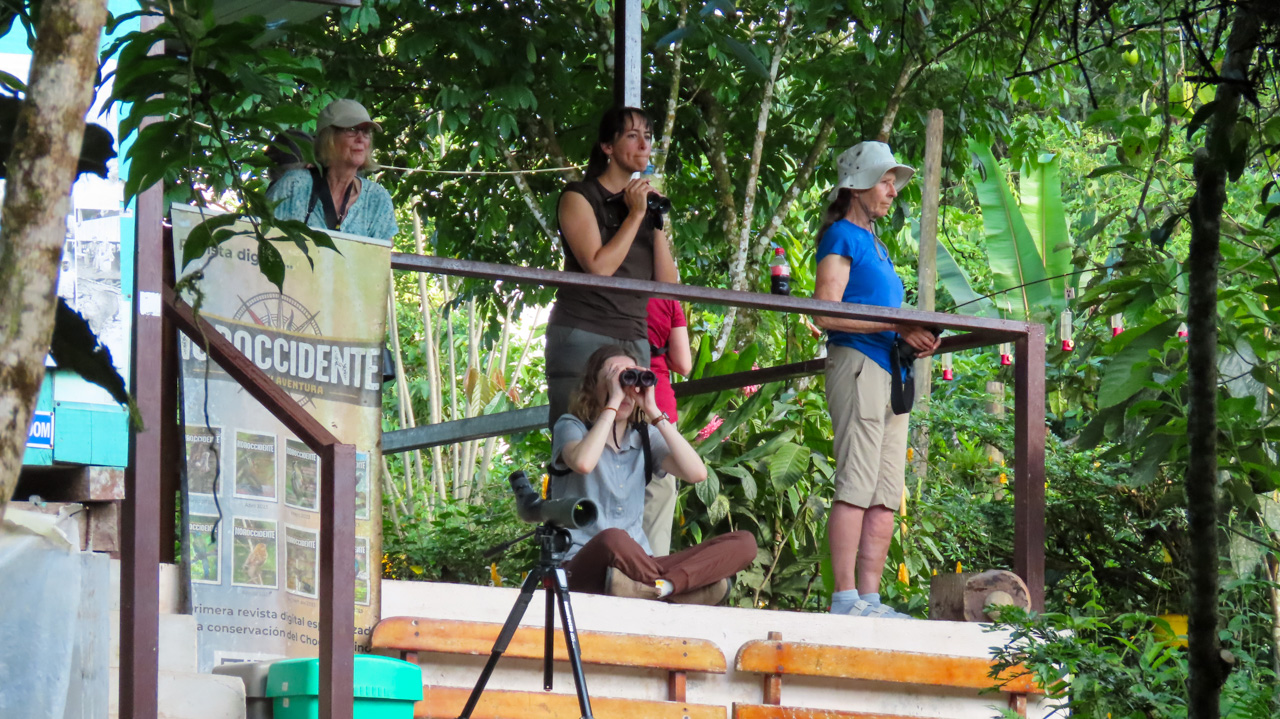
Birding Fruti Tour © E Carman
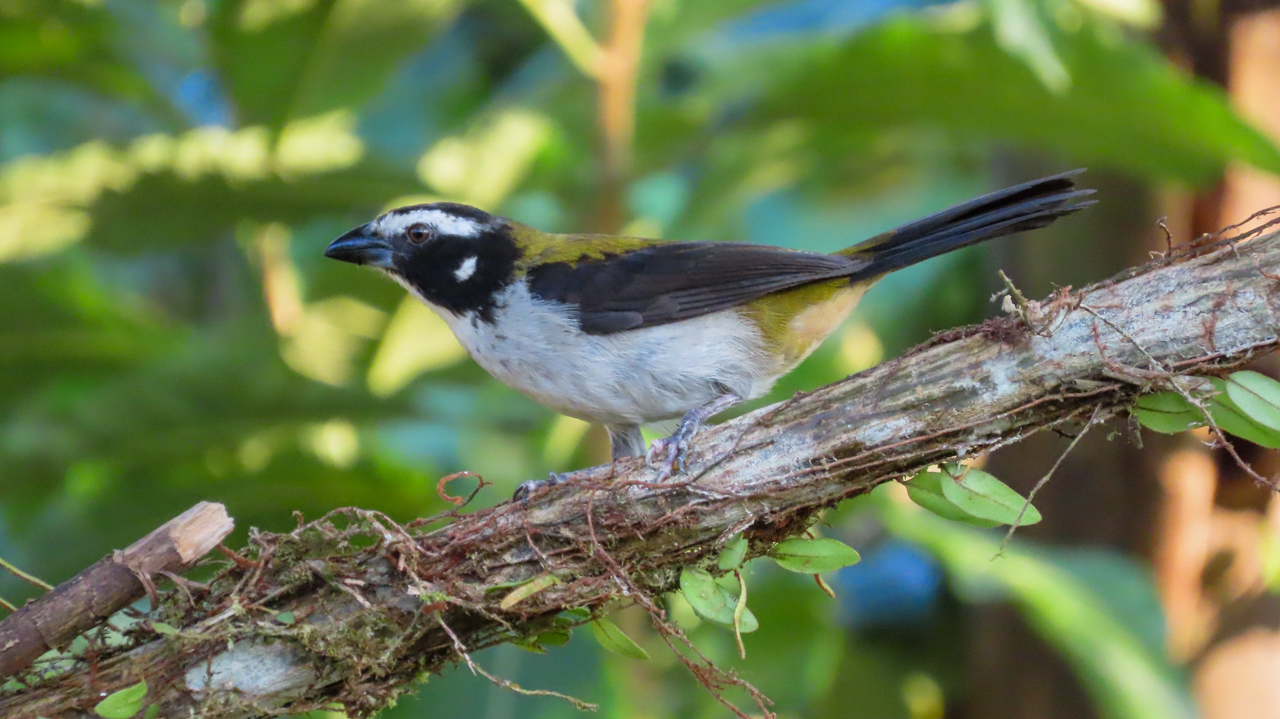
Black-winged Saltator © E Carman
Crossing the Andes — Calacalí horse race track, Papallacta, and the three little bears (April 3 – 4)
The drive from Sachatamia to Guango is one of the great birding transects in Ecuador, taking us from the Chocó up and over the Andes to the eastern slope. We broke it up with stops that gave the trip some of its most memorable wildlife moments. At the Calacalí horse race track, a dry scrub habitat on the outskirts of Quito, we added the inter-Andean species: Tufted Tit-Tyrant, Ash-breasted Sierra Finch, Band-tailed Sierra Finch, Band-tailed Seedeater, Golden Grosbeak, and a cooperative Merlin that posed long enough for photos.
And then came the moment that nobody will forget. Our driver José, scanning a hillside as we ascended, called out the word every Andean traveler wants to hear: ¡oso! A female Andean Bear with two cubs was feeding on achupalla (Puya sp.) on an open slope, close enough that we could watch her using her enormous paws to strip the spiny leaves. Other travelers stopped along the road, binoculars and phones came out, and for a long stretch of minutes the whole valley was paying attention to one family of bears. José and Ernesto happened to be wearing matching Andean Bear t-shirts that day we started calling them the “bear whisperers,” and the name stuck.
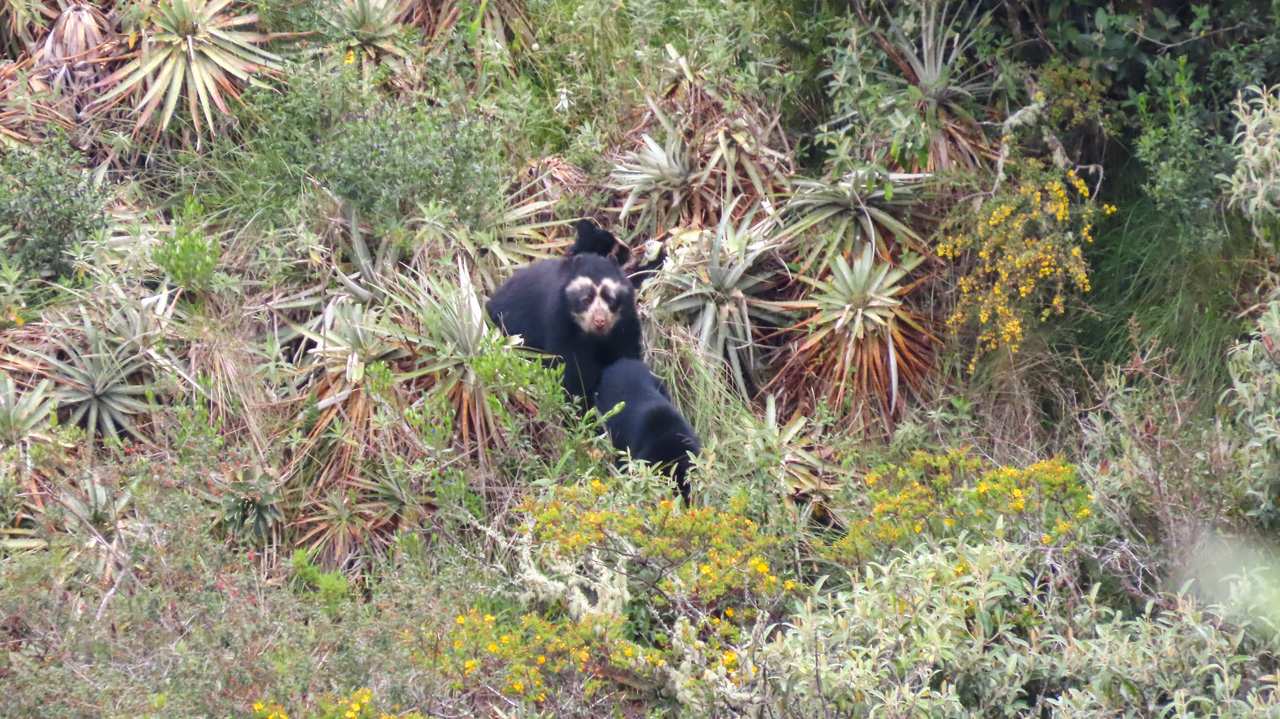
Andean Bear ©E Carman
Guango Lodge — Eastern Temperate Forest (April 4 – 5)
Guango sits at about 2,700 meters on the eastern slope, in a band of mossy temperate forest where rushing rivers slice through the landscape. We arrived in the late afternoon on April 4, and the next day we revisited the higher peak, at the Papallacta radio antennas inside Reserva Ecológica Cayambe-Coca, where we entered the páramo well above 4,300m. The wind was cold and the views splendid. Two Rufous-bellied Seedsnipes held their ground on the tundra-like slopes, and a Blue-mantled Thornbill worked the low vegetation. Tawny Antpittas called from the cushion plants, and we picked up Stout-billed Cinclodes and Plain-capped Ground-Tyrant. Two Andean Condors drifted over the ridgeline a bird that is never guaranteed, and that we all had hoped to see from the very start of the trip.
The following day was dedicated entirely to the hummingbird feeders, the forest trails, and the river. Our local guide for the day was Luis Panamá, whose patience and gift for explaining bird behavior and ID features became a real highlight more than once, Luis would stop the group to walk us through exactly how to tell a Chestnut-breasted Coronet from the other brown hummers at the feeders, or pick apart the subtleties of Tourmaline Sunangel.
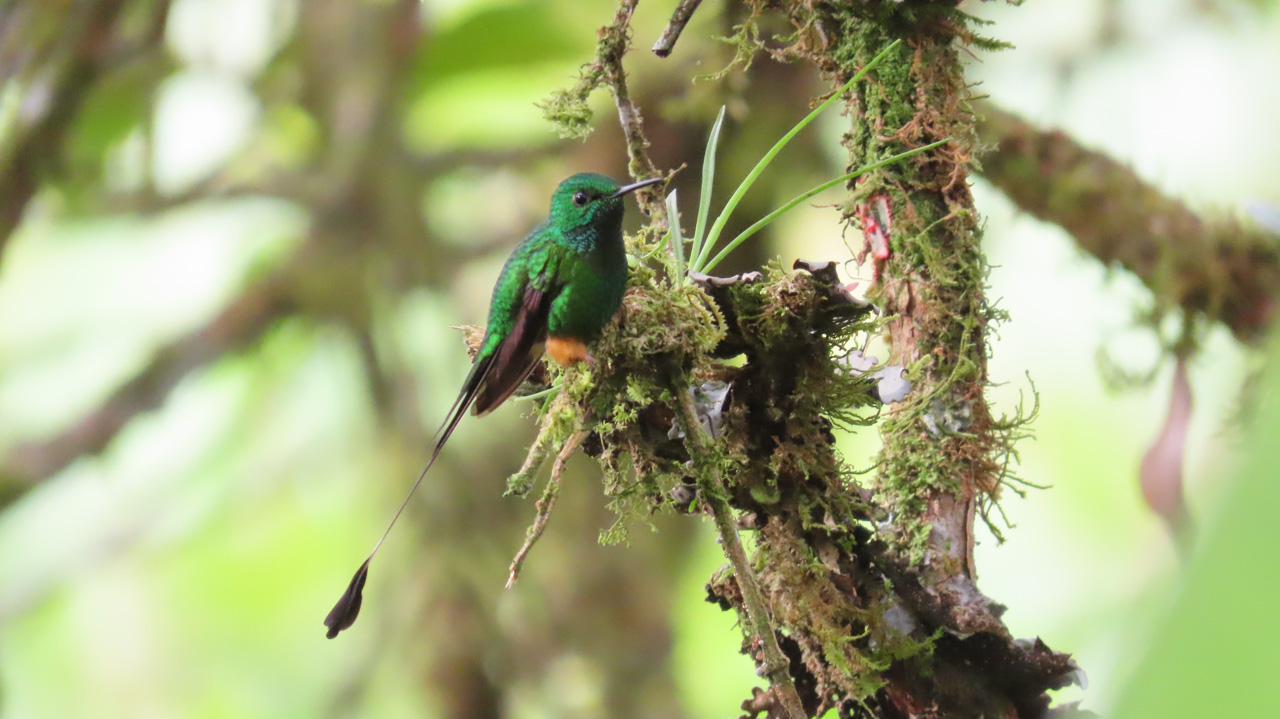
Peruvian Rackettail © E Carman
The hummingbird feeders at Guango are in a class of their own. To the species we had already seen, we added Collared Inca (a different population than Zuro Loma’s), Long-tailed Sylph, Bronzy Inca, White-bellied Woodstar, and the cheerful Tourmaline Sunangel. Down at the river, a Torrent Duck pair held its own against the whitewater one of those quintessential Andean images — while Fasciated Tiger-Heron, White-capped Dipper, and Torrent Tyrannulet worked the rocks nearby.
Walking the trails with Luis, we had excellent views of Turquoise Jay flocks moving through the canopy, a perched Hooded Mountain Tanager, Mountain Cacique, Pearled Treerunner, Streaked Tuftedcheek, and Pale-naped Brushfinch. In the understory we connected with Pink-billed Cnemoscopus and Chestnut-bellied Chat-Tyrant both quietly charismatic birds that Luis found without effort.
Cabañas San Isidro — Eastern Cloud Forest (April 5 – 7)
On April 5 we descended from Guango through the cloud forest to San Isidro, stopping along the way at El Quetzal Bosque Protegido, a small private enterprise with a good feeder setup where we added Tawny-breasted Hermit, Green-backed Hillstar, Peruvian Racket-tail, Violet-fronted Brilliant, and Gorgeted Woodstar.
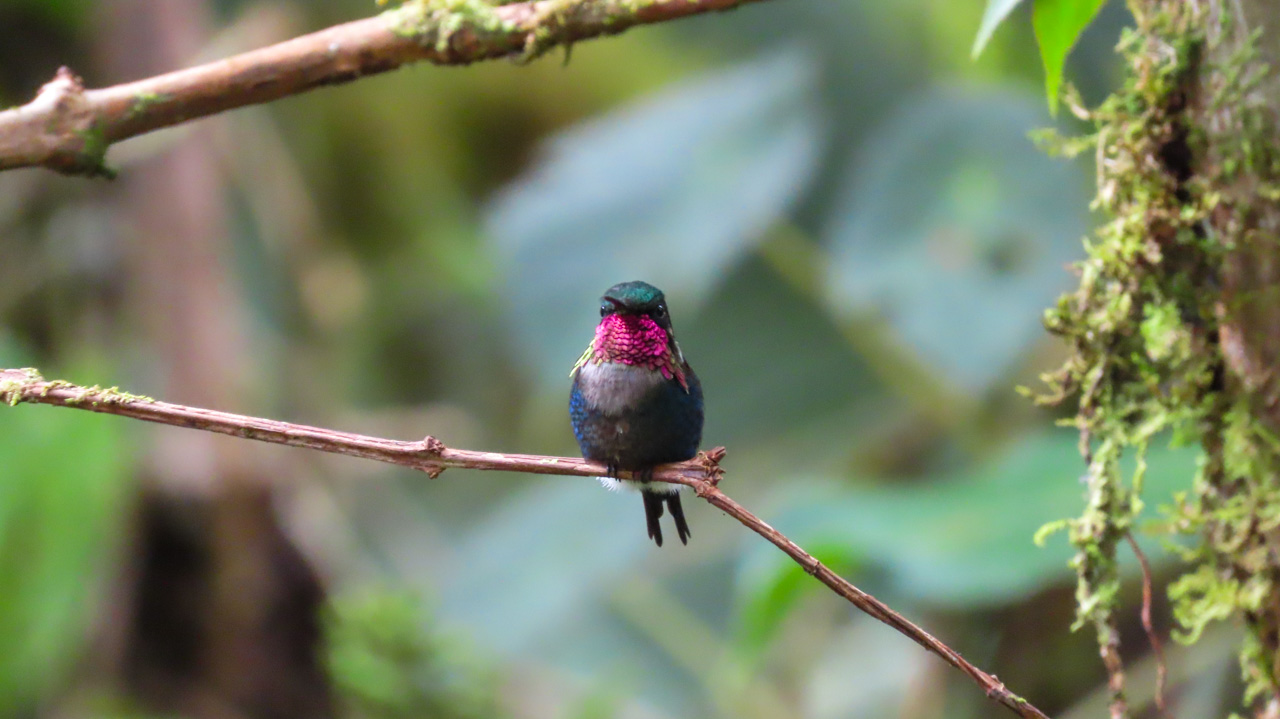
Gorgeted Woodstar © E Carman
San Isidro itself is one of those places where the line between “the lodge” and “the forest” disappears. Birds come to you. That first evening and this was probably the most anticipated bird of the eastern slope for many of us we watched a pair of the famous San Isidro Black-banded Owl hunting moths from the lights around the deck, calling to each other, and giving us the kind of prolonged, close-range views that you simply don’t get with most owls. Whether this population is eventually described as a full species or not, it’s a bird that lives in the memory.
April 6 was a full day in the field, and one of those days where the pace of the birding simply doesn’t let up. We started at dawn from the lodge deck, which at San Isidro is itself a premier birding spot the view across the valley fills with activity as the light comes up, and before breakfast we already had Black-eared Hemispingus, Andean Motmot, Masked Trogon, Montane Woodcreeper, Pale-edged Flycatcher and a mixed flock of tanagers working the edges.
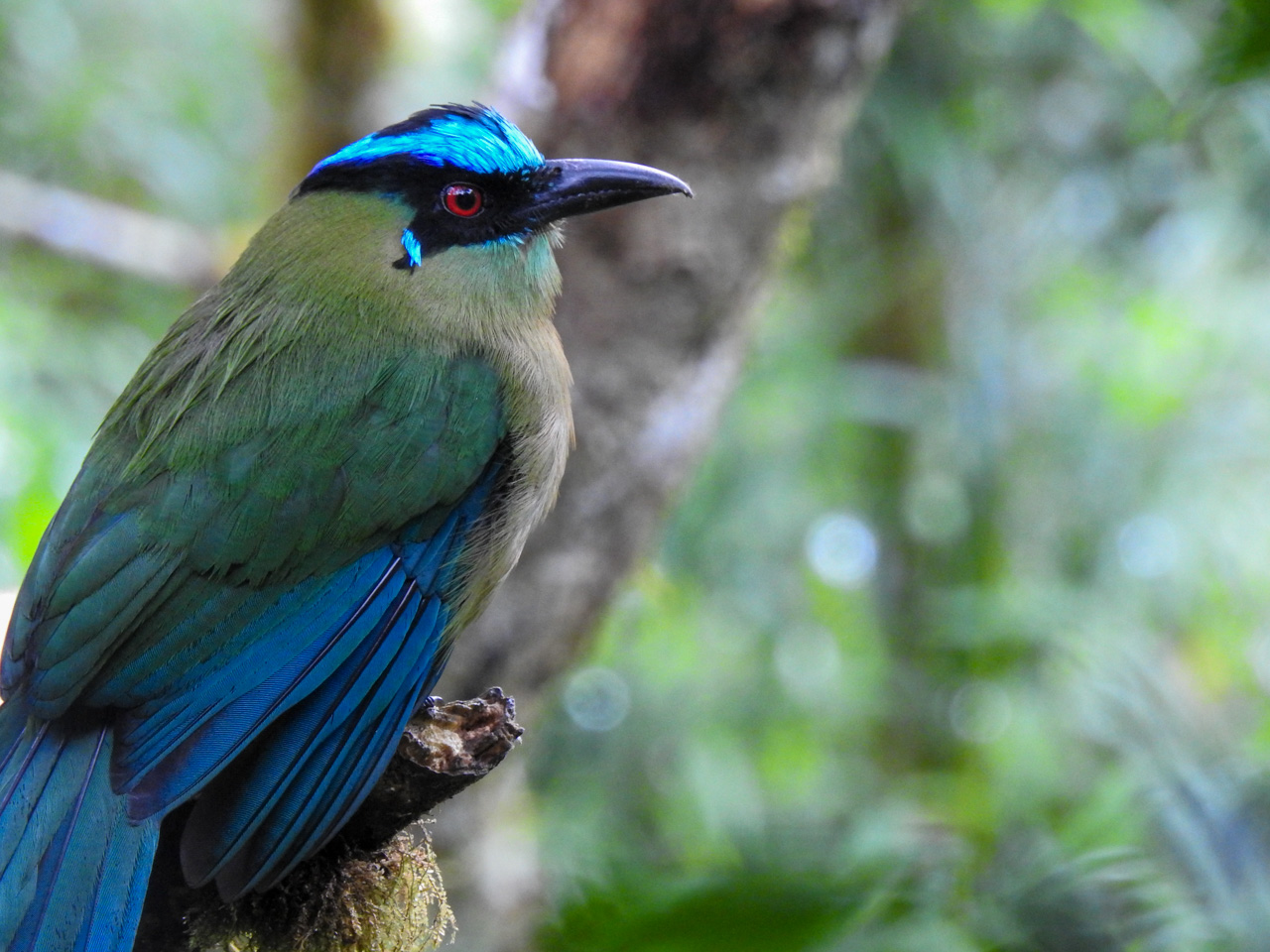
Andean Motmot © Paz A Irola
Then came the antpitta: White-bellied Antpitta, hopping in for her worms with the kind of composure you’d expect from a regular visitor and giving the whole group excellent looks at a bird that, without this kind of habituation work, would be a lifetime of frustration.
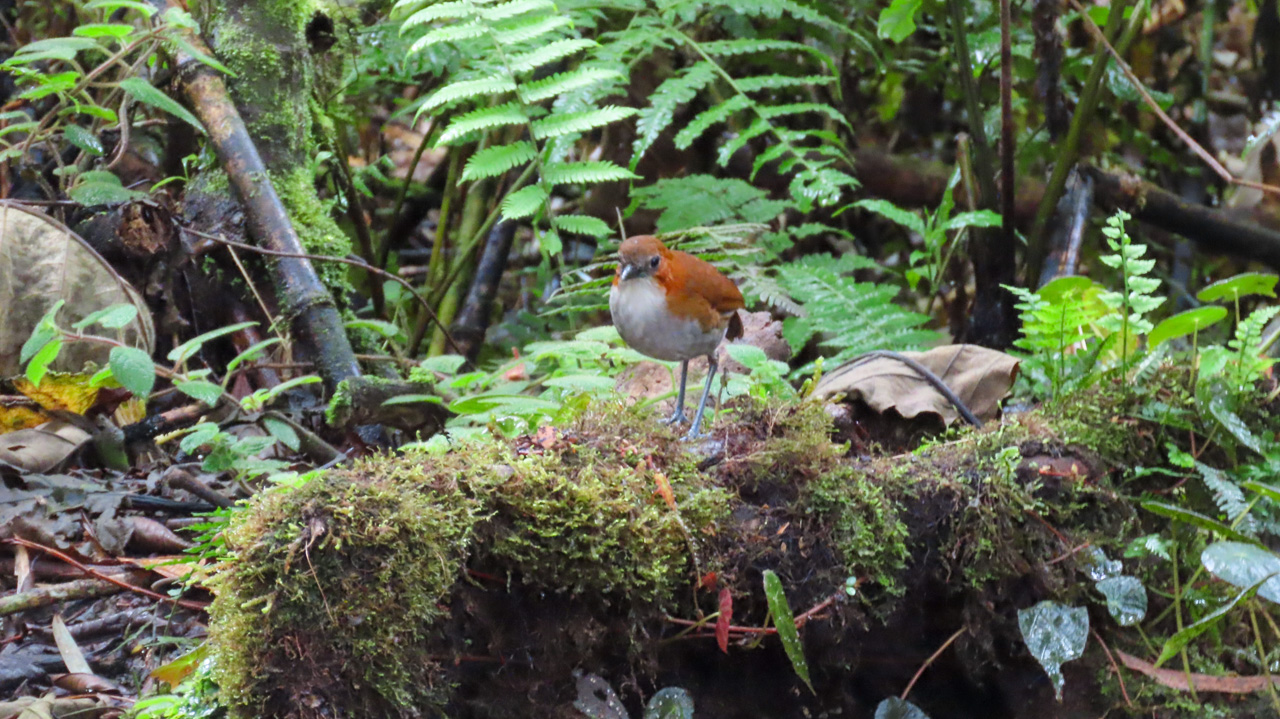
White-bellied Antpitta © E Carman
From there, we followed the sound of hammering along one of the trails and connected with a pair of Powerful Woodpeckers, a species that more than lives up to its name big, loud, and a delight to watch at close range as they moved along a mossy snag. The rest of the morning we worked the road south of the lodge, chasing mixed-species flocks as they rolled through. Each flock brought its own menu: Glossy-black Thrush, Saffron-crowned Tanager, Beryl-spangled Tanager, Andean Solitaire, Cinnamon Flycatcher, and the migratory Blackburnian and Canada Warblers hanging at the edges, getting ready for their long journey north. It was the kind of full-day birding, from deck to trail to road, that reminds you why a place like San Isidro is worth lingering in.
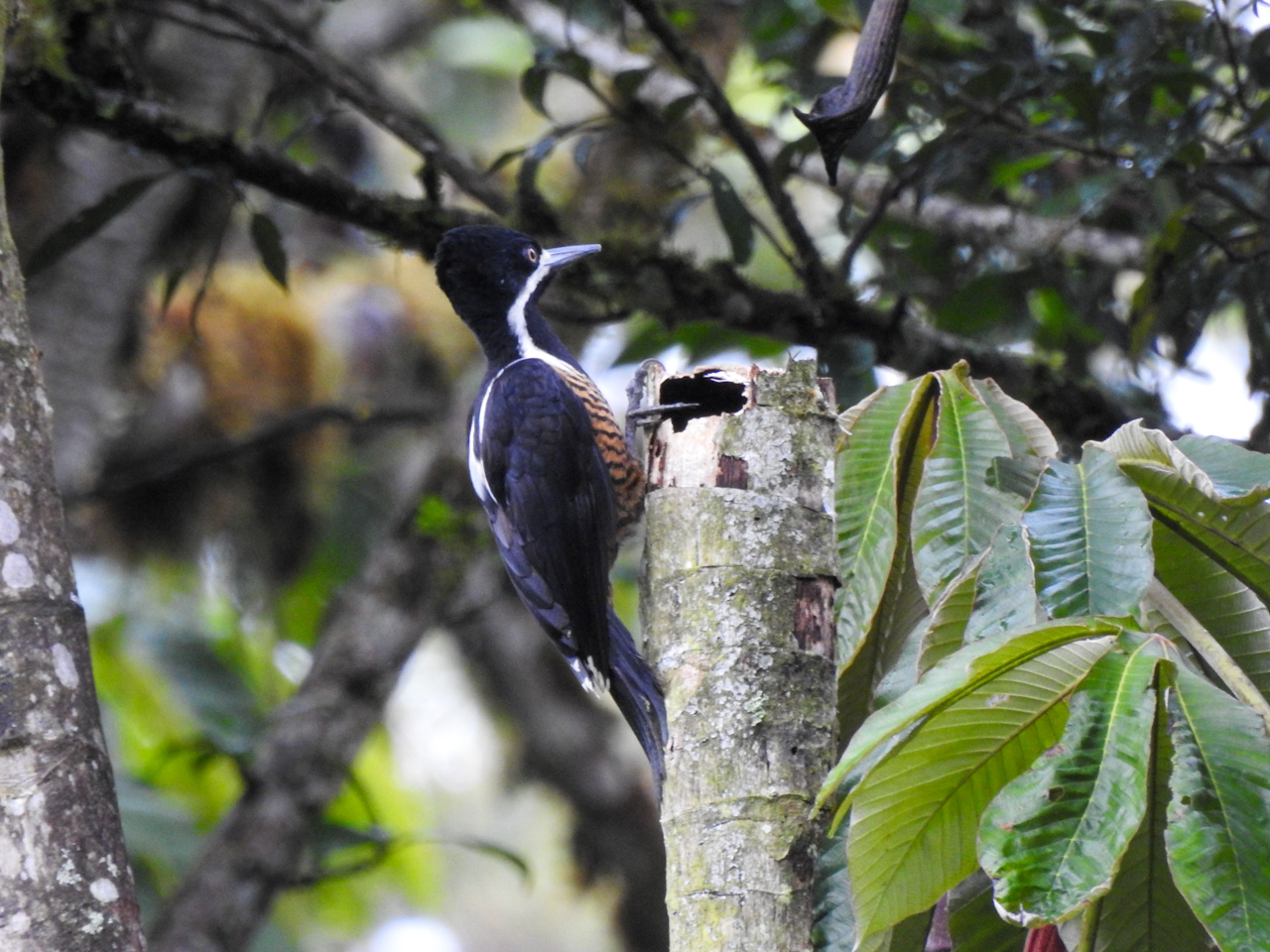
Powerful Woodpecker ©Paz A Irola
The following morning the trails above San Isidro delivered one of the trip’s highest-voltage raptor sightings. One of the participants caught sight of a Black-and-chestnut Eagle and rather than a single fleeting pass, the bird circled slowly overhead, giving us multiple long looks at its enormous size, crest, and rufous underparts. This is a threatened and increasingly scarce species, and to have it not just in flight but performing for us was a gift. The morning also produced Golden-headed Quetzal, Bluish Flowerpiercer, Plain-tailed Wren and Ash-crowned Tyrannulet.
Another San Isidro moment worth savoring: after several attempts on previous days to connect with Rufous-crowned Tody-Flycatcher, we finally had the full story on April 7 — a family of three, one adult actively feeding a fledgling in the bamboo. The kind of observation that goes beyond a checkmark on the list. On the mammal front, a Black Agouti visited the compost area, and Chestnut-crowned Antpitta called from the slopes but kept its distance.
WildSumaco Lodge — Foothill Amazon (April 7 – 10)
The descent from San Isidro to WildSumaco is a gradient compressed into a few hours of driving, and every bend in the road delivers new birds. Our first proper stop was a roadside cliff near Loreto, where an open rock face hosted the local specialty we had come for: a loose party of Cliff Flycatchers — eleven of them — sallying out into space and returning to their ledges, blending in perfectly with the rocks. This is one of those birds whose behavior is almost more memorable than its plumage.
We then spent a productive afternoon birding the Wawa Sumaco road before reaching the lodge. The foothill forest here is one of the most species-rich zones in all of Ecuador, and the list grew fast: Plumbeous Kite, Swallow Tanager, Red-stained Woodpecker, Blue-headed Parrot, Chestnut-fronted Macaw, Orange-fronted Plushcrown, Wire-crested Thorntail, and flocks of Swallow-tailed Kites landing in the trees for the night.
Our local guide at WildSumaco was Byron Gualavisí, a Sumaco native whose passion for his work and particularly his involvement with local community projects shaped two of the best days of the trip. One of Byron’s projects is Amarún Pakcha, a community-run cultural research and forest conservation initiative. We spent a morning there and the birding was superb, but what made the day special was that it happened inside a living conservation project. The site has a lek of the eastern, orange subspecies of Andean Cock-of-the-rock six males calling and bouncing in the understory and the forest around it delivered shy species that are hard to find anywhere else: Chestnut-headed Crake, Lanceolated Monklet, Rufous-breasted Wood-Quail, and Black-faced Antthrush. On a daytime roost we also found a Band-bellied Owl tucked into the vegetation.
WildSumaco’s hummingbird feeders are on a different plane altogether. In addition to the Wire-crested Thorntail that seemed to be everywhere, we enjoyed Napo Sabrewing, Golden-tailed Sapphire, Many-spotted Hummingbird, Gould’s Jewelfront, Black-throated Brilliant, Violet-headed Hummingbird, and the Blue-fronted Lancebill.
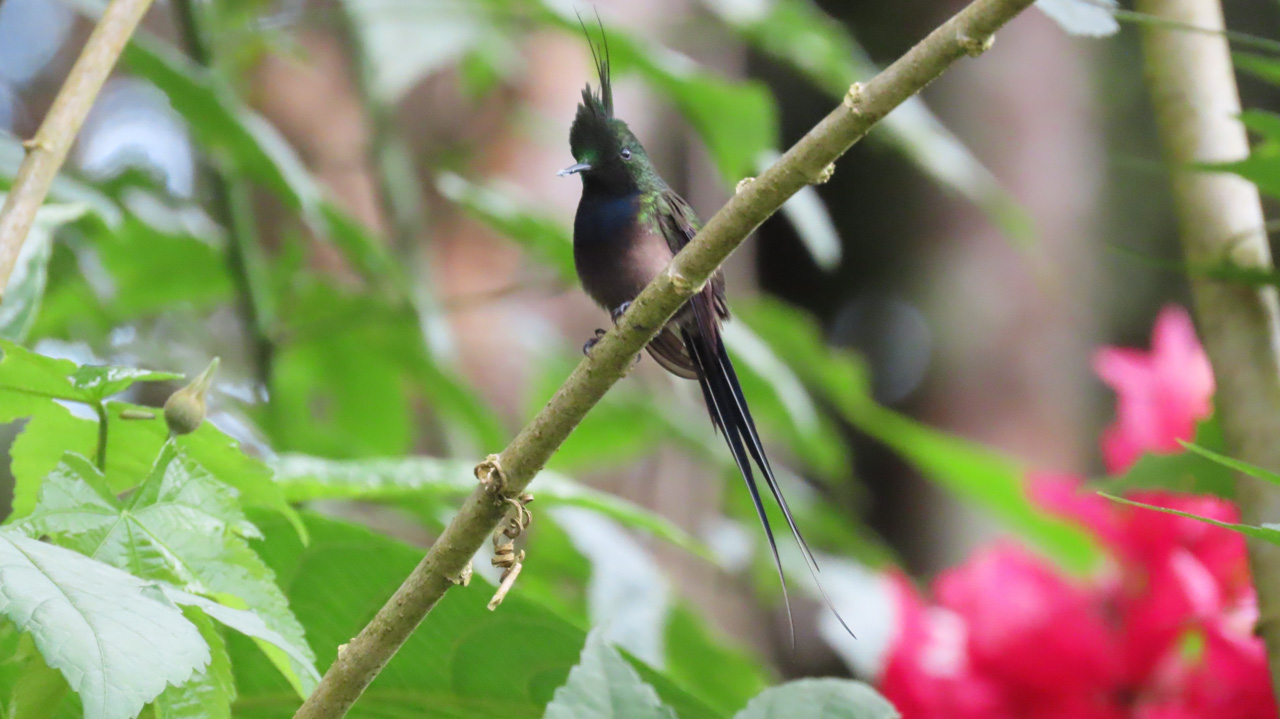
Wire-crested Thorntail © E Carman
The forest trails produced a lineup of foothill specialties: Blue-rumped Manakin, Plain-backed Antpitta, Ochre-breasted Antpitta, Black-streaked Puffbird, Paradise Tanager, and the magnificent Military Macaw flying over the ridge.
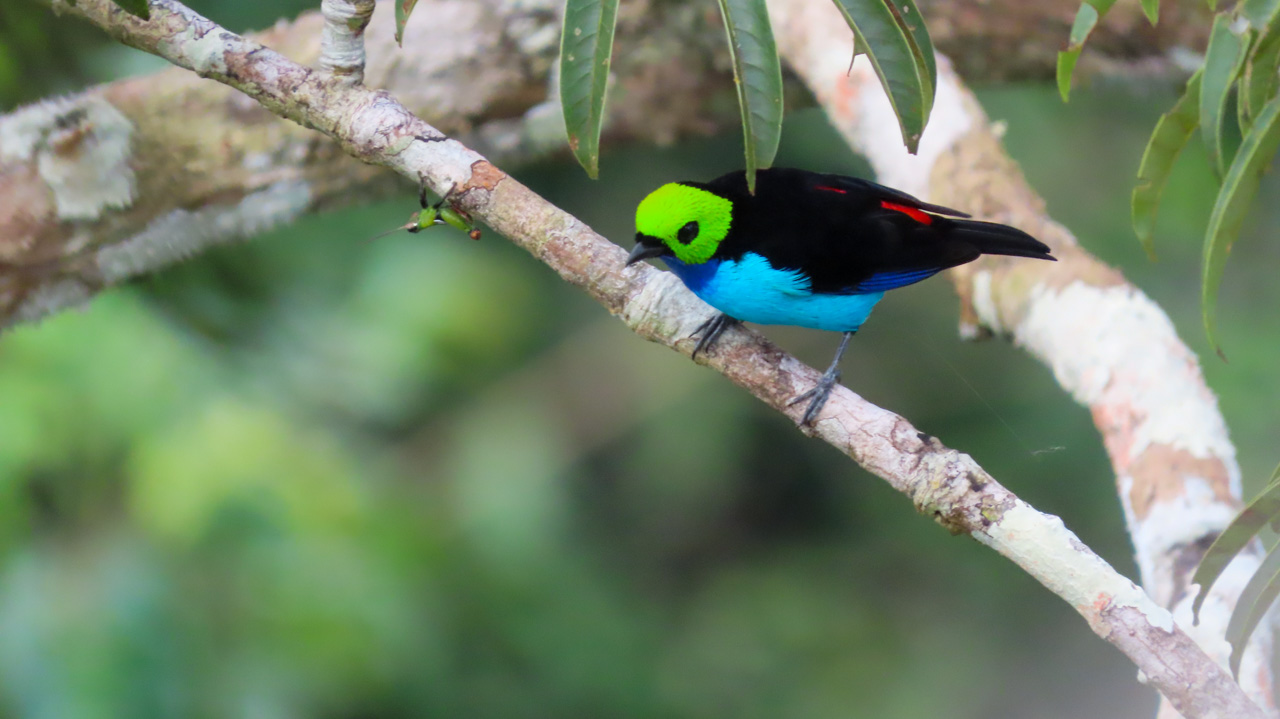
Paradise Tanager © E Carman
Byron also took us to see three species of Rallidae he has trained to come out of hiding for a meal of worms (Blackish Rail, Black-banded Crake and Rufous-sided Crake) and two more owls he had staked out on day roosts, Foothill Screech-Owl and Rufescent Screech-Owl. A troop of Black-mantle Tamarins delighted us with their acrobacies as they worked through the forest edge one morning our first monkeys of the trip.
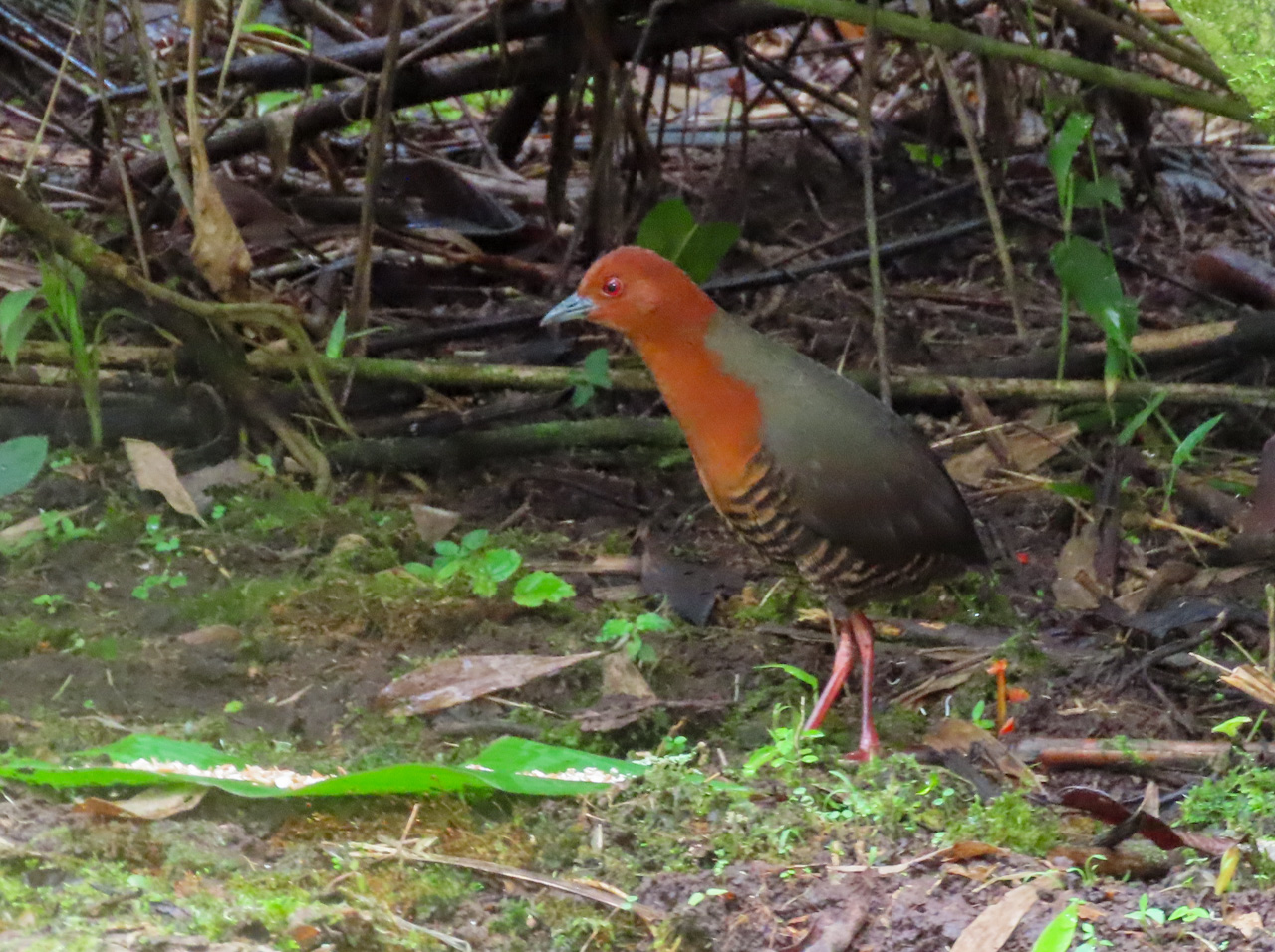
Black-banded Crake © E Carman
Sani Lodge — The Amazon (April 10 – 14)
Getting to Sani is part of the experience: a drive to Coca, a motorized canoe down the Napo River, a walk through terra firme forest, and then a long paddled canoe ride across the black-water lagoon. As the paddles dipped silently into the water and the forest closed in around us, you could feel the group settle into a different mood.
For the next four days we were in the Amazon basin, at a lodge that is entirely owned and operated by the Kichwa community of Sani Isla. Every interaction at the lodge — from the kitchen staff, to the boat drivers, to the naturalist guides represents a community choice to keep their forest standing. It is one of the most important conservation models in the Ecuadorian Amazon, and it was a privilege to support it.
Our local guides for the Sani days were Carlos “Churi” and Ólger, both tremendously experienced Kichwa naturalists who doubled as our boatmen. Churi and Ólger could identify species in flight, by call, even by silhouette at dusk, and their knowledge of local flora, medicinal uses, and forest ecology turned every outing into a layered experience.
Several Sani experiences stood out.
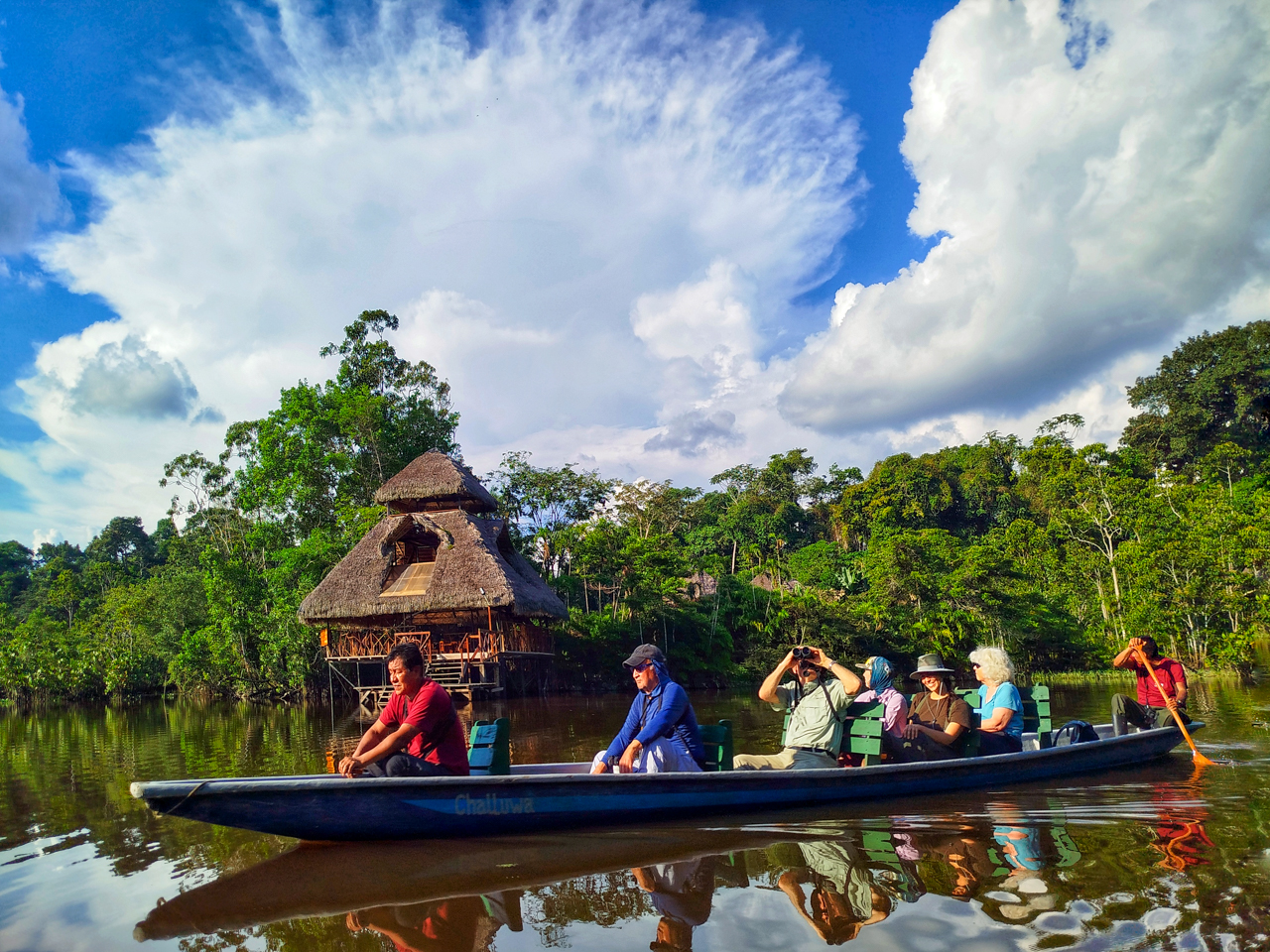
Birding Sani Lodge © E Carman
On the morning of April 13 we climbed the canopy tower built into an emergent kapok (Ceiba pentandra) a platform over thirty meters up, looking out across an unbroken green canopy to the horizon. From there we had long views of Spangled Cotinga, Plum-throated Cotinga, Dwarf Tyrant Manakin, Paradise Tanager, Opal-rumped Tanager, Many-banded Aracari, Ivory-billed Aracari, Slate-colored Hawk, Double-toothed and Gray-headed Kites, and a Great Potoo still tucked against its roost branch only a couple meters over our heads. Every time someone said “what’s that?” and pointed, the scope had to be dragged across an arc of rainforest to find it.
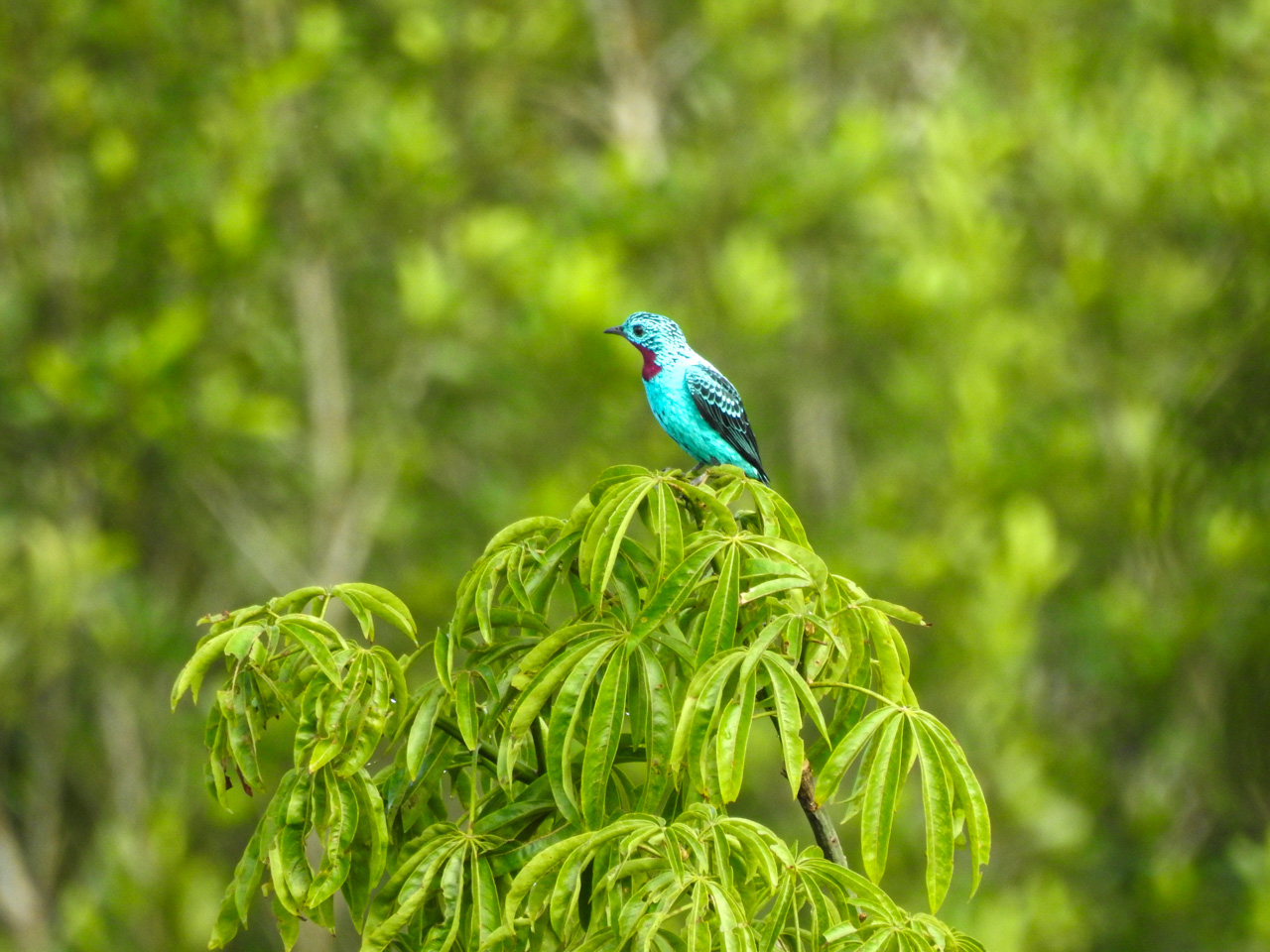
Spangled Cotinga © Paz A Irola
The evening canoe on April 11 was, for several of us, the single favorite moment of the trip. We set out late, deliberately, to stay on the water as dusk fell. The forest quieted. The stars came out over the lagoon. In the silence that specific Amazonian silence that is never really silent — we heard the descending whistle of a Cinereous Tinamou and then a Great Tinamou, two sounds that carry the weight of the rainforest. Two Common Potoos called from nearby snags and gave us fantastic views. A Common Pauraque sat on the bank. And then the silhouettes of two Tawny-bellied Screech-Owls moved quietly through the riverine trees. There is no bird list that can do justice to that evening it was about being present and experiencing the moment.
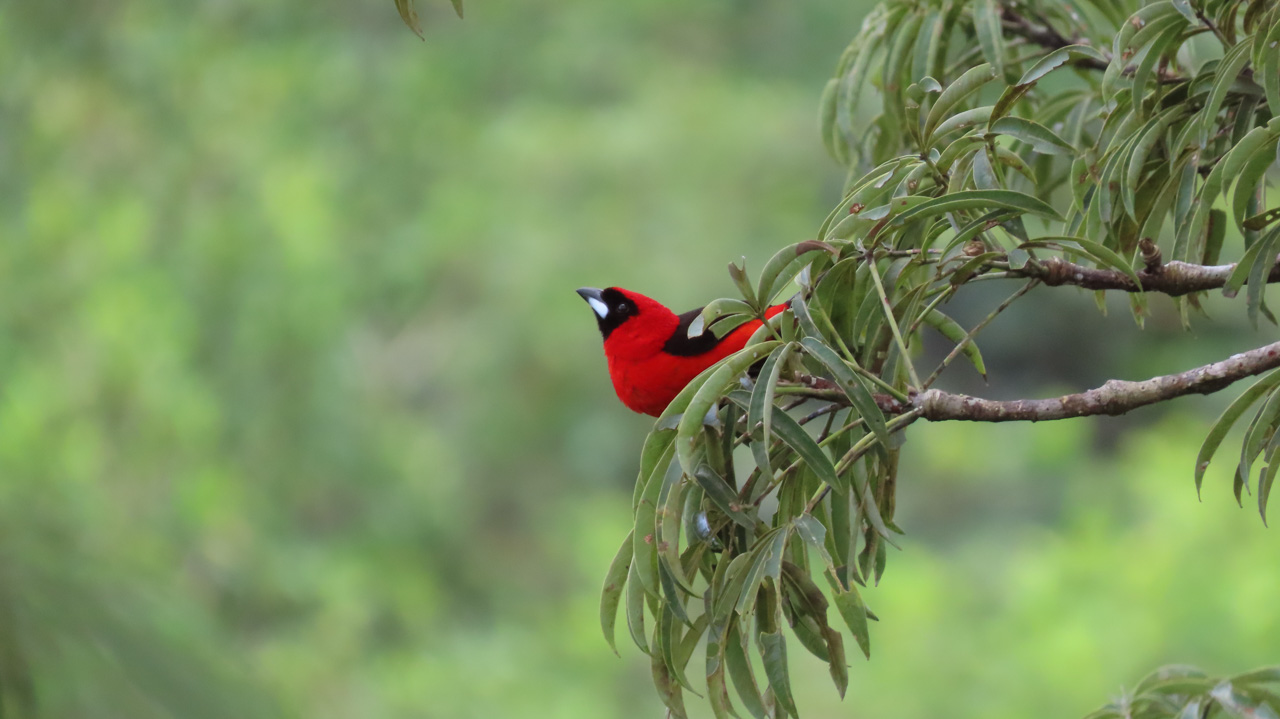
Masked Crimson Tanager © E Carman
On April 12 we visited the Sani community itself and this was one of the most meaningful days of the tour. The women of the community had prepared a traditional meal for us: tilapia with palmito cooked in plantain leaves, served alongside guayusa tea, with a demonstration of how they process cacao into chocolate from scratch. For a group that had talked often throughout the tour about the importance of community-based conservation and local economic support, this was the principle made edible. Before lunch, we birded the community and found a family of Western Pygmy Marmosets the world’s smallest monkey working a gum tree, along with Red Howler, Common Squirrel Monkey, and Common Woolly Monkey.
A small but lovely moment from that afternoon: a young girl from the community came over carrying a living Giant Amazonian Snail (Megalobulimus popelairianus) to show us. It was the first time I had ever seen one alive and because I work with Hook-billed Kites back in Costa Rica, snails are very much on my radar. I took the chance to share with the group that Ecuador is one of the few countries in the world where all three snail-eating kite species occur: Snail Kite, Hook-billed Kite, and Slender-billed Kite — each specialized on different snails, in different habitats. A terrestrial giant like Megalobulimus doesn’t end up on a kite’s menu, but holding it in your hand is the kind of encounter that makes the whole snail-raptor evolutionary story click.
Water birding around Sani was exceptional. Hoatzins were everywhere those prehistoric-looking, leaf-digesting birds that seem almost impossible to take seriously until you realize they’ve been doing exactly this since the dinosaurs were around. We had Sungrebe, adjacent roost areas with Capped Heron, Rufescent Tiger-Heron, Boat-billed Heron, and Black-capped Donacobius at every bend. Parrot and macaw flocks streamed overhead in the mornings: Red-bellied Macaw, Blue-and-yellow Macaw and Chestnut-fronted Macaw flew over the Napo docks. At the parrot clay licks on the south bank of the Napo, we had one of those rare proper rainforest spectacles dozens of Mealy Amazons, Orange-winged Amazons, Dusky-headed Parakeets, and Cobalt-winged Parakeets descending to the clay.
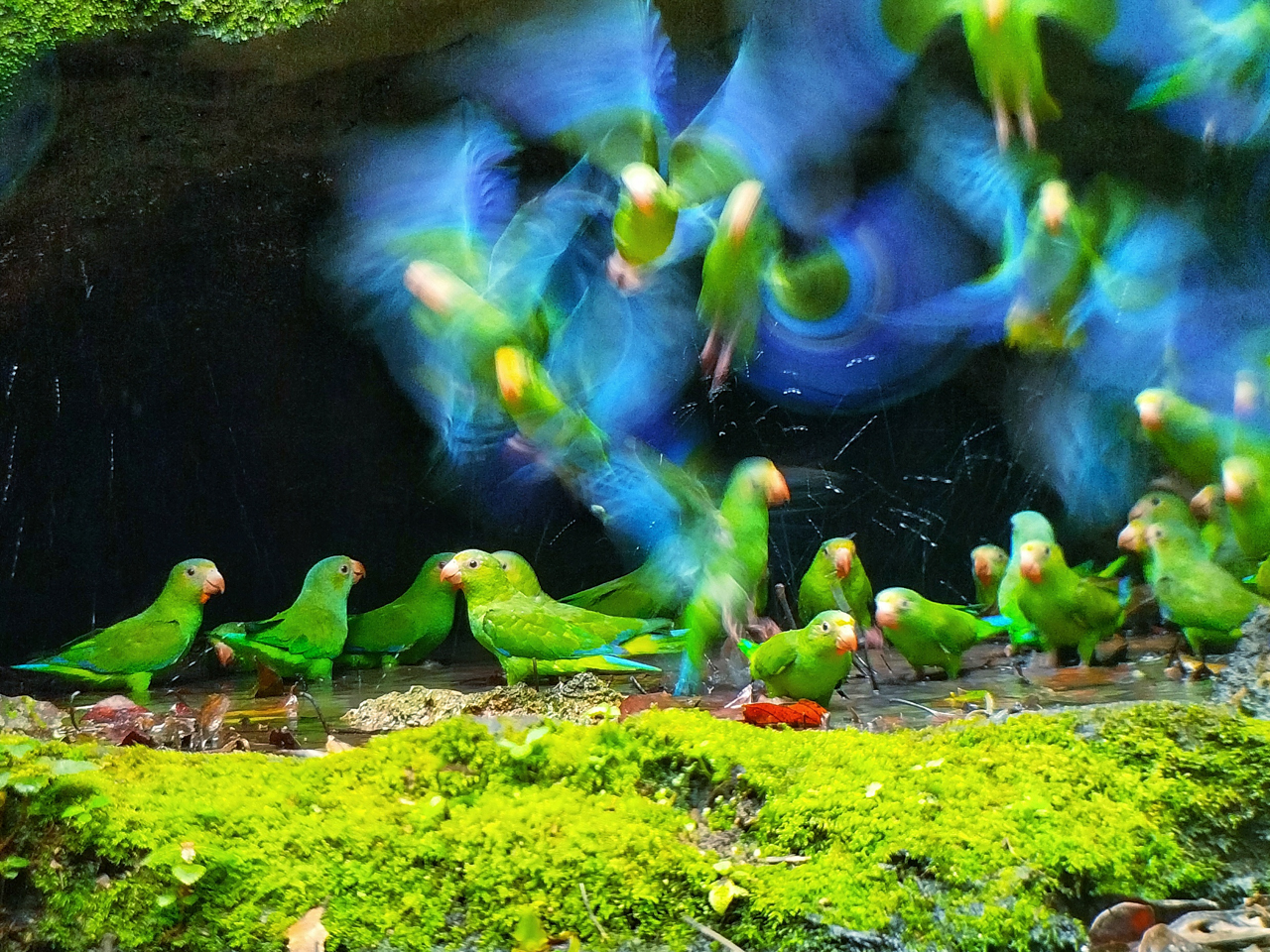
Cobalt-winged Parakeet © E Carman
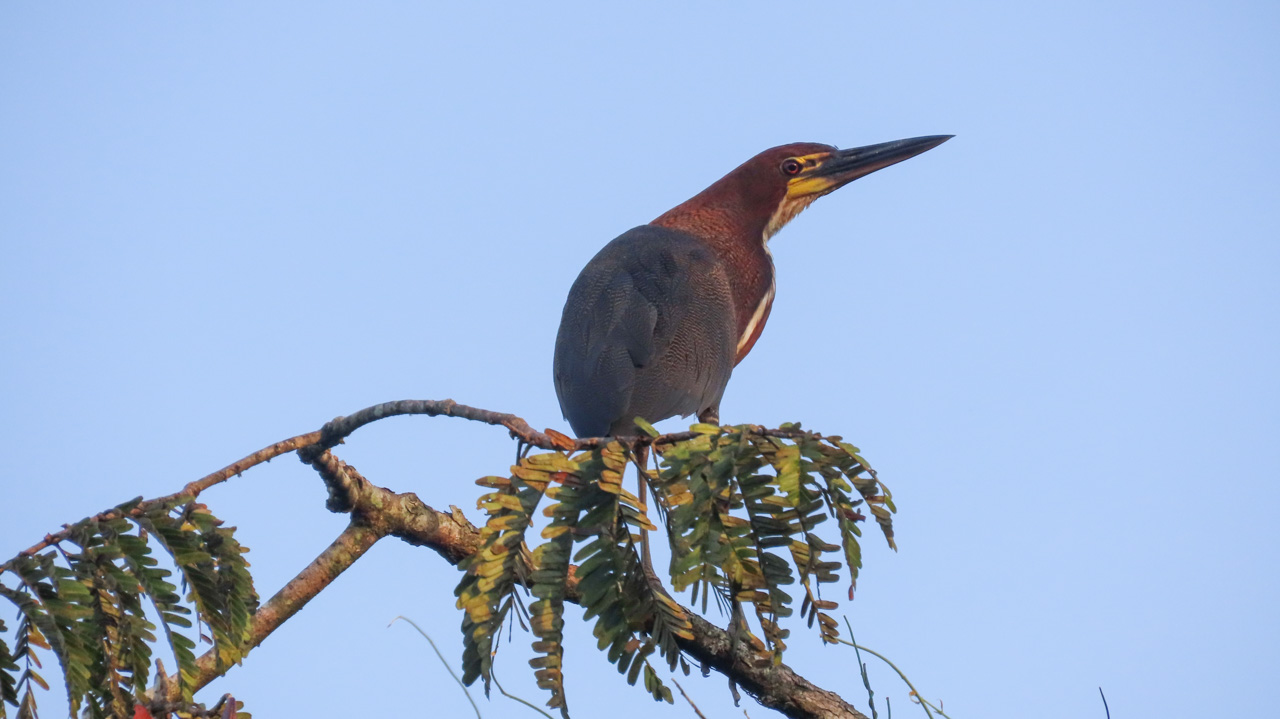
Rufescent Tiger-Heron © E Carman
Other Sani highlights: Great Jacamar, White-necked Puffbird, White-fronted Nunbird, Black-fronted Nunbird, Long-billed Woodcreeper, Cocha Antshrike (an oxbow-lake specialist), Scarlet-crowned Barbet, Wire-tailed Manakin, Golden-headed Manakin, Amazonian Umbrellabird, Screaming Piha (a sound you will never un-learn), and massive movements of Eastern Kingbirds on their northbound migration — one afternoon we counted 275 in a single flock! On several canoe rides we saw the tail and dorsal fin of Arapaima (Arapaima gigas, locally paichi) breaking the black water to breathe a mythic-feeling glimpse of one of the largest freshwater fish on Earth.
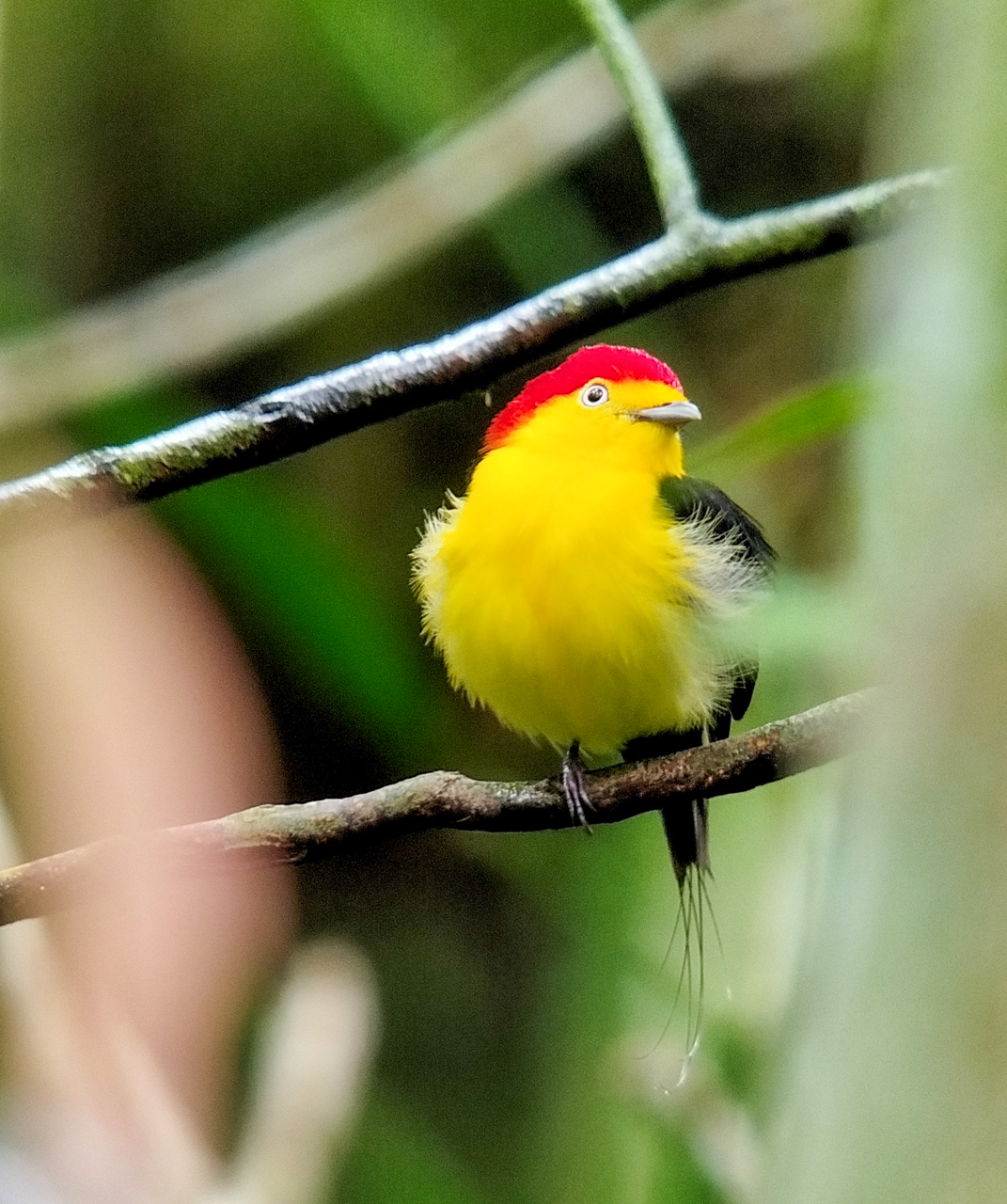
Wire-tailed Manakin © E Carman
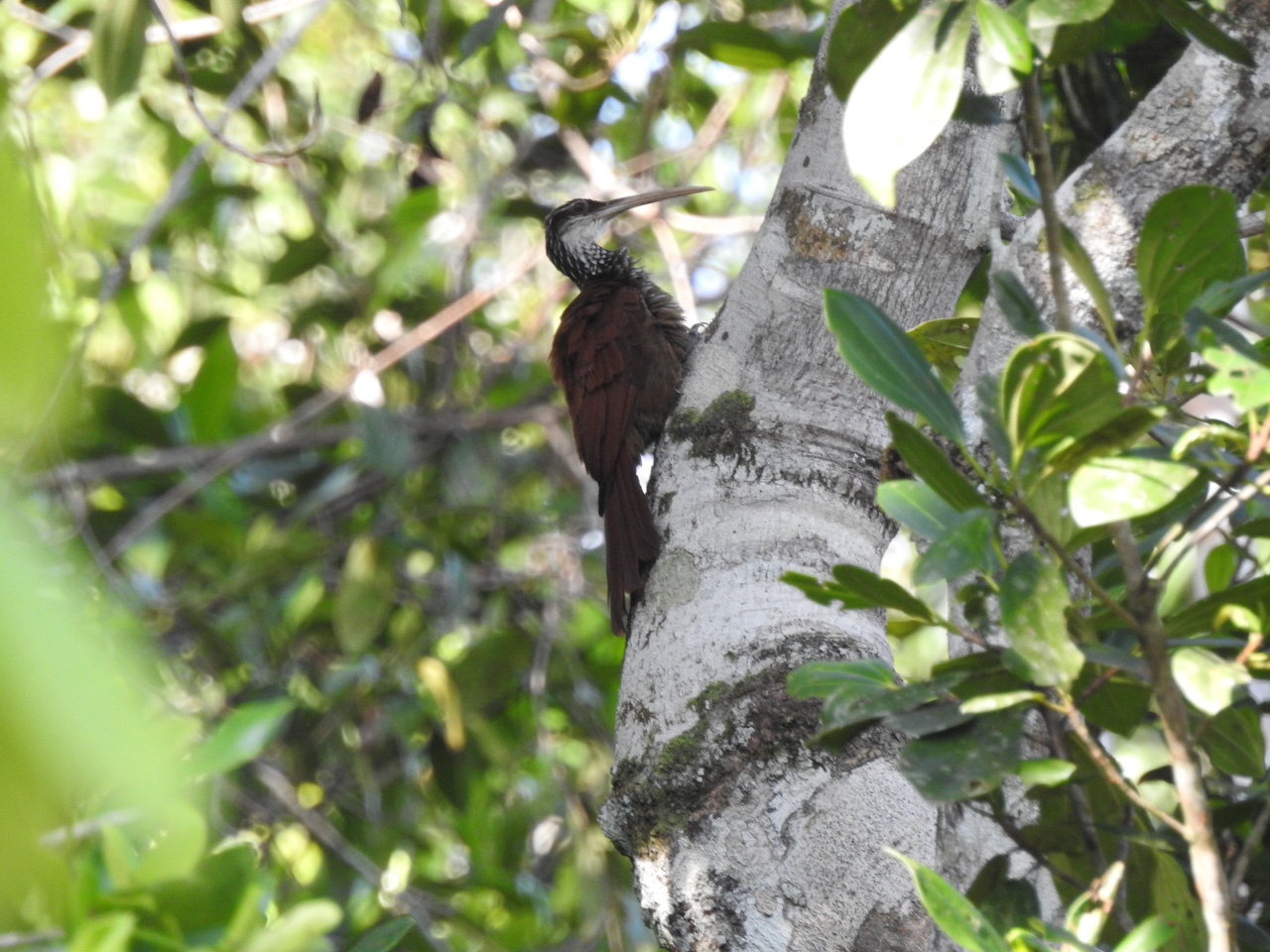
Long-billed Woodcreeper © Paz A Irola
The Return — Tambo Cóndor and Puembo (April 14)
The morning of April 14 was a long one logistically: paddled canoe out of the lagoon, motorized canoe three hours back up the Napo to Coca (though we did see a perched Orange-breasted Falcon was a genuine surprise a scarce and patchily distributed species that Churi picked out before any of us had registered what we were looking at), flight to Quito. But the trip was not quite over.
We had lunch at Tambo Cóndor, a small birding lodge perched on a cliff in the Antisana area, and it became a proper grand finale. The rain that greeted us was not cooperating, but after some waiting, the sharp eyes of one of the participants found the prize we had come for: a Giant Hummingbird perched in a small tree a species that really does live up to its name and always surprises first-time viewers with its scale. Shortly after, and this time at eye level on the rock face across from the viewing deck, a male Andean Condor appeared. A condor in flight is one thing; a condor perched at eye level, at the distance of a short scope, showing us every ruffle of neck and detail of its head, is something entirely different. It was the kind of sighting that closes a trip with the right note. Alongside the condor we enjoyed Great Sapphirewing, Shining Sunbeam and a Black-chested Buzzard-Eagle.
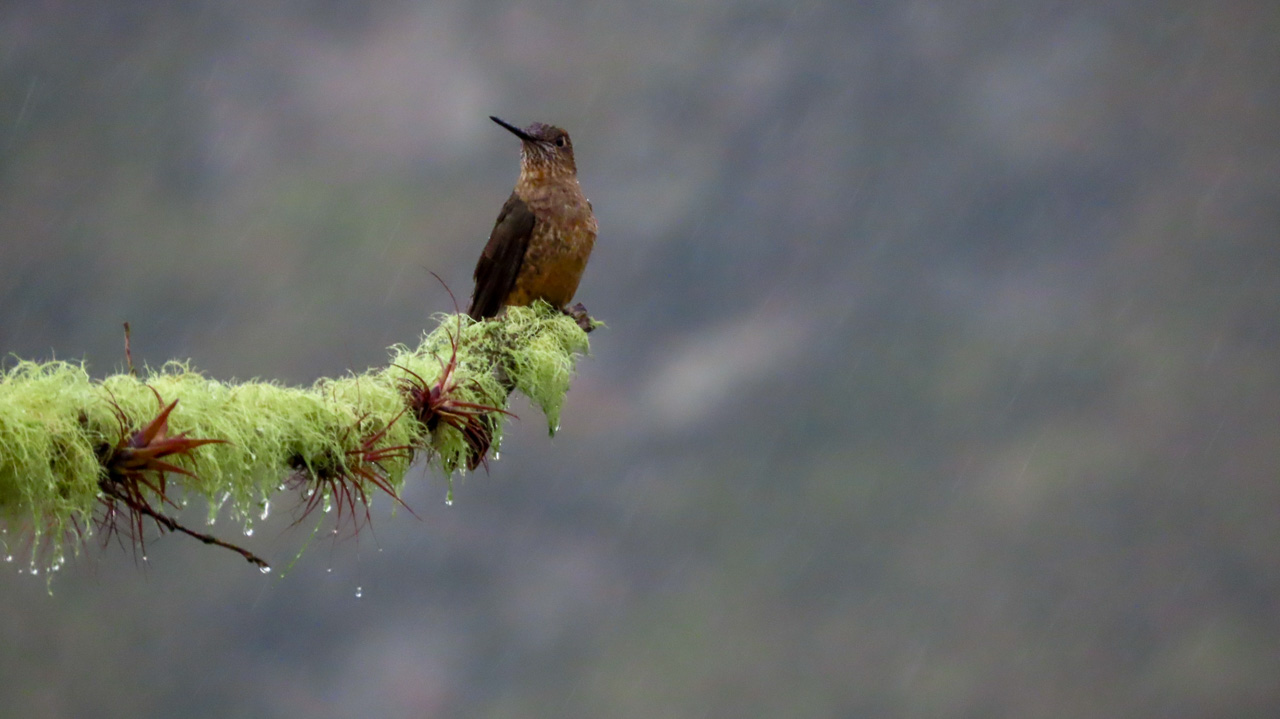
Giant Hummingbird © E Carman
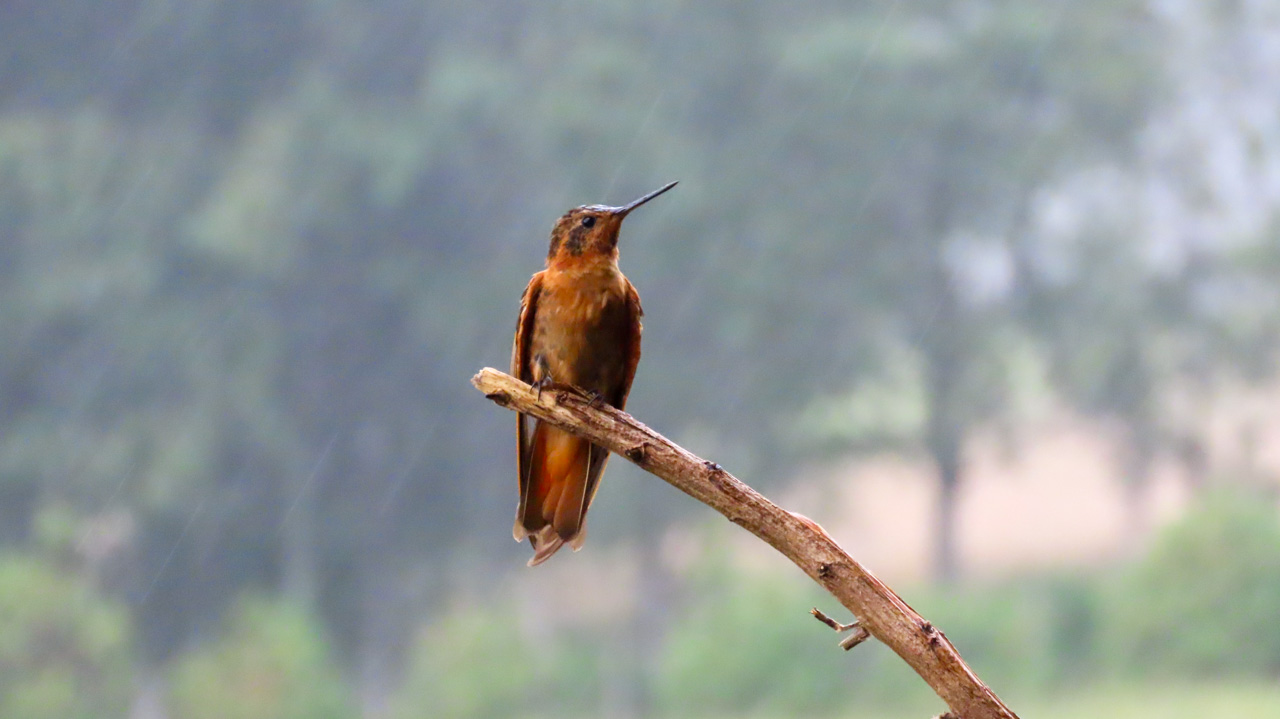
Shining Sunbeam © E Carman
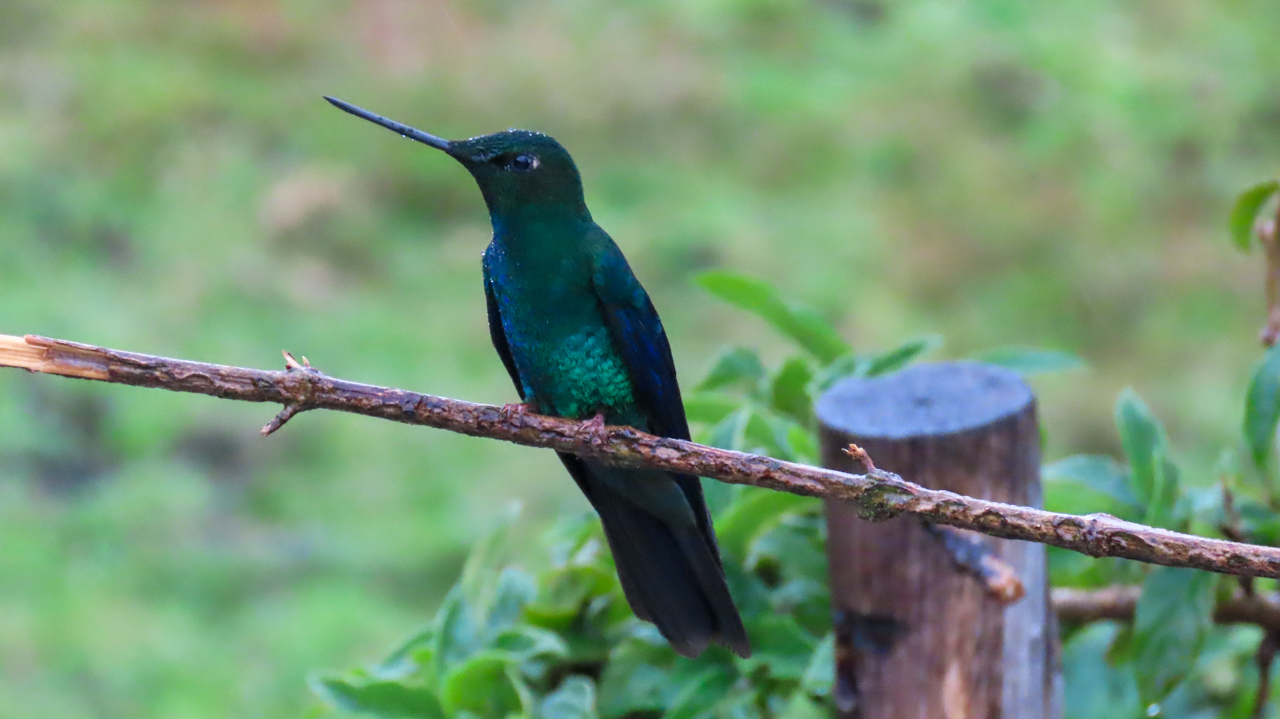
Great Sapphirewing © E Carman
On the drive we added Andean Ibis, Carunculated Caracara, Aplomado Falcon, and a female Andean Fox — the cherry on top of a very good mammal list.
That evening at Puembo Birding Garden we did the final checklist, as we had every night. We totaled the list, shared favorite moments, and had our farewell dinner. The closing conversations kept coming back to the same themes: the sheer number of hummingbirds; the colors of the tanagers; the antpittas that appeared where they shouldn’t have; the toucans and cotingas that made the canopy look like a jewelry shop; the unforgettable Andean Bear family; the evening on the Sani lagoon; and the generosity of the community and guides who shared their world with us.
A tour like this is never the work of one person. Our deepest thanks go to the local guides who made every site come alive: Luis Panamá at Guango, Byron Gualavisí at WildSumaco and Amarún Pakcha, and Carlos “Churi” and Ólger at Sani Lodge. Thanks as well to Esteban Paz for guiding us at the Cock-of-the-rock lek, and to Ángel Paz for the privilege of meeting a living legend of Neotropical bird conservation. To our driver José the bear whisperer for keeping us safe on the roads and for the eyes that found that family of Andean Bears. To Ernesto, co-guide and partner in everything from pre-dawn coffee setup to late-night checklists. To the lodge staff at Puembo, Sachatamia, Guango, San Isidro, WildSumaco, and especially the Kichwa community at Sani Lodge. And above all, to the group: twelve birders who looked after each other on trails and at scopes, who asked the right questions, who cared about the conservation and community stories behind every site, and who made this a trip to remember. It was a joy to share it with you.
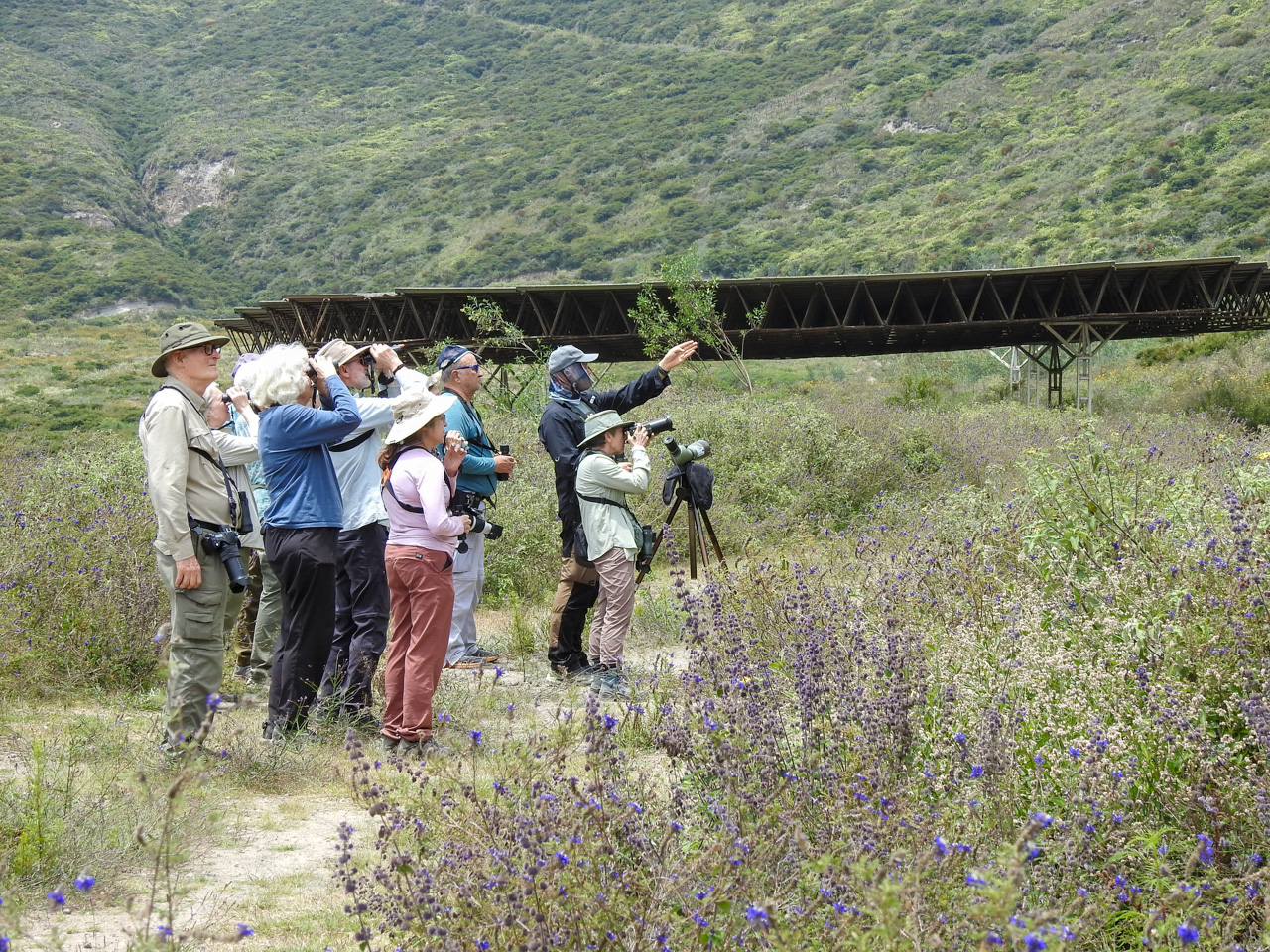
Birding at the horse race ©Paz A Irola
556 species · 7 lodges · 17 days · 12 birders · countless moments