Ecuador Bird Photography Trip Report (April 20 – May 3, 2026)
April 20 – Arrival in Quito
Our trip officially kicked off on the evening of April 20 as we settled into our hotel near Quito. Species such as Scrub Tanagers, Croaking Ground Doves, Rufous-tailed Hummingbirds and Sparkling Violetears made appearances in the garden as we arrived! These sightings made for a wonderful introduction as we got to know one another and discussed what lay ahead on our two-week journey through northern Ecuador.
April 21 – Journey to the Amazon Rainforest
The opening leg of our adventure brought us into the heart of Ecuador’s Amazon Basin, where we spent five days exploring the forests and waterways near Yasuní National Park. Renowned for its remarkable diversity of wildlife, this part of the Amazon has long been considered one of the world’s premier destinations for naturalists and photographers alike. To reach it, we took a short 30-minute flight from Quito to Puerto Francisco de Orellana, better known as Coca, where we met Carlos, our knowledgeable local guide from the Sani Isla Kichwa community.
From there, a motor canoe ride along the Napo River carried us past remote villages and endless stretches of rainforest. Eventually, we transferred into smaller paddle canoes to navigate narrow channels leading into a spectacular lagoon hidden within the forest, where our lodge for the next four nights awaited us.
After arriving, we wasted little time getting out with our cameras to photograph the birdlife around the lodge. One of the first species to capture everyone’s attention was the bizarre-looking Hoatzin, followed by other vibrant local species such as Masked Crimson Tanagers in the trees and Orange-winged Amazons flying past. After settling in, we headed onto the water again by canoe and encountered an impressive variety of birdlife, including large numbers of migrating swallows, the unique Black-capped Donacobius, and even a resident Black Caiman gliding silently through the lagoon.
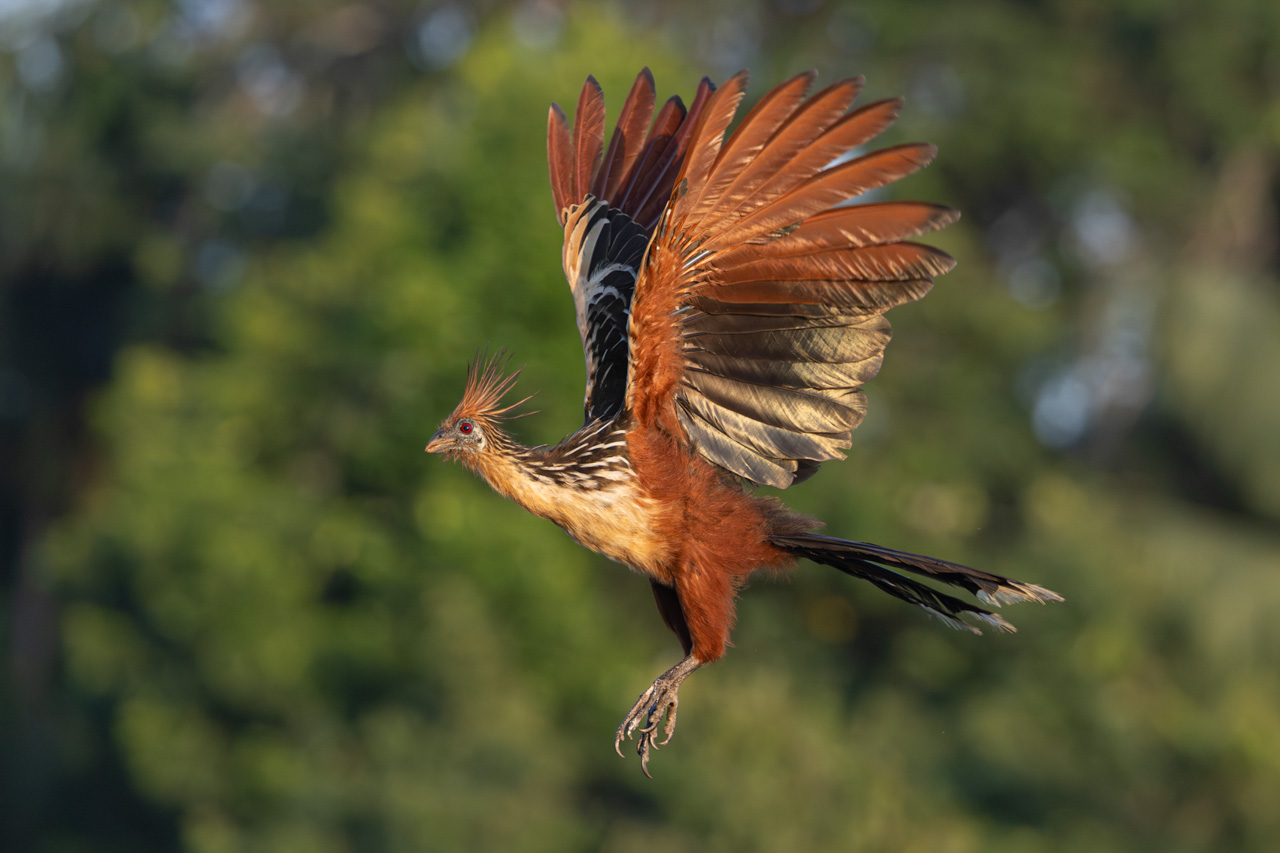
Hoatzin ©Liron Gertsman
April 22 – The Rainforest Canopy
As the sun began to rise, we set off by canoe across the lagoon, traveling through the rainforest waterways toward a nearby canopy tower. As daylight slowly spread across the forest, birds became increasingly active, leaving their nighttime roosts and moving out to feed. Several Chestnut-fronted Macaws landed in trees beside the water, giving us prolonged views and excellent photographic opportunities as they interacted. Greater Anis appeared regularly along the shoreline, their unusual calls carrying across the water, while two elegant Capped Herons perched in the trees at the edge of the lagoon.
One particularly memorable sighting was a Cocha Antshrike, a scarce near-endemic that showed remarkably well at close range. Eventually, we reached the towering Ceiba (Kapok) tree that supports the canopy platform. Climbing the staircase into the upper rainforest revealed an entirely different perspective, with eye-level views into the treetops where many Amazonian birds spend most of their lives hidden from sight below.
Activity in the canopy was excellent from the moment we arrived. A brilliantly colored Yellow-browed Tody-Flycatcher became an early favorite as it perched nearby for photos, while both White-necked and Pied Puffbirds made appearances around the tower. Gilded Barbet and Lemon-throated Barbet also stopped by, followed by an impressive variety of other species over the course of the morning, including White-throated Toucan, Yellow-tufted Woodpecker, Yellow-bellied Dacnis, Opal-rumped Tanager, Green Honeycreeper, and numerous others. After descending from the tower, we explored a nearby forest trail where a male Wire-tailed Manakin offered exceptional close-range views.
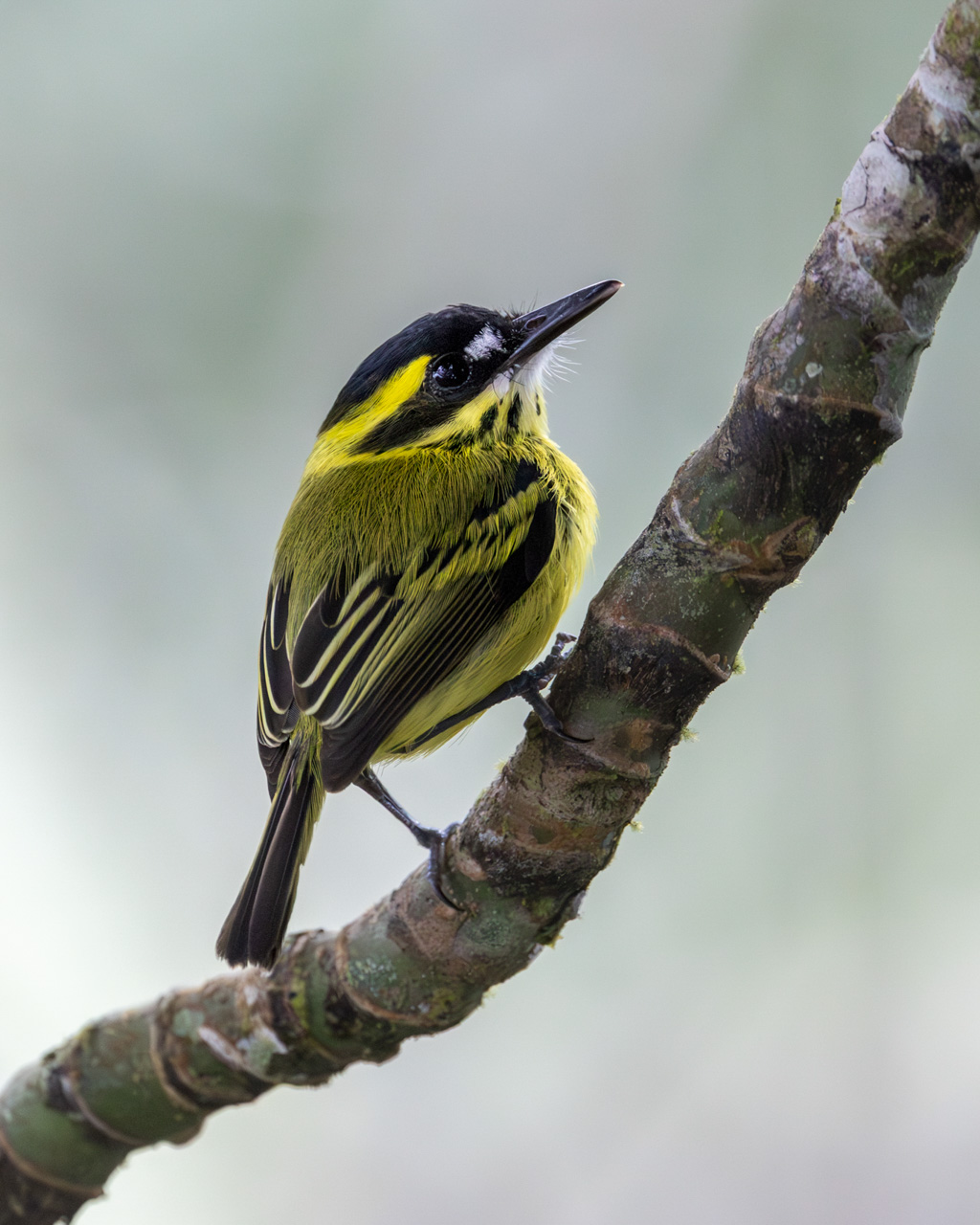
Yellow-browed Tody-Flycatcher ©Liron Gertsman
Returning to the lodge for lunch, we spent the afternoon photographing around the grounds, where the bird activity remained excellent. We had fantastic views of a pair of Tropical Screech-Owls roosting nearby. Scarlet-crowned Barbets called from the trees, and both Lettered and Many-banded Aracaris provided good looks. At one point, a troop of capuchin monkeys passed by the lodge area, adding even more excitement to the day. In the evening, we headed back onto the lagoon by canoe, photographing Hoatzins, Black-capped Donacobius, and other species illuminated by the warm sunset light.
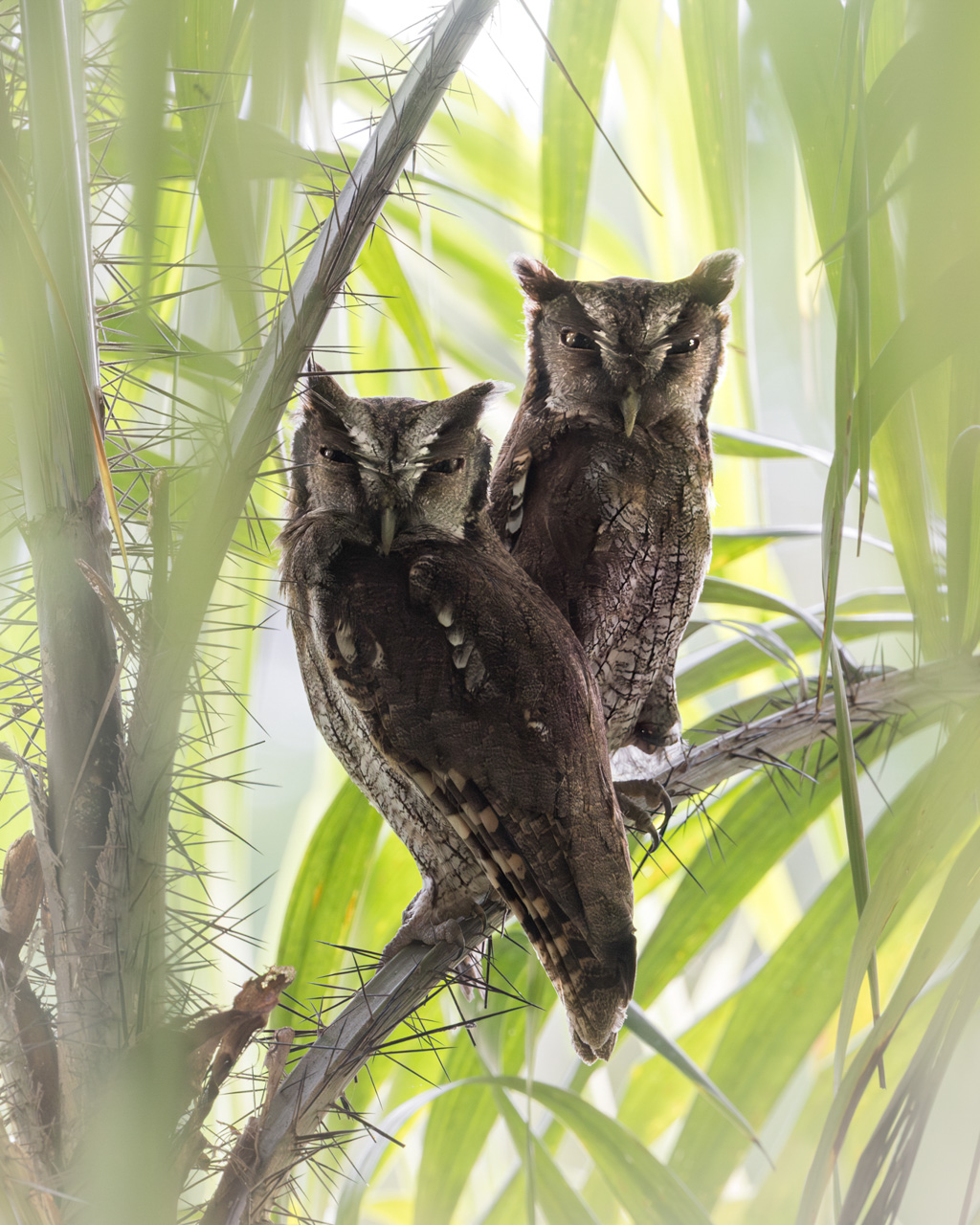
Tropical Screech Owl ©Liron Gertsman
April 23 – more amazon explorations
Our morning excursion took us back towards the main Napo River to visit a couple of active clay licks, important sites where parrots and other wildlife gather to feed on mineral-rich soil. These sites play a key role in the ecology of the Amazon, helping birds counteract toxins found in many rainforest fruits and seeds. We settled in quietly and waited for activity to build. Although several species remained cautious and mostly stayed high in the trees, we were teased with glimpses of Blue-headed Parrots, Mealy Amazons, and Cobalt-winged Parakeets, while Scarlet Macaws called from the surrounding forest. A perched and calling Slate-colored Hawk nearby may have contributed to the birds’ reluctance to descend to the exposed clay.
Later in the day, we traveled to the nearby Sani Isla Kichwa community, whose members manage the lodge and surrounding reserve. During our visit, we enjoyed a traditional lunch and spent some time exploring the nearby habitat. We spotted and photographed a variety of birds, including sightings of Ferruginous Pygmy-Owl and Cream-colored Woodpecker. One particularly memorable moment came when we watched a tiny Western Pygmy Marmoset moving through the canopy near a beehive, attempting to snatch bees in midair. At only five inches tall, these miniature and adorable primates were a favorite encounter for many in the group.
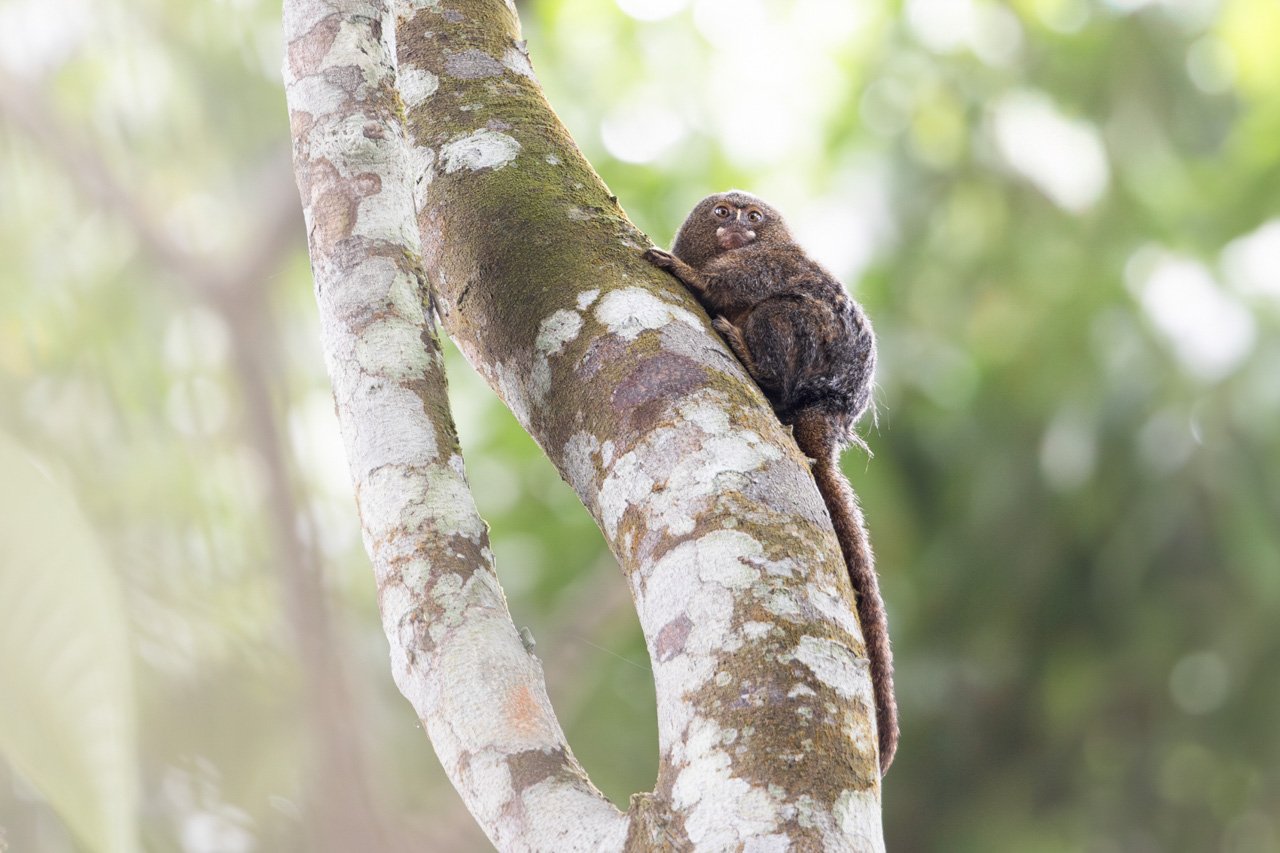
Marmoset ©Liron Gertsman
Back near the lodge in the evening, we continued photographing the abundant birdlife. Species seen during the final part of the day included Cocoi Heron, Green Kingfisher, Black-fronted Nunbird, Black-crowned Tityra, Orange-backed Troupial, and Magpie Tanager, among many others.
April 24 – Back to the canopy, and birds along the river
For our final full day in the Amazon, we returned to the canopy tower shortly after sunrise, hoping for another productive morning among the treetops. Conditions were excellent, and the forest seemed even more active than on our previous visit. Mixed flocks of tanagers moved continuously through the canopy at eye level, giving us outstanding looks at species such as Paradise, Opal-rumped, Opal-crowned, Green-and-gold, Palm, Blue-gray, Masked Crimson, and Silver-beaked Tanagers. A Double-toothed Kite perched nearby for extended views, while three Ivory-billed Aracaris appeared in the canopy and quickly became one of the morning’s highlights. Before leaving the area, we also enjoyed another close encounter with a Wire-tailed Manakin near the base of the tower.
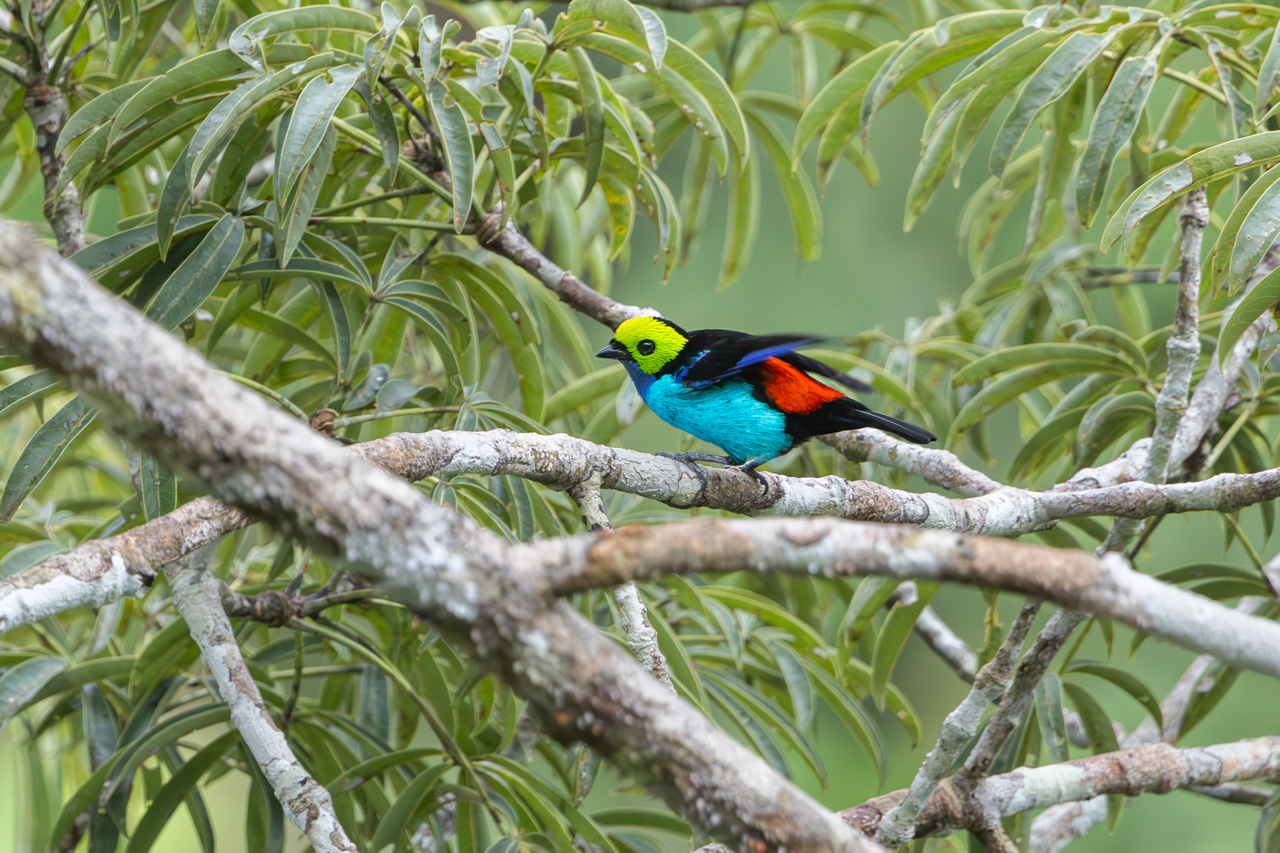
Paradise Tanager ©Liron Gertsman
After lunch back at the lodge, we traveled out to the Napo River to explore some different habitats. One memorable sighting was a beautifully camouflaged Ladder-tailed Nightjar resting quietly near the water’s edge. As we continued exploring, we added species such as White-eared Jacamar, Scarlet-crowned Barbet, and Giant Cowbird.
We ended the day with more bird photography near the lodge, finding some new species including Swallow-winged Puffbird, Little Woodpecker, Solitary Black Cacique, and many more. Our total for the was well over 100 bird species, a great finish to our time in the Ecuadorian Amazon!
April 25 – from the Amazon to the Andes
With our time in the Amazon coming to an end, we packed up after four remarkable nights in the rainforest and began the next stage of the trip toward Ecuador’s Andes. Before departing, we said goodbye to the wonderful staff at the lodge and made one final journey through the narrow forest waterways by paddle canoe, surrounded by the sounds of the rainforest waking up at dawn. Reaching the main river, we transferred into a motorized canoe for the trip back to Coca. There, we thanked our local Kichwa guide Carlos for an incredible few days and met José, who would be our driver and companion for the remainder of the tour.
From Coca, we started climbing toward the mountains, stopping along the way in the foothill region near Wildsumaco for lunch and birding. Even before arriving, the roadside birding proved productive, beginning with a pair of Chestnut-fronted Macaws peering out from a photogenic nest cavity beside the road. Around the lodge feeders and gardens, hummingbirds were everywhere, and we recorded around fifteen species. Highlights included Gray-chinned Hermit, Wire-crested Thorntail, Peruvian Racket-tail, Black-throated Mango, Black-throated Brilliant, Gould’s Jewelfront, Napo Sabrewing, and abundant Golden-tailed Sapphires.
Afterwards, we explored nearby trails and quiet roads where we encountered species such as Plain-backed Antpitta, Ochre-breasted Antpitta, and Blackish Rail.
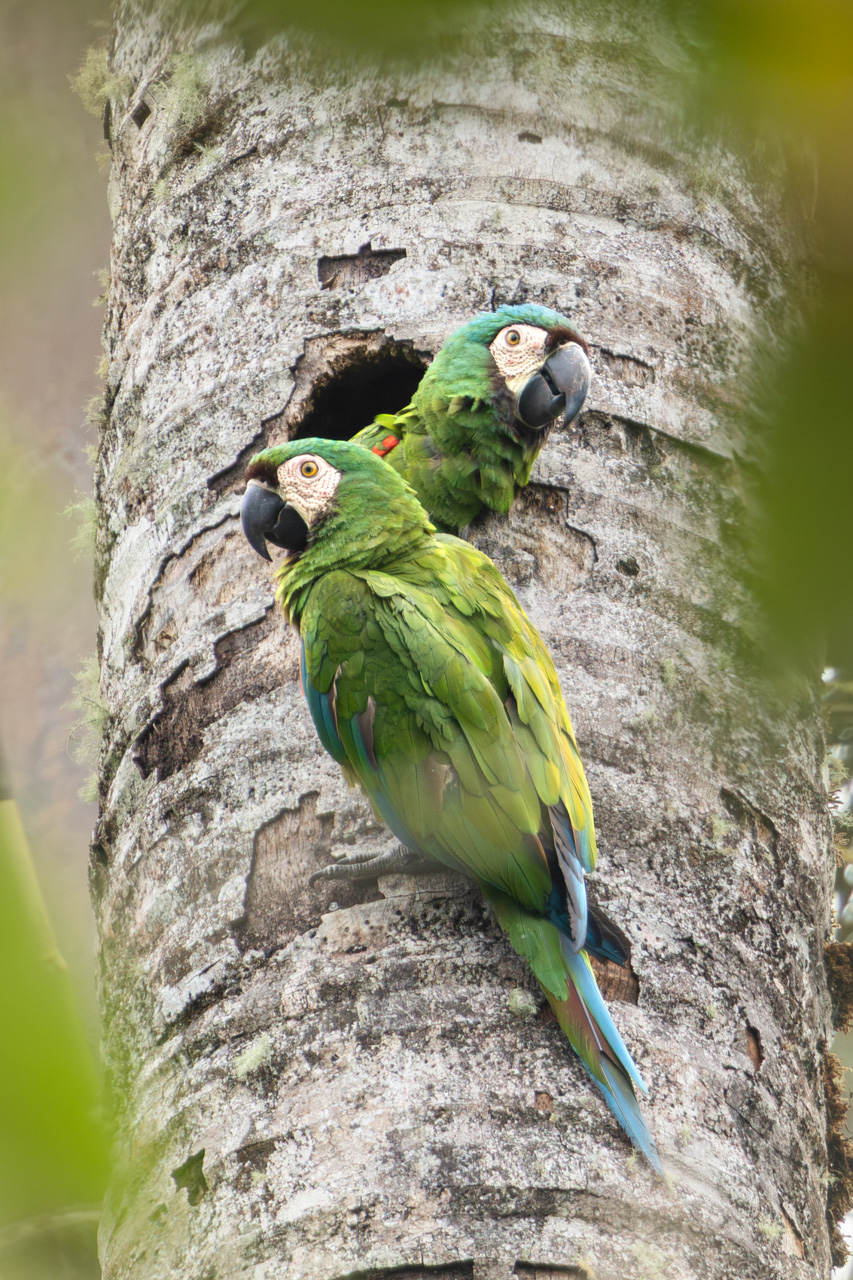
Chestnut-fronted Macaws ©Liron Gertsman
As the afternoon progressed, we continued ascending into the Andes, gradually leaving the foothills behind. We paused along the Loreto Road to watch Cliff Flycatchers sallying for insects while Blue-and-white Swallows swept overhead. By evening, we reached San Isidro Lodge, our base for the next two nights. The day still had one final sighting in store: after dinner, we spotted the lodge’s famous “San Isidro” Black-banded Owls, an unusual population known only from the San Isidro area.
April 26 – the east slope of the Andes
We started the morning at San Isidro Lodge, where overnight lights attract huge numbers of moths and other insects to the trees and walls around the property. By dawn, the feast draws in a remarkable variety of birds eager to capitalize on the easy feeding opportunity. Many species here are notably tolerant of people, allowing for outstanding views and excellent photographic chances. Among the especially accommodating birds were Montane Woodcreeper, Masked Trogon, Barred Becard, Cinnamon Flycatcher, Flavescent Flycatcher, Smoke-colored Pewee, Pale-edged Flycatcher, Green Jays, Mountain Wrens, Black-eared Hemispingus, Common Chlorospingus, and several others. Nearby, we also enjoyed superb looks at White-bellied Antpitta, along with sightings of Beryl-spangled and Saffron-crowned Tanagers.
As the morning continued, we explored several nearby sites. Activity at the Wayra Reserve was fairly quiet, though we still managed quality encounters with White-throated Quail Dove and Orange-billed Sparrow, plus a Swallow-tailed Kite gliding overhead. Later, at another reserve, hummingbird feeders were buzzing with activity, hosting 12 different species. Highlights included the uncommon Geoffroy’s Daggerbill, the elegant Long-tailed Sylph, the popular Peruvian Racket-tail, and the tiny Gorgeted Woodstar.
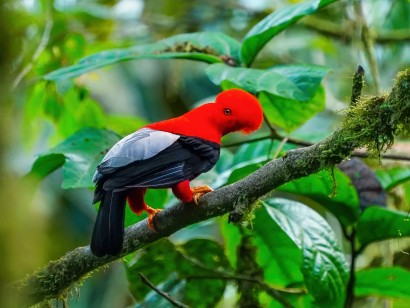
After lunch and a bit of a rest back at San Isidro Lodge, we made our way to another reserve in the area, home to a fantastic Andean Cock-of-the-rock lek. At least 16 males were here performing their courtship displays, and providing some remarkable photo opportunities! We also spotted our first Torrent Ducks of the trip here, as well as a Red-breasted Meadowlark nearby.
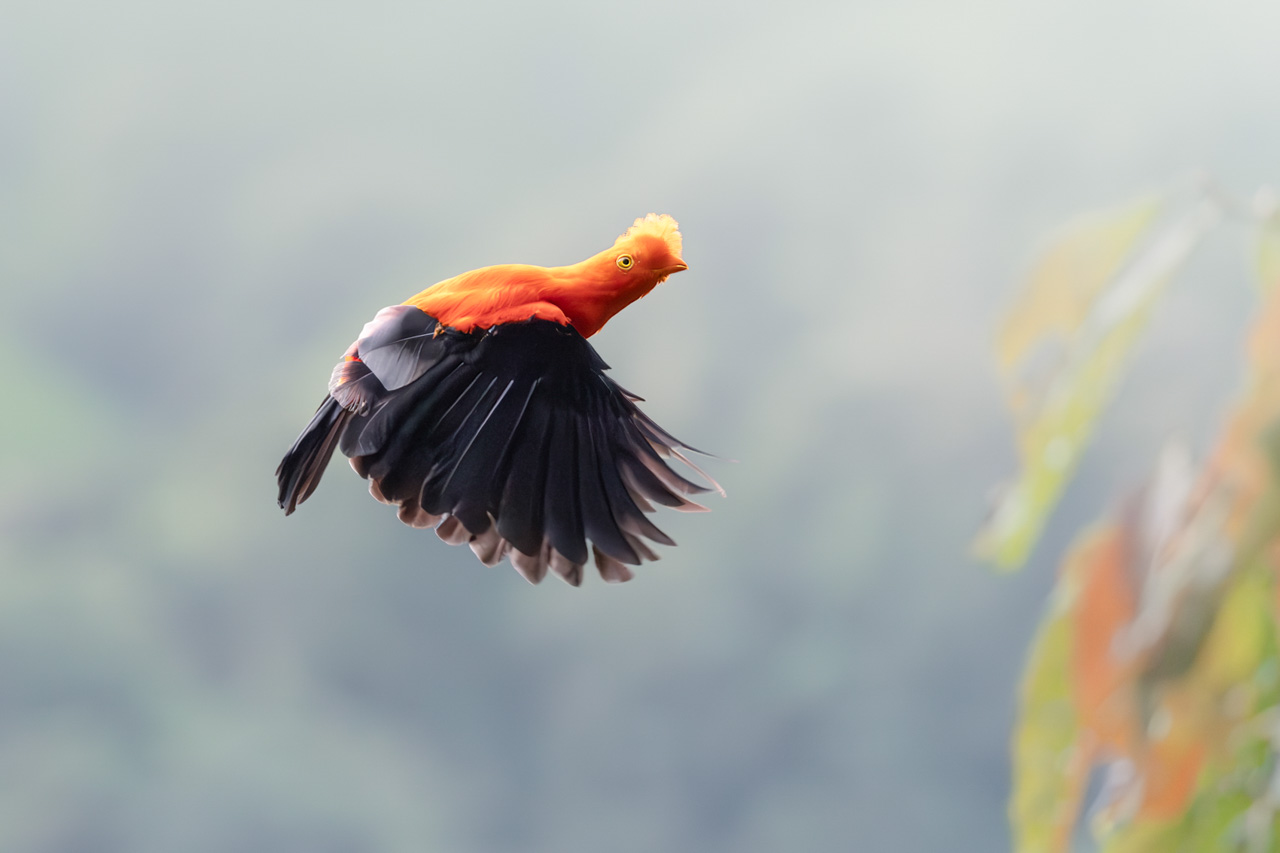
Andean Cock-of-the-rock ©Liron Gertsman
After dinner at the lodge, we were treated to the remarkable sight of 3 Mountain Tapirs- an adult female and her calf, and a separate adult male. These rare and endangered animals are notoriously challenging to see, so this was definitely a highlight! We also got another look at the “San Isidro” Black-banded Owl.
April 27 – San Isidro to Guango
Our day started at San Isidro Lodge, where we once again watched the lively morning gathering of birds attracted to the moth-rich feeding opportunities around the lodge lights. Familiar species returned in good numbers, but the morning also brought several additions to the trip list, including Marble-faced Bristle-Tyrants, Golden-bellied Flycatchers, Black-billed Peppershrike, Olive-backed Woodcreeper, and others. We also spent some time at the hummingbird feeders, where eight species made appearances, among them the dazzling Collared Inca and the impressive Chestnut-breasted Coronet. After two memorable nights at San Isidro, we packed up and prepared to continue our journey, receiving a fitting sendoff from a pair of Golden-headed Quetzals perched near the parking area.
On the drive toward our lunch destination, we stopped at the Río Cosanga, where another Torrent Duck was spotted and photographed. A roadside stop farther along the route rewarded us with a family of Southern Lapwings, while White-collared and Chestnut-collared Swifts wheeled overhead in large numbers.
We later arrived at a nearby reserve for lunch, where bird activity included Green-backed Hillstar, Common Squirrel-Cuckoo, Orange-bellied Euphonia, and several additional species. By afternoon we reached Guango Lodge, our home for the next two nights, and spent the evening exploring the productive lodge grounds. New hummingbirds such as Tourmaline Sunangel and White-bellied Woodstar were among the highlights, joined by Crimson-mantled Woodpecker, nesting Mountain Caciques, and Andean Guan. Along the river, we discovered a young Fasciated Tiger-Heron resting in its nest, along with four Torrent Ducks and three White-capped Dippers, bringing another rewarding day of birding and photography in Ecuador to a close.
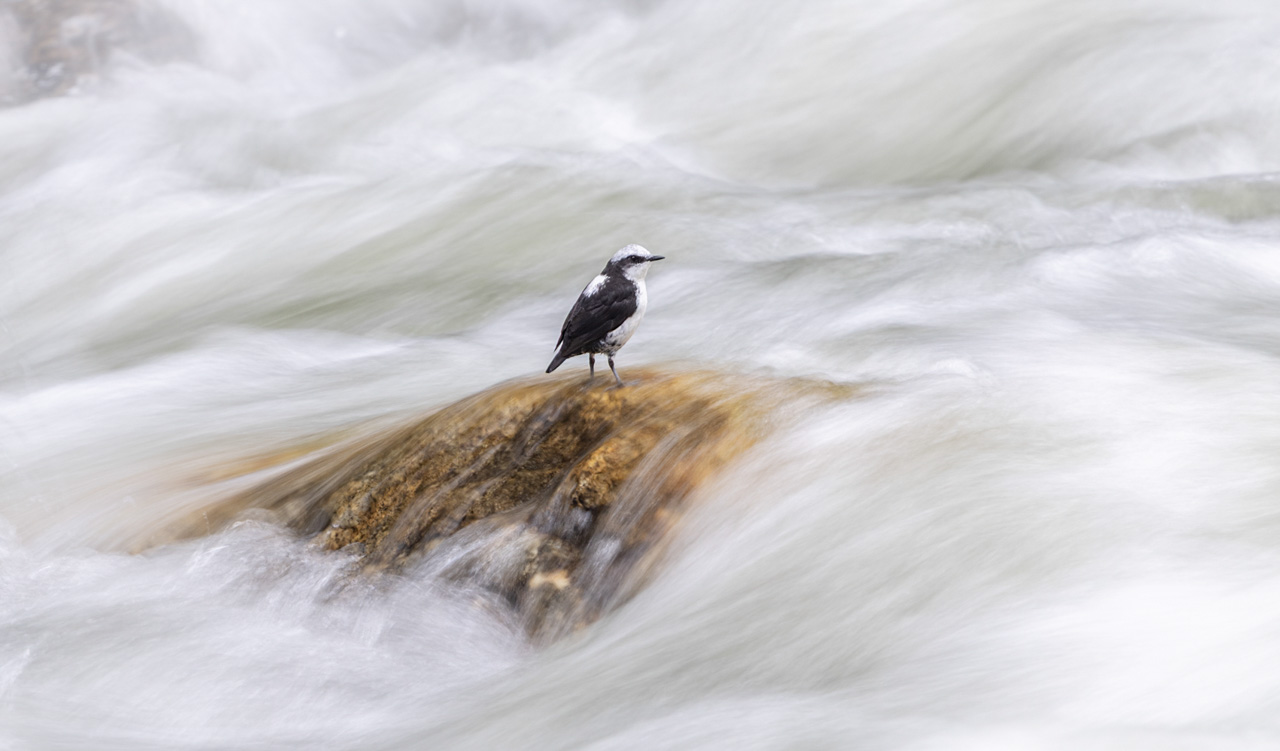
White-capped Dipper ©Liron Gertsman
April 28 – Guango and the High Andes
We started the morning near the lodge at a small feeding station designed to attract birds to moths gathered around a light overnight. It didn’t take long for activity to begin, and we enjoyed close views of several Andean species coming in to feed. Among the highlights were colorful Turquoise Jays, Chestnut-capped and Pale-naped Brushfinches, Russet-crowned Warblers, and Montane Woodcreeper. Right outside the lodge, a pair of photogenic Masked Trogon posed for photos.
Following breakfast, we set off higher into the Andes, eventually climbing above 4000 metres into the windswept Páramo. The conditions were ideal, with dramatic mountain scenery and excellent visibility for spotting some of the region’s specialized high-elevation birds. The standout encounter came when we found a pair of Rufous-bellied Seedsnipes feeding nearby, allowing great looks and photography opportunities. Other memorable species included Variable Hawk, Chestnut-winged Cinclodes, Andean Tit-Spinetail, Many-striped Canastero, White-chinned Thistletail, Brown-backed Chat-Tyrant, and Plumbeous Sierra Finch.
Rufous-bellied Seedsnipe.
On our way back down from the high Andes, we stopped near Papallacta lagoon for additional birding and lunch at a local restaurant. Returning to the lodge later in the day, we spent time exploring the nearby river, where we once again encountered Torrent Ducks along the rushing water, as well as Torrent Tyrannulet, Black Phoebes, White-capped Dipper, and several other species.
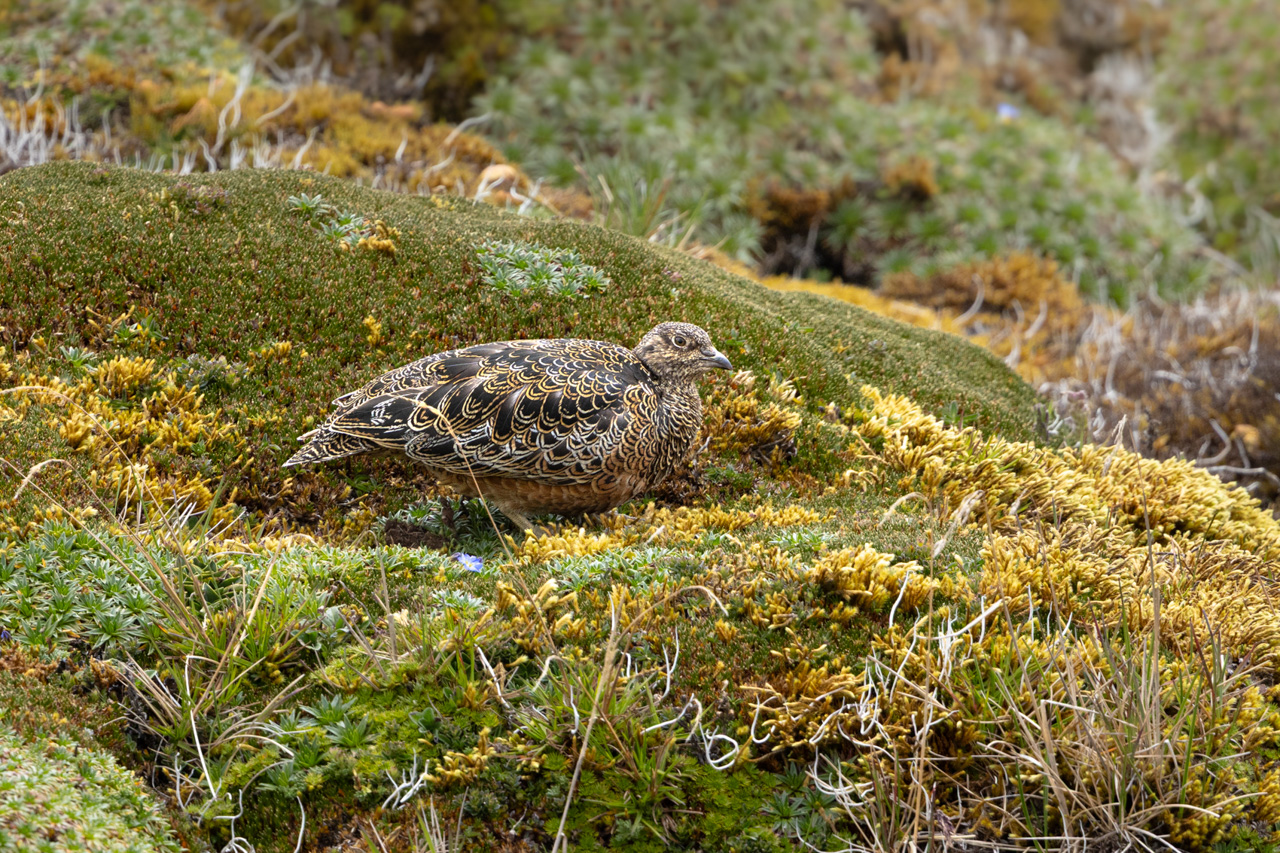
Rufous-bellied Seedsnipe ©Liron Gertsman
April 29 – Across the high Andes to the west slope
We spent the early part of the morning around the grounds of Guango Lodge, enjoying the reliable bird activity before continuing our journey westward. Hummingbirds such as the Tourmaline Sunangel made appearances near the feeders while Turquoise Jays, brushfinches, woodcreepers, and other species moved through the surrounding forest, giving us another enjoyable start to the day.
With our time on the eastern slope of the Andes coming to an end, we began the crossing toward the western side of the mountain range. Along the way, we made an exciting excursion into Antisana National Park to search for some more of the region’s iconic high-altitude birds. The windswept landscapes were spectacular, and before long we spotted several Andean Condors soaring above the páramo. Seeing these immense birds in flight was unforgettable; with wingspans approaching ten feet and a small population of about 150 individuals in Ecuador, every sighting feels significant.
Raptors were particularly active throughout the morning, including Variable Hawks, Black-chested Buzzard-Eagles, and Carunculated Caracaras. Smaller birds were equally rewarding, with sightings of Chestnut-winged Cinclodes, Stout-billed Cinclodes, Black-billed Shrike-Tyrant, Plain-capped Ground-Tyrant, and others adapted to the harsh high-Andean environment. Farther into the reserve, we encountered Black-winged Ground Doves, Andean Gulls, and a pair of Andean Ibises. At one point, a Carunculated Caracara swooped aggressively toward the ibis pair, creating a dramatic wildlife moment and some exciting photography opportunities.
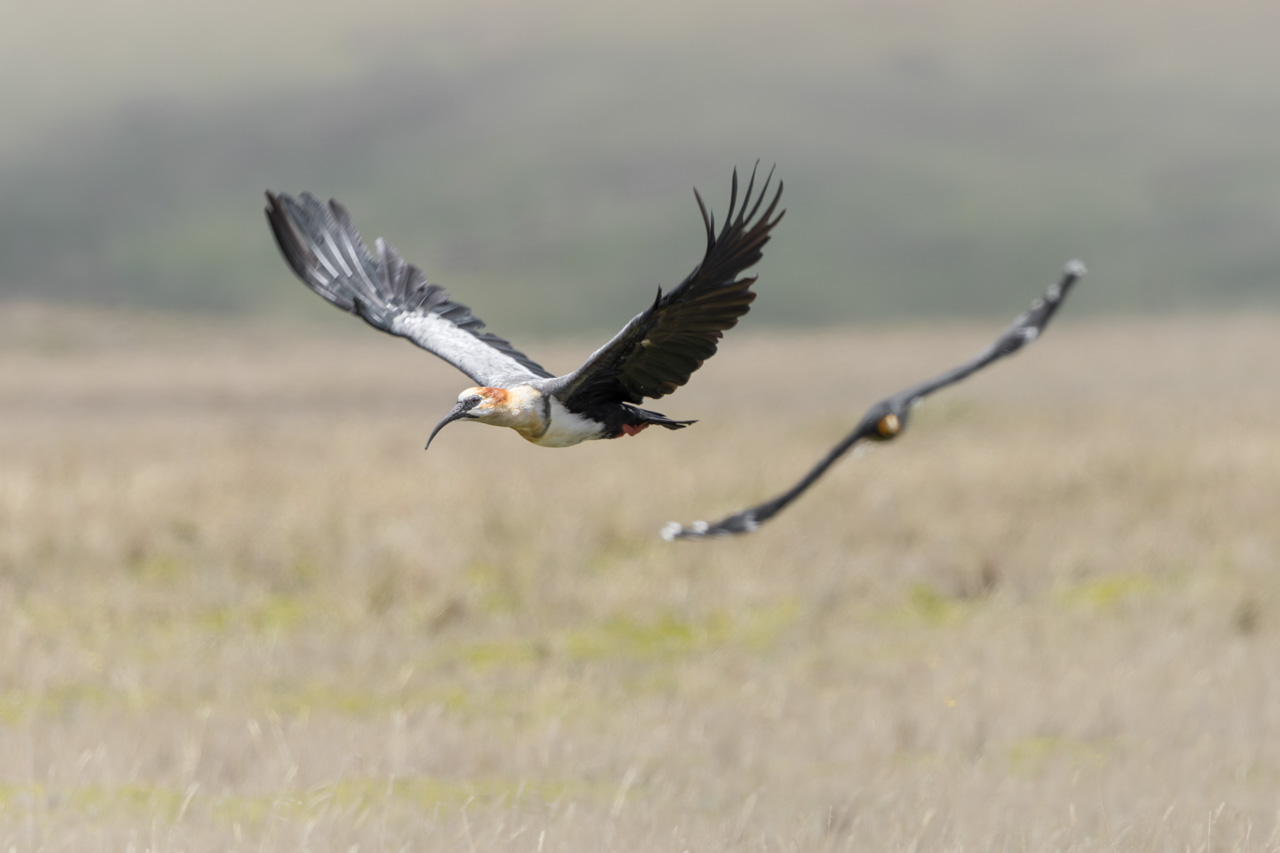
A Caranculated Caracara chasing an Andean Ibis ©Liron Gertsman
Heading to a nearby reserve and restaurant, we enjoyed some fantastic hummingbird activity.
Sparkling Violetears, Tyrian Metaltails, Black-tailed Trainbearer, Shining Sunbeams, and Great Sapphirewing all made visits. One especially memorable highlight was the Giant Hummingbird, the largest hummingbird species in the world. Other birds around the gardens included Yellow-breasted Brushfinch, Spectacled Redstart, Blue-and-yellow Tanager, Black Flowerpiercer, and Cinereous Conebill.
By late afternoon, we continued westward, passing around the outskirts of Quito before descending toward the cloud forests of the Tandayapa Valley. We reached our next lodge just as daylight was fading and settled in for dinner, reflecting on another remarkable day of birding and photography in the Andes.
April 30 – lower west slope
Our morning in the Tandayapa Valley started with plenty of activity around the lodge grounds. The combination of fruit feeders and the overnight moth light attracted an impressive variety of cloud forest birds, allowing us to spend the early hours photographing species at close range. Among the highlights were Rufous Motmot, Toucan Barbet, Crimson-rumped Toucanet, Uniform Antshrike, Spotted Woodcreeper, Strong-billed Woodcreeper, Streak-capped Treehunter, and Three-striped Warbler. The hummingbird feeders were very busy, with fifteen species visiting throughout the early morning.
After breakfast, we drove to the west to explore some new environments. Our first stop was Guaycapi Lodge, where highlights included wonderful views of 13 hummingbird species, including the striking Velvet-purple Coronet, and dozens of tanagers. Blue-capped Tanager, Blue-winged Mountain Tanager, Palm Tanager, Golden-naped Tanager, Black-capped Tanager, Golden Tanager and the jaw-dropping Flame-faced Tanager also provided up-close views at the feeders.
Continuing farther downslope, we reached the area around Pedro Vicente Maldonado, where the warmer lowland forest introduced an entirely new set of species. Bird activity here was nonstop, especially around the hummingbird feeders, where we recorded a dozen species. Highlights included White-necked Jacobin, Bronzy Hermit, White-whiskered Hermit, Purple-crowned Fairy, Long-billed Starthroat, Crowned Woodnymph, Purple-chested Hummingbird, and Violet-bellied Hummingbird. The sheer number of birds coming and going created outstanding opportunities for photography. The surrounding trees and fruit feeders were equally productive. We enjoyed close looks at Red-headed Barbet, several woodpecker species including Lineated, Golden-olive, and Black-cheeked Woodpeckers, as well as Pacific Parrotlets, Common Tody-Flycatcher, Rusty-margined Flycatcher, Flame-rumped Tanager, Gray-and-gold Tanager, Silver-throated Tanager, and many others.
On the return drive toward Tandayapa, we made a final stop at Milpe to wait for toucans visiting the fruit feeders. Pale-mandibled Aracaris gave excellent views nearby, while both Yellow-throated and Chocó Toucans remained higher and more distant in the canopy. The feeders also attracted a colorful mix of tanagers, including Rufous-throated Tanager and Green Honeycreeper. As evening approached, we returned to the lodge after another exceptionally productive day of bird photography.
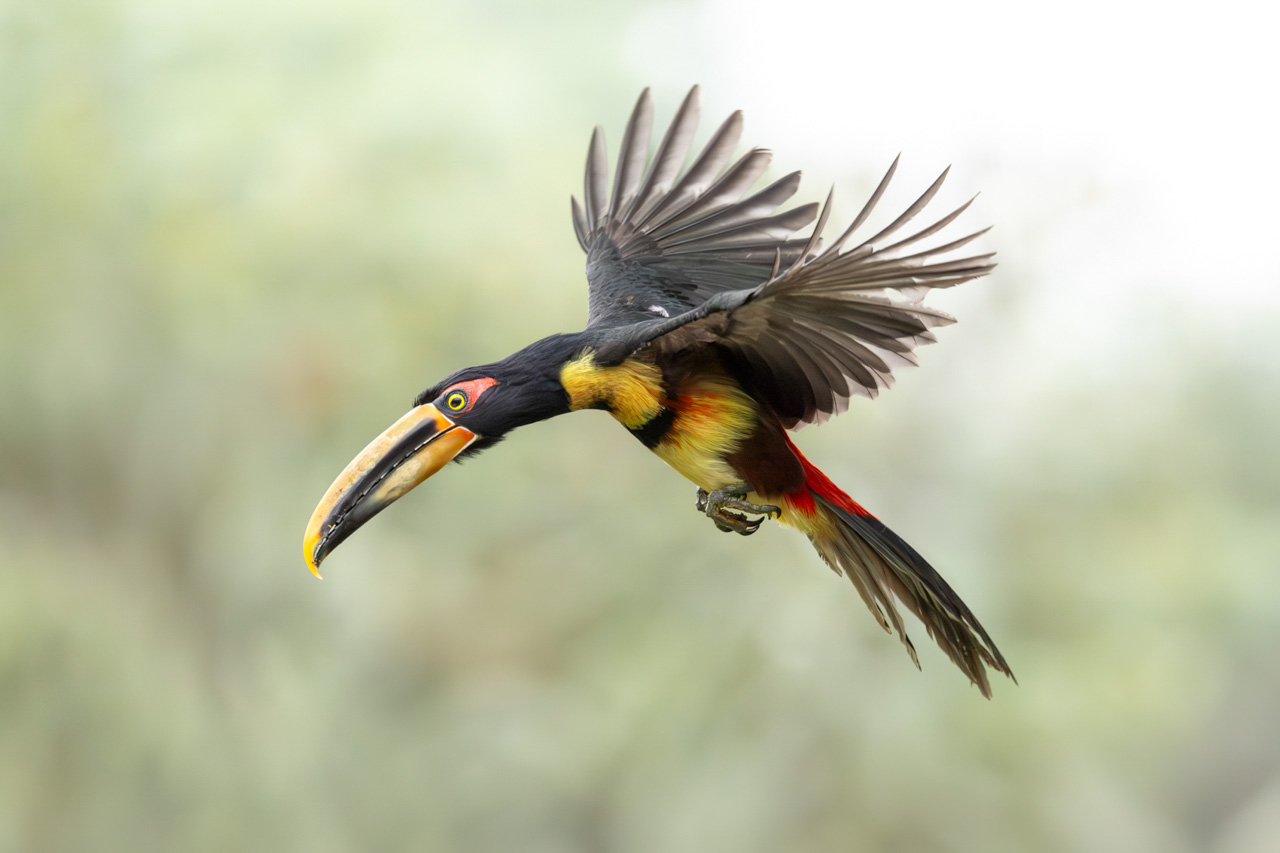
Pale-mandibled Aracari ©Liron Gertsman
May 1 – Refugio Paz de Las Aves
Before dawn, we departed for Refugio Paz de las Aves, one of the most celebrated birding destinations in Ecuador. Our first stop within the reserve was another lek site for Andean Cock-of-the-rocks, where several males gathered in the dim forest understory to perform their elaborate courtship displays. Crested Guans also perched in the trees here, and a Rufescent Screech-Owl was roosting nearby.
As the morning continued, we focused on the reserve’s most famous residents: the antpittas. These elusive forest birds were once considered nearly impossible to see well, but Ángel Paz revolutionized birding in the region after discovering he could feed them. His work transformed the property into a successful conservation reserve supported by ecotourism, creating a model that has inspired similar projects across South America. Thanks to these efforts, we were rewarded with remarkable close-range views of the near-endemic Giant Antpitta along with a pair of Yellow-breasted Antpittas.
Another memorable sighting came in the form of a Common Potoo perched just above eye level The reserve’s hummingbird feeders were also incredibly active, attracting fifteen species throughout the morning and providing endless photography opportunities around the flowers and feeding stations for Violet-tailed Sylph and White-booted Racket-tail.
To finish the excursion, we visited a nearby reserve where one final highlight awaited us: at least six Plate-billed Mountain-Toucans gathered at close range, offering spectacular views and an excellent conclusion to the morning’s birding.
After our morning visit to Refugio Paz De Las Aves, we headed back to Tandayapa. This afternoon, the focus was on hummingbird photography. We photographed a variety of species visiting flowers, with both natural light and “studio” light, making for some amazing photo opportunities! The White-booted Racket-tails, Purple-throated Woodstars and Violet-tailed Sylphs were among the group favourites.
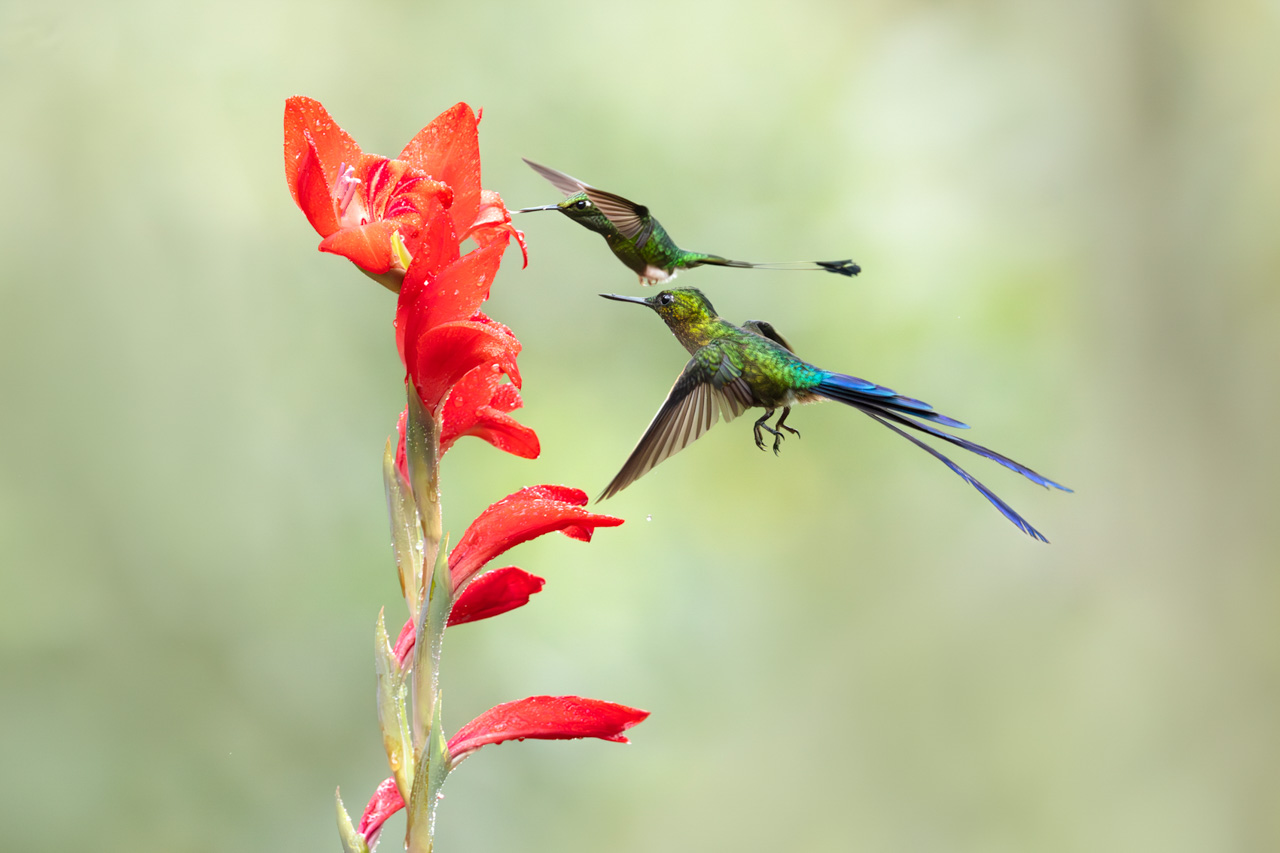
Violet-tailed Sylph and White-booked Racket-tail ©Liron Gertsman
November May 2-3: back to Quito and departure
Although the tour was nearing its end, we still had an impressive variety of birds and photography opportunities in store for our final full day. We spent the early morning once again around the lodge in the Tandayapa Valley, where activity around the feeders and forest edge remained excellent. Crimson-rumped Toucanets, Rufous Motmots, and numerous hummingbirds were among the highlights as we enjoyed one last productive session at the lodge.
After breakfast, we began traveling back toward Quito, winding through dramatic Andean scenery near Pichincha Volcano on our way to Reserva Zuro Loma. One of the main goals here was to find the extraordinary Sword-billed Hummingbird, famous for possessing the longest bill relative to body size of any bird species in the world. Fortunately, it did not take long before one appeared, allowing everyone several great views and excellent photo opportunities. The hummingbird feeders and flowers were extremely active throughout our visit, with species including Tyrian Metaltail, Green-tailed Trainbearer, Black-tailed Trainbearer, Speckled Hummingbird, White-bellied Woodstar, Buff-tailed Coronet, Sapphire-vented Puffleg, Collared Inca, Sparkling Violetear, Lesser Violetear, Buff-winged Starfrontlet, and Mountain Velvetbreast.
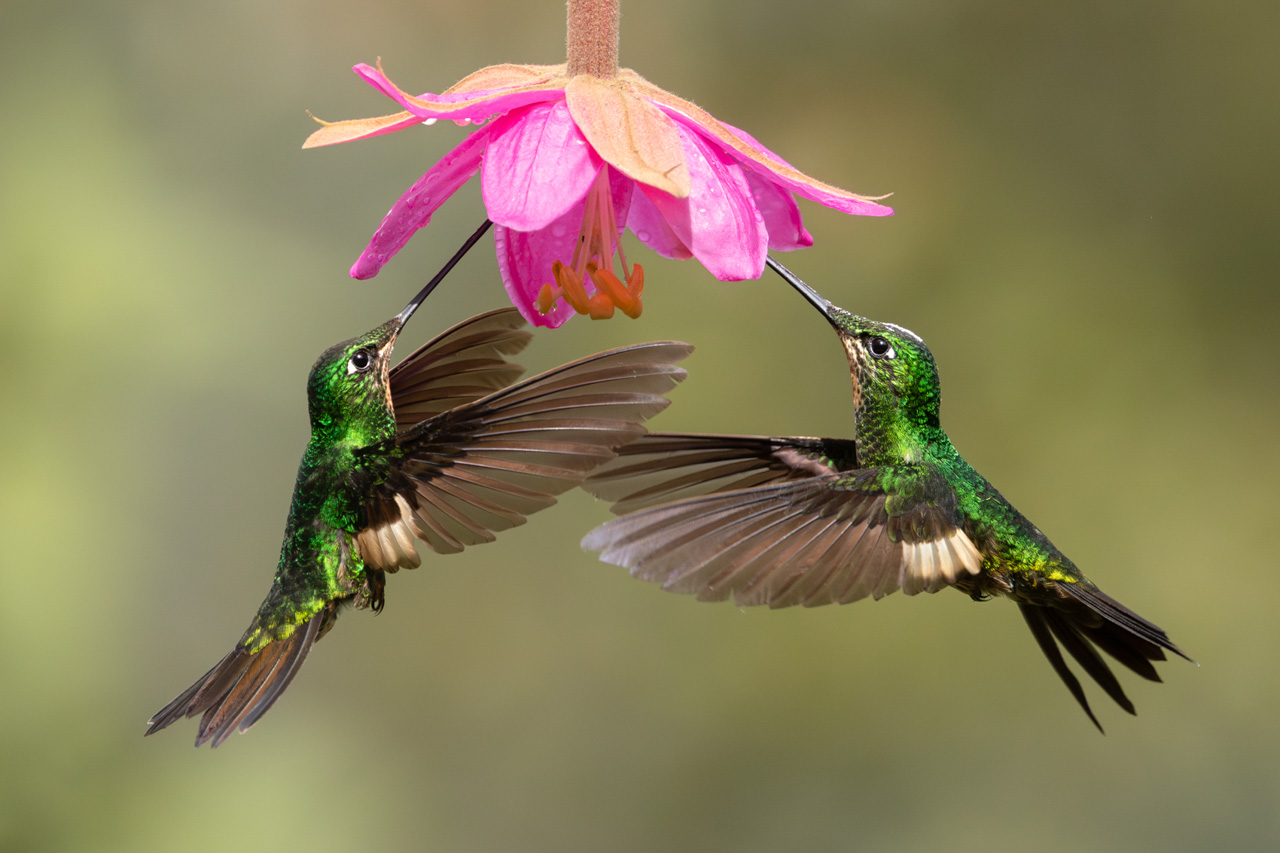
Buff-winged Starfrontlet ©Liron Gertsman
Beyond the hummingbirds, the reserve also produced a variety of other species. Highlights included Masked Flowerpiercer, Spectacled Redstart, Hooded Mountain Tanager, Blue-capped Tanager, Scarlet-bellied Mountain Tanager, Chestnut-naped Antpitta, Equatorial Antpitta, and Gray-browed Brushfinch. Nearby, we also spotted a Burrowing Owl standing watch beside its burrow in the open grassland.
Later in the afternoon, we continued to Yanacocha Reserve for one final birding stop. Here, we spotted species such as Yellow-breasted Brushfinch, Black-chested Mountain Tanager, Glossy Flowerpiercer, and several more hummingbirds, including another Sword-billed Hummingbird and multiple Great Sapphirewings. From Yanacocha, we completed the drive back to Quito, where the tour had first begun. Over dinner, we shared favorite memories and reflected on two remarkable weeks of bird photography and wildlife encounters across the beautiful country of Ecuador.
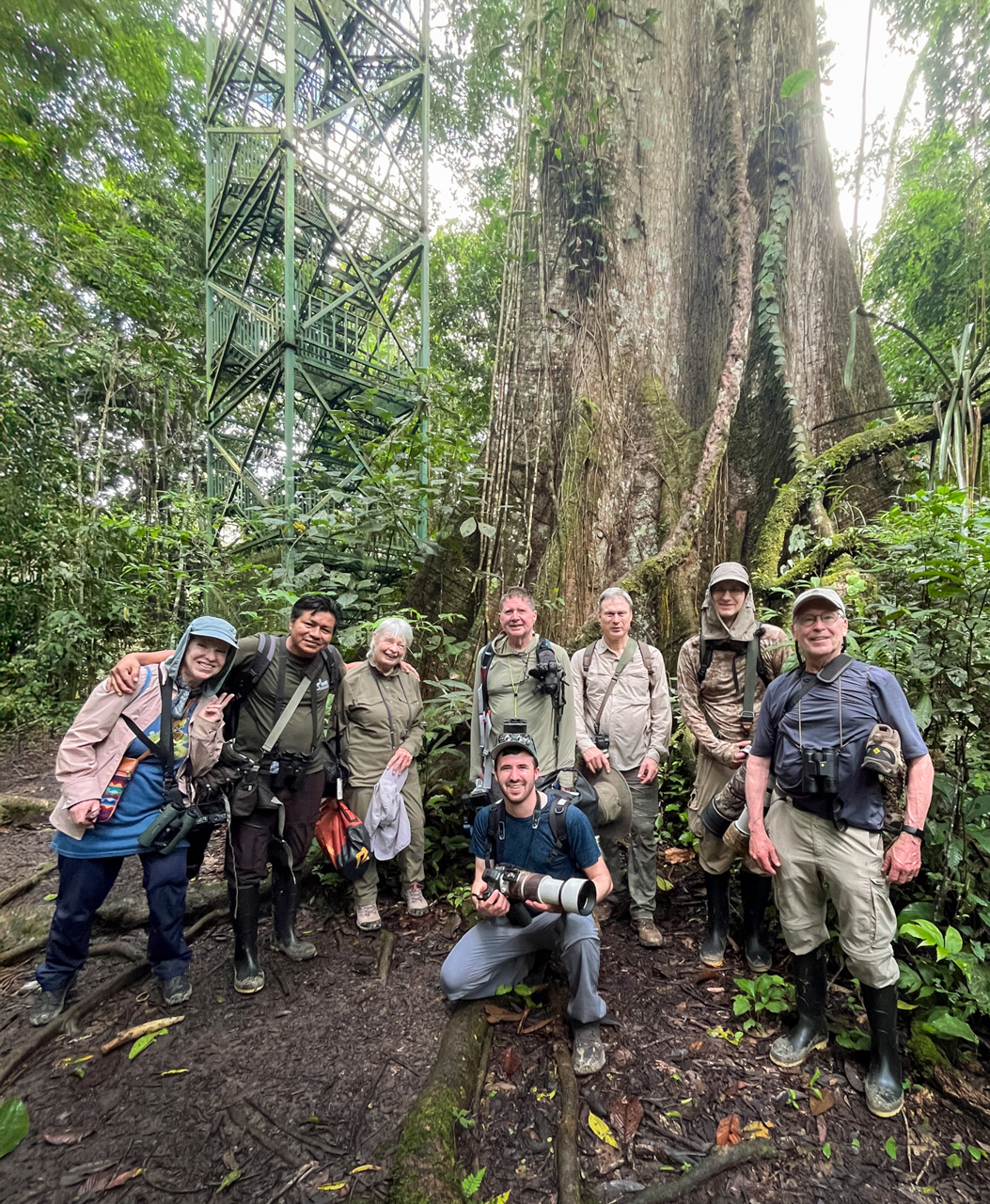
Goup photo_Ecuador Bird Photography 2026
Our group of bird lovers and photographers after a productive morning in the Amazon rainforest canopy!