Cambodia & Vietnam Trip Report 2026
Our 2026 Cambodia and Vietnam tour took us through a dazzling array of landscapes and regions over 17 days, with each stop feeling distinct and new. We began at the incomparable Angkor Wat, exploring the vast and intricate temples of the ancient Khmer empire. From Siem Reap we headed east into the isolated grasslands of central Cambodia where we saw the critically endangered Bengal Florican. In the dry forests of northern Cambodia we tracked down the incredibly rare Giant Ibis and stunning birds like the Great Slaty Woodpecker. A river boat cruise along the mighty Mekong River netted us the local Mekong Wagtail and elegant River Tern.
Returning to Siem Reap we explored the vast wetlands of Tonle Sap where we saw overwhelming numbers of herons, cormorants, storks and pelicans – including endangered Greater Adjutant and Milky Stork. Traveling to Vietnam we visited the endless mudflats of the Mekong Delta where we saw thousands of waterbirds, Chinese Egret and White-faced Plover among them.
In the steamy lowland forests of Cat Tien National Park we tracked down secretive forest jewels like Bar-bellied and Blue-rumped Pitta, Siamese Fireback, Germain’s Peacock-Pheasant and Green Peafowl. Productive forest birding produced memorable encounters with Banded Kingfisher, Banded, Black-and-red, and Dusky Broadbills, White-browed Piculet and more. Mammals were also on show here with great views of Yellow-cheeked Gibbon, Black-shanked Douc, Sambar, and Asian Palm Civet.
We ended the trip by travelling to the cool montane forests of the Dalat Plateau. Here among the pine clad hillsides we found many of Vietnam’s most range-restricted species including Vietnamese Greenfinch, Vietnamese Cutia, Gray-crowned Crocias, Black-capped Parrotbill, Black-crowned Fulvetta and White-cheeked Laughingthrush. It wasn’t only about the endemics and colorful treasures like Blue Pitta and Mrs. Gould’s Sunbird also took center stage. Over two weeks we saw a beautiful and diverse sample of what this incredible corner of the world has to offer – a region with innumerable wonders waiting to be seen.
Day 1
There was no better way to kick off our time in Cambodia than by having the most iconic Cambodian experience – watching sunrise over Angkor Wat. From across the large moat surrounding the temple complex we watched the sun slowly crest the 5 massive towers and greet our first day in this wonderful country. Inside we toured the halls and towering reliefs with their intricate carvings depicting scenes from the Hindu epic, the Ramayana. Of course, we also took time to drink in our first Cambodian birds as well and enjoyed looks at Blue and White-throated Rock Thrushes, Spotted Owlet, and Oriental Pied Hornbill in between awe-inspiring temple vistas. In the afternoon we made our way to Bayon Temple – while the massive faces of Buddha were the first thing we noticed, it was the beautiful depictions of everyday life in Cambodia that really stole the show. The transportive images gave us a glimpse into long ago fears (fisherman being eaten by a crocodile) as well relatable experiences that show the connective threads of humanity – a father carrying a tired child, friends playing a board game. On the avian front we were treated to superb looks at a pair of imposing Great Hornbills, alternately inspecting a nesting cavity and feasting on figs nearby. We rounded out the day with Tha Phrom Temple. While the architecture here is impressive it is the large fig trees draping themselves over the arched temple roofs that are truly unique. The natural setting allows one to feel what it must have been like seeing these temples for the first time after centuries of disuse. The birding here was also eventful with a roosting Brown Wood Owl and nesting Red-breasted and Alexandrine Parakeets for standout sightings.

White-throated Rock-Thrush © Phil Chaon

Great Hornbill © Phil Chaon
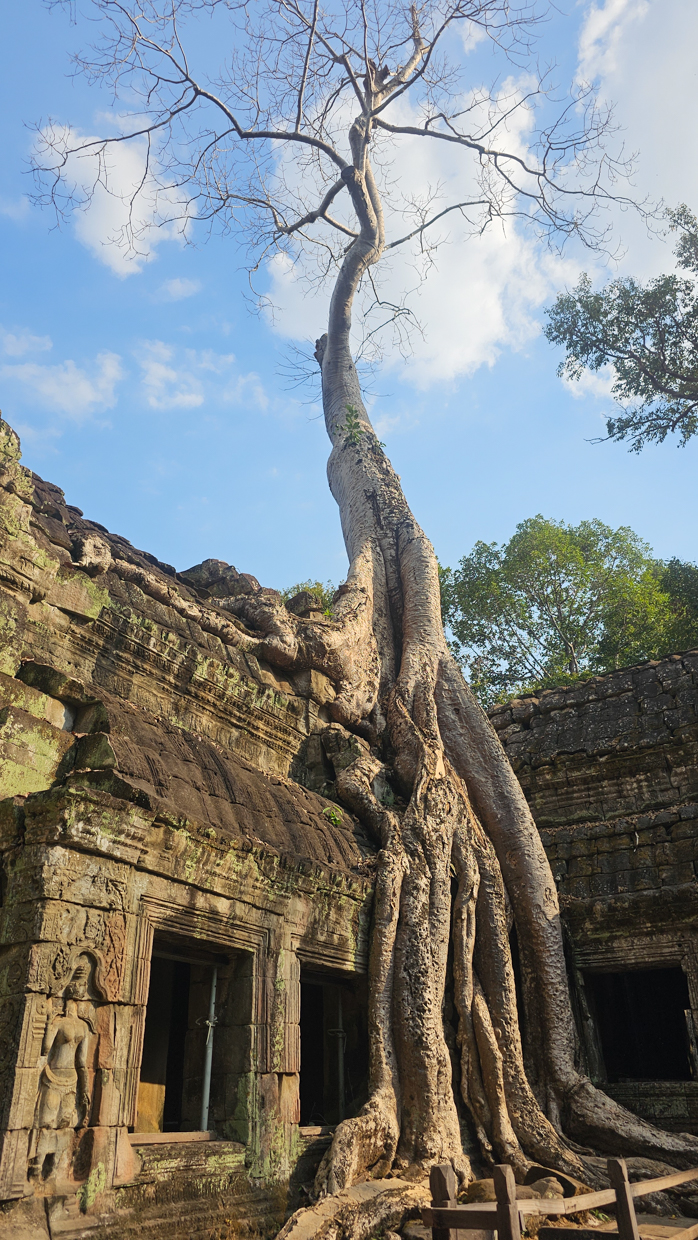
Tha Phrom © Phil Chaon

Brown Wood-owl © Phil Chaon
Day 2
Dawn comes quick and morning ends early in the open grasslands of Cambodia so we made a pre-dawn start to our destination west of Siem Reap. These grasslands on the flood plain of Tonle Sap are the largest remaining in SE Asia and one of the last strongholds of the critically endangered Bengal Florican and a shining example of successful, community led conservation projects that have helped a surprising number of critically endangered birds survive in Cambodia. As we searched for the florican, we encountered many open country birds from Singing Bushlarks to Pied and Eastern Marsh Harriers. The excitement really began when a flock of massive Saurus Cranes flew by in the early morning light. Shortly after a cry went up as a female Bengal Florican flushed from the grass, leaving her previous days roost to head further afield to forage. On our way out of the grasslands we spotted a pair of Small Buttonquail crossing the road. Subsequent efforts to relocate them in the 2-inch-tall grass proved shockingly difficult, none of us spotting them until they flew from underfoot in a practically bare patch of ground – true masters of camouflage. The rest of the day was spent travelling to our hotel in the eastern half of the country – just south of Laos and on the banks of the might Mekong River.
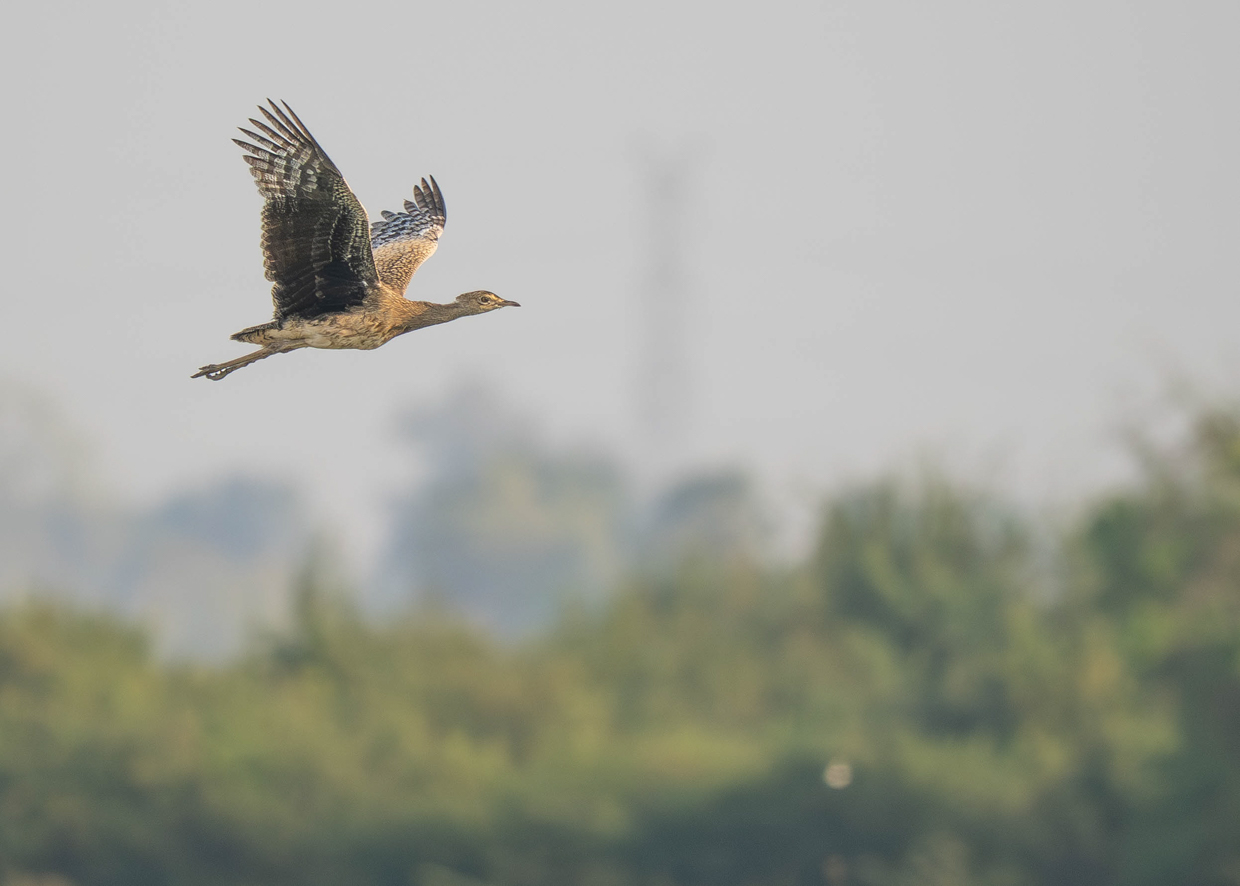
Bengal Florican © Phil Chaon
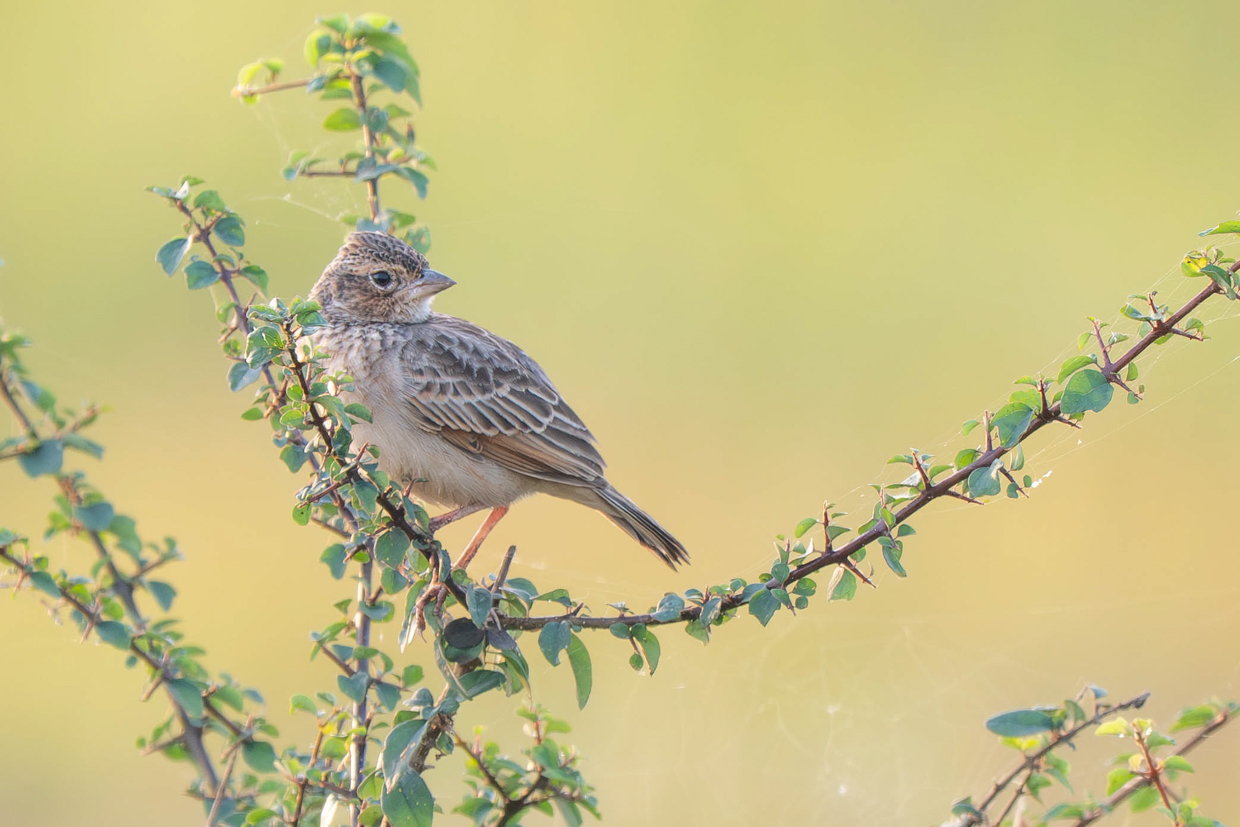
Singing Bushlark © Phil Chaon
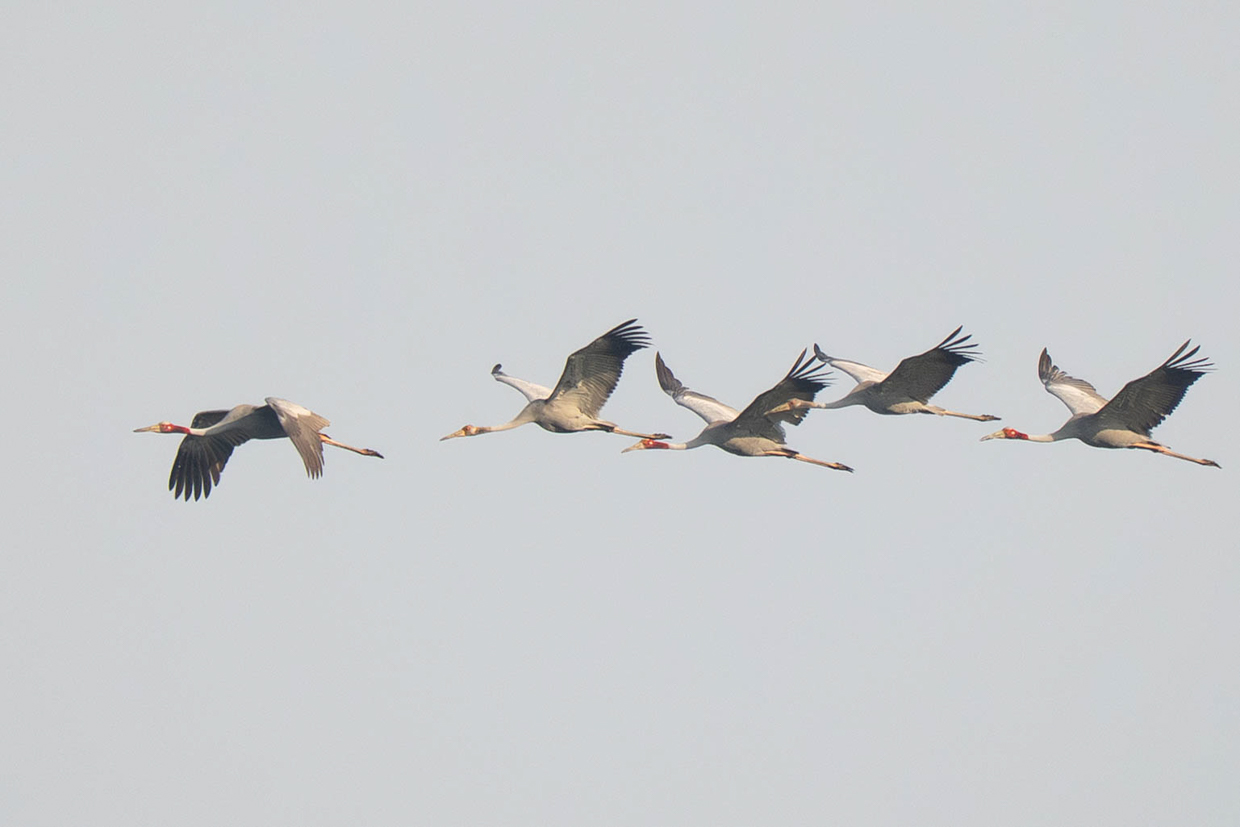
Sarus Cranes © Phil Chaon
Day 3
Today we headed out to look for some very rare and local birds – by any means of transportation necessary. After driving to the entrance of a remnant patch of dry forest, we loaded into a cart attached to a small tractor and headed out to a small wetland oasis. After about 4 kilometres and 40 minutes, we arrived and quickly found three Giant Ibis roosting in a tree. These three birds represent about 1% of the remaining Giant Ibis and we took some time to enjoy and appreciate these huge forest dwelling oddities. With our primary target under our belts we searched for other dry forest specialties and were rewarded with great up close sightings of a pair of White-rumped Falcons. Keeping an eye on the skies we picked up Asian Wooly-necked Stork, Lesser Adjutant and Changeable Hawk-Eagle wheeling overhead. A pair of Burmese Nuthatches and a Streak-throated Woodpecker rounded out our morning.
In the afternoon we climbed into a trio of small river boats and set out on the immense Mekong River. This section of river is truly wild with many braided branches, small rapids, and sandy islands. We were also only about 5 miles from where the largest freshwater fish ever recorded was caught – a 700lb, 13 foot long Giant Freshwater Stingray! Over the afternoon we travelled around the smaller channels and islands and managed to find our main targets – River Tern, River Lapwing and the restricted Mekong Wagtail – all while enjoying the beauty of one of the planets most incredible river systems.
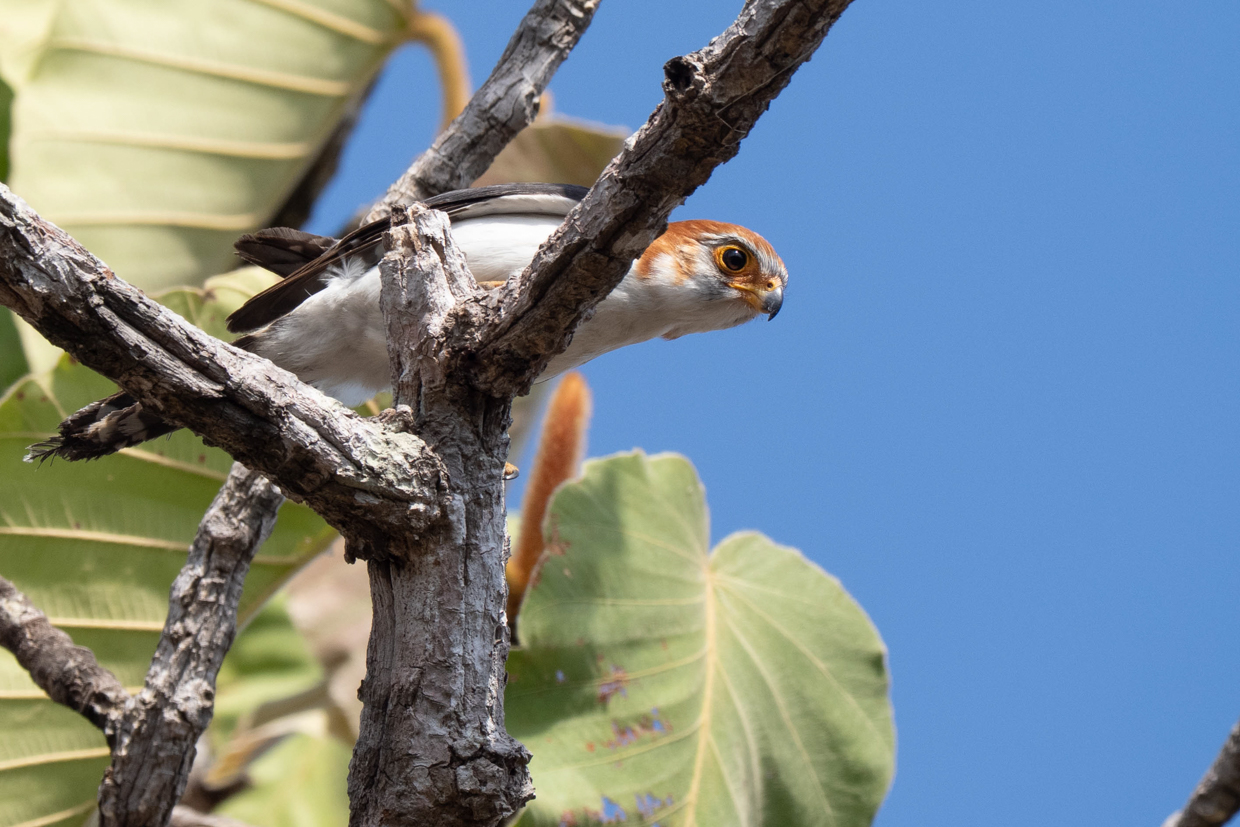
White-rumped Falcon © Phil Chaon
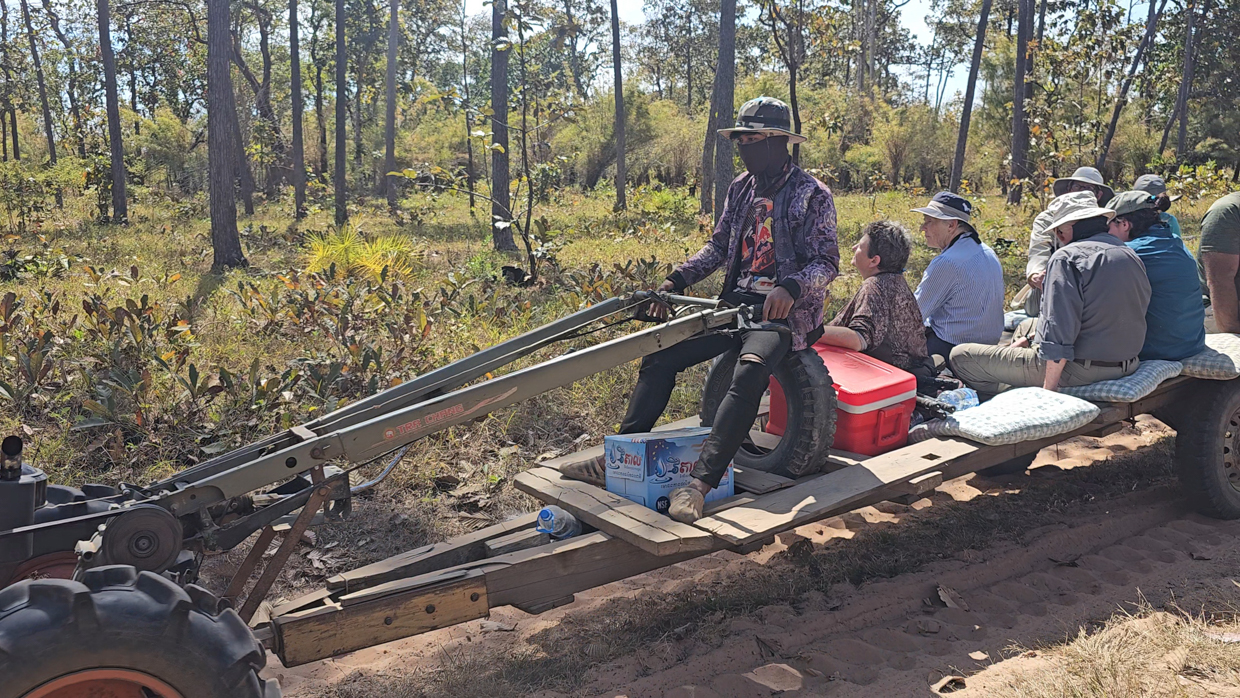
Tractor pull © Phil Chaon
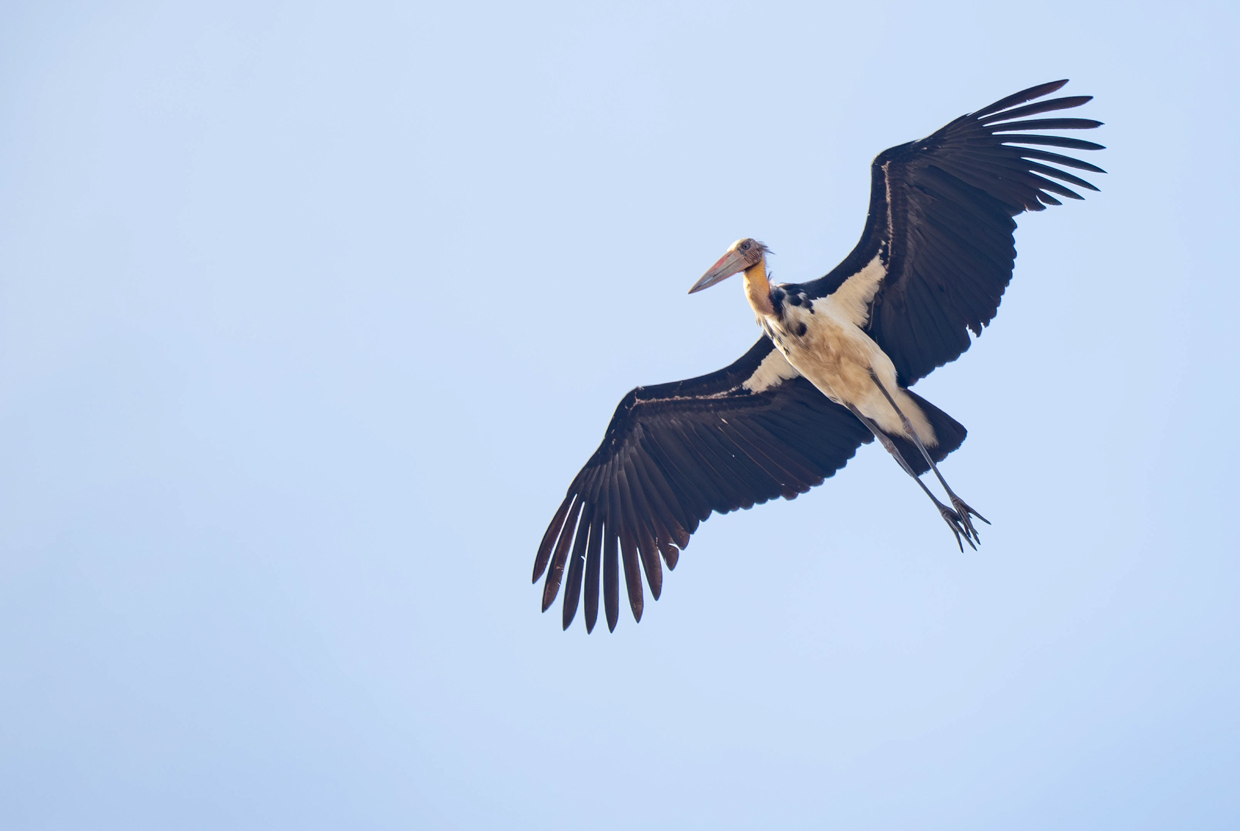
Lesser Adjutant © Phil Chaon
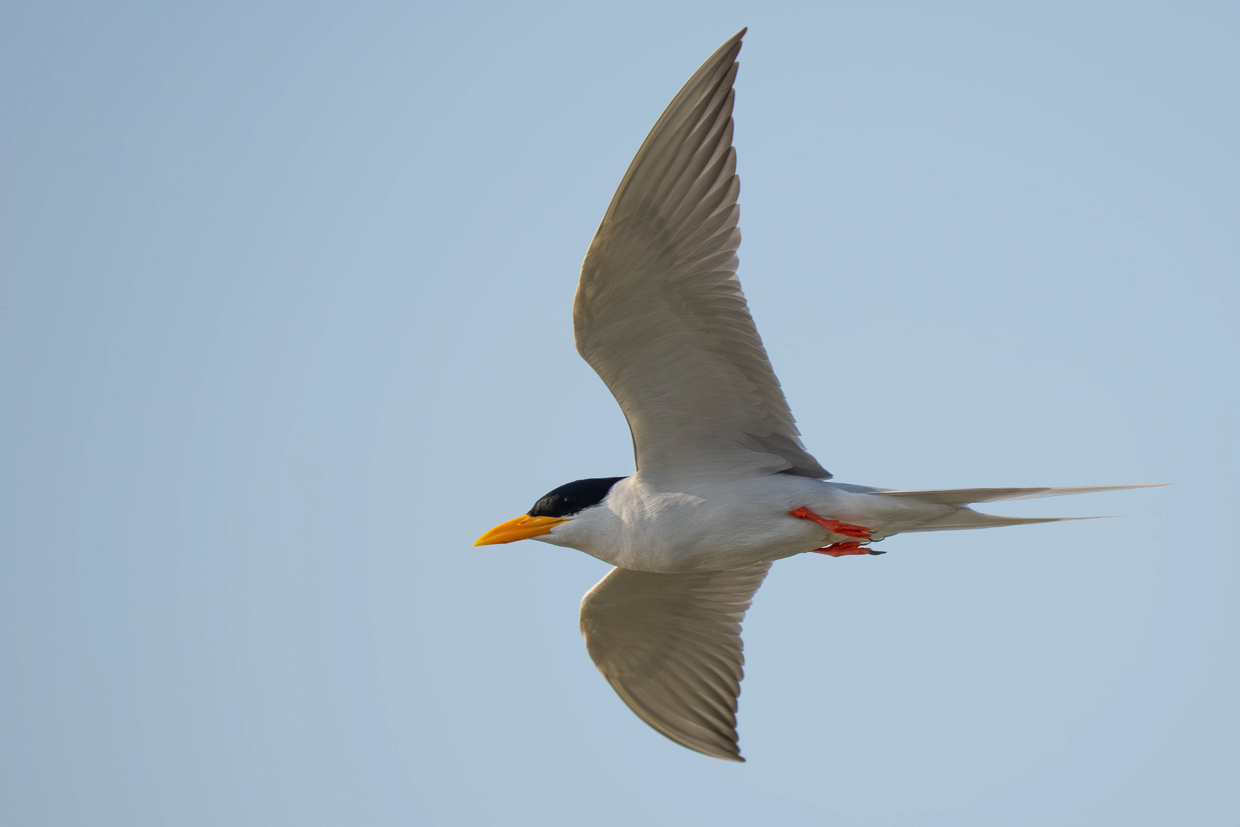
River Tern © Phil Chaon
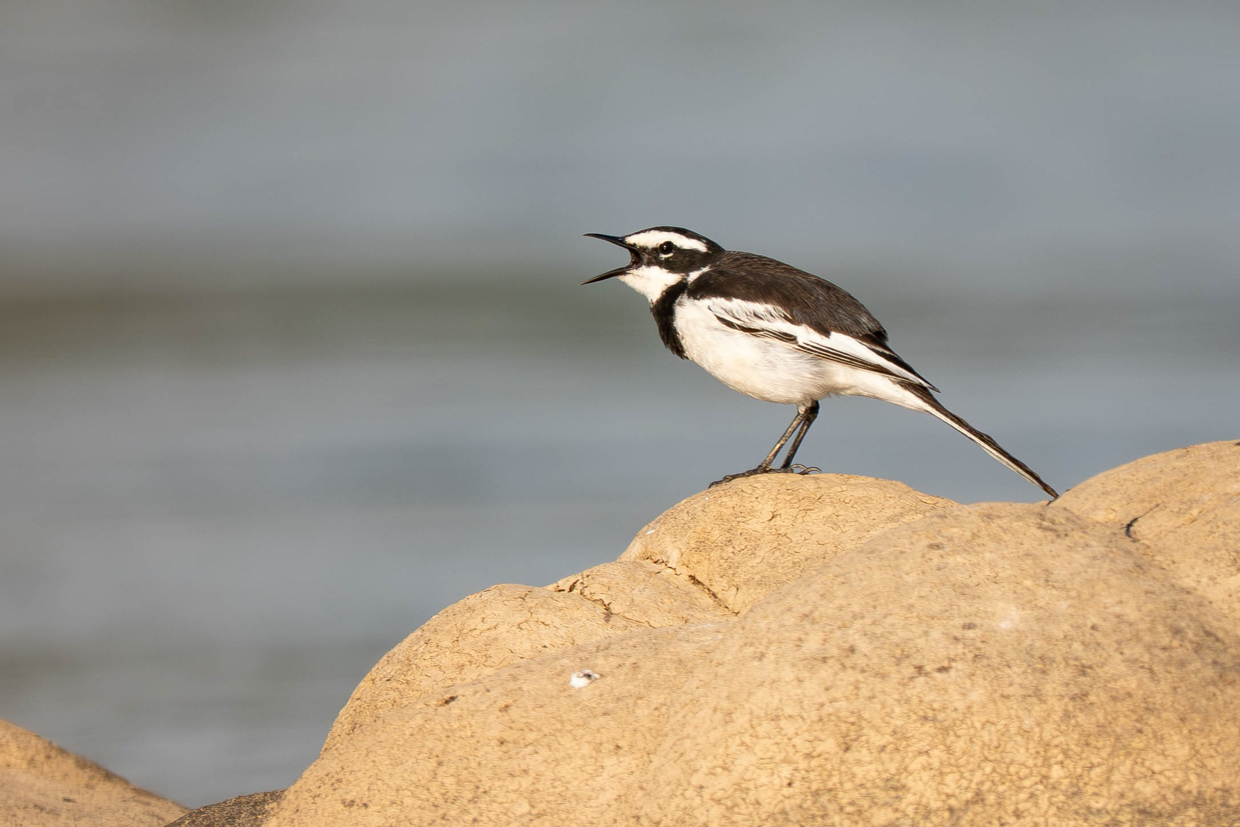
Mekong Wagtail © Phil Chaon
Day 4
This morning saw us heading out into the dry forests of Russey Treb and proved to be one of the birdiest mornings of the trip. We struggled to make it through breakfast as bird after bird interrupted us during our picnic – Rufous-winged Buzzards, Chinese Francolin, Black-winged Kites, Chestnut-capped Babblers all putting on good shows. Nearby we checked out some grassland birds and found a few Yellow-breasted Buntings among the many Baya Weavers. Just as we were about to leave an Eastern Marsh Harrier flushed a group of birds hidden in the tall vegetation including an endangered White-shouldered Ibis! The ibis circled around and landed in front of us briefly before retreating to the safety of the forest.
Just before lunch we popped back into the forest and enjoyed a trio of Black-headed Woodpeckers – a name that completely ignores the brilliant green, yellow and red this bird also sports. On our lunch break a few fruiting banana trees provided some entertainment with Lineated Barbet and Red-billed Blue Magpie visiting in addition to the hordes of Sooty-headed Bulbuls. Once things cooled down a bit we ventured back out in search of some more woodpeckers and were not disappointed, getting great views of White-bellied Woodpecker and a family of Great Slaty Woodpeckers! We ended the day with some owling. A little bit of patience and we managed to get good looks at Blyth’s Frogmouth, while after dinner we tracked down Brown Boobook, Collared Scops-Owl, and Eastern Barn Owl around the restaurant.
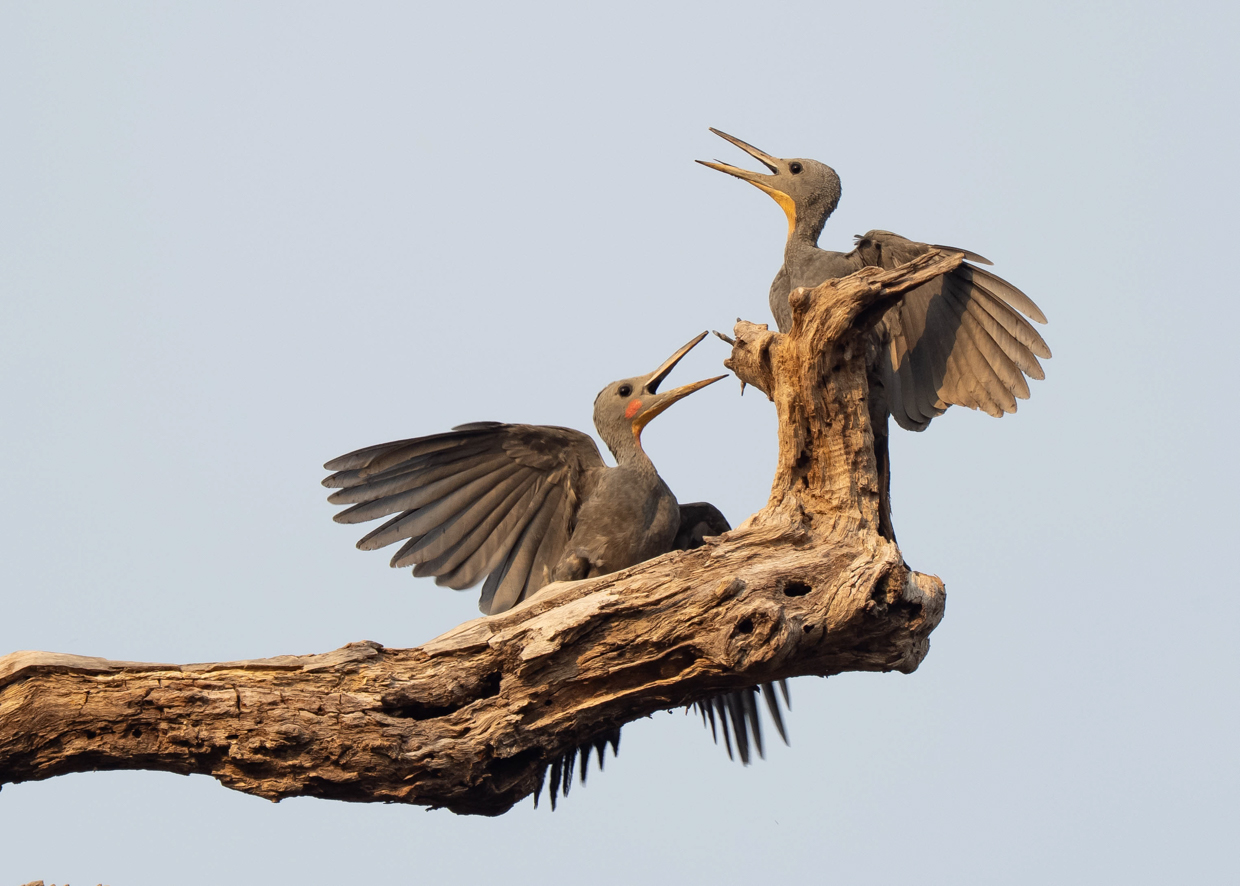
Great Slaty Woodpecker © Phil Chaon
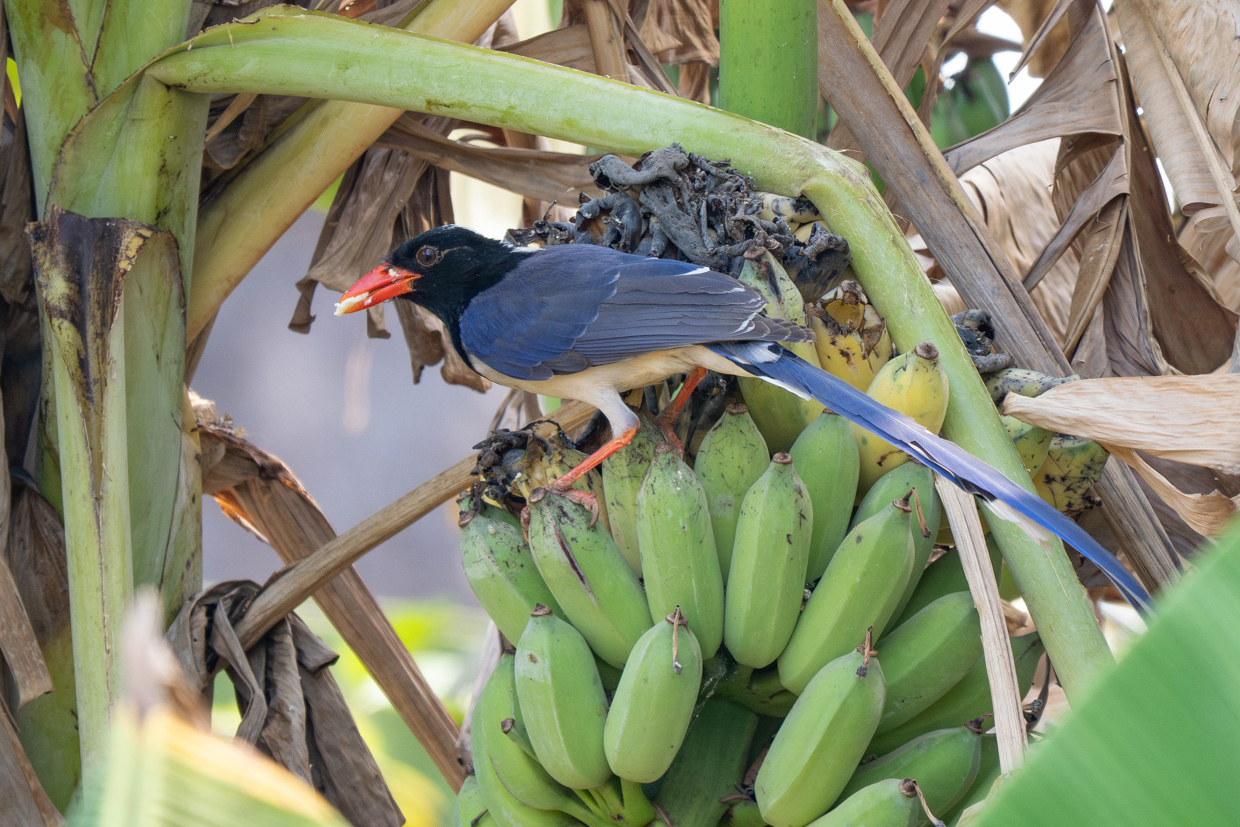
Red-billed Blue-Magpie © Phil Chaon
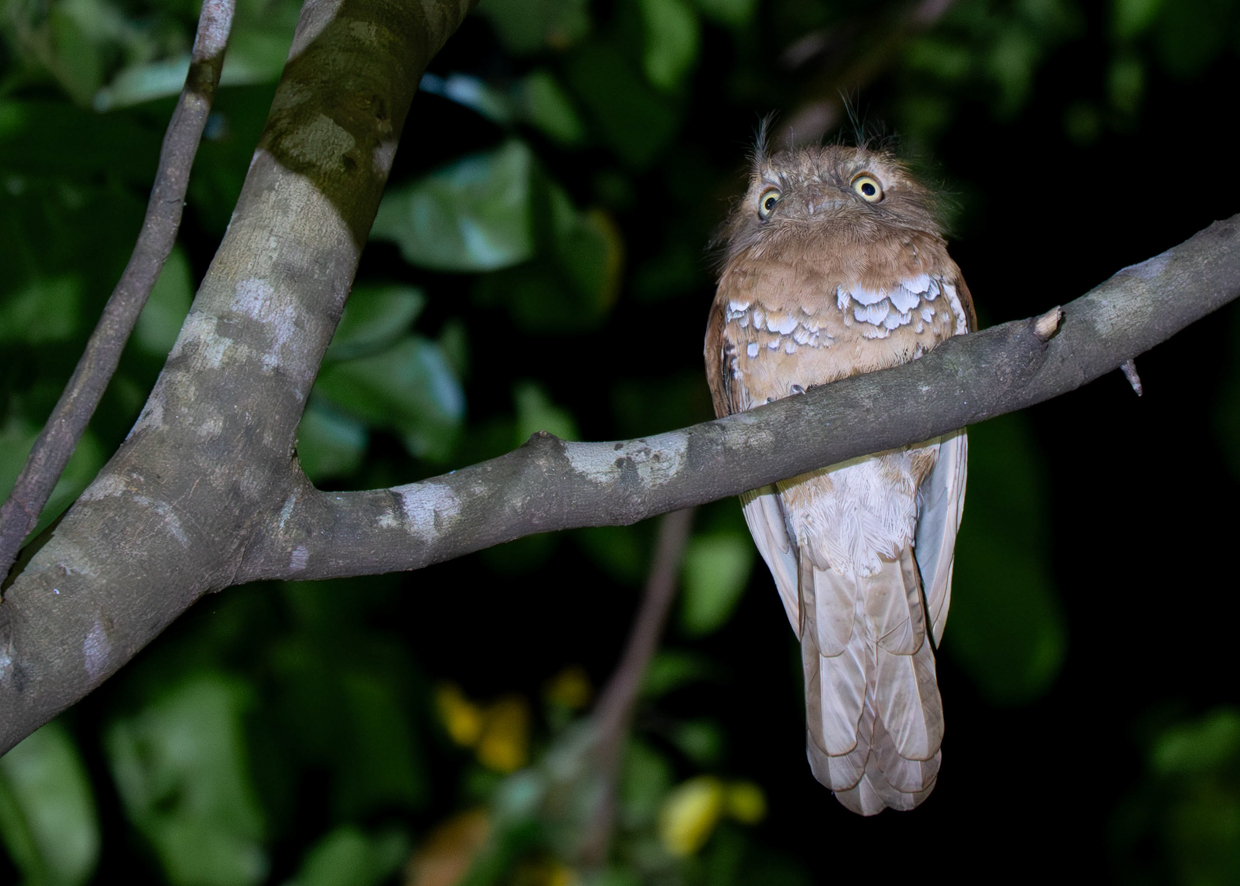
Blyth’s Frogmouth © Phil Chaon
Day 5
A final morning in the dry forest gave us some time to clean up a few more targets and revisit some great birds from the previous day. Rufous Woodpecker, Rufous Treepie and Golden-fronted Leafbird were all nice additions. On top of the many Red-breasted Parakeets flying overhead we found a small group of Blossom-headed Parakeets feeding quietly in the trees. Back at lunch we were treated to one more look at Black-headed Woodpecker when one decided to make an appearance at the bananas! After our meal we spent the afternoon making the long drive back to Siem Reap and getting a bit of rest.

Black-headed Woodpecker © Phil Chaon
Day 6
Our final full day in Cambodia was spent cruising the waters of Tonle Sap. This massive freshwater lake triples in size during the rainy season but for now the lower water levels concentrated the truly shocking number of water birds. As we traveled across the lake we were treated to thousands upon thousands of Whiskered Terns, Great, Medium and Little Egrets, Great and Little Cormorants and Asian Openbills. Additionally we picked up smaller numbers of Black-headed Ibis, Brown-headed Gulls, and Gray-headed Swamphens.
By midmorning we arrived at a large tower in the middle of the wetlands and hundreds of large birds wheeling overhead. Climbing the tower afforded us great views of circling Spot-billed Pelicans, Painted Storks and gargantuan Greater Adjutants. A few of us managed to spot an endangered Milky Stork as it left the nest and joined the kettle venturing farther afield to forage. We had a delightful lunch in a floating village at a community run tourism project that used locally sourced fish and vegetables. The building next door had women weaving beautiful baskets, bags and crafts using dried water hyacinth – a great way to make use of this invasive plant! On the way out we stopped at a few more spots including a muddy area along the drying margins of the lake that held flocks of Pacific Golden-Plover, Gray-headed Lapwing and a few Black-tailed Godwits! Back at the hotel we all had a nap and some time to pack in preparation for our trip to Vietnam the following day.
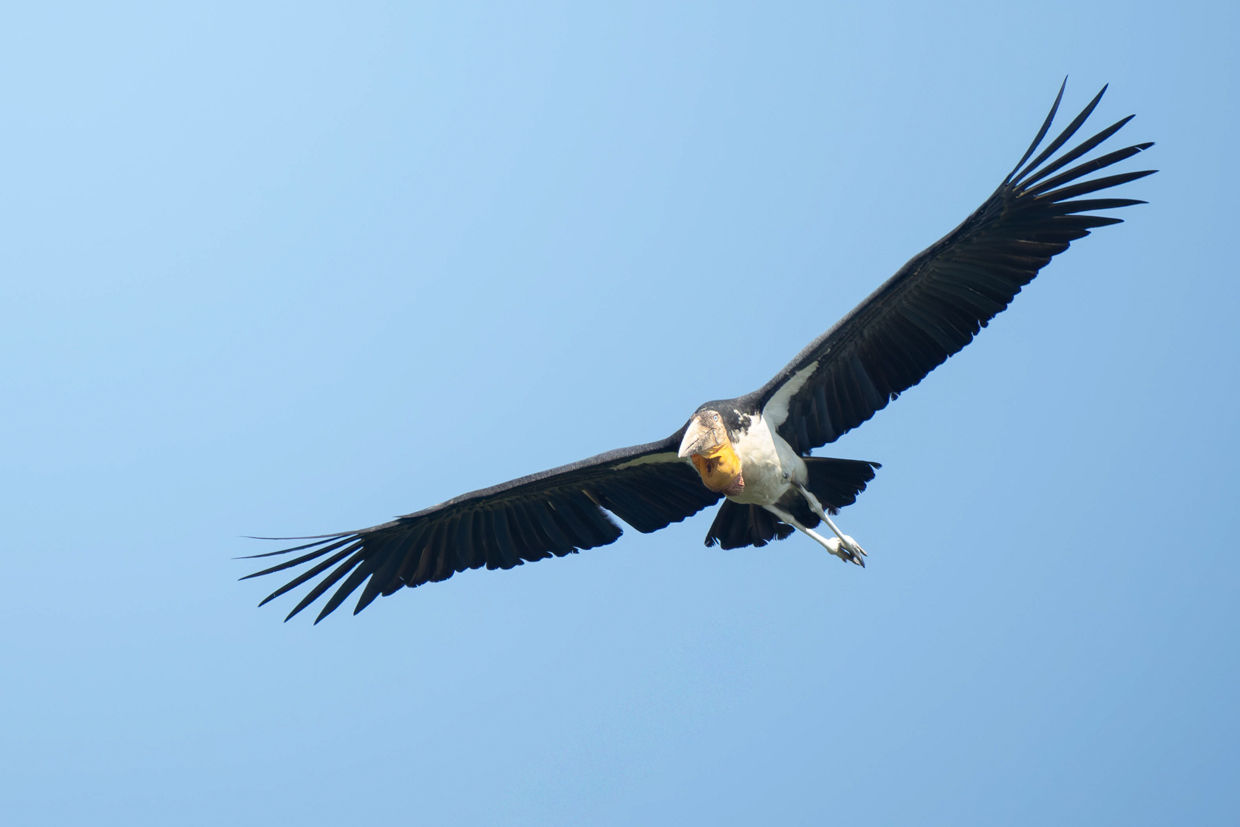
Greater Adjutant © Phil Chaon
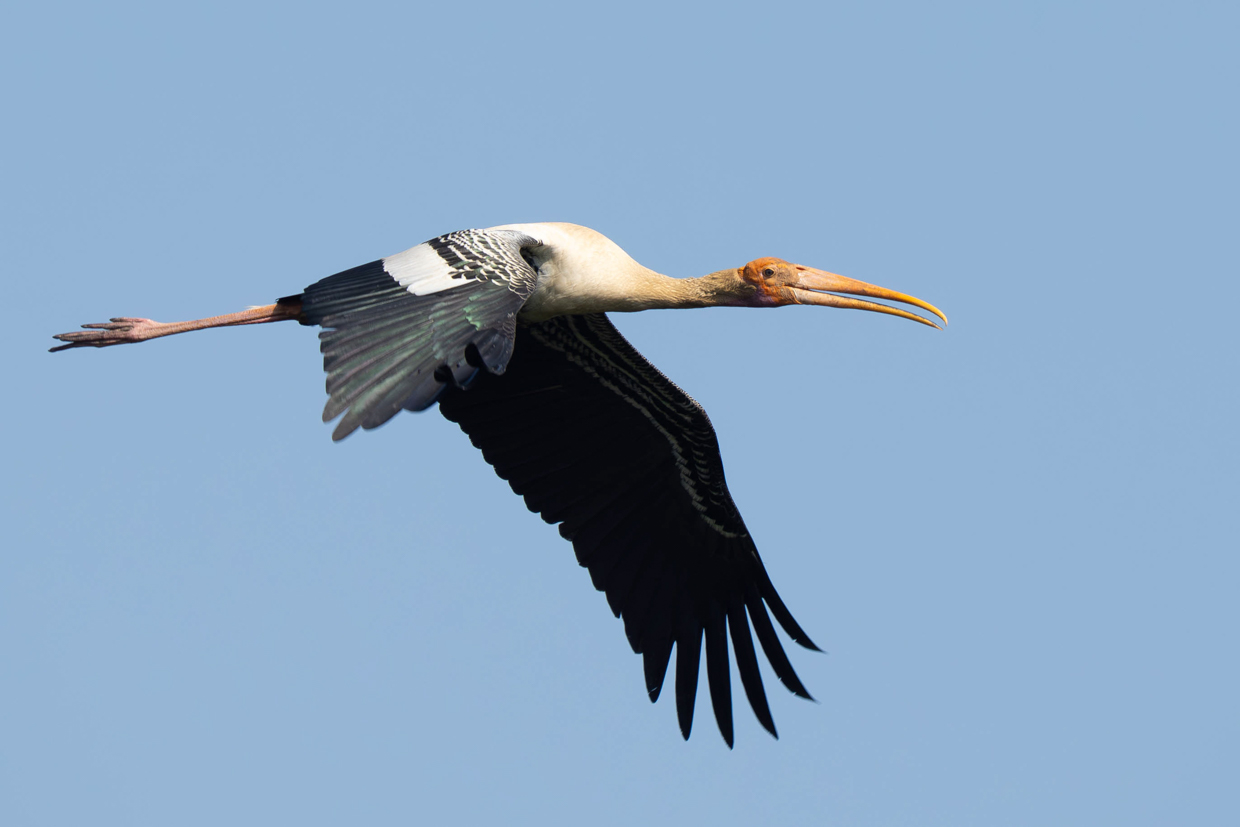
Painted Stork © Phil Chaon
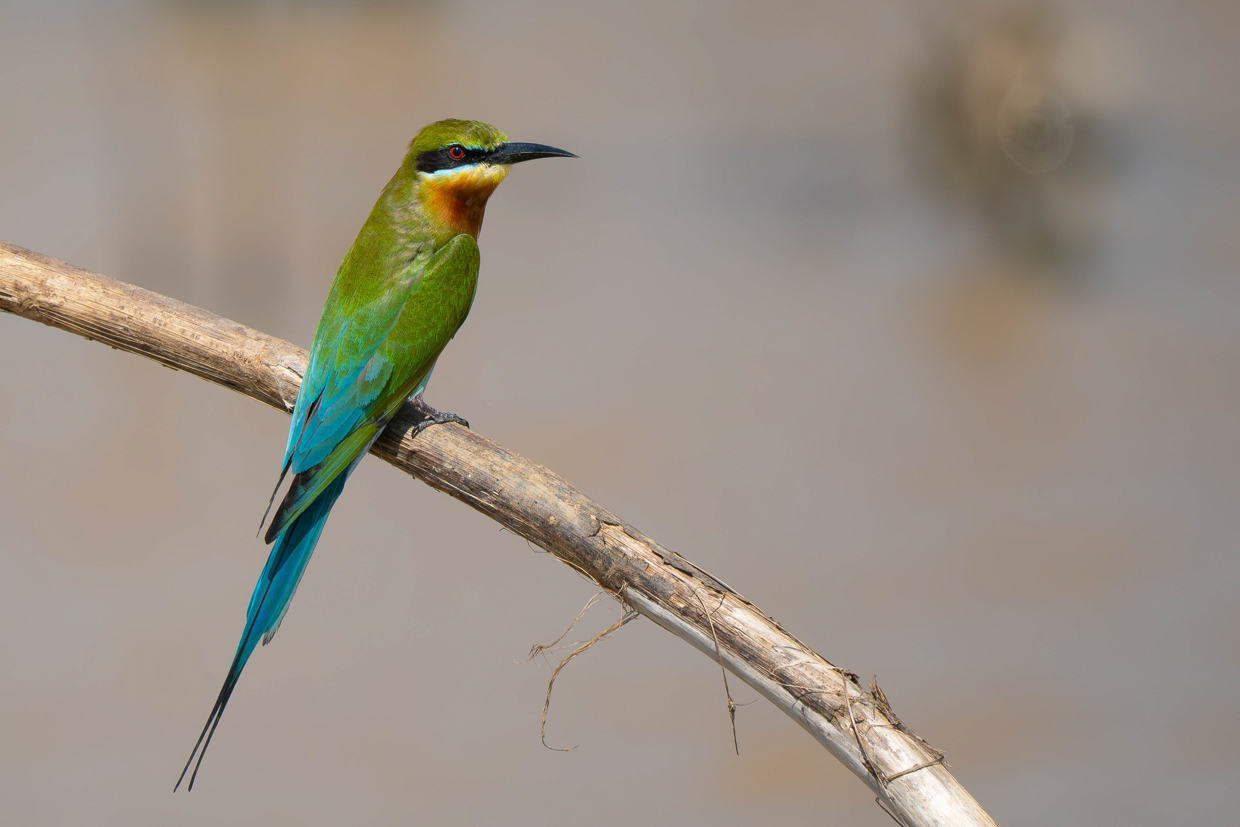
Blue-tailed Bee-eater © Phil Chaon
Day 7
With flights not leaving until late afternoon we spent the morning birding around some lotus ponds and rice paddies on the edge of Siem Reap. These man made agricultural wetland systems have largely replaced the natural marshes that used to be here but still contain many of the same birds. We spotted a brilliant Black-capped Kingfisher and while enjoying it were surprised to find a Watercock strolling in the open, allowing great looks at this normally reclusive bird. Pheasant-tailed Jacanas put on a good show but the highlight of the morning was a very cooperative White-browed Crake that gave great looks and photo opportunities for the group. When things got hot and bird activity quieted down we went back to hotel and had some time for a swim, a massage, or a walk around town. In the afternoon we moved to Siem Reap airport and after a short flight touched down in the vast metropolis of Ho Chi Minh City (Saigon).
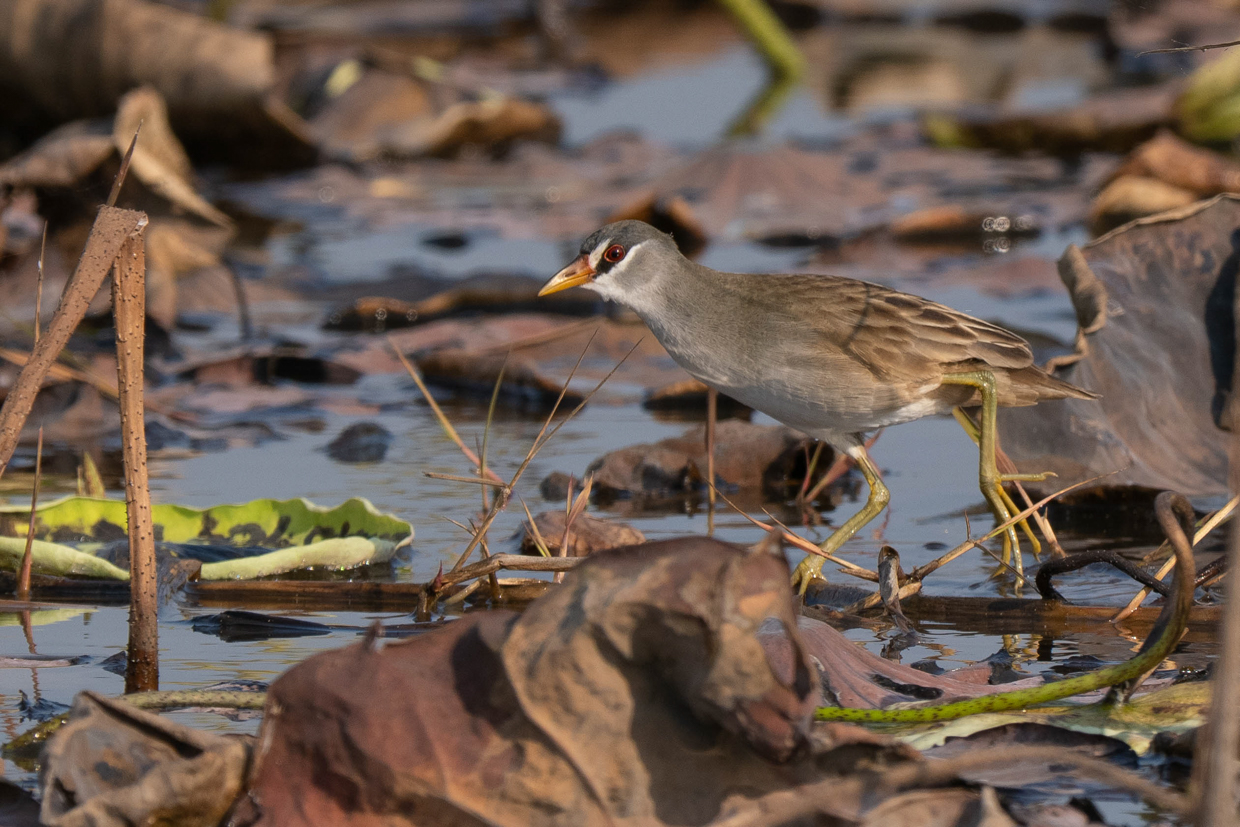
White-browed Crake © Phil Chaon
Day 8
After the approachable and quiet small towns and rural areas of Cambodia, the vastness of Ho Chi Minh was certainly a shock. The city seemed to go on for ever as we made our way south to the delta of the Mekong River. The single daily high tide was occurring at around 1 am and so by early morning the ocean was far away and the tidal flats stretched to the horizon. While the birds were spread out there was still a lot to see and we strolled, and occasionally slogged, our way across the soft sandy flats in search of shorebirds. Among the thousands of Red-necked Stints we also managed to locate plenty of Broad-billed Sandpipers, Curlew Sandpipers, a few Eurasian Curlews and Bar-tailed Godwits. White-faced Plover and Chinese Egret were our rarest finds of the morning but the numbers and diversity of shorebirds present made for a great morning of birding. As the day warmed up we left the coast behind and travelled back across Ho Chi Minh City and north to Cat Tien National Park. A VERY short ferry ride, we were deposited across the river at our hotel for the next three nights, comfortably located inside the park itself.
Day 9
Our first morning in Cat Tien National Park was unlike anywhere else we had visited thus far on the tour. While we had spent a few lovely days in the dry forests of Cambodia – the lush and tangled forests of Cat Tien are closer to what most people picture when they think about tropical Asia. No sound better encompassed the feeling of being in these forests than the raucous and bizarre whooping and trilling of a group of Yellow-cheeked Gibbons that greeted us every morning outside our hotel room. The shift in habitats also came with an equally drastic shift in bird life and nearly everything we saw was new.
From a small blind nestled in the forest we had dreamy encounters with rare forest jewels – Bar-bellied and Blue-rumped Pittas – along with a host a new babblers, bulbuls and blue flycatchers. Nearby, another hide allowed us to see cryptic species like Siamese Fireback, Slaty-legged Crake and Red Junglefowl. Instead of brief views of these shy species scampering through the forest we were treated to long looks as they foraged, oblivious to our presence. Outside of the hides we had a close encounter with a pair of Asian Palm Civets and a few nice waves of birds that included Golden-crested Starling, Common Flameback, Great Iora and Square-tailed Drongo-Cuckoo.
After lunch and a midday break we headed out as the forest cooled down and activity picked back up. The highlight for most was an Orange-breasted Trogon that sat in the open along the roadside. We also tracked down a cooperative Laced Woodpecker and played hide and seek with a less cooperative quartet of the range-restricted Pale-headed Woodpecker. We ended the day with a vespertine vigil for the enormous Great-eared Nightjar which eventually exited the forest and circled languidly over the canopy.
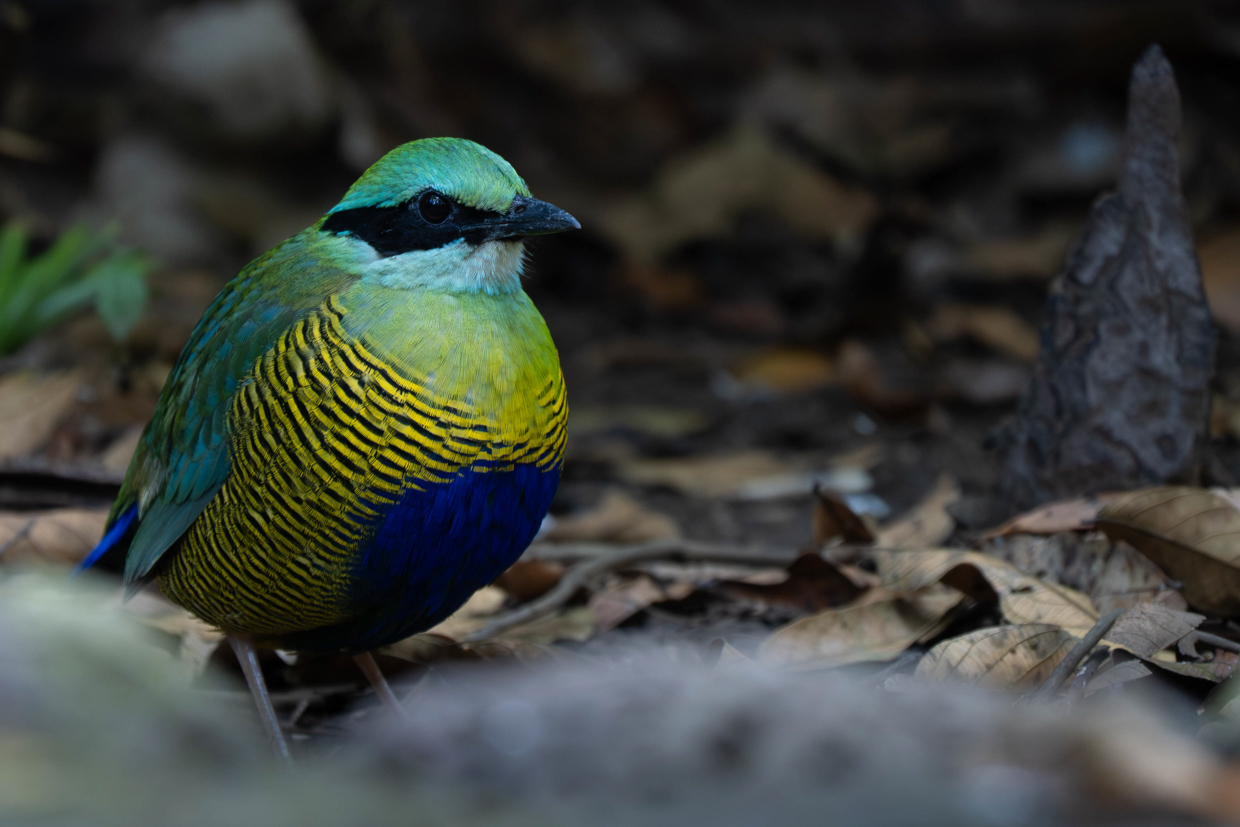
Bar-bellied Pitta © Phil Chaon

Asian Palm Civet © Phil Chaon
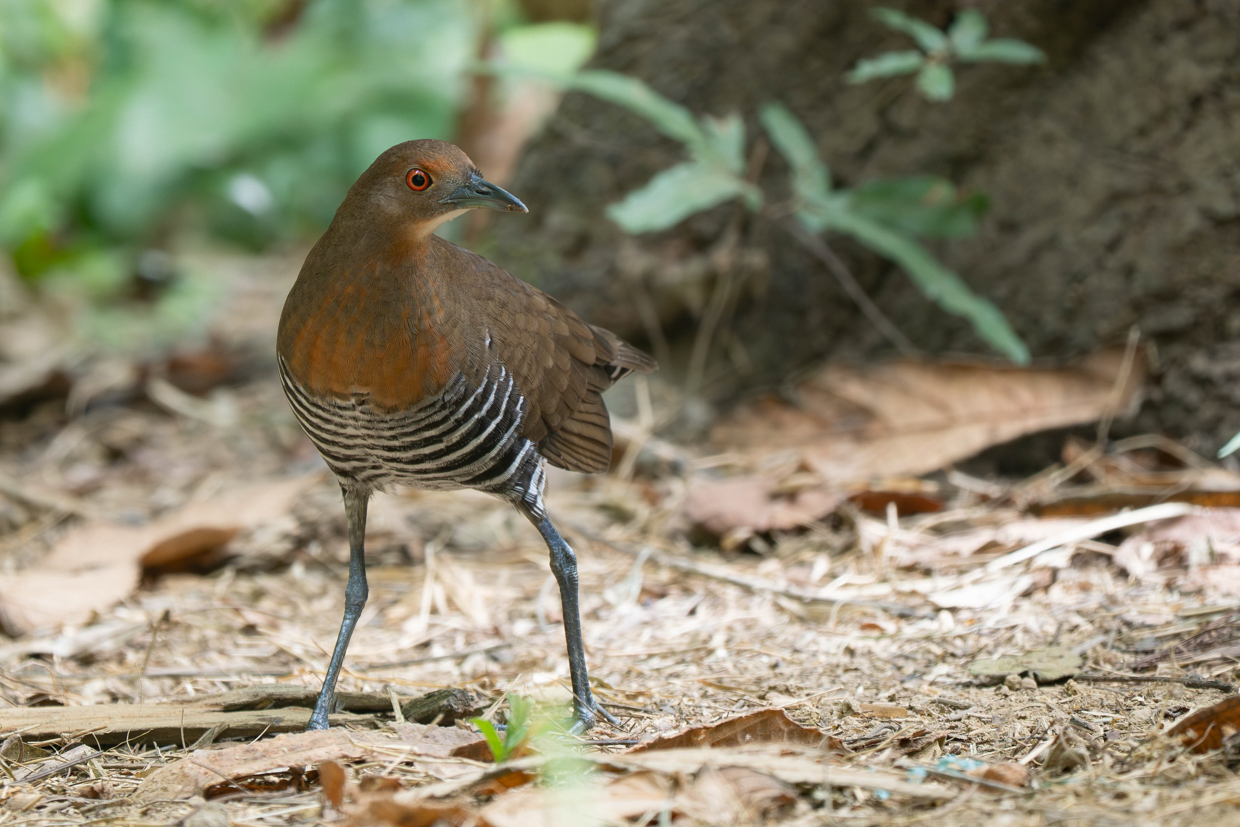
Slaty-legged Crake © Phil Chaon
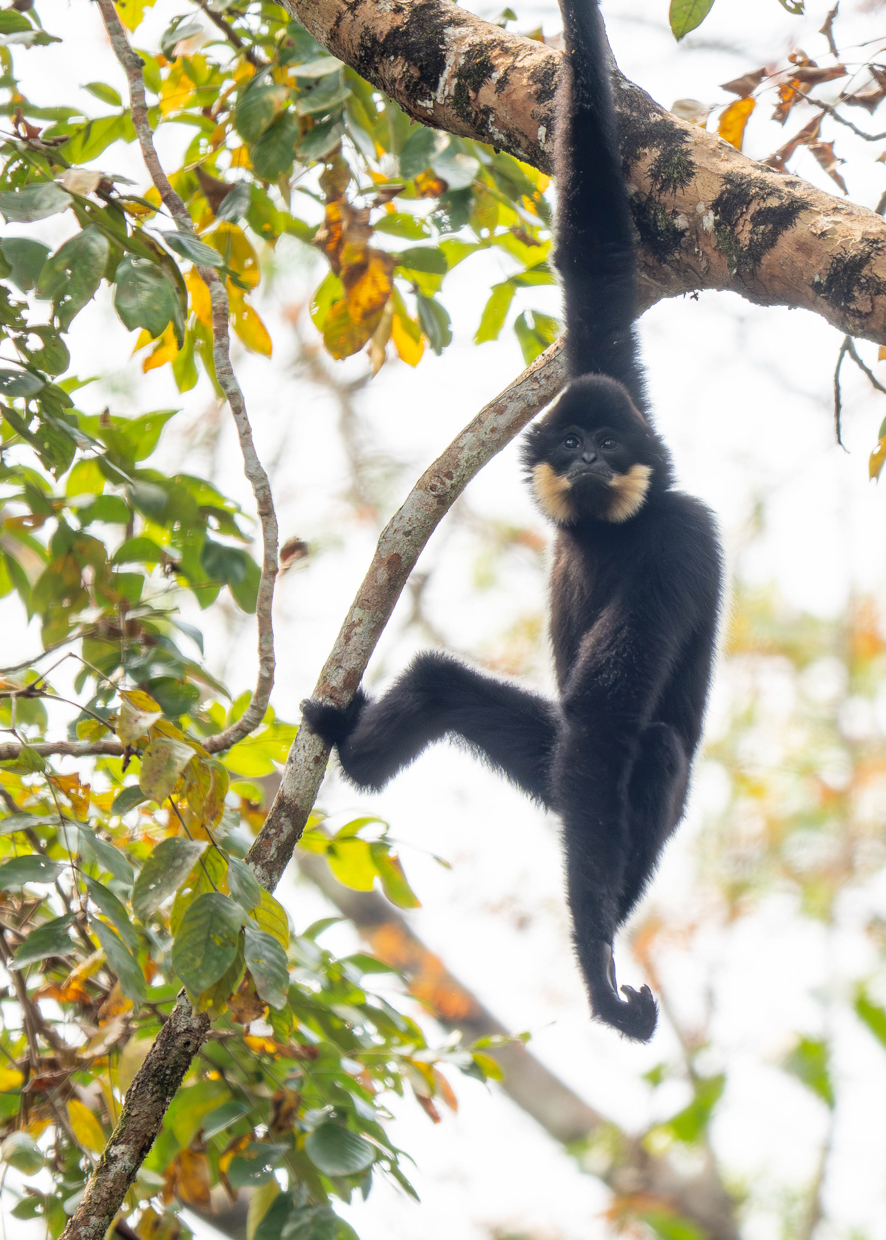
Yellow-cheeked Gibbon © Phil Chaon
Day 10
Our second full day in Cat Tien found us returning to a hide to start the morning. Immediately upon arrival we ran into our primary target – Germain’s Peacock-Pheasant. After staying a little longer to enjoy more time with Siamese Fireback we headed out into the forest with plenty of morning left. Making our way down the road we found a pair of brilliant Black-and-Red Broadbills – a species which has become increasingly common in the national park over the last few years. It took a little more work to track down the cartoonish and frog-like Dusky Broadbill perched on the opposite side of the river. The mixed flocks in the area showcased the diversity of woodpeckers found in the park and we enjoyed nice views of the diminutive White-browed Piculet, slightly larger Black-and-Buff Woodpecker and a pair of brightly colored Lesser Yellownapes.
In the afternoon we returned to the field for an open air jeep ride to explore more distant parts of the park. In the open county we had views of Green Peafowl passing furtively through the tall grass. We also encountered a large buck Sambar and were surprised and delighted to watch a Racket-tailed Treepie clambering around on its head, removing parasites. Heading out of the open grasslands we cruised the forest looking for another specialty of the park. We located our target in the late afternoon – not a bird this time but the striking and rare
Black-shanked Douc, a species of langur endemic to the Annamite region. Returning to the hotel with a little light to spare, a few of us ended the day with an encore performance of Great-eared Nightjars, this time right outside of our rooms.
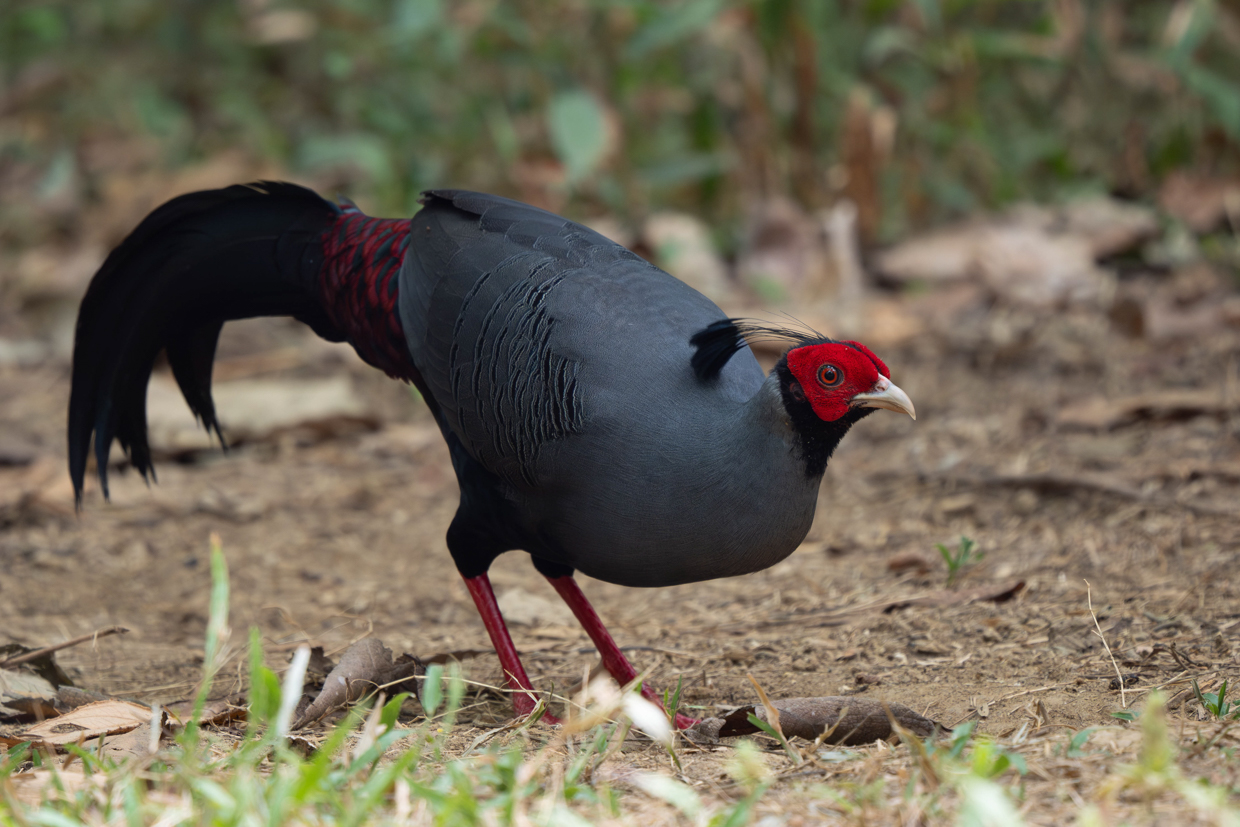
Siamese Fireback © Phil Chaon
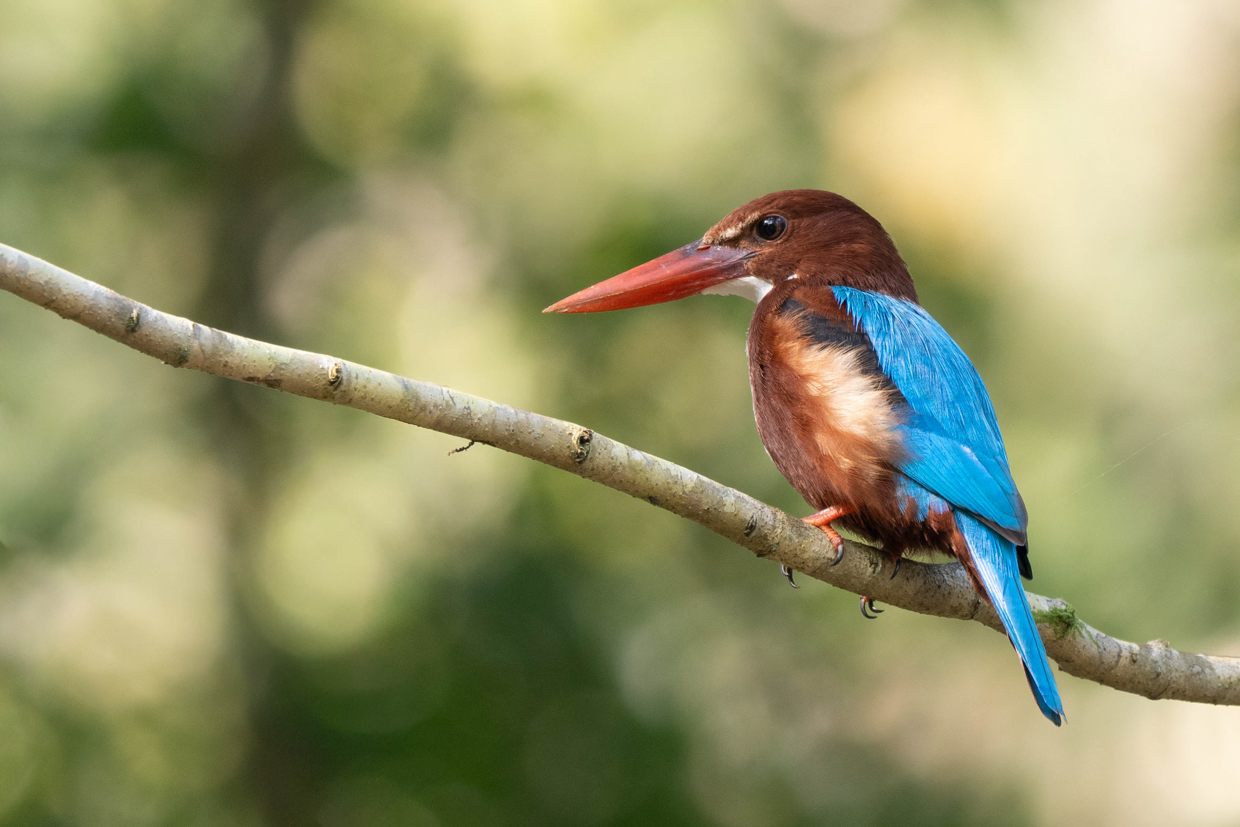
White-throated Kingfisher © Phil Chaon

Black-and-buff Woodpecker © Phil Chaon

Black-and-red Broadbill © Phil Chaon
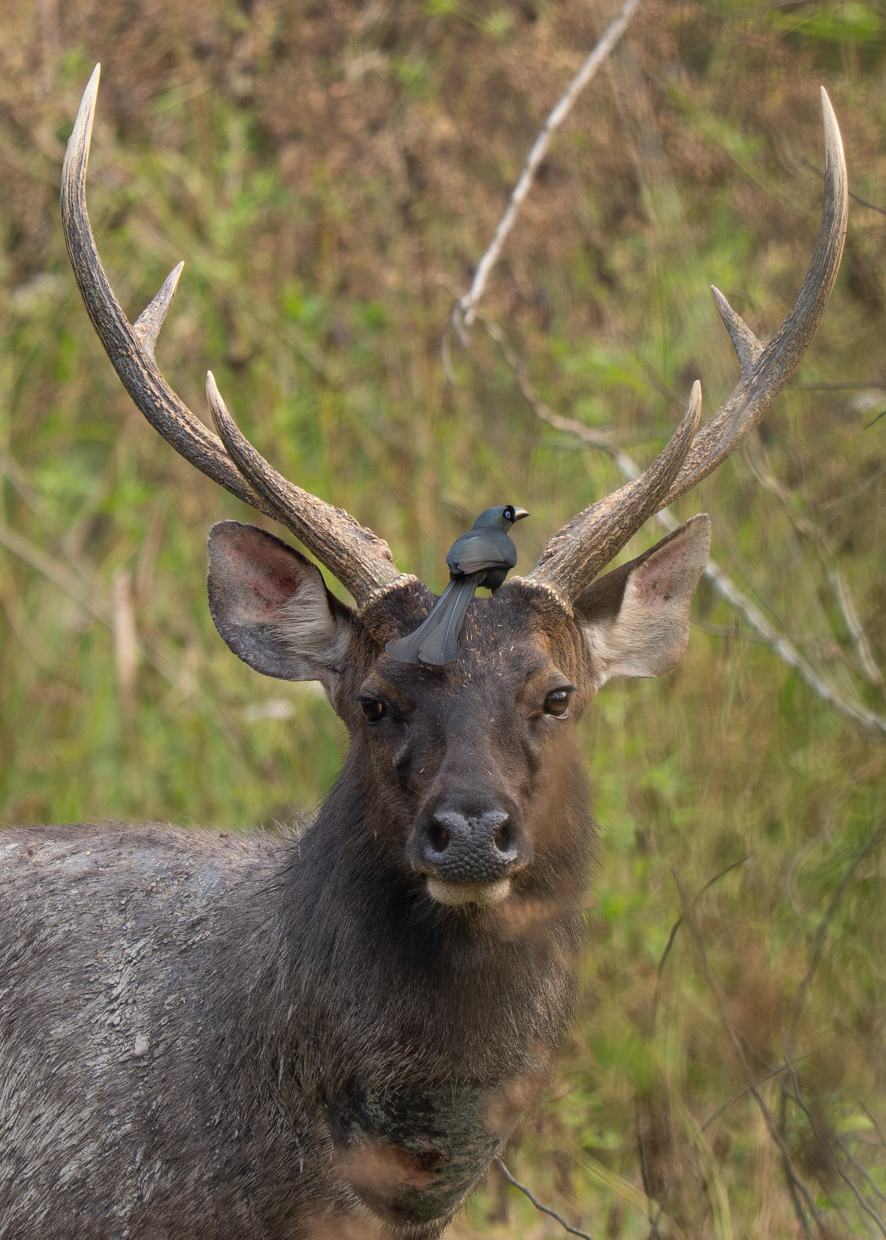
Sambar and Treepie © Phil Chaon
Day 11
We ended our time in Cat Tien with one more exciting morning of birding. In a few short hours we picked off most of our remaining targets with outstanding views of Banded Kingfisher and Banded Broadbills, a frenetic group of Heart-spotted Woodpeckers and a foraging party of Gray-cheeked Tit-babblers that were more concerned with the insect prey concealed in dead leaves than they were with our group. In addition to the birds, the forest took center stage and the massive buttresses and tower trunks of Tung trees provided a breathtaking backdrop for our mornings outing.
The next several hours were spent transiting from the steamy lowlands to the cool Central Highlands region. At our lovely hotel we enjoyed a fantastic lunch (and equally impressive dinner) before climbing the road to Deo Nui San pass. The weather turned cloudy and windy upon our arrival and bird activity was pretty subdued but despite this we managed to see some great species. Scope views of a cooperative Indochinese Barbet were a nice start, and the near-endemic Yellow-vented Green Pigeon also made an appearance. A few passing flocks introduced us to more common montane species like Green-backed Tit, Black Bulbul, and Bar-winged Flycatcher Shrike. The highlight of the afternoon came at the end when a small group of Long-tailed Broadbills arrived and eventually perched in the open before continuing down the mountain.
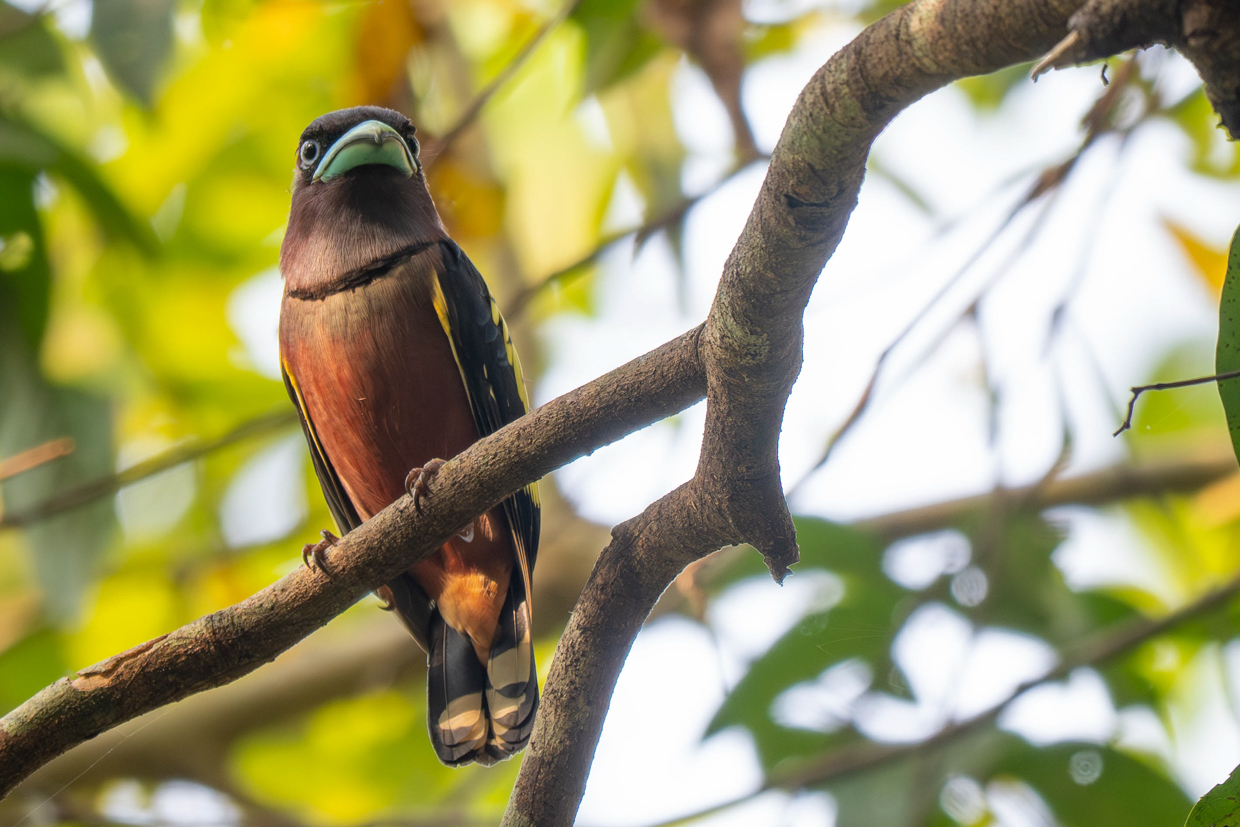
Banded Broadbill © Phil Chaon
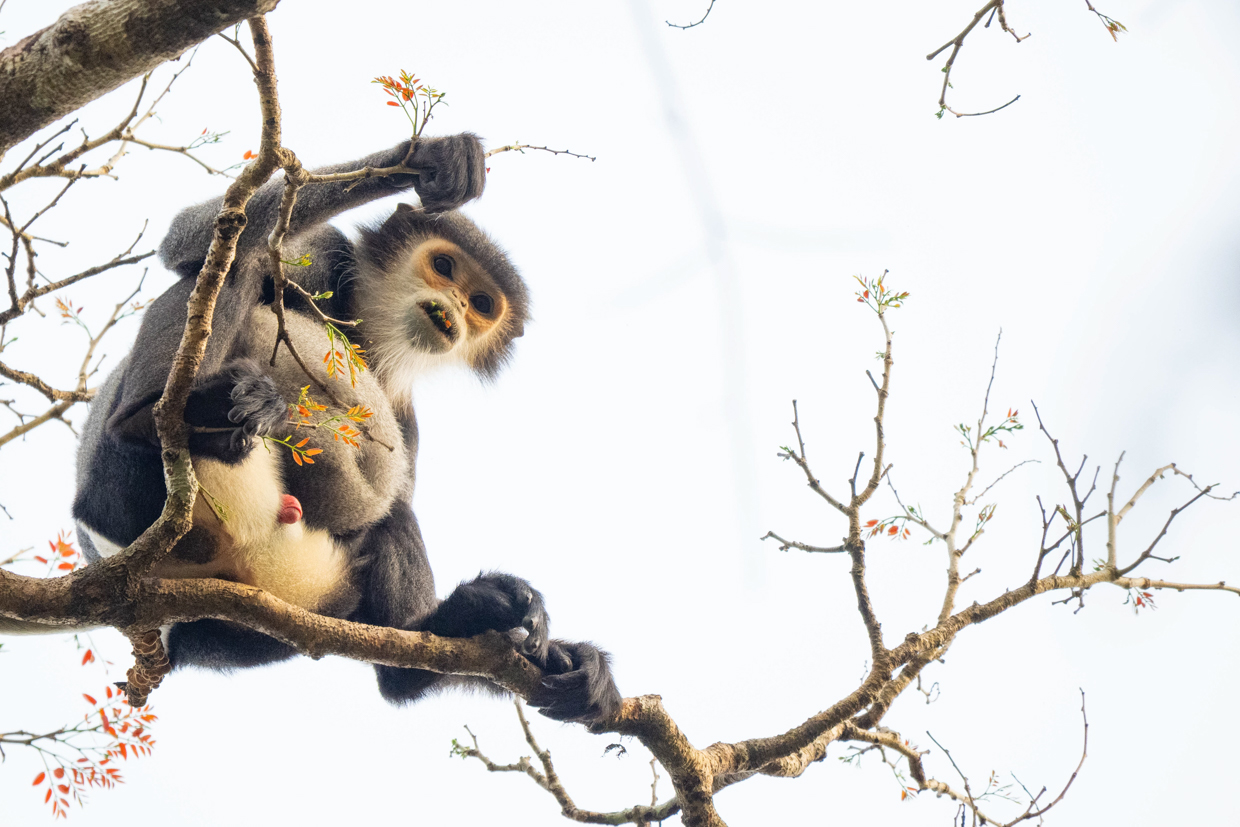
Black-shanked Douc © Phil Chaon
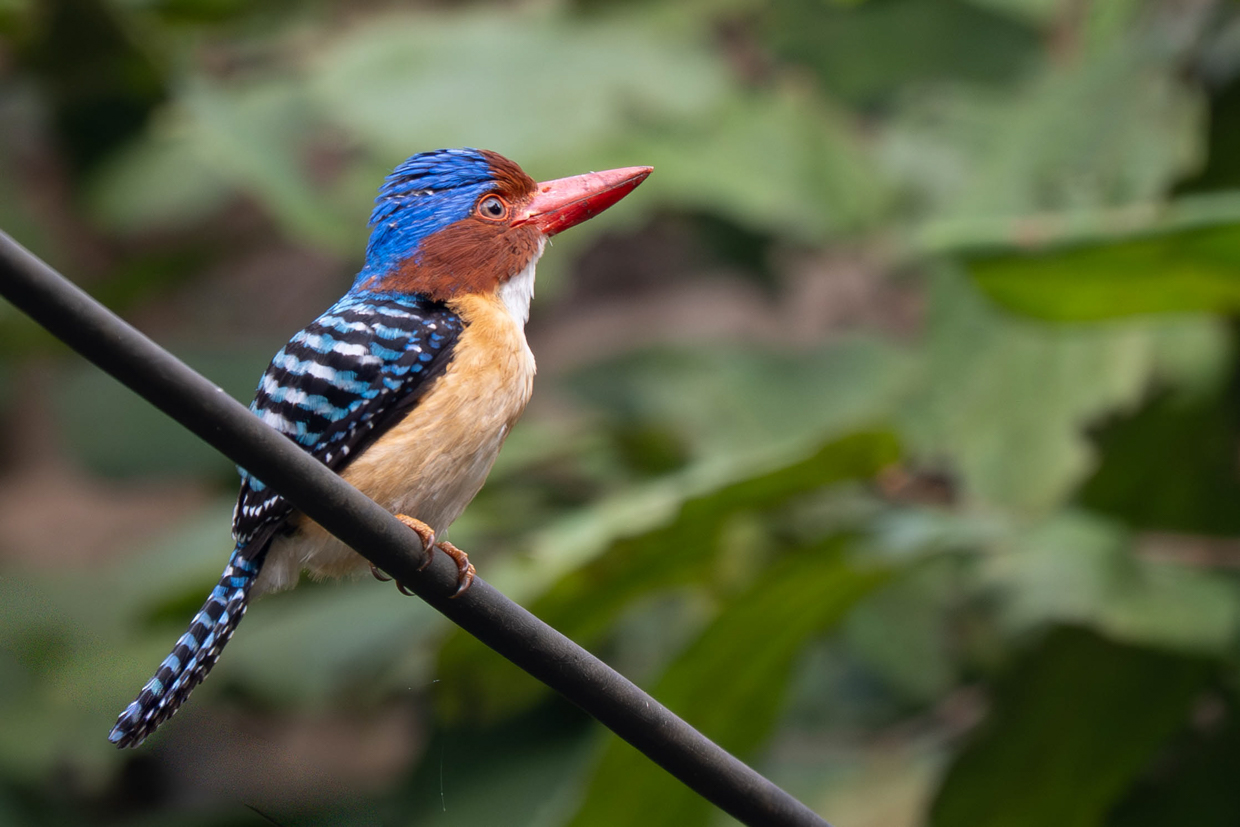
Banded Kingfisher © Phil Chaon
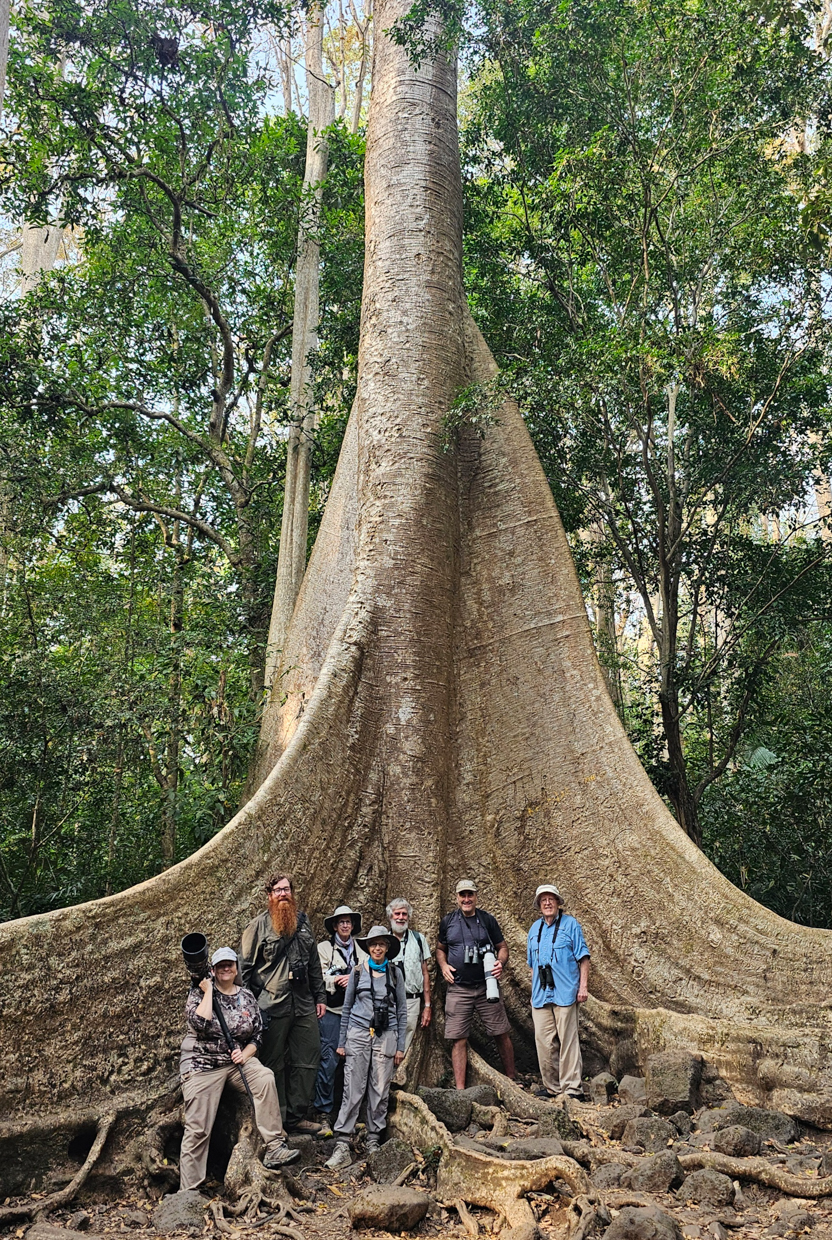
Our group
Day 12
We made an early start in order to arrive in mountains outside Dalat for an exciting day of birding. Our efforts were rewarded with a suite of spectacular forest skulkers and localized endemics. Among the long list of new birds we found over the morning were endemic Black-crowned Fulvettas and Short-tailed Scimitar Babblers, as well as the distinctive local subspecies of Black-throated Tit, Black-headed Sibia, Lesser Shortwing and Mrs. Gould’s Sunbird. The morning wasn’t just about regional specialties but also featured jaw dropping looks at a male Blue Pitta and good views of the miniscule “egg with legs” – Gray-bellied Tesia.
Our remote setting allowed us the chance to depart from a traditional restaurant setting. Instead, we enjoyed a typical lunch for the region prepared in home by a local K’oh family. This mountainous region is still home to a wide diversity of indigenous ethnic groups with food, languages and traditions very different from those found in the rest of southern Vietnam. In the afternoon we returned to the forest and saw a bizarrely proportioned Dark-sided Thrush and a tiny, dapper Little Pied-Flycatcher. A boisterous and brash group of White-browed Scimitar-Babblers were a group favorite and the deep vibrant blues of White-tailed Robins and Large Niltava added a nice splash of color to the end of our day.
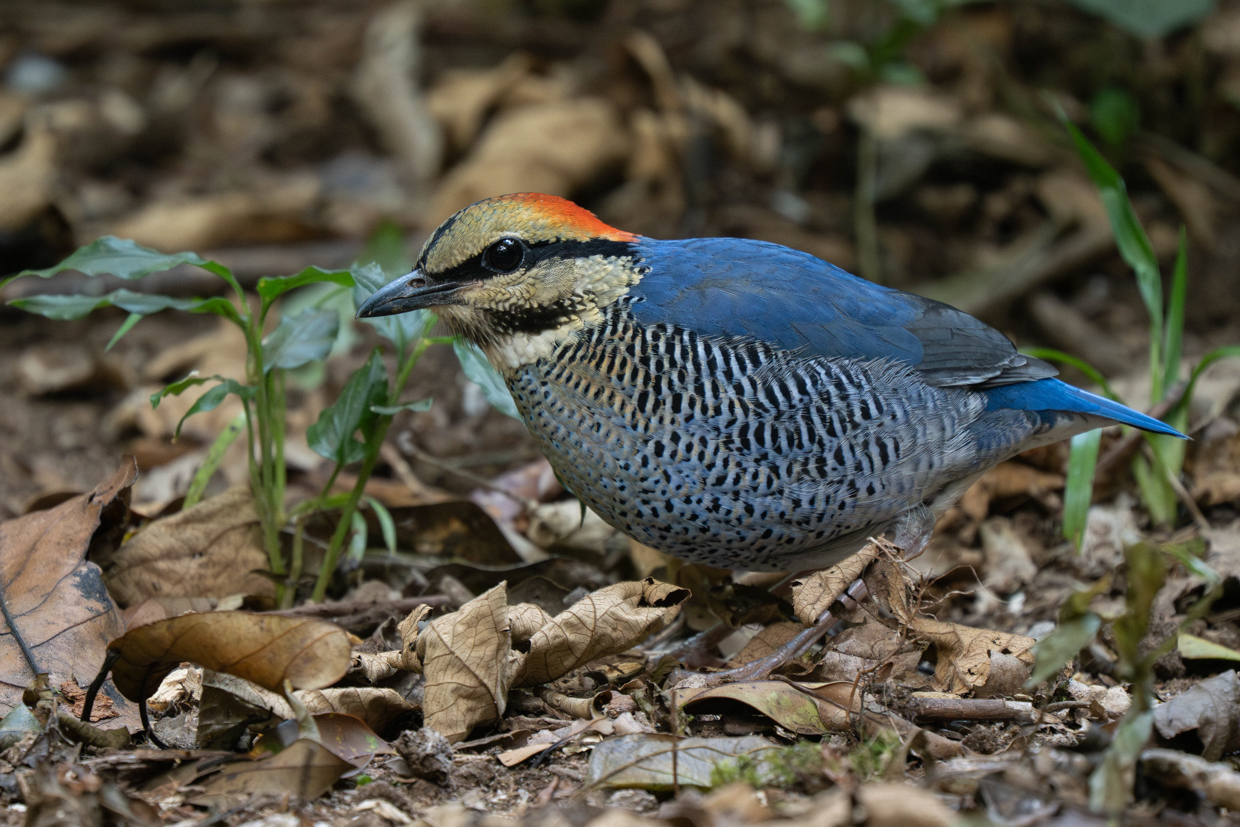
Blue Pitta © Phil Chaon
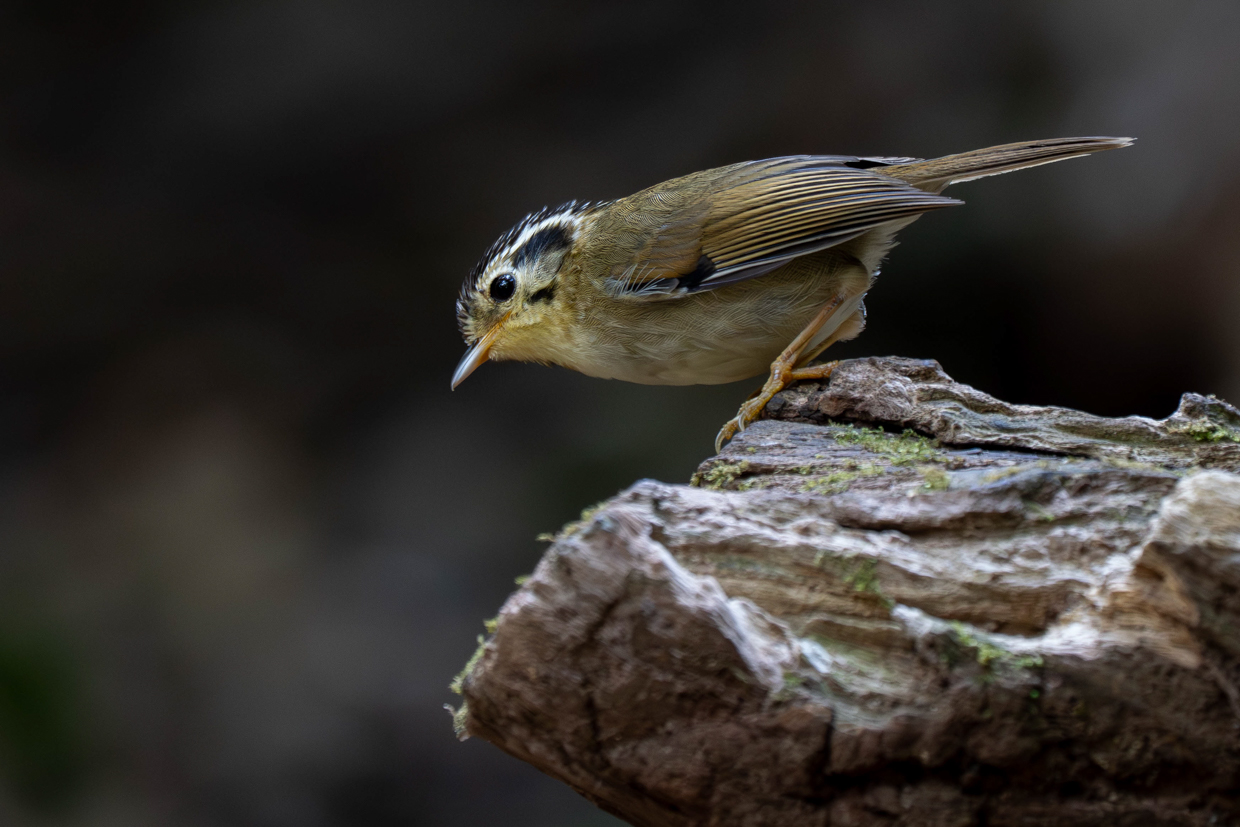
Black-crowned Fulvetta © Phil Chaon
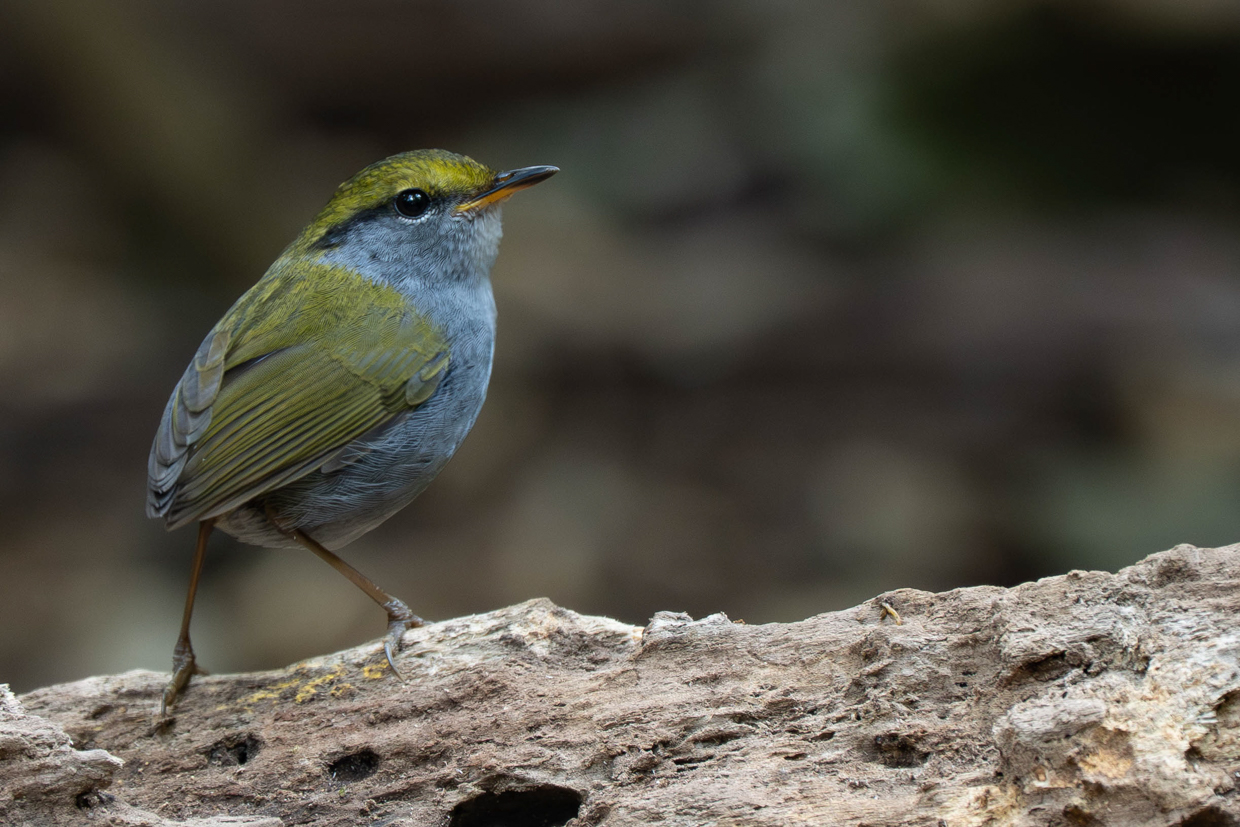
Gray-bellied Tesia © Phil Chaon
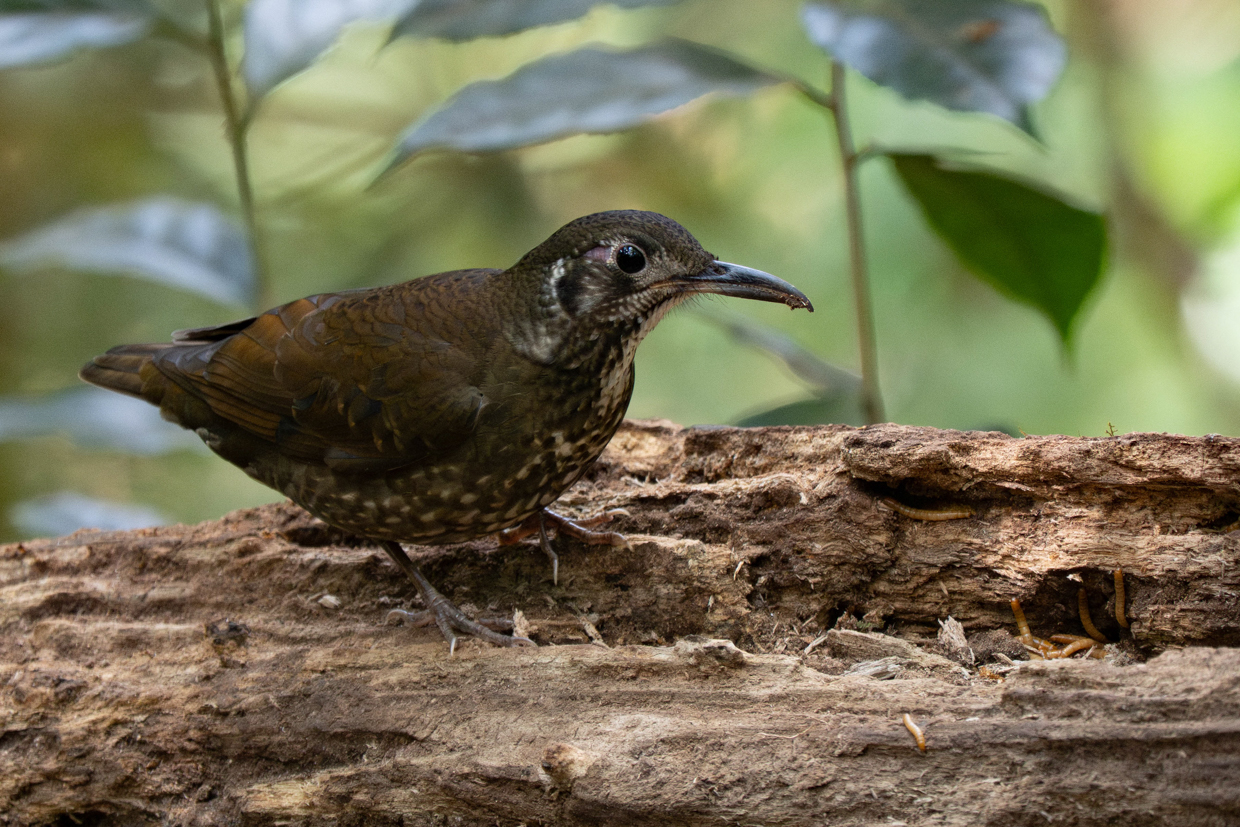
Dark-sided Thrush © Phil Chaon

White-browed Scimitar © Phil Chaon
Day 13
A short drive from our hotel took us to an odd and unexpected birding locations. We arrived in a parking lot with busloads of teenagers all waiting to board a gravity powered rollercoaster through the mountains and were not optimistic about the birding potential of the site. A small trail behind the on site restaurant took us to another crowd – this time of Vietnamese photographers lined up by a patch of flowering bottlebrushes and cherries. We enjoyed groups of brilliantly colored Mrs. Gould’s and Black-throated Sunbirds at the cherry blossoms while we waited. A Blue Whistling-thrush put on a good show and several Orange-bellied Leafbirds made an appearance.
After about an hour the stars of the show finally arrived – first a group of 7 Vietnamese Cutias, followed by a smaller group of slender Gray-crowned Crocias! Both birds are members of the laughingthrush family, both are endemic to Vietnam and both are very rare – the crocias was not seen for more than 160 years until its rediscovery in 1994. Oddly enough these two birds also share very similar patterning despite not being particularly closely related. It is thought that this mimicry may allow for the smaller and shyer crocias to feed alongside the larger and more aggressive cutia without attracting too much attention! These two spectacular endemics fed on nectar at point-blank range for about 15 minutes before continuing their feeding route.
With two big targets under our belt, we ventured further into the forest in search of mixed flocks. A Red Crossbill was an interesting find and while it looked at home in the tall pines, Southern Vietnam is not a place most people in North America would imagine this species calling home. In the afternoon we headed out in search of a few skulkers and had good luck with Yellow-eyed and Chestnut-capped Babblers appearing along with a glowing Siberian Rubythroat and the rare and restricted Dalat Bush-warbler, scurrying mouse-like through the undergrowth. We capped things off with close fly-bys from Gray Nightjar.

Mrs. Gould’s Sunbird © Phil Chaon
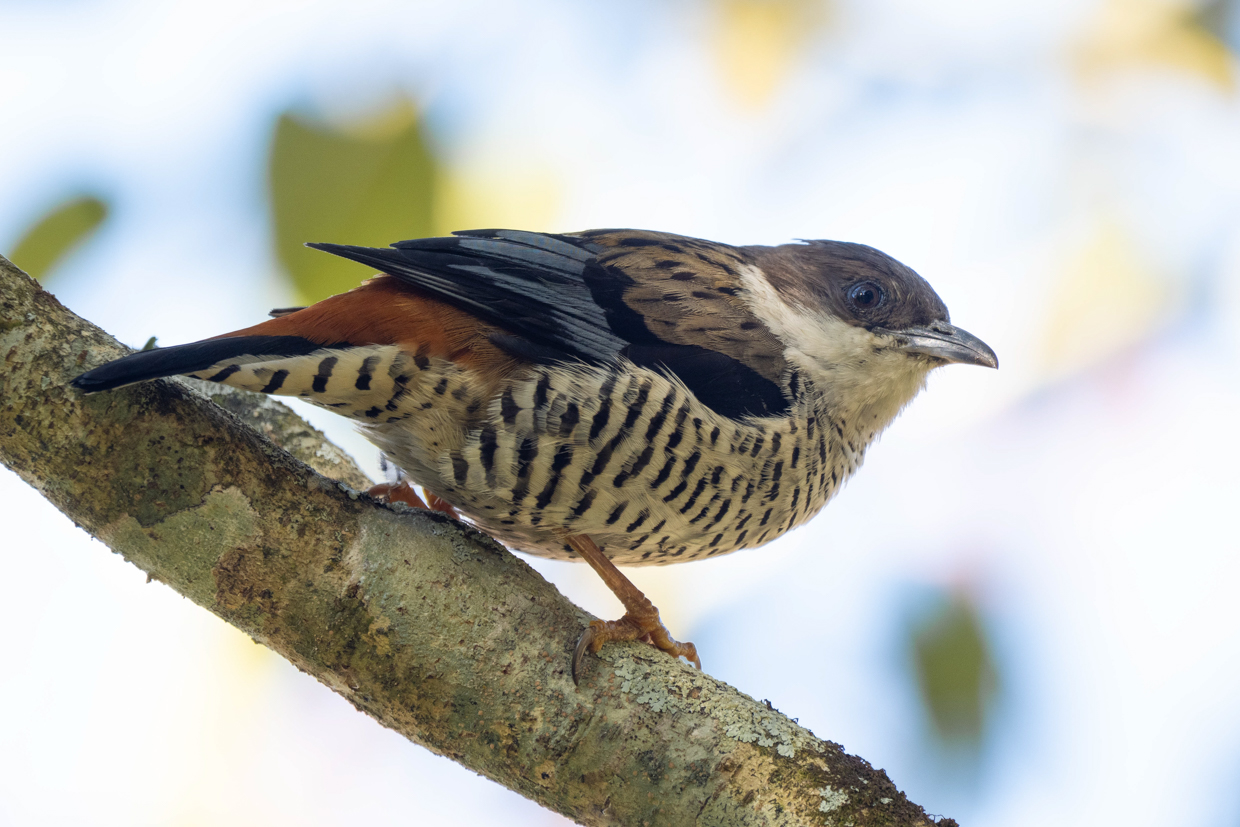
Vietnamese Cutia © Phil Chaon
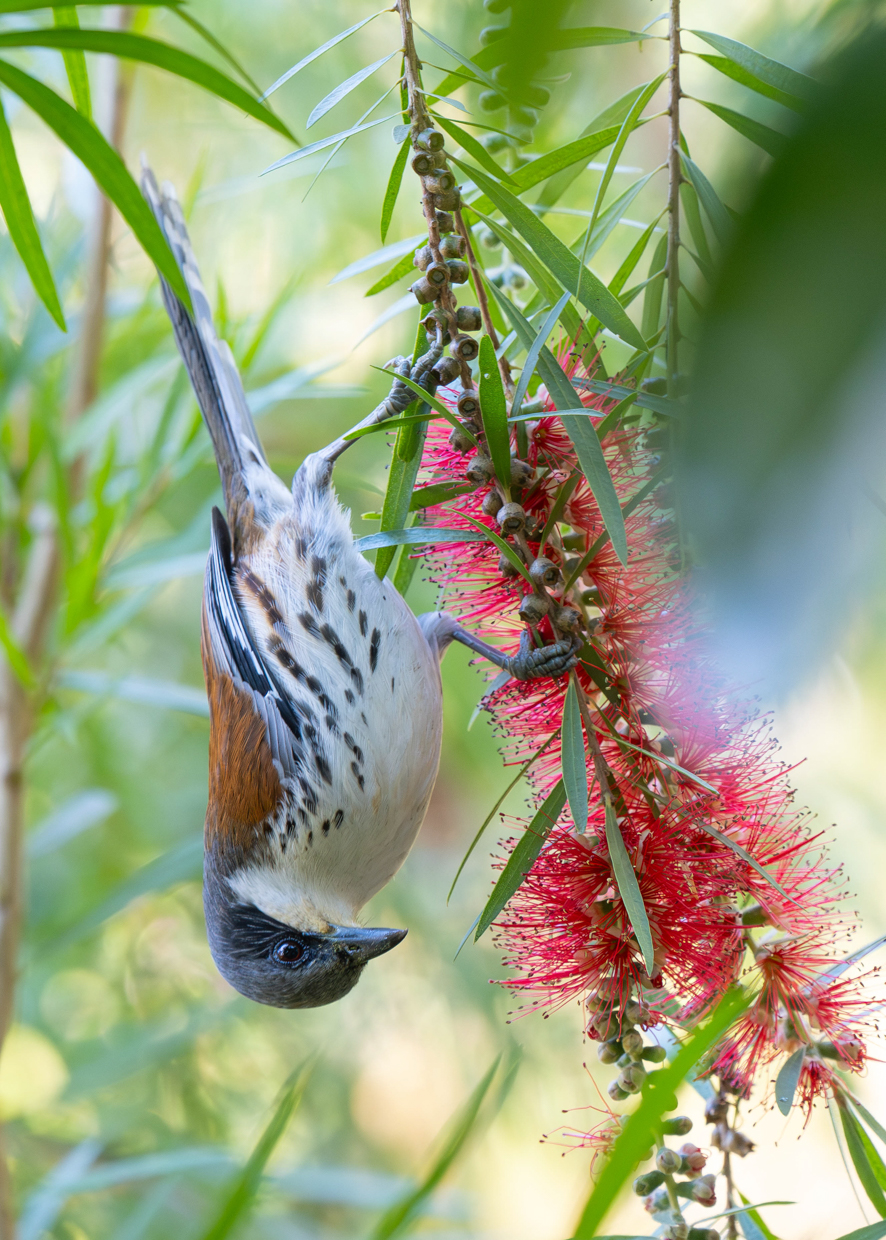
Gray-crowned Crocias
Day 14
On our final full day of birding we explored more of the region immediately around Dalat – the pine and mixed broadleaf forests hold a great diversity of birds and the mixed flocks provide exciting flurries of activity. It didn’t take us long to find a group of the gorgeous endemic Vietnamese Greenfinches, feeding on flowering plants right next to the road. A bird wave containing “Dalat” White-browed Shrike-babbler, Lesser Racket-tailed Drongo and a Mugimaki Flycatcher kept things interesting. A noisy group of White-cheeked and Black-hooded Laughingthrushes were tough to see but eventually flew across the road, revealing far more individuals than seemed possible to hide in the roadside shrubs. A Speckled Piculet put on a great show and put our woodpecker total for the trip up to an impressive 15 species!
In the afternoon we headed up to Yang Ly – an area of high elevation broadleaf forest, certainly the wettest area we had visited on the trip. The mossy forest, with elegant maples and rhododendrons is a relic of temperate Asian forests more typically found in northern China these days. This afternoon’s birding was a great finale to our time in Dalat and we were soon in the midst of a large flock of birds. In addition to the more common species we had great looks at a pair of Yellow-billed Nuthatches, another near endemic, Yellow-cheeked Tit, and charismatic White-throated Fantails. A Rufous-bellied Eagle soared low overhead as we continued down the road and several large Mountain Imperial-Pigeons cruised by. A streamside clearing hosted another flock of birds that we spent some time sorting through. While we waited a Slaty-backed Forktail stopped briefly on a log in the stream before continuing on. Just as we were getting ready to leave, a flock of 25 Black-headed Parrotbills noisily showed up on the scene. In the evening light we watched this bold and rare Annamite endemic foraging in the canopy, using their odd bills to crush dead twigs in search of insects. An exciting and fitting end to a great day of birding.
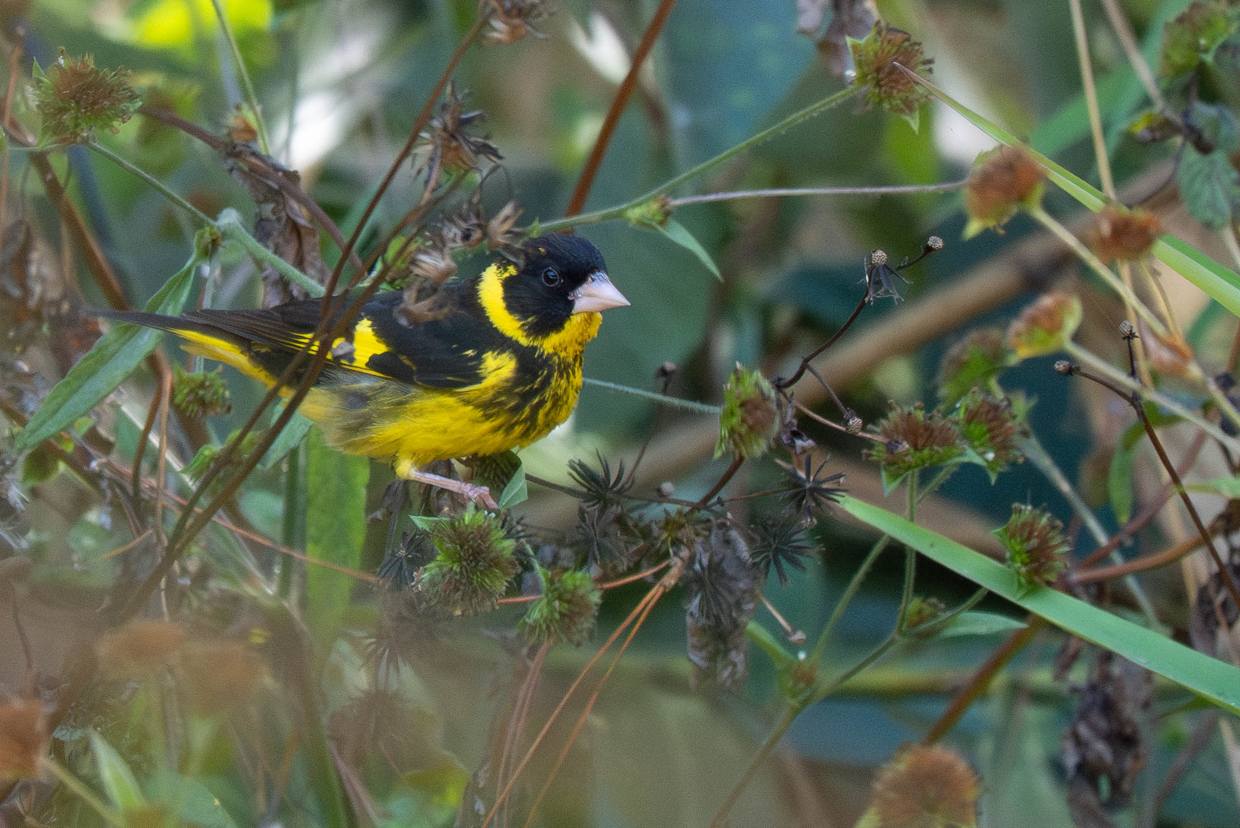
Vietnamese Greenfinch © Phil Chaon
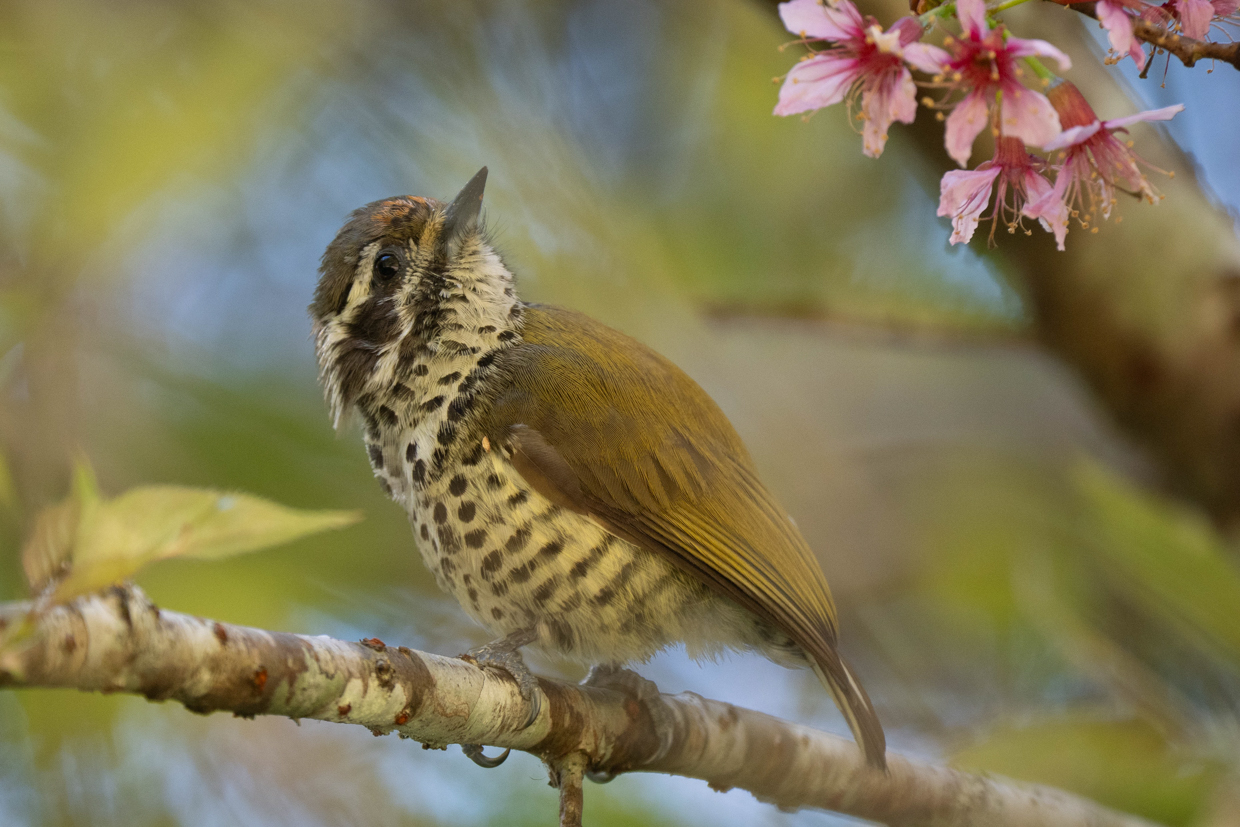
Speckled Piculet © Phil Chaon
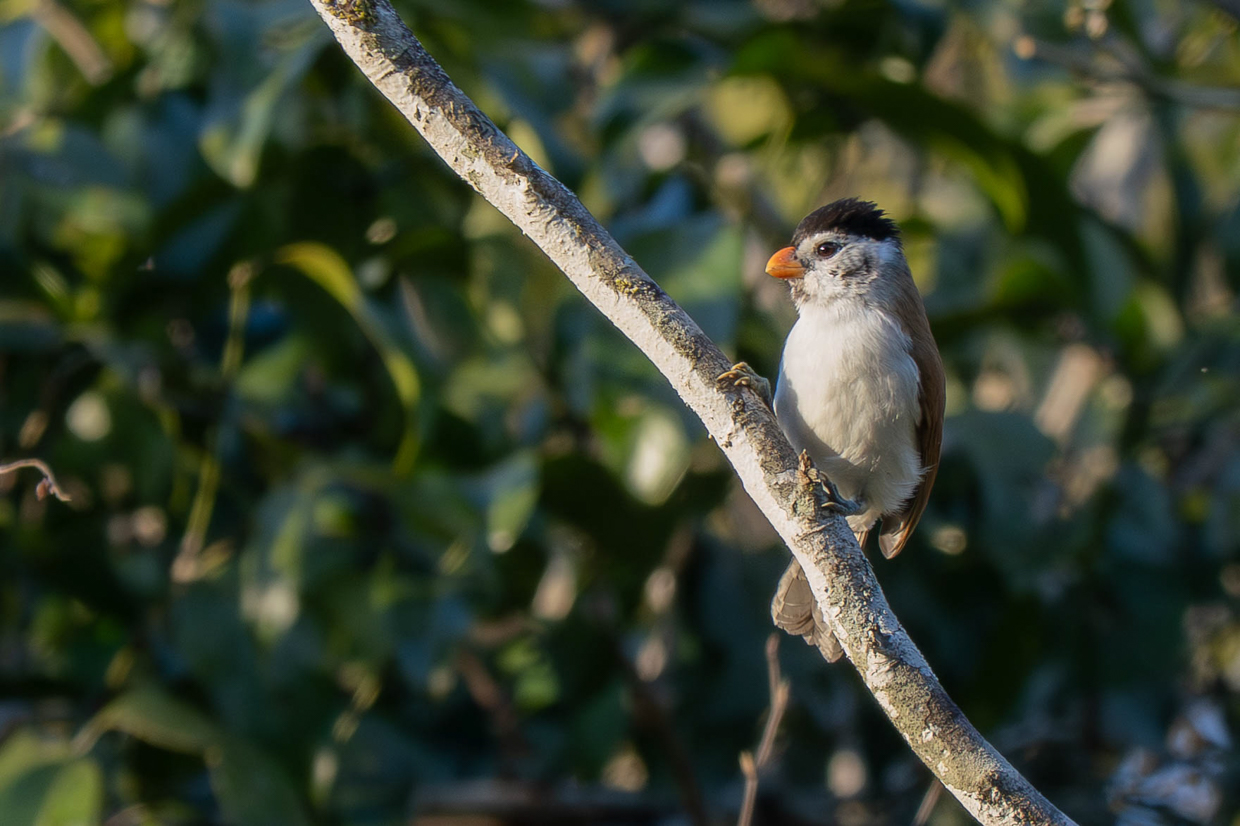
Black-headed Parrotbill © Phil Chaon
Day 15
With long travel days ahead, we opted for a later start and a relaxed breakfast in the hotel before the journey back to Ho Chi Minh City. We did make some opportune stops to enjoy Indochinese Roller, Burmese Shrike, and a few other open country birds on our way back. Back in the thrumming city we had a nice meal and a few beers while reflecting on some of our favorite moments of the trip – seeing ancient wonders, tracing the mighty Mekong river, experiencing a kaleidoscopic array of different habitats, birds, and ways of life. From floating villages to giant cities, and beautiful broadbills to prehistoric ibis, it was a delightful two weeks exploring this seldom birded part of the world with a great group of people who brought a diverse set of interests and perspective to this fantastic trip.
Cambodia & S. Vietnam birding tour species list 2026 (eBird)