Brazil: Amazon & Pantanal Trip Report (Sep 25 – Oct 8, 2026)
We had an amazing trip exploring three very different ecosystems: the rainforests of the southern Amazon, the cerrado of the Chapada dos Guimarães, and the amazing Pantanal wetlands – from Harpy Eagle and Maned Wolf at the start to Hyacinth Macaws and Giant Anteaters at the end, and with Jaguars, Giant Otters, and 300 species of birds in between! The tour was led by Adam Kent (Eagle-Eye Tours) and Bianca Bernardon (Boute Expeditions), with Moiser as our driver.
Day 1. September 25. Arrival day
We met our local guide Bianca Bernardon in Cuiabá and drove to start our adventure at Curupira Lodge. Some of the group arrived early and were able to go on a special excursion to visit a huge nest with a nine-month-old Harpy Eagle still hanging out near its nest tree!
Day 2. September 26
Luckily the later-arriving tour participants were able to see the eagle the next morning, and we did a bit of birding in the general nest vicinity. After lunch we headed north to our next lodge at the Reserva Ecológica Cunhataí Porã, in the southern Amazon. The place was crawling with birds including Blue-and-yellow Macaws at feeders around the grounds. We also saw White-necked Jacobins and Brazilian, Palm, and Blue-gray tanagers at various bird feeders.
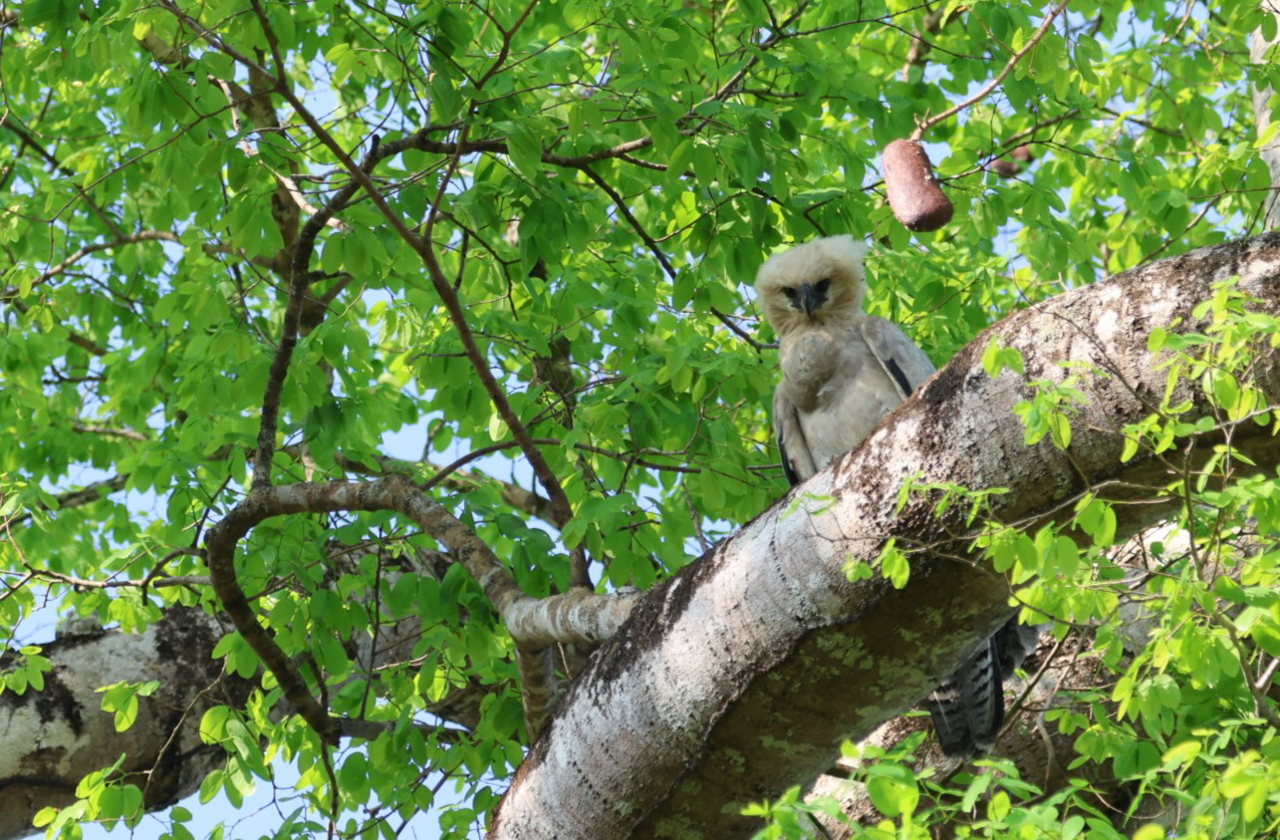
Harpy Eagle © A Kent
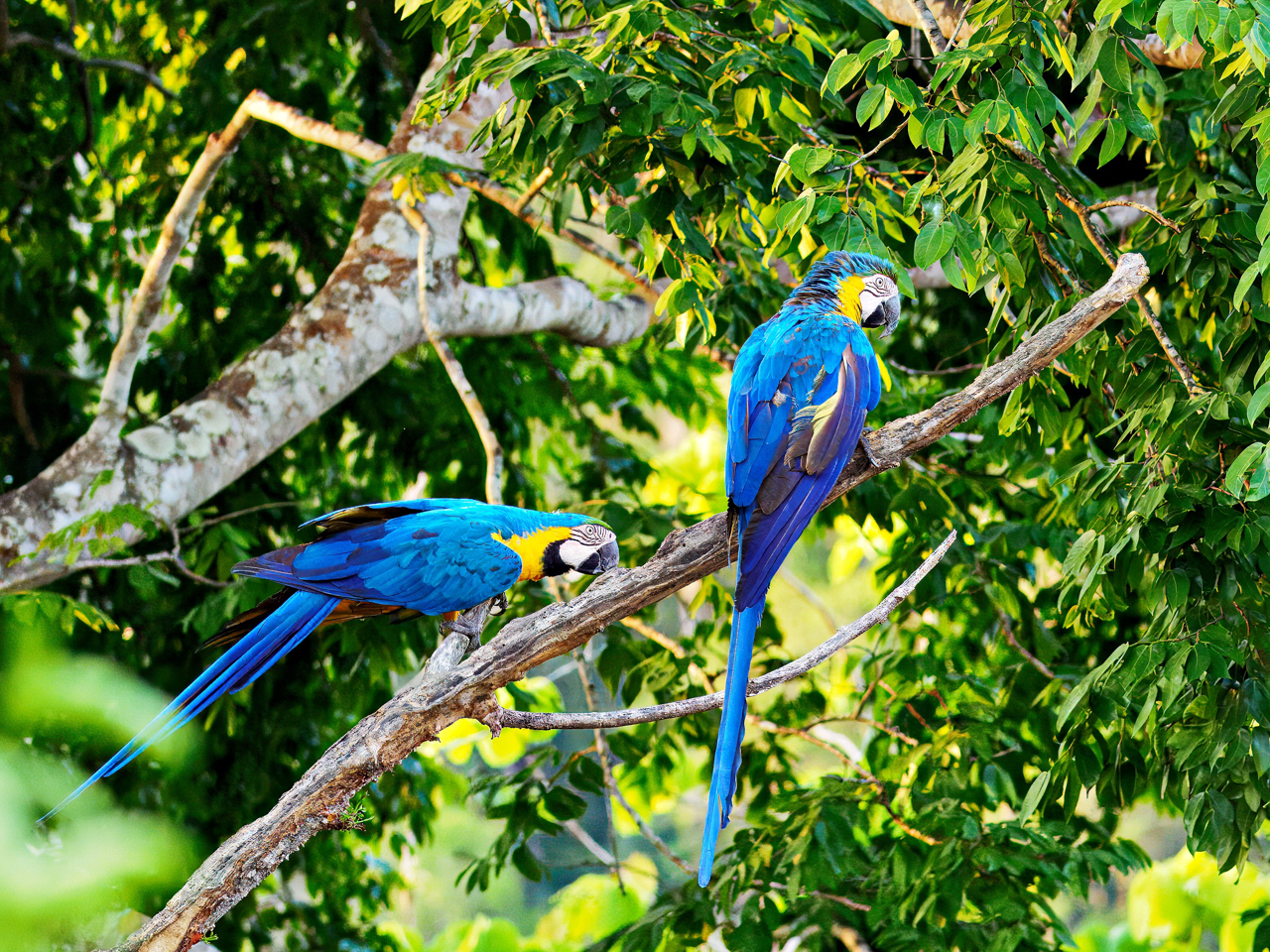
Blue-and-yellow Macaws © M Kennedy
Day 3. September 27
Before breakfast we had a special surprise, lodge staff had discovered Maned Wolves feeding behind a restaurant near a busy highway and had started feeding the wolves further from the road to try to draw them to a safer location. As we pulled up to the site in the pre-dawn a wolf was there – what a crazy looking creature with very long legs! Too easy!!!
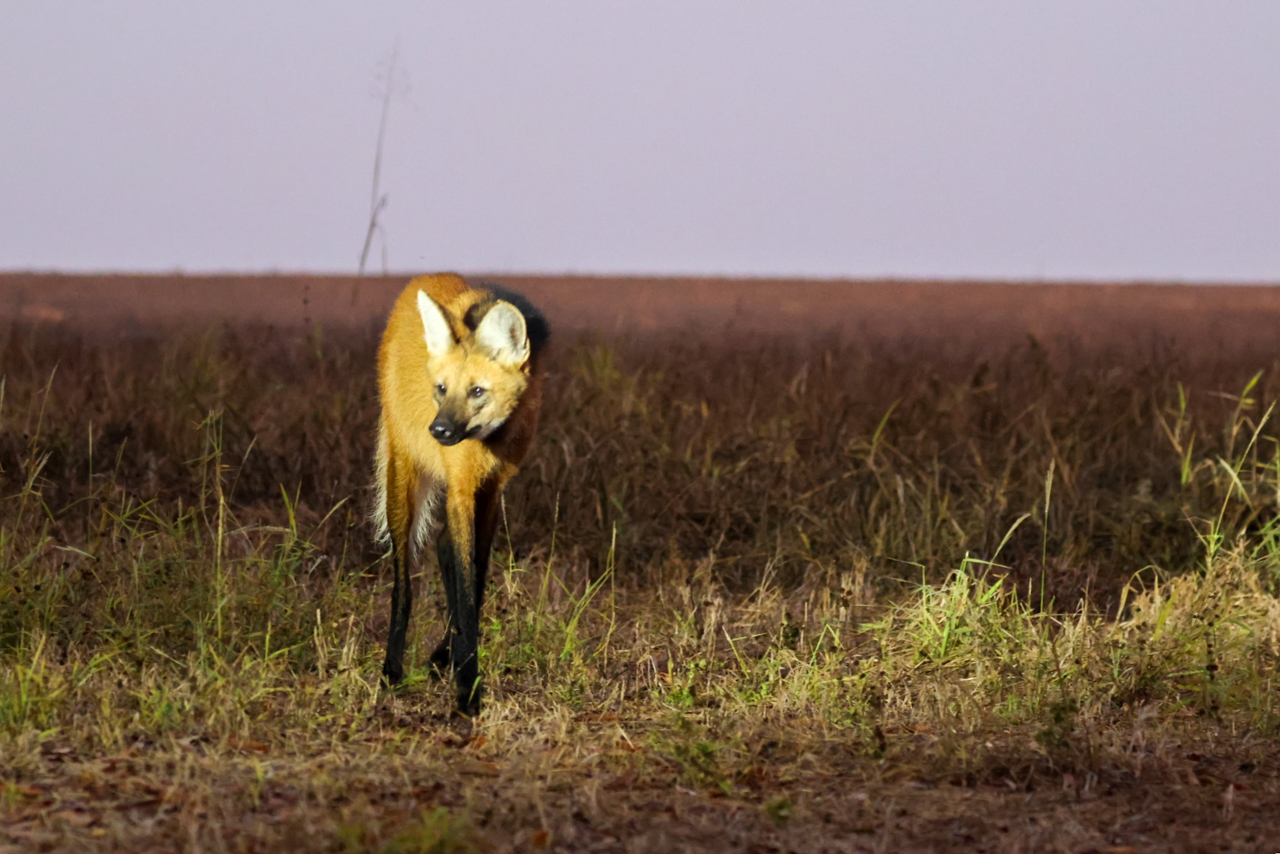
Maned Wolf © A Kent
After breakfast we went birding on a forest trail where we saw Pompadour Cotingas as well as flocks of dozens of migrating Fork-tailed Flycatchers.
After lunch we took a detour to look at a roosting Blackish Nightjar by the cabins, then we took a different trail through the forest, but the bird activity was slow, possibly due to the heat.
Day 4. September 28
After an early breakfast we loaded into two boats for a trip on the Rio Claro (also known as the Rio Sumidouro Grande) where White-winged and Southern Rough-winged swallows swooped over the water, kingfishers perched on riverside trees, and many other birds flew overhead. We saw many species including the very specialized Point-tailed Palmcreeper that lives almost exclusively in palm trees, and Purple-throated Fruitcrow.
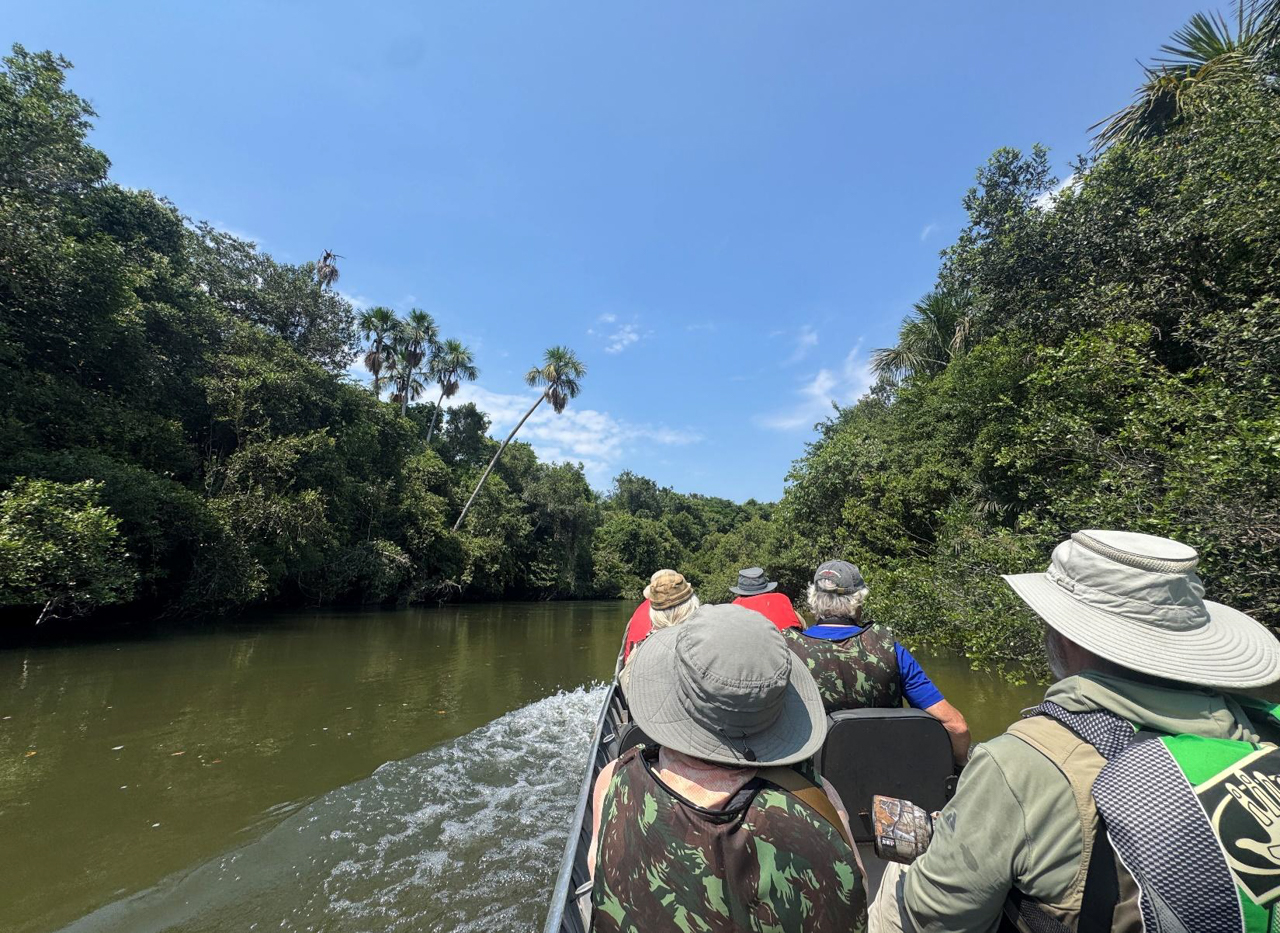
Boat trip on the Rio Claro from Reserva Ecológica Cunhataí Porã © A Kent
In the afternoon we took another boat trip, this time on a reservoir formed by a dam on the Rio Claro (possibly called Lago Ipacaraí, though this does not show up in any maps). In addition to lots of birds including a Common Potoo perched near the lakeshore, we saw our first wild Brazilian Tapir of the trip!
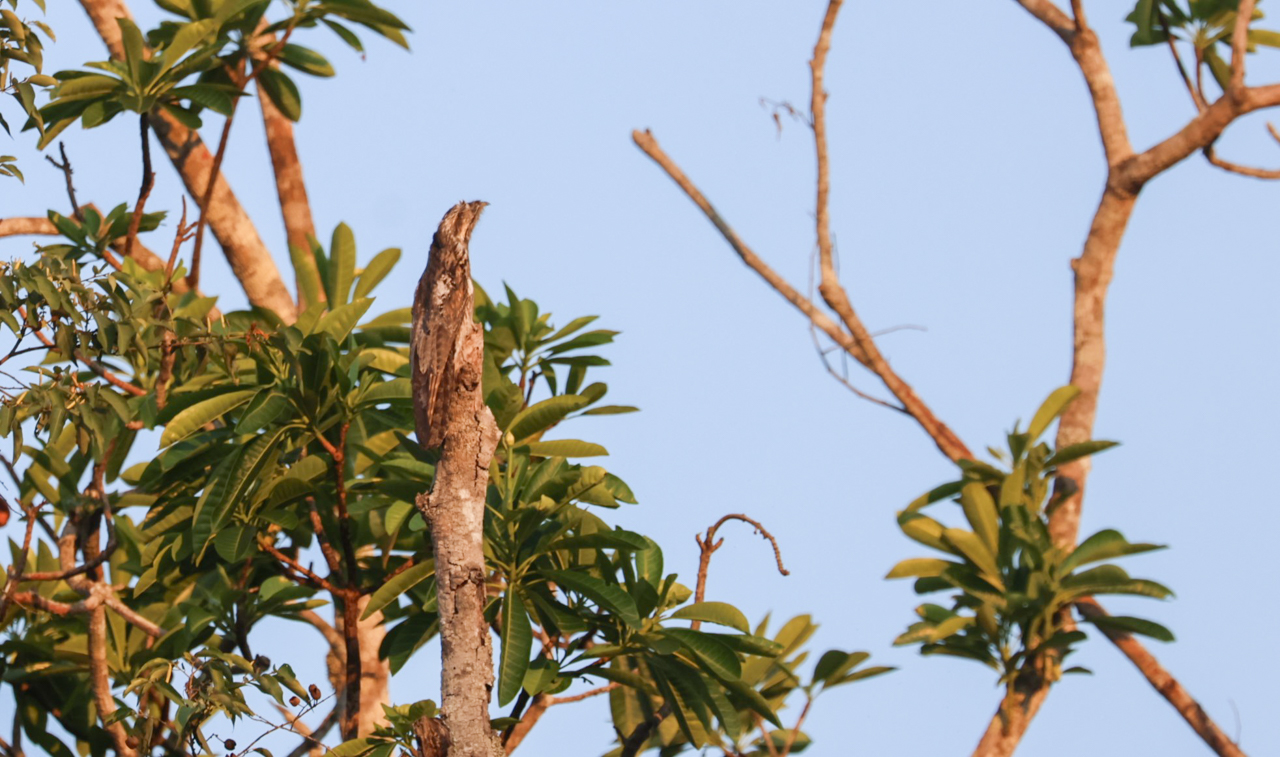
Common Potoo © A Kent
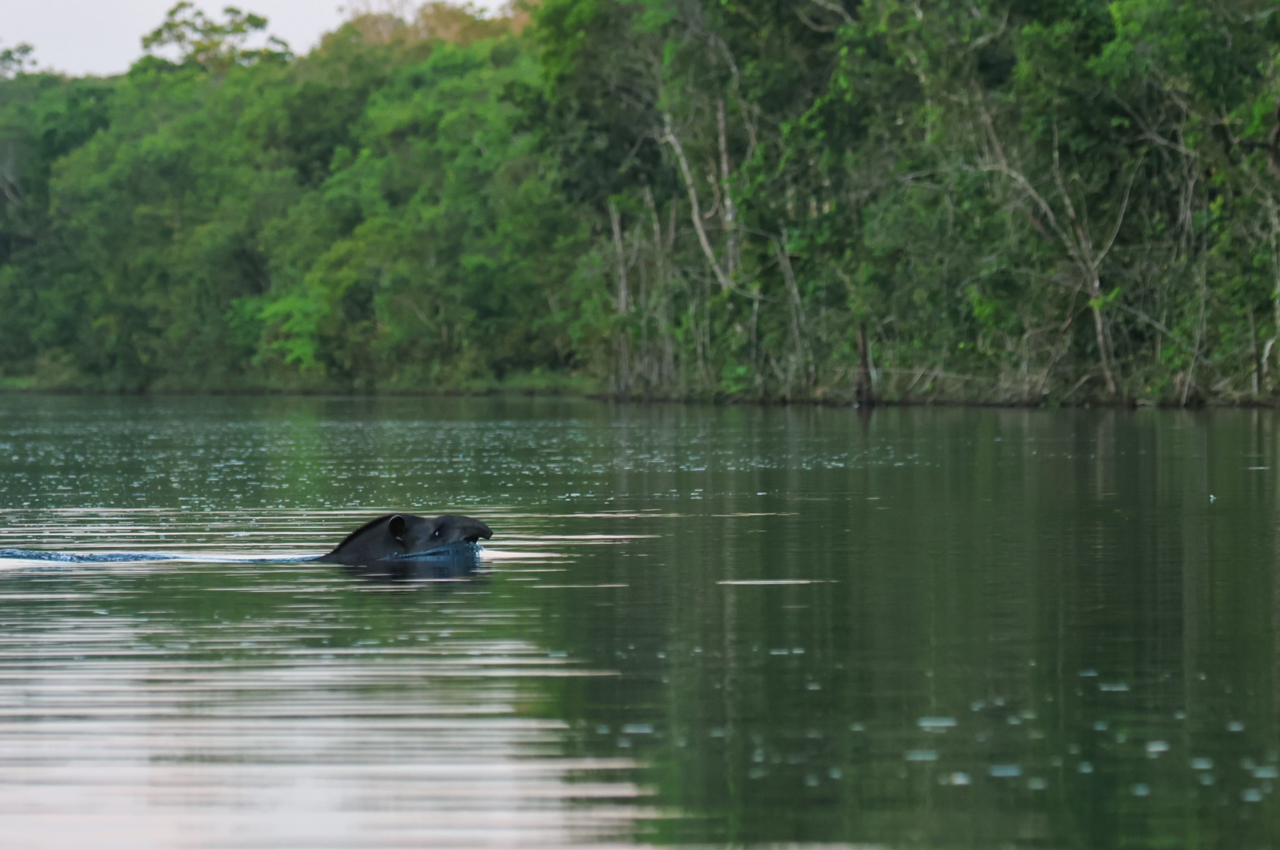
Brazilian Tapir swimming in a reservoir near Reserva Ecológica Cunhataí Porã © A Kent
Day 5. September 29
We got up to watch the sun come up from the top of a tall tower. From above the forest canopy, we had a wonderful perspective on the forest as it came alive. So many birds we had only seen from far below were now visible at eye level or below! Two species of aracari (Chestnut-eared and Lettered), Yellow-tufted Woodpeckers, a Bare-necked Fruitcrow, and a Tiny Hawk all perched nearby; Blue-headed Parrots flew in all directions; and even a troop of Azara’s Capuchins came to a creative feeder setup in a nearby treetop.
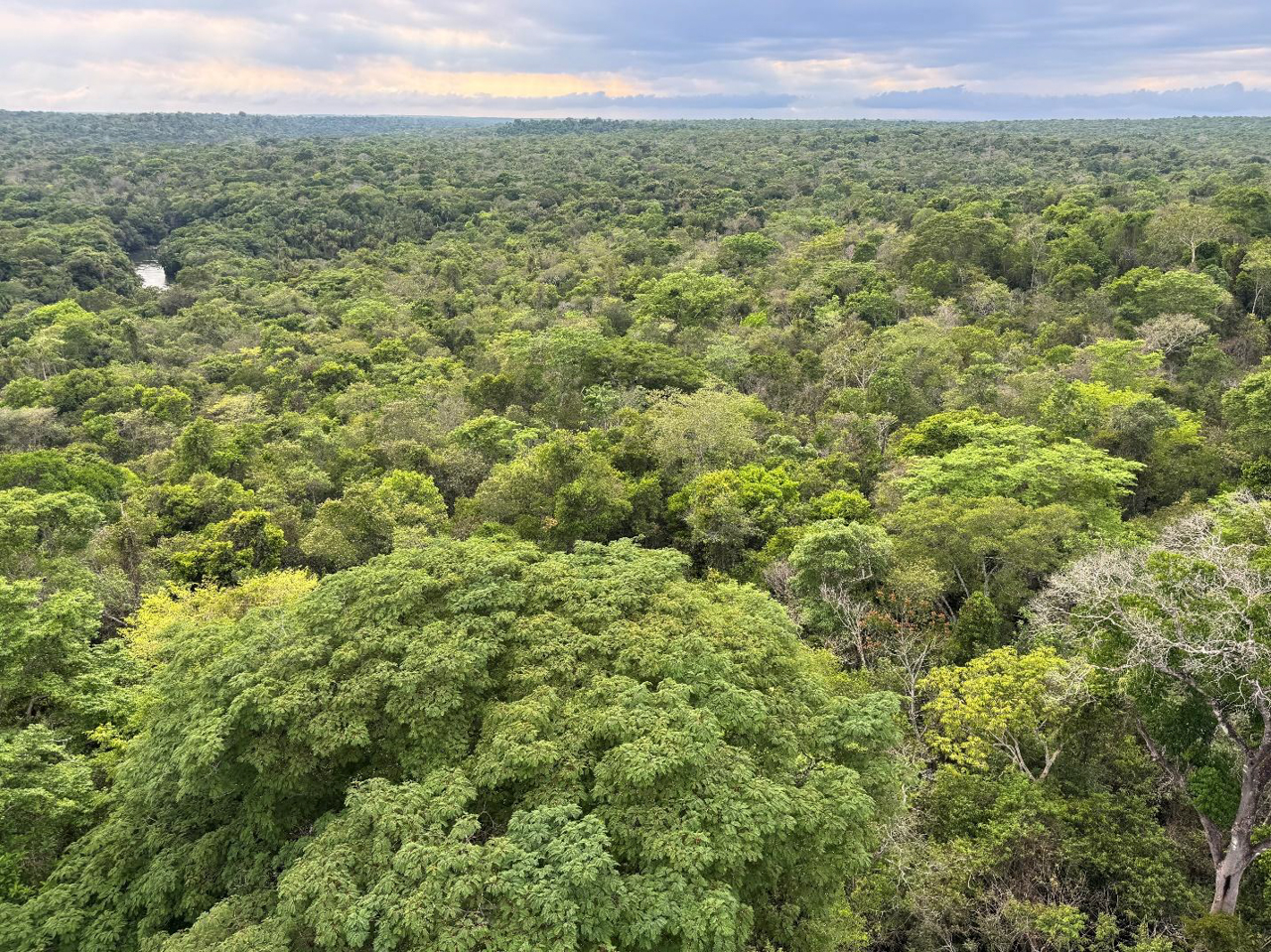
Beautiful view of Amazon forest from atop tower at Reserva Ecológica Cunhataí Porã © A Kent
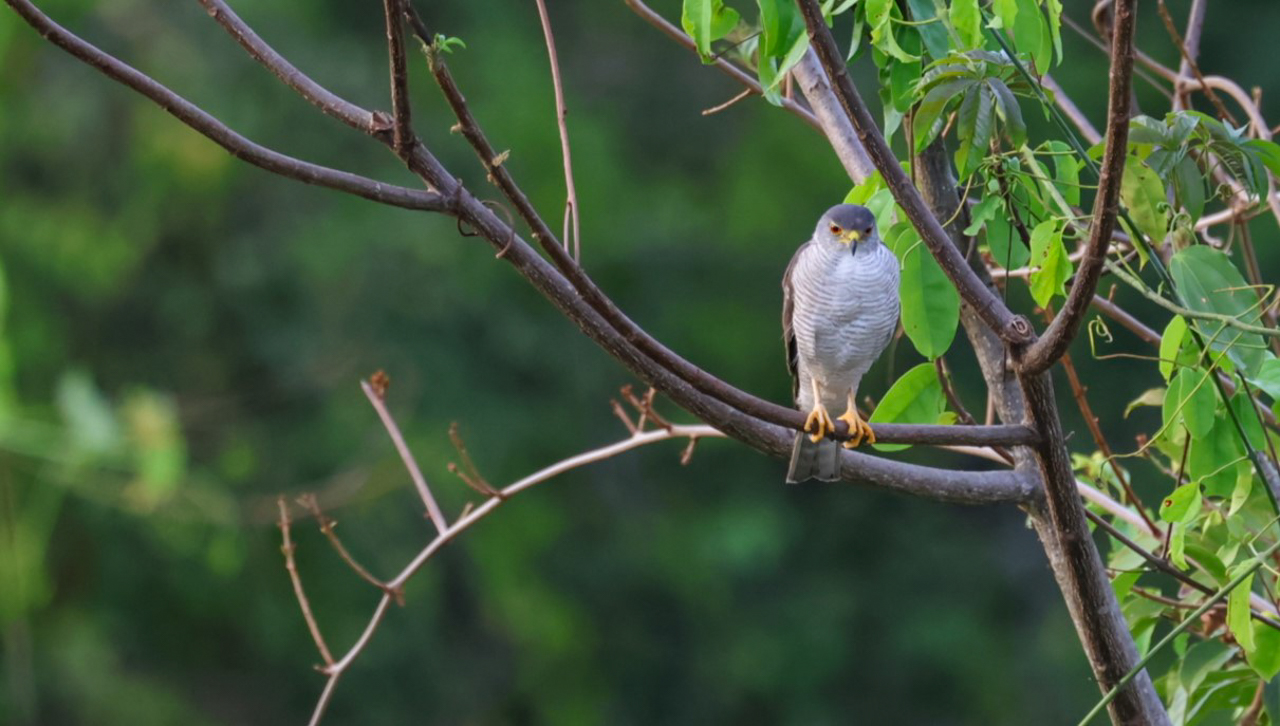
Tiny Hawk seen from atop tower at Reserva Ecológica Cunhataí Porã © A Kent
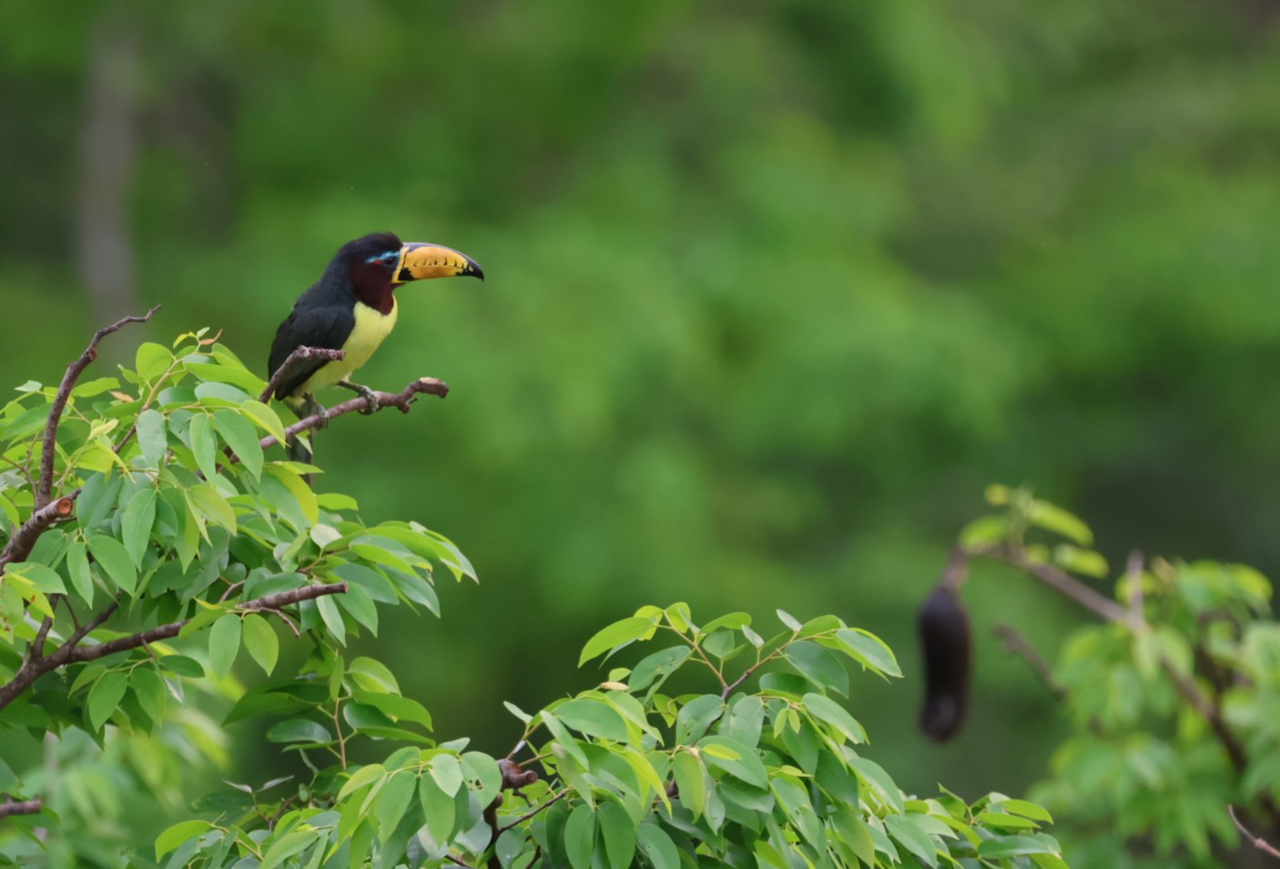
Lettered Aracari seen from atop tower at Reserva Ecológica Cunhataí Porã © A Kent
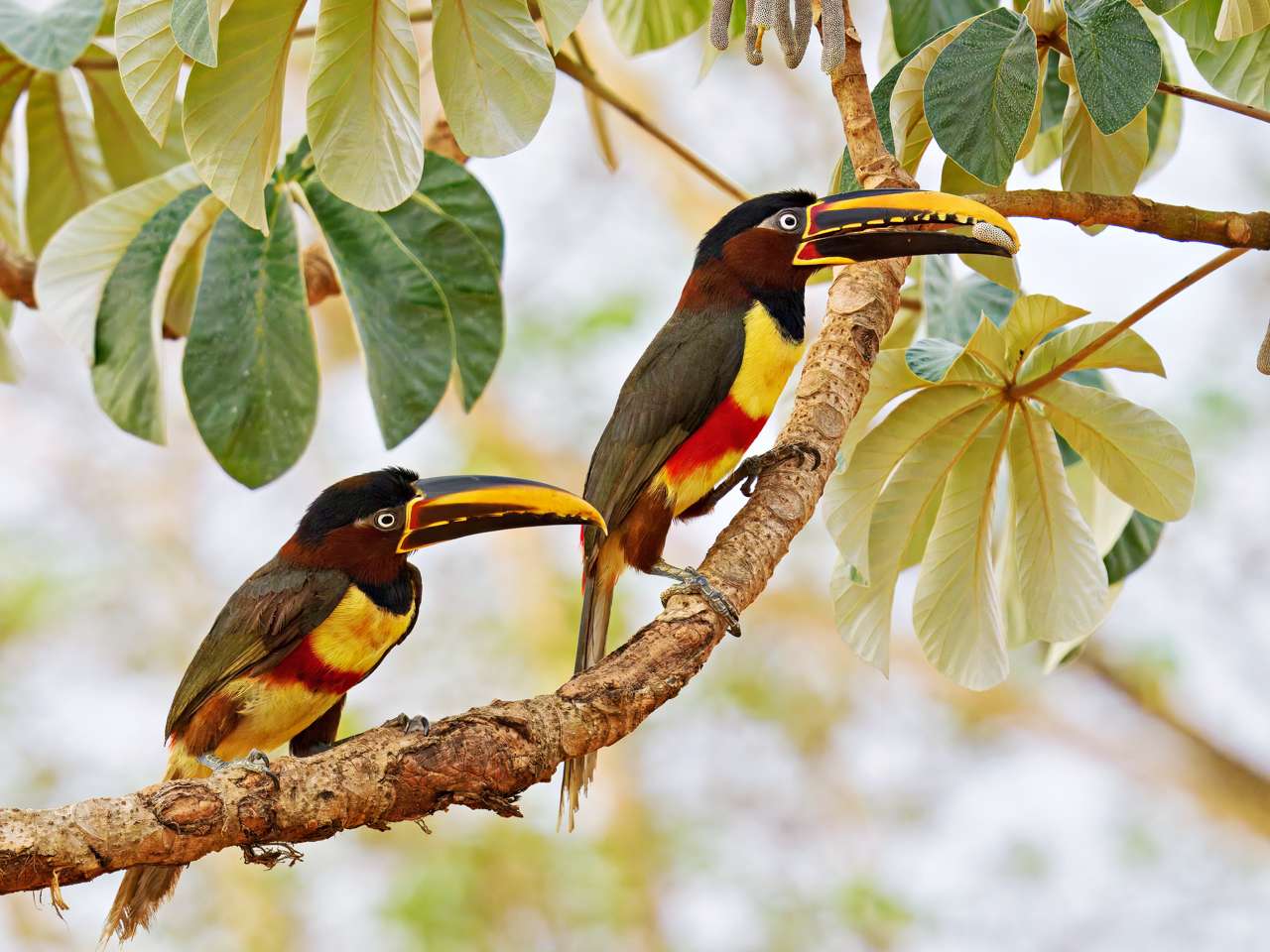
Chestnut-eared Aracari © M Kennedy
After the tower we walked another trail and got to spend some nice time with an amazingly cooperative Tropical Royal Flycatcher. All too soon we had to move on to our next destination, the Casa de Quineira Hotel in Chapada dos Guimarães.
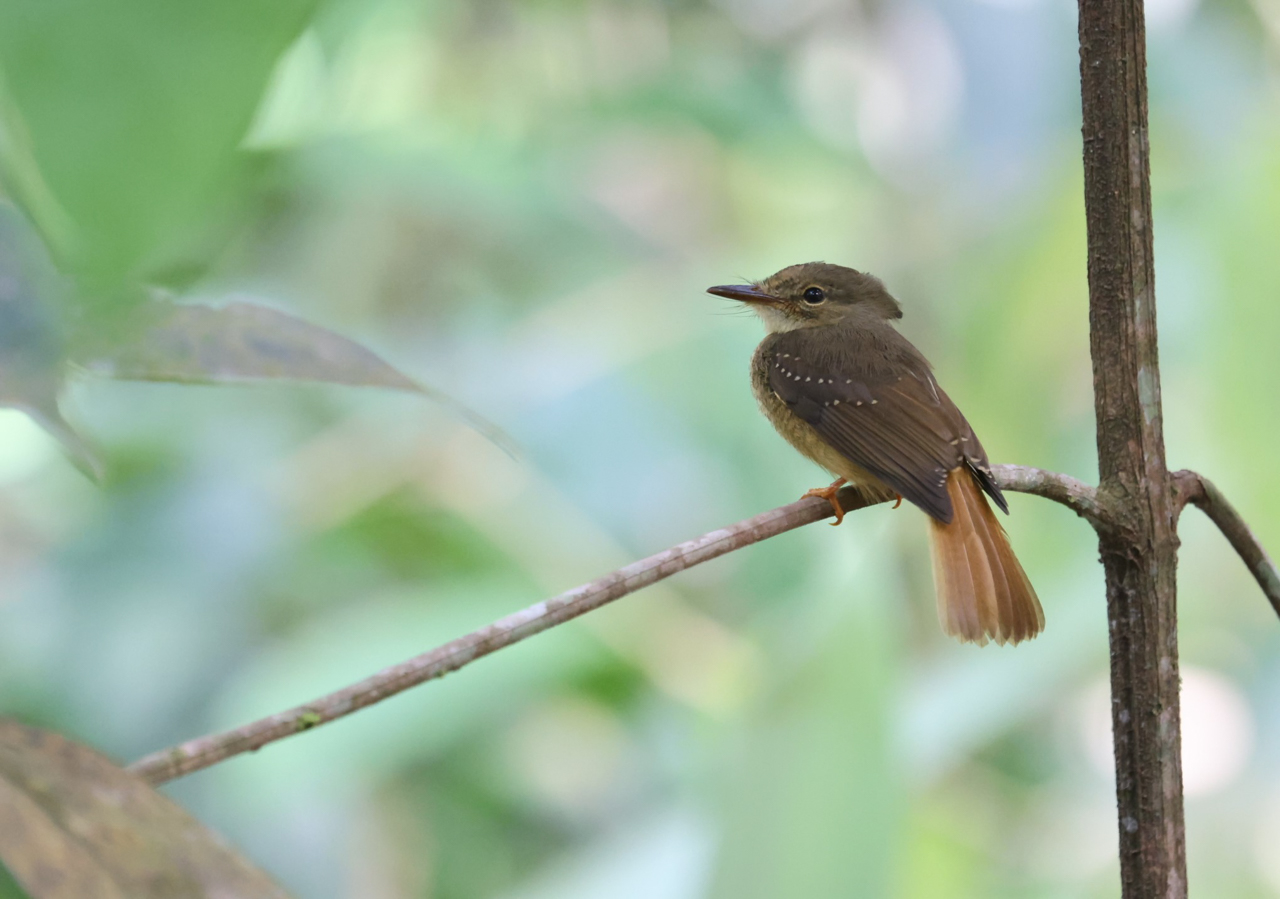
Tropical Royal Flycatcher at Reserva Ecológica Cunhataí Porã © A Kent
Day 6. September 30
We started the day with a walk in open cerrado habitat at Chapada dos Guimarães National Park. Seemingly lured into the open, birds perched on the tops of trees giving us great looks, including White-banded (aka Shrike-like), White-rumped, and Black-faced tanagers, Plain-crested Elaenias, Spot-backed Puffbird, Chapada Flycatcher, a Red-crested Finch, and the normally very elusive Collared Crescentchest.
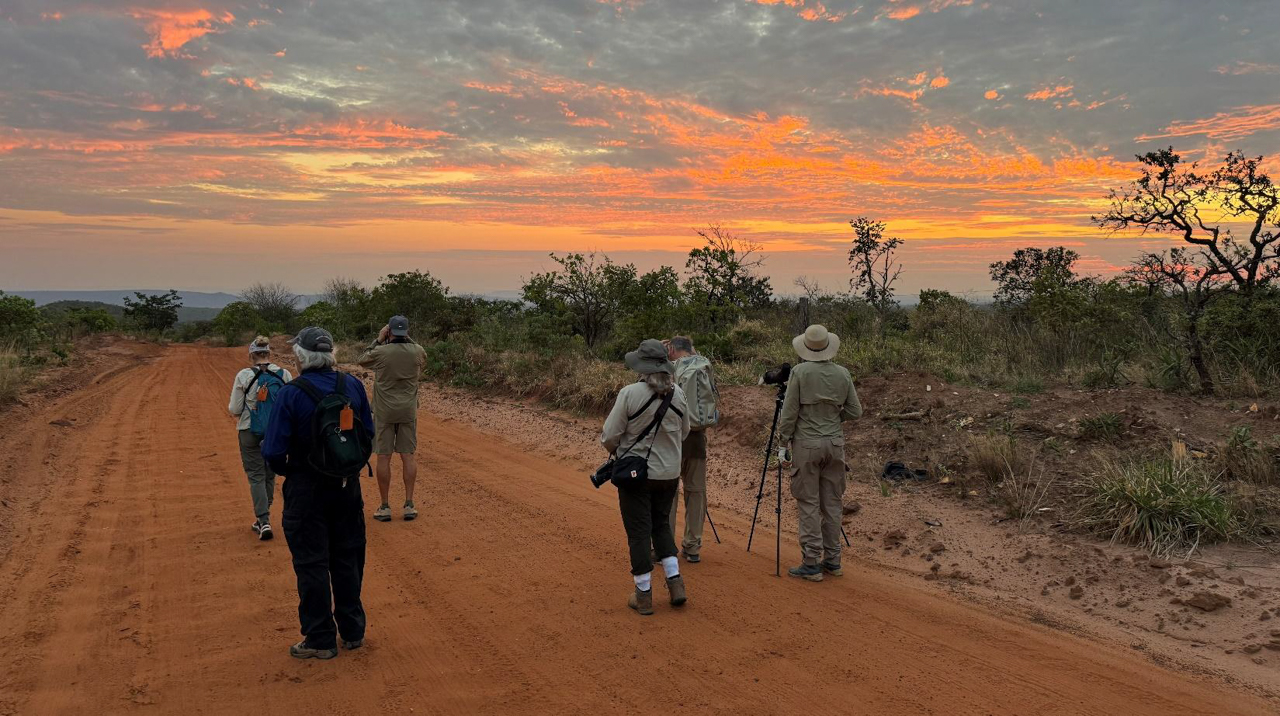
Sunrise at Chapada dos Guimarães National Park © A Kent
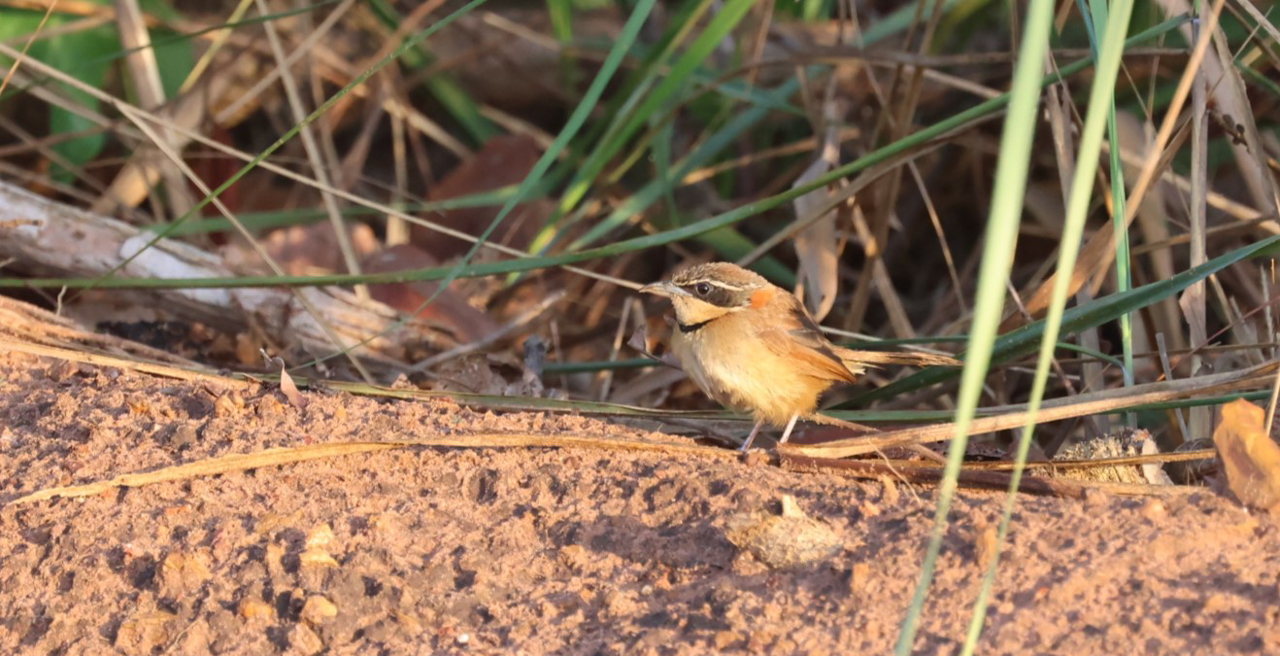
Collared Crescentchest at Chapada dos Guimarães National Park © A Kent
We took a second walk later in the morning, this time along a shaded road. After lunch we had a tasty treat, a Brazilian ice cream shop with dozens of tropical fruit flavors.
In the afternoon we visited Cachoeira Véu de Noiva (Bridal Veil Falls) with stunning scenery and Cliff Flycatchers foraging near the waterfall. Blue-winged and Red-and-green macaws and White-eyed Parakeets came in to roost, and in the distance King Vultures soared.
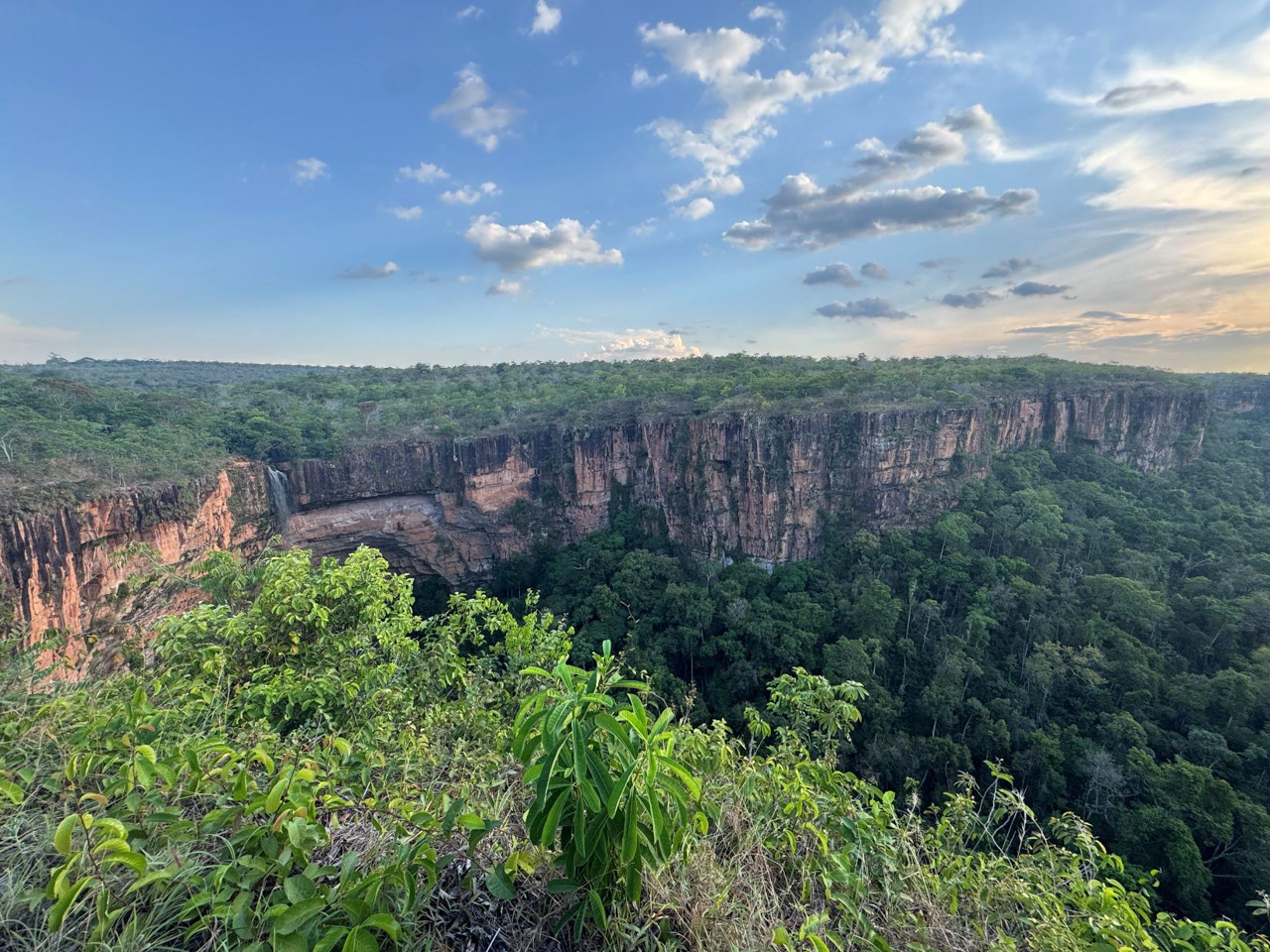
Cachoeira Véu de Noiva (Bridal Veil Falls) in Chapada dos Guimarães National Park © A Kent
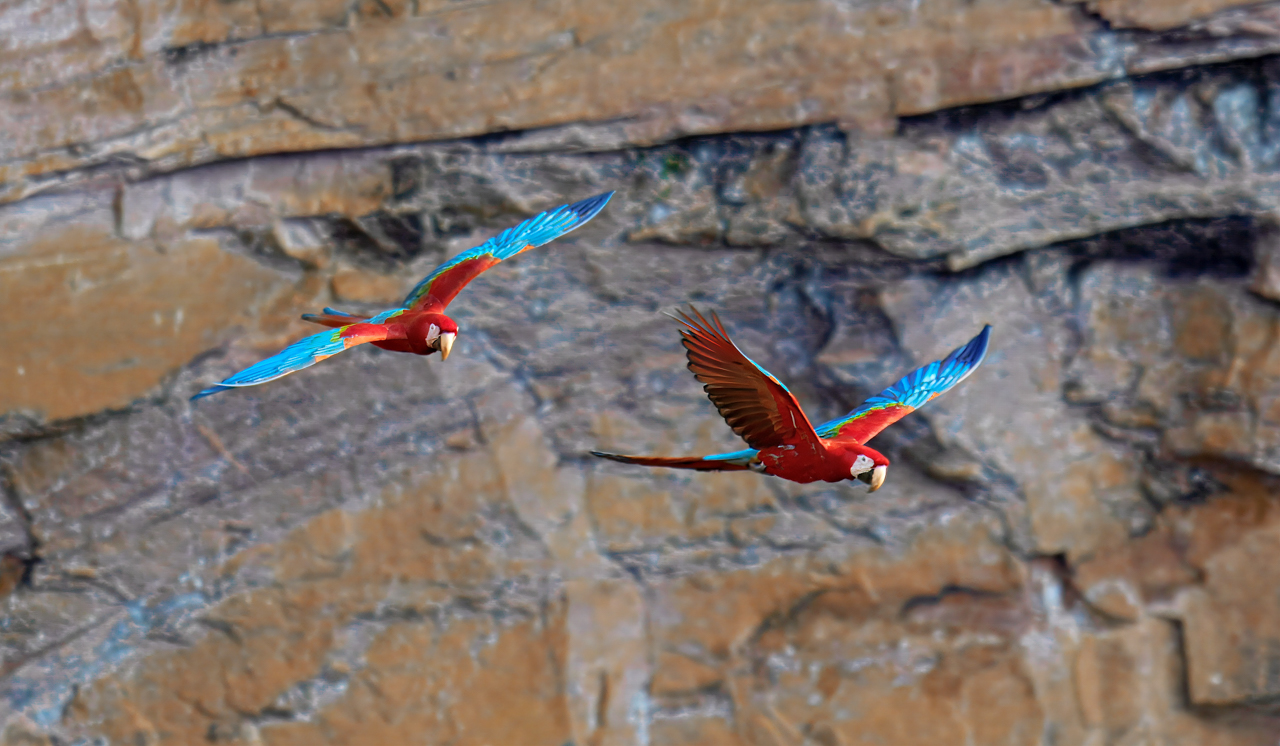
Red-and-green Macaw © M Kennedy
Day 7. October 1
This day was very similar to yesterday with birding open cerrado in the first early morning, and the same forested path in the later morning. On the early walk we watched a large group of migratory Mississippi Kites and had nice looks at a Spot-backed Puffbird. Back at the hotel we witnessed an amazing migration event as more than 1,000 Snail Kites flew directly over our hotel!
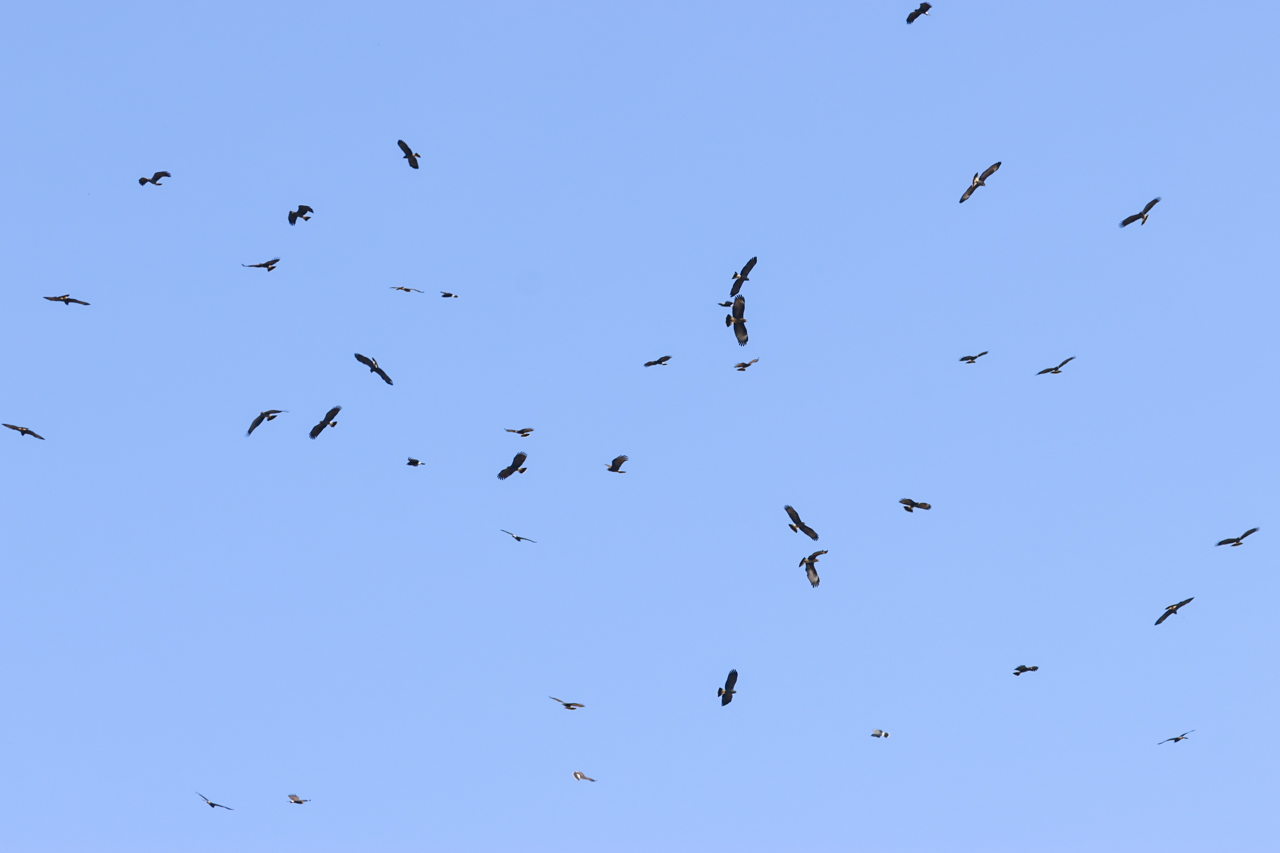
Kettle of Snail Kites © A Kent
In the afternoon we went birding at Bianca’s father’s place where we saw a Sharp-tailed Streamcreeper and also watched a female Band-tailed Manakin taking a bath in the river.
Day 8. October 2
This morning we first walked a rural road where we had an amazing fly-by of a Pheasant Cuckoo, a bird we had heard a few times before but had not managed to see! Next, we visited Jamacá das Araras where we watched the owner Mário hand feed Amazon Motmots, then we ate breakfast outside while listening to the sounds of the forest. We also observed Azara’s Capuchins (monkeys) as they watched us from the treetops.
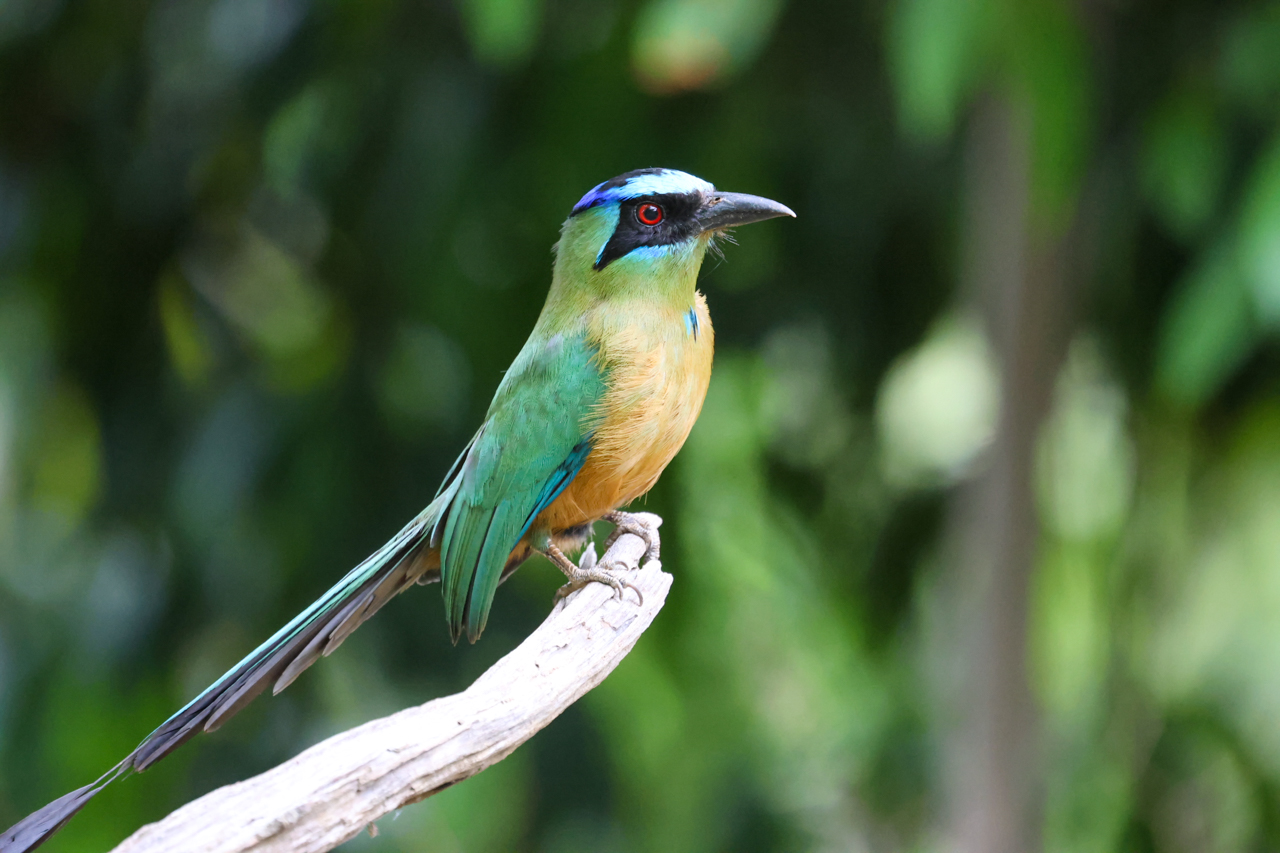
Amazon Motmot © A Kent
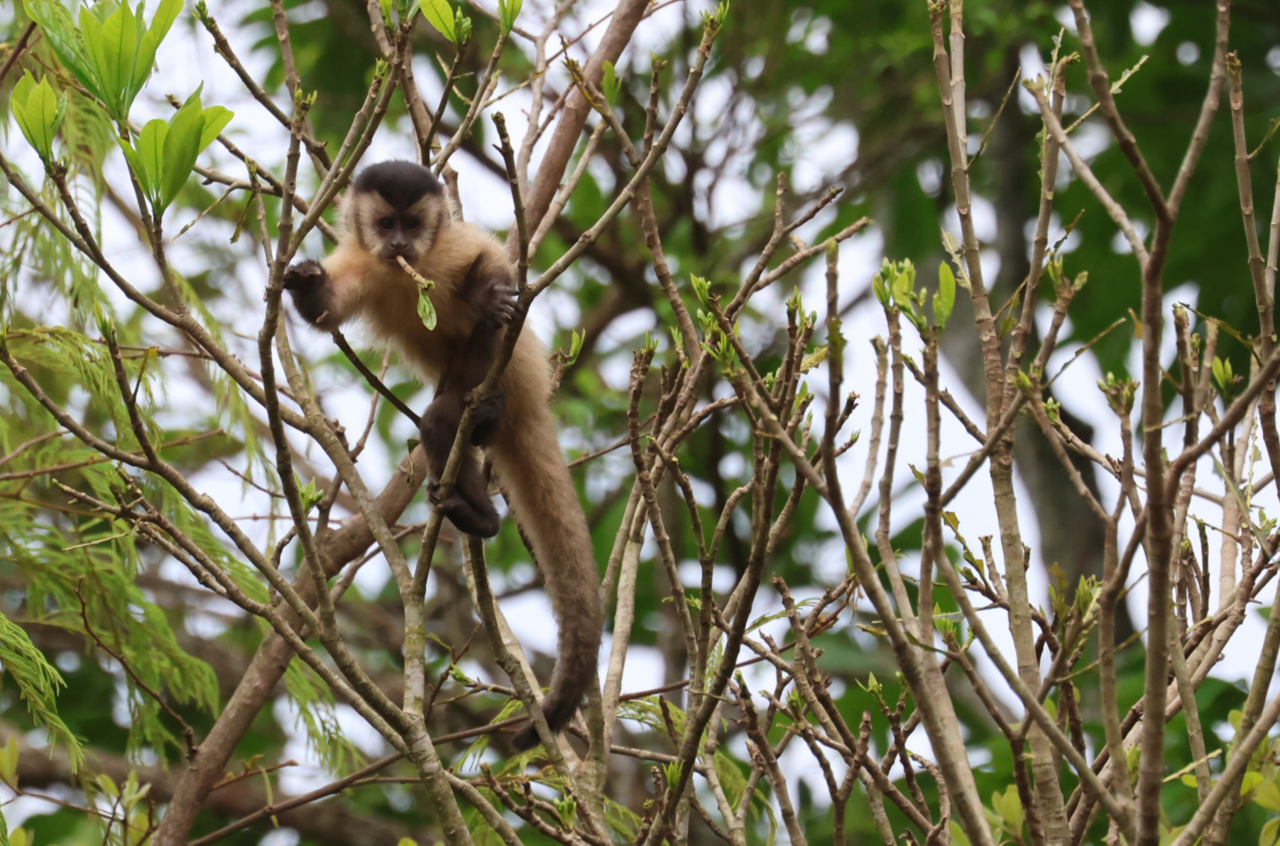
Azara’s Capuchins at Jamacá das Araras © A Kent
On our drive to Cuiabá we made a roadside stop at a place where Red-bellied Macaws nested in dead palms and Red-shouldered Macaws perched nearby.
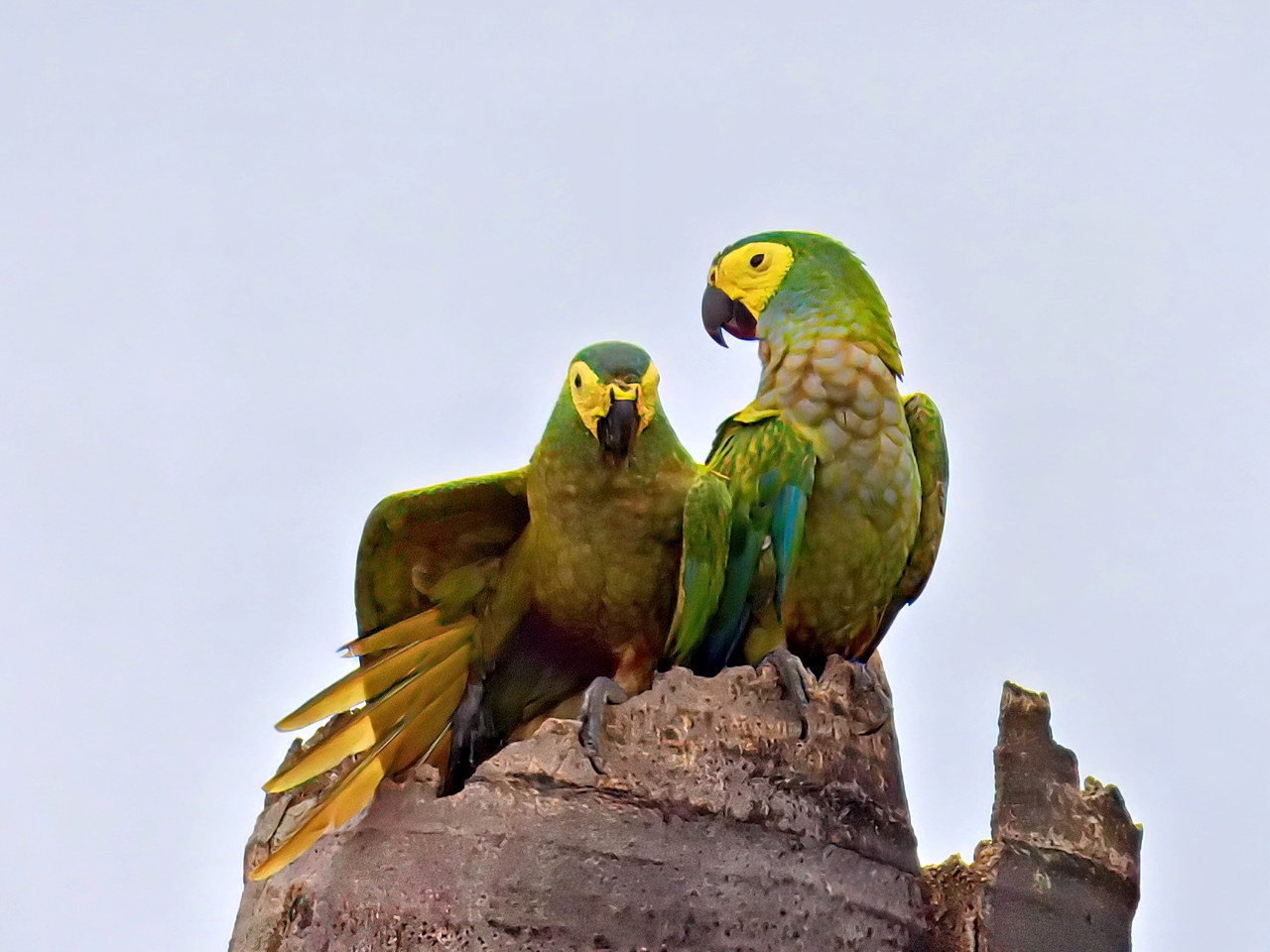
Red-bellied Macaw © M Kennedy
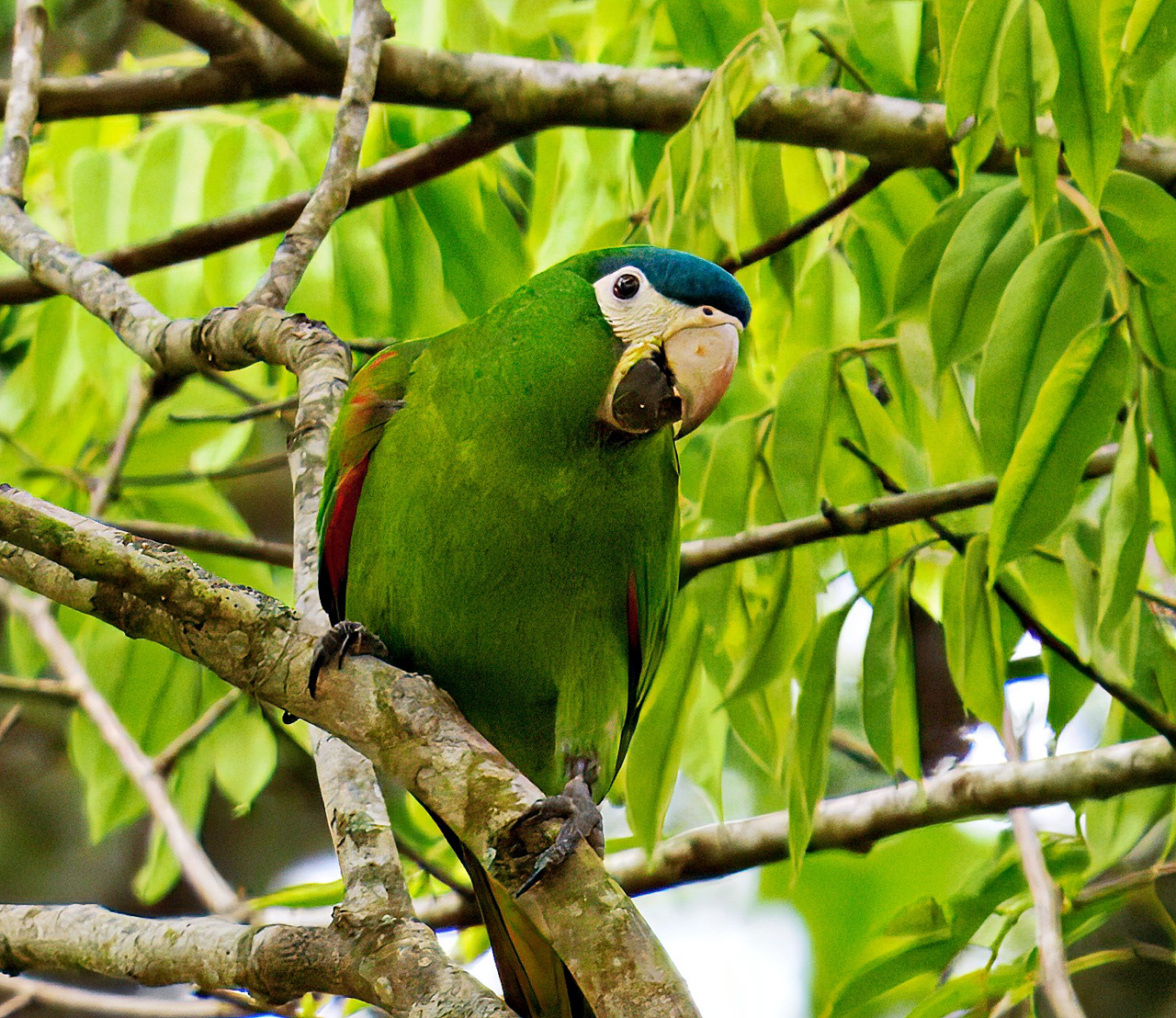
Red-shouldered Macaw © M Kennedy
We had lunch at a churrascaria (a Brazilian steakhouse) in Cuiabá with many special cuts of meat then made our way south with stops to view wildlife, including a beautiful sunset with hundreds of caiman at a roadside pond. We arrived in time for dinner at Hotel Pantanal Mato Grosso.
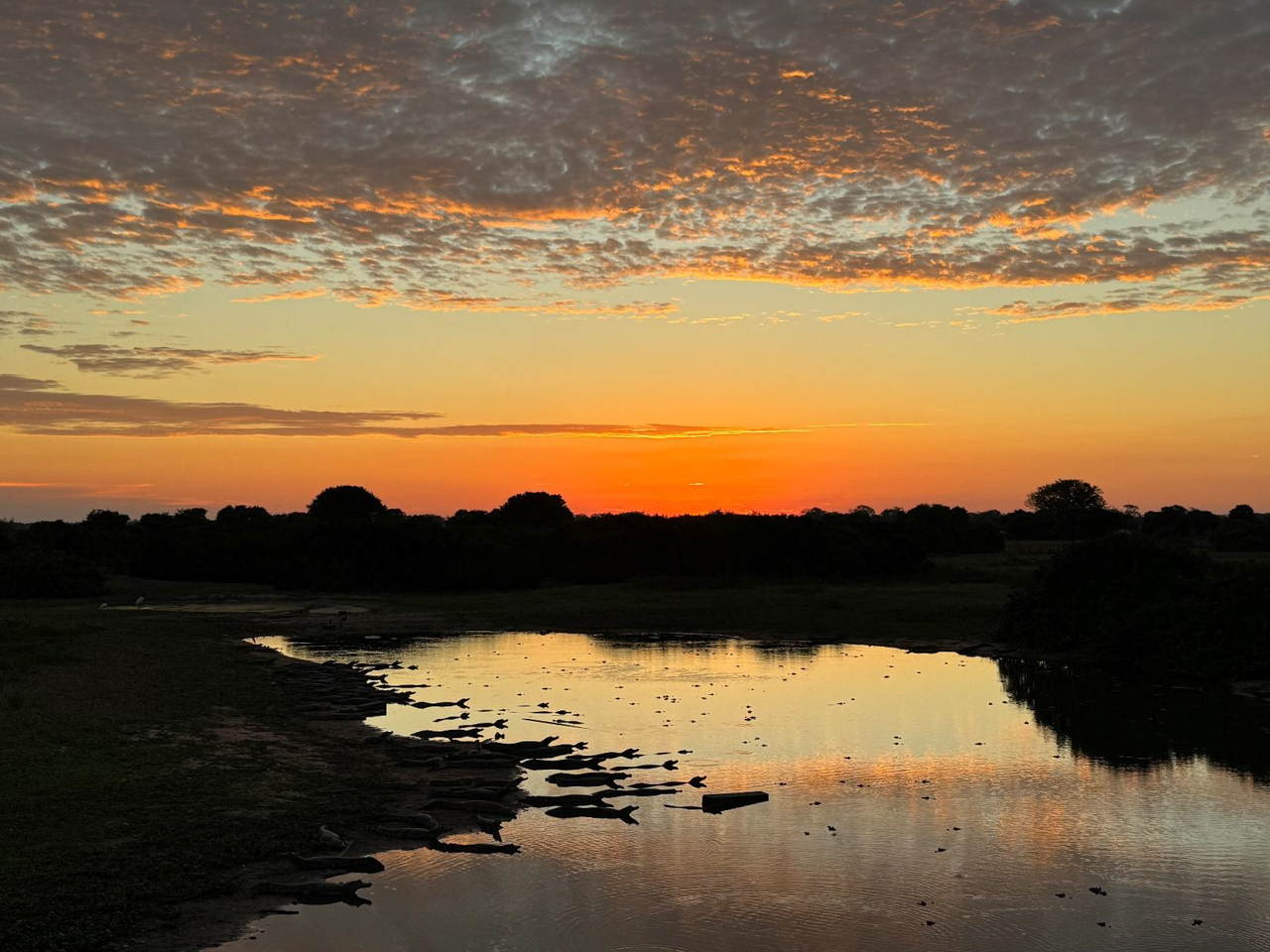
Hundreds of Yacaré Caiman at pond along Transpantaneira © A Kent
Day 9. October 3
We took a pre-breakfast bird walk around the hotel grounds where we saw White-throated Piping-Guans, Bare-faced Curacaos, Plumbeous Ibis, and many more birds, followed by a boat ride after breakfast. Highlights of the boat ride were close looks at three (!) Sunbitterns.
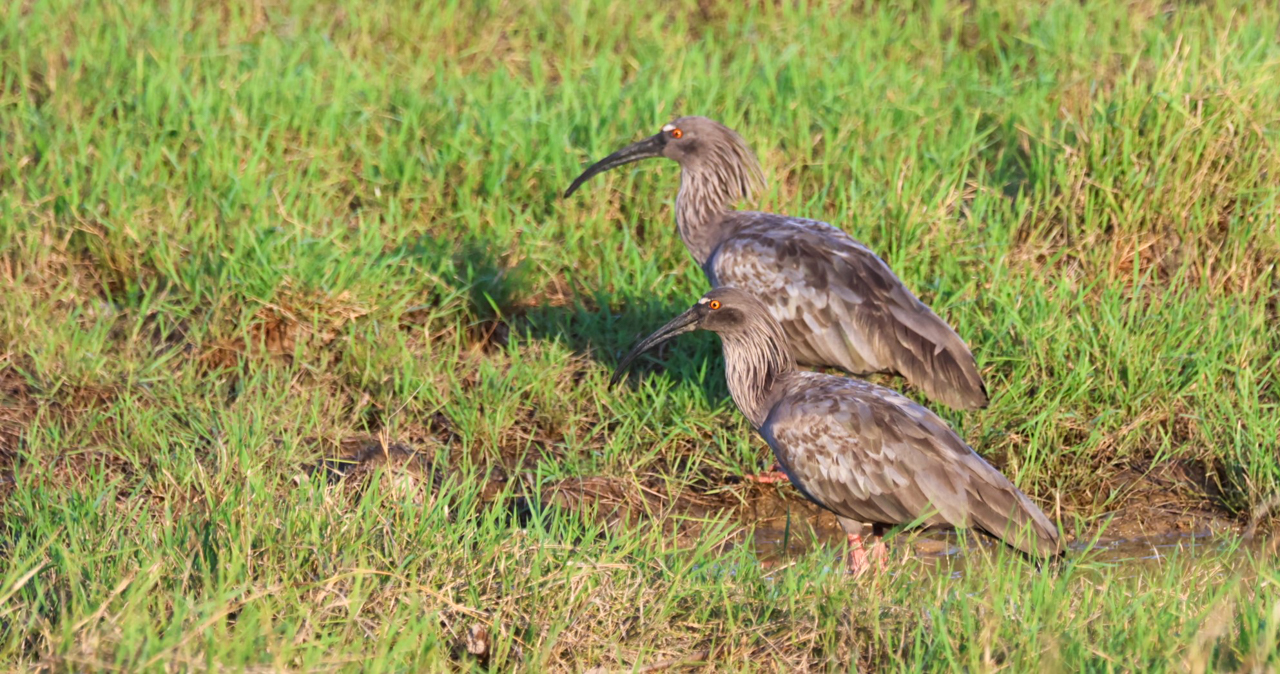
Plumbeous Ibis © A Kent
In the afternoon we rode in an open-air safari-style truck that we again took after dinner to look for night animals. In the fading light, we saw Crab Foxes, a Red Brocket Deer, a Little Nightjar, and several Common Pauraques, had a quick look at a Great Potoo, and heard a Rufous Nightjar.
Day 10. October 4
After another early morning walk around Hotel Pantanal Mato Grosso (close looks at a Great Antshrike), we drove to Porto Jofre. On the drive we stopped to look at a Jabiru on its huge nest and in the same tree we spotted our first Hyacinth Macaw! We arrived at Santa Rosa Pantanal Hotel in time for lunch.
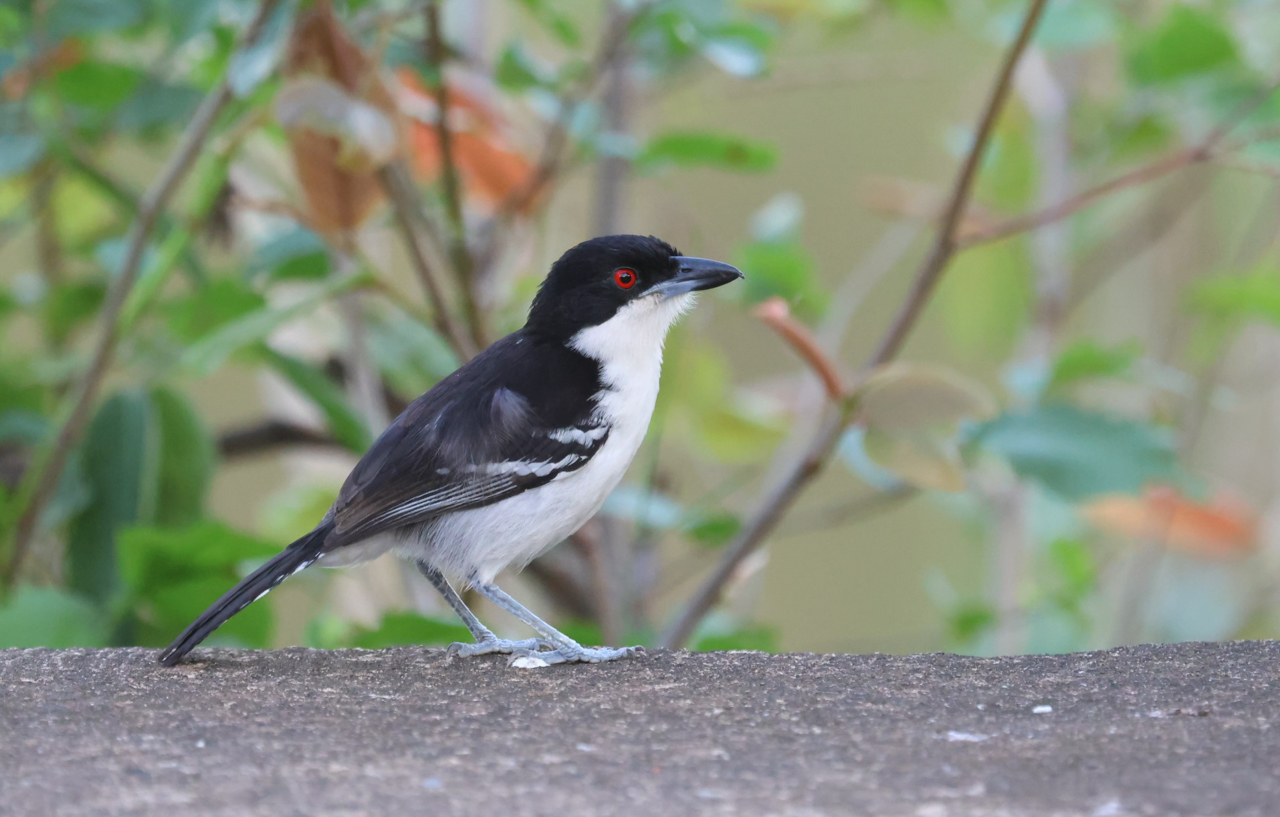
Great Antshrike © A Kent
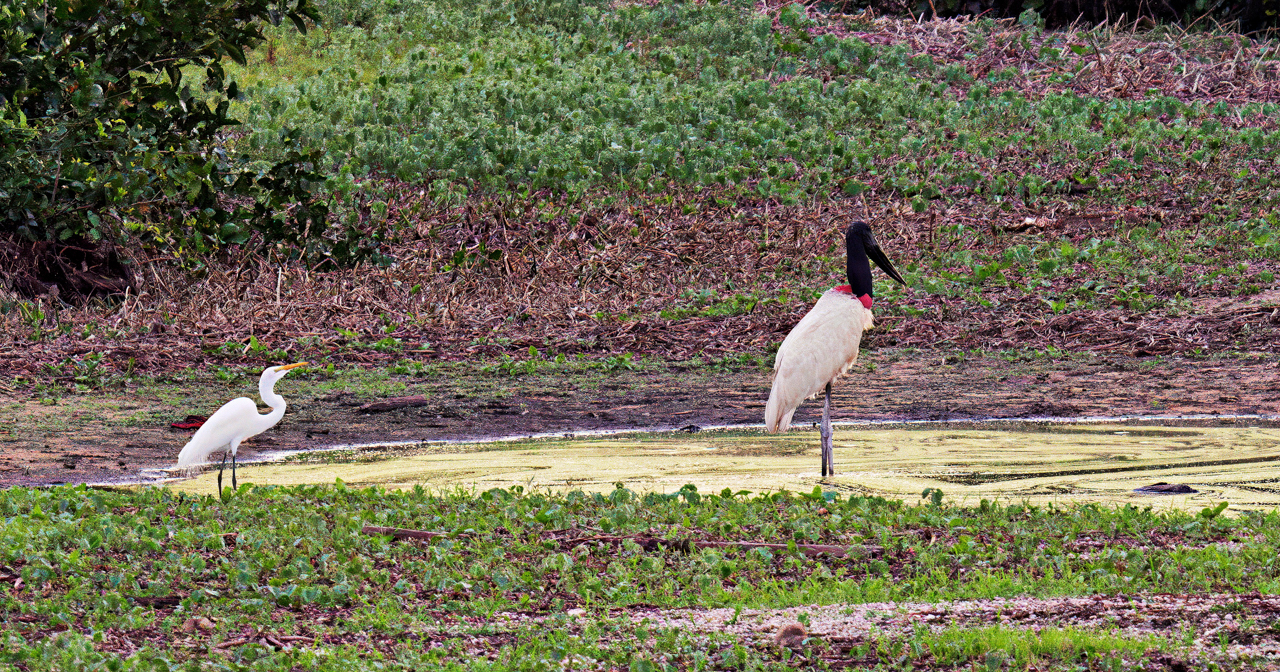
Jabiru & Great Egret © M Kennedy
In the afternoon we took a short walk up the road where we saw White-lored Spinetail, White-winged Becard, the near-endemic Mato Grosso Antbird, and, finally, great looks at two Rufous-browned Peppershrikes that we had been hearing but not seen well up to this point. We also visited Puma Lodge to look for Hyacinth Macaws at their nest box, but they were not around.
Day 11. October 5
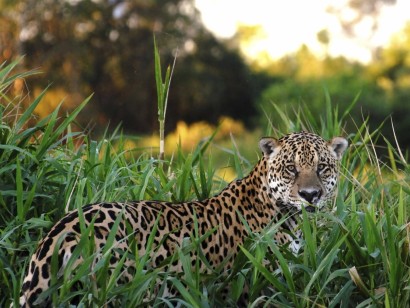
Today was our day to search for Jaguars by boat, but before we’d gone far on the Rio São Lourenço, we came across a group of very vocal Giant Otters. As we moved upriver, the first Jaguar we saw was sleeping, then we shortly got word of a more active individual. By the end of the morning, we’d seen at least four different individual Jaguars including one stalking a Black Vulture. We also had good luck with waterbirds, seeing Pied and Collared Plovers, Yellow-billed and Large-billed terns, and Black Skimmers.
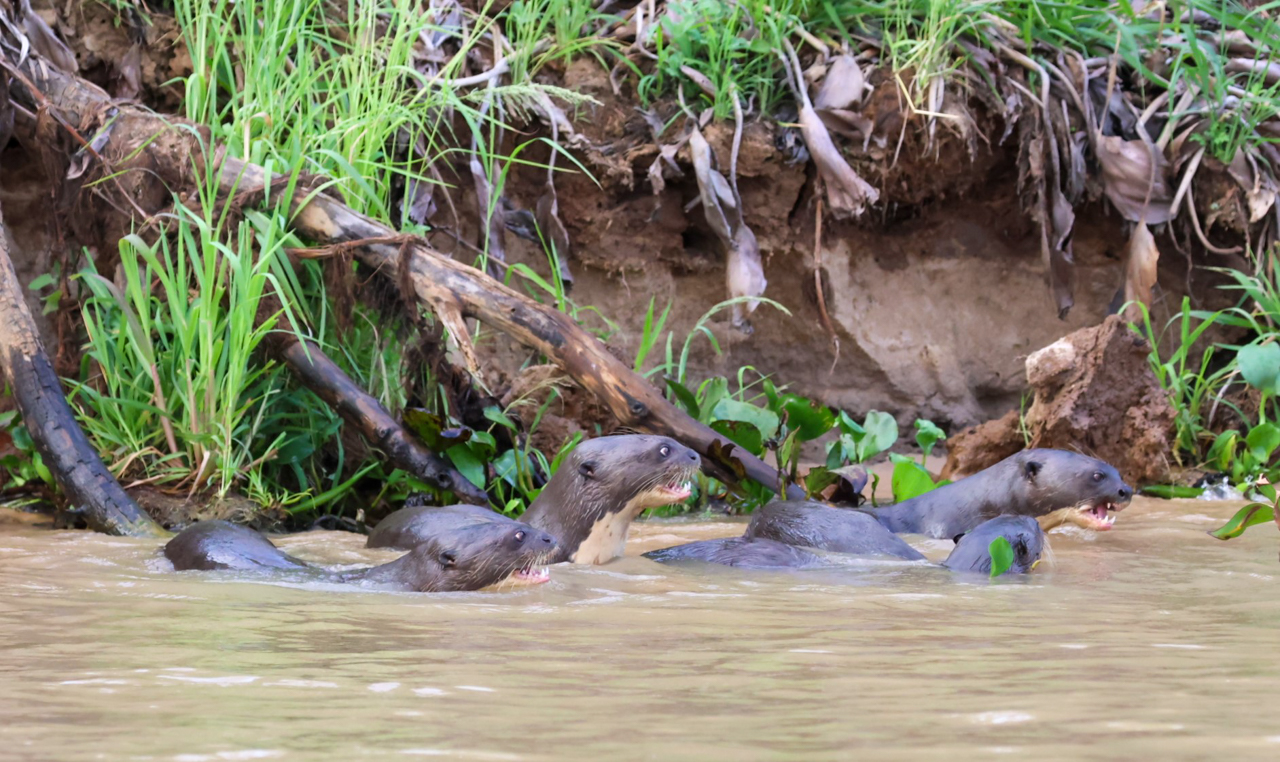
Giant Otters on Rio São Lourenço © A Kent
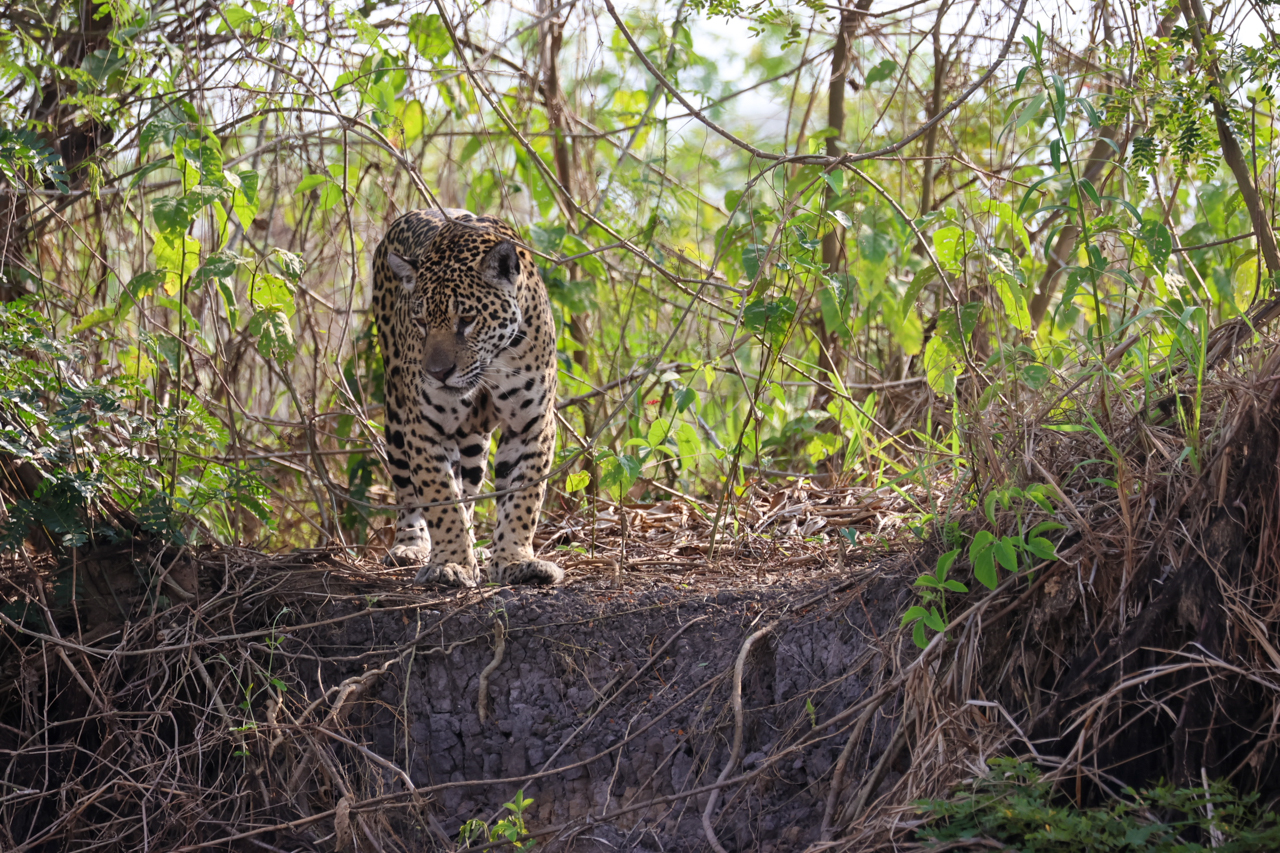
Jaguar on Rio São Lourenço © A Kent
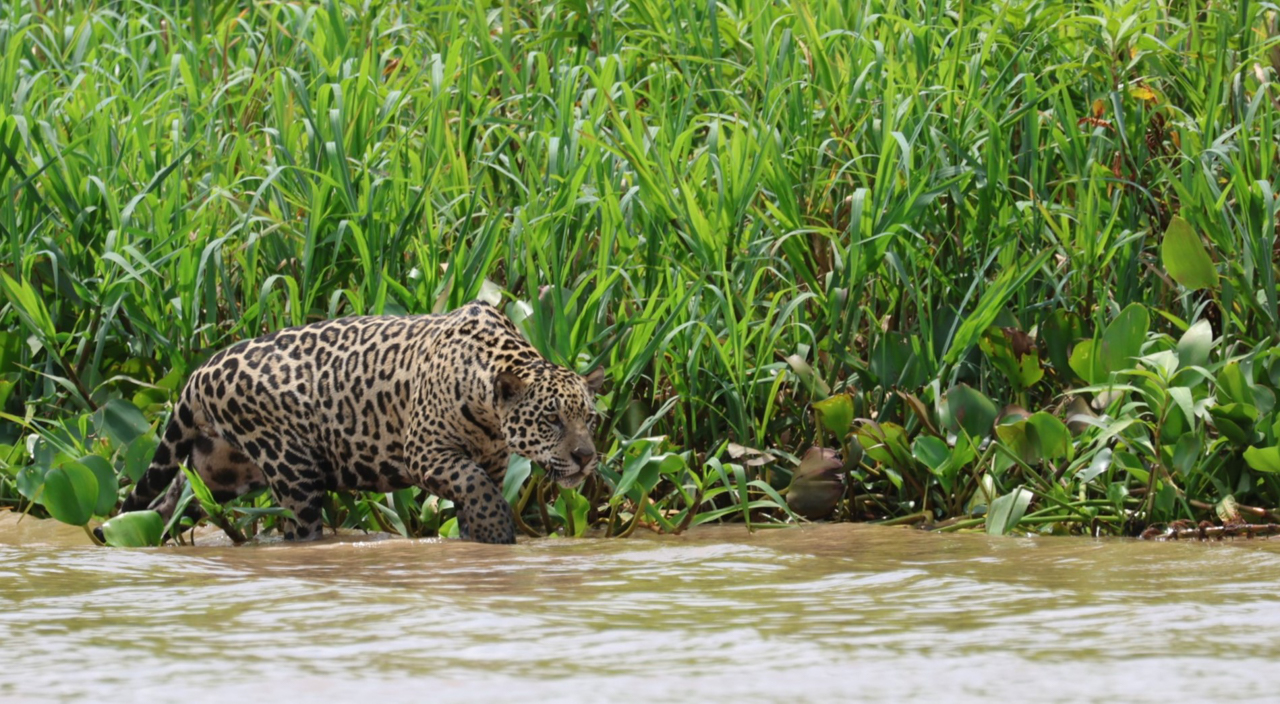
Jaguar stalking Black Vultures on Rio São Lourenço © A Kent
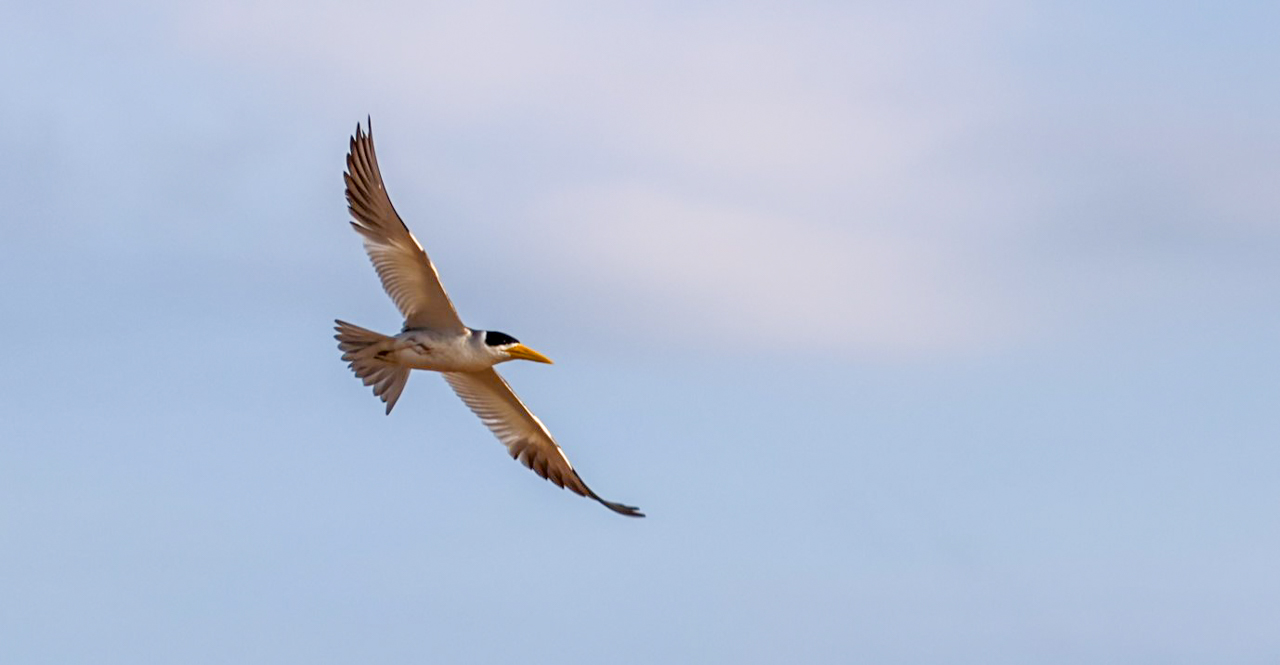
Large-billed Tern © A Kent
Day 12. October 6
We started the day with another boat ride to make up for getting rained out of yesterday afternoon’s ride. We once again saw Jaguar up close, then we slowly cruised up a side channel where we got nice looks at a Greater Thornbird near its nest.
After breakfast we started our drive north on the Transpantaneira road, first stopping again at Jaguar Bay where we were in luck and the Hyacinth Macaws were in their nest box this time!
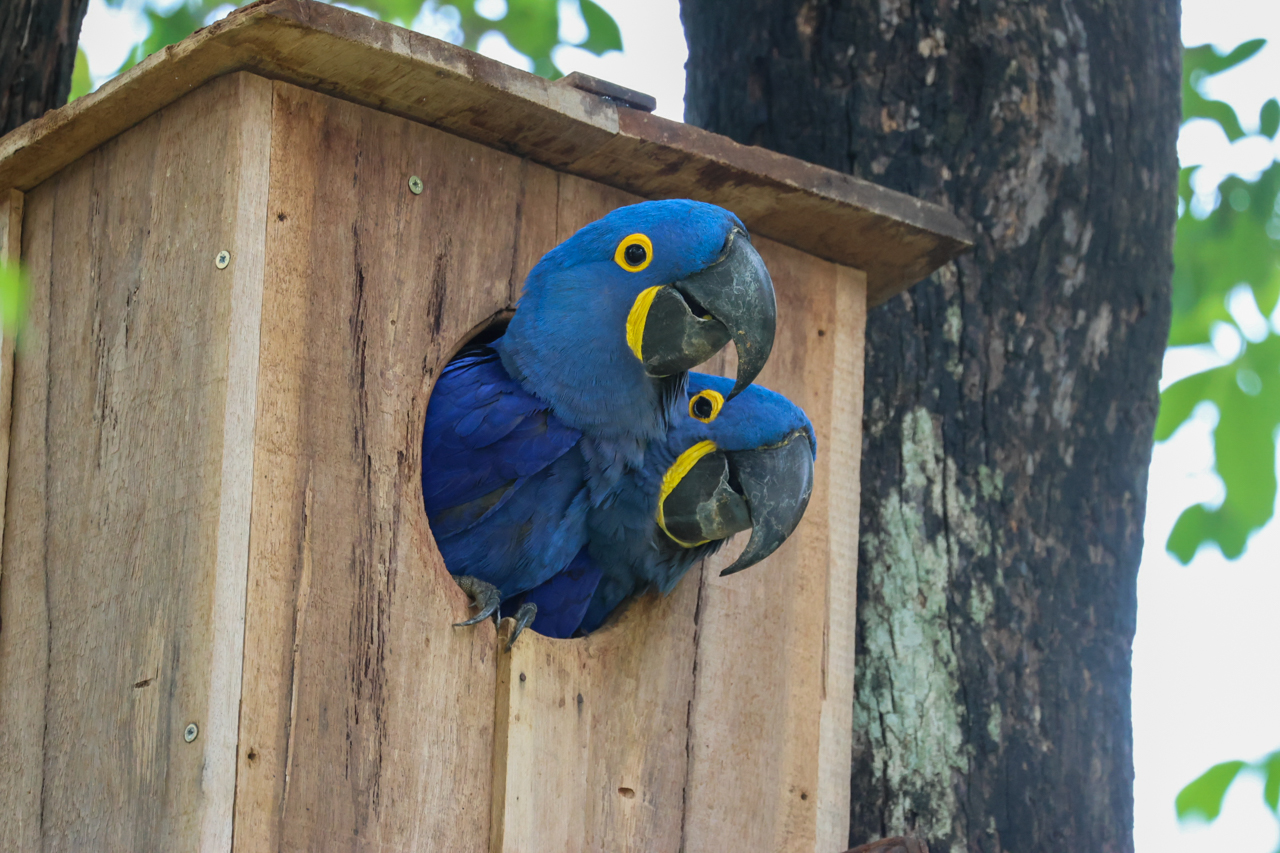
Hyacinth Macaw © A Kent
We made our way north, arriving at the famous Pousada Piuval midafternoon in time for a drive in an open safari truck. Here we found Red-throated Piping-Guans for the first time, in addition to a pair of Bat Falcons perched close to our vehicle, and two Gray-cowled Wood-Rails in addition to many other waterbirds.
Day 13. October 7
We started the day early with another special sighting, a Giant Anteater who soon began interacting with a female Giant Anteater carrying a baby on her back! The two adults stayed near each other for a long time, allowing us to observe their interesting interactions. After our anteater fun, we continued in our open safari trucks to look for birds. We had good looks at the only Great Rufous Woodcreeper of the trip, more Hyacinth Macaws at nests, and also four White Woodpeckers.
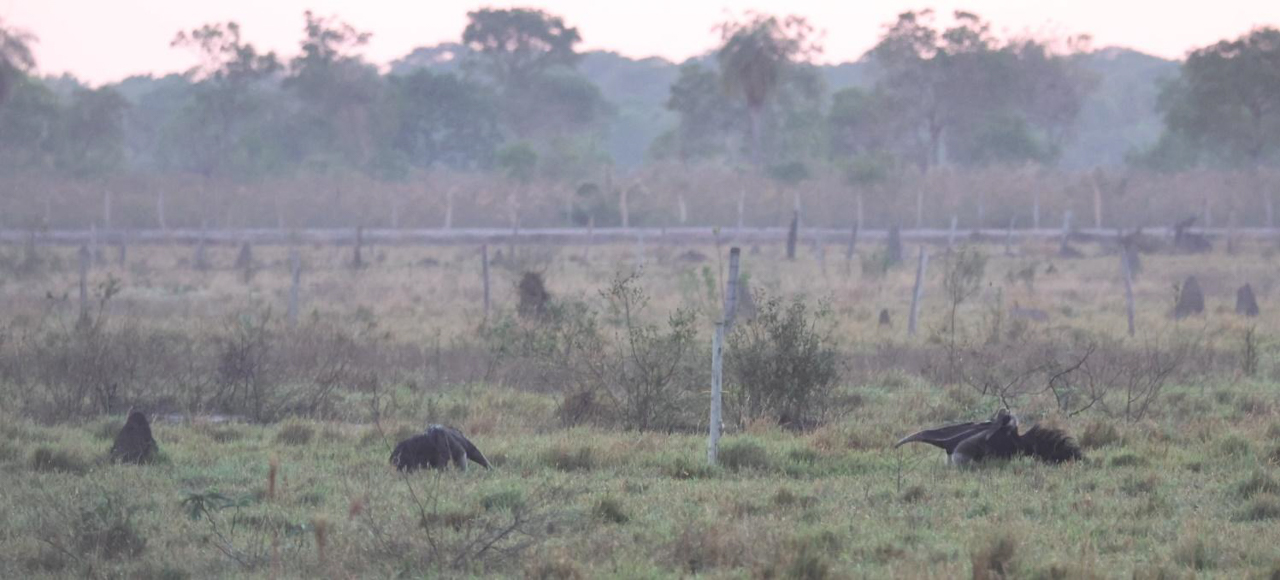
Three Giant Anteaters (including baby on mom’s back) near Pousada Piuval © A Kent
After breakfast we had one last ride in the safari truck with our driver Julio. This time we saw two adult male Greater Rheas with different sets of babies, and a Red-billed Scythebill.
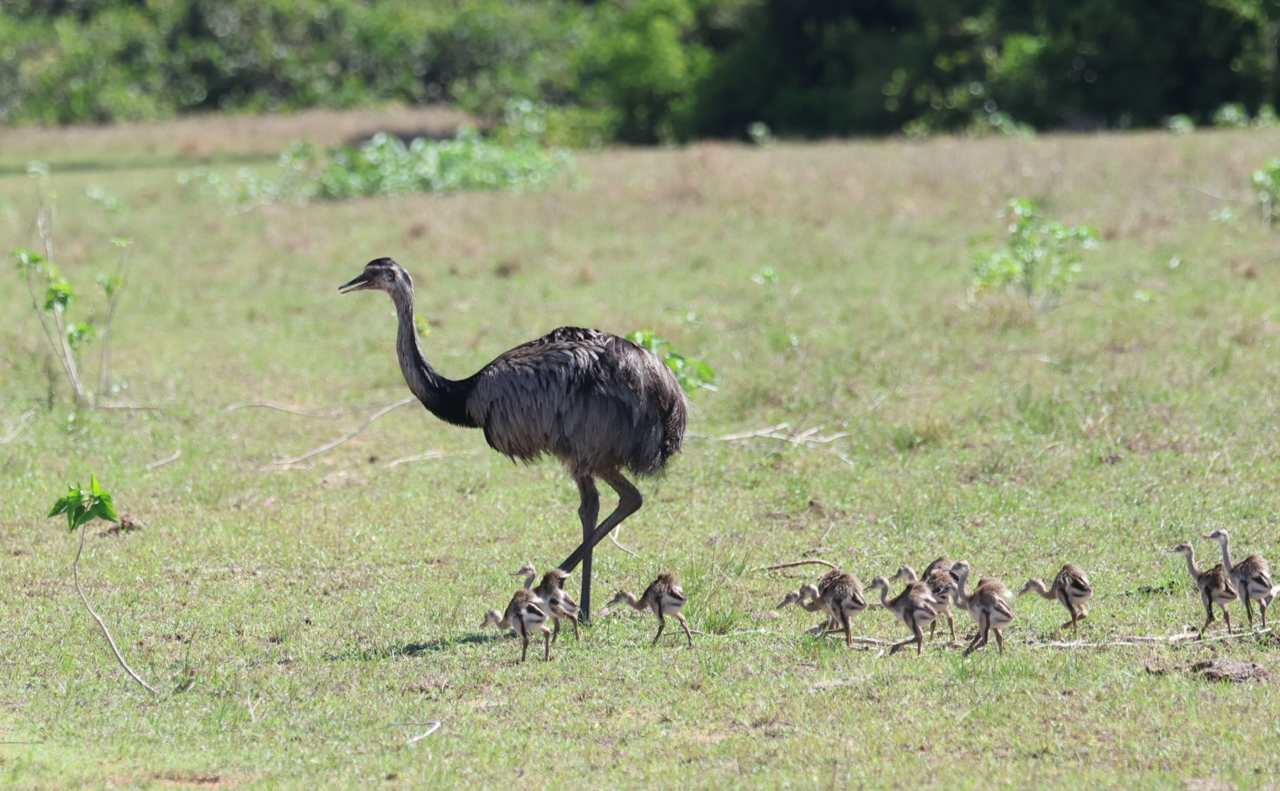
Male Greater Rheas with chicks near Pousada Piuva © A Kent
Before lunch we had one last special event before our drive north to Cuiabá – one of the researchers with the IMPACTO project gave a slide presentation. The project’s name stands for “Institute of Mitigation of Environmental Problems with Traditional Communities and Jaguars.” The institute is working with local communities to reduce the impacts of Jaguars on livestock as well as reduce pressure from the communities to kill the Jaguar. One of the most effective tools is to put livestock inside electric fences overnight.
After lunch Moiser drove us back to Cuiabá where we checked into our hotel. After a final bird list review, we all shared our favorite trip memories, with Jaguars and Hyacinth Macaws being among people’s top picks. We had our final farewell supper complete with celebratory caipirinhas (the Brazilian national cocktail) together at a nearby restaurant where we continued our discussion of our favorite trip moments.
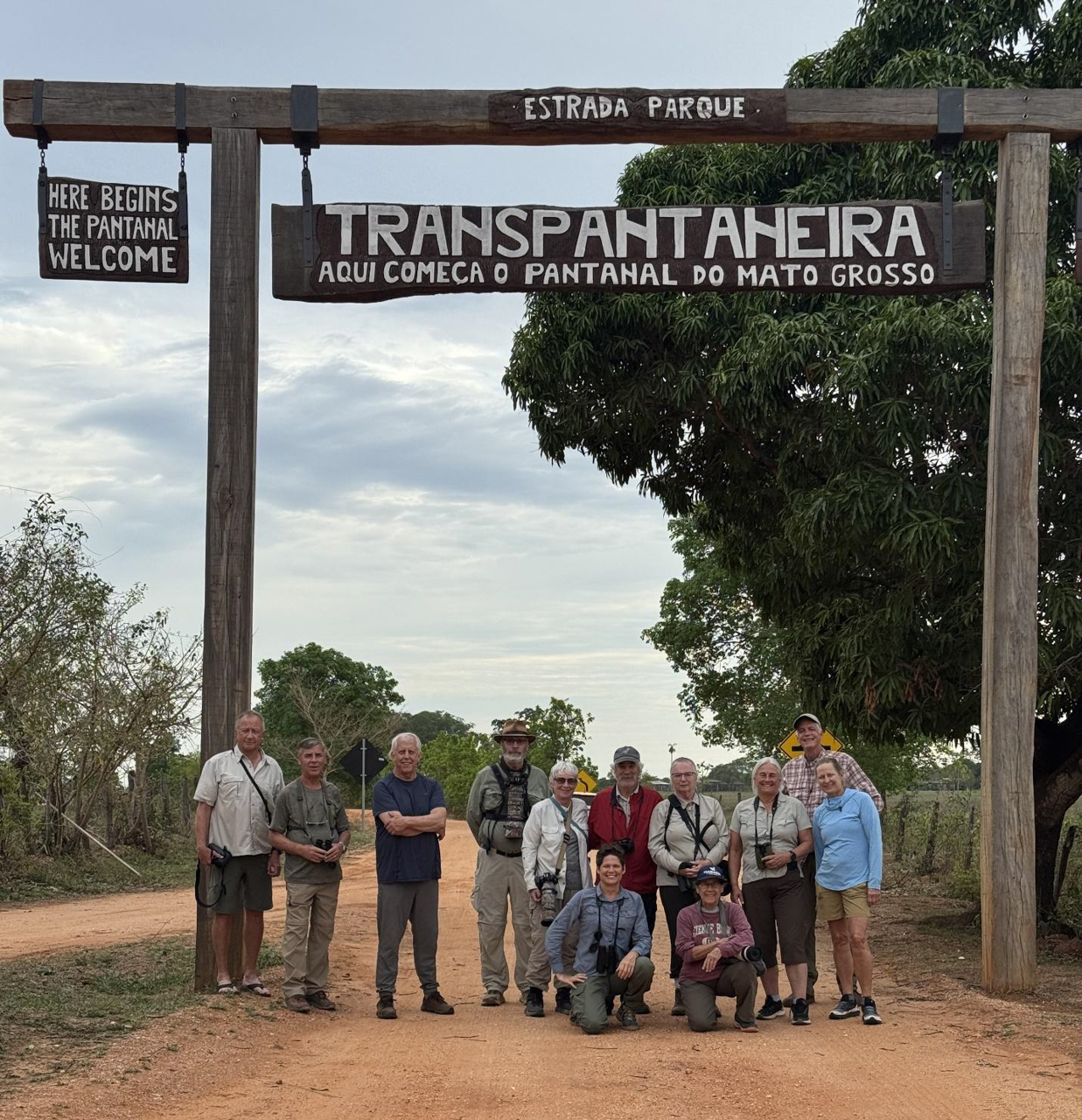
Group at start of Transpantaneira (road that goes south from Cuiabá to Puerto Jofre)
Other Wildlife Observed
Giant Anteater (Myrmecophaga tridactyla)
Six-banded [or yellow] Armadillo (Euphractus sexcintus)
Black-tailed Marmoset (Mico melanurus)
Hooded [or Azara’s] Capuchin (Sapajus cay)
Black-and-gold Howler Monkey (Alouatta caraya)
Jaguar (Panthera onca)
Maned Wolf (Chrysocyon brachyurus)
Giant Otter (Pteronura brasiliensis)
Capybara (Hydrochoerus hydrochaeris)
Brazilian Guinea Pig (Cavia aperea)
Azara’s Agouti (Dasyprocta azarae)
White-lined Broad-nosed Bat (Platyrrhinus lineatus)
Proboscis Bat (Rhynchonycteris naso)
Lesser Bulldog Bat (Noctilio albiventris)
Brazilian Tapir (Tapirus terrestris)
Red Brocket (Mazama americana)
Marsh Deer (Blastocerus dichotomus)
Pampas Deer (Ozotoceros bezoarcticus)
Yacare Caiman (Caiman yacare)
Green Iguana (Iguana iguana)
Black-and-white Tegu (Salvator merianae)
Giant Ameiva (Ameiva ameiva)
Xaraés Sipo [recently split from Neotropical Racer] (Chironius xaraes)
Red Freshwater Crab (Dilocarcinus pagei)
Leave a Reply