Borneo: Bristleheads and Orangutans 2025 Trip Report
Borneo is surely one of the top birding and nature destinations in the world! It has good infrastructure and some first-class eco-lodges and hotels, not to mention the large number of endemic species – avian and otherwise.
Day 1:
The group of five participants, myself, and Endemic Bird Guide extraordinaire, Lee, convened earlier than the scheduled evening meet’n’greet in the Shangri-La Hotel lobby, and our trusty driver (Sam) whisked us off to a nearby coastal park – Tanjung Aru – for some bonus birding. We were joined by local guide-in-training, Neven, who over the course of the next ten days proved invaluable in locating additional Bornean specialities for us.
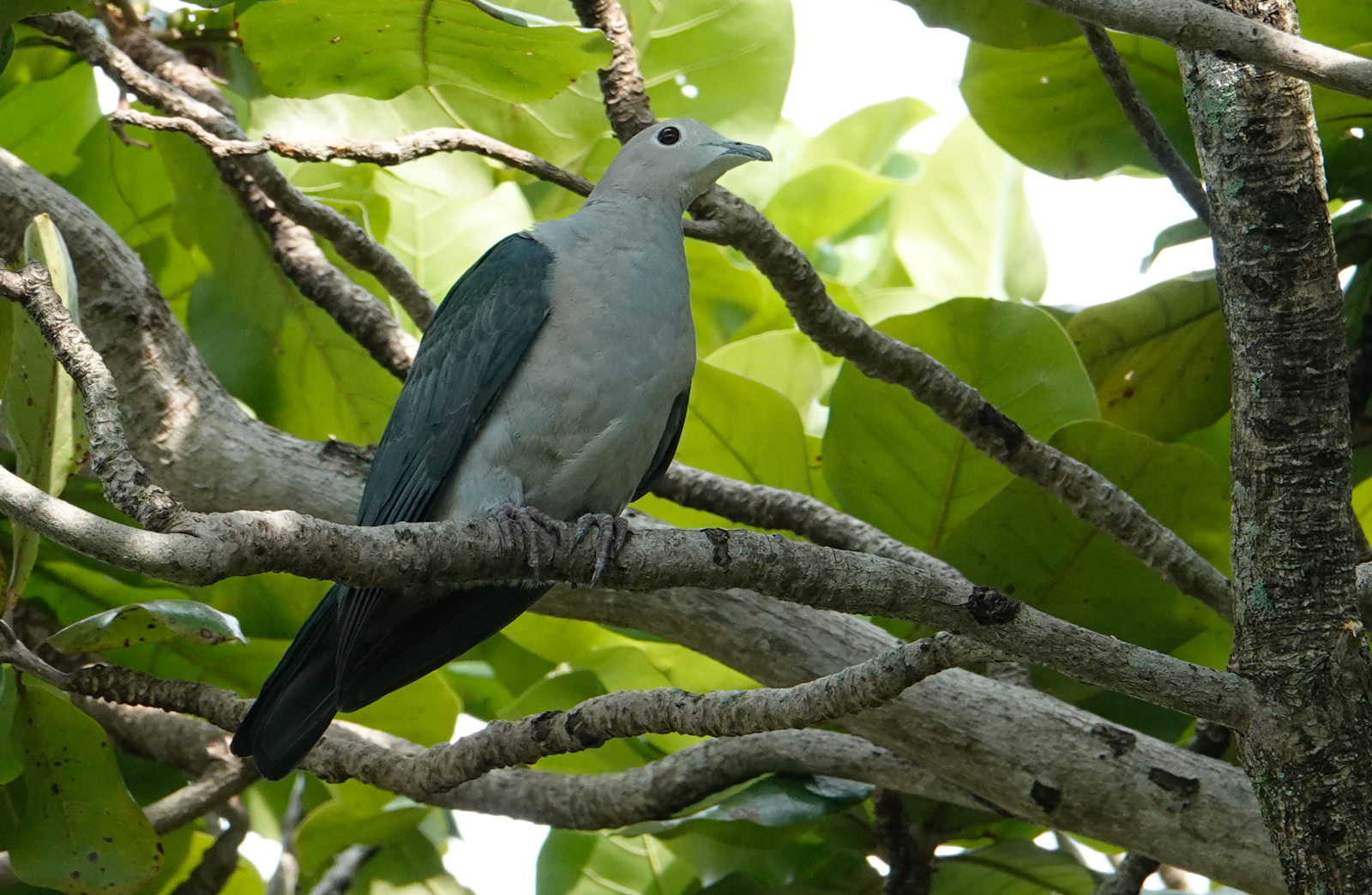
Green Imperial Pigeon © Paul Prior
Tanjung Aru provided us with our only chance for Blue-naped Parrot and Sunda Woodpecker, and an opportunity to familiarise ourselves with common generalist birds such as Common Iora, Ashy Tailorbird, Green Imperial Pigeons and Pacific Swallows. Sam then drove us out to some fallow rice paddies on the edge of town for the trip’s only shore-birding session; scanning through good numbers of Wood Sandpipers we managed to find several Little Ringed Plovers, a couple of Red-necked Stints, a few unidentified Snipe (Swinhoe’s, Pin-tailed and Common all occur here), a lone Long-toed Stint and even a Greater Painted-Snipe. The fallow vegetation also held Yellow-bellied Prinia, Striated Grassbirds, and a couple of Cinnamon Bitterns.
Day 2:
Today presented us with our first experience of what is a relatively recent innovation (at least for Borneo) of well-appointed feeding stations in good forest habitat. This has been a “thing” in South America for decades, but on my last visit to Malaysia in 2017 our tour visited just one such station. And what a boon these feeders were this time around, affording us prolonged views of several species that otherwise might only have been fleetingly glimpsed. Grey-throated and Temminck’s Babblers, Bornean Green Magpie, Eye-browed Jungle-Flycatcher, White-browed Shrike-Babbler, all paraded past at our first feeder at Gunung Alab, joined by less retiring species such as the gorgeous Temminck’s Sunbird and the not-quite-as-gorgeous Asian Brown Flycacther. The proprietors had also installed a couple of “moth sheets” which provided an additional food source for birds such as Pale-faced Bulbuls and Mountain Leaf Warblers.

Temminck’s Sunbird © Paul Prior

White-browed Shrike-Babbler © Paul Prior
Although well-sated by this avian feast, Lee and friends now led us up a nearby forest track where a more impromptu feeding station was set up for a couple of the more retiring species: Bornean Shortwing and Snowy-browed Flycatcher. Meanwhile, nearby we were treated to the first of many cool mammals, a delightful Tufted Pygmy Squirrel. Having spent the morning watching birds fill their bellies it was now our turn and we did so at the restaurant adjacent to our original feeder venue, taking care to check out the Plume-toed Swiftlet colony under the eaves of the building as we entered.

Plume-toed Swiftlets © Paul Prior
With a couple of stops for Blyth’s Hawk-Eagle, Oriental Honey Buzzard, and our first Spiderhunters (Bornean and Spectacled) we made our way to our hotel on the edge of Tambutan. Rain started later in the afternoon which allowed us to call an end to what had already been a long and productive day.
Day 3:
Continuing with the feeder theme, we were at the somewhat more established Trusmadi Feeder Station for dawn, in time to witness a parade of Crested Partridges with a couple of Red-breasted Partridges for variety.
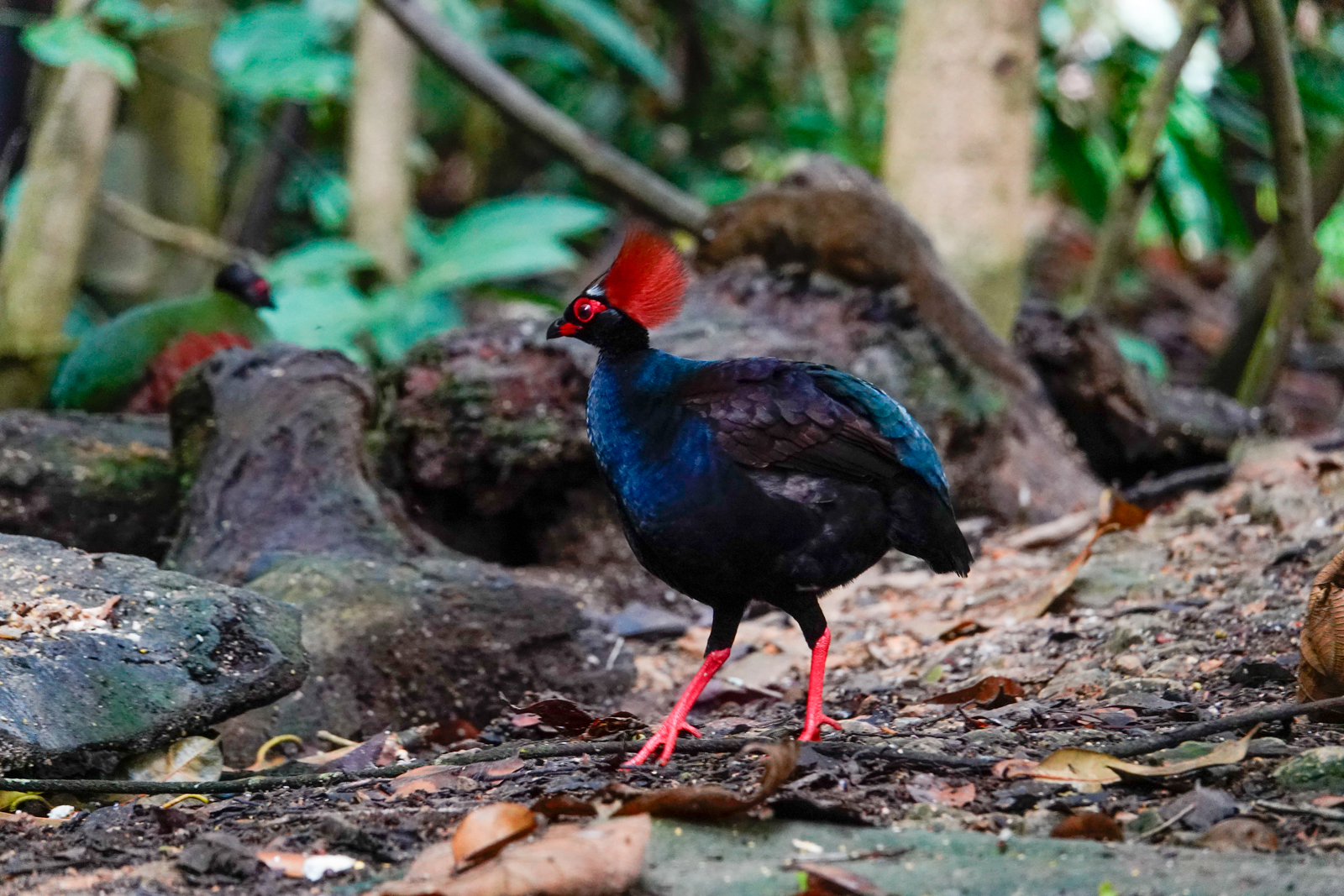
Crested Partridge © Paul Prior
Once these guys had exited the stage was dominated by squirrels (Three-striped Ground, Bornean Mountain, and Lowe’s) with the odd Tree Shrew in support (Lesser and Large). There was a continuously entertaining turnover of various understorey birds, including a spectacular Sunda Scimitar-Babbler, a pair of Orange-headed Thrushes, Emerald Doves, Dayak Blue Flycatcher, Bornean Black-capped Babblers, and an early winter arrival Siberian Blue Robin – all providing excellent photo-opps. Perhaps the most surprising appearance was a couple of Bulwer’s Pheasants, not in the most appealing plumage condition at this time of year – their brilliant white tail plumes rather the worse for wear – but a major rarity nevertheless.
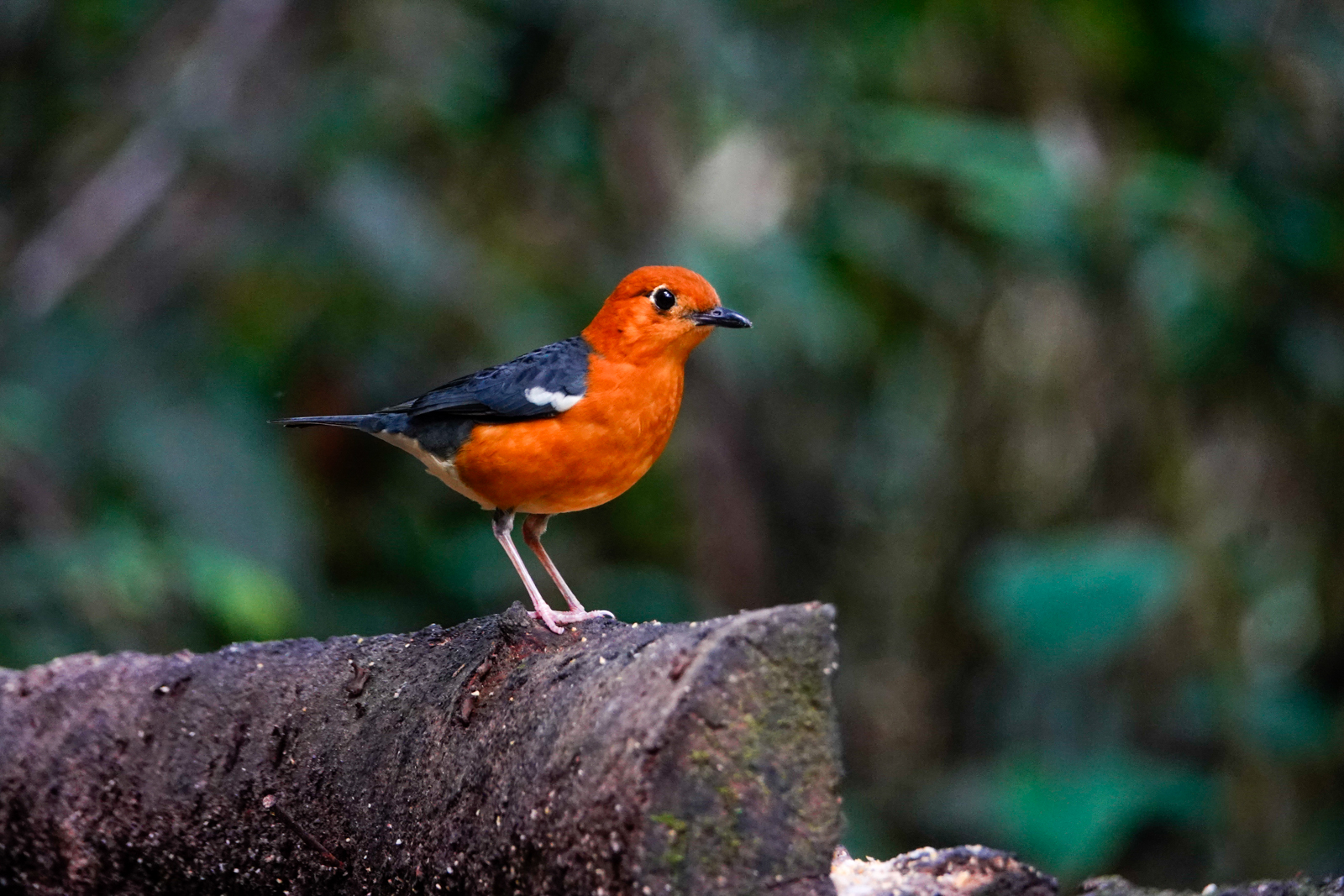
Orange-headed Thrush © Paul Prior
After a couple of hours of this wonderful show we hit the road for Mount Kinabalu, breaking the drive with stops at Mahua Waterfall and a roadside restaurant. We didn’t stray too far from the carpark at Mahua but still managed to pick-up Bornean Whistling-Thrush and a group of Pygmy Heleias. By the time we reached our hotel at Kinabalu, the rain had set in and so we had to postpone our first trek into the Park until the following day.
Day 4:
After an early breakfast at our hotel we headed to the Park entrance and walked the first few hundred metres to an open area around some Park facilities which afforded us views of a pair of Sunda Cuckooshrike, Mountain Tailorbird, and Black-sided Flowerpecker. Then Sam drove us further along the Park road and let us off as soon as Lee and Neven had spotted a feeding flock. This first flock – rather fast-moving – was exclusively larger birds including a handful of handsome Long-tailed Broadbills, Bornean Tree-pies, Bornean Green Magpie and a Maroon Woodpecker. We continued ambling along the road encountering highland specialities such as Grey-chined Minivet, Mountain Wren-Babbler, Penan Bulbul and Hair-crested Drongo. Further along we were treated to great looks at Black-and-Crimson Oriole, several Bornean Whistlers, and a very confiding Eye-browed Jungle-Flycatcher. The most cooperative bird of the morning though was something of a rarity: a cute Ferruginous Flycatcher did his pewee-thing on a conveniently exposed snag close to the road. Finally, as the late morning rain put a close on things we happened upon a Yellow-breasted Warbler nest-building in the roadside bank.

Hair-crested Drongo © Paul Prior
We returned for lunch and watched the rain set in for the afternoon. Sadly, that was just about it for the rest of the day. Certainly it seemed the weather was very much against us in our quest for any of Mr. Whitehead’s birds, and things did not improve too much overnight.
Day 5:
Up and about early to make the most of a clear spell from 06:30 to 08:30, which proved time enough for us to make it up as far as the Timophon Gate trail head. Still no sign of Whitehead’s trio but one species pretty much made up for this absence: a pair of Fruit-hunters gave prolonged views in the gloom, a much sought and rarely encountered endemic species.

Fruit-hunter © Paul Prior
Also on hand were a very confiding Aberrant Bush-Warbler, and a pair of Mountain Black-eyes. Back along the road in intermittent rain we got good looks at an adult Orange-backed Woodpecker giving wood-pecking lessons to two youngsters, and at least a hint of Whitehead’s local impact when a Bornean Stubtail – Urosphena whiteheadi – gave close looks near one of the Park booths.
While part of our little group opted to avoid the pm rain by chilling at the hotel, the rest of us made a prolonged effort in the drizzle on the grounds of some nearby Park cabins; here we managed Temminck’s Sunbird and Black-sided Flowerpecker, but to my mind the best was views of an endemic Lined Reed Snake devouring one of Kinabalu’s giant earthworms – the worm equal in length and girth to the snake itself! The rain eased a little at dusk and we trudged one more time along the main road but our eventual encounter with Whitehead’s Broadbill came so late in the twi-light that none of us were able to get eyes on the persistently calling bird in the roadside trees. So near yet so far.

Lined Reed Snake swallowing a giant earthworm © Paul Prior
Day 6:
An early departure for lower ground and Poring Hot Springs had us on site in excellent post-dawn sunshine. Straight away birds started showing in fine form, at first the usual suspects with Plain, Brown-throated and Crimson Sunbirds, Plain and Orange-breasted Flowerpeckers, Bornean Spiderhunter. And then some of the local goodies turned up. Black-headed Bulbul struck up a fine chorus from an exposed snag, then a beautiful Banded Kingfisher responded to Lee and Neven’s broadcast calls.
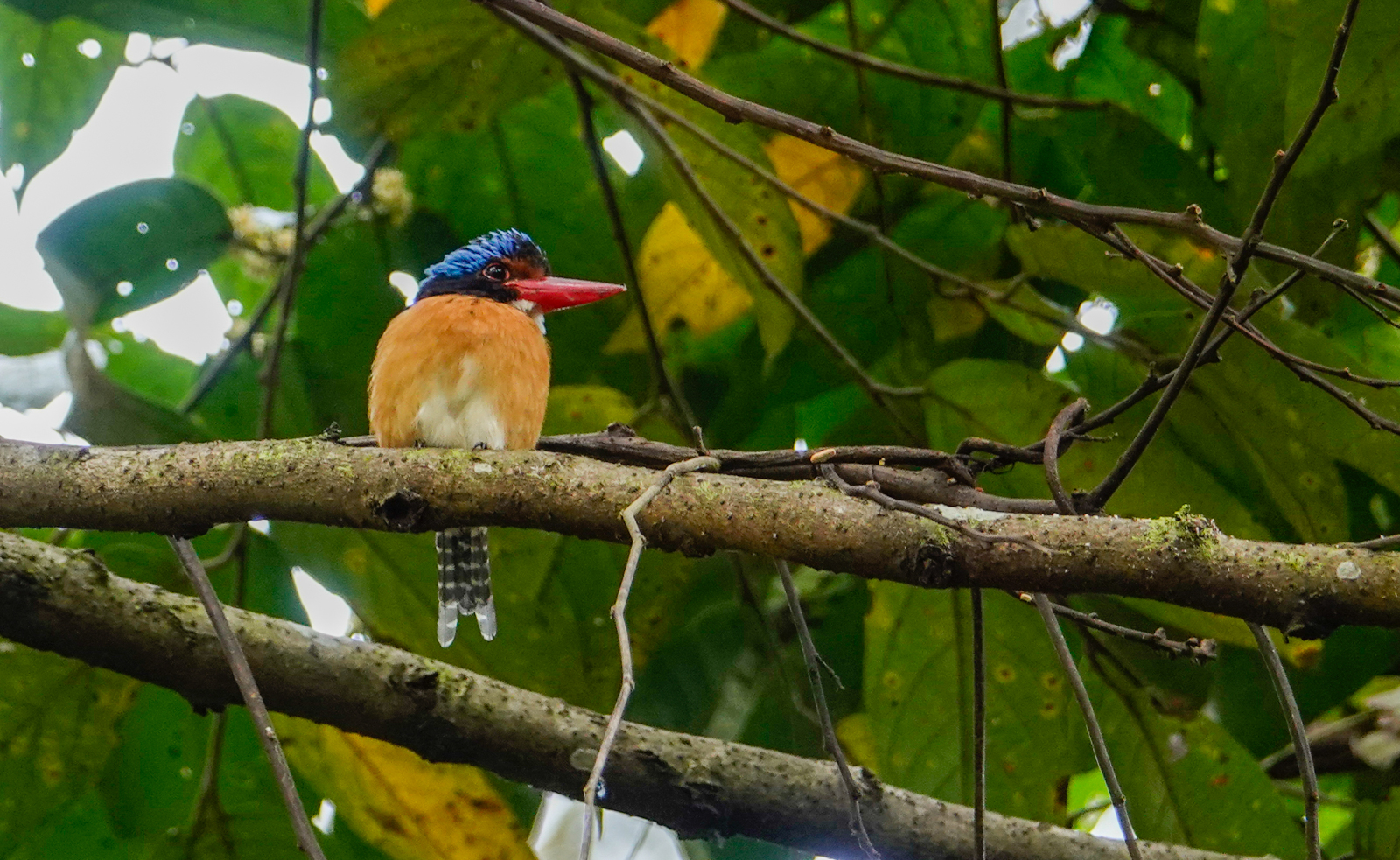
Banded Kingfisher © Paul Prior
Mid-morning, Sam drove us the short distance to the nearby Rafflesia Centre to view a couple of these mysterious monsters, but given the long-drive ahead we could only spare half an hour to pay our respects.

Rafflesia keithi flower © Paul Prior
And then we were on the long road for Kinabatangan, passing through miles and miles of interminable oil palm plantations until at last we reached our boat-taxi at the river. The typical afternoon rainfall had begun and we made the crossing to Borneo Nature Lodge in a downpour, viewing a passing squadron of our first Pied Hornbills through a forest of umbrellas.
Day 7:
Eager to make the most of a forecast dry morning we were out on the river pre-breakfast as a prelude to what would be the most species rich day of the tour. Mammals are very much a part of any visit to Kinabatangan and certainly the Proboscis Monkeys did not disappoint.
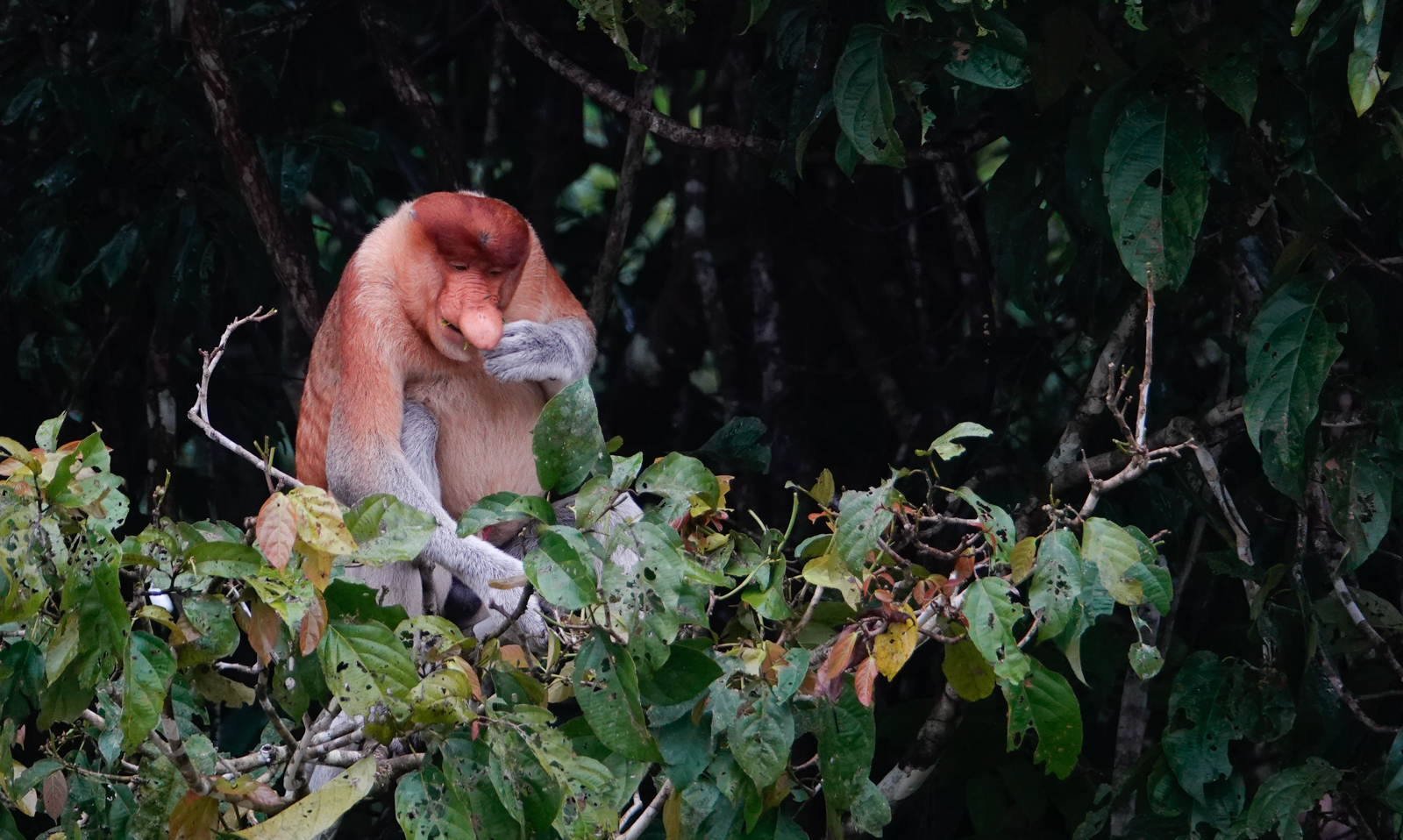
Proboscis Monkey © Paul Prior
We encountered the first of the six species of hornbills that today would bring us, plus excellent raptors such as Wallace’s Hawk-Eagle, Crested Serpent Eagle, Crested Goshawk and a Rufous-bellied Eagle. Storm’s Stork and Lesser Adjutant sitting on exposed riverside snags made a nice change from the past few days of straining to glimpse tiny songbirds in dense jungle.
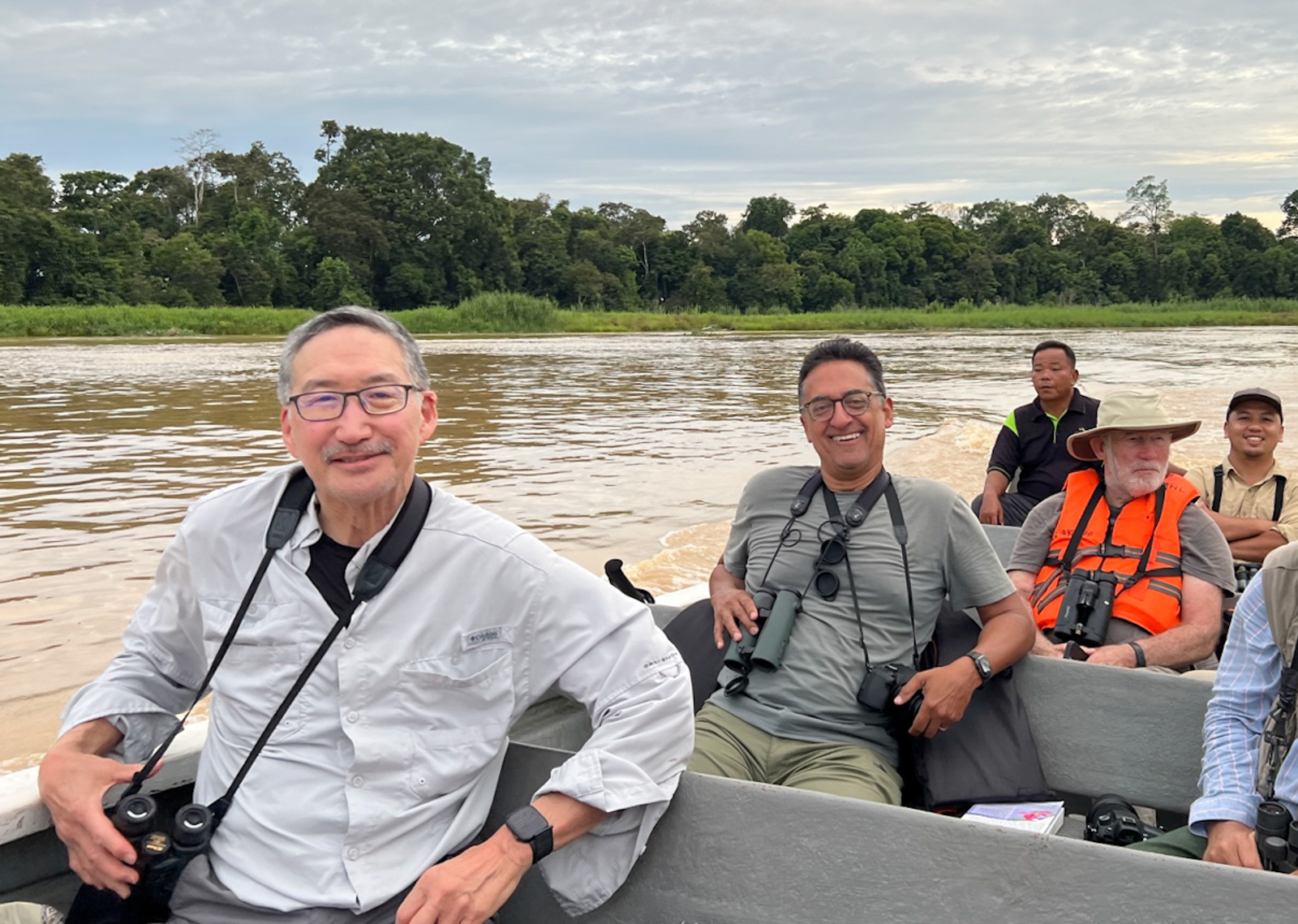
Kinabatangan boat trip © Neil Asaba
After breakfast Junal took us back out along the river and down a small tributary in search of the rather secretive Bornean Ground Cuckoo. We found a pair but unfortunately only a couple of people in the group managed anything other than jigsaw puzzle pieces of the bird viewed through dense riverside shrubs. Meanwhile, Blue-eared, Common and Stork-billed Kingfishers were much more obliging.

Crested Serpent-Eagle © Paul Prior
In the afternoon, a smaller crew headed out for a crazy afternoon of Hornbill listing: White-crowned, Rhinocerous, Bushy-crested, Oriental Pied, Wreathed and Wrinkled – and every single one a winner. White-bellied Sea-Eagle and Grey-headed Fish-Eagle vied for attention, but they were up against some really stiff competition with those Hornbills! The late pm saw Junal trying to track down some elephants that had been sighted along the river but dusk was coming on rapidly.

White-crowned Hornbill © Paul Prior
Day 8:
Junal had been working on some local intel overnight regarding yesterday’s elephant rumour, and sure enough, with the full crew on board, we sped downstream to an abandoned river-bank dwelling where about a dozen Bornean Pygmy Elephants were spending the early morning. What an absolute thrill to get such great looks at these animals.

Bornean Pygmy Elephants © Neil Asaba
With elephants on the itinerary the birds rather took a backseat, but we still managed some great looks at species such as Straw-headed Bulbul, the wintering Whiskered Tern flock, and repeats of yesterday’s hornbills. After breakfast it was time for us to move on again, our first destination being the wonderful Gomantong Cave.
To get to the cave itself requires a few hundred metre hike along a boardwalk which gave the opportunity to check out the local birds, Lee and Neven getting us excellent scope views of Western Hooded Pitta, Blyth’s Paradise Flycatcher, Rufous-backed Dwarf-Kingfisher, Maroon-breasted Philentoma and various Babblers.
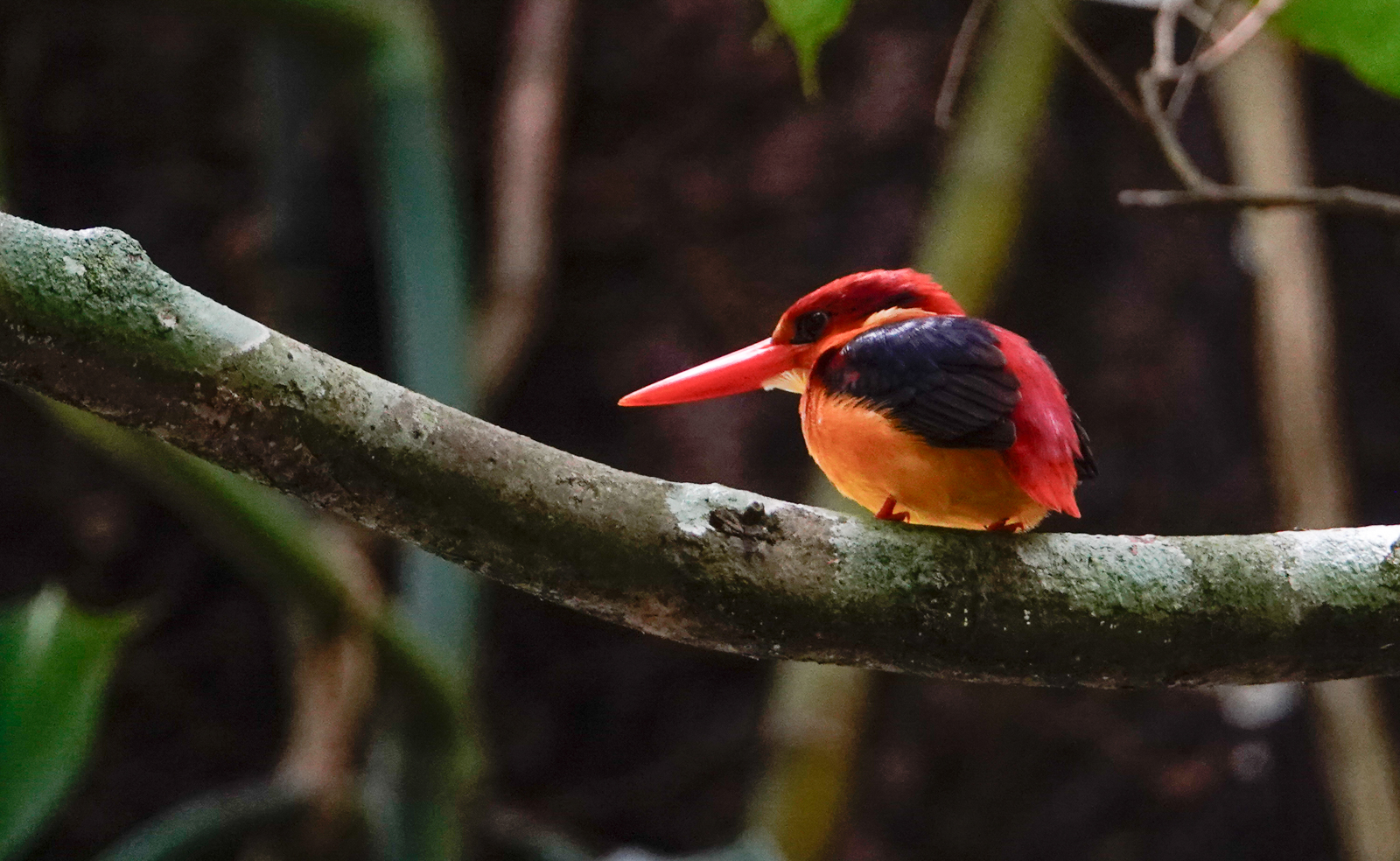
Rufous-backed Dwarf-Kingfisher © Paul Prior
We reached the cave and started cautiously along the boardwalk, as always a little slick with guano from the bats and birds that call the cave home. The cave is still a working swift-nest harvest location and sure enough there was a team of intrepid nest-gatherers at work in one corner of the enormous cavern.

Gomantong Cave © Paul Prior
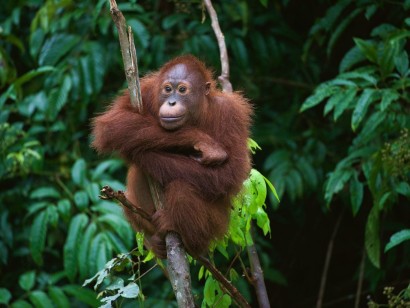
We finally arrived at our Sepilok Jungle Resort accommodation and while some proceeded to make the most of the convenient swimming pool, others explored the surrounding forest and thereby happened on a mother Orangutan with her youngster, making ready for the coming night, retiring to a nest high in one of the huge trees. The intention had been to head out after supper for a night-hike in the nearby Rainforest Discovery Centre but upon witnessing tree fall in the resort’s grounds due to heavy rain and squalls we decided to postpone until the following night.
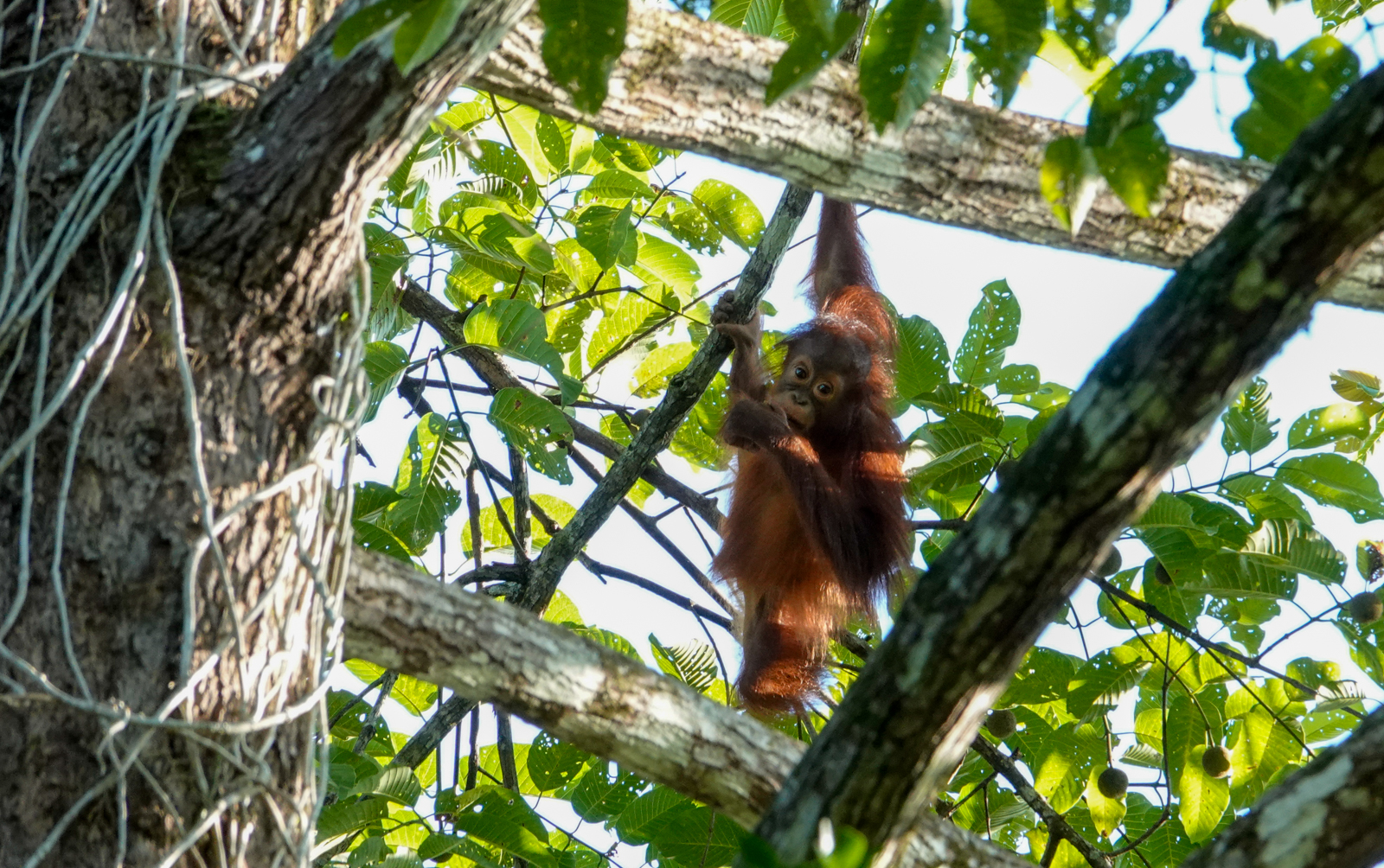
Orangutang youngster © Paul Prior
Day 9
Up early for the short drive to the Park gates at the Discovery Centre, which actually turns out to be a really good spot from which to catch the local residents as they start their day: Black-and-red Broadbill, Black Hornbill, Scarlet-backed Flowerpecker, Crimson Sunbird, and Spectacled Spiderhunter all put on fine shows.
Entering the Park we made straight for the network of raised walkways giving us access to the series of canopy towers. From this vantage point we were afforded excellent looks at White-crowned Hornbill and Black-and-yellow Broadbill, but best of all was the performance put on by a troupe of North Borneo Gibbons, whooping it up in fine style.

North Bornean Gibbon © Lee Kok Chung
We returned to the hotel for a late breakfast and then given the expectation of a night-hike later that afternoon, most of the group opted to visit the famous Orangutan and Sun Bear Conservation Centres located in the neighbourhood. And so, a much-reduced group returned to the Discovery Centre trails for the rest of the morning and again in late afternoon. Initially birding these trails was very slow with just a very close encounter with Sabah Partridge to show for our effort. But then eventually we happened upon a feeding group of Bornean Bristleheads, giving fantastic and prolonged views as one of them dispatched a large katydid.

Bornean Bristlehead © Paul Prior
Our looks at Black-crowned Pitta were not quite as out-in-broad-daylight, but the Diard’s Trogon was again wonderfully cooperative.

Black-crowned Pitta © Lee Kok Chung
Certainly this hike was more about the quality rather than the quantity, although a 15 minute spell with 3 woodpecker species (Rufous, Banded and White-bellied) all vying for pecking-space on the same tree was pretty dizzying.
The entire group reconvened at lunchtime where stories were swapped about Orangutans and Sun Bears and where the more herpetoloically-oriented members of the group ogled a stunning looking North Philippine Temple Pitviper that had been discovered just 50 m from the restaurant.
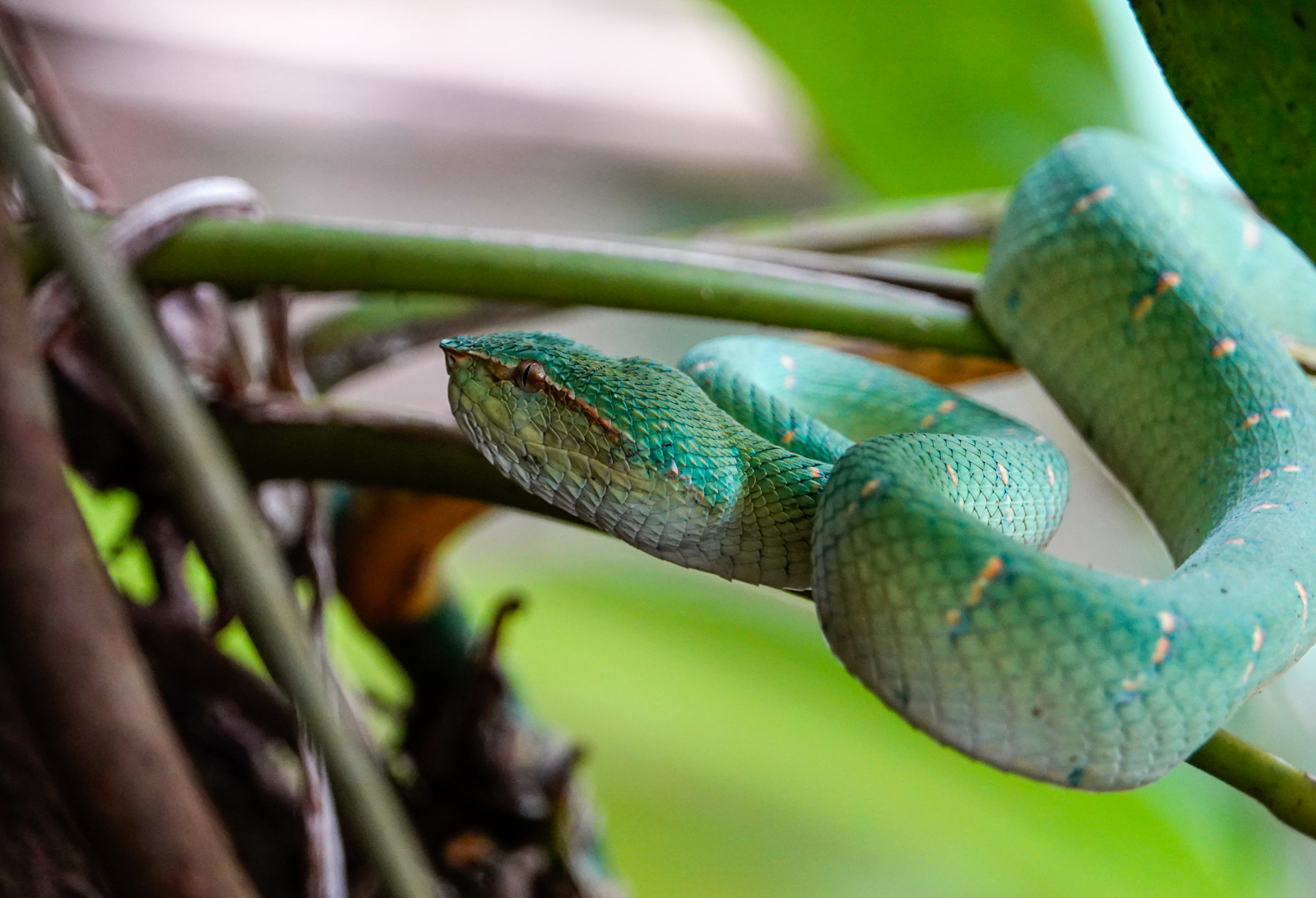
Philippine Temple Pitviper © Paul Prior
The late afternoon hike rediscovered some of the stars from the morning and added great looks at a Barred Eagle-owl before the group met up for the night hike. Our guide on the hike was sadly a little inattentive, rushing along from highlight to highlight, but nevertheless, we were treated to some spectacular nocturnal sightings. first, the Reticulated Python slithering through the treetop as we waited for the main attraction: the performance from the Red Giant Flying-squirrel was breathtaking as one individual launched from the top of the tallest tree, then sailed in excess of 100 m to a distant exposed trunk.

Colugo © Paul Prior
Meanwhile, a Colugo clung to the trunk of a tree right alongside the walkway. Our guide then found us a pair of Philppine Slow Loris and finally, slightly off trail, a wonderful Western Tarsier.
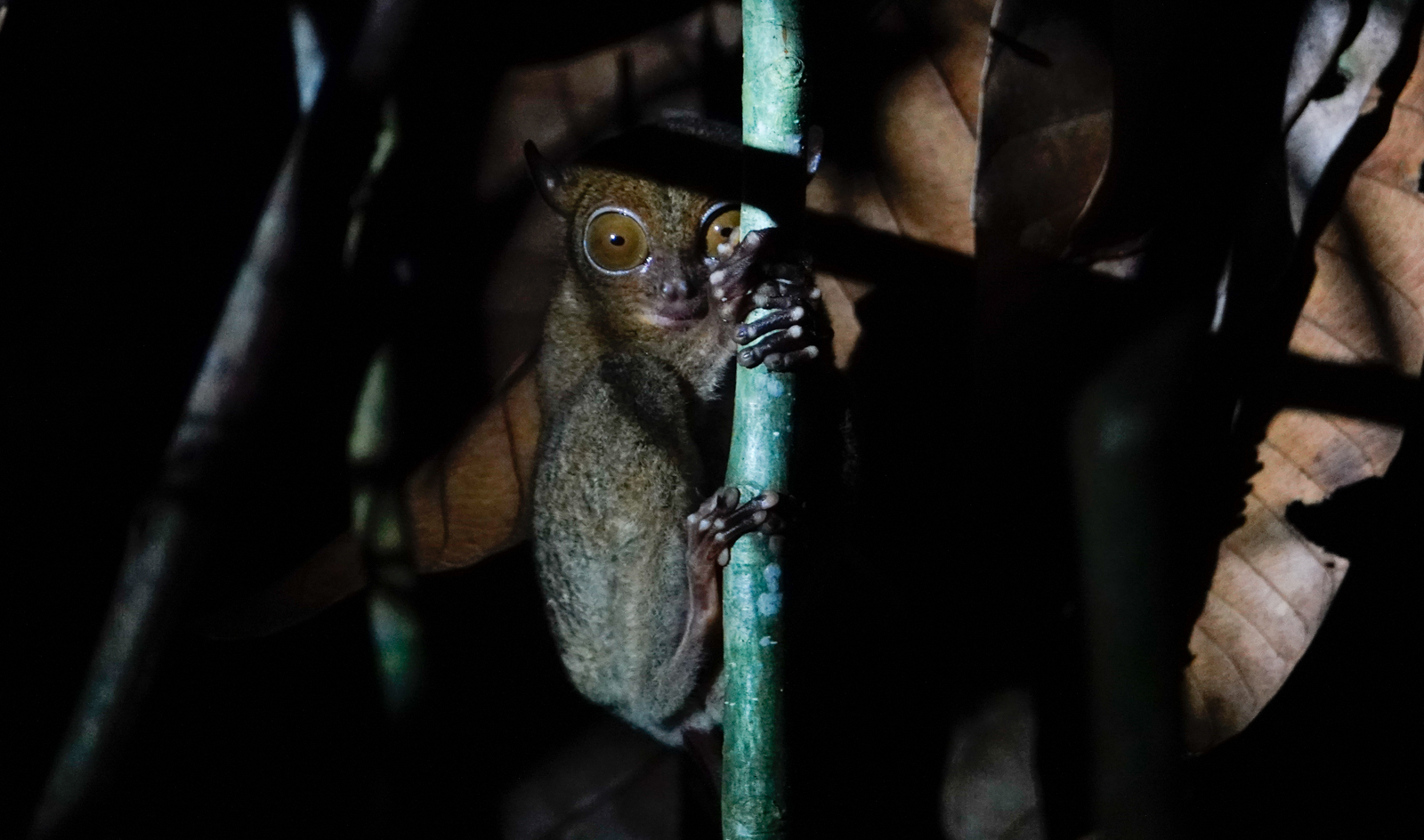
Western Tarsier © Paul Prior
Day 10:
A partial group was up early for a short exploration of the habitat adjacent to the resort which provided great looks at a wide variety of species: Changeable Hawk-eagle, Rufous- bellied Eagle, a large and noisy mob of Black Hornbills, several flyover Long-tailed, Parakeets, and brief looks at a pair of Blue-crowned Hanging Parrots.

Stork-billed Kingfisher © Paul Prior
Over breakfast we were treated to great looks at both Stork-billed and Blue-eared Kingfishers and then we were on the road for the long drive to our final birding destination. We arrived at our rendezvous in Lahan Datu where we said farewell to Sam, Nevin and our trusty van, and transferred to the care of the Danum Borneo Rainforest Lodge staff. We now settled into a couple of vehicles for the long drive to the heart of the Danum reserve, and the lodge itself where we were introduced to our excellent Park guide, Emmanuel – “Manu”.
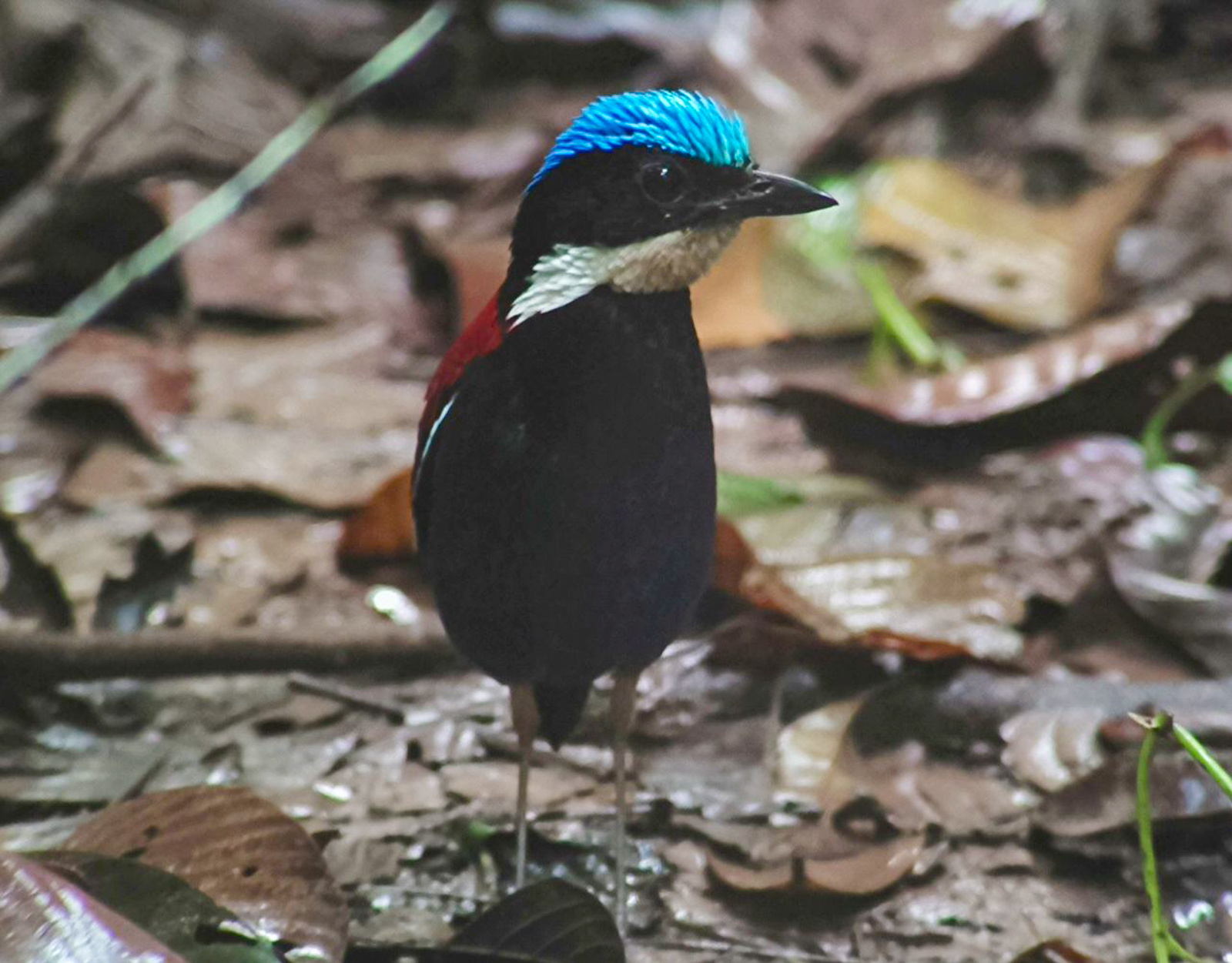
Blue-headed Pitta © Lee Kok Chung
A quick foray in the twilight before supper presented us with roadside views of Blue-headed Pitta and then after supper, we boarded a trio of golf carts for a night drive, which was almost fruitless other than for the distant calls of Blyth’s Frogmouth and a roosting Bornean Banded Pitta (an almost unrecognizable stripy puff-ball).
Day 11:
We now had two full days of primary rainforest birding ahead of us, and for the most part, this time was spent on long hikes along the main gravel road. Although not particularly strenuous, the high heat and humidity was exhausting, but the birding was amazing.

Danum birding © Paul Prior
The first day brought us repeat looks at Black-and-red and Black-and-yellow Broadbills, a series of seven Babblers, including great looks at a fine pair of Striped Wren-Babblers, a pair of Wreathed Hornbills, White-crowned Forktail and best of all, a brief and rather breathless encounter with a Great Argus. As we returned to the hotel resort, we were treated to a wonderful display from a magnificent Raja Brooks Birdwing butterfly.

Raja Brooke’s Birdwing © Paul Prior
The evening found us exploring the nearby staff football field, where a group of Sambar grazed on the untended pitch and a pair of Buffy Fish-owls tended goal at either end.
Day 12:
A second day spent hiking the main road with great looks at Red-bearded Bee-eater, Banded Broadbill, Ventriloquial Oriole and Rufous Piculet.
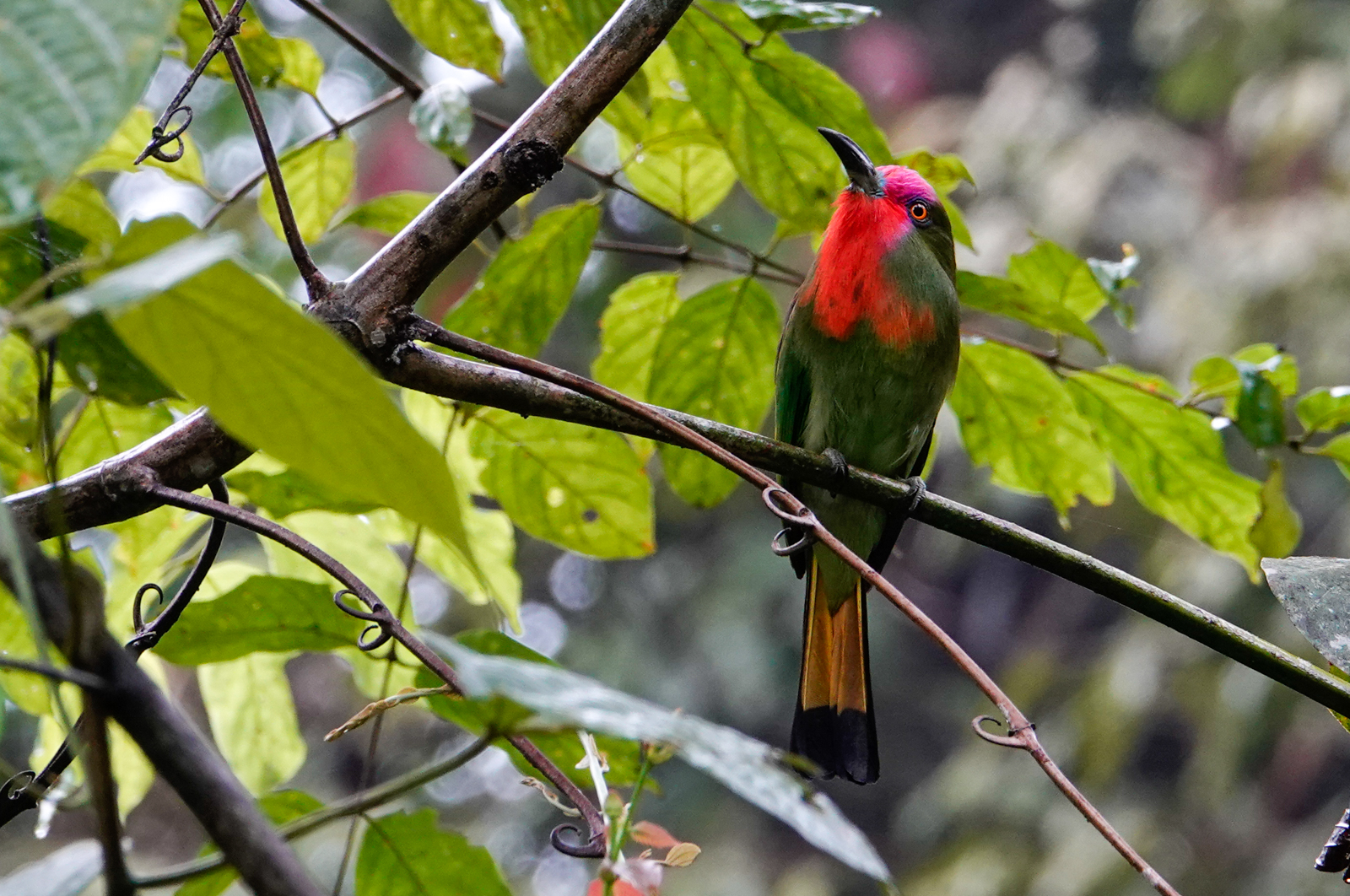
Red-bearded Bee-eater © Paul Prior
The hike was broken by a visit to the canopy walkway and platforms. The latter provided some great birding with Red-billed and Black-bellied Malkohas, a pair of Scarlet Minivet, Lesser Green Leafbirds, Grey-headed Canary-flycatcher, and Black-naped Monarch. The return to terra firma then presented us with a noisy group of four Black-throated Wren-Babblers and then, as we hiked back along the road, another encounter with the same Great Argus in precisely the same spot!

Danum Forest Canopy walk © Paul Prior
The afternoon rain abated in time for us to catch a couple of golf carts on another night drive; only slightly more successful than our previous attempt, although the sight of five large Wallace‘s Flying-Frogs jostling for prime position next to the foamy clumps of frogspawn suspended in the pond-side canopy vegetation was worth the effort.
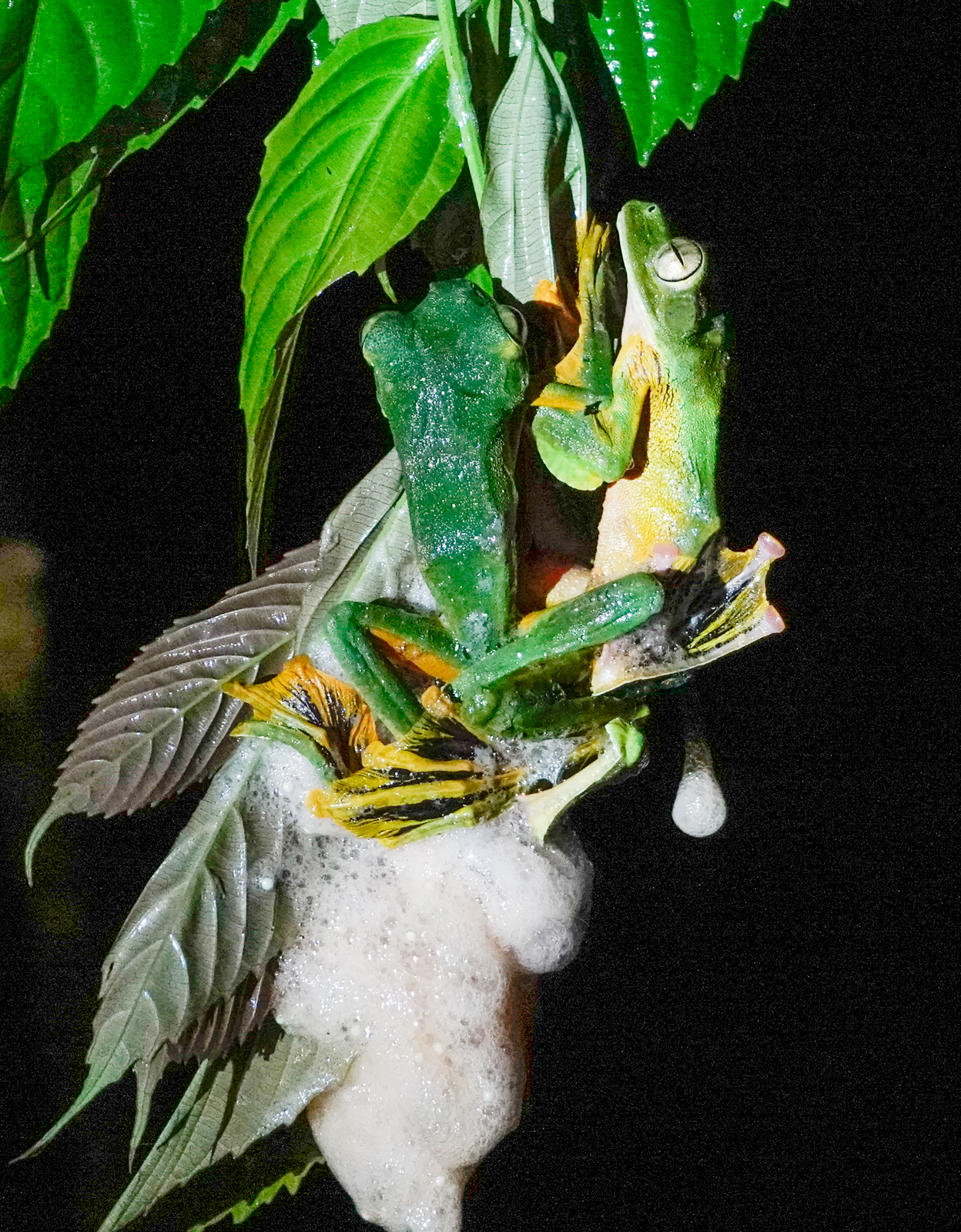
Wallace’s Flying Frogs © Paul Prior
Day 13:
One last morning hike added Whiskered Tree-Swift, an overhead Black Eagle, Rufous-winged Philentoma, a new Bulbul (Finsch’s) and a new Babbler (Ferruginous) and close encounters with a very confiding White-crowned Shama.
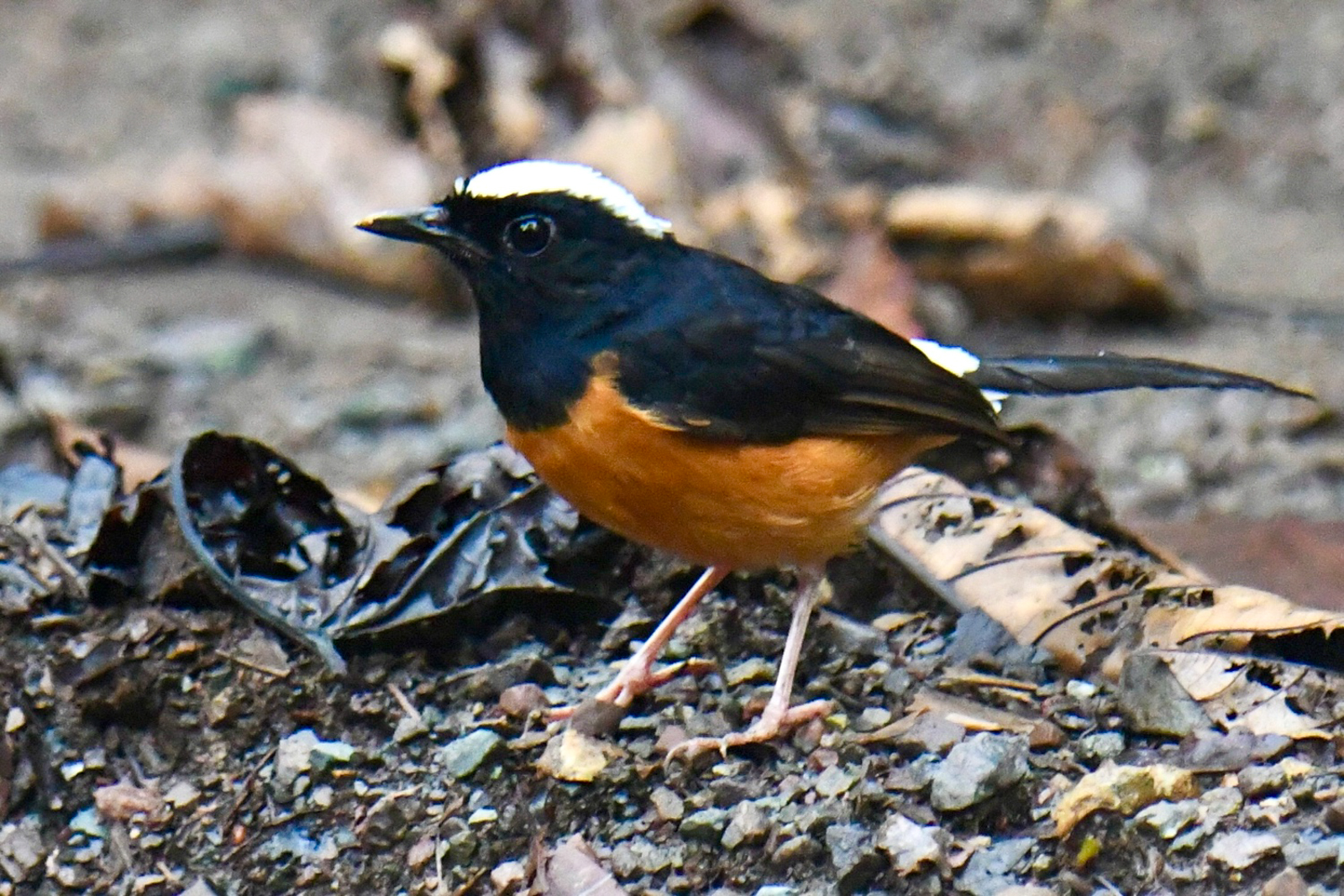
White-crowned Shama © Neil Asaba
After lunch, we embarked on the long drive back to Lahud Datu and the usual hurry-up-and-wait situation at the airport, although the waitt was eased by the entertaining antics of a family of Buff-banded Rails foraging right next to the departure lounge.
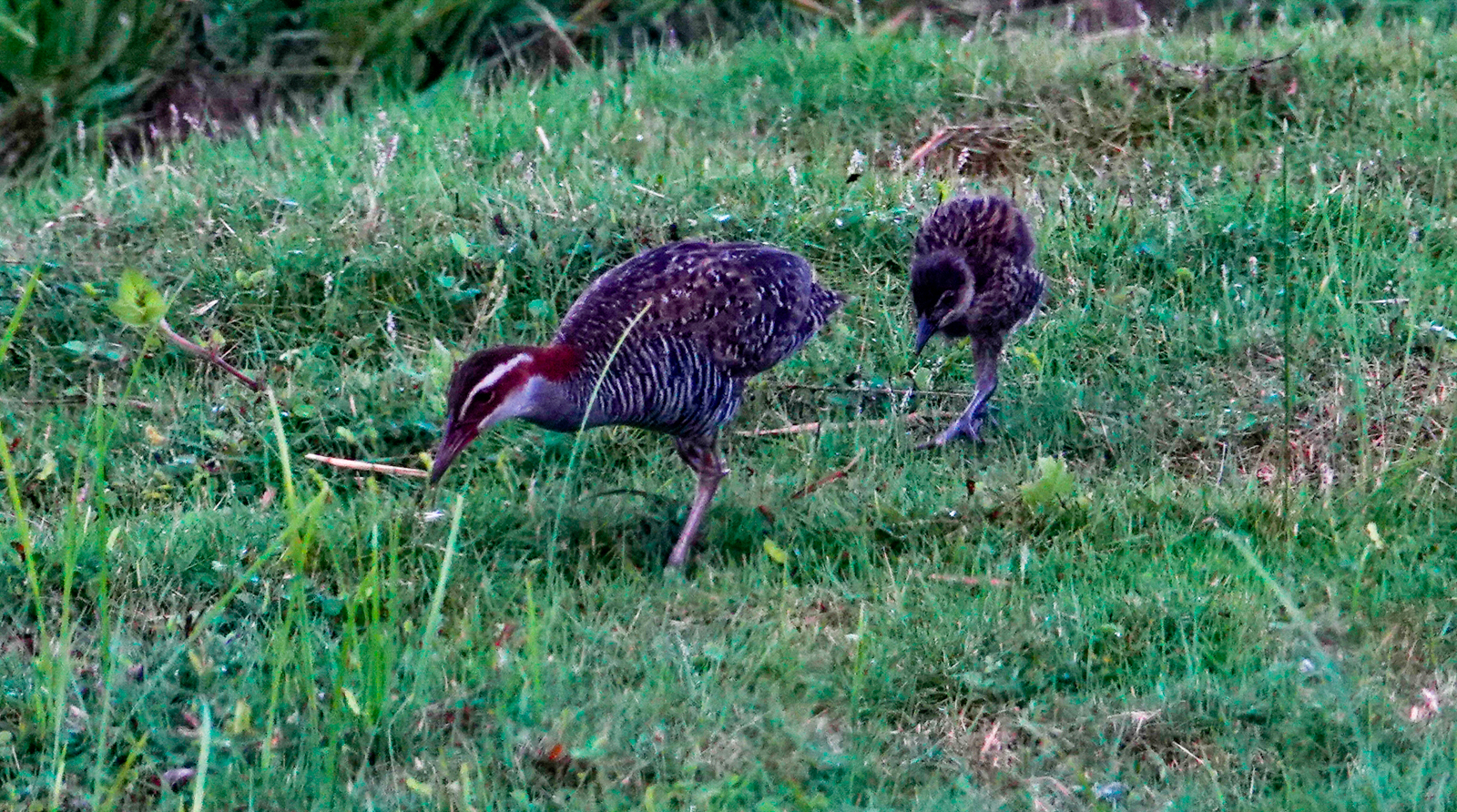
Buff-banded Rail family © Paul Prior
Back in Kota Kinabalu our friend Sam was on hand to drive us to our last Borneo supper and one last Borneo ice cream.
It had been a pretty hectic couple of weeks of travel through Sabah, sampling the best birding that Borneo has to offer. We amassed a list of over 250 species of birds which included an impressive 43 endemic species(although the taxonomists may impose changes on that down the line, as is their habit). The mammals – and the herps, bugs and flowers – were spectacular: whooping Gibbons, charming Orangutans, a dizzying array of Squirrels (giants and pygmys), proud Proboscis Monkeys, and a delightful herd of Bornean Pygmy Elephants. The primary forest in Danum is second to none; the canopy walkway at Sepilok is surely one of the most impressive of its kind in the world; the cave at Gomantong is worth visiting simply for the otherworldly ambience; the river at Kinabatangan affords some of the best Hornbill viewing around. Add to this the friendly people, the tasty cuisine, the generally excellent infrastructure – surely this is a tour that warrants an annual appearance in Eagle Eye’s itinerary.

The 2025 crew