Alaska Birding Trip Report (Jun 11-23, 2025)
Day 1 – Arrivals
Today was the official opening of our Alaska tour. Folks met at our hotel in Anchorage for a delicious dinner, group intros, and a quick overview of our upcoming adventure together!
Day 2 – Flight to Nome
Our morning kicked off with an early flight to Nome! Upon arrival, we refreshed ourselves and got ready for our first foray into Alaskan birding. From the van, we got some nice looks at Red-throated Loons and some Red-necked Phalaropes on a nearby pond. Our first official stop took us down to the Nome Rivermouth. Here we observed a nice variety of birds, including Black-legged Kittiwake, Long-tailed Jaeger, Sabine’s Gull, Bank Swallow, Redpoll, and Arctic and Aleutian Terns. A nice way to kick off our birding!
We motored along the coastal section of Council road, along the way stopping to get out and scan for birds! Our drive was incredibly productive, picking up some essential targets right out of the gate, including fantastic looks at Emperor Goose, Common Eider, Parasitic Jaeger, Tundra Swan, Greater Scaup, and Pacific Loon.
As we continued down the coast, we also picked up Short-eared Owl hunting over the coastal tundra close to the van and observed three species of scoter, White-winged, Black, and an epic find of Stejneger’s Scoter!
Stejneger’s Scoter is a rare but regular visitor to the Nome area, primarily observed during spring migration along the Bering Sea coast. Though it breeds in eastern Siberia, small numbers are occasionally seen in western Alaska, making Nome one of the better spots in North America to encounter this scarce sea duck!
Further down the road, we also spotted over 200 Red Phalaropes in a small pond, all recent arrivals! Here we also picked up Wandering Tattler, Black Turnstone, and about fifty Brant!
We closed out our day with a nice dinner and a paper checklist.
Day 3 – Nome Birding
Today, our birding adventure took us down the road that connects Nome to the town of Teller. Our first stop yielded looks at new birds like Gray-cheeked Thrush, Golden-crowned Sparrow, Yellow Warbler, and Savannah Sparrow. As we continued birding along Teller Road, our group enjoyed our first look at Willow Ptarmigan, Wilson’s Snipe, and Fox Sparrow.
Further down the road, we made our way into the rocky tundra where a different assemblage of birds awaited us. Highlights included Rock Ptarmigan, American Golden-Plover, Pacific Golden-Plover, Surfbird, and epic looks at a pair of Northern Wheatear!
The Northern Wheatear is a rare but regular breeder in the Nome area, nesting in rocky tundra habitats. It’s one of the only songbirds in North America that migrates to sub-Saharan Africa, making its presence around Nome especially remarkable.
On our way back towards town, we had fantastic luck with a pair of Bar-tailed Godwit, and picked up the elusive Eastern Yellow Wagtail, some clutch targets to close out our day!
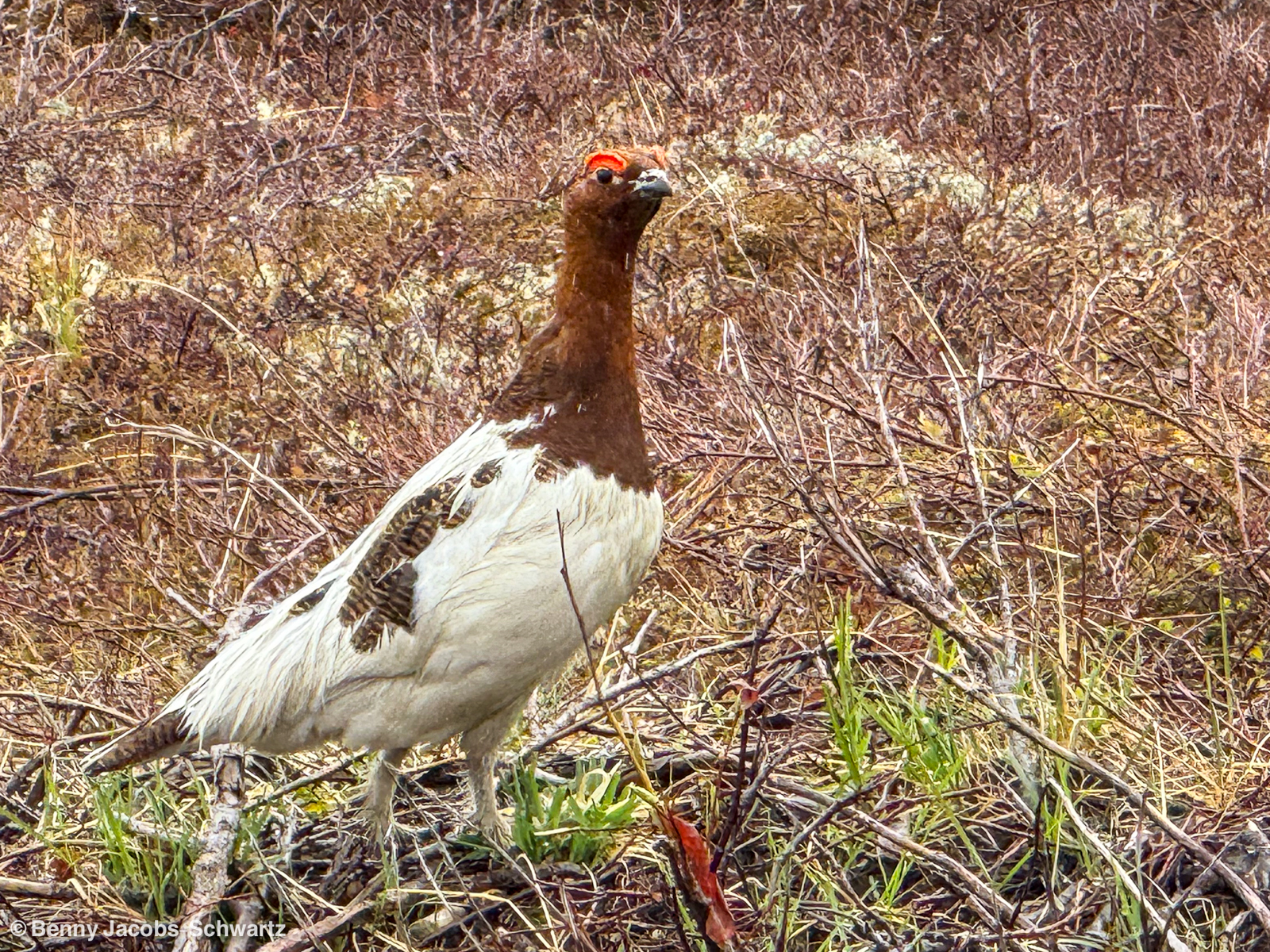
Willow Ptarmigan
Day 4 – Nome Birding
Today, we set out along the third road in Nome, Kougarak Road. This path transports you deep into the backcountry, traversing canyons with steep rock cliffs and rolling tundra domes. Like all days, we drive and scope for bird activity.
Our first sightings included a variety of raptors, including a Northern Harrier, a Rough-legged Hawk, and the stunning Golden Eagle. The sounds of Wilson’s Snipe winnowing overhead provided a near-constant soundtrack to our morning foray.
Along the road, we enjoyed views of another restricted breeder in Alaska, the Bluethroat. This generally furtive bird can be quite active when it first arrives on its breeding territory. During our Bluethroat stop, we also were afforded some fantastic looks at the Arctic Warbler.
We birded our way to the base of Coffee Dome, some 64 miles from our starting place in Nome. Here we began our ascent in search of the day’s main target – the Bristle-thighed Curlew. Easily mistaken for the incredibly similar Whimbrel, we were lucky enough to get some fantastic looks at one individual. In flight, we were able to observe the rusty-orange rump and upper tail, as well as its lack of barring, a diagnostic feature for separating the curlew from the Whimbrel.
With the wind blowing, we decided to descend and enjoy our lunch in the van. After warming up a bit and recharging from our hike, we began our drive back towards Nome.
Along the way back, we were treated to fantastic looks at a herd of Muskox, with their prehistoric appearance and shaggy coats perfectly suited for the tundra. Once extirpated from Alaska, muskox were successfully reintroduced to the Nome area in the 1970s and now roam the hills and coastal flats much like they did thousands of years ago.
We also had some solid looks at Rusty Blackbird, Northern Waterthrush, and Sandhill Crane.
Back in town for a dinner and checklists before our return to our lodging for the night.
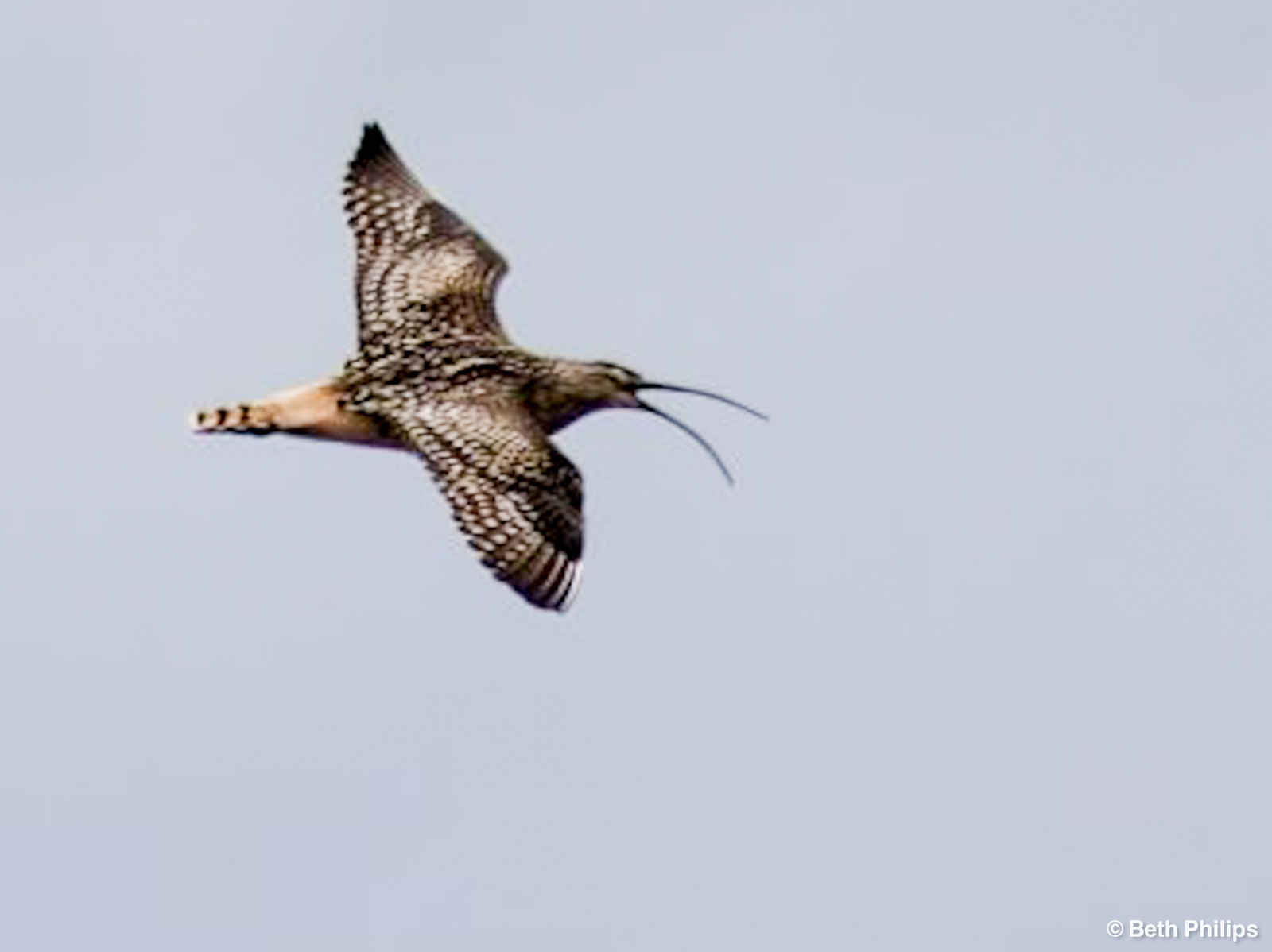
Bristle-thighed Curlew
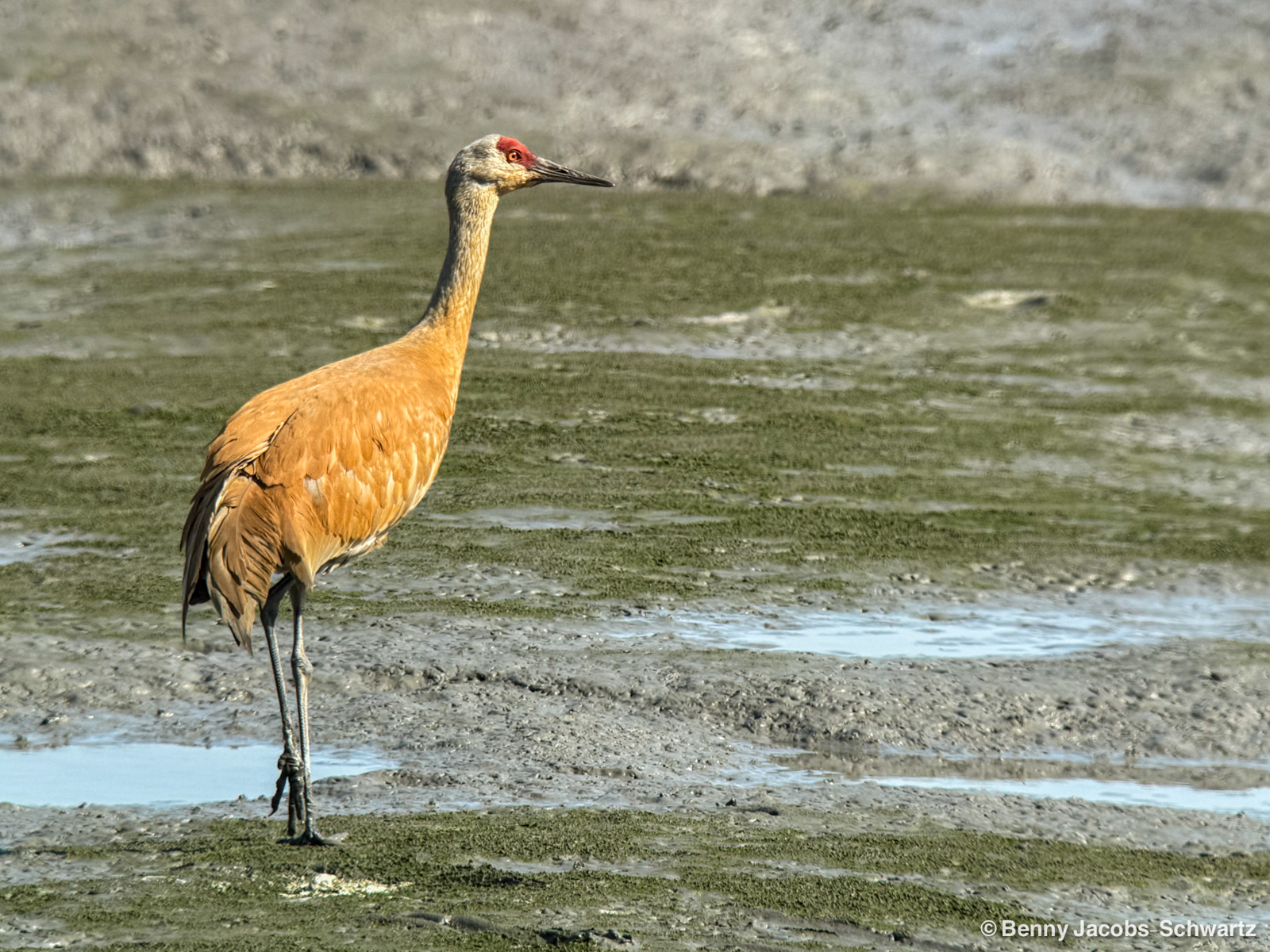
Sandhill Crane
Day 5 – Nome -> Anchorage
Today was our final day in Nome, and we had a few more major targets we were hoping to pick up. One of which was the Gyrfalcon, which was not in one of its usual haunts the day before. So we headed out in the field to search for the world’s largest falcon and more.
By about 11:00, we had located our Gyrfalcon. Although somewhat of a distant look, the unmistakable gray barring, yellow orbital skin around the eye, and the bicolored bill were plenty for us to confirm the ID of this epic raptor. These fierce Arctic raptors primarily hunt ptarmigan and waterfowl around Nome, showcasing their incredible speed and power in the wide-open landscapes of western Alaska.
On our drive back along the river, we had fantastic looks of a Blackpoll Warbler singing its buzzy song from the top of a willow sprig. Back at the airport before our flight, we locked in our last bird, and it was a special one indeed – the White Wagtail. The male was singing his heart out from a window in an old airplane hangar adjacent to the current airport hangar.
We arrived in Anchorage without a hitch and wound down with dinner and checklists.
Day 6 – Anchorage -> Seward
Back in South Central Alaska, we had the day to bird our way from Anchorage to our final destination on the Kenai Peninsula – the quaint waterfront town of Seward! Our first stop was to scan the freshwater pond of Lake Hood just behind our hotel. On the water, we observed Greater Scaup, Lesser Scaup, Red-necked Grebe, Short-billed Gull, Black-billed Magpie, and a quick look at a Belted Kingfisher flyby.
Next stop was a visit to Kincaid Park, where we had a fantastic morning birding the Sitka Spruce and Douglas Fir forests peppered with Birch and Willow. Avian highlights included Downy Woodpecker, Merlin, Western Wood-Pewee, Alder Flycatcher, Golden-crowned Kinglet, and Swainson’s Thrush. As we walked around, we also got great looks at Fox Sparrow, Lincoln’s Sparrow, and Dark-eyed Junco (Slate-colored race). Hands down, the best bird and observation was observing an active American Three-toed Woodpecker nest. We observed both adults coming and going and were treated to up-close and personal looks, a very special treat!
On the way out, we had some brief but countable flyover observation of White-winged Crossbill!
Continuing our drive to Seward, we stopped along Turnagin Arm to talk about tidal boars, surfing, and Beluga Whales. We heard a Hermit Thrush singing, which was nice to compare to the Swainson’s Thrush song we were serenaded by in Kincaid Park.
After our time here, we drove for another hour or so heading into a postburn area of Black Spruce-dominated forest just outside the Cooper Landing area. This adjustment to our itinerary was based on a current sighting of a very special and unique bird of prey – the Northern Hawk Owl. This stunning bird was observed hunting along the roadside at nearly eye level. Unphased by our presence, although we were quiet and respectful, this powerful boreal hunter gave us a show we would not soon forget. At this site, we also picked up a Hairy Woodpecker.
With a quick stop to check out the Kenai River, we had some nice comparisons of American Herring Gull, Glaucous-winged Gull, and Short-billed Gull. Plus, we got looks of Tree Swallows and Violet-green Swallows foraging over the river.
From here, we made our way back onto the Seward Highway with our next stop in the Coastal Rainforest at Bear Creek Road and checked out Bear Creek Weir, which is a man-made salmon-counting and ladder structure on Bear Creek, where 10,000–20,000 sockeye salmon run upstream between June and July (with coho following later), guided into a hatchery system maintained by Cook Inlet Aquaculture Association in partnership with Alaska Fish & Game.
It’s a great place to observe salmon, and a great spot for American Dipper, which we spotted quickly. We also had a brief look at a stunning male Townsend’s Warbler.
We enjoyed an early dinner and got ready for our full-day boat tour into Kenai Fjords National Park the following morning.
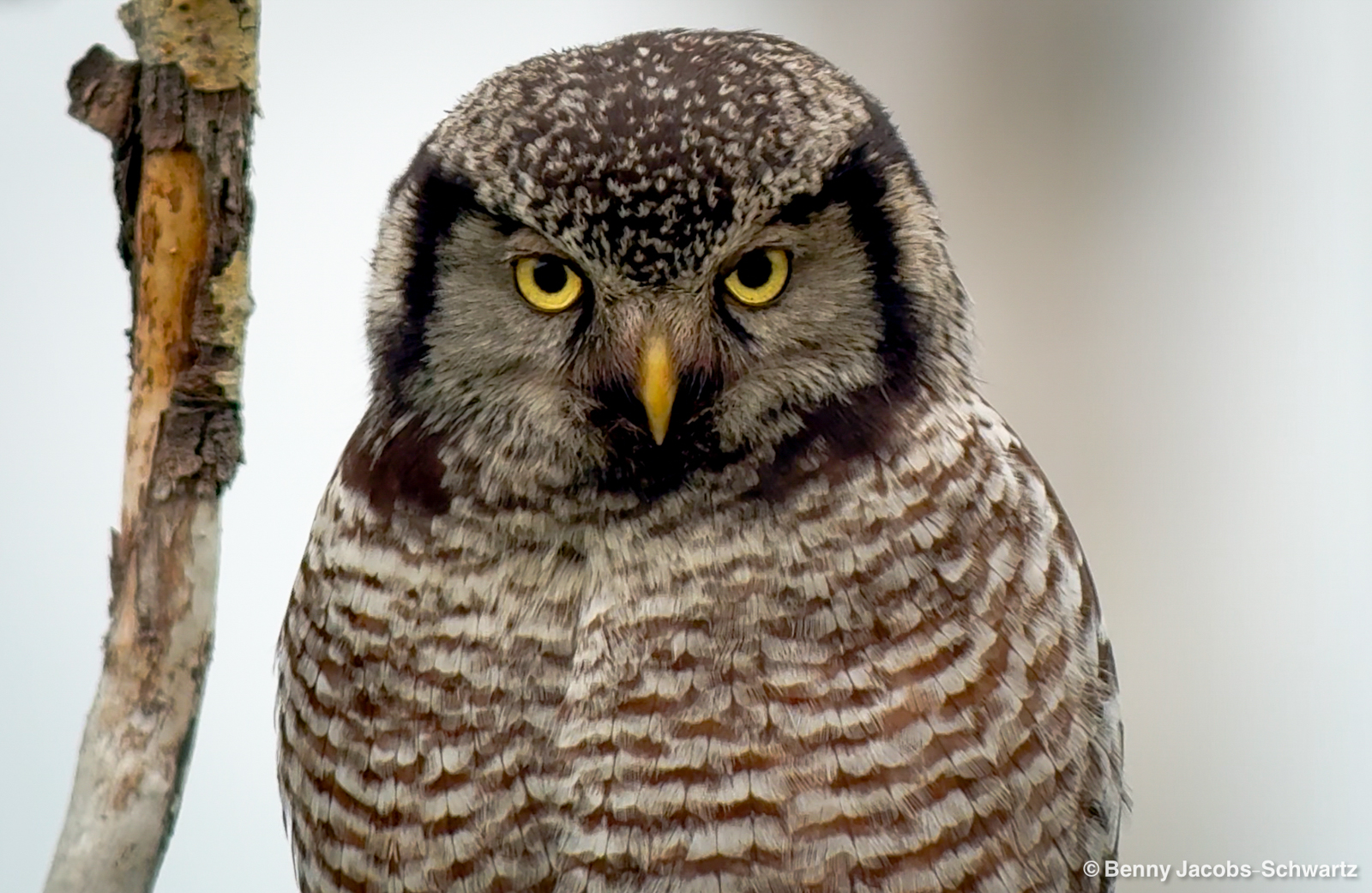
Northern Hawk-Owl
Day 7 – Kenai Fjords National Park and Boat Tour
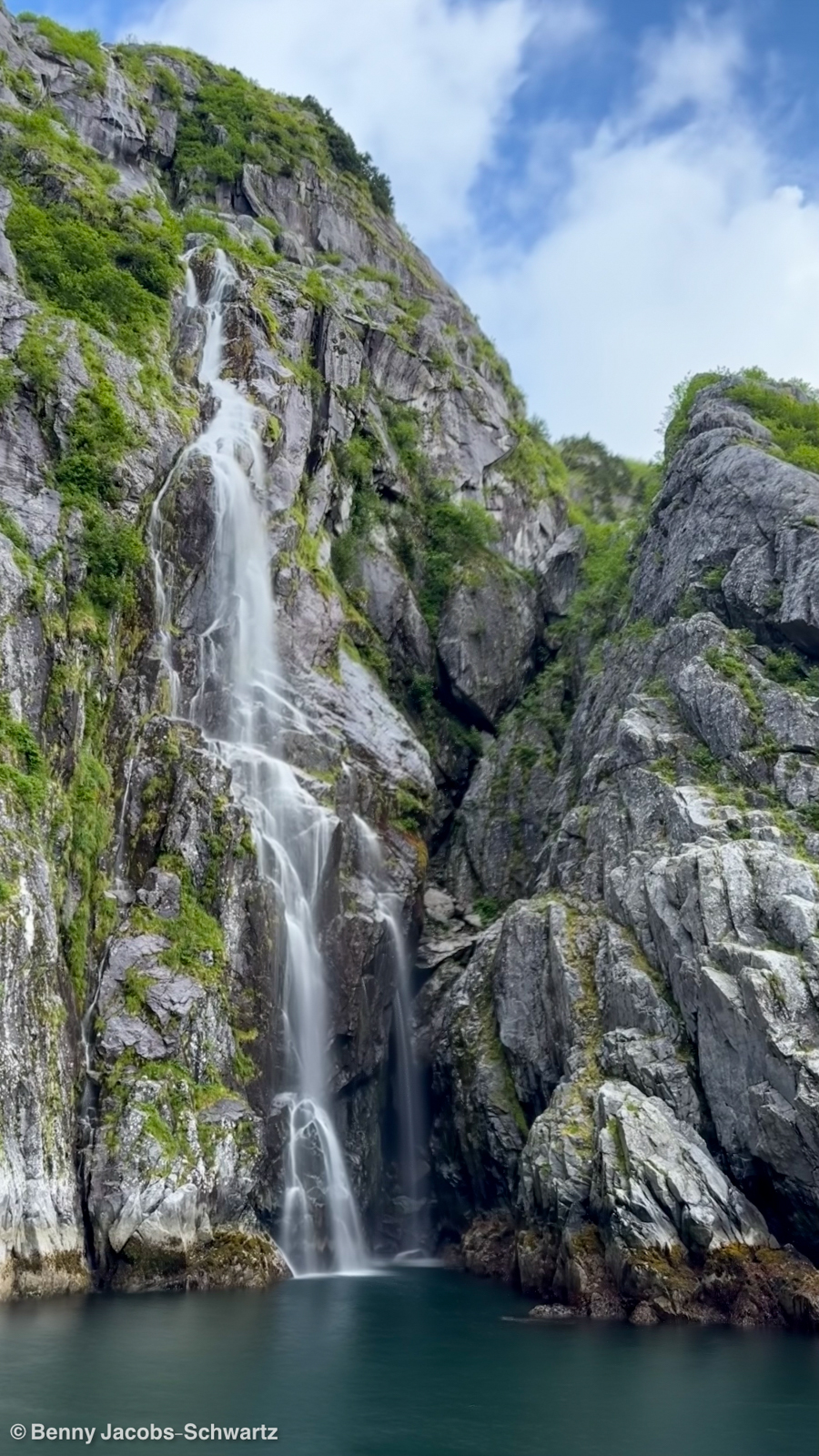
Following our delicious breakfast with a view of stunning Resurrection Bay and the Kenai Mountains, we loaded onto our vessel for the tour and got situated for our 8.5-hour wildlife and glacier tour! Along the way, we learned about the local marine life, reveled in the majesty of the glacier-carved fjords, and got to see some incredible birds.
Our first wildlife encounter was a relaxed group of Northern Sea Otters preening and rolling around in front of us. These well-adapted animals have the densest fur of any other animal, up to 1 million hairs per square inch. Compare that to a German Shepherd, for example, which has about 17,000 per square inch. Next up, we got a great look at a few Marbled Murrelets. These baked potato appearing birds were the first of several alcids we would see today!
Other avian highlights in Resurrection Bay included Pelagic Cormorant, Pigeon Guillemot, Common Murre, Black-legged Kittiwake, and Bald Eagle.
Turning the corner into the incredibly photogenic Spire Cove, we had magnificent views of two Red-faced Cormorants nesting on a ledge! This is one of the main avian targets as they are relatively range-restricted, and this tour is the only place we can reliably see them on our itinerary. Here we also got our first look at the Horned Puffin.
We motored to a nearby set of Islands called the Chiwell Islands, where it is birds galore. Entering the Chiswells, we had a quick flyby of three Ancient Murrelets. Amongst the islands, we picked up more fantastic birds, including Black Oystercatcher, Tufted Puffin, Horned Puffin, Common Murre, and had exceptional views of about twenty-five Parakeet Auklet. These alcids forage offshore for zooplankton and small fish and can vocalize underwater while diving, a behavior thought to help coordinate group foraging.
Continuing around the Chiswells, we stopped at the Beehive Islands, which provided the chance to see hundreds of Tufted Puffins and fantastic looks at both Thick-billed and Common Murre nesting side by side on the jagged island ledges. We had nearly 2,000 Black-legged Kittiwakes nesting out here as well!
On our way to our glacier lunch, we picked up more great birds like Surf Scoter and a handful of Rhinoceros Auklet. Down by Northwestern Glacier we had a world-class glacier show with calving and a deep dive into all things glaciology! Around the murky silt-filled waters by the toe of the glacier, we had a high count for any previous tours of Kittlitz’s Murrelet; we totaled ~32 individuals! Incredible!
Other highlights on the water included seeing a pod of Orcas and two close and extended observations of one of the largest baleen whales in the world – the Humpback Whale. Other marine mammals included Mountain Goat, Steller’s Sea Lion, and getting to watch Dall’s Porpoises bow riding as we entered back into Resurrection Bay. No better way than to close out an already exceptional day on the water! Huge thanks to our captain and crew of the boat from Major Marine Tours!
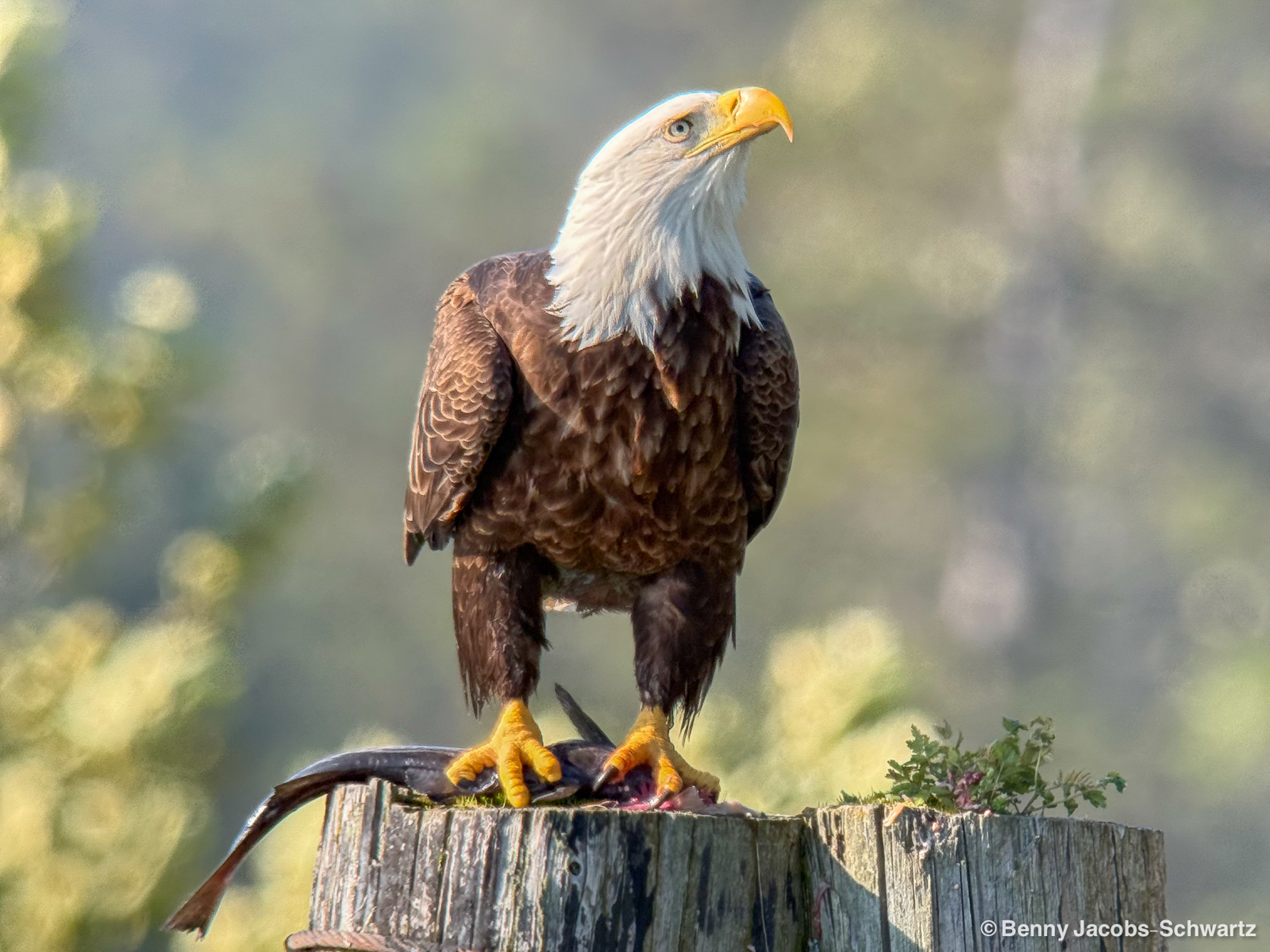
Bald Eagle
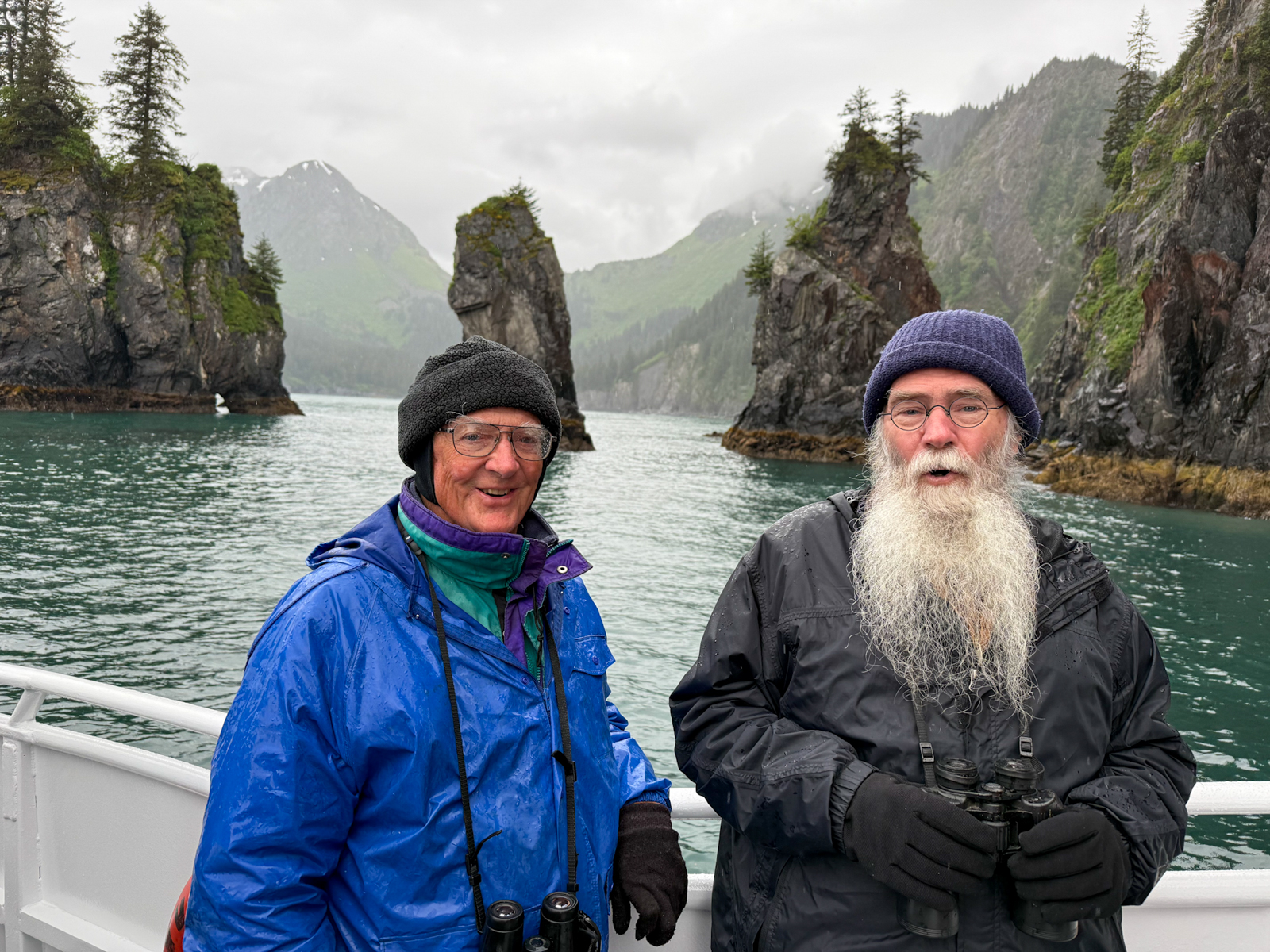
Kenai Fjords boat tour
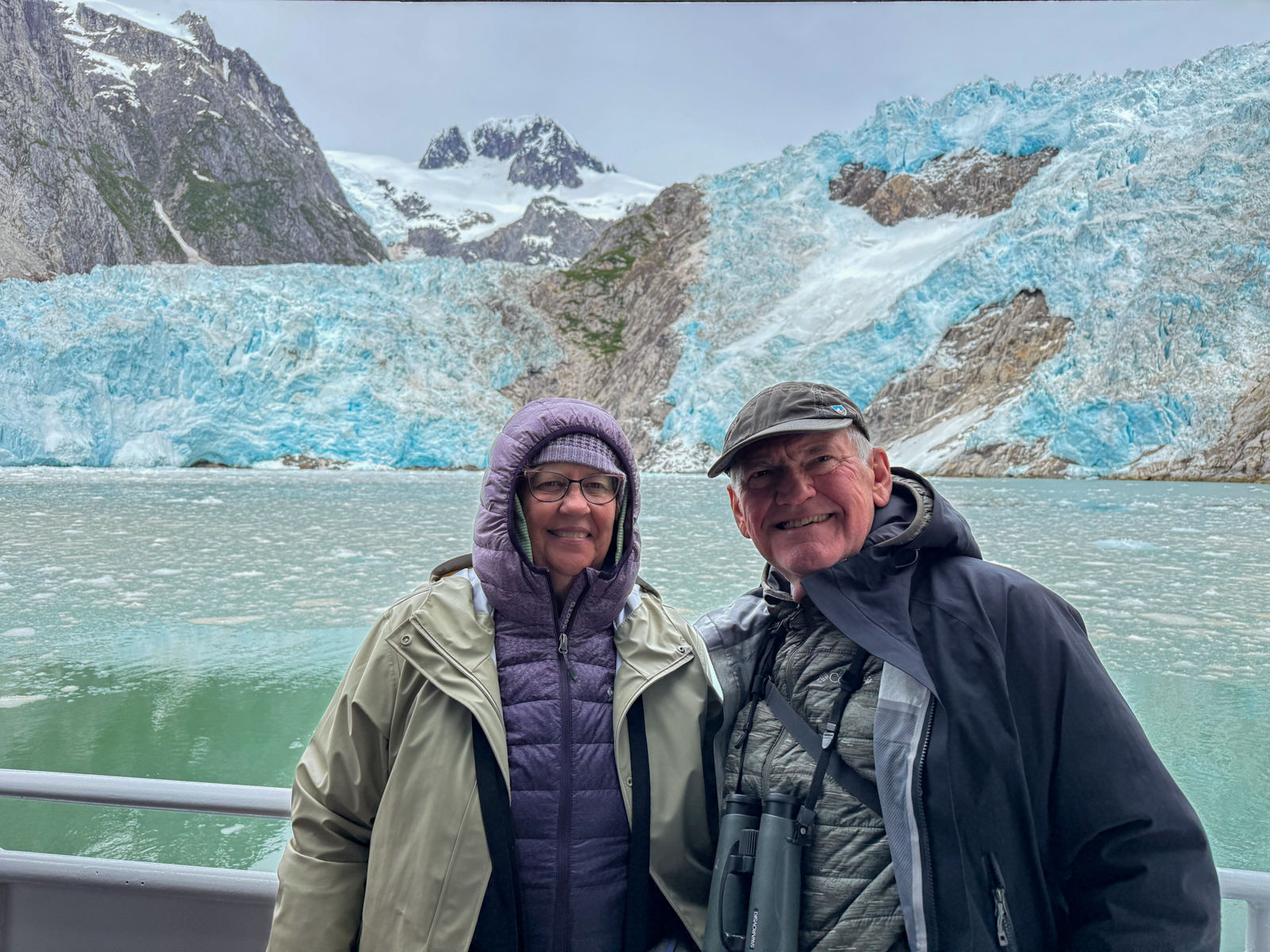
Kenai Fjords boat tour
Kenai Fjords
Day 8 – Seward -> Anchorage
Today we had a nice morning with breakfast, loading up our bags, and heading down the road to do some birding. Our first stop on the road was just outside of town, where we got some better looks at Marbled Murrelet, Black Oystercatcher, and Harlequin Ducks. From there, we continued down to Lowell Point for some birding in the coastal rainforest. Here we got nice looks at the Chestnut-backed Chickadee, Steller’s Jay, and Pine Siskin flyovers. We also enjoyed the exceptional looks of a male Rufous Hummingbird perched on a spruce bough. These are the farthest north breeding hummingbirds in the west, and are long-distance migrants, covering up to 4,000 miles on a one-way journey from their wintering grounds as far south as Mexico!
Before heading back towards Seward, we spent time reveling in the magical song of the Pacific Wren, a sometimes shy and easily overlooked denizen of mossy riparian understory. The last bird here was a spectacular treat, the regal Varied Thrush.
Along Bear Lake Rd. We picked up Red-breasted Nuthatch and enjoyed better looks at Pine Siskin and Townsend’s Warbler. We stopped off for a restroom break and more birding near Tern Lake. Here we got to observe the Trumpeter Swan, Common Loon, and Boreal Chickadee, all new birds for the tour!
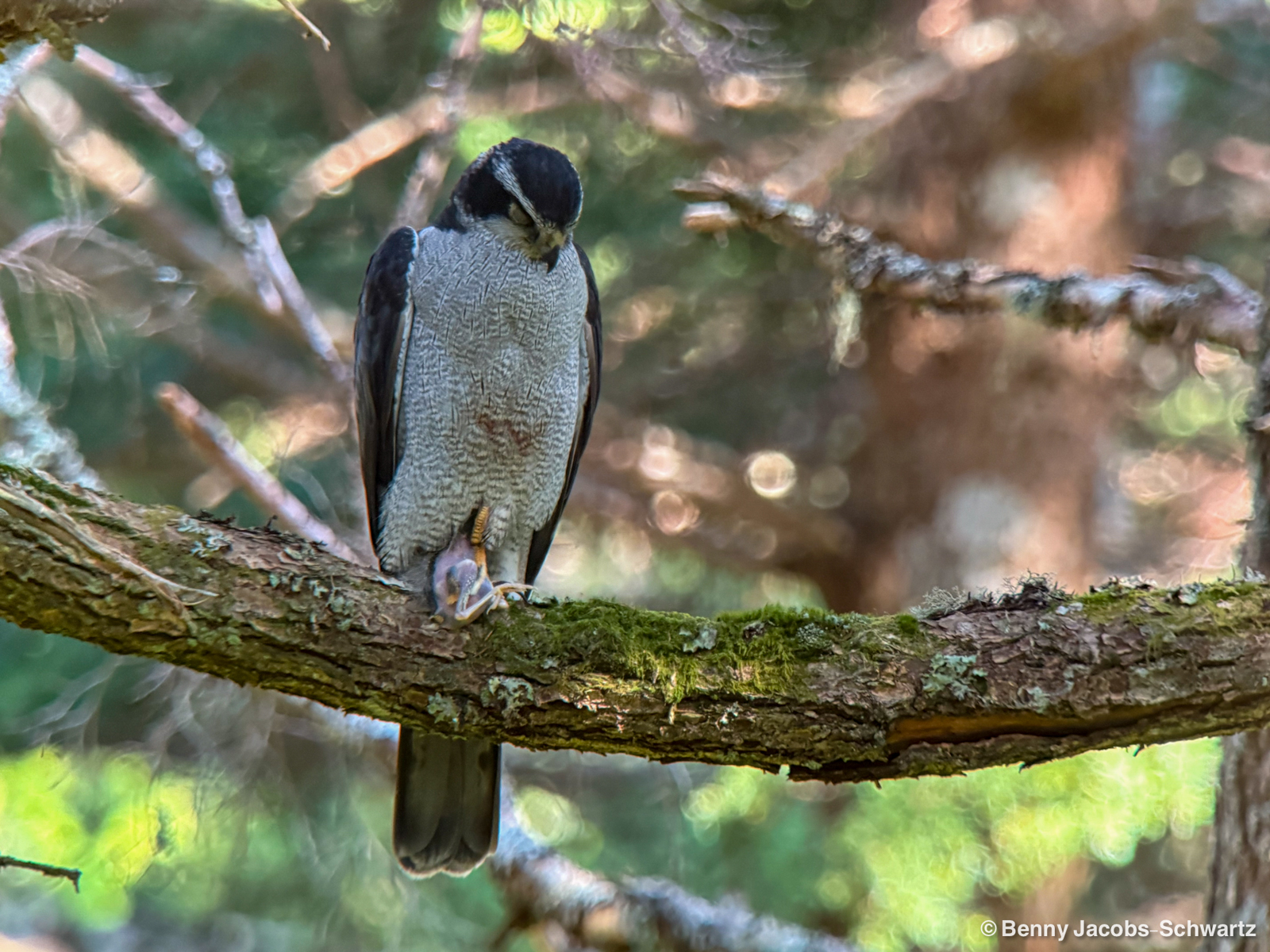
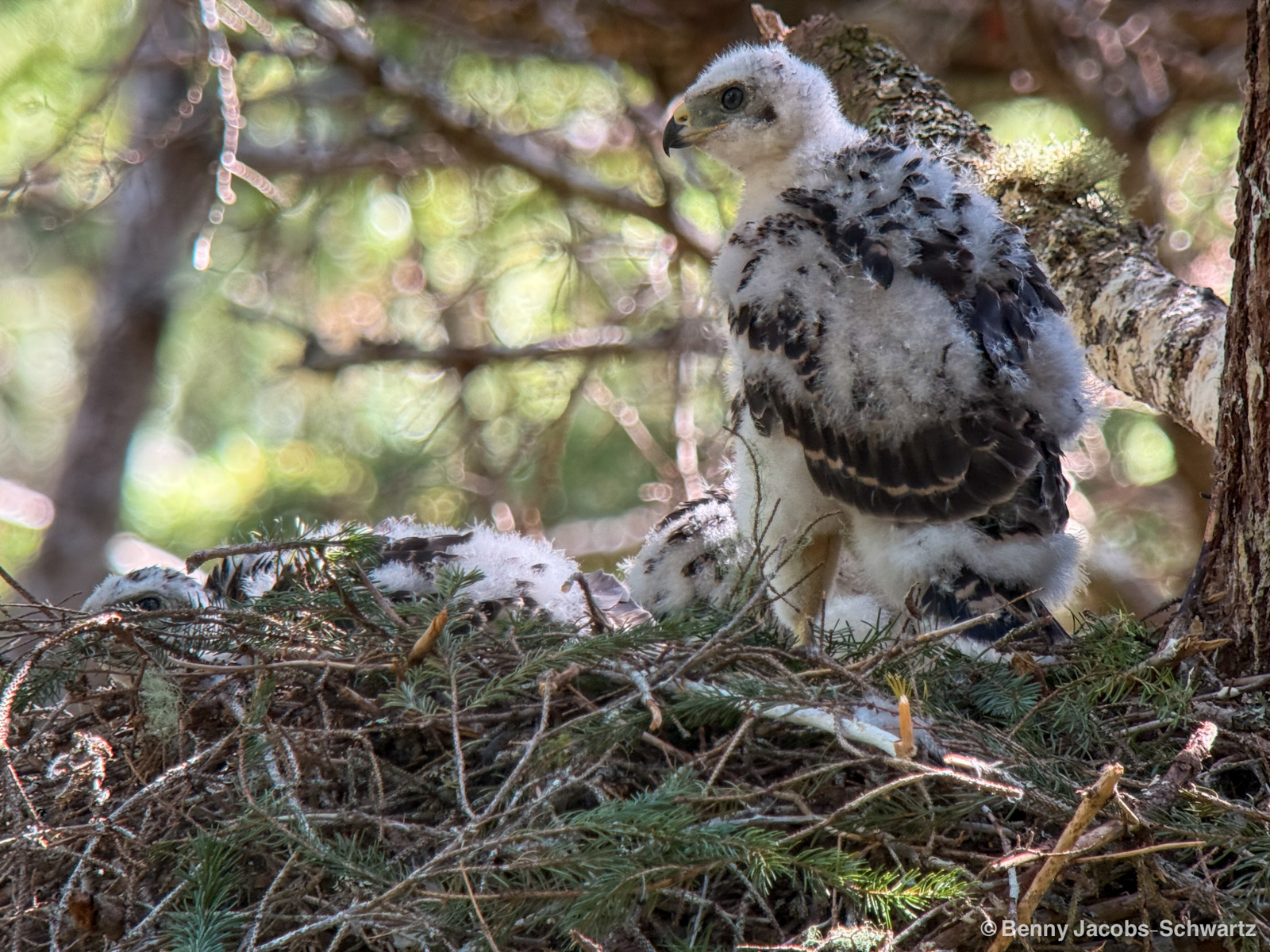
Then we made our way to Girdwood on a hot tip about an American Goshawk nest that was relatively accessible! After a short hike down, one of our team members spotted the nearly eye-level nest of the American Goshawk, a rare and powerful raptor that nests in boreal forests. After spending time with the nestlings, who were already quite large by their right, we spotted both of the adults nearby. These stunning raptors were cooperative and gave us chances for exceptional views! Smiling from ear to ear, we moseyed back to our vans, nearly skipping through the forest, brimming with joy from this magical and memorable experience!
We closed our day out with dinner and checklists, and good night!
American Goshawk
American Goshawk Nestling
Day 9 – Anchorage -> Barrow/Utqiagvik
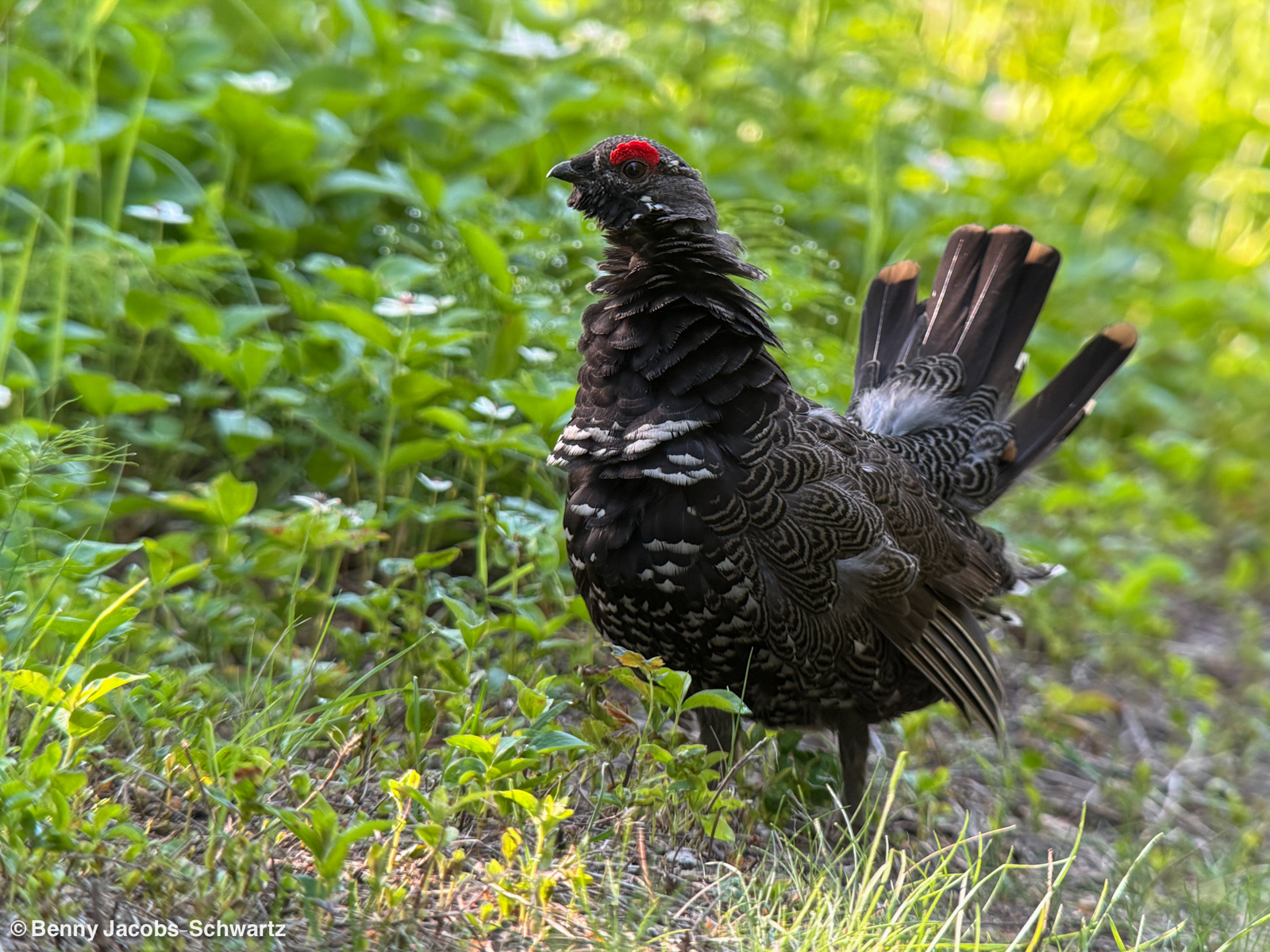
Today we birded the surroundings of Anchorage searching for a few more new species before our late afternoon departure up to Barrow/Utqiagvik! Following breakfast, we visited Lake Hood and picked up a Common Goldeneye and a Bonaparte’s Gull. From here, we made our way back to Kincaid Park to try again for Spruce Grouse. At first, most of what we encountered were mosquitoes, but our perseverance was rewarded with some stunning views of this handsome forest chicken.
Spruce Grouse
From here we visited Westchester Lagoon where many of the usual birds were present, including Canada Goose, Red-necked Grebe and Arctic Tern. Down the coast, we got to observe a large group of Bonaparte’s Gulls and a Black-capped Chickadee on the edge of the trail. We also had a few pairs of Sandhill Cranes, a local favorite.
From here, we made our way to the airport for lunch and boarded our flight north. We arrived early evening and looked out over the sea ice still present nearly a half-mile offshore. This has been one of the latest winters in recent record, so there was still plenty of ice present. However, we were able to observe a few new birds including Glaucous Gull and Snow Bunting. We decided to have an early dinner to take advantage of the Blanket Toss, which is a local tradition by the Inupiat of the area. The blanket toss—known as Nalukataq—is a highlight of the spring whaling festival in Utqiaġvik, where village members fling each other skyward from a stitched-together seal or walrus‐skin blanket, sometimes reaching heights of 20–30 feet under the midnight sun
After enjoying this unique cultural activity, we went out for a bit of birding. At our first stop, we observed Long-tailed Duck, Greater White-fronted Goose, Red Phalarope, and Red-necked Phalarope. As we continued birding, we had some more fantastic looks at Snow Buntings and Pacific Loon. The shorebird fun continued with some nice looks at Pectoral Sandpiper and Dunlin. Everyone was very excited to see them in the vibrant breeding plumes, a real treat!
Our undoubted highlight from the evening session was getting to observe a male King Eider!
With the clock at nearly 9:00 PM, it was time to return to the hotel and get some sleep. That midnight sun can really disorient you as to what time it is!
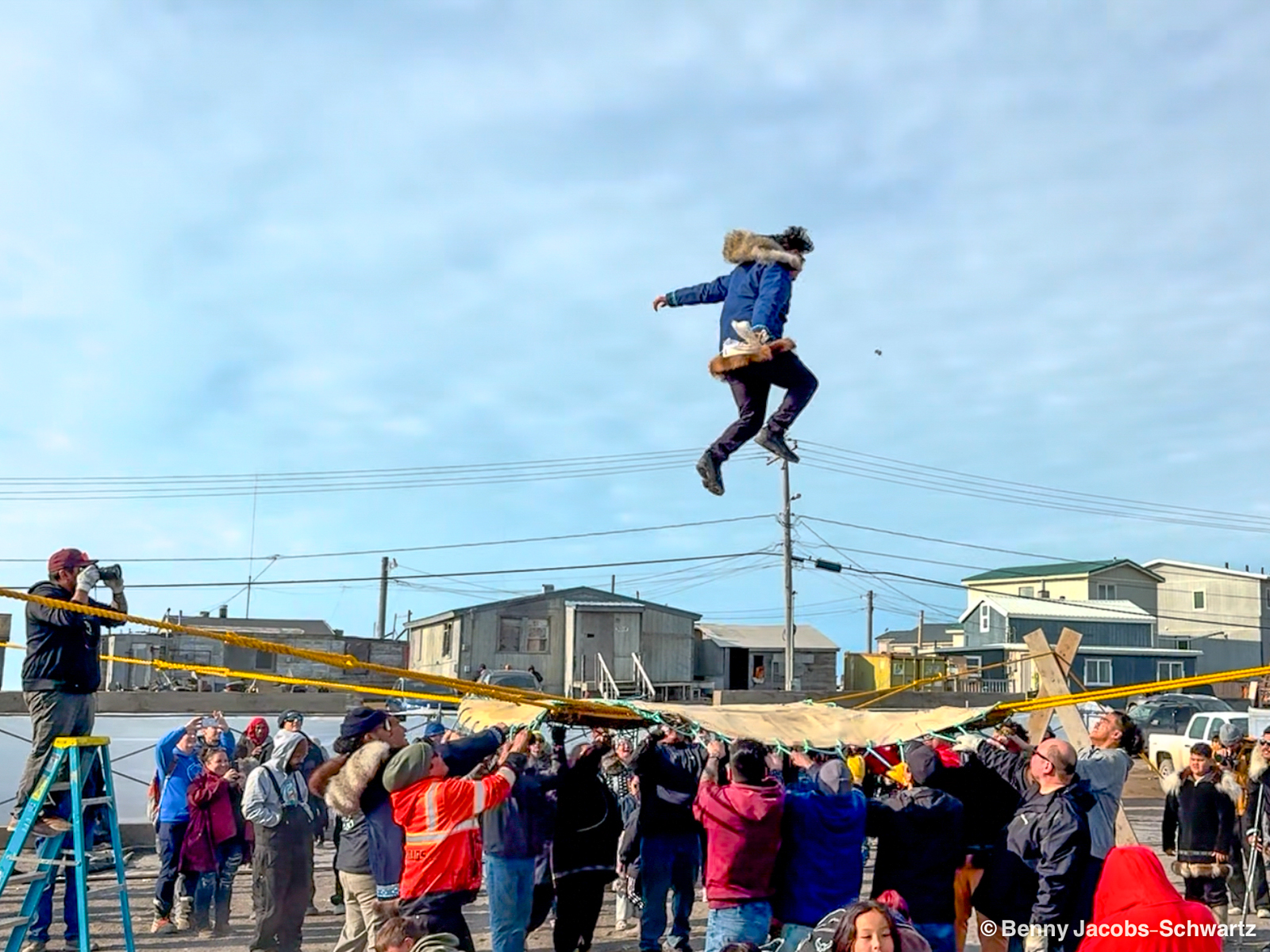
Blanket Toss
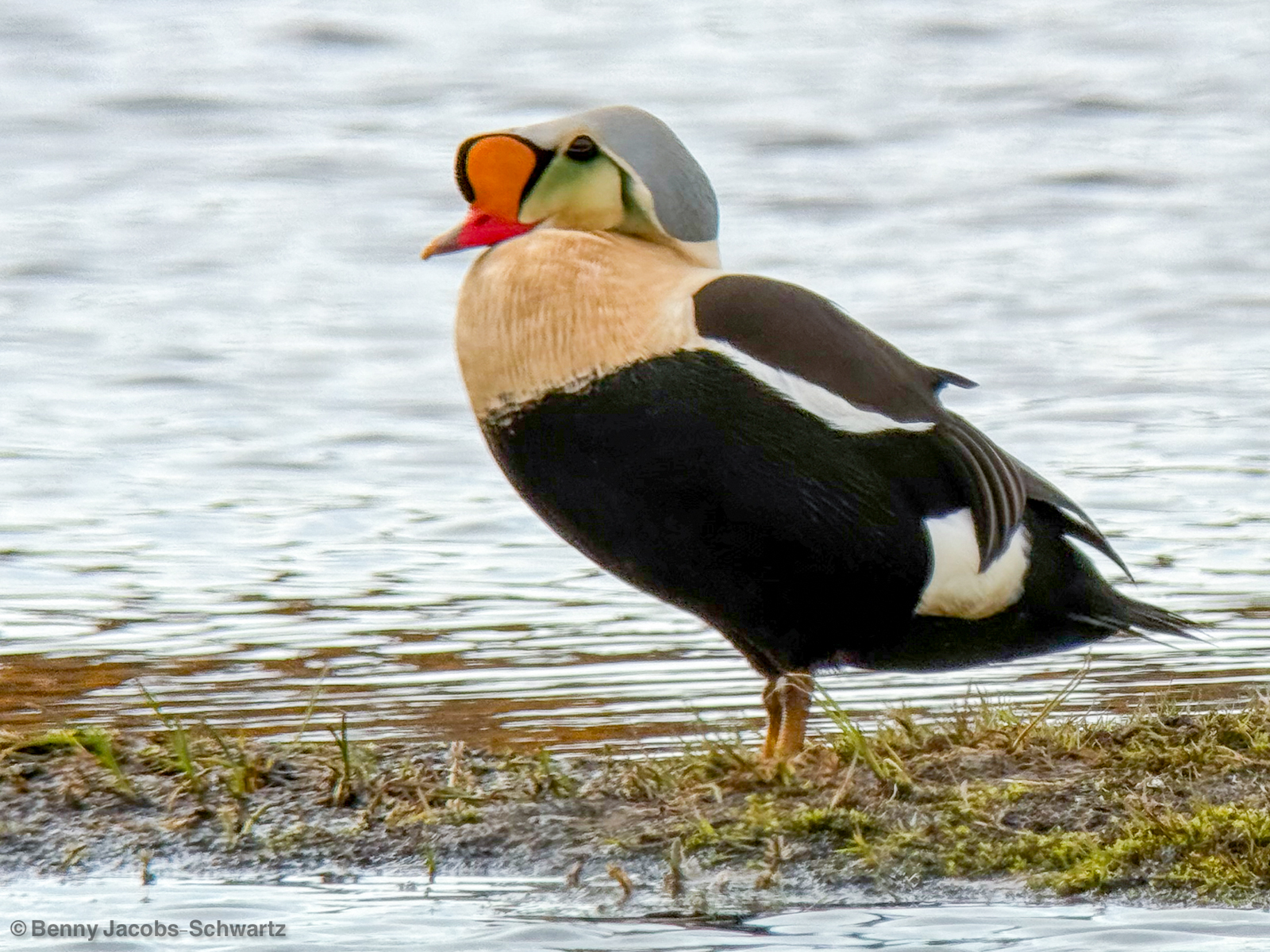
King Eider
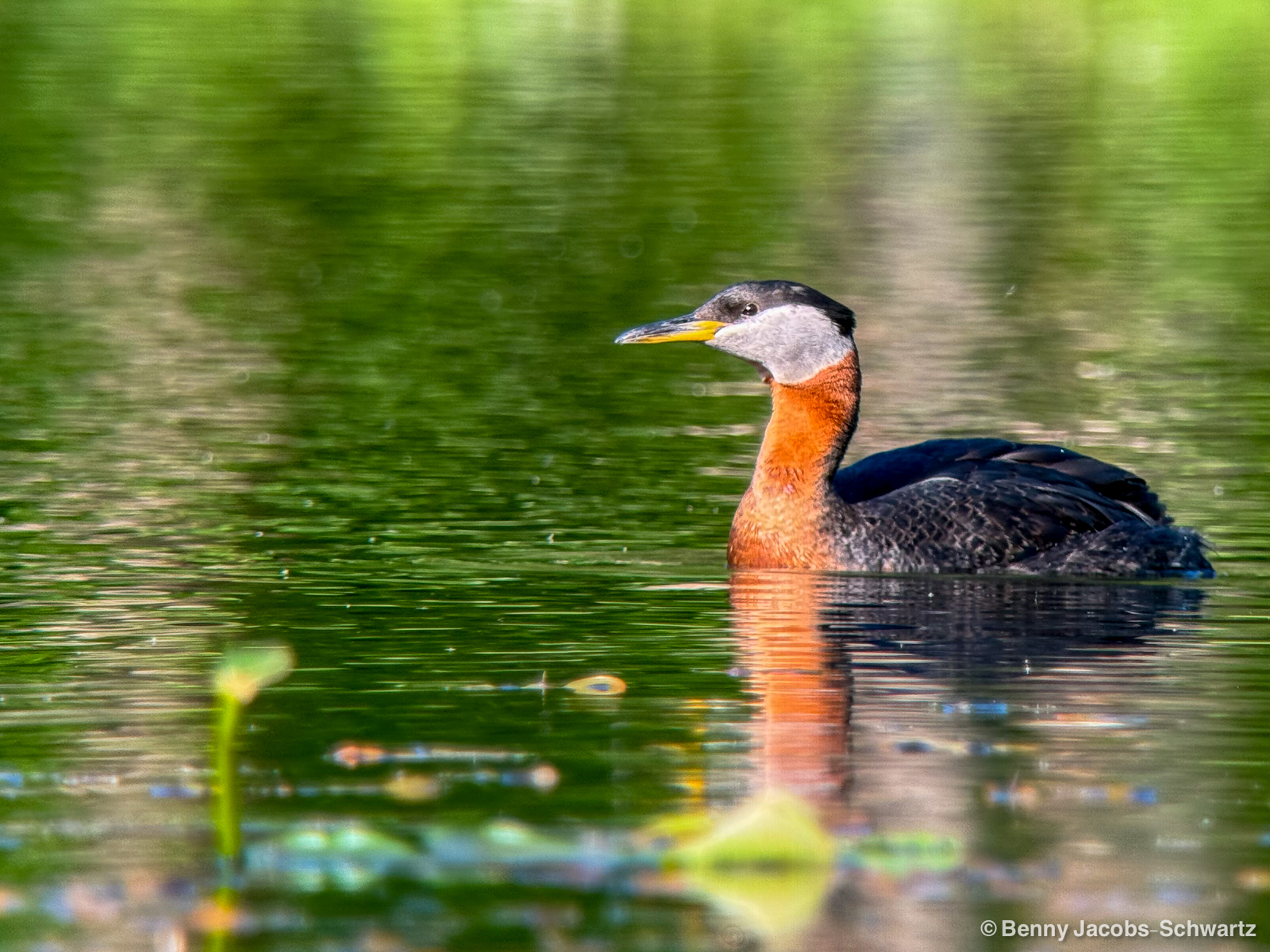
Red-necked Grebe
Day 10 – Barrow/Utqiagvik
Today we spent our day roaming the tundra looking for arctic specialties! At the nearby Middle Salt Lagoon, we had fantastic looks at Tundra Swan, Long-tailed Duck, and Black Guillemot. Moving down towards Gas Well Road, we found our next eider – the Steller’s Eider. We had a great time observing two pairs of this stunning and threatened arctic sea duck! We also had great looks at Parasitic Jaeger, Pomarine Jaeger, and the magnificent Snowy Owl!
Later on, we bumped into our friends and they shared the coordinates of a recently reported rare bird! When we drove a short distance to its coordinates, we were incredibly lucky to see it vocalizing from a conspicuous perch atop a local home. The Common Snipe is a rare asian vagrant with very few observations from mainland Alaska. What a sight to behold, and a great bird to add to our tour!
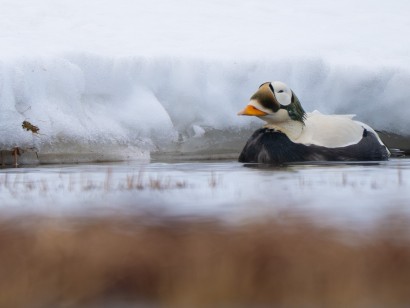
After lunch, we headed back out for more birding. We found a Killdeer, which is rare here. We also enjoyed observing Northern Pintail, Lapland Longspur, and Brant. However, we still had more birds to seek out, and finally we got them! Spotted on a freshwater pond from the road, we walked about a half-mile into the tundra to get a look at the Spectacled Eider. This stunning arctic sea duck was the fourth and final eider we were hoping to see on our tour! When we got closer to the pond, we were careful not to disturb the birds, and to our pleasure, we got looks at King and Steller’s Eiders. A three-eider pond! What fun!
We spent a bit more time birding around until dinner, and were rewarded with even closer and more satisfying looks of a pair of Spectacled Eiders just off the road.
Great dinner at our lodging and checklists!
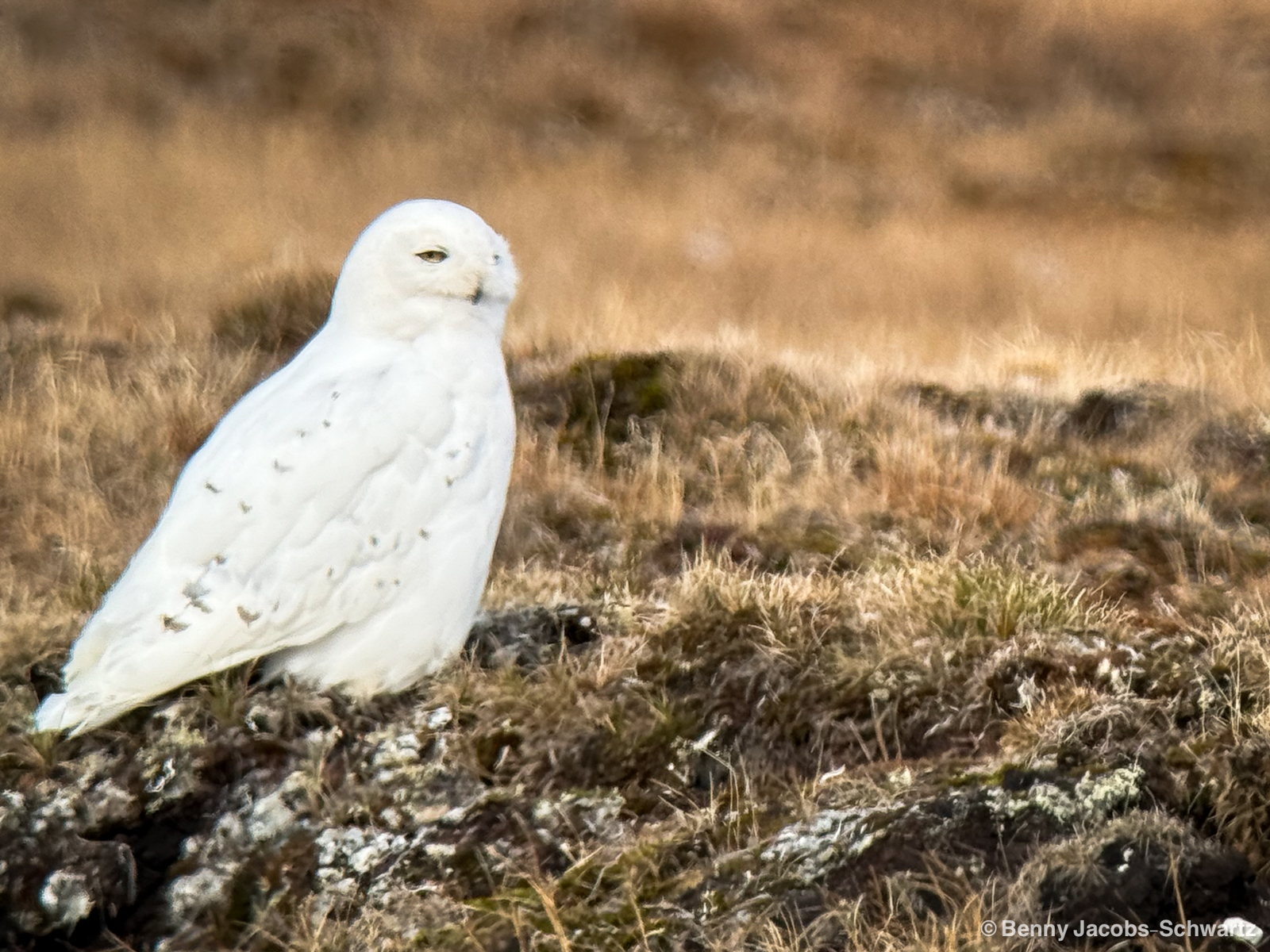
Snowy Owl
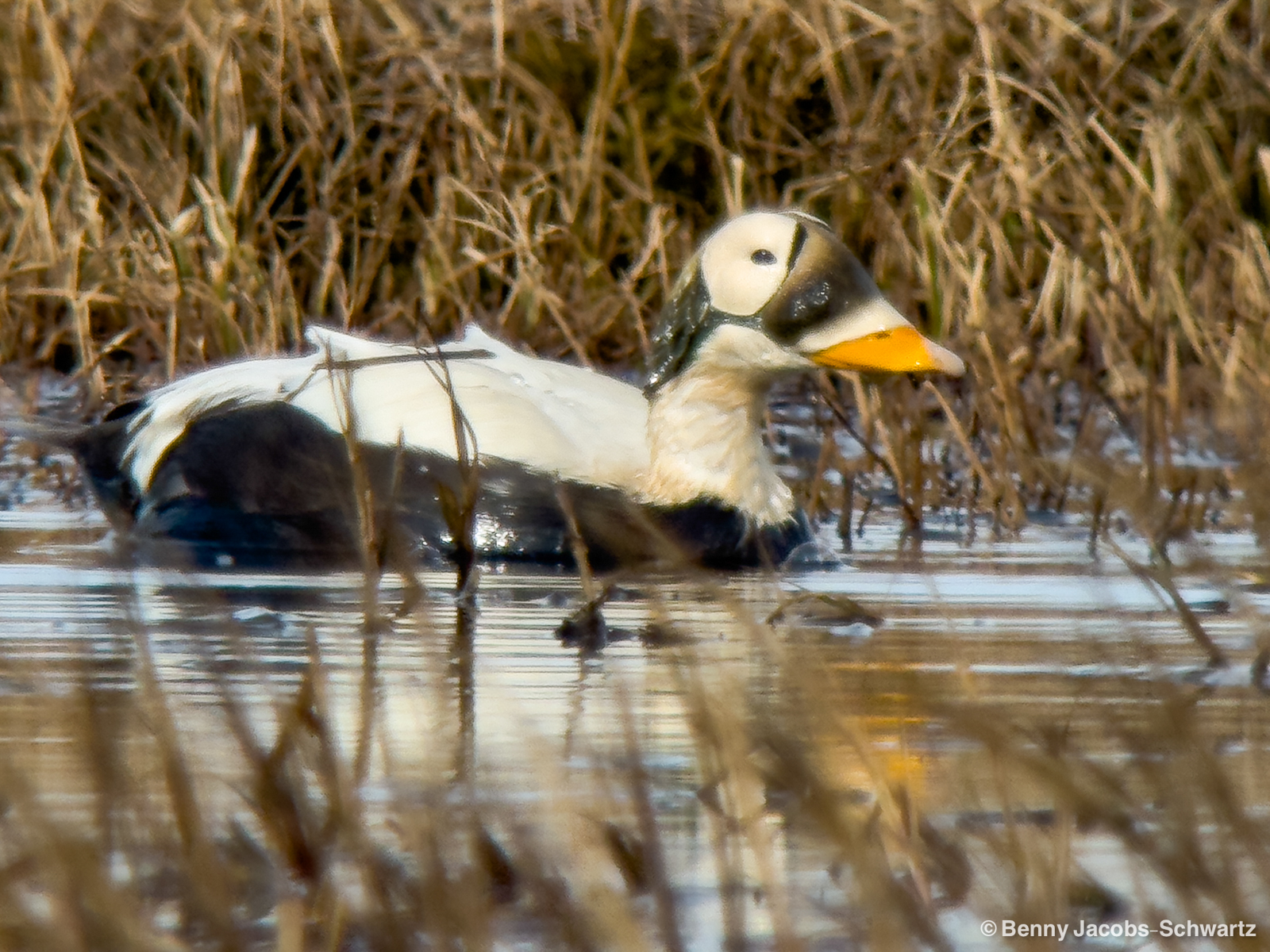
Spectacled Eider
Day 11 – Barrow/Utqiagvik
Today’s birding adventures kicked off by observing a new species for the tour – the Snow Goose. We lucked out and observed five flying overhead. At this same spot, we had a nice flock of Long-tailed Ducks flying over the sea ice, some birds on the tail end of their migration!
On our way back south, we bumped into a few other birders who let us know about another rare bird that was being observed! When we arrived, we quickly got on the Red-necked Stint. With the diagnostic rusty orange wash across its face and neck, it was easy to pick out! This was another asian vagrant that provided fantastic looks and was a lifer for many of our group! Here we also picked up a Baird’s Sandpiper as well!
During the later part of the day, we took a break to rest and recoup, to spend some time under the midnight sun. We met up at 12:00 AM to search for polar bears and look for some great golden light. Although we gave it our best shot and scanned the ice hard for 2 hours, we did not have any luck with polar bears. We did, however, get to see eight more King Eiders!
Back to the lodging and time for bed!
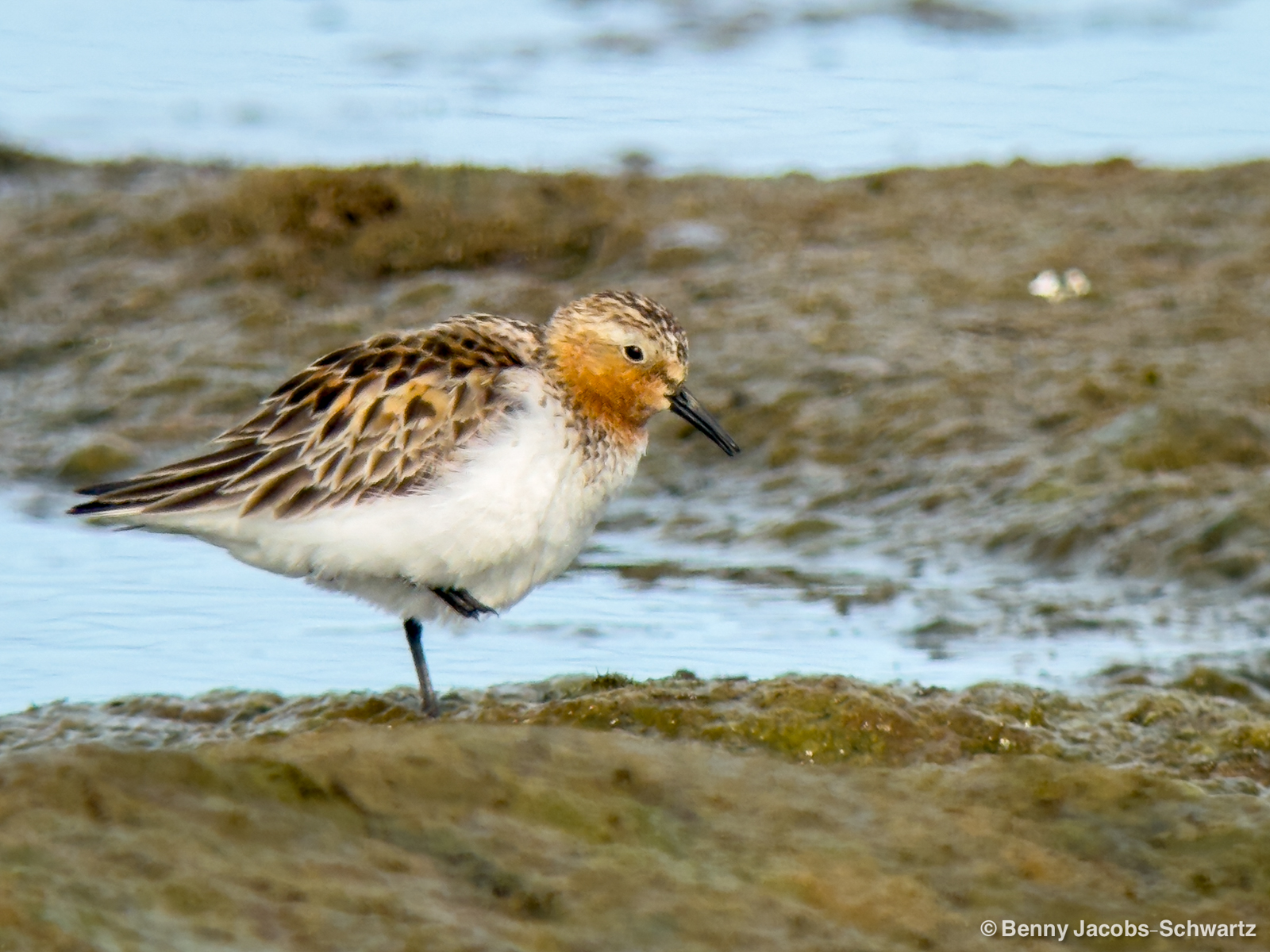
Red-necked Stint
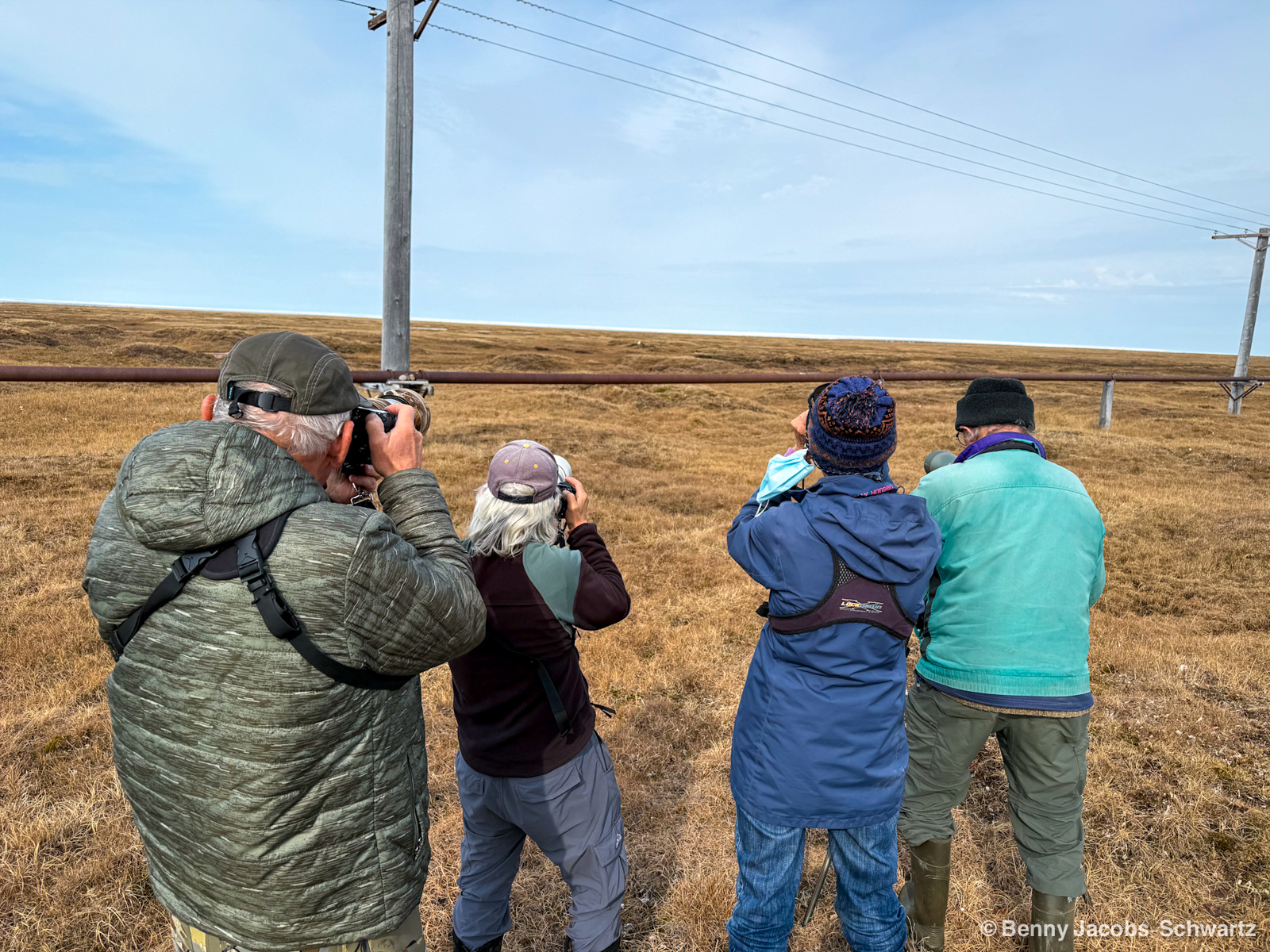
Birding in Barrow
Day 12 – Barrow/Utqiagvik -> Anchorage
Today was our last day in Utqiagvik, so after a late breakfast, we set out to take advantage of our final hours in town. Our highlight of the morning was observing our third asian vagrant – Ruff! Mixed in with some Pectoral Sandpipers, we had a treat watching it foraging and being chased around a bit. Here we also got more time to observe the Black Guillemot and Ruddy Turnstone, the latter a new trip bird!
Exploring the tundra outside of town, we had fantastic looks at a dark morph Pomarine Jaeger and got to observe an Arctic Fox being chased off by a pair of Greater-white Fronted Geese, a sight our group won’t quickly forget!
Down by the dump, we soaked up more King Eider views and picked up our last rare bird of the trip, a Barn Swallow, another bird a bit North of its normal range.
After a successful last day in Barrow, we made our way to the airport and returned to Anchorage.
We shared our trip highlights and closed out our tour over dinner! We wrapped with 160 species, new friends, and some incredible memories together!
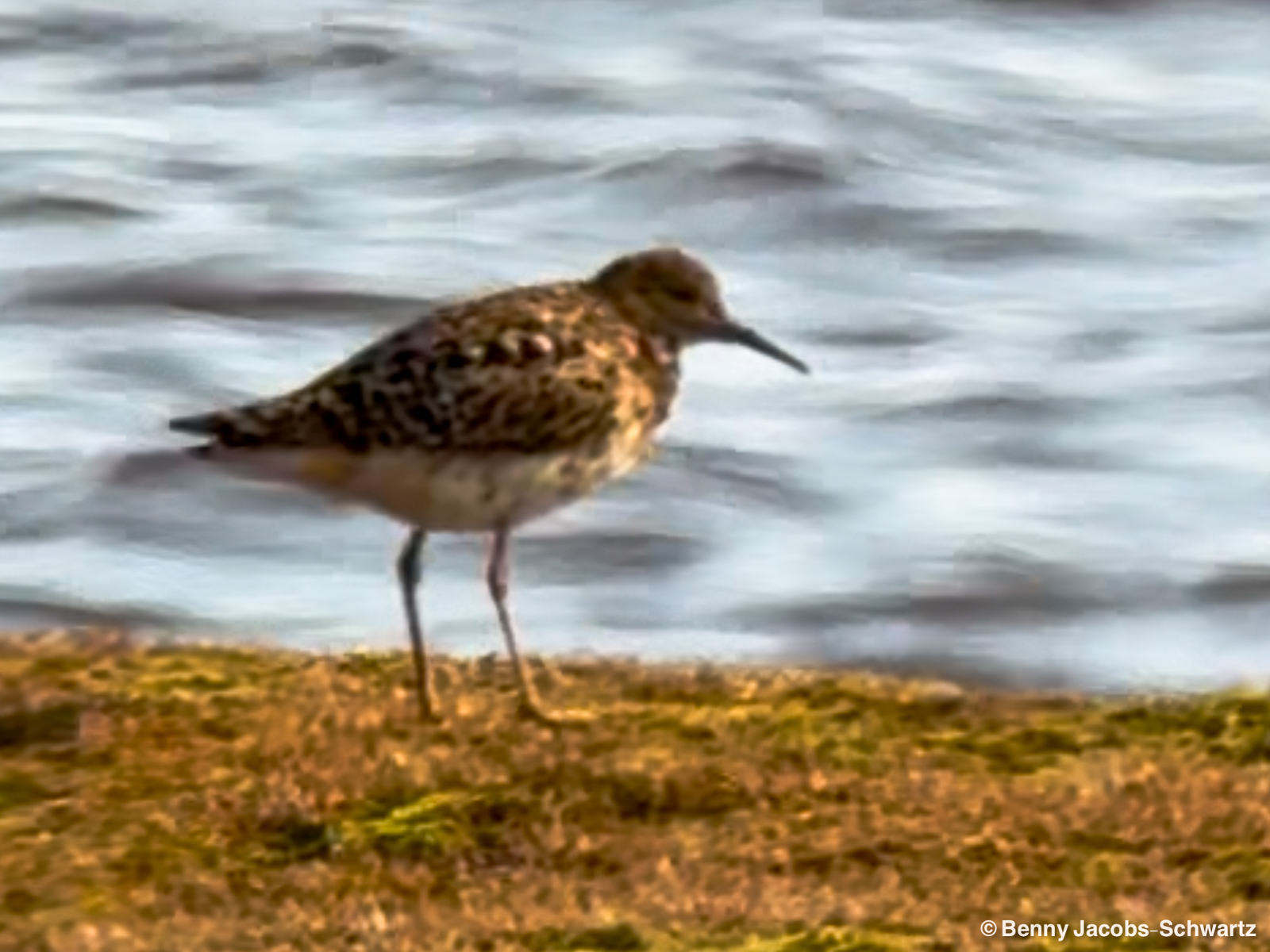
Ruff
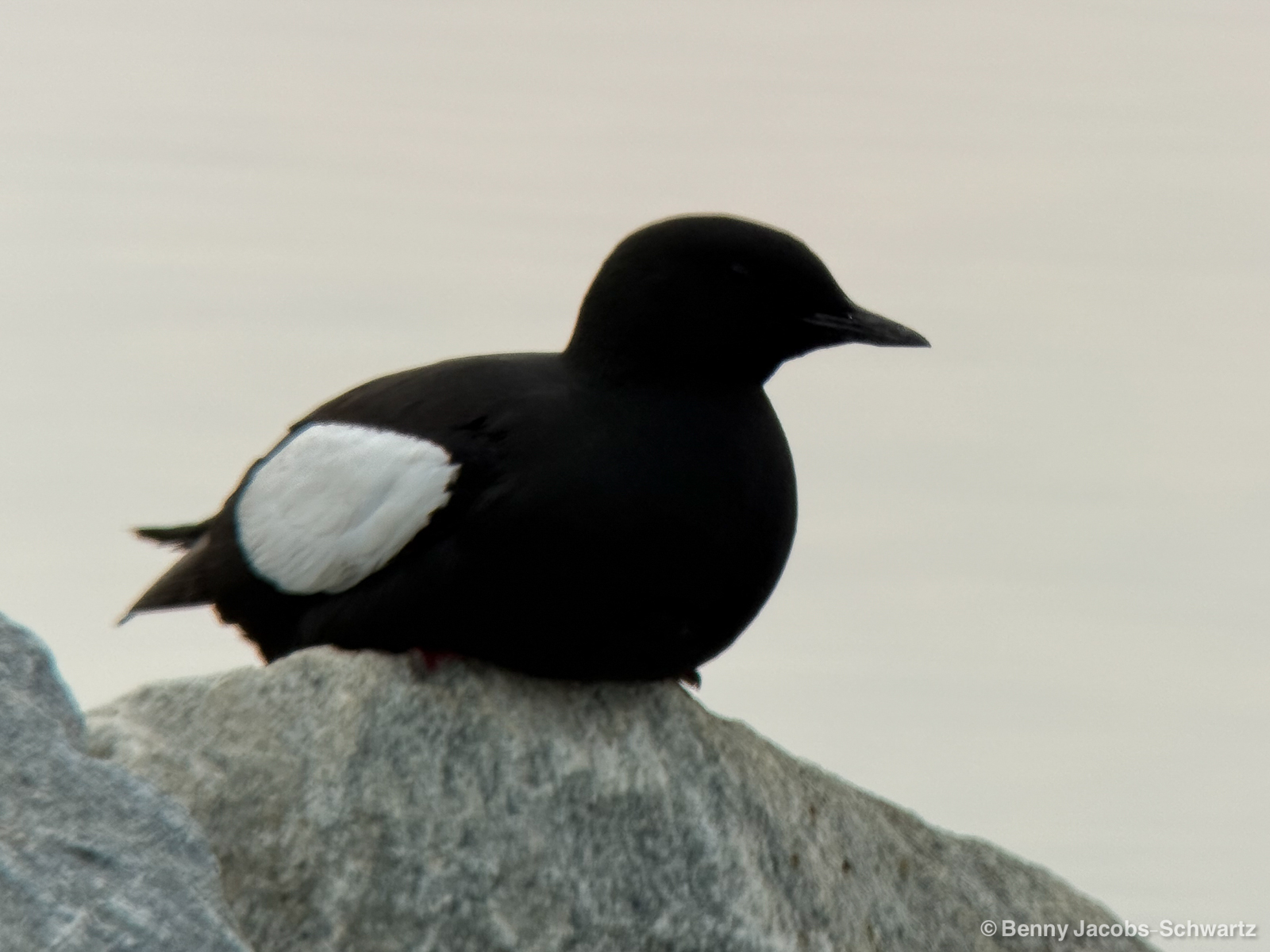
Black Guillemot
Day 13 – Breakfast and Departures
Folks were on their own for breakfast and transferred to the airport to return home! Thanks, everyone, for a great tour! We hope to see you on a future adventure!
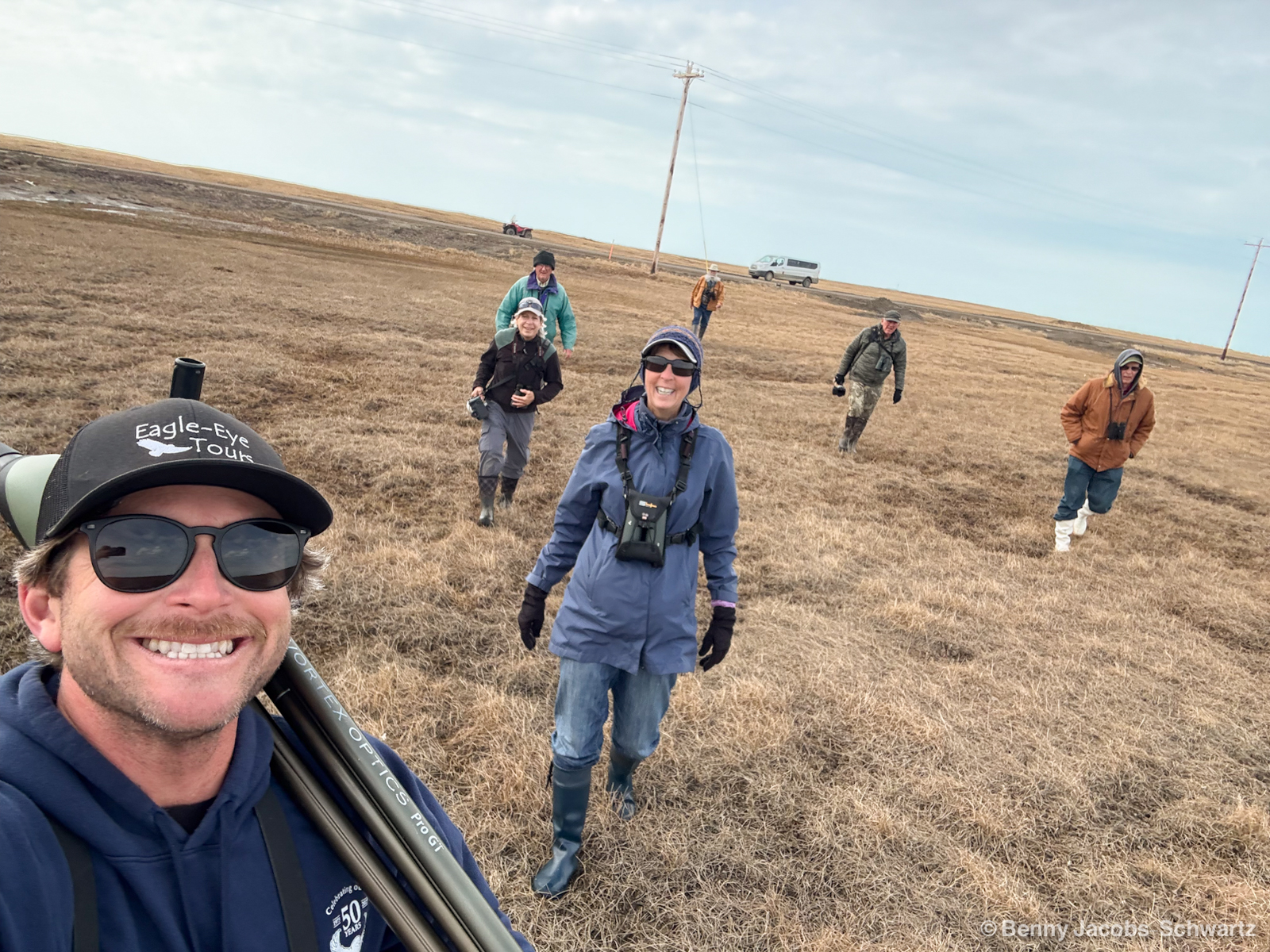
Our group