Alaska Birding Tour (May 27 – Jun 8, 2026)
May 27 – Day 1
Our Alaska Birding Tour began with a welcome gathering at our hotel in Anchorage, where we reviewed the itinerary, got to know one another, and enjoyed dinner before turning in for the night.
May 28 – Day 2
The birding portion of our tour began with an early morning flight to Nome, the westernmost city on mainland Alaska. After landing, we headed down Council Road in search of a variety of northern breeding birds.
Early highlights included Sabine’s Gull, Arctic Tern, Red-throated Loon, Common Redpoll, Fox Sparrow, and a singing Northern Waterthrush. We then birded around the Nome River Mouth, adding Tundra Swan, Common Eider, Harlequin Duck, Black Scoter, Long-tailed Duck, Bar-tailed Godwit, Dunlin, and approximately 20 Aleutian Terns feeding offshore.
Farther along Council Road, we encountered our first Willow Ptarmigan and Pacific Golden-Plover, along with Hudsonian Whimbrel, our first Parasitic Jaeger, and Red-breasted Merganser. Willow Ptarmigan proved common throughout the day, and we enjoyed prolonged views of Gray-cheeked Thrush singing across the tundra.
Brant were widespread, and we added American Wigeon, Green-winged Teal, and Semipalmated Plover. Other shorebirds included Red-necked Phalarope, Pectoral Sandpiper, Western Sandpiper, and Semipalmated Sandpiper.
Offshore, a pair of Pelagic Cormorants flew north while the coastal tundra produced Eastern Yellow Wagtail and a hunting Short-eared Owl, accompanied by singing Savannah Sparrows. From Safety Sound Bridge, we observed Black-legged Kittiwake, additional Sabine’s Gulls, Short-billed Gull, Glaucous-winged Gull, and Glaucous Gull.
One of the day’s most impressive birds was a Sandhill Crane near the end of Council Road. We also added another Bar-tailed Godwit, one of the world’s longest-distance migrants.
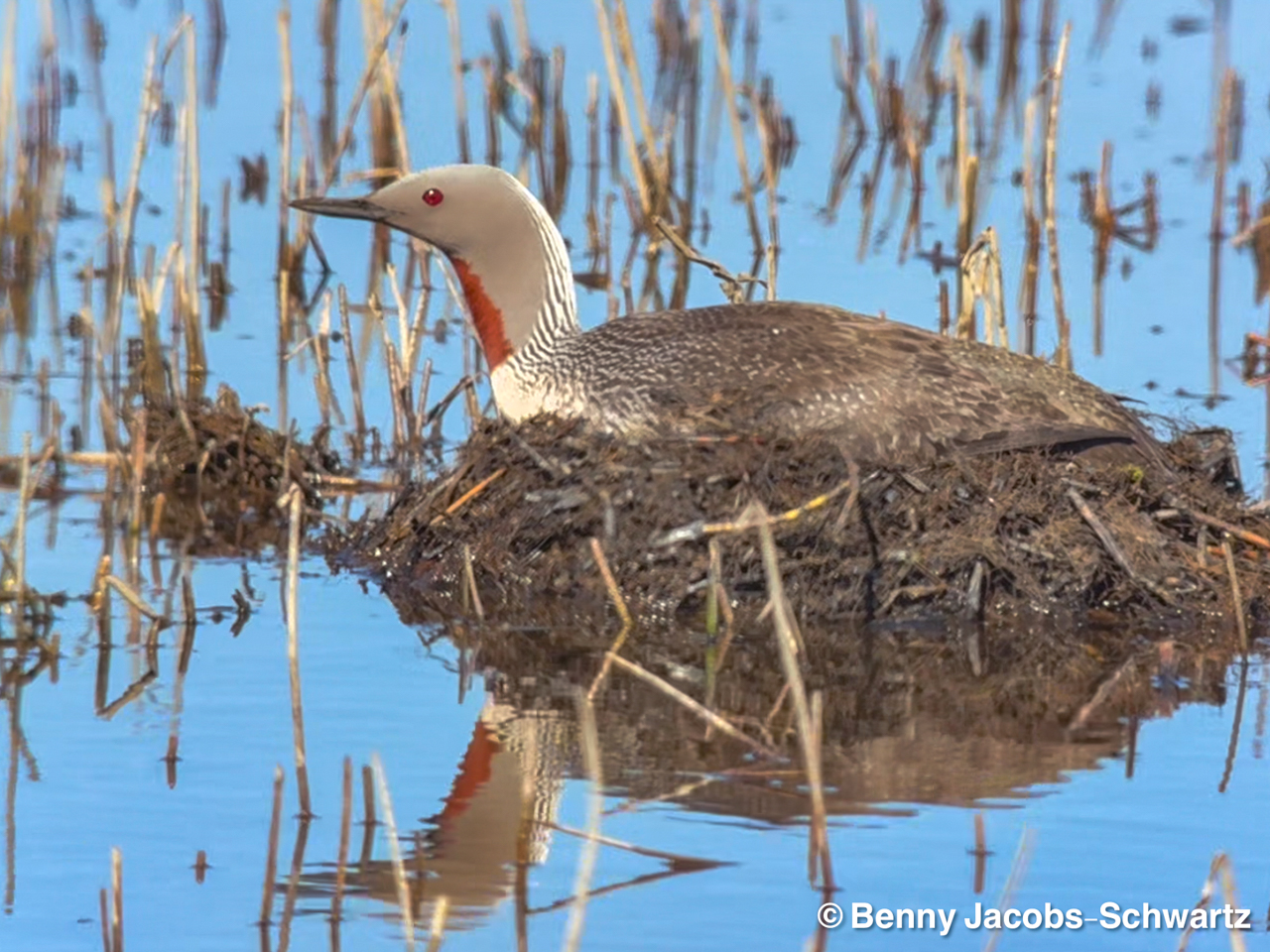
Red-throated Loon
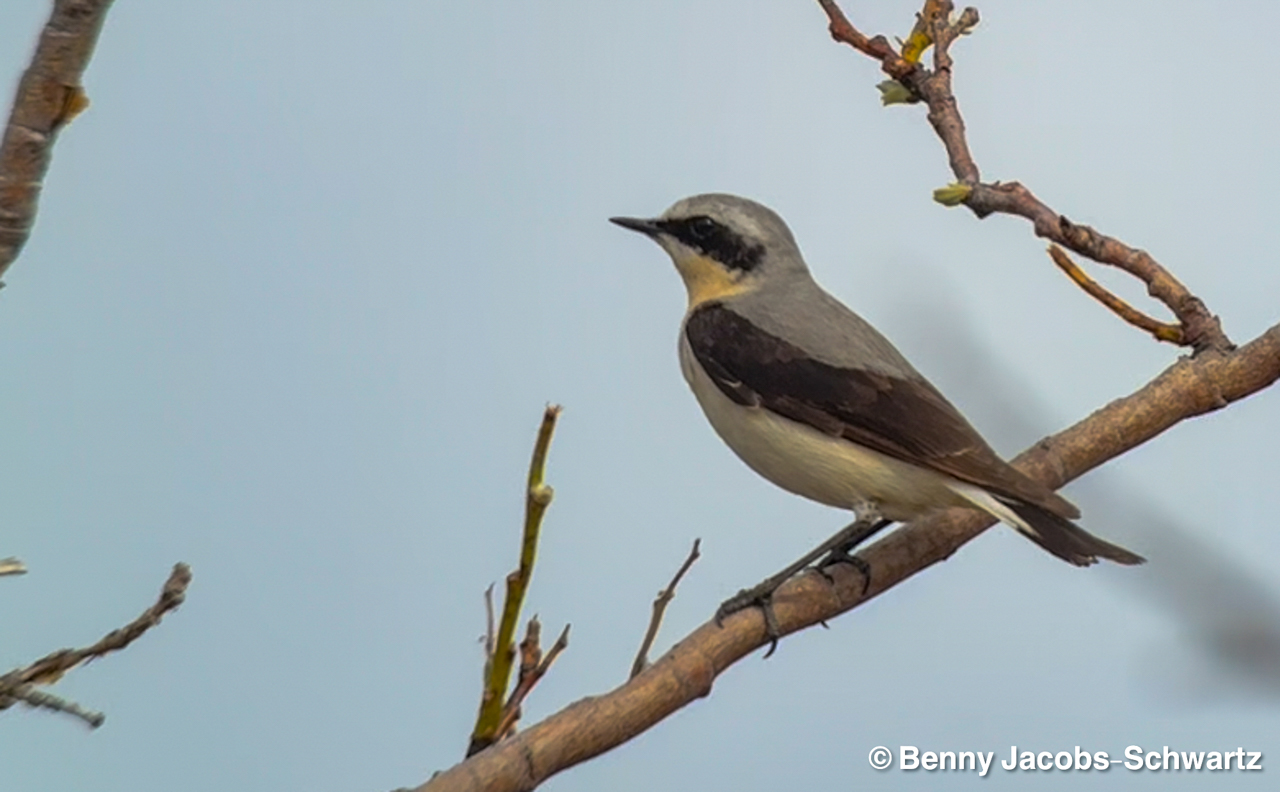
Northern Wheatear
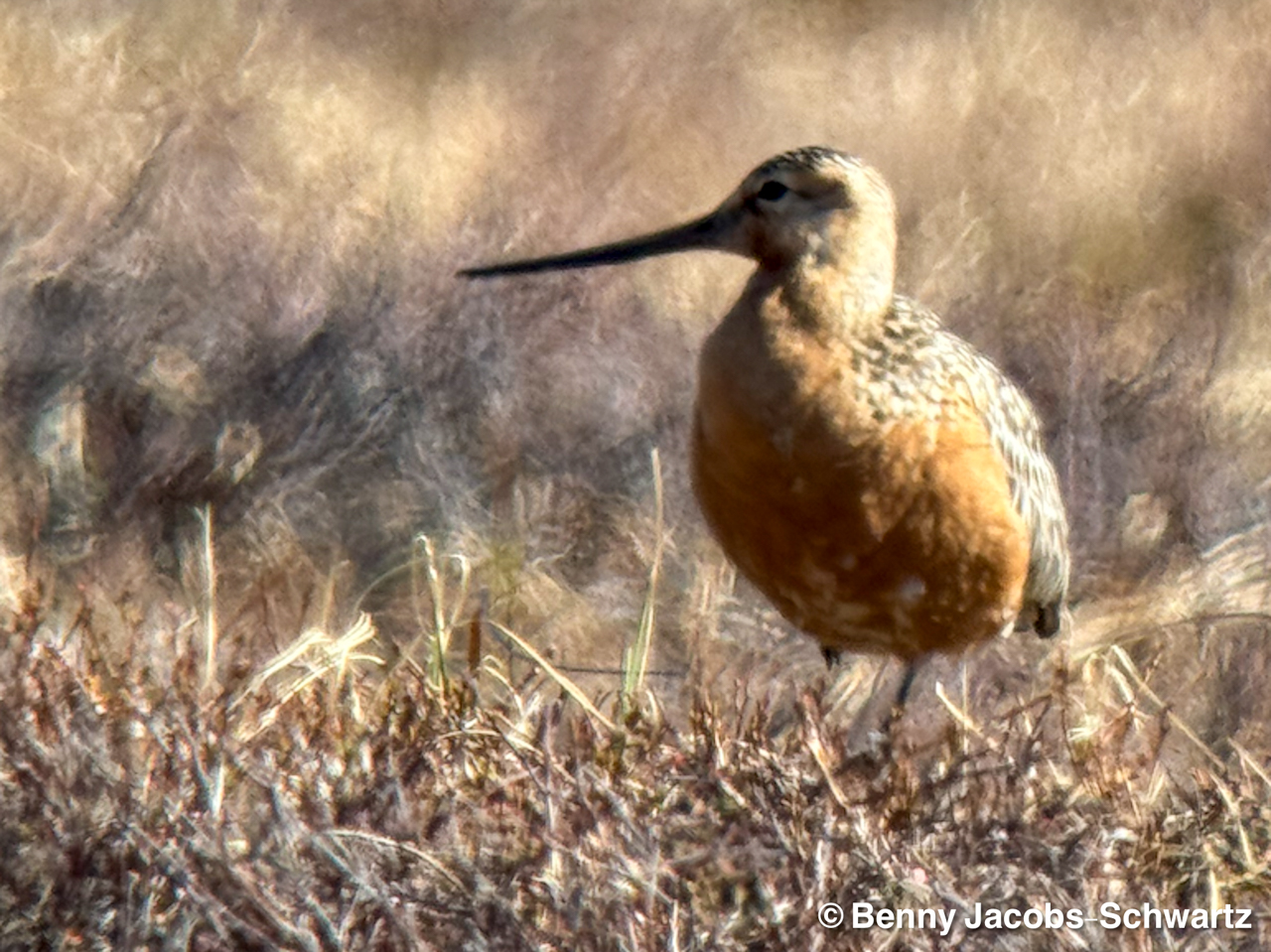
Bar-tailed Godwit
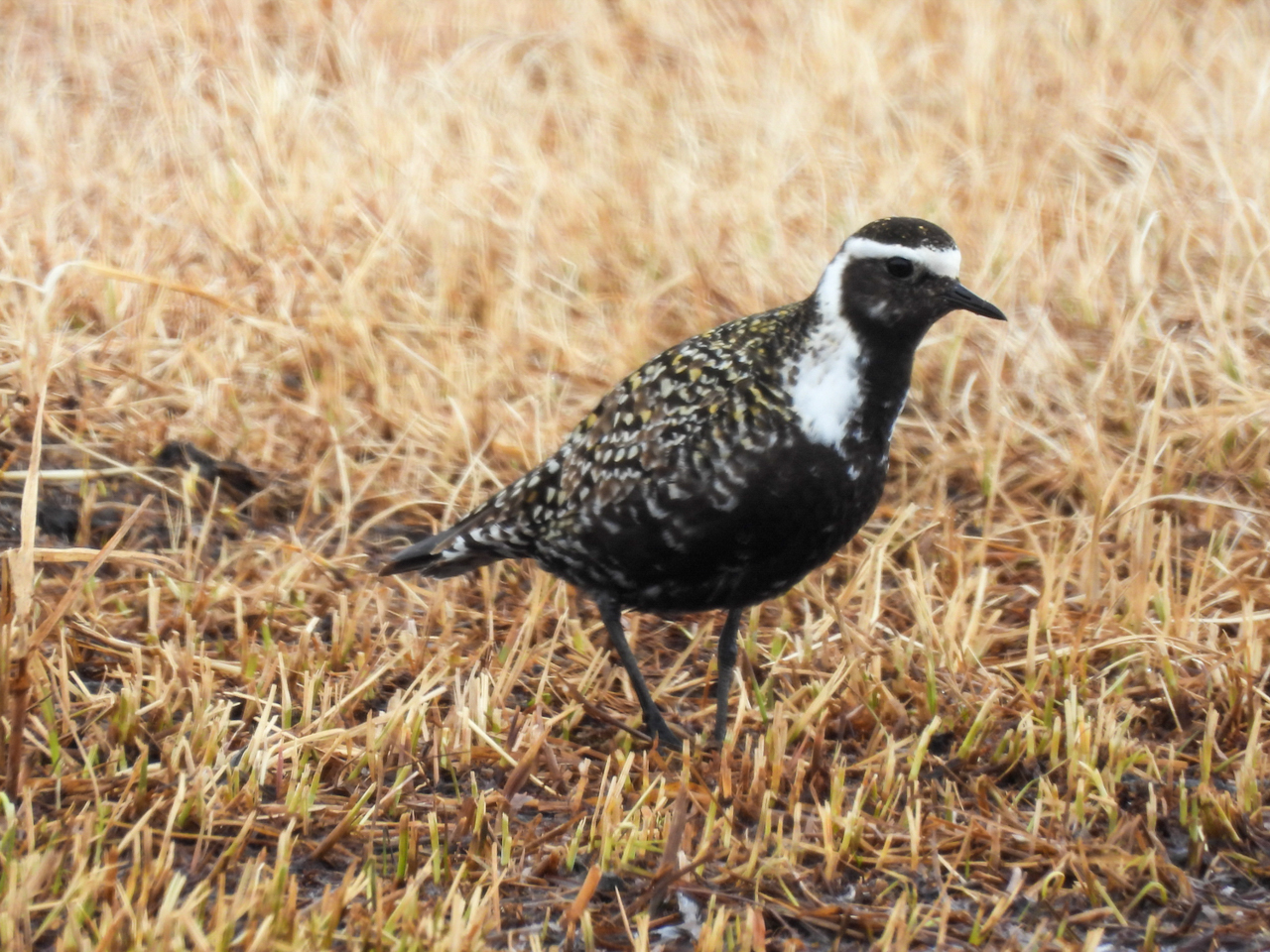
American Golden-Plover © Kyle Schanta
May 29 – Day 3
Our second full day in Nome began with Golden-crowned Sparrow, Wilson’s Warbler, American Robin, and a winnowing Wilson’s Snipe just outside the hotel.
We then headed up Kougarok Road in search of one of Alaska’s most sought-after migratory shorebirds. Along the drive, we encountered Northern Waterthrush, Orange-crowned Warbler, Yellow Warbler, Wilson’s Warbler, a roadside Cackling Goose, and countless Willow Ptarmigan.
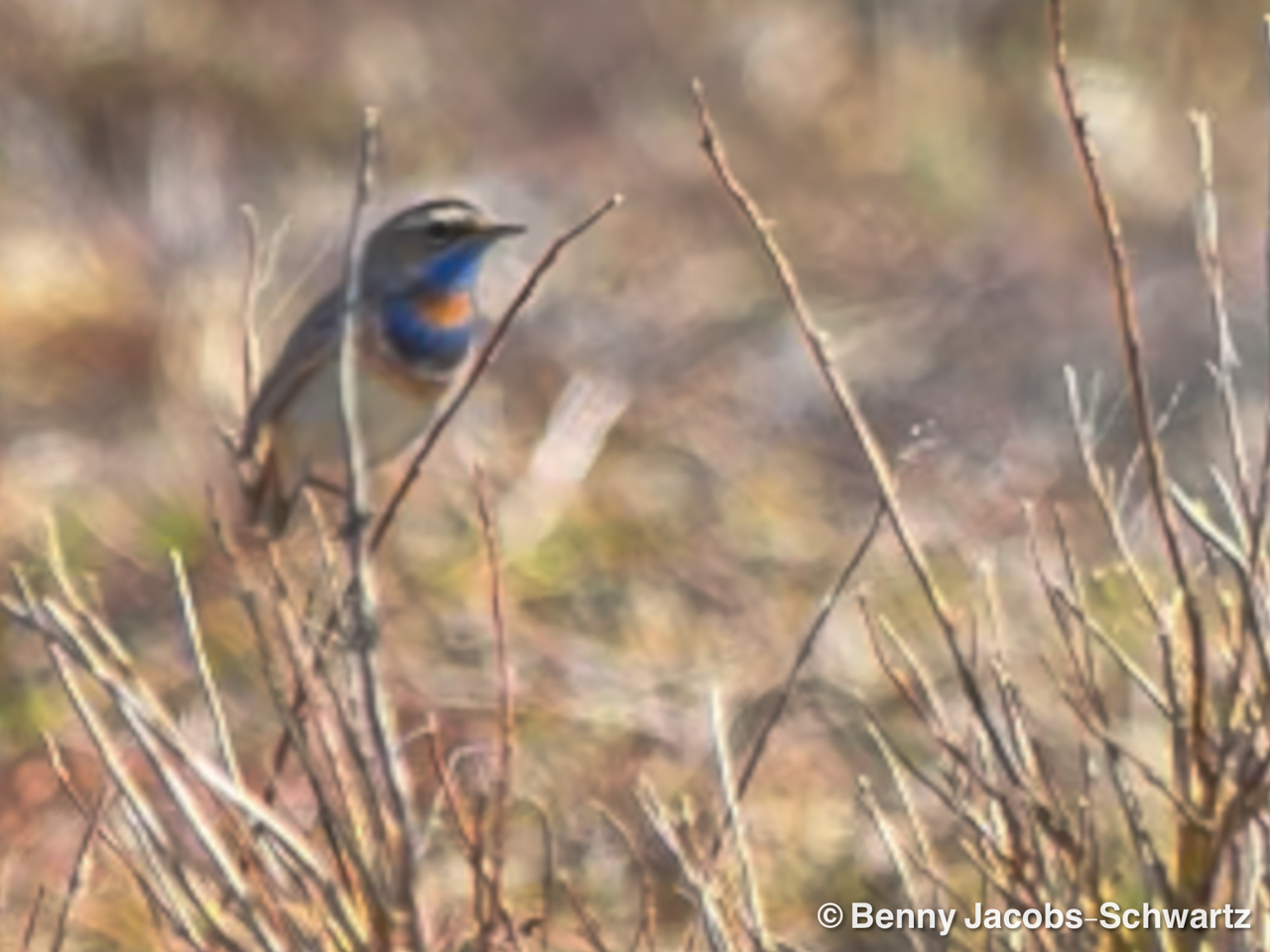
Scanning the cliffs, we found a nesting Golden Eagle. We also added Long-tailed Jaeger and, despite the early season, enjoyed outstanding views of Bluethroat. This Old World species breeds in western Alaska and displays for only a brief period each spring, and our timing could not have been better.
Near the Kuzitrin River, we found Willow Ptarmigan, Greater Scaup, Northern Pintail, and approximately eight Cliff Swallows nesting beneath the bridge.
After driving more than 60 miles from Nome, we began our tundra hike in search of the legendary Bristle-thighed Curlew. Following a healthy climb across the tundra, we were rewarded with excellent views of two Bristle-thighed Curlews and had the opportunity to compare them directly with nearby Hudsonian Whimbrel.
Additional birds on the hike included White-crowned Sparrow, Savannah Sparrow, and Lapland Longspur.
We returned to Nome for dinner, completed the evening checklist, and wrapped up another productive day.
May 30 – Day 4
The morning began with Tundra Swan, Red-breasted Merganser, Long-billed Dowitcher, Semipalmated Sandpiper, and additional Red-throated Loons. Another Eastern Yellow Wagtail was the morning’s highlight.
Today’s route took us down Teller Road, which connects Nome with the town of Teller roughly 70 miles away. Crossing a rockier tundra landscape, we searched for specialties including Northern Wheatear and Rock Ptarmigan.
Other notable species included American Tree Sparrow, Long-tailed Jaeger, and a Rough-legged Hawk perched nearly at eye level. Willow Ptarmigan were especially abundant throughout the day.
On our return to Nome, we discovered an Arctic Warbler, representing the first report of the season. We also enjoyed another excellent encounter with Bluethroat.
After a short break at the hotel, we returned to Council Road for an evening birding session and successfully added several more species, including Black Turnstone, Vega Gull, and a potential Slaty-backed Gull. On the drive back, we encountered additional Sandhill Cranes and enjoyed excellent views of a Northern Harrier.
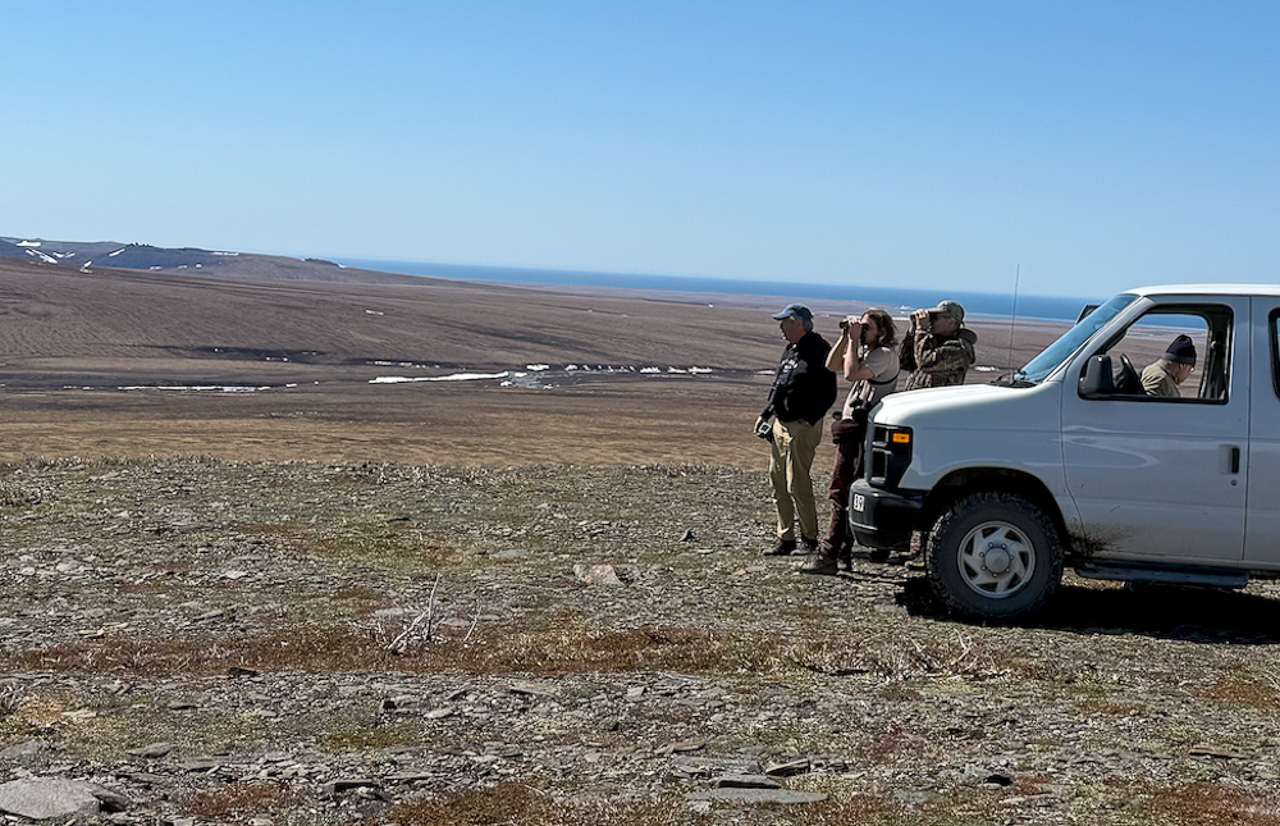
Birding the Alaska tundra © Benny Jacobs-Schwartz
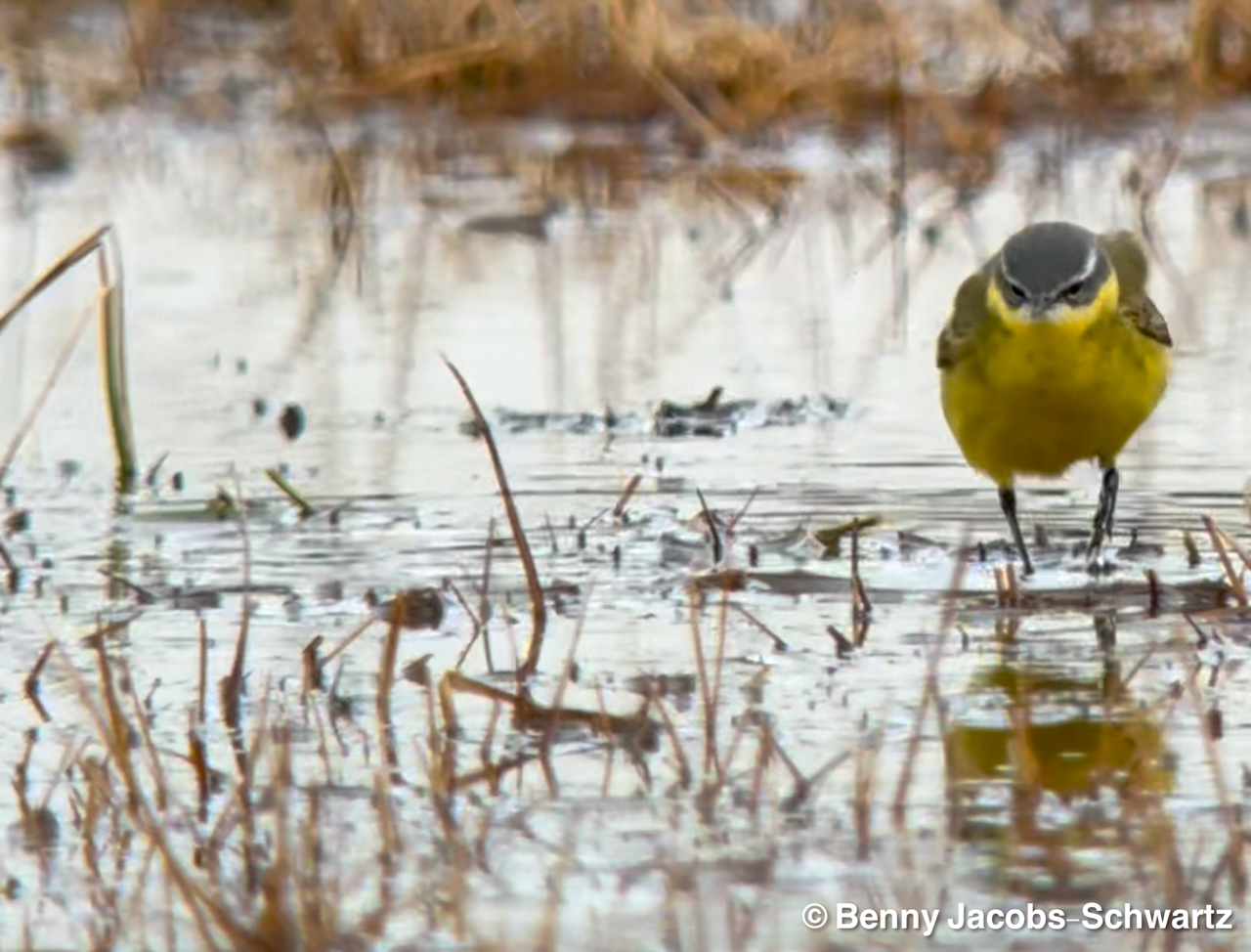
Eastern Yellow Wagtail
May 31 – Day 5
Today marked our final full day in Nome, and we were determined to make the most of it. We began at Cemetery Pond, where we enjoyed Greater White-fronted Goose, Northern Pintail, Greater Yellowlegs, Arctic Tern, and Gray-cheeked Thrush. A White Wagtail also flew by, a memorable observation of another Old World species that breeds in only a handful of locations in Alaska and is otherwise a rarity in the Lower 48.
After breakfast, we headed toward the coast for a seawatch. Highlights included Harlequin Duck, White-winged Scoter, Black Scoter, Sandhill Crane, and Long-tailed Jaeger. The standout moment came when two Emperor Geese migrated north with a flock of Brant, a fortunate observation given how few had been reported in the area this season.
Continuing down Council Road, we encountered more Willow Ptarmigan, Long-tailed Jaeger, Red-throated Loon, and Northern Waterthrush. Another seawatch farther along the coast produced additional White-winged Scoters, Black Scoters, a dozen Red-breasted Mergansers, Thick-billed Murre, Common Murre, Arctic Tern, Pacific Loon, and another Red-throated Loon. The final bird of the stop was a Yellow-billed Loon flying overhead, a lifer for many participants.
Farther along the road, we found a Northern Shrike and another Rough-legged Hawk. Along the river, Harlequin Duck and a pair of Long-tailed Jaegers were accompanied by singing Gray-cheeked Thrush, American Robin, Fox Sparrow, and Wilson’s Warbler.
The afternoon’s highlight was catching up with the legendary Gyrfalcon. Nearby, we also observed Wilson’s Snipe, Say’s Phoebe, Gray-cheeked Thrush, American Pipit, and another Arctic Warbler.
Following a full day of birding, we flew back to Anchorage. After arriving, we added Rock Pigeon and Short-billed Gull before taking a short walk around Lake Hood and Lake Spenard, where we found Belted Kingfisher, six Red-necked Grebes, and four American Wigeon.
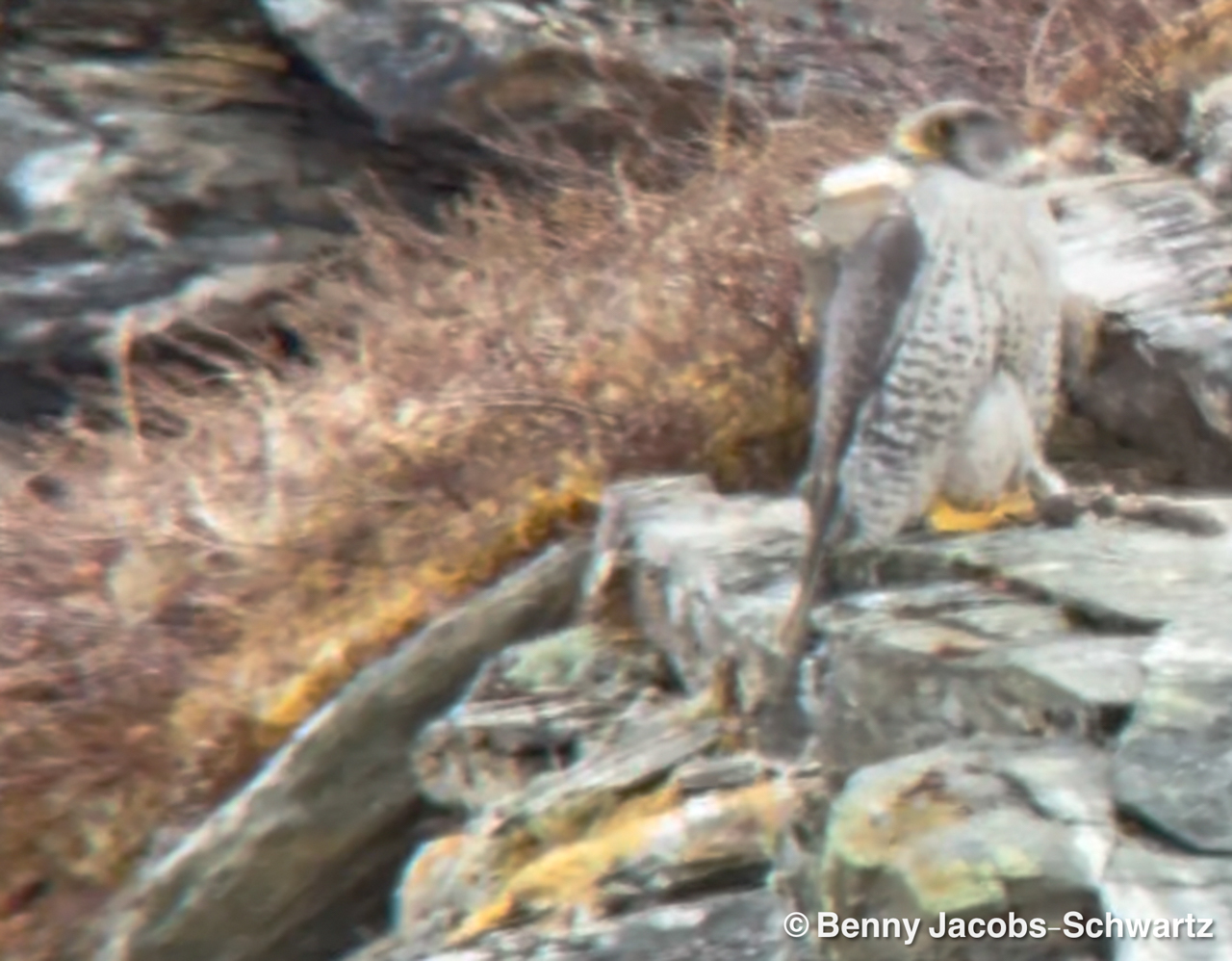
Gyrfalcon
June 1 – Day 6
After breakfast in Anchorage, we packed up and began our journey toward Seward on the Kenai Peninsula.
Our first stop was Kincaid Park, where we found several boreal specialties, including Canada Jay, Black-capped Chickadee, Golden-crowned Kinglet, Brown Creeper, Swainson’s Thrush, Pine Siskin, Dark-eyed Junco, and Orange-crowned Warbler. Although we missed Spruce Grouse and Black-backed Woodpecker, we planned to search for both later in the tour.
At Potter Marsh, we enjoyed views of a nesting Trumpeter Swan and two Bald Eagles soaring overhead.
After lunch, we explored another stretch of boreal forest, adding Boreal Chickadee, Red-breasted Nuthatch, White-winged Crossbill, and the stunning Varied Thrush. We also recorded four warbler species: Townsend’s Warbler, Orange-crowned Warbler, Yellow-rumped Warbler, and Wilson’s Warbler.
A roadside pond produced a quick view of Horned Grebe alongside Northern Pintail, Mallard, and American Wigeon.
By evening, we arrived in Seward, checked into our hotel, enjoyed dinner, and prepared for the following day’s excursion into Kenai Fjords National Park.
June 2 – Day 7
After breakfast, we headed to the harbor for our full-day boat trip into Kenai Fjords National Park. With clear weather, experienced captains, and binoculars in hand, anticipation was high.
Birding began immediately around the harbor with American Crow, Tree Swallow, Violet-green Swallow, Song Sparrow, and nearly 200 Black-legged Kittiwakes.
Once on the water, we quickly added Pigeon Guillemot and Common Murre. Other species included Harlequin Duck, Red-breasted Merganser, Pelagic Cormorant, Double-crested Cormorant, and numerous Bald Eagles.
As we continued through Resurrection Bay, we added Marbled Murrelet before connecting with several highly anticipated species, including Horned Puffin, Tufted Puffin, Surf Scoter, and Rhinoceros Auklet.
Lunch near Northwestern Glacier was accompanied by approximately six Kittlitz’s Murrelets, one of Alaska’s most sought-after seabirds with a remarkably restricted breeding range.
The return trip produced several Humpback Whales. Despite choppy seas at times, the day on the water was highly successful.
Back in Seward Harbor, we added more Pigeon Guillemots, Black-legged Kittiwakes, and a Wandering Tattler along the shoreline.
After dinner, we squeezed in one final birding session, adding Hairy Woodpecker, Common Merganser, Lesser Scaup, Hermit Thrush, and Barrow’s Goldeneye. Supporting species included Marbled Murrelet, Pigeon Guillemot, Common Murre, and Harlequin Duck.
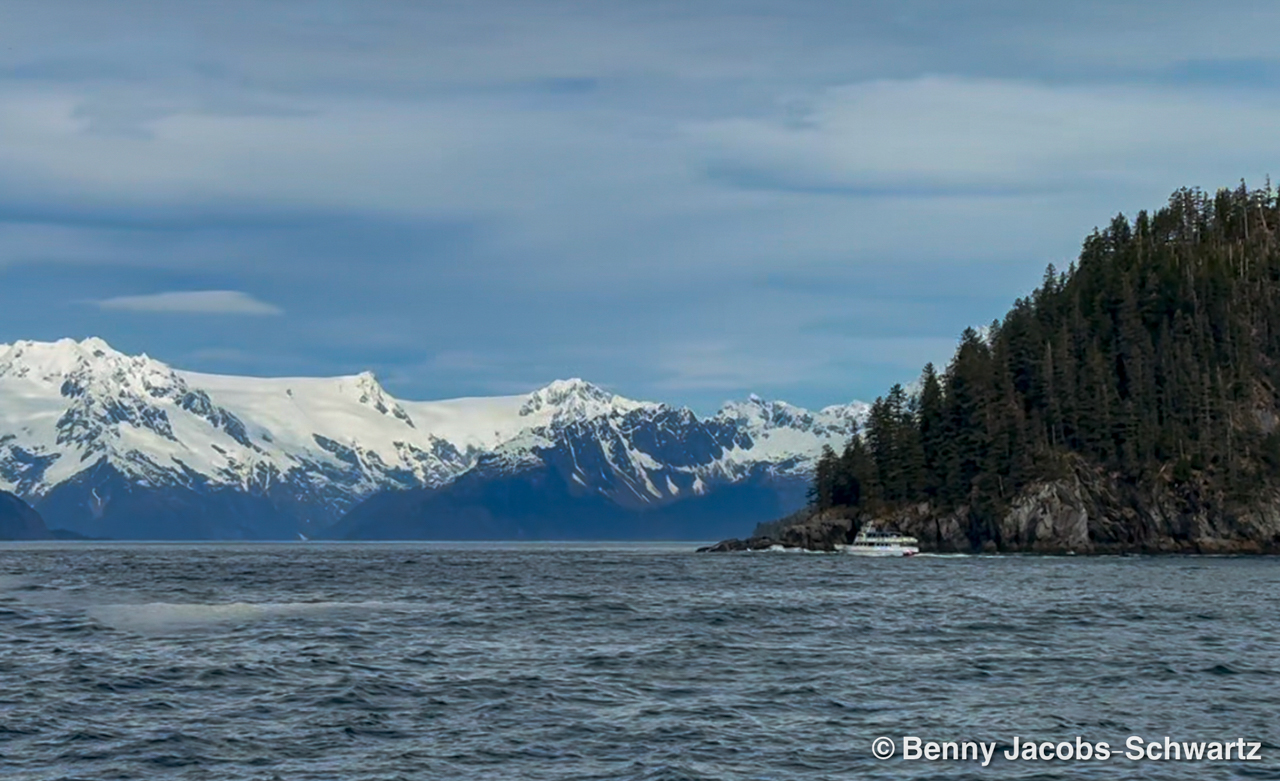
Kenai Fjords National Park
June 3 – Day 8
Another beautiful morning in Seward began with a visit to Lowell Point, where we explored the Sitka Spruce forest in search of new species.
Here we added Rufous Hummingbird, Steller’s Jay, and Chestnut-backed Chickadee. Other highlights included Golden-crowned Kinglet, Red-breasted Nuthatch, singing Varied Thrushes, singing Hermit Thrushes, and Black-billed Magpie.
Driving north through town, we stopped for American Dipper and were rewarded with outstanding views of an adult feeding chicks at the nest. We also observed Pacific salmon, including Sockeye and Coho, while discussing their importance in supporting Alaska’s forest ecosystems.
At a nearby Lake, we found nesting Trumpeter Swans and added Canvasback. Other species included Lesser Scaup, Spotted Sandpiper, and Violet-green Swallow.
Birding through black spruce and alder forest produced Olive-sided Flycatcher, Pine Grosbeak, and Dark-eyed Junco of the Slate-colored group.
During a late lunch stop, we detected an Alder Flycatcher singing from willow habitat behind the restaurant. Two Sandhill Cranes passed overhead, while a Hairy Woodpecker provided an energetic drumming performance.
We finished the afternoon at Westchester Lagoon, recording nearly 30 species, including Hudsonian Godwit, Lesser Yellowlegs, Bonaparte’s Gull, American Herring Gull, 16 Red-necked Grebes, Black-capped Chickadee, nearly a dozen Violet-green Swallows, and several Orange-crowned Warblers.
A nearby lookout added Common Goldeneye, improved views of Bonaparte’s Gull, and Arctic Terns actively feeding before another rewarding day came to a close.
June 4 – Day 9
After an early breakfast, we returned to Kincaid Park to search for a few remaining targets, and the morning proved productive. New species for the tour included American Three-toed Woodpecker, Black-backed Woodpecker, Western Wood-Pewee, improved views of White-winged Crossbill, and Blackpoll Warbler, a remarkable migrant that winters in the Amazon before breeding in the northern boreal forest.
Following our morning birding, we flew to Utqiaġvik (Barrow), one of North America’s premier birding destinations. Located roughly 300 miles north of the Arctic Circle, the landscape still felt firmly locked in winter. Snow remained widespread, only a handful of ponds had opened, and temperatures ranged from 27–32°F with light winds.
Despite the conditions, birding was productive from the start. Snow Buntings, affectionately known as the “Barrow Sparrow,” greeted us upon arrival. We then searched for several recently reported rarities and were fortunate to connect with two of them: a Red-throated Pipit feeding beside a melting patch of ice and a Red-necked Stint. We also searched for the continuing Taiga Flycatcher but were unable to relocate it.
Additional highlights included American Golden-Plover and Red Phalarope. Other shorebirds included Dunlin, Pectoral Sandpiper, Western Sandpiper, and Semipalmated Sandpiper, while displaying Lapland Longspurs seemed to be everywhere. Five Pomarine Jaegers passed overhead, providing excellent views.
We also added Ruddy Turnstone, whose striking breeding plumage quickly made it a group favorite. Near the landfill road, we found a lone Sandhill Crane before wrapping up an outstanding first day on the Arctic tundra.
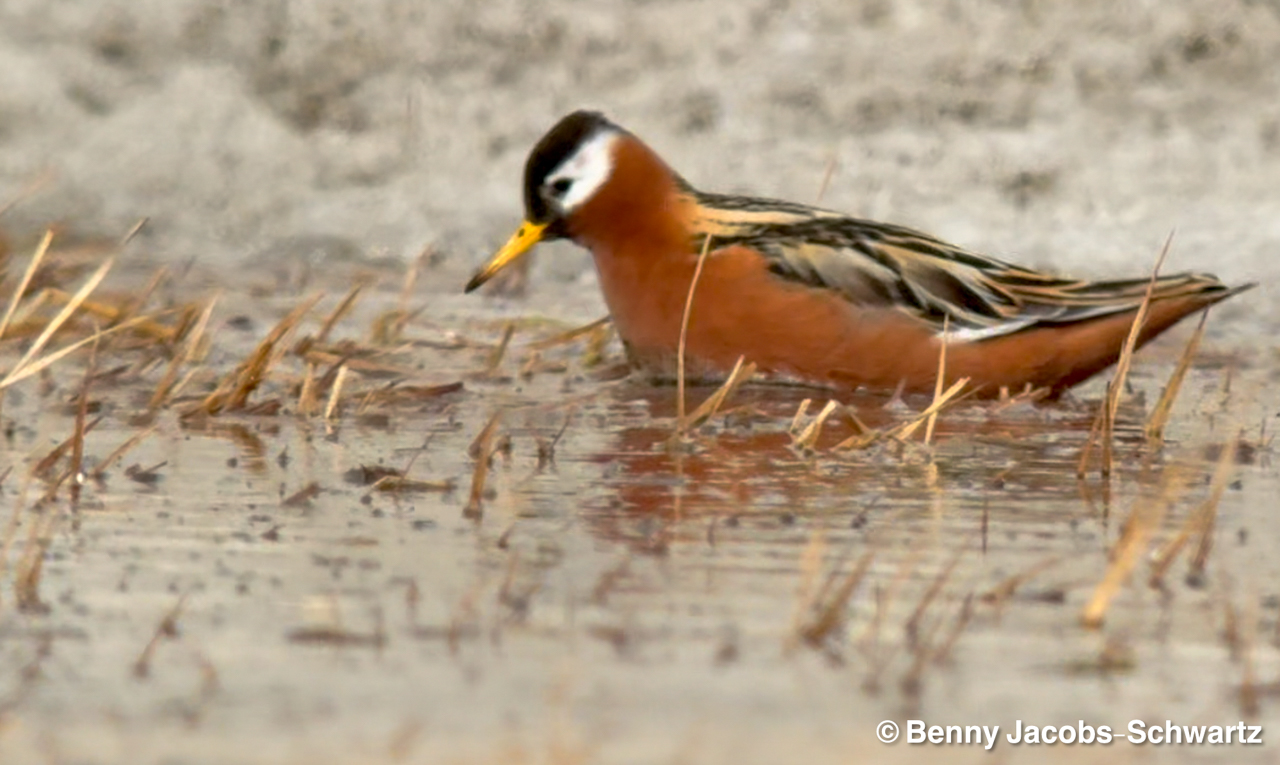
Red Phalarope
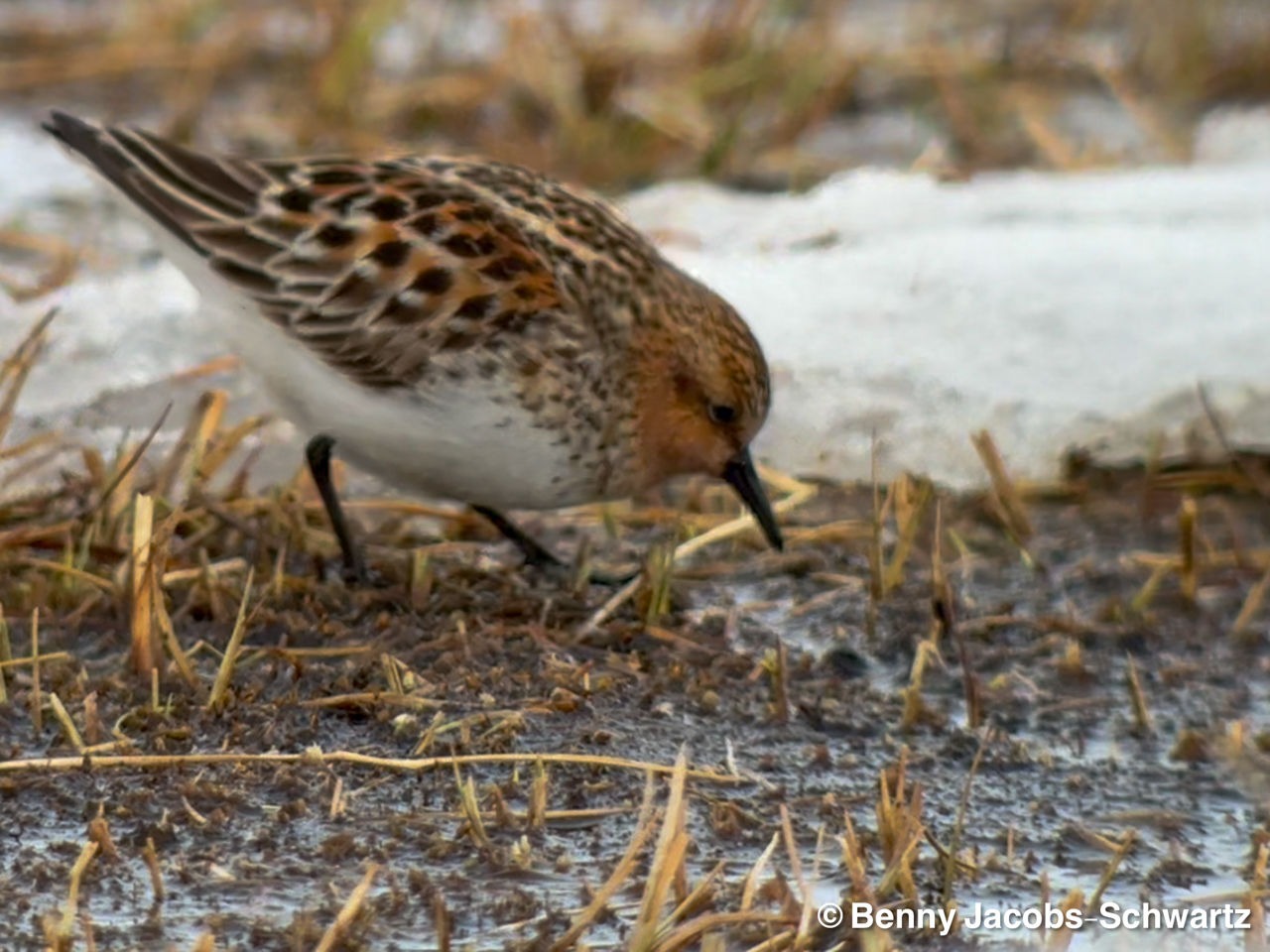
Red-necked Stint
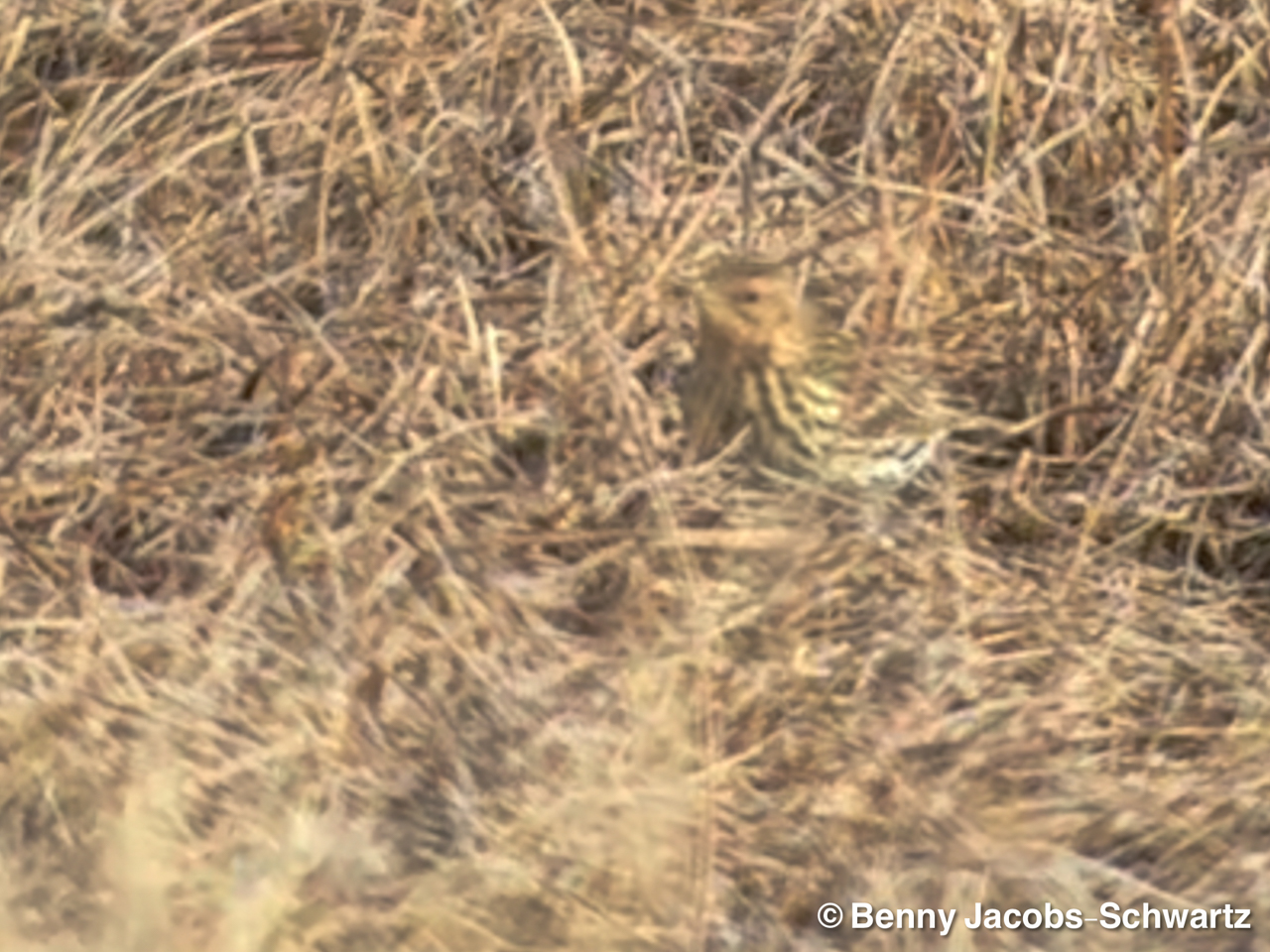
Red-throated Pipit
June 5 – Day 10
Our second morning in Utqiaġvik began with Greater White-fronted Goose, Long-billed Dowitcher, Red-necked Phalarope, and several Glaucous Gulls.
A morning seawatch produced five King Eiders migrating over the ice. As more lagoons opened throughout the day, additional King Eiders continued moving north, along with a self-found pair of Tufted Ducks feeding in one of the ponds. Nearby were approximately 30 Brant and several Long-tailed Ducks.
As the morning progressed, we added Black-bellied Plover, American Golden-Plover, and Ruddy Turnstone. Dunlin, Pectoral Sandpiper, Western Sandpiper, and Semipalmated Sandpiper were also present, while two Parasitic Jaegers cruised overhead.
After lunch, we connected with one of the trip’s biggest surprises: a Eurasian Skylark. This newly discovered rarity was a lifer for most participants and quickly became one of the highlights of our time in Utqiaġvik. Upon arriving at the site, we were also treated to three Yellow-billed Loons flying overhead and excellent views of displaying Lapland Longspurs.
As evening approached, we continued birding the Arctic coast before finishing the day with Tundra Swans and another movement of approximately 20 King Eiders migrating north.
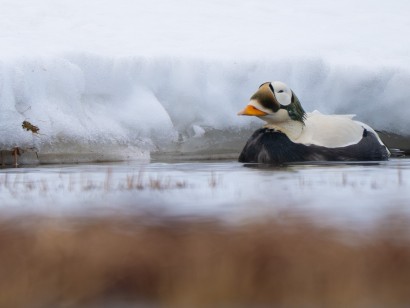
Then, on our drive back to town, we struck gold. Two Steller’s Eiders were feeding in a roadside pond. We spent considerable time observing and photographing these beautiful, threatened birds, one of the tour’s most memorable encounters.
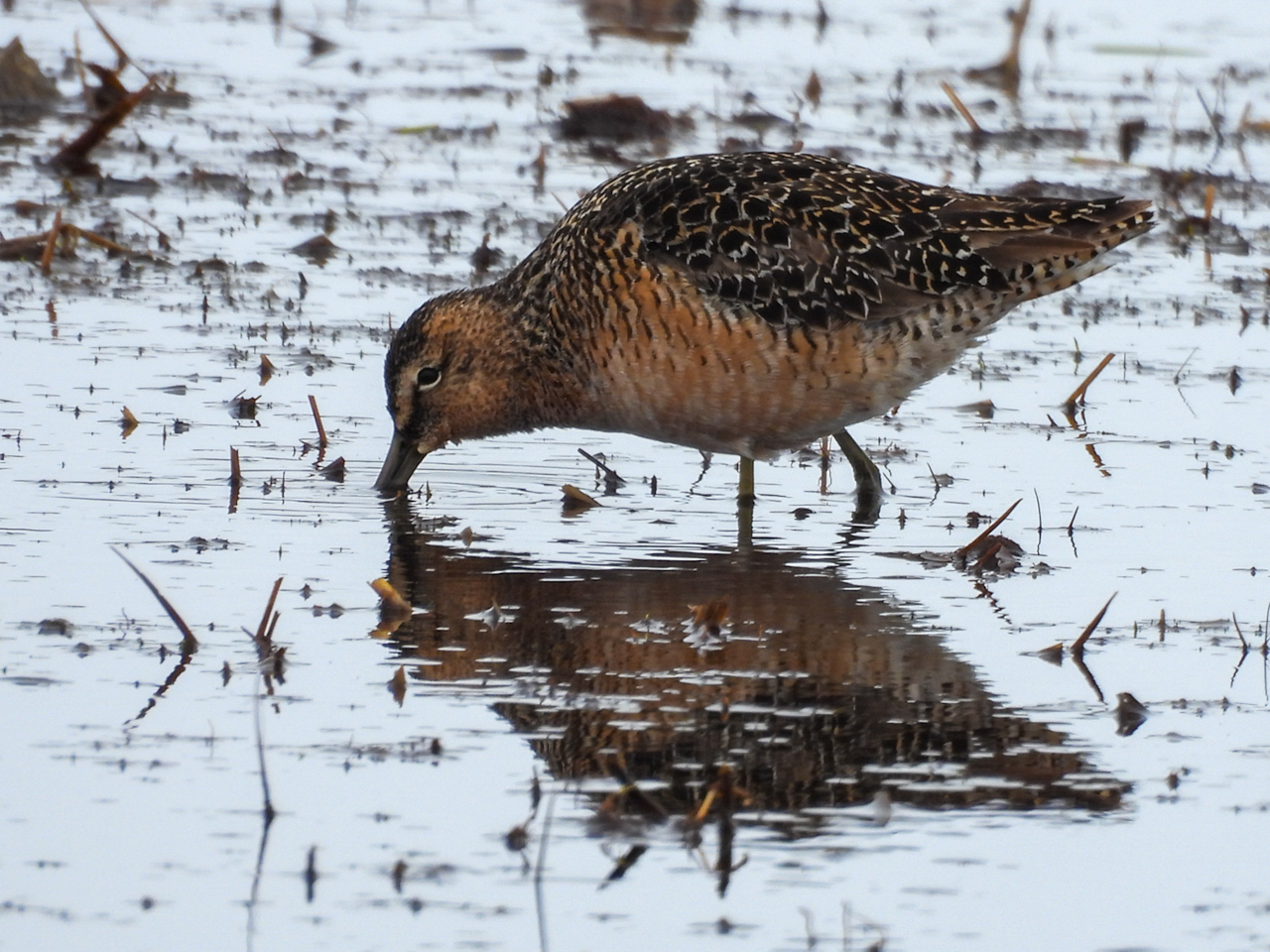
Long-billed Dowitcher © Kyle Schanta
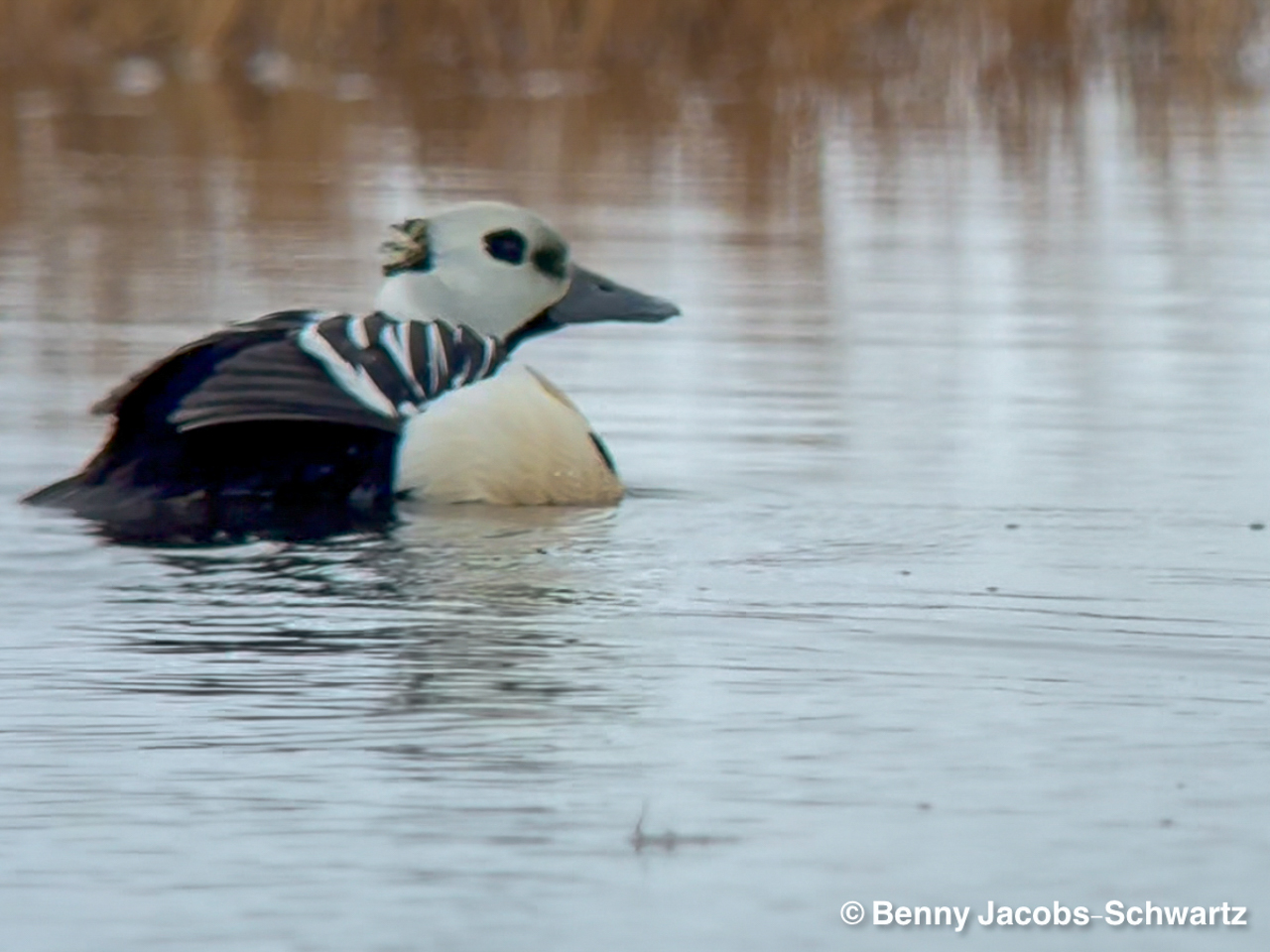
Steller’s Eider
June 6 – Day 11
After a relaxed morning to recharge from several long birding days, we returned to the tundra.
Birding around the landfill produced Long-billed Dowitcher, Red Phalarope, Red-necked Phalarope, and Ruddy Turnstone. The standout bird, however, was a spectacular male Common Eider feeding in one of the ponds.
Additional species included Greater White-fronted Goose, Snow Goose, Red-necked Phalarope, Semipalmated Plover, and Long-tailed Duck. Later, we found one of the Arctic’s true icons—a stunning male Snowy Owl. The bird remained remarkably relaxed, allowing prolonged views and excellent photographic opportunities from a respectful distance.
Later in the day, we caught up with more Steller’s Eiders and several Parasitic Jaegers. Evening birding added more Sabine’s Gulls, another Eurasian Skylark, the continuing pair of Tufted Ducks, a pair of Lesser Scaup, Arctic Tern, and additional King Eiders migrating along the coast.
After another successful day on the Arctic tundra, we returned to the hotel to prepare for our final full day of birding.
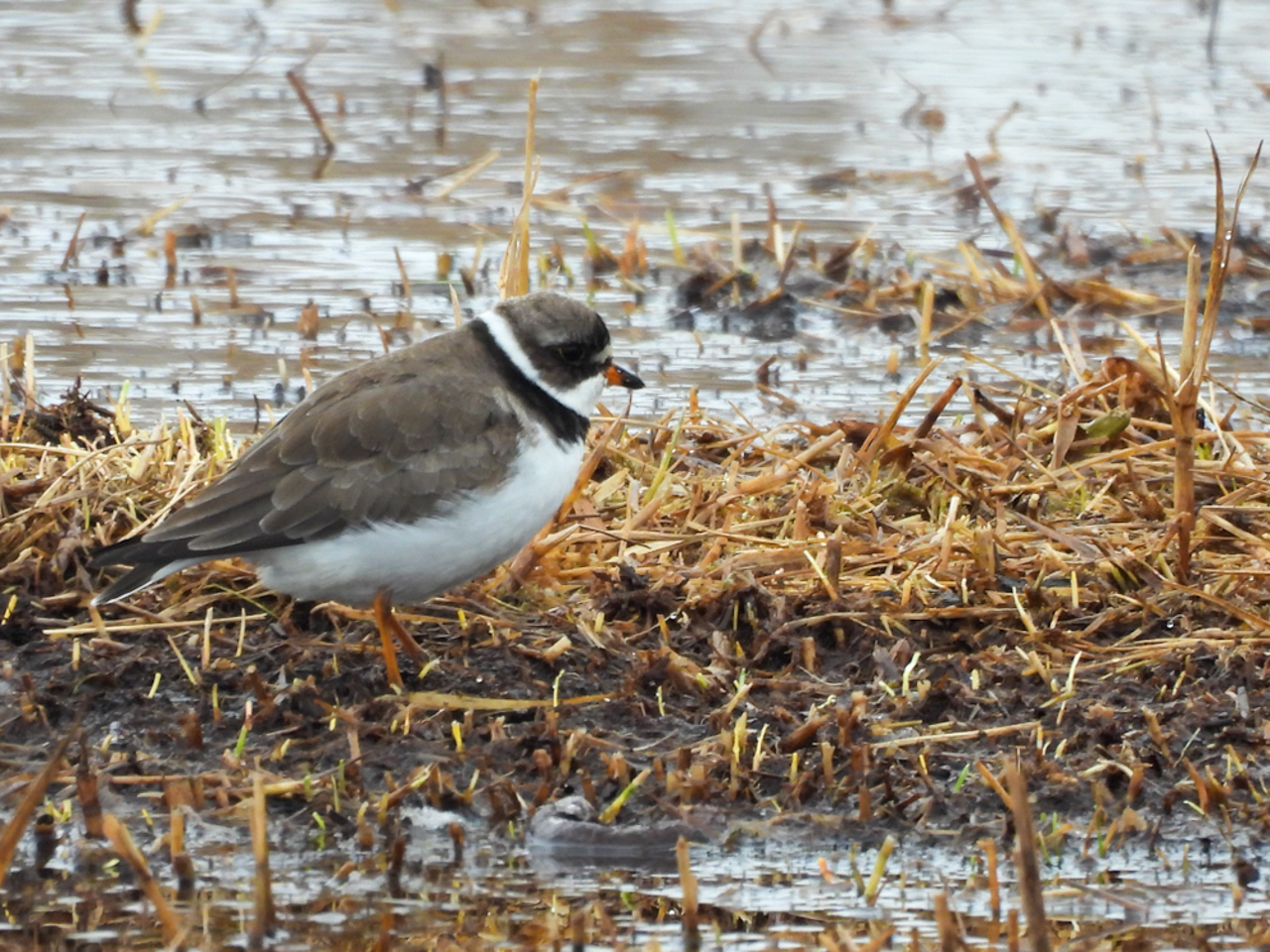
Semipalmated Plover © Kyle Schanta
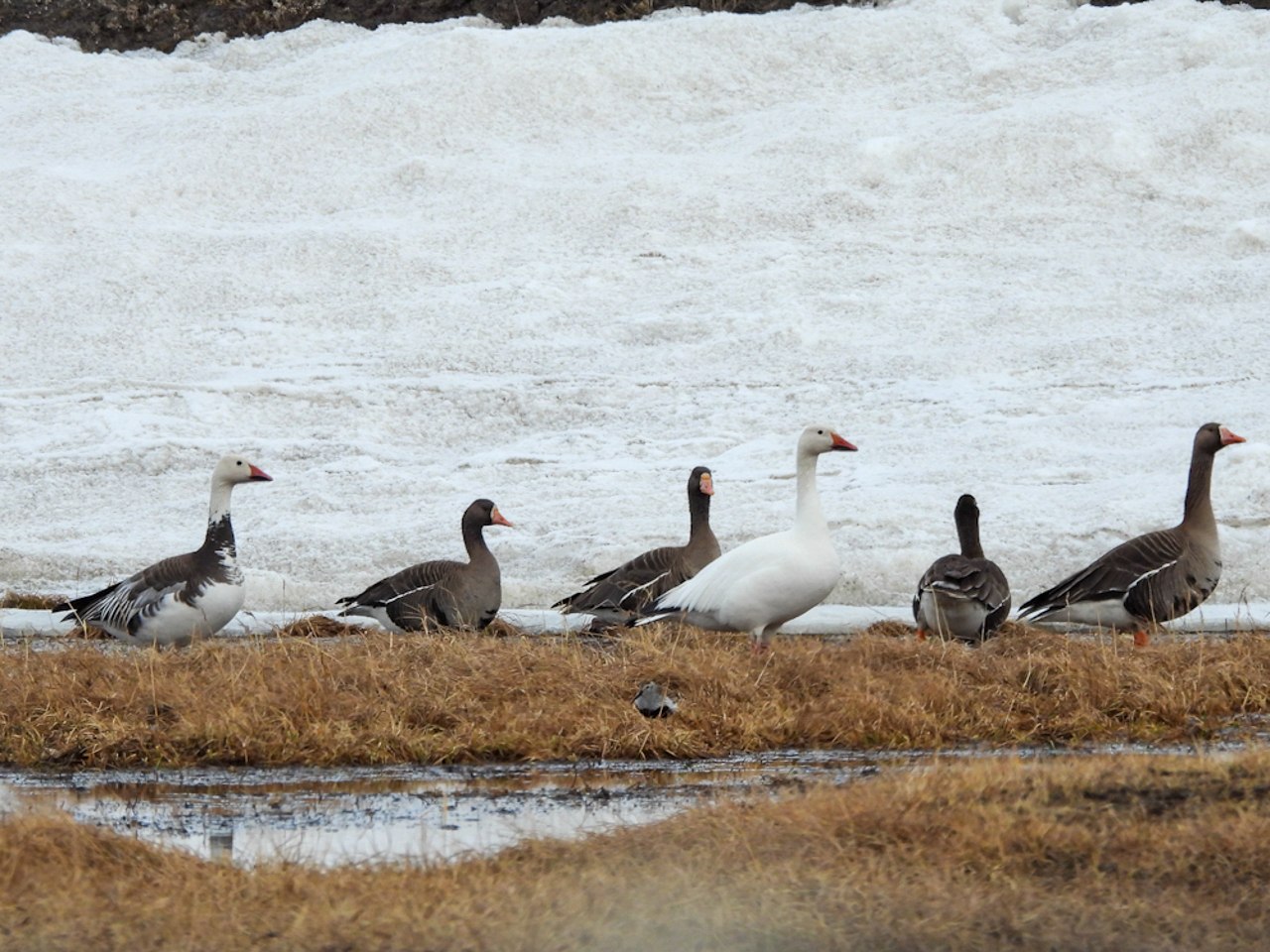
Snow Geese and Greater White-fronted Geese © Kyle Schanta
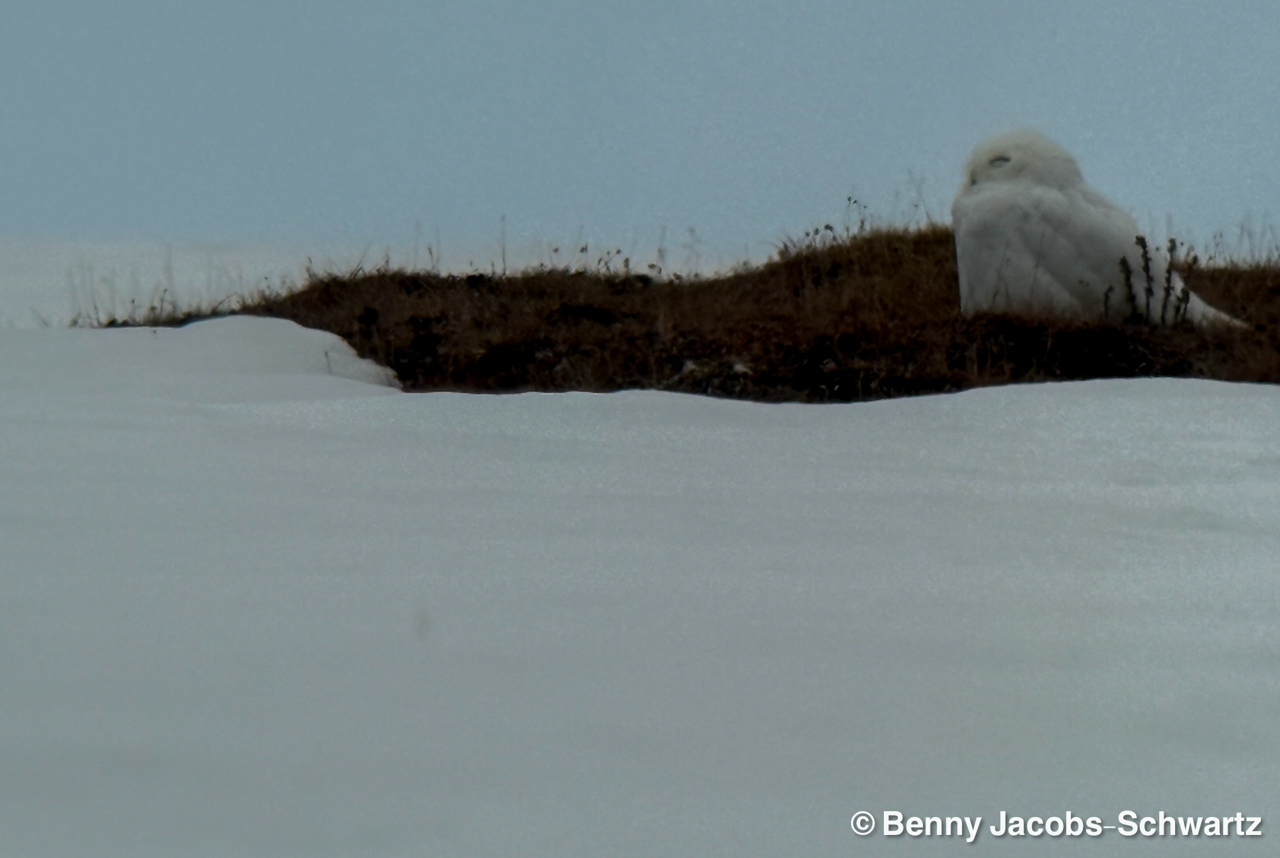
Snowy Owl
June 7 – Day 12
We began with a relaxed breakfast before heading back onto the tundra for one final day of Arctic birding.
Shorebird highlights included Ruddy Turnstone, Red Phalarope, Black-bellied Plover, American Golden-Plover, and a baker’s dozen Dunlin. Numerous Glaucous Gulls were present throughout the day, while displaying Lapland Longspurs continued to provide excellent views.
A pair of King Eiders along one of the roads offered prolonged looks, and we enjoyed additional views of Sabine’s Gull. Near Point Barrow, a Yellow-billed Loon flew overhead, providing another memorable encounter with one of the Arctic’s signature species.
Eventually, it was time to return to the hotel, head to the airport, and fly back to Anchorage. Reflecting on the journey, it was clear we had enjoyed an exceptionally successful and memorable first Alaska tour of the season.
June 8 – Day 13
After one final breakfast together, everyone departed for the airport and began their journeys home, bringing another outstanding Alaska Birding Tour to a close.