Guyana Birding Trip Report (March 2024)
The trip visited spectacular Kaieteur Falls, impressive tropical forests, and wide open savannas. Despite the worst drought in Guyana’s recent memory and widespread wildfires, we had many memorable sightings and experiences, from Giant Otters to Guianan Toucanets.
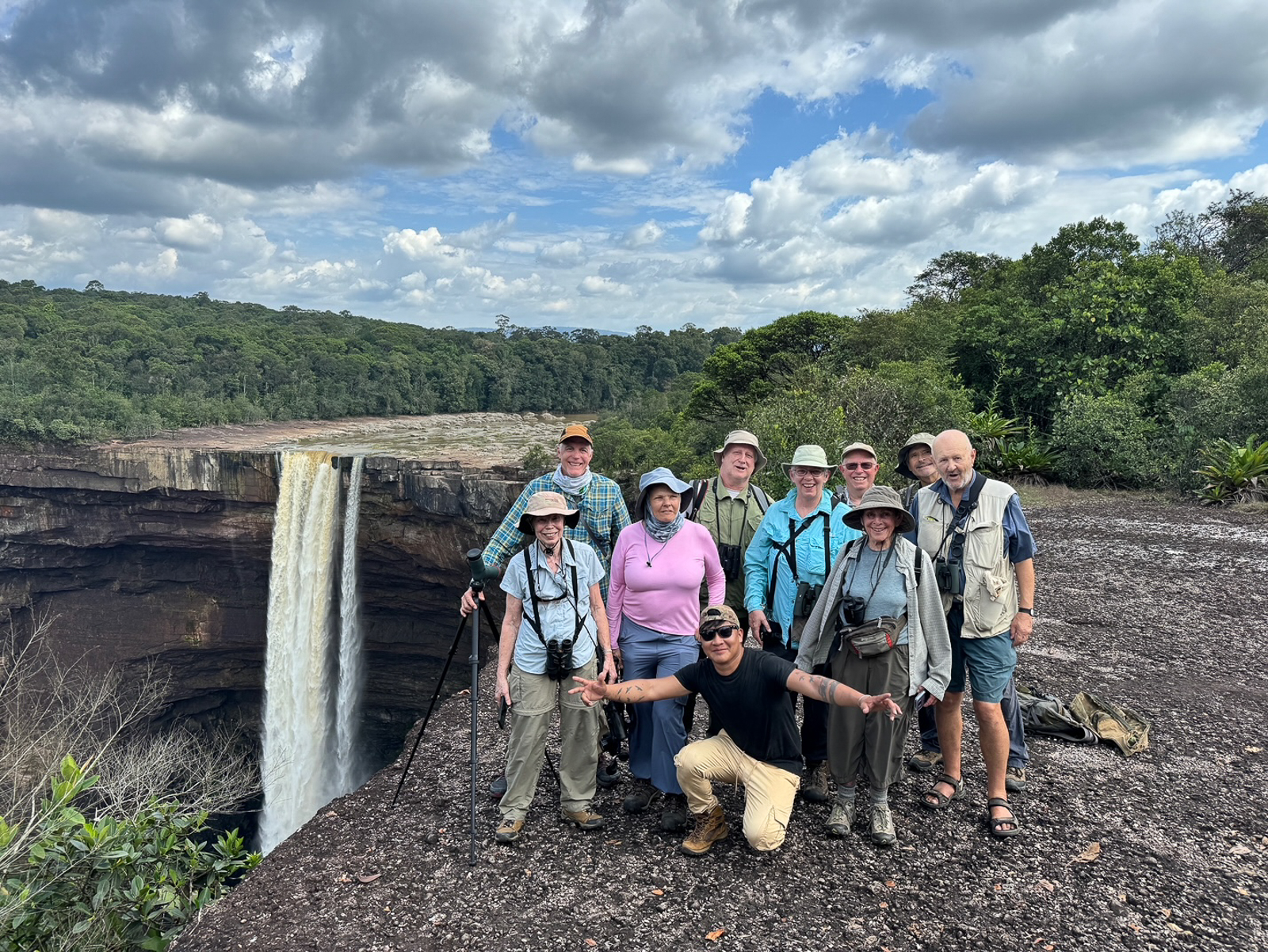
Our group at Kaieteur Falls
Day 1, March 10: Our first bird walk of this tour took us to the nearby Georgetown Botanical Gardens. Despite it being Sunday and the park full of picnickers, we managed to avoid the crowd and see a great assortment of tropical species. We had nice looks at Pale-vented Pigeon, Blue-and-yellow Macaw, Snail Kite, Yellow Oriole, and both Common and Spotted tody-flycatchers. We also saw two special range-restricted species, the diminutive White-bellied Piculet and the beautiful Blood-colored Woodpecker.
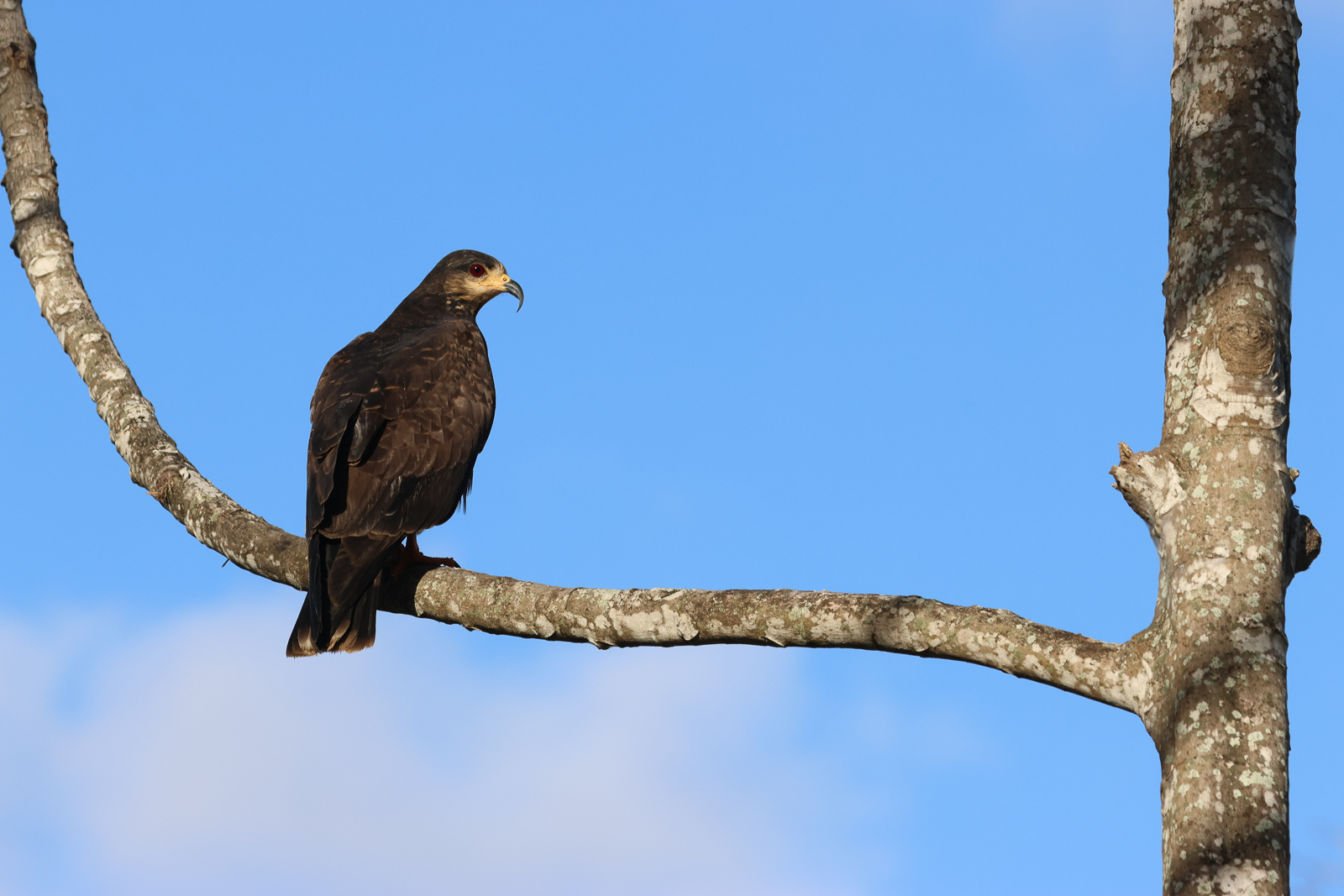
Snail Kite © Adam Kent
Day 2, March 11: We were on the road by 5 am for our morning boat trip to catch the tropical birds while they were most active. Birds were all over the place and we had to try our best to limit ourselves to only one stop for a Rufous Crab Hawk on the drive to the Mahaica River. Once on the river we soon had wonderful views of many Hoatzins foraging in the moco-moco (Montrichardia arborescens) plants along the riverside. We saw a nice variety of species including Lesser Yellow-headed Vulture, Long-winged Harrier, Zone-tailed Hawk, Black-crested Antshrike, and hundreds of Pale-vented Pigeons. We also saw Giant Otters crunching on fish at very close range.
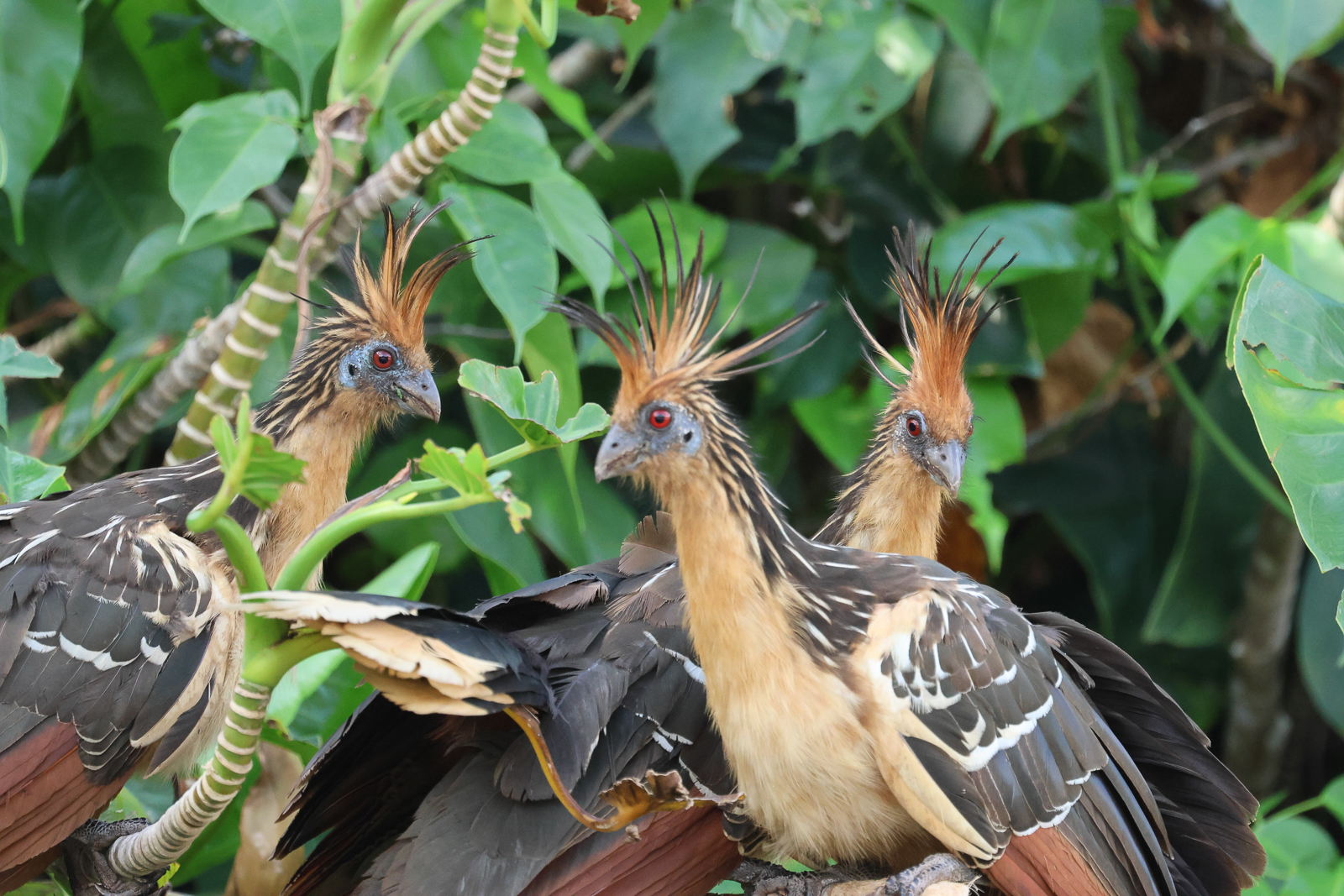
Hoatzins © Adam Kent
On the drive back for lunch at Cara Lodge, we made a few quick stops along the coast, at one point finding a nice selection of shorebirds foraging at low tide alongside wading birds including Scarlet Ibis. After lunch and a respite from the midday heat, we headed back to the botanical gardens for more birding. This time we had much closer views of Toco Toucan, White-bellied Piculet, Blue-and-yellow Macaw, and Yellow Oriole, as well as a cooperative Spotted Tody-Flycatcher at its nest.
Day 3, March 12: To make the most of this fun-filled day we got an early start and headed to the coast again. The tide was high when we arrived and various species of wading birds including Scarlet Ibis and Yellow-crowned Night-Herons were roosting in the trees while some shorebirds perched in nearby bushes. As the tide went out and more mudflats were exposed, we started to see more activity including Largescale Four-eyed Fish (Anableps anableps) and shorebirds on the move. Flock after flock of several species including Semipalmated Sandpipers and Semipalmated Plovers were on the move and some sharp eyes in the group spotted distant Magnificent Frigatebirds, Gull-billed and Royal terns, and a Lesser Black-backed Gull.
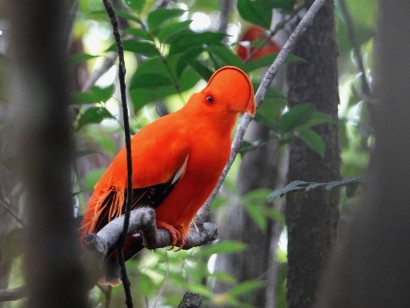
At noon we boarded our flight to Kaieteur Falls. As we flew over the vast expanse of tropical rainforest we saw many forest fires, a result of the worst dry spell in recent history. Arriving at the falls, in the span of about an hour, we saw Orange-breasted Falcon, Guianan Cock-of-the-rock, Guianan Warbling Antbird, Rufous-crowned Elaenia, and Cliff Flycatcher. But the highlight had to be when a giant airplane of a bird glided low over the treetops above our heads, a Harpy Eagle!!! Luckily it perched in the open so we all saw it well.
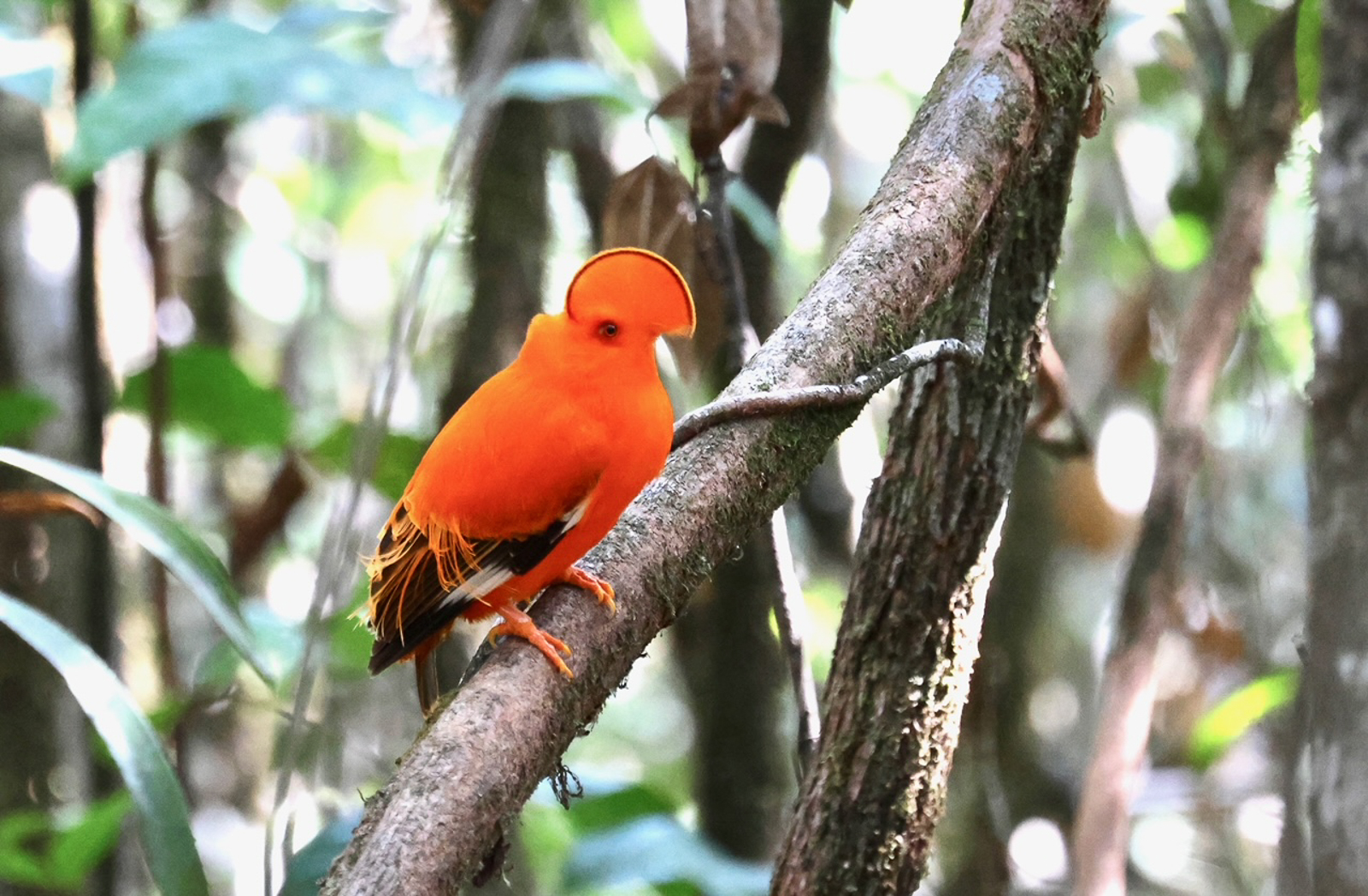
Guianan Cock-of-the-rock © Adam Kent
From the falls we had a short flight to Iwokrama Lodge where we quickly got into 3 boats and took a short trip on the Essequibo River. One of the highlights of the boat trip was seeing both Large-billed and Yellow-billed terns very close in nice light. As the sun quickly dropped, we made a stop at a small island and in quick succession saw Bat Falcon, Black Caracara, and Ladder-tailed Nightjar.
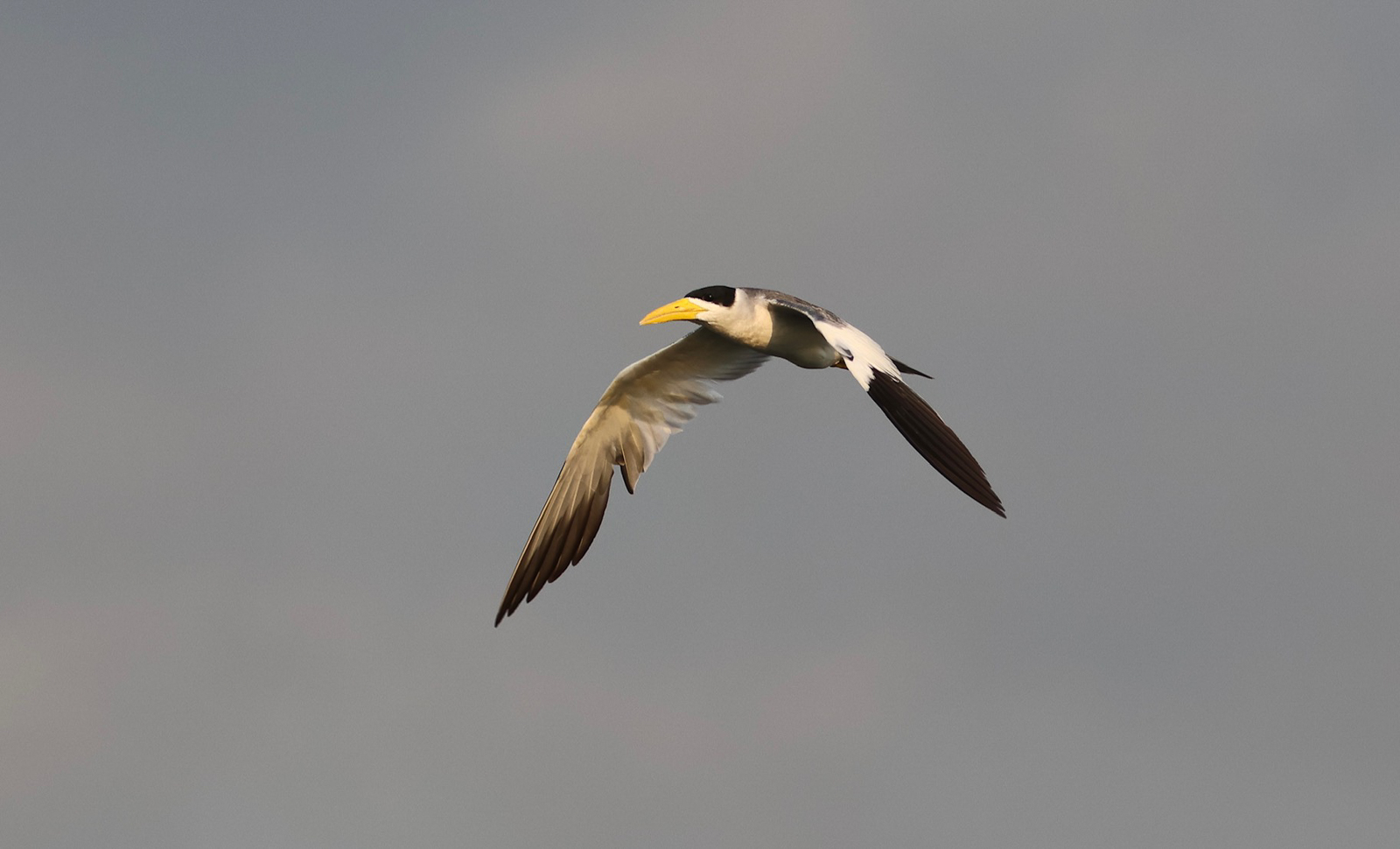
Large-billed Tern © Adam Kent
Day 4, March 13: We got on the Essequibo River at dawn for a ride downstream to the Turtle Mountain Trail. On the way there we saw several Pied Plovers foraging and a couple of Sunbittern showing their beautiful wing pattern on the sandbars. Once we got on the trail, the bird activity continued slowly but surely as we saw Gray then Common Scale-backed antbirds and a White-flanked Antwren in short succession. A Great Jacamar perched in the open to give us good looks. As we left the forest, a few Black Nunbirds passed though the camping area.
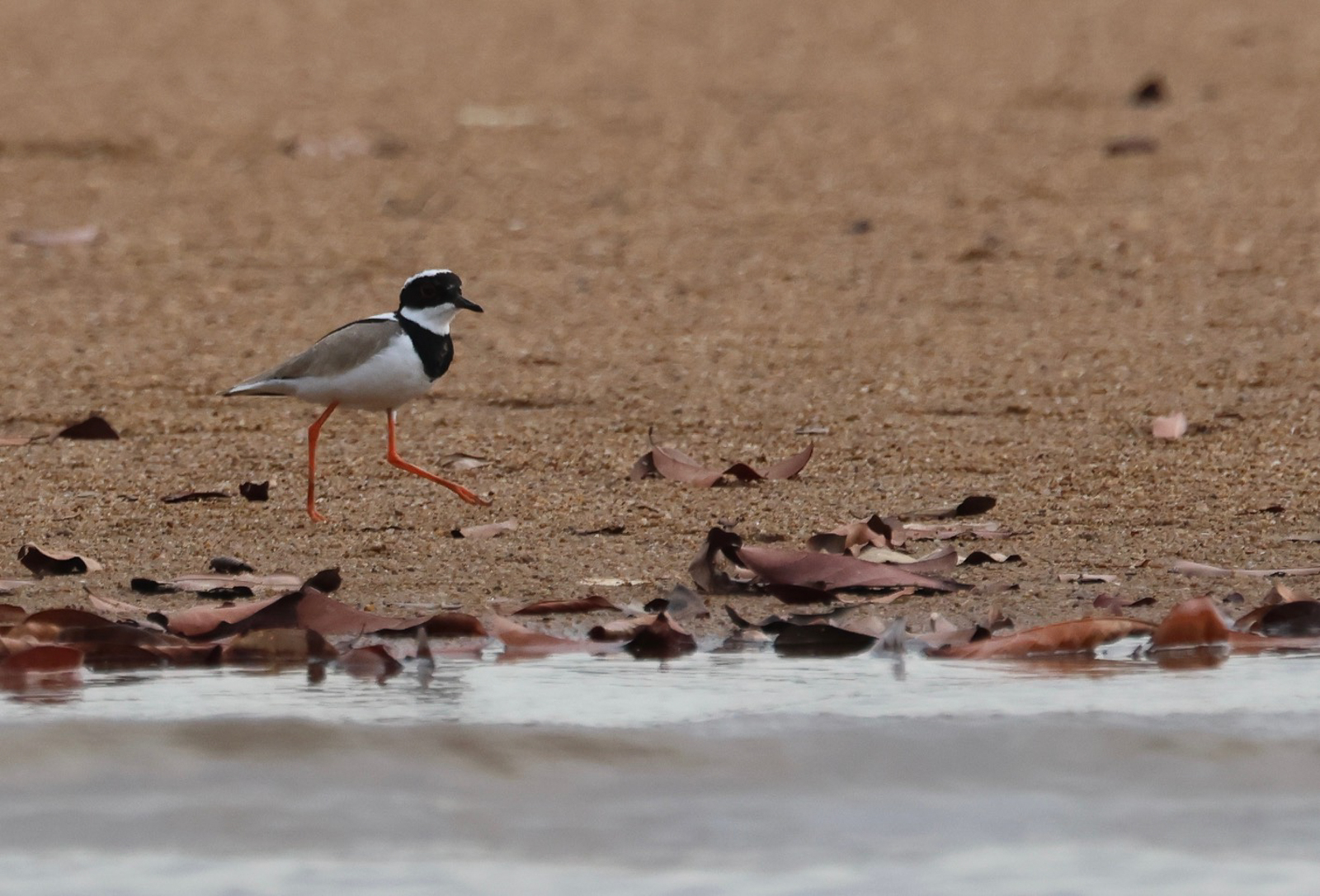
Pied Plover © Adam Kent
After an afternoon rest, we walked the Iwokrama entrance road. We were rewarded with great scope views of the uncommon Black-throated Antshrike, a male with his red eyes glaring at us from the undergrowth and a shyer female. We also saw Green Aracari, Pied Puffbird, and others.
Day 5, March 14: As we started our morning walk from the main trail at Iwokrama, we quickly found a Ferruginous-backed Antbird that came in and walked on a log directly in front of us. What a beautiful bird! In general, birds were harder to see than they had been so far in the trip and we played hide-and-go-seek with a couple of Ringed Woodpeckers while a mixed canopy flock passed through very high.
The afternoon drive to Surama Lodge held some nice surprises as we saw a few new species of heron including Capped, Agami, and Rufescent Tiger. At one of the heron stops we got to watch a family of Giant Otters foraging next to a roadside bridge.
We arrived at Surama in time for lunch, then some of us spent our siesta time on the roof of the main building finding soaring King Vultures among other species. Our afternoon walk took us to an open woodland, where we first had great looks at a Great Potoo and a Red-necked Woodpecker, and later heard and saw Common Potoo after enjoying sundowners with local rum.
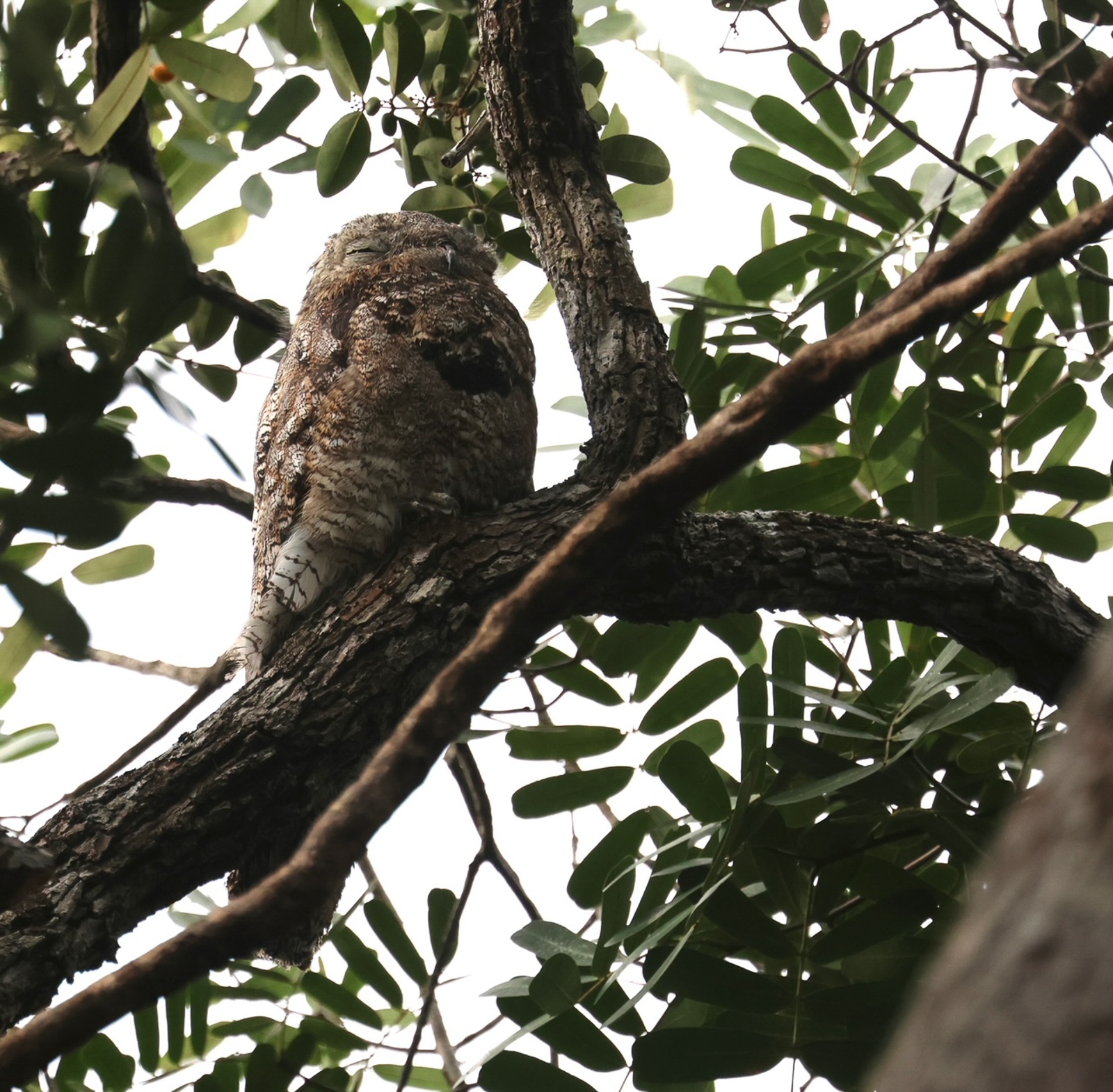
Great Potoo © Adam Kent
Day 6, March 15: We started the day with a walk from Surama Lodge to the nearby forest where the stars of the show were Capuchinbirds and a Rufous-winged Ground-Cuckoo that called and bill clapped from close behind thick vegetation before finally giving us a quick look. Some large Spix’s Guans in the subcanopy of the tall trees were fairly cooperative, but the majority of the birds were high in the canopy.
In the afternoon a few members of the group opted to have a relaxing time around the lodge while the remainder of the group took the Surama entrance road. At our first stop by a muddy puddle we found three species of seedeater; Gray, Plumbeous, and Ruddy-breasted. We turned off the road and entered a trail through open woodland with scattered Sandpaper Trees (Curatella americana), one of the most widespread trees of the savanna. Here we saw a Crested Caracara on a nest, several Lesser Nighthawks on day roosts in the trees, and a Common Potoo perched on the tip of a stick with a baby tucked under its belly feathers.
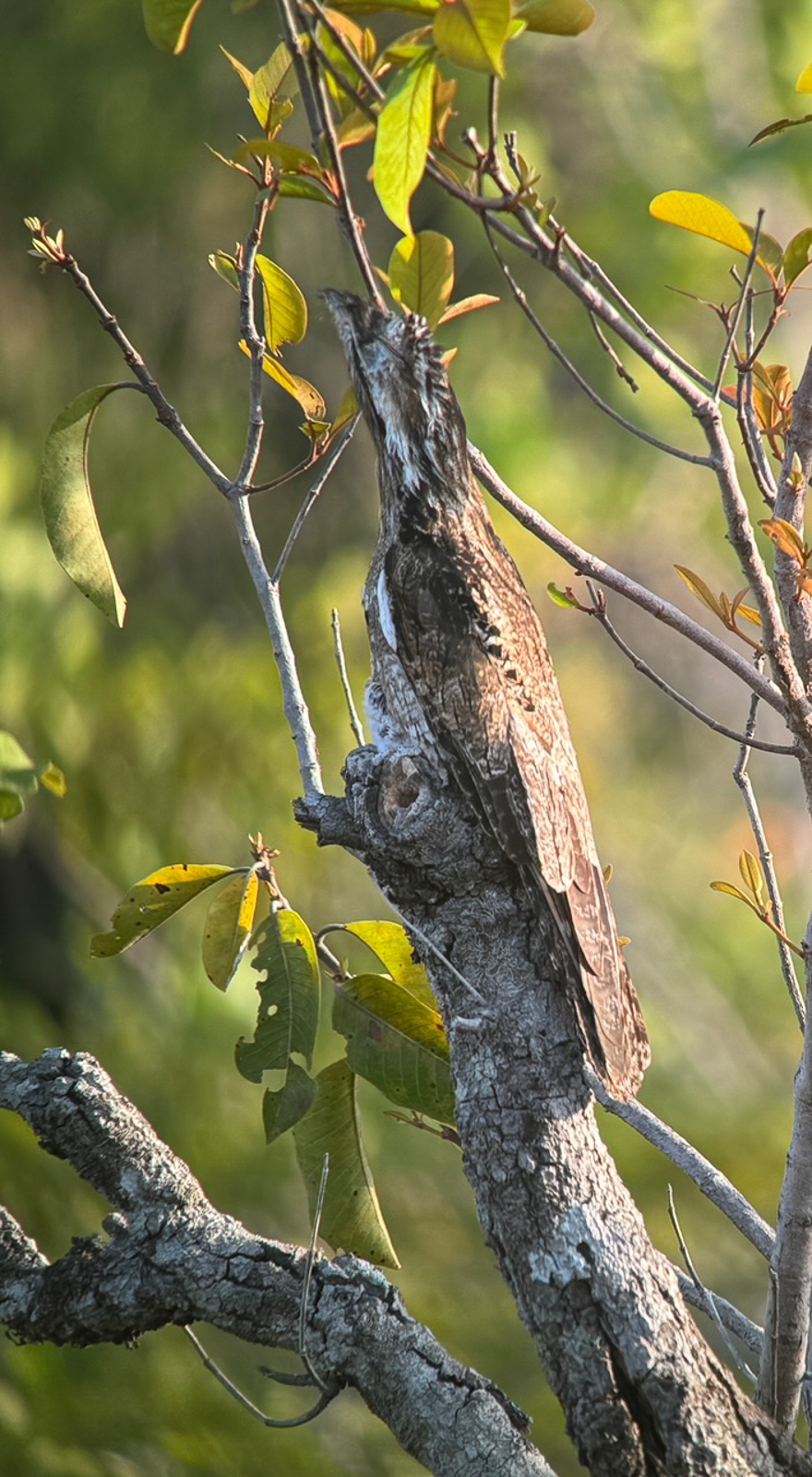
Common Potoo with chick © Adam Kent
Day 7, March 16: We started the day at Surama with a chance encounter with a Black Hawk-Eagle, followed quickly by another stop to watch two perched Red-and-green Macaws while two Scarlet Macaws flew by. Back on the main road we first stopped for excellent views of two Red-fan Parrots allopreening and spreading their impressive crests. After a bit, a beautiful adult Gray-headed Kite soared directly overhead showing us its unique wing shape and nice flight feather pattern.
On our next stop on the Surama entrance road we lucked out with a “cotinga tree” that held a few actively foraging Spangled Cotingas and one female Pompadour Cotinga. We also watched two Paradise Jacamars perched in good light, as well as a Guianan Puffbird and Purple-throated Fruitcrow.
In the afternoon, we took a boat trip down the Rupununi River where we watched various species of shorebirds, raptors, and kingfishers along the riverside. We also saw two Jabiru, huge white storks with black heads and red collars, and one tiny Black-chinned Antbird foraging on the riverbank.
After dinner we listened to a nice talk about the history of ecotourism at Surama by the lodge manager.
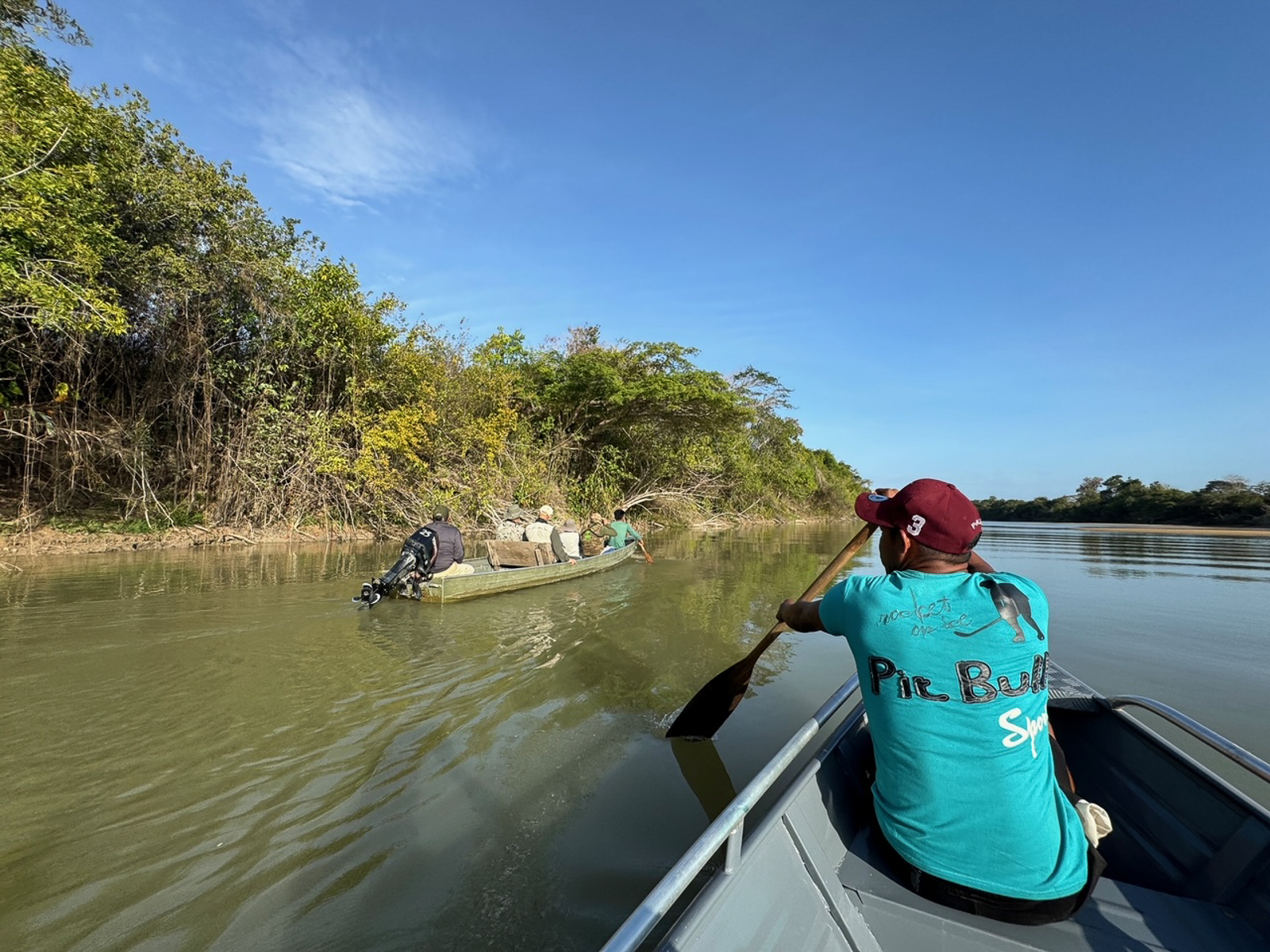
Rupununi boat trip © Adam Kent
Day 8, March 17: At our last Surama breakfast we enjoyed the view as well as the crazy sounds coming from the Yellow-rumped Cacique colony on the tree next to the main lodge. As we drove out we made a couple of stops and found Black-headed Parrot, Painted Tody-Flycatcher, and a couple of Gray-cowled Wood-Rails walking in the road.
We arrived at Atta Lodge in time to get settled in and have lunch before a rest. An afternoon walk turned up three antshrikes: Mouse-colored, Dusky-throated, and Cinerous. Further down the road the activity pick up with four species of kingfisher, and both local guan species, Spix’s and Marail. The highlight of the night was a White-winged Potoo.
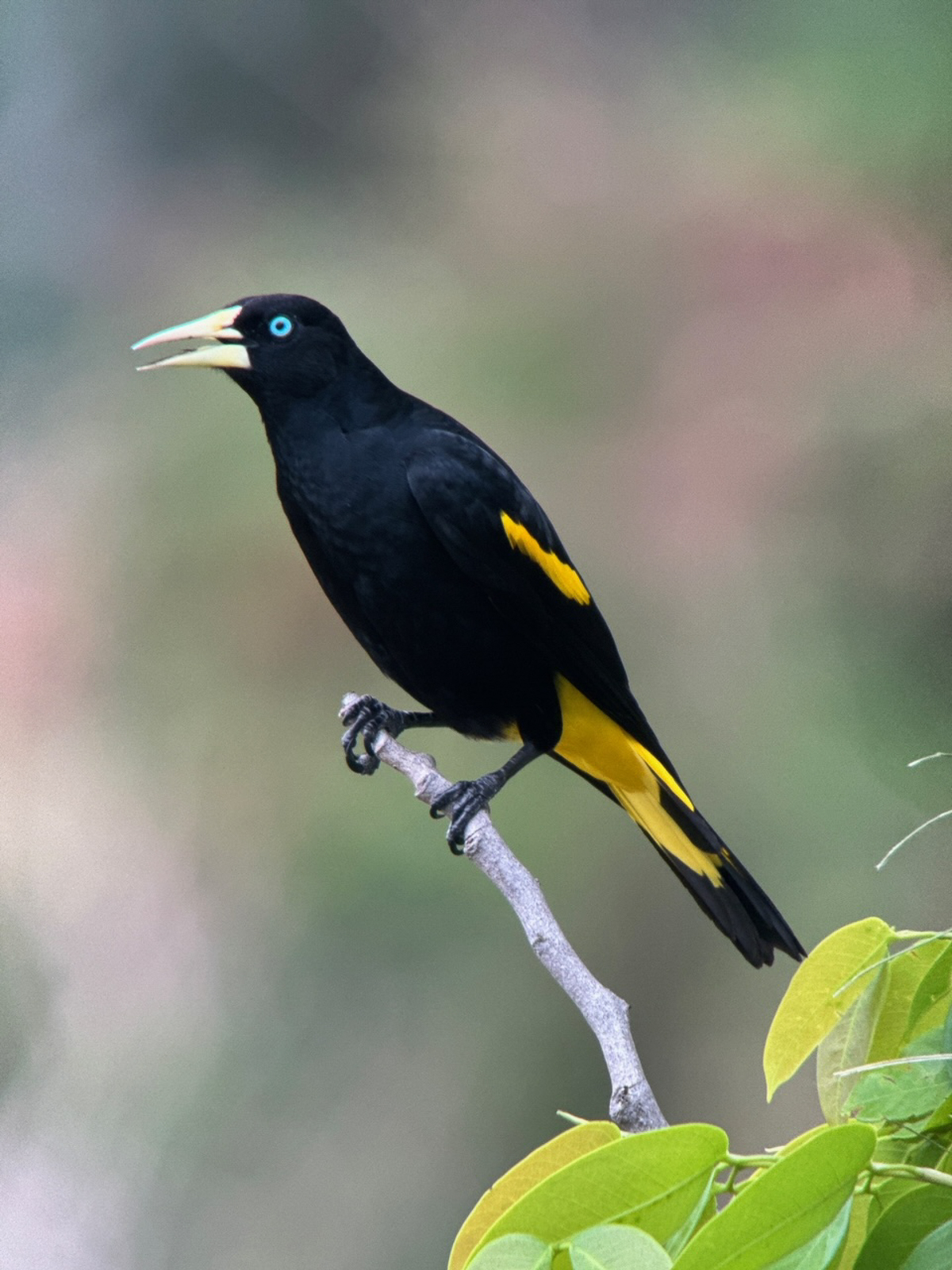
Yellow-rumped Cacique © Adam Kent
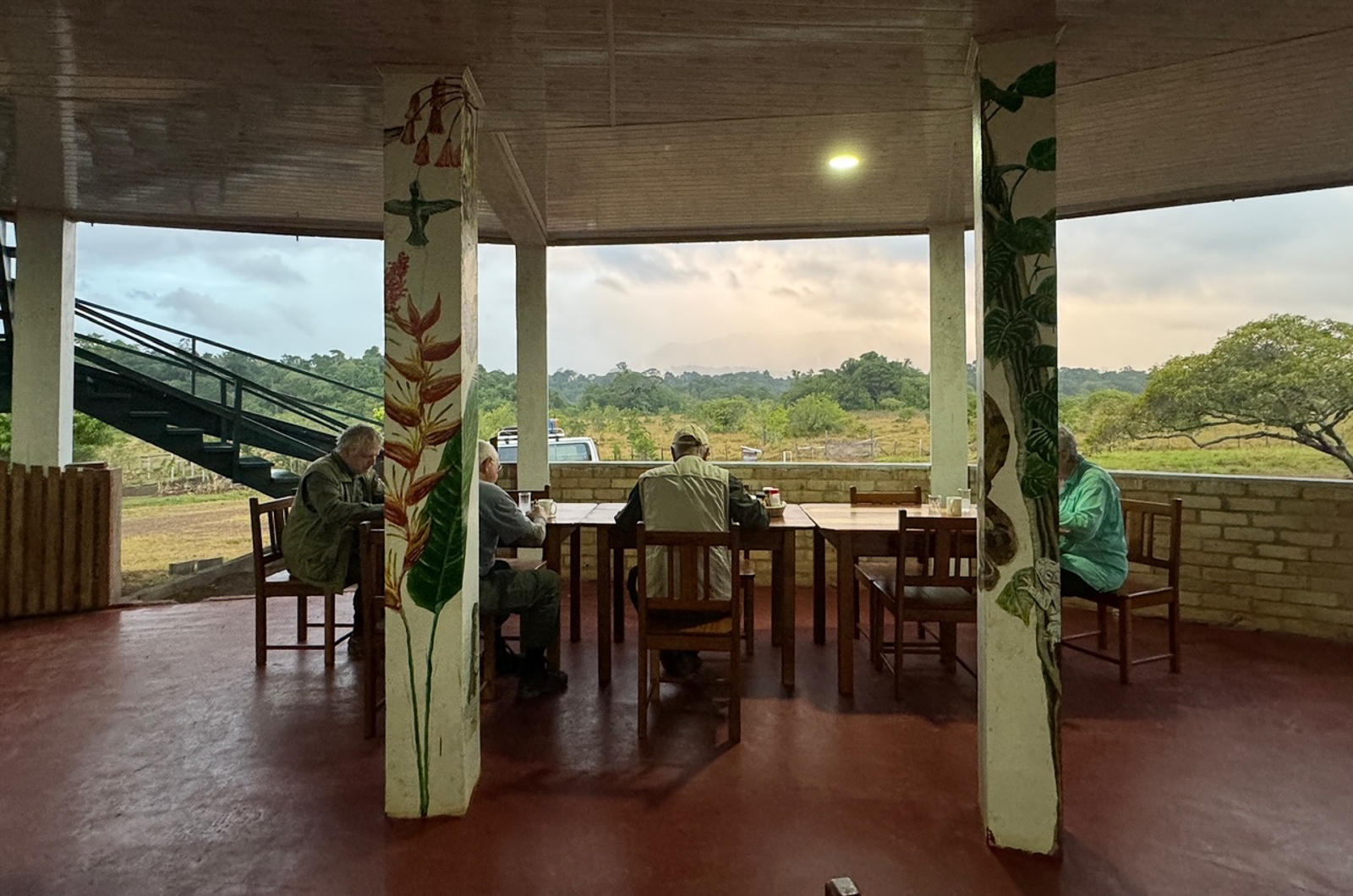
View from Surama lodge © Adam Kent
Day 9, March 18: We started our full day at Atta Lodge with a trip to the famous canopy walkway. From high in the treetops we enjoyed the view over the vast expanse of rainforest as well as looks at Waved Woodpecker, Guianan Trogon, and Spotted Tanager among others. After breakfast another walk turned up Black-faced Hawk, and the localized Red-and-black Grosbeak.
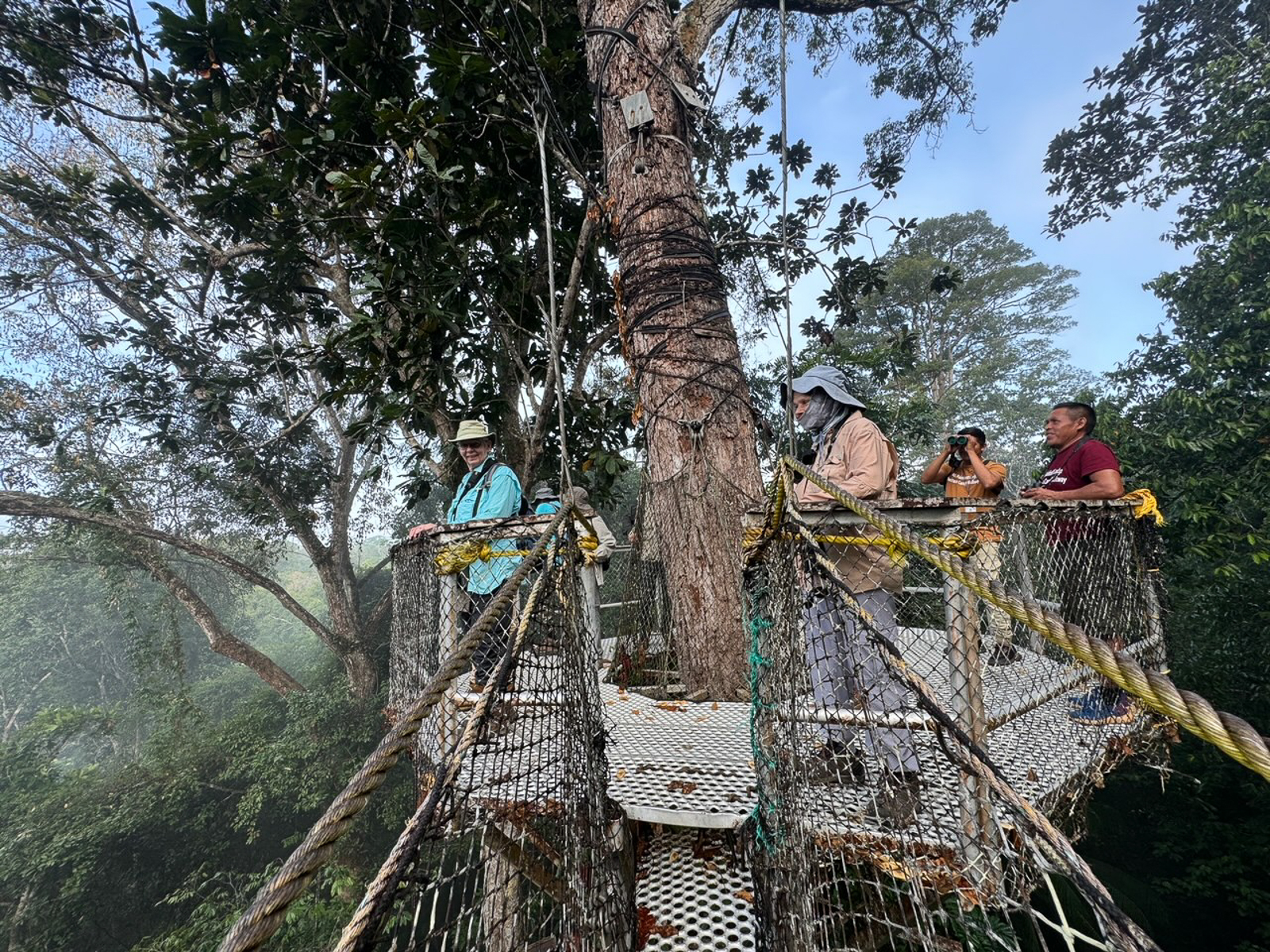
Atta canopy platform © Adam Kent
In the afternoon we headed back to the main road for more birding. We had nice looks at a Bronzy Jacamar, then, at our final stop, we found a fruiting tree with White-throated Toucans, Black-necked Aracaris, and one of the most desired birds in the country, the beautiful Guianan Toucanet.
We had a charming candlelight dinner outside and listened to the Atta Lodge manager give us a nice talk about the area and the people who lived there.
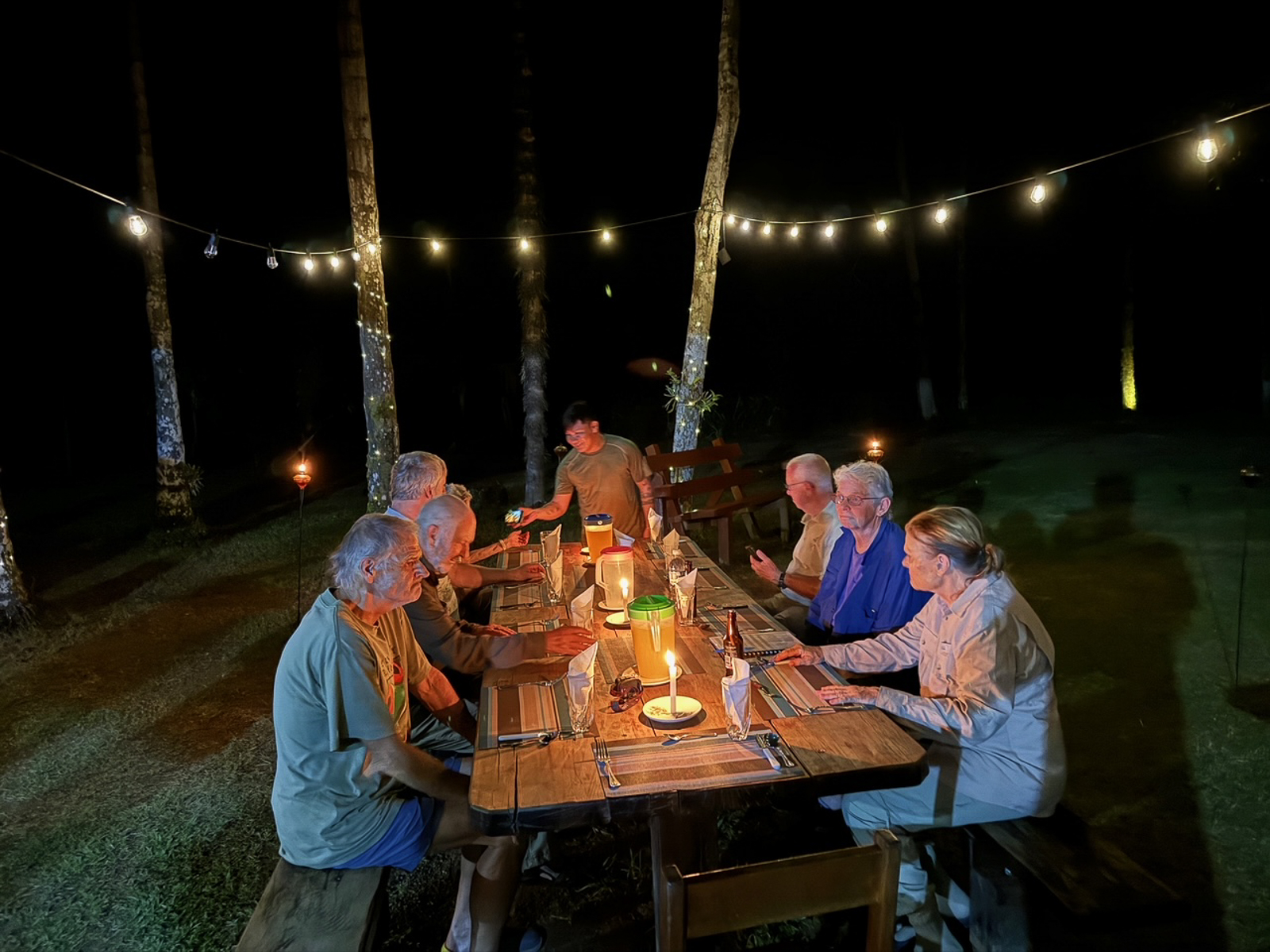
Atta candlelight dinner © Adam Kent
Day 10, March 19: After admiring the tame local Black Curassow one last time during breakfast, we took a walk on a loop trail near the main lodge. The forest had been less active than usual due to the severe drought and we too noticed the quietness.
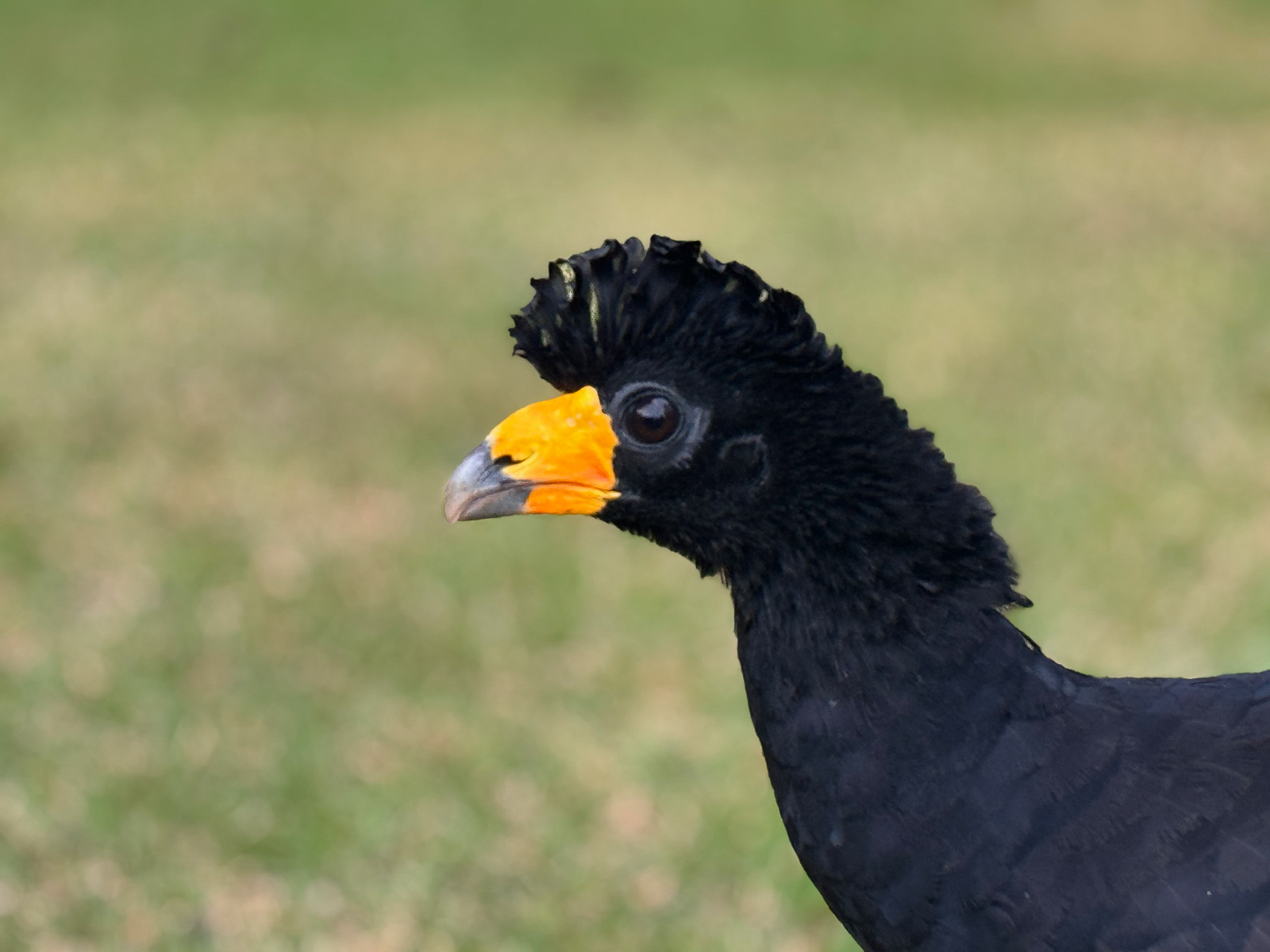
Black Curassow © Adam Kent
Once we left the lodge to continue our journey, we quickly came across a group of Gray-winged Trumpeters that very cooperatively crossed the road as we all watched. Shortly later a Tayra, a large Neotropical weasel, ran across the road right in front of us. Next, we made a quick roadside stop and found a Long-tailed Potoo perched so cryptically that it was even hard to see when centered full-frame in the scope.
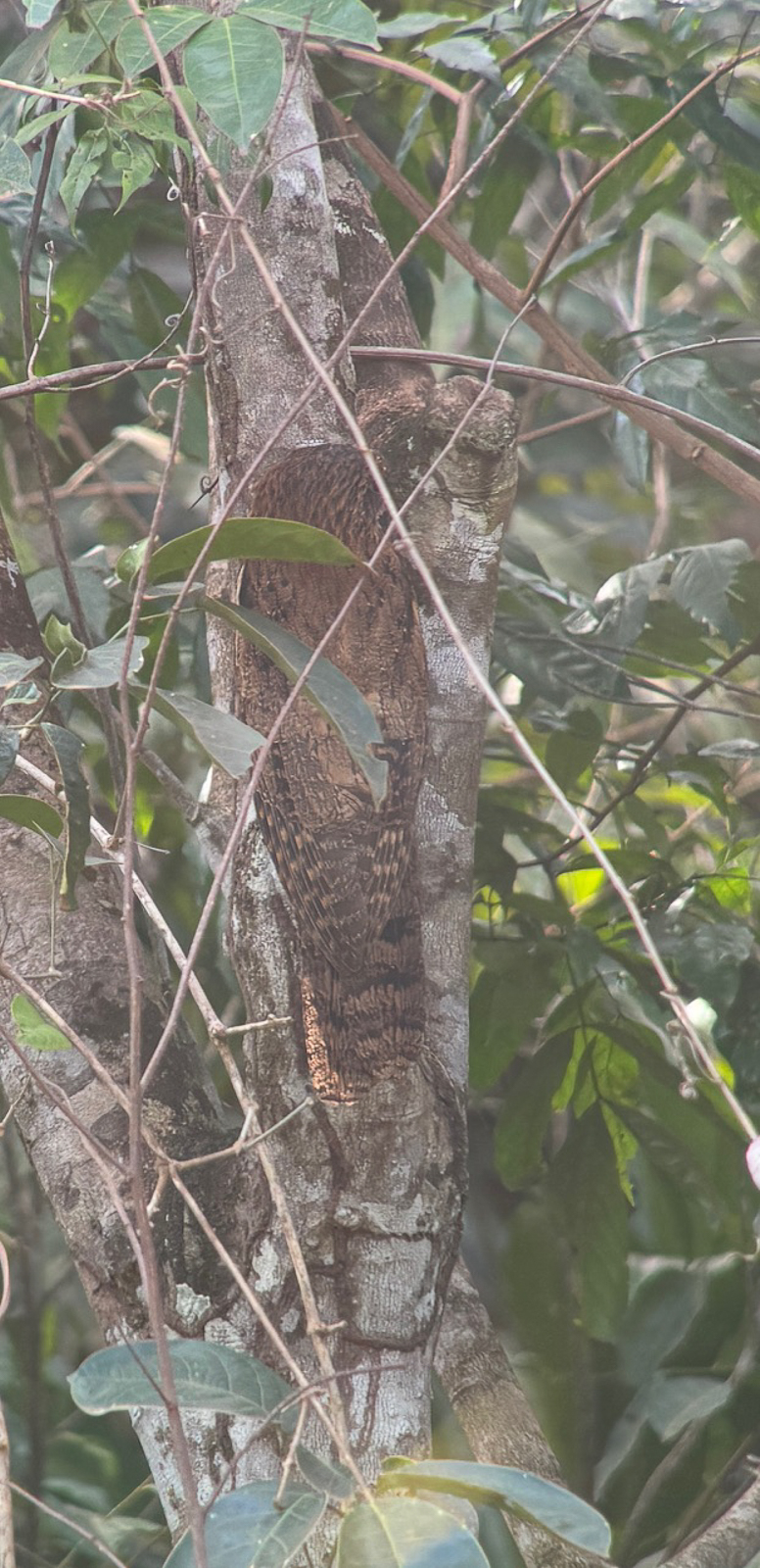
Long-tailed Potoo © Adam Kent
Before a delicious home-cooked lunch at the Surama junction we saw a nice mix of species including our only Bay-headed Tanager of the trip.
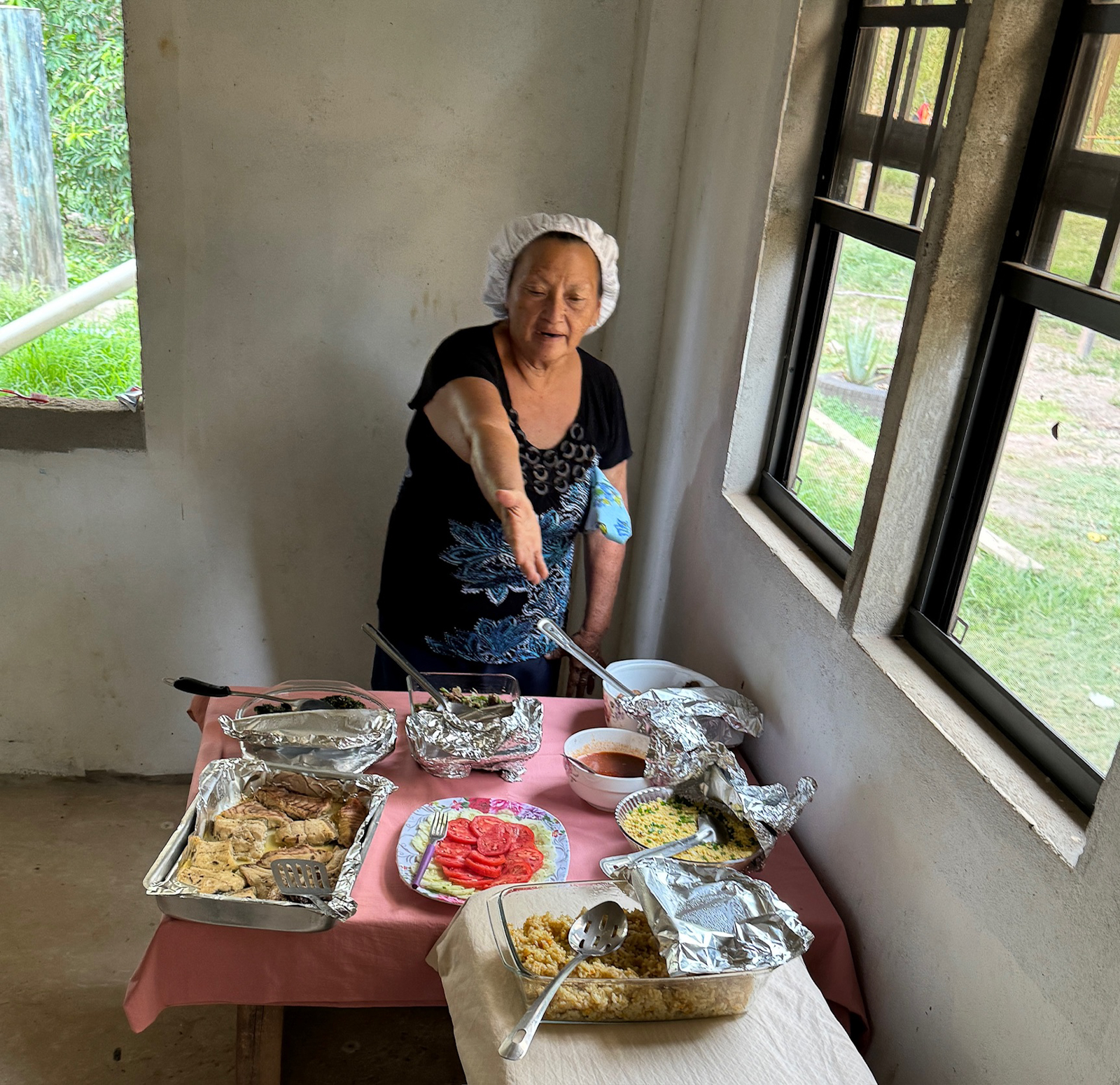
Surama home cooked meal © Adam Kent
We arrived at Rock View Lodge in the early afternoon in time for a dip in the pool, a nap, or both. Around the lodge itself, on our final walk of the day, we encountered a great mixed flock of tanagers, gnatcatchers, and other species in the forest, and various different plumages of Vermillion Flycatchers by the airstrip.
Day 11, March 20: Up before 4 am to get out and explore the Rupununi Savanna at dawn! Our first specialty bird was a Crested Doradito, a tiny bright yellow and olive flycatcher with a funky crest. The next place we explored turned up another small, cute flycatcher with a funky crest and fun name, the Bearded Tachuri.
Then we were off to our main destination of the morning, the Karasabi area, to look for the famous Sun Parakeet. These beautiful green, gold, and orange parakeets are listed as Endangered by BirdLife International and have been extirpated from most of their already small range by illegal trapping for the pet trade. Amazingly, with several people helping us look, we found a group of a dozen not long after we arrived. After enjoying our great parakeet views for a while, we returned to the ranger station to have a nice lunch, then hit the road again. We arrived at Manari Ranch in the midafternoon in time for a short rest before heading out for the next birding adventure. This time we took a short drive from the ranch to look for two very localized species, the Rio Branco Antbird, and the Hoary-throated Spinetail. Both species were right where they were supposed to be and showed off for us.
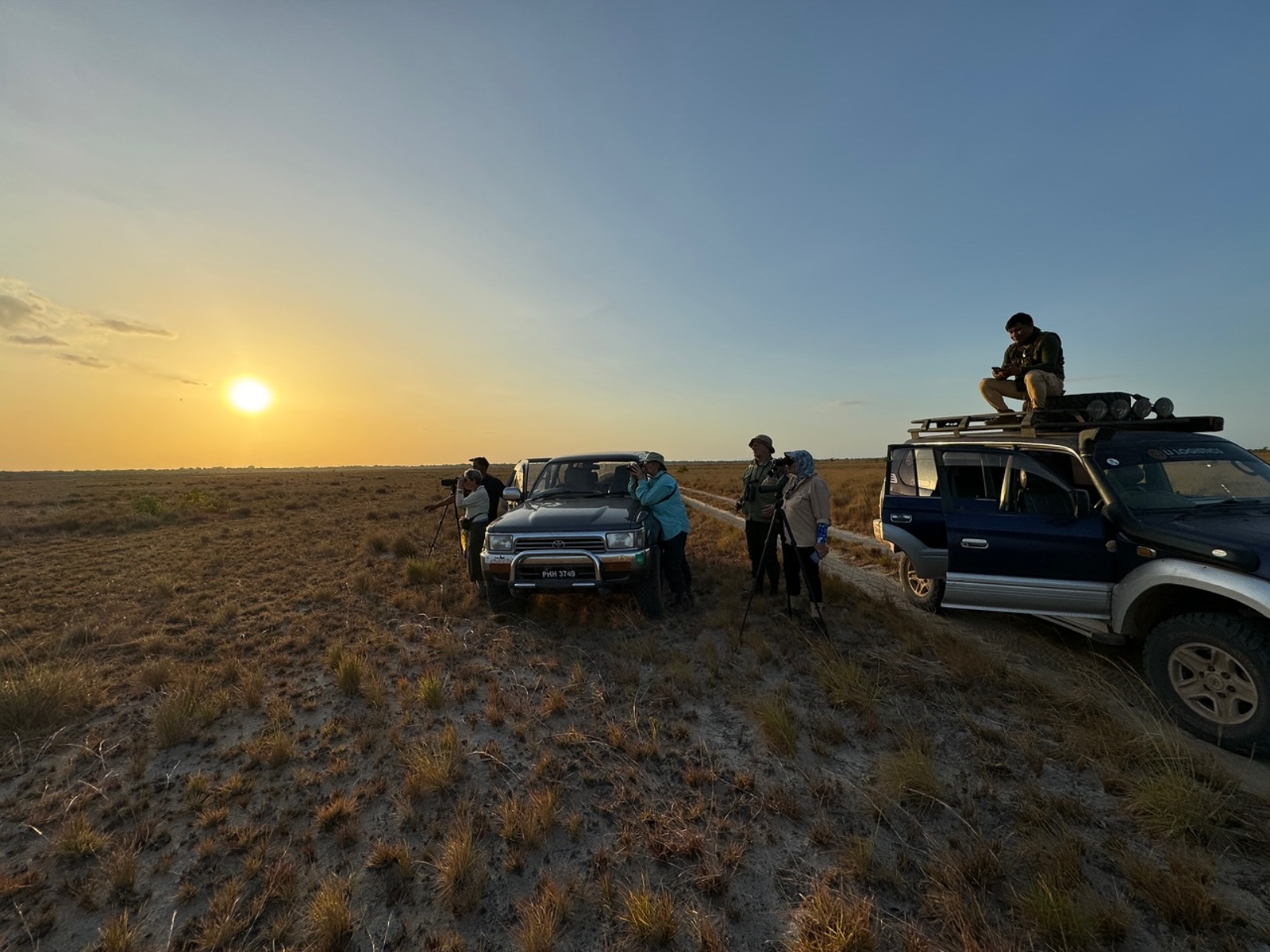
Sunset birding on the savanna near Manari Ranch © Adam Kent
Day 12, March 21: Before our morning flight from Letham back to Georgetown we took a nice walk around the Manari Ranch grounds and saw the large Bicolored Wren and the colorful Orange-backed Troupial. Then, on the way to the airport we made a quick stop to find a Least Nighthawk being chased by a Gray-breasted Martin.
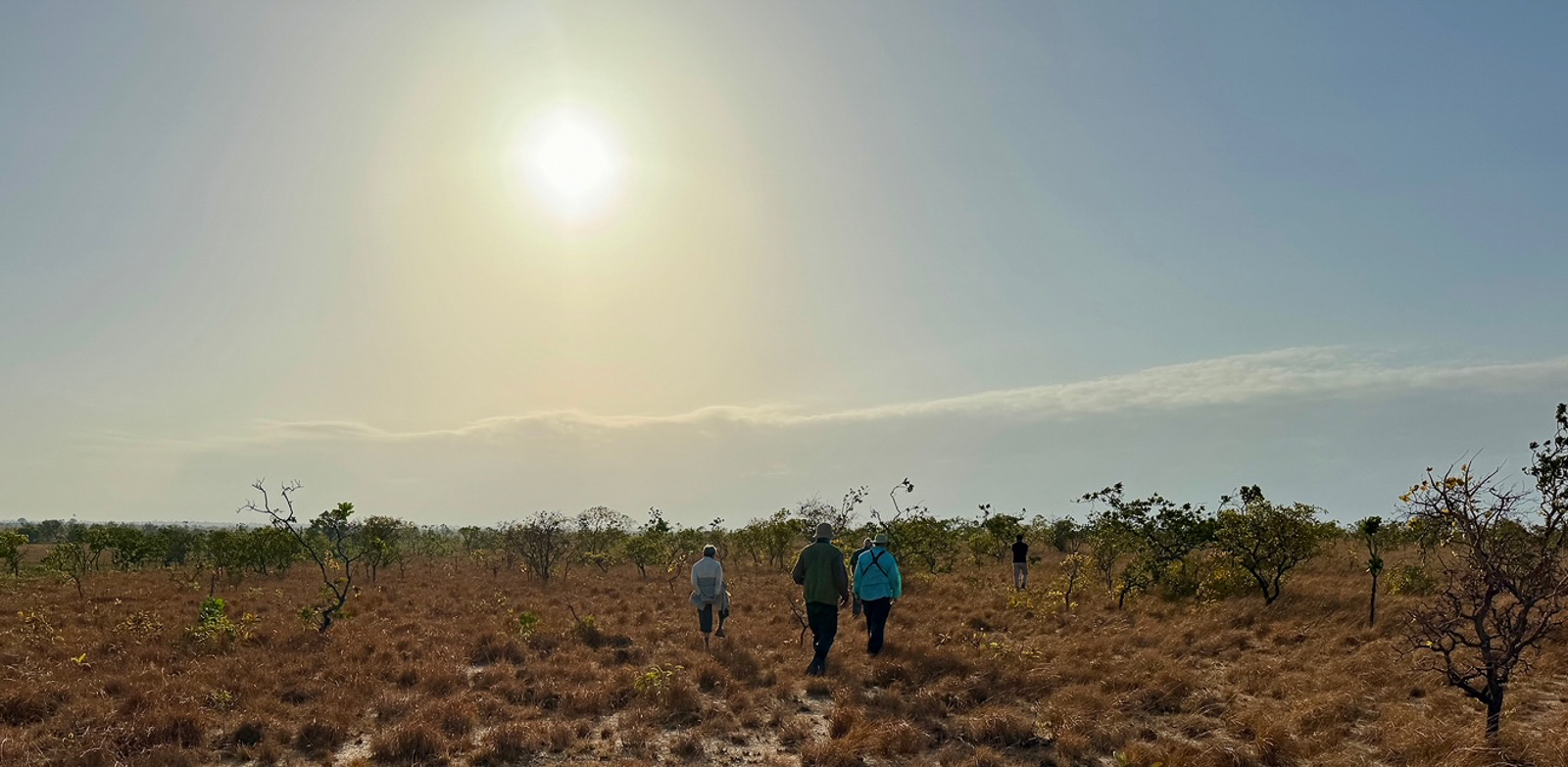
Least Nighthawk walk © Adam Kent
We arrived at Cara Lodge in time for lunch and a rest before a little birding. After a stop at the seawall to see if anything else had shown up (Willets and Short-billed Dowitchers and more birds overall had), we went to the Botanical Gardens to see what sorts of tropical birds we could find. Less than 30 seconds after talking about the Festive Parrot, a bird only a few of us had seen poorly up to that point, one called from the tree right next to us. It stayed put for several minutes so everyone had great looks and photos. We saw several more birds well, including Straight-billed Woodcreeper, Yellow Oriole, and Yellow-crowned Parrot, before we returned to the hotel for our final dinner and an early night sleep before our early flights home.
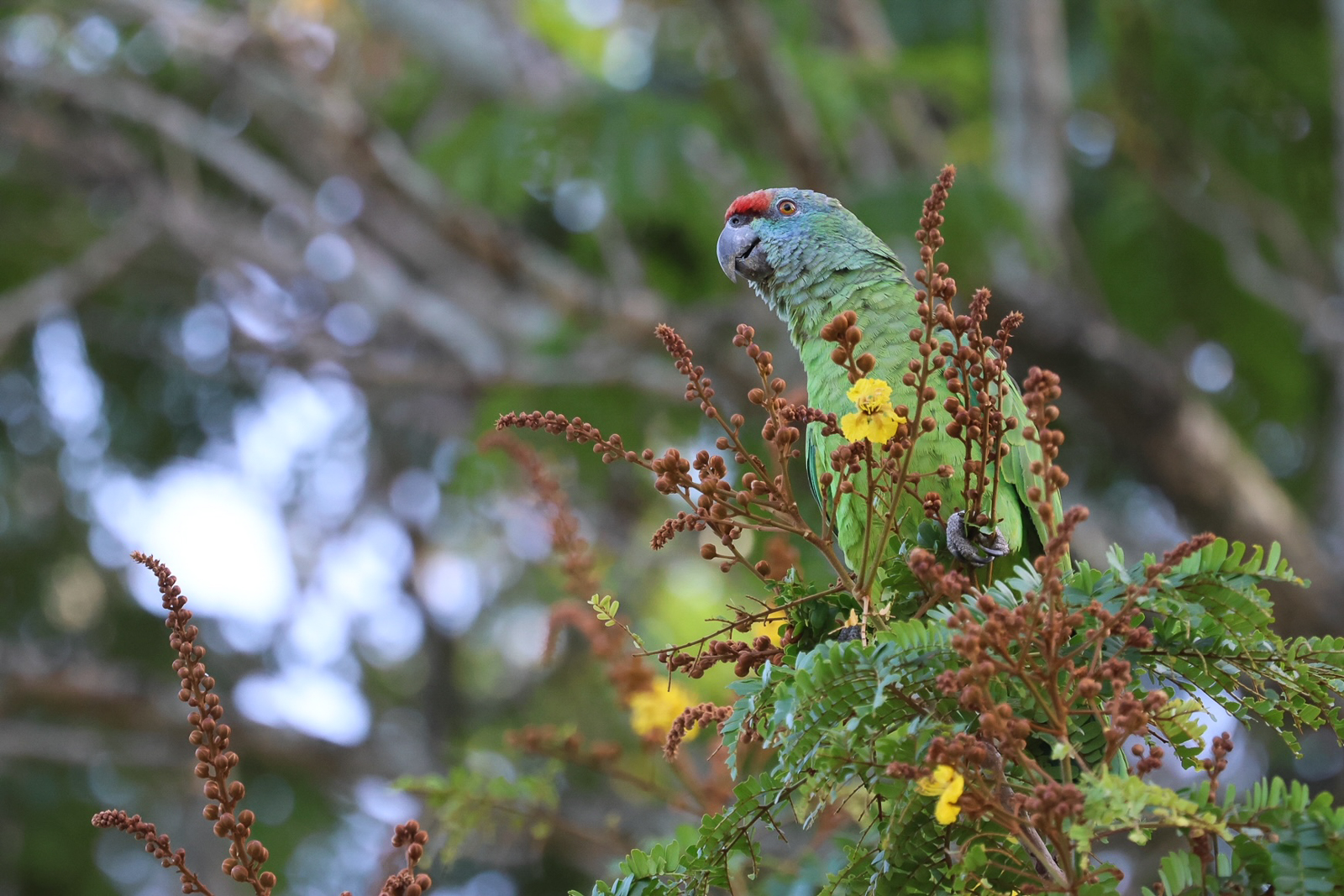
Festive Parrot © Adam Kent