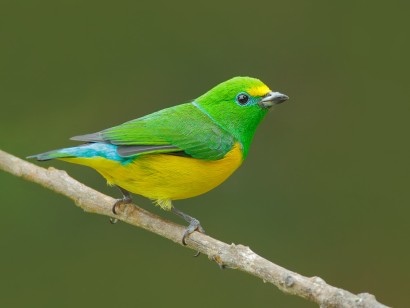
Colombia Birding Tour 2023 Trip Report
Colombia Birding Tour 2023 Trip Report (Mar 29 – Apr 12, 2023)
Colombia is the country with the highest number of bird species in the world; it has over 70 endemic birds and about twice as many near-endemics. Yet, for security reasons related to drug-growing and guerrillas, the country was practically closed to tourists for a few decades. In the last few years, Colombia has been opening up and developing its tourism infrastructure and most of this country is now safe to visit.
We were accompanied by exceptional bird guide Manuel Espejo, who also knows a lot about certain types of plants and insects. This tour, Eagle-Eye Tours’s fourth visit to Colombia, was packed with special birds and varied scenery as we travelled in a semicircular route around the core of the country, visiting the Western, Central and Eastern Andes and adjacent valleys (Magdalena Valley, Cauca Valley and Anchicayá Valley).
This semicircular route enabled us to encounter a number of special species, including Red-ruffed Fruitcrow, the spectacular Buffy Helmetcrest, Violet-tailed Sylph, Velvet-purple Coronet and a total of 51 species of hummingbirds and 44 species of tanagers. Any tour which sees that many hummingbirds and tanagers and eight species of antpittas (plus 4 more heard) is a remarkable tour. In all, in two weeks of birding we recorded an amazing 448 species of birds (32 heard-only); also we saw 8 species of mammals, and a bunch of interesting insects, orchids and carnivorous plants.
Day 1. March 29. Arrival day.
We met in Bogotá (Eastern Andes), having flown in from different places.
Day 2. March 30.
We boarded our small bus, our transport for most of the tour, and visited La Florida Park in Bogotá and then left the city heading northward. At La Florida Park we saw the endemic Bogotá Rail and Silvery-throated Spinetail and many other species including the disjunct Spot-flanked Gallinule (a species found in Colombia only around Bogotá, otherwise found only in eastern and southern South America). Away from Bogotá we stopped first at mid-elevation at Laguna Tabacal, finding the tour’s only Cinereous Becard among others. The rest of the afternoon was a 5-hour drive to Río Claro, plus stops for lunch at a birdy restaurant in La Vega (including our only Pale-breasted Spinetails) and a productive 50-minute stop along the Puerto Triunfo road.
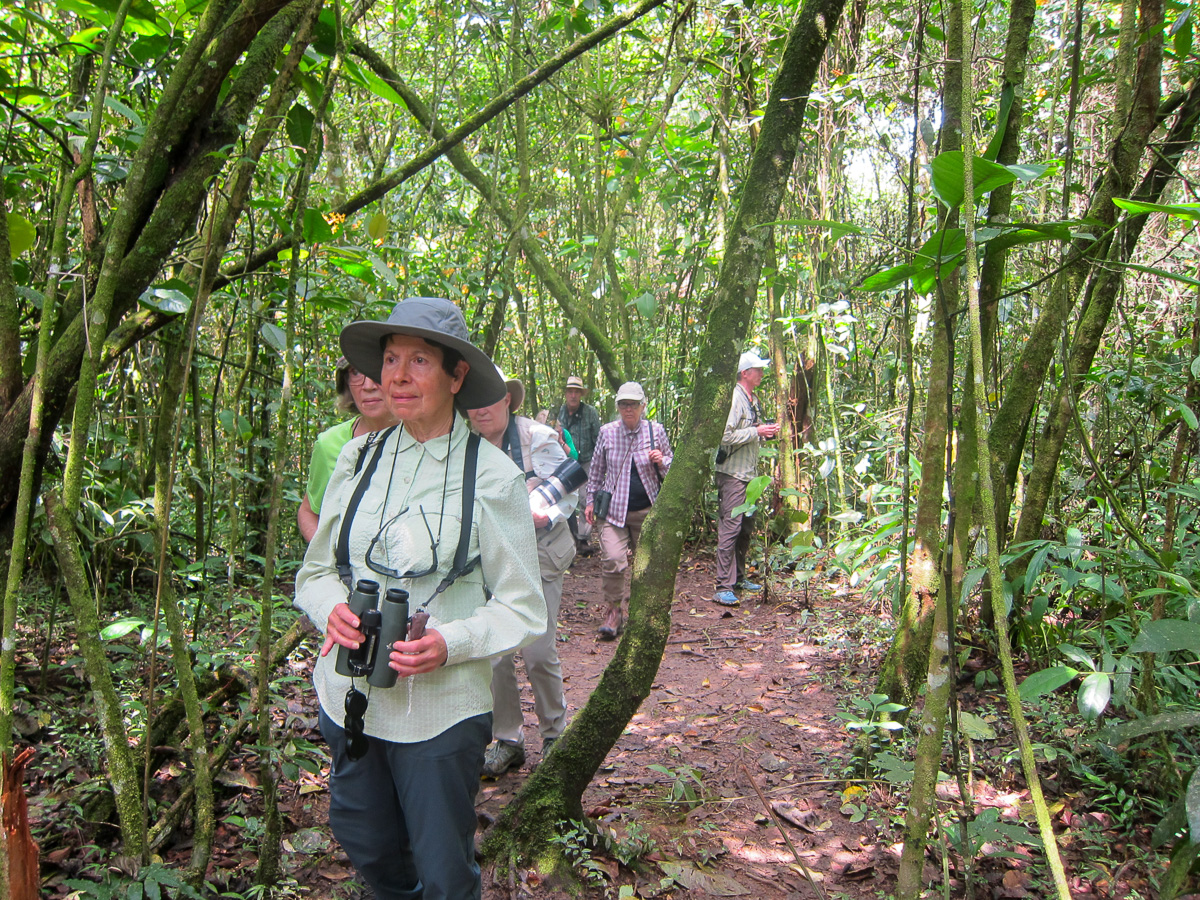
Group along the trail at Tabacal © Héctor
Day 3. March 31
Our cabins in Río Claro are set in beautiful, tall rainforest. Around the cabins and on the walk from there to the restaurant and to the beginning of La Mulata trail, we saw trogons, wrens, flycatchers, motmots, woodcreepers and other tropical birds, including excellent views of a pair of the world’s smallest passerine, Black-capped Pygmy-Tyrant.
Much of the morning was spent on La Mulata trail, where we found another highly range-restricted target bird, the endemic Antioquia Bristle-Tyrant. We had been told that the best birds along this trail are those in the very steep and muddy section beyond the river, and all but one of the participants decided to brave this beyond-the-river part. Even though this part of Colombia has been rather dry recently, this part of the trail turned out to be indeed very muddy and very steep. But even those who had the hardest time did pardon us after seeing two courting male Golden-headed Manakins.
Other highlights in this part of the trail included Southern Bentbill, a very rare Black-and-white Hawk-Eagle and being stumped by an “unknown” song that turned out to be an atypical but very distinctive song of Long-billed Gnatwren.
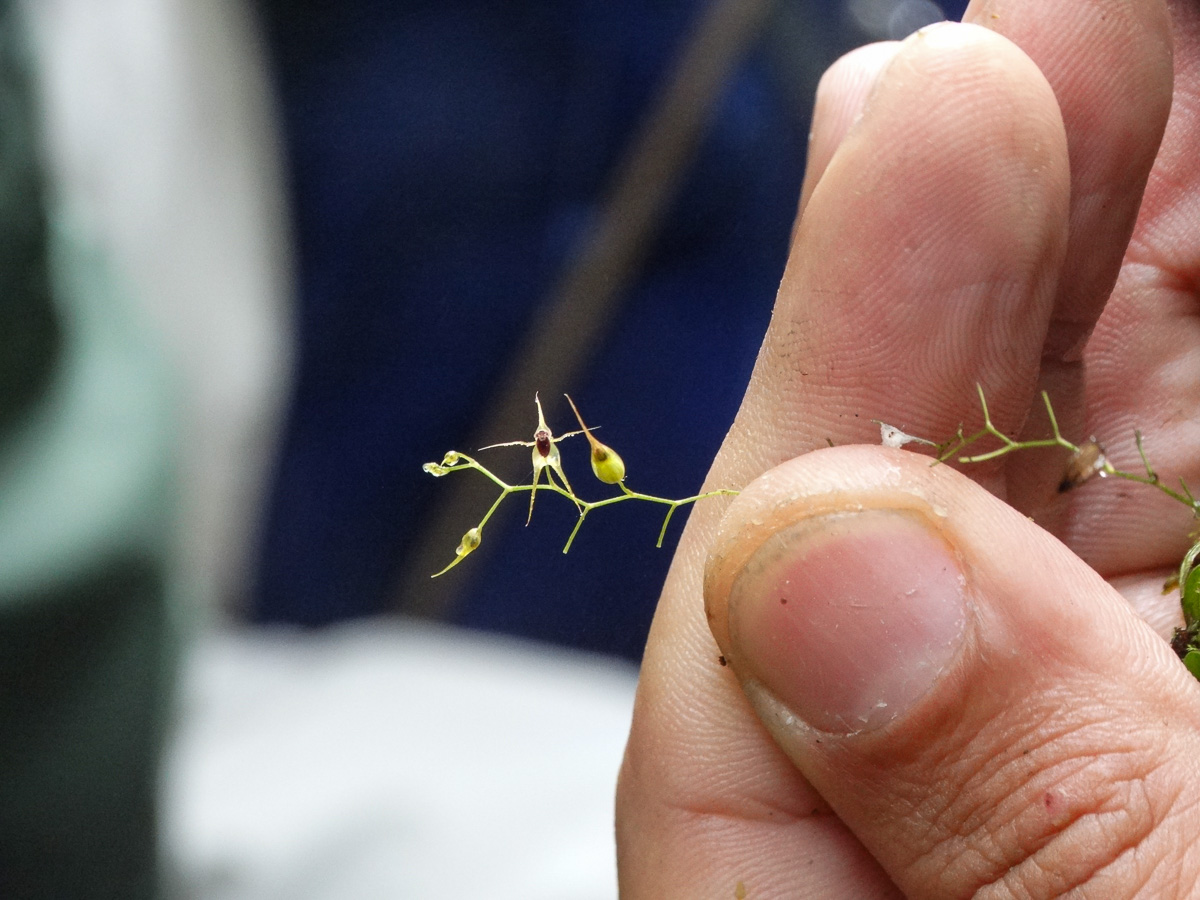
One of the many tiny orchids found by our Colombian guide Manuel Espejo
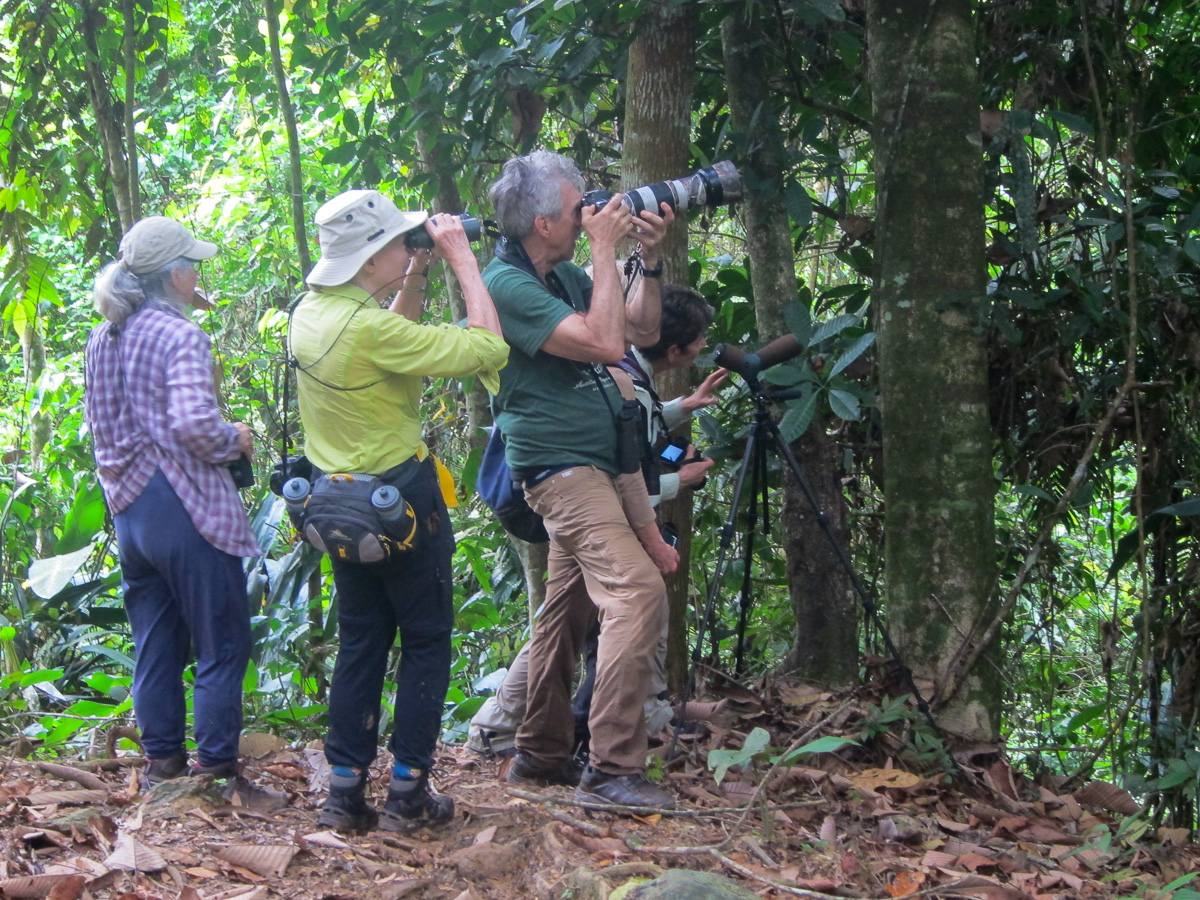
Looking at Golden-headed Manakin
In the afternoon we drove a short distance to the Cueva del Cóndor trail, where we saw Olivaceous Piculets and a mixed colony of Yellow-rumped Cacique, Crested Oropendola and Chestnut-headed Oropendola. We also saw the trip’s only White-thighed Swallows, and the Colombian endemic White-footed Tamarin Monkeys, though we failed to see the Gray-cheeked Nunlet we were targetting (heard only).
At dusk we headed beyond the restaurant at Río Claro, this time to wait at the edge of the river across from the mouth of a cave for Oilbirds to emerge. At around 620 pm, the cave “erupted” with hundreds of Oilbirds pouring out (and a few flying back in) –a spectacle that had us mesmerized for several minutes, but that continued into the night for who knows how much longer.
Day 4. April 1.
A relaxed morning of birding around the cabins and restaurants produced a few new birds for our trip list but most of the morning was spent on a road near Río Claro that traverses pastures and forest patches, where among the many birds seen was the trip’s only Sooty Ant-Tanager (another endemic), Thick-billed Seed-Finch, Ruddy-breasted Seedeater and Yellow-backed Tanager, and an impressive kettle of Broad-winged and Swainson’s Hawks on migration.
We left Río Claro heading toward the Ibagué area, but we first stopped for 10 minutes on the Puerto Triunfo road because the day-before-yesterday we failed to see one important target bird from that area (Northern Screamer); this would be our last chance to see this interesting bird. And amazingly we found it very quickly.
After lunch nearby, we spent all afternoon driving to our next accommodation, the luxurious Iguaima hotel.
Day 5. April 2.
We started the day driving to a private home near Anaime where a local family attracts the range-restricted endemic Tolima Dove and Tolima Blossomcrown to their garden, and, nearby, the equally restricted Yellow-headed Brush-Finch is found in wooded streams crossing the road.
Next we walked 2 km up through unbroken cloud forest at Campanario/La Línea, looking (unsuccessfully) for Indigo-winged Parrot which can sometimes be found here. We did however see a lot of good cloud forest species, some never seen again on the tour, including Golden-crowned Tanager, Black-capped Tyrannulet, Mountain Avocetbill and Barred Fruiteater, and glimpsed an Ash-colored Tapaculo and our first Bicolored Antpitta.
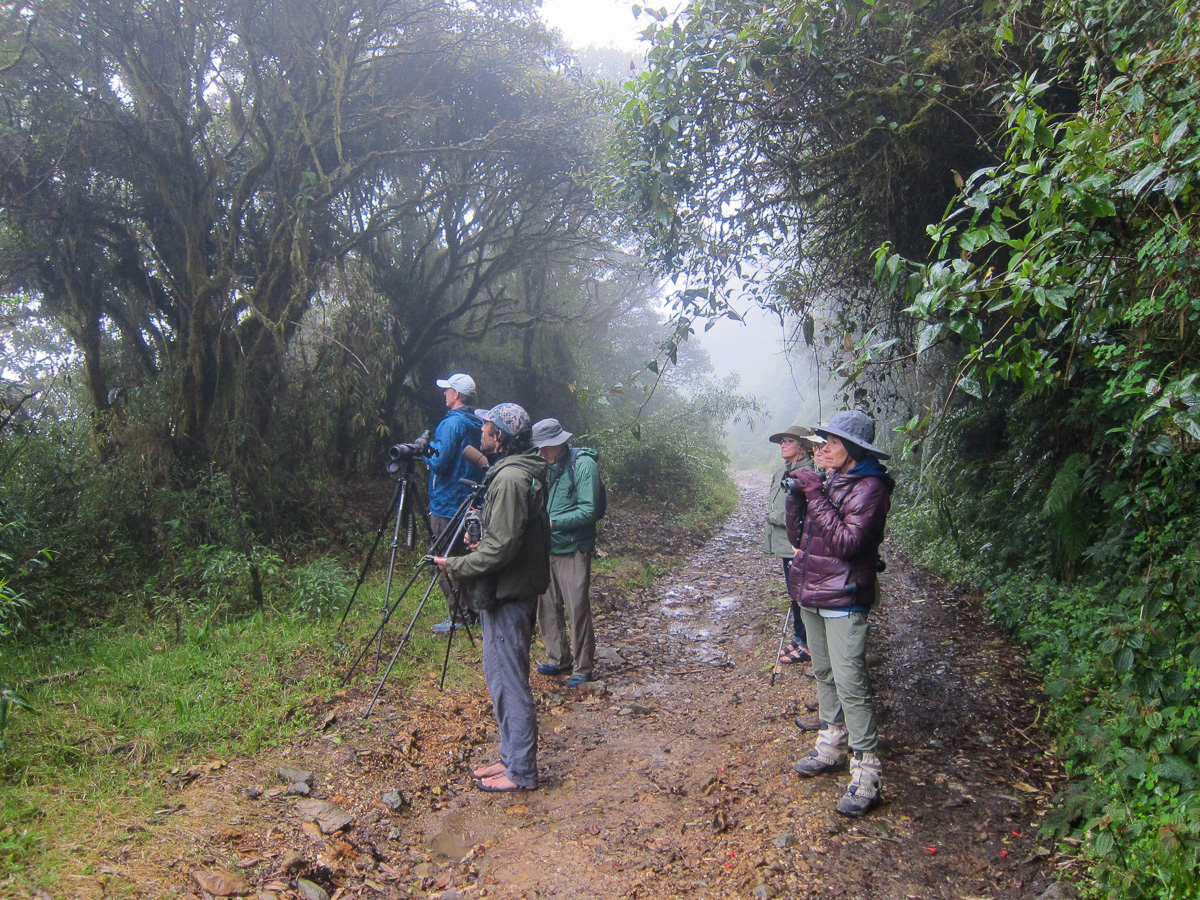
Waiting for a rare bird at El Campanario road
We had lunch at another extraordinarily birdy restaurant, this one in Calarcá, and then drove to our next hotel, Hotel Kumanday near Otun-Quimbaya reserve.
Day 6. April 3.
We spent all morning in the Otun-Quimbaya area. We boarded two 4-wheel drive jeeps at 5 am to go the 12 km through rainforest to El Cedral, which took us most of an hour due to the poor road conditions. The main target here was Hooded Antpitta, which is only reasonably found just after dawn and is practically impossible to see anywhere else. The dawn chorus was at its maximum. A short walk back along the road until we heard the song of our target bird, and a little playback later, and we were seeing Hooded Antpitta.
Then for the rest of the morning, we walked back along the road, followed by the jeeps, seeing what else we could find. Mountain Tapir is also possible here, but unfortunately we did not see any tapir. Lots of other goodies, though, not least of which was Red-ruffed Fruitcrow, near-endemic Moustached Puffbird and the endemic Cauca Guan and Multicolored Tanager.
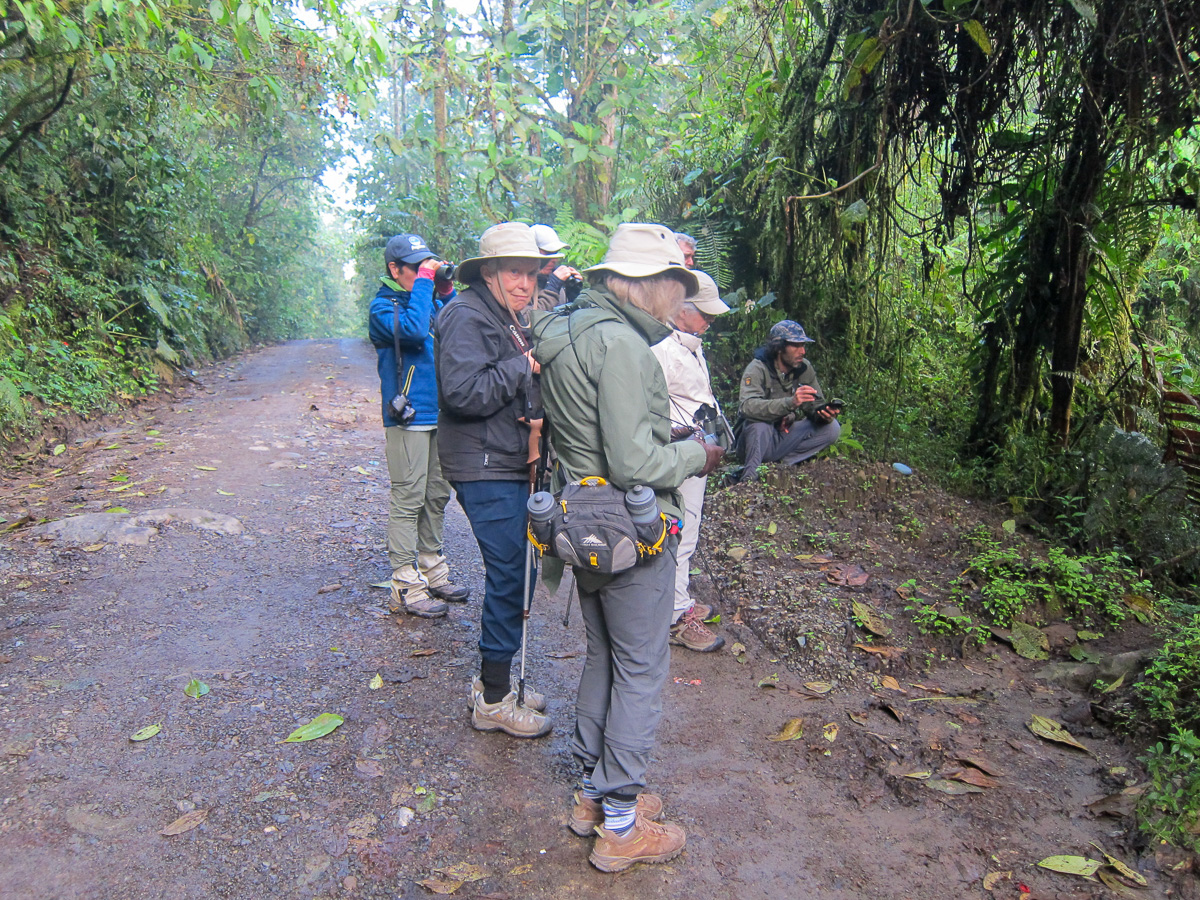
Stalking a bird in Otun Quimbaya
At noon we got back onto the jeeps and drove back to the hotel where we had lunch and packed our luggage to drive on to the Tinamú Reserve/Hotel.
Day 7. April 4.
We spent a relaxed morning at the feeders and trails in Tinamú reserve. We picked up several birds that we didn’t see anywhere else on the trip, including Gray-headed Dove, Golden-collared Manakin, Cocoa Thrush and the endemic Parker’s Antbird, as well as excellent views of Andean Motmot and a pair of Spectacled Parrotlets at a nest hole.
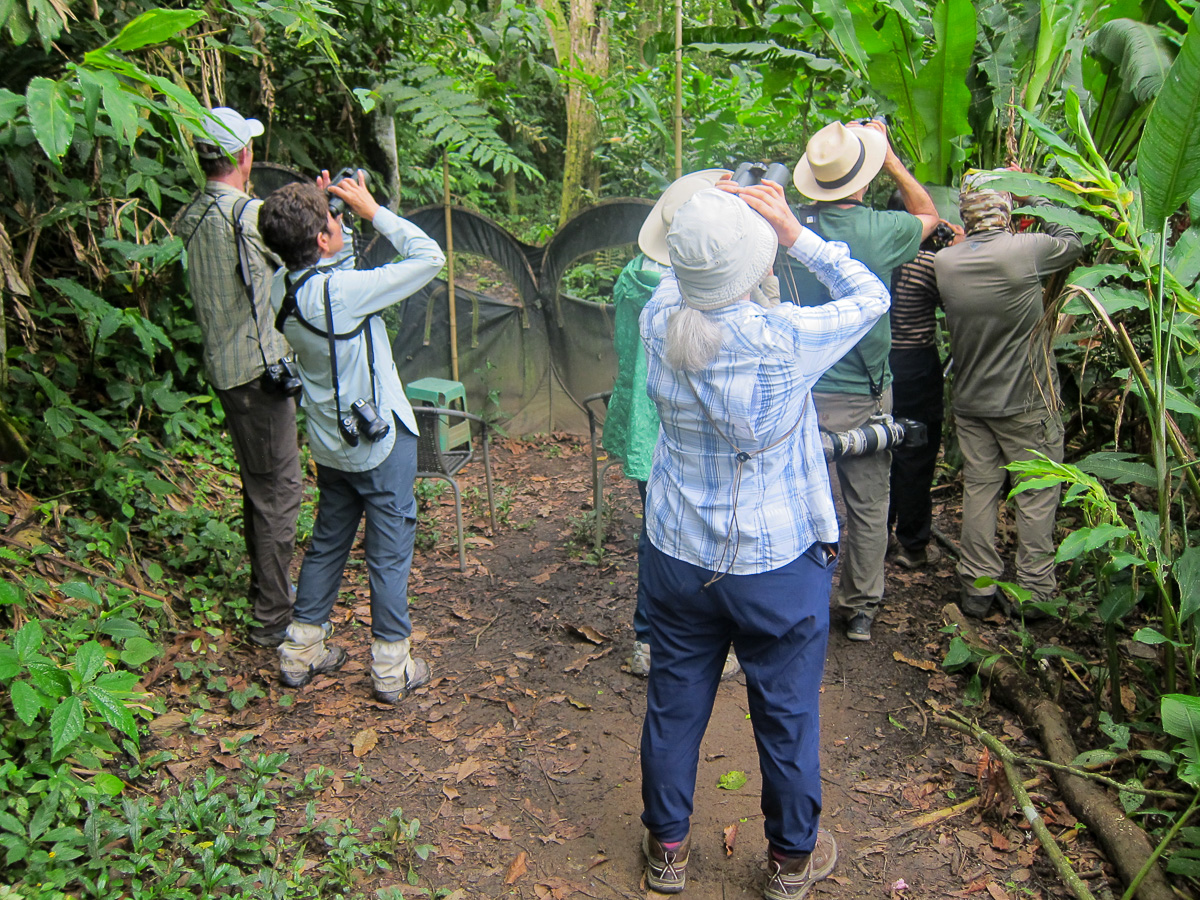
Birding at Tinamu Reserve
Then we drove to the luxurious and high-elevation Termales del Ruiz hotel near Los Nevados National Park, not without first making a birding stop in the sub-páramo, where we saw Andean Teal and the Andean form of Ruddy Duck, Plumbeous Sierra-Finch and Stout-billed Cinclodes. At the hotel we staked out the hummingbird- and fruit- feeders for a while in the afternoon, seeing Golden-breasted Puffleg, Great Sapphirewing, Rainbow-bearded Thornbill, Shining Sunbeam, Lacrimose Mountain-Tanager and the gorgeous Scarlet-bellied Mountain-Tanager.
Day 8. April 5.
We spent the morning down the mountain at Hacienda El Bosque, a working cattle ranch that preserves patches of cloud forest (60% of the property is forested) and that in the last few years has begun providing food to attract different kinds of birds, the main 3 attractions being Equatorial and Crescent-faced Antpittas and Gray-breasted Mountain-Toucan. These different bird have different feeding stations and feeding schedules, and other birds show up at their feeding stations and nearby areas as well. We were successful with all three, and additional birds seen around the feeding stations included the trip’s only Gray-browed Brush-Finch, White-browed Spinetail and Black-thighed Puffleg.
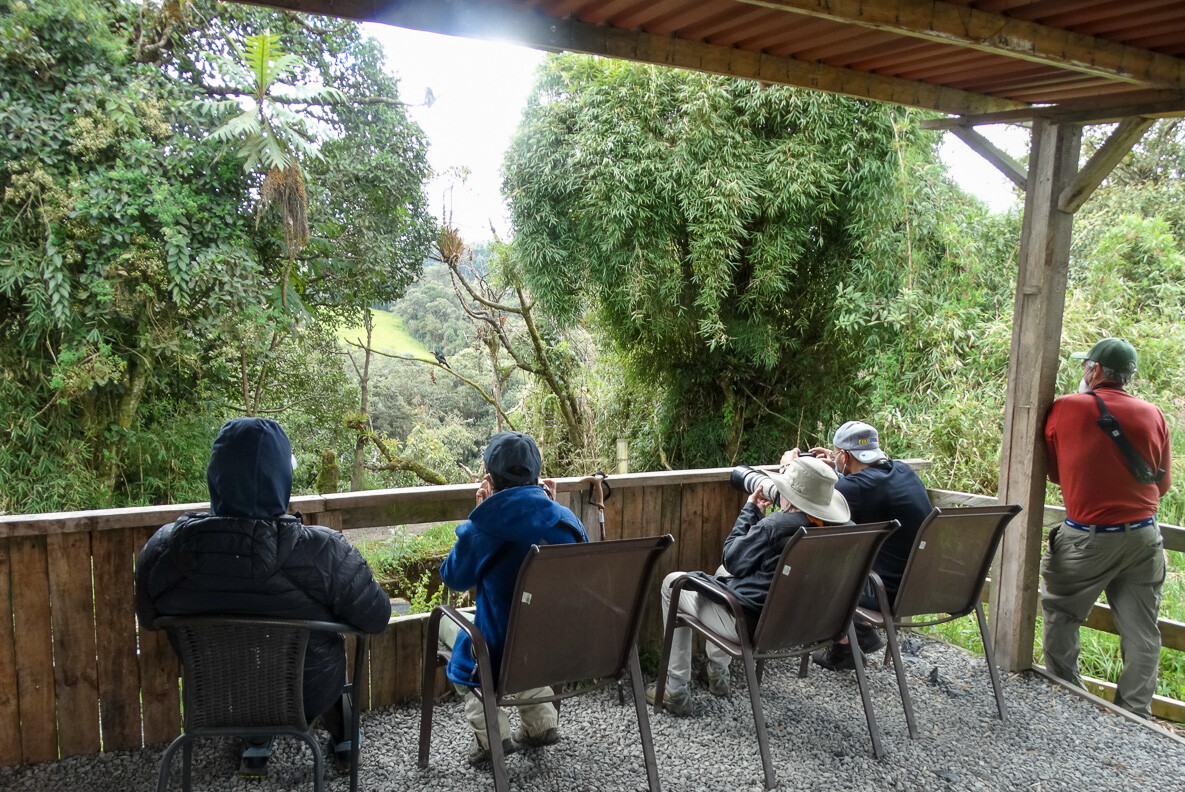
Looking at Gray-breasted Mountain Toucan
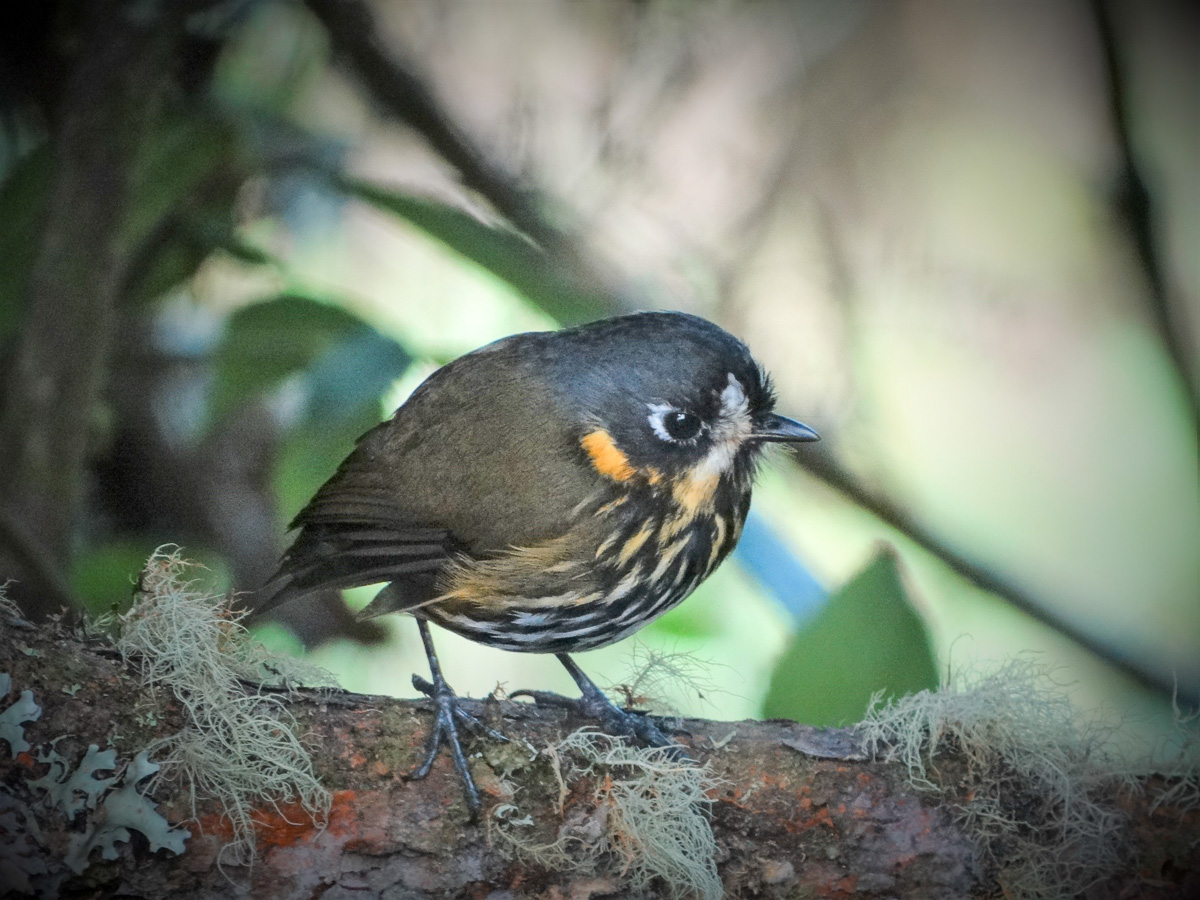
Lunita-the Crescent-faced Antpitta © Hector
Driving back to Hotel Termales del Ruiz, we stopped at a lookout to see the smoking Nevado del Ruiz volcano.
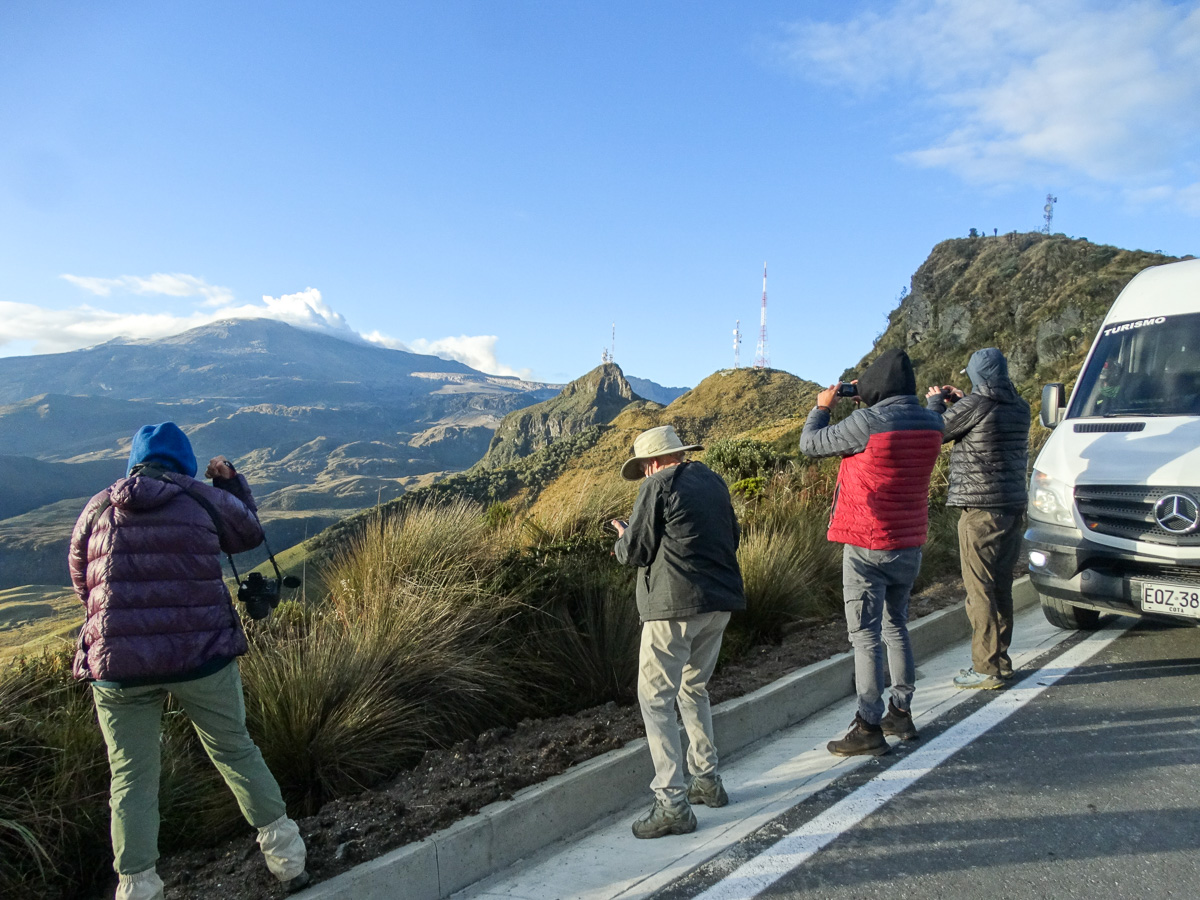
Watching the smoking Nevado del Ruiz
In the afternoon, the group visited the higher-elevation páramo above Hotel Termales del Ruiz, seeing the smoking Nevado del Ruiz volcano and many páramo-restricted bird species, the major highlight being the Buffy Helmetcrest. The scenery was outstanding, not only the smoking volcano but also the “Martian landscape” of Espeletia plants (required by the Buffy Helmetcrest for nesting material). It rained part of the afternoon but we drove down to a spot where Manuel had to wade into a marsh to show the group a few Noble Snipes.
Day 9. April 6.
In the morning we visited the Río Blanco reserve and were very successful with the antpittas that are the specialty of this reserve, seeing Bicolored, Chestnut-crowned, Slate-crowned and Brown-banded. We also saw Flammulated Treehunter visiting its nesthole and mixed flocks kept us busy with a multitude of cloud forest species while hummingbird feeders also had us entertained while having breakfast.
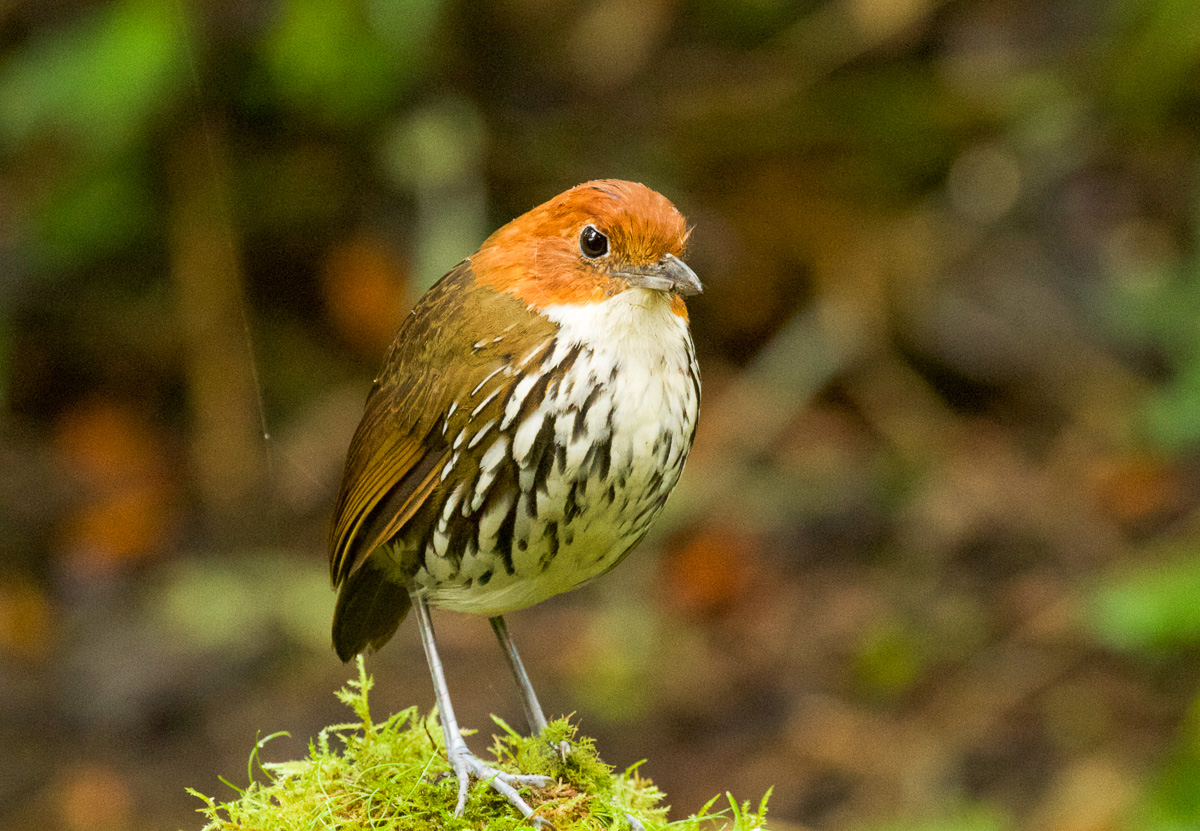
Chestnut-crowned Antpitta © Randall Sinnott
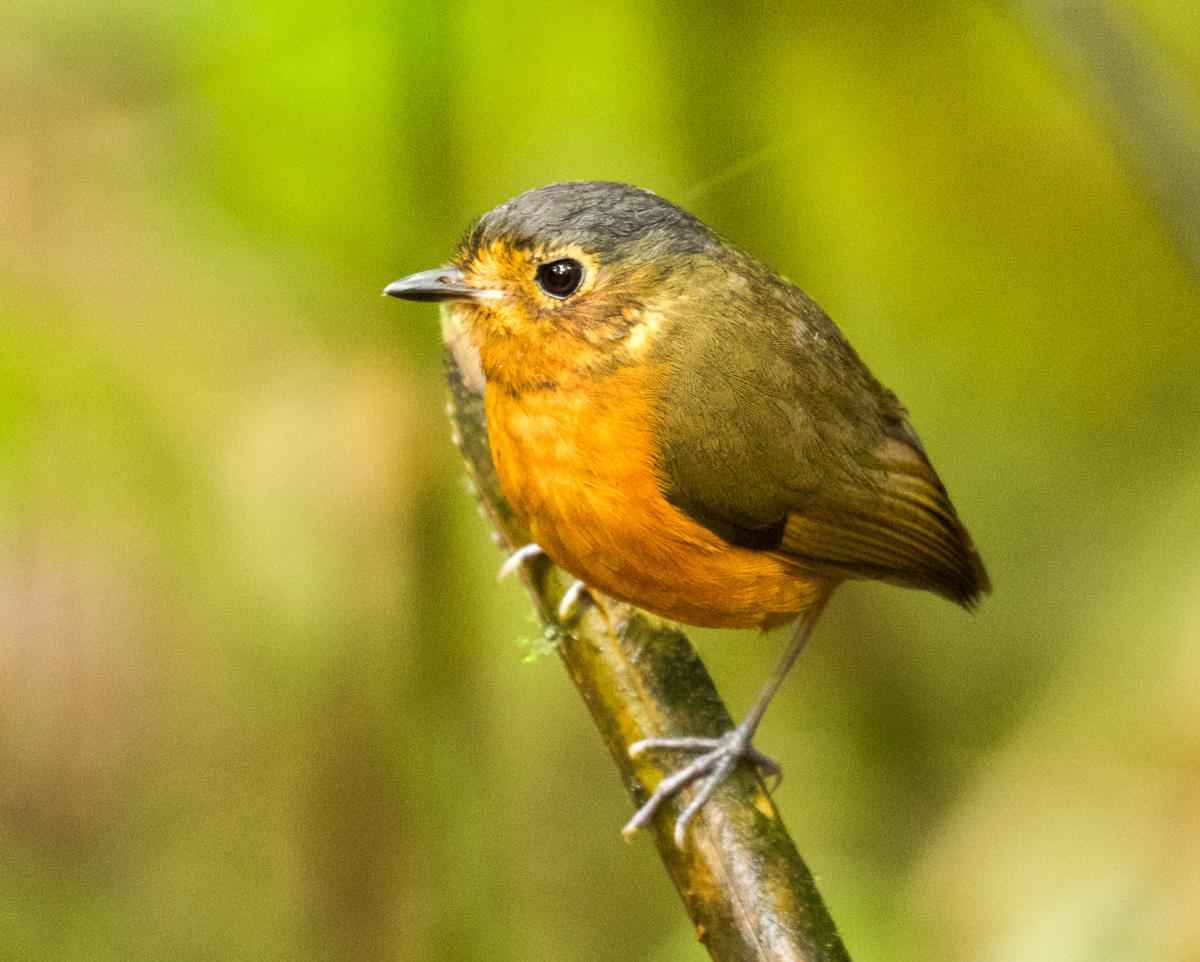
Slate-crowned Antpitta © Randall Sinnott
Much of the rest of the day was spent travelling to Montezuma, where we would be for two full days. At 420 pm we switched to two 4-wheel drive jeeps again and were driven up to Montezuma rainforest lodge at the lower edge of the Tatamá National Park. Our birding on the next two days would be along the very rough road from the lodge up to the peak of Montezuma, where there is a military base and microwave antennas; between the lodge and the peak is unbroken and unspoilt cloud forest, with different bird species at different elevations.
Day 10. April 7.
The day started with a pre-dawn drive to the summit of the Montezuma road, where the main target was the species that one basically has to go up to the top of Montezuma to see, Chestnut-bellied Flower-piercer. It was very birdy throughout the day, as we descended a short distance by jeep, then walked a little, and so on. We bumped into Gold-ringed Tanager (another bird that one basically has to go to Montezuma to see) and Nariño Tapaculo, Munchique Wood-Wren, and many many more great birds.
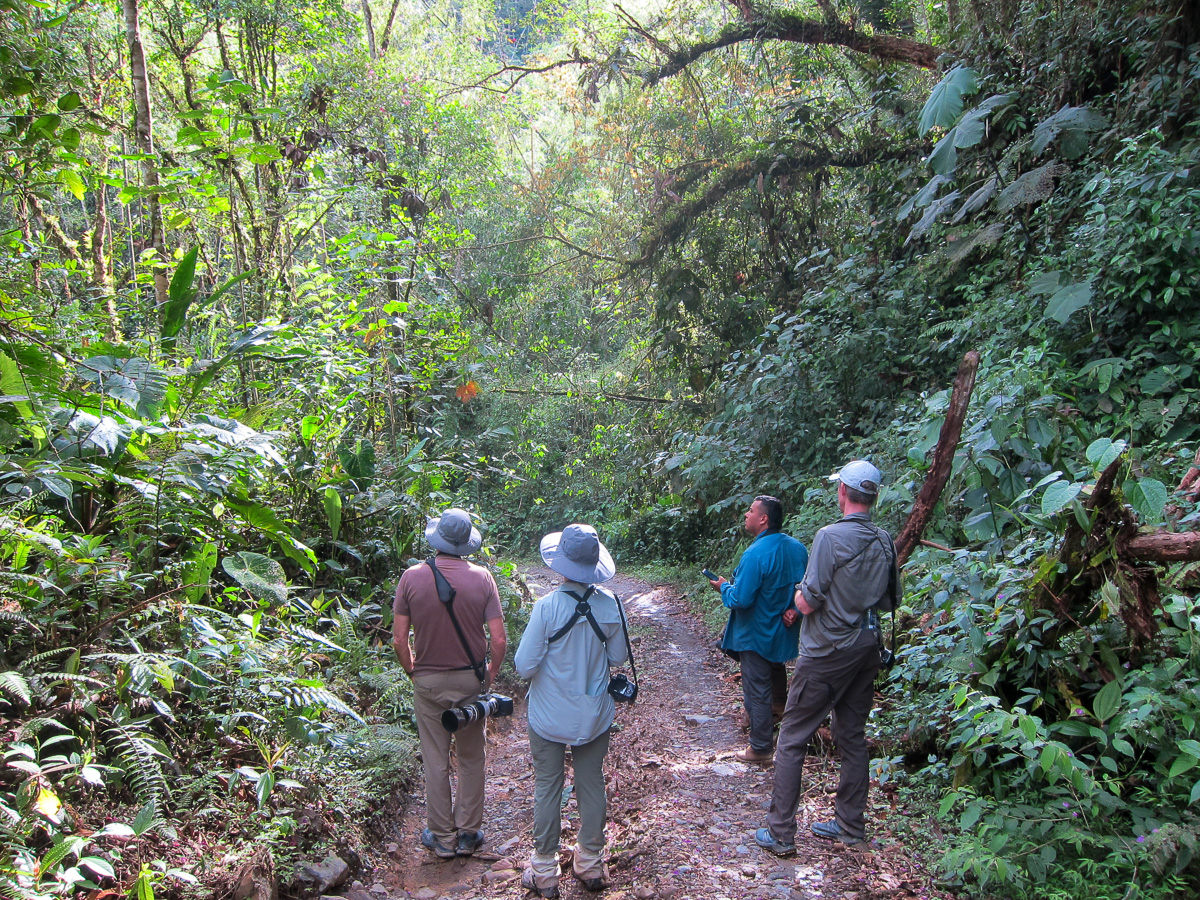
Birding in Montezuma
Almost back down at the lodge, we bumped into a pair of Wattled Guan which amazingly allowed us to watch them, completely unobstructed, for 10 whole minutes! (this is a bird with the reputation of being a ghost, rarely heard and very difficult to see).
The lodge hummingbird feeders were amazing, attracting dozens of individuals of 18 species of hummingbirds, with Purple-throated Woodstar, Empress Brilliant, Violet-tailed Sylph and Velvet-purple Coronet being some of the most brightly-colored stars; just before dark there appeared to be something of a feeding frenzy of nervous hummers coming and going and chasing each other.
Day 11. April 8.
All day was spent in the lower portions of the Montezuma road. Highlights included the gorgeous Chestnut-breasted Chlorophonia, Fulvous-dotted Treerunner, Beautiful Jay, and the rarely-seen Rufous-browed Tyrannulet. Not to mention orchids, carnivorous plants, a giant helicopter damselfly and a not-shy Crab-eating Fox. In the afternoon, again the hummingbird feeders and fruit feeders at the lodge were amazing.
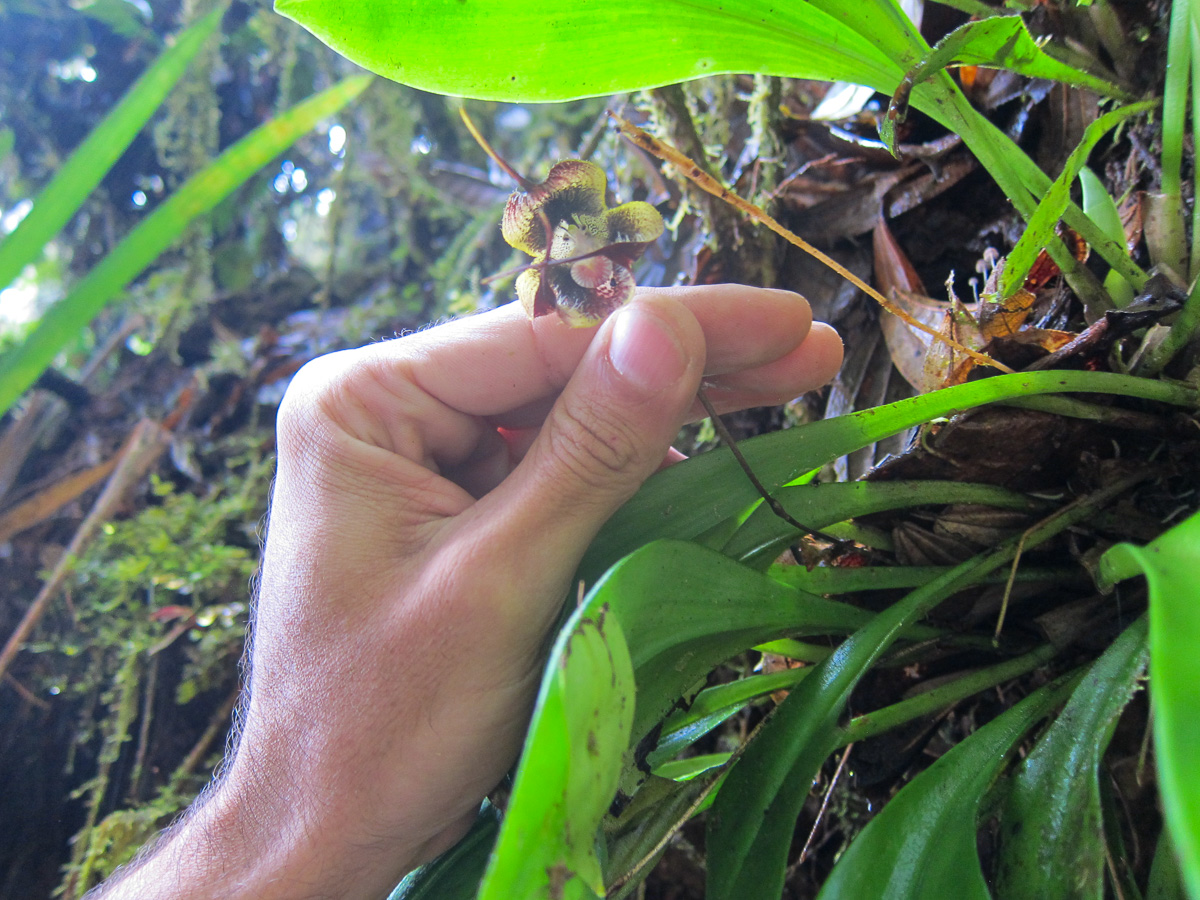
Orchid found by our Colombian guide Manuel Espejo
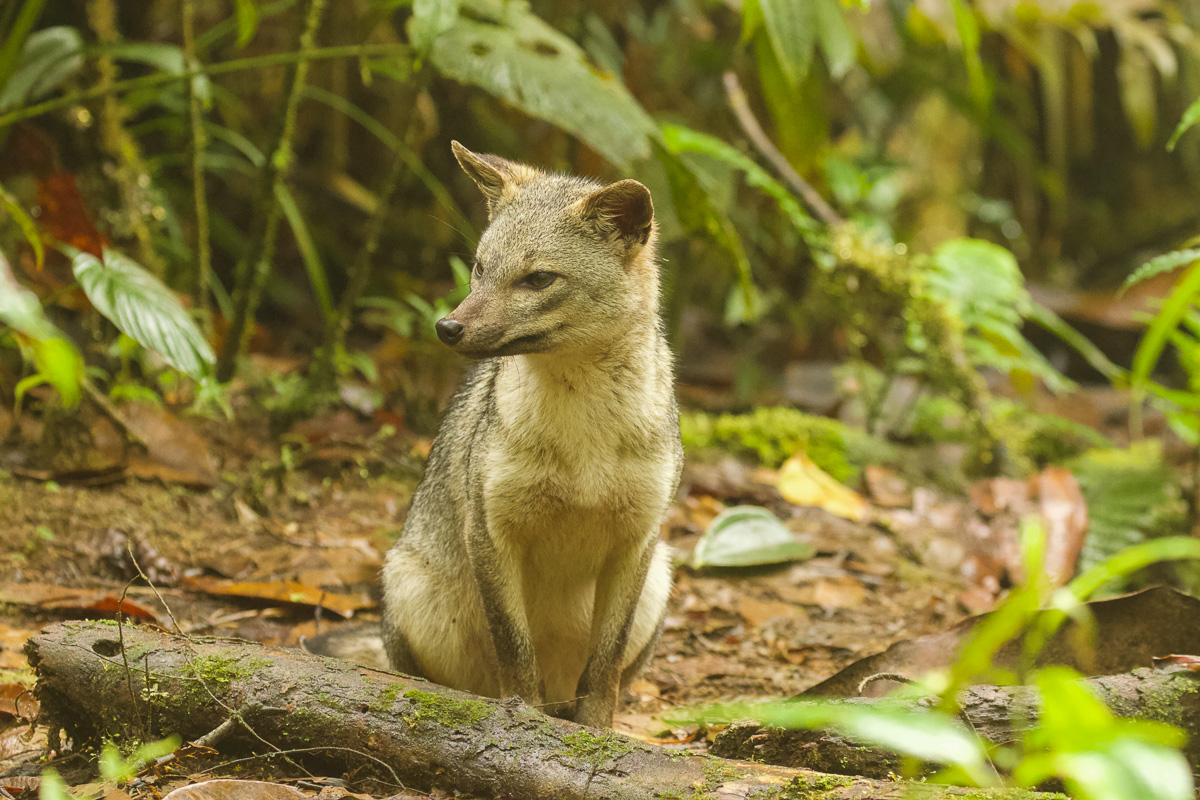
Crab-eating Fox © Randall Sinnott
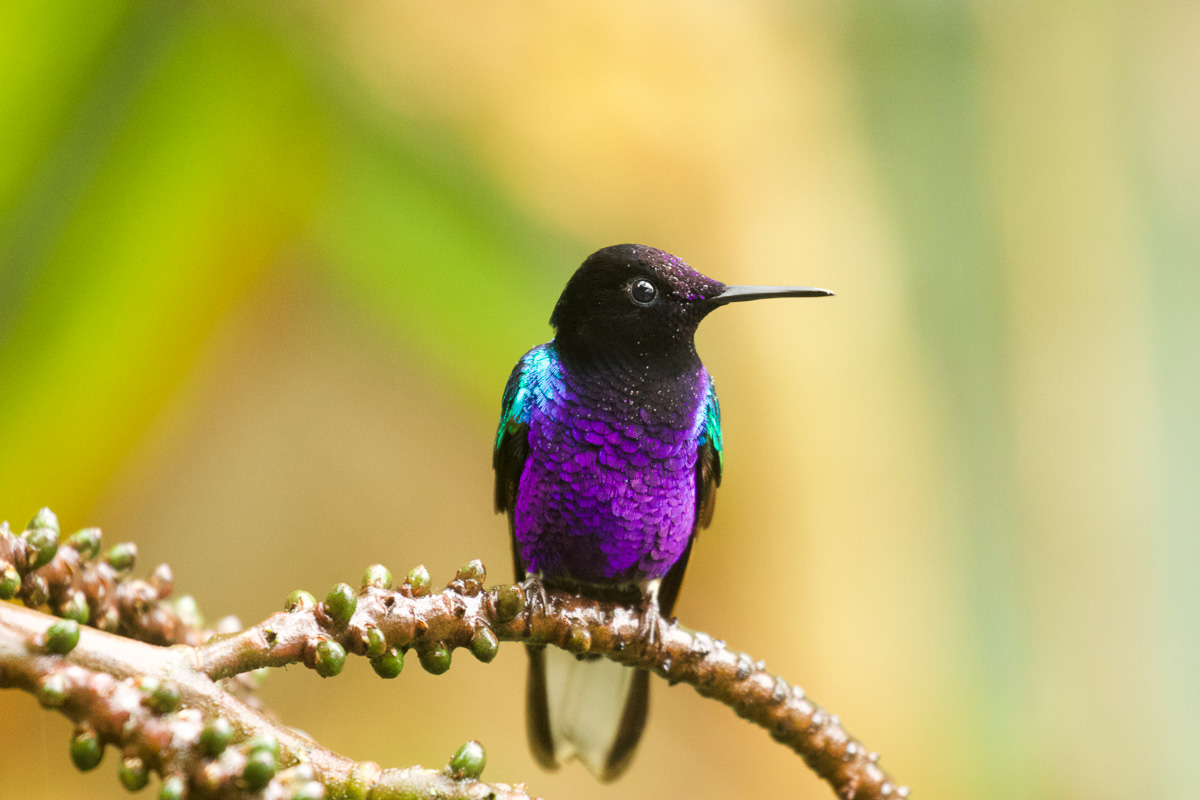
Velvet-purple Coronet © Randall Sinnott
Day 12. April 9.
Another travel day, starting with the descent from Montezuma on 4-wheel drive jeeps, then switching back to our bus and driving to Santa Cecilia where we saw our target, the endemic Baudó Oropendola, fairly soon, and then driving all the way to Cali, with stops for washrooms, at a stakeout for the beautiful endemic Turquoise Dacnis (where we had an unprecedented close, long view), another stop for lunch and yet another for an exciting bit of birding in the Laguna del Sonso area, seeing the strange Horned Screamer.
At Cali we checked into our luxurious hotel

Room in our Cali hotel
Day 13. April 10.
We spent most of the morning at and near “Doña Dora” in the upper Anchicayá Valley. This is a remarkable place where Mrs. Dora and her family attract birds to fruiting trees, fruit feeders and nectar feeders; there is great bird diversity and activity all day long and where the birds allow repeated, close-up views.
Some of the most special birds we saw here were Toucan Barbet (we had only heard them at Montezuma), Red-headed Barbet, Glistening-green Tanager, Black-headed Brush-Finch and Uniform Treehunter. Due to increased presence of FARC guerrillas beyond Doña Dora (not to mention a landslide blocking the road), our bus could not drive further, and half the group stayed enjoying the birds at Doña Dora while the other half opted to walk the road to try to see some additional birds of the lower parts of the the Anchicayá Valley. It was a long walk but we did add the rare Gray-and-gold Tanager and Tawny-breasted Flycatcher.
Day 14. April 11.
For our last bit of birding on the tour, we first visited Finca La Florida at “km 18”. Here again there are fruit feeders and some hummingbird feeders. Visitors to the fruit-feeders included Multicolored Tanager, this time providing close-up views, not the distant brief views we had had before at Otun. What a bird! What a unique color combination!
After Finca La Florida we drove to La Minga, where we had a great lunch and a relaxing few hours watching fruit-feeders and hummingbird-feeders, adding Golden-naped Tanager and White-throated Daggerbill to our trip list.
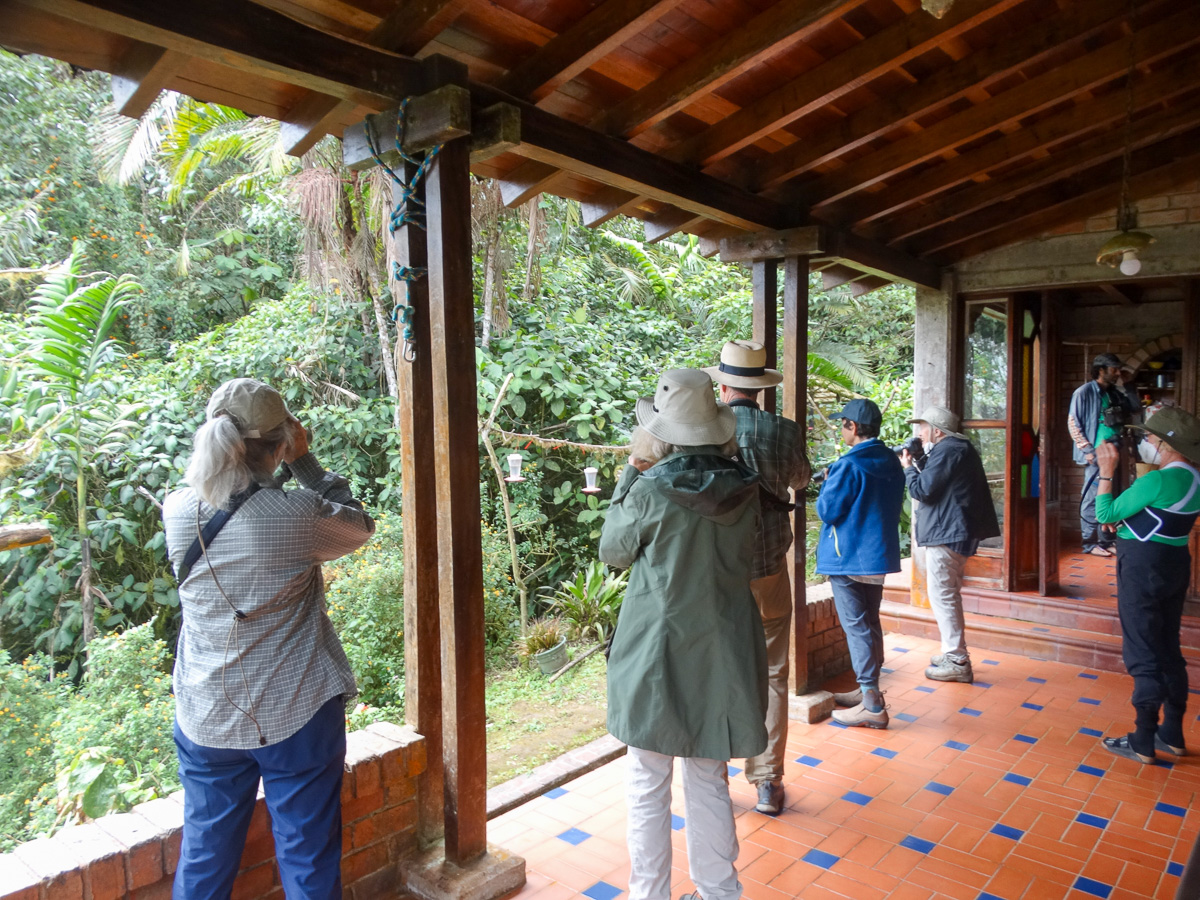
Hummingbird feeders at La Minga
The rest of the afternoon was spent being driven to the Cali airport and taking our flight back to Bogotá, where we filled out our departure information required by Colombian immigration, and of course we had a wonderful final dinner at the hotel.
Day 15. April 12. Departure day.
Our Colombia adventure came to an end, with a plethora of fabulous birds and other wildlife in our memories and our photographs. We ended up seeing a very large number of birds for 2 weeks, including 22 endemics and 34 near-endemics. This tour visited very few warm locations and few times did we encounter biting insects, because by far most of the tour took place at temperate elevations.